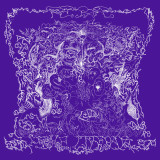
This album was a self imposed ambitious project for us. Something to kick in the creative flow. The last few years, having been a challenging time in general, felt like a good time for a pivot. The last two albums were so guitar and keyboard centric, I wanted a weird and fun set of parameters for us to work with. I demo’d everything at home on cassette 4 track (harkening back to simpler times) using drum loops, and just had at it 'til I had a pile of “songs”. Tom and I chose one sound each using synths and created a range of 3 octaves of that sample, then loaded them into Roland SPD-SX samplers and learned the transcribed songs using drum sticks. The idea was to change the way we wrote and to have 4 people along the front of the stage essentially playing percussion. So no guitar, no keys. As we were recording I kept thinking how the sounds, when paired up, sounded a bit like brass. So, we added a saxophone horn section to round out the horniness of the sound with a bit of reedy bell tones. Thanks to Cansfis Foote & Brad Caulkins on tenor and Baritone saxophones :) Sort of a Dexy’s Midnight Runners meets Von LMO meets The Flesh Eaters meets the Screamers kinda punk junk. Poppy and hooky, heavy at times.. Sort of vacuous and maybe a bit sci-fi in sound. Boneheaded in riff and heady in lyrics. Recorded at Stu-Stu-Studio by me on 8 track 1/4” tape . So pretty hot and raw. Lots to write about today. A lot of these lyrics were taken from things people said in passing about taking on life right now that stuck with me. Things that made me reflect. Things that made me laugh. Things that made me WTF. Some folks are kind, genuine & give you love and energy. Some are greedy manipulative ghouls who hang off your veins. You must be strong, composed and take care of yourself. Be self aware and check your mind for cracks. Learn to relax and be well. There are moments of beauty and redemption. Its not all bad news and there’s always hope. People continue to surprise me one way or another. Anyhow, Hope you enjoy and good luck out there. — John Dwyer
Buzzkunst ist PETE SHELLEY (Buzzcocks, solo) & HOWARD DEVOTO (earliest Buzzcocks, Magazine, solo). 'SPECIAL SAUCE' ist größtenteils eine Neukonfiguration des 2002er CD-only-Albums 'Buzzkunst' von ShelleyDevoto. JETZT (!) zum ersten Mal auf VINYL, mit einer neuen Reihenfolge und zwei (2) bisher unveröffentlichten Tracks - 'Psychosomatic' und 'Punk Of Me'. Und als ob das noch nicht genug wäre, gibt's noch ein zweites Mini-Album: 11 NEVER BEFORE RELEASED HOWARD DEVOTO ARCHIVE RECORDINGS aus der gleichen Zeit, mit dem Titel 'DESIGNOID'. Instrumentalstücke und Songs, eigenwillig wie immer, inklusive eines 21st century re-work von 'Breakdown', das ursprünglich auf der selbstveröffentlichten Debüt-EP der Buzzcocks, 'Spiral Scratch', enthalten war. "This Shelley is Pete Shelley _ old punks will remember him from the legendary Buzzcocks, while '80s rockers may recall his electro-pop hit Homo Sapien. The Devoto is Howard Devoto, Shelley's old Buzzcocks partner who went on to form the arty post-punk outfit Magazine. Now working together again for the first time in 25 years, the duo have achieved a sound that incorporates most if not all of their previous endeavours without reverting to cheap nostalgia. Their 14-track reunion album Buzzkunst is a progressive step forward, combining the grinding guitars of Shelley's youth and the poppy synthesizers of his middle age with the artsy sonic sculptures and post-punk yelp of Devoto's past." - Tinnitist,2002/2022
Luminice Blue Transparent Vinyl. Can you hear the war drums beating? Prepare for battle! Lost In Cult Records, Black Screen Records, Gaziter and Deadpan Games are proud to present Wildfrost: the Original Game Soundtrack. For the first time on vinyl, enjoy the complete and unabridged orchestral score from composer Paul Zimmermann. Rich with folk roots and powerful crescendos, it's the perfect soundscape for your journey through the cold. No Pengoons were harmed in the making of this vinyl. Composer Paul Zimmermann on working on this soundtrack and vinyl: "Writing the music for Wildfrost was a blast. I loved mixing a ton of different instruments from all around the world to bring to life the colourful and unique setting of the game. The gameplay can get very challenging, so I wanted to make sure the music felt playful and uplifting, while also providing those big and heroic moments for our boss fights. I'm super pleased to partner with Lost in Cult and Black Screen Records to bring this soundtrack to vinyl. Seeing the positive response from players has been amazing and I hope this vinyl, with its unique artwork by Nuri Durr and the additional extras, provides fans of the game and its music another great way to connect with the world of the eternal winter!"
From 2019 to 2023 Lindsay Reamer worked as a field scientist. With a guitar and a bag of books in tow, she would leave her home in Philadelphia for the postcard scenes of the American landscape to gather data on visitation in National Parks. She counted cars and RVs, surveyed visitors, and made a temporary home for a few weeks at a time wherever she landed. All the while, she collected her own observations like specimens and slowly weaved the songs that would form her debut full-length, `Natural Science.' Recorded throughout 2023 by Lucas Knapp, `Natural Science' paints with a full spectrum. Humor rubs elbows with heartbreak. Acoustic guitars brush up against synthesizers, cradling Reamer as she sings about the American Chestnut tree extinction, employee gossip at a Day's Inn, fishing beside a power plant, turf grass farms, and waking up next to day-old take-out. The indifferent beauty of nature is held up next to the everyday as Reamer does her very best to find clues for navigating the latter by musing upon both. Following the release of her self-produced EP `Lucky' (Dear Life Records) in 2021, Reamer assembled a band with musicians from Philadelphia's vibrant music community and began working her once solo-acoustic songs into full band arrangements. After a brief flirtation with dance music which led to 2022's viral single "Touch Tank," Reamer settled into a sound that lies somewhere in the folkrock-pop matrix, explored with the humor and lightness of songwriters like Sheryl Crow or Melanie. Reamer reflects: "When I heard the songs with the band, I knew it was time to make the record. It felt like something I had been working towards my whole life. I grew up around musicians but I never thought I was good enough to be in a band or even to make my own music. My grandmother Joan gave me voice lessons after school, my mom was an opera singer, and my dad a guitar player. But it wasn't until a few years ago that I realized I could do it. It didn't matter if I could shred on the guitar or something. It was like some illusion shattered." Reamer is a sincere storyteller. The self-doubt and heartbreak expressed in songs like "Spring Song," "Sugar," or "Red Flowers" give way to the triumphant moments of self-acceptance and love in "Lucky," "Necessary," and "Figs and Peaches." `Natural Science' chronicles a path to confidence, an honest reflection of someone with the capacity to hold a deep well of emotion who also makes sure to not take it all too seriously. "Gardens on the land / Castles on the beaches / I trust my hand and / Pluck my figs and peaches," Reamer sings, as she works to reconcile the strange difficulty we have at finding happiness despite the obvious beauty all around us.
Steve Marion, the critically acclaimed-and completely wordless-songwriter and guitarist known as Delicate Steve, has unveiled a new album called Delicate Steve Sings. Is the album title a reference to the instantly recognizable "voice" of his guitar? Does he actually sing this time? Has he not been singing all along? That"s the crux of Sings-Marion is the rare guitarist where you can put on any of his records and know exactly who"s playing. In an indie rock landscape stuffed end-to-end with guitars and amplifiers, nobody else sounds like this. That unique voice has kept Steve busy in an unpredictable variety of settings. The sheer spread of his work outside his own records-collaborating with Miley Cyrus and Paul Simon, playing in Amen Dunes and the Black Keys, and being sampled by Kanye - doesn"t mean Steve"s a chameleon. It means he"s singular. Delicate Steve Sings is a record centered on channeling iconic voices with his guitar. In doing so, Marion is casting himself in the role of iconic singers like Willie who make standards their own. In the process, he reveals just how singular (dare we say iconic) that voice is. The guitar sings these songs-smoothly, sweetly, boldly, and on its own terms. Recorded with Jonathan Rado on bass, Kosta Galanopolous on drums, Renata Zeiguer providing strings, and co-writer Elliot Bergman, the album features both original songs with titles that suggest they might be new recordings of classics. "I"ll Be There" is smooth like a lost Bill Withers track; "Easy for You" isn"t the Elvis song of the same name, but there"s a hint of the king in there, in addition to Marion"s own takes onclassics such as the Emersons" "Baby," The Beatles" "Yesterday" and Otis Redding"s "These Arms of Mine." "You"re tapping into something universal and in the consciousness of pop music," Steve says-tacit permission for his guitar to drift into vocal expressions he"s internalized through years of close, repeated listening. Just like all the great singers.
Last Train are an exception on the French indie rock scene. From the Olympia in Paris to the biggest festivals, the four Alsatians have won over a devoted audience with their hypnotic, moving concerts. Independent or nothing, they self-produce their records and tours, as well as their music videos, short films and even documentaries, with rigour and determination. At the end of 2022, the musicians had the luxury of taking their time and the right to experiment. Far from the beaten track, they are rewriting their own repertoire in a cinematic and contemplative way. By collaborating with the Orchestre symphonique de Mulhouse, Last Trainconfirm their viscerallove of large-format sounds and images, and present a veritable compendium of inï¬,uences in twelve tracks.Original Motion PictureSoundtrack is the soundtrack to a film that doesn"texist. From a symphonic chaseto a neo-classical interlude, from an organ requiem to an electronic soaring, the Mulhouse-based band play with the boundaries of genres. Last Train sets the bar ever higher with this unexpected, singular and striking album. It is accompanied by a mini-series documenting the work done in the studio, the collaboration with the orchestra and the day-to-day life of an authentic, inspired band.
Last Train are an exception on the French indie rock scene. From the Olympia in Paris to the biggest festivals, the four Alsatians have won over a devoted audience with their hypnotic, moving concerts. Independent or nothing, they self-produce their records and tours, as well as their music videos, short films and even documentaries, with rigour and determination. At the end of 2022, the musicians had the luxury of taking their time and the right to experiment. Far from the beaten track, they are rewriting their own repertoire in a cinematic and contemplative way. By collaborating with the Orchestre symphonique de Mulhouse, Last Trainconfirm their viscerallove of large-format sounds and images, and present a veritable compendium of inï¬,uences in twelve tracks.Original Motion PictureSoundtrack is the soundtrack to a film that doesn"texist. From a symphonic chaseto a neo-classical interlude, from an organ requiem to an electronic soaring, the Mulhouse-based band play with the boundaries of genres. Last Train sets the bar ever higher with this unexpected, singular and striking album. It is accompanied by a mini-series documenting the work done in the studio, the collaboration with the orchestra and the day-to-day life of an authentic, inspired band.
Following a stunning introduction to the world with her 'Sometimes I Forget You're Human Too' EP release in early 2021, Bored At My Grandmas House (AKA Amber Strawbridge) is back with the compelling new single Detox.
It's a tale of navigating change with Amber explaining it’s about “feeling alienated, not knowing who you can and can’t trust, and figuring out how to be yourself whilst also discovering who you are”. “The lyrics represent exactly how I felt in that current moment, numb, confused to who I was and overwhelmed by all the changes I was starting to encounter”.
While Detox retains a lot of the indie and shoegaze elements prevalent in Amber's debut EP, it also shows growth and maturity in sound, with more contemplative lyrics asking questions of the listener. It's a stunning synth-laden track which broods and swells.
Lyrically, there is a deep introspection and a philosophical desire to question and understand human nature, culminating in the "I think we need to Detox" hook.
The track will be released on a limited edition 7" vinyl via Clue Records with a bottle green vinyl available from the artist and label and a toxic yellow version available at all good indie record shops. Following the first 2 pressings of Amber's debut EP selling out ahead of release date, these will be highly sought after.
The track was recorded by Amber at home in Cumbria before being sent to Alex Greaves (bdrmm, Working Mens Club) to add some elements and mix the track. Amber and Alex worked closely together on the final revisions.
The origins of 21 year-old Amber Strawbridge's bedroom shoegaze project Bored at My Grandma's House are perhaps unsurprising given the name. Facing an extended stay with relatives after a trip to Cambodia, Amber used the spare time to start making beats on her phone with Garageband. Fast forward to 2022, the home set up's more than evolved, she's released her debut EP 'Sometimes I Forget You're Human Too' to critical acclaim ,and now steps back into the light with new single Detox.
Recorded by renowned producer Andy Bell at the remote Red Kite Studios in Wales, Silver Horizon features 11 hook-driven indie folk songs set in a captivating, dream-like sound world, infused with Sam’s love for the ethereal textures of slowcore and dream pop bands such as Low and Cocteau Twins. Guitarist Stuart McCallum (The Breath) weaves epic reverb-drenched soundscapes around many songs, which are simultaneously otherworldly and deeply personal. “I’m still dealing with themes of love, loss, and change that have been a part of my earlier work, but at the moment, sketching events in an impressionistic way instead of documenting them in detail gives the songs more room to breathe.” This seamless blend of the intimate and ethereal makes Silver Horizon the most remarkable album of Carter’s career.
ALL-IN-ONE SET
The turntable tone arm and cartridge should always be correctly aligned and regularly maintained allowing you to enjoy the great sound of your vinyl collection to the max.
The Reloop Turntable Cartridge Mount & Gauge Set includes everything you need to perfectly align, care for and clean both your turntable and cartridge.
CARTRIDGE ALIGNMENT PROTRACTOR
The practical SME alignment tool with mirroring for aligning the cartridge allows you to precisely measure the distance between the cartridge tip and the tone arm pivot point so you can optimise the angle of the headshell system. The result is much improved track precision, significantly less wear, and crystal clear sound.
THOROUGH NEEDLE CARE
Thanks to the high-quality stylus cleaning fluid, both stubborn dirt and the finest vinyl residues can be removed without leaving any trace.
LEVEL YOUR TURNTABLE ACCURATELY
Another very useful tool, the spirit level, which allows you to finely align turntables and headshell systems so that they are in the perfect position.
DETERMINE THE STYLUS TRACKING FORCE
The stylus tracking force gauge and the five included balancing weights also make it possible to determine the optimum contact force of the pick-up systems.
COMPREHENSIVE ACCESSORIES
As you would expect, a metal screwdriver for mounting headshell systems and tweezers for delicate adjustments are also included.
PREMIUM GIFT PACKAGING
The set comes in a high-quality storage box to keep everything organised and safe.
Since its founding back in 2014, Blume has carved a unique place in cultural landscape, issuing free-standing works, spanning the historical and contemporary, that represent singular gestures of creativity within the field of experimental sound. Joining their broad efforts in building networks of context and understanding that already includes the works by Werner Durand, Sarah Hennies, Bruce Nauman, John Butcher, Jocy de Oliveira, Mary Jane Leach, Valentina Magaletti, Alvin Curran, Julius Eastman, Alvin Lucier, and shortly after returning with the first ever vinyl release to attend to James Tenney’s legendary “Postal Pieces”, the label is now offering a brand new, ambitious work by the American composer Ben Vida, entitled “Vocal Trio”, conceived, performed, and recorded in Bremen, Germany, during the Spring of 2022. A truly stunning work of compositional conceptualism, combining the ideas of systems based synthesis with real-time vocal collaboration - issued in a highly limited vinyl edition of 200 copies mastered by Stephan Mathieu, featuring specially commissioned liner notes by Bradford Bailey and a leporello insert offering the piece visual score - it’s a landmark in contemporary experimental practice and arguably the most forward-thinking and exciting piece by one of the most exciting American artists working today.
Ben Vida first emerged during the mid 1990s within a loose constellation of experimental musicians, centred around a performance series of improvised workshops at the Myopic Bookstore in Chicago, alongside Jim O'Rourke, Kevin Drumm, Chad Taylor, and the other future members of Town and Country - Jim Dorling, Joshua Abrams, and Liz Payne - the band within which he would gain widespread recognition over the following years. Like many other members of that scene, Vida remains a restless product of a fleeting context - Chicago during the 1990s and early 2000s - continuously undermining concrete notions of idiom and signifier within a practice that witnessed him rendering bristling abstractions within Pillow, glacial melodies with Town and Country, the art-rock mayhem of Bird Show Band, and the angular, driving indie rock of Joan of Arc, before becoming immersed in a practice of systems based synthesis, beginning in the 2010s, that guided much of his first decade of output as a solo performer and composer.
As early as 2013, he began to incorporate acoustic sound sources - specifically the human voice - into his work. It was this shift, evolving and refining itself over the last decade, that underscores radically the leap in his practice represented by “Vocal Trio”, a work that encounters Vida composing for the human voice with the ideas that allow for synthesis - transferring the underlying concepts and structures of both subtractive and additive synthesis to the acoustic realm - without using a synthesiser.
During the Spring of 2022 Vida was in Bremen, Germany, collaborating on a dance piece with the choreographer Fay Driscoll, when the production fell into delays. Finding himself with time on his hands, a space at his disposal, and the company of two dancers - Amy Gernux and Lotte Rudhart - who were also singers, the idea for the piece - to utilising the larynx as audio paths (multi-harmonic or harmonically pure) while conceptualising each person’s mouth as a filter to sculpt the timbre and resonance of a given tone - began to take shape in his mind. Considering how typographical scores might be developed into a non-linguistic social framework, Vida drafted a single page of text - what became the score for “Vocal Trio” - accompanied by a set of harmonic suggestion and loose parameters, seeking a core meaning from each word's phonic make-up by each of the three singers (Vida, Gernux and Rudhart) singing as slowly as possible.
At the core of the pulsing vocal drones - intoxicating, harmonically rich long-tones - that make up the duration abstraction of “Vocal Trio”, is Vida’s regard for music as a social space. It is an experiment that seeks liberation through the act of collective music making, by challenging the terms through which the act of composing is perceived and then relinquishing control. The piece’s rehearsals were simply the three performers hanging out, allowing their knowing each other and natural dynamics to contribute to its form as the score, before recording during a single afternoon at the end of a number of days sharing company and space.
Creatively visionary and groundbreaking on numerous terms, as well as being intoxicatingly beautiful and remarkably listenable, Ben Vida’s “Vocal Trio” represents a striking step forward for one of the most ambitious and outstanding sonic artists working in the United States today. Issued by Blume in a highly limited vinyl edition of 200 copies mastered by Stephan Mathieu, featuring specially commissioned liner notes by Bradford Bailey and a leporello insert offering the piece visual score, this is hands down one of the most important contemporary records we’re likely to encounter in 2024.
out of Stock
Last delivered 2 years ago available to reorder, subject to availability
From listening to pirate radio recordings, putting on illegal parties and working for one of the UK’s original rave promoters, Greg Hepworth, aka Settle Down, has always had roots in the foundations of UK dance music.
Settle Down’s 30 year journey began when the sounds of Fantazia drifted into his childhood bedroom at the age of 10. After wearing out cassettes of pirate radio recordings and immersing himself in a growing culture, what followed was putting on illegal raves across the South Coast and packing tapes for Dreamscape, before crossing over to Creator and releasing for Metalheadz and Reinforced as 'Ulterior Motive' and reinventing himself as 'Settle Down'.
From fan to facilitator to maker. Voyage is a documentation of Settle Down's 30 year journey through UK breakbeat culture. Presented as a recording of a 90’s rave cassette mix, it chronicles the journey through house, breakbeat, hardcore and jungle and the influences that make up these genres, a love letter to the past and an ode to the vibe.
Voyage will be released on a limited edition mixtape cassette, 12” vinyl and digitally mixed and unmixed single tracks alongside some limited edition merchandise.
When we were offered the most welcome opportunity of choosing another “virgin” (as in never released on vinyl before) volume from the Dick’s Picks catalog, we did our Dead diligence, combing through the many chat rooms online to see which one the fans really wanted to see come out on LP. It will come as no surprise that opinions were varied and vehement…but a consensus emerged that Dick’s Picks Vol. 12—Providence Civic Center 6/26/74 & Boston Garden 6/28/74 was the one. Which is interesting, because that Pick is a little different, combining the second sets of two different nights instead of offering a single show. But it’s the exception that proves the rule—the playing is so extraordinary, and the repertoire so unusual, that one can understand why Dick Latvala played more curator than archivist here. Side A picks up the second set from Providence three songs in, featuring a short jam that leads into what many have labeled the most extraordinary live version of “China Cat Sunflower” ever recorded, complete with a sublime transition (“Mud Love Buddy Jam” a.k.a. “Mind Left Body Jam”) into “I Know You Rider.” The revelatory moments continue throughout the Providence set, highlighted by a dazzling, 15-minute “Spanish Jam.” But the second set of the Boston show—which appears here complete, after a superb encore performance of “Eyes of the World” from Providence—is the one that has passed into legend among Dead fans (a performance of Phil Lesh and Ned Lagin’s electronic music piece “Seastones” provides an appropriately adventurous interlude). The set boasts one of the most renowned live jams of the band’s career, a flawless, 14-minute “Weather Report Suite: Prelude/Pt. 1/Pt. 2-Let It Grow” leading into a 27-minute “Jam” that is simply one of the most far- ranging, telepathic improvisations ever played by, well, anybody. That this set also includes a separation of the “Sunshine Daydream” section from “Sugar Magnolia” for only the second time ever is just gravy. This is, of course, a “Wall of Sound” concert, so we’re working with something of a special audio source to begin with. So, we enlisted Jeffrey Norman to master the release for vinyl from the original tapes (pictured on the enclosed insert), and enlisted Clint Holley and Dave Polster over at Well Made Music to cut the lacquers. Gotta Groove Records, our manufacturer of choice, has pressed the 6 LPs on to 180-gram black vinyl housed inside a two-piece hardshell box, and we have a little stencil surprise for ya on Side L. Limited edition of 3000 hand- numbered copies!
Step into a world where authenticity meets emotional resonance with Maxo's 2018 album, "Smile," produced by the mastermind Lastnamedavid. This release marks the genesis of a new era, a departure from prevailing trends, and an introduction to the genuine artistry of Maxo.
"Smile" is a testament to Maxo's effortless storytelling and emotional delivery, setting a refreshing tone in the contemporary music landscape. Lastnamedavid's soulful production serves as the perfect backdrop, creating a sound that is as real as the content it supports. The album captures a range of emotions, painting a vivid picture of Maxo's journey through the realms of honesty, youthfulness, troubles, and hope.
From the reflective "Same Hoodie Since ‘05," a sobering exploration of identity and roots, to the anti-romantic ballad "Evelyn," Maxo invites listeners to join him on a personal and introspective journey. "Smile" serves as a reminder, not just to Maxo but to an entire generation, to appreciate every situation, irrespective of the circumstances.
The project features a notable collaboration with Sharp, adding an extra layer of depth to the already rich tapestry of "Smile." As Maxo unfolds his narrative, the synergy between his lyrical prowess and Lastnamedavid's production creates a sound that is not just music but an authentic expression of self.
"Smile" is more than an album; it's a sonic exploration of the human experience, capturing the essence of Maxo's voice and vision. In a world of fleeting trends, Maxo and Lastnamedavid deliver a timeless record that resonates with honesty, making "Smile" a standout release in the musical landscape of 2018.
Black Truffle is thrilled to announce a reissue of Chico Mello and Helinho Brandão’s self-titled release from 1984, the first return to vinyl of this classic of Brazilian experimental music with its original cover art and complete track listing. An under-recognised figure whose work inhabits a singular terrain where radical new music techniques and music theatre meet musica popular brasileira, Mello has lived and worked in Berlin since the late 1980s. A student of Dieter Schnebel, Mello played in the 90s iteration of Arnold Dreyblatt’s Orchestra of Excited Strings alongside compatriot Silvia Ocougne, with whom he produced a radical and hilarious deconstruction of MPB classics on Musica Brasileira De(s)composta (an early and rather atypical release on Edition Wandelweiser).
On this release, his only recording predating his move to Europe, Mello works with the alto saxophonist Helinho Brandão, who appears to be otherwise unknown outside Brazil. The record’s six tracks range from solo saxophone improvisation to densely layered ensemble works bridging minimalism, acoustic sound art and a plaintive melodic sensibility that calls up Edu Lobo or Milton Nascimento. Beginning with a dramatic, dissonant wind and string surge from which emerge ominously pounding piano chords, opener ‘Água’ slowly builds in intensity, a halo of clustered vocal harmonies gradually closing in on Brandão’s squealing sax until the piece opens up to reveal a gorgeous passage of melodic singing. The piano accompaniment reduces to tolling bass notes as the voice begins a repeated incantation, suggesting a ritualistic atmosphere reminiscent of parts of Xenakis’ setting of Oresteia. Dissonant, sawing tremolos on the strings climb to a crescendo before disappearing into the sounds of water being poured and splashed into metal vessels, presented not as a field recording but as a percussive element performed by the ensemble. A child’s voice then appears, singing to piano accompaniment the same melody heard earlier in the piece. After a brief solo alto improvisation from Brandão, working with the guttural pops and fleeting melodic gestures of Braxton or Roscoe Mitchell, the remainder of the first side is dedicated to the leisurely unfolding of ‘Baiando’ over the course of twelve minutes. A trio for Brandão on soprano saxophone, Mello on a very period-appropriate phased nylon string guitar and Edu Dequech on bongos, the performance eases its way hypnotically through subtle variations on a set of rhythmic and melodic patterns, almost derailed at points by Brandão’s wild forays into extended technique but held together by Mello’s droning guitar notes.
The second side opens with another multi-part epic for a larger ensemble, ‘Matraca’, which makes use of strings, electric guitars and a wide range of South American percussion instruments. Rasping violin harmonics hover as drum hits, repeated guitar notes and triangle accompany a slowly descending bass glissando. A sudden change in direction introduces a thrumming, incessantly repeated bowed bass tone, beginning a series of episodes of minimalist phasing and pattern variation, the combinations of electric guitars and orchestral instruments giving the ensemble an ad hoc charm like the early Penguin Café Orchestra but with more percussive drive. Eventually the piece is overrun by a cacophony of the titular matracas (a kind of ratchet/cog rattle). Following a lyrical trio improvisation by Mello, Brandão and Gerson Kornin on bass, the final ‘Danca’ focuses entirely on Mello’s layered acoustic guitars and vocals, using this restricted palette to build up a haunting piece of almost orchestral density, reminiscent of the 70s work of Egberto Gismonti in how it thickens a folkish ambience with harmonic sophistication.
Arriving in a starkly beautiful gatefold sleeve and sounding better than ever in its new remaster, one might call the stunning music contained on Chico Mello/Helinho Brandão ahead of its time. But what (other than some of Mello’s own work) produced in the years since its initial release has really touched the organic fusion of minimalism, free improvisation, radical instrumental technique and popular song achieved here? Forty years after its first release, Chico Mello/Helinho Brandão remains music of the future.
out of Stock
Last delivered 2 years ago available to reorder, subject to availability
Fera’s trajectory sticks out like a sore thumb, you need to invest time, carefully divided between body & mind, to truly take a deep dive into his audacious output. After the acclaimed ‘Stupidamutaforma’ and ‘Corpo Senza Carne’, Fera is back with ‘Psiche Liberata’, an oblique, imperfect and broken record, in other words, exactly the type of magical voyage you want to be on. The mind, finally liberated.
Fera is Andrea De Franco, electronic composer from Southern Italy now residing in Bologna, also known for his work as visual artist/designer and member of the Undicesimacasa collective. His musical cosmos is profound and imaginative, intergalactic atmospheres that condense fragmented IDM, scintillating textures, distorted synthscapes, crunchy technoid rhythms and swirling abstractions that weave gently, sometimes moody and stark, more often celestial and awe-inspiring.
Mixed in Berlin by Steve Scanu ‘Psiche Liberata’ encapsulates Fera’s dense and intricate thought process in contrast with his simple and direct approach to writing and recording that finds its more natural output in his rapturous live sets where a mono signal runs through a few analog pedals transforming instantly into menacing alien grooves and fluid ecstasis.
Like ‘Psiche Liberata’s artwork, hand-drawn by Fera, every detailed miniature leads to a single cell of sound, tracks collide against each other in a psychotic kaleidoscope where every safe space is confronted with subsequent noise, alterations or interruptions. The black terror of ‘Celestial Anacusma’ is followed by the space-jazz banquet of ‘Milk Tears In The Hug Chamber’ doped up cyber Sun Ra extravaganza featuring Laura Agnusdei and Luigi Monteanni (Artetetra) on saxophones and flutes; ‘Silenzio Solare’ sprinkles Mille Plateaux era minimalism all over hallucinations, while ‘Diluvia’ crosses industrial acid with perpetual motion; title track ‘Psiche Liberata’ murmurs mechanically, a downtempo drifter for the wide-eyed 7AM comedown: ‘Simulacrima’ melts Boards Of Canada’s mellow pastoralism with dystopian meta-level dreamland and ‘Riposa’ showcases an overwhelming melancholy executed with elegance in a slo-mo world where the ineffable transcends notions of ambient and becomes a warm embrace.
Created on a Monotribe, MS20 & Volca Sample/fm, ‘Psiche Liberata’s velvet heaviness was achieved by re-amping many of the instruments through a Leslie Rotary Speaker and a reel-to-reel Telefunken. Fera’s sonic tapestry is in constant flux, underlying themes of love longing and affection run through the record but in a turbulent, volcanic, unleashed fashion, almost on the brink of utter noise or complete silence, reminding us that this is an artist like no other amidst the ever changing electronic scene. These are transmissions from the gutter, where the inevitable meets the unattainable and collapses.
"Fera’s tarnished materials are destined for ruin; “Stupida,” full of longing and regret, sounds like an elegy for a fallen world." Pitchfork
"A cut of dark magic that fits like a glove to overcast days, wild winds and lashing rains. Insistent, the treacle-thick bassline oozes out, soaking the space between the melancholic synth lines." Inverted Audio
"The songs on Stupidamutaforma feel hypnotizing...it establishes De Franco as a composer who uses space and time to create a set of rich, immersive works." Bandcamp 'Album Of The Day'
"Oyster Cuts", das vierte Album und Merge Records-Debüt von Quivers, zeigt, dass die in Melbourne, Australien, ansässige Band in der Art von Emotionen schwimmt, in denen sich die meisten Menschen zu verlieren fürchten. Der überdimensionierte Gitarrenpop von Quivers schimmert wie die Oberfläche eines Ozeans, unter der ein Riff liegt, das abwechselnd schön und schmerzhaft ist, dessen Züge fremdartig und scharf genug sind, um zu verwunden. Angetrieben von Melodien, die manchmal an Galaxie 500 und The Pretenders erinnern, machen Quivers Musik, die zart und hart ist und den Hörer dazu zwingt, immer wieder einzutauchen, wobei jeder Song einen neuen Gefühls-Blickwinkel eröffnet. "Oyster Cuts" ist Sonnenschein-Pop mit Blut im Wasser. Die Verluste und Lieben, die Quivers' Musik seit ihren Anfängen geprägt haben - der plötzliche Verlust eines Bruders im gebrochenen Optimismus von "We'll Go Riding on the Hearses" (2018) und das Leben in und nach der Trauer von "Golden Doubt" (2021) - fließen in "Oyster Cuts" ein, das sich dem Weitermachen verschrieben hat, während es akzeptiert, dass einige Gefühle, wie Trauer, ein Kreislauf sind. Entscheidend ist, dass Quivers sich verpflichten, miteinander Vorwärts zu gehen. Ohne den Chor und die Streicher von "Golden Doubt" ist "Oyster Cuts" ein Beispiel dafür, was immer noch möglich ist, wenn vier Leute - Sam Nicholson (Gitarren), Bella Quinlan (Bass), Michael Panton (Gitarren) und Holly Thomas (Schlagzeug) - zusammen Musik machen. Durch die Verwendung von Tape Loops - die "Oyster Cuts" eröffnen und schließen und das Album wie Haie umkreisen - legen Quivers Wert auf Wiederholung, setzen gemusterte Riffs ein und navigieren durch kreisförmige Gedanken, bis sie an ihre Grenzen stoßen und schließlich zu einem neuen Song zusammenfinden. Ihr verträumter, sonnenverwaschener Jangle-Pop ist dadurch schlanker und muskulöser geworden, und ihre Sound-Palette wird durch Anklänge an The Cure, Echo & the Bunnymen und The Durutti Column verdunkelt. Innerhalb dieses Rahmens betreten Quivers als Band Neuland, indem sie ihrem charakteristischen Gruppengesang eine neue Dimension hinzufügen: Quinlan übernimmt bei vier Songs die Leadstimme, die ineinander verwobenen Gitarren von Nicholson und Panton werden in den Mittelpunkt gestellt und der zielgerichtete Groove von Quinlan und Thomas treibt das Ganze voran. Die Songs von Quivers fühlen sich wie lange Gespräche zwischen Freunden an, in dem Sinne, dass ein Gespräch sowohl ein Akt der Sprache als auch ein Raum ist, den Menschen füreinander einnehmen. Die ersten beiden Tracks auf "Oyster Cuts", "Never Be Lonely" und "Pink Smoke", nehmen diese privaten Universen, die aus gemeinsamer Sprache, Erinnerungen, Songfetzen und dem Licht eines Handybildschirms mitten im Doomscroll bestehen, und verwandeln sie in ein Leuchtfeuer, in suchende Texte, die von massiven Hooks entfacht werden. "All I ever wanted was a true friend / All I wanted was a friend with benefits / All I ever wanted was transcendence" singen Quinlan und Thomas zu Beginn des Albums, und von da an spult "Oyster Cuts" in den Horizont hinaus. Die vier Mitglieder von Quivers erforschen diesen Raum nicht nur, sondern füllen ihn auch so weit wie möglich mit sich selbst aus, indem sie sich aneinanderbinden, egal wie unklar und chaotisch Herzensangelegenheiten werden können. Jeder Moment der Katharsis, den Quivers aus dem Äther zaubern, ist eine Einladung, sich ihnen anzuschließen. Wenn man ihnen zuhört, wie sie dort aufsteigen, wo andere grübeln würden, ist es unmöglich, ihrer Einladung zu widerstehen.
Smooth as a dry martini and equally intoxicating, Chantal Chamberland's "Dripping Indigo" cements her role as one of the best interpreters of classic song book favorites Two factors set Chamberland's music apart from the pack. First, the
arrangements are slow and sexy relying on a small jazz ensemble for backing (piano, sax, bass light rhythm). Secondly is her luscious voice, which caresses the listener with a breathy purr throughout the album. With a repertoire that features "Smoke Gets In Your Eyes", "Bewitched, Bothered & Bewildered" and "How Deep Is Your Love", the album slowly seduces with its corner jazz club ambiance and torch singer grace. This is re-release is a part of the evosound 20th Anniversary special collection. The album will be available on vinyl for the first time, as a 180g double transparent purple LP.
Lebanon oud master Rabih Abou-Khalil's stunning 1996 album 'Arabian
Waltz' is appearing here on vinyl for the first time."Arabian Waltz is the
pinnacle of Rabih Abou-Khalil's achievement as a composer and arranger
It is a sublime fusion of jazz, Middle Eastern traditional music, and Western
classical. In addition to Abou-Khalil on oud (the Arabic lute), Michel Godard on the
tuba and the serpent (the tuba's antique kinsman), and Nabil Khaiat on frame
drums, the album also features the Balanescu String Quartet instead of the usual
trumpet or sax. The presence of the Balanescu might seem to pose a dilemma
for the composer: traditional Middle Eastern music uses no harmony but a string
quartet is all about harmony. Abou- Khalil achieves a compromise by generally
writing the string parts in unison (or in octaves), in effect using the quartet as a
single voice, but also letting the quartet split up to play parts in unison with the
other instruments or to provide ornamentation. Without surrendering jazziness at
all, the presence of the strings makes possible a wondrous atmosphere, almost
as if one is listening to the soundtrack of a classy movie set in Beirut or
Damascus during the '40s. This feeling is greatest on "Dreams of a Dying City"
with its brooding tuba and cello motifs and grave, repeated rhythms. "The Pain
After" starts with an impressive tuba solo that turns into a long interlude for tuba
and string quartet; sad, slow music that sounds like one of Beethoven 's late
quartets. Then Abou- Khalil finally enters on oud, bringing a sustained note of
wistfulness. Fortunately, beside the darker numbers lie the propulsive drama of
"Arabian Waltz" and the bobbing and weaving quirkiness of "Ornette Never
Sleeps." Abou- Khalil is known for experimenting with the possibilities his guest
musicians bring to his style. In this case, the guests have inspired the host to
reach a new height and maybe even a new style. This recording suits every fan of
world music, jazz, classical, or just good music." - Kurt Keefner
Debut standalone VHF album by the Elkhorn duo of Drew Gardner and Jesse Sheppard, a tight set of six studio recordings in a variety of moods and featuring a lot of new sound textures. Elkhorn’s prolific stream of releases since 2016 has highlighted their mastery of sprawling long-form, acoustic-driven hypno-jams, with an emphasis on live performance (including on their collaboration with Pelt’s Mike Gangloff on the Shackamaxon Concert album). The Red Valley is a more layered and composed-sounding set, with the duo overdubbing extensively on top of their own dual guitars. Leading off the LP, “Crystal Hummingbird” features one of their signature minor-modal vamps, with layers of fuzz bass, zither, and frame drum providing weight and psychedelic density. “Gray Salt Trail” continues the vibe, with thick fuzz vibraphone supplementing the cinematic palate, leading into the spare side-closer “Black Wind Of Kayenta,” where Sheppard plays electric 12-string and Gardner solos on acoustic guitar. Side two starts with “Road to Chaco Canyon,” a brooding duet that builds momentum with Gardner’s insistent frame drum cadence, dropping down into the quiet string pool of “Inside Spider Rock” (featuring Fern Knight’s Jesse Sparhawk on gloriously swirling lever harp) and the graceful finale “Jackrabbit Hops.”
New Jersey producer, DJ and Inimeg Records head honcho Joey Anderson takes on the role of Obiaman for Obia Records 005. Well known for his deep and intriguing records Joey Anderson takes the label far into the night sky with Vanish EP. Accompanied by label owner Wendel Sield the EP sets to serve a variety for all tastes.
Anderson’s style of hypnotic rhythm and cosmic synth work finds common ground with the labels African background in “Masked Ones”. With haunted vocal shots and elegant drum work. Minimalistic use of elements fill the track exceptionally well.
“Vanish”, the records main cut fills any ear with an astonishing panned bassline accompanied by loosely layered hihats. Strange and eerie pads float around the bassline, while piano chords give structure to the music. Followed by “Escape” this well-crafted jam explores the deep even further. Jumping synth lines that sound from another planet edge the depth of Anderson’s amazing musical ear. The track is layered by dirty low frequencies that suck you in with weird noises and atmospheric melodies.
Orbiting an icy moon Wendel Sield's “Cultivate” shows itself at the end of the EP. A pulsating synth line dominates the track main character. Intricate percussion patterns drag the track along to a dirty mono sequence. Big open snares makes this a track a slap in the face to its listener.
out of Stock
Last delivered 2 years ago available to reorder, subject to availability
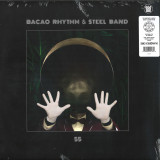
Shrouded in mystery, hailing from Hamburg, Germany, Bacao Rhythm & Steel Band (BRSB) releases their long awaited debut “55” on Brooklyn’s own Big Crown Records. Long time multi-instrumentalist and band leader Bjorn Wagner spent a few months in Trinidad & Tobago where he became fascinated with Steel Drums. His initial intrigue with local steel pan music culture led him to learning the instrument both through help of local players and on his own. After he became proficient on the pans Bjorn had his own instrument built from a used oil barrel by legendary pan man Louis C. Smith. Upon returning home to Germany, Bjorn set out to blend the Tropical Steel into his already sharply honed Funk, Soul, and Hip-Hop sensibilities. The outcome is an updated take on a classic format, a truly unique sound. Their first two recordings were covers of The Meters “Look A-Py-Py” & “Ease Back” which they self-released on a 45. Looking back on these two sides you can tell they were just getting their chops up for what was to come next. This is evidenced by how all hell broke loose when they went on to cover 50 Cent’s hit PIMP taking the DJ and vinyl collecting communities by storm. Many people thought the recording was the original sample and probably still do to this day when it is played. The original Mocambo pressing sold out quickly and is now a collector’s item fetching heavy prices when it changes hands. It was this tune that made the introduction between Bjorn and Danny Akalepse of Big Crown. They immediately hit it off and started making plans to do a full length project with the band. Keeping in the tradition of Steel Drum records, 55 is a journey through re-interpolations and covers with an updated approach, pushing Steel Pan music to uncharted territory. Flawlessly bringing previously untouched genres into the steel pan cannon ranging from Underground Hip Hop tunes to staple Funk tracks and some of all that falls in between. BRSB’s 55 is reinvigorating tunes both well-known and helping to shed some light on tunes still largely undiscovered. However, some of the strongest tunes on the album are original compositions, from spaced out Disco vibes on “Beetham Highway Ride” and “Port Of Spain Hustle” to the ugly face inspiring drums of “Laventille Road March”. Recorded to analog 8 track tape at The Mocambo Studios in Hamburg, 55 is a gritty, punchy journey in sound drawing on music from around the world, using production aesthetics from across both eras and genres, all coming together seamlessly. If the 45s that have already come out on Mocambo, Plane Jane, and Truth & Soul are an indication, this full length is going to be a staple to both casual listeners and Disc Jockeys alik
out of Stock
Last delivered 2 years ago available to reorder, subject to availability
Co-Accused return for their second release of 2024 with a hand picked V/A sharing sounds from some of the label’s favourite electro and techno producers. Underground legends and fearsome up-and-comers come on board to the Glasgow based label with Luke’s Anger, SOD-90, Steve Allman, Mal_Hombre andParand delivering tracks. CR006 VA is selected for the dancefloor, tried and tested in Co- accused's own DJ sets.
Luke’s Anger launches the EP with some up for it wonky business in ‘Choplifter’. From one of the masters of the wonky techno sound Luke’s Anger continues in full form with his tight yet askew playful
beats. SOD-90 comes in next with ‘Saving Up For Botox’ with his fearless punk take on the electro sound - his own brand of high intensity atmospherics mixed with distorted synth lines, vocals and kicking breaks. Cultivated Electronics’ Steve Allman leads the B Side with ‘This Is Not A Dream’ calling on driving hoover bass and haunting synths in classic UK electro style. For the B2 Mal_Hombre takes the EP down a deeper and more spatial path with ‘Triangulation’ with delicately detailed and propulsive techno, a long time friend of the label whose debut album Andromeda Outpost released on Jeff Mill’s iconic Axis Records. Topping the whole thing off Berlin based producer and Avoidant alumni Parand delivers the final hit with Bloc - a powerful, pitch black, driving heads down moment.
out of Stock
Last delivered 2 years ago available to reorder, subject to availability
I’ve lost my sense, I’ve lost control, I’ve lost my mind! Yeah, we all know how the song goes, but those words will no doubt end up driving their point home throughout the duration of Bloodstains’ self-titled debut LP. This thoroughly-welcome Euro pressing follows the album’s DIY release earlier in 2024, which is excellent news for UK/mainland fans of early 80s SoCal hardcore who’ve yet to hear it - the whole thing absolutely fkn rips. Feel free to rifle through your Adolescents, Weirdos and (natch) Agent Orange records to see what these guys have been mining, but all you’ll find is a launchpad - Bloodstains inevitably hail from California and they’re clearly au fait with all the above (not to mention a certain compilation), but they manage to inhabit that sound with a personality all of their own. Vocalist Cesar Marin splits his delivery between a sneering bark (like the most withering put-downs you’ve ever heard being delivered via nailgun) and a purposeful, melodic croon… which itself sounds it’s made from sandpaper and vitriol, but there you go. Most importantly, this is a band with SONGS. Eight of ‘em here, to be precise, and you’ll rarely have been so glad to have something turned up so loud it blows holes in your speakers. ‘Stray Bullets’ hangs its mighty chorus on a call-and-response refrain that dares you not to pick a side and bellow along, while instrumental opener ‘The Last Rites’ sets you up perfectly for the seething, volatile bundle of hooks to follow. I’d say the interplay between the band’s string-wielding Espinoza contingent is something to behold as well, but what am I, some kinda nerd? The guitars sound fkn awesome - that’ll do ya. And I don’t wanna spoil the party ahead of time, but just wait til you hear future anthem ‘Public Hanging’. I could go on about this record all day, but ultimately all you need to do is listen to it. Hell, even buy it. And dare I return to a theme, lose your mind.
To experience Justin R. Cruz Gallego's pulverizing Sub Pop debut is to get burned down to ashes and burst forth, born anew. Grim Iconic...(Sadistic Mantra), the Tacoma-based artist's second album, is driven by opposing forces: noisy abstractions and tightly structured beats, anguish and dissolution at the outside world and empowerment within, apathy and catharsis. Grim Iconic...(Sadistic Mantra) weds scouring electronics to hooky songs and Gallego's powerful drumming in a way that feels visceral and new. It's his most personal statement to date, at once playful and intent, driven and combustible, total fucking chaos mixed into glints of broken-glass beauty. Born in Tucson, Arizona, Gallego experienced culture shock as a child after relocating to the frigid climes of the Pacific Northwest. He found solace in the Seattle punk scene centered around Iron Lung Records and has since remained a fixture in the underground community. "I see this record as first and foremost a musical statement," Gallego says. "I grew up in punk and DIY subcultures, but before that I had Latin music playing in the background through my childhood and every phase of adolescence. It was surprisingly natural to incorporate. I realized I wanted to go deeper into these rhythms. I wanted to make a record that felt as experimental as much as it felt from the perspective of a Latino. When I got a glimmer of that possibility, it felt exciting." Lead single "Dogear" is a face-melting party starter that sounds like someone forced Talking Heads and Rudimentary Peni to share a practice space. "I wanted a song that felt playful in the way it attempted to be dissonant without taking itself too seriously," Gallego says. "Cholla Beat" is even more ambitious, an anthemic mix of WAR and Wire led by unruly synthesizers spiraling down a labyrinth of production. Gallego's influences for the album are vast, ranging from British documentary filmmaker Adam Curtis to electric Miles Davis to audio miscreants like Demdike Stare and Oneohtrix Point Never. But it's Gallego's assured sonic vision that resounds the loudest. And, while J.R.C.G. is a solo project, conceived and executed primarily in Gallego's home studio, he found strength in opening the project to others, starting with Seth Manchester as co-producer. Manchester's penchant for bone-rattling frequencies, as seen in his production work with The Body, Battles, and Mdou Moctar, made him a natural fit for Gallego. Together, they retained the intimacy of Gallego's home recordings while taking advantage of the hi-fi stylings of his Machines With Magnets Studio in Rhode Island. The closing song, "World i," offers a glimpse into the live experience of Grim Iconic...(Sadistic Mantra), with upwards of seven band members blasting off. The album features a fascinating mix of supporting players, many of whom cycle through J.R.C.G.'s live lineup: Morgan Henderson (The Blood Brothers, Fleet Foxes), Jason Clackley (Dreamdecay, The Exquisites), Jon Scheid (Dreamdecay, U Sco), Erica Miller (Casual Hex, Big Bite), Veronica Dye (Terminator) Phil Cleary (U Sco), and Alex Gaziano (Dreamdecay, Kidcrash, Science Amplification). Taken as a whole, G.I.S.M. is a whirlwind of sound, pummeling, and cleansing. It's a sweaty, thrilling aural adventure and, like a great basement show, it'll leave you breathless, exhausted, and wanting to repeat it all over again. As any good mantra should.
Joe Ely präsentiert sein erstes Road-Album Driven to Drive, dreiundzwanzig Alben und mehrere Millionen Meilen nachdem er zum ersten Mal auf die
Reise ging. Die Sammlung von Songs über und inspiriert von motorisierten Reisen wurde von Ely zusammengestellt, der Mitte der 1970er Jahre wie
ein wirbelnder Tornado über die flachen Ebenen des Llano Estacado in Westtexas fegte und eine legendäre Band anführte, die zu sehr Rock für
Country und zu sehr Country für Rock war. Der wilde, offene Honky-Tonk-Roadhouse-Sound der Joe Ely Band bescherte ihrer Heimatstadt Lubbock
den ersten Musikhelden seit Buddy Holly.
Das Projekt setzt sich aus Aufnahmen zusammen, die über mehrere Jahrzehnte hinweg in den Spur Studios, seinem Heimstudio außerhalb von Austin,
gemacht wurden. Unterstützt wird er dabei von den Musikern/Nachbarn Joel Guzman am Akkordeon, dem Keyboarder Bill Guinn, dem Sänger Eddie
Beethoven und dem Geiger Richard Bowden. Letztes Jahr im The Zone in Dripping Springs, Texas, fügte Jeff Plankenhorn seine Gitarre zu drei Stücken
hinzu und der Tontechniker Pat Manske, der Driven to Drive gemastert hat, steuerte das Schlagzeug bei.
Die Bewegung in diesen Liedern wird auf viele Arten erfasst: Autos, sechzehnrädrige Lastwagen, Motorräder, Greyhound-Busse. Es gibt
Pedal-to-the-Metal-Hymnen, die auf einem geraden, zweispurigen schwarzen Asphaltstreifen dahingleiten; ein träges Mäandern auf dem Gulf Blues
Highway; eine Geschichte über die Flucht auf der Interstate; Geschichten darüber, wie man von hier nach dort kommt, und Lieder darüber, wie man
überhaupt nirgendwo hingeht. The Lord of the Highway is calling. Joe Ely möchte Sie auf eine Reise mitnehmen.
Waking Season is the third full-length album from Beverly, MA post-rock quintet Caspian. The 10-song set was co-produced by Matt Bayles, former keyboard player from Minus the Bear and producer for such seminal albums as Isis’ Oceanic, Botch’s We Are Romans and Mastodon’s Blood Mountain. Waking Season is the follow-up to Caspian’s 2009 album Tertia. 2LP pressing from Triple Crown Records. Guitarist/keyboardist Philip Jamieson on working with Bayles, “We wanted to shake things up and work in a different type of environment, the kind of environment where it wasn’t just us calling the shots all the time. Working with someone who had the credibility to challenge the way we heard the songs outside of our own bubbles was extremely important to us for this record. Matt has a way of pulling the pieces together to make them sound crystal clear, sharp and balanced without removing any raw energy from a track. Working with him was a humbling and enlightening experience and we feel like it really benefited the album.”
Marking its first decade of activity, Blume returns with the first ever vinyl reissue of the seminal “New Music for Electronic and Recorded Media”, from 1977, the third and final instalment in a suite of releases that includes James Tenney’s “Postal Pieces” and Ben Vida’s “Vocal Trio”. Unquestionably among the most important collections of experimental music to emerge during the 20th Century, “New Music for Electronic and Recorded Media” is the original feminist presentation in its context, releasing the work of Johanna M. Beyer, Annea Lockwood, Pauline Oliveros, Laurie Spiegel, Megan Roberts, Ruth Anderson, and Laurie Anderson under its collective banner. Includes newly commissioned liner notes by Jennifer Lucy Allen and Bradford Bailey.
Since its founding back in 2014, Blume has carved a unique place in cultural landscape, issuing free standing works, spanning the historical and contemporary, that represent singular gestures of creativity within the field of experimental sound. Joining their broad efforts in building networks of context and understanding that already includes the efforts of efforts of Werner Durand, Sarah Hennies, Bruce Nauman, John Butcher, Jocy de Oliveira, Mary Jane Leach, Valentina Magaletti, Alvin Curran, Julius Eastman, Alvin Lucier, and others, Blume delivers their third release in their first suite of releases for 2024, the fist ever vinyl reissue of the seminal “New Music for Electronic and Recorded Media” compilation, originally issued by Thomas Buckner's 1750 Arch Records in 1977. Out of print for decades on vinyl and arguably the most important feminist statement in the history of experimental music, illuminating the work of Johanna M. Beyer, Annea Lockwood, Pauline Oliveros, Laurie Spiegel, Megan Robert, Ruth Anderson, and Laurie Anderson - in a number of cases representing their recording debuts - during a crucial moment in the history of experimental music. Blume’s brand new edition - complete with newly commissioned liner notes by Jennifer Lucy Allen and Bradford Bailey, as well as reproducing Charles Amirkhanian’s original accompanying text - radically shifts perceptions of the past and present day with its truly revolutionary sounds.
Issued by Thomas Buckner's 1750 Arch Records in 1977, and out of print nearly the entire time since, “New Music for Electronic and Recorded Media” can be understood within two simple frameworks. On one hand, it is an astounding document of the landscape of experimental music toward the end of the 1970s. On the other, it is a historically significant feminist statement, being the first collection of experimental music entirely dedicated to female composers, a number of whom were grossly under-celebrated at the time, but have since gone on to be regarded as among the most important composers of their generation.
The eight pieces gathered by “New Music for Electronic and Recorded Media” - Johanna M. Beyer’s “Music of the Spheres”, Annea Lockwood’s “World Rhythms”, Pauline Oliveros’ “Bye Bye Butterfly”, Laurie Spiegel’s “Appalachian Grove I”, Megan Roberts’ “I Could Sit Here All Day”, Ruth Anderson’s “Points”, and Laurie Anderson’s “New York Social Life” and “Time To Go (For Diego)” - might be regarded as the first cohesive vision of alternate proximity or expression of experimental music to what has always been a frustratingly male dominated environment, and to the tropes, temperaments, and sensibilities that have been historically perceived to define it. It is an expanded vision of truth. While the presence of feminine sensibilities and temperaments in experimental music, however they may present themselves, were anything but new in 1977, “New Music for Electronic and Recorded Media” was the first opportunity, beyond the temporal limitations of live performance, to view them collectively, rather than as individualised expressions within a larger body of similar gestures (as was the case of Oliveros’ inclusion in Odyssey’s 1967 “New Sounds In Electronic Music” and “Extended Voices” compilations) where they might be confused for something else; to regard and celebrate a radical notion of feminine sonority for its unique characteristics and through its interrelations.
While its historical significance and groundbreaking nature can not be debated in its totality, nearly half a century on “New Music for Electronic and Recorded Media” remains compelling in both its musicality and the palpable sense of its lasting influence. Every composition across the album’s two sides is not only engrossing and deeply compelling - feeling as fresh and relevant as the day it was laid to tape - but clearly tangible in their lasting influence. Viewed in context, the album’s eight works feel like breath of fresh air when compared to much of what came before, and laid the groundwork for much of what was to come, introducing a new, often more holistic temperament and more sensitive and inclusive sensibility into the landscape of experimental music.
Particularly in the case of Annea Lockwood, Pauline Oliveros, Laurie Spiegel, Ruth Anderson, and Laurie Anderson, it's hard to throw ourselves back in time and imagine a moment when these composers rested in a fairly marginalised corner of the creative landscape. Blume’s brand new edition of “New Music for Electronic and Recorded Media” - complete with newly commissioned liner notes by Jennifer Lucy Allen and Bradford Bailey, as well as reproducing Charles Amirkhanian’s original accompanying text - brings us back to this confounding moment and points us toward a crucial moment of change set forth by these incredible composers and their sounds. Absolutely seminal and not to be missed.
Imagine a Latin remake of Back to the Future. The mad scientist is Arsenio Rodriguez (the godfather of salsa) and the young student who travels through time with him is Eblis Alvarez (Meridian Brothers). This album can only be described as the perfect soundtrack for that movie that never was.
After the massive buzz generated by his first solo album, Mentallogenic, Alex Figueira got back in the studio to work in a more collective fashion this time, carefully assembling the second album of his largest project to date, Conjunto Papa Upa; a team of 6 musicians, spanning 3 generations of some of the best talent in the Latin and avant-garde scenes.
In an era where tropical music is dominated by purely electronic and rhythmically uniform sounds, the ten songs encompassed in “Fruta Madura” (“Ripe Fruit”) wander through the most diverse tempos, rhythms, and motifs effortlessly. A real breath of fresh air that gracefully incorporates soul, funk, jazz, psychedelia, and electronics into a solid tropical, irresistibly polyrhythmic foundation, without ever succumbing to the many genre clichés.
The distinctive production and catchy songwriting of Figueira shine in a very distinctive light on this second full-length. Living up to his reputation (Miles Cleret, founder of Soundway Records, called him “one of the scene's truly authentic and eccentric producers”), he takes the opportunity to show he’s not afraid to keep walking his own path.
Taking the band for a wild ride through the traditions of Africa, America, and the Caribbean; contrasting them with a ridiculously wide plethora of vintage, contemporary, and futuristic sounds, and pivoting on the exuberant musicality displayed by his musicians; the result leaves no doubt: this album is destined to be considered a future classic of the exciting tropical psychedelic music of the 21st century.
Addressing the most diverse themes in this new collection of songs, things take on a much more mature tone, as the title clearly suggests.
The opening track “El segundo es más sabroso” (“The second one is tastier”) sets the tone in the most assertive way imaginable, with the band boldly declaring, through multiple metaphorical references (laid upon a crazy mix of Dominican merengue, Detroit techno, classic and free jazz, dub, and electro), that the bar will be set higher with this second album.
The remaining compositions touch upon the most diverse subjects, with a fair dose of humor, sarcasm, and postmodern “magic realism”. “El Algoritmo” (The Algorithm) is a parranda-cumbia hybrid (for lack of a specific term) about the omnipresence of technology in our lives. The sophisticated Latin soul of the titling track “Fruta Madura” makes a case for the beauty of the maturity process. Some key philosophical teachings of Marcus Aurelius (the role of causality, the impositions of “the logos” and the importance of self-control) get a twisted cumbia treatment on “Reos del Deseo” (Prisoners of Desire). “No le pongas Coca-Cola” (“Don’t put Coca Cola in it”) shows us the most satirical side of the band, accusing those who mix Coca Cola with Rum of committing "sacrilege", on a powerful base of Dem Bow (the grandfather of Reggaeton), intertwined with touches of soul, salsa, and Cuban comparsa.
"Háblame Claro" (“Talk to me clearly”) is a story of heartbreak that evokes in its first part the spirit of the erotic salsa of the 80s (a subgenre deeply despised by purists), and after an unexpected samba interlude, leads to the hardest salsa of the 70s (a subgenre adored by purists), to end up in the surprising form of pure Afro-Cuban ceremonial music.
“Tu mamá tenía razón” ("Your Mom Was Right") is an attempt to exalt the spirit of the Latin American soap opera in the key of “acid bachata”, to recount a real-life case, witnessed by the band on countless occasions: the partying woman who arrives at the show accompanied by her bitter husband, who obviously does not like to dance. A very cheeky song to talk about the very serious and pertinent topic of female empowerment.
“La misma vaina” (“The same thing”) with its indescribable blend of bantú, candomblé, and Mozambique rhythms with abstract synthesizers, is an ode to adventure in favor of the aversion to taking risks and seeking predictability.
“Amigas picadas” (“Salty friends”) is another humorous song recounting another real-life case witnessed by the band on countless occasions: a love encounter sabotaged by the girlfriend's friends, who all happen to fancy the same guy. A jazzy take on the ancient Dominican rhythm of pambiche (grandfather of merengue), with generous psychedelic touches, resembling the classy late 60s releases of Guadeloupe's legendary producer / label owner Henri Debs.
“Vinimos a hablar” (“We came to talk”) takes sarcasm to the highest level, to ridicule the absurdity (also experienced by the band firsthand) seen in live music venues where people pay a ticket to go and have conversations that could be carried out much better on any bar, where no band is playing. The music alternates between a delicate melody with loose, sparse percussion and a full-on, pumping Angolan semba, with a techno kick drum included; bringing things to an apotheotic grooving finale, where the peculiar swing of Venezuelan calypso from the Callao region is thrown on top of all the precedent elements; closing the album in the most uplifting, “end of the carnival parade” feel.
The artwork is a delicate and impactful oil painting by Colombian artist Kevin Simón Mancera, who has collaborated many times with the label before (“Maracas, tambourines and other hellish things” tape and the Lola’s Dice LP).
What the experts are saying:
“Alex (Figueira) dove into this work with a brutal cohesion between lyrics and synths. Timbre poetry, sound poetry (you name it). And that, superimposed on his always impeccable percussive base, confirms the title of “avant-garde visionary of our beautiful Latin music”".
EBLIS ALVAREZ (MERIDIAN BROTHERS)
“Papa Upa's infectious quirkiness is a balm against boredom. A mature album, but without an expiration date”.
GLADYS PALMERA
“Here there is a lot of strength, drum, cadence and psychedelia, lost dance rhythms, united in an intercontinental Latin/African/and Caribbean journey, a unique winning combination that we could consider the new “Ritmo Figueira”.
DISCODELIC
All songs written by Alex Figueira.
Arranged and performed by Conjunto Papa Upa.
Recorded, produced, mixed and mastered by Alex Figueira at Heat Too Hot, Amsterdam.
Strut introduces a pioneering new compilation 'A Dancefloor In Ndola,' curated by revered East African DJ, Kampire. This release marks an evolution in Strut's approach to compilations, showcasing emerging DJ talent from across the world and embracing an innovative approach to musical discovery from the next wave of selectors. Forging her reputation through memorable sets for the Nyege Nyege Festival in Uganda over the last decade, Kampire now tours worldwide and is celebrated for her brilliantly curated sets spanning the full range of African music styles from the ‘70s and ‘80s to the present day.
Although born in Kenya to Ugandan parents, Kampire spent her formative years in Ndola, Zambia. ‘A Dancefloor In Ndola’ is inspired by artists and songs that formed part of her soundtrack during that time. “It is important for me to continually reference Africa’s own musical history,” she explains. “At 17, I didn’t pick up on my Dad’s music but now I love and collect those records. I’m constantly referencing them in my music sets today. I love that feeling of shared nostalgia where people recognise a song they haven’t heard in a long time. It is a touchstone for me when I’m playing.”
The compilation flows through different East African and South African genres from Congolese rumba and soukous to 1980s township bubblegum and the rich guitar-led sounds of Zambian kalindula. “There are styles of music on the compilation which are often considered unsophisticated from rural areas. I and other contemporary African artists and DJs draw inspiration from them; it is part of what makes us ourselves.” Kampire also shines the spotlight on many incredible women in African music from the ‘80s, including Congolese legends like Pembey Sheiro, Feza Shamamba and Princesse Mansia M’bila to V-Mash and Di Groovy Girls from South Africa.
‘A Dancefloor In Ndola’ is released on 2LP and CD and features exclusive new edits by Kampire alongside personal liner notes tracing her links to the music. Cover artwork montage is by Canon Rumanzi and vinyl restoration / mastering by The Carvery
Debut compilation by one of East Africa’s leading new generation DJs, Kampire.
Mix of African classics and rarities spanning 1970s – 1990s from Congolese soukous, South African bubblegum and Zambian kalindula.
Shining the spotlight on women in African music Pembey Sheiro, Feza Shamamba and Princesse Mandisa M’bila.
Exclusive cover artwork collage by Canon Rumanzi.
Worldwide DJ dates supporting release during Summer and Autumn 2024.
out of Stock
Last delivered 2 years ago available to reorder, subject to availability
Following in the footsteps of the legendary Nightclub series, the re-engineered Nightclub MkII boasts numerous sonic improvements in both club and studio settings.
With a new cartridge body, the Nightclub MkII offers increased output voltage for powerful, energetic sound and enhanced performance from integrated phono preamps such as the ones found in DJ mixers. Superb sound quality!
Club DJ and studio workers believe the Nightclub MkII to be an absolute high-end cartridge. It is indeed a no-nonsence performer with fascinating musical resources. Its output is superb with a frequency response rating high enough to compare Nightclub MkII to any audiophile cartridge. The special elliptical stylus guarantees sound with insignificant scratching.
Nightclub MkII Stylus Technical data
Output voltage at 1000Hz, 5cm/sec. - 8 mV
Channel balance at 1kHz - 1.5 dB
Channel separation at 1kHz - 23 dB
Channel separation at 15 kHz - 15 dB
Frequency response - 20-20.000 Hz +/- 1.5 dB
Tracking ability at 315 Hz at recommended tracking force - 80 μm
Compliance, dynamic lateral - 20 μm/m N
Stylus type - Special Elliptical
Stylus tip radius - r/R 13/25 μm
Tracking force range - 2.0-5.0 g (20-50 mN)
Tracking force recommended - 3.0 g (30 mN)
Tracking angle - 20°
Internal impedance, DC resistance - 1.000 Ohm
Internal inductance - 580 mH
Recommended load resistance - 47 kOhm
Recommended load capacitance - 200-600 pF
Concorde cartridge weight - 18.5 g
Filipovich is one of a kind. The Belarus-born, Paris-based artist works in a multitude of media - found footage films, painting, silkscreening and performance to name a few. It's her musical output that has caught the attention of late, though, with Filipovich dropping a run of releases in recent years which began with 2021's Magnificat on Time Released Sound. Filipovich takes as much of a novel approach to her music-making as she does with her other artistic endeavours - Magnificat was centred around treated samples of Sergei Rachmaninov's All-Night Vigil, and she's also combined classical composition with contemporary electronic techniques on her subsequent drops.
For Idealized, Filipovich's debut on Sheffield's Central Processing Unit, she maintains the gothic air which characterised her previous releases and applies it to a record of widescreen contemporary techno joints. These tracks represent something of a gear shift for CPU, a label which has long made its name by delivering top-quality electro and machine-funk jams, but such is the quality of Idealized that these superbly-executed techno productions are sure to win over label fans both old and new.
Idealized is very much schooled in the German tradition of minimal/dub techno. Tracks like 'Physical', 'Wave' and 'Dance Minor' all anchor themselves on single, steady drum pulses and delay-drenched single-chord loops. Filipovich generally lets the central idea of these tracks play out across several minutes while introducing increasingly disorientating elements into the rest of the mix - wiccan atmospherics, clashing chords, spiralling delays and so forth. It's an approach at once respectful of Filipovich's predecessors - Basic Channel, Deepchord, Ellen Allien and so on - but also full of idiosyncrasies and individuality.
Many of the club cuts here hardwire us into the moody, murky environs of the darkest Berlin Basements. 'Ultra Red' rides forward on a crisp drum machine snap, a menacing burble of bassline and an eerie single-note synth whistle in the upper end of the mix; 'Dance Minor' shows off a bit of KiNK in the brain-bending modular loop that waxes and wanes at its centre; the second-half run from 'Wave' to closer 'Small Cave' travels ever-further out into deep space - the kick drums remain insistent, yet the textural elements are delivered with an edge and flair that evidences Filipovich's ability to think outside the box.
Filipovich's unusual methods, and the influence of sound art and electroacoustic composition on her music, are drawn out further when Idealized steps away from the dancefloor. 'Hydra' comes off like a more gothic version of Pole - its central pulse draws from dub techno but never quite settles into a danceable groove, and this beat is combined with the kind of unnerving keyboard work that would make John Carpenter proud. Although closer 'Small Cave' eventually locks into another dark-room techno roller, the opening section of the track delivers a weightless soundscape of bright, tinny chords and a scene-setting field recording.
Idealized, the first drop on Central Processing Unit from Paris-based Belarusian Lina Filpovich, broadens the label's horizons with a selection of finely crafted minimal/dub techno joints.
RIYL: Andy Stott, Deepchord, Ellen Allien, Moritz von Oswald
out of Stock
Last delivered 16 months ago available to reorder, subject to availability
Strut present the first definitive retrospective of an icon of 1970s and ‘80s soul, jazz and disco, Patrice Rushen, covering her peerless 6-year career with Elektra / Asylum from 1978 to 1984. Joining Elektra after three albums with jazz label Prestige, Patrice had shown prodigious talent at an early age and had first broken through after winning a competition to perform at the Monterrey Jazz Festival of 1972. By the time of the recordings on this collection, she had become a prolific and in-demand session musician and arranger on the West coast, appearing on over 80 recordings for other artists. She joined the Elektra / Asylum roster in 1978 as they launched a pop / jazz division alongside visionaries like Donald Byrd and Grover Washington, Jr. “The idea was to create music that was good for commercial radio / R&B,” Patrice explains. “We were all making sophisticated dance music, essentially.”
Drawing on some of the leading musicians in L.A. like saxophonist Gerald Albright, drummer “Ndugu” Chancler and bassman Freddie Washington and keeping an open minded approach from her training in classical, jazz and soundtrack scores, Patrice’s music was a different, more intricate proposition to many of the soul artists of the time. “L.A. musicians were not so locked into tradition,” she continues. “None of us were accustomed to limitation and the record label left us to take our own direction.”
Early classics like ‘Music Of The Earth’ and ‘Let’s Sing A Song Of Love’ were among Patrice’s first as a lead vocalist before her ‘Pizzazz’ album landed in 1979, featuring the unique disco of ‘Haven’t You Heard’ and one of her greatest ballads, ‘Settle For My Love’. “Although ballads make you feel more vulnerable as an artist because they are often personal, I think listeners relate to that sincerity,” she reflects. By now, Patrice’s records were supremely arranged and produced as her confidence as an all-round writer, producer, arranger and performer grew. Slick dancefloor anthem ‘Never Gonna Give You Up’ and the ‘Posh’ album in 1980 led to her landmark album ‘Straight From The Heart’ two years later. Receiving little support from her label, Patrice and her production team personally funded a promo campaign for the first single from it, ‘Forget Me Nots’. It went on to peak at no. 23 on the Billboard Hot 100 and the album was later Grammy-nominated, while the track became a timeless anthem and popular sample, inspiring Will Smith’s theme for the film ‘Men In Black’ and George Michael’s ‘Fastlove’.
Patrice’s final album for Elektra, ‘Now’ kept the bar high with sparse, synth-led songs including ‘Feel So Real’ and ‘To Each His Own’. It concluded a golden era creatively for Patrice which remains revered by soul and disco aficionados the world over.
‘Remind Me’ features all of Patrice Rushen’s chart singles, 12” versions and popular sample sources on one album for the first time. Formats included a 3LP set and 1CD fully remastered by The Carvery from the original tapes. Both formats include an exclusive new interview with Patrice Rushen and rare photos.
• First definitive Patrice Rushen compilation released on vinyl since the ‘80s
• Includes all of her chart hits, DJ favourites and sample sources
• Official release featuring full interview with Patrice Rushen about her career and music • Features rare photos from her personal collection + some of the photographers she has worked with during her career
• Fully remastered by The Carvery from the original ¼” tapes
• Start of full Patrice Rushen reissue programme from her Elektra era
out of Stock
Last delivered 6 years ago available to reorder, subject to availability
OTOROKU is proud to reissue Evan Parker's first solo LP "Saxophone Solos". Recorded by Martin Davidson in 1975 at the Unity Theatre in London, at that time the preferred concert venue of the Musicians' Co-operative, Parker's densely woven and often cyclical style has yet to form; instead throaty murmurs appear under rough hewn whistles and calls - the wildly energetic beginnings of an extraordinary career. Reissued with liner notes from Seymour Wright in an edition of 500. "The four pieces across the two sides of Saxophone Solos - Aerobatics 1 to 4 - are testing, pressured, bronchial spectaculars of innovation and invention and determination. Evan tells four stories of exploration and imagination without much obvious precedent. Abstract Beckettian cliff-hanging detection/logic/magic/mystery. The conic vessel of the soprano saxophone here recorded contains the ur-protagonists: seeds, characters, settings, forces, conflicts, motions, for new ideas, to delve, to tap and to draw from it story after story as he has on solo record after record for 45 years. 'Aerobatics 1-3' were recorded on 17 June 1975, by Martin Davidson at Parker's first solo performance. This took place at London's Unity Theatre in Camden. 'Aerobatics 4' was recorded on 9 September the same year, by Jost Gebers in the then FMP studio in Charlottenburg, Berlin. Music of balance and gravity, fulcra, effort, poise and enquiry. Sounds thrown and shaken into and out of air, metal and wood. It is - as the titles suggest - spectacular." - Seymour Wright, 2020.
In anticipation of Gitkin's upcoming album in October, Wonderwheel drops a cheeky little 7" with two Latin covers from the man himself. The A-Side finds an instrumental Cumbia cover of the eternal 80s classic by The Human League. Leading with the guitar for the verses, the song chugs along nicely with a faithful interpretation of the original with Simon Moushabeck's accordion leading the chorus. On the flip, Gitkin covers Peru's infamous Grupo Celeste's 1975 classic "Mi Lamento" with friend and collaborator Gabe Case on vocals. Keeping with the Tropical Andean sound of the original, Gitkin's funky, wah wah guitars drive the track set over uptempo, cumbia inspired drums while Case's melodic vocals float on top. Two fun, happy tunes to light up dancefloors this summer!
out of Stock
Last delivered 19 months ago available to reorder, subject to availability
Experimental black metal from Brooklyn featuring members of Pyrrhon, Krallice, Sigur Rós, The Glen Branca Ensemble, Steve Reich. Recorded by Colin Marston (Dysrhythmia, Krallice, Liturgy). Follow-up to the bands well received 2022 debut Aveilut. The Promise Of Rain, the sophomore album of the experimental black metal band Scarcity, is an embodiment of the hard-to-believe truth that burdens are easier to bear when distributed, a realization Brendon Randall-Myers (conductor of the Glenn Branca Ensemble) grappled with extensively while writing this record. This is a sweat-drenched album about dispersion, about spreading, about the collective relieving of burdens through shared experience: one doesn’t have to go through everything alone. When Scarcity’s debut album Aveilut was written in early 2020, Randall-Myers and vocalist Doug Moore (Pyrrhon, Weeping Sores, Glorious Depravity, and Seputus) never expected to be able to play their songs live. The cathartic experience of playing something that came from a place of isolation out to people in a live setting is the root of the intensity in The Promise Of Rain. The Promise Of Rain begins where the craziest climaxes of Aveilut end, and is the first Scarcity record to include Tristan Kasten-Krause (Sigur Ros, Steve Reich, LEYA) on bass, Dylan Dilella (Pyrrhon) on guitar and Lev Weinstein (Krallice) on drums. Rather than building density with the quasi-orchestral layering on Aveilut, Scarcity challenged themselves to document what five people in a room could do, recording most of The Promise Of Rain in one or two takes, capturing the physical effort and urgency of a live performance. Scarcity forges a completely fresh sound in The Promise Of Rain with their alarming guitar work and melodic arpeggiating, shedding dead skin and breaking ground with sheer vulnerability. The lyrics for The Promise Of Rain were inspired by a trip Moore took to the high deserts of southern Utah in 2023. “To thrive in the desert is an act of abnegation—” he observes, “you do right by the land and receive its gifts, or it does away with you.” The necessity of adaptation is as evident in the desert as it is to the landscape of the human experience. The transformation of ideas and beliefs, the grief of losing relationships that had to end, and the fear involved in forming new ones under the grip of mental illness is conjured over and over again on this panoramic album.
Avision storms into 2020 in fine fashion with his first EP for Maceo Plex's Ellum Audio label.
Playing the decks since just 12 years of age, this American artist grew up in the musically rich New York City scene and is now at the sharp end of it with his own new school techno sound. He has released on key labels like Ben Sims’ Hardgroove, Mark Broom’s Beardman and Teksupport, and is someone that icons like Adam Beyer and Chris Liebing often reach for in their own sets.
He starts off his latest offering with 'Innocence', a bustling techno track with bulky drum programming that is brilliantly loose. It jostles you into action as dark vocals add intensity and makes for a perfectly physical dance floor workout.
Keeping up the pressure is 'Time Lapse', with big hi hats and a driving bassline all interwoven with thundering kick drums that will get the whole club up on its toes. A rising synth in the background adds an air of cosmic exploration and means this tasteful techno trip is enthralling from start to finish.
These are two superbly stylish and high powered techno cuts from this contemporary tastemaker.
out of Stock
Last delivered 17 months ago available to reorder, subject to availability
Even as a relatively new face on the scene, Boaksi, isn’t a stranger to longer format releases. The budding Zurich based producer made a splash with his first two releases “Under The Pavilion'' and "I Thought It Was Yesterday” which featured remixes from Soela, Louf and Al Zanders. Now he debuts on Seb Wildblood's all my thoughts label with a 4 track emotionally visceral EP titled Keep Movin’.
The title track, "Keep Movin'," takes a dynamic approach, layering creamy pads and impactful percussion with subtle dub techno influences that create a refreshingly deep groove, propelling a carefully positioned vocal sample into the forefront.
“Didn't I", leads with a beautiful, progressive melody that evokes a sense of yearning, and the ever-relatable Romanticism of the club. Delicately triggered chords dance off the wonderfully unpredictable drum patterns, while Boaksi's minimalist vocals add a touch of human emotion.
"Running Out Of Time" takes a more introspective turn, featuring distant, detuned textures that set the stage for a bed of soft, distorted pads. Stripped-back percussion allows the climbing arpeggios to take centre stage, building to a cleansing break that allows the atmosphereto expand before settling back into a warm, percussive groove.
The EP closes with "Wanna Be With You," another emotionally intelligent piece that showcases Boaksi's
prowess for crafting captivating soundscapes. Elemental drums and breathtaking, climatic chords provide the foundation for a beautifully free-forming synth arpeggio that flutters playfully around an unforgettable vocal hook.
out of Stock
Last delivered 11 months ago available to reorder, subject to availability
The magic and majesty of Holger Czukay’s late career works for Claremont 56 is being celebrated on a new compilation. The former Can bassist – a musical maverick renowned for his freewheeling approach to composition, recording and promotion – released a string of inspired tracks on Paul Murphy’s label between 2009 and 2012, typically delivering hard-to-pigeonhole workouts, bona-fide epics and radical reinventions of some of his most beloved tracks.
The collection has been a labour of love – fitting given the sonic details and inventive musicality that marked out the late artist’s solo career – for Claremont 56 founder Paul Murphy AKA Mudd, who first reached out to Czukay after witnessing his now legendary live performance at the Roundhouse in 2009. As Murphy details in his introductory liner notes, it led to a productive working relationship between the pair that included collaborative recording sessions with Ben Smith in Czukay’s legendary Innerspace Studio – a former cinema in Cologne in which much of Can’s music was recorded.The impact of that Roundhouse gig on Murphy is reflected in the fact that two of the tracks on the collection are based on that celebrated performance. There’s ‘Ode To Perfume’, a languid and solo-laden version of one of Czukay’s most celebrated solo records that ratchets up the original’s inherent dreaminess, and a jaunty take on quirky kraut-pop number ‘Photosong’ featuring a spoken introduction recorded at the concert in question.
Murphy’s ability to coax Czukay into delving into his archives is evident across the compilation. Opener ‘A Perfect World (Remix)’ is an eccentric, ever-building masterpiece originally recorded in 1984 – but later re-imagined for Claremont 56 – featuring vocalist Sheldon Ancel and former Can band-mates Jaki Leibezeit and Michael Karoli, while ‘Fragrance’ is a subtly re-wired slab of picturesque Balearic kraut-dub which was initially recorded as a coda for ‘Ode To Perfume’ but lay unreleased for decades.
Then there’s ‘Let’s Get Cool’, a bright and breezy, French horn-sporting 2009 take on 1979 avant-disco classic ‘Cool In The Pool’; ‘My Persian Love (Remix)’, a 2010 re-take of one of his earliest solos recordings; and the near 18-minute brilliance of ‘Music Is A Miracle’. Originally recorded for his fans in the 1980s – but only released three decades later – this widescreen epic not only features drums by Jaki Leibezeit and a fine spoken word vocal by Czukay, but also numerous nods to some of his most revered tracks.
It's fitting, too, that two of the most potent cuts feature Czukay’s much-missed wife and musical muse Ursa Major: the dense, trippy and fittingly out-there ambient soundscape ‘In Space’, and the mesmerising ‘Music To be Murdered By’. Partially inspired by hearing painfully out of tune violin practice through his studio windows, the track was originally recorded for an unreleased album but finally found a home on Claremont 56’s 10th anniversary box set ion 2017. A genuinely spaced-out and mind-mangling slab of organic dub in Czukay’s distinctive style, it delivers a fine curtain call to the iconic artist’s endlessly inventive career.
out of Stock
Last delivered 11 months ago available to reorder, subject to availability
Diego Ruiz, aka DFRA, is an Argentine music producer very active in the last five years with several productions in the underground deep house scene. Now he's definitely setting the bar at the highest level with this project. He's introducing a full band of musicians with jazzy roots, and the result is a four-track EP that's a clear fusion of how jazz and electronic music merge in a unique way. It incorporates classic Deep House and House sounds plus the fusion of Modal Jazz, Bebop, and Hard Bop style melodies.
out of Stock
Last delivered 18 days ago available to reorder, subject to availability



![Settle Down - Voyage [Mixtape Cassette] (TAPE)](https://www.deejay.de/images/l/0/3/1076603.jpg)