Repressed LP on Neon Orange Vinyl. Come Away With ESG - 35-year anniversary release of the classic genre-busting debut album by the Bronx sisters ESG. The sample-friendly opus that’s the inspiration for hip-hop, house and post punk. Music that falls outside of the no wave, new wave and post punk library, it’s for the dance floor but it’s not funk, there’s no horns, no driving organ; it’s the opposite of Sly And The Family Stone but no less cool and no less groovy. “A lasting document of their unique brand of minimal funk that would influence subsequent post-punk, hip-hop, and dance music acts. Stripped down to the most basic of drumbeats and rudimentary bass lines, ‘Come Away’ confirms the notion that the real rhythm is what happens between the beats. AllMusic // “This is dub disco with a punk edge.” Paste // “Uncut punk-funk straight off the streets of the South Bronx.” Record Collector // “ESG are that rare thing” Guardian // “Come Away with ESG sounds so shockingly current.” Paste // “A musical snapshot of New York City at the beginning of the '80s.” Allmusic
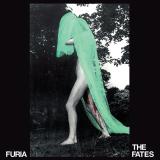
Following her foundational role in the early years of The Fall, and then the searing post punk of The Blue Orchids, as well as several tours serving as a backing group for Velvet Underground chanteuse Nico, Una Baines found herself starting 1985 without a band. Drafting together members of the all-female Beyond The Glass, and compatriots associated with her past projects, she entered the studio with a clutch of songs and a willingness to experiment. Separating the sides into “waxing”, for the more traditional songs, and “waning”, where the structures become looser and varied, the resulting album was the sole release on her Taboo Records and seemed quickly lost to time, but feels shockingly current in both feminist content, and freak folk execution.
It is a collection of influences that would emerge decades later in the wyrd folk movement, and Furia is not out of place at an intersection of Devendra Banhart and Meg Baird, but there was absolutely nothing like it in 1986. Upon release, Mark E. Smith famously likened it to Third Ear Band, having to dip back to 1970 for a touchstone. Songs like “Bridget of Ireland” could be traditional ballads from decades past, while “No Romance” is a lo-fi new wave hit waiting to happen. “Sheila/Beats My Heart” fashions The Velvet Underground as a feminist protest band, and “Ritual” plays out like all of the Motown girl groups banding together to tell the world that they don’t need a boyfriend to solve all of their problems. It all draws on sources that are so familiar, yet turns them upside down in a celebratory fashion. Is it freak folk? Pagan punk? Pastoral drone? It is all of that and so much more. It is the sound of a woman, and an artist, truly finding her voice, and it is both magical and compelling.
“Remarkably prescient and weirdly beautiful record. A creative, challenging and memorable companion, with a distinct voice and identity of its own: in turn playful, political and experimental. It's highly recommended.” – The Quietus
Available for the first time on any format, the soundtrack of Pier Paolo Pasolini's controversial 1975 vision of the Marquis De Sade's 120 Days Of Sodom, featuring beautiful and discordant classical compositions, in stark contrast to the shocking and cruel events unfolding onscreen.
Three weeks before the scandalous release of "Salò, or The 120 Days Of Sodom", Pasolini was brutally murdered in Ostia, Italy. In the wake of the tragedy, legendary composer Ennio Morricone wrote 'Addio a Pier Paolo Pasolini' (Goodbye to Pier Paolo Pasolini) for the late filmmaker, included in the final edit.
Following the narrative of one of Pasolini's defining cinematic moments, the soundtrack opens with Ennio Morricone's "Son Tanto Triste", descends into the melancholic minor chords of Bach, Chopin, Orff, Puccini, and Graziosi, incorporates sinister renditions by the cast, and includes Morricone's own sombre tribute to the director.
Disgusted by the flood of crass sexploitation movies which filled the space opened up by his "Trilogy Of Life", Pasolini turned to the most nihilistic thinker in European history for what became his final film. His version of De Sade's 120 Days Of Sodom, amplified with motifs from Dante's Inferno, confronts the ultimate implications of fascism in a series of sexual and moral atrocities. "The only true anarchy is power".
The LP / CD will be released on Friday 13th February 2026, exactly 249 years since the Marquis de Sade was arrested and imprisoned in the dungeon of the Vincennes fortress for charges of "debauchery and immoderate libertinage" that scandalised his contemporaries.
Debut full length vinyl from the UK/Italian duo of Ecka Mordecai and Valerio Tricoli, working together as Mordecoli. Individually these two travellers have carved out a path of ghostly musique concrete (Tricoli) and textural cello wandering (Mordecai). Alter is proud to present the album Château Mordécoly a result of two musicians (and friends) coming together to explore the middle ground of their individual investigations.
The results of a red wine induced residency at London’s Cafe Oto, Château Mordécoly is a panoramic audio field exploring both the physicality of sound, informed by the voice, cello and pictish harp of Mordecai, and the artificial manipulations of Tricoli’s revox tape machine. The delicate tension between the physical ‘real’ and the distortive ‘new’ leverages this release far beyond a tipsy residency and shifts it into a top tier electroacoustic take on the zeitgeist. Solo cello and voice appear rooted in the timbre of time. The magnetic tape is both a friend and covert manipulator.
The physical elements open themselves to disfigurement as a means of propagating the fantastical audio that unfolds from the initial enquiry. There’s no witchery or wizardry on part of either player but rather a symbiotic passing of the baton as the line between the real and the non-real flow in and out of themselves. The results are at once sedate, shocking and subversive.
Château Mordécoly is a disembodied sonic landscape; a phantasmagorical world of fantasy unfolds as the delicate beauty of Mordecai’s playing and singing is transformed into a playful and unusual landscape. Epoch’s are evoked as the visual stimuli resulting from these alchemical transformations conjure everything from a haunted house to the Middle Ages.
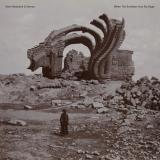
The fifth album from Saint Abdullah & Eomac began as a poem and became a record that refuses to stay in one place. The title arrived in a cab in Paris. Mohammad Mehrabani read it aloud from a list of options. Ian McDonnell said: that's interesting, what does that mean? The answer, it turned out, was the album. Their fifth album When The Sandbox Has No Edge is rooted in hip hop, but its cast tells you how far it travels. Abbas Zahedi, Richie Culver, and Armand Hammer contribute vocals and poetry. Lester St. Louis brings cello. Che Chen of 75 Dollar Bill brings guitar. The producer and sound designer Seraphim contributed textures and sound designs throughout. Samples run deep, from records pulled from charity shops to market stalls on road trips across the UK. Raw fragments were shaped into fully formed compositions, structuring the chaos without flattening it. The sandbox, rendered without an edge.
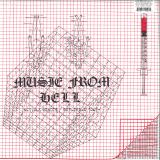
Nervous Gender’s legendary synthpunk LP Music From Hell burbles up from infernal depths to resurface on Dark Entries. Confrontational, unhinged, and unabashedly queer, Music from Hell is an unholy grail for fans of the strangest underbellies of post-punk, minimal synth, and early industrial music, and is presented here newly remastered and on expanded double LP.
Nervous Gender (de)formed in LA in 1978 at the hands of Phranc, Gerardo Velaquez, Edward Stapleton, and Michael Ochoa. Phranc, the androgynous embodiment of the band’s name, left in 1980. Following her departure, a wide cast of LA freaks would find themselves drawn into the band’s orbit, including Alice Bag of the Bags, Paul Roessler of the Screamers, the Germs’ Don Bolles, and an 8-year old drummer named Sven Pfeiffer. In 1980, Nervous Gender appeared on the seminal Live at Target compilation alongside Factrix, uns, and Flipper. With the band’s notoriety cemented, Music from Hell followed in 1981 on Subterranean Records (as no LA label would touch this material).
Side A, dubbed “Martyr Complex”, presents a more punk-forward sound with live drum salvos and slabs of aggressive synth. These twitchy, unsettling shockers ooze with the kind of snotty misanthropy that will endear them to fans of the Screamers or Crass.
Side B, known as “Beelzebub Youth”, is a live performance the band labeled "an electronic bruto-canto dissertation on the banality of spiritual transcendence." Mutant melodies cede way to synthesized clangs, whirs, bleeps, manipulated tapes, and howls of despair.
In addition to all the material from the original LP, we’re treated to a full disc of the band’s demos, the material from the Live at Target compilation, and early live recordings. Included are unrecognizable covers of Carly Simon and Lou Reed, and the Sex Pistols that are so despairingly skewed they fall into the void. This reissue of Music From Hell includes a 36 page lyric booklet, foldout poster, and gatefold sleeve with photos, flyers, and news-clippings designed by Eloise Leigh. Tackling taboo issues like sexual kinks, mental illness, drug use, and childhood molestation, Music From Hell is still surprising – even shocking - over 40 years after the album’s release. Nervous Gender stand as one of the most genuinely anti-establishment outfits in underground music, a colossal fuck you to social norms from religious strictures to gender essentialism.
out of Stock
Last delivered 6 months ago available to reorder, subject to availability
This is the ultimate mini-album that can proudly be called LIP CREAM! “9 SHOCKS TERROR” has remained timeless since its original release in 1986, embodying incomparable speed and a level of perfection that defines Japanese hardcore. Opening with ‘TERROR,’ which goes straight into reverse audio and needle skips, the song structure charges forward relentlessly, shaking off the catchy, humorous, and approachable vibe that had previously defined LIP CREAM. Naoki's noisy yet melodic guitar, Pill's wild drums, Minoru's heavy yet high-speed bass, and JhaJha's intense shouts that still allow the lyrics to be clearly heard—all these elements fuse together to create powerful tracks that have reached an unprecedented sound. Recorded at Shinjuku JAM Studio, ‘9 SHOCKS TERROR’ was composed primarily by Minoru and Naoki, with lyrics and artwork by JhaJha. JhaJha's hand-drawn jacket illustration was a parody of THE FUZZTONES' album “Cinderella”. Additionally, an English translation of the lyrics is included for this RELAPSE release, helping English-speaking listeners understand the unique world of LIP CREAM. Interestingly, the title “9 SHOCKS TERROR” was revised to “9 SHOCKING TERROR” on the 2007 CD reissue by ONI Label. This revision was made after illustrator PUSHEAD, who has a long-standing relationship with LIP CREAM, pointed out a grammar error. However, the original title has been restored out of respect for the original work for this RELAPSE reissue. Following the release of this album, LIP CREAM launched their self-managed national tour “BLOODY SUMMER TOUR,” and fans who bought the album rushed to the gig. Additionally, during a show at Doshisha University in Kansai in the autumn of the same year, torches were brought onto the stage and Jha Jha set them ablaze, causing absolute chaos (footage of this incident can be viewed in the video “LIP CREAM ONLY”).
“In a concert, I show something with a beginning, a middle and an end. But, there is no end. Of course, there is no end. Because I am the music, and I am still here.” - Sophie Agnel
‘Learning’ - Sophie Agnel’s first solo LP, feels like the dark, physical inversion of her excellent ‘Song’ which came out on Relative Pitch earlier this year. Sinking her unique sound into vinyl for the first time, the LP arrives as Agnel recovers from a brain tumour - a shocking discovery that will require Agnel to start again with the piano. It’s a terrifying prospect, but Agnel has been here before, having reorientated herself almost entirely away from her early classical training over the last 4 decades of her work.
‘When I was young I had very good ears, oriole absolute. Then later I began to make strange sounds with my piano, to do different kinds of music. I was more interested in the sounds than the melody, for example. I remember once I sat down in a shop to try to read the scores of Schubert and there was a light emitting a very strong bzzzzzzz. And I couldn't listen to my oriole internal - I couldn't read the score. I was entirely subjugated by the sound of the light. And I understood that something had changed. Ten years before I could read and not hear the light. Now I understood that my ears were completely different. I was more open to the sounds of life.”
Born in Paris in the 60’s and playing her parents piano as soon as she could stand up, Agnel quickly grew tired of the classical world. What frustrated her was the strange disconnect between the frame of the piano and its keyboard - a weird boundary that seemed to form some hushed code of etiquette. “The first thing I put inside the piano was a plastic goblet. I’d seen a few pianists do it: Fred Van Hove, for example, put rubber balls inside his. But what didn’t appeal to me was that there seemed to be no link between the pianos outside and inside.”If you see Agnel play now, the body of her piano is littered with fish tins, ping pong balls, wooden blocks - not that you’d recognize their sounds. Having absorbed the language of the European avant-garde, Agnel is known for pulling the piano’s interior outside of itself by tipping her handbag into it. But these ‘strange sounds’ don’t just come from Cage - they also share the poetic force of Cecil Taylor and ‘Learning’ demonstrates that Agnel’s work on the piano's keyboard is just as important as what she’s littered on its strings. The record lets loose her ability to unleash a formidable sound mass and then rope it back to one single, clarifying note. With one hand, Agnel plays 88 tuned drums and on the other an enormous guitar - with the LP rotating through oncoming trains, and blues harmonica and feedback. It’s single minded stuff, borne out of a dedication to a wholly personal language of gesture, accumulation and deft reduction. “Maybe when I’m 80 I will not need anything,” Agnel says in a recent film made at her home. “I will do the same but with one note, and one finger. Maybe it's enough.”
‘Learning’ arrives in a reverse board sleeve designed by Jereon Wille. Recorded live at Cafe OTO by Billy Steiger on 6th June 2023 and 4th June 2024. Mixed by James Dunn and Benjamin Pagier. Side B edited by Benjamin Pagier. Mastered and cut by Loop-O. Front photograph by Aimé Agnel. Typography and layout by Jeroen Wille.
Going Up, originally released in 1983, is one of the most curious and enduring records from British studio mavericks The RAH Band. Long out of print, it now sees its first ever vinyl reissue courtesy of Shocking Music and Rush Hour.
Led by super-producer, arranger, and multi-instrumentalist Richard Anthony Hewson, The RAH Band has always existed just outside the mainstream. Blending jazz-funk, sci-fi synth pop, and cosmic lounge, their sound never quite fit the mould. That might explain the cult status they’ve held ever since. Beloved by Balearic heads, rare groove collectors, and adventurous synth diggers, Going Up is perhaps their most influential record.
At the centre of it all is the intro track “Messages From The Stars”, the band’s runaway cosmic hit. A spacey, retro-futurist groove that has become a viral favourite in recent years, it now boasts hundreds of millions of streams, with a new generation discovering it through TikTok and YouTube. But it was originally just one track on this understated 1983 album.
The rest of Going Up is just as compelling, filled with dusty drum machines, off-kilter instrumentals, woozy vocals, and that unmistakable early '80s charm. It is a snapshot of a band in transition, blurring the lines between leftfield pop, sci-fi funk, and home-brewed synth experiments.
Out of print for over 40 years, Going Up finally gets the reissue treatment it deserves. Restored and remastered, and still sounding like nothing else.
out of Stock
Last delivered 24 days ago available to reorder, subject to availability
Back in an unmissable picture disc reissue: THE MOOD MOSAIC
Vol.1 – The Hashish Party, ready to win over collectors and vintage sound lovers. Originally released in 1997 by Yellowstone
Records, this iconic compilation blends jazz-funk, lounge, Latin
jazz, soul-jazz, and psychedelia into a truly unique musical
journey.
The tracklist features legendary artists like Serge Gainsbourg,
Michel Legrand, Gábor Szabó, George Shearing, and Shocking
Blue, delivering an irresistible mix of exotic grooves and retro
atmospheres. The picture disc format enhances the series’ visual
appeal, making every copy a true collector’s item
out of Stock
Last delivered 8 months ago available to reorder, subject to availability
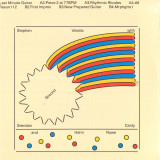
When you’re running a label, a demo occasionally comes across your desk that makes you reconsider everything you thought your label was all about. For Balmat, such was the case with this stunning album from Stephen Vitiello, Brendan Canty, and Hahn Rowe. It sounds like nothing we’ve released so far—and that very otherness opened up a whole new world of possibilities for us.
Fans of ambient, experimental electronic music, and sound art will be familiar with Vitiello, a New York native, long based in Virginia, who has collaborated with a cross-generational list of greats: Taylor Deupree, Steve Roden, Lawrence English, Tetsu Inoue, Nam June Paik, Ryuichi Sakamoto, Pauline Oliveros, and many more. On labels like 12k, Room40, and Sub Rosa, he has explored a wide range of minimalism, microsound, lowercase, ambient, improv, and other styles. But this album is something different. It may begin in ambient-adjacent territory, but it quickly veers off, and it just keeps zigzagging, taking on elements of krautrock, post-punk, dub, and the groove-heavy interplay of groups like Natural Information Society and 75 Dollar Bill.
This stylistic turn is thanks in large part to Vitiello’s choice of collaborators. “We’re coming from three different schools,” Vitiello says: “sound art, art rock, and punk rock.”
Active since the early 1980s, Rowe—a violinist, guitarist, and producer/engineer—has played with, or manned the boards for, a frankly jaw-dropping list of musicians: Herbie Hancock, Gil Scott-Heron, the Last Poets, Roy Ayers, John Zorn, Glenn Branca, Swans, Live Skull, Brian Eno, David Byrne, Anohni, R.E.M., Yoko Ono, and many more. But he might be most closely associated with Hugo Largo, a one-of-a-kind New York quartet—two basses, vocals, and Rowe’s violin—that in the late 1980s helped lay the groundwork for what would eventually become known as post-rock.
Canty, of course, is the legendary drummer of Fugazi, the visionary DC post-hardcore group, as well as Rites of Spring before them, and, currently, the Messthetics, a Dischord-signed instrumental trio with guitarist Anthony Pirog and Fugazi bassist Joe Lally.
Vitiello’s trio first collaborated on First, a 17-minute piece released on the Longform Editions label in 2023. Second picks up where the freeform drift of First left off, channeling the trio’s exploratory energies into more intentionally structured tracks and—in a real first for Balmat—some almost shockingly muscular grooves. “Sometimes my projects are more conceptually driven,” Vitiello says, “but I think this was more musically geared. I just wanted to open up the references and bring in an incredible drummer, bring in some melodies, and I’m sort of the center.” But his collaborators, he stresses, are “vastly creative in making anything I might suggest better.”
Like its predecessor, Second took shape in phases, shifting between improvisation and collage. Vitiello laid down the skeleton of the music at home, sketching out initial ideas on Rhodes keyboard and acoustic and electric guitar; he then fed the parts through samplers and his modular system, recording 10- or 20-minute jams. Once he had edited them into more structured forms, he hit the studio with Canty, who added not just drums but also bass and piano; finally, Vitiello took the results of those sessions to Rowe, who played violin, viola, electric bass, and 12-string acoustic and bowed electric guitar, and assisted in some of the final structuring and mixdown.
A few more surprises along the way: Reanimator’s Don Godwin, the studio engineer where Vitiello recorded with Canty, contributed what he calls “resonant dustpan”; and none other than Animal Collective’s Geologist, who just happened to be in the studio that day, sits in on hurdy gurdy on “Mrphgtrs1,” the album’s gorgeous, stunningly atmospheric drone closer. “I love these chance encounters,” Vitiello says. “Somebody I admire, a group I admire—that was an unexpected gift.”
An unexpected gift is a great way of describing Second as a whole: three veteran musicians venturing outside their usual zones and finding a new collaborative language together. The results can’t be neatly slotted into any given genre; they belong not to any given category, but to the spirit of conversation itself.
out of Stock
Last delivered 16 months ago available to reorder, subject to availability
Veyl is proud to welcome back to the label one of the most essential and multidimensional producers today, Filmmaker. To date, the Colombian artist has delivered a plethora of revered releases from his breakout, The Love Market (2019), to his previous album on Veyl, Fictional Portrayals (2022). He consistently traverses genres from postpunk, EBM, synth wave and beyond to create a unique identity still firmly rooted in film culture. Now he returns with perhaps his most robust and powerful offering, Hollywood
Cult.
Comprised of 13 tracks, the album sees the producer elevate his sound to new levels, conjuring a world of haunting atmospheres and devious directions that take the listener through a journey of unparalleled proportions. Kicking off the album is the ritual-like
'Secrecy', which builds tension before exploding into a synth-driven race against time and introduces us to the world that lies ahead. 'Holy Wood' injects a heavy dose of body music for an infectious piece that bleeds perfectly in to the slow burning nostalgia of 'Generational Trauma'. Next, 'Western Malice' picks the pace back up with its evil energy that feels fit for the best horror scenes before 'Shocking Therapy' enters the picture with an exhilarating electro feel.
Now in the depths of the journey, 'Vessels Wine' continues the saga with a high intensity work that gives way to the stirring emotions of 'Peacekeeper Ripper' and the raw, blood lust of 'Criminal Rite'. Now entering the final phases, 'Spiritual Harvest' cleanses the palate before 'Elite Dungeons' comes crashing in with a lo-fi feel that puts you deep underground. 'Two Sets of Rules' charges back with twisted lines before 'No Fetish Without Evil' unveils post-punk strings that puts you in a trance before 'Hanging Finale' closes the release u ltimately fading out into the abyss. Repeat listens will be necessary and the whole album feels like a soundtrack to a dark new world that is perfectly fitting for any Hollywood Cult.
out of Stock
Last delivered 2 years ago available to reorder, subject to availability
A valentine for black hearts! An electric array of magic sounds! The shock return of a missing legend! The surprise formation of HOUSE Of ALL by five former members of The Fall was bound to provide some pleasant surprises, not the least of which being the creation of an identity distinct from that of any specific Fall line-up, and here the band offer an steep evolution of sound of their two previous albums . . . darker, more elliptic and can we say it? A more mystical sum of talents than most groups ever manage. They've kept their open door policy to former members of The Fall and expanded it. Phil Lewis, who's stepped in live for Pete Greenway, makes his studio debut, and the long-lost Karl Burns has emerged from his mystery lair to add a third set of drums to the line-up . . . besting The Glitter Band by 50%! How this will work live has yet to be determined, but the band has already scheduled dates in Spring, 2025. House Of All Souls is somewhat more psychedelic than its predecessors, and despite seven players, each with his own particular style, the songs and production are shockingly cohesive. From the breakneck pace of first tune, Tempest And Storm to the superb album closer, Born At Dawn And Dead At Sunset, there's quite a lot to unpack - it's an album-lover's album, each track magnificent in its own way and impossible for us to pick a fave from the lot of 'em. Plenty has been written about The Fall, whose 50th birthday is just a few years off, but rare is the group with an equally perverse and persuasive influence in that period. When HOUSE Of ALL debuted, Martin Bramah remarked on it being "part of the Fall family continuum" - a matter of actual fact, given the pedigree of its members. With this, HOUSE Of ALL's third full-length album, it's proven fact that the bright lights of those multiple talents behind the band have yet to dim.
Ginnels never let up. Though it has been, staggeringly, eight long years since the last irresistible jangle pop transmission under the Ginnels moniker, nothing much has changed in Mark Chester's approach when it comes to the practice of music making, even if much everything else for Chester has seen considerable flux – he's now a father of two, and most shockingly of all for an indie popster of his ilk, gainfully employed. "It definitely started the same way all Ginnels stuff starts," Chester explains, "which is just me looking through five years of phone demos and going 'that's a decent song' and 'that's a decent song', and if you keep that up then you have a full album."
The man himself might be coyly committed to making his process sound as pedestrian as possible, but from the moment the delicate chiming introduction of album opener 'The Body Was Gone' goes widescreen – revealing an expanded sonic palette richer in timbre and exponentially wider in scope than anything Chester has let out into the world thus far – it is apparent that "The Picturesque" is poised to be less than parochial in its sonic purview.
From here, "The Picturesque" plays like a gauzy road trip Super 8 footage cutting between scenes of sunset at Monument Valley and B-roll from around middle-Ireland, entirely soundtracked by some enchanted mixtape of heretofore unheard B sides from REM, XTC and The Go-Betweens, unexpected guest appearances from the surprisingly together-sounding ghost of Johnny Thunders and snippets from your coolest friends' unreleased instrumental experiments. All liberally rippled with Chester's unique ear for melody and appetite for the unexpected when it comes to crafting guitar parts. And this, by design, feels like a Guitar Record, above all else.
For all its effortlessly sticky lyrical and melodic twists, "The Picturesque" separates itself within the mighty Ginnels catalogue in both the dexterity in playing and diversity in tone on show across these 12 tracks. And 12, of course as we know, being the optimum number of tracks for any LP to have, so bonus points for that too.
"This is the time that we, who have benefitted from the Last Poets shouldbe able to say, 'it's the Last Poets. It's them we should be honouring, because we did not honour them for so many years_"
KRS One wasn't just addressing the hip hop fraternity when he uttered
those words by way of introducing the video for Invocation - a poem
written thirty years ago, around the time of the Last Poets' last significant comeback. He was speaking to everyone who's been affected by the word, sound and power issuing from the most revolutionary poetry ever witnessed, and that the Last Poets had introduced to the world outside of Harlem at the dawn of the seventies.
In 2018 the two remaining Last Poets, Abiodun Oyewole and Umar Bin
Hassan, embarked on another memorable return with an album -
Understand What Black Is - that earned favourable comparison with theirseminal works of the past, whilst showcasing their undimmed passion andlyrical brilliance in an entirely new setting - that of reggae music. Trackslike Rain Of Terror ("America is a terrorist") and How Many Bullets demonstrated that they'd lost none of their fire or anger, and their essential raison d'etre remained the same.
"The Last Poets' mission was to pull the people out of the rubble o f their lives," wrote their biographer Kim Green. "They knew, deep down that poetry could save the people - that if black people could see and hear themselves and their struggles through the spoken word, they would be moved to change."
Several years later and the follow-up is now with us. The project started when Tony Allen, the Nigerian master drummer whose unique polyrhythms had driven much of Fela Kuti's best work, dropped by Prince Fatty's Brighton studio and laid down a selection of drum patterns to die for. That was back in 2019, but then the pandemic struck. Once it had passed, the label booked a studio in Brooklyn, where the two Poets voiced four tracks apiece and breathed fresh energy, fire and outrage into some of the most enduring landmarks of their career. Abiodun, who was one of the original Last Poets who'd gathered in East Harlem's Mount Morris Park to celebrate Malcolm X's birthday in May 1968, chose four poems that first appeared on the group's 1970 debut album, called simply The Last Poets. He'd written When The Revolution Comes aged twenty, whilst living in Jamaica, Queens. "We were getting ready for a revolution," he told Green. "There wasn't any question about whether there was going to be one or not. The truth was many of us still saw ourselves as "niggers" and slaves. This was a mindset that had to change if there was ever to be Black Power." He and writer Amiri Baraka were deep in conversation one day when Baraka became distracted by a pretty girl walking by. "You're a gash man," Abiodun told him. The poem inspired by that incident, Gash Man, is revisited on the new album, and exposes the heartless nature of sexual acts shorn of intimacy or affection. "Instead of the vagina being the entrance to heaven," he says, "it too often becomes a gash, an injury, a wound_" Two Little Boys meanwhile, was inspired after seeing two young boys aged around 11 or 12 "stuffing chicken and cornbread down their tasteless mouths, trying to revive shrinking lungs and a wasted mind." They'd walked into Sylvia's soul food restaurant in Harlem, ordered big meals, then bolted them down and run out the door. No one chased after them, knowing that they probably hadn't eaten in days. Fifty years later and children are still going hungry in major cities across America and elsewhere. Abiodun's poem hasn't lost any relevance at all, and neither has New York, New York, The Big Apple. "Although this was written in 1968, New York hasn't changed a bit," he admits, except "today, people just mistake her sickness for fashion." Umar is originally from Akron, Ohio, but had arrived in Harlem in early 1969 after seeing Abiodun and the other Last Poets at a Black Arts Festival in Cleveland. That's where he first witnessed what Amiri Baraka once called "the rhythmic animation of word, poem, image as word- music" - a creative force that redefined the concept of performance poetry and stripped it bare until it became a howl of rage, hurt and anger, saved from destruction by mockery and love for humanity. When Umar's father, who was a musician, was jailed for armed robbery he took to the streets from an early age where he shined shoes and raised whatever money he could to help feed his eight brothers and sisters. By the time he saw the Last Poets he'd joined the Black United Front and was ready to join the struggle. Once in Harlem, Abiodun asked him what he'd learnt in the few weeks since he'd got there. "Niggers are scared of revolution," Umar replied. "Write it down" urged Abiodun. That poem still gives off searing heat more than fifty years later. In Umar's own words, "it became a prayer, a call to arms, a spiritual pond to bathe and cleanse in because niggers are not just vile and disgusting and shiftless. Niggers are human beings lost in someone else's system of values and morals." And there you have it. It's not just race or religion that hold us back, but an economic system that keeps millions in poverty and living in fear - a system born from political choice and that's now become so entrenched, so bloated on its own success that it's put mankind in mortal danger. It was many black people's acceptance of the status quo that inspired Just Because, which like Niggers Are Scared Of Revolution, was included on that seminal first album. Along with their revolutionary rhetoric, it was the Last Poets' use of the "n word" that proved so shocking, but it would be wrong to suggest that they reclaimed it, since it never belonged to black people in the first place. There's never any hiding place when it comes to the Last Poets. They use words like weapons, and that force all who listen to decide who they are and where they stand. Umar's two remaining tracks find him revisiting poems first unleashed on the Poets' second album This Is Madness! Abiodun had left for North Carolina by then where he became more deeply enmeshed in revolutionary activities and spent almost four years in jail for armed robbery after attempting to seize funds related to the Klu Klux Klan. Meanwhile, the 21 year old Umar was squatting in Brooklyn and had developed close ties with the Dar-ul Islam Movement. A longing for purity and time-honoured spiritual values underpins Related to What, whilst This Is Madness is a call for freedom "by any means necessary," and that paints a feverish landscape peopled by prominent black leaders but that quickly descends into chaos. "All my dreams have been turned into psychedelic nightmares," he wails, over a groove now powered by Tony Allen's ferocious drumming. Those sessions lasted just two days, and we can only imagine the atmosphere in that room as the hip hop godfathers exchanged the conga drums of Harlem for the explosive sounds of authentic Afrobeat. Once they'd finished, the recordings and momentum returned to Prince Fatty's studio, since relocated from Brighton to SE London. This was stage three of the project, and who better to fill out the rhythm tracks than two key musicians from Seun Anikulapo Kuti's band Egypt 80? Enter guitarist Akinola Adio Oyebola and bassist Kunle Justice, who upon hearing Allen's trademark grooves exclaimed, "oh, the Father_ we are home!" Such joy and enthusiasm resulted in the perfect fusion of Nigerian Afrobeat and revolutionary poetry, but the vision for the album wasn't yet complete. He wanted to create a new kind of soundscape - one that reunited the Poets with the progressive jazz movement they'd once shared with musicians like Sun Ra and Pharoah Sanders. It was at that point they recruited exciting jazz talents based in the UK like Joe Armon Jones from Mercury Prize winners Ezra Collective, also widely acclaimed producer/remixer and keyboard player Kaidi Tatham, who's been likened to Herbie Hancock, and British jazz legend Courtney Pine, whose genius on the saxophone and influence on the UK's now vibrant jazz scene is beyond question. The instrumental tracks on Africanism are in many ways as revelatory and exciting as the Last Poets' own. It's important to remember that the kaleidoscope of styles and influences we're presented with here aren't the result of sampling but were played "live" by musicians responding to sounds made by other musicians. That's where the magic comes from, aided by Prince Fatty's peerless mixing which allows us to hear everything with such clarity. Music fans today have grown accustomed to listening to all kinds of different genres. Their tastes have never been so broad or all- encompassing, and so the music on this new Last Poets' album is as groundbreaking as their lyrics, and perfectly suited to the era that we're now living in. John Masouri
Pink Martini’s illustrious “Little Orchestra” joins forces with Hollywood Legend, Mamie Van Doren, in an enchanting duo set of throwback singles. “I Told Ya I Love Ya Now Get Out” brings a buoyant beat to a shockingly delightful breakup track. Mamie revisits “Ich dich liebe” after first singing it in the 1964 Spaghetti Western film Freddy and the Song of the Prairie and somehow it’s as transporting now as it was then. Building on her already incredible legacy, Van Doren brings a fantastic energy to these tracks, which she recorded with Pink Martini in her early 90s, injecting her quintessential charm and verve into the vocals, which interweave perfectly into the rich and glamorous sound of Pink Martini.Ads and reviews in R" and London Macadam.
out of Stock
Last delivered 23 months ago available to reorder, subject to availability
Spanish new grooves for the new era! The latest sample of some of the best tracks from the effervescent and creative new scene of funk, soul and R&B produced in Spain!
For the first time on vinyl! We present the fourth volume of the SAMPLADELIA series. After the resounding success of the previous volume, Enlace Funk magazine has selected sounds from funk, soul and R&B made in Spain 2023 and which are published for the first time on vinyl format.
The fourth installment of Sampladelia opens with an infectious tribute to Prince by Calequi, El Sr. Rojo brings then a bomb of raw hip hop and funk. Astrid Jones & The Blue Flaps delights us with their luxury soul and Chacho Brodas with the production by Griffi, surrounded by an all-star of names, offers solid R&B.
Lalo López ends the side A with his Limited Orchestra with the best electro funk hit. The B side starts with Julia Martín´s modern soul anthem with a positive message for the dance floor. The second track, the debut of Donny's Black Shoes, is a shocking declaration of principles that will give a lot to talk about.
Drunk In Palace updates the sound of the 80s in a personal way and Juli Giuliani brings the groove to the dancers. The last track, “Las paro todas” by Javier Simón offers R&B loaded with a message. This volume of Sampladelia presents the effervescent and creative new scene of proposals based on funk, soul and R&B made here in Spain and never before published in physical format.
Tracklist Side A A1. Calequi Y Las Panteras: Sandía A2. El Sr. Rojo: Dos Gatos A3. Astrid Jones & The Blue Flaps: Shine A4. Chacho Brodas: Sta. Mandanga A5. Lalo López Limited Orchestra: Contradicciones (Ft. Brigitte Emaga Y Kapi One) Side B B1. Julia Martín: Low B2. Donny´S Black Shoes: Why?! B3. Drunk In Palace: Hardfunk B4. Juli Giuliani: On My Way B5. Javier Simón: Las Paro Todas
out of Stock
Last delivered 2 years ago available to reorder, subject to availability
Lavender Vinyl. In the late 1970s, a peculiar sound began bubbling up from the land of 10,000 lakes. Buried beneath 50 solid inches of annual snow, Minneapolis made a Sound quite different than what the pop world foresaw. It issued forth as a slick, black, technologically advanced fusion, poised to storm the charts. Never known for sizable African-American populations, the Twin Cities of Minneapolis and St. Paul in fact harbored a tight-knit community of musicians working feverishly through the late '70s and early '80s toward a radical manipulation of American dance music, coating futuristic funk with the glamorous sheen of guitar rock. Synthetic ebony and ivory met electricity, with sexed-up results sent shockingly across the pop heavens like violet lightning.
After touring the globe showcasing their A/V moshpit-inducing live show, they are revealing their new musical creations to an unsuspecting public. Never Sleep are proud to present a landmark moment in the Japanese hardcore new rave scene. The blinding lights of DEATH RAVE point to an untraveled journey, a sci-fi fusion of black metal, gabber, cyberpunk, performance art and techno. It’s their first for the Berlin label (founded by Gabber Eleganza) following 2021’s EP Principle of Light Speed Variance. Full description VMO aka Violent Magic Orchestra break through the darkness and herald a spectacular mould-melting sound on their forthcoming album DEATH RAVE. After touring the globe showcasing their A/V moshpit-inducing live show, they are revealing their new musical creations to an unsuspecting public. Never Sleep are proud to present a landmark moment in the Japanese hardcore new rave scene. The blinding lights of DEATH RAVE point to an untraveled journey, a sci-fi fusion of black metal, gabber, cyberpunk, performance art and techno. It’s their first for the Berlin label (founded by Gabber Eleganza) following 2021’s EP Principle of Light Speed Variance. Ahead of the release VMO have brought their digital harcore to festivals around the globe, including Roadburn Festival, BANG FACE Weekender, Brutal Assault extreme music festival, Le Guess Who?, CTM Berlin and Dark Mofo. Their performance is the ultimate extreme visual music project in which techno, black metal, and industrial unite to create a ritual from the near future, 2099. All visual art and stage setting is provided by non-touring member, artist and programmer Kezzardrix (who has been visual director for millennium parade and BABYMETAL previously).The power consumption of a VMO show is equivalent to 56 guitar amplifiers, 5000W, a mind-expanding supreme noise and light experience. The band members all go by the names of classic black metal bands rendered in the Japanese katakana script; “ダークスローン”; “メイヘム”, and “エンペラー”. Their new LP is the first to feature lead vocalist ザスター. The record features guest vocals from extreme metal icon Attila Csihar, known for singing with Mayhem and Sunn O))). Other featured artists include Dylan Walker, singer of Full of Hell, punk-techno artist Infinity Division (aka Ash Luk), Icelandic darkwavers Kælan Mikla and Ican Harem of Gabber Modus Operandi. The result is a leap forward from their 2016 debut, where they have found a singularity where death metal meets Kraftwerk, or Rephlex goes black. Dressed in corpse paint and other hell-raising looks, onstage they are like “Shinigami (death gods) from the Death Note manga”. Singles Venom, Supergaze and Martello Mosh Pit featuring Gabber Eleganza have been released in the lead up to the record and have been shocking techno dance floors too with their hi-NRG-symphonic doom-gaze. They have shared their video for Planet Helvetech (here), created by Berlin-based Patrick Defasten. Helvetech combines the Norwegian word for hell (hevlete) with techno and is a reference to the infamous black metal shop founded by Mayhem’s Euronymous. It’s a song that imagines time travel from 2099 on the planet Helvetech (where VMO comes from) to 1990s Oslo. In 2023, they performed at the CTM festival in Berlin, as well as at Berghain, receiving rave reviews. At Sydney’s leading multi-sensory SOFT CENTER festival they drove the crowd into a frenzy on the 17 metre X 30 metre jumbo screen. They have also collaborated with artists, performing at the two day installation by the trailblazing Tianzhuo Chen - The Shepherd - at the Kyoto International Performing Arts Festival in 2021 here. At Sónar 2023, VMO provided the music for Taiwanese visual artist Yuen Hsieh’s work about virtual life after death DIGITAL AFTERLIFE AGENCY here. VMO will tour the world again for the new record, with appearances at ROSKILDE and media art and music fest Sónar 2024 announced so far and the DEATH RAVE experience getting bigger and bigger.
out of Stock
Last delivered 2 years ago available to reorder, subject to availability
Influences from heavy bands of the time, such as Black Sabbath, Deep Purple and Steppenwolf are noticeable, with proto-doom and psych/funk undercurrents.
Do you like fuzz guitar? You're going to hear it screaming and wailing and building to epic tidal waves and crashes, the kinds of astonishing guitar cascades not heard since you cued up the best of all available live Jimi Hendrix recordings. Talking about a track known online as 'Bufo Gutturalis,' a poster's assessment: "I gotta say this is one of the most shocking songs from 60s, it's impressive how the sound can be heavy and dark -- it is also one of the earliest released songs most closely to call proto-doom."
Liverpool’s legendary Death Metal pioneers Carcass (who still tour
extensively to this day) are often credited with shaping the entire
death metal genre.
Pushing boundaries with their shocking imagery whilst evolving and innovating with each new album. Heartwork is widely renowned as the best Carcass album with its melodic intricacies.
These albums have been specially recreated using ‘FDR’ - full dynamic range mastering - pressed from the original master tapes, allowing the music’s nuance to shine through and giving these classic albums a more ferocious and dynamic sound, enabling the listener to immerse themselves in the full audio heaviness
Advitam Aeternamour, Cléa Vincent's third album, will be released on 29 March 2024 by Midnight Special.
If the 90s gave us “French touch,” then the 2010s ushered in “French pop,” and it was in the midst of this revival that Cléa began her artistic journey. As early as the music video for
“Achète-le-moi” from her debut LP Retiens mon désir (2016), we witness the singer striking selfie-like poses with her French pop comrades (La Femme, Bertrand Burgalat), appearing pell-mell on screen in the form of their vinyl records. Since then, whether singing with Philippe Katerine or co-producing (and composing) Jeanne Balibar's D'ici là tout l'été (2023), Cléa Vincent has effortlessly carved out a niche for herself in the French pop scene. The advantage of being a “jack-of-all-trades” — Cléa is a writer, composer, and producer — is that her music casts a wide net. Both highly acclaimed in the indie circuit and “as seen on TV” (on Quotidien, among others), she has also enjoyed a stint as the host for web-TV show Sooo Pop, for which she regularly interviewed a plethora of French artists. Beyond France, the singer tours extensively. After a run of concerts in Europe, Asia, North and South America, it was her visit to Latin and Central America that inspired Tropi-cléa (2017-2020-2022). The three EPs bathed in a tropicalist glow do more than just dip their toes in the water; they mark a deep desire to escape in a post-lockdown world.
In between these projects emerged Cléa’s LP Nuits sans sommeil (2019). The album quickly became an instant classic and lives up to its name, since Clea never seems to stop — writing, composing, singing, or dancing. Mixed by Stephane ALF Briat, who has lent his magic touch to records by Phoenix, Bonnie Banane, Air, and Flavien Berger, Cléa Vincent's third LP Advitam Aeternamour proves once again that her music is in perpetual renewal. The artist takes risks both in her pursuit for innovative sounds and in the themes she tackles: coming out, incest, grief...and of course, she will always be a true romantic at heart; there’s no need to be ashamed of loving love. Cléa’s songs are full of “explicit lyrics,” but not in the typical sense: rather than ringing harsh and raw, her words are tinged with sweetness and melancholy, at the risk of shocking less sentimental listeners.
Written hand-in-hand with Raphaël Léger, her creative soulmate for the last ten years who also recorded and produced the album, Advitam Aeternamour features lyrics charged with Epinal and equinox imagery. On the poignantly sober title track, sudden flashes of light are padded by tinkling synthesizers swathed in the voices of an angelic choir, as also heard on “Nuit de Yalda.” Cléa offers a modern take on 90s house music (“C'est Ok”) and 2-step garage (“Free Demain”). Particularly influenced by The Beloved, she is not above dipping pop songs into the electronic melting pot to get them through the club door (“État Second,” where we “turn up the BPM”). And whether on “Shut down ma tête,” or “Douce Chavirée,” Cléa pushes the champagne cork down even further so that the party never stops. The bass gets louder, the rhythm intensifies — the melodies of these eternal hits are an invitation onto the dance floor, lit up by her smile.
As depicted in the soothing embrace that appears on the album artwork, the bright psychedelic hues are the perfect complement to her therapeutically inclined synthetic pop. Even if they tackle themes such as breakups, Cléa's songs, which are vitamin-packed and deep on the surface, are intended to heal and repair. “Se laisser partir,” with its light vocoder echoes, emulating the vocal shadow of a loved one, is an optimistic breakup song. Advitam Æternamour gives us life, from birth to grief — and in the middle, wild, beating passion. If her songs resonate with us, it's because Cléa speaks to us in her songs, as heard on the girl power anthem “Free demain,” where she addresses the listener as a friend (“put the pedal to the metal and you’ll take off for the stars”). When she shares the microphone with Jacques on “État Second,” enveloped by the sounds of unidentified musical objects, the complementary nature of the two artists is evident. The album is as much a tribute to the healing virtues of music as it is a self-portrait of Cléa inhabited by her art. Ad vitam æternam and with love.
- New repress Edition - Pressed on Metallic Silver Wax - LP housed in an expanded gatefold jacket - Includes lyric insert and repro archival newspaper fold-out // Reissue of the pioneering group's debut album First Issue. In 1976 Johnny Rotten and the Sex Pistols set the agenda for punk's year zero with 'Anarchy In The UK', a song that summed up the spirit, sound and attitude of the band in one shocking package. Two years later, the Sex Pistols were in tatters, but Rotten was as unsentimental as you'd hope. He reverted to his real name - John Lydon - and set about forming a band whose very identity kicked against press and media manipulation. Featuring bassist Jah Wobble, drummer Jim Walker and guitarist Keith Levene, his new group were Public Image Limited. The public image would be limited. PiL were a very distinct prospect from the Pistols, founded with a greater thought for rhythm, and with a sound that turned the page from snarling punk to a more experimental sound fusing rock, dance, folk, ballet, pop and dub. But that's not to say Lydon's new outfit lacked vitriol. 'Public Image' hits out against the notorious British tabloid press, who never gave Lydon an easy ride, and against his own Sex Pistols public image - "You only saw me for the clothes I wore". The debut single (and the album that followed) operated as a theme song and a manifesto: "_my entrance/My own creation/My grand finale/My goodbye," as the lyrics had it. It is, essentially, the sound of four people letting loose in a studio - and not caring what anyone else thought.
Having been re-discovered as a groundbreaking slice of proto-grime from 1994, Dylan Beale’s legendary soundtrack for the SNES game Wolverine: Adamantium Rage finally gets the reissue treatment it deserves via Sneaker Social Club.
When the game came out in 1994, Beale’s soundtrack for the SNES edition stood out from the pack for its gritty beats, deceptively weighty low end and edgy orchestra stabs, but few would have guessed how certain tracks would predict the shape of music to come. Around 2016, the ‘Tri-fusion’ track in particular was picked up on by London-based producer Sir Pixalot as a mind-blowing slice of Eski beat coldness. To prove his point, Pixalot ran an acapella from J-Wing over the track and the results spoke for themselves.
While ‘Tri-Fusion’ is a straight-up accidental grime sheller, there’s scores more heat packed away in Beale’s soundtrack for Adamantium Rage. The limitations of the space on the game cart meant Beale had to get creative with the most limited samples. Fortunately his background producing UK hardcore and jungle in Rude & Deadly and Stuck To Your Lips meant he knew his way around the restrictions of an Akai s950. Fuelled by the inspiration of jungle and West Coast rap, he worked on the game soundtrack with a similar spartan attitude, limited to 200kb with which to load up the music engine for the game, samples and all.
Given the importance of minimalism in the effectiveness of soundsystem music, it’s not surprising tracks like ‘Cyber’ and ‘Dark Queen’ pack a punch which could absolutely set a dance off. Watch out for ‘Weapon X Lab’ too - another stand out bomb creating a deadly machine funk out of the tightly clipped bass samples and weird animal groan loops. Alongside the full, original soundtrack, this first issue of Wolverine: Adamantium Rage OST comes with additional tracks never used in the original game which widen out the styles Beale was exploring within the shockingly limited means at his disposal.
“I vividly remember when we first played the soundtrack on a bigger set of speakers to the boss,” Beale recalls, “his initial reaction was one of amazement that we had created something so ‘real’and different in comparison to everything else out there in terms of video game music, which I remember with great pride and fondness. Comparing to everything out there, it was totally unique- a moment in time.”
out of Stock
Last delivered 2 years ago available to reorder, subject to availability
Midwestern psychiatrist Suzanne Mathis' world is turned upside down when she decides to protect Mae, a fragile teenager on the run from a cult. As Suzanne’s daughter Jules begins to suspect there’s more to Mae’s story, a series of incidents – seemingly brought on by Mae’s presence - leave the family in chaos. Soon the Mathis family is fighting for survival against a strange cult while Suzanne and a local police detective try to unravel the clues of Mae’s past and sinister happenings in the town she escaped. Adapted from Daria Polatin’s best-selling book inspired by true events, DEVIL IN OHIO is a thrilling, shocking tale of demonic mayhem and mystery in the heart of small-town America.
British composer Will Bates incredible work on DEVIL IN OHIO began with a hymn for the cult, written before shooting. It expanded with songs for Bishop Briggs and Maiah Manser, with melodies for hurdy-gurdy and synth, until it became a haunting world of its own, blending score, soundtrack and diegesis. Now, together with Netflix Music, we’re excited to release DIO’s first-ever full-length soundtrack on vinyl.
The great sound of the sixties has been collected on this album. Featuring big international hits from Shocking Blue, Golden Earring, Petula Clark, The Shangri-Las and Demis Roussos. Go back in time with this great compilation, released on turquoise coloured vinyl. Original artists! Original versions!
The great sound of the seventies is collected on this album. With big international hits from a.o. Brotherhood Of Man, Golden Earring, Jesse Green, Jimmy 'Bo' Horne, Shocking Blue and Karen Young. Get back in time with this great compilation on yellow coloured 180 grams vinyl. Original artists! Original versions!
Formed by Monster Magnet’s John McBain and Soundgarden’s Matt Cameron & Ben Shepherd in 1993 during some downtime from their day jobs and side project Hater (who released a self-titled album in 1993), Wellwater Conspiracy set about immersing themselves in the dayglo world of sixties psychedelia, channelling the vibrations of Syd Barrett’s Pink Floyd and the 13th Floor Elevators to produce the garage lo-fi-lysergic assault on the senses that is their debut album ‘Declaration of Conformity’. Originally issued on Mudhoney’s Steve Turners Super Electro label in 1997, the album was met with critical acclaim upon its release, and Rolling Stone magazine said, “Declaration’s tinny, fuzzed-out sonics decidedly evoke the Summer of Love.” God Unknown Records are proud to be welcoming the album back into print and on all digital platforms, and this coming September 22nd will see the release of a remastered vinyl pressing with extra tracks and new artwork taking influence from Blue Note Records’ fabled artwork. From start to finish, ‘Declaration Of Conformity’ is a loving homage to the true beginnings of psychedelic rock, long before the music got harder and heavier. Songs like ‘Green Undertow’ and ‘Sleeveless’ hark back to the time when The Beatles were spinning the world on its axis with ‘Tomorrow Never Knows’, Syd Barrett was the piper at the gates of dawn and Roky Erickson was introducing the world to his Texan psychedelic sounds. Wellwater Conspiracy’s music exists at that moment when pop music started to fracture and go far further out. It was still pop music, but the edges were starting to blur and the sounds were starting to fracture. This is where ‘Declaration of Conformity’ sits; at the dawn of one of the biggest cultural shifts in musical history. The Bandcamp link will also feature two bonus download-only tracks, a cover of ‘Akka Ragga’ by Shocking Blue and ‘Late Night’ by Syd Barrett. Both tracks feature Josh Homme on guitar and bass. Tracklisting A1 Sleeveless A2 You Do You A3 Trowerchord A4 Green Undertow A5 I Love You Every Day Sandy A6 Nati Bati Yi A7 Far Side Of Your Moon B1 The Ending B2 Space Travel In The Blink Of An Eye B3 6-6-5-4-3-2-1 B4 Shel Talmy B5 Lucy Leave B6 Declaration Of Conformity B7 Palomar Observatory
High-octane tour-de-force by legendary post-punk group, INU. Widely considered in Japan to be one of the all-time greatest punk records, 1981's Don’t Eat Food! remains shockingly unknown to the rest of the world. Led by literate but unhinged Machida Machizo, a magnetic stage presence who sang in a thick Osaka dialect that sounded like nothing else at the time, INU took Japan by storm in the late '70s with their powerful and often belligerent live show. Their membership changed frequently but INU's final lineup -- the group that recorded Don't Eat Food! -- was sharp as a knife, and the band's airtight debut still wows forty years later.
It's hard to describe INU's unique sound in comparison to other bands, but maybe imagine a more fidgety Richard Hell & The Voidoids jamming with PiL? Better yet, just listen for yourself.
This first-ever fully-licensed edition has been remastered from the original tapes and cut by Kevin Gray and includes an 8-page booklet with never-before-seen photos, lyrics in English and Japanese, and liner notes by Syojiro Ishibashi in English and Japanese.
out of Stock
Last delivered 3 years ago available to reorder, subject to availability
A pungent ooze emanates from the subway. As a sticky drum machine sequence rolls out like thick dark fog, ice cold synth swirls rise from the depths.
Since the debut album Europe By Night, one of the main references associated with Henrik Stelzer and his Metro Riders project has been that of cinema, and particularly the European genre films of the 1980s. With its seedy subject matters manifesting both in visual style and music, the vibe of that era has crystallized over time. Passed down to us from deteriorating video cassettes, it became an invaluable key to decoding our present day reality.
And this is true for this album as well; Stelzer does not hide the fact that he builds heavily on that vibe; referencing it through track titles and utilizing a particular recording setup consisting of a Fostex and a reel to reel in order to achieve and recreate the feeling of those soundtracks — as heard on magnetic tape rather than vinyl.
The motion picture soundtrack as an arbitrary genre definition becomes, in the hands of Stelzer, a pair of X-ray specs for him to envision a kind of music that deals in grains and contrasts rath- er than hooks and choruses. And like Roddy Piper in John Carpenter's 1988 film They Live, he hands those glasses over for us to see the true face of our times.
On Lost In Reality Metro Riders maps out an emotional geography of the cities at night, wherein the cinematic haze becomes a tool by which we can view the cities with new eyes. Not steering away from the darker alleys nor the harsh realities of modern day politics masquerading as progress. Yet escapism, in the end, seems the only viable option. But not as an endgame, but rather a stepping stone for building a new vocabulary for an utopian language.
Marc Richter aka Black To Comm released his debut record 20 years ago. In 2023 he is still busy releasing music under various disguises and is currently signed to the Thrill Jockey label. To celebrate this anniversary his own Cellule 75 label is re-releasing some classic out-of-print vinyl albums that originally came out on the defunct Type and De Stijl labels. The LP will feature a full-colour printed inner sleeve exclusive to this edition.
In 2009 the Type Recordings label run by John Twells had just released seminal records by Grouper, Jóhann Jóhannsson and Yellow Swans when they signed Richter and put out his breakthrough Alphabet 1968 album. The LP sold out within two weeks, receiving a glowing full-page review in The Wire Magazine by the late Mark Fisher (later reprinted in his book Ghosts Of My Life), was selected for Boomkat's Top 10 releases of the year (alongside debut albums by Leyland Kirby, Demdike Stare and Oneohtrix Point Never) and was greeted with universal praise in the underground blog network as well as established magazines such as The New Yorker and Pitchfork.
The music itself played with the notion of nostalgia without being nostalgic itself. It's the sound of half-remembered dreams, a surreal distorted vision of the past, an aural polaroid of long forgotten musics, a ghostly voice from a non-existent era.
From the original Type one-sheet:
"The mission statement for Alphabet 1968 was to write an album of "songs" for want of a better word. Short tracks which represented genre points, the milestones which stuck in Richter's mind when he thought back to his favorite records. What we arrive at is a breathtaking 10-track album which, over the course of 45 minutes, explores world music, techno, noise, avant-garde, ambient music and even exotica. Each track is linked with a loose thread of radio static or environmental sound, dragging you through the album, as if tuning in to a stray broadcast or a particularly adventurous mix. Richter has pieced the album together from hours of recordings made at his studio with home made gamelan, small instruments and loops gathered from a collection of ancient vinyl and 78 records. The scope of the album is admirable, but ignoring this, it is simply a shockingly arresting collection of experimental oddities, with references ranging from Moondog to Basic Channel by way of Bernard Herrmann. It's not hard to fall in love with Alphabet 1968, far harder would be to place exactly where the record should fit into your collection."
Mark Fisher in The Wire:
"But what if we were to take Richter's provocation seriously - what would a song without a singer be like? What would it be like, that is to say, if objects themselves could sing? It’s a question that connects fairy tales with cybernetics, and listening to Alphabet 1968, I’m reminded of a filmic space in which magic and mechanism meet: JF Sebastian’s apartment in Blade Runner. The tracks on the LP are crafted with the same minute attention to detail that the genetic designer and toymaker brought to his miniature automata, with their bizarre mixture of the clockwork and the computerised, the antique and the ultramodern, the playful and the sinister. Richter’s musical pieces have been built from similarly heterogeneous materials - record crackle, shortwave radio, glockenspiels, all manner of samples, mostly of acoustic instruments. ….. JF Sebastian's apartment was itself an update of older spaces in which science and sorcery co-existed: the workshops of ETA Hoffmann's inventor-magicians, or of Pinocchio's creator, Geppetto. I think, too, of Auguste Villiers de l'Isle-Adam's astonishing 1886 tale The Future Eve in which Edison, using the expertise he has recently acquired from inventing the phonograph, sets himself the task of constructing an artificial woman. But if there are songs here, they are sung by the gramophone and other recording and playback machines. Richter so successfully effaces himself as author that it is as if he has snuck into a room and recorded the objects as they played (to) themselves. Rather than simply automating his music, as in the case of Pierre Bastien and his mechanical machines, Richter makes us feel that he has merely recorded the unlife of objects. ….. Indeed, the impression of things winding down is persistent on Alphabet 1968. Entropy has not been excluded from Richter's enchanted soundworld. It feels as if the magic is always about to wear off, that the enchanted objects will slip back into the inanimate again at any moment."
I Shall Die Here / Earth Triumphant is an expanded edition of the fourth full-length album by The Body, first released to widespread acclaim, and terror, in 2014. Sharing their moribund vision with Bobby Krlic, aka The Haxan Cloak, the tried and true sound of The Body is shred to pieces on I Shall Die Here, mutilated by process and re-animated in a spectral state by the collaboration.
This double album set is expanded with the previously unreleased Earth Triumphant, a full-length companion album that would become I Shall Die Here, showcasing The Body's brutality in its most primal form. With both albums revisited by The Body and Seth Manchester at Machines With Magnets and remastered by Matt Colton at Metropolis Studios, this is the definitive edition of a shocking classic of unbridled bleakness and innovation. Formed by drummer Lee Buford and guitarist Chip King in Little Rock, Arkansas in 1999, The Body soon relocated to Providence, Rhode Island. The duo remained in Providence for a decade before moving west to their current home of Portland, Oregon. Their debut self-titled album (Moganano, 2003) and on the widely-acclaimed, classification curtailing of All the Waters of the Earth Turn to Blood (At A Loss, 2011) readied the band for even more experimentations. The employment of the Assembly of Light Choir's classical chorales on All the Waters, alongside more industrial music techniques such as vocal sampling and drum programming, prompted RVNG to inquire with King and Buford which darker corners of the electronic universe they were presumably interested in exploring.
The undertaking of I Shall Die Here was aided by Seth Manchester and Keith Souza, The Body's long standing engineer and creative collaborator, and noted producer Bobby Krlic. Krlic's own work as The Haxan Cloak struck a similarly despairing chord to The Body with the celebrated Excavation (Tri Angle, 2013), itself a minimalist evocation of the afterlife. I Shall Die Here shares similar nether space with the morbidly deviating darkness of Excavation, but remains sculpturally frozen in a sort of earthen purgatory.
The Body's musical approach, engraved by Buford's colossal beats and King's mad howl and bass-bladed guitar dirge, became something even more terrifying with Krlic's post-mortem ambiences serving as both baseline and outer limit. I Shall Die Here sonically serrates the remains of metal's already unidentifiable corpse and splays it amid tormented voices in shadow. This expanded edition gives us a window into the creation of a classic with the inclusion of its in utero twin, Earth Triumphant. Recorded as a nearly finished album by Buford and King before The Haxan Cloak's transformation, it stands as a raw statement of intent, the original DNA for what would soon mutate into something wholly new.
Fans of I Shall Die Here will find familiar sonic fragments in a more primitive state - like seeing an out-of-context photograph of a family member taken well before you knew them - but the album stands on its own in its minimalist brutality, a natural bridge to what The Body was soon to become. The Body's I Shall Die Here / Earth Triumphant will be released in digital and vinyl formats on June 30, 2023. On behalf of The Body, The Haxan Cloak, and RVNG Intl., a portion of the proceeds from this release will benefit Intransitive, an organization that works to advance the cause of Trans liberation in Arkansas through art, education, advocacy, organizing and culture in order to create effective systemic change and on-the-ground impact.
I Shall Die Here / Earth Triumphant is an expanded edition of the fourth full-length album by The Body, first released to widespread acclaim, and terror, in 2014. Sharing their moribund vision with Bobby Krlic, aka The Haxan Cloak, the tried and true sound of The Body is shred to pieces on I Shall Die Here, mutilated by process and re-animated in a spectral state by the collaboration.
This double album set is expanded with the previously unreleased Earth Triumphant, a full-length companion album that would become I Shall Die Here, showcasing The Body's brutality in its most primal form. With both albums revisited by The Body and Seth Manchester at Machines With Magnets and remastered by Matt Colton at Metropolis Studios, this is the definitive edition of a shocking classic of unbridled bleakness and innovation. Formed by drummer Lee Buford and guitarist Chip King in Little Rock, Arkansas in 1999, The Body soon relocated to Providence, Rhode Island. The duo remained in Providence for a decade before moving west to their current home of Portland, Oregon. Their debut self-titled album (Moganano, 2003) and on the widely-acclaimed, classification curtailing of All the Waters of the Earth Turn to Blood (At A Loss, 2011) readied the band for even more experimentations. The employment of the Assembly of Light Choir's classical chorales on All the Waters, alongside more industrial music techniques such as vocal sampling and drum programming, prompted RVNG to inquire with King and Buford which darker corners of the electronic universe they were presumably interested in exploring.
The undertaking of I Shall Die Here was aided by Seth Manchester and Keith Souza, The Body's long standing engineer and creative collaborator, and noted producer Bobby Krlic. Krlic's own work as The Haxan Cloak struck a similarly despairing chord to The Body with the celebrated Excavation (Tri Angle, 2013), itself a minimalist evocation of the afterlife. I Shall Die Here shares similar nether space with the morbidly deviating darkness of Excavation, but remains sculpturally frozen in a sort of earthen purgatory.
The Body's musical approach, engraved by Buford's colossal beats and King's mad howl and bass-bladed guitar dirge, became something even more terrifying with Krlic's post-mortem ambiences serving as both baseline and outer limit. I Shall Die Here sonically serrates the remains of metal's already unidentifiable corpse and splays it amid tormented voices in shadow. This expanded edition gives us a window into the creation of a classic with the inclusion of its in utero twin, Earth Triumphant. Recorded as a nearly finished album by Buford and King before The Haxan Cloak's transformation, it stands as a raw statement of intent, the original DNA for what would soon mutate into something wholly new.
Fans of I Shall Die Here will find familiar sonic fragments in a more primitive state - like seeing an out-of-context photograph of a family member taken well before you knew them - but the album stands on its own in its minimalist brutality, a natural bridge to what The Body was soon to become. The Body's I Shall Die Here / Earth Triumphant will be released in digital and vinyl formats on June 30, 2023. On behalf of The Body, The Haxan Cloak, and RVNG Intl., a portion of the proceeds from this release will benefit Intransitive, an organization that works to advance the cause of Trans liberation in Arkansas through art, education, advocacy, organizing and culture in order to create effective systemic change and on-the-ground impact.
Japanese folk-rock legend Morio Agata stunned fans with this way-outta-left-field dispatch - a synthesizer-laden, new-wave/post-punk classic. Originally released by Osaka’s Vanity Records in 1980 and back on vinyl for the first time in nearly 40 years, this fully authorized reissue has been remastered from the original analog tapes. In tip-on sleeve, with double-sided insert.
50 years ago, Hokkaido-born singer-songwriter Morio Agata released his debut single, Sekishoku Ereji (Red Elegy), an emotive, shuffling piano ballad that (shockingly) sold half a million copies in Japan. While he would never have another Top-40 hit, Agata would spend the next half century issuing a series of idiosyncratic, experimental pop albums. Today, he’s a beloved cult figure, still actively touring and recording in his seventies.
In his first decade as a recording artist, Agata released a stream of classics right out of the gate — Otome No Roman (1972) melded American-styled folk rock with traditional Japanese melodies, Zipangu Boy (1976) was a sprawling, Haruomi Hosono-produced psychedelic opus, and Kimi No Koto Suki Nan Da (1977) saw Agata tackle slick, lightly funky AOR. While this sort of stylistic schizophrenia might sink your average artist, Agata’s singular voice and magnetic charisma elevates everything he touches, and subsumes it all into Morio Agata World — a joyous, playful and frequently unhinged world.
Arguably the biggest left-turn of Agata’s early career, however, came in 1979, when legendary experimental label Vanity Records’ Yuzuru Agi paired Agata with major players from his label’s roster and the Osaka punk scene for an impromptu recording session. An impressive list of musicians took part (SAB, Yukio Fujimoto (Normal Brain), Masahiro Kitada (INU), Taiqui (Ultra Bide), Jun Shinoda (SS), Chie Mukai (Che-Shizu), and others) and even though they all came from different wings of the underground music scene, together they built an arresting, minimalistic bedrock of synthesized and acoustic sounds for Agata to work his magic over. The recording sesssions were tense and it took a while for the collective to find their footing. But the hard work paid off — Norimono Zukan is a masterpiece of ramshackle new wave and droning dirges, topped off with Agata’s unmistakeable croon, at times delicate, other times twisted. It’s a relatively short album, but a deep one, and Mesh-Key is honored to introduce it to a new generation of music fans.
out of Stock
Last delivered 3 years ago available to reorder, subject to availability
Born from the fractal innerworld of Vymethoxy Redspiders,
better known as Urocerus Gigas from Leeds-based xenofeminist
crisis energy rock duo Guttersnipe, The Ephemeron Loop's
debut is a synaesthetic acid bath that cracks open the doors of
perception to reveal a sonic landscape of ineffable beauty,
divine femininity and continual transformation.
"PsychonauticEscapism" sublimes Guttersnipe's teeth-gnashing spacegrindaesthetic leaving washes of dream pop ambience, dilated
speedcore fusillades and shapeshifting psychedelic dub effects.
It's an album that lodges itself creatively between Cocteau
Twins, Arca, Basic Channel and Napalm Death, lysergically
fluxing imperceptibly between seemingly contradictory sonics
and philosophies. Miss VR took 14 long, difficult years to write
the album, which developed cautiously as she broke through
the misery of her pre-transition life with shoegaze music, rave
and psychedelic drugs in Leeds' queer underground. An
existence languishing in negativity, soundtracked by extreme
music was replaced with the opportunity to experience
euphoria, elation and ecstatic freedom, emotions that coalesce
sensually on "Psychonautic Escapism".
These formativeexperiences are the album's initial building blocks, assembled between 2007 and 2018 as Miss VR came to grips with her
reality as an autistic/ADHD trans woman and the multidimensional psychotropic experiences that assisted that realization. And as V's worldview expanded and shifted as she lived a fresh life, the music itself developed spiritually. In 2018,after being impressed with producer Ross Halden's work with Guttersnipe, Miss VR asked him to assist her with developing The Ephemeron Loop's fragmented songs and visions. "I learned a lot about why people don't usually combine various kinds of sounds or styles in music," she admits. "It is very difficult to get it to all work together!" But after two-and-a-half years of the duo navigating a "labyrinth of fragmented Reason 5 and Logic
projects," re-recording and processing, and working tirelessly on
complex arrangements and compositions, they eventually found
a light at the end of the tunnel. The finished album is towering
and ambitious, Escher-like in its illusory reconstruction of
familiar elements into brain-altering forms. The album begins
with 'Psychonautic Escapism (Cold Alienation)', decorating Miss
VR's disembodied moans with throbbing dub techno synths,
insectoid digital percussion and disorientating high-BPM
electronics.
Her vocals hover weightlessly between My Bloody Valentine's Bilinda Butcher and Cocteau Twins' Elizabeth Fraser, and on 'Lattice Dysmorphism of Lysothymic Oneiroid Cytoterrain' drift against grinding industrial hardcore kicks, serrated bass and Lorenzo Senni-esque trance pointillism. On 'Trench Through Pink Death', Miss VR's voice mutates into a shrill scream as she directs the music from splattered freeflowing doom into harsh hyper-speed death metal and
breakcore. Woven together with both precision and delicacy, "Psychonautic Escapism" turns a rough patchwork of ideas,
experiences, feelings and vivid emotions into a glorious neon
tapestry. In living and exploring the realities of autism, ADHD
and trans identity, Vymethoxy Redspiders has masterminded a
sonic language that feels fresh, urgent and shockingly honest.
Psychedelic is a term that gets thrown around far too loosely at
the moment - in this case there's just no better way of
describing the album's scope.
out of Stock
Last delivered 20 months ago available to reorder, subject to availability
- 2023 Edition - Pressed on Clear Red Wax - LP housed in an expanded Stoughton tip-on gatefold jacket - Includes fold-out poster, sticker and insert, along with a download card for full album, non-album single B-side "The Cowboy Song" and an unedited October 1978 BBC audio interview with John Lydon // Reissue of the pioneering group's debut album First Issue. In 1976 Johnny Rotten and the Sex Pistols set the agenda for punk's year zero with 'Anarchy In The UK', a song that summed up the spirit, sound and attitude of the band in one shocking package. Two years later, the Sex Pistols were in tatters, but Rotten was as unsentimental as you'd hope. He reverted to his real name - John Lydon - and set about forming a band whose very identity kicked against press and media manipulation. Featuring bassist Jah Wobble, drummer Jim Walker and guitarist Keith Levene, his new group were Public Image Limited. The public image would be limited. PiL were a very distinct prospect from the Pistols, founded with a greater thought for rhythm, and with a sound that turned the page from snarling punk to a more experimental sound fusing rock, dance, folk, ballet, pop and dub. But that's not to say Lydon's new outfit lacked vitriol. 'Public Image' hits out against the notorious British tabloid press, who never gave Lydon an easy ride, and against his own Sex Pistols public image - "You only saw me for the clothes I wore". The debut single (and the album that followed) operated as a theme song and a manifesto: "_my entrance/My own creation/My grand finale/My goodbye," as the lyrics had it. It is, essentially, the sound of four people letting loose in a studio - and not caring what anyone else thought. The album was never officially released in the USA back in the day, its sound considered too un-commercial by major-labels for an American release. First Issue has been lovingly reproduced from the original UK 1978 release and this special reissue also comes with a clutch of post-punk era treasures. The 2023 LP edition includes an expanded gatefold jacket, an archive replica fold-out poster, a PiL sticker, insert, and Download Card for the album, the archival BBC interview, and "The Cowboy Song." All of which were approved and coordinated with John Lydon and his personal management.
First time reissue of a legendary and undeservedly obscure salsa collector’s album from 1969. Led by rebel accordionist Alfredo Gutiérrez and featuring singer Lucho Pérez of Sonora Dinamita fame, “Así es… Con salsa!” is just that: raw, heavy duty NYC salsa performed through a Colombian “Costeño” tropical filter, with trombone, accordion and deep bass. Contains three hot bonus tracks in the same style and insert with liner notes. “¡Así es… Con salsa!”, by Colombia’s Alfredo Gutiérrez y Los Caporales del Magdalena, is a legendary collector’s album, yet still undeservedly obscure (and perhaps sonically surprising) for the uninitiated. It’s an experimental mash-up of seemingly disparate genres from different origins that on paper would seem to be at cross purposes. Yet at the same time the release is a masterpiece of raw pan-Latin fusion from the dawn of Colombian salsa that holds its own as a bonafide heavy duty pioneering record of the genre, despite its outsider status. Probably the most shocking musical element is Alfredo Gutiérrez’s fiery accordion, an unexpected instrument in the idiom of salsa, as it’s usually associated with the tropical music of Gutiérrez’s Caribbean home region of Sucre. Gutiérrez has always been a provocateur, never shying away from the controversial or outlandish, which has earned him the richly deserved sobriquet, “El Rebelde Del Acordeón” (The Rebel of The Accordion). Gutiérrez started Los Caporales in 1968 as a rival to Discos Fuentes supergroup Los Corraleros de Majagual, and the band had made three popular albums prior to “¡Así es… Con salsa!”, yet most of the repertoire on those records consisted of typical Colombian tropical and coastal rhythms and genres, none were purposely devoted to the newly minted genre of salsa. From the start, Gutiérrez lays down a salsa manifesto when the album kicks off with ‘Guadelupe no va’, a four-minute workout with pile-driving force that demonstrates the uncompromising power of this 14 piece orchestra. The listener is instantly hooked by the rawness of the sound, the bouncy energy, heavy brass and piano arrangements and the looseness of the improvisational sections. Gutiérrez was given the green light by Codiscos A&R head Humberto Moreno to dedicate an album to New York style salsa, giving more prominence to the voice and compositions of Lucho Pérez, an already proven expert in Cuban genres who previously had been only one among many vocalists in the band. Several tunes on the record are remakes of older compositions by Lucho Pérez from his early tenure with Discos Fuentes group La Sonora Dinamita, the new versions are much more raw and menacing, as if put through a Bronx filter. The band was made up of Codiscos’ regular stable of ace studio musicians from Medellín for the recording date. The album was both a success and also not abnormal in its mixing of salsa and costeño Colombian sounds, as there were several other similar hybrid records by other artists at the time. Both the desperation of the lyrics (about not being able to afford anything) and Lucho Pérez’ forceful delivery leave an indelible impression of street wise authenticity, which is backed up by the fact that both band members grew up poor
out of Stock
Last delivered 3 years ago available to reorder, subject to availability
Adrian Borland and Graham Bailey might be better known as members of legendary post-punk group The Sound, but the two were childhood friends and had been playing together even earlier in The Outsiders, and continued their deep musical rapport as a duo, creating these intense and engaging songs as Second Layer at the same time as their higher profile band output.
Combining their early recordings, including the 1979 Flesh As Property EP and 1980 State Of Emergency EP, Courts Or Wars takes its title from the first song that served as the pair’s introduction to listeners. Right from the beginning you are enveloped in what The Quietus described as, “a monochrome worldview morbidly obsessed with the dehumanizing effect of war, nuclear weapon annihilation, and the fracturing and negation of the self within an increasingly distorted and technologically mediated society.” Where The Sound fit snugly next to Echo And The Bunnymen, Second Layer had far more in common with the pulsing menace of Suicide.
Borland’s familiar vocals and sense of melody hold a connection to his other songwriting, but within these songs he takes far more risks in his guitar work to suit the subject matter. What really drives everything is Bailey’s propulsive bedrock, formed by his homemade pre-drum machine rhythm generators, creating an innovative mechanical approach that somehow inserts a jittery neurotic touch that merges perfectly with his electronic layers driven by the wasp synth, various unique effects boxes or tape loops. Adding in Bailey’s own distinctive bass playing, the results feel personal and experimental, pointed and harsh, while also bracingly accessible and covered in dark manic energy.
Over forty years later, these recordings feel shockingly appropriate. In painting a bleak reality and frightening future, there is real desperate beauty here.
Prolific Japanese producer T5UMUT5UMU has built up a reputation in the last few years for his ability not just to recreate club styles but to flip them into almost unrecognizable dancefloor hybrids. "Asyl" follows a blistering run of Bandcamp releases where T5UMUT5UMU has melted together gqom and techno, deconstructed grime and welded dubstep to traditional music from Japan and India. Here, he's operating completely off the grid, pulling raw materials from across the globe and hammering them into confounding shapes and patterns. On its surface, 'Fireball' sounds like a liquid metal approximation of South African gqom, but move in closer and you can make out dubstep bass squelches, trap hats, and industrial techno jet propulsion filling in the gaps with rubberized mortar. 'Desert' is the EP's most lightheaded cut, a psychedelic percussive spiral that curves micro-tuned mbira clangs around bee sting bass, aerated noise blasts and sub-aqueous kicks. It's a hard track to place, but fits in somewhere between Donato Dozzy, Menzi and 33EMYBW, all shifting rhythms and precision-edited sound design. 'Sea of Trees' retains this momentum, pushing the tempo and interspersing woodblock vibrations with syncopated bass drums and goosebump-inducing synths, while closer 'Bottomless Valley' shifts back into a gqom framework, shuffling the expected pulse with a powerful dembow swing, half step subs and Indian-inspired rattles. "Asyl" is a varied but shockingly coherent statement from an enigmatic producer who refuses to confine himself to a single path, and at a time when "cross-genre" is the norm rather than the exception, it's refreshing to witness a producer who's unafraid to truly make stylistic left-turns, rather than simply mash together top-level aesthetics.
out of Stock
Last delivered 10 months ago available to reorder, subject to availability
More in the new series from Jazzman featuring the lowest of the lowball schlock n' roll 45s never known to exist!
After many years in hiding, notoriously shady Super Spiv of the record world Greasy Mike has finally opened up his vinyl dungeon, and we were first to raid it!
We have left no box untouched, no crate unrummaged, no pile unpilfered! Just the greasiest and grimiest, the most shocking and sordid 45s have made it onto our selections. Watch out for more!!!
In this adventure Greasy Mike finds himself lost in the wilderness; hot, thirsty and alone under the unforgiving desert sun. He's been days without food and water; the heat of the day stifling almost beyond endurance, the cold of night a trial of torment. Survival seems impossible - or does it? Staggering across the sandy plains, the eerie yet unmistakable sound of a snake charmer's reed curiously winds its way into his ears. Instinctively he turns his head towards the sound - and lo! An oasis just ahead! Music, laughter - and belly dancers!!!
out of Stock
Last delivered 3 years ago available to reorder, subject to availability