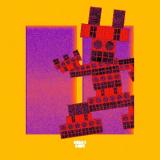
Silicon Scally and Fleck E.S.C. need no introduction at this stage. Both artists are veterans not just of Sheffield's Central Processing Unit label but of modern electro as a whole, with the pair having decades of skin in the game at this point. Their new release, a four-track EP entitledSlipwhere Silicon Scally handles the first half and Fleck E.S.C. the second, carries itself with the adventurous confidence of a record made by masters of their craft.
Slipopener 'Phased Array' is exactly the kind of top quality machine-funk tackle you'd expect from this meeting of minds. The beat programming is deliciously tactile from the off, hissing and clanking like machinery in an old Detroit factory. The feel of 'Phased Array' is altered, though, when the chords come in, a series of alternating floating sounds which give the track an altogether eerier feel. When all of this is coupled with the otherworldly synth blurts that periodically force their way to the front of the track, the overall effect is a piece of real depth assembled by an expert practitioner.
'Phased Array' is followed up by 'Stax', another brilliantly propulsive number. Here we find the drum beat - one which is a little reminiscent of that Kraftwerk tune about the numbers, no less - once more offset by some decidedly more shadowy synth work, all while arpeggiated keyboard licks work against an intricate web of basslines, chords and unidentifiable flying synth tones.
Fleck E.S.C. opens theSlipB-side with 'Good Ride', a number where the nudge-wink title is borne out by a track built around looped snippets of sighing vocals. That said, with a bassline that sounds like a blurting old landline telephone, a ghoulish synth lead and all manner of motion-sick breakdowns, the 'ride' in question could just as well be aWipeout-style whizz through hyperspace as anything more suggestive. 'Good Ride' also sets itself apart from the other joints here by showing off a swaying halftime breakdown.
'Intox Remedy',Slip's closer, wraps the EP in a manner which continues some of the trends of the record's earlier tracks - richly tuneful chords, precision-engineered broken beat drum programming and a wide palette of delightfully unusual synth tones are all present and correct. However, there is also something about the chords here which pares back the eeriness of previous joints for a bit more of a wide-eyed, stargazing feel, and as such 'Intox Remedy' sees the record out by placing the listener firmly back in the cosmos.
Tough enough for the dancefloor and intricate enough for home listening, theSlipEP is a fabulous collaboration from two of the most respected voices in the electro game.
Search:sounds from around
- 1: Fuenarinu
- 2: Kaendaiko
- 3: Tsubakishishaku No Yuigon
- 4: Tengindoujiken
- 5: Kindaichikousuke Nishie Yuku
- 6: Ougonno Furuuto (Flute)
- 7: Yubi
- 8: A=X, B=X A=B
- 9: Chi To Suna
- 10: Tabiyukumonoyo
- 11: Akuma Fuewo Fukite Owaru
We've got a bit of an obsession with Hozan Yamamoto here at Mr Bongo! A legend of Japanese jazz, he is rightly regarded as a true master and was recognised as a "living national treasure" by the Japanese government in 2002. Over five decades he pushed the genre into new directions, absorbing fusion, funk, spiritual jazz and many other sounds, resulting in a discography studded with gems of rare beauty. Exploring his back catalogue has taken us on an engrossing journey that now sees us reissuing another work from this ground-breaking musician.
Though not translating perfectly into English 'Akuma Ga Kitarite Fue Wo Fuku', (kitarite has not been a modern expression in Japanese) roughly means 'The Devil Comes Playing The Flute' / 'The Devil Is Coming While Blowing The Whistle' or 'Devils Flute’. It is the original soundtrack to Kôsei Saitô’s 1979 mystery and suspense movie, ‘Devil’s Flute’. The film is based on a story by the famous author, Seishi Yokomizo, and is centred around a much-loved fictional Japanese detective, Kosuke Kindaichi. A Japanese Sherlock Holmes that has been popular for generations.
Hozan Yamamoto was invited to compose the soundtrack directly by the producer of the film, Haruki Kadokawa. Mr Kadokawa also hired keyboard player and producer Yu Imai as assistant producer on the project, resulting in a stunning cosmic, breaks and beats-laden, funk, disco soundtrack extravaganza.
When it comes to the soundtrack and the technology of the time, Hozan Yamamoto and Yu Imai got inventive, tripped out, funked up, and experimented, creating a quirky soundtrack masterpiece that needed to be heard more outside of Japan. Differing from the more traditional Japanese music orientation of some of his other albums such as 'Beautiful Bamboo-Flute' (also released on Mr Bongo) the album showcases a number of genres, from lush atmospheric incidental music to disco and funk grooves, experimental nuggets, drum and flute workouts, to neo-classical and more.
A special record that showcases the further depths of this wonderful musician's talents.
- A1: Uptown Top Ranking With Eva Lazarus
- A2: Gideon Boot With General Levy
- A3: Session Haffi Cork With Mr Williamz
- A4: Indian Sun With Biga Ranx & Ruffian Rugged
- A5: Jump Around With Cheshire Cat
- A6: Rainbow Country With Cian Finn
- B1: Amsterdam (Flight Mode Mix) With Eva Lazarus
- B2: Bubble N Wine With Solo Banton
- B3: Searching (Stepper Mix) With Marina P
- B4: Got The Vibes With Charlie P
- B5: Ice Cream Gal With Gardna
- B6: Rise And Gravitate With Kenny Knots
Glasgow reggae collective Mungo’s HiFi celebrate 25 years of pulsating music with a follow-up to game-changing second studio album Soundsystem Champions. Released in 2008, the original Sound System Champions became an instant 21st century classic - thanks to its industrial strength basslines, blazing horns and lineup of scorching microphone talent. To commemorate a quarter century of rocking dances and building rhythms, Mungo’s have created Soundsystem Champions 2. They’ve lovingly assembled some of their biggest dubplates, previously only heard in a soundsystem situation, now available to the world. Fans of the first Sound System Champions will hear musical echoes in the new version. Irrepressible Junglist General Levy rides the Belly Ska riddim that kicked off the 2008 edition, with the militant Gideon Boot. Italy’s Marina P returns to the new record on the expansive Searching, as does Kenny Knots, closing the track list with heartfelt roots anthem Rise and Gravitate. For Soundsystem Champions 2, Mungo’s have invited many more voices from their epic journey. Bristol’s Eva Lazarus revisits Althea and Donna’s immortal Uptown Top Ranking. Reading’s Solo Banton turns his lyrical versatility to hip hop banger Bubble N Wine. The beautiful grainy tones of Ireland’s Cian Finn reimagine the Wailers’ Rainbow Country. With this historic sequel album, Mungo’s look back while going forward, the exclusive becomes the inclusive, and the Sound System comes to you!
In 2025, Off The Grid celebrated 10 years of existence, throwing several events throughout the world.
It's now time to put a seal on these celebrations with a curation of music, gathering old and new faces orbiting the OTG galaxy, divided into two compilations.
For Part 1, deeper and deeper we go, focusing on delicate aesthetics and dubby grooves, trippy sounds and dreamy atmospheres. A soundtrack for early mornings and initial stages of the night.
Off The Grid was born around this sound and this is a tribute to it.
Part 2 will be announced in Spring.
Stay tuned!
---
Mastering & Lacquer Cut by Marco Pellegrino at Analogcut Mastering Studio Berlin
Graphic Design by Guillaume De Ubeda
Pressed at Mother Tongue in Verona
A meteorite and a lost EP from an experimental electronic talent escape their grim fate: remain unknown to human civilization forever.
Around 2015, Gareth Smyth (aka Lumigraph) produced two tracks before uploading them on his Soundcloud page under the name “Canyon Diablo”, a tribute to a meteorite that crashed in Arizona 49,000 years ago. Amazed, the future co-founder of M+M Disques barely had time to download them onto his hard drive before they were deleted... until today.
Behind the extraterrestrial sounds of this 2-tracker, Lumigraph seems to want to establish communication with planet earth using its own means. In the dubby “Flamingo Drive”, he patiently builds up his sluggish groove before bringing in a reassuring and catchy bassline. On the B-side, the avant-garde “America Song” combines industrial rhythms, drone guitar, and Pierre Henry-ish noises.
* fine art printed insert + PVC sleeve
- 1: Adhd
- 2: Worry Days
- 3: Crying Song
- 4: Fuck U
- 5: Bastard State
- 6: Mania
- 7 3: Sides Touching
- 8: Canned Coffee
- 9: Babymusicc
As collaborative projects often do, 33 has in time found a more fixed form, a kind of structure that turned it from a loose collection of collaborators gravitating around founders Bill John Bultheel and Alexander Iezzi into something resembling more of a traditional band. Not that there is anything conventional in their creative process tho, nor in the music itself… Nontheless Tripolar - their second album and first for Haunter - seems to take them closer to song territory than ever before.
The (progressive) graduation of multi-instrumentalist Cem Dukkha and vocalist/clarinet player Ivan Cheng from collaborators to full-time members has brought 33 to a more refined awareness of their possibilities as a creative unit, although their compositional process has retained a high level of spontaneity and musical madness. Tripolar was in fact assembled by editing hours of improvisation that Bultheel, Iezzi and Dukkah recorded with no specific endgame in mind. The sessions saw them exchange a variety of acoustic, electronic and electric musical instruments: percussions, guitars, strings, piano, hurdy gurdy, synthesizers and even CDJs as a tool of live sampling manipulation.
By molding the pieces into what they are now, the band managed to concoct some beautiful vignettes of contradictory mental and emotional states, as sonically playful as a renaissance fair happening within a broken timestream. Cheng’s lyrical and vocal contributions helped them coalesce even further into proper songs, adding a melodic presence that’s at once seductive and uncanny. But vocal duties are often ceded to guests, namely Danish pop-neoclassicist Astrid Sonne, Kenyan metal guru Lord Spikeheart, Irish goth raconteur Olan Monk and Japanese body-poet Golin.The amount of different sounds arranged into each of the tracks produces a unique sense of awe and bewilderment, a testament to the incredible talent and craft the musicians have employed into putting together such a broad range of influences and approaches into a coherent and extremely effective musical journey.
An equally erratic thematic thread seems to run through all the tracks, one ultimately preoccupied with mental health and its ramifications. Without turning the project into a concept album, 33 and their collaborators have sprinkled it with references to personality disorders and mental conditions that are all too relevant to the contemporary age, reflecting on the lineage of human inner life. A wide display of lyrical and musical tools is employed to explore these themes, ranging from Sonne’s expressionist depiction of ADHD in the opener, to Cheng’s queer-themed reinvention of an Irish murder ballad in closing track ‘Babymusicc’. Tracing lateral trajectories for introspection, Tripolar is not only highly captivating, but it ultimately sounds esoteric in the best possible way: progressively revealing layer after layer of incredible aural magic, its true meaning living in the form and in its manic scope of energies.
Up Ya Archives returns with its first release of 2026, ‘Northern Step’, from Manchester-based jungle producer & DJ Worsleyy. The track arrives ahead of his upcoming EP of the same name slated for a 13th March release via Up Ya Archives Records.
Fuelled by crisp, tightly swung drums and a smooth, rolling bassline, ‘Northern Step’ is a salute to its junglist roots. Drawing from the Manchester rave records he was introduced to by his dad, and with the help of legendary Mancunion music mixologist Chimpo, Worsleyy channels those early warehouse energies and pairs them with his own progressive and futuristic lens. It’s heritage and evolution colliding, rooted, forward-thinking and built for sweat-drenched dance floors.
When speaking about ‘Northern Step’, Worlseyy said:
“Northern Step is a proper nod to the junglist past with the lush floaty vocals, calculated drum choppage, a smooth rolling bassline and Chimpo hopping on to drive forward the sound of the North.”
Worsleyy is a familiar face across the UK circuit, having played sets at The Warehouse Project and supporting Nia Archives on her 2024 UK tour in Manchester. Drawing from UK rave lineage and contemporary club sounds, his productions balance nostalgia with futurism, channelling the energy of Manchester’s acid raves. His tracks have travelled far beyond UK borders, spun by the scenes most forward-thinking tastemakers like DJ SWISHA, Sherelle, Pete Cannon, and Nia Archives on dancefloors around the world. Worsleyy’s rise has been as visible as it is audible — bold, bass-driven, and impossible to ignore.
This first outing from the newly minted Pleased As Punch serves up sounds that are packed with the true essence of house. Groove P's 'Are They Real' sets the tone with an infectious underground bounce that's playful and deep, leading in to a new cut from the chart-topping UK crossover stars The Shapeshifters. Bringing their trademark disco-infused flair, 'Body Music' is uplifting and built for the dancefloor. Then, on the flip, Lost In & Arnold Jarvis elevate things further with 'Look Around,' a deeply soulful cut enriched by live instrumentation and Jarvis' unmistakable vocals. Seems like this label is going to be essential for house heads.
2026 Repress
Turbotito and Ragz's electrifying Naya Beat label has curated a cultured list of remixers to add their spin to the work of legendary Indian vocalist Asha Puthli. This essential remix album features Yuksek, Maurice Fulton, Psychemagik, Kraak & Smaak, Jitwam, and Turbotito & Ragz.
Naya Beat, which translates from Hindi as 'new beat', is focused on uncovering foundational electronic sounds from the subcontinent and South Asian diaspora through reissues, remixes and compilations. It found quick success with its first release, 'Naya Beat Volume 1: South Asian Dance and Electronic Music 1983 - 1992', followed by a rare 1985 Hindi New Wave album by Pinky Ann Rihal and more recently a ground-breaking compilation ‘Awaaz’ uncovering Bollywood electro and leftfield 80s original soundtrack recordings.
Hot off their highly sought after EP of Dimitri From Paris’ seminal remixes of Asha Puthli’s iconic track ‘Space Talk’, the label now offers up the first of two full-length releases based around her music. Cosmic disco pioneer, Studio 54 icon and jazz improviser Asha Puthli has recorded, sung or shared the stage with the likes of Roy Ayers, Alice Coltrane, Grace Jones, Barry White, Andy Warhol and many more. From David Mancuso's The Loft, to Giorgio Moroder's early work with Donna Summer, to hip-hop where she has been sampled extensively, Asha's musical influence and impact is profound. She was the first artist of South Asian descent to successfully crossover and make a mark on dance, jazz and pop culture in the West.
For this LP, Naya Beat tracked down the long mythologised original stems and recordings of Puthli's most seminal albums, including ‘The Devil is Loose’, and working closely with Asha, they have tasked a series of producers inspired by her work to remix her music.
Yuksek opens up with a pumping disco remix of 'I Am Song (Sing Me)' awash with uplifting synths and big claps next to the original vocals, which soar to the heavens. The seminal 'Space Talk' is remixed by Maurice Fulton into super steamy and late-night territory. The live drums and jumbled percussion are lit up with soulful chords as Puthli's carefully delivered vocals seduce up top. 'Lies' (Kraak & Smaak Remix) rides on fat-bottomed drums and bass that unfold with a dub swagger beneath a nebulous eco-system of cosmic synths and dramatic vocals. Label heads Turbotito & Ragz flip 'One Night Affair' into a leggy disco celebration with sweeping synths and bright effects, and Psychemagik's 'Right Down Here' is a pulsating mix of dark, snaking bass and drums with deep space ambience and raw hits making for a turbulent and tense atmosphere. Lastly, Jitwam closes out with a smooth disco sound laced with dynamic drums and cruising chords next to another sensuous top line from Asha Puthli.
A mix of metallic doomgaze, epic gothic soundscapes and post punk attitude. Loud and crushing, yet sharp enough to stick in your head for days. There are two kinds of heavy bands: the ones that make a lot of noise and the ones that drag you somewhere you didn't know you needed to go. Cwfen (pronounced 'Coven') are the latter, and Sorrows is a record that doesn't just crush - it haunts long after the final note. The allure of Cwfen's sound lies in contrasts: the glacial ferocity of Amenra, with the velvet-and-razor vocals of King Woman, and the rotting grandeur of Type O Negative. It's as hypnotic as it is harrowing, but somehow even better than the sum of those parts. Since emerging from Glasgow's underground just 18 months ago, Cwfen's reputation is growing, selling out shows and pulling growing audiences into their doom-laden fever dream. Released in October, the band's debut single 'Reliks' was a hit with fans and critics, landing a spot on Kerrang!'s release of the week playlist. And rightly so. Their sound devours and delights in equal measure. "Cwfen have emerged from the darkest depths of the Caledonian underground with a beguiling blend of doom metal and gothic post-punk for those who like to live deliciously." Kerrang! Sorrows lives in the space around doom where the weight of the riffs is matched by the weight in your chest, where the lyrics and the songwriting are as important as the music itself. Loud and crushing, yet sharp enough to stick in your head for days. It builds, burns, collapses, resurrects. Big on riffs, bigger on feeling. The kind of songs you carry with you. Singer and rhythm guitarist Agnes Alder bears her claws one minute, then whispers the next, as the band follows like a storm front, rising, breaking, drowning you in the weight of it. From the guttural Penance to the lush Whispers, to the feral Wolfsbane and the insurrectionist Rite. It includes a long reworking of Embers and Bodies, the two self-recorded demos that launched them into the scene with a bang and their growing legion of fans already adore. Intricate vocal arrangements, heavy and harsh guitars, a mix of atmosphere and heft, it undoubtedly punches above its weight for a debut. As Agnes says: "When we stopped trying to fit into any one space, what came out was this beautiful mix of dark and light. Something visceral and cathartic." This is a band that sits right in the boundaries between the heavy genres, pulling in everyone from the young goths and to the die-hard metalheads alike and 'Sorrows' truly does deliver in spades. Make no mistake, Cwfen are set to be one of the names to watch in 2025. FFO: Chelsea Wolfe, Zetra, King Woman, Type O Negative, Alcest, Faetooth, Liturgy. Limited vinyl pressing, 500 copies in transparent red vinyl. Full colour Gatefold outer sleeve, with a full colour printed inner sleeve, Full download included as well.
James Ruskin's Blueprint Records continues its 30-year celebrations with a new EP by Kr!z who returns with his fourth EP for the label. Kr!z made his Blueprint debut in fine style with his "Neutrino EP" in 2022 and went on to deliver the "Revelation EP" in 2023 and "Horo EP" in 2024 so it's fitting that he's back to join in this landmark label anniversary.
Kr!z has been at the forefront of techno for more than a decade. Influenced by the hypnotic and energetic sound helmed by veterans such as Jeff Mills, Steve Rachmad and James Ruskin, he gradually but steadily developed his own identity in the international techno scene.
After making a name for himself as a skilled DJ with sharp focus and a quick mixing style in home country Belgium and the Netherlands, Kr!z launched Token Records in 2007. It has since been a leading outlet for heady, purist sounds. He rapidly established the label as a fixed value with a timeless and powerful sound and took it around the world with label nights on every continent. Token remains important in defining techno today - always straightforward, sometimes weird, often catchy - all under the helm of Kr!z as avid A&R.
After 12 years spent assiduously focused on curating the Token discography, showcasing artists he has nurtured and supported over this time, and incorporating the connoisseur's knowledge and experience he has cultivated in his work as a DJ, in 2019 he released his own debut EP "Mantra" on the label, earning high acclaim from both media and key DJs. Since then, he has continued to develop a strong body of work, regularly releasing on the influential Blueprint Records and SK_eleven alongside his own Token imprint, and producing aseries of notable remixes. This steady output has established him as a key figure within the techno landscape, recognized for both consistency and artistic depth.
Kr!z's latest Blueprint EP "Footprints" is released 13th March on vinyl and digitally.
- Side A. Gypsy Song
- Side B. Never Land
After traveling through Mexico, Miami, the Bahamas, and New Orleans, Nishioka recorded his fourth album South American Journey in Los Angeles,
released in 1979. From this album, two of his most celebrated tracks—“GYPSY SONG”, a fan favorite with numerous cover versions, and “NEVER LAND”,
featuring the distinctive sound of steel pans and a Japanese reggae vibe are now being pressed on 7-inch vinyl for the first time in a limited edition!
The recording features members of the So What Review band, including Junshi Yamagishi (guitar) and Osamu Ishida (guitar), along with renowned steel pan
player Robert Greenidge, known for collaborations with Van Dyke Parks and Taj Mahal.
(FLATT THE LAIDBACK)
Kyozo Nishioka Profile
(Born May 7, 1948 – Died April 3, 1999)
Singer songwriter from the Shima Peninsula in Mie Prefecture, affectionately nicknamed “Zo-san”.
After enrolling at Kinki University and moving to Osaka, Nishioka became a regular at the folk cafe Dylan in Namba, opened in August 1969 by Masaji Otsuka
and Yoko Ishimura. Dylan was a gathering spot for folk music enthusiasts from all over Japan.
Nishioka formed the folk group The Dylan with Masaji Otsuka and You Nagai, performing at folk camps and the Nakatsugawa Folk Jamboree. In 1971, Nishioka
left the group, and Otsuka and Nagai continued as The Dylan II. Nishioka wrote and composed the song “Puka Puka” under the pen name Zokyozo, which became
one of his signature works. The song was first released in July 1971 as the B-side of The Dylan II’s single “Otoko rashii tte Wakarukai” on URC Records.
Nishioka began his solo career, releasing his debut album “Dylan nite” in July 1972, produced by Kinji Yoshino on Bellwood Records, which included his own
version of “Puka Puka”. In September 1973, he appeared at the farewell concert of Happy End titled CITY – LAST TIME AROUND at Bunkyo Public Hall in Tokyo.
His 1974 album “Machiyuki Murayuki” was produced by Haruomi Hosono, and his 1975 album “Rokka My Baby” featured support from Shigeru Suzuki’s band
HUCKLE BACK. Nishioka recorded three albums under Hosono’s production, deepening their friendship.
Together with his wife and lyricist KURO, Nishioka wrote songs for artists such as Eikichi Yazawa. The couple traveled the world, recording overseas albums such
as “Nanbei Ryoko” (1977), “Yoh-Sollo” (1979), and “New York to Jamaica” (1981), incorporating reggae, calypso, and other global sounds. In the 1980s, he released
works under the duo name KYOZO & BUN with Yoshifumi Okajima, and in the 1990s returned to solo projects with albums like “START” (1993) and “Farewell
Song” (1997).
After KURO’s passing in 1997, Nishioka continued his musical activities until his own death in 1999 at the age of 50. His music transcended the boundaries of folk,
blending jazz and tropical elements to create a unique world view, leaving an indelible mark on Japanese music history.
Becoming Forest is the fifth full-length record by Amuleto. It comes from an encounter between the group’s core duo, Francesco Dillon and Riccardo Wanke, and multi-instrumentalist performer and composer Stefano Pilia (Mike Watt, Rokia Traoré, 3/4HadBeenElminated, Massimo Volume, Afterhours, Zaire).
This meeting — developed from long-term parallel collaborations and converging musical paths — produced a set of tracks that combine acoustic and traditional instruments (cello, guitar, harmonium, voice) with electronics, natural sounds and unconventional sound manipulations.
Drawing on literature, travels, drawings, poetry and little-known traditions from around the world, the tracks of Becoming Forest sit in a subtle equilibrium between contemporary composition, folk themes and electronic music.
This is a journey through memories of the past and echoes of the future — intimate and aggressive; music that combines minimal textures with distorted progressions, with delicate vocal lines inhabiting post-digital, noisy environments — a reminder that individual voices form part of a larger, living forest.
We Release JAZZ is very happy to announce the limited vinyl edition of Ill Considered's transcendent new live album Live in Jura, an expansive document of the trio's 2023 performance at Spiegelberg Festival - now available as a double LP with a bonus D-side, housed in a heavyweight sleeve with obi and an original artwork by Vincent de Boer.
Captured in the heights of Saignelégier, Switzerland, in the middle of a pasture overlooking the Jura mountains, Live in Jura bottles the singular Ill Considered live experience at its most open, responsive, and elemental. From Idris Rahman (sax, flute), Liran Donin (bass), and Emre Ramazanoglu (drums), this is deep free improv built from intuition and heart - an ever-evolving conversation of groove, texture, and spirit. Whispered motifs bloom into towering climaxes; earthy bass surges meet shimmering cymbal work; woodwind lines move from meditative invocation to ecstatic release. It is music shaped by the audience, the environment, and the moment : alive, unrepeatable, and deeply organic.
The bonus D-side extends the album's world with a unique ambient composition made from field-recorded organic sounds of the forest surrounding the concert area. Re-composed into a drifting, luminous piece, it features The Voices of the Alpenglow, blurring the boundary between performance and landscape, human gesture and elemental presence.
Ill Considered - known for forging improvised music around simple themes or spontaneously created structures - here reach a new level of sensitivity and power. Live in Jura follows We Release JAZZ's release of Shoals by Ill Considered members Earth and Bones, continuing a line of exploratory, heart-forward music grounded in profound listening and spontaneous creation.
- A1: Another Thought (02:16)
- A2: A Little Lost (03:18)
- A3: Home Away From Home (05:12)
- A4: Lucky Cloud (02:16)
- B1: This Is How We Walk On The Moon (04:42)
- B2: Hollow Tree (02:30)
- B3: See Through Love (04:46)
- C1: Keeping Up (06:20)
- C2: In The Light Of The Miracle (06:05)
- C3: Lucky Cloud (Return) (03:00)
- C4: Just A Blip (03:42)
- D1: Me For Real (04:55)
- D2: Losing My Taste For The Night Life (04:34)
- D3: My Tiger, My Timing (05:41)
- D4: A Sudden Chill (02:45)
2026 Repress
Another Thought was the first collection of Arthur Russell’s music to be released after his death in 1992. Released in 1993 on Point Music it marked the beginning of nearly 30 years of work to let the world hear the enormous archive of unreleased recordings Arthur left behind. Be With revisits this first compilation for a new gatefold double vinyl version and a triple-fold digipak CD reissue.
Both versions of Be With’s 2021 reissue of Another Thought have been mastered by Simon Francis and the vinyl cut by Pete Norman. The original artwork has been restored and tweaked at Be With HQ for the gatefold sleeve and the triple-fold digipak, with the essential help of Janette Beckman. Each version comes with an insert reproducing the liner notes and lyrics from the original CD release.
Together with Calling Out Of Context, Soul Jazz’s World of Arthur Russell, and much of the ongoing work of Audika, Another Thought is absolutely essential for even the most casual Arthur Russell collection. In fact we’d argue it’s essential for any fan of non-obvious pop music. This is the only place where you can hear some of Arthur’s most recognisable tunes and it’s an album that absolutely deserves to be kept in press.
We’ll assume that by now you’re all at least a little familiar with the story of Arthur Russell, the farm boy from Iowa who moved to 1970s New York. Arthur Russell the genuine musical genius who died just 40 years old, leaving behind a wealth of music that dwarfed the few 12"s and LPs that were released during his short life.
Although Arthur had been working on an album for Rough Trade during his last years, with the label no-longer operating it was Point Music (Philip Glass and Michael Riesman’s label set up together with Philips) who stepped in to help Arthur’s partner Tom Lee start working out exactly what Arthur had left behind.
Tom suggested that Arthur’s friend Mikel Rouse was the right person to make the first catalogue. Working in Tom and Arthur’s apartment he had only two weeks to go through what turned out to be around 800 tapes.
As Tom explained “at the end of each day he would generally wait for me to come home and I would, to the best of my knowledge, name and identify pieces in question from that day’s work. As he worked Mikel compiled about a dozen cassettes that he thought would present the most finished sounding songs for Don/Point to use. As Don listened he would then suggest and ask me and thus we collaborated on the choices.”
Don is Don Christensen, Another Thought’s producer. With a final selection of songs from recordings made between 1982 and 1990, including sessions with some of Arthur’s regular collaborators Peter Zummo, Steven Hall, Mustafa Ahmed, Elodie Lauten, Julius Eastman, Jennifer Warnes and Joyce Bowden, it was then Don’s job to turn these into a finished album.
Another Thought is a little different from the compilations of Arthur’s music that came out since. In our conversations with Steve Knutson (who founded Audika Records and who manages Arthur’s estate together with Tom), he explained that “more than any project released by Arthur during his lifetime or posthumously by Audika, ‘Another Thought’ is the most worked over. The material was significantly edited and rearranged from the original source tapes”.
If the aim was to release a comprehensive exploration of every facet of Arthur’s music, from the most avant-garde of his avant-garde compositions through to the most disco-not-disco of his disco-not-disco tunes then the project was a spectacular failure. But as a coherent album of non-obvious pop music Another Thought is wonderful.
Starting with the sparse voice-and-cello of the title track, A Little Lost adds some guitar along with the sneaking suspicion that we’re listening to something nowhere near as simple as it first sounds. By the time we get to This Is How We Walk On The Moon - it could be the moment you notice the congas, or the percussion that’s been building behind them, or maybe it’s that blast of trumpet and trombone - we realise we’ve gone from splashing around to being completely submerged in the musical world of Arthur Russell.
From here the album heads off on its journey around the sounds of the left-field contemporary classical music of the time, re-directed towards pop ears, with minor detours through the swirling woozy disco of the half-remembered night before on In The Light Of The Miracle and My Tiger, My Timing. Whether it’s just Arthur, his cello and some bleeps on Just A Blip, or whether he has some vocal help as he does on the bounding Keeping Up, this is difficult music made so, so easy. And through it all is Arthur’s voice and cello. Sometimes drowned in distortion and sometimes clear as a bell, but always there somewhere.
A Sudden Chill finally returns us to the calmer waters we started in and this last track closes the album with a melancholy that’s not surprising given how soon after Arthur’s death the album was put together.
Whilst Another Thought holds together with the consistency of a proper album, there’s still no getting away from the fact that this was put together from audio recorded in different ways, in different places, with different people at different times. Those with keen ears will hear traces of tape hiss, the occasional blown-out note and some digital fuzz, all fingerprints of those original recordings as well as of the 1990s digital equipment that was used to piece Another Thought together.
Add to this Arthur’s obvious pleasure in making music from the sort of sounds that can make microphones, speakers and ears uncomfortable, it’s no surprise that Another Thought isn’t glossy and pristine. Don Christensen’s productions have been careful to not scrub up those original recordings so much that they lose their original vibe, understandable given that Arthur wasn’t around as a guide. We’ve applied a similarly light touch with the mastering for these Be With versions, just working to make sure they sound like they should on both the vinyl and the CD.
Despite the Discogs rumours, Another Thought was never originally released as an LP. So when it came to the sleeve for this Be With vinyl version we took the original CD artwork as a starting point to come up with something that looks like it could have been in the record racks back in 1993.
We have to thank Janette Beckman for helping us reproduce her iconic photograph of Arthur in his newspaper boat hat. One of many photographs she took of Arthur, Janette shot this in her New York studio back in 1986 for a short article in the January ’87 issue of The Face Magazine. Those with eagle-eyes will notice we’ve used an ever-so-slightly different shot from the one that appeared in The Face and then again on the original cover of Another Thought. The original has long since been lost so we’ve worked with what is left in Janette’s archives. And we also have to thank Tom Lee for giving us permission to reproduce his liner notes from the original CD booklet, together with Arthur’s lyrics.
Synthpop, minimal wave, post-punk, goth, new romantic - fans and critics alike have dug deeply into their vintage thesauruses to describe the beguiling work of Nation of Language. And if you can't precisely define the band, that's the point. Frontman Ian Richard Devaney has become prodigious in expanding what synthesizer-driven music can evoke, such that his output is as much an extrasensory journey as it is an all-too-human destination. With that experience in mind, he wrote the band's fourth album - the spectral, spacious Dance Called Memory - in the most humble of ways: chipping away at melancholia by sitting around and strumming his guitar. Nation of Language's first two albums, Introduction, Presence (2020), and A Way Forward (2021), came as pandemic godsends: gorgeous, relatable soundtracks to our collective doldrums. But it was their last LP, Strange Disciple (2023), that catapulted the group from cultural standouts to critical darlings, with the album being named Rough Trade's Album of the Year. With that release, Pitchfork wrote that the band "are learning what it means to get bigger and better." This is Devaney's calling: soulfully translating individual despair into a comforting, collective mourning. The single "Now That You're Gone," which radiates and reverberates with a devastating wistfulness, was inspired by witnessing his godfather's tragic death from ALS, and his parents' role as caretakers for this ailing friend. At its heart, the song is a reflection of how friends can be there for each other, and also highlights a theme throughout the record: the pain and lost promise of friendships that fall apart. On Dance Called Memory, the band once again collaborated with friend and Strange Disciple producer Nick Millhiser (LCD Soundsystem, Holy Ghost!). "What's so great about Nick is his ability to make us feel like we don't need to do what might be expected of us," says synth player Aidan Noell, who, along with bassist Alex MacKay, rounds out the Nation of Language lineup. They imbued Dance Called Memory with a shifted palette - sampling chopped-up drum breaks on "I'm Not Ready for the Change" for a touch of Loveless-era My Bloody Valentine or smashing all of the percussion of "In Another Life" through a synthesizer to cast a shade of early-2000s electronic music. Ultimately, the hope was to weave raw vulnerability and humanity into a synth-heavy album. "There is a dichotomy between the Kraftwerk school of thought and the Brian Eno school of thought, each of which I've been drawn to at different points. I've read about how Kraftwerk wanted to remove all the humanity from their music, but Eno often spoke about wanting to make synthesized music that felt distinctly human," Devaney says. "As much as Kraftwerk is a sonically foundational influence, with this record I leaned much more towards the Eno school of thought. In this era quickly being defined by the rise of AI supplanting human creators I'm focusing more on the human condition, and I need the underlying music to support that_ Instead of hopelessness, I want to leave the listener with a feeling of us really seeing one another, that our individual struggles can actually unite us in empathy."
- 1: O.c. Life
- 2: 10
- 3: Yur 2 Late
- 4: Everyday
- 5: One Shot
- 6: Falling Out
- 7: Surfside
- 8: It's Doing Something
- 9: Fast
- 10: Section 8
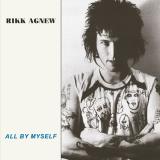
Rikk Agnew's All by Myself is one of those records that feels like a secret you're lucky to stumble upon -- a raw, weird, totally personal snapshot of a restless artist at a pivotal moment. Originally released in 1982 on Frontier Records, the album stands apart from most of what was coming out of Southern California at the time, even though it was born right in the middle of the exploding hardcore punk scene. By 1982, Rikk Agnew was already a big deal underground. As the guitarist for Adolescents, he helped shape the sound of Orange County hardcore with sharp riffs, surf-inflected melodies, and a sense of urgency that became hugely influential. He also played in bands like D.I. and later Christian Death, moving fluidly between hardcore punk, post-punk, and darker, more experimental territory. Agnew wasn't just a fast, aggressive guitarist -- he was a songwriter with range, curiosity, and a strong DIY instinct. All by Myself lives up to its title in the most literal way. Agnew recorded the album largely on his own, playing all the instruments and handling vocals himself. Instead of delivering another straight-up hardcore record, he went inward. The result is a lo-fi, home-recorded collection of songs that blend punk energy with new wave, post-punk, psychedelic touches, and even moments of pop sensitivity. It's rough around the edges, but that's exactly the point -- the album feels intimate, unfiltered, and honest. In the early '80s, Southern California punk was loud, fast, and often confrontational. Bands were pushing against the mainstream and even against each other, racing toward more extreme sounds. While All by Myself shares that DIY spirit, it doesn't fully play by hardcore rules. The tempos shift, the moods wander, and the songs feel more like personal experiments than scene anthems. That made the record a bit of an outlier at the time -- but also what gives it lasting appeal. Frontier Records was the perfect home for a release like this. The label was known for supporting artists who didn't quite fit into neat categories, and All by Myself captured that ethos perfectly. Today, All by Myself is often seen as a cult classic. For fans of early punk, post-punk, or anyone interested in the roots of DIY recording culture, this album is essential listening
- 1: Jacob Miller – Keep On Knocking
- 2: Junior Delgado – Away With You Fussing And Fighting
- 3: Hugh Mundell – Africa Must Be Free By 198
- 4: Jacob Miller – Baby I Love You So
- 5: Delroy Williams – Think Twice
- 6: Spliffy Dan – No Justice Place
- 7: Tetrack – Let’s Get Together
- 8: Sister Erica – One In The Spirit
- 9: Dillinger – Brace A Boy
- 10: Jacob Miller – Who Say Jah No Dread
- 11: Earl Sixteen – Changing World
- 12: Paul Blackman – Earth Wind & Fire
As the meteoric rise of reggae began to captivate listeners around the globe in the 1970s, innovative artist Augustus Pablo emerged as vital creative force pushing the genre forward. An important figure in the Jamaican music scene during this remarkable era, Pablo was not only a skilled musician but an influential producer who shaped the sound of countless classic recordings. While his instrumental work and legendary dubs remain essential, Pablo was also responsible for iconic vocal tracks from a wide range of local talent, many of which were released on his own label Rockers. Now, Nature Sounds is proud to present Rockers United!, a collection of classic and rare vocal selections from the Rockers archives, all produced by Augustus Pablo. Deeply rooted in hypnotic, bass-heavy instrumentation, the album features remastered audio transferred from the original master tapes, with vocals by Jacob Miller, Delroy Williams, Hugh Mundell, Tetrak, Junior Delgado, Earl Sixteen, Spliffy Dan and more.
- A1: Bienvenue
- A2: Allo
- A3: Ca Va, Ca Va
- A4: Yparcho
- A5: Bon Ben Bon
- A6: Asunsan
- A7: Dodo
- A8: Hop
- A9: Pouf
With four albums already behind them, Sababa 5 have earned global support, from Songlines magazine and BBC Radio 6 Music tastemakers including Gilles Peterson, Jamz Supernova and Iggy Pop to France’s FIP Radio and Radio Nova, for their unique blend of traditional Middle Eastern celebration music with psychedelic grooves, funk, jazz, rock, and international vocal collaborations spanning Japan to India. The Paris-based group have taken this sound to stages across Europe, including Reeperbahn Festival and Dresden’s Super Fest.
Ça Va Ça Va is the band’s hafla album – a return to the wedding and event celebration music that first shaped Sababa 5. Recorded in Paris, it draws directly from the sounds of hafla – the joyful, communal music heard at Middle Eastern weddings, parties and festive gatherings – with a sprinkling of influences from the wider Mediterranean. The group utilise their classic combination of electric guitar, bass, drums, organ, and synths to transform these ideas into vibrant melodies, dance-ready rhythms, and a spirit of abundance and
togetherness.
Opening track “Bienvenue” sets the tone with a mysterious, longing guitar solo before bursting into an irresistible rhythm and jubilant guitar motif. It flows seamlessly into “Allô”, straight into wedding-riot territory – a fast-rising instrumental that showers the dancefloor with energy as it builds around a hypnotic, arpeggio-driven riff. The album is almost entirely original material, with two key exceptions: “Ypárcho” (I Exist), a beautiful instrumental journey inspired by a classic Greek song traditionally performed by Stelios Kazantzidis, and “Asunsan”, an instrumental flip of the much-loved Sababa 5 collaboration “Nasnusa” with Yurika Hanashima. Another impressive step in the Sababa 5 story, Ça Va Ça Va captures both joy and longing – the unmistakable warmth of Eastern Mediterranean celebration and the band’s surf-rock edge – sounding more confident, spirited and deeply rooted than ever.
Allowing yourself to find meaning or beauty in the mundane is an act of generosity, Whether it’s seeing a smiling face in an electrical outlet socket, or discerning cosmic design amidst the forest floor detritus, it comes from a place of kindness to yourself and senses – and openness to hidden spirit of the world. These tracks came together during a period of intense personal change for adaa, rooted in a fruitful reflection on the connections between spirit and body, “feeling my flesh so I can feel and understand my spirit,” as adaa puts it. The sense of a crossover and clash of multiple connected realities – on-screens, on-line, on-earth, off-world, after-life – unites adaa’s multifaceted productions.
Ostensibly an assemblage of found sounds. scribbled thoughts and poems from diaries, and musial snippets, the album's scattered production reflects adaa’s own many mirror worlds. Field recording sit behind most tracks, alongside VST synths, guitars, and a variety of voices, from adaa’s own mangled vox to EVP samples taken from YouTube (recorded sounds believed to be spirits or paranormal activity), all processed to varying degrees.
While the music was mostly produced either in adaa’s studio in Providence, Rhode Island, or in bed, the field recordings bring the outside world in. The result of walks in the woods, hum of roads and highways, hiss of beaches, warmth of walks with friends and past lovers “around the East Coast”. It sits behind tracks like ‘sight’ where a lilting piano lin bobs atop a pond of rustling and distant whistles. Is that birdsong? Or ghosts? Saccharine hyperpop arpeggiation crossfades sharply into noise guitar squall. Angelic demon voices yawn into a hefty crescendo. Pure drones duet with gales of undefinable field sounds.
“Sometimes I feel like a seed in frosted soil,” says adaa. “If i choose to be optimistic.”