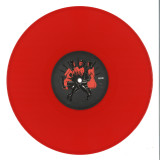
Miles Davis' A Tribute to Jack Johnson is the best jazz-rock record ever made. Equally inspired by the leader's desire to assemble the "greatest rock and roll band you have ever heard,” his adoration of Johnson, and Black Power politics, Davis created a hard-hitting set that surges with excitement, intensity, majesty, and power. Bridging the electric fusion he'd pursued on earlier efforts with a funkier, dirtier rhythmic approach, Davis zeroes in on concepts of spontaneity, freedom, and identity seldom achieved in the studio — and just as infrequently accepted by the mainstream.
Sourced from the original analog master tapes, pressed on MoFi SuperVinyl, and housed in a Stoughton jacket, Mobile Fidelity's 180g LP reissue brings it all to fore with startling realism. Benefitting from SuperVinyl’s nearly inaudible noise floor, superb groove definition, and clean, ultra-quiet surfaces, this 180g LP showcases everything — from the bold tonality of the headliner's white-hot trumpet solos to the decay of crashing cymbals, carry of wiry guitar notes, and echoes of the studio — in reference fashion.
Bristling with exuberance, Davis' high-register passages explode with authority and commanding presence. Around him, a barrage of urgent backbeats, knifing riffs, and supple bass lines emerge amidst black backgrounds. One of the most prominent differences long-time fans will notice is how much more aggressive, immediate, and vibrant the music sounds, with those aspects central to the composer's original desires.
Utilizing wah-wah and distortion, the go-to instrumentalist of the performances— guitarist John McLaughlin — attacks with a nasty edge, slashing style, and vicious streak that allows A Tribute to Jack Johnson< cross the until-then-impenetrable divide between rock and jazz. Davis puts both feet in the former camp and erases any gap. The stories of the record’s creation are nearly as legendary as the sounds within: Two sessions, multiple jams, different sets of musicians (several uncredited), and near-miraculous production perfectionism that made it all appear cohesive.
The least-well-known masterpiece of Davis' career, the 1971 record — seamlessly assembled and spliced together by producer Teo Macero — was a victim of limited record-label promotion. Audiences also didn’t immediately know what to make of its original cover art — faithfully replicated here. In addition, the powers that be at Columbia Records were directing the public’s attention to Miles at Fillmore, a completely different kind of album guided by two keyboardists. A Tribute to Jack Johnson practically lives in a different universe, one from the future. To many listeners who did manage to hear it — among them critic/musician Robert Quine, Stooges leader Iggy Pop, and renowned critic Robert Christgau — it surpassed everything that came before.
Indeed, Davis treated it as a personal manifesto: An opportunity to salute the Black championship boxer admired for his threatening image to the establishment and impeccable taste in clothes, cars, women and music. Davis explains in the liner notes his affinity for Johnson — a stance mirrored by the defiant music, which hits with a prize fighter's force and reflects the graceful elegance with which a pugilist navigates the ring — and closes the album with a Johnson quote read by Brock Peters.
Inspired not only by Johnson but by Jimi Hendrix and Sly Stone, Davis changed his approach and his band. He surrounds himself with a cadre of musicians in their 20s and, in the case of bassist Michael Henderson, a 19-year-old fresh from touring with Stevie Wonder. Henderson gives Davis what he requested: boogie-based grooves that don’t lose shape or direction. Soprano saxophonist Steve Grossman, drummer Billy Cobham, and organist Herbie Hancock adhere to a similar aesthetic that prizes brazenness, innovation, and energy.
In that vein, during a portion of “Yesternow,” Davis segues into a separate performance (which became known in its entirety as “Willie Nelson”) played by guitarists McLaughlin and Sonny Sharrock, bass clarinetist Bernie Maupin, keyboardist Chick Corea, bassist Dave Holland, and drummer Jack DeJohnette. Dig it!
Talking with jazz scholar Bill Milkowski — who himself noted how McLaughlin’s unrestrained style, decibel-forward volumes, and rapid-fire power chords engendered himself to the rock crowd at the same time that his harmonics and syncopation still definitely made him a jazz player — guitarist Henry Kaiser summed up part of the appeal of A Tribute to Jack Johnson as well as anyone, saying: “It’s a jazz record that way way more open than other jazz records at the time, but still not free jazz. McLaughlin’s rhythm guitar playing on ‘Right Off’ — the use of different chords in a rock shuffle than what anybody had used before — was revolutionary.”
And to think that’s just one aspect of a record that contains multitudes. “Never let them forget it.” Indeed.
Buscar:sounds from around
Most audiophiles know Alan Parsons Project's I Robot by heart. Engineered by Parsons after he performed the same duties on Pink Floyd's Dark Side of the Moon, the 1977 record reigns as a disc whose taut bass, crisp highs, clean production, and seemingly limitless dynamic range are matched only by the sensational prog-rock fare helmed by the keyboardist and his creative partner, Eric Woolfson. Not surprisingly, it's been issued myriad times. Can it be improved? Relish Mobile Fidelity's stupendous UltraDisc One-Step 180g 33RPM box set and the question becomes moot.
Mastered from the original master tapes and pressed at RTI on MoFi SuperVinyl, I Robot comes to life with reference-setting realism on this numbered, limited-edition reissue. Boasting immaculate highs and lows, generous spaciousness, and see-through transparency that takes you into the studio with Parsons and Woolfson at Abbey Road, this definitive edition is designed to demonstrate the full-range capabilities of the world's best stereo systems while offering listeners the convenience of having all the music on one LP.
Featuring a nearly inaudible noise floor, this transcendent UD1S edition functions as a repeat invitation to savor reference-grade soundstages, immersive smoothness, sought-after instrumental separation, three-dimensional imaging, and consummate tonal balances. Able to be played back at high volumes without compromise or fatigue, it is a demonstration record for the ages – the likes of which are no longer being made. This is the very reason you own and invest in high-end audio gear.
The special characteristics of this UD1S version extend to the premium packaging. Housed in an elegant slipcase, the reissue features special foil-stamped jackets and faithful-to-the-original graphics. Aurally and visually, it is made for discerning listeners who prize sound quality and production, and who desire to fully immerse themselves in everything about this conceptual landmark. The Alan Parsons Project's most famous record deserves nothing less.
Inspired by and loosely based around the Isaac Asimov stories of the same name, I Robot delves into themes of artificial intelligence and technological dominance that make the record extremely relevant in the 21st century. Indeed, Parsons and Woolfson's pinnacle creation dovetailed with the ascendency of Star Wars, which itself is experiencing a rebirth in an age of self-driving cars, smart devices, and mindless automation. Lyrically, songs such as "The Voice" call into question human behavior – and their relationship to increasing robotic supremacy – in everyday life. Parsons and Woolfson reflect the associated paranoia, dichotomy, and transformation via shifting sci-fi arrangements steeped in drama and moodiness.
The absorbing tunes on I Robot also continue to fascinate due to their perfectionism and innovation. Borrowing from Pink Floyd's strategies, Parsons and Woolfson utilize a looped sequence on the title track to create new downbeats. "Some Other Time" employs two different lead vocalists and yet gives the illusion that only one is involved. Captivating strings, a piccolo trumpet, and bona fide pipe organ grace "Don't Let It Show." The origins of "Nucleus" stem from a unique analog keyboard concoction dubbed "the Projectron," devised by Parsons and electronic engineer Keith Johnson. Andrew Powell's orchestral and choral arrangements top it all off, with "Total Eclipse" arriving as a frightening track that presages the climactic "Genesis Ch. 1 V. 32."
Does man or machine win in the end? Decide as you get lost in Mobile Fidelity's UltraDisc 180g 33RPM LP pressing. Secure your numbered copy today!
More About Mobile Fidelity UltraDisc One-Step and Why It Is Superior
Mobile Fidelity Sound Lab's UltraDisc One-Step (UD1S) technique bypasses generational losses inherent to the traditional three-step plating process by removing two steps: the production of father and mother plates, which are created to yield numerous stampers from each lacquer that is cut. For UD1S plating, stampers (also called "converts") are made directly from the lacquers. Since each lacquer yields only one stamper, multiple lacquers need to be cut. Mobile Fidelity's UD1S process produces a final LP with the lowest-possible noise floor. The removal of two steps of the plating process also reveals musical details and dynamics that would otherwise be lost due to the standard multi-step process. With UD1S, every aspect of vinyl production is optimized to produce the best-sounding vinyl album available today.
MoFi SuperVinyl
Developed by NEOTECH and RTI, MoFi SuperVinyl is the most exacting-to-specification vinyl compound ever devised. Analogue lovers have never seen (or heard) anything like it. Extraordinarily expensive and extremely painstaking to produce, the special proprietary compound addresses two specific areas of improvement: noise floor reduction and enhanced groove definition. The vinyl composition features a new carbonless dye (hold the disc up to the light and see) and produces the world's quietest surfaces. This high-definition formula also allows for the creation of cleaner grooves that are indistinguishable from the original lacquer. MoFi SuperVinyl provides the closest approximation of what the label's engineers hear in the mastering lab.
Ivan The Tolerable is the alter ego solo project of Middlesbrough based musical wizard Oli Heffernan. Aside from his solo work as ITT, Oli has played in numerous bands over the years including Year Of Birds, King Champion Sounds with members of the Ex, Detective Instinct, and Shrug, and has collaborated with icons like Mike Watts of the Minutemen, and J Mascis of Dinosaur Jr.
Ivan The Tolerable started by accident in 2013 when Heffernan recorded a bunch of songs for his band at the time (Year Of Birds). These were a bit too left-field for a speedy garage band, so Oli decided to put them out on tape himself, and hasn’t looked back since with releases on Up In Her Room, Stolen Body Records and Library of the Occult to name just a few.
We are delighted to bring you our next entry from the Ivan The Tolerable archive reissue series, 2019’s ‘Wild Nature!’ Originally released on CD by Ack Ack Ack Records back in 2019, the album has now been remastered and repackaged, and will be released on super ltd edition orange wax. Here’s a bit about the album in Oli’s own words.
‘Wild Nature was originally recorded sporadically during the first half of 2019. It started life in one house, then I moved and it was finished in another. I remember screenprinting the original CD artwork on the sly at my old job during my lunch breaks and hand-assembled a small run of about 50 that are all long gone. I also remember walking around Albert Park early one morning in thick fog with a field recorder to capture the sounds that were then processed to form 23 Minutes Over Albert Park (condensed to 4 mins for the reissue due to time constraints). I think this was also the last album I recorded vocals on and also the last one I recorded completely by myself - all instruments, recording, mixing, mastering and artwork done by me at home. I know the first and last tracks were recorded as a birthday present for someone but I cant remember much about the other songs i'm afraid - 4 years is a long time in my speedy world. I've been asked a bunch over the years about a vinyl edition of this one - so here it is. Enjoy - especially everything that went through the delay pedal, which is sadly no longer with us.’
- A1: The Deadstock 33S - My Best Dub
- A2: Bottin - Red Onions
- A3: Munk - Violent Love (2024 Version)
- B1: Leroy Hanghofer - Das Pi
- B2: Headman - Whomadewho – Satisfaction
- B3: Mercury - Sweetness
- C1: In Flagranti - In The Silver White Box
- C2: Munk - Kick Out The Chairs (Whomadewho Remix)
- C3: Golden Bug - St Tropez
- D1: Cecile - Sweetness 86
- D2: Hiltmeyer Inc - Chefsong
- D3: Nancy Whang & Bonar Bradberry - Working The Midnight Shift (Disco Version)
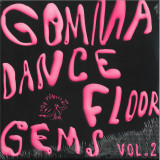
12 tracks originally released on the indie dance label GOMMA RECORDS between 2001 and 2010. (Gomma was the label Toy Tonics did before starting Toy Tonics.)
Along with DFA and Output records Gomma released a wild mix of electronic dance music, indie rock, undergound disco, post punk and new wave funk that was big in the 2000s. The Y2K sound!
Gomma released music by artists like Peaches, Whomadewho, The Rammellzee, James Murphy, LCD soundsystem and artists like Nick McCarthy of Franz Ferdinand.
Now it’s 2023 and its feels fresh to put a spotlight on some of these tracks again.
And so here comes a 2nd compilation part of Gomma tracks:
Nancy Whang the singer of LCD Soundsystem, WhoMadeWho (the band started their career on Gomma), Italian disco producer Bottin, UK Indie Disco hero The Deadstock 33s aka Justin Robertson, NY Disco hipsters In Flagranti, German producers Munk and many more on this compilation.
Gomma not only was a record label, but was also a home for cutting edge design, wild T-shirt styles, underground exhibitions with new artists from the Berlin scene and crazy poster and fanzine design.
Many graphic design trends of the last years were preceded by what the artists on Gomma were doing. And many record and street wear labels of today look a bit like Gomma was looking before ... copying the images that Gomma preceeded: ironic cartoons, trash aesthetics, greek symbols, ugly design ideas and lot of ironic things.
The Gomma visuals world was exposed in a couple of exhibitions around the world and at a big exhibition at #hausderkunst München before the label was closed in 2015. (when Toy Tonics took off...)
Redrum Recordz and Fremdtunes present:
Maj Rachel - 'My Shadow Was a Nun'
With her debut "My Shadow Was a Nun", Maj Rachel creates anamalgam of soul, musique concrete, sound design experimentsand classical. She employs objects as percussion, fieldrecordings, piano, guitar, synths, violin and effects incompositions that are rich in color and contrast. Her music isabstract, paradoxical, full of emotion. At times, her voicesubmerges into a tumultuous sea of reverb and distortion, onlyto emerge in soft, bittersweet melodies. She sounds dark andeerie. She sounds romantic and whimsical. In short, it's apowerful debut album that engages the mind, heart, and gut.
This is what Maj herself says about "My Shadow Was a Nun":
"So sensitive yet so immune. Light beams shine through millionsof holes. The sun makes the black thick wall seem light grey.The light pulls apart to colors. Love feels painful yet beautiful.You are around even though you're not. A brain doesn't like tothink it's alone. Arranged sound into personal stories, all self-recorded. Because sound creates deep emotion."
HJirok is a mythical figure, conceived as a fictional character by Iranian-born Kurdish singer and artist Hani Mojahedy. Together with versatile music producer And Toma of Mouse On Mars, she combined a variety of sounds collected during their joint travels to Iraqi Kurdistan and elsewhere with heavily processed recordings of Sufi drum rhythms and setar melodies. The result is a driving, dubbed-out, and deeply intricate soundscape that perfectly sets the stage for Mojahedy's extended, unconventional vocal techniques and polyglot lyrics. Both informed by tradition and rigorously forward-looking, »Hjirok« (with a lowercase J) is at once a profoundly personal album and a universal utopian promise. As a ghost from the past, HJirok draws on Mojtahedy's memories to mould a new future out of them.
The foundation for »Hjirok« was laid in the city of Erbil in the Kurdish part of Iraq. During one of their stays in the region, Mojahedy and Toma recorded the three percussionists Hadi Alizadeh, Jawad Salkhordeh and Serdar Saydan as well as setar player Ali Choolaei from Motahedy's backing band while they were playingthe rhythms and notes that she had grown up with in the house of her grandfather in the Iranian city of Sanandaj. Her memories of that place revolve around hypnotic Sufi music, dervishes in deep trance, and ecstatic singing. Much like this music seemed to open a portal to other dimensions, the inhabitants of the house lived in a sort of alternative reality: It provided them with a hideaway from political circumstances. Following the Iranian revolution in 1979, a Kurdish rebellion ensued but was met with the utmost brutality by the new regime, which resulted in the death of thousands.
It is no coincidence that the music on »Hirok« would draw on rhythmic patterns that were passed on from one generation to the next for hundreds of years. »The project is rooted in the figures of the Sufi dervishes and thus a culture that precedes today's political, social, cultural, and religious systems,« explains Mohtahedy. »The Sufi sound travelled around the entire world. I like to think of it as a dialogue between peoples-one based on the rhythms of the drums and the sound of their voices.« Toma adds that by electronically transforming the recordings and enriching them with field recordings from both rural and urban spaces, they were able to use the stories told by the drums and the setar to create an entirely new narrative.
The story told by these eight pieces is hence a deeply personal, but also inherently political one. Moitahedy herself left Iran in 2004 and relocated to Berlin in 2010. Having continued to use her art as a platform to tirelessly advocate for the rights of the Kurdish people and women under oppressive regimes, she has not been allowed to return to her country of origin ever since. »Hani is singing for equality and there are people who are afraid of that-her femininity, her strength.« Toma says. Much like earlier Hirok sound installations addressed human-made climate change and other systemic ills, also »Hjirok« can hardly be disconnected from far-reaching struggles for liberation and equality.
This is also true on a thematic and even linguistic level. »The lyrics are about a promise,« Mojahedy says, citing Kurdish writer Ebdulla Pesêw as an inspiration. »At their core, these are about that day on which violence and fear become a thing of the past; what they tell you is ot not give up, to keep hoping,« she adds. The promise embedded in them is an emancipatory one. These contents are mirrored on a linguistic level: The lyrics were written in both Kurdish and Farsi, blurring the lines between the two languages and thus, Kurdish and Persian cultures.
Mojahedy, or rather HJirok, conveys these philosophical themes with elegance. Herversatile vocal performance is only loosely basedo n established styles. »Of course everything started with traditional rhythms, but we kept pushing things further and further, so Idid the same with my voice,« Mojahedy explains. »There were no boundaries.« The same can be said of the field recordings that she and Toma used. Whether it's conversations between members of the Pesmerge, the Kurdish armed forces, having a chat in meadow full of bunnies or the humming and buzzing of metropolises like Tehran: »Hirok« paints a sonic picture that is quite literally autopian one; that of a non-place in which different soundscapes, cultures and ways of life coexist peacefully.
What the album conjures up from Mojahedy's memory is not only a very specific place during a unique time in history as experienced by a single person. It is also ametaphorical home open to anyone who wishes to enter - promise of a better, more egalitarian future for everyone. Hence, HJirok will bring it on tour, presenting the material as an audio-visual live show that makes use of the photo and video material that Mojahedy and Toma have collected during their travels through Kurdistan.ja
The ever poignant yet exceedingly elusive Chorg Dorgon speaks on the new album by Charles Moothart, entitled Black Holes Don’t Choke: “For the sake of clarity, and its clarity that we seek, Charles has been a pillar of our musical experience since he began playing eons ago in the various projects and countless albums he has contributed to. Charles is a musician who has been constantly on the road for years playing in Ty Segall’s Freedom Band and Fuzz. When there has been a rare time away from those engagements especially in the post-pandemic scramble to catch up world of gigs and tours, he has been spending all of his time in his laboratory figuring out how to synthesize all of the info he has collected and musical ideas he has developed in the past few years since the last CFM record and subsequent shows for this new solo work. Just before the pandemic started, he was out playing solo shows in a project that revolved around an MPC sampler, just to give an example as to the wideness of his explorations. His result is Black Holes Don’t Choke. Love songs for the apocalypse. A prayer toward optimism amid chaos. A plea toward nature. The themes on this album are the themes of today. Charles appeals for us to visualize evolution. And with a signature, the music sounds exactly as you want it to. It sounds like Charles Moothart’s music only more evolved and with greater focus and direction. With greater textural dynamic and more sonic variation and realization, but never sacrificing the insane riff that he is clearly the master of. He gets to the point on this record. He is presenting a voice you can understand and rely on as you make your own journey into it. Create your own meanings. The record now belongs to the world. Because we all start a thought as that which is beginning-less and endless and at some certain point it becomes its own thought, takes it owns shape and becomes itself, separate from the thinker, separate from the observer. alive in the ether!”
Italian hard techno DJ-producer MAIKE DEPAS announces EP "Rave the Planet" (out 29 February) ahead of MAIKE DEPAS 2.0 audio-visual makeover
"Depas strikes a fine balance between raw energy and subtle melodic hooks." (DMY)
"Throughout the pounding track Midnight Ride, the Italian beatsmith expertly blends lush synths with intricate rhythmic components and gritty bass." (EDM com)
"Depas' approach to techno is a veritable melting pot of influences, blending sounds from the 80s and 90s with contemporary symphonic and cinematic elements." (Magnetic Mag)
Upon the return from the dark and dreamy regions of his previous EP "Euphoria", Milanese hard techno DJ-producer MAIKE DEPAS (Michelangelo De Pasquale) announces new EP "Rave the Planet", out 29 February via The Innovation Studio, ahead of MAIKE DEPAS 2.0 audio-visual makeover. Sending tremors through the electronic underground scene, Depas joins Kobosil and In Verruf in carrying the torch of uncompromising Berlin techno while keeping his feet firmly planted in the melodic 1990s trance of Push, Jam & Spoon, and Cygnus X.
Introducing his new heavy-duty fusion of face-melting techno and trance carrying "Go Hard or Go Home" warning sign, Depas makes the crowd grind their teeth with a behemoth of an opener "Heartbreaker" only to fill the dancefloor with dread on the shiver-inducing "Vortex", a power move designed to set the scene for the title track"s fervent rave sermon delivered in a cyborg voice by Depas, followed by the erotic undertones of throbbing closer "Float Together" including the blistering remix by the Italian DJ Amstra.
"Rave the planet / Stay together / In techno we trust / Rave the planet" - MAIKE DEPAS, Rave the Planet
At its core, "Rave the Planet" is Depas" personal paean to the true spirit of the original rave culture as represented by Lukas Havlik"s (Ludenworks) Luis Royo-esque artwork of a pulsating cybernetic planet of complex, interconnected nerve fibres wrapped around the Depas globe logo. “As a raver, you feel this sense of unity with community and it"s similar to a religion we"ve had for thousands and thousands of years,” Depas compares. “We are the planet, we are the culture, so both are the reflection of ourselves in the wider world.” For Depas, the concept of solidarity runs deep within techno culture. Coming right from the heart, Depas is driven by the opportunity to bring people together for one thing and one thing only: “Just for the love of techno and to celebrate the music in a club.”
"As a raver, you feel this sense of unity with a community similar to a religion we"ve had for thousands and thousands of years." - MAIKE DEPAS
"Rave the Planet" is released in conjunction with MAIKE DEPAS 2.0, a tectonic audio-visual shift that entails a wide array of digital content as varied as DJ sets live streamed from Berlin"s Teufelsberg and other dystopian locations around Europe as well as enhanced PR-photos featuring cyberpunk-inspired outfits designed by Demobaza, a cyberpunk-inspired casual couture brand best known for their sustainable Dune X Demobaza collection. Over the course of upcoming metamorphosis from a flesh-and-blood individual into a mysterious CGI character, Depas is another step closer to revolutionising the dance music scene through the metaverse.
- A1: Got A Fire In My Socket
- A2: Matter Vs Matter
- A3 10: 000 Monkeys + An Argument With Time
- A4: No One Wants To Hear It
- A5: Gotta Cold Feeling
- A6: Entangled Entropy
- B1: Call My City, Don't Call My Telephone
- B2: Josephine Says Explode
- B3: Schrödinger's Apocalypse
- B4: The Elasticity Of Knowing
- B5: A Billion Voices Screaming, Hello Void!
Dez Dare ventures further into the void than ever before on his 4th album and the 1st to be released via God Unknown Records, ‘A Billion Goats. A Billion Sparks. Fin.’. On past records Dare has fought beasts and beats alike, waging a fuzz war and tackling the biggest topics the world has to face; Doom scrolling, capitalist demagogues, a passionate dislike of the beach in summer. On this record he leaves the sardonic frustration behind for sarcastic existentialism, zeroing in on the big philosophical questions, and the pedantic shards of nonsense that make up our existence. Piling up the synths, noise boxes and guitar pedals, Dez set about building a soundscape of noise and ideas around the nature of reality, time, and how we interact with them. From the music you would play in your last moments, to the reverse Darwinism of modern society, to arguing with time itself, and very boring people talking at you, all is covered here for the aspiring existentialist. The self-produced Australian has spent over 3 decades producing music, releasing and touring bands, and doing live sound for z-grade metal bands. Growing up in the coastal town of Geelong (Djilang) in Australia, he was introduced to the DIY punk and rock scene at 15 and this community and the ideas rooted in the underground music scene have guided his output and ethics throughout his career. This year Dez will be joining forces with label titans God Unknown (Cassels / Duke Garwood / James Johnston + Steve Gullick / KLÄMP / Oneida / Oneida / Laura Loriga / Monster Magnet / Wellwater Conspiracy Soundgarden + Monster Magnet) and will be producing a deluxe version of the release that will include a 12 page comic illustrated by long time collaborator Mike Keane. Across the drone of noise and washed out guitars of the final track, ‘A Billion Voices Screaming, Hello Void!’, the chant repeats “We all return to where we begun...” which encapsulates the message that Dare delivers. We are all made from the same stardust and we all return to the universe that spat us out, we just need to enjoy the many shards of nonsense on that swift descent into the void...with wizards painted on the side." MAXIMUM ROCKNROLL "Early 90s-inspired take on DEVO punk... high energy sucker punches on your ear." Weirdo Shrine "Sludgey-grungey-fuzzed psychedelic-noiserock... I like the fact that despite all the edgy complexity, catchy songs emerge again and again."
Rare as hen's teeth digital dancehall from out of late 80s/early 90s NYC, via Cooly aka Koolindian aka Super Cat's cousin Andrew Maragh, originally released on his own Mad Indian Records - reissued here for Death Is Not The End sub-label 333.
Maragh sang in church choirs and on soundsystems in Jamaica before moving to New York in the 1980s where he quickly became involved on the underground music circuit, taking inspiration from his cousin the legendary Super Cat. "Freedom" was penned while he was incarcerated, and details the unfairness of the judicial system at that time, alongside the heartfelt need to "hustle everyday to make ends meet, whether that's picking up scrap metal or cutting lawns or voicing dubplates, whatever you do to make a dollar", says Maragh.
Having bought an Ampex tape in Manhattan, Maragh headed over to the legendary Philip Smart's HC&F studio on Long Island with the intention of laying down his lyrics on the version to Dennis Brown's "Children of Israel". After hearing the song however, Smart went ahead and built this one-away "Freedom" rhythm on the spot. The track was then carried to Count Shelly's Super Power Records where it was then pressed & distributed as the first and only release on the Mad Indian label around the turn of 1989/1990.
Red Vinyl[20,97 €]
REKORDER is "a kind of retrospective of myself", says M.RUX about his second, long-awaited solo album. For over 10 years, Marten Rux aka M.RUX appears as a DJ, producer, editor, remixer and multi-instrumentalist all over the world and has developed an idiosyncratic sound that opens up subtle fields of tension: M.RUX mixes a sound between experimental sound design and hooklines that stay in your ears forever. Between wild percussion and contemplative harmonies, between ecstasy and meditative calm. In his DJ and live sets, M.RUX usually steps up to the controls with a smile, discreetly bobbing his head, while the audience goes wild. He circumnavigates clichés with trustworthy certainty and develops his very own guiding threads in his selection beyond BPM or genre straitjackets. One constant is his warm, often stoically slow kick drum, which holds all that playfulness together. REKORDER is a manifestation of this typical M.RUX sound. Similar to his concept album "Vermonische Melodien" from 2020 (on the Pingipung label), the artist's curiosity is directed towards the musical visions of the past. When new music technology projected great visions of the future and when new sounds had not yet solidi ed into clichés. REKORDER refers to the recording device, spelled in a German way, because most of the recordings were made in Germany (and in England as well). Phonography is a miracle that has only been around for 150 years: Technology gifts upon us prosthetics for remembering sound. Every recording is a process, and every playback a new performative act. Recordari (Latin) is a beautiful word. It literally means to take something to heart (cor) once again (re-). This doesn't just refer to remembering, but also to a ponderous, loving, sometimes doubtful contemplation. It is a perfect headline for M.RUX’ approach to processing sound. REKORDER draws deeply from its own archive, which has ourished quite splendidly during the pandemic. Multi-instrumentalist M.RUX mixes his own recordings of banjo, guitar, auto-harp, synths, percussion and jews harp with fragments from sessions with friends that have accumulated since 2020. They unfold in the process of re-listening in the mix and transform into a solid musical tapestry. A typical gesture for this album? M.RUX bows deeply to the history of pop music - especially the blues and its melancholy, coolness and shuf ing groove. The harmonic framework of the album is based on blues scales throughout. Instead of conveying blue emotions via lyrics or the tone of the voice, as the original genre does, the synthesizer takes on this role on REKORDER. With his sound design, M.RUX achieves an ecstatic sorrow in his melodies, this gurgling portamento that is reminiscent of R&B (or even the ingenious title melody of the series "Bojack Horseman”). If voices are heard on REKORDER, then as hypnotic fragments that guide us through the groove as conjunctions: "Because...", says the voice in the track of the same name. That's enough. There are no lyrics, no literal weariness, no love-songs or storytelling, REKORDER processes all of this into timbres and groove as vessels for the album’s individual, contemplative melancholy. Never forgetting, with a gentle smile, to swing a leg.
Black Vinyl[17,61 €]
LIMITED RED COLOURED VINYL!
REKORDER is "a kind of retrospective of myself", says M.RUX about his second, long-awaited solo album. For over 10 years, Marten Rux aka M.RUX appears as a DJ, producer, editor, remixer and multi-instrumentalist all over the world and has developed an idiosyncratic sound that opens up subtle fields of tension: M.RUX mixes a sound between experimental sound design and hooklines that stay in your ears forever. Between wild percussion and contemplative harmonies, between ecstasy and meditative calm. In his DJ and live sets, M.RUX usually steps up to the controls with a smile, discreetly bobbing his head, while the audience goes wild. He circumnavigates clichés with trustworthy certainty and develops his very own guiding threads in his selection beyond BPM or genre straitjackets. One constant is his warm, often stoically slow kick drum, which holds all that playfulness together. REKORDER is a manifestation of this typical M.RUX sound. Similar to his concept album "Vermonische Melodien" from 2020 (on the Pingipung label), the artist's curiosity is directed towards the musical visions of the past. When new music technology projected great visions of the future and when new sounds had not yet solidi ed into clichés. REKORDER refers to the recording device, spelled in a German way, because most of the recordings were made in Germany (and in England as well). Phonography is a miracle that has only been around for 150 years: Technology gifts upon us prosthetics for remembering sound. Every recording is a process, and every playback a new performative act. Recordari (Latin) is a beautiful word. It literally means to take something to heart (cor) once again (re-). This doesn't just refer to remembering, but also to a ponderous, loving, sometimes doubtful contemplation. It is a perfect headline for M.RUX’ approach to processing sound. REKORDER draws deeply from its own archive, which has ourished quite splendidly during the pandemic. Multi-instrumentalist M.RUX mixes his own recordings of banjo, guitar, auto-harp, synths, percussion and jews harp with fragments from sessions with friends that have accumulated since 2020. They unfold in the process of re-listening in the mix and transform into a solid musical tapestry. A typical gesture for this album? M.RUX bows deeply to the history of pop music - especially the blues and its melancholy, coolness and shuf ing groove. The harmonic framework of the album is based on blues scales throughout. Instead of conveying blue emotions via lyrics or the tone of the voice, as the original genre does, the synthesizer takes on this role on REKORDER. With his sound design, M.RUX achieves an ecstatic sorrow in his melodies, this gurgling portamento that is reminiscent of R&B (or even the ingenious title melody of the series "Bojack Horseman”). If voices are heard on REKORDER, then as hypnotic fragments that guide us through the groove as conjunctions: "Because...", says the voice in the track of the same name. That's enough. There are no lyrics, no literal weariness, no love-songs or storytelling, REKORDER processes all of this into timbres and groove as vessels for the album’s individual, contemplative melancholy. Never forgetting, with a gentle smile, to swing a leg.
For the five members of Punchlove - multi-instrumentalists Jillian Olesen, Ethan Williams, Joey Machina, Ian Lange-McPherson, and visual artist Viz Wel - moving into a maze of a house in Brooklyn together was the transition that created the album they had been writing their whole lives. Quietly evolving from a bedroom project to a headlining live phenom, Punchlove has geared up a densely layered bed of emotionally serrated pain-pop songs that coalesce around a digitally-stimulated, emotional brand of modern neoshoegaze. Channels, out March 1st on Kanine Records, is an album of deeply prepared sounds, sharply honed instrumentals, and a band performing them that knows each other all the way through. Having met studying music technology in college, multiple members of Punchlove work mixing live bands at prominent NYC venues and in the studio. Using that expertise, the inhouse production, mixing, and recording is a palpable highlight; mastered by 2000s shoegaze stalwart Kurt Feldman (The Depreciation Guild), the record melds DIY recording and experimental sonic visions with studio quality. Punchlove is dedicated to pushing the envelope of experimental sonic practices in live performances, where they can be seen performing with real-time audio reactive analog visuals, executing real-time sampling and looping, self-mixing onstage, running radios and tape loops through effects, improvising, and playing guitar with everything from double bass bows to vibrators. In their home recording environment, experimentation is at the core of their creative process, where they integrate self-programmed digital signal processing systems, psychoacoustic phenomena, tailored feedback, elements of 3D audio, immersive field recording soundscapes, early electronic instruments, and experimental recording and mixing techniques into the greater backdrop of pop songwriting. FOR FANS OF: Radiohead, Wednesday, Hum, DIIV, my bloody valentine, The Smashing Pumpkins, bdrmm, A Place to Bury Strangers
Blending sounds of early 70s Funk & Soul, Latin-Jazz, and Afrobeat, Mestizo Beat kicks the year off with a heavy dose of new material. First up is “She’s A Rose b/w Lotsapapa,” their next 45, offering two sides of masterful instrumental soul music written & produced by The Magaña Brothers out of their hillside studio, Spc 166 in Topanga, CA. Side A’s “She’s A Rose” takes us back to the golden years of the Blaxploitation film genre and the soundtracks we have grown to love. This song was inspired by the compositional and orchestral arrangements from the greats, such as Curtis Mayfield’s “Superbad,” Johnnie Pate’s “Shaft in Africa,” and Bobby Womack’s “Across 110 Street.” Featuring Tim Felten of Surefire Soul Ensemble on keys, with horns written and arranged by Jesse Audelo, Mestizo Beat takes the listener on an evolving journey, exploring the mood and cinematic elements of flute, saxophone, and wha’d-out guitar, topped off with a funky drum and percussion break. On the flip, “Lotsapapa” rounds out the B-Side, blending the musical styles of Latin and Nigerian disco-funk into a track that’s perfect for the dancefloor and those late nights out. Written about Bernard “Lotsapapa” Crowe, a notorious drug dealer who survived an attempted murder by Charles Manson, this side is sure to get the body moving with the afro-disco rhythms and chant vocals, dubbed out around a tightly arranged horn section written and arranged by Jesse Audelo and Jason Cressey. “Lotsapapa” features guests Steve Haney from Jungle Fire on Percussion and Cressey of the True Loves on trombone.
With each side highlighting the various talents of the ensemble, Mestizo Beat always stays true to their sound and recording techniques. Both tracks are mixed by Sergio Rios at Killion Sound and are featured on the forthcoming LP, Jaraguá, coming mid-2024.
Killer roots on both sides, perfect companion to his "Sings Songs..." album !
.
Double sided heavyweight roots 10" from the late Gladdy Anderson. Made around the same time as his killer "Sings Songs For Today and Tomorrow" LP (now back in stock, click here!), here again are two killer tracks with Gladdy's sweet vocals over hard riddims from his band the Roots Radics. The A-side made the rounds as a dubplate first, then the vocal and dub ended up on different albums, while the B-side saw release as a single and an album track in extended format.
Les Disques du Crepuscule presents a unique anthology by artful Brussels postpunk-funk band Marine, fondly remembered for their dazzling debut single ‘Life In Reverse’ in 1981, and now back with a clutch of brand new studio tracks.
The cover art is by LDDC art director Benoit Hennebert and based on the ‘Same Beat’ single sleeve from 1982. The vinyl edition s of TWI 143 is limited to 500 copies pressed on blue vinyl and includes a digital link. All tracks are newly remastered in 2023.
Formed in late 1980 around charismatic frontman Marc Desmare together with musicians from infamous punk band Mad Virgins, Marine made an early splash supporting Orange Juice and Josef K at the legendary Plan K venue, Postcard Records afterwards keeping tabs on the Sound of Young Brussels.
Snapped up instead by chic boutique label Les Disques du Crepuscule, Marine released their infectious debut single ‘Life In Reverse’ in April 1981, attracting rave reviews in the Belgian and UK press, reaching the giddy heights of #6 on the NME indie chart, and even being invited to record a radio session for John Peel - a world first for a Belgian band.
Soon favourable comparisons were being drawn with The Pop Group, A Certain Ratio, Defunkt, James White and Fire Engines, some pundits even sensing a new Haircut 100. ‘We’re not a fashion band,’ insisted Marc in UK rock weekly Sounds, ‘and it’s not really dance music. But all the same I’m glad people dance to it.’
Alas, artistic differences caused the fast-rising group to part ways in a London studio, when half the band quit to form pop-funk sophisticates Allez Allez. With new Marines on board, Marc and bassist Paul Delnoy went on to release two further singles (‘How to Keep Cool’ and ‘Same Beat’), gigged extensively around France and the Low Countries, and played a headline show at The Venue in London. ‘Fine, disciplined and gleeful rhythm workers,’ enthused Chris Bohn in NME. ‘A happy, contagiously clean aural equivalent to a Serge Clerc cartoon.’
Alas by the summer of 1982 Marine were all washed up, with Marc going on direct films and documentaries as Marco Laguna. Four decades later, finally heeding desperate pleas from Crepuscule that his sensational first band never cut an album, Marc has written and recorded another 6 remarkably authentic sounding Marine songs with help from like-minded friends in Brussels and Paris, once more drawing on a heady mix of supercool funkabilly, jazz and soundtrack influences.
‘It was an incredibly strange experience to revisit my past,’ says Marc, ‘but definitely fun. I’m glad, and I’m proud!’
French pianist Dorian Dumont is an exceptionally gifted, Brussels-based jazzman and member of electronic experimentalists, ECHT! In 2021, he released his debut solo album 'APHEXionS' - a challenging exercise of solo piano focussed entirely on the music of one of the most influential and important artists in contemporary electronic music, Richard James, aka Aphex Twin. Dumont's sophomore album, 'to the APhEX', released 23rd February via W.E.R.F. Records, continues that fascination with his musical hero and acts as a musical love letter of sorts - a groundbreaking experience, where the enchanting world of classical piano collides with the electronic brilliance of Aphex Twin. Richard James' music serves as a starting point for Dumont's musical developments which are sometimes composed and often improvised, letting him find his playing field around the concepts and the poetics of the genius of electro music. Contrary to what one would expect, there are no electronics involved but Dumont carefully transcribes a wide selection of Aphex Twin's music to the grand piano, giving the songs a whole new dimension. Dumont starts from the melody lines and rhythmic structures found in the original tracks but builds on them, deconstructing pieces and adding his own improvisations. Lovingly recreated, the songs take on a completely new dimension, and it exposes both the genius and musicality of Aphex Twin and Dumont himself. "Aphex Twin is a fascinating artist and character. At first, I started transcribing his pieces just to understand them. I then sat on my acoustic piano for the pleasure of hearing these pieces that I loved so much only to realize that in the end I was improvising, I was playing. In short: I was having fun. That's how this project was born: through pleasure and games. The challenge then was to develop the concept of this project to find my own playground and my own responses around the musical principles of Mr. Richard James, in order to make this project a celebration on my own terms."
Always curious about new sounds and cultivating eclecticism, 'to the APhEX' stays truthful to the minimalistic aesthetics from the original tracks. From the unruly, emotionally stirring '180db_ 130' to the simple beauty of 'Windowlicker', Dumont is part of a new generation of musicians who have no intention of sticking to the rules. Dumont dances across the keys, perfectly capturing the mood and feeling of Aphex Twin, where classical meets electronic. Elsewhere, 'PAPAT4 155[pineal mix]' is stripped to the core showcasing Dumont's ingenuity, while 'Avril 14th' and album finale '#3 (Rhubarb)', unfolds with delicate piano, evoking a sense of tranquil introspection.
Born in Montpellier where he studied classical piano at the Conservatory, in 2005, Dumont achieved the highest distinctions in piano and chamber music. With a broadening interest in jazz and improvised music, he moved to Brussels in 2008 and after studying in the Jazz sections at the Royal Conservatory of Brussels then at the Koninklijk Conservatorium van Brussel, he obtained his master's degree in 2013. In recent years, he has played an integral part of the critically acclaimed four-piece 'ECHT!' which breaks the boundaries between jazz, electronic music and hip-hop. In addition, Dumont also participates in numerous other projects across various genres including 'Edges' with Guillaume Vierset, Jim Black, and Anders Christensen or 'Easy Pieces' with Ben Sauzereau and Hendrik Lasure. He also collaborates with bands including Juicy, Vaague, Kuna Maze, and Pol Belardi's Force, among others.
[a] A1. 180db_ [130]
[d] A4. PAPAT4 [155][pineal mix]
Returned to us from early 90s Japan are the holy holy sounds of Ghost. Their collective, clearly inspired by various forms of transcendental music throughout history, created a new syncretic psychedelia with these albums, mixing the texture and vibe of multinational forms of traditional music, with strummed antique stringed instruments and the haunting wail of a recorder on top of their heavy beats and guitars. The considerable depth of this approach was explored through 2014 over another five Ghost LPs, as well as the further explorations to the present day of leader Masaki Batoh, as a solo artist and with The Silence, Damon & Naomi, Helena Espvall and most recently, nehan. These first three Ghost titles were originally released by P.S.F. on CD in 1990, 1992 and 1994, respectively, radiating enigma and energy in palpable waves with their original sound. After the acclaim that greeted Drag City"s 1996 US release of Lama Rabi Rabi, we quickly reissued all three on vinyl - and they quickly went out of print! At which point, Ghost had Snuffbox Immanence and Free Tibet ready to go. And then, Hypnotic Underworld. And then, and then . . . . Now, it"s been 25 years since they were last offered on vinyl. In the twenty-year sweep of Ghost history, these first three releases qualify as primitive early Ghost - sort of like a German Os Mutantes (or perhaps a Brazilian Amon Düül). The subterranean presence of a diversity of progressive/avant classic rock influences (Pink Floyd, Incredible String Band, Captain Beefheart, Scott Walker, Led Zeppelin, Popol Vuh, Third Ear Band, to name but a few) provokes further synthesis, making for an entirely new meditation on the traditional order of psychedelic music. The first two studio albums, each one an iteration of Ghost"s unique lysergic folk music, were followed by the monolithic "live in various places" happening of Temple Stone, which raised the trippiness levels considerably. But this was only the end of the beginning . . .
1961, Port Richmond, Staten Island, NYC: Five kids stumble into a community center, sent by their parents to keep them off the streets and out of trouble. A lifelong friendship is formed over their shared love of doo-wop. The kids start learning harmony and the next thing they know they're cutting records. The group begins to gain steam as they take their act to the packed clubs around New York City. But history has other plans for the boys. First, The Beatles invade America, making doo-wop yesterday's news. Then, the United States invades Vietnam and two of the five boys are sent off to the jungle. Reintroducing: The Splendids. 61 years after their initial formation, the group has reconvened to cut two truly breathtaking records. With three of the five surviving original members weaving together heartfelt harmonies, the group has regenerated themselves and enlisted the help of multi-platinum soul singer Eamon to sing lead. Eamon is no stranger to doo-wop, as he got his start in the music business touring the Northeast as a young boy with a group his father Walter formed in the 90's. With this father and son reunion on these two tracks, the listener is taken back to a time when walking down the street you might come across a gang of youth singing their hearts out on a street corner, serenading the city with their souls. The Splendids hired Los Angeles based producer and multi-instrumentalist Dan Ubick to produce the records and conjure up the retro rhythm and blues sounds of the 1960's. Frequent Eamon collaborator the Oklahoman Benj Heard was then brought on to mix and produce the vocals. Both Ubick and Heard's sonic fingerprints add texture and groove to the groups legacy on 'Cry Baby Cry' and 'Blame My Heart'. Generations have come together from coast-to-coast to take back what history took from them. Enjoy the sweet, sweet sounds of true soul. Enjoy The Splendids.
Alanna Royale, for fans of Amy Winehouse, Lady Wray, and The Monophonics. Introducing "Trouble Is," an album that is years in the making. Produced by Kelly Finnigan of The Monophonics, this LP showcases Alanna's powerhouse voice and emotional lyrics. This is an album that you need to deep listen to. Get swept away from the lush string arrangements and feel the beat from an A-list rhythm section. This album is steeped in the sounds of the incredible R&B artists that have came before her. Come experience Alanna's vision through the incredible sounds on "Trouble Is." You might discover something new about yourself.
Infinity Machine is a duo comprised of Juan MacLean - as in the Juan MacLean, longtime DFA traveler - and Gee Dee, also known as Greg Droggitis, a producer and DJ based in Brooklyn and 1/3 of the Earth Beat DJ troupe. The project name stems from a series of gatherings the two began hosting in various private spaces around New York City shortly after lockdown, though that description is a bit innocuous for the journeys traveled by its attendees. These events, billed as "psychedelic dance ceremonies" lasting 8 or 9 hours, began with a sound meditation to vibrational and acoustic instruments before eventually segueing into a "dance" soundtracked by a DJ set from Juan and Greg. Something clicked - that ceremonial tea! - and so Juan and Greg began playing and recording in their studio using the same approach: improvisation with equal attention placed on traditional acoustic (flute, guitar, gong) and more contemporary electronic (Yamaha DX-7) sounds. After awhile, there was literally three albums worth of material, each of them a voyage into the warm, liminal space between new age, ambient, drone and psychedelia. None of those genres quite fully describe what's across 001, 002, and 003 - available from DFA digitally and on a very limited run of cassettes (150 each!) - but if you've read this far then you're either the right kind of curious or just forgot what you were doing.
marbled green vinyl
A1 - The Cartographer
JLM Productions opens the EP with an inspiring, uplifting intro leading wonderfully towards an intricate old school atmospheric drum loop, laden with sprightly deep bass tones with crisp, clear hats and cymbals. Luscious, long swaying strings weave their magic on the ears as catchy keys sneak around the movements of a cartographer far from silent, to create a composition which will rightly sit atop your playlist for some time to come.
A2 - Fata Morgana
Showcasing his diversity in the genre and an immense ability to seamlessly mix old school jungle sensibilities with a modern atmospheric twist, Fata Morgana sees JLM Productions fuse a medley of swirling, enveloping atmospheric pads and a tight two-step breaks to form a collage of inspired vibes which will fit perfectly within a synth wave-style dancefloor set - or a good old throwback jungle mix.
AA1 - The Navigator
Breaks are on the agenda immediately with The Navigator, bringing forth a myriad of fluid drum samples, filtered and chopped with old school sensibilities shining through. Tense pad work builds the vibe with washes of synths before the breaks switch up, throwing in more surprises to the mix alongside along early 90's jungle inspired melody. We are continually treated with layers of detail and intricacies with FX as the breaks reach their final form. A real treat.
AA2 - Aleya
Closing out the EP, we see JLM Productions deftly toying with the legendary Apache break, which features heavily in the varied cluster of classic jungle breaks on display. A diverse selection of pads and keys tint the engulfing atmospheric soundscape with a quiet Sci-Fi intensity, developing and
evolving towards a stunning breakdown before the breaks
return, eventually exhaling towards a fittingly epic outro.
2023 Repress
Frank Maston’s Tulips is a sample-ready film score to the best 70s movie never made. Originally a super-limited self-release on his Phonoscope label in late 2017, Tulips has already become incredibly sought-after. Be With were introduced to Maston by mutual friends Aquarium Drunkard and it didn’t take long before we decided this modern classic deserved a reissue.
Inspired by the deep-grooving soundtracks of Italian cinema - think Morricone, Umiliani and Alessandroni - Maston conceived the entire Tulips project as a continuation of these revered works. Frank designed the artwork and made two 16mm films to accompany the music: “It wasn’t just the LP… it was kind of a whole vibe I was trying to create. Not really trying to emulate the things that influenced me but more trying to make something that could sit alongside those records on a shelf. I’m still very proud of the project.”
There’s a distinct library music feel too, with wiry organ, spacey keyboards and loping 60s guitar hinting at KPM and DeWolfe. Like the best library music, Tulips creates a cinematic universe through sound alone, evoking moving images in the listener’s technicolour imagination. It turns out that was accidentally on purpose: “I was discovering a lot of library music for the first time… listening to a composer’s entire catalog or finding all this obscure stuff. I wasn’t entirely conscious of the influence until I started making this music and realized I was channeling the vibe. That’s when I began focusing more on weaving melodic themes throughout the record to make it function more like a soundtrack”.
Tulips was recorded between 2015 and 2017 in a small studio in a village called Zwaag in Holland, during downtime from Frank’s touring duties with Jacco Gardner’s band. “Tulips” comes from the title of the very first demo he made in Holland, it was the first thing that came to mind. Makes sense.
Recording in Europe with some very European influences in mind, Frank wanted to eschew any American influences. But we can still feel the studio wizardry of the likes of Brian Wilson and Harry Nilsson in there somewhere. A psychedelic bedroom-pop song-cycle, full of hypnotic hooks and dusty drums, Tulips manages to sound charmingly homemade yet wholly widescreen.
Dreamy opener “Swans” is an exquisite soul instrumental and recalls the soft-psych of Koushik, which Be With loves of course. Tropicalia influences abound in the cool and breezy “New Danger” and the KPM-references are loud and proud on the lush organ pop of “Old Habits”. Fast-paced “Chase Theme No. 1” manages to be both tense and laid back, decorated by acid-drenched spaghetti Western guitars. The glorious Gainsbourg-esque melancholia of “Infinite Bliss” is all gauzy flutes and happy-sad vocalizing and the title is almost perfect: it’s bliss, no question; *if only* it went on forever. Side A closes with “Evening”, a subtle bossa nova beat thing. Gorgeous.
Side B opens with the heat-shimmer guitars of “Rain Dance”, evoking an unreleased Byrds or Buffalo Springfield backing track. Yes, it’s that good. “Sure Thing” is music to accompany an elevator ride you never want to end, but in a good way! The ornate “Garçon Manqué” is as beautiful as the instrumentals on Pet Sounds (think “Let’s Go Away For A While”) and the wistful “Turning In” starts like a stroll in the park before Maston introduces a scorched-Earth guitar solo that would startle if it wasn’t so pitch-perfect. “Chase Theme No. 2” is a briefer, more keening counterpart to what we hear on side A. The head-nod bass-drums-keys funk of “Hues” rounds out this staggeringly assured set; still opening each phrase with a plaintive strum, but using vibrato and heavy reverb to accent the electric organ melody. Sublime.
All these top drawer musical references might sound like just more of the usual release notes hyperbole, but there’s a reason that this still-young LP already changes hands for big money. It really is that good. Of course that first pressing didn’t hang around for long and Frank’s regularly been asked about a re-press pretty much ever since.
Re-issuing Tulips on Be With made sense to Frank “because the record would fit in so well with the catalogue”. Having already delved into the archives of KPM and Themes, and beginning to do the same with Coloursound and Selected Sounds, the collaboration “just makes sense and seems inevitable”. We agree.
Frank wasn’t sure a record of instrumentals with obscure soundtrack references would be an easy sell when it was originally released, and was surprised when Tulips turned out to be exactly what some people wanted to hear. We reckon its timeless beauty ensures that it’ll *always* have an audience.
The record was originally cut to be played at 45rpm, a technical quirk that grants the home listener the opportunity to go deeper, for longer. Played at 33rpm, the more languid unfurling of the tracks proves just as wonderful a trip. As a psilocybin-soaked case study from Aquarium Drunkard back in January of 2019 describes, some of the songs sound as if they were intended to be heard that way. The slower speed allowing the listener to step inside and perhaps even “crack the code” of the music’s meaning.
Mastered for this vinyl reissue by Simon Francis and featuring alternative burnt orange artwork from Maston himself, this Be With pressing is limited to just 500 copies. Hypnagogic it may be, but please don’t sleep.
PRAISE THE PLAGUE formulate the introduction to the dark, grim soundscape of their third album themselves by saying: "The gate is passed, upon us is a bleak, raging sea. Tidal waves crushing ashore, out of desperation evolves anger and frustration. Time, as a construct, imprisons its architects. "Suffocating In The Current Of Time" takes us from a dark and devouring realm, to staring the devourer into its cold, dead eyes. Lead by fierce and unforgiving melodies, we are marching into our own decay. Lead by the pounding of drums we indulge ourselves in the cloak of false promises." The quintet from the German capital Berlin has been around since 2017. After the debut "Antagonist" and their first album for LIFEFORCE RECORDS, "The Obsidian Gate" (2021), "Suffocating In The Current Of Time" showcases a further intensification of the band's dense and intense black metal. PRAISE THE PLAGUE are modern representatives of their guild and not purists. There are also ominous echoes of doom and sludge as well as atmospheric post-metal. It is no coincidence that the Berliners' third album remains instrumental for longer passages. This increases the impact of the furious tempo sections with their nagged vocals. "Suffocating In The Current Of Time" is full of emotion. Not all of them are purely negative and depressing. Nevertheless, PRAISE THE PLAGUE's playing will be perceived above all as oppressive and hopeless. Given their band name, who can blame them? The musicians pursue relentless catharsis.
Part of a (very) loose but somewhat like minded kaleidoscope where one can trace something like a Portuguese hauntology, centred around labels like Russian Library or Prisma Sonora Records, Alexandre Centeio joins Discrepant with the surefire release of 'Panorama'. A multi-instrumentalist and sound artist based in Porto, Centeio - who is also part of Stellarays and The Murmurous Playground - delivers his second album under his own name after 2022's 'Movanta'.
Signalling a departure from the intimate synth driven beautifully soothing landscapes of 'Movanta' while still working within a realm where space and memory play a significant part of both escapism and connection, 'Panorama' opens itself up to a "surrealistic soundscape filled with real and dreamt sound", perfectly illustrated by Ruca Bourbon’s artwork. A sonic fiction conjured from a variety of sources - hand drums, disembodied voices, scraps of unknown realities, skewed loops, oneiric collages, flutes, spectral synths - that float freely between disruption and continuity but within their own internal logic. A very particular and hallucinatory one at that, mind ya. Collapsing notions of time and geography in an aural canvas totally aligned with Discrepant's ethos. 'Panorama' indeed.
lim. to 250 Copies ww!
"The world is rich, the world is colorful. So why not show it in all its complex diversity and contrasts? Why, when you go in one direction, do you have to follow it further and can't just go in all directions at once? These are all questions that Berlin-based Turkish singer Basak Yavuz may have asked herself when she began recording her new album "Raum 610."
Basak Yavuz doesn't take much time to get down to business. Right away in the opener "Promised Lands," different stylistic elements like jazz, rock, funk and hip-hop chase each other as if it were a matter of life and death. The message is unmistakable: this is about energy. The energy of the big city. Crowds on the sidewalk, congested streets, noise from construction sites, cyclists and drivers yelling at each other, barking dogs, screaming children, shattering glass, a new surprise around every corner. Basak Yavuz does not hide, but picks up the tempo of the Moloch and makes it her own pulse with all its fractures and border crossings. She is not afraid to overload her songs, but confidently juggles the explosiveness of creative oversaturation." (Wolf Kampmann)
J. Robbins on Basilisk:
2020 gave us the pandemic, which despite all its awfulness also gave me a lot of opportunities to write and demo music - but everyone was terrified to get into the same room together to play. Finally, around February of 2021, I called up Brooks Harlan and Darren Zentek and asked if they would be down to meet me at the studio and do a 2-day session and see how it turns out. Brooks and Darren were into the idea - we were all in full cabin fever mode at that point and dying to do anything - so I sent them the demos and we did it. The musical connection had always already been there, but the energy that came from all being in the same room doing this together - something we had just spent a year wondering if we’d ever get to do again - was wonderful. It felt like having been lost in the desert, and then finding an oasis. I’ve never been so happy with a session - both the results and the experience, and the outcome was exactly what I had wanted: something more stripped down and very immediate.
We were all fired up and we did a second session in March 2022. In the interim I enlisted some collaborators:Gordon Withers to add cello and second guitar to a few songs, Janet Morgan and her two sisters to sing some harmonies, Dave Hadley to play pedal steel on “Not The End,” and Chicago punk legend John Haggerty to add an actual blazing guitar solo to the song "Exquisite Corpse." And I went on working on vocals and overdubs at home. The lyrics were (as always) somewhat therapeutical: “Automaticity” came out of thoughts on aging and remaining present in a world increasingly going on auto-pilot; “Last War” and “Dead Eyed God” work out fears prompted by January 6th and the rise of neo-fascism. More personal matters were trying to work themselves out as well. Recurring childhood dreams ("Deception Island"), surrealist games ("Exquisite Corpse"), and trephination guru Amanda Feilding ("Open Mind") were also in the mix.
Another result of pandemic isolation was that I had also been working on more abstract, electronic based music(inspired by my love of film soundtracks, Peter Gabriel’s music, and by studio work I had done not long ago with the band Locrian), using granular synthesis, sampling, and software synths. So as Basilisk came together, I wanted to see if I could pull those sounds into the flow of the record, open up its vocabulary a little and still make something cohesive. Connection has always been the whole point of music making for me. There are so many ways to come at it, and i don't want to close any of those doors. Going forward, I only want to open more of them.
Egil Kalman has levelled up on this one; we were stunned by his last solo opus, and on ‘Forest of Tines’, the bassist/synthesist has traded the EMS Synthi 100 for the Buchla Series 200, recording at Stockholm’s illustrious Elektronmusikstudion (EMS). Here, he builds on themes he explored on his debut with a generous 20 track double album that marks firmer lines between Scandinavian folk music and contemporary electro- acoustic minimalism.
Using woody, synthesised tones that gradually open into sawing wails, Kalman suggests harmonies that lie between the 17th century polska and earlier, pre-Renaissance sounds, mimicking the tonal and textural fluctuations of strings with advanced tuning and sequencing techniques. There are plenty of artists delving into the past to unravel their identity, but Kalman’s approach is refreshingly unadulterated. He recorded the entire set on the fly, using just spring reverb to add extra texture, without overdubs or modern DAW-style layering, the Buchla 200 played almost like an acoustic instrument.
There’s a glimmer of vintage acid on the lithe ‘Dub One’, a complex, rhythmic experiment that lashes its pulses together with willowy portamento slides. And on ‘Klystron’, he absorbs warehouse techno’s architectural oomph, splaying psychedelic, reverberating ascending sequences over jagged kicks; listen carefully, and there’s something else going on in the background too, as Kalman meets his stabs with flute-like echoes. It’s a peculiar cocktail of ideas and provocations: ‘Mbira’ finds the composer shaping his synth into dusty, fluttering hits that resemble the titular Zimbabwean finger harp, and on ‘Drums’, he pipes pre-recorded percussion through the system, triggering its oscillators and helping shape its rhythmic patterns. He’s most comfortable when he’s mines a hazier past, ‘Autumn Leaves’ is a mystickal, just intoned droner that harmonises with Mattias Petersson’s awesome ‘Triangular Progressions’, and ‘Subtines’ sounds as if Kalman has deployed his instrument in a subterranean crevice, resonating his rumbles around synthetic water droplets.
If it’s uncanny court music you’re particularly interested in, there’s plenty of that too. ‘Polska’ is another sublimely hauntological Swedish folk interpolation, while closing track ‘Ocquet’ appears to blur Kalman’s ideas more thoroughly, melting folk phrasing and peaceful, uneasy drones to draw us to a neat conclusion. Soft-hearted but animated, it’s modern electronic music that isn’t afraid of employing vintage techniques to suggest new directions.
Harm’s Way is Duck Ltd.’s most intuitive and organic album yet, the result of keen observation, self-possessed songwriting, and a collaborative spirit. Building on the successes of their previous releases, the deeply relatable album displays a band operating at a nuanced, lyrical and musical best.
Ducks Ltd. make inviting and frenetic guitar pop for when life feels overwhelming. While the band’s songs are ostensibly breezy, a palpable anxiety boils underneath that communicates something deeper about everyday existence. On their latest album Harm’s Way, the Toronto duo of Tom McGreevy and Evan Lewis hones in on interpersonal and societal collapses, urban decay, and the near-impossibility of keeping a level head when everything around you seems to be falling apart.
“They’re songs about struggling,” says singer and lyricist McGreevy (who also plays bass and rhythm guitar). “About watching people I care for suffer, and trying to figure out how to be there for them. And about the strain of living in the world when it feels like it's ready to collapse.”
Even with its often dark subject matter, Harm’s Way is Ducks Ltd.’s most vividly rendered and collaborative collection yet. It’s an undeniable evolution for the band, not just in how these songs soar, but in their entire writing and recording processes. Composed on tour while supporting acts like Nation of Language, Illuminati Hotties, and Archers of Loaf, the album displays the band’s finely tuned songcraft and well-earned, road-tested confidence. “When we got signed, we had played maybe five or six shows ever. After last year, it’s in the hundreds. That experience can change your perception of your own music and songwriting,” says McGreevy. “In the past when we got stuck on a song we had a tendency to look at our favourite records to see how they tackled it. But now, instead of asking ‘what would Orange Juice do?’, we’d ask, ‘what would we do?’.” Lewis adds, “We have this really great thing where every decision with the band is filtered through both of us. Here especially, we really figured out how to make something that truly sounds like us.”
The band, fortified by this strong sense of sonic identity and a self-assurance in their new material—and in contrast to their critically acclaimed 2021 debut Modern Fiction and 2019 EP Get Bleak, both self-recorded and self-produced in a Toronto basement—wanted to bring Harm’s Way to life in a new city, with an outside producer, and with some of their favourite musicians. “We realised that so many of our favourite bands who are making guitar music right now are from Chicago,” says McGreevy. Working with producer Dave Vettraino (Dehd, Deeper, Lala Lala), they enlisted a marquee cast of Windy City collaborators to round out the tracks on Harm’s Way, including: Finom’s Macie Stewart (violin, string arrangements); Ratboys’ Marcus Nuccio (drums on most tracks); Dehd’s Jason Balla (who helped arrange the backing vocals, to which he also contributed); and backing vocals from Julia Steiner (Ratboys), Nathan O’Dell (Dummy), Margaret McCarthy (Moontype), Rui De Magalhaes (Lawn), and Lindsey-Paige McCloy (Patio). The band’s touring drummer, Jonathan Pappo, and bassist Julia Wittman also appear on the LP.
Ducks Ltd. are a band that already thrives on skirting the edges of buoyant jangle pop and driving power pop, and the duo credits these collaborators with helping to push their sound even further. “Historically our process has been really tightly controlled and insular. On this record, we worked with people who we trusted with a pretty wide range of musical backgrounds and they had approaches and ideas that helped open up the record's sonic palette,” explains McGreevy. “Jason thinks about backing vocals in a totally different way than I do and is super intuitive with melodic ideas. Julia and Margaret have a really deeo understanding of harmony. Macie and Dave were comfortable with the idea of improvising string parts which took some of those layers in some surprising directions. Dave also has an amazing ability to create atmosphere on a recording, and encouraged us to use a bunch of different techniques, tones, and processes to achieve that.”
Harm’s Way’s lush, melodic swagger is clear from the first notes of opener “Hollowed Out.” A song about living with decline (inspired by a Toronto sinkhole), its bright, indelible catchiness serves in contrast to its lyrical unease. Anchored by Lewis’ shimmering electric guitar, “The Main Thing” laments growing apart from a person whose views you once shared while managing to toss in references to both the unglamorous lives of middle relief baseball pitchers and the occult. Other songs split the difference between country and krautrock, like the rollicking “Train Full of Gasoline,” which uses the 2013 Lac-Mégantic rail disaster in Quebec as a metaphor for self-destructive patterns. Meanwhile, “Deleted Scenes” mourns the absence of someone no longer in your life (even if for very good reasons) and recalls The Cure at their most direct, and closer “Heavy Bag” employs enveloping, mournful strings to evoke a sense of how misery frequently loves company.
Get ready to unleash your inner seventies funk and soul enthusiast with the reissued edition of Miami's self-titled album! This record, which sadly became their last before disbanding in the early 1980s following the collapse of T.K. Records, for which they were the in-house band, will take you on a captivating musical journey.
The energy radiating from this album is almost palpable, filling the air with an electrifying atmosphere. From start to finish, Miami's self-titled album bursts with infectious energy that will transport you back to the soulful sounds of the era.
As the needle hits the vinyl, you'll be captivated by the undeniable groove and irresistible beats. It's a sonic experience that will make you want to move your feet and let loose to the soulful rhythms. This reissued masterpiece brings new life to a record that has long deserved celebration and recognition.
So, let's give Miami's self-titled album the overdue acclaim it deserves. Dust off this musical gem, crank up the volume, and let the funky and soulful melodies guide you on a nostalgic journey. Get ready to groove like never before and experience the magic of Miami's
unforgettable sound in this special reissue
toechter is an all-female trio operating from Berlin. toechter’s 2nd full-length album »Epic Wonder« sees its classically trained members blend elaborate string arrangements with ethereal indie pop and delicate rhythms. Katrine Grarup Elbo, Lisa Marie Vogel and Marie-Claire Schlameus exclusively use analogue sound sources (such as violin, viola, cello, and their voices), which were then electronically processed.
Named after the Greek god of the wind, toechters 2022 album »Zephyr« exhaled deeply with concurrently invigorating and confusing sounds. »Epic Wonder«, their second album, was created in the spring and summer of 2023. Playing with forms and contours, the music sounds like the awakening of something new. One seems to be listening to an ongoing conversation, an exchange about what music could be, where it wants to go and how it contributes to our view of life. It all rests on a simple premise:
»Every sound you hear in our universe comes from us. The string trio is the core of toechter, the starting point of all our work.«
Those looking for new worlds of sound can find them in the work of this classically- trained musicians. Whether they add voices or percussive instruments, sample the sounds, or manipulate them electronically; ultimately they are exploring the string trio's place in a world shaped by the digital.
»Prelude« opens the album, seemingly a conversation, yet not only between humans. We catch the word ›love‹ which soon morphs into pure sound images, while a violin theme tentatively takes over. Is it the dawning of a new day? The chorus of sound transforms into a fascinating rhythmic figure, creating a club-like experience that fades out in delicate structures. A perpetual transformation.
According to toechter, »Epic Wonder« is all about making connections. Connections between people, animals, plants, fungi, rocks, soils, oceans, ice caps, stars, and planets. One imagines oneself in a folk-pop song of the 60s, or even blown around by Morricone's desert wind:
»The world as we see it is in desperate need for a deeper understanding; for compassion, for empathy. We have to understand that we are all part of the same organism. Epic Wonder is a dream, a wish, a longing for kinship between all species that share the world - all that is alive.«
The acoustic throbbing and knocking in »Sea Of Serenity« makes you think of encounters with mythical creatures or planetary oceanography; and out of the mechanically clacking groove of »Shift Souls« a gentle, but steady movement awakens with voices that seem to sound from the depths of the sea. Everything is in flux, floating in and out of dimensions and elements.
The album ends with »Mercury«, spherically elegant and almost science fiction-like. Here, a pizzicato melody leads us back to the baroque, simultaneously representing a detail of intertwined sonic worlds, while the steady, housy baseline develops its driving theme.
»Creating the music for the album, we allowed ourselves to waft away with the aspiration that connections are possible. Sometimes dwelling on subtle, yet marveling phenomena like the evening fog covering a valley on Midsummer, sometimes on grandiose splendors like the genesis of mountains or the birth of a child - letting interactions and encounters with other beings float through the musical universe as drips of emotional perceptivity.«
For the visual manifestation of »Epic Wonder«, toechter has engaged with Finish up-and-coming lens-based artist Aino Kontinen. Her work will grace both the cover art of the album and accompany the first single and video as an ephemeral tale in motion.
and the novelty goes on: mule musiq welcomes another fresh producer to its vast catalogue of music from all around. this time andro gogibedashvili aka saphileaum. he is coming from tbilisi, georgia and already released an impressive body of work, considering he just publishes music since 2016. countless eps and albums, digital, on tape, documenting his feverish creative urge on labels like not not fun records, good morning tapes, diffuse reality, or vodkast. they cover a comprehensive stylistic range from ambient and downtempo to tribal, house, and techno nuances. a deeper shade of soul, precisely fashioned, growing from different playgrounds of inspiration. he was born into a musical family. as a kid he studied georgian folk. in his school rock band, he sang, and the guitar was his love. then electronic music called the tune, and techno hit his heart. in the midst of it all the 26-year-old never lost contact with his spiritual home. “i find deep inspiration in georgian myths and legends, occultism and esoteric teachings, lost civilizations, earth, unity, truth, information, and the secrets of the universe. these things, to name a few, inspire me daily and help me create the music I make.” saphileaum reveals. “exploring together”, his debut album for mule, navigates all these elements through a merry-go-round of gentle driven rhythm zones. fourth-world spheres, balearic tropes, field recording zones, tropical downbeat, tribal percussions, trancing sounds, balafon hums, mallet airs, hooky house – it’s all there, circling the eavesdropper into a dreamland of melodic undercurrents. “my loops come from tribal and cosmic inspirations. tribal, as below, and cosmic as above. the combination of these two, is very interesting to me”, he clarifies, while joking “but, to put it super simply, loops are super handy for djing”. which brings us to the final promotion of “exploring together” - it’s playability. its vast. multifunctional. spiritual. made for gatherings, were all dance time away. lost in music actions, only touched by the hand of rhythm and sound. his ten tracks are created for such flashes, wide spreading a musical narration of illuminating durability. “cosmic, relaxing, fun, tribal, and mystic.”, as saphileaum declares.
What Do We Do Now is the fifth solo studio LP recorded by J Mascis since 1996. This is obviously not a very aggressive release schedule, but when you figure in the live albums, guest spots, and records done with his various other bands (Dinosaur Jr., The Fog, Heavy Blanket, Witch, Sweet Apple, and so on), well, to paraphrase Lou Reed, "J's week beats your year." What Do We Do Now began to come together during the waning days of the Pandemic. Utilizing his own Bisquiteen Studio, J started working on writing a series of tunes on acoustic with a different dynamic than the stuff he creates for Dino. "When I'm writing for the band," he says, "I'm always trying to think of doing things Lou and Murph would fit into. For myself, I'm thinking more about what I can do with just an acoustic guitar, even for the leads. Of course, this time, I added full drums and electric leads, although the rhythm parts are still all acoustic. Usually, I try to do the solo stuff more simply so I can play it by myself, but I really wanted to add the drums. Once that started, everything else just fell into place. So it ended up sounding a lot more like a band record. I dunno why I did that exactly, but it's just what happened." Two guest musicians are playing this time out; Western Mass local Ken Mauri (of the B52s) plays piano on several tracks. Since J himself has some experience with keys, when asked why he needed a hired gun, he says, "Ken is great, and he plays all the keys. I tried playing some keyboards on the first Fog album, but I'm really only comfortable playing the white notes, so it's kind of limiting. laughs Nowadays, I could just turn the pitch on a mini Mellotron to play different sounds, but black keys just seem hard. For whatever reason, I just like banging on the white ones. Seems like it's harder to figure out how to stretch your fingers around the other ones." Mauri has no such qualms and plays all the keys very damn well. He sounds especially great on "I Can't Find You," where he is Jack Nitzsche to J's Neil Young, creating one of the album's loveliest tunes. The other guest musician, Matthew "Doc" Dunn, is also prominent on this track. Dunn's steel guitar manages to both widen and soften the musical edges of the music, giving it a full classicist profile. Dunn is an Ontario-based polymath who J met through Matt Valentine. After J played on Doc's great 2022 Sub Pop single, "Your Feel," he figured it was time for payback. Both Dunn and Mauri add beautifully to the songs here, helping to transform them from acoustic sketches into full-blown post-core power ballads. What Do We Do Now is the finest set of solo tunes J has yet penned, and the way they're presented is just about perfect. Asked if he would be touring to support the album, J says he'll be doing some weekend dates, but he probably won't be putting a band together. And I'm sure these songs will sound great solo and acoustic, but the arrangements on this album are truly great and put a cool, different spin on Mascis' instantly Recognizable approach to making music. So, what do we do now? Not sure. But apparently, what J does is to make one of his most killer records ever. Hats off to him. - Byron Coley
A counterculture movement united by an expansive, experimental and deeply soulful sensibility, Japan’s rebel protest music challenged the status quo and changed the country’s music industry in the process.
The birth of Japan’s nascent acid folk scene was rooted in the messy and invigorating political climate of the late 1960s. It is a story of Dadaists, communists, pharmacists and cult leaders, led by a young generation of upstart students, artists and dreamers hellbent on turning their world upside down.
Born on the campuses of Tokyo, Kyoto and Osaka, and centred around newly formed independent label and left-wing stronghold URC, this uniquely Japanese form of folk expression provided an outlet for musicians who were tired of aping Western sounds and instead found ways to sing in Japanese and integrate traditional forms in new ways.
At the forefront of this movement was Yellow Magic Orchestra’s Haroumi Hosono, a polymath innovator whose band Happy End released the first Japanese language rock album, and whose influence would go on to be felt across Japanese music for decades. Alongside, and informed by the Kansai scene’s Takashi Nishioka and Happy End collaborator Ken Narita, they experimented with cadences and accents of the Japanese language to open the door for others to experiment with their own forms of psychedelic folk too.
Some, like Nishioka, were more inspired by Dadaism than drugs, while others, like Kazuhisa Okubo, would ultimately find work as a chemist, having founded two further folk groups that flirted with varying levels of success. Obstinately uncommercial, relentlessly creative, the music featured on Time Capsule’s Nippon Acid Folk represents a broad church of influences.
Perhaps the wildest addition to this congregation however was Hiroki Tamaki, a classically-trained violinist and committed iconoclast, whose synth-prog odysseys hinted at his obsession with the divine. Subsumed by the teachings of Bhagwan Shree Rajneesh, he penned an album in praise of the infamous religious leader of which two superbly mind-bending tracks are featured on this compilation.
Charting the decade from 1970 to 1980 as the dreams of political and spiritual liberation seeded in the ‘60s turned to dust, Nippon Acid Folk surveys a little explored corner of Japanese music history, but one which ultimately laid the foundations for an independent music industry, launching the careers of Hosono and others in the process.
Nippon Acid Folk 1970-1980 is pressed on 12” vinyl and represents the start of Time Capsule’s deep dive into Japan’s rich history of folk and psychedelic soul music.
Presenting the second thematic volume on the “Aquapelagos" series - a collection of split LPs where selected artists offer their own take into water surrounded cultures and communities. After the initial release of the Anthology compilation Aquapelago in 2022 (Discrepant ,CREP91) and the split LP Atlantico by Lagoss & Banha da Cobra (Keroxen, KRXN027) we proudly introduce an unique collaboration in the series in the shape of no other than two improvising giants, Mike Cooper and Pierre Bastien.
This second volume blows the lid wide open with a sound journey inspired by the equally majestic and mysterious Indian Ocean, a wide space of open ocean bounded by Africa, to the west, Asia to the north and north-west and Australia, to the south west.
From Philip Hayward and Matt Hill’s liner notes:
‘’The album opens with Return To Chagos by emphasising human presence in the oceanic space, opening with gentle percussive taps and distant looped male vocalisation that gradually come into sharper focus, layered and thickened, accompanied by thicker percussion and mouth harp. The sense of departure is taken up in Trincomalee, which lifts over the oceanic textures, opening with slow, struck and scraped metallic sounds before thick low pitched wind instrument sounds enter, oscillating around shifting microtonal frequencies. The shore returns on Side 2, with the miniature epic of Nicobar elaborated over looped ‘atmos’ sounds of birds and insects over which tonal, slightly distorted electric guitar lines enter before looped high pitched feedback squeals join the texture. Summoning tropical storms and the disruption to the region caused by western intrusion, strong and startling brass accents appear, melding with the looping guitar feedback, creating eeriness and a sense of alarm. Tuangku is permeated by restrained dynamics and an expressive, breathy, low pitched, animalistic melodic voice that offers intermittent and ambiguous utterances, as if rendered in a language essential to and evocative of a place and time but impossible to precisely comprehend – coming from an ocean-aquapelagic beyond that can only be glimpsed and rendered by affect.’’
Philip Hayward and Matt Hill, March 2022
Celebrated techno producer, sound artist and one half of ORKA, Jens L. Thomsen announces groundbreaking EP ÆÐR, landing 15th December via Kervið. ÆÐR (meaning ‘vein’ in English) is a uniquely atmospheric two-track EP, exploring modernity and post-war freedom through a Faroese lens. Commissioned for Eysturoyartunnil, a 12km subsea tunnel - the largest of its kind - in Jens’ native Faroe Islands, a structural marvel with striking art that has both a voice and aesthetic identity of its own. The EP currently lives as a live audio installation, broadcast around the clock on FM radio for anyone travelling through the tunnel. This is the first time a soundscape has been permanently installed and broadcast via this kind of technical solution allowing the sound to become part of the experience of the space itself. As one half of revered techno duo, ORKA, twice nominated for the Nordic Council Music Prize, who recently released their sixth album, All At Once, and an integral part of Yann Tiersen’s live band, Thomsen has already made a significant impact in electronic music. ÆÐR is an expansion of his work as a composer, which includes several site-specific soundscapes, including NORD which was commissioned by the Southbank Centre and installed across the entire fifth floor of the Royal Festival Hall in London. On ÆÐR, Thomsen brings his talent for one-of-a-kind environmental sonic experiences to a wider audience. A paean to human endeavour and the developmental history of humanity, the tunnel is at once progressive and ancient: a liminal setting where late-modern and pre-modern longings somehow seem to rub off on each other. These intersecting ideas are translated into a striking soundscape of dark drones, creeping frequencies, bleeping ambience, groaning masses of sound, and pulsating echoes from the hidden world beneath us. The underworld that we somehow are able to move through temporarily in our car under the sea, giving the tunnel and the islands a voice of their own, while exploring the parallels between the tunnel and Faroese society today. This uniquely immersive and compelling work, previously existing only as a transitory experience for users of the Eysturoyartunnil, is now available on vinyl for the first time to be considered and enjoyed in all its fascinating detail. A thought-provoking and groundbreaking piece from one of Europe’s most exceptional composers and sound artists today
Gruff Rhys is pleased to announce his new album "Sadness Sets Me Free" which will be released by Rough Trade Records on 26.01.2024. This incredibly will be the 25th album he has released in his 35 year career individually, collaboratively and as a member of various bands. "Sadness Sets Me Free" is also the follow up to 2021"s "Seeking new Gods", his first solo top ten record. The album will be available in a range of formats including a unique Dinked edition on "honeycomb neo-neapolitan" vinyl, an LP sleeve with "container doors" and a bonus 7" with exclusive audio for the first 1500 copies. A gatefold soft pack CD also includes a pull out poster. Lead-off single "Celestial Candyfloss" is a telling four minute glimpse of the forthcoming album, revealing the heady wonders and classic pop sounds within. Soaring strings carry the sweet melodies along, anchored by just enough necessary melancholy to add emotional ballast. The eye-popping video was created by long-time collaborator Mark James and compliments the scope and style of the song on a galactic scale. "Celestial Candyfloss" is, Gruff says, "an attempted pocket symphony about the cosmic lengths that people will travel in the pursuit of love and acceptance. Mark James has brought the Sadness Sets Me Free album cover to life & managed to place me watching TV interference in a shipping container that"s lost in space. For what is apparently the 25th album I"ve had a hand in writing I"ve reverted to a rich seam of inspiration relating to shedding some light on sadness and the general terror of cosmic loneliness." And so it was that Gruff and his band - Osian Gwynedd (piano), Huw V Williams (double bass) and former Flaming Lips drummer turned Super Furry Animals archivist Kliph Scurlock (drums) piled into a van driven by the late, legendary tour manager "Dr" Kiko Loiacono and raced from Dunkirk, where they had just played the final show of a tour of Spain and France, to the outskirts of Paris in the early hours of a March morning in 2022. There, in La Frette Studios, a recording facility installed in a 19th-century house, Gruff and his road-hardened group tracked "Sadness Sets Me Free" in just three days. Backing vocals were added along the way by Kate Stables from This Is The Kit along with additional strings and orchestration and it was mixed between Marseille and Cardiff. What finally emerged from these intense bouts of cross-continental activity was Gruff"s most accomplished and beautiful record to date. In a career that has taken him from the slate-mining towns of north-west Wales, down to the expat communities of Patagonia, up to the Mandan tribe of the Great Plains of North America and across to the Tuareg rock groups of the Saharan Desert, Gruff Rhys, one of Britain"s most beloved and successful singer-songwriters, has always been willing to follow an opportunity, wherever it may lead him. "At this point I quite like working with serendipity," he says. "Not in a cosmic way, but I try and leave things open to chance encounters and chance geography. As I"m around 25 albums in I"m always looking for ways to make a different-sounding record".
Green Vinyl[22,65 €]
Bob Balch from FU MANCHU here. The idea for the SLOWER project started around four years ago. I was teaching a student how to play "South Of Heaven" by SLAYER but she was a beginner so we slowed it down. I thought that sounded cool so I tuned down to B standard and tried it. I added some drums and thought "someone in the doom community should do this and name it SLOWER." A few years later I befriended Steven "Thee Slayer Hippy" Hanford, best known for his work as the drummer in the influential Oregon punk band Poison Idea. He was backstage at a FU MANCHU show. Oddly enough I was wearing a POISON IDEA shirt and he told me that my shirt sucks. I asked who he was and why he was in our backstage. He told me and I felt stupid. We started drinking whiskey and talking about music. We stayed in touch over the next year or so and during Covid I told him about my SLOWER idea. He asked me to send him tracks. I waited too long because the day I sent the tracks he passed away. Totally tragic. I'm glad I got to know him even for a few years. He was a monster musician with a giant heart. He will be greatly missed. I shelved the project for a while after that. One day Esben from MONOLORD posted about musical collaborations. I love MONOLORD so I thought what the hell. I sent him some tracks and he killed it on drums. So I sent more. Then more. Shortly after that we started reaching out other musicians to get them involved. That's how we ended up with this lineup. Everyone that contributed completely knocked it out of the park and I can't thank them enough. This project has been a long time coming and I'm beyond stoked on how it turned out. Without all of the players involved, Steven Hanford and my baritone Reverend guitar it wouldn't have happened. Thanks to everyone involved and I hope you dig it! I'm a giant SLAYER fan so it's been a treat to dig into these classic songs. Hopefully we can do another record in the near future. Look out for shows because they will happen! Esben Willems - When Bob first approached me with the idea and I heard his scratch guitars, my first thought was "This is genius". Those iconic tracks we all know by heart suddenly unveiled an unexpected dimension. I'm really proud of how this turned out. Peder Bergstrand - "This might be blasphemous considering the circumstances, but when Bob reached out and asked if I'd want to play bass on sludged-out Slayer covers, I had to admit some of these tracks were brand new to me. That made the experience even more special though, hearing and playing on the Slower version first, and then comparing to the original. Bob has really transformed these songs into something totally their own, and on a personal level I feel the rest of the band's insane performances pushed me to my most inspired playing to date. So incredibly stoked for people to hear this album."
Black Vinyl[19,96 €]
Neon Green Vinyl, limited to 500 copies. Bob Balch from FU MANCHU here. The idea for the SLOWER project started around four years ago. I was teaching a student how to play "South Of Heaven" by SLAYER but she was a beginner so we slowed it down. I thought that sounded cool so I tuned down to B standard and tried it. I added some drums and thought "someone in the doom community should do this and name it SLOWER." A few years later I befriended Steven "Thee Slayer Hippy" Hanford, best known for his work as the drummer in the influential Oregon punk band Poison Idea. He was backstage at a FU MANCHU show. Oddly enough I was wearing a POISON IDEA shirt and he told me that my shirt sucks. I asked who he was and why he was in our backstage. He told me and I felt stupid. We started drinking whiskey and talking about music. We stayed in touch over the next year or so and during Covid I told him about my SLOWER idea. He asked me to send him tracks. I waited too long because the day I sent the tracks he passed away. Totally tragic. I'm glad I got to know him even for a few years. He was a monster musician with a giant heart. He will be greatly missed. I shelved the project for a while after that. One day Esben from MONOLORD posted about musical collaborations. I love MONOLORD so I thought what the hell. I sent him some tracks and he killed it on drums. So I sent more. Then more. Shortly after that we started reaching out other musicians to get them involved. That's how we ended up with this lineup. Everyone that contributed completely knocked it out of the park and I can't thank them enough. This project has been a long time coming and I'm beyond stoked on how it turned out. Without all of the players involved, Steven Hanford and my baritone Reverend guitar it wouldn't have happened. Thanks to everyone involved and I hope you dig it! I'm a giant SLAYER fan so it's been a treat to dig into these classic songs. Hopefully we can do another record in the near future. Look out for shows because they will happen! Esben Willems - When Bob first approached me with the idea and I heard his scratch guitars, my first thought was "This is genius". Those iconic tracks we all know by heart suddenly unveiled an unexpected dimension. I'm really proud of how this turned out. Peder Bergstrand - "This might be blasphemous considering the circumstances, but when Bob reached out and asked if I'd want to play bass on sludged-out Slayer covers, I had to admit some of these tracks were brand new to me. That made the experience even more special though, hearing and playing on the Slower version first, and then comparing to the original. Bob has really transformed these songs into something totally their own, and on a personal level I feel the rest of the band's insane performances pushed me to my most inspired playing to date. So incredibly stoked for people to hear this album."
- A1: Please Come Out
- A2: Wicked
- B1: Working With
- IB2: N My Head
- C1: Got Your Money
- C2: Didn't You Know
- D1: Two-Door
- E1: Memory Lane
- E2: Good Girls And Boys
- F1: All I Want From You
- F2: Don't Sell Rock
- G1: What Yours
- G2: Tweets
- H1: You Check
- H2: Hero Forever
- I1: Don't Pick Up
- I2: You Don't Know Me Anymore
- J1: Tenderly With You
- J2: Now Let's Wait
Sasu Ripatti's complete "Dancefloor Classics" series. Music for imaginary dancefloors, released on Ripatti's own label Rajaton.
”Look up, into the light” she said, while the camera shutter clicked. ”Like this? Does it look holy?” His neck felt stiff. Her reply: ”Yes, just like that. What do you mean holy? Like religious? ”No, more like trying to look very far, somewhere beyond what we can see.” ”Okay, stand still, I’m going to come close to you now. The light hits your face great.” click, click, click.
He noticed her fingernails. They were not polished. Natural. Even somewhat rugged, as if something wore out the fingers slightly. What had these hands held besides the camera? What made the edges of her fingernails drift off?
He thought it’s weird to look straight into the camera. The photographer had closed her left eye, the one not looking into the lens. Then it opened, she looked up, perusing the surroundings, then she closed her eye again, then looked up, closed, looking up, very quickly. It all seemed very professional. Maybe she calculated the light, making sure it’s close to perfect. ”What will these photos look like?” – the thought popped into his head briefly. It was liberating to think it wouldn’t matter.
”What’s that song playing?” he asked. ”Wait a sec, Ol’ Dirty Bastard?” she replied. ”Oh yeah, right. But the sample?” ”Hey, could you look up again, like that. No, lower.”
New directions: ”Look out from the window, turn left.” ”My left or yours?” ”Yours, I always try to think from the direction of my model.” How professional! This is a good shoot, so natural. Should I worry about how the photos look like? No, I don’t want to. His thoughts bounced around. What would the story be like? It’s a big newspaper, everyone will read it. Maybe someone drinks coffee and eats a stroopwafel while they do it. Will they place the waffle on top of the mug for a brief while, so that it gets hot and the syrup melts a little? Then it feels wet, and you can bend the cookie.
She broke his train of thought off midway through: ”Now turn right, but look left, and slightly up, but don’t turn your face right.” ”Umm, like this? Sounds like a set of pilates instructions.” she laughed ”You do pilates?” ”Yeah, it’s hard sometimes. Have you tried?” ”No”, she said. ”I’m not good for sports that are done in groups.” ”Yeah, but in pilates you can just be inside your mind, drowning in your private thoughts.”
”What are you thinking in pilates?” she asked, taking more photos. ”Well, mostly just which way is right. And which left.” click, click.
Q&A with Sasu Ripatti:
1) Tell us something about the EP series ”Dancefloor Classics”, what’s the idea and what can we expect?
I’ve been slowly writing these sort of dance music pieces and finally curated them together for a conceptual release. I like to create music for a dancefloor that exists only in my imagination and doesn’t try to suck up to the standardized reality.
2) Your vinyl format is 10” which is quite special (as opposed to LP / 12”). Why did you choose it?
It’s my favourite format, absolutely. The size is perfect, and you can make it sound really good @ 45 rpm. And you still can make great artwork.
3) You seem interested in sampling/repurposing, what does it mean to you as an artist to approach something already existing from a new angle? How does the source material inform you about the approach to take?
I guess i could flip it around and just say I’ve outgrown synths or electronic sounds to a great extend, and having gotten rid off all my synths already good while ago I’ve used samples as my main source material a lot. It’s obvious on this series that i’ve sampled existing music, but I also sample instruments and things in the studio and resample my own library that I have built over the years, it’s quite large. To me the end result matters, not so much how I get there. Once I have something on my keyboard and play around, it’s all an instrument, though with sampling other music it becomes a really interesting and complex one as you’re possibly playing rhythm, but also harmonic content and maybe hooks or whatever, all at once.
I never sample premeditadedly, like listening to records and looking for that mindblowing 3 sec part. I just throw the cards in the air and see what lands where, just full intuition and hopefully zero mind involved, playing tons of stuff, trying things, just recording hours of stuff. Then comes the interesting part to listen to hours of mostly crazy stuff and finding that mindblowing 3 sec part.
4) What is your relationship with the dancefloor (conceptually and/or in experiences / as a performer)?
Very complicated. I have never really felt comfortable on a dancefloor but have always wanted to. There’s something in club music, in theory, that really speaks to me. It has never really materialized for me – speaking mainly from a performer’s point of view who goes to check on a dancefloor for a moment after a concert. I never have DJ’d or felt much interest towards it. But again, I love the idea and concept of DJing. As well as producing music for imaginary DJs. Lately, as in the past 10+ years, I haven’t even performed in any sort of club spaces. So my relationship to the dancefloor is quite removed and reduced, but there’s quite a bit of passion and interest left.
All tracks composed and produced by Sasu Ripatti.
Artwork & photography by Marc Hohmann.
Mastering by Stephan Mathieu for Schwebung Mastering.
Vinyl cut by SST Brueggemann.
Publishing by WARP Music Ltd.
Vladislav Delay's complete "Hide Behind The Silence" series. Intuitive and raw music, momentary and reflective, released on Ripatti's own label Rajaton.
Stillness is a myth. Consider concepts such as ”still water”, or ”still air” for that matter. Go to a restaurant, ask them for a glass of still water, hold it against the light and see where we’re at. Even though the water itself has been captured and imprisoned in the glass, it never stops breathing. It’s filled with tiny particles, dancing. Everything can be explained on a molecular level, but since we’re not scientists – and even if you happen to be – it’s the natural world of perception that moves me.
Still air is very similar. A hot summer’s day with zero wind feels completely still. It’s the closest I have felt to complete stillness. Or for a more urban adaptation, imagine the same vibe inside a normal apartment. In those moments, revelations and mind- blowing experiences can be had with experiments in stillness.
Try this: Just sit down for a minute on a sunny day, making sure there’s enough natural light. Do absolutely nothing. Try not to breathe for a bit. (If you need a mental anchor, you can play Cage’s 4’33” in your head but nothing else.) Watch the tiny dots of dust dancing :..’ ̈.:; ́ ́*°.,’:,. ̈ ̈ ̈ ̈:,.’
The movement is crazy, but the feeling of stillness comes from witnessing how subtle it is. In (perceived) complete stillness, every act of microscopic mobility seems to speak volumes. Yet, it feels both reassuring and oddly threatening that the stillness is never complete. What if we would need absolute stillness? Or is it just enough that we can perceive something as such? Extremes attract, so for both water and air, extraordinary movement is equally fascinating. That is also a luxury item of sorts. For us to enjoy a very ”loud” body of water or air, we need to be safe, in enough control of the situation. So when you are, it’s worthwhile to pay attention and take it all in.
A rapid flowing free with extreme strength and just barely in control. Look at that water go! No still water on this one, only ”sparkling”. A windy day when birds seem surprised how hard it is to fly, but in the end they make it. Trees bend but don’t break. The wind shows you its movement but doesn’t hurt you. It feels friendly, like a big clumsy dog that doesn’t quite understand its size.
It’s beautiful to be a guest of the elements, but not at the mercy of them. A new kind of dialogue forms.
Q&A with Sasu Ripatti:
1) Tell us something about the EP series ”Hide Behind the Silence”, what’s the idea and what can we expect?
Exploration of inaction. Of many kinds. In arts and in personal life, or at bigger and more serious levels. Questioning myself as a human being as well as an artist. Acknowledging the growing activism all around, and the very clear need for it, and how it reflects my own inaction.
Musically speaking, after Rakka, Isoviha and Speed Demon, I finally found some relief, but more importantly lost the need to go musically ever more outward and intensive. I felt quite strongly certain periods/moods from the past and they made me revisit some musical ideas or states of mind I was exploring early on.
It’s about live moments being captured, not much premeditation or editing. More intuitive and raw, even though the end result (to me) feels and sounds quite introspective and calm. It’s not very ambitious. Momentary and reflective.
2) Your music doesn’t sound very silent. Does it come from somewhere behind the silence?
Oh, this time to me it sounds quite quiet and playing with space if not silence. I don’t know what’s actually behind silence, but I think silence is the source of everything. We just don’t understand it yet.
3) What kind of thoughts or experiences gave inspiration to this series?
Writing this in Nov ’22, it’s not a stretch to say the world has been really unwell. Sometimes, like Mika Vainio put it, the world eats you up. I feel a bit like that. And I try to hide in my studio and stay away from it all, but it’s getting harder by the day. I’ve been questioning myself and thinking if what us artists are doing is worth anything, and whether it’s just a selfish thing I’ve been doing for the past 25 years, running away from everything. I haven’t come to a conclusion yet.
4) Is it easy for you to be in silence, or around silence?
Absolutely. I not only hide behind silence but I also love silence. It’s only since I started going back to nature as a grown-up person that I sensed and was enveloped by silence, true silence. I have begun to appreciate it a lot. I think all the people should spend more time in silence.
All tracks composed and produced by Sasu Ripatti.
Artwork by Marc Hohmann, photography by Shinnosuke Yoshimori.
Mastering by Stephan Mathieu for Schwebung Mastering.
Vinyl cut by SST Brueggemann.
Publishing by WARP Music Ltd.
Dutch lute player and composer Jozef Van Wissem's new album The Night Dwells in the Day out 19th January 2024. “It's like a part of my body,” says Jozef Van Wissem of the relationship he has to his chosen instrument, the lute. “The complexity of it is what keeps me going because you can always find something new.” The ability to constantly extract something different and explore fresh terrain is evident throughout Van Wissem’s sprawling back catalogue and up to his latest album, ‘The Night Dwells in the Day’. Over the years he’s released countless solo albums stretching into double figures, there’s been collaborations with Jim Jarmusch and Tilda Swinton, award-winning computer game soundtracks, along with award-winning film soundtracks, from Jarmusch’s Only Lovers Left Alive to Pierre Creton’s 2023 film A Prince. Since studying the lute in New York with Patrick O'Brien in the 1990s, Van Wissem has gone on to create works equally as rooted in classical Renaissance and Baroque forms of lute music, as contemporary sounds spanning drones, electronics and field recordings. Throw in some of his formative influences from the no wave and industrial scenes, alongside a dedicated approach to minimalism and this has resulted in Van Wissem producing distinct and singular work whose sound is often a marriage of opposites; meditative and intense, forward thinking but with a sense of the arcane. The Quietus has called him “probably the most famous lutenist in the world”. The genesis for his latest album began during lockdown in Warsaw, where Van Wissem splits his time between Rotterdam. “The Call of the Deathbird” was the first song he wrote from the album and is the first to be shared, along with an accompanying video today. Over a hypnotic yet beautifully fluid and plucked melody - captures scenes of deserted streets, death and the intense isolation that gripped us all. One of the relatively rare tracks that Van Wissem sings on - along with some stirring and enveloping guest vocals from Hilary Woods (who will tour with Van Wissem later this year – details below) - his towering voice circles above the music much like the swooping deathbird he sings of. Normally Van Wissem writes all the music for one album within a confined period but this one song from a few years ago stuck around and took on a new lease of life and so joined a bunch of freshly written songs for the album. While one song written during, and about, the pandemic came to be the album’s centerpiece, the rest of the album grapples with the world as it moved on and all the dualism and dichotomies that followed. “It has to do with darkness and light,” Van Wissem says of the album. “The title can mean different things to people but sometimes people say that if I play a happy piece of music that it still sounds sad. So this is why I came up with that title.”
Delasi, the Koforidua-based producer, singer and rapper has released his new single ‘Amplifier’ featuring Nii Noi Nortey.
Prophetic, spiritual and frenetic, ‘Amplifier’ is Delasi’s testimony in musical form. A manifestation of Delasi emerging triumphant after many years in limbo as he searched for a long-awaited breakthrough in the music industry.
Produced by Delasi himself alongside Morgan Greenstreet, ‘Amplifier’ is underpinned by the texture of coastal rhythms indigenous to Accra and tightly ornamented with bustling drum breaks, electronic synth lines and jazz sensibilities.
Veteran Ghanaian multi-instrumentalist and sound designer Nii Noi Nortey appears on the track to deliver an explosive and rhythmically intense saxophone performance throughout as it tastefully builds to an emphatic crescendo.
Self-described as a prayer, the track’s maximalist and percussive instrumentation is cleverly juxtaposed with minimal lyrics where Delasi’s faint vocal repeats a series of repeated phrases like evoking the mood and semblance of a meditative chant and religious experience. Harkening to the work of afrofuturistic jazz musicians like Sun Ra and Pharaoh Sanders.
Speaking on the track’s meaning, Delasi said: “‘Amplifier’ is my prayer and like with other songs of mine it can scare me because I write things and then it’ll manifest in exact detail. The song is basically outlining how hard I’ve worked and how I need an amplifier to have my desires fulfilled. It's like a mantra and that’s why it's not so lyrical”.
‘Amplifier’ marks Delasi’s first release as a lead artist since his 2015 self-released project ‘#thoughtjourney’ which garnered support and praise from Rolling Stone, BBC6 Music, Worldwide FM, KCRW, Afropop Worldwide, Deutschlandfunk Kultur, NRK and legendary French DJ/Producer Laurent Garnier. Additionally parlaying into touring and festival gigs across Nairobi, Berlin, Morocco, Denmark and Sweden.
Delasi is an artist that has been quietly prolific for over a decade. Honing his musicianship exploring sonic possibilities with Ableton and Teenage Engineering. Eventually entrenching himself in the Ghanaian rap scene via collaborations with Hammer of The Last Two, Reggie Rockstone and Yaw P with whom he would release a joint project ‘Imperfections: The Break Up Vol 1’ in 2013.
He was musically raised on a diet heavily influenced by his father who exposed him to the sounds of Marvin Gaye, Bob Marley & The Wailers, Bobby McFerrin, Jim Reeves and Billy Ocean alongside the soundtracks for movies like Doctor Zhivago, The Sound of Music and La Bamba. Delasi’s own tastes would be heavily informed by linchpins of US Hip-Hop like Wu-Tang Clan, Nas, Onyx and M.O.P in addition to alternative R&B artists Frank Ocean and James Blake.
After many years of operating as a proudly independent and self-contained artist, Delasi has now partnered with Gilles Peterson’s Brownswood Recordings. One of the world’s leading indie labels, famed for their instrumental role in breaking the likes of KOKOROKO, Yussef Dayes, Swindle, Joe-Armon Jones, Shabaka And The Ancestors, Zara McFarlane and Ghostpoet.
With Delasi now being granted resources to give his music the grand and worthy footing, he is now on the cusp of the artistic breakthrough that was long out of reach. Speaking further on how the deal with Brownswood inspired the new single, Delasi said:
“The music I’ve created this go round is so strong that I can’t handle it all by myself. Though I had a lot of fun doing it all by myself with ‘#thoughtjourney’, this time around I needed it to be with a home who could properly amplify it.”
- A1: Hot With Fleas
- A2: Nation
- A3: Unleash Your Sword
- A4: Jetlag
- A5: Contempt
- B1: Bad Mood Guy
- B2: Dressed In Air
- B3: Rabbi Nardoo Flagoon
- B4: Heaven Is What Heaven Eats
- B5: Mad Dad Mangles A Strad
- C1: Bad Mood Guy (Day 1)
- C2: Unleash Your Sword (Day 1)
- C3: Canine (Day 1)
- C4: Nature 10 (Terse)
- C5: Contempt (Day 1)
- C6: I've Always Hated Severed Heads (Live)
- D1: Hot With Fleas (12" Remix)
- D2: Nation (Nyc Mix)
- D3: Canine (12" Remix)
Futurismo present a deluxe vinyl package of the never before reissued 1987 avant industrial album: Bad Mood Guy by Severed Heads.
With an oeuvre of electronic experimentation that dates back to 1979, Australia’s Severed Heads rawly garnered everything from the sources around them: the sounds of the city, tape loops, old machines, distortion.
Although essentially one man, chief noisemaker Tom Ellard, he was joined here by film maker/homebrew video synthesizer operator Stephen Jones, and effects producer Robert Racic: who had worked with New Order. The result is a punishing view of pop, all crunching rhythms and electronic juxtapose. By incorporating popular tropes such as consistent rhythms, melodic vocal lines and drum machines this was perhaps as near to alittle “boogie-oogie-oogie” as Severed Heads were likely to get, but the outcome is a striking hybrid of the avant-garde, EBM and Synth-pop, an industrial vortex in which the sounds of the 20th century are sucked in and spat out around a monstrous dance beat.
Never pandering to expectations, Ellard saw dance music as a benchmark area where exploration was still possible. Big ideas and big sounds, notto mention big headaches when the original CBS mixes were left in a taxi cab. Whilst many of their contemporaries persisted without dignity, Bad Mood Guy’s cool melancholy assured a fanbase in America and dance floor loyalty with ‘Hot With Fleas’, which dares to sit alongside classics like ‘Dead Eyes Opened’. The unique inventiveness inherent in Severed Heads work makes this release essential for fans of Throbbing Gristle, Kraftwerk, Skinny Puppy and Cabaret Voltaire.
This remastered version of the original CD contains lost original versions and remixes and comes with a fold-out artzine booklet with liners by Ellard.
Repress!
10 years since the consumerist musings of Tesco, Matthew Herbert reanimates his Wishmountain project and heads deep underground to find the source material for Stonework: 1000 metres down.
Like many of Herbert’s projects, Wishmountain releases revolve around specific, material sound palettes, and for this latest album he’s drawn from a sample library created as a commission for the Stone Techno festival, which took place at the UNESCO World Heritage Zollverein mine in Essen, Germany. Working with sound recordist Lorenzo Dal Ri, Herbert and Dan Pollard captured a varied and wide variety of hits, tones, textures and one-shots from the frozen-in-time remnants of the Ruhr region’s coal-mining industry and from specific materials in the nearby Ruhr Museum and Mineralien-Museum. A sample library created by Matthew and Dan of the recordings was also used for the Stone Techno series, from which tracks have been commissioned by the likes of Luke Slater, Megan Leber, Ben Sims and KiNK drawing from the same sounds heard on this album.
These stone-cast sounds lend themselves to the Wishmountain framework – skeletal, quasi-industrial techno with an angular impulse and a subtle swing. Much like the breakthrough hit, 1996’s ‘Radio’ (made using samples of a broken radio), the limitations on the source material sharpen the focus of the music. What started out as a practical hardware restriction in the early 90s became a purposeful way of working for Herbert – one which carried through the 1999 album Wishmountainisdead to 2012’s Tesco with its sampling of the British supermarket chain’s 10 most popular products.
Musically, Stonework is consistent terrain for Wishmountain – austere and forbidding in one sense, playful and irreverent in another. But from a club music perspective, which Wishmountain absolutely is, it offers DJs a variety of rhythmic formations within the tool-like minimalism of the arrangements, opening up intriguing possibilities for mixing into, out of, or somewhere in between. For every 4/4 thrust and jerk there is a fractured, snaking meditation pivoting around other time signatures.
Crystal clear in its creative intention and simultaneously successful as surface-level club music, Stonework: 1000 Metres Down is a natural continuation for one of Herbert’s most celebrated, albeit intermittent, aliases.
Serene, invoking imagery of darkness, sweeping soundscapes tear and twist at
the emotions. The latest album by THE ANSWER LIES IN THE BLACK VOID is a
work of magical beauty. The duo, a collaboration of Martina Horvath from avantgarde metal project Thy Catafalque and Jason Kohnen from Celestial Season,
The Lovecraft Sextet, Bong- Ra, ex- The Kilimanjaro Darkjazz Ensemble, have
followed up on their 2021 debut "Forlorn" with a haunting sophomore release that
is of exceptionally high quality.
The prevalent element here is doom, but there is so much more buried deep
within the dark vaults of this compelling record. The opening song "Ataraxia" is a
deep, richly layered song, with Horvath demonstrating her stunning vocals over
the complex creativity of Kohnen, the multi- instrumentalist who takes
responsibility for everything instrument- driven here. There are crushing riffs,
harrowing passages which send shivers down the spine, and all the time the
atmosphere builds. Tendrils of darkness curl around the throat on "To Kill The
Father", with Horvath's shimmering vocals duelling with the echoing lead guitar
work.
There are two versions of the vinyl - classic black and triple-color limited Indie Shop edition.
Both have special insert inside with the bands bio and photos.
Generacja JAZZ is a project showing a fragment of the new wave of Polish jazz, treading its own path, creating, touring and jamming across Europe. Borders don't exist - especially musical - the new generation is engaging with nightclubs, festivals and playlists. The time has now come to show its broader perspective. We created a project which involves a handful of groups that have already racked up debut albums and festival wins, as they set out on their musical odyssey. The groups also have other things in common, like their passion, originality and, for the needs of the project, age - all the artists during the recording of this album were under 30 years old. This is the new generation - the Jazz Generation.
For the Jazz Generation record we invited five bands who had already released debut albums: Immortal Onion, Klawo, Rejoin, Twoosty Mayonez and USO 9001. We also reserved two spots on the compilation for the winners of our open call competition, whereby on the basis of the jury's choice (jury: Monika Borzym, Paulina Przybysz, Envee, Wojtek Mazolewski i Marcin Groh Grośkiewicz) we met the winning bands: Kosmos and quietet.
The sleeve artist is Kornelia Nowak, who won our open call for young designers and graphic artists. Here once again we could rely on the opinion of a prestigious jury comprised of: Beata Śliwińska Barrakuz, Bovska, Maciej Animisiewasz Grochot, Grzegorz Forin Piwnicki i Marcin Groh Grośkiewicz.
Generacja JAZZ LP is also a start of the new imprint - U JAZZ ME, which will be focused on jazz from Poland.
And here are the bands from the album:
1. Immortal Onion - A band from the Tri-City playing a broad spectrum of instrumental music.
Band members: Wojtek Warmijak (percussion), Tomir Śpiołek (piano, synths), Ziemowit Klimek (Upright Bass, synths).
The band Immortal Onion has already established itself as one of the most interesting projects of the new wave of Polish jazz, and is consistently being labelled as such abroad. After two well received albums ("Ocelot of Salvation" (2017) and"XD Experience Design" (2020) U Know Me Records) they released their third album "Screens" in 2022, which was recorded with the well known Tri-City composer and saxophonist - Michał Jan Ciesielski.
The inspiration behind the band's formation were such artists as: Esbjörn Svensson, Hiromi Uehara, Tigran Hamasyan and Tosin Abasi.
The group's guiding principle from the very beginning was the fusion of often disparate musical styles, which bore "post instrumental aggressive gay pop". Despite the stylistic discrepancies, between which they swim, the group has forged its own identifiable language, characterised by complicated rhythmical structures, energetic riffs and trance beats with lyrical melodies.
The trio has performed its original material at many venues and festivals around Europe and Asia.
2. Klawo - seven adventurous adventurers from Gdańsk, who were brought together by their love for music, halvah and throwing Frisbee. Their self-named début album, released in 2022 on the local label Coastline Northern Cuts, is an amalgam of the inspirations of each of the team members and played backwards contains tips on how to reach the Kashubian pyramids. After a win at the international competition Jazz in the Park, held in Cluj-Napoca in Romania, the band began work on their second album. Meanwhile, they were also travelling the length and breadth of Poland on a mission to infect people with the idea of Baltic Funk.
3. Kosmos is a Łódż based jazz quintet. It was formed in 2020 by Pianist Stanisław Szmigero, Saxophonist Iwo Tylman and Trumpeter Jan Ostalski. However, it wasn't until 2022 that Kosmos found its true form when Kamil Gużniczak (Upright bass) and Kacper Kuta (Percussion) joined the line-up.
Their compositions are influenced by Polish yass bands, electronic music and hip-hop. Kosmos music is a mix of lyricism, space, intensity and elements of experiment.
The band members are all eccentric characters possessing different means of musical expression - looking at them, one could even argue they are a group of oddballs. Despite this, for reasons unbeknownst to themselves, the members of Kosmos complement each other on stage and form a unified artistic vision of the world around them.
Kosmos officially released their début single "Ja" in June 2023. They regularly play concerts across Poland and recently were selected as distinguished artists at JAZZiNSPIRACJE (JAZZiNSPIRATION) - a competition held during the 13th Lublin Jazz Festival.
4. Quietet (formed at the beginning of 2023) is the result of meetings between five talented musicians with a deep passion for musical creation. Its sound is a unique blend of Jazz and classical music with a hint of hard rock. The band is inspired by the Scandinavian approach to making music, which brings a characteristic atmosphere and melodies to their work. Their music captivates listeners with its originality, refined improvisations and flawless technique. Both classical and modern musical trends feed their inspiration when creating passionate and emotional compositions.
Their works are full of sound experimentation, which equally surprise and expose new musical horizons. Through their compositions, "Quietet" aims to share their emotions evoked during performances, creating a musical journey that affects and inspires.
5. Connecting jazz with electronic music in fresh interpretations, six young musicians make up the group Rejoin. The group re-formed in 2020 after a four-year break, playing their debut concert at Lotos Jazz Festival Bielska Zadymka Jazzowa. The musicians in Rejoin have performed alongside such artists as: Urszula Dudziak, Krystyna Prońko, Marcin Masecki, Szczyl, Kuba Więcek and Paulina Przybysz.
Most of the members of Rejoin are students from the Katowice Music Academy, where they also develop their own projects. Rejoin was a recipient of the Fabryki Norblin Music Masterclass Foundation scholarship.
6. Twoosty Mayonez is something your grandad would listen to with his younger sister. The non-standard approach to jazz alongside a pursuit of strange sounds, culminated in the conceptual album entitled "Carmin". The material was created by Bartosz Wolerta (percussion) and Dominik Kaniewski (bass guitar/synths). "Triceradiplodocus" tells the story of a mechanical dinosaur that lives on the yet undiscovered planet Carmin.
Gianni Brezzo (213k Monthly Listeners on Spotify), the jazz affiliated band / studio project led by Cologne-based producer maestro Marvin Horsch, has a diverse musical profile that is reflected both in his genre-hopping as well as his creative output. Along with producing for Cologne bands like Keshavara, Woman and Xul Zolar, Gianni has released a number of EP and LP’s since 2017, including 2021’s “The Awakening” which featured vocal appearances from Berlin/Tel Aviv based singer / producer J.Lamotta and soul singer Otis Junior from Louisville, Kentucky. Gianni’s 2022 LP “Tutto Passa,” released on Jakarta Records, was a meditation around Marvin’s relationship to Italian culture, accompanied by research into Italian composers of the 60’s / 70’s such as Piero Umiliani, Stelvio Cipriani and Armando Trovajoli to more recent work by Sven Wunder. This was quicklya followed up with EP “Amoria,” an extension of the themes grown from “Tutto Passa,” along with the groovy baroque-jazz of LP “Soundscapes Vol. 1 – Music for Harlequins.” Gianni’s tracks have consistently placed on Editorial Playlists including Spotify’s “State Of Jazz” (908k Likes), “Lounge Jazz” (75k Likes) “Jazz-Funk” (316k Likes) and more, and most recently was synced in an episode of Gossip Girl for HBO US. Gianni Brezzo’s new project, “Filigrani” is a testament to the continued sonic growth and experimentation that pushes the music to new heights. The tracks, meticulously crafted, were born live in the studio, capturing the raw energy and creativity of Brezzo's jazz-driven genius. "Filigrani" introduces a unique fusion, seamlessly blending jazz progressions with touches of ambient electronics. Brezzo weaves a tapestry of sound, inviting listeners into a world where guitar melodies intertwine with subtle drum beats, dreamy harps, and the enchanting whispers of saxophones and flutes. The result? A groovedriven masterpiece that expands the boundaries of sonic artistry. The single and LP artworks by the esteemed Jason Jagel (MF DOOM, Madlib, JJ Whitefield) provide the perfect accompaniment to Gianni’s ever shifting grooves. The albums lead single is eponymous “Filigrani” due out Wednesday, November 22nd with LP pre-order announcement the following Friday, December 1st. This is to capitalize both on Gianni’s upcoming festival appearance at Linecheck in Milan on November 22nd and Bandcamp Friday on December 1st. With a guitar + drum progression that will have you swaying along, the track ebbs and flows as if your ears are gently skiing down fresh sonic powder. Recorded live in studio, the tracks lush horns and tranquil synth pads slide to and fro, combining the best of Khruangbin-style acoustics w/ Gianni’s unparalleled creativity. 2nd single is the lush, late-night vibes of “Milan Nights” out December 13th. Perfect for cozy evenings around the fire and slow dances with that special someone, the tracks harp, guitar, saxophone and slow, yet light and driving drums are a perfect groove to fall into the holiday vibe with. All you need is snow. Focus track is the effortlessly smooth, soulful jazz-funk piece, “Dreams of Sudden Clarity.” Certified 100% fresh, it’s a perfect way to kick off the year. The progression gives you a euphoric, elated feeling, like you’re finally arrived at that special place you never knew existed, but were always meant to find. Promotion will be handled via the label and artist profiles, along with further promotion by external agencies within Italy where Gianni has upcoming live events.
red marbled vinyl
After early work with Lady Gaga, Lady Starlight immediately entered techno's upper echelons playing live alongside Surgeon, earning the respect of one of the genre's most legendary hard asses, no small feat for an artist only then emerging. Forming a strong alliance with Len Faki's Figure reinforced her upward trajectory, so it's with considerable stature we introduce 'Choose', her first full solo EP since 2020.
'Choose' makes its choice from the beginning when the mutated, squealing vocal sample and insistent percussion command dancers to the floor. She adds sophistication with melodic ideas, quick breakdowns, and constantly shifting drums, the instability maintaining momentum. 'Permian-Triassic' could refer to earlier eras of techno Lady Starlight seeks to bury, although droning pads poke out of her deep soundscapes like fossils from the 90s framed elegantly. Excited like its title, 'In a Tizzy' centers its nervous energy around a seesawing motif until it breaks apart halfway through, then rides it into oblivion on top of rapid-fire drum fills and a return of the theme. The title track closes in the darkest mode, its tricked-out breakbeat evading dancer's expectations and the heavily-processed noises squalling in the background providing no respite.
This expansive double pack from Silentes finds each side of vinyl taken up by one long, ever-evolving piece of music based around one original. Gianluca Favaron & Stefano Gentile go first with their take on 'Landslide,' which goes from whirring machines sounds to brain cleansing sine waves and found sound abstraction. Dub techno don Rod Modell explores emptiness on 'Landslide' (Reworked) and Carl Michael Von Hausswolf's take is an eerie one with scratchy textures and filtered synth meanderings. Rod Modell then closes out with another rework of his own remix that will leave you adrift in space.
Celebrating a year of Hagan’s critically acclaimed debut, Python Syndicate releases a limited double vinyl edition of Textures - Textures is an homage to global sounds and influences, an expression of his journey of self-discovery and reflection on his British-Ghanaian heritage, and showcases his keen love for collaboration. Recorded between London and Accra, the project draws out a range of Afro-influenced sounds while listing the collaboration of emerging talents across the vibrant landscape of contemporary African music, Aymos, Bryte, Meron T, Ayeisha Raquel, Griffit Vigo and more. Speaking on the album, Hagan says, “Making this album has taken me on a journey of mixed feelings. I’ve spotted areas of development in my production process but also fine-tuned my strengths to produce a well-rounded Hagan sound. The development of the album opened my mind to previously untapped styles and pushed me out of my comfort zones. At its core, the ‘Textures’ LP is about being proud of retaining heritage and culture through music but also exploring dual identities through fusing sounds. Embracing the power of rhythm and collaboration, ‘Textures’ is a fine benchmark for the next.” With support from DJ Mag, Crack, TRENCH, Trippin, Mixmag, GRM Daily, Pan African Music, Rinse FM, BBC 6Music and around previous singles ‘My Love’, ‘Pray For Me’ and ‘Sise Ntweni’, Textures demonstrates exactly why Hagan is widely celebrated and renowned as a fusionist - perfectly blending elements of Amapiano, Afro-house, UK Funky, Jazz, Neo-Soul, Broken beat and all that's in between with ease on the record.
The official new edition from this rare and great Afrobeat & Soukous masterpiece from Nigeria !
"Vibro Success Intercontinental Orchestra was an extraordinary group from the Central African Republic, founded by the sax player Rodolphe 'Beckers' Bekpa, also known as Master Békers, in the late 60's. The band achieved surprising domestic success after Beckers introduced the first drums to the Congolese Rumba rhythm. His innovation proved to be wildly popular so they were hired as the resident band of “ciel d’Afrique au Km5”, a night club in Bangui. The club was renowned as the temple of the Olympic Réal football team's fans and that visibility propelled them into becoming the official national orchestra.
1970 marked beginning of the band's international fame . Their fame spread beyond national borders until they became so popular that invitations began to arrive from nearby countries like Cameroon and Chad, the former of which the band would then tour that same year. The success of their performances prompted a further tour in 1972. According to Rodolphe Bépka, the audience enthusiasm Vibro encountered was bewildering. "We filled the old military stadium in Yaoundé in 1970, in 1972 the new Amadou Haïdjo stadium ... We are running with great success in the cities.” Their popularity was also growing in Chad, where they would tour several times through the early and mid 70's.
Towards the end of 1976, Vibro Success decided to take their music global and introduce Central African music to listeners worldwide. It worked. The turning point came in Nigeria. There the group achieved extraordinary success, with live performances followed by contracts with local labels like Scottie and Ben/Clover resulting in hit releases. Most of their LP's were originally released on this later label, Ben Limited, owned by Ben Okonkwo.
Ben, also known as Clover Sounds, brought a great number of the biggest bands from the country to market, bands like The Apostles, Akwassa,The Doves, Aktion, The Visitors, Mansion, Folk 77 and many others. Nearly all those groups started their recording careers in the label's studios based in the commercial heart of Aba, Abia State, one of Southeastern Nigeria’s largest cities. Aba at that time was a flourishing city, an important crossroads of people and culture with an intensive and active and cutting edge live music and nightlife.
But after that golden era the group began to lose its popularity. In the 1980's they returned to Bangui and resumed their old-time gigs in dance halls there - only to realize that their music didn't have the appeal it used to. Making matters worse, the domestic economic downturn accelerated, forcing the orchestra to slowly end its activities . Vibro Succès Intercontinental Orchestra disappeared at the end of the 80s and most of its members died in the 90s.
We discovered this LP during our first trip to Nigeria in 2016. While traveling in the east to meet up with a musician, we stopped for a night in a village. As often happens in Nigeria, information has a way of traveling fast. The news that a couple of white guys looking for records had arrived in the village the day before spread like light. When we awoke, we found a couple of elderly music lovers in the hall of our hotel with a little pile of records for sale. The nice cover of the “Drunkard” album was right on top!
At first we thought it was just another really good soukous album made by Vibro Success but after we heard “Drunkard” - we knew we had stumbled onto something very special. That was the “easy” part. Soon after, we had the idea of reissuing this LP and that was a bit harder. There were no credits on the cover and not much information about Vibro Succès. We started to ask to our friends to ask around, see if somebody knew them or the producer. That's when sadly we discovered that Ben Okonkwo had passed. So with no leads to follow and seemingly without any possibility of making progress on the matter, we "gave up" and returned to Italy.
A couple years later, in the summer of 2019, we found ourselves again in Aba. This time we had the chance to meet Nnamdi Okonkwo, the eldest son of the late Ben Okonkwo. After Nnamdi's mother and family agreed, he was glad to cooperate with us for the re-release of this special album."
I see lucid blue flames moving before my eyes.
I hear voices melting. Voices somewhere from within.
Speaking words I do not know but feel connected to, almost as if I have known the meaning once..
Noises that obscures the multiple pictures hidden in these digital compositions.
Iku Sakan have created a set of five tracks that takes the listener on a
trip deep into the human psyché. Emotional flickering movements that twists and turns. The albums have a darker, much more intense feel than some of Ikus earlier magical and often hypnotic music. A myriad of different voices creates pulsing patterns and constantly morphing pictures for my inner eye. It's an album that might work as a hack to our lingual structures, pushing limits, pushing possibilities of meaning.
A pool of over-saturated information boils and out of the vapor new contours take form.
The magical and hypnotic is not gone, I still recognise the softer aspects of Ikus highly detailed hybrid sound design. But I no longer see where it takes me. It excites me. It feels like the world is expanding again, breathing. The sounds on the album asks us questions and points in several directions at once. In the shadows, weeds of lucid dreams grow deeper roots, reaching for my inner ear.
The faint sounds on the track Nature Morte reminds me of expeditions to the local witch house ruins as a child. Something almost not there, something felt. History, Memories and the connection between the two seems to have played a part in these compositions. Emotional reactions that plant reactions in other people, all around creating soft movements on the face of our planet.
Whether our collective psyché is an open field or an impenetrable dark forest, is of less concern with a key like Omnitopoeia, that works like an enhanced mirror, reflecting the dreams of the words we speak everyday, reflecting the emotional charges of significant places. Unrecognisable but still remembered.
Straight from the heart of downtown Bruxelles comes Instructor, a band that formed out of a group of friends who have been working hard to grow a local DIY scene centred around the Cobra Jaune Club. The CJ might as well be a time warp back to the CBGBs of the 80s, a truly raw punk affair where all freaks are welcome. Anyone who’s anyone on the hardcore punk tour circuit in the past 5 years will tell you playing the Cobra Jaune is what dreams are made of, bringing together punks and skins, together as one. Very much catching this vibe musically as well, Instructor sound like they got together in an alleyway and made some instruments out of garbage cans to play Breakdown’s ‘87 Demo and Kickback’s Cornered LP. As hardcore gets more and more polished, the truly meat-and-potatoes variety is becoming a rare sight, but that’s exactly what you get with Instructor, with bucketloads of attitude and energy from people living and breathing the life. Vocalist Dario sounds like he has smoked 2 million cigarettes, whilst guitarist Bert whips out some wild solos only a mother, and punk enthusiasts, could love. And that’s the point. Recorded at Spector Studio, a DIY space where analog equipment is crafted on-site, and with artwork by the infamous hardcore artists Spoiler and ‘Diamond’ Dave Decat, this is a snapshot of all things great from Belgium
Since the release of Foodman’s debut album Shokuhin in 2012, the music of this Japanese artist has found ever larger audiences, developing along its own inimitable path, as heard on a growing pile of albums and single releases, as well as at concerts all around the world. Now, more than ten years later, it is worth going back to the fascinating beginning, which sounds as refreshingly weird today as it did back then. While Foodman’s music has often been described as a sort of lopsided relative of the Chicago-based footwork, it doesn’t really resemble anything else, and this idiosyncratic approach was evident right from the start. Here, by being cut and diced into strange rhythmic structures, samples gain a dreamlike life of their own, simultaneously alien and charming, and without any resemblance to the real world from which they came. With this re-release of Shokuhin, the album is not only being reintroduced to new Foodman fans, it is also being released on LP for the first time, in a collaboration between Orange Milk and the new label Xtroplast, which is focusing on vinyl releases of electronic music hitherto not available on that format.
Repress of Hey Colossus' twelfth studio album from 2019 on a limited coloured edition to mark the bands 20th anniversary. This edition is on transparent lime w/ marbles smoke effect and limited to 200 copies. Genre: Alternative / Noise Rock Hey Colossus are one of Europe's great live bands. Since 2003 the 6-piece has been driving around the continent with their "pirate ship" backline of broken amps and triple-guitar drang, elevating audiences in every type of venue imaginable; a doctor's waiting room in Salford, an industrial unit in Liege and a vast field next to a river in Portugal. Four Bibles is their twelfth studio album and the first to be released by London label Alter. Recorded by Ben Turner at Space Wolf Studios in Somerset, it's their most direct album yet and follows a well-documented trajectory of evolution that began (in the truest sense) with 2011's RRR for Riot Season and continued across three albums for Rocket Recordings. Lead vocalist Paul Sykes sounds more in focus than before, dialling down the effects and using reverb / delay to carry his lyrics rather than smother. The band has also fine-tuned to leave some room for extra depth. Piano, electronics and violin (by Daniel O'Sullivan of This is not This Heat / Grumbling Fur) all find a way in amongst a familiar mesh of interlacing guitars, wrapped round a taut rhythm section. Like every other Hey Colossus record before, the line-up has altered and the sounds reflect this. From the weight of "Memory Gore", to the subtlety and swag of "It's a Low", via the sonic extremes of "Palm Hex/Arndale Chins" this is exactly as the band are live; raging & rail-roading but somehow in control. Grooves for those who want to dance or for those who want to hug a wall and nod...bleak dystopian imagery submerged in relentless rhythms and low-end rattle. The songs breath life and soul - Hey Colossus have never sounded fresher or more on point.
- A1: Our Love Should Last Forever - The Whatt Four
- A2: Be A Cave Man - The Avengers
- A3: Guaranteed Love - Limey & The Yanks
- A4: Lost Innocence - The Buddhas
- A5: Grey Zone - The Fog
- A6: I Need Love - The New Wing
- B1: See If I Care - Ken & The Forth Dimension
- B2: In The Heat Of The Night - Mental Institution
- B3: When It's Over - The Avengers
- B4: You're Wishin' I Was Someone Else - The Whatt Four
- B5: Flight Of The Dead Bird - Limey & The Yanks
- B6: My Dream - The Buddhas
- C1: I Told You So - The Avengers
- C2: Peddlers Of Hate - Don Hinson
- C3: Melodyland Loser - The New Wing
- C4: The Highly Successful Young Rupert White - The Chocolate Tunnel
- C5: Tomorrow Never Comes - Limey & The Yanks
- C6: You Better Stop Your Messin' Around - The Whatt Four
- D1: Shipwrecked - The Avengers
- D2: This Freedom I Have Found - Unknown Artist
- D3: Leather Coated Cottage - Limey & The Yanks
- D4: Brown Eyed Woman - The New Wing
- D5: My True True Love - The Avengers
- D6: I'll Never Let You Go - Carl Walden & The Humans
Top-rated West Coast garage sounds from the vaults of maverick genius Gary S Paxton. Acknowledged classics, tantalising obscurities and several previously unheard gems, all from the original master tapes, including tracks by Limey & The Yanks, The Avengers, The Whatt Four, The Buddhas_ among many others. Vintage garage rock is only one of the many tributaries of popular music that the maverick Gary S Paxton recorded and produced in his 1960s heyday, and compared to other genres, the off-kilter genius behind 'Alley Oop' and 'Monster Mash' was hardly prolific with it. But for a producer-engineer of his repute, it was inevitable that Paxton would cross paths with the sudden surge of teenaged rock groups that emerged in the wake of the British Invasion. We've gathered the best of them on "Lost Innocence", and for any aficionado of the genre, a treat is in store. As well as a brace of acknowledged Californian punk classics present and correct for the first time direct from master tape, this rockin' little disc also shares further booty from the Garpax vaults, including some obscurities well worthy of re-appraisal, along with completely unreleased nuggets of note. Counting among the well-known are the Avengers, Bakersfield's top dogs in the punk bracket thanks to snot-nosed missives such as 'I Told You So' and the controversial 'Be A Cave Man'. Ken & the Forth Dimension and Limey & the Yanks serve up the highly regarded items 'See If I Care' and 'Guaranteed Love' respectively, with a trio of ear-opening unissued tracks from the latter as a bonus. Riverside's Whatt Four weigh in with the popular ear-burners 'Our Love Should Last Forever' and 'You're Wishin' I Was Someone Else'. And the Buddhas' title cut is still the most eloquent ode to carnal knowledge in the entire 60s punk pantheon. Compiled by genre expert Alec Palao and originally released by Big Beat/ACE on CD only a few years back, it is now available on vinyl for the first time.
Listen Here Limited-edition double green/ red vinyl. 12 tracks spread across three sides and a screen-printed fourth side. We are very pleased to announce a special 10th anniversary vinyl version of this classic Dean Wareham live album, recorded over two nights in London back in December 2013 and featuring a mix of songs by Galaxie 500 and Luna as well as solo material. It is pressed on double red and green vinyl, with the 12 tracks spread across three sides and a screen-printed fourth side. The recordings were mixed by Britta Phillips and have been remastered especially for this release by Mikey Young (of Eddy Current Suppression Ring, Total Control and others). The new artwork by Marc Jones includes a printed insert featuring photos from the shows, which almost didn’t happen at all after Dean and his band got stuck on a train between Manchester and London. “We left Piccadilly Station at 12:15 but stopped rolling after just 20 minutes,” he recalls. “A voice informed us that a tree had fallen on the track somewhere up ahead, and this tree was on fire. We sat there for a couple of hours and started to think about alternate ways to get down to London, someone sent out a plea on Twitter and one kind fan did offer to drive us, if only there was a way to get off the train. But at around 3 o’clock the train lurched forward at last, we made it to Euston and cabbed it straight to St Pancras Old Church. “I’m not a believer but there’s something special about playing in churches, especially one that dates to the 12th century; the cavernous spaces and wooden pews make you speak softly and play quietly too – if you play too loud the sounds will just bounce all over the place. And the engineer doesn’t need to add reverb to your vocals – it is there already. “Nat from Sonic Cathedral promoted the shows and had the presence of mind to record them to multi-tracks, and I’m so glad he did. When we got back to Los Angeles, Britta mixed the live tracks, and the result is this record
Gaucho — Steely Dan's Grammy-winning seventh studio album now on UHQR!
Definitive reissue Ultra High Quality Record, the pinnacle of high-quality vinyl!
45 RPM LP release limited to 20,000 numbered copies
Mastered by Bernie Grundman from a 1980 analogue tape copy originally EQ'd by Bob Ludwig
Pressed at Quality Record Pressings using 200-gram Clarity Vinyl®
Purest possible pressing and most visually stunning presentation and packaging!
Tip-on old style gatefold double pocket jackets with film lamination by Stoughton Printing
Gaucho — the iconic seventh studio album by Steely Dan, released in November 1980 — and Grammy-winner for Best Engineered Non-Classical Recording, was also Grammy-nominated for Album of the Year and Best Pop Performance by a Duo or Group with Vocals. The album represents the band's musical evolution towards a more polished and sleek sound, featuring a collection of meticulously crafted songs that blend jazz, rock, and pop music, while exploring themes of decadence, longing, and disillusionment.
Gaucho opens with the title track, a jazzy instrumental piece that sets the tone for the rest of the album. The standout tracks on the album include "Hey Nineteen," a catchy and upbeat tune that features a memorable saxophone riff and lyrics about an older man's attraction to a young woman, and "Babylon Sisters," a funky and groovy track that showcases the band's impeccable sense of rhythm and melody.
The sessions for Gaucho represented the band's typical penchant for studio perfectionism and obsessive recording technique. To record the album, the band used at least 42 different musicians, spent more than a year in the studio, and far exceeded the original monetary advance given by the record label. Still, the album features multiple layers of instrumentation, carefully crafted arrangements, and the use of top-notch session musicians to create a lush and sophisticated sound that is uniquely Steely Dan.
Despite its critical and commercial success, Gaucho was a challenging album to make. During the two-year span in which the album was recorded, the band was plagued by a number of creative, personal and professional problems. MCA, Warner Bros. and Steely Dan had a three-way legal battle over the rights to release the album. After it was released, jazz musician Keith Jarrett was given a co-writing credit on the title track after threatening legal action over plagiarism of Jarrett's song "'Long As You Know You're Living Yours."
Gaucho marked a significant stylistic change for the band, introducing a more minimal, groove- and atmosphere-based format. The harmonically complex chord changes that were a distinctive mark of earlier Steely Dan songs are less prominent on Gaucho, with the record's songs tending to revolve around a single rhythm or mood, although complex chord progressions were still present particularly in "Babylon Sisters" and "Glamour Profession." Gaucho proved to be Steely Dan's final studio album that Donald Fagen and Walter Becker would make together until the year 2000.
Gaucho reached No. 9 on the U.S. album chart and was certified platinum-selling. "Hey Nineteen" reached No. 10 on the U.S. Singles Chart and went to No. 1 in Canada. Pitchfork, in its review, describes the almost "pathologically overdetermined production" as elegant, arid and a little forbidding. "Every last tinkling chime sounds like it took 12 days to mix, because chances are, it did." The New York Times deemed Gaucho the best album of 1980, beating out Talking Heads' Remain in Light and Joy Division's Closer.
Founded by core members Walter Becker (bass) and Donald Fagen (vocals, keyboards), Steely Dan's popularity rose throughout the late 1970s on, and their seven albums throughout that period of time blended elements of jazz, rock, funk, R&B, and pop. Steely Dan created a sophisticated, distinctive sound with accessible melodic hooks, complex harmonies and time signatures, and a devotion to the recording studio. Becker and Fagen, with producer Gary Katz, gradually changed Steely Dan from a performing band to a studio project, hiring session musicians to record their compositions. The duo didn't perform live between 1974 and 1993. But their popularity nevertheless grew throughout the '70s as their albums became critical favorites and their singles became staples of Adult Oriented Radio and pop radio stations.
After a brief battle with esophageal cancer, Walter Becker died on September 3, 2017 at the age of 67. Steely Dan has sold more than 40 million albums worldwide and were inducted into the Rock and Roll Hall of Fame in March 2001. VH1 ranked Steely Dan at No. 82 on their list of the 100 Greatest Musical Artists of All Time. Rolling Stone ranked them No. 15 on its list of the 20 Greatest Duos of All Time.
This stereo UHQR reissue will be limited to 20,000 copies, with gold foil individually numbered jackets, housed in a premium slipcase with a wooden dowel spine.
Gaucho remains a testament to Steely Dan's enduring musical legacy and their ability to create timeless music that transcends genre and style.
With its tenth record from Fortunato Durutti Marinetti, Quindi continues to celebrate songwriting and storytelling framed by curious musicality. In keeping with the label's trajectory to date, this is an album which draws on a universal human sentimentality and presents it with an uncommon flair. In the case of Toronto-based Daniel Colussi, the man behind Eight Waves In Search Of An Ocean, his melancholic poetry cuts through with a clarity which calls to mind all-time greats from Anette Peacock through to Lou Reed and Leonard Cohen.
Turin-born Colussi has drifted through various bands, guises and styles over the past 20 years, but since settling into Fortunato Durutti Marinetti as a vehicle for his songs, he's found a strong expressive impetus which transcends genre to become entirely hinged on the power of his words and melodies. The first album under this alias was a 2020 cassette album, Desire, later pressed on vinyl due to demand in tandem with the release of 2022's Memory's Fool. On each record, Colussi has found distinct arrangements of players to set the mood, ranging from gently lilting art and folk rock through to orchestrated balladry, but Eight Waves In Search Of An Ocean widens the palette of Fortunato Durutti Marinetti to create an album in which each song feels like a tale unto itself.
Colussi's renewed approach is instantly apparent as album opener 'Lightning On A Sunny Day' unfurls, informed greatly by producer Sandro Perri's input pursuing a hybrid electro-organic sound. The addition of drum machines and synths to the musical palette bring with them the strong connotations of pop while the sax and violin sounds similarly smooth and silky, and one can't help but think of John Martyn's slide into the digital sound of Sapphire or Kraftwerk's bittersweet synthetic tenderness.
Within this sound, there's still space for the energy to fluctuate according to the whims of songs. 'The Flowers' turns inward with a soft-touch composition as delicate as the petals Colussi describes falling to the floor. 'Misfit Streams' and first single 'Clerk Of Oblivion' savour the fluid, luxuriant tone of fretless bass with all the 80s connotations intact. Colussi remains the central focus whatever happens around him, in possession of the kind of unforced charisma which drives a song deep into the listener's heart. It's at once entirely his own style and yet comforting and familiar. The lyrics might sweep you into the singer's inner world, similarly to the experience listening to late 60s Tim Buckley, or you might well inhale the mellow jazziness of the harmonic movement like you would Joni Mitchell on Hejira.
The emotional direction of each track is never linear - 'Smash Your Head Against The Wall' snarls its rhythm section before the strings sow their aching beauty to cool the song's temper, winding up as a track of distinct halves jabbing at each other. "I Need You More' leaves space for spiralling flute solos and strangely stiff, militaristic drum rolls in the midst of a sweet, slightly sad synth ballad, the final wave receding back into the tidal undulations of Colussi's unique exploration of his muse.
The artist himself dubs his musical expression as "poetic jazz rock" with a sideways glance - it's not exactly poetry, far from trad jazz and it doesn't really rock, yet the tag feels uncannily like it fits, just like the curious music it's used to describe.
Felipe Gordon is a Colombian producer based in Bogota. He’s one of the most famous faces of latin american underground house music. He built a track record of pure house productions from the mid-2010s up until now, being Laurent Garnier-supported and releasing records with the most notorious house labels around the globe (Royal Oak, Razor-N-Tape, Toy Tonics, Local Talk, Shall Not Fade, etc.) His unique sonic touch, intertwining elements of raw analogue sounds from his synth collection and a strong hip-hop sampling background are allowing him to explore and revisit his influences to craft a solid musical signature.
Decision Paralysis is the first collaboration by Eva Sajanova and Dominik Suchy.
Their music is very minimalist, repetitive, still, the compositions // songs surprisingly evolve over time. The cold synths are beautifully augmented with raw or effected layers of Sajanova's vocal. Of striking prominence is the decision to forgo the use of any beats or percussive elements. The whole album revolves just around vocals, synths, and layers, and the richness they possess enough in themselves.
This goes in line with Suchy's previous work, one of his trademarks being working mostly with melody and harmony, defying a lot of what is going on in contemporary experimental music. In a way, it is a strive to return to classical or pop ????? in her deepest sense; experimental more in the use of sounds, approaches and forms, rather than defying the musical.
The lyrics are exclusively in Slovak, open to interpretation and perhaps leaving the listener unburdened by meaning, enabling them to focus on Sajanova's voice, phrasing, and vocal techniques. They span from child-like repetitive dadaist poems, to heavy existentialist statements on life's inherent beauty yet meaninglessness.
All of it is further supported by the album cover by the Slovak illustrator Martu, blurring the lines between the naive, the beautiful, the natural, synthetic, dark, and glowing. All at the same time.
- A1: When The World Is Feeling Blind (Feat Arya &Amp; Tahnee Rodriguez)
- A2: Cambio Di Stagione
- A3: Frastuono
- A4: Tipografia Miserere
- A5: Little Girl Ready For Big Dreams (Feat Mei &Amp; Tahnee Rodriguez)
- A6: Polibomber
- A7: Badanti
- A8: Bacigalupo
- A9: The Big White Shark
- A10: Dentro Fuori
- A11: Elena O Nadia Flashback
- B1: It`s Like Blanca
- B2: Epico Lirico
- B3: Carignano
- B4: Fatti Sentire
- B5: Nessun Dorma Da &Quot;Turandot&Quot; (Feat Francesca Biliotti)
- B6: Sampierdarena
- B7: Giostra
- B8: Sembra Ieri
- B9: Habibi Lullaby (Feat Rahma)
Calibro 35 unleash the new OST for the second season of TV series BLANCA, to be released on limited edition LP on December 1st 2023.
Italian cinematic cult outfit CALIBRO 35 announces the release of the ORIGINAL SOUNDTRACK of the second season of BLANCA, the TV series produced by Lux Vide in collaboration with Rai Fiction, broadcast in prime time on Rai 1 starting from Thursday, October 5th 2023 and directed byJan Maria Michelini and Michele Soavi. The soundtrack will be released worldwide on limited edition, crystal clear LP next December 1st via Milan based label Record Kicks.
The new thrilling episodes of Blanca Season 2 follows the success of the first season, that was aired worldwide on Netflix, M6 France and Telecinco Spain. Accompanying the journey is once again the original music of CALIBRO 35 the Italian "cult" cinematic combo active for over 15 years and with a fan base that includes superstars such as Dr.Dre, Jay-z and Damon Albarn. Made up of 20 tracks in total, the OST was entirely composed by CALIBRO 35 that created the sound universe of BLANCA: an impressive and choral work, which has engaged all the components of the band for a long time, giving the them the opportunity to develop a very vast soundscape.
"It's the first time that we deal with the creation of a 'season 2' and we discovered that the creative process can be very different" Calibro 35 says. "In the first season, we had to build from scratch a sound and musical world consistent with the idea that Jan had (Michielini, director and showrunner of the series); this time, however, we had to develop that already existing world further, in order to describe the new stories and new different characters of the second season. There had to be undiscovered musical territories, that forced us to step out of our comfort zone." The result is that on the 20 tracks of the ost, the heavy dose of Calibro's signature funk grooves of tracks such as "Badanti, "Carignano", "Cambio di Stagione" or "Sampierdarena" is mixed with more moody and soulful tunes, world music, opera and atmospheres à la John Carpenter. Amongst the album's highlights worth definitely a mention the Opening and End titles that feature the voices of Arya, MEI and Tahnee Rodriguez. Essential contribution to the recordings were made by Francesca Biliotti - mezzo soprano of the Monteverdi Choir, Valeria Sturba - exceptional multi-instrumentalist of the avant-garde music group OoopopoiooO, Rahma Hafsi and Elisa Zoot.
Described by Rolling Stone as "the most fascinating, retro-maniac and genuine thing that has happened to Italy in the past few years", Milan-based Calibro 35 enjoy a worldwide reputation as one of the coolest bands around. Active since 2007, during their long career they were sampled by Dr. Dre on Compton ("One Shot One Kill" feat. Snoop Dogg), Jay Z ("Picasso Baby"), The Child of Lov & Damon Albarn ("One Day") and Demigodz ("The Summer Of Sam"). They played major venues and festivals all over Europe and as unique musicians they collaborated with, amongst others, PJ Harvey, Mike Patton, John Parish, Stewart Copeland and Rokia Traoré. The BLANCA OST is the latest of many activities concerning cinema for CALIBRO 35: the band has been completely immersed in the world of soundtracks since the very beginning and they have recently worked on other productions as well, both as Calibro and individually. Last June, the band released their 8th studio album, NOUVELLES AVENTURES, recorded in Naples at Auditorium Novecento. With the new LP the group has made full use of their knowledge and resources, refined and enriched over the years, back to making "Calibro's music": a unique mix of funk, progressive rock, alternative jazz and wide-spectrum cinematic music the public has known them for in fifteen years of career.
LP reissue of Collective Calls, the first duo LP from Evan Parker and percussionist Paul Lytton. Mythically alluded to as ‘An Improvised Urban Psychodrama In Eight Parts”, Collective Calls utilises electronics, pre-records and homemade instruments to wryly in/act self investigation. Having just recorded the cliff jumping Music Improvisation Company with Derek Bailey, Christine Jeffrey, Hugh Davies and Jamie Muir, Parker was at the point where he was thinking, ‘what’s the next thing?’ On Collective Calls, only the 5th release to appear on the newly minted Incus label, percussionist Paul Lytton arrives with an arsenal of sound making sources to push Parker into ever new territory. Recorded in the loft of The Standard Essenco Co on Southwark Street by Bob Woolford (Topography of the Lungs, AMM The Crypt), Collective Calls has more in common with noise or music concrete than with jazz; sitting comfortably alongside Italian messrs Gruppo di Improvvisazione Nuova Consonanza or the husband-wife duo of Anima Sound. According to Martin Davidson, it was a Folkways record that Lytton was obsessed with around the time of this release - Sounds of the Junkyard - its track titles like “Steel Saw Cutting Channel Iron in Two Places” working to give you a good idea of the atmosphere of Collective Calls. Paul Lytton had encountered the use of electronics in music in 1968 when he was invited to play drums on the recording of An Electric Storm by White Noise (along with David Vorhaus, Delia Derbyshire and Brian Hodgson). He had seen Hugh Davies using contact mics in the Music Improvisation Company, and soon set about assembling a Dexion frame akin to drummer John Stevens’, except that his own was armed with several single-coil electric guitar pickups, long wires and strings with connected foot-pedals to modulate pitch. Influenced as much by Stockhausen, Cage and David Tudor as he was by Max Roach and Milford Graves, Lytton’s percussion is abstract, expressionist and at times totally mutant. Sometimes rolling extremely fast, then screeching almost backwards over feedback, Lytton gives Parker room to play some of his weirdest work. Parker is listed as performing both saxophones, but also his own home made assemblages, including one dubbed the ‘Dopplerphone’ - a length of soft rubber tubing (activated by a saxophone mouthpiece and manipulated to alter the rate of airflow) attached to a longer length of clear plastic tubing (whirled around the head whilst being played) ending in a plastic funnel. Thickening the brew even more, Parker would also add a cassette recorder, on which he would play back collected sounds and previous recordings of the duo. Imagining the set up in a 70s loft, it’s an assemblage more akin to what today's free ears might see at a Sholto Dobie show, spread out on the floor of the Hundred Years Gallery, the shadow of Penultimate Press lurking in the corner. It’s a testament to Parker’s shape shifting sound - the ever present link to birdsong being at its most warped here - terrifically free and unfussy, wild and loose from any of the dogma that might come in later Brit-prov years
Some of the earliest works by American composer Phill Niblock, including three never before released pieces: "Index" (1969), "Tenor," and "Boston III" (both from 1972). Until now, it's been impossible to encounter Niblock's compositions from earlier than the 1960s, a reality thankfully rectified by the long overdue publication of this Boston/Tenor/Index LP on Alga Marghen.
"Tenor" (1972) represents the first evolution of Niblock's musical thought towards the aesthetics of microtones, overtones, and drones which the composer would develop in following decades. The piece was recorded by the photographer Martin Bough on tenor saxophone and gradually dubbed back and forth by the composer in his New York studio. "Boston III" (1972) was recorded at the Intermedia Sound studio in Boston with Rhys Chatham (flute, voice), Martin Bough (tenor saxophone), and Gregory Reeve (viola, voice); the composer himself also contributed with his voice. The LP also includes "Index" (1969), an improvised sound performance by the composer himself. Guitar (both its body and strings), fingers and fingering fuse in a vehement action around which barely listenable sounds and resonances vibrate. Considering the extended pulsation as an organic blend of impulse, rhythm, drive, strength, vitality and passion, the end of this sole solo in Niblock's complete oeuvre is not defined by the fixed duration of the piece but as the consequence of the tiredness of the performer. The music changes according to the loudness of playback. The interaction of the upper harmonics changes especially, with much richer overtone patterns being produced at louder levels.
2023 Repress.
Music From Memory are excited to present the debut LP of Kaifeng born, Vancouver based artist Yu Su in collaboration with Chinese label bié Records. Titled 'Yellow River Blue' it is our first release of 2021 and the second collaboration between label and artist, following up on the strongly received EP 'Roll With The Punches' from 2019 on Second Circle.
Named after the world’s most heavily silted river, 'Yellow River Blue' is Yu Su's personal musical autobiography, constructed around stories of chasing something inconceivable. Written and recorded in different continents in between August 2019 and March 2020, all songs seek to musically translate years of moving and touring, temporarily settling, and the feelings of both being turned away and accepted. In her own words, “The world is my home and it isn’t, but as long as there is generosity of water and mud...” It is an homage to her home beside the Yellow River.
Yu Su's debut album consists of eight songs that are versatile in both writing and aesthetics. Versatile individually, consistent as a whole. Yu Su is in a class of her own, dodging the obvious while combining sounds and inspirations of various origins into a new destination that sounds like her home in the here and now. It's a release that is constantly in motion and moves fluently between contemporary pop, ethereal sound compositions and dance-floor experiments.
'Yellow River Blue' comes as part of a collaboration with Yu Su's co-founded new label bié Records and will be released as MFM052 in vinyl format by Music From Memory on January 25th 2021, after seeing a full digital album release via bié on January 22nd in the new Year of the Ox, according to the Chinese zodiac. Both formats come in different exclusively designed artworks.
'Light Years', released a few days before Kate's 50th birthday, is Rusby's 7th Christmas record and features vocals by Alison Krauss and Ron Block Her love of Christmas music and upbringing on a rich tradition of 'local carols' is no secret to her many fans.' Light Years', a lyric in one of the albums songs, is full of Rusby-fied versions of carols and well-known songs which depict in her own words, "Joyful memories of music, family, community, warmth and happiness - and a little wine!" The album follows in the footsteps sonically of her last two releases, 'Hand Me Down' 2020 and '30: Happy Returns' 2023. Experimental sounds, moogs, layered banjos, lush electric guitars, low subs, soaring acoustics, wonderful effects and of course, her own spellbinding vocals. There are songs old and new on this record. Many standout tracks include Rusby's self-penned 'Glorious', a song about a lost and broken angel and one which takes the listener on a thrilling journey through snow laden trees and a warm glow of the evening sun illuminating only half of the world. Her own version of 'Rockin Around the Christmas Tree & Sleigh Ride,' combined, make a simply wonderful version that will have you spilling your nutmeg all over the dancefloor! 'The Moon Shines Bright' features the gorgeous harmony vocals of Alison Krauss and Ron Block amongst a gorgeous soundscape of guitars and 'The Most Wonderful Time Of The Year' is a true example of how Rusby can take a classic and stunningly make it her own. No Rusby Christmas album would be complete without a little humour and 'Nothin For Christmas' and Chris Sugden's (aka Sid Kipper) parody 'Arrest These Merry Gentlemen' will not fail to make any 'bah humbugger' chuckle. Another superb release from Kate Rusby & Crew. John Lewis, look no further for your Christmas advert music...
Trym Søvdsnes is a relative newcomer to the scene, but he’s been putting in work in and around Bergen for years, scoring a residency at the infamous Café Opera, where he snagged the attention of local house legend Bjørn Torske. Soon, the duo were DJing, producing and performing together, eventually running the monthly radio show Pigs in Space where they would go head-to-head for six hours at a time, plumbing the depths of their immense record collections.
It’s this lust for bottom-of-the-crate oddities that guides Søvdsnes’ self-titled debut album, a concoction of dub techno, hard-swung house and percussive club music that positions itself a few paces away from any conventional modes. Basically, a perfect fit for Le Jazz Non.
‘Gølles Dans’ opens with a filtered acid bassline and bone dry kick that’s like some psychedelic, slower variant of Basic Channel’s ‘Enforcement’, slicing into the groove with gristly acoustic percussion that drags it up from the basement. The producer leans into asymmetry on ‘Døgnrytmen’, wrangling 303 squelches with booming Berghain kicks and tight snares, enhancing the psychedelic potential by layering ticking percussion into loopy spirals. If you’ve ever caught an extended Dozzy set, this is the kind of ruff-edged gear he would likely play an hour before sunrise. ‘Ordnings Mix’ is weirder still, slopping chirpy bleep/rave stabs into a jazzy hybrid that sounds like a bossa meltdown.
Søvdsnes saves his most cosmic mettle for last, on ‘Cowboy Acid (Solstikk Dub)’ he strips the kickdrum to a faint knock, before building up into a sort of screwed Metro Area mirrorball that sounds brilliantly out of time.
The new recordings from The Dengie Hundred unfurl on Tain Records after a busy year releasing a solo tape on Sagome and a collaborative LP and tape with Japan Blues on Demdike Stare's DDS imprint.
Lammas Land is an album which meditates on the Walthamstow Marshes, an ever-changing watery landscape, rich with history and wildlife. The Dengie Hundred writes:
"I am sitting at my table overlooking the marshes listening to Lammas Land in November 2023, watching crows fight a never-ending aerial battle with the gulls. In summer, you can see bats from here every evening, fluttering around the windows as the light begins to fade, but today it is colder so there is smoke rising from the boats on the River Lea and the dog walkers are wrapped up tight against the wind.
Most of Lammas Land was made sitting right here, playing guitar and recording the sounds passing by. I would hang a microphone out of the window to capture the ‘putput’ boat which delivers provisions, or the trains that rattle along the tracks that cut across the marshes and up to Stanstead, carrying passengers to the airport and away.
I wonder what tourists make of the marshes as they cross them, the landscape opening up for a moment between the urban sprawl of the East End and the rampant development of Tottenham. They offer a jarring pause of green and sky. I feel very lucky to be living in that pause, a resident, for now…
The album contains a whole year of found sounds recorded from the window and while out walking. It is full of bird song and radio sounds, singing, life.
Many others have been inspired by this space, this pause. The author Esther Kinsky who wrote River, published by Fitzcarraldo Editions, captures this area so perfectly. I borrowed the two track names for this album from her book. I hope she doesn’t mind.
Also, the photographer Paul Fuller whose work reflects the atmosphere I feel here precisely. On hearing the music he wanted to collaborate on the Lammas Land project, He spent a year filming the marsh through the seasons. Some of his images are included with the vinyl release, and there is an accompanying film close to completion. I am so pleased this project is continuing in new forms.
The vinyl also contains a piece of writing, ‘Sound Fishing’, by Gemma Blackshaw, an author, art historian and curator who in a twist of fate also found herself spending time on the marshes, but that is her story, for another day."
The Dengie Hundred
Lammas Land
LP, with essay insert + five photographic prints
Cat No: TAIN02
Price: £14.49
Due next week
A: A hand full of ever thickening twilight
(Sample clips 1 / 2 / 3)
B: A string of pearls pulling
the night away
(Sample clips 1 / 2 / 3)
ME LOST ME led by Newcastle-based artist Jayne Dent announces a new album RPG via Upset The Rhythm on 7th July, and is touring across the UK including support dates with Pigs x7. RPG (recorded in Blank Studios with Sam Grant of Pigs x7) is ME LOST ME’s fourth outing as a collective, having transitioned from an ambitious solo project in 2017, Jayne now regularly collaborating with acclaimed North-East jazz musicians Faye MacCalman and John Pope.
ME LOST ME delights in experimenting with songwriting and storytelling, creating a beguiling mix of soaring vocals and atmospheric electronics that playfully weave together disparate genres, drawing influence from folk, art pop, noise, ambient and improvised music. Hauntological in part, RPG is concerned with tales and with time - are we running out of it? Does insomnia cause a time loop? Do the pressures of masculinity prevent progress? Jayne Dent asks these questions and more on RPG, her homage to worldbuilding and the story as an artform, calling back to those oral traditions around a campfire, as well as modern day video games - bringing folk music into the present day as she does so.
ME LOST ME presents sound reaching in opposite directions, straddling time towards the archaic and timeless traditions of folktales, and towards the possible and potential futures of pastoral Britain and the world at large. Part speculation, part reminiscence, what results on the new album RPG is music that sounds ultimately displaced and yet omnipresent, adjacent to a hapless Vonnegut hero whose life is scattered throughout time and history, but full of wonder and curiosity rather than fear.
On track “The Oldest Trees Hold The Earth”, we see time stretched out between the branches of impossibly old beings in the woods. This track was co-written in Aarhus, Denmark with fellow Newcastle folk musician (with Danish heritage) Ditte Elly. The pair wordlessly passed a sheet of paper between each other to write the lyrics, inspired by Højbjerg and Mosegård, the woods they were sitting in. “How long should I wait/Before the moss grows?/On my skin, on my outstretched arms,” the lyrics are sung in a round, the close harmonies delicate and detailed.
A central thesis of this album is the joy of creation, something which is paid homage to in the album’s final track, “Science And Art” (Not because we need it to last/just because we needed to make it - so we invented the words/this language). It is also reflected in the definition that Jayne gives for “folk” itself. She comments, “To me, folk is quite an expansive idea. I think of it as creative work that's often made ad-hoc, with things that are at hand and more often than not it's born of a DIY ethos. It is songs and stories of the people, as in the traditional sense, but also creative coding, game design etc. Whatever outlet someone has for their creative expression could be described as folk. It's the things we make because humans need to make things, and the stories we tell about ourselves and the world around us.”
Crucially, on latest album RPG, Dent expands her songwriting and looks towards the unreal locations of worldbuilding in video games for inspiration. She comments, “I think the main similarity is the importance of a song's setting/environment to inform its narrative and textures, I'm often most inspired when out walking in the natural landscape, in cities and travelling to places I've never been before - the environment I'm in really impacts the work I make. While writing this album, however, I found myself inspired by imaginary landscapes, those in video games, paintings, etc. I was writing stories into these unreal locations instead. Even the songs inspired by real places, like The Oldest Trees Hold the Earth, have a very surreal quality to them in the songs, like they're being warped and turned into something not of this world. I think that's the main difference for me in terms of the thematic content and inspiration behind this album - I've been getting more and more interested in balancing surreal and fantastical environmental elements with ordinary and everyday settings.”
RPG upends the concept of the eternal return - we may be in the midst of inevitable repetition, but we tell stories whilst awaiting the passage of time.
"Being familiar with, and a fan of Jayne's earlier work, it was great to get the opportunity to work with her on the production of her new record. I had in mind a sense of what the record might be, but what came of the sessions, led by the vision Jayne had for the record, totally exceeded my expectations. As far as albums go, it has a breadth of writing and a sonic depth that made it a truly brilliant record. Having Jayne join us on a leg of the Pigs x7 tour in April is going to be ace. The creative nature, the sincerity and bold strokes of ME LOST ME put it in that space outside of any genre pigeonholes, and between our two sets I imagine the audience is going to have a proper sonic bath..."
Sam Grant, Pigs Pigs Pigs Pigs Pigs Pigs Pigs, 2023
“The music of Me Lost Me is beguiling, idiosyncratic and cinematic - or should that be video-game-omatic? This suite of songscapes often hits the sweet spot between ancient and modern with its masterful blend of stark folk, neon electronic burbling and unusual arrangements. Jayne's singing is refreshingly straightforward and nuanced - it's exquisite! - and perfectly punctures the nebulae of synths and brass which billow around the old wooden frames of the songs. Whilst listening I had images in my mind of what Northumberland might look like through the eyes of Simon Stalenhag - foggy moors, a robot looking across the sea to Lindisfarne, twinkling lights on metal towers.... that sort of thing. It's a really great album.”
Richard Dawson, 2023
João Almeida (trumpet) and Pedro Melo Alves (drums), two of the most creative and prolific Portuguese jazz musicians of their generation, are MOORIS. Recorded in May 2021, right after the second lockdown in Portugal, “I” shows them freely exploring their instruments of choice but also finding and creating sound with “objects”, as they describe.
Both musicians leave behind familiar ground and use their instruments to create sounds that appear ceremonial or even manifest themselves as rituals. “+” sets the tone, dark, sparse and haunting, and the next four tracks (all on the "positive" side, with “+” added to each title) make use of the freedom proposed by this experiment with the uncanny. The “objects” start appearing, creating movement, confusion and dancing around different genres, from dark metal to industrial.
Flashes of jazz can be heard throughout, particularly on the B side (the "negative" side), with all tracks following the same conceptual logic as the A Side (“-”, “- -”, etc.). The atmosphere is clearer here. João’s trumpet ascends to a new level and creates new concepts in the fourth world realm. In a matter of seconds, it shifts naturally to somewhere else, the dense/dark atmosphere experienced on the A side becomes a distant memory and we are now flowing with the sounds, not trapped in them. A beautiful release after a tense/intense beginning.
After spending the last year constantly listening to “I”, MOORIS' debut still sounds brutal and unforgiving. A rare breed.
Repress!
Little Dragon return with a spectacular second album offering in August, a pulsating electro pop epic that Prince would be proud of (only fronted by a beautiful Swedish lady with a sultry voice). A bold and surprising side/two step onwards from their self titled debut, released two years ago to great acclaim especially among specialist circles. Machine Dreams, with its nagging hooks and gloriously infectious tunes, should finally see the band break out into the mainstream.
Recorded in their home city of Gothenburg, Machine Dreams is a gigantic leap on from previous material but still maintains a distinct sound that can only be Little Dragon. Be it Yukimi s warmly inviting vocals, Erik s dextrous drumming, the vast array of synths and bleeps created by Hakan or Frederik s bubbling bass lines, together they don t sound like anything else around right now. The move towards a more electronic sound was a conscious one, as Yukimi explains; The title Machine Dreams seems obvious. These days, humans seem more and more like machines, and as technology evolves, machines feel more human and it becomes fuzzy and beautiful and science fiction-ish. We feel dependent on our machines to create and live, and their sounds reflect us .
Album opener A New breaks us in gently with a single whirring note on the synthesiser, an almost alien sound that gradually morphs into a slow, thumping bassline. Yukimi s vocals flow alongside Hakan s assortment of sound effects interspersed with militaristic drums breaks. A magical opener that sets the scene and seems to sink into itself, taking us with it, until the pace is swiftly ratcheted skywards with Looking Glass , the massive snare, crisp driving beat and experimental synths revealing the band s current penchant for the 80 s. This influence continues apace into stand out track My Step . Utilising a solid drumbeat that nestles next to jagged and playful synthlines, the track breaks down into motorik propulsion with a scuzzy techno bassline that Yukimi works with ease.
Upcoming single Feather finds Yukimi s voice at its most detached and blaze, seemingly nonchalant yet magnificently seductive. Backed by Hakan s keyboard atmospherics, the song creates a soundscape reminiscent of Tears For Fears more reflective moods. Gradually layering more vocals, synths, echoes and reverb, it builds to a quietly psychedelic, dreamy cosmic swirl. Runabout brings forth a mini Airto style percussive breakdown at the tail end of yet another Little Dragon pop gem. Swimming bursts forth into vision with stabbing keys and reflective bass alongside yet another wonderful vocal performance from Yukimi who sings of young love and now so many years have past, my memories as clear as glass . The song is over as quickly as it started, flowing into the next miniature masterpiece in the form of Blinking Pigs
The album closes with the stunning track Fortune , which has already caught the attention of none other than DJ Shadow. It s no wonder really, as the textured melodies blend with the drifting percussion, creating a blissful sonic mood. With a smattering of drums and bass and the magic of Yukimi s voice and Hakan s electronic dynamics floating on top, it s the perfect track to end this fascinating journey through Little Dragon s brave new world.
With disparate influences from Depeche Mode to Prince, LCD Soundsystem to James Holden, Dancehall to R&B, Jazz and Soul, Little Dragon take their place among artists who straddle many genres, yet somehow create their own and in doing so create sounds that make time stop (Yukimi). Futuristic yet somehow retro, Machine Dreams sees Little Dragon achieve something timeless; that elusive pop classic.
Since I started collecting records I have been slightly obsessed with underwater music. I could analyse this in many ways but the most obvious starting point for me was the weekly dose of Sunday afternoon TV onboard the Calypso with Jacques Cousteau throughout the 1970s.
My collection of underwater LPs and singles is now extensive - in the hundreds I reckon. But in amongst it all is only one underwater soundtrack from the UK. And this is it. It took me an age to track down Jezz, but I did. And now you don’t have to take an age to track down an original super rare copy of the 1981 pressing.
These days when there are so may represses, rediscoveries and reissues, I thought we’d make this stand out a little more, so I decided to take us all back to my childhood 1970’s when I used to get a little “Action Transfer” set on very special occasions, and stick the little transfers of scuba divers, fish and mini subs all over a small paper underwater landscape. Sadly we couldn’t get classic rub down Letraset style transfers but I think Kev (DJ Food) has done a miraculous job in creating a modern version.
So sit back (mess about with the stickers) and wonder at the beautiful, submersive electronic sounds created by Jezz all those years ago. Dive in, the water is lovely.
Jonny Trunk 2023
THE SLEEVE
To put together such a unique sleeve Jonny Trunk teamed up with Kevin Foakes / DJ Food who used AI programming to generate this underwater wonderland, the sleeve images and the record labels. The sticker sheet was generated using influences from vintage 1970s “Action Transfer” imagery and period graphic styles. The result is a magical clash of then and now tech and a totally unique sleeve for an incredible soundtrack.
THE MUSIC
As underwater albums go, this is the very peak. Made using the best cutting edge synth tech of the day (see tech list below - most used by Vangelis at the time too!!!), the result is a sublime wash of underwater ambience, emotions and more. IT GETS NO BETTER.
THE COMPOSER
Jezz Woodroffe (aged 29 when this LP was originally made), having played keyboards from the age of five and reaching musical distinction at the age of ten, has played in many bands.
Jezz left ‘Black Sabbath’ in his pursuit to find alternative ways to stretch his ability and because of his obsession with perfection released his first solo album “Opposite Directions” and single “Peace In Our Space” (Graduate Records). The resulted in the offer to score for the film ‘Wonders Of The Underwater World”. Faced with a difficult task, Jezz set up his complex of equipment at the foot of the screen (as in the silent movies) and played to the action. It soon became obvious that his talents and sympathy for the underwater environment were enhancing the filming beautifully.
Having been totally involved in this project from its original conception I could only sit back in awe and admiration during the three months it took Jezz to complete the soundtrack, which, when viewed with the film is a very moving experience. The music, listened to in its own right - as an album - is for me as much an amazing trip as the two years around the world it took to make the film!
THE STUDIO EQUIPMENT USED ON THE LP
Yamaha Polyphonic Synthesisers CS80 & CS60 ~ Yamaha Symphonic Ensemble SK20 ~ Yamaha Monophonic Synthesisers CS30, CS150 & CS20M ~ Yamaha Electric Grand CP708 ~ Roland Monophonic Synthesisers SH1, PRO-MARS ~ Roland Digital Sequencer CSQ600 ~ Roland Vocoder VP330 ~ Roland Organ / String Synth. RS09 ~ Mini Moog & Moog Prodigy Monophonic Synthesisers ~ Godwin String Concert 649 ~ H/H Electric Piano P73
- A1: Freedom
- A2: Popular Demand (Popeyes) (Feat. Cam’ron & Pharrell)
- A3: Kinda Like A Big Deal (Feat. Kanye West)
- A4: Showing Out (Feat. Yo Gotti)
- A5: I’m Good (Feat. Pharrell)
- A6: There Was A Murder
- B1: Door Man
- B2: Never Will It Stop (Feat. Ab Liva)
- B3: All Eyes On Me (Feat. Keri Hilson)
- B4: Counseling (Feat. Nicole Hurst)
- B5: Champion
- B6: Footsteps
- B7: Life Change
PRESSED ON FRUIT PUNCH COLORED VINYL WITH HAND NUMBERED OBILIMITED TO 2000 COPIES
The contemporary realm of hip hop music can be seen as polarized between two sides; mainstream versus underground, industry versus independent, at a base level boiled down to catchy sounds & infective hooks over higher quality lyrical content. These elements don’t need to be mutually exclusive, but these days it’s rare to find an act that can please all sides of the discussion. Clipse are one of the few groups that successfully and consistently caters to both sides of rap’s splintered psyche, simultaneously serving the scene with upbeat bangers that get the club poppin’ & subwoofers rattlin’ while crafting clever quotable compositions deserving of repeated headphone submersions. Though their preceding official albums Lord Willin’ (2002) & Hell Hath No Fury (2006) made bigger splashes commercially, 2009’s Til The Casket Drops is surely no slouch, a gem which deserves to be revisited with fresh ears – good thing Get On Down has given it the proper treatment it deserves with its first-ever vinyl pressing!
Til The Casket Drops was a departure from the duo of Malice & Pusha T’s previous works in that it was their first LP not completely produced by The Neptunes. However, the celebrated team who brought us ‘Grinding’ & ‘Mr. Me Too’ still helmed 8 of the album’s 13 tracks, thus dominating the soundscapes and aesthetic of the album anyway. With the remaining beats handled by Hitmen Sean C & LV (Jay-Z, Big Pun, Ghostface) and Aftermath’s DJ Khalil (Kendrick Lamar, Aloe Blacc, Eminem) clearly Clipse stock hadn’t lowered in the game. While boasting notable vocal features from Kanye West, Pharrell, Cam’ron, Keri Hilson, Yo Gotti & their Re-Up Gang affiliate Ab-Liva, Casket Drops leaves ample space for the core emcee duo of Pusha & Malice to shine in the spotlight, with verses revolving around each other succinctly in-synch and bonded by an exceptional creative rhythm only biological brothers could share.
Clipse have always delighted in dualities, juxtapositions and contradictions, unabashedly celebrating the capitalistic lifestyle and the grind as the kings of ‘coke-rap’, while taking hard looks at society’s mores and those of their own individual journeys. We hear Malice’s eventual transition to No Malice taking form on this album as he found religion, warning others who might follow in his path on ‘Footsteps’: “don’t let my wrongs give you the right of way/ to emulate my past escaping the law’s grasp” while refusing to be pinned down in one lane: “it weights on my conscience and I hate conscious rap”. Meanwhile Pusha T continues his lyrical ascent into the King Push persona with bars like “pompous motherfucker, look what them jewels made me/ I’m only finding comfort in knowing you can’t replace me/ What a thing to say, but what am I to do/ I’m role-playing a conscious nigga and true is true/ Cocaine aside, all of the bloggers behooved/ My critics finally have a verse of mine to jerk off to” decisively on album opener “Freedom”.
Since it dropped, the Clipse have stated that Casket… is their final album together while subsequently alluding to the possibility of an eventual reunion. Only time will tell, but until then it’s time to re-celebrate one of hip hop’s most dynamic duos by hearing Til The Casket Drops in a whole new light with its long-overdue, first time on vinyl pressing via Get On Down featuring all 13 original tracks on wax and cover art by the legendary KAWS! It’s kinda like a big deal…
Get ready for psych funk and a cover from far left field. PP12005 has all the makings of an instant classic.
Enter the dark opium den — a release reminiscent of those pioneers of funk, early Parliament and Funkadelic. These found tracks by Bruce Marshall and Bill Thomas were likely recorded around the time of “Osmium” and “Maggot Brain” — in fact, the artists featured here may have been directly influenced by the movement as it was happening, making these discoveries remarkable entries into the history of psych funk.
Where to begin with Bruce Marshall’s Gimme My Wife on the A side? Try to imagine a psychedelic football game, with driving wah wah funk as the halftime show. The frenetic instrumentation is guided by an infectious guitar hook, coupled with a loose chorus of voices and whistle blows. They all come together at the end to chant what sounds like “parrrr-tay,” a foreshadowing of that refrain the Beastie Boys would popularize.
For our EP-exclusive track on the A side, we present to you a haunting cover of the Ides of March song, Vehicle. Bruce Marshall’s version is much more sparse — a psychedelic dirge that’s almost unrecognizable compared to the original. Dark, simmering and sensual, it explodes into a soul-splitting vocal wail as the track reaches its end.
Things get a little more solemn on side B with an instant classic by Bill Thomas, Ease My Mind Pt. 1. A surprising dirge of fuzzy guitar leads into a chorus that sings, like a mantra, “I have seen much trouble...ease my mind.” Things morph into tight horns backed by some prominent organ — in fact, this is one of the tightest horn sections on any of our releases to date.
For the exclusive EP B-side, Bill Thomas and band pick up right where they left off with Ease My Mind Pt. 2 — an extended instrumental of “Ease My Mind Pt. 1.” It kicks off with a drum solo, then throws you into some horn-driven funk, with guitars holding down the background. Sax and organ take turns on the lead in this hot and delicious track that’s ready for your enjoyment.
Funk is alive and well on our fifth release — adding a new dimension to the amazing body of psych funk that’s already out there. Who knows what could have happened had these cuts reached ears during the 70s — but the time for the Marshall-Thomas ship to land is now. Put this on to get your next party going, and it’ll do most of the work for you.
Following on from recent works for 12k, The Trilogy Tapes, and Important, Far More Decentralized is a new collection of subtle, enchanting pieces from Tokyo-based sound and visual artist Akhira Sano. Working with electronic, instrumental, and concrete sounds, he crafts immersive assemblages of long overlapping tones and blurred resonance, cut through with textural crunch and hiss. The resonant bell-like tones of opener ‘Kouai’ invite the listener in, calling up the warm sound palette of ambient classics like Hiroshi Yoshimura’s Music for Nine Postcards, but leaving any sense of compositional anchor behind for a free-floating harmonic drift. Woven through this seductive tonal cloud is a wavering stream of white noise and tactile pops, its textural grit threatening to derail the calmly reflective pool of pitched sounds, but never quite doing so. Each of these seven pieces occupies a similarly ruminative harmonic space while possessing its own identity. On ‘Neow’, lush tonal swells form around fragmented samples, touching on the techniques of early 2000s glitch artists like Ekkehard Ehlers. ‘Orbv’ is particularly subtle in its combination of rippling back-masked tonal wash, almost subliminal suggestions of field recordings, and distant traces of raw electronic interference, as if a Toshimaru Nakamura recording is playing through an open window across the road. ‘Margin’ weaves together a skein of wistful slow-motion melodies while untraceable, resonant clinks and ambiguous static washes rise gradually to the surface. In comparison to his recent Phase Contrast for Recollection on 12k, recognisable instrumental sounds are a rarity here, yet a hand-played feeling is present throughout. On ‘Teens’, filtered electric guitar tones reminiscent of the melancholic miniatures of Andrew Chalk float over aqueous burbles, bringing the album to a magisterial close. In the crowded field of contemporary electronic music tending toward ambience, Sano is a distinctive voice. Like his elegant abstract paintings, here seemingly static surfaces of unhurried calm reveal rich interior worlds of subtle activity and gentle chaos. Where much contemporary ambient music aims for an almost stifling cleanliness of tone, Sano breathes life into Far More Decentralized through the acceptance of imperfection, accident, and rough edges. As the artist himself says, ‘In a world where everything can be made perfectly, I think it’s a beautiful and primal act to touch the fragile and imperfect’
mule musiq welcomes british producer jimmy wallace, presenting his debut album “red, yellow, black” - a nine track strong record that partly leaves the dancefloor behind.
since childhood, music has been a strong influence on the 33-year-old artist. his mother, a music teacher, exposed him to classical sounds from an early age.
but it was hearing the electronic tones of the french touch movement, which really ignited his mu-sical journey. a year later he started to dj, acting out his love for four-to-the-floor grooves in local clubs. today you'll find him on the bill with artists like ruf dug, mr scruff, or bradley zero, heating up the dance floors.
as a producer he has already released a handful of stunning eps, including one for sweden’s finest house label studio barnhus, and one for london’s revered rhythm section international imprint.
both feature house tunes with an edge, house tunes with a love for the roots of the genre along-side more reflective, ambient moments. he also runs the label tartan records, where he publishes dancefloor focused white labels.
his music has been championed by titans of the scene such as palms trax, ryan elliott, dj tennis, gilles peterson, dixon, and hunee. axel boman even coined his debut ep as “one of the very best demo emails ever received at label studio barhnus hq”.
an advance praise, that wallace now acknowledges with an album full of deeply crafted music. some tracks lean towards the dancefloor, like the swung sounds of “bubbles”, the hypnotic mael-strom of “good morning”, or the epic, jazzy moments of “labyrinth”.
the theme of nature is evident throughout, with field recordings and environmental sounds he rec-orded on the road, being fused with his own musical ideas.
tracks like “waterfall” and “tokyo street”, draw influence on time spent in asia, whereas "dhq", "by the river", and "by the lake" are inspired by his childhood and hometown in the shropshire country-side. “i’ve been writing ambient and more nature focused material for a few years now without really having a plan for it.
finally, this year after writing the tune “labyrinth” i felt i had a body of work which was both diverse and cohesive enough to bring together on a record. so, the album represents moments of time i have spent in various outdoor spaces around the world, using sound to try and turn these experi-ences into musical format.” wallace discloses.
the result is a mesmerizing long player featuring an evocative, emotional story arc that avoids ste-reotypes and straight party orientated narration. “having written plenty of club music for the past few years, i wanted to show a different side to my sound.
something more intimate, private, experimental which can be listened to away from the party.” he reveals on the meditative, blissful “red, yellow, black” - an album, which has the power to transport listeners to places and spaces new – for inspiration, relaxation, and dancefloor moments off the beaten path
- Ramybė
- Autoportretas
Santaka is truly the sound of a culture. The name means “confluence” in Lithuanian, and the project has been exactly that from the moment DJ/producer Manfredas and drummer/producer Marijus Aleksa resolved to work together in the early days of 2020.
Not only does it bring together the talents that Manfredas and Marijus have individually honed over their own illustrious international careers in the club underground and young jazz worlds – but their recordings have drawn on talents from across styles and generations within Lithuania, creating a fusion of experimental sounds that represents the living nation. The highest common factors of post rock, jazz, dancefloor and abstract electronics, classical and more all flow together. Now, they are deepening this further, by reworking recordings by composer Rytis Mažulis and the avant-garde choir Melos Collective.
Over two tracks, they create haunting but hopeful, weird but truly wonderful atmospheres that look back to the deep history of their home nation’s music and culture but also forward to sonic science fictions of their own. In “Autoportretas”, disembodied voices emerge from the air around Marijus’s percussion subtly at first but becoming more and more corporeal as the ritual takes shape.
The eight-minute “Ramybė” is less linear, more dreamlike, with orchestral drones, free jazz fluttering and retro electronics joining the voices and drums. But for all their eeriness and oddness, both are built on the pleasure principle too: this exploratory music joining past and future is thrilling and sustaining in the moment.
Artists like Jalen Ngonda come around once in a lifetime, so it is our privilege and distinct pleasure to announce the release of his debut album Come Around and Love Me.
Anyone who has had the pleasure of seeing Jalen perform live knows that he is one of the most captivating performers on today's soul scene. His voice, equal parts raw feeling and elegance, exudes confidence and charm-disarming packed rooms of rowdy concert goers, leaving them silent as they hold fast to every syllable sung. Plans for the album were struck just months before the COVID 19 pandemic shut the world down. Notwithstanding, Jalen eventually made it to Hive Mind Studios in Brooklyn, NY where he began writing and recording with the help of producer/arrangers Mike Buckley and Vincent Chiarito (both members of Charles Bradley's Extraordinaires) and a crack team of a-list musicians from the Daptone family.
The team skillfully blends heavy arrangements and introspective lyrics with motown sophistication, leaving the listener in a blissful wash of wonderment. Jalen has been writing songs since he was 14, and his compositions are also very much of these times. He explains, "I love music from the 20th century- I listen to it all the time, but I?m in this world and the 21st century. ...to a stranger, I?d describe my music as modern soul and R&B, while trying to fit in the Beach Boys and the Beatles somewhere in between." Come Around and Love Me reveals how he creates a classic approach that is rooted in the sounds of revered pioneers, without falling into imitation-leaving no doubt that Jalen will continue to shine within the superlative, timeless musical tradition that is Daptone?s hallmark.
Now it's your turn to come around and love one of the finest soul albums of the decade.
Lady Tazz's Mind Medizin label welcomes Marcal for an adventurous new techno two-tracker.
Brazilian-born and based, Marcal has now reached a global audience with his spellbinding techno and haunting atmospherics. His intelligently designed sounds on labels like Rekids Special Projects have found favour with everyone from Charlotte de Witte to Richie Hawtin. He has built a local scene in his hometown of Goiânia and now lands on the forward-thinking Mind Medizin label.
Opener 'Infectious' is a mind-altering and wonky techno workout. The unbalanced synths warp and wrap around each other to dynamic effect, while oversized hi-hats ramp up the pressure. The drums hit hard and it results in supple, stylish and high impact backroom techno. The equally excellent 'LambdaCore' is more dark and glitchy, with scraping hits and scuffed-up kicks. The textured sound designs really bring this track alive as ghoulish vocals and hyposonic loops take you down a late-night techno tunnel.
This is a brilliant brace of muscular and emotive techno tunes.
Nick Leon, Swimful, DJ Znobia. One of the first artists from outside of Africa to sign to Hakuna Kulala, WULFFLUW XCIV brings his borderless productions to the label's ongoing Whitelabel series following a slew of dancefloor agitations from T5UMT5UMU, Menzi & Scratchclart, and others. "Toxica EP" builds on the mutant fusion of 2020's acclaimed "Ngoma Injection", stripping back the woozy psychedelia and chromium ambience and replacing it with pure soundsystem pressure. 'Take a Ride' bends acid techno machinery around rubbery East African rhythms, anchoring block party hedonism with a 4/4 bump that wouldn't be out of place in Kreuzberg and vocal shakes straight from São Paulo. But this isn't a mindless mashup of aesthetics, its a conversation with the world's fringe agitators, using stylistic and rhythmic strokes to highlight commonality, not exclusivity. Hakuna Kulala's own Chrisman appears on 'Tetemeka', and the two producers adapt the syrupy tarraxinha inversions the Congolese engineer perfected on last year's "Makila" full-length. Low, resonant gqom atmospheres underpin the entire track, but WULFFLUW XCIV's squeaky toy synths prevent it from slipping into darkness. Elsewhere 'Kluck' distorts the timeline completely, wedging flute-led Latin American tribal sounds into a riddim vs. trap superstructure, and 'Exp' sublimes speed dembow into delirious trance and minimal techno vapors. The boundaries between dance subgenres are slowly dissolving, and WULFFLUW XCIV's digital-era intermixture sounds like the cyberpunk carnival we're all desperately in need of
‘A Concrete Pasture’ by Coen Oscar Polack is the follow-up to ‘Haarlemmerhout’ (2020), an album named after a park close to his home in Haarlem in the Netherlands. ‘A Concrete Pasture’ brings Polack’s interest in exploring the larger world around him back into his music. Polack is a magician in combining field recordings from all over the world, be it a temple in Bangkok, the Dutch Wadden Islands or a the percussive Gamelan instruments, and electronic processing of these recordings. With all these ingredients he creates a vivid, nostalgic, futuristic but familiar world of sounds and emotions.
At first, the colors of the recordings seem scattered, the sounds unrelated, but there is a deeper train of thought running through the music. It is the persistent impression of a travelogue; of places, family and friends, helping Polack in co-creating his music. In ‘Cuore Nero’, nostalgic powerchords are composed into tapestries of ambient-noise, ‘Unseen Shores’ uses a recomposed recording of Polack’s children on the Dutch island of Schiermonnikoog and develops into visceral, almost spiritual music, and a field recording of Wat Po in Bangkok in ‘Phra Buddhasaiyas’ becomes a luminous homage that the incorporated guitar sound burns into your skull.
While listening, it becomes evident that Polack is being reflective in auditive images and memory, giving a meaning to a music that is liberated of its formalities and charged with a poignant imagery by transformation, one that is bright and lucid and respects the process from recording until ornamentation.
The longest piece of the album ‘Kraaiennest’, starts with the recording of a Hong Kong traffic light, later to be cut up and transformed into a technoid Musique Concrète piece, with a slow progression into a warm crescendo-decrescendo themed electroacoustic piece, which takes on a life on its own. The finale is Polack on this tenor saxophone putting a stamp on the completion of his work, a performance reminiscing of the raw expressiveness of Albert Ayler.
‘A Concrete Pasture’ points to a landscape, or to a person’s current situation in life. Coen Oscar Polack did himself justice by writing an elegant, vibrant album, a tribute to his reflection of reality, his aesthetics, and with raw authenticity and skill, leaving a great space for the audience’s imagination.
Cycles is a concept which is deeply intertwined with everyday life, both on a micro and macro level. They manifest in various natural, biological and societal processes, influencing our daily routines, behaviours and the world around us. Unconventional rhythms and time signatures, complex patterns, evolving modulations and shifting textures were created and used to present it (Cycles) as an integral part of our existence, shaping how we navigate to the world, make decisions and experience the passage of time..." Kostas Giazlas (Onepointwo). Kostas hails from Thessaloniki, Greece, and describes himself as a keen record collector, who is "always trying to emulate a musical journey into space, time, memories and frequencies". With Influences ranging from late 50s electronic experimental sounds, motorik krautrock bands, lush shoegaze melodies and modern electronica, Onepointwo seeks to crystallise this musical backdrop via judicious use of minimal arrangements, abstract and distorted shortwave radio signals, dystopian soundscapes made up of both digital and analogue sources, all punctuated with heavily affected percussive sounds. The listener is drawn in by the psychedelic impact achieved through repetition. Onepointwo's previous discography ably demonstrates his consummate skill in this field. Keene (Poeta Negra) / SANS (Lotus RecordShop Editions), plus various appearances / remixes in domestic label compilations. He has also clocked up an number of releases on UK labels, including Miracle Pond, Woodford Halse, Werra Foxma and Subexotic Records across various formats; plus several live performances/dj sets and a host of rave reviews including Electronic Sound Magazine.
Splatter Vinyl[13,66 €]
Rhythm Cult's unstoppable momentum continues after achieving consecutive number-one positions across online and physical platforms. RCM019, their most recent release, welcomes the incredibly gifted Chilian producer Dinky into the fold.
Dinky's hypnotic blend of deep house, strong techno, and precise minimalism has earned her a residency at the famed Panorama Bar, in Berlin confirming her position as a unique voice in the electronic industry.
The EP kicks off with the soulful and uplifting "Come Hold Me," a futuristic house anthem that effortlessly fuses tribal rhythms with intricate stuttering synth patterns.
Dinky provides the unmistakable and irresistible vocal hook that suggest this will be a summer anthem in the making. "She's Got Nowhere To Go" follows, riding on an insistent one-note bass line and yet more addictive vocal snips, complemented by disco stabs that complete the party vibe. Dinky's skilful use of stuttering glitches and inventive sample manipulation showcases her love for minimal detail and angular funk.
Finally, dOP turn in not one but two remixes of their unique and unconventional take on house and techno. First, their reinterpretation of "Come Hold Me" takes us on a journey to the deeper realms of house, riding on a low-slung acidic bass groove while enveloping the listener in waves of lush synths, perfect material for warming up dancefloors or setting the mood for the early hours. Then they wrap “She’s Got Nowhere To Go’ around an elastic bass and dosed with warped synth lines to create an irresistibly explosive dancefloor weapon.
The EP exudes sophistication, weaving intricate futuristic house sounds that are imprinted with the influences of Balearic, acid, and deep house. These heaters are undoubtedly set to light up dancefloors throughout the summer season. With this exciting collaboration, Rhythm Cult further cements its position as one of the industry's most cutting-edge labels, and Dinky's addition adds a distinctive dimension to their roster.
Prepare to find yourself absorbed by this exceptional release from two forces shaping the future of electronic music.
Second chances are rare in rock 'n' roll. Most bands only get one shot at the brass ring, and once the opportunity passes by, it's gone forever. Maybe that's why Uncle Lucius sounds like a band reborn on Like It's The Last One Left, a cathartic comeback album that reunites the platinum-selling group — and pumps new blood into its roster — after a five-year hiatus. Written and recorded in the band's hometown of Austin, Texas, Like It's The Last One Left isn't just a return to form; it's an expansion, bolstering Uncle Lucius' mix of amped-up Americana and greasy roots-rock with string arrangements, adventurous production, and the sharpest songwriting of the group's career. "There are no limitations this time around," says frontman Kevin Galloway. "We're exploring different areas of American roots music, and we're doing it our own way. There's a new perspective that comes with stepping away from something for a while, then coming back to it. You can see it with new eyes." Rooted in lyrics about resolve and resilience, Like It's The Last One Left blurs the boundaries between genre and generation. It's a battle cry from a band that's rededicated itself to fighting the good fight, trading the breakneck pace of the group's past for something a little more swaggering, stabilizing, and singular. "Remember to breathe," Galloway sings during the album's final moments, delivering those lines like a veteran road warrior who's seen his share of exhaustion. That's good advice. After spending a decade in the trenches, Uncle Lucius has caught its breath, seized the moment, and enjoyed a much-deserved victory lap. Like It's The Last One Left is the soundtrack to the next leg of the journey.
Having toured the world with Mczo and been at the helm of his own studio Pamoja Records since he was just 18, influential Singeli producer Duke, now 25, is one of Tanzania's busiest club alchemists. On his acclaimed solo debut "Uingizaji Hewa" we were introduced to his idiosyncratic "hip-hop Singeli" sound, a slower cousin to the Dar Es Salaam-rooted hard 'n fast club template that takes as much special sauce from Busta Rhymes and Eminem as it does the 200BPM clatter of genre veterans Jay Mitta and Sisso. On September's "Sounds Of Pamoja," we were treated to a closer look into Duke's studio, and specifically at his work with the city's best young MCs like Dogo Kibo, Pirato MC and MC Kuke. "Early Instrumentals" allows us to witness the depth of Duke's evolution with a selection of unearthed genre melting Singeli mutations laid completely bare without vocals. This 11-track set features some of his most arresting hybrid dance music yet, expressing his visionary fusion of contemporary rave sounds, US rap attitude, and Tanzanian dance history. While the roots of Singeli are in taraab, a popular fusion of East African and Middle Eastern traditional dance rhythms and melodies, Duke steers the sound into a synth-led, syncopated firework display that sounds spry and futuristic. Centered arounda bumping staccato melody and urgent synth strings 'Dukelo Fl Sing' echoes the lo-swung swagger of early Dr. Dre productions, but kicks the tempo into overdrive, decorating any gaps with flickering late-nite synths. 'Beat Kali Duke' meanwhile drives carnival trance leads through hard and fast rolls of kick drums, whistles and woodblock cracks. It's not all completely high speed either: 'Duke Selecta' is almost afro-house, with slow, sexy bass and woozy vocal melodies, and 'KKKKKKKKKKKKKKK' absorbs the propulsive spirit of South African gqom. "Early Instrumentals" is the most varied picture we've been presented yet of Duke's rousing dance cocktail. IT's a physical call to action that assures listeners the genre is for movement, not headphone listening
Obliques and Atmospheric are very happy to present their new album “Golden Apples of the Sun”. It is the result of a close cooperation between Suzanne Ciani and Jonathan Fitoussi. The American electronic music pioneer (5 time Grammy award-nominated) has joined the French composer to sign a four-hand album around mythical synthesizers like Buchla, Moog and Ems...
Mainly recorded in California, facing the Pacific Ocean, the white sound of synthesizers mixes constantly with the sound of the waves and wind.The music generated is directly blended with the surrounding elements of nature.It is both organic and live, hypnotic and rhythmical, powerful and dreamlike.
Suzanne is a five-time Grammy award-nominated composer, electronic music pioneer, and neo-classical recording artist who has released over 20 solo albums. Her work has been featured in films, games, and countless commercials as well. She was inducted into the first class of Keyboard Magazine's Hall of Fame alongside other synthluminaries. Most recently, she is the recipient of the Independent Icon Award from A2IM. Suzanne has provided the voice and sounds for Bally's groundbreaking "Xenon" pinball machine, created Coca-Cola’s pop-and-pour sound, designed logos for Fortune 500 companies, and carved out a niche as one of the most creatively successful female composers in the world.
'Bruno & The Birds' is an album by Jullian Gomes that dives into the depths of the internal battles we face and the courage required to break free from our comfort zones. With forward thinking production and introspective messages in the music, the album takes listeners on a transformative journey of self-discovery. Throughout the album, Jullian Gomes skilfully weaves a narrative centred around the character, Bruno, who serves as a metaphor for the struggles and conflicts we encounter within ourselves. The songs delve into the inner demons that individuals face, representing the personal challenges and doubts that affect us all. The album is thought-provoking and emotive, resonating with the universal themes of self-doubt, fear, and the quest for personal growth.
With its dynamic soundscapes and diverse musical influences, 'Bruno & The Bird' invites listeners to embark on their own introspective voyage. Jullian Gomes combines elements of electronic soul and jazz, and pushes the ideas of traditional house music, creating a rich and immersive sonic experience.
The album features the likes of Jordan Arts, Sio, Kuniyuki Takahashi, Sabrina Chyld, Dwson, NLite, Robin Fassie & KJM Cornetist which all add their unique touch to this soul-stirring album.
- A1: Euphoria 1 49
- A2: Soft Hallucinations 2 00
- A3: Sky Move 2 40
- A4: Destroyed Dreams 2 06
- A5: Horror Trip 1 39
- A6: Floating Illusions 2 23
- A7: Lost Chance 1 46
- A8: The Morning After 3 15
- A9: Random Thoughts 1 12
- B1: Heroin 2 44
- B2: Night Trip 2 54
- B3: Day Trip 1 21
- B4: Dealer's Corner 3 23
- B5: Sad And Hopeless 1 53
- B6: Riding Pegasus 3 32
- B7: Hopeless Chaos 2 15
- B8: Goin' Mad 2 06
Sven Torstenson's notorious Drugs is a loopdigga's fever dream, bursting with breaks for days and featuring possibly the most iconic cover of all library music's cult classics. First released in 1980, it's now a hyper-rare and seriously sought-after electronic album full of experimental soundscapes and samples just waiting to be flipped. It's both terrifying and terrifyingly good. So much so, it's been brilliantly sampled by Kendrick Lamar and Chance The Rapper.
The sleeve describes Drugs as containing "the newest dimensions of electronic sounds. Dramatic underscores for all problems of today's life and society, at the border between reality and delusion." That's pretty spot-on. The fast moving "Euphoria" is an incredible, unignorable opener. It's loaded with disorientating effects and really needs to be heard to be believed. It's followed by the gorgeous "Soft Hallucinations", containing quiet, meditative and beautiful sounds - as the title suggests. One listen and you'll want to live in the warm embrace of this beatless, harmonic gem. Sinister squelchy synth stabs don't distract from the sheer beauty of the track's main (gentle) thrust. They only serve to elevate its trippy magic.
Next up, "Sky Move"'s agitated and repetitive rhythm makes it an intense listen but with a broad melody that will appeal to many. "Destroyed Dreams" utilises a muffled church organ and it sounds heavenly to begin with but it gradually invites increasingly distorted elements. Yes, you've had trips like this, we're pretty certain. Mental! Talking of bad trips, never have they sounded so good as "Horror Trip"; this fractured drama-synth just needs some some dusty beats to hold it up - get involved.
"Floating Illusions" almost sounds like a beatless Spiritualized bomb from the early-mid 90s; melodic, synthy, church organ-drenched. The mournful, dramatic "Lost Chance" pulses along on a bed of acidy synths whilst "The Morning After" is the sonic equivalent of the extreme fear and doom experienced in the aftermath of the previous night's carnage. Whilst somewhat uncomfortable listening, again, it's pretty compelling thanks to the myriad effects being expertly utilised. Fascinating. The sprawling, fragmented "Random Thoughts" is described as containing "confused melody phrases" - yeah, pretty much sums this one up.
The B-Side is ushered in by "Heroin" and it's as sketchy as you might think, all mysterious minor chords with a dominating - but not overbearing - bass refrain. Next up, the dream-like synthy fanfare of "Night Trip" climaxes after a few minutes of dramatic, ecclesiastical sounds whilst "Day Trip" layers its melody over a repetitive rhythmic base.
Next up, one of the *REAL* highlights makes itself known. Absolutely not to be missed, "Dealer's Corner" is all shifting tenors from quiet to hectic and back around again. The hectic parts are like a totally synthed-out-the-eyeballs jazz-funk collective wigging out with the latest electronic toys from 1980. This one totally SMOKES.
The dramatic "Sad And Hopeless" is appositely replete with dissonant, minor church-organ chords whilst "Riding Pegasus" uses a creepy ostinato bass melody to create irrational bleepy menace that's ripe for sampling. The penultimate track, "Hopeless Chaos" is another disorientating trip, a bleepy confection of sounds and phrases whilst closer "Goin' Mad" is all electronic percussion with an unpleasant rhthymic feel and irritating melody. Music to annoy your partner with!
Established in Munich in 1965 by Gerard and Rotheide Narholz, Sonoton introduced library music to Germany. Initially intended to cater to the country's new TV market, the library also provided an avenue for Gerhard Narholz's astonishing musical prolificacy, and soon became a haven for a wide range of European composers and musicians. In 1969, Sonoton struck a deal with the British label Berry Music for international publishing rights, exposing its catalog to a worldwide audience; when Berry was bought out by EMI in 1973, Sonoton transitioned into a full-fledged international label, with successes in the library and commercial fields and many innovations to its credit. Now a worldwide operation with hundreds of producers and composers under its employ, Sonoton nonetheless remains an independently run business still helmed by its founders - a remarkable achievement in an era when nearly every other major library has been absorbed by a multinational conglomerate.
The audio for Drugs has been remastered by Be With regular Simon Francis, ensuring this release sounds better than ever. Cicely Balston's expert skills have made sure nothing is lost in the cut whilst the original, iconic sleeve has been restored here at Be With HQ as the finishing touch to this long overdue re-issue.
The latest album release by acclaimed Norwegian band Erlend Apneseth Trio is made in collaboration with renowned experimental composer and vocalist Maja Ratkje. Their impromptu concert together in 2022 was a glorious kick-off for a five-day festival and was luckily put on tape. After reworking and reimagining the recorded material with their steady collaborator Jorgen Træen, the result is a refreshing take on improvisations-turned-compositions. Featuring innovative soundscapes with archival material and an engaging transitory state. Listening to the album is akin to being on a voyage of discovery, in and out of the dream state. From the very beginning, the listener is met by ancient voices on tape, surrounded by distorted and dispersed sounds. Like stars on a moonless night, the sounds fall in and out of perceptibility, most twinkling, some falling. You suddenly wake up on a speeding train. As it enters a tunnel, ghostly voices sing a lullaby. The music gradually unfolds from mesmerizing melancholia to a ritualistic blowout. The music always takes the route of the unexpected and reaches momentums which shows why this is one of Norway's most unique constellations. Orbiting sounds gather around and assemble themselves into scenes, forming uncanny rooms collectively dreamed up by the artists. The album's first track Tre Vegar follows an enthralling pathway layered with field recordings and intensified by noise, suddenly plunging into a delightful stream of chords fleeting in mid-air. The variety of sounds that make up this glorious and aptly named 'Collage' is astounding. Elemental sounds range from the howling wind and soft-bright ringing of sheep-bells to the timeless trickling of a small stream of water. Strings of many timbres soar over animated croaks and quacks, assembling into a swampy symphony. The well-balanced diversity of acoustic and electric sounds has become the band's trademark. It is ever-present, complementing and creating new improvisatory trails to follow. Erlend Apneseth: Hardanger fiddle Stephan Meidell: baritone acoustic guitar, live sampling, modular synth Oyvind Hegg-Lunde: acoustic & electronic drums, percussion, timpani Maja S. K. Ratkje: voice, electronics
The last twelve months have been a whirlwind for Henry Counsell and Louis Curran, the men who make up Joy (Anonymous). Having established themselves during the Covid-19 era by playing impromptu meet-ups on London’s South Bank, they have graduated to bigger venues, travelled to far-flung locales and recorded their second album, Cult Classics, while maintaining the spontaneous energy and irrepressible joy that made their name. Their music revels in the euphoria of being alive and all the feelings, good or bad, that come with it. It invites us into a community, draws us close and promises the night of our lives.
Recorded over the course of a year, the blueprint for Cult Classics was laid down over a two-week span at Imogen Heap’s Round House in east London. Joy (Anonymous) invited friends old and new to visit - they’d record live instruments in jam sessions upstairs and then retreat to a second room to flip and loop and generally mess with the sounds, moulding them into sizzling dance tracks. “Loads of people were coming up to me like ‘I thought this was going to be a dance record?’” Louis says, remembering the quietly beautiful music they’d be recording. “I’d be like, don’t worry about that, just keep playing.” He’d send it back to people later and they’d be floored - “That was my bit and you’ve made it... jungle!”
It was an organic and creatively fulfilling approach, one that didn’t allow any of the music to get stale or stagnate. As they built the tracks from the sounds they’d collected, Joy (Anonymous) would weave the new songs into their famously improvised live sets, testing them, refining them, taking note of the audiences’ reactions. In a year punctuated by a lot of travel, they’d also incorporate the voices of people they met along the way - “Beazley’s Poem”, which opens the record, features the words of a man who was working security at a Fred Again show at New York’s Terminal Five. “He was basically doing the opposite of his job and being a hype man, climbing on the fence and ramping up the crowd - we ended up hanging out with him - like, who’s this legend?” Louis explains. “He just speaks really amazingly about his life, all these amazing thoughts and opinions - he started jumping on the mic when we were playing, preaching these amazing messages to the crowd, like that we all need to be nicer to each other. The first time we played the record in its entirety, he introduced us and that’s the recording we’ve used.”
Joy (Anonymous) remain dedicated to the spirit of spontaneity. They shut a street down with a surprise waterside party in New York. On a trip to Copenhagen they played an impromptu set in a cafe, which turned into a house party and a night-long good time. In Lithuania, they ended up playing in a decommissioned prison. It’s harder, perhaps, to keep that spirit alive now that they are operating more within the confines of the music industry but they will keep lugging their kit to wherever the party calls for as long as they can. “I think if we lose that, we’ve kind of lost what makes us us,” Henry says.
Bursting with multi-genre reference points and disparate influences, Cult Classics is very much a dance album. The samples we made ourselves or we took from music that is quite different to dance music, but we definitely wanted to shout out a lot of the dance influences that we love,” Henry says. They listened to a lot of Daft Punk and Basement Jaxx as well as The Prodigy (“more rage stuff”), taking songwriting tips from their dance forebears, but also recording bits that felt more like jazz and motown (see: A Place I Belong and the lovely album closer, You’re In Or You’re Out). Emir Taha’s gentle classical guitar runs like a thread throughout Cult Classics, washing into the undertones of the record, tying it all together.
The album follows the beat of a night out, from frenetic, sweaty movement to the gentler winding down as the dawn breaks. At times it is euphoric, celebratory and pure, whirling fun, at others it seeks the joy in the darker emotions that life throws our way. 404 is designed to encapsulate everything about the Joy (Anonymous) journey so far. Skittering beats and ghostly vocals give way to vibrating house chords: sirens blare as we approach a dubstep drop. It’s dramatic and wild, ratcheting up, seeming to settle then hitting you with an intense and frantic breakdown before the ghostly vocal returns to lull us back into the world. It has the feel of a hungry cat playing with a mouse, toying with it before letting it get away.
What sounds like someone playing the spoons on playful, housey How We End Up Here is actually Louis’ restless habit of clicking his rings on everything, one of a myriad of calling cards and easter eggs that day one fans will recognise. They rework Miley Cyrus and Swae Lee’s Party Up The Street into a French-electro-inspired future classic, adding a note of melancholy to a tune that you can imagine hearing blaring from every car on a summer drive. The lyrics on Cult Classic are generally reassuring, inspirational, originally drawn from Henry in stream-of-consciousness freestyles. You’re fine the way you are, they seem to say - the repeated “No need to try” of A Place I Belong, the assurance that “It’s in me all the time” on In Me All The Time. Even the summery but regretful Did You Wrong hints at the growth that is possible from less than ideal behaviour. For Joy (Anonymous), joy isn’t about just being “happy” all the time - it’s about relishing every element of your being.
The name ‘Joy (Anonymous)’ is taken from the work Henry did with Alcoholics Anonymous groups: it is a way to build a community around sharing joy. Their impromptu live sets are known as ‘meetings’; they encourage fans to share moments of joy to their website. They care deeply about the scene they’ve come up in and are determined not to leave it behind. Every show is another chance to reach out and connect with people who love to come together and revel in music as loud as it can go.
Support slots for Fred Again and The Streets, wild B2Bs with Fred and Skrillex, and a set at Four Tet’s Finsbury Park all-dayer this summer have given the duo the opportunity to live out childhood dreams and introduced their infectious live shows to new audiences at huge venues.
With an album as assured and joyful as Cult Classics on the horizon (and a killer collab with The Blessed Madonna coming up), they’re only going to reach higher heights. But the essence of Joy (Anonymous) remains on the South Bank. Between shows at Ally Pally in September, they dragged their camping chairs and gear back down to the banks of the Thames: and it just felt right.
Shrouded in darkness for over a decade, ever since the disturbing events that lead to the band's inception, B R I Q U E V I L L E have been bewitchingaudiences with a hypnotizing dirge that evokes the heaviest elements of doom metal and post-rock before mixing them with eerie field recordings, found sounds and haunting traditional instrumentation. On November 3rd, 2023, as winter takes back the night, B R I Q U E V I L L E will unveil `IV' - their latest exploration into the darkest depths of the soul. The Belgian collective's pulsating, repetitive rhythms and penetrating, guttural guitar work return alongside a more prominent vocal presence with ethereal melodies and brooding lyricism further exploring the deeper, richer sonic palette first heard on 2020's `Quelle.' Drawing from members of different local scenes, B R I Q U E V I L L E first assembled with the ambition of improvising around a single, droned note. Having latched onto something raw and powerful, the band suddenly found themselves confronted by a stranger telling tales of a hatred years in the making. Floored by such a fateful meeting, B R I Q U E V I L L E have anonymised themselves behind sweeping black robes and occult golden masks ever since; unifying the collective as one sound, a singular faceless force hellbent on converting audiences around the world. With `IV' however, B R I Q U E V I L L E are beginning to lift the veil. Alongside the aural despair that the band have been handcrafting ever since their eponymous debut full-length in 2014, `IV' is imbued with an intriguing duplicity. Within the mournful melancholy and grinding, icy orchestration is the faintest glimmer of hope as the collective explores the idea of creativity free from the confinement of morals, expectations and time. `IV' sees subtle, tonal shifts and brief periods of warmth and richness now intersperse the band's fearsome outbursts of unrivalled heaviness in a new, intoxicating transformation of their formidable sound. DO be careful though, B R I Q U E V I L L E may be stepping out of the shadows, but they can easily drag us back. FFO Sleep, Bong, ISIS, Pelican, Mogwai, Sunn O))), Godspeed You! Black Emperor, Amenra Ltd Single Coloured XX Edition Vinyl, sleeve w/ gold foil embossing!
Repress of the sold out Record Store Day release, this time on a different colour. Black Spiders – Those trusted and true sons of the north are back. “We knew the new album had to be special. We’ve been away for a while. The first album was a straight shot, the second on the rocks, with this new one we had to kick down the brewery doors!” Pete Spiby. Back in June of 2017, Sheffield rock beasts Black Spiders waved goodbye to an army of loyal fans with some sonically charged shows before retreating into the shadows. And then, in November of last year, with the world in the grips of the Coronavirus pandemic and after a long year of very little fun from out of the silhouettes they returned with ‘Fly In The Soup’, the first new Black Spiders music in 6 years. Exactly the feel-good shot in the arm the world needed, while we await that other vaccine. The seeds of the Black Spider return were actually planted last summer, when singer and guitarist Pete Spiby began taking to guitarist Ozzy Lister to start writing new material and before they knew it, they had amassed the best part of 40 songs in a very short period of time which they whittled down. And then the pandemic hit. “It’s certainly been a strange process, in unfamiliar territory,” explains Pete. “We started to look at how we could do it given the restrictions and not only that, but we had to replace our original drummer too. For us and probably most other bands, we would usually take a riff or song idea to a rehearsal and thrash it out ‘till we either had something or it ended up in the song graveyard! This time around we couldn’t do that, so myself, Ozzy and on occasion Adam Irwin (bass player) started to send ideas back and forth until we had something to work with in GarageBand. We got to a point where we had enough song ideas with basic structure to go into a studio. It was at this point when we had to look for a new drummer.” With former drummer ‘Tiger’ Si Atkinson unavailable to play, with a week or two of grooming, the band took a chance on Planet Rock DJ Wyatt Wendel to occupy the drum stool. “I've never joined or worked with a band in this way EVER,” laughs Wyatt. “2020 certainly made it surreal. “A Pete/Ozzy writing session at the beginning of the year had produced some promising results, but it felt like barriers were popping up everywhere,” explains bassist Adam Irwin. “We started talking about how we could use technology such as GarageBand to help, and slowly but surely the song writing gathered pace. It was time to hook up with our old producer Matt Elliss and try these new songs out in the studio. “Heading into the studio to record songs we’d written but never played together, with a drummer that we’d never met, is one of the stranger experiences I’ve had while being in a band. Thankfully, Wyatt has turned out to be an excellent addition, who despite his faults (loud, southern) has fit right into the band dynamic. Covid has made life really tough for so many of us in our industry. And yet, this new way of song writing has been liberating, this is the most consistent and prolific we’ve ever been, and I am immensely proud of this album.” Against all of the odds, Black Spiders have crafted an album that features 13 tracks of high-energy, feel-good rock n’roll contrasted by demonic doom that despite the disjointed, isolated way it was recorded. It sounds like a band, firing on all cylinders. “We had to dig down deep to pull out some gems and what would we want from Black Spiders,” questions Pete. War, vengeance, mental health, death, conservation & climate change, where are we from? Relationships, friendships, our flaws. Where are we going? Alien life and Mother Earth - some of which made the record.” Kicking off with the aforementioned ‘Fly In The Soup’ single, this 3rd ST long-player wastes no time in grabbing you by the scruff of the neck and dragging you through an album where good times, hooks and riffs are not in short supply, but the doom-drenched likes of ‘Wizard Shall Not Kill Wizard’ and the psychedelic groove of album closer ‘Crooked Black Wings’ give us an album of many moods and dynamics and a reason to be cheerful in 2021. And why does the album have no title? “It wasn’t hard picking a title for the album, as we decided that the focus should be on the band, not the album title, so we decided not to have one. Let the music do the talking....
»What is Dance?« contains two pieces originally conceived in 2017 for a performance/sound installation of the same name at Meinblau Projektraum (Berlin), as part of the series singuhr_projekte. Drawing inspiration from the works of American sound artist Joe Jones and his »Music Machines«, Robert Lippok (Ornament und Verbrechen, To Rococo Rot) arranged various sound objects (pieces of wood, cymbals, rotating plastic film), that were played mechanically. The sound piece—designed for a 4-channel system and condensed into a loop, that clocked in at around 20 minute—is his interpretation of three dances from the opera »The Fairy Queen« by Baroque composer Henry Purcell.
From this source material, Robert Lippok has now extracted and rearranged two pieces for »What is Dance?.« The result is music of its own right: Dense, but permeable drones are central, but complemented by harmoniously matching and gently pulsating sounds.
Just what the doctor ordered...
Next up on Q1E2 Recordings - for the label's fifth release so far - is Dr Sud. He's a Rome-born, Berlin-raised producer whose music is a fusion of percussion-centric soundscapes and integrated jazz-leaning harmonies, drawing inspiration from diverse genres like electronica, funk, and house.
On 'Heading South', the broken beat don serves up his specialist percussive sound, folding all manner of drums into synth-smothered house. The EP explores the undulating cycle of morning into night, back into morning, inviting you to dance your way through it all.
'Brina', a word which in Italian refers to morning dew - perhaps found on a tent on the morning of a festival - represents the breaking of dawn with broken beats. The track breaks and squints into the start of the day with spacious kick drums leaving room for warm, almost familiar pads and keys.
Then, 'Life Itself' reflects daytime, revolving around an arpeggiating synth that soon makes way for luscious keys.
An excursion into percussive bliss concludes side A in the form of the magical, grin-inducing 'Evening Breath'. This, as you might have guessed, is where the listener cruises through smoothly into the final stages of the day. It encapsulates that last burst of light as the sun sets and a slight shiver of the evening air slivers up your spine.
Then, before you know it, the mysterious night arrives. Flip to that B side, and 'Tramontana' will greet you, inviting you to dance deep into the late hours.
When you're there, the chugging '3/4AM' will hit the spot like an unforgettable dance floor moment, bursting with low and slow Balearic tendencies.
Finally, 'Mondgesicht' - "Moonface" in German -fittingly concludes proceedings with deep lounge vibes. Mumbles of effortless trumpet manoeuvre through a swaying sea of percussion and delicious, wavering synth solo. The day is here again. The cycle is complete.
This is some seriously high-quality music on show here from Dr Sud. The EP is out on Q1E2 Recordings in October.
Off World presents the final album in its trilogy of surreal and spacious leftfield electronics. "A stellar project headed by Sandro Perri, one of the most singular producers in contemporary music" (Boomkat), this third volume is another distinctive collection of tracks constructed from semi-improvised ensemble recordings made over the past decade with a varied cast of coconspirators. Drew Brown, Matthew Cooper, Susumu Mukai and Andrew Zukerman join Perri again on a variety of synths and machines, along with violinist Jesse Zubot (Tanya Tagaq, Fond Of Tigers). Perri also continues to add organ and piano to the mix, while Volume 3 notably features first-time Off World contributors Nicole Rampersaud on trumpet and Martin Arnold on guitar, both mainstays of Toronto's vibrant improv and out-music scenes. The Quietus calls Off World "genuinely explorative_the musical equivalent of a Dali-esque landscape" which through all sorts of genre-defying twists and turns, at times evokes "offkilter, late Miles Davis ambience". Off World 3 doubles down on that jazz-adjacent trope in certain respects, while holding fast to Pitchfork's dictum that Perri "cultivates his own genreless brand of futurism." Marked by longer tracks than previous collections, three of the album's five songs clock in around the 10-minute mark, where overtly improvised instrumental playing wends its way across alternately bubbling and woozy electronic beds. "Impulse Controller" is a languidly skewed rhumba where ambling melodic undercurrents and dubby electronic pointillism provide a dulcet promenade for Rampersaud's Miles-esque trumpet excursions. "Ludic Loop" see-saws along in a slow synthy two-step, punctuated by Perri's restrained piano chords and Arnold's fried electric guitar. "Empasse" is perhaps most reminiscent of earlier Off World collections, though again slowed and stretched, with oozing synth bass ostinatos counterposed by ambient layers of viola and violin filigree from Zubot. These three centerpiece longform tracks each highlight one of the album's instrumental improvisers, and taken together, make for the most scintillating sedate and ruminant album in the trilogy. Off World 3 sounds as sui generis as ever, but in wrapping up the series, Perri sprinkles the project's emblematic alien surrealism with decidedly anthropic elements and temporalities. This final volume in the trilogy could also be seen as a re-statement of Perri's politico-aesthetic mission, as aptly celebrated by Pitchfork and its glowing 8.0+ reviews of Perri's 2018/2019 solo albums In Another Life and Soft Landing (released between Off World 2 and the present volume): a uniquely purposeful, subtly detailed cannon of songs "busy, vibrant, and bursting with life, but that aren't ever in a rush to get anywhere."
Following the release of the shoegaze masterpiece Delaware in 1992, and the intricate experimentations on National Coma in 1993, Drop Nineteens disbanded. They had a great run. Shared stages with Radiohead, Hole, Blur, PJ Harvey. Went from being teenaged kids in Boston to mid twenty somethings with an MTV video under their belt. So when Drop Nineteens ceased to be, Greg Ackell felt content, music was a closed chapter. That was until 2021. For the first time in nearly 30 years, Ackell felt compelled to pick up a guitar. He immediately called up Steve Zimmeran, the band's bassist and fellow guitarist, and the two got writing. It felt effortless for Ackell, like he never stopped writing music. "We were off to the races," he says. "But also the question came up: what does a Drop Nineteens song sound like today? Enter Hard Light, the band's stunning third record. It's the band's proverbial follow up to Delaware, a modern Drop Nineteens record that is completely singular in its sound and vision. The first task making Hard Light, was of course, getting the rest of the band back together. Drop Nineteens is an inherently collaborative project. Ackell's primarily the lyrics writer, and he collaborates with Zimmerman, Paula Kelley, Motohiro Yasue, and Peter Koeplin to create the sonic world. The record came together over the course of a year, recording at a patchwork of studios all around the country. Making music together felt natural, fluid, exciting. The guitar reverb is expansive as ever. Ackell and Kelley's vocals are crystalline. "Scapa Flow," is triumphant. An excellent example of what a modern day Drop Nineteens song sounds like. The guitars glide like clouds on a blue sky day, drums shuffle in the background, searching. Ackell and Kelley's vocals are cool toned and dreamy, bound up in a haze of reverb. It's unquestionably lovely. You could say the same for the whole of the record. Hard Light is so lovely. A portrait of a band 30 years later, as talented and as dedicated to their craft as ever.
Vladislav Delay presents the fourth EP in his "Hide Behind The Silence" series with five 10" releases coming throughout 2023. Intuitive and raw music, momentary and reflective, released on Ripatti's own label "Rajaton".
Stillness is a myth. Consider concepts such as ”still water”, or ”still air” for that matter. Go to a restaurant, ask them for a glass of still water, hold it against the light and see where we’re at. Even though the water itself has been captured and imprisoned in the glass, it never stops breathing. It’s filled with tiny particles, dancing. Everything can be explained on a molecular level, but since we’re not scientists – and even if you happen to be – it’s the natural world of perception that moves me.
Still air is very similar. A hot summer’s day with zero wind feels completely still. It’s the closest I have felt to complete stillness. Or for a more urban adaptation, imagine the same vibe inside a normal apartment. In those moments, revelations and mind- blowing experiences can be had with experiments in stillness.
Try this: Just sit down for a minute on a sunny day, making sure there’s enough natural light. Do absolutely nothing. Try not to breathe for a bit. (If you need a mental anchor, you can play Cage’s 4’33” in your head but nothing else.) Watch the tiny dots of dust dancing :..’ ̈.:; ́ ́*°.,’:,. ̈ ̈ ̈ ̈:,.’
The movement is crazy, but the feeling of stillness comes from witnessing how subtle it is. In (perceived) complete stillness, every act of microscopic mobility seems to speak volumes. Yet, it feels both reassuring and oddly threatening that the stillness is never complete. What if we would need absolute stillness? Or is it just enough that we can perceive something as such? Extremes attract, so for both water and air, extraordinary movement is equally fascinating. That is also a luxury item of sorts. For us to enjoy a very ”loud” body of water or air, we need to be safe, in enough control of the situation. So when you are, it’s worthwhile to pay attention and take it all in.
A rapid flowing free with extreme strength and just barely in control. Look at that water go! No still water on this one, only ”sparkling”. A windy day when birds seem surprised how hard it is to fly, but in the end they make it. Trees bend but don’t break. The wind shows you its movement but doesn’t hurt you. It feels friendly, like a big clumsy dog that doesn’t quite understand its size.
It’s beautiful to be a guest of the elements, but not at the mercy of them. A new kind of dialogue forms.
Q&A with Sasu Ripatti:
1) Tell us something about the EP series ”Hide Behind the Silence”, what’s the idea and what can we expect?
Exploration of inaction. Of many kinds. In arts and in personal life, or at bigger and more serious levels. Questioning myself as a human being as well as an artist. Acknowledging the growing activism all around, and the very clear need for it, and how it reflects my own inaction.
Musically speaking, after Rakka, Isoviha and Speed Demon, I finally found some relief, but more importantly lost the need to go musically ever more outward and intensive. I felt quite strongly certain periods/moods from the past and they made me revisit some musical ideas or states of mind I was exploring early on.
It’s about live moments being captured, not much premeditation or editing. More intuitive and raw, even though the end result (to me) feels and sounds quite introspective and calm. It’s not very ambitious. Momentary and reflective.
2) Your music doesn’t sound very silent. Does it come from somewhere behind the silence?
Oh, this time to me it sounds quite quiet and playing with space if not silence. I don’t know what’s actually behind silence, but I think silence is the source of everything. We just don’t understand it yet.
3) What kind of thoughts or experiences gave inspiration to this series?
Writing this in Nov ’22, it’s not a stretch to say the world has been really unwell. Sometimes, like Mika Vainio put it, the world eats you up. I feel a bit like that. And I try to hide in my studio and stay away from it all, but it’s getting harder by the day. I’ve been questioning myself and thinking if what us artists are doing is worth anything, and whether it’s just a selfish thing I’ve been doing for the past 25 years, running away from everything. I haven’t come to a conclusion yet.
4) Is it easy for you to be in silence, or around silence?
Absolutely. I not only hide behind silence but I also love silence. It’s only since I started going back to nature as a grown-up person that I sensed and was enveloped by silence, true silence. I have begun to appreciate it a lot. I think all the people should spend more time in silence.
All tracks composed and produced by Sasu Ripatti.
Artwork by Marc Hohmann, photography by Shinnosuke Yoshimori.
Mastering by Stephan Mathieu for Schwebung Mastering.
Vinyl cut by SST Brueggemann.
Publishing by WARP Music Ltd.
Breaking Teeth (3rd Single / Will have a music video & Reddit AMA) Breaking Teeth is the 3rd of 4 singles from their new album The Fear Of Letting Go. Tyler Tate (vox) describes this track as the heaviest song on the record and sounds simply - "pissed off". "When I wrote the lyrics I was so fed up with the world & my life in general. Set back after set back, problems around every corner. Living should be simpler but the society we live in prevents that. We should all be pissed about it.” Band will do Reddit AMA & MV Visualizer We're All Left Suffereing (2nd Single / With Album announce) 'We're All Left Suffering' is the second of four singles from Michigan based metalcore band Hollow Front's upcoming album 'The Fear Of Letting Go'. The release follows their 2022 album ‘The Price Of Dreaming’ (#9 Current Hard Music Albums, #35 Current Digital Albums, #42 Independent, # 48 Current Rock Albums) which received praise from New Noise “a blistering and bruising experience, evoking myriad emotions and conveying a heady and moving blend of euphoria and despair.” and RockNLoad “Hollow Front has dropped nothing short of a phenomenal album with The Price of Dreaming. While the release doesn’t do anything new, it takes an already established formula and polishes it into a perfect shine. If you’re a fan of any of the modern Metalcore titans, you’ll love this release, hopefully as much as I do. Utterly brilliant.” 'We're All Left Suffering' is the first song the band has released since the announce of Dakota Alvarez's departure (former guitarist/singer) and marks the next chapter in the bands journey. The song will be accompanied by a music video and lined up with the announce of their forthcoming record "The Fear Of Letting Go" (Out October 27th). Lead vocalist states “This track is an anthem for the broken spirited. We live in a world riddled with heartache and constant struggle. Whether mentally, physically, or financially; we area collective of human beings doing our best to survive. I think with everything that’s happened in the world over these last three years, things might seem hopeless. It feels like the whole world has gone mad, and we’re all just here suffering along for the ride. It can be incredibly discouraging being a human in today’s social and economic climate. So I think this song is for those people who are sick of dealing with the bullshit life is throwing at them, and just want to truly breathe for once.”
100 only
AhGeeBe is the stage name of Welsh songwriter, pedal-steel player and general all-round multi- instrumentalist, Rhodri Gwyn Brooks. Through the past decade performing and recording with various artists (Melin Melyn, Gia Margaret, Novo Amor, Georgia Ruth & Ivan Moult to name a few), Rhodri has drawn on inspiration from artists such as George Harrison, Wilco and Neil Young, to produce his distinct brand of country Americana.
Through Bubblewrap, Rhodri has released lo-fi home
recordings and a couple of EP’s under his own name, as well as a Welsh Music Prize nominated album ‘Pontvane’, alongside Eugene Capper. Now, a decade in the making, AhGeeBe’s debut album ‘Chin Up, Chief‘ drops on November 3rd, through Bubblewrap Collective.
Rhodri shares some of his thoughts and processes...
Over the years I’ve come to realise that I much prefer playing for other artists, and collaborating with people, more than writing and releasing my own music with all the ffaff and headspace it takes up. But here we are.
The name of the record comes from a line in TV show Fargo, where police officer Molly tries to cheer up the police Chief. It stuck with me and seemed all too fitting a title for the songs as a whole.
Musically I wanted to make an album with all the sounds and feel I really love from artists like George Harrison, Wilco, Neil Young etc with piano and acoustic guitar, interupted by spikey electric guitars or mad fuzz solos with a solid slight funk to the rhythm section - my attempt to sound like a David Axelrod record. I got a pedal steel guitar around 3 years ago so there’s a veriety of bottleneck slide, lapsteel, and pedal steel guitar on the record. And then on the flip side, have moments of calm and sparsity, with room to woozily meander around.
Taken from the Day & Age EP; African Warrior by Tesfa Zion, Ras Ruben & Ray Ranking is now available on 12" vinyl with an exclusive dub cut!
After being played by many different Sounds around the globe, it was a must we put it out on record. On top there is the Mama Africa Melodica/Nyabinghi Version on the b-side!
Various Color pressing
I spent a lot of time crossing the Detroit/Windsor boarder tunnel. - My family lives half in the US and half in Canada and my father crossed daily for for work and materials. My brother and I would sit on old paint cans in the back of his work truck. long trips to home depot in the hopes that we could get a rally’s banana milkshake before heading home. - I hated that work truck, but we loved the trips, no matter how mundane. We would spend hours crossing that boarder tunnel when it was busy, our bottoms would hurt from the metal paint cans. When i was in high school i would smuggle cigarettes to sell to the Canadian kids, it was a good business. The dark tunnel in disrepair built over 90 years ago felt like a relic of the past, its leaky walls and pale yellow tiles were always crumbling around you. It was claustrophobic and uncomfortable. But the tunnel made your mind wander with thoughts of what was above you, giant cargo ships or sea monsters. It was an anxious place, the uncertainty of its structure or the dreaded boarder patrol on the other side. Would be be pulled in and searched? would the carton of camels i hid under the seat be found? - It was a special place and a special time. These sounds are about traffic and the movement and time in this strange tunnel.
Polish jazz rebels sneaky jesus are back with their second studio album For Chaching Taphed.The highly imaginative quartet out of Wroclaw comprising Maciej Forreiter (Guitar), Matylda Gerber (Saxophones), Ben Łasiewick i(Bass) and Filip Baczyński (Drums) have won fans around the world for their restless, quirky brand of jazz which takes in breakbeats, twisting chord progressions and improvisation as well as a wealth of musical influences.
The band have been touring their asses off ever since they surprised the world with their debut album For Joseph Riddle in 2021. From out of nowhere their debut LP of 500 copies sold out in a month and they quickly went on to sell close to 1,000 CDs of the album. Fast-forward to 2023 and the band are sharing stages with artists such as Ill Considered and Theon Cross.
For Chaching Taphed was created in complete isolation. The group locked itself in a barn at the Museum of Agricultural Technology in Piotrowice Świdnickie. It worked on its sophomore output surrounded by machinery, trucks and carriages. These new compositions mirror the abstract conversations which the group frequently has just for fun. Contrary to For Joseph Riddle, this album is simple and does not rely on ongoing grooves. This enabled the group to be much more experimental. The band was joined by friends Flautist Mariya Mavko on Piękno Niemożliwe (Impossible Beauty) and her playing is sampled in Hipotetyczny Taras (Hypothetical Terrace). Pięciu Pszczelarzy (Five Beekeepers) closes the album featuring EABS' Jakub Kurek on trumpet. His fiery solo is one of the most intense moments of the album.
Spacer Po Nadodrzu (A walk around Nadodrze) opens the album and is inspired by one of the districts of Wrocław. It is a sonic story depicting a walk through Nadodrze late at night. A steady bass rhythm imitates a careful pace and the responding sax line is a spooky theme that might pop to oneʼs head in a moment of uncertainty.
The album's first single Krztusiec (Whooping Cough) finds the group diving head first into their most recent influences. The trackstarts with drum improvisation, rolling into a solid hip-hop backbeat provided by Ben Łasiewicki on Bass and Drummer Filip Baczyński. Sax and Guitar weave steady but dissonant lines, written by Maciej Forreiter after many hours spent listening to the Ethiopian jazz greats. The track takes off right after that. Matylda Gerber delivers a fiery Sax solo, while the group picks up the tempo and quickens the groove. The essence is the middle section, a dubby collective improvisation. Forreiter, Gerber and Baczyński take turns playing both classic dub phrases and fierce avant grade lines. Łasiewicki keeps everybody in check with a steady bassline. The energy slows down until Baczyński's drum solo, which explores phrasing detached from the rest of the tune.
Second single Chiński Sprzedawca Smażonych Kasztanów (Chinese roasted chestnut seller) is a fusion of breakbeats, energized songo rhythms and motifs inspired by South African melodies. Presenting the group with spacious and rhythmic horn lines, guitarist Maciej Forreiter wrote a chord progression while Beniamin Łasiewicki and Filip Baczyński took care of the rhythm section. This first part of the track suddenly drops out and explodes into the dramatic main motif which includes double sax and fierce guitar playing in harmony, plus the rhythm section playing more and more jungle-esque. Powerful guitar and sax solos feature before we return to the main theme with a completely different rhythmic backdrop.
W Klatce z Bykiem (In a cage with a Bull), starts like a race. The music plays with an incredible nerve and when the theme is right on edge it suddenly stops. It is followed by an animalistic growl on the saxophone and a doom metal-esque bash of downtuned, distorted guitars and heavy drums. In this heavy fashion it slowly approaches the finishing line hitting one final metallic clang.
Piękno Niemożliwe (Impossible Beauty) features wonderful flute playing of Mariya Mavko (Kadabra Dyskety Kusaje). Her work in the opening motif evokes sounds of Polish and Ukrainian folklore. This brief mellow moment serves as a contrast to the usual frantic sounds of sneaky jesus. It is an appreciation of thepolish jazz music of the past, intrinsically-linked to folklore. The band took this idea and reworked it into their own unique style.
Hipotetyczny Taras (Hypothetical Terrace) is built on top of a lengthy vamp in an unusual 7/8 time-signature. The bass anchors the quartet in a simple line, while the rest of the quartet share an emotional conversation. This track is the most open of the whole project and it ends accordingly. The final burst is a call back to the basics ofspiritual jazzand the whole band shows every emotion simultaneously and gracefully fades out.
Pięciu Pszczelarzy (Five Beekeepers) is For Chaching Taphed's conclusion and is a non stop assault of heavy horn lines, punk rhythms and noise. The band is joined by the extraordinary trumpeter Jakub Kurek from EABS, who blends in perfectly with sax and guitar. His exchange of solos with Maciej Forreiter is a combination of classic jazz phrasing and discordant clatter. In the same fierce manner the whole group works within the motif, switching up accents and breaks.
In the short space of two years, sneaky jesus has gone from ambitious upstart looking to break out from its home city playing spit and sawdust venues, to touring Europe as well as prestigious Jazz clubs such as Jassmine in Warsaw. In the process, it has delivered two full-length albums that don't stay in lane or pander to established jazz sub-genres as so many groups do. Some artists make the same record twice or even more than that, but not sneaky jesus. For Chaching Taphed shows the band as restless, experimental, fun, irreverent but purposeful as never before.
“A lot of over-hyped improv / jazz projects out there at the moment and Sneaky Jesus are genuinely excellent and out on their own. Drawing on the expansive atmospherics of a barn as the recording's setting, the album immediately pulls you in with the unsettling 'Spacer Po Nadodrzu' and lifts off on 'Krztusiec', effortlessly moving from angular, abrasive jazz to trippy dub and cinematic intrigue. Tempos shift and intensities shift naturally. The whole set warrants a deep listen from start to finish and watch out for two great guest features from flautist Mariya Mavko and Jakub Kurek bringing some mad fuzz licks to the boisterous closer. Brilliant album.”
Quinton Scott — Strut Records
Teichmann + Söhne’s »Flows« is not so much the result of a collaborative process as it is a process in itself. Over the course of nine pieces, the Gebrüder Teichmann—Andi and Hannes—and their father Uli repeatedly find common ground between the very different musical styles, sound aesthetics, and subcultural codes they have internalised throughout their lives. The source material out of which the album evolved was culled from several recordings of rehearsal sessions in preparation for the trio’s concerts that took place between the years 2012 and 2022. The three added only a few overdubs to those recordings but edited them rigorously to both preserve and transform the spirit of their unlikely collaboration. The combination of Uli’s background as a versatile jazz artist and multi-instrumentalist with his sons’ penchant for dub techniques, modular synthesis, and live sampling as well as their interest in electronic dance music take on ever-different shapes. »Flows,« released on the occasion of Uli’s 80th birthday, is as joyful, lively and free-spirited as its makers.
It took the three musicians decades to get together to jam. Uli and Lu, the mother of Andi and Hannes, ran the legendary Jazzclub Kneiting between 1978 and 1983 while he also made a name for himself as a musician who, besides jazz, is knowledgeable in a plethora of music styles from all over the world and has an instrument collection to match. Naturally, Andi and Hannes rebelled against this versatility by opting for simplicity. Already as pre-teens, they formed a punk band and once they got a whiff of the burgeoning techno scene, strayed even further from their father’s path. They eventually moved from their native Regensburg to Berlin where they made a name for themselves with a slew of releases on seminal labels like Disko B or Kompakt before starting to more regularly collaborate with musicians from the realms of Contemporary Music, Improv, and Sound Art. Even after Uli had finally contributed some saxophone licks to the brother’s 2011 »They Made Us Do It« LP, it indeed needed someone else to make them do it, i.e. finally get together to reconcile their musical differences in a creative way.
Finding out that the three had never performed together, Yoichi Osaki from Berlin’s iconic Miss Hecker venue, a focal point of the city’s so-called Echtzeitmusik (real-time music) and Improv scene, scheduled them to play their first concert on April 1, 2012. Even though the date was chosen deliberately, things got serious very quickly and this first joint concert proved to be the first of many. It also laid the foundation for »Flows« since the three would start recording their rehearsals. Revisiting the roughly 90 recordings, some of which clock in at a full hour, after ten years of playing with each other then started what Hannes describes as a »form-finding process.« It was a holistic one and involved all three of them, extending also to their choice of cover artwork, a piece created by Lu, who died in 2016 and to whom the album is dedicated. For the collage, she had used photos of the place where it all began, Regensburg, and the river that flows through it, the Danube. This made the piece, coincidentally created around the time Teichmann + Söhne started playing their first concerts together, correlate perfectly with the working process of the three musicians on a visual level.
Similarly, Teichmann + Söhne can be thought of as a human-musical collage. It is a meeting of three different musicians who all have in common that they have occupied alternative spaces and perfected a variety of musical styles and subcultural codes throughout their lives. When those flow into each other, this necessarily creates something that is as unique as the nine tracks collected on this album. While it is mostly Uli who takes the lead on pieces like the appropriately titled »Im Zwischen« (»In the Inbetween«), the brothers respond by live sampling his playing, thus serving as a creative interface between acoustic sounds and electronic responses. This in turn provides a framework in which Uli can improvise on a variety of acoustic instruments like the saxophone and the clarinet as well as a mandolin and glockenspiel or even percussion. This indeed makes their music flow—across different generations, between different musical ideas and genres, into previously uncharted territory.
Joe Sutkowski (Dirt Buyer)'s new album is a documentation of making it to the other side. Sutkowski grew up in New Jersey, and although he lives in Brooklyn now, he remains " an emo kid at heart ," garnering inspiration from bands like My Chemical Romance and Muse, the latter of whose theatrical, dramatic performances inspired the band's own vocal-forward, soaring takes. Initially working together as a duo while Sutkowski and Ruben Radlauer (Model/Actriz) were at school in Berklee, the band's self-titled 2019 debut album was recorded on an IPhone in their practice room on just drums and guitar, and the quietly striking, nuanced stylings earned them accolades far beyond the " fake record label " the two made up to originally release their music. The band's new album, Dirt Buyer II , was recorded in February 2020, and represents a foray into heavier material that marks a deeper shift for the band. Now working as a trio, Sutkowski is flanked by Tristan Allen on bass and Mike Costa on drums, a fellow Berklee grad who cut his teeth playing in bands across Boston including past collaborations with Sutkowski. Half-recorded while the band was on tour with Surf Curse, the record finds Sutkowski reaching out for places, people and beliefs to ground him. Throughout the album he attempts to wrap his head around the idea of fate and how you can brush up against other people and then leave them behind. The songs themselves play with this concept of light and dark intertwined. Oscillating between urgency and cathartic release and more stripped-back elegies, Sutkowski faces the reality that while the people he'd rather forget can still live on through music, he is able to move on at the same time. Half-recorded in his mother and uncle's upstate house where he turned the living room into a studio, he contemplates the beauty and disaster around him - all refracted through visceral visual imagery of how the physical earth meets the unknown to converge in something greater than ourselves. " This is all a living chronicle of all I want to do, which is feel good and be happy ," he admits. " I'm a completely different person now - a better version of myself ." Processing the past, Sutkowksi has emerged with newfound belief, fully intact and with a new path forward to the future.
OVERVIEW: This is essential. We don't just refer to the album title: this new record by multi-instrumentalist and producer Thysenterprise is essential material for lovers of spiritual jazz with a hip-hop edge. As described in the liner notes: "The spirit of Pharoah Sanders, Archie Shepp, and Coltrane permeate the music here. At times, Thysenterprise and his guests meld the influence of the great jazz cannon with the rhythms of hip-hop."
'ESSENTIAL' moves with ease from spiritual sounds to hip-hop-infused head nods. The liner notes by writer John Morrison perfectly encapsulate the type of sonic trip you're in for: "While the improvisational heights that Thysenterprise and crew reach throughout the album owe a debt to hardbop and the avant-garde, there are beats and textures here akin to the work of Karriem Riggins or A Tribe Called Quest. The result is a truly contemporary sound that plays freely within the depths of human feeling."
'ESSENTIAL' is by far Thysenterprise's most personal album to date. From beginning to end, he pays a heartfelt tribute to his late father. The artist revisits and rearranges melodies from iconic jazz records that formed a profound connection between the two of them. Throughout the album, there are nods to songs that were essential for Reinier's musical upbringing. It shows that the saxophonist plays with heart and doesn't shy away from expressing grief and loss. Or as stated in the liner notes: "We play for pleasure, we play to understand ourselves and the world around us, we play to celebrate and remember our loved ones."
Renowned Dutch alto saxophonist Benjamin Herman joins Thysenterprise for intimate call-and-response on "Feedback of Silence." Next to that, Michael Moore graces "Happiness Is a Memory" with a heartfelt bass clarinet solo. Moore is part of the Han Bennink-founded ICP Orchestra. It's safe to say that Thysenterprise builds on that rich lineage of improvisation, playfulness, and distinct originality. On 'ESSENTIAL,' he takes that to new heights. The album comes beautifully packaged as a gatefold 2LP with vinyl-exclusive alternate takes on the D-side.
Following their sold-out launch at London’s iconic KOKO, Mercury Prize-winning MC, producer and creative Skepta and
renowned Lord Of The Mics founder Jammer are keeping things moving in impressive fashion as they continue to establish their new Más Tiempo project. Taking the sound from London to Miami and Milan via high-profile DJ sets before returning to Ibiza for the collective’s debut at the World’s #1 Club Hï alongside The Martinez Brothers, the co-founders unite once again as they deliver the second instalment of their house-focused imprint.
Set for release on 30th June 2023, the BBK mainstays are joined by British singer-songwriter and OddChild Music favourite Etta Bond, who reunites with the Big Smoke Records boss following their 2012 record ‘Mastermind’, as they serve up a resonant and soulful anthem built for the summer months with ‘Touching My Body’ - showcasing a deeper, more profound side to their sound.
Harnessing Bond’s alluring and absorbing vocals and weaving rich sun-soaked melodies, crisp percussion arrangements and
sweeping, warping leads around them to create a captivating journey through sounds, ‘Touching My Body’ welcomes a
production built for bustling daytime terraces and memorable early hours moments in equal measure.
Welcoming another new name to the Más Tiempo family, the B-side brings an impactful label debut from fellow Grime talent and London-based musician/producer Jus Jammin, who steps out under Jammin and showcases his own explorations into house music. Here on ‘Down Shovel’ he draws for sharp snappy drums, zig-zagging synths, bubbling leads and warped vocals, serving up a heavy slice of dancefloor ammunition that has been making some serious noise in Skepta’s recent DJ sets.
We are back with the second part of our series „Quantum Spits“ to highlight the unique qualities of sub-genres and showcase the incredible talent within the house music universe.
Nandu joined forces with the Danish pop-vocalist Ida Corr to present a blend of deep, soulful, and rhythmic house music. Drawing inspiration from rhythms and distinctive sounds that defined the era of the 90s and early 2000s — think the vibes of producers like Kerri Chandler and Denis Ferrer — Nandu and Ida skillfully infused their own signature touch, creating a stellar Release.
"Tell Me" and "Around" are without doubt the lead tracks and the centerpieces of the release. Two perfect blends of what we love about house music, hunting instrumentals highlighted by standout vocal performances from Ida Corr. Both tunes take center stage in Dixon's sets in 2023. Aligned by Dixon’s Re-structure Edit of “Around” and the track “Wasted”, the EP is one of our highlights of the year.
“Tell me if it’s real”
Since forming in 1999, Suishou No Fune (A Ship Of Crystal), the vehicle for long-term musical collaborators Pirako Kurenai (guitar, voice) and Kageo (guitar), have been one of the most compelling groups in the Japanese underground. Their long, languorous songs are devastating in their simplicity, as though the gently sung ballads of the Velvet Underground’s third album were re-scored by the legendary Japanese free-rock gang, Les Rallizes Denudes. Their new album, 風は春、空は虹、愛は波間に隠れている (The wind is spring -. There is a rainbow in the sky - Love is hiding in the waves.), documents a live performance from May 2021, at Silver Elephant, where the duo are joined by Matsuedo Hideo on bass, and Mark Anderson (Greymouth, Mysteries Of Love) on drums.
The duo of Pirako Kurenai and Kageo have come a long way since their early performances and self-released CD-Rs – in the intervening decades, they’ve released albums on P.S.F., Holy Mountain, Important, Archive, 8mm and Essence, amongst others, each album another manifestation of the duo’s ever-changing same. You can hear them patiently toiling over these beauteous songs, with their choral melodies and lush waves of tonology, Kageo’s guitar radiating bejewelled chimes and dense passages of texture, pulling the songs into a black hole of quietude and sadness. And as Kurenai once told journalist Phil Kaberry, “Suishou No Fune’s songs, sounds and words are often born from heartrending feelings like sadness and pain”.
The wind is spring. There is a rainbow in the sky. Love is hiding in the waves begins with the deep blues of “Cherry”, a drawn-out drift-song that pivots on a most elegant two-chord mantra, as Kurenai sings, siren-like, amidst the sheets of noise Kageo peels from six strings. There’s something painterly about the duo’s playing here, and indeed, Kageo was a painter and Kurenai was a doll maker and watercolour painter when they met in the late ‘90s. On the flip side, a spare, spaced-out improvisation, “A Rainbow Is Floating”, acts as a prelude to “Endless Descent”, one of Suishou No Fune’s most remarkable songs, where a mesmeric guitar line endlessly coils and twines around the flicker and toll of Kurenai’s hypnotic one-chord strum. It’s a bruised, quietly desperate ending to an album that has an achroamatic air, as though the songs were transmitting to a cabal of lost spirits.
Black vinyl, in 3 colour variations of silkscreened jacket with obi in black or kraft, with inserts and a postcard Liner notes by Jon Dale Printed by Alan Sherry
- 1: Ache Adani Ya Ma (What Got Into Me)
- 2: Mahlali Noum (Insomnia)
- 3: Gouli Ache Ka Tabrini (Tell Me Why You Love Me)
- 4: Ha Hbibi Ha Mimouni (My Love My Fate)
- 5: Adi Wella Khali (Take It Or Leave It)
- 6: Rabi Ikhalesse (God Will Bless You)
- 7: Ana Walah Nachak Fik (I Swear I Love You)
- 8: Lajabni Achkak (Your Love Brought Me Back)
- 9: Wa Alache Ana Nachek (Why Do I Love You)
- 10: Dabazte Omri (Lover’s Quarrel)
Fadela is an internationally renowned artist from Oran (Algeria) who began her musical career in the 1980s alongside Boutaiba S'ghir, Khaled and avant-garde producer Rachid Baba Ahmed. With her powerful, haunting voice, Fadela has brought a new dimension to raï music, skilfully blending traditional sounds with modern influences. Her songs are infused with emotion and passion, telling stories of love, pain and resilience. Over the years, she has released several successful albums, reaching millions of people around the world and making her an icon of raï music. Today, Fadéla continues to perform, enchanting audiences with her unique voice and infectious energy. Her exceptional career and musical heritage make her one of the greatest raï artists of all time. Elmir is delighted to present the first vinyl edition of the album Mahlali Noum, originally released in 2006.
The iconic voice of Luzmila Carpio rings out from the Andes, spreading messages of indigenous struggle, female empowerment and unceasing love for both the people and planet around us. An undeniable icon of Bolivian Andean culture whose career spans multiple decades, Luzmila has released more than 25 albums (there’s a reason that Rolling Stone described her as”one of the most prolific indigenous singers of South America”), inspiring millions while singing in both her native Aymara-Quechua language and Spanish. Yet Luzmila Carpio isn’t someone who’s content to simply rest on her laurels; she continues to take risks and push her music into vibrant new soundworlds. On new album Inti Watana: El Retorno del Sol (her first LP in a decade), she’s teamed up with Argentinian producer Leonardo Martinelli (a.k.a. Tremor), a ZZK veteran who’s spent the bulk of his career finding the common ground between Latin American folk rhythms and modern electronics. Building off the momentum created by 2015’s Luzmila Carpio Meets ZZK collection in which her music was reworked by not only Tremor, but standout electronic artists like Nicola Cruz, Chancha Vía Circuito and El Búho this new album is meant to stretch across genres, generations and continents, with Luzmila’s sonorous, occasionally birdsong-inspired vocalizations gracefully gliding amongst ambient textures, programmed beats and (of course) a bevy of traditional instrumentation from around the globe. Over the course of the LP, Bolivian charangos and quenas sit comfortably alongside the sounds of harmonium, violin, acoustic and electric guitar, Argentinian bombo leguero and sacha guitar, Armenian duduk and a litany of Asian percussion. Inti Watana: El Retorno del Sol which will be accompanied by a full length documentary might not sound like previous Luzmila Carpio releases, but on a spiritual, political and lyrical level, her core values remain unchanged. A native of Bolivia’s Potosí region, she’s long been a beacon for indigenous communities in not just her home country, but throughout Latin America, her voice inspiring joy and pride amongst ancient peoples whose culture and inherent beauty are often overlooked. Her pursuit of music a field traditionally dominated by men in Andean communities long ago made her a pillar of women’s empowerment, but Carpio has also been a vocal proponent for social change, using her influence to advocate not just for the rights of women, but for the protection and increased visibility of all indigenous people. Yet it’s the planet itself that Carpio is most passionate about, and she’s devoted much of her new album to conversations with Mother Earth and Father Sun
Moments of eternity: the first plucks at the strings, a bass note cementing the drift into place a little more than a minute in. The organ drones, iterating unrelivable ancient history, a chiming note of the church. Guitars strings, climbing that stairway to heaven. Gossamer-light when viewed from a distance; up close, the gears grind with a visceral physicality. With BCMC, Cooper Crain and Bill MacKay unite to create Foreign Smokes: provocalogues, equal parts avant-garde noir and fire-and-icy jams to recall bright shades and warm stretches of infinity drawn through the buzzy overdrive of this side of life"s strange and sunny days. Cooper"s organ and synths and Bill"s guitar draw songs from spontaneous statements and elegiac scraps, floating closer, then farther, and closer again to the sounds of the other. Starting with a melody, as set of progressions or even as little as a scale or just a key, gives room for either one of "em to take the lead, depending on where they are or are going at any given time. The reigning motif most often seems to be, to melt and wind around each other"s sound, part of a singular undulation, handed back and forth, a slowly emerging trip up into and through an ideal of exuberance.
It is with great fanfare that we proudly announce the return of the esteemed improvisational chainsaw blues trio Young James Long. Young James Long formed in Dallas in 2003 with a weekly residency at a local (and appropriately named) dive bar called Muddy Waters. PW Long (guitar, vocals) and Kirkland James (guitar) had known each other socially since the 90s when Long was fronting Quarterstick Records’ Mule, and James was playing with Tenderloin. Long would go onto make a series of incredible solo records under his own name and that of PW Long’s Reelfoot and James would play with Alejandro Escovedo (among many others) before their paths finally crossed again. They recruited Taylor Young (Hi-Fi Drowning, Young Heart Attack, The Polyphonic Spree) on drums and a raw, blues-punk-rock-and-roll band emerged fully formed, songs flying out of them with enthusiasm and ease. They recorded the You Ain’t Know The Man EP with their friend (and eventual Grammy winner) Stuart Sikes not long after. The EP came out via Southern Records in 2007, and thanks to the tasteful ears of the people this side of the pond, a European tour followed. If you saw that tour, you’ll agree that it felt like the band were really hitting their stride. However, here we are in 2023, so what happened? Answer: geography - the age-old enemy of creativity. One member left Texas and the others (being the extremely able and skilled musicians that they are) were perpetually wooed away to play in other bands. Everyone’s got bills to pay, right? And with that, things just kind of fizzled out. Long even insists he quit playing music around 2010. One of the most recognisable voices in underground music: out of the game. Incredible. Inconceivable.
Then, last year we at Wrong Speed got an email asking if we’d be interested in some new music Young James Long had been working on. We thought it might be a joke. They sent some mixes through, and it became very quickly apparent that it was anything but. Turns out the trio had started chatting about music again in 2020 (before the world had other plans) and had finally made their first full-length album Orogeny in the summer of 2021. Orogeny sounds live and thrillingly immediate, as though all obstacles between their delivery and your ears have been removed and discarded as irrelevant. There is no filler, no treading of water at any point. Amps buzz, songs teeter on the edge of collapse, you feel like you’re sitting in the middle of the band as they play and it’s a pretty sweet place to be. The album contains a whopping 17 songs, most under 2 minutes long. They don’t want to waste your time, or most importantly (after sixteen years away), theirs. If you’re familiar with Long’s previous bands, you’ll know he has a rare gift for pairing extreme volume with extreme tenderness and it’s thrilling to find that gift present and correct after over a decade away. And that voice – holy shit, that voice. He can go from a Beefheart howl to the sweetest country baritone in the space of a single line. In James and Young he’s found the perfect foils, a power trio of instinctive and soulful musicians able to conjure shining gems of magic out of the grit and the dirt. Young James Long is risen from the ashes – it’s a miracle!
Dogstar – guitarist/vocalist Bret Domrose, drummer Robert Mailhouse and bassist Keanu Reeves – epitomize the quintessential Southern California storytelling rock band they’ve always been in their hearts, making deeply resonant music that literally comes from Somewhere Between the Power Lines and Palm Trees. Nearly a quarter century after what seemed to be their final album, Happy Ending (released in 2000), Dogstar has reformed and taken a great creative leap forward, establishing an entirely new path. “Our earlier records were almost in the wrong decade,” says Robert Mailhouse. “Looking back, it’s almost like we started a Seventies band that somehow got lost in the Nineties. When everybody else was shouting, we were trying to tell stories because in Bret, we’ve always had a singer-songwriter in the Jackson Browne tradition. But people kept saying `grunge’ because of the times we were in – or maybe because of the clothes we were wearing.” “This music just sounds like us,” says Bret Domrose with a smile. “One of the things I love about this album is the variety of feel,” says Keanu Reeves. “Every song is not the same – you can hear our diverse influences and a lot of different tones here. And I feel like finally on this album, we’ve managed to take all those influences and our passion for playing together and once and for all turned it all
into Dogstar.”
Dogstar – guitarist/vocalist Bret Domrose, drummer Robert Mailhouse and bassist Keanu Reeves – epitomize the quintessential Southern California storytelling rock band they’ve always been in their hearts, making deeply resonant music that literally comes from Somewhere Between the Power Lines and Palm Trees. Nearly a quarter century after what seemed to be their final album, Happy Ending (released in 2000), Dogstar has reformed and taken a great creative leap forward, establishing an entirely new path. “Our earlier records were almost in the wrong decade,” says Robert Mailhouse. “Looking back, it’s almost like we started a Seventies band that somehow got lost in the Nineties. When everybody else was shouting, we were trying to tell stories because in Bret, we’ve always had a singer-songwriter in the Jackson Browne tradition. But people kept saying `grunge’ because of the times we were in – or maybe because of the clothes we were wearing.” “This music just sounds like us,” says Bret Domrose with a smile. “One of the things I love about this album is the variety of feel,” says Keanu Reeves. “Every song is not the same – you can hear our diverse influences and a lot of different tones here. And I feel like finally on this album, we’ve managed to take all those influences and our passion for playing together and once and for all turned it all
into Dogstar.”
- A1: Intro (Ghetto Kumbé Remix) 05 00
- A2: Sola (Les Enfants Sauvages Remix) 07 37
- B1: Vamo A Dale Duro (Uproot Andy Remix) 05 24
- B2: Djabe (Monte Remix) 05 42
- B3: Pila Pila (Trooko Remix) 02 44
- C1: Cara A Cara (Dj Firmeza Remix) 03 54
- C2: Tambó (Nickodemus Remix) 04 21
- C3: Está Pillao (Studio Bros Remix) 05 39
- D1: Pide Mas (Montoya Remix) 04 02
- D2: Lengua Ri Suto (Cero39 Remix) 03 50
- D3: Bomba Feat Walshy Fire & Sky Monroe
Purple[23,49 €]
For this album Ghetto Kumbé has enlisted an all-star roster of artists from four different continents, they’ve put together a fresh version of their debut album that’s been specifically geared to the world’s diverse slate of dancefloors, whether at home or in the club, this double 12” 45 RPM is the perfect format to experience this music. There's no denying the power of the drum. It's primal, it cuts across borders and most importantly, it makes you want to move. Ghetto Kumbé don't just understand that they celebrate it, and it's why the tambor was at the heart of the Bogotá-based trio's 2020 self-titled debut album. Rooted in mysticism and the Afro-Caribbean rhythms they'd grown up with all their lives, the critically acclaimed LP thrillingly updated the traditional Latin template, folding in elements of modern hip-hop, house and bass music while also delivering a transportive Afro-futurist vision. On Clubbing Remixes, that vision has been further amplified, as Ghetto Kumbé who were already one of Colombia's most prominent alternative acts have now gone fully global; enlisting an all-star roster of artists from four different continents, they've put together a fresh version of their debut album that's been specifically geared to the world's diverse slate of dancefloors. As the title implies, the new LP is meant for the club, which is why Ghetto Kumbé have turned to Latin music heavyweights like Trooka a multiple Grammy winner whose resume includes work with Lin-Manuel Miranda and Residente and Monte (a.k.a. Bomba Estéreo founder Simón Mejía), along with top-shelf DJs like Nickodemus and Uproot Andy, two NYC artists who've spent decades championing Afro-Latin rhythms. True to the LP's global spirit, the record also includes reworks from batida maestro DJ Firmeza, fellow Afro-Portuguese outfit Studio Bros and Parisian house groovers Les Enfants Sauvages, plus genre-blurring remixes from sonically adventurous Colombians Montoya (himself another ZZK artist) and Cero39. Even the artwork on Clubbing Remixes is a remix, as Ghetto Kumbé have tapped Uganda's Denzel Muhumuza to transform the cover of their debut album into a new, explicitly Afro-futuristic illustration. Depicting a strong Black face and glowing neon fauna beneath a sparkling moonlit sky, the fantastical image speaks to both the ritual magic and Afro-indebted heritage of Ghetto Kumbé's music, and thanks to Clubbing Remixes, the group's passionate, drum-fueled sounds will soon be blasting out of soundsystems around the globe.a
Slacker 85 is the new label from the mind of one of the world’s biggest DJs & most recognised personalities, Seth Troxler. The first release, SLACKER001, brings together Seth and four more artists with their own takes on modern electronic music, to introduce fans to Slacker 85's remit for the oddball, esoteric & diverse sounds that are forthcoming from a wide range of artists and genres.
The label launches with the long awaited release of ‘Pills’, a a low slung acid groove that has been an in-demand staple of Seth's DJ sets around the world over the past year. It will be followed by the effervescent jacking house of ‘Let’s Go’ by Jackmaster – destined to be a mainstay of global dancefloors throughout this summer – before the fast-rising UK talent Ghoulish drops ‘Forever Ugly’, a romantic filter house earworm that harks back to the halcyon era of Fred Falke and Alan Braxe.
Rounding out the first batch is Cesar Merveille’s collaboration with André Baum (People People / Beyondré). ‘The Finish Line’ sees the Cadenza-affiliated Parisian’s building a melodic analog groove while NYC’s Baum invokes classic 80s electropop with his understated vocal.
- A1: The Orielles - Beam/S (Space Afrika Remix)
- A2: Amber Arcades - Turning Light (Justin Robertson’s Deadstock 33’S Meditation)
- A3: Unloved - Number In My Phone (Black Science Orchestra Dub)
- B1: Confidence Man - Toy Boy (Raw Silk Instrumental Remix)
- B2: David Holmes & Raven Violet - It’s Over If We Run Out Of Love (Lovefingers & Heidi Lawden Low Tide Mix)
- B3: Baxter Dury - Miami (Pilooski Instrumental Dub)
- C1: Out Cold - Loving Arms (Hardway Brothers Remix)
- C2: Working Men’s Club - Cut (Mella Dee Spangled On The Terrace Dub)
- D1: Eyes Of Others - Safehouse (Decius Remix)
- D2: Katy J Pearson - Howl (Umlauts Remix)
- D3: Fran Lobo - All I Want (Tone Remix)
Heavenly Recordings release the next two volumes in their series of remixed classics and unreleased versions. ‘Heavenly Remixes 7 & 8’ sees the label going back into the archive, as well as picking off some more recent remixes, and both albums primarily feature either previously unreleased versions or re-workings available for the first time on vinyl and CD.
Heavenly have always seen immense value in the remix, a value way beyond what it might bring commercially. Since their first release in 1990 (where Andrew Weatherall overhauled a one-off single by club kids Sly and Lovechild) Heavenly remixes have been carefully curated and treated as a key part of the A&R process. It’s an opportunity to view an artist through a different prism, to play out a musical ‘what if’ scenario. It’s the kind of exploration that’s happened consistently through the thirty plus years the label has released music.
The ‘Heavenly remixes’ series continues to showcase the very best remixes, versions, meditations, re-rubs and dubs from all around the world of artists right across the roster of the country’s most exciting record label. In most cases, the albums offer the first physical release for a remix, elevating them from streaming playlists to their rightful, spiritual home on super heavy vinyl (or shiny, super-packed compact disc).
Heavenly remixes 7’ heads to Belfast, where David Holmes - a producer who first appeared on Heavenly in 1994 amping up the acid on Saint Etienne’s ‘Like A Motorway’ - appears as solo artist and as one third of Unloved, who get a lift right to the heart of a Vauxhall sweatbox by Horse Meat Disco. It draws a line between Amsterdam and Frankfurt as Ludwig A.F. amps up the electronics on Pip Blom’s ‘Keep It Together’. It stops off in a south London studio where super producer Dan Carey plays the desk with Toy, then relocates LA psych rock band Fever The Ghost to an Ibizan shoreline as the sun sets on the horizon. It cements Sheffield’s reputation as the home of modern British techno with the return of true originators Forgemasters. And it pitches up in front of a renegade soundsystem late night at Glastonbury as Erol Alkan’s mighty rework of Con Man gets its third rewind of the night.
‘Heavenly remixes 8’ opens with Space Afrika’s lush, ambient reimagining of the Orielles’ ‘BEAM/S’ before Justin Robertson stretches Amber Arcades’ ‘Turning Light’ into eight minutes of electronic dub. Elsewhere, Baxter Dury’s peerless ‘Miami’ becomes a string-laden electro skank in the hands of French producer Pilooski; Edinburgh’s bedroom techno genius Eyes of Others’ ‘Safehouse’ turns into an East End bathhouse courtesy of disco deviants Decius; Ashley Beedle’s Black Science Orchestra turns Unloved’s heartworn torch song into seven minutes of glimmering dreamlike percussive house and Katy J. Pearson’s freak flag is flown high thanks to The Umlauts’ throbbing filtered electro mix. It ends similarly to how it began as TONE takes
Fran Lobo’s ‘All I Want’ on a gorgeous slow motion spacewalk.
Toy Tonics going New Wave Disco with Baby’s Berserk’s self-titled debut album (to be released on 29 September).
There are many shades of funk in dance music. Berlin’s Toy Tonics label brings up artists that reflect many of these different aspects in dance music. Now the label comes up with a band! A band that is inspired by 1980ies New Wave as well as the Y2K Indie dance scene. Two guys and 2 girls from Amsterdam and Montreal called Baby’s Berserk.
Baby’s Berserk is about taking the freedom to be who you want to be, about being comfortable. Having played in all-girl punk bands since the age of 14, the bands singer Lieselot is an expert on female empowerment. “Dress like a girl and act like a boy,” is a catchphrase she lives up to every day and it clearly is a message that resonates with the band’s wild fans.
In the great tradition of Roxy Music, Throbbing Gristle and Malcolm McLaren, Baby’s Berserk is not just about the edgy music, but also about a very strong own visual style. They readily blend their sounds with underground fashion. What you see is what you get and seeing Baby’s Berserk is feeling right at home. Lieselot is a visionary when it comes to stage presence. Have you always wanted to see an electronic band with a punk attitude perform wearing a mix of haute couture and Flintstone-style rags? Look no further, it’s Baby’s Berserk.
Following on the critically acclaimed singles ‘What I Mean’ (2020) and ‘Toxic Kisses’ (2022), Baby Berserk’s highly anticipated self-titled full-length is now finally about to see the light on Berlin’s Toy Tonics records. Sonically designed for gritty rock venues as well as up-to-date edgy dance clubs, Mano’s lush compositions smoothly intertwine with the highly associative lyrics written by Puggy and Lieselot. Poets and literary addicts may think they’ve just discovered the rock & roll equivalents of Sylvia Plath, Kurt Vonnegut and Allen Ginsberg. To tell you the truth: their wild guess is pretty accurate as the works by these greats lie scattered around the Baby’s Berserk studio for inspiration.
The band was born in a laboratory back in 2019. Tired of being in bands with unruly and unpredictable humans, Mano Hollestelle set out to create a group of high precision robots to create the post-punk sound he had in mind. His outdated technology of floppy disks and cassette tapes worked well to program the androids, until one day a 90s rave mixtape was mistakenly entered into his computer. House music is a feeling and the punk bots instantly got hooked on it upon hearing it for the first time. They could never be reset to factory settings again. Mano worked tirelessly with his androids, currently known by their humanoid names of Lieselot Elzinga, Puggy Beales and Eva Wijnbergen, to fulfil his evil plan to make the rockers dance and the dancers rock. Baby’s Berserk is the fiendish extension of this plot. Beware, the band’s bass driven grooves and computerized beats have been known to cast a spell upon all within earshot.
So what do the songs on ‘Baby’s Berserk’ tell you? That it’s totally fine to have lots of fun in life! To have a boyfriend as an accessory (‘Accessories’), to get inspired by Sponge Bob (‘Dancing with the Fish’) and to blend your spirits with mixers whenever the hell you feel like it (‘Rum ‘n’ Kola’).
Baby’s Berserk member Puggy Beales on ‘Limousine’: “Decant the wine from my tip jar to yours. Soon we'll be on easy street, chauffeured home from the rat race each evening. Is it everything you'd hoped it would be?”
Check not only the debut album but also the forthcoming Remix EP with remixes by Each Other, Niklas Wandt, Sam Ruffillo, Kris Baha and Nicolini.
What comprises a dream?
An astral plane of our own making where thoughts, love, and desires of the inner mind abound with irreverence - ripe with connection & perspective beyond constraints of time, set, and setting.
Azu Tiwaline exists within the wonders of these interstitial worlds, diving deeper towards inner sanctums of mystic imagination, sublime intrigue, & profound understanding on her second full length LP “The Fifth Dream”.
Released again through her beloved partnership with I.O.T Records, “The Fifth Dream” finds Azu painting an expansive vision towards unified multitudes, mercurial realities, & abundant inner sanctums.
Where her first album “Draw Me a Silence” was a loving ode to her family & upbringing in the form of an elegant diptych, “The Fifth Dream" is the enactment of actualizing her roots into new routes, taking her multifaceted identity into new means of communication towards herself, the world, & the cosmic unknowns that surround her.
Throughout The Fifth Dream’s 54-minute runtime, we hear all elements of the uniquely transcendental sound that Azu is beloved for worldwide. “Antennae Opening”, “Blowing Flow”, & “Amen Dub” embody her talents for tectonic, dubwise soundscapes that channel the innately maternal elements of bassweight into bold & abstracted pulsations, indebted to the most psychedelic & body activating ends of dubstep.
Still attuned to the spatial awareness of dub sonics but giving way to the hypnotic syncopation & synaptic frequencies of techno, “Reptilian Waves”, “Long Hypnosis”, & “Mei Long” bring forth her spectacular expertise for entheogenic rave rhythms - guiding us warmly towards trance-inducing hyper states of dance & delight. Fluctuating between an adventurous velocity and enveloping stasis, the expansive abyssal planes of “Golden Dawn”, “Night in Palm Tree”, & “Canope Imaginaire” conjures a wondrously invigorating rhythmic enlightenment & celestial comprehension - simultaneously moving us forward, inwards, & outwards through Azu’s uniquely omnidirectional & kaleidoscopic musical visions.
Adorned with sampled field recordings of her deeply inspiring home in the desert of El Djerid in South Tunisia, Azu opens a portal into the synergistic inner sanctums of being, self, and the world around us that’s essential to her work as an artist - from the macro levels of humanity’s naturally intimate connection to the Earth we share, down to each of our own micro levels of culture, ancestry, and belonging. All of this is alchemized through a combination of timeless Saharan knowledge & modern cybernetic tools, creating new dimensions of bewitching, euphonious sonic energy. This is music that gives back as much as the listener wants to give themselves unto it - detailed and layered, orbiting a steady core as ethereal swirls and intonations of the natural world embrace us warmly within a spellbinding journey.
8 of the album’s 9 tracks feature a deep level of collaboration from innovative Franco-Iranian percussionist Cinna Peyghamy. Cinna’s use of Tombak, the principle drum of Iranian music throughout time, is beautifully sonorous - channeling the passion of centuries of Southwest Asian rhythm & expression into his own personalized flourishes, with Azu adding her own electrifying frequencies & undiluted artistic freedom to their shared interplay. This profoundly communicative diasporic essence is transmuted between Azu & Cinna, their expression, & the listener. Both are music lovers, intimately connected to their respected Iranian and Tunisian cultures - concurrently acknowledging the wisdom of their resonant pasts, while proudly bringing the sounds of their heritage into the present & future.
“The Fifth Dream” embodies a cosmic anodyne for those feeling caught in between life’s abyssal inbetweens, whilst aiming for a consonant awareness of where our home truly lies in the swells of life’s spiritual maelstrom. This dream belongs at once to none & to many, that of a common language unified in concentric depth - finding beauty in all aspects of our world, and ultimately, within oneself.
A former pizza delivery driver and now self-taught full-time musician, CRi first caught the attention of tastemaker press with early single ‘Rush’ and his subsequent ‘Someone Else’ EP. Not long after, he joined the Anjunadeep roster in 2019 and gained attention from the label fanbase, and radio titans Pete Tong, Annie Mac and Jason Bentley with his ‘Initial EP’.
His debut album ‘Juvenile’ exceeded expectations, being nominated for a number of awards, including Best Electronic Album at the JUNO Awards, and three separate titles at the 2021 ADISQ Awards, including Electronic Album of the Year and ‘Revelation’ of the Year, which CRi won. Since the release of ‘Juvenile’, CRi has released three singles, an EP and remixes for Bob Moses and Lane 8; become one of the first electronic acts to headline Montréal Jazz Festival to an audience of 45,000; and performed around the world once more, writing as he went.
Since the slower days of the pandemic lockdown, and Quebec’s tentative reopening of nightlife and music venues, CRi’s life has become much more fast-paced once again; a transformation that has been infused into every beat of his new album ‘Miracles’. The vinyl release of ‘Miracles’ comprises 14 tracks, including two standout prior singles, ‘Something About’ and ‘Losing My Mind’ (feat. Jesse Mac Cormack), which, combined, have already accumulated 10 million streams between them.
The other twelve tracks on ‘Miracles’ (including 3 bonus vinyl-only recordings) showcase Christophe’s signature warming synths, in addition to an impressively wide range of sounds, from drum and bass, to indie, from electronic and chillout, making this work his most expansive to date. After the album’s release, CRi will be heading on a live tour of North America, stopping off in seven cities, including Los Angeles, Denver, Toronto and, of course, his hometown of Montréal, where he’ll be headlining at iconic venue MTelus, which regularly plays host to indie-electronic stars, including, recently, Metronomy, Jungle, Monolink, Max Cooper and Amtrac, and is a perfect spot to celebrate his rise in this scene, before he takes his live tour to Europe in early 2024. ‘Miracles’ is out 22nd September, 2023.
Tibi Dabo unveils his long-awaited full-length ‘Vista’ on Crosstown Rebels this September, with the kaleidoscopic nine-track album showcasing his diverse and rich sound palette.
Born in Barcelona, DJ, producer, and musician Tibi Dabo has proven himself adept at mixing the classic and the cutting-edge. From his early days touring Europe and the US with a band in which he plays the drums, the foundation for his experimentation for his work within the electronic sphere, he has since grown to become an exciting and much-loved DJ and producer, adding to his growing reputation as a Crosstown Rebels favourite. Stepping things up once more, his spirited new album ‘Vista’ is a perfect fusion of futuristic synths and compelling house grooves, all of which are masterfully designed and full of character. Following three well-received singles across the summer, the full-length is a complete sonic statement that explores deep house, leftfield sonics and widescreen cosmic vistas.
Opener ‘Water Is’ layers up fresh sound sources and playful melodies on nimble basslines that soon make you move. ‘Somewhere Beach’ is then a silky groove layered up with diffuse pads and aching synths that convey real romance, while ‘Licht’ is another masterful display of original drum programming with bursts of cosmic synth and elastic bass. ‘Useless Ideas’ then gets deeper on more low-key drums and bass. Instead, the focus is on the deft percussion and well-treated vocals that swirl and smudge around the mix to a woozy late-night effect.
The elegant ‘Mundo’ channels the machine soul of early Detroit techno, before ‘Mangabeira Manifesto’ featuring Dudu Bongo layers up wonky drums and bass with curling, soft acid sounds and a playful vocal line. ‘Triple Frontier’ picks up the pace and heads out on a high-speed cosmic house journey, all before ‘Overture’, another far-sighted astral trip with starry melodies and rich, rubbery bass, closes the package in fine style.
An expressive and adventurous yet coherent long player with a range of moods, feelings and grooves taking you to all corners of the house world, ‘Vista’ showcases Dabo’s most in-depth project to date and an album which provides the perfect platform for him to display his rich sonic universe.
“It was a rainy day at the recycling centre in Leitrim. There, amongst the tangle of discarded kettles and broken-down toasters, I first laid eyes on her…” A few years after her stand-out contribution to our ‘Wacker That’ compilation and following a bunch of purple patch releases for Nyahh Records, TakuRoko, Fort Evil Fruit and Eiderdown Records, Natalia Beylis graces Touch Sensitive with a true landmark album for the label – ‘Mermaids. Recorded both at home in Leitrim and at neighbour Mat Warren’s studio (Studio Moo Moo – a converted cow shed), ‘Mermaids’ was inspired by two salvaged items: a CRB Elettronica Ancona - Model: Diamond 708 E electric keyboard from the local tip and a photo taken by her father found in a pile of old family scraps. Smuggled home in the back of the van and ridded of the nine purple crayons lodged inside, the keyboard sounded perfect to Natalia; “The sounds that come from her when I play always move me like water; swimming in rivers and floating in the murk beneath the surface.” The striking image which would become the cover art features Natalia’s mother and two friends during a dip in the ocean. We see three women hanging out on a large rock – their bad-ass hairdos and poses perfectly framed and saturated in sepia. “There are complete siren vibes coming from the rock. Three women, three girls, three witches, three mermaids. I wish I was one of them. Or friends with them.’ After testing compositions and recordings for months on the rescued keys, the discovery of her father’s image formed the final work: “A confluence of the sounds and the image charged through me, and the album began to flicker into being.” Much like the push and pull of the River Shannon, Natalia’s own local swimming spot, ‘Mermaids’ flow is both organic but unstoppable. Anchored around the album’s hypnotic 17-minute title track, we are fully immersed within this subaquatic suite from the first splash. Alongside the keyboard’s glistening tone, field recordings from Natalia’s expansive archive bring us back up for air; taking stops to check in with the chittering chickens and ducks of Athlone. In keeping with her back catalogue and extensive body of work, ‘Mermaids’ exists within its own imagined universe. This is truly singular work that continues to underline Natalia as one of the finest underground artists of her time. We wholeheartedly encourage you to take a forty-minute sonic dip into a deep, murky, watery world of her own creation.
The extraordinary trio creates a fascinating, atmospheric fusion of electronic sounds, piano, violin, percussion, field recordings, and mystical Ladino texts and chants with "Metamorfosa." Metamorfosa is a new band project founded by Marlene Schuen (Italy), Dimitri Andreas (Belgium), and Marc Romboy (Germany).
The arrangements, co-compositions, and production come from Marc Romboy and Dimitri Andreas (Music Man, Systematic). Marc Romboy has been releasing electronic music since 1991 and has performed worldwide in legendary clubs like Berghain, Rex Paris, Fabric London, and Womb Tokyo. Marlene Schuen's lyrics for Metamorfosa revolve around nature and stories of mythical creatures in the mountain world of South Tyrol, taking the listener into the world of her homeland.
Her impressive voice and singing style deeply touched and fascinated
Marc and Andreas from the very beginning, ultimately inspiring them to create this fusion of electronic sounds, atmospheric piano parts, violin, field recordings, percussion, and Ladino singing.
Unknown Assailant is a limited run vinyl only label shrouded in mystery. Each of the four tracks on this second release touches on a different style of techno/deep tech, ranging from the timeless sound of the Detroit inspired “Ancient Beauty” to the peak time energy and in-your-face style of “Rude Awakening”.
It also incorporates the dark and stripped-back minimal style of “Isolated Mechanics” plus the trippy atmosphere and dystopian vibe of “How Has It Come To This”.
Unknown Assailant is a secretive artist who lets the music do the talking, and all four of the tracks on this release are solo productions from the illusive producer. Striking from the shadows to showcase an eclectic range of dancefloor focused techno/deep tech that orientates around raw grooves with machine driven sounds, this vinyl only release cuts straight to the heart of the dancefloor.
This release is limited to a vinyl pressing of only 200 copies with the previous release picking up support by artists ranging from Gerd to Arnaud Le Texier.
Get ready to unleash your inner seventies funk and soul enthusiast with the reissued edition of Miami's self-titled album! This record, which sadly became their last before disbanding in the early 1980s following the collapse of T.K. Records, for which they were the in-house band, will take you on a captivating musical journey.
The energy radiating from this album is almost palpable, filling the air with an electrifying atmosphere. From start to finish, Miami's self-titled album bursts with infectious energy that will transport you back to the soulful sounds of the era.
As the needle hits the vinyl, you'll be captivated by the undeniable groove and irresistible beats. It's a sonic experience that will make you want to move your feet and let loose to the soulful rhythms. This reissued masterpiece brings new life to a record that has long deserved celebration and recognition.
So, let's give Miami's self-titled album the overdue acclaim it deserves. Dust off this musical gem, crank up the volume, and let the funky and soulful melodies guide you on a nostalgic journey. Get ready to groove like never before and experience the magic of Miami's
unforgettable sound in this special reissue
Get ready to unleash your inner seventies funk and soul enthusiast with the reissued edition of Miami's self-titled album! This record, which sadly became their last before disbanding in the early 1980s following the collapse of T.K. Records, for which they were the in-house band, will take you on a captivating musical journey.
The energy radiating from this album is almost palpable, filling the air with an electrifying atmosphere. From start to finish, Miami's self-titled album bursts with infectious energy that will transport you back to the soulful sounds of the era.
As the needle hits the vinyl, you'll be captivated by the undeniable groove and irresistible beats. It's a sonic experience that will make you want to move your feet and let loose to the soulful rhythms. This reissued masterpiece brings new life to a record that has long deserved celebration and recognition.
So, let's give Miami's self-titled album the overdue acclaim it deserves. Dust off this musical gem, crank up the volume, and let the funky and soulful melodies guide you on a nostalgic journey. Get ready to groove like never before and experience the magic of Miami's
unforgettable sound in this special reissue
Rising up from the dark depths of the underworld, Toni Moralez presents his latest project, Echoes From The Grave, via Mutual Pleasure Records.
A four-track serving of truly devilish sounds, Echoes From The Grave brings the listener deep into the world of Toni Moralez; a world of high-flying dance floor deviousness. Within the EP, the Frankfurt based producer coordinates a masterful balance between sinister and groovy, with daring blends of funk-infused basslines, pulsating drum patterns and synths, resulting in an unmistakably mischievous sound.
From the infectiously old-skool nature of DON’T B SHY (TURN AROUND), to the equally infectious hypnosis of I WANNA SUCK UR DICK (LONG N HARD), to the bassline mastery of TAKE OFF UR CLOTHES, which is then propelled into total misbehaviour with (Partiboi69’s Cheek Spreading Rework), which features a contagiously brazen verse from YBM.
Exceeding and succeeding in utmost rebellion, Toni Moralez’s Echoes From The Grave EP is a uniquely daring project, full of devilish personality and character, and one that sees its creator reach newfound heights with his sound; a sound that continues to evolve and develop rapidly.
- A1: End Transmission (Album Version)
- A2: Too Little Too Late
- A3: Ashes
- A4: Mother
- A5: White Cells
- A6: Avissos
- A7: Womb
- B1: Neon Dream
- B2: All Else Fails
- B3: Time To Die
- B4: End Transmission (John Beltran's Sweet Sunny Mix)
- B5: White Cells (Yui Onodera Remix)
- B6: Neon Dream (Elwd Vinyl Edit)
- B7: Time To Die (Heathered Pearls Remix)
Stelios Vassiloudis enters an inspiring new phase as he unveils his sophomore LP All Else Fails available March 25th via Balance Music.
Hailing from Athens, Greece, Stelios Vassiloudis poses a triple threat as a composer, producer and DJ. Having been active in the electronic music scene since the early 2000s he has cultivated his own brand of distinctive ambience reflective of his rich and diverse musical background; transcending the dance floor via an emotional narrative of complex soundscapes, intricate harmonies and hypnotic rhythms. Over the past decade Stelios has released music under various other monikers, yet this new endeavour is his most diligent to date - allowing him to rediscover his love for making music during the process, "I'm more hopeful, inspired and determined than ever before."
Ten years on from the release of his debut LP, Stelios' detail-oriented offerings remain incomprehensibly thought-provoking and thorough with this new album. Noticeably dissimilar to any previous efforts, Stelios consciously took a step back from the pressure of maintaining a steadily flowing supply of functional, club-oriented music and as the world stood still amidst the pandemic, he embraced the opportunity to reconnect and express himself with a broader musical vocabulary. He admits that: "with the world around us seemingly on the fast track to Armageddon, the music ended up being very much reflective of the sadness and helplessness I felt."
All Else Fails is a stimulating odyssey to anyone listening. Harmonically dense, arcadian glistens seep throughout the ten tracks, each complementary to the next. Bask in the wistful iridescence and you won't be disappointed.
Stelios carved his way into electronic music by traversing around the globe as a DJ and performer - performing at intimate underground bars in Beirut, festivals in Miami, after-hours in Tokyo, beaches in Goa and mega clubs in Argentina. Having developed a formidable discography on esteemed labels such as Bedrock, Poker Flat, Ovum, Constant Sound and Darkroom Dubs, among others, Stelios' studio prowess and coveted productions cemented his reputation as a versatile and acclaimed artist. His intense passion and drive for innovation in music serves as the fuel to keep him inspired and relevant, qualities that no doubt ensure his reputation as an artist of the highest calibre, will endure.
Balishark will be finally out on earth physically, on twelve with a pretty handprinted cover with love. This record is something very special for us, its a bunch of eternal "souvenirs" of smile, light, sun, fun.... with our friend, this beauty man on the back cover, sunbeams filled!! !! ! !
Five songs compose this album, the first one, balishark is a proper "pièce sonore", its a lot of Pierre Sharki's field recordings he did in the wonderland of Balì, they, with Guitos Samba, Jonas Taupe Gun and Grand Matthias fixed a composition from this atmos sound in La Cabane, studio in Lyon. "Jawabarat" is a pure interpretation of west java gamelan rhythm and logic. And the B face are jams only, excerpt from early mornings! A multi world sounds around our friend Guitos Samba :)
Something a little special for the landmark AE Productions catalogue number AE050. Recorded circa 2012 and intended for release on High Noon Music, Mr Fantastic and J. Todd’s follow up to their superb ‘All The Critics’ has sat in the vaults ever since. With AE’s 50th release coming up we arranged with the kind help of High Noon Music to release ‘Don’t Worry’ on AE as originally intended on 7” with the instrumental on the flip, albeit around 11 years later.
The beat starts with a nice slice of Funk guitar which leads into Mr Fantastic’s customary big crunchy drums and a booming 808 sub kick. The intro sample then doesn’t reappear as is but is chopped to pieces and replayed with all guitar and bass parts taking on an entirely new groove which sits on the drums perfectly and is augmented with additional sounds.
Milwaukee’s finest J. Todd graces the track with a nice aggressive pacey flow which works as a nice counter balance to the vocal on ‘All The Critics’ and giving the track a more hardcore underground feel. J. Todd’s freestyle and tongue in cheek braggadocios battle rhymes ride the beat with ease which provides an easy listen considering the tough feel of the track.
We dug out an image taken around the time of recording to keep it in keeping with the image that may have been selected at the time had it been released. The audio is the original master from 2012 so as to retain the original flavour of the track but was done by our mastering engineer of choice Rola @ Khameleon Sounds. We hope you agree that the wait was worthwhile.
"If you can imagine a love child between MAC DEMARCO and SPAR-KLEHORSE, then this would be what you're left with." - SO YOUNG MAGA-ZINE
Raised in North Queensland, Australia, Jarrod Mahon is not one to shy away from bold new endeavors. Once parting ways with his previous record label in 2019, Mahon chose to go fully independent, relocating to Berlin in 2019 (where he still resides), despite having no contacts at all in the country. What’s more, having recorded/performed under the pseudonym Emerson Snowe for over a decade - during which time he home-recorded five albums and 13 EP’s, toured with the likes of King Krule or Ariel Pink, played showcases SXSW and the Great Escape, the works - Mahon took that brave, most uncommercial decision to release under his own name and start almost totally anew.
“There was never really a concept to that name Emerson Snowe other than having some kind of separation from who I was as a person,” Mahon explains, “using a moniker gave me that confidence to push myself further mentally and to give myself some kind of a freedom”. And through the process of creating what would become his debut album, Mahon saw that he had outgrown the need for this protective persona. ‘Everything Has A Life’ was meant to be the debut Snowe album”, he admits, “but after I finished mixing it with Syd Kemp, co-producer I realized that I had actually grown a lot and was much more comfort-able with who I am and what my personal beliefs are.”
The choice of ‘Everything Has A Life’ as the album title, pulled from beauteous opening track ‘All I Know’, neatly summarizes this new outlook: moving on from ‘self-pity’ of the past-self by becoming present for the loved ones around you, improving understanding of one’s own self, via the wider world at large.
That track marks the first written during a lockdown stint in LA where Mahon wrote and recorded every day for 2 months, produced nigh on 250 demos and birthed the bulk of the record. It also brought Mahon back to his all-time favorite, Sufjan Stevens’ Ilinois and its blend of widescreen orchestral landscapes and more candid, naked acoustic-leaning variations - an important influence for the album's stylistic contrasts. Another key inspiration for the record too brought Mahon back to his roots - those full-bloom strains of his Mum’s Beloved Neil Diamond, an annual Christmas irritant to Mahon as a child, yet an artist he’s come to respect in adulthood. “Whatever the reason, with age I came to love the big show band sounds,” he says, “the idea of a performer on stage with a mas-sive orchestra with strings was amazing to me.”
With the help of producer Syd Kemp (Ulrika Spacek, Vanishing Twin), such grand designs could be met. - “When we first met, he asked me if I would like real strings on it. I said of course.” Enter Magda Mclean on violin (Caroline/the Umlauts), and Gamaliel Rendle Traynor on Cello (Sweat, Fat White Family), whose strings helped lift the record to romantic new heights.
He continues: “I said to Syd that the only thing I wanted to achieve with this rec-ord was that I wanted it to make me cry at one point. And we got there eventual-ly.” The final culmination of all these strands, ’Everything Has A Life’ is indeed a treasure trove of emotive riches. Locking into that bittersweet, quintessentially ‘pop’ combination of triumphant rhythms and confessional, stream-of-consciousness lyrics plucked straight from the heart, Mahon faces up to years of substance abuse with a series of gorgeous, blushing melodies: “I was using, I was drinking, I was lying to my friends, I was messing up again, I was hiding from myself”, he joyously chants on ‘The Growing’.
A banquet fit for an indie king, Everything Has A Life is loaded with psych-pop lusciousness (‘All I Know’) and anthemic glam fuzz (‘Death Of The Ladies Man’, ‘Deadstar’, or ‘Sonny is my Best Friend’); recalling that foundational Sufjan Ste-vens influence too with shambling flecks of country (‘Charly (Romantic Heart)’). There’s also those lo-fi crepitations of ‘My Man’ and ‘I can’t’ harking back home-recorded demos that lie at the core of Mahon’s creative process.
In 2015, Cico Beck ( Joasihno, Aloa Input, the Notwist ) and Markus Acher ( the Notwist, Tied & Tickled Trio, Rayon ) started the project "You + Your D.Metal Friend" as a collective for improvisations and ideas apart from their other bands.
They will experiment with different settings and instrumentations and will collaborate with other artists for the music and the cover-artwork.
For "Sonnier", their first recordings, Cico and Markus started with percussion instruments from around the globe, analogue synthesizers and all kinds of acoustic and electronic devices to layer music that sounds like the memory of Gamelan, Italian library-records and minimal electronic experimentation... music, they listened to a lot before recording.
"Sonnier" will be available on vinyl (incl. download-code), limited to 300 for the world, and will not be repressed. Packaged in heavy-cardboard-LP-covers from second-hand records, they collected from their local record-stores with a screen-printed and numbered artwork glued on it. Designed by Richard Greenan from kit-records, London, and printed by Senor Burns (Red Can). Each cover is unique and hand numbered.
Dubquake Records dig deep in the vaults to reissue five more iconic Iration Steppas tracks from the 90’s!
Still buzzing from the hype around Part 1 of the ‘90’s Classic Cutz’, this new drop includes their very first release ‘Scud Missile’, the legendary ‘Hard Time Pressure In A Babylon’, ‘Locks’ featuring Tena Stelin, ‘Kitachi In Dubwize’ and their spiced up remix of Vibronics’ ‘One Drop’.
These tracks were produced and mixed by Iration Steppas’ founding members Mark Iration and Dennis Rootical at the High Rise Studio in Chapeltown, Leeds. At the time, the dub-making-duo were heavily experimenting with new sounds, blending dub with acid soundscapes in a way that had never been done before. At the frontier of reggae and electronic music, their ‘Dub Inna Year 3000 Style’ re-defined UK Dub in the 90’s and continues to inspire the new generation.
All tracks have been remastered and put onto five separate 12” slabs of wax. And to add to the excitement, each release features original mixes + previously unreleased ‘dubplate cutz’ that could only be heard live up till now!
Dubquake Records dig deep in the vaults to reissue five more iconic Iration Steppas tracks from the 90’s!
Still buzzing from the hype around Part 1 of the ‘90’s Classic Cutz’, this new drop includes their very first release ‘Scud Missile’, the legendary ‘Hard Time Pressure In A Babylon’, ‘Locks’ featuring Tena Stelin, ‘Kitachi In Dubwize’ and their spiced up remix of Vibronics’ ‘One Drop’.
These tracks were produced and mixed by Iration Steppas’ founding members Mark Iration and Dennis Rootical at the High Rise Studio in Chapeltown, Leeds. At the time, the dub-making-duo were heavily experimenting with new sounds, blending dub with acid soundscapes in a way that had never been done before. At the frontier of reggae and electronic music, their ‘Dub Inna Year 3000 Style’ re-defined UK Dub in the 90’s and continues to inspire the new generation.
All tracks have been remastered and put onto five separate 12” slabs of wax. And to add to the excitement, each release features original mixes + previously unreleased ‘dubplate cutz’ that could only be heard live up till now!
Dubquake Records dig deep in the vaults to reissue five more iconic Iration Steppas tracks from the 90’s!
Still buzzing from the hype around Part 1 of the ‘90’s Classic Cutz’, this new drop includes their very first release ‘Scud Missile’, the legendary ‘Hard Time Pressure In A Babylon’, ‘Locks’ featuring Tena Stelin, ‘Kitachi In Dubwize’ and their spiced up remix of Vibronics’ ‘One Drop’.
These tracks were produced and mixed by Iration Steppas’ founding members Mark Iration and Dennis Rootical at the High Rise Studio in Chapeltown, Leeds. At the time, the dub-making-duo were heavily experimenting with new sounds, blending dub with acid soundscapes in a way that had never been done before. At the frontier of reggae and electronic music, their ‘Dub Inna Year 3000 Style’ re-defined UK Dub in the 90’s and continues to inspire the new generation.
All tracks have been remastered and put onto five separate 12” slabs of wax. And to add to the excitement, each release features original mixes + previously unreleased ‘dubplate cutz’ that could only be heard live up till now!
Dubquake Records dig deep in the vaults to reissue five more iconic Iration Steppas tracks from the 90’s!
Still buzzing from the hype around Part 1 of the ‘90’s Classic Cutz’, this new drop includes their very first release ‘Scud Missile’, the legendary ‘Hard Time Pressure In A Babylon’, ‘Locks’ featuring Tena Stelin, ‘Kitachi In Dubwize’ and their spiced up remix of Vibronics’ ‘One Drop’.
These tracks were produced and mixed by Iration Steppas’ founding members Mark Iration and Dennis Rootical at the High Rise Studio in Chapeltown, Leeds. At the time, the dub-making-duo were heavily experimenting with new sounds, blending dub with acid soundscapes in a way that had never been done before. At the frontier of reggae and electronic music, their ‘Dub Inna Year 3000 Style’ re-defined UK Dub in the 90’s and continues to inspire the new generation.
All tracks have been remastered and put onto five separate 12” slabs of wax. And to add to the excitment, each release features original mixes + previously unreleased ‘dubplate cutz’ that could only be heard live up till now!
- 1: Hello
- 2: A Love From Outer Space
- 3: Crack Up
- 4: Timewind
- 5: What's All This Then?
- 6: Snow Joke
- 7: Off Into Space
- 8: And I Say
- 9: Yeti
- 10: Conundrum
- 11: Honeysuckleswallow
- 12: Long Body
- 13: In A Circle
- 14: Fast Ka
- 15: Miles Apart
- 16: Pop
- 17: Mars
- 18: Spook
- 19: Sugarwings
- 20: Back Home
- 21: Down
- 22: Supervixens
- 23: Insect Love
- 24: Sorry
- 25: Catch My Drift
- 26: Challenge
A.R. Kive collates the three most astonishing works from that most miraculous of duos - A.R. Kane - comprising the ‘Up Home’ EP from 1988 that signified the band’s dawning realisation of their own powers and possibilities, their legendary debut LP ‘sixty nine’ (1988) and its kaleidoscopic, prophetic double-LP follow up ‘i’ (1989).
In founder-member Rudy Tambala’s new remastering, the music on these pivotal transmissions from the birth of dream pop, have been reinvigorated and re-infused with a new power, a new depth and intimacy, a new height and immensity. Vivid, timeless and yet always timely whenever they’re recalled, these records still force any listener to realise that despite the habits of retrospective myth-making and the
safe neutering effects of ‘genre’, thirty years have in no way dimmed how resistant and dissident to critical habits of categorisation A.R. Kane always were. Never quite ‘avant-pop’ or ‘shoegaze’ or ‘post-rock’ or any of those sobriquets designed to file and categorise, A.R. Kive is a reminder that those genres had to be coined, had to be invented precisely to contain the astonishing sound of A.R. Kane, because
previous formulations couldn’t come close to their sui generis sound and suggestiveness. This is music that pointed towards futures which a whole generation of artists and sonic explorers would map out. Now beautifully repackaged, remastered and fleshed out with extensive sleeve notes and accompanying materials, ‘A.R. Kive’ reveals that 35 years on it’s still a struggle to defuse the revolutionary and inspirational possibility of A.R. Kane’s music.
A.R. Kane were formed in 1986 by Rudy Tambala and Alex Ayuli, two second-generation immigrants who grew up together in Stratford, East London. From the off the pair were outsiders in the culturally mixed (cockney/Irish/West Indian/Asian) milieu of the East End, with Alex and Rudy’s folks first generation immigrants from Nigeria and Malawi, respectively. The two of them quickly developed and fostered an innate and near-telepathic mutual understanding forged in musical, literary and artistic exploration. Like a lot of second-generation immigrants, they were ferocious autodidacts in all kinds of areas, especially around music and literature. Diving deep into the music of afro-futurist luminaries such as Sun Ra, Miles Davis, Lee Perry and
Hendrix, as well as devouring the explorations of lysergic noise and feedback from contemporaries like Sonic Youth and Butthole Surfers, they also thoroughly immersed themselves in the alternate literary realities of sci-fi and ancient history (the fascination with the arcane that gave the band their name), all to feed their voracious cultural thirsts and intellectual curiosity.
It was seeing the Cocteau Twins performing on Channel 4 show the Tube that spurred A.R. Kane into being - “They had no drummer. They used tapes and technology and Liz Fraser looked completely otherworldly with those big eyes. And the noise coming out of Robin’s guitar! That was the ‘Fuck! We could do that! We could express ourselves like that!’ moment”, recalls Tambala - and through a mix of
confidence, chutzpah, ad hoc almost-mythical live shows and sheer innocent will the duo debuted with the astonishing ‘When You’re Sad’ single for One Little Indian in 1986. Immediately dubbed a ‘black Jesus & Mary Chain’ by a press unsure of WHERE to put a black band clearly immersed in feedback and noise, what was immediately apparent for listeners was just how much more was going on here - a
tapping of dub’s stealth and guile, a resonant umbilicus back to fusion and jazz, the music less a conjuration of past highs than a re-summoning of lost spirits.
The run of singles and EPs that followed picked up increasingly rapt reviews in the press, but it was the ‘Up Home EP’ released in 1988 on their new home, Rough Trade that really suggested something immense was about to break. Simon Reynolds noted the EP was: Their most concentrated slab of iridescent awesomeness and a true pinnacle of an era that abounded with astounding landmarks of guitar-reinvention, A.R. Kane at their most elixir-like.
If anything, the remastered ‘Up Home’ that forms the first part of ‘A.R. Kive’ is even more dazzling, even more startling than it was when it first emerged, and listening now you again wonder not just about how many bands christened ‘shoegaze’ tried to emulate it, but how all of them fell so far short of its lambent, pellucid wonder. This remains intrinsically experimental music but with none of the frowning orthodoxy those words imply. A.R. Kane, thanks to that second generation auto-didacticism were always supremely aware about the interstices of music and magic, but at the same time gloriously free in the way they explored that connection within their own sound, fascinated always with the creation of ‘perfect mistakes’ and the possibilities inherent in informed play.
‘sixty nine’ the group’s debut LP that emerged in 1988 had
critics and listeners struggling to fit language around A.R. Kane’s sound. As a title it was telling - the year of ‘Bitches Brew’, the year of ‘In A Silent Way’, the erotic möbius between two lovers - and as originally coined by the band themselves, ‘dream pop’ (before it became a free-floating signifier of vague import) was entirely apposite for the music A.R. Kane were making. Crafted in a dark small basement studio in which Tambala recalls the duo had “complete freedom - We wanted to go as far out as we could, and in doing so we discovered the point where it stops being music”. There was an irresistibly dreamy, somnambulant, sensual and almost surreal flow to ‘sixty nine’s sound, but also real darkness/dankness, the ruptures of the primordial and the reverberations of the subconscious, within the grooves of remarkable songs like ‘Dizzy’ and ‘Crazy Blue’. Alex’s plangent vocals floated and surged amidst exquisite peals of refracted feedback but crucially there was BASS here, lugubrious and funky and full of dread, sonic pleasure and sonic disturbance crushed together to make music with a center so deep it felt subcutaneous, music constructed from both the accidental and the deliberate, generous enough to dance with both serendipity and chaos. ‘sixty nine’ remains - especially in this remastered iteration - ravishing, revolutionary.
The final part of this ‘A.R. Kive’ contains 1989’s astonishing double-LP ‘i’ which followed up on ‘sixty nine’s promise and saw the duo fully unleash their experimental pop sensibilities over 26 tracks, plunging the A.R. Kane sound into a dazzlingly kaleidoscopic vision of pop experiment and play. Suffused with new digital technologies and combining searingly sweet and danceable pop with perhaps the duo’s strangest and boundary-pushing compositions, the album did exactly what a great double-set should do - indulge the artists sprawling pursuit of their own imaginations but always with a concision and an ear for those moments where pop both transcends and toys with the listeners expectations. Jason Ankeny has noted that “In retrospect, ‘i’ now seems like a crystal ball prophesying virtually every major musical development of the 1990s; from the shimmering techno of ‘A Love from Outer Space’ to the liquid dub of ‘What’s All This Then?’, from the alien drone-pop of ‘Conundrum’ to the sinister shoegazer miasma of ‘Supervixens’ — it’s all here, an underground road map for countless bands to follow.” Perhaps the most overwhelmingly all-encompassing transmission from A.R. Kane, ‘i’ bookended a three year period in which the duo had made some of the most prophetic and revelatory music of the entire decade.
After ‘i’ the duo’s output became more sporadic with Tambala and Ayuli moving in different directions both geographically and musically, with only 1994’s ‘New Clear Child’ a crystalline re-fraction of future and past echoes of jazz, folk and soul, before the duo went their separate ways. Since then, A.R. Kane’s music has endured, not thanks to the usual sepia’d false memories that seem to maintain interest in so much of the musical past, but because those who hear A.R. Kane music and are changed irrevocably, have to share that universe which A.R. Kane opened up, with anyone else who will listen. Far more than other lauded documents of the late 80s it still sounds astonishingly fresh, astonishingly livid and vivid and necessary and NOW.
ATA Records are proud to announce this new double A-side from The Sorcerers featuring, on the flip, the first release by The Outer Worlds Jazz Ensemble.
Exit Athens marks the start of a new era for The Sorcerers. Continuing their investigations of Ethio-Jazz and 60s and 70s European library music, the group is now formed around Joost Hendrickx (Kefaya, Shatner's Bassoon, Abstract Orchestra), Richard Ormrod (saxes, flute & keys) and ATA label head, bassist Neil Innes. Exit Athens features a driving funk engine room with exotic percussion, vintage keyboards, and the classic Addis Ababa combination of vibes, flute and horns. The aim is to double-down on previous album successes The Sorcerers and In Search of The Lost City of The Monkey God, expanding their tonal palette whilst tightening their focus, with the intention of producing multiple albums of solid analog cuts, every one of which will appeal equally to DJs and audiophiles alike.
On the AA side, Beg, Borrow, Play marks the debut of The Outer Worlds Jazz Ensemble. The first in an ongoing series of 45s and LP issues, each Outer Worlds release will feature the immaculate grooves of the hard-working, unsung sidemen of the Leeds Funk, Latin and Ethio/Afrobeat scenes. The Outer Worlds series was conceived to feature visiting soloists who have made a beeline to ATA in search of a specific setting for their material, and represents ATA's ambition to encompass the very best in contemporary jazz/club/rare groove/exotica sounds.
Beg, Borrow, Play kicks this off with ATA veteran Chip Wickham on baritone sax, and a slice of jazz exotica that owes as much to New Orleans Street Beat as to the Eastern moods of artists like Yusef Lateef and Ahmed Abdul-Malik. The result is loose and limber, with horns reminiscent of classic Art Ensemble of Chicago, and will appeal to fans of contemporary Afro-Futurist fusions
Last year Low End Activist mapped out the depth and breadth of his sound with the Hostile Utopia album on Sneaker Social Club and now he returns with a fresh payload of future shock-outs from the grimy depths of his sound well. Recent times have seen LEA releases tipping towards MC guest spots but on this EP he’s turning inward with three varied, mutant workouts for soundsystem immersion.
‘Sent West’ makes no bones about its inspiration from the tough, boxy end of early dubstep, but as ever the kink in the Activist’s sound comes from the detail around the rhythm and his embrace of off-centre textures. ‘Neurosis’ plumbs even further down in its dogged pursuit of infinite subs and dystopian atmospherics, offering the kind of subliminal, wayward stepper to tweak nervous minds to distraction. ‘Dry Chat, Wet Rag’ stretches out on the B side with a phantom dub pulled from rad-blasted wastelands, caked in slime and tough enough to withstand any fallout.
Calling to mind the introspective, evocative work on the likes of Engineers Origins EP, this is LEA using the hardcore continuum to tell his most murked-out tales.
Clearlight returns, two years on from his DNO debut alongside regular collaborator Owl, with five otherworldly solo excursions.
What’s most striking about the Belgian’s work is the way he brings digital textures to life. Like an alien biosphere that doesn't abide by our own natural laws, his soundscapes are irregular and uncanny, but in a way that makes them feel all the more real.
Tracks like ‘Super Strong’ and ‘Heavy Feet’ sway and wobble to cumbersome beats, lumbering through swamps of croaking, chirping, fizzing things. The former eventually collapses into total abstraction, while the latter endures blasts of technoid bass, like the retrorockets of some hulking spacecraft coming in to land.
‘Spinning Head’ is powered by a buzzing oscillator that rolls back and forth across the stereo field. Paired with assorted clattering, clanking percussive debris, it’s an unnerving yet oddly pleasant experience, as if someone were rummaging around between your ears to help find a part that’s come loose.
Lead track ‘Water Willy’ is stranger still. Shifting from something akin to an exotica record played at the wrong speed to a melancholy whalesong lullaby, its twangs, chimes and plodding bass pulse create an eerie but beautiful ambience reminiscent of the deep ocean.
Only bonus track ‘Salt Cube’ is willing to break the spell, upping the pace to deliver the EP’s most traditionally dancefloor-friendly cut in the form of glitchy minimal d&b, with a heavyweight halftime switch post-breakdown.
Taking sounds from the club, but clearly not feeling forced to cater for it, Clearlight grows alternate realities that feel familiar, but offer wondrous, illuminating new experiences. Step inside and join him.
Rhythms of postmodern realism at the very bottom of the DNO.
Vinyl includes lyric booklet with hand-written lyrics and exclusive photos and download card. Has collaborated with MF Doom, Czarface, Ghostface Killah, Dennis Coffey, and more. Kendra Morris, the Brooklyn-based Artist is back with her fifth LP, entitled I Am What I’m Waiting For, on Colemine/Karma Chief Records. Co-Written and Produced by Torbitt Schwartz (Run The Jewels, Killer Mike, Rubble Kings, Chin Chin), this collection is Kendra’s most personal album to date. It was spring of 2022 and Kendra had just released Nine Lives, her first new album in almost a decade and her first release on Colemine Records. She felt an urgency to get back into the studio, but something felt different this time. Returning to her usual ways, places, and people that she had been creating with felt like dragging herself back to a familiar and comfortable place - but that wasn’t what she was looking for. “I had to step into a new, unknown process because I knew it was the only way that I’d continue to grow,” she explained. She took a small batch of songs to Torbitt’s studio and the two began to write. “He challenged me to find the best version of every lyric,” she shared. “When I listen back, I’m so proud of the time we spent, because every single line is deliberate. I challenged myself to write just to write. No love songs this time around. Torbitt and I wanted to create a record that felt like you cracked open the ooze in my head. There are a lot of layers to me but I only recently through age and experience have fully accepted the weird little nuances that I’m made of. I’m a messy introvert that pretends to be an extrovert so I can feel like I fit in.” From top to bottom, I Am What I’m Waiting For is sincere. It’s a fresh take on a timeless sound, and Kendra exudes power. “My heart has always been in soul music,” she shared. “On this record, you’ll hear my influences and then some. You’ll hear all the bits of me….the vulnerable bits, the silly bits, all of it.This record is my melting pot.” Whether you’re a longtime listener or just now beginning to explore the whimsical world of Kendra Morris, the relatable lyrics and modern soul sounds on I Am What I’m Waiting For are sure to turn you into a fan
Indies Only LP is opaque green vinyl. Both LPs come with a download. The moment the needle drops on Bite, the new A Giant Dog record, one’s conception of what an A Giant Dog record sounds like bends like space and time around a starship running at lightspeed. The biggest point of departure is that Bite is a concept album, concerning characters who find themselves moving in and out of a virtual reality called Avalonia. A Giant Dog’s first album of original songs since 2017’s Toy, Bite finds the band Sabrina Ellis, Andrew Cashen, Danny Blanchard, Graham Low, and Andy Bauer at their peak as musicians, challenging themselves with more complex arrangements and subject matter that forced them out of their heads and into those of the characters who occupy this supposed paradise. “We had to find ourselves within, or project ourselves into, the principal characters. We developed them, got to know their minds, emotions, and motivations, and then expressed those in nine songs,” Ellis explains. Themes of addiction, gender fluidity, living ethically in a capitalist society, physical autonomy, avarice, grief, and consent bubble beneath the promised happiness of Avalonia. This is evident in songs like “Different Than,” where Ellis sings, “My body can’t explain the things my mind don’t comprehend” as if societal gender pressure is squeezing its protagonist out of their skin. The songs on Bite are full of bombast, at turns calling to mind the spacefaring operatic rock of Electric Light Orchestra and the high drama of an Ennio Morricone film score. The album’s narrative sweep is epic in scope, its characters facing impossible odds and certain doom, existing as comfortably with the sci-fi grandiosity of Thin Lizzy’s Jailbreak as it does with the high fantasy of Dio and Iron Maiden. Appropriately, A Giant Dog came to this narrative armed to the teeth with new ideas, unleashing synthesizers and string sections to create what Ellis describes as orchestral, symphonic, futuristic punk. To achieve this, they left their home turf of Austin, Texas, for La Cuve Studio, just outside of Angers, France. Living in the French countryside, A Giant Dog laid down their vision of the future against a decidedly pastoral backdrop. On walks from Angers to La Cuve, Ellis says that they “would see many things, and also nothing at all. Swans on the river. Romani people living in little trailers, with a side hut built for their dog. A juggler on a unicycle—not fucking with you.” “We thought we wouldn’t be allowed back in France after this trip, to be honest,” they continued. “Five loud, stomping, clapping, rowdy Americans who ran through the streets of Angers for three weeks in November 2022.” The experience capped two years of planning and writing, fleshing out the universe of Avalonia beyond the bounds of most concept albums. The resulting nine songs do not merely occupy this space: They’ve lived in it, and they want out.
Wewantsounds Is Pursuing Its Ambitious Akiko Yano Reissue Program With The Release Of "japanese Girl", Her Landmark Debut Album From 1976. Backed By Little Feat With Lowell George And By The Cream Of Japanese Musicians (including Haruomi Hosono), Japanese Girl Is One Of The Most Important Japanese Albums Of The 70s, Mixing Pop, Rock, Japanese Folk Together With Little Feat's Superb Classic Sound. This Is The Very First Time The Album Is Released Internationally. The Deluxe Lp Edition Includes Remastered Sound, Tip-on Lp Sleeve, Download Card Plus The Original 4-page Insert With Lyrics And Full Line-up!
When Akiko Suzuki Left Her Home Town Of Aomori For Tokyo In The Early 70s Aged Just 15 To Become A Professional Musician, She Quickly Started Making Waves On The Local Music Scene Performing At The Jazz Club Rob Roy. In 1973 She Released A 7" With The Group Zariba And Caught The Attention Of A&r Man Koki Miura. She Then Recorded One Song, "oinaru Shiino-ki" With Haruomi Hosono On Bass And Drummer Tatsuo Hayashi (who Features On Many Hosono Albums And Also Hiroshi Sato's 1979 Album Orient) With A Full Album In Mind.
After A Marriage With Musician/producer Makoto Yano And The Birth Of Her Son (named Fuuta), Yano And Her Team Resumed The Recording Of The Album And Decided To Pitch Little Feat For A Collaboration As She Loved The Group. Against All Odds They Said Yes And Yano Left Tokyo For Los Angeles In March 1976 To Record A Full Side With Them. The Legend Has It They Found It So Difficult To Keep Up With Yano's Compositions They Returned Some Of Their Fee. The Session Was Nevertheless Stunning And Lowell George Even Compared Yano To Stevie Wonder. The Little Feat Blend Of New Orleans Groove Matched Yano's Melodies Perfectly, As Witnessed On "funamachi-uta Part 2." Originally A Traditional Song From The Nebuta Festival In Her Hometown Of Aomori (part I On Side 2 Gives A Good Idea Of What The Original Form Sounds Like), The Little Feat Version Is A Formidable Slow-funk Workout Not Dissimilar To Their Classic, "spanish Moon", Serving Yano's Beautiful Vocals And Sense Of Groove To Perfection. The Whole Side Is A Match Made In Heaven, Showcasing The Classic Little Feat Line Up At Their Funkiest With Yano's Unique Japanese Twist.
The Japanese Side On The Album Gives A Great Snapshot Of The Tokyo Music Scene Of The 70s With Many Musicians Gravitating Around Haruomi Hosono (and Present On His 1973 Classic Album 'hosono House' Including Sound Engineer Kinji Yoshino) And Also Several Musicians From Japanese Band, The Moonriders.
Recorded At The Legendary Onkyo Haus Studio In Tokyo, The Sessions Mix Singer-songwriter Sensitivity And Pop With Traditional Japanese Sounds And Instruments Like The Shinobue Transverse Flute, The Koto String Instrument Or The Tsuzumi Hand Drum As Played On "hekoriputaa" By The Legendary Percussionist Kisaku Katada Who Was Appointed Living National Treasure By The Japanese State In 1999; Together They Create A Beautiful East-meets-west Mix Masterfully Driven By Yano's Creativity And Unique Talent.
A Breathtaking Debut Album That Made Akiko Yano One Of The Most Important Artists To Emerge From The 70s, Japanese Girl Has Since Become A Milestone In Japanese Music With A Recent Documentary On Nhk Tv Telling The Whole Story Behind This Classic. Wewantsounds Is Now Proud To Present This Essential Album To The Rest Of The World.
Black cloud is descending – Black Magic Six set to release their fifth album in September, new single Blood of Babylon out now The title of Black Magic Six’s upcoming album Black Cloud Descending really sums up the mood and thoughts of its creators during the album making process. It tells stories of constant escaping, accepting defeat, destinies of outcasts, failures, and drunks. Tales of the wiser, exaggerated lies, vague rumours, fuzzy states of mind and suspicious circumstances – even the thought in the back of your head about the possibility of redemption while standing on the edge of the cliff right before falling in; it’s all there. The album’s first single Blood of Babylon is a garage rocking song about Sam Berkowitz’s relationship with Sam Carr’s speaking dog. Lyrical themes of the upcoming album are moving between reality and the imaginary world; remembering the moments at Belo Horizonte, how to use the powder that protects you from the evil eye, how it felt to wonder in the same alleyways with the werewolf of Istanbul or diving to safety to the bottom of a pond in Northern Savo. Listen Blood of Babylon here: https://youtu.be/S7mEujUIlrw Musically the album is on a narrow path. All the sounds heard on Black Cloud Descending are produced by Taskinen and Motherfuckin’ Japa. Sure, there are two exceptions; the gong heard in the end of Werewolf of Istanbul was recorded by Sakke Koivula at his home and the church bells in the outro of Full House Blues are ringed by unknown. Previous albums of BM6 had lots of guests playing guitar, percussions, harmonica, and visiting singers. People that one could call actual musicians. These past albums have had a softer, more versatile, and maybe even a livelier touch to them. This time around there’s only the core; the percussionist and the singing guitar player. The result is more raw, rugged, and rougher than before. Black Cloud Descending is out on September 1st on vinyl, CD, and digital platforms. The album was produced, recorded, and mixed by Mitro Kylliäinen at Kung Fu Audio along with BM6 during 2022-2023. Original art used for the album cover was made by Greger Grönholm. The band will play selected live shows to celebrate the new album in Finland, Germany, Denmark, and Spain. Dates of these gigs will be announced closer to the release date of the album.
- Rainy Day Women #12 & 35
- Pledging My Time
- Visions Of Johanna
- One Of Must Know (Sooner Or Later)
- I Want You
- Stuck Inside Of Mobile With The Memphis Blues Again
- Leopard-Skin Pill-Box Hat
- Just Like A Woman
- Most Likely You Go Your Way (And I'll Go Mine)
- Temporary Like Achilles
- Absolutely Sweet Marie
- 4: Th Time Around
- Obviously 5 Believers
- Sad Eyed Lady Of The Lowlands
Blonde on Blonde: A double album that transcends time, defies space, suspends reality, and looks through the human soul and tells the listener characteristics about themselves they didn't know. Professor Sean Wilentz, historian-in-residence for Bob Dylan's Web site, comes as close to summing up its brilliance in his superb Bob Dylan In America as any who've tried: "The songs are rich meditations on desire, frailty, promises, boredom, hurt, envy, connections, missed connections, paranoia, and transcendent beauty – in short, the lures and snare of love, stock themes of rock and pop music, but written with a powerful literary imagination and played out in a pop netherworld." No lie.
As part of its Bob Dylan catalogue restoration series, we are thoroughly humbled to have the privilege of mastering the iconic LP from the master tapes and pressing it on 45RPM LPs at RTI. We feel that the end result is the very finest, most transparent edition of Blonde on Blonde ever produced. Forever renowned for what the Bard deemed "that thin, that wild mercury sound," the album's famed aural character lives and breathes on this superb version, with wider and deeper grooves affording playback of previously buried information and lifelike presentation of the studio sessions.
Prized for a unique sound that cultural critic Greil Marcus tagged "the most glamorous record imaginable; listening you can see the chequered jester's suit Dylan had worn on stage for the nine previous, furious months," Blonde on Blonde is to music, production, prose, and performance as what hydrogen is to water. The secret to its inimitable aural character partially stems from Dylan's request in Nashville to producer Bob Johnston to remove the baffles from the studio room, allowing the musicians to interact as well as the music to assume a more organic quality that drifts from one microphone to another.
The story of Blonde on Blonde is almost as compelling as the music within. Dylan, frustrated with how initial attempts fared in New York, relocating to Tennessee and pairing with Nashville's top session players as well as members of what would become the Band, feverishly chasing perfectionism while also arriving at an on-the-fly feel that remains a reference point for recorded music. The Bard sweated over lyrics, demanded his band get the exact sounds he heard in his head, and limited most takes to a handful at most. A majority of songs were recorded long after midnight, the post-A.M. vibe reflected in the nocturnal aura, woozy optimism, inversion of intervals, and spiritual soulfulness of the playing.
33 rpm version[57,94 €]
100% Analogue 33RPM 180g 1LP
Remastered from the Original Analogue Stereo Masters for the First Time!
Hear this album as it was meant to be heard! Absolutely Stunning!
The greatest assembly of musical talent ever on one album! Features Performances by John Coltrane, Miles Davis, Bill Evans, Ben Webster & 27 More Jazz Greats!
In 1958, a young, successful French composer-arranger with a major infatuation on American jazz, worked his way to New York and convinced the very best players of the time to record an album of largely jazz standards. Michel Legrand would go on to win numerous prizes and accolades (3 Oscars, 5 Grammies, 2 Palmes D'or, etc.), but little of what followed matched the sheer brilliance of Legrand Jazz.
Miles Davis, John Coltrane, Bill Evans, Ben Webster, Phil Woods and practically every other session man in town signed up for sessions with Legrand to record his idiosyncratic arrangements of standards ("Django", "Don’t Get Around Much Anymore", "Night in Tunisia", etc.). Instead of regurgitating then current bop styles, he reinvented the very nature of orchestral jazz band repertoire to make a unique and forward-looking statement on the genre.
The sound of Impex's all-analogue LP preserves the wide soundstage of late 50’s Columbia recordings while creating intimate spaces between players on the stage for maximum definition. This rare, highly-praised recording has never sounded as good as it does now. Go big with Legrand Jazz.
Legrand Jazz was greeted by an enthusiastic review in the magazine Down Beat. Dom Cerulli awarded it five stars out of a possible five.
The meticulously recreated outer jacket is packaged in a gatefold with an original photo montage inside honoring Michel Legrand's masterpiece of reinvention and sublime fan-boy enthusiasm.
"The music is luscious and this just may be one of the best-sounding records you'll ever hear." - Ken Kessler, Hi Fi News, Rated 95/100 Sound Quality!
clear vinyl[26,68 €]
Life is nothing without love. Love is the force that drives our journey in life. Life is love and love is life.”
UK jazz master Chip Wickham follows last year’s brilliant soulful long-player Cloud 10 with a deftly crafted, reflective EP of beautiful spiritual jazz sounds influenced by the soulful sounds of Yusef Lateef. Chip’s music has always drawn from a broad world of influences from hip-hop to Roland Kirk and from classic funk to the classic ‘60s Brit-Jazz sound of Tubby Hayes. But Love & Life finds him foregrounding his wonderful flute playing and producing a perfect fourtracker of reflective, peaceful jazz that elevates and inspires as well as a trademark slice of boppish soul jazz – the jaunty Space Walk.
Elsewhere lead single Love & Life is a joyous jazz waltz with an uplifting, bouncing groove and Slow Down Look Around is introspective and intimate, featuring Chip’s signature flute with a beautiful solo from UK trumpeter Malcolm Strachan. Chip explains that the track presents “a big lesson for us to learn as the world changes around us with such speed. The technology changes but our human needs remain the same: peace, tranquillity and time to think.”
Black Vinyl[19,75 €]
Life is nothing without love. Love is the force that drives our journey in life. Life is love and love is life.”
UK jazz master Chip Wickham follows last year’s brilliant soulful long-player Cloud 10 with a deftly crafted, reflective EP of beautiful spiritual jazz sounds influenced by the soulful sounds of Yusef Lateef. Chip’s music has always drawn from a broad world of influences from hip-hop to Roland Kirk and from classic funk to the classic ‘60s Brit-Jazz sound of Tubby Hayes. But Love & Life finds him foregrounding his wonderful flute playing and producing a perfect fourtracker of reflective, peaceful jazz that elevates and inspires as well as a trademark slice of boppish soul jazz – the jaunty Space Walk.
Elsewhere lead single Love & Life is a joyous jazz waltz with an uplifting, bouncing groove and Slow Down Look Around is introspective and intimate, featuring Chip’s signature flute with a beautiful solo from UK trumpeter Malcolm Strachan. Chip explains that the track presents “a big lesson for us to learn as the world changes around us with such speed. The technology changes but our human needs remain the same: peace, tranquillity and time to think.”
Mysteries Of The World is the stunning final studio album from legendary Philly supergroup MFSB. Expertly co-written and produced with the mighty Dexter Wansel, it features the untouchable, sparkling masterpiece "Mysteries Of The World". The whole album is truly exquisite; a stylish, classy collection of pure Philly soul and orchestral jazz-funk.
MFSB, an acronym for Mother, Father, Sister, Brother, was formed by producers Gamble & Huff of Philadelphia International Records. The band's roots can be traced back to the house band at the legendary Sigma Sound Studios, where they played on numerous hit records by artists like The O'Jays, Harold Melvin & The Blue Notes and The Stylistics. Mysteries Of The World comprises slick jazz-funk grooves, mostly penned by Wansel, who produced a fair chunk of the album in a similar style to his space-funk records. MFSB's smooth sound is retained but it receives a fresh, elegant and jazzy upgrade. While this album is as mellow as the rest of the latter-period MFSB recordings, it never forgets the group's soul music underpinnings.
Swaggering, well-timed horn blasts, sweeping strings and a percolating, hard thumping slap-bassline combine to devastating effect on amazing opener "Manhattan Skyline". It's a sexy mid-tempo instrumental which sets us up nicely for what follows. Essays could be written analysing the perfection of title track. Arguably the finest jazz-funk instrumental ever made, it's absolutely magnificent. Featuring musicianship of the highest calibre, the band play with their trademark tight discipline, cooking up a syncopating rhythm with an array of exploratory keyboard riffs wrapped around a punchy bassline sent from heaven. It sounds like house music, it's that ahead of its time. The string intro is sumptuous, hypnotic and divine and that's all before the beat hits. The track fuses classical, jazz and funk into a musical journey that you never want to end. Absolutely flawless, it's a dramatic disco dancefloor killer.
Says Dexter Wansel himself: "You know, of all the songs I wrote/produced/arranged for MFSB, this is for me the most different. I think it's an experiment in rhythmic, soft sonic synth and live string and harp combinations. I composed it in an effort to blend a funky groove, along with synthesis, and orchestral sounds. There are 3 synthesizers: Oberheim 4 voice, Polymoog, and of course Arp 2600v. And, as I remember, I recorded the track with the rhythm section, string, harp and flute players first. Then I added synthesis."
The profound elegance remains in abundance on the slinky, harp-laced "Tell Me Why"; Carla Benson's beautiful voice truly shines on this sophisticated cut. The side closes out in dramatic style with the string-drenched "Metamorphosis". It's a staccato, Blaxploitation groove workout featuring wah-wah guitar, creeping basslines, rich horn solos and soulful vocals drifting in and out of the mix. The bouncy, irrepressible "Fortune Teller" opens the B side in the bass-heavy orchestral funk style before the beautiful "Old San Juan" glides in, a Balearic-adjacent track with intricate arrangements, building its mellow soul groove around an atypical flamenco guitar hook. Melancholy, guitar-led instrumental "Thank You Miss Scott" is a real highlight, with gorgeous flute, string and percussive elements whilst closer "In the Shadow" works an otherworldly synth line into its bossa nova groove.
An essential record for fans of Philly soul and groovy jazz-funk, Mysteries Of The World was mastered for vinyl by Simon Francis and cut by Cicely Ralston for Alchemy at AIR Studios. The stunning artwork, the work of renowned illustrator Robert Giusti, was restored at Be With HQ to round out this beautiful reissue.
Black Vinyl[25,17 €]
In the late 2000s a sprawling catalog of what is now genre-defining music was emanating from an unlikely place. Cleveland, Ohio has a broad reputation for many things, but in the aughts, psyche-expanding Kosmische wasn’t necessarily Cleveland’s calling card… until Emeralds. The trio of John Elliott, Steve Hauschildt, and Mark McGuire had released a profusion of limited-run cassettes, CD-Rs, and vinyl titles that had been passed around basement shows and then migrated to niche music communities online, creating a unique kind of murmur, even in the height of the DIY blog era. Three kids from the rust belt were crafting a distinctive and truly far-out strain of music on their own terms in the Midwest. They were flipping lids in wood-paneled basements and circulating around the underground with soaring sounds stylistically indebted to deep German electronic music pioneers and released with the ethos and twisted fervor of renegade Midwestern noise freaks. After several releases garnered a die-hard fandom in niche circles of internet/music culture, and then catching the attention of the late Peter Rehberg, the renowned artist and curator of the Editions Mego label, an expectation was set that the next Emeralds record was going to be a big one. And in 2010, Does it Look Like I’m Here? was it.
mp3s of this album; they can finally get a fresh copy on vinyl. Does It Look Like I’m Here? became a hallmark that would carve a path for an entire scene. Ghostly International is thrilled to reissue the album, remastered by Heba Kadry, including 7 bonus tracks exclusive to the digital album and CD. The limited edition 2xLP includes extensive liner notes by Chris Madak (Bee Mask).
In the late 2000s a sprawling catalog of what is now genre-defining music was emanating from an unlikely place. Cleveland, Ohio has a broad reputation for many things, but in the aughts, psyche-expanding Kosmische wasn’t necessarily Cleveland’s calling card… until Emeralds. The trio of John Elliott, Steve Hauschildt, and Mark McGuire had released a profusion of limited-run cassettes, CD-Rs, and vinyl titles that had been passed around basement shows and then migrated to niche music communities online, creating a unique kind of murmur, even in the height of the DIY blog era. Three kids from the rust belt were crafting a distinctive and truly far-out strain of music on their own terms in the Midwest. They were flipping lids in wood-paneled basements and circulating around the underground with soaring sounds stylistically indebted to deep German electronic music pioneers and released with the ethos and twisted fervor of renegade Midwestern noise freaks. After several releases garnered a die-hard fandom in niche circles of internet/music culture, and then catching the attention of the late Peter Rehberg, the renowned artist and curator of the Editions Mego label, an expectation was set that the next Emeralds record was going to be a big one. And in 2010, Does it Look Like I’m Here? was it.
mp3s of this album; they can finally get a fresh copy on vinyl. Does It Look Like I’m Here? became a hallmark that would carve a path for an entire scene. Ghostly International is thrilled to reissue the album, remastered by Heba Kadry, including 7 bonus tracks exclusive to the digital album and CD. The limited edition 2xLP includes extensive liner notes by Chris Madak (Bee Mask).
Vinyl includes lyric booklet with hand-written lyrics and exclusive photos and download card. Has collaborated with MF Doom, Czarface, Ghostface Killah, Dennis Coffey, and more. Kendra Morris, the Brooklyn-based Artist is back with her fifth LP, entitled I Am What I’m Waiting For, on Colemine/Karma Chief Records. Co-Written and Produced by Torbitt Schwartz (Run The Jewels, Killer Mike, Rubble Kings, Chin Chin), this collection is Kendra’s most personal album to date. It was spring of 2022 and Kendra had just released Nine Lives, her first new album in almost a decade and her first release on Colemine Records. She felt an urgency to get back into the studio, but something felt different this time. Returning to her usual ways, places, and people that she had been creating with felt like dragging herself back to a familiar and comfortable place - but that wasn’t what she was looking for. “I had to step into a new, unknown process because I knew it was the only way that I’d continue to grow,” she explained. She took a small batch of songs to Torbitt’s studio and the two began to write. “He challenged me to find the best version of every lyric,” she shared. “When I listen back, I’m so proud of the time we spent, because every single line is deliberate. I challenged myself to write just to write. No love songs this time around. Torbitt and I wanted to create a record that felt like you cracked open the ooze in my head. There are a lot of layers to me but I only recently through age and experience have fully accepted the weird little nuances that I’m made of. I’m a messy introvert that pretends to be an extrovert so I can feel like I fit in.” From top to bottom, I Am What I’m Waiting For is sincere. It’s a fresh take on a timeless sound, and Kendra exudes power. “My heart has always been in soul music,” she shared. “On this record, you’ll hear my influences and then some. You’ll hear all the bits of me….the vulnerable bits, the silly bits, all of it.This record is my melting pot.” Whether you’re a longtime listener or just now beginning to explore the whimsical world of Kendra Morris, the relatable lyrics and modern soul sounds on I Am What I’m Waiting For are sure to turn you into a fan
Attarazat Addahabia & Faradjallah's album came to us as quite a mystery. Our friends from Radio Martiko got access to the studio archive of the Boussiphone label and a reel labeled “Faradjallah” was among the items they had found there. After listening to the selection of reels they borrowed, Radio Martiko felt it was not a fit for their label and helped us licensing it from Mr. Boussiphone instead. We knew nothing about the band. We just had the reel with the music but very little information. What we knew was that the music was incredible and very unique. Gnawa sounds were combined with funky electronic guitars, very dense layers of percussions and female backing vocals more reminiscent of musical styles further south than Morocco. We started asking around whether anyone knew the band with no immediate success until we asked Tony Day, a musician from Morocco who helped us during our search for Fadoul’s family. His sharp memory came through once again, remembering all the names of the Attarazat Addahabia band members and even how to contact the bands singer and leader Abdelakabir Faradjallah. After visiting him at his home in Casablanca with our Moroccan colleague Sabrina multiple times, he shared his personal story. His father arrived in Casablanca from Aqqa at the age of six and his mother came from Essaouira. Abdelakabir was born in the neighbourhood of Benjdia in 1942. Abdelakabir Faradjallah studied fine arts in Casablanca, graduating in 1962. He also played soccer in the second team of "Jeunesse Societe One". His brother-in-law Ibrahim Sadr worked for one of the biggest football teams of the time in Morocco called "Moroco Sportive Union", which allowed him to travel to France occasionally. While Ibrahim was never part of the band he brought along a few instruments from trips.
Yet the majority of the instruments they could not afford to buy were build by Faradjallah and Abderrazak, Faradjallah's brother who passed away early. For instance they had built a Spanish guitar and a drum made of wood barrel and sheepskin by themselves.During the 1950s Faradjallah was booked as a singer for surprise parties with friends. He started to write his first songs including "L’gnawi" in 1967 and wanted to make people discover Gnawa culture, or maybe rather his take on the culture to be more exact. Faradjallah recalls his first interaction with the genre in the streets of the Dern neighbourhood, where he used to go to elementary school. Gnawa is one of the essential musical genres of Morocco. It combines ritual poetry with traditional dances and music linked with a spiritual foundation. Musically a lot of influences originated from West Africa as well as Sudan. Gnawa is usually played by a selection of specific instruments such as the qaraqab (large iron castanets centrally associated with the music), the hajhouj (a three string lute), guembri loudaâ (a three stringed bass instrument) and the tbel (large drums). People would put shells on their clothes and instruments and use incense at their parties. "Sidi darbo lalla - lala derbo khadem..." came from Gnawa verses Faradjallah used to sing when he was 14. The lyrics tackle a global (im)balance of power and the question of social status in this course. The band Attarazat Addahabia was formed in 1968. The original line-up included 14 members, all from the same family. They played their first small concerts here and there starting in 1969. Later in 1973 they performed bigger shows for instance at the Municipal Theatre followed by the "Al Massira Show" at Velodrome Stadium in downtown Casablanca. Their first album "Al Hadaoui" (the one you are listening to) was recorded at Boussiphone studios in 1972 and was never released before. Nobody seems to remember the exact reason why Boussiphone ended up deciding not to put the album out. The album's title track also served as the basis for Fadoul's "Maktoub Lah", who frequented the same circles as the band for some time.
Their shows sometimes could go as long as 12 hours, starting at 5pm in the afternoon, with an occasional break here and there. In the 1980s the band took a brief break. Faradjallah recalled the reason for that break like this: "Zaki, the bands drummer, had fallen in love with a young girl from Mohammedia. Soon after, he fell very ill. The group members were convinced that the girl had given him ‘s'hor’ (a kind of local Moroccan version of "black magic"). For four years, the whole group stopped playing. It was unthinkable to find another drummer to replace Zaki, even temporarily." So they waited four years for Zaki to "get back on his feet" before going back on stage. Apart from very few gigs here and there Faradjallah stopped playing music in the mid 1990s. Some members from the younger generations formed a new band and still play frequently to this day. Faradjallah runs a television repair shop coupled offerings beverages and snacks in the Belevedere /Ains Sbaa district of Casablanca. While Faradjallah was primarily a musician, he would work for the local cinema and paint their posters for new movies by hand and he designed all artworks and cover posters of the band.
And this eventually led to him participating actively in our first exhibition dealing with Habibi Funk’s work in Dubai 2018. He helped us by creating calligraphic complementations on large photo prints for that show.
- A1: Silvi's Dream (Damiano Von Erckert Remix)
- A2: What I Used To Play (Roman Flügel Remix)
- B1: The Worm (Robag Wruhme Remix)
- B2: We Are (Jonathan Kaspar Remix)
- C1: Feiern (Krystal Klear Remix)
- C2: Mystic Voices (Benjamin Damage Remix)
- D1: Sven | Väth – Nyx (Pas Deep Heet Remix)
- D2: Butoh (Robert Hood Remix)
- E1: Nyx (Planetary Assault Systems Remix)
- E2: Being In Love (Harald Björk Remix)
- F1: Catharsis (Mano Le Tough Remix)
- F2: Silvi‘s Dream (Florian Hollerith Remix)
The life-affirming energy at the heart of Sven Väth‘s recent album Catharsis is revisited, reanimated, and remixed by some of the most exciting names around, closing the circle on a superlative burst of
recent work that has not only given us the epic original LP, but also the extraordinary compilation What I Used To Play.
Roman Flügel, Benjamin Damage, Robert Hood, Planetary Assault Systems, Mano Le Tough… do we need to go on? This hand-picked list of luminaries have answered the call and certainly don’t disappoint, each fusing their signature sound with Sven‘s DNA to create a wild, uncompromising companion piece to the original album.
True to form, the running order is very much rooted on the dance floor, Silvi‘s Dream, revisited by Damiano von Erckert, explodes like a Balearic sunrise. Dreamy strings with a touch of Detroit create a lovely atmosphere while the beautiful piano sound goes right into your heart and appears as if you could feel the warm sun on your skin. Roman Flügel’s acidic rework of What I Used To Play is a homage to the 80s and the early sound of electronic music which creates nostalgic feelings and offers a greatly produced retro soundscape à la Kraftwerk. Staying close to the original, but with the perfect amount of spin, it’s a symbiotic interplay of synthetic bass pads, and a tiny bell melody. Robag Wruhme’s cranking minimal funk takes us down The Worm-hole. A concise interference sound builds
up sustained tension, tangled but structured, deep and yet driving. Robag took over the deep and dirty rhythms of the original perfectly and delivers a versatile piece. This opening salvo oozes quality and
sets things up perfectly for the electrified celebration of hi-octane technology come.
Jonathan Kaspar‘s growling interpretation of We Are provides a melancholic atmosphere with fascinating percussion parts. Zaps shoot through the air like small laser pistols while we let ourselves
be carried away by the bass, the frisky vocal stutter effect is the icing on the cake. Speeding things up, the euphoric trance that engulfs Krystal Klear’s epic version of Feiern. Expansive strings increase up
to ecstasy and guide us to a love-filled unity. This remix is sure to be an excellent peak-time smasher for the open-air season. On to a wild ride of pure techno with Benjamin Damage, who delivers a dry and uncompromising Berlin Techno version of Mystic Voices. Harder pace but the string synthesizer harmony brings light to an otherwise gloomy environment. Next up is Luke Slater’s PAS Deep Heet Mix to add a retro nineties vibe to proceedings on Nyx. Entering a rough space with gigantic clap impacts, we are blessed with straightforward Techno. Shimmering and spooling, this groove hits the
mark. Then, as if it was ever in doubt, Sven‘s lofty place in the techno firmament is underlined by a peak-time contribution by non-less than Detroit legend Robert Hood. Unmistakable, you must recognize the signature Robert Hood drive on Butoh. Chord stabs fulfill the Detroit feeling with offtaking string elements and high-energy vocal transformations. It’s a warm embrace that triggers emotions. Planetary Assault Systems then blasts things ever deeper into the cosmos on a second outing of Nyx. Reduced and to the point but of course, true to form, with powerful tribal percussion parts and intensive cutting hi-hats.
From there on in, the collection gradually re-enters the atmosphere, burning with a phosphorescent, melancholy glow. Harald Björk extrapolates Being In Love into a hypnotic groove for the early hours. A playful and atmospheric electronica interpretation to soothe our souls due to disharmonious synth pads and a dreamy deformation of the original melody. Mano Le Tough harnesses the ethno-rhythms
and brooding energy of Catharsis into a low-slung, tribal stomper. Anomalous organ parts ring out and link up with a trance-like sequence, summer feelings arouse as you feel like you can almost smell Ibizan air. The collection comes full circle with a second equally seductive interpretation of Silvi‘s Dream by Florian Hollerith. Stripped-down and hypnotic, the homage to Sven's girlfriend Silvi is extended as a reverence to Sven himself. Sven's profound vocal clearly infuse time and space and leave a forever-lasting memory of love.
By accident or design, it somehow leaves us with the reassuring sense that, although this specific part of the journey may be drawing to a close, the mission of the man behind it all most definitely isn't.
written & produced by: Sven Väth & Gregor Tresher