Without the West German-born Väth, techno would look, sound and feel very different. Since falling in love with electronic music and DJing in 1981, his dedication to the art has never faltered. He plays every party as if it were his last. His broad smile has connected with millions of people around the world. His colourful and curious character has imbued techno with a personality it was often lacking. His selections remain hugely unpredictable, despite the fact that he has been playing around the world for more than 40 years. To remain not only relevant but innovative after so long is a testament to Sven's ability to connect through music on a deeper level.
Technically, of course, he is a DJ who can play for thirty hours and not miss a beat. His track selections seem almost divine, and his aura is certainly otherworldly. But more than that, he is a ringleader who is able to mix the artful side of techno with the playful side of partying. Most famously he has done this for more than 20 years at his iconic Cocoon parties in Ibiza. They single-handedly introduced techno to the White Isle and have been its beating heart ever since. Under his charge, strict style guidelines and exaggerated pigeonholing no longer apply. Instead, he has perfected the art of playing far and wide while always remaining true to his own musical identity.
In the studio, Sven has always been just as unique. He has worked under several aliases but always brought a fresh perspective. Whether securing chart hits as part of OFF in the eighties, serving up brutalist techno and trance-tinged sounds in the nineties or crafting major label albums in the 2000s, his music has remained utterly forward-looking. That legacy continues with Catharsis as Sven teams up with highly respected producer Gregor Tresher for his latest long-form offering. Tresher has long been part of the Cocoon family and is a revered artist in his own right, when the two got together in the studio it was clear they had an instant connection and there would only be one person fit to co-author this LP.
It is a record inspired by Sven's interest in the physical and spiritual processes that take place when we dance. "They are realms into which we immerse ourselves to experience our own mysticism and ecstasy," he muses. "Dancing is a conversation between body and soul and it spiritually connects us with each other." Because of the pandemic, that is of course a feeling that we all missed out on for so long. "No dancing, no paradise!" says Sven. "My imagination for this record was fueled by the many cultural experiences and encounters I have had in my life. They gave me the strength to find a way, the way to myself." And that way to himself is through music, through purifying dancing rituals and the exchange of spiritual energies that are generated in the club.
The thirteen-track album explores all facets of Sven's sound. It opens with the stomping drums but sleek synths of 'What I Used To Play' and unfolds through deep and dirty rhythms like 'The Worm', subtly euphoric highs on 'The Inner Voice' and the bubbly tribalism of the title track. There is the impassioned call-to-arms that is 'Feiern', peak-time melodic workout 'Mystic Voices' and soothing electronic lullabies like 'Being In Love'. The second half of the album takes in many more twists and turns such as the exotic strings and driving drums of 'Butoh', the paranoid techno minimalism of 'NYX' and expansive synthscapes of ambient gem 'The Cranes Of Gangtey Valley' before things play out though rugged beats and emotive chords on 'We Are', which is named after the idea that we are what we think. "With our thoughts, we make the world.? says Sven.
Then comes the moody reflection of 'Silvi's Dream', which was written in French for Sven's girlfriend. Last but not least we have the immersive dream that is 'Panta Rhei', which completes a trio of electronica tunes on the album. Ambient music has been an integral part on almost every album Sven has written because it can bring a certain emotional deepness, a quality that Sven always has been looking for.
'Catharsis' is an adventurous album that captures the good times, the sad times and, most importantly, the times of hope.
Cerca:sounds of life
- 1: What Did You Do In The War
- 2: Dark And Bloody Ground
- 3: Homestead
- 4: Chain Smokin
- 5: Never Be Enough Time
- 6: Comin' Down Maria
- 7: Talk Show
- 8: American Babylon
- 9: No Strings Attached
- 10: Labor Of Love
- 11: Chain Smokin' (W/ Bruce Springsteen) (Live)
- 12: Billy's Waltz
- 13: Only Lovers Left Alive
- 14: American Babylon (W/ Bruce Springsteen) (Live)
- 15: Only Lovers Left Alive (Live)
- 16: Light Of Day (W/ Bruce Springsteen) (Live)
- 17: Keep Knockin' (W/ Bruce Springsteen) (Live)
- 18: Bruce Springsteen Intro (Live)
- 19: What Did You Do In The War (W/ Bruce Springsteen) (Live)
25TH DELUXE ANNIVERSARY EDITION OF AMERICAN BABYLON FEATURING LIVE TRACKS WITH BRUCE SPRINGSTEEN Grushecky and his band had been a club fixture in the Northeast for nearly 25 years when they released American Babylon in 1995. The Pittsburgh band had proven themselves to be the consummate bar band with occasional flirtations with national success. American Babylon found them teaming up with Bruce Springsteen, who handles production, plays on several tracks, and wrote two songs for the album. The title track is an uptempo rocker detailing the disintegration of societal mores. There are plenty of songs outlining love gone wrong and the struggles of common folk, all delivered in Grushecky’s warm, well-worn voice over a barroom mixture of blues-based traditional rock. However, delivered with such earnestness and spirit makes American Babylon a worthy contender and an enjoyable listen for fans of Mellencamp, Seger, and, especially, Springsteen. The 25th anniversary deluxe reissue edition will include LIVE tracks from the Houserockers’ legendary October Assault Tour recorded at an enthusiastic hometown show that same year. “American Babylon is an impassioned, sharply-etched portrait of working-stiff triumphs and travails.” -Rick Reger, Chicago Tribune “As the leader of the Pittsburgh-based Iron City Houserockers, Joe Grushecky hammered out four heartland rock albums in the late 70s and early 1980s. These won over more critics than fans, so he became a special education teacher to support his family. Still, he maintained a close relationship with Bruce Springsteen, and in 1995, they teamed up for American Babylon. The two remain tight and play together at least once a year, but this album remains their greatest joint accomplishment.” -Rolling Stone “At a time when rock had splintered into grunge, industrial, alternative, and more, Joe Grushecky planted a defiant flag in the soul of rock and roll with American Babylon--one of the very best and undeservedly overlooked albums of the 1990s, and one that sounds just as fresh, vibrant, and relevant 25 years later. Bruce Springsteen may have helped bring the album to life, but his contributions only elevate a collection of songs that in another time would have been radio classics on their own.” -Ken Rosen, E Street Shuffle
Italy’s up and coming power rock trio Cripta Blue were
formed in 2019 by members of bands like Desert
Wizard, Rising Dark and Talismanstone.
Being no strangers to the heavy music scene, the trio
skilfully play an enthralling and vibrant blend of dark
though funky and fuzzy psych rock, jamming heavy
power blues and a remarkable primordial sound of
NWOBHM doom.
Cripta Blues‘ debut full-album has the psychedelic
mood you can’t help but to dive into, with gloomy lyrics
and the hint of a cult horror classic. The baritone
vocals of frontman and bassist Andrea Giuliani are
shrouded by acid and fuzz rock soundscapes, full of
power blues and with the soul of doom.
Andrea Giuliani says: “Our dark creature is finally
alive. Our personal blend of doom and psych rock
looks back on the past. On the exciting wild end 60’s
and the dark early 70’s with their proto type of heavy
rock and doom metal. We use no occult lyrics, but
instead distorted and horrible metaphors of what it
means to taste life and to live it sinking deep,
surrounded by the living dead.”
‘Tombstone’ features Witchwood-vocalist Ricky Dal
Pane.
For fans of Blue Cheer, Witchfinder General, Budgie,
Cream, The Stooges, Saint Vitus, Black Sabbath,
MC5, Iron Claw, Motorhead, Vanilla Fudge, May Blitz,
Mountain, Pentagram, The Obsessed.
LP pressed on red vinyl
Often when music is constructed with synths and other electronically generated sound makers, their level of exactitude and control is such that the vocalist will either wittingly or otherwise seek to emulate the relative artifice of the soundscape. This is often done to great effect, think Kraftwerk. But what if there was a unit whose music was synth-generated but the vocals were coming from a hot-blooded, singing-for-the-cheap-seats approach? If done well, it’s a case of two great tastes that taste great together, which brings me to System Exclusive.
Their multi genre / time period collision is like a car accident where all parties walk away not only unscathed but sure they had a great time, like two different recording sessions sharing the same space and making it work. Vocalist Ari Blaisdell (previously of Lower Self, The Beat Offs) co-exists excellently amidst the driving beats and synth waves and her guitar further helps to jailbreak the tunes from the often sterile entrapments that synths provide. Matt Jones (previously of Male Gaze, Blasted Canyons, and continuing Castle Face behind-the-scenesman)’s smart use of live drums bring great juxtaposition against the machines. Ari’s irony-free sincere delivery is the perfect closer on this very cool record, recorded ably by Enrique Tena Padilla (Osees, Wand, Beach House) in their backyard studio mid-pandemic and adorned with original artwork by Miles Wintner (L.A. Takedown, Mr. Elevator, Devon Williams). If you don’t get this slab of goodness, well, that act of non-compliance will confirm you as the pain-in-the-ass that many have described you to be in great detail during Zoom chats. How dare they! Prove them wrong! Reduce their snark to mere pseudo-intellectual piffle! Your lifeline arrives in March. Grab it. — Henry Rollins
- 1: Little Wing (Lp: Hawks & Doves)
- 2: The Old Homestead
- 3: Lost In Space
- 4: Captain Kennedy
- 5: Stayin' Power
- 6: Coastline
- 7: Union Man
- 8: Comin' Apart At Every Nail
- 9: Hawks & Doves
- 10: Opera Star (Lp2: Re Ac Tor)
- 11: Surfer Joe & Moe The Sleaze
- 12: T-Bone
- 13: Get Back On It
- 14: Southern Pacific
- 15: Motor City
- 16: Rapid Transit
- 17: Shots
- 18: Ten Men Workin' (Lp3: This Note's For You)
- 19: This Note's For You
- 20: Coupe De Ville
- 21: Life In The City
- 22: Twilight
- 23: Married Man
- 24: Sunny Inside
- 25: Can't Believe Your Lyin
- 26: Hey Hey
- 27: One Thing
- 28: Cocaine Eyes (Lp4: Eldorado)
- 29: Don't Cry
- 30: Heavy Love
- 31: On Broadway
- 32: Eldorado
Neil Young announces the release of the fourth installment in his Official Release Series (ORS): a box set that includes his classic ‘80s records Hawks & Doves, Re•ac•tor, and This Note’s for You, as well as his Eldorado EP, previously released only in Japan and Australia. Both vinyl and CD box sets will be available for pre-order today and out on April 29th.
The ORS Vol 4 collects an eclectic set of decade-spanning sounds. Hawks & Doves (1980) revisits his folk roots and explores some of his most country-leaning offerings; the blistering Re•ac•tor (1981) showcases a stomping set of heavy, overdriven rock with Crazy Horse; and This Note’s for You (1988) casts Young as a big band leader, belting out intricately arranged blues. The Eldorado EP (1989) is full of feral distortion and earthy crunch featuring Young backed by The Restless (Chad Cromwell and Rick Rosas). It includes two thundering tracks — “Cocaine Eyes” and “Heavy Love”— not available on any other album.
ORS Vol 4 collects a large swath of his diverse and compelling ‘80s work, testifying to the legendary songwriter’s gift for sonic shape-shifting.
Limited to 250 copies worldwide.
Croatia's Fiume delivers a full length eight track lp for L.I.E.S., following his cult 2019 Bunker Records release.
Jasmin Mahmić, (who is also known for his Le Chocolat Noir project) returns with his absolute blackened industrial onslaught straight from the depths of the Balkans. Fiume takes us into a netherworld of short circuited electronics, scrap yard soundscapes and foreboding, stark ,straight from your worst nightmare vocals. Barren wastelands, tropical depression, vast nothingness of the modern age, pillaged republics and metropolis' that have gone wrong, this is world downfall music. Let your own irrelevance stare you down in the mirror, minutes crawl like days, horror of life goes on. These are the sounds in your head, try to claw your way out. Recommended!
Repress
Byron the Aquarius (aka Byron Blaylock), an accomplished keys player as much as he is a producer, has a deep love for the organic side of music. This shines through in his creations, back to his debut EP in 2007. More recently, Blaylock's skillful jazz beats have found a home on the one and only Jeff Mills' Axis Records. From his birthplace in Birmingham Alabama, Blaylock has grown into an international figure of acclaim for his explorative compositions.
Already having two successful EPs with Shall Not Fade under his belt - most recently marking the labels' 50th release with What Up Doe? Vol.2 - Byron the Aquarius returns for a gorgeous double LP. Expect the smoothness of deep house, melodic instrumental hip hop production of the J Dilla creed along with tight jazz pieces.
The New Beginning LP showcases range and expertise from the off, exploding with pulsing discordant jazz in "Amaya's Voyage". Psychedelic g-funk is the MO of "Smoke One For Huckaby", before a B-side milieu of jazz and hip hop reminiscent of Guru's Jazzmatazz. The album settles into a deep groove across its C-side, the highlight of which is the percussive workout of "Underground Was Black", complemented delicately with dazed pads and buoyant but smokey lounge jazz sounds in "Cosmic Jazz". Off kilter hip hop shines through in "Last Time We Gonna Do This" and its eclectic sound palette, then we are blindsided by the heavy electro distortion of "The End Of The World". The record closes with a collaboration of the genres explored throughout, pieced together into the pumping "Lost People of Tron". The album feels like a lap of honour around all the influences in Byron The Aquarius' sound - it's yet another artistic triumph.
There is a tendency within modern electronica to pigeonhole and categorise, to package music into easily digestible formulae. In direct revolt comes Dutch artist Satori and his new album Dreamin’ Colours, released globally April 22nd, 2022, on renowned imprint Crosstown Rebels. Recorded at the esteemed Sonic Vista Studios in Ibiza, the nine-track LP has been greatly anticipated off the back of its proceeding’s singles: Yellow Blue Bus ft. Laska, Lalai ft. Ariana Vafadari and most recently Gin Song.
An ethereal, swirling body of work, Dreamin’ Colours is rich in texture, colour and imagination. Satori stretches himself out through languorous, mystical explorations of both the digital and the analogue elements of music, the result a beautifully conspired collection of world music, steeped in electronic and Balkan roots, and straddling a multitude of genres from blues and indie electronic to opera, folk and beyond.
Colourful Dream begins proceedings, taking the form of a gently-building opener. From the pluck of a guitar string to hypnotic flute-like elements, we soon arrive at the enchanting world of Lalai ft. Ariana Vafadari. Recorded in a four-hundred-year-old water well, it showcases the transcendent sound with which Satori has become best known, meandering through rustling hats and tribal-like drum patterns whilst the dulcet tones of Ariana shimmer softly throughout.
Tuti ft. Kalima takes on a harder edge, with gritty drum patterns opening into melancholic chords early on. Kalima’s vocals add an emotive touch to the piece, paving the way for Moj Dilbere: a euphoric cut that feels tribal and reflective in one.
We land at a similarly ethereal soundscape on The Gin Song ft. Mybaby, as star-like synths pulse alongside punchy percussion before Yellow Blue Bus ft. Laska takes its place. It begins with real-life ambience, made up of sounds recorded live in Ibiza as a bus passes and birds chirp merrily in the background. This swiftly gives way to a guitar-flecked bassline, opening neatly into the vocal offerings of both Satori and Laska.
Troublemaker ft. El Mundo retains an inherent melodic quality, progressing through poignant strings and whispering kick-hat combos. Powerful and poignant, the mesmeric sounds of Ora Dea and Moshe meander subtly into Lonely Boy (Redux) ft. Hugo Oak. The closing saga brings things to a wonderfully subdued finish, rounding off the album on a wholeheartedly calming note.
Although raised in the Netherlands, where commercial electronic music is of course king, on Dreamin’ Colours it is undeniably Satori’s Balkan heritage that layers his production with dreamy, ethereal, Eastern European influences. The album’s overriding voice lies in his exultant celebration of Eastern European music, weaving vibrant threads of its earthy, melodic, rhythmic sounds into his thick musical tapestry. Written during the pandemic and driven by the ache of separated love, the album is, Satori says, his most personal yet.
From holding down an eighteen-month residency at Heart, Ibiza to having nearly four-hundred-thousand listeners on Spotify each month, Satori is a truly worldwide artist in today’s electronic music scene. Having been championed by Damian Lazarus early on in his career, he has emerged as a must-see live act for fans from all corners of the globe. November 2021 marked the start of his USA tour, where his Maktub concept adorned some of the country’s most iconic clubbing institutions, whilst his discography speaks for itself, with a plethora of acclaimed releases on labels including Crosstown Rebels, Sol Selectas and DGTL Records to name a few. As Dreamin’ Colours introduces him to an ever-growing audience, Satori remains one of the most exhilarating, untamed and truly authentic forces in music.
achyon Audio partner and artist Paradaux brings you the label’s eighth installment TAC008 the Fleeting Glory EP. The four-track release presents some hard-hitting functional and engaging beats with strong support from Los Angeles USA techno powerhouse Drumcell who contributes a scintillating remix of the records title track.
Side A begins with another of Paradaux’s gems in Fleeting Glory (A1). This title track is impeccably orchestrated and strikes a hard-to-find balance between being dancefloor-friendly driving and creative and heady with its synth work.
Drumcell brings his distinct sound and mesmerizing groove to the EP in Fleeting Glory (Drumcell Mutation) (A2). Engaging and unique drum patterns guide the listener through an expansive soundscape that tweaks the ears and pointedly reforms the core elements of the original retaining the strong mood.
Side B Mover (B1) continues the glory immediately with a strong trippy 303-oriented dive into the realm of drum-driven sci-fi techno. Leave no interstellar prisoners.
The last full track on the EP Pulsar (B2) finishes the record with Paradaux's strong and distinct desert techno acid vibe as it envelopes the listener with grimy and building synth work and broken and loopy percussive elements and noise manipulation.
The record is capped off with a vinyl locked groove from the National Aeronautics and Space Administration’s (NASA) audio collection Haquindar (B3) capturing a mission control audio test countdown from the Apollo moon mission’s Capsule Communicator.
Kailus Echo and IGC for life.
Repress!
R.A. The Rugged Man is one of the most fascinating figures in hip-hop history. His career spans decades, and defies simple narratives. The Rugged Man has been an up-and-coming star, an industry outcast banished and forgotten, an underground cult hero, an independent success story, and an influential master of the art form.
Now, R.A. The Rugged Man is back with ""All My Heroes Are Dead"", a brand new album that stands as his best work to date. “So many of the greats are gone, and the legends who made it out alive are cast aside,” R.A. explains. “Society left our heroes and their culture for dead. We have to dig that greatness out of its grave, and bring it back with an angry vengeance.” "All My Heroes Are Dead" features an all-star lineup of hip-hop heavyweights, including Atmosphere, Chuck D, Ghostface Killah, Immortal Technique, Vinnie Paz, Ice T, M.O.P., Kool G Rap, Brand Nubian, DJ Jazzy Jeff, Chris Rivers, Onyx, Inspectah Deck, A-F-R-O, Masta Killa, and more.
Alga Marghen proudly presents "Water Angels", an LP with previously unreleased tracks by Katalin Ladik, following the monumental "Phonopoetics" from 2019. "Water Angel", the title track, is a side-long work from 1989. It began its life containing a plice of "O Fortuna" from Carl Orff's "Carmina Burana" and was first staged in an artificial fog on a lake at the 1989 Spoleto Festival in Italy. The texts include fragments of her own lyrics mixed with parts from James Joyce and Lewis Carroll in a kind of sonic-textual collage of processed sounds superimposed to environmental field recordings. one can also hear the composer Erno Király, her first husband, playing his self-built instrument called "Zitherphone", a 58-stringed huge engine of sounds assembling five zithers in a single body, with pick-ups placed on some of the strings. The first part of "Water Angel" was used as a starting point for "Three Orphans", another composition juxtaposing electronically modified voice with recordings of folk songs, this time Hungarian. It's a kind of "adaptation of a Hungarian folk ballad", utilizing recordings done in Transylvania in 1940, registered with a wax cylinder phonograph and gathered by Radio Novi Sad. Thanks to the collaboration with Boris Kovac, the sound engineer for this project, the quality of Katalin Ladik's screams, whispers, chants, laughter, giggles is now significantly improved, and in some ways the subtle nuances of her virtuoso interpretation find here their most powerful rendition. Also presented on this record are three and never before issued works created by Katalin Ladik in collaboration with the composer Svetlana Marasch at the electronic studio of Radio Belgrade in 2019, "Electric Bird", "White Bird" and "Ice Bird". combining extended vocal techniques, processing and modular synthesis, these tracks confirm the artist's radical temperaments that helped to define her work during the 60s and 70s, while pushing it further into new territories thus revealing an artist with almost no peer in the experimental landscape today.
"Half a Klip" is a Vinyl Reissue of Kool G Rap's first solo release It was originally released in 2007: As is to be expected, G Rap fills out the lyrics sheet here with banana clips and stacks of body bags -- certainly not a disappointment (he played a big part in inventing this agenda after all), though the MC's steady, workmanlike approach and topical sameness leaves a lot of responsibility on the shoulders of his producers. t's open to debate as to whether there has ever been a rapper more influential, yet somehow less celebrated, than Kool G Rap. From his seminal work on Marley Marl's Juice Crew productions and Cold Chillin' Records, to the major contributions he gave to the blueprint of gangster storytelling in rap, the Kool Genius has remained relevant and consistent despite heaps of record label drama and the ever-diminishing attention span of the listening public. It's unlikely that the new Chinga Chang Records EP Half A Klip will do much to elevate G Rap's legacy, but there are still shining moments to remind us why the legendary MC is more than deserving of the little reverence he receives.IThus, the EP's best moments come when he is united with a strong hand behind the boards. Marley Marl's sinister keys and kettle drum composition for "With A Bullet" (inexplicably buried at track eight on this 11-track offering) is probably the best canvas for Rap's gangster mentality. DJ Premier contributes a strong track (merely serviceable by Premier standards, but a standout here) and the lesser-known Domingo also seems to be able to give G Rap room to run. Unfortunately, the rest is just middling with one true mistake, Critical Child's dismal "Turn It Out", which sounds like a cast-off from a Jim Jones studio session. In any event, this collection of new and unreleased material is not the next Road to the Riches. On the bright side, the MC behind Road to the Riches is still here (in every sense) and still doing it 20 years later.
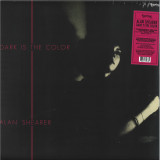
Favorite Recordings presents Dark Is The Color, the first LP by Alan Shearer reissued on vinyl for the first time. Despite being initially composed and produced for the French library label PSI, this rare
and obscure in-demand gem from 1985 sounds retrospectively like a proper album with great coherence and sophistication all along. Indeed, these 11 tracks will delight synthesizers addicts. Expect deeply emotive instrumental compositions, with ingenious analogue sequencing on stimulating chord progressions. The result is a highly retrofuturistic album, sometimes almost anticipating 90's videogames
scores. Just imagine Wally Badarou in a bunker with Talking Heads watching New York 1997 from John Carpenter.
Composed mostly step by step on a Sequential Pro-One synthesizer, Dark Is The Color is the product of the exciting state of mind from the 80's era with new sounds, new tools and new trends on the music spectrum. Influenced by bands like Talking Head or Japan, the sirens of the new wave scene strongly resonate here with Alan Shearer's familiarity and craftmanship with synthesizers.
Back in the days, Alan Shearer aka Frédéric Viger was working for his father’s music label, “Musique Pour L'image”, and their sublabel “PSI”. He started with Marathon Life under his real name before taking the Alan Shearer monitor. These records were produced for radio, TV and cinema industries but as well for companies’ internal communication. They represented a real investment from the label and these catalogues are usually full of amazing music from great artists such as Martial Solal, Vladimir Cosma, Joël Fajerman, Harlem Pop Trotters and even Manu Dibango.
About his musical illustration process, Alan Shearer tells: "Soundtracks are indeed my biggest influences and I'm a real fan of American composers as Jerry Goldsmith or Elmer Bernstein. I've always considered soundtracks as the new classical music or classical music of our century. There is a real state of mind producing music for illustration: you have to stick to the video. You should not tell what the image is saying but accompany what it is saying. You have to find a unique link, people always told me music should not be noticed for itself in a movie, that's what makes it good.”
French artist Trudge returns to Lobster Theremin with his debut LP No More Motivation arriving on March 18th with a genre-bending and original masterstroke; charged as it is cerebral. The album's concept points to the artist's tumultuous relationship with music; plagued by life events and the looming shadow of tragedy. That same relationship however, has led to an album of nuance, a cathartic whirlwind that pushes and pulls from one part of the psyche to the next.
From the laden house sounds found in his earlier work, to the hard-hitting emotive techno we hear today, both Trudges’ personal and artistic evolution runs parallel, drawing between the lines of introspection and dance music’s modern functionality. Bangkok Radio kicks off proceedings with a reminiscent drive through the city's bustling landscape, as space unfolds the further we travel from the hustle and bustle of daily life. No Motivation, Meaningless is a nod to the producer's headspace - burdened by the unpredictability of reality and it’s governing influence on art; echoing throughout the entire album.
Mazzomba explores the duality of light and dark; heavily submerged sounds can be heard melting below the surface, as airy synths create an ethereal glow - acting as our torch through the crud-infested trench. The album's interlude Berserk provides a rest bite, an ambient dreamscape laced with deeply layered textures - casting warm fluorescent light amongst the clouds as balance is restored.
Dead Orange and Gradient demonstrate the artist's knact for intelligent sound-design and world-building soundscapes, while Unghosted and Punishments sees Trudge venture into raw and unwavering compositions created for the dance-floor. Closing the album is Blue Ritual, a thought-provoking piece that has the ability to transport and heal. It’s introspective layers point to the changing winds to come - rounding off an album not binded by genre, but an eclecticism that characterizes an artist true to his craft.
The Ricardo Villalobos / Samuel Rohrer partnership has yielded increasingly interesting results over the past few years, with the former’s remixes of the latter’s trio Ambiq being supplemented by further reinterpretations of Rohrer’s solo work and live meetings at select events like Berlin’s Funkhaus and Radialsystem V. As should be the case with any strong collaboration, this partnership has been based on mutual challenge rather than compromise,
seeing each participant shuttle key technical and emotive aspects of the other’s work to previously unexpected places.
Those who have been closely following this relationship will notice a definite sense of continuity between previous outings and the new collaborative release entitled MICROGESTURES. As with those earlier Villalobos / Rohrer pairings, these four new pieces are defined by a special quality of being many things that once: that is to say, depending on the listener’s own level of focus, these can feel very tightly constructed and disciplined, or playful and freely wandering. That the tracks are equally engaging regardless of one’s chosen listening “mode” is a testament to the level of thought put into them; you could almost imagining the creators poring over some elaborate sketched set of architectural blueprints rather than coolly monitoring the usual multi-track editing software.
Altogether the music here is firmly a-melodic and percussive, but within these deliberate limitations there is still a greater variety of individual sounds than most would bother with. Each track is its own observatory of microgestures clustering together into a dense communicative fog or a sort of robotic sound swarm. Yet while all
these tracks are variations on that theme, each one has its own character and, consequently, its own rewards in terms of the exact sectors of the imagination that it activates.
Take for example “Cochlea” and its twin “Helix,” on which the magnetizing, busy layers of percussion are tempered with mischievously disruptive blossomings of digital noise, as well as sampled radio communications (which again bring us back to the idea of listeners’ attentiveness changing the meaning of this music - these
curious transmissions can either be taken as a purely aesthetic element or as something to be actively decoded).
Club-oriented elements are also not absent from this suite, particularly on “Incus” with its traditional sequenced baseline, crisp synthetic trap and hats, and dizzily sliding set of bell-like tones laid on top.?
Yet this track, too, is powered as much by its restless desire to deviate as by its rhythmic consistency: throughout the eleven-minute running time, a mass of ambiguous and restless machine sounds build a parallel narrative, and will maybe prompt the occasional glance over the shoulder as they seem to be taking on their own life. “Lobule” rounds out the program with the most rhythmically eventful sound set off the five.
What this all adds up to is a confident music which builds that quality from its faith in possibilities rather than firm conclusions: it’s an inspiring addition to both the musical landscape and reality in general
- A1: Please The Nation
- A2: Angel Face
- A3: I Am Selfish
- A4: Eniweth
- A5: No More Crying
- A6: Making Life Out Of Music
- B1: Walking Down The Street
- B2: Rock & Roll Soul
- B3: Lovely Lady
- B4: Widow
- B5: Worthless Woman
- B6: Looking For The Day
- C1: Lonely
- C2: No More Crying
- C3: Beginning
- C4: Good Turning Bad
- D1: I Am Selfish
- D2: Dancing
- D3: Are You Satisfied
- D4: Worthless Woman
- D5: Rock & Roll Soul
- D6: Waiting For The Chance
The Effect Of Heavy Music: Rock Music And Revolution In 70s Zimbabwe. Eye Q’s music has never been collated and issued outside of its country of origin. Now, as part of the Now-Again Reserve series, their rare singles and even rarer album are presented in full. Just as the hippie era came to an end in America, a second 60s was beginning: in what is now Zimbabwe, young people created a rock and roll counterculture that drew inspiration from hippie ideals and the sounds of Hendrix and Deep Purple. The kids in the scene called their music “heavy,” because they could feel its impact, and it resonated from Zambia to Nigeria. At its peak in the mid-70s, the heavy rock scene united tens of thousands of young progressives of all racial and social backgrounds. The country was called Rhodesia then, one of the last bastions of White rule in Africa, and heavy rockers defied segregation laws and secret police to make a stand for democratic change. Eye Q is one of the greatest bands of the scene: their rock stands on par with the early Zamrock of WITCH and Ngozi Family. Please The Nation encapsulated Eye Q’s desire to forge forth, in a new, free country, and this set collates their 7” singles, ultra-rare album and songs from master tape and presents their music for the first time outside of Zimbabwe. In the accompanying oversized booklet, a trio of authors collaborate to tell the Eye Q story, and to investigate the genesis of the heavy rock scene under Ian Smith’s racist, oppressive government, and its dissipation after Zimbabwe’s liberation. The set also includes a download card for WAV files for all vinyl tracks, as well as bonus tracks.
Seabear return with a new album. After a hiatus of 12 years - the bands most 'recent' LP dates back to 2010 - the much loved Icelandic collective presents »In Another Life«, a mesmerizing collection of songs, oscillating between indie pop and classic singer-songwriter material.
Sometimes, a long break is all it takes. Seabear, the band featuring the talents of Guðbjörg Hlín Guðmundsdóttir, Halldór Ragnarsson, Kjartan Bragi Bjarnason, Örn Ingi Ágústsson, Sindri Már Sigfússon (aka Sin Fang) and Sóley Stefánsdóttir (aka Sóley), did exactly that. Producing an album takes up a lot of energy. You do promotion, you tour quite a bit and afterwards you... well, you just do different things. "We had all focussed on other projects", Kjartan Bragi explains. "Solo careers, playing with other projects, other forms of art, working 'normal' jobs to make a living etc. It's nice to finally come together again with old friends and make music." During the break, music has been an integral part of the members’ daily lives. Sóley started a remarkable solo career (she just released her fourth solo-album), as did Sindri, under the name of Sin Fang, while Guðbjörg worked with Sigur Rós. However, all this was made possible by the disarming folk music of their 2007 debut LP »The Ghost That Carried Us Away«.
"We stayed in touch all along", adds Sindri. "During dinners etc. one question came up again and again: What would Seabear sound like today? After accomplishing so much together, we were indeed thinking a lot about the past, how it all began. This is what sparked the reunion and is also reflected in the lyrics, resurrecting our youth, hopes and dreams."
Now, in 2022, the band is ready to set a mark in the musical landscape once again – with 11 new songs coming straight from the heart, aimed at all who value emotions, the warmth and intimacy of songwriting, big yet subtle soundscapes, capturing the smallest tones and feelings.
"We have all matured on our different paths apart. It's exciting to make something new", says Kjartan. "We are 6 friends coming together again 10 years later to make songs and have fun doing it. We are now in a more relaxed environment to compose the music."
The songs on »In Another Life« sound and come across like a musical diary of sorts. A diary found by accident, split across 11 records, without any further info and all details scratched out. There is just the music to speak for itself. Even if you are familiar with Seabear's previous music: the opener »Parade« will make you wonder who came up with this wonderful tune, full of assuring harmonies, delicate melodies and compositional surprises. Seabear once more are delivering the perfect soundtrack for all kinds of emotional states. With driving yet subtle drums, intimate, yet fleeting vocals and lyrics, an orchestral sense of production, emphasizing small details rather than counting on the big "studio bang". An approach which came naturally: "The album reflects our relaxed attitude when it comes to recording and exchanging ideas."
»In Another Life« indeed feels like the start of a new chapter. Full of hope. And hopefully, all Seabear fans won't have to wait as long anymore in the future.
In March 2020, Tahiti 80 had a plan to start recording their new album in the studio. That plan, of course, along with everything else in the world, got derailed. But the five-piece group was resilient and resourceful. They quickly shifted to a socially distanced plan B that included file swapping and virtual sessions, all refereed by producer Julien Vignon. The result, due for release in March 2022, is the buoyant Here With You, a collection of eleven upbeat songs that unfold like a prescription for a post-pandemic panacea.
“When lockdown in France happened, we said, 'We're not going to stay at home not doing anything,'” says singer-guitarist Xavier Boyer. “And our new plan became a hopeful thing, waking up every morning and seeing what the other guys had worked on. It wasn't always easy, but this new method allowed a freer approach where we could really go all the way with an idea without being influenced by each other’s suggestions. It must've been overwhelming for Julien, who ended up selecting all our arrangements. But he stayed positive all the way through.”
To help stay inspired and focused during their time in isolation, the band created a mood board, with the centerpiece a photo of an early '90s rave in the UK.
Boyer says, “Whenever you see pictures from this era, people seem very innocent. There are no cell phones and everybody is in to what they are experiencing. We kept that picture in mind as a kind of mantra that would help everyone feel connected to this idea of people celebrating, gathering and just having fun. We were missing the connection with people, and thought it would be great if we could create music that would inspire that kind of emotion.”
Indeed, the songs on Here With You are brimming the feeling of communion that we've all been missing over the past two years. It's there in the catchy opener Lost in the Sound, which walks the walk with Chic guitar flicks, urban nightfall sparkles and an inviting chorus (“Your heart grooves like a thousand 808s on the right time”). It's there in the Jackson 5-style syncopated bounce of “Vintage Creem,” the lush, dreamy “Breakfast in L.A.” and the panoramic sweep of “UFO.” And it's there in the first single “Hot,” which matches an irresistible groove with a neon-lit, percolating arrangement that evokes the disco clubs of 1979.
What's remarkable is that though Tahiti 80 displays a clear affection for sounds of the past, from bubble gum to '70s soul, they never trade in mere pastiche. Their take is more a slightly warped and playful carnival mirror mash-up of classic pop styles, given depth through Boyer's hang-gliding, coolly emotive vocals and lyrics that often rub against the euphoric grain of the music.
“I like to think of songs as a three-minute drama,” says Boyer. “This concept of drama definitely adds different levels to our music. There's the melody, the lyrics, then the production that can maybe emphasize or counterbalance the interaction between the yin and yang in a song.
“There's a difference between the very upbeat, sunshine-y soft rock and the lyrics, even on our past albums,” he continues. “Not dark, but a little more melancholy, and also looking for some kind of motivation, talking to yourself. Like with a lot of Motown songs, you get that feeling where you body’s dancing while your mind’s reflecting, reminiscing.”
That alluring blend of happy-sad has been a signature part of the Tahiti 80 sound from the time Boyer and bassist Pedro Resende formed the group in 1993, as students at the University of Rouen. Taking their name from a souvenir t-shirt given to Boyer's father in 1980, the duo recruited guitarist Mederic Gontier in 1994, and with the addition of drummer Sylvain Marchand a year later, the lineup was complete. The foursome released a self-produced and self-financed EP, 20 Minutes, in 1996, which resulted a record deal with French label Atmospheriques in 1998. Their full-length debut Puzzle, produced with Ivy's Andy Chase and mixed by Tore Johansson, went gold and featured the international hit “Heartbeat” that established the band throughout Europe and Asia.
In the years since, Tahiti 80 – with the additions of Raphaël Léger on drums and Hadrien Grange on keys - has released eight acclaimed albums. The band has fused what MOJO called a “glorious entente of old and new technology” (including singles like “Yellow Butterfly,” “1000 Times,” “Sound Museum,” “Crush!” and “Big Day,” which was featured on a FIFA video game soundtrack), while collaborating with such producers and arrangers as Richard Swift, Tony Lash and Richard Anthony Hewson, who famously arranged The Beatles' “Long and Winding Road.” Boyer has also put out two solo albums, the first under the anagram Axe Riverboy and the second under his name. In 2019, the band released Fear of an Acoustic Planet, a stripped-down reimagining of some of their best-loved tracks from the previous twenty years. It served not only as a look back but a reminder of their formidable songwriting skills.
Boyer is definitely a student of the timeless three-minute pop song format pioneered by '60s artists like The Beatles and The Beach Boys. He says, “I see it as kind of a frame for a painting. Most of the songs on this album, I wrote a verse, pre-chorus and chorus. There aren't many middle eights. I wanted it to be very concise. I feel like people have less attention. There's so much music. It's too easy to switch off or skip to another track, so I want to hook the listener. The three-minute song is kind of an easy code to crack, but at the same time you have to figure out a new way to tell the stories that we've heard before.”
And the stories on Here With You are very much about the longing for connection. Of the album title, Boyer says, “In the world right now, that can mean a lot of different things. Like missing our fans, missing going to concerts. In a way, it can be a statement of what happened last year, and a wish of 'I want to be here with you again.' It's our ninth album. We've had some had some very open, conceptual titles like Puzzle, Activity Center. Sometimes they were more specific like Fosbury orWallpaper for the Soul. Here with You, seems more personal, more engaging in terms of relationships. When I suggested that title, everyone in the band said, 'Yeah, that's it.'”
Until Tahiti 80 can resume a full tour schedule, Boyer says he hopes the new record will make that personal connection. “If I see from the point of view as a music fan, sometimes I see albums I like as companions throughout my life. So if we can be a part of people's existence, even if it's a song that reminds them of the time they were driving with the windows open and it was sunny. Or a sad song that resonates with them after a breakup. That's what we're all looking for when we're making music. You do this very personal thing and you want it to touch as many people as possible.”
Historically informed violin player, prize-winning street musician, new age experimentalist, chamber ensemble performer and conservatoire deviant. The career of Valentina Goncharova (b. Kyiv 1953) shares parallels with those associated with the broader new music movement of the 20th century and the dissemination of home recording technologies.
Valentina’s was a youth spent immersed in the world of classical music study under soviet rule, first in Kyiv- later in Leningrad & now St. Petersburg, from the age of 16. With the supervision of professors M. Vayman and B. Gutnikov she learned concert violin and developed alternate playing styles alongside skilled pianists. A student of the Leningrad conservatoire during the years 1969 - 1983, her repertoire included music for violin and later expanded to contemporary music composition.
The improvisatory nature of free jazz and then-budding experimental rock circles also intrigued Valentina during this period in Leningrad. Departing from the rules of the conservatoire, she briefly performed in underground rock clubs alongside future members of the industrial group Pop- Mechanika (Popular Mechanics). This perpetual state of flux is central to the variety found within ‘Recordings Vol. 1’, though as opposed to any degree of uncertainty Valentina’s practice is one
in flux by way of earnest curiosity.
Pushing further into an exploration of solo electro-acoustic sounds, she took to home taping on a modified Olimp reel to reel recorder. Intrigued by the manipulability of dubbing and the fresh sounds of DIY effects chains, Goncharova developed pickups alongside her husband Igor Zubkov. Her infatuation with the music of Stockhausen, Xenakis, Ganelin Trio and Pierre Boulez channels through considerations of space and erratic sound design, the 3 movements of ‘Metamorphoses’ embodying this textural approach to musique concrete.
The compositional skills developed in Leningrad unfold in the romantic gestures of ‘Higher Frequencies’, whilst manipulated cello combines with synthesise keys across ‘Passageway To Eternity’.
The slow, pulsating drone soundscapes recall the likes of Robert Rutman’s US Steel Cello Ensemble or even deep listening pioneer Pauline Oliveros.
The juxtaposition of written notation and improvisatory flare is central to Goncharova’s sound world. This period of home recording documents a confluence of minimalism, free form and flirtations
with new age tropes (inc. bell chimes and cavernous vocal mantras).
Experimenting with unusual performance techniques, such as shouting into amplified cello strings, Valentina’s home studio functioned as a place to foster full artistic and creative freedom
away from any academic strictures.
Relocating to Estonia in 1984, and in parallel to the deeply personal music of ‘Recordings Vol. 1’, Valentina performed at jazz festivals and gave classical concerts across Eastern Europe. In a sense, the recordings on these discs offer only a glimpse into her lifelong body of work. Over the past few decades she has taught at Tallinn Music College, expanded and updated post- Soviet popular music repertoire, collaborated with the Russian Philharmonic Society of Estonia and given concerts and charity events alongside the Catholic Church.
Hers is a life dedicated to the exploration of sound, a career forged through careful study and ceaseless intrigue. In a time where technological interconnectedness has allowed for music of the pas
to be continually mined and evaluated through new lenses, Shukai present an artist whose tendency for private home-taping had allowed recordings to go unheard for thirty years.
Mitch Stahlmann's solo debut release Into The Wish is a kaleidoscopic adventure in sound. Resulting from the Oakland-based musician's personal practice of experimenting with ways to process and reintroduce the flute, the music on this record draws inspiration from the instrument's everlasting breath. Paying respect to its archaic history as well as leaving room for more strange, clownish impersonations, Into The Wish is a varied collection of flute-inspired pieces. The album traverses seamlessly between what sounds like ancient, sacred incantations and more playful, chaotic collage pieces where the flute is processed, reprocessed and performed using samplers.
Each piece offers a glimpse into a whole world that could be explored in depth, but Stahlmann's curiosity is ceaseless. The opening “Petrified Cloud” is a gentle piece, a velvety, digital introduction, whereas “Moon Arch” follows with more mystery and tropical drama. “Flat Earth” offers sonic depth and channels Hassell's fourth world music ideas into immersive, winding flute passages. “Paris 2107”, “Mega Mart” or “Real Life Drama”, on the other hand, move largely beyond the sound of the flute, burying it in layers of digital processing and (re)sampling. While extremely diverse, Stahlmann's Into The Wish is a fascinating, colourful exploration of his instrument.