crys cole returns to Black Truffle with Making Conversation, her third solo release for the label. After the intimate song-like constructions of Other Meetings (BT096), Making Conversation documents a different facet of cole’s work, presenting three rigorously conceptualised commissioned pieces, each of which extend her signature approach to highly amplified small sounds into new directions.
The side-long title piece is a stereo version of an 8-channel sound installation exhibited in 2023 at the Tabakalera Art Center in Donostia / San Sebastian, Spain. The piece uses a multitude of instrumental, vocal, concrete and electronic sounds to evoke the soundscapes cole encountered during nocturnal listening session in Bali, Indonesia in 2018 and 2019. In this world of night sounds, she explains, she ‘observed the complex interplay between amphibian, lizard, bird and insect communication, domestic animals (roosters, dogs), man-made sounds (airplanes, vehicles, conversations and evening activities) and sounds that were difficult to place’. Drawing on field recordings as memory aids (but including none in the finished piece), cole’s piece uncannily reproduces the spatiality and pacing of environmental sound without attempting strictly to replicate it. We hear insect-like twittering and birdsong fragments, resonant thuds and distant roars, furtive crunches and taps, muffled breath and metallic scrapes. While at times it can be difficult to imagine the source of these sounds, at other points they are clearly instrumental or electronic in origin; in its placement and layering, though, the whole assemblage suggests the glorious, unthinking richness of a non-musical sound environment. Suggesting at once the electronic gardens of Rolf Julius and the little instrument expanses of classic AACM, the piece is a brilliant enactment of the Cagean drive to ‘imitate nature in her manner of operation’.
‘Valid ForeverrRrrRRrrr… (pt. 1)’ began as cole’s contribution to an Issue Project Room commission to realise a score from Alison Knowles and Annea Lockwood’s Women's Work, a 1975 collection of text and conceptual scores by women artists and composers. cole’s piece begins from Beth Anderson’s Valid for Life, a complex arrangement of the letter R in various typefaces. Where the composer suggests a realisation on a trio of acoustic instruments (playing rolls with velvet beaters), cole translates the piece into her characteristic sound and object language as a trio of rolling sounds on ‘two large similar paper things and one 5-pin bowling ball’. Rolling from one side of the stereo field to the other, the bowling ball’s uneven movement is the heart of this immersive textural array, created with the simplest materials, which generates phantom sensations of pitch and phasing effects solely through amplified friction.
On ‘Valid ForeverrRrrRRrrr… (pt. 2)’, cole makes a first foray in translating her signature approach into conventional instrumental sounds, here in the form of a transcription for MIDI percussion ensemble. The result is refreshingly puzzling, comparable perhaps only to the sparsest moments of Keiji Haino’s classic “C’est parfait…” Accompanied with extensive liner notes, photographic documentation and a download code, Making Conversation is an exciting next step in cole’s work, extending her signature concerns in new sonic and conceptual directions.
Search:source direct
Imaginative re-workings and improvisations by Andrew Tuttle of the late great Michael Chapman's unfinished instrumental album. Sonic explorations that bridge the Southern and Northern Hemisphere via the Caribbean, remote Northumberland and sub-tropical Australia. Navigating calm seas and turbulent waters of ambient corals, new-age pirates, waves of lapping banjos and drifting eroding guitars.
When Michael Chapman passed away in September of 2021, at the age of 80, he did so – as he spent much of his life – as both a pioneer and a legend. A veteran of the British blues/folk/jazz scene, Chapman emerged in 1966 and continued working throughout his life, always pushing the boundaries of his creations while collaborating with a slew of similarly heralded musicians along the way: Bert Jansch, Mick Ronson, Elton John, Thurston Moore, Steve Gunn; to name just a smattering of those he worked alongside over the years.
It's the latter of those – Brooklyn guitarist and songwriter Steve Gunn – who Chapman flourished alongside in recent years, the two collaborating on 50 and True North, two of Chapman’s final and finest records. It was through that friendship that Chapman’s music found Andrew Tuttle, the Brisbane-based multi-instrumentalist who has toured Australia several times alongside Gunn.
In the aftermath of Chapman’s passing, his partner Andru discovered Tuttle’s Fleeting Adventure LP, describing it as “one of the albums that kept me sane during that first brutal winter on my own.” The pair met in Australia shortly after, and before Andru had even made it back home to the north of England, Tuttle had begun working on the recordings she shared with him at that time. Those recordings were part of a project Chapman was working on at the time of his death, called Another Fish – what would have been a companion piece to his previously-released LP, simply called Fish.
Though Chapman had spent time in his local studio playing all the guitars, layering the different sounds and effects, he’d always intended to do much more work on the songs, however fate had its way and he never got to ribbon-bow those ideas and bring the album to its conclusion.
Though there was little intention in terms of how to finalise the project, Tuttle spent valuable time with those recordings. What materialised, eventually - with time, care, and diligent attention - is a two-disc set Another Tide, Another Fish, something both unusual and completely distinctive. The first disc, Another Tide is centred around Tuttle’s own work, which shaped all seven of Michael’s songs and ideas into new songs of their own, and the second disc which simply incorporates the recordings that Michael left behind.
“On all of the tracks I also ‘played along’ on banjo to the originals several times until I learned an approximation,” Tuttle continues. “This ended up resulting in a ‘hybrid’, where some works are easily identifiable to those who know Michael’s originals, and some took that inspiration to head altogether elsewhere. Each of the tracks, even where not obvious, does have at the very least a trace element sample of the original recordings so that it’s a true collaboration.”
What we’re left with is indeed a hybrid: part remix album, part cover album, both a solo work and a collaboration, of sorts. Inspired by Chapman’s original ideas and with new track titles directly referencing the numbered but otherwise untitled source material, Tuttle adds his own flashes of colours throughout, including editing, sampling, MIDI transposing and signal processing that twists these songs into beautiful new shapes. Perhaps Tuttle’s greatest achievement here then is that Another Tide sounds so effortlessly free of all this context.
Whether you know Michael’s, Andrew’s or even Andru’s story or not, these recordings will bristle with enchantment and intrigue, worlds are built, and while some thrive and grow, others fizzle out in a burst of light, such is the way. “It's been a long, long road but we got there and I think it's been more than worth it,” Andru says in the record’s liner notes. “I really hope you think the journey was worth it too.”
Guitars and effects by Michael Chapman recorded by Alex Warnes at Phoenix Studio, Brampton, Cumbria, 2017 Banjo, effects and edits by Andrew Tuttle at Bella Vista, Brisbane / Meanjin, 2023-2024
Composed in the aftermath of family tragedy, NY Graffiti’s Burden is an album full of peace anthems, psalms, dirges, and confessionals. In the pursuit of consolation, the tectonics of techno, dub, and post-club aesthetics are pushed past their margins onto new emotional plateaus.
Like the series of EP’s that NY Graffiti has released in recent years – including a split with Subtext affiliate UCC Harlo – Burden is an amalgam of dub-informed club music, acoustic emulations, and doom-scroll sourced social media chatter, filtered through the artist’s unique sonic palette that has developed over years on the fringes of New York’s contemporary club scene.
From the largely-improvised opener (and closer) “Approximation”, to the discord of the steppa-inflected track “98 Prayers”, and the dystopian ambiance of “Reach” (evoking early Hype Williams), Burden constantly reconfigures itself in search of catharsis. The album's seven tracks are dense and claustrophobic yet unexpectedly grounding. Amid the weight of grief, and the bleakness of our shared geopolitical realities, the NYC-based artist provides moments of solace that are intimate, direct, and revelatory.
Burden was initially released as a digital album earlier this year and is now available on vinyl through NY Graffiti’s own Peace Anthem Records and Switzerland-based Präsens Editionen. While the former has primarily focused on releasing NY Graffiti’s own projects, the latter is the publishing house of zweikommasieben Magazin and has released music and sound works by artists such as Anom Vitruv, Red On, Belia Winnewisser, Martina Lussi, Samuel Reinhard, and Magda Drozd
Cardinal Fuzz and Feeding Tube Records are proud to present to you the 2nd LP from TOMOYUKI TRIO (Tomoyuki Aoki, Mike Vest & Dave Sneddon) following their debut LP ‘Mars’ on the esteemed Riot Season Record Label. Tomoyuki Aoki is the founding member and lead guitarist of the legendary Tokyo Psych Monsters UP-TIGHT. Of all the Japanese psych-rock groups that emerged in the late nineties and early noughties, Up-Tight are the most reverent, the most directly plugged into the source, from their name (Velvet Underground) with knowing referential song titles like “Sweet Sister” to their extended heavy, dark black clad acid fried one chord psych melters -- we're talking bands like Fushitsusha, White Heaven, Kousokuya, Shizuka, and the grandaddies of 'em all, the deservedly-legendary, Les Rallizes Denudes. Shitsuren If anything has got an even heavier, dronier edge than what we heard on the last one. Super fuzzed guitars, sad ballads, grinding distorto epics and numbed, narcotic rhythms. This is one to play at maximum volume so that you can soak up its molten magik as over 2 sides of Shitsuren’s grueling guitar hypnotics you uncover the darker side of the ensembles personality to find them digging deep to drag the audience with them into the shadows of stoner psyche. If you can picture Okhami No Jikan, Asahito Nanjo. Musica Transonic & Toho Sara then you’re close to the outrageous levels of psychedelic excess captured here, a riotous concoction of ferociously brooding, locked down heavy bearing intensity of fierce/brutal speaker battering in the red levels.
The impact, influence, and importance of Run-D.M.C.'s self-titled debut – the album that invented hardcore hip-hop and bridged rap, rock, and funk in then-unparalleled ways – cannot be measured. The first full-length record released by Profile Records, the 1984 set permanently changed the sound of music, broadcast streetwise wisdom to every corner of the country, and made the notion of a one-man band a distinct reality. Bolstered by an incendiary blend of staccato deliveries, stark beats, aggressive exchanges, evocative hooks, and socially conscious messages, Run-D.M.C. still hits listeners in the jaw with the same intensity it did nearly 40 years ago when it could be heard booming from ghetto blasters carried around city blocks nationwide.
Sourced from the original master tapes, pressed on MoFi SuperVinyl, and strictly limited to 3,000 numbered copies, Mobile Fidelity's 180g SuperVinyl 33RPM LP is the definitive-sounding version of the groundbreaking work cited by Rolling Stone as the 378th Greatest Album of All Time. This reissue also represents the first time this gold-certified effort has been presented in audiophile quality. Benefitting from the ultra-low noise floor, superb groove definition, and dead-quiet surfaces of SuperVinyl, Run-D.M.C. now plays with a clarity, immediacy, punchiness, and directness worthy of the artistry, urgency, and intellect of the trio's material.
The brilliance of Russell Simmons and Larry Smith's production comes into view as if the music is being broadcast on a giant system in a small club — only more focused, lively, and unlimited. Free of dynamic constraints and fatiguing harshness, this LP invites you to turn up the volume and experience the raw, rough, invigorating songs that changed the look, sound, and feel of hip-hop overnight. Think the trio’s sparse framework of drum machines, tag-team rhymes, keyboard accents, and turntable scratches is stuck in the mid-80s? Spin MoFi’s SuperVinyl LP and gain new appreciation for the music, messages, and production on display on Run-D.M.C.
Recorded in the wake of two successful and pioneering singles, both included on the album, Run-D.M.C. effectively took a sheet of coarse-grit sandpaper to the polish, sheen, and linear presentation of all the hip-hop that preceded it. Stripped to bare-bones foundations, the songs grab your attention and shake you by the collar with a combination of industrial-leaning rhythms, staggered deliveries, dance drama, and hard, minimalist percussion. Then there are the lyrics.
The LP broadcasts a smart mix of boots-on-the-ground reports, uplifting advice, and then-nascent b-boy culture. In one fell swoop, its narratives and music rendered the scene’s proclivity toward glamor and softness passé. Run-D.M.C.’s tough, cool-minded fashion sense showed the trio walked its talk and gave fans — particularly those living in long-ignored urban areas — heroes which with they could identify. Kangol hats, black jeans, leather jackets, Adidas sneaks, and gold chains were the new currency.
In every regard, Run-D.M.C. signifies the birth of modern hip-hop. Never more obviously than on the groundbreaking “Rock Box,” where rap and rock were first fused. As the first hip-hop video to receive regular rotation on MTV, the track eviscerated racial and social boundaries, awakened musicians and listeners to new possibilities, and redefined both popular music and, ultimately, popular culture. As the Roots’ Questlove has stated, it “ knocked down many obstacles, enabling hip-hop to become the new gospel."
Such teaching includes the real-world scripture of “Hard Times,” utopian hopefulness of “Wake Up,” and observational truths of “It’s Like That.” Released as the group’s debut single well before its eponymous album, the latter tune established themes and outlooks Run-D.M.C. would embrace during its career. Namely, the keen awareness of various prejudices, economic ills, and disruptive violence as well as the knowledge that education, self-motivation, and hard work were the ways to escape disadvantages and disillusionment.
Inspired and inspirational, the song reflects the spirit and shrewdness that courses throughout Run-D.M.C. That includes a detailed account of the trio’s not-so secret weapon (“Jam-Master Jay”), purpose statement (“Hollis Crew (Krush-Groove 2)”), and a revolutionary hybrid autobiographical narrative-dis track (“Sucker M.C.’s (Krush-Groove 1)”) widely regarded as one of the best hip-hop songs ever created. The same can be said for every moment on Run-D.M.C.
MoFi SuperVinyl
Developed by NEOTECH and RTI, MoFi SuperVinyl is the most exacting-to-specification vinyl compound ever devised. Analog lovers have never seen (or heard) anything like it. Extraordinarily expensive and extremely painstaking to produce, the special proprietary compound addresses two specific areas of improvement: noise floor reduction and enhanced groove definition. The vinyl composition features a new carbonless dye (hold the disc up to the light and see) and produces the world's quietest surfaces. This high-definition formula also allows for the creation of cleaner grooves that are virtually indistinguishable from the original lacquer. MoFi SuperVinyl provides the closest approximation of what the label's engineers hear in the mastering lab.
- A1: Wise Man
- A2: Skylarka
- A3: Wild Man Street
- A4: Cow Town Skank
- A5: Northern Sound
- A6: Convention
- A7: The Joker From La Boka
- B1: Legs Man
- B2: Greenwich Farm
- B3: Girls Town
- B4: Tip Toe
- B5: Gold Coast
- B6: Boys Town
repress !
If one band could be cited for the emergence of Ska music, that band would be the Skatalites.
Formed around June 1965 and built around the many musicians that had honed their craft at the Alpha Boys School in Kingston, Jamaica. The early line up consisted of Don Drummond (Trombone), Roland Alphonso (Tenor Saxophone), Tommy McCook (Tenor Saxophone), Johnny ’Dizzy’ Moore (Trumpet), Lester Sterling (Alto Saxophone), Jerome ’Jah Jerry’ Hines (Guitar), Jackie Mittoo (Piano), Llyod Brevett (Bass) and Llyod Knibbs (Drums).
Named originally The Satellites after the big news of the day, the Soviet space satellite. They became The Skatalites when band member Tommy McCook introduced a play on the characteristic ‘Ska’ sound, made by the guitar when following the’ after beat’ of the music.The group had already cut its musical teeth by playing under various guises around the Jamaican island in numerous ‘hotel bands’. When the big Sound System operators Sir Coxsane Dodd, Duke Reid and King Edwards needed new material to play out with and their usual source of the material, American R & B records were drying up. They turned to this pool of musicians to back up their main singers of the day. Delroy Wilson, Alton Ellis and Lord Creator to name but a few. Also to cut the many instrumental tracks they needed usually under the tutor ledge of Don Drummond, official band leader and main musical director. Their knowledge of the old mento tunes and an understanding of Jazz and R&B music somehow blended to make this musical sound that was to dominate the island from the early 60’s up until around 1966 when the sound would slow down to what we now know as Rocksteady.
The time span of the Skatalites career considering their output of litually 100’s of sides of music, was a relatively short one of just over two years. We have delved into the vaults of Wirl Records and have selected some tunes that show the dexterity of the band and what great sounds this group of musicians were capable of producing and the high quality they maintained. They recorded before they were named as a collective The Skatalites, when personal and financial problems became an issue the band split into two halves. Jackie Mittoo and Roland Alfonso going on to form The Soul Brothers band for Coxsone Dodd. Tommy McCook moving over to work with Duke Reid as musical director. Sadly, Don Drummond suffering for years from depression would see his career cut short ending in Belle Vue hospital in 1969.
But while together they cut some of the finest Ska Sounds to be found on record. We hope you enjoy this set as much as we have in putting it together.
So, stand Up, Listen Hard and do the Ska……
The onus of proof regarding deepness is a rather peculiar one. Even if one presses all the right buttons, quotes the correct sources and applies the textbook techniques, often something seems to be amiss. The elusive producer Mute never had that problem. Blessed with a a sound of his own, that seems to stem from within and can be called deep house without the genre’s strait-laced demeanor, his aesthetic includes a distinct feel for boogie and disco tropes. Case in point: Lost. Placed as a B2 it is the secret start of Direct Cuts II and more
prominent on this new edition of a classic Running Back record. Molded into an extended disco version by Gerd Janson with unused parts of the original recording session, it something like a curveball deep house disco song, according to the motto: you and me, we can be like a whole universe! Hard to resist and even harder not to like if you have the slightest interest in Prelude records, Diana Ross songs or Tee Scott mix techniques. Basics, Vibes and Driver’s License push further into the world and musical mindset of Mute.
Originally released in 2006 as the the fourth outing of the label and the second (and his last one to date) of the elusive artist, it is still as remarkable as on its first release. Carefully rescued from the original DAT tapes, all re-edited by Gerd Janson and remastered by Lopazz, it’s available again in a clear and present portraiture of its original intent. Early adopters like Danny Krivit and the Idjut Boys can’t be wrong.
"Waxwork Records is excited to present FRIDAY THE 13TH PART VIII: JASON TAKES MANHATTAN Original Motion Picture Score by Fred Mollin. Released in 1989, Friday the 13th Part VIII: Jason Takes Manhattan is an American slasher-horror film written and directed by Rob Hedden and stars Kane Hodder as Jason Voorhees. The eighth installment of the series follows Jason as he stalks a group of high school graduates on a ship en route to New York City.
The film’s musical score was composed by Fred Mollin, who worked with longtime Friday the 13th composer Harry Manfredini on the previous installment, Friday the 13th Part VII: The New Blood.
Jason Takes Manhattan was the first film in the series not to feature Manfredini credited on the score. Navigating away from traditionally used strings and horns, Mollin’s score to Jason Takes Manhattan is electronic based and utilizes digital keyboards and synthesizers popular of the time.
Waxwork Records is thrilled to release the complete score for the very first time on vinyl. Sourced from the original master tapes from Paramount’s vaults, the score has been restored and remastered. The 2xLP album package features 180 gram colored vinyl, an interactive die-cut old style tip-on gatefold jackets with matte satin coating, printed inner sleeves, and new artwork by Anthony Petrie."
People that like their electronic music extreme are definitely familiar with underground legend DEFORMER. Those who hear the name for the first time have been looking in the wrong direction for the last 25+ years! DEFORMER has been a source of inspiration for many groundbreaking artists for its ever evolving originality.
Rooted in Jungle, Breakcore and putting any genre possible into the mix, DJMAG fit-tingly stated: 'DEFORMER operates in a category of one'. This time around some classic DEFORMER tracks formed the starting-point for some of the most legendary hardcore producers to create a selection of devastating remixes. From Hardcore kings Angerfist and Neophyte, to Tripped, The Outside Agency, Terror pioneer Drokz and others, this record will be on heavy rotation for the years to come.
Instant classic!
4-channel rotary mixer with 3-band frequency isolator and filter section for DJs
OMNITRONIC TRM-422: THE ROTARY MIXER ON A NEW LEVEL
The desired child
Omnitronic's popular TRM series has been expanded: the TRM-422 combines all the proven features of the previous models, but additionally offers functions that numerous fans had wished for. During the development of the mixer, the focus was on the demands and suggestions of the community.
FULL CONTROL
Each of the 4 input channels has 2 line inputs, one of which can become a phono input at the touch of a button. The channels are each equipped with a volume as well as a gain control. In addition to the master isolator (bass, mid & high), the DJ has the option to activate a filter with HPF, BPF, LPF, resonance and sweep controls in each of the 4 input channels.
The master output is available to the DJ in both XLR and RCA versions.
EFFECT WAYS
The use of external effect devices is possible through an FX-In and FX-Out via 6.3 mm jack. The mixer's master insert is also equipped with a send & return (unbalanced) path. This allows additional external effects to be looped into the mixer.
DVS INTEGRATION
The mixer's timecode outputs allow easy integration of a DVS system (Digital Vinyl System) such as Traktor or Serato.
MONITOR SECTION
The booth output of the TRM-422 is provided with one XLR and one RCA connector. The signal of the booth output can be easily adjusted to the conditions in the DJ booth with the help of an EQ (High & Low).
MICROPHONE INPUTS
The TRM-422 offers 2 microphone inputs. The first mic input gives the DJ the ability to modify the mic signal with EQ (high & low).
BACKUP SOURCE
With the help of the AUX input on the front panel, players such as smartphones, tablets or MP3 players can easily be connected via mini-jack (3.5 mm) and thus serve as a backup solution.
ACTIVATABLE CROSSFADER
If you don't want to do without a crossfader during your DJ set, you have the option to assign each of the 4 channels to the integrated crossfader. If the crossfader is not used, it can easily be switched off.
SET RECORDING
The RCA record-out makes it easy to record your own DJ set.
FEATURES
4-channel rotary mixer with 3-band frequency isolator and filter section for DJs
3-band master frequency isolator with vintage ALPS potentiometers (Blue Velvet RK27)
Kill cut feature allows DJs to completely remove low, mid and high frequencies for amazing mixing
Filter section with HPF, BPF, LPF, resonance and sweep control for creative sound shaping
4 stereo input channels with gain control, clip LED, 3-way equalizer and phono/line switching
2 microphone input channels with gain control, 2-way equalizer on air switch
High-grade components ensure long life and excellent sound quality
16-digit stereo LED level meter, switchable between master and booth outputs
Booth output with separate 2-way equalizer and level control
PFL section with 16-digit stereo LED level meter, level control, PFL/master mix control and cue mix/split option
Fully assignable VCA crossfader with adjustable curve
2 effects send/return paths
4 direct outputs for Timecode applications
Inputs: 8 x line and 4 x phono (RCA L/R), 1 x front aux (mini jack)
Outputs: master and booth (XLR/RCA L/R), record (RCA L/R), master insert send/return (RCA L/R), FX in/out (stereo jack)
483 mm rack installation possible with supplied mounting brackets
Desktop console housing
TECHNICAL SPECIFICATIONS
Power supply: 100-240 V AC, 50/60 Hz
Power consumption: 24 W
Protection class: Class I
Power connection: Mains input IEC connector (M) mounting version Power supply cord with safety plug (provided)
Frequency range: Microphone 20 - 20000 Hz
Line 20 - 20000 Hz
Phono 40 - 18000 Hz
S/N ratio: >97,2 dB line
>91,7 dB Microphone
THD: Line -68 dB
Control elements: Power switch, source selector, Crossfader, Crossfader selector switch, Crossfade curve switch; Cue mix split function, EQ controls
Status LED: Power, master level meter, clip, CUE
Connections: Input: 4 x line via stereo RCA
Input: 4 x line/phono via stereo RCA
Input: 2 x Microphone via 3-pin XLR
Output: 1 x headphones via 6.3 mm jack socket (stereo) mounting version
Output: 1 x headphones via 3.5 mm jack (stereo) mounting version
Output: 1 x rec. via stereo RCA
Output: 2 x booth via 3-pin XLR
Output: 1 x booth via stereo RCA
Output: 2 x master via 3-pin XLR
Output: 1 x master via stereo RCA
Output: 1 x AUX sends via 6.3 mm jack socket (stereo) mounting version
Output: 1 x AUX returns via 6.3 mm jack socket (stereo) mounting version
Chanals: Input chanel: 4 x stereo with Line-Line/Phono switch via RCA, channel control via Rotary, 3-band tone control EQ, source selector, gain control, CUE switch, FX routing switch, Crossfader selector switch,
Microphon chanal: 2 x mono via XLR, channel control via Rotary dial, ON AIR switch,
Master output: 2 x stereo via XLR, channel control via Rotary
Booth output: 2 x stereo via XLR, channel control via Rotary
Rec. output: 1 x stereo via RCA
Headphones output: 1 x stereo via Plug 6,3mm/3,5mm (Jack), channel control via Rotary dial, Cue mix split function,
Max. level: Output: +18 dBu
Material: Metal
Housing design: Desktop console housing
Dimensions: Width: 41 cm
Depth: 28,5 cm
Height: 10,5 cm
Weight: 5,74 kg
- Introduction By Andre Francis
- Directions
- Milestones
- Miles Runs The Voodoo Down
- Footprints
- Round Midnight
- It's About That Time
- Sanctuary
- The Theme
- Introduction By Andre Francis
- Directions
- Spanish Key
- I Fall In Love Too Easily
- Introduction By George Wein
- Bitches Brew
- Paraphernalia
- Nefertiti
- Masqualero (Incomplete)
- This
Music On Vinyl proudly presents the second installment of the acclaimed Miles Davis Bootleg series on pristine 180 gram vinyl! Part 1 (Live in Europe 1967, MOVLP421) was voted Historical Album Of The Year in the Down Beat Readers and Critics Poll. Bootleg 2: Live In Europe 1969 skips two years ahead to record Davis with his ‘third great quintet’ also known as ‘the lost band’ of 1969-’70. This line-up consists of Miles Davis, Wayne Shorter, Chick Corea, Dave Holland and Jack De Johnette at their peak – they were never recorded in studio. Their European tours of 1969 are some of the only existing recordings of the group; the first legitimately released audio recordings by this stellar lineup. Bootleg 2: Live In Europe 1969 captures the short-lived quintet in three separate concert settings across 4 LPs, containing selections from two nights at Festival Mondial Du Jazz D'Antibes in France and one night in Stockholm, Sweden. Special recordings include a pre-studio recording version of “Bitches Brew” which would be recorded in the studio for the infamous record by the same name a few months later. The audio sources of Live In Europe 1969 have been remastered from the highest quality masters available, secured from the European broadcast centres where the material was originally documented.
So You Like Slippers? is the debut record from Slippers, the new project from Madeline B.B. from Los Angeles, California. Madeline is an illustrator and animator currently studying at Cal Arts, has directed music videos for Of Montreal, and also plays in the band Le Pain and was formerly in NYC's Yucky Duster.
- A1: Music Of The Earth
- A2: Let’s Sing A Song Of Love
- A3: When I Found You
- B1: Haven’t You Heard (12” Version)
- B2: Givin’ It Up Is Givin’ Up With Dj Rogers
- C1: Forget Me Nots (12” Version)
- C2: Look Up! (Long Version)
- C3: Where There Is Love
- D1: Never Gonna Give You Up (Won’t Let You Be) (Long Version)
- D2: Number One (12” Version)
- E1: All We Need
- E2: Remind Me (Lp Version)
- E3: Settle For My Love
- F1: Feels So Real (Won’t Let Go) (12” Version)
- F2: To Each His Own
Black Vinyl[27,52 €]
Strut present the first definitive retrospective of an icon of 1970s and ‘80s soul, jazz and disco, Patrice Rushen, covering her peerless 6-year career with Elektra / Asylum from 1978 to 1984. Joining Elektra after three albums with jazz label Prestige, Patrice had shown prodigious talent at an early age and had first broken through after winning a competition to perform at the Monterrey Jazz Festival of 1972. By the time of the recordings on this collection, she had become a prolific and in-demand session musician and arranger on the West coast, appearing on over 80 recordings for other artists. She joined the Elektra / Asylum roster in 1978 as they launched a pop / jazz division alongside visionaries like Donald Byrd and Grover Washington, Jr. “The idea was to create music that was good for commercial radio / R&B,” Patrice explains. “We were all making sophisticated dance music, essentially.”
Drawing on some of the leading musicians in L.A. like saxophonist Gerald Albright, drummer “Ndugu” Chancler and bassman Freddie Washington and keeping an open minded approach from her training in classical, jazz and soundtrack scores, Patrice’s music was a different, more intricate proposition to many of the soul artists of the time. “L.A. musicians were not so locked into tradition,” she continues. “None of us were accustomed to limitation and the record label left us to take our own direction.”
Early classics like ‘Music Of The Earth’ and ‘Let’s Sing A Song Of Love’ were among Patrice’s first as a lead vocalist before her ‘Pizzazz’ album landed in 1979, featuring the unique disco of ‘Haven’t You Heard’ and one of her greatest ballads, ‘Settle For My Love’. “Although ballads make you feel more vulnerable as an artist because they are often personal, I think listeners relate to that sincerity,” she reflects. By now, Patrice’s records were supremely arranged and produced as her confidence as an all-round writer, producer, arranger and performer grew. Slick dancefloor anthem ‘Never Gonna Give You Up’ and the ‘Posh’ album in 1980 led to her landmark album ‘Straight From The Heart’ two years later. Receiving little support from her label, Patrice and her production team personally funded a promo campaign for the first single from it, ‘Forget Me Nots’. It went on to peak at no. 23 on the Billboard Hot 100 and the album was later Grammy-nominated, while the track became a timeless anthem and popular sample, inspiring Will Smith’s theme for the film ‘Men In Black’ and George Michael’s ‘Fastlove’.
Patrice’s final album for Elektra, ‘Now’ kept the bar high with sparse, synth-led songs including ‘Feel So Real’ and ‘To Each His Own’. It concluded a golden era creatively for Patrice which remains revered by soul and disco aficionados the world over.
‘Remind Me’ features all of Patrice Rushen’s chart singles, 12” versions and popular sample sources on one album for the first time. Formats included a 3LP set and 1CD fully remastered by The Carvery from the original tapes. Both formats include an exclusive new interview with Patrice Rushen and rare photos.
• First definitive Patrice Rushen compilation released on vinyl since the ‘80s
• Includes all of her chart hits, DJ favourites and sample sources
• Official release featuring full interview with Patrice Rushen about her career and music • Features rare photos from her personal collection + some of the photographers she has worked with during her career
• Fully remastered by The Carvery from the original ¼” tapes
• Start of full Patrice Rushen reissue programme from her Elektra era
The Fossils label has been unearthing more musical treasure for its fifth outing, and this one takes you directly to the Middle East for some twisted disco-funk with red hot grooves courtesy of Fava Luva & Dr. Professor. The source of the tunes is obscure and unknown but the pair bring plenty of their own goodness with additional layers of live instrumentation really bring them to life. 'Lahatz' is steamy and full of sensuous vocal magic and cosmic synth work that will get the floor into action, while 'Kerem' is even more topical and exotic with its rich array of strong melodies and downtempo beats making for a woozy and wonderful trip.
Rotary mixer with 3-band frequency isolator, VCR filter and FX loop
Filter section with resonance and sweep control for creative sound shaping 3-band master frequency isolator with vintage ALPS potentiometers (Blue Velvet RK27) Kill cut feature allows DJs to completely remove low, mid and high frequencies for amazing mixing
2 stereo input channels with gain control, clip LED, 3-way equalizer, FX Send and phono/line switching
2 microphone input channels with gain control, 2-way equalizer on air switch
2 effects send/return paths
Dual analog VU meter
Direct outputs for Timecode applications
High-grade components ensure long life and excellent sound quality
Booth output with separate 2-way equalizer and level control
Record output, independent of the master
Fully assignable VCA crossfader with adjustable curve
Outputs: master and booth (XLR/RCA L/R), record (RCA L/R), master insert send/return (RCA L/R), FX in/out (stereo jack)
Desktop console housing
TECHNICAL SPECIFICATIONS
Power supply: 100-240 V AC, 50/60 Hz
Power consumption: 15 W
Protection class: Protection class I
Power connection: Mains input via IEC connector (M) mounting version power supply cord with safety plug (provided)
Frequency range: 20 - 20000 Hz
S/N ratio: >100 dB
THD: 100 dB
Klirrfaktor: <0,05 % bei 1 kHz
Gain: Line -12 dB bis +12 dB
Phono -40 dB bis +5 dB
FX 20 dB
Mikrofon 55 dB
DJ Filter: Zuweisbar: LPF, HPF,
Isolator: Master Gain:- ∞ bis +9
Low/Mid 300 Hz, 18db/Okt , Butterworth
Mid/High 4000 Hz, 18db/Okt , Butterworth
Steuerelemente: Netzschalter, Quellen-Umschalter, Crossfader, Crossfader-Wahlschalter, Crossfade-Curve Schalter; Cue-Mix-Split-Funktion, Klangregelung
Status LED: Power, Masterpegelanzeige, Clip, CUE
Anschlüsse: Eingang: Line über 2 x Stereo-Cinch
Eingang: Line/Phono über 2 x Stereo-Cinch
Eingang: Mikrofon über 1 x 3-pol XLR/6,35mm Klinke (W) Kombibuchse Einbauversion
Eingang: AUX Returns über 2 x 6,3-mm-Klinke (sym.)
Ausgang: Timecode über 2 x Stereo-Cinch
Ausgang: Kopfhörer über 2 x 6,3 mm Klinkenbuchse (stereo) Einbauversion
Ausgang: Kopfhörer über 1 x 3,5 mm Klinkenbuchse (stereo) Einbauversion
Ausgang: Rec. über 1 x Stereo-Cinch
Ausgang: Booth über 2 x 3-pol XLR
Ausgang: Booth über 1 x Stereo-Cinch
Ausgang: Master über 2 x 3-pol XLR
Ausgang: Master über 1 x Stereo-Cinch
Ausgang: AUX sends über 2 x 6,3-mm-Klinke (sym.)
Kanäle: Eingangskanal: 2 x Stereo mit Line-Line/Phono Schalter über Cinch, Kanalregelung über Rotary-Drehregler, Regler 3-Band EQ, Quellen-Umschalter, Gainregler, CUE-Schalter, FX Routing Schalter
Mikrofonkanal: 1 x Mono über Kombibuchse (XLR/KLINKE), Kanalregelung über Rotary-Drehregler, Regler 2-Band EQ, ON AIR Schalter
Master-Ausgang: 1 x Stereo über XLR oder Cinch, Kanalregelung über Rotary-Drehregler
Booth-Ausgang: 1 x Stereo über XLR oder Cinch, Kanalregelung über Rotary-Drehregler, Regler 2-Band EQ
Rec. Ausgang: 1 x Stereo über Cinch, Kanalregelung über Rotary-Drehregler
Kopfhörer-Ausgang: Stereo über Klinke, Kanalregelung über Rotary-Drehregler
Max. Pegel: Ausgang: +21 dBu
Material: Metall; Aluminium
Gehäusebauform: Tischpultgehäuse
Maße: Breite: 45 cm
Tiefe: 26 cm
Höhe: 16 cm
Gewicht: 5,50 kg
Reflection is also-ran late-'60s British blues-rock, with more rock-oriented takes on the kind of approach used by heroes Freddie King and B.B. King. B.B. King's "You'll Never Know," in fact, is covered here, though most of the material was penned by the band. Steamhammer doesn't put much of an original spin on its sources, or on the British blues-rock form, though this is competent and does generally have a moodier, more downbeat feel than most of the band's competition in the genre. The expressive qualities of Kieran White's voice, though, are limited, as though he's being pinched by something that keeps him from letting go too much. The best moments come when they venture just a little outside of the ordinary U.K. blues-rock model, particularly when Harold McNair adds some jazzy flute; "Down the Highway" sounds a little close to some of early Jethro Tull. Future Jefferson Starship member Pete Sears plays session piano. The 2002 CD reissue on Akarma adds two bonus tracks from 1969 singles, "Windmill" and "Autumn Song," which are more explicit forays into the more melodic jazz-blues-rock direction mined by the likes of Jethro Tull, Colosseum, and Davy Graham in the late '60s, again with prominent flute. ~ Richie Unterberger
Prince will forever be remembered as a commanding live performer, chart-topping recording artist, and music business revolutionary. Yet for all the time he spent in the spotlight over his four-decade-long career, Prince also worked tirelessly behind the scenes to nurture talent and pen songs for the rising artists he respected.
Sourced directly from Prince’s vast archive of Vault recordings, ORIGINALS is a brand new 15-track album featuring 14 previously unreleased recordings that illuminates the vital, behind-the-scenes role Prince played in other artists’ careers. These are more than just demos, the production quality has been kept high and the recordings resemble a pristine quality similar to that of Nothing Compares 2 U released last year.
By the mid-1980s, Prince was dominating the charts even as a writer/producer with songs he’d composed and recorded for others. In addition to releasing nine of his most commercially successful full-length albums, he also wrote and recorded endless reels of material for proteges The Time, Vanity 6, Sheila E., Apollonia 6, Jill Jones, the Family, and Mazarati. Several of the iconic songs found on ORIGINALS were considerable hits for the artists who recorded them.
"Catch me in the corner not speakin'/Crushed out heavenly/ U.G. rock the sweet daddy long fox minks/Chicken and broccoli, Wally's look stink"
Ghostface Killah released his debut solo album 25 years ago on October 29, 1996. Produced by fellow Wu-Tang Clan member RZA, Ironman found inspiration in sources ranging from blaxploitation films to classic soul and charted a whole new direction for hip-hop in the process. The album features classic bangers like Daytona 500 featuring Raekwon and Cappadonna to soulful emotionally moving cuts like All That I Got Is You with Mary J Blige. To commemorate the 25 year anniversary Get On Down is proud to present Ironman in a 2xLP set available on both ‘Blue & Cream’ and ‘Chicken & Broccoli’ half-n-half colored vinyl, each version housed in a deluxe gatefold jacket, packed inside a ‘shoebox’-style 2nd outer jacket embossed with the year 1996.
The long running vessel for Cameron Stallones' psychedelic excursions, Sun Araw, returns to Discrepant after last year's split with Tarzana via Keroxen sister label (KRXN033).
Without much precedent in his own - already wide-ranging - back-catalog, 'Cetacean Sensation' discards the dubby vibes, psych-rock sunburnt jams, tropical visions, or stalking sensibilities of such classic efforts as 'On Patrol' or 'Ancient Romans' towards a deeply focused and vivid solitary approach, while still retaining this Sun Araw blissed out escapist feeling.
Composed of hydrophone recordings of whales and dolphins sourced during a summer in Galicia, 'Cetacean Sensation' paints an impressionistic and sensory floating canvas that expertly escapes both academic-like documentarian purposes and any new-age spa vibrations one could associate with such subject matter. Processing those raw recordings into alluring collages that flow gracefully between moments of clear eco-location and submerged impressions of wildlife social dynamics. By the third track - Dance of the Minke - we're introduced to this ringing MIDI tone that evokes a CD-ROM era of mystic educational programs and click-and-deploy strategies that still feel very much like an unfulfilled future, conjured again by 'Spider Crab Elegy's sparse keyboard pads and sound effects that give way to this properly elegiac tentative melody. 'The Spider Crab Point' ends the album on a more uneasy vibe, with synth tones pointing towards no particular direction, confounding and strangely inviting at the same time. As sensations often do.
Music written and produced by Cameron Stallones using hydrophones and digital synthesisRecorded in 2019 in Galicia, ES
Mastering by Rashad Becker
Second in a series of reissues from Pierre Jaubert’s Parisound studio archive on Strut Record IS Lafayette Afro Rock Band's elusive funk/Afro original album, 'Soul Makossa' originally released in 1973. Transparent blue colored LP
In 1971, an undocumented seven-member Afro-American ensemble known as the Bobby Boyd Congress made a transformative journey from the United States to France. Bandleader Frank Abel recollects, "We sensed that the soul and funk market was saturated back home, and our original plan was a brief 6-month stint in Paris. Surprisingly, we ended up staying for a decade." Upon lead singer Bobby Boyd's return to the U.S., the group rebranded as Ice and crossed paths with independent producer Pierre Jaubert, a seasoned studio professional with credits on groundbreaking recordings alongside Charles Mingus, John Lee Hooker, and Archie Shepp, among others.
Drawing inspiration from Motown's work ethic, Jaubert initiated regular rehearsals with Ice. He recalled, "I didn't want to mimic Berry, but with seven talented musicians collaborating daily, something unique emerged." The band, residing in Paris and immersed in the African-dominated Barbesse district, began infusing African elements into their music frequently performing with Paris-dwelling Camaroonian and legendary composer Manu Dibango.
Rechristening themselves Lafayette Afro Rock Band, the group's musical direction shifted towards predominantly instrumental compositions, characterized by a weightier, more intricate Afro-funk sound. Their debut recording under this new moniker, 'Soul Makossa,' made a powerful impact with a dynamic rendition of Dibango's classic, coupled with the intense break of 'Hihache' and the contagious 'Nicky.' Initially released by Musidisc in France and later in the U.S. via Editions Makossa, the album omitted the title track due to publishing clearance issues.
Despite modest sales upon its initial release, the album's enduring influence became evident as hip-hop culture surged in the '80s, establishing it as a primary source for samples and riffs. The iconic 'Hihache' break found fame in Biz Markie's 'Nobody Beats The Biz,' and tracks from the album were lifted by LL Cool J, The Beatnuts, Kruder & Dorfmeister, and numerous others.
The 23rd 12” from Seba & Paradox lands in the form of Thinking & Perceiving / Unfold.
Thinking & Perceiving is a fast-pace jungle episode with spinning breaks, wobble subs, occult vocals and bouncing fx. Classic Seba & Paradox on a Source Direct trip.
On the flipside the duo step sideways with Unfold. A foot shuffle of breakbeats switch back and forth with growling subs, esoteric samples and metallic stabs. A dream unfolds.
SP005’s jacket features original art by Konie, commissioned by Seba & Paradox.
Sunk in quicksand, doused in prosecco and soundwaves of glitches and Croatian choons, Bolka
is stuck in the raw state of desire. This love came into being under the sad ceilings, bearing traces
of fantastically naive melodies shredded by claws of intruding noises of the artist's debut EP.
And yet, radical sensitivity and optimism on the new EP do not remain just on the beach.
Žiadzasamy (loosely translated as Yearningforus) include love songs about love read in cards,
about overcoming insecurity, about scratching up the slippery walls of reality towards the dream
source of warmth that only SHE possesses.
Syrupy pop tunes in "nech sa ti páčim" ("i hope you like me") are led by a nursery rhyme about
the complex embrace of infatuation, from the head down to the shoulders, knees and toes of the
desired person. The sound wizard of peculiarities goes by the motto "let anything I wish for
come true", whether it's his white buttocks shining in the dark sea or him sweeping past barefoot
in search of seafood delicacies, and the same is heard in his music where euphoric and childish
moods sink arbitrarily to the depths of corroded and distorted rhythms of anxiety. "A smutek
utek" ("and the sadness is gone"), though, sets a new direction for the Bolka's musical piece;
after a slow mo deflation of the balloon of hopes, after wallowing in oozy and sticky blend of
delirious melodies, Bolka gets to spin the wheel of the real Balkan soap opera.
"More, mám ťa veľmi rád" ("sea/man, i like you very much") is the pinnacle of absolute
infiltration and absorption with infatuation and suddenly, the amusing nods to stereotypical
Croatian hits make it clear that all the joy and high spirits do not stem from holiday idleness. In
žiadzasamy, Bolka indulges in the ideal notion of love that is closer to reality with each passing
kilometer, impatiently speeding up the Latin tempo in the hyper-pop escalation in order to
venture into the most radical decision – that all will end well.
Žiadzasamy is hedonism injected right into one's vein, an ashtray always aglow with a lit
cigarette and a musical burst of new-born love that sets the Bolka's sound world on a single
course: from siesta to fiesta, and so on and on.
[d] 04: Žiadzasamy (Remix) [feat. Viktor Jenčuš]
- Main Title
- Damien Flashback
- Outside The Church
- Headless Statue
- Dream Sequence
- It S A Wonderfull Life
- Are You My Son?
- Death Be Not Proud
- Transition To Morgue
- Noise In Priest S Study
- Father Morning
- Kinderman And Patient X
- Rites For Exorcism
- The Big Hit On Statue
- One Who Moves
- Closet Nurse
- Kinderman Realizes
- Nurse No. 1
- Nurse No. 2
- Nurse No. 3
- Nurse No. 4
- Doorbell
- Nurse Attacks Julie
- Father Morning Enters Cell
- The Cemetery
- Morgue To Cathedral
- Whispers In Corridors
- Father Morning Cue 1
- Father Morning Cue 2
- Father Morning Cue 3
- Father Morning Cue 4
- Father Morning Alt Mix
- The Exorcism Alt Mix
- Vocals Overdub (Bonus)
- Cell Scene Material
- The Exorcism
- Church Bells Ringing
Waxwork Records is thrilled to release THE EXORCIST III Original Motion Picture Score by Barry DeVorzon. THE EXORCIST III is a 1990 American supernatural horror film written and directed by William Peter Blatty based on his 1983 novel Legion. The film is set fifteen years after the events of The Exorcist (1973) and follows a character from the original film, Lieutenant William F. Kinderman who investigates a series of demonic murders in Georgetown that have the hallmarks fo the Gemini, a deceased serial killer.
THE EXORCIST III features a dark ambient score by Barry DeVorzon (The Warriors, Night of the Creeps). It was the last film score he ever created and features synth drones, sampled chanting, synthesized voices and real voices, and experimental sound design. Of the score, DeVorzon provided exclusively to Waxwork for this album's liner notes: "I was exploring a lot of synthesized sounds and textures and trying to do something that would make the scenes more chilling. Anything that was different, eerie, and had nothing to do with an orchestra. This was new territory for me - it wasn't orchestral, it wasn't rhythm oriented. It was just a really different animal."
Waxwork Records is proud to present THE EXORCIST Original Motion Picture Score for the first time in any format. Sourced from the original masters and then mixed, mastered, and constructed into a cohesive double LP soundtrack experience. The album features 150 gram purple smoke colored vinyl, exclusive liner notes by composer Barry DeVorzon, heavyweight gatefold packaging with matte satin coating, a 12"x12" four page booklet, and new artwork by Suspiria Vilchez."
AAA Audiophile 200g 45rpm Triple Disc LP!
Sourced from First Generation Analogue Recordings without Any Digital Corruption!
2xHD Mastering on Nagra Equipment by René Laflamme!
Sound Restoration by George Klabin & Fran Gala!
Cut All Analogue at Bernie Grundman Mastering on Tube Cutting Equipment!
There have been many guitar gods, but there's never been an electric bassist as deified as Jaco Pastorius. – Michael J. Agovino
This live album by Jaco Pastorius and the Word-of-Mouth Big Band, featuring harmonica virtuoso Toots Thielemans as special guest, was recorded in analog 24 tracks by the Record Plant mobile truck at Avery Fisher Hall in NYC on June 27, 1982, as part of George Wein's Kool Jazz Festival. This Deluxe 45rpm 200g edition is the first one to be mastered from the original 2 track master tapes that were found some 30 years later (the previous digital download versions were released from a digital remix of the 24 tracks). What we have here is the direct copy of the original pure analogue 2 track mix.
The brightest star in the electric bass firmament, Jaco Pastorius burst onto the national scene in 1976 with his audacious self-titled album on Columbia Records, featuring a line-up of top jazz musicians. With his extraordinary fretless electric bass playing as the centerpiece, Jaco Pastorius created an immediate sensation with the public and the media. His signature approach employed Latin-influenced funk, lyrical solos on fretless bass, bass chords, and innovative use of harmonics. In Jaco's work with Weather Report and beyond, the self-described "greatest bass player in the world" (an assessment shared with virtually the entire music world) established a new identity and role for his instrument and became the torch-bearer for a new way of playing both technically and conceptually. But behind it all was an ever present R&B and Latin-influenced groove and a screaming rock-'n'-roll attitude that he refined and incorporated into sophisticated jazz harmonic structures.
In addition to his extraordinary virtuosity, Jaco was also developing into an accomplished and sophisticated composer and arranger and those talents are gloriously on display on this album. The 3-time Grammy Award nominee was inducted into the Down Beat Jazz Hall of Fame in 1988, one of only seven bassists so honored (and the only electric bassist). His legacy as a bass innovator continues to this day, more than 30 years after his untimely death in 1987.
"Listen to This." As the original working title for Bitches Brew, the instruction and invitation resonates to this day as the best way to approach a record that shattered conventions, altered music history, and, more than five decades after its original release, still sounds far ahead of its time. The aural Mount Rushmore of jazz fusion, Bitches Brew is rightly ranked by virtually every significant outlet among the 100 greatest albums ever made in any genre. Sewn together with vibrant colours, voodoo textures, and ethereal moods, the 1970 landmark emerges with supreme detail on Mobile Fidelity's definitive 180g 33RPM 2LP set.
Sourced from the original master tapes and pressed on 180g vinyl at RTI, this numbered-edition version of Bitches Brew joins the audiophile ranks of other essential Miles Davis sets reissued by Mobile Fidelity. Having established new possibilities for studio-recording techniques, the record can now be experienced to maximum degree by way of a pressing that widens and deepens the soundstage, opens up separation between instruments, and broadens the dynamic range. If ever a jazz album can be said to have gone to outer space and back, this is it.
Davis conceived Bitches Brew by having the musicians stand in a semi-circle, where he pointed at them with vague directions for tempo, solos, and cues. The collective improvisation and interplay spawned a galaxy of melodies and grooves later spliced together by producer Ted Macero. On this reissue, these creations take shape with utmost realism. Compositions stretch across black backgrounds and paint abstract canvasses on par with those of Axis: Bold As Love and Abraxas. Juxtaposed percussion, loose jams, and melodic segues explode with impressionistic verve.
And "verve" defines Bitches Brew. Gathering a Hall of Fame-worthy lineup of musicians and tweaking it according to his desires, Davis follows through on his idea to "put together the greatest rock and roll band you ever heard." Central to his proposition is the presence of two (and sometimes three) drummers and two bassists, a tactical move that thrusts rhythms into central focus. Akin to the futuristic album cover art, the drum-driven suites head toward distant universes and uncharted territories. At once hypnotizing and grooving, they chart maverick adventures with quixotic rock, funk, and R&B elements.
Conceptually, Davis described Bitches Brew as "a novel without words" and "an incredible journey of pain, joy, sorrow, hate, passion, and love." The vast psychedelic expanses of warped echoes, liquid reverb, and tape loops confirm such ambitious contrasts of light and dark, fear and hope. Yet the most absolute characteristic of this watershed effort lies in how it resists definitive interpretation and encourages free thought — the very principles with which Davis conceived the everlasting beauty and fascination that remain Bitches Brew.
Rob Zombie and Waxwork Records have partnered to release an exclusive, curated line of classic Horror movie soundtracks. “Rob Zombie Presents” features several never-before-released film soundtracks that were personally selected by the singer, songwriter, and filmmaker. “I have always been a huge fan of movie soundtracks. So I jumped at the opportunity to work with Waxwork on this project.” Says Zombie, “I can’t wait to release these albums. So many of these films are greatly under appreciated and, they all contain such great music. So, to be able to release these deluxe packages is a dream come true.“ - Rob Zombie In collaboration with Rob Zombie, Waxwork Records is thrilled to release Rob Zombie Presents HOUSE ON HAUNTED HILL Original Motion Picture Soundtrack by Von Dexter. Starring Vincent Price, HOUSE ON HAUNTED HILL is a 1959 American Horror film produced and directed by William Castle. Vincent Price plays an eccentric millionaire, Frederick Loren, who, along with his wife Annabelle, has invited five people to a house for a ""haunted house"" party. Whoever stays in the house for one night will earn $10,000. As the night progresses, the guests are trapped within the house with an assortment of terrors. The film uses many props used in carnival haunted houses to generate fear and terror. The film is also known for its promotional gimmick, Emergo, which included a ""flying skeleton"" that would appear over the audience as they enjoyed the film in a movie theater. Waxwork worked with the rights holders of the original film elements which have been restored, allowing for the best source material of this never-before-released soundtrack album. In addition to the original music by composer Von Dexter, this release features segments of the film's dialogue and sound effects appealingly included and sourced from the restored original soundtrack. Included in this very special release is the first part of an exclusive two-part interview conducted by Rob Zombie with Vincent Price's daughter, Victoria Price. Part two will be included with Waxwork's upcoming release of Rob Zombie Presents The Last Man On Earth! Von Dexter (1912-1996) was an American composer born in Aurora, Illinois. He later moved to Chicago where his professional music career began playing in bars and nightclubs. After gaining a music degree at USC, he moved to California where he became the West Coast MD for NBC. In addition to House On Haunted Hill, Dexter composed the scores for other William Castle films including 13 Ghosts and The Tingler."
"Due to the big success of The Original Source Series, on 3rd May 2024 Deutsche Grammophon will launch Batch #5, presenting four more legendary recordings. Same high standard as with the previous releases of The Original Source series: All are 4-track recordings from the 1970s, remastered by Emil Berliner Studios, using their own cutting-edge and 100% pure analogue techniques (AAA) to create versions of the highest possible audio quality.
The new batch presents much praised interpretations of the symphonic repertoire, including Karl Böhm’s iconic version of Beethoven’s “Pastoral” Symphony and Claudio Abbado’s wonderful rendition of Brahms’s 1st Symphony, both with the Wiener Philharmoniker. Daniel Barenboim and the Chicago Symphony Orchestra are heard with their exciting recording of Bruckner’s 4th Symphony, and Rafael Kubelík’s legendary collaboration with the Boston Symphony Orchestra in Bartók’s Concerto for Orchestra. Produced on 180g virgin vinyl by Optimal, these limited and numbered releases will be issued in deluxe gatefold editions featuring the original artwork and liner notes, with additional photos and facsimiles of the recording documentation on the inner sleeve. Furthermore, each release includes a note by Rainer Maillard/EBS detailing the technical background and procedure of the Original Source Series, and an additional insert with a photo of the original tape box. Each LP comes in a protective cellophane jacket with a sticker highlighting the USPs of the series:
Pure analogue mixed & cut from the original four-track ½-inch master tapes (instead of the ¼-inch stereo copies)
Mixed by Rainer Maillard & cut by Sidney C. Meyer directly from original analogue source at Emil Berliner Studios
Manufactured at optimal media on 180-gram virgin vinyl
Original Source Series = no copy used, no extra devices in the signal pass, no digital sound processing at all; more clarity, more detail, and far less noise; Pure analogue"
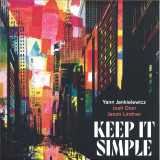
Keep It Simple!
That's what Tony Allen told me, whether on stage, in the recording studio or when we were working together on the album "The Source"(Blue Note 2017) in my studio. Obviously, if he repeated it at will, it's because it's so difficult, to express the essential, not to scatter, over-play, over-arrange. So natural for him, so constraining for others! For years he pushed us, the members of his group to develop our projects. I had something in mind, necessarily with him, unfortunately his unexpected demise decided otherwise.
It took a moment to accept his departure, to accept being a voice, to find a new path. The desire to continue the work started together, that of mixing styles, sounds to appropriate them and create new, authentic. The desire also to meet new people, another energy.
After composing music for this project, I asked my friend Ben Rubin, musician and producer to help me record it. I found in NYC what I was looking for, a sense of urgency, that of doing, generous and committed musicians. I knew Jason Lindner, a musician that I have been following for a long time and he was the first person I thought of for pianos and synthesizers. He has this ability to find new and powerful sounds, with a direct and unadorned playing. For the drums, I didn't especially thought about a musician whose playing could come close or far to Tony's. Ben suggested Josh Dion to me, I've been following him since his "Paris Monster" project, I love his ability to make his drums sound like a new instrument by playing the bass synth with his right hand, that forces him to keep it simple! He also plays 2 tracks in drum/synth mode on the album.
I'm also happy that he agreed to sing a song on this album.
So we recorded at the Figure8 recording studio in Brooklyn, Eli Crews providing the sound recording, we decided with Ben to create a powerful and assumed sound from the take. Many biases on the tones, whether on the drums and the keyboards. Back in my studio in Paris, I continued to search, to dig while recording additional saxophones, percussions and keyboards.
I met Tchad Blake during a week-long mixing seminar. His work on the album on is radical.
Keep it simple?
Difficult but I try to remain so on all the phases of evolution of this project, from writing to production, in the improvisation parts. Where I feel it the most is in the immediate joy of playing with Jason and Josh, of tweaking a few sounds in my studio to create the unexpected, surprise in the structures, authenticity. Simple as the desire to go towards something essential, to seek oneself, to find oneself, to doubt but also to invent oneself.
Daga Voladora's last album came out in 2016. To alleviate such a long wait, only a couple of celebrated singles. Now, finally, Cristina Plaza (identity gracefully hidden under the Daga Voladora name that was before Gran Aparato Eléctrico and also a quarter of Los Eterno and half of Clovis) releases an album and does it, for the first time, in vinyl format. "Los manantiales" is the title of the happy and long-awaited return of an artist that never completely left.
"Los manantiales" ("The Springs") refers to all those sources from which I drink to make my songs: Stereolab, Broadcast, Galaxie 500, Cate Le Bon... And also some of the flamenco language. Flamenco in my own way, of course," explains Plaza. "Los manantiales" will also bring echoes of acts that the artist has not practiced as much such as Esclarecidos, Vainica Doble, Ana D or Kikí d'Akí. Deep voices for songs with substance.
But there is also that other idea of the spring that gushes forth when it can no longer be contained. "It has taken me so many years to make this album because I had a prejudice related to the previous one "Primer segundo" in which there was a coherence. Not finding that concept or thinking that this or that wasn't Daga Voladora, I couldn't get into it. Until I decided that maybe I didn't have to impose such a rigid direction on myself..."
Sketched in a town bordering Ávila where Plaza decided to get lost in the summer of 2022 and then finished off in a basement in Madrid for several months, the nine songs of "Los manantiales" make up a short album, premeditatedly short ("I don't like the songs to be longer than 2:50") but, above all, varied. Because, as can be sensed in the song Quise ser ( "I wanted to be a fictional hero, an expressionist painter, a promising actress"), here are all the imagined Cristinas and their different lives ("The song Lejos de la multitud is that longing of mine to be a vagabond"), an unmistakable sign that, as the artist confesses, "I am my own spring". And all this joyful dispersion comes from the premise with which Plaza approached the album: "I said to myself: 'Let's play'. I set out to have a good time. Suddenly, I wanted to do a dub track and I came up with Fosforito or a rock song like Lou Reed in the 80s and there was 'Me vi penando'. I wanted a rock record, an experimental record, something like Broadcast, and a musical! I wanted to do a thousand things!"
The result is a playful album, very enjoyable; but above all elegant and extremely precise. In both form and substance. Thus, the melodies are so rounded at first listen; the music would work perfectly on its own, stripped of lyrics that respond to the maxim, so often ignored, that there is really only one way to say things. "I have tried to refine the texts a lot. There are some phrases taken from Steinbeck, other things that emerge in a somewhat magical way. There's also Gary Snyder, Kerouac and his Dharma Bums, echoes of California..."
It's an album made, as usual with her, in the most absolute solitude (except for the collaboration of Andrés Arregui on sax and the final mix by Fino Oyonarte). Bareback. "I recorded everything with my computer, with my instruments, my analog keyboards, my rhythm boxes, little noises I make around... I don't make demos. I just do it. In a rough way. What I do do is repeat. The good thing about this method is that many things happen spontaneously and that's where they stay".
An album that, for all of the above, responds to the best notion of caprice. A whimsical whim, signed and finished off by the splendid cover designed by Beatriz Lobo, which feartures a painting ('La chica del King Creole') by the legendary artist Javier de Juan.
In "Los manantiales" there are many possible worlds, as many dreamed ones. Of course, those of Daga Voladora (not in vain, the album opens with a song titled Cristinópolis), but also those of any curious and sensitive listener who, by the way, will find more than one musical wink along the way. You just have to be attentive.
PEACH COLOURED VINYL[26,01 €]
Following their critically acclaimed 2019 debut album Unfurl, Hidden Notes Records are happy to announce the release of the multi-award-nominated experimental/contemporary folk string duo Fran & Flora’s sophomore full-length album, Precious Collection. Released on Friday 12th April 2024, this album, produced by the duo themselves, explodes in myriad directions expressing the richness of the long-standing collaboration between Francesca Ter-Berg (cello/vocals/electronics) and Flora Curzon (violin/vocals/electronics). With Klezmer and Yiddish song as the predominant inspiration for the record, Precious Collection defies convention, featuring self-penned tunes and unique arrangements pushing their ground-breaking project beyond their virtuosic string playing. Drummers Ursula Russell (Snapped Ankles, Alabaster DePlume) and Simon Roth (Chris Potter, Alice Zawadzki, Adrian Dunbar) feature on the record on full kit and Ukrainian Poik (marching drum) respectively, and Francesca and Flora experiment with bowed cymbals, extended piano techniques, and samples of found sounds.The album was recorded in three different locations - Total Refreshment Centre (London), Big Jelly Studios (Ramsgate) and Great North Sound Society (Maine, USA). The music of Fran & Flora sits in two camps, both steeped in tradition, with material drawn directly from archival recordings, recovered manuscripts and years of study with traditional music masters, whilst simultaneously garnering a contemporary and avant-garde aesthetic, speaking to the more classical and experimental listener. Fran & Flora inject their source material with drones, loops, free improvisation and electronics to create a ‘border-defying’ (Mojo) sound. Their influences range across a wide spectrum of artists and composers from Silver Mt.Zion to Rhiannon Giddens, Lankum, Brìghde Chaimbeul, Colin Stetson, Adrienne Lenker, Shabaka Hutchings and Mica Levi. As string players Fran & Flora’s collaborations together and separately includes performing with the likes of Tom Skinner, Portico Quartet, Imogen Heap, Riz Ahmed, Sam Lee, Talvin Singh, Jocelyn Pook, Hannah Peel and The Vernon Spring. Within the global Klezmer community they have worked with Zoe Aqua, London Klezmer Quartet, Sashe Lurje, Craig Judelman, Merlin & Polina Shepherd and Frank London, and have taught at Klezmer music camps including at Klezfest London, contributing to ongoing research and revival work.
Black[26,01 €]
Following their critically acclaimed 2019 debut album Unfurl, Hidden Notes Records are happy to announce the release of the multi-award-nominated experimental/contemporary folk string duo Fran & Flora’s sophomore full-length album, Precious Collection. Released on Friday 12th April 2024, this album, produced by the duo themselves, explodes in myriad directions expressing the richness of the long-standing collaboration between Francesca Ter-Berg (cello/vocals/electronics) and Flora Curzon (violin/vocals/electronics). With Klezmer and Yiddish song as the predominant inspiration for the record, Precious Collection defies convention, featuring self-penned tunes and unique arrangements pushing their ground-breaking project beyond their virtuosic string playing. Drummers Ursula Russell (Snapped Ankles, Alabaster DePlume) and Simon Roth (Chris Potter, Alice Zawadzki, Adrian Dunbar) feature on the record on full kit and Ukrainian Poik (marching drum) respectively, and Francesca and Flora experiment with bowed cymbals, extended piano techniques, and samples of found sounds.The album was recorded in three different locations - Total Refreshment Centre (London), Big Jelly Studios (Ramsgate) and Great North Sound Society (Maine, USA). The music of Fran & Flora sits in two camps, both steeped in tradition, with material drawn directly from archival recordings, recovered manuscripts and years of study with traditional music masters, whilst simultaneously garnering a contemporary and avant-garde aesthetic, speaking to the more classical and experimental listener. Fran & Flora inject their source material with drones, loops, free improvisation and electronics to create a ‘border-defying’ (Mojo) sound. Their influences range across a wide spectrum of artists and composers from Silver Mt.Zion to Rhiannon Giddens, Lankum, Brìghde Chaimbeul, Colin Stetson, Adrienne Lenker, Shabaka Hutchings and Mica Levi. As string players Fran & Flora’s collaborations together and separately includes performing with the likes of Tom Skinner, Portico Quartet, Imogen Heap, Riz Ahmed, Sam Lee, Talvin Singh, Jocelyn Pook, Hannah Peel and The Vernon Spring. Within the global Klezmer community they have worked with Zoe Aqua, London Klezmer Quartet, Sashe Lurje, Craig Judelman, Merlin & Polina Shepherd and Frank London, and have taught at Klezmer music camps including at Klezfest London, contributing to ongoing research and revival work.
Second in a series of reissues from Pierre Jaubert’s Parisound studio archive on Strut Record IS Lafayette Afro Rock Band's elusive funk/Afro original album, 'Soul Makossa' originally released in 1973. Transparent blue colored LP
In 1971, an undocumented seven-member Afro-American ensemble known as the Bobby Boyd Congress made a transformative journey from the United States to France. Bandleader Frank Abel recollects, "We sensed that the soul and funk market was saturated back home, and our original plan was a brief 6-month stint in Paris. Surprisingly, we ended up staying for a decade." Upon lead singer Bobby Boyd's return to the U.S., the group rebranded as Ice and crossed paths with independent producer Pierre Jaubert, a seasoned studio professional with credits on groundbreaking recordings alongside Charles Mingus, John Lee Hooker, and Archie Shepp, among others.
Drawing inspiration from Motown's work ethic, Jaubert initiated regular rehearsals with Ice. He recalled, "I didn't want to mimic Berry, but with seven talented musicians collaborating daily, something unique emerged." The band, residing in Paris and immersed in the African-dominated Barbesse district, began infusing African elements into their music frequently performing with Paris-dwelling Camaroonian and legendary composer Manu Dibango.
Rechristening themselves Lafayette Afro Rock Band, the group's musical direction shifted towards predominantly instrumental compositions, characterized by a weightier, more intricate Afro-funk sound. Their debut recording under this new moniker, 'Soul Makossa,' made a powerful impact with a dynamic rendition of Dibango's classic, coupled with the intense break of 'Hihache' and the contagious 'Nicky.' Initially released by Musidisc in France and later in the U.S. via Editions Makossa, the album omitted the title track due to publishing clearance issues.
Despite modest sales upon its initial release, the album's enduring influence became evident as hip-hop culture surged in the '80s, establishing it as a primary source for samples and riffs. The iconic 'Hihache' break found fame in Biz Markie's 'Nobody Beats The Biz,' and tracks from the album were lifted by LL Cool J, The Beatnuts, Kruder & Dorfmeister, and numerous others.
Yuko Kureyama returns to TAL with the album Heart Fresh, her first ever full length release under her Kopy moniker. All tracks for the album were recorded in Tokyo in June 2023 at the famous live house Ochiai Soup. For the recordings of the ten tracks, Ochiai Soup was swiftly converted into a recording studio as the intimate atmosphere of the club and its perfect room acoustics gave Kopy the chance to record her music like in a live situation.
Amazingly Kopy‘s instrumentation on Heart Fresh consists only of a Jomox x Base 09 rhythm machine and an Elektron Digitakt mini sampler. In the hands of Kopy this fairly basic and common gear creates an unmistakeably intuitive and original approach to drum programming, which is recognizably her very own.
Due to extensive live playing in the past two years, Kopy has garnered a lot of admiration for her consistently unpredictable and fearless club performances and has easily become one of the most exciting and inventive live acts from the ever vibrating electronic music scene in Japan.
However, Heart Fresh seems even more focused, urgent and ambitious than its predecessors, the Paredo EP (TAL12 including a remix by Lena Willikens), the Eternal EP (TAL 24 featuring a remix by Elena Colombi) and the split album Super Mild (TAL15). Nothing on Heart Fresh is subdued. The entire production is resonating with its peculiar frequencies, it is wonderfully evocative, open hearted, full of life and intelligence.
The album opens with Night Sarkas with quirky snare rolls played against slashing, nervy chunks of melody. Samples of organ and chimes evoke an rollercoaster spinning out of tune and synch. Hole Hole is a beat driven and melody free short story for bass drum, snare and hi hat with constantly changing bpm‘s. Tir Tone marks the arrival of annunciatory rhythm patterns and a lovely sprinkling of distorted synths. The album's final track Moonlight Pool is the perfect closer for an album of taut, free wheeling figurations of meter and tone, a nod to classical ambient music as well as to contemporary more experimental digressions.
However, the album’s most startling and unexpected moments come when Kopy follows her futuristic inclinations and matches them with dissonant excoriations that shuttle the mind into a completely different place where all kinds of different activities seem to follow their own individual compasses. Imagine to walk down the noisy streets in Tokyo and you hear all kinds of different sounds infiltrating your ears independently from different sources and directions. In that sense Heart Fresh is the most appropriate soundtrack we can imagine for the contemporary era.
Whitney Houston’s self-titled debut album has few parallels. Viewed solely through the lens of sales numbers, Whitney Houston is a watershed statement on par with the most commercially successful and culturally dominant LPs ever released. Having sold more than 14 million copies in the U.S. and upwards of 25 million units worldwide, the 1985 LP became the equivalent of the television show or blockbuster film that everyone collectively experiences and discusses. Nearly four decades later, it’s lost none of its appeal or magnetism — and its artistic significance and historical import have only grown.
Sourced from the original master tapes, pressed at RTI on MoFi SuperVinyl, and strictly limited to 4,000 numbered copies, Mobile Fidelity's 180g SuperVinyl LP of Whitney Houston presents the breakthrough in audiophile sound for the first time. The signature traits Houston exhibits on every song — her three-octave range, radiant warmth, personal conviction, impossibly controlled register — come across with exceptional clarity, focus, and presence. Free of artificial ceilings and constricted dynamics, this reissue plays with an openness, airiness, and balance that put the singer’s once-in-a-lifetime instrument and immortal artistry into proper perspective.
It does the same for the songs’ cascading melodies and captivating arrangements. Individually produced by one of four renowned industry veterans — Kashif, Micheal Masser, Jermaine Jackson, and Narada Michael Walden — each composition feels grander, closer, more genuine. A vocal spectacular, Whitney Houston benefits from the high-end characteristics of SuperVinyl, which include a nearly inaudible noise floor, superb groove definition, and dead-quiet surfaces. This is how an album that changed the direction of popular music — opening previously inaccessible doors for Black artists; bringing smooth-singing vocalists back into the mainstream; kickstarting a movement that soon included several “divas” who would command the charts through the early 21st century — should look and sound.
Though Houston’s seemingly effortless performances suggest otherwise, creating the record Rolling Stone ranks as the 257th Greatest Album of All Time wasn’t easy. Nearly 18 months were required to identify songs suitable for a still-unknown singer who did not fit into the conventional frameworks of the mid ‘80s. Confident, powerful, and prodigiously talented, Houston would forge her own parameters with Whitney Houston. In the process, she obliterated the stubborn lines between R&B and pop, Black and white radio. She dared to reimagine who could be a superstar and then went out and defined the role. Recorded for nearly $400,000 and released on Valentine’s Day, the LP exceeded the wildest expectations of those most closely associated with it — save for Houston and her family.
Having made her first public appearance at the age of 11 singing at a Baptist church, Houston understood pressure and knew her way around, inside, and through a song. The invaluable guidance and support she received from her mother, Cissy, an accomplished gospel vocalist who backed Aretha Franklin and Elvis Presley, are on display throughout Whitney Houston. They arrive in the types of authoritativeness, discipline, and diction rare for even most seasoned veterans — and unheard-of for a 21-year-old newcomer. Houston brings a soulful elegance, understated glamour, and in-the-moment rapture to every note. Moving up, down, or staying in the middle of the vocal ladder; channelling softness or sweetness; showing restraint or increasing the volume, she is a marvel of emotionalism, a dynamo who can seamlessly transition from one mood to another within a verse.
Though the 10-track LP largely concerns itself with the ballad tradition, Houston covers the bases, getting into an R&B groove on the fleet “Thinking About You,” turning up the heat on the duet “Take Good Care of My Heart,” and investing the contagious dance-pop confection “How Will I Know” with all the anxiety, hope, energy, and enthusiasm its lyrics demand. Featuring her mom on background vocals and Houston’s pitch-perfect tone, uncanny precision, and skyscraper highs (no AutoTune here, friends), the synth-based anthem propelled Whitney Houston into the stratosphere, the vocalist into regular MTV rotation, and the term “crossover” into popular parlance. The double-platinum single reached No. 1 on the Hot 100, Hot R&B, and Adult Contemporary charts — a trifecta that foreshadowed accomplishments that would ultimately crown Houston as the most-awarded female artist of all time.
Whitney Houston became the first album by a Black female performer to top the Billboard charts. It remained there for 14 non-consecutive weeks en route to claiming the title of the best-selling LP of 1986. It stands as the first debut and first album by a solo female artist to spawn three No. Hits, as well as the first album by a Black female artist to top the year-end charts in Australia and Canada. These are just a handful of the accolades — along with four Grammy nominations — that surround a set that also contains the unforgettable ballad “Saving All My Love,” string-accompanied “Greatest Love of All,” and sensual “You Give Good Love.”
As TIME observed in an article written two years after the album took the world by storm: “This is infectious, can't-sit-down music, and her performance dares the listener not to smile right back.” We’re still smiling.
Arguably one of the most memorable house music moments, born out of the black LGBT scene in Chicago at the legendary Warehouse and known as one of Frankie Knuckles earliest productions; ‘Your Love’ is a stone cold classic. A record that is up there with the greats, instantly recognisable and a song that only get better with time.
Written by Jamie Principle and originally released in 1986, ‘Your Love’ has become a seminal recording over the past 34 years. Originally an underground club anthem, famously borrowed on the crossover hit ‘You’ve Got The Love’ (The Source feat. Candi Staton), and most recently re-produced by as part of the Director’s Cut project which aimed to update a number of classic cuts for the modern dancefloor, this is a record that endures the test of time. Working alongside The Frankie Knuckles Foundation and Eric Kupper, SoSure Music now releases two new remixes for 2020 from Darrius Syrossian and Alan Dixon.
First up, House music aficionado and legendary Sankey’s resident Darius Syrossian offers his unique blend of beats to the remix package. With releases on the likes of Get Physical, Viva Music and Hot Creations, Darius’ production is heavily influenced by some of the greats – think of the finest spinners from Detroit, New York and Chicago – and is well placed to approach this huge task. Darius introduces a rolling house beat and some old skool breakbeats into his mix, keeping the energy high throughout; bringing a feeling of a euphoria and hitting the peak time moment.
Charting a rapid rise through the ranks in a relatively short time Alan Dixon is already building a name for himself in House and Nu Disco scene and has recently released on labels including Glitterbox, Permanent Vacation, Running Back and True Romance. Alan’s remix aims directly at the centre of the disco dancefloor. A strong beat dominates a unique energy through the mix along with a slightly nostalgic vibe. With a beautiful floaty interlude and a raw emotion this remix updates a classic with respect while also giving a fresh new twist.
Miles Davis' A Tribute to Jack Johnson is the best jazz-rock record ever made. Equally inspired by the leader's desire to assemble the "greatest rock and roll band you have ever heard,” his adoration of Johnson, and Black Power politics, Davis created a hard-hitting set that surges with excitement, intensity, majesty, and power. Bridging the electric fusion he'd pursued on earlier efforts with a funkier, dirtier rhythmic approach, Davis zeroes in on concepts of spontaneity, freedom, and identity seldom achieved in the studio — and just as infrequently accepted by the mainstream.
Sourced from the original analog master tapes, pressed on MoFi SuperVinyl, and housed in a Stoughton jacket, Mobile Fidelity's 180g LP reissue brings it all to fore with startling realism. Benefitting from SuperVinyl’s nearly inaudible noise floor, superb groove definition, and clean, ultra-quiet surfaces, this 180g LP showcases everything — from the bold tonality of the headliner's white-hot trumpet solos to the decay of crashing cymbals, carry of wiry guitar notes, and echoes of the studio — in reference fashion.
Bristling with exuberance, Davis' high-register passages explode with authority and commanding presence. Around him, a barrage of urgent backbeats, knifing riffs, and supple bass lines emerge amidst black backgrounds. One of the most prominent differences long-time fans will notice is how much more aggressive, immediate, and vibrant the music sounds, with those aspects central to the composer's original desires.
Utilizing wah-wah and distortion, the go-to instrumentalist of the performances— guitarist John McLaughlin — attacks with a nasty edge, slashing style, and vicious streak that allows A Tribute to Jack Johnson< cross the until-then-impenetrable divide between rock and jazz. Davis puts both feet in the former camp and erases any gap. The stories of the record’s creation are nearly as legendary as the sounds within: Two sessions, multiple jams, different sets of musicians (several uncredited), and near-miraculous production perfectionism that made it all appear cohesive.
The least-well-known masterpiece of Davis' career, the 1971 record — seamlessly assembled and spliced together by producer Teo Macero — was a victim of limited record-label promotion. Audiences also didn’t immediately know what to make of its original cover art — faithfully replicated here. In addition, the powers that be at Columbia Records were directing the public’s attention to Miles at Fillmore, a completely different kind of album guided by two keyboardists. A Tribute to Jack Johnson practically lives in a different universe, one from the future. To many listeners who did manage to hear it — among them critic/musician Robert Quine, Stooges leader Iggy Pop, and renowned critic Robert Christgau — it surpassed everything that came before.
Indeed, Davis treated it as a personal manifesto: An opportunity to salute the Black championship boxer admired for his threatening image to the establishment and impeccable taste in clothes, cars, women and music. Davis explains in the liner notes his affinity for Johnson — a stance mirrored by the defiant music, which hits with a prize fighter's force and reflects the graceful elegance with which a pugilist navigates the ring — and closes the album with a Johnson quote read by Brock Peters.
Inspired not only by Johnson but by Jimi Hendrix and Sly Stone, Davis changed his approach and his band. He surrounds himself with a cadre of musicians in their 20s and, in the case of bassist Michael Henderson, a 19-year-old fresh from touring with Stevie Wonder. Henderson gives Davis what he requested: boogie-based grooves that don’t lose shape or direction. Soprano saxophonist Steve Grossman, drummer Billy Cobham, and organist Herbie Hancock adhere to a similar aesthetic that prizes brazenness, innovation, and energy.
In that vein, during a portion of “Yesternow,” Davis segues into a separate performance (which became known in its entirety as “Willie Nelson”) played by guitarists McLaughlin and Sonny Sharrock, bass clarinetist Bernie Maupin, keyboardist Chick Corea, bassist Dave Holland, and drummer Jack DeJohnette. Dig it!
Talking with jazz scholar Bill Milkowski — who himself noted how McLaughlin’s unrestrained style, decibel-forward volumes, and rapid-fire power chords engendered himself to the rock crowd at the same time that his harmonics and syncopation still definitely made him a jazz player — guitarist Henry Kaiser summed up part of the appeal of A Tribute to Jack Johnson as well as anyone, saying: “It’s a jazz record that way way more open than other jazz records at the time, but still not free jazz. McLaughlin’s rhythm guitar playing on ‘Right Off’ — the use of different chords in a rock shuffle than what anybody had used before — was revolutionary.”
And to think that’s just one aspect of a record that contains multitudes. “Never let them forget it.” Indeed.
Of the countless accolades and analyses that surround Blue, no point is more significant than the fact that the 1971 Joni Mitchell album continues to become more popular, revered, referenced, and relevant with each passing day. Such vitality is not only extremely singular; it is the ultimate measure of great art and, in the context of Blue, indisputable proof of the record's accessibility, integrity, and timelessness. If the most brilliant and everlasting music seeks to find truths shared by all of humanity, Blue can be said to be universal doctrine.
Sourced from the original analogue master tapes, pressed on MoFi SuperVinyl, and strictly limited to 12,000 numbered copies, Mobile Fidelity's UltraDisc One-Step 180g 45RPM 2LP box set presents the landmark album with reference-grade detail, tonality, and directness. Marking the first time the beloved LP has received audiophile-quality treatment, it's one of six iconic 1970s Mitchell records Mobile Fidelity is reissuing on definitive-sounding vinyl and SACD sets.
Everything about Blue sounds more intimate, involving, and inescapable on this transparent pressing, which benefits from a virtually non-existent noise floor and superior groove definition. Mitchell's voice, positioned front and center, and primarily accompanied by minimalist acoustic guitar, piano, and dulcimer playing, comes across clearly and prominently. Suspended notes and radiant chords double as question marks, commas, and phrases. The in-the-room presence and spatial dimensionality make absolute the full-range spectrum of introspective emotions — hurt and distress, self-awareness and joy, difficulty and uncertainty, warmth and desire — Mitchell navigates, queries, and contemplates throughout the record. The defencelessness the singer once spoke about is laid bare here like never before.
The packaging of the Blue UD1S set complements its distinguished status. Housed in a deluxe box, both LPs come in special foil-stamped jackets with faithful-to-the-original graphics that illuminate the splendor of the recording. This UD1S reissue exists as a curatorial artifact for listeners who prize sound quality and production, and who desire to engage themselves in everything involved with the album, including the unforgettable cover photograph of a ruminative Mitchell shot by Tim Considine.
Deemed the third Greatest Album of All Time by Rolling Stone; universally celebrated by critics, fans, artists, and educators; and defined by a spell of disarmingly vulnerable songs that are at once confessional, intense, spare, honest, painful, hopeful, and exquisite, Blue charts love, spiritualism, independence, and loss like no record before or since. Widely considered the album that established the singer-songwriter template, the largely autobiographical LP changed everything shortly after its original release in June 1971. Amazingly, it continues to do so more than five decades later.
An incalculable influence on generations of artists, it stands as the through-line from Carole King, Elton John, James Taylor, Joan Armatrading, and Leonard Cohen to Patti Smith, Carly Simon, Emmylou Harris, and Rosanne Cash to 21st century contemporaries like Brandi Carlile, Taylor Swift, Sharon Van Etten, and Courtney Barnett. Teetering between agony and optimism, it is — to borrow a phrase from Mitchell's eternal "A Case of You" — a bottomless "box of paints."
The beauty of the stripped-down arrangements, intoxicating melodies, and Mitchell's wisdom on Blue didn't go unnoticed. Critical acclaim, coupled with the depth of the material and Mitchell's reputation, propelled the album into the Top 20 in the U.S. and Top 10 in the U.K. Yet while so much pop music diminishes with age, Blue has defied norms and headed in the opposite direction. Its 50th anniversary year witnessed an outpouring of tributes, reflections, and testimonials that helped frame the record's escalating importance and symbolism — apt in an age in which women have become the prominent trailblazers in rock, R&B, and hip-hop.
Perhaps most succinctly, in a 2021 article celebrating the LP, the Los Angeles Times declared: "In 1971, nothing sounded like Joni Mitchell's Blue. 50 years later, it's still a miracle." Nothing, indeed. Yet "miracle" suggests Blue partially owes to a divine agent or inexplicable circumstance. And though Mitchell's bracing conviction and forthright sincerity can appear otherworldly, her musical approach and lyrical storytelling is nothing if not personal and human. What we hear is pure truth — no matter how aching, complicated, or stark.
Much has been written about the circumstances that inspired the songs on Blue: Mitchell's romances; her time overseas; her disdain for celebrity; her lingering sense of loss at having given up her daughter for adoption; her treatment by the very same industry that her music made uncomfortable; her prolonged search for resolution. These situations and experiences pushed Mitchell to question everything — especially big-picture concepts that have always obsessed mankind: fulfilment, autonomy, love, honesty, being.
"I wanna make you feel free," Mitchell sings on the record-opening "All I Want." Mission accomplished. Blue is liberation — and the start of a freedom that continues to impact music, culture, and identity today.
More About Mobile Fidelity UltraDisc One-Step and Why It Is Superior
Mobile Fidelity Sound Lab's UltraDisc One-Step (UD1S) technique bypasses generational losses inherent to the traditional three-step plating process by removing two steps: the production of father and mother plates, which are created to yield numerous stampers from each lacquer that is cut. For UD1S plating, stampers (also called "converts") are made directly from the lacquers. Since each lacquer yields only one stamper, multiple lacquers need to be cut. Mobile Fidelity's UD1S process produces a final LP with the lowest-possible noise floor. The removal of two steps of the plating process also reveals musical details and dynamics that would otherwise be lost due to the standard multi-step process. With UD1S, every aspect of vinyl production is optimized to produce the best-sounding vinyl album available today.
Some artists embrace their success by repeating the steps that originally granted them fame. Billy Joel did the opposite, refusing to be contained by prescribed approaches or constrained by a given label. The follow-up to the breakthrough The Stranger, 52nd Street further expands on its predecessor's bold production techniques and inventive arrangements, incorporating more sophisticated textures as well as reflecting a jazz edge gleaned from New York City's thriving club scene.
A key piece of Mobile Fidelity's Billy Joel catalogue restoration series, 52nd Street is here sourced from the original master tapes and pressed on 45RPM 180g LP at RTI. The wider and deeper grooves – as well as the meticulous mastering – yield resplendent dynamics, broad soundstages, three-dimensional perspectives, and tonal balances absent from prior editions. This is how you want to experience the 1978 LP that captured the Grammy Award for Album of the Year.
Teaming again with producer Phil Ramone, Joel capitalizes on his momentum, churning out another direct-sounding affair replete with captivating melodic devices, showmanship accents, and penetrating lyrics. The singer's concision and focus is evident via the tune's lengths, with only "Until the Night" breaking the six-minute mark. Hit singles "Big Shot" and "My Life" rattle forth with an urgency and intensity that Joel had not previously demonstrated, the combination of passionate deliveries, snide overtones, and insistent grooves setting the table for what follows.
Broadening his palette, and drawing from New York's thriving jazz club scene and the city's late-70s grit, Joel splashes Latin and jazz colours on several pieces, employing veterans such as Dave Grusin and Freddie Hubbard to contribute along with a cast that includes a team of background vocalists and horn players. Everything is tastefully appointed, and yet the vocalist's trademark Broadway gaze and knack for the grand gesture coincide with the straight-ahead swagger.
52nd Street is one of the main reasons why Joel has always been championed for consistency. Everything here, from the production to the stand-up songs, helped redefine mainstream pop-rock. Decades later, it's finally available in fidelity that nears that of the Columbia Records' master tapes produced right on 52nd Street.
"All Quiet on the Western Front (Im Westen nichts Neues) is a 2022 German epic anti-war film based on the 1929 novel of the same name by Erich Maria Remarque. All Quiet on the Western Front received positive reviews from critics, with praise directed towards its tone and faithfulness to the source material's anti-war message. Set during World War I, it follows the life of an idealistic young German soldier named Paul Bäumer. After enlisting in the German Army with his friends, Bäumer finds himself exposed to the realities of war, shattering his early hopes of becoming a hero as he does his best to survive. The film adds a parallel storyline not found in the book, which follows the armistice negotiations to end the war. All Quiet on the Western Front received a leading 14 nominations at the 76th British Academy Film Awards (winning seven, including Best Film and Best Original Score) and 9 at the 95th Academy Awards, including Best Picture, Best Adapted Screenplay, and Best International Feature, and Best Original Score. The score of All Quiet on the Western Front is available as a limited edition of 1000 individually numbered copies on flaming coloured vinyl. The package includes a 4-page booklet with movie stills."
All Quiet On The Western Front by Volker Bertelmann, released 8 March 2024, includes the following tracks: "Rain & Night ", "Burried & Found", "Ludwig ", "Search Party" and more.
This version of All Quiet On The Western Front comes as a 1xLP. This release comes with (a) Insert(s).
The vinyl is pressed as a flame red disc.
- A1: Please Come Out
- A2: Wicked
- B1: Working With
- IB2: N My Head
- C1: Got Your Money
- C2: Didn't You Know
- D1: Two-Door
- E1: Memory Lane
- E2: Good Girls And Boys
- F1: All I Want From You
- F2: Don't Sell Rock
- G1: What Yours
- G2: Tweets
- H1: You Check
- H2: Hero Forever
- I1: Don't Pick Up
- I2: You Don't Know Me Anymore
- J1: Tenderly With You
- J2: Now Let's Wait
Sasu Ripatti's complete "Dancefloor Classics" series. Music for imaginary dancefloors, released on Ripatti's own label Rajaton.
”Look up, into the light” she said, while the camera shutter clicked. ”Like this? Does it look holy?” His neck felt stiff. Her reply: ”Yes, just like that. What do you mean holy? Like religious? ”No, more like trying to look very far, somewhere beyond what we can see.” ”Okay, stand still, I’m going to come close to you now. The light hits your face great.” click, click, click.
He noticed her fingernails. They were not polished. Natural. Even somewhat rugged, as if something wore out the fingers slightly. What had these hands held besides the camera? What made the edges of her fingernails drift off?
He thought it’s weird to look straight into the camera. The photographer had closed her left eye, the one not looking into the lens. Then it opened, she looked up, perusing the surroundings, then she closed her eye again, then looked up, closed, looking up, very quickly. It all seemed very professional. Maybe she calculated the light, making sure it’s close to perfect. ”What will these photos look like?” – the thought popped into his head briefly. It was liberating to think it wouldn’t matter.

”What’s that song playing?” he asked. ”Wait a sec, Ol’ Dirty Bastard?” she replied. ”Oh yeah, right. But the sample?” ”Hey, could you look up again, like that. No, lower.”
New directions: ”Look out from the window, turn left.” ”My left or yours?” ”Yours, I always try to think from the direction of my model.” How professional! This is a good shoot, so natural. Should I worry about how the photos look like? No, I don’t want to. His thoughts bounced around. What would the story be like? It’s a big newspaper, everyone will read it. Maybe someone drinks coffee and eats a stroopwafel while they do it. Will they place the waffle on top of the mug for a brief while, so that it gets hot and the syrup melts a little? Then it feels wet, and you can bend the cookie.
She broke his train of thought off midway through: ”Now turn right, but look left, and slightly up, but don’t turn your face right.” ”Umm, like this? Sounds like a set of pilates instructions.” she laughed ”You do pilates?” ”Yeah, it’s hard sometimes. Have you tried?” ”No”, she said. ”I’m not good for sports that are done in groups.” ”Yeah, but in pilates you can just be inside your mind, drowning in your private thoughts.”

”What are you thinking in pilates?” she asked, taking more photos. ”Well, mostly just which way is right. And which left.” click, click.
Q&A with Sasu Ripatti:
1) Tell us something about the EP series ”Dancefloor Classics”, what’s the idea and what can we expect?
I’ve been slowly writing these sort of dance music pieces and finally curated them together for a conceptual release. I like to create music for a dancefloor that exists only in my imagination and doesn’t try to suck up to the standardized reality.
2) Your vinyl format is 10” which is quite special (as opposed to LP / 12”). Why did you choose it?
It’s my favourite format, absolutely. The size is perfect, and you can make it sound really good @ 45 rpm. And you still can make great artwork.
3) You seem interested in sampling/repurposing, what does it mean to you as an artist to approach something already existing from a new angle? How does the source material inform you about the approach to take?
I guess i could flip it around and just say I’ve outgrown synths or electronic sounds to a great extend, and having gotten rid off all my synths already good while ago I’ve used samples as my main source material a lot. It’s obvious on this series that i’ve sampled existing music, but I also sample instruments and things in the studio and resample my own library that I have built over the years, it’s quite large. To me the end result matters, not so much how I get there. Once I have something on my keyboard and play around, it’s all an instrument, though with sampling other music it becomes a really interesting and complex one as you’re possibly playing rhythm, but also harmonic content and maybe hooks or whatever, all at once.
I never sample premeditadedly, like listening to records and looking for that mindblowing 3 sec part. I just throw the cards in the air and see what lands where, just full intuition and hopefully zero mind involved, playing tons of stuff, trying things, just recording hours of stuff. Then comes the interesting part to listen to hours of mostly crazy stuff and finding that mindblowing 3 sec part.
4) What is your relationship with the dancefloor (conceptually and/or in experiences / as a performer)?
Very complicated. I have never really felt comfortable on a dancefloor but have always wanted to. There’s something in club music, in theory, that really speaks to me. It has never really materialized for me – speaking mainly from a performer’s point of view who goes to check on a dancefloor for a moment after a concert. I never have DJ’d or felt much interest towards it. But again, I love the idea and concept of DJing. As well as producing music for imaginary DJs. Lately, as in the past 10+ years, I haven’t even performed in any sort of club spaces. So my relationship to the dancefloor is quite removed and reduced, but there’s quite a bit of passion and interest left.
All tracks composed and produced by Sasu Ripatti.
Artwork & photography by Marc Hohmann.
Mastering by Stephan Mathieu for Schwebung Mastering.
Vinyl cut by SST Brueggemann.
Publishing by WARP Music Ltd.