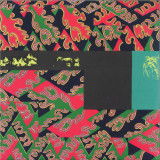
Silent Room, the duo formed by Enzo Carniel and Filippo Vignato is a conversation.
Between the piano of the first and the trombone of the second, two living forces of the
European jazz scene; between France and Italy; between acoustics and electronics. A
patient dialogue initiated on the benches of the conservatory in Paris, which was nourished
by the music of German trombonist Albert Mangelsdorff (to whom the duo paid homage for a
concert at the Cité des Arts in 2014), musical moments shared as a group (Enzo Carniel's
sextet at the Jazz à la Villette festival in particular) and in pairs - for numerous concerts
given on both sides of the Alps - before perfecting their common grammar, giving birth to
their own repertoire, creating their own space.
This first album, Aria, released on the Franco-Japanese label MENACE, was recorded in the
setting of the Villa Cicaletto in Tuscany, whose Silent Room the duo made their own in
September 2019. Carniel had just released Wallsdown, the third elegiac disc of his House of
Echo project (Jazz & People, 2020) and Vignato of an intense live duo recorded with
American cellist Hank Roberts (Ghost Dance, on CamJazz in 2019).
The album is carried by simple melodies, tenuous threads on which the two improvisers who
have slowly got to know each other crisscross and let their voices express themselves. Aria
can refer to the opening of Bach's Goldberg variations, to sung opera arias, but above all to
any expressive melody that develops the imagination. Aria is also the air in Italian: the air
that comes from the breath, the air that fills the room, the air that vibrates and is transformed
into sound. The repertoire is therefore this collection of Arias composed by Enzo Carniel and
Filippo Vignato.
If the duo advocates with this album its jazz heritage - that of improvisation and
conversation, of freedom and virtuosity - and claims to be Carla and Paul Bley, Keith Jarrett,
Gary Valente, Albert Mangelsdorff, Ornette Coleman or John Surman; it also explores the
contemporary colors of electronic music, ambient and Japanese minimalism. The use of the
prepared piano, Fender Rhodes and synthesizers colors the sound space of the acoustic
piano and trombone. The eponymous composition that opens the album in acoustic, closes
it in an electronic version, illuminating the path of the duo between the two universes.
In the almost plant-like composition "In All Nilautpaula", Enzo Carniel evokes the water lily
(in Sanskrit) coming to purify the water around him. On "Babele", Filippo Vignato invokes the
great question of language: thanks to Arias, and therefore melodies, language becomes
universal through music, and only the sensory experience counts.
Born from Carniel and Vignato's desire to create a sound space that would be filled with as
many melodies as silence, a place for listening, dialogue and meditation, Aria is one of those
rare records that contain entire worlds.
Cerca:spac
There's no denying the hype surrounding Anton 'ScruScru' Bogomolov is fuelled by a string of celebrated singles, demonstrating an extraordinary prolific prowess all throughout 2020.
His ability to blend jazz-funk classics with the sweet sounds of disco-powered house grooves is always on point.
It's music that blurs the boundaries between the serious yet playful and takes the listener on a truly unique-sounding ride
ScruScru's appearance on Omena is one of his finest so far. These six tracks makes a fine mini-album called 'South Wind, Clear Sky'.
There's jazz, disco, big warm rhodes chords and sparkling synth sounds of course, the bustling grooves takes you as far as outer space and back.
It's a wild ride and you should not be afraid to take it twice.
Als Matthew E. White an dem Nachfolger seines zweiten Studioalbums arbeitete, wollte er seine Herangehensweise an das Songwriting neu erfinden, zumindest für eine Session. White versammelte eine vertrauenswürdige Truppe von sieben Musikern in Richmond, Virginia. Er dirigierte das Septett durch eine Reihe von lockeren, größtenteils gestischen Kompositionen. Die Klänge waren gewaltig, eine Reihe von Keyboards und Gitarren untermalten den Schwung einer ineinandergreifenden vierköpfigen Rhythmusgruppe. Aber die Ergebnisse passten nicht ganz zu der in Arbeit befindlichen Platte, so dass White die Jams auf Eis legte, bis die richtige Muse kam. Das war, wie sich herausstellte, Lonnie Holley, dessen wunderschön verwelkte Stimme bald eine Art kosmische Weisheit über Whites wartende Arbeit ergoss. Das Ergebnis - Broken Mirror: A Selfie Reflection - ist explosiver und eindringlicher als alles, was die beiden Künstler je gemacht haben. Aggressiv, aber ekstatisch, spielerisch, aber pointiert, ist Broken Mirror eine pointierte, aber einfühlsame Sozialkritik, unterlegt mit einem mächtigen Groove. Holley nahm seine Vocals über Whites Aufnahmen in nur vier Stunden auf. Als Visionär und intuitiver Texter hörte sich Holley 20 Sekunden an und proklamierte die Bilder, die die Klänge hervorriefen. Wenn ihm etwas gefiel, zog er ein Notizbuch zu Rate, das voller lyrischer Einfälle war, und sang dann komplette erste Takes zu Musik, die er noch nie gehört hatte. Abzüglich bescheidener Bearbeitungen und leichter Overdubs wurde Broken Mirror: A Selfie Reflection an Ort und Stelle fertiggestellt, ein Blitz, der einen Platz zum Einschlagen suchte. Holley und White mögen als unwahrscheinliche Kollaborateure erscheinen, da sie durch Jahrzehnte und Disziplinen getrennt sind, aber die beiden teilen tiefe Alabama-Wurzeln. Und was noch wichtiger ist: Holley und White betrachten Musik als ein unheimliches Gefäß für sonst undurchdringliche Vorstellungen von Trauer, Leid und Solidarität. Broken Mirror: A Selfie Reflection ist ein zeitgemäßer Appell an die Kraft der Zusammenarbeit, an verwandte Geister, die sich auch in überfüllten Räumen zusammenfinden.
Red Vinyl[31,30 €]
ALL THEIR LEGENDARY RECORDINGS, PLUS LOADS OF UNRELEASED STUFF!
“The Lipstick Killers were easily one of the greatest live bands I've witnessed in my 65 yrs. on this planet” – Keith Morris (Black Flag/Circle Jerks/Off!!)
HINDU GODS ARE CALLING YOU!!! Grown Up Wrong! Records is thrilled beyond belief to present the LONG-AWAITED anthology of material by the legendary Lipstick Killers, who blazed a trail in late ‘70s post-Radio Birdman Sydney before gigging with the likes of the Gun Club and the Flesh Eaters in Los Angeles where they crashed and burned in 1981.
The Lipstick Killers released just one single in their life time – the perfect ’79 Deniz Tek-produced pairing of “Hindu Gods of Love” and ”Shakedown USA” on their own Lost in Space Records and Greg Shaw’s Voxx Records - but a posthumous live album and a couple of archival releases followed. It was all incredible. All that material is included here, as is a plethora of additional stuff, all from the best-available sources (mostly original tapes).
The Lipstick Killers’ enigmatic and high-energy sound – heavily inspired by the Stooges and the ‘60s psychedelic punk sounds of bands like the Thirteenth Floor Elevators and the Chocolate Watchband – bridged the gap between Radio Birdman and subsequent Sydney groups like the Sunnyboys (whose first-ever show was opening for the Lipstick Killers), Lime Spiders, Hoodoo Gurus, the Screaming Tribesmen and the Psychotic Turnbuckles. And of course they anticipated generation after generation of other bands with similar things in mind, right up to today’s ‘60s-inspired freaks like The Straight Arrows, The Living Eyes and Thee Oh Sees.
ALL THEIR LEGENDARY RECORDINGS, PLUS LOADS OF UNRELEASED STUFF!
“The Lipstick Killers were easily one of the greatest live bands I've witnessed in my 65 yrs. on this planet” – Keith Morris (Black Flag/Circle Jerks/Off!!)
HINDU GODS ARE CALLING YOU!!! Grown Up Wrong! Records is thrilled beyond belief to present the LONG-AWAITED anthology of material by the legendary Lipstick Killers, who blazed a trail in late ‘70s post-Radio Birdman Sydney before gigging with the likes of the Gun Club and the Flesh Eaters in Los Angeles where they crashed and burned in 1981.
The Lipstick Killers released just one single in their life time – the perfect ’79 Deniz Tek-produced pairing of “Hindu Gods of Love” and ”Shakedown USA” on their own Lost in Space Records and Greg Shaw’s Voxx Records - but a posthumous live album and a couple of archival releases followed. It was all incredible. All that material is included here, as is a plethora of additional stuff, all from the best-available sources (mostly original tapes).
The Lipstick Killers’ enigmatic and high-energy sound – heavily inspired by the Stooges and the ‘60s psychedelic punk sounds of bands like the Thirteenth Floor Elevators and the Chocolate Watchband – bridged the gap between Radio Birdman and subsequent Sydney groups like the Sunnyboys (whose first-ever show was opening for the Lipstick Killers), Lime Spiders, Hoodoo Gurus, the Screaming Tribesmen and the Psychotic Turnbuckles. And of course they anticipated generation after generation of other bands with similar things in mind, right up to today’s ‘60s-inspired freaks like The Straight Arrows, The Living Eyes and Thee Oh Sees.
Raised in Corsica, Stephanie made a name for herself as a dj in Paris but more recently focused on producing her own sound. The roots of her musical style are deeply entrenched in Pop, House and Ambient music, all genres that to her reflect our human desire to express our feelings. Her heartfelt debut, AUTEL, released on new label Lake Of Confidence, is an invitation to be fully present in the moment and listen to ourselves with awareness. The track "Disarm" is an uplifting tonic for the soul and could not have come at a more fitting time, encouraging the letting go of fear. Stephanie's grounded voice and the tender tones of the music take us on a liberating journey and reminds us of what is important in life - to move beyond ourselves and embrace joy. The captivating "Unchain" and the Superpitcher remix of the track, are both powerful guides for deep contemplation. Each beat is a metaphor of the breath of life, space and the impressive vastness of this extraordinary mystery we live in.
Australian artist Indigo Sparke Brings her deeply personal lived experiences to her music, highlighting the spaces between the polarity of softness and grit. Pulling from her experiences of addiction, of healing, of queerness, of heartbreak, of joy, of connection, of the softness and of the grit alchemizing it all into tenderness through her music, she conjures up a myriad of feelings that is undeniably potent. It was in 2019 that Indigo lived and travelled across America, in places like NYC, Minneapolis, Topanga, Taos, in many hotel rooms and amidst the vast stretching landscapes on the never ending highways, channelling her creative energy into the completion of her debut album, echo. echo was recorded between LA, Italy and New York, co-produced by Sparke, Adrianne Lenker (of Big Thief), and Andrew Sarlo (producer of Big Thief, Nick Hakim, Bon Iver, Hand Habits, etc). The record was completed at Figure 8 Studio in New York City, studio of musician Shahzad Ismaily. Phil Weinrobe (producer/engineer for Leonard Cohen, Damien Rice, Adrianne Lenker, Buck Meek, etc) engineered and mixed the album. "Indigo's writing and voice are ethereal and angelic and guide me through internal canyons and plains. I'm deeply grateful to have been part of this and to have gotten to play and sing along side Indigo, and to have been able to eternalize a very special space and time with her, which I will always cherish." -Adrianne Lenker "With these songs and her filament voice, Indigo brings us in to a private place and lights a fire there." -Feist
Gruff Rhys releases his new album ‘Seeking New
Gods’ through Rough Trade. This is Gruff’s
seventh solo album.
‘Seeking New Gods’ was recorded following a US
tour with his band and mixed in LA with superstar
producer Mario C (Beastie Boys).
The album concept was originally driven to be the
biography of a mountain, Mount Paektu (an East
Asian active volcano). However, as Gruff’s writing
began to reflect on the inhuman timescale of a
peak’s existence and the intimate features that
bring it to mythological life, both the songs and the
mountain became more and more personal.
“The album is about people and the civilisations,
and the spaces people inhabit over periods of
time. How people come and go but the geology
sticks around and changes more slowly. I think it’s
about memory and time,” he suggests of ‘Seeking
New Gods’ meaning. “It’s still a biography of a
mountain, but now it’s a Mount Paektu of the mind.
You won’t learn much about the real mountain
from listening to this record but you will feel
something, hopefully.” - Gruff Rhys
Domino are immensely proud to announce the signing of my bloody
valentine, with new physical editions of the band’s seminal catalogue
being made available. ‘Isn’t Anything’ and ‘loveless’ have been
mastered fully analogue for deluxe LPs and also mastered from new
hi-res uncompressed digital sources for standard LPs, with each
being made available widely for the first time ever. Fully analogue
cuts of ‘m b v’ will also be available on deluxe and standard LPs
globally for the first time.
my bloody valentine, the quartet of Bilinda Butcher, Kevin Shields,
Deb Googe and Colm Ó Cíosóig, are widely revered as one of the
most ground-breaking and influential groups of the past forty years.
During an era in which guitar bands denoted, at best, a retroclassicism, not only did my bloody valentine sound unlike any of their
contemporaries, the band achieved the rare feat of sounding like the
future.
With their debut album, ‘Isn’t Anything’ (originally released in 1988),
my bloody valentine revolutionised alternative music and heralded a
new approach to guitar music for generations to come. The album
birthed a sound which became a template for thousands of new
subgenres, heralding a new approach to guitar music and studio
production. Not only was it a new type of music, it paved the way for a
new type of journalism; inciting comparisons to elemental
phenomenon, tapping into how the music affected the psyche.
Shields and Butcher frequently sang in a similar vocal range that
allowed their voices to blend together. This had the effect of making
their gender indistinguishable, to the point where their voices could
be used as another melodic layer to complement the vertigo-inducing
sounds made by Shields’ guitars. It is a record characterised by the
ominous sense of space that inhabits many of its songs, which
veered between the harried and propulsive, to the subdued and eerie.
Australian artist Indigo Sparke has signed to Sacred Bones and announced a new release date for her debut album, echo, now due May 21st. To celebrate, she has shared a video for the album's latest single "Everything Everything."
Of the song, Sparke says "I wrote this song not long after coming back from a magical castle in Italy where a group of us had been making music and soaking in the golden honey days. I met a beautiful human Shahzad Ismaily who had discovered I also write poetry. One night around midnight he called across the castle and asked me to come over and speak some of my poetry over an instrumental track he had recorded. The only thing he asked me to do was to sing a line or so if I felt it. That song was dog bark echo. He invited me back to NYC and I was living in his empty spare room in Brooklyn briefly. I borrowed this little parlour guitar of his and completely fell in love. I just sat in that room for hours and days playing around and just laying next to the guitar looking at the ceiling thinking about life and death and the poetry of it all. How life and death will hold us up to light. How grief ripens inside us
all and we all decay and everything changes and flies away. I remember feeling this liberating sense of freedom and melancholic nostalgia. It was so hot and the wind almost blew through from a different dimension or plane. I guess the song came through from that place too. It just came out. I can almost still feel that time on my skin, or in my breath."
Indigo Sparke brings her deeply personal lived experiences to her music, highlighting the spaces between the polarity of softness and grit. Pulling from her experiences of addiction, of healing, of queerness, of heartbreak, of joy, of connection, of the softness and of the grit alchemizing it all into tenderness through her music, she conjures up a myriad of feelings that is undeniably potent.
echo was co-produced by Sparke, Big Thief's Adrianne Lenker and Andrew Sarlo.
Australian artist Indigo Sparke has signed to Sacred Bones and announced a new release date for her debut album, echo, now due May 21st. To celebrate, she has shared a video for the album's latest single "Everything Everything."
Of the song, Sparke says "I wrote this song not long after coming back from a magical castle in Italy where a group of us had been making music and soaking in the golden honey days. I met a beautiful human Shahzad Ismaily who had discovered I also write poetry. One night around midnight he called across the castle and asked me to come over and speak some of my poetry over an instrumental track he had recorded. The only thing he asked me to do was to sing a line or so if I felt it. That song was dog bark echo. He invited me back to NYC and I was living in his empty spare room in Brooklyn briefly. I borrowed this little parlour guitar of his and completely fell in love. I just sat in that room for hours and days playing around and just laying next to the guitar looking at the ceiling thinking about life and death and the poetry of it all. How life and death will hold us up to light. How grief ripens inside us
all and we all decay and everything changes and flies away. I remember feeling this liberating sense of freedom and melancholic nostalgia. It was so hot and the wind almost blew through from a different dimension or plane. I guess the song came through from that place too. It just came out. I can almost still feel that time on my skin, or in my breath."
Indigo Sparke brings her deeply personal lived experiences to her music, highlighting the spaces between the polarity of softness and grit. Pulling from her experiences of addiction, of healing, of queerness, of heartbreak, of joy, of connection, of the softness and of the grit alchemizing it all into tenderness through her music, she conjures up a myriad of feelings that is undeniably potent.
echo was co-produced by Sparke, Big Thief's Adrianne Lenker and Andrew Sarlo.
Main Phase returns for a second full-length EP on Shall Not Fade's hugely successful sublabel, the bass-oriented Time Is Now. The Copenhagen native is fresh from an appearance on Danish leftfield label Petrola 80 and can otherwise be found heading ATW records with another Time Is Now regular, Interplanetary Criminal. He serves up a tasting menu of the most quintessential sounds in UKG across Buss It EP.
The title track is understated, sparse but tense using sparing Ragga vox that build to a crescendo, wobbling over into "Our Style" - expect space age FX drawn out over mutant inflections in another textbook eyes down cut. Cheeky bassline garage energy is brought in "Creepin", while teasing breaks and dirty south hip-hop in the vocals.
Looking to the infamous early years of garage on the B-side, "Freaky" channels those classic Ghost releases in its sub-heavy intent, spicy snare and catchy vocal hooks. The EP is closed out with the expansive, gut-wrenching wobbles of "Misdemeanour", accentuated with a highly intricate two-step rhythm.
Every Dunbarrow album has a hauntingly classic sound of, in the band’s own
words, “an eerie rawness.” But their third album feels like you’ve discovered a
mysterious half-century old recording tucked away in a decrepit abandoned
mansion. Perhaps there’s a note attached, begging its courier to beware. Alas,
whoever possessed the tape apparently never survived. ...that is to say, it feels like there’s a solemn
story to this album, not just in the
lyrics, but in the sound itself. Much like
the eponymous debut of Black Sabbath,
the band uses subtle sound effects to
dramatically set the scene for its mostly
clean tones and masterful use of open
space for which the band has become
known. But unlike their first two albums,
this one does see the band branching
out just a bit into heavier, more distorted
guitars. The result is a much more
in-your-face sound, while retaining the
Haugesund, Norway quintet’s masterful
proto-metal sound.
The album opens with the sound of falling
rain as Lønning and Eirik Øvregård’s
guitars seep into the speakers like
funereal bells and haunted drones on
“Death That Never Dies.” Drummer Pål
Gunnar Dale slams down three snare
beats as bassist Sondre Berge Engedal
slinks in harmony over it all. Andersen’s
crisp vocals paint a bleak picture of
dark perdition until the band slips into
a swaggering piano-led coda reminiscent
of “Sabbra Cadabra.” The 7-minute
psychedelic folk masterpiece “Turn In
Your Grave” is the album centerpiece,
replete with mournfully shimmering
Mellotron and bleak folkloric lyrics. Its
hypnotically spinning guitar notes and
old European parlando-rubato singing
hearken to dark early Steeleye Span with
a sinister edge. “In My Heart” perfectly
showcases the band’s penchant for folk
based, yet head-banging riffs that break
with tradition that has stilted modern
heavy music.
“I think with this record, we have managed
to create our own unique sound
with its own Dunbarrow tag,” says the
band. With that sound comes the perfect
artwork: A cover illustration from the
early 1900’s by artist Harry Clarke from
his work for Edgar Allen Poe’s Tales of
Mystery and Imagination.
‘Kick The Ladder’ the anticipated debut album from Icelandic composer and songwriter Kaktus Einarsson, frontman of post-punk outfit Fufanu, will be released by One Little Independent on May 7th. It was produced by Kaktus, alongside Swiss electronic composer Kurt Uenala, and finished in New York City. It draws heavily on the concept of how we as a society relate to our surroundings, whether it’s environmental or personal.
Locked in a 486 glow, lightblink machines nightlight, being enters lighttime limelight. The long nineties already distending, the Major midbloats, crowds throng superclubs- strobelit honeys on a podium in Ibiza already blasted a stratosphere away from mildewed badflats, emphysemic parlours, the fug of week old washing drying slowly on the rad. Ach we’ll hang it out in the morning fire another joint of badhash and turn that tape over. We are being Here. beings disconnected, shut ins, psychick worriers, long walks to and from clubs, mostly dark, always raining, or mizzling anyway, lug bigbrick machines into cabs and Venue, setup and playing live and right now from the lounge lobby at Sativa, down the stairs from the caustic, twitching thrashpit being sits, being works. Dole sludge, shirking class zeroes, scoff pizza rolls w salad cream, that headchef gaffer never reckoned you’d graft at the potwash, a slick fur of rotfood dish slop residue right to the elbow, absolutely bowfin. Rumours of other places, people, scenes, tapes sent and emissaries return, invites to get trains, overnightbus south to London. being brought water to the ‘wells in South London and monthly emissions snaked out into the world, into badflats elsewhere where gowched couch tatties sprawl and the being burrowed deep into memories.. Tea is toast and sandwich spread and endless crisps as the binbags pile high in the backyard, the being blinks, it’s a twilit morning and it’s time to go to bed.
In the follow up to her staggering psychedelic jazz debut, 'Things That Grow', we are delighted to see Cara Stacey's return to Kit Records. Here she teams up with Peruvian flautist Camilo Ángeles, pushing further into the liminal space between classical, jazz and traditional South African music.
Recorded live over a day in Cape Town, 'Ceder' presents a narrative in turns soothing, shrill, euphoric, dissonant, serene - unfurling like a labyrinthine soundtrack to some foreign planet; a landscape sparse and desolate, yet somehow teeming with life.
Recommended if you like the hauntingly isolated Western soundtracks of Bruce Langhorne, Keith Jarrett's serpentine piano playing or the fantastical terrains of Rashad Becker.
After 12 years in the game, Spanish nu-disco stable have reached the 100-release milestone, and they're celebrating with this vinyl sampler of the digital compilation. Includes 4 cuts by Dj Rocca, Eric Duncan, Mushrooms Project, and Rayko, putting the emphasis on heavily electronic grooves with a dark and leftfield twist.
Lux' is what we use to measure the intensity of light as we perceive it, when it's hitting or passing through a surface.
The first track, that gives the EP its name, embodies exactly that - the fluctuating, ever-changing nature of light; from fragile and fleeting to overwhelming and powerful. 'Lux' kicks off with warm synths creeping in, like rays of sunlight breaking through the clouds. Dreamy crescendos take you for a ride and build up until they melt into a comforting blanket of piano chords, accompanied by a propelling hi-hat pattern that will make you want to move. The track is hopeful, the start of a journey, with compelling break downs, industrial rhythm elements and powerful build-ups such as the one to the final section, dominated entirely by its fusion between techno-beat and dance-feel.
Next up is 'Odyssee'. An unapologetic track that picks up the pace. Kicking off boldly with harmonic tension and enticing drum sounds, it's hard not to surrender to the rich and fast-moving soundscape. Proud drums meet steel sounds and tentative piano figures, all glued together by the driving beat, determined to get to the next stop of this lifelong voyage. Striking accents, in the form of short-lived breaths or staccato bass lines take you through a labyrinth of growing gritty synths. A track that easily leads you through space and time and makes it feel like the most natural thing in the world. We're greeted with standalone bright and sparkly synth movements as 'Phoenix' rises and wraps us in warmth. Gently, like raindrops, a rhythmic pattern starts dripping in. Definition, like in many of his other works, blends rhythmical sounds that couldn't be more different into one, making them sound like they were never meant to exist unless next to each other. The track is a symbiosis of modern and classical sounds, lets us bathe in analogue warmth but always rolls along with digital precision.
'Phoenix' starts softly and ends in roaring flames: in a repetitively enchanting party, fabricated out of dark, pumping beats and gritty synths. 'Raven', the final of the four tracks and the lead single (released alongside the Jonas Ratshman remix just 1 week ago), intrigues with chants and empowerment just as much as with its determination and fragility. Falling from the highest heights, Raven lets you rediscover who you are when you hit the ground. Carried by a throbbing four-on-the-floor kick drum and covered in a synth-haze that is hard to resist, you'll float along, fall and rise with the everlasting wave-like movement of human existence.
Jess Cornelius first began writing the songs that would comprise Distance after moving from Melbourne, Australia to Los Angeles. At the time, she was excited to start fresh after several years as the primary songwriter in the band Teeth and Tonuge. But the distance she addresses over the album is hardly a geographical one. Instrad, Distance finds a deft songwriter analyzing the space between society’s expectations for her and her own dreams, the illusion of the love and reality of disappointment, and a past she is ready to let go of and a future she could have hardly imagined.
Distance documents a songwriter in the pursuit of living life on her own terms. As Cornelius puts it, “A lot of the rEcord was about me deciding to continue this nomadic lifestyle of being a musician. People would ask ne if I was going to have a family and lot of the songs are about me being ok with no pursuing that path. It was about coming to terms with the choice I had made.. And then two years later, I’m knocked up and married! I couldn’t have imagined that”
Cornelius gave a first taste of Distance with “No Difference,” released last year, which was featured by NPR’s All Songs Considered as well as Paste Magazine, Brooklyn Vegan, Hype Machine and Uproxx, who called it “a striking stateside introduction.”
On new single “Kitchen Floor,” Cornelius maps the space between the bedroom and the front door over a Roy Orbison tinged rave-up, lamenting the coming pain: “This is gonna be a hard one.” Its accompanying video, the first in a series in which she plays a familiar female character trope, was filmed by Cornelius and her partner on an iPhone at 5am in Los Angeles so they wouldn’t encounter any people. “I have a weird fascination with Hollywood Blvd — it’s such a grotesque place most of the time,” says Cornelius. “But I knew we’d have the chance to experience it deserted and empty, and it was like a different place. I’d been watching a lot of ‘last human on earth’ apocalypse-type films. Mostly, the concept behind the clip was to have this character just owning it. There are so many things pregnant women are not ‘supposed' be doing, like having casual sex with strangers. There’s a loneliness, too, that I wanted to get across in the clip, but ultimately she’s in a state of friendliness with herself and the world.”
After a year of sadness comes an album fit to resist it. Detritus, the third solo LP by violinist/composer Sarah Neufeld, confronts anguish with beauty, turmoil with grace, gliding through the present like a dancer mid-motion, reaching through space 'til she's caught. Detritus originated with a collaboration: in 2015, Neufeld was invited to appear on stage with the legendary dancer/choreographer Peggy Baker. Baker had prepared a solo piece based on work from Neufeld's second album, The Ridge, to which Neufeld added an original lyrical prelude. The live result was an incendiary duet, almost a sort of face-off, which left each artist unsated. They agreed to reunite for a more extended collaboration - a full-length show with Baker's company, where Neufeld would write to (and perform music alongside) Baker's choreography. It was a fertile partnership, uniting the two women's intense, curious, ferocious sensibilities across an age difference of 29 years. Baker had conceived the show around the title of Neufeld's prelude, "Who We Are In The Dark," exploring themes of loss, betrayal and the emptiness of space; Neufeld was herself in crisis mode, reacting to a specific, earthbound kind of grief (including the end of a relationship). Making work together, they drew on these raw feelings - insistent, urgent darkness but also something that was, for Neufeld at least, much more unexpected: a romantic, tender-hearted love, inspired by the movements of the dancers before her. The work premiered in February 2019. Even before Neufeld and Peggy Baker Dance Projects set off on tour, she had the intuition that this music might take another form: as a distilled set of songs, refined and developed beyond the versions performed on stage. Starting that summer, she began arranging this lush and soloistic material - work that eventually became Detritus - and performed some of these experiments at her own solo gigs. Neufeld worked throughout the process with her Arcade Fire bandmate Jeremy Gara, whose drums, synths and ambient electronics co-anchored the Peggy Baker shows and helped shape the reimagined album versions. She would go on to add foot-pedal bass synth, wordless vocals and swells of French horn courtesy of Bell Orchestre compatriot Pietro, bringing in woodwind wizard Stuart Bogie as a one-man flute ensemble, layering clusters of chords atop Neufeld's luminous compositions.
Der Gitarrist, mehrfach Platin-ausgezeichnete Singer-Songwriter, Bandleader, Rock’n’Roll-Hall of FameKandidat und Songwriter-Hall of Fame-Mitglied Steve Miller hat sich tief in sein Archiv eingegraben und
eine unveröffentlichte Konzertaufnahme in voller Länge gefunden, „Steve Miller Band Live! Breaking
Ground: August 3, 1977.”
Das Album erscheint als 2LP-Set, CD und digital.
Der begleitende Live-Konzertfilm mit der vollständigen Performance wird über The Coda Collection auf
Amazon Prime Video als Stream verfügbar sein.
Backed by members of the David Nance Group, Rosali (Long Hots, Wandering Shade, Monocot) wades through the emotional mire with infectious, earworm melodies led by her luminous voice. With their rich, raw instrumentation, these rock ballads sound like the resilience discovered in facing one’s darkest moments, the assurance of the calm and clarity that comes after the storm. As she sings on the second track, “Bones,” “Through the darkness of the field / I walk through without yielding / To the rest of the feelings / I’m carrying.” With her confident song craft, Rosali illustrates the ability to push through, moving toward something greater without being destroyed by the weight of trauma.
Engineered by James Shroeder and featuring Kevin Donahue (Simon Joyner), James Shroeder (Simon Joyner, DNG, Connor Oberst), David Nance, Noah Sterba, Colin Duckworth, and Daniel Knapp, the album was recorded in ten days and the raw immediacy of the music is palpable across these ten tracks. Added adornment was contributed by Philadelphia's Robbie Bennett (War on Drugs) on organ and keys, and Matt Barrick (The Walkmen, Jonathan Fire Eater, Muzz) makes a percussion cameo on “Whisper,”which was tracked at Philly’s Silent Partner Studio, where No Medium was mixed by Quentin Stoltzfus (Mazarin, Light Heat). The open creative collaboration elevated the songs, resulting in the exciting, vibrant sound of the album.
Rosali wrote the bulk of these songs in January of 2019 while on a self-imposed two week residency in the hills of South Carolina. Alone in an old farmhouse, she experienced supernatural events and faced her own demons in the deepest darkness. Perhaps as a result, there is a boldness that permeates the album, a daring vulnerability in both the lyrical themes and their musical accompaniment. Rosali says, “I approach guitar playing the same intuitive way I sing, which is profoundly spiritual for me. Where words fail, the guitar becomes the conduit for raw feelings, providing a direct connection to them. I’m constantly working on being fearless in my work, which means showing the rough side, the mistakes along with the triumphs.”
While writing No Medium, Rosali was inspired by harmonographs—swinging pendulums that create beautiful illustrations of the mathematics of music—considering how the mind, too, creates images through song. She imagined herself as the swinging pendulum—“a body suspended from a fixed point” (Encyclopedia Britannica), governed by the forces surrounding her. She thought about the pendulum’s relationship to time, movement, and even its use in divination practices. The album’s title, lifted from Charlotte Brontë’s, Jane Eyre, resonated with this vision: “I know no medium: I never in my life have known any medium in my dealings with positive, hard characters, antagonistic to my own, between absolute submission and determined revolt. I have always faithfully observed the one, up to the very moment of bursting, sometimes with volcanic vehemence, into the other.” With the multiple meanings of “medium”—as middle ground, a term for psychics, and as the material of artistic expression—No Medium felt like the appropriate name, describing how the self is shaped by the patterns of life .
The influences for the sound of No Medium reflect this pairing of assured vulnerability, in the stylistic coherence of Bob Dylan’s Desire, the tender delivery in Iain Matthews’ Journey From Gospel Oak, the strut and swagger of Bowie’s Hunky Dory, the ambition and beauty of Gene Clark’s No Other, and the playful catharsis of Harry Nilsson’s Nilsson Schmilsson. The Richard and Linda Thompson-esque album opener “Mouth,” places Rosali within both a physical and emotional space. “East of the river I was travelling on / watch me lie, undone / rest me in a forest, overgrown / until I am free of all that I’ve known,” she sings. There is movement, both within a cityscape, and in her outlook on love. Speaking of her thought process when writing the song, she says, “I imagine confidently walking away from the past, toward a new approach to love and intimacy to achieve a closer relationship with myself.”
In “Pour Over Ice,” Rosali explores her relationship with alcohol and her former reliance upon it as a social lubricant to quell her social anxiety, an energizer to keep moving, a means to cope and self-medicate, and most addictively, to lure out her wild side as a free flowing, good time girl. While drinking helped her through some shitty times, it eventually got the upper hand and became an insatiable hole within. She says, “The ‘you’ in the song is really me, talking to that component of myself struggling with drinking and self-sabotage, caught up in the cycle, and all the bad choices I made.” She sings, “Maybe I didn’t care enough / or can’t remember / chasing small pleasures / making fire from embers.” Rosali wanted her lead guitar on this track to simultaneously sound like a slow motion car crash propelling her through the day, and the sound of a gnawing hunger for something more.
Rosali’s alliance with the Omaha musicians that orbit David Nance Group (including Nance himself) came about while on a Long Hots / DNG tour in the summer of 2019. Great friendships formed and one night after playing in Detroit, Dave suggested they be her backing band. The pairing was effortless and natural, and in November of the same year, they were recording No Medium in a basement in Omaha.
Throughout his vast career, the New York based Australian composer JG Thirlwell has adopted many masks as a means of infiltrating and subsequently subverting a wide range of pop cultural forms. His work under the Foetus moniker has taken on everything from big band to opera to noise-rock. Steroid Maximus embraced exotica and the world of soundtracks, while his Manorexia project continued his quest to the outer limits of contemporary composition and musique concrete. Thirlwell has also carved out a significant output in the field of the soundtrack via the large body of work created for the animated television shows Archer and The Venture Bros. In addition he has been commissioned to create compositions by such notables as Kronos Quartet, Bang On A Can, Alarm Will Sound, String Orchestra of Brooklyn and many others.
Now we have ‘Omniverse’, the second release under the moniker Xordox. Xordox is a synthesizer-based project, and on this evocative album we see the project branch into many new avenues. The science fiction element brushes up against crime noir, even veering into areas that could well fit in the video game soundtrack genre. With an audacious attitude and an arsenal of machines Thirlwell serves up a selection of thrilling retro-future mind capsules. This is music made from a life saturated in culture, both underground and mainstream, high and low. Tense sequencing and noir tinged keyboard lines invoke a powerful visual image of films and memory, of screens and speakers, of sound and space, all entering the cosmos and the subsequent galactic race. Thirlwell’s decades long exploration of sampling and sequencing, composing and ingesting a daunting amount of audio and visual artworks speaks volumes for the bold assimilations exposed here. ‘Between Dimensions’ lays out a tense theme which starts off like a score to a a crime thriller before morphing into a simulacra of Kraftwerk scoring a video game. The living ghosts of Giorgio Moroder and John Carpenter haunt ‘Oil Slick’ as it permeates wormholes, updating lifeforms with its stealth sequencing and tense momentum.
‘Omniverse' is a synthesised soundtrack journey, one which embraces past forms whilst reshaping them for the new unknown. ‘Omniverse' is a thrilling liquid ride through fear and hope, and like all the best of Thirlwell’s output, is simply one hell of an enjoyable journey to take.
Buzzing new Glasgow five-piece VLURE release their hotly anticipated
debut 7” ‘Shattered Faith’ via London-based label Permanent Creeps
Records.
Bursting onto the scene at the dawn of 2020, VLURE introduced
themselves to the world with a live audio/visual performance of their
phenomenal track ‘Desire’, captured in beautiful cinematography from
the loading bay of their Glasgow studio space. Blurring the lines between
live electronics, jarring guitars and the performance sensibilities of their
post-punk contemporaries, the video offered a keyhole view into their
captivating live shows.
Combining synth laden hooks, heavy club influenced rhythms and
emotionally confronting lyrics, VLURE have already seen support from
the likes of So Young and Wax Music praising their life affirming, intense
and enigmatic live performances.
Recorded between the halls of a deconsecrated church in the heart of
the Scottish Borders, the self-produced ‘Shattered Faith’ is an indulgent,
genre bending coming of age anthem influenced by the rhythms,
repetitions and euphoric hooks of Glasgow’s thriving afterparty and club
scene with an angular post-punk foundation. Speaking on the track the
band explain: “We wanted to create something that felt at home on the
dancefloors that we all found ourselves on growing up, yet still equally at
home in the sweat-filled venues that the band was conceived in. At its
crux, ‘Shattered Faith’ is about self-empowerment. It’s the
disillusionment with where you are and what you’ve been given. It’s lying
on your kitchen floor at 3am realising who you truly are and finding
power in that - it’s a new lease of life. We believe that, if they want to find
it, there is something for everyone in this song.”
“There is nothing comparable - this is a new era of musically skeletal
human showmanship” - So Young Magazine
“Urgent, destructive and completely absorbing. Brutalist in form -
unyielding, massive-sounding, distinctive - their atmospheric, yearning
mood is overflowing with inclination and exposed tenderness -
vulnerable and exasperated. They pound the door down with every inch
of blood, sweat and tears in their vessels” - Wax Music
“This is post-punk, but not as you might familiarly expect” - Little Indie
Blogs
“One of Scotland’s most exciting new bands” - Tenement TV
“My vision was big,” says Brighton-based singer Macve of the road to her second album. “I knew I wanted to do something more expansive than my first record.” With reach, feeling, storytelling power and a stop-you-dead voice, Macve sizes up to that mission boldly on Not The Girl. Following on from the rootsy saloon-noir conviction of her 2017 debut, Golden Eagle, Holly sets out for
deeper, often darker territory with a firm, unhurried sense of direction on her second record: on all fronts, it’s an album that looks its upscaled ambitions in the eye fearlessly.
For Macve, the combination of influences such as Nancy & Lee with time spent touring helped widen her horizons. “I wasn’t afraid of trying new things, and I wanted to explore sounds and develop my skills in production, composing and engineering. When I wrote the songs on Golden Eagle I had never toured, it was just me in my bedroom playing acoustic guitar. I then got the chance to tour the world with a band and sing with a symphony orchestra with Mercury Rev in 2017. My little world grew and I realised there was so much for me to learn about how I can use my skills as a singer and writer. I didn’t want to limit myself – I wanted to push my boundaries.”
At every turn, Macve’s powers of evocation are matched by the depth and strength in her voice. Witness the meeting of a plangent pedal-steel with her elastic vocal on the atmospheric “Be My Friend”, or the sultry verses and soaring chorus of “You Can Do Better”, which bring to mind a prairie-sized Mazzy Star. Guest guitarist Bill Ryder-Jones’ spacious contributions help enhance its sense of space. “Bill was an important part of the story of this record,” says Holly. “I love his playing – it helped create that kind of heavy, lazy, dreamy sound I’m such a fan of.”
Elsewhere, rich seams of contrast and counterpoint emerge. The Velvet Underground-ish “Sweet Marie” is epic drone-country, “Little, Lonely Heart” a symphonic waltz around the rootsy stuff of bad love, jealousy, and guilt. “Who Am I” merges a Phil Spector-ish wall of sound with a grunge-y melodic insouciance, while “Daddy’s Gone” finds Macve reflecting on the death of her father over Memphis soul-style backing, rendering complex emotions with controlled reserves of detail and drama before a roistering climax.
“My vision was big,” says Brighton-based singer Macve of the road to her second album. “I knew I wanted to do something more expansive than my first record.” With reach, feeling, storytelling power and a stop-you-dead voice, Macve sizes up to that mission boldly on Not The Girl. Following on from the rootsy saloon-noir conviction of her 2017 debut, Golden Eagle, Holly sets out for
deeper, often darker territory with a firm, unhurried sense of direction on her second record: on all fronts, it’s an album that looks its upscaled ambitions in the eye fearlessly.
For Macve, the combination of influences such as Nancy & Lee with time spent touring helped widen her horizons. “I wasn’t afraid of trying new things, and I wanted to explore sounds and develop my skills in production, composing and engineering. When I wrote the songs on Golden Eagle I had never toured, it was just me in my bedroom playing acoustic guitar. I then got the chance to tour the world with a band and sing with a symphony orchestra with Mercury Rev in 2017. My little world grew and I realised there was so much for me to learn about how I can use my skills as a singer and writer. I didn’t want to limit myself – I wanted to push my boundaries.”
At every turn, Macve’s powers of evocation are matched by the depth and strength in her voice. Witness the meeting of a plangent pedal-steel with her elastic vocal on the atmospheric “Be My Friend”, or the sultry verses and soaring chorus of “You Can Do Better”, which bring to mind a prairie-sized Mazzy Star. Guest guitarist Bill Ryder-Jones’ spacious contributions help enhance its sense of space. “Bill was an important part of the story of this record,” says Holly. “I love his playing – it helped create that kind of heavy, lazy, dreamy sound I’m such a fan of.”
Elsewhere, rich seams of contrast and counterpoint emerge. The Velvet Underground-ish “Sweet Marie” is epic drone-country, “Little, Lonely Heart” a symphonic waltz around the rootsy stuff of bad love, jealousy, and guilt. “Who Am I” merges a Phil Spector-ish wall of sound with a grunge-y melodic insouciance, while “Daddy’s Gone” finds Macve reflecting on the death of her father over Memphis soul-style backing, rendering complex emotions with controlled reserves of detail and drama before a roistering climax.
Bristol hip hop duo release their debut 12” ahead of an album in July featuring a thumping electro remix by SURGEON (Dynamic Tension/ Tresor Records) and an extended remix by Ree-Vo themselves.
The lp ‘All Welcome on Planet Ree-Vo’ due for release in July could only really have been made in one city steeped as it is in Bristol’s decades of less conventional hip hop and bass music. Tweaked and fine tuned during the summer of 2020 the record punches with a mix of red eyed paranoia to a playful future funk.
T. Relly is pure Bristol hip hop royalty – known in the community variously for his links to all of the city’s major club nights, his passion and support for the most disadvantaged (through his work with the youth and prison leavers), through to compering stages at St Paul’s Carnival and his seminal 2018 lp with DJ Rogue ‘Let Them Know’
Andy Spaceland (AKA Andy Jenks) got involved in Bristol bass music as soon as he moved to the city with Static Sound System and a collaborative 12” with Rudy Tambala (AR Kane ) as Sugarboat Vs Sufi, before his band Alpha were signed to Massive Attack ’s label Melankolic, whilst he also became one of their tour DJ’s. His CV of collaborations range from Smith and Mighty to Madonna, and he is currently releasing music with US producer Butch Vig in the band 5 Billion in Diamonds , and working on new tracks with Mark Stewart (The Pop Group). His signature can be heard on this remix for Elizabeth Fraser
Norwegian duo Lost Girls, artist and writer Jenny Hval and multi-instrumentalist Håvard Volden, release their first album after collaborating for more than ten years. Volden has been playing regularly in Hval's live band for more than a decade, and their duo project goes back to an acoustic collaborative album from 2012, using the moniker Nude on Sand. Instead of resurrecting the previous band, Hval and Volden opted for a fresh start for their 2018 EP Feeling, taking nomenclatural inspiration from the 2006 graphic novel by writer Alan Moore and comics artist Melinda Gebbie. For their first LP, Hval and Volden booked an actual studio (Ora studios, Trondheim, Norway), which they had never done before. Recording sessions took place in March 2020, even if they felt like the material wasn't really ready for recording. This left a lot to improvisation, and so Menneskekollektivet was created in-between set structures and the energy of collective exploration. Perhaps this is what makes Menneskekollektivet unique: The quality of trying something, to see if the structures fit. In a way this is a more physical version of what Hval has been exploring lyrically over the past decade in her solo work. The title is Norwegian and translates to human collective, which adds to the feeling of a recording made as part of a strange, improvised performance project. The music flickers; between club beats and improvised guitar textures; between spoken word and melodic vocal textures; between abstract and harmonic synth lines. Throughout the piece, Volden's guitar and Hval's voice come across as equals, wandering, wondering, meandering. Sharing the space. The writing process began with short, more concise forms, but then Volden brought in experiments with seasick synth loops and drum machines, and the work went off on a longer durational tangent, inspired by chance and intuition. This allowed for an unfinished, raw feel, and the song structures and words were expanded and improvised in the studio. Hval says: "There are lots of late night ideas at work, begun as half-asleep, slack vocal takes on top of something really strange Håvard has sent me. We both record before we know what we're actually doing."
Olafur Arnalds' highly anticipated second full-length album '...and they have escaped the weight of darkness', continues his mission to lure an indie-generation of pop and rock fans into an emotive world of beguiling electronic chamber music and delicate classical arrangements. The sense of an organic crossover recording is reinforced by the involvement of co-producer Bar?i J?hannsson of eccentric pop/rock/electronica-formation Bang Gang. Bar?i has successfully coloured the brittle minimalism of previous releases through the addition of an array of new instruments.
Those expecting a mere continuation of the minimal melancholia of his previous albums are therefore in for a surprise, as the record may be the most uplifting and richly orchestrated work of his career: "The album has a very clear theme", Arnalds relates, "which is that there is always light after darkness. To me, it has a more positive note than my previous works." When ?lafur saw how the opening scene of a Hungarian indie film metaphorically described a solar eclipse, he instantly connected it to the concept, naming the album after a key line of the film's introductory monologue. Staying true to this positive note, '...and they have escaped the weight of darkness' will herald another intense year for ?lafur Arnalds, with the album being accompanied by a world tour, starting in China in March 2010.
Born in the suburban Icelandic town of Mosfellsb?r, a few kilometres outside of Reykjav?k, the 23-year old composer has always enjoyed pushing boundaries with both his studio work and his live-shows. His new opus is set to again challenge his fan base, which is still growing rapidly. Over the past eighteen months Arnalds has advanced from a former support-act for Sigur R?s to an internationally respected artists in his own right. He was privileged to be invited to write the 'Dyad 1909' score for award-winning choreographer Wayne McGregor, aired on BBC Four and on ITV1's South Bank Show. 'Found Songs', a collection of pieces each written, recorded and released in a single day via the Erased Tapes label website, as well as the video for 'Lj?si?' have since managed to generate half a million downloads and video views.
In many ways, the new record is clearly inspired and informed by these events. Several of the pieces were, in fact, written on and off throughout his tour and benefit directly from the intensity of the live situation and the emotional roller-coaster-ride of life on the road: "The first half of 'Gleypa okkur' was written in a sound check in Munich, for example", Arnalds relates, "while the second part was scored in Braunschweig, Germany." On the other hand it is the result of meticulous studio work, of refining compositions in close co operation with compatriot Bar?i Johannsson, known for his eccentric personality and unique electro-acoustic sound: "I definitely wanted to do something a bit different this time, something more. Working with a producer was a part of that." The enthusiasm translates to arrangements displaying a new sense of sonic diversity.
?lafur Arnalds has created an even more open and spacious sound and taken his distinct style to a new level. Compared to his previous works, '...and they have escaped the weight of darkness' makes use of diverse instrumentation ? drums, guitars, voice, Rhodes, a selection of subtle synthesisers, alongside Arnalds' trademark piano as well as Tony Levin on bass. Traditional terminologies become void on his latest offering, which blends contrasting elements into an original, entirely organic new language and a sensitive ballet of the mind.
Arnalds fusion of 21st century electronics and classical vocabulary thereby continues to decisively unwrap the sealed-off world of classical music.
Pekka Laine is leading a double life. There is his daytime persona, a longstanding journalist and maker of award-winning documentary series for radio and television. Then there is the other side to him that comes out at night: the guitar player and DIY-composer. As a driving force of The Hypnomen, a band with a cult following, Laine has explored the world of instrumental music since the 1990s. In his intrepid journeys from primitive noise art to the spheres of soulful psychedelia, he has now reached one important milestone. As a result of a series of unpredictable twists and turns, Pekka Laine’s first solo album was born. The making of the album has been a highly personal journey. It is a declaration of his undying love of the enchanted instrument that is the electric guitar and the cosmic echoes that tie together the primal 1960s space sounds, psychedelia, dub music and weird film soundtracks to form one futuristic continuum. What started as an innocent and unexpected email in last March has turned into a process mentored by Esa Pulliainen, the fearless leader of the legendary band Agents. From his seat behind the mixing console, the guitar legend captured the sound waves and created the right mood. Multi-instrumentalist and producer Toni Liimatta, a serious alchemist in the world of instrumental music, added his invaluable expertise and experience. The spirit during the sessions where Laine’s compositions were transformed from dreamy ideas into reality was free and almost childlike in zeal. No holds were barred and nothing could stop the stream of influences, associations and sounds ricocheting off the studio walls. Joe Meek, electronic space sounds, Spaghetti Westerns, experimental tape music, London, California, Moscow, Jane Birkin, library music, Björn Olsson, Link Wray, early hip hop, the Wrecking Crew, folk, Roy Anderson’s films – there was no end in sight when the party started raving about all things inspiring. The music, however, is authentic. It came straight from the composer’s own head and heart.
LIMITED 180GM OPAQUE ORANGE VINYL.
BUFFET LUNCH are a Scottish group who make it their mission to craft satisfyingly imperfect pop songs filled with imagery and humour.The group’s elementary parts are Perry O’Bray (Vocals/Keys/Guitar), Neil Robinson (Bass), John Muir (Lead Guitar) & Luke Moran (Drums), united by a shared love of music on the ABBA-to-Beefheart axis.
These four ricochet between Glasgow and Edinburgh, creating music that bristles with DIY spirit and upbeat wonkiness. Their tracks are vigorous excursions, meandering into clattersome terrain as often as hiking up into the breezy, melodious foothills.The desire to lead the listener along a curious tale helps tie things together, showcasing a lyrical playfulness that pins down their puzzle of sound.
Having been an active band for a few years, playing regularly north of the border with like-minds such as Irma Vep, Robert Sotelo and Kaputt, Buffet Lunch spent early 2020 working on the follow-up to their two EPs on Permanent Slump.The fruits from such labour bore out as the band’s debut album ‘ThePower of Rocks’, out may 7th on UpsetTheRhythm.
‘ThePower of Rocks’ was recorded in a Crofters cottage/studio on the banks of Upper Loch Fyne in Argyll, over four nights and five days at the beginning of March 2020, before Covid-19 made itself such an ongoing concern. Back then four people could occupy the same space and make music, lunch and dinner together. Days fell into a pattern of long sessions and long meals.The album came together as a luminous mix of Buffet Lunch’s live chestnuts, some sparky recent songs and some new material entirely written and recorded in situ. All tracks were recorded by Neil Robinson acting as the in-house engineer.
As the seriousness of the virus and talk of national lockdowns developed - there was a feeling of anticipation more than fear in the air, but being holed up in cottage in a wild corner of Scotland surrounded by snowy mountains still took on an apocalyptic feel, albeit an apocalypse where the band were safe and overdubbing vocals. After leaving the cottage, reality (as it must) set in and finishing the album became a more remote task.
Over the following months, an extended period of listening awarded the recordings a deeper realisation, as they bounced between band members computers. Perry also started writing on his Casio keyboard and collaborated on a couple of songs (‘Ten Times’ & ‘Ashley’s New Haircut’) with Jayne Dent (of electronic music project Me Lost Me), drawing on her ethereal singing voice as a counterpoint to his own more ‘spoken’ vocals on the album. These gauzy, dreamlike tracks were then sent to other members of Buffet Lunch to add their respective parts, creating evocative new dimensions to close each half ofthealbum with.
The Power of Rocks’ rattles along like a short-story collection, exploring a variety of narratives. When it comes to the music itself, Perry describes their approach as “see what happens” but admits to a preference for simple synth melodies, plenty of percussion, and prickly guitar-parts. ‘Red Apple’ opens the album with a dizzy swagger, guitars and keyboard notes swirling in forays whilst its lyric tackles notions of social bravado. ‘Orange Peel’ follows equally serpentine with its blattering tune and jagged, yet jolly melodic twists.The themes across the album are wide-ranging and personal, from irritation with out of touch politicians (‘Pebbledash’), to love letters to seaside living (‘Bladderwrack’), to even the frailty and confusion of old age (‘Said Bernie’, ‘It Helps to Know’). Title track ‘ThePower of Rocks’ is an ode to the power of nature sunk within a rolling wave of cheery jangle. “Do you believe in the power of rocks when the sun is too hot on your face?” sings Perry as the song zigzags with consequence. ‘He Wore Two Hats’ sports similarly bop-worthy riffs and addictive nods as it deals with its story of savvy man who’d bitten off more than he could chew.
Buffet Lunch’s debut album accomplishes a lot in its brief 38 minutes. It stuns and startles, intrigues and entwines, drawing the listener further into its characterful world. When asked about any intent posed with this debut record Perry confides that “we hope people can hear the joy the band had making the album and the curiosity and frustration that went into the writing. There was no process or design, but there is detail, and deliberateness in our wish to explore and create.” It’s this attentive focus alongside a keen sense of humour that really sets Buffet Lunch apart, with ideas darting wilfully to and from the poignant truths at hand.
Next up for Shall Not Fade's new Killer Cuts series is London-based DJ and label boss Tom Frankel. The up-and-coming producer has gained attention and respect for his slick techy house cuts that take from a range of classic house and UKG sound palettes. He makes his debut on Shall Not Fade with Milestones EP, six tracks of skippy house that reminisces early 90s raves.
The record meshes modern sounds with nostalgia; "Better Perspective" is a pulsing laid back house track but with a swerving bassline that gives it edge. Frankel experiments with the sounds of a warehouse rave in a nod to dancefloor romance, "Mandy Cuddles" - melding the classic M1 house piano with searing jungle vocals that cut through the melody like a laser.
Showing the cheekier side of his production, "Slippery Nipple" pays homage to filter house, a skippy garage bassline bringing it up to date. The funkiness of this one is unavoidable, making even the most static hips move; onto "Peak District", a throbbing 90s style roller to keep the pace going.
The two final tracks dabble in the darker end of Frankel's sound palette; "Tapas" adds heavy bass and percussive organ stabs to a clean house sound while "Cuckoo Land" is a deep, sweeping club track that formed a spaced out end to an otherwise high-intensity EP.
For our 5th vinyl release on Bouquet. Recs, Trent is toeing the line between fresh and trippy, but undeniably dance floor heat on his first solo EP, and first release on our label.
We are proud to share his momentous solo effort. Recorded in Berlin between 2018 and 2020, 'Transition 35' takes cues from multiple eras of dance to characterise the ever changing colours of nightlife. C'mon ride the train - final destination? The limits of your sensual abandon. Stops along the way? 90's rave. Psychedelic space station.
Trent is a Berlin-based Italian DJ and producer who co-created the party series and label 'Oscillator' with fellow Italians Dama and Budino.
Alongside resident and cosmic pioneer Beppe Loda, they curated one of Berlin's remarkable events for obscure italo, disco and electro.
Taking lessons from the past Trent weaves together a highly sophisticated yet playful sound for the contemporary club goer. Having spent many years as part of collectives, his solo aesthetic is thoughtfully considered and always surprising.
A longtime fixture of the infamous playground party Cocktail d'Amore, Trent collaborates with Juan Ramos under the shared byname Greenvision, releasing together on Cocktail d'Amore, ESP Institute and Ene Tokyo.
'Transition 35' marks Trent's first solo EP sojourn and a triumphant showcase of his individual voice, on Bouquet. Recs
TRACK DESCRIPTIONS
A1. Like a fast train barreling out the station to destinations unknown, This is a Trip hurtles forward like a 90's rave classic, with new wave and nu beat inflections that keep you hooked through unexpected transitions to its explosive finale.
A2. Gasping lysergically, the sci-fi sounds of Don't Stop evoke ecstasy on the dancefloor. That internal scream as you summon more energy, eyes closed, enjoying the trip with a smile.
B. Touch Me is a spell of primal percussions and ominous warlock voices to make for a dark, hot situation
- 01: Transcievers
- 02: A Mould Beyond Perception
- 03: False Fusion
- 04: The Bird Of Paradise
- 05: Everything Is Bleeding
- 06: Self-Mutilation
- 07: Phantasies From The Schema
- 08: Scope
- 09: Hallucinatory Violence
- 10: Grotesque. Empty. Spaces
- 11: Open As A Glade Unfolding
- 12: Emersion
- 13: Intramuscular Administration
- 14: Locked Within Herself
Dalhous end the 5-year silence with the long awaited follow up to 2016's House Number 44, presenting the second volume of The Composite Moods Collection. "Point Blank Range" reinterprets the established narrative with an inverse look at the proceedings. Taking the “point of view of the disease", the perspective is now turned inside out, revealing an alternate account from the eyes of the photographed subject of House Number 44. If Vol.1 was a documented presentation of another person's condition, Vol.2 takes the listener behind the facade.
From the outset, the album offers a narratively uncooperative stance, weaving together layers of anxiety and painful specificity that often overtly manifests the psychotic protagonist's stormy interior state. A clearly subjective assault, which is made evident right from opening track 'Transceivers' through to the imploding nature of 'Intramuscular Administration’, to the vulnerable, psychedelic mania of 'Open As A Glade Unfolding'. Continuing to work within the framework of a soundtrack-like structure, Dalhous ramps things up to provide the aural equivalent of sound and picture, manifesting an almost quasi-visual experience.
The entire record can be listened to as a continuous piece, each track seamlessly linked together as though part of an interconnecting nervous system. Where House Number 44 offered airy, widescreen soundscapes of detached detail, Point Blank Range presents an altogether different form. Creating airtight vacuums of agitated twitching feeling, tracks are pulled to the forefront of the stereo field, continually mutating their densely painted neurochemical hallucinations with a breadth of sound previously unheard on previous releases.
Listeners will be able to decipher nods to long standing soundtrack influences from composers such as Fabio Frizzi, with his use of strikingly bold and haunting melodies, to Tangerine Dream’s distinctively foggy atmospheres of The Keep. There are moments that evoke the nihilistic drones of Brian Gascoigne’s soundtrack to Phase IV, and the more horrific passages of metal clanging ambience from the likes of Chu Ishikawa with his scores for Shinya Tsukamoto.
After their former record label Blackest Ever Black disbanded, Dalhous found themselves out on a limb. It took 5 years to find a new home with Denovali. Given the unusually extended period between records, Dalhous had the time to dive deeper into the material, rendering a level of experimentation previously unavailable to them. Over 4 hours of material was created, a total of 1TB of data. Countless revisions to the track listing ensued with some of the unused material being reutilised in the making of the final chapter in the trilogy to form a direct companion piece.
- Lark
- All Mirrors
- Too Easy
- New Love Cassette
- Spring
- What It Is
- Impasse
- Tonight
- Summer
- Endgame
- Chance
- Whole New Mess
- Too Easy (Bigger Than Us)
- (New Love) Cassette
- (We Are All Mirrors)
- (Summer Song)
- Waving, Smiling
- Tonight (Without You)
- Lark Song
- Impasse (Workin’ For The Name)
- Chance (Forever Love)
- What It Is (What It Is)
- All Mirrors (Johnny Jewel Remix)
- New Love Cassette (Mark Ronson Remix)
- Smaller
- It’s Every Season (Whole New Mess)
- Alive And Dying (Waving, Smiling)
- More Than This
4LP box set including Angel Olsen’s latest two albums, ‘All
Mirrors’ and ‘Whole New Mess’, as well as an LP of bonus
audio. Also includes 40-page book including photo shoot
outtakes, pictures from the recording of these albums,
handwritten lyrics and items of meaning to Angel.
Originally conceived as a double album, ‘All Mirrors’ and
‘Whole New Mess’ were distinct parts of a larger whole, twin
stars that each expressed something bigger and bolder than
Angel Olsen had ever made. Released in 2019, ‘All Mirrors’
is massive in scope and sound, tracing Olsen’s ascent into
the unknown, to a place of true self-acceptance, no matter
how dark, or difficult, or seemingly lonely. ‘All Mirrors’ is
colossal, moving, dramatic in an Old Hollywood manner.
Recorded before ‘All Mirrors’ but released after, ‘Whole New
Mess’ is the bones and beginnings of the songs that would
rewrite Olsen’s story. This is Angel Olsen in her classic style:
stark solo performances, echoes and open spaces, her voice
both whispered and enormous. ‘All Mirrors’ and ‘Whole New
Mess’ presented the two glorious extremes of an artist who,
in these songs, became new by embracing herself entirely.
Now, with ‘Song of the Lark… And Other Far Memories’,
these twin stars become a constellation with the full extent of
the songs’ iterations: all the alternate takes, B-sides, remixes
and re-imaginings are here, together. Alongside, a 40-page
book collection tells a similar story, not just through outtakes
and unseen photos but through the smaller, evocative
details: handwritten lyrics, a favourite necklace, a beaded
chandelier. As if it could be more plainly stated (there’s
nothing more), Angel adds one cover here: a loving,
assertive rendition of Roxy Music’s ‘More Than This’.
It is a definitive collection, not just of these songs but of their
revelations and their writer, from their simplest origins to their
mightiest realizations.
- 1: Shelter Song
- 2: High & Hurt
- 3: Love Kills Slowly
- 4: Vendetta
- 5: Drink Rain
- 6: Gold City
- 7: Dear Saint Cecilia
- 8: The Wider Powder Blue
- 9: The Holding Hand
A decade on from their first record, Iceage continue to harness their lives together through music. This journey, in music and life, has never progressed in a linear fashion. Seek Shelter — Iceage’s fifth LP and first for Mexican Summer — is proof that their lives are still happening through their music, and that they remain determined to harness it. Enrolling Sonic Boom (Pete Kember of Spacemen 3) to produce, Seek Shelter sees Iceage’s propulsive momentum pushing them in new, expansive, ecstatic directions. The sound of an emotional core unwound, Seek Shelter radiates warmth and a profound desire for salvation in a world that’s spinning further and further out of control. In an extraordinary and unexpected run following the release of their debut LP, Iceage went from the fertile hyperlocal Copenhagen scene to stages all over the world. Their recordings reflect their journey: 2012’s You’re Nothing was hard, fast and raw, a bold doubling-down on the aggression of youth in the first record as well as the weight of expectation. Plowing Into the Field of Love (2014) and Beyondless (2018) saw a softening of the band’s hardest edges and the arrival of a certain world-weary vaudeville in the Iceage sound. The band’s past two records — all filtered twangy guitar riffs, sparse piano arrangements, and slinky, slow-moving rhythms — ventured into an intoxicated but knowing swirl, surveying the party at the end of the night. They’d seen it all, at least once, and their music rode the crest of that chaos. Seek Shelter, the band’s first record made with an outside producer, is the place they have been called to next. The LP was recorded at Namouche, a dilapidated wood-paneled Lisbon radio studio of 1960s vintage where the band set up for 12 days. It is the longest time they have spent recording a record. Steady rain dripped through the ceiling; they had to arrange their equipment around puddles and slowly-filling buckets covered in cloth so that the sound of droplets wouldn’t reach the mics. Sonic Boom arranged garden lamps from a nearby party store for mood lighting in the high-ceiling space. A choir, the Lisboa Gospel Collective, joined the band for two tracks on the final day in the studio providing a new scale to Rønnenfelt’s incantations. Singer and primary songwriter Elias Rønnenfelt casts their new producer as a sparring partner, another wayward mind to bounce ideas off of. “We wanted a partner that had some noise that we didn’t have, more a wizard than a producer. “When we started, I think we were just lashing out, completely blindfolded with no idea as to why and how we were doing anything. For Seek Shelter, we had a definite vision of how we wanted the album to be carved out, yet still the end result came as a surprise in terms of where we sonically were able to push our boundaries.” He’s speaking of the new record and also of their entire existence as a band, a travelogue that has catapulted these four friends far past the horizons of punk. “Some of that we wanted to remain intact. We try to keep the mystery. If there's no sense of mystery in it for us, then it's not fun.” Seek Shelter is a record that now exists at a moment of a collective unknown, when every beating heart wonders what will happens next.
Kardashev (Car-duh-shev) is a self described “Deathgaze” group blending themes of Death Metal with Shoegaze. Their mission statement could be described as, “Attempting to create the most beautiful, heavy music through themes of love, loss and altruism in the Metal spectrum.” Much of their content is written about science, space and the human condition. For Fans of: The Contortionist, Rivers of Nihil, Devin Townsend and Alcest
On “Skeleton Elevator”, a hair-tingling, spine-popping, ribcage-rattling slab of twisted tundra boogie, Finland’s Cosmo Jones Beat Machine have their bony fingers on the global pulse of underground rock’n’roll, invoking the spirits of Beefheart, the Fall and Funkadelic. Cosmo Jones Beat Machine have a history that spans over two decades and starts in the woods and the wild in eastern Finland. Over the years the band have lived through five album releases, countless lineup changes and furious live appearances around Scandinavia and Europe that have brought the band a minor cult following. Skeleton Elevator is their sixth album altogether and the first in six years. The six years spent in cultivating the album now at hand have further tempered the band’s trademark sound, which is comprised of primitive but captivating rhythms and a terrifying racket. The vocalist Pharaoh Pirttikangas’ trademark raspy delivery, which has deepened over the years, weaves stories dug up from the Mississippi Delta in the pale moonlight and distilled through an eastern Finnish swamp. The new album’s Beefheartian clatter is at times spiced with influences from unexpected directions such as disco (Minimal Brain Dysfunction Generation) and Funkadelic-style space funk (Transformed). The band recorded the bulk of the album during a 24-hour session without sleep, which only adds to the record’s pleasantly unpolished, frantic edge.
Hugh Padgham-produced albums have sold well over 100 million copies worldwide, and gathered over 100 billion streams on digital platforms to date. Despite these stratospheric stats, the multi grammy award-winning producer has not been involved in any new material for well over a decade, and it would always take something ultra-special to pique Hugh's attention enough to get him back into the studio. This new album by Drummer/Composer Graham Costello, co-produced by Padgham and out May 7th on Gearbox Records, is most definitely that. Veering away from solid Jazz and into minimalism, electronics and post rock, Costello builds triumphantly on the foundation he laid down on 'Obelisk', his debut 2019 release which was nominated for the Scottish Album of the Year Award. It garnered much attention from the UK press and further, receiving 5-stars from The Scotsman and strong accolades from the likes of Clash Magazine, who called it ”startling, groundbreaking...it explodes definitions to seize fresh space”. 4 leading singles will drop to dsps in advance of the album street date of May 7th - each chosen to unpeal a little of the multiple layers to be discovered on the full set. 2nd single 'Circularity' (March 10th) hints at Blackstar-era Bowie while calming the soul with its sensuous hypnoticism, while 'Impetu' (April 9th) reveals a dense, lustrous sound bursting with colour, rich in energy, and 'Legion' (April 30th) explodes with muscular force and purpose.
Driften is a room that you enter. It holds no space for distractions. It holds no riffs, nor melodies, nor choruses. You enter it.
You close the door behind you. You’re Blindfolded. You’re probably naked too. You’re alone, or with someone dear to you. You’re at your most perceptive (a state only you know how to achieve) You rely on us.
Jenny Wilson is a musician and producer.
Chris Ekvall is a translator of fiction and a singer/guitarist in Octopus Ride
Sci-Fi and library funk specialists Eleven76 return with an otherworldly breakdance double-sider. Their debut album 'Space Voyage' for Warner's music library covered extra-terrestrial spheres and found its way into many films, TV programmes and documentaries. The scarce promo vinyl copies on Mocambo Records are already priced collector's items among DJs. This 45s contains two hot slices of insect-themed outernational grooves with tropical and arabian flavours. Vintage synthesizers and hot tape-recorded drums continue to lead Eleven76's mystique travels through unknown funk territories, all while frenzied percussion-heavy break beats keep b-girls and b-boys moving on the floor.
Goldlettered label & brown paper sleeve.
The first in a series of various artists to be released by Details Sound - The Spirit Of The Age Vol. 1 is a personal attempt to represent "the spirit" of this moment, an eye on the sea, where the initial intention of powerful and dynamic body music is changing, leaving room for a more contemplative and reflective way of dancing, where large places give space to the little ones, taking back the original spirit of being together. On the A side, Anatolian Weapons opens with A Series Of Changes - a progression of looped vocals and acidic basslines that culminate in a full, liberating rhythm. Following A Hand Modern Cage focuses on a more hypnotic and evocative soundtrack that can perfectly match an atmospheric opening. On the flip Gamma Intel’s Note To My Love deliver a mix of broken and electro rhythms that are part of the artist signature sound, ending with an intricate weave of melodic basslines. The last track Dense And Ragged is signed by the renowned london-based duo Vactrol Park who set the mood for a distopyan trip in 2049.
black vinyl in mirrorboard gatefold jacket with die-cut! Much like the New Orleans-born artist who created it, Second Line is an unapologetic genre bender that pushes boundaries, expands possibilities, and shatters expectations. It's more than just an album: Second Line is a cohesive sensory experience that questions traditional ideas of sound, production, and visual aesthetics as they relate to music. Its interlocking parts tell an epic story about the quest for artistic expression, with Dawn describing her project as "a movement to bring pioneering Black women in electronic music to the forefront." She elaborates: "You never see women appreciated as producers and artists alike _ especially Black women in the electronic space. The time is now for us to start recognizing their talent, not only in electronic music but in all genres. I wanna be the reason why a young Black girl from the South can be whoever she wants to be musically, visually, and artistically." Second Line cuts to the chase with its opening suite of dancefloor bangers, immediately displaying Dawn's mastery of layered production and melodic hooks. Second Line treats Louisiana Creole culture, New Orleans bounce, and Southern Swag as elemental, allowing Dawn to weave in and out of house, footwork, R&B, and more. As she says, "I am the genre." The story of Second Line centers on Dawn's persona King Creole, assassin of stereotypes, a Black girl from the South at a crossroads in her artistic career. To move forward, she decides to look back, but where previous album New Breed took influence from her father, Second Line is illuminated by Dawn's mother. Her proud repeated proclamation of "I'm a Creole Girl" introduces the ecstatic dancehall pop of "Jacuzzi," and later, on the cinematic album centerpiece "Mornin | Streetlights," she answers Dawn's question of how many times she has been in love. Intimate conversations like this between the two are interlaced throughout Second Line, giving credence to how the protagonist came to be, and direction to build a lane forward. It's no surprise that King Creole's story parallels Dawn Richard's. As a founding member of Danity Kane, and later with Diddy's Dirty Money, Dawn was able to explore the ins and outs of commercial pop music. As a solo artist, she opted to selfrelease her music. Over the span of five critically acclaimed full-length albums, Dawn has made the message clear that she will not bow down or bend to industry norms. All the while, she's built her resume with enough extracurriculars to make your head spin: Cheerleader for the New Orleans Hornets? Check. Animator for Adult Swim? Check. Owner-operator of a vegan pop-up food truck? Check. Martial arts expert? Check! Second Line embodies the heritage of soul music and the roots of New Orleans, all surrounded by the influences of electronic futurism. "The definition of a Second Line in New Orleans is a celebration of someone's homecoming," says Dawn. "In death and in life, we celebrate the impact of a person's legacy through dance and music. I'm celebrating the death of old views in the industry. The death of boxes and limits. I'm celebrating the homecoming of the Future. The homecoming to the new wave of artists. The emergence of all the King Creoles to come." Dawn Richard is bold, confident, purposeful, and a King throughout Second Line. Are you ready to dance?
Satomimagae is a songwriter, singer, producer and composer residing in the environs of Tokyo, Japan. Hanazano is Satomimagae's fourth album and first for RVNG Intl. Her last albums Kemri (2017), and Koko (2014), were released on Chihei Hatakeyama's White Paddy Mountain. A tribute to everyday mysticism, Hanazono (translated as "flower garden") is an ecology of simple, cyclical refrains and elegiac entreaties cross-pollinating with ludic and layered folk vibrations. Each song on Hanazono is dedicated to a simple theme, object or image, out of which grows uncomplicated melodies wrapped in layers of textural warmth, like a flower subtly moving in sway with its environment. Accompaniments of avian calls and electric guitar strata, added by Hideki Urawa, who also mixed Hanazono, suggest a spacious firmament above this burgeoning bed of earth. An ecology of simple, cyclical refrains are bathed in humming ethers, elegiac entreaties cross-pollinating with ludic and layered folk vibrations. These are songs, lyrically light footed and tunefully mellow. Every element has its place, blooming in synchronicity with its sphere. Hanazono realizes a shift in the artist's habitually intimate and introspective tendencies. Though there are perceptible shades to this space_suggestions of isolation and vulnerability_there is a balance of light which resonates outwards. There is a sense of seeing the world around with wide-eyes, and belonging to it. This way of looking and being is reflected in the folktale relief print illustration which covers the album, setting a scene of sanctuary and insight for this green, growing patch of sound.
Before fronting classic post-punk group The Sound, Adrian Borland was a Wimbledon teenager enamored of Iggy Pop and the Velvet Underground. With friends, he formed The Outsiders. In 1976, they home-recorded Calling On Youth, a searching full-length that straddles nihilo-punk argot (“Terminal Case” and “I’m Screwed Up”) as well as smudged glam balladry (“Start Over” and “Weird”). Its release in 1977, on the group’s own Raw Edge label, with Borland’s cityscape abstraction on the cover, marked the first independent punk full-length in the United Kingdom.
The Outsiders, featuring bassist Bob Lawrence and drummer Adrian “Jan” James, were punk in the moment before punk cut ties with solos and five minute songs. (Close Up, released in 1978, is more streamlined.) Like the Saints or Crime, they still trafficked in rock ’n’ roll. Calling On Youth, though, announces Borland as more than a precious teenage bandleader. The nervous introspection, wiry leads and negative space that he would refine solo and in The Sound, Second Layer and Witch Trials glistens throughout Calling On Youth, beckoning rediscovery.
After contributing to the genesis of the label, the pioneering techno artist Zadig returns to KR3 with a 6-track EP inclusive two remixes by Adriana Lopez and Mod21.
Silent Warrior is an intense, deep and emotion-filled work dedicated to the memory of a beloved friend. A personal outburst that focuses on the hypnotic and triggering effect that music can have on each of us.
GEORGIA's new kaleidoscopic hyper-music-entity "State Effect (Accel)" expands the NYC's duo project in a high-dimensional phase space—and does so within their all-kind-of-music frame.
State Effect (Accel) is happening this very moment, it is a positive cry for change—a brilliant plan.
This record is "viscous" — whatever I do, wherever I am, it sort of "sticks" to me.
It is "nonlocal" — its 'accelerated' effects are globally distributed through a huge tract of time. It forces me to experience time in an unusual way.
It is "phased" — I only experience pieces of it at any one time.
It is "inter-objective" — it consists of all kinds of other/multiple entities but it is not reducible to the sum of its parts.
This music reveals the present and its psychic dimension, no titles could have been more relevant.
Justin Tripp and Brian Close's new kaleidoscopic hyper-music-entity expands their GEORGIA project in a high-dimensional phase space. A great work of cognitive music mapping that plots all the states of a system — Lovely bubbly HTML.
The eight tracker long playing make extensive use of the vocal participation of Paris/Berlin-based artist/DJ MARYLOU aka OISEAU DANSEUR and Gabi Asfour of visionary NY fashion collective threeASFOUR.
** 140gr Vinyl // limited edition // introduction text written by the artist on the back cover// die-cut hole in the rear // printed in cmyk **
"Ayni is the immersive debut ep of Sara Berts, producer and composer based in Turin, who self-described the record as a gift from the plants and for the plants.
The field recordings flowing through the whole record come from the Peruvian Amazon forest, where she spent 3 months in 2019 while seeking personal healing.
All the other sounds come from the Buchla Easel and were recorded in Italy during the suspended time of the 2020 strict lockdown.
Two different times and spaces linked together through isolation and uncertain feelings for the future.
However, Ayni doesn't contain any element of darkness but is inspired by a sense of redemption and healing arising from these events.
A tense but positive attitude flows through all the tracks of the ep, giving back a feeling of harmony and peace.
A thoroughly immersive record that deserves a deep listening to explore and appreciate all the different shades of sound and emotion it contains."
Despite the troubles globally faced in 2020, it's safe to say that The Allergies bucked the trend and came back by ultimately having a rather glorious year. Releasing their fourth stu-dio album, achieving the 'A List' on BBC Radio 6 Music and Radio Eins in Berlin, climbing high in the NACC US college charts, and generally receiving critical acclaim from a world that had an understandable appetite for some joyful and fun music in their lives.
2021 shows no signs of things slowing down. The heat continues for their 2020 album Say The Word with Pioneer, Liptons and IAMS all taking Allergies tracks for their global advertis-ing campaigns. Rather than rest on their laurels, though, the guys went full lockdown crea-tive and have their fifth album due for release in September, 2021.
"Jumping Off" was the first new track from the album to be debuted at the end of 2020 – A self-sampling version of their 2018 track "Main Event". As with all Allergies tracks of late, the limited 7" release caused a Discogs feeding frenzy.
Now, The Allergies power forward with the first single of the 2021 album campaign – An absolute dancefloor destroyer featuring legend of the mic, Dynamite MC, entitled "Lean On You".
The Allergies first hooked up with Dyna on previous album Say The Word for the fan favour-ite "Hot Sensation". But, scheduling clashes with Dynamite's own album release meant that a single outing for that track was not possible.
No such issues this time round means The Allergies kick off their 2021 album with a serious club and radio contender to move things to the next level.
It's a stylistic new lane for the Bristol-based beatmakers. Their trademark heavy drum chops now flowing on half time tempos, with blues guitars riffs front and centre. The perfect back-ing, then, for the UK rap legend to find his theme and raise the roof.
The 7" is backed by "Working On Me" – A classic Allergies-style screamer with a taste of funky swamp rock, updated for your favourite dancefloor/kitchen/outside space, with five other people…
Banoffee Pies Records 16th Original Series release comes via a 4 track Split EP collaboration between Kincaid, and Zenzizenz, the ambient moniker of techno producer Viers. After a long year behind us, and likely ahead, this record takes a temporary step into the calm and adds reflection to the blurred months that passed.
The release is a collection of textural bumps and melodies opening with Kincaid's 9 minute "Slow Stumble Home" - an aptly titled down tempo trip through a confused space, layered with composition, like a Playstation home screen theme on Mushrooms. Calm follows with two tracks from Zenzizenz - "Returning From Home", a steady meditation through rumbling sounds soon shift to a new mood on the B side. "Falling Off" offers a more lethargic wandering mood through the marshland before BP016 comes to it's close with "Single Cell", the 2nd Kincaid track, which concludes with a chaptered 4x4 structure and slow bursts of energy within. Time to absorb. Love BP x
Heavy Psych trio from Portugal based in North London. Mainly influenced by 60's psychedelia and 70s Prog with hints of modern Stoner and Space Rock. They deploy their magic fog into the room to take the entire audience on a journey from the edge of a rugged desert to the outer edges of distant galaxies. The acid-doused amps of Madmess vent serpentine psych and bleed the deepest shades of violet from the electric heart of Rock & Roll. Madmess are Luis Moura (Drums), Vasco Vasconcelos (Bass) and Sam Paio (Guitar) Resident Records: "Heavy stoner riffage smashing against crashing drums is always a winner, in our book, & this one happens to be an especially yummy chunk of squealing fuzz" More Fuzz “ This Portuguese trio’s Psychedelic/Space rock conjures images in my mind of the power of a rocket launch, followed by the serenity of orbit before smashing back through the atmosphere and returning to Earth.”
- A1: The Blue Rondos - Little Baby
- A2: The Cryin' Shames - Please Stay
- A3: John Leyton - Johnny Remember Me
- A4: The Outlaws - Crazy Drums
- A5: Chick Lewis - North Wind
- A6: The Blue Men - Valley Of The Saroos
- B1: Jason Eddie And The Centremen - Singing The Blues
- B2: The Moontrekkers - Night Of The Vampire
- B3: Mike Berry & The Outlaws - Tribute To Buddy Holly
- B4: The Sound Offs - The Angry Dessert
- B5: Glenda Collins - It's Hard To Believe It
- B6: The Blue Men - The Bublight
A trip through the productions of pioneering genius Joe Meek. Here we have a mix of hits that have appeared on comps before and real out-there obscurities. Designed to be highly listenable. Never a dull moment amongst these songs that cover subjects close to Joes' heart such as vampires, love (and the lack of it), death, outer space, the human soul, Buddy Holly, and more. Artists featured are The Blue Rondos, The Blue Men, Jason Eddie and the Centremen, The Sound Offs, The Moontrekkers, Johnny Leyton, The Cryin' Shames, Mike Berry, The Outlaws, Chick Lewis, Glenda Collins and even Joe himself warbling out a tune. One time very small pressing so please don't sleep.
Wah Wah 45s make a welcome return to the world of re-issues. Having started out over two decades ago releasing dance floor funk from Benny Poole, Cheyenne Fowler and The Googie Rene Combo, and later re-releasing obscure Kompa-funk from Haitian pianist Henri Pierre Noel, they now turn their attention to an overlooked early 90s acoustic soul gem.
About thirty years ago, music teacher and budding producer Alex Boyesen found himself working as part of the Haringey Music Workshop - a community programme and outreach project funded by the local council in Haringey, North London (coincidentally the area in which the Wah Wah head office is now based!).
"Anyone could come and get lessons for free - ranging from piano, sax, guitar, drums, bass, singing and workshops including choral, jazz band and more." Alex Boyesen
It was during that time that Alex came across a young Sam Edwards.
"One day I went into one of the rehearsal rooms and there, by herself, was this girl playing a piano and singing. It was the most incredible voice I had ever heard."
Before long, the pair were playing all over London as a duo with Alex on guitar and Sam on vocals.
"Sam had never had professional training, she was simply an utter natural."
The Haringey Music workshop was connected with other projects in the borough, in particular a community project called the Selby Centre. Here they ran training programs for young people and one of these was a music business course. The idea was that they found an artist, recorded them and then promoted them. One way or the other they ended up picking Alex and Sam to be on their roster.
"My good friend Nixon Rosembert was brought in to oversee the recordings and they hired the Islington Music Workshop to do the recording. We got musicians from the Haringey Music Workshop to play on the sessions and spent a day recording two songs -American CarsandLife. The training workshop had created a label called Progression Music and out the record went."
Three decades later and out of the blue Alex started to get interest again in the record he'd almost forgotten about all those years ago. It had become something of a sought after gem on Discogs, and there seemed to be an interest in that 'acoustic soul' sound once again.
"I got three people asking if they could re-release it and finally here we are with Wah Wah 45s doing the business after all these years."
It was Hospital Records and Wah Wah 45s founder, Chris Goss, who first brought the idea of releasing this record to the table.
"This is a really special record for me, picked up 30 years ago, from a young James Lavelle at Honest Jon's in Ladbroke Grove. Sam Edwards would go on to perform and write songs with North London's Izit, the acid jazz collective fronted by Tony Colman - with whom I have built a music company, these past 25 years. Alex Boyeson worked with Tony at the Haringey Arts Project, who produced a one-off vinyl release of Alex's two compositions back in 1991. Thanks to Alex and Tony, we have been able to clean-up the original audio, uncover photos and lyric sheets to present, with real love and affection, these two lost gems from a bygone era." Chris Goss, Feb 2021.
The project was then expanded by Dom Servini, who got heavy disco legend Ashley Beedle and co-label owner and erstwhile producer Adam Scrimshire in to take on remix duties.
"When approached by Dom Servini to reworkAmerican CarsI had no idea about the history of the original song. After a good listen myself and studio partner Darren Morris set to work and all I can say that it was a lovely experience keeping the vibe of the original but giving it a spaced out feel in true Afrikanz On Marz fashion." Ashley Beedle, Feb 2021.
"Remixing without multi-tracks always brings a bunch of challenges, getting the balance between the bass and drums in the original and what you want to do with your own version. The song really dictates certain things to you.
But it was such a pleasure to explore that with this beautiful song and vocal performance. So many ways to approach it. I just wanted to draw out more of the melancholy in the original and make it an absorbing experience." Adam Scrimshire, Feb 2021.
Perhaps the last word should be given to Alex himself, who's very much enjoying the new lease of life that his music with Sam is getting.
"As I write this we are trying to locate her, she's somewhere singing something, that's all she ever did. Thanks for being part of my life Sam and I am so glad that this small bit of that time is being remembered." Alex Boyesen, Feb 2021.
Re-press of the 2018 LP on green vinyl
In many ways Insecure Men - the band led by the fiercely talented songwriter and musician Saul Adamczewski and his schoolmate and stabilising influence, Ben Romans-Hopcraft - are the polar opposite of the Fat White Family. Whereas sleaze-mired, country-influenced, drug-crazed garage punks the Fat Whites are a “celebration of everything that is wrong in life”, Insecure Men, who blend together exotica, easy listening, lounge and timeless pop music, are, by comparison at least, the last word in wholesomeness. The band originally formed in 2015 in the cramped confines of The Queens Head pub, Stockwell, in the Fat White Family’s notorious South London ‘practice space’. Saul recorded all of the songs he wrote at The Queens Head onto tape at Sean Lennon’s studio in upstate New York. This tape, recorded on his own in a corridor onto an ancient Tascam while in a foul mood with his mates, essentially became Insecure Men’s self-titled debut album as more layers were dubbed over the top until nothing of the original demos remained. Saul lists some of the influences on their sound, mentioning the exotica of Arthur Lyman, the early electronic pop of Perrey and Kingsley, the supreme smoothness of The Carpenters, the songwriting chops of Harry Nilsson and the hypnagogic uncanniness conjured up by David Lynch, describing what they do as “pretty music with a dark underbelly to it”.
Few bands in the UK's heavy underground have quite managed to reach the dizzying technical heights of progressive death metal quartet LUNA'S CALL. The Lincolnshire based band are now ready to surpass their own high watermark they set with 2015's debut record Divinity, with their long-awaited sophomore album 'Void' being set for release on Listenable records. 'Void' is a highly ambitious opus crafted from extreme technical wizardry and an eclectic sound palette that reaches from progressive rock, technical death metal and neo-classical. The album has been mixed and mastered by legendary producer Russ Russell (Napalm Death, At The Gates, Amorphis). Listeners will stand in awe of the complexity and dynamic ebb and flow that Luna's Call conjure, pushing their sound and scope further forward with an even grander and more epic statement. 'Void' is a delightful showcase of pummeling drums, shredding riffs, spacey synths and varied vocal styles, across a record that explores themes of observing the Earth's environmental destruction from the vastness of outer space. LUNA'S CALL have become a vital staple-piece of the UK's vibrant metal scene with performances at Bloodstock Open Air Festival 2018 and Badgerfest 2019. LUNA'S CALL have performed with acclaimed acts including Hundred Year Old Man, Moloch, zhOra and more. With 'Void', Luna's Call aim to take themselves further forward with the potential to tour and play large festivals in the future.
- 1: Tell That Mick He Just Made My List Of Things To Do Today
- 2: Dead On Arrival
- 3: Grand Theft Autumn / Where Is Your Boy
- 4: Saturday
- 5: Homesick At Space Camp
- 6: Sending Postcards From A Plane Crash (Wish You Were Here)
- 7: Chicago Is So Two Years Ago
- 8: The Pros And Cons Of Breathing
- 9: Grenade Jumper
- 10: Calm Before The Storm
- 11: Reinventing The Wheel To Run Myself Over
- 12: The Patron Saint Of Liars And Fakes
Peace Chord is the new project from Daniel Robertson, a Canadian musician and core member of Vancouver-based Crack Cloud. His eponymous debut album is a deeply personal, ethereal collection of songs in which he reflects on the worlds he has been immersed in. From minimalist explorations of gentle voice, upright piano, and vintage syn-thesizers, vulnerable meditations emerge. Through these spacious composi-tions, Robertson makes room for ideas to take hold and evolve gradually, drawing the listener into his world.
Liam Bailey follows up his 'Ekundayo' album with this heavy hitting remix 7" featuring two absolute legends. The A side is a remix of Champion featuring Black Thought of The Roots. Black Thought kills the first verse finding the pocket over the Leon Michels produced reggae banger designed to bust up woofers and blow out dance floors. Liam and Thought combine to sing praises to a woman worthy of all the admiration they can muster, and in doing so, they take what was already a classic to another level. The B side is straight from the far flung corners of outer space. Producer Leon Michels strips down and revamps the album cut Ugly Truth, making room for the most special of guests, the one and only, Mr. Lee "Scratch" Perry. The Upsetter switches between singing and talking, one minute proclaiming his powers and the next playing with the title of the original tune. Some proper Lee Perry business alongside the already unstoppable chemistry of Liam Bailey and Leon Michels...An absolute Big Crown Surehot.
Following recent super-deluxe editions and multi-format releases of classic Who albums – ‘My Generation’, ‘Tommy’ and ‘Quadrophenia’, and the success of ‘Live at Fillmore’, we follow with The Who Sell Out – this set shaping up to be the most superlative of all…!!
Released in December 1967 – the album reflected a remarkable year in popular culture. As well as being forever immortalised as the moment when the counterculture and the ‘Love Generation’ went global, 1967 produced tremendous musical upheavals as “pop” metamorphosed to “rock”.
Originally planned by Pete Townshend and the band’s managers, as a loose concept album including jingles and commercials linking the songs styled as a Radio London broadcast – born out of necessity as the band’s managers wanted a new album and there weren’t enough songs.
The original plan was to sell advertising space on the album – Jaguar cars, Coca-Cola etc. The jingles pay tribute to the pirate radio stations and expose the myths of ‘pop-culture’ and mock consumer society – way ahead of their time…
The homage to pop-art is evident in both the advertising jingles and the iconic sleeve design – created by David King (art director at the Sunday Times) and Roger Law (who invented Spitting Image) producing four giant images for each band member – Odorono deodorant, Medac spot cream, Charles Atlas and Heinz baked beans (Roger apparently caught pneumonia from sitting in the cold beans for too long).
Photography by renowned portrait photographer David Montgomery (rare out-takes included)
The album is a bold depiction of the period in which it was made – the tail-end of the ‘swinging-60s’ meets pop-art mixed with psychedelia and straight-ahead pop craft. It’s glorious blend of classic powerful Who instrumentation, melodic harmonies, satirical lyrical imagery crystallised for what was only the group’s third album – the ambition and scope is unrivalled by the Who, or any others from that period.
Within the bold concept, were a batch of fabulous and diverse songs – I Can See for Miles (a Top Ten hit) is a Who classic, Rael, a Townshend ‘mini-opera’ with musical motifs that reappeared in Tommy and the psychedelic blast of Armenia City in the Sky and Relax are among the very best material of the 1960s.
One of the most extraordinary albums of any era – it’s The Who’s last ‘pop’ album. Two years later came Tommy – a double concept album about a deaf, dumb and blind kid…
“We were hoping to get free Jaguars. We got fifty tins of free Baked Beans”
Pete Townshend
2LP on crystal clear vinyl. In these trying times, where intimacy and closeness are fraught with danger, Dans Dans (Dance Dance) brings you the sound of connection, communication, passion and togetherness.
In these trying times, where intimacy and closeness are fraught with danger, Dans Dans (Dance Dance) brings you the sound of connection, communication, passion and togetherness.
Dans Dans unites the talents of three of Belgium's most prolific music makers in Bert Dockx (Flying Horseman), Fred 'Lyenn' Jacques (Lyenn, Lanegan band) and Steven Cassiers (Dez Mona, DAAU). An utterly unique musical collective, the trio are set to release new album 'Zink' on the 23rd April via Ghent based independent, Unday Records.
From jazz, psychedelic blues and ecstatic noir soundtracks to spacey rock 'n' roll, Dans Dans cut their teeth on the cool jazz cafe scene in Flanders, Brussels with their sensational live performances and have since gone on to become a mainstay on the flourishing Belgian musical landscape.
Releasing their self-produced, eponymous debut album back in 2012, their highly distinctive, intuitive mix of musical styles and their ever-imaginative live shows caught the attention of discerning music lovers, journalists and promoters. A relatively unknown tour de force outside the Benelux region, Dans Dans have built a solid fan base since their inception with limited edition runs of early releases becoming collector's items among vinyl enthusiasts.
Well-received appearances at Cactus Festival, North Sea Jazz and Pukkelpop, as well as Gent Jazz, Ljubljana Jazz and Jazz Middelheim have confirmed their reputation as one of the most unique and exciting bands to come out of Belgium. In recent years, the group has been touring throughout Europe, garnering enthusiastic reactions beyond the Belgian borders as well. There's a case to be made that Dans Dans even played a key role in breaking down the wall between the Belgian jazz scene and the pop/rock circuit (years before pop journalists began referring to a New Wave of Belgian Jazz).
Opening with the moody noir rhythms of 'Cinder Bay', Dans Dans look to construct their own musical universe across 'Zink'. 'Naiad' unfolds into a devastating explosion of heavy feedback and wild, crashing drums before subtle electronica and baroque art-rock collide on 'Anemone' giving a good indication of Dans Dans' eclecticism. There's unquestionably a deep, underlying filmic beauty to the music, an evolving darkness and a perpetual sense of dread and paranoia. Elsewhere, 'Ravine' is intoxicating, provocative and uncompromising while the beatific 'Shell Star' is an infectious exploration of hypnotic grooves, atmospheric sounds and mind-bending melodies.
Producer Christine Verschorren (Philippe Catherine, Ivan Paduart) accentuates the music's wondrous fluidity throughout 'Zink'; the intriguing interplay; the subtle ties; the deep layering. Musical styles and influences are being blended organically and sublimated into what can only be called Dans Dans-music. "This is no fusion, no rock or jazz or ambient. This is the sound of the searching, intuitive human; of a timeless, mysterious dream; of the heart, the gut and the soul," says Dockx.
Scottish producer Gavin Sutherland revives his Other Lands alias with a collection of tracks that were crafted between 1997 and 2012, and were transferred straight from the original cassette.
"What Year Is It? Who Is The President?", is Sutherlands' first full offering with PULP. After multiple remixes for the label (under his Fudge Fingas alias), the release schedule for the Other Lands guise has picked up in the last few months. This resurgence of previously unreleased material will add to Sutherland's elaborate catalog, and confirm that even bits that never saw a release at the time, are sounding relevant and superbly produced.
"What Year Is It? Who Is The President?" (PULP13) starts with "The Caged Bird", which is a synth laden, lush sounding cut that is built around a playful bass sound and beautifully orchestrated chords. The drums are swinging as ever, and the hypnotic character of the lead is present throughout.
"Kaleidoscope" is a venture into the otherworldly. Deep splashes of synth and fx come together effortlessly to create an almost meditative state. The musicality of it all is remarkable, and hard to capture in a few words. The rhythm section is always the backbone, but the fx are equally as important. Fans of Sutherland's work will surely recognize and appreciate the ambiance that is set in Kaleidoscope.
The flipside starts with "It's Something Else". The main lead is indeed something refreshing. In a sense, it's reminiscent of a guitar, but it's clearly not that. The dance floor nature of everything else is supporting the wildness of the lead. Altogether this is something to space out to. On a dance floor, at home or perhaps even during a run.
The final track on the B-side is called "Mind Like A Steel Trap". This sample heavy, hazy sounding piece of beauty is blending soulful flutes, drums and the catchphrase of the song - no more mind games - together with an astonishing ease
Rich in musical associations yet utterly singular in its voice, joyous with an inner tranquility, the music of Natural Information Society is unlike any other being made today. Their sixth album in eleven years for eremite records, descension (Out of Our Constrictions) is the first to be recorded live, featuring a set from London’s Cafe OTO with veteran English free-improv great Evan Parker, & the first to feature just one extended composition. The 75-minute performance, inspired by the galvanizing presence of Parker, is a sustained bacchanalia of collective ecstasy. You could call it their party album.
This was the second time Parker played with NIS. Joshua Abrams: “Both times we played compositions with Evan in mind. I don’t tell Evan anything. He’s a free agent.”
The music is focused & malleable, energized & even-keeled, drawing on concepts of ensemble playing common to musics from many locations & eras without any one specific aesthetic realization completely defining it.
“The rhythms that Mikel plays are not an exact reference to Chicago house, but that’s in there,” Abrams says. “I like to take a cyclic view of music history, can we take that four-on-the-floor, & consider how it connects to swing-era music? Can we articulate a through line? I dee-jayed for years in Chicago & lessons I learned from playing records for dancing inform how I think about the group’s music. The listener can make connections to aspects of soul music, electronic music, minimalism, traditional folk musics, & other musics of the diaspora as well. It’s about these aspects coming together. I don’t need to mimic something, I need to embody it to get to the spirit, to get to the living thing.”
For jazz fans, the sound of Parker’s soprano & Jason Stein’s bass clarinet might evoke Coltrane & Dolphy, even though they didn’t necessarily set out to do that & they play with complete individuality. Abrams sees a bridge to the historical precedent, too. “Since we first met in the 1990s, one of the things that Evan and I connected on was Coltrane’s music,” he says. “I hoped that we would tap into that sound world intuitively. In this case, I think that level of evocation adds another layer of depth, versus a layer of reference.”
Indeed, this is a performance in which the connections among the ensemble & the creative tension between improvisation and composition build into a complex mesh of associations & interactions. While the band confines itself to the territory mapped out by Abrams’ composition, they are remarkably attentive & responsive, making adjustments to Parker’s improvisations. When Parker’s intricate patterns of notes interweave with the band, the parts reinforce one another & the music rockets upward. Sometimes, Parker’s lines are cradled by the group’s gentle pulse & an unearthly lyrical balance is struck.
Drummer Mikel Patrick Avery is locked-in, playing with hellacious long-form discipline, feel & responsiveness. Jason Stein’s animated, vocalized bass clarinet weaves in & out with Lisa Alvarado’s harmonium to state the piece’s thematic material; the pulsing tremolo on the harmonium brings a Spacemen 3 vibe to the party. Abrams ties together melody & rhythm on guimbri, a presence that leads without seeming to. Like his bandmates, he shifts modes of playing frequently, improvising & then returning to the composed structure.
“As specific as the composition is, the goal is to internalize it & mix it up,” Abrams says. “The idea is to get so comfortable that we can make spontaneous changes, find new routes of activity, stasis & byways every gig. It’s like a web we’re spinning. If someone makes a move, we all aim to be aware of it, make room for it. Experiencing & listening is what it’s about, & Evan supercharges that.”
& “supercharged” is the word for this album. With Parker further opening up their music, descension (Out of Our Constrictions) is the sound of Natural Information Society growing both more disciplined and freer, one of the great bands of its time on a deep run.
Aguirre edition: Mastered by Helge Sten, Audio Virus, Oslo. Lacquers by Dubplates & Mastering. Liner Notes by Theaster Gates. LPs pressed on premium audiophile-quality vinyl at Pallas Records. US 2xLP edition available thru Eremite records.
After NEF's album in 2019, Ici Bientôt is happy to present today the reissue of Comme Au Moulin by Nyssa Musique.
Paris 1985... ‘Extra-European’ Traditions meet Jazz and Minimal Music. An unusual array of instruments turn music into a dialogue. For a unique record ... vivid, full of texture, somewhere between Midori Takada, Don Cherry and Jon Hassell.
Beginning of the eighties, 5 musicians rehearse in a contemporary dance class hall, upstairs from the ‘’New Morning", renowned Music venue in Paris. Nyssa Musique is born. Passionate for a long time about traditional music, like those of the Middle East, India and East Asia, but also about African traditions, they throw a bridge between Jazz and ‘Extra-European’ traditions, resulting in what would be called "Spiritual Jazz" today, a little bit in the style of Don Cherry's Organic Music or Pharoah Sanders. With the notable difference, however, that their creations are strongly infused by contemporary classical and repetitive music, notably Steve Reich's work with whom they share a great interest for the traditional cultures of Southeast Asia, particularly Indonesia and its gamelans.
In the original group we have Armand Amar, Ballet Music composer and John Boswell. Both specialists of traditional hand percussion which they had been studying for a long time in India and the Middle East, they are also very fond of synthesizers. Three other talented musicians quickly join them: Jean-François Roger, percussionist, marimba and vibraphone specialist, Henri Tournier, multi-flutist and Renaud Garcia-Fons, double bass player, who has a passion for the Middle East and has developed a virtuosic play of the bow, reminding that of Cecil Mc Bee.
Each of them enriches the ensemble with their personality, originality and musical generosity. The rehearsal hall is rapidly invaded by the phenomenal instrumentarium put together by Armand Amar. A great opportunity for the musicians, for the dancers, to have access to an endless choice of instruments, offering infinite possibilities for mixing different colors and timbres. Their sense for being a group and their great capacity for improvising culminates, in 1986, in the composition of their first and only album Comme au Moulin (« As by the windmill"), testimony of years of creating without hidden agenda.
Authentic, free and vibrant, still today, this album has no real equivalent. Even though it recalls the Fourth World current by its combination of traditional instruments with a subtle use of synthesizers, Comme au moulin gives more space to improvisation. It may also recall those of Midori Takada, less the New Age esthetics. An album that should delight as well lovers of "Love Supreme" by John Coltrane, of "Vernal Equinox" by Jon Hassell, as those of Moondog, an artist who, like them, invented a music based on the use of untypical percussions, at the confluence of 'Extra-European' traditions, Jazz and Classical, all together complex and hypnotic.
Veteran NYC based Scottish electronic musician Drew McDowall's latest work is his loftiest, most liturgical, and least industrial outing to date —and potentially the apex of his recent discography.Named after an ancient Greek word for votive offering, Agalmaexudes a hooded, devotional aura, creaking and keeling under vast rafters of stone, stained glass, and shredded wires. It's a music of majesty and mystery but also modernity, McDowall's refined modular system shape-shifting strings, piano, pipe organ, and choral masses into disorienting synthetic mirages of the sacred. He cites the intersection of “joy, terror, and the elegiac” as a centering inspiration –or, phrased more bluntly, “that 'what the fuck is going on' feeling.”
As a career collaborator himself, with stints in Coil, Psychic TV, and countless other shorter-lived partnerships, it's telling that McDowall chose this project to gather such an impressive spectrum of peers. Italian synthesist Caterina Barbieri, American drone organist Kali Malone, prolific multi-instrumentalistRobert Aiki Aubrey Lowe, operatic Humanbeast vocalist Maralie Armstrong-Rial, Saudi producer MSYLMA, and warped futurist beat-makers Bashar Suleiman and Elvin Brandhi cameo across the album's 42 minutes, contouring McDowall's nuanced negative spaces with shudders, shadows, and shivering flickers of serenity. Each of them shines in their spotlight, elevating these elusive alchemical states into surreal revelations of texture and transcendence.
McDowall's original working title for the record is revealing: Ritual Music.He speaks of his creative practice in ceremonial terms, negating binaries by seeking the middle path to anuminousequilibrium that erases the distinction between the inner and outer worlds.These compositions feel similarly processional and intuitive, at the crossroads of holiness and hallucination, the sacred vertigo of yawning naves rising into untouchable night skies. It's a vision of industrial music as enigma and invocation, cryptic hymnals of shroudedbeautysummoned in catacombs and crumbling cathedrals.
Despite its depths, Agalmais also an album of immediacy and emotion. Celestial laments of and for times of unrest and suffering. McDowall characterizes his initial intention for this music as an to attempt to convey experiences he felt incapable of putting into words: “To try and approach sublimity, or at least acknowledge it in some way.”Agalmamore than acknowledges the ineffable –it embodies it.
Sometimes a work of art comes unintentionally from a place from deep within the soul. It meanders and flops onto a table and sits and waits for its birth.
The album begins with "Wait Till The Stars Burn", a planetary ode to the Sun. The second track "Tribute to the Pharoahs Den", is a requiem for Danny Ray Thompson (R.I.P.) of the Sun Ra Arkestra, his music and legacy now floating above us in the infinity of space. Both tracks and featuring Marshall Allen and Knoel Scott (of the Sun Ra Arkestra).
The album ends with a requiem for Hal Willner (R.I.P.) whose devotion to celebrating the weird and insane was like an insatiable thirst leading to deep introspection and joy in harmony and sonic dissidence.
These compositions have all come from this place inside my bipolar, seroquil ridden mind. It is as much a tribute to the great composers who have inspired me; Alice Coltrane, Rahsaan Roland Kirk, Philip Kelan Cohran, Bernard Herrmann, Ennio Morricone, Miles Davis, Sun Ra, John Carpenter, Quincy Jones, Old Bollywood, Film Noir, to name just a few. In my 23 years of being a composer of music I have had the great opportunity to score several films all of which never got any commercial fame. These films were made from the blood and sweat of film directors and their crews who tirelessly made incredible documents that were ultimately ignored by humanity. But that never stopped them nor will it stop me. These tracks are from the infinite celluloid that runs deep in my mind, body and soul. In my lifetime i never thought i would see the deaths of "Celluloid" or "analog recording". I refuse to accept the coroner reports on said fatalities, so here is my offering to the canon of cinematic overtures and analog self-preservation, for the films in our heads yet to be made.
FUSE reveal the first single from Paolo Rocco’s forthcoming album ‘Ever So’ alongside house icon Robert Owens, backed by two slick remixes from S.A.M.
Ahead of the release of his ten-track album on the label in late-April, FUSE unveil the first single from Montreal based talent Paolo Rocco’s ‘Life In Pieces’ LP as he combines with legendary singer-songwriter, DJ, producer, and one of the most iconic voices in house music, Robert Owens, to deliver the soulful and slick ‘Ever So’ – accompanied by two warping remixes from Mandar member and Delaphine boss S.A.M.
A warming and rich production from the off, ‘Ever So’ welcomes a melting pot of classic and modern influences as Rocco’s bright keys and resonant chords meet Owens’ infectious and inimitable vocals to reveal a smooth, classy slice of house music. On the flip, S.A.M’s first interpretation of the production sees the introduction of trademark swirling, spacey synths and vibrant stabs, whilst his ‘Hypnotic’ take on the production flows and journeys into deeper moments guided by arpeggiated melodies, acid-tinged basslines and sweeping atmospherics.
With no touring in 2020, and possibly this year, Woods
decided to take a deep dive into their archives and put
together the first volume of their much discussed archival
series, Reflections. Featuring rare and unreleased
recordings from 2009 - 2013, including a ghost town desert
jam off the side of the highway, their first live performance
in Big Sur, the first recorded version of “Bend Beyond”
and some shelved diamonds in the rough that were finished
up during quarantine. Their hope is that it plays like a “lost
record” from an extremely strange and fruitful period in
Woods history.
- Rare 1987 Detroit experimental Funk/Soul album - Solo album by Tony Newton (Motown, Funk Brothers) - First ever vinyl reissue - 180g Black Vinyl Edition - Limited to 500 copies // Antonio L. Newton AKA Tony Newton (born 1948) is a multi-instrumentalist from Detroit, MI who began his professional career at the age of thirteen, playing bass guitar with blues legends like John Lee Hooker and T-Bone Walker. Discovered by Motown executive Hank Cosby while playing the Detroit blues circuit at the age of 18, he became the touring bassist with Smokey Robinson and the Miracles on the famed 1965 European 'Motown Review' tour. Within two years, Newton became the Miracles' musical director. Tony Newton also toured and recorded with other Motown artists such as The Supremes, Marvin Gaye, Stevie Wonder, The Jackson 5_and countless others. Earning the nickname "the Baby Funk Brother" he left his trademark of solid, hard-driving and deftly clever grooves on such timeless hits as "Where Did Our Love Go," "Baby Love," "Stop In The Name Of Love," "Nowhere to Run," "ABC," "Never Can Say Goodbye," "Don't Leave Me This Way," and many others. Next to his impressive body of work for Motown, Newton can be heard on several hit singles from labels like Invictus-Hotwax and Stax. Later, Newton gained recognition as a member of both the acclaimed jazz-rock fusion group: The New Tony Williams Lifetime (headed by Miles Davis' drummer Tony Williams) and the British hard rock group: G-Force (with veteran guitarist Gary Moore). Tony Newton also recorded several solo albums during his impressive career, including the two total classics: 'Mysticism & Romance' (1978) and 'Novaphonia' (1987). On the album, we are presenting you today (Novaphonia from 1987) the listener is treated to something UNIQUE (and this is not an overstatement). Newton really puts the 'multi' into multi-instrumentalist, playing the synthesizers, the electric bass and the drum machine. Experimental is the keyword here, sounds vary from psych/trance (almost like a soundtrack from a space movie), to funk, fusion, rock, R&B, soul and jazz. Novaphonia has both elements of Tony Newton's impressive musical past and his vision for the future. Spacious synths, unusual instruments and an all-around cosmic approach make this an 'out of this world' and VERY intriguing album. Resonant, sonically rich, sonorous, colorful, mind-expanding sounds are what one should expect from the 20th century Novaphonic sound developed to its greatest extent. These harmonies are innately pleasing to the human ear, mind and nervous system.
Antonio L. Newton AKA Tony Newton (born 1948) is a multi-instrumentalist from Detroit, MI who began his professional career at the age of thirteen, playing bass guitar with blues legends like John Lee Hooker and T-Bone Walker. Discovered by Motown executive Hank Cosby while playing the Detroit blues circuit at the age of 18, he became the touring bassist with Smokey Robinson and the Miracles on the famed 1965 European ‘Motown Review’ tour. Within two years, Newton became the Miracles’ musical director.
Tony Newton also toured and recorded with other Motown artists such as The Supremes, Marvin Gaye, Stevie Wonder, The Jackson 5…and countless others. Earning the nickname “the Baby Funk Brother” he left his trademark of solid, hard-driving and deftly clever grooves on such timeless hits as “Where Did Our Love Go,” “Baby Love,” “Stop In The Name Of Love,” “Nowhere to Run,” “ABC,” “Never Can Say Goodbye,” “Don’t Leave Me This Way,” and many others. Next to his impressive body of work for Motown, Newton can be heard on several hit singles from labels like Invictus-Hotwax and Stax. Later, Newton gained recognition as a member of both the acclaimed jazz-rock fusion group: The New Tony Williams Lifetime (headed by Miles Davis’ drummer Tony Williams) and the British hard rock group: G-Force (with veteran guitarist Gary Moore).
Tony Newton also recorded several solo albums during his impressive career, including the two total classics: ‘Mysticism & Romance’ (1978) and ‘Novaphonia’ (1987).
On the album, we are presenting you today (Novaphonia from 1987) the listener is treated to something UNIQUE (and this is not an overstatement). Newton really puts the ‘multi’ into multi-instrumentalist, playing the synthesizers, the electric bass and the drum machine. Experimental is the keyword here, sounds vary from psych/trance (almost like a soundtrack from a space movie), to funk, fusion, rock, R&B, soul and jazz. Novaphonia has both elements of Tony Newton’s impressive musical past and his vision for the future.
Spacious synths, unusual instruments and an all-around cosmic approach make this an ‘out of this world’ and VERY intriguing album. Resonant, sonically rich, sonorous, colorful, mind-expanding sounds are what one should expect from the 20th century Novaphonic sound developed to its greatest extent. These harmonies are innately pleasing to the human ear, mind and nervous system.
Explore new musical frontiers intended to catapult the listener towards new dimensions…this is an album that just begs for a special place in your record collection!
Tidal Waves Music now proudly presents the first-ever vinyl reissue of ‘Novaphonia’ since its release in 1987. This rare & private-pressed album (original copies tend to go for large amounts on the secondary market) is now finally back available as a limited 180g vinyl edition (500 copies) complete with the original artwork.
- 1: Jfet
- 2: Dor
- 3: Xem W/ Gazelle Twin
- 4: Oct W/ Simon Fisher Turner
- 5: Uvu
- 6: Iln W/ Nik Void
- 7: Abii W/ Astrud Steehouder
- 8: Veq
Coloured[19,54 €]
MICROCORPS is the new project by artist and musician Alex Tucker (Grumbling Fur, Alexander Tucker, Imbogodom) exploring electronics, cello and voice. The debut release XMIT, an eight-track album featuring collaborations with Gazelle Twin, Nik Void, Simon Fisher Turner and Astrud Steehouder, is out on 16 April 2021. Tucker's ever-evolving soundworld continues to unfold with this collection of harsh realms centred around processed electronic systems, strings and vocal manipulations. On the new album, MICROCORPS employs altered voices, sound synthesis and atomised beat constructions. In a move away from previous projects XMIT investigates erasing the self, removing obvious traits of the hand and voice, and allowing a focus on the humanoid rather than the human. Instead of recognisable lyrics and coherent imagery, MICROCORPS evolved synthesised voices to generate alternate characters. He expands, "I was investigating how language brings our world into being and how manipulating the actual grain of the voice could open up momentary shifts in perception." Each track is born from a balance between composition and improvisation within set parameters. At each stage audio is heavily processed and then reconfigured. Setting up systems that are non-repeatable, where decisions can be premeditated and intuitive but never the same with each performance, using hardware and instruments outside of the computer to make live stereo takes that have limited room for editing and mixing. "I'd been looking into combining dream music with machine rhythms, but there are so many great examples out there of both music forms, so I started to cut up the drones and really filter the drum patterns to create a hybrid space." The album artwork features manipulated ink drawings by Tucker that originally featured in his recent comic ENTITY REUNION 2. XMIT refers to a time in which information both physical and nonphysical transfers at an alarming rate beyond human comprehension into an age which is at once banal and terrifyingly alien.
Surrender is the debut full length from DJ, producer, and songwriter Endgame. Stepping out for the first time as a vocalist, and lyricist, Surrender is his most ambitious and vulnerable work to date; a striking statement of intent, with moments of beauty and brutality. Endgame has carved an iconoclastic niche in club culture. Breaking into the scene as co-founder of the legendary collective Bala Club, and resident of the radical club-night Endless. Whilst continuing almost a decade hosting his infamous NTS radio show (and now label) Precious Metals, he has forged a path against the tide of formulaic club music. A visionary DJ and producer, Surrender sees Endgame continue this trajectory, with a project that both amplifies the ferocious club constructions he's known for, whilst making space to open up wounded memories and with sombre unfeigned requiems. Having previously released records on Hyperdub, PTP, Golden Mist and Infinite Machine, Endgame's first release on his own Precious Metals imprint, is him at his most reflective. Surrender is a deeply personal record, about loss and finding meaning in despair. Death is a prevailing theme, with the passing of his father a totemic subject. The recollection of his father's torturous final moments leaves him to mournfully contemplate temporality. Using this sense of anguish, he blurs reality-creating a world where angels and demons are among us in a decaying cityscape; akin to the work of Todd McFarlane. The opener Faithless, propels us into this world, with the slow build of industrial precision amidst the sombre build of harsh melodic synths. We descend deeper into this vision with Barbed Heart, featuring a defining vocal from scene staple and long time collaborator Yayoyanoh, as 808's and skittering hi hats ricochet off one another beneath his bass driven vocal. No Heroes continues our journey into the unknown with a chaotic rush of acidic riffs, pounding percussion, and a reference to the brutalist anthem from hardcore punk band Converge (where the track borrows its name). Requiem acts as the turning point of the record as Endgame steps into the foreground as a vocalist. As the name suggests, this lament is a sombre reflection of grief; its minimalist instrumental allows Endgame's haunted verse to rise into the foreground, like an apparition amidst the smoke in the depths of a dimly lit club. The dark clouds fade into the distance in Exhumed, as the elegant melancholic vocal of Bala Club affiliate and gifted vocalist Organ Tapes reflects off Endgame's sanguine verses bringing hope into the heartfelt instrumental filled with melodic flourishes and bass-bin rattling subs. The thematic haze thickens in Abyss, as the pulsating and doom laden instrumental interweaves with Endgame's sepulchral vocal. Like a message from the void, his words act as an agnostic hymn that pulls apart his sense of self. The contrast of his plaintive verse with the intensity of the instrumental creates a contrast that is symbolic of the record itself, a duality that presents moments of soft reflection against a severe sonic palette to create moments of transcendence.
Color Vinyl With no touring in 2020, and possibly this year, Woods
decided to take a deep dive into their archives and put
together the first volume of their much discussed archival
series, Reflections. Featuring rare and unreleased
recordings from 2009 - 2013, including a ghost town desert
jam off the side of the highway, their first live performance
in Big Sur, the first recorded version of “Bend Beyond”
and some shelved diamonds in the rough that were finished
up during quarantine. Their hope is that it plays like a “lost
record” from an extremely strange and fruitful period in
Woods history.
MICROCORPS is the new project by artist and musician Alex Tucker (Grumbling Fur, Alexander Tucker, Imbogodom) exploring electronics, cello and voice. The debut release XMIT, an eight-track album featuring collaborations with Gazelle Twin, Nik Void, Simon Fisher Turner and Astrud Steehouder, is out on 16 April 2021. Tucker's ever-evolving soundworld continues to unfold with this collection of harsh realms centred around processed electronic systems, strings and vocal manipulations. On the new album, MICROCORPS employs altered voices, sound synthesis and atomised beat constructions. In a move away from previous projects XMIT investigates erasing the self, removing obvious traits of the hand and voice, and allowing a focus on the humanoid rather than the human. Instead of recognisable lyrics and coherent imagery, MICROCORPS evolved synthesised voices to generate alternate characters. He expands, "I was investigating how language brings our world into being and how manipulating the actual grain of the voice could open up momentary shifts in perception." Each track is born from a balance between composition and improvisation within set parameters. At each stage audio is heavily processed and then reconfigured. Setting up systems that are non-repeatable, where decisions can be premeditated and intuitive but never the same with each performance, using hardware and instruments outside of the computer to make live stereo takes that have limited room for editing and mixing. "I'd been looking into combining dream music with machine rhythms, but there are so many great examples out there of both music forms, so I started to cut up the drones and really filter the drum patterns to create a hybrid space." The album artwork features manipulated ink drawings by Tucker that originally featured in his recent comic ENTITY REUNION 2. XMIT refers to a time in which information both physical and nonphysical transfers at an alarming rate beyond human comprehension into an age which is at once banal and terrifyingly alien.
The sound of MARTIN MERZ is a scenario of gloomy soundscapes and analogue bass figures, paired with elements from Industrial and EBM which takes the listener into the abyss of an urban future.
For his electronic compositions MARTIN MERZ isn’t only fishing in technowaters as he also lets his listeners glide through ambient landscapes which transform into pumping organic shapes of groove and synth melodies.
It’s those bubbly basslines making love to space-filling spheric sounds and tribal drums that turn everything into a timeless and dancy work of art.
11001 Records is a Berlin-based record label focused on techno, ambient, experimental and other forms of abstract visions. Co-founder of Teufelsberg Domecast, a sound installation podcast series with ambient experimental live performances using the dome at the top of Teufelsberg as a natural parabolic reverb. In ‘Dimensional Perception’, each song revolves around an object in outer space: A1 RYUGU Ryugu is the name of an asteroid. In June 2018, a Japanese spacecraft called ‘Hayabusa2’ landed on it, took some measurements and samples. After a long journey it landed successfully in the desert of Australia early December 2020. The goal is to discover what asteroids carry with them across the universe. If they carry water this could explain how life is spreading in the cosmos. A2 QUASAR A Quasar also known as a quasi-stellar object, is an extremely luminous active galactic nucleus, in which a supermassive black hole with mass ranging from millions to billions of times the mass of the Sun is surrounded by a gaseous accretion disk. They are capable of emitting hundreds or even thousands of times the entire energy output of our galaxy, making them some of the most luminous and energetic objects in the entire universe. B1 SEDNA Sedna is a large planetoid and possible dwarf planet in the outer reaches of our solar system. Its surface is one of the reddest among Solar System objects. It is a possible dwarf planet. It has an exceptionally long and elongated orbit, taking approximately 11,400 years to complete and a distant point of closest approach to the Sun at 76 AU. Understanding its unusual orbit is likely to yield valuable information regarding the origin and early evolution of the Solar System. Scientists continue speculations on its origins of this trans-Neptunian object. B2 NAMAKA Namaka is the smaller, inner moon of the dwarf planet Haumea at a distance of 25,600 kilometres. It takes 18 Earth-days for the moon to complete one orbit around the dwarf planet. Discovered on 30 June 2005 it was named after Nāmaka, the goddess of the sea in Hawaiian mythology and one of the daughters of Haumea. Photometric observations indicate that its surface is made of water ice.
After their debut last year on Cymawax, Ancestral Revolt is back now both as a production duo and a label. Still mysteriously anonymous and rhythmically mischievous...
The title track (A1) Changa Maranga is a percussive, slightly latin flavored ode to the ancient rituals of tryptamine inhalation.
The legendary British producer Aubrey has delivered a superb remix (A2) of this by keeping the spacey pads but turning it into his own signature deep and quirky techno sound.
(B1) Peak Hipster will make any hipster peak with pleasure while getting penetrated with the sounds of the latest modular gear while (B2) Pijos Piojosos takes it down into the dungeon and slaps you senseless while fiddling with your pleasure points.
The first Azu Tiwaline's album, after been acclaimed by DJs like Lena Willikens, upsammy, Shanti Celeste and a bunch of electronic medias (Bandcamp, RA, Crack), is now remixed by a Lyon-Bristol-Berlin trifecta of similarly minded rhythmic innovators - twisting and warping her work into new shapes, featuring Don't DJ, Laksa & Flore reinterpretations.
Nothing happens overnight. Behind every emergence, there’s years of work, thought and preparation - both intentional and unconscious - that’s gone unseen.
So the past year might have been a ‘breakout’ year for Azu Tiwaline, but it was really built over two decades of experimentation, soul-searching - both creative and personal - and exploration. “A new name for a new spirit” as she likes to say, but with an unmistakable identity rooted in her history and ancestry.
On her debut album as Azu Tiwaline, Draw Me A Silence, a record released in two parts with her family at I.O.T. , she fused together two halves of her own heritage, inspired by a new home in the desert. Personal history collided with family heritage: half step rhythms from a career in bass music met the warm winds and wide open silence of El Djerid in Tunisia.
When music is sincere and honest, it tends to reverberate more widely, and deeply. The tracks written for the Magnetic Service EP were sent to one label and one label only, Livity Sound, who picked it up instantly. Something about the spacious, yet dense sonics - crafted with the help of percussionist Cinna Peyghamy - resonated with listeners starved of both the community of the dancefloor and the space of the outside world. The EP became one of the Bristol label’s most heralded releases of 2020, featuring in end of year coverage from Bandcamp to Resident Advisor.
Beneath the calm of her productions, a restless spirit inhabits Azu, born out of months and years spent on the road. In 2020, it was her music that took her places. She put together a series of podcast mixes that echoed the percussive, rhythmic curves of her own productions, for Boiler Room, Dekmantel and Crack Mag. She distilled Fazer Drums’ percussive experiments into dubby downtempo with a remix, and contributed her most rooted track yet - Violet Curves with Cinna Peyghamy - to On the Corner’s Door to The Cosmos compilation.
This will be followed by the Extended version of the album with a gorgeous ambient bonus track “Eyes of the Wind”, accompanied by a video clip directed by Azu Tiwaline, shot in her desert lands. This track will be appearing in a digital reupload reunifying Draw Me A Silence Part.I and II. As a sort of final chapter of this debut album.
As for the rest? We’ll see what 2021 has to offer for both the world and Azu Tiwaline. In the meantime, take inspiration from her music: keep the tempo steady, let some light in, and listen for the silence.
The amazon-naut is Bep Kororoti's second album, the LP arrives at Modern Obscure Music after his mid-2020 release “Love is the way", an EP in collaboration with African singer Akin that aimed to be one of the hits of the summer when the first restrictions were announced during the first wave of the COVID-19 pandemic, Clubs and festivals from half of the planet had to cancel plans for the rest of the year.
This second album inspired by the ancient space warrior who brought joy and new knowledge to this little community from the Amazon river is composed of clear ethnic influences, loaded with minimalist rhythms and fragments of film sequences. The LP goes hand in hand with the reinterpretation of the Brazilian Koyapos tribe myth by Marcio Matos, a visual artist in charge of giving face and image to the mesmerizing Portuguese label Principe Discos since its inception
Afrikan Sciences carry the torch and grant the sight. This is his second offering for the ESP Institute. On the A side, 'The New Dun Language' shows us the meaning of loose. Literally everything about this masterpiece takes its time and operates in its own space, rhythms work together but stand apart, timbres inherently laidback are made aggressively present, like the diffused attack of a shaker that’s shook with such purpose it’s no longer granular but razor sharp. The soundstage drops all around you like percussion shrapnel, splitting your attention every which way, while the string lines remind you that no matter how deep inside your head you’ve gone, there is always a nearby exit to the comforts of familiarity.
Flip the record over, however, and the track 'In His Convenient Way' will even further discombobulate your sense of self. Do you have dreams you’re on a merry-go-round and with each revolution you try to hop off, but you can’t? Each time you cycle around, the tension grows and grows? Well, this is like that, menacing but not dark, a demented odyssey through an impossibly thick swamp where you swear the trees are whispering to you but can’t quite understand their language, yet still you manage to communicate. As the time passes, and you near end of the track, the impenetrable veil slowly lifts and you realize you’ve been in control all along. These two songs will two songs will help to contemplate, heal and transcend.
Hooveriii - Water For The Frogs Having originally been born as a solo drum machine project by Bert Hoover, Hooveriii (pronounced "Hoover Three") has now evolved into it's true final form - a six member band adept at creating their own brand of psychedelic space rock. And after almost a decade in, the band is set to release their sophomore album and debut for The Reverberation Appreciation Society, Water For The Frogs. Influenced by Iggy’s The Idiot, Bowie’s Berlin records, and Soft Machine, the LP sees the band creating their own version of prog rock, circa 2021. In 2019, Hooveriii took their live show to Europe for the first time. Bert Hoover shares, “seeing all the old cities and beautiful landscapes while becoming closer as a band had a huge impact on this album. A lot of our favorite music came from the Krautrock scene in Germany from the late 60's-70's, and when we had a day off in Furth, Germany, we spent most of it writing the record,” he continues, “we were able to rehearse in an old German bunker that has been converted to rehearsal space. It definitely had a strange energy that helped give this album light.”
- 1: Death Sequence I (Live) 05:27
- 2: Calypso (Live) 03:38
- 3: Death Sequence Ii (Live) 0:48
- 4: Death Sequence Iii (Live) 06:05
- 5: Holy Caves / Surrogate Head (Live) 12:20
- 6: Obeliskmonolith (Live) 03:52
- 7: Obidant (Live) 03:56
- 8: Impolex (Live) 04:34
- 9: The Astral Wave (Live) 03:43
- 10: Mobius Strip Ii (Live) 01:30
The Physics House Band present METROPOLIS. A 50-minute mind warping performance recorded live at Metropolis Studios, to a small invited audience. The set brings together pieces from across our diverse back catalogue, weaved together with furious energy. On this record we explore light and dark themes in jazz fusion, prog, noise and electronic music.
We teamed up with world leading product developers, BOSS and Roland to present the sessions, incorporating a diverse range of instruments from synthesizers to a wide range of effect pedals, alongside acoustic instruments such as vintage drums, grand piano and saxophone.
It was inredible to use the Studio 1 live space at London's Metropolis Studios (while Future was recording his new album next door in Studio 2). We were able to experiment with some of the amazing equipment on offer at the studio, and bring along our producer Mark Roberts to direct the session. Also, Arctangent Festival brought along some competition winners to watch the session being filmed and recorded from the control room and atrium over looking the studio space
· First release of the Jagjaguwar 25th anniversary celebration happening in 2021. · Features production and composition accompaniment from Bon Iver, Mary Lattimore, Angel Bat Dawid, Gia Margaret, and Sam Gendel. · Limited edition Opaque Green vinyl. Over the last 12 years, Ross Gay's poems have given us indelible images and phrases of radical empathy and unabated gratitude; about community, collaboration, connectedness and hard work. They have crept into our hearts and made a home of all of us. And so we are launching our 25th Anniversary celebration with `Dilate Your Heart', our first spoken word album since titan Robert Creeley's self-titled release twenty years ago. "Catalog of Unabashed Gratitude" is given a gorgeous, slowly creeping bed of vines by Bon Iver, as Gay's unadorned voices speaks a lifetimes of Thank You's. On "Burial," harpist and composer Mary Lattimore's lunar landscape follows Gay's voice into space, telling of our endless energy exchange with nature. Chicago's Angel Bat Dawid dances with the frenetic, joyous scene Gay leads us through on "To the Fig Tree on 9th and Christian," in which a group of Philadelphia strangers scramble together to harvest the fruit of the titular urban fig tree. Songwriter Gia Margaret provides a mystical, amniotic environment for Gay's "Poem To My Child If Ever You Shall Be," a love letter to an imagined future child, treating Gay's voice like a message in a bottle to a far off idea made only of love and potential. Sam Gendel, a secret weapon collaborator, affects Gay's voice on "Sorrow Is Not My Name" to something glassy and almost singsongy. Throughout, Gay recites his poems with bright aliveness, his voice as warm and easy when he speaks about death as when he speaks about mercy, or love.
Limited editon LP format with extra heavy textured jackets and metallic silver ink. LP includes 12" square insert with lyrics and images of the artist, and download. The raw inspiration for Vague Tidings came from a 2006 DIY tour of the 49th state. It was a trip that went off the beaten path-sometimes a bit too far for comfort. Now, over a decade later, listeners find Joe O'Connell aka Elephant Micah stationed at a creaky spinet piano, singing about the Alaskan sky. Throughout, his lyrics take a new angle on a pet theme: human encounters with the natural world. Vague Tidings places these encounters in the American West and, at times, in its sci-fi corollary, outer space. Its imagery draws from the allure of Alaska, the idea of Western prosperity, and the human relationship to wilderness more broadly. Often, O'Connell sings about the goal of capturing and commodifying nature. In poetic sketches of resource extraction industries and dark sky tourism, frontier lust runs amok. Pipelines catch fire and stars disappear, all to the tune of a stark, uncanny Americana. Vague Tidings is a sustained, hallucinatory rendering of this theme. In style, its eight songs follow a switchback path between foggy incantations and mountain anthems. Made with a small cohort of acoustic instrumentalists, the record is rough hewn, but easy on the ears. To put Vague Tidings down on tape, O'Connell assembled some of his favorite musicians in Raleigh-Durham, North Carolina area, where he's lived since 2015: Libby Rodenbough (Mipso) bows and plucks a detuned fiddle, Matt Douglas (Mountain Goats) breathes life into various woodwinds, and Matt O'Connell (Lean Year) sets the pace on a two-piece drum set. Their loose, imaginative playing pushes Vague Tidings beyond the singer-songwriter genre into something richer in texture. Ultimately, this is foreboding but spacious music, with plenty of room for reconsidering life on earth. R.I.Y.L. Jason Molina, Bonnie Prince Billy, Bill Callahan, Damien Jurado.
Bill MacKay and Nathan Bowles’ debut is well titled: keys are what they play
and keys unlock things too. Their trad bonafides are balanced with
inquisitive playing that adds surprise as a formal songwriting and arranging
tool. Spirited 21st Century folk music made of equal parts bluegrass,
classical, country, gospel and improv.
‘Keys’ is, on first blush, a collection of guitar and banjo duets - but from the
opening moment, it is clear that Bill and Nathan’s agreed-upon duo is a
living organism, growing as it goes. Behind the stately figures of ‘Idumea’, a
19th Century southern hymnal played out on their stringed instruments, a
low organ drone hums persistently, signalling that this music, while coming
from traditional places, is asking more of itself, seeking sparks of inspiration
to light the path forward.
Bill and Nathan met a few years back, if time has any meaning. It didn’t
seem to at the time - after the first night they hung out, it seemed as if
they’d known each other for a while already. A year later, in 2018, they
were booked as a duo at Cropped Out. Preparing for the show involved a
correspondence exchanging lots of provisional ideas, thoughts and music
back and forth from Chicago to Durham NC, then dashing through the ideas
again on the festival grounds an hour before the show. From this seemingly
hectic preparation, their playing that night was remarkably serene, a
spiritual treatise clothed in the casual and natural manner of the proverbial
porch, or in this case, riverside-jam, as the stage literally straddled the edge
of the Ohio River. It was a stellar, simpatico first moment that asked for
more moments like it.
After several more sets the following year, they felt ready to roll tape (as the
saying goes) and chose to do so in Chicago, with Nick Broste at The Shape
Shoppe. Again, an easy rapport prevailed, allowing them to work through
their collected ideas quickly and freely, with the moments of spontaneous
decision that can come only with comfort and trust in each other’s presence.
Throughout ‘Keys’, Bill and Nathan propel their power-folk engine with intent
and feeling, joy and solemnity, as images of wariness, wonder, anger,
deliberation, forgiveness, trust and devotion rise up from the music and roll
it forward into the unknown, a place we can sense both players are happy
to go.
Eight of the ten songs featured are originals, with the other two coming
from different centuries to this one. The diversity of song is matched by the
instrumentation: in addition to Bill’s guitar and Nathan’s banjo, they add
voice, piano, percussion, pump organ, requinto and electric organ to the
richness and rusticity, the traditionalism and open space of the
compositions.
Available again on vinyl for the first time in seven years, ‘The Fact Facer’ is
now pressed on jaundice vinyl (clear with hi-melt green and yellow).
Holy Sons is Emil Amos, a musician whose chameleonic tendencies and
technical versatility has lead to him becoming an in demand multiinstrumentalist as a founding member of Grails and Lilacs & Champagne, as
well as a member of Om and a hired gun for Jandek, to name a few.
Holy Sons is at the centre of his many musical personalities and is his
longest standing project, acting as an outlet for some of his most personal
and direct songs. In Holy Sons, Amos puts his restless imagination to work
using a variety of inventive home recording methods to turn melodic slowburners into multi-layered, atmospheric missives.
While his methods and prolificacy provide a kinship with Sebadoh, Ariel Pink
and other musicians who have offered countless transmissions from their
bedroom floor, Holy Sons comes from the mind of someone who has
internalized the minutia of 70s rock music and eschews the stereotypical lofi sound for a much deeper and more varied palate.
‘The Fact Facer’, his Thrill Jockey debut, bathes Amos’ thoughtful and even
at times philosophical, songs in Technicolor darkness and reinforces Holy
Sons as his musical centrepiece. The album is a collection of home recorded
atmospheric slow-burners steeped in 70s rock with an experimentalist edge.
The songs on ‘The Fact Facer’ creep up on the listener, their fiercely
addictive melodies unravelling slowly and purposefully. Jumping smoothly
between many facets of Amos’ songwriting, the album does much to
establish him as a talented multi-instrumentalist.
From the lysergic leads of ‘Selfish Thoughts’ to the Danny Kirwan
referencing solos of ‘Transparent Powers’ and the skilful acoustic flourishes
of ‘The Fact Facer’, Amos proves himself as adept and creative a guitarist as
he is a drummer.
It is telling that Amos has built up two Holy Sons bands simultaneously: one
based in Portland and one based in New York. Wherever the wind takes
him, there are musicians willing to pick up their instruments and follow his
lead.
“The most admirable thing about Amos’s songwriting is his willingness to
leave empty space in his songs, even though multiple tracks of vocals and
instruments go into each composition” - Pop Matters
“‘The Fact Facer’ is easily Amos’ most focused offering yet, and a perfect
entry point into a back catalogue that’s sure to have listeners drinking the
Kool-Aid again and again.” - Exclaim
Out on Friday 4 October, independent label Low Key Source is proud to be releasing Raiza Biza’s forthcoming album Bygones.
A hypnotic culmination of hundreds of hard drive demos, eclectic musical inspiration and collaboration, enter Bygones - a record striking the balance between the intricacies of electronic production and at times, melodic half-sung poetry, delivered with raw intensity.
The nine track record features cameo appearances from Sudanese-American rapper/producer extraordinaire Oddisee, Australia’s REMI and B Wise along with AmmoNation collaborators Blaze the Emperor, Embher, VULC, and more.
Speaking with a sense of urgency in his flowing baritone voice, Biza’s work has always carried a socially conscious heart, backed up by honest storytelling and captivating jazz/soul infused
production as the aura to his words. His new material follows a new sound arch, and with those changes comes a newly found freedom.
On Bygones, Biza found inspiration in the deeply written metaphors of the Marvin Gaye-era soul and the heart-hitting rhythms of 1970’s funk groups like Gapp Band. Binding his grounding in socially conscious thought and observational storytelling, he studies the human condition and the world around us - from his own experience.
Though this time, he admits, the record finds the balance between fun and seriousness. Rather than be ruled by the lyrics, the music plays an emotive part.
“I wanted to create space for emotional interpretation of the audience,” he reflects. “I’ve tried to find a balance between the things I’ve released in the past and the further left-sitting things on my hard drive.”
The newest generation of hip-hop has forced him to just do; and overthink less. “Being able to take that fun within the music and combine it with raw melody, you hopefully connect with people.”
He tells the angles of the human condition through high octane moments, the party life, through to the low, self-reflective moments found in tracks like ‘Stolen Youth’ and ‘Trouble’ where he teams up with Oddisee and Zenyth. Both tracks have gone onto become student radio network hits, sitting in the top 10 of the Radioscope Alternative Airplay chart in New Zealand for consecutive weeks.
A humble titan within the antipodean isles and Aotearoa’s underground scene, Biza has firmly planted roots, supporting the up-and-coming generation of local MCs and hip-hop producers. As the hearty driving force behind AmmoNation, Biza believes in the power of community and the sharing of knowledge. A voice from within the African-New Zealand diaspora, Biza has strived to bridge the gaps of understanding and preservation of his experience in New Zealand, while also supporting his fellow artists on the same mission.
“We, the African diaspora, we are no longer toddlers in the places we immigrated to. We have an identity and a growing presence.”
Verisimilitude’ continues drummer/composer Tyshawn Sorey’s effort to shatter the jazz piano trio tradition by extending the form to encompass the influence of the likes of Feldman, Debussy and Xenakis.
Now available on vinyl for the first time.
One of the most in-demand drummers in improvised music - he has collaborated extensively with the likes of John Zorn, Vijay Iyer, Steve Lehman, Claire Chase, George Lewis, and Roscoe Mitchell, among myriad others - Sorey is also in the vanguard of artists working in that liminal space between spontaneous composition and notated music.
The New Yorker calls Sorey “among the most formidable denizens of that inbetween zone,” while The Wall Street Journal has called him “a composer of radical and seemingly boundless ideas.”
Featuring Cory Smythe on piano and Chris Tordini on bass, the trio’s first release, ‘Alloy’ (Pi 2014), was described as “shadowy and elegant” by The New York Times. His 2015 release, ‘The Inner Spectrum of Variables’, which also features the same group joined by a string trio, was called “devastatingly gorgeous” by The Chicago Reader and “a genuine masterwork” by Stereogum.
The new work utilizes a wide array of percussion, along with judicious use of electronics to explore a wider textural soundscape. The result is a far-reaching and intensely beautiful work that daringly blurs the boundaries between composition and improvisation.
Personnel: Tyshawn Sorey (drums, percussion), Corey Smythe (piano, toy piano, electronics), Chris Tordini (bass)
Compilation of all the recordings by this legendary punk band prior to their LPs: the sessions for their single 'Mucha Policía', taken for the first time in 27 years from the original tapes, which has unearthed two studio recordings unissued until now; plus rehearsals, demos and live recordings. Completely remastered. A furious, noholds-barred sonic account of a period of immense changes for Spain and the Basque Country. The origins of the most important Spanish punk group, regarded as one of the essential bands of the genre all over the Spanish speaking world.It was a time when the walls were teeming with socio-political proclamations, where the hammer and sickle - alongside the illegal Ikurriña (the flag of the Basque Country) - were the most widely used symbols. A time of general strikes and protests on the streets that often ended in an ugly manner. A time also of smoky joints, where huge speakers played loud rock and there were dreams of strawberry fields. In Santurtzi, on the left bank of the Nervión estuary, a unique band was born: ESKORBUTO. Iosu Expósito and Jualma Suarez lived in working class neighbourhoods that had grown fast. Both Kabiezes and Mamariga were, in the 50s, mainly rural areas of Santurtzi. In the 60s, industrialization and rampant development transformed them into urban areas without any investment in urbanism. Some elements for the alchemy led to the explosion: intelligent young guys who were nevertheless incapable of adhering to school discipline, a country in full swing towards freedom after 40 years of dictatorship. It was a context very familiar with the turbulence of the "Basque conflict", with neighbours seduced by the "armed fight" and the "liberation of Euskal Herria", with the question of "identity" constantly present, traumatic episodes of killings, tortures and imprisonments .One day at the end of the 70s they decided to start a band. The first period of Eskorbuto's life, before the damage done by the needle became noticeable, was incredibly fruitful. They soon found a rehearsal space, thanks to their first drummer ("Gu"), and there the first songs were born: 'Enterrado vivo', 'Busco en la basura', 'Éste es el porvenir', 'Mucha policía, poca diversión'. It was a period of line-up changes. Iñaki Laiseka played bass for them, and that role was also taken by "Seni" and "Garlopa", two precursors of "left bank" punk. Later on they found Paco Galán, who also came from a similar neighbourhood to theirs (Repélega, in Portugalete). Paco always was the necessary engine, the piece around which the rest revolved, which guaranteed continuity. His drumming also added an apparently chaotic element to the already unbridled guitar melodies and visionary texts, halfway between dirty realism and Edgar Allan Poe's nightmares. These recordings are taken from those early times of excitement and vertigo, of journeys to Madrid under a train's seat and endless trips up and down the left bank looking for "someone that I've heard is selling an amp". Now the Reina Sofía Museum exhibits their "Impuesto Revolucionario" LP and there's no Spanish speaking country without legions of fans.
Autumns Meets Post-Punkers Uptown. A couple of years after the Dyslexia Tracks EP, and following a volley of killer releases on labels such as iDEAL, Death & Leisure and Opal Tapes, Autumns returns to Touch Sensitive with perhaps his most complete set to date. Pitching down the BPM but maintaining the intensity of his recent recorded output and incendiary live shows, Dyslexia Sound System sees Christian Donaghey turn the edit on himself with a grip of eight dub-wave zingers. Pulling from his love of On-U Sound, The Pop Group, and Public Image Limited, Dyslexia Sound System perfectly fuses dubbed-out dynamics with the tough and unrelenting electronics that has become Autumns' signature sound. Guitars squall, clarinets skronk, vocals echo, roto-toms repeat and - as always with Autumns - rhythm is king. Dyslexia Sound System is the sickest handbrake turn in Autumns' relentless and wired journey to date. Ltd. 250 vinyl. Mastered by The Bastard. Cut by Kitaro at Schnittstelle. Artwork by Rinky. Forthcoming Press: Ransom Note Premiere The Thin Air Premiere The Quietus Review Previous Highlights Radio/Mix/DJ play: Trevor Jackson, Ruf Dug, Regis, Broken English Club Gig / Tour Highlights: Playing with Wire, Beak>, Silent Servant, Veronica Vasicka 2016 performance at Paris Fashion Week for Downwards Records w/ Samuel Kerridge Recent online performance as part of Ireland's Celtronic Festival w/ Gerd Janson, Move D, David Holmes, Space Dimension Controller Previous Releases: Downwards Records, iDeal, Opal Tapes, Death & Leisure (Broken English Club)
There’s something new under the sun. If you look at it closely,
something new is only (and always) created at crossroads –
when different and signi¦cant traditions are connected and
combined. On their own, these traditions have often existed
for a while. However, in this new form they have never
appeared together. The latest manifestation of something
new can now be found on the album “No Future Dubs”, the
interpretations of “No Future Days” – the most recent album
by German band Messer – by Finnish producer and old
friend of the group Kimmo Saastamoinen aka Toto Belmont.
The intentional traditions that merge on this grand and
digni¦ed album are post-punk, dub and techno. A new
chapter in the culturally constant narrative of dub is written
here. Through their past and parallel activities in hardcore
and post-punk bands, Messer drummer Philipp Wulf met and
befriended Kimmo, originally a drummer too. In their
continuous dialogue discussing their musical journey, Philipp
and Kimmo over the years more and more immersed
themselves in the aesthetic possibilities of dub and reggae.
Indeed, lots of musicians do not listen to the type of music at
home that they write and play in their respective projects
(Take me as an example: House is the music that I produce
and put on as a DJ. On my own, I listen to various stuff,
music by Monk and Messer for example). The same applies
to the protagonists involved here. By discussing dub und
through Toto Belmont’s steadily increasing producingexpertise, the idea of creating dub versions of selected
Messer tracks was born. The Messer album “No Future
Days”, released in 2020, proved to contain the perfect raw
material as the songs on this album are already produced in
a much more transparent way than on previous LPs – and
are hence more suitable for dub. Still, it’s a giant leap from
the originals to the dubs. These add a third dimension to the
described character of the post-punk/dub amalgam: techno.
The result is a sound that hasn’t existed before, especially
not with German lyrics (which scarcely, however, carry
meaning or messages here. Hendrik Otremba’s voice is used
more like an instrument, as if he was the ghostly ¦gure which
he often sings about and which now §oats and screams
through the sound space). The history of mutual contact and
in§uence of (post-)punk and dub (reggae), which Messer
have kept on writing, is glorious and reaches back far in
musical history. Still, it has always been a rather marginal
chapter not only in punk but also in dub history. But already
in the beginnings of punk (the British version, less the
American one), the presence and in§uence of reggae was
obvious in many places as both are united in their resolute
attitude as rebel music. This is how the two genres
recognized each other – especially the punks regarded
reggae as rebellious. As is known, already Johnny Rotten
mainly listened to dub in private. By using the name John
Lydon, he then – together with bass player Jah Wobble –
established the group PiL as one of the most exemplary
bands at the crossroads of dub and punk. The Slits, Pop
Group, Killing Joke, The Ruts and last but not least The Clash
along with the Mick Jones offshoot Big Audio Dynamite –
the thriving British music scene in the early 80s was full of
dub-in§uenced acts. The echoes meandered everywhere. In
the USA, it took longer until the in§uence of dub became
noticeable and it has never been as distinctive as in the UK.
The history of US hardcore, however, cannot be told without
bands like Bad Brains from Washington D.C. who on their
albums occasionally inserted conscious reggae and dub
tracks between breakneck hardcore tracks. Another
important group is Blind Idiot God who similarly included
dub tracks on their LPs – the contrast between densely
droning rock tunes and widely breathing dub versions can be
experienced very vividly here. In the 90s, dub’s in§uence on
post-punk decreased while turning up even more distinctively
somewhere else: Techno was in many respects susceptible
to dub, to say nothing of the music from the so-called British
hardcore continuum (jungle, drum & bass etc.), which directlydeveloped from dub and reggae. But also “pure” techno –
meaning techno without breakbeats – discovered its a¨nity
for the possibilities of dub at an early stage, in England for
instance in projects like Left¦eld or The Orb. In addition, the
project Rhythm & Sound was established in Berlin with close
ties to the Hardwax record store. With regard to this project,
you can’t really say where dub ends and where techno begins
(or vice versa) because of the interconnection of the two
genres here – everything is based on the steppers pulse
which links the two styles like a common DNA. With dub
techno a new genre was created. Until the present day, there
are producers who don’t produce anything else and DJs who
don’t put on any other music. The Messer dubs are
characterized by a grand majestic manner and force that
presumably someone like Mad Professor is able to produce
and that is also inherent in many Scandinavian productions
of the last 15 years; a crystal-clear aesthetic which locates
itself far away from Kingston or Brixton, but features a pulse
referring clearly to Berlin and Helsinki. The songs appear in a
completely new and deconstructed form, the instruments are
exclusively used as particles and raw material, not as riffs;
merely glaring guitar textures ¦ll the wide dub space. There
are many new elements that were added by Toto Belmont,
especially synthesizer sounds and drums. The ¦nal result
creates an enormous aesthetic power and dignity, and an
atmosphere you don’t want to leave anymore. “No Future” is
a well-chosen title as a reference to the protagonists’ punk
association; as a main thrust of the album, however, a
comma between these two words is imaginable as well.
Launch of a new series of Various Artists 12inches to be released on Night Defined Recordings, which will serve as a platform for the existing NDR label family as well as for new faces. NDVAX01 gathers four tracks by Șerb, SW., Roger 23 and Eduardo De La Calle, which find common ground when it comes to depth and space as well as to walk away from established song structures in favor of establishing a forward-thinking type of club music.
cello player and electronic artist martina bertoni's new album "music for empty flats" delivers masterfully crafted experimental ambient / drone for fans of hildur guðnadóttir, giulio aldinucci or lawrence english.
martina bertoni is a berlin based cellist and composer. she started playing the cello at a very young age. classically trained, bertoni's career soon developed around experimental and film music where her cello has been featured in numerous records, soundtracks for awarded movies and tv series and collaborations, among others with blixa bargeld and teho teardo with whom she recorded several albums and performed at many prestigious festivals all around the globe.
the core of her solo work is based on deconstructing the relationship with her own instrument by combining acoustic sound, repetition, analog and digital synthesis. after the eps "in a paradise you would be happy" (2018) and "the green ep" (2019) she released her critically acclaimed full length album "all the ghosts are gone" with the reykjavík based label falk in january 2020.
on her new album she continues to explore the sonic possibilities of her instrument which she uses as sound source - sounds which are then processed, adding reverb, feedback and sub-bass frequencies and thus crafting sonic sculptures, rich of atmospheres and frictions.
"the inspiration for the title "music for empty flats" comes from a fraction of time during last winter, while i was visiting iceland. i had the strange opportunity to spend lots of time listening to music, alone in a brand new but unoccupied - therefore completely naked - empty flat in the suburbs of reykjavík. it was christmas, it was constantly dark, outside there was snow, inside there was this strange dystopian empty space in which i could listen to my favourite pieces of music in complete solitude. this is when i started sketching the new record." says bertoni.
the resulting seven new tracks deliver masterfully crafted experimental ambient / drone, dense and intense but fragile and sensitive at the same time. A more than impressive new artistic statement by martina bertoni, recommended not only for fans of hildur guðnadóttir, giulio aldinucci or lawrence english!
Seemingly out of nowhere, a brand-new label and techno project, Cite, drops from a producer you’re not likely to have expected to deliver four warp-speed, techno chest rumblers.
Driving kicks and killer percussion cement themselves as the foundations finished off with deftly sampled vocals and hypnotic synthwork. It’s mesmerising, machinelike and magnetising in equal parts whether you draw for the big room business on the A side or flip it for the twisted rollers on the B. Make space for this in your bag, as once it’s in there, it ain’t going anywhere, anytime soon.
Inkswel is firing into 2020 with his debut release The People EP on Boogie Angst.
Having previously released on such top notch labels as BBE, Rush Hour, Sonar Kollektiv and Yoruba Soul (as one half of Planetself), quality is assured from the producer with two original tracks and high quality remixes.
Too Late featuring Atlanta rapper and broken beat master Daz-I-Kue collaborator Stan Smith is built around an 80's synth line and electro percussion throwing things back to the early days of hip hop and breakdancing.
Having previously worked with vocalists such as Georgia Ann Muldrow, Amp Fiddler and Steve Spacek – Inkswel first delivers The People - a perfectly crafted lo-fi club rocker with San Fran luminary Dave Aju on vocals.
Boogie Angst is run by Dutch electronic dons Kraak & Smaak and as well as their own output is also home to the likes of Moods, Secret Rendezvous, Vhyce and Saux.
Repress
The Vanguard Project is the brainchild of Steve BCee & Andrew 'Villem' Wilson. Both already being established producers this new project sees them truly going from strength to strength with every release. For the Daredevil EP they deliver four soul-soaked slices of deep spaced drum & bass with rolling drums. To keep things short and simple, this is dope.
Debut album, duo from Detroit which includes Chris Samuels of Ritual Howls 350 Units of limited cloudy clear/Bronze splatter colored vinyl Electronic, Industrial, Experimental music for Fans of Ritual Howls, Throbbing Gristle, Coil, The Legendary Pink Dots, Drew McDowall, Suicide, Cabaret Voltaire // Mission to the Sun synthesizes ambient, post-industrial landscapes with expansive arrangements and haunting vocals. Comprised of Christopher Samuels (synths, samples, programming) of Ritual Howls and Kirill Slavin (vocals), the Detroit-based duo creates an atmosphere of lamentation for a world left behind. Fragments of industrial noise and hypnotic synths fill Samuels' foreboding, alien terrain, and it's in this vastness that Slavin's voice mourns the drudgery of everyday life and the loss of universal consciousness. The duo's debut album, Cleansed by Fire, takes the listener on a journey home to the inferno of the sun, navigating memories of a life lived, dissolved into time. A wind of desolation opens "Take Me Back," with Slavin mourning for a return home to a distant reality. The song uses repetition to build a somber ambience while maintaining a spaciousness sparsely accented by noise with care and precision. Slavin's lyrics examine the conflict and paradoxes that riddle the human condition with Samuel's instrumentation providing a fitting backdrop. "The Unbroken Sea" illustrates this symbiotic reflection with a propulsive bass line contradicted by ethereal synths that swell and contract, only to be finally engulfed by a pulsating crescendo of rhythmic noise at the end. The dystopian title track "Cleansed by Fire" marches steadily along to a creeping darkwave rhythm. The basic elements of dance music are there, yet the song remains devoid of danceability. Punctuated by lyrics inspired by J.G. Ballard and technological isolation, a glimmer of pop sensibility can be found beneath the haze of the track's potent mood. Mission to the Sun beautifully captures an alien feeling: one ripe with despair and longing, one that doesn't quite belong to this world or time. A slow, satisfying burn, Cleansed by Fire traverses the dystopian past and present, while moving toward the future.
Real Real World is the first collaborative effort from Nantes-based Australian drummer/percussionist Will Guthrie and Australian keyboardist/composer James Rushford. Primarily recorded in a fluid, spontaneous studio session in Nantes, with overdubs added later in Melbourne and Nantes, Real Real World presents five spacious, unhurried pieces that inhabit a unique sound world characterised by wheezing, half-voiced organ chords, chiming metal percussion, and eruptions of small sounds. Beginning with the eerily beautiful, shakuhachi-esque sound of Rushford performing on detuned portative organ, the opening title track is abruptly transformed by the entry of Guthrie’s sizzling cymbals, deep gong strikes, and rustling hand percussion. On the epic ‘Lumbering’, which occupies the majority of the record’s first side, organ chords define a space in which a kaleidoscopic succession of amplified thuds, chiming bells, rustled and dragged objects, and abruptly silenced clusters advance and recede in an oneiric blur, eventually making way for a passage of Guthrie’s virtuosic polyrhythms, itself unexpectedly overtaken by waves of melting fairground organ. The record reaches an energetic climax mid-way through the second side with the stunning ‘Slakes’, where lugubrious chords in the organ’s lowest register are joined by Guthrie’s skittering rhythms, which somehow manage to call to mind both the most chaotic moments of Balinese Gamelan and the stochastic breakbeats of late-90s Autechre. On this piece, Guthrie and Rushford are joined by Melbourne saxophone maverick Scott McConnachie, who contributes an alto sax solo of burning precision, working with a single-minded palette of piercing long tones and wild intervallic leaps. Though it makes extensive use of overdubbing, Real Real World retains a strong sense of having been performed, rather than constructed: while at times the fleeting succession of events can recall electroacoustic music, its primarily acoustic nature and unhurried pace is also reminiscent of the music of AACM affiliates or Marion Brown’s classic Afternoon of a Georgia Faun. Immediately engaging while also hiding countless details in the folds of its polychrome fabric, Real Real World is a relaxed and joyous document of collaborative musical invention.
Artwork by Patrizia Bach. Layout by Lasse Marhaug. Mixed and mastered by Joe Talia at Good Mixture, Berlin.
The three players in Chicago’s Moontype orbited each other for years before they came in phase. Bodies of Water, their debut album for local label Born Yesterday, documents travel, insecurity, friendship, and the titular element—all of which are representative of the band members’ strong connection to place and to one another. “Being rooted in the landscape became important to me while studying geology, which completely changed how I think about the world,” offers songwriter, vocalist and bassist Margaret McCarthy of the album’s central themes. The arrangements themselves feel like open-hearted negotiations; sparse fingerpicking gives way to saturated tube-screaming as naturally as the changing of tides. Over twelve tracks, Moontype revels in the woozy concoction of its many influences, but always lands on punchy hooks, shifting between arrangements both spacious and mystifying without abandoning their conversational warmth.
Conservatory students at Oberlin College’s prestigious music program, each member focused on exploring different sounds. Guitarist Ben Cruz, who came up on classic rock shredding and migrated into jazz performance, admired the indie pop of Fountains of Wayne, the groundbreaking composition work of pianist Vijay Iyer, and the genre-morphing folk of heavy hitters like Neil Young and Joni Mitchell. He played in several projects alongside Emerson Hunton, who’d drummed from age six and entrenched himself in the Twin Cities improvised music scene before even heading to college. Margaret—who grew up outside of Boston playing piano, singing in choirs and writing on guitar—spent her time creating knotty, riot grrrl-and-hyperpop inspired songs for bass and voice, as well as noise soundtracks for art installations. Inspired by artists like Adrianne Lenker and Gillian Welch, she recorded the EP bass tunes at home in an apartment over the town’s optician, releasing it upon graduation. A week later she migrated even farther west to Chicago, where Ben and Emerson had already enmeshed themselves in several projects, from avant garde ensembles to a country group.
Ben was instantly impressed by Margaret’s songs, at once “challenging and unlike anything I had played before.” The duo decided to try performing together, but knew this special music would be even better fortified with drums. Emerson was the obvious choice—as Ben puts it, “He’s our great friend and also the best drummer we know. Who else do you call?” Moontype-as-trio gigged around town, eventually embarking on a first fall tour in Emerson’s Prius. On that trip, they felt the music morph into something living, and the care and trust between them intensified. They decided to put together songs for a record, recorded at the end of 2019 with Jamdek Recording Studio’s Doug Malone, a dependable collaborator whose patient process perfectly captured the magic of their newfound familiarity. While Margaret’s skeletal demos still informed the bulk of Moontype’s full-band debut (some of which are re-recordings of bass tunes cuts), the resulting arrangements are songs reborn and strengthened by the three musicians’ absorption of one another’s ideas.
On Bodies of Water, Margaret’s soothing, unadorned alto is often peppered by the gliding, eerie harmonies of her bandmates. “We love the act of singing together,” explains Ben, who describes it as “connecting and grounding and wholesome.” The push-pull search for common ground characterizes the instrumentals as well. Round basslines occupy higher octaves, trading space with guitars chugging in lower registers, and all the while drums break apart and glue back together in idiosyncratic grooves that never lose the pocket. Of the complicated rhythms that sometimes result: “Any mathy moments are based on how the lyrics fall naturally, which feels like it frees us up from having to stay in one time signature,” says Emerson. “Rhythmic elements never feel like they’re being added in, more like they’re already there and we just float on through.”
Touring’s restlessness informed these songs, but so did the DIY scene that welcomed Moontype to Chicago—including, according to Margaret, the “wild harmonies” of Ohmme, the “deadpan explanatory rock” of Ratboys, and the “luxe math rock pattern music” of The Knees. Working at beloved venue Sleeping Village inspired Margaret’s observational vignettes; “We are sitting at the desk and you are mixing all the bands,” she reports in the middle of the dextrous folk hammer-ons of “3 Weeks,” gently admitting, “I am trying to have fun and I am trying to get paid” in a world of bikes, trucks, and velvet. “About You,” a robust power-popper written about a post-gig romp around Richmond with artist Bebé Machete, opens with a Phair-ian quip: “Looking at you with my fuck me eyes / Do you wanna get inside of mine?” Meanwhile, the spectre of lost camaraderie looms over “Ferry,” an atmospheric and anthemic standout that questions, “If I’m not your best friend / then who am I to anyone?” Alongside water, this preoccupation with friendship is a focal concern lyrically, but the palpable love between Moontype’s players is essential in communicating that desire for connection, and all three members are dedicated to exploring sound and meaning organically and together. Care and generosity are at the core of Moontype, and Bodies of Water is a clever album full of insightful music, as cosily enveloping as it is incisively honest.
A year characterised by a pandemic, lockdowns, political ineptitude and oh, so much staying the fuck at home is enough to make anyone want to blow off a little steam. One overused piece of glib idiocy at the start of the Trump era was 'at least punk will be good', as though punk can only be good when it flips the bird to right-wing, authritarian shit-headery rather than amplifying anything else. Sure, there've been plenty of great records over the last four years, but sometimes (across the whole of 2020, for instance) the levels of anger, fear and frustration can be overwhelming and you need a little space to goof around. For some of us, though, goofing around is serious business - and here's a record to illustrate that perfectly. Smirk is the solo project of Public Eye's Nick Vicario, and while you'll hear similarities to his main outfit across these 12 excellent tracks (from the off, you can imagine how PE might refine garage-carved nuggets like 'S Construction'), here there's less sang-froid and more_ well, fun. The reference points you might expect are still there (Killed By Death comps and Wire, especially their 80s period, to name a couple), but with added scuzz and something even approaching joy - the whirling synths of 'Eyes Conversing' feel ominous, but they also convey a sense of delirious excitement. And dammit, it's all fucking cool too. With a name like Smirk, your first instinct might well be to wonder whether Vicario is laughing at us. The first line of the album (a defiant 'it's not funny') should tell you that this isn't the case, but the album certainly finds him in playful mood. The tasteful acoustic instrumental 'Lude 2' descends deliberately into farce as it speeds up and slows down like a turntable alternating speeds, or a record warping in real time.
Despite the fact that we are all still hanging in there, 2021 kicks in heavy in style for CHILDHOOD with a killer 4-tracker 12" release by DON WILLIAMS. Thomas and I met a while ago on a dancefloor, however our friendship sealed for good when we met online playing endless Splatoon sessions on Nintendo Switch. Our common interest in a broad range of things and music in particular led to a deep exchange of ideas when it comes to the love for the vinyl product. Having started the label last year with DJ DEEPs VAINCRE EP, I can surely state that Thomas was kind of a mentor and of countless help when it comes to setting things up. I therefore couldn't be happier and more thankful to welcome him to the CHILDHOOD family with BLITHE SPIRIT, a true masterclass EP ranging from experimental and complex rhythms, over driving dancefloor madness to soulful early morning ecstasy cuts. The first 100 copies come in marbled red vinyl. Be sure to grab a copy and while listening to it at home, having in mind that these grooves will tear dancefloors apart in a not so distant future. WE SHALL DANCE TOGETHER! - David Muallem
- A1: Height/Dismay - Mother's Footsteps
- A2: The Frenzied Bricks - Vicious Circle
- A3: Modern Jazz - Zoom Dub
- A4: Mr Knott - Poor Galileo (He Has Gone Mad)
- A5: Aeroplane Footsteps - Arabia
- B1: Shanghai Au Go-Go - I Cried All Winter
- B2: Matt Mawson - Open The Goddam Door
- B3: The Horse He's Sick - Terminal Rebound
- B4: Wrong Kind Of Stone Age - Ravi Dubbi
- B5: Les Trois Etrangers - Luna
Oz Echoes peels away another layer of Australia's '80s DIY hive mind. The Oz Waves successor exposes a deeper circuit of micro-run cassettes, community radio archives and irrationally abandoned studio sessions, as Steele Bonus sequences a 10-track compendium of drone pop, psyche-electronics and agitated tape cut-ups.
From the Sydney cassette network, The Horse He's Sick returns with an industrial car crash, alongside Wrong Kind of Stone Age's pagan cacophony and primal riddims. M Squared dynamo Patrick Gibson appears in both Height/Dismay and Mr Knott, his respective studio-as-an-instrument collaborations with Dru Jones (Scattered Order) and ex-Slugfucker Gordon Renouf - the former's worn out apparition hails from an instantly deleted 1981 7", while Mr Knott entrust one of the compilation's five previously unreleased tracks.
Matt Mawson represents Brisbane music media-printed matter collective ZIP, as Adelaide's Three D Radio grants access to their vaults of live-to-air recordings and aspiring demo submissions, rescuing the slap-happy punk-funk of The Frenzied Bricks and Jandy Rainbow's prodigious beginnings in Les Trois Etrangers and Aeroplane Footsteps. Synchronously in Melbourne, Ash Wednesday (Karen Marks, The Metronomes) leads Modern Jazz' improvised proto-techno and EBM pioneers Shanghai Au Go-Go home record their sardonic synth-wave.
A cherry-picked cast of unusual suspects, Oz Echoes' unfamed artist and non-band narratives are detailed by track-by-track liner notes with rarely published archival visions and artwork from Video Synth, prompting further rabbit hole ventures into this golden era of creative risk-taking and instant action.
In 2018, Sean Worsey, a successful lawyer in California, began to receive some rather surprising emails. These were not from prospective clients, or about current cases he was working on, but rather queries from record collectors. They wanted more details about a pair of obscure, largely forgotten records he’d made in the mid 1980s as part of a virtually unknown band called Passion Theatre. To say he was surprised is an understatement. “People from around the world were emailing, calling and messaging us about the music, particularly a track called ‘Vacation Day’,” he says. “Our records were rare and gaining in value, mainly because there were not many manufactured at the time. By 2019, several individuals in the music industry had emailed me about licensing tracks.”
We eventually agreed with Sean to include ‘Vacation Day’, on Charles Bals’ second compilation, Retour Au Club Meduse. Impressed with the quality of the compilation Sean approached us again to discuss whether we would be interested in reissuing both of his old EP’s in full, an idea he’d been considering for a few months already. We jumped at the idea of course and have spent the last few months putting the reissue project together. The original studio tapes were long gone but a friend of Sean’s had some mint vinyl copies which we had shipped over from California to use as the master source, restored and mastered superbly by Technology Works in London. The striking original artwork from the two EP’s has been faithfully reworked into a gatefold double vinyl LP by designer Asger Behncke Jacobsen and features extensive interview/sleeve notes by Matt Anniss.
In the words of Sean Worsey - “One of the nicest things about the renewed interest in our music is that we can now enjoy it for what it is – back then we were a bit too worried about succeeding.”
Autumns Meets Post-Punkers Uptown. A couple of years after the Dyslexia Tracks EP, and following a volley of killer releases on labels such as iDEAL, Death & Leisure and Opal Tapes, Autumns returns to Touch Sensitive with perhaps his most complete set to date. Pitching down the BPM but maintaining the intensity of his recent recorded output and incendiary live shows, Dyslexia Sound System sees Christian Donaghey turn the edit on himself with a grip of eight dub-wave zingers. Pulling from his love of On-U Sound, The Pop Group, and Public Image Limited, Dyslexia Sound System perfectly fuses dubbed-out dynamics with the tough and unrelenting electronics that has become Autumns' signature sound. Guitars squall, clarinets skronk, vocals echo, roto-toms repeat and - as always with Autumns - rhythm is king. Dyslexia Sound System is the sickest handbrake turn in Autumns' relentless and wired journey to date. Ltd. 250 vinyl. Mastered by The Bastard. Cut by Kitaro at Schnittstelle. Artwork by Rinky. Forthcoming Press: Ransom Note Premiere The Thin Air Premiere The Quietus Review Previous Highlights Radio/Mix/DJ play: Trevor Jackson, Ruf Dug, Regis, Broken English Club Gig / Tour Highlights: Playing with Wire, Beak>, Silent Servant, Veronica Vasicka 2016 performance at Paris Fashion Week for Downwards Records w/ Samuel Kerridge Recent online performance as part of Ireland's Celtronic Festival w/ Gerd Janson, Move D, David Holmes, Space Dimension Controller Previous Releases: Downwards Records, iDeal, Opal Tapes, Death & Leisure (Broken English Club)
random color vinyl
Miles was right, Embryo was more than a unique experience. While talking with Charlie Mariano (the saxophone player was one of the most impressive collaborator of the german band) one day he stated: ‘Embryo - they are these crazy creative musicians playing really weird stuff.’ When you get the blessing from the prince of darkness itself, nothing can go wrong, so here’s the story. Opal was the beginning of all things to come, the record was released in 1970 and licensed by pioneering early Berlin rock/jazz/experimental music label Ohr. It was quite a shock! Forget about your kosmische debris and sought after kraut rock genetics, this was pure and mind bending (heavy) psychedelia, the kind mr. Julian Cope would have killed for. The long stretching People From Out The Space – seven minutes plus of outstanding jam – was sitting at the end of the album, right after a series of heavy hitting jazz rock numbers. This was the foundation of a whole myth. A cornerstone in European experimental and popular modern composition. (Released by LONEOS in cooperation with MATERIALI SONORI.)
Red Vinyl
Ornament – an information carrier and a coding element for a unique and complex algorithm that modulates the state, space, intention, and path.
Embroidery technique – a conscious coding ritual, where the intention is modeled by both the external forms and the internal structures of the ornament symbols.
An embroidered structure – geometrical and sonic – is a set of energies, generating and conducting a harmonious path and destiny, where both holding the same harmony principles of the sacred process of the cryptography of the heart.
The sound ornament dances in time and space. The patterns with the rhythmic repetition of geometric tones embroider your symbolism, enhancing the expressiveness of the feeling and catching up after the spirit.
Feel the high frequencies, while perceiving the low pulsations. It is the contrast between slow and fast energies, where balance is the key. It is the basic impeccability of the curves in the harmonious flow, it is the conscious ritual of awareness with pure thoughts to create the unique.
Trace inner power into other dimensions. Encrypt intent with the ornament and weave your bright oscillation into the fabric of Existence. Explode as the calm light and jump into the Immeasurable.
Hannah Peel’s latest work "Fir Wave" contains re-interpretations of the original music of the 1972 KPM series featuring Delia Derbyshire and the Radiophonic Workshop.
The new album, a sonic shimmer of textures and pulses that switches between raw atmospheric edges and environments, arrives with a fascinating history. As Peel explains, “The specialist library label KPM, gave me permission to reinterpret the original music of the celebrated 1972 KPM 1000 series: Electrosonic, the music of Delia Derbyshire and the Radiophonic Workshop.” This process of re-generation and finding fresh inspiration in pioneering, experimental electronics from the early 1970s is at the core of the album. Peel has made connections and new patterns that mirror the Earth’s ecological cycles through music. Peel explains, “I’m drawn to the patterns around us and the cycles in life that will keep on evolving and transforming forever. Fir Wave is defined by its continuous environmental changes and there are so many connections to those patterns echoed in electronic music - it’s always an organic discovery of old and new.” As Delia Derbyshire revealed in 2000 to BBC sound engineer, journalist and academic Jo Hutton: “I like new things that don’t seem new . . . as though they’ve always been there.” Known more recently for curating and presenting on BBC Radio 3’s Night Tracks, the Northern Irish Emmy-nominated composer and producer’s work is ambitious and forward-looking, adapting and re-inventing new genres and hybrid musical forms.
Recent albums include the solo electronic and pop work of Awake But Always Dreaming, which became an ode to her grandmother’s mind as she lived with dementia; the electronic ruralism of Chalk Hill Blue, an album recorded with the poet Will Burns; and the space and the unparalleled vastness of Mary Casio: Journey to Cassiopeia, scored for synthesisers and a 30 piece colliery brass band. In 2019 she composed and recorded the soundtrack for Game of Thrones: The Last Watch which earned her an Emmy nomination for ‘Outstanding Music Composition For A Documentary Series Or Special (Original Dramatic Score)’.
2023 Repress
it’s happening again: dj, producer and dial records co-owner lawrence produced his fourth album for mule musiq. and once more, another very special one. the berlin-based artist wrote nine new arrangements specifically for “studio mule”, the new audiophile listening bar that mule musiq's head-honcho toshiya kawasaki recently opened in shibuya, tokyo. it features an exquisite vintage hi-fi sound system, a small record shop, craft liquor and beer as well as an extensive natural wine collection. “toshiya's wine and listening bar was the inspiration for the project. i followed the idea of listening to music in this (for me imaginary) place on a magic vintage sound system, slightly drunk with an always special drink in my hand! the music is therefore also very eccentric and “tipsy”, improvised on acoustic instruments, synthesizers and computer, combined with recordings i did in berlin's central tiergarten park.” lawrence acknowledges the imaginative superstructure above his new album and his mode of operating during the recordings. the records is called “birds on the playground” and features deep pulsating music, that unfolds its true absorbing character when the auditor listens care-fully to the detailed storytelling of lawrence. like always his tunes got a special, radiant pulse, that somehow is a signature sign of most of his productions. playful cosmic grooves, light-hearted, crafted with love and yet freshly unset-tling in some moments. his arpeggiated melodies remind partly on the music of hans-joachim roedelius. in other sec-onds they display a jazzy spiritual character and drift into meditative areas, that sound to a degree like long forgotten japanese folk music spheres. as “birds on the playground” isn’t aimed straight for the dancefloor, the overall coating of the music is a relaxed, cautious one, that goes beyond the average definition of ambient music. each track builds up gracefully, in order to present a mesmerizing musical architecture, that offers new sound dimensions with any fresh listening turn. as the record is made for mule musiq`s latest public space enterprise, everyone who is close-ly connected to the label was involved.
mule musiq’s core artist kuniyuki was in charge for the mastering. and the labels visual draw-er stefan marx painted the cover artwork. “when i saw the record cover for the first time, i had to think a bit of an extremely funny new year's eve party from over 10 years ago, when stefan and i founded the imaginary band “the dead sea”. this record would have been a wonderful soundtrack to the bustle during that night.” lawrence reveals.
it must have been a party beyond hysteric spheres, where all guests dance and talk dearly at the bar, while the music slows down their body functions enough to hear a sound that takes everybody away to a place, that must have been home in that very moment.
- A1: Chill
- A2: Buzz
- A3: Fresh Polo (Feat. Stylo G & Dane Ray)
- A4: Twist & Turn (Feat. Drake & Partynextdoor)
- B1: Mamakita
- B2: Goodaz Gal
- B3: Canary
- B4: Rapid
- B5: Unda Dirt (Feat. Masicka & Tommy Lee)
- C1: Any One A Dem (Feat. Frahcess One)
- C2: All I Need (Feat. Drake)
- C3: Suh Me Luv It (Feat. Jada Kingdom)
- C4: Bruck Di Buddy
- C5: Murda (Feat. Preme & French Montana)
- D1: Jealousy Die Slow
- D2: Friends Like These
- D3: Retribution
- D4: Bank And God
- D5: My Way
Popcaan first unveiled his latest project titled FIXTAPE via Unruly / OVO Sound last year.
FIXTAPE includes a star-studded lineup, such as the Nineteen85-produced track “TWIST & TURN” featuring Drake and PARTYNEXTDOOR. Additional guest appearances include French Montana, Preme, Masicka, Stylo G, Dane Ray, Frahcess One, Tommy Lee, and Jada Kingdom. FIXTAPE continues Popcaan's historic narrative as one of the most prominent global superstars in the reggae space today. It is also the follow-up to his Vanquish mixtape, which was released after it was announced that he had signed to OVO Sound.
The 19-track body of work is powered by Popcaan’s potent energy, lyrics, and unique amalgam of genres from hip-hop to dancehall and pop. FIXTAPE is further proof that his cultural appeal spans from the streets to the club.
solid white vinyl / 180 grams
British Electro veteran Bass Junkie returns for his second vinyl outing on Bass Agenda Recordings, this time with a full-length album. As his last release, "Low Frequency Fugitive" indicated, he has been working hard on developing his trademark sound and taking things forward; no mean feat for someone who has been ahead of his time since he began releasing Electro in the mid-nineties. He has succeeded though and everything he is loved and respected for is here, plus some advanced structures and elements - Bass Junkie evolved - a true Sub Sonic Survivor. The harder edge is here in tracks such as "Blast Them to Infinity!" and the insanely hard kick of "Star Destroyer". His funkier side shines through too, in tracks like the shimmering space funk of "Rum and Raspberries". For fans of his exceptional vocal work there are treats in store too, particularly in the aggressive attack on the modern state of things that is "Reset".
Dalmata Daniel presents the new album by Dutch West Coast mid-veteran Roberto Auser as an opening act in the label's LP series that comes with colored sleeve and limited to 200 copies. Also includes a hand-numbered riso-print as insert.
Auser (born Derk Reneman) has been into cinematic (or b-videomatic) electro for more than a decade now, with releases on Viewlexx, Pinkman, Gooiland Electro/Enfant Terrible and more, ranging from atmospheric and hypnotic to tight and grim, but always loaded with a vision of a storyteller. In a Dutch way, for sure. Though Second Sun is, again, an audiovisual trip, that's not the primary concept here - it's probably the purest album-like experience of Robert Auser so far, presenting most of his characteristics and sounds, and also new elements, still, all are coherent and organic parts of Reneman's projective language of electronics.
CLEAR WITH HI-MELT WHITE
Manslaughter 777 is the new collaboration of drummer/percussionist Lee Buford (The Body) and drummer Zac Jones (Braveyoung/MSC). Debut album World Vision Perfect Harmony follows a decade of collaborations starting with The Body and Braveyoung's Nothing Passes. For their debut as a duo, Buford and Jones blend bracing and imaginative takes on rhythmic-centric forms from dub, breakbeats, hip hop and beyond for a phantasmagoria of bristling drumscapes. Manslaughter 777 pulls together a vast array of disparate percussive traditions and patterns into a veil of dark, propulsive energy. Recorded and mixed by Seth Manchester at Machines With Magnets, the album's mélange of live and sampled beats fizzle, splat and rupture with an edge. While there are sounds that could be at home on a record by The Body, Manslaughter 777 inhabits much more open spaces. The duo's music is based primarily on drums and eclectic samples, shifting melodic ideas to the overtones and resonances of their respective percussive thuds or clicks. Buford and Jones incorporate hybridizations of live, sampled, and electronic percussion obscuring their boundaries while highlighting their specific tonal and timbral qualities. An alchemical balance of detailed and dynamic production guides each element to the fore in steady waves of relentless momentum. Taken as a whole, World Vision Perfect Harmony is a cornucopia of rhythmic texture. Manslaughter 777 channels a deluge of kineticism into a web of syncopated grooves that are equally entrancing and provocative. Audacious sound architects, Buford and Jones built an album that passionately revels in the world of rhythm. Manslaughter 777's constructs glide as gracefully as they rumble. Together, they are a monument to the power of percussion.
“Gyropedie,” Anne Guthrie’s third record for Students of Decay, takes us further into her hermetic practice, wherein expertly captured field recordings, French horn, and electronics are woven into potent and richly imagined electroacoustic environments. In Guthrie’s own words, “Quite literally a record of pilgrimage from East to West. Remnants of Midwest and East Coast soundmarks, instruments sold to lighten the travel load, sketched out and then buried under the new. Winter birds and crunching snow, frozen playgrounds, broken synths - I spent a year decoupaging over this, but of course it's still there. A second moon appears occasionally in the daytime, and there are frequent, murky transmissions. California has something alien about it I'm still trying to grasp. Primarily vintage, unabashed, corny, I find myself becoming an impressionist.”
Anne Guthrie is an acoustician, composer, and French horn player. She studied music composition and english at the University of Iowa and architectural acoustics at Rensselaer Polytechnic Institute, where she completed her Ph.D in 2014. Her music combines her knowledge of acoustics and contemporary composition/improvisation. Her electronic music has focused on exploiting the natural acoustic phenomena of unique architectural spaces through minimal processing of field recordings. Her composition has focused on the orchestration of non-musical sounds, speech in particular. Her French horn playing has focused on electronic processing and extended techniques used in improvisatory settings, as a soloist and with Fraufraulein and Delicate Sen, among others. Her acoustics research has focused on the use of ambisonics for stage acoustics.
- A1: In A Silent Way – Joe Zawinul
- A2: Sweet Pea – Wayne Shorter
- A3: In Search Of Truth – Lonnie Liston Smith & The Cosmic Echoes
- B1: Arjen’s Bag – John Mclaughlin
- B2: Politician Man – Betty Davis
- B3: Uhuru Sasa – Gary Bartz Ntu Troop
- C1: Directions (16 December 1970, First Set) – Miles Davis
- C2: Common Mama – Keith Jarrett
- D1: Song Of The Wind (Alt Take) – Chick Corea
- D2: You’ll Know When You Get There - Herbie Hancock
• In 1970 Miles Davis released “Bitches Brew”, which crystalised the trumpeter and bandleader’s experiments in rhythm, electronics and musical structure which he had been building on over the previous three years. The album has since become one of the most influential in musical history and was joined over the next couple of years by “Jack Johnson” and “On The Corner” in defining the future of music.
• Miles was the master bandleader and his LPs at the time declared that these were his ‘Directions In Music’, but he forged them with the help of a hand-picked group of musicians who proved themselves good enough to share his space on stage and in the studio. These players would all become central to jazz’s continued relevance and many would go on the record best-selling jazz records of their own. This compilation looks at the records that they made around the time they played with Miles and how they fed into or were fed by their time in his group.
• So we have Wayne Shorter and Joe Zawinul with versions of tracks they cut with Miles. Herbie Hancock’s journey into the electronic instruments that Miles convinced him to play, and Keith Jarrett’s firm rejection of them. Lonnie Liston Smith borrows the Indian percussion from “On The Corner” for his take on electronic funk. Chick Corea, John McLaughlin and Gary Bartz all show their distinctive talents that were allowed to shine in Miles’ band. As a bonus, we have Miles’ musicians alongside Betty Davis (his wife at the time) on a take of Cream’s ‘Politician Man’ and Miles’ 1970 group live at The Cellar Door on Joe Zawinul’s ‘Directions’.
• Available on CD and double vinyl with in-depth sleeve notes. The Miles Davis track is available on vinyl for the first time.
• One of the first punk rock bands of the 70s music revolution, and certainly the first in Ireland, the Radiators From Space came roaring out of a 7-inch 45 with (I’m gonna smash my Telecaster through the) ‘Television Screen’ in April of 1977, a month after ‘White Riot’.
• Before the year’s end, a second 45 ‘Enemies’ (sometimes NMEies) and the “TV Tube Heart” long-player had appeared. Although the second single was on there, the debut was recorded in an altogether more relaxed style, presaging that there would be more to the Radiators than three chords and a polemic. In fact, they were obviously more sophisticated players than some of their contemporaries.
• The album was a full-on assault on all that any self-respecting youth would find wrong about the world at the time. All band members contributed to the songs, but it was Philip Chevron’s acerbic, angry, pointed and literary lyrics that gave the band such an edge. Philip strutted a gritty lead guitar counterpointing Pete Holidai’s underpinning rhythm, with Mark Megaray’s flowing bass lines belying the instrument’s more usual role to sit in with drummer Jimmy Crashe’s taut, driving rhythm. Steve Rapid fronted the band on some tracks, but Pete and Philip carried most of the lead vocals. Steve left before the record came out – he became a successful graphic designer and has re-imagined the sleeve for this 10-inch issue. He also designed the original.
• A second album, “Ghostown”, produced by Tony Visconti, came out in 1979, hailed now as one of the classic Irish albums of all time. Over the years the band periodically re-formed, first with the gay love song of great yearning ‘Under Cleary’s Clock’, and then making two more great albums in “Trouble Pilgrim” and “Sound City Beat”, covering great Irish 45s of the 60s and early 70s.
• Philip went on to a career as a Pogue, sadly leaving us way too young in 2013. Mark Megaray likewise departed at an early age. Pete and Steve keep the flame alive with Trouble Pilgrims, and if you are lucky you can catch them at a Dublin club sometime – well worth it.
• But “TV Tube Heart” is where it all started for Dublin’s finest.
Richard Youngs' e work can traverse everywhere from avant-folk or otherworldly pop to minimalist electronics or some of the most fervent 'outer sounds' one can dredge from the deepest crevices of their doubtlessly life battle-scarred imagination. On Metal River, Youngs offers four songs of deep space beamed curdled electronics not far removed from being akin to the contorted death caterwauls of a cyborg species reaching out in uttermost anguish. It's like prime Edgar Froese getting snagged on Incapacitants before tumbling headlong into a dingy cellar that then has its door slammed shut and locked before one notices the only company is accorded by body parts in dusty and mouldy demijohns. Features three songs on the first side, 'Days of Gravity Indoors', 'Metal River' and 'Rainy Days Static Caravan', plus the side long 'Dual Monody of Accumulated Detritus'. The perfect follow up to the 2dicks 7" lathe-cut also featuring Richard Youngs and released by FD in June. White vinyl, too. What more could you possibly ask for? "
Special situations call for special measures: Under the flag of this motto, LAMB OF GOD delivered two of the most impressive livestreams of 2020 last autumn. On Friday, September 18th, 2020, the groove giants from Virginia presented their new self-titled album in full length to their dedicated fans worldwide – directly and live from their own studio in Richmond, the creative home of LAMB OF GOD. With a stunning live performance in an unusually intimate setting, the Americans managed to ban the demons of the current situation and transfer the gripping energy of their live concerts to a digital space. This concert was now immortalized as a live release: "Lamb Of God - Live In Richmond, VA" captures one of the most important metal bands of the 21st century with all their fighting spirit and enthusiasm. This release is more than a live album: It is an important testimonial of the willpower of LAMB OF GOD facing the most difficult odds that Blythe and Co ever were confronted with.
La Morte Viene Dallo Spazio (Death Comes From Space)’s name is taken from an a late 50s Italian sci-fi b-movie, and this ensemble’s cinematic odyssey of sound is like Argento, Fulci and Bava taking acid with Magma and Jodorowsky. A solid departure from anything you will be listening to right now, La Morte Viene Dallo Spazio’s free-form journeys leave you in unknown astral territory and bake your brain. Composed of an open gathering of players, the Italian quintet combines flavours of Middle Eastern scales, droning theremin and guitars. Their flute-player’s frantic, progressive and abstract elements tear open the cosmic gates like Jethro Tull in a Giallo nightmare. The first album, ‘Sky Over Giza’, released in 2018, was a synth laden soundscape full of ancient mysticism and alien apparitions which gained them a rabid following in their home country of Italy and beyond. La Morte Viene Dallo Spazio’s second album on Svart Records; ‘Trivial Visions’, is a wholly unique experience. An enthralling listen in a confluence of sound and ritual atmospheres that craft a both vibrant and hypnotic effect with nods to black metal and extreme ends of the sound spectrum. This vivid, dreamy and cosmic material will transfer the listener to vast sonic dimensions where one could easily lose the way back to reality. Is this Jazz, Stoner-Rock, Psych-Rock or Progressive Rock? This is La Morte DalloS pazio and they’re in a universe of their own. Start receiving your deathly visions when the new album drops via Svart Records on the 26th of March 2021.
- I Remember Clifford (Benny Golson)
- Pandemic Of Ignorance
- (David Helbock)
- Prelude In E-Minor, Op
- 28: No. 4 (Frédéric Chopin)
- Truth (David Helbock)
- Hymn For Sophie Scholl (David Helbock)
- Time After Time (Cyndi Lauper & Rob Hyman)
- Solidarity Rock (David Helbock)
- I Feel Free (Jack Bruce)
- On The Shore (Arne Jansen)
- Korona Solitude #1 (Sebastian Studnitzky)
- Angel Eyes (Matt Dennis)
- Surrounded By The Night (Peter Madsen)
“It was my wish to cool things down a bit,” says David Helbock. The
Austrian-born pianist has formed a new trio with guitarist Arne
Jansen and trumpeter Sebastian Studnitzky and it is clear when he
talks about it how far he has already moved on since his previous
group: “In the Random Control Trio we had a lot of instruments on
the stage, there was a lot of changing from one instrument to
another… and a lot of notes.” And the new group? “It is more about
emotions. And emotions are the most important thing in music.”
There are other differences too. Whereas Helbock’s previous groups
have consisted of musicians from his native Austria, he has now lived
in Berlin for five years, and ‘The New Cool’ presents his first group
formed with players who have also adopted Berlin as their home city.
With Arne Jansen, originally from Kiel, what appeals to Helbock is
that “he is such an unselfish player, very centred and very calm - and
subtle too. With him it’s all about the music.” Studnitzky is originally
from the Black Forest and Helbock liked “his style of playing with that
very airy sound” and the fact the range of timbres and moods he
creates with just one effects device. And how does it work in the
trio? “All three of us are melody players, but we are all capable of
holding back and giving space to the others.”
It would be wrong, however, to see the elegiac feel of much of this
album as a response to the pandemic. Helbock and producer Siggi
Loch were having “a productive and fruitful discussion” about these
ideas a full year before the recording sessions took place at the Emil
Berliner studios in August 2020. Loch has a fascination for the way
cool jazz “turned the wheel around” to connect with a wide audience
and references and connections with the cool jazz movement are
scattered throughout this album. It is also the very first time that
Helbock has included a tune by his teacher for over a decade,
American pianist Peter Madsen, who toured extensively with Stan
Getz and also taught Maria Schneider.
Helbock has been inspired by the innovations and concepts of Lennie
Tristano and his sense of affinity with the Chicago-born genius runs
deep. Tristano once decreed that “the jazz musician’s function is to
feel.” Helbock, Jansen and Studnitzky have taken that maxim to their
hearts.
LP pressed on 180g vinyl with digital download included.
The debut album of Joe Lovano’s Trio Tapestry was one of 2019’s most
talked-about releases.
The trio’s musical concept - the Boston Globe spoke of “utterances of hushed
assurance, lyricism and suspense” - is taken to the next level on its second album, Garden of Expression, a recording distinguished by its intense focus.
Lovano, a saxophonist whose reach extends across the history of modern jazz
and beyond, plays with exceptional sensitivity in Trio Tapestry. And the music
he writes for this group - tenderly melodic or declamatory, harmonically open,
rhythmically free, and spiritually involving - encourages subtle and differentiated responses from his creative partners. Joe describes their interaction as
“magical”.
Carmen Castaldi’s space-conscious approach to drumming further refines
an improvisational understanding that he and Lovano have shared since the
1970s. The trio is also a wonderful context for Marilyn Crispell’s solos, counter
melodies, and improvisational embellishments, and her feeling for sound-colour helps the chamber music character of the group to flower.
The details of the music are beautifully realized in this recording made in the
highly responsive acoustics of the Auditorio Stelio Molo RSI in Lugano.
Joe Lovano: tenor and soprano saxophones, tarogato, gongs
Marilyn Crispell: piano
Carmen Castaldi: drums
Thanks to this strange period of lockdown and concerts cancellation,
Voyou took the opportunity to complete a project that was close to his
heart, around his favorite instrument: the trumpet.
Throughout seven (almost) instrumental tracks, he proclaims his love for
music, for all music - jazz, hip-hop, world - and mixes sounds and
influences, like the spirit of adventure of François de Roubaix, one of
his idols. On these «Chroniques terrestres», the trumpeter walks with his nose in
the air, his hair in the wind and his head in the clouds. This album,
Voyou conceived it as a playground, a space of freedom, for him as for
the listener who will be able to close his eyes and see a thousand and
one images.
And when he invites the Armenian singer Zahklin, escaped from her band
Ladaniva on «Malika», it is to better surprise on a song that borrows as
much from the sounds of Mulatu Astatke as from the visions of Madlib.
In addition to his songs and his brilliant and noisy debut album “Les
bruits de la ville”, Thibaud Vanhooland indulges himself with
“Chroniques terrestres” a calm time and takes side tracks. His trumpet
seems to blow a wind of freedom, one that will surely infuse the
continuation of Voyou’s beautiful musical adventure.
The “Hôtel Costes Presents” series returns this March with "Hardcore Lounge", the new album by Greek duo Glacial, comprise of eight original tracks and a special collaboration with the well-know star singer Giorgos Mazonakis.
Glacial is the joint project of renowned Greek techno/house producer Lemos and saxophonist/experimental artist Ilan Manouach. The duo released their debut album back in 2012 via the former “Costes Presente” series, picking up support along the way from Ricardo Villalobos who called it “the album of his dreams”. With this new album, the band is back together for a release on the new “Hotel Costes Presents” series, once again delivering their inimitable twist on jazz infused electronic music.
The focal point from the album comes in the shape of "Den Ime Ego", which sees Glacial collaborating with one of Greece’s most infamous pop singers, Giorgos Mazonakis, to create a cinematic composition driven by emotive strings, jazzy drums and airy sax tones alongside Mazonakis haunting vocals.
With his new album Rhapsodic, Nicolas Repac gives life to the archives of the hunter-gatherer of sounds: Charles Duvelle Nicolas Repac is pursuing the dreamlike magic of his art of sampling with his new album "Rhapsodic". The musician plunged into musicologist Charles Duvelle's pioneering field recordings, in order to deconstruct and revisit rare music archives gleaned from all over the world. Repac ventures into the craziest sonic and stylistic pileups - adding voices, rhythms and traditional music from "every world". He offers some "Rhapsodies" of multicoloured sounds and instrumentals, revisited through the prism of electronic music. He liberates himself from all ethnomusicological coherence to speak directly to the soul and imagination of his listeners - beyond the frontiers of time and space. Grafting heady grooves of traditional percussion from Benin onto sub-Saharan violin refrains, interweaving them with Mongolian morin khuur on a bed of pygmy mouth-bow, Nicolas Repac leads us on the most captivating of immobile journeys, to the heart of the most intimate impulses, the most human pulse.
Back in 2015, to celebrate the 50th anniversary of the BBC broadcast of Delia Derbyshire & Barry Bermange’s “Inventions For Radio: The Dreams”, The Eccentronic Research Council released their own super-limited edition cassette soundtracking the recalled dreams (and nightmares) of friends, artists, actors, musicians, scientists, poets and filmmakers. The release was called “The Dreamcatcher Tapes Volume 1”. Five years on, and with a large part of the planet under lockdown and with nowhere to go but within their imagination, the ERC put a call out once again to music collaborators, nurses, teachers, truck drivers, writers, journalists and shop workers to upon waking, record their dreams straight into their phones and to then send them to the ERC to soundtrack. And thus, Volume 2 of The Dreamcatcher Tapes was born!
How did you make the album during lockdown?
“We got around 26 dreams sent to us via email over the space of a couple of weeks then Dean Honer my partner in The ERC and I revved up the old analogue equipment and would record music and collage sounds to the dreams (remotely) from our home recording studios and bounce them back and forth to each other till they were done. It was a really good way to work actually, sometimes I didn’t even have to put on any trousers!” says ERC/ Moonlandingz founder Adrian Flanagan. Why a second volume of The Dreamcatcher Tapes? “I was really interested to see how the enforced lockdown and the removal of people’s basic needs such as human contact and hanging out in close proximity to friends was affecting the dreams of my friends, peers and those at the very front line of this horrible pandemic”, Adrian continues. “The Important shared experiences for people’s mental health such as going out to gigs, the pub, the cinema etc. ”It was an interesting experiment. Nurses dreaming of inadequate PPE and having to use blow up Elvis costumes to protect themselves. Teachers dreaming of zombies and lots of people dreaming about sex - where the hair of Greek sorceress’s Circe meets bouncy castle breasts and where other dreamers dream of serial killers or seeing dead family members, or taking baby elephants for a walk, or having discos for one in the middle of the ocean and so much more. I’m really proud of this record. It’s psychedelic in its truest most cerebral form”
Who’s on “The Dreamcatcher Tapes Volumes 1 & 2”? Who are the dreamers?
“Although our long time collaborator Maxine Peake wasn’t on the very first tape (her dream ended up on LTD edition split 7” ERC single we did with Pye Corner Audio) - she was the first dream that we soundtracked when I came up with the idea of doing the concept record. However, on the new vinyl and tape box set - she opens volume 1. Across the 2 volumes there’s film maker Carol Morley, Andy Votel from Finders Keepers records, John Doran from The Quietus (who also wrote the albums brilliant sleeve notes), acclaimed writers Benjamin Myers & Adelle Stripe, musicians such as Evangeline Ling from the group Audiobooks, Lias Saoudi from my ‘semi fictional band’, The Moonlandingz and fat white family, Sidonie from The Orielles, journalists /writers Wyndham Wallace (he wrote lee Hazelwood’s brilliant biography) and Daniel Dylan Wray amongst a whole array of musician friends, eccentrics and people with actual proper jobs!”
Why did you chose Castles in Space for this release?
“Jim Jupp at Ghost Box records suggested them to me so I looked into them and saw they were doing loads of really great strange little bespoke electronic record releases. I think that because this is a very niche limited run release, it required a label that was willing to treat it like a piece of art and not a throwaway mass produced commodity. So making sure the packaging was special, the artwork was bang on point and the sleeve notes were written by a writer we like all were very important to us. “It was also important that we could turn it around from the finished recording to being in people’s hands really quickly as Dean and I have another ten projects between us on the boil - and so far, Castles in Space have been true to their word. It’s an artists label done with love and there’s not many of them about anymore - believe it or not.“
“The Dreamcatcher Tapes Volumes 1 & 2” is an immense collaborative achievement which makes for a thoroughly compelling, and gloriously disorientating listening experience.
It is released as a double coloured vinyl LP in deluxe gatefold sleeve w/insert and a highly limited deluxe double cassette box set. The album is released on March 19th, 2021.
Gentleman’s Dub Club continues to be one of the most exciting acts in the
UK, selling out shows (when they can play live), headlining festival stages,
racking up streams, and often playing to crowds of 10K or more.
The band returns for their newest full-length, following the February 2019
release of ‘Lost In Space’.
’Down To Earth’ brings the band thematically back to basics, with a set of songs
built around the band woodshedding and writing together in the studio, and
working to capture more of the overall, razor tight sound of their live sets.
Much of the record was recorded in London, with the band meeting up whenever the lockdown permitted, managing to write together, record, and mix at Crosstown Studios, which is owned by bassist/producer Toby Davies and drummer Ben McKone (of General Roots, Hollie Cook’s band).
Guest spots by Hollie Cook and Gardna (who also appeared extensively on the very successful ‘Pound For Pound’ album that paired Gentlemans Dub Club with the Nextmen in 2018) add to the magic.
- 1: Leo'flash Return To The Underworld
- 2: All Flights Cancelled
- 3: Ding Dong. You're Dead
- 4: Gimbal
- 5: Magic Moshroom
- 6: The Art Of Being Jon Balkovitch
- 7: Four Candles
Hedvig Mollestad Thomassen - guitar/Ellen Brekken - bass/Ivar Loe Bjornstad - drums. Only nine months after her momentous debut solo album Ekhidna, the guitarist is back fronting her trio. With their previous album, Smells Funny, this explosive and expansive trio experienced a breakthrough of sorts, having gone from strength to strength through five albums since their 2011 debut Shoot!, gathering respect from both rock and jazz camps, sharing big stages with the likes of John McLaughlin and Black Sabbath, and being equally comfortable on jazz and rock stages. Hedvig enforced this breakthrough with Ekhidna, appearing on both jazz and rock best of 2020 lists, like coming in third in Prog's "Album of the Year" poll. She was included in Downbeat's "25 for the future" and received heaps of international attention and great reviews.With the hypnotic title track, the spacious ballad Four Candles and generally a more varied mood, Ding Dong. You're Dead. is the trio's most dynamic album to date. That said there's still enough solid and creative riffing here to satisfy the headbangers, as well as the jazzheads, as they further explore the free and open landscapes most notably started with their Black Stabat Mater album and continued with Smells Funny. As Nate Chinen wrote about "Black Stabat Mater" in JazzTimes: Her trio, which has Ellen Brekken on bass and Ivar Loe Bjornstad on drums, caught my ear then with its audacious style references: the loose swagger of early Black Sabbath; the density and prowl of peak Led Zeppelin; the expeditionary urge of Jimi Hendrix; the incantatory fervor of John McLaughlin. As recent performances have shown, online and in the flesh, this trio radiates confidence and have become a surefire hit on the Norwegian live scene. Hedvig first picked up her mother's acoustic guitar at ten, before discovering a whole new world through her father's jazz and rock record collection as a teenager. She was given her first electric guitar and amplifier as a confirmation present. Hedvig met Ellen and Ivar at the Music Academy in Oslo and asked them to join her after she received the Young Jazz Talent of the Year award at Molde International Jazzfestival in 2009. They have stayed together since, and all previous albums have been released on Rune Grammofon to wide international acclaim.
“Walk the dog. Exercise. Make art.’The mind is happy when the body
is.’ Things I can potentially fill my days with if I am stuck at home
for months on end…Then, one day, I hear a frenetic, free drummer
playing in his garage a few blocks from me. And I think ‘interesting’.
I stand outside his garage staring at the wall, like a fool, for a minute,
then decide to leave a note on the car parked there. This is how I ended
up meeting and working with Ted Byrnes. He wasn’t creeped out, and
he ended up sending me a pile of truly spontaneous drums recordings
from the carport to work with. I decided to have every musician
come in one at at time and just take a wild pass at their track over the
drums. None of these people had ever met or played together. I was
the connecting thread. I scratched the surface initially with electric
bass, saxophone, guitars, cuica, synthesizers, flute and effects, but
soon realized I would need heavy hitters to make this place habitable.
“Greg Coates, upright bass expressionist extraordinaire, hacked
through the dense weeds, vines and frayed cabling. He lays the map
out and makes breathing room. Space to swing a cat. Tom Dolas
(keys), my often foil, came in and began tip-toeing through the rubble
and refuse. Dotting the layout with flecks of light, flights of fancy and
potential tangential trajectories. Then the finisher, Brad Caulkins on
horns. As always, Brad came in like grace itself, scanned the floor
for food, and huffed and puffed and blew the house down. He takes a
bruiser situation and lends it some warmth and hospitality, old school.
“After I spent a bit of time mixing and editing this down to a
palatable offering I couldn’t help but think about human consumption.
...Endless Garbage seemed a fitting title. A cacophonous and glorious
sketch of ourselves. For fans of Albert Ayler, ECM records, Gong,
improvisation, sustainability and consumption” —John Dwyer
Music For Soundtracks is an album of ten ambient, atmospheric pieces Richard Norris has recently created for film and TV.
They feature in BAFTA winning director Kieran Evans’ recent Sky Arts documentary ‘Cold War Steve Meets The Outside World’, as well as Marc Issacs’ latest film ‘The Filmmaker’s House’. The tracks range from widescreen electronic dance to immersive deep listening cuts, all with a marked sense of space and landscape. Dive in…
It took Sibille Attar five years and a lot of soul searching to produce Paloma’s Hand, the 2018 EP that served as the long-awaited follow-up to her debut album, Sleepyhead. Both that record and her first EP, 2012’s The Flower’s Bed, seemingly left her with the world at her feet, with widespread critical acclaim, television appearances and a Swedish Grammy nomination for Best Newcomer. The years that followed, though, involved both creative and personal turmoil, and left her feeling increasingly adrift musically as the uglier side of the industry reared its head.
“For a long time in my life, I tried to sit in certain constellations to please other people,” she says. “And it didn’t work, because I could only do it for a little while before I’d get frustrated and want to do things my own way. There was a time when I felt like I couldn’t trust the business, and it was draining me of my love for the music. Eventually, I realised you can’t live your life trying to fit into somebody else’s mould all the time.”
Paloma’s Hand, a six-track pop odyssey that slalomed through genres, brought years of struggle to a long-overdue end. Just as importantly, though, it served as a much-needed palate cleanser for Attar, breaking through the barrier of writer’s block. Just two years later, she’s back with her second full-length, the aptly-titled A History of Silence, a reference to that long period of searching for her voice. “I thought about calling it A History of Violence, because in many ways, the album is like a violent attempt to tell my own story when I’ve been silenced,” she explains.
Key to the pace at which she was able to work this time around was a realisation that she functions best on her own - “I just felt like, “fuck it - I can’t be bothered dealing with other people and their opinions.” Accordingly, A History of Silence was written, recorded and mixed entirely by Attar herself, and where she needed a little bit of outside help - sweeping strings on the epic "Dream State", for instance - she penned the arrangements herself and had friends record them exactly as directed. “It seems like that’s the way I have to work to get things done, and it helped things come together really quickly - the first song was done at the start of 2019, and the last one was finished around the time the pandemic was taking hold. It was frantically fast, but I work one song at a time, so it was never too chaotic."
The album never sounds too chaotic, either; like Paloma's Hand, it takes a broad approach to pop, but one that’s anchored by the key through-lines of sharp melodies and atmospheric soundscapes. Largely recorded in Attar’s Stockholm apartment, A History of Silence finds room for everything from sparse alt-rock ("Go Hard or Go Home") to spacey, electropop (the Madonna cover "Oh Father"), via the more up-tempo likes of "Somebody’s Watching". “On some tracks, I had really specific influences in mind,” says Attar. “There’s a lot of eighties stuff going on, and I was deliberately tracking down those kinds of synthesizers to try to capture that sound.”
Attar shies away from talking in too much detail about the themes that run through A History of Silence - she wants the record to be received as universally as possible - but it’s clear that the album marks the beginning of a hugely exciting new chapter after the rebirth that Paloma’s Hand represented. “If anything, it’s like a preacher’s album,” she says. “I’m preaching to myself, teaching myself, telling myself off in the lyrics. It’s about accepting loss of power, changing expectations, and getting rid of some heavy baggage. That’s the way I made the album, and it meant I had no limits - every single idea I had, I tried. When I said I was falling out of love with music, that feels like a very long time ago now.”
Like so many other disenfranchised kids in the heady days of mid-eighties United
Kingdom, Magic Roundabout came armed with leather jackets, charity shop instruments, singles
by The Fall and Buzzcocks, good haircuts, a healthy VU obsession and a little psychedelic
inspiration. Influenced into existence at early gigs by The Jesus and Mary Chain and Shop
Assistants, The Roundies wanted to change the world or at the very least make some noise,
shake things up and be a part of the happening.
The gang established a clubhouse in early 1986 and began rehearsing, recording and
gigging. Playing a ton of legendary shows with the likes of The Pastels, The Blue Aeroplanes,
Spacemen 3, Loop , My Bloody Valentine, Inspiral Carpets and picking up a bunch of fans along
the way. Rumor has it that Noel Gallagher roadied their final show.
There was one song released - She’s a Waterfall Parts 1 and 2 on Mark Webber’s
(Pulp) Oozing Through The Ozone Layer cassette compilation - and that’s it. There were also
talks of a flexi-disc that, for whatever reason, never saw the light of day. But by the end of the
80s, the gang had all gone their separate ways and the recordings along with so many other
things were thought to be lost forever…
Now, these 1987 recordings recently unearthed by Ian Masters (Pale Saints) and Third
Man Records and given the “treatment” by Warren Defever are presented to you lucky ones as
the debut single by Magic Roundabout. 34 years too late or perfectly steeped and presented at
just the right moment in history? Tune in, turn on and make up your own mind. Enjoy the trip.
Black Screen Records und Toge Productions haben sich zusammengetan um im März 2021 Andrew Jeremys ruhigen, relaxten und jazzigen Lo-Fi Soundtrack des Talking Simulators Coffee Talk auf Vinyl zu veröffentlichen. Der Soundtrack erinnert an die beliebte "lofi hip hop radio - beats to relax/study to" Videos auf YouTube und erscheint nun auf Matcha grünem und Kaffee braunem Doppel-Vinyl und kommt in einem wunderschönen Gatefold Sleeve mit brandneuem Artwork der indonesischen Designerin Natto (@vulpetrope) und Liner Notes des Coffee Talk-Entwicklerteams. "Jazzige Akkorde, Hip-Hop Beats, knisterndes Vinyl, ein kühler Kopf, ein entspanntes Herz und ein Gebet. Das ist alles was man braucht, um Musik für Coffee Talk zu schreiben. Die Musik ist beruhigend, entspannt einen und - am allerwichtigste - erwärmt einem das Herz." - Andrew Jeremy, Game Producer / Music Composer Coffee Talk ist emotionaler Talking Simulator, in dem du Kaffee zubereitest, den Geschichten einer fantasievollen, modernen Gesellschaft zugehörst und Probleme mit ein oder zwei heißen Getränken lösen kannst. Das Spiel stellt das Leben so menschlich wie möglich dar. Gleichzeitig triffst du Charaktere, die mehr sind als nur Menschen. Tauche ein in die Geschichten der Bewohnerinnen und Bewohner eines alternativen Seattles! Über eine dramatische Liebesgeschichte zwischen einem Elfen und einer Sukkubus oder einem Außerirdischen, der versucht, das Leben der Erdlinge zu verstehen. Diese Spiel spiegelt die Geschichten der modernen Welt wider. ENG Black Screen Records and Toge Productions teamed up to release Andrew Jeremy's soothing, relaxing and jazzy lo-fi soundtrack to their coffee brewing and heart-to-heart talking simulator Coffee Talk on limited edition vinyl this Winter. The soundtrack will be available on matcha green / coffee brown double vinyl and comes in a beautiful gatefold sleeve with stunning new original artwork by Natto (@vulpetrope) and liner notes by the Coffee Talk dev team and comes with a free Coffee Talk logo sticker. "Jazzy chords, hip-hop beats, vinyl crackles, a chilled mind and heart, and a prayer, that's all you need to make music for Coffee Talk. It's soothing, relaxing, and most importantly, keeping the warmth of your heart." - Andrew Jeremy, Game Producer / Music Composer Coffee Talk is a game about listening to people's problems and helping them by serving up a warm drink out of the ingredients you have in stock. It is a game that depicts lives as humanly as possible, while having a cast that is more than just humans. Immerse yourself in the stories of alternative-Seattle inhabitants, ranging from a dramatic love story between an elf and a succubus, an alien trying to understand humans' lives, and many others modern readers will find strongly echo the world around them.
- A1: Barbara Moore - Steam Heat
- A2: Inflo - No Fear
- A3: Merle - Fannie Likes 2 Dance
- A4: Manuel Darquart - Birds Of Paradiso
- B1: Drumtalk - Red Haze
- B2: Admin - Space Cadet
- B3: Mocky - How It Goes
- B4: The Marías – Cariño
- C1: Sly5Thave - Super Rich Kids
- C2: Kamaal Williams - High Roller
- C3: Sam Evian - Next To You
- C4: Badbadnotgood Featuring Kaytranada - Lavender
- C5: Jungle - Come Back A Different Day
- D1: Mansur Brown - Shiroi
- D2: The Flying Stars Of Brooklyn Ny - Live On
- D3: Sault - Masterpiece
- D4: Paul Cherry - Like Yesterday
- D5: Hnny - Sunday
The iconic album series Back to Mine returns once again in 2019 with the first DJ imx compilation from world dominating indie-dance band Jungle, showcasing their personal tastes for the after-hours. The series was renowned for its eclectic selection and selectors which includes some of the biggest names in electronic and pop music, from the likes of Faithless to Pet Shop Boys, Groove Armada to New Order.
Building on Back to Mine’s heritage for quality this edition comes with limited edition heavyweight vinyl and extra thick cardboard sleeves with full coloured bespoke artwork, commissioned from illustrator Rich Fairhead, depicting the artist’s influences alongside personal sleeve notes from Jungle.
The collection includes an exclusive track from Jungle themselves and takes the listener on an eclectic musical journey. From 90s disco by Merle to more recent house tracks by Manuel Darquart and Drumtalk. Bristol DJ Admin provides the percussion heavy ‘Space Cadet’ and the irrepressible Mocky supplies good vibes on ‘How It Goes’. There’s sophisticated pop from The Marias and Sam Evian and there’s some spotlight for modern jazz with tracks by Kamaal Williams, Mansur Brown and BadBadNotGood featuring Kaytranada. There’s also room for some gospel influenced soul by The Flying Stars of Brooklyn NY, lo-fi dream pop from Paul Cherry before ending with the always impressive HNNY.
To coincide with the series release, Jungle will embark on an extensive Back to Mine global DJ tour.
- A1: Engineering Systems
- A2: The Latent Space
- A3: Speech & Ambulation
- B1: Thousand To One
- B2: Walking & Talking
- B3: Youmachine
- C1: Doublekeyrock
- C2: Machine Rights
- C3: Go Tick
- C4: The Fear Of Machines
- C5: Artificial Authentic
- C6: Machine Perspective
- C7: Cut That Fishernet
- D1: Tools Use Tools
- D2: Loose Tools
- D3: Seven Months
- D4: Paymig
- D5: Borrow Signs
- D6: New Definitions
- D7: New Life Always Announces Itself Through Sound
Mouse on Mars, the Berlin-based duo of Jan St. Werner and Andi Toma, approach electronic music with an inexhaustible curiosity and unparalleled ingenuity. ‘AAI’ (Anarchic Artificial Intelligence) takes their fascination with technology and undogmatic exploration a quantum leap further.
Emerging from a primordial ooze of rolling bass and skittering electronics, hypnotic polyrhythms and pulsing synthesizers propel the listener across the
record’s expanse. Hidden in the duo’s hyper-detailed productions is a kind of meta-narrative.
Working with AI tech collective Birds on Mars and former Soundcloud
programmers Ranny Keddo and Derrek Kindle, the duo collaborated on the creation of bespoke software capable of modelling speech; text and voice from writer and scholar of African Studies Louis Chude-Sokei and DJ/producer Yağmur Uçkunkaya were fed into the software as a model, allowing Toma and Werner to control parameters like speed or mood, thereby creating a kind of speech
instrument they could control and play as they would a synthesizer.
The album’s narrative is quite literally mirrored in the music - the sound of an artificial intelligence growing, learning and speaking. This exploration of artificial intelligence as both a narrative framework and compositional tool, allowing the duo to summon their most explicitly science-fiction work to date. Original artwork by Casey Reas, inventor of the computer graphics language Processing.
Recently, Mouse on Mars received the 2020 Holger Czukay Prize for Pop Music.
Mouse on Mars have been regularly streaming performances throughout 2020, partnering with organizations like Goethe-Institut, Haus der Kulturen der Welt, Conditions of a Necessity and others and will continue these in 2021.
‘AAI’ is available on grey or black double LP packaged in a single sleeve with full colour insert / lyrics. CD comes with 8-panel poster booklet.
“Andi Toma and Jan St. Werner continue to create soundscapes that blur the line between programming and live musicianship, and sometimes between Earth and outer space.” - AV Club
“Enthralling and impossible to categorize.” - Pitchfork
“Sustained and ephemeral electronic sounds conjure unearthly open spaces… It’s not a song; it’s sound as a temporal phenomenon, a few minutes of sculpted attention.” - The New York Times
- A1: Children Of Zeus - Fear Of A Flat Planet (Feat Layfullstop)
- A2: Ladi6 - Ikarus
- A3: Creative Principle - Caught In The Middle
- A4: Bosq Ft Induce - Step Into Midnight (Disco Stepper)
- B1: Massimo Vanoni - Exciting Groove
- B2: Nightmares On Wax - Good Ship (Feat Steve Spacek)
- B3: Dim Zach - Innocence
- B4: Ladi6 - Royal Blue (Silent Jay, Sensible J And Leigh Fisher Remix)
- C1: Chieftain - Out Of My Life (Instrumental)
- C2: Steve Cobby - Lefthanded Books Feat Danielle Moore
- C3: Soulphiction Presents Sbm - Gotta Have It
- D2: Nightmares On Wax - Look Up (Feat Andrew Ashong& Sadie Walker)
- D3: Fat Freddy's Drop - Russia (Nightmares On Wax Remix)
*Repress*
The iconic album series Back to Mine returns in 2019, to mark it's 20th anniversary, with the indomitable Nightmares on Wax, to share his personal collection of music for after hours grooving. The series was renowned for its eclectic selection and selectors which includes some of the biggest names in electronic and pop music, from the likes of Faithless to Pet Shop Boys, Groove Armada to New Order.
Building on Back To Mine's heritage for quality this edition comes as limited edition heavyweight vinyl and extra thick cardboard sleeve with full coloured bespoke artwork, commissioned from illustrator Rich Fairhead, depicting the artist's influences along side personal sleeve notes form Nightmares On Wax.
The collection includes three exclusive tracks, one new track from Nightmares on Wax, along with a remix from the man himself of seminal band Fat Freddy's Drop and brand new project Creative Principle. The album is impeccably mixed and blended, as you'd expect from a DJ and collector of George's pedigree. His selection includes a strong representation from his roots in Northern England. Opening with respected Manchester soul duo Children of Zeus, Hull's Steve Cobby provides his own 'Lefthanded Books' featuring Crazy P's Danielle Moore and also introduces his chuggy-disco project Chieftain. There's also room for the recent Nightmares on Wax recent single 'Look Up'. Moving internationally; there's Greek producer Dim Zach who doffs a cap to Imagination on the synth-heavy 'Innocence', US-born/Colombian based Afro/Latin/disco/funk producer Bosq, Italy's Massimo Vanoni with the slo-mo funk 'Exciting Groove', the deep and jazzy 'Gotta Have It' by Berlin's SoulPhiction side project SBM and two tracks by New Zealander Ladi6.
This first re-instalment of Back to Mine is a triumphant return for the iconic and music loved series. Nightmares on Wax delivers an incredible selection of tracks that gives the listener a real insight into the artists personal and extensive taste. To coincide with the series release, Nightmares on Wax will embark on extensive Back to Mine worldwide DJ tour which sees the producer touch down in various cities across Europe and USA, including six dates in the UK.
'I always hoped that when the time was right I would be asked to do a Back To Mine release and so when the call came there was absolutely no hesitation'. - Nightmares on Wax.
The mighty Channel One Studios,Kingston, Jamaica, has its place set in Reggae's Musical History.Its distinctive sound the studio created on opening its doors in 1972 to its closure in the early 1980's made it the Producers, Singers and Musicians studio of choice during this furtive period. Achieving that vibe and clarity, separated it from the other Kingston establishments.
Run by the Hookim Family's four sons, Jo Jo the eldest followed by Paulie, Ernest and Kenneth. Their father originally came from China and married a Chinese Jamaican lady and settled in the St Andrews district before moving to Kingston Town itself. The family business was built on jukeboxes and one armed bandit machines in and around Kingston. A lucrative venture until the gaming laws changed in 1970, outlawing the gaming machines. So the music side of the business would have to be expanded. So it was decided to open a studio to make the music to supply their already established Jukebox enterprise. The four brothers opened Channel One Recording Studios in 1972 at 29 Maxfield Avenue, Kingston 13. Initially as we stated the purpose of the studio was for the brothers use only, but this would soon change when the various Producers all looking for that Channel One sound came asking for studio time.
The brothers had used the services of Bill Garnet a renowned and well respected technical engineer on setting up the studio. They spent a lot of time laying out the space to get the right acoustics and picking the right quipment. They went with a four track API desk and the best quality microphones such as Neuman, Sony and AKG, vital in obtaining the quality sound and track separation that would prove so worthwhile after the music was recorded to give the best flexibility on the final mix downs. Jo Jo would take over the production duties after the initial hiring of Syd Bucknor a producer who had worked closely with Coxonne Dodds Studio 1 stable. The first release on the Channel One label would be 'Don't Give Up The Fight' by Stranger Cole and Gladstone 'Gladdy' Anderson.The initial two thousand run being swallowed up by their Jukebox interests and so the steady flow of hits would run up to the brake through hit of 1975 'Right Time' by the Mighty Diamonds.
1977 saw Jo Jo extending his stays in New York to a semipermanent status, returning mainly to oversee recording sessions and then taking the results back to America for worldwide distribution. His brother Paulies senseless killing in that year also added to Jo Jo's decision to spend more time with his Hit Bound Manufacturing set up in New York. The Channel One studio would be upgraded in 1979 to sixteen tracks and although Jo Jo and Ernest still covered the mixing and engineering duties Kenneth would now supervise sessions. An often untold part of Channel Ones history is the involvement of Producer Niney The Observer. The mid to late 1970's were heavy times both musically and politically and Maxfield Avenue was in the heart of this crossfire. Some artists and musicians were weary of using the establishment especially when sessions ended late at night and exiting the studio at these times could be somewhat dangerous. But Niney’s fearlessness seen him over running and in many cases running the all night sessions with his trusted set of musicians loosely called The Soul Syndicate. Having the run of the mighty Channel One studio's allowed Niney to build up and work on a stockpile of rhythms that he still has yet to unleash on the world. We have been lucky to select a bunch of material from Niney's vaults for this release. Some great unreleased rhythms and some different cuts to some tracks you might already know. Niney's work with Dennis Brown and his own distinctive heavy roots style productions have been documented and indeed his work on Channel Ones Yellowman releases stand tall also. We hope this fine set of Niney Productions set inside the hollowed walls of Channel One will sit beside them as they so richly deserve.
The collaborative debut of American minimal techno pioneer Troy Pierce and Colombian audiovisual artist Natalia Escobar aka Poison Arrow was conceived in reverse: first they created a collection of shadowy surrealist videos, then wrote music inspired by them. This inverted process proved remarkably fruitful. Shatter is a simmering, slow-burn noir odyssey inspired by the Greek myth of Echo and Narcissus, traversing subtle shades of sleepwalker dub, metallic lament, broken beats, and erotic negative space. It's an effectively unsettling evocation of the legend's core theme: “There is nothing more complex than a shattered heart, or a heart that can't love.”
Considering their shared background trafficking in darkened dance floor modes, what's most striking about Pierce with Arrow's partnership is its rhythmic restraint. The album's 10 tracks seethe and shudder between glamor and gloom, with only occasional dread-steeped metronomes mapping the malaise to a grid. They speak of pursuing a “spatial approach” with this project, which manifests in the music's immersive design and patient execution, each mangled clang and rippling pool of bass allowed to reverberate
its full flickering waveform.
“Nothing ever really disappears,” Cassandra Jenkins says. “It just changes shape.” Over the past few years, she’s seen relationships altered, travelled three continents, wandered through museums and parks, and recorded free-associative guided tours of her New York haunts. Her observations capture the humanity and nature around her, as well as thought patterns, memories, and attempts to be present while dealing with pain and loss. With a singular voice, Jenkins siphons these ideas into the ambient folk of her new album.
An Overview on Phenomenal Nature honors flux, detail, and moments of intimacy. Jenkins arrived at engineer Josh Kaufman’s studio with ideas rather than full songs — nevertheless, they finished the album in a week. Jenkins’ voice floats amid sensuous chamber pop arrangements and raw-edged drums, ferrying us through impressionistic portraits of friends and strangers. Her lyrics unfold magical worlds, introducing you to a cast of characters like a local fisherman, a psychic at a birthday party, and driving instructor of a spiritual bent.
Jenkins’ last record, 2017’s Play Till You Win, confirmed the veteran artist’s talent. Evident of Jenkins’ experience growing up in a family band in New York City, the album showcased her meticulous songwriting and musicianship, earning her comparisons to George Harrison and Emmylou Harris. Jenkins has since played in the bands of Eleanor Friedberger, Craig Finn, and Lola Kirke, and rehearsed to tour with Purple Mountains last August before the tour’s cancellation. Her new record departs from her previous work in its openness and flexibility, following her peripatetic lifestyle. “The goal is to be more fluid, to be more like the clouds shifting constantly,” she says. The approach allowed Jenkins to express herself like she never has.
On album opener “Michaelangelo,” before the heavy drum beat and fuzz guitars enter, Jenkins sings quietly “I’m a three-legged dog, working with what I’ve got / and part of me will always be looking for what I lost // there’s a fly around my head, waiting for the day I drop dead.” Phenomenal Nature thrives in this dichotomy between ornate sonics and verbal frankness, a calming guided tour to the edge. Later, on “Crosshairs,” amid lush strings, she sings conversationally: “Empty space is my escape / it runs through me like a river / while time spits in my face.”
“Hard Drive,” the third track and album centerpiece, opens with a voice memo Jenkins recorded at The Met Breuer: a guard muses about Mrinalini Mukherjee’s hybrid textile and sculpture works, which were then on display in a retrospective titled Phenomenal Nature. “When we lose our connection to nature, we lose our spirit, our humanity,” she explains. Stuart Bogie's saxophone & Josh Kaufman's glittering guitar make way for Jenkins' spoken word which constellates scenes from her life, gradually building and blossoming as she recreates a meditation guided by a friend who incants, “One, two, three.”
Sounds of footsteps and bird calls run through the album’s glittering conclusion, “The Ramble.” Meditative and bright, it recalls how Jenkins felt while writing and recording her new material: “Everything else is falling apart, so let’s just enjoy this time,” she said. If Phenomenal Nature has a unifying theme, it’s the power of presence, the joy of walking in a world in constant flux and opening oneself to change.
Nils Petter Molvær and Mino Cinelu had both come a long way in their careers before they met. Cinelu gained international renown on Miles Davis’ albums We Want Miles and Amandla, also noted for his playing with the likes of Weather Report, Gong, Herbie Hancock, Pat Metheny, Sting, Santana, Lou Reed and Laurie Anderson, to name just a few. He has also released 3 solo records and collaborated with Dave Holland and Kevin Eubanks on the World Trio album. Nils Petter Molvær, meanwhile, is one of the most outstanding figures in European jazz. In 1997, he made his debut on ECM Records with the album Khmer, combining the Nordic feeling of nature with the Southeast Asian philosophy of sound. His journey into the uncharted areas of music spans almost a dozen records, on which he explores various combinations of acoustic and electrical sounds. He collaborated with Berlin’s electronic producer Moritz von Oswald in 2013, with the reggae philosophers Sly & Robbie in 2018 and with Bill Laswell on several occasions.
Cinelu and Molvær in some senses represent two worlds, which – at first glance – could hardly be more different. Their musical home is the entire planet, but while Molvær's hoarse and cloudy trumpet sound evokes boreal cold, Cinelu stands for the rhythmic fire of Latin America and Africa. On ‘SulaMadiana’, they’ve found their common playground - the album’s title itself a tribute to the two musicians’ heritage. Sula is the Norwegian island from where Molvær grew up, and Madiana is a synonym for Martinique, from where Cinelu's father hails.
SulaMadiana is a cornucopia, spilling out reverberations of Miles Davis, Gong, and previous works of Molvær, and yet Molvær and Cinelu open up doors to entirely new worlds. Cinelu becomes a singer on his percussion, while Molvær's electronically distorted sounds create a driving pulse. Cinelu plays acoustic guitar, Molvær conjures up drones on the electric guitar. The interplay between the two musicians is key, Molvær observing; “We are different, but what we have in common is that we like to give some space to things. I create space for him, he creates space for me, and we both create space for music.” Cinelu adds: “It doesn't matter who has what share in music. We both know each other’s cultures, we find bridges and crossings, and often we walk these paths that lead in the same direction. We wrote everything together and followed our feelings. There are no limits or barriers.”
Outer Space, the 6-piece band from Barcelona is back with two original tracks, totally fresh and raw from the depths of the galaxy.
Dead Planet is a slow burnin' theme featuring Catalan guest singer Gemma Humet. A stunning young voice with an already extensive career that will transport you to the streets of Addis Abeba. On the flipside, Not Even Light, another original song where you can taste the distinctive flavour of Mulatu Astatke with extra added soulful grooves. On both tracks special guest percussionist Jesús Campos joins them with his fiery hands.
Once again, Outer Space bring you their characteristic approach to Ethiojazz that will strip paint off the walls.
The collaborative debut of American minimal techno pioneer Troy Pierce and Colombian audiovisual artist Natalia Escobar aka Poison Arrow was conceived in reverse: first they created a collection of shadowy surrealist videos, then wrote music inspired by them. This inverted process proved remarkably fruitful. Shatter is a simmering, slow-burn noir odyssey inspired by the Greek myth of Echo and Narcissus, traversing subtle shades of sleepwalker dub, metallic lament, broken beats, and erotic negative space. It's an effectively unsettling evocation of the legend's core theme: "There is nothing more complex than a shattered heart, or a heart that can't love." Considering their shared background trafficking in darkened dance floor modes, what's most striking about Pierce with Arrow's partnership is its rhythmic restraint. The album's 10 tracks seethe and shudder between glamor and gloom, with only occasional dread-steeped metronomes mapping the malaise to a grid. They speak of pursuing a "spatial approach" with this project, which manifests in the music's immersive design and patient execution, each mangled clang and rippling pool of bass allowed to reverberate its full flickering waveform. Guest appearances by austere techno producer Konrad Black ("Obsidian Glass") and drum n bass institution dBridge ("It's A Love Story, After All") flow seamlessly into the whole, subtle sculptural accents on a dimly lit descent through purgatories of longing and lust. But the shadows recede for the record's closing cut, "Narcissus," which swells elegiacally in a mass of devotional drones over a muted heartbeat, like Narcissus gazing upon his reflection in holy awe: elusive true beauty, finally beheld, by itself.
Zwen makes a strong impression as they circumnavigate the stars to impart their strain of machine music. This first release on Trapid has little to no reference point, placing all the focus on the tunes contained within. "Space Zone" aptly launches this mission in a muscular fashion with a hefty kick and some strafing synth blasts, while "Etching" gets tangled up in a more tightly wound loop with a raw, deliciously early 90s finish. "Restriction" keeps things stripped back, but it's certainly still orbiting the same quadrant as the other tracks. "Trapid" switches focus by embracing a more dub techno-informed approach, and Zwen does a masterful job of capturing that vibe too.
- A1: Impulsion (03 02)
- A2: Tension Build (00 30)
- A3: Fast Action (02 28)
- A4: The Chaser (01 57)
- A5: Heat On (01 03)
- A6: Runaway (02 04)
- A7: Power Source (00 30)
- A8: Percussion Power (02 51)
- A9: Shivers (03 08)
- A10: Gathering Storm (02 21)
- A11: Drums On Parade (02 16)
- B1: Samba Street (A) (03 00)
- B2: Samba Street (B) (03 00)
- B3: Child’s Theme (A) (01 14)
- B4: Child’s Theme (B) (00 40)
- B5: Child’s Theme (C) (01 04)
- B6: Child’s Theme (D) (01 26)
- B7: Child’s Theme (E) (01 25)
- B8: Spanner In The Works (02 17)
- B9: Tropical Peace (01 45)
- B10: Clippity Clop (01 15)
- B11: Red Indian Drums (00 35)
- B12: Fairy Wand (A) (00 08)
- B13: Fairy Wand (B) (00 09)
- B18: Timpani (B) (00 05)
- B19: Timpani (C) (00 05)
- B20: Vibraphone (A) (00 15)
- B21: Vibraphone (B) (00 15)
- B22: Bell Chimes (00 27)
- B23: Clock Chimes (00 37)
- B14: Fairy Wand (C) (00 12)
- B15: Snare Drum Roll (A) (00 12)
- B16: Snare Drum Roll (B) (00 07)
- B17: Timpani (A) (00 25)
They Say: “Exploring the wide range of moods and sounds produced by percussion”.
We say: MPCs at the ready because this does exactly what it says on the tin, to devastating effect. Oh, and the sleeve is stunning.
Originally released in 1979, Percussion Spectrum was produced by the legendary percussionists Barry Morgan and Ray Cooper. With dope beats taking in diverse styles, from funk and soul and jazz through to Latin, Brazilian, samba and Afro-Cuban, this is an amazing sample source filled with killer drum-breaks and percussion flares. Unsurprisingly it’s one of the most sought-after records from the Themes catalogue.
This library LP is a library in itself, with its mix of short themes of single beats, short breaks and some longer, more fully-formed DJ-friendly tracks. Trust us when we say that this is a box full of percussion firework ready to be thrown onto the dancefloor at the just right moment. We don’t have anywhere near enough space to describe all 34 tracks (there isn’t even enough room on the labels to list them all!) so we’ll pick out some favourites.
Favourites like opener “Impulsion”, a percussive masterclass with drum upon drum upon drum making it feel like a neat prototype to the percussive underscores of Peter Lüdemann and Pit Troja’s eternal The Now Generation LP. And the dramatic “Fast Action” is exactly that, racing along on a rapid roll of congas, cymbal crashes and throbbing kicks. “The Chaser” is classic library cop-funk with dilapidated drum figures, and the outrageously funky “Heat On” is the perfect accompaniment to your wild action sequences.
A real highlight is “Runaway”, and not just because it sounds like nothing else on the record. Here are drums and percussion in that tight funk style that just cries out to be sampled. “Percussion Power” is an extended, near-three minute suite of funky drum solo after funky drum solo that just aches to be looped: open drums to die for people! “Shivers” is a tense, apprehensive underscore with shock stabs that builds to a climax whilst “Drums On Parade” is a showcase of head-nod drums and cymbals in march time. Did someone say “funky”?
Side B starts with a stroll down “Samba Street”. With the noise of the crowd in the background, this is riotous, authentically drawn samba that sounds like it’s been beamed straight in from Rio in full flow. Drop this at midnight and watch the cobwebs fly off any dancefloor. Prefer it without the fake crowd? “Samba Street (b)” has you covered.
The simple, innocent “Child’s Themes” (all five of them) provide a nice, sweet respite from all the funk. Nursery sounds tinged with only a touch of melancholy. The gentle marimba solo of “Tropical Peace” only adds to the sense of serenity we get from the relatively calm second side. The album closes out with a veritable toolkit of tom toms, snare drum rolls, timpani, vibraphones and chiming bells.
Percussion Spectrum is a joyous collection of sounds, as bright, beaming and downright funky as the vibrant cover. The Themes series is known for each record having its own particularly striking sleeve, which was unusual for library records at the time, and Percussion Spectrums’s multi-coloured drumsticks make for one of the most eye-catching.
As with all of our other Themes re-issues, the audio for Percussion Spectrum comes from the original analogue tapes and has been remastered for vinyl by Be With regular Simon Francis. As usual Richard Robinson has taken the same care with restoring the original sleeve from archive scans. This is another one ticked off the list of library records that should be out there for anyone who wants a copy.
- A1: High Velocity (02 26)
- A2: Crash Course (02 40)
- A3: Crash Course Ii (00 14)
- A4: Crash Course Iii (00 10)
- A5: Matter Of Urgency (02 37)
- A6: Dawn Of Aquarius (02 50)
- A7: Dawn Of Aquarius Ii (02 50)
- A8: Staying Power (03 28)
- B1: Trucking Company (02 32)
- B2: Trucking Company (A) (01 03)
- B3: Trucking Company (B) (00 50)
- B4: Trucking Company (C) (00 38)
- B5: Hot Cargo (02 25)
- B6: Espionage (03 08)
- B7: Interplay (01 55)
- B8: Omen (05 17)
- B9: Perpetual Motion (03 30)
They Say: “Contemporary scores for visual effect”.
We say: Synth-heavy, low-slung space-funk masterpiece.
The creator of the romping tunes that became the iconic themes to the BBC’s Grandstand programme and their televised Wimbledon Tennis Championship coverage, Keith Mansfield was perhaps KPM’s most prolific artist from the mid 1960s right the way through the 1980s. As well as the sort of pop orchestral sound that is all over these classic library records, he could also turn his hand to raw, edgy rock and funk. Quentin Tarantino is a big fan, going as far as including some of Keith’s work on the soundtracks to Kill Bill and Grindhouse.
This is it. This is THE ONE for us: Keith “The Man” Mansfield’s Vivid Underscores from 1977. A sample freak’s wet dream and one of Be With Rob’s favourite ever KPM records. A must for fans of Brian Bennett’s Voyage (yes, THAT good). And no, we’ve no idea either why it took us this long to get round to tackling this monster of a record. But then again some things are worth waiting for.
Attention! Calling all crate diggers, DJs, beat heads, Hip Hop junkies, MF DOOM fans! Behold! Vivid Underscores makes sampling easy. Prepare to be up all night, every night, chopping, looping and splicing these endless grooves and spacey synths. The highlights are too many and too mind-blowing so we’ll pull out a few particular highlights. Trust us, this library LP is just jaw-dropping.
“High Velocity” sets the tone with its aggressive horns, wah-wah guitars, funky baseline and wobbly synth refrain. So good and so hypnotic that Memphis Bleek just had to swipe the ominous, frazzled intro for “What You Think of That” featuring Jay-Z. Also, for real drama, the 1985 Lakers retrospective “Return to Glory” used it to soundtrack the footage from the legendary game five of the NBA finals at the Forum. Heady days. “Crash Course” - Stetsasonic horn refrain? Beautiful - jazzy chase-funk, amazing warm keys, percussion and funky horns - all action.
The more restrained “Matter Of Urgency” is an utterly amazing, brass-heavy underscore. The grandiose, uplifting “Dawn Of Aquarius” still sounds like the future with its tense, thundering drums, killer bassline and swirling synths. Version II loses the drums and percussion but is no less startling. “Staying Power” closes the first side with a relentless, pounding groove which *will* snap your neck. Be warned.
“Trucking Company” is a pacey, synth-and-string masterpiece and its accompanying parts (a–c) mess with the formula to great effect. Part (a) adds echo delay to really dazzle and part (c) plays the breezy, beautiful middle section without the tension. “Hot Cargo” and “Espionage” are both tense spy-funk themes par excellence. “Interplay” is a quiet killer, with flutes over a glistening piano refrain just waiting to be looped. The intro to the menacing “Omen” might’ve been sampled by 7L & Esoteric for their classic “So Glorious” but the entire 5 minute track is a mini-drama masterpiece, one only Mansfield could create.
Even though its a mix of short themes in-and-amongst longer, full-length tracks, Vivid Underscores is still thoroughly listenable from start to finish. That’s not something that can be said of all library records and it still manages to serve as rich resource to keep even the keenest samplers busy for a while.
As with all of our KPM re-issues, the audio for Vivid Underscores comes from the original analogue tapes and has been remastered for vinyl by Be With regular Simon Francis. And as usual, the sleeve reproduction duties were handed over to Richard Robinson, the current custodian of KPM’s brand ident
Repress
The first instalment from Right Angle Records brings you 4 heady tracks, all destined for the dance floor. On each side you'll find an original and a well picked remix. The remixes touching down on RAR, are influences on the labels vision, past, present & future.
Vinyl Only
RAR001 brings the likes of underground house messiah, Silverlining and the upcoming talent, Jeigo.
Side A the more typical of the RAR sound, straight up house music inspired by the 90's, with side B touching on the less obvious influences of RAR with some atmospheric space breaks.
Two years after their first record came out, the crew operating legendary dance nights in Nantes are back on top of the new release pile. Two original tracks by Kanot and two remixes. Overall, their stylistic balance signature is maintained, although the gravity center is a bit more leftfield and poetic, a bit less dance-obvious. But that’s only in comparison to other material: any of the four pieces here can take a dance floor apart, played at the right time.
Hit & Run has a massive “star grabbing” feel, the synth and guitar surges sounding like as many jumps above the stratosphere, and the vocalizing choirs on top making it a definitive cosmic jam.
Turbulens is more earthy than spacy: drum breaks and big ass basslines bring out an irresistible leg shaking feel, the melodic guitars on top balance the vibe into that delicious moment when Caribbean sunsets turn the day into a warm a groovy night, certainly a party starter. The Pilotwings Remix is to the image of their added touch: trancy on edges but very far from easy or obvious. Constantly jumping above and diving under the line, it’s playing greatly with dancers’ feet, and eventually their minds.
Houseman Vidock delivers the most danceable material on this record. His strong experience as a DJ for parties focused on having people dancing freely for a long time is clearly audible. This slo-mo belter doesn’t need much advertisement, it just needs to be played to any dancefloor, be it at midnight or 8 am.
Originally released in 1980, ‘Amanita’ is an early approach of Canadian artist Sherine Cisco, formerly known as Stu Cisco, to the limitless world of synthesizers in music, through ambient, progressive rock and drone noise.
A unique combination of ambient, progressive rock and even drone noises and space-age that converged in ‘Amanita’, her first full album and a piece of music history. This LP marks a milestone in the investigation, experimentation and evolution of musical instruments, where the Mini Moog demonstrated its versatility and creative potential, opening Sherine a path of limitless possibilities.
By the time ‘Amanita’ was first released in 1980 (only 300 copies were pressed at the time), Sherine had been playing synths for seven years. But far from acknowledging how traditional instruments were played, she tried to do things her own way, creating moving landscapes and a unique language of sound. This DIY approach to music was, as well how the album was made, in her own studio, with synthesizers that were originally meant for live performances such as the Elka Rhapsody or the Elektro Harmonix, channeled through a Dokorder 4 Tape Recorder.
However, what Sherine Cisco was living in her personal life, a gender transition, was as important to the record as the instruments she used to create it. “Beginning in the early 1980's, I began experimenting with taking the female hormone, estrogen. I felt like I was gradually being re-born. It affected my music, the mood of the music, and me, physically and mentally”.
A spacey vibe surrounds each of the 12 cuts that compose ‘Amanita’, waving from ambient to experimental music, introducing drone noises that add mystery to the whole piece and creating epic moments, with the Mini Moog accompanied by Randy Gray’s drums. To close things off, a synth pop infused track works as a masterpiece ending to this story.
White Void is absence of direction and sense in life. It’s a description of the fundamental disharmony between the individual's search for meaning and the meaninglessness of the universe.
Eclectic hard rockers White Void are a curious bunch. Forged in the space between the occult rock of the seventies, the no-excuses-hard rock of the eighties and the British New Wave movement, they balance on the event horizon that separates old from new. Aggression from melody. Dream from drive.
Add to that the fact that the bandmembers of White Void have their backgrounds in Norwegian black metal, chiptune electronica, pop music and blues, and you’ll see why “Anti” is an album that’s hard to pin down. It’s darkly melodic, it’s driven, and it’s infused with earworms, hooks and licks. Boasting a shameless attitude, though, it comes forth as deeply true to the core of our shared hard rock heritage.
In the center of White Void stands Lars Are Nedland, long time member of Borknagar and Solefald. Leading a team of musicians including Tobias Solbakk of Ihsahn fame, electronica staple Vegard Kummen and blues rock virtuoso Eivind Marum, he navigates the waters of hard rock riffs, new wave harmonies and blues rock solos with determination and elegance.
Still, “Anti” probably doesn't sound like you think. It’s an album riddled with contrasts and references, musically as well as philosophically. The concept is based on Albert Camus’ Absurdism and deals with how you cope with an existence that is in its core absurd. Musically it draws on the past while forging towards the future. And the result? Well, enter the Void to find out!
Lingering at the remains of a campfire before dawn, with the politics of the personal burnt into ash, running his stick through what’s left, Wand singer/guitarist Cory Hanson is reflecting on a series of moments in which he steps farther into himself, finding the ultimate big sky country on the inside of his skull. It’s a combination of songs and sounds that journey
through bleak and broken territory and places of sweet, lush remove and it adds up to the best record he’s been involved in yet: his second solo album, ‘Pale Horse Rider’.
Cory’s first solo, ‘The Unborn Capitalist From Limbo’, was an intense affair, a grand experiment that produced inspiring,
nconventional music - but this time around, he wanted to breathe a bit easier, to feel that breath in the music as well. So he and his band drove out to the desert to record in a lowstress environment: Brian Harris’ Cactopia, a house surrounded by 6ft tall sculptural psychotropic cacti. They built a studio inside and then they made music and lived off pots of coffee and chili and cases of Miller High Life as they played guitars, bass, keyboards and drums in what seemed increasingly like a living biomech, their tech made out of fungal networks and cacti needles.
It was loose and flowed onto tape well. Recorded by Robbie Cody and Zac Hernandez (who assisted on Wand’s ‘Laughing Matter’), the sounds were great from the get-go. First takes were mostly best takes. Fuelled with DNA lifted from country-rock cut with native psych and prog strands, Cory guided his craft toward the cosmic side of the highway, a benevolent alien in ambient fields hazy with heat and synths, early morning fog and space echo spreading the harmonies wide.
‘Pale Horse Rider’’s got a lot to get out of its mind, looking around and seeing that, on the surface, things don’t always look like much. A lifelong Californian, Cory’s naturally found himself standing to the left of most of the
country. The west may be only what you make it; these days, the roadside view looks exceptionally sunbleached and left behind. ‘Pale Horse Rider’ eyes the city, the country and the fragile environment that holds them both in its hands - a record as much about Los Angeles as it can be with its back to the town and the sun in its eyes; as much about
ostalgia as new music can be with the apocalypse over the next rise.
On ‘Pale Horse Rider’, Cory Hanson moves ceaselessly forward. The old myths weave and waft, the shadows of tombstones flickering in the mirages and the light that lies dead ahead.
Lingering at the remains of a campfire before dawn, with the politics of the personal burnt into ash, running his stick through what’s left, Wand singer/guitarist Cory Hanson is reflecting on a series of moments in which he steps farther into himself, finding the ultimate big sky country on the inside of his skull. It’s a combination of songs and sounds that journey
through bleak and broken territory and places of sweet, lush remove and it adds up to the best record he’s been involved in yet: his second solo album, ‘Pale Horse Rider’.
Cory’s first solo, ‘The Unborn Capitalist From Limbo’, was an intense affair, a grand experiment that produced inspiring,
nconventional music - but this time around, he wanted to breathe a bit easier, to feel that breath in the music as well. So he and his band drove out to the desert to record in a lowstress environment: Brian Harris’ Cactopia, a house surrounded by 6ft tall sculptural psychotropic cacti. They built a studio inside and then they made music and lived off pots of coffee and chili and cases of Miller High Life as they played guitars, bass, keyboards and drums in what seemed increasingly like a living biomech, their tech made out of fungal networks and cacti needles.
It was loose and flowed onto tape well. Recorded by Robbie Cody and Zac Hernandez (who assisted on Wand’s ‘Laughing Matter’), the sounds were great from the get-go. First takes were mostly best takes. Fuelled with DNA lifted from country-rock cut with native psych and prog strands, Cory guided his craft toward the cosmic side of the highway, a benevolent alien in ambient fields hazy with heat and synths, early morning fog and space echo spreading the harmonies wide.
‘Pale Horse Rider’’s got a lot to get out of its mind, looking around and seeing that, on the surface, things don’t always look like much. A lifelong Californian, Cory’s naturally found himself standing to the left of most of the
country. The west may be only what you make it; these days, the roadside view looks exceptionally sunbleached and left behind. ‘Pale Horse Rider’ eyes the city, the country and the fragile environment that holds them both in its hands - a record as much about Los Angeles as it can be with its back to the town and the sun in its eyes; as much about
ostalgia as new music can be with the apocalypse over the next rise.
On ‘Pale Horse Rider’, Cory Hanson moves ceaselessly forward. The old myths weave and waft, the shadows of tombstones flickering in the mirages and the light that lies dead ahead.
An unlikely meeting of two like-minded spirits, »First Man in the Moon« sees the former Swans guitarist and Hallow Ground regular Norman Westberg and the prolific double bass player Jacek Mazurkiewicz collaborate for five evocative tracks. The pair finds common ground beyond the boundaries of atmospheric drone, abstract jazz and experimental music and blurs the lines between the acoustic and the electronic.The two first met when the composer Mazurkiewicz supported Swans with his solo project 3FoNIA on their 2014 European tour. »I really enjoyed his approach,« says Westberg about the Polish musician’s blending of the acoustic qualities of his instrument with electronically generated sounds. A decision to collaborate was made and when the US-American musician returned to Eastern Europe to support Michael Gira on his solo tour in late 2019, Mazurkiewicz reached out to him with the idea of booking some studio time before Gira’s two concerts in Warsaw. »Recording was very fun and easy,« remembers Westberg. »It was just two people enjoying hearing and reacting to what the other is doing.« »First Man in the Moon« is not however a plain document of these improvised sessions, but also shaped by Mazurkiewicz’s approach as a composer. Once the recordings were finished, he selected and edited the recorded material, refining the peculiar dialogue between the guitarist’s meditative drones and bright chords and his own rhythmic yet subtle approach to playing the double bass, sometimes plucking the strings and occasionally using his bow to underscore
Westberg’s fleeting melodies, but also using the instrument in unconventional ways to generate sound. A feeling of weightlessness prevails throughout the aptly-titled »First Man in the Moon.« Even at their most abstract however, these five improvisations-turned-compositions remain tangible, lively, and joyfully explorative. It is a record that you wouldn’t expect from either of these musicians, but
the logical result of two idiosyncratic minds sharing not only space and time, but also their respective visions with each other. Credits:
Recorded at Studio Diamentowy Pies/ Damian Pielka, engineering/Piotr Mazurek, engineering assistance/Jacek Mazurkiewicz, mix/
Lawrence English, mastering/John Fell, photographs.
Following on from the likes of Goat, Josefin Öhrn, Hills, Flowers Must Die, Centrum and GÅS - VED continue to be among the wonderful plethora of Swedish bands to release their exploratory music on Rocket Recordings. With 3 albums, 3 EPs (including one on Rocket), a compilation on labels like Höga Nord and Adrian Recordings already behind them this Malmö 5 piece are famed for creating trance inducing, repetitive, psych. Their ever evolving sound has always taken in many global influences, from Middle Eastern to African to the monotonous explorations of composers like Steve Reich and Terry Riley. Rhythmically driven like the jittered ecstasy of a Post Punk band covering a Oriental Surf a track, “Ett visst fängelse” (translated as ‘A Certain Prison’) establishes a pulsating
clink clack shimmer that is as hyper actively addictive as CAN in full animated instrumental groove. “The Embrace Of The Oarfish” the lead track, advances the propulsive pummeling to a more aggressive sound centred around a repetitive single bass note that masquerades like an menacingly deep percussive outlaw. The looming ribbon like nature of the track slithers like the giant sea serpent the title alludes too - some say the Oarfish can forecast earthquakes themselves, maybe its the resonance of the bomb shelter in
Malmö that is the bands rehearsal space that imposes itself tremor like through their oscillating work. The firewood that is VED’s work has reminiscent echoes of the primal work of UK act Snapped Ankles, but VED’s journey is a wholly unique controlled burn where rapid oxidation devours any listener into a blaze of restorative enchantment.