Two of Russian electronic music's rising stars, Phil Gerus and Alexander Lay-Far, invite you to join them at the Solitary High Social Club. While table service is provided, they'd much rather you throw caution to the wind and head to the dancefoor.
Before joining forces in the studio, both Moscow-based musicians have delivered a string of memorable solo productions. Lay-Far has previously released a wealth of material on such labels as Local Talk, City Fly, Lazy Days and 4Lux Black, while synthesizer fetishist Gerus has showcased his electrofunk and disco-fred cuts on Futureboogie Recordings, Sonar Kollektiv, Public Release
and Superior Elevation Records.
The fve tracks that make up Solitary High Social Club deliver a perfect marriage of the two producers' distinctive solo styles, combining the rich musicality of Lay-Far's house productions with the spacey, intergalactic electronics of Gerus's discoid adventures. In many ways, it's a marriage made in heaven - or in Lay-Far's celebrated In-Beat-Ween Studio, at least.
The duo's spacey and melodious musical fusion is arguably best exemplifed by lead cut City 2 City, Star 2 Star', a widescreen, mid-tempo disco epic rich in tactile Rhodes riffs, supernova synth solos, delay-laden drum beats, tumbling melody lines and heavy analogue bass. Fittingly, the track returns in Reprise' form - think sweeping, weightless ambient bliss - to round off the EP.
Elsewhere, the duo provides further proof of their combined musical talents.
Check, for example, the gentle drum machine electro beats, cascading new age melodies and sparkling, stretched-out synthesizer chords of the impeccably beautiful Am I Tripping', or the devilishly percussive, mind-altering brilliance of Love Life', where mutant electro bass, wide-eyed chords and alien melodies rise above a heavy, Afro-infuenced groove. As for Snowfakes On Her Lips', you'll struggle to fnd a more confdent and positive dancefoor workout all year. Blessed with killer piano parts, darting analogue synth-bass and a range of disco-tinged musical fourishes, it's by far and away the most celebratory moment on an already happy-go-lucky EP. It confrms, too, our initial hunch: at the Solitary High Social Club, life is always good.
Suche:space bass
For its seventh offering, Sol Power Sound taps into the pulse of the French Antilles for Tambours de Martinique, a blistering EP of original and remixed versions of rare, drum-centric dance floor workouts. Licensed directly from the legendary Martiniquan label Hibiscus Records, the EP features cuts by Eugène Mona and Max Ransay, two of Martinique's most storied musicians. With reworks by Spanish DJ and producer Kiko Navarro and the Sol Power All-Stars, this one will be in the record bags of discerning DJs all summer long.
The A side features 'Lizo' by Eugène Mona, an essential figure in the folkloric music of Martinique based on the bamboo flute, bèlè drums, and the island's specific variant of Antillean creole. Lizo was originally released in 1990 on Mona's Blanc Mangé Blan Manjé LP and is anchored by frenetic percussion, a driving bassline, and house-evocative key stabs. Kiko Navarro's remix takes an already dynamic cut to deep Afro-space with thumping drums and a bubbling synth-bass groove that will put dancers through their paces.
With its powerful combo of urgent brass and ensemble vocals, Max Ransay's 1988 recording of the traditional Martiniquan folk song 'Ti Kanno' fills the B-side. 'Ti Kanno' was previously recorded by Ti Émile, Ransay and Mona's legendary forebear. Full of surprises, Ransay's version is a sonic melting pot of hand percussion, horns, unexpected synth lines, and bass. The Sol Power All-Stars edit fills out the low-end thump and teases out the groove for maximum impact.
Katharsis was originally a regular party organized at the infamous Contact, Tokyo, the home of the electronic music scene in Japan.
In 2017 Katharsis Recordings was launched, with the first release being touted by many in the Japanese techno scene and played by the
likes of DJ Nobu at Dekmantel.The second release will be scripted with another compilation of 4 Japanese artists.
The first on the A side, Mikuni Kaido by head honcho Masafumi Take, is a fresh track that combines nostalgic arps and analogue bass.
The other main member Kannabi's track 'Shoka' on the B side is an abstract rhythmical piece that evolves slowly.
The second track on the A side 'Kirisame' is by a new member O-Ma. A modular synth enthusiast, his unique analogue sounds are a trademark
of his tracks.
The last track on the EP is 'Yoake' by veteran Ryogo Yamamori. The rolling beat and spacey synth sound gradually build up to a climax and
makes this track perfect for the dance floor.
All 4 tracks are distinctly different showcasing the identity of each artist. This new movement represents a fresh approach to the Japanese
techno scene.
Deep space techno electro on TRUST celebrating the label's year XX. /DL/MS/ is the viennese duo behind recent Frustrated Funk outing, 'Omakuda', last year's TRUST29, 'Rogue Intent', as well as one of the most-played electro tracks of 2017 - their remix of Second Storey's 'Attack Of The Modlings'. 'Exit Ghosts' takes the /DL/MS/ sound far into haunted new orbits, trading some of its earthy rumble for more ethereal emanations. stark and sombre bass signals return, but find themselves enveloped in delicately threaded string anomalies, copious amounts of melodic ectoplasm, and spirit-like liquid funk dilutions. Vinyl 12" contains three locked grooves and ships in new TRUST XX color sleeves.
Bombay Springrolls contains three tracks which all have their own strengths. The A side is a wide 45 rpm print of Thee J Johanz's uplifting and pretty cosmic 'Intergalactic Rabbits remix' of the original 'Still Fukkin' With It' on side B, a catchy slomo disco track by Jim Lok. Here you also find Thee J Johanz's Bombay Springrolls, which just happened on an afterparty in a studio in Bombay (energized by the best spring rolls around). With pre-production on the spot by Bombay's underground house and techno producers Abhi Meer (modular synth), Spacejams (Tr707) and Chhabb (bassmachine). A digestive and spicy disc with a variety of flavors. Masala!
Gerry Read steps up for the sophomore release on Finn's 2 B REAL label, Mass Media - four booty-indebted house tracks, as freaky as they are straight-forward.
The A side lurches into action with a huge buzzy bassline on Mass Media, followed by eerie pads, pops and whistles on Big Boobs.
The B side provides some breathing room with Dreama That Girl's spacey chops and sauntering bassline, before Pinky reaches a bouncy filter-house climax to close the EP.
Keshavara debuts on FILM.
Taking it's influence from downtempo Alt-Pop and Hip Hop, but with nods to blissed out Dub and World Music - the Indian producer arrives on the Berlin based label with Creators of The Rain. Danny Wolfers takes control on the flip - turning in a gorgeous, transcendental remix under his Legowelt alias.
Live instrumentation provides the backbone of the work - dusty drums drive the music forward, complemented by shifting dub-guitar leads, off kilter bassline licks and delayed drum machine breaks. Singer Gio's vocals sit com-fortably at the back of the mix, soft but inviting - present but realised with a distinctly otherworldly energy. There's a fine, organic feel to the recording - ambient surface noise shifts and warps between elements, and live FX pop and duck in and amongst instrument strikes giving the work a rolling, hypnotic feel. It's a deep and fully realised piece of music - wonderfully three dimensional in it's execution, and a striking homage to the artist's wide frame of refer-ence.
On his remix, legendary synthesiser enthusiast Legowelt draws for a characteristically Sci-Fi finish, in keeping with the best of celebrated output for Clone, L.I.E.S., Creme Organisation and more. Maintaining the tempo of the origi-nal piece, but augmenting the work with a growling Reece bassline and hazy lead synths, the Dutch producer care-fully shifts Keshvara's recording up a gear. Where Creators of The Rain began life as a grooving, Hip Hop indebted piece of World Music - immediate but markedly laid-back in it's execution - Danny Wolfers injects a more anthemic, uplifting sentiment, highlighting the dub elements with a delayed drum machine line and pushing the vocals back with a touch of reverb to give his glorious synth-work space to breathe. It's a wonderful take on an already accom-plished piece of music; respectful but inspired - and no doubt some of the Hardware Occultist's finest work.
Renato Cohen is one of those names that you can freely utter anywhere and it will get instant recognition, especially among seasoned Techno lovers who enjoyed his powerfully legendary tracks of yore. However, this is not the main reason why he is helming the fifth installment on Gop Tun's label. This has more to do with the relentless drive and irresistible swing that he can imprint onto any of his works, regardless of genre.
"Party Jam", as the name aptly suggests, packs the type of torque and wit that, wrapped in a bubbling bassline, delivers what it's simply expected from it: pure danceable energy.
A force intensified greatly on Whatever Whatever's reinterpretation, where these elements are enhanced by the experient ears and hands of Justin Strauss, a man whose knowledge and expertise on that kind of job is as vast as the Amazon jungle."Dynadisco" is another forthcoming statement for the dancefloor whose qualities rely heavily on its rhythmic dynamics, creating a gargantuan groove that will likely leave few survivors on any dancing space where it is unleashed.unleashed."
AZZUR owner, Melokolektiv returns on Galaktika with his first solo vinyl Ep on the imprint 'Where Are You Earth '.
A side brings three amazing original tracks to the table made of synthetic melodies, spacey beat and acid basslines. "Control the Night" and "How to be Drawn" will, with no doubt, pleased the dancefloor while "Where are You Earth" presents something deeper and melancholic.
On the B side, we are happy to welcome two of our all time favorite producers.
First, Langenberg, who offers us a sublime reinterpretation in the line of his deep and organic releases on Liebe*Detail, Drumpoet Community and Poker Flat.
Then, UK legend Mark E who delivers a functional, raw and hypnotic reinterpretation. Definitely something which will please Dj's. Timeless!
Since the early 1990s, keyboard player Jessica Lauren has been a familiar part of London's alternative music scene. Jessica's keyboard skills have augmented the live performances and studio recordings of world renowned artists such as Jean Carne, Tom Browne, Dexter Wansel and James Mason, Japan's United Future Organisation, and UK soul diva Juliet Roberts.
Her previous Freestyle album 'Jessica Lauren Four' (2012) highlighted Jessica's minimalist approach, something rare and refreshing in the jazz world: she instills her compositions and playing with a refined sense of space which makes her music as much about what she doesn't play as what she does.
The albums' opener - Kofi Nomad is a deeply percussive afrocentric epic, featuring the beautiful baritone saxaphone of Tamar 'Collocutor' Osborn, one of the most in demand woodwind players working today, underpinned by a powerful foundation of percussion courtesy of Richard látúndé Baker, Phillip Harper and drummer Cosimo Keita Cadore.
Jessicas' amazing skill for writing simple, understated yet superbly memorable and catchy hooks remains undiminished. Highlights in this new collection are almost too numerous to mention, but Amalfi is a breezy bossa, which conjures up images of easy living days and sun dappled Mediterranean coastlines, whilst the angular and brooding Simba Jike has something of an Eddie Harris style deep, dark groove over which Jessica riffs and solos beautifully on grand piano - and Tamar once again blows freely, whilst 'level' Neville Malcolms' upright bass figure roots the entire thing in a solid, almost primeval sound.
The albums closing statement Argentina is a masterpiece of pathos and perfectly demonstrates Jessicas' approach which is almost akin to a minimalist architecture style of composing and playing, such is the strength of its atmosphere and subtlety.
It's rare to come across a debut album that delights and surprises in equal measure, but that's exactly what you can expect from Human Call, the first full-length excursion from daydreaming dancefloor fusionists Earthboogie.The East London-based duo of Izak Gray and Nicola Robinson has previous form when it comes to creating beautiful, funk-fuelled fusions of soundsystem-ready rhythms, humid instrumentation and intergalactic audio explorations. To date, they've released a pair of fine EPs on Leng, both of which did a splendid job in showcasing their unique musical vision.Even so, this vision has never been clearer than it is on Human Call, a vibrant eight-track missive that fixes the sticky tropical cheeriness of African and South American dance music - be it Afro-disco, Afro-funk or samba - with a wide range of complimentary sounds, styles and influences, from spacey analogue electronics, sun-kissed Balearica and hazy West Coast jazz-rock, to chunky dub disco, snappy retro-futurist house and bouncy, dub-fuelled club workouts.Throughout, Gray and Robinson showcase an impressive level of musicianship, variously combining crunchy drum machine hits and dusty old synthesizers with razor-sharp electric and acoustic guitars, rich bass, cascading saxophone solos and hazy, life-affirming vocal harmonies.The result is a string of memorable highlights, from the sticky tropical-house-meets-dub disco futurism of 'Human Call' and fuzzy disco-funk righteousness of opener 'Overground', to the post-punk disco jauntiness of 'Stargazing' and samba-infused dancefloor bliss of Nina Miranda collaboration 'Silken Moon'. Cheery, absorbing, imaginative and hugely entertaining, Human Call offers a perfect snapshot of Earthboogie's distinctive musical world.
Over the course of four unforgettable EPs released on Throne of Blood since 2013, Hardway Brother Sean Johnston has cultivated a broad international following for his singular brand of dancefloor fodder.
Best known as one half of legendary DJ team A Love From Outer Space alongside the one-and-only Andrew Weatherall, Johnston's roots in the dance music scene include a clutch of leftfield 90's era bangers on labels like Sabres of Paradise and Flashcomm. Beyond his original output, Johnston has also remixed the likes of Man Power, The Asphodells, Museum Of Love, Split Secs, Clandestino and many more.
The Laser EP is peaktime Hardway Bros business. 'Friedman Feedback Loop Revision' (a nod to TOB boss James Friedman's highly-valued opinions) is a masterclass in efficient simplicity, elevating a few basic loops into an exhilarating 8 minute monster. 'The Laser' rounds out the a- side with a classic electro rhythm/bass/vocal sample combo could easily have landed in retro territory. Instead, Hardway Bros easily flips a clutch of oldschool tricks into an utterly modern execution. The b-side finds TOB's label manager Max Pask injecting 'Friedman Feedback Loop Revision' with his love for all things analog and Italo. With his impressive collection of synths brought to life by Chinatown Records' Brennan Green, the song is transformed into an epic set- closer that's already devasting dancefloors like Berlin's Panorama Bar. The EP closes with 'Afro Sirene,' a midtempo groover with melodic arpeggios built for the discerning DJ's warm-up set.
It's taken almost 3 years to get the man like Medlar back on Delusions fol- lowing his 2015 release with Dan Shake but finally it's come together. That release, along with his regular output for Wolf, Riverette and For Discos Only has helped cement Medlar's reputation as one of the leading UK un- derground house producers and led to official remixes and approved edits for legendary labels TK Disco and West End no less! The Medlar seal of quality has led to support from such influential heavyweight selectors as DJ Harvey, Gilles Peterson and DJ Koze.
Kicking things off we see Medlar in straight up dance floor mode on title track NRG, coming through with a drum-heavy workout that utilises a gnarly bassline, echoing synth stabs and rasping hats to excellent effect.
Flip over for his own Dub Version which strips things back further placing all the emphasis on the bassline and going heavy on the Space Echo for a tripped out, dubby warehouse vibe tailor made for the freaky hours.
Closing the EP we have the aptly named Tripped which drops the BPM's for a low-slung mood-setter to warm up the floors with. A simple groove lays the foundation for a rolling bassline while chiming synths weave in and out of the spacious mix.
· Bart Davenport's 7th album since his 2002 solo debut
· West Coast yacht rock meets '80s English pop
· Produced by L.A. Takedown's Aaron M. Olson
· Confirmed live dates in Los Angeles, San Francisco, Portland, Seattle, San Diego, Vida Festival (Spain)
Recorded in Boyle Heights, Los Angeles, Blue Motel is the new album by Bart & The Bedazzled, a brand new musical enterprise by Bart Davenport and his seventh album proper since his solo breakout in 2002. Alluding to Los Angeles with the lights down, it's an amalgam sound of '80s English pop and West Coast yacht rock jams, sprinkled with cinematic flourishes clearly influenced by the understated production of L.A. Takedown's Aaron M. Olson. The jangly pop aesthetic, resplendent with choppy chorus tinted guitar, snappy snares, sax and bass is underlined with life trodden stories about day jobs, dating, financial insecurities, lost innocence and most prominently, time travel.
The album lives somewhere in an imagined past (or future) that is curiously both the 1960s and 1980s conveying the groups's nostalgia for a fantasy world with a cheeky cynicism, despite a perception of a world that is, for Bart, on the downfall. To that end, Davenport's songs are, as always, delivered with a happy and sad sensibility reminiscent of the great Burt Bacharach. From the surreal yet humorous 'The House That Built Itself' to the sad surf music of 'Halloween By The Sea' or the romantic L.A. noir of the title track, Blue Motel arrives with a spoonful of tears, a nod and a wink.
The Bedazzled band lineup, united by their love of the 'Elegant '80s', includes the guitar of Wayne Faler (Dream Boys), drums, percussion and beats by Andres Renteria (Jose Gonzales) and post-punk bass lines from Jessica Espeleta (L.A. Takedown). The four friends from Los Angeles, united in their affection for the more sophisticated sounds of English '80s groups like Prefab Sprout and Style Council give the setlist a more distinctively pop flavour compared to Bart's soulful last outing on his album Physical World, also released on Lovemonk. Blue Motel features regular appearances from female vocalist Nedelle Torrisi (Domino, Asthmatic Kitty) who notably adds the lush layers of harmony on 'The Amateurs'. Saxophonist Billy McShane is also featured on three songs with improvisations that evoke the scene of whales in outer space.
Producer Olson often incorporates soundtrack and avant-garde elements in his own work. His gift for song arrangement, understanding of the synth and penchant for subtlety all shine brightly on Blue Motel.
The optimum effect of Music of the Five Elements will be achieved if each side of this recording is played through, from beginning to end without interruption. Music of the Five Elements, when used as a meditational or body work tool, rather than entertainment, will increase in effect over time. Overplaying or improper use, however, may eventually diminish its designed effect'
.
Music is the healing force of the universe. It's an ancient idea bandied about by Pythagoras and Plato. In the last century, music as medication has been explored by musicians as diverse as Albert Ayler, Spacemen 3 and Pauline Oliveros. Nowhere did this concept gain more traction than in the so-called realm of New Age Music, an entire movement of synth droners and echoey flautists recording home-baked healing mantras on 4-track. In recent years, thanks to cassette collecting devotees and open-minded music journalists, New Age has shed its flowing robes and is being mined for the truly incredible music that swells under its pastel surface. Musician/acupressurist Sam McClellan's 1982 Music of the Five Elements is one of those revelatory discoveries, an unrivalled work of intense research and focus, simultaneously a near perfect work of art and a scientifically sound elixir for body and mind.
After studying electronic composition at Hampshire College with Randall McClellan (no relation), Sam McClellan became intrigued with the possibilities of healing through music. He explored this idea by applying the ancient Chinese philosophy of medicine to the principles of musical composition. Using the pentatonic scale (the traditional scale of Chinese music), McClellan related each of the notes to one of the five elements (Wood, Fire, Earth, Metal Water), and created five variations for each. He experimented with tempo, beat, pitch, duration, and sound quality, studying the effect on people's energy levels. Using the results of his tests he developed a comprehensive theory of sonic healing and spent the next year composing an album designed to help people achieve inner balance, reducing anxiety and energy depletion.
Music of the Five Elements is not only the acoustic massage' that McClellan set out to make, but is a fully realized and peerless piece of music. Taking cues from Minimalism, American Primitive guitar (Fahey & Basho) and even psychedelia, the album is a continuous sound voyage for voice, synthesizer, guitar, bowed bass, piano, effects and ciao (Chinese flute) all played by McClellan himself. Although divided into sections, the journey is best undertaken as a whole, without distraction.
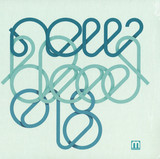
Med School's most innovative release series returns. Responsible for delivering the drum & bass scene early stories of Etherwood, Royalston, Stray and Whiney, 'New Blood' is definitive of Med School's ethos when it comes to discovering and nurturing quality talent. With artists constantly redrawing the boundaries of 170BPM, this '018' edition breaks the mould showcasing the weird and wonderful sounds from the genre's most promising new talent.
Interdimensional waveman Lakeway has mustered up a jukey-jungle hybrid in the form of 'Lock Off'. Panpipe synths and some big beat steps combine to make the ultimate banger. Keeping things correct is Bristolian serpent Constrict. Choppy snares and flirty 8-bit synth stabs slither together to create 'Tight Coil'. Both choice cuts for any DJ looking for that D&B curveball.
This internationally spread line-up also features some of Russia's best D&B exports. A.Fruit's 'Tender Love' is a delectable fusion of footwork and techno rolled into one and Soela's 'I Wish You Would Come' is an ambient spaced out down tempo number.
A myriad of styles from across the globe are the key ingredients for the 'New Blood 018' LP. Med School has once again proven its A&R prowess, signalling to the world there is no better home for fresh talent.
In recent times Alex Pletnev has been making his mark on the musical stratosphere with an array of works from from cold wave edits, through gorgeous adaptations of african and world music to tribal techno originals. He joins us as Pletnev for "Aztec Code / Daywalker", a 12" combining his abundant influences to take us to bizarre, far-off places.
"Aztec Code" is a pure dance thing. Inspired by the fat kicks and live bass lines of the Big Beat era, Pletnev combines a jumping beat with african percussion and a charismatic vocal that seems to call out from between the palm fronds of somewhere steamy as we work up a sweat. Tenderly crafted with samples taken from almost 10 records, one-shots, drum layers and melodic licks are treated and mixed, giving rise to a warm, lush atmosphere perfect for circling a fire deep in the tropics.
On the flip, "Daywalker" is a completely original, synthesised outing. A sleazy lead line charms and slithers upwards between layers of syncopated tabla and a sultry acidic groove. The tune spins and twists around this central oriental theme, ever-evolving as layers of detailed percussion and ad-libbed melodies intensify the tone.
Sound artist Eva Geist joins Fleeting Wax label head Mehmet Aslan to spin "Daywalker". The pair create a sonic bridge between the two originals. Their hazy rework dubs out some electronic elements, adding contorted sound design, distant vocals, lofi samples and an italo leaning bass. A mystic incantation for spaced out late morning moments.
2x12"
Losoul returns to action with his first long player in almost ten years, and delivers a stunning collection of compositions for the Hypercolour released 'Island Time'. Otherwise known as Peter Kremeier, the German producer has mesmerized us for many years with his organic and emotive house music, largely released on the influential Playhouse label, but of late has seen him release singles for Karat and Tardis Records, as well as his very own Another Picture label. Fans of Losoul won't be disappointed, as a diverse yet utterly familiar sound aesthetic pours out over the album's seven tracks in his own inimitable style. The jazzy broken beats of 'Gold Tooth' shine with their micro-sample chops, whilst 'Mean Time' is a dense and dubby slow stomp, teasing the drums with space echo and injecting sparse bass work where it matters. Inventive, spongy house grooves are delivered on 'Boppin Lower' and 'Square Down Smoother' whilst the album closer, 'Lava In You' is a master class in ambient sonics and shimmering keys over a lo-fi swinging groove. It's been over 20 years since Losoul's signature single 'Open Door', and the German producer continues to pour out honest and rewarding music.
Known for his pioneering and multi-instrumental blend of jazz and Afro-Eastern musical traditions, Yusef Lateef has never been content to use his music to merely entertain, but has long strived to his encourage his audiences to engage their minds as well as their ears. This approach was evident even on his groundbreaking debut album as leader, the aptly titled, Jazz For The Thinker, released in 1957. Unlike most debut efforts in jazz at the time, this album is made up entirely of Lateef's own original compositions, further proving that this was a man with a vision right from the start! Here Lateef, on tenor sax, is backed by Curtis Fuller on trombone, Hugh Lawson on piano, Ernie Farrow on bass, and Louis Hayes on drums.
Here Appear is an invocation, a salutation, and a celebration — of past and perfect lives, forgotten and remembered, exchanged and borrowed. Eve Essex's solo debut is a multi-instrumental fea(s)t combining synthesizer, drum machine, alto saxophone, piccolo, electric organ/harpsichord, harmonica, slide whistle, bells, guitar pedals, and voice— composed, arranged, and performed by Essex herself. What began as an improv set at Berlin's Harlekin bar, developed over the past two years into a complete body of work evoking multiple time periods, genres, characters, and sonic landscapes. The seven tracks that make up Here Appear harness elements of classical, drone, avant-jazz, and distorted pop, coupled with an ambitious vocal delivery that draws on the phrasing and articulations of Essex's own woodwind playing, to create a quasi-narrative me´lange retaining the vulnerability of live performance. On the opening track Grind Away,' otherworldly harmonica strains set the stage for lyrics citing Chinese sci-fi novel The Third Body Problem as source material. Saxophone and piccolo interludes Immediate Communicator' and Colorless Stone' move between medieval-tinged melodic inventions and textural noise, recalling a Pharoah Sanders-influenced fever dream, while the linguistic abstractions of Russian conceptual poet Lev Rubinstein guide the looped, layered, and textured vocals of title track Here Appear.' The album closes with a languid take on Jacqueline Humbert & David Rosenboom's 1978 composition Clear Light' from My New Music, recently reissued by Unseen Worlds. Here Appear owes its minimal production to the conditions of its genesis, evidencing the restrained process of the solo artist, instrumentation is confined to what can be played simultaneously. True to the album's avant-garde roots, each song involves an element of improvisation, often taking the form of prompts or variations on a melody rather than explicit compositions. Even its most structured pieces make use of live-sampled loops, which inject a spirited unpredictability into the songwriting process and subsequent performance. Classically trained in bassoon at New England Conservatory before receiving a BFA in sculpture from RISD, Eve Essex has performed as a solo artist at Artists Space, Commend, Safe Gallery, Signal, Trans Pecos, and U.S. Blues, in New York, Harlekin/Mathew Gallery and StudioAcht in Berlin, and the PUFFERSS Festival in Providence, RI. In addition to her solo practice, Essex regularly performs as one half of Das Audit (with Craig Kalpakjian), as well as in trios Hesper (with James K and Via App) and HEVM (with MV Carbon and Hunter Hunt-Hendrix), and has collaborated extensively with Juan Antonio Olivares as installation/performance-art duo Essex Olivares. Prior to the LP release on Sky Walking (April, 20), Here Appear arrives via New York City-based label Soap Library on March 9, 2018 in both cassette and digital format, mastered by Helmut Erler at Dubplates & Mastering, Berlin and recorded by Al Carlson at Gary's Electric, Brooklyn.