American DJ, producer and Lone Romantic / Ellum Audio label boss Maceo Plex joins Radio Slave’s Rekids with the ‘Monster’ EP.
Maceo Plex opens the ‘Monster’ EP with 'Flute Jam', a muscular, progressive cut with broken beats and subtle chords lighting up the airwaves. Drifting vocals and widescreen synths add great scale to this intergalactic journey while textured bass brings the weight. The hyper-real and aptly named 'Baby Monster' then features vocals from Baby Monsta, refracted through a full-bodied Electro-Techno fusion. The chords dance over fizzing bass, all with future-facing sound design and an outer space atmosphere. Closer 'Cold Flow' is a prickly breakbeat cut with dehumanised, trap-style vocals and precision engineering in the groove. It's a cinematic sound that takes breaks, techno and electro into new realms while retaining a soulful, melancholic core.
Active since the 90s, Maceo Plex haș long been operating in his own musical world, where Electro, Techno and House all fuse into something futuristic and fresh. He's been shaping the underground for three decades as a DJ and producer but also head of the infl ential Ellum Audio and Lone Romantic labels. Already this year he has dropped the dark 2-step sounds of his 'The Plan EP' via the latter, which also features Baby Monsta, and continues his purple patch with a standout debut on Rekids that finds him exploring yet more new ground.
out of Stock
Last delivered 7 days ago available to reorder, subject to availability
Spiral code is the second album released on An’archives by the Japanese trio archeus, after 2023’s Kusōzu: Nine Death Stages, and their seventh release altogether. It’s also the most staggering evidence yet of the single-minded pursuit of group-sound explored by Keiko Higuchi (voice, drums, percussion, trombone), Shizuo Uchida (4 strings), and TOMO (hurdy gurdy). For two tracks, “awakening, beyond recurrence” and “where points and lines intersect”, they’re joined by Kiyotaka Moriuchi, an improviser who’s played with the likes of Shoko Numao and Ensemble Shippolly, on percussion and darbuka (a goblet-shaped drum played widely across South East Asia).
Always able to scour magic from both their relationships with their instruments, and their non-idiomatic interplay, on spiral code they’ve widened their net further; the results oscillate from humid and claustrophobic blocks of noise to rivulets of tone coursing across post-volcanic landscapes, and on into simple gestures suspended in arctic space. Spiral code was recorded in a single day, on March 20 th 2025, at a studio in Koenji, Tokyo, the morning session with the original trio, and afternoon and evening session with Moriuchi – the first time archeus have played with a guest musician.
When asked about the music archeus makes together, TOMO is quick to isolate the singular characteristics of their collaboration: “we are trying to explore some new, unknown musical vocabulary every time we play. And what we are trying to achieve from every session is something unique, an interesting chemistry or, I should say, alchemical reaction among the three of us.” You can certainly hear that alchemy in the dynamic arc of their performances, the way they seem to be able to switch on a dime and push the music into unexpected terrain, all while sounding intimately archeus. “We have been playing for many years,” TOMO continues, “so I think that among three of us, we can telepathically sense, feel and understand what each of us is trying to express while we are playing.” It’s telling that guest musician Moriuchi fits so effortlessly into the archeus soundworld, able to hitch a ride on the intimate telepathy of Higuchi, Shizuo and TOMO; “I think he gave us some fresh air to our music,” the latter smiles. But that telepathy extends, even, to the name of the album itself, with all members pointing toward spiral imagery when naming the title track, whether TOMO’s evocation of Kundalini serpent imagery and Caduceus, to the spiral shape of DNA, what TOMO calls “the code of life.” It’s certainly deeply entwined music: spiral code is a helix of sound, a cylindrical coiling of possibility.
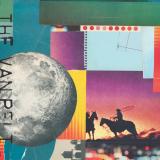
Formed in New York City in 1993 around singer, guitarist and songwriter Chris Leo, the band emerged from the same fertile underground scene that gave rise to many of the most influential post-hardcore, indie rock and emo acts of the decade. Yet while many of their contemporaries went on to achieve wider recognition, The Van Pelt chose a different path: one built on artistic independence, restless experimentation and a stubborn refusal to fit comfortably into any scene or trend.
Across two landmark albums — Stealing From Our Favorite Thieves (1996) and Sultans Of Sentiment (1997) — The Van Pelt developed a singular language that combined intricate guitar interplay, spoken-word intensity, literary lyrics and emotional depth. Their music occupied a unique space between post-hardcore urgency, indie rock invention and the introspective sensibility that would later become associated with emo, influencing generations of musicians while remaining largely outside the spotlight.
After disbanding in 1997, the band's reputation continued to grow. What began as a well-kept secret among underground music fans gradually became a touchstone for listeners searching beyond the obvious narratives of 1990s alternative rock. Reunions in 2009 and 2014, the release of the long-lost Imaginary Third, and a series of acclaimed live performances introduced their music to a new audience while reaffirming their enduring relevance.
In 2023, The Van Pelt returned with Artisans & Merchants, their first collection of new material in more than twenty-five years. Rather than revisiting old formulas, the album expanded the band's sonic vocabulary while preserving the qualities that made them unique: curiosity, intelligence, vulnerability and an unwavering commitment to following their own instincts.
Now, more than three decades after their formation, The Van Pelt are set to return in 2026 with Remain Obscure, their fifth studio album. Continuing their tradition of defying expectations, the record pushes beyond the familiar boundaries of the band's sound while embracing the same spirit that has defined them from the beginning. A band whose influence has consistently exceeded its visibility, The Van Pelt remain one of independent music's most enduring and rewarding secrets.
“A lush, heatwave-friendly piece of dancefloor innovation…” Clash Magazine
First Word Records is delighted to bring you the debut EP from Ships of the Pharaohs.
Ships of the Pharaohs are a London-based collective led by producer Last Nubian, who’s had releases in his own right on labels like CoOp Presents, Eglo Records & Touching Bass. Blending jazz, soul, bossa nova, d&b and house-influenced grooves, the band also consists of vocalist Achanté, keys player Goldbar & bassist, Dougan.
The 7-track EP kicks off with the high-energy, vitamin D-saturated lead single ‘Sun is Rising’, featuring the guest vocals of brilliant Berlin-based singer Red Bird, who appears on three tracks on this project (‘For You’ and ‘Seasons’). ‘Can’t Quit’ follows on a smooth soulful house/bruk tempo, and invites in the thought-provoking spoken word prose of AKEEM. ‘Seasons’, ‘For You’ and recent single ‘Joys’ add another element to the band’s eclectic take on fusion, leaning heavily into the bossa side of the quartet’s influences. The latter track sees Achanté’s soulful harmonies gracefully float across a warm bed of keys, percussion, guitar picks & synth strings. We take a short jazzy breather on the ‘Interlude’ cut, featuring the resplendent sax of multi-talented Norwegian artist, Bror Havnes, who also features on the outro cut ‘One’ - this one seeing the crew ride out with a sonic salute to jungle/d&b, closing this first opus from the group with the energy levels remaining high.
Tre Wright (aka Last Nubian) explains “Our debut EP is a reflection of who we are, both individually and as a collective. Drawing inspiration from jazz, jungle, bossa nova, house, r&b and the music that's shaped us, we've explored our own interpretation of these sounds and how they come together in a way that feels true to us. It gave us the space to experiment without boundaries, trust our instincts, and create something that genuinely reflects where we are creatively right now.”
Originally conceived to perform Last Nubian material live for a Touching Bass showcase at We Out Here festival in 2023, the project soon took on a life of its own, as the group effort unleashed a unique chemistry & sound of its own merit. Thereafter followed numerous sessions in a studio-converted bedroom of a Brixton flat, developing this new sound. The finishing touches were taken care of at the infamous Total Refreshment Centre in North London, resulting in the formation of captivating new original material, which appears across this first extended release.
Ships of the Pharaohs have additionally performed live across London at Brick Lane Jazz Festival, House of KOKO, Jazz on Wick Festival, Peckham Levels, 91 Living Room & GROW in Hackney. Developing their powerful stage presence has gone hand in hand with the creation of their own material.
The initial singles from this project received praise & support from a variety of DJs, press outlets & tastemakers from the worlds of jazz, soul and clubland, including Shy One (NTS), Tony Minvielle (Jazz FM), Rohan Rakhit (Worldwide FM), Somewhere Soul & Clash Magazine to name a few.
With sonics somewhat reminiscent of Acid Jazz legends Incognito, merged with the class of Nuyorican Soul, and the dynamic fluidity of 4Hero, the 4-piece have cooked up a set of style & flavours uniquely their own, fresh for modern dances, incorporating organic improvisation with more contemporary club sounds.
The Ships of the Pharaohs are about to set sail for what is sure to be an exciting journey ahead.
‘Part 1’ will be released on 12” vinyl & all digital platforms on September 18th 2026.
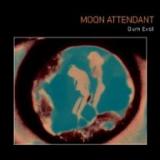
Brighton’s Moon Attendant team up with Go! Team's leader and drummer Ian Parton for new LP ‘Dum Evol’. Following their debut ‘One Last Summer’ with this incendiary, heart-pounding, drum-led masterwork full of untutored surf-guitar, Scarlet Rivera style fiddle, psychedelic orchestration and sharp-playful lyrics, all within just over 30 thrilling minutes.Since their debut, Paul Blewett and Nick Holton had been knee-deep in experimental music and needed something or someone to smash the shit out of the new songs. Instead of making heavier music, the result left lofty but wobbly structures teetering on fractured Giacometti-like frames, exposed, more arresting. Paring back the Musical palette from previous wash of synths and reverb to surf guitars, Moog, and violin, leaving Blewett's vocal (often compared to Colin Bunstone) leaning into an unvarnished, direct sound like Jimmy Campbell. Thematically, Dum Evol turns inward. Where their debut asked questions, this record sits with the answers, exploring love, conflict, and growth as experiences that must be lived first hand - “It’s such dumb evolution, you still have to learn the hard way”. Their lyrics get under the skin and under The Establishment in a wistful worm like way. Nudging at the truths. Smiling but always ready to bare some fangs.The fantastic instinctive violinist, Roger Proctor, joined as fourth member, bringing raw fragile beauty to ‘Look The Other Way’ & ‘Difficult Ifficult’, blending swooping string lines with the monster-surfing-Sonic Youth racket elsewhere. They explain - “We kept to a first take policy generally as it keeps everything just fresh and daisy like.” Dum Evol’s restraint allows the band’s more experimental instincts to land with greater weight. Musically, the record occupies a space somewhere between the slacker-rock nonchalance of Pavement and the gypsy swagger of Dylan - 'Desire' through a lens that is consciously, almost defiantly, English. It’s a sound that channels the 60's pastoral folk tradition alongside the sharp-edge of The Auteurs, an honest version of England, one to be proud of, existing in stark contrast to the hollow jingoistic nationalism of flag-shaggers climbing lamp posts. Jagged, lived-in, and entirely vital, Dum Evol is a record that feels fully realised, yet remains dangerously built to unravel in a hair's breadth.“Psychelelic grungy synth-pop - Moon Attendant marry analogue electronics to a lovely burbling pop sound, like Felt exploring the recesses of krautrock. Trippy, ramshackle and a cult in waiting.” Shindig!
Brighton’s Moon Attendant team up with Go! Team's leader and drummer Ian Parton for new LP ‘Dum Evol’. Following their debut ‘One Last Summer’ with this incendiary, heart-pounding, drum-led masterwork full of untutored surf-guitar, Scarlet Rivera style fiddle, psychedelic orchestration and sharp-playful lyrics, all within just over 30 thrilling minutes.Since their debut, Paul Blewett and Nick Holton had been knee-deep in experimental music and needed something or someone to smash the shit out of the new songs. Instead of making heavier music, the result left lofty but wobbly structures teetering on fractured Giacometti-like frames, exposed, more arresting. Paring back the Musical palette from previous wash of synths and reverb to surf guitars, Moog, and violin, leaving Blewett's vocal (often compared to Colin Bunstone) leaning into an unvarnished, direct sound like Jimmy Campbell. Thematically, Dum Evol turns inward. Where their debut asked questions, this record sits with the answers, exploring love, conflict, and growth as experiences that must be lived first hand - “It’s such dumb evolution, you still have to learn the hard way”. Their lyrics get under the skin and under The Establishment in a wistful worm like way. Nudging at the truths. Smiling but always ready to bare some fangs.The fantastic instinctive violinist, Roger Proctor, joined as fourth member, bringing raw fragile beauty to ‘Look The Other Way’ & ‘Difficult Ifficult’, blending swooping string lines with the monster-surfing-Sonic Youth racket elsewhere. They explain - “We kept to a first take policy generally as it keeps everything just fresh and daisy like.” Dum Evol’s restraint allows the band’s more experimental instincts to land with greater weight. Musically, the record occupies a space somewhere between the slacker-rock nonchalance of Pavement and the gypsy swagger of Dylan - 'Desire' through a lens that is consciously, almost defiantly, English. It’s a sound that channels the 60's pastoral folk tradition alongside the sharp-edge of The Auteurs, an honest version of England, one to be proud of, existing in stark contrast to the hollow jingoistic nationalism of flag-shaggers climbing lamp posts. Jagged, lived-in, and entirely vital, Dum Evol is a record that feels fully realised, yet remains dangerously built to unravel in a hair's breadth.“Psychelelic grungy synth-pop - Moon Attendant marry analogue electronics to a lovely burbling pop sound, like Felt exploring the recesses of krautrock. Trippy, ramshackle and a cult in waiting.” Shindig!
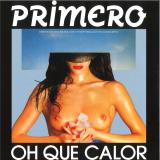
Vintage Pleasure Boutique returns to the classic Hotsound Records catalogue with Primero’s “Oh Que Calor”, another unmistakable production from Michiel van der Kuy.
This vinyl edition brings together three newly remastered original versions: Extended, Radio and Instrumental, preserving the sound and atmosphere of the original release, alongside fresh remixes from A.P. Mono, Spacehawk and Disco Computer.
All three remixers share a fascination with Van der Kuy’s signature sound. Their interpretations may take different routes, but the original DNA remains intact: pulsing synths, Linn Drum, cosmic melodies and that unmistakable late-’80s vocal spacesynth energy.
And “Oh Que Calor” still has the power to transport you somewhere else entirely: to a seaside resort on some Spanish coast, sometime in the late 1980s – hot nights, neon lights, open-air dancefloors and a whole summer soundtrack built from Italo Disco, spacesynth and electro. Somewhere between the beach and the club, Primero feels completely at home.
For fans of Laserdance, Koto, Cyber People, Proxyon and Sisley Ferre, this is both a return to the original and a new chapter.
Three original versions. Three new remixes. One unmistakable Hotsound DNA.
out of Stock
Last delivered 18 days ago available to reorder, subject to availability
Composing primarily with the piano, Kotaro Maruyama creates music for a variety of visual media, including commercials and short films. Influenced by the composer Toru Takemitsu, he places importance on the “silence” and "ambience" of sound, aiming to create works where the music quietly depicts a scene.
Kotaro Maruyama's first solo album, "Vapor Curve," is constructed entirely from the sound source of the OP-Z digital synthesizer. Notably, he avoids the concept of harmony for a single tone, instead pursuing a unique "woven harmony" created by intricately layering multiple independent melodies. Using only the OP-Z, and recording everything in a single take without using a computer, Kotaro Maruyama's "Vapor Curve" is distinguished by its uncompromising production style. The minimalist melodies that are layered to create an ambient soundscape, along with the incidental noise that gives an organic texture to the inorganic electronic sound, showcase the raw appeal of sound that is imperfect."
Originally scheduled for release September 2025, this album faced delays due to a series of errors involving the distributor, pressing plant, and cutting engineer. However, earlier this year, Personal Affair teamed up with a new distributor, Rubadub, who introduced them new pressing plant, allowing them to restart the entire pressing process from scratch. Emerging from Tokyo via Glasgow, this release is now ready to deliver a fresh sound to the world."
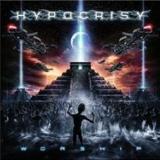
With governments finally admitting that UFOs do in fact exist, and humanity attempting to heal from a state of recent crisis, the timing couldn’t be more appropriate for the newest addition to the HYPOCRISY catalog: WORSHIP, due to be released Fall 2021 via Nuclear Blast Records. Aptly titled, the album cover shows a mass of humans reaching up mindlessly to the sky as glowing spaceships shaped like the HYPOCRISY crosses sigil beam down to descend upon earthen civilizations and Mayan temples. Designed by artist Blake Armstrong (Kataklysm, In Flames, Carnifex, etc.), WORSHIP’s artwork speaks to the history of the relationship between humanity and extraterrestrials. “They’re coming back to collect,” explains founder and HYPOCRISY mastermind Peter Tägtgren.
A track entitled CHEMICAL WHORE breaches the subject of pharmaceutical addiction, and those who engineer it. “We are all chemical whores. We regularly consume prescriptions and drugs because we think we need it; we use one pill to heal the damage done by another medicine... it’s a vicious cycle.” Musically, it’s the only song that was written by all 3 core members of the band and translates into a recognizable, mid-tempo HYPOCRISY sound much like ERASER or FRACTURED MILLENIUM. Traveling from Sweden to Russia, the band also shot an official music video for CHEMICAL WHORE.
The DEAD WORLD music was written by Peter Tägtgren’s son, Sebastian. “We actually started to write an album together, something like 11 or 12 songs, but we never put any vocals in there and we just sort of set it aside. Then when I started writing HYPOCRISY I realized I really liked the song… it feels fresh. I think my kid got some new blood in there.” While the song comes equipped with a modern feel, the writing is still old fashioned at its core. Going into detail about the illuminati and black ops government, the lyrics examine how miserable these figureheads and theories can make us. “Call it fantasy, call it sci-fi, there are plenty of conspiracies in the world but I find these ones interesting,” explains Tägtgren.
GREEDY BASTARDS is another track outlined by simplicity and catchiness. Chugging riffs encapsulate a sound that almost verges on the realms of thrash while still keeping its feet firmly planted in the world of death metal. The lyrics touch on the greed and methods of control that we see various governments around the world today; how they manipulate people against one another and abuse the masses.
For Tägtgren, the inspiration to write new HYPOCRISY comes in waves. “I believe we were out on tour for another project and I began to get hungry again. I started spitting out some new riffs and when I had 7-8 songs done, I invited the rest of the guys to join me and contribute, and from there we started putting everything together. We had a break for a few months, continued recording, went back on tour… it never stops. There was a lot of jumping back and forth, and then COVID came and things got really weird.”
Tägtgren was one of the many musically inclined who was forced into sudden isolation upon the onset of COVID 19, only for Tägtgren, this is common practice when creating new songs. “A lot of things in the world stopped, and it was time to finish everything I hadn’t finished.” As usual, all recording and mixing took place at Tägtgren’s home studio in Sweden.
It has been 8 long years since the last record, and HYPOCRISY fans can feel the itch. WORSHIP is 11 tracks of precise, ferocious musicianship. Commonly inspired by the fusion of the modern and the ancient, HYPOCRISY has once more found a way to combine innovative ideas with classic sound in order to deliver something metalheads can enjoyably consume with awe and brutal vigor. HYPOCRISY is Peter Tägtgren (Lead Guitar & Vocals), Mikael Hedlund (Bass Guitar), and Reidar “Horgh” Horghagen (Drums).
The second chapter of The Third Room's curator-led series is shaped by D.Dan, one of the defining voices of a new generation pushing techno into sharper, more forward-leaning territory. Through his productions, DJ sets and close ties to an emerging network of artists, he has helped shape a sound defined by precision, intensity and subtle experimentation. For his curation, the focus lies on collaboration and alignment. Rather than presenting a wide spectrum, the release draws a tight circle around a shared sound: one defined by contrast and a strong sense of aesthetic cohesion. D.Dan's Bound sets the tone: reduced, warm and controlled, balancing sharp accents with a steady, grounding low-end. On Dynamic, Rene Wise delivers a record's standout moment: a fluid, rolling tool shaped by subtle disruptions and evolving tension. Slither by Connor Wall expands into a more trippy, forward-facing space, while Gensou by Sunju Hargun & DJ MARIA. closes on a fresh, detailed take on acid - understated but effective. Across all four tracks, the release feels tightly unified - less like a compilation, more like a single body of work shaped from a shared sonic language. Contrast plays a central role: between tension and warmth, control and surprise, functionality and detail. Cohesive and focused, the record feels carved from a single aesthetic, where contrast and small, unexpected shifts drive its momentum. Copyright 2026 The Third Room A1 Written and Produced by Theodore Su-Ahn Shin | A2 Written and Produced by Andrew Shobeiri | B1 Written and Produced by Connor Wall | B2 Written and Produced by Sunju Hargun & DJ MARIA. Mastered by Ahmet Sisman (The Third Room Studios) Artwork by Charlotte Ernst Design by Daniel Bornmann (STUEDIO.XYZ) Distribution by Clone Pressing by Matter Of Fact
out of Stock
Last delivered 4 days ago available to reorder, subject to availability
On his latest four-track EP, Marco Cassanelli presents a masterclass in deep, atmospheric dub techno. Rich in warmth, texture and groove, the release finds the Italian producer at his most refined, effortlessly balancing hypnotic rhythms with expansive chord work and immersive sound design that resonates equally on the dancefloor and in more introspective home listening settings.
For more than two decades, Marco Cassanelli has been quietly refining a sound rooted in the deepest traditions of dub techno. Emerging from Rome’s underground electronic scene, he has built a body of work defined by patience, restraint, and a profound understanding of space and atmosphere.
Each track unfolds with patience and purpose, drawing listeners into a world of drifting echoes, subtle movement and finely crafted detail. Rooted firmly in the traditions of dub techno while retaining a distinctive character of its own, the EP is both deeply engaging and beautifully understated—equally suited to late-night club systems and home listening.
The final track introduces an unexpected vocal performance, adding a fresh dimension to the release and bringing the journey to a memorable close.Elegant, timeless and richly textured, this EP is a testament to Cassanelli’s enduring craftsmanship and his ability to create dub techno of the highest calibre.
out of Stock
Last delivered 19 days ago available to reorder, subject to availability
Leading Danish contemporary jazz label April Records is proud to present Well, actually..., the third album from Polish acoustic jazz quartet O.N.E. Grounded in the spirit of democracy andcollective improvisation, the album offers a tightly woven set of original compositions that blur the lines between modal jazz lyricism and the raw energy of free improvisation.The band name O.N.E. is a clever double entendre: in Polish, "one" (pronounced oh-neh) means "they" in the feminine plural - an apt nod to the all-female lineup. In English, of course, it signifies unity. Both meanings reflect the band"s egalitarian, leaderless approach and cohesive group sound.Almost three years after the recording of their previous release Entoloma(Audio Cave), the group reunited in December 2024 at Studio S4 in Warsaw to record a fresh set of ten compositions. Spread over two sides, the album captures the continued evolution of a band that thrives on interaction, trust, and shared purpose - even in a society fractured by post-pandemic socio-economic uncertainty and political ambiguity. Featuring contributions from all four members - pianist Kateryna Ziabliuk, saxophonist Monia Muc, bassist Kamila Drabek, and drummer Patrycja Wybranczyk - the recordreflects their commitment to artistic democracy. Each voice is given space, yet the music always feels greater than the sum of its parts. Even on the miniature solo track solo form, the other three players remain present, supportive, and responsive. From Ziabliuk"s percussive piano textures and dreamlike voicings on tracks like Osloand Berio, to Muc"s expressive, woody tone on alto and baritone sax, each piece explores dynamic interplay and shifting emotional landscapes. Drabek"s resonant, grounded bass - by turns lyrical and propulsive - provides a central thread, while Wybranczyk"s drumming fizzes with precision and imagination, as heard on Cipherand the angular closer Sneaking Around.Together, these four distinctive creative forces have developed a shared language built on mutual respect, long-term collaboration, and deep listening. Their concerts across Europe (including Jazzahead, B-Jazz, Umea, and the Edinburgh Jazz & Blues Festival) haveaffirmed their standing as a boundary-pushing group with something new to say.
f SOLO FORM
[f] b2 [SOLO FORM]
[f] b2 | [SOLO FORM]
out of Stock
Last delivered 69 days ago available to reorder, subject to availability
320 page, beautifully written, designed and printed, hardback book
ISBN: 978-1-0687642-2-6
“Keep the books coming, keep the music coming, keep the art coming. When you think you know everything, you can miss out on a lot. When you realise you don’t know everything the floodgates come down a bit and you start following literary links and musical links that you might not have made before. It’s a whole new parallel universe.” Andrew Weatherall, 2015 Today Disco Pogo is delighted to announce A Disco Pogo Tribute To Andrew Weatherall, a 320-page hardback that gathers everything we love about the man and his music. It is the fourth in our hardback Tribute series – following Daft Punk, Aphex Twin and LCD Soundsystem – and the long-overdue successor to the sold-out and hard to find Jockey Slut Tribute To Andrew Weatherall from 2020. Inside you’ll find the best of that original Jockey Slut book, plus more than 200 pages of brand new material – fresh essays, oral histories, interviews and photography from the writers, photographers, musicians, producers, DJs, designers and friends who knew Andrew best.
The book is being published with the full blessing, approval and cooperation of the Weatherall estate, who will also receive a share of the profits from the book. From the fanzine kid at Boy’s Own to the producer who rewired Primal Scream and made ‘Screamadelica’ sound like the future; through The Sabres Of Paradise, Two Lone Swordsmen, The Asphodells and the much-loved A Love From Outer Space night and Convenanza festival, Weatherall left behind a body of work, a sensibility and a way of carrying yourself that is still being unpacked six years on. This is the book that tries to do all of it justice.
Highlights include: an interview with Bobby Gillespie that goes beyond ‘Screamadelica’, essays on ‘Sabresonic’, ‘Haunted Dancehall’, the Two Lone Swordsmen and his solo releases, plus a look into his many remixes. In addition: oral histories on his early years, A Love From Outer Space and Convenanza, an interview with Timothy J. Fairplay on The Asphodells and a celebration of his art work and his NTS radio shows. And then there’s the Disco Pogo Tribute regulars: a timeline, family tree, a studio gear deep dive, discography and more… Featuring interviews with Sean Johnston, David Holmes, Jagz Kooner, Leftfield, Shaun Ryder, Chemical Brothers, Terry Farley, Dot Allison, Beth Orton, Irvine Welsh, Daniel Avery, HAAi, Tia Cousins, Steve Mason, Richard Fearless and many more.
“Released on Joe Boyd’s Hannibal label here was a band rooted in Thompson/Swarbrick Fairport but also a snatch of the Velvet Underground and a sprig of The Byrds. The Eighteenth Day Of May evoked a legendary era, and now they are a justifiably legendary band too.” – KLOF Mag
Beginning life as a trio in London, 2003, the original line-up consisted of Allison Brice (vocals, flute), Richard Olson (acoustic guitar) and Ben Phillipson (guitar, mandolin) before expanding the following year to include the rhythm section of Mark Nicholas (bass) and Karl Sabino (drums, autoharp) and finally Alison Cotton (viola).
This being the mid zeros, the independent music scene in the UK was reluctant to embrace a sun-dazed folk band but this, their sole album, has gradually feathered a bed of affection amongst international folk fans. Twenty years on, the album is now rightfully seen as a trailblazer for the myriad alternative/psych folk bands that emerged in its wake.
Andy Childs who signed the band originally takes up the story. “I first heard their music on a cover mounted CD with the much missed Comes With A Smile magazine and as far as I could tell no-one was making music like this anymore, certainly not with such panache and confidence. To my jaded ears it all sounded so uninhibited - old weird folk songs, Americana, original psych-folk, minimalist drones. Great melodies and all six of them could sing! A joyous, unfettered sound that could in one moment conjure up flashes of The Byrds and then effortlessly the spirit of Velvet Underground would drift through. They even covered a Spacemen 3 song. I loved the fact that they had the aplomb to tackle traditional folk songs like Lady Margaret and Flowers In The Forest and not be afraid to stamp their own identity on them.
Signing them to the Hannibal label was straightforward. If anything the album somehow sounds fresh and undated, even better than it did in the day when perhaps eclecticism was out of synch with the times; its subtleties have become more apparent.”
“Their rendition of Lady Margaret builds to a headswirling crescendo that challenges anyone who claims Shirley Collins, Buffy Sainte-Marie or Trees have recorded the definitive version and the hallucinatory The Waterman’s Song To His Daughter raises an already brilliant album to an unholy level” - IT’S PSYCHEDELIC, BABY Magazine
Tipped by many as a true DJ’s DJ, London’s Isaac Carter has a sound that sits between heritage and reinterpretation. Drawing from the iconic hubs of Chicago and Detroit, his productions reframe classic influences with a contemporary UK perspective, prioritising groove, swing, and a stripped, functional edge.
At the heart of his work, Carter has developed his Ochi imprint, where his deeper material has circulated within a select circle of DJs, with love from names such as Ben UFO, Raresh, and Joy Orbison. A controlled outlet for ideas shaped specifically for club use, that approach also carries over into his sets, playing at the likes of DC10, Glastonbury, and Love International.
Fresh from his appearance for the London favourites at FUSE’s annual Open Air showcase, Enzo Siragusa now welcomes him to the label for the first time as he brings a collection of cuts that journey into varying corners of the house sphere.
The ‘Disconnected’ EP brings five tracks built around direct function and contrast. ‘Disconnected’ opens with rolling low-end pressure and slinking drums, loaded with swing, setting a clear rhythmic foundation for the project. ‘Bad Girl’ shifts into a more playful space, led by vocal fragments, hazy chords and dubby tones. On the B-side, ‘What We Do’ leans into crisp repetition sitting beneath shifting, trippy movement, followed by ‘Loopy’, which strips things back into a reduced late-night percussive trip.
out of Stock
Last delivered 6 days ago available to reorder, subject to availability
Limited edition Candy Apple Red 7inch vinyl. DJ Because (Sushi Breaks, Dungeons & Krakens & Toxic Hamster Scratchz) teams up with UK producer Imperial to bring you another themed release. Lock in photon torpedoes - packed with fresh retro space samples to fight all your galactic scratch battles and epic beats to explore the universe with. Includes 8 skip proof phrases plus lots of extra scratch friendly samples, beats & breaks!
The CJP Band return to Supa Jams with two more tracks for your listening and dancing pleasure.
First up 'We Must Believe' channels disco (not) disco vibrations on a strings for days sea of spiritual spaceways. Soaring skyward on Boogie driven basslines and roaring sax solos.
This fresh cut nods to the psychedelic soul vocals of Rotary Connection, Idris Muhammad and The 5th Dimension, Carrying a powerful spiritual message of unity and transformation.
On the flip, Charles Earland 1976 jazz funk classic 'Let The Music Play' gets the CJP cover treatment.
A raw, Driving dancefloor burner, Powered by heavyweight drums, Deep Fender precision basslines, Flamboyant Brazilian percussion and crazy guitar and sax solos. Featuring Hannah Williams on guest vocals.
Hand Stamped Sleeve
Limited Pressing
Don't Sleep!
out of Stock
Last delivered 14 days ago available to reorder, subject to availability
Time to welcome Soul 223 to the label with his debut Delusions EP entitled Fear Of Stopping. Something of a complete legend in our eyes and ears, Steve Pickton has been releasing top drawer tuneage for over two decades both as Stasis on influential labels such as B12 and Peacefrog and more recently as Soul 223 on equally well regarded imprints like Delsin, Soul Jazz and Neroli. Always one to shy away from any limelight or self promotion it's true to say that this underrated British producer remains something of an anomaly, staying true to his underground roots where faceless, shadowy and obscure reigns supreme over the latest over-exposed cover star. This ethos naturally carries through into his music where you will always find both expansive beauty and unrefined rawness in equal measures ensuring his tracks always sound fresh rather than over produced or contrived.
Fear Of Stopping opens the EP with a low-slung disco groove providing the backbone for intermittent pad washes and reversing stabs. The focus here is firmly on the drums and simple conga riff with thankfully very little else to deter you from this sublime slice of abstract dance music.
Next up we have a remix from another ridiculously talented producer who chooses quality over quantity, having only ever had one release under his own name, albeit for one of the most respected labels in the world; Rush Hour. Maxi Mill came to our attention having released one of the tracks of 2011 namely To The Next. On this, his first ever solo remix he brings a brilliant bump to the EP with a raw, warehousey and bass-heavy workout. Just the right amount of strings and pads keep the deep vibe intact but the filtering bass and jacking drums definitely take this one to the floor.
Flipping over we have Walberswick in it's Hoist Covert Mix incarnation. Almost thirteen minutes of spaced out, deep Detroit house music awaits you, ready to lure you in and cocoon you with it's warm and hypnotizing machine funk. Lovely to hear the old Stasis influence working it's way into this one sounding both decidedly old-school and completely futuristic and otherworldly as only the best tracks ever do.
Closing the EP we have Birdbrook Rain dropping the BPM's for a beautifully sparse track that brings with it an almost desolate and disconnected feeling, echoing synths providing a naive melody while a dusty pad shifts simply beneath. A little slice of magic concluding a fresh and interesting EP, we hope you agree.
For nearly four decades, since its founding during the mid 1980s, the Belgian imprint, Sub Rosa, has continuously plumbed the depths of numerous, radical creative histories, assembling a catalog of releases that has almost no equivalent, while remaining nearly impossible to nail down. That said, for most of its run, Sub Rosa has been primarily recognized for its rigorous explorations of the lesser explored shadows of experimental sound practice (sound-art, sound-poetry, early electronic and electroacoustic music, free-improvisation, etc.), delivering a remarkable body of artifacts that have collectively helped to rewrite history in their wake. While it's always been impossible to anticipate where the label might take us next, threading their catalog are plenty of releases that throw further wrenches in the cogs, expanding our understanding of what they pursue, as in the case of a handful of titles, appearing as early as the 1980s, dedicated to ethnographic field-recordings from various parts of the world. Among the most striking and celebrated of these was 2017's Ethiopian Urban And Tribal Music: Mindanoo Mistiru / Gold From Wax, comprising an astounding body of recordings made by Ragnar Johnson and Ralph Harrisson in Ethiopia during 1971, reissuing material originally released by Lyrichord the following year. Now, Sub Rosa returns to the incredible work embarked upon by the pair and captured on that same trip with Ethiopian Musics 1971, comprising the recordings originally released by Ocora shortly after their completion, expanded in this edition to include an entire disc of never before released music. Widely regarded as some of the most important field-recordings ever made of indigenous Ethiopian folk music (as captivating and intoxicating as they are revelatory: providing insights into the roots of the country's singular traditions of popular music and jazz that have come to be celebrated the world over), this incredible collection is issued by Sub Rosa in a beautifully produced 2LP edition, complemented by a four page insert providing detailed descriptions of each song, as well as notes by the ethnomusicologists and recordists, as well as a 2CD edition, with a twelve page booklet. Insanely good and absolutely essential for any fan of field-recording, ethnomusicology, the music of Ethiopia, or the label's mission at large. Once again, Sub Rosa has defied our expectations and delivered a remarkably important intervention in the history of recorded sound.
Located in the Horn of Africa region of East Africa, few cultures are distinctly singular, while being so diverse (containing 80 distinct ethnic groups who speak 70 languages and 200 dialects) as that of Ethiopia. The home to some of the oldest surviving sects of Judaism, Christianity, and Islam (each contributing important aspects of its collective cultural body), particularly the country's culinary and musical traditions have become celebrated the world over, and (generally speaking) feel entirely independent of those of its neighbors. Given this, it's unsurprising that, during the summer of 1971, the young ethnographer, Ragnar Johnson, accompanied by Ralph Harrisson, traveled to Ethiopia to begin his brief career as a field recording ethnomusicologist, capturing material on reels of magnetic tape that would be subsequently released across three LPs for Lyrichord and Ocora, respectively, coming to form a cornerstone of documentation and study of the country's many indigenous musical traditions, as well as providing wide, global access to them for the first time. While Johnson's recording career was relatively brief, ending toward the end of the decade when he began to focus more on teaching in UK universities, with a focus on the anthropology of art and social anthropology, his impact on the field was lasting. Between 1971 and 1979, in addition to those he made in Ethiopia, he made hugely significant recordings in Yemen (also issued by Lyrichord before being reissued by Sub Rosa) and Papua New Guinea, which were originally released by David Toop's Quartz Publications to wide celebration, before being revisited by Ideologic Organ in 2023.
While it's worth noting that commercial releases of ethnomusicological recordings by labels like Folkways, Lyrichord, and Ocora were still in their relatively early days when he entered the field, Johnson's recordings quickly stood apart for their vivid qualities and clarity of space, allowing them to stand the test of time. As he later stated: "I used a Uher Report L stereo tape recorder, BASF quarter inch tapes at a recording speed of seven and a half inches per second with two directional microphones mounted to record an isosceles triangle of stereo sound," he reveals. "The location of the microphones and musicians was critical. The musicians were fully informed of all aspects of the recording process."
Johnson's recordings are extremely vivid, there is a clear sense of space and the cries of the flutes exist across the entire stereo field. It's a reflection of Johnson's skill as a field recordist that his recordings continue to be reissued over forty years later. "I used a Uher Report L stereo tape recorder, BASF quarter inch tapes at a recording speed of seven and a half inches per second with two directional microphones mounted to record an isosceles triangle of stereo sound," he reveals. "The location of the microphones and musicians was critical. The musicians were fully informed of all aspects of the recording process… I used to enjoy being in the moment and hearing something wonderful despite the stress of the vigilance required to ensure that the recordings were accomplished according to plan. The responsibility is to record and document the music as effectively as possible so that it has been preserved for posterity. It is better to actually record music than to sit in a seminar room debating the ethics of recording music." It is this very ethos and sense of clarity that can be encountered across the length of Ethiopian Musics 1971.
For the sake of clarity, the two LPs of material that comprise Ethiopian Musics 1971 should be regarded as a single body of recordings alongside those made in Ethiopia by Ragnar Johnson and Ralph Harrisson during the summer of 1971 (previously issued by Lyrichord and reissued by Sub Rosa), and as two that have, until now, remained historically distinct. The first LP gathers that material released by Ocora during the early 1970s on Musiques Ethiopiennes, while the second comprises (as far as we can tell) twelve never before issued recordings, expanding the journey and making this the definitive edition of the release with its incredible total of 23 recordings of songs, allowing it ever greater scope to achieve the recordists' modus operandi of capturing the broadest and most diverse cross section of Ethiopia's many musical cultures, ranging from different forms of urban music captured in Addis Ababa, documenting largely orally transmitted idioms within which lyrical content is given greater emphasis than the instrumental components (played on masenko fiddles, craar and bagana lyres, washint flutes and kabaro drums), to folk idioms hailing from the Danakil desert and the border regions with Sudan and Kenya. There are songs sung and played in bars, divination chants, laments, dances, Christian songs, and Amharic sung poetry, to only begin to scratch the surface.
Ethiopian Musics 1971 is one of those rare albums where each musical moment is pure, intoxicating gold, while also being greater through the sum of its parts. There are the many songs, forming a rich tapestry of remarkable range across the respective two LPs/CDs (moments that wondrously flirt with sonic abstraction; hypnotic rhythms; pulsing chant; melodies that, in structural arrangement and tonal combination, help us reframe how such a thing might be understood, and a great deal more), each imbued with a remarkable directness and emotive sensibility, and there is the stunning quality of these recordings themselves, transporting each sound to our ears as though we intimately share its creator's space, while being imbued with the pure heart and remarkable spirit with which they were made. As we said before, it's little wonder, once heard, why these recordings and this music feels as fresh and relevant (enduring more than 50 years) today as when they were made. Once again, Sub Rosa has raised the bar with this essential addition to the incredible work that Ragnar Johnson and Ralph Harrisson did back in Ethiopia during 1971, radically expanding our access to the sounds that they captured with these stunning, beautifully produced 2LP and 2CD editions. Absolutely engrossing from the first sounding to the last, this one can't be missed.
Leopard DaVinci is the official keyboardist of Dabeull's Band.
“Casual Conversation” pairs Leopard DaVinci’s high-gloss funk production with Moniquea’s signature vocal charisma for an instantly addictive modern funk single. Flirty, confident and groove-heavy, the track balances retro-inspired synth textures with a contemporary boogie pulse, making it a strong fit for editorial playlists centered around funk-forward, danceable and soulful music.
Moniquea already holds a respected position in the global modern funk community, and this release delivers exactly what that audience wants: attitude, melody, replay value and undeniable groove. “Casual Conversation” has crossover potential between dedicated funk listeners, nu-disco audiences and feel-good R&B selectors.
“Flaws” pairs Leopard DaVinci’s signature synth-led funk production with Helena’s fresh and expressive vocal presence for a release that feels both timeless and relevant. Built around a message of self-acceptance and inner strength, the track transforms vulnerability into groove, offering a refined mix of modern funk, boogie and soulful pop energy.
Its lyrical theme makes it especially effective beyond niche funk circles, opening space for playlisting tied not only to groove and retro-funk aesthetics, but also to confidence, empowerment and uplifting mood. “Flaws” is melodic, elegant and emotionally direct — a strong crossover track with both artistic identity and listener accessibility.