Suche:space program

Styles
Alle
The Contemporary Noise Ensemble - An Excellent Spiritual Serviceman LP 2x12"

After a creative break of more than 10 years the Contemporary Noise Ensemble returns with the brand new album called »An Excellent Spiritual Serviceman«. With the band’s line-up reduced and the sound of the brass section replaced with programmable synthesizers comes an entirely new sound of the band’s music. Leaning towards composition instead of improvisation the music is now less jazzy sounding - with electric bass being used instead of double bass and drums actually being the only strictly acoustical instrument. But then again you can hear a lot of other prerecorded instruments like marimba, vibraphone, Rhodes and upright pianos surrounded by arpeggiated synths and other programmable electronic instruments.

The album takes you to a journey through jazz, space rock, funk and electronic music with a destination in a form of a rock song which is as well the title song of the album. The Contemporary Noise Ensemble still impresses with maturity and class.

vorbestellen19.05.2023

erscheint voraussichtlich am 19.05.2023

29,37

Last In: vor 2026 Jahren
Glockta & Shawn Cartier - WMR001

For its debut release, Wobbly Mob Records welcomes Newcastle and London based DJs Glockta and Shawn Cartier.

Glockta has created three dark, pulsing, Garage tracks broken up by an interlude, each with impeccable drum programming. The five track EP acts as a reaction to the energy vacuum created by lockdown, due to abandoned dance-floors and a struggling electronic scene. Shawn Cartier has orchestrated the finale with a fast-paced electro ripper, a remix of Plastic Fiver on the A side.

Originating in Newcastle, Wobbly Mob Records first began as The Wobbly Mob, a Facebook platform for sharing music and creating an online community with an interest in similar music genres. This EP will mark a new direction for The Wobbly Mob, which has outgrown its initial purpose, now linking promoters, collectives, DJ’s and producers from all over the globe.

Wobbly Mob Records encourages and supports artists experimenting within and beyond their genre orientation, providing an open space for DJs to develop their skills.

nicht am Lager

Bestelle jetzt und wir bestellen den Artikel für dich beim Lieferanten.

15,34

Last In: vor 2 Jahren
Alexandre Babel & Latifa Echakhch - The Concert LP
 
1

"The Concert" is the first discographic collaboration between percussionist Alexandre Babel and visual artist Latifa Echakhch. The record is intimately linked to the eponymous exhibition presented at the Swiss Pavilion during the 59th Venice Art Bienniale.

For her exhibition in the Swiss Pavilion, Latifa Echakhch created an orchestrated and enveloping experience, a rhythmic and spatial proposal that allowed the visitor a complete perception of time and of his own body. What is the origin of rhythm? How does the body perceive time? How does the mind rearrange it? Can we substitute one perception for another, the visual for the sound? Can fragments of memory go back in time and recreate a different story?

Her proposal entered a dialogue with the building around it, designed by Bruno Giacometti. The artist revisited its architectural programme as well as the prototypical progression of these exhibition spaces, originally defined for the display of classical art. She appropriated the entirety of the spaces, simultaneously exploring continuity, movement and sequence. Their relationship to light, and the different sounds that emerge from them. Yet the exhibition was entirely silent and the musical composition "The Concert" functions as its sound rendering, by following a similar path.

This one-sided vinyl is a complementary and inseparable partner piece to the exhibition and its eponymous catalogue, the latter having been published in April 2022 by Sternberg Press. The music features field recordings made at the Swiss Pavilion itself as well as pre-recorded percussion sounds and significant contributions by the Berlin-based musicians Jon Heilbronn, Rebecca Lenton, Theo Nabicht, Nikolaus Schlierf.

The record, available only after the closing of Latifa Echakhch’s exhibition offers a concluding phase to the project. The resonance of its sensory score. It reactivates the experience of the physical journey of the installation, without imposing itself as a transcription or an illustration. Through texture, temporality and its totality, the record stands as a resonance of the rhythms that have structured the pavilion, the harmonies that have composed it and the sounds that have inhabited it.

Latifa Echakhch Lives and works in Vevey, Switzerland. She graduated from the École nationale supérieure d’arts in Cergy-Pontoise and the École nationale des beaux-arts in Lyon. Galleries representing her include kamel mennour (Paris and London), kaufmann repetto (Milan and New York), Dvir Gallery (Tel Aviv/Brussels) and Pace (New York). She took part in the main exhibition of the Venice Biennale Arte in 2011 and was awarded the prix Marcel-Duchamp in 2013 and the Zurich Art Prize in 2015. Through her interdisciplinary installations, Latifa Echakhch is recognized for the fine balance between forcefulness and fragility of her visual language, inserting surrealist and conceptual elements, and her use of symbols that–in her own words–are both "political and poetic".

Alexandre Babel Lives and works in Berlin. He is a drummer, composer, and curator. His projects redefine the boundaries of musical convention, confounding listener expectations in the conquest of new contexts. Babel has been the artistic director of the contemporary percussion group Eklekto 2013–2022. In 2020, the monographic Festival Les Amplitudes in La Chaux-de-Fonds focused on Babel’s compositional and curatorial work. He is a laureate of the Swiss Music Prize from the Federal Office of Culture 2021.

vorbestellen21.04.2023

erscheint voraussichtlich am 21.04.2023

25,63

Last In: vor 2026 Jahren
Madben - Troisième Sens LP 2x12"

French techno titan Madben unveils his much anticipated ‘Troisième Sens’ LP on Maceo Plex’s Ellum Audio.

Madben started absorbing the techno of Jeff Mills, Dave Clarke and Speedy J in the 90s, growing up in Lille in northern France. He retains a passion for DIY culture and warehouse parties thanks to youthful raving at Brussels' Fuse, Gent's Kozzmozz or in abandoned factories in Courtrai. All this has shone through in his music, including a debut album on Astropolis in 2018 that featured a collaboration with Laurent Garnier and a recent EP for Garnier and Scan X’s label.

Over the last decade, he has become a European club and festival favourite playing places like Berghain and Awakenings. His studio boasts a fine array of machines utilised to full effect on this latest opus. ‘Troisième Sens’ perfectly reflects what the artist has always loved, listened to and played, keeping one eye on the dance floor but never at the expense of musical narrative. It’s a genuinely progressive, multi-genre body of work that allows listeners to fully immerse themselves in the seemingly limitless depths of the Frenchman’s sonic capabilities.

He says, “Over the years, I learned to have more fun with the gear in my studio, and this has been the result. The album took three years to finish; I started in an underground basement studio in Paris before moving to Nantes. Therefore, it may surprise listeners with such a diverse selection of moods. It's dark in places but happy in others.”

'Departure' kicks off with uplifting synth work and broken techno beats that have a celebratory feel. 'Addicted' is a lithe cut with steamy vocals and a more fulsome combo of drums and bass, while 'Circuit Breaker' cuts loose in the cosmos. Acid wobbles, smeared synths and metallic percussion all make for a bouncy cut before 'Fade In Fade Out' continues the cosmic trip with vastly oversized synth patterns that will light up a dark space with overwhelming euphoria.

The brilliant 'It's 1 am In A Rave' is a dark, heads-down banger with 'Lost Memories' then layering up melancholic synths and Plastikman-style drum loops into something full of deep thought. There is no let up with the superb acid techno gymnastics of 'No fear', and 'The March' is a turbulent mix of sheet metal synths that whip about over steel-plated drums. 'You Dance Like A Robot' is end-of-the-world electro with a menacing robot vocal, and the electro tip continues with expert drum programming and menacing leads on 'Deep In The Jungle'. 'Meta' is a flailing rhythmic workout that sounds like the machines are in meltdown, and 'I Made A Dream During This Nightmare' is a serene techno soundscape for ruminating about the future of the human race.

Intelligent yet immediate, impactful but emotional, ‘Troisième Sens’ is another standout techno record from Madben.

nicht am Lager

Bestelle jetzt und wir bestellen den Artikel für dich beim Lieferanten.

26,01

Last In: vor 20 Monaten
Various - Strictly Hits Vol. 1

With the programmatic title “Strictly Hits”, Strictly Strictly pushes forward with their first Various Artists EP, a 6 tracker of characteristic Electro Breaks.

Karawai is whipping you into Side A with his sweaty Trance sunriser ‘Cyberythm’ while High Fidelity’s viciously banging ‘Catching the Case’ already leaves nothing but steam when DJ Purpur catches up with his mystical but no less driving ‘Spooky’ rounds out the experience in perfect style.

Flip to Side B and space out with Not Even Noticed’s intoxicated belter ‘Loko’, followed by Strictly’s very own Klex calling for hands up with ‘Blue Figurine’ before Generali Minerali takes you on a mind-bending journey with ‘Reverse Time’ to finish off the trip.

Brace yourself before Strictly Hits.

nicht am Lager

Bestelle jetzt und wir bestellen den Artikel für dich beim Lieferanten.

14,24

Last In: vor 14 Monaten
Moloch Horridus - DCX-4: Self Guard EP

Amniote editions readies the DCX capsule with two beat oriented releases focused on tripped out atmospheric sounds.

Moloch Horridus debuts with four beautiful cuts of electro belters spanning from straight-in-your-face-no-bullshit stompers to more meditative moods.

DCX-4: Moloch Horridus - Self Guard EP
12” & digital
All tracks written & produced by Tred

Parietal Eye returns in collaboration with Cantil for two versions of Final Destination - explorations of sizzling hi-tek sci-fi soundscapes and turbo-driven drum programming.

DCX-6: Parietal Eye & Cantil - Final Destination
Mesh print & digital
All tracks written & produced by Yuri & Internazionale

The artwork is designed and imagined by Amniote household art director and co-founder Rose Marie Johansen.

nicht am Lager

Bestelle jetzt und wir bestellen den Artikel für dich beim Lieferanten.

11,39

Last In: vor 2 Jahren
Jacqueline Humbert & David Rosenboom - Daytime Viewing LP

40th Anniversary Edition - newly remastered from the master tapes, with an additional bonus LP of instrumentals and the previously unreleased "Narration Theme."
Daytime Viewing (1979-80) is an extended narrative song, based on a casual analysis of daytime television drama and the audience phenomena such programming addresses. The piece explores the use of fantasy as a survival mechanism against loneliness, illustrating the human compulsion to inflate the mundane to mythological proportions. A central female character weaves tales, using threads of personal experience and the idea of TV as friend, as mantra, and as transformational window between imagined spectacle and the pedestrian plane.
Originally released as a private cassette edition recorded, 1982; Chez Hum-Boom release, 1983 documenting the collaborative performance piece of the same name by Jacqueline Humbert g David Rosenboom. This heady, thoroughly enjoyable work was first made available on CD and LP in 2013 by Unseen Worlds. Jacqueline Humbert (aka J. Jasmine) is a songwriter of brains and wit on
par with Robert Ashley, with whom she's worked extensively. David Rosenboom's complex, harmonic electronic arrangements are accentuated brilliantly by percussion from William Winant. Daytime Viewing can happily be added.

vorbestellen31.03.2023

erscheint voraussichtlich am 31.03.2023

52,40

Last In: vor 2026 Jahren
Papa Nugs - It Came From The West EP

Papa Nugs joins the Space Dust cohort with the 5 tracker “ It Came From The West” transcending various styles and shades of sound. With a more tripped out take on a traditional jacking pallette, the title track kicks off proceedings with a propulsive drumbeat and rumbling bassline providing the perfect bedrock for the acidic squelches above. “Brooklyn Duck” continues the US-indebted styles adding an earworm vocal to the mix.

On the flip a barrage of drums and glassy oscillations form “Be Anew” with the relentless programming carrying through “Knobbly Knees” taking us firmly into electro territory with robotic vocals and a mechanic drum pattern that shows no sign of waning . Closer “Groove Nxt” sees out the EP in energetic fashion with well tuned snares trading blows with crystalline synth work.

nicht am Lager

Bestelle jetzt und wir bestellen den Artikel für dich beim Lieferanten.

11,56

Last In: vor 22 Monaten
Matthias Puech - Mt. Hadamard National Park

“Mt. Hadamard National Park” is the Hallow Ground debut by composer, programmer, and instrument designer Matthias Puech. Informed by mathematical and artistic approaches that aim to both contemplate on and control complexity, the eponymous five-part composition explores natural and mystical forces through what he calls “audio-naturalist noise”. The composition is complemented by two further pieces that follow similar concepts: “Suspension” emulates the chemical phenomenon of the same name, while “Imperceptible Life” hinges on the musical possibilities of stridulation. Over the course of the entire album, Puech’s singular take on electro-acoustic and electronic music creates unique sonic spaces as much as it pays its dues to the unpredictability of the world that we inhabit. Jacques Hadamard was a pioneer among physicists and mathematicians who, in the early 20th century, were puzzled by processes that are deterministic but hard to predict. The sounds, arranged in sweeping and tense dynamics, serve as multiple agents within a complex system. The synthetic flora and fauna created through the use of the composer-performer’s instruments feels uncannily familiar or even disturbingly hostile at times... This process is mirrored in aquatic yet tangible sounds as well as dynamics that slowly converge towards density before the composition ends on a quiet note. The 14-minute-long “Imperceptible Life” is based on a 2019 live performance first conceived as a full-scale test drive of some new electronic equipment Puech was designing at that time. It explores the musical potential of stridulation, the act of creating sounds by rubbing together certain body parts—in the insect world, a common means of communication. Again, Puech’s approach is neither purely naturalistic nor only mimetic. Rather, “Imperceptible Life” offers yet another artistic reflection on the theme of chaos and order, and how human perception and emotion relate to it.As a whole, “Mt. Hadamard National Park” thus not merely mirrors natural phenomena but transforms them in ways that are emotionally evocative: the complexity and apparent arbitrariness of Puech’s compositions reveal an underlying beauty that is equal parts haunting and comforting.

vorbestellen03.03.2023

erscheint voraussichtlich am 03.03.2023

25,00

Last In: vor 2026 Jahren
Ayaz - Unpinned LP

Ayaz

Unpinned LP

12inchPHASE005
Phase Group
27.02.2023

The next release on Phase Group is a truly singular and original album from Rotterdam-based producer Ayaz.

With ‘Unpinned’ Ayaz presents a window into a uniquely crafted and highly personal sonic environment, where intercepted radio broadcasts tune in and out of focus, modulating drones echo through cavernous space and the sound of experimental synth explorations are layered over heady dub-laden beat work, deep bass lines and expertly programmed traditional sampled artefacts from the music of his native Azerbaijan.

This is an uncanny and evocative sound universe both cinematic and driving, music that would work equally scoring science fiction cinema as in the most avant-garde club environments. Mind-bending and visionary music for those that explore.

nicht am Lager

Bestelle jetzt und wir bestellen den Artikel für dich beim Lieferanten.

21,64

Last In: vor 2 Jahren
ERIK HALL - CANTO OSTINATO (SIMEON TEN HOLT)

Canto Ostinato is the new volume of classical minimalism from musician and producer Erik Hall. Written for four pianos in 1979 by Dutch composer Simeon ten Holt, the piece is freshly framed as an intimate, hour-long solo performance consisting of multitracked grand pianos, electric piano, and organ. Modern yet warm, ethereal yet tangible, Hall's Canto Ostinato expertly bridges a revered piece of meditative concert repertoire with a tactile and highly personal studio setting. Chicago-born and Michigan-based, Erik Hall is known as a multi-instrumental pillar for the groups NOMO, Wild Belle, and his own songwriting moniker In Tall Buildings. He has composed music for feature films, and as a producer/engineer he has shaped records for Natalie Bergman and Western Vinyl labelmates Lean Year. In a 2020 creative pivot, he chose to reinvent composer Steve Reich's monumental contemporary classical masterpiece Music for 18 Musicians as a solo undertaking, applying the piece's score to the familiar keyboards, guitars, and synthesizers in his studio. "At the time I think I was working through my identity as a musician and an artist," Hall explains, "and on a level there was some sort of exorcism of a long held pop spirit." The album was celebrated for being "freshly thrilling" and "legible in history but assertive of the moment" (Pitchfork) and "beguiling, meditational, and magical" (Electronic Sound). It won the 2021 Libera Award for Best Classical Record, and it quickly joined the canon of the piece's quintessential recordings. "There is a pseudo-meditational benefit to working on a longform piece that's built on repetition," Hall says. "Every stage- from internalizing the music, to executing the performance, to editing and mixing the record- requires deep and sustained presence of mind. I've always been drawn to a hallucinatory combination of harmony and repetition, and I found the entire process addictive." An apt second chapter, Canto Ostinato is inherently vast, and its score gives great creative license to the performer. Comprising 106 sections, complete freedom is given to repeat each one as many or as few times as desired. Additional leeway is given with regard to dynamics, articulation, and even instrumentation. On the heels of his previous, rather maximal arrangement, Hall chose to limit this album's palette to three foundational keyboards of his studio: a 1962 Hammond M-101 organ, a 1978 Rhodes Mark I electric piano, and his family-heirloom 1910 Steinway grand piano. "This particular piece brought the added challenge of rekindling my dexterity as a pianist, something I haven't maintained in earnest since I was a teenager," he admits. The ensuing five-note rhythmic motif- the piece's primary building block- is steady and workmanlike, forgoing virtuosic flare for depth, texture, and resonance, and eventually giving way to the stunning gratification of a gorgeously lyrical left turn. As with Music for 18 Musicians, Hall employed no loops nor quantization nor any programmed or sequenced instruments of any kind. Every part was performed live in a room and captured with microphones, one at a time, each informed by, and reacting to the last. In this way the record breathes with interplay and an organic humanity, complete with flaws, noise, and the faint sound of turning pages. The recording quality is nonetheless toneful and saturated, characteristic of Hall's production style and straying from the usual transparency of classical albums by using gear with tubes, transformers, and various stages of compression in the signal path. Always there is unmistakable realism and the feeling of being present in the room, sitting among the keys, hammers, and tines. Ten Holt said: "Time, patience and discipline are the prerequisites for making a genetic code productive." His landmark composition provides Hall once again with a wondrous space in which to reverently embody this sentiment and deftly convey the elegant beauty of this music.

vorbestellen24.02.2023

erscheint voraussichtlich am 24.02.2023

23,49

Last In: vor 2026 Jahren
Bolt Ruin - Ehkta

Bolt Ruin

Ehkta

12inchIM099
Infinite Machine
14.02.2023

Infinite Machine is proving again it's a label that refuses to sonically sit still. Having released everything from code-based compositions to bass-heavy techno in 2022, the imprint is readying the release of the black metal-tinged Ehkta by BOLT RUIN later this month. A musician whose work has been described as 'apocalyptic' more than once, on this new mini-album, the Belgian producer blends field recordings, twisted samples and rave signifiers with an eerie tonality born out of his nocturnal production sessions and time spent absorbing the silence of his studio garden.

Bridging the gap from his previous record to this one, 'Sktone' is a cinematic opener that unfolds like a bad dream in slow motion. Warped samples of Bulgarian choirs glide over synths wired in closed-circuit loops which feed back on themselves, degrading for infinity. Texture and space is added via field recordings of waves crashing over the ruins of Brighton West Pier. This track exemplifies the unexpected influence BOLT RUIN took from the wildlife he witnessed in the garden of his urban studio when working on Ehkta. Adapting to the material at their disposal, weasels and blackbirds create nests from organic waste and human trash - an astute metaphor for the Belgian producer's compositional approach.

Next up, BOLT RUIN drives up the tempo with the rave-ready 'Nehng', where a frenzy of trance arpeggios and frantic drum programming builds and intensifies over its 5-minute duration. Inspired by Yves Klein's 'Leap Into a Void', 'Nehng' definitely evokes that bodily rush of freefalling into the unknown. 'Nehng''s driving rhythm is switched out for the brooding 'Tzarhk' - an ode to the soundtracks of B-movies composed on a vintage Roland SH-2 (a prominent character of the Stranger Things soundtrack). BOLT RUIN runs thick, syrupy synth slabs and punishing drum patterns through a rain-soaked limiter the producer found lying on the street by chance.

Another master-class in self-destructive arrangements comes in the form of 'Rfohmdrá' as delicate pianos and synth tones atrophy through daisy chained pedals which erode the signal. Valgeir Sigurðsson's mastering skills shines through here, taking BOLT RUIN's sci-fi-meets-metal sonics and amping them up to a scale on par with the Björk or Ben Frost records he's previously worked on.

Conceived of as the mirror reflection of the LP's opener, 'Maevr' pushes the approach of 'Sktone' to an even more nightmarish extreme. Embracing chance, the clattering layers of beats are sampled of a knocked mic on a window as BOLT RUIN attempted to capture a recording of rain from his studio. A happy and very effective accident for the foreboding mood of the track!

BOLT RUIN rounds off Ehkta with 'Ekztamnh'; an ode to that specific sensation of entering through a corridor to a rave and hearing the rumble of a soundsystem from afar. Snarling melodies are run through a reverse granular delay effect which fragments the signal, reverses it and plays them back in irregular order; much like the shattered memories of a late night in a warehouse.

A musical magpie who finds inspiration in the most unlikely of sources, Ehkta is a restless exploration of salvage-punk aesthetics where doom-laden black metal melodies, amen breaks and an experimental approach to sound design sit in an irregular and uneven musical apocalypse. For fans of Blanck Mass or Caterina Barbieri - this is a must-listen material from a fresh producer establishing himself with a singular musical voice.

nicht am Lager

Bestelle jetzt und wir bestellen den Artikel für dich beim Lieferanten.

16,60

Last In: vor 3 Jahren
Greg - Odyssey (Original Amiga Demoscene Soundtrack)

WRWTFWW Records is thrilled to announce the first ever release of the soundtrack for the sci-fi Amiga demoscene wonder Odyssey by the Alcatraz group, with music from Greg - and what is possibly the first ever vinyl release for an Amiga demoscene soundtrack, if not the first ever vinyl release for a demoscene soundtrack whatsoever!

The special limited edition vinyl features the complete soundtrack of the demo sourced from the original masters as well as printed innersleeves, a 24x24 inch double-sided poster with extensive liner notes on the fascinating history of the Amiga demoscene on one side and a floppy disk print on the other, and a WRWTFWW sticker sheet. Odyssey is also available in digital format.

Wikipedia says: The demoscene is an international computer art subculture focused on producing demos: self-contained, sometimes extremely small, computer programs that produce audiovisual presentations. The purpose of a demo is to show off programming, visual art, and musical skills. Demos and other demoscene productions (graphics, music, videos, games) are shared at festivals known as demoparties, voted on by those who attend and released online.

In the demoscene galaxy, one era was particularly exciting: the Amiga years during which the demos were created for the Commodore Amiga home computer - a time of intense rivalry between programmers, graphics artists, and computer musicians, testing the limits of the (fixed) Amiga hardware.

The Odyssey demo was one of the largest productions ever released by an Amiga group, a real sci-fi movie on five floppy disks made with 3D sequences. It was presented at a demoscene party in 1991 and won the competition, setting a new standard for Amiga demo possibilities.

One of the highlights of the demo was the funky cosmic music from Swiss composer Greg, a true space opera, the 90s galactic soundscape you didn’t know was missing from your life! And so here it is, available for the first time, 10 tracks of pure video game music joy, adventurous computer pop, pixelated techno-trance, Star Wars gone floppy disk, and interstellar beats for days.

nicht am Lager

Bestelle jetzt und wir bestellen den Artikel für dich beim Lieferanten.

28,36

Last In: vor 3 Jahren
John Frusciante - .I: 2x12"

John Frusciante

.I: 2x12"

2x12inchAVE66-15
Avenue 66
03.02.2023

After a year and a half writing and recording rock music, I needed to clear my head. I listened to and made music where things generally happen gradually rather than suddenly. I would set up patches on a Monomachine or Analog Four and listen to them, hearing one sound morph into others, making changes to a patch only after having listened for quite a while, gradually adding elements, and finally manipulating the sounds on the fly. All tracks were recorded live to CD burner, with no overdubs, and executed on one or two machines.

While I was almost exclusively listening to artists such as Chris Watson, Peter Rehberg, Bernard Parmegiani, CM Von Hausswolff, Jana Winderen, Oren Ambarchi, Hazard, Bruce Gilbert, Klara Lewis, Ryoji Ikeda, and so on, I was also inspired by my mental image of John Lennon's tape and mellotron experiments he made at home during his time in the Beatles, as well as events like the first minute of Bowie's Station To Station, ...And The Gods Made Love by Jimi Hendrix, the synths in the song Mass Production by Iggy Pop, and the general idea of Eno's initial concept of Ambient music.

Music being a solitary sculpture in sonic space was the main motivating thought. I was looking at pictures of sculptures and trying to make music that simultaneously conveyed both movement and stillness. I refrained from sudden musical changes, especially avoiding sequences of notes and rhythms. In fact, this music was made from sequences which never exceed a single note, many of these pieces being made on a single pattern. The movement which a good sculptor conveys when the shape of his medium meets the eyes of the viewer who walks around the piece, or the sun changes its position, are the kinds of movement which it was the role of the synth patches to communicate.

I've been listening to music like this since I was 13 or so, but I felt that making it was out of my reach because of the amount of restraint I imagined it required. Once I found myself making this music, it did not feel like a matter of restraint at all. I wanted to build a certain type of building, and hear certain types of movement, and I knew when it was complete. There was no place for sequences of notes and rhythms in my plans.

I also cannot overstate the role that being in my band played. I had previously spent 12 years programming and engineering my own music, and then spent a year and a half making music where my role was basically to write songs and play guitar. When the band's recording phase was completed, I needed to go back to my adopted language. I had done enough with chords, rhythms, notes, defined sections, sharp transitions, etc.. What I needed was to create music from the ground up with nothing but sound, and have that music reflect "being" rather than "doing". It was a therapeutic way of re-balancing myself, before and during my band's mixing process.

This music seeks to just exist, and is not attempting to manipulate or grab the listener in any way. I believe it works well if one listens loud and focuses on it, but also works well at soft volumes and in the background. It can compete with silence on silence's own terms, and it can also happily wipe silence out.

There are two versions of this album. The CD version is pronounced "two" and called : I I . This is the longer version. The vinyl version is pronounced "one", and called . I : This version is shorter, but contains one vinyl-only track. The reason the vinyl is shorter is that some of the tracks have sounds that can not be pressed on vinyl.

John Frusciante

nicht am Lager

Bestelle jetzt und wir bestellen den Artikel für dich beim Lieferanten.

25,50

Last In: vor 2 Jahren
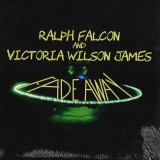
Ralph Falcon and Victoria Wilson James - Fade Away

Ralph Falcon last collaborated with Victoria Wilson James on the Number 1 Billboard charting tune “I Need Someone.”

With its distinctively hypnotic, dark pulsating beat and haunting vocal, “I Need Someone” went from being a Club Space Miami anthem to a worldwide club hit. Now Ralph is back with Victoria Wilson James on a new song that is destined for greatness but with even more potential given the unending worldwide demand for fresh house sounds.

“Fade Away” has all the unique sonic elements that Ralph Falcon fans have come to expect over the years. Heavy Kick drums combined with synth sounds that you wont find in any software program. Ralph’s sounds are creations that only he could produce. This vinyl release gets a uniquely international remix treatment. Included are a remix from Ralph’s Murk partner Oscar G, rising Dutch producer star Dennis Quin, and emerging French producer star Ténéré.

nicht am Lager

Bestelle jetzt und wir bestellen den Artikel für dich beim Lieferanten.

17,23

Last In: vor 3 Jahren
Groupshow - Greatest Hits

Groupshow

Greatest Hits

12inchFAIT-29LP
Faitiche
26.01.2023

Faitiche presents Groupshow’s Greatest Hits: The ten tracks on this first vinyl album by Groupshow (Hanno Leichtmann, Andrew Pekler, Jan Jelinek), recorded between 2005 and 2018, document concert recordings and studio improvisations by the trio.

In improvisation there are no mistakes, only missed opportunities. Groupshow found their first opportunity in the routines of live performance and they used this opportunity to break with these routines. The trio consisting of Jan Jelinek, Hanno Leichtmann and Andrew Pekler came together in the context of Kosmischer Pitch, playing live versions of the music from Jelinek’s 2005 studio album of that name. During this project, the musical interaction between the three participants quickly emancipated itself from the original programme, departing from fixed roles and finding a distinct form in constant change.

Groupshow sessions – rehearsal, concert or recording – are always improvised. The interplay of the various sound sources, converging from the directions of “electronics”, “percussion” and “guitar”, does not follow the Krautrock wave logic of crescendo and morendo. Jelinek, Leichtmann and Pekler have established a method of transparent density in which links and breaks are not concealed but remain audible. The music works through attraction and repulsion, with a loosely organized structure that always leaves enough room for the next intervention.

The principle here, repeated even in the smallest units, is that of duration. Groupshow think of their music in terms of an installation: no starting point, no dramaturgy, and ideally no end. Concerts take place not raised up on a podium, but in the middle of the room on a level with the audience, who only enter the space with the musicians and instruments once their interaction is already underway. In 2008, Groupshow used this approach to create a live soundtrack for Andy Warhol’s film Empire, over the full length of eight hours and five minutes.

Recordings in general and the “Greatest Hits” format in particular are another key aspect of this ongoing work on a collectively modulated continuum. The ten tracks on this first vinyl album by Groupshow, recorded between 2005 and 2018, document the ephemeral capturing of opportunities that were not missed. Extracts and essences of an endless movement of searching. The sprawling form of the whole, suspended in succinct, separate units.
To paraphrase Lao Tzu and Roland Barthes, one might say: Once their work is done, they are no longer attached to it. And because they’re not attached to it, it will remain.

Arno Raffeiner, 2022

nicht am Lager

Bestelle jetzt und wir bestellen den Artikel für dich beim Lieferanten.

21,64

Last In: vor 3 Jahren
Hill feat. Javonntte - Riviera meets Detroit

The mysterious hill producer makes a sensational comeback on the cult label SKYLAX RECORDS with 4 high-flying tracks ! On this occasion, he joined forces on 2 wonderful slices of spiritual house with the legendary Detroit born Javonntte. But let's start at the beginning, on A1 we find the magic of the first releases he did under the HILL moniker, namely a punchy, borrowed and sample loving disco house via "land of funk", a whole program ! The same goes for the fantastic "Summer holidays in Rimini" which reminds us the glorious hours of the French touch, Thomas Banglater in the lead. On the B side, he delivers us with "Away" a more contemplative and sensual house with the ultra talented Javonntte, it is a real technical prowess to bring together on the same record the universes of soundstream AND Franckie Knuckles, for their fans, this 12 inch is clearly for you and the mystery remains completely unresolved. Note that on the label's bandcamp, with the purchase of the vinyl, you can get 1 exclusive bonus track : Hill « It's a jam »

nicht am Lager

Bestelle jetzt und wir bestellen den Artikel für dich beim Lieferanten.

10,50

Last In: vor 2 Jahren
Aiming For Enrike - Empty Airports LP

Having toured the world and delivered one of the pandemic’s most legendary live streams – including bodybuilders and furniture smashing at the old American embassy in Oslo, Aiming for Enrike started working on new music in 2020. Now ready with their fifth album Empty Airports, the tunes flourish further through atmospheric expressions, into floating, minimalistic, electronic, and ambient soundscapes. Empty Airports was composed and recorded in reflection of the quiet Covid19 life during the patience testing lockdown months of 2020 and 2021. Not only is this the duo's longest album ever, but it's also their first double album. The songs are inspired by and belong somewhere between Thom Yorke, Ashra, Nils Frahm, King Crimson in the 80s, Jon Hopkins and Steve Reich. The cover art for Empty Airports is the finishing touch that elevates the album to a complete piece of art. Thor Merlin's unique artwork is a generatively designed collage consisting of clippings from 19 digital paintings and 10 images created with shader programming in Sakuhin: an open-source program that Merlin also uses for live coding of visuals for Aiming for Enrike. The album cover's individual images will be available NFTs. Guitarist Simen Følstad Nilsen says: "Minimalism, which has always been an important part of our expression, is now cultivated to a much greater extent. When the rush to fulfill musical expectations is abounded, it gives the music more space to become more hypnotic and mesmerizing than before." Empty Airports is another fantastic release from the forward-leaning duo, which justifies that Aiming for Enrike lives entirely in their own universe.

vorbestellen20.01.2023

erscheint voraussichtlich am 20.01.2023

54,58

Last In: vor 2026 Jahren
DJ Balaton - Space For Afternoon 10"

Bei DJ Balaton's zweiter Veröffentlichung ist der Name "Space For Afternoon" Programm: auf dieser 10" befinden sich zwei entspannte House Tracks, die in jedes Set einer gediegenen Afterhour gehören.

"Honey Future" besticht durch treibende Bässe und verzerrtem Korg-Sound, während der Fokus auf repetitiven Delays und Melodien liegt. Komplettiert wird die Single durch "Bedroom Floor" in klassischer B-Seiten-Manier: der sphärischer Sound trägt durch Raum und Zeit und lässt eben jene verschwimmen und vergessen.

nicht am Lager

Bestelle jetzt und wir bestellen den Artikel für dich beim Lieferanten.

9,96

Last In: vor 3 Jahren
Kamikaze Space Programme - Ashes To Ashes, Dust To Dust EP

London based label Natural Selection present their 3rd release in the form of a 4-track physical and digital EP courtesy of Kamikaze Space Programme (aka Christopher Jarman), entitled "Ashes To Ashes, Dust To Dust EP". The release also features a remix from Slave To Society (ex AnD). Cut by Simon at The Exchange Vinyl and mastered by Dadub Studios, Berlin.

Jarman is widely considered as one of the most forward thinking and innovative sound designers around. With roots indebted to the music he released as Raiden in the early 00's, his abstract, field recorded, industrial and broken admission into the annals of Techno via his prevailing alias; Kamikaze Space Programme, has seen his music backed, supported and released by the heaviest of renowned labels such as MORD, Mote-Evolver, Osiris, TRUST & more.

As an avid field recording artist, Jarman's release by and large is made up of foley sound design and sonic experimentation using bespoke apparatus and homemade microphones. Capturing internal resonances and electromagnetic radiation of objects, re-amplified or organic, classic hardware dub mixing completes his instantly recognisable Kamikaze Space Programme aesthetic, and successfully traverses the divide between Techno, Drum and Bass, Electro and Breakbeat.

Natural Selection are well known for bridging the heavier spectrum of Techno, Electro, Acid, etc. with new, experimental style and form. One can always expect cutting-edge, hard-hitting, underground electronics from Natural Selection, with extreme diversity in sound.

nicht am Lager

Bestelle jetzt und wir bestellen den Artikel für dich beim Lieferanten.

12,82

Last In: vor 2 Jahren
w1b0 - When Humans Ruled The Earth LP 2x12"

Debut album by Dutch producer w1b0, who passed away in August, to be released in November on U-TRAX.

Wibo Lammerts' sudden death on August 15thshocked the worldwide electro community, and also left the record label, that had been working on the debut album with the artist known as w1b0 for the past two years, dumbfounded and in grief.

Wibo had jokingly always called his upcoming debut album 'his legacy', which now sadly has become a painful truth. With the support of Wibo's family, U-TRAX is now doing the only thing that doesn't feel totally wrong: proceed as planned, and release 'When Humans Ruled The Earth' on November 11.

W1b0 made quite a name for himself with heavy electro tracks that he released on labels like Bass Agenda, Hilltown Disco and Discos Antónicos. Standing at 202 meters, and combined with a cheerful character, most people remember him as the gentle giant of electro.
For this album, Wibo wanted to steer away from the dark and heavy electro he mostly made until then. The idea of having a platform to create delicate electronic music in different styles, and make it a showcase of his versatility, was very appealing to him. And that is where he and U-TRAX found each other.

The full-length album (over 75 minutes on cd and digital) comes after 'The Pilex Program EP', released in October, that featured a remix by Detroit's Ectomorph of 'Pilex Driver' and saw 'Program Yourself To Feel' remixed by a well-known Dutch producer that recently created the new 'techno alias' Human Form.
As usual with U-TRAX, the album comes in three different editions, with the 11-track double vinyl version containing the Ectomorph and Human Form remixes. The CD and digital version boast original versions only, plus four additional tracks: 'Alternate Reality Interface', 'Mixed Matter Fluctator', 'Synthetic', and 'In There'. The cassette version more or less has the same track list as the CD/digi version, but has both aforementioned remixes and a bonus track in the incredibly hypnotizing 'I Wanted You', a track that unfortunately couldn't be on the CD and vinyl versions.

Buyers of the physical releases get treated on superior quality products, another trademark of U-TRAX. The vinyl edition boasts over one hour of music, on two 180 grams, green vinyl discs, in a black & white & neon green gatefold sleeve. The eye-catching artwork is created by Utrecht artist Leffe Goldstein, known amongst others for his psychedelic beer can designs for Utrecht brewery Maximus. Wibo, being the beer lover he was, had zero doubts about having Leffe Goldstein do the cover for his album. The CD has a total playing time of 75 minutes and comes in a beautiful 6-panel digipack, while the cassette will have full-color on-body print and comes in a plastic-free Maltese cross fold-up sleeve.

Buyers of the physical releases get treated on superior quality products, another trademark of U-TRAX. The vinyl edition boasts over one hour of music, on two 180 grams, green vinyl discs, in a black & white & neon green gatefold sleeve. The eye-catching artwork is created by Utrecht artist Leffe Goldstein, known amongst others for his psychedelic beer can designs for Utrecht brewery Maximus. Wibo, being the beer lover he was, had zero doubts about having Leffe Goldstein do the cover for his album. The CD has a total playing time of 75 minutes and comes in a beautiful 6-panel digipack, while the cassette will have full-color on-body print and comes in a plastic-free Maltese cross fold-up sleeve.

Opener 'Acid Whip' is one of the oldest compositions on this album, in which a dark 303 bassline hums over layers of spacey strings. Wibo named it after the legendary Whip It party in Amsterdam's De Melkweg. 'Alternate Reality Interface' then presents bouncy rhythms toying around with all sorts of analog (bass) synthesizers, before we go really deep with the epic ambient techno track 'Wandering Souls'.
Then things get a little lighter spirited: 'Mixed Matter Fluctator' is an electro track that builds on sounds created by Matt Buggins. It has very strong Detroit influences, the city Wibo loved so much and that he made a pilgrimage to with a group of friends that called themselves 'The Techno Tourists'. The tempo goes up a notch in 'Program Yourself To Feel', that halfway opens up in wide science fiction strings that evoke memories of Star Wars, the movie series that Wibo was a great fan of, and that was the source of many of his tracks' names. The Human Form remix opens the vinyl edition of this album and is a downright belter of a track.

Next is a somewhat experimental intermezzo named 'Synthetic'. Erratic beats and pounding bassdrums get accompanied by very subtle eerie-sounding strings, before melancholic synthesizers and piano chords take over. This is an excellent prelude to the epic 'Hologram Computing', a track that is one of our favorites. It slowly and softly builds and builds, before a pounding bassdrum breaks loose and a hypnotic arpeggio takes you to higher planes.
Not ready to letting the listener relax, w1bo then serves 'Beilstein Reference', which again presents his trademark cocktail of down-to-earth electro rhythms and catchy melodies, covered in all sort of little sounds and noises, giving the song a lot of energy. What follows is 'Hit me', a track loosely based on a song by Dutch indie rock band Mr. Joe Abe. Wibo met the band's singer on a camping site while being on holidays and the two decided Wibo should do a remix of one of their songs. Nothing was left of the original except the vocals, and the result is a remarkable cheerful, poppy electro song.

'Anticipated Input' is one of the more recent tracks Wibo made for this album, combining electro, acid and, yes: epic strings. But not all is peace and quiet on this album, as 'Pilex Driver' shows. This is w1b0 going experimental in a danceable fashion: Industrial sounds make the track sound like we're passing a construction site that is playing loud electro music. On the vinyl version of this album, Ectomorph totally decomposed the original and made it into a mysterious, almost subdued, and totally brilliant electro track that sees a main role for the retro Roland CR drum machines sounds.

TFHats, Wibo's fellow member of the Transhumanism collective, added lyrics to 'Cartesian Coordinates'. His vocals add a pleasant New Wave flavor to this song, that has breaks that remarkably reminds one of Nirvana's 'Smells Like Teen Spirit'. What follows is the most personal track on this album. 'Fornan' is a song that Wibo made for his wife Nanette, and was added as the last piece of the puzzle that creating an album is. The warm Detroit techno atmosphere in this electro song couldn't be a more beautiful tribute to his love, and mother of their two young boys.
The album then takes a surprising detour through a 1980s landscape with 'In There', that features the Joy Division-esque vocals of another one of Wibo's friends, indicated only as Vincent. The super slow and gloomy track is a treat for anyone that loved the darker side of New Wave. The album has a worthy closer in the sensitive, yet playful 'Schlegel Diagram'.


h 08: Hit Me (w1b0's Slugfest Assault Dub) feat. Mr Joe Abe

nicht am Lager

Bestelle jetzt und wir bestellen den Artikel für dich beim Lieferanten.

9,87

Last In: vor 3 Jahren
Dexter - Hi-Hat Club Vol.3 - The Jazz Files LP

Repress of the 2010 classic “The Jazz Files” by Dexter from the legendary Hi-Hat Club series. Jazz is the subject!

Dexter is taking an new look at the long going love affair between hip-hop and jazz. From Stetsasonic to Gang Starr to Madlib, it is not an easy path to follow, but the 26 year old producer is adding a new and fresh style to it. The sound design of Dexter's "Jazz Files" is dusty but with an unmistakable 2010 twist. As much inspired by Wes Montgomery and Ramsey Lewis as by Sun Ra and Dave Pike, Dexter's tracks are never just "jazzy". They live and breathe jazz by combining the freedom and artisty of jazz with the craft of a free-thinking beatsmith.

And the "Jazz Files" are fun too. By implanting quotes an samples from interviews and tv shows such as the classic NBC program "The Subject Is Jazz", Dexter is telling his own little story of jazz. One that had it's starting point in the massive record collection of his father and grew into shape during a long hot summer blasting nothing but Ahmad Jamal and Sun Ra.

About Dexter: The 26 year old producer, DJ and MC is part of the Wortsport collective from Heilbronn. He has made beats for Morlock Dilemma, Damion Davis, Jaques Shure, Audio 88 & Yassin and Retrogott. He likes Flylo, Madlib and Oh-No as much as libary music, psych rock and Amiga Schlager. Dexter is one of the founding member of the Generation Tapedeck blog and has just started a new project with Suff Daddy.

About the Hi-Hat Club: MPM have teamed up with photographer Robert Winter to take a look behind the beat, into the bedrooms and makeshift studios of today's beat generation. Every Hi-Hat Club volume consits of an LP packaged with Rob's photos and accompanied by more pics on the Hi-Hat Club blog plus additional infos, free beats and drinks. Exhibitions in records stores and galleries are in the making too. Hi-Hat Club parties have been taken place in Cologne and Berlin so far. Watch out for more nights in 2010.

Musically the Hi-Hat Club promotes total artistic freedom. We are not bound to any sound or school. A Hi-Hat Club record can be anything from boom-bap to aqua crunk or whatever is fresh and dope.

nicht am Lager

Bestelle jetzt und wir bestellen den Artikel für dich beim Lieferanten.

16,77

Last In: vor 3 Jahren
Dürerstuben - Sheet Of Rane

Dürerstuben

Sheet Of Rane

12inchPAMPA016
PAMPA
25.11.2022

2022 Repress

After a few nice but largely unnoticed 12"s for lower-profile labels, Dürerstuben is ready to make a serious maneuver, and Pampa is pleased to provide them with the proper platform. The Sheets of Rane EP is the Berliner duo's most sophisticated statement yet, imbuing cold programmed sounds with a glowing human touch and a penchant for melody. A1 'Gscheids Planet' unfolds with a deceptive intro, click-clackety downtempo stomps and crunchy snares beneath a tender vocoder coo, just when some muted guitar plucks crescendo into a burst of robo-synths. Although three minutes have passed, only now does the song reveal its true nature, a summery tune with rich synths that billow in the wind. Then, as its title indicates, 'Haeckles Kosmos' further explores Dürerstuben's fascination with the unlimits of outer space. This star system in particular has a very tropical flair, punctuated with bouncy parallel fifths straight out of the Italo Orient. In between movements, the duo makes some brief non sequiturs into piano balladry, the kind that force a smile (and a record deal) out of DJ Koze. Finally, venturing even further into jacking territory, 'Freiherr in der Wall' hinges upon syncopated, sometimes faltering beatbox rhythms, a swaggering bassline and fluttering arpeggiation. Coupled with hand-played chords, this is a prime example of how Dürerstuben can tame the beast machine and let irregularities be strengths. If you can get down with Metro Area, Zapp, Tensnake, and yes, even Survivor, then pick this one up.

nicht am Lager

Bestelle jetzt und wir bestellen den Artikel für dich beim Lieferanten.

10,71

Last In: vor 18 Monaten
Feater - Positive People

Running Back regular Feater aka Daniel Meuzard puts his newly-transplanted studio through its paces for the first time since relocating from Vienna, swapping out the bustle of the city for the fresh mountain breeze of the West Alps. The Positive People EP proves that a change is as good as a rest, as the wide open nature not only had some rejuvenating effects on the creative process - it also gave Feater some room in his head to ponder questions about nature, nurture, and whether our inner morality is externally programmed.

The taut jazz funk of opening track Coding springs into action like the montage music of a lost ‘70s TV show, while the title track Positive People plays on the ambiguity of its title, with cascading synth notes, tastefully dubby 303 stabs, and an afro-cuban drum figure that forms the foundation for a spaced-out dancefloor workout. It's a combo of tracks that should appeal to chat room moderators and serotonin programmers alike.

Expensive Zeit kicks off sounding like grime maverick XTC had been brought up on Murder Capital electro rather than East London garage - before it morphs into a bumpin electrofunk and percussion session, with its sights set firmly on an aquatic worm hole. The EP rounds out with Decline All Cookies, which breaks out of a flanged-out half-time drum 'n' effects intro to reveal a lush chord progression, flipping a soul jazz piano mood into a trippy slice of modern instrumental funk.


Can man be the master of his own destiny? It seems with this change of location and musical direction, Feater might just have figured out the answer.

nicht am Lager

Bestelle jetzt und wir bestellen den Artikel für dich beim Lieferanten.

11,39

Last In: vor 3 Jahren
Dr Boomer - Time To Go Back EP

Italian The Villains Inc. moves up a gear with its fourth release to date and already the second in less than a year!

Conscious “Time To Go Back EP” introduces the exclusive collaboration between label owner Gab.Gato (Dominance Electricity, Drivecom, SolarOne) and his partner in crime Jack Bags (La Sabbia) from Milan.
Together, they drop an untouchable dancefloor oriented five tracker based upon a terrific concept.
Coming from the year 2106 with a preventive message to save Earth from manhandled destruction, scientist Dr Boomer understands how much it’s too late to prevent the planet from Armageddon.

A side opens with insane “Man Of The Future”: a pure analogical time machine merging whispers a la Egyptian Lover to heading vocoder sequences over a sharp 808 programming.
Luminous and hypnotizing at the same, this oldschool anthem is instantly followed by enthusiastic “No Permission”.

A groovy bassline melt with acidic loops turns the song into a masterpiece enhanced by funny vocal scanding “You Have No Permission To Get Into My Head”.
Top notch! With its fierce rhythm and relentless beats, title track “Time To Go Back” coming next signs an ode to the glorious days of West Coast electro sound.
Vintage sonorities fuse into cutting-edge drums while a funky atmosphere will propel you through time and space. Ace!

The flipside goes deeper into the realm serving up what appears as the climax of the EP. Combining gloomy strings to progressive swirls and ethereal chords, well named “Darkness” delivers a scary yet prophetic message from the future that will spread guilty feelings to any listener: “There Will Be No Light, No Hope…”. You have been warned! Last cut “The Bad Place” concludes the 12” on a soulful note regarding the state of our world controlled by government and technology.
Completed by a fantastic comic style artwork, awaken and despair “Time To Go Back EP” offers an outstanding retrofuturist release from which no one will come out unscathed.

One of the best outings in The Villains Inc. so far, rush on it!

nicht am Lager

Bestelle jetzt und wir bestellen den Artikel für dich beim Lieferanten.

11,56

Last In: vor 2 Jahren
Levon Vincent - Silent Cities LP (Tape)

repress

Levon Vincent returns with his fourth full-length studio album Silent Cities a striking departure from his previous records. This, his first release experimenting with the cassette format, Silent Cities is a kind of mixtape through more private moods and personal pitches (literally given Levon’s non-standard tunings).

While Levon has always pro
duced dance floor jams with the intention of raising people’s heart rates, Silent Cities began with 72 bpm: his average resting heart rate, and the concept of tuning the music he was making to his own body rather than increasing anything. This brought the tempos down to 72 bpm or even half of that, at 36bpm. Programming the record during the empty cityscape of Berlin lockdowns, this is the first time Levon’s created an album for the home stereo or for headphone listening whilst navigating through a city. A mixtape specialist in his youth; he was always wanted to play with the cassette format. The results are sure to delight any listener, with the ever-present ambient, krautrock, shoegaze, hip-hop and electro influences coming to the foreground on this work.

“I was expanding further along the lines of a surprise favourite from my previous LP, a song called She Likes To Wave To Passing Boats which was not a 4 on-the-floor piece to play in clubs but a more impressionistic piece of music that I wrote to expound some emotions one day” says Levon. “It was a song written using just intonation. I really love how warm the pure 4ths sound, so when working on the new LP Silent Cities I decided to use my own tunings”.

Historically, the use of just intonation has meant that such instruments could sound "in tune" in one key but at the expense of more dissonance in the other keys. None of the songs on Silent Cities use standard Western equal temperament, Levon created his own scale designs coupled with the ancient ratios found in just intonation.

Born in Houston in 1975, Levon’s life changed dramatically when his parents moved their family to New York in 1981, uprooted from what he knew, the shock, the change from Houston to New York at 6 years old, is referred to constantly in Levon’s Musical output over the years. Levon's family moved houses in and around NYC from 1981 -2010, never more than a mile or two from the WTC. He lived on the Lower East Side during his teenage years and early 20s. This time period and this locale are also a big theme recurrent in his music as he tries to convey how the "downtown" lifestyle and culture-melding affected him so much at a tender age. He cut his teeth working in record shops around lower Manhattan, and while working at the Halcyon Record shop in Brooklyn he (alongside DJ Jus-Ed) was instrumental in creating the wave that came to be known as the "NYC House Renaissance" circa 2010. During the Y2K years he studied 20th C post-minimalism at Purchase college of New York under James McElwaine (who tangentially produced Man Parrish’s Self-Titled proto-hip-hop debt LP). Levon was fortunate to study theory with avant-garde composer Dary John Mizelle and orchestration under conductor Joel Thome. He undertook masterclasses with Philip Glass and also served as intern for John Kilgore, engineer for Steve Reich, where he was present for notable mix sessions such as “Violin Phase.”

Post-minimalism clearly remains an influence not to mention the early sampler stars of 80s freestyle and synth pop. Mixing such far-reaching influences is something Levon executes tremendously well. The first track Everlasting Joy moves at a head nodding 96 BPM tempo, reflecting formative influences like Paul Hardcastle’s Rainforest or Art Of Noise’s Moments in Love. “Those types of songs were a big eye opener for me as a youth, because it was where I realised songs in popular culture didn’t have to be kept to just 3 minutes, and they didn’t require vocals either. So, Everlasting Joy is a song with that intention, one that might be radio-friendly, despite the long arrangement and without vocals. You could say it was inspired by 107.5 in NY because that was a station I listened to a lot in the 1980’s.”

The majority of demos on Silent Cities were recorded before Covid-19 hit the world - when Levon had found a studio space outside of home in his adopted city of Berlin. It was a career first - working on music outside the bedroom. This riding the train or bicycling ‘going to work’ in Berlin opened up a new mood in his music, using the time back and forth to be inspired - commuting as an NYC transplant who still feels as a tourist in Berlin, with a pair of headphones, looking out the window on the train, or stopping on bridges and parking his bike to enjoy Berlin's skyline and horizon. Then, the pandemic struck and “work” came to a halt. Levon had recorded so much material during that year in the studio out of house it seemed like an inflection point for him to lighten the burden of the possessions he was carrying.

“People close to me have watched me give away synths and hardware regularly and I have given away my record collection every few years for my whole life. As a struggling artist in my 20s who had worked in record stores that whole time, I learned that moving constantly with 12k records just wasn't the way to live. So, in light of the pandemic, I set up a shop online, and sold all my music equipment. I also created a separate shop for all my sneakers and clothes. Easy come, Easy go. This provided me with a slow drip type of income that carried me quite well through the pandemic and it allowed me to focus on my own art and music. Getting rid of all my possessions felt like a weight being lifted from my shoulders and I was able to stay the course and remain committed to the music. I needed a further 2 years to mix and arrange the LP. If it weren’t for the pandemic, I would not been able to make this type of LP, so in light of everything, I was able to turn a depressing time in to something lasting and musically very positive.”

You can hear how his approach to a cassette release retains the "Medium is the Message." ethos. Silent Cities is a spooling, warm piece about life memories and embodiment.

nicht am Lager

Bestelle jetzt und wir bestellen den Artikel für dich beim Lieferanten.

16,77

Last In: vor 18 Monaten
Pikacyu-makoto - Galaxilympics

As a duo they embrace both sides of the coin, drums and guitar, chaos and order, male and female, ying and yang, the angel and the devil. They are more than the sum of both counterparts though, making for a maximalist auditory experience. PIKA brings her skills of mystifying performance to the table, all free-drum bluster and vocals veering between shrine maiden and wild spirit. Kawabata's guitar-work moves from a roar to a whisper, a yell to a sob, he's working on the same canvas of extremes. The aim of their unity is to write truly celestial hymns for the outer world and odes of love for the inner cosmic context.
 
No strangers to one another, the pair have not only gigged together with their respective bands but also recorded together, when these two outfits temporarily fused in 2005 to become Acid Mothers Afrirampo (releasing an album of the same name). Two years later they distilled their collaboration, all other players being stripped away to leave the core of Pikacyu's manic drums and pop vocal, and Makoto's schizoid guitar conjurings. In 2011 they spent five weeks touring the US and their first album, 'OM Sweet Home: We Are Shining Stars From Darkside', which was released by the esteemed UK label of all things heavy and brilliant, Riot Season. Last year they spent two weeks touring through Europe whilst writing a new album suffused with the outreaching sound and message of their impulsive live performances. This new album is entitled 'Galaxilympics' and will be released by Upset The Rhythm on August 4th on LP and CD.
'Galaxilympics' is an album of contrasts, so much colour, so much shade! 'Space Sumo' kicks off the record in explosive style. Pikacyu's drums jitter, crash and stumble, but steadfastly refuse to groove. Makoto attacks his guitar, cloaking himself in reverb to produce a wall-of-sound, alternating between melody and noise. 'Funifunikonefuni' follows with it's frenzied take on pop music, bubbling with energy and PIKA's multiple vocal layers. 'I'll Forgive' is chant-like in its devotion to following the tumbling melody line of the song even to absurd and unpredictable dimensions. 'Pika Mako Hall' is a more serene affair, with whispered echoes and guitar drones swirling amongst bursts of rapid sequencer ambience. 'Castle Of Sand' picks up on this more spacious approach with slowly developing programmed electronics, before the title track erupts with gurgling synths, soaring guitar trails and PIKA's most searching vocal yet.
 
The album concludes in reflective manner with the suitably titled 'Sayonownara', a song as much in the present as it is in the act of saying farewell. It's positively elegiac with washes of cymbal and deep acres of guitar drone for the first five minutes before PIKA's drums take things up a gear and into more psychedelic out-rock terrain. This insurgence eventually peaks and the album melts away to silence. PIKACYU-MAKOTO have made an album that takes you on a trip into your very soul before emerging once more at the edge of another galaxy. 'Galaxilympics' is a triumph of opposites united, it enjoys walking out into the unknown, but it's also a portal into the very real world of two musicians who find peace and semblance through their interaction. Hymns and odes to one side, this is a giant album of future-facing song and noise, where better to find harmony enthroned

nicht am Lager

Bestelle jetzt und wir bestellen den Artikel für dich beim Lieferanten.

14,24

Last In: vor 3 Jahren
Lee Tracy & Isaac Manning - Is it What You Want

As the sun sets on a quaint East Nashville house, a young man bares a piece of his soul. Facing the camera, sporting a silky suit jacket/shirt/slacks/fingerless gloves ensemble that announces "singer" before he's even opened his mouth, Lee Tracy Johnson settles onto his stage, the front yard. He sways to the dirge-like drum machine pulse of a synth-soaked slow jam, extends his arms as if gaining his balance, and croons in affecting, fragile earnest, "I need your love… oh baby…"

Dogs in the yard next door begin barking. A mysterious cardboard robot figure, beamed in from galaxies unknown and affixed to a tree, is less vocal. Lee doesn't acknowledge either's presence. He's busy feeling it, arms and hands gesticulating. His voice rises in falsetto over the now-quiet dogs, over the ambient noise from the street that seeps into the handheld camcorder's microphone, over the recording of his own voice played back from a boombox off-camera. After six minutes the single, continuous shot ends. In this intimate creative universe there are no re-takes. There are many more music videos to shoot, and as Lee later puts it, "The first time you do it is actually the best. Because you can never get that again. You expressing yourself from within."

"I Need Your Love" dates from a lost heyday. From some time in the '80s or early '90s, when Lee Tracy (as he was known in performance) and his music partner/producer/manager Isaac Manning committed hours upon hours of their sonic and visual ideas to tape. Embracing drum machines and synthesizers – electronics that made their personal futurism palpable – they recorded exclusively at home, live in a room into a simple cassette deck. Soul, funk, electro and new wave informed their songs, yet Lee and Isaac eschewed the confinement of conventional categories and genres, preferring to let experimentation guide them.

"Anytime somebody put out a new record they had the same instruments or the same sound," explains Isaac. "So I basically wanted to find something that's really gonna stand out away from all of the rest of 'em." Their ethos meant that every idea they came up with was at least worth trying: echoed out half-rapped exhortations over frantic techno-style beats, gospel synth soul, modal electro-funk, oddball pop reinterpretations, emo AOR balladry, nods to Prince and the Fat Boys, or arrangements that might collapse mid-song into a mess of arcade game-ish blips before rallying to reach the finish line. All of it conjoined by consistent tape hiss, and most vitally, Lee's chameleonic voice, which managed to wildly shape shift and still evoke something sincere – whether toggling between falsetto and tenor exalting Jesus's return, or punctuating a melismatic romantic adlib with a succinct, "We all know how it feels to be alone."

"People think we went to a studio," says Isaac derisively. "We never went to no studio. We didn't have the money to go to no studio! We did this stuff at home. I shot videos in my front yard with whatever we could to get things together." Sometimes Isaac would just put on an instrumental record, be it "Planet Rock" or "Don't Cry For Me Argentina" (from Evita), press "record," and let Lee improvise over it, yielding peculiar love songs, would-be patriotic anthems, or Elvis Presley or Marilyn Monroe tributes. Technical limitations and a lack of professional polish never dissuaded them. They believed they were onto something.

"That struggle," Isaac says, "made that sound sound good to me."

In the parlance of modern music criticism Lee and Isaac's dizzying DIY efforts would inevitably be described as "outsider." But "outsider" carries the burden of untold additional layers of meaning if you're Black and from the South, creating on a budget, and trying to get someone, anyone within the country music capital of the world to take your vision seriously. "What category should we put it in?" Isaac asks rhetorically. "I don't know. All I know is feeling. I ain't gonna name it nothing. It's music. If it grabs your soul and touch your heart that's what it basically is supposed to do."

=

Born in 1963, the baby boy of nine siblings, Lee Tracy spent his earliest years living amidst the shotgun houses on Nashville's south side. "We was poor, man!" he says, recalling the outhouse his family used for a bathroom and the blocks of ice they kept in the kitchen to chill perishables. "But I actually don't think I really realized I was in poverty until I got grown and started thinking about it." Lee's mom worked at the Holiday Inn; his dad did whatever he had to do, from selling fruit from a horse drawn cart to bootlegging. "We didn't have much," Lee continues, "but my mother and my father got us the things we needed, the clothes on our back." By the end of the decade with the city's urban renewal programs razing entire neighborhoods to accommodate construction of the Interstate, the family moved to Edgehill Projects. Lee remembers music and art as a constant source of inspiration for he and his brothers and sisters – especially after seeing the Jackson 5 perform on Ed Sullivan. "As a small child I just knew that was what I wanted to do."

His older brother Don began musically mentoring him, introducing Lee to a variety of instruments and sounds. "He would never play one particular type of music, like R&B," says Lee. "I was surrounded by jazz, hard rock and roll, easy listening, gospel, reggae, country music; I mean I was a sponge absorbing all of that." Lee taught himself to play drums by beating on cardboard boxes, gaining a rep around the way for his timekeeping, and his singing voice. Emulating his favorites, Earth Wind & Fire and Cameo, he formed groups with other kids with era-evocative band names like Concept and TNT Connection, and emerged as the leader of disciplined rehearsals. "I made them practice," says Lee. "We practiced and practiced and practiced. Because I wanted that perfection." By high school the most accomplished of these bands would take top prize in a prominent local talent show. It was a big moment for Lee, and he felt ready to take things to the next level. But his band-mates had other ideas.

"I don't know what happened," he says, still miffed at the memory. "It must have blew they mind after we won and people started showing notice, because it's like everybody quit! I was like, where the hell did everybody go?" Lee had always made a point of interrogating prospective musicians about their intentions before joining his groups: were they really serious or just looking for a way to pick up girls? Now he understood even more the importance of finding a collaborator just as committed to the music as he was.

=

Isaac Manning had spent much of his life immersed in music and the arts – singing in the church choir with his family on Nashville's north side, writing, painting, dancing, and working various gigs within the entertainment industry. After serving in the armed forces, in the early '70s he ran The Teenage Place, a music and performance venue that catered to the local youth. But he was forced out of town when word of one of his recreational routines created a stir beyond the safe haven of his bohemian circles.

"I was growing marijuana," Isaac explains. "It wasn't no business, I was smoking it myself… I would put marijuana in scrambled eggs, cornbread and stuff." His weed use originated as a form of self-medication to combat severe tooth pain. But when he began sharing it with some of the other young people he hung out with, some of who just so happened to be the kids of Nashville politicians, the cops came calling. "When I got busted," he remembers, "they were talking about how they were gonna get rid of me because they didn't want me saying nothing about they children because of the politics and stuff. So I got my family, took two raggedy cars, and left Nashville and went to Vegas."

Out in the desert, Isaac happened to meet Chubby Checker of "The Twist" fame while the singer was gigging at The Flamingo. Impressed by Isaac's zeal, Checker invited him to go on the road with him as his tour manager/roadie/valet. The experience gave Isaac a window into a part of the entertainment world he'd never encountered – a glimpse of what a true pop act's audience looked like. "Chubby Checker, none of his shows were played for Black folks," he remembers. "All his gigs were done at high-class white people areas." Returning home after a few years with Chubby, Isaac was properly motivated to make it in Music City. He began writing songs and scouting around Nashville for local talent anywhere he could find it with an expressed goal: "Find someone who can deliver your songs the way you want 'em delivered and make people feel what you want them to feel."

One day while walking through Edgehill Projects Isaac heard someone playing the drums in a way that made him stop and take notice. "The music was so tight, just the drums made me feel like, oh I'm-a find this person," he recalls. "So I circled through the projects until I found who it was.

"That's how I met him – Lee Tracy. When I found him and he started singing and stuff, I said, ohhh, this is somebody different."

=

Theirs was a true complementary partnership: young Lee possessed the raw talent, the older Isaac the belief. "He's really the only one besides my brother and my family that really seen the potential in me," says Lee. "He made me see that I could do it."

Isaac long being a night owl, his house also made for a fertile collaborative environment – a space where there always seemed to be a new piece of his visual art on display: paintings, illustrations, and dolls and figures (including an enigmatic cardboard robot). Lee and Issac would hang out together and talk, listen to music, conjure ideas, and smoke the herb Isaac had resumed growing in his yard. "It got to where I could trust him, he could trust me," Isaac says of their bond. They also worked together for hours on drawings, spreading larges rolls of paper on the walls and sketching faces with abstract patterns and imagery: alien-like beings, tri-horned horse heads, inverted Janus-like characters where one visage blurred into the other.

Soon it became apparent that they didn't need other collaborators; self-sufficiency was the natural way forward. At Isaac's behest Lee, already fed up with dealing with band musicians, began playing around with a poly-sonic Yamaha keyboard at the local music store. "It had everything on it – trumpet, bass, drums, organ," remembers Lee. "And that's when I started recording my own stuff."

The technology afforded Lee the flexibility and independence he craved, setting him on a path other bedroom musicians and producers around the world were simultaneously following through the '80s into the early '90s. Saving up money from day jobs, he eventually supplemented the Yamaha Isaac had gotten him with Roland and Casio drum machines and a Moog. Lee was living in an apartment in Hillside at that point caring for his dad, who'd been partially paralyzed since early in life. In the evenings up in his second floor room, the music put him in a zone where he could tune out everything and lose himself in his ideas.

"Oh I loved it," he recalls. "I would really experiment with the instruments and use a lot of different sound effects. I was looking for something nobody else had. I wanted something totally different. And once I found the sound I was looking for, I would just smoke me a good joint and just let it go, hit the record button." More potent a creative stimulant than even Isaac's weed was the holistic flow and spontaneity of recording. Between sessions at Isaac's place and Lee's apartment, their volume of output quickly ballooned.

"We was always recording," says Lee. "That's why we have so much music. Even when I went to Isaac's and we start creating, I get home, my mind is racing, I gotta start creating, creating, creating. I remember there were times when I took a 90-minute tape from front to back and just filled it up."

"We never practiced," says Isaac. "See, that was just so odd about the whole thing. I could relate to him, and tell him about the songs I had ideas for and everything and stuff. And then he would bring it back or whatever, and we'd get together and put it down." Once the taskmaster hell bent on rehearsing, Lee had flipped a full 180. Perfection was no longer an aspiration, but the enemy of inspiration.

"I seen where practicing and practicing got me," says Lee. "A lot of musicians you get to playing and they gotta stop, they have to analyze the music. But while you analyzing you losing a lot of the greatness of what you creating. Stop analyzing what you play, just play! And it'll all take shape."

=

"I hope you understood the beginning of the record because this was invented from a dream I had today… (You tell me, I'll tell you, we'll figure it out together)" – Lee Tracy and Isaac Manning, "Hope You Understand"

Lee lets loose a maniacal cackle when he acknowledges that the material that he and Isaac recorded was by anyone's estimation pretty out there. It's the same laugh that commences "Hope You Understand" – a chaotic transmission that encapsulates the duality at the heart of their music: a stated desire to reach people and a compulsion to go as leftfield as they saw fit.

"We just did it," says Lee. "We cut the music on and cut loose. I don't sit around and write. I do it by listening, get a feeling, play the music, and the lyrics and stuff just come out of me."

The approach proved adaptable to interpreting other artists' material. While recording a cover of Whitney Houston's pop ballad "Saving All My Love For You," Lee played Whitney's version in his headphones as he laid down his own vocals – partially following the lyrics, partially using them as a departure point. The end result is barely recognizable compared with the original, Lee and Isaac having switched up the time signature and reinvented the melody along the way towards morphing a slick mainstream radio standard into something that sounds solely their own.

"I really used that song to get me started," says Lee. "Then I said, well I need something else, something is missing. Something just came over me. That's when I came up with 'Is It What You Want.'"

The song would become the centerpiece of Lee and Isaac's repertoire. Pushed along by a percolating metronomic Rhythm King style beat somewhere between a military march and a samba, "Is It What You Want" finds Lee pleading the sincerity of his commitment to a potential love interest embellished by vocal tics and hiccups subtlely reminiscent of his childhood hero MJ. Absent chord changes, only synth riffs gliding in and out like apparitions, the song achieves a lingering lo-fi power that leaves you feeling like it's still playing, somewhere, even after the fade out.

"I don't know, it's like a real spiritual song," Lee reflects. "But it's not just spiritual. To me the more I listen to it it's like about everything that you do in your everyday life, period. Is it what you want? Do you want a car or you don't want a car? Do you want Jesus or do you want the Devil? It's basically asking you the question. Can't nobody answer the question but you yourself."

In 1989 Lee won a lawsuit stemming from injuries sustained from a fight he'd gotten into. He took part of the settlement money and with Isaac pressed up "Saving All My Love For You" b/w "Is It What You Want" as a 45 single. Isaac christened the label One Chance Records. "Because that's all we wanted," he says with a laugh, "one chance."

Isaac sent the record out to radio stations and major labels, hoping for it to make enough noise to get picked up nationally. But the response he and Lee were hoping for never materialized. According to Isaac the closest the single got to getting played on the radio is when a disk jock from a local station made a highly unusual announcement on air: "The dude said on the radio, 107.5 – 'We are not gonna play 'Is It What You Want.' We cracked up! Wow, that's deep.

"It was a whole racist thing that was going on," he reflects. "So we just looked over and kept on going. That was it. That was about the way it goes… If you were Black and you were living in Nashville and stuff, that's the way you got treated." Isaac already knew as much from all the times he'd brought he and Lee's tapes (even their cache of country music tunes) over to Music Row to try to drum up interest to no avail.

"Isaac, he really worked his ass off," says Lee. "He probably been to every record place down on Music Row." Nashville's famed recording and music business corridor wasn't but a few blocks from where Lee grew up. Close enough, he remembers, for him to ride his bike along its back alleys and stumble upon the occasional random treasure, like a discarded box of harmonicas. Getting in through the front door, however, still felt a world away.

"I just don't think at the time our music fell into a category for them," he concedes. "It was before its time."

=

Lee stopped making music some time in the latter part of the '90s, around the time his mom passed away and life became increasingly tough to manage. "When my mother died I had a nervous breakdown," he says, "So I shut down for a long time. I was in such a sadness frame of mind. That's why nobody seen me. I had just disappeared off the map." He fell out of touch with Isaac, and in an indication of just how bad things had gotten for him, lost track of all the recordings they'd made together. Music became a distant memory.

Fortunately, Isaac kept the faith. In a self-published collection of his poetry – paeans to some of his favorite entertainment and public figures entitled Friends and Dick Clark – he'd written that he believed "music has a life of its own." But his prescience and presence of mind were truly manifested in the fact that he kept an archive of he and Lee's work. As perfectly imperfect as "Is It What You Want" now sounds in a post-Personal Space world, Lee and Isaac's lone official release was in fact just a taste. The bulk of the Is It What You Want album is culled from the pair's essentially unheard home recordings – complete songs, half-realized experiments, Isaac's blue monologues and pronouncements et al – compiled, mixed and programmed in the loose and impulsive creative spirit of their regular get-togethers from decades ago. The rest of us, it seems, may have finally caught up to them.

On the prospect of at long last reaching a wider audience, Isaac says simply, "I been trying for a long time, it feels good." Ever the survivor, he adds, "The only way I know how to make it to the top is to keep climbing. If one leg break on the ladder, hey, you gotta fix it and keep on going… That's where I be at. I'll kill death to make it out there."

For Lee it all feels akin to a personal resurrection: "It's like I was in a tomb and the tomb was opened and I'm back… Man, it feels so great. I feel like I'm gonna jump out of my skin." Success at this stage of his life, he realizes, probably means something different than what it did back when he was singing and dancing in Isaac's front yard. "What I really mean by 'making it,'" he explains isn't just the music being heard but, "the story being told."

Occasionally Lee will pull up "Is It What You Want" on YouTube on his phone, put on his headphones, and listen. He remembers the first time he heard his recorded voice. How surreal it was, how he thought to himself, "Is that really me?" What would he say to that younger version of himself now?

"I would probably tell myself, hang in there, don't give up. Keep striving for the goal. And everything will work out."

Despite what's printed on the record label, sometimes you do get more than one chance.

nicht am Lager

Bestelle jetzt und wir bestellen den Artikel für dich beim Lieferanten.

11,72

Last In: vor 3 Jahren
Isolated Material - Hidden Node

Originally from France and now based in Berlin Isolated Material has dropped a steady run of heavy hitting releases on labels including; Brokntoys, Haws, Ukonx, 909 Connection and Mind Controlled Rectifier before joining us for his debut EP on 20/20 Vision.

'Hidden Node' kicks off the wax with a jarring excursion of futuristic breaks and abrasive sound design firing on all cylinders with complex drum patterns, bleeps and glitches. 'Asynchronous Funk' sees Isolated Material serve up an abstract slice of electro funk with a solid broken beat groove peppered with unexpected moments of off-kilter magic.

On the flip side - title track 'Hidden Node' offers up a dose of Drexciyan inspired funk primed for a set on the dark side of the moon with; high octane breaks, quick fire drum programming, intricate synth patterns and ominous undertones. Wrapping up the EP 'Unmarked Sequence' is an equally potent chaser for the wide eyed deep space traveller in need of body jerking breaks.

nicht am Lager

Bestelle jetzt und wir bestellen den Artikel für dich beim Lieferanten.

13,03

Last In: vor 22 Monaten
Brawni - Golden Dawn EP

Brawni

Golden Dawn EP

12inchCBL001
cabal
13.10.2022

Brawni’s debut EP ‘Golden Dawn’ features 4 keenly focused club ready tracks that weave between electro, techno, and melodic 4x4 journeys.Stemming from a year of pandemic induced studio time,Dillon wasted no time and got to work producing over 10 tracks which have been featured in his live video series and live sets. ‘Amber’ the lead track on the record features a bouncy bassline and catchy melody with spaced out vocals that together create a melancholic dancefloor hitter. ‘Dumbledore’ based on the name alone lets you know you’re in for a warpy one, featuring a spooky melody, relentless drum programming and a breakdown to end all breakdowns. ‘I Do My Own Stunts’ a short, to the point track with heavy distortion and twisting drum patterns is a perfect fit for any hard hitting DJ Set. The final track ‘Tubular Bells’ is a classic electro banger with rolling basslines, arpeggiated synths and nostalgic melodies. All together they for ‘Golden Dawn’ aptly named as Cabal’s and Brawni’s debut vinyl release.

nicht am Lager

Bestelle jetzt und wir bestellen den Artikel für dich beim Lieferanten.

13,40

Last In: vor 3 Jahren
Fabrice Lig - The Mental Bandwith 3x12"

Fabrice Lig has melody running through his veins. On his quest to explore his deep love for the bitter-sweet yearning of Motor City techno, his tracks transcend trends. Over his three-decade spanning career he has refined his blend of soul-infused dance music to striking effect. His gift for a catchy hook is unmatched. His new studio album "The Mental Bandwidth" shows his musical range as a producer once again. On the album's twelve tracks, he effortlessly traverses, cosmic house, funkified techno and electronica, combining his trademark quirky melodies with playful songwriting and dance floor focused beats. The album format is giving Lig enough space to explore his musical ideas from different directions while staying true to the overall atmosphere. "The idea for the album was to go back to the fundamentals of the original Detroit sound and to find new ways of expressing that soul in my music - as I've been doing for years", explains Lig. With Ann Saunderson and the former Kraftwerk-member Wolfgang Flur, the album features two heavy-weight collaborations that connect the "The Mental Bandwidth" to Detroit's musical legacy, too. Slikk Tim aka Garry Grittness also has a cameo in the form of a funky bassline on "Healing", the pop-infused Ann Saunderson collaboration. The title of the album is inspired by Lig's lecture of Sendhil Mullainathan and Eldar Shafir book "Scarcity: Why Having So Little Means So Much" which explores new approaches to reduce poverty. "The authors discovered that the mental bandwidth of poor people is sometimes really low because of short term issues they are facing and are forced to solve", explains Lig. Those issues are reducing the mental bandwidth for long term thinking capacities, which in turn has consequences for the decision making process. An example: before the quality of education of poor kids is increased, the quality of life they have must be increased. This increases the capacities of the kids to learn more than solely better educational programs.

nicht am Lager

Bestelle jetzt und wir bestellen den Artikel für dich beim Lieferanten.

20,80

Last In: vor 3 Jahren
Maston - Panorama

Maston

Panorama

12inchBEWITH110LP
Be With Records
30.09.2022

With Panorama, Frank Maston pays homage to the classic era of library records and Italian soundtracks of the 70s. A blissed-out, grooving collection of filmic cues, it continues the unique brilliance of Tulips and Darkland. Elegant and easy, subtle and stylish, breezy and beautiful; this is his Maston-piece. Commissioned by legendary label KPM, Panorama cements Maston as a master of modern classics and the most mesmeric of contemporary composers.

In early 2020, Be With suggested to Frank that he should make a KPM record. He wasn't aware that they were still putting out new library records - but he was super keen: "It was completely surreal and it still hasn't fully sank in that I have a record in that catalog, sitting alongside those incredible albums that were so influential to me."

Frank was visiting family in his hometown of LA in March 2020 when the world ground to a halt so the KPM project arrived at a fortuitous moment. Having fantasised about committing to a record with no distractions, with a proper budget, access to his gear and space to work in - to really dig in and try to write and arrange the best work he could possibly make - it was a real "be careful what you wish for" moment. But, as Frank explained, "it completely saved my year and sanity to have something to focus on and get excited about. It was my lifeline." He spent seven months on it, working almost every day.

Maston had already been making library-influenced music so when KPM outlined the criteria for the tracks it was exactly what he had been doing all along. He thought the best approach would be to make a follow-up to Tulips that had a parallel life as a KPM record. Enjoying complete creative freedom, “gave me the drive to power through and dig in deep. I'm not sure if I could have kept myself on such a rigorous recording schedule under my own steam, and I think the momentum I had writing and recording it is part of the strength of this record."

Maston’s sleek retro-groove instrumentals emulate the classic KPM “Greensleeve” reel-to-reel recordings that provided mood-setting music for mid-century cinema, television, and radio programs. Apparently in close conversation with the John Cameron-Keith Mansfield KPM pastoral masterclass Voices In Harmony, Maston's Panorama could be heard as that record's funky follow-up. Yes, it's *that good*. Another reference point from the hallowed library would be Francis Coppieter's wonderful Piano Viberations.

Opener "First Class" is a blissed-out groove, featuring the soothing vocals of Molly Lewis and a glistening harp over drums, a two-note bass motif (from Eli Ghersinu of L'Eclair) and an assemblage of guitars, synths, French horn and glowing vibraphone. Acid Lounge, anyone? The irresistibly funky "Easy Money" is a gorgeous cut led by more of Molly's vocals, pastoral flute and Rhodes, underpinned by drums and percussion, grooving bass, chilled guitars and synth strings. Kicking the tempo up, the percussive "Storm" is a vibin' filmic-fusion jam where psychedelic guitars (courtesy of Pedrum of Allah Las/Paint) organ, jazzy flute, Rhodes and vibes all compete for a place in the sun, over drums and walking bassline.

The heavenly "You Shouldn't Have" is a delicate, melancholic wonder; a dreamy instrumental where the melody is shared by a whistle, harpsichord and celeste, over a cyclical piano chord sequence and bass, synths, guitars, organ and distant French horn. The tempo rises again with the passionate, sticky "Fling", a summery, nostalgic groove with skipping drums and percussion, warm bass and electric guitar, yearning flute and synth strings. The brilliantly titled "Fool Moon" has that Voices In Harmony sound down pat. A romantic slow-mo dreamscape of Rhodes and harpsichord, piano, light drums and softly strummed acoustic guitar.

Side B opens with "Medusa", a hopeful, mellowed-out track with shuffling drums, feel-good flute, muted horns, glowing Rhodes and synth strings. The soft and gentle "Morning Paper" is an elegant way to start the day; a beatless blend of flute, guitar, percussion, ambient synths and vibes. The upbeat head-nod jam "Scenic" has that widescreen car-chase feel, uptempo drums and percussion, grooving bass, piano, synths and ambient electric guitar. "Adieu" is a smooth summer vibe, relaxing with brushed drums, Rhodes, flutes and horns. Molly Lewis's gorgeous vocals steal the show, alongside vibes, jamming organ and synth strings.

"Hydra" is another laid-back 70s-sounding retro cinema cue with light drums and percussion, walking bass, spacey synths, clavinet, glowing vibraphone, vintage organ and electric guitar. Closer "Jet Lag" is a laconic bow out; bass-driven drum machine soul, featuring hand percussion, Rhodes, vibes, synths and organ.

Multi-instrumentalist Frank played a bit of everything across Panorama. Yet, humble as ever, he believes the time, energy, and enthusiasm of all of the musicians invited to the sessions helped him realise his vision: "There were two Italian flautists who really understood what I was going for. Two french horn players, cor anglais, a vibraphonist and a flügel horn player. I've never involved this many people in my projects before, and yet the result is the most "me" record I've ever made."

Musically, a strong Italian theme runs through the record. Frank is fascinated by ancient Rome and both his parents are Italian (Maston was originally Mastrantonio before anglicisation). So, it felt natural to fully embrace these strands and tie everything together with the striking artwork. The Romans were influenced by Greek culture, emulating their art and architecture, which, in turn, influenced Renaissance era artists. Frank acknowledged this tradition when reflecting on his place in the lineage of library and soundtrack composers. He then asked his friend Mattea Perrotta, a painter and sculptor, for some sketches. What he received was exactly what he had in mind: "Especially the theater mask, which really captures the range of moods on the album". Frank arranged them as per the cover and it soon felt right: "I wanted to make a cover that was reminiscent of the classic KPM albums without making it too pastiche - so it has its own identity and looks at home alongside other library records, while still fitting in nicely in the KPM catalogue." The last step was for us to introduce Frank to Be With-KPM’s Rich Robinson, who helped put together the back and centre labels and align it all within the KPM standard.

Panorama is a perfect title for the album. With no opportunity to travel for tours or recording projects, Frank arranged postcards from his collection on his desk with beautiful views of the mediterranean coast, the Roman Colosseum and Cinque Terre. These also served as visual prompts: "That was part of the sonic concept - imagining myself driving down the mediterranean coast with this music on, with the top down." Additionally, the range of moods and vibes - "I tried to make each song very different from the previous one in terms of tempo and arrangement and feeling" - speaks to the idea of a Panorama of music and sounds and emotions. The last track was originally called Panorama, but KPM already had that title in their catalogue so it was changed to "Jet Lag", which, as Frank notes, "is perhaps even more fitting, since the trip is over".

nicht am Lager

Bestelle jetzt und wir bestellen den Artikel für dich beim Lieferanten.

23,32

Last In: vor 3 Jahren
Lee Tracy & Isaac Manning - Is it What You Want LP

As the sun sets on a quaint East Nashville house, a young man bares a piece of his soul. Facing the camera, sporting a silky suit jacket/shirt/slacks/fingerless gloves ensemble that announces "singer" before he's even opened his mouth, Lee Tracy Johnson settles onto his stage, the front yard. He sways to the dirge-like drum machine pulse of a synth-soaked slow jam, extends his arms as if gaining his balance, and croons in affecting, fragile earnest, "I need your love… oh baby…"

Dogs in the yard next door begin barking. A mysterious cardboard robot figure, beamed in from galaxies unknown and affixed to a tree, is less vocal. Lee doesn't acknowledge either's presence. He's busy feeling it, arms and hands gesticulating. His voice rises in falsetto over the now-quiet dogs, over the ambient noise from the street that seeps into the handheld camcorder's microphone, over the recording of his own voice played back from a boombox off-camera. After six minutes the single, continuous shot ends. In this intimate creative universe there are no re-takes. There are many more music videos to shoot, and as Lee later puts it, "The first time you do it is actually the best. Because you can never get that again. You expressing yourself from within."

"I Need Your Love" dates from a lost heyday. From some time in the '80s or early '90s, when Lee Tracy (as he was known in performance) and his music partner/producer/manager Isaac Manning committed hours upon hours of their sonic and visual ideas to tape. Embracing drum machines and synthesizers – electronics that made their personal futurism palpable – they recorded exclusively at home, live in a room into a simple cassette deck. Soul, funk, electro and new wave informed their songs, yet Lee and Isaac eschewed the confinement of conventional categories and genres, preferring to let experimentation guide them.

"Anytime somebody put out a new record they had the same instruments or the same sound," explains Isaac. "So I basically wanted to find something that's really gonna stand out away from all of the rest of 'em." Their ethos meant that every idea they came up with was at least worth trying: echoed out half-rapped exhortations over frantic techno-style beats, gospel synth soul, modal electro-funk, oddball pop reinterpretations, emo AOR balladry, nods to Prince and the Fat Boys, or arrangements that might collapse mid-song into a mess of arcade game-ish blips before rallying to reach the finish line. All of it conjoined by consistent tape hiss, and most vitally, Lee's chameleonic voice, which managed to wildly shape shift and still evoke something sincere – whether toggling between falsetto and tenor exalting Jesus's return, or punctuating a melismatic romantic adlib with a succinct, "We all know how it feels to be alone."

"People think we went to a studio," says Isaac derisively. "We never went to no studio. We didn't have the money to go to no studio! We did this stuff at home. I shot videos in my front yard with whatever we could to get things together." Sometimes Isaac would just put on an instrumental record, be it "Planet Rock" or "Don't Cry For Me Argentina" (from Evita), press "record," and let Lee improvise over it, yielding peculiar love songs, would-be patriotic anthems, or Elvis Presley or Marilyn Monroe tributes. Technical limitations and a lack of professional polish never dissuaded them. They believed they were onto something.

"That struggle," Isaac says, "made that sound sound good to me."

In the parlance of modern music criticism Lee and Isaac's dizzying DIY efforts would inevitably be described as "outsider." But "outsider" carries the burden of untold additional layers of meaning if you're Black and from the South, creating on a budget, and trying to get someone, anyone within the country music capital of the world to take your vision seriously. "What category should we put it in?" Isaac asks rhetorically. "I don't know. All I know is feeling. I ain't gonna name it nothing. It's music. If it grabs your soul and touch your heart that's what it basically is supposed to do."

=

Born in 1963, the baby boy of nine siblings, Lee Tracy spent his earliest years living amidst the shotgun houses on Nashville's south side. "We was poor, man!" he says, recalling the outhouse his family used for a bathroom and the blocks of ice they kept in the kitchen to chill perishables. "But I actually don't think I really realized I was in poverty until I got grown and started thinking about it." Lee's mom worked at the Holiday Inn; his dad did whatever he had to do, from selling fruit from a horse drawn cart to bootlegging. "We didn't have much," Lee continues, "but my mother and my father got us the things we needed, the clothes on our back." By the end of the decade with the city's urban renewal programs razing entire neighborhoods to accommodate construction of the Interstate, the family moved to Edgehill Projects. Lee remembers music and art as a constant source of inspiration for he and his brothers and sisters – especially after seeing the Jackson 5 perform on Ed Sullivan. "As a small child I just knew that was what I wanted to do."

His older brother Don began musically mentoring him, introducing Lee to a variety of instruments and sounds. "He would never play one particular type of music, like R&B," says Lee. "I was surrounded by jazz, hard rock and roll, easy listening, gospel, reggae, country music; I mean I was a sponge absorbing all of that." Lee taught himself to play drums by beating on cardboard boxes, gaining a rep around the way for his timekeeping, and his singing voice. Emulating his favorites, Earth Wind & Fire and Cameo, he formed groups with other kids with era-evocative band names like Concept and TNT Connection, and emerged as the leader of disciplined rehearsals. "I made them practice," says Lee. "We practiced and practiced and practiced. Because I wanted that perfection." By high school the most accomplished of these bands would take top prize in a prominent local talent show. It was a big moment for Lee, and he felt ready to take things to the next level. But his band-mates had other ideas.

"I don't know what happened," he says, still miffed at the memory. "It must have blew they mind after we won and people started showing notice, because it's like everybody quit! I was like, where the hell did everybody go?" Lee had always made a point of interrogating prospective musicians about their intentions before joining his groups: were they really serious or just looking for a way to pick up girls? Now he understood even more the importance of finding a collaborator just as committed to the music as he was.

=

Isaac Manning had spent much of his life immersed in music and the arts – singing in the church choir with his family on Nashville's north side, writing, painting, dancing, and working various gigs within the entertainment industry. After serving in the armed forces, in the early '70s he ran The Teenage Place, a music and performance venue that catered to the local youth. But he was forced out of town when word of one of his recreational routines created a stir beyond the safe haven of his bohemian circles.

"I was growing marijuana," Isaac explains. "It wasn't no business, I was smoking it myself… I would put marijuana in scrambled eggs, cornbread and stuff." His weed use originated as a form of self-medication to combat severe tooth pain. But when he began sharing it with some of the other young people he hung out with, some of who just so happened to be the kids of Nashville politicians, the cops came calling. "When I got busted," he remembers, "they were talking about how they were gonna get rid of me because they didn't want me saying nothing about they children because of the politics and stuff. So I got my family, took two raggedy cars, and left Nashville and went to Vegas."

Out in the desert, Isaac happened to meet Chubby Checker of "The Twist" fame while the singer was gigging at The Flamingo. Impressed by Isaac's zeal, Checker invited him to go on the road with him as his tour manager/roadie/valet. The experience gave Isaac a window into a part of the entertainment world he'd never encountered – a glimpse of what a true pop act's audience looked like. "Chubby Checker, none of his shows were played for Black folks," he remembers. "All his gigs were done at high-class white people areas." Returning home after a few years with Chubby, Isaac was properly motivated to make it in Music City. He began writing songs and scouting around Nashville for local talent anywhere he could find it with an expressed goal: "Find someone who can deliver your songs the way you want 'em delivered and make people feel what you want them to feel."

One day while walking through Edgehill Projects Isaac heard someone playing the drums in a way that made him stop and take notice. "The music was so tight, just the drums made me feel like, oh I'm-a find this person," he recalls. "So I circled through the projects until I found who it was.

"That's how I met him – Lee Tracy. When I found him and he started singing and stuff, I said, ohhh, this is somebody different."

=

Theirs was a true complementary partnership: young Lee possessed the raw talent, the older Isaac the belief. "He's really the only one besides my brother and my family that really seen the potential in me," says Lee. "He made me see that I could do it."

Isaac long being a night owl, his house also made for a fertile collaborative environment – a space where there always seemed to be a new piece of his visual art on display: paintings, illustrations, and dolls and figures (including an enigmatic cardboard robot). Lee and Issac would hang out together and talk, listen to music, conjure ideas, and smoke the herb Isaac had resumed growing in his yard. "It got to where I could trust him, he could trust me," Isaac says of their bond. They also worked together for hours on drawings, spreading larges rolls of paper on the walls and sketching faces with abstract patterns and imagery: alien-like beings, tri-horned horse heads, inverted Janus-like characters where one visage blurred into the other.

Soon it became apparent that they didn't need other collaborators; self-sufficiency was the natural way forward. At Isaac's behest Lee, already fed up with dealing with band musicians, began playing around with a poly-sonic Yamaha keyboard at the local music store. "It had everything on it – trumpet, bass, drums, organ," remembers Lee. "And that's when I started recording my own stuff."

The technology afforded Lee the flexibility and independence he craved, setting him on a path other bedroom musicians and producers around the world were simultaneously following through the '80s into the early '90s. Saving up money from day jobs, he eventually supplemented the Yamaha Isaac had gotten him with Roland and Casio drum machines and a Moog. Lee was living in an apartment in Hillside at that point caring for his dad, who'd been partially paralyzed since early in life. In the evenings up in his second floor room, the music put him in a zone where he could tune out everything and lose himself in his ideas.

"Oh I loved it," he recalls. "I would really experiment with the instruments and use a lot of different sound effects. I was looking for something nobody else had. I wanted something totally different. And once I found the sound I was looking for, I would just smoke me a good joint and just let it go, hit the record button." More potent a creative stimulant than even Isaac's weed was the holistic flow and spontaneity of recording. Between sessions at Isaac's place and Lee's apartment, their volume of output quickly ballooned.

"We was always recording," says Lee. "That's why we have so much music. Even when I went to Isaac's and we start creating, I get home, my mind is racing, I gotta start creating, creating, creating. I remember there were times when I took a 90-minute tape from front to back and just filled it up."

"We never practiced," says Isaac. "See, that was just so odd about the whole thing. I could relate to him, and tell him about the songs I had ideas for and everything and stuff. And then he would bring it back or whatever, and we'd get together and put it down." Once the taskmaster hell bent on rehearsing, Lee had flipped a full 180. Perfection was no longer an aspiration, but the enemy of inspiration.

"I seen where practicing and practicing got me," says Lee. "A lot of musicians you get to playing and they gotta stop, they have to analyze the music. But while you analyzing you losing a lot of the greatness of what you creating. Stop analyzing what you play, just play! And it'll all take shape."

=

"I hope you understood the beginning of the record because this was invented from a dream I had today… (You tell me, I'll tell you, we'll figure it out together)" – Lee Tracy and Isaac Manning, "Hope You Understand"

Lee lets loose a maniacal cackle when he acknowledges that the material that he and Isaac recorded was by anyone's estimation pretty out there. It's the same laugh that commences "Hope You Understand" – a chaotic transmission that encapsulates the duality at the heart of their music: a stated desire to reach people and a compulsion to go as leftfield as they saw fit.

"We just did it," says Lee. "We cut the music on and cut loose. I don't sit around and write. I do it by listening, get a feeling, play the music, and the lyrics and stuff just come out of me."

The approach proved adaptable to interpreting other artists' material. While recording a cover of Whitney Houston's pop ballad "Saving All My Love For You," Lee played Whitney's version in his headphones as he laid down his own vocals – partially following the lyrics, partially using them as a departure point. The end result is barely recognizable compared with the original, Lee and Isaac having switched up the time signature and reinvented the melody along the way towards morphing a slick mainstream radio standard into something that sounds solely their own.

"I really used that song to get me started," says Lee. "Then I said, well I need something else, something is missing. Something just came over me. That's when I came up with 'Is It What You Want.'"

The song would become the centerpiece of Lee and Isaac's repertoire. Pushed along by a percolating metronomic Rhythm King style beat somewhere between a military march and a samba, "Is It What You Want" finds Lee pleading the sincerity of his commitment to a potential love interest embellished by vocal tics and hiccups subtlely reminiscent of his childhood hero MJ. Absent chord changes, only synth riffs gliding in and out like apparitions, the song achieves a lingering lo-fi power that leaves you feeling like it's still playing, somewhere, even after the fade out.

"I don't know, it's like a real spiritual song," Lee reflects. "But it's not just spiritual. To me the more I listen to it it's like about everything that you do in your everyday life, period. Is it what you want? Do you want a car or you don't want a car? Do you want Jesus or do you want the Devil? It's basically asking you the question. Can't nobody answer the question but you yourself."

In 1989 Lee won a lawsuit stemming from injuries sustained from a fight he'd gotten into. He took part of the settlement money and with Isaac pressed up "Saving All My Love For You" b/w "Is It What You Want" as a 45 single. Isaac christened the label One Chance Records. "Because that's all we wanted," he says with a laugh, "one chance."

Isaac sent the record out to radio stations and major labels, hoping for it to make enough noise to get picked up nationally. But the response he and Lee were hoping for never materialized. According to Isaac the closest the single got to getting played on the radio is when a disk jock from a local station made a highly unusual announcement on air: "The dude said on the radio, 107.5 – 'We are not gonna play 'Is It What You Want.' We cracked up! Wow, that's deep.

"It was a whole racist thing that was going on," he reflects. "So we just looked over and kept on going. That was it. That was about the way it goes… If you were Black and you were living in Nashville and stuff, that's the way you got treated." Isaac already knew as much from all the times he'd brought he and Lee's tapes (even their cache of country music tunes) over to Music Row to try to drum up interest to no avail.

"Isaac, he really worked his ass off," says Lee. "He probably been to every record place down on Music Row." Nashville's famed recording and music business corridor wasn't but a few blocks from where Lee grew up. Close enough, he remembers, for him to ride his bike along its back alleys and stumble upon the occasional random treasure, like a discarded box of harmonicas. Getting in through the front door, however, still felt a world away.

"I just don't think at the time our music fell into a category for them," he concedes. "It was before its time."

=

Lee stopped making music some time in the latter part of the '90s, around the time his mom passed away and life became increasingly tough to manage. "When my mother died I had a nervous breakdown," he says, "So I shut down for a long time. I was in such a sadness frame of mind. That's why nobody seen me. I had just disappeared off the map." He fell out of touch with Isaac, and in an indication of just how bad things had gotten for him, lost track of all the recordings they'd made together. Music became a distant memory.

Fortunately, Isaac kept the faith. In a self-published collection of his poetry – paeans to some of his favorite entertainment and public figures entitled Friends and Dick Clark – he'd written that he believed "music has a life of its own." But his prescience and presence of mind were truly manifested in the fact that he kept an archive of he and Lee's work. As perfectly imperfect as "Is It What You Want" now sounds in a post-Personal Space world, Lee and Isaac's lone official release was in fact just a taste. The bulk of the Is It What You Want album is culled from the pair's essentially unheard home recordings – complete songs, half-realized experiments, Isaac's blue monologues and pronouncements et al – compiled, mixed and programmed in the loose and impulsive creative spirit of their regular get-togethers from decades ago. The rest of us, it seems, may have finally caught up to them.

On the prospect of at long last reaching a wider audience, Isaac says simply, "I been trying for a long time, it feels good." Ever the survivor, he adds, "The only way I know how to make it to the top is to keep climbing. If one leg break on the ladder, hey, you gotta fix it and keep on going… That's where I be at. I'll kill death to make it out there."

For Lee it all feels akin to a personal resurrection: "It's like I was in a tomb and the tomb was opened and I'm back… Man, it feels so great. I feel like I'm gonna jump out of my skin." Success at this stage of his life, he realizes, probably means something different than what it did back when he was singing and dancing in Isaac's front yard. "What I really mean by 'making it,'" he explains isn't just the music being heard but, "the story being told."

Occasionally Lee will pull up "Is It What You Want" on YouTube on his phone, put on his headphones, and listen. He remembers the first time he heard his recorded voice. How surreal it was, how he thought to himself, "Is that really me?" What would he say to that younger version of himself now?

"I would probably tell myself, hang in there, don't give up. Keep striving for the goal. And everything will work out."

Despite what's printed on the record label, sometimes you do get more than one chance.

nicht am Lager

Bestelle jetzt und wir bestellen den Artikel für dich beim Lieferanten.

23,49

Last In: vor 3 Jahren
VARIOUS - SINTOMAS DE TECHNO: UNDERGROUND ELECTR. WAVES FROM PERU LP

This compilation presents for the first time various underground techno groups and projects that emerged in Lima in the mid-1980s. Projects such as Disidentes, Paisaje Electrónico, T de Cobre, Meine Katze Und Ich, El Sueño de Alí, Cuerpos del Deseo, Círculo Interior, Ensamble and Reacción. Disidentes and T de Cobre brought extreme sounds to local electronics, and which has made them an unavoidable reference for any historical account of techno and industrial music in Latin America. This compilation presents for the first time various underground techno groups and projects that emerged in Lima in the mid-1980s. Projects such as Disidentes, Paisaje Electrónico, T de Cobre, Meine Katze Und Ich, El Sueño de Alí, Cuerpos del Deseo, Círculo Interior, Ensamble and Reacción were responsible for introducing styles such as techno-pop, EBM, industrial and minimal synth in Peru. Coinciding with the explosion of punk in Lima and the appearance of the so-called Rock Subterráneo underground rock, these techno groups shared the same DIY spirit, performing in many punk concerts and even creating their own fanzines, and, above all, opening a space for other types of sonic experiences. Meine Katze Und Ich, El Sueño de Alí and Paisaje Electrónico were also the parallel projects of the members of Narcosis, the iconic punk band, one of the founders of Rock Subterráneo. Disidentes and T de Cobre brought extreme sounds to local electronics: viscerality, mechanical rhythms and the use of Casiotones or synthesizers, which resulted in an atypical sound that, in turn, portrayed a critical time in Peru, and which has made them an unavoidable reference for any historical account of techno and industrial music in Latin America. The title of this compilation is inspired by the name of a concert held in Lima in 1991, considered to be the first techno concert to have taken place in Peru. Even though not all intervening groups were doing techno at that time, they did share the fact that they all used keyboards. Four of them, however (Cuerpos del Deseo, Ensamble, Círculo Interior and Reacción), were in fact affiliated to an electronic sound (techno-pop, EBM). The concert was a sign of the diversification of musical styles in Lima's alternative scene, and in particular of the emergence of a micro scene, for which the concert Síntomas de techno [Symptoms of Techno] represented an important step towards the development of a local culture of electronic music during the 90s. Many of the recordings included here are extracted from demos with limited circulation, practically impossible to find. Other tracks are unpublished pieces which come from the private archives of the artists themselves. The compilation has been made by Luis Alvarado and is part of the Essential Sounds Collection, with which Buh Records is making available a vast archive of avant-garde Peruvian music. This compilation is published in vinyl format in a limited edition of 300 copies, with extensive information and visual documentation. Mastered by Alberto Cendra. Art by René Sánchez. Cover photography by Rogelio Martell. This project was awarded with funding from the Economic Stimuli program of the Peruvian Ministry of Culture.

vorbestellen23.09.2022

erscheint voraussichtlich am 23.09.2022

29,20

Last In: vor 2026 Jahren
Blackploid - Planetary Science

The Blackploid resurgence of recent years continues to gather steam. After laying dormant for some time, Martin Matiske's project roared back into life in 2021 with a pair of EPs for Central Processing Unit. It doesn't look like he'll be taking his foot off the gas any time soon - not only does the new Blackploid collectionPlanetary Sciencecomplete Matiske's hat-trick for the Sheffield label, but it also serves as a prelude to the full-length album which Blackploid will deliver on CPU in 2023.

If that LP is as good as the tracks we get here, then it's safe to say that we're on to a winner. This EP contains a quartet of top-tier machine-funk productions, the kind of crisp post-Drexciya joints we've come to know and love Blackploid for. Each track onPlanetary Sciencemakes good on the record's title by delivering club tackle flecked with FX which sound distinctly like spaceships blasting off into the cosmos.

There is also progression acrossPlanetary Science. While it still aims for the dancefloor,Planetary Scienceis a somewhat more textured listen than eitherStrange StarsorCosmic Traveler, Blackploid's previous CPU drops. Most notable is the increased use of synth pads, with Matiske draping chord progressions over all of these tracks in order to give his music a newfound depth.

Blackploid's subtle evolution is clear from the opening track. 'Dimension Unknown' may begin with a precision-engineered groove reminiscent of an early Legowelt joint, but things soon soften with the introduction of some rich keyboard chords. A few well-chosen bleeps and bloops flit in and out of the mix, but whereas some would use these to scuff up the track further here they are warm and playful.

The more confrontational stance of following cut 'Magnetron' makes it a yin to 'Dimension Unknown's yang. Blackploid works with similar tools here - machine-gun beat programming, chords playing off boinging bass - but there is a tension and buzz to the track which isn't apparent on its predecessor. The synths have a slight Eighties deep space thriller vibe about them, and the FX cut through the mix with more bite.

'Magnetron's energy carries through to 'Wire', the first track on thePlanetary ScienceB-side. Here a big, brutish bassline takes centre stage from the off, a chunk squarewave equal-parts Dopplereffekt and early Eskibeat. Around this swirls a queasy brew of synthesised tones, with the component parts all arranged in order to channel 'Magnetron's sense of unease.

Planetary Sciencecloses out with 'Neurotransmitter'. On this cut, Blackploid returns somewhat to where we started off, finding a midpoint between 'Dimension Unknown's more spacious feel and the livewire flavour of 'Magnetron' and 'Wire'. Tension remains, particularly when Matiske serves up one of the EP's snakiest basslines, but there's also a deftness to the synth pads here which makes 'Neurotransmitter' a little softer around the edges.

Blackploid limbers up for a forthcoming full-length on Central Processing Unit withPlanetary Science, an EP of stargazing electro joints that quietly expand the project's sonic world.

RIYL:Drexciya, Dopplereffekt, DMX Krew, I-F, Annie Hall

nicht am Lager

Bestelle jetzt und wir bestellen den Artikel für dich beim Lieferanten.

11,72

Last In: vor 22 Monaten
Jérôme Noetinger - Sur Quelques Mondes Étranges 2x12"

The music on this long-awaited solo vinyl album by legendary tape artist Jérôme Noetinger was recorded live in the studio with no overdubs. Signals were sent through tube broadcast monitors and picked up with room microphones. Produced by Tobias Levin. Cover by Meeuw.

Long-time touchstone of international experimental music presents his monolithic (and first) solo vinyl »Sur Quelques Mondes Étranges« on Felix Kubin’s Gagarin Records. Jérôme Noetinger is known to most for the audio-visual trio Cellule d’Intervention Metamkine, alongside his countless recorded & live collaborations, compositions for radio & stage, and breathtaking multi-channel diffusions in the acousmatic tradition.

Discovering the ReVox B77 tape machine as his tool for live electro-acoustic music in 1987, Noetinger has doggedly investigated his instrument over 35 years, establishing him as a vital contemporary composer/performer of the medium. His work is radical and interrogatory, using a pan-historical array of analogue devices to construct soundworlds which sidestep digital monochrome, landing in a galaxy of simmering malfunction, dynamic physicality & rhythmic debris. Programming Le 102 in Grenoble for over a decade, as well as directing Metamkine distribution for over three, his encyclopaedic knowledge of manifold sonic traditions is on display here; unified by a staunch discipline, impressive dedication and flat rejection of empty trends.

The results synthesise his tireless timbral research into 11 striking sonic investigations which combine modern studio possibilities with years of performance experience worldwide. An ominous malaise hovers over proceedings; yet it never feels nihilistic, presenting solutions which electrify the listener with ecstatic discovery. The perceptual orchestration therein - from throwing our ears right against the body of the tape machine to flinging them into cavernous space alive with the aurally strange - is both delirious & calming. Noetinger is all too aware things are bad, but his drive for discovery and joyous belief in music somehow coruscates brilliantly through contemporary gloom.

Meticulously recorded & produced with Tobias Levin in Hamburg, Sur quelques mondes étranges presents a detailed & rich vocabulary both real & unreal: gesture & repetition, structure & collapse, familiar & uncanny all dance with each in the most pumping discothèque concrète in this universe. This is a powerful and exacting statement from an elegant composer & extraordinary musician who has humbly dedicated his life to his practice.

– Anthony Pateras

vorbestellen09.09.2022

erscheint voraussichtlich am 09.09.2022

32,48

Last In: vor 2026 Jahren
LIQUID CANOE - S/T

Liquid Canoe

S/T

12inchGBR025
GROWING BIN RECORDS
02.09.2022

REPRESS

Acid bass, slow funk and cosmic energy make for a mind expanding trip in the Liquid Canoe.
Load up on edibles, make it a macro-dose and let the music lead the way.

Whether you’re hard at work on a Hamburg allotment, basking in the heat of a Balinese beach or enjoying the cool waters of the Salish Sea, remember that the same sky stretches over all of us.
And if you forget your finger for a minute and soak in the heavenly beauty instead, you might just catch the cosmic vibrations of Liquid Canoe, the latest members of the Growing Bin family.

A loose ensemble, Liquid Canoe is the brainchild of Wolfgang Matthes, a lost Angelino who’s swapped the rush and push of a mega city for the space of the Pacific Northwest - and listening to this eight track offering, you’ll realise that space is the place. Armed with an array of vintage synths and programmed rhythms, Wolfgang sketched out a slew of inter dimensional transmissions, inspired by the commune electronics and space rock of 70s Germany and inhabited by the spirit of the boogie. Inviting friends to drop by and lend their own instrumental skill, Wolfgang quickly turned Liquid Canoe into a true collaboration. Finalised in a converted stable on Galiano Island, the LP is a perfect marriage of the electronic and organic, shimmering arps and spheric synth bass intertwined with American primitive guitar, nuanced hand percussion and glassy chimes. As this mind expanding collection stretches out towards infinity, you’ll hear Floyd-ian funk, cosmic dub, tangerine daydreams and micro-dosed ambience, all imbued with the memories of New York lofts, Bay Area warehouses, skyscraping pines or the world wide web of fungi. Liquid Canoe taking you on an oarsome trip.

nicht am Lager

Bestelle jetzt und wir bestellen den Artikel für dich beim Lieferanten.

21,22

Last In: vor 5 Jahren
Arnold Dreyblatt & Paul Panhuysen - Duo Geloso

Black Truffle is thrilled to continue its program of archival releases from Arnold Dreyblatt with a recently unearthed concert recording from Dreyblatt and Paul Panhuysen’s "Duo Geloso". While isolated examples of Dreyblatt’s collaboration with the legendary Dutch multi-media artist appeared on the CD reissue of Propellers in Love and Black Truffle’s wide-ranging archival Second Selection, this is the first release to document the variety and playfulness of the concerts that Duo Geloso performed throughout Europe in 1987-88. Both working across sonic and visual forms, fascinated by numerical relationship and the infinite complexity of string harmonics, Dreyblatt and Panhuysen had a natural affinity for each other’s work, strengthened through Dreyblatt’s many visits to Het Apollohuis, the important experimental art space Panhuysen helped to found in Eindhoven. However, as René van Peer suggests in the liner notes enclosed within this release, Dreyblatt and Panhuysen took very different approaches to these shared interests; the wonderful energy of these Duo Geloso performances results from the meeting of Dreyblatt’s more austere, compositional process with Panhuysen’s spontaneity.

Recorded at a concert at Het Apollohuis in December 1987 (a series of beautiful photographs of which adorn the LP’s packaging), each of the six pieces presented here is distinctive in terms of instrumentation and performance approach. Using electric guitar and bass tuned by Dreyblatt and played using E-Bow and Panhuysen’s motorised plectrums, the opening ‘Razorburg’ moves slowly through a long series of held notes with a madly insistent tremolo that crosses Dick Dale with a mechanised take on the layered guitars of Günter Schickert. The same pair of instruments returns on ‘Duo for Guitars’, where the mechanised attacks dissolve into a harmonic wash, reminiscent of the machine guitar work of fellow Het Apollohuis alumni Remko Scha. On ‘Love Call’, the guitars and bass are accompanied by Panhuysen’s distant warbled vocals, familiar to Maciunas Ensemble listeners. On the remarkable ‘Synsonic Batterie’, Panhuysen begins proceedings with a solo barrage of electronic percussion on the Synsonics Drum Machine (a simple drum synthesiser produced by the toy manufacturer Mattell), joined eventually by Dreyblatt performing his signature percussive natural harmonics on pedal steel guitar. When Panhuysen adds his bird whistle to the mix, the performance becomes the perfect exemplar of the Duo Geloso’s unique mix of studious close listening and subtle absurdity.

Presented in a gatefold sleeve with archival photos and illuminating liner notes from René van Peer.

nicht am Lager

Bestelle jetzt und wir bestellen den Artikel für dich beim Lieferanten.

21,81

Last In: vor 3 Jahren
DJ pgz - The Dance / Hypnotic Suburbs

Gunai/Kunai & Yorta Yorta artist dj pgz makes his Butter Sessions debut with a killer 2-track EPThe Dance / Hypnotic Suburbs.

dj pgz makes his affinity for the sounds of the underground known in A-side track "The Dance", where he masterfully commands a dark miasma of rolling bass and percussion. As per the title, "The Dance" is made for raging dancefloors and the relationships you make along the way, following in trajectory from his last release "Unknown at Night" (Pure space compilation - PROXIMITY ||). As the track blossoms into a frenzy of syncopated kick drum programming, rolling trap hi-hats and trusty claps, it's cognizant how dj pgz's experience drumming from the age of 13 has lent itself to his already developed idiosyncratic sound in electronic music production.

In "Hypnotic Suburbs" dj pgz explores new avenues, starting with an evocative use of space that transforms into beloved drum and bass. The sonic mold is pieced together with high-pitch synth melodies and rubbery bass lines, aided by local rapperTeether's vocals, which add an unbeatable live dimension you simply can't beat.

nicht am Lager

Bestelle jetzt und wir bestellen den Artikel für dich beim Lieferanten.

10,88

Last In: vor 3 Jahren
Various - Exit Planet Earth: Krypton

The Exit Planet Earth series continues with the first ever collaboration between two undisputed electro-funk heavyweights Egyptian Lover & Soul Clap. Egypt knows how to rock the TR 808 like no other and has been a true player on the LA electro scene since 1984. While Soul Clap have forged their unique E-Funk sound coming out of New York City as part of the Crew Love collective. The resulting track 'Hai Karate' is a slice of superbly produced classic electro designed to rattle bass bins from Miami to Mars.
Following form in classic electro directions, Futurenauts present their debut track 'We are the Futurenauts' that brings a slower based groove reminiscent of 'A Love from Outer Space' into the cosmos and delivers a powerful message to humanity. The flip sees a welcome return to 20/20 Vision from the Maltese magician Sound Synthesis who continues the vocoded vocals but adds a state-of-the-art assault on the senses with a slamming track aimed firmly at the discerning dancefloor. EPE 08 is finished off in fine style by Mick Wilson & August Artier with 'Akira's Cry', which fuses a deep house bassline and chords with tight break beat programming and powerful lead strings.

nicht am Lager

Bestelle jetzt und wir bestellen den Artikel für dich beim Lieferanten.

14,24

Last In: vor 3 Jahren
Artikel pro Seite:
N/ABPM
Vinyl