Cerca:sparkling
- A1: Robert Pico - Le Chien Fidèle
- A2: Annie Girardot - La Femme Faux Cils
- A3: Spauv Georges - Je Suis L'état
- A4: Zoé - Zoé
- A5: Jacques Da Sylva - Fou
- A6: Valentin - Je Suis Un Vagabond
- A7: Jacques Malia - Histoire De Gitan
- A8: Bernard Jamet - Raison Legale
- B1: Jean-Pierre Lebort - Barbara Au Chapeau Rose
- B2: Les Concentrés - Fils De Dégénérés
- B3: Les Missiles - Publicité
- B4: Hegessipe - Le Credi D'hegessipe
- B5: Marechalement Votre - Ethero Disco
- B6: Mamlouk - Decollez Les
- B7: Mozaique - L'amour Nu
- B8: Jean-Marc Garrigues - Je Dis Non
- B9: Penuel - Astronef 328
The journey through French-speaking pop archives continues with this fifth volume, packed with fuzz, gimmicks, and dissent. Far from the charts, the selected tracks display a great creative freedom, often backed by corrosive humor. Welcome to the surprising, kaleidoscopic, and colorful world of the late sixties and early seventies, Wizzz!
Born in Montauban, Robert Pico stumbled into music by chance when he met René Vaneste, then artistic director at Pathé-Marconi. René brought him to Paris to record his first 45 RPM EP in 1964. A year later, Pierre Perret introduced him to Vogue, where he recorded his second album with Claude Nougaro’s orchestra. Sylvie Vartan then introduced him to RCA, where he recorded four singles, including the astonishing "Chien Fidèle," a track backed by a hair-rising fuzz guitar. Alongside his solo career, he also composed for other artists like Alain Delon (the song was recorded but remains unreleased), Magali Noël, Bourvil, and Georges Guétary. In the Paris of the sixties, he mingled with Mireille Darc, Elsa Martinelli, Marie Laforêt, France Gall, Françoise Hardy, Petula Clark, Régine, Dani, Serge Gainsbourg, Joe Dassin, Franck Fernandel, Charles Level, and Roland Vincent. Despite his efforts and winning a Grand Prix Sacem for his final record, Robert Pico didn’t achieve the expected success in show business and decided to leave Paris and return to the Southwest, where he devoted himself to writing. He is the author of 23 books (including Delon et Compagnie, Jean-Marc Savary Editions 2025, a memoir about his youth and his many encounters). Today, he is relieved to never have become a celebrity and devotes himself to his work with passion.
In 1969, the Franco-Italian movie Erotissimo was released, directed by Gérard Pirès (who later directed Taxi in 1998, written and produced by Luc Besson). This pop comedy features Annie Girardot, Jean Yanne, Francis Blanche, Serge Gainsbourg, Nicole Croisille, Jacques Martin, and Patrick Topaloff. The soundtrack was written by Michel Polnareff and William Sheller, with lyrics by Jean-Lou Dabadie. "La Femme Faux-cils," performed by Annie Girardot. It recounts the feelings of a rich CEO's wife who seeks to develop her sex appeal under the influence of advertisement and magazines. Groovy, sparkling and light, this track, with ITS lush arrangements humorously critiques consumer society and feminine beauty standards.
“Je suis l’Etat” (1967) is the flagship track of the first EP by singer-songwriter Spauv Georges, aka Georges Larriaga, better known as Jim Larriaga (1941-2022). Born into a family of bakers, the young man was initially planning to become a hairdresser when he discovered English-speaking music through Elvis Presley and the Beatles. After this revelation, he decided he would become a songwriter and gave himself five years to succeed. He recorded his first two EP’s independently for RCA under the pseudonym Spauv Georges; meaning “that poor George”, a nickname given to him by the mother of her friend Jean-Pierre Prévotat (future drummer of the Players, Triangle, or Johnny Hallyday). Portraying a depressed and eccentric young man, Spauv Georges created corrosive and amusing songs that didn’t reach a wide audience, despite a TV appearance with Jean-Christophe Averty.
Supported by his loyal friend and fellow songwriter Jean-Max Rivière, Georges Larriaga met the future singer Carlos in the early '70s, then Sylvie Vartan’s assistant. He wrote songs for Carlos, including the popular "La vie est belle," "Y’a des indiens partout," and "La cantine", which went onto become a huge hit in 1972. He also composed for Claude François (“Anne-Marie”, 1971), Charlotte Julian (“Fleur de province”, 1972), helped launch child singer Roméo (who sold 4 million records), and later wrote the hit "Pas besoin d’éducation sexuelle" (1975) for the young Julie Bataille. In 1971, Jim recorded an album for Disc'Az: “L’univers étrange et fou de Jim Larriaga”, which featured pop gems like “La maison de mon père”.
The story of the song "Zoé" began when Pierre Dorsay, artistic director at Vogue Records, asked Swiss singer and musician Pierre Alain to write a song for a new female singer. The inspiration came when he realized that Zoé (the artist's name) was also the name of France's first atomic battery, created in 1948, which consisted of uranium oxide immersed in heavy water! The lyrics reflect a bubbling energy that must be handled with caution, while the instrumentation echoes this atomic theme, notably with the use of a theremin.
Zoé’s career lasted only as long as a single 45 RPM, but it seems Christine Fontane was the vocalist behind this pseudonym, who is known for several EPs, a good "popcorn" album in 1964, and a handful of children’s singles in the '70s. Regardless, the photograph on the cover is of a different girl entirely.
Later, Pierre Alain continued his career, writing songs for himself, Marie Laforêt, Danièle Licari, Alice Dona, Arlette Zola (3rd place in Eurovision 1982), and achieving multiple gold and platinum records in Canada. Also an inventor with several patents, president of the Romande Academy, and head of the French Alliance in Geneva, he now composes atonal music, books, and poetry. Moreover, he is also the host of "Les Mardis de Pierre Alain" at "Le P'tit Music'Hohl" in Geneva.
Filled with oriental choruses and fuzz guitar, "Fou" is from Jacques Da Sylva's only EP released by Vogue in 1967. Despite the quality of this recording, all traces of this singer disappear after this first effort.
Valentin is a baroque pop singer born in Belgium. He is the songwriter and composer of most of the tracks on his three singles released in the late 60s in Canada. A legend says that he reincarnated himself as Jacky Valentin during the 1970s for a rock'n'roll revival career in Belgium, but his older brother sadly debunked this story. Valentin's first two singles were arranged by Claude Rogen, a Parisian session pianist who had come to Canada to promote the song “Mister A Gogo”, a cover of David Bowie’s “Laughing Gnome”, adapted by singer Delphine, his wife at the time. Far from his usual network, Claude Rogen arranged music for Polydor, including the arrangements for “Je suis un vagabond” in 1969, a jerk tune with string arrangements and a furious optimism.
Jacques Malia wrote, composed, and recorded his only 45 EP for Festival in 1966. “Histoire de gitan” is an incredible beat track with bohemian scat that tells the story of a gypsy musician who came to Paris to make it in the Music-Hall, to no avail. The hero of the song and its author probably shared a similar fate, as Jacques Malia faded into anonymity after this remarkable attempt.
Bernard Jamet recorded two EPs for Barclay in the late sixties and co-wrote several songs with Christine Pilzer, Pascal Danel, and prolific songwriters Michel Delancray and Mya Simile. The track “Raison Légale” (1968), his masterpiece, immerses the listener in a courtroom right when a murderer is being judged, with jerk rhythm and free arrangements. A unique, paranoid, judicial, and psychedelic oddity.
Jean-Pierre Lebrot-Millers started his career in show business in 1967 as a singer and songwriter for the Philips label. After three singles, he wrote several songs of a new kind with his friend Pierre Halioche, in the midst of the sexual liberation movement and the democratization of drugs. With provocative lyrics, “Les filles du hasard” and “Barbara au Chapeau Rose” were released on a Philips singles in 1968. The character of Barbara was inspired by a queen of Parisian nightlife during the psychedelic years: model Charlotte Martin, who dated Eric Clapton from 1965 to 1968, then Jimmy Page from 1970 to 1983. Jean-Claude Petit’s arrangements, with a table-filled intro, soul brass, and Hendrixian guitar, emphasize the flamboyance of a hedonistic and sexy character, whose dog is named Junkie because “Junkie est un nom exquis”! The track was recorded live in three takes with a full orchestra.
Upon its release, the record was censored by Europe 1 and RTL due to its references to drug use. Jean-Pierre Lebrot was then banned from the airwaves and later dismissed by his record label. He changed his artist name to Jean-Pierre Millers, while his companion Pierre Halioche became D. Dolby for a new dreamy composition, “Chilla”, which Jean-Pierre produced himself with arrangements by Jean Musy. Once again, the song was immediately censored everywhere. After this setback, he decided to stop singing and started taking on odd jobs to support his Swedish wife and their son until the day he met Jean-Pierre Martin, then production manager at Decca, who had worked with Manu Dibango. Martin offered Jean-Pierre Lebrot-Millers, then employed at Rank Xerox, the position of artistic director at Decca. He accepted and became, a year later, promotion director (radio, press, TV). He worked on Julio Iglesias’s first album for Decca, which became a massive hit and allowed him to meet Claude Carrère. The latter asked him to write new songs and find their performers, much like a “talent scout.” It’s through him that Jean-Pierre discovered Julie Pietri and Corinne Hermès. He composed “Ma Pompadour” for Ringo, Sheila’s husband, and took the microphone again for the syncope hit “Rendez-Vous” in 1982.
That same year, Jean-Pierre Lebrot-Millers tried to release a track for which he had heavily gone into debt: “Si la vie est un cadeau”. Having recorded it in London, he presented it to numerous professionals, all of whom refused to get involved. The same thing happened with Antenne 2 and the Sacem when he proposed the song as France’s entry for Eurovision. He then met Haïm Saban, who was producing cartoon soundtracks and had just launched the Goldorak theme song. Saban, having listened to the song, declared it had the potential to become a hit. He sent Jean-Pierre and Corinne Hermès to meet the CEO of the Luxembourg radio and television network. The latter received them, asked to hear a verse and chorus a cappella in his office, and immediately hired them to represent Luxembourg at Eurovision 1983. They reworked the arrangements and recorded a new version with Haïm Saban as co-producer. The song ended up winning Eurovision 1983, a great comeback for our hero. He continued producing and hung out with the band Nacash in Belgium when a couple came to introduce their daughter for an impromptu audition in a hotel room. The girl sang “Les démons de minuit” while dancing to a radio cassette. Impressed, he had her take singing lessons for a year and composed a song for her (for which he had the melody and title, but no lyrics). This required him to go on the hunt for a lyricist, who ended up being Guy Carlier. They recorded the song, which was initially a ballad, at Bernard Estardy’s CBE studio, and gave the singer a new name: Melody. They showed the song around their industry network without success. Later, Estardy called Jean-Pierre to suggest changing the rhythm and making it pop-rock. Orlando, Dalida’s brother, liked the result and decided to co-produce the track. “Y’a pas que les grands qui rêvent » became a classic hit. The song has since been covered by Juliette Armanet (as a ballad, like the original) and Valentina.
Born into an aristocratic Breton family, Hervé Mettais-Cartier worked as a DJ at Queen Kiss, a nightclub in Poitiers, where he formed the band Les Concentrés with Michel (an actor) and Christian (a radio technician). Together, they created a repertoire of whimsical songs (“Ma bique est morte”, “J’suis un salaud”, “Fils de dégénéré”...) that they performed on stage dressed in white (in homage to “concentrated milk”). They performed at Bliboquet and Olympia in 1968 for the 10th edition of the “Relais de la chanson Française” organized by L’Humanité-Dimanche and Nous les Garçons et les Filles, sponsored by Pepsi Cola. Winners in the author-composer category, alongside Danish singer Dorte, their visibility allowed them to record a 45, and appear on television in Jean-Christophe Averty’s show. The A-side of the disc features Bruno le ravageur, a casatchok dedicated to Bruno Caquatrix, the director of Olympia, nicknamed in the song “Coq Atroce” or “croque-actrices”. The B-side is dedicated to “Fils de dégénéré”, a quirky tribute to Hervé's aristocratic roots, mixing absurdity with sophisticated vocal harmonies.
After Les Concentrés, Hervé Mettais-Cartier formed the duo La Paire et sa Bêtise with his friend Olivier Robert. They performed in Parisian cabarets and toured with Pierre Vassiliu. In the late 1970s, Hervé began a solo career. He recorded two albums for the Motors label in 1978 and 1979, which did not achieve their anticipated success due to lack of promotion. In 1980, he met Bernadette, with whom he started a family and created a “Chansons à voir” (songs to see) show that he performed until his death at the end of 2024.
Publicité comes from the final EP by the Missiles (Ducretet Thomson, 1966), a disc that also includes “La (nouvelle) guerre de cent ans”, featured on Volume 4 of our Wizzz! series. Please refer to the booklet for the story of the band.
“He’s 1.82 meters tall, 28 years old, weighs 135 kg, is black and Belgian”: this is the description of singer Hegesippe on the back of his sole single (Decca, 1967). He appears on the album cover wearing a Greek toga, like a hippie gag – we are at the end of the year 1967. In “Le crédo d’Hegesippe”, this former bodyguard of Antoine and the Charlots plays the delightful card of the thick brute converted to Flower-Power and non-violence, with arrangements by Jean-Daniel Mercier, aka Paul Mille.
“Ethéro-disco” was released on a promotional record for clients of the Maréchal company (Liège, Belgium) for the New Year 1979. Over a funky rhythm, celebrity impersonations (Brigitte Bardot, Jacques Dutronc, Fernandel…) deliver an enigmatic text about pharmaceutical products like ether, bismuth, and aspartate. The track was composed by Dan Sarravah (responsible for Joanna's “Hold-up inusité” featured on Wizzz! Volume 3) and Tony Talado, who was also a singer (one 45 in 1967), songwriter (with over a dozen credits between 1964 and 1985 in various styles from surf music to disco), author (Devenez Végétarien, Dricot Editions, 1985), ad designer, and psychologist.
Décollez-les is on the A-side of Mamlouk's only single, a pseudonym for Marsel Hurten, who is known for his work on several EPs in the late sixties, as well as composing music for Hervé Vilard’s “Capri, c’est fini”, Claude Channes' “La Haine”, Annie Philippe’s “On m’a toujours dit”, and Nancy Holloway’s “Panne de Cœur”.
This strange song, with Afrobeat horns and absurd dialogues between a chef and his kitchen staff, is the result of a collaboration between Marsel Hurten and one of his neighbors, a photographer from Pavillon-sous-Bois (93), where the musician settled after returning from the Algerian War. A music video was shot to promote the record.
Marsel Hurten was born in Tourcoing (59) into a musical family. At a young age, he joined the brass band founded by his grandfather, playing the piston before studying trumpet at the conservatory, as well as teaching himself how to play the guitar. As an orchestra musician, he toured in France, Belgium, Germany, and England. He released a series of solo 45’s between 1965 and 1968 for the DMF and Az labels before stopping recording to focus on working for other artists (Gilles Olivier, Noëlle Cordier…).
“L’amour nu” (Vogue, 1971) is the work of the short-lived Belgian band Mozaïque. The track, written by singer Jacques Albin, closely resembles another of his compositions, “Carré Blanc”, which he recorded in 1969 for Disc’AZ.
Represented by the Lumi Son micro-label based in Marignane (Côte d'Azur), Jean-Marc Garrigues released two 45 RPMs in the late sixties, defending the French jerk sound. The song “Je dis Non” is a short, joyful ode to youth, pop music, and rebellion.
Songwriter and performer Jacques Penuel released three singles. The first one, “Astronef 328” (Fontana, 1969), features a dizzying series of chords punctuated by sound effects, a sci-fi story, and arrangements by Jean-Claude Vannier.
We would like to sincerely thank Pierre Alain, Moon Blaha, Marsel Hurten, Bastien Larriaga, Jean-Pierre Lebrot-Millers, Bernadette Mettais-Cartier, Robert Pico, Olivier Robert, Claude Rogen, Micky Segura.
“There's a clarity here that feels hard-won. Honing ideas first explored with his Organic Music series, Tiago Sousa unlocks the final puzzle pieces on Sustained Tones Vol 1. This music is enchanted, the way each layer moves in conjunction with the others: complex structures that feel less constructed than discovered, like stumbling upon ancient mechanisms still whirring beneath the earth. "Readily Reliance" opens as an effervescent sea, waves gilded in neon creating an enveloping sense of eternal motion. Bright organ timbres throw silhouettes and cast Sousa as the deft puppeteer keeping everything moving with an effortless precision. These evolving shapes suspend listeners somewhere between the physical and the cosmic, held in place by nothing but intention and sound.
Drones build rippling foundations in other places, using slower tempos to construct immersive, off-kilter sound worlds where minimalism becomes emotive, almost poignant. The fluctuating tones have a gossamer sheen, creating this interesting sonic dichotomy: a solid surface with fragile rotations beneath. It's music that commands attention; it is so much more than simply aural furniture. Sousa writes these beautiful sequences that are all interconnected, intricate sonic architecture that pulls us further into some kind of unknowable ether.
On the piano pieces, "Smooth Flow Into It" and "Swirling Mist and Thin Dust," Sousa shines sunlight through all the cracks. Washes of melody are effervescent, clouds clearing to reveal the day has not gone. Not yet. Positioned in the middle of Sustained Tones Vol 1, these pieces ground the album in something transcendent yet still earthen: moments of breath inside all that cosmic drift. Darkness finds its way through on "Restlessness," where Sousa smears sinuous electronics into a ghostly sonic mesh that seeps through the skin. It feels like a slow inhale, time suspended long enough to take note of where we are and how we feel before moving forward. Expressive, almost sparkling synth arrangements return to send us back into reality on closer "Becoming a Landscape." Its title hints at larger concepts at play throughout this album, where lines between our physical beings and the wider environment are blurred. The tones that echo throughout these six pieces mirror the echoes inside our bodies, from heartbeats and voices to something quieter, something much smaller and more elemental. By immersing us inside these mesmerising, beautiful soundscapes, Sousa immerses us within ourselves.’’
Brad Rose, 2025
Futura Resistenza is pleased to present the latest release from the prolific, restlessly creative composer-performer Anthony Pateras, two side-long pieces - one performed by Callum G'Froerer on double-bell trumpet, the other sung by Clara La Licata - in which soloists are accompanied by numerous pre-recorded tracks of their own instrument or voice, creating acoustic halls of mirrors where the distinction between live performer and recorded accompaniment becomes difficult to perceive. Palimpsest Geometry (2020) for double-bell trumpet & tape works with rapidly pulsed single trumpet notes, at brisk tempos that hover at the perceptual threshold between rhythm and tremolo. The interaction between different rates of pulse produces skittering echoes, as if G'Froerer's layers of trumpets were really a single sound bouncing around the sonic space. There Is A Danger Only Our Mistakes Are New (2021) for voice & tape goes to work on a see-sawing two-note melodic cell, insistently transposed and transposed again, hummed or sung with open vowels, contracting to a semitone and expanding to a minor third. More than anything in the canon of Western art music, the piece calls up the criss-crossing repeated figures of Inuit vocal games or the interlocking repetitions of Banda-Linda music, where rhythmic and harmonic displacements of repeated motifs fuse together individual parts into the illusion of an impossibly rich and multi-faceted unitary sonic organism. Essentially homogeneous in texture yet built up from constantly changing details, broadly static yet always moving and shifting, these pieces exemplify Pateras' recent work while also pushing it into a new, strikingly immediate direction. Here, form grows organically out of the material itself; the results are sparkling, immersive, and quietly uncompromising. (Francis Plagne)
We the cyber ants
survivors of the post human era
by smashing dystopic hegemonies
together in colonies we cooperate
through a chemical communication strategy.
Crossing underground labyrinths
as clever roots
in symbiotic relationships we live and
in freaky spirals we dance 'til down.
Catching electricity with feelers
we destroy the buildings of
the enemies of love.
We're a neglected community
an unconquered moltitude of
Yessensis
Longicornis
Solenopsis and Subterranean
Martialis Eureka
Colobopsis Explodens and more.
Souls inside exoskeletons
we don't need your past
'cause we are your future.
Joel Shearer’s Listening Immerses Itself in Ambient Guitar, Restraint, and the Beauty of Repetition
With guitarist and ambient composer Joel Shearer’s new album, Listening, he took the path of repetition, subtle movement, and pure sound rather than conventional songwriting. What began as a disciplined experiment — limiting himself to just electric guitar — soon expanded. At various points, he introduced piano, cello, and trumpet, allowing the record to evolve organically. "I didn’t know I was making another record,” Shearer says. “I was experimenting, wanting to do something beyond just the electric guitar. So, I started these other tracks, and that’s how Listening came about.”
Unlike albums built around hooks or dramatic shifts, Listening unfolds gradually, moving with patience and restraint. There are no choruses, no obvious climaxes — just sound evolving over time. “Instead of a traditional song structure with a verse, chorus, or B section, it’s one continuous movement that grows and dissolves,” Shearer explains. “It’s not about anticipating the next moment—it’s about sitting inside the sound, getting comfortable with patience.” A Topanga-based session musician, composer, and producer, Shearer’s previous solo albums, Morning Loops and Hours, explored the manipulation of only the electric guitar, using texture and repetition to push beyond conventions. Listening continues that journey, offering music that resists distraction and rewards deep attention.
Shearer recorded Listening without a click track, working in long, freeform takes. His shimmering, clean guitar tones—often unrecognizable, processed through looping pedals and effects—became a foundation, with layers of sound building around it. “I love making the guitar sound like anything but a guitar,” he says. “I might play for just a minute, but once the sound enters the effects chain, it takes on a life of its own. The music keeps evolving, stretching time in ways I couldn’t predict.”
The opening piece, “Big Sur,” is an 11-minute meditation that drifts in slow, hypnotic waves, its layered guitar textures sparkling like light over water. The piece moves without urgency, subtly transforming as it pulls the listener deeper into its atmosphere. “Threshold” features a delicate piano melody that gradually unfurls, allowing its essence to fully settle before the next emerges. Subtle layers of ambient guitar weave around the piano, stretching and dissolving into the background, creating a sense of stillness and slow expansion.
At nearly 15-minutes, “The Clear Light of the Void” is a slow-burning study in sustain and resonance. Layers of guitar stretch and dissolve into an open, drifting soundscape, each note lingering and shifting like a breath held in suspension. Subtle tonal variations emerge over time, creating a sense of vastness—an expanse where sound is less about movement and more about presence.
“The world is noisy—so much information, so much distraction,” Shearer says. “I wanted to create something that allows people to just be present with the sound, without expectation.” It’s an album that demands nothing from the listener but offers space — to focus, to drift, to listen without waiting for what comes next.
- A1: It's The Most Wonderful Time Of The Year
- A2: Santa Baby
- A3: Hot In December
- A4: At Christmas
- A5: Santa Claus Is Coming To Town
- A6: This Time Of Year
- B1: 100 Degrees
- B2: Office Party
- B3: White December
- B4: Let It Snow
- B5: Christmas Isn't Christmas Til You Get Here
- B6: Have Yourself A Merry Little Christmas
Pink & White Marble Vinyl[31,51 €]
Kylie Christmas (Fully Wrapped), is the definitive Kylie Christmas album – a sparkling collection of timeless, glittering holiday tracks that capture the warmth, fun and glamour of the festive season in true Kylie style. A selection of her very best Christmas tracks plus three new songs, Hot in December, Office Party and This Time of Year on limited edition pink & white marble vinyl.
Valby Vokalgruppe was initiated in 2008 by Anja Jacobsen, the Danish collective’s current line-cup is completed by Lil Lacy, Sonja LaBianca, Cæcilie Trier and Laura Marie Madsen. The group has written and performed a large number of cross-aesthetic pieces over the years, including an album Bah New Era released in 2012 on Eget Værelse.
Sharpened to its core, the group dives deep into rhythmical architectures built almost solely from the voice - think Platonic solids reimagined as sound objects. Think trance without electronics. These new compositions are compressed, sparkling forms — vocal geometries that spin, collide, and dissolve through repetition. From inside the circle: radical precision, soft dissonance, and playful intuition guide the way. The group explores the voice not as melody alone, but as material — vibrating, modulating, refracting.
Solids For Voices transcends into deep concentration calling for a clear state of mind, in recognition of an increasingly fragmented and incoherent reality. Valby Vokalgruppe endeavours a total absorption into the voice, the rhythm and the trance.
- Mor, Mor
- The Human Noise
- I Thought It Was The Moon
- Benitez
- Her Absence
- Vi Legede I Marken
- Le Soleil Le Pain Et L'ame
- It's So Nice
- As Dots
- To Marilyn
Denmarks leading outlet for fresh, forward forward-thinking jazz, April Records, proudly presents the debut release from award award-winning Danish vibraphonist Viktoria Sondergaard. With wide ranging influences from jazz, chamber music, cabaret, pop, rap and SukumaSukuma-inspired grooves, as well as the hymns and melodies of the Danish Hojskolesangbog traditional/folk songbook, the music is grounded in collective expression and responsibility. The album s bold, boundary boundary-pushing sound was built on a strong sense of musical community, as well as Sondergaard s desire to integrate spoken word and lyrics into her practice to convey her thoughts and feelings on the world around her on a deeper, more personal level. Composing with her four collaborators in mind, Viktoria imagined her quintet playing each note as she composed, making the music inseparable from their presence. The album integrates spoken word, rap, singing, screaming, and whispering - a shared sonic tapestry that expresses joy, wonder, questioning and celebration. It s a band built on inspiration, joy, dreams and love, Viktoria says. For me, one of the most beautiful things in art is that we have a platform to say something about the society and world around us. This album is an attempt to do just this. this." Balancing warmth and intimacy with tension and exploration, the music weaves rich instrumental textures and spacious soundscapes with intricate vocal arrangements - intertwining voices that move between comforting folk folk-like harmonies and angular, avant avant-garde expression. The quartet s deep listening and intuitive interplay are evident throughout, shifting fluidly from open, exploratory passages to tightly locked grooves. The result is a sound that feels both grounded and searching: a sonic conversation inviting the listener into a space of vulnerability, curiosity, and connection. With a sparkling tone, emotive improvisation and refined control over her instrument Viktoria is recognised as a fearless explorer and bold musical voice. A recipient of the Aarhus Jazz Talent Prize, Tivoli Jazz Prize and the 2025 Carl Prize Honorary Award presented by Marilyn Mazur, she balances adventurous writing and collective invention with melodic immediacy and emotional power.
- A1: Teibou
- B1: Teibou Instrumental
The latest release from the music project "Tokimeki Records," which has garnered worldwide attention for its covers and unearthing of classic J-pop songs
from the 80s and 90s, with a focus on city pop, is a cover of the 1987 hit "Tsuteibo" by 80s singer and gliding writer Nina Atsuko.
Tokimeki Records has taken the original song's arrangement, which evokes the classic 80s AOR, and created a sparkling, summery 2025 sound.
The groovy medium beat and brass ensemble are a perfect match for the seaside at the end of summer.
Hikari (Mime) features on vocals. Based on a neo-soul style, the lyrics and melody evoke 80s city pop, and are expressed in a cool and solid way.
The jacket is an artistic surf photo by surf photographer Sasao Kazuyoshi, which seems to capture the world of the song.
This single is from the surf music compilation "SALT... meets ISLAND CAFE -Sea of Love 3-," supervised by the magazine "SALT...," which proposes new
values for beach lifestyle and surf culture.
Talulah’s Tape is the debut offering from magnetic Midwest-jangle collective Good Flying Birds. Across a patchwork mixtape of stripped-down home recordings that span the independent-guitar spectrum, the band delivers colorful, intricate pop songs perched between the immediacy of DIY punk and the intimate sweetness of twee. Breakbeats, memes, and noise glue everything together, making the album feel as chronically online as it is timeless.
Originally released on cassette in January 2025 by Midwest-punk legend Martin Meyers’s Rotten Apple label, the tape sold more than 300 copies in under a month and quickly became an out-of-print and coveted item. Meyers called it “certified catnip for popheads.” Now, with a refined track list and a fresh master from Greg Obis, Talulah’s Tape returns on LP and CD via Carpark and Smoking Room in October 2025.
While production and approach vary, a through-line of sensitive self-contemplation rests on bright, scrappy guitars and hyperactive melodic bass. Opener “Down on Me” rides a buoyant bass line while jangling guitars frame reflections on overcoming trauma: “I see you in the mirror every time I cry / I hear your voice every time I try.” Next, the guitars trade twinkling counter-melodies on “I Care for You,” pairing sugary, lovestruck lyrics with effervescent strums: “You catch me when I fall / You build me up so tall.”
The rosy grin occasionally twists into a wicked smirk. “Dynamic” warns, “You used to paint the face, but now you’re just the clown,” while “Glass” asks, “Is it lonely at the top when everyone follows the trend, and you hold the pen?” Both tracks brim with sparkling guitar interplay. By the closing, nearly five-minute “Last Straw,” Good Flying Birds stand far beyond conventional indie-pop or 4-track punk, unveiling a roller-coaster of unpredictable changes, vocal harmonies, and instrumental cross-talk.
Altogether, Talulah’s Tape is a pastel-yellow, candy-coated shell filled with thoughtful juxtapositions and melodic experiments. Standing on the same ground as idiosyncratic songwriters like Connie Converse and Daniel Johnston, Good Flying Birds find sweetness in sadness, tear stains on a colorful flower-print couch. Simultaneously, it’s packed with the scratchy guitars and vibrant rhythms of Scottish guitar groups like The Pastels, Orange Juice, and Josef K. It’s a tremendous opening statement from a band just getting started.
Um 60 Jahre dieser unglaublichen Reise zu feiern, nimmt „From The First Sting“ Sie mit auf eine Reise
durch die legendärsten und prägendsten Epochen der Band. Mit 31 handverlesenen Titeln präsentiert diese
Sammlung die jahrzehntelange Arbeit der Band, darunter zwei unveröffentlichte Songversionen.
Erhältlich als limitiertes Deluxe-Bookpack (mit zwei sparkling -LPs/2 CDs und einem 40-seitigen Buch),
als 2-LP-Gatefold auf schwarzem 180-g-Vinyl oder als 2-CD-Digi-Sleeve, wirft diese umfassende Veröffentlichung ein bleibendes Licht auf die Karriere dieser einflussreichen Meister des Genres.
Talulah’s Tape is the debut offering from magnetic Midwest-jangle collective Good Flying Birds. Across a patchwork mixtape of stripped-down home recordings that span the independent-guitar spectrum, the band delivers colorful, intricate pop songs perched between the immediacy of DIY punk and the intimate sweetness of twee. Breakbeats, memes, and noise glue everything together, making the album feel as chronically online as it is timeless.
Originally released on cassette in January 2025 by Midwest-punk legend Martin Meyers’s Rotten Apple label, the tape sold more than 300 copies in under a month and quickly became an out-of-print and coveted item. Meyers called it “certified catnip for popheads.” Now, with a refined track list and a fresh master from Greg Obis, Talulah’s Tape returns on LP and CD via Carpark and Smoking Room in October 2025.
While production and approach vary, a through-line of sensitive self-contemplation rests on bright, scrappy guitars and hyperactive melodic bass. Opener “Down on Me” rides a buoyant bass line while jangling guitars frame reflections on overcoming trauma: “I see you in the mirror every time I cry / I hear your voice every time I try.” Next, the guitars trade twinkling counter-melodies on “I Care for You,” pairing sugary, lovestruck lyrics with effervescent strums: “You catch me when I fall / You build me up so tall.”
The rosy grin occasionally twists into a wicked smirk. “Dynamic” warns, “You used to paint the face, but now you’re just the clown,” while “Glass” asks, “Is it lonely at the top when everyone follows the trend, and you hold the pen?” Both tracks brim with sparkling guitar interplay. By the closing, nearly five-minute “Last Straw,” Good Flying Birds stand far beyond conventional indie-pop or 4-track punk, unveiling a roller-coaster of unpredictable changes, vocal harmonies, and instrumental cross-talk.
Altogether, Talulah’s Tape is a pastel-yellow, candy-coated shell filled with thoughtful juxtapositions and melodic experiments. Standing on the same ground as idiosyncratic songwriters like Connie Converse and Daniel Johnston, Good Flying Birds find sweetness in sadness, tear stains on a colorful flower-print couch. Simultaneously, it’s packed with the scratchy guitars and vibrant rhythms of Scottish guitar groups like The Pastels, Orange Juice, and Josef K. It’s a tremendous opening statement from a band just getting started.
- B7: 14 Your Love (Feat. Jonah Hitchens)
- A1: Keeping Me Strong
- A2: Need You Back
- A3: Where's Your Soul At?
- A4: Walls Start Rockin
- A5: Make It Shine (Feat. Greg Blackman)
- A6: Love Saves The Day
- A7: You Sexy Thing (Skit)
- B1: Can I Dance With You?
- B2: Heart & Soul
- B3: Plain To See
- B4: Idolising People Like Madlib
- B5: It's Not Happening (Skit)
- B6: Everybody
pink vinyl[28,53 €]
Here to dazzle you by the power of the disco ball, Lack of Afro is your friendly neighbourhood ‘Love Dealer’. Two years on from the funk & soul rebirth of ‘Square One’, powered by the ubiquitous ‘Loving Arms’ featuring Greg Blackman, Lack of Afro aka Adam Gibbons is now close to two decades deep in the game with soundtrack credits galore and online streams doing calculator-busting numbers. With extensive touring taking ‘Love Dealer’ up and down the country this Autumn, Gibbons’ ninth studio album is all for "the thrill of seeing people on a dancefloor, all collectively locked into a track that you've produced - there’s nothing like it!”.
‘Love Dealer’ is the authentic modern disco experience, packing a stacked sole’s worth of club beats full of stardusted sing-alongs, style-outs and French touch-style cool. Despite being “written during one of the longest winters in living memory”, ‘Love Dealer’, featuring some co-production from fellow South Coast dancefloor scholar Flevans (and influenced by producer du jour Barry Can’t Swim), exudes warmth and will make you sweat when its highs take effect.
Entering the scene with the radiance of ‘Make It Shine’ featuring Greg Blackman, washing over the airwaves of BBC 6 Music and Radio 2 and taking up a 10-week residency on the Jazz FM playlist, Gibbons and his crack line-up of discotheque players are your go-to team when you can’t wait for the weekend to begin, as subtle as they are straight down to business. ‘Love Dealer’ offers you nothing but the best in sparkling string symphonies, the hippest guitar licks, samples of those invited beyond the velvet rope and struts soaked in night fever.
Double A-side ‘Walls Start Rockin’ and ‘Heart & Soul’ guide the album’s glamour-and-groove, while ‘Love Saves The Day’ and ‘Plain to See’ dramatically take to the podium in a shimmer of pure peak 70s theatre. ‘Keeping Me Strong’ is the synergy of disco chic and the sound of a global advertising tie-in with Dyson, ahead of Gibbons taking a slightly Moroder/Cerrone-ish detour on ‘Idolising People Like Madlib’. “'Love Dealer' is aimed unequivocally at the dancefloor" says Adam. "As an artist, I wanted to push myself in a slightly new direction - more into the land of disco and a four to the floor sound. 'Love Dealer' is quintessentially an upbeat record, full of joy, optimism and hope for the future”. Seek your inner ‘Love Dealer’, kink your ‘fro and let your funk flag fly.
n B7. 14 Your Love (feat. Jonah Hitchens) BONUS TRACK
[n] B7. 14 Your Love (feat. Jonah Hitchens) [BONUS TRACK]
[BONUS TRACK]
- B7: 14 Your Love (Feat. Jonah Hitchens)
- A1: Keeping Me Strong
- A2: Need You Back
- A3: Where's Your Soul At?
- A4: Walls Start Rockin
- A5: Make It Shine (Feat. Greg Blackman)
- A6: Love Saves The Day
- A7: You Sexy Thing (Skit)
- B1: Can I Dance With You?
- B2: Heart & Soul
- B3: Plain To See
- B4: Idolising People Like Madlib
- B5: It's Not Happening (Skit)
- B6: Everybody
black vinyl[26,68 €]
Here to dazzle you by the power of the disco ball, Lack of Afro is your friendly neighbourhood ‘Love Dealer’. Two years on from the funk & soul rebirth of ‘Square One’, powered by the ubiquitous ‘Loving Arms’ featuring Greg Blackman, Lack of Afro aka Adam Gibbons is now close to two decades deep in the game with soundtrack credits galore and online streams doing calculator-busting numbers. With extensive touring taking ‘Love Dealer’ up and down the country this Autumn, Gibbons’ ninth studio album is all for "the thrill of seeing people on a dancefloor, all collectively locked into a track that you've produced - there’s nothing like it!”.
‘Love Dealer’ is the authentic modern disco experience, packing a stacked sole’s worth of club beats full of stardusted sing-alongs, style-outs and French touch-style cool. Despite being “written during one of the longest winters in living memory”, ‘Love Dealer’, featuring some co-production from fellow South Coast dancefloor scholar Flevans (and influenced by producer du jour Barry Can’t Swim), exudes warmth and will make you sweat when its highs take effect.
Entering the scene with the radiance of ‘Make It Shine’ featuring Greg Blackman, washing over the airwaves of BBC 6 Music and Radio 2 and taking up a 10-week residency on the Jazz FM playlist, Gibbons and his crack line-up of discotheque players are your go-to team when you can’t wait for the weekend to begin, as subtle as they are straight down to business. ‘Love Dealer’ offers you nothing but the best in sparkling string symphonies, the hippest guitar licks, samples of those invited beyond the velvet rope and struts soaked in night fever.
Double A-side ‘Walls Start Rockin’ and ‘Heart & Soul’ guide the album’s glamour-and-groove, while ‘Love Saves The Day’ and ‘Plain to See’ dramatically take to the podium in a shimmer of pure peak 70s theatre. ‘Keeping Me Strong’ is the synergy of disco chic and the sound of a global advertising tie-in with Dyson, ahead of Gibbons taking a slightly Moroder/Cerrone-ish detour on ‘Idolising People Like Madlib’. “'Love Dealer' is aimed unequivocally at the dancefloor" says Adam. "As an artist, I wanted to push myself in a slightly new direction - more into the land of disco and a four to the floor sound. 'Love Dealer' is quintessentially an upbeat record, full of joy, optimism and hope for the future”. Seek your inner ‘Love Dealer’, kink your ‘fro and let your funk flag fly.
n B7. 14 Your Love (feat. Jonah Hitchens) BONUS TRACK
n B7. 14 Your Love (feat. Jonah Hitchens) [BONUS TRACK]
[n] B7. 14 Your Love (feat. Jonah Hitchens) [BONUS TRACK]
[n] B7. 14 Your Love (feat. Jonah Hitchens) [BONUS TRACK]
[n] B7. 14 Your Love (feat. Jonah Hitchens) [BONUS TRACK]
- Firebrand
- The Fever
- False Dawn
Limited orange vinyl. A bombastic closure fi lled with energetic thrills delivered by the mighty Ring Van Möbius! Oh, wait..! Didn't they just vanish from the face of the earth? You're absolutely right, Prog Head! However; they had one last full-length album up their sleeves - a sparkling fresh and vital conclusion, filled with three lengthy compositions to wrap up their legacy. "Being able to now close this chapter with such a huge sparkling concept album feels terrific and quite satisfying. We really do feel that the inspiring playfulness during these spontaneous recording sessions shines through. Obviously, it's important to us to end this journey while sounding on top of our game, while still having fun!" the band says in a most humble comment, "A tremendous finale, directly from the analog Spectral Tape Studio".
Amotik's AMTK+ imprint welcomes two new names on the trend-setting split series. Berlin-based artist and Tresor New Faces host, Marsch, steps up first and takes care of the A-Side. She delivers two fierce and punchy kick drum rollers with hypnotic vocals. Her playful use of percussion creates a lively groove and sparkling energy. On the flip, Ibiza rising star Katnada brings the goods. Her powerful, functional techno feels like a perfect fit for the label. Two highly effective tools with emotion and tactically placed bleeps make this a vigorous trip that breathes passion for techno.
- Buenos Das Juventud El Zigui Y Una Luz
- Dama Gentil Grupo Espiga
- Viendo La Lluvia Grupo Syma
- Lgrimas En Tus Ojos La Fe Perdida
- People Ladies W.c
- Quiero Claridad Los Fabricantes De Muñecas
- El Cielo Est En Tu Mente Los Memphis
- Sed De Amor La Cuarta Calle
- Joropo Nº 2 Grupo C.i.m
- Amor Y Felicidad Grupo Pan
- Stormy Los Rangers
- Regresa Junto A Mi Los Chicos Malos
- Siembra Tus Sueños Ciruela
- Conoce El Amor The Four Blues
- Di Quién Es Feliz La Cuarta Calle
Welcome to a kaleidoscopic picnic where you can feast on a music scene that was rich, sparkling, multi-colored, ground-breaking and it'll blow your mind. A prodigious soundscape that blends the Caribbean and the Amazon sophistication and flavors; raw yet delicate textures. "Joropop. Psych Pop & Folk in Venezuela, 1968-1976" features infectious Latin rock rhythms and timeless folk melodies across 15 ultra-rare tracks-most of which have never been reissued until now. Let's set off together to discover the magic of Caracas in the late '60s! DESCRIPTION Welcome to a kaleidoscopic picnic where you can feast on a music scene that was rich, sparkling, multi-colored, ground-breaking and it'll blow your mind. A prodigious soundscape that blends the Caribbean and the Amazon sophistication and flavors; raw yet delicate textures. "Joropop. Psych Pop & Folk in Venezuela, 1968-1976" features infectious Latin rock rhythms and timeless folk melodies across 15 ultra-rare tracks-most of which have never been reissued until now. The golden age of Caracas pop started in 1965. It replaced the wave of cloyingly romantic song writing as fresh talents leant into richer and more complex styles: folk-rock, psychedelia, soul, hard blues, symphonic pop, Latin rock etc. Singer-songwriters, experimental electric guitars and jam sessions all appeared on the scene, creating music that became increasingly refined and free. The industry took a while to catch on to this new trend and leave behind the teen idols and dream lifestyles. By the late 60s, there was a long list of new bands in the capital city. Young people finally found their voice. Let's set off together to discover the magic of Caracas in the late '60s!
Collecting Orders For 2025 Repress
Labelboss Steffi joins forces with Rosati for TS-08! Their collaboration, ''Memory Zero'', delivers a potent blend of driving techno with elegant Detroit touches. Crafted during an intense week of jam sessions at Candy Mountain Studio in Portugal, this EP brims with powerful percussion, sparkling stabs, and beats designed to move bodies. This is techno built for serious impact!!
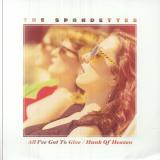
Canadian disco-soul outfit The Spandettes were in sparkling form when they laid down their stunning covers of Lemuria's Hawaiian groove classics 'All I've Got to Give' and 'Hunk of Heaven.' Both now appear on this limited-edition double 7", which will bring some summer heat to any set you play. Fronted by three powerhouse female vocalists, the cultured band blends lush harmonies with irresistible rhythms as they revive a couple of free-soul gems for a new generation of ears. 'All I've Got to Give' first appeared on a sold-out P-Vine 7" back in 2015 and is a sentimental swooner that is super loved up, while 'Hunk of Heaven', taken from the debut album Spandex Effect, here makes its debut on 45rpm. It's a more upbeat and swooning funk gem with gorgeous vocals.
This 7 inch plays 45 RPM.
Drill destroyer, disruptive sound, unstable sparkling needles...
Les Neiges Noires De Laponie pure style !
The long-awaited 7-inch release of "Matenrou Starlight," a glittering neon light song by the duo DE DE MOUSE and Hitomitoi.
Based on the theme of "Love yourself for yourself," this song features the brave and fresh expression of Hitomitoi, the "eternal princess" of the city pop world,
and a French house groove that bounces and pumps up like an Air Max with sparkling synth sounds of a dazzling city night, making both your heart and body dance in a positive way.
The B-side includes a newly created City Pop Mix. "If you take courage, you'll feel excited, Come Back to Me, I Swear to Starlight"
Cataleya reach double digits with a very special cover of a Soulful House classic. Coflo freshens up 280 West’s Love’s Masquerade for modern audiences with the help of Canadian vocalist CEE. Their sparkling cover is backed by mixes from Vick Lavender, DJ Spinna and more from Coflo. Coflo’s Classic mix has the vibe of the 90s mixes, whilst Vick turns the track into a glorious synth addled bumper. Spinna offers his own version, where sturdy beats, vocals and free flowing keys combine. This is a fantastic update of a classic!
- If I Knew What I Know Now
- Out Of Reach
- Get A Life
- Resurrection
- Allergy
- Sniffing Glue
- Ordinary Girl
- The World Is Wrong
- Citizen
- Scarred For Life
- Voice Of The People
- Punk Police
LTD EDITION[25,42 €]
Best of' albums are invariably repackaged collections of old recordings, so Vice Squad's `Punk Rockers' is a breath of fresh air The songs have been lovingly recorded and remastered, keeping all the original fire and adding decades of experience gained from punishing tours and continuous songwriting Beki is the original architect of the songs and the Vice Squad name, and she is the sole surviving member of the original lineup to have continued as a full-time musician Vice Squad are 100% DIY and record everything in their home studio with guitarist/riffmaster Paul Rooney engineering and mixing. There is nothing sloppy here; the whole album is concise and intelligent with lightning-speed diction, passion, and intent. The glorious `If I Knew What I Know Now' and `The World Is Wrong' are examples of Vice Squad's ability to write instantly catchy, witty songs, and the more gut-wrenching material from their last album, `Battle of Britain', showcases some enormous riffs and a voice that is a million decibels from Beki's untried teen vocals. The album opens with the deliciously effervescent `If I Knew What I Know Now', followed by the sparkling old-school tongue-twister `Out of Reach'. Next up is the visceral `Get A Life', an angry anti-suicide note to the desperate, originally the title track from their 1998 comeback album. This is followed by a shimmering version of Vice Squad's old-school classic `Resurrection'. While the treatment of the old songs remains true to the original teenage renditions, the upgraded versions pack more of a punch with detuned guitars and growling bass. The tribal tom-toms of `Allergy' underpin just over two minutes of punk protest about the delights of pollution and asthma. Then comes the sublime `Sniffing Glue', a near-perfect punk love song that would be a huge hit if not for its subject matter. `Ordinary Girl' is punk-pop perfection brimming with hook lines and harmonies, warmly mocking the life that could have been chosen instead of the grindstone at the sharp end of the music industry. `The World Is Wrong' is anthemic, joyous, and wonderfully contrary, and one would expect nothing less from a band that has soldiered on and grown through the decades. It's always great when bands lead by example. In these increasingly tough times where our survival is threatened by the gargantuan greed of a few individuals, it's important to continuously stick two fingers up to the grabbers and spoilers. 'The World Is Wrong' does just that in an impassioned, melodic, and optimistic style. 'Hold your head up, stand your ground, and don't let the bastards grind you down.' Then we roar into the final single Beki wrote with original and now sadly deceased guitarist Dave Bateman, `Citizen', and continue with another teenage opus, the quite brutal `Scarred For Life'. `Voice of the People' is a bulldozer of a song, all swagger and ballsy riffs, and the chorus, `Freedom of speech is against the law; now we're all criminals,' snarls its derision at red-handed red tape. `Punk Police' sneers over a catchy-as-COVID guitar riff, and the lyrics, `Regulation cut, you must measure up, down on the street, PR companies, monied families, running the scene,' call out the hierarchies that now permeate Punk. Baritone guitars add extra darkness to one of the first-ever animal rights songs, `Humane', and I'm struck by how relevant the older songs are. Chocks away, and the awesome 'Spitfire' takes flight like Motörhead on extra amphetamines. Merlin engines fade into `Born In A War', the second in the triumvirate of conflict-themed songs, an absolute stonker with huge muscular riffs and lyrics that roar pure outrage. Then comes the ominous Last Rockers, with all the angst of the original plus added depth and resonance. Beki: ' "Last Rockers" is a typically depressive adolescent song about nuclear war and being too young to die but too late to live. I believed Punks were the `Last Rockers', the final youth cult before the Apocalypse. I was obsessed with punk, and all I wanted to do was sing in a band and be part of the movement, so I would often romanticise the idea of punk in my lyrics.'
- 1: If I Knew What I Know Now
- 2: Out Of Reach
- 3: Get A Life
- 4: Resurrection
- 5: Allergy
- 6: Sniffing Glue
- 7: Ordinary Girl
- 8: The World Is Wrong
- 9: Citizen
- 10: Scarred For Life
- 11: Voice Of The People
- 12: Punk Police
- 13: Humane
- 14: Spitfire
- 15: Born In A War
- 16: Last Rockers
Vice Squad are 100% DIY and record everything in their home studio with guitarist/riffmaster Paul Rooney engineering and mixing. There is nothing sloppy here; the whole album is concise and intelligent with lightning-speed diction, passion, and intent. The glorious ‘If I Knew What I Know Now’ and ‘The World Is Wrong’ are examples of Vice Squad’s ability to write instantly catchy, witty songs, and the more gut-wrenching material from their last album, ‘Battle of Britain’, showcases some enormous riffs and a voice that is a million decibels from Beki's untried teen vocals. The album opens with the deliciously effervescent ‘If I Knew What I Know Now’, followed by the sparkling old-school tongue-twister ‘Out of Reach’. Next up is the visceral ‘Get A Life’, an angry anti-suicide note to the desperate, originally the title track from their 1998 comeback album. This is followed by a shimmering version of Vice Squad's old-school classic ‘Resurrection’. While the treatment of the old songs remains true to the original teenage renditions, the upgraded versions pack more of a punch with detuned guitars and growling bass. The tribal tom-toms of ‘Allergy’ underpin just over two minutes of punk protest about the delights of pollution and asthma. Then comes the sublime ‘Sniffing Glue’, a near-perfect punk love song that would be a huge hit if not for its subject matter. ‘Ordinary Girl’ is punk-pop perfection brimming with hook lines and harmonies, warmly mocking the life that could have been chosen instead of the grindstone at the sharp end of the music industry. ‘The World Is Wrong’ is anthemic, joyous, and wonderfully contrary, and one would expect nothing less from a band that has soldiered on and grown through the decades. It’s always great when bands lead by example. In these increasingly tough times where our survival is threatened by the gargantuan greed of a few individuals, it's important to continuously stick two fingers up to the grabbers and spoilers. 'The World Is Wrong' does just that in an impassioned, melodic, and optimistic style. 'Hold your head up, stand your ground, and don't let the bastards grind you down.' Then we roar into the final single Beki wrote with original and now sadly deceased guitarist Dave Bateman, ‘Citizen’, and continue with another teenage opus, the quite brutal ‘Scarred For Life’. ‘Voice of the People’ is a bulldozer of a song, all swagger and ballsy riffs, and the chorus, ‘Freedom of speech is against the law; now we’re all criminals,’ snarls its derision at red-handed red tape. ‘Punk Police’ sneers over a catchy-as-COVID guitar riff, and the lyrics, ‘Regulation cut, you must measure up, down on the street, PR companies, monied families, running the scene,’ call out the hierarchies that now permeate Punk. Baritone guitars add extra darkness to one of the first-ever animal rights songs, ‘Humane’, and I’m struck by how relevant the older songs are. Chocks away, and the awesome ’Spitfire’ takes flight like Motörhead on extra amphetamines. Merlin engines fade into ‘Born In A War’, the second in the triumvirate of conflict-themed songs, an absolute stonker with huge muscular riffs and lyrics that roar pure outrage. Then comes the ominous Last Rockers, with all the angst of the original plus added depth and resonance. Beki: ' "Last Rockers" is a typically depressive adolescent song about nuclear war and being too young to die but too late to live. I believed Punks were the ‘Last Rockers’, the final youth cult before the Apocalypse. I was obsessed with punk, and all I wanted to do was sing in a band and be part of the movement, so I would often romanticise the idea of punk in my lyrics.' The four bonus CD tracks kick off with ‘Coward’, another teen Bateman/Bond composition. ‘No You Don’t’ is just over two minutes of vocal acrobatics over a Dexedrine-driven Devo-esque chord sequence, and the frantically brilliant ‘I Dare To Breathe’ from ‘Battle of Britain’ continues the aural assault. Then the final sombre entreaty of ‘You Can’t Buy Back The Dead’ warns us that ‘Enough’s never enough; absolute power will corrupt; the war machine still rumbles on’ before fading into the future.
- A Dialogue
- The Other Side
- Ellipsis
- Noise Of The Void
- Dolls In The Dark
- Oxytocin
- Long Division
- Out Of Sequence
White & Black Smash Vinyl. Drab Majesty's third album, Modern Mirror, is a journey of self-reflection, nostalgia, love, beauty, and heartbreak told across eight addictive and emotional synth pop anthems - a seemingly classic tale delivered unblinkingly through the frame of the modern world. Elements of classic tragedy weigh heavily in the reflection of Modern Mirror in songs like "The Other Side", possessing a fundamental sound that is energetic, luminous and hopeful. Fusing the sonic aesthetics of predecessors like New Order and The Cure within the cautious instruction of Greek mythology and modern science fiction, Drab Majesty has birthed a hybrid of dreamy malaise, captured for a future moment. The first single, "Ellipsis", romantically plays up the distorted concept of courting through modern technology in a world that has yet to adapt, while on "Long Division", Deb's resounding guitar cascades around the chorus shared with No Joy frontwoman Jasamine White-Gluz, wistfully warning us against our vanity and self-obsession. Even when hope for everlasting love peeks through in "Oxytocin", a sparkling and stoic track sung by Mona D., we are firmly reminded our fleeting existence. Produced by Josh Eustis (Telefon Tel Aviv) with appearances by Jasamine White-Gluz (No Joy) and Justin Meldal-Johnson (NIN, Beck, M83, Air).
- Vanity (Feat. Rachel Goswell)
- Cape Perpetua
- The Skin And The Glove
- Yield To Force
The latest EP from Drab Majesty marks the start of a stirring new chapter in the band's majestic legacy. Written during a 2021 retreat to the remote coastal Oregon town of Yachats, Deb Demure leaned into the neo-psychedelic resonance of a uniquely bowl-shaped 12-string Ovation acoustic/electric guitar. After early morning hikes in the rain, Deb would record ambient guitar experiments the rest of the day, tapping into "flow states," letting the sound lead the way. These sessions were then refined or recreated, and later elevated further with key collaborations by Rachel Goswell (Slowdive), Justin Meldal-Johnson (Beck, M83, Air), and Ben Greenberg (Uniform, Circular Ruin Studio). An Object In Motion is true to its title, capturing the chrysalis moment of an artist evolving, reborn and untethered, silhouetted against an open horizon."Cape Perpetua" kicks off the collection's divergent palette: sparkling acoustic finger-picking refracted through delay, equal parts raga and reverie. Melodies and moods congeal and dissipate, at the threshold of rustic American primitivism, brooding neo-folk, and pastoral melancholia. "The Skin And The Glove" deploys jangle to different effect - baggy, soaring, grey-skied kaleidoscopic pop in the spirit of Stone Roses, Primal Scream, and The Glove. Rachel Goswell lends her iconic freefall voice to The Cure-esque ballad, "Vanity," infusing poetic gravity to the doomed refrain: "If the valve breaks / then the earth quakes / and history finds a way / to put you in your place.""Yield To Force", the closing track of the EP, may be the most anomalous offering of the set. A 15-minute instrumental odyssey of cyclical strings, ominous slide guitar, and simmering synthesizer, the piece sways and spirals like a long zoom into distant storm clouds. Demure finesses the guitar with a restless but regal grandeur, unfolding a panorama of peaks, shadows, and plateaus. It's music both intuitive and prophetic, tracing the slow swing of pendulums across an endless plain. Taken as a whole, An Object In Motion presents a showcase of potential futures from Drab's evolving domain, their sound poised to bloom at the precipice of transformation.
Brera Groove returns with its second vinyl release, Brera Groove 002, a various artists collection blending late ’70s disco with the early shimmer of Italodisco. Brera Groove, curated by Tamati and inspired by the artistic soul of Milan’s Brera district, expands here with contributions from Luksek & Lucio Balla, The Rejected, and Lillo Carillo, each bringing their own twist to the sound. Grooves, rhythms, and sparkling synths drive an EP made for the dancefloors, echoing the elegance of clubs, cocktail bars, and the neon charm of 'Milano da Bere'.
Since first forming in 2016, London's High Vis have steadily polished their palette of progressive hardcore with shades of post-punk, Brit pop, neo-psychedelia, and even Madchester groove, mapping a middle ground between hooks and fury, melodies and mosh pits. Singer Graham Sayle describes their third album 'Guided Tour' as an axis of competing forces: "It's trying to be a hopeful record, while also being incensed." Rounded out by drummer Edward 'Ski' Harper, guitarists Martin MacNamara and Rob Hammaren, and bassist Jack Muncaster, the band's deep roots in the UK and Irish DIY hardcore scenes have kept them grounded but growing, inspired equally by restlessness and righteous anger. As Sayle puts it, "Everyone's scratching, everyone's working all the time, and their idea of relaxing is just getting fucked and avoiding reality. This album is an escape from that."From its opening seconds of a cab door slamming, a car revving away, and a baggy rhythm swinging to life, 'Guided Tour' sounds like a band reaching for new heights, bristling with energy. Recorded across a few weeks at Holy Mountain Studios in London with producer Jonah Falco and engineer Stanley Gravett, the results feel dynamic and dialed-in, like anthems burned into sense memory through sweat and repetition. Harper cuts to the chase: "We had a clear idea going in, every moment got used. Maybe when we're 60 we can sit around and get a drum sound right, but for now it's about getting things done."The album's 11 songs span the spectrum of contemporary guitar music, sharpened by experience, camaraderie, and societal frustrations. From swaggering street punk ("Drop Me Out," "Mob DLA") to jangling indie sneer ("Worth The Wait," "Deserve It") to heavy alt ("Feeling Bless," "Fill The Gap") to shoegazey spoken word ("Untethered"), the group's chemistry transmutes any style to their unique intensity. Sayle champions this evolving fusion: "For years coming from hardcore, we had pretty clear boundaries - other scenes were separate worlds. Now things are getting more blended, drawing from different places."Nowhere is this sentiment flexed more boldly than on "Mind's A Lie," a dance- punk anthem inspired by Harper's love of house, garage, and pirate radio. Stabs of sampled female vocals (by celebrated South London singer and DJ Ell Murphy) build into a razor wire rhythm of low-slung bass, tense drums, and sparkling guitar before Sayle's staunch voice starts barking harsh truths ("Face to face with all I've known / I can't call these thoughts my own"). After a sudden breakdown, the track regroups and takes off, cruising into the horizon in a haze of chiming guitars and Murphy's ascendant voice, from the streets to somewhere beyond.
On the latest Soul Quest adventure, the imprint places the journey in the hands of Italian producer Flying Moth, who serves up an enriching palette of groove-laden cuts that are sure to chime along to bright days and sun-kissed evenings.
Flying Moth is the latest alias from producer Niccolò Terranova, who has already demonstrated his jazz-laden dance music chops through the Justnique project and others. Flying Moth is presented as the artist’s most personal project to date, with the ‘Oh Oh’ EP out on Apparel Music highlighting his ability to deliver highly danceable and beautifully presented soulful dance music that lives and breathes heartfelt moments and emotions.
Channelling a myriad of genres and eras, Flying Moth’s music is about catering to new kinds of experiences through displays of enriching musicality and deeply profound compositions. ‘Tides’ is the next step in Flying Moth’s journey, and it feels right at home amongst the sunny vistas and dancefloors of Soul Quest. The EPs opener, ‘Take you higher’ which was made alongside Renato Patriarca is a groover of the highest order. Allowing plenty of time to embed listeners deep within the mix, the first breakdown emerges with a delightful lead melodic line that embraces the chords. The further this track unravels, the more magic is presented—the flute solo is a notable example of this. ‘Bobby’s here’ shares connotations similar to the previous number, albeit with some subtle differences. The chords swirl and dance, with arpeggios adding cascades of melody alongside the hypnotic rhythm section. The track is one of diving deep through the layers in order to deliver a joyous forward momentum - one which feels like it will never cease.
‘Please, keep drinking with me’ begins with a typically upbeat feel. A semi-skippy drumming pattern provides the basis for an overflow of melodic brilliance to come forth, with the track retaining a powerful forward momentum through the mid-range. Inspired, breathy vocals and a one-of-a-kind key solo at the track’s halfway mark add personality and variance. ‘Always Groove in you’, a joint affair alongside Gondii, and this number wastes no time in getting going. A stripped-back yet varied groove weaves around a deep-set bass sequence, but the show that happens up top is a sight to behold - a continual shift between inspired key work and vocal snippets mean that the track never stands still, only evolves and grows. Wrapping things up is Toronto Hustle and Sean Roman providing their twist on ‘Please, keep drinking with me’, and as a remix, it adds an enormity of flavours in the form of sparkling keys, powerful bass notes, and infectious breakdowns.
‘Tides’ might only be Flying Moth’s second EP, but it is a sign of an exciting discography to come. For now, this EP contains all the ingredients to get dancefloors and living rooms moving. Filled to the brim with creativity, thought, and delicateness, ‘Tides’ has an infectious musicality to it - and, perhaps most importantly, a big heart. Time to revel in its emotive brilliance …
Emerging from the Minneapolis underground and heading straight towards the sky, IE arrive on Quindi with a full-length album of sparkling, sophisticated wonder. Touching on kosmische grandeur, Riley-esque cyclical patterns, lounge pop and dubbed out psychedelia, the five-piece allow their songs to unfurl with a natural, hypnotic elegance which can take many different forms.
There's a loose, live quality to the recordings IE's members commit to record, which reflects their steady presence gigging in Minneapolis and the surrounding area. Since putting out their first release in 2016, they've glided from drone and synth-led jam band ambience (2018's Pome) to strung out, stoner-tinted slowcore (on 2023's outstanding Junk Body). For Reverse Earth they strike a smoky note that wraps itself around your skull across extended run times that evolve with a meditative poise.
From the deceptively driving 4/4 thrum of the opening title track through 'Divination Bag's snaking tryptamine mantras on to 'Simplify's slow and smouldering indie-soul, IE's sound is bathed in a sumptuous warm glow that rounds out the lows and the mids, creating a nocturnal shroud in which their nebulous song structures can feel deliciously endless.
Meredith Gill's drums provide rolling and tumbling undercurrents for the slowly shifting phases of the instrumental players, as Michael Gallope and Travis Workman trade keyboard parts and Workman and Sam Molstad chop and pick at their six-strings. Atop the thrum of her bass, Mariel Oliviera's vocal adapts to the scenery, from a distant, dreamlike siren song on 'Reverse Earth' to a spoken word meditation on 'Babel'.
There's space in each track for every instrument to cut through and have its moment, from a spiralling key vamp to a chicken-scratch guitar flex. The gently twisting, head-feeding groove exercises of the first four tracks give way to a slow and powerful march on 'Dark Rome', closing the record on a noirish anti-ballad fit to peal out in the closing slot at Twin Peaks' Roadhouse (circa season three).
As much as the tracks teem with composition, musicianship, and production to savor, a sound like IE's has a soporific quality that soaks in unconsciously. It's an evocative portal where the band feel as if they could just play on each piece ad infinitum - where the time itself seems to dislodge from its moorings.
Cassette[15,08 €]
Lunchbox's legendary lost album "Evolver" is lost no more! Sparklingly remastered for the album’s twentieth (and a few!) anniversary and available on CD, cassette and (for the first time) vinyl, this psychedelic masterpiece fills a crucial hole in the band's discography. Recorded in the couple's 1990s Oakland basement between stays in Berlin, tour dates in London, and dreamy sojourns up the rugged Mendocino coastline, "Evolver" fuses jangle and jungle, ambient and dub into a striking pop statement.
Marrying refined songcraft to the serendipitous magic hidden in half-broken reel-to-reel tape decks and vintage synthesizers, the "Evolver" plants its pop flag on the terrain of magic and mystery. Dreamy jangle pop gems emerge seamlessly out of a sea of loops, drones, and dubbed-out horn fanfares, cascades of tape echo feedback and whispers from outer space providing a trance-inducing backdrop to the pop sensibility for which Lunchbox is well-known. Hook-filled and hypnotic, "Evolver" is a sublime slice of post-pop psychedelia that you won't want to miss.
For this special and long-overdue reissue we've raided the bands vaults for three previously unreleased tunes that add extra dimensions to the album's uniquely trippy flow. And for the vinyl heads we're pressing this as a double LP for maximum fidelity and playability, including a vinyl-only fourth side of beats, loops, interludes and puzzling aural ephemera, all taken directly from the original master tapes. Super cool!
Danny Ward’s 30-year career has been far from predictable. While best known for the musical eclecticism of his Dubble D project, the dance floor-focused nous of his work as Moodymanc and as a member of the groundbreaking 20:20 Soundsystem, Ward’s bulging CV also includes stints drumming for artists as diverse as Fila Brazillia, Rae & Christian, and The Pharcyde, to Jazz luminaries Mat Halsall and Nat Birchall, alongside countless collaborations (Flora Purim and Nightmares on Wax to name but a couple) and numerous evenings spent adding live percussion to DJ sets at iconic Leeds club night Back To Basics.
Now the long-serving Manchester musician and producer has a new project to share via NuNorthern Soul: Balaphonic. Inspired by a mixture of lockdown-era studio experiments, online collaborations, his long-held love for Afro-Cuban and Afro-Brazilian rhythms and a desire to do things differently, Resolution Revolutions is a gorgeously sonically detailed and immersive album that takes Ward’s musical output to a whole new level.
Like many musicians, Ward used the forced lockdowns of the global COVID-19 pandemic to retreat to his basement studio and make music. Focusing on utilising all of the acoustic and electronic tools at his disposal – not least his beloved percussion instruments – Ward took the opportunity not only to draw on a wide range of musical influences and ideas, but also rhythms, grooves and time signatures. As well as composing new tracks from scratch, he also revisited older compositions with fresh eyes and ears.
The results are simply stunning. Ward sets his stall out via the exotic, slow-burn Balearic warmth of ‘Sunflowers in Dub (Deep Summer Mix)’, where echoing whistles, harmonica motifs, sitar sounds, and cascading piano motifs rise above dub-wise bass and seductive, soft-focus beats. The heady, eyes closed vibe continues on the sunrise-ready awakening of ‘Disorganics (All Strings Mix)’, a samba-soaked summer shuffle rich in sparkling acoustic guitars and infectious Latin percussion, and the fretless bass-sporting Afro-Cuban yearning of ‘Six Fingers’.
As Resolution Revolutions progresses, Ward’s deep love of club-adjacent and dancefloor-focused rhythms subtly comes to the fore. There’s ‘Udders’, a hybrid – and hypnotising – fusion of chopped-up South American percussion, marimba-style melodic motifs, looped bass and spacey electronics, and Ocean Waves Brasil collaboration ‘Oxum’, a mid-tempo Afro-Brazilian deep house number wrapped in deliciously dreamy chords and gentle acid lines.
Similarly impressive and inspired is closing cut ‘Bloco Manco’, where Ward peppers a delay-laden Latin beat and a deep, weighty, dancehall style bassline in waves of echoing hand percussion and restless timbales patterns. Stripped-back, raw and seriously sub-heavy, it provides a jaw-dropping conclusion to one of Ward’s most perfectly formed albums yet.
a A1: Sunflowers In Dub Deep Summer Mix
[b] A2: Disorganics [All Strings Mix]
2x12" Vinyl[32,98 €]
Lunchbox's legendary lost album "Evolver" is lost no more! Sparklingly remastered for the album’s twentieth (and a few!) anniversary and available on CD, cassette and (for the first time) vinyl, this psychedelic masterpiece fills a crucial hole in the band's discography. Recorded in the couple's 1990s Oakland basement between stays in Berlin, tour dates in London, and dreamy sojourns up the rugged Mendocino coastline, "Evolver" fuses jangle and jungle, ambient and dub into a striking pop statement.
Marrying refined songcraft to the serendipitous magic hidden in half-broken reel-to-reel tape decks and vintage synthesizers, the "Evolver" plants its pop flag on the terrain of magic and mystery. Dreamy jangle pop gems emerge seamlessly out of a sea of loops, drones, and dubbed-out horn fanfares, cascades of tape echo feedback and whispers from outer space providing a trance-inducing backdrop to the pop sensibility for which Lunchbox is well-known. Hook-filled and hypnotic, "Evolver" is a sublime slice of post-pop psychedelia that you won't want to miss.
For this special and long-overdue reissue we've raided the bands vaults for three previously unreleased tunes that add extra dimensions to the album's uniquely trippy flow. And for the vinyl heads we're pressing this as a double LP for maximum fidelity and playability, including a vinyl-only fourth side of beats, loops, interludes and puzzling aural ephemera, all taken directly from the original master tapes. Super cool!
repressed !
Setting out to make some 'happy music', Sophie Lloyd produced Calling Out' in a dreary January as an antidote to the pervading doom and gloom of the news, summoning the power of the most joy-filled sound of all, gospel. This no-holds-barred anthem radiates all the live atmosphere of gospel worship in mid flow, with full instrumentation, keyboard breaks and understated kick drum pulling it all together. Bringing in the uplifting voices of soul trio Dames Brown to re-record some old gospel samples was the icing on the cake, adding the last element of authenticity. A new member of the Classic family, Sophie Lloyd's impeccable knowledge of disco, soul and house shines through in this sparkling record, available on 7' for the very first time.
Max Buchalik has been shaping Frankfurt’s music scene for many years now. Thanks to the deep connection to his hometown and the artists surrounding him, Max has constantly developed his production skills that now fuel his rising career.
His debut EP “Higher State” released in 2024 turned heads and his remix for Lauer’s “Don’t Let The Music Stop” on the Spanish imprint SOULMEEX truly made waves. Now, the Madrid-based label proudly presents Max Buchalik’s latest EP: Lucid Dreams.
With “Lucid Dreams”, reality blurs into fiction: a personal dreamscape entwines with the pursuit of perfection. The track soars into cosmic dimensions – timeless and weightless. Driving basslines blend with sparkling synth textures and shimmering pads, crafting an immersive, emotional atmosphere. It takes you on a journey where your feet stay grounded while your mind takes flight – Lucid Dreams become endless!
“Soar and Sway” is a pulsating ode to life – a celebration of constant growth despite the ups and downs of reality. The soundscape ventures through rhythmic percussion and radiant harmonic melodies. At times, ethereal pads take center stage; at others, punchy kicks and sharp hi-hats dominate. Continuously evolving, Soar and Sway radiates a vibrant aura, seamlessly merging energy, motion and harmony.
By teaming up with the charismatic and passionate artists Chinaski and Llewellyn for the remixes both tracks have been infused with fresh perspectives and luminous energy, making the EP shine even brighter.
Repress! Limited to 100 Copies
Garage Hermétique, returns with a new EP of music from Views, presenting the ‘Kyoto Love’ EP. An alias of Atilla Fidan - producer & live performer, founder of the Berlin label Tape Archive, and also known for releases as Waitress/ASWA - each of the four tracks hits a naturalistic groove driven by vintage Chicago-esque rhythms and warm, acidic tones.
On opening and title-track ‘Kyoto Love’, charming bird song flourishes into a rubbery bassline. ‘Go Well (Part 2)’ embarks on a similar tip, before loosening up into a soaring, somewhat new-age atmosphere, while never sacrificing it’s watertight drums.
On the flip, ‘Kimura’ and ‘Systems (Last Mix)’ move in deeper directions still; The former is a sparkling, detailed cut that rolls out nocturnal dance floor depth, while the latter rounds off the release with transcendent choral breaks.
- A1: My People Ft.. Ghetto Boy
- A2: Why Should I Smile Ft. Mélissa Laveaux
- A3: Solitude Ft. Isabel Sörling
- A4: Hey I Want You Ft. Olle Nyman
- A5: You Say (Inst.)
- A6: With Us Ft. Ben L’oncle Soul
- B1: California Intro (Inst.)
- B2: California Ft. Ala.ni
- B3: Loving You Is All I Want To Do Ft. Aloe Blacc
- B4: Mandolinho (Inst.)
- B5: Again Ft. Anna Majidson
"Float like a butterfly and sting like a bee" said the famous boxer Mohammed Ali, in reference to his legendary strike. This punchline also works wonderfully in music, listening to Roseaux's third album. A French success story, created with all modesty and honesty by the Parisian trio: Emile Omar, Alex Finkin and Clément Petit.
The three musketeers of sound cultivate their know-how, now acclaimed by critics and an ever-growing audience since their first project in 2012. It took them time to take a step back and gain perspective in order to offer us a return that is both joyful and resounding.
Roseaux takes root on the banks of soul, folk, jazz, and songs from all eras, a cascade of inexhaustible sounds, where the three composers draw their inspiration and merge their experiences.
The leaves of Roseaux soar to the breath of wonderful voices, chosen with precision by the three friends, like that of the American singer Aloe Blacc, present since the beginning of the adventure, essential enchanter of the three episodes.
Conceived as a dreamlike escapade full of emotions, on the fringes of the massive, instantaneous and often disembodied production, Roseaux is a totally artisanal group, a sort of UFO in the French musical landscape, which operates on instinct and above all on desire.
Thus, Roseaux has become an expert in bringing together, for the duration of a record, the artists who specifically form the DNA of their host: captivating voices, a plot on the piano and cello, but also encounters and reunions, in a poetic and deliberately nebulous universe.
A welcoming nebula, where the listener is invited to listen and immerse themselves without hindrance, in a luxuriant, wild, exciting sound forest. This third album is the work of 3 music lovers, capable of switching roles: writing, arrangements, production, from which emerge this time, eleven tracks with chiseled melodies including three colorful and unusual instrumentals.
A journey between melancholy and euphoria, which led Roseaux to the ends of the planet, from the Caribbean to Europe via Africa to unearth other vibrations and unique performers: the captivating Grenadian-British singer Ala.ni, the little English afropop prince from Ghana, Ghetto Boy, and the disturbing Swedish Isabel Sörling, sign here a first flamboyant collaboration with the group.
While the talented Haitian-Canadian Mélissa Laveaux, the hypnotic Scandinavian singer Olle Nyman, the sparkling French-Canadian Anna Majidson and our remarkable national Ben, already present on the second part, still manage to create a surprise by revealing new aspects of their range.
Roseaux's voices are decidedly impenetrable and its magic is renewed today by making the strength of all these scintillating elements dialogue, to be discovered in a setting of softness and voluptuousness.
Nature is full of reeds, this one is unique.