Third sureshot from Christian Linder as he once again delves back into the vaults and brings to light some of his cherished works. His latest revisit is the Polaris EP, originally released in 2000 on German label Phono Elements. Comprising two fantastic, heady, dubby techno excursions which live long in the memory after the party has finished.
Search:spe
Krope is a six-part conceptual album by Belarusian sound artist and producer Anton Anishchanka. Rooted in archival folk songs recorded between the 1960s and 2000s, it transforms fragile voices of the past into living, cinematic sound worlds. Created in collaboration with ethnographer Iryna Vasilyeva, the album weaves Belarusian traditional music with field recordings, acoustic instruments, and analog synthesizers — an immersive journey where memory, landscape, and resilience converge.
Flowing as one continuous suite, Krope unfolds like a film: memory re-emerges, fragile yet persistent, shaping an emotional narrative of displacement, loss, endurance, and hope. The archival voices at its core — songs of love, exile, and mourning — resonate across decades, echoing the urgent realities of today. The album flows as a single, immersive sonic odyssey. From the tender rejection in Krope (Dill) to the grief carved in Dubrovuška (Oak Grove), it traces an arc of human experience that is both deeply personal and universally shared. By reimagining traditional music through contemporary sound art, Anishchanka preserves endangered cultural heritage while revealing its timeless relevance.
Credits:
Produced by Anton Anishchanka
Engineering by Tenzor
Mastered by Alex at Quitfish Mastering
Lacquer cut by Tim Xavier at Manmade Mastering
Cover Art by Sasha Zeliankevich
Graphic Design by Ihar Yukhnevich
Creative Direction by Nadzeya Burmistrava
Archival materials courtesy of the Institute of Art History, Ethnography and Folklore named after K. Krapiva, National Academy of Sciences of Belarus.
Special thanks to Iryna Vasilyeva for her assistance with archival selections and ethnographic material.
Shatkavalka 2025
Winding through cavernous and dark meanders, amid gurgling water, rustling sounds, low and deep pulsations, incisive and impactful sound masses, floating waves, crystalline drips, sudden rays of light, electronic spirals, and unexpected openings onto almost soothing soundscapes and quiet environmental stasis, Rod Modell paints musical textures that are apparently abstract and contemplative, but in reality charged with pathos and drama, taking advantage of a spectacular, enveloping and surprising sound quality, in which every nuance and every small detail makes the listening experience even more intense and engaging. A new exciting masterpiece by Maestro Rod Modell.
Hidden away amidst the bustle of Rio de Janeiro’s Catete neighbourhood is a small alleyway behind a cast iron gate. At its end is Bairro Saavedra, the courtyard surrounded by Neo-colonial houses where Brazilian guitar virtuoso Fabiano do Nascimento spent much of his childhood. Built in 1928, this secluded neighbourhood with its wooden shutters, tiled floors and tranquil benches, provides the inspiration for the title of Do Nascimento’s new album VILA, a collaborative project with a sixteen piece orchestra led by trombonist and arranger Vittor Santos.
Recorded between Rio de Janeiro and Los Angeles, VILA is grand, tender, warm, playful and nostalgic. On this stunningly ambitious work, the delicate compositions led by Nascimento's guitar, which sits central in the mix, are surrounded by Santos’ breathtaking orchestral arrangements which swirl in all directions: complimenting, questioning, responding; in constant conversation.
Like the eclecticism of the architecture Do Nascimento grew up surrounded by, his music straddles many worlds at once. He is known as a Brazilian acoustic guitar master and as such has collaborated with Arthur Verocai, Airto Moreira and Itibere Zwarg. But equally at home in Los Angeles's jazz and experimental music scenes, Do Nascimento is also known for his work with artists like Sam Gendel and Carlos Nino.
Vittor Santos is an arranger and Trombonist who has worked extensively with many of the greats of Brazilian music, including João Donato, Marcos Valle, Toninho Horta, and Elza Soares.
=====================================
Credits:
Fabiano do Nascimento – 6, 7 and soprano guitars.
All orchestral arrangements and production by Vitor Santos.
Recorded at Electro-Sound studio, Los Angeles and Estúdio Fibra, Rio de Janeiro
Engineered by Jason Hiller and Garbiel Lucchini
Mastered by Mike Bozzi
Oboe – Francisco Gonçalves
Contrabaixo – Rodrigo Villa
Drums – Márcio Bahia
Violino - Ricardo Amado
Violino – Thiago Teixeira
Violin – Daniel Albuquerque
Violin – Márcio Sanches
Viola – Ivan Zandonade
Viola – Dhyan Toffolo
Cello - Hugo Pilger
Cello – Janaína Salles
Double Bass – Rômulo Gomes
Clarinet – José Batista
French Horn – Philip Doyle
Trombones - Vittor Santos
Violin – Daniel Guedes
Chris Liebing and Charlotte de Witte announce their second-ever collaborative release, 'Symphonie des Seins' (Symphony of Existence). The release, taking in an original alongside a Dub mix from Liebing, follows 2019's 'Liquid Slow' from the pair and marks the second release ahead of Chris Liebing's 'Evolver EP' releasing in late-March.
A surging acid-beast channelling mid-90s techno energy, 'Symphonie des Seins' sees de Witte delivering a tweaky, spoken
vocal comprising the hallucinogen-fuelled diaries of ayahuasca and DMT trip reports that Liebing stumbled upon online. Crisp
but heady, old school but utterly contemporary with its delivery, 'Symphonie des Seins' sees two techno artists with very
di?erent formative eras converge perfectly with a razor-sharp piece of dancefloor mayhem.
Following January's 'Roy Batty' EP, Chris Liebing and Charlotte de Witte's 'Symphonie des Seins' is the last single before Liebing's thirteen-track 'Evolver' LP lands on March 27th. The 'Evolver LP' features additional collaborations with Luke Slater, Speedy J, The Advent, The Alte Stuben Modular Ensemble aka Daniel Miller, Terence Fixmer, and Pascal Gabriel and is Liebing's first solo Techno LP, having focused on long-form electronica output alongside co-writer Ralf Hildenbeutel for 2018's 'Burn Slow' and 2023's 'Another Day' for Mute Records, and the André Walter co-produced 'Evolution' in 2002.
WRWTFWW Records is ecstatic to announce a limited edition vinyl release of the remarkable PONYBOI (Original Motion Picture Soundtrack) by Chilean-born composer, arranger, music producer, and multi-instrumentalist Cristobal "Cristo" Tapia de Veer (The White Lotus, Utopia, Smile, Black Mirror, and many more).
This collector's edition presents Tapia de Veer's complete original score for the critically acclaimed feature film PONYBOI - a bold, genre-defying neo-noir tale directed by Esteban Arango and and starring filmmaker, actor, screenwriter, model, and intersex rights activist River Gallo who also wrote the movie. The soundtrack arrives as a deluxe audiophile vinyl LP, housed in a luxurious 350gsm gold cardboard sleeve, cut with utmost precision by Sidney Claire Meyer at the legendary Emil Berliner Studios, home to Deutsche Grammophon's world-renowned legacy.
Vivid, seductive, gritty, dreamy, tender, and sometimes heart-pounding in its tension, the PONYBOI soundtrack is a sinuous creature of its own - an emotional, atmospheric, and deeply textural listening experience. Tapia de Veer fuses shimmering electronics with haunting melodies, raw rhythms, shadowy ambience, and surges of romantic intensity, perfectly embodying the film's world of danger, desire, identity, and survival on a single wild New Jersey night. It's daring, intimate, stylishly noir, and unmistakably Cristo: music that refuses boundaries and speaks directly to the pulse.
The LP showcases Cristobal Tapia de Veer's uncanny ability to blend experimental sound design with narrative emotion - a talent that has earned him global acclaim and numerous awards, including four Primetime Emmy Awards for The White Lotus.
This new WRWTFWW edition celebrates his artistry in its purest form: warm, rich, analog, and physically stunning. A must for soundtrack fanatics, ambient and experimental music lovers, and rare memorabilia collectors.
Dutch DJ/producer Boss Priester has built a name as a producer who operates with a ‘let the music speak’ ethos. Now based in The Hague, he has spent years crafting a distinctive sound that blends elements from minimal, house, and techno, releasing across respected labels including Ba Dum Tish, X-Kalay, Dungeon Meat, and his own BPDUBS imprint. His 2023 ‘Hotel Dijon’ EP on LOCUS marked a notable moment in his journey, having long drawn support from label boss Enzo Siragusa, establishing a connection that now comes full circle with an impressive debut outing on FUSE. Building on the backing of other notable figures such as Fumiya Tanaka and Samuel Deep, reinforcing his meticulous attention to rhythm, texture, and groove, his ‘Respect Yourself’ EP extends his sound further as he delivers four tracks that are impactful, precise, and built to command the dancefloor.
Title track ‘Respect Yourself’ leads the EP with its synth-led, hypnotic groove, as intricate percussion and low-end weight immediately establish a commanding presence shaped for the floor. ‘BP On The Master’ follows with a deep, rolling energy, blending minimal textures and squelchy bass licks with understated melodic flourishes. On the B-side, ‘Future Is Electric’ channels a forward-thinking spirit, layering bright textures over weighty, skippy UKG-influenced driving rhythms, before ‘Flava’ closes things with a hazy yet heavy kinetic groove that perfectly encapsulates Boss’s growing sound.
Sounds Over Seas is ready to release its very first LP by label founder Julian Bainbridge. The album covers aspects of the Deep House genre in its classic definition, pushing certain boundaries, whilst maintaining the spirit of the genre through feeling and utilising melodies and rhythm to evoke emotions which go beyond the dance floor. Keeping it raw throughout the nine tracks, each one incorporates different elements of the music spectrum. Implementing jazzy tweaks, minimalistic rhythms, haunting melodies as well as ambience and global sounds in a full dancing and listening experience.
An Egyptian guy named Raxon rolls through, Flexing his muscles like he’s got something to prove. Get those legs moving, stop the distraction, Shake to the beat — here’s the sound of Raxon.
Ein Ägypter namens Raxon tut hier schwer die Muskeln flexen. Beweg deine Haxen zu den Sounds von Raxon
The music of Foreign Material carries an invisible veil: at first glance this is great, potent and highly functional contemporary Techno. But for those willing to see, behind the veil there's more than meets the eye. An old, wise Baba-DJ once claimed that we are merely "redefining the ancient tribal ritual for the 21st century". Titles like "Kantae Niskae" and "Drums Of Kaltjär" alludes to that specific, long forgotten past that we all still carry deep within. The blissful and etheric A-side, contrasted by the caveman mania of "Kaltjär", represent the dualistic nature of our scene, our sound and our aim as a label, and encapsulates everything we love with Foreign Material's unique approach to Dance Music.
On remix duty we have none other than Stockholm based "Deep" pioneer Evigt Mörker. Expertly withdrawn, edited and added, he's created a groovy, yet atmospheric, DJ-tool for the ages. Expect to notice it in a wide array of DJ-sets in the near future.
Dub Consistency proudly presents its debut release, showcasing the hypnotic sound of 23.4 with a special remix from Berlin-based Argentinian artist Volpe.
On this four-track EP plus two locked grooves, Lille producer 23.4 distills over a decade of studio experience into a fast-paced yet deep Dub Techno journey.
Rolling percussion, weighty low-end and subtle atmospheres recall both the raw soul of Detroit and the spacious echoes of Berlin.
Adding his own signature, Volpe-a talent of Berlin's club circuit and producer for labels such as a.r.t.less and Frenzy-delivers a powerful rework that blends Dub, Deep and Tribal influences for peak-time impact.
Mastered by Conor Dalton, this first Dub Consistency outing is built for vinyl and the dancefloor alike: immersive, heavy, and unmistakably club-oriented.
The Goblin Walk is an invitation to trace the footsteps of the eponymous creature through five swampy, dubby, liquid techno interpretations from four different artists. Label head Caldera opens with the gently underlapping space chug of 'Today', followed by Traevor's 'Reef' which turns marimba into a dubbed-out bass meditation. Caldera then features again under his Loop LF alias with 'Tiz', which pairs spectral sonic sketches with whimsical melodies that drift and float as if in a gravity-free zone. Streetfaxx then unearths a long-lost 2013 Cologne track, its patient rhythmic progression untouched by the passing years, before ambient textures take centre stage in Nightwaif's 'Xmas1 (vocal dub)' as tape experiments float over deep sub-bass, caught somewhere between 1980s new age and modern ambient minimalism. A compelling, exploratory world of sound.
(Remix by Komakino) (2025 Replika)
Ein monumentales Stück deutscher Rave-Kultur kehrt zurück: Mehr als dreißig Jahre nach der Erstveröffentlichung erscheint Joachim Witts „Goldener Raver“ im legendären Komakino Remix als originalgetreue 12“-Vinyl-Replika.
Als der Song 1995 erschien, markierte er die spektakuläre Transformation eines der profiliertesten deutschen Künstler in die Welt des Techno und Trance. Die Frankfurter Formation Komakino verlieh dem Track eine hypnotische Energie, die ihn sofort in die Playlists der großen Clubs katapultierte. Seit Jahren vergriffen und auf dem Zweitmarkt heiß begehrt, schließt diese Neuauflage eine schmerzhafte Lücke in jeder gut sortierten Vinyl-Sammlung. Gepresst auf schwerem schwarzem Vinyl (45rpm) und verpackt in der klassischen Disco-Bag mit Loch und Sticker, atmet dieses Release den Vibe der Neunziger aus jeder Rille.
"On its Various 2 compilation, Altered Circuits returns with a gripping four-track selection by an equal number of distinct-voiced artists. Perrax En La Calle sees tINI merge sturdy drums, arpeggiated basslines, and ominous synth work. She knows what makes the floor tick blindfolded, and keeps the energy high here, channelling electronic body music and Italo into a contemporary club knockout. Up next is Ionic, a fusion of quirky, pointillist hooks that play call and response, driven by 909 kicks and a sub pattern underneath. Mogwaa spellbinds, and often pulls the rug only to reveal more intricate melodic needlework -- it's done so nimbly and enticingly, there's no way not to get drawn in. On the flip side, rising talent Desiree Falessi joins with the peak time Scandal. Statically-charged basslines mesh with reverb-drenched percussion salvos, and as slinky pads and subtle theme variations emerge, the intensity builds toward a tipping point. Closer Flex features a sharp arpeggiated bassline that funnels through misty, LFO-steered synths, scattered alarm-like melodies, muffled vocals, and gated-reverb snares. When classic high-pass modulation intermezzos are introduced, Monile demonstrates how sparse means, when deployed precisely, can sustain considerable tension."
It's always sunny somewhere and this EP is a gentle reminder of that... As we speak; someone is cheers'ing one at the Westside Marina, another is sipping on an espresso at Cafe Mediterraneo whilst someone else is on the coast catching The Surf.
For the rest of us? We get the Deep Satisfaction of listening to these smooth cruisers which will put you squarely in First Class!
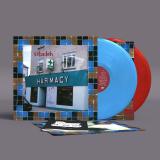
Who could have imagined that Ryo Fukui had left behind a recording like this? Captured on June 8, 1977, this previously unreleased live session was recorded at the Sapporo jazz club Vidro by Masataka Ito, the producer behind Fukui’s albums Scenery and Mellow Dream. It is unmistakably the Ryo Fukui Trio of that era, yet the performance possesses an overwhelming intensity and freshness that far surpass any studio recording—excitement in its purest form.
The 16-minute, searing performance of “Mellow Dream” is just the beginning. The propulsive energy of “Speak Low”, the beautifully woven lyricism of “Body & Soul,” the blistering drive of “Love For Sale”, the weighty depth of “Mr. P.C.”, and the crystalline fragility of “My Foolish Heart”—each track is delivered with feverish brilliance. It was this very live recording, excerpts of which were evaluated at the Trio Records headquarters at the time, that ultimately led to the production of Fukui’s second album Mellow Dream. In every sense, this is an extraordinarily precious document.
- A1: Sonora
- A2: Stella By Starlight
- A3: Speak Low
- A4: Nobody Knows The Trouble I've Seen
- B1: Old Country
- B2: Soultrane
- B3: Chasin' The Bird
- B4: Be My Love
Ryo Fukui, the renowned pianist from Hokkaido who sadly passed away in 2016, has earned global recognition among jazz listeners through his highly praised early works Scenery and Mellow Dream. A Letter From Slowboat, recorded in 2015, marked his first leader album in sixteen years. The sessions took place at Slowboat his musical home together with two young musicians whose talent Fukui himself deeply trusted. The lyricism that seeps through “Sonora”, the poetic warmth enveloping “Stella By Starlight,” the vibrant energy coursing through “Speak Low” each performance is filled with life. His touch grew more forceful, his emotions more profound, his musical fragrance even more luxuriant.
- A1: From Me To U (Feat. Poppy)
- A2: Ratatata (Babymetal, Electric Callboy)
- A3: Song 3 (Babymetal, Slaughter To Prevail)
- A4: Kon! Kon! (Feat. Bloodywood)
- A5: Kxaxwxaxixi
- B1: Sunset Kiss (Feat. Polyphia)
- B2: My Queen (Feat. Spiritbox)
- B3: Algorism
- B4: Metali!! (Feat. Tom Morello)
- B4: White Flame ー白炎ー
- C1: From Me To U (Major Lazer Remix)
- C2: From Me To U (Jordan Fish Remix)
- D1: From Me To U (Live From The O2)
- D2: My Queen (Live From Intuit Dome)
- D3: Algorism (Live From Saitama Super Arena)
"Beyond HEAVY METAL": the deluxe edition is a special 2LP zoetrope vinyl featuring live recordings from arena shows in the UK, US, and Japan, along with “from me to u (feat. Poppy)” Major Lazer Remix and “from me to u (feat. Poppy)” Jordan Fish Remix
Having celebrated its 15th anniversary last year, BABYMETAL presents a new style of heavy metal album created in collaboration with a new generation of friends encountered across the globe. A powerful statement of who the band is today, this album pushes toward what lies "beyond HEAVY METAL" and aims to change the course of history.
Available to own on special edition zoetrope vinyl. Limited quantities, available while stocks last!
- A1: Dragon Slayer
- A2: Lord Of The Castle
- A3: Spellcaster
- A4: Gilgamesh’s Tavern
- A5: Secret Doors
- A6: Adventurer’s Inn
- A7: The Maze
- A8: Murphy’s Ghost
- A9: Masters Of Wizardry
- B1: Temple Of Cant
- B2: Heroes In Training
- B3: Thieves Dagger
- B4: Dungeon Bestiary
- B5: Boltac’s Trading Post
- B6: Nightstalker
- B7: Secret Doors (Choral Version) - Vinyl Exclusive
- B8: Wrath Of The Wizard
- B9: Masters Of Wizardry (Choral Version) - Vinyl Exclusive
Kid Katana Records teamed up with Digital Eclipse / Atari to bring the legendary Wizardry remake game OST, for the first time on vinyl. Winifred Phillips crafted a unique soundtrack, which was recognized by the 2025 Grammy Award Winner for Best Score Soundtrack for Video Games and Other Interactive Media.
This OST is steeped in ancient history and culture, with Phillips using authentic period instruments from around the world, including gitterns, nyckelharpas, dulcimers, and bone flutes, and a choral battle anthem in the ancient language of the Wizardry spellbook.
Between electronic shadows and cinematic textures, this new album from QUENUM draws its influences from the likes of Massive Attack, Archive, and Burial. Started and produced in London, it reflects a change of time — both in the climate and within.
This project represents a personal and artistic turning point for QUENUM. He wanted to experiment with new ideas, not necessarily music for the club. The album was created in close collaboration with his son Zac, a talented musician who contributed both as a singer and instrumentalist on several tracks. They shared wonderful moments creating this album together.
He also worked hand in hand with his long-time friend Christophe Calpini, who played a key role in mixing and in developing the textures and atmospheres that shape the album’s sound. The result is an intimate, personal, and timeless journey, deeply rooted in the now.
Quenum elaborates: “The idea for my album was born during Covid in London, when concerts, museums, and social activities suddenly stopped. To cope, I started running daily and spending hours in the studio creating music. In our garden cabin I worked alongside my son Zac who was practicing piano, preparing for his entry into Trinity Laban Conservatoire. He listened to my tracks, and eventually contributed vocals with his ex-partner on two songs, ‘Blue Sky’ and ‘Never Like Before’. The album’s dark atmosphere reflects that period. Once it was complete, I asked my longtime friend Christophe Calpini to handle arrangements and mixing.”
A true pioneer of electronic music, QUENUM has been shaping the global techno and house scene for over two decades. One of his most celebrated tracks, “Orange Mistake”, co-produced with Luciano in 2001, became a turning point in his career. The success of this collaboration led them to launch the legendary Cadenza label, which rapidly grew into one of the most recognisable and respected imprints in the scene, known for its vital releases and unforgettable parties worldwide.
Over the years, QUENUM has continued to explore new creative paths and refine his artistic identity, constantly reinventing his sound while maintaining his unique musical signature. His insatiable curiosity and openness to new influences have kept him consistently in demand, from intimate underground venues to the world’s most respected festivals and clubs.
Natural Goofy & TC80, two close friends and respected producers, have been spending time together in the studio in Barcelona.
No rules, no timeline, just jamming with machines and letting the sound flow in the moment.
The result is NO PLAN EP: a snapshot of instinct over intent, a record shaped by presence rather than plans. A raw dialogue between friends, gear and the dancefloor.
Made with love, for the music.
Released as a limited vinyl-only edition within the Planka Records series, continuing the label’s mission of capturing underground sounds and sharing them with those who listen deep.
- A1: Aether
- A2: Airships
- A3: Sones
- A4: Intermezzo Op.32
- A5: Timone
- A6: Aer 1
- A7: Aer 2
- A8: Aer 3
- B1: Kujaku
- B2: Portolano
- B3: Moderato
- B4: Ao
- B5: Aether
- B6: An Ode
The monumental 2006 live recording of mama!milk, which laid the foundation for their current performance style, is now available on CD and LP!

mama!milk, hailed worldwide as “Japanese New Exotica,” praised for their “music that entices you on a journey” and “soundtracks to unseen films.”
This site-specific, one-day-only performance, unique to the 21st Century Museum of Contemporary Art, Kanazawa, is packaged here.
Cut The With The Cake Knife was recorded by Rose McDowall in 1988/89 following the break up of her group Strawberry Switchblade. Produced with the aid of several musicians in several studios, the album features songs written for the fabled second Strawberry Switchblade album. More importantly perhaps it showcases the honest, direct and life-affirming songs of one of the greatest unsung songwriters of the modern pop era at a tumultuous time in her career.
Tibet opens the set and could be one of the best pop songs you've never heard. The innate sadness of the songs' content - the loss of a friendship, impending sorrow - is heightened to heart-melting level by McDowall's pop nous and melodic sensibility. Choruses and hooks are everywhere on Cake Knife, from the outsider take on stadium 80s pop in Wings Of Heaven to the spiraling, ecstatic So Vicious, a glorious anthem that highlights the human fragility in McDowall's vocal performance, an instrument that has never lost the naïve purity it first exemplified in Strawberry Switchblade's early 80s recordings. The centerpiece of the album, the title-track, is the greatest Switchblade pop chart hit that never was. Like the veiled melancholy of her former group's hits, Cut With The Cake Knife hints at a darkness beneath the gloss, a darkness that saw McDowall delve into more esoteric territory with her subsequent recordings and collaborations. Cut With The Cake Knife serves as the bridge between the pop music McDowall had been making with her friends Jill Bryson, Lawrence from Felt and Primal Scream to what became a more extreme, deep sound informed by neo-folk and post industrial music.
Rose McDowall's role in the canon has always been one of an outsider. Beginning in Glasgow's East End in the avant proto-noise group The Poems, achieving fame briefly in the 80s and then disappearing into counter-cultural folklore, the emphasis in the internet-age has been skewed towards her image and cultural significance. Unseen to many, her solo work, her groups Sorrow and Spell and her collaborations with a whole host of underground luminaries have still touched lives. As McDowall elucidates: 'They're real sad songs, about real life. I've had people come up to me to say I'd connected with them and helped them. I remember a gig in America when we made a whole room cry. It was bizarre. A couple at the front of the stage started crying and then these two boys beside and suddenly everyone was crying. And I thought, "that's power."
Night School's issue of Cut With The Cake Knife includes unpublished photographs, extensive sleeve notes from Rose McDowall and 2 bonus tracks culled from the bootleg 7' 'Don't Fear The Reaper.' First vinyl pressing is Clear w/ Black swirl; 500 only / has DL card and booklet, with a poster
CD has extensive booklet and is packaged in anO-Card.
In spring 2025, Abul Mogard and Rafael Anton Irisarri created the source material for their second album, Where Light Pauses in the Silence of the Sun, during a three-day residency at Morphine Raum in Berlin. Functioning as both recording studio and performance venue, the space has no stage, with the audience gathered around the performers. Working within an open framework, the duo reshaped the music each evening while recording the performances live to multitrack. Rotary speakers, modular synthesizers and bowed guitar formed the core of their sonic language, captured through a 1970s mixing console and microphones placed around the room.
Back in Mogard’s studio in Rome, the material was further crafted as motifs were stretched, fragments isolated, and tempos dissolved. Irisarri recorded additional guitar textures and treatments in New York, while passages recorded by Martina Bertoni and Andrea Burelli in Berlin reinforced the harmonic centres and brought breath, refinement and a new sensibility to their compositions. The process continued as Mogard’s layering and subtraction reassembled everyone’s parts into the final arrangement.
The album opens with “In the Eastern Wild,” building from a sparse outline into a monumental formation of low-frequency weight, its internal motion shaped by the rotating Leslie speaker. “Over the Domes” widens into a broader acoustic field, where sustained modular tones meet waves of softly plucked guitar. The music then turns inward with “A Blue Descent,” centred on Bertoni’s cello, whose growling timbre introduces a melancholic depth.
At the album’s centre, “In a Quiet Radiance” unfolds around a slow guitar ostinato, its luminous stillness opening into a more expansive and reflective state. Across its ten-minute span, Burelli’s violin lines and Bertoni’s lower cello phrases gradually surface, weaving through the harmonic field. Mogard brings Burelli’s processed voice to the fore, its emotive, operatic presence becoming one of the record’s pivotal moments. “Of Blessed Ages” suspends the sonic flow, shifting between parallel major and minor chords as lingering, slowly decaying melodies shape the music’s internal drift. The closing “Among Shadows” settles into a darker resonance as layered textures recede.
Mogard and Irisarri’s shared language balances restraint and maximalism. UK magazine Crack describes the music as “a tidal wave held in suspension,” while Dutch newspaper de Volkskrant writes, “What a colossal sound, and how this music strikes at the emotions.” Reflecting on the residency sessions, Irisarri recalls: “At moments I genuinely couldn’t tell if a sound was coming from me or from Abul. It stopped feeling like two people making decisions and began to feel like we were inside a system moving on its own."
Marja de Sanctis’ cover artwork revisits the vessel sculpture from the duo’s first album, Impossibly Distant, Impossibly Close. There it appeared as raw, unfired clay. Here it has been fired in the kiln and finished with a glaze. Light gathers on its polished surface and spills into the surrounding space. As she explains, “I wanted to convey the idea of continuity within the duo, and the vessel became a kind of container for that idea. However, their music felt different this time, and with the collaboration of Martina and Andrea, I felt it should have a sleeker, softer, more glamorous look, very distant from the first raw appearance.” The transformation of the vessel from raw clay to fired form suggests a passage from immediacy toward permanence, mirroring the music’s gradual expansion.
In spring 2025, Abul Mogard and Rafael Anton Irisarri created the source material for their second album, Where Light Pauses in the Silence of the Sun, during a three-day residency at Morphine Raum in Berlin. Functioning as both recording studio and performance venue, the space has no stage, with the audience gathered around the performers. Working within an open framework, the duo reshaped the music each evening while recording the performances live to multitrack. Rotary speakers, modular synthesizers and bowed guitar formed the core of their sonic language, captured through a 1970s mixing console and microphones placed around the room.
Back in Mogard’s studio in Rome, the material was further crafted as motifs were stretched, fragments isolated, and tempos dissolved. Irisarri recorded additional guitar textures and treatments in New York, while passages recorded by Martina Bertoni and Andrea Burelli in Berlin reinforced the harmonic centres and brought breath, refinement and a new sensibility to their compositions. The process continued as Mogard’s layering and subtraction reassembled everyone’s parts into the final arrangement.
The album opens with “In the Eastern Wild,” building from a sparse outline into a monumental formation of low-frequency weight, its internal motion shaped by the rotating Leslie speaker. “Over the Domes” widens into a broader acoustic field, where sustained modular tones meet waves of softly plucked guitar. The music then turns inward with “A Blue Descent,” centred on Bertoni’s cello, whose growling timbre introduces a melancholic depth.
At the album’s centre, “In a Quiet Radiance” unfolds around a slow guitar ostinato, its luminous stillness opening into a more expansive and reflective state. Across its ten-minute span, Burelli’s violin lines and Bertoni’s lower cello phrases gradually surface, weaving through the harmonic field. Mogard brings Burelli’s processed voice to the fore, its emotive, operatic presence becoming one of the record’s pivotal moments. “Of Blessed Ages” suspends the sonic flow, shifting between parallel major and minor chords as lingering, slowly decaying melodies shape the music’s internal drift. The closing “Among Shadows” settles into a darker resonance as layered textures recede.
Mogard and Irisarri’s shared language balances restraint and maximalism. UK magazine Crack describes the music as “a tidal wave held in suspension,” while Dutch newspaper de Volkskrant writes, “What a colossal sound, and how this music strikes at the emotions.” Reflecting on the residency sessions, Irisarri recalls: “At moments I genuinely couldn’t tell if a sound was coming from me or from Abul. It stopped feeling like two people making decisions and began to feel like we were inside a system moving on its own."
Marja de Sanctis’ cover artwork revisits the vessel sculpture from the duo’s first album, Impossibly Distant, Impossibly Close. There it appeared as raw, unfired clay. Here it has been fired in the kiln and finished with a glaze. Light gathers on its polished surface and spills into the surrounding space. As she explains, “I wanted to convey the idea of continuity within the duo, and the vessel became a kind of container for that idea. However, their music felt different this time, and with the collaboration of Martina and Andrea, I felt it should have a sleeker, softer, more glamorous look, very distant from the first raw appearance.” The transformation of the vessel from raw clay to fired form suggests a passage from immediacy toward permanence, mirroring the music’s gradual expansion.
In spring 2025, Abul Mogard and Rafael Anton Irisarri created the source material for their second album, Where Light Pauses in the Silence of the Sun, during a three-day residency at Morphine Raum in Berlin. Functioning as both recording studio and performance venue, the space has no stage, with the audience gathered around the performers. Working within an open framework, the duo reshaped the music each evening while recording the performances live to multitrack. Rotary speakers, modular synthesizers and bowed guitar formed the core of their sonic language, captured through a 1970s mixing console and microphones placed around the room.
Back in Mogard’s studio in Rome, the material was further crafted as motifs were stretched, fragments isolated, and tempos dissolved. Irisarri recorded additional guitar textures and treatments in New York, while passages recorded by Martina Bertoni and Andrea Burelli in Berlin reinforced the harmonic centres and brought breath, refinement and a new sensibility to their compositions. The process continued as Mogard’s layering and subtraction reassembled everyone’s parts into the final arrangement.
The album opens with “In the Eastern Wild,” building from a sparse outline into a monumental formation of low-frequency weight, its internal motion shaped by the rotating Leslie speaker. “Over the Domes” widens into a broader acoustic field, where sustained modular tones meet waves of softly plucked guitar. The music then turns inward with “A Blue Descent,” centred on Bertoni’s cello, whose growling timbre introduces a melancholic depth.
At the album’s centre, “In a Quiet Radiance” unfolds around a slow guitar ostinato, its luminous stillness opening into a more expansive and reflective state. Across its ten-minute span, Burelli’s violin lines and Bertoni’s lower cello phrases gradually surface, weaving through the harmonic field. Mogard brings Burelli’s processed voice to the fore, its emotive, operatic presence becoming one of the record’s pivotal moments. “Of Blessed Ages” suspends the sonic flow, shifting between parallel major and minor chords as lingering, slowly decaying melodies shape the music’s internal drift. The closing “Among Shadows” settles into a darker resonance as layered textures recede.
Mogard and Irisarri’s shared language balances restraint and maximalism. UK magazine Crack describes the music as “a tidal wave held in suspension,” while Dutch newspaper de Volkskrant writes, “What a colossal sound, and how this music strikes at the emotions.” Reflecting on the residency sessions, Irisarri recalls: “At moments I genuinely couldn’t tell if a sound was coming from me or from Abul. It stopped feeling like two people making decisions and began to feel like we were inside a system moving on its own."
Marja de Sanctis’ cover artwork revisits the vessel sculpture from the duo’s first album, Impossibly Distant, Impossibly Close. There it appeared as raw, unfired clay. Here it has been fired in the kiln and finished with a glaze. Light gathers on its polished surface and spills into the surrounding space. As she explains, “I wanted to convey the idea of continuity within the duo, and the vessel became a kind of container for that idea. However, their music felt different this time, and with the collaboration of Martina and Andrea, I felt it should have a sleeker, softer, more glamorous look, very distant from the first raw appearance.” The transformation of the vessel from raw clay to fired form suggests a passage from immediacy toward permanence, mirroring the music’s gradual expansion.
“The Long Transition From Death To Wisdom” marks a new chapter in Dmitry’s evolving sonic world – a contemplative, slow‑burning journey through grief, memory, and the quiet emergence of clarity. Rooted in a brooding fusion of shoegaze, goth, and darkwave, the album drifts through washed out guitars, spectral synths, and poignant vocals – its emotional landscape suspended between sadness and awakening. On vocal duties is Dmitry’s longtime collaborator Valeria Simonova, whose presence deepens the album’s atmosphere. Each track feels like a step forward in the ritual of becoming aware of one’s own existence, moving through silence and ancient memories toward a sense of spiritual renewal.
The album opens with the mysticism and layered metaphors of “Liar,” before descending into the ancient, biblical presence of “Serpent Queen.” Midway, “Zenith” rises with shimmering synths and steady, triumphant percussion, while “Echoes of Yesterday” lingers in celestial melancholy, dissolving the boundary between remembrance and insight. The Bside begins with “The Other Side of Life,” a threshold into a quieter, more reflective space, followed by the meditative, ritual like ambience of “Shrine of Ruins.” Closing track “Cold” offers a final exhale from the fading realm of the past – an acceptance shaped by distance, time, and the erosion of old wounds.
An array of musicians contributed to the recoding of the album: Mathys Dubois (No One Is Innocent, exBlack Strobe), Loïc Maurin (M83), Victor Sologub (Deadушки, Странные Игры), Alexander Titov (Кино, Аквариум), Ben Easton (Deary), and others. The album was mastered at Abbey Road Studios by Miles Showell.
- 112: Bells & A Baby Crying
- 2: Ur Cool Knife
- 3: I Haven't Forgotten You
- 4: Wash You Out
- 5: My Spell
- 6: Rock On (Ft. Royal Tusk, April Lawine)
- 7: Smash
- 8: Pt. Iii (Ft. Fireball Kid)
- 9: At Midnite
- 10: Underground Shopping District
- 11: This One
Wer ist Born At Midnite und warum sollte dich das interessieren? Born At Midnite sind keine gewöhnlichen Drag-and-Drop-Produzenten, sondern eine vertikal integrierte Songmaschine. Mit Samplern, künstlichen Drums, Tonbandgeräten und hauseigenem Artwork, alles im Homeoffice-Tempo; seit einem halben Jahrzehnt steuert das Duo aus Montreal ganz lässig auf den Status der ,coolsten Band der Szene" zu. Indem sie den allgegenwärtigen Narzissmus und die Selbstverliebtheit unserer Zeit ausspielen - und sich gleichzeitig darüber lustig machen -, flicken die Jungs eine Art ungesponserten ,Product-Placement-Punk" zusammen. Also sag mir, was hat es mit ihrem Debütalbum auf sich? Was ist das Gegenteil eines Wunsches, der mit einem schrecklichen Fluch einhergeht? Es ist etwas, das niemand wollte, das aber vor ewiger Verdammnis schützt; es ist ,Eternal BAM Nation", das lang erwartete und doch schnell zusammengestellte Debütalbum von Born At Midnite. Und du weißt, dass diese elfeinhalb Songs den Kern der Sache treffen.
WRWTFWW Records unleashes the first ever release of legendary post-disco, funk, soul and electronic UK trio Imagination's cult album Night Dubbing in (well deserved) double LP format. The limited edition full-length comes with pristine audiophile treatment and luxurious packaging : a 45rpm and Half Speed Mastered DLP housed in heavyweight silver cardboard sleeve.
Imagination's singular 1983 album Night Dubbing is a refined deconstruction of black British soul and club pop, filtered through the deep studio and mixing techniques of dub music. Elegant, restrained, and, in its very own subtle way, radical, the record reshapes choice selections from the group's stellar catalogue into an immersive and out-of-this-world listening experience.
The special mixes on Night Dubbing are built on time and space. Basslines elongate and dissolve. Vocals appear, vanish, and reappear like ghosts. Drums fall away into vast silences, while echoes, tape edits, and precise engineering manoeuvres smoothly slide across the stereo field, revealing themselves like magic over repeated listens. Far from simple extensions or 12" versions, Night Dubbing treats the studio itself as an instrument, opening new dimensions of sound.
Often cited as a foundational record in the genesis of the house genre, the album also features the historic Larry Levan remix of "Changes", a Paradise Garage anthem that helped shape the direction of club music for decades to come.
More than 40 years on, Night Dubbing remains a seminal work. Its influence continues to echo through contemporary dance music, offering a blueprint for how pop could be transformed into something darker, stranger, more physical - a timeless sound that drifts effortlessly from the dancefloor into space.
Important note : it sounds amazing played on 33rpm too !
Tip! Amazing Dub House and Techno. REFRACTION returns with Opal (Remixes), the label’s second vinyl release, revisiting one of its most refined collaborative projects to date. Following the strong impact of the original EP by Pedro Capelossi and Aeikus, this vinyl edition brings together three reinterpretations by Federsen, Tm Shuffle and Dubtommy, alongside the original version of Opal, expanding the sonic spectrum while preserving the essence of the release.
Thomas Schumacher’s “Schall" is a landmark Techno track that has pushed the boundaries since it’s original release in 1995. A remix by the man himself turned the underground cult track into a chart phenomen, something unseen up until then. The story continued when Thomas’ created a special mash-up of “Schall” and Soft Cell’s “Tainted Love to celebrate his first DJ set at the legendary Fusion Festival in 2016, which ended up becoming one of the most saught after mash-ups. We are excited to present the 2021 version of “Tainted Schall" by Thomas Schumacher.
London's PRESTi lands on Shall Not Fade's Time is Now imprint with four dancefloor weapons that feel like they forked from the hardcore continuum at the point El-B, Horsepower and Artwork's dark garage was becoming proto dubstep.
EP title Track 'As We Move' is everything that is special about that time; bassweight, space and rudeboy swing. On "Big Ting" PRESTi reaches for more classic UKG groove but fuses it with yet more spacious wobbling low end precision. "Baile Pulse" pivots... channeling in grimey pulse basslines and 4/4 baile funk techno this time. "Get Back" is just the fait accompli for a producer clearly enjoying such fertile ground, a peak time speed garage warper ready to cause damage at any function.
Essential dancefloor gear from a producer growing tall and widening the cracks.
Carlo Troja, aka Don Carlos, from the Italian province of Varese, has been active as a DJ since the late 1970s. He
debuted as a producer in the late 1980s with the single "Alone" on Calypso Records (IRMA), which immediately became a cult hit on the global Deep House scene. His productions have always fused house rhythms with the sounds of
African-American jazz, sometimes bordering on disco, progressive, and electronic soul.
In 1992, his first album, "Mediterraneo," was released in the United States on IRMA USA, followed in 1993 by his
second, "Aqua," and several hit singles with the Montego Bay project with Stefano Tirone (Stone Inc.), all on IRMA
Records.
He reached the UK charts with Byron Stingley's production of the hit "You Make Me Feel," a remake of the classic
Sylvester song. He has performed in various European and American countries, as well as at the Ministry of Sound
and Turnmills in London.
In 2001, he released his third album, "Music in My Mind," featuring Kim Mazelle, Michelle Weeks, Taka Boom, and
Kevin Bryant.
A new album of re-edits of '90s-style songs, titled Livin' a Dream, was released in 2020, along with two compilation
volumes of Paradise House, both on IRMA Records.
With this new single, he continues to showcase his distinctive Soulful Paradise House sound, rooted in the
Mediterranean sound, as specified in the title.
Somewhere between heaven and hell…there is Fallen Angel. Dark Entries continues its mission of shining light on a generation of composers and musicians lost to AIDS with Brandy Dalton’s Fallen Angel, his soundtrack work for the award-winning Fallen Angel series. Brandy was known for many years in the LA underground for his performances with his boyfriend, Robert Woods, who was the resident DJ at Club Fuck. Eventually, they recruited John Munt to form the band Drance, becoming infamous for their high-energy performances and songs that tackled taboo topics like sadomasochism. While Drance explored the aggressive sounds of industrial and EBM, Dalton continued to produce a wide range of electronica, from abstract sonic textures to techno bangers. The Fallen Angel album collects 16 sweaty, sticky cuts composed for the pornographic series Fallen Angel, a trio of leather-focused films released by Titan Studios. The sounds here span from the fractured cyberpunk-rave of “Swelled” to the tabla-laced trance of “FA2,” taking listeners on a journey through hedonistic recesses chock full of crunchy digital drum machines and wailing FM synths.
This album was originally released on CD in 1999 by Titan Studios, capitalizing on the success of the film franchise. It will be reissued on LP as well as CD, featuring 6 bonus tracks. Artwork for the album, designed by Eloise Shir-Juen Leigh, features stills from the Fallen Angel film. Also included is an insert with liner notes and photographs. This album is dedicated to Brandy, who passed away from AIDS-related illness in 2006, after battling with the disease for 17 years. Brandy’s passing was preceded by his best friend and Drance co-founder Robert’s death in 1995. Documenting a sonic shift in the 90s bathhouse music, Fallen Angel provides a hardcore BDSM ride, building upon the analogue archival soundtracks that Dark Entries has previously released.
Bézier ripples their way back to Dark Entries with Decompose, an LP of doomed spa music. Multi-instrumentalist Robert Yang has made numerous appearances on Dark Entries for more than a decade, with releases spanning the stylistic gamut from hi-NRG disco floor-fillers to lush ambient epics. Decompose, Bézier’s second LP, is perhaps his most introspective work yet. It is an album almost ten years in the making, a deep investigation of life, loss, and the struggle of knowing oneself. If one were to pull a tarot deck for this album it would be the Nine of Swords. The album honors the lives of the fallen victims of Pulse Nightclub. It honors lives lost or suffering through the ongoing genocide in Gaza. The title track takes the form of a Buddhist chant, a brooding synth-driven meditation that scales steadily until breaking into John Carpenter-esque arpeggios halfway through. Tracks like “Egg,” “Marionette,” and “A Fading Citadel Atop Black Sand Bluffs” build on this soundworld, one in which intricate melodies and cavernous reverb induce in the listener feelings of both claustrophobia and free-fall. The album’s dancefloor-leaning moments, like “Codebreaking” and “Split a Path Towards the Thicket” are spartan, tunnel-vision techno tracks speeding towards ego-death. Decompose chronicles Yang’s journey to find peace with himself, as a gay Asian American. During this process, they learned to “repot” long-lost parts of their identity so they could grow forth in wholesome fashion. The sleeve for Decompose was designed by Eloise Shir-Juen Leigh, and features a photograph by Frankie Casillo of Robert laying on a bed of rocks in savasana pose, resembling an ascetic, evocative of the monastic vibes of the record.
Dark Entries returns to the steam room with Coatshek’s Sound Bath. For their SoundBaths series, now-defunct poppers brand Double Scorpio commissioned artists to make mixes for an imaginary queer bathhouse. When asked to contribute, San Francisco-based artist Coatshek aka Sheki Cicelsky took the opportunity to create original compositions. The resulting album, Sound Bath, serves as a masterclass in slow and sultry ambient techno. Taking inspiration from Pink Floyd, Manuel Göttsching’s E2-E4, and his friend’s DJ mixes (particularly Nick Moss and Matthew Paul’s for “Por Detroit”), Coatshek landed on 107 bpm as the optimal speed for sauna sex. With just a few synths, his Telecaster, and “lots of delays, reverb, and weed,” he sculpted stunning cuts like the effortlessly grooving “Softest” and the psych-laced “Triple Virgo.” The cover for Sound Bath was designed by Coatshek’s fiancé Nate Sprecher, and features photographs by Luke Kraman taken at The Ever Afters campout. The album also includes an insert featuring the Double Scorpio SoundBaths series artwork by Blake Wright. Equally hypnogogic and sexually supercharged, Sound Bath situates the bathhouse as a liminal dreamspace of unbounded erotic potentiality.
For their first release, it was pretty obvious for Hypnophone to give a new life to an all-time favorite but forgotten project : GLO. Released in 1995 on CD’s only, « Even As We » is the first and last album of the duo, composed of Stephan Lewry and Gilli Smyth, both ex-members of the legendary rock band GONG and pioneers of psychedelic music.
This double LP, carefully handcrafted and redesigned, is the result of a lovely 2 years collaboration between Hypnophone and Stephan. A cosmic, unique masterpiece, who also features a new thirteen minutes track, specially produced by Stephan while remastering the album in 2025. In the dear memory of Gilli ♡
Note: Includes two printed inner sleeves, transparent red vinyl and an A5 insert.
After a series of successful outings alongside sidekicks Ofofo and Zongamin, studio wizard MYTRON turns in his debut solo full-length for Multi Culti World Records. With contributions on Invisible Inc, Calypso, Bongo Joe, Kalahari Oyster Cult, LYO, Codek Records and Earthly Measures, Mytron has carved out a name for himself in a carefully-curated left-field quadrant of the indie-dance galaxy. Tuning his oscillators to myriad sounds — from dub and disco to krautrock — the London-based producer perhaps most notably channels the pristine compositional style of Kraftwerk. While most apparent in the use of vocoder, there’s a consistent efficiency of arrangement that recalls the man-machine in effervescent, idealistic fashion. Mytron manages to keep it simple, funky and musical — whimsical tunes that bop along with analog grit, wilderness, and wonk. There’s a warmth and wit that shine through every synth line, an understated confidence that speaks of years spent tangled in wires and waveforms, with an inclusive sonic eclecticism that flattens hierarchies between genres, geographies, and generations. Each influence is invited to the table, treated not as pastiche but invited to dine and dance in a space where kosmische dub disco and Afro rhythms can coexist without borders. The sleeve design echoes this philosophy: video-feedback patterns hinting at our modern screens, both portals and filters — coloured, distorted intermediaries through which we perceive the world. In the trippiest sense, the record is both reflection and refraction — a sonic mirror held up to an interconnected, glitchy reality. Tailored equally for DJ use and home-listening head trip, the album is meticulous, mischievous and merry.
BanBanTonTon review:
On Mytron’s debut long-player for Multi Culti groovy 21st Century leftfield house gear collides with Daniele Baldelli and Beppe Loda’s hugely influential `80s afro / cosmic. The 9 tracks are chunky, chugging and full of funky, funny noises. Old school B-lines mixing with eccentric electronics. Spinning, spiralling sounds.
Sugar is an electro-pop, vocoder confection, cut from the same sonic cloth as cult classics like Codek’s Tam Tam. Created from tough trap drums, splashing effects and a mutant Giorgio Moroder bass arpeggio. The title track, Propellor, pits Kraftwerk-esque hardware harmonised vocals against a bongo loop and a whistling hook. Playground has simian shrieks surround tumbling tom-toms. Highway Maintenance adds kosmische synths to a dance of woodblocks and buzzing bottom end. Keep On Dubbing is an organ-led, clip clopping percussive canter.
Tracks such as Speaker Can Talk, shot through with disco lasers blasts and recalling Curt Cress’ Dschung Tek, also lift the tempo up, but the bulk of the music here is a mid-tempo, techno drum circle. Squelchy sequences gurgling in and out of programmed percussion. On Quasar, spiky acid edges in and slowly takes over.
Key references that come to mind are Baldelli’s own turn-of-the-2000s Cosmic Sound Project productions, and Wolf Müller’s scene shaking sides on Themes For Great Cites, from around a decade later.
- A1: Gregor Salto Feat. Chappell - Your Friend
- A2: D. Van Horn - Somebody Now To Love (Dj Wout Remix)
- B1: Sascha Funke - Mz
- B2: Fabo Feat. Lostcause - Where I Stand (Karmon Remix)
- C1: Andain - Beautiful Things (Gabriel & Dresden Unplugged Mix)
- C2: Moko - Fly
- D1: Pob & Taylor - Today (Seismic Remix)
- D2: Feist - My Moon My Man (Boys Noize Classic Mix)
After ten years 12 Inch Lovers has become a household name not only because of their parties but also because of the fantastic vinyl samplers they released over the past few years, which were sold out in no time and have become true collector's items.
They now continue in the same vein and once again bring a fresh and contemporary mix of hard to find, original house classics or even classics that never had a vinyl release.
These samplers should therefore not be missing from any 12 Inch Lovers collection.
"Gregor Salto" is at it again! Sampler 6 opens with that other and hard to find classic of his "Your Friend". A club classic that has won the hearts of countless clubbers and house fanatics around the world since 2009. And speaking of hearts; Belgian dj-producer "DJ Wout" released this beautiful and emotional remix of "D. Van Horn's" "Somebody Now To Love". A true trance classic and typical in sound for that period that you can find on A2.
On B1 we find a more recent track but which you can already say is a future classic. "MZ" from "Sascha Funke" is still played to this day by top DJs like Solomun and very hard to find on vinyl. A must have! Dutch producer "Karmon" delivered this catchy deephouse remix of "Fabo's" "Where I Stand" in 2012. You can find it on B2.
On C1 we find the beautiful "Andain" classic in the "Gabriel & Dresden Unplugged Mix". "Beautiful Things" was picked up by "Tiësto" at the time and has made it a true classic. Hard to find on vinyl.
"Moko" "Fly" on C2 is a very catchy and quirky track from 2010 that never had a vinyl release! Highly recommended!
D1 brings the dreamy and highly sought after "Today" from "POB & Taylor" in the "Seismic" remix after which we close with D2 with a true classic.
"My Moon My Man" by "Feist" is probably that record which remix is better than the original. "Boys Noize" was responsible for this in 2007 and the rest is as they say history.