Few groups arrive as fully formed as EPMD did. This dropped as the third single from the album of the same name, and further cemented their distinctive aesthetic: Slow rhyming, trading lines rather than the rappers being confined to their own verses, and backings that were ruthlessly funky and simple at the same time.
They’d go on to be labelmates with Public Enemy when Def Jam picked up their contract in 1990, and to compare and contrast the two is illuminating. While PE at that time were making waves with the Bomb Squad’s breathless, kitchen sink approach to production, EPMD were equally adored for taking the opposite approach.
Here, there’s a sprinkle of drums from Kool & The Gang’s oft-sampled ‘Jungle Boogie’, paired with a very recognisable portion of Eric Clapton’s ‘I Shot the Sheriff’. And that’s pretty much it – the two samples are linked, looped and left to their own devices. Such was Erick and Parrish’s confidence in their own rhyming ability and strong voices, no further embellishment was needed.
That confidence extends to the subject matter. While their debut album and later projects were heavy with concepts – the ‘Jane’ series – and notable guest verses, this was the third straight single of pure brag rap. Two MC’s, one beat, a whole heap of lyrics about how good they were. It’s something you can’t do unless you truly are special, and this duo most certainly were.
Paired with the classic instrumental version, which didn’t make it to the US 7” releases – it’s only on a hard-to-track-down French 7” pressing from 1989 – this this is a timely reminder of how breathtakingly perfect hip-hop can be.
Cerca:special series
The 17th in our Attack The Dancefloor Series that is always a strictly vinyl affair. This time we’ve got some exclusive remixes to dish out in this Special Remix edition of the series.
First up we got the Freerange boss in to remix the classic Sunburst Band track ‘He Is’. The mighty Jimpster has turned in a rich and sublime mix that truly deserves to be called Deep House. Warm Rhodes licks twinkle over deep kicks dubbed out guitars and hazy echoes. The whole track is drenched in Jimpster's deft touch as a producer and we think this is one of his best remixes. A Heavenly rework you might say.
Next up is a long lost remix from Andrés of ‘I Recoginise’ by Joey Negro. Never before released this was unearthed deep within a hard drive in the ZR vaults, now seeing the light of day it deserves. Andrés does what you would expect of him delivering a bass heavy MPC driven rework, utilising the synth lines and vocoder to great effect.
Fresh off a run of hot remixes for Glitterbox is Razor n Tape’s JKriv who turns the disco arpeggios up to 11 with his soaring remix of Prospect Park’s ’The Kinda Love’ complete with live strings and percussion.
Last but not least, The Visions’s dreamy piano led remix of the classic 'My Vision' by Jakatta featuring none other than Seal on lead vocals.
After the great success of the first two releases of the RE-TOUCHED SERIES, Conform Records continues its journey by giving us a new gem to collect. Gaetano Parisio seems to have no intention of stopping and calls other 5 legends to get their hands on tracks of his label's catalog. The third release contains four tracks plus one digital only bonus with heavyweights Deetron, Steve Bicknell, Ken Ishii, Oscar Mulero and Alexander Kowalski all stepping up.
Once again Swiss legend DEETRON, through his class, hits the mark. His Vesuvius edit of Gaetek's is a slamming track with driving drums and worms synths that bring it into the present day with a real sense of style.
STEVE BICKNELL is another techno legend who runs his own 6dimensions label. His edit of a track from Gaetano's Ritmatica goes as usual directly to the point. Steve stays true to the original sense of the track by masterfully adding his "Lost" touch through reverbs and percussion.
KEN ISHII, a true Japanese techno titan, incredibly manages to bring color and life to Gaetek's Advanced Series Vol. II. The result is amazing! The track is a dance floor killer. Its vintage charm is the key!
The Spanish Maestro, OSCAR MULERO, brings his dark and hypnotic style to the original Gaetek track. His Ømre Edit totally distorts the original one using percussion and filters giving that hypnotic flow for which the Madrid artist has always been known and respected throughout the techno underground scene.
To close this majestic EP ALEXANDER KOWALSKI, the backbone of the German techno scene, through his incredible talent creates a true masterpiece. His edit of Gaetano Parisio's Quake is undoubtedly something special. The syncopated rhythm and the addition of synths, create a third millennium atmosphere. His crystal clear talent as a producer is captured in these 6.25 mins.
Lovers of true techno will not be disappointed. This is for sure!
A firm Drumcode favourite, Mark Reeve is back with his latest techno opus.
Weaving his vitalising, biting techno through the seminal imprint since 2012, Reeve has since become a permanent fixture within Adam Beyer’s camp. He saw demand for his knockout ‘Run Back’ EP being matched and surpassed by his ‘Far Away’ EP. Staunch DC fans will also be familiar with Reeve’s output on the label’s A-Sides compilation series, and clubbers hot on the tails of Drumcode events will have caught him centre stage across a string of showcases, including the inaugural Drumcode Festival.
Reeve’s music invariably endorses an arresting sonic aesthetic, with intense melodies often driving in those eye-closing moments. The title track ‘Distance’ is an atmospheric opening gambit set to sonically massage the senses with uplifting pads and a radiant melody. ‘Serum’, a track recently road-tested by Beyer at a special event in collaboration with Cercle, soars and captivates as it progresses with a low-end rumble and intricate keys. ‘Fix Me’ is a vigorous techno workout that’s intent on energising a clubroom rammed with sweat-soaked dancers. Closing off the EP, ‘Filmwave’ rides a killer groove into a pit of punchy, powerful kick.
Repress!
Wiggle celebrate 25 years and relaunch their iconic label with a releases including co-founders Terry Francis, Nathan Coles and Eddie Richards, as well as artists like D’julz, Silverlining, Mihai Popoviciu, and more.
Wiggle, the brand that gave birth to tech house a sound that would power London’s club music community for over two decades, step out into their 25th year. To mark reaching this remarkable milestone, they plan a special series of international shows and a relaunch of their influential and ground-breaking label.
Taking their lead directly from the acid house movement, Nathan Coles and Terry Francis first brought Wiggle to life through their heady warehouse parties in the early 90s. Unpretentious to their core, these now infamous events were known for their purist values – community and a sound that booms. Finding a kindred spirit in another new face, Eddie Richards became resident from early sets and was a key figure from the off.
Through these now historic events, they embedded themselves deeply into London’s party landscape becoming familiar faces at cultural institution fabric. Heavily based around the core residents they also invited parts of the international and local world from Richie Hawtin, Jay Tripwire, Abe Duque and Colin Dale.
It’s about here we acknowledge Wiggle’s place in originating tech house - working the hard line swagger of techno together with the depth of feeling of house, matching rhythm with bass in a way perfectly aligned with endless hours of hedonism. This potent mix of musical elements is where it began and set down the foundation of London’s rich and active community of DJs, producers and ravers.
The label was founded close to the parties, sourcing tracks from the ever building network of producers who were fuelling this sound evolution. For their 25th birthday you can expect to see the Wiggle imprint coming back in strength - returning to cutting tracks to wax and continuing its legacy for bass fuelled party sounds and pioneering new talent.
2019 will see a series of international shows and a quarterly London party bringing the much loved Wiggle sensibilities and celebrate what they are and have achieved.
Words from the label:
Our imprint marks its five years anniversary this year and to celebrate it's offering up five special various artist packages across 2019 limited to 250 copies each,
featuring material from the likes of Vid, The Mole, Cinthie, Shinichiro Yokota, San Proper, Akiko Kiyama, Com Sin aka Cosmin TRG, Subb-an and more..
'Series 01', penciled for release in May sees Cosmin TRG return under his Com Sin guise with 'Glass Harps', a fluidly unfolding five and half minutes of pulsating subs, glitching percussion and sparkling harp tones before DJ Sodeyama aka The People In Fog's 'Chapter Zero' takes on a modulating hypnotic feel via psychedelic swells, tension building textures and a bumpy, robust rhythm.
UK duo Yard One join the roster with 'Dream Travel' on the flip-side, employing a more ethereal aesthetic with floating pads, winding chords and a heavily swung drum groove. This project also sees a new design concept for the imprint from London's David Surman's painting installation project 'Paintings For The Cat Dimension' which ''explores the motif of the cat as emblematic of internet aesthetics, a place where all painting styles and modes now exist non-hierarchically as pure information.''
Good morning children, welcome to school ! What might be known from "Ipoly Mate 003", got a very different context here in the title track. Heavy club food, flavoured by Alec Troniq's love for the energy of the early 90s. "The Chain" was originally induced by Old Man Trouble and then impulsively got the blues by Alec Troniq. It has a special place in their hearts and continues Alec's series of crossover-collaborations in 2014.
Faitiche welcomes a new artist: Christina Kubisch belongs to the first generation of sound artists. Her practice ranges from performances, concerts, to works with video and visual art, but she is best known for her sound installations and electro-acoustic compositions.
TUNING brings together three pieces by Christina Kubisch from different periods of her oeuvre. What they have in common is the way they transform sound phenomena originally considered “non-music” into compositions.
Jan Jelinek: Gaming in Silence (2024) is the most recent work on this compilation. It’s a collage of electromagnetic waves, voice, and abstract sound textures. How did this combination come about?
Christina Kubisch: Gaming was commissioned as a fixed-media composition for the Sound Dome at ZKM Karlsruhe. Since Resonances: The Electromagnetic Bodies Project (2005), I’ve been making recordings in the old and new server rooms at the ZKM and in their permanent collection of historical computer games. Computer games like Asteroids (Atari, 1979) and Poly-Play (VEB Polytechnik, 1986) have specially generated analogue electromagnetic waves that interest me in particular on account of their density, rhythms and textures. I originally studied painting and to me the work of composition often feels like painting an abstract picture. I alter my source material as little as possible, layering and overlapping until a distinctive sound space emerges. In recent pieces, I sometimes combine magnetic waves with field recordings or live instruments. In Gaming it’s my recording of a Chinese song about silence.
JJ: Two persons walking through a street in Madrid (2004) is a recording from your Electrical Walks series. Here we should give a brief explanation of one of your best known works: participants in an Electrical Walk move through public spaces wearing prepared headphones that allow them to receive electromagnetic waves from their surroundings – for example from security gates, ATMs or neon signs. They discover a situation that normally is inaudible to the human ear and they can actively shape it by choreographing their movements. I really admire this piece, not least because there’s no clear dividing line between participants and artist. What exactly do we hear in Two persons walking through a street in Madrid (2004)?
CK: With this early work, I wanted to understand what is heard by people participating in an Electrical Walk in the same place but moving in different ways. The Spanish composer Miguel Alvarez-Fernàndez and I set off from opposite ends of a major shopping street in Madrid, met briefly in the middle, and then continued to the end. We both recorded our walks and I then layered them over one another. You might call it a work of electromagnetic conceptualism.
JJ: Diapason (2009 version) is an installation that plays a composition based on sounds from fifteen tuning forks. This setting is audible in the recording: there’s no dramatic arc, no beginning or end – instead, it recalls a piece of aleatoric music focussing on the decay phase. How did you come to make this work and could you tell us something about your compositional method?
CK: Diapason is part of a series of three pieces that deal with “non-instruments” or instruments that no longer exist: electrical mine bells used to send signals to the workers underground; a historical glass harmonica originally used for medicinal purposes; and tuning forks that were used by doctors to test people’s hearing. All of these methods are no longer in use. The sound of the tuning forks, audible only if held close to the ear, was recorded at the electronic studio at Berlin’s Technical University in such a way that even their decay remained audible. The frequencies range between 64 and 2048 Hertz and they can be adjusted at micro-intervals using small movable weights. The sequence and the duration of the pauses are dictated by chance and were not defined in advance. The 2009 version was created for an installation in the historic Holy Cross Church (Korskirken) in Bergen. Visitors could enter and leave the space at any time, deciding for themselves where and for how long they wished to listen to the sounds played back over an array of small loudspeakers placed on the floor of the apse.
Credits:
Gaming in Silence: commission of the ZKM/Hertzlab, Karlsruhe 2023
elektronic sound processing: Tom Thiel
sound engineering and mixing: Eckehard Güther
Diapason: produced at Elektronisches Studio of TU Berlin
rearrangement: Eckehard Güther
Christina Kubisch, published by Edition Christina Kubisch / Random Musick Publishing
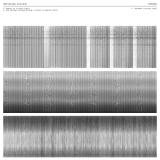
image front: Transitionen 2021 by C. Kubisch, sonagrams of electronic waves (courtesy: Galerie Mazzoli Berlin)
image back: Diapason Tuning Fork, property of Folkmar Hein, Photo: Archiv Christina Kubisch
design by Tim Tetzner
mastered by Giuseppe Ielasi
Thanks to Miguel Álvarez-Fernández, Folkmar Hein, Dominik Kautz and Mario Mazzoli
Double LP in matt-laminate gatefold sleeve with silver detail. We mark a decade since we first released COIL's landmark album 'Backwards', with a special 10 year anniversary vinyl reissue. After the ground-breaking release of 1990's "Love's Secret Domain" album, Coil were not dormant; the main project was "Backwards", which was started in 1992, updated considerably between 1993 and 1995, and transferred in 1996 to New Orleans, where it was finished in the magic of the Nothing studios of Trent Reznor (Nine Inch Nails). The album saw the fruition of Jhonn Balance's recent vocal coaching, producing haunting, passionate vocals, while reaching new heights. 23 years after its initiation, these tracks have been beautifully preserved by Danny Hyde and are finally available in highest quality audio. Differing substantially from the later, remixed incarnation, "The New Backwards" (2008), "Backwards" contains the original versions of Coil's much-loved tracks; 'A Cold Cell' and 'Fire Of The Mind', which have appeared on various compilations over the years, and are now presented as originally intended. his album is the essential bridge between "LSD" and the later "Musick To Play In The Dark" series. It is an essential conduit, to understand the journey that was taken. It was to be released... it should have been released... but because of issues with grey men it wasn't. It is now, so enjoy. (Danny Hyde).
7SINS SERIES is a collection of seven EPs, each associated with one of the seven deadly sins. Curated by Pau Pérez, the series is released on the SpecialK Records label, driven by Carlos Caballer, and brings together seven producers, each responsible for shaping a distinct release.
LUTTONY is the first EP in the 7SINS SERIES. This release is driven by a clear mission: constant, no-compromise groove. Each track is built around catchy basslines that set the pulse from the very first bar, wrapping the listener in a hypnotic sound that never lets up. Inspired by part of the current Valencia sound, the project focuses on energy, rhythm, and club-oriented atmospheres. No detours, no filler—music made straight for the dance floor.
- Phonè
- Turenas
- Stria
- Sabelithe
Dr. John Chowning (b. 1934) is a pioneering computer musician, composer and professor who, in 1967, discovered the FM synthesis algorithm. This breakthrough in electronic music allowed for simple, yet rich timbres described as sounding "real." With this discovery, Chowning composed singular, dramatic electronic music and changed the timbre of music forever.
Chowning utilized the potential of computers to synthesize sounds according to programmed instructions. The composer's use of his own FM algorithms, digital synthesis with computers and the new compositional concepts offered by a programmable musical structure combine to create some of the most original and unique electronic music ever created.
The compositions on this LP were realized between 1966 and 1981 and the music on this LP, with the exception of Stria, was originally released on CD in Germany (Wergo, 1988). The version of Stria included here contains a section not included on the Wergo CD. Thus, this version of Stria is complete. This is the first time these purely digital recordings have been released on an analog medium. The original dynamics of these groundbreaking compositions have been preserved on this LP. As a result, listeners are advised to increase volume with caution.
In 1975, John Chowning founded the CCRMA - Center For Computer Research In Music and Acoustics at Stanford University. Through Stanford, Chowning licensed his groundbreaking algorithms to Yamaha resulting in numerous new instruments including the iconic DX series of keyboards. In 1972, his composition Tureens which is included on this LP, was the first to create the illusion of continuous 360-degree space using four speakers.
Technical Notes:
All pieces on this LP are originally quadrophonic. The illusion of moving sound sources is thus projected from the surrounding environment given by four loud-speakers on the stereo-basis.
STRIA was composed using Chowning’s own program to compile the musical structure into note-lists and MUSIC 10 (by D. Poole/Tovar) to generate the sounds in software-synthesis. The original quadrophonic version utilized 12 bits, two different sampling rates being used to accommodate the enormous amount of data on the magnetic disc-packs available at that time. The original sound-data was processed by sampling-rate conversion and digital mixes to achieve the stereo version presented on this LP.
SABELITH and TURENAS were synthesized originally using Smiths’ SCORE and MUSIC 10. However, their format was changed from direct sound-samples to a command stream for a special purpose computer, the System Concepts Digital Synthesizer, designed by Peter Samson, one of the first large-scale digital synthesizers for real-time sound processing - one was designed for CCRMA in the late seventies. For this recording the sounds were recorded directly from the synthesizer computing the samples in real-time.
PHONÈ was realized with the System Concepts Digital Synthesizer using again Chowning’s own program to create the note list.
The master tape of this LP was made directly from the computer system at CCRMA which generated and stored the sound data in digital format. No analog recording was involved at any stage of the production and editing process.
- A1: Electrifield Love
- A2: Come On Y'all
- A3: Your Love (Is All I Need)
- A4: What Would I Do?
- B1: Sugar Plum (Gimmie Some)
- B2: A Better World (For Everyone)
- B3: A Change Is Gonna Come
- B4: Explain It To Her Mama
- B5: Our Generation
Magenta Vinyl[32,35 €]
Super-rare Stax funk masterpiece, a big favourite of Pete Rock who sampled it on his classic ‘Let’s Straighten It Out’.
When we started the BGP Funk & Jazz Classics series earlier this year we had an idea that we would put a few albums out, and that would be that. But as we reach our third batch of five we have found that there is a whole world of sought-after original albums, which for a myriad of reasons have failed to turn up in the reissue racks. This time we have come up with something very special, digging deep into the Stax Records vaults to rescue five of the most collectable albums on the label.
Ernie Hines “Electrified” was recorded for Stax’s We Produce subsidiary. Hines had been signed to the label by Al Bell on the recommendation of the publisher of Jet magazine. The album is a fantastic piece of southern soul, with a couple of funk tracks, including ‘Our Generation’, a politically-edged call to arms, that became very sought-after when it was sampled by Pete Rock. (Dean Rudland)
Super-rare Stax funk masterpiece, a big favourite of Pete Rock who sampled it on his classic ‘Let’s Straighten It Out’.
When we started the BGP Funk & Jazz Classics series earlier this year we had an idea that we would put a few albums out, and that would be that. But as we reach our third batch of five we have found that there is a whole world of sought-after original albums, which for a myriad of reasons have failed to turn up in the reissue racks. This time we have come up with something very special, digging deep into the Stax Records vaults to rescue five of the most collectable albums on the label.
Ernie Hines “Electrified” was recorded for Stax’s We Produce subsidiary. Hines had been signed to the label by Al Bell on the recommendation of the publisher of Jet magazine. The album is a fantastic piece of southern soul, with a couple of funk tracks, including ‘Our Generation’, a politically-edged call to arms, that became very sought-after when it was sampled by Pete Rock. (Dean Rudland)
- A1: Elado - I Wanna Dance
- A2: Gee Lane & Dante Feat Jose Barranquero - Rhythm Roots
- A3: Marla Kether - One Time
- B1: Alma Negra Feat Pat Kalla - Soleil (Extended Version)
- B2: Musta - Afro Tonic
- C1: Alot - Mi Casa (Extended Version)
- C2: Arpy Brown & Kapote - Drop It Low
- C3: Daniel Monaco & Bop Feat Candy Voice - Sobby
- D1: Paul Older - Xylo
- D2: Melon Bomb – Galia
WILDSTYLE HOUSE is a new compilation series where Toy Tonics invites producers and DJs that have a very special, funky, unique sound to make one new track. The compilation should show the variability and diversity of house and disco TODAY. Like the wild music mix you can hear at the Toy Tonics events and the way Toy Tonics DJs combine many different styles of "4 to the floor" music into one new soulful, multi-style, and warm-sounding blended "genre." It's about the groove, about a new soul sound, the human feel, the organic and Y2K-inspired dance music that is growing and appeals to a new generation of dance music lovers.
This first part of the compilation includes unreleased music by:
Afro-funk and salsa-house producer talents ELADO, MUSTA, and ALMA NEGRA.
Garage house maestros MELON BOMB and Italian musician DANIEL MONACO (known for his New Wave disco and proto-house releases on Rush Hour and his work for Antal).
MARLA KETHER, the London bass player and DJ, who is known for her work with Little Simz, Oscar Jerome, and Loyle Carner, and has now started to release her own tracks.
Argentinian singer, musician, and DJ ALOT, combining proto-house vibes with Spanish rap.
Funk house producer and edit maestro PAUL OLDER, who is starting to become one of the key names of the new soul house scene (supported by DJs like Folamour, David Penn, Seth Troxler, Kirollus, Breakbot...).
And also Toy Tonics' own GEE LANE, KAPOTE, and ARPY BROWN contributed new tracks.
2026 Repress
Next year the iconic anthem Cafe Del Mar will celebrate its 30th anniversary, a landmark that will be celebrated with a series of brand new remixes alongside the finest existing remixes in specially remastered versions.
Launching the series of vinyl releases in September is a remastered vinyl-only release of the original mix, as well as the best-known version of this classic track, the iconic Three ‘N One Remix.
Nearly 30 years ago, Paul M aka DJ Kid Paul recording as Energy 52 unleashed a record onto an unsuspecting public that would go on to define club culture for an entire generation of dance music enthusiasts. Named as an homage to the legendary Ibiza sunset spot, Café Del Mar broke down boundaries between the underground and
the mainstream, charting in the UK singles charts on three separate occasions and named as the “best tune ever” by Mixmag at the start of the new millennium. In terms of cultural and emotional impact in dance music, it’s hard to find a record that comes close.
Café Del Mar has come to represent the most euphoric and hedonistic pleasures of dancefloors - in Ibiza and all around the world - and has been remixed by some of the biggest names in the industry. Now, 30 years after its original release, Superstition Records will be putting out a new series of releases, with brand new remixes as well as remastered versions of some of the many remixes from across the last three decades. The vinyl-only remastered version of the original and Three ‘N One mixes will launch the series, with further details about the rest of the series announced in the coming weeks.
In 2021 Paul Van Dyk’s Café Del Mar remixes launched a series of vinyl and digital re-issues on the Superstition Records imprint after an almost 20 years hiatus. From 1993 until 2003 Superstition Records was a groundbreaking Techno, Tech-House and Trance Label and released some of the biggest and most revered records of the early German electronic scene.
- 1: Lost Future
- 2: Slow Deep Dive (Intro Version)
- 3: Lonely Choice
- 4: In Motion
- 5: Twisted Plans (Car Park Version)
- 6: Grief Process
- 7: Distorted Idea (Maxi In Prague Version)
- 8: Absent Mind
- 9: Acceptance
- 10: Event Flow
- 11: Slow Deep Dive (Alex Version)
- 12: Deep Dive (Jsk Version)
- 13: Twisted Plans (Red Club Version)
- 14: Strange Love
Political thriller Je Suis Karl, produced by German director Christian Schwochow, has a strong Czech connection. The soundtrack has been created by Czech musician and composer Tomáš Dvořák, a.k.a. Floex, who joined forces with British composer and pianist Tom Hodge. The soundtrack for Je Suis Karl will be released on September 16, 2021.
"In this project, Tom and I built on music that we wrote together three years ago for the album A Portrait Of John Doe. While this was the first feature film for me, Tom has extensive experience with composing music for movies and series," commented Dvořák.
Co-produced by the Czech company Negativ and filmed in part in the Czech Republic, the movie features characters played by Czech actresses Anna Fialová and Elizaveta Maximová. The picture makes use of the story of a young German girl, Maxi, and her family to draw attention to rising extremism among right-wing nationalists. Je Suis Karl was premiered during this year's Berlinale film festival in the Berlinale Special section.
At the director's initiative, music for Je Suis Karl was composed based on the script before the emergence of the COVID-19 pandemic. “Christian Schwochow asked for a demo, but when Tom and I set to work in Prague, we came up with a huge amount of inspired stuff within a short time, and the music became the foundation of the soundtrack. Because of the pandemic, the music itself was created on a long-distance basis. It was a game of ping pong of sorts," Dvořák added.
The soundtrack for Je Suis Karl features a unique timbre, far from the traditional symphonic sound. Instead, the sonic design relies on a fusion of dark, discordant, dirty sounds that present the symphony orchestra in a novel fashion.
Floex and Hodge created a database of loops, sounds, soundscapes, and sonic experiments with no specific compositional context. In composing music for individual scenes, they used this musical database, remixed themes and versions of compositions, and worked with vintage equipment, such as the Yamaha MT4X cassette player. Considering the large quantity of music recorded, the album contains 14 compositions from the movie itself, plus bonus tracks that did not make it into the film.
Tomáš Dvořák, a.k.a. Floex, is a Czech clarinetist, composer, producer, and multimedia artist, the recipient of multiple Anděl Music Awards. His discography includes two long-play records, Pocustone and Zorya, soundtracks for the games Samorost 2, Machinarium, Samorost 3, Pilgrims, and Papetura, remix albums, and extended-play records. In 2018, he joined forces with Tom Hodge to release the album A Portrait Of John Doe.
British composer, pianist, and clarinetist Tom Hodge challenges the boundaries of contemporary experimental music. He composes music for film, series, documentaries, advertising, and ballet. His most recent projects include the soundtrack for Je Suis Karl and music for the movie The Mauritanian filmed by director Kevin Macdonald. He has released several solo albums, including Piano Interrupted and Second Moon of Winter, and has pursued a long-term collaborative partnership with musician Max Cooper.