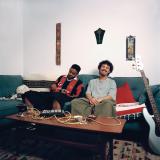
Following the international praise for their 2024 debut album Where Did You Go?, Sandman Project return with Hearts Forever, the first album entirely composed, arranged and produced by guitarist, composer and bandleader Tal Sandman. Rooted in psychedelic groove, Middle Eastern musicality, funk, jazz and desert rock, it is a record driven above all by a wider spiritual belief in music as a force for connection.
If Where Did You Go? introduced Sandman Project as a borderless, brass-heavy outfit with a cinematic sound, Hearts Forever takes that vision somewhere more intimate and self-assured. Written following Tal's move from Jaffa to Leipzig, the album reflects a period of personal and creative transformation. Arriving in Germany without knowing whether she would find the right collaborators, she gradually assembled a new band through recommendations from fellow musicians, discovering a group capable of bringing her musical vision to life. For Tal, the music is not about drawing neat lines between styles or traditions. It is about taking inspiration from wherever it appears and reshaping it into something honest and alive. "If music touches my heart, it inspires me", she says. "So much music already exists, but what we are doing is creating something new out of inspiration. You take the ingredients and make a new thing".
This is the quiet force behind Hearts Forever. Almost entirely instrumental, the album deliberately leaves space for listeners to find their own stories within it. Without lyrics, the music is never confined to one language, nationality or identity.
Following support for Where Did You Go? from All About Jazz, DJ Magazine, Bayern Radio, Greedy For Best, Pipelines Magazine, Ban Ban Ton Ton and Laurent Garnier, Hearts Forever finds Sandman Project entering a new chapter: more confident, broader in vision and more deeply rooted in Tal Sandman's own creative voice. Rich, restless and full of feeling, Hearts Forever is music for uncertain times; a record about holding on to innocence, choosing compassion and believing, however quietly, that connection is still possible.
There's a moment during every great dance floor experience when the music takes over and everyone becomes part of something bigger. "SHOUT!", the latest release from 2SoulFusion Presents Ascension, captures that feeling in its purest form. Featuring the powerhouse voices and ad-libs of Dames Brown and Dawn Tallman, along with an all-star ensemble of master vocalists including Josh Milan, Rahsaan Patterson, Lisa Fischer, Cindy Mizelle, Audrey Wheeler, Ramona Dunlap, and Lea Lorien, this joyful anthem is an invitation to let go, lift your spirit, and celebrate through music.
Produced, written, arranged, and mixed by 2SoulFusion—Louie Vega and Josh Milan—"SHOUT!" draws inspiration from the communal spirit of gospel while embracing the energy and freedom of house music. Driven by simple yet powerful affirmations—"Shout," "Sing," "Move," "Love," "Get Up On Your Feet," "Listen Up," and "Let This Music Take You Higher"—the song transforms into an experience where every voice becomes part of the celebration. It's a journey of anthemic hooks, soaring harmonies, infectious grooves, and unforgettable melodies designed to ignite dance floors, uplift hearts, and remind us that music has the power to unite people through rhythm, joy, and love.
The inspiration for "SHOUT!" was born from a creative exchange between Louie Vega and Charaf Tajer, founder and creative director of the internationally acclaimed fashion house Casablanca. Introduced by longtime friend Joseph Capriati, Charaf shared a bold vision—to bring together the worlds of fashion, gospel, and house music for one unforgettable Casablanca runway presentation in Paris.
Louie Vega recalls: “Charaf was introduced to me by my friend Joseph Capriati, who said Charaf was looking to meet me about an idea he had. His vision was to marry fashion, gospel, and house music within Casablanca's collection. At first, he wanted me to DJ and play gospel house music. I said, 'Instead of playing existing music, why don't I create an original song with a gospel house flavor?' I immediately got together with my 2SoulFusion partner Josh Milan, and together we came up with 'SHOUT!'”
That vision came to life during Casablanca's spectacular Paris presentation inside a breathtaking cathedral, where Louie Vega premiered the original twelve-minute and nine-second composition live. As the music echoed through the cathedral, Dames Brown joined the London House Gospel Choir in a soul-stirring performance while the models walked the aisle on Casablanca's carpet made of their signature green color and a dashing vibrating giant mirror echoing the runway visually. Renowned DJs Luciano and Chloé Caillet were among those who walked the runway, while friends of Charaf Tajer and special guests—including Jaden Thompson, Folamour, Dimitri From Paris, Kapela, and many others—were in attendance, making it an unforgettable gathering where music, spirituality, fashion, and culture merged into one extraordinary experience.
Inspired by that magical evening in Paris, Louie Vega and Josh Milan returned to the studio to expand the original composition into the powerful recording heard today. Built around rich live musicianship, Josh Milan's keyboards, organ, piano and synth bass provide the foundation alongside Axel Tosca's expressive grand piano recorded live, Sherrod Barnes' soulful guitar, and Gene Perez's unmistakable bass groove. Together they create an infectious, organic driving sound that allows the vocals to soar while delivering the unmistakable musical depth and musicianship that define 2SoulFusion.
Leading the celebration are Dames Brown and Dawn Tallman, whose commanding performances are elevated by an extraordinary choir of world-class vocalists. Dames Brown's spirited sermon and ad-libs, and Dawn Tallman’s powerful ad-lib vamping out together with the soaring harmonies of Lisa Fischer, Cindy Mizelle, Audrey Wheeler, Rahsaan Patterson, Ramona Dunlap, Lea Lorien, and Josh Milan, recreate the feeling of a joyful gospel congregation—not confined to four walls, but alive on dance floors around the world. Every chorus encourages listeners to get up, listen up, feel it, sing, move, love, and become part of the experience. Recorded between Honeycomb Studios in Pennsylvania, The Hub Ibiza and Manhattan Center Studios, New York City, and mixed at The Hub Ibiza, "SHOUT!" reflects the continuing vision of the Ascension project, where spirituality, musicianship, community, fashion, and dance music become one.
Nicola Conte & Gianluca Petrella’s 2021 brilliant collaborative jazz dance album People Need People channelled a vision of togetherness and used the universal language of music to elevate our spirit during these trying times. This vision can’t be more relevant today and the album’s legacy is kept alive with the same spirit of collaboration that distinguished the project.
“Inner Light” - featuring Raashan Ahmad on vocals - is the first song from the album chosen for a series of reinterpretations of the project that will be released throughout 2022. Joaquin Joe Claussell needs no introduction, the Body & Soul founder and Sacred Rhythm label honcho is a true legend and purveyor of spirituality – a cosmic messenger that brings us two versions of “Inner Light”; his work here is not to be solely intended as a remix but, as the title suggests, delivers two new proper versions of the original song.
This EP is the first in a trilogy of 12” releases that will also feature further reinterpretations of tracks taken from the “People Need People” album, by none less than Anthony Nicholson, DJ Spinna and Tall Black Guy!
In the realm of past-life regression hypnotherapy, there is a concept known as “Life Between Lives,” wherein a sacred exchange of energy occurs between two souls in the spirt world, helping a spirit fully understand and forgive a being who hurt them in a past life. This exchange – called “passing the cup of sorrows” – became the unexpected inspiration for William Basinski’s first new album in six years.
While sinking deeper into the daily abyss of our collective negativity bias, William Basinski stumbled upon a video describing the spiritual hypnotherapy exercise known as “passing the cup of sorrows.” Fixed on the glow of a screen that projected mounting anxiety and cynicism at a seemingly interminable pace, Basinski found the testimonials of this fascinating therapeutic practice to be profoundly moving. He sat at his piano, translating the transformation of those traumatic memories of past lives into cathartic tears of the present day.
Channeling the quiet curiosity and asymmetrical patterns of pioneering 20th Century composer, Morton Feldman, Passing the Cup of Sorrows is a single 40-minute piece that employs a solitary piano and subtle electronics to truly haunting effect. It recalls fragments of traumatic memories and projects them as fractals in a slow-moving soft focus that’s as eerie as it is enlightened.
In the realm of past-life regression hypnotherapy, there is a concept known as “Life Between Lives,” wherein a sacred exchange of energy occurs between two souls in the spirt world, helping a spirit fully understand and forgive a being who hurt them in a past life. This exchange – called “passing the cup of sorrows” – became the unexpected inspiration for William Basinski’s first new album in six years.
While sinking deeper into the daily abyss of our collective negativity bias, William Basinski stumbled upon a video describing the spiritual hypnotherapy exercise known as “passing the cup of sorrows.” Fixed on the glow of a screen that projected mounting anxiety and cynicism at a seemingly interminable pace, Basinski found the testimonials of this fascinating therapeutic practice to be profoundly moving. He sat at his piano, translating the transformation of those traumatic memories of past lives into cathartic tears of the present day.
Channeling the quiet curiosity and asymmetrical patterns of pioneering 20th Century composer, Morton Feldman, Passing the Cup of Sorrows is a single 40-minute piece that employs a solitary piano and subtle electronics to truly haunting effect. It recalls fragments of traumatic memories and projects them as fractals in a slow-moving soft focus that’s as eerie as it is enlightened.
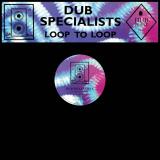
Mysticisms completes its archival releases of the Dub Specialists with a 3rd EP of the outer reaches of the Digi Dub realm, this time mainly drawing from the project’s final album Loop To Loop.
Conscious Sounds head honcho Dougie Waldrop, working again with Chris Petter (Love Grocer) runs the desk, the heavy sample originals move from House to Breaks, Dub to Funk.
For the final reversions, label co-owner and editing specialist Piers Harrison returns, turning Love Song in a long form 4/4 romantic digi bounce. A sure-fire winner, the catchy groove and trippy beats, the template of what makes Dub Specialists come alive.
Following is Lotion Dub, edited by Vanity Project. A key part to the project, working with Millie Mckee, as well assisting Chuggy, his solid arrangements and engineering skills take the old school original, with digi horns, electro stabs and reggae “skanking” guitar, accentuating the drum and bass to effect.
The final side of edits come from Chuggy, taking the steppers of Dub Downtown, teasing the drop, looping and riding the riddim and also, finally, from rising producer and label head of Spiritual World Recordings, N1 Sound who sticks to the true essence of re-editing, creating a DJ friendly excursion, extending and live dubbing the sought after 808 Dub from Dub Specialists debut Break To Break, thus bringing the whole project full circle and complete.
The Oak Ridge Boys are paying tribute to their favorite songs without losing sight of their gospel roots in a stunning and inspiring new album, Buried Treasures. Produced by Anderson East and executive produced by Dave Cobb, Buried Treasures gathers together classic songs made popular by seminal voices such as Louis Armstrong and Nat King Cole, as well as essential songs written by Billy Joe Shaver, Paul Simon, and Bill Withers. The vocal group’s spiritual side shines through on recordings of “Deep River,” “How Great Thou Art,” and “Softly and Tenderly,” yet there’s also a hint of romance in the enduring ballad, “You Are So Beautiful.” The album’s only new song, “Buried Treasure,” was written specifically for the project by GRAMMY Award-winning songwriter Aaron Raitiere. “Every song on the album is about something that’s dear to us,” Oaks member Duane Allen says.
Limen brings together two artists whose musical paths converge around a shared sensitivity to listening, resonance, and the evocative power of sound.
Recorded at Ritmo e Blu Studio during a five-day residency between spring and summer 2025, the album emerged from a series of spontaneous encounters free from predetermined structures. The pieces preserve their original form, retaining the immediacy and temporal flow of the dialogues as they first unfolded.
Subsequent interventions were conceived not as revisions, but as an exploration of the open spaces already present within the recordings—deepening what remained unspoken and extending resonances without altering the music's natural evolution.
The title, derived from the Latin word for “threshold,” reflects the nature of the project itself: a place of passage between improvisation and composition, silence and vibration, memory and imagination. Limen inhabits a suspended territory where listening becomes an experience of openness, presence, and transformation.
---
Lino Capra Vaccina
Lino Capra Vaccina is one of the most distinctive voices in Italian experimental music. A percussionist, composer, and pioneer of minimalist and meditative sound practices, he first emerged in the early 1970s as a founding member of the influential group Aktuala, whose visionary fusion of ancient traditions, improvisation, and contemporary research anticipated what would later become known as world music.
Over a career spanning more than five decades, Vaccina has cultivated a unique artistic language centred on vibration, resonance, and the transformative power of sound. His landmark 1978 album Antico Adagio remains a touchstone of European minimalism, while his collaborations have included figures such as Franco Battiato, Juri Camisasca, Markus Stockhausen, Keith Tippett, Paolo Tofani, and many others.
Whether working with percussion, piano, electronics, or voice, Vaccina's music seeks a state of suspension and contemplation. His compositions unfold as immersive sonic environments whereancient echoes and contemporary sensibilities meet, inviting listeners into an experience that is at once intimate, spiritual, and timeless.
---
Luca Formentini
Luca Formentini is an Italian composer, sound artist, and improviser whose work unfolds at the intersection of experimentation, atmosphere, and deep listening. Active since the late 1990s, he has developed a highly personal language in which guitar, voice, field recordings, and electroacoustic processes become tools for exploring memory, perception, and the expressive potential of sound itself.
His music resists easy categorization, moving freely between ambient, contemporary composition, improvisation, and sound art. Throughout his career he has released numerous solo works and collaborated with a wide range of internationally acclaimed musicians, including Holger Czukay, Robert Rich, Markus Stockhausen, Steve Jansen, Theo Travis and Steve Lawson.His recordings have appeared on labels across Europe, Asia, Australia, and the United States.
Rooted in a practice of attentive listening and sonic exploration, Formentini creates evocative musical landscapes that invite reflection rather than certainty, opening spaces where silence, texture, and resonance become as meaningful as melody itself.
A soaring new chapter unfolds from the forthcoming Elements Of Life album with the release of “Soar,” an uplifting and deeply moving collaboration featuring the incomparable Lisa Fischer. Written by Josh Milan and Louie Vega and produced by 2SoulFusion—Louie Vega and Josh Milan—the song is a powerful testament to resilience, transformation, and the limitless possibilities that emerge when spirit, soul, and music unite.
Built upon a rich tapestry of live musicianship, “Soar” embodies the signature sound that has made Elements Of Life a beloved musical movement around the world. At its core is Lisa Fischer’s breathtaking vocal performance, delivering a message of hope, elevation, and self-discovery with the emotional depth and conviction that have made her one of the most revered voices of her generation.
At the heart of “Soar” is a message of encouragement, resilience, and unconditional support. Through its uplifting lyrics and soaring melody, the song speaks to anyone navigating life's uncertainties while striving to become their fullest self. Lines such as “Clouds hang low, but the sky's still wide” acknowledge the challenges we all face, while the recurring refrain, “I just want you to soar,” serves as a powerful affirmation of faith in another person's journey. Equally moving is the song's central sentiment, “The more you do for you, the better I feel,” expressing a selfless form of love that celebrates growth, healing, and personal fulfillment. Universal in its message yet deeply personal in its spirit, “Soar” reminds us that one of the greatest gifts we can offer is the encouragement to rise, evolve, and embrace our own potential.
The production blends organic instrumentation with sophisticated arrangements, creating a timeless soundscape that feels both expansive and intimate. Multi Grammy Award-winning bassist Christian McBride anchors the composition with his masterful upright bass work, while Josh Milan's lush keyboards, piano, organ, clavinet, and atmospheric textures provide the song's harmonic foundation. Live drums from Tony Cintron and vibrant percussion from Luisito Quintero infuse the track with an irresistible pulse, while Ivan Renta's expressive soprano saxophone solo adds another layer of emotional richness, and a tasteful guitar groove by Sherrod Barnes.
The song's message is elevated further through a powerful vocal ensemble featuring background vocals from Lisa Fischer, Dawn Tallman, Ramona Dunlap, and Lea Lorien, creating moments of communion and uplift that echo the song's central theme of hope, growth, and believing in the possibilities that lie ahead. For Louie Vega and Josh Milan, “Soar” represents another defining moment in their longstanding creative partnership. Through Elements Of Life, they have continually blurred the boundaries between house music, soul, jazz, Latin rhythms, gospel, and global influences, creating music that resonates as deeply on the dance floor as it does in the heart. “Soar” continues that tradition, offering listeners a song that inspires movement, reflection, and renewal.
Recorded at Honeycomb Studios in Pennsylvania and Manhattan Center Studios in New York City, and mixed at Daddy's Workshop in New Jersey, the production benefits from the expertise of recording engineers Yas Inoue & Josh Milan, with final mastering by the Maestro of mastering Herb “Pump” Powers for PM Mastering.
As anticipation builds for the forthcoming Elements Of Life album slated for February 2027, “Soar” offers a powerful glimpse into the project's next evolution— a celebration of musical excellence, spiritual connection, and the enduring power of song to lift us higher.
Immersive, roots-infused dub-reggae power from Jamaica meets heavyweight instrumentation from Denmark on a landmark collaborative album out now via Recall Reality.
Rooted in the rich traditions of classic Jamaican sound yet pulsing with a hypnotic, contemporary organic weight, Signs of the Time brings together the evocative vocal artistry of rising roots talent Azizzi Romeo and the master craftsmanship of Denmark's formidable instrumental 11 piece band Guiding Star Orchestra. Built for sound systems and vinyl purists alike, featuring lush tape saturation, spring reverbs, and spacious dub mixes.
Released on Recall Reality, the album is a masterclass in modern roots reggae and deep dub dynamics. Rather than relying on rigid digital presets, Signs of the Time champions warm analogue textures, sprawling horn arrangements, and rolling basslines that echo the golden age of Studio One, Joe Gibbs, Bunny Lee and Channel One while carving out an entirely fresh, meditative space for the listener.
Azizzi Romeo carries forward a legendary musical lineage as the son of the late roots icon Max Romeo, bringing a captivating blend of spiritual urgency, conscious lyricism, and soulful conviction to the microphone. His delivery cuts straight through the mix, offering profound reflections on modern society, unity, and resilience in a changing world.
Backing him are the Guiding Star Orchestra, renowned for their authentic analog production ethos, deep-crate sensibilities, and musicianship that treats the mixing board as an instrument in its own right. The result is a seamless symbiotic project where every bubbling organ skank, hypnotic drum drop, and reverberating tape delay serves the song's core message.
To bring the record home, producer CHLLNGR spent a week in the spring working alongside UK dub maestro in his London studio - Prince Fatty, who mixed the entire album. Fatty invited legendary drummer Winston "Horseman” Williams into the sessions, and Horseman percussion added the final glue to the record.
Track highlights:
"Signs of the Time": Azizzi is joined by his late father, the legendary Max Romeo, on a prophetic warning of what awaits the world if we don't soon unite in peace and love.
"Thanks and Praises": An anthem of gratitude for everything life brings, and of rising up even when others want to see us fail.
"Jah Jah Disciples": A meditation on following Jah, and the strength that faith gives in the midst of adversity.
Signs of the Time is available now on Vinyl LP and Digital streaming platforms via Recall Reality.
Asake’s fourth studio album, M$NEY, marks a major evolution in his career, trading the frantic energy of his early hits for a more polished, cinematic sound. The project explores the intersection of material wealth and divine favor, framing his global success as a spiritual journey. Rather than just celebrating the "soft life," Asake uses this record to reflect on the discipline and faith required to maintain his position at the top of the music world.
Sonically, the album expands his signature Fuji-fusion and Amapiano roots with help from long-time collaborator Magicsticks and international producers like DJ Snake. Tracks like "Worship" bring high-octane electronic energy, while "Badman Gangsta" featuring Tiakola offers a sleek, R&B-influenced collaboration. Throughout the project, Asake balances these high-energy moments with orchestral strings and jazz elements, creating a rich, textured listening experience that feels both global and deeply rooted in Lagos street culture.
At its heart, M$NEY is a balance of celebration and introspection. In tracks like "Forgiveness" and "Gratitude," Asake addresses the pressures of fame and the personal growth he has undergone since his debut. He remains grounded in his Yoruba heritage, blending boastful lyrics with sincere thanks for his trajectory. Ultimately, M$NEY proves that Asake is more than a hit-maker; he is a visionary artist documenting his life and legacy with newfound maturity and style.
'Within the current Finnish jazz scene’s colourful embrace of ear pleasing and spiritual-leaning ensembles, Fågelbörs have felt a bit like an anomaly. They’re a lean quartet adhered to a virtuosic puritanism and a stern belief that every gesture serves the whole.
'A combo composed entirely of underground veterans, they belong to what could be described as the third wave of Finnish improvised music; several of whom helped shape that movement in the early 2000s. Elsewhere their collective lineage wends a bendy path through recent years of Finnish free jazz, experimental music, and dub. They’ve been alternately affiliated with projects such as Rauhan Orkersteri, Jooklo Quartet, Mohel, Kemialliset Ystävät, Odd Funk Records, Muumiot, Pascal & Baya Rays, and more.
'As Fågelbörs they’re configured like the four cardinal directions, a dynamic and cosmos-scaled unit capable of summoning elemental blasts of chaos and ecstatic, life-affirming joy. On Bagelfårs, they expand the unique vision of entropy and melody they introduced with their brilliant debut Marjassa (Ultraääni, 2022). Together, Matti Luokkanen (sax), Jaakko Tolvi (percussion), Tuure Tammi (trumpet), and Tero Kemppainen (bass) lock as an Aylerian helix, where effervescent free improv is always counterbalanced with key moments of gleeful, marching band-like reverie and mournful dissolves into passages of narcotic blues.'
Bassist, composer and arranger Bill Lee (who is the father of celebrated Director Spike Lee) helmed numerous Strata-East projects, but this is the one that most stands apart. The Descendants of Mike and Phoebe is a one-off 1974 album uniting Lee with his siblings Cliff Lee, Grace Lee Mims and Consuela Lee Moorhead under a name that pays honour to their enslaved ancestors. Elements of jazz, gospel, soul and blues are threaded into a work of complexity but spirituality, with nimble, dancing grooves next to more pensive explorations. It's a sought-after rarity from the label's catalogue that has been freshly remastered for this reissue. Essential Strata-East history.
SKYLAX RECORDS proudly unveils the final chapter in its monumental 4-part saga — SKYLAX BLACK 4: Enlightenment Theory. This visionary series, bringing together two of France’s most iconic electronic artists — ARNAUD REBOTINI and ACID WASHED — was never just a collection of records. It was a journey through the deepest layers of the underground — a conceptual project where each release was a coded message, each track a fragment of a greater whole. On the A-side, Enlightenment Theory explodes with fierce urgency — an anthem forged in the spirit of Underground Resistance, echoing the soulful intensity of early ’90s Detroit without imitation. It’s bold, emotional, and militantly underground — a future classic cloaked in defiance and elegance. On the B-side: B1. Space Is The Place channels the weightless gravity of dub techno at its purest — all echo chambers and endless delay, a direct line to the Berlin school of Basic Channel, Maurizio, and Deepchord. B2. Beyond Current Biological Constraints closes the chapter in deep space — an electro masterwork evoking Drexciya, full of aquatic melancholy and cybernetic funk. It’s not retro — it’s timeless. With this last installment, the puzzle is complete. The meaning is revealed: R.A.V.E. — four records forming one powerful word. One timeless idea. A tribute to everything this culture stands for: raw energy, emotional truth, sonic innovation, and spiritual depth. This project could only be born on SKYLAX RECORDS — a label that has always stood apart. Uncompromising. Devoted to physical formats. Fiercely loyal to the culture. While others chase trends, SKYLAX continues to chart a different course — one rooted in the sacred codes of house, techno, electro, and beyond. It is no exaggeration to say that SKYLAX is one of the last true purist strongholds of underground music — and this series, with its layered meanings and fearless artistry, is proof. From Redshifts to Blueshifts to Artificial Darwinism then Vision Quest, every chapter has pointed toward this moment. Now, with Enlightenment Theory, the full vision is revealed. RAVE is not just a word — it is the truth. A philosophy. A myth reborn. The circle is complete. The message endures. The legacy lives on.
A flash of light hits your eyes. Your ears hear muffled bass. As bright white fades to amber, you find yourself in a familiar place. A place you have been to many times. Though the edges of your memory are no longer sharp, the shape of it all is in your DNA.
The smell of rusted metal, dirt-covered floors that once hosted workers, machines and industry mixed with spilled beer and the sweat of a thousand bodies moving to syncopated music. As your vision comes into focus, you’re back there.
A warehouse in the former industrial part of town. You’re surrounded by hundreds of strange but familiar faces, each of you dancing into a frenzy countless times under the moonlight — moving, jumping, laughing and connecting.
Sunlight pours through warehouse windows or appears over a distant horizon.
The DJ plays a song that completes the journey you all just shared. You are desperate to hold on to the feeling of the last song that lands you safely from the night and into a new day. The feeling is deep. Pure.
Especially when communal ecstasy is juxtaposed against the edges of the warehouse floors, the intimacy of city lofts, the spiritual nature of open fields or forests.
The Custodian
I spent just shy of two decades in spaces like that — as a raver in early 1990s Los Angeles, then a DJ, producer, label owner and head of Moulton Studios in San Francisco.
The Custodian Project is a memoir of a life lived deep inside the culture and business of house music from 1990 to when I stepped away from music as a full-time life in 2015 — told through music, stories and DJ events.
Each release of new music draws inspiration from feelings, emotions and memories of that life — different rooms, different eras. It is an exploration to understand and capture what those feelings were, and in some cases still are.
The Music
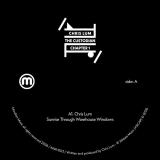
This EP is the beginning. 1990. When I first found the rave and re-ordered my DNA based on the sounds, songs and feelings of that era that can be summed up in the title track — Sunrise Through Warehouse Windows.
All three tracks here are an attempt to reach back and touch those mornings again. To put the listener back in the warehouses or open spaces where we would dance as the sun rose over the horizon.
To capture what I felt back in 1990 when the night transitioned into daybreak. Bodies moving in unison. People, places and music all connect. An era before algorithms.
(tracklisting)
A1 — Sunrise Through Warehouse Windows — 7:51
B1 — *Truly Amazing — 8:16
B2 — Sunrise Through Warehouse Windows (Floating Beatless Mix) — 4:20
Written and produced by Chris Lum for Abitare Music (ASCAP)
* Written and produced by Chris Lum - Abitare Music (ASCAP) & Jay-J Hernandez Stopped in Time (ASCAP). Originally released on Leaf Recordings 2000
Futuristica is 20!
This independent imprint has been producing and releasing music for friends and family for 20 years, so what better way to celebrate than by releasing a 2xLP limited edition 20 track compilation of rare and never before released on vinyl recordings exclusively selected by label manager Simon Skolfield.
This is a beautifully varied selection of deep soul, jazz and hip-hop music from a group of like-minded independent artists creating their own brand of soulful gems. From the early electro soul of Electric Conversation, the multi layered jazz samples of Kira Neris to the lush vocal harmonies of Deborah Jordan, production and remix class from Marc Rapson and the contemporary spiritual soundtracks of The Peter Franks Group.
Over the years there has been generous support from Gilles Peterson, Tony Minvielle, Marc Mac, Patrick Forge, Kev Beadle and so many more worldwide. Artists like As Valet, Emanative, LaNote and Georgie Sweet have gone on to produce fine work with several different independent labels with our artists garnering fine remixes and production work from the likes of DJ Spinna, Nostalgia 77, Kev Bown, Mr Beatnick, Nicolay, Kaidi Tatham, Atjazz, Simbad, K15, Domu, Mecca:83 and so many others. And all of this organically grown since the release of Low Budget Soul, the label’s debut project back in 2006.
The arrival of REAL, Vol. 1 marks a seismic shift in the global music landscape, uniting two of Nigeria’s most formidable forces for a project that defines the current zenith of Afrobeats. This collaborative effort sees Wizkid, the smooth-talking pioneer of the genre’s international expansion, and Asake, the "Mr. Money" whose neo-Fuji sound redefined the street-pop aesthetic, finding a middle ground between luxury and grit. The project serves as a sonic bridge between eras, blending the minimalist, high-fashion sensibilities of Wizkid’s recent output with the high-octane, choir-backed energy that has made Asake a household name. It is less of a competition and more of a conversation between two masters of their craft, exploring themes of spiritual gratitude, the weight of superstardom, and the unyielding pulse of Lagos.
With soundscapes both cinematic and deeply rhythmic, the production moves beyond standard club formulas, opting instead for a sophisticated fusion of traditional Yoruba percussion, shimmering synths, and the heavy, resonant log drums of Amapiano. Wizkid provides the effortless, melodic swagger that acts as the project's anchor, while Asake injects a spiritual intensity through his signature layered chanting and rapid-fire flows.
Ultimately, REAL, Vol. 1 is a celebration of authenticity in an era of global crossover. By stripping away the pressure of conforming to Western pop standards, Wizkid and Asake have created a body of work that is unapologetically Nigerian yet universally resonant. It captures the spirit of a city that never sleeps and the ambition of two artists who have conquered the world without losing their souls. This is more than just a collection of hits; it is a blueprint for the future of African music, proving that when Wizkid and Asake occupy the same frequency, the result is nothing short of legendary.
The free folk/jazz sound of modern Los Angeles. Featuring a heavy bunch of musicians and vocalists including Moor Mother.
"Fearlessly Accessing the Divine Spirit From Here on Out" is the vinyl debut from pianist, composer, and producer Diego Gaeta. He has previously released projects as Club Diego and with the trio Human Error Club (whose members Mekala Session and Jesse Justice helped produce this record). He has quickly become a fixture in a number of Los Angeles musical environments, working with Lionmilk, The Pan Afrikan Peoples Arkestra, Carlos Niño, Black Nile among others. This album is a synthesis of these many LA environments, and carries chamber, jazz, ambient, and folk influences, ultimately giving it an uncategorizable feel similar to works by Arthur Verocai or David Axelrod.
Gaeta recorded the initial ideas for the album by himself after experiencing a burst of creativity during the lockdown of 2020, in the aftermath of a season of protests in Los Angeles, on a piano at his home in El Sereno. "I was constantly not in tune with myself, always awaiting outrage and tragedy in a very unstable world. However, hitting the streets in support of various ongoing pandemic community actions felt necessary and it marked a point in time that ushered in large societal changes. The weight of that era made me feel allergic to making art at the time. All of these ideas came after that period, expressing my reflections subconsciously. I remember that the ideas came in a short amount of time, and then they developed."
Once he had created the tracks as Ableton sessions, he realized the gravity and context of how he was processing his ideas so he, as he puts it, "felt like taking them outside the hands of midi and into the hands of friends." Gaeta was able to assemble his dream band, which ended up being a 9-piece ensemble, or a nonet. "I felt that at some point I was channeling the geometrical balance of that nonet...it's almost as if I had a sextet and then the three of the sextet that's not the rhythm section were doubled. It's a really dense sextet, that's how I see it."
The recording process began the following summer in June 2021 as the musicians were all adjusting to the newfound dynamic of getting tested for COVID, waiting a few days, and then meeting up to record. "We were eating Indian food, some of us were smoking, it was a nice memory, but I felt a little stressed, because I was the bandleader, and I felt the emotional weight of my music."
The title track and single, featuring vocals by Jimetta Rose, begins with a speech by Gaeta delivered when playing with Black Nile in 2019 at the Levitt Amphitheatre in MacArthur park. Gaeta provides the following account: "Even though it was in 2019, socio-political tensions and issues were at the forefront for me at that time. I wrote a speech that was intended to be critical of the US but it ended up becoming a collage inspired by different women that had messages of freedom that spoke to me the most. I quoted Nina Simone and Georgia Anne Muldrow, it wasn't something that I read but something that she said "kicking it with consciousness and style" that phrase stuck with me, so I used it in that speech. Although critical, the speech had a positive feeling to it, and it was hopeful. I gave that speech while fireworks were going off."
Moor Mother & Zeroh are found on their respective tracks, Memory Screen & Eccolo - both delivering a distinct, commanding vocal performance. Low Leaf colors the track Soft Spot with harp, a beautiful ballad nestled in the center of the album. Other players include Gregory Uhlmann on guitar, Jon Kaye on violin, Devin Daniels on alto saxophone, Caleb Buchanan on bass, Dante Luna on vibraphone, Patrick Behnke on viola, Bryan Baker on tenor saxophone/flute, and Mekala Session on drums.
"I’d like for us tonight to embody a freedom oriented life. Freedom isn’t just a dream, it’s a place we must all arrive at together, as one by one the people of the Earth help each other to be Free of power, hate, and insecurities. Let’s kick it with consciousness and style. Can y’all dig that? YEAH. I can too. So now we’d like to present to you a spiritual transmission I like to call: 'Fearlessly Accessing the Divine Spirit of Freedom From Here On Out.' YEAH" - Diego Gaeta
Return to Sky is the follow-up to the band's classic Euporie Tide, which consolidated the band as a crucial underground force in the European psych scene and spread their unique brand of warm-toned stoner rock to a wider audience. The album is a condensed piece of acutely experimental, yet immensely engaging, instrumental rock. Each of the album’s five epics unfolds as a microcosm of the band’s genre-transcending psychedelia at large, yet adds something different to the whole.
The tracks on Return To Sky travel far and wide: heavy, detuned riffs are transformed into wide, pastoral soundscapes, and fluid minimalism warped into swirling crescendos and back again. Occasionally the band even manages to sound turbulent, fuzzed-out yet strangely peaceful at the very same time. Whereas so much of today’s psychedelic scene comes off as merely a tribute to a certain period of the past, Causa Sui has always been on a different mission. More than any other record in their catalog Return To Sky declares their roots in the avant rock of the late 1990s - where different eras and genres merged into something that resonated as much with the present as it celebrated the past. It also reveals the fact that members of the band has had their hands in many different projects since the band’s debut album in 2005: solo excursions into synthesizer music, collaborations with members of Sunburned Hand Of The Man and Tortoise as well as film soundtracks and improv sessions with krautrock legends Faust and Damo Suzuki. It has all worked a subtle influence on the kind of band they have become. On Return To Sky their sound is more earthy and heavy than other Causa Sui record, but it’s also a record that has absorbed everything from shoegaze and vintage Italian film music to spiritual jazz and afrobeat into its fabric. Causa Sui has never sounded deeper or more mesmerizing than on this set.
Introducing Sum Of Its Parts: A new collaborative music project led by Alex Nut. Featuring remixes by Boddhi Satva.
London, UK — A new musical project titled Sum Of Its Parts brings together a dynamic collective of musicians under the direction of DJ, curator and Eglo Records mainstay Alex Nut, who steps into a central creative role as the project’s musical director and producer.
Sum Of Its Parts is built on a fluid, collaborative model, featuring a rotating cast of musicians drawn from some of the UK’s most exciting contemporary music circles. Including Sam Crowe (Lianne La Havas) on Keys, Junior Ali-Balogun (Sault/Cleo Sol) on percussion and Duane Atherley (Kokoroko) on Bass.
Debut EP, The Message, introduces the project’s expansive sonic identity across two original compositions. The title track, The Message, is a 10-minute spiritual jazz odyssey—deep, meditative and expressive. In contrast, Hello High – which previously appeared on the Eglo Records Vol. 3 compilation – delivers a soulful, jazz-inflected house energy with dancefloor sensibility. Extending the release further, the B-side features two amazing remixes by revered House producer Boddhi Satva, who reinterprets the project’s sound through his unique Ancestral Soul lens.
Belgian saxophonist, composer, and producer Mattias De Craene (Nordmann, MDCIII) announces a new solo album, ‘A House Where I Dream,’ on VIERNULVIER Records. On his second album, he delivers a highly personal and healing journey, presented as an alternative soundtrack to the 1973 cult film ‘The Holy Mountain.’
The record will be released on October 11 on vinyl LP and through all digital platforms.
"The Holy Mountain" is a surreal Mexican film from 1973 directed, written, and produced by Alejandro Jodorowsky, who also stars in the film. The film holds a prominent place in avant-garde cinema and explores themes such as spirituality, mysticism, and the quest for enlightenment. It is in this vein that ‘A House Where I Dream’ is crafted.
“My mind and soul - and thus my music - come home to this motion picture” - Mattias De Craene
The album will be presented live with the film on October 16 at Videodroom during Film Fest Gent.
ABOUT THE ALBUM
With hypnotic tape loops, grainy textures, and mesmerizing saxophone, Mattias De Craene creates possible worlds that herald a spiritual transformation. From the Scottish Highlands and desolate mountains to the deepest recesses of the soul, this music has the power to create cinematic landscapes that transcend time and space. The sound of these 8 tracks is closely related to the minimalist compositions of Terry Riley, but the work of contemporary artists like KMRU or William Basinski is also drawn from the same material.
Above all, this album is a deeply personal journey and unintentionally serves as a metaphor for De Craene's ascent of his own mountain. For the Videodroom festival by Arts Center VIERNULVIER, the saxophonist began working on a new soundtrack for the film ‘The Holy Mountain’ in 2023, but his body and mind abruptly called him to a halt, forcing him to take a professional break. However, this project never left him, leading to an honest and raw quest to find himself as both a person and an artist, with Jodorowsky as a companion de route and music as an anchor. It initiated a long process of dismantling, searching, healing and back again. The album not only provides a sanctuary for dreaming to all who listen, but for its creator it also serves as both an outcry of despair and a source of comfort during challenging times.
All the tracks on 'A House Where I Dream' share an unfiltered grain of life, as one can almost feel the damp breath of the saxophone blowing.
The album opens with the three-part strong 'Transcention,' where the hypnotic interplay between soprano sax and lo-fi tape loops leads to higher realms of the mind and soul.
Alternating between deep frequencies and farout folk modalities, this mantra-like triptych acquires an alchemical character and ultimately transcends time and space.
In the ethereal 'Away,' one can peer into an abyss of resonance while a saturated tenor sax lends guidance in the spirit of Terry Riley's productions. 'You and Me' also bathes in a similar atmosphere, albeit in the vein of healing 90s ambient as granular sax tones converge with celestial chants. 'Gazing Upwards Towards The Sky,' offers different shades of blue as a slumbering tenor sax is juxtaposed to swift sax patterns. On 'A Stranger That Moved Me,' beauty lands in a soft and subtle manner, while the closing track 'Shepherd's Glow' drifts like a mountain wind flaring up at the darkest hour of the night.
The artwork is created by Gent-based artist Sam Timmerman, who portrays the world of 'A House Where I Dream' with playful repetition and mystique.
Carrier’s debut album features eight elegantly rude arrangements that dance in negative space between Photek’s frictional syncopations, Rhythm & Sound’s dubwise minimalism, and Torsten Pröfrock’s fractured dynamics, bolstered on two tracks by contributions from Voice Actor and Memotone, summoning a noirish, jazzier frisson to his signature metrics and temporalities.
Since hard-snagging our ears and feet in 2023 with 12”s for FELT and his own eponymous label, Guy Brewer’s Carrier has become the go-to project for anyone who had almost given up on chasing these sorts of ultra-subtle but vitally distinctive new permutations in dance music. For the past two years, his unpredictable variations within a style have kept us all tip-toed and seat-edged with organisations of a finely chiselled percussive palette and smouldering ambient noise that distils the salient aspects and spirits of D&B, dub techno, electro-acoustic music, and trip hop with unique traction. In effect, he’s enacted a clear leap of imagination from previous work issued as part of Commix and solo as Shifted that only continues to reveal hallucinatory psychoacoustics on this first album detail.
»Rhythm Immortal« sees Brewer tilt the project into slower, resoundingly more atmospheric realms, better to luxuriate in the instinctive guile and integer-stepping style ’n’ pattern of his incredible sound. At the album’s poles, a vocal cameo by cult gynoid Voice Actor follows from Gavsborg’s on a preceding 7” single to ideally model his sound’s mutability and compatibility with trip hop forms, and Memotone helps seal the deal with a hovering glow lent to »Offshore«, whilst Carrier jostles the reins throughout with masterful control of his thing, crisply purposed to the album canvas. In that context, it’s perfectly adaptable to bodies both supine or in motion, ushering a hypnagogic sway with »A Point Most Crucial«, and hingeing around the slightest interplay of 16th-note hi-hat ruffles and recoiling reverbs on »Outer Shell«, or blissfully stepping on knife-edge 2-step on »Wave After Wave«.
The album conveys a deeply personal pulse and spiritual devotion to that kind of all-tension-no-release mode typical of so much music we love – from Kode9’s earliest re-factoring of Prince to Photek’s »Ni-Ten-Ichi-Ryu«, from T++/Dynamo and Traktor’s asymmetric dynamics to Burial’s shockout debut – refactored with a rare conviction in its unspoken powers to activate the eyes-shut imagination.
Passages in Time, the third album from Kasper Bjørke Quartet, traces the contours of a blend of spiritual jazz reverence and the calming grandeur of '80s ambient. Inspired by Christopher Nolan's observation that "time is the most fundamental part of our human experience," the compositions are approached as fragments of time and memory. Meditations on the elusive nature of time form the heart of the work, merging freeform jazz improvisations with cyclical synthesizer patterns that mirror its quiet undulations.
Dreamy synths intertwine with guitar, harp, trumpet, flugelhorn, saxophone, and flute, creating a spacious environment for contemplation. The music invites reflection on the choices that shape our lives and the lives of those closest to us, and on the quiet weight of our priorities within the brief span we call life on this planet. Each passage unfolds as a fleeting moment suspended in time. The subtitles hint at fragments from someone's diary, tender observations of love, parenthood, and connection. Together, the passages form a musical memoir of sorts, where memory and emotion are gently woven into the compositions.
Passages in Time does not impose structure or meaning, it reflects them, offering an open space as the instruments drift in and out of focus, tracing time's subtle rhythms and inviting the listener to infuse their own memories and meaning into these passages.
The album also marks a transformation for the Quartet project itself. Langstrakt (Claus Noreen), part of the original ensemble, continues to operate the synthesizers alongside Bjørke, while the wider constellation of contributing musicians has evolved. Strings and piano give way to flute and saxophone by Oilly Wallace, guitars by Danish ambient composer Anna Roemer, trumpet and flugelhorn by Malthe Kaptain, and cascading orchestral harp by Katie Buckley, principal harpist with the Icelandic Symphony Orchestra.
The cover painting is by American artist Marcus Leslie Singleton, courtesy of V1 Gallery, and reflects the meditative and timeless atmosphere of the music.
Passages in Time is released on Bjørke's own imprint, Sensitive Records, following the two previous Quartet albums released on Kompakt Records: The Fifty Eleven Project (2018), a debut that introduced Bjørke's ambient and neoclassical explorations, and Mother (2022), which expanded the ensemble's sound with emotive choir compositions and guest appearance by Sofie Birch (Unsound / Stroom). Together, these three albums trace a journey of artistic growth, from introspective experimentation to a fully realized, contemplative expression of time, memory, and human connection.
"After being praised as one of the best releases of 2025 by multiple platforms, the highly praised debut album from Obeka lands on vinyl via YUKU.
The rhythmic dynamics and emotive attitudes of A World No More captures the density of soundsystem culture in Obeka's ancestral roots. YUKU presents the Bermudians debut album capturing a Neo-Colonial dystopia, protest and Afro-Futurism hyperextended through decaying sonic structures of a dark past and its grievances which very much exist today.
Growing into adulthood within the walls of British and European Colonial systems meant the disconnection and lostness in a new country hid me from the world at a young age. Unlike London's vast and culturally engaging migrant communities, the industrial milling town of Stockport introduced a coldness towards people from other countries I experienced in my first year after relocating from Bermuda. I couldn't understand why. Whether cold words thrown towards me or actions upon other people who look like me, it has shown to be a dooming societal virus with no cure. The most comfort was found through what was familiar - drums and rhythmic spirituality of my homeland. It was a safe-haven, a place to empty the anger and confusion. It's been 15 years since relocating and as my sound evolved, it seems classism, racism, oppression and civil control of ethnic peoples has become worse - even now more legalised and normalised. Ogun (a powerful Yoruba deity associated with anger, justice and war) acts as the opening sequence of the record and its symbolism. Using distorted bass frequencies and dissected Regga-Dub immersed in live-sampled ghostly voices of the lost ones. This sonic exercising is also applied in Drillaman - a stampede of industrial framework and metallic instruments wielded over moody Dancehall MC'ing, magnifying two parallel worlds in cocooned evolution. The resurrection of Transatlantic African cultures and identity have never been silenced, rather carried elsewhere through trade routes of enslavement, which was pivotal when composing and completing the album upon returning home to the Caribbean for the first time ever. After reconnecting with my heritage my blurred vision of what's wrong in the world became so clear. Guidance in empty plains seek truth throughout the pain - A statement of finding oneself expressed on the poetic closing track A World No More.
On Fawohodie (A West African Adinkra symbol that represents independence, freedom, and emancipation stamped on the album cover) the motive and atmosphere begins to change. Afro-Caribbean idealism which refers to the philosophical concept that emphasizes the interconnectedness of individuals and the importance of community, often contrasting with Western individualism, begins to take shape in a new universe. We can co-exist. The track framework uses machine-led software forming frequencies we have no control over, then manipulated through decomposing soundscapes, scattered hand-drums and human-made weapons of control - exposing the hidden disparity that's been carried over generations whilst balancing hopeful and musical foundations towards equality and peace. On Pressure and Kuduro! the writing direction attempts to wake people up. Not settling for a composed approach like in past projects, quite the opposite. A call for native sonic awareness, dismantled vocals of protests, eroded percussion using chains, gears and motorised harmonies sculpted in challenging abstract behaviors far outside my comfort zone. A direct abrasiveness and weight I want people to feel, whilst finding hope and solace through enchanting choirs and hypnotic basslines in complete synchrony.
"Purity in sound manifests when you least expect it. The smallest memory or feeling grows from a seed into a sonic language that you, and only you can interpret and release back into the world." "
This 12" introduces Maajo Soundsystem, the electronic, dancefloor-focused sub-project of Maajo, presenting stripped-down, club-ready versions of their 2022 album 'Water of Life' that go beyond standard remixes through newly recorded balafons, percussion, and vocals from Senegalese artist Ismaila Sané and Mauritian vocalist/drummer Gilbert K. Sané began his career in the 1970s as a percussionist and African ballet dancer before relocating to Finland in 1999, later becoming the first emigrant to receive the country's Citizen of the Year award. While Maajo tours as a six-piece live band, Maajo Soundsystem offers a flexible electronic configuration that retains live vocals and percussion. The group has released multiple LPs and EPs on Queen Nanny and Permanent Vacation, scored the silent film Lost World, received remixes from Luke Vibert and Call Super, and toured internationally, with strong radio and press support from BBC Radio 6, Worldwide FM, KEXP, Resident Advisor, WFMU, and more.
ZENA, the contemporary ethio-jazz duo from London comprised of producer, keyboardist
and synth player Yohan Kebede and bassist/producer Menelik, have announced the forthcoming release of their debut EP ‘TEMESGEN’; is a six-track aural odyssey that balances uncompromising experimentation with a deep sense of home, comfort, and exploration. In accordance with the duo’s mission, the project is seeking to redefine and reimagine Ethiopian music for a new generation.
Speaking on the inspiration behind the EP’s title, Yohan said: “‘TEMESGEN’ means “Thank God” in Amharic, and for me, I never heard my mother receive good news without saying it aloud. After the first couple gigs we did as ZENA, we saw how people reacted to our music and how it resonated with them. It spurred in us a feeling of overwhelming gratitude, after which the EP kind of named itself”
Born out of a mutual love and respect for the music of their shared Ethiopian heritage, ZENA are charting a new endeavour where Ethiopian musical traditions meet the future. Building upon the roots and foundations laid by legendary Ethiopian musicians Haliu Mergia, Alemayehu Eshete and Mulatu Astatke, ZENA fuses the haunting spirituality and earthiness of the ethio-jazz tradition with a modernity, sensuality and sense of disruption that is distinctly London.
Following three sold-out London headline shows, plus appearances at We Out Here Festival and on NTS Radio, ZENA arrive on Brownswood Recordings with a bold debut that’s equally at home across jazz-minded selectors and leftfield crate-diggers. The duo’s momentum is fuelled by Yohan Kebede’s landmark year with Kokoroko; from the release of Tuff Times Never Last to an NPR Tiny Desk, a North American tour, and their biggest headline show yet at O2 Academy Brixton, alongside Menelik’s quietly formidable reputation in London’s inner circle, shaped by time on the road and in the studio with Muva Of Earth and Bill Laurance.
The duo Sławek Pezda & Witek Ryć is a project by Krakow-based musicians, a hybrid of ambient, noise, experimental music, jazz, trance, electronica, and ethnic music. The two musicians' musical paths were united by the practice of meditation, which also significantly translates into their musical language and the need to share the peace that flows to the listener through sound.
In their recordings and live performances, the musicians utilize tenor saxophone, modular synthesizers, electronics, drums, flutes, drum pads, Tibetan bowls, gongs, and a wide array of percussion instruments. They have played together in improvised concerts, relaxation concerts, chamber sessions, and even spiritual jazz.
"Kardamon" is the result of one of the live sessions, where the rhythm, based on a simple pulse flowing from a frame drum, accompanied by Ankle Bells (Indian janissary bells played with the foot), is enriched by Sławek's tenor saxophone. In addition to the aforementioned instruments, a synthesizer and a Roland HPD 20 drum machine were also used, accompanied by various percussion instruments (shaker, chimes, bells, etc.), as well as a fragment of Witek's own field recordings from the Polesie National Park.
The remix on the B-side was created by DJ PLASH, who gave the duo's original sounds a completely new dimension. Plash (Marcin Przeplasko) is arguably one of the most sought-after DJs playing for b-girls and b-boys worldwide, a feat culminating in his official performance behind the turntables at the last Summer Olympics. PLASH is Witek's neighbor from Krakow's Nowa Huta district.
The front cover artwork is a painting by Witek Ryć, and the entire album was assembled and framed by Animisiewasz. Mastering was handled by Eprom. The single is limited to 150 copies and is being released by Funky Mamas and Papas Recordings, a label specializing in seven-inch singles since 2008.
Arizona-based producer Kareem Ali returns with Renewal, his second EP on the French label Noire & Blanche, a luminous blend of deep house, jazz, and Afrofuturism that captures both personal and collective transformation. Praised by Rolling Stone, Pitchfork, and Boiler Room for his visionary sound, Ali continues to expand the language of modern electronic music with a project rooted in emotion, movement, and hope.
Across five tracks, Feel Everything All At Once, On My Heart, Procession, Wake Up My People, and Want, Kareem Ali invites listeners to experience the full spectrum of feeling. Opening with the warm, jazz-infused pulse of Feel Everything All At Once, the EP unfolds into the hypnotic rhythms of Procession and the heartfelt refrain of On My Heart. The soaring horns and urgent groove of Wake Up My People capture the project’s spirit of resilience, before closing on Want, a meditative reflection on desire and renewal.
Drawing inspiration from Sun Ra, Miles Davis, and Underground Resistance, Kareem Ali continues his pursuit of what he calls Future Black Music — a sound that merges the spiritual depth of jazz with the cosmic potential of electronic music. With Renewal, he offers not just an EP, but a vision: music as liberation, rebirth, and awakening.
nagoyaka na kaze / 和やかな風 (quiet wind): a collection of forward-thinking electronic experiments sourced from central Japan - co-curated by Nagoya artist abentis for Facta & K-LONE’s Wisdom Teeth imprint.
The project profiles a close-knit community of music makers operating in and around the Japanese city of Nagoya: one of the country’s most populous and industrial cities, but one all too often overlooked in terms of its cultural significance.
Curated in close collaboration with local scene organiser Yuya Abe - aka abentis - the record seeks to capture the creative energy of a community of artists making hard-to-define, future-facing electronic music away from the clamour of the bigger cities. “In Nagoya, there’s a strong culture of supporting artists. Even if you pursue music in your own way, as long as it’s good, you’re encouraged to keep doing what you want”, explains abentis. “Within that environment, my generation has been able to freely bring in elements we like from all kinds of genres, combine them in our own way, and express ourselves individually. If you go to Tokyo or Osaka, that kind of freedom isn’t something you can take for granted.” Spiritually, Nagoya fits the mould of cultural hotbeds like Bristol, Detroit or Melbourne, showing that some of the most innovative creative communities form away from the glare of the capital cities. Like Detroit, Nagoya is principally known for being a major auto manufacturing hub, famous for being the home of Toyota Motors - but behind the scenes, it is quietly harbouring one of Japan’s most vibrant and forward-thinking electronic music scenes. “In a good way, Nagoya is a bit removed from the cutting edge, so you find people making all kinds of music”, explains Karnage. “If you’re making music, you feel like part of the crew, and people of different ages mix together without much hierarchy.” The city’s music scene is characterised by a freedom to mix genres and an open-door approach to creatives of all disciplines. The artists featured come from a diverse set of backgrounds, ranging from hip-hop to noise music, but have found a common collective identity in their omnivorous approach to genre. As such, the record moves fluidly between shimmering ambient and new age (Am Shhara, DHYAN, daiki hayakawa), psychedelic minimal house (Methodd, abentis), abstract, low-slung downtempo (baptisma, Nasty Soupman) and spaceage steppas (Karnage). “I’d say the way ambient, new age and that kind of sound design are blending nicely with dance music feels somewhat new”, says baptisma, the crew’s eldest member and de-facto scene leader. Responsible for bringing artists like Basic Channel, Mala and Jan Jelinek to the city, baptisma has been crucial in establishing underground electronic music in Nagoya since the 90s, and now helps cultivate the next generation of local talent. “Artists and DJs are seamlessly mixing ambient and new age with techno, house and bass music. I think that’s a really interesting development.” nagoyaka na kaze has its roots in a one-off event held in October 2024 as part of the 10 Years of Wisdom Teeth Japan tour. Curated by abentis in collaboration with Facta & K-LONE, the showcase featured live sets from eight artists based in and around Nagoya at one of the city’s key dance music hubs, Club JB’s. Each of the artists features again here, on record, presenting an original commission produced especially for the project. The record’s art direction was led by Yudai Osawa - in-house designer for Kankyō Records, the much-loved Tokyo record shop run by H. Takahashi - and features original photos by Hayato Watanabe.
Seeking out the inspirational intersection between free improvisation, rave and ancient mysticism, Plants Heal deliver an album of kaleidoscopic, organic beatdowns to Quindi.
Plants Heal is a collaborative project between Dan Nicholls on synths, Dave De Rose on drums and Lou Zon (aka Louise Boer) on visuals. The roots of the project are entwined with Dan and Lou's London-based event Free Movements, which began in 2018 to explore how instrumental music could merge with live electronics and DJ sets. Dave and Dan found themselves playing together frequently at the event and as part of Dave's free improv project Agile Experiments, with their accomplished track records as multi-instrumentalists reaching across many layers of music culture. The particular synergy of their partnership taps into the subliminal, surreal and transcendental soundscapes, but they're reliably anchored by instinctive rhythms and driven by a natural flow-state.
From the tentative steps of their first collaborations, Dan and Dave coalesced Plants Heal as a more pronounced project with Lou's live visuals, culminating in a first self-released album in 2021 and since organically fed and watered through continued performances across adventurous festivals and intimate club spaces. Every incremental step along the path of the project yielded new surprises and the deepening sense of a unique, powerful energy. The trio opted to pour this energy into two days of studio sessions at Sonic Playground Studios in Athens, maintaining their unplanned approach and letting the music and visuals unfold in the moment. The end result is Forest Dwellers, a sincere document of truly free music that uses the rhythmic structure of dance and trance music as a springboard into heightened consciousness.
Throughout the album you can hear hints of the familiar - dub techno shimmers, trip hop boom-bap, kosmische momentum, snarling bass modulation, new age ambience and even the odd sizzle of disco. But none of these references are explicit, and they weave in and out of less placeable expressions deeply bedded into Dan and Dave's sonic practices. The end result is a swirling tapestry of unspooling groove, wide open and agile enough to shift gears mid-flow - just as comfortable letting the propulsion melt away as locking into a four-to-the-floor throwdown. From the slippery syncopation of 'Avena Moon' to the angular bait-and-switch of 'Alien Hardware', 'Yarrow's starry-eyed reverie and the rolling, warm-hearted funk of 'Space Ballad', the Plants Heal sound world is expansive and equally enthusiastic for immediate musical motifs as much as wild abstraction.
Lou's visual practice is an intrinsic part of the project. During performances she improvises with analogue footage from her library run through video mixers and synthesisers, focused on medicinal plants such as yarrow, hawthorn, nettle and thistle. All those plants feature in processed form on the cover of the record, which was designed in collaboration with Lou's brother Arthur Boer. Meanwhile, Lou recorded additional footage in Athens during the recording sessions to feed into the continued cycle of the project's live evolution.
Forest Dwellers' meaning honours this cycle and its reflection of the eternal undulations of the natural world. It's also a sincere tribute to the spiritual importance and radical potential of the dancefloor, drawn from the freedom taught by jazz and dedicated to reclaiming lost ideas about community, agency, bodies and the enduring allure of the unknown.
Manizeh Rimer, founder of London’s Love Supreme Projects, announces her debut album Mahku, releasing on vinyl and all digital platforms on December 5, 2025 via LEITER.
A bold contribution to contemporary spiritual jazz, the album was co-produced by LEITER labelmate ganavya – who recently released the celebrated Daughter of a Temple and Nilam. Recorded in early 2025 at LEITER’s Funkhaus Studio in Berlin, Mahku features eight chants, including a reimagined version of Fleetwood Mac’s Landslide, with ganavya appearing on three tracks.
The album brings together a stellar cast: Grammy-nominated Jai Uttal; bassists Ben Hazleton and Doug Weiss; harpist Miriam Adefris; pianist Jay Verma; and Manizeh‘s teenage daughter, Mahku Rimer, on vocals and guitar. Tracks range from a 3,000-year-old Zoroastrian prayer (‘Ashem Vohu’) to Sanskrit and Buddhist mantras (‘Asato Ma’, ‘Gate Gate Paragate’) to the devotional ‘Avan’s Sita Ram’, dedicated to Manizeh‘s late mother.
Mahku means “eclipse” and is also the name of Manizeh’s grandmother. Developed from her long-standing chanting practice and deep creative partnership with ganavya, the album opens and closes with three generations of women’s voices, exploring music as a timeless, intergenerational loop. Recorded in a space Manizeh describes as “suspending you in an infinite river of time,” Mahku is both personal ritual and universal offering, flowing through lineage, loss, and love.
It's time for the next instalment from our gracious Spiritual Vibes label to bring some joyous musical upliftment and what better way than to introduce an inspirational piece we entitled 'Hands of Moses'; a revamp from the vaults of Bushman's works from the 80s and known to many as a one-away dubplate called 'Moses' in which we have now brought up to speed inna 2025 style with some exceptional musicianship involvement from the Spiritual Players of Instruments bringing emphasis to the majestic soundscapes on this project! ????
As it's the 2nd edition on Spiritual Vibes and to keep the theme of the release - we have decided have the main run in a special luminous red colour disc pressing and if that wasn't enough we are also giving away an EXTRA DUB CUT as a digital download to the first 100 copies sold via Bandcamp as a token of appreciation for all the support for both Ashanti Selah & Bushman's works over the years!
This vinyl comes complete with 4 stomping cuts mixed down in the Selah Dub studio with precision and quality ensuring to bring the right energy to the sessions through the sound-system style selection!
Originally Written by S. Richardson (Bushman) & Re-worked by both Bushman and Ashanti Selah for Spiritual Vibes recordings!
Vibe Ride is the sixth release of Adam Rudolph's Hu Vibrational project and marks his 60th release as a leader or co-leader. Comes with insert and download code.
“With every record, the goal is to explore new creative territory,” explains Rudolph. Vibe Ride continues a deeper exploration of a trance-like groove and a conceptual framework known as Sonic Mandala. This album marks the most complete realization of that idea, partly due to the group's experience touring beforehand. That time on the road helped to refine ideas and strengthen musical chemistry. The recording process unfolded organically—likely due to the long-standing collaboration within ensembles like Go: Organic Orchestra and Moving Pictures, where the musicians have developed a deep familiarity with the shared musical language.
Sonic Mandala refers to a musical approach distinct from traditional linear structures of theme and development. Found in cultures across the globe, it may represent one of the oldest forms of musical expression—predating written history by tens of thousands of years. Today, it is most vividly preserved in the music of the Ituri Forest peoples (Aka, Baka, Ba Benzele, Mbuti), whose sound traditions revolve in cyclical, orbit-like patterns. Vibe Ride seeks to bring that ancient sense of circularity into a contemporary—and perhaps even futuristic—context.
The ensemble of Vibe Ride—Alexis Marcelo, Jerome Harris, Harris Eisenstadt, Neel Murgai, Tim Kieper, and Tripp Dudley—brings exceptional creativity and skill to the project. While grounded in the sonic languages of today, their performance channels an ancient vibrational lineage, connecting with ancestral sound makers who were attuned to the rhythms of the sun, moon, stars, and seasons. Human beings have always been deeply responsive to natural cycles.
Like a mandala, where the circle reveals itself as a spiral—always returning, but never to the exact same point—the Sonic Mandala musical experience spirals through motion. Refined signal patterns emerge through overtone-rich instrumentation. The groove becomes a threshold, shifting the listener from passive observation into active, even transcendent, participation. With open ears and an open mind, the sound spirals inward—toward a primal center—and outward into the cosmos. When this elevated state is shared among participants, it creates what mystics describe as resonance.
Vibe Ride thrives on the distinctive sonic voices of its players, interwoven with care and nuance into the compositions. Hu Vibrational merges elements of world music, electronica, and improvised jazz into something both funky and spiritual, intense and soothing.
Using signature techniques of organic orchestration, layered arrangement, and electronic processing, the compositions are sculpted from percussion, electronics, and ethereal textures. Rhythmic foundations drawn from diverse traditions serve not as endpoints, but as building blocks. As the saying goes, “Orchestration is the key.” In shaping the sound, the aim was to discover fresh ways of balancing structure and sonic color. As Don Cherry once said: “The swing is in the sound.”
The audiophile LP was carefully recorded, mixed, and mastered by James Dellatacoma—longtime engineer for both Bill Laswell and Rudolph—at Laswell’s Orange Studio.
“This crew artfully blends together to create a seamless tapestry of rhythm… the end results are mesmerizing. Hu Vibrational is all about communing with the groove spirits and creating worlds where earthy rhythms and other-worldly sounds are one.”
— Dan Bilawsky, All Music Guide
“You can be sure that when Adam Rudolph and an ensemble of breathtaking drummers get together mystical and wonderful things will happen.”
— Raul da Gama,
“A stunning effort, enjoyable and grows with repeated listening.”
— Stefan Wood, Freejazzcollective
A trans-generational meeting of raw frequencies and spiritual drive, BTB007 bridges the roots of freetekno. On the A-side, 69db a true pioneer of the underground, delivers two live-crafted pieces that channel decades of improvisation and sound system energy. One track, reflects on the ongoing genocide in Palestine; the other turns its gaze toward the performative side of modern culture. Flipping the record, Gen Unit, the collaborative project of Kaisei Kitada and Scam Artist, respond with two dense compositions forged in the spirit of old-school freetekno: raw, hypnotic, and relentlessly physical. Together, they form a dialogue across generations and geographies, between chaos and control, analog heat and digital clarity, perfectly embodying the spirit of Beyond the Bridge.
Bringing together the elder statesman of the Zulu guitar Madala Kunene and internationally acclaimed Sibusile Xaba, kwaNTU pulls two generations of South African guitar mastery into a single point of focus. Under-represented on recordings outside of South Africa, Madala Kunene (b. 1951), the ‘King of the Zulu Guitar’, is revered as the greatest living master of the Zulu guitar tradition. Sibusile Xaba, whose collaboration with Mushroom Hour Half Hour reaches back to his first recording in 2017 (Open Letter To Adoniah/Unlearning), has garnered international acclaim for his unique voice and virtuoso guitar stylings, which bring together multiple South African guitar lineages in an original, spiritualised fusion. Collaborating with Mushroom Hour and New Soil for kwaNTU, the two players come together to weave a filigree sonic fabric which reaches down to the heartwood of Zulu guitar music but moves resolutely outward, building on the past to create a deeply rooted statement about present conditions and future travels. kwaNTU – which can be roughly translated ‘the place of the life-spirit’ – is also conclave of teacher and student, as Xaba has been taught by Kunene for the last decade. Meditative, rich and sonically sui generis, kwaNTU finds these two musicians linking up within the inimitable space of sound and spirit that they share through Kunene’s teaching.
The great masters of South African music have not all had equal exposure. For many years the generation of musicians who were exiled during apartheid took centre stage, as the regime made it very difficult for those at home to be heard. More recently, a new cohort of important voices, especially in jazz, has broken through to international consciousness. But for the generation of musicians in between – those who shone like beacons in the most difficult final years of apartheid and immediately afterward – international recognition has been slow in coming.
Madala Kunene, ‘the King of the Zulu Guitar’, is among this number. A revered figure for current generations of South African musicians, Kunene began his recording career in 1990, at the bitter end of apartheid, with a now classic self-titled LP for David Marks’ storied Third Ear imprint. Born in 1951 in Cato Manor, near Durban, he had determined to be a musician from early childhood, and by the time he first entered a recording studio he had already had a long career as a popular performer. His virtuoso absorption and transformation of the venerable Zulu maskanda guitar tradition and his richly spiritualised approach to music immediately marked him out as someone special, and in the years that followed, Kunene cemented his position as one of South Africa’s musical elders. He is without doubt the grand master of the Zulu guitar tradition, but his sound and sensibility ranges far beyond it into varied sonic terrain, and he has collaborated with a wide range of musicians both at home and abroad. Now in his mid-seventies, he remains a shining light for those that are making music in contemporary South Africa.
‘He is really an amazing person,’ says the guitarist Sibusile Xaba, who has been mentored by Kunene for over a decade, and now invites a collaboration with him on kwaNTU. ‘As a mentor, he's really powerful in showing us the way. For us to have this opportunity to make music together and have a project together is really a blessing to me.’
Xaba himself grew up in Newcastle, KwaZulu-Natal, where his mother had been in a band and his father sang in a church choir, and from early childhood Xaba played homemade tin guitars. He only later realised that music was his calling. ‘I just loved music. I was fortunate. My parents loved music. And when it was time for me to leave home and go to study outside Newcastle, I knew that music was what I wanted to do. There was no second option. It was just music.’ Moving to Pretoria to study music formally, Xaba committed himself to his craft, developing a unique style that draws on both US jazz masters such as Wes Montgomery and Jim Hall, and the rich and varied heritage of the South African guitar, from inspirational jazz players such as Allen Kwela and Enoch Mthalane, to the music of the Malombo groups and Dr. Philip Tabane (Xaba has previously collaborated with Dr. Tabane’s late son, Thabang), and the Zulu guitar tradition embodied by Kunene.
‘I was really in love with the jazz guitar, I really admired it, and I was digging a lot in that direction,’ says Xaba, recalling his first encounter with Kunene’s music, over a decade ago. ‘And then one day on my timeline, Kunene popped up, and I was like – “What's this sound?” I was so connected to it. It really touched me deep. I started checking out his records, and then I found out he's from the same region as I am, which is Zululand.’ After Kunene played a show at the Afrikan Freedom Station in Johannesburg, Xaba make contact with him, and visited him at home in Durban. They struck up a friendship, and Xaba became the elder’s student, as Kunene began to pass on his knowledge and his inimitable way of playing.
kwaNTU is a tribute to this relationship and the deep learning that has defined it. The album was recorded in Zululand in the town of Utrecht, at a cultural centre called Kwantu Village, which gives its name to the album. ‘It's such a broad word,’ Xaba says, ‘but the elders teach us that Ntu is basically an energy, almost chi, an energy, a force that all living beings have within them. It's a living energy, so kwaNTU is like, almost the place of this energy.’ The two men sequestered themselves for five days of jamming, improvising and planning, and then the session was recorded in one take over a single night, with Gontse Makhene joining on percussion and backing vocals and Fakazile on vocals. Other voices and overdubs were later added in the studio in Johannesburg.
The result is a rich and meditative recording that finds two generations in a deeply engaged dialogue. Teaching and passing on his knowledge, the elder Kunene has brought Xaba into a space of sound and knowledge that they now share; Xaba’s own practice of deep communion with nature and his dedication to his musical craft make him the perfect interlocutor for Kunene. The result is an album that foregrounds the two musicians engaged at the highest levels of responsive listening, sympathetic unity, and collaborative concentration. Bringing an elder statesman of South African music to an international listening audience for the first time in decades by pairing him with one of South Africa’s most important new voices, kwaNTU is a meeting of generations and a powerful demonstration of musical lineage and continuity.
‘Before music, there is sound,’ Xaba observes, speaking of Kunene’s unique approach to music. ‘And sound is like a common compartment…it's not restricted to particular people or particular geographic places, you know what I mean? It's sound. Everybody can hear it. So when he constructs that sound into music, I think everybody resonates with the energy behind his construction of sound into song. Here at home, we really love him for preserving our history through the guitar, through his stories as well the music, the songs that he writes. We really, really admire him.’
Indo Warehouse presents ‘Bombay Acid’ on Crosstown Rebels, featuring Kunal Merchant and Raja Kumari. The hypnotic new single, fusing heritage and future-focused touches, lands with a remix from SYREETA
Making their debut on Crosstown Rebels, New York collective Indo Warehouse unveils ‘Bombay Acid’. The release is a collaboration between co-founder Kunal Merchant and acclaimed vocalist Raja Kumari, capturing the Indo Warehouse ethos: hypnotic grooves, ancestral textures,and underground energy fused into one expansive, ritualistic journey.‘Bombay Acid’ pairs Merchant’s meticulously layered production, melding deep, hypnotic grooves with textures drawn from South Asian musical traditions, with Kumari’s commanding vocals. The track unfolds as both a club-ready cut and an immersive ritual, bridging cultural heritage and contemporary electronic sounds. A Grammy-nominated rapper, singer, and classically trained dancer, Raja Kumari bridges Indian tradition with contemporary global music. She has collaborated with Timbaland, Dr. Dre, Gwen Stefani, John Legend, and Iggy Azalea, and has performed at Coachella, Wireless, and India’s NH7 Festival. Her imprint, Godmother Records, and projects such as ‘The Bridge’ (2023) and ‘Kashi to Kailash’ (2025) explore resilience and spiritual depth, making her one of the most distinctive voices in modern music.
On the flip, SYREETA delivers a striking rework. Authentic and fearless, the UK favourite has shattered glass ceilings while drawing on chunky basslines and energetic grooves from house and techno to craft her own sound and style. Her remix injects ‘Bombay Acid’ with that signature low-end punch, while driving and harnessing the track’s cosmic energy for late-night dancefloors.Kunal Merchant has spent years building a sound that is simultaneously drawn from his South Asian lineage and futuristic. From appearances at Coachella, Hï Ibiza, Fabric London, and Brooklyn Mirage, to releases across the Indo House spectrum, he has become a central figure in shaping the genre and bringing South Asian voices to the global electronic stage. Indo Warehouse, co-founded by Merchant and Kahani in 2022, has evolved from its underground origins in New York into an international movement. Their live shows are immersive experiences, rituals where identity, tradition, and club culture collide, and their releases continue to push the boundaries of house and techno while remaining deeply grounded in their origins. With ‘Bombay Acid’, Merchant and Kumari deliver a production that is both hypnotic and expansive, inviting listeners
into a universe where rhythm, culture, and underground energy meet in unison.
Following up a string of releases on labels such as Mana, Sun Ark, Orange Milk Records and Abyss, Other People are honoured to present the new album Fobia by Argentinian musician and sound artist aylu, real name Ailin Grad. Inspired in part of Grad's many collaborative projects over the last few years, Fobia sees her collecting and rearranging the music and sounds fostered within these to create an intimate, spiritually charged album that turns personal struggle into collective resistance and resilience. What initially started as a way for Grad to process her own experiences with agora- and claustrophobia, and an attempt to navigate feelings of shame and a perceived demand to keep these feelings bottled up and hidden from the world, she began to realise how mental health struggles are not isolated incidents but part of broader systems of collective suffering and injustice. “It took a long time for me to discover that my issues were part of a system that produces these kinds of symptoms and that it takes a lot of courage to find a way around them. I have the feeling that more and more people suffer from these kind of things in some way or another, and what was at first taught as something you should be silent about and keep private, I discovered that the more you talk about it and share it with people you trust, the more you realise that it’s part of something much bigger.” This tension and constant pull between fear and joy, light and dark, is present throughout the album. From the strained breathing featured in opening track Yodo echoing the suffocating feeling from claustrophobia interspersed with the lighter textures of Obelisco Elysium and Prospero offering up a sense of relief, to the almost cacophonous, immersive soundscapes of El Sol Mal, mirroring the complex, often contradictory emotions when navigating mental health challenges. Fobia invites listeners to move through pain with honesty, finding strength in shared experiences.
Celebrated DJ, producer, and sonic explorer Auntie Flo (aka Brian d’Souza) — described by The Guardian as “one of global club culture’s most vital voices” — returns this autumn with ‘Birds of Paradise’: a rhythmically rich, emotionally resonant, and ecologically grounded new album, out 23 October via his A State of Flo imprint. The album will be launched with a special live show at London’s Jazz Caféon the same day.
‘Birds of Paradise’ draws on d’Souza’s global club experience while deepening his connection with the natural world. Built around classic Roland drum machines and iconic vintage synths, the record is a joyful, body-driven celebration of rhythm and movement, but one grounded in ecology and place. The album’s spiritual centre lies in Saligao, Goa, near d’Souza’s maternal homeland where his Auntie Florie (where the name is derived from) is buried. Where he found his ‘paradise’ nearby, staying in a converted fisherman’s hut and recorded dawn choruses from a riverside studio overlooking mangrove-lined waters. Environmental textures from Japan also make their way into the music, creating a sonic map rooted in lived experience.
“Birds of Paradise is about finding beauty and rhythm in a chaotic world. It’s about listening, to nature, to our bodies, to what’s real. It’s a reminder that dance music can be both joyful and grounded.” The album blends Afro-Latin polyrhythms with Western 4/4 patterns, fusing instinctive, dancefloor energy with field recordings that anchor the music in the earth. Described by d’Souza as “tropical with a few deeper edges, a balance of light and dark.”
The new record follows the acclaimed ‘In My Dreams, I’m A Bird and I’m Free’, which earned 4 stars and Global Album of the Month from The Guardian, featured in Disco Pogo’s Albums of the Year, and received support from Luke Una, Resident Advisor, Juno, Bandcamp, Mixmag, DJ Mag, Electronic Sound, The Skinny, Beatport, Ban Ban Ton Ton, and more. The album’s launch show at Omeara London sold out. Other recent projects include the ‘Outernational Dance’ EP on cult label Multi Culti, event series ‘Plants Can Dance (and Mushroom’s Sing)’ which explore plant and fungi bioelectricity as a means of live composition, and ‘Black Beacon’, a haunting cassette release and soundwalk series recorded on the abandoned military island of Orford Ness. There, d’Souza explored the eerie intersection of nature, decay, and deep time, gaining special access to restricted buildings to capture long-form soundscape compositions.
Alongside his production work, d’Souza has emerged as a leading voice at the intersection of sound and science. He curated music for Imperial College’s groundbreaking psychedelic therapy trials, developing six-phase playlists to guide participants through psilocybin-assisted sessions treating conditions such as fibromyalgia and gambling addiction. His five-hour ambient set at Watching Trees Festival, selected as Resident Advisor’s Mix of the Day, continued this exploration into the therapeutic potential of sound in altered states. He also spent six months collaborating with BBC producer Tom Raine on a documentary for BBC World Service, centred on a two-week journey through Kenya and Goa. There, he performed live, led plant music workshops, and joined a deep listening retreat rooted in field recording. “I realised my studio isn’t just four soundproofed walls filled with instruments — it’s the journey itself. It’s the people I meet, the natural world I listen to, and the connections I feel.”
This same commitment to deep listening fuels his live concept Plants Can Dance, a project that combines the biosonification of plants and fungi with modular synthesis. The next event, on 14 September at Hideout Hackney Wick, will feature performances by Stella Z and Lapalace, with d’Souza and resident Lamine playing live alongside responsive plants in collaboration with Repot Hackney Wick and the label Music To Watch Seeds Grow By. “I’ve spent years exploring how electronic music can connect us, not just to each other, but to the natural world. Whether it’s translating mushroom data into melody or capturing birdsong at dawn, it’s about finding resonance across bodies, ecosystems, and machines.”
Rooted in his Goan and Kenyan heritage and shaped by years of travel and collaboration, d’Souza’s creative mission is simple: to reconnect the electronic world with the natural one. Through A State of Flo, he continues to blur the boundaries between club culture, sound art, and ecological awareness.
RedNilo is an Italian-Moroccan duo composed of Reda Zine and Danilo Mineo, two musicians based in Bologna linked by a deep passion
for world music, particularly African music. Their ongoing and tireless musical exploration has led them to collaborate for over a decade
on numerous artistic and recording projects. Their new album, eponymously titled RedNilo, features six tracks characterized by a sound
reminiscent of Gnawa, Hassani, Tuareg, and experimental rock. The psychedelic, raspy riffs of the electric guitar, the repetitive rhythms
of the percussion, and the rhythmic-melodic lines of the guembri represent and evoke their journey. The resulting sound material is the
culmination of their journey and their encounters with masters, artists, griots, artisans, and instrument makers in the Draa Valley in
southeastern Morocco, bringing together the two musicians' urban and experimental backgrounds and souls. The album's artwork was
designed by Moroccan artist Aali Wica, initiator and mentor of their spiritual and artistic journey to the southern African continent,
across the long black snake.
Réda Zine, a musician and documentary filmmaker born in 1977 in Casablanca, launched his musical career in the 1990s, contributing
to L'Boulevard, Africa's largest independent festival. Raised in the Casablanca medina, he was introduced to Gnawa music by various
Maallems. After studying at the Paris 3 Sorbonne University, he founded Café Mira, a project that has performed at several international
events.
From 2011 to 2014, Zine was artistic director for Creative Commons (Middle East and North Africa), where he won the #CC10 Korea
award in 2012 with the project "It will be Wonderful," which brought together musicians from over 12 countries. He has also been
involved in exhibitions on music and censorship, participating in events in major cities such as Paris, Buenos Aires, and Seoul. In Italy,
he continued his musical research with the Hardonik project and was part of the Afrobeat group Voodoo Sound Club, recording the
album Mamy Wata. Zine collaborates with artists such as Seun Kuti and has initiated educational activities related to Gnawa music,
contributing to initiatives such as the African Symphony Laboratory for improvisers. He is the co-founder of Fawda, a Gnawa-based
project, and is part of the Gnawa Rumi collective, which explores the music of the Moroccan diaspora in Italy. He directed the documentary "The Long Road to the Hall of Fame" about Public Enemy, which won an award at the Pan African Film Festival in 2015.
Danilo Mineo graduated as a national educator from the AMMnationalscholl music academy in Milan, with a thesis entitled "Afro-Cuban
Music and the Rhythm Section." Over the years, he has attended workshops and masterclasses with international artists and masters
of percussion and drums, including Horacio El Negro Hernandez, Airto Moreira, Trilok Gurtu, Luis Agudo, Arto Tuncboyaciyan, Dudu
Tucci, Dom Famularo, Karl Potter, Rodney Barreto, and Eno Zangoun, exploring the rhythmic language of various musical genres and
styles.
In addition to publishing several educational manuals for percussionists, music critics consider him a versatile percussionist, active in
various musical productions and recordings: Mop Mop, Fawda, Guglielmo Pagnozzi "Voodoo Sound Club," Fabrizio Puglisi "Guantanamo," Panaemiliana, The Mixtapers, and many others, with whom he has performed at numerous national and international music festivals (in Europe and Africa). As a percussionist and side man he has recorded numerous albums and collaborated with Italian and
international artists including: Giancarlo Schiaffini, Gianluca Petrella, Roy Paci, Roberto Freak Antoni, Famoudou Konate, Melaku Belay, Baba Sissoko, Kalifa Kone, Jamal Ouassini, Deda, Dj Lugi, Bioshi.
We Release JAZZ is honored to announce the release Shoals, a magnificent full-length album from Earth and Bones, the duo consisting of Liran Donin and Idris Rahman of acclaimed jazz outfit Ill Considered. Their majestic offering is available in an ultra limited edition 180g vinyl LP housed in a heavyweight sleeve with an original artwork by Dutch artist Vincent de Boer.
Carried by Liran Donin on double bass and shakers, and Idris Rahman on bass clarinet, tenor sax, shell, and Tibetan singing bowl, the 5-track album is a deeply entrancing meditative-shamanistic-ambient-jazz journey. The members of Earth and Bones poured their heart and beliefs into the project:
"From shamanic cultures and forgotten traditions, we delved deeper searching our ancient healers, exploring who they heal, what they heal, and how they do it. We wanted to focus on the poisonous human attributes that affect our animal kingdom, as well as how we can heal ourselves by balancing darkness and light. We express our forever gratitude to our community, tribe and animal kingdom.
Despite how governments and multinational corporations try to isolate us from one another, we can't make it alone without our shoal. To truly have a shoal, we need to accept each other for what we are."
Their friend, Vincent de Boer, delivers the visual side of Shoals:
"The living world and all its particular (eco)systems s increasingly a source of inspiration for my art process. When Idris and Liran showed me the new recording and the thoughts behind it, it immediately fell onto good grounds. A school of fish is eminently a metaphor for collective improvisation, something we are all engaged in on an artistic level. The group decisions go beyond causality, the energies provide a simultaneous awareness for choices of direction. The space between the entities thus form a new entity. Non-matter becomes matter and vice versa: an area where music and visual art meet.
I drew a school of fish and tried to make it look like a fixed entity, so that multiple lives become one collective. As a bird and perhaps as a rock or cave: outside becomes inside becomes outside: so that all domains of the living world are linked: the swimming, the crawling, the flying and the playing. The spiritual connection with the music of Idris and Liran is grand, the places it takes me are at once very distant and extremely close. From otherworldly to within the body: the opposites as well as the harmonies are of shamanistic proportions."
Points of interests
For fans of ambient-jazz, meditative music, shamanistic rituals, improvisational process, deep vibes, Ill Considered, Vincent de Boer, heartful connections, healers and healing, the body, the otherworld, life within and outside.
.Super limited edition vinyl of Earth and Bones' debut !