
Buscar:spor

- A1: My Old Cortina
- A2: My Favourite Song
- A3: Blue Moon
- A4: Beep Beep Love
- A5: Up To Date
- A6: Ramona
- A7: Mexican Radio E
- A8: (Gimme A) Break
- B1: Very Nice
- B2: Cats Hiss (The Buddy Odor Stop)
- B3: Buddy Odor Is A Gas! (The Buddy Odor Stop)
- B4: Teardrops And Two Broken Hearts (The Buddy Odor Stop)
- B5: Watch Your Boy!
- B6: It's Too Late
- B7: Happily Unemployed
- B8: Sucker Of The Century
- C1: Holland Now
- C2: A Girl Like You
- C3: Sleeping Bag
- C4: I Don't Love You
- C5: Hey Girl
- C6: Real Teeth Are Out
- C7: I I I (Ay Ay Ay)
- D1: Rhythmisaconstantbeat
- D2: If Beauty Is
- D3: Disco Really Made It!
- D4: I Don't Know
- D5: Rock 'N Roll
- D6: I Shot My Manager
- D7: She Was Pretty (Normal Then)
Step back into the irresistible world of Dutch pop legends Gruppo Sportivo with Vinylly! (Selected Songs '78-'91). a vibrant, limitededition celebration of the band's most iconic tracks. This double LP is the ultimate collector's item for fans of clever pop, quirky humor, and timeless hooks.
Featuring standout songs like ''Beep Beep Love,'' ''My Old Cortina,'' ''Up to Date,'' and cult favorites from The Buddy Odor Stop, Vinylly! captures the band's golden era with crisp remastered sound and a beautifully designed sleeve and 4-page booklet. A complete overview of a group that defined an era with their playful lyrics, sharp arrangements, and unmistakable charm.
The band is touring throughout 2026 to celebrate the 50th birthday of Gruppo Sportivo.

- Identified Patient – The Female Medical College Of Pennsylvania (Marcel Dettmann Pitched High Version)
- Tocotronic – Bis Uns Das Licht Vertreibt (Marcel Dettman Version 2 Remix)
- Cristian Vogel – Untitled (Marcel Dettmann Cut)
- John Bender – Victims Of Victimless Crimes (Marcel Dettmann Cut)
- Clark – Dirty Pixie (Marcel Dettmann Edit)
- Junior Boys – Work (Marcel Dettmann Remix)
- Mutant Beat Dance - The Human Factor Ft. Naughty Wood (Marcel Dettmann Edit)
- Experimental Products – Who Is Kip Jones (Marcel Dettmann Cut)
- Marcel Dettmann – Water Feat. Ryan Elliott (My Own Shadow Remix)
- Severed Heads – We Come To Bless The House (Marcel Dettmann Edit)
- Albert Kuningas - Astraaliprojektio (Marcel Dettmann Edit)
- K.alexi Shelby – Season Of The Real (Marcel Dettmann Edit)
- Ian North – Sex Lust You (Marcel Dettmann Edit)
- Ford Proco – Expansión Naranja (Feat. Coil) (Marcel Dettmann Edit)
- Nitzer Ebb – Shame (Marcel Dettmann Edit)
- Frank Duval – Ogon (Marcel Dettmann Edit)
- Yello – Limbo (Marcel Dettman Version 2 Remix)
- Conrad Schnitzler – Das Tier (Marcel Dettmann Edit)
18
También disponible
LP 3x12"[28,99 €]
A DJ, producer and significant figure in contemporary electronic music, Marcel Dettmann steps forward to contribute to Running Back’s ongoing Mastermix series. Whereas previous editions of Mastermix have taken an ear to the sound of lapsed, legendary clubs such as Wild Pitch and Front, Dettmann’s curation deftly captures the man himself in ongoing perpetual motion, raiding the vault for his own precision-tooled edits, long-employed on dancefloors to devastating effect. Alongside a continuous mix, this release arrives as a 3LP gatefold, and as a limited edition cassette.
Closely associated with Berlin’s techno landscape, Dettmann was born and raised in the former GDR, then later immersed in the bleary-eyed counter cultural landscape of post-unification Berlin. Initially oriented by post-punk, industrial and new-wave music, Dettmann has been DJing since 1993, always expanding and perfecting his repertoire. He later began working behind the counter at the city’s tastemaking rave boutique Hard Wax, and a decade after he first dropped a needle, became (and remains) resident at notable local nightspot Berghain/Panorama Bar, where his instincts have helped sculpt the signature sound of both main dancefloors.
Of course, you’re probably not asking, “Who is Marcel Dettmann?” More importantly, you might want to know; just what treats has he gifted us here? The trip begins with a simple pitch-shift skywards, transforming Identified Patient’s creeping ‘The Female Medical College of Pennsylvania’ into a peak-time freakout, before an alternate take on Toctronic’s ‘Bis uns das Licht vertreibt’ emerges from the vaults for the first time. Dating from 1995, and one of Dettmann’s all-time favourites, Cristian Vogel’s ‘Untitled’ clambers back into the box with respectable cuts, while John Bender’s ‘Victims of A Victimless Crime’ kicks off the flip sporting a new arrangement, transporting us back to the foundations of a confident, stripped-back sound.
A few subtle edits to Clark’s perilously funky ‘Dirty Pixie’ takes us to Dettmann’s remix of Junior Boys. Produced in 2010, it transposes the Canadian duo’s sophisticated pop with our curator in his minimal prime, and has since become an irresistible prize for high-minded diggers. The same can be said for Experimental Products’ explosive proto-electro anthem ‘Who Is Kip Jones?’, empowered from pricey Discogs purgatory with just the slightest of tweaks. It’s deservedly sandwiched between the guiding influences of Chicago and Detroit in the form of Mutant Beat Dance’s raw ‘The Human Factor’ and a shimmering new version of previous solo production ‘Water’, featuring close friend and Ostgut Ton ally, Ryan Elliot.
The second half of the Mastermix seamlessly connects the mechanical past and digital present of EBM and industrial in the dance, with Dettmann’s instincts as a guiding hand. Severed Heads’ iconic ‘We Have Come To Bless This House’ emerges with mere nips and tucks, while Nitzer Ebb’s ‘Shame’ is significantly reimagined as a highwire act of rhythm and tension, setting up a sensual second take on a 2017 remix of ‘Limbo’ from Swiss synth heroes, Yello.
Core musical memories are shaken and stirred with a context-shifting take on Frank Duval’s emotional classic ‘Ogon’, while Ian North’s ‘Sex Lust You’ and Ford Proco’s notable Coil collaboration ‘Expansion Naranja’ effectively throb with only minor adjustments, respectfully imagined as “shadow versions”. Meanwhile, a simple breakbeat lifts Albert Kuningas’s ‘Astraalprojektio’ in the direction of wide-eyed dancefloors, while a fresh take on K-Alexi Shelby’s ‘Season of The Real’ inexplicably emerges somehow even funkier than before.
The conclusion of the compilation leads back to Das Tier from the prolific experimentalist Conrad Schnitzler, whose swirling synths and hypnotic vocals are duly tightened by Dettmann, but only as he puts it, “in conversation with the original.” Concluding three discs and thirty years of commitment to the dancefloor, this Mastermix not only offers us the opportunity to eavesdrop on this endless exchange, but to gain some sought-after material for our own record collections.

4
Mysticisms’ Dubplate series reaches number 10 with the first in a series of specials, taking the genre blurring music of Persian and presenting updated remixes and versions by up-and-coming producers, as well as friends and family of the label.
Started as a sporadic offshoot of Mysticisms’ main releases, with the idea to highlight the wonderful sounds of dub influenced dance music, Dubplate has now become an integral part of the mission.
To start, South London’s Picasso joins the label, showcasing his declared abstract grooves and an EP of Dub and Tech House movers. While his productions aim for the dance floor, they are often characterized by complex rhythms and unconventional structures, prioritizing atmosphere and texture over traditional melodies.
Drawing inspiration from ambient, jazz, experimental influences and the heavy hand of dub, Sam “Andrews” McKay has crafted an EP of immersive “soundscapes”. Joining the legendary Persian (Peter Reilly) as co-selector, his retakes are all warped grooves, wide bass and dubby atmospherics.
Opening with Space Within Art, the street soul meets reggae rhythms are jettisoned, and a Dub House swing drives the track. The love, homage and vibration for Sound System culture remains, enchanting trippy reggae sampledelic vocals weaving in the brain.
Dunya 2 sees a shift, minds expanding. A jazz influenced breakbeat, harp, strings, building to a psychedelic swirl, driven by a dub bass in a clash, morph and glow.
The deep Digi Dub of D Dub Twist grows, warping the ‘JA riddim meets English hedonism’ in true Soundclash style. Touches of drone underlay, highlighting Sam’s experimental leaning, utilising Persian’s love of Eastern mystical samples to marry perfectly for a deep dub excursion.
The self-prescribed “odd-fellow” completes his versions, exploring his love of depth and abstract sound in closer, Jacob’s Dub. The warm roots vibrations in original form develop into a scatter gun House bumper. Dubwise, Lovers, Stepper, all merge around shuffling, trippy beats and skippy hats, Picasso’s groove is laid bare, driving the EP to finale.
Abstract the Mystery.

- A1: 1 Umbrella
- A2: One Of Those
- A3: Code
- A4: Baller Blockin
- A5: The Blueprint
- A6: Off Top (Feat. Larry June)
- A7: No Gimmicks (Feat. Daboii)
- B1: Pretty
- B2: Type Of Time
- B3: N.e.w.s. (Feat. Lingo & Dooder)
1 Umbrella represents a watershed moment for modern Bay Area hip-hop, effectively serving as the region’s "Avengers" assembly designed to consolidate the Northern California sound. For years, the local scene has been bisected by the distinct "mob music" bounce of Oakland and the melodic, trauma-drenched "pain music" of San Francisco; this collective is the first major commercial force to deliberately fuse these competing energies into a single, dominant infrastructure. The roster is a calculated cross-Bay alliance that balances opposing sonic weights: Lil Bean and Lil Yee anchor the group with the emotive, auto-tune-heavy melodies that define the current SF landscape, while Zaybang cuts through that introspection with his signature high-octane aggression.
Balancing the scales are ALLBLACK and 22nd Jim, who inject the classic East Bay attitude—ALLBLACK delivering the motivational, sports-heavy "player" lineage of the region, contrasted against Jim’s nonchalant, rhythmic flow. Backed by the powerhouse infrastructure of EMPIRE and united under tracks like "Baller Blockin" and the unification anthem "The Blueprint," the group is attempting to solve the fragmentation that has historically plagued the Bay’s independent market. By synchronizing their movement with the arrival of Super Bowl LX, 1 Umbrella is positioning itself not merely as a rap group, but as the official cultural ambassadors for the region, betting that a unified front can finally command the national spotlight that often eludes the West Coast’s independent giants.

Unlike the main Magic Wand label, the imprint's offshoot 'Special Editions' series is a little more fluid about what it releases, with some EPs sporting original productions - many of which are admittedly sample-heavy - as well as re-edits. That's the case for this second missive from Matsoaka (real name Matt Lundgren). So, while the EP begins with a genuinely gorgeous and Balearic original cut (the dreamy and slow-motion folk-rock of 'Butterflies', featuring the emotive and harmonic vocals of Butterflies), much of the rest falls into the "Balearic re-arrangement" category. In this camp you'll find the immersive, trip-hop style dreaminess of 'Faith', the mid-80s Yellow Magic Orchestra-style Fairlight-sporting electro of 'Gin Yuzu', and the dollar bin brilliance of 'Sheriff' (a take on a Japanese city-pop cover of a reggae favourite).

How do losers dance? According to Helmut, almost weightlessly, with soft feet, warm gestures, sometimes alone, sometimes together. Content Creatures, Helmut's fourth album, evokes the pop archetype of the "beautiful loser", who had almost disappeared from view in so-called late capitalism. In a present in which even suffering is often similarly instrumentalised and tailored to clicks like a competitive sport, this album sets a counterpoint: those who listen to it suddenly want to be enchanting losers again, useless and joyfully messing up, losing something beloved, having their hearts broken, giving up a dream, sinking into beauty.
You don't sink alone. Comforting harmonies envelop you, the voices of friends appear, accompany you for a while and then disappear again. Warm grooves, floating synths and delicate guitar lines characterise an indie sound that remains open and breathes.
Self-produced for the first time in his home studio in Neukölln, 'Content Creatures' sounds thoughtful and light at the same time. The album will be released digitally and on vinyl on 10 April 2026 on Berlin-based label St.Vladimir. There are four songs on one side and four songs on the other. The cover is adorned with an exceptionally pretty guinea pig. Helmut shows the special in the seemingly ordinary: a child's pet, the most ordinary of all, is his cover star and headstrong protagonist.
Wie tanzen Verlierer? Wenn man nach Helmut geht, dann fast schwerelos, mit weichen Füßen, warmen Gesten, manchmal allein, manchmal gemeinsam. Content Creatures, Helmuts viertes Album, evoziert den Pop-Archetypus des "beautiful loser", der im sogenannten Spätkapitalismus fast aus dem Blick geraten war. In einer Gegenwart, in der sogar das Leid oft ähnlich durchinstrumentalisiert und auf Klicks getrimmt ist wie ein Leistungssport, setzt dieses Album einen Kontrapunkt: Wer es hört, möchte auf einmal gern wieder ein bezaubernder Verlierer sein, nutzlos und freudvoll abkacken, etwas Geliebtes verlieren, das Herz gebrochen bekommen, einen Traum aufgeben, in Schönheit versinken.
Man versinkt nicht allein. Tröstende Harmonien legen sich um einen, die Stimmen von Freundinnen tauchen auf, begleiten einen ein Stück weit und verschwinden wieder. Warme Grooves, schwebende Synths und feine Gitarrenlinien prägen einen Indie-Sound, der offen bleibt, atmet. Erstmals in seinem Neuköllner Homestudio selbst produziert, klingt "Content Creatures" bedacht und leicht zugleich.
Das Album erscheint digital und auf Vinyl am 10.04.2026 auf dem Berliner Label St.Vladimir. Es hat vier Songs auf der einen und vier Songs auf der anderen Seite. Das Cover ziert ein außergewöhnlich hübsches Meerschweinchen. Helmut zeigt das Besondere im scheinbar Gewöhnlichen: Ein Kinderhaustier, das normalste von allen, ist bei ihm Coverstar und eigensinnige Protagonistin.
How do losers dance? According to Helmut, almost weightlessly, with soft feet, warm gestures, sometimes alone, sometimes together. Content Creatures, Helmut's fourth album, evokes the pop archetype of the "beautiful loser", who had almost disappeared from view in so-called late capitalism. In a present in which even suffering is often similarly instrumentalised and tailored to clicks like a competitive sport, this album sets a counterpoint: those who listen to it suddenly want to be enchanting losers again, useless and joyfully messing up, losing something beloved, having their hearts broken, giving up a dream, sinking into beauty.
You don't sink alone. Comforting harmonies envelop you, the voices of friends appear, accompany you for a while and then disappear again. Warm grooves, floating synths and delicate guitar lines characterise an indie sound that remains open and breathes.
Self-produced for the first time in his home studio in Neukölln, 'Content Creatures' sounds thoughtful and light at the same time. The album will be released digitally and on vinyl on 10 April 2026 on Berlin-based label St.Vladimir. There are four songs on one side and four songs on the other. The cover is adorned with an exceptionally pretty guinea pig. Helmut shows the special in the seemingly ordinary: a child's pet, the most ordinary of all, is his cover star and headstrong protagonist.
Wie tanzen Verlierer? Wenn man nach Helmut geht, dann fast schwerelos, mit weichen Füßen, warmen Gesten, manchmal allein, manchmal gemeinsam. Content Creatures, Helmuts viertes Album, evoziert den Pop-Archetypus des "beautiful loser", der im sogenannten Spätkapitalismus fast aus dem Blick geraten war. In einer Gegenwart, in der sogar das Leid oft ähnlich durchinstrumentalisiert und auf Klicks getrimmt ist wie ein Leistungssport, setzt dieses Album einen Kontrapunkt: Wer es hört, möchte auf einmal gern wieder ein bezaubernder Verlierer sein, nutzlos und freudvoll abkacken, etwas Geliebtes verlieren, das Herz gebrochen bekommen, einen Traum aufgeben, in Schönheit versinken.
Man versinkt nicht allein. Tröstende Harmonien legen sich um einen, die Stimmen von Freundinnen tauchen auf, begleiten einen ein Stück weit und verschwinden wieder. Warme Grooves, schwebende Synths und feine Gitarrenlinien prägen einen Indie-Sound, der offen bleibt, atmet. Erstmals in seinem Neuköllner Homestudio selbst produziert, klingt "Content Creatures" bedacht und leicht zugleich.
Das Album erscheint digital und auf Vinyl am 10.04.2026 auf dem Berliner Label St.Vladimir. Es hat vier Songs auf der einen und vier Songs auf der anderen Seite. Das Cover ziert ein außergewöhnlich hübsches Meerschweinchen. Helmut zeigt das Besondere im scheinbar Gewöhnlichen: Ein Kinderhaustier, das normalste von allen, ist bei ihm Coverstar und eigensinnige Protagonistin.

12
Great Day is one of the very best albums on the Music De Wolfe label and certainly one of the most sought after library records, full stop. It's been sampled by such heavyweights as Madlib, LTJ Bukem, El-P and The Alchemist (among many others). You likely already know all this. If you don't, get to know. One listen through and the £350 asking price for a VG copy starts to all make sense...
Originally released in 1972, it's credited to Music De Wolfe legends Simon Haseley (real name Simon Park) and "Peter Reno" (a collaborative alias used by composers Clifford "Cliff" Twemlow and Peter Taylor) Confused? No matter. It's one of the most consistent libraries you'll ever hear, packed with heavy blaxploitation-esque drama-funk break themes.
It opens with the feel-good, breezy piano beat number "Little Big John" before switching up to modern sweeping orchestral with heavy drums on the warm, deeply emotive "Summer Friend". Total highlight "Hammerhead" is as heavy as you'd want, from a track so-titled. It's a driving, imposing, orchestral funk-rock monster, famously used by The High & Mighty for their classic "Dirty Decibels" and, also, it was used as the backing for Beyonce's ace "Woman Like Me".
Up next, "Crimson" is melodic, plaintive and moodily introspective; a soft, oboe-enhanced instrumental of delicate beauty. Again, ace beats and breaks abound. The expansive title track, "Great Day" is melodic and bold; a horn-fuelled, mid-tempo rhythmic workout which builds to rather big end. Rounding out this first side, "Hard Crust" ups the ante with thrilling wah-wah funk-rock, a dramatic, pounding and aggressive thriller. Killer!
Side B opens with the steady, stealthy crime-funk of "Highball" before segueing brilliantly into the Hammond-laced relentless flute-funk of the driving "Bora". The powerful wah-wah wonderful "Hold Back" is haunting orchestral funk-rock, sampled by Madlib, El-P, Rakim, Sean Price and The Alchemist. It's easy to see why. Swaggering and staggering.
The cop show funk of "Silver Thrust" is fast, purposeful and persistent. Is it a cover version of the godlike "Stepping Stones" from Johnny Harris's Movements album? Either way, with up-tempo drums, bongos and flute you're going to be thrusting all night. The dynamic "Convoy" is a brassy, organ-fuelled sports-soundtrack b-boy breaks monster. Super Bowl Soul! Essential. To close out this quite extraordinary set, the insistent "Barracuda" presents dramatic rock feels over a persistent funky flute beat. It was sampled by LTJ Bukem for his classic "Sunrain" from 2000.
The audio for Great Day has been meticulously remastered by Be With regular Simon Francis, ensuring this release sounds better than ever. Cicely Balston's expert skills have made sure nothing is lost in the cut whilst the records have been pressed to the highest possible standard at Record Industry in Holland. The original, iconic sleeve has been restored here at Be With HQ as the finishing touch to this long overdue re-issue.

Following his well-received label debut Sideways, Seliga returns to Trance-Atlantyk with his latest release, Lush. This four-track package features three versatile club cuts alongside a heavyweight remix from fellow mustache-sporting maestro, Pablo Bozzi.
The title track, “Lush,” continues the dreamy-yet-euphoric path blazed on his previous record, expertly blending dubbed-out tech house rhythms with evocative, Orbital-esque soundscapes and sparkling melodic leads. Taking the energy up a gear, Pablo Bozzi delivers a remix that remains respectful to the original’s core while injecting it with his trademark high-octane “bozziness” and playful nods to speed garage.
On the B-side, “Tech House 3000” offers a more direct, straightforward club banger. Reminiscent of the early-2000s tech house sound, the track is seasoned with tripped-out bleeps and classic dub sirens for a psychedelic touch. Finally, the EP rounds out with “That HOR Track,” a piece originally drafted for Seliga’s live set during Trance-atlantyk’s HÖR takeover. It serves as a sophisticated take on classic 90s house, driven by that iconic Korg M1 organ bassline, syncopated percussion, and sweet, luscious synth pads.

6
Back in 2022, Is It Balearic? Recordings founders Coyote (AKA long-serving producers Richard Hampson aka Ampo and Timm Sure) took time out from releasing music on their own labels to deliver a near perfect mini-album on Phil Cooper’s similarly mind-ed NuNorthern Soul imprint, Everything Moves, Nothing Rests.
A superb exploration of their trademark sound, where gentle downtempo rhythms and nods to dub came cloaked in colourful ambient chords, sun-bright melodic motifs, organic instrumenta-tion and quirky spoken word samples, Everything Moves, Nothing Rests deserved a sequel. So, three and a half years on, the duo has delivered just that: a fine six-track EP that offers an even deeper and more atmospheric exploration of their signature sound.
It is a sonic approach that should now be familiar to Balearic en-thusiasts the world over. Aside from delivering a steady stream of singles, albums and remixes on their own imprint, Hampson and Sure have also showcased their skills and loved-up musical mis-sives on International Feel, Music For Dreams, Needwant, MM Discos and Citizens of Vice.
The Higher The Sky, The Deeper The Ocean, their hotly anticipated NuNorthern Soul return, is named in honour of a quote from Ped-ro Alonso’s documentary series On the Ship of Enchantment, an extended voyage in which the Money Heist movie star meets healers and masters of ancestral medicine across his native Mexi-co.
There’s naturally a meditative and slightly psychedelic sound to much of The Higher The Sky, The Deeper The Ocean, which offers a subtly varied exploration of Coyote’s style and influence. Yearning, soft-focus opener ‘Muted Beauty’ – the kind of immersive, effects-laden and sample-sporting ambient bliss found nestling on Fila Brazillia albums of the mid 1990s – is followed by the similarly gentle ‘Go All The Way’, where delay-laden acoustic guitars, spo-ken word snippets and gaseous chords stretch out atop a languid, slow-motion groove.
‘A Drop in the Ocean’ picks up the pace a little via a glorious hat-tip to turn of the 90s ambient house – all dub-wise bass, heady deep house sonics, spaced-out chords and half-buried references to sunrise-ready Balearic synth-pop records of the late 1980s. Late psychedelic guru Terrence McKenna appears in sampled form on ‘Dolce Far Niente’, a tabla-driven drift and musical hallucination which conjures mental images of lying in the Mexican desert, gazing intently at a starry sky.
In contrast, ‘Riviera Sound’ is a chunkier, brighter and more sun-splashed affair – all deep, dubby bass, sustained piano parts, punchy downtempo breaks and the duo’s trademark ambient pads – while superb closing cut ‘No Coincidences’ fixes jazzy double bass samples, twinkling keyboard motifs, subtle acid lines and Latin-laced percussion to a street soul-adjacent beat.
Heady, impeccably crafted and thoroughly enveloping, The Higher The Sky, The Deeper The Ocean is Coyote at their dazzling best. It marks another significant chapter in their ever-evolving musical journey.

- I Know Computer
- As A Dad
- Spock Culture
- Hi! We're On Strike
- Fan Learning Difficulties
- That Was My Brain On Elves
mclusky sind eine Band, die eine Band war, keine Band war und nun wieder eine Band ist. Sie wurde Ende der 90er Jahre gegründet und löste sich 2005 nach drei Alben zum ersten Mal auf. Meinungen zu diesen Alben finden sich im Internet. Der Weg zurück zur Band begann 2014, als die Band sporadische Konzerte spielte, um Geld für einen lokalen Veranstaltungsort zu sammeln, der von der Schließung bedroht war. Nach einigen Rückschlägen, die man als die schönsten Seiten des Lebens bezeichnen kann, veröffentlichten sie 2025 ihr erstes Album seit zwanzig Jahren. sporadische Konzerte gab, um Geld für einen lokalen Veranstaltungsort zu sammeln, der von der Schließung bedroht war. Nach einigen Missgeschicken, die man als Teil des Lebens in seiner schönsten Form bezeichnen kann, veröffentlichte die Band 2025 ihr erstes Album seit zwanzig Jahren. Nun, im Jahr 2026, setzt sie ihre musikalische Reise mit weiterer neuer Musik in Form dieses 6-Song-Mini-Albums fort. Der Zeitpunkt dieser Veröffentlichung fällt mit einer US-Tournee im Frühjahr 2026 zusammen, die nach ihrer Australien-Tournee im Januar und einer Reihe weiterer Tourneen aus dem vergangenen Jahr rund um den Globus stattfindet. Die Rückkehr der Band wurde mit Begeisterung aufgenommen, insbesondere von der Presse, wo Medien wie NPR schwärmten: ,Progressiver, ungewöhnlicher, frecher Post-Punk mit echtem Sinn für Humor und Grandiosität. Diese Musik ist einfach voller Kreativität", und Pitchfork sagte: ,Mclusky, bekannt für ihre explosiven Live-Auftritte, klingen auf ihrem Comeback-Album genauso laut... Viel Spaß dabei." Das Album enthält vier neue Songs, die im Herbst 2025 aufgenommen wurden, sowie einige Songs aus ihrer nur digital erhältlichen Comeback-EP aus dem Jahr 2023.

The crew behind the freshly minted Secret Vault imprint are keeping their cards close to their chests, with the accompanying press release loosely explaining their desire to prioritise dancefloor "heat" over spoon-feeding information to buyers (and in this case, Juno reviewers). The secrecy makes sense, though, because these uncredited cuts are heavyweight disco edits - and fantastic ones at that. Our shadowy heroes first extend and (we think) lightly speed up a slap-bass-sporting slab of disco-soul gorgeousness full of dewy-eyed female lead vocals, extended breakdowns, glistening guitar solos and punchy. Over on the flip, our scalpel-wielding fiends turn their attention to a bouncy, energetic and infectious disco-funk gem topped off by expressive male lead vocals.

Mesh-mainstay Jinjé teams up with A. Montane for a collaborative EP born out of live improvised sessions, and composed over the period of a year.
Taking a slowed approach to the production of Neon Garden EP, the two hardware aficionados met sporadically for live jam sessions - an homage to the importance of not rushing the process, and letting ideas build over time. Each session consisted of an intense burst of musical propositions followed by a careful editing framework, giving space for each moment to flourish. Oscillating between moments of catharsis and intense rhythmic play, the EP merges disparate musical sources into exciting new structures.
‘Ikeya Seki’ launches with glistening arpeggiations and subaquatic frequencies that interact over UKG-adjacent drums. ‘Vrem’ marches to a slow-stepping half time beat, building through yearning vocals before breaking down into a storm of pointillistic percussion. On ‘Yū’, rich melodies and bouncy, bass-led rhythms dance below chopped up vocals. Closing things off, ‘Velvet People’ builds a spatial setting with bells ricocheting through malfunctioning flutters.
A nod to the joys of improvisation, Neon Garden EP takes the spirit of spontaneity and lays out new structures for its ideas to grow.

8
SPTLP008 - Aural Imbalance - Fractional Spaces LP
Returning for his third solo album on Spatial, Aural Imbalance continues his journey through the cosmos with a breathtaking array of breaks, bass and inimitable ambient wizardry.
A1 - Fading Reality
Kicking off the album we are treated to a blissfully ambient intro akin to a perfect sunrise across a tranquil unfurling landscape - just as we have come to know and love from Aural Imbalance. Long, airy washes of textured pads usher in a fantastically snappy break pattern which brings an alluring energy to proceedings, driving the track along with funnels of tuneful melodies lazily drifting by in the ambience.
A2 - This Time
Jumping right into the breaks DJ-style with a delicious Hot Pants pattern, This Time's central theme utilises a hypnotic simple but effective chime melody that plays a key role throughout the track, alongside fluttering birdsong and a luscious array of samples. The exquisite breakdown which delights with an incredible blend of bass atmospheric synths & pads is both beautiful and poignant.
B1 - Always With You
Introduced by what sounds like footsteps echoing through the darkness, Always With You lives up to its title by surrounding you with a warmth usually reserved for arriving home and nestling by the fire. Driven by delicate but vibrant breakbeats, this track showcases Aural Imbalance's relentless dexterity with ambient soundscapes dancing in perfect harmony with deep 808 bass and old school beats.
B2 - Solarity
Lightly excitable hats and elegantly filtered breaks open Solarity, a deeply evocative track with breakbeats rising through the intro towards a drop with solid analogue kicks and a wonderfully deep and persistent bassline. Sporadic micro melodies cruise the waves of floating synthwork, effects rippling gently in the foreground and background of the mix like playful phosphorescence.
C1 - First Protocol
Up next we see Aural Imbalance crack the amen knuckles with a real treat for old school heads - an ambient, synthy ambient laden with incredibly light spaced-out hats through the flowing waves is soon jolted into life by a satisfyingly crisp amen break, edited and programmed with flair and majestic detail that sits perfectly with the light, often sullen textured soundscape drifting above.
C2 - Crystals
An otherworldly landscape brimming with wonder and intrigue unfolds with Crystals, an atmospheric delight with a twist. The serene opening leads into a terrific old school break which takes center stage, punchy in the mix and edited with a precision as shimmering textures and meditative synthwork are expertly layered around the ever-rolling beats, perfect for any occasion at home or the 160bpm dancefloor.
D1 - Velarious
Continuing his showcase of breaks from across the atmospheric drum & bass spectrum, Aural Imbalance introduces Velarious with a quietly epic ambient flow, with filtered drums creeping in before the drop arrives, breakbeats buoyed by some seriously deep 808 bass and distinct hi hats. Micro melodies intersect and reverberate throughout the track to complete an enduring and eclectic composition.
D2 - South Coast Sunrise
Closing with a good old fashioned love letter to the Hot Pants break, South Coast Sunrise perfectly encapsulates its title with a gorgeous panoramic overlay of ambience, spread over an intensely memorable edit of that classic break - programmed and mixed to remarkable effect and cementing Aural Imbalance's ongoing rise as a master of edits as well as ambience, fully realised for our listening pleasure on Spatial.

- A1: Calvin Harris, Clementine Douglas – Blessings
- A2: Hugel, David Guetta / Kehlani, Daecolm – Think Of You
- A3: Lady Gaga – Abracadabra
- A4: Oimara – Wackelkontakt
- A5: Alex Warren – Ordinary
- A6: Tate Mcrae – Sports Car
- B1: Rosé & Bruno Mars – Apt
- B2: Jazeek – Akon
- B3: Kendrick Lamar With Sza – Luther
- B4: Lola Young – Messy
- B5: Sabrina Carpenter – Manchild
- B6: Myles Smith – Nice To Meet You
- C1: Zartmann – Tau Mich Auf
- C2: Nina Chuba – Wenn Das Liebe Ist
- C3: Maroon 5 Feat Lisa – Priceless
- C4: Kamrad Be – Mine
- C5: Miley Cyrus – End Of The World
- C6: Benee – Cinnamon
- D1: Abor & Tynna – Baller
- D2: Bac – Rosaroter Tee
- D3: Gigi Perez – Sailor Song
- D4: Leony – By Your Side
- D5: Benson Boone – Sorry, I M Here For Someone Else
- D6: The Weeknd Feat Playboi Carti – Timeless
- E1: Demi Lovato – Fast
- E2: Chrystal – The Days (Notion Remix)
- E3: Alle Farben, Majestic – From Disco To Disco
- E4: Lisa Feat Doja Cat & Raye – Born Again
- E5: Teddy Swims – Bad Dreams
- E6: Unheilig – Wunderschön
- F1: Shirin David Feat Ski Aggu – Atzen & Barbies
- F2: Katseye – Gabriela
- F3: Sabrina Carpenter – Tears
- F4: Disco Lines, Tinashe – No Broke Boys
- F5: Lady Gaga – The Dead Dance
- F6: Sarah Connor – Ficka
- G1: Kontra K X Ness – Geboren Um Zu Leben
- G2: Clockclock – Adore Ya
- G3: Glockenbach Feat Tom Walker – Home
- G4: Mgk – Cliché
- G5: Royel Otis – Moody
- G6: Aymen & Sira – 30 Mal Am Tag
- H1: Ed Sheeran – Azizam
- H2: Gracie Abrams – That S So True
- H3: Olivia Dean – Man I Need
- H4: Lewis Capaldi – Survive
- H5: Roy Bianco & Abbrunzati Boys – Bella Napoli
- H6: Noah Kraus & Wir Sind Helden – Nur Ein Wort
48
Was lief musikalisch in 2025? BRAVO The Hits gibt Aufschluss! 48 Tracks aus den Charts auf 2 CDs,
4 LPs und Download. Hier ein paar Beispiele: Ed Sheeran ”Azizam”, Oimara ”Wackelkontakt”, Jazeek
”Akon”, Alex Warren ”Ordinary”, Gracie Abrams ”That’s So True”. Aber auch brandneue Titel, wie Lady
Gaga ”The Dead Dance” und Sabrina Carpenter ”Tears” sind zu finden. 2026 kann also kommen!

8
AOKI takamasa and Tujiko Noriko’s 2005 album »28« has become a cornerstone in the artists’ respective discographies. 20 years after its initial release, Keplar issues it on vinyl for the very first time. Three years in the making, »28« saw the sound artist and the avant-pop singer-songwriter combine their distinct aesthetics for an album that defied categorisation. Their combination of advanced electronic experimentation and pop appeal paved the way for a new generation of artists and turned »28« into an enduring fan favourite. Remastered by Stephan Mathieu, the reissue comes with a brand-new artwork by Joji Koyama and a changed track listing—authorised by Takamasa and Tujiko—for the vinyl version to fit it on a single LP, while the digital version remains identical to the original release.
Tujiko and Takamasa first shared the stage together after the turn of the millennium. Both were emerging solo artists, with Takamasa a mainstay on the Progressive Form label and Tujiko forging a connection with Mego in Vienna, Austria. »I simply liked Noriko’s voice and music, and since we often performed at the same events, it felt like a natural progression for us to start working together,« remembers Takamasa. They first collaborated in 2002 for two shows at the Fondation Cartier in Paris and at SonarLab in Barcelona, respectively. The first joint piece was a rework of Tujiko’s »Fly« from »Hard Ni Sasete (Make Me Hard)« by Takamasa, appearing as the album opener »Fly2« on »28.«
After that, the Paris-based Tujiko and Takamasa, still based in Osaka, worked sporadically and remotely on new material. For the first two years of their collaboration, the two met in the context of live events or Takamasa’s visits to the French capital to discuss their process and exchange hard drives while also occasionally sending each other CDrs in the mail. »Aoki made beats and sounds that complemented my music perfectly, building the foundation on which my voice could float,« Tujiko says today. Takamasa used hardware such as the Nord Modular, the Korg Z1, and the Korg ER-1, while also working with different kinds of software and plug-ins as well as Logic. Tujiko was using Cubase, her preferred piece of gear at the time being an AKAI MPC.
After Takamasa moved to Paris in 2004, this enabled the duo to finish the album together in person. Starting with its subtle use of glitches to the almost-anarchic way in which it deals with the structures of a song, »28« came to be an incomparably intricate album. 20 years on, it remains timeless because of its flawless synthesis of the cutting-edge avant-garde ideas of early 2000s electronica with an idiosyncratic but accessible pop sentiment. Both artists look back fondly—though not uncritically, with Takamasa noting a certain »youthfulness« in his contributions—to the album that was titled after their respective age at that time. »Maybe we should make ›51‹ now?,« quips Tujiko. See you in three years, perhaps.

8
Two years after making their bow via a fine contribution to the Claremont Editions 3 compilation, Nuremberg’s Neumayer Station are ready to drop their debut full-length excursion, the mesmerising and immersive Crossings.
The brainchild of drummer-turned-producer Michael Kargel, a musician with a bulging CV that includes stints in various German indie-pop and rockabilly bands, Crossings was co-produced and mixed by Frank Mollena (best known to Claremont 56 fans as the man behind the Fürsattl and Bambi Davidson projects), with additional contributions by Alexander Sticht and an impressive roll call of guest musicians plucked from Nuremberg’s vibrant musical underground.
Recorded at different points over the last three years, the eight tracks showcased on Neumayer Station’s inspired debut album draw influence from the hypnotism of classic German ‘kosmische’ recordings, the freewheeling and stoned headiness of CAN, and the gently unfurling beauty of sun soaked Balearica. Kargel, Mollena and their collaborators set the tone with opener ‘Unterführung’, where Sticht’s layered and sonically hazy vocalisations rise above space-rock guitar motifs, droning analogue synth sounds, languid bass and slow-motion drum breaks. With effects aplenty and all manner of melodic electronic flourishes, it’s a deeply psychedelic and mind-expanding affair.
‘Nalut’ follows, with Kargel’s own atmospheric howls and whistles cannily combining with sun-bright tropical guitars, echoing chords and delay-laden saxophone solos riding the dub-flecked, low-slung groove. The collective’s Balearic influences are explored in more sonic detail on ‘A Gentle Flow’, a shuffling and soft-focus affair marked out by emotive piano & jazz guitar, brushed percussion, sunrise-ready synths and pleasingly stretched-out electronic textures. Neumayer Station return to this drifting, morning-fresh and eyes-closed sound later in the LP, via the wonderous ‘Von der Morgenröte’.
The heady influence of spaced-out dub production techniques comes to the fore on ‘Bassrutscher’, an Alexander Sticht co-production rich in Americana-influenced guitar textures, metronomic dub bass, rim-shot heavy drums, mazy organ and orange-hued sundown sounds. It ushers in the more up-tempo shuffle of ‘Zielgerade’, an inner space, out-of-mind affair whose driving but loose-limbed groove provides a platform for exotic, droning and otherworldly guitar, sax and synth sounds. As with all great albums, Crossings gently builds towards a triumphant and memorable conclusion. The spacey Balearic/kosmische crossover of ‘Feeling Forst’, where darting intergalactic synth sounds rub shoulders with gentle acoustic guitars in a hallucinatory soundscape, tees up closing cut ‘Crossings’, the krautrock-rooted, sax-sporting slab of enveloping late-night beauty that first introduced listeners to Neumayer Station back in 2023. It’s a fitting conclusion to a staggeringly good debut album.

5
Sports Records is back on the pitch for its 6th installment — a five-track heater from the legendary SkyJoose. A true veteran of the game, SkyJoose has been running the field since 1989, racking up a discography that spans Jungle, 2-step, and UKG with championship-level precision. Known for his prolific output and rare collector’s cuts, he’s still pushing the tempo with fresh, limited-run vinyl and digital drops. This release proves why his technical style leaves rivals on the sidelines — SkyJoose is still playing at the top of his league.

4
Leeds based IMAGINARIUM announce their record label delivering a four track EP featuring music from residents Pete Melba (Planet Orange), Phil Warner (Plant & Deck / Pic N’ Mix), and Roya Brehl (Creatures of the night / Last days of Rome). Joining the crew is rising star and one half of duo Le Frequency, James Geeson.
Pete Melba kicks things off in his signature style of groovy tech house with skipping percussion, twinkling melodies and a touch of darkness. Phil Warner takes the A2 into techno leaning tech house territory sporting spacey pads, acid licks and spooky vocal snippets. On the B1, Roya Brehl moves into darker realms utilising cascading synths, eerie vocals and jangling percussion. Closing out the EP James Geeson continues the dark theme of the B-side warping the classic moonraker vocal into a deep dance floor chugger.
A well-rounded EP for cultured diggers bound to scintillate dance floors and after parties across the globe.

- A1: Blaze Presents Udaufl Feat Barbara Tucker – Most Precious Love (Df’s Future 3000 Mix)
- A2: Blaze Presents Udaufl Feat Barbara Tucker – Most Precious Love (Michael Gray Remix)
- B1: Nico De Andrea X Blaze Presents Udaufl Feat Barbara Tucker – Most Precious Love
- B2: Sam Divine X Blaze Presents Udaufl Feat Barbara Tucker – Most Precious Love
4
DJ Support: CamelPhat, Blond:ish, Eli & Fur, David Penn, Arielle Free, Bibi Seck Sam Divine
Armada Music and King Street Sounds team up again to celebrate the 20th anniversary of “Most Precious Love” by Blaze presents UDAUFL feat. Barbara Tucker. This release is a timeless classic captivating anyone who encounters it.
This 20th anniversary special includes the Bonafide classic remix by Dennis Ferrer, Michael Gray’s take and two brand new remixes for 2025 all presented in a beautifully designed record sleeve featuring the star herself on the cover.
Kicking things off on the A side is the “DF’s Future 3000 Mix” that has been championed time and time again by DJ’s from across the world. Next up is Michael Gray, a DJ and producer who needs little to no introduction his version breathes new life into the original by taking it down a couple notches and giving it more of a mellow feel. The first of the two brand new remixes is Nico de Andrea, an Afro-house maestro who sports his signature sound once again by bringing his rhythms and melancholic pop melodies presenting the classic in a whole new way. Rounding off is Sam Divine the first lady of Defected who has held residencies at clubs such as Pacha, Amnesia, Sankeys, Ushuaïa, Eden, among others. She sinks her teeth into this remix by building up the vocal into a drop which is sure to keep the dancefloor going for the late nights that need that boost of energy.
Whether this is the first time you’re hearing this anthem or the one hundredth, here’s your chance to own a slice of house music history.

'Transplant Rejection’ is the work of Estonian artist and IDA Radio co-founder Robert Nikolajev, this collection of seven ‘almost’ dark ambient tracks embody the melancholy of autumn whilst hinting at the forthcoming eternal winter. A man with many hats, Nikolajev operates on the fringes of the leftfield house underground for labels such as Incienso, Collect-Call and Sad Fun as well as being one half of the sporadic DIMA DISK act with Ragnar Rahouja. Eschewing the more rhythmic side of his productions for this Muscut tape, Nikolajev taps into the fictional soundtrack atmospheres the label is known for and brings his own brand of wistful, introspective world-building by way of machine harmony to the now Tallinn based imprint.
There’s a lo-fi, grainy quality running throughout the collection, a kind of sepia-toned nostalgia that envelops the listener and disorientates any perception of time or place. Buried vocal fragments sit in the mix on ‘Stifled’ alongside decaying synthesiser drones whilst ‘DDM’ channels an edgy post-rock dirge with its use of sagged bass guitar. Overall, an inspired look into the more ‘at home’ side of this increasingly prolific Estonian artist.

A – Raise & Risk – The Itch
A tiny camel keyring tossed around on a contact mic and run through an ancient plate reverb makes up most of the percussions, odd ad-libs and wooshes in "The Itch". A 60 ton bass growl of mesozoic depth and some messed up hihats nicked from a previously discarded track round things off. Unfolds particularly well at high volume with ample Waterhouse-level low end.
B1 – Raise & Risk – Anthistamine
The initial minimalist groove of "Antihistamine" had already been in place for a while. But it was the log drums we added after a long night spent in a dark room surrounded by and partaking in mayhem that really tied it all together. Overall a moody and somewhat dissonant affair, the track breathes and oozes in unexpected ways, like we've never managed before.
B2 – Raise & Risk – Screwfix E17
Sirens wail, shouts compete for attention, a gnarly bassline tests your speakers and the drums switch between half- and doubletime 165 business. "Screwfix E17" is a rowdy loveletter to everyone's fav retailer of cheap tools and ambivalent service.

Returning to Curvature for his eagerly awaited second EP, Senses brings an impressively varied array of atmospheric jungle to the table, drawing from a multitude of influences across the musical spectrum with Convex Reflex.
A1 - Ratio
A break-laden intro lays the groundwork for a considered foray into the old-school - Senses flecking the mix liberally with synths and female vocal hits of yesteryear, before the welcome crunch of thunderous amens takes over. A cascade of rip-roaring edits
floods the track taking you on an epic ride through the ages, breaks chopped with riotous energy confirming this track as a perfect DJ tool for the dancefloor.
A2 - Sun Runner
Beautifully crisp drums open a DJ-friendly intro to Sun Runner, delightfully clear sounding with distinctive cymbals, a thick snare and subtle bongos. An airy soundscape soon washes into the mix with calming synths and flutes, creating a delicately jazzy blend of styles with soothing melodies contrasting perfectly with the breaks. More pronounced synthwork follows to spice things up as the bassline rumbles along below.
B1 - Spirit Vector
Dense atmospherics are the order of the day as Senses deploys Spirit Vector, opening with an array of synths and strings to create an intro reminiscent of Intense's work in the late 90's. Soon we are treated to a paradoxical assortment of heavy amens that work impeccably in the mix - thundering forth with pads soaring high and a heavy sub bass below. Various instrument samples litter the breakdown before a vocal sample declares "Yes". Yes indeed.
B2 - Still
Closing the EP in style, Still opens with sparse breaks, lightly building with extremely subtle apache breaks in the backdrop with sporadic keys and smooth pads. The drop arrives with warm, room-filling basslines and synths to elevate the atmosphere alongside luscious flute samples.Layers are added to the excellent breaks as Senses sprinkles instrument samples, keys and a classic female vocal, completing a joyous composition for Curvature.
Words by Chris Hayes (Spatial / Red Mist)
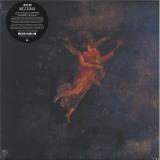
- A1: When I Sing, I Slip Into The Microphone. Into That Void, I Bring Comrade "Prayers", Then, Turning To Face The Outside, Together We Explode. Part I
- B1: When I Sing, I Slip Into The Microphone. Into That Void, I Bring Comrade "Prayers", Then, Turning To Face The Outside, Together We Explode. Part Ii
- C1: When I Sing, I Slip Into The Microphone. Into That Void, I Bring Comrade "Prayers", Then, Turning To Face The Outside, Together We Explode. Part Ii (Continued)
- D1: When I Sing, I Slip Into The Microphone. Into That Void, I Bring Comrade "Prayers", Then, Turning To Face The Outside, Together We Explode. Part Ii (Conclusion)
- D2: When I Sing, I Slip Into The Microphone. Into That Void, I Bring Comrade "Prayers", Then, Turning To Face The Outside, Together We Explode. Part Iii
5
Among the true Keiji Haino devotees, Nijiumu’s Era of Sad Wings (released on P.S.F. in 1993) has always held a special place in the pantheon. Operating for only a few years in the early 90s and apparently only performing a handful of shows, Nijiumu operated at the opposite end of the dynamic spectrum to Haino’s famed power trio Fushitsusha, dwelling in a hushed, meditative realm of mysterious droning sonorities and free-floating melodies that occasionally erupts into violence. Black Truffle is pleased to announce a new double-LP edition of a lesser-known 1994 Nijiumu recording, When I sing, I slip into the microphone. Into that void, I bring comrade “prayers”, then, turning to face the outside, together we explode. Here, Nijiumu is the trio of Haino, Tetuzi Akiyama and the obscure Takashi Matsuoka, the three performing on a wide variety of string, wind and percussion instruments, as well as electric guitar and bass, and Haino’s unmistakeable voice.
Like on the early solo Haino album that shares the group’s name (released on P.S.F. in 1993), the instrumentation swims in reverb (the use of which Akiyama recalls as ‘a kind of point of the band’), often obscuring the instrumental sources. On the short opening piece, a distant reed instrument arcs long buzzing melodies over a bed of cymbals and gongs, like a psychedelic take on Tibetan music. The epic second part, occupying almost 50 minutes, begins as a splayed, near-formless cloud of electric guitar and bass, shadowed by bowed and plucked strings, the three elements working through twisting atonal shapes. At various points in the recording, we hear what seems to be the sounds of musicians moving between instruments, their shuffling and bumps fitting seamlessly into this radically open music. Eventually, what sounds like electric guitar moves closer to the foreground, fixing on a repeated melodic cell around which hover mysterious clouds of long tones and a sporadic shaker. At the half-hour mark, the music begins to build to a violently emotive climax, Haino’s impassioned vocal cries punctuating a lumbering, bass-heavy murk, contrasted at points by what sounds like a tin whistle. Suddenly, the volume drops to a near-whisper, opening the way for the stunning final moments, which touch on the slow-motion balladry of Haino’s classic Affection, here given an eccentric twist by an occasional woodblock hit. The third piece opens with a hazy trio of rumbling bass, bowed strings and abstracted slide guitar, the latter calling to mind some of Akiyama’s later solo work. Eventually joined by Haino’s voice, its fragile, haunted tone might remind the listener of the man in black’s documented love of the madrigals of the murderous Count Gesualdo, before the recording abruptly breaks off mid-note. In this new edition, the Nijiumu trio recording is supplemented by a piece recorded solo by Haino in 1973, a bracing electronic blowout stretching almost half an hour. Using a homemade electronics setup to unleash a barrage of crunching distortion and shuddering harmonic fuzz, it takes its place in the canon of extreme live electronics next to Robert Ashley’s Wolfman and Walter Marchetti’s Osmanthus fragrans, looking forward to extreme noise years before Merzbow. Taken as a whole, these four sides of music are a stunning document of some of the lesser-known waystations of Haino’s singular creative path.


8
This is the story of a Telegram audio message suddenly poured and cast into the materiality of a vinyl record. Is it a correspondence archive? Above all, it’s a field recording, a moment bit torn from everydayness, where Androo found some fresh air in a church in Sardinia and started playing the organ. Next we’re in Naples, and Androo is playing a tiny instrument as we can hear sporadically the street hum in the background. This was all recorded on an already too old iPhone during the summer of 2023. As always, oscillating between heterogeneous elements, the album builds bridges between a radical and strangely romantic musique concrète (so slightly reminiscent of particular Luc Ferrari pieces), drawing inspirations from American minimalism, as well as traditional Sardinian music (which Androo listens to every morning), and a special kind of gospel-modal-jazz. Mostly, this is a very personal album (or its script), the fragments of a journey with no makeup. This is what it is.
credits
produced, played, recorded, mixed by androo

2
Interpit celebrates its tenth edition in glorious fashion. This anamalous record sports 2 remixes recorded by label founder Ohm Hourani.
The original songs are by George Wassouf, one of the most iconic singers in Middle Eastern music and an absolute living legend. Wassouf is a musical phenomena that will never be repeated, and an international treasure.
"Helef El amar" on the A-side is a song that has captured the ears and the hearts of millions since its release in 1988, and still does to this day. Play through the first bar or two to coax forth a smile on the listener's face or a tear on a lover's cheek.
On the B-side you'll find a more mysterious and trippy journey with a remix of an even older El Wassouf classic entitled “Dibna/inti ew ana ya rait anna kookh.” The remix is designed to make you visit places deep within your soul.
The creation of this record is a lifelong dream that carries an immense amount of emotion, and therefore we can't wait to share it with you.

Collecting Orders For 2025 Repress
Trelik returns with a repackaged edition of one of the catalogue's most treasured releases. "Overcome" and "Lady Science (NYC Sunrise)" need little introduction, and now come sporting the new TR11:11 matrix number. Written and produced by Thomas Melchior and Baby Ford aka Soul Capsule. These tracks came from one of the many sessions recorded at the West London Ifach Studio in 1999. On the A Side "Overcome" is stripped back and energetic, driven by rolling and shuffling garage style beats, tight bubbling bass and atmospheric synth pads. The intermittent vocal samples and the release's signature organ set you up for the flip, "Lady Science (NYC Sunrise)". Possibly one of house music's most emotive pieces, the track builds slowly with the introduction of each part building a story of soulful optimism based around a sparse palette of deep synths, uplifting keys and warm analogue bass. The understated beauty of the main vocal riff never seems to grow old or tired with the track lending itself perfectly to either main room, peak-time play or after-hours sessions alike. Remastered by Rashad at D & M.

5
Side A sees Italian brothers Marco and Riccardo Augeri back on Ten Lovers Music as The Robinson with two superb Deep House tracks Vibrasoul and Slow Thinking, both have their usual jazzy edge to them. Onto side AA and we have South African El Payo with Italy’s Stefano De Santis guesting on Rhodes and Solina. Living A Dream is a superb jazzy number for the dancefloor. Takahiro Fuchigami is up next with Southern Breeze, another broken beat masterpiece from Japan’s rising star who has recently had a release on Jazzy Sport. Rounding off side AA is George John from Germany with Anton Mangold on flute, a beautiful track to end our 51st release.

Our 3rd release from Ground16 erupts with deep, earthy aroma, unfurling into a bright, spore-kissed flourish and landing as a rustic, forest-born main that revels in the wild, untamed depth of fungi. PS: As a side, a deliciously nutty remix from Pistaccio caps the whole mycelial journey.

2026 Repress
For their debut EP on Tectonic, Beatrice M. drops four deep, dubby cuts bringing weighted bass energy together with techno sensibilities and advanced percussive manoeuvres. Elegant but powerful tracks built for sound systems and curious ears!
Midnight Swim is an ode to the “softer” club sounds, repetitive aquatic grooves that remind Beatrice of their go-to sport: swimming. No phones, just back and forth in the cold water, settling into a mechanical groove. The opening track, Oval, carries its title from the appreciation of soft edges, little distortion, minimal rhythmic pattern.
Upon hearing Pinch’s tune 136 Trek, (itself a nod to Zinc’s 138 Trek), Beatrice decided to name a tune 132 Trek, to continue the lineage of their musical heritage. The tune was already called Trek because it was made after moving from France and spending their first months in London, and realising “everything is a bloody trek”!!
The EP’s title track is about warm-up music and enjoying the earlier hours of the party - a quick immersion and then time for bed, rather than banging club tracks all night long. Beatrice likes to show up early at the club, watch it fill and then leave as it packs out. Midnight Swim is a dip into a roller.
The last tune of the EP features Sub Basics, the first artist to have a vinyl release on Beatrice’s own label, Bait, and one of their biggest musical inspirations. Sub Basics’ immersive progressive sounds fit simultaneously in the deep techno world and the dubstep world. A beautiful in-between.

180 G. BLACK VINYL WITH LINER NOTES IN CREOLE, FRENCH, ENGLISH
Originally released in 1979, "Spiritual Sound" lives up to its name, a soaring, triumphant album, six tracks of spirit magic from Guadeloupe.
Telluric, intense, terribly alive, the gwoka drums of Guadeloupe carry the identity of a painful and fervent island. Marked forever by the crime of slavery, Guadeloupe's créolité cherishes the ka drums and their natural environment: the low-pitched boula drum with male goatskin, the high-pitched soloist makè drum with female goatskin, the chacha, ti bwa, triangle, calabash and other percussion instruments that surround them, and the voices - the fiery, proud, timbred, urgent voices of the gwoka.
This album is also a legend for its voices: in his then dazzling youth, singer Lukuber Séjor was one of the first gwoka artists to largely feminize the chorus of répondè, who converse with his text delivered in a straight and powerful voice.
And everything here sets new standards. In 1979, Mizik Filamonik - Spiritual Sound proclaimed a spiritual patriotism of ferocious intensity. The album by Lukuber Séjor - whose spelling alone is a battle - sets out to give Guadeloupe the intangible weapons of self-respect and self-knowledge, through a singular practice of traditional music.
The genesis of gwoka music is less straightforward than one might imagine... The drums performed the servile task of accompanying the work of slaves in the fields and during the “corvées” imposed by the administration, before being freely practiced by the common people after the abolition of 1848. At the heart of the conviviality of the Guadeloupeans furthest from the cities - geographically and socially - the gwoka drums come out for carnival, funeral wakes and neighborhood celebrations, but also during strikes, fits of anger and armed vigils of the riots and revolts that have punctuated the island's history. For generations, governors of the colony and then the prefects of the overseas department of Guadeloupe have been viewing the gwoka as a potential for turbulence and a threat to public order.
But as the Beatlesmania, “chanson engagée” and rock revolutions unfolded in Europe, young people turned to the drums of mizik a vié nèg (“bad negro music”, in Creole), which Guadeloupeans had learned to despise by following the “assimilation” process advocated by the school system and most of the political class. At the end of the sixties, in a Guadeloupe mourning the deadly repression of the May 1967 social movement, they played traditional music, refusing to wrap it up in tourist prettiness and madras folk costumes. Instinctively, they played a rough and contemporary gwoka, led by the incendiary Guy Konkèt. This was the era of decisive 45 rpm records such as Robert Loyson's Kann a la richès, which brought to light the fieriest words of union rallies.
At his home in Sainte-Anne, Lukuber Séjor played with flautist Olivier Vamur and his brother Claude Vamur, who cobbled together a drum kit from tin crockery and became, a few years later, the most influential drummer in Kassav'.
These were the years of the Bumidom program, when young Guadeloupeans were encouraged to emigrate to mainland France. At the age of twenty, Lukuber Séjor embarked on the liner Irpinia, disembarking at Le Havre and taking the train to the Gare Saint-Lazare - the route taken by thousands of young West Indians who went on to study or looked for work, all the while trying to maintain a link with their homeland. In this case, it's at the Antony university residence, where Lukuber played the drum and participated in a thousand gwoka updates and aggiornamentos, while exile reinforced the need for a spiritual link with the native land.
In 1978, Guy Konkèt played at the Salle Wagram, a historic event for West Indian music. After serving as répondè - i.e. backing vocalist - on one of his home-recorded albums, Lukuber joined his live band. Little by little, he became one of the key artists on a circuit parallel to French show business. At a student party in Caen, he met a young woman from Martinique who, at the time, was more motivated by her ambitions as a visual artist than by her vocation as a musician. Her name was Jocelyne Béroard and, a few years before she plunged into the Kassav' adventure and became the greatest West Indian singer of her generation, she designed the cover of Lukuber Séjor's LP.
This ambition was obvious and imposed its will. A more or less regular band was formed, with Roger Raspail, Rudy Mompière and Éric Danquin on ka drums, Claude Vamur on ti bwa, Olivier Vamur and Françoise Lancréot on flutes and Annick Noël on keyboards. Lukuber Séjor is set on wanting to extend the gwoka palette to other instruments, as the jazz-rock revolution opens a thousand new doors. Annick Noël will play a wide range of timbres and textures on electric piano and synthesizer. Another novelty: the répondè are two men and two women, Roger Raspail, Olivier Vamur, Françoise Lancréot and Maryann Mathéus ...
Mizik Filamonik - Spiritual Sound is a self-production in which the singer and leader sank all his savings, allowing him no more than a single day in the studio. The first side is more of a musical manifesto, with the first two tracks, Éritage and Penn é plézi, being instrumentals. The third, Son, forcefully celebrates the need for Guadeloupeans to connect with the gwoka. In fact, Jocelyne Béroard's cover shows a tambouyé in the shadow of a cloudy sky, against which a radiant sun is rising and whose light will soon flood the entire landscape. The silhouette and face of this man strongly evoke the immense Vélo, master of the ka, rejected at the time on the fringes of society.
The second side of the LP is surprising. Formally, three tracks are explicitly linked like the three parts of a triptych. Primyé voyaj evokes the appalling tribulation of Africans deported as slaves to Guadeloupe; dézyèm voyaj speaks of the Bumidom program and the economic, political and social forces driving young Guadeloupeans towards the mirage of prosperity in France; twazyèm voyaj closes the cycle with the emigrants' return from Europe after years away from their island...
This gwoka, obsessed with the need to save Guadeloupe spiritually, appeals far beyond the politicized audience. Mizik Filamonik - Spiritual Sound instantly became a classic, although Lukuber Séjor never really made a career for himself as a musician.
After all, the album was released in 1980, with no promotional resources in France or Guadeloupe - and therefore no concerts. The thirty-two-year-old author, composer and performer made his own third trip back to Guadeloupe. He set up a small woodworking business, which he lost in Hurricane Hugo in 1989. His other activity, teaching in a medical-educational institute, became the core of his professional life. He continued to be an active campaigner - a campaigner for the Creole language, a campaigner for the reawakening of identity, a campaigner for special education, a campaigner for a thousand causes that he ignited with his generous and perceptive enthusiasm, such as the defense of breadfruit fries...
The echoes of his 1979 album have not died down. Of course, the use of Penn é plézi as the theme tune for Radio Guadeloupe's funeral notices from 1980 to 1992 kept him in the collective memory, but he continues to sing and compose sporadically, as with his all-female
vocal group Vwapoulouéka... Still convinced that music is a means of liberating the spirit, he continues the journey of a young man eager to deploy the power of Creole music and language.
Bertrand Dicale

12
Soulful hip hop instrumentals from Italy on Best Record-affiliated Quattro Bambole! "The "Moderna Sonorizzazioni" series by Quattro Bambole Music continues its investigation of the infinite expressive possibilities of instrumental hip-hop, recognizing it as the most contemporary form of library music. After the first two chapters - signed by Biga and JayBee Vibes - the third volume of the series, "Sport & Calcio", features the Roman producer Delphi for whom there was a lot of anticipation on the part of both Italian and scattered beatmakers everywhere in Europe and the United States. With the subtitle which is already a declaration of intent ''Tales of a boy from Rome....'' etc. etc., "Sport & Calcio" is an instrumental fresco in which football and sport become narrative pretexts to evoke images, memories and suggestions. The twelve tracks that make up the album are real cinematic sketches, in which Delphi (born Valerio Del Prete) combines raw beats, nostalgic loops, sample-delia and a narrative that evokes family Sundays, spent on the street as well as stadium, and the heat of the crowded stands. Therefore a work that is musically declined based on moments and emotions.. ''Sport & Calcio'' is therefore a deliberately introspective and not very ''danceable'' work. Sound photographs, short descriptions, themes, small fragments associated with television reports on sport... with which the artist touches chords that allow him to express a different compositional depth, a conceptual work, more descriptive and functional to the line of "Moderna Sonorizzazioni" series."

- A1: Jughead - Get Up And Fight
- A2: Dutch Man - Weh Yu Wah Mi Do Ballay
- A3: Frankie Paul - No I Wooden Mind
- A4: Little John - I'm Lonely Too
- A5: Little Chukie - Show You That I Love You
- B1: Prince Oret - Getto Youth
- B2: Lee Crystal - Give My Loving A Try
- B3: Early B - Come
- B4: Little John - Champion Lover
- B5: Baker B - Cowboy Mc
10
Little John is one of the most loved and prolific 80s dancehall artists. He started as a child artist in 1979 and by the mid 1980s had recorded for every major producer. In 1984 at age 14 he already knew the ropes of the business and started to produce 45s on his own Romantic label, which he continued sporadically releasing tunes on up until 1993. For us this is one of the coolest looking labels of the latter 1980s, and has a handful of hard to find killer 45s, mostly obscure and mostly slept on. So naturally we needed to corral these for another all killer no filler compilation. True to his own roots, Little John’s label mostly features fresh youthman artists, though a handful of veterans, like Frankie Paul and Early B who are both featured here, also recorded for him. The ten songs on this comp are our favorites from the label, featuring a selection of killer rhythms spanning the heavy mid 80s style, the proper late 80s digital style, and the more uptempo early 90s style. Hardcore DKR heads take note - this features three cuts on that most hallowed 1987 digi rhythm.

DJ Normal 4 lands on Fantastic Planet with his highly anticipated solo release, Spore Clouds EP. This sonic journey channels the raw, hypnotic energy of ’90s underground Goa trance while weaving in fresh, modern textures.
More than just music, this release carries a purpose: proceeds will be donated to support the Georgian resistance movement in their fight against an emerging far-right authoritarian regime.
Join us. Experience the music. Support the cause.

8
The combination of their musicianship and the cutting-edge technology at the studio resulted in a masterpiece of pure, state-of-the-art funk and boogie. The album features all the hallmarks of great 80s music: fresh synths, drum machines, and powerful lead vocals from John Davis. Upbeat tracks like "The Cat (Puma)" and the title track sit comfortably alongside more soulful songs like "Tears" and "Hearts of Gold," while "Dancing Shoes" remains one of the era's catchiest dance tracks.
Still, Shake It - Make It Loose holds a few mysteries. Why was it released under the unusual name J.D. (Puma) Lewis? And what's the story behind tracks like "The Cat"? While J.D. Lewis stood for John Davis Lewis's full legal name, Hudson sheds light on the "Puma" connection: "At the time, I was working as a promotions manager for Puma sportswear. Jörg Dassler, son of Puma founder Rudolf Dassler, was a friend of mine and financed our studio sessions." As said, these sessions took place at Hartmann Digital, a state-of-the-art studio in Untertrubach, Bavaria, where iconic artists like Nena, Yello, Visage, DAF, and Soft Cell recorded.
The use of such an expensive studio would have been out of reach for the two musicians without Puma's backing, which also explains why there is a title like "Dancing Shoes." When we had licensed the track for the Boogie On The Mainline compilation in 2018, we had the chance to speak with John Davis (who sadly passed away in May 2021 due to COVID-19). Davis revealed that there were plans to make a video for the song in collaboration with Puma, but those plans fell through. In the end, the album was signed to the Deggendorf-based Metrovynil label.
Interestingly, the original contract reveals that the first version of the album only contained six tracks. Metrovynil added two more: "Sexy Highschool Lady," a track Davis recorded solo, and "Party Rap" by The Dynamite Two, which had no connection to Davis or Hudson at all. The album's credits also list a "Fred Fiore" as the person "who made all of this possible." Hudson, who sees himself as the producer, has no idea who Fiore was - likely another fabrication from the label. "That's just the kind of thing Metrovynil did," Hudson comments with some regret.
Despite the behind-the-scenes confusion, the music spoke for itself. The original pressing looked and sounded fantastic, featuring a stylish cover shot of John Davis in a sharp suit. Now, with this first-ever vinyl reissue, we're thrilled to include additional photos and more background information in a deluxe gatefold sleeve.
This reissue includes all six tracks from the original Hartmann Digital sessions, plus two bonus tracks. From the original reel tapes, we unearthed additional material that Hudson and Davis produced together in the early to mid-80s. We're excited to share the previously unreleased tracks "Life's A Party," and "Walk Out On Me." The digital version of the reissue will also feature two more songs: "Red Drops" and "Pick It Up Off The Ground."
Shake It - Make It Loose is a classic boogie-funk album that belongs in every serious funk and disco collection. It showcases the undeniable talent of two true musicians and stands as a testament to the friendship between Reg Hudson and John Davis.

10
The million-selling self-titled duet album by Roberta Flack and Donny Hathaway was the breakthrough record for Flack. Donny already enjoyed some commercial success, but their hit singles “You’ve Got a Friend” and “You’ve Lost That Lovin’ Feelin’” put Roberta on the radar. The sensitive and emotional masterpiece can be seen as one of the best duet albums of all time. It was the album’s third single “Where Is the Love” which dominated the US radio for almost a year, and reached the fifth spot in the Billboard Hot 100. The album itself shows a work of great depth and tenderness, with some of the most impressive vocal harmonies you’ll ever hear. After the success of the album Flack and Hathaway recorded sporadically together throughout the ‘70s, until Hathaway’s tragic death in 1979.
8
Schlammpeiziger, who had previously only been known to us for his top hits and T-shirts, burst upon us like a wild boar in search of affection in the middle of the coronavirus lockdown. He nested in our fully vaccinated home, drank our Eversbusch, ate from our plates, slept in our bed (wait - wrong fairy tale) and repeatedly urged us to organise egg runs with his testicles (after some contortions, we gave up trying). Childish faecal humour, far-fetched obs(t)enities, juicing, a desire to dissolve, composting of thoughts. In excesses of lack of concentration, the chains of associations curled and meandered like Jo's famous curlicue drawings. Every evening, after we had forcibly levered him out of our flat, he would ‘walk’ home to put together very unique , dreamy pieces. In the blissful brainfog of those days, for example, ‘Handicapfalter’ was created, for which the congenial °Bär° made our flat into the corresponding video. Among other quirks of the little gut-breather, we were fascinated to observe his phobia of literature and books. Just hold a printed page in front of his face for a few seconds and he writhes on the floor crying. A level of phobia that only my own laughable disgust and fear of writing myself can compete with. Jo shudders at the thought of reading sentences that build on each other in a meaningful way, and I shudder at the thought of having to write them down because I have something ‘to say’. A certain affinity cannot be denied. We are much, much more pleased by snatched-up, misunderstood or misheard snippets, hollow but unforgettable phrases, the diamond stoner humour of our ancestors. ‘From one turn/ I stop/ to walk on/ in all directions’ (as it murmurs in “Selten Gesehenes”), describes the process quite nicely. After all, Jo is ahead of me in that he can simply break off every tedious sentence and let it fade into music. Back to the essentials. It's five to 12 for the Schlammpeitzger (scientifically Misgurnus). The shy goby is under threat from climate change, so perhaps this vinyl is the last expression of life of the specimen that we have been allowed to look after sporadically since the lockdown phase of the corona epidemic. And it's turned out pretty. Even the aesthetically gutted like me and my beloved husband can THINK about sex when they see these sublime, silvery fart bubbles! It's tender as a fart. Make love!!!!!
Schamlose Dubtöse: Do you have words. Do you have sounds. Impertinently harmless piano tinkling turns into tugging zounds of increasing severity. It is not dubbed (would be unethical) but dubbed. Sounds dubby, as you can imagine. (Instrumental)
Loch ohne Licht: Possibly vaguely misogynistic. Could also be that there was simply no light in the hole. The sparse snippet of lyrics (‘du biss mir och esu e Loch ohne Licht’) sounds like one of those stroppy Cologne replicas whose anti-charm is hard to resist. Buzzing and grooving.
Selten Gesehenes: Casual. Confident. Soft. Fragrant. Thoughtful but lively.
The Arabian Vietmanese (instrumental) is probably the food we trust in the case of the munchies we get when we watch other people smoking weed. Transcendental and psychedelic states casually permeate the humdrum of everyday life. Klar Knuspermarsch: Marches and floats at the same time. Klebt Runner: Soundtrack to the cult film of the same name. Tyrrell Corporation loosens up. Ungenutzte Sätze: Stinks somehow, because there is dangerous proximity to comprehensible and then also critical statements here. Instead, the sinister electronic cheapness of Carpenter soundtracks can be heard. Parzipan: Actually, the time of origin was not so roaringly funny and simple, but for Jo it was also a gruelling, slow letting go of his brother. Here he sends him off with a gentle nudge into the vastness of a hopefully happy beyond.
Clara Drechsler
Schlammpeiziger, der uns bislang nur durch seine Top-Hits und seine T-Shirts bekannt gewesen war, brach mitten im Corona-Lockdown über uns herein wie ein wilder Eber auf der Suche nach Zuwendung. Er nistete sich in unserem durchgeimpften Zuhause ein, trank unseren Eversbusch, aß von unseren Tellerchen, schlief in unserem Bettchen (Moment - falsches Märchen) drängte uns wiederholt dazu, mit seinen Hoden Eierlauf zu veranstalten (nach Verrenkungen gaben wir den Versuch auf). Kindischer Fäkalhumor, weit hergeholte Obs(t)zönitäten, Entsaftung, Auflösungswunsch, Gedankenkompostierung. In Exzessen der Konzentrationsschwäche ringelten, kringelten und schlängelten sich die Assoziationsketten wie bei Jos berühmten Kringel-Schlängel-Zeichnungen. Jeden Abend, nachdem wir ihn gewaltsam aus unserer Wohnung gehebelt hatten, „ging“ er dann heim, um dort sehr eigene, verträumte Stücke zusammenzubasteln. Im seligen Brainfog dieser Tage entstand z.B. „Handicapfalter“, für das der kongeniale °Bär° aus unserer Wohnung das entsprechende Video machte. Neben anderen Marotten des kleinen Darmatmers beobachteten wir fasziniert seine Literatur- bzw. Bücherphobie. Halt ihm nur sekundenlang eine bedruckte Seite vors Gesicht, und er windet sich weinend am Boden. Ein Grad an Phobizität, mit dem sich nur meine eigene lachhafte Abscheu und Angst vor dem Selberschreiben messen kann. Jo schaudert beim Gedanken, sinnvoll aufeinander aufbauende Sätze lesen, mir wiederum beim Gedanken, sie hinschreiben zu müssen, weil ich irgendetwas „zu sagen“ habe. Eine gewisse Verwandtschaft ist nicht zu leugnen. Viel, viel mehr freuen uns aufgeschnappte, falsch verstandene oder misshörte Fetzen, hohle, aber unvergessliche Phrasen, der diamantene Kifferhumor unserer Vorfahren. „Aus einer Drehung/bleibe ich stehen/ um in alle Richtungen/weiter zu gehen“ (wie es in „Selten Gesehenes“ raunt), beschreibt den Prozess schon ganz schön. Immerhin hat Jo mir voraus, dass er jeden leidigen Satz einfach abbrechen und in Musik ausplempern lassen darf. Zurück zum Wesentlichen. Es ist fünf vor 12 für den Schlammpeitziger (wissenschaftlich Misgurnus). Die scheue Grundel ist von Klimawandel bedroht, vielleicht haltet ihr mit diesem Vinyl also die letzte Lebensäußerung des Exemplars in Händen, das wir seit der Lockdownphase der Corona-Epidemie sporadisch betreuen durften. Und die ist hübsch geworden. Selbst aus ästhetischer Erwägungen Entdarmte wie ich und mein geliebter Mann, können bei diesen sublimen, silberhellen Pupsbläschen DENNOCH an Sex denken! It´s zart as a fart. Make love!!!!!
Schamlose Dubtöse: Hast du Worte. Hast du Töne. Impertinent harmloses Klavierplätschern geht über in ziepende Zounds von zunehmender Strenge. Es wird nicht domptiert (wäre unethisch) sondern dubtiert. Klingt dubtig, wie ihr euch vorstellen könnt. (Instrumental)
Loch ohne Licht. Möglicherweise vage misogyn. Könnte auch sein, dass im Loch einfach kein Licht war. Das sparsame Textfetzchen („du biss mir och esu e Loch ohne Licht“) klingt nach einer jener pampigen kölschen Repliken, deren Anticharme man sich schwer entziehen kann. Schwirrt und groovt.
Selten Gesehenes: Lässig. Souverän. Softig. Duftig. Nachdenklich aber beschwingt.
Beim Arabischen Vietmanesen (Instrumental) gibt es wahrscheinlich die Speise unseres Vertrauens im Falle der Munchies, die wir kriegen, wenn wir anderen Leuten beim Kiffen zusehen. Transzendentale und psychedelische Zustände durchziehen beiläufig den schnöden Alltag. Klar Knuspermarsch: Marschiert und schwebt zugleich.
Klebt Runner: Soundtrack zum gleichnamigen Kultfilm. Tyrrell Corporation macht sich locker. Ungenutzte Sätze: Stinks irgendwie, weil hier gefährliche Nähe zu nachvollziehbarer und dann auch noch kritischer Aussage gegeben ist. Dafür klingt die sinistre elektronische Billigkeit von Carpenter-Soundtracks an.
Parzipan: Eigentlich war die Entstehungszeit gar nicht so brüllend lustig und einfach, sondern für Jo auch ein zermürbendes, langsames Loslassen des Bruders. Hier schickt er ihn mit sanftem Schubs hinaus in die Weiten eines hoffentlich schönen Jenseits.
Clara Drechsler
Downloads

On his latest full-length, Low End Activist swerves towards weightless grime and suspended hardcore miniatures to tell a very personal story. The UK-rooted producer continues his habit of zeroing in on a distinct approach for each release, leaving a logical breadcrumb trail of soundsystem science in his wake as he channels decades of bass absorption into 14 atmospheric cuts that prize patience and precision over obvious club functionality.
Municipal Dreams plays out as a semi-autobiographical tour through the Blackbird Leys estate that the Activist grew up on. It’s a lived reflection on inequality and the ripple effect it has in working class communities, using the sonic palette to set the mood and scattering pointed samples throughout to spell out the story.
In sampling the exhaust of a stolen Subaru Impreza, ‘TWOC’ looks back to the recreational car theft which was standard entertainment for the kids in his community. There’s an underlying idea that this ‘council estate sport’ wouldn’t have been so prevalent if there were public services and opportunities presented to the scores of disaffected youth looking for somewhere to direct their energy and frustration.
In ‘Just A Number (Institutionalised)’ LEA alludes to the shattered juvenile detention system, growing up seeing friends and family members locked up at ease with little to no support on being released back into society, just meant that the same cycles of behaviour would play out over and over.
‘Violence’ samples from a short film shot by the drama division of the Blackbird Leys Youth Club to evoke the physical threat which formed a background hum to life on the estate. The industrial mechanics of the local car factory, which served an integral role as a workplace for many in the community, gets sampled in ‘They Only Come Out At Night’ while the ‘Everyone I look up to are either junkies or criminals’ sample in ‘Broke’ looks to a lack of positive role models.
Municipal Dreams isn’t a one-note indictment of life on the estate, ‘Innocence’ captures the simplicity of a child at birth before their environment has time to shape them. The Hope interludes cut through the grim honesty of the longer tracks while a subtle thread of wry humour finds its way into some of the talking heads cutting through the signature LEA murk.
But honesty is the operative word here, and the message feels all the more meaningful at a time when the UK’s social divisions are laid bare in the wake of a devastating stretch of austerity. Returning to Blackbird Leys to shoot images for the photo-zine and album cover, the Activist found the local community centre being demolished. The local pub stands derelict, its faded Welcome sign a grimly ironic portent of the options facing children of the estate in the wider world.
Funnelling his memories, hopes and fears into a singular twist on the bass weight tradition, LEA captures evocative scenes that land somewhere between kitchen sink realism and rave futurism.
