The product of their fading seaside-resort hometown of Littlehampton, Gloo speak for the timeless day to day drudgery and angst; a rhapsody to lives gone stale, the band's pop laced punk rock is the perfect soundtrack to those in need of a little 21st Century escapism. 'Ride' and 'Down' are the latest tracks taken from Gloo's upcoming second album 'How Not To Be Happy', recorded with Jag Jago (The Maccabees, Jamie T, Max Raptor) across the summer of 2020, in-between local lockdowns.
Buscar:stal
- A1: The Fourth Day (Feat Roger Robinson)
- A2: Pressure (Feat Flowdan)
- A3: Demon (Feat Irah)
- A4: Vexed (Feat Moor Mother)
- B1: Clash (Feat Logan)
- B2: War (Feat Nazamba)
- B3: How Bout Dat (Feat Ffsytho)
- C1: Bang (Feat Manga Saint Hilare)
- C2: Hammer (Feat Flowdan)
- C3: Ganja Baby (Feat Daddy Freddy)
- C4: Fuck Off (Feat Logan)
- D1: Bomb (Feat Flowdan)
- D2: High Rise (Feat Manga Saint Hilare)
- D3: The Missing (Feat Roger Robinson)
Kevin Martins erstes Solo-Album unter dem Namen The Bug seit sieben Jahren könnte zeitlich nicht besser passen: „Fire“ - der dritte, berauschende Teil eines urbanen Triptychons, das mit dem explosiven „London Zoo“ von 2008 begann und mit dem bewusstseinsverändernden „Angels & Devils“ von 2014 fortgesetzt wurde - besteht aus vierzehn Tracks, die die Synapsen zum Schmelzen bringen, die den Körper durcheinanderwirbeln und die Hörerinnen und Hörer auf cineastische Weise von der Beschwörung einer düsteren, abgeriegelten Stadtlandschaft bis hin zu schwindelerregenden, tiefenscharfen Nahaufnahmen der Psyche von Martin, die ihn und seine Kollaborateur*innen an die Belastungsgrenze führen.
Die Aggression, die Attitüde, der beeindruckende Umfang und die destabilisierende, beunruhigende Raserei des Bug-Sounds ist durchweg perfekt umgesetzt, aber „Fire“ ist keine bloße Wiederbelebung der Vergangenheit - für Martin ist das Album sowohl eine Antwort auf die einzigartigen Umstände des vergangenen Jahres als auch eine Chance, seine eigene Reise vom zurückgezogenen Sound-Besessenen zum Familienvater zu reflektieren, und seinen Durst zu stillen - in einer Zeit erzwungener hermetischer Isolation - nach Kontakt, nach dem Chaos, das nur zwischen Menschen, Lärm und Bässen stattfinden kann, die Irritation der Sinne, die stets Bugs Methode und Weg waren, seit er in den späten 90ern aus den tiefsten Ecken Londons herauskroch.
Es ist das bisher beste Album von The Bug, möglicherweise die wildeste und bewegendste Musik, die Martin je gemacht hat, und es berührt immer noch die anfänglichen Sehnsüchte und Impulse, die „London Zoo“ wie eine Rohrbombe durch den Briefkasten in Ihre Welt katapultiert haben. Es ist eine hungrige Platte, in jeder Hinsicht.
Die MCs, die auf dem Album zu hören sind - einerseits langjährige Weggefährt*innen wie Flowdan, Roger Robinson, Moor Mother, Manga Saint Hilare, Irah & Daddy Freddy, andererseits relativ neue Namen im Bug-Stall wie Logan, Nazamba und FFSYTHO - reflektieren unweigerlich den äußeren Wahnsinn einer auf den Kopf gestellten Welt, graben aber auch tief in sich selbst, um nachdenkliche, erbarmungslos ehrliche Darstellungen der Wut, des Widerstands und der Resignation zu schaffen, die das letzte Jahr in uns allen hervorgerufen hat.
- 1: All I Need
- 2: Kiss Like The Sun
- 3: About Last Night
- 4: Downtown
- 5: Rabbit Hole
- 6: Lost
- 7: Scene
- 8: Lonely Hours
- 9: Maybe It’s Today
- 10: Screaming
- 11: Hold Tight
It may be his fifth album, but Saturday Night, Sunday Morning marks the start of chapter two for Jake Bugg. Arguably his most complete and coherent record to date, Saturday Night, Sunday Morning manages to combine a love of ABBA, the Beach Boys, Supertramp and the Bee Gees, with a contemporary pop sound: one that’s already spawned his most ubiquitous song in years via euphoric lead single, All I Need. “I knew what I was looking for this time around,” the 27-year-old says, firmly. “And I feel like I accomplished it.” It’s almost 10 years since a two-fingered Bugg burst onto the scene with his eponymous debut, one that topped the UK album charts and saw the then 18-year-old from Nottingham fêted as the next Bob Dylan. A Rick Rubin-produced follow up, Shangri La, quickly followed. But progress stalled with Bugg’s third, largely self-produced, record, On My One, in 2016. “I was having a hard time on that third record,” Bugg admits, five years removed. “The support from the industry wasn’t what it was. All those people telling you how great you are weren’t there anymore. It does feel like the rug’s been swept from under your feet.” What that record provided, however – along with its comparatively stripped-back follow up, Hearts That Strain (2017) – was a much-needed course corrector: one that set Bugg on the upward trajectory he finds himself on today. “When I came to terms with that was when I left the ego at the door,” he says. “It didn’t work out. But it led here. And this is probably my strongest record." It’s testament to Bugg’s rediscovered confidence that Saturday Night, Sunday Morning – a nod to the debut novel by Nottingham author Alan Sillitoe – sees him working with some of his highest profile collaborators to date, most notably American songwriters Andrew Watt and Ali Tamposi, best known for their work with pop heavyweights Post Malone, Dua Lipa, Miley Cyrus, Camila Cabello. “I was looking for how I can incorporate my sound for a more modern era. And I kind of struck gold working with Andrew Watt and Ali Tamposi,” Bugg says. Convening in LA, the first track the trio wrote together is the jealousy-inflected About Last Night, a song about the “insecurities you go through as a young person in a relationship with someone.” “It’s got such dark undertones, which I love,” Bugg says, of a song that showcases a newly discovered, Beach Boys-esque falsetto. “But it’s also very, very pop. That’s what I’ve always loved. With ABBA, with Supertramp. I love pop music. But when you can get it to be dark, I love it even more.” It’s a trick the trio repeated again on Scene, Bugg’s personal favourite from the album and a song that best encapsulates the combination of old and new: Watt’s George Harrison-esquire guitar brushing up against contemporary melodic choices by Tamposi. “I love writing with her,” Bugg says of the Havana hitmaker. “She brought that women’s perspective. And I knew that I’d got that balance of what I wanted. That old school chorus with contemporary verses. That to me was my favourite song when I wrote it, and it still is.” Perhaps the biggest example of Bugg’s newfound ego-less approach to writing, however, came in the shape of Downtown, a song that grew from an idea by Jamie Hartman (Celeste, Lewis Capaldi, Rag'n'Bone Man), and sees Bugg deploy the higher range of his voice to ethereal, ’60s Bee Gees effect. “Usually, the initial spark of an idea comes from me. And when it doesn't, it sometimes loses my attention,” Bugg admits. On Downtown, however, he relished his role as arranger: “Because there were a lot of moving parts and chords, it was almost like a puzzle,” he says. “I’d never approached a song like that before. “What I’ve been enjoying on this record is the collaborative process,” he continues. Working with people, writing with people. Because I’ve realised all I really want to achieve is to be the best writer I can possibly be. And I think by working with other people, it allows you to learn a lot as well.” It’s a theory Bugg has put to the test during lockdown, when he was approached by his manager about writing the soundtrack to an upcoming documentary, The Happiest Man In The World, about Brazilian footballer Ronaldinho. “It’s kind of a completely different experimental outlet,” Bugg explains of his first ever score. “I approach my own work quite professionally. But with this I can just switch off and go into a different world. And it’s been brilliant – I’ve had to learn different styles of guitar: bossa nova, samba. It’s a bit Vangelis, who’s probably my favourite artist – which may surprise people.” Possibly. But you get the impression that surprising is what Bugg likes to do. “I don’t like to be stuck doing the same thing,” he admits. “And that’s what this record Saturday Night, Sunday Morning was. I wanted to push myself. I’m always learning new influences. I’m careful not to get stuck on the same thing. “It’s not going to be right every time. It’s not going to be good every time,” he continues. “But if that’s the process it takes to get to this record, where people are loving the songs again, then that’s the journey we have to take.” For Jake Bugg, chapter two starts now. New album ‘Saturday Night, Sunday Morning’ is out August 20th on RCA Records
Only three releases in and DSO are already setting out their stall as a buy on sight label to look out for. Round three of this insatiably sassy series sees a double dose of ‘90s R&B powerhouses reimagined into bumpin' house heaters that are certified head turners from the get-go.
Fake Laugh & Tarquin first became acquainted a very long time ago, before they were either Fake Laugh or Tarquin. Two humans in their late teens with a keen interest in sound, they would indulge each other in whatever conversation they could muster while loitering in the corridors of their sixth-form college. Their place of learning existed in a sleepy Sussex town where once a year, the skies are filled with explosions, while burning effigies are carried through the cobbled streets by inebriated locals. The two did not suspect that much would become of their light friendship - but in good time that would all change…
In the years that followed, the two young artists moved to London and embarked upon their own totally distinct musical journeys - Fake Laugh was playing in venues with ‘rock bands’, while Tarquin was carving out a niche for himself in the bubbling, lava-like instrumental grime scene, which brought a new kind of heat to the clubs of the city. His vibrant, unapologetically obtuse (and at times absurd) brand of club-music delighted the ears of listeners, the feet of dance-floor dwellers and the brains of music theorists - all in one fell swoop. Having released with Mr. Mitch’s crucial Gobstopper imprint as well as big-guns Rinse, Tarquin has become a household name in the homes of those that know. All the while, Fake Laugh was in his bedroom writing scores of songs and occasionally releasing collections of the strongest cuts on a variety of indie labels who believed in his talent for timeless melody, focussed through his own rose-misted, yet modern lens.
It wasn’t until the fabled summer of 2019 that Fake Laugh & Tarquin would make music together in the same room. The first session resulted in album opener Slow, a song which for the previous two years, lay dormant in an acoustic form on a dusty Fake Laugh hard-drive. Fake Laugh had the idea that perhaps the song could be transformed into something far bigger and better in the hands of Tarquin - a theory which was proven correct.
Throughout Fake Laugh & Tarquin the pair continuously confound the listener, fusing sharp and glacial synthetic elements with warm organic tones and heartfelt vocal performances. Money was written at the start of the global pandemic, a time in which people had more financial concerns than usual. Rejecting total doom and gloom, Fake Laugh & Tarquin turn this dystopian angst on its head and create a one-of-a-kind club mover that pulls inspiration from the super-slick grooves of early noughties stalwarts Moloko and Groove Armada. The album twists, turns, morphs and mutates until it’s peaceful conclusion in the form of existential piano-ballad Meaningless Thin
The DISCO REGGAE LOVERS series reaches a zenith with the first ever reissue of Dambala and their beautiful reggae roots song Lorraine. Long a diggers secret, it seemed only apt to ask the DJ who brought it to the attention of many, with a wonderful dub by label stalwart, Lexx.
Born in Lagos, Nigera but growing up in the Harrow Road area of West London, Augustus "Gus" Anyia immersed himself in the music of area during the vibrant 60s awakening of African and Caribbean cultures. Learning drums as a boy, he quickly progressed to classical guitar and would perform at school and beyond.
Jamming with guitarist Alvin Christie led to them forming Dambala in 1975. Their first releases set them on their way, produced by Jimmy Lindsey, mixed by Dennis Bovell and cut by Porky. From there more singles followed, repeatedly touring Europe and recording for a TV documentary, before pressures took hold and following a change in line up, the band recorded their sole album, Azania.
Lorraine was the stand out, a wonderful love song of youth's forlorn love, it's warm drum and bass encompassing the yearning lyric. A small masterpiece of UK roots in it's own right, this special 7" comes with a simple, but perfect dub mix from Lexx and will be followed by a comprehensive reissue of Dambala by the label.
- A1: Kebrou - Banjey ‘Boogie’
- A2: Ateg Ould Syed - L’ensijab
- A3: Jeich Ould Chighaly - Wezin
- A4: Kebrou - Banjey
- A5: Deye Ould Amartichitt - Paris
- A6: Mohammed Guitar - Banjey & Medh
- B1: Baba Ould Hembara & Mama Mint Hembara - Moulana, Laa Moulana
- B2: Luleide Ould Dendenni - Wezin
- B3: Mohammed Guitar & Sbeyniat - Gelbi Vatimetou
- B4: Mohammed Cheikh Ould Syed - El Horr & Az-Zrag
- B5: Kweli Ould Seyyid & Klayhid Ould Meylid - Wezin
Legendary psychedelic guitar music from the Islamic Republic of Mauritania finally available on vinyl!
Originally released as a double CD in 2010, Wallahi Le Zein! has persisted as a cult classic, a collection of a rarely heard and utterly unique underground music scene, raw and unfiltered.
For fans of the more raw side of Sublime Frequencies, Sahelsounds, the ripping tape-hiss psychedelia of Les Rallizes Denudes, and anyone remotely interested in GUITARS.
12” 160 gram black vinyl LP, with 2 spot color reverse-board jacket, and 8-page full sized booklet with extensive notes and photos, and a history of Mauritanian guitar playing.
‘’this is the first curated collection of unfiltered Mauritanian guitar music ever, and I'm glad it's been introduced with such thoroughness and care.’’ 8.0 Pitchfork
The LP version we now present is intended as an immersive entry into this music: gnarled and virtuosic electric guitars weave hypnotically throughout melismatic sung poetry and exclamations, pulsing hand drums, party chatter, buzzing rigged desert sound systems, and all manner of the ambient sounds of Nouakchott wedded to oversaturated cassette in all its swirling, breathing, psychedelic glory. Operating entirely outside of any local recording industry, these songs were collected from bootleg tape stalls, wedding souveniers, and networks of musicians, expertly curated, researched and produced by Matthew Lavoie.
Drawing from the deep well of Mauritanian classical music, the gamut of musical modes and the tidinitt lute repertoire are transposed to the electric guitar - often with frets removed or additional frets installed, “heavy metal” distortion pedals and phasers built into guitar bodies, blurring the lines between Haratine and Beydane musical cultures, the ancient and the futuristic. At times transcendent and transfixing, and conversely a furious and cascading intensity that commands jaw-dropping attention.
2021 Repress
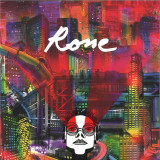
Rone is a stalwart of the French electronic scene and returns with his fourth album, 'Mirapolis', a synesthetic journey with features from Bryce Dessner (The National), Baxter Dury, John Stanier (Battles) and Saul Williams. The artwork was created by the critically acclaimed director Michel Gondry.
Stepping into Rone's music is like sleepwalking through a vividly colourful dream, eventually stumbling across a strange, scintillating Megapolis of saturated light and colours: 'Mirapolis'. Its twelve tracks / districts, each with their own specific planning, pulsate as though animated by their musical mastermind.
The project was an opportunity to get reacquainted with long- time stage and studio partners John Stanier, Gaspar Claus and the Vacarme band and Bryce Dessner (guitarist for The National,) while bringing in new collaborators (and thus, new interpretation of Rone's dreams). We find American slam-poet Saul Williams, who happened to be in Paris for a moment and contributes a searing anti-Trump screed, Baxter Dury, who brings an irresistible East London touch to 'Switches', a kind of fan fic that reimagines the Beatles' Sergeant Pepper lounging pensive in a club chair, Israeli electronic music muse Noga Erez, who inspired 'Waves' which, despite being recorded remotely, betrays a euphoric partnership, and finally, Kazu Makino, Blonde Redhead's bewitching singer and multi- instrumentalist, who contributes to the album's closer, the gauzy 'Down For The Cause'.
Rone remains a producer of grand instrumental pieces, which cannot be easily categorized in the architectural canon of our electronic music galaxy. Hypnotic, cinematic opening track 'I Philip' is an offshoot from the score for the first French virtual reality fiction, built around Philip K Dick - the perfect gate into a city that then opens up myriad temporal perspectives.
Aquaregia mainstays, Troma & PERS1, return for their fourth release on the label. Their Kaede EP exhibits the duo's signature exquisite acid lines though a tracklisting of five dripping dreamscapes.
"Kaede" introduces the release with a bubbling acid line and up-tempo groove. A euphoric journey through a new destination; a mental escapade moving from excitement and anticipation to pure bliss.
"Samara" takes over with a haunting acid line and eerie pads, venturing deeper into the unknown. Atmospheric fog intertwines between the rosy foliage of the Japanese maples; a cool breeze propels the ripened samara, helicoptering from their stems.
"Crimson Breath" relieves the tension with a chilled out and dubby trip. We're taken bankside of a babbling brook, sheltered by an enclosing leafy canopy; comforted in a safe haven.
Next, "Autumn Moon" gently guides us on a psychedelic excursion laced with intricate dribbling acid lines and breaky percussion. A walk through a shadowy limestone cave, water trickling down and plinking from the luminous stalactites.
Leng Records has long had close ties with the underground music scene in San Francisco, with low-slung dub disco and psychedelic disco outfit 40 Thieves releasing their acclaimed album The Sky Is Yours on the imprint way back in 2014. Now Leng has turned to another stalwart of the Bay Area scene, Cole Odin, on a single that’s every bit as trippy and engrossing as you’d expect from one of San Francisco’s most frequently overlooked talents. Cole made his Leng debut earlier in the year, contributing the electro-influenced track ‘Numbers Game’ to the label’s 10th anniversary compilation. On ‘Little Boxes’, he’s joined by good friend Eddie C, a much-loved disco and house producer from Canada best known for his releases on Endless Flight and Red Motorbike. The pair recorded the track while Eddie was staying with Cole in San Francisco last year.
In keeping with the low-slung, hallucinatory sound that has always been a big feature of the San Franciscan scene, ‘Little Boxes’ is a trippy, mind-altering affair in which waves of sitar sounds, cosmic synths, effects-laden guitars and kaleidoscopic electronics rise above a weighty punk-funk bassline and crunchy, snare-heavy beats. It has serious dancefloor chops but is also atmospheric and immersive: perfect 5am music for Bay Area beach parties and mushrooms-fuelled forest raves.
Fittingly, it’s 40 Thieves who provide the accompanying remix, a 10-minute epic created with the assistance of Adonis and Rodney from the psych rock band ‘Guavatron’ for additional synths and the guitars. Beginning with tabla-style percussion, swirling chords, psychedelic guitar licks and mystical sitar sounds, the remix builds in waves, with looser drums and even weightier bass propelling the track forwards at a metronomic and hypnotic pace. By the time the eyes-closed guitar solos drop two thirds of the way through, you’ll be tripping hard and reaching for the lasers. It’s a genuinely stunning remix of a genuinely intoxicating, mind-mangling track.
Nimbus West spirit jazz essential: the Creative Arts Ensemble's classic debut One Step Out. One of the most sought after and highly-regarded titles to have appeared on Tom Albach's celebrated Nimbus West imprint, One Step Out is a timeless work of spiritualized jazz. A true gem from the Los Angeles jazz underground, the album was pianist and composer Kaeef Ruzadun Ali's first recording as leader of the Creative Arts Ensemble, the only large ensemble group that emerged directly from Horace Tapscott's legendary Pan Afrikan Peoples Arkestra community jazz group. A Los Angeles native, Kaeef was introduced to the Tapscott circle in the late 1970s. His first experience of the Arkestra's ethos was through PAPA tenorist Michael Session, who took him to the famous "Great House" at 2412 South Western Ave., LA -- a large mansion house which members of the Arkestra had taken over as a space for communal living. Life in the Great House was a continuous stream of music, dance and community events. "When I walked in there," recalled Kaeef, "it was like this whole rush came over me, just from going in the front door -- It was like a very, very warm feeling of love. I went and I came out with 'Flashback Of Time', and that was my first arrangement." Kaeef quickly became a significant contributor of compositions to the Arkestra's songbook -- his piece "New Horizon" would be recorded by Horace Tapscott for the latter's Tapscott Sessions series. But "Flashback Of Time" would eventually appear on One Step Out, played by the new group he had put together from stalwart Arkestra members. Inspired by both Tapscott's example and by the Art Ensemble of Chicago, Kaeef had wanted to follow their lead by assembling a larger unit. Featuring seasoned Arkestra regulars including reedsman Dadisi Komolafe, drummer Woody "Sonship" Theus and altoist Gary Bias, with veterans Henry "The Skipper" Franklin on bass and George Bohannon on trombone, One Step Out is a key document of the Los Angeles radical jazz underground. Featuring the sanctified vocals of Kaeef's sister, B. J. Crowley, the album is a tour de force of spiritually energized independent jazz music.
It’s with a heart brimming with pride that Bordello A Parigi welcome Italoconnection back to the family with their latest album: Midnight Confessions Vol.1. The team of Fred Ventura, a legend of Italo Disco, and Paolo Gozzetti, a stalwart of Italian electronics, arrive with eight tracks that shimmer with sun-kissed synths and love-filled lyrics. A strew of like-minded musicians have been called upon to bring their own unique ideas and styles to this album. Sweden’s Tobias Bernstrup offers his vocals in the environmentally minded “Rainbow Warrior,” while the unique and unmistakable voice of French pop icon Etienne Daho sings in the charged “Virus X”. Modern day electro-disco maestros feature with Carino Cat collaborating in the warming rays of “The Year of the Sun.” Newcomers to the scene are also represented, Francesca Diprima’s voice accompanying Fred Ventura’s in the lovelorn lament of “Since You Went Away”. And at the heart of the album are Ventura and Gozzetti; a record that explores classic themes while introducing a wider commentary, a collection of bold brilliance and synthesizer subtilty.
Another top notch Funky Spiritual Jazz release from Paul Murphy's Jazz Room Records. Featuring Strata-East stalwart Shamek Farrah on Saxes and an all star cast including Trumpet Legend Malachi Thompson.
The music is a Funky Spiritual Afro-Latin Soul mix with the Miriam Makeba influenced Cape Township Party title track and the Jazz Soul grooves of "Waiting For Marvin" both highlights..
Get down to the Worldwide Sound with the Latin Jazz grooves of "The White Lady" featuring Sonelius Smith on Piano and "Along Came Ron Rahsaan" with Vivian Chandler singing a wordless Spiritual Jazz Headspace Lullaby.
Totally obscure and his recordings fetching exhorbitant prices (a re-issue Japanese CD is 3 figures) Shamek Farrah ranks with the great unrecorded. Two releases on Strata East in the '70s, a couple for RA, a release in '95. The reissue of this 1978 recording for RA by Jazz Room Records reintroduces a roomful of rarely heard musicians, along with a young Malachi Thompson soon to become an Internationally renowned Jazz Heavyweight.
The four Scottish-Irish musicians Conor Dalton, David Donaldson, Greame Reedie and Ian Maclennan are Island People. After their highly acclaimed debut from 2017, they have now finished their second album with the simple and consistent title »II«. Compared to their debut, »II« sounds more mature and complex. The arrangements unfold like the long tracking shots of an early Antonioni film - time seems to stand still, circling the moment. Impressionistically, one feels transported into the Scottish island landscape with its contrasting lights and harsh elements. Gloomy, darker, richer textures have conquered their space on »II« as much as the more present acoustic components. As much as its predecessor, also this record was skilfully produced, the musicians’ entire experience is audible (Conor Dalton is a sought-after mastering engineer; David Donaldson a Grammy Award-winning producer) – but anything fashionable or sensationalist has been intentionally waived. The musical serenity, holding up a craft that neither has to show itself off every minute nor wants to respond to the latest trends impressed us the most. The cover photo was contributed by the Scottish artist Helena Ohman. She also provided the video for the track »Crash«. Furthermore, singer Alice Hill-Woods was invited to contribute the lyrics and vocals to »Stalling«. Island People »II« will be released as gatefold double LP as well as on CD and digitally. In advance we asked Island People about the creative process behind the album and quote as follows: This album reflects on the destination we have in common before us, and celebrates the longer road while also considering paths not taken and journeys that ended too soon. It has been said that »art is how we decorate space; music is how we decorate time.« For us the writing of this album has been a great journey through both, shared with friends. While our first album acknowledged our own spaces and borders as individuals, the new album seemed to grow very quickly from our travels together as a band. Periods spent on the road playing live afforded extra time together and while we didn’t feel constrained to a concept at the start, more and more of the tracks evolved to reflect these journeys and experiences together.
clear blue vinyl
Stockholm native Viggo Dyst joins Shall Not Fade's roster for their new Classic Cuts series, serving up ear candy and sparkling sounds on Everything Else Is Secondary EP. Fresh from a successful release with Swedish label Vivrant, he is also joined by stalwarts of the scene Baltra and 1800-GIRLS for two gorgeous reworks.
The title track is a breathless, hopeful opener that overflows with feel good energy, sunshine melodies and personality. Baltra flips the lead melody into a hazey, UKG style club remix, maintaining the shimmering core - while 1800-GIRLS creates something tenser, a persistent beat and a warped breakdown.
On the B side, "Time After Time" carries strong Aphex Twin influence pairing sombre orchestral instrumentation with a hurtling yet delicate break throughout. "Weekend Special" is a classic Shall Not Fade sound; gentle, swelling house that needs to be danced to, closing out the record on a high.
- A1: An Introduction To Intention
- A2: Yesterday's Sun
- A3: Sustainer| Cub/Cub
- A4: The Scouring Of The White Horse
- A5: Throbbing Motor Lifeforms
- A6: Heralding The Dawn
- A7: Sage
- A8: And They Named Him Hen The Sun Stands Still
- A9: All Of Us, Under The Sun
- A10: Midsummer Men
- A11: The Sun-Stone
- A12: First Rays Of The Summer Sun
Beautiful orange & yellow sunburst vinyl - Solstice '21 sees twelve bright lights of independent electronic music mark the coming Summer Solstice. In such dark days, the age-old practice of celebrating the move from shadow to light, feels steeped in a renewed symbolic power. Solstice '21 marks this significant moment with a rich array of musical offerings. Reflective, lively, and always powerful, this collection is spun with modern twists of an ancient thread. Rotator - This is the first outing under this moniker from Justin Owen, also known under the alias Licit, as well as being a protagonist in the world of modular synthesis as the man behind the Abstract Data modules; Letters from Mouse - "Bubbling analogue synthesis from Scotland." This analogue synth maestro and inimitable broadcaster (aka The Magic Window), boasts a string of quality releases, including the recent highly acclaimed album An gàrradh, also on Subexotic; Cub/cub - "Cub/cub explores the world in-between nostalgia and nihilism, analogue and digital, real and false; creating evocative and mournful musical collages." First discovered on Boards of Canada forum Twoism, Cub/cub's two debut releases with Subexotic demonstrated his considerable talent to mix fascinating texture with beguiling melody. With an astonishing follow-up album coming soon, his rising star feels unstoppable; Orbury Common - "aural ephemera from the home of the orbs." This mysterious duo from the West of England are blessed with delightful musical cunning; their brilliant debut on Subexotic lifted the lid, and this offering reaffirms exciting times lie ahead; Onepointwo - "Minimal electronics, abstract radio signals and dystopian soundscapes are proceeded from both digital and analogue sources." A creator of intricate yet powerful collage, with finely wrought motifs that repeat and build to create a shimmering psychedelic impact. This is Onepointwo's glorious trademark. Spell-binding releases already exist on Woodford Halse, Poeta Negra, Lotus, as well as an imminent powerhouse album forthcoming on Subexotic; Giants of Discovery - "Experimental electronica with the occasional noisy guitar thrown in." Giants of Discovery's ability to get to grips with the musicality of his subject, has lead to previous exquisite sojourns into realms such as Victorian cosmic horror and Greek mythology, as well as an equally fantastical, towering follow up album on Woodford Halse; Wonderful Beasts - "A Wonderful collaboration between boycalledcrow and Xqui." Their playful interaction finds ways of crafting acoustic fragments into unexpected kaleidoscopes of sound. With beguiling debuts on cult label Wormhole World (soon to be followed up by an extraordinary new album on Subexotic), there is a kind of breathless magic about everything they do; Dogs versus Shadows - Electronic Sound Magazine says "A rare example of gamekeeper turned poacher...a welter of impressive electronica." Lee Pylon's ability to straddle a wealth of uncompromisingly inventive creations, and his broadcasting prowess as the much loved Kites & Pylons, is already the stuff of legend. A multitude of releases across many labels including Subexotic, Woodford Halse, Miracle Pond, Third Kind, Submarine Broadcasting, Sensory Leakage, provide a glittering treasure trove of work; Counter Silence - A stalwart of Subexotic, Counter Silence's sparkling and wistful musical work very much stands alone in temperament and style. 2020's Pathways EP on Subexotic remains a precious oasis, imbued with a haunting solitude that lives on in the memory; Transient Visitor - "All music unlocked by Alex Cargill (C.O.I. Central Office of Information) and Martin Jensen (The Home Current)." These two intercontinental maestros (well Sidcup & Luxembourg) boast impressive solo back catalogues across many labels (including Castles in Space, Polytechnic Youth, Woodford Halse). Their newly conceived collaborative Transient Visitor project, brought about the superb TV1 album in 2020 - we can see the sparks fly again in this welcome 2021 return; Simon Klee - "Natural, Electric, Organic Psychedelic - Sounds, noise and psychedelic beats." Klee's playful alchemy engages the mind and spirit, as witnessed in a flurry of top quality releases in recent times (e.g. Subexotic, ANR, Woodford Halse), and there is a visceral joy in his work that is perfectly placed for a midsummer celebration. Klee also produces a truly excellent mixcast and increasingly essential tape label, both under the guise of Anticipating Nowhere; Rupert Lally - "Hailing originally from England but now based in Switzerland, Guitarist, Percussionist and Electronic Musician Rupert Lally began his career as a Sound Designer and Composer for Theatre and TV, before launching his solo career in 2005. Since then his releases have blurred the boundaries between electronic and acoustic music." Lally's consistently brilliant work is always a highlight of the electronic music calendar, including recent stellar works across many labels such as Spun Out Of Control, Third Kind, Woodford Halse, and Modern Aviation.
Tape
It might be easy to assume that the distinctly focused compositional voice unveiled on Rose Bolton's The Lost Clock is the product of its creator's rigorous, almost hermetic dedication to her own particular aesthetic universe. A quick survey of Bolton's artistic career, however, reveals that her carefully sculpted approach to abstract electronica has been forged through a longstanding engagement with a wide range of intertwining creative activities.
This album—coming out on Important Records' cassette imprint, Cassauna—demonstrates both the Toronto-based composer's unique mastery of colour and her gift for breathing a tactile, organic quality into synthetic landscapes. Bolton's distinctive sensibility is akin to that of a painter—every hue has been carefully mixed so as to imbue its accompanying gesture with its own life and personality. This tangible dimensionality her electronic work assumes, however, can be traced back to the work Bolton has been doing since the 1990's. She has produced a large and varied catalogue of work that includes pieces for solo performers, chamber ensembles, orchestra, electronics, voice, and to accompany installations and films. A number of her works reside in several of these zones simultaneously, such as Song of Extinction, an ambitious collaboration between herself, filmmaker Marc de Guerre, poet Don McKay, and multiple live ensembles, that was mounted in an abandoned power station for Toronto's Luminato Festival.
This quasi-instrumental vitality isn't the only feature of The Lost Clock that reflects Bolton's diverse artistic practice. It can also be heard within the structural realm. Each of the collection's four tracks trace a patient unfolding and favour a certain roundness of timbre, even as finer details begin to fidget along the perimeter of the music. As with her writing for the concert hall, Bolton doesn't shy away from the evocative here, yet she doesn't pursue this poignancy through conventional, direct or quasi-narrative means. Her compositions lead the listener gradually through their impressionistic sonic scenery, but neither the path they take nor their ultimate destination are at all predictable. The ostensible gentleness each piece exudes dissolves as dissonances slowly insinuate themselves, obscure textures writhe just out of earshot, percussive lattice work materializes, or as the overall blend begins to exert a heavier weight. Her lucid-dream vision of form functions in tandem with her acute micro-level attentiveness to engender a vivid and elusive soundworld that resists classification.
Over more than two decades Rose Bolton has been garnering acclaim and enthusiasm from audiences and major collaborators alike. Last year, her brooding string quartet The Coming Of Sobs was nominated for Classical Composition of the Year at the JUNO Awards, following earlier accolades such as SOCAN Awards for Young Composers, and the Canadian Music Centre's Norman Burgess Fund. Her music has been commissioned by the likes of the CBC, stalwart experimental music festival the Sound Symposium, as well as key interpreters and ensembles such as percussionist David Schotzko, accordionist Joseph Petric the Esprit Orchestra, Continuum, Arraymusic, the Kitchener-Waterloo Symphony, and guitar quartet Instruments of Happiness (led by Tim Brady). Together with Marc de Guerre, she produced an 8-speaker sound and video installation for Toronto's Nuit Blanche Festival. She's also been featured by the likes of revered pianist Eve Egoyan, The Vancouver Symphony, L'ensemble contemporain de Montréal, The Music Gallery, and AKOUSMA, while appearing in concert alongside the likes of Jerusalem in My Heart (Constellation Records), Tanya Tagaq, and Francis Dhomont. Bolton is also a respected film composer, notably contributing music to the highly regarded documentary Anthropocene: The Human Epoch (co-directed by Jennifer Baichwal, Nicholas de Pencier and Edward Burtynsky).
As a performer, she variously employs electronics, violin, and viola. Parallel to her engagement with exploratory approaches, she's invested in the fiddle traditions of the British Isles, and various Canadian regions. She teaches this repertoire at the Royal Conservatory of Music. Bolton has also performed with Rhys Chatham, Owen Pallett, opened for Charlemagne Palestine, and appears on recordings by the likes of Chatham and Aidan Baker. In 1999 she joined the Canadian Electronic Ensemble, whose fifty-years together make them the world's longest-running live-electronic music group. In February 2020, the CEE held a residency and provided guest lectures at Carnegie Mellon University's music department. Bolton has also led workshops at the Banff Centre, also founded the SOCAN/ Moog Audio-sponsored program EQ: Women in Electronic Music, which worked to foster community and mentorship among (trans/cis) women and non-binary individuals.
Ohne Übertreibung kann man SKYEYE aus Slowenien als DAS Heavy-Metal-Wunderkind bezeichnen.
Gegründet im Jahr 2014 von Gitarrist Grega Stalowsky, Bassist Primož Lovšin und Sänger Jan Leščanec
überzeugt die Band durch einzigartiger und kraftvoller Gesang, kombiniert mit rauen und melodischen
Gitarrenriffs, die der Band ihren charakteristischen Heavy-Metal-Sound verleihen. Damit müssen sie sich
vor den großen Vertretern des Genres, wie Iron Maiden, Saxon oder Judas Priest, nicht verstecken. Die
Band hatte ihren ersten Auftritt im Juni 2017 und brachte nur vier Monate später ihre erste EP unter
dem Titel ”Run for Your Life” heraus. Die überwältigend positive Resonanz und der starke Support bei
ihren Auftritten trieb SkyEye zurück ins Studio, um ihr Debütalbum ”Digital God” aufzunehmen, das am
9. November 2018 veröffentlicht wurde.
Durch den Auftritt beim EMFA-Streaming-Festival im Sommer 2020 sorgte die Band erstmals auf internationaler Bühne für Aufsehen und galt für viele Besucher als DIE Entdeckung des Festivals. Daraus
resultierte der erste Plattenvertrag mit Reaper Entertainment und die nun weltweite Veröffentlichung ihres
zweiten Studioalbums ”Soldiers Of Light”. Das Album steckt voller wahrer Heavy Metal Hymnen, nach
denen man sich bereits jahrelang gesehnt hatte
- A1: Invitation To Jamaica – Lord Tanamo
- A2: Fat Man – Derrick Morgan
- A3: Tell Me Darling – Jackie Edwards
- A4: Running Around – Owen Gray
- A5: Miss Jamaica – Jimmy Cliff
- A6: Housewife’s Choice – Derrick And Patsy
- A7: Give Me All Of Your Love – The Continentals
- A8: Darling Patricia – Owen Gray
- B1: Rough And Tough – Stranger Cole
- B2: Man To Man – Kentrick Patrick
- B3: Uno-Dos-Tres – Stranger & Ken
- B4: Slow Boat – Al T. Joe
- B5: Rude Boy – Duke Reid’s Group
- B6: Gone Is Yesterday – Higgs & Wilson
- B7: I'm In The Mood For Ska – Lord Tanamo
- B8: Virginia Ska – The Baba Brooks Band
- B9: Satan – Justin Hinds & The Dominoes
- C1: One Eyed Giant – Baba Brooks & His Band
- C2: Every Night – Joe White And Chuck
- C3: King Size – Baba Brooks & His Band
- C4: Syncopate – The Astronauts
- C5: Keep The Pressure On – Winston & George
- C6: Oh Babe – The Techniques
- C7: Train To Skaville – The Ethiopians
- C8: Rudy, A Message To You - Dandy Livingstone
- D1: Dreader Than Dread – Honey Boy Martin & The Voices
- D2: It's Raining – The Three Tops
- D3: The Whip – The Ethiopians
- D4: Pretty Africa – Desmond Dekker & The Aces
- D5: Rock Steady – Alton Ellis & The Flames
- D6: Rock Steady Train – Ewan & Jerry
- D7: King Without A Throne – Sugar Simone
- D8: Perfidia – Phyllis Dillon
- E1: Musical Train – Roy Shirley
- E2: Do The Beng Beng – Derrick Morgan
- E3: Way Of Life - Lynn Taitt & The Jets
- E4: Second Fiddle – Tommy Mccook & The Supersonics
- E5: People Funny Boy – Lee ‘Scratch’ Perry
- E6: I've Got To Get You Off My Mind – The Tennors
- E7: Do The Reggay – The Maytals
- E8: Nana – The Slickers
- F1: Tell Me Baby – Delano Stewart
- F2: Mama Look Deh – The Reggae Boys
- F3: Hong Kong Flu – The Ethiopians
- F4: Pressure Drop – The Maytals
- F5: Them A Laugh And A Ki Ki – The Soul Mates
- F6: Walking In The Rain – The Melodiansf
- F7: Satisfaction – Carl Dawkins
- F8: Black And White – The Maytones
- F9: Rasta Never Fails – The Charmers
One of the most significant collections in Trojan’s immense catalogue, the ‘The Trojan Story’ album dramatically changed the perception of Jamaican music among the general British public outside of the country’s Afro-Caribbean population.
Prior to its release in 1971 there had never been an attempt to present a comprehensive anthology of the island’s musical development, with vintage ska, rock steady and reggae widely regarded as obsolete and of precious little merit.
The treble disc set, which became an instant best-seller, had been the brainchild of Trojan’s label manager and Black Music fan, Rob Bell, who, assisted by Trojan stalwarts, Dandy, Webster Shrowder and Joe Sinclair, produced arguably the most significant Jamaican music retrospectives of all time.
Now, 50 years following its original release, this hugely influential album has been revisited by Bell, along with reggae musician, Rusty Zinn, who have succeeded in improving what was already an almost perfect collection.
Presented in the original eye-catching artwork, the set is further enhanced by a highly illustrated 50-page booklet in which Bell relates the stories behind the release and the 50 tracks featured on the compilation.
Science Cult presents the Kinetic Series: A limited edition of Picture Discs with kinetic artwork crafted by Chris Dowding. First up are Odd Oswald and Stephan Barnem with their “Horror Haus” EP, an homage to 1980’s Horror movies accompanied by a funky electro remix from Jensen Interceptor. Unique moving artwork is present on both sides, including markers for track start and end points.