THE CULT 1992 DEBUT OF DOOM-TINGED DEATH METAL SAVAGERY -
PRESENTED ON CD FORMAT WITH ORIGINAL COVER ARTWORK & FULL
LYRICS
Formed in 1989 in Milwaukee, Wisconsin USA & among the group of earlier death
metal acts to grace the label roster, Accidental Suicide released their one, sole
album in 1992, originally through Peaceville's Deaf Records imprint, which was
the initial home of other notable acts such as 'At The Gates' & 'Morta Skuld'. Being
much more than a pure "blast" styled death metal outfit, Accidental Suicide
introduced & utilised a doomier presence also, even recalling other classic
pioneers of the genre such as 'Paradise Lost', to lend a twisted & at times sombre
dynamic to the tracks, with this effective diversity to the compositions through
the tempo variations & deranged melodic passages scattered throughout the
album. The tortured & sinister vocals of Ed Jackson narrate tales of morbid
brutality & murder behind a wall of punishing riffs, for what stands as a prime
example of classic early 90's death metal execution.
'Deceased' was engineered & mixed at Mauer Brothers Recording Studio in
Milwaukee, with production work handled by Eric "Griffy" Greif.
Cover artwork was created by Chris Drew, also responsible for other early
Peaceville artwork on Impaler's 'Charnel Deity' & Baphomet's 'The Dead Shall
Inherit'.
This edition of 'Deceased' marks 30 years since the original release & is
presented officially on CD for the first time since the original 1992 pressing,
including the original artwork & full lyrics.
quête:stan
.
At one time participating in ground-breaking medical scientific research, in another a relentless road-trip, hoovering up rare records and tapes, in the nooks and crannies of France, Algeria, or any country that he happens to land in. And then there’s his long standing show for Rinse France.
Following his slamming mix for the Japan Blues show on NTS last year, he kindly offered up a selection for Japan Blues’ first tape release. Algeria is the focus of this tape, taking a brief dip into Sameer’s broad collection, coinciding with his research for his documentary film about the social history of Rai music, "Rai is not Dead" for Arte.
Words from the Hadj: “The medehates are traditional vocal formations of women from western Algeria. Their main role is to give some compliments to the future wife during a wedding, and pray to all the saints through long songs which could last for hours, until reaching a sort of transcendental state amplified by looped percussions, traditional flute, and violon notes. Exclusively for women, no men (including young boys) admitted. This ceremonial tradition gave an intimate space for women to speak out about taboo topics like men-women relationships, love, sins like alcohol consumption etc. Since then, some of them started freely to mention all of that in this small circle and some of them have been recorded live for release on 7″. I picked up a few from my collection in order to make this mix. They represent one of the most powerful and wildest roots of the raw traditional form of rai which appeared in the 50/60s in Algeri
#40 ON ROLLING STONE'S 500 GREATEST ALBUMS OF ALL TIME: ANTICIPATES LATE 1960S TURBULENCE VIA PROPHETIC SONGS AND DARK THEMES
1/4" / 15 IPS analogue master to DSD 256 to analogue console to lathe
Any discussion about the finest psychedelic rock record ever recorded is incomplete if it doesn't grant consideration to Love's Forever Changes. Ranked by Rolling Stone as the 40th greatest album ever made, and named by Mojo the second-greatest psychedelic set in history, the effort is an internationally recognized seminal work of art. Transcending language and convention, its magnitude and magnificence need to be heard again and again. For here is an effort whose mind-boggling acoustic complexities and kaleidoscopic nuances are tailored for high-fidelity playback.
Nearly unlimited headroom, vast instrumental separation, transparent clarity, artifact-free atmospherics, and faithful balances appear out of jet-black backgrounds. Turn it up as loud as you want; the sole limitation will be your system's potential.
Commercially ignored upon release in November 1967, Forever Changes confronts the alienation, paranoia, violence, and strife that would soon plague the countercultural movement and send the Summer of Love into a tailspin. Apart from its lyrical themes and prescient malaise, the record's enduring nature equally owes to intertwined arrangements sewn together with Latin guitar-picked lines, finessed folk harmonies, mariachi-inspired horn charts, and subdued strings.
The seemingly opposing combination – ominous, dark reflections situated amidst lush, light melodic beds – affords Forever Changes a distinguished tension of claustrophobia and openness, dourness and ecstasy, ugliness and elegance enjoyed by no other record in the rock canon. Much of the contrast owes to leader Arthur Lee's mental state and pertinent observations. Lee, whose suppressed romanticism often surfaces even amidst the blackest shadows and most cynical moments, believed he would soon die, and hence channeled everything from lasting hopes to acid-addled decay to the chilling testimony of a Vietnam veteran in his narratives.
Alternatively sad and beautiful, the album-opening and flamenco-inspired "Alone Again Or" establishes the mood for what follows. Vocals overlap and soar; tempos rise and fall; surrealism trades places with reality.Forever Changes thrives both because of and in spite of a surfeit of labyrinthine chords and difficult notes that never repeat. Its ambitious construction almost forced the already fractured band to cede responsibilities to session musicians, which appear on two tracks. The quintet's resolve to not only complete the album, but to do so with such poignancy and curiosity, further enhances Forever Changes' standing.
No wonder that, in the twilight of his troubled career, Lee performed the record in its entirely during concerts met with overwhelming critical acclaim. It was, and will always be, a personal manifesto of timeless relevance and appeal.
EASYGOING PORTRAIT OF DOWN-HOME SOUL SINGER COMING INTO HIS OWN AND ESTABLISHING AN INDELIBLE BOND BETWEEN PERFORMER AND AUDIENCE
1/4" / 15 IPS / Dolby A analogue master to DSD 64 to analogue console to lathe
On par with the most treasured concert albums of the 60s and 70s, Bill Withers' transformative Live at Carnegie Hall is a forgotten classic – an easygoing portrait of a down-home soul artist coming into his own in front of an audience eager to share every moment of his brilliance. Soothing with subtlety, charming with calmness, and healing with a vocal timbre as relaxing as his grooves, Withers uses the stage to expand the range of favorites and engage in dialog with the crowd. Distinguished with sonics that restore the performances' balance and improve the sound-staging, this reissue takes you inside the venue.
Moreover, aspects that really make this concert document unique – the energetic crowd, Withers and his band's willingness to extend arrangements, and the undeniable communicative bond between the performer and his fans – are brought into fuller relief. While most live albums give you the sense of what transpired, our reissue allows it to seem that what you're hearing and sensing is happening right now, in the moment. You are as much a participant as listener. For this reason and more, Live at Carnegie Hall ranks with James Brown's Live at the Apollo and B.B. King's Live at the Regal. No small claims, but the proof is in the grooves.
The antithesis of the sweaty R&B shouter that prowls the edge of stages, Withers deals in mellowness and vulnerability, qualities that come to fore. The songs here span soul, blues, and folk and often times, contain elements of all three styles. Live at Carnegie Hall also deals with serious subject matter with unflinching honesty and simple directness. Companionship, poverty, war, maturity, family, and love all crop up within Withers' tunes, yet the messages are never overly cumbersome or preachy. Credit goes to his easygoing style and relatable lyrics, not to mention a tight-as-a-vice band that on this night is simply "on."
"One more time?" Withers asks in response to a request for another stanza during "Use Me," and like the snap of fingers, his musicians are right back on cue, the crowd clapping along on every beat. This classic, as well as the instantly familiar "Ain't No Sunshine," poignant "Grandma's Hands," and all-time favorite "Lean On Me" are delivered with utmost soulfulness, passion, and electricity. Few, if any, live albums demonstrate such a bond between the crowd and artist as Live at Carnegie Hall. You'll definitely want to be there.
SOURCED FROM THE ORIGINAL MASTER TAPES: 2LP SET PRESENTS 1991 ALBUM IN 45RPM SPEED FOR FIRST TIME.
PCM Digital Master to Analog Console to Lathe.
Dire Straits never made a big to-do about its final run. In classic understated British fashion, the band simply let its music speak for itself. And how. Originally released in September 1991, On Every Street became the group’s swan song – a lasting testament to the influence, musicianship, and integrity of an ensemble whose merit has never been tainted by cash-grab reunions or farewell treks. It remains an essential part of the Dire Straits catalog and a blueprint of the distinctive U.K. roots rock the collective played for its 15-year career.
Sourced from the original master tapes, housed in gatefold packaging, and pressed at RTI, Mobile Fidelity’s 180g 45RPM 2LP set of On Every Street presents the album like it has always been meant to be experienced: in reference-grade audiophile sound. Recorded at AIR Studios in London and produced by Dire Straits leader Mark Knopfler, it features all of the band’s sonic hallmarks – wide instrumental separation, visceral textures, seemingly limitless air, broad soundstages, atmospherics that you can almost reach out and feel. Each element is made more vibrant, physical, and lifelike on this collectible reissue, which marks the first time this 60-minute work has been available at 45RPM speed.
Afforded generous groove space and black backgrounds, the songs from On Every Street burst with nuanced details and vibrant colors. Dire Straits’ playing appears to float, their intricate performances organized amid hypnotic, fluid, three-dimensional arrangements. Mobile Fidelity’s definitive-sounding set also brings into transparent view Knopfler’s finely sculpted guitar lines, expressive tones, and laid-back vocals – as well as the balanced accompaniment from his band mates. Here’s a record on which you can hear the full blossom and decay of individual notes, and imagine the size and shape of the studio. It is in every regard a demonstration disc. And it happens to be filled with timeless fare.
Remarkably, On Every Street almost never came to light. Dire Straits initially dissolved in September 1988 after touring behind its blockbuster Brothers in Arms and suffering the departure of two members. At the time, Knopfler professed his desire to work on solo material; bassist John Illsley also explored side projects. But Knopfler’s decision in 1989 to form the country-leaning Notting Hillbillies reignited a spark to reconvene his primary band and craft a fresh batch of songs. Six years removed from Brothers in Arms, Knopfler, Illsley, keyboardist Alan Clark, and keyboardist Guy Fletcher teamed with A-list session pros – steel guitarist Paul Franklin, percussionist Danny Cummings, saxophonist Chris White, guitarist Phil Palmer included – to create what still stands as an unforgettable farewell.
The platinum record brings the band full circle in that it returns Dire Straits to a quartet formation; finds the group refreshingly out of step with the era’s prevailing trends; and sees Knopfler and Co. knocking out song after song with the deceptive ease of a punter tossing back a pint at a pub. That subtle cool, clever poise, and innate control – signature traits that no other band ever matched – dominate On Every Street. Knopfler’s clean, virtuosic six-string escapades unfurl with dizzying melodicism and economical efficiency. Led by his winding fills and focused solos, Dire Straits traverse a hybrid landscape of rock, jazz, country, boogie, blues, and pop strains with near-faultless prowess.
More than any other entry in the group’s oeuvre, On Every Street welcomes quick detours down back alleys and into the depths of human souls. What makes it more brilliant is its staunch refusal to cater to commercial expectations or take advantage of prior successes; every passage feels true, every measure echoed in the service of song. It’s evident in the humorous satire of “Heavy Fuel,” closeted desperation of the witty “Calling Elvis,” and shake-and-bake bounce of “The Bug.” It pours from the album’s darker corners, as on the high-and-lonesome melancholy of the title track and bruised emotionalism of “When It Comes to You.”
Hinting at the open-minded approaches and boundless curiosity he’d embrace as a solo artist, Knopfler doesn’t limit himself when it comes to style or subject matter. Look no further than “You and Your Friend,” a shuffle whose all-inclusive lyrics encourage an array of interpretative meanings. Another of the album’s deep cuts, “Iron Hand,” comes on as one of the band’s most memorable moments – the narrative addressing the abuses of power at the 1984 Battle of Orgreave during the U.K. miners’ strike. Given cinematic heft by the expert production, the true-fiction account puts into perspective the richness, poetry, and depth of On Every Street.
“Every victory has a taste that’s bittersweet,” sings Knopfler on the title track. At least that bittersweetness seldom sounded so damn good on record.
Analogue Productions (Atlantic 75 Series)
Celebrating the 75th Anniversary of Atlantic Records!
Hello, I Must Be Going! — Phil Collins' second solo studio album
Featuring "You Can't Hurry Love" and "I Cannot Believe It's True"
180-gram 45 RPM double LP release
Mastered by Chris Bellman at Bernie Grundman Mastering and cut to lacquer from a 1/4" EQ'd Dolby tape copy of the original master tape
Pressed at Quality Record Pressings and RTI
Tip-on old style gatefold double pocket jackets with film lamination by Stoughton Printing
On his first solo album, 1981's Face Value, Genesis drummer-singer Phil Collins showed that he wasn't about to be left behind in the mire of classical-rock sludge. That LP boasted shorter songs and demonstrated that Collins had a true pop sensibility. Hello, I Must Be Going! continues that trend, with some familiar patterns emerging, wrote Rolling Stone's John Milward.
"First, there are the dramatic rock dirges that use drums as a lead instrument; 'I Don't Care Anymore,' with Collins' one-man band playing alongside Daryl Stuermer's atmospheric guitars, wins in this category. Then there are the buttery ballads, of which "Don't Let Him Steal Your Heart Away" is the best by virtue of a Beatles-like melody that buoys Collins' anonymously sweet voice. Both of these styles were already Genesis staples; it was Collins' uptempo soul tunes on Face Value and Genesis' Abacab that surprised old fans and found new ones. 'I Cannot Believe It's True,' with Earth, Wind and Fire's Phoenix Horns casting out clean lines, clobbers the other soul contenders on Hello, I Must Be Going!, especially his remake of the Supremes' 'You Can't Hurry Love.' Collins took the golden-oldie route on that song and the result isn't soulful, it's superfluous. Despite its trend-bucking boast of an 8-track recording, the album's rich luster is of the old classical-rock school. In fact, the LP sounds like stripped-down Genesis, ornamental but not too ostentatious. — John Milward, Rolling Stone (3 Stars)."
This Analogue Productions (Atlantic Series) reissue of Hello, I Must Be Going! has the essential elements that make it a standout for your collection. First, we turned to Chris Bellman at Bernie Grundman Mastering to cut lacquers from a 1/4" EQ'd Dolby tape copy of the original master. Pressing on 180-gram vinyl is by Quality Record Pressings and RTI, and the album is housed in tip-on old style gatefold double pocket jackets with film lamination by Stoughton Printing.
Hello, I Must Be Going! was a triple-platinum-selling hit in the U.S. for Collins in the 1980s and it stayed on the U.K. album charts for more than a year, peaking at No. 2. For the fans it is a drummer's album, a record that expresses rage and desperation as well as loneliness and longing. Not an album for every day, but one that really speaks to you when you need it, wrote Martin Klinkhardt, in a review for genesis
Melanie Martinez’s debut album “Cry Baby” has remarkably kept growing in stature since its 2015 release, now approaching its high-water mark of 1 BILLION global audio streams for the second consecutive year. The RIAA recently re-certified the record at 2x platinum, in large part due to TikTok trending moments for several of the album’s tracks. These trending moments, occurring over the course of 2020-1, most notably included the digital bonus cut “Play Date,” which became a TikTok phenomenon and is now Melanie’s most popular song with over 700M streams.
On this expanded deluxe edition, “Play Date” and 2 additional digital bonus tracks (“Teddy Bear” and “Cake”) are – for the first time – added to the original, standard vinyl album. These songs were only previously available on vinyl on the now out-of-print, limited edition Extra Clutter EP from 2016.
With an expanded booklet featuring 3 new illustrations for the 3 bonus tracks, this deluxe edition will be the one, primary Cry Baby vinyl product moving forward.
cassette[23,11 €]
Upstate NY heavyweights 38 Spesh and Conway The Machine have joined forces for a collaboration album fans did not see coming. Having recorded with each other for well over a decade, these two lyrical powerhousesstyles mesh effortlessly on this 10-track offering. The soundbeds for the illustrious affair are provided by Spesh himself with the help of a producer he has championed for years, Jimmy Dukes. Instead of continuing to mine the '90s like their contemporaries, the duo bring a sound that calls back to early '00s Hip-Hop. On top of verses that will etch themselves in your mind courtesy of Spesh and Conway, the project includes standout bars and hooks by the likes Lloyd Banks, Pharoahe Monch, Benny The Butcher, Che Noir, ElCamino, and Emanny.
LP[28,36 €]
Upstate NY heavyweights 38 Spesh and Conway The Machine have joined forces for a collaboration album fans did not see coming. Having recorded with each other for well over a decade, these two lyrical powerhousesstyles mesh effortlessly on this 10-track offering. The soundbeds for the illustrious affair are provided by Spesh himself with the help of a producer he has championed for years, Jimmy Dukes. Instead of continuing to mine the '90s like their contemporaries, the duo bring a sound that calls back to early '00s Hip-Hop. On top of verses that will etch themselves in your mind courtesy of Spesh and Conway, the project includes standout bars and hooks by the likes Lloyd Banks, Pharoahe Monch, Benny The Butcher, Che Noir, ElCamino, and Emanny.
Ever wondered what a Brian Wilson solo album
from 1969 would sound like?
Look no further. (No A.I. needed...)
Exquisitely arranged by ex-Animal Vic Briggs and
featuring several Wrecking Crew musicians who
also played on Pet Sounds, MARK ERIC’s A
Midsummer’s Day Dream is a unique blend of
Beach Boys/Four Freshmen sensibilities coupled
with wistful, lush surf psychedelia.
Defiantly soft, the 1969 LP captured the tail end
of L.A.’s pop innocence perfectly, just as it
slipped into infinity. First time on vinyl since its
original release.
Coming this summer! Our 2002 & 2009 CD reissues
of A Midsummer’s Day Dream caught the soft pop
collector’s world entirely off guard: Very few
were aware of the LP’s existence, and the
reaction was united: A masterpiece was
unleashed and a new generation of daydreamers
was born! The result was glowing reviews in MOJO
and UNCUT, a Japanese edition, as well as soaring
prices for the original long out-of-print vinyl
pressing. The full-colour gatefold jacket includes
EXCLUSIVE, rare photos, and UPDATED and
EXPANDED liner notes that feature the
participation of Mark Eric himself. Reissue
produced, annotated, and designed by STEVE
STANLEY.
- On The Sunny Side Of The Ocean
- Special Rider Blues
- St Louis Blues
- How Green Was My Valley
- (Poor Boy) Long Way From Home
- The Death Of The Claptop Peacock
- Spanish Two Step
- In Christ There Is No East Or West
- Steam Boat Gwine Round The Bend
- Sligo River Blues
- Poor Boy
- When The Springtime Comes Again
- On The Sunny Side Of The Ocean
David Tattersall, the Wave Pictures guitarist and frontman releases a solo album of interpretations of John Fahey tunes, recorded live in the studio. "I have been a fan of John Fahey's music since I was very young; it has always been with me and I can't remember a time when I wasn't affected by it. It is weird music, and very good. Of course, Fahey is an important cult figure in the history of music: as the first man to find a language for steel string guitar that can stand proudly alongside the established tradition of nylon string classical guitar; as one of many men who rediscovered obscure old blues musicians and recorded them for a new generation in the 1960s; as one uniquely able to reconcile 20th century avant-garde music with folk tradition; as an early indie-label DIY pioneer. For me personally, Fahey went beyond technique, and to some extent beyond historical or intellectual justifications for his work. He explored his emotions through his instrument of choice, and in so doing made the case for the guitar as the ultimate conduit for emotional expression. While there are many imitators who try to play ''like Fahey'', I avoided using his fingerpicking style or sense of rhythm, and tried instead to use his music to explore my own emotions, my own dreams and memories. I was more interested in the lyrical and expressive aspects of Fahey's music than in the techniques of it. I tried to find myself within his compositions and without composing anything I feel that I have managed to make a David Tattersall record that says as much about me as any of the many albums that I have written. John Fahey's beautiful discography shows that the guitar can carry as much mystery and soul as the human voice, and simply put, I wanted in on a little of this action. This is my second all-instrumental solo acoustic album, and where this differs from my first attempt, Little Martha, is that here I improvised freely. I used Fahey's originals only as guides. I'm not sure what I was looking for, perhaps something beyond explanation, but I tried to be as free as possible, and I am delighted by the spontaneous results. Hopefully, they will make the listener feel happy and dreamy, just like the effect that Fahey's many albums have on me. One of the most important things that Fahey ever said was his advice to guitarists to try to feel the emotions that each chord they play on a guitar brings forth. He is telling guitarists to not only play the guitar, but to let the guitar play them. I did my best to follow this advice. I hope you enjoy listening to the album, that it brings you some dreamy moments, and that it sends you back to happily explore the originals. I had a great time recording it. Naturally, I can't put the experience adequately into words but that's the whole point. I think Fahey was a genius of the kind that creates a whole genre single-handedly. There could be thousands, millions, of reinterpretations of his compositions. In fact, there probably already are. And long may this continue. All tracks were recorded live with no tampering."
Van Halen did more than announce to the world the earthshaking arrival of a revolutionary guitarist. Performed by an enterprising California quartet that took its name from two of its principal members, the 1978 debut ripped headlines away from punk, injected fresh energy into a then-moribund rock 'n' roll scene, reimagined how heavy music and throwback pop could coexist, and invited everyone to experience the top-down pleasures of a beach-front Saturday night every day of the week no matter where they lived. Painstakingly restored by Mobile Fidelity Sound Lab, and the first of a multi-album series in an exciting partnership between the famous reissue label and Van Halen, Van Halen delivers feel-good thrills and hormonally charged desires like never before.
Limited to 12,000 numbered copies, pressed on dead-quiet MoFi SuperVinyl at RTI, and mastered from the original analogue master tapes, Mobile Fidelity's ultra-hi-fi UltraDisc One-Step 180g 45RPM 2LP collector's edition pays tribute to the record's merit and allows fans to experience Van Halen's original blend of raw power, Hollywood flair, and vaudeville fun for generations to come. Playing with reference-setting sonics that elevate a 10-times-platinum landmark whose importance cannot be quantitatively measured, this definitive version provides a clear, clean, transparent, balanced, and turn-the-volume-up-to-11 view of an album that birthed entirely new styles. Since MoFi's unique SuperVinyl compound allows you to crank the decibels to your wildest desires without risking noise-floor interference, prepare to not only hear but feel Van Halen in your chest, no fifth-row concert seat necessary.
The premium packaging and gorgeous presentation of the UD1S Van Halen pressing befit its extremely select status. Housed in a deluxe box, it features special foil-stamped jackets and faithful-to-the-original graphics that illuminate the splendor of the recording. No expense has been spared. Aurally and visually, this UD1S reissue exists as a curatorial artefact meant to be preserved, touched, and examined. It is made for discerning listeners that prize sound quality and production, and who desire to fully immerse themselves in the art – and everything involved with the album, from the iconic cover art to the meticulous finishes and, yes, of course, Eddie Van Halen's pioneering fretwork and his brother Alex's double-bass percussion.
Indeed, could a piece of music that transformed how countless guitarists approached their instrument be more fittingly named than "Eruption"? Likely not, and in just 102 seconds, Eddie Van Halen rewrote, reimagined, and reconfigured a vocabulary last significantly updated a decade earlier by fellow six-string wizard Jimi Hendrix. Akin to the Washington State legend, Eddie Van Halen developed his own techniques and tones all the while making his seismic accomplishments seem effortless. Devoid of the pretence, ego, and showiness that infected many of his imitators, the Dutch native sticks to a straightforward approach that underlines the authority, prowess, and visionary scope of his playing and then-unheard-of finger-tapping skills. Throughout Van Halen, he establishes himself as an instant idol – a savant whose otherworldly combination of breadth, poise, feel, speed, force, and melody seems beamed in from another galaxy.
As does nearly every song on the record, whose cohesiveness and dynamic put into perspective the advanced chemistry and one-for-all spirit the youthful band had out of the gates. Having paid its dues for years in bars and clubs – going as far as recording a 24-track demo for Kiss bassist Gene Simmons at Village Recorders only to be spurned by management companies that felt its music wouldn't go anywhere – Van Halen finally got a deserved break when Warner Bros. executives signed the group in 1977. The subsequent recording sessions further testify on behalf of the band's synergy and alignment. Completed in just a few weeks with producer Ted Templeman, Van Halen was primarily cut live in the studio with minimal overdubs and edits. The explosiveness, energy, and electricity remain definitive, and as heard on this UD1S set, put the group on a private stage – humming amplifiers, Frankenstrat guitar, bright spotlights, sweaty headbands, and then some.
Van Halen yielded just one hit in the form of a Top 40 single (a breathless cover of the Kinks' "You Really Got Me") but practically every song on the revered LP has become a staple. Named the 202nd Greatest Album of All Time by Rolling Stone and considered by countless experts as one of the best debuts in history, the record displays what can happen with four distinct talents gel and strive for the same purposes. In Van Halen's case, the latter almost always involved partying, freedom, sex, and, in the immortal words of singer David Lee Roth, living "life like there's no tomorrow." The celebration manifests from the opening notes of the strutting "Runnin' with the Devil" – announced with the blare of droning car horns, Michael Anthony's robust bass line, and Alex Van Halen's thumping drumming – and continues through the conclusion of the white-hot "On Fire," goosed by Eddie Van Halen's race-track-ready lines, Roth's flamboyant deliveries, and the rhythm section's cat-like pounce.
Picking out individual highlights on Van Halen is akin to trying to count all the stars in a clear nighttime desert sky: There are far too many to identify, once you see one you notice another dozen you didn't spot before, and the cluster is best enjoyed as a whole. What's evident over repeat listens is the sheer diversity, a fact that's often overlooked: The high harmonies and background funk of "Jamie's Cryin'"; the insistent cane-and-a-tophat shuffle and doo-wop shoo-bop vocal break on "I'm the One"; the throwback acoustic blues that spreads into fast-paced, single-entendre wildfire on the Roth-led standout interpretation of John Brim's "Ice Cream Man." Like the man says, on Van Halen, all the flavours are guaranteed to satisfy.
More About Mobile Fidelity UltraDisc One-Step and Why It Is Superior
Instead of utilizing the industry-standard three-step lacquer process, Mobile Fidelity Sound Lab's new UltraDisc One-Step (UD1S) uses only one step, bypassing two processes of generational loss. While three-step processing is designed for optimum yield and efficiency, UD1S is created for the ultimate in sound quality. Just as Mobile Fidelity pioneered the UHQR (Ultra High-Quality Record) with JVC in the 1980s, UD1S again represents another state-of-the-art advance in the record-manufacturing process. MFSL engineers begin with the original master recordings, painstakingly transfer them to DSD 256, and meticulously cut a set of lacquers. These lacquers are used to create a very fragile, pristine UD1S stamper called a "convert." Delicate "converts" are then formed into the actual record stampers, producing a final product that literally and figuratively brings you closer to the music. By skipping the additional steps of pulling another positive and an additional negative, as done in the three-step process used in standard pressings, UD1S produces a final LP with the lowest noise floor possible today. The removal of the additional two steps of generational loss in the plating process reveals tremendous amounts of extra musical detail and dynamics, which are otherwise lost due to the standard copying process. Every conceivable aspect of vinyl production is optimized to produce the most perfect record album available today.
MoFi SuperVinyl
Developed by NEOTECH and RTI, MoFi SuperVinyl is the most exacting-to-specification vinyl compound ever devised. Analogue lovers have never seen (or heard) anything like it. Extraordinarily expensive and extremely painstaking to produce, the special proprietary compound addresses two specific areas of improvement: noise floor reduction and enhanced groove definition. The vinyl composition features a new carbonless dye (hold the disc up to the light and see) and produces the world's quietest surfaces. This high-definition formula also allows for the creation of cleaner grooves that are indistinguishable from the original lacquer. MoFi SuperVinyl provides the closest approximation of what the label's engineers hear in the mastering lab.
- A1: Part I ( Work Song')
- A2: Part Ii ( Come Sunday')
- A3: Part Iii (Aka Light')
- B1: Part Iv ( Come Sunday') Featuring Mahalia Jackson
- B2: Part V ( Come Sunday Interlude') Featuring Ray Nance
- B3: Part Vi (23Rd Psalm) Featuring Mahalia Jackson
- B4: Part Iv ( Come Sunday') Featuring Mahalia Jackson (Alt Tk)
- B5: Part V ( Come Sunday Interlude') Featuring Ray Nance (Alt Tk)
- B6: Part Vi (23Rd Psalm) Featuring Mahalia Jackson (Alt Tk)
The history of Black, Brown & Beige began on June 23, 1943, when Duke Ellington premiered this extended work at Carnegie Hall. It wasn't Ellington's first attempt to create an extended work, which was longer than a typical jazz song and more related to the classical forms than to popular music.
While the soundtrack he made for the short 1929 movie Black & Tan Fantasy included works from a number of previously recorded songs, it was presented in a kind of suite form, with the themes from these songs coming and going and presenting a dialogue with the images on screen. His 1931 Creole Rhapsody' was a composition that went beyond the usual three-and -a-half-minute duration of a standard 78 r.p.m disc, and thus had to be divided onto two sides. A few years later, in 1935, his Reminiscing in Tempo' would occupy four sides and had to be divided onto two discs.
However, those were never his best selling records, and the reception of his 1943 suite Black, Brown & Beige was cold at best. This is due to the fact that apart from being an ambitious extended composition, it was thematically related to racial issues regarding the history of Afro-American people. Most critics could not accept the idea of Ellington composing long musical works
and preferred to confine him to simple jazz songs (even though Ellington's songs were never simple).
- A1: The Statement 2 34
- A2: Remind 'Em Feat Quavo 3 21
- A3: Beach Ball Feat Bia 2 24
- A4: Ok With Cool & Dre Feat Young Thug 4 06
- A5: Could It Be You Feat Blxst & Yung Bleu 3 06
- B1: Luxury Life Feat Coi Leray / The Whole Darn Family 2 18
- B2: Big Everything Feat Dababy & T-Pain 4 00
- B3: Roboshotta Feat Burna Boy 2 01
- B4: Tings 3 07
- B5: The Return Of Mansa Musa Feat Swizz Beatz & Blackway 3 25
- C1: Stand Up Feat Jnr Choi 3 46
- C2: Open Wide Feat Chris Brown & Shenseea 2 47
- C3: Hold Up 2 13
- C4: The Hive Feat Giggs 2 49
- C5: Homage Feat Kodak Black 3 09
- D1: Legend Feat Morray 3 52
- D2: Slide 3 39
- D3: Legacy Feat Cie, Trillian & Rai4 12
- D4: If You Don't Know Now You Know Pt 2 Feat. Big Tigger 5 19
Busta Rhymes bereitet sich auf die Veröffentlichung seines 11. Studioalbums vor, das erste seit "Extinction Level Event 2: The Wrath Of God", das 2020 erschien. Das Projekt trägt den witzigen Titel "BlockBusta". Er stellt sicher, dass das Album seinem Titel gerecht wird und einen echten Blockbuster abliefert. Dazu hat die Rap-Legende drei weitere Legenden als ausführende Produzenten für das Projekt gewonnen. Pharrell, Timbaland und Swizz Beatz, drei der legendärsten Produzenten der Rap-Geschichte, sind alle an Bord, um mit Busta zusammenzuarbeiten.
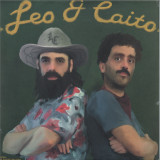
System 108 resident Lipelis teams up with Carrot Green from Rio de Janeiro to create a dreamy, summer vibed EP simply dedicated to them both: Leo & Caito, with naming and artwork playfully inspired by Sertanejo genre standards.The duo emerged in early 2020 on the streets of Rio and started to jam same night in the studio of Carlos, who is affiliated with all cool gangs of the Brazilian dance scene. Just like on Lipelis's critically acclaimed Function As A Meaning EP (a System 108 instant classic by now!), things took off by themselves: intuitive sampling of chords taken from Brazilian gospel found some unexpected modular synth tweaking. For good!"Rolando Nascer do Sol" is THE track, that the duo is particularly proud of. In the words of Lipelis, who has once spinned it at Gop Tun carnival party, in a b2b set w/ Millos Kaiser - 'it produced an unforgettable euphoric effect".Having witnessed how all the tracks work on the dancefloors not only in Brazil, we are uber-excited to finally release this 4-track EP!
Red Vinyl[35,25 €]
The long-anticipated debut album "Infernal Fractality", set for a late 2023 release, unleashes a relentless onslaught of sonic brutality that has consumed over half a decade of tireless devotion from the band's enigmatic founder, Ødemark (known for his work with 3rd Attempt, Ovate, and Necrocave). Ødemark, an artist driven by both the fiery passion of psychedelics and a relentless pursuit of extreme metal's uncharted territories, has woven these elements into an epic, violent, and boundary-defying soundscape that delves deep into the realms of the Luciferian ideals, non-duality pointers, and the mystic principles found in his own psychedelic experiences.
THE LAST EON was formed to push the boundaries of the established but dormant industrial black metal sound pioneered by bands such Thorns and Mysticum and to its maximum exponential, with the vision of "creating the most intense music in history", objective that took 6 years of obsession, a couple burnouts, and a whole galaxy of multi-colored uppers, downers, screamers and outers, to map the depths of the psychedelic experience that would be distilled into "Infernal Fractality". With the help of drummer Jarle Byberg, Ødemark created this whole beast by himself.
After years of pushing every conceivable boundary, and breaking every possible rule and standard in composition, production and sound design, the masterpiece was ready for the crucible of Zardonic's mastering process, who consolidated the behemoth of a more than 300 track project into a time-space shattering soundscape of cosmic proportions.
Mainman Ødemark states: “I wanted to push the limits of what extreme metal can be, and materialize a vision for the future of electronic black metal that required me to rebel against every single rule in my mind of what black metal is, to create what black metal can be. This included also the theme and lyrics, spreading awareness of the mind expanding psychedelic experiences and self exploration within the black metal culture.”
Black Vinyl[35,25 €]
The long-anticipated debut album "Infernal Fractality", set for a late 2023 release, unleashes a relentless onslaught of sonic brutality that has consumed over half a decade of tireless devotion from the band's enigmatic founder, Ødemark (known for his work with 3rd Attempt, Ovate, and Necrocave). Ødemark, an artist driven by both the fiery passion of psychedelics and a relentless pursuit of extreme metal's uncharted territories, has woven these elements into an epic, violent, and boundary-defying soundscape that delves deep into the realms of the Luciferian ideals, non-duality pointers, and the mystic principles found in his own psychedelic experiences.
THE LAST EON was formed to push the boundaries of the established but dormant industrial black metal sound pioneered by bands such Thorns and Mysticum and to its maximum exponential, with the vision of "creating the most intense music in history", objective that took 6 years of obsession, a couple burnouts, and a whole galaxy of multi-colored uppers, downers, screamers and outers, to map the depths of the psychedelic experience that would be distilled into "Infernal Fractality". With the help of drummer Jarle Byberg, Ødemark created this whole beast by himself.
After years of pushing every conceivable boundary, and breaking every possible rule and standard in composition, production and sound design, the masterpiece was ready for the crucible of Zardonic's mastering process, who consolidated the behemoth of a more than 300 track project into a time-space shattering soundscape of cosmic proportions.
Mainman Ødemark states: “I wanted to push the limits of what extreme metal can be, and materialize a vision for the future of electronic black metal that required me to rebel against every single rule in my mind of what black metal is, to create what black metal can be. This included also the theme and lyrics, spreading awareness of the mind expanding psychedelic experiences and self exploration within the black metal culture.”
2023 Repress
New York, early 90's, the haydays of the New York and Jersey clubhouse! With labels such as NuGroove, Nervous, Freeze, Strictly Rhythm, Henry Street Music taking all the spot light, there is Jovonn working on a small but sensational catalogue of music that somehow gets overshadowed by the popular releases on the mentioned labels. The honest productions, jazzy melodies and playful vocals (rooted in gospel) were taking things into a more musical, more spiritual way, lacking gimmicks or dispensable samples. For the real diggers, the true lovers of House music Jovonn always was a name to watch, a producer of some of their favorite NY house tracks, tracks that have a raw edge combined with a sincere human touch and pure underground house vibes. People such as Rex resident Dj Deep was a huge fan, and also collaborated on couple later productions with Jovonn. Slowly he started getting recognition from europe which resulted in a handfull of records on European labels such as Distance, Coco Soul and Estereo. Now after almost 25 years since his first release the man's small discography on his own Goldtone label and Emotive records stand out with his unique musical personality. More then 20 years after their original release dates these tunes are still very relevant and stand for many things we love about house music! We are happy to offer this selection of his hard to find early works remastered by Alden Tyrell and pressed on fresh clean high quality vinyl.
Kallaikoi is the term used to refer to all the Celtic clans settled in ancient Gallaecia (northwest of the Iberian Peninsula). They were skilled in metallurgy and the production of tools and weapons, and worshiped a variety of deities, some of them related to nature
and war. Although they disappeared as an ethnic group in antiquity due to Romanization and subsequent consequences, their cultural legacy and Celtic influence in Galicia persist until today. Somehow, that ancestral legacy lingers between the grooves of this
release you have in your hands.
The double EP opens with The Transhumans: Techno, syncopated bass drums and industrial nuances appear in 'Ánima'. Ian Axide proposes robust and percussive Techno in 'Antro', while Obseth lets arpeggios fly in 'Pink Pills'. These tracks are indebted to that
Techno reminiscent of the late 90s golden years monolithic sound.
Side B opens with the local heroine and co-founder of Archaic, Proyecto Inopia, who opts for resounding rhythms and synth sequences sharp like shark teeth, seemingly paying homage to earlier decades in 'Hécate'. Mist Gasp also follows a metallic monotrax line in 'Standarte'. And the first 12” closes with Brai’s '75', where he unleashes Techno meets New and Synth Wave with a nod to the 80s.
The second EP lowers the intensity and tempo, opening with the calm and nostalgic Electro from Synth Alien in 'Pakhum'. Local artist Lefrenk raises the tempo and intensity in arpeggios in a propulsive Electro-Techno wave in 'Fenix'. And also from A Coruña, Roi controls the beats in an electro base that advances later towards obsessive and lacerating synths in 'Melusa'.
The last side of the double album is opened by David Karro with 'Ionosphere', a track with unsettling synths that doesn't need beats to shape its hypnotic and nebulous character. 27 003 delves into the sounds of classic Electro drum machines in 'Sweet', also with clear IDM and dreamy evocations. Corrosivo continues in that vein, with marked Sheffieldier echoes in 'Fast Food'. The EP is closed by Death Whistle with one of his usual opuses where darkness, beauty and epic coexist.