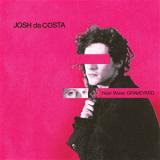
Josh da Costa's "New Wave Graveyard" ist ein Solo-Debüt, das die Vielfalt der Underground-Musik feiert und sich dabei eine eigene Nische schafft. Nach anderthalb Jahrzehnten in Bands wie dem Synthpop-Duo CMON (Mexican Summer) und den New Yorker DIY-Legenden Regal Degal (Terrible Records), veröffentlicht Josh da Costa endlich sein Solo-Debüt. Der erfahrene Kollaborations- und Tourmusiker spielte bereits mit Künstlern wie Drugdealer, Jessica Pratt, MGMT, Chris Cohen und vielen anderen. Über fünf Jahre entstand "New Wave Graveyard", das weit mehr als nur das im Titel erwähnte Genre der späten 70er/frühen 80er Jahre umfasst - von Flying-Nun-Compilations über den Glam-Rock von Sparks und Japan, Art-Pop von Prince und Yoko Ono bis hin zu Power-Pop, Electro, Britpop und Shoegaze - allesamt aus da Costas umfangreicher Plattensammlung. "New Wave Graveyard" mag zwar vom Genre der 70er und 80er Jahre inspiriert sein, das dem Album seinen Namen gibt, doch ist die/der New Wave nur eine(r) von vielen musikalischen Einflüssen von Josh da Costa. Das Album ist ein wunderschöner Mix aus Stilen und Ideen, von Glam bis Shoegaze, allesamt geprägt von Joshs vielseitigem Geschmack. Mit geistreichen Texten und einer Fülle eingängiger Songs ist es ein mitreißendes Statement eines vielversprechenden neuen Künstlers, ein komplettes Soloalbum, für das da Costa alle Songs und Texte selbst geschrieben, nahezu alle Instrumente gespielt und das Album selbst gemischt hat. Gemastert wurde es von Heba Kadry (Björk, Panda Bear, Blood Orange), das Albumcover stammt von Robert Beatty (dem legendären Künstler hinter den Plattencovern von Tame Impala, The Weeknd, Mdou Moctar, Oneohtrix Point Never und vielen mehr). Die klassische schwarze Vinyl-LP enthält ein farbiges Booklet mit den Songtexten.
The Carburetors are back and louder than ever! Their brand-new album, "We Ride At Night", is set to tear through speakers and shake venues to their foundations. Packed with the ferocious riffs and raw attitude that fans have come to love, this is the band firing on all cylinders-no brakes, no apologies. "We Ride At Night" is a statement that The Carburetors are still one of the most dangerous rock'n'roll bands on the planet. The Carburetors are a hard-hitting rock band hailing from Oslo, Norway, known for their electrifying blend of rock'n'roll, hard rock, and heavy metal. Formed in 2001, the band has carved out a reputation for delivering fast-paced, high-energy music that channels the raw spirit of Chuck Berry and the relentless power of Motörhead. Their signature sound-often described as "Fast Forward Rock'n'Roll"-combines driving riffs, thunderous drums, and an unapologetic attitude that's made them a staple of the Norwegian rock scene. Over the years, The Carburetors have released a string of acclaimed albums, including their debut "Pain Is Temporary, Glory Is Forever" (2004), "Loud Enough to Raise the Dead" (2006), "Rock'n'Roll Forever" (2008/2010), and "Laughing in the Face of Death" (2015). Their latest release, "Drinkin' from the Skull of Our Enemies," continues their tradition of raw, energetic rock, capturing the band's dynamic stage presence and relentless drive. The band has also contributed to tribute albums for legends like Kiss and The Ramones, and in 2012, they made it to the Grand Final of Norway's Melodi Grand Prix with their song "Don't Touch the Flame." With a career spanning over two decades, sold-out shows, and a loyal fanbase, The Carburetors continue to embody the spirit of rock'n'roll-loud, fast, and forever.
“WAR.POEM” was recorded at THE ROCK NOIR studio in 2025/2026 as a reaction to a piece I read on the Israeli military use of FLECHETTE SHELLS in Gaza, this led to a much deeper study of the 20th/21st century history of war. The album was composed entirely using a TAPE O MATIC 710 reel to reel from 1958, a 1960’s mayfaair JVC reel to reel, aa 1965 G.E. solid state portable reel to reel from 1965, a portable 1970’s Panasonic cassette player, a ring modulator as well as various other effects and synths.
The loop that is the basis for WAR POEM ZERO which takes up the whole of side one, happened by accident when I put a reel on the wrong way up, it produced aa sound of such great melancholy and beauty, I just let it play…
This album owes a debt to “SWANSONG” by NURSE WITH WOUND from the album “A MISSING SENSE” where experimental sound is used as an anti war protest.
Chris Connelly 2026
You are unlikely to hear a record of such brutal intensity, or indeed authenticity as this. To call it “old school industrial” would be to do it a disservice, but also not THAT wide of the mark. It is packaged sympathetically to Chris’ previous release for the label, the long sold out LP “White Phosphorous”.
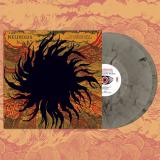
It is limited to 300 copies pressed in military grey vinyl.
Having made their back catalog available to a wider public via High Roller Records, Mexican speed and thrash metal force Phantom will release their third full-length assault „Not Midnight Yet“ via the label. Recorded and mixed once again with Héctor “Northen” Ibarra at Nehtron Studios in Guadalajara and mastered by Patrick W. Engel at Temple Of Disharmony in Germany, this new album captures the band at their most technical and dynamic. “I am never fully satisfied with my records and I try to push forward and expand our boundaries with every new material—without changing the soul and core of what Phantom stands for: Old School Heavy Metal,“ explains mastermind J.C. García. „This record puts together very well everything that we are. Because of that, I think this is a juggernaut of an album.” Tracks such as ‘Hordes Of Bats’ deliver relentless speed and riff-driven aggression, while ‘Dracula’s Curse’ and the title track lean into powerful midtempo dynamics and complex structures. ‘The Pale Remains Of Time’ stands out as one of the album’s most ambitious moments, combining melodic vocals, clean guitar interludes and subtle progressive touches. “I try to break the established formula and add more textures and layers while keeping the old school spirit,” J.C. states. “It’s a very personal record and a work I’m very proud of. I think this is the most solid Phantom record to date.” With “Not Midnight Yet”, Phantom sharpen their identity and deliver a powerful, atmospheric statement—proof that the night is far from over.
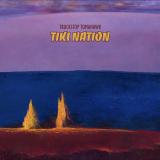
Tiki Nation finds Truckstop Tomahawk charting new territory at the outer edges of modern exotica. Created by Robert Kress—one half of Kava Kon—the album treats tiki not as nostalgia, but as a living, evolving sound world. These tracks roam freely through imagined geographies: remote islands, half-remembered myths, roadside rituals, and sun-bleached dream states where vintage exotica collides with forward-leaning composition.
Rather than simply revisiting mid-century tropes, Tiki Nation recontextualizes them—layering cinematic arrangements, unexpected textures, and playful titles that hint at folklore, travel, and quiet surrealism. The result is music that feels exploratory and unbound, equally suited for deep listening, late-night reverie, or drifting into unfamiliar landscapes with a drink in hand.
The album’s visual centerpiece deepens this atmosphere. The cover art, Pele’s Release, was painted by Catherine Robbins, a self-taught artist and longtime Hawaiʻi Island resident who created the oil painting in her rainforest studio just miles below Kīlauea’s erupting summit. That proximity to raw, elemental power mirrors the album itself—beautiful, mysterious, and quietly volatile.
Tiki Nation stands as a bold statement of intent: exotica untethered from the past, alive in the present, and pointed firmly toward uncharted horizons.
Phonica unveil the second in a series of three 12" samplers featuring a selection of tracks from their new compilation 'Ten Years Of Phonica'.
Phonica favourite Lo Shea kicks off Sampler number 2 with the ominous 'Home', a bassline-heavy house cut that continues on from his streak of high quality and inventive 12" releases on Seaghdha. Medlar and Red Rack'em join forces for the submerged 'Morning Light'. It's deep house in its truest form and here's hoping they continue to collaborate, because on the basis of this, they're onto something very special.
Moiré is another producer Phonica have been hugely impressed with, his highly original 12"s for Werk Discs and Rush Hour blew us away and his contribution 'Solar Signs' doesn't disappoint. Cult producer STL rounds out the 12" with 'Freaky Fingers'. His distinctively twisted take on house and techno is in full effect on this one, whistles and all. As STL releases on labels other than Something or Smallville are a rarity, it's yet another coup for Phonica.
Phonica Records was established in September 2003 and set up shop in Soho, London, adding to the high concentration of independent records stores that inhabited the area. Founders; Simon Rigg, Heidi Vanden Amstel and Tom Relleen joined The Vinyl Factory with the aim of creating an exciting outlet for innovative dance music, traversing all sub-genres and cultures. Over the past decade the emporium has developed into a well-respected destination for DJs and enthusiasts, and has subsequently become a bustling hive of conversation and inspiration as part of a wider community of music lovers.
While trends and movements in music have grown and faded over these years, Phonica has always remained in a state of evolution. It is this openness to change alongside a commitment to it's original ethos and an enduring ardour for quality, cutting-edge sounds that has fuelled the shop's staying power.
To celebrate reaching this milestone, Phonica Records have invited some of their favourite artists to produce a track for an eclectic yet cohesive compilation, which will hopefully go some way towards sonically unfolding the 'Ten Years of Phonica.'
DYING VICTIMS PRODUCTIONS is proud to present the highly anticipated debut album of Poland’s TORPOR, Ɖungeon Ɖescent, on CD and vinyl LP formats. TORPOR were formed in Warsaw by three school friends and music fans under the huge influence of Bathory. While recording their first release, Burning Realms / Behold the Spell of Black Fortress, in dusk of 2017, the band were laying their music foundations inspired by the epic side of black and the haunted / melancholic side of early ‘80s heavy metal. Since their last release – 2021’s The Ancient Tales EP, which was actually recorded in 2019 – TORPOR parted ways with their drummer, who alongside Mike Magister I.V. and Franciszek Archont, was a founding member of the trio. Upon the arrival of a new drummer and long-time friend, Bloodhammer, they recorded their debut album. It marks the result of their work and path undertaken. "We knew it was our direction to follow and polish, so now, after some time, we can happily present our debut album, Ɖungeon Ɖescent,” the band state. “It is our first real record that pictures our vision exactly how we liked to. After years of wandering around basement rehearsal rooms and two self-released demos, we are finally coming out of our lairs with this LP under the banners of DYING VICTIMS." Their past connections with fellow labelmates ARMAGH and FUKKIN’ VENGEANCE somewhat explains TORPOR’s link to the idiosyncratic side of ancient heavy metal, which has taken far more prominence on Ɖungeon Ɖescent over the first-wave black metal side – but that’s only part of the picture. Some might call it “cleaning up,” others might liken it to a harnessing of feral energies, but TORPOR’s emphatic-yet-stoic strut conveys equal amounts of energy and mystery, finesse and fine-tuning. Of course, the power-trio can kick into high gear when they want to, be it heroic gallop or even hypnotic blast, but their sense of movement from one moody segment to the next imparts a narrative flow that’s part and parcel of their lyrical imagery. Or, perhaps it’s true swords & sorcery metal without belaboring the point – no “COOL IMAGERY DUDE” without the music & atmosphere to back it up, more specifically – that harkens to a glorious, sadly bygone era. However you approach this Ɖungeon Ɖescent, TORPOR have surely delivered a cult classic in the making. Passion, authenticity, the reverberating ring of truth…ancient powers arise from time immemorial
Multi-coloured vinyl LP or CD. For fans of Nektar, Van Der Graaf Generator and Progressive Rock! Formed in Germany in 1969, Nektar favoured extended compositions and concept albums over the constraints of pop. They were among the progenitors of the progressive rock movement of the 1970s as well as the jam-band scene that arose in the late 1990s. Their sound travelled well to the States, where they enjoyed Top 40 success with "A Tab in the Ocean" (1972) and "Remember the Future" (1973). Nearly 20 albums and a half-century later, the band's artistic and personal charisma has earned them masses of devoted fans. Now Nektar is broadening their horizons with the first in the "Mission To Mars" trilogy. Their first to feature new drummer Jay Dittamo, alongside longtime members Ryche Chlanda (guitars),Kendall Scott(keyboards), and original members Derek "Mo" Moore(bass) and Mick Brockett (visual environment).From the rocking title track "Mission To Mars" to the beautiful "I'll Let You In", Nektar covers all of the prog rock bases while venturing into some new melodic territories. Track listing: Mission To Mars; Long Lost Sunday; One Day Hi One Day Lo; I'll Let You In
out of Stock
Last delivered 85 days ago available to reorder, subject to availability
Evolution can be ugly and beautiful, painful and euphoric. An Undying Love For A Burning World is the first new release from Neurosis in a decade, and a potent statement of intent and rebirth - one that marks the first new steps of resolve and resilience.
An Undying Love For A Burning World is an epic album of colossal hypnotism - beautiful, fearsome and utterly compelling in a way that only Neurosis can be. Aaron Turner (Sumac, Isis) joins the band on vocals and guitar, a name whose legacy is intertwined with the band’s own and a true kindred spirit.
“From the moment I first heard Neurosis over 30 years ago, I felt this was the music my heart and mind had been seeking but not yet heard. Now after many years travelling along various musical paths of my own, the singular sound and spirit embodied by Neurosis continues to speak to the depths of my being. It is an honor and a true pleasure to have been welcomed so warmly into a band that not only shaped my perspective on the limitless possibilities of music - but has lived and exemplified the necessity of upholding creative integrity and camaraderie above all else.” - AARON TURNER
Neurosis have never been afraid of change, and here they embrace endless regeneration, surrendering to the emotional exorcism through heaviness and distortion that their music incites. Just as the universe tends towards balance, Neurosis’cacophony of noise, rhythm and dissonance always resolves towards moments of beauty. The addition of Turner's powerful vocals and wildly creative and unhinged approach to guitar proves to be a vital force as Neurosis find themselves again at the mercy of evolution and expression.
On every song in the band’s history, Neurosis shifts restlessly between tension and relief, invoking a feeling both feral and transcendent in listeners. The band describe their songwriting process as an inescapable impulse to create with each other - a need rather than a choice. Indeed, the band insist that their return is “not a reunion - we never broke up.”
The album was recorded by Scott Evans (Kowloon Walled City, Sumac, and Great Falls) at Studio Litho in Seattle during three weekends this winter, and mixed in three days just six weeks before release at Evan's Antisleep Audio in Oakland.
Neurosis will play their first show in seven years on the traditional lands of the Blackfeet Nation in Montana as part of Fire in the Mountains festival by special invitation of Firekeeper Alliance, a non-profit dedicated to reducing youth suicide in Indian Country.
FITM, is a unique festival known for bringing epic music to epic landscapes with the intent of reconnecting and immersing oneself with the natural world, and strengthening our ancestral roots as human beings - an aim which aligns directly with Neurosis’ deep-rooted power.
out of Stock
Last delivered 86 days ago available to reorder, subject to availability
Known for his signature positive vibes and the triple-platinum single “GOOD TIME,” country star Niko Moon digs into his own origin story on his new 15-track album, ROOTS. Following his 2025 tropical album AMERICAN PALM, ROOTS shifts the scenery to the verdant hills of Georgia where Moon grew up, balancing his trademark optimism with unprecedented transparency about his journey. On the track “AMERICAN DREAMIN’,” he reflects on a lean childhood moving between trailers and motels, inspired by the resilient optimism of his truck-driver dad and waitress mom. He fast-forwards to his current life in Nashville on the ballad “RICH MAN,” celebrating his wife and two children as his true source of wealth, while tracks like “GET COUNTRY” deliver a trap-beat party anthem designed for pure escapism. The album's centerpiece, “GEORGIA (ROOTS),” interpolates the classic "Georgia on My Mind" to celebrate his home state with a feature from his own daughter. Beyond the music, Moon channels his pay-it-forward mentality into his Happy Cowboy Foundation, which provides affordable therapy, proving that his signature smile isn't from a lack of hardship, but a conscious choice to spread encouragement.
The perennial Broadway musical My Fair Lady was based on George Bernard Shaw's Pygmalion, with book and lyrics by Alan Jay Lerner and music by Frederick Loewe. This release presents the complete recording by the original Broadway cast, taped in 1956. The recording showcases Rex Harrison and Julie Andrews in the lead roles - Harrison would also star in the 1964 film, in which Audrey Hepburn replaced Julie Andrews. This Original Cast Recording went on to become the bestselling album in the United States in 1957 where it spent 15 weeks in the Billboard chart.
A label compilation can be the first sign of a new cycle. After years shaped by individual trajectories, it brings the focus back to what made scenes powerful in the first place: shared language, mutual influence and a sense of collective movement.
For a label built on deep rhythm, organic textures and emotional drive, this carries an even stronger meaning. These musical spaces hold connection, memory and exchange at their core.
In this light, a compilation becomes more than a format: it becomes a statement of identity, a meeting point where different voices contribute to one evolving vision.
Following the previous chapters, “MoBlack presents: COLORS OF INDIA” marks the third instalment in the series. Built around hypnotic percussion, evocative vocals and textures inspired by Indian tradition, the collection moves between organic groove and club energy while maintaining a strong sense of atmosphere.
Rameff – “Ferena” opens the collection with rolling percussion and warm melodic details, establishing a hypnotic atmosphere that naturally sets the foundation for what follows. From there, Bull&Jems – “Asha” brings a brighter sense of movement, introducing expressive vocal textures and rhythmic lift while keeping the groove connected to the same organic pulse. The mood then becomes more immersive with Rameff – “Bondhu”, where repetition and subtle melodic shifts create a steady build in tension without breaking the flow of the journey. Closing the selection, Hefty (CA) – “Taka Dum” injects a more playful rhythmic energy, tying everything together through percussion-led movement and a vibrant late-night spirit.
With “COLORS OF INDIA”, MoBlack adds a new chapter to its compilation series, bringing together cultural references and club-driven energy through a shared rhythmic language. The result is a collection where tradition and contemporary interpretation meet naturally on the dancefloor.
Huge classic techno history! Echoes originally appeared in 2001 on Kanzleramt, and from the moment it landed, it was clear this was something different. Eleven techno-dub-house tracks, rich in texture and depth, that mapped out a singular vision of Berlin's dancefloor aesthetic at the turn of the millennium. Not a collection of club tools, but a fully realised album statement, one that understood the dancefloor and the living room in equal measure.
Twenty-five years on, Alexander Kowalski reissues Echoes on his own label Cycles Music - remastered, on double vinyl, and presented as it always deserved to be heard. The ten tracks across four sides move through deep, rolling grooves, melodic undertow and the kind of emotional precision that made Kowalski's name in the first place. Echoes are fragments from the past which follow us into the future, the album's original motto reads like it was written for this moment.
out of Stock
Last delivered 15 days ago available to reorder, subject to availability
UK electronic duo Prospa unveil their long-awaited debut album Free Your Mind, a bold, emotionally charged, and club-focused statement from one of dance music’s most exciting acts out now via CircoLoco Records.
Years in the making, Free Your Mind captures the full scope of Prospa’s evolution: from breakout underground producers to globally recognized festival headliners and chart-topping innovators. Across the album, the Leeds duo seamlessly blend euphoric house, rave nostalgia, breakbeat experimentation, progressive emotion, and peak-time club energy into a body of work that feels both deeply personal and built for massive communal release.
The album’s final moment is the focus track “Dreams,” a euphoric anthem that drives home Prospa’s songwriting and production sensibilities. Balancing cinematic atmosphere with the duo’s unmistakable dancefloor instincts, “Dreams” channels the reflective, ecstatic energy that defines the album as a whole, equally suited to sunrise festival moments as late-night club systems.
The album arrives following a string of major singles that have propelled Prospa to new heights over the past year. Most recently, “Baby” with Murda Beatz became one of Miami Music Week’s most talked-about track IDs after being teased during a back-to-back set with Josh Baker, quickly spreading across social media thanks to its infectious vocal hook and stripped-back club precision.
Before that came the album’s title track “Free Your Mind” with Cloonee — a vocal house anthem that climbed into the Official Singles Chart top 20, alongside Beatport chart-topper “Love Songs” featuring Kosmo Kint. Together, the tracks established the foundation for an album that represents Prospa at their most expansive and fully realized.
Hailing from Leeds, childhood friends Harvey Blumler and Gosha Smith connected over their shared passion for electronic music – drawing inspiration from the likes of Daft Punk, Disclosure, The Chemical Brothers, and The Prodigy as they first started producing under the Prospa moniker in 2013. The duo broke out in late 2018 with the anthem “Prayer” earning support from high-profile tastemakers including The Fader and NME, while helping relaunch heritage house label Stress Records after a 13-year hiatus. Since then, Prospa have embarked on a rapid ascent to consolidate their status as one of the UK’s most exciting electronic acts.
Experts at crafting high-octane dancefloor-focused anthems as much as they are at composing more heartfelt, meditative moments, Prospa’s work continues to evolve, blurring and pushing the edges of these boundaries into their biggest statement yet
out of Stock
Last delivered 31 days ago available to reorder, subject to availability
In spring 2025, Abul Mogard and Rafael Anton Irisarri created the source material for their second album, Where Light Pauses in the Silence of the Sun, during a three-day residency at Morphine Raum in Berlin. Functioning as both recording studio and performance venue, the space has no stage, with the audience gathered around the performers. Working within an open framework, the duo reshaped the music each evening while recording the performances live to multitrack. Rotary speakers, modular synthesizers and bowed guitar formed the core of their sonic language, captured through a 1970s mixing console and microphones placed around the room.
Back in Mogard’s studio in Rome, the material was further crafted as motifs were stretched, fragments isolated, and tempos dissolved. Irisarri recorded additional guitar textures and treatments in New York, while passages recorded by Martina Bertoni and Andrea Burelli in Berlin reinforced the harmonic centres and brought breath, refinement and a new sensibility to their compositions. The process continued as Mogard’s layering and subtraction reassembled everyone’s parts into the final arrangement.
The album opens with “In the Eastern Wild,” building from a sparse outline into a monumental formation of low-frequency weight, its internal motion shaped by the rotating Leslie speaker. “Over the Domes” widens into a broader acoustic field, where sustained modular tones meet waves of softly plucked guitar. The music then turns inward with “A Blue Descent,” centred on Bertoni’s cello, whose growling timbre introduces a melancholic depth.
At the album’s centre, “In a Quiet Radiance” unfolds around a slow guitar ostinato, its luminous stillness opening into a more expansive and reflective state. Across its ten-minute span, Burelli’s violin lines and Bertoni’s lower cello phrases gradually surface, weaving through the harmonic field. Mogard brings Burelli’s processed voice to the fore, its emotive, operatic presence becoming one of the record’s pivotal moments. “Of Blessed Ages” suspends the sonic flow, shifting between parallel major and minor chords as lingering, slowly decaying melodies shape the music’s internal drift. The closing “Among Shadows” settles into a darker resonance as layered textures recede.
Mogard and Irisarri’s shared language balances restraint and maximalism. UK magazine Crack describes the music as “a tidal wave held in suspension,” while Dutch newspaper de Volkskrant writes, “What a colossal sound, and how this music strikes at the emotions.” Reflecting on the residency sessions, Irisarri recalls: “At moments I genuinely couldn’t tell if a sound was coming from me or from Abul. It stopped feeling like two people making decisions and began to feel like we were inside a system moving on its own."
Marja de Sanctis’ cover artwork revisits the vessel sculpture from the duo’s first album, Impossibly Distant, Impossibly Close. There it appeared as raw, unfired clay. Here it has been fired in the kiln and finished with a glaze. Light gathers on its polished surface and spills into the surrounding space. As she explains, “I wanted to convey the idea of continuity within the duo, and the vessel became a kind of container for that idea. However, their music felt different this time, and with the collaboration of Martina and Andrea, I felt it should have a sleeker, softer, more glamorous look, very distant from the first raw appearance.” The transformation of the vessel from raw clay to fired form suggests a passage from immediacy toward permanence, mirroring the music’s gradual expansion.
out of Stock
Last delivered 3 months ago available to reorder, subject to availability
In spring 2025, Abul Mogard and Rafael Anton Irisarri created the source material for their second album, Where Light Pauses in the Silence of the Sun, during a three-day residency at Morphine Raum in Berlin. Functioning as both recording studio and performance venue, the space has no stage, with the audience gathered around the performers. Working within an open framework, the duo reshaped the music each evening while recording the performances live to multitrack. Rotary speakers, modular synthesizers and bowed guitar formed the core of their sonic language, captured through a 1970s mixing console and microphones placed around the room.
Back in Mogard’s studio in Rome, the material was further crafted as motifs were stretched, fragments isolated, and tempos dissolved. Irisarri recorded additional guitar textures and treatments in New York, while passages recorded by Martina Bertoni and Andrea Burelli in Berlin reinforced the harmonic centres and brought breath, refinement and a new sensibility to their compositions. The process continued as Mogard’s layering and subtraction reassembled everyone’s parts into the final arrangement.
The album opens with “In the Eastern Wild,” building from a sparse outline into a monumental formation of low-frequency weight, its internal motion shaped by the rotating Leslie speaker. “Over the Domes” widens into a broader acoustic field, where sustained modular tones meet waves of softly plucked guitar. The music then turns inward with “A Blue Descent,” centred on Bertoni’s cello, whose growling timbre introduces a melancholic depth.
At the album’s centre, “In a Quiet Radiance” unfolds around a slow guitar ostinato, its luminous stillness opening into a more expansive and reflective state. Across its ten-minute span, Burelli’s violin lines and Bertoni’s lower cello phrases gradually surface, weaving through the harmonic field. Mogard brings Burelli’s processed voice to the fore, its emotive, operatic presence becoming one of the record’s pivotal moments. “Of Blessed Ages” suspends the sonic flow, shifting between parallel major and minor chords as lingering, slowly decaying melodies shape the music’s internal drift. The closing “Among Shadows” settles into a darker resonance as layered textures recede.
Mogard and Irisarri’s shared language balances restraint and maximalism. UK magazine Crack describes the music as “a tidal wave held in suspension,” while Dutch newspaper de Volkskrant writes, “What a colossal sound, and how this music strikes at the emotions.” Reflecting on the residency sessions, Irisarri recalls: “At moments I genuinely couldn’t tell if a sound was coming from me or from Abul. It stopped feeling like two people making decisions and began to feel like we were inside a system moving on its own."
Marja de Sanctis’ cover artwork revisits the vessel sculpture from the duo’s first album, Impossibly Distant, Impossibly Close. There it appeared as raw, unfired clay. Here it has been fired in the kiln and finished with a glaze. Light gathers on its polished surface and spills into the surrounding space. As she explains, “I wanted to convey the idea of continuity within the duo, and the vessel became a kind of container for that idea. However, their music felt different this time, and with the collaboration of Martina and Andrea, I felt it should have a sleeker, softer, more glamorous look, very distant from the first raw appearance.” The transformation of the vessel from raw clay to fired form suggests a passage from immediacy toward permanence, mirroring the music’s gradual expansion.
out of Stock
Last delivered 3 months ago available to reorder, subject to availability
In spring 2025, Abul Mogard and Rafael Anton Irisarri created the source material for their second album, Where Light Pauses in the Silence of the Sun, during a three-day residency at Morphine Raum in Berlin. Functioning as both recording studio and performance venue, the space has no stage, with the audience gathered around the performers. Working within an open framework, the duo reshaped the music each evening while recording the performances live to multitrack. Rotary speakers, modular synthesizers and bowed guitar formed the core of their sonic language, captured through a 1970s mixing console and microphones placed around the room.
Back in Mogard’s studio in Rome, the material was further crafted as motifs were stretched, fragments isolated, and tempos dissolved. Irisarri recorded additional guitar textures and treatments in New York, while passages recorded by Martina Bertoni and Andrea Burelli in Berlin reinforced the harmonic centres and brought breath, refinement and a new sensibility to their compositions. The process continued as Mogard’s layering and subtraction reassembled everyone’s parts into the final arrangement.
The album opens with “In the Eastern Wild,” building from a sparse outline into a monumental formation of low-frequency weight, its internal motion shaped by the rotating Leslie speaker. “Over the Domes” widens into a broader acoustic field, where sustained modular tones meet waves of softly plucked guitar. The music then turns inward with “A Blue Descent,” centred on Bertoni’s cello, whose growling timbre introduces a melancholic depth.
At the album’s centre, “In a Quiet Radiance” unfolds around a slow guitar ostinato, its luminous stillness opening into a more expansive and reflective state. Across its ten-minute span, Burelli’s violin lines and Bertoni’s lower cello phrases gradually surface, weaving through the harmonic field. Mogard brings Burelli’s processed voice to the fore, its emotive, operatic presence becoming one of the record’s pivotal moments. “Of Blessed Ages” suspends the sonic flow, shifting between parallel major and minor chords as lingering, slowly decaying melodies shape the music’s internal drift. The closing “Among Shadows” settles into a darker resonance as layered textures recede.
Mogard and Irisarri’s shared language balances restraint and maximalism. UK magazine Crack describes the music as “a tidal wave held in suspension,” while Dutch newspaper de Volkskrant writes, “What a colossal sound, and how this music strikes at the emotions.” Reflecting on the residency sessions, Irisarri recalls: “At moments I genuinely couldn’t tell if a sound was coming from me or from Abul. It stopped feeling like two people making decisions and began to feel like we were inside a system moving on its own."
Marja de Sanctis’ cover artwork revisits the vessel sculpture from the duo’s first album, Impossibly Distant, Impossibly Close. There it appeared as raw, unfired clay. Here it has been fired in the kiln and finished with a glaze. Light gathers on its polished surface and spills into the surrounding space. As she explains, “I wanted to convey the idea of continuity within the duo, and the vessel became a kind of container for that idea. However, their music felt different this time, and with the collaboration of Martina and Andrea, I felt it should have a sleeker, softer, more glamorous look, very distant from the first raw appearance.” The transformation of the vessel from raw clay to fired form suggests a passage from immediacy toward permanence, mirroring the music’s gradual expansion.
out of Stock
Last delivered 3 months ago available to reorder, subject to availability
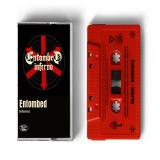
Entombed's 2003 inferno burns anew. Remastered and reignited, this definitive edition unleashes one of the band's dirtiest, most aggressive, and groove-soaked records - where gritty riffs, doom-laden heaviness, and punk-edged energy collide.
Produced and mixed by Per Gunnefeldt (Fireside, also associated with Viagra Boys), the album now returns with a powerful new remaster by Magnus Lindberg (Redmount Studios, known for The Hellacopters, Cult of Luna, Refused, Alcest, and more). The result is sharper, denser, and more forceful than ever - preserving the grainy guitars and thick low-end rumble that define Entombed's trademark sound.
A longtime fan favorite and a bold detour in their catalogue, Inferno showcases Entombed's ability to weave raw death 'n' roll power with punk grit and a heavy, sinister swing. Signature tracks like ""Retaliation,"" ""The Fix Is In,"" ""Incinerator,"" ""Young & Dead,"" and ""That's When I Became A Satanist"" mark the album's feral intensity.
As Swedish Music Hall of Fame inductees and founders of Scandinavian death metal, Entombed forged a legacy that shaped generations of heavy music. Inferno stands as one of their darkest, most visceral statements - now restored for maximum sonic impact.
Formats:
* 2LP + Cassette editions feature 14 tracks, including the bonus cut ""When Humanity's Gone"" between ""That's When I Became A Satanist"" and ""Nobodaddy.""
* CD edition includes 13 tracks, closing with ""Night For Day.""
1. Retaliation 2. The Fix Is In 3. Incinerator 4. Children Of The Underworld 5. Thats When I Became A Satanist 6. When Humanitys Gone 7. Nobodaddy 8. Intermission 9. Young & Dead 10. Descent Into Inferno 11. Public Burning 12. Flexing Muscles 13. Skeleton Of Steel 14. Night For Day
Entombed's 2003 inferno burns anew. Remastered and reignited, this definitive edition unleashes one of the band's dirtiest, most aggressive, and groove-soaked records - where gritty riffs, doom-laden heaviness, and punk-edged energy collide.
Produced and mixed by Per Gunnefeldt (Fireside, also associated with Viagra Boys), the album now returns with a powerful new remaster by Magnus Lindberg (Redmount Studios, known for The Hellacopters, Cult of Luna, Refused, Alcest, and more). The result is sharper, denser, and more forceful than ever - preserving the grainy guitars and thick low-end rumble that define Entombed's trademark sound.
A longtime fan favorite and a bold detour in their catalogue, Inferno showcases Entombed's ability to weave raw death 'n' roll power with punk grit and a heavy, sinister swing. Signature tracks like ""Retaliation,"" ""The Fix Is In,"" ""Incinerator,"" ""Young & Dead,"" and ""That's When I Became A Satanist"" mark the album's feral intensity.
As Swedish Music Hall of Fame inductees and founders of Scandinavian death metal, Entombed forged a legacy that shaped generations of heavy music. Inferno stands as one of their darkest, most visceral statements - now restored for maximum sonic impact.
Formats:
* 2LP + Cassette editions feature 14 tracks, including the bonus cut ""When Humanity's Gone"" between ""That's When I Became A Satanist"" and ""Nobodaddy.""
* CD edition includes 13 tracks, closing with ""Night For Day.""
1. Retaliation 2. The Fix Is In 3. Incinerator 4. Children Of The Underworld 5. Thats When I Became A Satanist 6. When Humanitys Gone 7. Nobodaddy 8. Intermission 9. Young & Dead 10. Descent Into Inferno 11. Public Burning 12. Flexing Muscles 13. Skeleton Of Steel 14. Night For Day
Entombed's 2003 inferno burns anew. Remastered and reignited, this definitive edition unleashes one of the band's dirtiest, most aggressive, and groove-soaked records - where gritty riffs, doom-laden heaviness, and punk-edged energy collide.
Produced and mixed by Per Gunnefeldt (Fireside, also associated with Viagra Boys), the album now returns with a powerful new remaster by Magnus Lindberg (Redmount Studios, known for The Hellacopters, Cult of Luna, Refused, Alcest, and more). The result is sharper, denser, and more forceful than ever - preserving the grainy guitars and thick low-end rumble that define Entombed's trademark sound.
A longtime fan favorite and a bold detour in their catalogue, Inferno showcases Entombed's ability to weave raw death 'n' roll power with punk grit and a heavy, sinister swing. Signature tracks like ""Retaliation,"" ""The Fix Is In,"" ""Incinerator,"" ""Young & Dead,"" and ""That's When I Became A Satanist"" mark the album's feral intensity.
As Swedish Music Hall of Fame inductees and founders of Scandinavian death metal, Entombed forged a legacy that shaped generations of heavy music. Inferno stands as one of their darkest, most visceral statements - now restored for maximum sonic impact.
Formats:
* 2LP + Cassette editions feature 14 tracks, including the bonus cut ""When Humanity's Gone"" between ""That's When I Became A Satanist"" and ""Nobodaddy.""
* CD edition includes 13 tracks, closing with ""Night For Day.""
1. Retaliation 2. The Fix Is In 3. Incinerator 4. Children Of The Underworld 5. Thats When I Became A Satanist 6. When Humanitys Gone 7. Nobodaddy 8. Intermission 9. Young & Dead 10. Descent Into Inferno 11. Public Burning 12. Flexing Muscles 13. Skeleton Of Steel 14. Night For Day
LP1 New album
LP2 Available on vinyl for the first time
LP3/4 Debut album on green vinyl
LP5 Second album on red vinyl
When I recorded the first 2 Trickfinger records, I had recently discovered that you could make electronic music in a room with a bunch of synced machines going at the same time, record it on a
CD burner and have a finished track. I've heard this process described as “overdubbing into the air”. It was as exciting to me as my first 4 track was when I was 14. I wasn't trying to be good, or
original. I was just excited that music could be made that way; it felt like I was a whole group of musicians playing together… or like I was jamming with ghosts of myself. This has actually been a
very common way of making electronic music since the 80s, particularly in the main pioneering genres like Chicago Acid and Detroit Techno, but anyways I didn't figure it out until 2006. In 2007,
I started doing it myself, which resulted in what was eventually released as Trickfinger, and Trickfinger II. I was just home from tour and was still in the middle of recording The Empyrean.
A couple of years later I started making music by overdubbing onto a computer, but using the same machines. I tried to make music that didn't sound like anything else. I saw a way of combining
Progressive Rock and Synth Pop which nobody had done. And I was combining my songwriting and guitar playing with these old machines in a way which I was sure was unique. I had reached a point
where it was more important to do something original than to do something good, whatever “good” means.
Some of this music did not get a proper release, and is compiled here as the vinyl record High Low. I don't think I have ever tried so hard at making music as I did during that period. This in contrast to
those two Trickfinger records, where I wasn't trying at all. There’s something to be said for both mental states. When you're in one, the other seems impossible. I was really pushing myself on High
Low. Looking back, it was as if I had an audience inside myself, driving me to go beyond my abilities, while at the same time I had a total disregard for any concept of an actual audience. It
was one of those periods in life where things come together in a certain way that feels natural at the time, but seems foreign in retrospect. It felt like I was going to die if I didn't do something musically
different.
The fourth record in this box is me breaking in a new mixing console, making live-to-stereo music. The record is called Rotation, and it is all new music. These tracks are more in the “not trying”
category, since we're on that subject. I had just come home from tour, and was just really glad to be in the studio with my machines. Acid Test thought it would be nice to do a box set commemorating the 10th anniversary of the release of Trickfinger, and so we put together this box set, with homemade cover art.
John Frusciante 2026
out of Stock
Last delivered 84 days ago available to reorder, subject to availability
Soul Stage lands another essential chapter with Soulstage 002, a seriously classy and deeply authentic statement from the one and only Orlando Voorn. Carried by the unmistakable spirit of Detroit, this release is the kind of record that reminds you why true house music never loses its power, timeless, soulful, effortlessly cool and full of authority.
Ever since the late 1950s bossa-nova revolution, Brazil’s influence on French music has been undeniable. Pierre Barouh, Georges Moustaki and a vast array of lesser known artists, all made the Musica Popular Brasileira (MPB) an axis of promotion at the service of a cool and metaphysical, modern and mixed Brazilian lifestyle. Some were seduced by the poetic languors of the bossa, some were looking for fun, and others just loved the American hybridization of jazz-bossa, jazz-samba.
What is bossa nova? One of its creators, Joao Gilberto said: "Its style, cadence, everything is samba. At the very start, we didn't call it bossa nova, we sang a little samba made up of a single note - Samba de uma nota so .... The discussion around the origins of bossa nova is therefore useless”. It is nevertheless useful to remember that these magnificent Brazilian songs, which the guitarist describes as samba, were shifted and balanced around improbable chords. "I like things that lean, the in-betweens that limp with grace," said Pierre Barrouh, quoting Jean Cocteau.
With emotion, arrangements for violin and supple guitar licks, bossa nova rapidly changed. A transformation that can be heard in the Tchic, tchic, French Bossa Nova 1963-1974 compilation, the result of a cultural reappropriation, which traveled through the United States and supplemented itself in France.
A musical revolution that has remained significant, bossa nova was born in Rio. From 1956 to 1961, Brazil lived through its golden years. In five years, the country had invented its modernist style. Elected president in 1956, Juscelino Kubitschek de Oliveira, an elegant man with a broad forehead, brandished a promising slogan: "Fifty years of progress in five years". He quickly got to work. Not worried about increasing debt, he launched the project for a new federal capital, Brasilia, designed by the communist architect Oscar Niemeyer. Volkswagen opened state-of-the-art factories and created the “fusquinha”, the Beetle. In Rio, the Vespa made its first appearance. The Arpoador Surf Club crew run into the “girl” from Ipanema, Helô Pinheiro - the tanned garota ("chick"), between a flower and mermaid, who at 17 walked by the Veloso bar, where the fiery author and composer, Tom Jobim and Vinicius de Moraes, were getting drunk on whiskey. From then on, bossa symbolized cool.
In 1958, Joao Gilberto recorded Chega de Saudade, which the directors of Philips denied, calling it "music for fagots". The marketing director, who believed in it, secretly pressed 3000 78-inch vinyls and distributed them at schools around Rio, creating a tidal wave.
American jazzmen then took over. In particular, trumpeter Dizzy Gillespie and guitarist Charlie Byrd. In November 1962, the Brazilian Ministry of Foreign Affairs funded a "Bossa-Nova" concert at Carnegie Hall in New York, inviting the genre’s pioneers. Unprepared, the show soon turned to disaster. But the troupe was invited to the White House by Jackie Kennedy. The first lady loved "the new beat" and in particular Maria Ninguem, a song by Carlos Lyra, later covered by Brigitte Bardot.
In Brazil, the 1964 military coup quickly ended this euphoria. The destructive atmosphere that ensued pushed many Brazilian musicians to leave, if not to exile. Thus, Tom Jobim, Sergio Mendes and Joao Gilberto arrived to the United States. In New York, Joao Gilberto met saxophonist Stan Getz. At the time, he was married to the Bahianese Astrud Weinert Gilberto, who had a German father. She had never sung before, but she knew how to speak English. Getz therefore asked her to replace her husband on The Girl From Ipanema. The Getz/Gilberto record with Tom Jobim on piano, was released in March 1964. Phil Ramone, the "pope of pop" was in charge of sound.
Bossa nova arrived in Paris through the classic “guitar-voice” channel (Pierre Barouh, Baden Powell, Moustaki…) But France loved jazz and Paris had already welcomed its American contributors. All these good people were to pass through Saint-Germain-des-Prés. The cabaret l'Escale became the Mecca of Latin American sound where one could find Pierre Barrouh and his friends, such as the Camara Trio, samba-jazz aces, whose only record was published by the Saravah label. With a band strangely called Les Masques (a band that included Nicole Croisille and Pierre Vassiliu, among others), the Camara Trio recorded an interesting Brazilian Sound, including the track Il faut tenir which is present on this tasty compilation of rarities.
Other enlightened musicians can also be found on the compilation, such as Jean-Pierre Sabar (songwriter for Hardy, Auffray, Leforestier ...) and the French pop rock organist Balthazar. In 1975, Sabar recorded Aurinkoinen Musiikkimatka on a Finnish label, which featured the crazy Vai, Vai, included on this record. We are now following the footsteps of Brazilian electronic musicians such as Sergio Mendes, Eumir Deodato or Marcos Valle who created funk and disco sounds on their keyboards and synthesizers. A style that influenced Véronique Sanson when she wrote Jusqu’à la Tombée de la nuit in 1969 for Isabelle de Funès, the niece of Louis and a great friend of Michel Berger - Sanson did end up singing this track on her 1992 Sans Regret record.
The pinnacle of exoticism and travel, Sylvia Fels’ Corto Maltese includes bongos, sea mist and ocean sounds. The title was taken from Jacky Chalard’s concept album written in 1974, Je suis vivant, mais j’ai peur (I am alive, but I am scared), based on Gilbert Deflez’s science fiction novel.
However, bossa nova extended the scope of popularity. "In the 1970s, I was a fan of Sergio Mendes, Getz / Gilberto. I fell in love with this music that I knew because I had been an orchestral singer, " explained Isabelle Aubret, who in 1971 delivered a composite record of covers by the very funky Jorge Ben, Orfeu Negro, Tom Jobim, Vinicius de Morais and Jean Ferrat. "I recorded this album for Meys Records in Paris, far from Brazil, with wonderful musicians, François Raubert, Roland Vincent, Alain Goraguer...". The latter wrote the arrangements for Casa Forte, a very percussive title borrowed from Edu Lobo, one of the initiators of the bossa who spent time in California. "Jazz and bossa came together and produced very rhythmic music. I love singing, it allows me to dream, to have fun, to feel a high on stage, and these songs brought me joy, made me swing, my singing felt like a dance.”
The world tours of French singers and their desire for the tropics, often brought them to Rio with its hills, forests, caipirinhas and tanned bodies. There are surprises though, like this Iemenja (Iemenja is the goddess of the sea in the Afro-Brazilian candomblé religion). Not unlike the composer and musician Jean-Pierre Lang, based in Sao Paulo, Claire Chevalier taught Brazil to Brazil. In 1970, the singer and painter published a 45-inch vinyl, Mon mari et mes amants (My husband and my lovers), under the improbable pseudonym of Clarinha (little Claire). She was then living in Rio, with her husband, Joël Leibovitz, who founded a band called Azimuth, and who owned a record label specialized in "sambas enredos" songs for samba school parades.
For its B side, she asked Pierre Perret to come up with lyrics for a song composed by Carlos Imperial: "Oh goddess of the sea, o goddess Iemenja, I bring a white rose to adorn your long hair ..." . "Perret came to see us, and we had fun, remembers Joël Leibovitz. We wrote Lemenja for fun, we recorded it at the Havaí studio, behind the Central do Brasil the central station. Erlon Chaves, the arranger who worked with Elis Regina, joined us" adding his share of Afro-Brazilian percussions and funky brass to the mix.
There is a common misunderstanding in Franco-Brazilian history: that bossa, admittedly hedonistic, is perceived as funny, even though the poets who wrote the texts are often philosophizing on the human condition. Its French interpreters pull it towards a carnival inspired universe, far removed from its fundamental essence. Thus, Jean Constantin covered the famous Samba da minha terra, an ode to the art of samba written by the classic Bahian composer Dorival Caymmi, renaming it with the enticing title of Pas tant de tchi tchi pompon: "On your pier there is no tchi tchi / when you arch your back, you know everything is alright ”(lyrics by Gérard Calvi). This expedited bossa aims for the absurd, but retains a certain elegance.
Indeed, Jean Constantin was not an idiot, the rather large man had a huge mustache and liked fantasy, (Les pantoufles à papa, Le pacha, inspired by cha-cha-cha-cha, salsa and jazz) but he was also the lyricist of Mon manège à moi interpreted by Edith Piaf, the composer of Mon Truc en plume by Zizi Jeanmaire and the soundtrack of François Truffaut’s 400 Blows. Le Poulpe, published in 1970, from which this bossa is extract, was arranged by Jean-Claude Vannier, an accomplice of Serge Gainsbourg’s Melody Nelson. In short: "There is enough of samba / By looking at the parasol / Because my poor cabeza / Is going to die in the sun".
Even the American actress Marpessa Down, who was at the heart of the bossa nova revolution with her role as Euridyce in Marcel Camus’ film Orfeu Negro, winner of the 1959 Cannes Palme d'or, fed the clichée with Je voudrais parler au petit cuica - "Tell me how you manage to always make people want to dance / It's true, I must admit that I cannot resist your magic" - in consequence, once can hear the cuica, a little drum inherited from the Bantu.
But bossa nova had many angles. Societal, of course, pushing actresses who were symbols of women's liberation like Brigitte Bardot, Jeanne Moreau, or Sophia Loren to engage in the exercise of accelerated bossa. In February of 1963, Sophia Loren made a record in French in Rome, Je ne t'aime plus, featuring the song De jour en jour, a bossa written by two Italians, Armando Trovajoli and Tino Fornai, which was released a little later by Barclay. Bossa accompanied the 1960s, a decade of moral liberation. Ann Sorel, who interpreted La Poupée des favellas, caused a sensation with L’amour à plusieurs, a provocative song written by Frédéric Bottom and Jean-Claude Vannier. As for the actress Andrea Parisy, she displayed her bourgeois cheekiness in Marcel Carné's Les Tricheurs before interpreting Les mains qui font du bien. And Magalie Noël, the friend of Boris Vian, who sung Johnny fais-moi mal, was hired to sing Une énorme Samba, composed by Alain Goraguer (arranger to Gainsbourg, Bobby Lapointe and Jean Ferrat) with lyrics by Frédéric Botton.
But in the end, of what wood is bossa nova made of? The answer is given by Christianne Legrand, daughter of Raymond the conductor, and sister to Michel the composer: "With me, with jà" - jà means "immediately" in Portuguese. In 1972, the singer, an expert in vocal jazz and a member of the Double Six, published Le Brésil de Christianne Legrand. Two songs included on the Tchic Tchic compilation that demonstrate how bossa, jazz, funk, rock, etc. work like a swiss army knife: the music is used to denounce broken systems, or miracles, HLM et ciné roman, Cent mille poissons dans ton filet, two songs from the O Cafona soundtrack, a successful telenovela broadcast, at the time in black and white, on TV Globo. The first was adapted in French by the fighter and friend of the Legrand tribe, Agnès Varda. The second is content with a play on words, jostling them into a summer fun.
Véronique Mortaigne
out of Stock
Last delivered 3 months ago available to reorder, subject to availability
Als die Idee für ein viertes Album (zum zweiten Mal) aufkam, war American Football klar, dass es düsterer werden würde. Nach einer einjährigen Welttour mit ausverkauften Konzerten zum 25-jährigen Bandjubiläum und der Veröffentlichung eines Coveralbums (mit Songs von Iron & Wine, Ethel Cain, Blondshell, u.a.) tat sich das Quartett mit Produzent/Toningenieur Sonny Diperri (My Bloody Valentine, M83, Kurt Vile) zusammen, um sein bis dato essentiellstes Album aufzunehmen. LP4 verbindet atmosphärische Soundlandschaften mit emotionaler Katharsis im Post-Rock-Stil. Anders als alles, was American Football bisher aufgenommen hat, fügt sie sich dennoch nahtlos in ihren stetig wachsenden und beeindruckenden Katalog ein. LP4 ist ein ambitioniertes künstlerisches Statement einer Band, die die Grenzen von Genre und Kultur immer wieder neu definiert. Es ist ein wunderschönes und vielschichtiges Album, das sich Zeit nimmt, seine Schönheit zu entfalten, während es gleichzeitig die dunkleren Seiten anklingen lässt, die sich so gut wie möglich verbergen. Das Album enthält Gastvocals von Brendan Yates (Turnstile), Wisp und Caithlin De Marrais (Rainer Maria).
out of Stock
Last delivered 3 months ago available to reorder, subject to availability
Nizre debut to Be As One with “Detained,” a rumbling new 4-track EP built with deep and tense late-night driving grooves, hypnotic rhythms, and a raw industrial edge, showcasing Nizre’s signature balance between intensity and precision. Each track unfolds with dark atmospheres, pulsating basslines, and subtle tension, stands as a solid statement on the imprint, reinforcing both the artist’s vision and Be As One’s forward-thinking underground techno.
out of Stock
Last delivered 35 days ago available to reorder, subject to availability
With their tenth studio album "X", Swedish melodic metal pioneers Narnia enter a new and powerful chapter, marking their 30th anniversary and nearly three decades of unwavering presence on the international metal scene. While "Ghost Town" (2023) reaffirmed the band's melodic metal foundation, "X" expands the sonic landscape. The album moves confidently between soaring arena-ready choruses and more adventurous, progressive passages, without ever losing the band's unmistakable identity. Songs like "Oceanwide", "Every Breath", and "Heaven's Calling" showcase Narnia's gift for strong hooks and uplifting melodies. At the other end of the spectrum, the high-energy "Remedy (SOS)" pushes the tempo to new heights, while tracks such as "God Under Fire" and "Jerusalem" explore more intricate arrangements and progressive textures. Multiple lead vocalists share the spotlight throughout the album. CJ Grimmark and Jonatan "Jono" Samuelsson both step forward on selected tracks, adding new tonal colors, while Christian Liljegren's unmistakable voice continues to anchor the sound. "The Man from Nazareth Pt. II" reconnects with the band's early era and serves as a continuation of a fan-favorite from the 2006 album "Enter the Gate", while "The War that Tore the Land (Reprise)" offers a reflective callback to 2019's "From Darkness to Light". "X" stands as both a celebration of Narnia's legacy and a bold statement of where the band stands today, musically sharper, more diverse, and more confident than ever. The album is produced and mixed by CJ Grimmark and mastered by Thomas "Plec" Johansson at Studio Bohus. - Narnia - pioneers of Scandinavian melodic metal since 1996. - Celebrating their 10th studio album "X" - marking nearly 30 years of legacy. - Part of the original Swedish melodic metal wave alongside HammerFall, In Flames and Evergrey. - Christian Liljegren - one of the most recognizable voices in melodic metal, fronting the band since day one. - CJ Grimmark - founding member, main songwriter and producer, widely regarded as one of Sweden's finest melodic metal guitarists. - Worldwide sales of several hundred thousand physical units plus strong global streaming presence. - Strong and loyal international fan base in Europe, South America and Japan. - Extensive touring history with Dio, Judas Priest, Europe, Sabaton, Saxon, Stratovarius, Sonata Arctica, Yngwie Malmsteen and Stryper. - Recent music videos approaching 1 million YouTube views combined.
With Agenda EP, Tom Carruthers closes a landmark trilogy on Skylax Records, following Neutralise EP and Deepline. Three records. Fifteen tracks. One coherent vision of machine-driven house music stripped to its raw, functional core. This final chapter dives deeper into direct, club-focused energy, where groove, repetition and tension do the talking. Agenda is less reflective, more physical — built for movement, sweat, and long transitions in dark rooms. Opening track “Chrome” sets the tone: sharp drum programming, metallic pressure, and looping synth phrases that lock the body into motion. “Agenda (Raw Mix)” follows with a tougher, stripped-down approach — no excess, just pure rhythmic insistence rooted in early Chicago jack and warehouse discipline. “Beat Down” pushes further into machine funk territory, where relentless patterns and rugged textures meet in hypnotic repetition. On the flip, “Fade Away” brings a deeper, moodier tension — a late-night track where subtle emotion seeps through minimal structures. Closing cut “What You Want” is classic Carruthers: jacking drums, understated melody, and a groove that feels timeless rather than retro. As with the previous releases, the visual identity is handled by H5, whose modernist, reduced artwork mirrors the sonic philosophy: clarity, impact, and purpose. Agenda EP completes the Skylax trilogy as a statement of intent — not revivalism, not nostalgia, but dance music reduced to its essential elements.
out of Stock
Last delivered 21 days ago available to reorder, subject to availability
This is not a Ben Vida, Booker Stardrum, and Will Epstein record; it’s a Play Time record. That’s a subtle but important distinction, for a couple reasons. One, the sound of Magic Object—a polymetric blend of improv and pulse minimalism for saxophone, drums, and Moog—doesn’t really sound anything like any of their many other ensembles or respective solo projects. And two, it was only while making Magic Object, their debut album, that Play Time realized they were a band at all.
Let’s back up. The roots of the trio date to 2020-21, when Will and then Booker moved to the Hudson Valley, where Ben was already living. The three got into the habit of playing together at Ben’s house, and they soon realized that their hang sessions felt fundamentally different from making music in some falling-down studio in Bushwick. Where those experiences were rushed and cramped, a new sense of time and space now suggested itself. Where once they rat-raced the music, now they relaxed into it.
Early gigs yielded similar revelations. A booking at Tubby’s, the beloved Kingston venue, evolved into a kind of residency. Tubby’s is a small space, fitting around 100 people, with a bar in the front room and a stage in the back. Play Time decided that they didn’t want to play on the stage; they wanted to play in front, among the people in the bar. Rather than hogging the spotlight and overpowering the other voices in the room, they blended with the energy of their surroundings and emerged as a sort of minimalist-jazz-krautrock bar band.
Gradually, they discovered a newfound “elasticity”—Ben’s word—that reshaped the music from inside. “It’s this communal thing,” he says. “It’s vibes. And it’s embedded in the community up here, which feels really vital and nourishing.” They were jamming, but it wasn’t just a free-for-all; they found themselves listening to each other in new ways. “Ben and Booker joke that they’re always playing in different time signatures,” Will says. “We’re all going forward with our own ideas, but we’re open to each others’ as well, and they’re all sort of dancing together.”
“We all have our painterly solo projects,” Will says—where, Booker adds, “we do a lot of studio arranging and thinking and composition that takes shape over a period of time.” Play Time, on the other hand, is all about being in the moment. That spontaneity was key to the process of recording the album. They booked two days in their friend Joey’s studio, a converted wooden barn. “It’s just a live room,” Booker says. “There’s no separation or anything. So we’re all in the space together and it’s got this beautiful, woody sound, and that’s very much the sound of the record.” For two days, they just jammed, for seven or eight hours each day. When it was over, they went through, edited down the portions they liked, and added very judicious overdubs designed to enhance the original recordings without fundamentally altering them, staying true to the spirit of the sessions.
The result is something like a snapshot and a mission statement all rolled into one. “You’re hearing us discover the voice of the band in real time,” Ben says. “We finished those sessions and we were like, ‘Oh, that’s what our band sounds like now.’”
Now, with Magic Object, the rest of us get to find out too.
—
Balmat is a label with a cloudy outline. Jointly shepherded by Albert Salinas and Philip Sherburne, two friends living in Cardedeu, Catalonia, and on the Balearic island of Menorca, Balmat grew out of Lapsus Radio, a weekly show born almost ten years ago. Balmat’s mission is simple: to foster new ideas, expand upon personal obsessions, and put enveloping sounds out into the world.
“Balmat” means “empty” or “void” in Catalan. But quite apart from any negative connotations, we prefer to think of it in terms of possibility: a space waiting to be filled.
out of Stock
Last delivered 3 months ago available to reorder, subject to availability
Somewhere between the after-hours haze and the first flicker of sunrise, Nebraska re-emerges - this time with a twist in the signal. Long respected for his deep-cut sensibilities and dancefloor intuition, Ali Gibbs returns to Delusions Of Grandeur not just as Nebraska, but with a handover to his new alias: Dubl Drat. The Alter Alter Ego EP plays like a transmission from both sides of his creative psyche - one rooted in warm, groove-led house and disco mutations, the other drifting deeper into dubbed-out, heady abstraction.
The A-side opens with Alter Alter Ego in its Nebraska OG Mix form - a crunchy, funked-up mid-tempo burner. Chopped Rhodes solos flicker in and out of the mix while a rolling bassline locks into a low-slung groove - equal parts party-starter and late-night dancefloor hypnosis. Next, The Teckel Track slides the tempo down into a proper slo-mo four-on-the-floor bumpy groove. Fat stabs punch through layers of glitchy FX while a melodic bassline snakes underneath, forming a hazy, infectious earworm tailor-made for those early-night mood-setting sessions. Closing the A-side, Olive (Dubl Drat Dub) signals a shift. Here, Gibbs leans fully into his Dubl Drat persona, dissolving structure into a blissed-out dub excursion.
Chopped breaks scatter across the stereo field, chiming melodies echo into the distance, and granulated percussion parts build a dense, immersive landscape - one to get lost in rather than dance through. Flipping over we have Alter Alter Ego (Dubl Drat Remix) which reconfigures the title track into a stripped-back boogie workout. The groove is leaner but no less potent, driven by a killer bassline and punctuated with signature Rhodes licks - pure, understated club pressure. Finally, Olive (Nebraska Version) offers a gentle comedown. This alternate take softens the edges, introducing additional guitar textures that drift into Balearic territory. It’s nostalgic, introspective, and quietly expansive - a closing chapter that lingers long after the last note fades. The Alter Alter Ego EP isn’t just a new release - it’s a dual-state exploration, a conversation between rhythm and space, between Nebraska and Dubl Drat, and marks the last ever Nebraska release as Ali closes the chapter and the alias for the final time.
out of Stock
Last delivered 67 days ago available to reorder, subject to availability
" 'Stay' by Shakespears Sister stands as one of the most creatively and commercially powerful singles of the early '90s, dominating the UK Singles Chart for eight consecutive weeks, one of the longest-running number-one hits of its era.
" 'Stay' was a defining cultural and artistic statement, the track's dramatic structure and accompanying video shifting from a delicate ballad into a theatrical, gothic climax.
" Decades later, 'Stay' continues to win new fans through chart re-entries and renewed popularity, most recently cited by Charli XCX as a key influence on her soundtrack for Emerald Fennell's 'Wuthering Heights'.
[a] A1. Stay [Radio Mix]
[b] A2. Stay [Andre Betts 12" Remix]
[c] A3. Stay [Acoustic Version]
[d] B1. The Trouble with Andre [Luke Mornay Sweeter Mix]
[e] B2. The Trouble with Andre [Luke Mornay Deeper Mix]
[f] B3. The Trouble with Andre [Chris Thomas Remix]
This may be one of the pearls in the history of jazz recordings, the John Coltrane Quartet featuring; McCoy Tyner, Jimmy Garrison, and Elvin Jones with guest Eric Dolphy. It’s the John Coltrane Quartet at its peak with Elvin Jones confirming once again his rank as one of the all times greatest percussionists. The program on that fiery broadcast night in February 1962 on Symphony Sid’s (a long-time jazz disc jockey in the United States) radio program included three long selections: “Mr. PC,” “Miles’ Mode” (aka “Red Planet”), and a nearly 20-minute reading of “My Favorite Things,” which Trane always performed as an extended jam.
Random Color ReVINYL Edition. Never has a Songs: Ohia album's process been so integral to its overall feel as is the case with DIDN'T IT RAIN, the band's sixth proper full-length. The album, like the working class South Philadelphia neighborhood in which it was birthed, has a real used goods kinda feel to it. Engineer Edan Cohen employed what some may consider "old-fashioned" recording techniques -- the entire album was recorded live with no overdubs, the full band playing in one room with the players always within arms' reach of one another; singers Jason Molina, Jennie Benford and Jim Krewson (the latter two of Jim & Jennie And The Pinetops) sharing microphones singing live together, sometimes sitting in chairs, sometimes standing. The result is a sound which resembles the warmth and personality of the classic Muscle Shoals Sound recordings of the early- to mid-70s: Willie Nelson's PHASES & STAGES, the Rolling Stones' "Wild Horses", and others by Aretha Franklin, Boz Scaggs, Bob Seger, Lynyrd Skynyrd and Wilson Pickett.Inspired by the Mahalia Jackson song of the same name, the title track is a beautiful song about the shifting tides of life and the old cycle of "a lot of shit going down before shit clears up". It's a damn fine place to start an album that seems in no hurry whatsoever to make a universal statement, instead perfectly content to walk its own path toward resolution. And damn if Songs: Ohia principal songwriter Jason Molina hasn't gone and created a record that is even more intensely personal and healing than any of his previous works. Neil Young had his AFTER THE GOLDRUSH, this is Molina's DIDN'T IT RAIN. Indeed, this is the album with which Molina really leaves his mark as a serious songwriter and artist. On 1999's genre-bending Ghost Tropic full-length, Songs: Ohia made it clear that it could make a cohesive album that took its listener on a journey from front to back. Its dislocated feel set a haunting tone, and its largely instrumental and drone-like quality was the process of the Ohia eluding itself and its own tendencies, searching for the underside of its roots freshly yanked. With DIDN'T IT RAIN, Molina & Co. return to the beauty of the song form and offer up a startlingly soulful and introspective song cycle in which Molina -- accepting a comfortable degree of anonymity amongst the other players -- meditates on what it means to feel rooted again (in the city of Chicago, where he's called home for the past three years), sounding more sturdy at his core than ever.
For nearly four decades, since its founding during the mid 1980s, the Belgian imprint, Sub Rosa, has continuously plumbed the depths of numerous, radical creative histories, assembling a catalog of releases that has almost no equivalent, while remaining nearly impossible to nail down. That said, for most of its run, Sub Rosa has been primarily recognized for its rigorous explorations of the lesser explored shadows of experimental sound practice (sound-art, sound-poetry, early electronic and electroacoustic music, free-improvisation, etc.), delivering a remarkable body of artifacts that have collectively helped to rewrite history in their wake. While it's always been impossible to anticipate where the label might take us next, threading their catalog are plenty of releases that throw further wrenches in the cogs, expanding our understanding of what they pursue, as in the case of a handful of titles, appearing as early as the 1980s, dedicated to ethnographic field-recordings from various parts of the world. Among the most striking and celebrated of these was 2017's Ethiopian Urban And Tribal Music: Mindanoo Mistiru / Gold From Wax, comprising an astounding body of recordings made by Ragnar Johnson and Ralph Harrisson in Ethiopia during 1971, reissuing material originally released by Lyrichord the following year. Now, Sub Rosa returns to the incredible work embarked upon by the pair and captured on that same trip with Ethiopian Musics 1971, comprising the recordings originally released by Ocora shortly after their completion, expanded in this edition to include an entire disc of never before released music. Widely regarded as some of the most important field-recordings ever made of indigenous Ethiopian folk music (as captivating and intoxicating as they are revelatory: providing insights into the roots of the country's singular traditions of popular music and jazz that have come to be celebrated the world over), this incredible collection is issued by Sub Rosa in a beautifully produced 2LP edition, complemented by a four page insert providing detailed descriptions of each song, as well as notes by the ethnomusicologists and recordists, as well as a 2CD edition, with a twelve page booklet. Insanely good and absolutely essential for any fan of field-recording, ethnomusicology, the music of Ethiopia, or the label's mission at large. Once again, Sub Rosa has defied our expectations and delivered a remarkably important intervention in the history of recorded sound.
Located in the Horn of Africa region of East Africa, few cultures are distinctly singular, while being so diverse (containing 80 distinct ethnic groups who speak 70 languages and 200 dialects) as that of Ethiopia. The home to some of the oldest surviving sects of Judaism, Christianity, and Islam (each contributing important aspects of its collective cultural body), particularly the country's culinary and musical traditions have become celebrated the world over, and (generally speaking) feel entirely independent of those of its neighbors. Given this, it's unsurprising that, during the summer of 1971, the young ethnographer, Ragnar Johnson, accompanied by Ralph Harrisson, traveled to Ethiopia to begin his brief career as a field recording ethnomusicologist, capturing material on reels of magnetic tape that would be subsequently released across three LPs for Lyrichord and Ocora, respectively, coming to form a cornerstone of documentation and study of the country's many indigenous musical traditions, as well as providing wide, global access to them for the first time. While Johnson's recording career was relatively brief, ending toward the end of the decade when he began to focus more on teaching in UK universities, with a focus on the anthropology of art and social anthropology, his impact on the field was lasting. Between 1971 and 1979, in addition to those he made in Ethiopia, he made hugely significant recordings in Yemen (also issued by Lyrichord before being reissued by Sub Rosa) and Papua New Guinea, which were originally released by David Toop's Quartz Publications to wide celebration, before being revisited by Ideologic Organ in 2023.
While it's worth noting that commercial releases of ethnomusicological recordings by labels like Folkways, Lyrichord, and Ocora were still in their relatively early days when he entered the field, Johnson's recordings quickly stood apart for their vivid qualities and clarity of space, allowing them to stand the test of time. As he later stated: "I used a Uher Report L stereo tape recorder, BASF quarter inch tapes at a recording speed of seven and a half inches per second with two directional microphones mounted to record an isosceles triangle of stereo sound," he reveals. "The location of the microphones and musicians was critical. The musicians were fully informed of all aspects of the recording process."
Johnson's recordings are extremely vivid, there is a clear sense of space and the cries of the flutes exist across the entire stereo field. It's a reflection of Johnson's skill as a field recordist that his recordings continue to be reissued over forty years later. "I used a Uher Report L stereo tape recorder, BASF quarter inch tapes at a recording speed of seven and a half inches per second with two directional microphones mounted to record an isosceles triangle of stereo sound," he reveals. "The location of the microphones and musicians was critical. The musicians were fully informed of all aspects of the recording process… I used to enjoy being in the moment and hearing something wonderful despite the stress of the vigilance required to ensure that the recordings were accomplished according to plan. The responsibility is to record and document the music as effectively as possible so that it has been preserved for posterity. It is better to actually record music than to sit in a seminar room debating the ethics of recording music." It is this very ethos and sense of clarity that can be encountered across the length of Ethiopian Musics 1971.
For the sake of clarity, the two LPs of material that comprise Ethiopian Musics 1971 should be regarded as a single body of recordings alongside those made in Ethiopia by Ragnar Johnson and Ralph Harrisson during the summer of 1971 (previously issued by Lyrichord and reissued by Sub Rosa), and as two that have, until now, remained historically distinct. The first LP gathers that material released by Ocora during the early 1970s on Musiques Ethiopiennes, while the second comprises (as far as we can tell) twelve never before issued recordings, expanding the journey and making this the definitive edition of the release with its incredible total of 23 recordings of songs, allowing it ever greater scope to achieve the recordists' modus operandi of capturing the broadest and most diverse cross section of Ethiopia's many musical cultures, ranging from different forms of urban music captured in Addis Ababa, documenting largely orally transmitted idioms within which lyrical content is given greater emphasis than the instrumental components (played on masenko fiddles, craar and bagana lyres, washint flutes and kabaro drums), to folk idioms hailing from the Danakil desert and the border regions with Sudan and Kenya. There are songs sung and played in bars, divination chants, laments, dances, Christian songs, and Amharic sung poetry, to only begin to scratch the surface.
Ethiopian Musics 1971 is one of those rare albums where each musical moment is pure, intoxicating gold, while also being greater through the sum of its parts. There are the many songs, forming a rich tapestry of remarkable range across the respective two LPs/CDs (moments that wondrously flirt with sonic abstraction; hypnotic rhythms; pulsing chant; melodies that, in structural arrangement and tonal combination, help us reframe how such a thing might be understood, and a great deal more), each imbued with a remarkable directness and emotive sensibility, and there is the stunning quality of these recordings themselves, transporting each sound to our ears as though we intimately share its creator's space, while being imbued with the pure heart and remarkable spirit with which they were made. As we said before, it's little wonder, once heard, why these recordings and this music feels as fresh and relevant (enduring more than 50 years) today as when they were made. Once again, Sub Rosa has raised the bar with this essential addition to the incredible work that Ragnar Johnson and Ralph Harrisson did back in Ethiopia during 1971, radically expanding our access to the sounds that they captured with these stunning, beautifully produced 2LP and 2CD editions. Absolutely engrossing from the first sounding to the last, this one can't be missed.
Strut Records proudly presents a new reissue of the original Afrobeat classic Low Profile (Not For The Blacks), recorded and composed by Afrika 70 saxophonist and bandleader Lekan Animashaun and produced by Fela Kuti. After years touring the world as Fela’s baritone saxophonist, Animashaun stepped forward to lead the legendary Egypt 80 band following Tony Allen’s departure, remaining the group’s musical director until Fela’s death in 1997. He continued on subsequent tours with Seun Kuti until 2016. Lekan began recording his only solo project, Low Profile, in 1977. The album was composed and recorded across sessions at home in Nigeria and on tour with Fela, who both produced the recordings and added keyboards to the album’s title track. ‘Low Profile (Not For The Blacks)’ referenced a government campaign during the country’s 1970s oil boom: “It was inspired by a speech by Olusegun Obasanjo, Nigeria’s military Head of State, when he urged black people to keep a low profile about their wealth and not to behave in a vulgar, arrogant way,” explains Lekan. “I argued that low profile is not just for the blacks, as everyone is human, regardless of race.” On the flip side, the simmering Afrobeat anthem ‘Se Rere’ (which translates as ‘Do Right’) delivers Animashaun’s message of living with integrity: do right, and you will reap what you sow.
The song later became the band’s opening number during Fela’s live performances both in Nigeria and internationally throughout the 1980s and ’90s. Despite recording beginning almost two decades earlier, Low Profile did not receive an official release until 1995, when it finally surfaced on Fela’s Kalakuta label. One of only a handful of albums led by core members of Kuti’s band, Low Profile captures a pivotal moment in Afrobeat history. Over time, the original has become a rare and highly sought-after record, and this new reissue places the spotlight back on a modest but influential Nigerian legend. Strut’s reissue features the complete original artwork, is fully remastered by The Carvery, and includes brand new liner notes by Lekan Animashaun himself.
ALUNAH says: "Embers of Belief" features the first Alunah recordings with vocalist Daisy Savage and continues our long-standing relationship with Heavy Psych Sounds Records. We are both excited and proud to present our contribution to this split release - two brand new studio tracks that give a glimpse into where this new chemistry as a band is taking us creatively, alongside two live recordings which document and acknowledge the incredible job Daisy did in stepping up to tour and promote our previous full-length. This significant release is part of our "VINGT" celebrations, marking 20 years of Alunah with both new music and festival appearances, including Bloodstock Open Air and Desertfest London. To everyone who's stood by Birmingham, heavy rock, and doom through the years_this one's for you! SAMAVAYO says: Creativity _ it burns deep inside, demanding to be heard and when it wants out, ist has to get out. So here we are! Longing, recklessness and hope_three themes that couldn't be more human or more relevant right now. Samavayo present three exceptional tracks on their split release with Alunah: BAVAR is a crushing heavy piece built on the Fibonacci sequence, featuring Persian lyrics inspired by a poem from Siavash Kasraie. It stands as a defiant cry against grief and mortality_the narrator refuses to accept the death of loved ones, clinging instead to love, shared tears, and the breath of life as proof that loss can neither truly be believed nor surrendered to. Mottainai, the 2nd song takes aim at a reckless, consumption-driven mindset_the relentless pursuit of instant gratification and shortcuts. The song warns that this culture of excess and selfishness will ultimately leave a devastating legacy for future generations. California Sky is a psychedelic, acoustic ode to Samavayo's 2025 US tour, captures a paradoxical longing for the American desert landscape. It evokes a sense of spiritual belonging in the vast emptiness of Joshua Tree, while reflecting a deep yet helpless emotional connection to the United States and all its contradictions.
Transparent orange vinyl, limited to 300 copies. ALUNAH says: "Embers of Belief" features the first Alunah recordings with vocalist Daisy Savage and continues our long-standing relationship with Heavy Psych Sounds Records. We are both excited and proud to present our contribution to this split release - two brand new studio tracks that give a glimpse into where this new chemistry as a band is taking us creatively, alongside two live recordings which document and acknowledge the incredible job Daisy did in stepping up to tour and promote our previous full-length. This significant release is part of our "VINGT" celebrations, marking 20 years of Alunah with both new music and festival appearances, including Bloodstock Open Air and Desertfest London. To everyone who's stood by Birmingham, heavy rock, and doom through the years_this one's for you! SAMAVAYO says: Creativity _ it burns deep inside, demanding to be heard and when it wants out, ist has to get out. So here we are! Longing, recklessness and hope_three themes that couldn't be more human or more relevant right now. Samavayo present three exceptional tracks on their split release with Alunah: BAVAR is a crushing heavy piece built on the Fibonacci sequence, featuring Persian lyrics inspired by a poem from Siavash Kasraie. It stands as a defiant cry against grief and mortality_the narrator refuses to accept the death of loved ones, clinging instead to love, shared tears, and the breath of life as proof that loss can neither truly be believed nor surrendered to. Mottainai, the 2nd song takes aim at a reckless, consumption-driven mindset_the relentless pursuit of instant gratification and shortcuts. The song warns that this culture of excess and selfishness will ultimately leave a devastating legacy for future generations. California Sky is a psychedelic, acoustic ode to Samavayo's 2025 US tour, captures a paradoxical longing for the American desert landscape. It evokes a sense of spiritual belonging in the vast emptiness of Joshua Tree, while reflecting a deep yet helpless emotional connection to the United States and all its contradictions.
Somewhere between krautrock, noise rock, decaying psychedelia, and pagan proto-punk, Dééfait makes music like one performs a ritual: in trance, on repeat, and without a safety net. From the chaotic arteries of Mexico City to the basement venues of the Paris suburbs, Dééfait sculpts noise rock in apnea. Their self-titled debut EP is a noise rite: a wall of guitars, incantatory percussion, and possessed voices. With Dééfait, sound twists, repeats, stretches, until exhaustion and ecstasy. Formed in 2023, Dééfait brings together the Valero brothers (Lucas on guitar / Pablo, ex-Pays P, on drums), Enir Da (bass - Temir Alcy, Dali Muru & the Polyphonic Swarm), Grégoire Couvert (guitar), and Riki Lara, a Mexican-born vocalist and performer whose lyrics _ chanted, whispered, shouted _ alternate in three languages: English, Spanish, and French. Active on the Paris underground scene since 2024 (La Mécanique Ondulatoire, Le Cirque Électrique, Nouveaux Sauvages_), Dééfait imposes a ritual tension, physical, almost hallucinatory. No choruses to hum along to, no comforting melodies _ just a dense sonic flow that seeps and vibrates. This debut EP, set for release in December 2025 on Ici, d'ailleurs (Zëro, Matt Elliott, Bruit Noir_), lines up six long tracks resembling pagan litanies. Six extended pieces forming a possessed monologue, as if a camera had been slipped inside a burning body. Everything pants. Everything overflows. From We Love Each Other So Much That We Won't Belong To Any Species Anymore, love exceeds expected forms and becomes an organic pact, a ritual of species departure: "Cut me like you want, in bloom your fire," "We scratch consanguinity / We don't belong to any species anymore." It quickly suggests a call to ecstasy, to trance. The EP as a whole navigates unstable zones where desire, sacrifice, and alienation entwine like serpents on acid. Molokh 8 chants an offering to a carnivorous deity, between severed tongue and chemical body. In Bondbondbond, voices entangle, seek each other in a delirious, sensual chiaroscuro where pleasure derails into compulsion. It's a dogma-free ceremony, a game of inverted masks. Alether _ a live-explosive track and perhaps the most powerful of this first project _ shatters frameworks: convulsive dancing, possessed rhythms drowned by waves of guitar. Finally, Ferreri, cook for us closes the EP as a dark farce: a deviant homage to Italian filmmaker Marco Ferreri, the track chews and regurgitates words as if digesting an overfed world. Recorded in the chaos of DIY and mixed as a raw work, the record captures Dééfait's electric discharge in its purest state. The sound is dirty, visceral, possessed. Think Terminal Cheesecake, Boredoms, Nick Cave-era Birthday Party on acid, but also CAN impaled on an autopsy table, or a Giallo under a strobe light_ Yet it emerges as a singular work.
The official re-issue of the dub classic "Wins The World Cup" available as extended 2LP vinyl-set with 20 tracks and poster. The original album from 1982 has been state-of-the-art remastered and is twinned with a second disc of the original vocal versions. All music recorded at Channel One with the Roots Radics and mixed by Scientist at King Tubby's with producer Henry "Junjo" Lawes.
ALERT: BIG 90s ITALIAN RAVE COMP - a lot of very in demand tunes on here.
Navigators
Franco Falsini and the Interactive Test Universe
There are musicians who follow their time.
And then there are those who seem to move along a different trajectory—like navigators crossing sonic eras without ever truly belonging to any one of them. The story of Franco Falsini belongs to the latter. It is a story that begins long before raves, before techno, before the word “electronic” had even become a recognizable musical genre. A story that moves across continents, technologies, and sonic visions, eventually arriving at a small creative laboratory born in Italy in the early 1990s: Interactive Test. This compilation is a fragment of that universe. But as often happens with the hidden histories of music, understanding it requires going back. Far back.
The Beginning: Machines, Tape and Space
In the late 1960s Franco Falsini leaves Italy and moves to the United States. It is not merely a geographical journey—it is also a journey into a new idea of music. At the time, synthesizers are only just emerging from research laboratories. Multitrack tape recorders allow musicians to build entire sonic worlds on their own. Technology is still far from standardized: every studio is almost an experimental workshop. In Virginia, Falsini builds one of his own. Among cables, oscillators, electric guitars and reels of magnetic tape, a kind of music begins to take shape that resembles nothing else being made at the time. It is not simply rock, and it is not yet truly electronic. It moves somewhere in the space between the two. Out of these explorations emerges Sensations' Fix, the project through which Falsini releases a series of albums during the 1970s. Records that seem to come from a parallel dimension: cosmic landscapes, electronically treated guitars, synthesizers drifting like satellites. Many years later those albums would be rediscovered as visionary works. But at the time they were simply the result of relentless curiosity. A curiosity that would never fade.
The City That Never Sleeps
In the 1980s Falsini’s trajectory leads him to New York. The city is a sonic organism in constant transformation. In its clubs and recording studios something entirely new is beginning to take shape: music built from drum machines, sequencers, and samplers, created for the body before the living room. It is the dawn of modern dance culture. Falsini works as a sound engineer, producer and experimenter. From close range he observes electronic music transforming into a global language. Machines become more accessible, computers begin entering studios, and rhythm takes on an increasingly central role. Yet even in this phase Falsini does not simply follow what is happening. He absorbs. Observes. Reimagines. When he eventually returns to Italy, he brings back not only technical experience but also a clear vision: the conviction that electronic music is an open space, a territory still waiting to be explored.
Tuscany, Early 1990s
At the beginning of the 1990s something is happening in Italy as well. In clubs, abandoned industrial warehouses and clandestine parties, a new scene is beginning to form. It is rave culture: a spontaneous movement bringing together DJs, producers and listeners in a collective experience driven by rhythm, technology, and creative freedom. It is within this context that Franco Falsini, together with his brother Riccardo, creates Interactive Test.
The name almost sounds like a scientific experiment. In many ways, it is. Interactive Test does not emerge as a traditional record label. It begins as a laboratory—a place where ideas, sounds and musical identities can be tested and explored. Around the Falsini studio in Tuscany a small constellation of artists and DJs begins to gather, helping to shape the sound of Italy’s emerging electronic scene. Among them are Andrea Giuditta, Francesco Farfa, Gabry Fasano, Roby Mastelloni, Roby J and many others. Each brings a different musical sensibility. But they all share the same intuition: electronic music is not a genre. It is a language.
The Laboratory of Identities
One of the most fascinating aspects of the Interactive Test universe is its constant play with identity. Franco Falsini releases music under several different names: Open Space, Youth Wave, Agent Fylfoyt, Man Myth Magic. These are not simply pseudonyms.
They are different sonic perspectives, as if each project were a window opening onto a parallel musical universe. Open Space, for example, explores more atmospheric and visionary territories. Youth Wave moves between electronic groove and club-oriented rhythms. Other projects experiment with digital psychedelia or hypnotic techno textures. Interactive Test becomes something more than a label. it becomes an ecosystem.
Domestic Machines, Infinite Worlds
Looking back today at the technology used in those productions, one might almost smile. Many tracks were created on Amiga computers, MIDI sequencers and analog synthesizers wired together in home studios—tools that appear modest when compared to today’s digital possibilities.
Yet precisely these limitations became a creative force. Every sound had to be built, shaped and reinvented. Sequences developed slowly, almost like living organisms. The tracks did not always follow traditional dance music structures; often they felt like genuine sonic journeys. Music built from space.
A Hidden Constellation
Many of the records released by Interactive Test in the 1990s remained for years almost invisible objects, circulating quietly among DJs, collectors, and devoted listeners. Yet it is precisely this underground existence that helped preserve them. Listening again today, one perceives something rare: the feeling of music that does not fully belong to its own time. Music suspended between different eras. Perhaps because it comes from a vision that both precedes and transcends trends.
Continuing the Journey
Looking at Franco Falsini’s entire path—from the electronic psychedelia of Sensations’ Fix to the rave culture of the 1990s—a surprisingly coherent line emerges.
A line defined by exploration.
Each project, each pseudonym, each record appears as a new route within the same great sonic voyage.
Interactive Test was one of its stations.
A laboratory.
A community.
A creative platform.
This compilation gathers some of its traces.
Not as a simple archive of the past, but as a map of a musical territory that continues to expand even today.
Like all true sonic explorations.
out of Stock
Last delivered 4 days ago available to reorder, subject to availability
AFTER DARK is the latest project from French producer Onra, conceived as the soundtrack to an imagined late-night film. Entirely self-produced, the album continues the sophisticated R&B and Modern Soul direction explored since his 2010 classic Long Distance and 2018's accomplished Nobody Has To Know, focusing on late 80's / early 90's inspirations.
Structured like a film unfolding between dusk and dawn, After Dark moves through themes of intimacy, urban solitude, distance, and quiet indulgence. Analog synthesizers, tight drum programming, understated basslines, and selective live saxophone textures shape a cohesive body of work that favors mood and narrative over excess. The sequencing reinforces its cinematic intent, opening and closing with intro and outro pieces that frame the record as a cohesive night-time narrative album.
Over 20 years since emerging in the mid-2000s from the beat scene, Onra has steadily evolved from sample-based Hip-Hop production toward polished, song-oriented projects rooted in contemporary R&B and Funk. With After Dark, he delivers one of his most focused and refined statements to date: a mature, immersive album built for late hours, and attentive listening.
out of Stock
Last delivered 3 months ago available to reorder, subject to availability