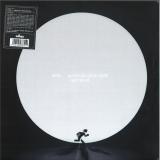
Sanguis is the alias of Berlin-based producer Ludwig Wandinger, a fixture in the city's experimental scene.
On his debut album Wounding dark ambient textures and solo piano improvisations let the listener's attention slip in and out of focus creating a liminal state of dreaming, feeling and drifting through inner worlds and thoughts.
Wandinger tries to capture fleeting moments - all tracks are unedited first takes, some recorded only with his phone in various places, from a friend's flat in Neukölln to his family home in rural Bavaria. Background noises become a part of the music and create a tangible sense of place, urging the listener to keep an ear out for one's own surroundings.
Though firmly rooted in the ambient genre, the album is not just about finding comfort. It's an acknowledgement of the ambiguity of our world where menace and beauty coexist, a dichotomy most apparent in nature itself - a constant source of inspiration for Wandinger.
Wounding is about walking alone on damp foliage at night and being handed a blanket by a loved one at the earliest daylight.
The perfect accompaniment to that deep fall feeling, Frank Maston's beloved 2025 single finally gets its long overdue vinyl release! As our friends New Commute articulated beautifully, "Foreign Affairs" drifts through London fog and Paris shimmer, its avant-lounge glow wrapping each melody in a wistful ache. On B-side "Liaison," ghostly strings and a solitary piano paint a deserted twilight shoreline, Pacôme Henry's distinct 16mm cinematography hovering nearby." We've pressed just 500 of these gorgeous records so, be quick, Maston always flies.
Originally written for a film Maston was scoring in 2024, he decided to keep it aside for himself. And, well, us all. The song has a vibe Maston has previously flirted with; he wanted to dive in...all the way: "The arrangement is huge, definitely the biggest I've written, and it merited live musicians playing together. Also another experiment, to do it with all live musicians playing my arrangements. I wanted to make something that you'd want to put on when you bring a date back to your place. It's on the edge of sappy but that's sort of the point. I decided to give myself an unlimited budget - just spend whatever was necessary to get the right musicians and record it the best way possible."
It's this dedication to sonic perfection which Maston is rightly lauded for. We couldn't not put this on a cute wee 7" when we heard it.
The A side, "Foreign Affairs", is a brilliant, Bacharach-esque romp with a bit of that unapologetically romantic Morricone angle. Says Frank: "I was trying to synthesize that sort of jazzy/sexy/classy/romantic mature sound, where the edginess is in these surprising chord changes and subtle arrangement cues."
A wonderful complement, the flipside "Liaison", evokes Martin Denny, but Eden's Island was in Frank's head, too. He wanted to take a deep dive into that exotica sound - a genre he'd referenced a bit but never fully committed to - so the piece is lavished with those big sighing strings and a pretty lush arrangement. Happily, it all sounds super rich. Also, "Umiliani is always a reference for this sort of thing (Il Corpo etc.), That almost mechanical arrangement of things moving together and a simple melody over it (something I nicked from Ennio)".
The two songs were recorded in Paris and London in the summer of 2024. Aside from the rhythm section and piano, there's vibraphone, a full string section, trombones and alto and concert flutes. "Liaison" boasts strings, vibraphone, a female choir and tenor sax. Maston played piano and acoustic guitar but that's it (as opposed to playing basically everything on Tulips). His friend Oscar Sholto Robertson played drums and percussion whilst Maston mainstay Elie Ghersinu (formerly of L'Eclair) played bass.
The theme for a lot of Maston's titles is that they have two meanings. So "Foreign Affairs" is both a reference to him living abroad and the idea of constant cultural diplomacy and then there's this sexy/cheeky interpretation of foreign affairs in a literal way - "an affair abroad, ooh la la!". The artwork for this 7" single has Roman campaign flags, referencing the foreign affairs in sort of a sassy way. There's a violence implied. But then if you look from a bit of a distance it looks like a bouquet of flowers. So Frank thought it went with the spirit of the title. Also, he's used a lot of roman motifs now so he kept that theme going, even with the terracotta cover.
This is a vitally important project for our Frank. He explains why, here: "For whatever reason, these songs really resonated with me. I feel like they are either the end of a stylistic era for me or the beginning of a new one. They're sonically the culmination of what I'd been working towards and trying to get better at since I started. If I heard this when I was making Tulips I would have said "YES! *This* is what I want to be doing!". So that's the essence of it. It's a statement and the intended reaction is "This is really good, but why now?". Like the edge to it is the context of someone making this sort of thing in 2025, which I think is a huge strength. The real heads will get it. My music always has like a 2-3 year latency until people really catch onto it, and these ones will have a nice payoff I think."
We couldn't put it better ourselves. So we haven't.
“sitting in the terminal at Barcelona airport, health safety warnings echo through empty architecture. feeling slow, and fast, out of sync with rituals and routines. structure and rhythm disintegrate into micro gestures appearing in random order, a daily psychedelia... amid all of the chaos and distraction in the last few years, it’s only through letting go that I've found solid ground to stand on.”
These are some of the experiences and reflections that gave shape to Slipstream, a hallucinatory mini-album by the artist PVAS and the fourth release on Objekt's label, Kapsela. Slipstream is an aural document of PVAS's interior life, conceived not as a grab-bag of DJ-friendly tracks (although it’s clearly inspired by the club) but as a single, delicately crafted artistic statement. The entire record is shrouded in a flickering haze, worn through by smudged breakbeats and wiry drum machines. “Wetland”, with its swampy percussion and crystalline arps, echoes T++ and Kraftwerk. The radiant incandescence of “Gathering Drift” recalls GAS or Monolake's “Hong Kong.” Sampled breakbeats dip and swerve asymmetrically through “Boba” and “Terminal”. Across the record, textures and voices are reshaped by PVAS's homemade algo-software, UMT, which, in PVAS’ own words, “reconstructs one audio file by sampling another, resulting in output that merges their aesthetic qualities, creating rhythm with non-rhythmic sound files and abusing the stereo field.” But the most striking union of technology and poetic self-exploration comes at the end of the record, in the title track, from words murmured through a classic vocoder:
“when i stop framing myself as a boundaried stone
immovable, and powerful, and heavy
when i stop figuring my deepest space as my own
something which i am solely responsible
i surrender, i surrender”
PVAS is Jordan Juras, a Berlin-based artist who grew up outside of Windsor, Ontario. He has released solo EPs on Isla and xpq?, and is half the duo NUG (3XL, West Mineral Ltd.). In addition to developing music software professionally, he has used his UMT software on records by Lyra Pramuk and Dylan Kerr. Slipstream was recorded from 2022 to 2025.
Written and produced by PVAS
Mixed by TJ Hertz
Mastered by Anne Taegert at D&M
Artwork and design by Brodie Kaman
out of Stock
Last delivered 8 months ago available to reorder, subject to availability
The word "amateur" originates from the Latin word "amator," meaning "lover" or "admirer". This Latin term is derived from "amare," which means "to love". The French adopted "amateur" from Latin, and the English then borrowed it from French, initially retaining the sense of someone who loves or is devoted to something. Over time, the English usage of "amateur" also developed a meaning related to a lack of professional skill or experience. How did a word derived from love become a slur? Is love really so defenseless? They say love conquers all, but in reality isn’t love quite ridiculous? It has no intention, no motive, no agenda. How could it possibly prevail? It can’t be bought or sold, or so they say.Its mere existence can't be proven or even measured. What an impossible thing. Trying and failing, time and time again, no wonder cynicism always seems to win. I see “amateurism” as a delighted, even foolish, protest. Protest against everything. Of what’s expected of someone, or expected of someone to desire or strive for. To be elite, to be expert, to be professional, to be a master, to excel and succeed. Where’s the joy in that? I just want to have fun. I want to want. I want to love. And keep doing it, forever. I want to have fun, even when it’s tiring and sometimes even heaven is boring as hell. I want to be bad. I want to do my own thing. “I vant to be alone”. I want to be someone so dedicated to their passion that it starts to seem like there’s something wrong with them. All the way. We can take it all the way, and never get it back. ” - Molly Nilsson Amateur is the 12th studio album by Molly Nilsson. Deep in the teeth of a career that threatens to tip into something resembling a “legacy,” Molly Nilsson celebrates with an album recorded instinctively, quickly and bursting with so many moments of emotional brilliance and clarity it may be her greatest yet. Hers has been a career spent reaching out, perennially powerful in her earnestness, a warrior ridiculously defenceless and armed with a glittering sincerity. Shearing herself of the machinations of the music industry, recording at home, writing direct to the heart. Amateur is a jubilee for losers. A treatise in 13 songs, Amateur states clearly that we should live our life with eternal curiosity, offers us an open hand of comradeship out of the rat race. The songs on the album are both some of the most personal of Nilsson’s career and the most anthemic. First single How Much Is The World asks us to re-evaluate value in the face of a Neo-liberal system squeezing the life out of our loves. Pulsing opener Die Cry Lie satirises the commercialisation of emotion in the form of a shout-along diss-track. With a pounding rhythm track held down by gorgeous chord changes, heartbreaker Valhalla carries the torch for the main themes of the album: never growing up, making mistakes with kindness, moving on. When the drums crash in on the line “It’s going to get better now, you’ll see, going to be much better off without me” there is a world of feeling swirling about in the vocal delivery. One reading of the track might be that it’s a break up song but the subtext is classic Molly Nilsson: by living truthfully, making mistakes, we’re active agents against the myriad oppressions of the world. All The Way takes the theme for a run into the eternal sunset. It’s a manifesto for living fully. “Take it all the way, and never get it back” - it’s the process that’s the important point. The journey not the destination. Big Life, follows on like a part 2: An ode not only to Molly Nilsson’s career of endless gigs, endless connections with people, it’s a massive ode for following your dreams, doing it yourself. Closer The Bitter End is a powerful anthem for friendship, another definition of love infused in Nilsson’s work, A beautifully poignant ode to comradeship til the end, it seems to be the songwriter approaching aging, approaching life’s inevitability with the same vigour and earnestness, the same love of life she enjoyed at the onset of her career. There are moments on Amateur shrouded in reverb, slightly out of focus, forcing the listener to step deeper into the Mollyverse.. Nilsson’s open-armed beseeching to the world permeates every beat, every chord. These are songs exploding with life: the chunky, aggressive bassline on the punker Get A Life can’t hide its massive, catchy chorus. The sweeping Swedish Nightmare might be a tongue-in-cheek self-reference, but at its heart it’s a song about the duality of living life large, what is a dream, what is a nightmare? Molly Nilsson says you can’t have one without the other, and why would you want to? Here’s to making mistakes.
out of Stock
Last delivered 11 months ago available to reorder, subject to availability
After releasing on some of your favorite labels, Paradise City Breakers start their own imprint with a very personal, no-compromise attitude.
The label exists to release timeless work, uninfluenced by the market or by what the audience thinks it wants.
The A-side is strongly influenced by early European club music, with a harder and more ravey attitude that culminates in Destroy the Power, while Dissociazione Jonica takes you on a stripped-down progression.
On the B-side, the sound becomes more modern, while still drawing from vintage influences. If What U Want is tight and enriched by clear melodies, Your Soul opens up a more oneiric dimension.
The first statement of many. Listen closely — the rest will follow
out of Stock
Last delivered 6 months ago available to reorder, subject to availability
In between the folds of ceremony and commonality lies a perennial spring of musical expression.
A statement along the time continuum, or a testament to the resilient resourcefulness embedded in that truth, forms the philosophical approach of this album – the first outing of Dídac.
Studying an extensive archive of instruments, artifacts, and field recordings at the Musée d’ethnographie de Genève—a space steeped in folkloric gesture – Dídac encountered a cosmos of liturgical music and folk song. Anchored in reverance for tradition and transformation alike, this album navigates the old-world Mediterranean lore through a post-modern ambient lens, threading drone, gentle rhythm, electroacoustic textures and the crude tactility of archival material into one woven tapestry.
Under the guidance of Dr. Madeleine Leclair, Dídac was invited to work within one of the world’s most extensive ethno- musicological archives—L’AIMP. In the saturated basements and tape-lined backrooms of the museum, he submerged himself in the sounds of ritual and rural life: wax cylinders from the Eastern Mediterranean, tapes of liturgical hymn, the worn edges of communal song.
In a makeshift studio on the fourth floor of the museum, he sifted through the hours of material he collected, gradually discovering that the archive was no static source – It did not dictate; rather, it served as a companion—offering not answers, but questions. Not a beaten track, but a cluster of sonic clues and riddles. Samples do appear occasionally, tenderly interwoven into the dialogue of the songs. In Dídac’s self-titled debut, the past is not worn as ornament or kitsch; it is listened to and responded to. The museum, its archives, and the visit to Geneva became a foundational culisse of sorts, igniting a myriad of rough cuts and improvisational outtakes.
Dídac, or Diego Ocejo Muñoz, was born in Madrid in 1994 to a family of both Catalan and Castilian origin.
Brought up in a religious household, the influence of the Catholic Church innately shaped the social fabric, schooling and daily life. This lingering dominance led the adolescent Diego into a path of rejection of everything sacramental, promptly resorting to subversion in the shape of grafitti, skateboarding and underground music. Only later in life, after a rigorous venture as an acid and electro producer, the Church re-emerged before him in new light, invoking a deep fascination for its mysticism, iconography and choral tradition.
Spain in general and Catalonia in particular, has long served as a crossroads of the eastern–western Mediterranean continuum, with many of its cultures sharing aspects of way of life and ceremony. At the MEG, Diego found himself puzzled with this realization, resulting in a sonic amalgamation that reaches farther away from the rugged mountains of Catalonia than you might perceive at first encounter.
The deeply embedded memory of rite and public ceremony, religious hymn and landscape—sieved through the undercurrent of personal re-emergence, forms the emotional topography of this album. The record does not trace this landscape; it inhabits it. Its repetitive mysticism and ambient, wide-eyed gaze could possibly evoke (perhaps redundant) comparisons to artists such as Dimitris Petsetakis, or Popol Vuh’s late 70’s cinema scores.
The delicate lines between the sacred and the secular – between memory and re-invention – serve as a cipher to understanding this album in its entirety. Titles like Malpàs Mines or Pantocrator’s Portal Outro nudge toward a folkloric and devotional bedrock—places where labor and spirituality coexist, where names preserve both dust and veneration.
Nevertheless, this is far from mere nostalgia. It is a reclamation — singing alongside the spirits of the past, nurturing what still hums beneath the soil. It is an intimate reflection on tradition, rebellion, adolescence, ceremony and fantasy – a pastoral contemplation on what once was and what is to be.
out of Stock
Last delivered 10 months ago available to reorder, subject to availability
Cindy Lee is the diva alter-ego of singer / guitarist / drag queen Patrick Flegel, the one-time captain of heralded Canadian experimental guitar pop act, Women. In Flegel's working on / as Cindy Lee exclusively over recent years, their songwriting makes a move toward high atmospherics, often achieving a mysterious sweetness rooted equally in beauty and ache.
As Cindy Lee's first long-form statement, Act Of Tenderness makes use of antipodal themes to create a living sound: static with grace, distortion and sugar, all masterfully arranged with crooked nods toward pop classicism. The layered vocal on "Power And Possession" creates a palpable haunt, bringing historical girl-group lament to choir-esque heights. The feedback shriek and industrial grind of "Bonsai Garden" provides near-operatic damage, yet never stumbles into the irrevocably grave. These snowy pieces give the album a decidedly cinematic feel, albeit one bent more towards Eraserhead.
Originally released in a scant private edition in 2015, Superior Viaduct's imprint W.25TH is pleased to give Act Of Tenderness its deserving wide release.
Claire Rousay"s music cascades from a well of documented experience, reflections of the past that compose the present. A prolific multi-instrumentalist, producer, and composer, Rousay gracefully crafts boundaryless music. From her frequent and acclaimed collaborations with artists like M. Sage, more eaze, Gretchen Korsmo, Andrew Weathers, LEYA, and Alex Cunningham, to her film scoring like on The Bloody Lady. From her own compositions to her solo pop work, Rousay"s music is delicate yet powerful, carefully constructed with a casual intimacy. Rousay collages a wealth of found sounds and field recordings with earthy strings, stately piano, and processed instrumentation, all of which trace the outlines of memories and distinct impressions and create a complex constellation of feeling. Her music has evolved from confessional to conversational and excavates the rich emotional essence of each passage. Her work as both archivist and adept arranger and orchestrator merge sublimely into deeply honest and engrossing music. On a little death, Rousay"s blend of pop sensibility and compositional acumen turn abstracted sounds into tangible feelings, its warm, glimmering glow coalescing sensually with the darkness.
Claire Rousay"s music cascades from a well of documented experience, reflections of the past that compose the present. A prolific multi-instrumentalist, producer, and composer, Rousay gracefully crafts boundaryless music. From her frequent and acclaimed collaborations with artists like M. Sage, more eaze, Gretchen Korsmo, Andrew Weathers, LEYA, and Alex Cunningham, to her film scoring like on The Bloody Lady. From her own compositions to her solo pop work, Rousay"s music is delicate yet powerful, carefully constructed with a casual intimacy. Rousay collages a wealth of found sounds and field recordings with earthy strings, stately piano, and processed instrumentation, all of which trace the outlines of memories and distinct impressions and create a complex constellation of feeling. Her music has evolved from confessional to conversational and excavates the rich emotional essence of each passage. Her work as both archivist and adept arranger and orchestrator merge sublimely into deeply honest and engrossing music. On a little death, Rousay"s blend of pop sensibility and compositional acumen turn abstracted sounds into tangible feelings, its warm, glimmering glow coalescing sensually with the darkness.
NIKS steps further into her own sonic world with 'Moves Like 2', a powerful statement of intent that blends groove-heavy percussion and hypnotic club energy. The release offers a deeper glimpse into her identity as a producer.
The lead track 'Moves Like 2' is a pretty raw and direct UK club cut, the sound at the core which has influenced and set the tone of the more ‘heads down’ side of this release.
Sub Glow touches on the fun and playful side of the EP, providing softer textures through elongated pads, growing synths and an overall brightness.
Moves Like 2 receives a rework from one of the most tasteful and timeless producers, rRoxymore - who provides a deeper percussive and rhythmic touch to the feature track.
241 rounds off the EP with a slappy and ballsy tone, which features NIKS’ manipulated vocals, concluding the release on a succinct high and buzz.
Debuting on her new imprint, ‘Bloom Tone’, will serve as a self-directed outlet for NIKS’ own productions and friends, providing a platform for her creative autonomy and musical exploration.
out of Stock
Last delivered 11 months ago available to reorder, subject to availability
Limited to 250 copies. Death comes to us all. Emmerhoff & The Melancholy Babies do not shy away from this irrefutable fact. The band, celebrating their 30th anniversary in 2026, may now rightly consider themselves distinguished "elder statesmen" of rock. With such perspectives also comes the recognition of the transience of life. There are now more funerals than weddings lingering on the horizon, and the ranks of both the idols of our youth and contemporaries on the music scene are beginning to thin. "The Dying of The Light", its title taken from Dylan Thomas' iconic poem, contemplates and embraces the twilight of life, but also, in the spirit of the poem, fighting spirit and stubborn resistance to the inevitable. Death will come, but until then we will create music and celebrate life. October 2025 will see the release of the band's seventh studio album, recorded at Duper and Solslottet Studios in Bergen, produced by Iver Sandoy and Jorgen Træen.. The music reflects the sombre thematic while also being vital and vigorous. The range is wide, from delicate contemplation to powerful outbursts, strictly composed in one moment and loosely improvised in the next.
Bilders new album, Neverlasting is a mix of psychic adventures, hard psychedelia and commentary with a bite. Bilders have always sung outliers with a heap of empathy—exploitation of migrants, unmitigated killing and the state of our depleted planet. This album maintains an analog feel with technical finesse as it casts a cold eye on uses and abuses of power in the higher echelons. It is pure Bilders. Surprise collaborations bring in fresh tangents of colour and emotional edge. “We are the Neverlasting renter-squatters of Earth exhausted”. The band is once again the voice/guitar of Bill Direen, bass of Matt Swanson and near everything else by Alex McManus, with guesting by former Bilders. It’s the same lineup as last year’s acclaimed Dustbin of Empathy, released by Grapefruit and Sophomore Lounge, and the first ‘core’ Bilders lineup to remain constant for more than one album. The new compatibility shows. It’s an album that builds on current strengths. Notable guestings include Athens Georgia lights Claire Horne of 1980s BBQ Killers, and Curtiss Pernice, guitarist of heavy vanguard Porn Orchard, with a snook-in from experimental and electronic prince Todd Gerber. Two never-released tunes by vintage Bilders (Stu Page and Greig Bainbridge) sit perfectly with the new material. This is quite simply the strongest Bilders album ever.
fabric presents salute features music from pioneers and contemporaries alike, including Kerri Chandler, Bodhi, Dorian Concept, Junior Sanchez, Redhead and more, alongside two originals from salute. More than a collection of tracks, it’s a cultural statement: a journey through club culture, personal identity, and global roots. To celebrate the release, salute will headline fabric’s Room 2 on 10th October, joined by a handpicked lineup (TBA), bringing their vision full circle from mix to dancefloor.
Lead single ‘double luxury’ sets the tone for the project, capturing salute’s signature blend of soulful energy, deep groove, and euphoric release. Built on spacious low-end and an undercurrent of euphoria, warped vocals twist through sleek, propulsive drums to form a house cut that channels the emotional intensity and groove at the heart of their sound. Arriving off the back of a huge summer, with standout sets at Coachella, Glastonbury, a North American tour and All Points East, ‘double luxury’ provides a fitting entry into a milestone chapter for one of the most vital voices in club culture.
salute says:
“my contribution to the fabric presents compilation series is my way of contextualising the music i've been writing over the last couple of years. i wanted to include bits of all the things that make up the salute sonic palette: loopy, sample based house music, dense and soulful chords and beautiful synths, slick and groovy drum work. it's an exercise in beautiful house and techno music, or my definition of it anyway.”
Launched in 2019, fabric presents has become one of electronic music’s most respected mix platforms, with contributions from Andrew Weatherall, Laurent Garnier, The Martinez Brothers, SHERELLE, Bonobo, Overmono, Confidence Man, The Streets, and more. Rooted in the legacy of fabric’s monthly CD mixes, the series now embraces a wider range of releases across digital, CD, and vinyl, each paired with a performance at the iconic London venue. With fabric presents: salute, they take their place in this lineage, joining the dots between underground heritage and the future of club culture.
Vienna-born salute has become more than a producer: they are a cultural innovator representing a club scene that is diverse, queer, and community-driven. Since emerging as one of the UK’s most exciting electronic voices, they have built a reputation for balancing raw emotion with dancefloor ecstasy, weaving grime, UK garage, electro, French house, jazz, gospel, R&B and hip hop into a singular, unmistakable vision.
Their music channels as much emotional resonance as physical release, tracks that turn longing into euphoria, intimacy into collective celebration. This ability has not only won over audiences worldwide but also earned praise from heavyweights including Four Tet, DJ Seinfeld, Floating Points, Skrillex, Fred again.., Annie Mac and Benji B. Their now-legendary Melbourne Boiler Room set, one of the platform’s most-watched, further cemented salute’s reputation as a defining force in the global underground.
The release of their 2024 debut album True Magic on Ninja Tune solidified salute as one of dance music’s most vital voices, its success confirming what the underground had long known. With fabric presents, they mark another milestone, bringing their curatorial vision and boundary-pushing sound to one of electronic music’s most iconic platforms.
out of Stock
Last delivered 6 months ago available to reorder, subject to availability
Ritual Dance - is a sound journey, where futurism and the obsolete merge into a new world. Arash & Quasar (truth and star) - is a duo of electronic producers, friends, DJs, rare record collectors and artists, Pavel Grachev and Vitaly Zhul'kov. Their approach for music making compiles elements of various cultures and eras, resulting in fresh and trippy sonic labyrinths. The title track puts the listener in a state of trance and wild fields, where shaman dance moves take over the existense. Powerful percussion, rich synth textures and traditional instruments are mixed in one. 'Acid Krishna' extends the trip, adding acid basslines and meditative flavour. A true morning anthem of a proper rave trip. 'Lokum' is exploring the deepness of the East through melodies, that sweeten up your adventure away from the daily reality. The flip side starts with 'Opium', where slow beats suck you in the abyss more and more. 'Truth & Star' - is an energy exchange ceremony, where Arash & Quasar become rhythm wizards and dictate how you move and feel, just like snakes dance to the magic flute... The Truth refers to the inner awakening and The Star is the symbol of the external shine. 'Desert' is the final chapter of the trip, evolving into eternity, just like a caravan dissolves in the endless desert, hot air and the blue night... Besides studio work, Arash & Quasar share videos of their own trips and adventures via Youtube-chanel, called DIG LOTO. Together with their best friend, the portative Vestax Handy Trax vinyl player, they search for rare records in remote destinations.
out of Stock
Last delivered 11 months ago available to reorder, subject to availability
Wally Badarou is a synth pioneer and musical polymath. But rarely does he sing over his sumptuous tracks. The 6 songs that comprise new record Simple Things finally realise Wally's vision for select backing tracks from his beloved Colors Of Silence.
The tracks were originally developed back in 2001 for the release of the original CD; here, Wally has “simply" added overdubs and vocals to their mastered mixes with some discerning edits. Simply put, Simple Things is another slice of simply stunning Wally Badarou genius.
Simple Things has been decades in the making. Indeed, Wally struggled not only with the idea of singing these wonderful songs himself but singing them in English and writing his own lyrics, while wrestling with the sensational backing tracks, which themselves seemed to have taken on a life of their own.
As Wally explained to us: "In addition to the instrumental artist I have been known as, so far, there has always been a singer who simply was not sure he was, up until now. Even though “Back To Scales Tonight”, my very first album, was, indeed, a song album."
Opener "It Couldn't Be You" embellishes the uptempo groove of soca-funk gem "The Lights Of Kinshasa". As Wally explained to us, it's about “a simple love story somewhere, one rainy night, under the lights of Kinshasa. A woman, a man, online dating, quite usual in our times. Then they meet, almost missing each other." The guide vocal Wally had laid for Colors Of Silence - with an organ sound - seemed striving for words in Linguala, a Congolese language he could not speak. Therefore the decision to do it himself was not an easy one, for it had to be in English to fit his singing. We think it turned out pretty good!
"You Can't Hide Always" vocalises Wally's deep concerns set to the propulsive "Smiles By The Millions": "Populism, ostracism, radicalism, ethics and values all turned upside down worldwide, are they all inevitably exacerbated by our social networks? It could all melt down one day, like a house of cards in the ocean of fake news and false prophecies”. Wally wanted to keep the track as bare as possible but, inevitably, the backing vocals and the synth-brass arrive ultimately to present a welcome 70s flavour, with no snare-drum added.
The bright and breezy "We'll Make It Again" adds vocals to "Where Were We", a tropical, reggae-tinged bounce through the islands. Here's Waly: "Where were we when we last said: "I love you"? Simple words to express something quite common, but never quite simple to deal with. A simple song about the resilience of the broken hearts.” The reggae came from it being conceived when Wally was scoring for “Third World Cop”, a 1999 Jamaican action movie.
"Walk Straight Ahead" provides Wally's gorgeous, contemplative and idiosyncratic vocals to the deep serenity of Colors Of Silence highlight, "Amber Whispers". It's a gliding, divine, mini melodic masterpiece. It'll make you swoon in its extreme beauty. As Wally describes, "it started as just whispers, sweet amber whispers. Then the colour turned darker, as darker skies seemed to fall upon us while the whole world keeps on walking ahead, straight ahead, regardless of the blatant warnings, feeling much too comfortable in conformity. Initially, the verses were to be spoken only. I realised they could be sung all the while, without overshadowing the ethereal atmosphere." Amen.
The serene, celestial "Painting My Life Blue" presents the vocal version of "Days To Wonder". Says Wally, "how does it feel when your second half is gone after decades of riding life together? Past the temporary loss of your bearings, you come to realise you've been blind to the essential, and suddenly you can see...For this most intimate song of mine, I had tried to come up with a melody on top of the existing backing track, long before realising the melody was in the keyboard part already. It just needed to be properly mixed with it."
The profoundly emotional "Just Two Lovers" works up the formerly-too-brief and glorious "Crystal Falls" into a much fuller masterpiece and features acoustic guitar sparkle before fully glistening with some gentle head-nod percussion. Waly explains further: "Dear little green men, please tell me, what is it about us that makes you want to come and visit us so often (contrary to Fermi's assertion)? And here is the reply I believe I heard them sing: "You've got the key you've been searching for: Love”. I reverted to the initial backing track I had made around 1985, which already bore the melody, and which I added acoustic guitars to, before singing it." An astounding closer.
A synth specialist, there can be few artists more under-appreciated given their vast influence than Wally Badarou. His solo work practically defined the sound of the Balearic DJs of the 1980s, and thus the more sophisticated sound of dance culture thereafter. He was one of the Compass Point All Stars (with Sly and Robbie, Barry Reynolds, Mikey Chung and Uziah "Sticky" Thompson), the in-house recording team of Compass Point Studios responsible for a series of albums in the 1980s recorded by Grace Jones, Tom Tom Club, Mick Jagger, Black Uhuru, Gwen Guthrie, Jimmy Cliff and Gregory Isaacs. Badarou's keyboard playing could also be heard on albums by Robert Palmer, Marianne Faithfull, Herbie Hancock, M (Pop Muzik), Talking Heads, Manu Dibango and Miriam Makeba. He also produced Fela Kuti. Phew!
When we asked Wally about the significance of this collection's title, he explained: "These are "Simple things” that everyday’s life seems to build upon. The simplest are the harder to describe, but when satisfactorily described i.e. with simple words, they are the more genuine and authentic to express and share. I’ve immersed myself in other classic song lyrics, something I hardly did before, just to appreciate the genius behind the simple words they were made of, and had a great time studying how powerful they were in expressing complex ideas such as love."
Recording was twofold: first, most of the backing tracks were recorded in 2001, in Wally's studio in Normandy, mostly using hardware synths and Yamaha digital consoles. Then, he fine-tuned the melodies and wrote the lyrics in late 2023, then added some overdubs and sang them all during summer 2024. States Wally, "Digital Performer was and remains the DAW I’ve been using throughout, ever since the 80s."
Wally's sophisticated synth textures and expressive keyboard runs are so full of character, so full of life, that this work of art transcends any easy genre categorisation. Meticulously remastered and cut by both Simon Francis and Cicely Balston respectively, it has been pressed to the highest possibly quality at Record Industry in Holland. Sometimes, the simple things are the most extraordinary.
out of Stock
Last delivered 10 months ago available to reorder, subject to availability
The now-classic duet of ‘Peace On Earth / Little Drummer Boy’ with David Bowie from Bing Crosby's 1977 television special, ‘Merrie Olde Christmas’ is back on a brand new, collector's edition, picture disc 12” vinyl.
The picture disc features the iconic image of David Bowie and Bing Crosby at the piano. "Peace on Earth/Little Drummer Boy" is a Christmas song performed by David Bowie and Bing Crosby. Recorded on September 11, 1977 at ATV Elstree Studios near London for Crosby's television special Bing Crosby's Merrie Olde Christmas, the song features Crosby singing the 1941 standard "The Little Drummer Boy" while Bowie sings the counterpoint tune "Peace on Earth", written by the special's musical supervisors Ian Fraser and Larry Grossman, and scriptwriter Buz Kohan, specifically for the collaboration.
The duet was one of Crosby's final recordings before his death in October 1977. Following the special's broadcast during the 1977 holiday season, ‘Peace on Earth/Little Drummer Boy’ went unavailable for many years. It was eventually released as a single by RCA Records in November 1982 and was a commercial success, peaking at number three on the UK Singles Chart. It was Crosby's final popular hit. It became one of the best-selling singles of Bowie's career, with total estimated sales over 400,000 in the UK alone.
The song has since become a Christmas classic in the United States, Canada and United Kingdom and has been referred to by The Washington Post as "one of the most successful duets in Christmas music history“.
The band Mew had their first major commercial success with Frengers, described as "a work of quiet brilliance, aiming for the epic without straying into the bombastic, offering cerebral arrangements while keeping things accessible". Whilst their music may be classified as indie and on occasion progressive rock, a band member previously stated: "I usually say we are 'indie stadium.' A mix between 'feelings' and 'thinking' is usually good."
Ramirez returns with THA PLAYA$ MANUAL II, the long-awaited sequel to his cult classic that helped solidify his place as one of underground rap’s most distinctive voices. Steeped in Southern-fried funk, Bay Area swagger, and Memphis-style menace, this new chapter finds Ramirez sharper, smoother, and more seasoned—delivering game like a streetwise sage with a gold grill grin.
Where the original Playa$ Manual was gritty and raw, THA PLAYA$ MANUAL II sounds like a player who's leveled up. The beats knock harder, the flows glide slicker, and the game is deeper. Ramirez weaves tales of betrayal, come-ups, late-night drives, and cold-hearted reality with the same charismatic cool that made him a standout in the $uicideboy$-adjacent G59 movement—but this time with a more refined, cinematic approach.
From trunk-rattling bangers to syrupy smooth cuts that soundtrack late-night escapades, THA PLAYA$ MANUAL II feels like a ride through Ramirez’s world with tinted windows up and the bass on max. It’s a record for the hustlers, the heartbreakers, the loners, and the legends in the making.
This is more than a sequel—it’s a statement: the playa’s still active, and the manual’s been updated.
out of Stock
Last delivered 86 days ago available to reorder, subject to availability
Los Angeles-based duo LUCKYANDLOVE are back with their third album, evoking a new sense of art school originality, following their critically acclaimed “Transitions” album. The duo defines 'Humaura' as the atmosphere that emanates from the feelings of the human spirit void of technological control.
Blending raw analog synth sounds with driving punctuated percussion and punchy analogue bass, LUCKYANDLOVE’s music is shaped by the embers of Siouxsie and The Banshees and Bauhaus, resonant spectres carry over from synth-laden galaxies, where the needle hits the vinyl groove and Doc Martens marched to basement dance floors.
LUCKYANDLOVE is the raw sonic experiment of Loren Luck and April Love, whose music transcends genres. Their live analogue synth beats, Moog instrumentation and beautiful, harmonic vocals trigger an immediate download of fuzzy sunset synthgaze, blue-black neon darkwave, and tigerprint electro punk.
“‘Humaura’ is an action-packed, cinematic, entertaining and soulful electro-dance record full of fresh air and wide-open roads where there is more freedom to party, to be in nature, and to be our wild selves,” says April Love.
Fusing together pulsating molten kicks, abrasive fuzz-laden analog synths and sensual vocals, the anti-tech angst anthem ‘I Am Human’ is a call to take back our lives, underlining the need to reconnect with being Human before it’s too late. ‘Lonely at Night’ is a "last call" bar track about the desperate, frantic desire for human connection, building from a haunting sense of isolation to a fast-paced, climactic reunion with a crush. Elsewhere, this album features enchanting lyrics rooted in emotions from melancholy and sorrowful glom to a state of blissful trance.
This album was recorded, mixed and mastered for digital release by Grammy award-winning engineer Be Hussey (Modern English, Twin Tribes, Boy Harsher) at Balboa Studio and Catwater for the digital music, and mastered for vinyl and lathe-cut by Grammy-nominated engineer Nicholas Townsend (Weezer, Grimes) at Townsend Mastering.
Their 'Lucky + Love' and 'Transitions' albums having earning them a global fan following, US and UK tours, multiple tracks featured in the indie hit film 'Tiger Within' (Ed Asner's final performance), and wide acclaim, noting their “soulful, synthesized sound" (LA Weekly), “spectral synths and dazed-dreamy feeling” (Big Takeover Magazine), not to mention their "uncompromising and inventive sonic experiment” (The Spill Magazine) and sound that “oscillates between the asphalt synth streets & interstellar outer realms” (Impose Magazine).
LUCKYANDLOVE’s visceral, dark electro-pop appeal continues to stretch through time and space. Praise for the album’s lead track ‘I am Human’ have poured in from over a dozen countries. ‘Humaura’ promises to cement the duo’s reputation as one of America’s most vivacious electronic / synthwave acts, positioning them firmly within the lineage of artists like Phantogram, Ladytron, The Soft Moon, Twin Tribes and ACTORS.
‘Humaura’ Press:
“...In contrast to its synth-laden darkwave and electropunk sound, the song presents lyrical themes of championing the human spirit and emotions over the technological void" ~ Regen Magazine
“Moog textures and distorted synth tones weaving together like electric currents. An industrial edge that carries a dreamy undercurrent, nodding to darkwave, punk rock and post-punk influences without sounding dated" ~ Myth of Rock
"Every second and note is a meld of lava-esque incitement and beguiling melodic fixation and a breath to unpredictability and stirring fuzz hued uniqueness… a thrilling encounter" ~ The Ringmaster Review
"Layers fall into place and give rise to soaring vocals. The beautiful timbre of her voice sits over the landscapes of sound and reveal poignant lines that hit home." ~ Sound Read Six
"Dubrovnik Blues" on Vinyl: The Australian Super-Band That Changed Everything! Attention all lovers of raw, unfiltered rock'n'roll! Bang! Records proudly presents the vinyl reissue of "Dubrovnik Blues", the celebrated debut LP from The Dubrovniks - the Australian super-group born straight from the beating heart of the country's punk underground. Formed in Sydney in 1986 (originally as The Adorable Ones), The Dubrovniks brought together true icons of the Aussie scene: James Baker, legendary drummer for Beasts of Bourbon, founding member of Hoodoo Gurus, and a driving force in The Scientists; Roddy Radalj, co-founder of Hoodoo Gurus and veteran of The Scientists; and Boris Sujdovic, who also played with both The Scientists and Beasts of Bourbon. Far from being "just another debut," Dubrovnik Blues was an instant statement of intent - a wild blend of garage rock grit, glam swagger, punk attitude and classic rock'n'roll hooks. Think The Troggs and T. Rex colliding with the spirit of the New York Dolls. Originally released in August 1989 on Timberyard Records, the album went on to earn a nomination for Best Independent Release at the ARIA Awards in 1990. Now, Bang! Records brings this cult gem back to life on vinyl - a must-have for collectors, vintage-sound purists, and anyone ready to relive (or discover) the raw, electric energy of late-80s Australian rock at its finest.
What began as a nostalgic nod to Camden Market’s bootleg culture has become the next chapter of in the Running Back Mastermix series. At once deeply personal and openly communal, it shows how a lifetime of production can be condensed into 90 minutes without losing its edge — proof that the mixtape, even in 2025, still has stories left to tell.
What followed was a patient excavation. Old DATs were pulled out of storage, forgotten files surfaced from hard drives, and new material was written to sit alongside them.
Together, these fragments revealed a body of work stretching back more than 25 years — tracks that moved across the spectrum of house and techno but shared a common thread of character and atmosphere.
In May of this year, the archive finally found its form. Recorded live on three decks using Serato, the resulting mix brings together 24 tracks: unreleased material from the past and brand new productions, all stitched together into a continuous narrative. It’s equal parts retrospective and statement of intent — less a museum piece than a living document.
Here the vinyl edition features a curated selection of 11 tracks from the mix.
out of Stock
Last delivered 10 months ago available to reorder, subject to availability
Official reissue of the self-released first Mac Machine single from 1983. This little gem brings a boogie funk, early rap slap on the a-side; and a deep, soulful tune on the flipside. Both mark the cornerstone of this band from Kassel, North Hesse, Germany. With its playfulness, solid skills on the instruments and a brilliant singer, it revealed a first glimpse of what to expect musically by the band that was founded by former US soldiers in 1982. The re-release comes in a picture sleeve including an insert with liner notes.
'In This World' is starting the party, bringing raps with a critical view on the early 1980s state of the world, featuring a musical remedy that chases all your blues away: "Just shake your head one time and move that behind. Just listen to what I say, and you will go through every day!"
'Let Me Go' tells the agonizing end of a relationship. Too much has happened, and it just doesn't work out anymore. The powerful vocals make one feel the pain, while the female chorus, piano and percussions deepen the sentiments. A funky good-bye, that could make you cry.
out of Stock
Last delivered 9 months ago available to reorder, subject to availability
Many Amerindian cultures share the belief that the future lies behind us, while the past is what we face ahead. This challenge to Western chronology is, however, rooted in common sense: the open possibilities of what is to come are, in theory, what we cannot see—the uncertain—whereas the events that have already happened unfold before our eyes and are available for us to learn from.
This second album by Chilean producer, live performer, and DJ Valesuchi could be described as an experiment with time through music. Some years after relocating to Rio de Janeiro, she released Tragicomic LP (2019) on MAMBA rec—a label founded by the boundary-pushing Brazilian party Mamba Negra—and the self-released EP Cascada (2024). In both works, we can already appreciate her musical imprint: rhythmic and emotional timbral lines—wet, filtered, mathematical,
devotional, multilingual, fantastic, and unreal. However, in Futuro Cercano (Discos Nutabe, 2025), we can hear a leap: the sedimentation of her lived experiences in electronic communities across Latin America, her search for a universal yet personal language to convey emotion and new spiritual meaning, finds in this release a consistency and spontaneity that is rarely heard these days.
In a time when all cultural expression is not only expected to be taggable, but is also increasingly produced from templates that precondition our perception—favoring categorization and connections to works or scenes of the past—the tracks on this album are generically unclassifiable. They represent an openness to experiment without prejudice with electronic instruments and rhythms that are asancestral as they are futuristic. They publicly reveal an intimacy born from the compositional process, a bond formed through the encounter—sometimes tense, sometimes harmonious—between human will and that of the machines themselves. Or, as Valesuchi put it, "cyborging my friendship with the machine and becoming a tempest." Tempest as an eruption of the unknown into the present, the result of opening oneself to a nearly meditative state to uncover the deepest feelings through improvisation on cybernetic feedback and loops. And in that improvisation, to develop “técnicas para estirar o medir el tiempo”
“techniques to stretch or measure time” as she sings in 22, the album’s first track. “Connecting knowledges” as a portal to access that future so near it lies behind us, and to anticipate it as intuition and prospection.
That’s why Futuro Cercano is more than just electronic music: it is a technological ritual, an immersion into the secrets that machines hold as artifacts of human and non-human knowledge, as mysterious objects that allow us to connect with our own otherness—the personal alien hiding beneath the skin that opens us up to uncertainty as possibility rather than catastrophe.
A founding member of the legendary Wu-Tang Clan, Ghostface Killah is Hip Hop’s masked poet — known for his cinematic storytelling, gritty slang, and razor-sharp delivery. With classic albums like Supreme Clientele and Fishscale, Ghostface carved his name into rap history as one of the most original and consistent voices in the game. The Wait is Over. Supreme Clientele 2 is FINALLY here. The highly anticipated album is a vivid- late-night noir where every bar brought Ghost’s inner thoughts to life. From Staten Island to sold out stages worldwide.
Unlike anything we have heard from her before, Okkyung Lee returns to Shelter Press with "Just Like Any Other Day: Background Music For Your Mundane Activities", a deeply intimate body of recordings at the juncture of ambient music, minimalism, and the baroque, that stands as radical intervention with what experimental music can be, and the place that organisations of sound occupy in our lives. For more than two decades, Okkyung Lee has stood at the forefront of the most radical trajectories of experimental music: a virtuosic cellist and improviser, renowned for her creative rigour and emotive depth. Particularly noteworthy for her range, dexterity, and adaptability, over the last five years Lee's output has revealed unexpected shifts and developments that move far afield from the realms of free improvisation for which she is most well known. 2020's "Yeo - Neun", a heart-wrenching, ambient chamber work - drawing inspiration from the Korean popular music of her youth - was issued by Shelter Press to great critical response, followed closely by "Teum (The Silvery Slit)" - one of a series engrossing electroacoustic works created at Groupe de Recherches Musicales in Paris - on Portraits GRM, and then "Na-Reul" in 2021, regarded by Lee as a closing statement of more than two decades living in New York, which set the precedent of her allowing her emotions to fully occupy the forefront of the music for the first time. Marking her return to Shelter press, "Just Like Any Other Day": Background Music For Your Mundane Activities", encounters Lee upturning the apple cart once again, weaving a profoundly intimate artistic statement on completely unexpected terms. Like its three aforementioned predecessors, "Just Like Any Other Day" belongs to broadening shift in Lee's approach to composing that roughly aligns with her return to her native South Korea, having lived in the United States since her late teens. Infused with a deep reengagement with her own culture and relationship to memory, it is equally a response to those critical challenges and questions provoked by significant life change. Worked on in isolation, and continuously returned to, over the course of four years, the album's nine pieces began with a simple recognition that experimental music is not always what we imagine it to be. It is a practice and a pursuit - a music for which, at its inception, the outcome is unknown - rather than an idiom defined by certain syntaxes, approaches, and qualities of structure and sound. From this departure point, Lee began to inquire after the utility of music itself: what is it for, what does it do, and what place does it (or can it) occupy in our lives? This solitary and durational journey, each composition gradually moving through different phases and evolutions over years, led Lee toward uncharted ground: a music that is not only playful, introspective, and seductive, but also intended to provoke a relationship to experimental music beyond its normative expectations. Rather active or deep listening, it pursues passive listening. Rather than a grand statement, it is discreet. Rather than virtuosity, it embraces the elegant and direct. Even more strikingly, for the first time, the music of "Just Like Any Other Day" encounters Lee leaving the cello entirely behind. Created at home on keyboard, computer, and an inexpensive cassette recorder, "Just Like Any Other Day" presents a remarkable form of ambient music - organisations of sound that become their own environment, to be occupied - intended, as the album's subheading infers, as Background Music For Your Mundane Activities. An expansion of the creative pathways opened by the Korean pop imbued compositions of Yeo - Neun, aspects of electronic process explored by "Teum (The Silvery Slit)", and the emotive foregrounding of "Na-Reul", each of the pieces presented across the two sides of "Just Like Any Other Day" implies something far greater than the limits of its own temporarily: a mood, provocations of memory and place, mirrors for the solitude within which it was made, and palpable emotion lingering just out of grasp. For Lee, each of the album's compositions could be continued or looped for an indeterminate duration: straddling a ground between the minimal and the baroque, enveloping the listener in endless cycles of appreciating, repetitive and rhythmical notes, flirting with the melodic and implying a disembodied imagism that borders on the profound. Remarkably beautiful and direct, Okkyung Lee's "Just Like Any Other Day: Background Music For Your Mundane Activities" - issued by Shelter Press on vinyl - represents a radical reconfiguration of experiential music, stripped to its bare essence in defiance of the widely presumed aesthetic signifiers. Unlike anything we've heard from her before, this immersive body of intimate recordings not only reveals new dimensions of Lee's striking range as an artist, but also of how we might regard and occupy music itself: an ambience to lived and felt like a second skin.
out of Stock
Last delivered 12 months ago available to reorder, subject to availability
STANDFIRST Titanic, the project spearheaded by Mabe Fratti and Hector Tosta (aka I. la Católica), return with a sumptuous and life-affirming new album.
In her sensational 1929 biography Tiger Woman, dancer and socialite Betty May claimed her ‘coster’s eye’ meant she liked to wear as many colours as possible. “Colours to me are like children to a loving mother. Each is my favourite, yet I can never bring myself to deny the others by preferring one.” May’s bold and inclusive strategy is one that manages to transfer itself, almost a century later, to Hagen, the new record by Titanic.
Many will know Titanic as the Mexico City-based brainchild of cellist and singer Mabe Fratti and multiinstrumentalist Hector Tosta who is now operating under the pseudonym, I. la Católica, (taken, rather unusually, from the name of the street the pair live on). With Hagen, and their previous release, Vidrio, (2023), the pair are creating a distinctive signature sound in modern alternative pop music. Nobody else sounds quite like them. Both records have an open hearted nature and simple, winning melodies that play off against a taste for drama, spectacular orchestration and a feeling of otherworldly mystery. Hagen is the more ambitious, sometimes more mystical effort. From the opening handclaps of ‘Lágrima del Sol’, (a wonderfully uptempo playground chant translating as a tear from the sun but, surely, not referencing the brand of pineapple wine?), the record dances its way through various mid-to-late-eighties inspirations, lush and widescreen passages of melancholy and vertiginous contrasts.
Mystery is often found in the simple but slightly odd song titles. English translations of various track titles give, ‘you swallowed the gum’, ‘leak’, ‘a tear from the sun’, ‘raising the trophy’ ‘digging dimensions’, ‘the owner’, ‘the decapitated hen’ and ‘the trap is exposed’. All denote striking images, metaphysical hints and emotional cues or simple, even childlike actions. Though Fratti and Tosta don’t reveal its provenance, the album’s title could even be a crafty play on words: the listener would be forgiven in thinking the moments of brash contrast and eyebrow raising theatricalism in the music constitute a musical nod to German punk chanteuse, Nina Hagen.
On Hagen, singer and cellist Mabe Fratti once again displays her brilliant knack of speaking to us directly. There is never the suspicion of her playing to the gallery, and the directness of many of the lyrics don’t allow it. Parallel to this, Fratti has an almost magical ability to give Hector Tosta’s melodies, and her and Tosta’s lyrics ones imbued with an insight and meaning that feels otherworldly. Tosta admitted it was “pretty wild to hear Mabe take the interpretations to a different place” and the listener can pick up on the delight Fratti takes in (literally) adding a voice to the many narratives.
Two examples can be shown here: ‘Gotera’ (Leak) uses harsh slashes of cello and tough, gunfire-like guitars and drums and multiple vocal lines that could be acting as a Greek chorus. They play off brilliantly against Fratti’s soft, slightly baleful vocal take that delivers lyrics such as: ‘nobody knows where the leak is / but I know where it is / they fight in front of the door and / nobody can go in’. With ‘La Gallina Degollada’ the somewhat blithe melody melody line, sung with what could be sarcastic brio by Fratti, plays against an itchting rhythm and rasping guitar part. The punch comes when you see that the song is about a chicken that has been decapitated and read lyrics such as: ‘I already saw it, it moved, the decapitated chicken’ / ‘could it be that I'm broken’ and ‘Two people hurt each other by thinking that they no longer agree’/ ‘Hours pass and the chicken represents what scares me’.
There may be death and fights to deal with, but there is also a quality of chirpy self-reliance about Hagen that is a key part of its nature. Like Betty May and her colourful outfits, Hagen’s sound often revels in its own sense of richness. Throughout, the record delivers vaulting string sections or glutinous guitar squeals that could, like the powerful, driving ‘Escarbo Dimensiones’ (Digging Dimensions) have come directly from a glossy 1980s TV series. Fratti sees this “glam sound” developed by Tosta on the aforementioned track and ‘Te Tragaste el Chicle’ (You Swallowed The Gum), as moments that were truly “revealing” for the album as a whole during its making.
What else? The thud and thump of ‘La Trampa Sale’ (The Trap is Exposed), and its sudden change of tempo and mood betrays a monstrously ambitious piece of music, the players almost greedily creating the sounds. Other moments are heart wrenching: ‘Libra’ ends on a poppy chord switch that cleverly ramps up the emotion inherent in the music’s notation. You could almost imagine a teenager in a bedroom forty years ago, rewinding the track over and over on a small, cheap cassette player, unable to get enough of that sugarsweet switch. Elsewhere, Oneohtrix Point Never adds stardust and an unearthly sense of space on the changeable, slightly moody meditation, ‘Pájaro de Fuego’ (Firebird). The record ends with ‘Alzando el Trofeo’ (Lifting the Trophy), a track that could soundtrack a state wedding, what with its beautiful cascading piano parts, a sugary vocal and short triumphal guitar riffs that add a rich patina to the overall sound. Fratti: “When I doubled those vocals on ‘Alzando el Trofeo’ I felt there was an epiphany happening, right at that moment.”
Making a good record is a team game. Tosta and Fratti recall seeing Randall from Circular Ruin Studios in NYC “tweak the drums in ‘Libra’ to make that amazing effect of the gated reverb”, or the shaping of ‘Gotera’, “when (recording engineer) Nate Salon added some synths to the track.” Drummer Eli Keszler, “an amazing and versatile player” had the songs down pat in a couple of days” and, according to Tosta, Oneohtrix Point Never “just came to one of the sessions and we hung out, and after all the recordings he and Nate were together in some studio and out of nowhere they sent us some beautiful tracks for ‘Pájaro de Fuego’! Fratti concurs. “He decided that he wanted to record because he was listening to the record (Nate works closely with him) and he really liked it! It was a total honour, indeed!”
Bedazzled by the playing, the skyscraping ambition in the arrangements and the giddy moments of contrast thrown up by Hagen, we could allow ourselves a brief moment of flippancy and state that Titanic’s new record is Yacht Rock meets Aeschylus, full-on. It’s also worth speculating that, in this hyper-sensitive, intemperate age, Titanic’s music has the power, however fleetingly, to heal hurts. Hagen is a brilliant showcase for a fresh and enriching form of pop music: displaying a magpie eye for what glints and plundering what has gone before.
Like Vidrio, Hagen was partially and additionally recorded at Fratti and Tosta’s house, aka Tinho Studios in Mexico City, as well as Golden Girl Studios & Circular Ruin Studios in New York City. Mixing was done by Santiago Parra in Pedro y el Lobo Studios, Mexico City and mastered by Rafael Anton Irisarri at Black Knoll Studios, New York City. The recording engineer was Nate Salon.
Hagen featured Mabe Fratti on cello, vocals & backing vocals, I. la Católica on guitar, keyboards, prepared piano, bass & backing vocals, drums by Eli Keszler and synths in ‘Pájaro de Fuego’ from Daniel Lopatin and Nate Salon.
All compositions on Hagen are written by I. la Católica, except ‘Escarbo Dimensiones’ & ‘Pájaro de Fuego’, which were composed by I. la Católica and Mabe Fratti. The record was produced by I. la Católica and co-produced by Nate Salon & Mabe Fratti. And all lyrics are by I. la Católica except ‘Escarbo Dimensiones’, ‘Gotera’, ‘Gallina degollada’ & ‘Pájaro de Fuego’, which were written by I. la Católica & Mabe Fratti.
out of Stock
Last delivered 12 months ago available to reorder, subject to availability
STANDFIRST Titanic, the project spearheaded by Mabe Fratti and Hector Tosta (aka I. la Católica), return with a sumptuous and life-affirming new album.
In her sensational 1929 biography Tiger Woman, dancer and socialite Betty May claimed her ‘coster’s eye’ meant she liked to wear as many colours as possible. “Colours to me are like children to a loving mother. Each is my favourite, yet I can never bring myself to deny the others by preferring one.” May’s bold and inclusive strategy is one that manages to transfer itself, almost a century later, to Hagen, the new record by Titanic.
Many will know Titanic as the Mexico City-based brainchild of cellist and singer Mabe Fratti and multiinstrumentalist Hector Tosta who is now operating under the pseudonym, I. la Católica, (taken, rather unusually, from the name of the street the pair live on). With Hagen, and their previous release, Vidrio, (2023), the pair are creating a distinctive signature sound in modern alternative pop music. Nobody else sounds quite like them. Both records have an open hearted nature and simple, winning melodies that play off against a taste for drama, spectacular orchestration and a feeling of otherworldly mystery. Hagen is the more ambitious, sometimes more mystical effort. From the opening handclaps of ‘Lágrima del Sol’, (a wonderfully uptempo playground chant translating as a tear from the sun but, surely, not referencing the brand of pineapple wine?), the record dances its way through various mid-to-late-eighties inspirations, lush and widescreen passages of melancholy and vertiginous contrasts.
Mystery is often found in the simple but slightly odd song titles. English translations of various track titles give, ‘you swallowed the gum’, ‘leak’, ‘a tear from the sun’, ‘raising the trophy’ ‘digging dimensions’, ‘the owner’, ‘the decapitated hen’ and ‘the trap is exposed’. All denote striking images, metaphysical hints and emotional cues or simple, even childlike actions. Though Fratti and Tosta don’t reveal its provenance, the album’s title could even be a crafty play on words: the listener would be forgiven in thinking the moments of brash contrast and eyebrow raising theatricalism in the music constitute a musical nod to German punk chanteuse, Nina Hagen.
On Hagen, singer and cellist Mabe Fratti once again displays her brilliant knack of speaking to us directly. There is never the suspicion of her playing to the gallery, and the directness of many of the lyrics don’t allow it. Parallel to this, Fratti has an almost magical ability to give Hector Tosta’s melodies, and her and Tosta’s lyrics ones imbued with an insight and meaning that feels otherworldly. Tosta admitted it was “pretty wild to hear Mabe take the interpretations to a different place” and the listener can pick up on the delight Fratti takes in (literally) adding a voice to the many narratives.
Two examples can be shown here: ‘Gotera’ (Leak) uses harsh slashes of cello and tough, gunfire-like guitars and drums and multiple vocal lines that could be acting as a Greek chorus. They play off brilliantly against Fratti’s soft, slightly baleful vocal take that delivers lyrics such as: ‘nobody knows where the leak is / but I know where it is / they fight in front of the door and / nobody can go in’. With ‘La Gallina Degollada’ the somewhat blithe melody melody line, sung with what could be sarcastic brio by Fratti, plays against an itchting rhythm and rasping guitar part. The punch comes when you see that the song is about a chicken that has been decapitated and read lyrics such as: ‘I already saw it, it moved, the decapitated chicken’ / ‘could it be that I'm broken’ and ‘Two people hurt each other by thinking that they no longer agree’/ ‘Hours pass and the chicken represents what scares me’.
There may be death and fights to deal with, but there is also a quality of chirpy self-reliance about Hagen that is a key part of its nature. Like Betty May and her colourful outfits, Hagen’s sound often revels in its own sense of richness. Throughout, the record delivers vaulting string sections or glutinous guitar squeals that could, like the powerful, driving ‘Escarbo Dimensiones’ (Digging Dimensions) have come directly from a glossy 1980s TV series. Fratti sees this “glam sound” developed by Tosta on the aforementioned track and ‘Te Tragaste el Chicle’ (You Swallowed The Gum), as moments that were truly “revealing” for the album as a whole during its making.
What else? The thud and thump of ‘La Trampa Sale’ (The Trap is Exposed), and its sudden change of tempo and mood betrays a monstrously ambitious piece of music, the players almost greedily creating the sounds. Other moments are heart wrenching: ‘Libra’ ends on a poppy chord switch that cleverly ramps up the emotion inherent in the music’s notation. You could almost imagine a teenager in a bedroom forty years ago, rewinding the track over and over on a small, cheap cassette player, unable to get enough of that sugarsweet switch. Elsewhere, Oneohtrix Point Never adds stardust and an unearthly sense of space on the changeable, slightly moody meditation, ‘Pájaro de Fuego’ (Firebird). The record ends with ‘Alzando el Trofeo’ (Lifting the Trophy), a track that could soundtrack a state wedding, what with its beautiful cascading piano parts, a sugary vocal and short triumphal guitar riffs that add a rich patina to the overall sound. Fratti: “When I doubled those vocals on ‘Alzando el Trofeo’ I felt there was an epiphany happening, right at that moment.”
Making a good record is a team game. Tosta and Fratti recall seeing Randall from Circular Ruin Studios in NYC “tweak the drums in ‘Libra’ to make that amazing effect of the gated reverb”, or the shaping of ‘Gotera’, “when (recording engineer) Nate Salon added some synths to the track.” Drummer Eli Keszler, “an amazing and versatile player” had the songs down pat in a couple of days” and, according to Tosta, Oneohtrix Point Never “just came to one of the sessions and we hung out, and after all the recordings he and Nate were together in some studio and out of nowhere they sent us some beautiful tracks for ‘Pájaro de Fuego’! Fratti concurs. “He decided that he wanted to record because he was listening to the record (Nate works closely with him) and he really liked it! It was a total honour, indeed!”
Bedazzled by the playing, the skyscraping ambition in the arrangements and the giddy moments of contrast thrown up by Hagen, we could allow ourselves a brief moment of flippancy and state that Titanic’s new record is Yacht Rock meets Aeschylus, full-on. It’s also worth speculating that, in this hyper-sensitive, intemperate age, Titanic’s music has the power, however fleetingly, to heal hurts. Hagen is a brilliant showcase for a fresh and enriching form of pop music: displaying a magpie eye for what glints and plundering what has gone before.
Like Vidrio, Hagen was partially and additionally recorded at Fratti and Tosta’s house, aka Tinho Studios in Mexico City, as well as Golden Girl Studios & Circular Ruin Studios in New York City. Mixing was done by Santiago Parra in Pedro y el Lobo Studios, Mexico City and mastered by Rafael Anton Irisarri at Black Knoll Studios, New York City. The recording engineer was Nate Salon.
Hagen featured Mabe Fratti on cello, vocals & backing vocals, I. la Católica on guitar, keyboards, prepared piano, bass & backing vocals, drums by Eli Keszler and synths in ‘Pájaro de Fuego’ from Daniel Lopatin and Nate Salon.
All compositions on Hagen are written by I. la Católica, except ‘Escarbo Dimensiones’ & ‘Pájaro de Fuego’, which were composed by I. la Católica and Mabe Fratti. The record was produced by I. la Católica and co-produced by Nate Salon & Mabe Fratti. And all lyrics are by I. la Católica except ‘Escarbo Dimensiones’, ‘Gotera’, ‘Gallina degollada’ & ‘Pájaro de Fuego’, which were written by I. la Católica & Mabe Fratti.
out of Stock
Last delivered 12 months ago available to reorder, subject to availability
This is the story of an artist in search of sound and breath: an artist who dares to question the rhythm of silence—an invitation to rethink music, sound, and musical collaboration. This is the story of a journey that, after opening countless paths, has finally found its vessel—and its messengers. Three artists of profound musical truth and radical freedom, merging into an exceptional trio that crosses genres and transcends words in a journey toward pure emotion.
Le Rythme du Silence is the culmination of this long search. Yom delivers it here with violinist Théo Ceccaldi and cellist Valentin Ceccaldi—kindred spirits in sound. “I’ve been working on this idea of the ‘rhythm of silence’ for years,” Yom explains. “I first heard the phrase from a Sufi master, describing the foundation of meditation. It struck something deep in me. I’ve practiced meditation for a long time, and we often think of it as a kind of stillness—opposed to noise and life. But in truth, the rhythm of silence enables meditation. It means accepting that the world continues to move and live around you, even as you try to be still. I wanted to compose from that place. To imagine sound as vibratory matter—the primal substance of creation. That required letting go of fixed structures: forgetting melodies, abandoning the idea of a constructed solo. I needed to leave behind music as a system, and touch sound as a living, breathing entity. It took years. Many projects led me elsewhere. But with the Ceccaldi brothers, I finally found the right resonance. Working with them was simply obvious—it was indredibly powerful.”
Yom first rose to prominence reimagining Jewish traditional music with his 2008 debut New King of Klezmer Clarinet. Since then, his path has led through rock (With Love, 2011; You Will Never Die, 2018), electronic utopias (The Empire of Love, 2013), meditative and sacred soundscapes (Prière, 2018), and countless unclassifiable hybrids (Unue, 2009; Green Apocalypse, 2010). It was inevitable that he would eventually cross paths with the free-spirited Théo and Valentin Ceccaldi—two artists who also place collaboration and genre-blurring at the heart of their artistic development. Their projects are always bold, demanding, and full of life (Kutu, Tricollectif, ONJ, Velvet Revolution, Grand Orchestre du Tricot, Lagon Noir, Constantine, etc.). And so, when the three met within the iXi string quartet, something clicked.
“I was seated between the two of them in the quartet,” Yom recalls, “and I could feel their energy flowing from both sides—it was wild! They’re so tuned into each other, they don’t need words. It’s like they’re connected by musical Wi-Fi. The groove happens instantly. They’re precise when they want to be—thanks to their experience in pop-influenced projects —but they can also let go completely, diving into pure sound. That’s exactly what this project needed.”
Without a single rehearsal, the trio formed instinctively. They began performing Yom’s compositions live, unfolding them into a single continuous piece, where clarinet and strings stretch the limits of sound and breath.
Bowed, plucked, or prepared with clothespins, the Ceccaldi strings engage in a playful and intense dialogue with Yom’s custom B-flat clarinet. Through their imaginative listening and fearless invention, air and space open into a vast new soundscape—one that lies somewhere between meditation and healing music.
“When Yom shared the concept of the rhythm of silence, we were immediately drawn in,” says cellist Valentin Ceccaldi. “There’s a deep intensity and spiritual commitment in his music that really spoke to me. With this trio, we’re trying to dive into the core of sound—but also to create a kind of communion with the audience. It’s like gradually turning up the volume on silence, and realizing it’s made of countless tiny sounds—the music of particles in motion" This stripped-down intensity demands full presence—body and mind—of these three musicians, vibrationally connected in a state close to trance. With them, we enter a journey - not religious, but sacred nonetheless.
The Rhythm of Silence becomes an echo of our most intimate, most distant inner landscapes.
An album—and a trio—to return to without end.
out of Stock
Last delivered 7 months ago available to reorder, subject to availability
Hip-hop legend Ice Cube finally returns with his latest studio album “Man Down” – a hard-hitting statement that once again proves why he remains one of the most vital voices in rap today. With “Man Down”, Ice Cube delivers a powerful project that dives deep into today’s social realities, both musically and lyrically. Fans can expect raw lyrics, strong production, and real stories from one of the most inflfluential MCs of all time.
Exclusively for collectors and true fans: “Man Down” is available in several formats: Black Double Vinyl, Limited Marbled Double Vinyl, Music Cassette
out of Stock
Last delivered 8 months ago available to reorder, subject to availability
At the end of 2024, Elder looked back on an unusual period in their now near 20-year career. A few years ago, the band had dropped their most progressive record yet, 2022"s highly acclaimed Innate Passage, followed by the usual heavy touring schedule (including a 24-show arena tour supporting Tool). The band had then taken a year long sabbatical to recharge their creative batteries, which instead of rest culminated in the release of multiple albums by side-projects. Convening in winter of that year for a 2 week songwriting session at Big Snuff Studio in Berlin, the band set a goal of knocking off the rust and putting together some ideas for the next record. While combing through an archive of old sketches, they hit upon an outline of a song from somewhere between 2020"s Omens and its successor Innate Passage, abandoned then for reasons now inscrutable. Picking up the pieces with fresh ears, Elder fleshed out a new version of the track, which is firmly rooted between those two albums but with an identity of its own. Building on the song"s ending, a swirling tower of synthesizers, chugging guitars and almost tribal drumming was constructed in the course of lengthy in-studio jams. Liminality/Dream State Return can be seen as a bridge between eras in Elder"s creative universe; one foot is planted in the highly melodic and sometimes alternative/grunge tinged riffing of Omens, the other in Innate Passage"s dreamy prog soundscapes, and its head in the clouds looking toward Elder"s upcoming LP 7. The vinyl version comes as a one-sided, 180 gr. translucent LP with etching on the B side (including download).
Furthering the passionate exploration of cinema that has guided her two previous LPs - 2017’s ‘Fassbinder Wunderkammer’ and 2020’s ‘I Should Have Been a Gardener’ - the Milanese guitarist/composer, Alessandra Novaga, returns to Die Schachtel with ‘The Artistic Image Is Always a Miracle’, two sides off shimmering, tense compositions – culminating as one of her most creatively ambitious and conceptually rich outings to date – freely inspired by the life and work of the Russian director Andrej Tarkovsky and the music of Johann Sebastian Bach.
Classically trained at the Musik Akademie in Basel, Switzerland, over the last decade Alessandra Novaga has emerged as one of the leading figures within northern Italy’s thriving new, experimental, and improvised music scene, rendering striking solo efforts, in addition to collaborations with Loren Connors, Stefano Pilia, Elliott Sharp, Nicola Ratti, Paula Matthusen, Sandro Mussida, Kid Millions, Travis Just, Francesco Gagliardi, and others. Remarkably ambitious and forward thinking, her approach to the guitar embarks upon a relentless deconstruction and rethinking of her instrument’s unique properties through distinct applications of structure, resonance, space, and tone, creating in a deeply personal and emotive music, seeking narrative and meaning within the abstractions of sound.
In 2017, with the LP, ‘Fassbinder Wunderkammer’, issued by Setola Di Maiale, Novaga embarked upon the exploration of her love of film. Having begun with Rainer Werner Fassbinder, this was followed in 2020 by Die Schachtel’s release of ‘I Should Have Been a Gardener’, a deeply intimate mediation on the life and work of Derek Jarman. Rather than focusing on a fixed point of inspiration or a single film to work from, these pieces achieve a form of abstract portraiture, distilling elements drawn from these filmmaker’s life and work into ambient networks of texture and tonality. ‘The Artistic Image Is Always a Miracle”’ freely inspired by the Russian director Andrej Tarkovsky and the music of Johann Sebastian Bach, finds Novaga radically expanding her sonic palette within this approach.
The seeds of ‘The Artistic Image Is Always a Miracle’ can be traced to a conversation that Novaga had with Alan Licht (contained in the highly regarded Common Tones: Selected interviews with artists and musicians 1995–2020, Blank Forms, 2021), relating to the connections between music and cinema, which led her to consider Andrej Tarkovsky’s use of Bach's music within a symbiotic framework: how the music illuminates the imagism of the films, and the film illuminates new dimensions of the music. Slowly developing over the subsequent years, the resulting album comprises six individual works, some of which draw directly upon pieces of Bach’s music that Tarkovsky used in his films – specifically 'Erbarme dich, Mein Gott', 'Das alte Jahr vergangen ist', and 'Ich ruf zu dir, Herr Jesu Christ' - while others draw upon the sensibilities and moods evoked in the imagination by the director’s films.
As a point of departure and illumination into the process and spirit that underscored the creation of the album, Novaga points toward a passage in Tarkovsky’s "Sculpting in Time”:
“Art is born and takes hold wherever there is a timeless and insatiable longing for the spiritual, for the ideal: that longing which draws people to art. Modern art has taken a wrong turn in abandoning the search for the meaning of existence in order to affirm the value of the individual for its own sake. What purports to be art begins to look like an eccentric occupation for suspect characters who maintain that any personalized action is of intrinsic value simply as a display of self-will. But in artistic creation the personality does not assert itself, it serves another, higher and communal idea.”
‘The Artistic Image Is Always a Miracle’ can be understood as a realisation of the collectivism of which Tarkovsky speaks, in the service of something far beyond the expression of self. Encountering Novaga moving into fairly uncharted waters, three of the album’s pieces incorporate the human voice we encounter the voices of others: that of the poet Arsenij Tarkovsky, the director’s father; a singer from Bach’s ‘Erbarme dich, Mein Gott’, capturing a broadcast in an underground parking lot, and Novaga’s own, rendering the melody from Bach’s “Ich ruf zu dir, Herr Jesu Christ”. Roughly alternating between solo excursions on guitar and bristling electroacoustic pieces, over the course of the album’s two sides Novaga weaves one of her most abstract and ambitious bodies of recordings to date, shifting between the complex tonal mediations generated by the six strings of her instrument, and phycological densities activated by the expanded pallet of sonority made possible by the tactics and approaches of musique concrète.
An immersive, deeply engaging meeting of beauty and melancholy within a labyrinth of voices and ideas, ‘The Artistic Image Is Always a Miracle’ transfigures the life and work of Andrej Tarkovski – one of the greatest auteurs in the history of cinema – into a singular, experimental statement of collective truth. Belonging to recent, ambitious stream of contemporary new music releases on Die Schachtel that’s already included Novaga’s ‘I Should Have Been a Gardener’, Stefano Pilia’s ‘Spiralis Aurea’, Jim O'Rourke & Giovanni Di Domenico’ ‘Immanent In Nervous Activity’, Claudio Rocchetti’s ‘Labirinto Verticale’, and Damāvand’s ‘As Long As You Come To My Garden’, among others, ‘The Artistic Image Is Always a Miracle’ is available on as a limited edition of 300 dark turquoise vinyl LPs released on June 21, 2024. The LP, designed by Bruno Stucchi / dinamomilano, comes with an 8-pages insert illuminated by Alessandra’s text as well as the lovely and intense photographs of Matilde Piazzi.
out of Stock
Last delivered 12 months ago available to reorder, subject to availability
Mit ihrem neuen Album 'For The People' kehren Dropkick Murphys zurück zu ihren Punk-Wurzeln - laut, kämpferisch und voller Haltung. Zwischen Klassenkampf und Familiengeschichte, zwischen Protestsong und Pogues-Hommage - 'For The People' ist mehr als nur ein Albumtitel. Es ist ein Statement gegen Ungerechtigkeit, für Menschlichkeit und Solidarität.
Produziert von Langzeit-Weggefährte Ted Hutt und mit Artwork von Shepard Faireys Studio Number One, erscheint das Album über Dummy Luck Music / Play It Again Sam digital am 4. Juli (passend zum US-Unabhängigkeitstag) und am 10. Oktober auf CD und 2LP. Die Vinyl-Version kommt mit fünf Bonustracks.
Ob mit der ersten Single 'Who’ll Stand With Us?' oder der bewegenden Shane-MacGowan-Verneigung 'One Last Goodbye' - Dropkick Murphys liefern den Soundtrack für alle, die sich nicht mit der Welt, wie sie ist, zufriedengeben. 'For the People'!
- Ltd. Col. 2LP: (Silver 2LP/Gatefold mit Etching einer schwarzen Rose auf der D-Seite + Faltposter)
Mit ihrem neuen Album 'For The People' kehren Dropkick Murphys zurück zu ihren Punk-Wurzeln - laut, kämpferisch und voller Haltung. Zwischen Klassenkampf und Familiengeschichte, zwischen Protestsong und Pogues-Hommage - 'For The People' ist mehr als nur ein Albumtitel. Es ist ein Statement gegen Ungerechtigkeit, für Menschlichkeit und Solidarität.
Produziert von Langzeit-Weggefährte Ted Hutt und mit Artwork von Shepard Faireys Studio Number One, erscheint das Album über Dummy Luck Music / Play It Again Sam digital am 4. Juli (passend zum US-Unabhängigkeitstag) und am 10. Oktober auf CD und 2LP. Die Vinyl-Version kommt mit fünf Bonustracks.
Ob mit der ersten Single 'Who’ll Stand With Us?' oder der bewegenden Shane-MacGowan-Verneigung 'One Last Goodbye' - Dropkick Murphys liefern den Soundtrack für alle, die sich nicht mit der Welt, wie sie ist, zufriedengeben. 'For the People'!
Gatefold mit Etching einer schwarzen Rose auf der D-Seite + Faltposter)
Jessica93, prodigal bastard of our glorious french squat scene, relocated on Born Bad : this is no picnic. Geoffroy Laporte, alone against all odds, alternates bass and guitar to build harsh loops with a drum machine spitting pre-Gulf War patterns. That’s where it gets tricky : every musical posse claims him. Grunge, sure, but Jessica doesn’t indulge in necrophilia. His circuit is punk, he doesn’t dress the part though. Cold wave, the atmosphere fits somehow, but the gear does not. The self-confident rock horde saw him playing with hair in his eyes… but he never joined the Party. Metal had something to say but sadly, nobody listened. Maybe it's time to give it a rest and let Jessica93 cook his great misery broth on her own, called « 666 tours de périph’ » (666 laps on the beltway). Witnessing Jessica93 live makes you dread that he'll get up the next morning, drive 200 miles and one nap later kick it again, when it takes us a good week to recover from the bad half of that same evening. Like so many other unknown soldiers during our very own world war of music, he patrols small venues relentlessly.
At the heart of this cultural pentacle painted by french weirdos Bryan's Magic Tears, and Carine Krinator, Jessica93 has built a sound validated by years of chosen vagrancy, birthing bands with joyously stupid monikers, in the humid jungle of small labels. Jessica93's debut album had a track celebrating Omar Little, HBO’s gay bandit from Baltimore. This story begins on the beltway, where Florence Rey, accidental copkiller turned to political icon of the 90’s. Geoffroy offers his brilliant analysis : " C’est la police qui nous tire d’ssus / C’est mon trou d’balle qui leur chie d’ssus « (Police shoots us down / my dripping asshole gets the job done).
A previous album was haunted by bedbugs, this one is essentially about love, a delicious scourge just as hard to eradicate. Two black diamonds peek out of the LP : ’’La colline du crack’’, heartbreak song about the ultimate temptation of violent delights, located on crackhead central in Paris. The brilliant chorus, ‘Take my hand and come with me to Crack Hill’ will put an end to the rumours, almost everything was really false. And Bébé Requin, alternative obituary that’ll make you shiver, where our nice couple states ‘’on kiffe la drogue dure et les ptits chiens’ (‘we love hard drugs and little dogs’). And that is the reason we face the wall of sound jostled by unnecessary shoulder thrusts: those nice fat chunks of charcoal poetry, hidden under light sarcasm.
The rest of the record demonstrates the know-how acquired in loop-by-loop construction of ruins that are pleasant to squat in together. There’s your classic doom delicatessen, with bits of heavy metal inside, crafted with the manic care typical of hard wankers. Arthur Satàn, who produced and mixed the album at home in Bordeaux, helped him get his head out of the reverb safe house. And Jessica93 took the opportunity to switch to the dark side of the language : french at last. Worth the wait ! Sing along : « nique sa mère / nique sa grosse mère » (translate that yourself).
After bending boundaries on the acclaimed labels Optimo Music and Höga Nord, Rudolf Abramov resurfaces with a fierce new statement – inaugurating Aquasonic Records, the freshly minted label founded by one half of the duo.
They unveil a sweeping collection of rare recordings, drawn from the shadows of their enigmatic Berlin studio.
This debut full-length album unfolds like a sonic tapestry, threading krautrock, new wave, dub, psychedelia, experimental electronics, ambient, and jazz into a singular, genre-bending experience.
True to form, the duo assembles a diverse ensemble of guest collaborators, fusing layered musical worlds into a cohesive, concept-driven whole.
At its core, the album captures a dynamic interplay: acoustic instruments recorded with raw intimacy and spatial breath meet the hypnotic churn of modular synths, samplers, and analog machines. A vivid document of process, presence, and unfiltered sound, resisting definition, yet wholly their own.
‘When The 2000s Clashed: Machine Music For A New Millenium’ is the story of how, 25 years ago, a new form of electronic music – known as electroclash - reignited a tired clubland and gave the indie scene and mainstream pop a shot in the arm in the process. Over this 3LP highlights set, carefully curated from the 5CD box of the same name (also released, 3rd October) the collection showcases the back-to-basics electronic beats that heralded in a new generation of exciting and innovative new artists - Hot Chip, Peaches, LCD Soundystem, and Ladytron, to name a handful. It also shows how the sound and attitude of electroclash plugged into the decade’s cutting-edge indie bands, (Franz Ferdinand, Bloc Party), and became intrinsic to the way chart pop would sound in the first decade of the 2000s (Kylie, Goldfrapp).
The collection also shows how the scene’s underground DIY ethos evolved and inspired the next generation of electronic buccaneers (Simian Mobile Disco, Justice Vs. Simian). ‘When The 2000s Clashed’ brings together a dazzling, diverse selection of artists, producers and remixers from right across the 2000s zeitgeist – from The Chemical Brothers and Daft Punk, from M.I.A. to Soulwax and many points in-between. For good measure, there’s also one side of LP3 given over to the original post punk and electronic sounds (including Kraftwerk, The Human League and Cabaret Voltaire) who’d played such a big influence on the electroclash sound. ‘
When The 2000s Clashed’ was compiled and sequenced for Demon / Edsel by Jonny Slut, founder of London’s electroclash citadel Nag Nag Nag. Established in 2002, in a small Soho venue called Ghetto, ‘Nag’ quickly became THE hottest club, first in London and then in the whole world. A glorious mess and hedonists’ hotspot, a night at ‘Nag Nag Nag’ (if you could get in!) saw the capital’s club kids, students and creatives rub up alongside names from the fashion and music worlds - Björk, Pet Shop Boys, Kate Moss, Boy George, Alexander McQueen, and Pam Hogg were among the regulars. Madonna visited, so did John Peel, Yoko Ono asked to perform and did, Throbbing Gristle’s Chris and Cosey DJ’d, so did Marc Almond, and Too Many DJ’s.
Justin Timberlake was refused entry (too many bodyguards)… even Cilla Black was spotted getting down! Jonny shares these reminisces – and many more - in the collection’s sleevenotes. Named after the 1979 Cabaret Voltaire classic, ‘Nag, Nag, Nag’ became the first place to hear the seemingly endless flow of thrilling new tunes coming from every direction during that decade of dance. Many of them are included on this collection.
out of Stock
Last delivered 7 months ago available to reorder, subject to availability
“Hosono-esque vocals, dub beats and reggae vibes infused into ethereal dreamy mellow rock.”
The album just sucks you out of the current place and state you are in. And drops you 40 minutes later back. Whenever you put it on turntable, it opens a 5th dimension for you. Which is unfortunately limited with only a 40 minute stay.
Originally released in 100 copies by a mysterious Japanese underground band in 1985. Sold at their local festival on Mount Kyogamaru. No one ever heard about them ever since.
On his sixth studio release Roulette, the prolific producer, songwriter, pianist and MC Alfa Mist has created his own sci-fi universe - a vast dystopia where themes of revenge, forgiveness and redemption loom large.
Alfa Mist’s albums have always tackled big themes. This time, however, he explores an imagined near-future in which reincarnation is discovered to be a potent tool linking dreams and past lives. But with this discovery comes consequences: ethical, moral and philosophical. “If reincarnation is real, how does that shape society?” he explains. “If reincarnation means accumulation of knowledge, would you share it and enable everyone to understand more about the world? Or do you struggle for power? And do some people want to stop others from remembering who they were?”
Over 15 tracks, Alfa explores these ideas with heady potency. Each song is a spin of the wheel – a different song and character. The musician’s signature is still there – lambent keys, intuitive groove, free-flowing jazz improvisation – but Roulette is imbued with a smoky psychedelia. An immersive listen, this album is designed “to feel” on every level, says Alfa. It also contains some of his most impressive arrangements yet - see the eight-minute title track that effortlessly flips through time signatures – “because life’s like that,” says Mist; it’s not always linear.
Roulette underlines Alfa Mist as one of the most forward-thinking composers in UK music, with poignant, plaintive melodies that lodge deep in your psyche. “I’m exploring different parts of myself,” he says. “But obviously, as I grow, all of those parts change. Music is a constant; it’s my state of mind that I constantly chisel and work on and make sure that’s always growing and staying interested in new things. As long as I do that, it’ll come out in the music.”
out of Stock
Last delivered 9 months ago available to reorder, subject to availability
In-Correcto 15–25 marks the first vinyl compilation by Bogotá’s independent label InCorrecto, created in collaboration with Austrian imprint discos elgozo. Celebrating ten years of sonic exploration and creative resistance from the Global South, this special edition brings together a vibrant constellation of artists that define the label’s sound: La Muchacha, Ana María Vahos, Felipe Orjuela, Mau Gatiyo, Conjunto Media Luna, Briela Ojeda, Zarigüeya, Buha 2030, and many more. Between mutant cumbia, Latin American folk, introspective electronics, and borderless sonic experiments, 15–25 is both a party and a statement: a manifesto of the in-correct as an artistic and collective force.
Since 2015, In-Correcto has grown from a cultural magazine into one of Latin America’s most vital independent hubs, operating as a record label, publishing house, and creative collective. With more than 160 releases ranging from punk and ambient to trip-hop and experimental cumbia, the label has supported a generation of artists whose work is as socially engaged as it is sonically daring. Through compilations, anniversary concerts, and political projects, In-Correcto has solidified its reputation as a catalyst for collaboration, solidarity, and cultural cross-pollination in Bogotá and beyond. Based in Vienna with roots on Colombia’s Caribbean coast, discos elgozo shares this vision. Founded in 2024, the label works with Colombian artists and their diaspora, releasing music that fuses ancestral knowledge, queer-feminist expression, sonic experimentation, and joy as a political force—as a way to resist cultural erasure, reactivate traditions, and recover collective vitality. Its catalog spans salsa brava, bullerengue, psychedelic cumbia, and experimental jazz, with a strong focus on vinyl as an act of listening, memory, and resistance.
Carefully pressed, In-Correcto 15–25 is more than a record: it is a bridge between Bogotá’s underground and a global network of listeners. A sonic archive and an invitation to dance, it reaffirms that joy, experimentation, and community remain powerful tools to imagine the world otherwise.
out of Stock
Last delivered 12 months ago available to reorder, subject to availability
Unknown Waveforms is the forthcoming album from Belgian trio KAU, set for release on October 10, 2025. Marking an evolution since their 2023 release The Cycle Repeats, this new record captures a more personal, immediate, and unfiltered version of the band's sound. In an increasingly digital world, KAU takes a different route, with an album rooted in human connection, live energy, and creative spontaneity. Here, the trio reflect their take on instrumental music, drawing heavily fromjazz, hip hop, and electronic influences.
At the heart of Unknown Waveforms lies the starting point of three musicians in a room, writing and composing music on the spot. For KAU, this idea mirrors their working method: long jam sessions, free-flowing experimentation, and shared moments of inspiration. Songs often take shape slowly, unfolding over hours or days, but always built collaboratively as a trio.
The album's title reflects the mystery behind how music comes together, but is also both literal and symbolic. Unknown waveforms are the sounds that arise when machines and people interact in unpredictable ways. Whether you're an experienced musician or just starting out, the creative process often feels elusive and hard to fully understand. But there are also certain moments: creative sparks that can't be planned or programmed. It ends up being more than notes, gear, or structure, it's about the process, the tension and energy that builds when people connect and create in the same room.
The title track, Unknown Waveforms, captures that exact process. It opens with a quote from synth pioneer Wendy Carlos: "I'm just trying to show you how we get some of these sounds", inviting listeners directly into the creative space. The track focuses less on a polished outcome and more on the moment before a song is "finished": it's a portrait of experimentation, feeling, and raw expression.
This commitment to honesty permeates the entire album. KAU kept overdubs to a minimum, avoided excessive editing, and prioritized spontaneous choices over calculated ones. In a time when the future of live, improvised music feels uncertain, they double down on the physical, the real, and the immediate. The album resists the pristine polish of modern production, favoring the warmth and imperfection of analog synthesis. The band embraces the character of their instruments, particularly vintage gear, where subtle flaws add beauty, depth, and personality.
One standout track, cr_eye, is driven by the Moog Subphatty-a key instrument in the band's toolkit for its analog warmth and powerful sub-bass. The track centers around the conversation between bass and drums, allowing the keyboards to recede and create space. It draws emotional threads from earlier KAU tracks like Kampala and Kautokeino, bridging past and present with a shared atmosphere and rhythmic interplay.
Another highlight, Stratford, finds inspiration in London's transport system and the UK jazz scene that has long influenced KAU. A field recording snippet of the London Underground kicks off the track, connecting it to the rhythm of everyday commutes. Built around a hypnotic sequencer line from the Roland JX-3P, the track evokes the motion of a metro journey. Artists like Nubya Garcia, Yussef Dayes, and Alfa Mist, giants of the scenethat the band has admired for years, resonate subtly throughout.
Above all, Unknown Waveforms is a statement of intent from KAU: a celebration of imperfection, creative honesty and an insight in the process.
out of Stock
Last delivered 12 months ago available to reorder, subject to availability