Buscar:station 17

Estilos
Todo
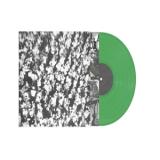
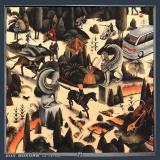
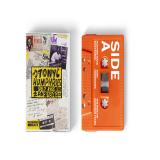
STATION 17 - OUI BITTE

Station 17

OUI BITTE

12inchBB4301
Bureau B
15.09.2023

Eigentlich wollten Station 17 nach einer Phase der Distanz nur mal wieder beim Musizieren gemeinsam in einem Raum stehen. Sie fuhren raus aus Hamburg, auf eine abgelegene Anlage im schleswigholsteinischen Hügelland der Hohen Geest, und spielten neue Songskizzen - den ganzen Tag und bis spät in die Nacht hinein. Das Ergebnis wollten sie im Anschluss auf einem Konzert in der Hamburger Fabrik live spielen. Dass zu den Resultaten dann gleich auch ein ganzes Album zählen würde, hatte keiner aus der Band erwartet. Doch die Musik sagte es ihnen mal wieder selbst: das, was hier in der Strahlkraft des Moments entstanden war, ließ sich nicht reproduzieren. Ein Glücksmoment für das Bandkollektiv. "Oui Bitte", Station 17-Album No. 11, war entstanden. Ganz unverhofft, zwischen Pool und Forellenteich... So zeigt sich hier wieder mal und dabei par excellence: Die Musik von Station 17 ist vor allen Dingen so gut, weil es eine so große Freude bereitet, sie anzuhören. Woran liegt das? Nun, zunächst einmal bietet sie ganz unterschiedliche Zugänge! So kann man sich wahlweise auf das intuitive Referenzspiel einlassen, das hier betrieben wird, kann dabei den nachgezeichneten Genrelinien folgen (also: mit Wissen hören), kann sich aber auch an den poetischen Erzählungen orientieren, die in wenigen Worten einen weiten Nachklang eröffnen. Oder man lässt sich ganz einfach vom treibenden, elegischen Rhythmusspiel mitnehmen; liegend, tanzend, wie es gerade kommt. Alles scheint möglich in der Grenzenlosigkeit dieser Musik. Die sieben Stücke nämlich spülen diese offenherzigen Einladungen in einen fließenden, ästhetischen Strom, bündeln sie zu einem Genuss, der die eigene Disposition vergessen lässt. (Hendrik Otremba)

Reservar15.09.2023

debe ser publicado en 15.09.2023

26,26

Ültimo hace: 2026 Años
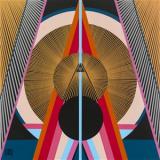
STATION 17 - OUI MIXE

Station 17

OUI MIXE

12inchBB4311
Bureau B
08.09.2023

"Oui Bitte", das elfte Studioalbum von Station 17, wurde in intensiver Arbeit und nicht selten bis spät in die norddeutsche Nacht auf dem Forellenhof in Nordhastedt produziert. Mit müden Augen saß das Musikerkollektiv so für gewöhnlich zu vorgerückter Stunde beisammen und hörte die Takes durch, die das Tagwerk hervorgebracht hatte. Ist der zwingende Rhythmus als Königsdisziplin der 1989 gegründeten Band in ihrem Werk immer schon angelegt, ergab sich spätestens beim housigen "Hausmann" kollektiv der Wunsch: hier muss ein Remix her! Der Wunsch wuchs und legte sich über das gesamte Album ... Remixalben haben dabei in der über 30 Jahre währenden Geschichte des Kollektivs bereits Tradition: 2001 erschien beim legendären Label Mute Records, das nicht nur Depeche Mode zu Ruhm verholfen hatte, das Album "Mikroprofessor" mit Remixen von etwa DJ Koze, Thomas Fehlmann, Justus Köhncke oder To Rococo Rot. Im Jahr 2011 folgten die "Goldstein Variationen Remixes", darunter Versionen von Erobique, Tobias Thomas, aber auch von Ada und Mense Reents, die uns auch hier wiederbegegnen. Zaghaft fing die Band also an, ihre Lieblingsproduzent/innen anzufragen, die ohne Umschweife komplett zusagten. So stand schon bald ein hochkarätiges Remixalbum mit dem Who-is-Who der hiesigen Landschaft elektronischer Musik im Raum. Und auch, wenn die Grundlagen der Stücke wiedererkennbar sind, ist hier ein gänzlich neues Hörerlebnis entstanden, das durch die Versiertheit der Beteiligten und ihre Expertise zu einem eigenständigen Werk gewachsen ist, das sich auch losgelöst vom Ausgangsmaterial genießen lässt. Wie von Zauberhand entsteht ein zugleich stringenter und abwechslungsreicher Vibe, der "Oui Mixe" zu mehr macht als nur eine Ergänzung zu "Oui Bitte".

Reservar08.09.2023

debe ser publicado en 08.09.2023

26,26

Ültimo hace: 2026 Años
Passarani - Analog Fingerprints Vol. 0 (2x12")

Analog Fingerprints Vol. 0 is a compilation bringing together the early 2000s works of Marco Passarani under his Analog Fingerprints alias, collecting key tracks originally released on Rome’s Plasmek and Pigna labels.

For Numbers, the story starts long before the label itself. In their formative years, digging in Glasgow’s Rubadub, Passarani’s records felt like dispatches from a future city. Releases on his own Nature Records and on labels such as Generator and Interr-Ference Communications were mind blowing: rooted in Detroit techno, Chicago house and electro, yet pushing somewhere new. Much like fellow travellers Autechre, who would remix him in 2001, Passarani’s music balanced machine funk with restless experimentation.

Information was scarce, and you would hear these records first on the dancefloor or at listening stations in shops like Rubadub. Print fanzines like Ear and early web outposts such as Forcefield offered only fragments. But there was a palpable axis forming between Detroit techno and a new European wave of record labels including Skam, Rephlex, Clone, Viewlexx and Nature itself. It was the sound that defined Saturday nights at Rubadub’s ‘69’ parties in Paisley, just outside of Glasgow.

Passarani’s records, in particular, were instrumental in bringing together the future Numbers co-founders. Richard had already booked him pre-Numbers; meanwhile Calum (Spencer) and Jack (Jackmaster), then 16/17 year olds working alternate Saturdays in Rubadub, were so enamoured with the Roman sound that they travelled to Rome for the Bitz Festival in 2003 to seek out Passarani and Lory D at their source.

The first Analog Fingerprints release landed as a 12” on Plasmek in 2001, following the fractured, IDM-leaning 6 Katun material. For Passarani, the project marked a recalibration. A DJ first and foremost, he had moved into production via early computer setups, from a Commodore Amiga through primitive PC audio, Cubase and Logic, later experimenting with Ableton. The IDM scene had offered a playground for trial and error, but there was always a tension between abstraction and the dancefloor. Analog Fingerprints became the bridge: still intelligent, but with more dance than distance. After years of broken beats and complex arrangements, he wanted directness without surrendering identity.

Working closely with Francesco de Bellis and Mario Pierro in the Pigneto district, the trio formed Pigna as a vehicle for reclaiming a more accessible dance sound, deliberately steering away from the minimal wave beginning to dominate Europe. Sessions were fast, instinctive, often stretching late into the night with friends dropping by. It was a studio as social space, production as collective energy.

“In that constant search for balance, Analog Fingerprints was my way of expressing something closer to the classic dance floor. The track 'Tribute' - a tribute to my favourite early Detroit techno track of all time, 'First Bass' by Separate Minds - came after I realised I had almost lost my connection with the dance floor. The simplest step was to take inspiration from early Chicago and Detroit and twist it in our Roman ‘Pigna’ way. My goal was to create more accessible dancefloor tracks by mixing my unconscious Italo roots with my teenage love for that early US sound, ensuring the result was as far as possible from the minimal sound that was starting to dominate everywhere.” - Marco Passarani

Technically, the Analog Fingerprints tracks span a transitional era: Roland TR-909, SH-101 and Alpha Juno hardware met early software experiments. A Novation Drumstation rack stood in for the unattainable TR-808, syncing with TB-303 and TR-606. Yet the true secret weapon was Jeskola Buzz, a tracker-style modular environment that allowed step-by-step parameter control and strange melodic constructions, later exported into the audio sequencer. Even the lead on ‘Tribute’ came from an early PPG Wave-style plugin. It was hybrid thinking at a moment when digital tools still felt unstable but full of possibility for technologists like Passarani.

Behind the music sat Finalfrontier, a loose Roman collective orbiting Nature and Plasmek. Distribution and production were intertwined; importing obscure records into Italy built connections with like-minded outsiders across Europe and the US. Expensive phone bills and fax machines forged an “electronix network” that linked Rome to Clone, Viewlexx, Skam, Rephlex, Rubadub and Detroit’s Underground Resistance. There was a shared sense of survival and resistance, of operating against commercial systems.

Passarani recalls “The first time I found a sheet of paper inside an Underground Resistance 12” with info about upcoming releases... and a huge picture of Spock on the back. Imagine that: you love the music, you love Star Trek, and there’s someone on the other side of the ocean sharing those same values and sounds. It was the perfect match. We even gave our original company the suffix ‘Finalfrontier’: that says it all.”

Feedback in that era arrived physically: distributor faxes, conversations with visiting DJs, the experience of playing abroad and meeting kids who had connected with the records. Glasgow became a key node in a scattered outlier network. Passarani personally brought the first two Nature releases to Fat Cat in London, playing them in-store. Shortly after, a fax arrived from Rubadub in Glasgow requesting copies.

“I still remember that phone buzz and the fax paper slowly sliding out, with someone I didn’t know saying they wanted 75 copies of Nature 001. Or like the time we got a fax from the Rephlex crew just saying, “Hello Nature Records, Keep up the good work.” That was how we knew the message was getting through. It was a fantastic feeling; just one piece of thermal fax paper as an analog notification - the mood for the entire week would change.” - Passarani

The connection to Glasgow has since stretched across generations. As Passarani reflects, links often fracture as scenes renew themselves, but in Glasgow something different happened. New and old mixed seamlessly. There was a visible trust in what came before, and a willingness to carry it forward rather than discard it. Observed from Rome, it was deeply encouraging.

Analog Fingerprints Vol. 0 captures that moment of exchange: Rome to Glasgow, Detroit to Europe, experiment to dancefloor. It documents an artist recalibrating his sound and a network of scenes discovering one another in real time, connected by vinyl, faxes and shared intent.

Reservar26.03.2026

debe ser publicado en 26.03.2026

24,16

Ültimo hace: 2026 Años
WILD BILLY CHILDISH & CTMF - KEEP MOJAVE WEIRD EP
  • Keep Mojave Weird
  • Memphis Tennessee
  • Wile E Coyote
  • Thalypo Fuel Station

Eine EP mit vier Songs, darunter ,Keep Mojave Weird" aus dem Album ,House On Fire" der Band sowie drei exklusive Tracks, die nicht auf dem neuen Album sind! Die EP kommt am selben Tag wie ,House On Fire" raus (das erste neue Album der Band seit über drei Jahren) und ist teilweise von einem kürzlichen Besuch in den USA inspiriert. Neben ,Keep Mojave Weird" gibt's auch ein Bo Diddley-ähnliches Cover von Chuck Berrys ,Memphis Tennessee", eine neue Version von ,Wile E Coyote" und ein brandneues Instrumental namens ,Thaypo Fuel Station".

Reservar27.03.2026

debe ser publicado en 27.03.2026

10,71

Ültimo hace: 2026 Años
Various - Tchic Tchic: French Bossa Nova 1963-1974  Colored Edition LP 2x12"
  • A1: Les Masques - Il Faut Tenir (1969)
  • A2: Isabelle Aubret - Casa Forte (1971)
  • A3: Christianne Legrand - Hlm Et Ciné Roman (1972)
  • A4: Jean Constantin - Pas Tant D'chichi Ponpon (1972)
  • A5: Billy Nencioli & Baden Powell - Si Rien Ne Va (1969)
  • B1-: Marpessa Dawn - Le Petit Cuica (1963)
  • B2: Jean-Pierre Sabar - Vai Vai (1974)
  • B3: Sophia Loren - De Jour En Jour (1963)
  • B4: Isabelle - Jusqu’à La Tombée Du Jour (1969)
  • B5: Sylvia Fels - Corto Maltesse (1974)
  • C1: Frank Gérard - Comme Une Samba (1972)
  • C2: Ann Sorel - La Poupée Des Favellas (1971)
  • C3: Charles Level - Un Enfant Café Au Lait (1971)
  • C4: Andrea Parisy - Les Mains Qui Font Du Bien (1970)
  • C5: Audrey Arno - Quand Jean-Paul Rentrera (1969)
  • C6: Aldo Frank - T’as Vu Ce Printemps (1970)
  • D1: Christianne Legrand - Cent Mille Poissons Dans Ton Filet (1972)
  • D2: Clarinha - Lemenja (1970)
  • D3: Hit Parade Des Enfants - Aquarela (1976)
  • D4: Jean-Pierre Lang - Tendresse (1965)
  • D5: Magalie Noël - Une Énorme Samba (1970)
  • D6: Françoise Legrand - La Lune

Ever since the late 1950s bossa-nova revolution, Brazil’s influence on French music has been undeniable. Pierre Barouh, Georges Moustaki and a vast array of lesser known artists, all made the Musica Popular Brasileira (MPB) an axis of promotion at the service of a cool and metaphysical, modern and mixed Brazilian lifestyle. Some were seduced by the poetic languors of the bossa, some were looking for fun, and others just loved the American hybridization of jazz-bossa, jazz-samba.


What is bossa nova? One of its creators, Joao Gilberto said: "Its style, cadence, everything is samba. At the very start, we didn't call it bossa nova, we sang a little samba made up of a single note - Samba de uma nota so .... The discussion around the origins of bossa nova is therefore useless”. It is nevertheless useful to remember that these magnificent Brazilian songs, which the guitarist describes as samba, were shifted and balanced around improbable chords. "I like things that lean, the in-betweens that limp with grace," said Pierre Barrouh, quoting Jean Cocteau.


With emotion, arrangements for violin and supple guitar licks, bossa nova rapidly changed. A transformation that can be heard in the Tchic, tchic, French Bossa Nova 1963-1974 compilation, the result of a cultural reappropriation, which traveled through the United States and supplemented itself in France.

A musical revolution that has remained significant, bossa nova was born in Rio. From 1956 to 1961, Brazil lived through its golden years. In five years, the country had invented its modernist style. Elected president in 1956, Juscelino Kubitschek de Oliveira, an elegant man with a broad forehead, brandished a promising slogan: "Fifty years of progress in five years". He quickly got to work. Not worried about increasing debt, he launched the project for a new federal capital, Brasilia, designed by the communist architect Oscar Niemeyer. Volkswagen opened state-of-the-art factories and created the “fusquinha”, the Beetle. In Rio, the Vespa made its first appearance. The Arpoador Surf Club crew run into the “girl” from Ipanema, Helô Pinheiro - the tanned garota ("chick"), between a flower and mermaid, who at 17 walked by the Veloso bar, where the fiery author and composer, Tom Jobim and Vinicius de Moraes, were getting drunk on whiskey. From then on, bossa symbolized cool.

In 1958, Joao Gilberto recorded Chega de Saudade, which the directors of Philips denied, calling it "music for fagots". The marketing director, who believed in it, secretly pressed 3000 78-inch vinyls and distributed them at schools around Rio, creating a tidal wave.

American jazzmen then took over. In particular, trumpeter Dizzy Gillespie and guitarist Charlie Byrd. In November 1962, the Brazilian Ministry of Foreign Affairs funded a "Bossa-Nova" concert at Carnegie Hall in New York, inviting the genre’s pioneers. Unprepared, the show soon turned to disaster. But the troupe was invited to the White House by Jackie Kennedy. The first lady loved "the new beat" and in particular Maria Ninguem, a song by Carlos Lyra, later covered by Brigitte Bardot.

In Brazil, the 1964 military coup quickly ended this euphoria. The destructive atmosphere that ensued pushed many Brazilian musicians to leave, if not to exile. Thus, Tom Jobim, Sergio Mendes and Joao Gilberto arrived to the United States. In New York, Joao Gilberto met saxophonist Stan Getz. At the time, he was married to the Bahianese Astrud Weinert Gilberto, who had a German father. She had never sung before, but she knew how to speak English. Getz therefore asked her to replace her husband on The Girl From Ipanema. The Getz/Gilberto record with Tom Jobim on piano, was released in March 1964. Phil Ramone, the "pope of pop" was in charge of sound.

Bossa nova arrived in Paris through the classic “guitar-voice” channel (Pierre Barouh, Baden Powell, Moustaki…) But France loved jazz and Paris had already welcomed its American contributors. All these good people were to pass through Saint-Germain-des-Prés. The cabaret l'Escale became the Mecca of Latin American sound where one could find Pierre Barrouh and his friends, such as the Camara Trio, samba-jazz aces, whose only record was published by the Saravah label. With a band strangely called Les Masques (a band that included Nicole Croisille and Pierre Vassiliu, among others), the Camara Trio recorded an interesting Brazilian Sound, including the track Il faut tenir which is present on this tasty compilation of rarities.

Other enlightened musicians can also be found on the compilation, such as Jean-Pierre Sabar (songwriter for Hardy, Auffray, Leforestier ...) and the French pop rock organist Balthazar. In 1975, Sabar recorded Aurinkoinen Musiikkimatka on a Finnish label, which featured the crazy Vai, Vai, included on this record. We are now following the footsteps of Brazilian electronic musicians such as Sergio Mendes, Eumir Deodato or Marcos Valle who created funk and disco sounds on their keyboards and synthesizers. A style that influenced Véronique Sanson when she wrote Jusqu’à la Tombée de la nuit in 1969 for Isabelle de Funès, the niece of Louis and a great friend of Michel Berger - Sanson did end up singing this track on her 1992 Sans Regret record.


The pinnacle of exoticism and travel, Sylvia Fels’ Corto Maltese includes bongos, sea mist and ocean sounds. The title was taken from Jacky Chalard’s concept album written in 1974, Je suis vivant, mais j’ai peur (I am alive, but I am scared), based on Gilbert Deflez’s science fiction novel.


However, bossa nova extended the scope of popularity. "In the 1970s, I was a fan of Sergio Mendes, Getz / Gilberto. I fell in love with this music that I knew because I had been an orchestral singer, " explained Isabelle Aubret, who in 1971 delivered a composite record of covers by the very funky Jorge Ben, Orfeu Negro, Tom Jobim, Vinicius de Morais and Jean Ferrat. "I recorded this album for Meys Records in Paris, far from Brazil, with wonderful musicians, François Raubert, Roland Vincent, Alain Goraguer...". The latter wrote the arrangements for Casa Forte, a very percussive title borrowed from Edu Lobo, one of the initiators of the bossa who spent time in California. "Jazz and bossa came together and produced very rhythmic music. I love singing, it allows me to dream, to have fun, to feel a high on stage, and these songs brought me joy, made me swing, my singing felt like a dance.”


The world tours of French singers and their desire for the tropics, often brought them to Rio with its hills, forests, caipirinhas and tanned bodies. There are surprises though, like this Iemenja (Iemenja is the goddess of the sea in the Afro-Brazilian candomblé religion). Not unlike the composer and musician Jean-Pierre Lang, based in Sao Paulo, Claire Chevalier taught Brazil to Brazil. In 1970, the singer and painter published a 45-inch vinyl, Mon mari et mes amants (My husband and my lovers), under the improbable pseudonym of Clarinha (little Claire). She was then living in Rio, with her husband, Joël Leibovitz, who founded a band called Azimuth, and who owned a record label specialized in "sambas enredos" songs for samba school parades.


For its B side, she asked Pierre Perret to come up with lyrics for a song composed by Carlos Imperial: "Oh goddess of the sea, o goddess Iemenja, I bring a white rose to adorn your long hair ..." . "Perret came to see us, and we had fun, remembers Joël Leibovitz. We wrote Lemenja for fun, we recorded it at the Havaí studio, behind the Central do Brasil the central station. Erlon Chaves, the arranger who worked with Elis Regina, joined us" adding his share of Afro-Brazilian percussions and funky brass to the mix.

There is a common misunderstanding in Franco-Brazilian history: that bossa, admittedly hedonistic, is perceived as funny, even though the poets who wrote the texts are often philosophizing on the human condition. Its French interpreters pull it towards a carnival inspired universe, far removed from its fundamental essence. Thus, Jean Constantin covered the famous Samba da minha terra, an ode to the art of samba written by the classic Bahian composer Dorival Caymmi, renaming it with the enticing title of Pas tant de tchi tchi pompon: "On your pier there is no tchi tchi / when you arch your back, you know everything is alright ”(lyrics by Gérard Calvi). This expedited bossa aims for the absurd, but retains a certain elegance.

Indeed, Jean Constantin was not an idiot, the rather large man had a huge mustache and liked fantasy, (Les pantoufles à papa, Le pacha, inspired by cha-cha-cha-cha, salsa and jazz) but he was also the lyricist of Mon manège à moi interpreted by Edith Piaf, the composer of Mon Truc en plume by Zizi Jeanmaire and the soundtrack of François Truffaut’s 400 Blows. Le Poulpe, published in 1970, from which this bossa is extract, was arranged by Jean-Claude Vannier, an accomplice of Serge Gainsbourg’s Melody Nelson. In short: "There is enough of samba / By looking at the parasol / Because my poor cabeza / Is going to die in the sun".

Even the American actress Marpessa Down, who was at the heart of the bossa nova revolution with her role as Euridyce in Marcel Camus’ film Orfeu Negro, winner of the 1959 Cannes Palme d'or, fed the clichée with Je voudrais parler au petit cuica - "Tell me how you manage to always make people want to dance / It's true, I must admit that I cannot resist your magic" - in consequence, once can hear the cuica, a little drum inherited from the Bantu.


But bossa nova had many angles. Societal, of course, pushing actresses who were symbols of women's liberation like Brigitte Bardot, Jeanne Moreau, or Sophia Loren to engage in the exercise of accelerated bossa. In February of 1963, Sophia Loren made a record in French in Rome, Je ne t'aime plus, featuring the song De jour en jour, a bossa written by two Italians, Armando Trovajoli and Tino Fornai, which was released a little later by Barclay. Bossa accompanied the 1960s, a decade of moral liberation. Ann Sorel, who interpreted La Poupée des favellas, caused a sensation with L’amour à plusieurs, a provocative song written by Frédéric Bottom and Jean-Claude Vannier. As for the actress Andrea Parisy, she displayed her bourgeois cheekiness in Marcel Carné's Les Tricheurs before interpreting Les mains qui font du bien. And Magalie Noël, the friend of Boris Vian, who sung Johnny fais-moi mal, was hired to sing Une énorme Samba, composed by Alain Goraguer (arranger to Gainsbourg, Bobby Lapointe and Jean Ferrat) with lyrics by Frédéric Botton.

But in the end, of what wood is bossa nova made of? The answer is given by Christianne Legrand, daughter of Raymond the conductor, and sister to Michel the composer: "With me, with jà" - jà means "immediately" in Portuguese. In 1972, the singer, an expert in vocal jazz and a member of the Double Six, published Le Brésil de Christianne Legrand. Two songs included on the Tchic Tchic compilation that demonstrate how bossa, jazz, funk, rock, etc. work like a swiss army knife: the music is used to denounce broken systems, or miracles, HLM et ciné roman, Cent mille poissons dans ton filet, two songs from the O Cafona soundtrack, a successful telenovela broadcast, at the time in black and white, on TV Globo. The first was adapted in French by the fighter and friend of the Legrand tribe, Agnès Varda. The second is content with a play on words, jostling them into a summer fun.


Véronique Mortaigne

Reservar17.04.2026

debe ser publicado en 17.04.2026

27,31

Ültimo hace: 2026 Años
Andre Zimmer - Saved My Life (Remixes)

Andre Zimmer’s sold out “Saved My Life” EP gets 4 hot and heavy remixes for the dancefloor, showcasing progressive, euro house sounds that are bringing back the true essence of the 90’s.

Disponible

En el almacen y preparando para el envío

13,87
THE AMERICAN ANALOG SET - DESTROY DESTROY DESTROY (6x12" boxset)
  • Know By Heart
  • Promise Of Love
  • Set Free
  • Everything Ends In Spring
  • Static Between The Stations Pt 1
  • Static Between The Stations Pt 2
También disponible

Apple Vinyl[99,37 €]


Die vollständigen Studioaufnahmen aus dem zweiten Kapitel von The American Analog Set. Das "Destroy Destroy Destroy" Box Set vereint die texanischen Slow-Krauter Know By Heart, Promise Of Love und Set Free LPs, Everything Ends In Spring EP sowie zwei zusätzliche Discs mit Singles, B-Seiten, Alternativversionen und Outtakes. Das begleitende 36-seitige Booklet enthält zahlreiche Fotos und handschriftliche Notizen aus der Zeit nach der Jahrtausendwende, die von der Band als besonders inspirierend beschrieben wird.

Reservar08.05.2026

debe ser publicado en 08.05.2026

93,24

Ültimo hace: 2026 Años
THE AMERICAN ANALOG SET - DESTROY DESTROY DESTROY (6x12" boxset)

Die vollständigen Studioaufnahmen aus dem zweiten Kapitel von The American Analog Set. Das "Destroy Destroy Destroy" Box Set vereint die texanischen Slow-Krauter Know By Heart, Promise Of Love und Set Free LPs, Everything Ends In Spring EP sowie zwei zusätzliche Discs mit Singles, B-Seiten, Alternativversionen und Outtakes. Das begleitende 36-seitige Booklet enthält zahlreiche Fotos und handschriftliche Notizen aus der Zeit nach der Jahrtausendwende, die von der Band als besonders inspirierend beschrieben wird.

Reservar08.05.2026

debe ser publicado en 08.05.2026

99,37

Ültimo hace: 2026 Años
Brooklyn Funk Essentials - Black Butterfly LP
  • 77: Blackout
  • Bust The Bust Stop
  • Never Give Up
  • Voodoo Gates
  • Come Back 4 Real Love
  • Shameless
  • Life During Wartime
  • The Girl From Outer Space
  • Black Butterfly

‘Black Butterfly’ is Brooklyn Funk Essentials eighth studio album and includes the bands recent hits ‘Never Give Up’, ‘Bust The Bus Stop’ and ‘Life During Wartime’. Playlisted on BBC Radio 2 and Jazz FM and supported by Craig Charles and Cerys Matthews at 6 Music as well as many stations across Europe and the Americas. The album was produced and co-written by bassist Lati Kronlund and features Alison Limerick, Ebba Åsman and Desmond Foster on vocals.

Kronlund and Limerick have been enjoying the recent renewed interest in ‘Where Love Lives’. Kronlund wrote and produced it for Limerick in 1990, it was remixed by Frankie Knuckles and David Morales and became a club classic and was featured in this year’s John Lewis Christmas TV Ad. Arthur Baker heard the original in a club in 1991 that he contacted Kronlund about working together and they then formed Brooklyn Funk Essentials.

Since then, Brooklyn Funk Essentials have built a devoted international following and notched up over 100 million streams. Fusing Soul, Hip Hop, Spoken Word, Jazz, Latin, and, of course,
Funk, the band’s journey began experimenting with drum machines and loops in Baker’s Shakedown Sound Studio in Jersey City—hunting for that perfect beat. The early recordings featured greats such as Maceo Parker, Lenny Pickett, Tower of Power Horns, Michigan & Smiley, and Dizzy Gillespie, leading to the acclaimed debut ‘Cool & Steady & Easy’ (1994). Fast-forward to April 2024, when Kronlund reunited with Baker in Miami, rediscovering recordings featuring percussion prodigy Bashiri Johnson, which inspired new creative sparks for the next chapter of Brooklyn Funk Essentials.

Reservar15.05.2026

debe ser publicado en 15.05.2026

25,00

Ültimo hace: 2026 Años
Various - London Pirate Radio Adverts 1984-1993, Vol. 1 (2025 Re-Print) MC
 
20
También disponible

Vol 1[20,59 €]


The first volume in a two-part collection of pirate radio adverts & idents, taken from recordings of London stations between 1984 & 1993.
Many thanks to Wayne Anthony, Simon Reynolds, Stephen Hebditch & The Pirate Radio Archive.

Disponible

En el almacen y preparando para el envío

16,39
Various - Destiny 2 Volume 1 (Original Game Soundtrack) 2x12"

Tauche ein in den epischen Sound von Destiny 2 mit der Original-Soundtrack-Collection von Volume 1. Diese Sammlung enthält die Musik aus der ersten großen Kampagne "Die Rote Schlacht" und bietet dir mehr als eine Stunde legendärer Musik auf zwei schwarzen LPs.Das Gatefold zeigt Artwork-Illustrationen, die die drei Hüter-Klassen inmitten der Ruinen der Roten Schlacht darstellen. Zusätzlich erhältst du eine Sammelkarte mit Artwork von Dominus Ghaul, dem Antagonisten der Roten Schlacht, sowie Commander Zavala von den Hüter-Vanguard - und ein Code für das exklusive Destiny 2-Ingame-Emblem "Drop the Needle".

Disponible

En el almacen y preparando para el envío

31,51
Rainer Trueby - The Lost Tapes 2008

DAYBREAKERS are back from their first dive into the Music Station catalogue and hop from New Jersey to land in Germany’s Black Forest region for 002, more specifically they arrive into a basement in Freiburg.

In 2008, Rainer Trüby started on an album that ended up getting lost due to a crashed macbook. Two tracks were saved from this lost album and see the light of day 17 years later. After playing one of these tracks “Schoko-Bolla” in the woods at “Root Down With Love” at We Out Here 2024, miche and Rainer decided it was finally time to take this secret weapon for a full release.

The A Side is “Schoko-Bolla” features a looping brazilian vocal from an all time great, building gently into a real groove and the B side, a deeper than deep house track with latin elements. House deeper than the Neckar river, perfect for any dancefloor.

Don't miss out, buy or cry.

Disponible

En el almacen y preparando para el envío

14,08
X-Plode - First Of Many / Watch This Go

At the start of the 1980’s X-Plode’s dad had a second-hand colour TV business in Bolton, Lancashire where he would buy, sell, repair and trade TVs. He would come back home with all kinds of things he had traded for a TV but the most memorable, to a 10 year old kid at that time, were the keyboards. He use to watch his dad play songs from the 1960’s on these keyboards and when his dad had gone out, Lee X-Plode would sneak on them and start messing about, experimenting with the drum programs and fiddling with the buttons, trying out ideas. He had to move fast though because these keyboards didn’t stay in the house for long as his dad would trade them again for something else; one time that was an old analogue echo chamber, which Lee also messed about with when his dad was out. That echo chamber was a revelation to Lee and opened up the possibilities of what was possible with sound. So by the time Lee was 16, he decided he wanted his own keyboard and started saving. When his 17th birthday came around he had saved up £200 and visited his local Argos where he bought himself a Yamaha PSS 680, an FM synthesizer with memory banks and a basic drum machine incorporated. ‘It was shit quality like, but I didn’t mind. I just wanted it for the programmable drum machine, the synth and the memory banks that came with it” Lee recalls. The year was 1987 and by this time in Lee’s life he was into reggae and hip hop, the latter he first embraced in 1983 by the way of breakdancing and listening to electro, so all he wanted to do when he got his gear was make reggae and electro sounding beats. Recalling his youth and the fun he had with the echo chamber, the next edition to his home set up was to acquire one of those, which he did via a mate of his. But by the time he got his minimal set up sorted in 1988, his musical tastes had changed. House music had landed here in UK and this was Lee’s new passion, so from that point on wards he started experimenting, trying to nail a decent house groove. ‘I wanted 808 sounds, but I didn’t know what one was!’ Lee explains.

Around late 1990 or early 1991, Lee started to improve upon his set up, purchasing an Atari STE, a Cheetah MS6 , a 6 voice polyphonic/multi-timbre analogue rack mounted synth that linked up to his Yamaha – “It wasn’t a great bit of kit, I kept getting electric shocks from it. Eventually it just blew up!” Lee had acquired a cracked copy of Cubase on floppy disk from his local computer game shop but struggled with it. “It was so complicated to understand and took me ages to get used to it. I was stoned a lot back then and I just couldn’t concentrate on anything for long” Lee laughs, continuing “I also picked up a 4 channel sampler/sequencer which plugged into the side of the Atari and that’s when I first started sampling, I think this would have been late 1991. I had the Simon Harris ‘Breaks, Beats and Scratches’ vinyl that he put out on Music for Life which were a godsend back then. I was also sampling a lot from cassette tapes, especially reggae. I would also record the Stu Allan show on Key 103FM, one of the main stations broadcasting out of Manchester. He would do a 3 hour show with hip hop and house, and then hardcore house came along. Eventually he dropped the hip hop altogether and it was just house and hardcore. I recorded the shows onto cassette most weeks and started to learn more about how house and hardcore was put together by listening to those shows.”

Disponible

En el almacen y preparando para el envío

16,18
John Lamkin - Hot

John Lamkin

Hot

12inchJAZZR041
Jazz Room Records
11.03.2025

Since the first release 5 years ago, Jazz Room Records has released an eclectic and interesting selection of releases.

From the Jazzy commercialism of the Take Vibe version of The Stranglers "Golden Brown" (5,000 vinyl single sales) to the 1960's Headshop Sounds of West Coast Fluteman Eric Ghost.

Other notable releases on Jazz Room include the critically lauded album by Vibraphonist Khan Jamal "Infinity", a compilation of Japanese tough funk fusionists indigo jam unit put together by DJ Colin Curtis, Nuyorican Latin House from Tata Vasquez, Jazz Dance Madchester Rave from Cruisic and some South African Holy Grail grooves from Abacothozi! The latest release is the Underground Latin J-Jazz of Copa Salvo, first introduced to London by DJ & Music Legend Jean-Claude.

Next up is an in demand Jazz Funk Obscurity from Educator and Trumpet Player John Lamkin whose self released album "Hot" saw the light of day in 1984 then disappeared into the Rare Jazz ether.

Currently changing hands for €300 and upwards it's again about to see the light of day in 2025!

This is an album that is aptly named with all the elements we love: Latin, Funk, Soul, Jazz and all round Double Hipness. What a Hot item it is too. From the Funky as it gets opening bars of "Ticket" through the Rio bound flight "722", taking in a visit to Wonderland with some Soul Jazz Vocal stylings on "Flower Power" and the Funkiest 17 minute Journey to Trumpet Enlightenment in the Title track "Hot" which is, true to its name, Scorching by the finish line is reached.

Already getting Big Ups on UK Jazz Funk Scene Founder Colin Curtis's Cult Radio Show "Jazz Dance Fusion" it's gonna be getting plenty of plays worldwide at the "Hottest" radio stations and funkiest jazz dance nights near you soon!

Ross Allen: It's brilliant!! Perry Louis: Massive! Dr Bob Jones:I Love Big Time!Colin Curtis: Killer!

Disponible

En el almacen y preparando para el envío

11,13
T.Williams - Raves of Future Past LP

There’s something to be said for getting noticed, for standing out from the crowd. West London’s T.Williams is one of those people, having accomplished a full sweep of merited recognition over the years. Emerging onto the house scene in 2010, T.Williams instantly marked himself as a breakthrough artist with a difference; his unique take on house music turning heads.

Far from a newcomer, his path as a musical artist started in the grime scene as Dread.D. Signed at the tender age of 17 with grime anthem Invasion on Jon E Cash’s Black Ops label, Williams went on to have mass success in the grime and bass world selling thousands of singles worldwide. After a five-year reign, Williams found himself veering towards the world of house music. With a new found love for the sound and its sub-genres, T.Williams forged a signature sound influenced by his grime days, jungle, and garage. With a style that undoubtedly impacts, T.Williams’ crossover has been the catalyst for his success. Not only rife with groove and feeling but meticulously produced and engineered with deep rumbling basslines, the unapologetic bounce of grime and smooth vocals that bleed through African infused percussion work.

While in 2010 the industry took note when hit record ‘Heartbeat’ featuring vocalist Terri Walker made an impression, it was throughout 2011 that T.Williams defined himself - releasing solo works on his imprint Local Action and Pattern with remixes for Maya Jane Coles, Ben Westbeech and Skream. Not stopping at pricking the ears of fellow artists and those on the dancefloor, the end of 2011 saw Williams nominated for ‘Best Breakthrough DJ’ by DJ Mag, ‘DJ Stars of 2012’ by Time Out and featured in The Guardian.

Two relationships came to the forefront in 2012 that propelled Williams to greater heights. The first was his weekly show on legendary London station, Rinse FM and the second, Williams’ relationship with label PMR through his remix of Javeon McCarthy’s ‘Lost Time’. The remix was named Record of the Week by BBC Radio 1 and supported by tastemakers Annie Mac and Fearne Cotton. From here T. signed to the label exclusively releasing his debut EP for the label in September 2012, and in the process receiving further support from BBC Radio 1. Further remixes of Mikky Ekko, Wretch 32 and Lianne La Havas followed suit, as well as his biggest to date - Disclosure’s ‘Latch’. Powering dancefloors across the globe, T. went on to play three US tours, numerous festival stages, and deliver a second EP on PMR titled ‘Feelings Within’. The EP once again spanned a number of bases, from club bangers to heartfelt vocal driven tracks alike. Gaining his own monthly residency show with BBC Radio 1, 2013 ended with T. having played over 100 shows across four continents.

2017 marked the launch and release of the first collaborative EP with UK producer Julio Bashmore, via their joint independent Conch Records, a label aiming to push out more underground cross-genre music with heavy rotation from the likes of Moxie and Shy One. With an ever-expanding global tour schedule and further solo releases on the legendary NYC house label Strictly Rhythm turning heads, T.’s upward trajectory has never showed signs of slowing down. Selected to soundtrack the social media campaign for boxer Anthony Joshua in 2019 and now using his technical prowess as a musician to educate the next generation of rising stars at London’s respected Point Blank Music School has cemented his status as one of the UK music scene’s key players.

Disponible

En el almacen y preparando para el envío

27,69
David Penn & Sex-O-Sonique - I Thought It Was You

London Records and Central Station Records join forces for a spectacular array of new music releases. As the first offering, David Penn takes on the Sex-O-Sonique classic from 1997, which samples the Herbie Hancock anthem 'I Thought It Was You'. David Penn, a master of his craft, has earned critical acclaim for his innovative approach to house music and his ability to create infectious grooves that resonate with audiences worldwide.

Full Intention aka Sex-O-Sonique also deliver their own updated version for 2023.

DJ support:

Bob Sinclar, Eliza Rose, Jamie Jones, Oliver Heldens, Mark Knight, Mousse T, Anton Powers, Just Kiddin, Roger Sanchez, Bakermat, Westend, Sgt Slick, Kokiri, Hector Romero, Horse Meat Disco, Kevin McKay, Michael Gray, Superlover, Watermat, Russell Small (Freemasons), Sugarstarr, Dario D'Attis

Disponible

En el almacen y preparando para el envío

13,87
Tod Dockstader - Aerial 2 LP 2x12"

Tod Dockstader's Aerial series, an electronic/drone masterpiece, is cherished among fans of the artist's work and this second volume is available in an audiophile quality double LP edition.

Tod Dockstader's Aerial series is sourced from his life long passion for shortwave radio. Dockstader collected over 90 hours of recordings, made at night, and comprised of cross signals and fragments plucked from the atmosphere.

Opening with airwave drones, Dockstader gradually allows elements to slowly come and go, summoning an ominous atmosphere of ethereal cloud clouds. Malignant placidity continues, giving the feeling of eavesdropping upon late-night audio activity not unlike discovering number stations while sweeping the dials. These sounds pull you in as their density and rhythms come and go.
Backward voices, deep echoing choruses of conversations flowing under the surface, ocean sounds, pulsing electro-rhythms, all seem to be created via the collaging of many hours of source recordings. A masterwork of collage and juxtaposition by an overlooked pioneer of American electronic music.

Artwork by John Brien (Imprec) is inspired by the propagation of shortwave radio signals throughout the earth's atmosphere.

"This return of Dockstader is something to cherish, not just because his output has been so limited and scarce but because what we do have is so intriguing, persuasive and cliche-free; the music of an inspired explorer who trails in nobody's slipstream." The Wire

"One of the great figures of musique concrete composition." Dusted

The Aerial project

I've written before of my interest in shortwave radio, in the notes to the Quatermass CD. Also, in the notes to the Omniphony CD (which has my first "Aerial" mix, "Past Prelude," in it), I mentioned "The Aerial Etudes," which was my working title for what became the three CDs you have. And, at the end of an interview with Chris Cutler (which can be found in the "Unofficial TD Website"), the piece I mentioned I was starting to work on at the time became Aerial.) When I was very young, people got most of their entertainment from radio. They called it "playing the radio," as if it were a musical instrument. That's what I've tried to do in this piece. About this time, a few people encouraged me to look into using a computer for this work.

I'd never used one, but I saw it would allow me to keep my mixes digital - no more transfer losses. So, at the end of 2001, I got a computer and an editing program for it, and spent what seemed a long time learning it. I began selecting mixes and loading them into the computer in late March, 2002. Out of the 580, I selected 90 "best" mixes - eventually reduced to 59, the ones on the CDs. Finally, in assembling the CDs, I followed David Myers' suggestion to allow each piece to flow into the next - making a continuous journey to the end. Tod Dockstader, 14 september 2003

About Tod Dockstader: Dockstader moved to New York in 1958 and became a self-taught sound engineer and sound effects specialist and apprenticed as a recording engineer at Gotham Recording Studios. It was around this time that he started to use his off-work hours to experiment with mixing and manipulating sounds on magnetic tape (musique concrète). By 1960 he had amassed enough material to assemble his first record Eight Electronic Pieces which was released on the Folkways label in 1961 (this would later be used in the soundtrack of Fellini’s Satyricon). The last of the eight pieces was later re-worked into his first stereo piece. In 1961 he applied to use the facilities at the Columbia-Princeton Electronic Music Center and was denied access by Vladimir Ussachevsky. Ussachevsky’s official reason was the “overstrained” scheduling of the studios, although many suspect that Dockstader’s lack of academic training was a factor in the decision. He continued to create music throughout the first half of the 60s, working principally with tape manipulation effects. His last piece at Gotham was Four Telemetry Tapes in 1965, after which he left to work as an audio-visual designer on the Air Canada Pavillion at Montreal’s Expo ‘67. It was around this time in 1966 that some of Dockstader’s pieces were released on three Owl L.P.s, and his work became known to a larger audience. He achieved modest recognition and radio play alongside the likes of Karlheinz Stockhausen, Edgard Varèse, and John Cage.

Disponible

En el almacen y preparando para el envío

30,88
FAXE - Time For Changes EP

We’re happy to announce the reissue of this italo club classic on 12″ vinyl. Written by Goomy aka Duke Lake aka Antonio Gabelli and produced by Alessandro Zanni and Stefano Cundari for the legendary Memory Records imprint back in 1983. This action-packed-track was one of those few italo disco productions that made it to the US airwaves with radio play on stations like WBMX. The original release was a double A-side while it mistakenly stated it had an instrumental version. This instrumental was nowhere to be found on the master tapes, so our in-house production duo Vanzetti & Sacco made one for the flip side after almost 30 years! Time for changes, time for love…

Disponible

En el almacen y preparando para el envío

13,66
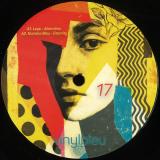
Leks, Numéro Bleu, DE$ - Alienation

Nouvel EP de la série Vinylbleu, ce pressage vinyle réunit Leks avec son titre Alienation, véritable retour aux sources, ainsi qu'une nouvelle track de DE$ et deux productions signées Numéro Bleu. Une face tekno et une autre orientée hardtek, la track Onde Stationnaire est également sortie sur l'album digital Whispers of the Spiral du label Eskwad Records, à découvrir en ligne.

No en stock

Haga su pedido ahora y le encargaremos el artículo en nuestro proveedor.

14,71

Ültimo hace: 6 Días
The Power Station - The Power Station LP 2x12
  • A1: Some Like It Hot (2025 Remaster) 05:05
  • A2: Murderess (2025 Remaster) 04:17
  • A3: Lonely Tonight (2025 Remaster) 03:58
  • A4: Communication (2025 Remaster) 03:37
  • B1: Get It On (Bang A Gong) (2025 Remaster) 05:29
  • B2: Go To Zero (2025 Remaster) 04:58
  • B3: Harvest For The World (2025 Remaster) 03:37
  • B4: Still In Your Heart (2025 Remaster) 03:20
  • C4: Communication (Night Version)
  • C2: Get It On Bang A Gong (7” Single Edit)
  • C3: Some Like It Hot And The Heat Is On (Megamix)
  • C4: Communication (Night Version Edit)
  • C5: Some Like It Hot (7” Single + Video Version)
  • D1: Murderess (Alive At Live Aid)
  • D2: Get It On Bang A Gong (Alive At Live Aid)
  • D3: Somewhere Somehow Someone (We Fight For Love)

The Power Station celebrates the 40th anniversary of the band and their debut album, with a 2LP gatefold vinyl of the remastered album and a 4CD including the remastered album, the unreleased live performance from 1985 as well as Live Aid recordings, raw instrumentals and remixes.
The Power Station were a rock and pop music supergroup from the 1980s/1990s comprising of singer Robert Palmer, former Chic drummer Tony Thompson, and Duran Duran members John Taylor and Andy Taylor.

Reservar23.01.2026

debe ser publicado en 23.01.2026

35,25

Ültimo hace: 2026 Años
JEFF CLARKE - MIRACLE AFTER MIRACLE AFTER...

"Miracle after Miracle after ..." ist im Gegensatz zu Jeff Clarke's (The Black Lips/Demon's Claws) vorherigem Soloalbum "Locust", welches in einer einzigen Session in einem Wald aufgenommen wurde, schöner verziert, aber niemals überladen. Im Kern handelt es sich um Folk-Musik. Clarke könnte in einem Atemzug mit Connie Converse, Daniel Johnston und Atlas Sound genannt werden, obwohl solch traditionell exzellentes Songwriting Vergleiche sowohl leicht macht als auch von Natur aus reduktiv ist.

Reservar12.12.2025

debe ser publicado en 12.12.2025

21,81

Ültimo hace: 2026 Años
AESOP ROCK - I HEARD IT'S A MESS THERE TOO (TAPE)

Für Aesop Rock war der Satz "I heard it's a mess there too" zuerst nur ein Songtext, aber es dauerte nicht lange, bis ihn dieser Satz packte. Er kam ihm bekannt vor, wie ein Satz, den er in den letzten Jahren tausendmal gesagt hatte, wenn er sich mit Freunden in verschiedenen Städten austauschte und sie sich gegenseitig erzählten, wo sie gerade waren und was dort so los war. Je länger er über diesen Satz nachdachte, desto mehr wurde ihm klar, dass er der Kern von etwas Größerem war. "I Heard It's A Mess There Too" steht für Aesop an der Schnittstelle zweier persönlicher Bedürfnisse: dem Bedürfnis, sich hinauszuwagen und seine Umgebung zu dokumentieren, und dem Wunsch, in Verbindung zu bleiben - besonders wenn die Lage unsicher ist. Musikalisch betritt Aesop Rock auf dem Album Neuland. "Ich habe viele Jahre lang auf die gleiche Weise Tracks produziert", sagt er, "aber hier habe ich bewusst meinen Prozess geändert. Ich habe ein paar neue Tools ausprobiert und versucht, meine Beats klarer und minimalistischer zu gestalten. Die Drums sind reduzierter, die Basslines dürfen einfach für sich stehen, ohne dass zehn weitere Elemente darübergelegt werden. Ich wollte nicht, dass der Beat und der Gesang um Aufmerksamkeit konkurrieren - ich wollte nur genug, um eine Welle ins Rollen zu bringen, und nicht viel mehr, nur eine Stimmung schaffen, zu der ich mich bewegen konnte." Diese zwölf Songs markieren verschiedene Stationen auf diesem Weg des Experimentierens und der Suche nach etwas Neuem.

Reservar12.12.2025

debe ser publicado en 12.12.2025

20,59

Ültimo hace: 2026 Años
AESOP ROCK - I HEARD IT'S A MESS THERE TOO
  • Crystals And Herbs
  • The Cut
  • Full House Pinball
  • Bag Lunch
  • Spin To Win
  • Opossum
  • Oh My Stars
  • Potato Leek Soup
  • Pay The Man
  • Poly Cotton Blend
  • Call Home
  • Sherbert
También disponible

Cassette[20,59 €]


Für Aesop Rock war der Satz "I heard it's a mess there too" zuerst nur ein Songtext, aber es dauerte nicht lange, bis ihn dieser Satz packte. Er kam ihm bekannt vor, wie ein Satz, den er in den letzten Jahren tausendmal gesagt hatte, wenn er sich mit Freunden in verschiedenen Städten austauschte und sie sich gegenseitig erzählten, wo sie gerade waren und was dort so los war. Je länger er über diesen Satz nachdachte, desto mehr wurde ihm klar, dass er der Kern von etwas Größerem war. "I Heard It's A Mess There Too" steht für Aesop an der Schnittstelle zweier persönlicher Bedürfnisse: dem Bedürfnis, sich hinauszuwagen und seine Umgebung zu dokumentieren, und dem Wunsch, in Verbindung zu bleiben - besonders wenn die Lage unsicher ist. Musikalisch betritt Aesop Rock auf dem Album Neuland. "Ich habe viele Jahre lang auf die gleiche Weise Tracks produziert", sagt er, "aber hier habe ich bewusst meinen Prozess geändert. Ich habe ein paar neue Tools ausprobiert und versucht, meine Beats klarer und minimalistischer zu gestalten. Die Drums sind reduzierter, die Basslines dürfen einfach für sich stehen, ohne dass zehn weitere Elemente darübergelegt werden. Ich wollte nicht, dass der Beat und der Gesang um Aufmerksamkeit konkurrieren - ich wollte nur genug, um eine Welle ins Rollen zu bringen, und nicht viel mehr, nur eine Stimmung schaffen, zu der ich mich bewegen konnte." Diese zwölf Songs markieren verschiedene Stationen auf diesem Weg des Experimentierens und der Suche nach etwas Neuem.

Reservar12.12.2025

debe ser publicado en 12.12.2025

26,01

Ültimo hace: 2026 Años
Deetron - Running Back Mastermix: Deetron (Tape)

What began as a nostalgic nod to Camden Market’s bootleg culture has become the next chapter of in the Running Back Mastermix series. At once deeply personal and openly communal, it shows how a lifetime of production can be condensed into 90 minutes without losing its edge — proof that the mixtape, even in 2025, still has stories left to tell.
What followed was a patient excavation. Old DATs were pulled out of storage, forgotten files surfaced from hard drives, and new material was written to sit alongside them.
Together, these fragments revealed a body of work stretching back more than 25 years — tracks that moved across the spectrum of house and techno but shared a common thread of character and atmosphere.
In May of this year, the archive finally found its form. Recorded live on three decks using Serato, the resulting mix brings together 24 tracks: unreleased material from the past and brand new productions, all stitched together into a continuous narrative. It’s equal parts retrospective and statement of intent — less a museum piece than a living document.

No en stock

Haga su pedido ahora y le encargaremos el artículo en nuestro proveedor.

16,18

Ültimo hace: 4 Meses
JOHN CARPENTER - HALLOWEEN: ORIGINAL SOUNDTRACK - LP 2x12"

JOHN CARPENTER

HALLOWEEN: ORIGINAL SOUNDTRACK - LP 2x12"

2x12inchSBRLPC12231
Sacred Bones Records
14.10.2025
 
45

Bone White & Orange Splatter Vinyl. John Carpenters Soundtracks für die jüngste Halloween-Trilogie, die er zusammen mit seinen langjährigen Mitarbeitern Cody Carpenter und Daniel Davies komponierte, markierten die Rückkehr des legendären Regisseurs und Komponisten zur Filmmusik nach fast zwei Jahrzehnten Pause. Halloween (2018), Halloween Kills (2021) und Halloween Ends (2022) wurden alle von David Gordon Green inszeniert, der Carpenter bereits früh in die Vorproduktion einbezog und ihn schließlich als ausführenden Produzenten und Soundtrack-Komponisten für die Trilogie engagierte. Halloween Expanded, ursprünglich 2019 veröffentlicht, erscheint nun in einer brandneuen Verpackung und ist damit ein neues Highlight für Fans, das sie ihrer Sammlung hinzufügen können. Halloween aus dem Jahr 2018 war ein Erfolg, der die kühnsten Träume aller Beteiligten übertraf. Der Film startete mit den höchsten Einspielzahlen in der Geschichte von Blumhouse und den höchsten in der Geschichte der Halloween-Reihe. Es war unvermeidlich, dass bald zwei Fortsetzungen, Halloween Kills und Halloween Ends, grünes Licht erhielten. Green unterschrieb für die Regie beider Filme, wollte aber nicht davon ausgehen, dass John, Cody und Daniel für die Filmmusik zurückkehren würden. ,Ich nehme nichts als selbstverständlich hin", sagt er. ,Man hofft also, dass sie eine gute Erfahrung gemacht haben. Ich weiß, dass wir Spaß an dem Projekt hatten, aber man weiß nie, wie die zeitlichen und finanziellen Interessen der Leute aussehen und all diese Dinge. Die Realitäten des Geschäfts, des Filmemachens, laufen nicht immer so reibungslos ab. Aber es gab keine Probleme. Wir sahen uns an und sagten: ,Wie können wir das hinbekommen? Lassen Sie es uns noch einmal versuchen.` Zweimal." Die erweiterte Version von Halloween enthält mehr als 28 Minuten zusätzliche Musik aus dem Film und bietet ein noch vollständigeres, immersives Hörerlebnis. Das zusätzliche Material der erweiterten Ausgabe umfasst insgesamt 24 neue Titel, die auf zwei weiteren Seiten der Deluxe-Doppel-LP verteilt sind. Diese neue erweiterte Ausgabe enthält brandneues Artwork von Chris Bilheimer und ein exklusives 24x36-Zoll-Poster, das von Creepy Duck entworfen wurde. Erweiterte Versionen der Soundtracks zu ,Halloween Kills" und ,Halloween Ends" sowie ein Box-Set mit allen drei erweiterten Editionen werden ebenfalls am selben Veröffentlichungstag bei Sacred Bones erhältlich sein.

No en stock

Haga su pedido ahora y le encargaremos el artículo en nuestro proveedor.

33,57

Ültimo hace: 5 Meses
DUMMY - DUMB EPS (TAPE)

Dummy

DUMB EPS (TAPE)

CassetteKLPCASS308
K Records
10.10.2025
  • Angel's Gear
  • Avant-Garde Gas Station
  • Slacker
  • Folk Song
  • Touch The Chimes
  • Ethereal Security Guard
  • Thursday Morning
  • Pool Dizzy
  • Nuages
  • Mediocre Garden
  • Second Contact
  • Prime Mover Unmoved
  • Oceanographer
  • Gentle Decoder

When Brion Gysin died a tape was found in his possession which was posthumously released under his name entitled "The Pool". It took many years and a lot of letters to realize this was actually a composition by his friend Paul Bowles, as they often sent recordings back and forth to each other. Dumb EPs are the same in a way, like tapes or letters crossed through time. Not as they are confused, from a band not earnestly wearing influences on its sleeve. But as a future touchstone making music that is uniquely their own.

Reservar10.10.2025

debe ser publicado en 10.10.2025

14,08

Ültimo hace: 2026 Años
BEDFORD, C., OKUMURA, DEVIX & CATTON ARTHUR - SORRY WE'RE CLOSED (ORIGINAL GAME SOUNDTRACK) LP 2x12"
  • Sorry We're Closed (Reveal Trailer)
  • Main Menu
  • Jenny (Underground Station Boss)
  • Dying Petals Theme
  • Town
  • Underground Station
  • Apartments
  • Open Your Eyes (Car Radio)
  • Culture Shock
  • Bedroom
  • Matilda (Aquarium Boss)
  • Aquarium
  • Oakley's Diner
  • Darrel's Bar
  • Toll (Dinner With The Dutchess)
  • Crypt
  • Church
  • The Hotel
  • Dream Eater
  • Dream Eater's Palace
  • Churchyard
  • Hotel Ascent
  • The Final Battle
  • Clarissa (Credits Song)
  • Jenny (Underground Station Boss) (Instrumental)
  • Open Your Eyes (Car Radio) (Instrumental)
  • Matilda (Aquarium Boss) (Instrumental)
  • Clarissa (Credits Song) (Instrumental)
  • Dream Eater (Palace Boss) (Instrumental)
  • Dream Eater (Palace Boss) (Change Version)
  • Dream Eater (Palace Boss) (Rebirth Version)

Double LP pressed on transparent neon pink and opaque neon green vinyl Including exclusive unreleased tracks Holographic gatefold sleeve Reversible artwork concept After months of overwhelmingly positive reviews on the game and half a million streams on the digital album, it is finally time to announce the physical release of the original soundtrack for Sorry We're Closed. Akupara Games, à la mode games and Black Screen Records put every effort into the vinyl that lives up to the one-of-a-kind nostalgic, survival horror game with rich lore, deep characters and multiple endings. While players explore unsettling locations in Sorry We're Closed, they're being haunted by the chilling tracks, created by C.Bedford, Okumura, Devix and Catton Arthur. The soundtrack is as diverse as its artists: From the atmospheric and minimalistic electronic pieces by C.Bedford, who involved in the development of the game, to the full-on hip hop tracks by Okumura, Devix is adding a sensible folk track, while Catton Arthur is finally throwing in some heavy guitars to complete this excentric and highly enjoyable mix. For the vinyl release of the Sorry We're Closed soundtrack, the teams of à la mode, Akupara and Black Screen created a package that has its twists and turns. It comes with colourful neon LPs, transparent pink and opaque green, that are housed in a shiny holographic gatefold sleeve that you can turn around to see a second, alternative artwork.

Reservar26.09.2025

debe ser publicado en 26.09.2025

33,82

Ültimo hace: 2026 Años
JOAN SHELLEY - REAL WARMTH

Joan Shelley

REAL WARMTH

12inchNOQLP102
No Quarter
19.09.2025
  • Here In The High And Low
  • On Silver And Gold
  • Field Guide To Wild Life
  • Wooden Boat
  • For When You Can't Sleep
  • Everybody
  • New Anthem
  • Heaven Knows
  • Ever Entwine
  • Give It Up, It's Too Much
  • The Orchard
  • Who Do You Want Checking In On You
  • The Hum

Joan Shelley folgt ihrem von der Kritik gefeierten Album ,The Spur" aus dem Jahr 2022 mit ,Real Warmth". Ihr siebtes Album, das in Toronto mit dem Produzenten Ben Whiteley (The Weather Station) aufgenommen wurde, enthält 13 Titel mit zahlreichen Gästen aus der fruchtbaren Musikszene der Stadt (Tamara Lindenman, Doug Paisley). Shelley tourte bereits mit Richard Thompson, Patty Griffin, Wilco und anderen um die Welt. Sie spielte im Lincoln Center, beim Newport Folk Festival, war auf den Covern des Acoustic Guitar Magazine und des Fretboard Journal zu sehen und war zu Gast bei WTF with Marc Maron und Fresh Air.

Reservar19.09.2025

debe ser publicado en 19.09.2025

22,27

Ültimo hace: 2026 Años
Various - Dolores: Salsa & Guaracha From 70's French West Indies

In Guadeloupe, many people think that jazz and ka music are like a ring and a finger. To some extent, the same could be said about so called Latin music and the music played in the French West Indies.

Both aesthetics were born in the Caribbean and bear so many connections that they can easily be considered cousins. In constant dialogue, there are lots of examples of their fruitful alliance and have been for a while. The English country dance that used to be practiced in European lounges came to be called kadrille in Martinique and contradanza in Cuba. They both featured additional percussion instruments inherited from the transatlantic deportation. Drawing from shared feelings about the same traumatized identity – later to be creolized – it would be hard not to assume that they were meant to inspire each other. The golden age of the orchestras that graced the Pigalle nights during the interwar period further proves the point. As soon as the 1930s, Havana-born Don Barreto naturally mixed danzón and biguine music in a combo based at Melody's Bar. In the following decade, Félix Valvert, a conductor who was born and raised in Basse-Terre in Guadelupe, also worked wonders in Montparnasse with La Coupole, which was an orchestra made up of eclectic musicians. Afro- Caribbean performers of various origins were often hired on rhythm and brass sections in jazz bands, which used to enliven the typical French balls of the capital. In the 1930s and onwards, Rico’s Creole Band was one of them.


Martinican violinist-clarinettist Ernest Léardée, who would become the king of biguine music as well as the main figure of French Uncle Ben's TV commercials (a dark stigma of post-colonial stereotypes), had musicians from the whole Caribbean sphere play at his Bal Blomet – and they all enchanted "ces Zazous-là" (according the words of Léardée's biguine-calypso piece). In les Antilles (French for French West Indies), music history started to speed up in the 1950s, when trade expanded and radio stations grew bigger. The Guadelupean and Martiniquais youth tuned in their old galena radio sets to South American and Caribbean music. As for the women traders, les pacotilleuses, they bought and sold goods across different islands (the "passing of items through various hands" was thought to be most pleasurable) and brought back countless sounds in their luggage. Such was the case of Madame Balthazar, who once returned from Puerto Rico with the first 45rpm and 33rpm to ever enter Martinique.

Out of this adventure was created the famous Martinican label La Maison des Merengues, a music business she opened and undertook with her husband and which proved to be a major landmark. At the end of the 1950s, in Puerto Rico, Marius Cultier competed in the Piano International Contest playing a version of Monk's Round 'Midnight. He won the first prize and this distinction foreshadowed everything that was to come. Cultier, the heretic Monk of jazz, was quickly praised for writing superb melodies, always tinged with a twist that conferred a unique sound to his music. It didn't take long for the gifted self-taught musician to get to play with Los Cubanos, making a name for himself thanks to his impressive maestria on merengues.

The rest is history. Besides, in the late 1950s, Frantz Charles-Denis, born into the upper middle class in Saint-Pierre and better known by his first name Francisco, went back home after working at La Cabane Cubaine – a club located rue Fontaine where he had caught the Latin fever. Francisco's music was therefore heavily marked by his Cuban cousins' influence, which gave the combos he led a specific style and also led to renewal. Things were swinging hard in La Savane, located in the main square in Fort-de-France. He set up the Shango club close by and tested out the biguine lélé there, a new music formula spiced up with Latin rhythms. Soon afterwards, fate had him fly to Puerto Rico and Venezuela.

As for percussionist Henri Guédon (percussions were only a part of his many talents), he was born in Fort-de-France in May 22nd 1944, the day marking the celebration of the abolition of slavery. As an old man, he could remember that in " his father's Teppaz, a lot of hectic 6/8 music was constantly playing...". In the opening lines of his Lettre à Dizzy, a small illustrated collection of writings published by Del Arco, he highlighted the huge impact that cubop had on him as a teenage boy, around 1960. He eventually turned out to be the lider maximo in La Contesta, a big band steeped in Latin jazz. He was also the one who originated the word zouk to describe music which brought the sound of the New York barrio to Paris. It was the culmination of a journey that started in Sainte-Marie: "a mythical place for bélé, the equivalent of Cuban guaguancó". In the early 1960s, the tertiary economy developed to the detriment of agriculture. Yet rural life was where roots music emerged in Martinique and in Guadeloupe.

Record companies played a major part in the process of Latin versions sweeping across the islands – before reaching everywhere else. Producer Célini, boss of the great Aux Ondes label, and Marcel Mavounzy, both the head of Émeraude records - a firm which was founded in 1953 - as well as the brother of famous saxophonist Robert Mavounzy, were big names to bear in mind. Although there were many of them - all of whom are featured on this record - Henri Debs was definitely the major figure in the recording adventure. He proved to be so influential that he even got compared to Berry Gordy. In the mid 1950s, when he acquired his first Teppaz, he worked on his first compositions: a bolero and a chachacha. Then, he became the one man who made people discover Caribbean music, from calypso to merengue. He was among the first ones to rush out to San Juan, Puerto Rico, to buy records and distribute them through a store run by one of his brothers in Fort-de-France. He had members of the Fania All Star come and perform there, which he was madly proud about. He was also the first one to pay attention to Haitian music, such as compas direct and various other rhythms which would soon flood the market. As a result, many of the combos hitting his legendary studio would end up boosted by widespread "Afro-Latin" rhythms. However, he never denied his identity: gwo ka drums were given a major role, although they were instruments which had long been banned from the "official" music spheres. The present selection bears witness to such a creative swarming. Here are fourteen tracks of untimely yet unprecedented cross-fertilization: all types of music rooted in the Creole archipelago have found their way, whatsoever, to the tracklisting. Whether originating from the city or being more rural, they all go back to what Edouard Glissant, in an interview about the place of West Indian music in the Afro-American scope, called "the trace of singing, the one which got erased by slavery." "It is so in jazz, but also in reggae, calypso, biguine, salsa... This trace also manifests through the drums, whether Guadelupean, Dominican, Jamaican or Cuban... None of them being quite the same. They all point to the idea of a trace, seeking it out and connecting to each other through it. This is the hallmark of the African diaspora: its ability to create something new, in relation to itself, out of a trace. It may be the memory of a rhythm, the crafting of a drum, a means of expression which doesn't resort to an old language but to the modalities of it." The opening track features one of the emblematic orchestras of this aesthetic identity, criscrossing many music types from the archipelago. The 1974 Ray Barretto guajira – Ray Barretto was a major New York drummer influenced by Charlie Parker and Chano Pozzo – is magnificently performed by Malavoi, a legendary Fayolais group (i.e from Fort-de-France). Additionally, the compilation ends on a piece by Los Martiniqueños de Francisco. It symbolically closes the circle as it is a genuine potomitan of Martinique culture which also functions as a tireless campaigner for Afro-Caribbean music. Practicing the danmyé rounds (a kind of capoeiria) to the rhythm of the bèlè drum, it delivers a terrific Caterete, a kind of champeta of Afro- Colombian obedience which was originally composed by Colombian Fabián Ramón Veloz Fernández for the group Wgenda Kenya. The icing on the cake is Brazilian Marku Ribas, who found refuge in Martinique in the early 1970s, bringing his singing to the last trance-inducing track. These two "versions" convey the whole tone of a selection composed of rarities and classics of the tropicalized genre, swarming with tonic accents and convoluted rhythms. It is the sort of cocktail that the West Indians never failed to spice up with their own ingredients. For instance, the Los Caraïbes cover of Dónde, a famous Cuban theme composed by producer Ernesto Duarte Brito, has a typical violin and features renowned Martinique singer Joby Valente and his piquant voice.


The track used to be – or so we think – their only existing 45rpm. The meaningful Amor en chachachá by L'Ensemble Tropicana, a band which included Haitian musicians among whom was composer and leader Michel Desgrotte, also recalls how Latin music was pervasive in the tropics in the mid-1960s. They were the ones keeping people dancing at Le Cocoteraie in Guadelupe and La Bananeraie in Martinique. Around the same time, another "foreign" band, Congolese Freddy Mars N'Kounkou's Ryco Jazz, achieved some success on both islands by covering Latin jazz classics – such as their adaptation of Wachi Wara, a "soul sauce" by Dizzy Gillespie and Chano Pozo whose interweaving of strings and percussions can have anyone hit the dancefloor. How can you resist Dap Pinian indeed, a powerful guaguancó by Eugene Balthazar, performed by the Tropicana Orchestra and published by the Martinique-founded La Maison des Merengues? It also acts as a symbol of the maelstrom at work. Going by the name Paco et L'orchestre Cachunga, Roger Jaffory used to play guaguancó too: his Fania-inspired Oye mi consejo is one example of his style. Baila!!!!! Dancing was also one of the Kings' focus points. Oriza is a Puerto Rican bomba and a "classic" originally composed by Nuevayorquino trumpeter Ernie Agosto, which reserves major space for brasses, giving it a special sheen.

Emerging from the New York barrios crucible was also La Perfecta, a Martinique group originating from Trinidad, whose name directly references the totemic Eddie Palmieri figure as well as his own band, also called La Perfecta. Here they borrow Toumbadora from Colombian producer and composer Efraín Lancheros and interpret it by emphasizing percussions, which set fire to the track even more than the wind instruments. The same goes for Martinique's Super Jaguars, who use Tatalibaba – a composition by Cuban guitarist Florencio "Picolo" Santana which was made famous by Celia Cruz & La Sonora Matencera – as a pretext for sending their cadences into a frenzy. In a more typically salsa vein, the Super Combo, a famous Guadelupean orchestra from Pointe-Noire that was formed around the Desplan family and had Roger Plonquitte and Elie Bianay on board, adapt Serana, a theme by Roberto Angleró Pepín, a Puerto Rican composer, singer and musician also known for his song Soy Boricua. Here again, their vision comes close to surpassing the original. In the 1970s, L'Ensemble Abricot provided a handful of tracks of different syles, hence reaching the pinnacle of the art of achieving variety and giving pleasure. They played boleros, biguines, compas direct, guaguancó and even a good old boogaloo - the type they wanted to keep close to their hearts for ever, "pour toujours", as they sang along together in one of their songs. Léon Bertide's Martinican ensemble excelled at the boogaloo which had been composed by Puerto Rican saxophonist Hector Santos for the legendary El Gran Combo.


Three years later, in 1972, Henri Guédon, with the help of Paul Rosine on the vibraphone, tackled the Bilongo made famous by Eddie Palmieri. Such a classic!!!!! And so were the Aiglons, the band from Guadelupe: choosing to execute Pensando en tí, a composition by Dominican Aniceto Batista, on a cooler tempo than the original, they noticeably used a wonderfully (un)tuned keyboard in place of the accordion. On the high-value collectible single – the first one released by Les Aiglons under the Duli Disc label – there is a sticker classifying the track under the generic name "Afro". Now that is what we call a symbol. Jacques Denis

No en stock

Haga su pedido ahora y le encargaremos el artículo en nuestro proveedor.

21,43

Ültimo hace: 7 Días
The Beatles - Live From Canada 1964 – Vancouver August 22nd LP
  • A1: Introduction
  • A2: Twist And Shout
  • A3: You Can't Do That
  • A4: All My Loving
  • 5: She Loves You
  • 6: Things We Said Today
  • 7: Roll Over Beethoven
  • 8: Can't Buy Me Love
  • 9: If I Fell
  • Side Two
  • 1: Boys
  • 2: A Hard Day's Night
  • 3: Long Tall Sally
  • 4: Vancouver Press Conference

20,000 fans were there for The Beatles’ first appearance in Canada at the open-air Empire Stadium, Vancouver. The boys’ set lasted just under half an hour and they forgot to play ‘I Want To Hold Your Hand’. The show was broadcast live by local radio station CKWX and the engineer only got the balance right on the fourth song, the vocals on the previous songs had too much distortion. It almost didn’t happen as the airline pilot didn’t have the correct paperwork for entering Canada, and the group only got to the venue at 9.15pm. The fans loved it but the critics were less impressed. “Seldom in Vancouver’s entertainment history have so many paid so much for so little” said Jack Wasserman, covering for Owl Prowl radio show.

Reservar05.09.2025

debe ser publicado en 05.09.2025

19,96

Ültimo hace: 2026 Años
Andre Zimmer - Saved My Life EP

Andre Zimmer Unveils 'Saved My Life EP' on his “Big Trouble Records” imprint.

The EP features four original tracks each showcasing Zimmer's unique influence of 90’s house and rave.

"Saved My Life" EP captures the vibrant and euphoric essence of '90s rave culture, seamlessly blending progressive energy with classic elements like pianos, robust basslines, and uplifting synthesizers. Utilizing Korg analog synthesizers, Zimmer crafts a contemporary fusion of tech house, trance, and progressive house, resulting in a cohesive and fluid collection of tracks.

No en stock

Haga su pedido ahora y le encargaremos el artículo en nuestro proveedor.

13,87

Ültimo hace: 64 Días
THE MONKS - BLACK MONK TIME

The Monks

BLACK MONK TIME

12inchMR486
MUNSTER
29.08.2025
  • Monk Time
  • Shut Up
  • Boys Are Boys And Girls Are Choice
  • Higgle-Dy Piggle-Dy
  • I Hate You
  • Oh, How To Do Now
  • Complication
  • We Do Wie Du
  • Drunken Maria
  • Love Came Tumblin' Down
  • Blast Off!
  • That's My Girl

Released exclusively in Germany in March 1966, "Black Monk Time" by The Monks has become a cult classic -praised as a groundbreaking forerunner to punk and krautrock. Though the album was overlooked at the time, its bold sound and sharp lyrics have earned it lasting influence and critical acclaim. The Monks were five American G.I.s stationed near Heidelberg, West Germany. Originally performing as a typical beat group under the name the 5 Torquays, they evolved into something far more radical. After discovering guitar feedback by accident and embracing a raw, percussive approach, they caught the attention of two German ad men-Walther Niemann and Karl Remy-who became their managers and helped reinvent their identity. Dressed in monks' robes with tonsured hair and noose neckties, the band developed a confrontational, rhythm heavy sound. Nowhere is this clearer than in the album's opening track, 'Monk Time,' which captures their entire aesthetic in under three minutes. A pounding, repetitive groove of bass and drums anchors the track, layered with distorted guitar bursts, percussive electric banjo, chaotic organ stabs, and unrestrained, shouted vocals. It's a declaration of intent-urgent, jarring, and unforgettable. Their sole studio album, produced by Jimmy Bowien and recorded in Cologne in late 1965, defied musical norms. From the explosive opener 'Monk Time' to the fierce 'Complication,' "Black Monk Time" rejected flower power for something more urgent-anger, humor, and innovation. At the time, Polydor Records deemed the music too radical for American audiences, delaying its U.S. release. Despite its initial commercial failure, the album is now seen as a pivotal moment in rock history-loud, strange, and unapologetically ahead of its time. The Monks' story is as unlikely as their sound: five ex-soldiers and two ad executives creating one of the most daring records of the '60s. The band never sparked the revolution they hinted at, but decades later, "Black Monk Time" still resonates. This is your chance to experience the album that dared to be different - don't miss it. Remastered sound from the tapes, pressed on 180g vinyl.

Reservar29.08.2025

debe ser publicado en 29.08.2025

28,53

Ültimo hace: 2026 Años
BEBE BARRON & LOUIS - FORBIDDEN PLANET (OST)
  • Main Titles - Overture
  • Deceleration
  • Once Around Altair
  • The Landing
  • Flurry Of Dust - A Robot Approaches
  • A Shangri-La In The Desert / Garden With Cuddly Tiger
  • Graveyard - A Night With Two Moons
  • Robby, Make Me A Gown
  • An Invisible Monster Approaches
  • Robby Arranges Flowers, Zaps Monkey
  • Love At The Swimming Hole
  • Morbius' Study
  • Ancient Krell Music
  • The Mind Booster - Creation Of Matter
  • Krell Shuttle Ride And Power Station
  • Giant Footprints In The Sand
  • Nothing Like This Claw Found In Nature!
  • Robby, The Cook, And 60 Gallons Of Booze
  • Battle With Invisible Monster
  • Come Back To Earth With Me
  • The Monster Pursues - Morbius Is Overcome
  • The Homecoming
  • Overture Reprise2. Freak Magnet

Vinyl reissue of the legendary soundtrack to Forbidden Planet by Bebe and Louis Barron, an absolute milestone for Electronic Music. Recorded in 1956 by Bebe and Louis Barron, the soundtrack to the cult film Forbidden Planet is without a doubt one of the most suggestive and astounding examples of early Electronica, bringing the extraterrestrial experience of the movie to new levels with the help of the stunning sounds created by the couple through of a myriad of vintage artifacts, including loop FX and amazing modular synths. An absolute masterpiece of the genre, bringing proto electronica, sci-fi and abstract music together for an unforgettable aural experience. Includes a foldout insert with a Bebe Barron interview.

Reservar25.07.2025

debe ser publicado en 25.07.2025

23,74

Ültimo hace: 2026 Años
High Tone - Bass Temperature 3x12"
  • 1: Echo-Logik
  • 2: Bass Temprature
  • 3: Train To Transylvania
  • 4: Emperor Dub
  • 5: Mother Dubber
  • 6: The Orientalist
  • 7: Hempro 905
  • 8: N 1 Station
  • 9: Rajaskank
  • 10: Lysergic Sound Of Dub
  • 11: Antivitrolles Dub
  • 12: Dubiously

With Bass Temprature, rediscover on one single CD the first three vinyl EPs by High Tone: Bot Dub Seasons, Low Tone, and Bass Temperature-a total of 12 tracks that propelled the Lyon-based group into the ranks of electro-dub heavyweights. In addition to these two reissues, four extra tracks have been added, making for a 12-track album just as compelling as it's predecessor. It marks a shift toward a more roots-oriented sound while remaining firmly grounded in the electro-dub genre. The album opens with Echo-Logik, a warrior-like chant followed by a driving bassline that makes you want to move-DJ Twelve's scratches laid over the groove offer a brilliant showcase of the band's talent. The title track, Bass Temprature, follows-perhaps the least striking piece, though that's only relative given the strength of the rest. Worth noting are the mystical vocal samples in Train to Transylvania, evoking vampires and devils, while N1 Station brings a heavy psych sound, a more energetic beat, and moments that border on hard-tek. Other influences also emerge, such as the strong Eastern vibe in The Orientalist. As always, High Tone delivers a stunning dub album sure to delight ears tired of the everyday noise pollution that surrounds us.

Reservar27.06.2025

debe ser publicado en 27.06.2025

32,35

Ültimo hace: 2026 Años
VARIOUS - KING SIZE DUB: HAMBURG
  • Station 17 - Himmel Über Hamburg (Dj Koze Remix)
  • Udo Lindenberg Feat. Jan Delay - Reeperbahn (Guido Crav
  • Chassy Meets Matthias Arfman - Wie Marley (Cosmic Stepp
  • Nikel Pallat & Tc Sunshine - Kaputt Dub
  • Elbtonal Percussion & Protassov Meet Lee Scratch Perry
  • Prince Istari Feat. Frau Kraushaar - Surrender Dub
  • Knarf Rellöm Arkesta - Die Mieten Sind Zu Hoch (Dub Spe
  • Heinz Strunk - Computerfreak (Black Jets Dub)
  • Legoluft - Lazy Leya
  • Kings Of Dubrock - Alle Männer

Zum 30-jährigen Bestehen gönnt sich das Hamburger Dub-Label Echo Beach ein multidimensionales Porträt seiner Heimat- und Hansestadt Hamburg. Musikalisch hat das Label bereits die ganze Welt bereist und Dub-Sets aus UK, Südafrika, Neuseeland, New York, Jamaika und Germany veröffentlicht. King Size Dub - Hamburg ist die erste Album-Compilation, die sich exklusiv der Dub-Musik aus Hamburg widmet. Schon als das Label mit einer Compilation mit UK Dub die Bühne betrat, gab es mit Soundhaudegen wie Silly Walks und Dub Me Ruff, Projekten um den Producer Matthias Arfmann sowie Bands wie Dub Division und Di Iries eine vitale Dub-Szene in Hamburg, die im Lauf der Jahrzehnte ebenso wilde Blüten trieb wie outernational das Echo Beach Label, wobei es durchaus zu Überschneidungen und Kreuzungen kam. Nun ist die Zeit der Ernte gekommen: Für die Vinyl-Version hat sich das erste Dub-Label am Platz mit dem nicht nur für Dub-Heads besten Plattenladen der Stadt zusammengetan und jeweils eine Rille voller Versions, Specials und Exclusives aus den Hamburger Studios gepresst.

Reservar20.06.2025

debe ser publicado en 20.06.2025

23,49

Ültimo hace: 2026 Años
7038634357 - WATERFALL HORIZON
  • Circle
  • Eye Contact
  • Seventeen Nights
  • My Waterfall
  • Wasting Time
  • Final Lap
  • Eraser Ii
  • Shipwrecked
  • Open Shadow
  • Like A Stone

Neo Gibson, born in Virginia and based in New York City, records, performs, and produces as 7038634357. This numerical alias, under which Gibson has been releasing work since 2016, offers a window into the careful ambivalences of the musical project. It conjures the impersonal_the opacity and randomness of data, a number that is hard to remember or even say out loud_while also suggesting a direct line of communication with the artist, down to an area code indexing their biography. 7038634357 uses a restricted palette to achieve music that is formally precise and emotionally direct. Their digital-native approach to production, in which frank melodies cross paths with heavy distortion, contains traces of both trance's maximalist arcs and a songwriterly intimacy. Expressive details may appear submerged or abraded, subjected to a canny sense of dynamics and textural specificity. Waterfall Horizon, Gibson's second vinyl record with Blank Forms Editions under the moniker 7038634357, was written for live performance and workshopped over successive shows during their 2022 European tour. Here, hallmarks of their earlier, studio-crafted recordings_digital distortion that obfuscates their lyrics and a slow-burning ambience_are noticeably pared back. Instead, Waterfall Horizon takes on a pop inflection, adopting more traditional lyric scaffolds so that the interstices from verse to chorus or track to track can flourish within their limited tonal range.Across recordings and performances, Gibson activates wide-ranging mechanisms of audience connection: from the relative anonymity of internet platforms to live experiments with the spatial effects of amplification. They have a particular interest in site-specific performances in non-musical spaces, and have performed in a variety of contexts, including the mezzanine of the West 4th Street subway station in New York City and INA GRM/Radio France's Présences électronique festival. Under their own name, Gibson has maintained a longstanding collaboration with the artist Charles Stobbs, working primarily with FM transmission and techniques derived from the early-seventeenth-century English tradition of change-ringing bells. The first 7038634357 vinyl record, Neo Seven, was released on Blank Forms Editions in 2023; previous releases include self-released cassettes and CD-Rs, as well as a pair of EPs on Genome 6.66 Mbp (2018, 2019).

Reservar13.06.2025

debe ser publicado en 13.06.2025

24,79

Ültimo hace: 2026 Años
Alan Howarth - They Live O.S.T. - Expanded Edtion LP 2x12"
 
29
También disponible

Casette[17,44 €]


ULTRA LIMITED EDITION - WHITE VINYL - 4 DIFFERENT ARTWORKS (BUY, OBEY, WATCH TV, SLEEP) - NO REPRESS!

FULL soundtrack of John Carpenter's cult sci-fi/action/horror cult film They Live (1988) in never released on vinyl before expanded edition from legendary composer Alan Howarth.

Blues riffs surf on ambient synth, saxophone and harmonica mingle with sparse alien electronics and abstract soundscapes - Alan Howarth's score perfectly matches the eerie paranoid urban Western meets corporate sci fi vibe of John Carpenter's iconic movie.

This version, officially licensed from Alan Howarth, includes all 29 tracks from the soundtrack - the true complete music scores of They Live!

Points of interests

- For fans of soundtracks, horror, cult, sci fi, synth, Western, VHS, John Carpenter, bubble gum, conspiracies, cowboy boots, sunglasses, very rare editions of vinyl records.

- Full EXPANDED version of the They Live soundtrack on vinyl for the first time!

No en stock

Haga su pedido ahora y le encargaremos el artículo en nuestro proveedor.

39,45

Ültimo hace: 10 Meses
PADDY HANNA - OYLEGATE LP

Paddy Hanna

OYLEGATE LP

12inchSBRO96LP
Strange Brew
11.04.2025

Cult musician Paddy Hanna announces his forthcoming album Oylegate with the release of his new song ‘Oylegate Station’, out Wednesday, 29th January via Strange Brew Records.

In celebration of Oylegate, which arrives on Friday, 11th April, Hanna plays Whelans on Thursday, 17th April. Tickets are €21.95 + fees and can be purchased here.

After his fourth album, Imagine I’m Hoping, arrived to critical acclaim but not the mainstream success needed for him to continue on as a musician, Hanna found himself at a personal and artistic low point. However, thanks to support from the Arts Council and the encouragement of his family, ‘Oylegate Station’ sees Hanna returning as the intrepid captain of his own ship; he may not know the destination, but he’ll see us along the journey with his graceful pop sensibilities.

Speaking about the new track, Hanna’s cryptic explanation could be confused for a missive from a lonely cosmonaut: “Low rent fuel, caffeine of all shapes, the midpoint of hope and despair, engine still running at Oylegate Station.”
Elation and exhaustion. Love and terror. The weight of responsibility and the strange, disorienting beauty of watching life unfold before your eyes. OLYEGATE, the latest album from Paddy Hanna, is a journey through the euphoric highs and crushing lows of parenthood, delivered with his signature blend of melancholic wit and lush, off-kilter charm.

Determined to sidestep the usual sentimental trappings of writing about having a child, Hanna found an unlikely creative companion in grim Soviet-era cinema. As he wrote, films like Solaris flickered in the background—bleak, meditative landscapes that mirrored the depths of sleep deprivation and the existential wonder of bringing a new life into the world. This contrast of warmth and detachment, of intimate revelation and surreal detour, courses through the album’s DNA.

Despite its moments of cold introspection, OLYEGATE is sonically rich and enveloping—an effect captured in a single request to producer Daniel Fox: "sweet, sweet caramel." Hanna wanted the music to feel like satin lining the listener’s ears, wrapping them in warmth even when the themes tilt towards darkness.

True to form, OLYEGATE marks yet another creative leap for an artist who refuses to be boxed in. "One advantage of being an ‘artist’s artist’ is that you never have to worry about being creatively different between albums. There's real freedom in doing whatever you want and not being judged for it. And even if you are judged, who gives a shit?"

That spirit of fearless exploration—of finding joy in the unknown, the absurd, and the deeply personal—defines OLYEGATE. An odyssey of tenderness and turbulence, it’s the sound of an artist embracing life’s messiest, most beautiful contradictions.

Reservar11.04.2025

debe ser publicado en 11.04.2025

28,53

Ültimo hace: 2026 Años
Arthur Verocai - Encore

Arthur Verocai

Encore

12inchFARO122LPX
FAR OUT RECORDINGS
14.03.2025

*Repress*

180gr) 10 YEARS ON, ARTHUR VEROCAI'S ENCORE GETS A VINYL RELEASE. The highly anticipated follow up to Arthur's eponymous debut album from 1972, Encore saw Arthur joining the dots over 35 years to createa modern classic of Brazilian music that, like his debut, combined Brazilian influences with his take on American soul and cinematic experimentation, and shows Arthur's sound is as poignant now as it ever was.
To celebrate the album's 10th anniversary, Far Out Recordings announces the first ever vinyl edition of Arthur Verocai's 2007 masterpiece Encore. Remastered from the original tapes, Encore features 11 original compositions from Arthur with guest musicians including Azymuth, Ivan Lins and a nine-piece string section. The highly anticipated follow up to Arthur's eponymous debut album from 1972, Encore saw Arthur joining the dots over 35 years to create a modern classic of Brazilian music that, like his debut, combined Brazilian influences with his take on American soul and cinematic experimentation, and shows Arthur's sound is as poignant now as it ever was.

In the mid-2000's, following on from Marcos Valle, Joyce and of course Azymuth, Arthur Verocai joined the long-line of Brazilian musicians whose music was to be introduced to a whole new legion of fans by Far Out. The story of 'Encore' of course begins with Joe Davis, Far Out's head honcho who stumbled upon Arthur's debut in a dusty record store in downtown Rio in the late 80s. At the time of its release in 1972 critics panned Arthur's debut and both the album and artist subsequently vanished into obscurity. Fast forward to winter 2004 and Joe's at the studio of Far Out Recording artists Harmonic 313 - aka production duo Mark 'Troubleman' Pritchard and Dave Brinkworth - playing them some of his favourite Brazilian albums. Dave recalls the moment Joe put on Arthur's debut, 'As soon as the needle hit the record and we heard the fantastic arrangements, songs and sounds, Arthur completely blew our minds'.

Three months later and Dave was in Brazil with Arthur Verocai, and the plans for what was to become 'Encore' were being laid down. Produced by Dave, 'Encore' sees Arthur on incredible form, the 35 plus years between the recording of his debut and this the follow-up just melting away as Arthur picked up the (conductor's) baton once again to create 11 epic tracks of stirring samba-soul and experimental cinematic movements that sees him creating a record to rival his debut.


Born in Rio de Janeiro on 17 June 1945, Arthur Verocai began his professional music career in 1969 and over the next few years he was responsible for the orchestration of albums by Ivan Lins, Jorge Benjor, Elizeth Cardoso, Gal Costa, Quarteto em Cy, MPB 4 and Marcos Valle, among others. In the 1970s he was hired by Brazil's biggest TV station, TV Globo, as musical director and wrote the arrangements for many of the stations biggest shows. In 1972, following the success Arthur had with the production of Ivan Lins 1971 album "Agora", Arthur recorded his self-titled debut album on Continental Records. 'Arthur Verocai' challenged the musical conventions of the day, combining Brazilian influences with folksy soul and lo-fi electronic experimentations of American artists like Shuggie Otis or the orchestration of producer Charles Stepney.

No en stock

Haga su pedido ahora y le encargaremos el artículo en nuestro proveedor.

23,11

Ültimo hace: 10 Meses
Artículos por página
N/ABPM
Vinyl