Docile is a reaction to the stimulus that is Detroit. The “my way e.p.” is a product of a turbulent time of readjustment. Made from Weathering confusion and standing strong. Docile refines a style of minimal that is authentic and independent from mainstream dogma. Docile belives in the vinyl record; a.garcia presses and checks every copy himself. Docile is, and will remain for itself.
"1 more day” builds a bed of unfocused synth for a healthy and life sick melody to nuzzle in. A heart felt tune of 4/4 simplicity grounded by an easy knock and an array of ticks. ”Hold up bro” a topsy turvy funk swing of chopped sound, voice and bassline escorted and overwhelmed by a mystic serenade of a synth. “Almost gone” assembles random sound into a soulful fragmented rhythm made steady by a poppy kick and stiff tick that breaks and stumbles into a dramatic melody. ”Detroit Rumble” struts tuff with a belligerent bassline and a menacing minimal kick that rattles and deforms chimes across a spartan and haunted landscape,
Поиск:steady p
Все
Zelienople frontman Matt Christensen returns to Miasmah with Constant Green - a record of reverberant country inspired songs that puts the weight somewhere between Johnny Cash and Slowdive. Matt pours out his soul through flashes of life - small and large. His voice roaming over the guitars in a way which feels like a floating poetic deluge.
Appearing fresh from last years Zelienople album Hold You Up, Matt has made a very personal record that arrives as perfectly as it could be. It is full of beautiful sparse moments that capture the feeling of time standing still while simultaneously flashing in front of your eyes. As a child of the 70ies, growing up with country influenced AM rock on the radio, riding around in cars without seatbelts, Matt creates this nostalgic feeling of free riding through the city streets at dusk : a dream world where one can see green as a symbol for humanity and optimism. Not to say the album doesn't have it's share of darkness. Christensen always lingers deep in melancholy, driving his fears and anxieties out through music.
Visions of being able to move anywhere, picking his mother up from jail, family matters, change, the small things in life - all outtakes from what he sings about. Although it's hard to pick up on unless you really listen, as his ramblings can at one moment be fully clear while in the next drowned or muffled - becoming a mere meditative element to the music. Steady collaborators Brian Harding and Eric Eleazer from Zelienople accompanies on pedal steel and keys to further fill the sound into a warm dream, following in the footsteps of Matt ́s previous Miasmah album Honeymoons (2016). That said, while Honeymoons used drum machines and vast open spaces, Constant Green is another step closer towards the classic singer-songwriter folklore. Timeless gold from an artist that never stops creating.
“Is all that we see or seem but a dream within a dream?” This quote from a poem by Edgar Allan Poe sums up the lamenting, primal work that is "All That We See or Seem"; a project conceived between Finland, England and Brazil. The self-titled album consists of two long-form pieces of droning mysticism hailing from the trio of Gruth (concept, production, electronics), Ellen Southern (vocals, field recordings, percussion) and Johanna Puuperä (violin, modular synthesizer, additional vocals).
The album opens straight into a thousand yard stare with “Myrskymielellä", adapted from a 1891 poem by the Finnish national poet, Eino Leino, who wrote it at the tender age of 13. Here a blank distant droning of synths and the sounds of flowing water hover underneath like a dark river observed from the air. This is a sound and feeling that will stay constant for the entirety of the piece´s thirty minute duration. It is a trance-inducing composition that slowly unfolds elements of pagan ancestry into its own life. At first, faint female vocals are introduced as distant spatial elements, which gradually advance into waves of cries and anguish as the piece progresses and moves further into the storm. The tranquility of the first half is slowly morphed into a full blown ceremony as driving ritualistic percussion and a foreboding witch-like presence shifts the piece into a Dead Can Dance-like territory. Here a constant enveloping mixture of violins, modular synths, field recordings and vocal screams creates the feeling of a grande finale. It is an astounding piece of music that develops like a drone symphony for the beginning of time.
With the second piece, “A Dream Within A Dream”, from Edgar Allan Poe´s 1849 poem, you are transported to the shores of an undisclosed island; a place where it´s only you, your thoughts and the endless emptiness. The continual sound of waves is soon brought together with a cloud of synths and mourning violins that will keep a steady dreamlike state during most of the piece´s duration. This time the wordless vocals feel almost angelic in their pageantry. The composition flows like a slow caress of the soul and feels like the spirit twin of Gavin Bryars' “The Sinking of the Titanic” with its lamenting slow movements towards the unknown.
Truly a ghost of a record, “All That We See or Seem” is an experience hard to shake and feels like entering sacred ground. We are in a place surrounded by earth, both ancient and present. "Let loose, Vanha, the rage of an earthly storm! Detach the elements, completely open the sky! In the Earth, let an incessant storm prevail, so that in my chest I would not feel the miserable pain” - Eino Leino
Returning with its final instalments, Die Schachtel's Decay Music series extends its explorations of inspired contemporary experimental efforts of the ambient, ethereal, and emotively abstract with Luigi Turra and Elio Martusciello’s “Liminale” and Sergio Armaroli and David Toop’s “And I Entered Into Sleep”, two astounding electroacoustic gestures of blurred space and time, plumbing complexity of meaning bound to sonority. Creatively groundbreaking and inspired, radically rethinking the terms of what ambient music can be perceived to be, they stand among the most striking efforts to appear within the series to date.
Reconfiguring the notion of bridge building on a multitude of terms, it feels fitting that the tenth and final installment of Die Schachtel’s Decay Music series, Sergio Armaroli and David Toop’s “And I Entered Into Sleep”, was co-created by an artist whose work featured in the first suite of LPs issued by Brian Eno’s Obscure Records in 1975, the groundwork toward which Decay Music’s own efforts nod. Since that auspicious debut, “New and Rediscovered Musical Instruments” — his split with Max Eastley — David Toop has been regarded as a pioneer in British experimental and improvised music: a sonic voyager who has continuously challenged the sources and materiality of sound through rigorously thoughtful performances, a vast catalog of recordings, and a steady flow of highly influential texts. Be it as a member of Alterations, his group breaking group with Peter Cusack, Terry Day, and Steve Beresford that ran between 1977 to 1986, or through is noteworthy work with artists like Rie Nakajima, Thurston Moore, Paul Burwell, Rhodri Davies, Lee Patterson, Ryuichi Sakamoto, Akio Suzuki, Elaine Mitchener, and numerous others, collaboration has always played a central role within Toop’s singular practice, but few can claim the sprawling sense of beauty and intimacy that’s achieved by “And I Entered Into Sleep”, his first recorded outing with Sergio Armaroli.
A composer, percussionist, vibraphonist, and multidisciplinary artist, Armaroli has been issuing radical and forward-thinking musical gestures for decades, working as one of Italy’s most noteworthy interpreters of composer’s like Giacinto Scelsi, John Cage, Franco Evangelisti, Giancarlo Schiaffini, and Walter Branchi, as both a solo performer and member of the highly regarded Rib Trio, as well as forging a singular practice as a composer, intertwining his efforts as a painter, concrete percussionist, fragmentary poet and sound artist, within a total art, rooted “within the language of jazz and improvisation” as an “extension of the concept of art”. Like Toop, Armaroli’s career has been populated by many collaborators, notably with Riccardo Sinigaglia, Alvin Curran, and Walter Prati, among others, setting the stage for a remarkable meeting between the pair.
Featuring Armaroli on vibraphone and prepared vibraphone and Toop on electronics, “And I Entered Into Sleep” is “a sonic journey, a Proustian suggestion à la Recherche, into the unconscious between electronic and acoustic sounds”. Using a bell that sounds at the beginning of Proust’s “À la Recherché du Temps Perdu”, which reappears more than 3,000 pages later — signaling a transition of phases, as well an auditory trigger of memory — as a departure point, as an association to the percussive vibraphone pulses that thread the album’s two sides, the pair weave a striking interior world of immersive psychological depth. Feeling almost subaquatic at times, like captured glimpses of rumbling, shadowy ecosystems lost within murky ambiences, before washing ashore in a series of pointillistic, highly detailed alien landscapes of the mind, each artist’s markedly different sound-sources, and treatment of the subsequent material elements, dance in abstract grace, incorporating subtle nods to minimalism, free jazz, and musique concrète within its seamless total form of sparse texture and tone.
Easily one of the most striking and memorable releases by either artist to appear in recent years, Sergio Armaroli and David Toop’s “And I Entered Into Sleep” traverses uncharted realms at the borders of literary reference, sound art, ambience and abstraction through delicately musical sounds, revealing new depths at every turn. Issued as the tenth and final album in Die Schachtel’s Decay Music series, highlighting inspired contemporary experimental efforts of the ambient, ethereal, and emotively abstract.
After his 2024 album The Spirit Continues, Tilman returns with Altered Spaces, a tightly focused four-track EP that distills his signature sound into a concise, club-ready format.
Opening track Make My Body Move sets the tone with soulful vocals, warm piano stabs, a rolling bassline and a breezy Balearic vibe. The Last Resort deepens the mood, layering pads, organ hits and shimmering strings over a steady, driving groove. Rounding out the EP are two reimagined cuts from The Spirit Continues. Dance Department (Spirit Mix) smooths out the rougher edges of the original, adding organ stabs and a more melodic sensibility.
Need It (Dance Dub) transforms the track into a softer, dub-tinged version - hypnotic, restrained and full of subtle movement. Altered Spaces is classic Tilman: warm, understated house music that's rich in detail and groove - made for dancers and deep listeners alike.
MUCH LOVED LOW ALBUM BACK IN PRINT ON VINYL…NB NEW PRICE.NON -RETURNABLE.
The second Albini recorded and engineered Low album, Things We Lost in the Fire features such hits as Sunflower and Laser Beam.
#14 on Pitchfork 30 Best Dream Pop Albums.
#117 Pitchfork Top 200 Albums of the 2000s.
#93 The Guardian 100 Best Albums of the 21st Century list.
#36 NME Top 50 Darkest Ever Albums.
“Measuring out grief and resilience with a steady hand, these are the best songs of Low's quiet career.” Mojo 9/10
“Low's original stark minimalism has gradually given way to a broader sonic range, without sacrificing their strangely accessible otherness.” Wire
“Low have always sought to make music that can both swell the heart like a gospel tune and capture the amplified absence of a funeral parlour. It's difficult to imagine a more perfect expression of their vision than this.” NME
Georgette Sayegh & Melhem Barakat – Belghi Kull Mawaidi & Instrumental:
Finally, hopping across from Egypt to Lebanon for this infectious number, Georgette Sayegh delivers what some consider her magnum opus in a captivating duet together with Melhem Barakat, and on the flipside a stripped-down instrumental version that’s equally catchy.
Georgette Sayegh is a legendary Lebanese singer and actress known for her tender and dulcet voice that echoed the grace and beauty of the inimitable Fairuz yet carried its own unique warmth. Her passion for collecting vinyl at an early age formed her eclectic musical palette, and she eventually caught the eyes of the Rahbani brothers and played the lead role in a monthly play written by Fairuz’s son, Ziad. Georgette’s household classic "Yay Yay Ya Nassini” shot her to stardom across the Arab world in the 1970’s, and till this day carries the exact same nostalgia of a Lebanese summertime anthem – flirtatious, jolly, and unfettered. In Belghi Kull Mawaidi (I cancel all my appointments), Sayegh’s voice entwines with compatriot and fellow household staple, Melhem Barakat in an emotional display of longing and depth - her voice delicate yet powerful, effortlessly blending with Barakat's commanding baritone.
The instrumental version on the flipside (surprisingly a stereo mix) reveals a highly catchy arrangement that is lush and emotive, driven by strings that glide smoothly through the melody, while brass instruments add a touch of drama. The rhythm section, punctuated by a steady percussion, anchors the track, allowing the interplay of instruments to build a sense of urgency and longing, accurately reflecting the struggles and emotional resilience that defined Sayegh’s own life.
This reissue, remastered with painstaking care, brings both versions of Belghi Kull Mawaidi back to life, making it an essential addition to any avid listener, DJ or collector’s shelf. It captures the timeless beauty of two of Lebanon's most cherished musical icons, their voices and instruments merging to create a track that resonates through the ages.
Muhammad Al-Najjar
London, April 2025
credits
Audio restoration and vinyl mastering: Colin Young
Lacquer cut: Timmion cutting lab
Sleeve and label artwork: Grotezk Studio
Under License of Voix de L'Orient
- A1: Victoria
- A2: Much A Do About Nothing
- A3: Stand Up And Fight
- A4: Out Of The Blue
- A5: No Place To Go
- B1: Give Me A Gun
- B2: Slow Motion
- B3: Desire
- B4: Home Is Where The Heart Is
- B5: Le Cafard
- B6: U And Me
- C1: Victoria (2014 Buscemi Remix)
- C2: Telepatia (12” Version)
- C3: No Place To Go (Live At The Werf)
- C4: Give Me A Gun (Live At The Werf)
- D1: Full Moon
- D2: Social Life
- D3: On The Telephone
- D4: The Sound Of Her Voice
- D5: Suffering
Lavvi Ebbel was without a doubt one of the most talked-about bands of the Belgian new wave scene. In the early eighties, the band achieved considerable success with singles such as “Give Me a Gun” and “Victoria.” This ten-piece band had a solid live reputation thanks to the original sound of the two guitarists (Marc de Wit and Chris Van Ransbeeck), pianist (Bea Van Ransbeeck), and the steady Eric de Wit on drums. Singer Luckas Vander Taelen and backing vocalist Kristien D’Haeger provided a strong stage presence, supported by the swinging horn section with Jan Weuts and Eric Sleichim, who was the driving force behind Maximalist and Bl!ndman some time later.
Lavvi Ebbel played about 200 times in Belgium and the Netherlands, both in small clubs and at prestigious festivals such as Seaside. On the compilation LP “Get Sprouts,” which is a true sample chart of the music of this period, we find Lavvi Ebbel's “No Place To Go,” a high point in their versatile collaboration with producer Jean-Marie Aerts. “Albü Meth” is arguably the best-known mini-LP, featuring the cult song “Le Cafard.” After the release of the album “Kiss Me Kate,” produced by the American producer David Avidor, the band called it a day in 1983. Following a couple of very successful performances in 2013, Lavvi Ebbel, 12 years later, is making a comeback with the original band members.
- A1: Something In My Eye – The Acid Jazz Orchestra Featuring Sherine
- A2: Samba De Flora (Original Full Length Version) – Romero Bros
- A3: Tambores Da Vida (Drums Of Life) – Chris Bangs
- A4: Coconut Rock – Soul Revivers Featuring Sheila Maurice-Grey And Anoushka
- A5: Rocksteady – Brand New Heavies
- B1: Crucifix Lane – Matt Berry
- B2: Thinkin’ About You – Carmy Love
- B3: Beggin’ – Bdq
- B4: This Is Day One – Earth-O-Naut
- B5: That’s About The Time (I Fell In Love With You) – Quiet Fire
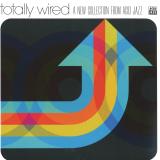
We are excited to announce the return of the iconic Totally Wired series with a brand new collection on LP and CD. The first 50 orders will include a special art print of the artwork. We are also doing a limited edition T-shirt to celebrate this milestone!
In 1988 Acid Jazz released its first compilation album ‘Totally Wired: A Collection From Acid Jazz Records’. Compiled by Eddie Piller and Gilles Peterson it collated 11 tracks that summed up the early days of our scene, mixing new label signings, cool new records being played in our clubs and a couple of oldies. It sold well to the then small scene and set the template for a series, that in the wake of the international success of The Brand New Heavies, Jamiroquai, The James Taylor Quartet and others exploded. By the time that Volume 5 appeared, we were selling tens of thousands of copies, with major label artists vying for inclusion.
By that point ‘Totally Wired’ was a phenomenon, that sign-posted changes in both the directions of new music, but of the oldies that were played on the scene. It gave DJs new tunes to play and soundtracked 1000s of Cafés and bars the world over in the age of the CD. It was largely retired at the end of the 90s and as times changed.
Over the years we have been asked to return to the scene of the crime, but it has never quite felt right, until now. With vinyl back, and the need for easy to digest compilations becoming neccessary in the chaos of streaming’s ‘I can listen to anything I want, but can’t think what that might be’ is evident, but also we are feeling excited about where Acid Jazz is right now. New artists on the label are making great records, Matt Berry has a Top thirty album, and The Brand New Heavies are headlining the Royal Albert Hall. It’s easy to make an exciting album when that is happening.
So we are releasing “Totally Wired: A New Collection From Acid Jazz” and treating it like the important milestone that it is. From the Acid Jazz sid we have new and exclusive recordings by Matt Berry, Chris Bangs and new signings Earth-o-Naut and Quiet Fire, there is also a recent white label only 45 cut by the Soul Revivers – released ahead of their new album due this Autumn and featuring Kokoroko’s Shiela Maurice-Grey and Anoushka Nanguy. For the oldies we have dug deep into our own archives to bring you the Acid Jazz Orchestra’s version of Corduroy’s ‘Something In My Eye’ and The Brand New Heavies astounding funk take of Aretha Franklin’s ‘Rock Steady’. These are all joined by recent scene records by Carmy Love – one of the greatest voices in the UK – The Romero Brothers, and BDQ, carrying the series onwards at last.
This years annual Dub-Team-Up 7" from Moss Norway, 10th issue, a decade strong with double A-side. Kambo Super Sound flexing a hard & heavy, ultra steady ghost-town stepper. Don Papa meets DJ Sotofett in the matters of dub & funk with that significant Latino Dub twist, live drums & percussions. A true crossover – true to its roots!
For many bands, having all their gear stolen would be catastrophic. For Third Ear Band, this unfortunate 1968 incident opened a portal to beneficial change. Leader/percussionist Glen Sweeney viewed the heist as a sign to alter Third Ear Band's approach, and they switched to exclusively using acoustic instruments. With electrified psychedelia in full bloom, Sweeney, Paul Minns (oboe, recorder, whistles, flutes) and Richard Coff (violin, viola) struck out on an individualistic path, blending Indian raga with chamber music – without plugging in.
Third Ear Band's 1969 debut album, Alchemy, established them as a solemn, powerful force in the global underground. On Alchemy, Sweeney laid down a steady pulse on hand drums, while Minns and Coff wove in melismatic patterns on oboe, recorder, violin and viola. This approach carried over to Third Ear Band's self-titled sophomore album, often called Elements due to its track titles being named after the four basic components of medieval European alchemists' doctrines.
On this 1970 LP, Third Ear Band sounded at once ancient and contemporary, yet they turned on the hippies with their epic, trance-inducing jams that suggested secret knowledge of infinity. Although Third Ear Band flourished during the West's countercultural zenith, they were peculiarly estranged from it on a sonic level. Even outré contemporaries such as Comus and Jan Dukes De Grey sounded like pop groups compared to TEB. Having no traditional front person or electric instruments, Third Ear Band forged a singular path that flowered most vividly on Elements.
The long songs here stream forth from their skilled hands, evoking a communal transcendence in sound – a hypnotic swirl that doesn't swing, but rather wafts and undulates with cloistered beauty. TEB's music exists in an eternal now, a perpetual wow. It is an ouroboros of organic textures, seemingly magicked into the air spontaneously, yet possessing a rigor that suggests long hours in the lab. Without electricity, it somehow burrowed deeper into your consciousness.
– Dave Segal (excerpt from the liner notes)
- Manifest/It'll Be Alright In The End
- Ready! Steady! Go!
- Catherine Wheel
- Shaftesbury Avenue
- Two Left Feet
- Love Myself Again
- Not Ready To Go Home
- Lost
- Flower Girl Confetti, Hopeful Fidelity Lasts
- Higher
- Big Of Me (Flight The Bee)
LTD CLEAR VINYL EDITION[23,74 €]
Multi-award winner Jack Garratt makes his very welcomed return with the announcement of third album Pillars - out on Cooking Vinyl. Marking his first full-length project in five years, Pillars is vibrant, emotionally charged and a celebration of love, community, and self-discovery. Pillars is a testament to Jack"s evolution as an artist and individual. Following the release of his 2020 album "Love, Death & Dancing" Jack found himself yearning to reconnect with his fans and his craft. This album is his answer: a bold, unflinching exploration of love in all its forms - romantic, platonic, and self-love - woven into a tapestry of lush melodies, infectious beats, and heartfelt storytelling. Since winning the Brits" Critics" Choice Award and the BBC Sound Of poll in 2016, Jack Garratt has released two critically acclaimed albums, Phase (2016) and Love, Death & Dancing (2020). Known for electrifying live performances and a genre-defying sound, Jack continues to push boundaries with his deeply personal and sonically adventurous music, with Pillars being no exception.
The label from DJ Zyco is back with the 9th Acid Resistance. Still Rocking and pumpin' - with 4 more spanish / colombian type summer acid techno tracks !! Go check this one out !! Acid Resistance is a member of the Flatlife Records Labelgroup.
Hailing from Paraguay, Victoria Mussi brings "Imaginary Rush", a track that shifts the grid: behind the steady four-to-the-floor pulse hides a maze of unexpected sound accents. This is techno that demands both dancing and deep listening.
Cinematic funk visionaries The Diasonics drop a new disco-funk 45 vinyl with two killer tracks tailor made for DJs and cinematic funk fans. Only 500 copies pressed wordwide, instant collector's item. From the snowy streets of Moscow to the crates of vinyl diggers worldwide, cinematic instrumental combo The Diasonics unleash a new limited edition clear vinyl 45 with two killer tracks taken from the upcoming new album "Ornithology", set to drop worldwide on October 3 via Record Kicks. On the A side "Oriole" is a vintage disco-funk stormer taking inspiration both from the Soviet-era disco and jazz fusion records, as well as from 70s European library music and synth-funk movement. A minimalist synthesizer melody echoing the song of the oriole, paired with a steady disco-funk groove reminiscent of a train in motion ("Oriole" is also the name of a popular Russian electric train) lay the foundation of their most danceable track to date. The b-side holds the equally strong "Chickadee" a funk stomper with bold bassline and heavy b-boy breaks and percussions and a NY early 80 vibe able to set every dancefloor on fire. A peerless party-starter that you just don't want to miss it. Formed in 2019, this four-piece instrumental unit _ Daniil Lutsenko (electric guitar), Kamil Gazizov (keyboards), Maksim Brusov (bass), and Anton Moskvin (drums & percussion) _ quickly gained cult status through a series of sought-after 45s on Mocambo and Funk Night Records. Their critically acclaimed debut album "Origin of Forms" mixed by Henry Jenkins, producer of the Australian cult band Surprise Chef, came out on Record Kicks in 2022. The vinyl went sold out in few weeks and is now in-demand on the international cinematic funk scene.
Clinically excellent by Salik from Going Good Records Brixton with a superiourly consistent, bass heavy, strict & steady (dub) stepper molding deep, dark & atmospheric strings pending between dub step and the sounds of D&B. Backed by DJ Sotofett's off-kilter & de-syncronized excursion surging through acidic & 3D sonic landscapes.
From the ON_ series where unconventional, hard edged, experimental and archival club cuts get's re-presented, remixed and highlighted. Laton outs Russian newcomer Ectro Usic with a slamming, gritty & heavy duty electro/techno full side. Flip carries DJ Sotofett's broken but strobicly steady club mix of - Austrian inventor & synth specialist - A.Burger's "Device C" which in original suit has been released by Craft Records (1996) and Laton (1999). A proper zone out.
SIDE B returns with the second installment of its newly established label, this time with Rill at the helm. Staying true to effect, the young German producer has honed his percussively forward style with a string of steady releases and performances over the past three years. In his EP 'Friss', Rill delivers three highly concentrated club tracks with a Beste Hira remix closing out the project, assembling a record destined for unforgiving sound systems and frenzied dance floors.
Driving and mental, Rill brews up a viscous first track 'Silky Stones' to make his intentions clear. Shooting through a bubbling lead with percussive stabs wide in the stereo field, the producer uses the element of surprise by sharpening the edge with a sharp key sequence, doubling down on tension to an already hypnotic cut. With no time to waste, the needle slides to 'Rakija', with an imposing groove and quick, dry hats. Characteristically, a dystopian melody warbles over a robust rhythm to ensure maximum movement. Two tracks in and Rill already proves to balance his tools with attitude. Taking a turn on the record flip, the B1 ups the audacity with the title track 'Friss'. Techno usually prioritising kicks is a rule that Rill sweeps aside in exchange for an intimidating bassline with an ecosystem of high frequency ambiance. A testament to balance and spatial definition, the German adopts in fitting chord stabs in the second half to up the ante in a contained manner. To conclude, celebrated Beste Hira puts her spin on the latter for a drum forward eye roller, versatile for almost any dancefloor. Reconceptualizing the rhythmic identity of 'Friss', Beste Hira is able to weather the far off atmospheres while maintaining an emphasized festivity. Combining the best of groove-focused club music with a touch of niche psychedelia, Rill and SIDE B prove that techno is very much alive no matter what side of Europe you search for it.
Words by Noah Hocker
Penguin Cafe Orchestra’ is the second studio album by the Penguin Cafe Orchestra, released in 1981, and recorded between 1977 and 1980. By this album, the line-up for the band had expanded greatly, with contribution including Simon Jeffes, Helen Leibmann, Steve Nye and Gavyn Wright of the original quartet, as well as Geoff Richardson, Peter Veitch, Braco, Giles Leamna, Julio Segovia and Neil Rennie.
All pieces were composed by Simon Jeffes, except for ‘Paul’s Dance’ (Jeffes and Nye), ‘Cutting Branches’ (traditional), and ‘Walk Don’t Run’ (by Johnny Smith).
The cover painting is by Emily Young.
‘Cutting Branches For A Temporary Shelter’ is based on the traditional Zimbabwean song, ‘Nhemamusasa’, a field recording of which can be heard played on mbira on the Nonesuch Records album ‘The Soul of the Mbira’.
The Boston Globe opined that “this is one of the most eccentric records released this or any year... It’s also one of the most delightful.”
In 2021, ‘Penguin Cafe Orchestra’ was named among The Fifty Best Albums Of 1981 by Spin.
This repress uses the 2008 remaster.
Pressed on apricot vinyl.
Five tracks of future electro-funk from Spanish DJ and producer Lefrenk, who makes his Gated debut.
Across five expertly warped tracks, the EP pulls from 80s Balearic sunsets, fried breakbeats, warehouse-scented house music, and electro that’s been lightly basted in funk and grilled over a lovely DAW.
‘Brainstorm’ kicks off with pummelling beats then goes widescreen, like a sci-fi epic barging into your set uninvited but winning you over immediately. It’s bold, abstractly beautiful, and absolutely means business.
‘Clocks’ loops squelchy bass and a twinkling melody that develops masterfully, intent on living in your head proudly — like a tenant who pays rent on time and doesn’t play the saxophone.
‘Funk Awake’ could soundtrack a very stylish chase scene between two people in vintage tracksuits.
‘Ocaso’ slows it down a little — warm and woozy, but with snappy, electrified beats holding it up like a drunk at a bar vying for the bartender’s attention.
Rounding things off, ‘Relative Point’ floats somewhere between VHS nostalgia and late-night contemplation, where the insistent beat and bass hold steady and the synths do the wandering.