Like a well-wrought character in a Hollywood movie, 'Standards from
Film', guitarist Mike Moreno's fourth Criss Cross album, exists atop a
solid, cogent back story
Recorded in December 2021, when the world and New York City - Houston-born
Moreno's home for more than two decades - were no longer on COVID lockdown,
it documents the leader's exhaustive investigations into the provenance of ten
iconic standards that, as he puts it, "are the summer jazz workshop tunes" - they
say you have to learn these songs if you want to be a jazz musician. You learn
them very young or in the beginning days of your journey into this music.
The album was recorded December 22, 2021 at the Samurai Hotel Recording
Studio in NY. Recording engineer Mike Marciano also did the editing, mixing and
mastering at Systems Two in NY
Buscar:stepp
In 1995 the self-titled full-length debut of Die Anarchistische Abendunterhaltung (DAAU) was released. The band consisted of four young, 'classically derailed' musicians who played their own compositions with acoustic instruments such as violin, cello, clarinet and accordion. Their work contained influences from Roma music, Eastern European folk, klezmer and jazz, but was performed with the energy, rebellious spirit and Sturm und Drang of a bona fide punk band. DAAU was part of the fertile Antwerp scene, which also produced dEUS, Zita Swoon and Kiss My Jazz, and soon signed an international record deal with Sony Classical.
The group's influential first record, which has been out of print for a while, is now finally being released again and is available on vinyl for the very first time.
In those early days, DAAU consisted of four young, classically trained musicians who tackled their instrumental compositions with a true punk spirit. 'If we'd had guitars, bass or drums at that time, we would probably have been just another rock band', says accordionist Roel Van Camp, who, together with his schoolmates Buni Lenski on violin, the latter's brother Simon on cello and Han Stubbe on clarinet made up the Antwerp quartet. 'With our acoustic instruments we tried to create our own version of the music we loved listening to, from sixties rock and prog to new wave.'
The quartet, which initially played in streets and cafes, appealed to a diverse audience and sometimes joked that they were a classically trained unit that had 'gone off the rails'. 'As befits teenagers, we wanted to shake things up', Stubbe remembers, 'even though we always kept cherishing our classical backgrounds.' Van Camp: 'Our education was never supposed to feel like a straitjacket. We were free-spirited enough to ignore the laws and regulations of the music academy and to create our own sound. Our compositions were open to influences from Roma music, Eastern European folk, klezmer and jazz'. 'That eclecticism was a direct result of the zeitgeist', Han Stubbe adds. 'We loved different styles and happily mixed them together'.
The monniker Die Anarchistische Abendunterhaltung was derived from Steppenwolf, a novel by German writer Hermann Hesse about a character who was outside society. 'In the book, the narrator talks of a theatre', Van Camp explains. 'And at the entrance there is a warning sign sign that says: if you go in here, you are guaranteed to lose your mind. That was an apt description of the way our music worked'.
Almost all tracks on DAAU's first album were 'Drieslagstelsels' (or 'three-course rotations'). The term referred to an agricultural method of the early Middle Ages, but also to the fact that each song of the group consisted of three major movements. Van Camp: 'The titles of those pieces referred to our method of writing. We piled up a huge bunch of ideas, because we wanted to tell more than just one story. With each composition, we took the listener for a ride'.
In 1995 the self-titled full-length debut of Die Anarchistische Abendunterhaltung (DAAU) was released. The band consisted of four young, 'classically derailed' musicians who played their own compositions with acoustic instruments such as violin, cello, clarinet and accordion. Their work contained influences from Roma music, Eastern European folk, klezmer and jazz, but was performed with the energy, rebellious spirit and Sturm und Drang of a bona fide punk band. DAAU was part of the fertile Antwerp scene, which also produced dEUS, Zita Swoon and Kiss My Jazz, and soon signed an international record deal with Sony Classical.
The group's influential first record, which has been out of print for a while, is now finally being released again and is available on vinyl for the very first time.
In those early days, DAAU consisted of four young, classically trained musicians who tackled their instrumental compositions with a true punk spirit. 'If we'd had guitars, bass or drums at that time, we would probably have been just another rock band', says accordionist Roel Van Camp, who, together with his schoolmates Buni Lenski on violin, the latter's brother Simon on cello and Han Stubbe on clarinet made up the Antwerp quartet. 'With our acoustic instruments we tried to create our own version of the music we loved listening to, from sixties rock and prog to new wave.'
The quartet, which initially played in streets and cafes, appealed to a diverse audience and sometimes joked that they were a classically trained unit that had 'gone off the rails'. 'As befits teenagers, we wanted to shake things up', Stubbe remembers, 'even though we always kept cherishing our classical backgrounds.' Van Camp: 'Our education was never supposed to feel like a straitjacket. We were free-spirited enough to ignore the laws and regulations of the music academy and to create our own sound. Our compositions were open to influences from Roma music, Eastern European folk, klezmer and jazz'. 'That eclecticism was a direct result of the zeitgeist', Han Stubbe adds. 'We loved different styles and happily mixed them together'.
The monniker Die Anarchistische Abendunterhaltung was derived from Steppenwolf, a novel by German writer Hermann Hesse about a character who was outside society. 'In the book, the narrator talks of a theatre', Van Camp explains. 'And at the entrance there is a warning sign sign that says: if you go in here, you are guaranteed to lose your mind. That was an apt description of the way our music worked'.
Almost all tracks on DAAU's first album were 'Drieslagstelsels' (or 'three-course rotations'). The term referred to an agricultural method of the early Middle Ages, but also to the fact that each song of the group consisted of three major movements. Van Camp: 'The titles of those pieces referred to our method of writing. We piled up a huge bunch of ideas, because we wanted to tell more than just one story. With each composition, we took the listener for a ride'.
Tibi Dabo unveils his long-awaited full-length ‘Vista’ on Crosstown Rebels this September, with the kaleidoscopic nine-track album showcasing his diverse and rich sound palette.
Born in Barcelona, DJ, producer, and musician Tibi Dabo has proven himself adept at mixing the classic and the cutting-edge. From his early days touring Europe and the US with a band in which he plays the drums, the foundation for his experimentation for his work within the electronic sphere, he has since grown to become an exciting and much-loved DJ and producer, adding to his growing reputation as a Crosstown Rebels favourite. Stepping things up once more, his spirited new album ‘Vista’ is a perfect fusion of futuristic synths and compelling house grooves, all of which are masterfully designed and full of character. Following three well-received singles across the summer, the full-length is a complete sonic statement that explores deep house, leftfield sonics and widescreen cosmic vistas.
Opener ‘Water Is’ layers up fresh sound sources and playful melodies on nimble basslines that soon make you move. ‘Somewhere Beach’ is then a silky groove layered up with diffuse pads and aching synths that convey real romance, while ‘Licht’ is another masterful display of original drum programming with bursts of cosmic synth and elastic bass. ‘Useless Ideas’ then gets deeper on more low-key drums and bass. Instead, the focus is on the deft percussion and well-treated vocals that swirl and smudge around the mix to a woozy late-night effect.
The elegant ‘Mundo’ channels the machine soul of early Detroit techno, before ‘Mangabeira Manifesto’ featuring Dudu Bongo layers up wonky drums and bass with curling, soft acid sounds and a playful vocal line. ‘Triple Frontier’ picks up the pace and heads out on a high-speed cosmic house journey, all before ‘Overture’, another far-sighted astral trip with starry melodies and rich, rubbery bass, closes the package in fine style.
An expressive and adventurous yet coherent long player with a range of moods, feelings and grooves taking you to all corners of the house world, ‘Vista’ showcases Dabo’s most in-depth project to date and an album which provides the perfect platform for him to display his rich sonic universe.
Qnete’s back in the building for a third X-Kalay release and it’s an anticipated return for the prominent purveyor of prog. Four diverse but coherently related tracks with pit stops in deep house and electro territory.
We open proceedings with a dose of the lysergic sound that has become his trademark since debuting on the label in 2021. Evoking ritual and ceremony, ‘Going Short‘ commences with choral pads that beckon to the altar. A slo-mo exercise in dancefloor hypnosis with trace echoes of bleep.
Where ‘Wrapped’ takes a turn toward mellow, ‘Stepperals’, like its A1 counterpart, recalibrates trance tropes into something more chugging and restrained. Another example of Qnete smudging his third eye on a tunnelling, wormhole flex.
And finally, the Leipzig native signs off with a nod to the American Midwest. Opening cerebral gates in a way that recalls classic Detroit In Effect, closing track ‘Circuit Friends’ taps into the futurist utopia imagined by Detroit electro’s pioneers.
Bobby Caldwell's second album, Cat In The Hat, from 1980, is one of his greatest moments and another masterwork of soulful sophistication. Featuring the eternal "Open Your Eyes", brilliantly sampled by J Dilla for Common's "The Light", it's about as essential as records get. Like its eponymous predecessor, it's been out of print for far too long. To finally release the hugely-anticipated reissue is one of our sincerely proudest moments.
Whilst Ned Doheny is known in Japan as "Mr California", native New Yorker Bobby Caldwell has always been "Mr AOR" to his Far-Eastern friends. His distinct charm is an irresistible blend of soul, jazz, and pop influences. He possessed phenomenal songwriting prowess, smooth vocal performances, was both a great soul guitarist and dextrous keyboard player and known for genius chord progressions. It all added up to a multi-layered brilliance entering the studio, and the singular sound he landed on was laced with soulful, sweeping strings and funky horns, touching lightly on disco, while allowing his supple voice to carry the stunning tracks he'd crafted.
Right from the off, it's easy to tell that Cat In The Hat is a deeply special record. It's fantastically produced and incredibly well-rounded, carving its own lane with deep soul, warm jazz and a stunning vocal delivery that really helped Bobby reach out to some big new audiences at the time. Goosebumps at the ready for the rolling power-piano funk of "Coming Down From Love", opening up the album with a track as good as anything Steely Dan or The Doobies ever crafted, with a vocal performance from the heavens. Pumping AOR wonder "Wrong Or Right" is up there with the slick, classy rhythms of prime Ned Doheny whilst the cool, skipping soul of guitar-drenched "To Know What You've Got" is a funky ballad par excellence, with elemental traces of "What A Fool Believes". No bad thing. Closing out Side A, the folk-funk of "You Promised Me" is a bright, soulful strut with a wonderful vocal coda that just builds. Sensational.
The delicate bounce and falsetto self-harmonising of "It's Over" offers a truly delightful introduction to Side B, and serves as a great precursor to what follows. Bobby's dynamite "Open Your Eyes" is likely the reason you're all here. As if he needed it, the eternal J Dilla further immortalised Caldwell in the hip-hop canon with his production of Common’s epochal “The Light,” which heavily samples the magical “Open Your Eyes.” On a post paying tribute to Bobby in March 2023, Questlove claimed that he "got word Brother Bobby loved it". Bobby's original has seen new life even more recently from the likes of Dwele and Kendrick Lamar and deservingly so, as its insistent drums and staccato piano created a modern-soul classic. You'd think that would be hard to follow, wouldn't you? Not so, when you're Bobby Caldwell. Indeed, the horn-drenched stepper "Mother Of Creation" is absolutely ace, and, whisper it, possibly the album's finest track, all funky piano and guitars with horn lines to die for. Exquisite ballad "I Don't Want To Lose Your Love" rounds out the album beautifully.
Bobby sadly passed away on 23rd March 2023, after a long struggle with mitochondrial damage and oxidative stress, due to an adverse effect from a fluoroquinolone antibiotic. The reissue of Cat In The Hat will be available on vinyl across the globe, ensuring that fans of his incomparable talent - and soul music enthusiasts worldwide - can radiate in the deep beauty of this seminal album. Meticulously remastered and cut by both Simon Francis and Cicely Balston respectively, it has been pressed to the highest possibly quality at Record Industry in Holland.
Restless Mashaits are based around the core of Jil and Stuf, who released a sizeable amount of nu- roots classics throughout the 90s and 2000's.
* Recently becoming active again, the Mashaits crew come with two prime-cut instrumentals - `Rasta the First’ & `Restless Mashaits’ - in a traditional roots steppers style with horns ablaze, with both tracks complimented by dub mixes courtesy of Russ D of The Disciples.
Portland-based Kevin Palmer returns to blundar with his Best Available Technology for another release (having previously been featured on cassette). This time it’s on vinyl but still messing about with the same business of constructing and deconstructing head-nodding beats into a foggy bowl of ambience that has become the trademark sound of BAT.
Initially inspired and influenced by the sound-worlds created by Hank Shocklee, BDP and KDAY, Palmer spent his formative years combing pawn shops for samplers. This kicked off his self-described obsessive compulsive work crunching out impossibly naive and obviously unschooled jams in what might have been and continues to be an attempt to capture and document something he felt when listening to the bombastic sonic collages of early hip hop.
Going backwards in order to go forward could be an apt mantra to describe the philosophy behind BAT. Often attached with labels like nostalgia and melancholy, Palmer surely deals with the longing for that perfect time capsule of N.Y. hip hop in the 90s - but where others zoning in on that era simply imitate it, Palmer goes way further into a world of his own making.
Far removed in both time and place to the outskirts of Portland, the sonics of Palmer filters through an outsider’s perspective, sometimes offering a personal journal of the here and now via field recordings from skateparks and surfing trips.
As if one would imagine looking slightly to the left of what was supposedly going on, these tracks continuously shift one's focus. That funky feel good beat is there, but almost always just out of grasp. Palmer gives us the sound of a memory slipping away.
Yet this reads not as the end of something, but rather a stepping stone into a world of possibilities. Operating at the outskirts of genre, you could imagine anything from dub, hip hop, ambient or techno to emerge and crystalize from the haze, yet it never does. This is all those things and nothing. Or maybe it’s just some “sad fucked up funk” as Palmer puts it.
On its fifth Various Artists EP, On Board Music welcomes the prolific, techno-meets-drum & bass artist ASC for a weighty, stepping collaboration with Semblance. Nuversion contributes a groovy dub-influenced cut that will slide easily into both techno and house sets. On the B-side, the inimitable Polygonia displays her delicate, melodic touch with the sublime “Veluo,” before Morphing Territories closes out the record with a pitch-black modular techno roller. All together, Point E is a well-rounded record which does justice to the range and quality of sounds that On Board has been pushing since 2015.
Jessica Brankka makes her debut on Crosstown Rebels with new single ‘Musk’, joined by Audiojack and OMRI. on remix duties. Emerging from Brazil’s ever-evolving house music hotbed to make appearances at major venues across the globe, including Hï Ibiza this summer, DJ and producer Jessica Brankka is fast becoming an artist to keep an eye on. Debuting on Frau Blau alongside Floyd Lavine and racking up support from leading names in Solomun, Joris Voorn, Blond:ish and more, her outings via RADIANT. have only continued to help build and craft her growing sound. Stepping up for her most significant release to date, she joins the Crosstown Rebels family to open September with her new single ‘Musk’ - with remixes coming courtesy of Gruuv head honchos Audiojack and Tel Aviv’s OMRI.
Hooky, provocative vocals take hold from the off on ‘Musk’, with Brankka building via slick drum programming, vibrant stabs and sweeping melodies for an intensely catchy production shaped for all hours of the night. First up on remix duties are Crosstown regulars Audiojack, with their take introducing an abundance of additional energy via skippy percussion, zipping bassline grooves and swirling, off-kilter sonics, before launching into heady breakbeat territories. To close, returning Rebellion signee and OMRI. introduces his acid-tinged remix into proceedings, with wandering synth lines carrying the track towards more cosmic spheres.
Having stepped up to the plate for Will & Ink’s first release in five years with the Cullen EP, Yaleesa Hall follows up with another trademark, brain boggling EP of twisted dancefloor delights.
Forever pushing the envelope, Hall hits with three dynamic cuts that flow from rapid fire, synth heavy techno to glitching, low-end electro and atmospheric electronica.
Dubquake Records dig deep in the vaults to reissue five more iconic Iration Steppas tracks from the 90’s!
Still buzzing from the hype around Part 1 of the ‘90’s Classic Cutz’, this new drop includes their very first release ‘Scud Missile’, the legendary ‘Hard Time Pressure In A Babylon’, ‘Locks’ featuring Tena Stelin, ‘Kitachi In Dubwize’ and their spiced up remix of Vibronics’ ‘One Drop’.
These tracks were produced and mixed by Iration Steppas’ founding members Mark Iration and Dennis Rootical at the High Rise Studio in Chapeltown, Leeds. At the time, the dub-making-duo were heavily experimenting with new sounds, blending dub with acid soundscapes in a way that had never been done before. At the frontier of reggae and electronic music, their ‘Dub Inna Year 3000 Style’ re-defined UK Dub in the 90’s and continues to inspire the new generation.
All tracks have been remastered and put onto five separate 12” slabs of wax. And to add to the excitement, each release features original mixes + previously unreleased ‘dubplate cutz’ that could only be heard live up till now!
Dubquake Records dig deep in the vaults to reissue five more iconic Iration Steppas tracks from the 90’s!
Still buzzing from the hype around Part 1 of the ‘90’s Classic Cutz’, this new drop includes their very first release ‘Scud Missile’, the legendary ‘Hard Time Pressure In A Babylon’, ‘Locks’ featuring Tena Stelin, ‘Kitachi In Dubwize’ and their spiced up remix of Vibronics’ ‘One Drop’.
These tracks were produced and mixed by Iration Steppas’ founding members Mark Iration and Dennis Rootical at the High Rise Studio in Chapeltown, Leeds. At the time, the dub-making-duo were heavily experimenting with new sounds, blending dub with acid soundscapes in a way that had never been done before. At the frontier of reggae and electronic music, their ‘Dub Inna Year 3000 Style’ re-defined UK Dub in the 90’s and continues to inspire the new generation.
All tracks have been remastered and put onto five separate 12” slabs of wax. And to add to the excitement, each release features original mixes + previously unreleased ‘dubplate cutz’ that could only be heard live up till now!
Dubquake Records dig deep in the vaults to reissue five more iconic Iration Steppas tracks from the 90’s!
Still buzzing from the hype around Part 1 of the ‘90’s Classic Cutz’, this new drop includes their very first release ‘Scud Missile’, the legendary ‘Hard Time Pressure In A Babylon’, ‘Locks’ featuring Tena Stelin, ‘Kitachi In Dubwize’ and their spiced up remix of Vibronics’ ‘One Drop’.
These tracks were produced and mixed by Iration Steppas’ founding members Mark Iration and Dennis Rootical at the High Rise Studio in Chapeltown, Leeds. At the time, the dub-making-duo were heavily experimenting with new sounds, blending dub with acid soundscapes in a way that had never been done before. At the frontier of reggae and electronic music, their ‘Dub Inna Year 3000 Style’ re-defined UK Dub in the 90’s and continues to inspire the new generation.
All tracks have been remastered and put onto five separate 12” slabs of wax. And to add to the excitement, each release features original mixes + previously unreleased ‘dubplate cutz’ that could only be heard live up till now!
Dubquake Records dig deep in the vaults to reissue five more iconic Iration Steppas tracks from the 90’s!
Still buzzing from the hype around Part 1 of the ‘90’s Classic Cutz’, this new drop includes their very first release ‘Scud Missile’, the legendary ‘Hard Time Pressure In A Babylon’, ‘Locks’ featuring Tena Stelin, ‘Kitachi In Dubwize’ and their spiced up remix of Vibronics’ ‘One Drop’.
These tracks were produced and mixed by Iration Steppas’ founding members Mark Iration and Dennis Rootical at the High Rise Studio in Chapeltown, Leeds. At the time, the dub-making-duo were heavily experimenting with new sounds, blending dub with acid soundscapes in a way that had never been done before. At the frontier of reggae and electronic music, their ‘Dub Inna Year 3000 Style’ re-defined UK Dub in the 90’s and continues to inspire the new generation.
All tracks have been remastered and put onto five separate 12” slabs of wax. And to add to the excitment, each release features original mixes + previously unreleased ‘dubplate cutz’ that could only be heard live up till now!
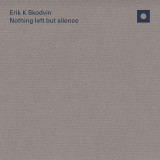
'Nothing left but silence' is Erik K Skodvin’s third solo album for Sonic Pieces and his most quiet to date. Subtitled as "Musical improvisations and quiet collages from the subconscious”, Skodvin reduces his instruments to guitar, reverb and amp - and creates a skeleton of eight hypnotic ragas that meanders in an eternal loop between ephemeral and singular.
Only on the horizon it’s possible to sense that Skodvin has also touched the neoclassical terrain in earlier productions - on Nothing left but silence, however, he acts as a twilight player who is not afraid of the coldness of endless space and who knows how to subjugate the shadowiness of the visible world. Carried by the noise of the amp and the occasional click of the effects pedals, a monolithic, reduced blues emerges, whose mediumistic quality nevertheless reveals that Skodvin's music always comes from the body - and as such is always searching for space. A space that - in this case - blends the vastness of the Norwegian steppe with the brittleness of American wasteland (as if Deathprod and Loren Connors were one and the same person), creating a persistent state between deceleration and absence of presence - that leads Skodvin ever closer to the inner essence of sound.
Initially recorded at Saal 3, Funkhaus, Berlin by Nils Frahm in 2015, the album has itself been subjected to silence as a forgotten relic, re-found and now released in a time where it might connect more with the contemporary state of mind. Welcome to the entrance to the periphery.
DJ Python’s Worldwide Unlimited return with a trio of giddy-up garage screwballs by BFTT of the Mutualism cohort.
’THP’ hails BFTT’s transition from one party city, Leeds, to another, Manchester, in the post-lockdown euphoria when everyone was dusting off their dancing clogs. He hadn’t made club music during the pandemic, but got right back on it that summer, chiselling signature production details into a trio of restive swingers and buoyant steppers explicitly built for the party.
‘THP’ trains his energies into an itchy switch of Yorkshire garage-techno-donk aerated with feathered dub chords and percolated percussion. ‘Keeplies’ more loosely dances on the offbeat complete with unstable, grinding subs whisked into a dipping UKG lather like Pangaea meets early Aya, and ‘Seems’ picks up your trotters on a ruggedly warped speed garage tilt, all melting Moschino logos and acid-spiked fizz bound for peak times.
- A1: (Theme From) The Monkees
- A2: Last Train To Clarksville
- A3: She
- A4: Daydream Believer
- A5: Listen To The Band
- A6: A Little Bit Me, A Little Bit You
- B1: I'm A Believer
- B2: I Wanna Be Free
- B3: Pleasant Valley Sunday
- B4: (I'm Not Your) Steppin' Stone (Single Version)
- B5: Shades Of Gray