VERVE ACOUSTIC SOUNDS SERIE: komplett analog von Ryan K. Smith bei Sterling Sound von den
Originalbändern gemastert, QPR-Pressung (180 g), stabiles Tip-On-Gatefold (Stoughton Printing), wattierte Innenhülle.
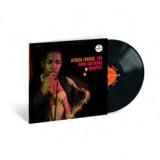
“Africa/Brass”, im September 1961 veröffentlicht, war Coltranes erstes Album für das noch junge Label Impulse! Records. Das Werk markierte einen Wendepunkt in der Karriere des Saxofonisten und gilt laut dem
“AllMusic Guide to Jazz” als “Schlüsselwerk für das Verständnis des Weges, den John Coltrane in seiner
letzten Schaffensphase mit seiner Musik einschlug”. Für das im Studio von Rudy Van Gelder aufgenommene
und von Creed Taylor produzierte Album erweiterte Coltrane sein Quartett zu einem großen Ensemble mit
bis zu sechzehn Musikern. Coltranes leidenschaftliche, freie Improvisationen auf dem Tenor- und Sopransaxofon stehen dabei in reizvollem Kontrast zu dem kompakten, rhythmischen Sound des Blechbläser-lastigen
Orchesters unter der Leitung von Cal Massey. Die Arrangements für die Big Band wurden von Eric Dolphy
und McCoy Tyner erst während der Proben im Studio angefertigt
quête:sterling sound
- A1: Up From The South
- A2: T. I. B. W. F
- A3: Budos Theme
- A4: Ghost Walk
- A5: Monkey See, Monkey Do
- B1: Sing A Simple Song
- B2: Eastbound
- B3: Aynotchesh Yererfu
- B4: King Charles
- B5: The Volcano Song
- B6: Across The Atlantic
Black Vinyl[23,11 €]
Anlässlich des 20-jährigen Jubiläums im Jahr 2025 ist das gleichnamige Debütalbum der besten Band aus Staten Island endlich wieder erhältlich! Mit einem luxuriösen Cover im „old style“ und einer vollständig analogen (AAA) Remastering-Version der Originalbänder – von Ryan Smith (Sterling Sound) – sieht diese legendäre LP besser aus und klingt besser denn je. Mit „Up From the South” und „Ghost Walk” ist dieses Album ein Muss für Fans von Daptone und den Budos!
It's rare to hear a debut 12' single that really blows you away. That's hardly a controversial statement; in truth, most producers take time to find their feet, developing a distinct style over a period of years, rather than months.
Magnesii, then, is something special. Currently based in Amsterdam. The previously unheard of producer has delivered a stunning debut 12' for Tom Trago's Voyage
Direct label. R Raw, fuzzy and in turns melancholic, spellbinding and intense, its' three tracks bubble and hiss to the distinct sound of vintage analogue hardware.
You see, the young Dutch producer tends to avoid modern computers. 'I often feel like those screens suck my soul away,' he says. Instead, he jams out tunes on a tasteful selection of analogue gear, sequencing with either the Alesis MMT-8 or the Akai MPC2000 - a favourite toy of many of the Netherlands' best electronic producers - and adding basslines, beats, acid lines and melodies on obscure synths and drumcomputers'. His creations are then bounced down straight to 1/4" tape or cassette.
Some of these resultant jams, as showcased on this impressive debut, are nothing less than inspired. Acid lines rise and fall, machine drums rattle, and distinctive synth
lines weave in and out of the mix. These are raw tracks for the dancefloor blessed with all the colour and warmth associated with vintage hardware.
'RZTB Tantra' sets the tone, layering bubbling acid lines and dreamy chords over a relentlessly nagging bassline and punchy, scattergun drum machine percussion. 'Lava Jam' is decidedly deeper, with woozy, emotive melodies and alien electronics tumbling over a dusty rhythm pattern and tactile acid bass.
Magnesii completes a sterling debut with 'Van Dyke Island Jam', whose squidgy bassline and long, drawn-out M1 chords work in complete harmony with the crispy rhythm track and densely building percussion hits. Like its' predecessor, it too seems to be tinged with sadness, as if Magnesii's machines are shedding a tear for glories past.
Clearly, Magnesii is a name to look out for in future. For the time being, we'll have to make do with one of the most impressive debut 12' singles of 2014 to date.
- A1: Derrick Morgan - Fat Man
- A2: Lloydie & The Lovebites - Wine & Grine
- A3: Phyllis Wilson - Love Is All I Have
- A4: Delroy Wilsom - Put Yourself In My Place
- A5: Rico Rodriguez - Rainbow Into The Rio Mino
- A6: Derrick Morgan - I Love You
- A7: Honey Boy Martin - Dreader Than Dread
- B1: The Heptones - Gunmen Coming To Town
- B2: Justin Hinds - Rub Up, Push Up
- B3: Lester Sterling - Soul Voyage
- B4: Derrick Morgan - Moon Hop
- B5: John Holt - Fat Girl, Sexy Girl
- B6: The Ethiopians - Reggae Hit The Town
- B7: Pat Kelly - How Long
The Rude Boy moniker has its roots firmly set in the downtown districts of Kingston, Jamaica.
Alongside the regular Ska/Rocksteady sounds coming out of the sound systems, there was an undercurrent theme to some songs that spoke of the struggles of the youth, of their confrontation, arrests and run ins with the establishment.
Some of these songs praised the Rude Boys for their stance and style while other songs were more in contempt with the Rude Boy's attitiudes, comings ,goings and violent behaviour.
For this release we have put together a set of tunes that the Jamaican Rude Boys would have been listening to at the sound systems on the lawns and street corners.
Not only the more obvious Rude Boy tunes like 'Gunmen Coming to Town' , 'Dreader than Dread', 'Moon Hop' but also some of the tunes that made the sound systems rock well into the night.
Hope you enjoy the set,,,,,
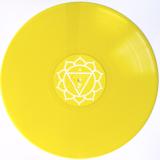
Utter presents Marshall Jefferson's previously unreleased meditation opus 'Yellow Meditation For The Dance Generation' alongside two remixes from French production maestro Joakim.
Marshall Jefferson: Chicago House music pioneer, creator of the anthemic ‘Move My Body’, an original collaborator of Adonis, Ce Ce Rogers and Roy Davis Jr., production mastermind of countless dancefloor classics such as Phuture’s ‘Acid Tracks’, Sterling Void’s ’It’s All Right’, Hercules’ ‘7 Ways’… and the soothing voice behind a 36 minute healing meditation guide. Yes, really.
But let’s rewind, slightly.
In 2017, Marshall was approached and encouraged by Ian ‘Snowy’ Snowball to write his autobiography and the pair set about putting Marshall’s account of the history of House music together. The book, ‘Marshall Jefferson: Diary of a DJ’ was published in 2019.
Following the book’s release, Ian and Marshall's collaboration continued and during the pandemic an outlandish idea arose to create a piece of music combining Ian's interest in meditation (he runs Club Chi specialising in Shibashi Qigong - a form of Tai Chi Qigong - which is a gentle form of movement therapy/exercise) and Marshall's willingness to experiment musically to see what might be possible.
The result is ‘Yellow Meditation For The Dance Generation’, where Marshall vocalises Ian’s lyrics in his instantly recognisable voice. The keen-eared out there may also recognise aspects of the music itself as a stripped back, lengthened and far mellower version of Marshall’s 1985 obscurity ‘Vibe’:
“I would take tapes to the Music Box and Ron Hardy would play my music. ‘Vibe’ was one of those tracks. I recorded ‘Vibe’ in 1985, but it became one of my tracks that I just forgot about until some guy on Facebook sent me a recording of it that was taken from a club. The only person who I ever gave a recording of ‘Vibe’ to was Ron Hardy. The other people I know who had copies of the track were Gene Hunt and Emanuel Pippin (DJ Spookie).
"The original version of ‘Vibe’ was made using a Roland 707, Roland JX-8P keyboard and a Roland 727 drum machine. I was still working at the Post Office at the time, and this was pre-‘Move Your Body (The House Music Anthem)’. ‘Vibe’ has the building blocks for ‘Move Your Body’ because it was using the instruments on the track that I discovered what I could do with the bass sound, to make a track like ‘Move Your Body’.”
Still, Ian’s initial intention for ‘Yellow Meditation’ was function and it was designed to be a ‘Sequential Relaxation Exercise’ focusing on the Solar Plexus. Bearing this in mind, Marshall took a bare-bones and hypnotic approach to this particular re-recording of ‘Vibe’ so that the voice takes centre stage and listeners (hopefully) find themselves on a meditative journey. In fact, this long-form track was always intended as a private tool purely for meditation at Club Chi rather than released to the public - after all, Marshall had also created and released a more drum heavy, ’traditional’ club-focused 'Vibe Three' instrumental version for that very purpose - but a chance airing of the full 36 minute version changed its path.
Much like those 1985 ‘Vibe’ cassettes, Marshall had sent the track to a few close contacts, one of whom was Kieran at Phonica Records who aired it over the shop’s basement soundsystem. Its unorthodox nature caught the ear of colleague Alex (of Utter) and the seeds of a physical release were planted.
Eventually, with the full-version carefully whittled down to a vinyl friendly length of 24 minutes, full track parts in hand and a b-side to fill, Alex sought out one of his favourite producers to take up the remix reigns: Joakim. The Tigersushi co-founder and Crowdspacer boss has a long history of boundary-pushing remixes that straddle both dancefloor functionality and experimentation. This time the original material resulted in Joakim coming up with a number of ideas and he finally delivered two versions - one club focused (‘Vertical’), the other more introspective and meditative (‘Horizontal’), both of which appear on the final 12”.
The limited edition 12” also includes a download code giving buyers access to all of the vinyl tracks plus an 18 minute extended version of Joakim’s ‘Horizontal’ remix, its instrumental counterpart (for those who can live without Marshall's voice) and full 12 minute acapella (for those who can't!)
Alex
a A1. Yellow Meditation For The Dance Generation (Edit) 24:00
b B1. Yellow Meditation For The Dance Generation (Joakim's Vertical Remix) 9:09
9:05
Peek of Normal is the new label from disco veteran Stevie Kotey, whose productions have graced the Bear Funk, Ambassador's Reception, Strut, Electric Minds and many more labels in the past. Pretty much its first move was to ink a deal with Dutch master Mark du Mosch, who'd been friends with Kotey since the latter moved to Rotterdam in 2005 and discovered his neighbour had similar tastes in disco. This new label's inaugural release, Sterling Melody, is quite the labour of love, and with eight tracks spread across a double vinyl pack collection lean more towards the coldwave, electro and synthpop of the early 80s rather than 70s disco. There are echoes of some pretty classic sounds here, from the Vince Clarke-esque throb of '77777st' and 'A5G Neowise' - not unlike the soundtrack work of mid period Tangerine Dream - to the slower motioning Italo-tinged shininess of 'Soluzio'. Our favourite is the title track itself, perky and full of sparkle, like the incidental music for a lost series about a mullet-clad, white linen suited detective who doesn't play by the rules, only much, much better. Definitely worth a Peek.
- A1: Cloud Nine
- A2: I Heard It Through The Grapevine
- B1: Run Away Child, Running Wild
- C1: Love Is A Hurtin’ Thing
- C2: Hey Girl
- C3: Why Did She Have To Leave Me (Why Did She Have To Go)
- C4: I Need Your Lovin’
- D1: Don’t Let Him Take Your Love From Me
- D2: I Gotta Find A Way (To Get You Back)
- D3: Gonna Keep On Tryin’ Till I Win Your Love
The Temptations Get High on Psychedelic Soul: Cloud Nine Soars with Ambitious Arrangements and Production, Features Standout Vocal Performances and Instrumentation by the Funk Brothers
The Temptations’ Cloud Nine announced that Motown — and “The Sound of Young America” — would never be the same. Influenced by the emergence of cutting-edge rock and pop currents, as well as increasing sociopolitical turmoil, the album broke down barriers between rock, psychedelia, and soul while heralding the arrival of visionary arrangements and production techniques. Bookended by traditional R&B numbers, the 1969 record sent the Temptations in bold new directions and signaled the advent of psychedelic soul.
Sourced from the original master tapes, strictly limited to 3,000 numbered copies, pressed at Fidelity Record Pressing, and housed in a Stoughton gatefold jacket, Mobile Fidelity’s 180g 45PM 2LP set presents Cloud Nine in audiophile sound for the first time on a domestic pressing. This collectible reissue bestows Norman Whitfield’s extraordinary production with the grand-scale dynamics, natural tonality, expansive openness, and low-end weight it deserves. The timbre of each of the five members’ voices is readily identifiable — even within the group harmonies — bestowing a realism never experienced outside the recording studio.
Making its debut on 45RPM, the album further benefits from the wide groove space by playing with greater separation and more realistic presence than prior editions. Everything from the brassiness of the horns to the dry snap of the snare comes across with reference-grade clarity and positioning. And since Motown’s renowned Funk Brothers backing band plays on many of the cuts, you’ll want to savor every note. The imaging, soundstaging, and organic bloom-and-decay of the notes make that possible.
Amid Cloud Nine, the instrumentation and architecture stand out as much as any element. Never before had a Motown album contained such ambitious patterns and complex passages. Seemingly conscientious of the departure from their past methods, the Temptations and Whitfield bunched together the tracks that mark a deep dive into psychedelic territory and counterbalance them with seven sterling soul cuts that dovetail with Motown tradition drenched with heartfelt vocals, swelling strings, and finger-snapping beats.
On the original 33RPM release, traditional Motown soul — laden with heartfelt vocals, swelling strings, and finger-snapping beats — occupies Side Two. These songs reveal an ensemble still very much on top of delivering pristine pop-soul material graced with romantic sweetness, persuasive insistent, and soaring highs. Re-energized after the departure of lead singer David Ruffin, who was fired for a variety of reasons in June 1968, the Temptations seamlessly meld with his replacement, Dennis Edwards, on one melodic gem after another.
The collective tackles five songs co-written by the legendary Motown team of Barrett Strong and Whitfield. Not the least of which are the smooth, shuffling “Why Did She Have to Leave Me (Why Did She Have to Go)” and deceptively simple, horn-spiked “Gonna Keep on Tryin’ till I Win Your Love.” On these tracks, as well as on a lush rendition of the ballad “Love Is a Hurtin’ Thing” and pleading, tender send-up of the Gerry Goffin-Carole King classic “Hey Girl,” Edwards and Paul Williams take turns on the lead with the estimable Eddie Kendricks, Melvin Franklin, and Otis Williams providing backing support.
All five vocalists trade-off leads on the simmering title track, a groundbreaking composition shot through with wah-wah-pedal effects, liquid funk, deep bass lines, Cuban percussion, saturated reverb, and gang choruses. Whitfield mines each member’s natural vocal range with spectacular results, keeps time with cymbals, and channels both the heated temperatures and escapist desires of a society embroiled in war, conflict, and experimental drugs.
Amazingly, the Temptations top themselves on the similarly revealing “Run Away Child, Running Wild.” Nearly 10 minutes in length, the song explodes R&B parameters and harbors a cinematic scope. Urgent pianos, distorted guitars, stripped-down percussion, steamy Hammond organs, minimal bass motifs, five distinct voices narrating the tale of a boy who fled home and now finds himself amid the scary, unforgiving external world: They combine to give the urgent tune a walls-closing-in atmosphere where fear and desperation reign. Bolstered by an extended instrumental section that precedes a climactic return of the singers’ voices, “Run Away Child, Running Wild” equaled the success of the record’s title track, with both reaching No. 6 on the pop charts.
- A1: Intro
- A2: Schizophrenia
- A3: Tom Violence
- A4: White Kross
- A5: Kotton Krown
- B1: Stereo Sanctity
- B2: Brother James
- B3: Pipeline_Kill Time
- B4: (I Got A) Catholic Block
- C1: Tuff Gnarl
- C2: Death Valley '69
- C3: Beauty Lies In The Eye
- C4: Expressway To Yr Skull
- D1: Pacific Coast Highway
- D2: Loudmouth
- D3: I Don’t Wanna Walk Around With You
- D4: Today Your Love, Tomorrow The World
- D5: Beat On The Brat
In October 1987, four months after the release of their critically acclaimed Sister LP, Sonic Youth showcased their latest work in a blistering set at Cabaret Metro, Chicago. The concert was introduced by Big Black's Steve Albini (who at the time was banned from the venue) and subsequently released as a semi-official bootleg under the title Hold That Tiger on writer/provocateur Byron Coley's impishly Geffen-baiting label Goofin' (years later the band would use this nom de guerre for their own imprint).
Hold That Tiger's sterling reputation among the Sonic Youth faithful is well deserved. In fact, it isn't a stretch to suggest that the album is to the first handful of SY releases what It's Alive is to the first three Ramones LPs – a feral and liberatory public snapshot of a band's blossoming imperial phase. Indeed, HTT is the sound of a group at the peak of their powers, presenting new songs alongside a handful of older ones with the kind of wild, cathartic enthusiasm common to rock 'n' roll's most revered live albums.
Taking nothing away from Sister – inarguably one of indie rock's first true masterpieces – it is reasonable that many fans prefer the live versions heard on Hold That Tiger to their studio counterparts. On HTT, Sonic Youth is a spiky, pummeling and confident force, alternately mammoth and meditative. Sister and its predecessor EVOL notably added an airy, dreamlike reverie to the band's turbulent doom-lurch, a stylistic evolution that seems to crystallize on HTT. Throughout, Kim Gordon's sinewy, sumptuous bass and Steve Shelley's propulsive, tom-heavy percussion provide the bedrock groove for Thurston Moore and Lee Ranaldo's ferocious barrages of noise-guitar crunch.
By 1987, the band was confidently articulating their dual lexicon of punk-noir dissonance and supernal, psychedelic sonic calligraphy – bending their jagged, streetwise gnarl into balloon animals of dazzling and beautiful songs. This collision of splendor and chaos would become a hallmark of the group's singular alchemy as well as provide a blueprint for the post-SST American underground they would help invent and ultimately nurture.
Hold That Tiger's encore – four songs by the band's beloved Ramones, which Thurston would later astutely compare to "the perfect pudding after a hearty meal" – serves as a reminder that, like any true punks, Sonic Youth never could resist a good, rousing anthem to send the kids home with their ears ringing, their hearts hot-wired.
This first-time reissue with speed-corrected master comes in a gatefold tip-on jacket. Mastered by Bob Weston from the original tapes. Recorded by Aadam Jacobs. Audio repair/editing by Aaron Mullan.
Josh Johnson’s Unusual Object is a world of sound. His fantastically processed saxophone & subtle samples & grooves give this work a sort of cyberpunk ambient jazz feel that crosses into realms akin to classic Warp Records and Jon Hassell. These qualities serve to bring the listener closer to Johnson, to his breath, his sense of song. In 2023, Johnson was grammy-nominated for producing Meshell Ndegeocello’s The Omnichord Real Book (Blue Note).
"Unusual Object" by Josh Johnson includes the following tracks: "Telling You", "Deep Dark", "Reddish", "Local City of Industry" and more.
- A1: Jake Muir - Mirage
- A2: Pent & Dylan Kerr - Incoherences
- A3: Flora Yin Wong - Oath
- A4: Qwqwqwqwa - Shadow (Ft. Sop.io)
- A5: Ex Wiish & Dorothy Carlos - Assimilation
- A6: Nexcyia & Mu Tate - Sans Titre
- A7: Tati Au Miel - House Of Gold
- B1: Kamran Sadeghi - Formula Fiction
- B2: A... ...Cha.... A... I Feel Like A Ghost Uh
- B3: Eric Frye - Plague Chain
- B4: Maxwell Sterling - Xiahe Tears
- B5: Muein - Creep
- B6: James K - Sketch 4
29 Speedway is a record label and performance series based in Brooklyn, NY featuring forward-thinking improvisational music and live multimedia. Founded in 2020 by Ben Shirken a.k.a. Ex Wiish (‘Shards Of Axel’, Incienso 2023), 29S serves as a platform for artists exploring the fringes of interdisciplinary art and music. Hosting D.I.Y-guerrilla style sound and performance art concerts at Pioneer Works (NYC), Public Records, and in Europe in partnership with Index Records, they have worked with artists such as James Hoff, J. Albert, Yolabmi, Robert Aiki Aubrey Lowe, AceMo, Flora Yin Wong, Nexcyia, Young Boy Dancing Group, UMFANG, Color Plus, Poncili Creación, Special Guest DJ, Arushi Jain, Drumloop, Isabella Koen, Ben Bondy, Kamran Sadeghi, Yawning Portal, James K., Syndey Spann, Debit, Pent and many others.
Resident Advisor called their most recent compilation record ‘Channel Plus’ “one of the most stunning documents of the ‘modern ambient-techno movement pioneered by labels such as Motion Ward and West Mineral’, with a focus on New York as well as a global outreach that encompasses chilled-out trap, electro, downtempo and even early '00s electroacoustic music”. Their debut solo artist release from J. Albert and Will August Park, entitled “Flat Earth” (2023), was based on free improvisation and ambient jazz, receiving praise from Philip Sherburne, Shawn Reynaldo, and was included in RYMs top EPs of the year. 29S has been written about on ID, Bandcamp Daily: Best Ambient, Boomkat, Paper Mag, Artnet, Dazed, Clot Mag, Nina Protocol, and Document Journal.
The newest release from 29 Speedway, UltraBody, is a compilation record featuring the music of Jake Muir, Pent & Dylan Kerr, Nexcyia & Mu Tate, James K, Flora Yin-Wong, Ex Wiish & Dorothy Carlos, Kamran Sadeghi, Tati au Miel, James Hoff, Eric Frye, Muein and Maxwell Sterling. The record is emblematic of the artists who have performed at 29 Speedway shows in New York and Europe during the past two years, and is the third in a series released by the label.
The record was born out of a desire to investiage how the self, spirituality, and language are intertwined with the intervention of subjectivity by new technologies. With increasingly sophisticated tech, and the supposed ability to remake the world and ourselves, what differentiates our individual discretion from the will imposed upon us by software? Quoting Walter Chaw from his piece on David Cronenberg’s Videodrome, “Decades of rampant, unregulated and ill-considered technological leaps have begun to evolve, to mutate, humans at a biological level”. This haphazard acceleration towards a techno-utopic transformation of humanity has faulted, and as William Gibson put it, is leading us to live in a “half assed singularity”. In this reality, artistic processes are influenced by excessive access to computational tools and assistance, but not utterly controlled.
This in-between state of dominion is explored in 29 Speedway: UltraBody. “Incoherences” samples the utterances of Dylan Kerr’s voice processed between Pent’s percolated glazes, muddying the gulf between vaporous ambient and reflexive sound design. The voice on James Hoff’s “A... ...Cha.... A... I feel l” was created by trying to get voice cloning technology to sing a gps data stream, the music an extrapolation from an earworm he got stuck in his head while shopping in Kyoto. On “Plogue Chain”, Eric Frye’s most speculative sci-fi observations spiral into a glazed pool of digital cacophony, while Kamran Sadeghi’s “Formula Fiction” is an experiment in (un)controlled generativity. Incorporating minimal pings from a 3D simulation scene based on gravitational interaction, cello bits evolve on “Assimilation”, a collaboration between Ex Wiish & Dorothy Carlos.
On UltraBody, sound has no separate existence from space.
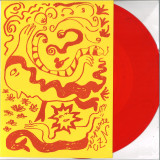
A split between Discos Extendes and the label Lovers & Lollypops, puts side by side two of the most relevant and prolific artists in music made in Portuguese territory: Bruno Silva and his project “Serpente” and João Pais Filipe, Leon Marks and Valentina Magaletti with “CZN”. Two projects that developed in parallel, but with a mutual interest in the strength of the rhythm and the textures and timbral richness of percussion sounds. The similarities are undeniable. A mutual admiration, also.
Comes in a Tranparent Red Vinyl in PVC Sleeve. Includes A4 risograph print by Cláudia Lancaster.
Side A written and produced by Bruno Silva with collaboration of Kelly Jayne Jones on "Perda Outra" and Maxwell Sterling on "Em Vida Traz”. Side B written and produced by João Pais Filipe, Leon Marks and Valentina Magaletti. Master by Carlos Nascimento at Qualia Audio Lab Artwork by Cláudia Lancaster Design by Conhecido João.
- A1: Blood In The Water 6 54
- A2: Enigma Of Reason 10 06
- A3: The Wanderer 5 03
- B1: The Big Quit 8 35
- B2: Devil's Encyclopedia 5 47
- B3: A Memory Of My Future 6 26
- C1: I Am Because You Are 4 32
- C2: My Share Of Your Life 7 48
- C3: Age Of Thought 4 38
- D1: Matchbox Racing 6 56
- D2: We Stay Loud 5 25
- D3: Melting Pot 5 51
Über drei Jahrzehnte nach ihrer Gründung durch Leslie Mandoki, setzen Mandoki Soulmates mit ihrem Album "A Memory Of Our Future" nicht nur musikalisch neue Maßstäbe, sondern präsentieren ein produktionstechnisches Meisterwerk: Das gesamte Album wurde analog aufgenommen und produziert - vom ersten Ton bis zum fertigen Vinyl. Die Produktion des rund 80-minütigen Konzeptalbums ist ein seltenes Unterfangen in der heutigen Musiklandschaft. Mit durchgehend analoger Signalverarbeitung vom Mikrofon bis zur Vinylpressung ist die Produktion von "A Memory Of Our Future" ein Manifest von Präzision und Leidenschaft, die in jedem Ton des Albums zu spüren ist. Das Mastering des analogen Magnetbandes durch Greg Calbi im renommierten Sterling Sound Studio in New York und der Vinylschnitt in den Emil Berliner Studios sind ein Symbol für die audiophile Exzellenz des Albums. Mit einem Setup, das in der gegenwärtigen Musikproduktion kaum noch zu finden ist, und mit der die Band eine Wärme und Lebendigkeit in ihrer Musik eingefangen hat, die in digitalen Aufnahmen oft verloren geht, haben die Soulmates ein Werk musikalischer Vielfalt geschaffen, das von Prog bis Jazz Rock reicht, und kompositorische Reife, spielerische Leichtigkeit und kunstvolle Solos mit großen Spannungsbögen und tiefgründigen Texten zu gesellschaftspolitischen Themen verbindet. Die generationsübergreifende Supergroup von Rock- und Fusion-Großmeistern mit Ian Anderson (Jethro Tull), Mike Stern, Al di Meola, Randy Brecker, Till Brönner, Bill Evans, John Helliwell (Supertramp), Cory Henry, Richard Bona, Steve Bailey, Simon Phillips (Toto), Leslie Mandoki, Tony Carey (Rainbow), Nick van Eede (Cutting Crew), Jesse Siebenberg und Mark Hart (beide Supertramp) ruft mit dem Album zum Handeln gegen Spaltung und für Menschlichkeit auf. Mit "A Memory Of Our Future" gelingt den Soulmates eine einzigartige Verschmelzung audiophiler Exzellenz und gesellschaftspolitisch relevanter Musik. Dieses Album ist nicht nur für Fans von Prog und Jazz Rock, sondern für alle, die echte Musik zu schätzen wissen.
- A1: Up From The South
- A2: T. I. B. W. F
- A3: Budos Theme
- A4: Ghost Walk
- A5: Monkey See, Monkey Do
- B1: Sing A Simple Song
- B2: Eastbound
- B3: Aynotchesh Yererfu
- B4: King Charles
- B5: The Volcano Song
- B6: Across The Atlantic
Red Vinyl[23,11 €]
Anlässlich des 20-jährigen Jubiläums im Jahr 2025 ist das gleichnamige Debütalbum der besten Band aus Staten Island endlich wieder erhältlich! Mit einem luxuriösen Cover im „old style“ und einer vollständig analogen (AAA) Remastering-Version der Originalbänder – von Ryan Smith (Sterling Sound) – sieht diese legendäre LP besser aus und klingt besser denn je. Mit „Up From the South” und „Ghost Walk” ist dieses Album ein Muss für Fans von Daptone und den Budos!
- A1: Johnny Strikes Up The Band
- A2: Roland The Headless Thompson Gunner
- A3: Excitable Boy
- B1: Werewolves Of London
- B2: Accidentally Like A Martyr
- C1: Nighttime In The Switching Yard
- C2: Veracruz
- D1: Tenderness On The Block
- D2: Lawyers, Guns And Money
A Consummate Fusion of Wit, Humor, Satire, Honesty, and Chaos: Warren Zevon’s Excitable Boy Captures Dark Elements of American Culture with Uncanny Insight
• Sourced from the Original Analog Tapes for Definitive Sound: Mobile Fidelity’s Numbered-Edition 180g 45RPM 2LP Set and Hybrid SACD Play with Explosive Dynamics and Airy Openness
• Jackson Browne-Produced Album Includes “Werewolves of London,” “Lawyers, Guns, and Money,” and “Roland the Headless Thompson Gunner”
Excitable Boy established Warren Zevon as rock’s gonzo figurehead — or, as Jackson Browne aptly called him, “the first and foremost proponent of song noir.” A supreme collision of over-caffeinated energy, acerbic wit, dark humor, irreverent reporting, bittersweet romance, swept-under-the-rug truth, and illicit desire sent up with booze, pills, and therapist confessions, the breakthrough album zeroes in on frightening aspects of American culture with an incisiveness that’s even sharper today than upon the effort’s release in 1978. Its hard-boiled narratives owe to a tradition established by Raymond Chandler, continued by Hunter S. Thompson, and carried into the 21st century by Breaking Bad and Better Call Saul creator Vince Gilligan. And the music has never sounded so excitable. Sourced from the original analog master tapes, Mobile Fidelity’s numbered-edition 180g 45RPM 2LP set and hybrid SACD elevate the best-selling album of Zevon’s career to audiophile status.
Co-produced by Browne and Waddy Wachtel — and featuring contributions by members of Fleetwood Mac plus Linda Rondstadt, J.D. Souther, and Browne — the platinum-certified record now plays with a verve and explosivity that match its subject matter. Listeners will experience wide separation between the instruments; full-range dynamics; sterling transparency that draws a through- line to the original sessions at the Sound Factory; and a presence that enhances the body and tenor of Zevon’s vocals. Like the hairy creatures in “Werewolves of London” and the ghosts wandering the corridors of Excitable Boy, Zevon’s legacy still runs amok via the grooves of his finest studio work. Draw blood, indeed.
Reggae music in many ways reminds us of America’s Motown records. The music comes out of its stable fast and furious we tend to know the songs, the artists, the
studio but who? are the players. The unsung heroes that in many cases, cut most of our favourite tracks One such band this applies to in the Reggae field is the Soul Syndicate Band.
Each Jamaican record producer would have their favourite set of musicians they would use, availability permitting. Although several musicians crossed over into different named bands. For example, a set of players working with Producer Bunny 'Striker' Lee would go under the guise of The Aggrovators. The same group working with Producer Joe Gibbs would work under the name The Professionals. Soul Syndicate were the band of choice for Producer Niney the Observer, who used them for his own recordings and when you put that aside the other artists Niney produced, Dennis Brown, Max Romeo, Michael Rose, I Roy, The Ethiopians, Barry Brown, Gregory Issacs and Freddie McGregor. To name a few and not necessary all, you begin to see the amount of material this set of musicians played on.
Built around the rhythm section of Calton 'Santa' Davis and George 'Fully' Fullwood, drums and bass respectfully. They were usually accompanied by Earl 'Chinna' Smith, Tony Chin on guitars, Keith Sterling, Gladstone 'Gladdy' Anderstone, Bernard 'Touter' Harvey, organ/keyboards and Noel 'Skully' Simms, percussion. Niney's tracks tended to be rhythm heavy and thus Sound System favourites.But when brass was needed/called for ,this was provided by the likes of Tommy McCook, Bobby Ellis, Felix ' Deadley Headley' Bennett. Niney not having a studio of his own at the time used most of Kingston's studios, again availability and money providing. But most of these cuts
selected for this release were cut at Channel 1 and a few exceptions at Randy's Studio 17 and at Joe Gibbs studio at Burns Avenue.
Niney also worked closely with King Tubby on his dub plates, so tracks after the recording sessions were taken to King Tubbys for reconstruction and sometimes
re-voicing over an existing rhythm. These were then used as version sides to the vocal cuts, but most importantly used to nice up the dances, being played out on King Tubbys Hometown Hi-Fi Sound System. We have pulled together a selection of such dub plate specials cut by the Soul Syndicate band for this release. Dub sides that emphasise how well the band worked together, and with Niney at the reigns and the added bonus of some Tubby magic sprinkled on top. Please see our Niney the Observer at King Tubbys 1973-1975 (JRO11) for further examples of this work.
We at Jamaican Recordings hope we are not alone in saluting the musicians, that played such a big part in producing many of our favourite Reggae Sounds. Having released titles by The Revolutionaries (JR003), The Aggrovators (JR005), Sly and Robbie (JR006), we are now pleased to release a selection of rare Dub cuts by another one of Jamaica's finest, the Soul Syndicate band to our catalogue...
Respect Jah Floyd.
- A1: Jah Jah Harmony
- A2: Natty Congo Rides On
- A3: Soulful Times
- A4: Jumping Up
- A5: Freedom Smile
- A6: Taking You Somewhere
- B1: Nanny Skank
- B2: Look At Life
- B3: Hard Times
- B4: Pray To Play
- B5: Too Bad Bull
- B6: No Get Dub Over
Jackie Mittoo, organ and piano maestro, was also one of the founding members of Jamaica's top session band The Skatalites. Musical arranger for Studio One he provided the backbone to so many of Jamaica's finest tunes. The invention of Ska music and the sounds that rode through the Rocksteady and Reggae period all carry his stamp. Whether it be in his various incarnations, the aforementioned Skatalites, The Soul Brothers, Soul Vendors and the Sound Dimension or under his own name, his distinctive organ and piano sound and musical arrangements have all played a major part in Jamaica's musical history.
Jackie Mittoo (born 1948, Kingston, Jamaica) began playing musical instruments at a very early age. Taught piano by his grandmother he was performing live by the age of 10 and recording by the age of 15. Two Kingston bands that he played with the Rivals and the Sheiks brought him to the attention of Studio One's founder Coxsone Dodd. Who at the time was putting a group of musicians together to be his studio band. Impressed by his skills on both the organ and the piano, Jackie was asked to join in what would become Jamaica's foremost band The Skatalites. The fellow band members were Lloyd Brevett (bass), Lloyd Knibbs (drums), Don Drummond (trombone), Tommy McCook, Roland Alphonso and Lester Sterling (Sax), Johnny Moore (trumpet), Jah Jerry (guitar) and Mr Mittoo (piano). This line up ruled the Jamaican scene between 1964 - 1965 as well as inventing the Ska sound, they also performed the backing duties for the other top labels of the time including Duke Reid's Treasure Isle and Justin Yap's Top Deck label.
1965 saw The Skatalites disband and Jackie Mittoo move on to his next musical project The Soul Brothers. Formed with fellow Skatalite Roland Alphonso, this band would back all the hits coming out of Studio One for the next three years with Jackie Mittoo working as band leader and musical arranger. Around this time Jackie also had his own single released, a Ska underground classic called 'Got My Bugaloo'. Rare, as it also features Jackie in the unusual role for him, as lead singer!!!!.
1966 saw the Ska sound evolve into Rocksteady, again with Jackie's band at the helm, and his first hit single the Rocksteady cut 'Ram Jam'. The success of which would lead to a solo career and album releases under his own name such as 'Now', 'Macka Fat', 'Evening Time', 'In London' and 'Keep on Dancing', to name but a few. In1967 the hits at Studio One were still flowing when The Soul Brothers morphed into The Soul Venders and began backing such luminaries as Ken Boothe, Alton Ellis, Delroy Wilson, The Heptones, The Cables, The Wailers and many other of the labels solo artists.
By 1968 Jamaican music was ready for another change and Rocksteady rolled into a slower groove soon to be called Reggae. Jackie Mittoo would be at the forefront with his latest band The Sound Dimension. A line up that included Leroy Sibbles (bass), Roland Alphonso and Cedric Brooks (saxophone), Eric Frater and Ernest Ranglin (guitar) and Bunny Williams (drums). Being the house band at Studio One they backed all the leading names of the time, John Holt, Horace Andy and Alton Ellis, all of Studio One's output carried his sound.
Jackie Mittoo emigrated in the late 60's to Canada, but travelled to Jamaica and London to record with many of the big new names, who were trying to redress Studio One's supremacy and needed his magic touch. Such Producers as Bunny Lee used Jackie Mittoo on many of his sessions, Sugar Minott among others were always glad of his services.
We have captured some fine 1970's cuts that feature Jackies numerous talents, showing his ability to embellish tracks with a feel that few could better, Musical arranger, band leader all round studio ace. We hope you enjoy the set and I'm sure you'll agree with us Jackie Mittoo does indeed Ride On.........
VERVE ACOUSTIC SOUNDS SERIE: komplett analog von Ryan K. Smith bei Sterling Sound von den Originalbändern gemastert, QPR-Pressung (180 g), stabiles Tip-On-Gatefold (Stoughton Printing), wattierte Innenhülle, Gatefold Sleeve.
Ein einzigartiges Blues-Album, auf dem eines der dynamischsten Duos des Chicago Blues - Buddy Guy (Gitarre, Gesang) und Junior Wells (Mundharmonika, Gesang) - 1969 in einer entspannten Session auf den Jazzpianisten Junior Mance traf. Mit “Buddy And The Juniors” erfüllte sich Buddy Guy, der in Louisiana mit Swamp-Blues aufgewachsen war, den lange gehegten Traum, einmal ein rein akustisches Album aufzunehmen.
VERVE ACOUSTIC SOUNDS SERIE: Stereo, komplett analog von Ryan K. Smith bei Sterling Sound von
den Originalbändern gemastert, QPR-Pressung (180 g), stabiles Tip-On-Gatefold (Stoughton Printing),
wattierte Innenhülle.
Ein absoluter Nina-Simone-Klassiker feiert seine audiophile Vinylpremiere in der VERVE ACOUSTIC SOUNDS
SERIE: ”In Concert“ war ihr erstes Album für das Philips-Label und wurde 1964 in der Carnegie Hall in
New York City mitgeschnitten. Es markiert den Beginn von Simones explizit auf Bürgerrechte ausgerichtete
Musik mit eindeutig politischen Songs wie „Mississippi Goddamn“, aber auch Liedern wie „Old Jim Crow“,
„Go Limp“ und „Pirate Jenny“, die auf metaphorische Weise politische Botschaften beinhalteten.
Househead London launch their 2nd 12" release - a limited-edition Chicago Vs London sampler featuring Glenn Underground and Emmaculate Remixes.
Following a string of critically acclaimed events featuring Chi-Town royalty, Househead London further cement their relationship with Chicago on this vinyl release which features two of the city’s esteemed producers - Glenn Underground & Emmaculate - remixing two sterling new tracks from two of the UK’s most exciting producers - Prefix One and Wez Whynt.
Opening the EP is an artist who needs very little introduction, Glenn Underground. A leading international producer & DJ who seems to effortlessly slide between Deep, Soulful, Disco, Jazz and beyond, Glenn boasts an exceptional discography that very few could compete with. His Cosmic Disco Journey Mix here weaves its lo slung groove in a funky off-kilter disco style with piano ripples as Nambi’s voice shimmers on top. Nambi’s heartfelt soars across Glenn’s Cosmic Journey remix unfurling beautiful piano and taut Chi-town beats. Deep and vocal, it’s got that raw soul power that both Glenn and Chicago are known for.
Known for his exquisitely high attention to detail and quality, Emmaculate is one of the go-to producers and sound engineers in Chicago. Working closely with Terry Hunter on a multitude of projects and a shining light across the global soulful house scene, he’s regularly featured across impressive labels such as Dopewax, Yorubasoul, United Music, Soulstice Music and S&S Records. His lush, tough-edged Remix of ‘Feelin’, rolls on with melodic piano hooks to unlock the groove and boosted with extra keys and vocal refrains before the full vocal unfolds. Solid and deep, “Feelin’ is pure joy for the dance floor.
A key label on the Berlin scene since the 1990s, Muller Records—famed for a deep and chunky club sound from artists like Dave DK, Claude Young and The Hacker—is back with a new EP from Beroshima feat Rummy Sharma with remixes from Namito and Pascal Hetzel. Beroshima, of course, is the production work of label Frank Muller sometimes accompanied by ethereal electronic music specialist Ulrich Schnauss. After more than twenty years together they have amassed a fine body of work that includes five albums and more than a hundred Eps!
Always mixing up acid, techno and tribal into something fresh, the Beroshima sound has its own unique signature.... For this latest single Muller steps up solo to produce another gem. The stellar Delhibelly is a slick and muscular cut that bubbles away on a bed of warming bass.... Smeared pads add soul and snares flap about like tin foil in a breeze. It's a futuristic cut that will always pack a punch in any context. The Techno Mix is just as soulful but is quicker and more expansive so as to carry dancers away on an uplifting groove. Namito is a Green Horn Records producer from Iran but based in Berlin. He is another veteran who is as relevant as ever and his mix slows things down to a deep, inviting roller with jazzy perc, absorbing synths and kinetic kicks driving things along in style. Finally Pascal Hetzel, fresh from his super CYRK release with Sierra Sam, completes this sterling great package.
His classy remix is another rounded affair full of warm synths and bass that is sure to keep energy and emotional levels high in any set. Once again here Muller Records have concocted a club ready record that both DJs and dancers will love.