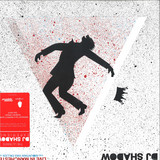
If you check the credits of The Rolling Stones' Goats Head Soup LP from 1973 you'll find a certain "Pascal" listed on the percussion section. That is none other than Los Angeles based artist Nicolas Pascal Raicevik (1933-1994), aka 107-34-8933, aka Head, aka Nik Pascal, aka Nik Raicevic. Besides his hitting the bongoes on the Stones album, Nik was a great artist on his own, both as a painter and as a musician. As a musician, he was a pioneer in the use of synthesizers, preceeding the Berlin school by some years when his Head LP was released on on Buddah in 1970. Buddah probably saw in Head the opportunity to cash in some money from the remains of the psychedelic scene - the three tracks on the LP are named after drugs used in the late sixties. The sounds, however, are accomplished works that show Raicevic as one of the most interesting pioneers in the use of synths. The album probably didn't do too well, since Buddah didn't renew the contract with Raicevic, who instead took his own way releasing his works on his very own Narco Records and Tapes label. Between 1968 and 1975 Narco would issue 4 LPs credited either to Nik Raicevic (Beyond The End... Eternity) or Nik Pascal (The Sixth Ear, Magnetic Web and Zero Gravity) plus one credited to 107-34-8933 (Numbers, which is in fact the same LP as Buddah's Head, albeit with different cover art). Copies of these LPs came with an ironic sticker over the shrinkwrap that read "Do not listen to this LP if you are stoned".
Nik's last album, Zero Gravity (Narco NR123) came under the Nik Pascal name and had a fantastic side long piece on the title track which reminisces of the works of Cluster. B side features four tracks that also bear some Conrad Schnitzler reminiscences. This was to be Nik's last LP before he would sell all his synths to ex car racer and future electronic/ambient music star Steve Roach.
Besides his musical explorations, Nik was also an interesting painter. His paintings are auctioned from time to time, and are consciousness expanding works influenced by abstract cubism and surrealism, some kind of Salvador Dalí on drugs exploring the outter and inner space. All the artwork on the sleeves of his LPs is done by himself. Spacey landscapes and psychedelic colours that fit perfectly to the music they contain.
"Nik Raicevic's music is at the intersection of radical psycho-electronic weirdness and kraut kosmische music (in particular the scifi-hypno-minimal modules of Conrad Schnitzler in Grun, Rot and Blau). It presents mega epic & tripped out electronic improvisations.
"This is an absolute must for collectors and fans of visceral, neurotic soundscapes."
"As far as late-60s / early-70s American Bedroom' Electronic Music goes, these LPS have to be among the first transmissions from this sector, made all the more attractive when coupled with Raicevic's alien topographIes - the covers are high-color portrayals of Venusian lanes, knotted growths, & future-past architecture in a style you might equate with Vintage' sci-fi pulp-novel covers - & copious Downer' sentiment. This music is imbued with a sort of lonely, anti-social sensibility that's about as far as you can get from the Academic' Early Electronic vector. I will say that if the Steve Birchall, Cellutron & the Invisible, and/or Pythagoron™ seed your garden, this will likely do the same."
Never reissued before on vinyl format, the Wah Wah reissue features original sleeve artwork made of paintings and drawings by Nik himself, and reproduction of the famous ironic "Do not listen if you are stoned" sticker. Limited edition, 500 copies only.
Suche:steve c
If you check the credits of The Rolling Stones' Goats Head Soup LP from 1973 you'll find a certain "Pascal" listed on the percussion section. That is none other than Los Angeles based artist Nicolas Pascal Raicevik (1933-1994), aka 107-34-8933, aka Head, aka Nik Pascal, aka Nik Raicevic. Besides his hitting the bongoes on the Stones album, Nik was a great artist on his own, both as a painter and as a musician. As a musician, he was a pioneer in the use of synthesizers, preceeding the Berlin school by some years when his Head LP was released on on Buddah in 1970. Buddah probably saw in Head the opportunity to cash in some money from the remains of the psychedelic scene - the three tracks on the LP are named after drugs used in the late sixties. The sounds, however, are accomplished works that show Raicevic as one of the most interesting pioneers in the use of synths. The album probably didn't do too well, since Buddah didn't renew the contract with Raicevic, who instead took his own way releasing his works on his very own Narco Records and Tapes label. Between 1968 and 1975 Narco would issue 4 LPs credited either to Nik Raicevic (Beyond The End... Eternity) or Nik Pascal (The Sixth Ear, Magnetic Web and Zero Gravity) plus one credited to 107-34-8933 (Numbers, which is in fact the same LP as Buddah's Head, albeit with different cover art). Copies of these LPs came with an ironic sticker over the shrinkwrap that read "Do not listen to this LP if you are stoned".
1972 saw the release of The Sixth Ear (Narco NR666), this time credited to Nik Pascal. A more complex work than Beyond The End..., it adds consistent rhythmic patterns to the mix with the addition of bongoes and also explores some interesting chord progressions.
Besides his musical explorations, Nik was also an interesting painter. His paintings are auctioned from time to time, and are consciousness expanding works influenced by abstract cubism and surrealism, some kind of Salvador Dalí on drugs exploring the outter and inner space. All the artwork on the sleeves of his LPs is done by himself. Spacey landscapes and psychedelic colours that fit perfectly to the music they contain.
"Nik Raicevic's music is at the intersection of radical psycho-electronic weirdness and kraut kosmische music (in particular the scifi-hypno-minimal modules of Conrad Schnitzler in Grun, Rot and Blau). It presents mega epic & tripped out electronic improvisations.
"This is an absolute must for collectors and fans of visceral, neurotic soundscapes." (progarchives)
"As far as late-60s / early-70s American Bedroom' Electronic Music goes, these LPS have to be among the first transmissions from this sector, made all the more attractive when coupled with Raicevic's alien topographIes - the covers are high-color portrayals of Venusian lanes, knotted growths, & future-past architecture in a style you might equate with Vintage' sci-fi pulp-novel covers - & copious Downer' sentiment. This music is imbued with a sort of lonely, anti-social sensibility that's about as far as you can get from the Academic' Early Electronic vector. I will say that if the Steve Birchall, Cellutron & the Invisible, and/or Pythagoron™ seed your garden, this will likely do the same." (twoheadeddog)
Never reissued before on vinyl format, the Wah Wah reissue features original sleeve artwork made of paintings and drawings by Nik himself and reproduction of the famous ironic "Do not listen if you are stoned" sticker. Limited edition, 500 copies only.
If you check the credits of The Rolling Stones' Goats Head Soup LP from 1973 you'll find a certain "Pascal" listed on the percussion section. That is none other than Los Angeles based artist Nicolas Pascal Raicevik (1933-1994), aka 107-34-8933, aka Head, aka Nik Pascal, aka Nik Raicevic. Besides his hitting the bongoes on the Stones album, Nik was a great artist on his own, both as a painter and as a musician. As a musician, he was a pioneer in the use of synthesizers, preceeding the Berlin school by some years when his Head LP was released on on Buddah in 1970. Buddah probably saw in Head the opportunity to cash in some money from the remains of the psychedelic scene - the three tracks on the LP are named after drugs used in the late sixties. The sounds, however, are accomplished works that show Raicevic as one of the most interesting pioneers in the use of synths. The album probably didn't do too well, since Buddah didn't renew the contract with Raicevic, who instead took his own way releasing his works on his very own Narco Records and Tapes label. Between 1968 and 1975 Narco would issue 4 LPs credited either to Nik Raicevic (Beyond The End... Eternity) or Nik Pascal (The Sixth Ear, Magnetic Web and Zero Gravity) plus one credited to 107-34-8933 (Numbers, which is in fact the same LP as Buddah's Head, albeit with different cover art). Copies of these LPs came with an ironic sticker over the shrinkwrap that read "Do not listen to this LP if you are stoned".
Magnetic Web was released in 1973. It appeared under the Nik Pascal monicker and showed a clear evolution in sound, favoured by the addition of an Arp 2600 and some rhythm boxes. It also included percussions and cymbals. The Two Headed Dog site thinks "this is his masterpiece in all of its acid-laced glory."
Besides his musical explorations, Nik was also an interesting painter. His paintings are auctioned from time to time, and are consciousness expanding works influenced by abstract cubism and surrealism, some kind of Salvador Dalí on drugs exploring the outter and inner space. All the artwork on the sleeves of his LPs is done by himself. Spacey landscapes and psychedelic colours that fit perfectly to the music they contain.
"Nik Raicevic's music is at the intersection of radical psycho-electronic weirdness and kraut kosmische music (in particular the scifi-hypno-minimal modules of Conrad Schnitzler in Grun, Rot and Blau). It presents mega epic & tripped out electronic improvisations.
"This is an absolute must for collectors and fans of visceral, neurotic soundscapes."
"As far as late-60s / early-70s American Bedroom' Electronic Music goes, these LPS have to be among the first transmissions from this sector, made all the more attractive when coupled with Raicevic's alien topographIes - the covers are high-color portrayals of Venusian lanes, knotted growths, & future-past architecture in a style you might equate with Vintage' sci-fi pulp-novel covers - & copious Downer' sentiment. This music is imbued with a sort of lonely, anti-social sensibility that's about as far as you can get from the Academic' Early Electronic vector. I will say that if the Steve Birchall, Cellutron & the Invisible, and/or Pythagoron™ seed your garden, this will likely do the same."
Never reissued before on vinyl format, the Wah Wah reissue features original sleeve artwork made of paintings and drawings by Nik himself, and reproduction of the famous ironic "Do not listen if you are stoned" sticker. Limited edition, 500 copies only.
- 1: Caribou
- 1: 2 Vamos
- 1: 3 Isla De Encanta
- 1: 4 Ed Is Dead
- 1: 5 The Holiday Song
- 1: 6 Nimrod's Son
- 1: 7 I've Been Tired
- 1: 8 Levitate Me
- 2: 1 Bone Machine
- 2: Break My Body
- 2: 3 Something Against You
- 2: 4 Broken Face
- 2: 5 Gigantic
- 2: 6 River Euphrates
- 2: 7 Where Is My Mind?
- 2: 8 Cactus
- 2: 9 Tony's Theme
- 2: 10 Oh My Gotty!
- 2: 11 Vamos
- 2: 1 I'm Amazed
- 2: 13 Brick Is Red
- 2: 14 Caribou
- 2: 15 Vamos
- 2: 16 Ista De Encarta
- 2: 17 Ed Is Dead
- 2: 18 The Holiday Song
- 2: 19 Nimrod's Son
- 2: 0 I've Been Tired
- 2: 1 Levitate Me
- 3: 1 Holiday Song(Live From The Fallout Shelter)
- 3: 2 I'm Amazed(Live From The Fallout Shelter)
- 3: Rock A My Soul(Live From The Fallout Shelter)
- 3: 4 Isla De Encanta(Live From The Fallout Shelter)
- 3: 5 Caribou(Live From The Fallout Shelter)
- 3: 6 Broken Face(Live From The Fallout Shelter)
- 3: 7 Subbacultcha(Live From The Fallout Shelter)
- 3: 8 Build High(Live From The Fallout Shelter)
- 3: 9 Ed Is Dead(Live From The Fallout Shelter)
- 3: 10 Nimrod's Son(Live From The Fallout Shelter)
- 3: 11 Down To The Well(Live From The Fallout Shelter)
- 3: 12 I've Been Tired(Live From The Fallout Shelter)
- 3: 1 Boom Chicka Boom(Live From The Fallout Shelter)
- 3: 14 Vamos(Live From The Fallout Shelter)
- 3: 15 In Heaven(Live From The Fallout Shelter)
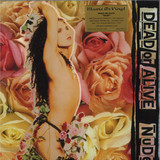
Mit brachialen Tempowechseln und sägenden Gitarrenriffs sowie klebrig-süßen Arrangements und ungestümen Ausbrüchen zwischen Hardcore, Punk und Alternative stiegen die Pixies gegen Ende der Achtziger zu Independent-Superstars auf. 1987 nahmen Frank Black & Co. bei einer dreitägigen Session 17 Songs für das Demo "The Purple Tape" auf. Eines dieser lila Bänder fiel Ivo Watts-Russel in die Hände, der die Pixies schließlich bei 4AD unter Vertrag nahm. Acht der Demo-Stücke landeten auf der EP "Come On Pilgrim", der ersten Veröffentlichung der Band. Im Jahr 1988 entstand das Debütalbum der Pixies, "Surfer Rosa", produziert von Steve Albini. Wieder hielt sich das Quartett nicht lange im Studio auf, in vierzehn Tagen war alles im Kasten. "Surfer Rosa" enthält "Where Is My Mind?" und damit den sicherlich berühmtesten Song der Band. Das Debüt begeisterte die Kritiker, "Melody Maker" und "Sounds" zeichneten es als "Album des Jahres" aus. Auch rückblickend gilt die Platte als eines der wichtigsten Rockalben jener Zeit. Zum 30-jährigen Veröffentlichungsjubiläum bringt 4AD die beiden Meilensteine zusammen mit dem 1986 mitgeschnittenen Radiokonzert "Live From The Fallout Shelter" noch einmal als Triple-Album heraus.
Since the late 80s, Mudhoney - the Seattle-based foursome
whose muck-crusted version of rock, shot through with caustic
wit and battened down by a ferocious low end - has been a
high-pH tonic against the ludicrous and the insipid. Thirty years
later, the world is experiencing a particularly high-water
moment for both those ideals. Just in time, vocalist Mark Arm,
guitarist Steve Turner, bassist Guy Maddison and drummer Dan
Peters are back with 'Digital Garbage', a barbed-wire-trimmed
collection of sonic brickbats.
Arm's raw yawp and his bandmates' long-honed chemistry
make 'Digital Garbage' an ideal release valve for the 2018
pressure cooker. 'My sense of humor is dark, and these are
dark times,' says Arm. 'I suppose it's only getting darker.'
'I would've really just loved to write songs about just hanging
out on the beach, and going on a nice vacation,' says Arm.
'But, you know, that probably doesn't make for great rock.'
Mudhoney, however, know what does make great rock - and
the riffs and fury of 'Digital Garbage' will stand the test of time,
even if the particulars fade away. 'I've tried to keep things
somewhat universal, so that this album doesn't just seem like
of this time - hopefully some of this stuff will go away,' Arm
laughs. 'You don't want to say in the future, 'Hey, those lyrics
are still relevant. Great!''
Mudhoney will be touring Europe in 2018.
CD in die-cut gatefold digipak with custom dust sleeve. LP in
die-cut gatefold jacket with custom dust sleeve and digital
download coupon. Cassette in four-panel J-card in clear case.
Digital download album.
Released in 2006 as a follow-up to Sufjan Stevens' 2005 Illinois, Asthmatic Kitty Records is finally releasing Avalanche on vinyl on August 31st, 2018. Initially conceived as part of a double album version of Illinois, Avalanche instead became a 'companion' (a polite word for 'b-sides') to Illinois. Since its release, fans have had mixed reactions. '3 versions of Chicago!! Enough already,' wrote 'biografiend' on Sputnik. But 'cravenmonket,' who gave the album 4.5 stars on rateyourmusic, suggests that we all 'stop thinking of The Avalanche as more Illinois. It actually owes more to Michigan.' Cravenmonket may be right. Take 'The Mistress Witch' or 'Saul Bellow,' both of which could have lived on the 2003 Michigan as much as on Illinois. One can hear Sufjan's 2004 Enjoy Your Rabbit in 'The Undivided Self.' And the band jam on 'Springfield' looks forward to 2010's All Delighted People. Then there's 'Pittsfield,' which, at least lyrically, foreshadows the more personal themes of 2015's Carrie & Lowell.
All that to say, a vinyl release of Avalanche is long overdue. With gratitude, we happily present Avalanche as a 2xLP a mere twelve years after its release, complete with all 21 songs from the original release, including the three versions of 'Chicago'
The Austrian electronic music label fortunea is operating since over 4 years. 9 records have been released so far. For the 10th issue they laced a very special vinyl package! 8 tracks by Viennese and Upper Austrian local heroes have been placed on 2 vinyl.
The A-side begins with an uplifting opener by Step Back Trax honcho Jon Gravy, followed by a deep, raw house stomper by Peletronic.
Klaus Benedek calls out - The Power of Sweat on B1, while celeste resident dj HANZO, the new member of the bunch, shows his love for experimental lo fi sounds in - Veni Vide .
Alex Kolodziej comes back with a saxophonist to curb vulgar utterances, while Roman Rauch and Precious K team up again after more than 5 years as their Twinpeaks moniker.
From the suburbs of Linz comes Johann Destroy. In - Wax Mining he collaborated with Vöcklabruck's house boy Lukas Poellauer (here as LP.) on a peaktime crossover tune.
Last but not least Lee Stevens from Luv Shack Records finishes this compilation with a sunny, chill out vibed for the - Magharibi (sunset, translated in swahili).
Limited to 300 copies! There will be no repress!
Mastering by Patrick Pulsinger.
- A1: Los Amigos Del Beta Bandidos Ep - Push It Out
- A2: Los Amigos Del Beta Bandidos Ep - It's Over
- B1: Los Amigos Del Beta Bandidos Ep - Dr. Baker
- B2: Los Amigos Del Beta Bandidos Ep - Needles In My Eyes
- A1: The Patty Patty Sound Ep - Inner Meet Me
- B1: The Patty Patty Sound Ep - The House Song
- C1: The Patty Patty Sound Ep - Monolith
- D1: The Patty Patty Sound Ep - She's The One
Die Beta Band war eine britische Musikgruppe, die ihren
eigenen Stil als Folktronic bezeichnete, was eine Mischung aus
Folk, Rock 'n' Roll, Trip Hop und hemmungslos
experimentellem Jammen darstellt.
Die Beta Band wurde 1996 in der Nähe von Edinburgh von
den Musikern Steve Mason (Gesang, Gitarre) und Gordon
Anderson gegründet. Als sie gemeinsam Songs für ihre Debüt-
EP Champion Versions verfassten, stießen mit Robin Jones
(Schlagzeug) und John MacLean (DJ, Sampler, Keyboard-
Pianist) noch zwei weitere Mitglieder hinzu. Im Juli 1997
veröffentlichten sie die von Nick McCabe produzierte EP
Champion Versions, die von Kritikern vor allem aufgrund des
innovativen "Cut'n'Paste"- Sample-Konzepts umjubelt wurde.
Zwei ähnliche EPs folgten bald darauf: The Patty Patty Sound
im März des folgenden Jahres und Los Amigos del Beta
Bandidos im Juli. Alle drei erschienen im September 1998
unter dem passend gewählten Titel The Three EP's in einer
Kollektion.
'Garage bands suddenly obtain cult status and become the antithesis of their initial appeal'
Garage Class were a group of reluctant outliers who produced one of the finest contributions to the wave of UK DIY music that emerged during the late 70s and early to mid-80s.
Hailing from Alsager in North West England and comprised of Tim Shutt (vocals) Phil Murphy (lead guitar) Clive Williams (guitar) Lynne Sanders (bass) and Phil Bourne (drums / bass on studio recordings) Garage Class originally went by the name of The Pits before their then manager Steve Hurt imposed an alias which, though unpopular within their ranks, would nevertheless reflect the shambolic art they would eventually capture on their first and only single.
As The Pits the group offered a loutish inflection on glam-punk flamboyance, evoking Johnny Thunder hitting the north and remaining disowned yet undeterred in a dreary old boozer. But as Garage Class the group distilled a roughcast and homespun primitivism that felt quintessentially their own. In this they proved too unruly to be assimilated into any wider scene. Early gigs descended into acrimony and recognition proved elusive. Yet what they managed to make back then now sounds like an extraordinary article of underdog ambition.
Released in 1984, four years after it was originally recorded, the Terminal Tokyo single is an unlikely triumph of exceptional messthetic punk. Though raw and unpolished the songs here are precariously pop-minded and indisputably anthemic. The titular A-side reveals the dry and detached drawl of Shutt aka The Subliminal Kid, a sharp, jaded and poetic voice that has some of the most iconic lines never heard in punk. Accompanied by second-hand guitars, on-the-fly handclaps and a chorus like a terrace chant this is the cult hit that never was, a heroically artless masterpiece that has all the ragged character and misfit euphoria of Swell Maps and The Buzzcocks if they were more impulsive and boisterous, and left to their own devices in the remote margins of a Cheshire town. The original B-side is here substituted for I Got Standards, a track that, until now, has somehow remained unreleased. An ideal twin to Terminal Tokyo there's the same brusque and dog-eared quality to the band's delivery, as well as the same upfront emphasis on strong hooks and insistent momentum. Yet again, Shutt is on impeccable form, perfecting an inflated, adolescent antagonism that has all the sardonic, malcontented charm of similarly 'shirty' buggers like Dan Treacy (Television Personalities), Patrik Fitzgerald and Mark Perry (Alternative TV).
Although never accepted in their own time both tracks represent a brief but inspired moment of fervent imperfection, one that epitomized the best of a diffuse and autonomous underground movement spearheaded by The Desperate Bicycles and built upon by the likes of Amos & Sara, The Homosexuals, The Cleaners From Venus and Family Fodder. Like them Garage Class were situated at a point where punk, art, humour and a sense of stubborn independence all intersected.
In the years since Terminal Tokyo has accumulated a retrospective appeal among certain trusted circles, with Jon Dale celebrating the single in his exhaustive and essential Story of UK DIY for Fact Magazine, and original copies regularly changing hands for a foolish forty quid or so. With this inaugural release on the Outer Reaches label Terminal Tokyo is not only restored for the very first time but given a worthy expansion courtesy of JD Twitch (Optimo).
Continuing his own fascination with the fringe history of UK DIY - documented on his own outstanding compilation Cease & Desist: DIY! (Cult Classics From The Post Punk Era 1978-1982) and in his re-edits of Crass Records classics for an early release on RVNG INTL - Twitch reinterprets I Got Standards as an incisive, dubwise outing that pictures Jaki Liebezeit and Muslimgauze on a bender in England's provinces, tasked with remixing the raw product of local punks. A new slant on Garage Class' crude magnificence, built to play loud on contemporary soundsystems.
Although the latter part of 1980 spelled the end for Garage Class with members moving on to other projects (Bourne fell in with The Colours Out of Time, Murphy went on to front The Regular Guys and Shutt eventually left to form Happy Refugees) this reissue attempts to give their fleeting time together and the unique single statement they made the treatment it deserves. If this means Garage Class have obtained cult status, their initial appeal remains. Just listen for yourself.
Music Mania and Indica Dubs is proud to present the fourth release in their Mania Dub series. Following the classics 'Almighty Dub' (MD001), 'Rastafari' (MD002), 'Light Up Your Spliff' (MD003), comes another of the UK Dub scene's most popular producers; Vibronics, with two of their most popular anthems from the early 2000s: Red, Gold & Green / Terror. Both of these killers were previous released on different labels, and we have collated both songs into one giant release! Vibronics, the future sound of dub, have been vibrating the world with bass since 1997. Their music is at the forefront of the UK Dub scene, proven by over 60 releases on their own legendary SCOOPS label.
'Red, Gold and Green was the first time I worked with Horns - all played by Stevie Splitz - and now I've been working with him ever since... Terror was made with using the most basic equipment, set up in a temporary studio at home just to build some of raw exclusive dubplates that were never meant for release - they have gone on to be some true Vibronics anthems.'
The master tracks have been provided by Steve Vibronics for us to ensure the original heavyweight sound!
Originally from West Yorkshire, but now resident in Manchester, composer, bassist and producer Phil France is probably best known as a key collaborator alongside Jason Swinscoe in the Cinematic Orchestra, where he co-wrote, arranged and produced on classic albums including Everyday, Man With The Movie Camera, Ma Fleur and also the triple award winning soundtrack for The Crimson Wing nature documentary. In 2013 France released his debut solo album, The Swimmer (GOND016), an emotive, epic record influenced by the great second wave of film composers including John Carpenter and Vangelis, as well as minimalist composers such as Steve Reich and Philip Glass
Five years later, France presents the follow up, the enigmatically titled, Circle, which again represents a very personal journey for the artist. For France the album is an extension of work he began on The Swimmer. A process he has described as: " blocks of sound containing intricate minimal arpeggiated patterns and electronic textures that develop and shift in subtle, original and melodic ways. The trancelike quality, mood and electronic character of title track Circle led France to think of the circular patterns which eventually became a potent concept for the album. "Ideas and fashions repeat themselves in cycles. Events are said to travel 'full circle' and this is important to me because it represents my own recent personal and musical journey after 15 years touring as bassist and composer with The Cinematic Orchestra. I consider circles to be a strong symbol of unity, strength and inclusiveness and ultimately I've aspired to make something beautiful with those values at its heart".
The album opens with the title track, Circle, built on a minimal looped pattern with melodic embellishment and shifting additional harmonic textures. Bells was developed from the arpeggiator and offers a nod to the melodicism and atmosphere of French electronic music. The Jackal features an idea originally developed for The Crimson Wing score but which finally bears fruit here. Cathedrals features an improvised intro, Philip Glass inspired organ and vocal textures inspired by the work of Colin Stetson. Finally, the album ends with a reprise of Circle this time featuring layered pianos. But it isn't the conclusion of the journey, for France: "The Circle is infinite - During the process of making this record, I have been constantly reminded that nothing ever stays the same and that all is in constant flux. The challenge for me is always to respond positively, be aware of and seize the opportunity for progression constant change provides" And it is that sense of movement and flow, but also calm and beauty that permeates Circle and make it such a worthy successor to The Swimmer.
The heavenly 'Skywards' leads the way upwards with tenderly treated spacious drum programming and light-as-air atmospherics while darker and deeper cavernous tones create the yin-yang balance of lightness and dark. 'Broken Spell' continues the uplifted vibe of a spell that when broken, blooms open with an intoxicating permeating sweetness like an exotic fragrance that lingers in one's memory. 'A New Day' leans slightly more towards a heavier driven track featuring a funky bassline with bright electronic notations as counterpoint while drifting, dreamy pads keep the overall mood airy and light. The off-kilter knob is turned way right on the bouncy final track 'Disjointed Route', injecting dashes of wry quirk alongside a lightly moving groove.
Apart from being known for founding the infamous vinyl imprint Subaltern Records and for his residency on SUB.FM, Gabriele Romeo aka. Mentha has made quite a name for himself with his Jazz-influenced bass music productions. This LP is a selection of tracks from his vault, showcasing his musical abilities and tasteful compositions in this self-release.
1 - All Or Nothing
Greeting the listener with melancholic yet optimistic vibes is the first track of the LP, 'All Or Nothing'. Setting the loungey and open space feeling for the release, captivating chords and soothing melodies join a potent sub-bass in this introspective overture.
2 - Same Spot ft. Vale
'Same Spot' picks it right up where the first track left it, emerging further into a vast ethereal space. Charming guitars pave the way to uplifting trumpet lines, masterfully executed by Vale. A meditative bass-line seamlessly merges all elements together into a seductive modal composition.
3 - Sunflower
Showing off his instrumental skills yet again, Mentha delivers a sunny and laid-back masterpiece with an apt title, rounded off by a perfectly executed contrast between bumping subs, crispy drums and radiant spaces. Bossa-inspired rhythms bond with Rhodes, jazzy horns and crystal guitars shifting through the realms of major and minor.
4 - Natural Rain
Natural Rain maintains the meditative vibe while entering mysterious spheres of consciousness. Like sunrise in an enchanted forest, this track is magically captivating and keeps the listener under its spell throughout. Oneiric melodies encounter pads and polyrhythms, leading to a climax which completes this mystical journey.
5 - Water March
Like a light breeze on a hot day, Water March takes it easy. Marked by Mentha's very own signature guitar and trumpet, this peaceful march unfolds playfully. While surprising with energetic bass frequencies and instrumental intricacies, this piece shows an insight of the artist's musical roots.
6 - In My Head ft. Aphty Khéa
A psychedelic masterpiece, 'In My Head' sets a strong statement at the end of the release. The unsettling atmosphere of the track is tastefully matched by Aphty Khéa's pristine voice. Creating an eerie yet soothing vibe, this track lets the mind roam freely through time signature changes, dynamic transformations and instrumental layers which remind of Steve Reich.
* As we all know, reggae music was created in the Ghettos and has helped many people in their struggle & creating many opportunities for those who worked hard for it. Reggae developed its own alternative industry with the support of sound systems and gave opportunities to so many deejays, toaster and singers. In Brasil, with the rise of sound systems inspired by the UK and JA scene, Monkey Jhayam was one of the first artists to express his art and also build a solid and prominent career alongside many sound systems in his country. Out of São Mateus, Monkey broke barriers and has been collaborating with producers from all over the world with his uplifting Portuguese message.
Kendrick Andy's Roots song 'Great Old Men' lends itself to a new version by the major Brasillian Reggae artist, Monkey Jhayam. The 7 single features back to back versions, both in English (A) and Portugese (B). Rhythm: Alien Dread. The tracks also feature Alvin Davis (Hornz), Asha B (Congos & Percussion) and Rhythm/Lead Guitar by Steven 'Marley' Wright.
Fernando Sanz has been steadfastly dedicated to the craft of beats and breaks since he was a young sprout of 14 years in the sun baked southern Spanish port city of Algeciras. Under the imprint Orbe Records, Sanz has cultivated his own thriving techno community as artist and label head. Since 2014 Orbe Records has been lashing the block rocking techno of Sanz's comrades Eduardo De La Calle and Steve Stoll, but mostly of Sanz's own prolific moniker, Orbe. As DJ and producer Orbe keeps the mood surreal and dreamy while deploying understated drum machine patterns to hammer the platonic solids that keep his beloved community in tact.
His forthcoming 3-track 'Hohenheim' EP for the Barcelona label, Lone Romantic, keeps the Orbe buzz rolling. 'Hohenheim' kicks the record into motion with the resounding thuds of a multilayered big-room kick while bright synths and sharp edged sci-fi machinery climb the walls in obscure and narcotic patterns. 'Shimano's Tribute' is a study in the fundaments of techno that lull the listener with an extended 4X4 intro into a state of high mental absorption, just in time to drop the centre piece of the track, an eloquently ovular stutter sliced percussion sample. 'Edelweiss' sets the record on a outward course for somewhere between the hypnotic dance floor bliss of a pre-dawn Sunday morning and the impending angst beholden to glimpsing the dystopian sprawl of civilisation when flying out Monday morning.
Steve Cobby and Laurie Welton are both from Hull in the north of England. Cobby is one of the members of the pioneering electronic outfit Fila Brazillia while Welton is the man behind the Myth! project, whose "False Profits" EP was released last year on Posthuman's Balkan Recordings label. In fact, Cobby has known Welton's aunt for 20 years and Laurie has been a fan of Fila Brazillia since the early '90s. So when Laurie was asked by Steve to collaborate with him, he jumped at the chance.
The fruits of their collaboration are the three tracks on the "Absolute" EP. This release is truly an international affair; the label, Adam Warped's Whiskey Pickle imprint, is based in Austin, Texas, the artists are from the UK, while a remix of "Absolute" comes courtesy of New Yorkers Whatever/Whatever, a duo staffed by Bryan Mette and legendary NY DJ, producer and remixer Justin Strauss.
First Ever Vinyl Reissue, Limited Edition To 500 Copies Only, Bonus Tracks Not On The Original Lp, Remastered Sound, Insert With Liner Notes By Nick Rossi And Photos, Beautifully Housed In Three Back-flapped 1960s Uk Style Picture Sleeve ! The Wynder K. Frog Story Evolves Around Mick Weaver. After He Switched From Piano To Organ He Joined A Band Named The Chapters That Would Soon Be Renamed Wynder K. Frog And Perform Material From James Brown's Flames, Booker T. And The Mgs Or Even Songs Learned Through Georgie Fame's Recordings And Graham Bond's Repertoire. Wynder K. Frog Moved To London And Became Regulars In The City's R&b Scene Playing At Swingin' London's Clubs Like The Tiles Or The Marquee. A Contract With Island Records Was Secured And -under The Wings Of Producers Like Chris Blackwell, Guy Stevens, Jimmy Miller Or Gus Dudgeon- Wynder K Frog, A Name That Would Eventually Be Used As A Pseudonym For Weaver More Than A Proper Band Name, Did Some Some Amazing Hammond Organ-ized Recordings And Issued In Three Lps And A Bunch Of Cool 45s.
At The End Of The 1960s, Weaver Would Quit The "band Scene" To Become One Of The Most In Demand Session Musicians And Throughout His Career He'd Be Heard Backing Names Such As Eric Burdon, Roger Chapman, Dave Gilmour, Keef Hartley, Alexis Korner, Ralph Mctell, Taj Mahal Or Otis Rush A.o, But His Lps As Wynder K Frog Are Classic Hammond Sound From The 1960s Uk And Will Appeal To Those Into Brian Auger, Graham Bond, The Artwoods, Zoot Money, Jimmy Mcgriff, Booker T. & The Mgs And The Likes.
Out Of The Frying Pan
Released At The End Of The Summer Of 1968, And With A Host Of Session Musicians That Included The Brass Section Of John Mayall's Bluesbreakers, Producer Gus Dudgeon Helped Weaver / Wynder K Frog To Improve The Results Obtained On The Debut Lp And Get One Step Closer To The Live Action. The Formula Was More Or Less The Same, Instrumental Hammond A Go Go Covers Of Hits From The Era, Including The Rolling Stones' "jumping Jack Flash", A Funked Up Version Of The Classic Tommy Tucker Blues Number "hi Heel Sneakers", An Exploding Cover Of "tequila" Or The Standard "green Door", But It Also Included The Sensational Weaver-penned "harpsichord Shuffle".
For its tenth year as a label, 4Weed Records proudly presents Zion Kingdom, a special EP we've been working on since long time. A feature between historical sound system Dread Lion Hi Fi, also active as producer and promoter, and Mr Biska, this release is enhanced by legendary Henry Tenyue's trombone melody, aka Matic Horns, and it is mixed, dubbed and mastered by Steve Vibronics.
Over the years Matic Horns has been collaborating in studios and live performances with the best Jamaican and English talents such as Gregory Isaacs, Freddie McGregor, John Holt, Luciano, Aswad, UB40, Horace Andy, just to name a few. Dread Lion Hi Fi crew is a historical Italian sound system, that has been a reference point for the reggae vibez in Italy, promoter of historical events such as the Milano Dub Club and the Dubwise Festival, where the best producers, singers and selectas of the international scene have been hosted. The combination with master Steve Vibronics was born far away in time, from a consolidated relationship over the years that brought about this collaboration.
The track opens with a magical trombone melody by Matic Horns that perforates the pad carpet laying down the whole tune while indicating the path, a victorious march to Zion. The guitar riff, which perfectly fits to the trombone melody, introduces the drop of a deep overwhelming rhythm that transmits the desire of moving and dancing, and at the same time a spiritual mantra for high meditation. The production is enriched by three different dubs, mixed and made unique by Steve Vibronics' technique, reverbs, filters and delay, a very guaranty for the lovers of Uk Dub in roots and culture style.
Michael Beharie (new York) And Teddy Rankin-parker (chicago) First Met More Than 10 Years Ago While Attending Oberlin College. Since Graduating, Beharie And Rankin-parker Each Veered Into Markedly Different Avenues. In Addition To A Consistent Output Of Solo Releases On Nyc-label Astro Nautico, Beharie Also Recently Joined Up With The Ever-confounding New York Ensemble Zs (northern Spy, The Social Registry, Troubleman Unlimited), Recently Performed On Albums By Laurel Halo, Greg Fox & Colin Self, And Is A Regular Composer For Dance And Film. Rankin-parker Became An In-demand Cellist For His Prowess In The Work Of Improvisation, Avant-garde Music, And The More Exploratory Realms Of Indie Pop, Lending His Talents To A Wide Array Of Bands And Collaborators, Such As Primus, Iron & Wine, Steve Reich, Pauline Oliveros, Glen Hansard, Father John Misty, International Contemporary Ensemble (ice), Chicago Sinfonietta, And Nicole Mitchell's Black Earth Ensemble.
"Things take a psychedelic turn for SchleiBen 7 with a welcome to the label of arch exponents of mind expansion in NYC's Georgia and the unlikely but no less diverse inclusion of Balearic stalwarts A Man Called Adam. Having Georgia in the series might not now be a surprise, however discussions with this open, genuine duo started during a visit to New York over 3 years ago and so here, finally realised in this fluid journey of confident pace and harmony, is the best of their freeform evocations. A duo in the everyday sense, Brian Close and Justin Tripp are video / music production teamsters of unnatural talent. Having gained a status of their own that has seen them release for the likes of Palto Flats and FTD, the five pieces that form their contribution drip with psychedelic intent. Culled from archives, the interest is how the tracks - made over different years, locations and situations in life - meld in to something poetic simply by being placed within a specific format. Avant-chimes ebb to rhythmic pulses and erudite teachings before dark percussion and Eastern melodies reach a clattering, but gentle finale. With an upcoming collaborative album with Secret Circuit due on the label later in 2018, as well as recent works with RVNG Intl's Matt Werth and recordings for Sacred Summits' brethren Firecracker Recordings, it's a warm, effusive glow of a welcome. In contrast, the inclusion of A Man Called Adam in the series may indeed surprise but is a false comprehension. The "Sketches" included here show AMCA away from their Balearic pop incarnation of the last thirty years and towards the academia that both members Sally Rodgers and Steve Jones have pursued in the last decade. With both completing PHDs, Sally ('The Diachronic Impact of Technology-Led Abstraction in Oral, Written and Music-based Poetries') is a senior lecturer at Leeds College Of Music, while Steve ('Mobilise: The Carry Principle, Sound and Mobile Media') is based out of de Montfort University, now is the perfect time to highlight the diverse sound environments they have been working in. The music that makes up these recordings are drawn from sound works and audio experiments completed in recent years. From sound toys and apps to home made glass organs and electro-acoustic sound, custom patches to spoken word manipulations, the sketches are excerpts - some evolved from commissions for the National Science Museum, BBC Radio 4 and live performances with the world renowned video artist Milosh JL - fused especially for this release. Bringing these generated pieces in to an audible "mix" creates a discourse of their work in performance, interactions and visual media. An intellectualised album therefore, but still in the premise of the series to allow artists to present something new, unique, discrete, hidden even, all with the aim of giving the recipient the chance to sit back and (un)listen. "