Chicago-based contemporary electronic musician Steve Hauschildt has composed panoramas of synthesized sound for over a decade. First within his former band, Emeralds, an American touchstone of 2000s home-recorded psychedelic noise music, and later across a steady and critically-acclaimed stream of solo releases spanning ambient techno, arpeggiated electronica and post-kosmische styles utilizing synthesizers, computers, and digital processing. In 2018, he extended a collection of rich, visceral tracks titled Dissolvi, his first release on Ghostly International and his most collaborative work to date. Just a year later, Hauschildt returns with Nonlin, an album that's freer, leaner, and looser, both structurally and conceptually; less linear compared to its predecessor, but still captivating. Developed and recorded in several studios during and around the edges of tour - Chicago, Los Angeles, New York, Tbilisi, and Brussels - this material emulates an alienating encounter with a smattering of places, a replicant of culture shock, a solitary and stark experience with uncanny environments, melody and dissonance as oblique locales. Nonlin finds Hauschildt evolving his palette of tools, integrating modular and granular synthesis. The improvisatory and generative nature of modular systems, when paired with his signature grid-oriented and hand-played techniques, guides these compositions slightly out of line to hypnotic effect. Opener "Cloudloss" permeates the mix with an unsettling smog, which reappears and all but engulfs "A Planet Left Behind." On cuts like "Attractor B" and "Subtractive Skies," pockets of air rest between sequenced pulses, whose crumpling and flattening folds build into a restrained rapture of crisp frequencies and milky reverb-swallowed coruscations. The album's title track and centerpiece logs on to a foreign network, a fractured percussion signal that modulates and stutters into static amidst curious melodic sparkling in the hazy bandwidth. "Reverse Culture Music" casts an elegant and brooding stream of strings, pizzicato and churning bow from Chicago cellist Lia Kohl, against chiming minimalist synth frameworks. A surprising pattern emerges in the taciturn systems at work. Hauschildt continues to expand his already horizon-wide repertoire, here exploring the effects of corrupting coordinates; a flight subject to the collapsable abilities of time in remote spaces, a smearing of the axis to elegiac ends.
quête:str 8
As electronic musician Lorenz Brunner sketched his vision for the first Recondite full-length on Ghostly in five years he took a step back to assess who and where he was as an artist. 2013's Hinterland accelerated a progression he's since been touring around the world and releasing music with labels such as Hotflush and his own Plangent Records. His new album uses the icy Hinterland as an aesthetic and tonal template for a like-minded map of evocative compositions aptly titled after the German word "stillstand," now presented as Dwell. Windswept, moody, and melodic, moments on Dwell linger with emotional resonance. The title track sends an eerie synth loop through a field of techno kicks. The beats recede for a breather four minutes in as if to survey the surroundings. If Brunner pivots anywhere - possibly just a new perspective afforded by being confidently stationary in his craft - it's by leaning more into hip-hop structures. He's an avid rap fan and his love for those production techniques is notably present on "Nobilia," a queasy shuffler (titled in reference to the Super Nintendo game Secret of Evermore), "Interlude 1," which skitters in lockstep with contemplative synth chords, and "Surface," an isolatory, ruminative sequence. The closer "Moon Pearl" soothes and shimmers like its namesake, a cherished gem in The Legend of Zelda series that allows carriers of the gem to retain their shape and essence in the Dark World. Recondite does something many artists try to avoid, he dwells in his own established identity, one that has garnered him a devoted fanbase. His murky electronic productions, built around mirage-like pads and clipped drum programming, have proven to be highly functional and spectrally enveloping; Dwell is not a return to form, it is a further study of the shapes, it is the modes, and the structures Brunner has trademarked.
Ansatz der Maschine is back with a new record! For the album "Burial Songs", Frontman Mathijs Bertel went to the Greenhouse Studio's in Reykjavik, Iceland. He worked together with Producer Valgeir Sigurdsson (Bjork, Feist, Bonnie 'prince' Billie, Coco rosie,...) . The result is a poetic and fairylike record, a mindblowing trip where neo classical harp and cello meets organic click 'n cut electronics, but just as well there are some warm folktronica songs where singer Sophia Ammann (Be/Ca) takes the lead. Every record Ansatz der Maschine likes to collaborate with other musicians. For the song "Invisible" they worked together with AMEN RA frontman Colin H. Van Eeckhout. The video was shot in the wild nature of Iceland with both of them. The Britisch born ambient/folk musician Will Samson (who just released an album on Wichita) lents his voice to the song ‘Untold’.
For this record, Mathijs worked together with musicians Nicolas Rombouts (ex-Dez mona/ Stef Kamiel Carlens...), Seraphine Stragier ( Laïs, SunSunSun Orchestra,....) Gianni Marzo (Isbells, Marble Sounds,...)
Since relocating from Amsterdam to Bergen on the Netherlands’ north west coast, Tom Trago has gone back to basics. Every day he jams out tracks in his home studio using a small selection of electronic instruments, drum computers and effects units, a process that allows him to quickly capture ideas, emotions and the intense moments he experiences while making music.
It’s these diverse and sometimes surprising musical moments that will be showcased on Trago’s new DIY record label, Jong Nederland. The imprint is named after the building where he now lives and works, an historic and storied place that has been home to artists of all descriptions since the 1960s. Each vinyl release will feature tracks made by Trago using his improvised, straight-to-tape technique, packaged in handcrafted sleeves illustrated by internationally renowned Dutch artist – and fellow Bergen resident – Pieter Bijwaard.
The Jong Nederland story begins with two tracks of undulating, slowly shifting dancefloor voodoo rich in crunchy drum machine hits, lilting electronic melodies and instinctive dancefloor warmth. On the A-side you’ll find “Whisper”, a hypnotic but fluid affair where hushed melodies tumble down over off-kilter polyrhythmic machine drums, spaced out effects and bubbly, ever-changing analogue electronics.
B-side “Belltower” sees Trago up the tempo a little and bounce us towards the farthest reaches of the galaxy. Utilizing a rubbery rhythm track full of sturdy but supple kick-drums and hissing cymbals, Trago layers up fizzing synthesizer lines, poignant minor key chords, wiggling acid-style motifs and starburst electronics to fire the synapses and stir the senses. Like its’ A-side companion, “Belltower” gently twists and turns throughout, reflecting the real time, hands-on changes made by its creator during the spontaneous sessions that led to its creation.
Releasing his first ever vinyl release 'El Sunset' on James Holden's, Border Community back in 2007, Chilean producer Ricardo Tobar has since been held in high regard by the seminal UK producer. Intricately constructing his way around the parameters of emotionally-lead, highly atmospheric electronic music, Ricardo has brought his sound forward to grace the rosters of Jennifer Cardini's, Correspondant, ESP Institute and MUSAR Recordings. Continuing to extend his already significant discography, he now returns to MUSAR Recordings for a third time with the 'After The Movie' EP.
Ricardo's 'After The Movie' EP forms a selection of cuts that have been held in his locker for quite some time. Uncovered by MUSAR Recordings label head, David on a podcast from way back, it seemed only natural that this unreleased music from Ricardo would find its home on the Amsterdam-Tel-Aviv label.
"This EP is quite special to me because it reflects a long timeline in my work. The 'After The Movie' track had been in the vault for ages until David from MUSAR found it in an old podcast; it really takes me back to those first steps in recording music." Ricardo Tobar
Across his EP, Ricardo plays with varying textures and arrangements that in turn provide a cross-section of his sound that has expanded and developed over time. 'After The Movie' presents the experimental ambience synonymous with his early works, whilst 'Parques' brings an idyllic, cinematic feel with strictly crafted synth arrangements riding high, post-rock influences also show through. 'Regain Your Power' represents a change of course, whilst also channeling a political message punctuated by social unrest taking place in Ricardo's home country, Chile. He abandons experimentalism in favour of tougher 4x4 elements, allowing his machines to run riot.
"The mixture of ideas and feelings on this EP have a politically charged spirit, as electronic music always does. A few weeks after I finished 'Regain Your Power' the whole Chilean social explosion took place with the same ideals I had in mind when recording the track." Ricardo Tobar
Stepping up on the remix is a pair whose names are etched into the history of UK electronic music, Andy Turner and Ed Handley a.k.a. Plaid. Reworking title track 'After The Movie', they produce an emotive, soundscape complete with droning basslines and ex-terrestrial flourishes.
On this Caribbean island that is Cuba, El Tipo is a pioneer of Hip Hop. The founder of Obsesion group with he has committed three albums, traveled Europe, Latin America, United States. He has invested the mythical scene Apollo Theater of Harlem, shared the stage with The Roots, Common or Kanye West, integrated the Gilles Peterson’s band for the Havana Culture Tour. 500 LTD!In the world of beatmaking, Al Quets (originally known as Quetzal) is a figure. An instrumental designer who cut, loop, program, cadence, compose. A name marked by 5 albums and collaborations with Onra, Guts, La Fine Equipe ou Milk Coffee and Sugar. Between the French beat maker and the cuban MC, there’s thousand of kilometers but a desire to connect so strongly that no force could have prevented the meeting. So, rather than exchanging digital files , Al Quetz preferred swallowing on the same frequencies. Together they drew on all the musical currents of the island and around, absorbed Afro- Cuban sounds, added the freedom of jazz, the metronome of hip hop grooves, smoking riddims and heavy bass of the Jamaican neighboor.
Black Truffle is pleased to present Realejo, the first vinyl release from Brazilian sound artist and composer Manuel Pessoa de Lima. Having composed works for diverse contexts including cinema, contemporary dance, theatre and television, Lima’s live appearances often take the form of self-reflexive lecture performances that combine electro-acoustic sound, red light, video and spoken text, moving unpredictably from the hilarious to the distressing.
Realejo consists of two side-long pieces of highly idiosyncratic electro-acoustic collage, beginning with recordings Lima made of himself playing the organ in the Schloss Solitude Chapel in Stuttgart. Exploring the peculiarities of the instrument’s mechanics, Lima made hours of recordings with the organ stops half-way open, moving from haunting gliding tones to oddly tuned fair-ground melodies reminiscent of the record’s namesake realejo, a hand-cranked organ traditionally found in Brazil as the musical accompaniment to the work of fortune-telling parrots.
To these organ sounds, Lima added recordings of a security guard made in São Paulo: ‘Just before coming to Stuttgart, I started making field recordings of a security guard in São Paulo. It's something pretty common in residential areas: they sit in a chair with a whistle, and use that to signal when people arrive, leave or pass by in the street. This particular security guard, Miguel Viana, works on the same street my parents live, and where I had my childhood, and he has worked there since I was a small child. He has watched the street at night, from 8PM to 6AM, every single day, except Sundays, for over 30 years’.
The poignant sounds of the security guard’s whistles punctuate Lima’s electro-acoustic environment, which also includes raw digital synthesis, recordings of his friends’ infant child, audio lifted from Youtube, and, on the LP’s second side, elements taken from an earlier work, ‘36 English to Portuguese Lessons’. Finely chiselled from dozens of hours of source material into a detail-rich, mercurial structure, Realejo is alternately jarring and seductive, introducing listeners to a young composer with a powerfully individual voice.
Pacific Express emerged from Cape Town, South Africa in the 1970s. The band were from the so called "Coloured" community and were ground breakers in both musical and political arenas. The founder members Paul Abrahams (Bass), Jack Momple (Drums) and Issy Ariefdien (Guitar) were joined by Chris Schilder (Piano), Vic Higgins (Pecussion), Barney Rachabane (Alto Sax), Stompie Manana (Trumpet) and Zayn Adams & Kitty Tshikana on vocals for their second album "On Time" in 1978.
On several occasions the group fell foul of Apartheid laws and discrimination by the state broadcaster, SABC. On one occasion they were asked to leave the stage of an international tour by Australian act John Paul Young, because the law forbade racially mixed performers on the same stage. The promoter, management and band members all resisted and once he incident made the Australian newspapers the authorities had little choice and turned a blind eye.
And so to the music. The most important thing. The LP opens up with the slick jazz-boogie funk of "We Got A Good Thing Going On", a perfect vehicle for the vocals of Zayn and the statement-of-intent, on-point musicianship of the band.
"I Hear Music" is the first of three smooth sweet string-laden ballads to feature on the LP. The majority of the songs on the LP were written by keyboard player Chris Schilder. As well as high-craft songwriting Chris also contributes layers of effortless musicality with his Rhodes and piano. "Good Old Days" (the only cover on the LP) is next and its smooth-rock grooves swing effortlessly to the fore. The A-Side of the vinyl closes with the instrumental jazz funk of "Saturday Night".
The flip side of the album opens with the bands biggest commercial success. A sweet soul ballad penned "Give a Little Love". Stepping outside their usual sound. This hit however was not without controversy as the video was removed from the TV airways after the South Africa Broadcasting Corp realised that the group were of mixed race, which was against rules for so called local artists in public performance at the time.
"Dream" follows on with the driving jazz rock and travelling keyboard solos. "Reaching Out For Love" is a power-pop boogie groover powered by guest vocalists Erica Lundy and Kitty.
"Say The Last Goodbye" is the last of the trio of ballads. A smooth style moment sounding all the bit like a 70's US TV drama closing theme. The LP features with a funky workout where the band show off their chops and slick level of musicianship.
Besides the success in southern Africa this album became a regional hit as a pirated music cassette in Nigeria. It was also released in France and Japan.
The band would go on to record one further LP in 1979 and a single in 1981. They carried on performing however well pass that. Throughout their years together the band acted as central hub for Jazz musicians within the Cape Town area. Players as Tony Cedras, Jonathan Butler and Alvin Dyers gaining experience alongside established names such as trumpeter Stompie Manana and alto saxman Barney Rachabane.
Here at World Seven we are ever so pleased to be re-releasing what we consider the bands finest album moment.
Dick Verdult, a.k.a Dick el Demasiado is the Philip K. Dick of multi-disciplinary art, the Moby Dick of “cumbia lunática”, and the Charles Dickens of literature and experimental cinema. He first fell in love with cumbia when he heard his nursemaid singing the classic “La pollera colorá”. From this moment on, he adopted the genre and reinvented it, in a perpetual degeneration called Cumbia Lunática, twisting up the elements of traditional cumbia, the “cumbia of the mucamas”, to create an anarchotropical vertebral rhythm, one which supports every moving part.
Celulitis Illuminati is the powerful debut of the anarchotropical gentleman knight of the abstract, Dick el Demasiado, eight dangerous tracks recorded for the first time on vinyl, songs that, upon listening, will liposuck all that grotesque accumulation of adipose tissue out of buttocks and brain. They interweave an amalgam of South American folklore and the cables of electronic music, the plugged-in Ranqueles indians, as in “Asi Que Los Que Sí” (“So That Those Who Yes”) on Side A, surrealist and lugubrious beats, poetry made song and “the dead man’s drool is good for painting watercolors”, as he sings in “Búho Sin Un Ratón” (“Owl With No Mouse”).Euphony that will abduct you away to a viscous street party with “Son Cosas De Hoy” (“They’re Things For Today”) and to an eclectic and excessive dimension with “pero bien bweno” (“but very proper”).
Side B is pure dynamite: “Mecha flan” (“Pudding Fuse”), “Sábado cultural” (“Cultural Saturday”) and “En la jeta” (“In the face”) represent the perfect blend of Lucho Argain (La Sonora Dinamita) and Muslimgauze (Bryn Jones). On top of this, the album includes an as-yet unheard gem, “Llama Mi Abogado” (“Call My Lawyer”), produced by Dick himself and Manuel Schaller, the telepathic mage of the Theremin. When the Dutchman stepped off the boat and onto the block, as well as offering us the TV set, the sculpture of a deranged English woman who devours islands like they were sandwiches, the synthesizer, the sound effect, the African drum, the maraca, the indigenous whistle, he obtained for us the song and the stanza, he provided us with the language and the poetry, the truthful, the epic of the ugly. Cellulite for mortals, cumbia lunática for the enlightened ones! Alfredo Padilla (Trans. Komurki)
Indeed, while he's best known as a DJ/producer in his own right, Duvante's own A&R skills are impressive, with Residual counting on everyone from Fym to Boo Williams to Garrett David over the years. As with their last V/A (the brilliant Refraction Vol. III), the label owner has done another expert job at rounding up some great troops here, with four emerging producers delivering the goods courtesy of Refraction Vol. IV.
We get underway courtesy of Rukka's 'Stellar Radiation'. Full of zippy, nimble synths and clever cowbell sounds, 'Stellar Radiation' is a brilliantly constructed slice of intergalactic funk that brings the rabbit role in some style. Teakup's 'Believe' is a more stuffy, techno-focused cut, the likes of which has been produced in a unique, urban-influenced vein. Miscellanea I on the Is / Was label, it's another reminder of the Ohio native's undoubted talents.
'Sepehr's 'Exit Your Body' plays out like a vintage cut from The Martian. Loaded with funk and soul motifs and characterised by its 808 sounds, this is techno of a real swagger and panache. Deep but brilliantly catchy, it's indicative of the label at its very best. It's then left to Italian producer Pressure Point to see us out, a task he fulfils in some fashion thanks to 'So Far So Good'. Another track with its roots in classic sounds, it too maintains a sort of contemporary edge. Really fascinating and sumptuous stuff that strays down different paths throughout the course of its almost 6 minutes, it closes the release in truly emphatic fashion.
Space-influenced tracks that bring the listener to the heart of the funk cosmos, Residual's latest serves up a brilliant and dexterous voyage to soundspheres that are well worth getting lost in.
Still Loving You, by Twilight, was originally released in 1981. Housed in a low-fi generic album cover, this very polished, professionally produced record sounds like it was made by a super talented band. Strains of Earth Wind and Fire, George Duke and Roy Ayers, flow through a collection of tunes that effortlessly blend soul, disco, funk, Latin and Brazilian vibes.
But looks, as evident with the LP cover, can be deceptive. Twilight was not a band. In fact, with the exception of a guest horn section and one guest vocal, Twilight was, and still is, Lawrence Ross; one man with a clear vision of what his music should sound like, and how he would make it on his own. Working the nightshift at General Mills, Ross was a Head shift packer at a flour mill where, in the twilight hours, there was enough quiet time to create songs.
He estimates it took him about a year to write the album, but recording only took a week. Able to get by with only 3 hours sleep he recorded Still Loving You in a seven-day stretch between 10 am and 11 am every morning, just a few hours after finishing work. Ross showed-up to the studio with a master plan to make a record as he heard it in his head, by playing everything himself. “I laid out a tick track from begin to end on the first day,” he explains. “Then I went in and laid down the bass on the next day, and then drums, and then keyboards etc, with each process taking one hour of studio time each day.”
After lasts years beloved Operator release, SOLIDE returns with the second part, again by label head honchos D.Y.A and Kalyma.
With this current release, they take heed of a well known principle that has been brought upon us by the Hollywood film industry - any thrilling, perfectly executed and audience approved production needs to get a sequel - So, the curtain raises now for Operator II, a tune instantly reminiscent of its predecessor in beat architecture and kalimba arrangement, yet thought through with even more sophistication and sensitivity.
A Gardener's Perspective pursues that same kind of vibe, coming along with slight Electro-borrowings and cocooning synth-harmonies, climaxing in an masterly organ solo that has soul and devotion to sound written all over it.
Yet another tune that doesn't even have to conform with peaktime arithmetics to send whole floors into frenzy, no matter what time of the night it might be. Closing things off it's Casino Lunch Break, another strongly vibing and very tribal affair radiating afterhour qualities, ending another more than solid offering on Solide on a high note.
A spiritual successor to our last Sleazy McQueen 12", Daikaya is a slab of buttery, slow-burn disco that coats the dance floor in molasses, making the party move with a certain sensuality.
The four-track vinyl EP includes three originals, all by Sleazy McQueen and Terry Grant, and one remix, courtesy of Versatile chief, Gilb’R, who turns the title track inside out and gives it a creeping, alien presence while not letting go of its starry-eyed, luscious warmth. For the digital edition, a second version, stripped down and dubby, is tacked on as a bonus.
Kicking off 2020 in style, Life And Death welcome Madrid based groove maker Bawrut for some of his distinctly off kilter brilliance.
Italy born Bawrut makes warm, heartfelt electronic music that crosses the musical spectrum, doing so with a true left of centre perspective. He imbues his productions with weird and wonderful sounds and an exquisite sense of craft that make them both unusual and engaging. He has done so on the likes of his own Silencio label as well as Ransom Note and PETS Recordings and has become a mainstay of the DJ circuit as a result. Next to high profile shows at places like Nuit Sonores he has also toured as far afield as Vietnam, and here he brings some worldly perspective to this latest for DJ Tennis’ always cultured label, Life And Death.
First up is 'Rollin'', almost ten minutes of synth based excellence that takes you on a real sonic adventure. The drums are firmly rooted and hypnotic while the various pads up top unfold like aural fireworks. It's a tense track that never lets up and keeps you locked for the epic duration. Equally fantastic is 'Terza' with its twisted, tortured synth lines and vocal yelps all bringing real drama to the deep and rolling drums. It's a turbulent track to bring real edginess to the club. Lastly, the grinding 'Drum Beat' has a menacing bassline and tribal vocal stabs cut up with rave sirens. It's a sweaty, strobe lit monster that takes you to the heart of the dance floor.
These are three perfectly slow-release but high impact tracks from this ever more vital talent.
Dukwa is back with the second chapter of his own personal output with a new killer four tracker EP: first cut on A side is the stunning motor city anthem Akira, an epic soulful winner which reminds some of the best Inner City’s moments thanks to its catchy vocal parts and twisted up grooves. If you are more a fan of instrumental club tracks on the second cut instead you will find Akira’s dub version where drum parts , strings, its original wicked bass line and the romantic piano solo totally stand out!
We stuck in the Detroit with the raw jam of Violet opening the flip-side, a wonky lost brother of Strings of Life that through its original arrangement and a clever broken beat will be able to amaze any dance floor. Dukwa’s pinnacle of poetic and compositional intensity happens with the poignant combination of dramatic strings together with beautiful piano notes and acid tinged bass within the closing track Water. Timeless stuff and absolute burners to enrich your record collection.
Raw Culture is back to torment your lives. This time we have the regret of having in our roster the ex ice skater Wosto.
Based In Hamburg he is putted his sign on some label such as Sign Bit Zero and he give is effort to some groups such as Fallbeil and Sauerstofff (with the duo Nostalgie Eternelle). Teerpappe is his own vinyl label where he released also solo records. This release Das letzte Nasenhaar EP is a collection of Kraut Break Beats with a strongly German and weird imprint. Borderline with noise.
Raw Ambassador had the task of cooking his version of Party Animal with the collaboration of the vocal cords of the same Wosto for a really original result, a dance floor killa.
The release will be available form 13th December in a limited series of 300 hand stamped vinyl.
Unknown Berlin area label/producer RECYCLED makes an outstanding debut release. Classic soundings, perfect structure and a styling that clearly makes reference on oldschool Techno. The record means busyness from the beginning with the floor heater Industries, followed by the steady firm beats Block. In B Side, Energy is probably the strongest track on the release and Skynet brings some chords and colors, adding class and deepness to this awesome 12".
smokey vinyl / label sleeve / incl. dl code
Next on the label that only releases tracks at One Hundred and Seventy Five beats per minute, come two tracks that are quite different from one another.
"The Opposites" strongly relies on the contrast between melody and extremely energetic percussion, tied together by the voice of a girl who wonders how close two people can get without triggering "their crazy". The track's friendly atmosphere almost makes it a Crossbreed love song of sorts.
The much harsher flip side of this release entitled "More Primitive" deals with a different kind of issue: what happens when people get pushed hard, forced to act on instinct... the moment their true, often damaged, selves are revealed.
The seventeenth release on One Seven Five is proof that The Outside Agency still has a lot more tricks up its sleeve, showing the world what Crossbreed is all about.
Direct from the Midwest CLEAR is proud to present four tenacious hardware workouts from Juzer.
In theory the 12” starts slowly, with the 100 bpm rattle of Old Reliable, although it’s fitful energy is anything but, while the following track September coils itself into a tightly wound circuit freak-out. Busy Bees and We Work Hard We Play Hard are the buildup and climax of the record’s machinedriven anxiety, fit for a chase scene in a post apocalyptic megacity thriller.
Juzer is the joint project of two artists central to the underground musicscene in Chicago, Beau Wanzer and Dan Jugle. The work of both straddles the fault-lines between, noise, techno, industrial, EBM, and the more frenzied shades of house. In addition to a prolific number of solo releases, Wanzer is a member of Mutant Beat Dance with Traxx and Steve Summers, Civil Duty with Shawn O’Sullivan, and many more. Like Wanzer, Jugle was a habitual collaborator and his untimely passing last year shocked Chicago’s electronic music community. Jugle was a natural collaborator, the sort of person for whom creating music was a daily act, and even better with friends. In addition to Juzer he was also a member of Dar Embarks, Chandeliers, and Ghost Arcade. Previous Juzer material was issued on The Corner and Dog In The Night.
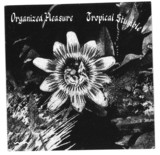
"In popular imagination, the early 80s were dreadful. Thatcher and Reagan led the world on a diet of austerity, unemployment and depression. The Berlin Wall separated East from West. The Sex Pistols had broken up. In sum, the future was unsure. Belgium was no exception. While Punk had been declared dead by some, its spirit was still roaming in country parishes and city alleyways. As the Catholic bourgeoisie provided young people with few opportunities, music was an obvious pastime. Teenage hopes of starting a band and putting out a record were everywhere. Organized Pleasure and Satin Wall were two bands living the dream. In contrast to a thousand others, they left us sounding evidence. This split 7” gathers two tracks originally recorded in 1981. It was the first and only studio excursion for both groups. After some local gigs, the people involved moved on to other projects. While their music is illustrative for the era, their story is distinct. Same but different."
Aussie house maestro, Matt Meler debuts on House Puff with a tasty club-focused four track release. The A-side kicks of with 'The Looker' full of freq'd 'n' filtered stabs and pads that'll get the juices flowing. A2 strips a few layers off for a hypnotic bumper, 'Rub- A-Dub'.
Incognito Cognito, thumps us with a heavy hearted groove with etherial textures and psychedelic atmospheres. Closing out the B-Side is 'Nice Things', Saturated with classic deep influences, wonky LFO's and hats for days. Wrap your head around this all class EP.
Legacy Chicago craftsman Mark Nelson’s latest offering as Pan. American is less a distillation or divergence than it is a return to his musical and spiritual beginnings. Spare, subdued, and largely acoustic, A Son unfurls like late summer dusk on the edge of town, expansive but intimate.
Motivated by notions of “moving backward” and tracing roots – as well as a couple years of hammered dulcimer lessons – the album’s nine songs were written and recorded in his home in Evanston, Illinois, and honed during a recent solo tour in Europe. The emphasis on uncluttered arrangements and the centrality of the guitar and vocals reveal these songs as the most direct and emotional statement of his career.
Nelson cites everything from June Tabor, The Carter Family, Suicide and Jimmy Reed as oblique inspirations, though his truest muse was creative self-inquiry: “What does music do, Where does music start? How simple can it be? How honest can it be?”
After decades of mining post-rock pathways and latticework electronics in Labradford and early Pan. American, A Son strips away ornament and distraction in favor of a direct gaze into the heart of what is.
Rockets Audio starts the saga with 4 finest minimal house trackers by Matheiu, Denis Kaznacheev and the master trio Wareika. A rocket (from Italian rocchetto "bobbin" is a missile, spacecraft, aircraft or other vehicle that obtains thrust from a rocket engine. Rocket engine exhaust is formed entirely from propellant carried within the rocket before use. Rocket engines work by action and reaction and push rockets forward simply by expelling their exhaust in the opposite direction at high speed, and can therefore work in the vacuum of space.
In fact, rockets work more efficiently in space than in an atmosphere. Multistage rockets are capable of attaining escape velocity from Earth and therefore can achieve unlimited maximum altitude. Compared with airbreathing engines, rockets are lightweight and powerful and capable of generating large accelerations. To control their flight,
rockets rely on momentum, airfoils, auxiliary reaction engines, gimballed thrust, momentum wheels, deflection of the exhaust stream, propellant flow, spin, and/or gravity.
Rockets for military and recreational uses date back to at least 13th century China. Significant scientific, interplanetary and industrial use did not occur until the 20th century, when rocketry was the enabling technology for the Space Age, including setting foot on the Earth's moon. Rockets are now used for fireworks, weaponry, ejection seats, launch vehicles for artificial satellites, human spaceflight, and space exploration.
SOUND rockets are the most common type of high power rocket, typically creating a high speed pitch by the wave of rythm with an oxilator. The stored delay can be a simple pressurized detune or a single filter delay that disassociates in the presence of a curve (EQ + FILTER ), two hats that spontaneously react on contact (RANDOMIZER), two snares that must be ignited to react, a solid combination of effects with oxidizer (solid GROOVE), or solid fuel with liquid oxidizer (hybrid FILTER BAND DELAY). Chemical rockets store a large amount of energy in an easily released form, and can be very dangerous. However, careful design, testing, construction and use minimizes risks.
Delicate Wash is back for Round 4, delivering a seamless combination of spaced-out street synths and exquisite disco toe-tappers.
Four cuts of a familiar 1980's metropolitan milieu, WASH#4 provides the b-movie soundtrack to a cinematic underworld of swanky penthouse soirees and back alley brawls.
Whether in a mix or live set, this evocative quartet is an eloquent addition to any audiophile's storytelling toolkit.
Inviting slow disco and spaced out ambient characterizes this new material from Golden Bug and In Fields on their collaboration-album ”Vibration Métallique”. Golden Bugs kind of extrovert and electronic sound is recognizable from his previous 7” release on Höga Nord Rekords and together with In Fields it gets dressed in a fluffier costume.
This album is the result of two persons with tons of respect for one another musically, two musicians who have been floating past and sometimes in two each others projects for the last couple of years. Their musical roots In ”Leftfield land” intertwine and reaches up above ground, connecting to different musical stems and holds together the sound; like sightseeing in a familiar town this album has outer limits but as unpredictable as the city can be, this record surprises you from one track to the other.
The album has a springtime feel to it in all it's brightness, but suddenly it shifts shape in a song like ”Lush”, picked straight from the factory floor. This album is both a standoff and a board meeting in electronic music. Golden Bugs metallic excentricity meeting with In Fields darkness and live feel creates an unpredictability and the music goes on an exploratory trip far away!
These two new tracks continue to push the band’s sound into new territory; ‘Overture 1’ is a brand-new composition from Ruby Rushton keyboard player Aidan Shepherd. Taking inspiration from bands like Weather Report and Soft Machine, it's explosive introduction leads you to a dub-like breakdown, creating an open space for Shepherd to let loose his synthesizer for some deep space, Headhunters’esque exploration.
Yardley Suite - is a song first conceived by band leader Ed ‘Tenderlonious’ Cawthorne back in 2012. Having lied dormant for several years it felt like an appropriate time to pull it back out the bag. It’s a composition inspired by Cawthorne’s solo work as an electronic producer, under his alias Tenderlonious. Always wanting to merge his various approaches, ‘Yardley Suite’ is the perfect mix of Jazz and House. With a steady four to the floor beat and snappy horn lines it's sure to work its magic on dancefloors around the globe.
Having focused on improvisation and more “open” compositions in the past, the bands new direction is geared towards tighter, more groove-orientated arrangements. This exciting new material is yet further evidence that this is a highly prolific band at the top of their game, continually evolving, stretching out their own unique sound across the full jazz spectrum.
DJ Support: Tom Ravenscroft, Bradley Zero, Huey Morgan, James Endacott, Kev Beadle, Chris Phillips, Tony Minvielle, Tim Garcia, Delia Tesileanu, Kamaal Williams, Al Dobson Jr, Contours, Poly-Ritmo.
In 2019, The Mighty Mocambos returned in fine form with their new album "2066", played a storming European tour and celebrated a colourful year delivering their own true style of funk, Afro, hip hop with cinematic compositions and storytelling.
The mean streets groove and furious drums versus car chase workout of "Golden Shadow" and the joyous instrumental stomper "Preaching To The Choir" were soon identified as DJ favourites. ... So here they are on glorious golden 7inch vinyl to jumpstart in 2020 with.
- A1: Zuzu Man
- A2: Quitters Never Win
- A3: In The Night
- A4: She’s Just A Square
- A5: Woman Is The Roo
- A6: The Ear Is On Strike
- A7: Helping Hand
- A8: Danger Zone
- A9: One Naughty Flat
- B1: Bald Headed
- B2: Mama Roux
- B3: Tipitina
- B4: New Orleans
- B5: Qualified
- B6: Loser For You Bab
- B7: One Night Late
- B8: Did She Mention My Name
- B9: Storm Warning
We are privileged to explore on this essential LP a plethora of Dr.
John's earliest and most satisfying recordings. The unique mixture of styles on display is drawn from the music he grew up listening to in the clubs of the Deep South, where he first practised his (witch) craft. The combination would impress many other musicians, including the Rolling Stones and Jools Holland, himself no mean boogie pianist.
- A1: Why Spend The Dark Night With You?
- A2: Moondog Nocturne Suite (Part 1)
- A3: Moondog Nocturne Suite (Part 2)
- A4: Moondog Nocturne Suite (Part 3)
- A5: Avenue Of The Americas (51St Street)
- A6: 2 West 46Th Street
- A7: Lullaby (2 West 6Th Street)
- A8: Fog On The Hudson
- A9: Utsu
- A10: On & Off The Beat
- A11: Chant
- A12: From One To Nine
- B1: Untitled Chant #1
- B2: Untitled Chant #2
- B3: Untitled Chant #3
- B4: Untitled Percussion Solo #1
- B5: Untitled Percussion Solo #2
- B6: Untitled Percussion Solo #3
- B7: Untitled Chant #4
- B8: Untitled Percussion Solo In Traffic #1
- B9: Untitled Percussion Solo In Traffic #2
A survey of Moondog’s earliest recorded works - many of them unreleased until now - through a collaboration by Mississippi Records and Lucia Records. From 1954 - 1962 eld recordist Tony Schwartz frequently checked in with Moondog, his favorite street musician.
Tony Schwartz made recordings of Moondog’s earliest com- positions as they were coming into focus. Sometimes these recordings were made right on the street as Moondog busked, sometimes they were made in Schwartz’s studio, and sometimes they were made on NYC rooftops. The resulting recordings, many of which had never been released, were deposited at the Library Of Congress as part of the Tony Schwartz Collection in 2006 when Schwartz passed away, and this record was culled straight from these original tapes.
Side one kicks o with an unreleased version of Moondog’s classic composition “Why Spend The Dark Night With You?” fol- lowed by the rst ever complete recording of his “Nocturne Suite,” a beautiful piece of classical music performed with members of the Royal Philharmonic. The side ends with the complete “On The Streets Of New York” 7” EP, which was released on Mars records in 1955 and subsequently re-released by Honest Jon’s Records in 2004 on their excellent Moondog anthology. Side B features sketches of Moondog compositions never released, many with the man himself howling and chanting over his homemade percussion set.
Moondog’s music is as universal as it gets - part classical music, part Native American, part European folk, and part something completely unique. Moondog is one of the towering gures of 20th century music. This record comes with liner notes featuring never before released interviews with Moodog by Tony Schwartz and is housed in an old school “tip on” cover. All tracks fully licensed from the Library of Congress.
The mostly anonymous producer FSS joins Veyl with ‘MMXX_FFS’, a collection of nine raw, mangled numbers that manage to make lo-fi sound hi-fi. Built in moments stolen from working with DIY punk bands and artists producing for Warp, UNO, True Panther, Lucky Me and Tri Angle.... Originally from New Mexico, now living in London, with NYC on the horizon, FSS is no newcomer, and this isn’t your usual debut.
Inspired by a need to release the rage and disillusionment brought on by the extreme shit show the world has become, the writing of ‘MMXX_FSS’ — “it’s nearly 2020, for fuck’s sake” — doubled as a cathartic process for the artist, providing much-needed relief from the constant struggle of living on this planet.
Urged to push into the wild and off the beaten path, the record’s sound is iltered through an ongoing battle with tinnitus, a heavy fascination with distortion, and a treasure of inspired electronics. Memories of clear, bright landscapes play like loops, bombarded with the shock and suffering of urban action. Based on the constantly vacillating reality between moments of familial bliss to existential terror in white hot flashes, ‘MMXX_FFS’ is a snapshot of this process. Generating more.
FSS’ debut is out this December on cassette and digital, as always featuring artwork by Tomaso Lisca.
- A1: Yogisoul - Junipher
- A2: Elaquent - Utopia
- A3: Yogisoul - Slowburners
- A4: Flofilz - Strafzettel
- A5: Sraw - Casio (Feat Kristoffer Eikre)
- A6: Bluestaeb - Everyday (Feat The Galactic Suite)
- A7: Jake Milliner - Maybe Later
- B1: 10.4 Rog - Groovebox
- B2: Shungu - Dream Discipline
- B3: Jabar Ligla - Frihavnsession
- B4: Fredfades - Rockets
- B5: 10.4 Rog - Une
- B6: Jabar Ligla - Zeon
- B7: Brainorchestra - Go-On
- B8: Ol’ Burger Beats - It's New
Mutual Intentions is proud to present “Mutual Friends" - their first compilation. The compilation is put to life by Stian Stu from Mutual Intentions and features top notch, jazzy hiphop beats from producers
such as FloFilz, Bluestaeb, Fredfades, Elaquent, Ol’ Burger Beats, SRAW, 10.4 ROG, Yogisoul and many more. Artwork by Boiler Room’s own Joe Prytherch.
New Zealand juggernaut Fat Freddy’s Drop return with a new studio album, ‘Special Edition Part 1’, due for digital release on 15th November, with 2LP Vinyl and CD following up on 10th January. The 45rpm vinyl edition is produced with
a different track order across four sides and promises to deliver super fat loud audio.
Part 1 of a double album, ‘Special Edition Part 1’, comprises of six tracks of which ‘Raleigh Twenty’, ‘Trickle Down’ and
‘Six-Eight Instrumental’ were written and recorded undercover at the band’s Wellington studio, BAYS, while the other
tracks; ‘Special Edition, ‘Kamo Kamo’, and ‘OneFourteen’, have all been developed and evolved from the band’s celebrated live jam sessions, whilst on the road in front of audiences worldwide.
Supremely crafted at Freddy’s own BAYS studio in hometown Wellington, the deep musical and rich vocal layers reflect
Freddy’s inspiration from the black music lexicon and is a response to the crowd energy at their world dominating live
shows.
‘Special Edition Part 1’ is the first release of a long envisaged double album project with separate chapters. The next
journey, Part 2 will be released in 2020 after stringent road-testing with audiences over 35 shows across New Zealand, UK and Europe celebrating the release of the Part 1. These upcoming live performances will allow the band to fully explore new song-writing technology and give rise to a slamming Part 2. The new album follows on from 2015’s ‘BAYS’ LP, which saw support from Financial Times, Resident Advisor, Dummy, the DJ Mag and Clash-acclaimed ‘Blackbird,’ second album ‘Dr Boondigga and the Big BW’ - which gained rave reviews by The Guardian and BBC Music - and the band’s record breaking debut album ‘Based on a True Story’, which went nine times platinum and remained in New Zealand’s top 40 charts for over two years after its release in
2005.
The album cover artwork is by Wellington artist Otis Chamberlain, a continuing evolution from his creation for the its first single ‘Trickle Down’, a work that's morphed from digital cover art to the band’s massive summer tour backdrop and the recently released late-night buttery steppers ‘Kamo Kamo’. Fat Freddy’s Drop have been performing and recording together for more than 15 years, establishing themselves as one of New Zealand's most internationally successful acts. Considered one of the best live experiences in the world, they will embark on their biggest European and UK tour since they sold out a double hitter at London’s 02 Academy Brixton in 2018. Including an already sold out show in Dublin, the band will headline Cardiff’s Motorpoint Arena on 29th April 2020, Liverpool’s Invisible Wind Factory on 30th April, returning back to London’s Alexandra Palace on 1st May – the palace was the scene of two triumphant sold out headline concerts in 2014 and 2017 - before heading north to Glasgow’s Barrowland on 3rd May.
Die 11 Neuen Songs Auf "everybody, Anyone" Wurden Wieder In Paul Wellers Black Barn Studios In Surrey Aufgenommen Und Von Den Beiden Stone Foundation-gründern Neil Jones Und Neil Sheasby Produziert. Selbstverständlich Ließ Es Sich Paul Weller Nicht Nehmen Auch Diesmal Wieder Mitzumischen Und Steuerte Piano, Gitarre Und Background-vocals Zu Diversen Songs Bei. Weitere Feature-gäste Sind Dr Robert (blow Monkeys), Mick Talbot (the Style Council), Hamish Stuart (the Average White Band) Sowie Die Britische Singer/songwriterin Kathryn Williams. Entstanden Ist Ein Neues, Grooviges, Songbasiertes Meisterwerk In Bester Britischer Soul-tradition. Ps: Das Streng Limitierte Cd+dvd Format Enthält Eine 31-minütige Dvd Mit Einem 12-minütigen Making-of Des Albums Sowie 3 Videoclips.
Tape / Cassette
Mark Gergis is a producer, musician and audiovisual archivist known for his radio and video productions, recordings and performances. His work has focused on regional folk-pop music from the Middle East and Southeast Asia, including choubi and dabke from Iraq and Syria. As an archivist, Gergis is currently working on the project Syrian Cassette Archives, for which he aims to restore, preserve, catalogue and share his large collection of Syrian media from what can be called Syria’s ‘cassette era’ (1970s–2010). As an artist, under his name and others (Porest) he has released music on the Sublime Frequencies, Discrepant and Nashazphone to name just a few. It’s a wonder that amongst this hectic schedule he still finds time to present us with a new (old) collection of early century recordings (1999-2013).
Locational recordings, radio and TV intercepts, cassette excerpts, environments and street music all expertly all expertly meshed up into a vivid sound journey from places that were (and might) never be again.
'All We Are' & 'Alex Kapranos' Both Have History With Speedy Wunderground. Label Boss 'Dan Carey' Produced Awa's Shimmering Self-titled Debut Album & Also Franz Ferdinand's Third Long-player Tonight: Franz Ferdinand. For The Latter Carey Also Created A Dub Remix Version Of The Entire Album Called Blood, Tapping Into His Love Of Dub And Earlier Work With Artists Like Lee Scratch Perry And Mad Professor.
In True Speedy Style This New Collaboration Came About Completely Off The Cuff. Kapranos Came To The Speedy Wunderground Stage At London's Label Mates Festival At Moth Club In Late Jan To See An Artist He Had Been Working With Play. All We Are Were Also On The Bill, And After Chatting With The Band And Dan They Invited Alex To Come To The Speedy Session They Had Planned With The Band Two Days Later At Dan's Studio In Streatham.
Once In A Room Together The Music Came Fast. The Remainder Of The Day Was Spent Forming Lyrical Ideas. All Present Including Carey Contributed, Jotting Down Ideas, Excerpts Of The Days Phrases And Conversations And Putting Them Together In True William Burroughs Cut-ups Style. 'It Was A Way To Detach From Conventional Song Subject-matter' Says Kapranos. All We Are Agreed, 'The Writing Process Was A Lot Of Fun And For Us A Completely Fresh Way Of Looking At It.'
... The Resulting Track 'Heart Attack' Is A Skittering Disco-post-punk Jam. Equal Parts Of All Their Day Jobs Form Something Fresh, With Echoes Of Talking Heads And Alex's Unmistakable Vocal Delivery Over The Top. 'The Speedy Tracks Are Always Such A Good Vibe And The Studio Is Such A Special Place' Say All We Are. Kapranos Adds, 'as I Think Is Typical For The Label, Nothing Existed In The Morning When We Got Together, And Then Suddenly Everything Was Completed And Recorded By The Time We Went For A Pizza In The Evening.'
- Get Out Of The K-hole. Get On To The Beach.
iven Jones’ rather slack approach to track titles (both being consistent with and sometimes even just supplying them), it’s a bit of a relief to realize that two tracks with the same name are indeed related. In the case of “Arab Jerusalem”, which makes up nearly half of the newly-released Lalique Gadaffi Handgrenade, that kinship is immediately apparent even though both tracks are clearly their own experiences.
Released as the first track on the Minaret-Spearker picture disc 7” in 1996, “Arab Jeruzalem” (spelling also sometimes being fairly slack) is 5:42 of effectively shifting dark ambience, wordless female vocals drifting over the hand percussion, chimes, and static of the track, with eventual conversational loops discussing... something underneath. The end of that version is especially striking for the way the woman’s wordless singing starts being sampled in such a way that it overlays the whole track (and, slightly, itself). The almost 24-minute “Arab Jerusalem” here might be called the Deer Hunter version of the same story, building with great patience and many more abstract detours towards what now seems like simultaneously an excerpt and, now, a climax. As with many of Jones’ more ambient tracks, the great length just lets it cast its spell more thoroughly and entrancingly.
The other three tracks, meanwhile, suggest some of Jones’ other work but never evoke them as directly as “Arab Jerusalem”. “Jordan River” is nearly as long (a second shy of 20 minutes) but strips out the vocal elements in its predecessor, focusing instead on a more active percussive workout (analogue and digital both) and a river of hiss running down the center of the track. The title track of Lalique Gadaffi Handgrenade might bring to mind the title of “Lalique Gadaffi Jar” from Libya Tour Guide (last reissued by Staalplaat in 2015), but if they’re sonically related Jones must have practically melted the other track to get this one. And the closing “Desert Gulag” (like the title track, a much more manageable length than the first two epic tracks here) bears a slight resemblance to “Negev Gulag” from 1996’s Fatah Guerrilla, here what was a piercing, repetitive drone is softened and looped over more of Jones’ percussion. The result is a well-rounded release that shows off many aspects of Jones’ sound as Muslimgauze, while existing (like many of these DAT tapes do) in conversation with much of his previously released work.
Heinrich Dressel was an archaeologist, epigraphist and numismatist, creator of a table, still in use, for the cataloging of Roman amphorae. For over ten years, one of the founders of MinimalRome, Valerio Lombardozzi, has embraced the name of the German scholar, becoming both the guardian of a dense collection of sounds from the past and the creator of new brilliant electronic ones. “Completion Of The Amphoras Table”, originally released on cd by Legowelt's Strange Life Records, was the final chapter of the so-called 'Studium Amphorae Trilogy', a triptych of albums which tried to 'evoke' in notes not only the discoveries and the studies of Monte Testaccio's fragments made by the former pupil of Theodor Mommsen.
The first vinyl release of “Completion Of The Amphoras Table”, curated by Souterraine.org and Envlp_Imprint, fills not only a recording void, but also gives posterity a remarkable album to rediscover, worthy successor of “Mons Testaceum” (2007 ) and “Escape From The Hill” (2008),
which reconstructs one more time the ghostly atmosphere of a Rome at the dawn of the 20th century. Heinrich Dressel adopts the stylistic features of gloomy soundtracks and, above all, relies on a set of polyphonic synthesizers that, starting from the rare Elka Syntex, favor the composition of abstract textures, punctuated by some appropriate variations, and harmonies which, net of the
deep bass, make every single track even more magnetic.
Total Refreshment Centre is proud to present a brand new mini-LP from Neue Grafik Ensemble entitled 'Foulden Road'. French producer, instrumentalist and DJ, Neue Grafik, has been building a strong rep for himself over the past few years, releasing records previously on labels such as Rhythm Section, 22a, CoOp Presents and Wolf Music.
His sound is a hybrid of jazz, house and hip hop, all with his unique geographical flavours of African ethnicity, Parisian roots and a love for London sounds like broken beat & grime thrown into the mix. In his own words "this mini album has been conceived as a journey from Deptford to Dalston, right through Peckham. During a personal period of transition, I put this music forward at a crossroad of all my influences, taking the time to share and experiment with a band more than that, an ensemble. The idea is to incorporate musicians with their own sensibilities, collaborating together as a reflection of our society; unreal & rebellious, but with magic moments, and full of hope.
The best representation of that is Total Refreshment Centre. This building and its community were a perpetual source of inspiration for me over the past two years & gladly allowed the creation of this project". Having been first properly introduced to the community of the TRC during an after-hours jam, it came to TRC founder Lex Blondel's attention that New design had some exquisite compositions of his own. A few weeks later, it was decided that Neue Grafik would form a band and that they would do their first gig at TRC, a week after the first day of rehearsals. No pressure … Lex continued; "we paired him up with Emma-Jean Thackray, to arrange his compositions for a quartet, added Vels Trio's Dougal Taylor on drums, Matt Gedrych from MaddAddam on bass and Jordan Saintard on sax.
Then the band got to work…" Title track 'Foulden Road' commences the session in truly energetic fashion, named after the street in North London where TRC is based, and where these sessions were largely laid down. Keeping with the geographical vibe, next we have 'Dalston Junction', a two-part affair starting on a sci-fi boom-bap tip, before switching to the ethereal flute playing of Brussels musician Esinam, and the first outing on the collection for Brother Portrait.
'Voodoo Rain' is next, a sweet slice of afro-funk, featuring the incredible talents of London's own Nubya Garcia on sax, and the tempo picks up once again for 'Something Is Missing' - this live version comes from the afore-mentioned infamous first gig at TRC.
The goosebump-enducing vocals of Melbourne soulstress, Allysha Joy, set off the second half of the record with the beautiful downtempo track 'Hotel Laplace', recorded at a live session at Giant Steps, before kicking the energy levels back up with 'Hedgehog's Dilemma', once again featuring the vocals of Brother Portrait, as does the closing track, 'Dedicated to Marie Paule', a mid-tempo piece akin to 90's golden era jazz-hop, bringing the set to its conclusion.
This collection of tracks reflect the many moods and various genres indicative of Neue's creative approach illustrated above.
Announcing Mad Zach's debut release on MethLab Recordings with his No Past Lives EP, which is available on 12" vinyl and digital formats. The four tracks within unfurl an exquisite and alluring journey into the recesses of the human spirit, circling between nostalgic yearning and a steadfast, driven intensity. No Past Lives will be available on Tuesday, October 1.
An intoxicating myriad of complex soundscapes, Mad Zach stuns yet again with impeccable sound design through four thoughtful tracks. A compelling story through the inner workings of the mind, Mad Zach does not hold back in his enigmatic MethLab debut. Featuring production techniques signature of the prolific producer, Mad Zach’s many influences shine through in No Past Lives; a mix of dub, hip-hop, techno, jungle, and various other styles, No Past Lives is the amalgamation of artistic passion and drive.
Public Release once again plunges into the deep well of dance music talent it's hometown of San Francisco has long fostered for Moon Replacement, the debut single by Anderson Chase, two originals wrapped around a couple remixes of its titular track.
Clocking in at over eight minutes, “Moon Replacement” is a tense, drawn-out affair. It coaxes you onto the dancefloor with hardedged drums that slap with a metallic clang, a steely bass throb that defines its backbone, and spindly synth noodles that creep around the crust on top. Chase’s previous life as a punk and metal drummer seeps through; this is a tenacious house boogie that trundles along at that Goldilocks BPM of 118, fast enough to snap you to attention, slow enough that you don’t lose stamina as you give into the groove.
Japanese house producer Gonno, known for his ability to graft scalpel-sharp minimal techno loops onto out-there, mindexpanding arrangements, puts his own spin on the song for the A2 slot.
He darkens the mood while zapping it with a static charge to quicken its pace. On the reverse is Mark E’s take, which goes in the opposite direction, applying some heat so the square structure’s joins start to melt, wiggle, wobble. The bottom is still stocky, a molten mass of heavy-duty bass energy, but the melody that dances around the top is airier and lighter, glints of sunshine through storm clouds.
And then “Between Us” arrives to stick the landing, get us back to where we started. Like “Moon Replacement,” it’s a blocky foot-stomper that directs you forward with its tireless rhythm section, though this time with an even longer shadow cast behind it.
- A1: Pinta Manta - António Sanches
- A2: Dia Ja Manche - Dionisio Maio
- A3: Morti Sta Bidjàcu - José Casimiro
- A4: Pontin & Pontin - Bana
- B1: That Day - Fany Havest
- B2: Odio Sem Valor - Pedrinho
- B3: Mino Di Mama - Quirino Do Canto
- B4: Mundo D'margura - Tchiss Lopes
- C1: Po D'terra - Joao Cirilo
- C2: Corre Riba, Corre Baxo - Abel Lima
- C3: Ilyne - Os Apolos
- C4: Sintado Na Pracinha - Americo Brito
- D1: Capchona - Elisio Vieira
- D2: Djal Bai Si Camin - Antonio Dos Santos
- D3: Stebo Cu Anabela - Abel Lima
repress
2LP 140G VINYL + 12 PAGE BOOKLET.
"Space Echo - The mystery behind the "Cosmic Sound" of Cabo Verde finally revealed!" is the 20th release by the fabulous Analog Africa Label.
In the spring of 1968 a cargo ship was preparing to leave the port of Baltimore with an important shipment of musical instruments. Its final destination was Rio De Janeiro, where the EMSE Exhibition (Exposição Mundial Do Son Eletrônico) was going to be held.
It was the first expo of its kind to take place in the Southern Hemisphere and many of the leading companies in were all eager to present their newest synthesisers and other gadgets to a growing and promising South American market, spearheaded by Brazil and Colombia.
The ship with the goods set sail on the 20th of March on a calm morning and mysteriously disappeared from the radar on the very same day.
One can only imagine the surprise of the villagers of Cachaço, on the Sao Nicolau island of Cabo Verde, when a few months later they woke up and found a ship stranded in their fields, in the middle of nowhere, 8 km from any coastline.
After consulting with the village elders, the locals had decided to open the containers to see what was inside - however gossip as scintillating as this travels fast and colonial police had already arrived and secured the area.
Portuguese scientists and physicians were ordered to the scene and after weeks of thorough studies and research, it was concluded that the ship had fallen from the sky. One of the less plausible theories was that it might have fallen from a Russian military air carrier. The locals joked that again the government had wasted their tax money on a useless exercise, as a simple look at the crater generated by the impact could explain the phenomena. "No need for Portuguese rocket scientists to explain this!" they laughed.
What the villagers didn't know, was that traces of cosmic particles were discovered on the boat. The bow of the ship showed traces of extreme heat, very similar to traces found on meteors, suggesting that the ship had penetrated the hemisphere at high speed. That theory also didn't make sense as such an impact would have reduced the ship to dust. Mystery permeated the event.
Finally, a team of welders arrived to open the containers and the whole village waited impatiently.
The atmosphere, which had been filled with joy and excitement, quickly gave way to astonishment. Hundreds of boxes conjured, all containing keyboards and other instruments which they had never seen before: and all useless in an area devoid of electricity. Disappointment was palpable. The goods were temporarily stored in the local church and the women of the village had insisted a solution be found before Sunday mass.
It is said that charismatic anti-colonial leader Amílcar Cabral had ordered for the instruments to be distributed equally in places that had access to electricity, which placed them mainly in schools.
This distribution was best thing that could have happened - keyboards found fertile grounds in the hands of curious children, born with an innate sense of rhythm who picked up the ready-to-use instruments. This in turn facilitated the modernisation of local rhythms such as Mornas, Coladeras and the highly danceable music style called Funaná, which had been banned by the Portuguese colonial rulers until 1975 due to its sensuality!
The observation was made that the children who came into contact with the instruments found on the ship inherited prodigious capabilities to understand music and learn instruments. One of them was the musical genius Paulino Vieira, who by the end of the 70s would become the country´s most important music arranger. 8 out of the 15 songs presented in this compilation had been recorded with the backing of the band Voz de Cabo Verde, lead by Paulino Vieira, the mastermind behind the creation and promulgation of what is known today as "The Cosmic Sound of Cabo Verde".
The field of electronic music were involved. Rhodes, Moog, Farfisa, Hammond and Korg, just to name a few.
Alex.Do is best known as part of the Dystopian collective, where he works alongside scene leaders such as Rødhåd and Recondite in pursuing a focused strain of contemporary club music loaded with emotional depth to match its functionality. This attitude comes through in spades on Dusted, where Do presents a selection of tracks that tap into all four corners of the night.
Since 2000 Mapstation has been the moniker for the solo work of TAL Label founder Stefan Schneider. Schneider has won international acclaim as a founding member of KREIDLER and to rococo rot as well as through unique collaborational works with artists such as Joachim Roedelius (Cluster/Harmonia), Bill Wells, Katharina Grosse, Dieter Moebius (Cluster/Harmonia) Sofia Jernberg or Jochen Irmler (Faust). There has not been a new Mapstation release since 2009's THE AFRICA CHAMBER which had former FELA KUTI member NICHOLAS ADDO-NETTEY on percussion.
The new album PRESENT UNMETRICS, is not entirely a stand-alone creation either. There are guest appearances by THOMAS KLEIN (KREIDLER) on percussion, MICHAEL ACHER (THE NOTWIST) on Sousaphone and an outstanding vocal contribution from japanese singer HACO, all deeply woven into the digital topographics of the music.
PRESENT UNMETRICS offers a collection of radically subtle music. The guiding principle of the album was to construct direct and nuanced tracks which embody a sense of open-ended incompleteness and heterogenous dynamics.
Out of sync bass arpeggios, infused with uneven rythms, fractured synth stabs and intimate melodies, frequently created here with a Schlumberg sine wave generator, are continuously engage with experimentation, both on sound and structure.
Expertly pieced-together and produced in timeless fashio, PRESENT UNMETRICS displays all the coherence and artistic authority of an album on a constant quest so vital to the music of Mapstation. An album that couldn't have been made by any other than Mapstation.
Sir James and King Johnny are the leading figures of the mysterious crew: L'ENTOURLOOP.
These elders, fed on the sound of sound systems, vinyl culture and lulled by the epic dialogues of the cinema of yesteryear, concoct a fine fusion of Reggae and Hip Hop.
These beatmakers like to use scratches and samples, all blended with a vintage french touch that makes us travel from France to Kingston, London and New York! The two unstoppable seniors come back this fall to hit ever stronger with a new EP called "Golden Nuggets" in collaboration with the Jamaican Skarra Mucci aka the "Dancehall President".
"Golden Nuggets" is a 6-piece-EP in which we find all the ingredients that make the magic of the sound of Entourloop and Skarra Mucci.
The Panda Men were an ancient warrior cult, fabled to roam the deep African forests in search of the elixer Bonfirma which would grant them super human strength, allowing them to transform into Pandas and thus continue their bloody reign. This classic early Legowelt is finally back in print for the first time in 13 years, celebrating Creme's 20th birthday!
This release from New Zealand based label “Headwound Recordingz” shows how the UKs influence spread around the world. These tunes sound like they are straight out of the 90s with loads of samples that “tip a hat” to the UK old skool. The massive “Dread Tune” takes samples from mid-nineties Stalone version of Judge Dredd and whips up a frenzy with some serious amens on steroids. 3 absolute belters on this EP that show off the style and production of this very special antipodean label!
This is an artist who comes straight from Normandy who signs the 6th EP of the Norman label. Already seen on the various artists EP (NRMND003), Sichuan delivers us here a record with his own sound, his own style.
The Keep ist das Soloprojektdebüt des Göteburger Produzenten Oliver Knowles, der seine indonesischen Wurzeln mit seiner Liebe zu Drone-Musik verbindet. Geschrieben in Barcelona, kombinieren die Tracks Drones, Noise und Rhythmen, inspiriert durch Vitalität und Euphorie spanischer und katalanischer Straßenfestivals, zu einem eigenwilligen, frischen Sound.
Cynosure returns with OHMS, a playfully uplifting collaboration from Mike Shannon and Ohm Hourani. The three-track EP features two originals laced with twisted drums and slippery synths, equally fitting for intergalactic exploration or a beachside sunrise. The original tracks’ intimately minimal production is complimented by a remix from Akufen of elegant deep house, making for a record that is both contemporary and classic. “Hightower PSA" slips out the gate with a carefree ambling baseline over a slow, swelling tide-like pad. Breezy, pulsing synth stabs pull the groove together while precise, quick hats and snares weave around buzzing tones like alien chatter. “Nova In The Sun” moves into steadier and darker territory: the bass hops between a stark kick-snare, with hats tastefully drizzled on top.
But when singer Ilhem’s sultry voice cues subtle hand drums and squiggly echoes, the track transforms from a slick minimal affair into a soulful throwback. “Nova In The Sun (Akufen’s Aldo Nova In The Sun mix)” takes the female voice of the original and jumps right in with an upbeat staccato piano and swirling violins. A full-blown house arrangement ushers in lush strings, electric piano chords, and loosely fitting open hats and snares, all conspiring to bring a splash of joy to any peak-time crowd. On the whole, OHMS deliver a versatile EP that swaggers with a smile.
The hyper talneted Stellar Om Source (NOT NOT FUN, RVNG, NO 'LABEL) blowing up new styles on this one!
"If there is one thing that leaps out from Stellar OM Source’s music, it is the sense of a highly active mind at work. There is an indivisible feeling that a real person is behind this dynamic flurry of tones, waves, vibrations and modulations. On I See Through You, the first full Stellar OM Source release in over four years, the spark that first LP piqued the interest of so many listeners is glowing stronger than ever.
In the 2010's, Christelle Gualdi carved a name as one of the most essential live electronic musicians around, dazzling dancers and home listeners in kind with her bombastic, acidic hardware jams. Circumstances outside her control forced a stop for the Stellar OM Source project. It was touring, including two shows in the summer of 2019 at Dekmantel Festival and Listen! that Gualdi credits as year highlights, which proved to be the integral jump-start to the engine.
Inspiration came rushing back thanks to the human connection of performing. Seeing a younger generation connect with her put fresh charge into the circuitry of her gear. All this accrued into new material on the road, and thus I See Through You was born.
The spirit of 2013’s cult favourite Joy One Mile is alive and well on I See Through You. There is once again immediacy, urgency and lust. But Stellar OM Source stepping into a comparatively more poppy and playful mode on these four tracks could also throw some. Fundamentally she says, it comes from a similar place, and ends with an enmeshed and positive outcome. Gualdi credits both “1995 rave” and “the clarity, bass and breath” of hi-def hip-hop productions as being twin northern stars for her to follow.
The artwork comes from friend and highly respected photographer & director Pierre Debusschere, whose work similarly flits between arresting close-ups and, well, the widescreen luxe of Beyoncé videos. “I’m definitely not a purist anymore,” Gualdi laughs – and with club-ready impact meeting human warmth, this shows in abundance.
“Night Alone” wastes no time in getting the listener up to speed. Is that an LFO sample running through “Night Alone”? Is this a lost Metro Area classic? Is that Stellar OM Source taking a diversion into searching Ibiza-rousing vocal for a moment, or did we imagine that in a heat haze? Where are the kicks? Oh there they are. How many elements are buried and revived within just over five minutes?
It’s hard to tell. Before we know it, “Lost Codes” is up and away, keeping pulses racing. A pitter-patter of baby kicks feel like a pre-tremor before a welting electro-Italo lead crashes into play. With fizzing energy, rasping synths and a frisson of danger, fans of Unit Moebius and The Hacker will be doing somersaults of joy.
“White Echoes” wastes kicks off the flip side with low gurgles descending briefly like a UFO reverse parking into the spot SOS had vacated. Soon, 303s are twisting like Chinese burns while warm chords offer a salve. The mood maintains on “Wild Palms”, the only song on this record not to feature additional mixing work from Peaking Lights’ dub-wise sensei Aaron Coyes.
True to form, the B2 is all Stellar: elements switching up and out, with all the fun and frenzy of capital-L Live action. Kick drums and bassline darting back and forth like a synchronised swimming routine, all elements in concert. The momentum of a runaway mine cart that you can’t help but strap yourself to. I See Through You is one for the dancers who have given Stellar OM Source the motive to move forward once again."
In the mid-80's, an original form of music was discovered on the midi-capable little planet of Austin, Texas. At the age of 32, Charles Ditto would release his first solo album applying cutting edge computers and synthesizers of the era (Roland DX7, Roland MKS-20, Roland MKS-80, Sequential Circuits Profit 2000 along with a Macintosh SE), creating a unique and detailed world that was inspired by Cluster, Eno & The Residents.
In Human Terms bridges the gab between contemporary classical and minimal pop. Rhythmic but melodically abstract. Microtonal and organic. Often described as experimental electronics, tone poems or Cyber-delic-psychotropic-avante-garde.
In Human Terms, remains very emotion, deep and different. Ditto's music imparts a new listening experience that is still somewhat indescribable today, but remains approachable and relatable.
'What makes Ditto's music so strikingly different is his overt use of emotion, very descriptive melodies and deep atmosphere' Audio Magazine - August 1988 // 'If Erik Satie had midi gear' Keyboard Magazine - April 1988 // 'Brian Eno meets Seastones, but with more melody' Relix Magazine - August, 1988 // 'Ditto's choice of Synthesizer tones are at once both organic and unique' Electronic Musician - June 1988.
- A1: Kiddus I - If You Love Me
- A2: Winston Mcanuff - Malcolm X
- A3: Cedric Myton - Row Fisherman
- A4: Ken Boothe - Everything I Own
- B1: The Viceroys - Ya Ho
- B2: Horace Andy - Ain't No Sunshine
- B3: Judy Mowatt &Jah9 - Black Woman
- C1: Kiddus I - Survive
- C2: Cedric Myton - Rebellion In Heaven
- C3: Var, Derajah & Winston Mcanuff - Be Careful
- D1: Derajah - Tribute To My Sista
- D2: Ken Boothe - Speak Softly Love
- D3: Var - Live Good
Stripped down to the roots, these 13 contemporary new versions of classic Jamaican recordings, originally from the likes of the Trojan and Studio One studios, are triumphantly fresh and channel Jamaica’s rebel music history.
With Rastafari sewn into its sonic seams, Inna De Yard remind us of Jamaica’s vast contribution to popular music around the globe with a cast of golden-generation roots artists whilst introducing a new class of roots-enthused artists from the island.
Following the release of the album is a feature-length Inna De Yard documentary-film directed by Peter Webber (3 Oscar nominations for Girl with a Pearl Earring), set for its UK and international cinema release alongside European tour and summer festival dates including a special beach performance at the music industry Midem Festival in Cannes.
After a sell-out debut tour in France in 2017, the trailblazing quartet of Ken Boothe, Cedric “The Congos” Myton, Kiddus I and Winston McAnuff join forces to front a cross-generational super-group of roots-reggae visionaries, featuring Jamaican vocal trio The Viceroys and Bob Marley backing vocalist and artist Judy Mowatt, as well as Jah9, Var and Derajah, three of Jamaica’s most stirring and spiritually-connected artists on the scene today.
Two years after an acclaimed first album, Al Sunny and Favorite Recordings proudly present Planets, carrying on their collaboration and bringing it to another level.
Al Sunny is a young and talented singer/musician/composer emerging from the French soul music scene. During his conservatory studies, he refined his knowledge and confirmed his desire to write and compose. He quickly matured the music that he truly loves, inspired by artists such as Tim Maia, America, Al Green, and Al Jarreau. Giving birth to the majority of his compositions through his guitar, he always seeks to bring his songs’ melody to the forefront. During his studies he kept experiencing live performing on different scenes and confirmed his choice for a musical career, while also meeting many brilliant musicians, including Florian Pellissier, who later introduced him to Pascal Rioux and Favorite Recordings.
It resulted in 2017 in Time to Decide release, a dazzling first album establishing Al Sunny’s music and writing style, looking towards the 70s and 80s Westcoast movement, infused with Blue-Eyed-Soul, Pop and Folk flavors. Built on the same influences, Planets is made of 8 new compositions (including a CD and digital bonus), and is clearly a continuation of its cadet, asserting Al Sunny’s talent and singing skills.
Fully recorded live and analogic in Paris, this new album also stands out by an impressive level of production, faithful to some classics of the genre. Mixing catchy melodies, soulful vocals, warm and heavy bass, strong beat and beautiful guitars and keyboards harmonies, Planets just perfectly meets the AOR and Modern-Soul golden era standards.
Bristol’s Sydney returns to Black Acre with two Jazz infused cuts featuring saxophonist Guy Hobley and emerging guitarist Charlie J-W. One of Gilles Peterson’s Future Bubblers, Sydney is a live artist and traditional instrument enthusiast who debuted on Black Acre with a Swaziland inspired debut mini-album entitled ‘Ode to eSwatini’ earlier this year, showcasing an eclectic mix of broken beat and Jazz.
Now the Bristolian returns with two collaborations featuring two vibrant Jazz and Blues musicians - Guy Hobley on the saxophone and guitarist Charlie J-W. “With the record being South American influenced the titles and artwork are based on a garden in Mexico named Las Pozas. Paraíso meaning paradise and Dahlia being the native flower toMexico found in the Las Pozas garden" – Sydney Conceptualized during Sydney’s first session as a Future Bubbler using one distorted PA speaker in a room full of the new generation year 3 bubblers with Gilles Peterson present, ‘Paraíso ft. Guy Hobley’ flutters into place with shuffling percussion, reverberating piano fills and smooth sax melodies from Guy Hobley whilst underlying world instrumentation operates throughout, including bongos, claves and shakers.
Created in one afternoon alongside fellow band member and friend Charlie J-W, ‘Dahlia’ gives a warming aural experience with a Nina Leão vocal sample, cantering south American drums, a mix of traditional guitar strums, pedal hits and accordion strikes, all glued together with stylish synth stabs.
Support from:
Gilles Peterson,Jamz Supernova, Bradley Zero, Moxie, Horse Meat Disco
The Planet X invasion continues ... The third release is the most-awaited EP this year featuring the Matrixxman himself. According to the Alien Council, it is his best EP so far. It contains four tracks of serious icebreaking soundscapes, running trough the listener's veins by freezing the complete solar system with a coolness.
Starting the process is A1 with the fall-out Syren track called ‘Hong Kong Day’ played exclusively in the Matrixxman Dekmantel Boiler Room set last year, now finally being released for the hungry trainspotters who have been waiting for quite some time.
Next up A2, the second installment of the Hong Kong- the Night version- the most spooky-sounding spirit-catching meltdown of a track. It is reminiscent of a lethal death scene in a brutal manga cartoon, where the Iron eagle flies over the lands looking for prey.
On the other side- B1 starts with the track ‘Power Drain’ featuring his label mate-Exos- definitely the festival track of the release which then takes the listener to the breakbeat part of town in the final track called ‘Tango Down’ on B2.
This is where the real Matrixxman signature strikes with raw, dirty rave bass turning it back and forth, finishing the EP with some analog screams. The Planet X continues tearing through the galaxy.
With EXHIBITION's second performance, RICO PUESTEL proudly presents the new series-within-the-series "SOLLING", conceptually fulfilling the "triad of A" throughout the canvas of this record: Acid, analogicity and anachronisms.
After recently telling a vast and mesmerizing story on Adana Twins' TAU label, RICO PUESTEL now immerses into his defining habitat roots and creates the long-planned first soundtrack chapter of SOLLING: A central German uplands area in Lower Saxony, spreading into the North of Hesse, shaped by mixed forests, its rural imprinting, a widespread range of regionally varyiing cultural idiosyncrasies and a century-extending history, including the shattering throughout the welters of the Thirty Years' War.
Being the first of several planned chapters, pre-production mostly takes place there while the music is traversed by sound recorded in that area, leading to an existence irreversibly connected to its birthplace.
The impetuous opener "Tilly", characterizing the essence of Johann T'Serclaes von Tilly who commanded the Catholic League's forces in the Thirty Years' War, overrunning the SOLLING throughout 1624 and 1625, culminates in one retro-futuristic affair, building into a overwhelming storm of percussion tapestry and intertwining layers of acid.
The A2 follow-up "Clava" takes the initial impetus to a superior level, overriding itself with an unpredictable enigma-melody after laying the foundation of a high-density groove architecture - all of this representing the almost intangible chasms of a unicum street and its geographical expanse, filled with Rico's far-reaching primordial retrospections, seemingly connecting several contingent coordinates of mysterious happenings over two decades while anticipating the future.
Ultimately, the AA-flipside delivers the groundbreaking SOLLING composition "Pro Foreste Sulgo", presenting an ancient-like struggle of dark and light as told by the principles of nature with two melodic themes, circling around themselves, bound to collide and meld like atoms - all placed within the treetops, shaken by the wind, overlooking a future that might already has been...
- A1: Canaveral Scape (2 45)
- A2: Source Of Energy (2 36)
- A3: Sequence Of Events (3 14)
- A4: Nuplex (3 58)
- A5: Low Profile (4 53)
- A6: Tension And Release (3 38)
- B1: Keeping Pace (3 36)
- B2: Jaguar (2 41)
- B3: Giant’s Causeway (2 59)
- B4: Fugitive (3 08)
- B5: Rock Climb (2 33)
- B6: Heavy Load (2 26)
- B7: Flight Of The Phoenix (2 50)
They Say: “Descriptive scores for scenes of visual impact”.
We say: Arguably the single greatest album in KPM history. An ensemble piece of staggeringly heavy works from none other than Brian Bennett, John Scott, Steve Gray, Jim Lawless and Johnny Pearson.
For our immense pleasure, Visual Impact includes the insanely ace “Nuplex” by Brian Bennett, a nagging, sweeping, punchy funk piece that exists in a world of its own. If you don’t know, get to know - the record’s worth getting for this track alone. The same goes for the beautifully paced, string-drenched, horn-fed LP opener “Canaveral Scape”, courtesy of John Scott. Truly sublime. Other highlights on the A-side include Bennett’s easy, bass-heavy jazz groover “Sequence Of Events” and the spare, building, undercover funk of Steve Gray’s aptly-named “Low Profile”.
The B-side is straight-up fantastic. The percussive, vibey exotica of Jim Lawless’s “Keeping Pace” is followed by five tracks of slick, weighty funk breaks from Johnny Pearson. Check the pure groove of “Jaguar” with its head-nod drum break intro, the creeping piano-strings combo and… er… giant neck-snapping breaks of “Giant’s Causeway”, the speaker-smashing progressive bass groove of “Fugitive”, the tense "Rock Climb" and the sheer heft of "Heavy Load". Library largeness. If that isn’t enough, John Scott’s incessant “Flight Of The Phoenix” ends the session, brilliantly pilfered by M.O.P. for their much-loved “We Run New York”.
Originally released in 1976 but wonderfully timeless, Visual Impact is a rare example of a library record that’s genuinely great listen from start to finish. Just too good…
As with all of our KPM re-issues, the audio for Visual Impact comes from the original analogue tapes and has been remastered for vinyl by Be With regular Simon Francis. We’ve taken the same care with the sleeves, handing the reproduction duties over to Richard Robinson, the current custodian of KPM’s brand identity.
And don’t worry! Those KPM stickers aren’t stuck directly on the sleeves!
- A1: Theme For A Hunter (2:12)
- A2: The Hunter (Link 1) (0:11)
- A3: The Hunter (Link 2) (0:09)
- A4: The Hunter (Link 3) (0:09)
- A5: Heavy Lead (1:43)
- A6: Uneasy Silence (2:05)
- A7: Hideout (1:56)
- A8: Hideout (Shock) (0:08)
- A9: Hideout (Let Down) (0:16)
- A10: Approach (2:00)
- A11: Approach (Shock) (0:08)
- A12: Approach (Sting) (0:08)
- A13: Approach (Exclamation) (0:07)
- A14: Flashing Knives (1:18)
- A15: Solid Pursuit (1:04)
- A16: Flying Squad (1:08)
- A17: Nightwatch (2:44)
- B1: Adventure Story (1:23)
- B2: Adventure Story (Link 1) (0:11)
- B3: Adventure Story (Link 2) (0:10)
- B4: The Investigator (2:48)
- B5: Passing Hours Suite (4:21)
- B6: The Set Up (2:01)
- B7: Stake Out (2:17)
- B10: Speed Trap (Link) (0:13)
- B11: Battle (1:00)
- B12: Battle (Link 1) (0:06)
- B13: Battle (Link 2) (0:17)
- B14: Attack (0:51)
- B15: Casing The Joint (1:33)
- B16: The Foil (1:31)
- B17: Scream (0:11)
- B18: Meanwhile (0:12)
- B8: Knife Edge (1:33)
- B9: Speed Trap (0:55)
They Say: “Composite themes and incidental cues for dramatic application”.
We say: Well, it’s definitely dramatic. No wonder this LP was mined by a multitude of 70s and 80s crime shows. Much like Beat Incidental, this true gem includes a raft of enjoyable sub-ten second incidental cues alongside satisfyingly stretched out, hard-knocking sleuth-funk.
The Hunter (Drama Suite) / Adventure Story is a real library-head’s library album. We’re treated to some of the best works of no less than five different heavyweights of the genre: drummer Brian Bennett, guitarist Clive Hicks (of The Gentle Rain), saxophonist Duncan Lamont, rock bassist Dave Richmond and keyboard session giant Steve Gary! Something of a dream line-up, they each contributed stellar efforts to create one of the most sought-after of the legendary KPM albums.
Both sides of this LP are dripping with insidious grooves and dramatic spy-score themes, bursting with heavy guitars, swirling flutes, creeping piano-funk and drum breaks galore. Originally released in 1975, it’s clear that these library heroes were heavily influenced by the tough funk and street soul sonics emerging from the cutting edge Blaxploitation soundtracks.
Dave Richmond’s taut swagger and wah-wah guitar licks of “Nightwatch”, Steve Gray’s sleazy horn and clav-funk on the A-side opener “Theme For A Hunter” and Brian Bennett’s rolling strut of “The Investigator” are just three of the highlights here. That last one being sampled by Jeff Jank under his Captain Funkaho guise on “My 2600” for Stones Throw back in 1999.
As with all of our KPM re-issues, the audio for The Hunter (Drama Suite) / Adventure Story comes from the original analogue tapes and has been remastered for vinyl by Be With regular Simon Francis. We’ve taken the same care with the sleeves, handing the reproduction duties over to Richard Robinson, the current custodian of KPM’s brand identity.
And don’t worry! Those KPM stickers aren’t stuck directly on the sleeves!
They Say: “Driving brass and sax ensemble over funky rhythm section, playing tracks of various feel and style”.
We say: From the Lincoln Continental that memorably adorns the cover to the tranquil funk contained within, this glowing ode to the grooving force of 70s American soul music is ice cool all over. With brilliant contributions from the Three Key Alans™ (Hawkshaw, Parker, Tew) as well as Mike Moran, Les Hurdle and Keith Roberts, this is driving music for only the vibiest cats.
Originally released in 1976, The All American Powerhouse is one of the very best of the Themes library releases. It’s killer. A feast of dramatic jazz, horizontal, melodic funk and bouncing sunshine-y West-Coast feels throughout, there also lurks an intense injection of the Blaxploitation sound. Understandable, given the subject matter and year it was released.
Highlights include Alan Parker’s confident, horn-heavy wah-wah-fuelled album-opener “Sweeny Todd”, Hawkshaw’s graceful “Getaway” glide and dramatic, breathless “Speed Run”, Mike Moran’s loose, organ-driven propulsive B-Boy classic “The Pick-Up” and Keith Roberts’ percussive tour de force “Overide” that closes out the LP.
Yet, perhaps the most significant track here is Les Hurdle’s long-adored “Soul Train”. A grooving, bass-heavy library classic, it’s all swirling strings, stabbing horns, heavy open drums and melodic funk-rock guitars. Add in the funky clavinet, and the combination works beautifully.
As with all of our other Themes re-issues, the audio for The All American Powerhouse comes from the original analogue tapes and has been remastered for vinyl by Be With regular Simon Francis. We’ve taken the same care with the sleeves, handing the reproduction duties over to Richard Robinson, the current custodian of KPM’s brand identity.
- A1: Cold Sweat (1 50)
- A2: Unease (2 41)
- A3: Aftermath (1 45)
- A4: Isolation (2 34)
- A5: The Unknown (2 42)
- A6: The Manipulator (3 12)
- A7: Space Probe (2 50)
- B1: Psychosis (2 54)
- B2: At Risk (2 53)
- B3: At Risk (Link) (0 26)
- B4: Manhunt (3 00)
- B5: Flying Squad (2 40)
- B6: Dead End (1 11)
- B7: Collision Course (1 47)
- B8: Voodoo (1 13)
They Say: “A selection of suspense underscores and drama blackcloths which vary in intensity and cover a wide range of suspense and drama situations”.
We say: A breaky, funky library great masquerading as a horror score. Oh, and the cover art is amazing.
Breath Of Danger was originally released in 1974, and rounded up a killer ensemble cast of library legends including Alan Hawkshaw, Brian Bennett, Alan Parker, David Lindup, Kenny Salmon, Barry Morgan and Ray Cooper.
Lindup’s opener “Cold Sweat” sounds like hip-hop-friendly mode Axelrod and, indeed, was brilliantly sampled by Kool Keith for his Dr. Dooom project. Alan Hawkshaw and Brian Bennett’s “The Manipulator” sounds like it arrived straight out of the same sessions as their legendary Synthesizer & Percussion LP from the same year.
Over on the B-side Alan Parker’s “Psychosis” is a moving and beautifully restrained funk-guitar/cello/harp workout. Stunning. Kenny Salmon’s “Flying Squad” is a sleazy, flute-enhanced gem and the album closes with “Voodoo”, a seventy second riot of sound and colour from the dynamic drumming-percussion duo of Barry Morgan and Ray Cooper.
Sonically, there’s a widescreen vitality in all these tracks thanks to the driving rhythms, vibrant horn sections and blazing guitar work. It renders Breath Of Danger - 45 years old - truly ageless. The Themes series is known for having particularly striking sleeves, which was unusual for library records at the time, and Breath Of Danger’s scraps of comic-book crazy make for one of the most eye-catching.
As with all of our other Themes re-issues, the audio for Breath Of Danger comes from the original analogue tapes and has been remastered for vinyl by Be With regular Simon Francis. We’ve taken the same care with the sleeves, handing the reproduction duties over to Richard Robinson, the current custodian of KPM’s brand identity.
They Say: “Documentary and industrial underlays for current themes of modern life”.
We say: Mind-blowing, percussion-heavy, Afro-tinged, cosmic-disco library bomb.
This is the one. An absolutely outstanding record from 1983 and definitely one of the hardest to find on the collectable German library label, Coloursound. The Now Generation (Percussive Underscores) is comfortably one of the very best library records full stop.
The record comes galloping out the gate with a pair of rapid synthy-eurodisco bombs - the title-track and “Panama” - before slowing down to a woozy pace on “Inorganic Matter”. “African Nightclub” sounds like it reads, and is a particular favourite of Prins Thomas. Indeed, it was used to great effect on his seminal Cosmo Galactic Prism mix for Eskimo back in 2007. It’s followed by the dark, druggy, slow motion industrial groove of “Grease Plant” before “Southerly” lifts the tempo to close out side A with its Latin funk strut of bells and melancholic keys.
For us, though, it’s all about the opener to side B: “Mechanical Heart”. Seven minutes of building, mid-tempo disco-funk joy, deceptively explosive, club-ready gear for body and soul. The back cover dryly describes the track as “Guitar and percussion, light industrial underlay”. Hmmm. How about, “after finally emerging from a particularly heavy week jamming in a sunless, lawless German warehouse, Chic warily press record on a wayward, illicit instrumental for basement gatherings”. Just wait for those drums at the 3 minute mark…
The beatless ambience and menacing stabs of the proto-electro “Chemical Threat” follows, before the open drums and incredible fills of the metronomic “Steady Going” and fantastically monotonous funk breaks of “Nepal Trek” round out this sensational set.
This is a library masterpiece in no uncertain terms, full of synth funk, afro beats, exotica, leftfield madness, dance floor dynamite and all-around greatness.
As with our KPM and Themes re-issues, the audio for The Now Generation comes from the original analogue tapes and has been remastered for vinyl by Be With regular Simon Francis. Richard Robinson has brought the original Coloursound sleeve back to life in all its metalic silver glory.
“Beautiful, beautiful. Magnificent desolation.”
(Buzz Aldrin’s first words when he joined Armstrong on the surface of the moon) Now that the world has come to a standstill please let us guide your attention towards this special 12”. Round and ever-turning like the moon, it rests on the record player. Move the tonearm and the disc will ooze strangely comforting tones.
Exuberant, yet melancholic at the same time.
RSS Disco have created a psychedelic, blissful jam that moves currents & constantly changes shape. Meandering voices inhabit the sphere, a pumping bassline secures the foundation. The warp core is frail at this power level but seems to be holding up.
Frequencies unravel, the bridge heats up. This must be fairy dust made of moon rocks.
On the dark side of the moon, we find ?Aera (Permanent Vacation, Innervisions) ?with his signature arp-fest. Elevating the original track form the surface to the stars, we have left home and there is no intention of ever coming back.
“Osondi owendi. What is cherished by some is despised by others. One man’s meat is another man’s poison. Different strokes for different folks. To each their own. Osondi owendi.
It’s a conventional aphorism in the Igbo language but if you utter the word “osondi owendi” in Nigeria today, the first thing that comes to anybody’s mind is the cucumber-cool highlife music maestro Chief Stephen Osita Osadebe and his legendary album that takes its name from the adage. Released in 1984, Osondi Owendi was instantly received as Osadebe’s magnum opus, the crowning event of an exalted career stretching back to the early years of highlife’s emergence as Nigeria’s predominant popular music.
Stephen Osadebe first appeared on the music scene in 1958 as a spry, twenty-two year-old vocalist in the Empire Rhythm Skies Orchestra, directed by bandleader Steven Amechi. With his dapper suits, urbane Nat King Cole-influenced vocal stylings and jaunty, uptempo, calypso-scented dance tunes, he personified the frisky spirit and anxious aspirations of a young, educated generation that had come of age in the wake of the Second World War, in a Nigeria that was rapidly shaking off British colonization and marching towards an independent future. 1959 would be the year that he truly made his mark in the business with his debut solo single “Lagos Life Na So So Enjoyment.” A giddy exhortation of the music, sex, fun and freedom availed by life in the big city, the song became a sensation and an anthem, and Stephen Osadebe became the leader of his own popular dance band, the Nigerian Sound Makers.
Osadebe would ride this wave of acclaim through most of the nineteen sixties, but a change in direction would be called for at the dawn of the seventies. As Nigeria emerged from a devastating civil war, so did a new generation of youth inspired by rock and funk, confrontational sounds reflective of a more violent, less idealistic era. All of the sudden, the idioms of the post-WWII dance orchestras that nurtured Osadebe’s cohort seemed quaint, the stuff of nostalgia. Osadebe needed to evolve to respond to the new tumultuous, turned-up times.
His response? He cooled it down.
Abetted by a new crop of fire-blooded young players, Osadebe slowed his music to a mellow, meditative tempo, brought forward the lumbering, Afro Cuban-accented bass and percussion, from the rockers he borrowed searing lead lines on the electric guitar. Over this musical bedrock, doesn’t so much as sing as he dreamily muses, coos, sighs aphorisms, words of wisdom and inspiration. “When one listens to my music, all I say appears meaningful,” Osadebe explained his lyrical approach, “at times they are in the form of proverbs which provoke much thought afterwards.” The result is a blend that is both rollicking and soothingly languid. Osadebe christened the style Oyolima—a tranquil, otherworldly state of total relaxation and pleasure. Osondi Owendi represents oyolima at its finest, and possibly Nigerian highlife in epitome.
Osondi owendi. What is cherished by some is despised by others. In some way, the album’s title constitutes a paradox. Because Osondi Owendi is a record that it’s almost impossible to imagine being despised by anybody."
“Lugar Alto presents their very first release: the incredibly rare and absolutely stunning “Homenagem”, by Leonardo V. Boccia. This is a forgotten gem from the eighties that examines traditional Brazilian themes such as choro, northeastern folk, and capoeira with touches of eighties electronics and new age.
Leonardo Boccia is a musician, multi-instrumentalist, composer, researcher and university professor of Culture and Society at the Federal University of Bahia, whose interests include sound studies, manipulation of sound media, audiosphere and aesthetics, musical theatre, audio culture and neuromusic.
Born in Italy, this respected academic studied music in Berlin, moved to Rio de Janeiro and established himself in Salvador where he was invited to research the northeastern music of Bahia. There he created the experimental group Macchina Naturale, an eclectic combo that performed regularly during his stay. In November 1980, Boccia participated in the first Instrumental Music Festival of Bahia as a soloist where he performed works of his own.
But it was in 1983 that Professor Boccia composed, directed and produced the LP Homenagem. With photos by renowned photographer and artist Mario Cravo Neto for the front and back cover of the booklet, the album presents new and original compositions for instrumental ensembles, such as: Choro Fantasia – for guitar and berimbau -, Canção para Iracema, Homenagem and Lenda do Sertão. The LP was originally released on January 3rd, 1984, with a live performance in the main hall of the Castro Alves Theatre under the title Tribute to Brazilian Music, with the participation of vocalist Sueli Sodré, who contributes to the album, instrumentalists Zeno Millet and Onias Camardelli, accompanied by choreography and visuals.
Much of Homenagem examines the genre of Brazilian music known as Choro, or Chorinho, a genre which appeared in Rio de Janeiro in the 19th century. Choro is regarded as the first typically Brazilian urban music and, over the years, it has come to be considered one of the most prestigious genres of national popular music. Stylistically, it originates from Lundu, a percussion-based rhythm of African inspiration but also influenced by European genres. The instrumental composition of choro was based on the trinca flute, guitar and cavaquinho. Over time, other wind and string instruments were incorporated.
Here, in Homenagem, Professor Boccia deliberately mixes the old and the new, the traditional and the innovative; the album is the environment of Chorinho reconsidered and recontextualized, and its melodies and harmonies still capable of surprises. Just listen to “Terra e Povo” – it has an almost proto-acid-house quality to it, while the synth washes on “Mãe Natureza” with the ethereal vocal stylings of Sueli Sodré ushering in the progressive quality of the album.
Too long out of print, new label Lugar Alto now offers you the chance to reappraise this fascinating reissue of yet another forgotten chapter in Brazilian music.”
- A1: Angelo Vaggi - Chameaux Tunisiens
- A2: Baker Street Band - Talkin Bout You
- A3: Al Aprile _ The Electric Art - Frattonove Under The Sky
- A4: Alphaville - Alphaville
- A5: Le Jour Prochain - Susan
- B1: Rocky Schiavone _ The Gangsters - Nessuno Mi Puo Giudicare
- B2: Off Set - 240 Seconds
- B3: Monofonic Orchestra - Lucys 1St Appointment
- B4: The Stumblers - Last Clean Shirt
- B5: Roberto Masotti - Automatic Guitar
'Matita Emostatica' is the re-issue of a sought after compilation connecting the most underrated outsider artists of the Milan scene, in the early eighties. The amazing artwork is the creation of influential designer and photographer Roberto Masotti, a very well known figure in the avantgarde and jazz realm (he made astonishing portraits for the likes of Anthony Braxton, Art Ensemble Of Chicago, Carla Bley, etc.)
The compilation was produced in 1981 by Al Aprile and released by Materiali Sonori. Among the 10 artists you can find future journalists, unstoppable record collectors, renowned photographers and influential underground persona ... just scroll down the album and read the names of Monofonic Orchestra, Angelo Vaggi, Baker Street Band, Al Aprile, Roberto Masotti and many others. The result was quite unbelievable, ranging from small cosmic opus to avantgarde symphonies and asymmetrical etno-world jams. In the end ‘Matita Emostatica’ was quite in line with the efforts coming from the rest of Europe and the other side of the ocean, so to speak the compilation wouldn’t be out of place in the Ralph or Crammed Discs catalogue. A postcard from a country that is no more.
- A1: Jvc Force - Strong Island
- A2: Boogie Down Productions - South Bronx (Truth Version)
- A3: Soul Dimension - Can't Get Enough
- A4: Tall, Dark & Handsome - Call It What You Wanna
- B1: Boogie Down Productions - The Bridge Is Over (Vocal Mix)
- B2: Kd Nice - Get Up (Vocal)
- B3: Djmate & The Latin Mc's - Let's Jam
- B4: K Bee & Ceil B - Who Am I?
- C1: Dj Scott La Rock & D Nice - Scott Made Me Fnuky
- C2: Positive Image - Serious Business
- C3: Money Earnin Crew - Stars Are Shinin
- C4: 5 Star Moet - Let Me Love You
- D1: Busy Boys - That's The Flavor
- D2: Sparky D - Throwdown
- D3: 991 Volts - 991 Volt's Of Noise (Vocal)
- D4: Spicey Ham - Sex, Sex & More Sex
• B Boy Records was a significant player in the development of hip-
hop in the 1980s, but a very short lived label shrouded in mystery.
• This double LP selects the best of the independent label, from the
beginning of the label to including past icons and future legends,
hard-hitting drum programming, synthesize and sampled beats
overlaid with fierce battle rap swagger. This is a snapshot of hip-hop
history.
• The label is best known for issuing the hugely influential Boogie
Down Productions LP Criminal Minded, which is included twice on
this release with ‘The Bridge Is Over’ and ‘South Brox’
• Other highlights include JVC Force’s enduring classic ‘Strong
Island’, DJ Scott La Rock (founding member of BDP) & D-Nic and all-
female rap Sparky D, 5 Star Moet.
Trevor Wyatt aka Spiltmilk is madly passionate about refining his sound techniques. He is totally in to spacey mutated funk right now, so keep an eye for his latest Album: ‘Funk Side of A Moon’ which will release in early 2020 on MSLX recordings.
Jozy is one of Canada’s hypest new vocalists and she carries a strong message. Her new R'n'B Hip-Hop album ‘Next Phase’ will release in early 2020.
After a short hiatus, the dynamic duo of VSK & Conrad Von Orton return with their collaborative project, Symmetrical Behaviour.
After a steady stream of releases via Soma over the last couple of years. The pair took time out to focus on solo projects but return with a vengeance with the "Superconducting Harmonic Oscillator" EP which furthers their experiments in sound design and high-powered Techno.
Title track "Superconducting Harmonic Oscillator" kicks off the EP at a furious pace as highly charged atmospheres create and emphatically large sound for the pairing's suitably tough beats to hammer through. "Quantum Interference Device" goes down a more direct path as expertly crafted rhythms overlap against a backdrop of highly evolved drones and synths.
"Amplitude Spectral Density" keeps the tempo moving but leans on a more industrial tip with crashing beats submerged against articulately mangled synths that drive home the true force of the track. "Resonant Antennae" closes out the new EP from Symmetrical Behaviour and really has them show off their production prowess.
Jarring and off kilter rhythmic structure combine to deliver a truly head pounding track complete with the pairs stylistic atmosphere manipulation.
All Tracks Mastered by Conor Dalton @ Glowcast Mastering.
- A1: Red Earth
- A2: Raw Gold
- A3: Citrine Sun
- A4: Cadmium Vert
- A5: Cerulean Blue
- A6: Indigo Dore
- A7: Magenta Rose
- A8: Omega Prism
- B1: Red Earth (Instrumental)
- B2: Raw Gold (Instrumental)
- B3: Citrine Sun (Instrumental)
- B4: Cadmium Vert (Instrumental)
- B5: Cerulean Blue (Instrumental)
- B6: Indigo Dore (Instrumental)
- B7: Magenta Rose (Instrumental)
- B8: Omega Prism (Instrumental)
Sound is a potent force that can awaken your purpose and re-balance your spirit. It has the power to relax, as well as inspire you, through the positive therapy of sound vibrations. Elemental Resonance is a trailblazing meditation album where vibrational sound practitioner, Tracie Storey, combines the energy waves made by music, with positive words of love and harmony to produce inner peace, deep relaxation and a higher spiritual connection.
Storey explains “The idea for this album came to me 2 years ago when I was living in Montreal, Canada. I’d been learning to form shapes, textures and colour with sound and going deep within the architecture of my own inner space. These powerful compositions have really helped me on my journey. Creating transformative tools are now part of my life’s work, using the medium of vibrational sound which transcends all boundaries”.
Storey guides you through a series of mindful meditations - each connected to the seven energy chakras - and each supported by sound vibrations, colours to visualise, and positive affirmations to re-balance your entire being and bring you waves of calmness, strength, warmth and joy.
Released on Celestial Being, label boss Felix Buxton (Basement Jaxx), says “I’m thrilled to support this project, everywhere I look people are discovering more about Vibration and how it affects them.
Tracie is leading the way forward for new generations, uncovering more of our potential as humans. This is a great way to switch off the world and switch on to your deeper self.”
Storey has been active as a vibrational sound practitioner, for the past 5 years. Previous to six years training under Master Fabien Maman, who’s one of the world's leading experts on vibrational sound therapy, founder of the Tama-Do Academy.
She also travelled the globe as a DJ on the international dance scene (releasing on Ministry of Sound and producing mixes for the likes of Kiss FM).
“We seem to be caught! Trapped, somehow…”
Published for the first time on audio, Demon Records presents a narrated full-cast TV soundtrack, starring William Hartnell as the Doctor in one of his most weird and wonderful adventures!
In this vintage 6-part adventure, first shown on BBC TV in February and March 1965, a strange magnetic force pulls the TARDIS down to the craterous surface of Vortis. The Doctor and his friends learn that the planet has been invaded, and the parasitic Animus is slowly enveloping it in a web-like domain. The giant ant-like Zarbi are under its control, whilst the butterfly-like Menoptra are battling to reclaim their planet.
Presented across 3 x heavyweight 180g pieces of pink vinyl, this narrated TV soundtrack evokes a classic Doctor Who adventure in all its aural magnificence. The alien ambience of Vortis, the insistent chirruping of the Zarbi, and the supernatural voice of the Animus are all accompanied by the eerie sonics of Ron Grainer & Delia Derbyshire’s theme tune.
Written by Bill Strutton, this was the Doctor’s most exotic and lavish adventure yet. Linking narration is provided by Maureen O’Brien (Vicki) and the cast includes William Russell as Ian, Jacqueline Hill as Barbara, Martin Jarvis as Hilio and Roslyn de Winter as Vrestin. Accompanying the pink vinyl LPs are full episode billings, cast and credits, and eight illustrated
panels form a superb artwork montage. This is a first-time audio release for this very special
adventure. Dummedy-dum, Dummedy-dum, Dummedy-dum, Dum-dum…
'Oval' marks Konrad Kraft's third release on the German label 'aufaabwegen/Cologne', and is his second release in his current series. Clear textures, wobbling rhythm structures and unexpected melodic particles develop into unusual soundscapes. Blurred and foggy layers give way to clear musical accents.During the recording of the album, KK used mangled and destroyed field recordings, only two software synths and a modular synthesizer. Making use of his favorite modules, he merged the two worlds of sound design, digital and analogue. The result makes interesting listening.
- A1: Desencanto - Contraviento
- A2: Tras Tus Ojos - Jaime Roos Y Estela Magnone
- A3: De Los Relojeros - Eduardo Darnauchans
- A4: Kabumba - Hugo Jasa
- A5: El Chi-Li-Ban-Dan - Eduardo Mateo
- B1: En Este Momento - Travesía
- B2: Capítulos - Mariana Ingold
- B3: Llamada Insólita - La Escuelita
- B4: Y El Tiempo Pasa - Hugo Jasa
- B5: Bombinhas - Leo Masliah Y Jorge Cumbo
- B6: A Ustedes - Fernando Cabrera
Synth ambiences, acoustic landscapes, deep songwriting and subtle candombe percussions combine in most of the musical output released in Uruguay during the 80s. A very unique sound was developed within the narrow boundaries of Montevideo by just a small group of very talented artists. These sounds reverberated in singer-songwriting, jazz fusion approximations, experimental music and the work of musicians at the intersections of these worlds.
In “América Invertida”, ethereal vocal arrangements and acoustic guitars cohabit with synthesizers and drum machines; Candombe and Latin American music form a fellowship with new wave and dream pop.
"América Invertida" is presented with obi strip, deluxe artwork finishing and insert including extensive liner notes and previously unseen photos. Most of the tracks are reissued here for the first time.
This compilation is the fruitful output of a collaboration with Montevideo based label Little Butterfly, the first of many to come
... After his first appearance on Subaltern’s 'Kaleidoscope Vol.1’ with the scorching ‘Alter’, far-east sonic assassin and Back To Chill member Helktram makes his comeback on Subaltern Records with a heavy-as-stone three tracker. Each of the cuts is a dance-floor weapon which shows a different side of the Japanese mastermind’s razor-sharp production.
- Recoil: Opening with a crunchy guitar melody, ‘Recoil’ sets the pace
of the EP: a catchy and relentless bass-line takes us on a march
through forests and mountains, as distant pads and SFXs remind us
to stay alert. After the first round the guitar comes back, warning us
we’re not done yet. A straight hitter which will keep playing in your
head long after the night is over.
- Mineral: The aptly titled ‘Mineral' is hard as diamond and rough as
coal. This triplet juggernaut tramples systems all over the world
leaving its mark on any raver who encounters it. A sinister
thereminesque melody paves the way to a stripped-down beat with a
militant bass riff. Skilfully executed distortion engulfs the low-end
turning it into a powerful growly wobble.
- Beware: A threatening melody paints the post-apocalyptic landscape
of the EP’s third cut in what is Helktram’s trademark style. In this
track distortion is the name of the game: an unforgiving lead
matched by grimy and glitchy stabs evolves into an uninterrupted riff
which carries the rhythm leaving space for the bass melody. As the
title suggests, extreme caution is required when handling this
blaster.
- A1: Dur Dur Band - Daraadaa Muxibo
- A2: Omar Shoolil - Hab Isii
- A3: Mukhtar Ramadan Idii - Check Up My Head
- B1: Bakaka Band - Geesiyada Halgamayow
- B2: Fadumo Qassim & Waaberi Band - Waa Kaa Helaa
- B3: Iftin Band - Sirmaqabe
- C1: Mukhtar Ramadan Idii - Baayo
- C2: Ahmed Shimaali & Ahmed Sharif "Killer" - Hoobeya
- C3: Dur Dur Band - Shaleedayaa
- D1: Dur Dur Band - Ladaney
- D2: Bakaka Band - Gobonimada Jira
- D3: Iftin Band - Ii Ooy Aniga
After being blown away by a few tunes - probably just as you will be after listening to this - Samy Ben Redjeb travelled to the infamous capital city of Somalia in November of 2016, making Analog Africa the first music label to set foot in Mogadishu.
On his arrival in Somalia Samy began rifling through piles of cassettes and listening to reel-to-reel tapes in the dusty archives of Radio Mogadishu, looking for music that ‘swam against the current’.
The stars were aligned: an uncovered and unmarked pile
of discarded recordings was discovered in a cluttered corner of the building. Colonel Abshir - the senior employee and protector of Radio Mogadishu’s archives - clarified that the pile consisted mostly of music nobody had manage to identify, or music he described as being ‘mainly instrumental and strange music’.
At the words ‘strange music’ Samy was hooked, the return flight to Tunisia was cancelled. The pile turned out to be a cornucopia of different sounds: radio jingles, background music and interludes for radio programmes, television shows and theatre plays. There were also a good number of disco tunes, some had been stripped of their lyrics, the interesting parts had been recorded multiple times then cut, taped together and spliced into a long groovy instrumental loop.
Like everywhere in Africa during the 1970s, both men and women sported huge afros, bell-bottom trousers and platform shoes.
James Brown, Stevie Wonder, Marvin Gaye and The Temptations’ funk were the talk of the town. In 1977, Iftin Band were invited to perform at the Festac festival in Lagos where they represented Somalia at the Second World Black and African Festival of Arts and Culture.
Not only did they come back with an award but they also returned with Afrobeat. While Fela Kuti’s ‘Shakara’ had taken over the continent and was spreading like wildfire throughout Latin America, it was the track ‘Lady’ that would become the hit in Mogadishu.
Bathurst is pleased to announce the return of The Motion Orchestra with their new single Sonorous taken from their forthcoming album All One set for release in 2020.
Formed in 2017, this studio project consists of Alexander Bednasch on Double-Bass, Mark Matthes on Violins, Andy Sells on Drums and David Hanke on electronics and production. Though influenced heavily by Neo-Classical and Jazz sensibilities they occupy a musical space that sits in neither sphere, with a compositional style that deftly fuses the orchestral and electronic worlds.
Their debut single – All One was a gorgeous piece inspired by the notion that everything comes from the same source, the same starting point. And it was well received, garnering support from BBC 6Music and Bandcamp Weekly.
Second single Sonorous is just as elegant as their first offering and looks set to continue the upward trajectory the band are currently on. Starting witha repeated electronic motif, it incorporates piano chord harmonics, tasteful bass notes, and swirling jazz drum patterns that interplay wonderfully with beautiful string arrangements, altogether creating a truly captivating character.
The release is comprised of both the original version as well as a the arrangement without the drums. The Motion Orchestra is currently in the process of producing their live show for performances of the debut album.
DeForrest Brown Jr. is an outspoken theorist, journalist, curator, visual artist and musician. Raised in the deep South, DeForrest moved to New York a few years ago and has been shaking things up IRL and online ever since.
- He asks difficult questions that make us relook at how we think
about race, class, post-racial ideas, historical events and the social
structures in America.
- His work defies narrow bags and he’s truly a unique cultural polygot
comfortable booking an artist like Felicia Atkinson at Issue Project
Room or shaking up people on the street with his “Make Techno
Black Again” hat line.
- His project Speaker Music was inspired by Rhythmanalysis, a book
of essays by urbanist philosopher Henri Lefebvre as well as
considerations of momentum and the “chronopolitical” from British
cultural theorist Kodwo Eshun. Mobilizing freely improvised
electronic percussion and stereophonic audio recordings, Speaker
Music yearns to caress, engineer and sculpt sentiment into a multi-
textural rhythmic body, quivering moments into a collapsed
“nonpulsed time.”
- His debut for Planet Mu centers around weary sonic portraiture of
sonorous and cybernetic energy music – a music encoded with an
encrypted heat but made “with empathy and without excess.” His
“touching of frequencies” unveils a romantic abstraction of sonic
narratives that recalls previous innovations by musicians such as
Les McCann, Urban Tribe and James Stinson.
DeForrest Brown Jr. will be present at Unsound Festival in October at which he’ll be launching a new publication w/ Primary Information.
He will also present a special event at respected New York art gallery Artist Space on Friday December 13th at which he’ll be launching a book related to the album.
Additional dates will happen between October and next Spring - A Video will also be launched when the album is announced in early October (...).
"The first series comprises six related movements, usually organised in pairs, electronic sounds with instrumental and more rarely, concrete sounds: Incidences/resonances brings into play controlled resonances akin to sounds of concrete origin in a process that helps to expand the variable electronic sound sources.
Here, 'incidents' are opposed to one-off 'accidents' in the second movement: Accidents/Harmoniques (Accidents/Harmonics). In the second movement, very short events of instrumental origin change the harmonic tone of the continuum they interrupt or overlap.
Moreover, the high notes are underplayed, which stimulates the attention given to other phenomena generally hidden by the melodic form applied to the instrumental play. Géologie sonore (Sound Geology) is similar to a flight over an area where different 'sound' layers come to the surface one after the other.
When seen from high above, instrumental and electronic sounds seem to fuse ... Dynamique de la resonance (Dynamics of Resonance) is a microphonic exploration of a single sound resonating through different forms of percussion. L'Etude élastique (Elastic Study) places together various sounds produced by 'touching' elastic or instrumental skins (baloons, doumbeks) or vibrating strings and a number of instrumental gestures close to this 'touch', using electronic processes to generate white noise.
Conjugaison du timbre (Conjugated Tone), the last movement in the series, uses the same substance to apply rhythmic forms onto a perpetually varying tone continuum. "The second series of movements draws its inspiration from concrete and electronic sources rather than instrumental ones. Incidences/battements (Incidences/Beatings) is a reminder of the first movement in the first series which then quickly moves into Natures éphémères (Ephemeral Natures): ephemeral play on instrumental and electronic sounds, singled out by their internal trajectory rather than by the material itself. Matières induites (Induced Matters): just as molecular effervescence triggers a changes of state, it seems that the different states of these sound materials can be generated by each other or through induction processes.
In Ondes croisées (Crossed Waves), the pizz vibrations interfere with somehow 'visible' water drops on the surface of a similar material. Pleins et déliés (Downstrokes and Upstrokes) can be listened to as the energies absorbed in the motion of bouncing bodies, while hollow 'bubbles' and points bring together some people's gravity and others' downwards movements. The work finishes with Points contre champs (Reverse Angle Points).
Here, the notion of perspective of the different sound threads weaving a kind of network, or field, traps the occasional iterative elements in the foreground and progressively absorbs them, giving more space for the angle - and the chanted sound - to grow." (B.P.).
ALTA’s debut release, 'Reasons' is the product of many long nights making music together in a back room at Hannah and Julius’ Brunswick home. It was self-recorded over 10 months, from January 2018 to November 2018, using midnight sessions, tape delay effects and a literal room full of wall to wall synths to carve out a world all their very own. "It's a collection of songs written together in our home studio - No cowriters or anything, just us two experimenting making the music,” says the band.
The album was later mixed by Seekae’s George Nicholas in Sydney and mastered by Grammy-winning engineer Chris Gehringer at Sterling Sound (Rihanna, Janelle Monae, Chvrches).
Thematically, the album’s title alludes to the sense of complacency that often sets in when people start making excuses for themselves.
“It’s this internal thing,” Julius explains, ‘always coming up with reasons why things did or didn’t happen, or reasons why someone else did something. Often it’s self-preservation but it’s also bullshit.”
‘Push’ follows on from previous singles ‘Figured Out’, ‘Back On It’ and ‘Twisted’, which have just under 2 million streams on Spotify since their release and are receiving global attention, with spins on BBC Radio 1 and praise from the likes of The Line of Best Fit and CLASH.
At streaming, ALTA have seen huge support locally and internationally, with their 2019 releases featuring in Spotify’s New Music Fridays, Indie Arrivals, The Local List, Just Chill, Front Left, New Dance Beats and The Office Stereo, plus Best Of The Week on Apple Music.
Melbourne fans will witness ALTA performing tracks from Reasons for the first time ever at Northcote Social Club on Saturday 5 October. Tickets are on sale now via Northcote Social Club’s website.
Reasons is an intricate and emotional body of work that will see ALTA step out from Melbourne’s underground scene, and into the international limelight. Pre-order your copy today.
Hoshina Anniversary is conquerer of the mind, creating the most beautiful sound, other than silence.
This is his first offering for the ESP Institute.
Side A’s 'Sagano' is fairly representative of the Hoshina sound — raw organic samples and instrumentation, of traditional Japanese origin, mercilessly bent and tweaked to suit the needs of his obsessively precise arrangement. Midway through the track, we’re bewildered by his demonic breakdown on the Rhodes, which daringly tags the bassline and strings into a synchronized trio of jazz-funk noodles, and he even throws in a key change before dropping us back into the main hook for the duration of the dance. It's a major flex, and indeed makes an impression.
On side B’s 'Haru Wa Akebono', Hoshina displays an alternate and equally significant side to his songwriting, merging optimistic twinkles and arpeggios with slightly detuned dry percussion for an overall uneasy vibe, not dissimilar to early video game aesthetics or circuit-bent toys. Across both sides, there lies an unhinged overtone, such that we feel one small step from spiraling deep into a demented quicksand, a freak-out where hallucinations get the better of us.
Initiating a breadth of releases planned with the ESP Institute, this single summarizes a few of Hoshina’s most compelling modes, and though there is a whole circus yet to unfold, we hold his cards close, no spoilers before the main act.
These two songs will have you drinking moon juice and dancing naked at the Mardi Gras.
London’s Axe On Wax Records have been coordinating a quality stream of house since 2014, a trend that continues with their latest release from Zopelar vs Brothermartino. Creating a fraternal connection between Brazil and Italy, these are six tracks of woozy, charismatic house funk of the finest pedigree.
Zopelar - one half of Apron Records associates My Girlfriend - takes the first-side easing in with 'Fin', a starry-eyed and expansive instrumental that let us know immediately what his synths can do. Taking this shimmering sound, he adds distinct pressure funk on the bubbling, West Coast groove of the tellingly titled, ‘Funky Juno’, which delights with sensual vocoder and tough drums. ‘Thamis’ is left to take things in a more psychedelic direction, with Zopelar pushing his studio into fizzy, almost anti-gravitational territory.
On the flip, Brothermartino (Money $ex Records) establishes a sensual atmosphere with the lo-slung slap of ‘For 8 Freakin' Hours’, followed by ‘Dem Type Stars’, which stretches out the acidic funk, creating wormholes of spectral grooves. The release closes with the warm and nostalgic ‘We All Love People Who Die’, a cool, beatless interjection loaded with the charm of a cult film soundtrack.
Oh, Juan! We love thee, we love but thee with a love that shall not die ‘till the sun grows cold and the stars grow old.
Once in a blue moon, there is a star for whom we see limitless possibilities, whose inevitably long and fruitful œuvre all but insists we do everything in our power to nurture and provide support.
We diligently examine that sky, seeking rarefied meaning from an often desperate and banal universe, and over this past decade you have surely proven one of the brightest, most wondrous and tenacious cosmic forces we’ve encountered.
Your kaleidoscopic wealth of personality, your emotionally urgent storytelling, your obsessive-compulsive weaving of voices siphoned from the pop culture æther, your ability to synthesize teachings from the Atlantic Northeast, Caribbean and Fatherland to pen an ever-evolving musical autobiography; these superhuman strengths are not lost on us.
The 'Oxford House' EP is particularly special, as 'Fahrt Im Himmel' was our fateful introduction to your work, and though that meeting in a writhing maniacal pit of half-naked sweaty bodies was nearly five years ago, it still lives romantically close to our hearts. We just know the world will fall in love and 'Let It Go', just as we did.
It’s exciting to see you merge a musical adolescence with the now evolved Juan Ramos of 'Oxford House', recognizing your significant coming-of-age and never shying away from your roots, but rather confronting and embracing them at your every turn.
We will continue to champion your creative process and output, in hopes of fueling your inherent quest to illuminate uncharted regions of your vision.
... With all our love, always and forever, the ESP Institute.
After the great success of his last EP, 8Ball is back with a 3-track single featuring the already well known Jungle staple "You" plus two brand new cuts.
"Been Higher" is ode to the sometimes overwhelming dread of a post party dip. It features haunting synth lines with a looping vocal and deep under-laying bass. This is taken straight out of the 8Ball hardcore revisited back catalogue.
"Table Spice" is a jam roly poly wrapped in custard being eaten in the garden of De Skool Amsterdam. 8Ball here strips back the drums to leave the bare bones of atmospheric hardcore tune.
Comes housed in a hand-screen printed sleeve and stickered centre label. Designed in house by Grade 10 International.
MERRY CHRISTMAS EVERYBODY!
Let's celebrate the most peaceful time of the year with this fantabolous double-sided soul bomb! "Christmas Is A Drag" starts with a monstrous open drum break and goes straight into a 1960s boogaloo-type funk track! The b-side is a fierce instrumental which might even appeal to the open-minded Northern Soul crowd.
The perfect gift for your record loving husband! Limited edition too!
The vitality you hear on Antique Blacks is a testament to the unique energy of the community around The Foxhole Cafe in Philadelphia, as Ra honed his unique brand of Afro-Futurism through the late 60';s and 70's. Cosmic theatre, spiritual chants, and experimental electronics make this record an essential document that was ahead of its time. Ancient to future! BIG TIP !
The 1970s saw change in Sun Ra's recorded output, and as far as we can tell, the content of his live performances. By the middle of the decade, Sun Ra's music no longer seemed comprehensible as part of the jazz New Thing – quirkier, more idiosyncratic elements were more to the fore.
At this time, 1974, every Sun Ra record still surprised, and seemed radically different from everything else he had released up to then. The musical universe proposed by free jazz had never circumscribed Sun Ra. He had been part of the movement, but was able to use the possibilities it suggested without being limited by its conventions.
The Antique Blacks illustrates this well. Recorded as a radio broadcast in Philadelphia, according to Dale Williams, it has a well defined but oddball structure. Sun Ra was a master architect, very concerned to use the unfolding of an album, a broadcast or a live performance to create a satisfying structure.
Song No 1 starts on an upbeat note, it's a lively, tonal introduction, featuring John Gilmre on tenor saxophone, Sun Ra on roksichord, Dale Williams, then aged 15, on guitar, and Akh Tal Ebah on trumpet.
Sun Ra's poetry is featured on There Is Change In The Air, a track which has on occasion been used for the album title: in its original incarnation as a Saturn LP, there was no dedicated sleeve artwork, and this record appeared under many names. Ra's poetry is allusive, elusive and paradoxical, and this was its first major appearance on a record. During instrumental passages, Dale Williams' guitar is heard, along with the saxophones of Marshall Allen and Danny Davis.
The Antique Blacks is a similar setting for a Sun Ra poem, which encompasses "spiritual men", and Lucifer as a dark angel. The Arkestra is heard in conducted improvisational ensembles, in between the sections of the poem.
This Song Is Dedicated To Nature's God has Arkestral vocals, with John Gilmore's voice in th foreground. Williams' guitar is once again prominent in the instrumental passages.
Sun Ra's poetic declamations provide the structire for The Ridiculous I and The Cosmos Me, which also has a fine unaccompanied tenor solo by John Gilmore, keyboard improvisations by Sun Ra, and closes with bass clarient from Eloe Omoe.
Sun Ra's keyboards are heard with minimal Arkestra support on Would I For All That Were – a fine synthesiser improvisation, with electric piano left hand accompaniment.
Tension is resolved by Space Is The Place, which rounds the album out in an upbeat mood, with Akh Tal Ebah, James Jacson and Sun Ra prominent among the vocalists. The closing section includes the chant Sun Ra And His Band From Outer Space, often used at the close of live performances. This isn't strictly live, though: in one line the vocal is played backwards on tape!
Neka Neka' (on General Purpose) is the first solo release by multi-disciplinary artist, Ex Ponto (Ivan Mašic). Coming of age during the mid-90s Melbourne rave scene, Ivan was infected with music by the legendary Kate Bathgate on 3RRR community radio.
Hearing music by the likes of Oliver Lieb, Will E Tell, HMC & and other producers of the time, an infection quickly turned into a music obsession that lives on today.
In the following years Ivan would go on to manage one of Melbourne's longest running record stores (Dixons Records) and in 2005 built a recording studio, aptly named The Womb. From 2005-15, he produced and played on over 20 albums for improvisation collective, Council of Elders and experimental, no-wave band, Wunderlust.
'Neka Neka' is a nod to ex-Yugoslavian experimentalists of the 80s (Rex Ilusivii, Kozmetika, Miha Kralj etc) and the thriving, late-night hedonism of Belgrade's Club 20/44.
Figure‘s newest addition to its catalog is Nocow‘s Ualldie EP, a vivid adventure following his trilogy Vozduh/Voda/Zemlya on the main label.
Nocow’s synths stand out once again, churning out melancholic grooves over five pieces, which showcase his abilty to mesh the psychedelic and the heavy, resulting in tracks both bittersweet and punishing.
It‘s a distinct Russianness, a yearning frozen within, which Nocow‘s cloud techno transports effectively using stereo panning, finely layered percussion and wide strings to paint his imaginative landscape.
Following a string of releases via his own bbbbbb recors, along with bodies of work on трип Recordings, February 2019 saw Bjarki debut on !K7 Records with the ‘Happy Earthday’ album.
With the album considered to be the Icelandic producers first full debut LP, ‘Happy Earthday’ offered a conceptual collection of music which Bjarki thought he would never release. Influenced by his home country of Iceland as well as the planet’s environmental issues, the album received support across the board from the likes of The Quietus, DJ Mag, Pitchfork, XLR8R, FACT and CLASH Music, along with being crowned Mixmag’s ‘Album of The Month’.
As part of the limited edition 200 copy box set version of ‘Happy Earthday’, a secret album of original music was available to hear unbeknown to listeners. Now receiving a full release this December on double vinyl and digital platforms, Bjarki will release his second full album of the year via !K7 Records. ‘Psychotic_Window’ is a further extension of the experimental artists creative vision whilst continuing to address environmental themes and nature.
Combining influences from techno, breakbeat, IDM, electronica and more across all of his studio output, ‘Psychotic_Window’ is Bjarki’s final signoff for 2019. The new 14-track album follows in line with one of his most significant years to date, highlighted by performances at major events including Dekmantel and DGTL Festival, along with pioneering eclectic new sounds via his bbbbbb recors label.
“After ‘Happy Earthday’, people have been asking me about the secret tracks and it made me feel that they deserve a proper release. Each track means a lot to me as I made them during a depressing phase in my life; I was pretty broke, working many shit jobs and also just being super lazy, uninterested in leaving my apartment.
Before I started touring, I had these periods where I could write so much music without thinking, pouring my heart out to comfort my thoughts and feelings without trying. I doubt that this kind of window will come back to me anytime soon, my way of music making has changed a lot after going on tour. At that time, I was listening to a lot of Coil, Chris Carter and Cosey Fanni Tutti. I think every struggling artist goes through these phases of being sleep deprived, staying up and making music all night. This was my psychotic window.” -
Bjarki
- A1: Laurent Garnier - Water Planet
- A2: Mono Junk - Beyond The Darkness
- B1: Psychick Warriors Ov Gaia - The Valley
- B2: Melody Boy 2000 - Plenty Of Love
- C1: Drax Ltd Ii - Amphetamine
- C2: Dan Curtin - 3Rd From The Sun
- C3: Front 242 - U-Men
- D1: The Prince Of Dance Music - E3 E6 Roll On
- D2: Pan Sonic - Lahetys/Transmission
- D3: Burial - Archangel
Beyond Space And Time is the new record label from Japanese music festival, Rainbow Disco Club (RDC). RDC has been welcoming music loving people to Japan for over a decade. Throughout the festival's history, RDC have been fortunate to constantly encounter performers and DJs who've collaborated with them in establishing a beautiful dance floor year in, year out. These relationships have lead RDC to start their own label, and now gives them the opportunity to reveal one of the best-kept secrets: What is in a DJ's record bag?
This time around, festival regular DJ Nobu kindly opens up his collection and shares the music he loves with us all. On visual duty we welcome Senekt - his representational yet contemporary drawing illustrates the emotion we feel from DJ Nobu.
We have much more music to come in future from artists that we trust and respect.
▼ DJ Nobu describes 10 tracks this way ▼
A1. Laurent Garnier - Water Planet
Highly respected French DJ/Producer Laurent Garnier has been releasing tracks for decades capturing the very essence of Detroit Techno and Breakbeat. He always manages to create something truly emotional. This is not his biggest hit, but it's my favorite.
A2. Mono Junk - Beyond The Darkness
This track represents the very early days of Techno with it's ravey atmosphere. It has a primitive feel, and the obscure mixdown sounds almost unbalanced. That said, this one really stands out when DJing. Very cool.
B1. Psychick Warriors Ov Gaia - The Valley
It was always my intention to include this track in a compilation if were I ever to do one. It has a fat underlying groove, with some indigenous spices thrown in. The whole thing is put together beautifully. No complaints!
B2. Melody Boy 2000 - Plenty Of Love
I wanted to include a track that had Jacking feel to it - that is my definition of dance music. This track mixes well in both Techno and House DJ sets.
C1. Drax Ltd. II - Amphetamine
This is my all time favorite track by Thomas P Heckman. It asks questions and strikes down all the boring 'wanna be cool' techno tracks. It is obviously a well known tune already, but I include it here because I'm often asked for it's track ID from new kids in the game. This is a classic that should be passed down.
C2. Dan Curtin - 3rd From The Sun
Curtin's refined synth grooves and bass lines make this a true timeless classic. It do not get tired of listening to his rhythms and melodies - he always gets it just right.
C3. Front 242 - U-Men.
The originator of Electric Body Music. Their husky vocals, hard rhythms and strong synth basslines made the group very popular at the time, and they are still to this present day. To me, this track represents what the Belgian New Beat scene is all about.
D1. The Prince Of Dance Music - E3 E6 Roll On
This is the track I played the most up until around 2006. It is a genuine house track that cuts through trends in music. A hidden floor killer.
D2. Pan Sonic - Lähetys / Transmission
Electronic music has existed for decades, and if you are to choose some of the best from all scattered & hidden places, Pan Sonic's 'Lähetys / Transmission' must be considered. The track emerges beautifully - breaking structures and transcending the past. Every layer of the piece is produced with such delicacy and care, that as a whole it magically drags you into the world of the unknown.
D3. Burial - Archangel
This track merges melancholic emotions with technological prowess at the highest level, and deeply impacted the dance music scene on it's release. I recently played this track at the end of my set at the forward thinking Terraforma Festival in Milan. It faded out to huge applause from the open minded crowd. A moment to be remembered.
Clear Vinyl.
Raime explore exquisitely honed rhythmic instincts with scintillating results on the 2nd release on their RR label.
Where the London duo’s 2018 EP and RR debut ‘We Can’t Be That Far From The Beginning’ evoked a meditative mood from the info overload of their home city that left acres of space to the
imagination, the ‘Planted’ EP rejoins the dance with four tracks that icily acknowledge strong influence from Latin American and Chicago footwork styles in a classically skooled mutation of hardcore British dance music.
In four fleetingly ambiguous dancefloor workouts they carry on a conceptual theme exploring the digital subconscious with persistently invasive, alien ambient shrapnel - half-heard voices, aleatoric prangs, and tag-covered signposts - woven into and thru their tightly coiled and reflexive drum programming.
UPTOWN, ’Num’ flexes tendons and hips like a Leonce riddim that danced all the way from NOLA and ATL to the wintery dawn of a LDN warehouse, while the lip-biting tension of minimalist 160bpm jungle/ footwork patterns and jibber-jawed vocals in ‘Ripli’ suggests the Alien film’s protagonist lost in a mazy rave space, chased by H.R. Giger-designed face huggers (or gurning energy vampires).
DOWNTOWN, ‘Kella’ then catches them on a grimy dubtech bounce, cocked back and straining at the harness, before ‘Belly’ shuts down the dance with invasive, demonic motifs exploding over dark blue chords and palpitating jungle subs with impeccable darkside style.
For the celebration of the 50th anniversary of the legendary Machine Gun recordings at the Lila Eule in Bremen, Peter Brötzmann put together a trio with the Berlin pianist, composer Alexander von Schlippenbach and the percussionist Han Bennink, who already sat on the drums 50 years ago. They were so pleased with the music ,that they decided to release it and continue to play gigs as the trio.
Machine Gun was originally recorded in May 1968 by an octet consisting of influential musicians of new jazz and improvised music . The LP was repressed on Cien Fuegos in 2018.
Derek Neal is a Turin based producer born in Vermont (USA). He started his DJ'in career as an undergraduate student at his college radio station and since then he's been cultivating his interest in house and techno music. Fostered by his brother's own producer career, who goes by the name of Motions and is 1/3 of the Montreal collective 00:AM, Derek pushed further his own interest in production to the point of proposing a set of tracks to Funnuvojere Records. Probably struck by the simplicity and effectiveness of Derek's sound, the Berlin label agreed on releasing Reason Machine, Derek's debut EP.? A comforting sound distinguishes this record, it is gentle and deep at the same time. If A1 - Sky City feels like diving in calm water, A2 - Jet Fuel could soundtrack a romantic date. On the flip B1 - October has a cinematic personality, envisioning a urban landscape, while B2 - Stereosense expresses a special dynamicity of sound.? Don't get tricked by my rather emotional introduction though, Neal knows about beats and you'll hear. From breakbeat to funk, Chicago house to dub this EP is all-round a delightful expression of contemporary club music.
Another banger from cultuurschok., 4 cuts straight out of The Lost Vessel After Midnight” in The Hague! This time he miraculously appears on the Dutch “Onrijn Records”, the third release on their label. Soundwise this EP is comparable with cultuurschok his previous EP “op Sterven na Dood”. Tracks on Planet Hoax are more diverse, still catchy, uplifting and wrapped in a good amount of energy.
This record was made to dance, wether you are into raw Disco, lo-fi Techno, Electro.. This EP rocks!
J A surfaces on RUBBER with six disorienting wave tracks, reigniting the catalogue after a short hiatus. Crafted by Andrea Noce (Eva Geist, As Longitude) and Jonida Prifti (Acchiappashpirt, Opa Opa), these productions find elegance in their noir aesthetic and sketch-like composition, breathing filmic atmospheres of its creative process and the hedonist self alike. Straying away from the societal drift for efficiency and make belief, this record was produced over a timespan of five years, while shifting between Berlin and Rome. Dancing and loafing, mirrors were splintered and scattered shards reflected a new light. Here, Noce her serpentine sense of melody guides uncharted signatures of reverberating syncopated drums, while soundscapes move in and out as apparitions fogging the mind. The poetic spoken-singing of Prifti subdues the tracks, through a linguistic form where Albanian and Italian intertwine, channeling her scientific field into art. Cleverly processed, the vocals take on many shapes, blurring lines between instrumentation and recognition, creating meaning where language ends.
Radically shapeshifting and surrealist, as spinning sonic prisms taunting the ears, 'Cercle Vicieux' and 'Cercle Vertueux' channel Fluxus artistry, straying past jazz-licked drones, avalanching low end and blood red scatting. Scenes both condescending and anxious -- this release is carried by its interwoven conflicts, where strange attractors reveal knots at each listen. The fifth Plafond is a special joint project tying the synchronicity of two contemporary minds. Both Zoe Mc Pherson and Rupert Clervaux are known to actively transgress art forms, reconstituting production methods through respective audiovisual and literary pursuits. The listener is relocated in their musical interzone, bordered by avant-garde experimentalism on one side, and bass-heavy club mutations on the other. This ambiguation lays out a gateway, one through which modern producers can re-adopt the revolutionary energy of those who unraveled conventions on music and sound in the first place -- a 'Cercle Vertueux', indeed. Comes in a hand printed sleeve with multiple tints grey and silver, including an Obi-strip, by the BAKK Interzone Alcazar.
- A1: Truenos
- A2: Gavilán
- A3: Virgo
- A4: Baja Y Suda
- A5: Sum Sum (Cover)
- B1: Badman
- B2: Secreto Ritual
- B3: Clarividencia
- B4: Truenos (Instrumental)
- C1: Gavilán (Instrumental)
- C2: Virgo (Instrumental)
- C3: Baja Y Suda (Instrumental)
- D1: Badman (Instrumental)
- D2: Secreto Ritual (Instrumental)
- D2: Clarividencia (Instrumental)
Europe’s leading reggaeton experimenters DJ Clara! And Maoupa Mazzocchetti. exert a tripped-out spin on modern Latin dance and vintage Galician folk styles for Low Jack’s boundary-stepping club division of Editions Gravats. Following the duo’s 2018 debut EP
and Clara!’s ‘Meiga de Acero’ single in 2019 for Les Disques De La Bretagne, ‘Luna Nueva’ binds the duo’s astrological, spiritual and romantic dancefloor cues in a significant new take on Caribbean futurism.
Designed to make you sweat - and maybe check your head -
the album pairs Clara!’s effortlessly nimble vocals with lean and spacious co-production by Maoupa Mazzocchetti in a way that faithfully and daringly plays with reggaeton convention, and, by extension, offers a critique of global electronic dance music currents.
Based in Brussels, Belgium, but originally from northern Spain, Clara! brings a strong knowledge of reggaeton, perreo and trap absorbed from beach parties and clubs back home to a wickedly offset batch of productions by Maoupa, who’s arguably earned a mean reputation in recent years for his killer mixtapes with the PRR! PRR! gang, as well as a slew of 12”s for everyone from Unknown Precept and Mannequin to Arma since 2014.
Together they throw down eight distinctive vocal cuts on disc 1, while disc 2 is loaded with their singular instrumentals. Clara! dispatches ice cool but barbed bars in diverse flows, bewitching Maoupa’s rhythms with on point style in the dramatic ‘Badman’ - a bullet for the male gaze - while layering herself in choral cadence on a spellbinding cover of Faltiquera’s Galician folk song ’Sum Sum’ over unusual tablas and drones...
But while the finer details of Clara!’s pointed but humorous lyrics may be lost on non-Spanish speakers, her co-productions with Mauopa are bound to resonate regardless of tongue, with strong, dare-to-be-different highlights in the hard and psychedelic drive of ‘Gaviléan’ and the bolshy bashment grind of ‘Virgo’, along with straight up freaky gear such as ‘Baja Y Suda’, plus their cold fusion of reggaeton and Mahraganat influences in ‘Secreto Ritual’, and warped hypermodernism in ‘Clarividencia.’ No matter what angle or
language it’s approached from, ‘Luna Nueva’ cycles fresh and luminous with a steadfast yet experimental call to the ‘floor while the world collapses around them.
Greg Hates Car Culture was Venetian Snares' first ever vinyl release. Long out of print, it came out in 1999, as the third release on Minneapolis label History Of The Future. Aaron Funk's hallmarks were there from the start. His absurdist sense of humour, the razor sharp edits and his use of odd time-signatures. There is a rawness here, not often captured on later records, where you can imagine Aaron playing live in front of a room full of young breakcore fanatics. Indeed most of the tracks here were recorded live, tweaking his effects and EQ on the fly, to DAT from his Amiga. The album opens with "Personal Discourse", recorded in 1997, which samples Aaron calling into a Dominatrix live on community cable TV, while "Fuck A Stranger In The Ass" samples from the film The Big Lebowski. The track "Aqap" has a different sound to the others having been recorded later, in 1998, on Aaron's first PC.
We have also added three hitherto unreleased 1997 tracks to this reissue. Two of them "Eating America.." and "Punk Kids" appeared on Venetian Snares rare self-released 1998 cassette Spells and the long sought after "Milk" was only passed around by his friends.
Greg Hates Car Culture lets you hear the raw energy of a musician at the birth of his sound.
Kobza Vajk is a Hungarian self-taught psychedelic folk musician who has been playing the oud and other obscure stringed instruments, like kithara or the lute for more than 15 years.
His main influences are folk and ancient music of all kinds, what brings these together is his contemporary approach of composing and the oriental technique he plays his instruments with.
This release focuses on his original work from the late 2000's with a few reinterpretations coming from established e-music producers.
The title track is a live recording from 2008, perfectly setting the mood for the whole EP: psychedelic shaman music with powerful oud chords and a hypnotic Middle Eastern atmosphere.
In his remix Dutch producer, Perdu keeps one of the main patterns of the original but by adding some extra percussion he turns it into an entranced tribal banger.
Next up is Multi Culti boss, Dreems, who revisited one of the most famous Hungarian folk songs creating a uniquely interesting piece with dubish subs and the twisted main melody.
The final track is a more carefully tempered yet driving remix by Hungarian producer and Budabeats staple, Bete (aka Suhov).
We always try to bring something special when it comes to release a single on vinyl. This time, we are pleased to announce the return of one of the most obscure and talented vocal group from the early 80's: Time Unlimited. It's been more than twenty years that Donovan Joseph, Hugo Blackwood and Orville Smith, have been off the musical scene as Time Unlimited. During the recording sessions of the Roots Architects project in 2017, we had the chance to meet Donovan Joseph passing by the studio. Straightaway, we were telling ourselves that we had to see his legendary group name written on black wax again. Here it is, with a deep rub a dub cut backed by the High Times Players remembering the golden years of the group!
Redshape – Whoever is behind the masked face, he always has something else to say. This guy simply understands sound. And here we get the standard Redshape treatment. A no-nonsense chugger, a cold kinda-subby-but-not baseline, a nod to the break and away we go. We take no prisoners.
Eduardo – Reminiscent of the golden days of Jam and Spoon, gas-masks and fluorescent nights, trance seems to be back in the house. And what can we say but welcome it back into our hearts, minds and onto our floors. And for that we have the mighty Spaniard, Eduardo De La Calle, to show is how it’s done. Trance 2.0.
Undo – Undo trying not to piss off old people even more after Hell and Italo Brutalo? Well, good luck with that one, cause we’re pissed off. Pissed off cause we want to be young again, dancing with the Elephants, having fun. Fuck it, age is only a number, no? Alors on danse!
XDB – The sweet purr, the glacial strings, the subaquatic, the wink to the greats. A chiller on a hazy morning. A gentle awakening.
Following January’s acclaimed vinyl debut from Exterior and summer’s much-loved Kota Motomura EP, Edinburgh’s Hobbes Music label ends 2019 with its first album release, also a debut, from GAMING, a fresh new braindance electronica project straight outta Glasgow.
GAMING is a new solo outing that brings together a lifelong love of music and technology and creating left field, rhythmic electronica. It’s the sound of IDM, nineties techno and mensch maschine computer music that is as spontaneous as it is programmed. It's a bit of a grower and may take time to get under your skin....
“Scenes From A Deserted City is a collection of tracks that started as a set of riffs, loops, rhythms and grooves and unfurled around a sense of growing unease about the future of the urban environment around me.
It’s an album that started out as sound…and ended up as a way of telling stories about the age of anxiety we live in, how our world is changing, and how we find a way through that.
This is DIY electronica from Glasgow – it was made on a growing collection of digital and analogue synths and FX units, including a bunch of modular racks, each with its own idiosyncrasies and character that belies the assumption of the binary.
The studio where it was recorded – an abandoned, and often very cold, school building reclaimed by the community some twenty years ago – offered up stories of resilience, even when all seems lost. (I’m not sure what the mice contributed but they definitely climbed in and out of some synths).
This album is ultimately about my changing relationship with Glasgow, a city I’ve lived in for more than 25 years. It’s about how I feel now about the increasing sense of urban decay and how the city can be a very isolating place. It’s about how I reflect on my younger creative self trying to find a direction but mainly feeling a sense of dislocation and not fitting in. And it’s about the questions I have about how that relationship is changing, how it will be forced to move forward.
The result is a soundtrack for walking home on your own, in that headphone bubble when it’s just you focusing on that music that makes sense to you alone. It’s for early in the morning, after the night before, or going to work with the memories of that slipping and sliding inside your head. It’s about how it feels to be both elated and lonely, to be lost in the familiar, despairingly hopeful.”
Second release from Label head Mouhcine Zouitina commonly Known as Polyswitch. Casablanca’s finest returns for a second release with six songs spanning over the spectrum’s most vivid junctions. « FEVERISH CUTS VOL.2 » flaunts a strong funk connection merging with an uplifting rhythmic activity under a jazzy atmosphere. This continuum endorses the first volume with an ensemble of afro-diasporic and free flowing sonic slices.
- A1: Love Is All We Have Left
- A2: Lights Of Home
- A3: You're The Best Thing About Me
- A4: Get Out Of Your Own Way
- A5: American Soul
- B1: Summer Of Love
- B2: Red Flag Day
- B3: The Showman (Little More Better)
- B4: The Little Things That Give You Away
- C1: Landlady
- C2: The Blackout
- C3: Love Is Bigger Than Anything In Its Way
- C4: 13 (There Is A Light)
- D1: Ordinary Love (Extraordinary Mix)
- D2: Book Of Your Heart
- D3: Lights Of Home (St Peter's String Version)
Deluxe Box Set[41,60 €]
Double cyan blue vinyl in a gatefold sleeve. Two printed inner sleeves and a six panel oversized booklet. Download card enclosed. The vinyl includes the Deluxe track listing - 17 tracks in total.
U2 return with their hotly anticipated new studio album 'Songs of Experience'. The Island Records priority release completes a stellar year for the Dublin band, following their return to stadiums with the critically acclaimed, sold out 'The Joshua Tree Tour 2017' playing to 2.4 million fans in just 51 shows across Europe and North and South America, as well as the successful 30th Anniversary re-issue of 'The Joshua Tree'.
Recorded in Dublin, New York and Los Angeles, Songs of Experience was completed earlier this year with its subject matter influenced by Brendan Kennelly's* advice to Bono, to ...write as if you're dead'. The result is a collection of songs in the form of intimate letters to places and people close to the singer's heart: family, friends, fans and indeed himself.
Songs Of Experience is the companion release to 2014's 'Songs Of Innocence', the two titles drawing inspiration from a collection of poems, Songs of Innocence and Experience, by the 18th century English mystic and poet William Blake.
Produced by Jacknife Lee and Ryan Tedder, with Steve Lillywhite, Andy Barlow and Jolyon Thomas, the album features a cover image by Anton Corbijn of band-members' teenage children Eli Hewson and Sian Evans.
'The Blackout' and 'You're The Best Thing About Me' were the first songs to be made available from the album. 'You're The Best Thing About Me' is the band's first UK Top 20 airplay record in a decade and has also been remixed by Norwegian superstar DJ and producer Kygo.
*Brendan Kennelly - Irish poet, novelist and Professor Emeritus at Trinity College, Dublin.
Since forming in 2006 post-punk experimentalists Sebastian Melmoth have been on a thoughtful and adventurous musical journey. In a constant state of aural evolution, the London-based four-piece has a delivered a string of albums and EPs that variously touch on everything from garage-rock, grunge and lo-fi pop, to electro, new wave, dark ambient and music concrete, all the while drawing on a myriad of literary and artistic influences.
The band’s first release for Artificial Dance digs deep into their admirable and eye-opening catalogue and draws together some of the Amsterdam-based label’s favourites from the more electronic end of the band’s output. Entitled “The Dynamics of Vanity” – a comment on Western culture’s obsession with rehashing the past and the band’s own in-built distrust of artistic naval-gazing – the set is not a ‘best of’ retrospective but rather a ‘sort of’ selection of stylistically interconnected cuts that gives a very specific snapshot of the band’s work.
Check for example “Icarus”, a drowsy, hypnotic and sample-laden soundscape that effortlessly joins the dots between post-rock, pitched-down electronica and early morning ambient, or the slowly unfurling throb of thought-provoking opener “The Engineering of Consent”, a swelling, melancholic post-jazz meditation on propaganda and governmental mind control featuring spoken word samples from William S Burroughs in conversation with Brion Gysin, Timothy Leary, Les Levine and Robert Anton Wilson.
The showcased songs are typically hard-to-pin-down, too, with the re-imagined gothic horror break-up cut “Prosopagnosia’ and slow-burn audio addition of “Waiting For Godot” being joined by the wide-eyed morning dream-pop hallucinations of “Seeds (Descent Into Decadence)”. It all adds up to a collection that expertly showcases one engaging thread – of many – running through Sebastian Melmoth’s esoteric body of work.
Hiking in the Mist is new album of Taiwanese chamber ensemble Cicada who played with Olafur Arnalds, Rachel Grimes, Balmorhea. Cicada was formed in 2009 consists of violin, cello, acoustic guitar, and piano. It's named after Cicada because people are aware of cicada's existence by their sound instead of forms.
Cicada later collaborated with the Japanese label FLAU to release Ocean based on these two albums for worldwide.
In 2016, Cicada selected 14 songs from Over the Sea/Under the Water, Pieces and Let's Go! with the new recording and production to make the album Farewell.
The most recent release in 2017 White Forest was dedicated to animals including coral reefs, sea turtles, humpback whales, dolphins, as well as cats in the city and birds in the mountains.
Cicada walked into the mountain from the ocean on the 10th year and released Hiking in the Mist. It's their hiking journal with intention to depict their homeland with expansive views.
Renowned techno artist Jon Hester returns to Rekids Special Projects with a thundering fourtrack release, aptly entitled ‘Momentum’. Since his previous Rekids appearance, the Berlin-based Minneapolitan has continued delivering a steady stream of club ready cuts on labels like Transmat, LET and Deeply Rooted. Following a busy summer playing at the likes of Rex Club, Tresor and Hï Ibiza, Hester now returns to Radio Slave’s Rekids Special Projects techno imprint in fine form. ‘Accelerator’ opens with solid, overdriven kicks, deep chords, electrifying synth patterns and saturated claps followed by ‘Beatwave’ which features rhythm-led vocal sampling, upbeat Arp stabs and sparking cymbals. On the flip, ‘Zoned’ thunders with low-end frequencies, emphasised by a flying groove with snappy hats, subtle claves and white noise hits when to finalise ‘Part 4’ bounces with distant congas and tribal percussion, tight hi-hats, floating pads and a punchy kick.
Vinyl only imprint DMK (sub-label of Dogmatik Records) returns this November with the ‘Future Funk’ EP from Alex Jann.
Alex Jann’s material has amassed a wide array of supporters over the years, from Solid Blake and Alienata to Dave Clarke, Afrodeutsche and Posthuman his strictly hardware and modular synth workouts perfectly weave emotional synthesis with raw, gritty aesthetics. He’s released several EP’s over the years on labels such as his own Censor imprint with remixes of his work by such artists as Marco Bernardi & Animistic Beliefs, multiple EP’s with Clive Henry and shared label space on Rhythm Cult alongside Deadbeat, Barem, & Aquarius Heaven.
Title-cut ‘Future Funk’ leads with crunchy 808 style bumpy drums, tension building strings and squelchy acid licks at its core, while ethereal pad swells and wandering sub bass tones wander within the groove. ‘Robotic Prayer’ follows next, with shuffled percussion, soft atmospherics and a choppy bass line smoothly carried across five and a half minutes all subtly nuanced throughout.
Opening the flip side is ‘The Return’ which employs robust drums and murky synth flutters alongside cinematic string melodies before ‘Liberation Of Mass’ rounds out the release, fusing a broken rhythm and intricately programmed oscillating synth effects to create a hypnotic end to the EP.
After stand out releases this year on Version and Wisdom Teeth Piezo returns to Ansia with a new 2 track EP Art Attack Gone Wrong / perccssszzzz. As has been evident with past records Piezo has always had a strong ear for using interesting sounds which have been expertly sculpted to create a unique sound universe.While releasing on other labels has allowed him to work closely with his peers the freedom of having his own label allows for him to explore his influences from the Italian rave scenes in a more direct manner. For ANSIA004 these influences are streamlined into a techno orientated sound palette with traditional four-on-the-floor beat patterns but with an approach more related to the sounds of Diagonal than Berghain.With 'Art Attack Gone Wrong' the milanese producer merges dancefloor efficiency with a playful approach to distortion, melody and sound design, while on the flip you will find 'perccssszzz', a no-frills heavy-swinged drum workout which, as the names suggests, refuses to include pretty much anything else than percussive elements. This time Ansia goes dark for the vinyl edition with white-ink stamped Tweetie on black label - and last but not least, 180gr vinyl cut deep and loud!
Two of Russias finest drum & bass producers have combined forces for an exciting new project. St Petersburgs Microfunk mastermind Bop, and Moscows minimalistic groove guru Subwave, unite for their debut collaborative release Love & Other Drugs. With their elegant approach to drum & bass, this four-track EP fuses futuristic indie-electronica, 2-step UK garage, glitchy beats and 80s inspired vocal stylings.
Progressive euphoria is the name of the game in Teardrops as Bop x Subwave pick apart the structure of D+B in this warm, delicate and hypnotic glitch number. Following suit is Space Warp - darker with eerie undertones, packaged as a sub-heavy stepper. The second half of Love & Other Drugs sees the duo branch out beyond the realms of traditional D+B. The bittersweet ballad Dont Wake Me Up is kitted out with a definitive 80s style. Seeing the EP home is The Touch with the syncopated beatwork of 2-step UK Garage, complete with skippy breaks and snappy vocal sampling. In the decade since the release of Hospital Records Future Sound Of Russia LP, Bop and Subwave have produced an impressive array of tracks across Hospital Records, Med School, Liquicity, Shogun Audio, Metalheadz and Microfunk, cementing their reputations for going beyond the boundaries of D+B.
Keep your eyes peeled for more collaborative musings from Bop x Subwave in 2020.
Yes, at last! Kinky keyboard porn! Whisper porn! Vinyl Porn! And all at the same time.! And what an ASMR treat we have for you here.
Recordings of 12 incredible bespoke mechanical keyboards made and recorded by the master of this modern art, Taeha Types. Yes, this is actual typing sounds on amazing future/retro/cutting edge keyboards. Every track different. Every keyboard different. Listen and weep - Or sleep - Or something ... An INCREDIBLE & UNIQUE listening experience. The first mechanical keyboard album EVER !!!
For the last few years a small scene has been growing. The mechanical keyboard scene. It’s now quite a big scene actually.
It makes total sense as most of us use keyboards everyday, so why not have an amazing keyboard to use instead of the total crap one you have. I mean just look down. It’s shit isn’t it. So, some people worked out that things could be improved - A lot. - So they started to make incredible, kinky keyboards, using both old and new tech: and the possibilities and options in construction are endless.
There are key cap options (GMK ABS, PBT etc etc), spring options (Cherry MX, Pandas, Alps etc etc) and even backplate options (steel, aluminum, copper etc etc), and of course case options too. And all these options make a big or little difference. And once made these keyboards are carefully lubricated spring by spring to give them that little extra smoothness and “ping”.
The results are beautiful, fetishistic, futuristic in an odd retro style, and they sound AMAZING when they are typed on. This is classic ASMR / whisper porn, the gentle click and rattle of carefully lubed springy keyboards make the hairs on the back of your neck rise. Either that or they gently woo you into a peaceful, sublime state. This is a classic and groundbreaking new Trunk album for our modern stressful times.
The recordings on this album are the first ever release of mechanical keyboard sounds. They are from a selection of (enhanced) keyboards from the 80s, 90s and now. They were recorded by the master maker of the modern mechanical keyboard, Nathan from Taeha Types.
He has a large following on Instagram, YouTube (videos of his hands typing on his keyboards hit 10K in just a couple of days after upload), and he now has over half a million views on his Twitch channel where he constructs keyboards live.
Sleevenotes on the album have been put together by Jonny Trunk and Stu London (AKA Futurecrime) from the London mechanical Keyboard scene. He knows what the fuck he is talking about. And you might not understand it, but you can catch up real quick - like I did.
- Album mastered by Jon Brooks, who also really understand these
sounds. And if you don’t, don’t worry - lots of others will.
Elkka - the London based DJ, producer and founder of record label and DIY art collective femme culture - has announced her latest EP ‘Every Body Is Welcome’ on her imprint, following a very strong year constallated of live perfromances and DJ sets throughout Europe, and a growing radio presence in London and beyond.
‘Every Body Is Welcome’ will be released on 22nd of November. Smudging the boundaries between eras and styles, Elkka’s free-wheeling dance tracks float between club beats, earthy sounds, full of warmth, soft edges and lovely instrumentation which all lead to a completely captivating and blissful listen. The infectious new five-track EP looks set to further solidify her status as one of the artists changing the shape of dance music in 2019.
The EP kicks off with an acid-sounding dance thumper that elegantly moves along the piano melody, for a beautiful house start to the whole project. In typical Elkka style, the EP moves from the atmospheric, sun-soaked rhythms of ‘Compromise for What’ and ‘LVURSLF’ Interlude, to the more club-oriented, 4am nightscapes of ‘Avant Garde’ - ending with ‘Breathe’, the perfect union to these two different sides of her artistry in one elegant, thumping, soulful track.
‘Every Body Is Welcome’ was informed by Elkka’s own deeper understanding of who she is as an artist and what the dance floor means to her, claiming that “Arriving in London in my early 20s I was a completely different person in every possible way and discovering club culture, the rave scene and queer spaces allowed me to explore myself fully as a woman and as queer person. For me, the dance floor has been a place where I have felt the most liberated, the most myself, unified with friends and strangers by the music and moment we are sharing. This EP is a celebration of those moments, of the dance floor, of dance music that has inspired me creatively and personally. Every Body Is Welcome symbolises what I hope the dance floor to be - a music utopia or haven, somewhere for everyone to feel safe to express themselves, to find themselves, to be whoever they want to be and feel part of a community of acceptance and tolerance. Idealistic? Yes but I think art should be a space to express idealism and where we hope to be.”
Her previous EP ‘Full Circle’, released via femme culture, received acclaim and support from Annie Mac, Pete Tong, Tom Ravenscroft and Elkka was also named as one of the artists to watch in 2019 by Mixmag. In addition, Elkka has garnered playlist and radio plays from acclaimed producers Four Tet, Floating Point’s and George Fitzgerald.
Elkka founded the femme culture label and collective in 2016 in response to the lack of support for womxn DJs, producer and artists, later teaming up with fellow DJ and creative Ludo who she now co-runs the platform with. Since then, the progressively minded collective have been swiftly gaining recognition with their boundary-free ethos that champions women, women-identifying, artists and the LGBTQ+ community whilst pushing forward-thinking music through their carefully, curated club nights and events.
Earlier this year they released their second label compilation ‘HeForShe x femme culture.’ Compiled in aid of the UN Women, the compilation featured fresh new sounds from the likes of Lone, Elkka herself, Martin Bootyspoon, India Jordan, Ouri, Nightwave and more - and earlier this summer they hosted their annual alternative Pride after-party ‘PROUD’, in which all the proceeds went to The Albert Kennedy Trust (a charity for homeless LGBTQ youthsworthy causes).
- A1: Breaking The Silence
- A2: Creature
- A3: Two Days Of Horror
- A4: Bells
- A5: The Golden Arm
- A6: Motel Transilvania
- A7: Psycho
- A8: Nosferatu
- A9: Up From The Depths (Feat. Hubert Daviz)
- B1: Halloween Party
- B2: Black Cat
- B3: Cinema Of The Death
- B4: Voodoo Woman
- B5: Wayne Tower
- B6: R.i.p
- B7: Mustard Gas (Feat. Crimeapple)
- B8: Midnight Hour
- B9: Memorabilia
Wun Two remains one of the most envied lo-fi hip-hop producers on the planet. Consistently pumping out thematic releases from last summer’s Pirata to his ever-consistent Snow series, his first vinyl release through Fat Beats since his 2016 Baker’s Dozen was spawned by a horror movie binge watch. “Nosferatu represents the atmosphere of Halloween and cold and darker days. I plugged the SP into my TV and recorded movie dialogs and sound samples while watching. At the end I had a lot of material/sound sources...I liked the outcome of it and decided to release it for Halloween.” Wun Two said.
Inspired in part by composers Maurice Jarre and Bernard Herrmann, Wun Two wanted to create a project that didn’t emote the somewhat-depressive feelings of certain scores, but an atmosphere of tension and suspense so often associated with Hitchcock and Stephen King novels. This deluxe picture disc LP not only includes 2 bonus beats not included on the original digital release, but an additional track featuring vocals from CRIMEAPPLE. “My feature list is very short as I prefer to release instrumental tracks.
But CRIMEAPPLE is definitely one of the most interesting MC´s now and it´s really great that we could win him for a contribution,” added Wun Two on the rare appearance from an MC over his beats. Releasing this Halloween in a strict one-time vinyl pressing, Nosferatu is a perfect accompaniment as the weather gets colder and the nights darker.
When it comes to underground New York Disco, Donna McGhee's highly sought-after 1978 LP, "Make It Last Forever," ranks among the best in the genre, thanks to Donna’s singing and the production skills of legendary producers Greg Carmichael and Patrick Adams.
Featuring five songs penned by the producing pair, it's got their quintessential Disco sound of the late 70s topped by Donna McGhee's superb vocals. These have also blessed recordings by The Fatback Band, Phreek, Bumblebee Unlimited and The Universal Robot Band around the same time.
The album has been an elusive affair since it first came out in 1978 and this is one the first times in decades it is widely available in its original form with newly remastered audio. Donna McGhee has been one of the key female singers of the New York disco scene, gracing several cult albums with her superb singing. The Brooklyn native began her career singing Gospel in her grandmother's choir from an early age, honing her skills and making a name for herself locally as a talented singer.
Her first break in the industry came when she was spotted by bass player Johnny Flippin, who invited her to join his band.
The group was none other than The Fatback Band led by drummer Bill Curtis. This was 1975 and the album was "Raising Hell."
McGhee's vocals can be heard throughout the album including the dancefloor classic "(Are You Ready) Do The Bus Stop" and after this initial collaboration, she stayed with the group for a another few years recording “Night Fever” in 1976 and touring with them all around the country. Following an encounter with producer Greg Carmichael, Donna McGhee jumped ship and started working with the prolific producer and his partner Patrick Adams.
A string of collaborations followed with singles and albums that have become the stuff of legend over the years: Donna can indeed be heard singing with Bumblebee Unlimited, Universal robot Band and on Phreek's classic self-titled album from 1978, singing on the track "May My Love Be With You."
In 1978, After Greg Carmichael set up his own label, Red Greg Records, he and Adams decided to get McGhee in the recording studio and produce her first solo album. With the pair playing most of the instruments, they got five tracks out of the session. The result, "Make It Last Forever" is an all-time Adams/Carmichael classic: funky disco arrangements with a touch of synths over a pulsating groove magnified by McGhee's superb sexy singing.
All five tracks have become classics in their own right.
When acclaimed South African musician Guy Buttery first sought out Dr. Kanada Narahari in late 2016, it was as his patient.
“It was a dark time.” Buttery recalls, “I had been bedridden for months and had been suffering from debilitating bouts of fatigue which no diagnosis or medication could help me get to the bottom of. When I first met Kanada, I was at the stage where even picking up my guitar to make music had become a joyless and taxing exercise.”
As Buttery’s searched for a cure, a family member recommended he see Kanada an Ayurvedic doctor who had relocated to South Africa from India and set up a practice in Durban. It was during this consultation, that the musician first experienced how Narahari infused the healing properties of Indian Classical music into his practice. Rather than treating him with a smorgasbord of pharmaceuticals, Narahari played his sitar and set Buttery on a strict daily diet of Raga’s to fast track his recovery.
Buttery was not only struck by his doctor’s musical talents but by the powerful healing properties inherent in his sitar compositions. When he left Narahari’s doctors room that afternoon, he asserts he was feeling decidedly clearer, lighter and stronger.
“Diving into Kanada’s music was definitely one of the reasons I'm still here today.” he admits. “The consistent tonal centre at the heart of Indian Classical Music, literally became my support pillar over this period. A central core of sorts in which to fall back on, strengthen and discover.”
Narahari as it turned out, was not only a prominent music therapist (and one of the only Ayurvedic doctors practicing in South Africa) but like Buttery, a highly accomplished musician with a devoted following back in his homeland.
Born in a small village along the Western Ghats in Karnataka, India, Narahari, at the age of nine, had enrolled to study Carnatic classical vocal and developed an interest in Hindustani Classical music with a particular passion for the sitar. While Buttery had secured his reputation as one of South Africa’s musical treasures, a multi-instrumentalist who commands sold-out performances both locally and internationally and more recently had been awarded the prestigious 2018 Standard Bank Young Artist for Music.
From this consultation, a friendship developed between the two musicians with Buttery soon inviting Narahari to join him in his studio. But it wasn’t all plain sailing in the beginning. While Buttery and Narahari’s sensibilities were very much aligned, there were a range of cultural and musical influences, nuances and inflections that first needed to be navigated and understood.
“I suppose we had to find a common ground.” Buttery says, before adding, “Which in the end turned out to be pretty "uncommon ground" for the both of us.”
It was after a few intensive sessions together that something exhilarating began to emerge. What began as a few idle improvisations soon evolved into feverish and lengthier jams. Whenever time permitted, the musicians would meet, descending deeper into the emerging sounds, while reimagining the realms that existed between their African and Indian heritages.
Over the next few months, the duo would rack up over fifteen hours of recordings in studio, and it was up to Buttery to shape the material into an album which they collectively titled Nāḍī, which Narahari translates from the Sanskrit as "The Channel" or "An Internal River".
During this period, Narahari bestowed upon Buttery, the moniker Guruji while Guy would refer to him, in affectionate return, as Panditji. Each time the musicians would meet, the studio space would be cleared by an impromptu ritual, with Guruji burning African Imphepho while Panditji would chant a Sanskrit mantra dusting Indian Agarbatti clouds over their instruments.
Once the room had been made hazy with this aromatic alchemy (with the ancestors welcomed in) the musicians would pick up their instruments and plunge into shimmering tides of sound. Reflecting on these sessions, Narahari recalls the immense creative freedom he felt throughout: “Guy and I tried to wander as much as possible, without any speculative, preoccupied ideologies or limitations. Love remained at the forefront of our journey together.”
“Those evenings we spent together in the studio” adds Buttery, “felt incredibly rich with purpose and a profound sense of freedom. While improvising, anything could happen and mostly did.”
On a first listen, the tracks on Nāḍī emerge as salty, humid invocations to the inscrutable depths and misty myths of the Indian ocean-- that vast body of water that stretches between, and laps the shorelines, of the artists’ respective homelands.
When asked to describe the sound him and Narahari refined, Buttery prefers to relay a series of evocative images.
“For me” he explains, “Nāḍī is a lighthouse, a beacon that resides at the bottom of the ocean.” As Buttery envisions it, “what once offered light to guide ships to safety, has been submerged and re-purposed by marine life as a coral-reef temple. Similarly, this sunken lighthouse exists as a concealed cenotaph, memorializing the ancient sea-routes and passages that once connected the two distant lands.”
On paper this may sound obscure but listening to the songs, it serves as an apt metaphor.
Across each meditative movement, listeners are able to relive the journey, immersing themselves in a series of incantations, replete with high dynamics, delicate African-Indian inflections and virtuoso string playing of an entirely new order. Further complimenting the fusion of musical dialects are a range of guest artists including Shane Cooper on bass, Thandi Ntuli on vocals, Chris Letcher on organ, Ronan Skillen on tabla and percussion and Julian Redpath on guitar, synth and backing vocals.
Now like the submerged lighthouse, the recordings stand as a monument, a marker and snapshot of this fortuitous meeting, a tribute to the healing gifts of Guruji and Panditji in performance. It’s a process that already, both musicians look back on with reverence and nostalgia.
Buttery ruminates in closing, that when he first met Kanada his illness correlated with the biggest drought South Africa had experienced in many years “…for whatever reason, whenever we would connect and make music together, the sky would tend to open. Even if it was just a few drops. This went on for months, until finally the drought dissipated and my health had been restored.”
By the time the heavens did open across the East Coast, a deep friendship had been forged and with it abundant musical offerings poured down. A treasured sample of which we able to share in every time we press play and immerse ourselves in the sacrosanct musical universe that is Nāḍī.
One of the original catalysts of Latinx music in New York City, MAKU Soundsystem has been the connective tissue for several creative projects, bands and community roots for over a decade. As a group with a rotating membership, they've recorded multiple albums both DIY and for worldwide labels. Throughout their various iterations, the heart and mission of the ensemble has consistently built bridges, rather than tearing them down, remaining a remarkable beacon of positivity in a consistently competitive environment. The inspiring atmosphere has nurtured several notable musicians and acts over the years, including members of Combo Chimbita, Dilemastronauta, Bulla en el Barrio, Leon Brothers and Prince of Queens. Now down to a core group of three musicians, alongside percussionist Moris Cañate, MAKU and Names You Can Trust have finally teamed up for a vinyl edition after many years of collaborative shows and connections.
Perhaps their rawest and darkest recordings to date, this stripped down quartet is an ode to the creative source of their core members, lead singer & bassist Juan Ospina, drummer Andres Jimenez and guitarist Camilo Rodriguez. The A-side, "Culebra Coral" is a snakebitten taste ofla cumbia, played with an experience and restraint that only enhances the end result. It's a free driven approach born from familiar experimentation, rather than modern day trends — a singular jam, refined from years of playing together. Part psych, part cumbia, total MAKU. The B-side, "Contra Tambor," is emblematic of the group's roots in the traditional sounds of thetambora, a drum-forward percussive arrangement that follows Jimenez and Cañate on a free-driven approach to the ritualistic movements of the drums, this time drowned with an antidote of analog FX, synthesized glitches and atmospheric coros.
Second phantasmagorical audio outing from former Seefeel andLoops Haunt members, Mark Clifford and Scott Gordon. 'Two' expands the duo's unique take on spectral synthesis incorporating a diverse amount of approaches to experimental sound. Twoexpoundsa hybrid mix of acoustic based audio design, ambient tonality, sound effects, music, abstraction and world's hybrid video game soundtrack.
There is something of an onomatopoeia quality to the release as the six tracks take on the character of their individual title. Silt, Dapple, Overcurve, Scutter, Strain and Plates appear as extremely well executed versions of the inferred intent of their namesake. This inquisitive approach will appeal to those interested in the more exploratory end of sound production providing hope as newly formed methods and colours are exposed from the duo's contemporary audio tactics.
Seasoned veterans can lie in a bed of laurels whereas 'Two' is an exemplary release revelling in the enthusiasm that comes from the joy of unabated exploration.
n 1980, dutch outfit Renée came out with the album "Reaching for the sky". It`s made of delicate pop-songs, with lovely little hooks and ice cold guitars. From songs that sounds almost ABBA, to more Reggae-sounding stuff, and avant pop. In the middle of it all you`ll find Anja Nodelijks hypnotic voice.
The albums highlight is the song "Change your style", already a semi-classic on the Balearic scene. The song can probably be described as "wonky pop funk", with a twist. On the A-side you get the original. On the B-side Prins Thomas has stretched the greater parts, giving the song the length it probably deserves. Almost six minutes of bliss.
Renées "Change your style" is the second release by norwegian label Neppå. This piece of music has never been presented like this before, with the song cut over a whole side of 12" vinyl. The music is remastered, and licensed from CNR entertainment.
Second release for Neppå, Oslobased label focusing on lost and overseen recordings.
Edit by Prins Thomas, recording artist for Smalltown Supersound and labelowner of Full Pupp, Internasjonal, Rett i fletta and Prins Thomas Musikk.
- A1: Ghosts
- A2: Late Night City
- A3: One By One
- A4: Tvc 15
- A5: All Ways
- A6: Summer In The City
- B1: Nightmare
- B2: Strangler
- B3: Overseas
- B4: The Munsters Theme
- B5: Raceway
- B6: Keep The Pace
- C1: Get Off My Case
- C2: The Late Mistake
- C3: Ice Machine
- C4: Comateens
- C5: Pictures On A String
- C6: Garbanzo
- D1: Uptown
- D2: Cinnamon
- D3: Cold Eyes
- D4: Desert Song
- D5: Donna
- D6: Crime Time
- E1: Resist Her
- E2: Confessions
- E3: Love Will Follow You
- E4: Satin Hop
- E5: Deal With It
- F1: Nightmare
- F2: Walking Watching
- F3: Don't Come Back
- F4: Jo-Ni
- F5: Ask Yourself
In the fall of 1978, after working with a series of bands, New York-based musician and composer NickWest became interested in experimenting with minimalism, collaborating with guitarist and songwriter Ramona Jan and Lyn Byrd. They decided to play pure pop but to substitute a primitive electronic beatbox for a human drummer. The result was Comateens, becoming one of the first groups to discard the traditional sounds and line-ups used by everyone else in New York City’s downtown music scene of
the late 1970s. In 1980 Nick’s brother Oliver joined them as guitarist, and after going on to release three major label albums (Comateens, Pictures On A String, and Deal With It), and with some
successful tours and dance-club hits behind them, the band split up following the terribly untimely death of Oliver in June 1987.
However in 1988 Virgin Records issued another LP entitled West & Byrd, recorded by Nick and Lyn as a duo, and in 1991 released a retrospective compilation called ‘One By One: Best Of Comateens’, now a rare and much sought-after record among collectors of new wave music. Acclaimed by Etienne Daho, the band has made a name for itself with the singles “Late Night City“, “Get Off My Case“ and “Don't Come Back“.
pparel Music is delighted to welcome aboard one of the most talented house music producers in the scene, Goddard, who’s the protagonist of APLTD012. The twelfth release of the Apparel’s limited catalogue is a brand new 4 tracks EP called “Signals” by the Mancunian featuring a 4-hands collaboration with Harry Wolfman and a remix by Jad & The. Every single track has been chosen carefully since the beginning of the project to make this record a representative work of the artist who perfectly blends his musical knowledge with the label’s imprint. The opening track “Fourth Dimension” is a teamwork between Goddard and the above mentioned Wolfman and is the ideal start with its crunchy, slightly distorted beat, bold bassline and spacey chords and arpeggios, surely a track for the DJ’s out there to play out to a busy dancefloor. A2 is the title track “Signals” and it lowers the heartbeat, displaying all Goddard’s talent on the keys and creating an impeccable fluctuating soundscape of his musical characteristics: the beat is an oscillating, yet solid structure while the different timbres of his synths evaporate and reappear conceiving a dreamy, spacey track. Side B begins with the whimsical chords of “It’s Not So Cold In Tromso” where the artist takes the listener to a brief and intense trip to see the Norwegian northern lights; the track is made by a strong rhythm section and flighty, far-out, harmonies which really evoke Scandinavian landscapes. B2 is a free interpretation of the previous track by the Australian Jad & The who amalgamates a jungle-ish beat to Goddard’s introspective harmonic section telling his opinion on the trip to “Tromso”.
Signals EP will be released the 2nd of December on 12” vinyl and we’re more than happy to welcome Goddard to Apparel Music’s family.
My Music is a stellar spiritual soul / jazz-funk gem, recorded by keyboardist-singer Samuel Jonathan Johnson in 1978. The epitome of a cult classic, it didn't do much upon its release but steadily found an audience over the decades that followed. It eventually worked its way into the culture, and latterly the wantlists, of wave after wave of soul aficionados.
This is music that shares the jazzy R&B DNA of contemporaries like Roy Ayers and is an intoxicating blend of mellow moments and more groove-heavy tracks. Spacey keys and lush production give it a luxurious, enveloping warmth.
My Music opens with the gorgeous title track: an indulgent slow jam opus. Introducing us to Johnson’s compelling musical vision, it features a rich mélange of production techniques. Dripping in strings, horns, backing singers, popping funk bass lines and swooshing synth waves, it’s an unusually structured cosmic two stepper that has an irrepressible groove. Accordingly, it’s been a favourite with the diggers and it was sampled by The Alchemist for Jadakiss’s “We Gonna Make It” (and it was also used on Ras Kass’s “Home Sweet Home”… but that’s a story for another time).
The up-tempo “Sweet Love” bubbles over with joy, its uplifting lyrics backed by infectious bass and jazzy Fender Rhodes lines. It follows a cover of “What the World Need’s Now Is Love”, taken at a funereal pace that transforms it into a heartfelt plea for love and understanding. Essential in these dark days.
After a full-minute-long opening of lush cinematic strings and horns, “Because I Love You” makes space for Samuel’s voice, accompanied by some keys and just a sprinkle of guitar. It builds back up and then mellows its way out to a jazz lounge finish (in all the right ways). The feel-good ebullience of the Stevie Wonder-esque “It Ain’t Easy” closes out the LP’s first side.
The second side bursts open with the heavy bounce and disco-funk basslines of “You”, a slightly off-beat string-laden dancer with insistent horns and a piano-assisted groove. Next up is “Just Us”, a legendary steppers track that could be heard oozing out of deep soul radios and funk sound systems back in the late 80s.
“Yesterdays and Tomorrow” is a moving original ballad that is followed by an exquisite high-stepping paean to mom in the form of “Thank You Mother Dear”. The thumping easy-glide of “Reason For The Reason” brings the album to a close.
Respectfully mastered by Simon Francis and cut by the master Pete Norman, this reissue of Samuel Jonathan Johnson’s sole LP sounds as sumptuous as that scarlet gown on the front cover. The sleeve artwork was lovingly restored by the Be With team. My Music is a luxurious and rare collection of songs that now has an opportunity to reach beyond its cult audience.
'Pulse Code EP' by Amberflame - Andrei Zakharov's (aka An-2) side project aimed at finding the right balance between organic yet experimental sound - is a selection of top-notch electronica with the flair of old-school disco and everything inbetween. The crafty and meticulous use of a variety of custom analogue hardware give way to keeping an open mind with production and sound design, which varies greatly, but at the same time, shares a coherent quality throughout the EP.
The opening track "Hope" sets the mood with its melancholic airy strings and pulsating arpeggios developing effortlessly until the groovy guitar bass kicks in lighting things up and giving the mix a completely new perspective.
Taking a more experimental edge 'Pulse Code' is a PCM-inspired leftfield electronica piece which goes a new direction with its solid synthwork and fluent drum programming.
The title of the closing cut 'Dreamscape' speaks for itself: it is a meditative electro-focused affair
Reissue of the fantastic debut LP from France's pioneer avant-electronic unit ART & TECHNIQUE. Originally released in 1981 by Hi-Tech records. Haunting obscure minimal electronic sounds, ambient and atmospheric ventures, abstract minimal wave with some ethnic elements. And excellent use of rhythm boxes, sound generators and strange vocals, reminds of 23 Skidoo's “7 songs”, early Muslimgauze, O Yuki Conjugate´s sound and the atmospheres of Jon Gibson or Jon Hasell.
Re-mastered by former member Bernard Filipetti. Limited edition of 300 copies.
I remember the first time I read W.E.B. DuBois eclectic masterpiece The Souls of Black Folk. The way in which this Weberian scholar flowed from personal account to prose to sociological analysis to music and even political intervention has had a lasting impact on my own work as a cultural anthropologist. It made me understand that as scholars we must use different means in order to give expression to the totality of the lived experience: There is only so much in an academic text.
The experience of alienation has always been at the heart of my scholarly and artistic practice. I have used academic writing, lecturing, theatre performance and electronic improvisation to understand and represent it as a theoretical concept, postcolonial condition and lived experience. I believe, some issues need to be told like a story, some analyzed in most abstract terms and others need to be sung like a gospel. The medium changes the message.
In this sense, I guess, I’m a singing cultural anthropologist.
For some time now I have been engaged in the use of dystopian themes and sounds to paint a sonic picture of structural racism and whiteness of our present. But recently I have grown weary of this Ballardian idea of Future Now and the resulting phantasmagorian aesthetics myself and others have been invested in. The widespread availability of Digital Audio Workstations, sequencers, loopers and delay pedals has lead us into a futuristic cul de sac best described by Mark Fisher as the very absence of future.
Likewise, I am most skeptical of the “naturalist” countermovement, the return of folk. Especially in Germany, I am convinced there is no such thing as an innocent or progressive folk musical expression as it is always connected to the idea of the homeland (“Heimat”) which in turn produces the colony. It seems to me, the current zeitgeist is stuck between a “museum of a dystopian future” and a “museum of an idealized past”, but I wanted to sing about the present.
So, I involuntarily returned to pop music in its two-folded meaning of something popular and addressing not an essentialist notion of “Volk” or its woke cousin “communities”, but society as a whole.
I entered the studio just with a few lo-fi sounding melodies and rhythms from my circuit bent CASIO synthesizer. I had no clue what the finished product would sound like. But as soon as Markus started drumming, in a way strangely reminding me of CAN’s Ethnographic Forgery Series, my uptight sounds were suddenly embedded within a warmer global sound spectrum. The alien at home and abroad and the strange overlapped: We were seeing one and the same sound differently but were gently held together by Tobias’ producing.
Making music is about building coalitions. It’s about suggesting an articulation of styles, sounds and people, that hasn’t materialized, yet, but may help us in the current crisis: I wanted Amon Düül II to send their drug induced archangel thunderbird to rescue the refugees, that had tried to escape the police by climbing up a tree in Munich in 2016. I wanted Sun Ra to taunt far-right protesters in Chemnitz in 2018. And I wanted to mourn the loss of a former kebab shop cum discotheque that served as proof that there is such a thing as a minoritarian universalism.
SCHLAND IS THE PLACE FOR ME is a pop album featuring songs of alienation, not only as a tragic experience, but as a pop-cultural promise. Maybe Bill Callahan sung it best, “I am Star Wars today, I am no longer English grey”. I want those who suffer from alienation to stand in alliance with those who seek alienation, and vice-versa. A coalition, that tolerates the possibility that we are moved by the same groove for contrary reasons.
Fehler Kuti
Munich, Autumn 2019
Music by Julian Warner, Markus Acher & Tobias Siegert
Saxophone on RINDERMARKT by Franz Brunner
Trombone on RINDERMARKT and IL by Matthias Götz
Recorded and mixed by Tobias Siegert in Munich.
SONTAGSFAVORIT mixed by Dario Albiez in Dusseldorf.
Mastered by Duphonic in Augsburg.
Artwork by Atelier Grande, Munich.
red & black marbled vinyl
Navigating between time and space, label head Foreign Material continues his historical journey with The Quest , a piece inspired by medieval legends.
Of Faith and Glory leads the way, an epic track which carries the knights' fervor and devotion through strong rhythmics and mystical eerie pads. American maestro Eric Cloutier provides a deep reverberating rework which brings us far underwater.
Of Flesh and Duty dives deeper into medieval madness with fierce rolling toms and hypnotic acid line. The track takes us along knights venturing deep into mysterious woods, accompanied by devastating celestial choirs into a glorious and deadly final. Deep techno craftsman A Sacred Geometry shares his vision with a strong remix that goes into battle frenzy with a powerful and mesmerizing reinterpretation.
At last, Of Fire and Fate (Digital Only Track) releases the rising tension and gives a relief after the storm with broken beats and shamanic vibes. This heroic conclusion underlines the impossibility of a far yet necessary goal leading only to death.
A bloody never-ending Quest...
The music of Chel White is celebrated in Automaton, a collection of mostly unreleased recordings from 1985 to 1991, by this innovative animator, film maker and visual artist.
Having studied music theory in grade school, White taught himself drumming and played in a new wave band until, in 1981, together with Dan Gediman, they formed the minimal wave duo Process Blue (Alternative Funk, 1985 / Dark Entries, 2018). Here their experimentation went way beyond playing drums.
His interest in industrial music, fostered in the late '70s and early '80s while working in factories as a way to put himself through college, informed his use of electronic instruments, tape manipulation, noise and unconventional percussion.
By 1985, as a now solo artist buoyed by newly affordable audio sampling technology, White tapped into his earlier teenage fascination with the art and films of both the Surrealist and Dada movements - in particular their disparate and fragmented imagery and sound - as a means to create striking new sonic palettes.
Science & Industry - a track largely influenced by Balinese monkey chanting and the consumer excess of American in the 1980's - is a clear example of "music collage". Photocopy Cha Cha, made for the short animation film Choreography for Copy Machine (Berlin International Film Festival, 1992 / Sundance Film Festival, 2001) moved his music into the realm of early multi-media.
Experimenting further, tracks like Liquid Shadows and Pensive provide minimalist moments, before the drone-like Dream #630 and Forest Song point to a future that included music video works (David Lynch/Thom Yorke).
Franck Collin, a.k.a. Fleck E.S.C, brings some excellent winter-time electro to the London-based label untitled (recs) for their third u(r)blue record. The French-born, Tokyo-based producer has received praise from the likes of Jensen Interceptor, Dave Clarke, Laurent Garnier, and Helena Hauff. This record takes cues from several sci-fi soundtracks, and taps into Fleck's wider thoughts on cinema. After having studied film and worked in movie production for several years, he believes that movies need to be a kind of fairy tale usually a poisonous one. Likewise, u(r)blue003 delivers a capacious blend of texturesiat times delicate and expansive (e.g. 'Shelters', 'Skins & Scales'), at others assertive and grinding (e.g. 'KVFM, 'Roundup'). Together, this strikes a balance between deep club cuts and listening session tracks. Thanks to the mastering of Aphex Twin-collaborator Beau Thomas, these textures really stand out. Listen loud!
- A1: Sunday Morning People
- A2: Son Of A Preacher Man
- A3: Take Me With You
- A4: Girls It Ain't Easy
- A5: You've Made Me So Very Happy
- A6: Are You Man Enough, Are You Strong Enough?
- B1: Aquarius
- B2: Take My Love
- B3: While You're Out Looking For Sugar
- B4: My Mind's On Leaving But My Heart Won't Let Me Go
- B5: The Feeling's Gone
• 1970 debut album from the all female vocal trio, best known for their Billboard #1 smash hit ‘Want Ads’
• Honey Cone were the first signing to Hot Wax Records, created after the prolific Holland Dozier Holland
team left Motown records
• Features the first single ‘While You’re Out Looking For Sugar’ (26 Billboard R&B chart) followed up by ‘Girls,
It Ain’t Easy’ (8 Billboard R&B chart)
• Soul Sister classic reissued on 180g heavyweight black vinyl with printed inner sleeve, and original artwork
Markus Suckut is a well known producer in the techno world, whose releases have found a home on such respected labels as Rekids, Odd Even, Hypercolour or Edit Select to name just a few. Suckut is also the founder of the SCKT imprint. The Düsseldorf producer has been a part of the 'made of CONCRETE' family for some time now and the pair up between the two on 'Voices In My Head' feels like an ideal match.
The title track 'Voices In My Head' may give off a tranquil feel but pay close attention and you’ll hear the psychosis bubbling below the surface. The synth scribbles that underpin the track would get the best of a sane mind in the right setting. '8' follows. It’s a smart, profound cut designed to raise the pressure on the dancefloor. On the flip, 'Drift' comes to life with fantastic mind-bending sweeps. Label bosses Rebar close the EP off on a quasi devotional touch with their rework of 'Voices In My Head'. The pair stays in the deep end with sublime synths and a stripped back rhythmic architecture. It’s a perfect counterpoint to Suckut’s original.
Microdosing is a series of compilation 12”s selected by Julienne Dessagne aka Fantastic Twins, and designed in collaboration with French visual artist Geff Pellet. Microdosing is a collective experiment aimed at helping you fighting back your modern obsession with happiness. You may deserve a nice day but the day does not need a nice you, nothing should be forced, everything is permitted. Microdosing will provide you with sonic healing weapons on regular basis and at irregular dosage. Those doses will favour psychedelic social techniques against self help tyranny, creation over soma, provoking over numbing, our outer-selves over our inner-selves. Microdosing refuses the fatality of the pleasure principle. Life is a struggle, time to embrace it. —— “The cure 4 pain is in the pain” The Microdosing community is an endless Tibetan geometric tattoo on a thousand backs, a black well opening on infinite space. Let us embrace the void in our lives as it is fruitful. Cooper Saver hails from L.A, a city of fallen angels. “Phase 0” is a demonic weapon of choice, its beauty rising from urban ashes. Borusiade’s “Worlds” is an industrial mantra, tribal rhythms driving you through the seven circles of agony, the voyage being the destination itself. Zillas On Acid’s “S-Test” slowly pours acid into your retina, its groove showing you that the blind are the true see-ers. Scott Fraser’s “Deliria” concludes this chapter with the serenity only known to true martyrs. This is not a soothing piece, just the realisation that peace comes from eternal damnation. Microdosing is happy to lead you through the dances that know no threshold. To the chant of “the only cure for pain is in the pain”, you will travel further through an empty eternity. (Ivan Smagghe)
Classic UK Dub LP from 1994 gets the reissue treatment from Partial Records. This was the first album from The Bush Chemists spilling out of Conscious Sounds studio, London, at a time when the UK dub scene was just blossoming. 25 years after `Strictly Dubwise’ was released, the LP is long-deleted and the demand for this set is strong.
The Bush Chemists consist of Dougie Wardrop and Chazbo, with this album featuring guest vocals from King General, Culture Freeman and Disco Dread.
Contagious is a solid blending of avant-garde experimentation and electronic music. Formed by two innovative voices from the Improvisation scene of Berlin (Andrea Neumann and Sabine Ercklentz) and Mieko Suzuki, a well-crafted and creative DJ and musician who’s operating in Berlin venues and festivals since a long time.
Contagious is one of the most forward thinking, mind-melting projects to hit the electronic music scene. Intense and powerful, yet rooted in a tradition of crafting and sculpturing of in the most creative ways, all this building up within a solid structure of instant composition and improvisation. The trio plunder each other’s musical spheres, appropriate them and switch roles. Andrea Neumann on her infamous Inside Piano, an instrument she pioneered and crafted, is applying the most creative feedback processing to simple piano strings and sending them occasionally to Mieko Suzuki’s processing rig, who also uses her own pre-recorded sounds and her skills on turntables, while Sabine Ercklentz’s trumpet sounds blast through her processing system and altogether the three musicians communicate into logics of composition and futuristic structures, where fragile sound textures and pulses become monumental.
Contagious is also the debut album recorded and produced by Rabih Beaini. The Trio wanders in new aesthetic areas, sound is a texture where the processing rigs are constantly developing new forms and evolutions. Structures and grooves implode in noisy fragments, growing into a deep trance state.
The new album 'Aesthesis' from Shapednoise aka Sicilian artist Nino Pedone is out in November 2019 on Numbers.
Over the nine tracks and thirty seven minutes, there’s a controlled collision of noise and metal with rave and hardcore. Pedone’s penchant for the peak energies of gritty techno and modern rap/trap bleed through, with earth-shattering blocks of bass and beats conveyed within his practice of sonic sculpture. ‘Aesthesis’ melts these sounds down, evolving them into something new of his own - a complex, hybrid being designed to be played loud. The first listen, CRx Aureal, is one of the most arresting cuts from the record: a nightmarish thrill embracing a sense of constant movement, with intense shards of sound ricocheting and morphing, forged together through a series of metallic refrains. This flirtation with the extremes of sound has engulfed Shapednoise’s entire creative output and lifestyle - from his albums and EPs over the last decade, to his two labels Cosmo Rhythmatic and REPITCH, having recently dropped critically acclaimed releases by King Midas Sound, Shackleton & VTSS. Pedone describes ‘Aesthesis’ as “informed by a set of key elements that intwine all the tracks together, like steps in a long research process. It is intended as a sensory experience where the senses act as an interface, sound as space.” His experimentation with unorthodox rhythmic structures and radical cinematic design reveals actions grounded in direct experience, but “inspired by a kind of speculative realism”. In seeking to master the wild heights of noise and the weight of subsonic frequencies, Shapednoise aims to “generate a sense of unreal-yet-tangible space and time, where the physicality of the music builds up a place that exists between people and objects, rather than the other way around.”
A series of artistic collaborations are heard throughout the album - from the caustic R&B of album opener 'Intriguing (In The End)' which features vocals from multimedia artist E. Jane's alter ego MHYSA (of NON & Halcyon Veil), to Justin K Broadrick (founding member of Godflesh and ZONAL) on 'Blaze', and album closer 'Moby Dick'; a collaboration with Scottish legend Drew McDowall (ex-Coil and Psychic TV member), and Rabit (founder of Halcyon Veil).
We proudly present our fifth release on 12” format, a very special EP featuring new versions of reggae anthem “Ode To Joy (Babylon Can’t Control I)” by Cornell Campbell and Soothsayers, which first appeared on their album “Cornell Campbell Meets Soothsayers - Nothing Can Stop Us” (Strut Records, 2013). These versions are remixes and new dub mixes from Ojah and Ruv Bytes and come in a limited edition of 600 copies (no repress), 180g heavyweight 12” vinyl, hand-numbered.
Berlin based artist WHT MOTH made three strong and irresistible tracks for Eclectic driven by an aggressive techno groove. We discovered this artist 2 years ago when he made an EP via the digital line of Eclectic. Now is the time to release his project on vinyl alongside the epic remix of the big artist Pfirter.
On the hunt for timelessness we travel far and wide and realise only the wisest and stupidest of men never change. Brilliance borders lunacy. Extreme wisdom and extreme stupidity are the same. When u know everything u know nothing. Just as minus infinity reaches plus infinity and forms a circle. Just as extreme right wing and extreme left wing are basically the same but arrived from a different angle. Extremely bad taste becomes good, and extremely good taste is contrived. The truth is in the middle (yes i have come at an age where i can say that) so we have to embrace change to be the only constant. Everything and everyone always changes. So what does it mean “to be timeless”?
A very special thanks to Efdemin.
The story goes like this:
He gave us the strong winds remix. We told him its a bomb. We also said its a little sad maybe perhaps that it contains so little of the original. “Oh let me try something” was his answer. And the very next day we got sent the good winds mix. Of course we asked if we could include both mixes. How could we choose?
Two luscious soul/folk/psychedelic funk crossover jams from LA born Shuggie Otis on Epic, reissued and remastered 45 years after their first release.
Shuggie's trademark soul-laden tones marry with dusty organs and strutting funk guitars to give two blissful slices of '70s gold. A collectable 7 Inch, remastered, reissued and finally available at a respectful price.
Large / dinked centre hole.
For his return to Make Mistakes, Derek Russo ventures into the Belly of the Whale with three pieces of beautiful, retro future, dance floor chic.
Embryonic Speck opens up the record, evoking classic rave beats, in a crisp, clear, modern style. With this cut, Derek has crafted a late-night slayer for the discerning dance floor. A relentless groove drives the track along, creating the hypnotic, smoky dreams of rave’s past.
Night Sea Journey takes it down into disco depths. A wandering bassline swaggers through the track, crashing through dark waves of sound. Sexy and mysterious, made to drag the sweaty sea on the dance floor through the night.
Straddling, a piece of timeless, familiar house music, rounds things out by bringing in a touch more warmth and whimsy. Still for the darkness, but with a lighter mood, and booty wiggle bass. Deep, and grooving, with a playful sexiness, what more could you ask for?
“Consider the subtleness of the sea; how its most dreaded creatures glide under water, unapparent for the most part, and treacherously hidden beneath the loveliest tints of azure. Consider also the devilish brilliance and beauty of many of its most remorseless tribes, as the dainty embellished shape of many species of sharks. Consider, once more, the universal cannibalism of the sea; all whose creatures prey upon each other, carrying on eternal war since the world began.
Consider all this; and then turn to the green, gentle, and most docile earth; consider them both, the sea and the land; and do you not find a strange analogy to something in yourself? For as this appalling ocean surrounds the verdant land, so in the soul of man there lies one insular Tahiti, full of peace and joy, but encompassed by all the horrors of the half-known life. God keep thee! Push not off from that isle, thou canst never return!”
― Herman Melville, Moby Dick
Keep It Moving is a 6 track groove-oriented release that ventures between techno, beatdown, and downtempo styles. The release starts out with a pair of harder-edged techno cuts. The pensive, smoky "Martial State" leads the way, followed by "Struck Down Strike Up."
Next, the Chicago-based artist dives into slower tempos with the pleasingly dissonant "Cyborg Proposition" and the acidic, atmospheric, "They Don't Know". The record picks up in terms of mood and tempo for the house-leaning, "Rising Poem", before closing out with the catchy, head-nodding title track.
Samples are peppered throughout the release that help guide this record's narrative. Artwork by Chicago-based artists Ruby T. and Betty Heredia help capture the mood of the A-side and B-side respectively
C.Y.M. is the collaboration between British producer and DJ Mike Greene (otherwise known as Fort Romeau) and LA-based American musician Chris Baio, who releases music as Baio in addition to playing bass in the acclaimed band Vampire Weekend. Their debut, self-titled EP arrives on Phantasy as an elegant pean to the infinite possibilities of kosmische music, driven by a motorik strain of psychedelia. The foundations of a wider project, C.Y.M. speaks not for analogue nostalgia, but a subtle and modern update on imagined futures that are still open to interpretation.
‘Capra’ immediately establishes the duo’s masterful if unsurprising grip on rhythm, a man-machine stomp that persists as the track takes myriad turns, from post-punk guitar licks and processed vocals, through bubbling modular synthesis and culminating in a soaring, cathartic melody. On ‘Far Gone’ C.Y.M. turn their studio inward for a more brooding and intimate interpretation of their sound, a balearic amalgam of intriguing vocals, feedback soaked riffs and no-wave inspired movement. The bliss beneath the waves of noise that crash across C.Y.M’s music emerges fully on the driving conclusion, ‘Super-Cannes’. A hypnotic tempo and blistering drums intertwine with whirling organs, and shimmering keys, providing a wistful and warm finale.
"The Red" EP by Dominique Fils-Aimé released on vinyl for the first time with new cover art. Special edition Black Friday 2019 pressing.
Dominique Fils-Aimé is a Polaris Music prize-nominated singer-songwriter from Montreal who draws inspiration from soul icons of the 40's and 60's such as Billie Holiday, Etta James, and Nina Simone. While her musical roots are grounded in early soul and jazz, her sound transcends contemporary urban soundscapes.
Dominique's self-produced debut, "The Red" EP, was originally released in 2015. This new version from KingUnderground has been fully remastered and includes a live version of "Love of Yours" as well as two bonus instrumentals.
Sultry vocals follow melancholy guitar and organ on "Like Mama Said." Dominique's calming voice is akin to a meld of Sade and Amy Winehouse. While the edgy 'When You See Me'' has a hypnotic, catchy groove and chorus, she shows off her versatility with a stripped down, acoustic blues-tinged piece on "Ok With You."
The songs were recorded live in the studio in only a few takes with minimal overdubs to capture the unconstrained depth of expression and natural impulse. The faintest of imperfections in the recordings were preserved in an effort to speak the truth, as the nature of her songs reflect on the vulnerability and strength in each of us and their delicate balance. Dominique unifies each song on the record with empowering lyrics, bringing such a commanding voice and precise delivery, you could almost imagine her singing the theme for a new Bond movie.
This cinematic RnB & jazz-inflected debut by one of Montreal's finest soul singer-songwriters is available for the first time on high-quality vinyl.
- A1: James Tatum Trio Plus - Introduction
- A2: Lloyd Miller - Gol-E-Gandom
- A3: Morris Wilson Beau Bailey Quintet - Paul's Ark
- A4: Mor Thiam - Ayo Ayo Nene
- B1: Ndikho Xaba & The Natives - Nomusa
- B2: Positive Force, The With Ade Olatunji - The Akrikan In Winter
- B3: Salah Ragab And The Cairo Jazz Band - Neveen
- C1: The Frank Derrick Total Experience - No Jive
- C2: Hastings Street Jazz Experience - Ja Mil
- C3: Ronnie Boykins - The Will Come, Is Now
- D1: Leon Gardner - Be There
- D2: Ohio Penitentiary 511 Jazz Ensemble - Psych City
Vol.8 PT2[26,01 €]
Vol.9[22,14 €]
Vol.13 PT2[23,40 €]
Vol.13 PT1[23,49 €]
Vol.15[26,47 €]
Vol.16[26,01 €]
'Esoteric, modal and deep jazz from the undergound, 1968-77'
Jazzman Records presents the sound of the unsung musicians who – in the midst of the Vietnam War and the fallout of the Civil Rights struggle – created some of the most beautiful Spiritual and meditative music of the era. Sometimes funky, sometimes mellow, but always trying to say something about the world in which we live.
Existing completely under the critical radar and largely ignored or unknown by music fans and critics alike, most of the musicians featured in this album won't be familiar to even the most seasoned aficionado. Their records, frequently turned down by distributors and record stores, saw little attention when first released - and have seen even less since. But in this era of musical apathy, where so many music junkies look to the past for their musical fix, we have re-discovered hidden, obscure and esoteric jazz musicians who looked to the four corners of the earth - and beyond - for inspiration. Here we evaluate Spiritual Jazz – music that is a snapshot of the era after Coltrane, a time which saw the evolution of an underground jazz that spoke about the reform of the soul, the reform of the spirit, and the reform of society: a music which was local and international at once, which was a personal journey and a political statement, and which was religious and secular in one non-contradictory breath.
The music on this album reflects the social and historical forces at work during the closedown of the '60s dream; music made by close-knit collectives and individual visionaries, by prisoners and eccentrics, by mystics and political radicals. It includes music by acknowledged masters, and moments of brilliance by unsung figures known to us from just one or two recordings. It is the jazz music of America in the age of civil rights, brutal repression, political assassination and war; a music that would guarantee the survival of the spiritual dimension in a society that was angry and traumatized, but nevertheless had seen hope of better days to come.
Hot off the heels of Aluxes, his 2018 Lumière Noire debut EP, young Mexican DJ/producer Iñigo
Vontier is inviting Chloé's label on a trip to the far corners of the body & mind with an album of
demented grooves, psychedelic take-offs and imaginary comic strips of mystical rituals. A
bewitching debut full-length. Mexicans may never possess the sonic science of the Germans,
the hedonistic madness of the English or the gift for synthesis of the French, but, as proven by
Iñigo Vontier's first full-length for Lumière Noire, their universe is much more exciting than
anyone would have ever thought.
The DJ/producer fully asserts his origins by brandishing the album’s title "El Hijo del Maiz" ("the
son of the corn") almost as an emblem: "in Mexico, corn is eaten daily. It has long been defined
as 'the gold of America', and I consider all Mexicans as children of corn". A spiritual and
embodied vision Iñigo's first Lumière Noire release, the four-track Aluxes, set the tone of the
young talent's distinctive interpretation of dark disco, which creeps up on the dancefloor from its
iconoclastic side. The two tracks and two remixes (one by Flügel, the other by Inigo himself)
featured on the 12" for lead single "Xu Xu" (featuring Red Axes-affiliate Xen's irrelevant vocals)
was a full-bodied confirmation that Vontier sees the dancefloor as an arena for the occult –
whether from the peoples of the equatorial jungle, the Middle East or, even from indocile
machines. But, while the spiritual element seems part and parcel of the Jalisco native’s output, it
is in no way the only ingredient of this first long-player: "this album best reflects my own vision
and spirituality, and the way I feel it" he says.
Whether contemplative or frenetic, the collection of tracks that make up “El Hijo Del Maiz” takes
the kitchen sink and throws it out the window: languid rhythms, haunted vocals, and mysterious
percussion fuel a discombobulated house set that scrambles the listener's five senses, leaving
one disoriented and exposed to the vagaries of vertigo. Following the demented, dystopian “Xu
Xu” EP, which explored an imaginary jungle that harbored Mayan and Egyptian pyramids,
Middle Eastern accents are once more present in the off-kilter “Bo Ni Ke” and its Japaneseinfluenced vocal trickery, which Moroccan flutes à la Jajouka transform into a feverish trance.
With the following three tracks, Iñigo Vontier raises himself to the same level of excellence as
the Pachanga duo (of which pride of the Mexican scene Rebolledo, is also known as a prolific
artisan of deconstruction): “Awaken”'s slumbering voice, heard as through the veil of hypnosis,
slowly introduces a techno beat which, as in follow-up “Time”, literally brings the listener to a
levitative state. In a housier vein, yet continuing in the same psychedelic, 90s-infused spirit,
“Don’t Go Back” disrupts the genre’s usual signatures with an out-of-tune keyboard that is
becoming the artist's trademark, destabilizing the listener into a drunken vertigo, with a good
helping of sexiness: "I think the sexy dimension definitely brings a kind of magic to music," says
Vontier. “I'm sure I felt this magic during my DJ sets, and I like to think that sorcerers use this
element in their practices. I might consider myself a bit of a sorcerer when I take over the DJ
booth, by the way." A mood and sound that can once again be found – in a quieter, more
bucolic version – on “Chiquitita” (feat. the flute stylings of pioneer DJ Rocca, now a partner of
cosmic disco legend Daniele Baldelli). The more cinematic, fast-paced and dreamy beat of the
no less captivating “Little Monster” might evoke the mischievous spirit of the Mayas' minor
mythological creatures, while ode to the magical herb Marijuana (feat Thomass Jackson)
proudly tramples into the debate that such a provocative title inevitably provokes: "psychedelic
drugs are powerful tools to reach a higher level of consciousness about what surrounds us, but
we must learn how to complete this psychic journey by ourselves, notably through meditation
and love.
In the end, El Hijo del Maiz is an album-length confirmation of Iñigo Vontier's uniqueness, and
his adherence to Lumière Noire's policy of letting artists fully express their vision – while letting
their passions guide their idiosyncrasies and explorations of innovative electronic signatures
The ninth record on NEW YORK TRAX was written and produced by Deflector, the Brooklyn experimental hardware virtuoso who previously appeared on imprints such as Clan Destine Records or E-Saggila's Summer Isle. "The Living Flesh" is an angry hardcore piece which needs no further elaboration. In Zero RA, Deflector showcases their brilliant frequency manipulation skills in the context of a sarcastic techno track. The B side opens with "skrrt," a dark yet danceable piece filled with intriguing sounds and rattling bass. md34 rounds up the EP with its stripped down heavy industrial sound.
Matthias Vogt is back on Polytone with two strong original tracks, plus legendary producer Carl Finlow is adding his remix magic. The title track "Imaginary Friend" is an ode to Electro, with a hint of Pop and both: taking us back to the sound of the 80s, yet still sounding fresh and crisp. Carl Finlow's transforming Imaginary Friend into a sci-fi-something - it's out of this world. The B-Side is all about "Crevasse", a timeless beauty - we are in love with this Matthias Vogt trademark sound.
Another exceptional talent has been brewing in the Idle Hands homestead of Bristol for some time now. Daisy Moon has forged strong ties within the creatively bustling city, from her current DJ spots at the ever popular Housework nights, alongside Shanti Celeste, Gramrcy and Golesworthy, her continued work with Bristol's Women In Music group via DJ workshops and industry advice sessions and her former residency alongside Idle Hands founder, Chris Farrell, and Danielle, at the much loved BRSTL nights.
In a sideways step away from the dancefloor, Daisy has prepped a diverse and absorbing EP for the label. Celestial tones and shimmering vocals form the building blocks of 'Geometry Of Curves' whilst 'Halycon' moves at a seductively smooth pace as it combines time stretched vox, sparse yet crunchy beats and plummeting soundscapes to great effect. Deft melodies and woody percussion signature the almost kitsch pop sounds of 'Anemone', whilst EP finale, 'Chambers', locks down ethereal sensations floating on a hefty rhythm, signing off a wonderfully impressive debut release from Daisy for Idle Hands.
Continuing the series of single releases from Carlton Jumel Smith's album "1634 Lexington Ave." is a beauty of a track in the form of "Ain't That Love". In soul music guitar doesn't always take lead the way it does here played by Seppo Salmi of Timmion house band Cold Diamond & Mink. You might know those tracks like Darondo's "Didn't I" or "Oh Love" by Iron Knowledge that begin with a guitar line that just freezes the heart.
And there's of course one soulful guitar man we can't leave out here. If Carlton ever put his Bobby Womack to the front, it might be the case with this mid-tempo shuffler. Carlton always sings like he's squeezing the last drops of emotion from the human race, but in this number he's really aiming for the cherry. Cold Diamond & Mink supply the right ingredients for the mix with a strong beat and mellowed out horn melodies.
If there's one single you want to pick from Carlton's album for those Autumn Sundays looking through the window or walking in the park, make it this one.
Rounding-off a landmark year for Clark which saw an accelerated drive for variety and freshness - including skewed renditions of Bach performed at the Royal Albert Hall and a hugely acclaimed score for TV series ‘Kiri’ - the leftfield legend takes it back to the source with two bangers for the massive.
The riff-powered heavy electrics of ‘Branding Problem’ romp from Detroit to Belgium via Chicago and the M25. It’s platinum-grade dancefloor techno, but it’s more too. The production flair and inventive sound sculpting ensure a level of quality and originality not found in your average grist-for-the-mill DJ fodder.
‘Legacy Pet’ is hardcore and tech step dipped in loopy juice; it’s the sound of a raver wandering out from a cavernous warehouse, across fields and into an enchanted dingily dell dance, throwing gun fingers with the goblins and faeries.
“I’ve been quite amused at how easy it is to stream background music these days. How accessible it all is and how entitled we all feel to it, like it’s some sort of air freshener you spray in your Uber.
For some reason I’m imagining a future where Elon Musk does a streaming deal, so he can prance around controlling nano implant VR chips for 1 million amortal coastal elites, while the rest of us don’t have electricity and only manage one rave a year - to a sound system powered by rationed candles. This is music for that fantasy scenario, ha.
Anyway, I don’t want these 2 tracks to be part of background air freshener world. They are limited edition club gear. I wanna play them out so badly in my live show.
Influences: Hardcore UK rave, Detroit techno, Jungle, Oizo, Ed Rush and Optical, No U-Turn. The origins, the source and it’s constant subsequent mutations. BEHOLD THE CONTINUUM, HARDCORE WILL NEVER DIE.” Clark
Rebekah’s Elements label welcomes Storb who delivers two vigorous cuts, while the label boss herself and Scalameriya provide remixes.
Something of a mystery, Storb may be elusive but his driving music speaks volumes. The industrial techno producer has released on labels like Diffuse Reality and Emetic, but now he is invited to join Birmingham’s pivotal techno tastemaker Rebekah’s imprint accompanied by a remix from the esteemed artist herself, not to mention Serbian techno purveyor and live performer Scalameriya who’s recently released on THEM and Genesa Records.
Taking a haunted and brutal route from the off, ‘The Donut Theory’ is built on contorted synths and sewed pads that together generate a twisting and turning aural experience, followed by ‘Gasp’ which thunders forward using hyperdrive drums, frazzled effects, overdriven machine sounds and caustic textures.
On the flip, Scalameriya remixes ‘The Donut Theory’ incorporating hammering broken beats, urgent alarm samples, industrial components and fizzing stabs. Tying it all together, Elements boss Rebekah reinterprets ‘Gasp’ by stripping things back to focus on colossal kicks and firing sirens that permeate a relentless groove to generate a pure warehouse inclined energy.
With their debut, MME dUO send us across an impulsive sound collage omniverse of enigmatic Dada - long live imperfection! Formerly working together as Sculptress of Sound, Cologne based Patricia Koellges and Tamara Lorenz make use of a variety of instruments and devices: DIY electroacoustics, small synths, loopers, tuning forks, electric bass, percussion and voice are thrown into the game and shape a sound that’s as diverse as it is striking. The four sides of the record are the four seasons of the year. The cover artwork depicts an oddly shaped honey locust situated just outside MME dUO’s rehearsal room; homebase for a year of recordings for awholerunboom. From spring to winter the album opens up a wayward palette of experimental music. Sweet Cold Night could be a soundtrack for a movie scene of ourselves trudging through a swamp. CutCut somehow sounds as if caught in a loop early in the morning after an extensive club night. RZCK, a deliberately stumbling forward percussion piece is the longest of the 21 tracks. Several video clips go along with awholerunboom, one of which features the artists going through some kind of a ritual exercise inside of a two person costume, trying to put things straight it seems. The track itself Isn’t It Isn’t functions by way of permutations of spoken phrases and it might actually make you wonder if Gertrude Stein had gone electric. Mixed and mastered by Volker Hennes. Cover artwork by MME dUO. Edition of 300.
Datafive is hailing from the underground with his ep titled ‘The Journey’.
The Italian producer’s debut output delivers a post-genre ep, ranging from introspective mid-tempo landscapes to epic dub-tech drum’n’reese and post dubstep club oriented hypnotic grooves.
He’s combining dubby digital synths and accurate sound design with solid uk scenario beats, time-stretched whatever, wobbling squelchy bass and much much more, all wrapped in an absolutely mind-blowing sleeve design from Geso.
300 limited copies mastered by Daniele Antezza at Dadub Mastering Studio, Berlin
Lab music 2019 all rights reserved
‘Still Strange’ reaches back into the prized loft tapes of Jeff Sharp aka Orior following the revelatory discovery of his overlooked early ‘80s gems on 2016’s ‘Strange Dream’ collection, as coaxed out by
DDS dons Miles Whittaker and Sean Canty.
Huddling another sublime, dusty set of analogue tapes freshly baked and remarkably well-restored by Andy Popplewell, ’Still Strange’ contains four gorgeous flashbacks to the era 1979-1983
surrounding and even pre-dating ‘Strange Beauty’, and then shifts focus to recordings that Orior made around the early ‘90s.
As with its predecessor, Orior is not alone on the material in ’Still Strange.’ From those feted early tapes we find Phil Hollis returning to lend jagged guitar on the drum machine sizzle of ‘Feels Like
Summer’, while the mysterious synth player New Cross John makes vital contribution to ‘Invium.’
Along with the aching synth sigh of ‘To Return’, which pre-dated all of these recordings, and the nine minutes of haunting bedsit strums in ‘Larbico Alt Mix’ which came from the first batch, the
early material is all arguably worth the price of admission alone for seekers of lost synth treasures - really this stuff is just so good..
However, the album’s other six tracks expand knowledge of Orior’s work into the ‘90s and also contain some extraordinary material. Salvaged from further loft tapes found in various states of degradation, and subsequently mixed down between London’s Goldsmiths College and Miles Whittaker’s Whalley Range attic (and elsewhere), they are decidedly more blunt and gloaming, especially in the Deathprod-like ‘Under Shadow’ and the near static witching hour ambience of ‘Endless’, while shorter vignettes such as ‘Unknown Future’, ‘Gothic’ and ‘Another’ point to pre-echoes of BoC’s crepuscular scapes and even Bladerunner-esque sci-fi noir soundscapes
WRWTFWW Records is insanely happy to announce the first ever vinyl reissue for both volumes of Yoshio Ojima's superb environmental music project Une Collection des Chaînons I and II: Music For Spiral, originally released in 1988 on CD only. Each volume is sourced from original masters and comes as a double vinyl LP with liner notes in English and Japanese . This marks the inaugural release from the ESPLANADE SERIES by WRWTFWW Records which focuses on the works of Yoshio Ojima and friends.
Une Collection des Chaînons II (along with its complementary predecessor Une Collection des Chaînons I) gathers selected music pieces conceptualized and produced for sound-designing the Wacoal Art Center in Aoyama (Tokyo) also known as Spiral, a hub for a wide range of sophisticated cultural proposals spanning visual arts, theatre, music, design, fashion, and lifestyle.
Named after its superb curled-shaped structures laid in a vast atrium, Spiral is a monumental work of architecture by Fumihiko Maki, designed according to the principles of Metabolism, a movement advocating the fusion of the notions of megastructures and organic biological growth - in essence, evolving designs and constructions, adapting to human needs naturally.
Evolving, organic, adapting, these are notions that perfectly describe Yoshio Ojima's divinely designed brand of environmental music. Continuing, embellishing and bringing the Collection des Chaînons (which translates as collection of links) full circle, this second volume approaches sound design in relation to various contexts, sizes, and shapes. The nanoscopic neoclassical lullaby "Les Trois Grâces" brings attention to the importance of small details, "Pulse at Soothe" starts with the minimalism of a Satoshi Ashikawa piece and slowly drifts into mystical landscapes and cavernous echoes, "Entomology" and its melancholic artificial forest feels like a Twin Peaks mirage, and "Atrium" literally feels like a floating visit of a gigantic open space structure. With each timbre selected with extreme precision, each element placed in space with the utmost care, and textures worked to allow a wide canvas of emotion for the listeners, Yoshio Ojima's music is the constantly transforming connecting point between humanity and architecture.
Sitting alongside Midori Takada's Through The Looking Glass, Satoshi Ashikawa's Still Way, Hiroshi Yoshimura's Green, or Yutaka Hirose's NOVA, Une Collection des Chaînons is a pivotal work of Japanese environnmental/ambient/minimalist music.
A note from Yoshio Ojima: "Please listen to this album at around the same volume as daily life sounds such as air conditioners and refrigerators."