An appealing blast of West Coast new wave, with good songs played with
blistering intensity
The late 1970s and early 1980s were an explosive and exciting period for
music and the local San Francisco music scene was no exception
Jack Casady had been playing constantly from 1965-1972 as Jefferson Airplane,
continuing on as Hot Tuna on through 1977. Hot Tuna took a bit of a break and
SVT was born of this period, and these recordings represent this period so well.
Brian Marnell, Paul Zahl, Bill Gibson, Nick Buck and Jack Casady made some
exciting and somewhat furious music during this time period, bringing back such
memories of all of their live shows
They are as their name suggests, an act who strike unexpectedly
And they are sensational...an enervating wall of noise given a focus by the
incredible presence of singer, the Burkina Faso griot, Kaito Winse. The best kind
of buzz." -- Louder Than War
Avalanche Kaito: A Burkinabe urban griot (vocalist and multi-instrumentalist Kaito
Winse) meets a Brussels noise punk duo. A new alloy that deconstructs both
traditional and futurist knowledge.
This thrilling ensemble is releasing their self-titled debut album hot on the heels
of their acclaimed 4- song EP Dabalomuni (January 2022), that The Wire called
"freaked, juddering electronic punk."
A mysterious matrix that echoes disparate (but strangely compatible) sonic
strands: deep griot traditions, Fugazi, Can, 70s era Zappa, Black Midi, the full
throttle rush of Nyege Nyege Tapes.
Pan Daijing's exhibition-performance Tissues premiered in the Tanks at the Tate Modern in autumn 2019. A five-act immersion in performance, sound, movement, space, and most of all emotion in its most distilled and conflicted states, Tissues engaged with the conventions of opera and tragedy to present a searing representation of the embattled human psyche in space and time. While the ambitious multi-sensory artwork made use of the range of Daijing's artistic capabilities, music, particularly the voice, was at its formal and emotional core. The vinyl and digital release of Tissues on PAN serves as a record of that work, in the form of an hour-long audio excerpt: an invaluable archival document from Daijing's expansive live practice. Tissues is both a solitary work and a formal study in relation. Composed, directed, designed, written, and performed by Daijing (alongside a cast of twelve dancers and opera singers), the work_its libretto written in a mixture of old and modern Chinese_lingers inside a single human perspective. Daijing conjures states that are by turns delicate and severe, the tension between opposing modes animating the work as it unfolds. And yet, for all its interiority, Tissues foregrounds an intimate relationship with its audience through details like its engulfing visual landscape and its rattling, confrontational narrative arcs. Daijing uses the opera form as a prism through which to question the boundaries of music itself: perhaps, she proposes, music is much more than simply what is heard. It is in the relationship between voice and electronics that this limit is most clearly breached. Across the four acts gathered in this documentation, a counter-tenor, a soprano, a mezzo-soprano, and the artist herself voice a mixture of stunning laments and cries over an instrumental landscape, built out from industrial texture. Meant to be heard in a single listen, rather than track by track, the work unfolds through tender hollows and agitated peaks. At its crescendo, the operatic vocals melt away and the synthesizers themselves seem to howl with grief. Daijing uncovers an essential, sometimes painful, music in all that surrounds us, inviting something like catharsis but also a greater understanding of the thing she and her cast conjure and draw close. A tissue, after all, is both a disposable object one uses to wipe away a tear, and the building block of our fleshy human forms. Daijing reaches and excavates the roiling core of what it is to be alive and full of feeling. Music from Tissues, an opera of five acts at Tate Modern, London on Oct 2nd, 4th and 5th, 2019 Composed, written, produced and directed by Pan Daijing. Performed by Anna Davidson, soprano ; Marie Gailey, mezzo soprano, Steve Katona, countertenor and Pan Daijing, additional vocals. The recording is mixed by James Ginzburg , Jan Urbiks and Pan Daijing, mastered by Rashad Becker. *2xLP comes in a gatefold cover, and includes an obi strip and a booklet containing images from the performance & liner notes, as well as a postcard granting access to exclusive video documentation*
out of Stock
Last delivered 2 years ago available to reorder, subject to availability
Bobby Oroza puts his desire for the profound on wax with his sophomore album Get On The Otherside. Musically, he has updated the formula we were introduced to on the first record. But lyrically, songs are bravely rooted in the more complicated, ubiquitous inner tangles of life like self-examination and coming to terms with the vastness of the human experience. With Coronavirus bringing the world to a halt, Bobby-a father and husband-had to do something. No tours to play or studio time to fill, Bobby found himself back in the construction yard, doing blue-collar work to provide for his family. "I was super grateful for the work-a lot of my colleagues didn't have an option like that," Bobby admits. More than a few personal hardships forced him to acknowledge and work through some brutal truths. And what came of it? Well, for one, this new record Get On The Otherside which pretty well describes what Bobby's been through: He had to demolish his ego, his old ways of thinking, and his tried approaches to anchor into a refreshed perspective with new understandings. As Bobby tells it, "I had to do some real self-searching, come to terms with what was wrong, and how much of it I was responsible for." So how does this translate to the new album? Moments of clarity as to where the real value in life lies on "I Got Love," encouraging numbers like the title track "The Otherside", and declarations of self actualization on "My Place, My Time." Even the more straightforward love songs are outside the box lyrically like "Sweet Agony" and "Loving Body." If you have never had the pleasure of catching one of Bobby's live shows you may have no idea that he is a maverick on the guitar. He lets us in on a little of that on "Passing Things" with a solo that possesses the same restrained and space that his lyrics do. As we'd expect, the songwriting still has that raw, direct edge to it. But an evolution has taken place. There are new points of view on familiar territory which in Bobby's words "For me to love, I needed to take a bigger view of love. One with less ego and more empathy" really hold true. The result is a record with Bobby's new found humility on full display and a message of encouragement to anyone who is struggling and can't see a way out. It still may be hard to nail down and define Bobby and his sound. He's no one thing more than the other. But what he's showing us now, on Get On The Otherside, is that we can also label him a soulful, philosophical optimist. Someone who can say a lot with a little, and who wants us all to know that it's us that has to do the hard lifting to truly live a life in love-both with the world and with yourself.
out of Stock
Last delivered 4 years ago available to reorder, subject to availability
Homemade ambient synth songs that will lead you to a state between deep relaxation and pleasant chemical high. Subtle, sincere, but also strange, Leoni Leoni's music has a powerful attraction and a unique bewitching force. The synthesizers sizzle, the drum machine moves forward sometimes throbbing. Upon it, the Bernese musician and producer sings about life, about love, in their banality and magnificence. With 4 homemade cassettes released since 2019, Leoni Leoni has established herself as a major figure of the Swiss underground. With dozens of concerts across Switzerland and France, she distills to perfection her music in the weirdest places, the craziest parties. A bit of magic, the scent of drugs, the caress of a summer white night... let yourself be carried away.
out of Stock
Last delivered 4 years ago available to reorder, subject to availability
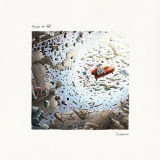
Equipe de Foot is a French duo of singer-songwriters who record pop
songs and play them much louder on stage
Since their formation in 2015, Alex & Mike have played hundreds of gigs, from the
sweaty basements of their hometown of Bordeaux to the stages of nationally
renown festivals and European venues, making a solid name for their band, and
little by little becoming part of the new wave of French rock. Equipe de Foot now
admit that their flaws might be their greatest strength, and bring their love for
English and American indie pop music and production to the forefront in their
songs. For 'Geranium' they have chosen to work with producer and sound
engineer (and fellow Beatles fan) Johannes Buff (Thurston Moore, Lee Ranaldo,
The Drones, Dalek and other various amazing projects) at Shorebreaker studio in
Tarnos, France. A meaningful choice both in terms of technical and artistic skills,
Johannes was able to assemble Equipe de Foot's good old wall of guitars, as well
as reach the heart of their pop songs to make the whole thing gloriously shine,
without altering the charming homemade vibe emanating from their beloved
demos.
The album is a constant rollercoaster, alternating lo- fi ballads and powerful
anthems, but always with a twist, be it a pitched loop on a chorus or an auto
tuned solo trumpet at the end of a sad piano song.
The past couple of years have provided an ideal breeding ground for periods of reflection. Of rediscovery. And for the reignition of dwindling flames. Perhaps this is why the meeting of Tom Churchill and 2Sox is the perfect match at the perfect time. A collision of minds stoking a fire that has sizzled away into a 12” slab of choice cuts. Introspective and deep, yet not forgetting what a dancefloor wants.
Tom started making music in the mid-90s, inspired by the house and techno records he was buying as a teenager growing up in Cardiff. Co-founder of cult 90’s label, Headspace Recordings and sister label Emoticon; Tom and partner Raeph Powell were responsible for some faultless releases in the 00’s. More recently, Tom has been one half of The Nuclear Family; a production, label and events project launched with Laurence Hughes in 2013. Much of what Tom has put his hand to over the years has been hot in demand. Incredibly, this is his first physical, solo release under his real name since 2002. Despite the 20 year gap, Tom’s enthuse for all things deep and electronic has arguably never been stronger.
“These tracks have been heavily inspired by two things - reconnecting with my surroundings and rediscovering my record collection - both of which have been made possible by the events over the past couple of years.” Tom says.
“As well as spending more time outdoors around my home on the west coast of Scotland, I recorded a lot of DJ mixes and radio shows during the first lockdown, which meant I spent a lot of time digging through older records. This reignited some creative energy that had been lying dormant for a while.
Before 2020 I’d been sporadically using a rented studio space to make music, but in that Spring I put together a basic, compact setup so I could work at home. My influences are pretty clear with these tracks - I’ve drawn on the palette of classic deep house, 90s techno and electro throughout - but while there are some retro elements and familiar sounds, I’ve tried to put my own twist on things. Being surrounded by nature and working exclusively on headphones has made for a more intimate sound, and these tracks are the most personal I’ve ever done.”
out of Stock
Last delivered 3 years ago available to reorder, subject to availability
First ever reissue of one of the most sought after titles in the catalogue of Peruvian's label MAG, in high demand not only among Latin music collectors but also among those interested in the most exotic and experimental psychedelic sounds around. - It includes 'Astronautas a Mercurio', a cosmic descarga full of electronic effects, filtered voices and fierce guitars with wah wah and raw distortion, as well as guarachas, cumbias and descargas. - Details: Hugo Macedo was a member of the first sonora in Peru, directed by his brother: the Sonora de Lucho Macedo. His brothers were the singers of the band while he performed as a timbalero. After nine years he founded the Sonora Casino of Hugo Macedo in 1964, later incorporating his wife, Lucía "Pochita" Rivera as a vocalist. "Trompeteros" was released on the Peruvian record label MAG in 1972. Previously, the Sonora Casino had already recorded several albums for Philips since the mid-60s. At the time their repertoire was fed by rhythms such as cha cha cha, bolero, guaracha... Their MAG period would start in 1970 with the album "Pochita y la Sonora Casino de Hugo Macedo" in which Hugo Macedo's wife was granted with an important visual presence on the front cover, with a similar follow-up on "Trompeteros", creating some confusion since vocalist Pachito Nalmy was the actual main singer on the record. The vocalist, who hails from Callao, demonstrates here a great vocal versatility as captured on songs like 'Guajira del amor', with a heavy rhythm that will surely delight boogaloo lovers, or the bolero number 'Pasa, pasa', being both songs own compositions of the multitalented Nalmy. Guarachas, descargas and cumbias complete the offering of this fantastic album, one of the strongest tropical LPs in the MAG catalogue. But the real banger here is the almost magical 'Astronauts to Mercury', a cosmic descarga full of electronic effects, filtered voices and fierce guitars with wah wah and raw distortion, closer to the sound of any psychedelic recording than the classic tropical sound of La Sonora Casino, and right next to those elements, an impressive brass section that boosts the intensity of the song to the highest levels. It is not surprising that "Trompeteros" has become in recent years a highly sought-after album not only by Latin music collectors but also by those after the most exotic and experimental psychedelic sounds around... Pablo Iglesias aka DJ Bongohead
out of Stock
Last delivered 4 years ago available to reorder, subject to availability
"The dazzling symphonic album he always threatened to produce" UNCUT 5/5
"A soulful symphonic masterpiece" ROLLING STONE
Originally released in Japan only on CD in 2002, Plush's Fed lives up to the cult-like adulation it has garnered ever since. A stunning symphony of Bacharach-inspired pop, Toussaint-swing andMelody Nelson-era-Gainsbourg, it's an album bound together by Liam Hayes' maverick genius, an uncompromising Brian Wilson-esque quest for sonic perfection. Positively indulgent in every way, this sumptuous record has long deserved to be treated to a deluxe vinyl edition. Lovingly overseen by Hayes and recent collaborator Pat Sansone (Wilco/The Autumn Defense), it will finally be available on the format it should've always been, this Record Store Day 2018. Remastered and presented as a double LP - cut specially at 45rpm - it comes housed in a beautiful gatefold jacket with expanded artwork throughout.
Its expansive, singular vision infamously took years to realise, involving Earth Wind & Fire's horn arranger (the legendary Tom Tom MMLXXXIV) amongst other elite personnel. Recorded with five different engineers (including Steve Albini and John McEntire), Hayes meticulously extracted every ounce of pop from each note. A long list of renowned studio ringers (including soul drummer Morris Jennings) and Chicago regulars (McEntire, Rizzo, Parker) among many others provide playing of demonstrably professional precision. As such, Hayes' complex, meandering melodies are rendered far more coherent and satisfying than they otherwise might have appeared, bringing his epic, anguished pop to a rarely seen level of perfection and depth. This unstinting dedication to the overarching vision was rewarded handsomely - artistically, at least.
However, as might have been expected, his deluxe approach resulted in a bill too steep for any American or European label to ultimately support. It has since seemed unlikely that it would see the light of day on either side of the Atlantic. Yet we were determined not to allow Hayes' lifetime achievement to go unnoticed or let music fans across the world miss out on one of the finest albums of this century.
A wide-eyed opus of stunning intensity, Fed oozes Hayes' impeccable influences without ever becoming overwhelmed by them. Incredibly, it touches upon Blaxploitation soul, Boz Scaggs-soft-rock, hints of jazz and blues, timeless baroque and skewed pop. In one long minute, the stabbing, soulful "So Blind" moves through five different melodic segments, horns shift easily from haunting backdrop to explosive forefront, smoothly giving way to strings as Hayes' voice casts its bewitching spell. The ambitious soul of "Having It All" has been described as the diffident cousin of Marvin Gaye's "Save The Children" whilst the breezy "Greyhound Bus Station" is pure 70s AM Gold, evoking the easy warmth of Jimmy Webb's beloved Land's End period. The sublime resignation of "No Education", a beautifully slow number that begins, "Never read a book in my life/ But I feel just fine" is post-rock ballad heaven. Arriving towards the end, the title track arrives as a majestic suite, moving from a horn-and-guitar-led instrumental via shifting melodies to Hayes' compelling vocal bursts.
An album of such brilliance, Fed can comfortably sit alongside such staggering statement pieces as David Bowie's Young Americans, Randy Newman's 12 Songs or Harry Nilsson's Nilsson Schmilsson. Indeed, for all the sprawling elements that went in - lengthy guitar builds, exploding horn sections, solemn strings, female backup chorus - it is a deeply personal and original record. Employing a distinct "more is more" aesthetic, he demonstrates remarkable restraint in producing an album of such intimacy. "My creation has drowned me," he memorably sings on languid opener "Whose Blues", yet he navigates the shifting styles and ideas with enviable ease.
- FIRST EVER official vinyl reissue - definitive version with Nancy's involvement - Definitive reissue of Nancy & Lee's classic 1968 duet album - Includes the bonus tracks, "Tired Of Waiting for You" and "Love Is Strange," from the album sessions - Newly remastered from the original analog tapes by GRAMMYr-nominated engineer John Baldwin - Vinyl pressed at RTI - Q&A with Nancy & GRAMMYr-nominated reissue co-producer Hunter Lea - Never-before-seen photos from Nancy Sinatra's personal archive - Beautifully packaged and expanded gatefold LP featuring a 20-pg booklet // "We had sort of a love/hate relationship. Maybe it was a sexual tension because we never had any kind of affair. I don't know exactly what it was, but it worked." - Nancy Sinatra Light in the Attic is thrilled to announce the first official reissue of Nancy & Lee: the highly-influential 1968 duet album from Nancy Sinatra and Lee Hazlewood. This definitive edition of Nancy & Lee features newly-remastered audio by the GRAMMYr-nominated engineer John Baldwin and includes an array of exclusive content, including a new interview with Nancy, never-before-seen photos, and two bonus tracks from the album sessions: an ethereal cover of The Kinks' "Tired of Waiting for You" and an uptempo version of "Love Is Strange" (first made famous by Mickey & Sylvia in 1956). This release marks the official debut on vinyl for both tracks. After a string of successful duet singles with Lee Hazlewood, including "Sand," "Summer Wine," "Jackson," and "Some Velvet Morning;" the pair released the duet album Nancy & Lee in 1968. The album features the lush, orchestral arrangements of Billy Strange and the famed Los Angeles session musicians, The Wrecking Crew, at the peak of their powers. The unique vocal blend, the iconic cover and the selection of classic songs attracted a huge following and sold over a million copies.
- FIRST EVER official vinyl reissue - definitive version with Nancy's involvement - Definitive reissue of Nancy & Lee's classic 1968 duet album - Includes the bonus tracks, "Tired Of Waiting for You" and "Love Is Strange," from the album sessions - Newly remastered from the original analog tapes by GRAMMYr-nominated engineer John Baldwin - Vinyl pressed at RTI - Q&A with Nancy & GRAMMYr-nominated reissue co-producer Hunter Lea - Never-before-seen photos from Nancy Sinatra's personal archive - Beautifully packaged and expanded gatefold LP featuring a 20-pg booklet // "We had sort of a love/hate relationship. Maybe it was a sexual tension because we never had any kind of affair. I don't know exactly what it was, but it worked." - Nancy Sinatra Light in the Attic is thrilled to announce the first official reissue of Nancy & Lee: the highly-influential 1968 duet album from Nancy Sinatra and Lee Hazlewood. This definitive edition of Nancy & Lee features newly-remastered audio by the GRAMMYr-nominated engineer John Baldwin and includes an array of exclusive content, including a new interview with Nancy, never-before-seen photos, and two bonus tracks from the album sessions: an ethereal cover of The Kinks' "Tired of Waiting for You" and an uptempo version of "Love Is Strange" (first made famous by Mickey & Sylvia in 1956). This release marks the official debut on vinyl for both tracks. After a string of successful duet singles with Lee Hazlewood, including "Sand," "Summer Wine," "Jackson," and "Some Velvet Morning;" the pair released the duet album Nancy & Lee in 1968. The album features the lush, orchestral arrangements of Billy Strange and the famed Los Angeles session musicians, The Wrecking Crew, at the peak of their powers. The unique vocal blend, the iconic cover and the selection of classic songs attracted a huge following and sold over a million copies.
- FIRST EVER official vinyl reissue - definitive version with Nancy's involvement - Definitive reissue of Nancy & Lee's classic 1968 duet album - Includes the bonus tracks, "Tired Of Waiting for You" and "Love Is Strange," from the album sessions - Newly remastered from the original analog tapes by GRAMMYr-nominated engineer John Baldwin - Vinyl pressed at RTI - Q&A with Nancy & GRAMMYr-nominated reissue co-producer Hunter Lea - Never-before-seen photos from Nancy Sinatra's personal archive - Beautifully packaged and expanded gatefold LP featuring a 20-pg booklet // "We had sort of a love/hate relationship. Maybe it was a sexual tension because we never had any kind of affair. I don't know exactly what it was, but it worked." - Nancy Sinatra Light in the Attic is thrilled to announce the first official reissue of Nancy & Lee: the highly-influential 1968 duet album from Nancy Sinatra and Lee Hazlewood. This definitive edition of Nancy & Lee features newly-remastered audio by the GRAMMYr-nominated engineer John Baldwin and includes an array of exclusive content, including a new interview with Nancy, never-before-seen photos, and two bonus tracks from the album sessions: an ethereal cover of The Kinks' "Tired of Waiting for You" and an uptempo version of "Love Is Strange" (first made famous by Mickey & Sylvia in 1956). This release marks the official debut on vinyl for both tracks. After a string of successful duet singles with Lee Hazlewood, including "Sand," "Summer Wine," "Jackson," and "Some Velvet Morning;" the pair released the duet album Nancy & Lee in 1968. The album features the lush, orchestral arrangements of Billy Strange and the famed Los Angeles session musicians, The Wrecking Crew, at the peak of their powers. The unique vocal blend, the iconic cover and the selection of classic songs attracted a huge following and sold over a million copies.
Inspiration can strike anyone at any time, and more often than not from somewhat peculiar quarters. Rarely more so than when Sam Grant - thus far best known as guitarist and producer of Pigs Pigs Pigs Pigs Pigs Pigs Pigs - finally set about work on a solo project that had been pursuing him for some years. “I want people to imagine that feeling of rubber - its physical memory, the unnatural vibe of it. It’s so tactile but alien. It’s an odd analogy, but that’s what this music is for me.”A specific gravity is one more property that rubber has going for it, and that much is certainly true of Rubber Oh’s debut album ‘Strange Craft’, the result of his elasticated fixation, and his debut album of deliriously tuneful sci-fi tinged psychpop. It’s a unique soundworld in which an emphasis on beguiling melody marries a kaleidoscopic grandeur. Widescreen gems like the warped interstellar voyage that is Children Of Alchemy and the unshakeable earworm Hyperdrive Fantasyare all vibrant colour and celestial energy, setting their psychic stall out somewhere between the incandescent headspace of a ‘70s sci-fi TV show and the red-light-fever of the overheated ampstacks Grant has been historically more familiar with.Ultimately, for Grant as well as everyone else, Rubber Oh amounts to one strange trip - “Many of the lyrics are about alchemy, journeying and vessels, as interchangeable metaphors for knowledge and wisdom” he says. “I wanted to mesh the land and sea, the cosmos and the psyche across the tracks as one single plane” Mission accomplished, in short. This Strange Craft is fuelled up and ready to accept all comers on a ride into extensions through dimensions01
''The acts Mermaid Chunky call to mind here tend to lean on a blithe naivete: Animal Collective, Peaking Lights, youthful Norfolkians Let’s Eat Grandma and fuckwitted freak-folkers Cocorosie. This isn’t a fashionable sound in 2020 – venture your own sociopolitical reasoning – and I reckon I’ve found the one record of its type I want to hear this year.''
Mermaid Chunky are an audiovisual duo made up of artists Freya Tate and Moina Moin. Bathing in milkmaid serenity and improvised chaos, the duo boast of pumping trance rhythms, sad Easter time chicks and seriously arousing sax solos. Much of their cultivation has come out of the mossy club culture of Stroud's SVA and London's Total Refreshment Centre, collaborating with the likes of Alabaster DePlume, Danalogue, Donna Thompson, Grove, Snapped Ankles (UK tour support) and Yama Warashi.
Their debut Faith and Industry album VEST (produced by Capitol K at Total Refreshment Centre), was birthed last year out of a history of improvised cheek and club dexterity forefronting their live shows and audiovisual solstice celebrations, recently captured by British Vogue's 2021 PRIDE series. Championing this action is the Mermaid Chunky Mothership, a gang of fellow artists and performers, often clad in nauseous satin frills, swamping the stage with french mime and slut drops (Roundhouse 2021, End Of the Road 2021, SVA Solstice always.) The MC gang just scoured their PRS Woman Make Music funding so who knows what they will be stirring up in the heat of summer soup 2022 (the most ducks in a year we will ever experience.) The only way for you to find out is to join the chunklett buffet and dip your wicked, webbed fingers into something mega.
Mermaid Chunky will perform Camp Bestival (Shropshire), Kite Festival (Oxford) and at Orbury Common’s PrahEP launch (a collaborative audiovisual May Day celebration) at the Brunel Goods Shed, SVA, Stroud 30th April - 1st May.
They will aslo be collaborating with Percolate Music on a series of London based audiovisual events this year focused on experimental, electronic womxn performers, visual artists and DJs. More special announcements to be revealed in the present future of your past.
All the machines and wires of Hekotr Legion always create powerful Techno! This is no exception! Viking Force at Subsist catalog! Remixes are stunning!
out of Stock
Last delivered 3 years ago available to reorder, subject to availability
Million Dollar Money Machine is Perttu Lindroos and Simo Råman. All tracks written, composed and arranged by Million Dollar Money Machine. Guitars, bass by Simo Råman. Vocals, synths, drum programming, bass, melodica by Perttu Lindroos. Mixed by Perttu Lindroos. Mastered by Tuomas Salmela / Phonogenic Audio. Cover design by Dora Söderlund.
More Late 70s/early 80s Westcoast Yachtpop you can almost dance to!
Buoyed by the incredible love felt for TSTD Vol. 1 in summer 2014, Berlin's renowned pop archaeologist, that master musical excavator DJ Super-markt, has leapt straight back into the soft-top and been out digging for the lost gems you'll find here on Volume 2. This is another perfect collection of missing-in-action, late-70s/early-80s smooth, singer/songwriter, AOR-paced, yacht-based pop and blue-eyed soul. Every song brims over with that West Coast sunshine, and for Volume 2 we've dug even deeper into obscure corners of LA, London, even Cologne, to create an even more potent soundtrack to that lost world that's somehow always with us. So join us on another sunset trip as we soundtrack summer 2015 in the company of these lost luminaries. Bask in every detail of that glorious over-production, and recall an era when the music industry had the time, money and sheer musical talent to make everything BIG. Pay no mind to the cynics, the cooler-than-thou-erati, or the buzz kills of the sincerity police. These are big tunes that deserve to be hits, even if it's taken 40 years to get there, driving slowly up that winding California coast road in the wonderful warm summer air.
London-based composer/bassist, Daniel Casimir returns with his solo debut album Boxed In, a dynamic collision of pulsing modern jazz and orchestral instrumentation.
Featuring Casimir's quintet of fellow British jazz luminaries, including Nubya Garcia, Moses Boyd, Al MacSween and James Copus, the album astutely bridges traditional and contemporary jazz forms enveloping strings, woodwind & brass arrangements.
Boxed In represents Casimir's debut set of compositions written for orchestra. Despite his interest in writing for orchestra while studying jazz and classical music, attending conservatoires and completing a masters degree at Trinity Laban, he was never given the opportunity or choice to fulfil his aspiration. Casimir notes that as only one of two black musicians in his study cohort the normalisation of the situation made it almost easy to miss its inherent injustice.
Coming up through the essential development foundation Tomorrow's Warriors, Casimir has gone on to feature on all of Nubya Garcia's recorded output to date as well as projects by Makaya McCraven and Ashley Henry and has performed with Lonnie Liston Smith and Jason Rebello amongst others.
This album reflects the experiences of navigating prescribed labels traditionally placed on black musicians. As well as being inspired by Wayne Shorter's hybrid orchestral jazz projects, Boxed In was also influenced by a conversation Casimir had in 2018 with legendary composer and producer Quincy Jones who talked a lot about classical music orchestration.
The album is also inspired by Derek Owusu's book Safe which reflects on the Black British male experience and becomes the broad thematic skeleton of Boxed In with the track Safe split into three parts across the album, the first of which opens proceedings in a purposeful up-tempo style with stylistic touches of Roni Size-esque drum & bass (in part courtesy of producer/polymath Moses Boyd). The album's title track follows, with Garcia's soaring tenor taking lead, followed by New Waters and the introduction of vocalist Ria Moran.
Flute, woodwind and brass melodies envelop Casimir's charming string arrangments on Your Side and Safe Part 2, showing off Casimir's command and ease in an orchestral setting. Get Even and Rewind The Time confirm Casimir's penchant for weaving brooding pop vocals with jazz composition while the fanfaric Into The Truth leads literally into The Truth where Copus and MacSween engage throughout to the track's triumphant close.
The closing track Outro is a lively Afrobeat-tipping style with Casimir's deft bass manoeuverings and large ensemble arrangement on full show.
out of Stock
Last delivered 4 years ago available to reorder, subject to availability
Credic ist ein fünfköpfiger Melodic-Death-Metal-Juggernaut aus Stuttgart, der klingt, als würde die frühe Göteborg-Szene einen Spaziergang durch die klangliche Unterwelt von 'Stranger Things' machen. Mit 'Vermillion Oceans' präsentieren uns Credic ihr zweites Studioalbum. Atmosphärisch düsterer Melodic Death für Fans von Bands wie Dark Tranquility, Amorphis, In Flames oder At The Gates!
Von der Kritik u.a. als 'die größte deutschsprachige Band unserer Tage' bezeichnet, finden sich auf dem neuen Erdmöbel Album Titel wie 'Supermond', 'Bernoulli-Effekt' oder 'Das Vakuum', der Song zum Corinna Harfouch Kinofilm 'Alles in bester Ordnung'.
Musikalisch ein bisschen wie Beatles und Steely Dan. Warme Bässe, feine Arrangements, Streicher und Saxophon. Gut, vertraut, neu.
FBK has been pumping out releases since 1994 as a staple in the midwest. Under aliases The Sleep Engineer (Xplor) and Powerhouse on The Acid Junkies' the Acid Life, he has been a shapeshifter with a steady stream of minimal, pure motorik pulsations that embody that Midwest Freak power. Measured yet transcendently driving - a mind-bending wormhole that weaves dark introspective turns into the unknown, Think For Yourself covers a diaspora of modes for the floor - all while encapsulating the energy of his live sets that we know and love. Topped off with a subterranean remix by undeniable icon Marcel Dettmann - a huge honor to have his name grace this release.
out of Stock
Last delivered 2 years ago available to reorder, subject to availability
ODE TO 97 marks his first official release on the newly established Departure Lounge label, aiming to pay homage to evocative, ambient driven house with nostalgic tinged floor movers reminiscent of bygone times, whilst retaining a progressive edge. DL001 debuts this sound foremost on the A-side, featuring "Consider It Spun" - which endeavours to traverse the barrier between deep and minimal house, built from atmospheric pads bending and weaving amongst rolling percussion and driving string sections, cemented atop a subby bass line with tripped and delayed vocals pinning the track together - primed and ready to lay down suitably on discerning dance floors.
The B-side features "Labour of Love" - a sedating and melodic take to its A-side counterpart. We witness a more moody transition with warm delayed keys, accompanied with a skippy drum pattern and gliding pads rising to a sparkling crescendo beneath sweeping, yet stabby percussive elements. A perfect accompaniment to the start or end of the evening.
out of Stock
Last delivered 4 years ago available to reorder, subject to availability
The Mankunku Quartet's 1968 album 'Yakhal' Inkomo’ clocks in at just over 30 minutes of jazz perfection. This compact, and to-the-point, album would sit comfortably in amongst some of the best works in the catalogues of any of the quintessential jazz labels such as Blue Note, Prestige and Impulse. 'Yakhal' Inkomo’, however, was originally released on the South African record label World Record Co., which resulted in it becoming an elusive and sought-after piece for jazz collectors. First press copies sometimes fetch as much as £1,000 on the collectors' market. It has been long regarded as one of the finest South African jazz albums and DJ / broadcaster Gilles Peterson cemented this when he included it in his "best of genre" focussed radio show, 'The 20 - South African Jazz'.
Tenor saxophonist Winston "Mankunku" Ngozi recorded the session on 23rd July 1968 at the Manley van Niekerk Studios, in Johannesburg. It was recorded by Dave Challen and produced by Ray Nkwe. The session is built up of two original works by Mankunku on the A-side, 'Yakhal' Inkomo' & 'Dedication (To Daddy Trane and Brother Shorter)', and on the B-side, the Horace Silver composition 'Doodlin', and a John Coltrane number 'Bessie's Blues'. What is striking is how the Mankunku-penned compositions not only hold their own next to Silver and Coltrane but they are, arguably, the better tracks on the record - a testament to the beautiful writing and playing of Mankunku.
'Yakhal' Inkomo' features the great musicians; Agrippa Magwaza on bass, drummer Early Mabuza, and pianist Lionel Pillay. Pillay was of Indian descent, making this a mixed-race group, thus the very recording of the album was an act of resistance as it broke the apartheid restrictions of the time. The title of 'Yakhal’ Inkomo' means “the bellow of the bull”, the Black audience would have understood this as coded community symbolism and an act of protest but it escaped the attention of the white government.
For this edition, we have enlisted the services of Abbey Road Studios mastering, and lacquer-cutting engineer Miles Showell to cut a special half-speed master from the audio taken off the original master tapes. Miles has previously worked on our Arthur Verocai, Marcos Valle and Ian Carr re-issues, and once again we are blown away by the richness and clarity of Miles' work. We have also presented it as a replica copy using the cover artwork and labels from the primary World Record Co. original version.
On the sleeve notes, Ray Nkwe the producer and the President of the Jazz Appreciation Society of South Africa writes "This is the LP that every jazz fan has been waiting for" and Ray was not wrong, it's a stone-cold timeless jazz classic.
• Half-speed mastering at Abbey Road Studios
• Repressed with an OBI strip as well as a deluxe tip-on sleeve
• One of the finest South African jazz albums
• "This is the LP that every jazz fan has been waiting for" Ray Nkwe
"Robot Hive/Exodus" is the second of initially four albums reimagined and individually curated by a band member, in this case Dan Maines, and reissued as part of the Clutch Collector's Series. The first album in this new series was Blast Tyrant, curated by Jean-Paul Gaster. TheRH/E artwork is in the vein of the original "Blast Tyrant" yet strikingly different. The vinyl release is remastered and manufactured on 180-gram colored vinyl which in turn is stored in extra heavy sleeves. The gatefold jacket is printed on metalized polyester paper, and each album includes a numbered insert autographed by the band. As an extra special element this 2xLP includes a 7" with two tracks: "What Would a Wookie Do?" and "Bottoms Up, Socrates". These two songs were originally among the 16 songs written and recorded for Robot Hive/Exodus back in 2005 but were left off the final album for time purposes. We are glad to have these recordings return home as part of the RH/E Collector’s Series limited to 7,500 units worldwide.
Robot Hive/Exodus (Ltd. Collector's Series/2LP+7"):
- The 12" colors are "Metallic Silver" with "Metallic Gold"
- Bonus 7" with two additional tracks
- Remastered Audio
- Limited Edition
- 2xLP 180g Colored Vinyl
- Artist Autographed Numbered Insert
Here is a quote from Dan, who quarterbacked this project re the two tracks on the 7" (the 7" is black vinyl in its own sleeve):
"What Would a Wookie Do?", and "Bottoms Up, Socrates" were among the 16 songs written and recorded for Robot Hive/Exodus back in 2005. For time purposes these two were left off the final album. We are glad to have these recordings return home as part of the Robot Hive/Exodus Collector’s Series.
On textstar+ Jan Jelinek brings together the material from the CMYK series, four EPs he released between 1999 and 2002 under the pseudonym farben (the German word for both colours and paints), on a vinyl double LP for the first time. The selection of tracks has been remastered from the original tapes, joined by two additional pieces that appeared on compilations during the same period.
A Polaroid. Still life with tangled leads and consumer electronics, late twentieth century. Black and various shades of dirty white are the dominant non-colours. The image’s spatial depth remains diffuse, the links between its elements speculative. A note stuck to the wall (a legend, perhaps, or an all-explaining blueprint in text form?) is impossible to decipher. You can’t see what connects the picture’s signs. You have to hear it.
farben says: Every sound is a text. A bearer of meaning in search of a reader. Hoping the ideas inscribed in its autonomous existence will be understood as intended. While its beauty lies precisely in misunderstanding, in reading the coded message a new way every time. A thousand colours of sound, a thousand different ways to hear, to see, to understand.
On textstar+ Jan Jelinek brings together the material from the CMYK series, four EPs he released between 1999 and 2002 under the pseudonym farben (the German word for both colours and paints), on a vinyl double LP for the first time. The selection of tracks has been remastered from the original tapes, joined by two additional pieces that appeared on compilations during the same period. Another new element is the Polaroid, showing the origins of a world: Jelinek’s home studio in Berlin at the time.
farben says: Move your body! The project has its roots in Jelinek’s love of house as a reductionist vision of soul. Of four to the floor as a proposition that can be accessed anywhere. Of electronic dance music as a realm of possibility that can be continually expanded. farben was written as contemporary house music. As a text about excitement and euphoria. The arrangements were made directly while recording to DAT, on a twelve-channel mixing desk. Several track titles suggest a link to live concerts, coupled with the context of machine music and bedroom recording. Others affirm pop music’s most extravagant stock phrases about various states of love.
Jelinek produced the tracks with the aim of making music for dancefloors. An idea that failed very productively. In the locations to which it was originally addressed, the project barely figured. But people did listen, and they listened all the more closely to this music that opened up new acoustic and associative scope for house. farben is the opposite of genre: a music spawning new terms (clicks & cuts, micro-house) that never manage to fully capture it.
farben says: Signifiers. The four CMYK EPs are designed as a network of references that cannot be missed but that can also never be precisely deciphered. The vectors of sound, word and image point to Isaac Hayes and Ornette Coleman, to Detroit and the first generation of the Red Army Faction, to Karl Marx and Friedrich Engels. So multifarious that they are distorted to the point of recognition. Overall we hear sonic docufictions whose appealing vagueness derives precisely from this oscillation between clarity and ambiguity, which is also the source of their poetry: the lyricism of the pure circulation of signs.
The artwork is based on photographs of former Red Army Faction members, broken down into the four colours of the CMYK model. The motifs dissolve into individual dots of a single colour, so close to the faces that their expressions are only hinted at. Taken together, the individual colours compose a new whole out of fragmentary material, defying definition and thus maintaining their vibrancy. The same occurs on the level of sound. The sampler Jelinek used for these tracks had to be fed with floppy disks, imposing a memory limit of 1.44 megabytes per audio quotation from soul or jazz records. As a necessary consequence of this, the individual references, like the dots of colour, are dissolved into details and abstractions. They appear as splinters that recombine in new ways to create new meanings. The joy of collapsing metaphors.
farben says: New departures. Even two decades after its original release, textstar+ does not come across as an epitaph to the modern era. Instead, it appears as a euphoric affirmation of the utopias of the twentieth century, translated into new sound texts via the aesthetic strategies of abstraction, collage, networking and speculation. 1.44 megabytes of history, one thousand signifiers, one album. From “Live ...” to “... Love”.
Arno Raffeiner, 2021
out of Stock
Last delivered 12 months ago available to reorder, subject to availability
Picture yourself cruising around Tuscany in an Alfa Romeo, stopping off at the localpizza joint, spending the night playing snooker next to the swimming pool. PyschoWeazel take us straight back to the 80s with their vintage synths and hair spray hairstyle with the “BIANCO&ROSSO EPs”. Put on your nicest shirt, put your sunglasseson, get your pair of santiagos out, it’s your time to shine on the dancefloor!At the very edge of good taste, always with a pinch of fun and self-mockery, these sixtracks sound like the future of hedonist club music, 2022 style.These two EPs are a bit like both sides of the same coin. They include influencesthat shaped the duo’ssound: indie-Dance, Italo-disco, Cold Wave and EBM. PsychoWeazel used production techniques popular in the 80s: arpeggios, cowbells, snarerolls, re-claiming ear-catching melodies from that era and offering it with their freshand polished sound.
out of Stock
Last delivered 2 years ago available to reorder, subject to availability
"Big Time" entstand mit einem Peitschenhieb in den seltenen, fruchtbaren Momenten, in denen sowohl frische Trauer als auch frische Liebe gleichzeitig auftreten, in denen sich Kummer und Verliebtheit gegenseitig verstärken, verkomplizieren und erklären. Verlust ist schon immer ein Thema in Olsens Songs gewesen, aber nur wenige können Elegien mit einer derart rücksichtslosen Energie schreiben, wie sie. Wenn diese aus allen Nähten platzende, bergab rasende Energie für ihre Arbeit unüberwindbar schien, beweist "Big Time", dass Olsen jetzt von einem verwurzelteren Ort der Klarheit aus schreibt. Dabei arbeitet sie mit einer elastischen Beherrschung ihrer Stimme - sowohl klanglich als auch künstlerisch. In diesen Liedern geht es nicht nur um die Transformation von Trauer, sondern auch darum, Freiheit und Freude in den Entbehrungen zu finden, die diese mit sich bringen. "Big Time" ist ein Album über die expansive Kraft der neuen Liebe, geschrieben in der Zeit, als Angel Olsen sich als queer outete und ihre ersten Erfahrungen mit queerer Liebe und Herzschmerz machte. Aber dieser Glanz und Optimismus wird durch ein tiefes und vielschichtiges Gefühl von Verlust gemildert. Während Olsens Prozess der Auseinandersetzung mit ihrem Queer-Sein und der Konfrontation mit den Traumata, die sie davon abgehalten hatten, sich selbst voll und ganz zu akzeptieren, fühlte sie, dass es an der Zeit war, sich ihren Eltern gegenüber zu outen - eine Hürde, die sie eine Zeit lang vermieden hatte. "Some experiences just make you feel as though you're five years old, no matter how wise or adult you think you are", schreibt sie über diese Zeit. Nach diesem tränenreichen, aber erleichternden Gespräch feierte sie mit ihrem/ihrer Partner*in, ihren Freund*innen, mit Austern und Wein. "Finally, at the ripe age of 34, I was free to be me." Drei Tage später starb ihr Vater, dessen Beerdigung Olsen zum Anlass nahm, den/die Partner*in ihrer Familie vorzustellen. Nur zwei Wochen später erhielt Olsen den Anruf, dass ihre Mutter in der Notaufnahme lag. Eine Zeit im Hospiz kam bald darauf, und eine zweite Beerdigung folgte kurz nach der ersten. Eine weitere Reise zurück nach St. Louis, eine weitere Trauerbewältigung, eine weitere Vertiefung und Intensivierung dieser noch jungen Liebe. Drei Wochen nach der Beerdigung ihrer Mutter war Olsen im Studio, um dieses unglaublich weise und zärtliche neue Album "Big Time" aufzunehmen. Ausgelassene Anspielungen an Tammy Wynette und Kitty Wells tauchen auf "Big Time" ebenso auf wie die komplexen Orchestrationen ihres genreübergreifenden 2019er Albums "All Mirrors". Während jenes Album voller dramatischer Veränderungen und Wendungen war, liegen die Überraschungen hier in ihrer Einfachheit - ein langsames Anschwellen der Streicher, eine Instrumentierung, die wie ein Sturm zyklisch ist, oder funkelnde Hörner in einer lichtdurchfluteten Break-up-Ballade, während kaum ein Synthesizer in Sicht ist. "Big Time" wurde zusammen mit dem Co-Produzenten Jonathan Wilson in seinen Fivestar Studios in Topanga, Kalifornien, aufgenommen und gemischt. Drew Erickson spielte Klavier, Orgel und kümmerte sich um die Streicherarrangements. Olsens langjährige Bandkollegin Emily Elhaj spielte durchgehend den Bass.
"Big Time" entstand mit einem Peitschenhieb in den seltenen, fruchtbaren Momenten, in denen sowohl frische Trauer als auch frische Liebe gleichzeitig auftreten, in denen sich Kummer und Verliebtheit gegenseitig verstärken, verkomplizieren und erklären. Verlust ist schon immer ein Thema in Olsens Songs gewesen, aber nur wenige können Elegien mit einer derart rücksichtslosen Energie schreiben, wie sie. Wenn diese aus allen Nähten platzende, bergab rasende Energie für ihre Arbeit unüberwindbar schien, beweist "Big Time", dass Olsen jetzt von einem verwurzelteren Ort der Klarheit aus schreibt. Dabei arbeitet sie mit einer elastischen Beherrschung ihrer Stimme - sowohl klanglich als auch künstlerisch. In diesen Liedern geht es nicht nur um die Transformation von Trauer, sondern auch darum, Freiheit und Freude in den Entbehrungen zu finden, die diese mit sich bringen. "Big Time" ist ein Album über die expansive Kraft der neuen Liebe, geschrieben in der Zeit, als Angel Olsen sich als queer outete und ihre ersten Erfahrungen mit queerer Liebe und Herzschmerz machte. Aber dieser Glanz und Optimismus wird durch ein tiefes und vielschichtiges Gefühl von Verlust gemildert. Während Olsens Prozess der Auseinandersetzung mit ihrem Queer-Sein und der Konfrontation mit den Traumata, die sie davon abgehalten hatten, sich selbst voll und ganz zu akzeptieren, fühlte sie, dass es an der Zeit war, sich ihren Eltern gegenüber zu outen - eine Hürde, die sie eine Zeit lang vermieden hatte. "Some experiences just make you feel as though you're five years old, no matter how wise or adult you think you are", schreibt sie über diese Zeit. Nach diesem tränenreichen, aber erleichternden Gespräch feierte sie mit ihrem/ihrer Partner*in, ihren Freund*innen, mit Austern und Wein. "Finally, at the ripe age of 34, I was free to be me." Drei Tage später starb ihr Vater, dessen Beerdigung Olsen zum Anlass nahm, den/die Partner*in ihrer Familie vorzustellen. Nur zwei Wochen später erhielt Olsen den Anruf, dass ihre Mutter in der Notaufnahme lag. Eine Zeit im Hospiz kam bald darauf, und eine zweite Beerdigung folgte kurz nach der ersten. Eine weitere Reise zurück nach St. Louis, eine weitere Trauerbewältigung, eine weitere Vertiefung und Intensivierung dieser noch jungen Liebe. Drei Wochen nach der Beerdigung ihrer Mutter war Olsen im Studio, um dieses unglaublich weise und zärtliche neue Album "Big Time" aufzunehmen. Ausgelassene Anspielungen an Tammy Wynette und Kitty Wells tauchen auf "Big Time" ebenso auf wie die komplexen Orchestrationen ihres genreübergreifenden 2019er Albums "All Mirrors". Während jenes Album voller dramatischer Veränderungen und Wendungen war, liegen die Überraschungen hier in ihrer Einfachheit - ein langsames Anschwellen der Streicher, eine Instrumentierung, die wie ein Sturm zyklisch ist, oder funkelnde Hörner in einer lichtdurchfluteten Break-up-Ballade, während kaum ein Synthesizer in Sicht ist. "Big Time" wurde zusammen mit dem Co-Produzenten Jonathan Wilson in seinen Fivestar Studios in Topanga, Kalifornien, aufgenommen und gemischt. Drew Erickson spielte Klavier, Orgel und kümmerte sich um die Streicherarrangements. Olsens langjährige Bandkollegin Emily Elhaj spielte durchgehend den Bass.
"Big Time" entstand mit einem Peitschenhieb in den seltenen, fruchtbaren Momenten, in denen sowohl frische Trauer als auch frische Liebe gleichzeitig auftreten, in denen sich Kummer und Verliebtheit gegenseitig verstärken, verkomplizieren und erklären. Verlust ist schon immer ein Thema in Olsens Songs gewesen, aber nur wenige können Elegien mit einer derart rücksichtslosen Energie schreiben, wie sie. Wenn diese aus allen Nähten platzende, bergab rasende Energie für ihre Arbeit unüberwindbar schien, beweist "Big Time", dass Olsen jetzt von einem verwurzelteren Ort der Klarheit aus schreibt. Dabei arbeitet sie mit einer elastischen Beherrschung ihrer Stimme - sowohl klanglich als auch künstlerisch. In diesen Liedern geht es nicht nur um die Transformation von Trauer, sondern auch darum, Freiheit und Freude in den Entbehrungen zu finden, die diese mit sich bringen. "Big Time" ist ein Album über die expansive Kraft der neuen Liebe, geschrieben in der Zeit, als Angel Olsen sich als queer outete und ihre ersten Erfahrungen mit queerer Liebe und Herzschmerz machte. Aber dieser Glanz und Optimismus wird durch ein tiefes und vielschichtiges Gefühl von Verlust gemildert. Während Olsens Prozess der Auseinandersetzung mit ihrem Queer-Sein und der Konfrontation mit den Traumata, die sie davon abgehalten hatten, sich selbst voll und ganz zu akzeptieren, fühlte sie, dass es an der Zeit war, sich ihren Eltern gegenüber zu outen - eine Hürde, die sie eine Zeit lang vermieden hatte. "Some experiences just make you feel as though you're five years old, no matter how wise or adult you think you are", schreibt sie über diese Zeit. Nach diesem tränenreichen, aber erleichternden Gespräch feierte sie mit ihrem/ihrer Partner*in, ihren Freund*innen, mit Austern und Wein. "Finally, at the ripe age of 34, I was free to be me." Drei Tage später starb ihr Vater, dessen Beerdigung Olsen zum Anlass nahm, den/die Partner*in ihrer Familie vorzustellen. Nur zwei Wochen später erhielt Olsen den Anruf, dass ihre Mutter in der Notaufnahme lag. Eine Zeit im Hospiz kam bald darauf, und eine zweite Beerdigung folgte kurz nach der ersten. Eine weitere Reise zurück nach St. Louis, eine weitere Trauerbewältigung, eine weitere Vertiefung und Intensivierung dieser noch jungen Liebe. Drei Wochen nach der Beerdigung ihrer Mutter war Olsen im Studio, um dieses unglaublich weise und zärtliche neue Album "Big Time" aufzunehmen. Ausgelassene Anspielungen an Tammy Wynette und Kitty Wells tauchen auf "Big Time" ebenso auf wie die komplexen Orchestrationen ihres genreübergreifenden 2019er Albums "All Mirrors". Während jenes Album voller dramatischer Veränderungen und Wendungen war, liegen die Überraschungen hier in ihrer Einfachheit - ein langsames Anschwellen der Streicher, eine Instrumentierung, die wie ein Sturm zyklisch ist, oder funkelnde Hörner in einer lichtdurchfluteten Break-up-Ballade, während kaum ein Synthesizer in Sicht ist. "Big Time" wurde zusammen mit dem Co-Produzenten Jonathan Wilson in seinen Fivestar Studios in Topanga, Kalifornien, aufgenommen und gemischt. Drew Erickson spielte Klavier, Orgel und kümmerte sich um die Streicherarrangements. Olsens langjährige Bandkollegin Emily Elhaj spielte durchgehend den Bass.
Having been extensively road-tested this past year by DJs including Daniel Avery, HAAi and Gerd Janson, Highdive arrives with tangible anticipation. The work of less-than-shadowy figures Gramrcy and John Loveless, the pair have passed lockdown and beyond remixing artists such as WH Lung, Discovery Zone and Ghost Culture. Debuting their first original material, closely following Gramrcy’s recent appearance on Loveless’s own Hot Concept imprint, Highdive is a long-anticipated explosion of energy.
Built around a sonic-boom breakdown, glossy rave chords and pounding post-punk drums, Highdive feels immediately at home on Phantasy. Having worked closely alongside founder Erol Alkan in recent years to shape the imprint's diverse output, Loveless' collaboration with the Peach Discs founder nods to the electro landscape of the label's earliest days. Having never left dance floors since, Gramrcy & John Loveless take a golden opportunity to plunge dancers into the sublime and the ridiculous.
While a stripped-down ‘Beats Mix’ sees the pair adopt a less-maximal approach, leave it to Schacke to stretch Highdive into hardcore rave heaven. The already-influential Copenhagen artist underscores his refreshing funk in the ‘fast-techno’ scene through which he has risen, turning the screws and upping the tempo with intense but elastic results.
out of Stock
Last delivered 3 years ago available to reorder, subject to availability
Justin Thurgur has been at the heart of the UK's World Music scene for over twenty years; principally in his collaborations with the former Fela and Femi Kuti keyboardist, Dele Sosimi, and with the pianist and composer Kishon Khan, most recently in his groups Lokkhi Terra and Cubafrobeat. He has also worked with the likes of Afrobeat drum legend Tony Allen, and with the Cuban giants Giraldo Piloto, Julito Padron and Changuito. Thurgur is also a member of the seminal English folk group Bellowhead.
'Many Faces' brings together this musical journey, with Afro-infused grooves and nods towards Cuban Jazz and Dub, with Thurgur's early passion for the likes of Miles Davis, Coltrane, Lee Morgan, Wayne Shorter, Herbie Hancock, et al....
It features both Khan and Sosimi, who have contributed as co-writers as well as bringing their own inimitable sounds on piano, rhodes and hammond organ. Alongside them are some of the leading musicians on the UK's African, Cuban and Jazz scenes, plus collaborations with rising star singers Jade Pybus and Sahra Gure.
Justin Thurgur - trombone (and some additional keys)
Graeme Flowers - trumpet and flugel horn
Simeon May - tenor, baritone and alto sax
James Allsopp - bass clarinet
Jade Pybus - vocals (on 'Woman')
Sahra Gure - vocals (on 'Be A Little Wiser')
Kishon Khan - piano, rhodes and hammond organ (on tracks 1,3,4 and 5)
Dele Sosimi - piano (on tracks 2 and 6) and vocala (on track 6)
Phil Dawson - guitar
Suman Joshi - double bass (except track 5)
Jimmy Martinez - double bass (on track 5)
Tansay Omar - drums (on tracks 1,3 and 4)
Kunle Olofinjana - drums (on tracks 2 and 6)
Yoann Julliard - drums (on track 5)
Afla Sackey - congas and djembe (on tracks 1,2 and 6), shekere and cowbell, and vocals (on track 6)
Oreste 'Sambroso' Noda - congas (on tracks 3 and 5)
Evie Hilyer-Ziegler - violin and viola
Paul Sartin - violin
Track 1 written by J Thurgur and S Gure
Tracks 2 and 6 written by J Thurgur and Dele Sosimi
Track 3 written by J Thurgur
Track 4 written by J Thurgur and J Pybus
Track 5 written by J Thurgur and K Khan
Recorded at Fish Factory by Simone Gallizio and Sean Douglas, at Boneman Studios by Justin Thurgur, at Better Pass Your Own Studios by Phil Dawson, at Thank You Please Studio by Kishon Khan and at 224 Studios by Matteo Musetti.
Mixed at Hi Street Studio by Mauro Caccialanza.
Mastered at Gearbox by Caspar Sutton-Jones.
Artwork by Matthieu Dufour
Photos of by Siobhan Bradshaw, Justin Thurgur, Stephanie Sian Smith,
Chantal Azari, Alex Bonney, Heather Hoyle, Nicole Thurgur, Joanna Mendel, Tansay Omar, Richard Gearey, Faye Hilyer-Ziegler and Svetlana Onye.
Das wirklich großartige zweite Album von Paul Konopacka, Klaus Hoffmann, Kristian Kühl, König Wilhelmsburg und Jörkk Mechenbier aka Trixsi erscheint am 3. Juni auf Glitterhouse Records und hört auf den bescheidenen Namen:'And You Will Know Us By The Grateful Dead'. It's not a trick. It's just TRIXSI. Wie meinte unser erstes Bandinfo noch gleich? "Der Moment, wenn der Pantomime ein Bein gestellt bekommt und mit dem Gesicht in der Torte des Clowns landet, noch ehe dieser sie werfen kann, dann ist TRIXSI." Irgendwie so ähnlich jedenfalls. Stimmt auch eigentlich, bis auf die Sache mit dem Pantomimen. Dafür sind TRIXSI zu laut. Und die Sache mit dem Clown passt ehrlicherweise auch nur auf diesen Mechenbier, diesen Frontkasper, diese brüllende Bühnenbulette. TRIXSI sind schwer in Worte, aber ansonsten leicht zu fassen. Hier happened nicht mehr und nicht weniger, als der ganz normale Magic, den man mit einer handvoll Freunde in einem Topf namens "Band" eben so anrühren kann. Hier verdichtet sich ein wenig Erfindergeist und viel Auge für das, was bereits vollbracht wurde und Sinn ergab mit einem hohen Maß an Kreativität. Hier werden Reifen plattgestochen, statt den Versuch zu unternehmen, Räder neu zu erfinden. Angst oder Stress hat hier keiner mehr. Bock umso mehr. Freude trieft aus jeder Pore und tropft zu Boden, während die Bandmitglieder synchron den Kopf schütteln: Über den Zustand dieser Welt, das menschliche Miteinander im Allgemeinen und die Musikbranche im Speziellen. Die Band aus Hamburg spielt sowohl mit den funktionalen, antrainierten Momenten ihrer vorherigen, musikalischen Leben, als auch mit der Freiheit, die das Wegfallen von klanglichen und thematischen Konzepten wie HERRENMAGAZIN, FINDUS und LOVE A nun eben möglich macht. Da darf man beim Hören dann plötzlich an WEEZER und die EAGLES denken, während im Proberaum noch immer irgendwelche Punkrockplakate an der Wand hängen. Erlaubt ist, was gefällt. Und hier gefällt man sich untereinander gegenseitig. Einer ruft Prost, alle anderen nicken. Who the fuck is niezuvordagewesen? Wo bei deutschsprachiger Rockmusik der Spaß aufhört, fangen TRIXSI erst an. Und es steht zu befürchten, dass sie noch lange nicht fertig sind. - Jörkk Mechenbier (also ich selber) für die Band.
2022 wird ein Jahr voller Erwartungen und Hoffnungen. Immerhin auch ein Jahr mit neuem SDP-Album! „Ein Gutes Schlechtes Vorbild“ ist das 10. (!) Studioalbum der Kult-Band aus Westberlin. Voller Brüche, aber wie aus einem Guss. Vincent und Dag bleiben sich treu und liefern ein „großes“ Album ab: vollgepackt mit lauten und leiseren Tönen, zwischen Ballade und Punk-Attitüde, selbstironisch, abwechslungsreich und nach wie vor absolut Detailverliebt.
Dabei bleiben SDP gewohnt gesellschaftskritisch und gehen in mehreren Songs auf den aktuellen Zeitgeist ein. Dass sich die beiden in den etwas mehr als zwei Jahren deutlich weiterentwickelt haben, ist nicht zu überhören.
Kurz: Mit hyperaktivem Finger am Puls der Zeit, liefern SDP ein Album, das mehr ist als die berühmte Summe seiner Teile und sich durchhören lässt, wie die besten selbstgemachten Hit-Compilations. Zu ihrer letzten Tour pilgerten insgesamt mehr als 150.000 Fans, und die Jubiläums-Show in der Berliner Wuhlheide im August 2019 war nach nur 20 Tagen mit 17.000 Besuchern restlos ausverkauft. Ihre Musikvideos zählen über 600 Millionen Views auf YouTube, sie spielen unzählige Headliner-Slots auf allen großen Festivals und halten den Status, als eine der erfolgreichsten deutschen Bands im Streaming-Bereich. Die letzten Alben sind bereits vergoldet und mehrere Singles haben Gold- und Platin-Status erreicht.
Dama Scout's first full-length sees the London/Glasgow trio stretch their creative muscles, further building upon their unique, individual tastes to bring together a world that’s ever-changing, infectious and brilliantly fresh. By pushing through the barriers of genre, Dama Scout’s constantly curious dive into contrasting sonic landscapes allows them to craft new terrain that takes its cues from East Asian pop and film. Mimicking the unpredictability of playing live shows, the tension between audience and artist and the push-and-pull of creative collaboration, 'gen wo lai (come with me)' ushers in an authoritative new era for the band. Here, jolting nightmares and reality-bending dreams exist side-by-side, and Dama Scout are our guides for every unnerving, enchanting moment.
Cave dwellers TEMPLE OF VOID finally return from the inky abyss on their highly anticipated new album, Summoning the Slayer. The critically acclaimed, Michigan-based quintet—featuring Alex Awn (guitars), Don Durr (guitars), Mike Erdody (vocals), Jason Pearce (drums), and Brent Satterly (bass)—hunkered down during the last two years, expanding upon their brand of fusty, artfully brutish death-doom with equal parts process and imagination. The outcome is an album that feels massive yet sepulchral, exploratory yet distinguishable—as if crafted deep below and inspired by all the things (mentally and physically) that come with their subterranean endeavor. Summoning the Slayer creepily evolves TEMPLE OF VOID. Produced, mixed, and mastered by Arthur Rizk (Power Trip, Sumerlands, Candy, and more,) Summoning the Slayer pairs long-time influences and a bevy of non-metal vectors into hulking columns of heavy and desolation. Focus tracks “Deathtouch,” “Hex Curse,” and “The Transcending Horror” showcases TEMPLE OF VOID’s death-doom at its heights and their massive, crushing lows. But the group’s fourth album is more than that. The album’s capper, “Dissolution,” is one example of the Detroiters stretching out, the song’s ‘70s rock/singer-songwriter motifs hitting The Moody Blues and Nick Drake hard. Lyrically, Summoning the Slayer eschews commonplace horror tropes with a deeper, broader psychological discussion of the self. TEMPLE OF VOID’s ultimate death-doom metal journey is now complete.
“Radiant Bloom“ is the third full-length album from New England rock outfit, ASTRONOID. Often hard to categorize, the band has been dubbed "shoegaze black metal" due to their unique ability to weave together songs containing soaring, lush guitars over classic blast-beats. Coming in over the top are singer / guitarist Brett Boland's Mew-like vocals, a band he openly cites as a major influence. The band's last two albums, 2016's “Air“ and 2019's “Self-Titled“ follow up, have cemented ASTRONOID as trailblazers in the hard music genre with tons of support coming from the music press and some high profile tours under their belts with the likes of Periphery, Animals As Leaders, Between the Buried and Me, Coheed and Cambria and many more. While “Radiant Bloom“ is still squarely "Astronoid" and their sound is still remarkably obvious to those who know them, the album is focused more on song structure and arrangements, as they explored a more "pop" approach to writing. The combination of classic ASTRONOID songs written in that style leads to what is easily the band's most complete work to date, “Radiant Bloom“ is available as Ltd. CD Edition, Gatefold colored LP and Digital Album
The second album from Wehrmacht, “Biermächt” saw the band maturing while still retaining their Thrashcore roots. Released in mid-1988, “Biermächt” featured a slightly cleaner production than the one found on their debut album. To some fans this rendered the album with much less intensity, but to our ears the sound was still very powerful. The massive reverb used on the first album made “Shark Attack” sound like a true shark attack and only added to the overall intensity. This time around the drums are more compressed and some blast beat parts tend to get lost in the overall blur of things. But on the same token, the guitars are much sharper sounding. Marco Zorich and John Duffy were truly evolving as guitar heroes. The thing that is really great and different compared to “Shark Attack” are the funny bit songs. We love them and enjoy them. A lot of the songs on “Biermächt” were leftovers from their demo days, including the phenomenal “Night Of Pain”, one of our all time favorite Thrash songs ever, but newer stuff like “Radical Dissection” and “Balance Of Opinion” showed the band handling a more mainstream Thrash sound somewhere in the middle of a Slayer/Kreator sound and Metallica/Megadeth. There is a certain progressiveness to those songs that hint to a more elaborate musical future. “Biermächt” is a very strong Crossover/Thrash album with a laid back party vibe to it. The sound, however, is very in-your-face. This is not a subtle album by any means. It’s not that they were the funniest bunch around (their side project Spazztic Blurr went a lot further). But Wehrmacht did have their own specific sound (mostly because of the vocals and guitars). Especially after all these years it becomes obvious all Crossover lovers and Thrashers from those days do in fact have this album and hold it dearly. The album has historic importance as well as huge sentimental value. Biermächt is a landmark in eighties Crossover Thrash and should be checked out immediately by all newbies.
With their upcoming album "Where Are We Runnin" the German/English Alt Pop band "Mad Hatter's Daughter" have gone all in with a two pronged marketing strategy targeting the UK & GSA markets with their authentically rich and evocative songwriting. The UK team is rapidly growing to catch up with the German side with the latest addition of Grammy nominated engineer & producer Jeremy Murphy (Adele, Mumford & Sons, Emeli Sandé), the band are on an upward trajectory toward the international success they have set out for.