The Light Inside, The Dark Outside is Italian ambient duo ILUITEQ's third full-length album.
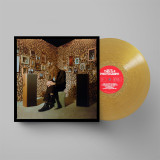
The Light Inside, The Dark Outside is out on May 6th on limited edition orange vinyl (plus download card with bonus track)
Influenced by the uncertainty and precariousness of the current times, the album was conceived as a means to nourish the light inside all of us, no matter how difficult and dark the reality can turn out to be.
Such "light" is reflected in the album's widescreen and hopefully ardent ambient. In contrast to their previous albums, The Light Inside, The Dark Outside is permeated by a strong sense of motion. The Light Inside, The Dark Outside is an evolution for the duo, themed by the inner need for brightness and hope.
out of Stock
Last delivered 4 years ago available to reorder, subject to availability
“God Is A DJ” is the new full-length by Joe T Vannelli, an album the DJ and producer has been working on for years, 13 to be exact, since his latest LP came out. The album features sixteen unreleased tracks and features huge names from all over the musical scene, both italian and international. God Is A DJ is already a cult musical project, that the house music lovers all around the world have been waiting for for years.
The two LPs take the listener through a musical journey mixing different sounds and styles: the first four tracks on Side A lean towards a melodic house sound, the very same genre that JTV took to the top of the game with his “Live On Tour” series of streaming – 62 streamed gigs from different places in Italy, from April 2020 throughout the pandemic. Fifteen million views with a valuable representation of the italian territory.
Amongst the tracks on Side A, the 2022 remix of “Voice In Harmony”, one of JTV's biggest hits, and the long-awaited new version of “Children”, by Robert Miles, which was taken to the top of the charts by the same Joe T Vannelli in 1996.
Side B features collaborative works with some italian producers fresh off the top of international house charts: Moreno Pezzolato for “Doctor House” and “Paradise” remixed by Federico Scavo e Cassimm, licensed worldwide by Happy Music and Kontor Records.
Side C opens with the Angelo Ferreri remix of “Where Is My Man”, #1 on Traxsource, then moves on to two big featured artists: the first one is Saturnino. His bass is perfect, on this 70s funky style piece which echoes the biggest and boldest productions of music history. The second one is the remix of “Paradise” by Mario Biondi, made by JTV
himself who gives the track a soul/funky mood and an international sound inspired by Alicia Myers, who already worked as a muse for “Thank You” by Busta Rhymes. A song like “Sacrifice” by The Weeknd works along the same lines.
Side D, instead, is pure, distilled Vannelli-sound: house music for house music lovers, led by the afro-house beat by Silvano del Gado for “Booma Beat” and followed by the “Harlem” remix by Angelo Ferreri, and “Across The Universe” reinvented by the young producer from Veneto Reboq. The album closes with “Shavasana”, a meditative yoga number inspiring total relaxation.
out of Stock
Last delivered 11 months ago available to reorder, subject to availability
Can You Sleep (04:30) Idler Chronicles A Personal Struggle With Insomnia That Inspired The Album's Title, It Combines Bossa Nova, 70s Analog Synths And The Polymorphous Vibrations Of London's New Burgeoning Jazz Scene.
Jamie Isaac Is A Young Producer And Songwriter, Born In Croydon To Burmese And British Parents. He Signed To Marathon Artists In 2014 And Has Been Harnessing His Sound Ever Since, Operating In The Space Between Jazz, Soul,
R&b, Electronics And Hip Hop. Across A Handful Of Singles And Eps, As Well As A Mixtape, His Debut Album And Its Follow-up, He Has Evolved Into A Formidable Artist With A Transatlantic Following.
Wings And Doing Better Have Both Been Heavily Featured On Spotify, Apple And Deezer Playlists.
out of Stock
Last delivered 4 years ago available to reorder, subject to availability
The British composer, musician and audio engineer Daphne Oram was a pioneering figure in the use of electronic music. Coming to prominence through her work with the BBC Radiophonic Workshop, which she co-founded, Oram was one of the first British composers to feature electronic instruments in her work and has been rightly hailed as helping musique concrete to become accepted in Britain. Born in 1925 and raised in rural Wiltshire, close to Stonehenge and the ancient stone circle at Avebury, Oram eschewed a place at the prestigious Royal College of Music to take a junior engineering role at the BBC in 1942, she was often tasked with creating sound effects, leading to cut-up experiments with tape recorders and the development of synthetic sound; her composition Still Point, involving two orchestras, two turntables and five microphones, was deemed too radical by the BBC, though she was promoted to studio manager in 1950, leading to the gradual introduction of electronic music and musique concrete techniques on BBC soundtracks. In 1957, she composed the music for the play Amphitryon 38, using a sine wave oscillator and homemade filters, and this and other subsequent works led to the establishment of the BBC Radiophonic Workshop the following year, but Oram soon tired of the conservative constraints of the BBC, leading to her resignation in 1959 to pursue her own vision at the Oramics Studios for Electronic Composition, located in Tower Folly, a former hop kiln located at Fairseat, near the village of Wrotham in rural Kent. Oramics was a radical sound composition technique that sought to transform images to music, enacted by drawing onto 35mm film, which would then be read by photo-electric cells; in addition to its use in Radiophonic Workshop material, Oramics was also employed for sound installations, theatre productions and feature films, such as The Innocents, though financial pressures forced Oram to seek a range of commercial engagements in addition to creating her own artistic works. The Listen Move And Dance series of BBC programmes were devised as a radical new technique to help British schoolchildren learn how to dance; on the LP releases, Vera Gray arranged short adaptations of classical pieces by Bartok, Stravinsky, Shostakovich and others, designed for “stamping, punching, kicking and jumping” movements, as well as “running lightly, dancing on toes” and “shaking all about,” which contrasted sharply with Oram’s electronic abstractions, which seemed to have been beamed in from outer space.
out of Stock
Last delivered 4 years ago available to reorder, subject to availability
Not much is known about the mysterious pop sensation Vumani or his short musical career. Originally from KwaZulu Natal he made his way to Johannesburg in the mid 80’s to follow his dream of becoming a recording artist. He was able to make that dream come true when talent scouts from Decibel Music came across the charismatic youngster. At the time Decibel was still a small fish trying to make waves and the label believed in Vumani they had found the star they were looking for. Being a label with mostly groups signed to the catalog they needed a Front Man to push into the growing demand for Solo Artists that were dominating the airwaves and catching the hearts of youngsters.
Up to this point Decibel had one major hit record. In 1986 they released a single by an artist named David Thanzwane. The music was a direct rip off of the first hit Single by Shangaan Disco pioneer Paul Ndlovu. Copying the music of both sides of the original single the “covers” offered different lyrics and hooks also sung in xiTsonga. This was enough to trick the masses and the single led to record sales for the small label. The unintentional outcome of the single was that from then on the producers and label had one sound they wanted to pump out in hopes of recreating that magic. This desire to create another Shangaan Disco hit would be the backbone of the Vumani sound and what makes his music so special and collectable after all these years.
That same year Vumani would release two Singles, Black Mampatile and Guy Fawkes. Musically these playful and fun singles would have great appeal to youngsters as they sung of daily life in the Townships. Black Mampatile being a game of Hide and Seek, Banana Kari referring to the trucks that would go around the Township exchanging chips and snacks for glass bottles and of course every child’s favourite reason the dress up on November 5th, Guy Fawkes Day. Both singles were received well and a few more tracks were later recorded to create the full album Isiqedakoma. Although he would sing in Zulu the music was unmistakable for Shangaan Disco. The synth heavy bass lines and happy melodies along with relatable fun lyrics were a perfect blend for an album that would make people dance if they were out at a Tavern or Shabeen on a weekend or just enjoying at home with family and friends.
Vumani quickly became the Label’s top priority with managers making sure he always had the freshest clothing styles to go along with his persona, and he never missed any performances or opportunities to impress a crowd. His popularity grew in the Township’s but with that came the unfortunate and all too common problems with fame. He started getting mixed with wrong crowds. He would record another album for Miracle Music, the Decibel sub label that had emerged to focus on the more underground sounds of the post synth pop era. Musically things were going well for Vumani but it would be his life off the stage that would catch up with him. Always known for his commitment to his music and fans one day he uncharacteristically failed to show up and was never heard from again. His body would later be found in a burnt car on the outskirts of Soweto. What led to his tragic death was never known but with the company he kept it is not hard to imagine what one of the many situations that led to that horrific ending could be. His funeral was attended by the entire Township it seemed as people packed the service and flowed out onto the streets, a testament to his popularity and the love the people had for one of their own.
out of Stock
Last delivered 2 years ago available to reorder, subject to availability
Nat ‘King’ Cole was born in Alabama in 1917. He began his musical
career in the 1940s with his own Jazz trio, but his skills as an innovative Jazz Pianist soon became overshadowed by his skills as a ballad singer. Cole’s phrasing, his uncanny ability at interpreting a song and his sheer style made the whole business seem natural and effortless. Smoother than Sinatra, cooler than Crosby, when it came to crooners, Nat Cole truly was the King. His mellow approach influenced not only other ballad singers, but a whole generation of 1960s soul singers. This 16-track ‘greatest hits’ collection is a superb selection.
Vor gerade mal zehn Jahren wurde "Down To The Bone" von Les Disques Du Soleil Et De L'Acier veröffentlicht - ein DEPECHE MODE Tribute Album, auf dem SYLVAIN CHAUVEAU zum ersten Mal auf einem Album sang. Er interpretierte elf Tracks in seinem typisch minimalistischen Stil und ließ nur die ,bare bones" der Originale zurück. Mit dem ENSEMBLE NOCTURNE definiert er die Konturen dieser bekannten Hits auf ungeheuer intime Art und Weise neu. Das von Kritikern hochgelobte Album ist ein Muss für Fans von CHAUVEAU ("The Black Book Of Capitalism", "Nocturne Impalpable") und DEPECHE MODE. Zur Feier des zehnten Jubiläums des Albums macht sich Ici D'ailleurs an das Re-Issue auf CD und zum allerersten Mal mit neuem Artwork auch auf LP. Ein Jahrzehnt und eine ganze Stange Alben später ist "Down To The Bone" noch immer ein großer Erfolg für CHAUVEAU - das Album reicht weit über ein simples Tribute hinaus, indem es einen Schritt von den Originalen zurücktritt. Die Inspiration des Pop ist noch immer vorhanden, doch diese Stücke geben dem Ganzen einen melancholischen Touch. Das Album ist der beste Weg für CHAUVEAU, der Musik von DEPECHE MODE seine Liebe zu erklären.
"Svalbard are a great example of a band who have done things The Right
Way
Existing as a band for approximately 4 years before releasing their debut album,
Svalbard played the slow and steady game, holding their cards relatively close to
their chest. This enabled them to finely hone their craft over a number of 7”s, EPs
and split releases, each time improving slightly on their songwriting and recording
methodology, allowing themselves to experiment and push their sound in
different directions along the way. This plan of attack enabled the band to
consistently improve without the stringent spotlight, or pressure thereof, of an
album. It also, rightly, seemed to keep people wanting more… "
Bazan got his start playing to the Christian rock scene, but the narrative
arc of his albums has traced his crisis of faith and his questioning of the
Evangelical Christian world in which he was raised
Yet, this record is not a final statement, not a "breakup letter to G_d." It's the
deepest and most explicit exploration of his struggles to date, and a meditation
on all things passed between the generations, and for the first time in a while,
Bazan seems actually interested in re- engaging in conversations with the
Evangelical community about his doubts (for example, for the first time in years,
he'll be playing huge Christian music festival Cornerstone this summer). Curse
Your Branches is a masterwork by a modern American poet (Paste called him one
of the "100 best American songwriters" in a piece that followed the release of his
solo EP Fewer Moving Parts) at the height of his powers.
Astrel K is Rhys Edwards of Ulrika Spacek. Astrel K's debut single ‘You Could If You Can’ was released via Duophonic Super 45s - a label which has a history of releasing limited edition abstract releases from Stereolab, Broadcast & Yo La Tengo. 500 copies of the 7” were made, hand stamped and numbered, quickly selling out in selected record shops. Following the loss of KEN, a shared house in which Ulrika Spacek band members lived and worked from, Edwards relocated to Stockholm, Sweden where he began making music on his own: “At this time, I didn’t really know anyone in Stockholm so kinda retreated into making music just by myself. The album title definitely reflects this period; I was on my own making music and sometimes nothing would be happening and sometimes there would be little sparks of ideas that could keep me going” Edwards would spend nights writing and recording in a shared rehearsal space producing music rich with layers and texture, synonymous with the work of Ulrika Spacek but with perhaps a greater focus on the art of ‘song writing’. Tracks with verse’s and chorus’s are surrounded by instrumental interludes; inspired by old library music and compositions for film as well as being reminiscent of bands such as Broadcast. The album doesn’t sound like one made in either London or Stockholm, rather somewhere in the nether region. Written pre pandemic but mixed in the past year, the music led Edwards to finding like minded musicians from the Stockholm music scene: “Though I’m now glad I can say I wrote an album by myself, I was definitely confronted with my own musical strengths and weaknesses. Sometimes when you have an A/B decision you want some perspective and you’d be in the studio, turn around and no one is there. It really made me curious to bring in more people into the fold, not to compromise any original vision or anything, but to have other energy in the room, to exorcise out any lazy tricks I may fall into”. Stockholm musicians (including Lili Holényi, Milton Öhrström, Niklas Mellberg, Tomas Hellberg) played on the album and join Edwards in the live version of the project. UK and European live dates to follow.
FOR FANS OF: Big Thief, Parquet Courts, Cate Le Bon, Elliott Smith, LVL UP. On their debut for Western Vinyl, recording engineer and multi-instrumentalist Nate Mendelsohn and his band use lyrical maximalism for the powers of good. Where Market’s previous home recorded releases shifted genre restlessly, on The Consistent Brutal Bullshit Gong Mendelsohn took a core band of longtime collaborators to a house in rural Massachusetts where they carved out space for his words to speak through with humor and intensity. Though he comes from a background in experimental music, Mendelsohn’s ear for pop has prevailed. Certain moments on Bullshit Gong reveal his stranger side, as on the thundering bridge of “Scar,” which sounds like a more unhinged Parquet Courts, or the angular “I Would Do That,” which takes cues from Cate Le Bon. On the whole, though, this band of close friends insists on directness, their arrangements clear despite the intricacies. Guitars and synthesizers tangle fluidly atop the rhythm section’s tight bedrock, evoking the tenderness and backbeat-centric qualities of Elliott Smith or Big Thief. After college, where he met most of the members of Market, Mendelsohn became an engineer and producer at the Brooklyn studio Figure 8 Recording. Through that community he’s recorded artists like Frankie Cosmos and Wendy Eisenberg, and played with Yaeji, Vagabon, Katie Von Schleicher (who co-produced Bullshit Gong with him), and Sam Evian, who mixed the album. Creating intimacy out of manic self-reflection requires a delicate balancing act, one Mendelsohn tackles with abandon. His words never skew too poetic or grandiose, and when he invokes the ugly it’s met with a sonic tonality that sets him right again. In tender moments, his voice is often flanked by bandmates Natasha Thweatt or Von Schleicher, who help skew his words toward the universal. Still, Bullshit Gong is an obsessive look inward, one in which Mendelsohn simply asks himself if he is good to those he loves. It’s an act of trust between the artist and the imagined listener he takes with him. UK press campaign by Silver PR. Mendelsohn has worked in the studio as an engineer and musician with Frankie Cosmos, Yaeji, Sam Evian, Wendy Eisenberg, Thor Harris, Rebecca Black, in addition to touring as a member of Katie Von Schleicher’s band. Market developed a cult following emerge after being championed by British comedian James Acaster, who featured the band’s first album in his book Perfect Sound Forever and his follow-up podcast for BBC Sounds.
Funny to think there was a time not so long ago when Stiff Richards was a name that required explanation - but not to you, of course, o punk connoisseur. This is your territory, after all. Music is your oxygen and the sound of the underground is your clarion call. You can explain the distinction between ‘Know Your Product’ and ‘No, You’re Product’. Hey, you’re probably pretty good-looking too. You know your shit, either way. So no wonder you’re drawn to this relative holy grail of modern garage rock - the 2017 self-titled debut album by the aforementioned Stiff Richards. Originally released on their own Stiff Records (and again by Legless in 2020), it lays down all the elements that made last year’s mighty ‘State of Mind’ LP such an instant classic. OK, we’ve established you know the drill, but let’s recap: scintillating Aus-punk that recalls the heroic high-speed riffs of their countrymen The Saints and Radio Birdman. It sounds like Royal Headache covering Motörhead, or maybe the other way around. It’s a full-on riot in 30 minutes - the rawest of rock’n’roll bleeding into the grimiest of power chords with hooks for days. You already know you’re gonna love it. Whether going full-throttle and aiming straight for the nerve receptors that get your head a-nodding and your toes a-tapping - like on sub-three-minute highlight ‘Strung Out’ - or sludgin’ their way through groovier cuts like ‘Bustin’ Out’, they’re never less than a treat that’s guaranteed to get your serotonin flowing and your speakers up to 11 (or beyond). As a certain similarly-named record label once said, if it ain’t Stiff, it ain’t worth a fuck. Frightfully rude, but that’s rock music for you, I suppose. Get it in your ears.
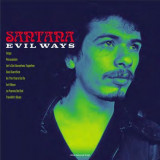
The 8 tracks on this LP capture the guitar hero at his creative best; Jingo from the 1969 album Santana grabs our attention with a flurry of conga drums and snare drum rhythms. Carlos leaps into the fray with an anguished cry from his Gibson SG, displaying the sustained, melodic blues notes that became his signature sound. Carlos then does that voodoo that he does so well, on a studio version of Soul Sacrifice where he launches his cosmic guitar into outer space.
While Let’s Get Ourselves Together is a nicely constructed arrangement. Side 2 features As The Years Go By, a tasteful blues ballad, that has Santana caressing the strings with expertise and passion. Followed by a live performance of Evil Ways, one of Santana’s greatest hits that reached Number 9 in the U.S. Billboard chart in February 1970.
In a generation of musicians that came of age in postwar Japan, Kazuki Tomokawa stands as a pioneer of radical individualism, with a sound marked by shocking intimacy and blistering honesty. In his third album, A String of Paper Cranes Clenched between My Teeth, released by Harvest Records in 1977, Tomokawa creeps "ever more inward," as Kiichi Takahara writes in the record's original introductory text-embracing an attitude pervasive amongst musicians of the time who interrogated the prosaic and the profound alike, eschewing politics and society in favor of an "attitude of total self-containment." Tomokawa recorded the album over the course of a month-from August 24 to September 25, 1977-at Tokyo's famed Onkio Haus studio in the bustling Ginza district. The arrangements, accordingly, are amped up: paired with the Black Panther Orchestra, Tomokawa's "screaming philosopher" vocals find their match with the orchestra's electric guitar, bass, piano, tuba, and ground-thumping drums played by the Brain Police's Toshi Ishizuka-who appears on Tomokawa's first three records and remains his collaborator to this day. "This is Kazuki Tomokawa in the flesh," concludes Takahara. A String of Paper Cranes Clenched between My Teeth is, in Tomokawa's uncanny way, able to cut through facade and artifice in pursuit of truth. "You call that life?" he heckles, exhausted by the melodrama and nihilism of youth counterculture, "try saying you're alive!"
In the 1970s, Kazuki Tomokawa catapulted into Tokyo's avant-garde scene with his cathartic and utterly electrifying performances. Straight from the Throat, Tomokawa's second album, released in July 1976 by Harvest Records, finds the musician in his truest form: as the "screaming philosopher" he would come to be called-cynical but fair, cheeky and melancholic, and looking at the world with truth-seeking eyes. In Straight from the Throat, Tomokawa shrieks and shouts and wallows with ritualistic abandon-his avant-folk stylings are cosmic and, at times, well to ground-shaking rock. He speaks of adolescence, passing hearses, and wedding chapel cars in a poem to his younger brother, Tomoharu, and watches ice melt on the Mitane River with spring's turn. Tomokawa's sound is, as Kiichi Takahara would later dub it, "I-music": revelatory and deeply intimate songs that turn to the everyday and the interior. They are portraits of a man in search of meaning, who is taking stubborn control of his life by doing so. As he croons in "The Spring Is Here Again Song," "I'll drink till I've had my fill / And fall in love until I die."
Ex RSD LP on transparent red vinyl, gatefold sleeve with lyric inner sleeve and DL card. Final copies now reduced to £7.99. The tracks on this album have never been officially released before now. The eight songs on this album were recorded in 1978 on a 2-track stereo Revox A77 tape recorder. The recordings are unashamedly analogue, using one microphone and guitars plugged directly into the tape recorder. Bouncing down tracks irreversibly as they went on, forced to make creative decisions that could not be undone. Some hard choices had to be made with the mix, but with no record company meant no record company agenda. TV Smith & Richard Strange could write and record whatever they wanted – and did! It has been an enormous pleasure to rediscover these recordings, the result of a friendship of two artists emerging from broken bands and each about to embark on a lifelong adventure in words and music. TV SMITH - I wasn’t having a lot of fun in 1978 when Richard asked me to collaborate on a song he was writing called “Summer Fun.” I was in the final stages of songwriting for the second Adverts album “Cast Of Thousands,” a project that already seemed doomed to failure given an unenthusiastic record company, a band in the throes of falling apart, and a dwindling audience - but my creative juices were in full flow and I was ready for something different. I already knew Richard, of course, from the Doctors Of Madness, who I’d followed in the years before punk when I was still living in Devon and they were one of the few bands to come and play in the area. I considered them a warped poetic glam band with gothic leanings, and was slightly surprised when the song I’d been invited to work on turned out to be a kind of California surf pastiche. But I was game to get involved, and after we’d finished it and ventured forward with regular writing and recording sessions over the following weeks it soon became clear that “Summer Fun” was just a gateway drug, and the songs that were emerging from our combined forces were going to quickly become much deeper and much darker // RICHARD STRANGE - Watching the remnants of a musical dream being swept away by the juggernaut of corporate punk rock in 1976, I felt a combination of jealousy and resentment towards many of the key players who had been responsible for our demise. The Sex Pistols had supported my band Doctors of Madness early in their career and nicked not only our future but £12.00 from a pair of trousers in our dressing room in Middlesbrough Town Hall! The Jam, who supported us over four shows at London’s fabled Marquee Club, were how I imagined The Who would be if they’d joined the Young Conservatives. Warsaw, our go-to support band in Manchester, had just changed their name to Joy Division, and Johnny and the Self-Abusers, our Scottish flag wavers, had become Simple Minds. All were being feted by the all-powerful music press, while we were being buried. But there was one punk band for whom I never had anything but the greatest affection…The Adverts.
'The Last of the 20th Century Girls' is the storied second album from London-based artist Findlay - a full-fledged offering born of a personal journey that sees her at her most open, transparent, and introspective yet, drawing upon her own personal experiences since the release of full-length 2017 debut 'Forgotten Pleasures'. With complex, fully-realised themes ranging from grief and loss to the struggle of losing and re-building one's confidence, through to the challenges and pitfalls of the past couple of years, all serve to inspire a range of tracks across the album. Mastered by five-time Grammy award winning engineer Antoine 'Chab' Chabert (Daft Punk, Charlotte Gainsbourg, Sebastien Tellier) and self-described as a "late coming of age story", drenched in nostalgia, melancholy and the kind of strange experiences only a misunderstood millennial could have; the album effortlessly blends a diverse melting pot of breezy alt-indie, psychedelic pop, dreamy lo-fi chill, indie-rock and expansive cinematic sounds. It's Findlay at her genre-melting finest, and a sharp, tasteful insight into her unique artistic psyche; a perfect representation of her impeccable alternative sound.
RIYL: Velvet Underground, Lou Reed, Nick Cave, Patti Smith, Leonard Cohen, Iggy Pop, Radiohead & Tom Waits. "If you have never heard the Doctors of Madness, you should. Musically they are the Velvet Underground, New York Dolls with shades of glam, hippie, prog and punk all rolled into one, yet are still totally original. Vastly underrated, they should have been huge. Pure genius" Vic Reeves…. The DOM are “the missing link between David Bowie & The Sex Pistols” (The Guardian May 2017). Exploding onto the music scene in 1975 with their theatrical, William Burroughs-inspired Sci-fi nightmare, they were misunderstood by many, but those who knew understood the importance of the band’s dangerous, uncompromising approach to lyrics, to music and to performance. Among the many fans of the band were acts as diverse as The Damned, Vic Reeves, Joe Elliott of Def Leppard, Spiritualized, Julian Cope, The Adverts, The Skids and Simple Minds. The Sex Pistols supported them, so did The Jam & Joy Division. They were the first to combine the avant-garde approach of The Velvet Underground with a distinctly European aesthetic. The blue hair, exotic stage-names, the lyrical themes of urban decay, political propaganda, mind control and madness were all taken up by the punk bands who followed in their wake. The DOM were trailblazers, pioneers, adventurers…pushing the boundaries of rock music and theatre to see how far it would go before it bust. What happened after them was due, in no small part, to what they achieved in 3 short years. They may not have been Jesus Christ, but they were, arguably, John the Baptist!!! Now, 40 years after they imploded, they are back…with an album seething with lyrical anger and passion. It is the most potent and incisive musical dissection of modern life and contemporary politics released the decade. With tracks titles like “So Many ways To Hurt You”, “Sour Hour”, “Make It Stop!” and the ground-breaking sonic assault of the title track “Dark Times”, Richard “Kid” Strange proves once again that he has his finger firmly on the pulse of our times, just as he had when he founded the band in 1974. Produced by John Leckie (Radiohead, Stone Roses, Pink Floyd), the new album, Dark Times, features contributions from Joe Elliott (Def Leppard), Sarah Jane Morris (Communards), Terry Edwards (PJ Harvey, Nick Cave etc), Steve ‘Boltz’ Bolton (The Who, Scott Walker) and the young protest singer Lily Bud, alongside the current thrilling and thunderous DOM rhythm section of Susumu Ukei (bass guitar) & Mackii Ukei (drums) of the Japanese extreme glam-metal band Sister Paul, and Dylan O Bates (violin and keyboards). Julian Cope, another rock star who, like Strange, found the confines of music too tight for his ambition, his energy and his imagination, was blown away when he first heard the songs, declaring, “These Dark Times are enormously informing: the RULES OF THE FUTURE are indeed being forged right now”. Top producer Martyn Ware (Human League/Heaven 17) said the album “…reminds me of Iggy Pop’s Kill City album – love it.” and Biba Kopf (The Wire) declared, “Still listening to new DOM album with immense interest and pleasure”. The first single, Make It Stop!, is an impassioned howl against the global drift to right wing extremism and persecution of minorities, and is already a live showstopper for the band. It features the thrilling cross-generational combination of Def Leppard’s Joe Elliott and Lily Bud on backing vocals. In the period since the last DOM gig in 1978, Richard has written a memoir, collaborated on a cantata with internationally celebrated composer Gavin Bryars, worked as an actor on films with Tim Burton, Martin Scorsese, Harmony Korine & Jack Nicholson, toured the world in a Russian version of Hamlet with James Nesbitt as his grave-digging co-star, played Glastonbury, sung baritone in the British premiere of Frank Zappa’s200 Motels at the Royal Festival Hall, directed a multi-media evening celebrating the life and work of William Burroughs, won Best Art Film Prize at the Portobello Film Festival last year, had his own live talk show, worked with Tom Waits and Marianne Faithfull on the William Burroughs/Robert Wilson stage play The Black Rider, curated events for the Tate Gallery, and sung Walt Disney songs with Jarvis Cocker.
French finest synth-pop band Bon Voyage Organisation release his second opus after a feature on Cocktail d'Amore 10 Years compilation.
"La Course" is a cinematic, synthesized and library-esque journey that could be a mixed-up between Italian early 80's productions and french 00's disco.
"This record marks the beginning of a new attitude towards recording," says Bon Voyage Organisation's Adrien Durand. "Switching from a busy studio that I shared to having my own very quiet cabin in the North West of Paris has inspired me to adopt a more meditative approach."
Whilst it's fair to say Durand has been constantly on the move for some time - be it touring or producing records for the likes of Amadou & Mariam, Papooz and Bagarre - there's a sense of new momentum, as well as stillness, that hangs over this record. One that's fully instrumental and as he describes being more free.
The band's trademark glistening production, disco flair, shimmering electronics and incandescent melodies still remain but a more intuitive and striped back approach was favoured this time around. Some of this attitude stemming from an evening opening for Kamasi Washington. "Because of the constraints of being an opening act we played as an instrumental quintet instead of our usual 9-piece band," says Durand. "We rehearsed the day before, our set opened with John Coltrane's 'Naïma' followed by a hard-bop ish version of Kraftwerk's 'Trans Europe Express'. It felt so good to perform that repertoire in that configuration that I had the vision of bringing this aspect of the band in the studio."
There was also a removed sense of pressure with this record - no major label expectation of a radio friendly record, combined with a deconstructed approach to songwriting. "Since 2014 I've been working mostly on projects involving a lot of conventional songwriting," Durand says. "I was keen on producing a record based on performance and atmospheres more than repertoire." He also sought inspiration from a perhaps unlikely source: The Arctic Monkeys. "I was really encouraged by them going out of their comfort zone on their last album - it really caught my attention in a Bowie / Berlin period way."
The result of the album is one that oozes the natural momentum of experimentation, texture, mood and intuition while managing to retain a sonic coherence. In a none-obvious and zeitgeist clichéd way, there is perhaps a more jazz-leaning approach to the record that weaves between soft subtle moments to the more atonal and experimental, all underpinned by sweeping, engulfing soundscapes and the usual touch of non-Western musical flourishes. This vibe came from a distinct lack of editing, says Durand. "In the studio we had everyone sitting in the same room - sometimes up to 6 players - and I never edited the playing. I just went on to record some additional synth and percussion, insert the soundscapes, and mix the record."
This less is more approach, avoiding indulgence and superfluousness, is something Durand can't help but feel is an artistic response to the pace of modern life. "There is a frenetic approach to everything," he says. "People want to binge on everything, expect ultra fast changes on any political cause etc. The response is a big comeback of things like the practice of meditation, yoga and ambient music." There are times when this record falls into the territory of meditative ambience, as on the immersive plunge one takes swimming through the beautiful 'Un Am Ricain En Danger'. It's an album to bathe in and to be carried along by, it's gripping by being so rather than fighting for your attention
Ultimately the record is one that feels it's been allowed room to breath, a sonic sphere in which musicians have been allowed to roam as freely and thoughtfully as the listener. "This record is about welcoming the music and being able to let each musician express themselves during the recording process," says Durand. "This is a valuable trade that takes time."
out of Stock
Last delivered 6 years ago available to reorder, subject to availability
Bear’s Den have today announced the release of their eagerly anticipated fourth studio album, Blue Hours.
Set for release on May 13th via Communion Records, the album sees the much-loved folk-rock duo – made up of Andrew Davie and Kevin Jones – once again team up with producer Ian Grimble on what is one of their most personal records to date.
Speaking about the new album, Davie says: “Blue Hours is a kind of imaginary space you get into at night, a place where you process difficult things or where you try to figure everything out.”
Themes on the album include both self-reflection and mental health after both struggled with the latter in recent years. “It’s the main over-arching theme with this record,” Davie explains. The group, who have worked with mental health charity CALM (Campaign Against Living Miserably) previously added: “It probably speaks to our struggles and hopefully many other people’s too. Men are not very good at talking. We’re not really taught how to – men have no idea how to talk about this stuff, certainly to each other.”
The pair describe the conceptual blue hours headspace that gives the new album its title as being “somewhere between a hotel, a mental health hospital, a bar that stays open later than anywhere else, a paradise, a dream, a nightmare and an endless sea of corridors and staircases leading you to rooms that represent memories – good, bad, happy or difficult.”
Despite the album’s challenging themes, it’s an album drenched in hope too. “We wanted this to be a celebration of music,” Jones continues. “I think that informed some of the bolder decision making on this record. At a time when music was so distant, it felt important to make an album that sounded hopeful, celebratory, ambitious and beautiful in spite of the heavy subject matter in some of the songs.” Jones adds: “It was almost like we needed to shout louder than before because we felt that there were more barriers between the audience and us. We needed something to transcend that.”
Following on from the album’s lead single, ‘All That You Are’, which was released late last year, the group have also given a further taster of what to expect from the new album with the release today of their bold, electronic-driven latest single, ‘Spiders’. Stream the new single here.
Speaking about the song, Davie says: “I started writing ‘Spiders’ around the time we left London. In my head, I thought moving would solve lots of problems, like everything will be better – almost like this Neverland vibe,” he laughs. “‘Spiders’ is a song dealing with the fact that this absolutely wasn’t the case. I had this vision in my head that I’d be at one with nature, that I’d be calmer – but all the things that were rattling around in my brain before were still there after the move. The song is about the fact you can’t run away from the things that are bothering you.”
Adding, “While making the record we wanted to get across a kind of simmering intensity with the song and the idea of someone trying to keep their shit together while wrestling with these darker thoughts and feelings. We wanted to get across a sense of bravery & triumph in saying, “sometimes I can’t pull myself out” of these difficult situations. To celebrate the difficult moments because we all have them. They are a universally shared experience even if it feels sometimes like they’re not and you’re the only one who feels them.”
Melodically, the song is a gentle Wurlitzer and guitar-driven track filled with hope thanks to the electronic elements added by long-term producer, Ian Grimble. “This song maybe sparked a lot of detail that ended up coming out on other songs on the album,” Davie says. “The sound of this felt exciting to us both,” Jones adds.
Created in the middle of the pandemic this album celebrates the magic that happens when 4 very uniquely gifted, but very complementary, instrumentalists come together for a jam session. From hazy guitars & warm keys over to funky beats & psychedelic grooves to ease you into an album that circumnavigates 360 degrees of soulful music.
Adding some garnish to this rhythmic stew are an impressive
collection of special guests: Olivier St. Louis, Nneka, Lui Hill,
J.Lamotta, Bowie & Flo Mega.
The KBCS represent the musical coming together of four very uniquely gifted, but very complementary, instrumentalists from Hamburg, Germany. Color Box, their sophomore LP, happened almost by accident, born as it was out of a series of freestyle jams.
The album kicks off with three instrumental openers - the first of which, Popsicles, is best described by the band them- selves as “a late summer teenage adventure”. Hazy guitars and warm keys playfully amuse each other over a solid, funky beat on what is an evocative and vivid introduction to this talented foursome. It’s followed by Whistleblowers, a sweet and somewhat whimsical piece where another sturdy bottom end allows keys and strings to enjoy some lively interplay, and Jolly Tumbleweed which, with its optimistic yet melancholic feel, completes the trio of warm, hazy psychedelic grooves to ease you into an album that circumnavigates 360
degrees of soulful music.
Adding some garnish to this rhythmic stew are an impressive collection of special guests. Berlin based, and internationally adored vocalist Olivier St.
Louis sprinkles a little Cali sweetness with the head nodding Pockets - one of the most immediate and soulful cuts on the album. A guaranteed ear worm, bringing a little sunshine to the winter months to come.
Elsewhere, multi-talented Nigerian singer Nneka lends her distinctive voice to the very succinct but powerful Afro-soul of Ndidi; the enigmatic Lui Hill lays his soul bare with honesty and candor on the alluring Albatross; Tel Aviv born J. Lamotta gives The Center a somewhat delicate and fragile dimension that plays perfectly alongside graceful guitars and contrasts with a sturdy backbeat of bass and drum; and Viviane Ann, AKA Bowie, smooths out the rough edges on the very radio friendly Wasting All Your Lovin’.
This is indeed music from the heart; a document of their coming together; and music that needs to be heard live!
out of Stock
Last delivered 4 years ago available to reorder, subject to availability
Dena Miller grew up on a diet of folk before spending 6 years writing and exploring projects through Philly's punk scene, Oberlin's conservatory experimentalist and NY's DIY history before arriving at her debut album 'Woodpecker' . Think Waxahatchee, Told Slant & Moldy Peaches...
Black vinyl with inner sleeve lyrics & download.
Deer Scout’s debut full length Woodpecker is a record about memory and the subconscious. And like an unforgettable dream that keeps you puzzling over its riddles for days, it’s as packed with direct symbols as it is with ruminative haze. “I approach songwriting as a process of boxing things up, or putting away a time capsule,” explains front person Dena Miller, who wrote the album over a period of six years. It’s a culminating collection of the project’s many sounds and influences to date, from Philly’s punk cooperatives to Oberlin’s conservatory experimentalism to New York’s DIY history. At the center is Miller’s assured guitar fingerpicking and boldly clear voice, firmly grounded even as it gently probes uncertain emotional and musical terrain.
Raised by two folk musicians in Yonkers, Miller began recording songs as Deer Scout her freshman year of college in Philadelphia. There, she wrote Woodpecker’s earliest song “Synesthesia” about a train ride home from a basement show: “Night in the city / Big house on the corner / Her voice has the timbre of summers ago,” recalls Miller resonantly. After Miller’s transfer to Oberlin College, Deer Scout began touring DIY venues around the country and sharing stages with favorite artists including Waxahatchee and Told Slant. The twinned intimacy and intricacy of those two influences is reflected in the carefully adventurous arrangements on Woodpecker, which features, among other contributors, bass from close collaborator Ko Takasugi-Czernowin, cello from Zuzia Weyman, drums from Madel Rafter, and guitar from Miller’s father Mark—who also wrote the song “Peace with the Damage” and originally released it with his band Spuyten Duyvil in 2011.
Many of the songs on Woodpecker were written during periods of grief or change. “I used to sing myself to sleep as a baby and I think music still plays the same role in my life—it’s a way of self-soothing or seeking comfort,” explains Miller. “But there’s also part of it that comes from wanting to connect with people." Recorded and mixed primarily by Heather Jones at So Big Auditory in Philly with overdubs by Miller at home, Woodpecker is an exercise in portraying the incommunicable. “Cup”—about a relational psychology test called “a walk in the woods” that turns encounters with symbols into meaning—uses watery arpeggios, wintry strings, and roving bass to create a liminal sonic space, optimistic but tense. “Cowboy,” with airy layers of acoustic guitar riffs and Miller’s charmingly double tracked voice, takes its little fish, big pond inspiration from the character Joe Buck in Midnight Cowboy. And “Afterthought,” with its unexpectedly bright resolutions, is about God, love, and the complexity of empathy; “Heaven isn’t watching us,” sings Miller candidly over pedal steel.
Though Woodpecker is a record about uncertainty and the unknown, it’s also about compassion and connection—as Miller was able to find over the course of writing and recording this next chapter for Deer Scout and first release for Carpark, which she’s excited to at last share with the world.
out of Stock
Last delivered 4 years ago available to reorder, subject to availability
Sugaray Rayford returns with 'In Too Deep', the follow up to his 2020
Grammy® nominated 'Somebody Save Me', an album which also earned
Rayford two major Blues Music Awards for BB King Entertainer and Soul
Blues Male Artist of the Year (2 straight years)
Combining classic soul melodies with funky R & B grooves, raw blues power and
mashed up with modern sensibilities, the album takes on social issues, such as,
PTSD, civil rights and social justice. With vibrantly detailed arrangements tailored
to showcase Rayford's deft portrayals and interpretations, 'In Too Deep' is a
poignant album that seeks to inspire and uplift.
Albumism described Rayford as having "a sound that's undeniably fresh and
inspired," while PopMatters declared it "will appeal to fans of Gary Clark Jr. and
Chicano Batman."
At his core, Sugaray Rayford is a galvanizing uniter. His live shows are a party.
Some conversations may be had, and some self-reflection may occur, but at the
end of the day, people leave feeling a sense of joy and togetherness.
Don’t ya know it’s hard to be a god. No reason to sugar coat it, what you’re getting is peak Whitney K, poetry in motion and masterful writing where words, harmony, arrangements all dance in the same direction, free flowing through songs about change and memory. A voice as an instrument.
Hard To Be A God is the new mini-album by Whitney K and follows 2021’s acclaimed ‘Two Years’. Now based in Montreal, once again Konner Whitney is accompanied by friend, musician and all-hands-on-deck collaborator Joshua Boguski and by multi-instrumentalist Avalon Tassonyi.
Mit 'Kilogram' veröffentlicht die dänische Hardcore-Punkrock Band Tvivler ihr zweites Album über das norwegische Label Fysisk Format. In den Black Tornado Studios in Kopenhagen aufgenommen, erschafft die Band, mit Anspielungen auf Blondie und Brutal Truth, einen gewalttäigen und kathartischen Indie-Hardcore.
Time has come for Futurepast to release a long format album: Alarm Phase Red - catalogue number FPLP01 - will be the first full-length work from Futurepast founder Davy Vandegaer, appearing here under a new name: Brainwashed Today.
Rooted in a conceptual approach of electronic music, this double LP ranges from industrial ambient to experimental techno. Like an antidote to a twisted reality of controlled screens and mental isolation, Alarm Phase Red uses the raw language of electricity
to reach the core of the machine and sabotage it, reverse its effects by mirroring them. Fighting fire with fire, deflecting the pressure and strain of a world driven by fear and anger, the music of Brainwashed Today acts like a cathartic escape from technological enslavement.
With the purchase of the vinyl comes a batch of three digital bonus tracks pursuing further the sound research of the album.
out of Stock
Last delivered 3 years ago available to reorder, subject to availability
Strut continue their deep dive into the archives of Black Fire Records with a new reissue of Oneness Of Juju's Bush Brothers & Space Rangers, showcasing the band at the peak of their powers in 1977. Primarily recorded at Arrest Studios in Washington DC, the album ispacked with landmark Oneness tracks including 'Be About TheFuture' ("possibly the first ecology-themed song that I know of") the George Clinton-influenced 'Plastic', an acoustic alternative version of 'African Rhythms' and strong covers of Caiphus Semenya's 'West Wind' and Bobby Womack's 'Breezin''. Plunky continues, "The album is composed of several different sessions featuring different personnel and only first came out as an album in its own right when Black Fire MD Jimmy Gray started working with P-Vine Records in Japan during the '90s. For me, it's one of the hottest periods for the band."
Strut presents the first ever reissue of an essential lost classic from the Black Fire catalogue, Wayne Davis' powerful self-titled gospel-soul album from 1976.
"This Is A Photograph", MORBYs siebtes Album, ist ein Loblied auf die Americana, das Leben und Tod und Blut auf der Leinwand zum Ausdruck bringt. Der kreativ gestärkte Songwriter hat es geschafft, seine besten Songs, seine besten Gesangsleistungen, seine prägnantesten Texte und seine üppigsten Arrangements auf "This Is A Photograph" zu vereinen. Dies ist zweifellos sein bisheriges Hauptwerk. Die Geschichte beginnt im Januar 2020, als MORBY im Keller seines Elternhauses in Kansas City geistesabwesend in einer Kiste mit alten Familienfotos blättert. Nur Stunden zuvor war sein Vater bei einem Familienessen vor seinen Augen zusammengebrochen und musste ins Krankenhaus gebracht werden. In dieser Nacht spürte MORBY noch immer den Schock und die Angst, die ihm in den Knochen steckten. Also sah er sich die Bilder an, bis ihm eines davon ins Auge sprang: sein Vater als junger Mann, stolz und stark und voller Selbstvertrauen, der mit freiem Oberkörper auf einer Wiese posiert. "In the photo he looks young and full of confidence, puffing his chest out at the camera as if he were looking for a fight," erklärt MORBY. "It was not lost on me that this was the same chest, just hours before, I had seen the ambulance put a stethoscope against as he lay on the kitchen floor of my sisters house." Während sein Vater wieder zu Kräften kam, grübelte er über diese Gedanken nach. Und dann machte er sich auf den Weg nach Memphis. Er zog in das Peabody Hotel und verbrachte seine Tage damit, den Träumern, die er bewunderte, Tribut zu zollen und sich vor ihnen zu verneigen; er ging hinunter zum Ufer des Mississippi, zu der Stelle, an der JEFF BUCKLEY sein Ende fand. Er schlenderte durch das Viertel, in dem JAY REATARD seinen letzten Tag verbrachte, und fuhr dann am Stax-Zelt vorbei, um seine Stimmung kurz aufzuheitern. Dann fuhr er an Graceland vorbei, bevor er den Highway 61 überquerte und die Geister zu sich rufen ließ, um seine eigenen Träume zu gestalten. Abends kehrte er in sein Zimmer zurück und hielt seine Ideen auf einem behelfsmäßigen Aufnahmegerät fest, das nur aus seiner Gitarre und einem Mikrofon bestand. Die schwermütigen Songs, die zu all dem passen, was er gesehen hatte, sprudelten nur so aus ihm heraus. Wiederum leitete Sam Cohen (der "Singing Saw" und "Oh My God" produziert hatte) das Projekt. Sie begannen in Cohens Studio im Bundesstaat New York, das sich noch im Bau befand, zusammen mit dem Schlagzeuger Nick Kinsey, und arbeiteten langsam an den Songs, da die Reise der Aufnahme der Start-Stopp-Qualität von 2021 selbst entsprach, mit magischen Momenten, die in die prekären Navigationen eingestreut waren. Mit der Zeit füllte sich die Besetzung. Der ehemalige Tournee-Pianist Oliver Hill sowie seine Mutter Meg und seine Schwester Charlotte sorgten für die Streicher. Die Tourneeleute Cochemea Gastelum (Saxophon), Jared Samuel (Orgel) und Alecia Chakour (Gesang, Tamburin) stießen zu den Sessions hinzu, ebenso wie Eric Johnson (Banjo). Und neue Mitstreiter*innen wie Schlagzeuger Josh Jaeger (Schlagzeug, Perkussion), Brandee Younger (Harfe), Makaya McCraven (Schlagzeug), Cassandra Jenkins (Gesang) und sogar Tim Heidecker und Alia Shawkat (die schrägen Lacher auf "Rock Bottom") fügten sich in das entstehende Bild ein. Und passenderweise fanden die letzten Sessions live in Memphis in Sam Philips Recording Co. statt, das von seinem Sohn Jerry Philips geleitet wird und das Erbe des ursprünglichen Sun Records Studios fortführt.
"This Is A Photograph", MORBYs siebtes Album, ist ein Loblied auf die Americana, das Leben und Tod und Blut auf der Leinwand zum Ausdruck bringt. Der kreativ gestärkte Songwriter hat es geschafft, seine besten Songs, seine besten Gesangsleistungen, seine prägnantesten Texte und seine üppigsten Arrangements auf "This Is A Photograph" zu vereinen. Dies ist zweifellos sein bisheriges Hauptwerk. Die Geschichte beginnt im Januar 2020, als MORBY im Keller seines Elternhauses in Kansas City geistesabwesend in einer Kiste mit alten Familienfotos blättert. Nur Stunden zuvor war sein Vater bei einem Familienessen vor seinen Augen zusammengebrochen und musste ins Krankenhaus gebracht werden. In dieser Nacht spürte MORBY noch immer den Schock und die Angst, die ihm in den Knochen steckten. Also sah er sich die Bilder an, bis ihm eines davon ins Auge sprang: sein Vater als junger Mann, stolz und stark und voller Selbstvertrauen, der mit freiem Oberkörper auf einer Wiese posiert. "In the photo he looks young and full of confidence, puffing his chest out at the camera as if he were looking for a fight," erklärt MORBY. "It was not lost on me that this was the same chest, just hours before, I had seen the ambulance put a stethoscope against as he lay on the kitchen floor of my sisters house." Während sein Vater wieder zu Kräften kam, grübelte er über diese Gedanken nach. Und dann machte er sich auf den Weg nach Memphis. Er zog in das Peabody Hotel und verbrachte seine Tage damit, den Träumern, die er bewunderte, Tribut zu zollen und sich vor ihnen zu verneigen; er ging hinunter zum Ufer des Mississippi, zu der Stelle, an der JEFF BUCKLEY sein Ende fand. Er schlenderte durch das Viertel, in dem JAY REATARD seinen letzten Tag verbrachte, und fuhr dann am Stax-Zelt vorbei, um seine Stimmung kurz aufzuheitern. Dann fuhr er an Graceland vorbei, bevor er den Highway 61 überquerte und die Geister zu sich rufen ließ, um seine eigenen Träume zu gestalten. Abends kehrte er in sein Zimmer zurück und hielt seine Ideen auf einem behelfsmäßigen Aufnahmegerät fest, das nur aus seiner Gitarre und einem Mikrofon bestand. Die schwermütigen Songs, die zu all dem passen, was er gesehen hatte, sprudelten nur so aus ihm heraus. Wiederum leitete Sam Cohen (der "Singing Saw" und "Oh My God" produziert hatte) das Projekt. Sie begannen in Cohens Studio im Bundesstaat New York, das sich noch im Bau befand, zusammen mit dem Schlagzeuger Nick Kinsey, und arbeiteten langsam an den Songs, da die Reise der Aufnahme der Start-Stopp-Qualität von 2021 selbst entsprach, mit magischen Momenten, die in die prekären Navigationen eingestreut waren. Mit der Zeit füllte sich die Besetzung. Der ehemalige Tournee-Pianist Oliver Hill sowie seine Mutter Meg und seine Schwester Charlotte sorgten für die Streicher. Die Tourneeleute Cochemea Gastelum (Saxophon), Jared Samuel (Orgel) und Alecia Chakour (Gesang, Tamburin) stießen zu den Sessions hinzu, ebenso wie Eric Johnson (Banjo). Und neue Mitstreiter*innen wie Schlagzeuger Josh Jaeger (Schlagzeug, Perkussion), Brandee Younger (Harfe), Makaya McCraven (Schlagzeug), Cassandra Jenkins (Gesang) und sogar Tim Heidecker und Alia Shawkat (die schrägen Lacher auf "Rock Bottom") fügten sich in das entstehende Bild ein. Und passenderweise fanden die letzten Sessions live in Memphis in Sam Philips Recording Co. statt, das von seinem Sohn Jerry Philips geleitet wird und das Erbe des ursprünglichen Sun Records Studios fortführt.
Music for Arp 2500 synthesizer
Recorded at Willem Twee Studios 's-Hertogenbosch in 2019/2021
Stasis covers a range from my first encounter with this synthesizer to performances where I have grown more accustomed to it. Each piece developed its own structure whilst playing and exploring the instrument. During later visits to the studio, I expanded the spectrum on tracks II an VIII with two ARP 2600s and an analog tape machine. Stasis grew into a document where I aimed for the music to feel close, stripped to its essentials and saved from the whims of editing and vast processing.
out of Stock
Last delivered 4 years ago available to reorder, subject to availability
The dance floor as devotional is a trope as old as the club itself. But, with her new album, Jesus Was An Alien, Perel subverts the stakes of our collective communion: Who are our arms raised to? Who are we seeking salvation from?
“Jesus Was An Alien is a discourse about whether Jesus was an actual alien,” she explains, “but also a social debate about what is and implies religion today.” She offers up her provocative second record – her first on Kompakt – as a soundtrack for the listener’s own journey through the intricacies and ironies of modern belief.
Picking up on the themes she brought to her debut, the 2018’s LP Hermetica on DFA, Perel has created ten tracks rich with spirit and allusion. Her influences are myriad, from the indie dance hitmakers of the early 2000s – Hot Chip, Simian Mobile Disco, Justice – to rave compilations that predate her ascent to the DJ booth, to more abstract inputs. Living with synesthesia, she says, “I feel emotions and colors piling up inside me, then there’s a triggering sound or event that opens a valve. My tracks are color streams that tell a story.”
Jesus Was An Alien is not just multicolored – it’s multi-lingual too, slipping in and out of tongues in a single track, sometimes dispensing with words altogether (the ecstatic breakdown of “The Principle of Vibration”). The album features Perel’s voice almost entirely but for her special collaboration with Canadian songwriter Marie Davidson on the title track.
“Jesus Was An Alien” stirs like a late-night revelation, a heady discovery awakened in the dark. Perel lays out a fiercely disciplined electro pulse, with Davidson’s proclamations growing more fervent over the song’s sensual stride. “I already said everything with my synthesizers and the melodies I created,” Perel explains of the collaboration, but “somehow she gave the song a voice I couldn’t.”
Perel drives further not only spiritually but sonically across the ten tracks, taking thrilling production risks: standouts include her breathy vocals atop a melodic piano strut on “Matrix;” the delirious blur of ghostly chimes and disembodied voices of “Religion;” and the retro radiance of “The Principle of Vibration,” in which Perel exhorts us to “come on and vibe” over an athletic riff and shuffling percussion.
“Kill The System,” meanwhile, hits the listener with tense acid pulses, building to only an imagined release and calls out the end of patriarchy. Album closer “Am Kanal” starts as a pensive cloud of a track, finally breaking into a rich textural rain of synths and stabs.
The variety throughout Jesus Was An Alien underlines Perel’s purpose in this latest project; she’s experimenting her way to answers – or maybe just more questions. After all, she says, “questions are the beginning of something new.”
out of Stock
Last delivered 4 years ago available to reorder, subject to availability
Available on vinyl for the first time! -Limited to just 500 records worldwide, this 2XLP is a must have production tool for producers and deejays. -Included are one shot drum tools, loops, song starters, guitar chords, and melodic chops.
DJ Nu-Mark is pleased to present his Creme De La Crate sample pack on vinyl for the first time. This dynamic collection offers the rusty grit and groove of classic funk and soul records at your fingertips without the sticky licensing issues.
The featured drum breaks and one shots were captured through Nu-Mark’s array of vintage ‘60s preamps, compressors and microphones. There’s also complete drum loops and fills provided by J-Zone, Aaron Steele and Jon Radford, as well as an abundance of melodic content thrown into the mix. From Nu-Mark’s own inspiring ‘Song Starters’ to guitar chords, bass guitar lines, tonewheel organ licks and electric piano recorded by Dan Ubick.
Whether you’re looking to create some classic hip-hop, or add some additional energy to your production arsenal regardless of your preferred genre, there’s endless creative paths locked away in this diverse pack. As Nu says; “Enjoy and stretch out! Remember, nobody can replicate you so unlock and reveal your core since ultimately your art will live in perpetuity.”
After the Bend is the second album from Louisville based Flanger Magazine, and the follow up to FM’s 2018 debut, Breslin. Whereas Breslin was the solo creation of Christopher Bush, an album noted for “an astute synthesis of ‘library music’ and solo acoustic guitar,” and “a seamless blend into the uncluttered and airier side of classic 1970’s giallo,” After the Bend is an ensemble affair. An ecosystem, a perfect mutualism bodies forth—of strings, outdoor recordings, electronics, reeds, and percussion—featuring new FM players Anna Krippenstapel (Frekons (Freakwater + Mekons), The Other Years), Jim Marlowe (Equipment Pointed Ankh, Tropical Trash, Sapat), Eric Lanham and Benjamin Zoeller (both from Caboladies). The various combos perform with both a distinguished efficacy and unhurried Sunday drift—charged and beautiful, pulsating and pleasing. The production is subtle and tasteful. Mutating past the old saws of bounded individualism, a strange form of tentacular life accrues, cyborgian-fungral-tangles of the more-than-human variety.
Robert Beatty’s cover art of otherworldly and interconnected river-scape gradients, coupled with song titles like “Reservoir,” “Falls Fountain Removed,” and “Sympathies for the River,” cue and clue the listener toward a river as a singular multitude analogue for the album. Interstitial gaps, clearings and openings give rise and merge into an accumulated flow from the tributaries of spirited improvisational performance, palimpsestic song cycles, and high fidelity studio production. The composite sound-image of After the Bend refuses to put both oars down into any one of the eddies of the folk, sound, chamber, electronic, or jazz idioms, and instead glides along the currents found within the slipstreams between.
Gathering samples, a River Doctor Limnologist inspecting the properties of After the Bend might note the specter of Leroy Jenkin’s free-violin heat-light deepin the water’s thermal stratification. Or mortgage the late-Maestro’s time with Gruppo di Improvvisazione Nuova Consonanza to pay down the growing river heat budget. Or take one’s dirty buckets to the banks of the 19th laundromat where Walt Dickerson plays his vibraphone parts from Divine Gemini with dowsing rods. Or excavate the bedrock in the drainage basin, noting skeletal remains of a Shostakovich string quartet attempting to tune up a Kentucky Fiddle’s subsequent influence on the chemical composition of the water. Or consult the historical revisionist reenactment troupe’s episode of Fishing with John (Fahey) in which Codona, The Sea Ensemble and Nuno Canavarro guest host as their fleet of paddle boats churn river water into a regal lager, and all the fish get drunk in their quest for the leaner enamel Hosianna Mantra GPS coordinates of the Fattened Herb.
Bush and Marlowe recorded and produced the album at End of an Ear Studios, located in the Portland neighborhood, in the west end of the city of Louisville, bordering the Ohio River, between Kentucky’s Upper South and the Indiana’s Midwest, during the first year of the global pandemic, amidst the planet’s sixth great extinction event. As good a time to be alive as any other. (by Kris Abplanalp)
LP + 10"Bestiaal's jazz can be quite potent. Originality and willfulness have always been core values for jazz musicians, but here they are natural components of a strikingly stubborn character.