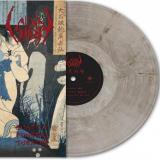
Oxblood Red vinyl, limited to 400 copies. Lord Elephant are back with their second studio album "Ultra Soul", a psyched blend of 70's, 90's and 00's extravaganzas mixed together with the distinctive heavy breath of the band. Blues, doom and sludge are fused again in the strange trademark of the trio, allergic to genre-labels and ready to expand the vision beyond cages! Recorded, mixed and mastered at Studio 73, Ravenna, by Riccardo Pasini (Nero Di Marte, Ephel Duath, Ottone Pesante..) Artwork and Layout by JJ Farfante ArtLab (Melvins, Mudhoney, Ufomammut)
Search:strange u
- A1: Robert Pico - Le Chien Fidèle
- A2: Annie Girardot - La Femme Faux Cils
- A3: Spauv Georges - Je Suis L'état
- A4: Zoé - Zoé
- A5: Jacques Da Sylva - Fou
- A6: Valentin - Je Suis Un Vagabond
- A7: Jacques Malia - Histoire De Gitan
- A8: Bernard Jamet - Raison Legale
- B1: Jean-Pierre Lebort - Barbara Au Chapeau Rose
- B2: Les Concentrés - Fils De Dégénérés
- B3: Les Missiles - Publicité
- B4: Hegessipe - Le Credi D'hegessipe
- B5: Marechalement Votre - Ethero Disco
- B6: Mamlouk - Decollez Les
- B7: Mozaique - L'amour Nu
- B8: Jean-Marc Garrigues - Je Dis Non
- B9: Penuel - Astronef 328
The journey through French-speaking pop archives continues with this fifth volume, packed with fuzz, gimmicks, and dissent. Far from the charts, the selected tracks display a great creative freedom, often backed by corrosive humor. Welcome to the surprising, kaleidoscopic, and colorful world of the late sixties and early seventies, Wizzz!
Born in Montauban, Robert Pico stumbled into music by chance when he met René Vaneste, then artistic director at Pathé-Marconi. René brought him to Paris to record his first 45 RPM EP in 1964. A year later, Pierre Perret introduced him to Vogue, where he recorded his second album with Claude Nougaro’s orchestra. Sylvie Vartan then introduced him to RCA, where he recorded four singles, including the astonishing "Chien Fidèle," a track backed by a hair-rising fuzz guitar. Alongside his solo career, he also composed for other artists like Alain Delon (the song was recorded but remains unreleased), Magali Noël, Bourvil, and Georges Guétary. In the Paris of the sixties, he mingled with Mireille Darc, Elsa Martinelli, Marie Laforêt, France Gall, Françoise Hardy, Petula Clark, Régine, Dani, Serge Gainsbourg, Joe Dassin, Franck Fernandel, Charles Level, and Roland Vincent. Despite his efforts and winning a Grand Prix Sacem for his final record, Robert Pico didn’t achieve the expected success in show business and decided to leave Paris and return to the Southwest, where he devoted himself to writing. He is the author of 23 books (including Delon et Compagnie, Jean-Marc Savary Editions 2025, a memoir about his youth and his many encounters). Today, he is relieved to never have become a celebrity and devotes himself to his work with passion.
In 1969, the Franco-Italian movie Erotissimo was released, directed by Gérard Pirès (who later directed Taxi in 1998, written and produced by Luc Besson). This pop comedy features Annie Girardot, Jean Yanne, Francis Blanche, Serge Gainsbourg, Nicole Croisille, Jacques Martin, and Patrick Topaloff. The soundtrack was written by Michel Polnareff and William Sheller, with lyrics by Jean-Lou Dabadie. "La Femme Faux-cils," performed by Annie Girardot. It recounts the feelings of a rich CEO's wife who seeks to develop her sex appeal under the influence of advertisement and magazines. Groovy, sparkling and light, this track, with ITS lush arrangements humorously critiques consumer society and feminine beauty standards.
“Je suis l’Etat” (1967) is the flagship track of the first EP by singer-songwriter Spauv Georges, aka Georges Larriaga, better known as Jim Larriaga (1941-2022). Born into a family of bakers, the young man was initially planning to become a hairdresser when he discovered English-speaking music through Elvis Presley and the Beatles. After this revelation, he decided he would become a songwriter and gave himself five years to succeed. He recorded his first two EP’s independently for RCA under the pseudonym Spauv Georges; meaning “that poor George”, a nickname given to him by the mother of her friend Jean-Pierre Prévotat (future drummer of the Players, Triangle, or Johnny Hallyday). Portraying a depressed and eccentric young man, Spauv Georges created corrosive and amusing songs that didn’t reach a wide audience, despite a TV appearance with Jean-Christophe Averty.
Supported by his loyal friend and fellow songwriter Jean-Max Rivière, Georges Larriaga met the future singer Carlos in the early '70s, then Sylvie Vartan’s assistant. He wrote songs for Carlos, including the popular "La vie est belle," "Y’a des indiens partout," and "La cantine", which went onto become a huge hit in 1972. He also composed for Claude François (“Anne-Marie”, 1971), Charlotte Julian (“Fleur de province”, 1972), helped launch child singer Roméo (who sold 4 million records), and later wrote the hit "Pas besoin d’éducation sexuelle" (1975) for the young Julie Bataille. In 1971, Jim recorded an album for Disc'Az: “L’univers étrange et fou de Jim Larriaga”, which featured pop gems like “La maison de mon père”.
The story of the song "Zoé" began when Pierre Dorsay, artistic director at Vogue Records, asked Swiss singer and musician Pierre Alain to write a song for a new female singer. The inspiration came when he realized that Zoé (the artist's name) was also the name of France's first atomic battery, created in 1948, which consisted of uranium oxide immersed in heavy water! The lyrics reflect a bubbling energy that must be handled with caution, while the instrumentation echoes this atomic theme, notably with the use of a theremin.
Zoé’s career lasted only as long as a single 45 RPM, but it seems Christine Fontane was the vocalist behind this pseudonym, who is known for several EPs, a good "popcorn" album in 1964, and a handful of children’s singles in the '70s. Regardless, the photograph on the cover is of a different girl entirely.
Later, Pierre Alain continued his career, writing songs for himself, Marie Laforêt, Danièle Licari, Alice Dona, Arlette Zola (3rd place in Eurovision 1982), and achieving multiple gold and platinum records in Canada. Also an inventor with several patents, president of the Romande Academy, and head of the French Alliance in Geneva, he now composes atonal music, books, and poetry. Moreover, he is also the host of "Les Mardis de Pierre Alain" at "Le P'tit Music'Hohl" in Geneva.
Filled with oriental choruses and fuzz guitar, "Fou" is from Jacques Da Sylva's only EP released by Vogue in 1967. Despite the quality of this recording, all traces of this singer disappear after this first effort.
Valentin is a baroque pop singer born in Belgium. He is the songwriter and composer of most of the tracks on his three singles released in the late 60s in Canada. A legend says that he reincarnated himself as Jacky Valentin during the 1970s for a rock'n'roll revival career in Belgium, but his older brother sadly debunked this story. Valentin's first two singles were arranged by Claude Rogen, a Parisian session pianist who had come to Canada to promote the song “Mister A Gogo”, a cover of David Bowie’s “Laughing Gnome”, adapted by singer Delphine, his wife at the time. Far from his usual network, Claude Rogen arranged music for Polydor, including the arrangements for “Je suis un vagabond” in 1969, a jerk tune with string arrangements and a furious optimism.
Jacques Malia wrote, composed, and recorded his only 45 EP for Festival in 1966. “Histoire de gitan” is an incredible beat track with bohemian scat that tells the story of a gypsy musician who came to Paris to make it in the Music-Hall, to no avail. The hero of the song and its author probably shared a similar fate, as Jacques Malia faded into anonymity after this remarkable attempt.
Bernard Jamet recorded two EPs for Barclay in the late sixties and co-wrote several songs with Christine Pilzer, Pascal Danel, and prolific songwriters Michel Delancray and Mya Simile. The track “Raison Légale” (1968), his masterpiece, immerses the listener in a courtroom right when a murderer is being judged, with jerk rhythm and free arrangements. A unique, paranoid, judicial, and psychedelic oddity.
Jean-Pierre Lebrot-Millers started his career in show business in 1967 as a singer and songwriter for the Philips label. After three singles, he wrote several songs of a new kind with his friend Pierre Halioche, in the midst of the sexual liberation movement and the democratization of drugs. With provocative lyrics, “Les filles du hasard” and “Barbara au Chapeau Rose” were released on a Philips singles in 1968. The character of Barbara was inspired by a queen of Parisian nightlife during the psychedelic years: model Charlotte Martin, who dated Eric Clapton from 1965 to 1968, then Jimmy Page from 1970 to 1983. Jean-Claude Petit’s arrangements, with a table-filled intro, soul brass, and Hendrixian guitar, emphasize the flamboyance of a hedonistic and sexy character, whose dog is named Junkie because “Junkie est un nom exquis”! The track was recorded live in three takes with a full orchestra.
Upon its release, the record was censored by Europe 1 and RTL due to its references to drug use. Jean-Pierre Lebrot was then banned from the airwaves and later dismissed by his record label. He changed his artist name to Jean-Pierre Millers, while his companion Pierre Halioche became D. Dolby for a new dreamy composition, “Chilla”, which Jean-Pierre produced himself with arrangements by Jean Musy. Once again, the song was immediately censored everywhere. After this setback, he decided to stop singing and started taking on odd jobs to support his Swedish wife and their son until the day he met Jean-Pierre Martin, then production manager at Decca, who had worked with Manu Dibango. Martin offered Jean-Pierre Lebrot-Millers, then employed at Rank Xerox, the position of artistic director at Decca. He accepted and became, a year later, promotion director (radio, press, TV). He worked on Julio Iglesias’s first album for Decca, which became a massive hit and allowed him to meet Claude Carrère. The latter asked him to write new songs and find their performers, much like a “talent scout.” It’s through him that Jean-Pierre discovered Julie Pietri and Corinne Hermès. He composed “Ma Pompadour” for Ringo, Sheila’s husband, and took the microphone again for the syncope hit “Rendez-Vous” in 1982.
That same year, Jean-Pierre Lebrot-Millers tried to release a track for which he had heavily gone into debt: “Si la vie est un cadeau”. Having recorded it in London, he presented it to numerous professionals, all of whom refused to get involved. The same thing happened with Antenne 2 and the Sacem when he proposed the song as France’s entry for Eurovision. He then met Haïm Saban, who was producing cartoon soundtracks and had just launched the Goldorak theme song. Saban, having listened to the song, declared it had the potential to become a hit. He sent Jean-Pierre and Corinne Hermès to meet the CEO of the Luxembourg radio and television network. The latter received them, asked to hear a verse and chorus a cappella in his office, and immediately hired them to represent Luxembourg at Eurovision 1983. They reworked the arrangements and recorded a new version with Haïm Saban as co-producer. The song ended up winning Eurovision 1983, a great comeback for our hero. He continued producing and hung out with the band Nacash in Belgium when a couple came to introduce their daughter for an impromptu audition in a hotel room. The girl sang “Les démons de minuit” while dancing to a radio cassette. Impressed, he had her take singing lessons for a year and composed a song for her (for which he had the melody and title, but no lyrics). This required him to go on the hunt for a lyricist, who ended up being Guy Carlier. They recorded the song, which was initially a ballad, at Bernard Estardy’s CBE studio, and gave the singer a new name: Melody. They showed the song around their industry network without success. Later, Estardy called Jean-Pierre to suggest changing the rhythm and making it pop-rock. Orlando, Dalida’s brother, liked the result and decided to co-produce the track. “Y’a pas que les grands qui rêvent » became a classic hit. The song has since been covered by Juliette Armanet (as a ballad, like the original) and Valentina.
Born into an aristocratic Breton family, Hervé Mettais-Cartier worked as a DJ at Queen Kiss, a nightclub in Poitiers, where he formed the band Les Concentrés with Michel (an actor) and Christian (a radio technician). Together, they created a repertoire of whimsical songs (“Ma bique est morte”, “J’suis un salaud”, “Fils de dégénéré”...) that they performed on stage dressed in white (in homage to “concentrated milk”). They performed at Bliboquet and Olympia in 1968 for the 10th edition of the “Relais de la chanson Française” organized by L’Humanité-Dimanche and Nous les Garçons et les Filles, sponsored by Pepsi Cola. Winners in the author-composer category, alongside Danish singer Dorte, their visibility allowed them to record a 45, and appear on television in Jean-Christophe Averty’s show. The A-side of the disc features Bruno le ravageur, a casatchok dedicated to Bruno Caquatrix, the director of Olympia, nicknamed in the song “Coq Atroce” or “croque-actrices”. The B-side is dedicated to “Fils de dégénéré”, a quirky tribute to Hervé's aristocratic roots, mixing absurdity with sophisticated vocal harmonies.
After Les Concentrés, Hervé Mettais-Cartier formed the duo La Paire et sa Bêtise with his friend Olivier Robert. They performed in Parisian cabarets and toured with Pierre Vassiliu. In the late 1970s, Hervé began a solo career. He recorded two albums for the Motors label in 1978 and 1979, which did not achieve their anticipated success due to lack of promotion. In 1980, he met Bernadette, with whom he started a family and created a “Chansons à voir” (songs to see) show that he performed until his death at the end of 2024.
Publicité comes from the final EP by the Missiles (Ducretet Thomson, 1966), a disc that also includes “La (nouvelle) guerre de cent ans”, featured on Volume 4 of our Wizzz! series. Please refer to the booklet for the story of the band.
“He’s 1.82 meters tall, 28 years old, weighs 135 kg, is black and Belgian”: this is the description of singer Hegesippe on the back of his sole single (Decca, 1967). He appears on the album cover wearing a Greek toga, like a hippie gag – we are at the end of the year 1967. In “Le crédo d’Hegesippe”, this former bodyguard of Antoine and the Charlots plays the delightful card of the thick brute converted to Flower-Power and non-violence, with arrangements by Jean-Daniel Mercier, aka Paul Mille.
“Ethéro-disco” was released on a promotional record for clients of the Maréchal company (Liège, Belgium) for the New Year 1979. Over a funky rhythm, celebrity impersonations (Brigitte Bardot, Jacques Dutronc, Fernandel…) deliver an enigmatic text about pharmaceutical products like ether, bismuth, and aspartate. The track was composed by Dan Sarravah (responsible for Joanna's “Hold-up inusité” featured on Wizzz! Volume 3) and Tony Talado, who was also a singer (one 45 in 1967), songwriter (with over a dozen credits between 1964 and 1985 in various styles from surf music to disco), author (Devenez Végétarien, Dricot Editions, 1985), ad designer, and psychologist.
Décollez-les is on the A-side of Mamlouk's only single, a pseudonym for Marsel Hurten, who is known for his work on several EPs in the late sixties, as well as composing music for Hervé Vilard’s “Capri, c’est fini”, Claude Channes' “La Haine”, Annie Philippe’s “On m’a toujours dit”, and Nancy Holloway’s “Panne de Cœur”.
This strange song, with Afrobeat horns and absurd dialogues between a chef and his kitchen staff, is the result of a collaboration between Marsel Hurten and one of his neighbors, a photographer from Pavillon-sous-Bois (93), where the musician settled after returning from the Algerian War. A music video was shot to promote the record.
Marsel Hurten was born in Tourcoing (59) into a musical family. At a young age, he joined the brass band founded by his grandfather, playing the piston before studying trumpet at the conservatory, as well as teaching himself how to play the guitar. As an orchestra musician, he toured in France, Belgium, Germany, and England. He released a series of solo 45’s between 1965 and 1968 for the DMF and Az labels before stopping recording to focus on working for other artists (Gilles Olivier, Noëlle Cordier…).
“L’amour nu” (Vogue, 1971) is the work of the short-lived Belgian band Mozaïque. The track, written by singer Jacques Albin, closely resembles another of his compositions, “Carré Blanc”, which he recorded in 1969 for Disc’AZ.
Represented by the Lumi Son micro-label based in Marignane (Côte d'Azur), Jean-Marc Garrigues released two 45 RPMs in the late sixties, defending the French jerk sound. The song “Je dis Non” is a short, joyful ode to youth, pop music, and rebellion.
Songwriter and performer Jacques Penuel released three singles. The first one, “Astronef 328” (Fontana, 1969), features a dizzying series of chords punctuated by sound effects, a sci-fi story, and arrangements by Jean-Claude Vannier.
We would like to sincerely thank Pierre Alain, Moon Blaha, Marsel Hurten, Bastien Larriaga, Jean-Pierre Lebrot-Millers, Bernadette Mettais-Cartier, Robert Pico, Olivier Robert, Claude Rogen, Micky Segura.
"Only a clarinet sings – minimal, quivering, wavering. Breathing mad notes in the cracks between notes, weaving a dazed, fuzzy kind of magic. The latest recordings by Museum of No Art are tripping – floating in suspense, somewhere out in the irrational corners of the world inhabited by the haunted elegance of Ben Bertrand or Bernhard Herrmann. But still, entirely her own – a quiet revolt of classical clichés in search of a new dawn for lunatic woodwinds. She sings through her instrument and it sings to her. It carries her, and she lets it. A distinctive timbre tumbling through tonal fog. Four freely formed compositions for dispari. One petite and tempting. Two mid-length wanderers – teetering, wobbling. And one epic piercer. All drifting in inspiring airs. Ephemeral, nebulous, fragile, like the desolate candy snowman, melting on a warm tongue, threatened with complete dissolution. Fleeting like a stolen glimpse of the intimate curve of an anonymous stranger’s neck."
- 1: Children Of The Dusk
- 2: Bend Down And Kiss The Ground
- 3: Vibratory Affinity
- 4: Time, As Veiled Eternity
The follow-up to 2024’s "Perpetual Eden" sees Bloody Head stretch out and capture the cosmic sprawl of their live gigs on record. Available on limited-edition LP with spot-varnished sleeve.
After finding their Perpetual Eden and then seeing it violently retrograde, Bloody Head return with a new transmission devoted to the pendulum’s swing and the big wheel’s turn.
The big wheel turns and the seasons turn and we turn and it all just keeps on spinning away… elliptic, off kilter, centres not holding, the whole merry-go-round whirling and dissolving and coagulating, perpetually.
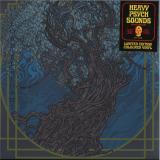
The CHILDREN OF THE DUSK and the sundry weirdoes and creeps depicted on the cover painting, channelled by Danny Roberts 777, all spinning and singing and sinning as they rattle along… in some sort of strange, discordant VIBRATORY AFFINITY with themselves/each other/it all.
Stay a while and take the time to BEND DOWN AND KISS THE GROUND/smell the roses/find your Eden, in and amongst the nooks and cracks and crannies and in the thin, strange places.
TIME AS VEILED ETERNITY is a microcosm of the whole merry Shambala, pushing and pulling and coming together and falling apar
Recorded, mixed and mastered by James Atkinson at the Stationhouse, Leeds. The session almost kiboshed by Storm Éowyn. A sprawling mass/mess which oozes and lurches from bloody minded heaviness to meditative reflection to unsettling delirium and back again, ending in total sonic breakdown. More focused and restrained, more reckless and chaotic. There is No time, to every season some sort of purpose.
Yes, after a hiatus of 15 months, The ReMix Collection makes a highly anticipated return as Yotto steps up to take on the Shakra Mix of Power Circle’s ‘Garden Of Peace’.
Originally released in 1993, the track was an immediate Renaissance anthem, finding favour with all their key DJs. However, it became synonymous with one man in particular, namely, John Digweed, who cemented the track’s legendary status when he included it on his Journeys By DJ compilation the following year. Even today he’s been known to slide it into the mix, most recently episode 10 of his legendary Bunker streams. And the track has other contemporary fans too; a certain Mr. Plex was heard dropping it in 2020.
In short, it’s one of those records that’s stood the test of time and grown in stature year on year. Now, its evolution takes yet another step as it joins the ranks of Renaissance’ flagship ReMix Collection series.
Yotto’s modern interpretation is a high-octane juxtaposition of thunderous bass, rising pads and THAT vocal. ”Garden Of Peace is a record I missed first time around as a kid and had only heard on a mix, never knowing what it was, so when Renaissance approached me about a remix there was a strange sense of familiarity,” he explains, “The original is full of classic progressive house mystery and, while I took the whole thing apart, I wanted to keep that emotion with my interpretation.” On the B-side there’s a re-mastered cut of the original Shakra Mix, which isn’t released digitally and remains exclusive to vinyl only.
For over six decades, Charlemagne Palestine (b. 1947, New York) has been a pioneering composer, performer, and multimedia artist, celebrated for his ecstatic sonic explorations and ritualistic, metaphysical performances. Emerging from the cross-disciplinary New York art scene of the 1960s and ’70s, he helped shape a heretical edge of minimalism alongside figures like Conrad, Riley, Niblock, and Glass. Trained as a Jewish cantor and later as the carillonneur at St. Thomas Church, Palestine cultivated a deep fascination with resonance and overtone—an obsession that evolved through his use of percussion, early synthesizers, and monumental piano works, influencing artists from John Cale to Nick Cave.
Animated by a spirit of ecstatic play and what he calls his »meschugge« (Yiddish for »crazy«) sensibility, Palestine’s universe blends the sacred and the absurd, filled with soft toys, ritual gestures, and immersive sound environments. Rejecting the »minimalist« label in favor of a maximalist, »spontanimalist« approach, he creates long-form, resonant performances that transform spaces into vibrating, living organisms—opening portals into the nature of time, sound, and devotion.
In the same vein, the aptly titled live record »The Organ is the World’s Greatest Synthesizer« – performed during the Sonic Acts Festival at Amsterdam’s Oude Kerk in 2025, and taking its title and cover art from a drawing realized by Palestine himself during the concert – adds to his opaque yet vibrant personal mythology and intimate transcendence, marking a return to the Staalplaat catalog after »Fffroggssichorddd« (2020) and »Music for Big Ears« (2001).
Beginning with a resonating bell and his falsetto overtone singing, then surrendering to the endless, wild soundscapes of tone-feeling and beat frequencies generated by the church’s organ, across 40+ minutes, single sound sources evolve into clusters, entangle fully with one another, and establish their own spatial existence and aural architectures. We witness the traces of something that can be described as a perpetual performance, a test for the ever-changing interaction between artist, instrument, space and, ultimately, us.
Since Palestine has always defined his execution as a form of anti-composition - of simply »being in the music« as if inhabiting a space - the true power of »The Organ is the World’s Greatest Synthesizer« lies in encapsulating a moment of Palestine’s practice in its most authentic, live dimension. Sound becomes at once subtle substance and strange telluric force, animating physical forms from some unknown channel beyond and within, accessible only through our sensorium. The point in this liminal temple of tone, timbre and frequency is not to learn anything but to simply enter. Palestine earns once again his self-given title of contemporary shaman by keeping this sonic portal open, allowing us to witness and make it last.
»I have always felt and heard and mixed the sounds in my world as liquids not as solids. Sonic liquids are material that is endlessly transformable. But I’m not crazy about people who go around defining stuff.«
- 1: Prologue: The Stage Of The Paris Opéra, 905
- 2: Overture
- 3: Think Of Me
- 4: Angel Of Music
- 5: Little Lotte... / The Mirror... (Angel Of Music)
- 6: The Phantom Of The Opera
- 7: The Music Of The Night
- 8: I Remember... / Stranger Than You Dreamt It
- 9: Magical Lasso
- 10: Notes... / Prima Donna
- 11: Poor Fool, He Makes Me Laugh
- 12: Why Have You Brought Me Here... / Raoul, I've Been There
- 13: All I Ask Of You
- 14: All I Ask Of You (Reprise)
- 1: Entr'acte
- 2: Masquerade / Why So Silent
- 3: Notes... / Twisted Every Way
- 4: Wishing You Were Somehow Here Again
- 5: Wandering Child... / Bravo, Monsieur
- 6: The Point Of No Return
- 7: Down Once More... / Track Down This Murderer
Andrew Lloyd Webber’s The Phantom of the Opera is one of the most celebrated musicals of all time, and this original London cast recording from 1986 remains the definitive recording. Michael Crawford’s Tony Award-winning performance as The Phantom and Sarah Brightman’s portrayal of Christine Daaé helped make this the best-selling cast recording in history. Re-issued for the first time in decades, this classic album brings the unforgettable score to a new generation of listeners. From the title song to “The Music of the Night” and “All I Ask of You,” every track reflects the power and beauty that continue to make The Phantom of the Opera a global phenomenon nearly forty years after its debut. Since its premiere, The Phantom of the Opera has been seen by more than 160 million people in 195 cities and has received over 70 major theatre awards. It holds the record as the longest-running show in Broadway history and was the first British musical to debut at number one on the music charts. The recording has been certified Platinum in six countries.
- A1: Intro: Soushiki (01:26)
- A2: Shingontachikawa (05:27)
- A3: Doman Seman (05:33)
- B1: Imiuta (03:14)
- B2: Shikigami (06:22)
- B3: Outro: Higeki (01:31)
Marble Vinyl[27,31 €]
Japanese black metal legends Sigh formed in 1989/1990. The genre-classic debut ‘Scorn Defeat’ followed on Euronymous’ Deathlike Silence Productions in 1993 & with each subsequent release, Sigh grew to become one of the country’s greatest & most revered metal exports. With a journey through the strange & the psychedelic, incorporating a whole eclectic mix of genre styles & experimentation throughout their career, Sigh has remained a vital creative force in the avantgarde field whilst maintaining their old school roots, as witnessed with the stellar 2022 album, ‘Shiki’. 2025 also saw Sigh reimagining their ‘Hangman’s Hymn’ album for a release on Peaceville as part of the band’s 35th anniversary celebrations, in the shape of ‘I Saw The World’s End: Hangman’s Hymn MMXXV’.
Maintaining the core trio of Mirai Kawashima, Shinichi Ishikawa & Satoshi Fujinami & on the back of the epic & darkly symphonic opus ‘Infidel Art’ (1995), Sigh adopted a more boundary-defying approach to their writing, whilst still keeping the dark foundations & traits of the band’s fundamental sound. The result was ‘Ghastly Funeral Theatre’ which surfaced in 1997 & draped in Eastern & horror-based atmospherics, the band also embraced elements outside of metal with what was their most experimental offering to date; utilising instruments such as the saxophone as well as acoustic passages & notoriously drawing comparisons to the moods of bands such as The Beatles at times, featuring catchy hooks & structures in line with the rock music genre, but masterfully woven into Sigh’s unique blackened metal tapestry.
Continuing with Peaceville’s re-issues of Sigh’s classic early ( & until now, hard to find) works, this edition of ‘Ghastly Funeral Theatre’ contains a new master created by Patrick Engel at Temple of Disharmony, featuring a new transfer from the original DAT source.
The release also includes a new interview with main-man Mirai Kawashima conducted by Dayal Patterson of Cult Never Dies, delving into the history & inspirations behind ‘Ghastly Funeral Theatre’.
This edition of ‘Ghastly Funeral Theatre’ is presented on black vinyl.
- A1: Intro: Soushiki (01:26)
- A2: Shingontachikawa (05:27)
- A3: Doman Seman (05:33)
- B1: Imiuta (03:14)
- B2: Shikigami (06:22)
- B3: Outro: Higeki (01:31)
Black Vinyl[21,81 €]
Japanese black metal legends Sigh formed in 1989/1990. The genre-classic debut ‘Scorn Defeat’ followed on Euronymous’ Deathlike Silence Productions in 1993 & with each subsequent release, Sigh grew to become one of the country’s greatest & most revered metal exports. With a journey through the strange & the psychedelic, incorporating a whole eclectic mix of genre styles & experimentation throughout their career, Sigh has remained a vital creative force in the avantgarde field whilst maintaining their old school roots, as witnessed with the stellar 2022 album, ‘Shiki’. 2025 also saw Sigh reimagining their ‘Hangman’s Hymn’ album for a release on Peaceville as part of the band’s 35th anniversary celebrations, in the shape of ‘I Saw The World’s End: Hangman’s Hymn MMXXV’.
Maintaining the core trio of Mirai Kawashima, Shinichi Ishikawa & Satoshi Fujinami & on the back of the epic & darkly symphonic opus ‘Infidel Art’ (1995), Sigh adopted a more boundary-defying approach to their writing, whilst still keeping the dark foundations & traits of the band’s fundamental sound. The result was ‘Ghastly Funeral Theatre’ which surfaced in 1997 & draped in Eastern & horror-based atmospherics, the band also embraced elements outside of metal with what was their most experimental offering to date; utilising instruments such as the saxophone as well as acoustic passages & notoriously drawing comparisons to the moods of bands such as The Beatles at times, featuring catchy hooks & structures in line with the rock music genre, but masterfully woven into Sigh’s unique blackened metal tapestry.
Continuing with Peaceville’s re-issues of Sigh’s classic early ( & until now, hard to find) works, this edition of ‘Ghastly Funeral Theatre’ contains a new master created by Patrick Engel at Temple of Disharmony, featuring a new transfer from the original DAT source.
The release also includes a new interview with main-man Mirai Kawashima conducted by Dayal Patterson of Cult Never Dies, delving into the history & inspirations behind ‘Ghastly Funeral Theatre’.
This edition of ‘Ghastly Funeral Theatre’ is presented on black vinyl.
- A1: Dancing With Tears In My Eyes
- A2: Hymn
- A3: The Thin Wall
- B1: The Voice
- B2: Vienna
- B3: Passing Strangers
- B4: Sleepwalk
- C1: Reap The Wild Wind
- C2: All Stood Still
- C3: Visions In Blue
- C4: We Came To Dance
- D1: One Small Day
- D2: Love's Great Adventure
- D3: Lament
Clear Vinyl Box Set[72,06 €]
- Rum Stumblin
- Born Behind The Wheel
- Barely Livin
- Dancing In The Kitchen
- Ballad Of Jesse Ed Davis
- Don’t Be A Stranger
- Rather Float A River
- Whiskey Rock A Roller
- Brand New Day
- The Rambling Kind
Neues Album des US-Gitarristen im Stile eines Stevie Ray Vaughan - ist auf der Ruf Records Blues Caravan-Tour im Januar 2026
»...ihm ist zu attestieren, dass ONE FOR THE RIDE mehr als ansprechend seine Liebe zum Geschichtenerzählen über sein Leben unterwegs einfängt, dass er die musikalischen Einflüsse, die ihn geprägt haben, mit einer eigenständigen Note zusammenbindet.« (GoodTimes, Februar/März 2026)
Limited to 250 copies !
The Deadheads had never had much luck with spaceships. Their first mission had ended in a catastrophic engine failure, leaving them adrift in deep space for weeks. This time, their craft was hardly more reassuring. A hodgepodge of outdated technology and shoddy repairs made it more of a floating death trap than a reliable cruiser. As they began their descent toward the strange planet, the hull creaked and rattled, sending a wave of dread through the crew.
"Hold on," Matt's voice crackled over the intercom, without much conviction, as if he himself doubted they would make it out alive. Outside, a thick, grayish atmosphere swirled ominously, while the planet's gravity became far stronger than anticipated.
“Fuck, we’re gonna burn at the entrance!” M yelled, his hands flailing on the console as sparks flew from the control panel. The ship’s sensors were completely jammed, and the navigation system flickered intermittently, like a dying light. Below, the planet’s surface was a tangle of lava rivers and jagged rock formations, the kind of place no sane person would ever land. But the Deadheads had never pretended to be. They lived in a state of constant emergency.
As the descent intensified, the alarms blared. On the bridge, the screens lit up with red warnings and flashing messages: "SYSTEM ERROR," "UNSTABLE TRAJECTORY," "SUIVITY SYSTEM COMPROMISED." The lines of code scrolled by too quickly to be read, while a mechanical voice repeated relentlessly: "Imminent impact. Structural integrity at twenty percent."
The once pristine shell of the vessel began to disintegrate, with shards of metal breaking away and disappearing into the atmosphere.
With a final, piercing screech, the ship crashed onto the planet's surface, sending up a cloud of dust and debris. The crew was violently thrown from their seats, stunned but barely alive. They struggled to their feet amidst the wreckage, the ship reduced to a charred shell around them.
"Well," M said, wiping the dirt off his suit with a grimace, "at least the air is breathable." Matt scanned the hostile expanse stretching before them and smiled slightly. "Perfect. Let's hope we have better luck with the planet than with our ships."
With that, the Deadheads gathered their equipment and headed into the unknown, while the remains of their ship slowly sank into the unstable soil of the planet.
- A1: Skyscraper
- A2: Subways Of Your Mind
- A3: Goldrush
- A4: Heart In Danger
- A5: Dirty Slapstick
- B1: I Got My Eyes On You
- B2: Talking Hands
- B3: Strange Feeling
- B4: Jenny
- B5: Subways Of Your Mind (Tmms Darius Version)
Yellow Vinyl[25,17 €]
The incredible story that began with The Most Mysterious Song on the Internet (TMMS) now enters an exciting new chapter: Skyscraper, the debut album by FEX.
Skyscraper features ten original tracks recorded in the early to mid-1980s-carefully re-transferred, remastered, and brought back to life. The album cover, designed by Darius S., brings the story full circle. Darius is the very person who preserved the now-iconic track Subways of Your Mind by recording it from NDR radio in the mid-80s. Without him, FEX may never have been discovered.
FEX's debut opens with its namesake, Skyscraper-a brooding, previously unreleased track the band once described as part of their "psychedelic phase." With haunting synth-helicopter textures and deep guitar riffs, it immediately sets the tone and raises tension.
The release flows naturally into the energetic and fully remastered studio version of Subways of Your Mind. This version of the TMMS - re-discovered on the "yellow label tape" by Reddit user Marijn-was long believed to be from a smaller home studio, but was actually recorded in November 1984 at Hawkeye Studios in Ganderkesee, near Hamburg.
Goldrush, first teased in raw form on FEX's YouTube channel, bends toward mechanical rhythm and shimmering synths, a snapshot of the band's experiments with programmed drum machine sound. Rückwardt's lyrics point to greed and criticizes materialism, and while the music leans toward pop sensibilities, it carries a raw, fractured edge.
Heart in Danger and I've Got My Eyes On You offer contrasting experiences-one rooted in classic post-punk tension, the other floating in melodic synth layers. The latter in particular feels like a fragment from a parallel radio history: a precise and one of a kind synth pop love song with a progressive touch.
From a rehearsal tape comes Dirty Slapstick, its urgency intact. Missing keyboard parts were later reconstructed by Michael Hädrich using his original DX7 synthesizer-recovering lost elements without rewriting the past. The lyrics take a wry look at forced optimism. Also included are the songs Talking Hands, Jenny and Strange Feeling, the latter being a slower blues-tinged cut, revealing yet another facet of the band's reach and Rückwardt's songwriting diversity.
The album closes where the legend began-with the original radio recording of Subways of Your Mind from Darius' cassette. This version of The Most Mysterious Song features alternate vocal effects, contributing to the track's enigmatic aura. Digitally transferred using a high-end Revox machine and carefully remastered, it now has its long-deserved official release.
The cover features a photo of the Eichenberg Bunker in Kiel-one of FEX's original rehearsal spaces and a symbolic monument to their sonic legacy.
'The World in Air Quotes' is a genre-shifting style-melting kaleidoscope of art-rock, jazz, techno, folk & industrial. The God In Hackney sound like very little else from the early 2020's and whilst 'The World In Air Quotes' innovative progenitors are manifold - Eno, Coil, The Durutti Column, 1980s ECM jazz to name a few - it sounds beholden to none of them.
The God In Hackney's first album 'Cave Moderne' was Andrew Weatherall's album of the year for NTS Radio.
The God In Hackney's second LP, 'Small Country Eclipse', was album of 2020 for critic Sukhdev Sandhu of The Colloquium for Unpopular Culture: "Mordant music: stuttering, dread, black humour. A record that felt truly independent, beholden to no genre, out of step with all centres and signposted nodes."
'The World In Air Quotes' is The God In Hackney's 3rd album and their most musically emotive and lyrically inventive to date. It's an album that resonates with feelings about climate change, isolation, extinction, the social impact of technology, the flattening of history—and illuminates the darkness with imaginative rhythm, melody, noise & poetry. Songs range from widescreen, anthemic rock, to strange intricately arranged jazz-influenced songs, to abstract, textural electronic pieces. There's a strain of dark and surreal comedy too that runs through the lyrics and some of the choices the band makes in their sounds and arrangements.
The core God in Hackney quartet of Andy Cooke, Dan Fox, Ashley Marlowe and Nathaniel Mellors has expanded to include American multi-instrumentalists and composers Eve Essex (Eve Essex & The Fabulous Truth, Das Audit, Peter Gordon & Love of Life Orchestra, Peter Zummo, Liturgy) and Kelly Pratt (Father John Misty, David Byrne/St Vincent, Beirut, and Lonnie Holley among many others), signalling a new and ambitious direction for the band.
The album cover features original artwork by Iranian-American artist Tala Madani, recently the subject of a career survey exhibition at the Museum of Contemporary Art, Los Angeles.
Advertising:
The Wire, Maggot Brain
Reviews & features:
Maggot Brain - forthcoming feature
Hi-Fi+ Magazine - album review in April 2023 issue
Dereck Higgins (You Tube review)
Sonosphere - interview / feature
Weirdo Shrine - interview
It's Psychedelic Baby - interview
Spettacolo (Italy) - feature.
Ghettoblaster Magtazine (USA) - feature
Airplay:
Gilles Peterson - BBC Radio 6 Music
Steve Lamacq - BBC Radio 6 Music
Dublab - playlisted & featured in Dublab Recommends (Los Angeles)
Cian Ó Cíobháin - RTE Raidió na Gaeltachta (Ireland)
WFMU - playlisted
Resonance FM - The Wire presents Adventures In Sound & Music
Human Pleasure Radio (New Zealand)
Pete Wiggs & James Papademetie - The Seance (Repeater Radio, Sine FM & others)
Peter Hollo's Utility Fog - FBI Radio (Australia)
Jonathan Lethem & Sam Sousa on Radio Free Aftermath (KSP Claremont 88.7)
Life Elsewhere
WRPB Princeton
In Memory of John Peel
Mike Watt's Watt from Pedro Show
Originally released in 1983 on I.D. Records, Wreckin’ Crew catches The Meteors in peak, feral form, a scorching burst of early psychobilly loaded with slapping bass, jagged guitars, and P. Paul Fenech’s unmistakable snarl. A true cult favorite, the album helped spark the infamous “wrecking” style and cemented the band’s reputation as the genre’s loudest and most unapologetic force. A high-voltage classic, back on vinyl where it belongs. Still wild, still unhinged, still essential. Turn it up and let the chaos loose.
- 1: Rock N Roll
- 2: Dream Come True
- 3: Loyalty
- 4: On Fire
- 5: Stealin' Time
- 6: Rickety Ol' Bridge
- 7: Strange Companion
- 8: Possessive
- 9: Lord
- 10: Haunted Man
- 11: Dance On Thru
- 12: Engine 99
Leave it to Langhorne Slim - a pioneer of raw, rule-breaking Americana for more than two decades - to reach far beyond the genre he helped inspire.
The Dreamin' Kind finds the Nashville transplant strapping on an electric guitar and embracing his longtime love of larger-than-life rock & roll. With it's chugging power chords, 1970s-sized riffs, and richly layered arrangements, The Dreamin' Kind is fueled not only by sheer amplification, but by the soul-baring songwriting that's become Slim's calling card, too. Tucked between those anthems are acoustic-driven songs that skirt the outer orbits of folk music, from the bare-boned heartbreak of ''Stealin' Time'' to the organic, orchestral sweep of ''Dance On Thru.'' The result is the more explorative and expansive album of Slim's career: a record made for rock clubs, campfires, and garages alike, produced by Greta Van Fleet's Sam Kiszka, and anchored by a lifelong desire to break down new walls.
''It felt like I was blowing some old shit up so I could plant some new flowers,'' Slim says of the creation process. ''I love acoustic music. I love folk music. But those aren't my only loves. Rock & roll has always tickled the same place in my soul as great singer-songwriter music, and I wanted to explore those influences. Raw songs that make you feel something: that's the stuff I'm after.''
- 1: Siphium
- 2: Moly
- 3: Psalacantha
- 4: Styrax
- 5: Argos
- 6: Murena
- 7: Snake Of Arabia
- 8: Gold Eating Ants
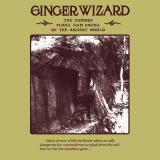
Crypt of the Wizard is proud to present Ginger Wizard - The Curious Flora and Fauna of the Ancient World on vinyl and digital formats.
About ten years ago in a record store in Prague, the Ginger Wizard discovered a copy of Bo Hansson’s Lord of the Rings LP. Although initially unfamiliar with the record, the reference to Tolkien’s masterwork and the incredible cover art drew him in and, rather fittingly, sent him off on a journey of discovery that would reshape his creative trajectory.
Years later while working in cassette tape manufacturing, Ginger Wizard noticed that most fantasy-inspired music fell into two camps: metal and dungeon synth. With little interest in the former, but intrigued by the latter, he began writing a few songs imagining a beautifully packaged and tactile cassette tape. However, dungeon synth he soon realized was “the most boring music to make”.
So began the Ginger Wizard’s own mythological discography. In 2022 came The Feast for the Dead King and Other Musical Themes recorded at home in a cold kitchen, is conversely an album full of warmth drawn from sheer exploration. A year later Can I Choose My Own Psychopompos? was recorded for the legendary Stoned to Death label - a 7” séance of semi-improvised noise and melody featuring allies from the Ginger Wizard’s live backing band The Peter Jacksons. The following year with Bathysburg Tales, a new approach was needed in order to keep the project interesting. Drawing inspiration from Popol Vuh and the inclusion of vocals lent by Protomartyr’s Joe Casey and Jakob Battick, a new more cinematic sound began to emerge.
Now, we present The Curious Flora and Fauna of the Ancient World marking a step into something stranger while still channeling the spirit of Bo Hansson. The new album rejects swords and sorcery for the mythology of the natural world “the ancient stuff,” he explains in the record’s insert, “has a similar taste for me as fantasy.” These songs bloom, creep, and shimmer like forgotten plants under distant suns while rooted in something real and organic. Inspired by the myths of nature rather than heroic quests, it’s an album that feels alive, equal parts archaeological dig and psychedelic garden.
Currently at work on a soundtrack for an imagined 1970s fantasy film in collaboration with The Peter Jacksons, the Ginger Wizard continues to expand his strange universe while The Curious Flora and Fauna of the Ancient World serves as a new map to somewhere ancient, beautiful, and unknown.