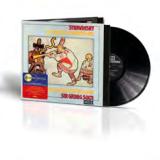
Als Sir Georg Solti im Herbst 1969 sein Amt als Musikdirektor antrat, verglich er die Stadt Chicago und
ihr berühmtes Orchester einmal mit dem „Dornröschen“-Schlaf. Doch fünf Jahre später war es ein anderes
Ballett – Strawinskys „Le Sacre du Printemps“ –, das zeigte, wie explosiv diese neue Beziehung geworden
war, in einer Aufnahme, die auch ein halbes Jahrhundert nach ihrer Entstehung noch immer aus den Lautsprechern dröhnt. „Glamourös und kraftvoll.“ – Gramophone
Deccas vollständig analoge Vinyl-Serie DECCA PURE ANALOGUE punktet mit einigen der legendärsten
Aufnahmen aus den Archiven von Decca und Philips. Die Serie wurde von Rainer Maillard gemastert und
von Sidney C. Meyer in den renommierten Emil Berliner Studios geschnitten, bei Pallas auf 180-gr.-Vinyl
gepresst und in luxuriösen Gatefolds in handnummerierten, limitierten Auflagen präsentiert.
Es werden ausschließlich originale analoge Quellen verwendet – in diesem Fall 2-Track Stereo-Bänder–
und es kommen keine zusätzlichen Geräte im Signalweg zum Einsatz, d. h. es findet keinerlei digitale
Klangbearbeitung statt.
Die LP wurde für 45RPM gemastert, um einen besseren Hochtonbereich zu erzielen und die ganze „Wucht
und Klarheit“ der Originalaufnahme wiederzugeben.
Jedes Album enthält das Original-Artwork und Original-Liner Notes, Archivfotos und Faksimiles der OriginalAufnahmeprotokolle sowie neu verfasste Anmerkungen, die die Geschichte der Aufnahme, den technischen
Hintergrund und den Mastering-Prozess beschreiben.
Buscar:stravinsky
- 1
“The Firebird” is a ballet and orchestral concert work by the Russian composer Igor Stravinsky. It was written for the 1910 Paris season of
Sergei Diaghilev’s Ballets Russes company based on the Russian fairy tales of the Firebird and the blessing and curse it possesses
for its owner. The Firebird’s mortal and supernatural elements are distinguished with a system of leitmotifs placed in the harmony dubbed
“leit-harmony”. Stravinsky intentionally used many specialist techniques in the orchestra, including ponticello, col legno, flautando, glissando,
and flutter-tonguing. Set in the evil immortal Koschei’s castle, the ballet follows Prince Ivan, who battles Koschei with the help of the magical Firebird.
Recorded in 1961 by The Columbia Symphony Orchestra.
This version in limited pressed on Solid Orange vinyl.
"Due to the huge success of the Original Source Series and due to frequent wishes by both fans and critics alike, DG have decided to launch a reprint of all four titles of Batch 1 – marked as “SECOND EDITION”. Same Quality, just without numbering. THE ORIGINAL SOURCE is a new series of celebrated albums reissued on vinyl. These new releases include Claudio Abbado’s fascinating interpretation of works by Debussy and Ravel with the Boston Symphony Orchestra (1 LP), the legendary recording of Brahms’s Piano Concertos Nos. 1 & 2 with Emil Gilels, the Berliner Philharmoniker and Eugen Jochum (2 LPs), and Verdi’s Messa da Requiem in the iconic version of Herbert von Karajan and Berliner Philharmoniker (2 LPs). The renowned Berlin-based Emil Berliner Studios are remastering 4-track recordings from the 1970s, using their own cutting-edge and 100% pure analogue techniques (AAA) to create versions of the highest possible audio quality. Compared to the original releases, the advantages in sound are outstanding: More clarity, more details and a better frequency response, less noise, less distortion, less compression – the highest possible audiophile quality which gives listeners the chance to enjoy this repertoire like never before.
Produced on 180g virgin vinyl by Optimal, these limited and numbered releases will be issued in deluxe gatefold editions featuring the original artwork and liner notes, with additional photos and facsimiles of the recording documentation on the inner sleeve. Furthermore, each release includes a note by Rainer Maillard/EBS detailing the technical background and procedure of the Original Source Series, and an additional insert with a photo of the original tape box. Each LP comes in a protective cellophane jacket with a sticker highlighting the
"
- 180 GRAM AUDI OPHILE VINYL
- GATEFOLD SLEEVE
- PVC PROTECTIVE SLEEVE
- INCLUDES 2 PRINTED INNER SLEEVES WITH LYRICS AND PICTURES
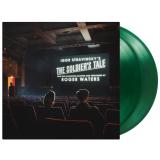
The Soldier's Tale is a theatrical work 'to be read, played, and danced' by three actors (the soldier, the devil, and a narrator) and dancers, accompanied by a septet of instruments. The libretto relates the parable of a soldier who trades his fiddle to the devil in return for unlimited economic gain. The music is scored for a septet of violin, double bass, clarinet, bassoon, cornet or trumpet), trombone, and percussion. The libretto is adapted by Roger Waters from the translation by Michael Flanders and Kitty Black, based on the original text by Charles-Ferdinand Ramus.
As the work opens, Joseph, a Russian soldier, marches toward his hometown on leave, pack in tow. ('Marche du soldat'/'The Soldier's March') He rests by a stream and rummages through his pack. First he takes out his lucky St. Joseph medallion, then a mirror, then a photograph of his girlfriend. Finally, he finds what he was searching for: his fiddle. He begins to play. ('Petit airs au bord du ruisseau'/'Airs by a Stream') The devil appears disguised as an old man carrying a butterfly net, but Joseph does not notice him and continues to play. The devil sneaks up on Joseph from behind and startles him.
The Soldier's Tale package includes 2 printed inner sleeves with lyrics and pictures.
- A1: Introduction And The Enchanted Garden Of Kastchei
- A2: Visit Of The Firebird Followed By Prince Ivan
- A3: Dance Of The Firebird
- A4: Prince Ivan Captures The Firebird
- A5: An Appeareance Of Thirteen Princesses
- A6: Game Of The Princesses With The Golden Apples
- B1: Sudden Appearance Of Prince Ivan
- B2: Round-Dance Of The Princesses
- B3: Daybreak
- B4: The Demonic Bells, Apparition Of Monster-Guards Of Kastchei And The Capture Of Prince Ivan
- B5: Dialogue Of Prince Ivan And Kastchei
- B6: Infernal Dance Of Kastchei And His Court And The Lullaby
- B7: Kastchei's Death
- B8: Animation Of The Petrified Knights And General Rejoicing
Revolutionary in its time, ‘The Firebird’ is a story in musical textures and dynamics perfectly suited to the Mercury technique. Dorati and The LSO present each nuance in perfect scale and balance. Recorded in Watford Town Hall, near London UK, June 7 and 9, 1959 with three Schoeps M201 microphones.
- A1: Introduction And The Enchanted Garden Of Kastchei
- A2: Visit Of The Firebird Followed By Prince Ivan
- A3: Dance Of The Firebird
- A4: Prince Ivan Captures The Firebird
- A5: An Appeareance Of Thirteen Princesses
- A6: Game Of The Princesses With The Golden Apples
- B1: Sudden Appearance Of Prince Ivan
- B2: Round-Dance Of The Princesses
- B3: Daybreak
- B4: The Demonic Bells, Apparition Of Monster-Guards Of Kastchei And The Capture Of Prince Ivan
- B5: Dialogue Of Prince Ivan And Kastchei
- B6: Infernal Dance Of Kastchei And His Court And The Lullaby
- B7: Kastchei's Death
- B8: Animation Of The Petrified Knights And General Rejoicing
Revolutionary in its time, ‘The Firebird’ is a story in musical textures and dynamics perfectly suited to the Mercury technique. Dorati and The LSO present each nuance in perfect scale and balance. Recorded in Watford Town Hall, near London UK, June 7 and 9, 1959 with three Schoeps M201 microphones.
- A1: You Got The Love - The Retrosettes Sister Band
- A2: Onward - Mark Kozelek
- A3: Third And Seneca - Sun Kil Moon
- A4: Des Pas Sur La Neige - Préludes (Book 1) - Claude Debussy
- B1: Cavatina "Figlia, Ti Scuoti" From Virginia (Act I) - Saverio Mercadante
- B2: À Ma Manière - Maria Letizia Gorga
- B3: Reality - The Retrosettes Sister Band
- B4: Can't Rely On You - Paloma Faith
- C1: Ceiling Gazing - Mark Kozelek
- C2: Dirty Hair - David Byrne
- C3: Berceuse - Igor Stravinsky
- D1: Just (After Song Of Songs) - David Lang / Trio Medieval
- D2: Simple Song #3 - David Lang / Sumi Jo (Soprano) And Viktoria Mullova (Violin Solo)
- D3: Mick's Dream - David Lang
- D4: Wood Symphony - David Lang
Youth (original Italian title La Giovinezza) is a 2015 comedy-drama film written and directed by Paolo Sorrentino, starring Michael Caine and Harvey Keitel. Set in a luxurious Swiss Alps hotel, the story follows two lifelong friends: Fred Ballinger, a retired composer who has turned his back on performance, and Mick Boyle, an aging film director determined to finish what he hopes will be his final screenplay. While navigating the quirks of hotel life and revisiting the milestones of their own pasts, the film explores themes of nostalgia, personal legacy, affection, and mortality.
The soundtrack of Youth is a blend of original score by David Lang, and a selection of other carefully chosen pieces, ranging from classical works to contemporary songs. The centerpiece, “Simple Song #3,” performed by soprano Sumi Jo, captures the film’s themes of beauty, loss, and reflection. Alongside Lang’s compositions, the music features “Can’t Rely on You” by Paloma Faith, the classical piece Debussy’s “Préludes: Des pas sur la neige”, and “Third and Seneca” by Sun Kil Moon, amongst others, creating a rich, genre-spanning soundtrack that blends contemporary, classical, and indie influences.
The soundtrack of Youth is available as a limited edition on transparent vinyl and includes a 4-page booklet with liner notes.
- Svensk Drm
- Balderdom (Tres Jolie)
- Rerun Of Forever (Stravinsky)
- Vi Er Et Kollektiv
- 5: Lidskjalv
Green Vinyl, limited to 500 copies. New album from the psychedelic, progressive folk rock band from Skien, Norway! The day belongs to the night The four songs on side A came about in November 2022 for a winter solstice celebration at Oslo Badstuforening. Our take on this was that the solstice invites reflections on the relationship between night and day. Does the day spring out of the darkness of the preceding night or does the night follow and swallow the light of the day? Is it Saturday Night or Sunday Morning? Are we running from the past or catching up with the future? Moving from A to B, Lidskjalv has existed as a demo since the 90s. Many versions have been made, but this is the first proper recording of the song. The passage of time is the future becoming the present. It moves forward in circles like a rolling wheel. Balder, Osiris and Jesus are all vegetation gods emulating the turn of the seasons in their eternal return. After the death of winter, life emerges anew. But not only this; there is also the promise of each dawn bringing a Better Day. According to Snorre, after the Fimbul Winter and Ragnarok, there is a new Earth. From the ashes emerges a better place. This holds also the idea of progress. It is at the core of being a prog band; each album is an improvement on the last, an exploration of new territory, a different perspective.
Igor Tamerlan is a stranger in his own land. Born in 1954 the Hague and spent most formative years in Paris, Igor suddenly had the urge to relocate to Bali in 1986. “I want to settle in Indonesia and marry a local girl,” he told his sister shortly before flying out.
His next journey would be as audacious as his time in the Fifth Republic. Born from a prominent Indonesian expatriate family in Paris with ties to Indonesia’s first prime minister Sutan Sjahrir, Igor earned a degree in architecture at Ecole nationale supe´rieure d’architecture de Paris-La Villette.
He could have been a brilliant architect or a political scientist (he was accepted to Sciences Po), but his passion for music distracted him from his academic works. He was after all named after Russian composer Igor Stravinsky.
During his brief stint at Sciences Po, Igor spent most of times hanging out at recording studios and rub shoulders with the likes of singer-songwriter Jean-Jacques Goldman and Michel Polnaref. He had a brief encounter with The Rolling Stones at the Cha^teau de Thoiry studio in the early 1970s.
But Igor’s musical education and his occidental eyes appeared to be ill-suited for Indonesia. His first record, titled Langkah Pertama (First Step) on the mainstream label Musica was met with a shrug and was a commercial dud. An experimental record blending the influence of Spanish motifs, Francophile production and a whiff of hip hop and ska was seen by critics as being too alien. His sarcasm-laden lyrics and his biting critique of excessive materialism among the upper tier of Indonesia’s nouveau riche in the album was met with confusion from the audience. He was just too far ahead of his time.
He left the label Musica – or may had been dropped – soon after Langkah Pertama and decided to go independent. He then relocated to Bali and set up a state-of-the-art recording studio in Sanur, across the street from Southeast Asia’s first boutique hotel where luminaries like Mick Jagger, David Bowie, Sting, Yoko Ono and Ringo Starr stayed for their holiday.
From the studio, Igor recording everything from the sounds waterfalls, geckos, minibuses to motorized rickshaw and mix them with hip hop, jazz, electronica, dub and Balinese gamelan. A visionary, Igor was the first musician to use MIDI, which started to be available globally in the early 1980s.
On paper, songs like “Bali Vanilli” should not work, a mish mash of disparate elements mentioned above, sung in three languages, Balinese, English and Bahasa Indonesia while tackling the subject of overtourism. The song was also the first to introduce rap to an unsuspecting audience. But for some strange reason “Bali Vanilli” became a sensation and overnight Igor became household name. And in 1987, long before overtourism was an issue, Igor broached the subject to a national audience in Indonesia on the possible destruction of nature and culture from tourism.
Ever an iconoclast, Igor decided to step out of the limelight following the success of “Bali Vanilli” and in early 1990s he relocated to Indonesia’s cultural capital, Yogyakarta. Here, he worked on some more experimental music while juggling as music video director. He passed away in 2018 at the age of 64.
The 10 songs in this compilation, Bali Vanilli: Experimental Pop from Paradise Island (1987-1991), are some of Igor’s best works, music that would have gone into obscurity had it not been for the diligent work of film director Alfred Pasifico Ginting, who managed to track down some of the master tapes while researching on a documentary on the musician.
These recordings have never before been released outside of Indonesia. Igor would have been proud with this reissue project.
- A1: That Musician Thats Dead
- A2: Preference Is A Good Friend, Mind
- A3: No One Can Sing That Well
- B1: Last Herald
- B2: Mo**Real
- B3: Things Keep Happening
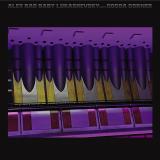
OOOOH! by Alex Bad Baby Lukashevsky with Cocoa Corner (2025)
Celebrated veteran of Toronto’s music scene, known for his boundary-pushing approach to folk and avant-garde music, twists rock music into strange and brilliant new shapes with the help of young jazz players, U.S. Girls, and his own immensely talented son.
OOOOH! is hard on the outside and soft on the inside. Made in the spirit of unity,
humanity, and poetry — disobediently renouncing the glory of personal triumph for the
generosity of an honest experiment. On the last track of the album you’ll hear “Or do you only ever never want to make a single enemy? / That’s not freedom or humility / It’s nothing, honestly.” Oooh, that's a bad baby!
A celebrated Toronto songwriter and performer, Alex Lukashevsky has always been disobedient. Which simply means, nothing is off the table when he’s looking for his
poetic voice; when trying to find the realest I of the teller. As he sings on the lead track “that musician that’s dead” The musician is radical/ it’s the world that’s demented/ listening with their eyes, the music looks dented/ they’re over-represented.
OOOOH! was recorded in January 2024 at Sound Department in Toronto, engineered by Patrick Lefler (ROY), mixed by Grammy-nominated producer Matt Smith. All the songs were tracked live off the floor in two days, with one extra day for recording vocals, to keep the recording fully alive and breathing. As leader of Deep Dark United, as a solo performer, and a sideman in Brodie Wests’ Eucalyptus and Luka Kuplowsky’s Ryokan Band, Alex has been an outsized influence on the Toronto music scene that spawned acts like Broken Social Scene and Owen Pallett. (Pallett, who has toured with Lukashevsky, went so far as to record an entire album’s worth of Alex’s songs, backed
by a full orchestra.)
Lukashevsky has approached each of his albums and projects as something completely new, using only the musical boundaries he creates with each song. Even when he
has recorded songs with nothing but his voice and his own acoustic guitar accompaniment, the results are never “stripped down” or “back to basics,”
Gong! How do you get to heaven / have fun! have fun!
It’s cool to approach music as a game of “spot the influence”; Burt Bacharach-meets-Black Flag; Lana Del Rey-meets-LCD Soundsystem etc. Glorified mash-ups are promising because of their conversational nature. But they can turn us into hyperboreans; blowing cold air beyond ourselves while doing what we can to remain warm. To devise a game or a narrative is to have a winner and a loser, but we all know that just as you win/ so you lose. And does anything really change? Alex Lukashevsky and Cocoa Corner are more at ease drawing blind contours or playing an old game like consequences. They let things add up without knowing particularly how. Cognition is recognition.
Lukashevsky, in addition to writing all the songs, plays guitar and sings on OOOOH!, doing both in ways that are soulful and spikey at the same time. Joining him on guitar and vocals is his oldest child, Charlie Lukashevsky, who, at 23, is already a talented performer and songwriter in his own right. Cocoa Corner also includes Aidan McConnell, an in-demand drummer and composer, Jack Johnston, a jazz bassist and Barry Harris acolyte, and percussionist Evan Cartwright (The Weather Station, U.S. Girls, Cola, Tasseomancy), who plays steel pan and marching drum.
Working with his son and with other younger musicians is central to the album’s
unpredictable aesthetic. It reinvigorated the sound in unexpected ways. Lukashevsky says, “I had to reconsider my own instincts. I had to deal with being 99 years old.”
In addition to these performers, the album includes a tasty contribution from Meg
Remy, the visionary musician and producer who is the leader of the critically acclaimed
project U.S. Girls. Remy duets with Lukashevsky on the imagistic and sprawling album
closer “things keep happening.”
About that album title: OOOOH! is taken straight from “that musician that’s dead” an
arch and unhinged comment on the exertion required to navigate a lifetime of music making.
Lukashevsky’s delivery of that one emotive word is a kind of cultural posture, but also a
hundred percent primitive expression. The impact is never less than visceral. His vocal
delivery ranges through rich baritone blues to keening falsettos to a kind of sprechstimme that periodically steps out from the music to grab the listener’s shirt. He
doesn’t sound too nice, but he is sincere. When life gives you lemons lament.
For OOOOH! his first official full-length album since 2012’s Too Late Blues, (a collection of knotty-yet-effervescent tunes built upon the enchantingly serpentine harmonies of Lukashevsky and his vocal collaborators, Felicity Williams (Bahamas, Bernice) and Daniela Gesundheit (Snowblink, HYDRA)), Alex has once again broken apart and rebuilt his own approach to music. Or rather (because that sounds too over-determined), he
has allowed his music to build itself into strange new shapes that only fleetingly and
coincidentally, but happily, resemble anything that might be called rock and roll. There is some editorializing within the song’s lyrics— Lukashevsky even cheekily contributes to the “spot the influence” game with the line “Muddy Waters, Rite of Spring!” a funny preemptive strike against anyone already reaching for some variation of avant-blues to describe what the song is up to here. In fact there are many names checked on this record (literally and in spirit); they are the lily pads that trace the path of this expression! Palestrina, Peter Pears and Benjamin Brittain, Andrés Segovia, Stravinsky, Lotte Lenya, Alice Coltrane, Skip James, Chuck Berry, D’Gary, Betty Carter, Mukhtiyar Ali, Chuck D, Yoko Ono, Hailu Mergia, David Bowie, Jane Siberry. rhythm is a skeleton mansion / haunted by melody / feckless prodigy / the world is under a spell / cast by some demon angel / Practice day and night / Try as hard as hell / no one can sing that well Musicians are often worried by the way in which they are prepared to fail rather
than how they would like to succeed; it’s such a deep concern that it tempers their creativity and shackles their process. Current cultural proclivities, tend to comfort a certain kind of artistic failure and abnegate another kind. How many testimonials, full of heartfelt care and investment, have you heard for Taylor Swift, and yet a craftsman like Chris Weisman is often dismissed easily as though he’s doing something anti-social. what’s throwing itself in my ears and my eyes / arrogant devil ad hominem christ.
The music you will hear on this recording veers off in multiple directions at once,
and features a rock and roll spirit with a divergent heart. This is no sclerotic clomp of the Average Rock Song, but in fact a flood of humanity in all its darkness and moodiness and unpredictability. If most performers make songs that are like sports cars or pickup trucks to drive around, Lukashevsky has built something more akin to a rowboat in a tree: it’s weird and beautiful.
WRWTFWW Records is very excited to announce the first ever release of the highly-sought after original soundtrack from 1987 cult horror movie Dolls by multi-instrumentalist, composer, producer, music man extraordinaire Fuzzbee Morse. The limited-edition LP is a miracle of lostthen-found VHS era film scores and is housed in a heavyweight 350gsm sleeve with a bloody cutout sticker and exclusive composer notes.
Directed by Stuart Gordon (Re-Animator, From Beyond, Robot Jox...) and released by Charles Band’s infamous Empire Pictures (which later morphed into Full Moon Productions), Dolls is 80s campy VHS horror in all its glory, a fan-favorite with all the attributes needed for a frightening popcorn night, including one hell of a soundtrack with a very welcomed heavy dose of menacing synths, thunderous orchestrations, and quirky interludes.
The haunting score comes from master Fuzzbee Morse who composed it in Richard Band’s garage with a Yamaha QX-1 sequencer, an arsenal of vintage synthesizers, and a wide array of instruments. The result is a must-have (and never released before!) soundtrack that blends horror tropes with influences ranging from Igor Stravinsky’s The Rite of Spring to Bernard Herrmann, Frank Zappa, Beethoven, Charles Ives and Eleanor Rigby!
Dolls follows the WRWTFWW release of Fuzzbee Morse’s Ghoulies II (1988) as well as 3 other soundtracks from the Empire Pictures vaults: Richard Band’s Ghoulies (1985), TerrorVision (1986), and Troll (1986). All still available – complete the collection now!
Points of interests
- For fans of soundtracks, horror, cult, synth, ambient, classical, 80s, VHS, Charles Band, Full Moon Productions, Stuart Gordon, John Carpenter, b-movies, sci-fi, Gremlins, toys, evil toys, Toys R Us, the good old days, toys you can play with at 33rpm, Christmas presents.
- First ever release for the soundtrack of cult horror movie Dolls (1987), with cut out sticker and composer notes.
Released in 1973, Lord of Lords was Alice Coltrane's final album for the Impulse! label, as well as the last instalment of a trilogy that began with Universal Consciousness and World Galaxy. Like its two predecessors, Lord of Lords features a 16-piece string orchestra that the leader arranged and conducted, fronted by a trio in which she plays piano, Wurlitzer organ, harp, and timpani accompanied by bassist Charlie Haden and drummer Ben Riley.
The original producer, Ed Michel, later stated that Coltrane worked with the top-rank classically-trained studio musicians of the string section and "opened them up so they could do absolutely astonishing things. Afterwards, the string players couldn't believe that they had done what they had done." According to AllMusic reviewer Thom Jurek, "The interplay between the three principals is lively and engaging, based on droning blues chords, and her soloing - even amid flurries of notes - comes right back to the root. Haden's bass is a beautiful anchor here, and the strings offer a lovely response to her organ and harp. Riley's cymbals are shimmering shards of light throughout, ending Lord of Lords on a very high note. She succeeds here, in ending her Impulse! period with elegance, grace, and soul."
Released in 1976, Eternity was Alice Coltrane's first album for Warner Bros. after eight wondrous records on Impulse! Combining the drones and textures of India, the gospel and R&B of her Detroit youth and the dissonance of modern classical composition, Coltrane's music in the '70s would become increasingly difficult to categorize.
Having moved a few years earlier to California (where she founded the Vedantic Center, an Ashram for spiritual studies), Coltrane stretches out on Eternity – incorporating various musical styles, including a stirring adaptation of Igor Stravinsky's The Rite of Spring – and the results are dazzling, both in sonic scope and emotional range
Opener "Spiritual Eternal" sways between Alice's exploratory organ and the dramatic swell of lush strings. A meditative solo piece for harp, "Wisdom Eye," precedes the rollicking rhythms of "Los Caballos," which showcases some of her finest soloing.
"Om Supreme" is the album's first track to be built around bhajans (Hindu devotional songs). Featuring graceful keyboards backed by an angelic choir, this piece hints at the ecstatic devotional music that she would later make with members of her Ashram.
While Coltrane would delve deeper into her spiritual journeys and continue to expand her musical interests on subsequent LPs, Eternity remains a vivid and compelling display of her unique vision, myriad talents and passions.
- A1: Main Title
- A2: Ghoulies Flambé
- A3: Sneaking
- A4: Ghoulieboppin’
- A5: An Old Tomato
- A6: Patty Gets It
- A7: For The Benefit Of Mr. Satie
- A8: Ghouliepalooza
- A9: Help Him
- A10: Montage
- A11: Organus Maximus
- A12: Sex Critters
- A13: Slice ‘Em, Dice ‘Em
- A14: Merle’s Mummy
- A15: Yuppie Agenda
- A16: Ned Discovers
- A17: Larry Sees
- B1: They’re Real
- B2: Interlude
- B3: Ned’s Showdown
- B4: Ned Is Gone
- B5: Nigel
- B6: Studio Chatter
- B7: Nicole’s Story
- B10: Fighting
- B11: Gang’s All Here
- B12: Clown’s Jaws
- B13: Froggy
- B14: Cuteness
- B15: Hell Breaks Loose
- B16: Ghoulies Jazz
- B17: Danger Zone (Studio Chatter)
- B18: Slate 9M2 (Studio Chatter)
- B19: Gastroburgers From Hell
- B20: Mazel Tov, Molotov
- B21: Baroque Indigestion
- B22: Ghoulies Ii Finale
- B8: Prepping The Carnival
- B9: Larry In Satan’s Den
WRWTFWW Records is proud to announce the first ever release of the long-lost original motion picture soundtrack from the 1988 cult horror comedy sensation Ghoulies II by the incomparable Fuzzbee Morse. Digging deep to uncover a true gem of the VHS era, this limited-edition vinyl release (500 copies worldwide) marks history in the making as a piece of film score lore is resurrected from the depths of oblivion. The LP is packed with 39 tracks and features an exclusive artwork by French illustrator Pierre Thyss, as well an obi and composer notes.
The captivating melodies that once played hauntingly in the background of Ghoulies II were long believed to be lost forever. It took over 30 years and Fuzzbee Morse's unwavering determination to dig out the legendary recordings – and restore them for full audio pleasure!
The superb soundscape of Ghoulies II perfectly captures the chilling and wacky essence of the cult movie, as well as its creepy carnival setting. Morse, citing influences such as Bernard Hermann, Frank Zappa, and Igor Stravinsky, flexes his multi-instrumentalist skills, flowing with ease between magical fairground elements (with brilliant use of calliope, tuba, flutes and sparkly sounding synthesizers), dark atmospheres and frightening attacks (tribal percussion, strings, along with dissonant, atonal gongs, bowed cymbals), and goofy moods (bassoon, bass clarinet, glockenspiel, trumpet, clarinet). It’s big cinematic horror movie music with a lighter comedic touch – the 80s live again!
To complete this collector's edition, French illustrator Pierre Thyss (the man behind the WRWTFWW Records logo) lends his (immense) talent to provide awe-inspiring visuals that flawlessly encapsulate the juxtaposition of horror and comedy.
Ghoulies II follows the release of the full uncut soundtrack of Ghoulies (1985) which was released on vinyl for the first time ever by WRWTFWW Records in 2020 alongside soundtracks for other Richard Band-composed, Empire Pictures-produced classics: TerrorVision and Troll. All these 80s horror favorites are still available – complete the collection now!
Klaus Mäkelä brings the Orchestre de Paris to Decca Classics for a major new album of Stravinsky’s most iconic ballet scores. The album represents Mäkelä’s first recording with his French orchestra, which will be followed by a further Ballet Russes release in 2024 featuring Stravinsky’s Petrushka and Debussy’s Jeux and L’Apres midi d’une faune. Klaus Mäkelä has electrified the musicians and audiences of the Orchestre de Paris since the start of his Music Directorship in September 2021. One of the major projects of his second season at the Philharmonie de Paris was a traversal of Stravinsky’s pivotal ballet scores The Firebird and The Rite of Spring that proved anything but routine. The performances captured live on Decca’s new release carry the combination of intensity, intelligence and authority on which the young conductor is building his extraordinary career.
The next chapter of the Natural Information Society is here. Since Time Is Gravity, credited to Natural Information Society Community Ensemble with Ari Brown, presents a newly expanded manifestation of acclaimed composer & multi-instrumentalist Joshua Abrams nearly 15 year, 7 albums &-counting flagship ensemble. Joining the core NIS of Abrams (guimbri & bass), Lisa Alvarado (harmonium) Mikel Patrick Avery (drums) & Jason Stein (bass clarinet) are Hamid Drake (percussion), Josh Berman & Ben Lamar Gay (cornets), Nick Mazzarella & Mai Sugimoto (alto saxophones & flute), Kara Bershad (harp) & Chicago living legend of the tenor saxophone Ari Brown. Recorded live to tape at Electrical Audio & The Graham Foundation, cover painting Vibratory Cartography: Nepantla, by Lisa Alvarado. 2xLP on Eremite USA, 2xLP & CD on Aguirre/Eremite Europe. Out 14-04.
Since first developing Natural Information Society in 2010, Joshua Abrams has been gradually expanding the group’s conceptual underpinnings, its musical references & the sheer number of the group’s members. Its music is, in a sense, an expansive form of minimalism, based in repeated & overlaid rhythmic patterns, ostinatos & modality. Its roots, its scale & its meaning become clearer in time. If time is gravity, it also allows us to carry more. Having begun as fundamentally a rhythm section with Abrams’ guimbri at its core, the version here can stretch to a tentet, including six horns.
Abrams has been expanding his minimalism gradually, but he has long understood a key to minimalism’s potential: the breadth of its roots in the late 1950s & early 1960s, ranging from the dissatisfaction of young European-stream composers with the limitations of serialism to the simultaneous dissatisfaction of jazz musicians with the dense harmonic vocabulary of bop & hard bop. The former began exploring rhythmic complexity & narrow tonal palates in place of harmonic abstraction (Steve Reich’s Drumming, Philip Glass’ Music with Changing Parts; perhaps above all Terry Riley’s In C & his late ‘60s all-night organ & loop concerts); the later reduced dense chord changes to scales (signally with Miles Davis' Kind of Blue, but rapidly expanding with John Coltrane’s vast project). In the 1950s the LP record opened the world with documentation of Asian & African musics, key influences on both minimalists & jazz musicians. If John Coltrane’s soprano saxophone suggested the keening shehnai of Bismillah Khan, the instrument was rapidly taken up by two key minimalists, LaMonte Young & Riley, similarly appreciative of its flexible intonation, the same thing that kept it out of big bands.
If the guimbri, the North African hide-covered lute that Abrams plays with NIS, involves a rich tradition of hypnotic healing music associated with the Gnawa people, Abrams’ music also touches on other musics as well — other depths, memories & healings, different drones, rhythms & modes. As the group expands on Since Time Is Gravity, he has made certain jazz traditions in the same stream more explicit as well. If there is a mystical & elastic quality involved in the experience of time, both in direction & duration, you will catch it here. The parts for the choir of winds expand on the roles of Abrams’ guimbri, Mikel Patrick Avery & Hamid Drake’s percussion & Lisa Alvarado’s harmonium: at times, the winds are almost looping in the tentet version, each hitting a repeating note in turn, at once drone & distinct inflection on temporal sequence. The brilliance of the work resides in Abrams’ compositions, the NIS’ intuitive execution & in Ari Brown’s singular embodiment of the great tenor saxophone tradition, including the oracular genius of Eddie “Lockjaw” Davis, & Yusef Lateef. The three pieces by the expanded NIS featuring Brown —the opening “Moontide Chorus” & “Is” & the ultimate “Gravity”— have an immediate impact, & togther might be considered a kind of concerto for tenor saxophone. Here Brown presses almost indistinguishably from composed melody to improvised speech, getting so close to language that he might have a text. Everything here is a sign. Note the tap of the Rhythm Ace that links “Moontide Chorus” to “Is”, the attentive heart always present, even when signed by a machine. There’s a link here to the methodologies & meanings of dub music & the linear & vertical collage of beats, textures & tongues: treated with reverence, a sample of a beat-box can be as soulful, as hypnotic, as a mbira or a tamboura. If those pieces with Brown are heard as a suspended concerto, the three embrace & enfold the other works, like the sepals of a flower. That placement will also touch on the mysteries of our perception of time.
Particularly in “Is”, but elsewhere as well, a phenomenon of transcendence arises in which time appears to be tripartite, at once moving backwards & forwards & standing still. This is an act of technical brilliance certainly, but also an illumination of music’s ability to represent temporal consciousness through polymetrics. This particular listener has only heard it before in a few places, including the horn shouts & bowed basses of Coltrane’s Africa, in moments of Charles Mingus’ The Black Saint & the Sinner Lady, in certain pieces where tapes were literally running backwards, & earlier still in Dizzy Gillespie’s Cubana Be, Cubana Bop, in which the composer George Russell & conguero Chano Pozo found a music that spoke at once in the voices of Stravinsky’s Rite of Spring & the vestigial rites, rhythms & songs of the Yoruba language & Santeria religion of inland Cuba.
In Joshua Abrams’ compositions & the realization of them by the NIS, in the time of one’s close listening & memory thereof, distinctions between the “natural” & the “social”, the “quotidian” & the “transcendent” are erased, suspended or perhaps irrelevant. Consider two of the ensemble pieces, one named for nature, the other social science. In “Murmuration” the repeated wind figures of flute & alto saxophone combine with the interlocking patterns of harp, guimbri & frame drum (tar) to create a perfect moving stillness, not an imitation but a witness to the miracle of the starlings’ astonishing collective art, a surfeit of beauty that might be the ultimate defense tactic.
“Stigmergy” takes its name & concept from the Occupy movement’s Heather Marsh, who proposes a social system based on a cooperative rather than competitive models, one in which ideas are freely contributed & developed as ideas rather than an individual’s property. In its form, Abrams’ “Stigmergy” is the closes thing to traditional jazz, a series of accompanied solos by each of the wind players. However, the composed accompaniment is a radically collectivist notion: a repeated rhythmic figure, call it ostinato or riff, in which the different winds each play only a note or two of the figure, a concept both more collectivist & individualistic in its conception than any typical unison figure. It suggests another of the underlying recognitions that propel the Natural Information Society, the group as social organism, the teleology of hypnotic anarchy, all parts in place, functioning systematically, evolving & expressing itself, its nature & society, as a transformative organism.
George Lewis has described music as “a space for reflection on the human condition”. This suggests that, rather than a “distraction”, at least some music might serve as a distraction from distraction. It’s a focus, a clarity, a awareness, an external invitation to interiority, as if music itself is a model for form & contemplation, an organism contemplating for us or as us. If that is a possibility, & I am sure I have heard such musics, than this music is among them. How many of our rhythms, melodies & harmonies (cultural, historical, biological, psychic) might such music carry, translate & transform in the particulate ecstasy of our own murmuration? (Stuart Broomer, April 2022)
- A1: Show Biz Kids - Rickie Lee Jones
- A2: Nobody's Buying - Nancy Bryan
- A3: Angel From Montgomery - Susan Tedeshi
- A4: The Spider And The Fly - Myra Taylor
- A5: Low Spark Of High Heeled Boys - Rickie Lee Jones
- B1: Rimsky-Korsakov: Dance Of The Tumblers, From The Snow Maiden
- B2: Mozart: Piano Concerto #21 In C, K. 467
- B3: Jack End: Blues For A Killed Cat
- B4: Stravinsky: The Firebird Suite, 1919-Finale
- C1: Driving Wheel - Little Hatch
- C2: You Had Quit Me - Wild Child Butler
- C3: I'll Be Around - Jimmie Lee Robinson
- C4: Last Night - Eomot Rasun
- C5: Walking Thru The Park - Big George Brock
- C6: The Sun Is Shining - Harry Hypolite
- D1: I'll Take You There - The Staple Singers
- D2: Theme From Shaft - Isaac Hayes
- D3: Mr. Big Stuff - Jean Knight
- D4: Rock Me Right - Susan Tedeschi
- D5: Just Won't Burn - Susan Tedeschi
- E1: Sounds Unheard Of - Shelly Manne
- E2: The Alternate Blues - Clark Terry, Freddie Hubbard, Dizzy Gillespie
- E3: September Song - Chet Baker
- E4: My Foolish Heart - Bill Evans
- E5: Round Midnight - Wes Montgomery
- F1: Abangoma - Hugh Masekela
- F2: Stimela - Hugh Masekela
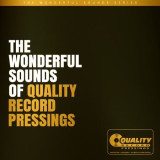
Celebrate the technical expertise of the world's finest LP pressing plant — Quality Record Pressings — with the finest LP sampler ever assembled!
The Wonderful Sounds Of Quality Record Pressings includes music hand-picked by Acoustic Sounds CEO Chad Kassem and classical music tracks chosen by the team at Reference Recordings.
Every song meets the criteria of excellent performance, perfect recording and flawless mastering. What better way to celebrate such a monumental anniversary for one of the absolute leading brands in analog high fidelity than with this to-die-for LP sampler? Contains most genres of music — blues, jazz, classical, R&B and female vocal. From now on, you'll only need to carry one demo record around with you.
Vinyl expert Michael Fremer, of Analogue Planet and Stereophile, gives you a track-by-track tour of the history and production of the songs on this special album.
What separates our world-renowned Quality Record Pressings LPs from other manufacturers? Since Acoustic Sounds CEO Chad Kassem launched QRP in 2011, the focus has been on producing consistently virtually silent vinyl playing surfaces, as well as reproducing details that were hallmarks of vintage labels — the "deep groove" label of Blue Note LPs, for example.
The craft of pressing fine vinyl is perfected in such details. Such as plating lacquers within 24 hours of their arrival at the plant. Cut grooves are prone to change with temperature fluxuations, high humidity and time. The sooner that lacquers are plated, the better the fidelity of the final pressing. Other keys include using a proprietary silver spray formulation, made fresh daily. And incorporating computer microprocessors on our presses to precisely control press functions with absolute precision. And an imbedded temperature sensor in the dye cycles the press with just as much control. The result — more consistency in each LP, high fidelity and reduced distortion. The ultimate sonic advantage.
"Music gives us the illusion that time is not time, but space. It is then that the music transforms from process to object, which I find a very interesting thought; a materialisation of the sound process. Sound is matter." - Noémi Büchi
Noémi Büchi's debut album 'Matter' captures the tension between growth and decay, consonance and dissonance, mirroring Büchi's own catharsis through music. Her most personal material to date, 'Matter' is an opus of refined, sculpted beauty, one that aims to blur the distinction between ephemerality and physicality. Inspired by late romantic classical music and early 20th century contemporary music, 'Matter' is driven by the compositional methodologies of Igor Stravinsky, Alexander Skrjabin, Gustav Mahler and György Ligeti to modern sound forms, adapting and expanding upon their ideas in an awe-inspiring exploration of cutting-edge potency and tactility.
Büchi structures the electronic works that constitute 'Matter' in movements, stratifying myriad instrumental parts like the constituent sections of an orchestra. During her work on the album, Büchi engaged in extensive research, obsessively studying specific chords and progressions, and searching for transcendent intonations with resonant properties; complexions of sound with the ability to connect with the listener's body. Transforming our inner worlds into zones of suspension and levitation, Büchi exposes the listener to intoxicating slipstreams of sound. Prominent voices ascend, tectonic disturbances threaten the foundations, perception and sensation becomes subject to elemental countercurrents and inversions. 'Matter' illustrates the fraught pursuit of momentary equilibrium, and makes the fragility of euphoria tangible.
Composer & sound artist Noémi Büchi creates electronic, symphonic maximalism. Her music is defined by delicate electronic-orchestral forms and textural rhythms. She strives for a combination of harmonic and dissonant sonorities, to evoke both intellectual and emotional euphoria. Büchi has appeared on the Light of Other Days and Visible Dinner labels, and is now an affiliate of -OUS, releasing 'Hyle' her debut EP on the label in spring 2022. As well as her solo output, Noémi Büchi is currently working with Feldermelder on their collaborative project Musique Infinie. Their debut album will also be released via -OUS in the near future.
A joint release between Discos Nada & Litoral. Alcides Neves’ unique second LP ‚Des (Trambelhar) Ou Não’ is reissued for the first time on vinyl, alongside his first release ‚Tempo de Fratura‘.
Somewhat of a concept album, this LP was conceived as having a predominantly experimental A-side and a more folky B-side, with songs influenced by Alcides’ native Northeastern Brazil. Alcides chose to release his second record independently as well, owing to the risk-averse nature of the labels at the time. Indeed, rather than adapting to the demands of the labels and making more romantic or commercial music, Alcides went in the opposite direction and released the most experimental record of his career.
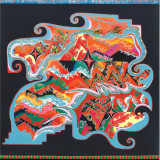
The result is an album with distinct identities on each side but with an experimental bent throughout. The LP’s sounds are reflected by its striking cover, which collates some of Alcides’ artistic heroes - Frank Zappa, Gilberto Gil, Jimi Hendrix, Arnold Schönberg, Igor Stravinsky (to whom he also dedicated a song on the LP) among others, above an artwork in the style of Northeastern Brazilian folk art.
By blending traditional regional Northeastern elements with an experimental approach and influences from 20th century classical music, Alcides Neves crafted one of the most unique Brazilian records.
Carefully remastered by Paulo Torres with updated original artwork, the record is reissued in a gatefold sleeve including a promotional image from the time of release. This LP furthermore includes an insert with a text written by the journalist and researcher Bento Araujo, editor of the bimonthly publication ‚Poeira Zine‘ and author of the ‚Lindo Sonho Delirante‘ series of books.
‘Complex and dangerously catchy, lyrically sophisticated and provocative, noisy and somehow serene… Yankee Hotel Foxtrot… is simply a masterpiece.’ – Pitchfork, 10/10, April 2002
‘The looped chaos and plangent melodies... effectively heralded the birth of a new band, as Jeff Tweedy overhauled his compositional modus operandi. So tender was the emotional core of songs like ‘Jesus, Etc.’ that the record became wrapped up in America’s post-9/11 cultural discourse... Yankee Hotel Foxtrot embedded Wilco’s great American songwriter status.’
– Mojo
‘It's as if the Flying Burrito Brothers suddenly decided to cover Pavement songs. There is a gentle, rootsy beauty here that Wilco has buried in a box of vulnerability and covered with a handful of dirt.’ – New York Times
‘Born out of turmoil, Wilco’s fourth album was a stone-cold classic.’ – Uncut
Nonesuch releases seven special editions of Wilco’s landmark 2002 album Yankee Hotel Foxtrot. The now-classic record has been remastered and will be available as part of each set. The Super Deluxe version comprises eleven vinyl LPs and one CD – including demos, drafts, and instrumentals, charting the making of Yankee Hotel Foxtrot – plus a live 2002 concert recording and a September 2001 radio performance and interview. That box set includes eighty-two previously unreleased music tracks as well as a new book featuring an interview with singer/songwriter/guitarist Jeff Tweedy, drummer Glenn Kotche, and Jim O’Rourke, who mixed the acclaimed 2002 album; an in-depth essay by journalist/author Bob Mehr; and previously unseen photos of the band making the album in their Chicago studio, The Loft. For the Yankee Hotel Foxtrot recording, Wilco was Jeff Tweedy, John Stirratt, Leroy Bach, Glenn Kotche, and Jay Bennett with Craig Christiansen, Ken Coomer, Jessy Greene, Fred Lonberg-Holm, and Jim O’Rourke.
A live version of ‘Reservations’ from a legendary concert contained on Snoozin’ at The Pageant – Live 7/23/02 at The Pageant, St. Louis, MO – a recording that is part of the Super Deluxe LP and CD sets as well as the Deluxe LP and digital sets – is now available. A limited-edition vinyl 7” with versions of ‘I’m the Man Who Loves You’ and ‘War on War’, from the Super Deluxe box set, is available now from wilcostore.
Wilco marked the anniversary of Yankee Hotel Foxtrot – which was released commercially on April 23, 2002, after a circuitous and storied gestation, including a period of streaming for free on the band’s website – with a performance of the album’s ‘Poor Places’ on April 18’s Late Show with Stephen Colbert, which may be seen here. The band is currently performing Yankee Hotel Foxtrot in its entirety (plus a mix of concert favourites and rarities) in two limited runs at New York City’s United Palace and Chicago’s Auditorium Theatre. The Chicago show on April 23 will be available as a live stream here.
Yankee Hotel Foxtrot was widely acclaimed as one of 2002’s best albums, appearing in year-end lists of Mojo, NME, Q, Rolling Stone, and Uncut, among many others. Yankee Hotel Foxtrot also was featured in multiple decade-end lists, with Rolling Stone naming it #3 Album of the 2000s, as well as many Greatest Albums of All Time lists, including in the NME.
Among Yankee’s inspirations was a recording Tweedy bought at Tower Records in the late 1990s, The Conet Project: Recordings of Shortwave Numbers Stations. As Bob Mehr points out in his new album note, the record got “deep under Tweedy’s skin.” Tweedy said in his 2017 memoir, Let’s Go (So We Can Get Back), “It was as fascinating to me as anything being made by actual musicians using actual instruments… I wanted to know why it was so hypnotic to me. Why could I listen to hours of this stuff, even though I had no clue what any of them were saying. That question became the foundation for Yankee Hotel Foxtrot… the way people communicated or ultimately failed to communicate.” The album takes its title from a haunting recording of a woman repeating those words that is included in The Conet Project; that recording is sampled in the penultimate song on Yankee Hotel Foxtrot, ‘Poor Places’.
“Conceptually, Tweedy had decided to focus on a big idea for the next album: the state of America. His lyrics – often distilled from scribbled pages of free verse or poetry – became a form of inquiry,” Mehr continues. Tweedy said, in 2004, “I wanted to write about the stuff right in front of my eyes, microscopically looking at America and asking questions about each little thing… How can there be all these good things and things that I love about America, alongside all of these things that I’m ashamed of? And that was an internal question, too; I think I felt that way about myself.”
Mehr says, “Exploring those questions, while weaving in strands of Eastern philosophy and bits of autobiography – Yankee lyrics would be loaded with the pained imagery of someone suffering from migraines and mental health issues – Tweedy would conjure a deep examination of both country and self.”
Describing the uncanny, strangely prescient feeling of the album, which Wilco began offering as a free stream on its website in 2001, Mehr notes: “In the wake of 9/11, Yankee Hotel Foxtrot would be burdened with unintended meaning. The disc had originally been scheduled for a September 11 release. Its cover – a Sam Jones-shot image of Chicago’s twin Marina Towers angled in looming fashion – bore an eerie resemblance to the felled World Trade Center towers. And the songs – with titles like ‘Ashes of American Flags’ and ‘War on War,’ and lyrics about how ‘tall buildings shake, sad voices escape’ – took on a terrible new resonance.”
Yankee Hotel Foxtrot was the first Wilco release on Nonesuch Records following the band’s infamous split with Reprise (both labels are part of Warner Music Group). It was also the first release featuring the line-up of drummer Glenn Kotche and multi-instrumentalist Leroy Bach joining founding members Jeff Tweedy and John Stirratt. The 2002 Sam Jones film I Am Trying to Break Your Heart documented the fraught recording and mixing process, personnel changes, and label issues.
The relationship with Nonesuch would last nearly a decade and include three more studio albums – the Grammy Award-winning A ghost is born, Sky Blue Sky, and Wilco (the album) – along with a live album and a live DVD, plus reissues of earlier records, before Wilco began its own label, dBpm. The band’s current lineup of Jeff Tweedy, John Stirratt, Glenn Kotche, Mikael Jorgensen, Patrick Sansone, and Nels Cline has been together for nearly twenty years.
DISC 5: HERE COMES EVERYBODY – BUILDING YANKEE HOTEL FOXTROT (PART 2)
Side I: (TRAIN)
1. Radio Cure (Here Comes Everybody Version) *
2. War on War (Here Comes Everybody Version) *
3. Venus Stopped the Train (Here Comes Everybody Version) * #
4. I'm the Man Who Loves You (Here Comes Everybody Version) *
5. The Good Part (Here Comes Everybody Version) * #
Side J: (KETTLE)
1. Pot Kettle Black (Here Comes Everybody Version) *
2. Ashes of American Flags (Here Comes Everybody Version) *
3. Poor Places (Here Comes Everybody Version) *
4. Shakin' Sugar (Here Comes Everybody Version) *
5. Reservations (Here Comes Everybody Version) *
DISC 6: HERE COMES EVERYBODY – BUILDING YANKEE HOTEL FOXTROT (PART 2) / THE UNIFIED THEORY OF EVERYTHING – BUILDING YANKEE HOTEL FOXTROT (PART 3)
Side K: (ESCAPE)
1. Cars Can't Escape (Here Comes Everybody Version) * #
2. A Magazine Called Sunset (The Unified Theory of Everything Version) ** #
3. Remember to Remember (Hummingbird) The Unified Theory of Everything Version ** #
4. I Am Trying to Break Your Heart (The Unified Theory of Everything Version) ** #
Side L: (WAR)
1. Kamera (The Unified Theory of Everything Version) ** #
2. Radio Cure (The Unified Theory of Everything Version) ** #
3. War on War (The Unified Theory of Everything Version) ** #
4. Jesus, Etc. (The Unified Theory of Everything Version) ** #
DISC 7: THE UNIFIED THEORY OF EVERYTHING – BUILDING YANKEE HOTEL FOXTROT (PART 3) / LONELY IN THE DEEP END – DEMOS, DRAFTS, ETC.
Side M: (DRUMMER)
1. Ashes of American Flags (Stravinsky Mix) ** #
2. Heavy Metal Drummer (The Unified Theory of Everything Version) ** #
3. I'm The Man Who Loves You (The Unified Theory of Everything Version) **
4. Pot Kettle Black (The Unified Theory of Everything Version) ** #
5. Poor Places (The Unified Theory of Everything Version) ** #
Side N: (RESERVATIONS)
1. Reservations (The Unified Theory of Everything Version) ** #
2. Love Will (Let You Down) [Lonely in the Deep End Version] *
3. Lost Poem Demo (Lonely in the Deep End Version) *
4. I’m The Only One Who Lets Her Down (Lonely in the Deep End Version) *
5. Has Anybody Seen My Pencil? (Lonely in the Deep End Version) *
DISC 8: LONELY IN THE DEEP END – DEMOS, DRAFTS, ETC.
Side O: (MAGAZINE)
1. The Good Part (Lonely in the Deep End Version) *
2. A Magazine Called Sunset (Lonely in the Deep End Version) *
3. A Magazine Called Sunset (Backing Track) [Lonely in the Deep End Version] *
4. Anniversary (Nothing Up My Sleeve) (Lonely in the Deep End Version) *
5. Kamera (Lonely in the Deep End Version) *
Side P: (DOOBY)
1. I'm The Man Who Loves You (Lonely in the Deep End Version) *
2. I Am Trying To Break Your Heart (Lonely in the Deep End Version) *
3. Jesus, Etc. (Lonely in the Deep End Version) *
4. Reservations (Backing Track) [Lonely in the Deep End Version] *
5. Let Me Come Home (Synth) [Lonely in the Deep End Version] *
6. Ooby Dooby (Lonely in the Deep End Version) *
DISC 9: SNOOZIN’ AT THE PAGEANT – 7/23/02 THE PAGEANT, ST. LOUIS, MO
Side Q: (SNOOZIN)
1. I Am Trying to Break Your Heart (Live at The Pageant, St. Louis, MO 7/23/02) **
2. I’m the Man Who Loves You (Live at The Pageant, St. Louis, MO 7/23/02) **
3. War on War (Live at The Pageant, St. Louis, MO 7/23/02) **
4. Kamera (Live at The Pageant, St. Louis, MO 7/23/02) **
Side R: (PAGEANT)
1. Radio Cure (Live at The Pageant, St. Louis, MO 7/23/02) **
2. A Shot in the Arm (Live at The Pageant, St. Louis, MO 7/23/02) **
3. She’s a Jar (Live at The Pageant, St. Louis, MO 7/23/02) **
DISC 10: SNOOZIN’ AT THE PAGEANT – 7/23/02 THE PAGEANT, ST. LOUIS, MO
Side S: (RUSTY)
1. I’m Always in Love (Live at The Pageant, St. Louis, MO 7/23/02) **
2. Sunken Treasure (Live at The Pageant, St. Louis, MO 7/23/02) **
3. Jesus, Etc. (Live at The Pageant, St. Louis, MO 7/23/02) **
4. Heavy Metal Drummer (Live at The Pageant, St. Louis, MO 7/23/02) **
Side T: (SWING)
1. Pot Kettle Black (Live at The Pageant, St. Louis, MO 7/23/02) **
2. Ashes of American Flags (Live at The Pageant, St. Louis, MO 7/23/02) **
3. Not for the Season (Laminated Cat) [Live at The Pageant, St. Louis, MO 7/23/02] **
DISC 11: SNOOZIN’ AT THE PAGEANT – 7/23/02 THE PAGEANT, ST. LOUIS, MO
Side U: (OUTTASITE)
1. Reservations (Live at The Pageant, St. Louis, MO 7/23/02) **
2. California Stars (Live at The Pageant, St. Louis, MO 7/23/02) **
3. Red-Eyed and Blue (Live at The Pageant, St. Louis, MO 7/23/02) **
4. I Got You (At the End of The Century) [Live at The Pageant, St. Louis, MO 7/23/02] **
Side V: (WHEEL)
1. Misunderstood (Live at The Pageant, St. Louis, MO 7/23/02) **
2. Far, Far Away (Live at The Pageant, St. Louis, MO 7/23/02) **
3. Outtasite (Outta Mind) [Live at The Pageant, St. Louis, MO 7/23/02] **
4. I’m a Wheel (Live at The Pageant, St. Louis, MO 7/23/02) **
BONUS CD: 9/18/01 SOUND OPINIONS WXRT-CHICAGO, IL WITH GREG KOT & JIM DEROGATIS
1. Interview, Pt. 1 **
2. War on War (Live in Studio) **
3. Interview, Pt. 2 **
4. Interview, Pt. 3 **
5. I'm the Man Who Loves You (Live in Studio) **
6. Interview, Pt. 4 **
7. Should've Been in Love (Live in Studio) **
8. Interview, Pt. 5 **
9. She's a Jar (Live in Studio) **
10. Interview, Pt. 6 **
11. Ashes of American Flags (Live in Studio) **
[l] E1. Anniversary (Nothing Up My Sleeve) [American Aquarium Version] *
[v] G2. Not for the Season (Laminated Cat) [American Aquarium Version] *
[y] H2. Not for the Season (Laminated Cat) [Here Comes Everybody Version] * #
[xe] K3. Remember to Remember (Hummingbird) [The Unified Theory of Everything Version] ** #
[xq] N2. Love Will (Let You Down) [Lonely in the Deep End Version] *
- E1: Anniversary (Nothing Up My Sleeve)
- G2: Not For The Season (Laminated Cat)
- H2: Not For The Season (Laminated Cat)
- K3: Remember To Remember (Hummingbird)
- N2: Love Will (Let You Down)
- A1: I Am Trying To Break Your Heart (2022 Remaster)
- A2: Kamera (2022 Remaster)
- A3: Radio Cure (2022 Remaster)
- B1: War On War (2022 Remaster)
- B2: Jesus, Etc. (2022 Remaster)
- B3: Ashes Of American Flags (2022 Remaster)
- C1: Heavy Metal Drummer (2022 Remaster) #
- C2: I'm The Man Who Loves You (2022 Remaster) #
- C3: Pot Kettle Black (2022 Remaster) #
- D1: Poor Places (2022 Remaster) #
- D2: Reservations (2022 Remaster) #
- E2: Venus Stopped The Train (American Aquarium Version) *
- E3: Poor Places (American Aquarium Version 1)
- E4: I Am Trying To Break Your Heart (American Aquarium Version) *
- F1: American Aquarium *
- F2: Cars Can't Escape (American Aquarium Version) *
- F3: Kamera (American Aquarium Version) *
- F4: War On War (American Aquarium Version) *
- F5: I'm The Man Who Loves You (American Aquarium Version) *
- G1: Ashes Of American Flags (American Aquarium Version) *
- G3: Shakin' Sugar (American Aquarium Version) * #
- G4: Let Me Come Home (American Aquarium Version) *
- H4: I Am Trying To Break Your Heart (Here Comes Everybody Version) *
- H5: Kamera (Here Comes Everybody Version) *
- K1: Cars Can't Escape (Here Comes Everybody Version) * #
- K2: A Magazine Called Sunset (The Unified Theory Of Everything Version) ** #
- K4: I Am Trying To Break Your Heart (The Unified Theory Of Everything Version)
- L1: Kamera (The Unified Theory Of Everything Version) ** #
- L2: Radio Cure (The Unified Theory Of Everything Version) ** #
- L3: War On War (The Unified Theory Of Everything Version) ** #
- L4: Jesus, Etc. (The Unified Theory Of Everything Version) ** #
- M1: Ashes Of American Flags (Stravinsky Mix) ** #
- M2: Heavy Metal Drummer (The Unified Theory Of Everything Version) ** #
- M3: I'm The Man Who Loves You (The Unified Theory Of Everything Version) **
- M4: Pot Kettle Black (The Unified Theory Of Everything Version) ** #
- M5: Poor Places (The Unified Theory Of Everything Version) ** #
- N1: Reservations (The Unified Theory Of Everything Version) ** #
- N3: Lost Poem Demo (Lonely In The Deep End Version) *
- N4: I’m The Only One Who Lets Her Down (Lonely In The Deep End Version) *
- N5: Has Anybody Seen My Pencil? (Lonely In The Deep End Version) *
- G5: Poor Places (American Aquarium Version 2) *
- H3: Remember To Remember (Hummingbird) (Here Comes Everybody Version)
‘Complex and dangerously catchy, lyrically sophisticated and provocative, noisy and somehow serene… Yankee Hotel Foxtrot… is simply a masterpiece.’ – Pitchfork, 10/10, April 2002
‘The looped chaos and plangent melodies... effectively heralded the birth of a new band, as Jeff Tweedy overhauled his compositional modus operandi. So tender was the emotional core of songs like ‘Jesus, Etc.’ that the record became wrapped up in America’s post-9/11 cultural discourse... Yankee Hotel Foxtrot embedded Wilco’s great American songwriter status.’
– Mojo
‘It's as if the Flying Burrito Brothers suddenly decided to cover Pavement songs. There is a gentle, rootsy beauty here that Wilco has buried in a box of vulnerability and covered with a handful of dirt.’ – New York Times
‘Born out of turmoil, Wilco’s fourth album was a stone-cold classic.’ – Uncut
Nonesuch releases seven special editions of Wilco’s landmark 2002 album Yankee Hotel Foxtrot. The now-classic record has been remastered and will be available as part of each set. The Super Deluxe version comprises eleven vinyl LPs and one CD – including demos, drafts, and instrumentals, charting the making of Yankee Hotel Foxtrot – plus a live 2002 concert recording and a September 2001 radio performance and interview. That box set includes eighty-two previously unreleased music tracks as well as a new book featuring an interview with singer/songwriter/guitarist Jeff Tweedy, drummer Glenn Kotche, and Jim O’Rourke, who mixed the acclaimed 2002 album; an in-depth essay by journalist/author Bob Mehr; and previously unseen photos of the band making the album in their Chicago studio, The Loft. For the Yankee Hotel Foxtrot recording, Wilco was Jeff Tweedy, John Stirratt, Leroy Bach, Glenn Kotche, and Jay Bennett with Craig Christiansen, Ken Coomer, Jessy Greene, Fred Lonberg-Holm, and Jim O’Rourke.
A live version of ‘Reservations’ from a legendary concert contained on Snoozin’ at The Pageant – Live 7/23/02 at The Pageant, St. Louis, MO – a recording that is part of the Super Deluxe LP and CD sets as well as the Deluxe LP and digital sets – is now available. A limited-edition vinyl 7” with versions of ‘I’m the Man Who Loves You’ and ‘War on War’, from the Super Deluxe box set, is available now from wilcostore.
Wilco marked the anniversary of Yankee Hotel Foxtrot – which was released commercially on April 23, 2002, after a circuitous and storied gestation, including a period of streaming for free on the band’s website – with a performance of the album’s ‘Poor Places’ on April 18’s Late Show with Stephen Colbert, which may be seen here. The band is currently performing Yankee Hotel Foxtrot in its entirety (plus a mix of concert favourites and rarities) in two limited runs at New York City’s United Palace and Chicago’s Auditorium Theatre. The Chicago show on April 23 will be available as a live stream here.
Yankee Hotel Foxtrot was widely acclaimed as one of 2002’s best albums, appearing in year-end lists of Mojo, NME, Q, Rolling Stone, and Uncut, among many others. Yankee Hotel Foxtrot also was featured in multiple decade-end lists, with Rolling Stone naming it #3 Album of the 2000s, as well as many Greatest Albums of All Time lists, including in the NME.
Among Yankee’s inspirations was a recording Tweedy bought at Tower Records in the late 1990s, The Conet Project: Recordings of Shortwave Numbers Stations. As Bob Mehr points out in his new album note, the record got “deep under Tweedy’s skin.” Tweedy said in his 2017 memoir, Let’s Go (So We Can Get Back), “It was as fascinating to me as anything being made by actual musicians using actual instruments… I wanted to know why it was so hypnotic to me. Why could I listen to hours of this stuff, even though I had no clue what any of them were saying. That question became the foundation for Yankee Hotel Foxtrot… the way people communicated or ultimately failed to communicate.” The album takes its title from a haunting recording of a woman repeating those words that is included in The Conet Project; that recording is sampled in the penultimate song on Yankee Hotel Foxtrot, ‘Poor Places’.
“Conceptually, Tweedy had decided to focus on a big idea for the next album: the state of America. His lyrics – often distilled from scribbled pages of free verse or poetry – became a form of inquiry,” Mehr continues. Tweedy said, in 2004, “I wanted to write about the stuff right in front of my eyes, microscopically looking at America and asking questions about each little thing… How can there be all these good things and things that I love about America, alongside all of these things that I’m ashamed of? And that was an internal question, too; I think I felt that way about myself.”
Mehr says, “Exploring those questions, while weaving in strands of Eastern philosophy and bits of autobiography – Yankee lyrics would be loaded with the pained imagery of someone suffering from migraines and mental health issues – Tweedy would conjure a deep examination of both country and self.”
Describing the uncanny, strangely prescient feeling of the album, which Wilco began offering as a free stream on its website in 2001, Mehr notes: “In the wake of 9/11, Yankee Hotel Foxtrot would be burdened with unintended meaning. The disc had originally been scheduled for a September 11 release. Its cover – a Sam Jones-shot image of Chicago’s twin Marina Towers angled in looming fashion – bore an eerie resemblance to the felled World Trade Center towers. And the songs – with titles like ‘Ashes of American Flags’ and ‘War on War,’ and lyrics about how ‘tall buildings shake, sad voices escape’ – took on a terrible new resonance.”
Yankee Hotel Foxtrot was the first Wilco release on Nonesuch Records following the band’s infamous split with Reprise (both labels are part of Warner Music Group). It was also the first release featuring the line-up of drummer Glenn Kotche and multi-instrumentalist Leroy Bach joining founding members Jeff Tweedy and John Stirratt. The 2002 Sam Jones film I Am Trying to Break Your Heart documented the fraught recording and mixing process, personnel changes, and label issues.
The relationship with Nonesuch would last nearly a decade and include three more studio albums – the Grammy Award-winning A ghost is born, Sky Blue Sky, and Wilco (the album) – along with a live album and a live DVD, plus reissues of earlier records, before Wilco began its own label, dBpm. The band’s current lineup of Jeff Tweedy, John Stirratt, Glenn Kotche, Mikael Jorgensen, Patrick Sansone, and Nels Cline has been together for nearly twenty years.
DISC 5: HERE COMES EVERYBODY – BUILDING YANKEE HOTEL FOXTROT (PART 2)
Side I: (TRAIN)
1. Radio Cure (Here Comes Everybody Version) *
2. War on War (Here Comes Everybody Version) *
3. Venus Stopped the Train (Here Comes Everybody Version) * #
4. I'm the Man Who Loves You (Here Comes Everybody Version) *
5. The Good Part (Here Comes Everybody Version) * #
Side J: (KETTLE)
1. Pot Kettle Black (Here Comes Everybody Version) *
2. Ashes of American Flags (Here Comes Everybody Version) *
3. Poor Places (Here Comes Everybody Version) *
4. Shakin' Sugar (Here Comes Everybody Version) *
5. Reservations (Here Comes Everybody Version) *
DISC 6: HERE COMES EVERYBODY – BUILDING YANKEE HOTEL FOXTROT (PART 2) / THE UNIFIED THEORY OF EVERYTHING – BUILDING YANKEE HOTEL FOXTROT (PART 3)
Side K: (ESCAPE)
1. Cars Can't Escape (Here Comes Everybody Version) * #
2. A Magazine Called Sunset (The Unified Theory of Everything Version) ** #
3. Remember to Remember (Hummingbird) The Unified Theory of Everything Version ** #
4. I Am Trying to Break Your Heart (The Unified Theory of Everything Version) ** #
Side L: (WAR)
1. Kamera (The Unified Theory of Everything Version) ** #
2. Radio Cure (The Unified Theory of Everything Version) ** #
3. War on War (The Unified Theory of Everything Version) ** #
4. Jesus, Etc. (The Unified Theory of Everything Version) ** #
DISC 7: THE UNIFIED THEORY OF EVERYTHING – BUILDING YANKEE HOTEL FOXTROT (PART 3) / LONELY IN THE DEEP END – DEMOS, DRAFTS, ETC.
Side M: (DRUMMER)
1. Ashes of American Flags (Stravinsky Mix) ** #
2. Heavy Metal Drummer (The Unified Theory of Everything Version) ** #
3. I'm The Man Who Loves You (The Unified Theory of Everything Version) **
4. Pot Kettle Black (The Unified Theory of Everything Version) ** #
5. Poor Places (The Unified Theory of Everything Version) ** #
Side N: (RESERVATIONS)
1. Reservations (The Unified Theory of Everything Version) ** #
2. Love Will (Let You Down) Lonely in the Deep End Version *
3. Lost Poem Demo (Lonely in the Deep End Version) *
4. I’m The Only One Who Lets Her Down (Lonely in the Deep End Version) *
5. Has Anybody Seen My Pencil? (Lonely in the Deep End Version) *
[l] E1. Anniversary (Nothing Up My Sleeve) [American Aquarium Version] *
[v] G2. Not for the Season (Laminated Cat) [American Aquarium Version] *
[y] H2. Not for the Season (Laminated Cat) [Here Comes Everybody Version] * #
[xe] K3. Remember to Remember (Hummingbird) [The Unified Theory of Everything Version] ** #
[xq] N2. Love Will (Let You Down) [Lonely in the Deep End Version] *
The British composer, musician and audio engineer Daphne Oram was a pioneering figure in the use of electronic music. Coming to prominence through her work with the BBC Radiophonic Workshop, which she co-founded, Oram was one of the first British composers to feature electronic instruments in her work and has been rightly hailed as helping musique concrete to become accepted in Britain. Born in 1925 and raised in rural Wiltshire, close to Stonehenge and the ancient stone circle at Avebury, Oram eschewed a place at the prestigious Royal College of Music to take a junior engineering role at the BBC in 1942, she was often tasked with creating sound effects, leading to cut-up experiments with tape recorders and the development of synthetic sound; her composition Still Point, involving two orchestras, two turntables and five microphones, was deemed too radical by the BBC, though she was promoted to studio manager in 1950, leading to the gradual introduction of electronic music and musique concrete techniques on BBC soundtracks. In 1957, she composed the music for the play Amphitryon 38, using a sine wave oscillator and homemade filters, and this and other subsequent works led to the establishment of the BBC Radiophonic Workshop the following year, but Oram soon tired of the conservative constraints of the BBC, leading to her resignation in 1959 to pursue her own vision at the Oramics Studios for Electronic Composition, located in Tower Folly, a former hop kiln located at Fairseat, near the village of Wrotham in rural Kent. Oramics was a radical sound composition technique that sought to transform images to music, enacted by drawing onto 35mm film, which would then be read by photo-electric cells; in addition to its use in Radiophonic Workshop material, Oramics was also employed for sound installations, theatre productions and feature films, such as The Innocents, though financial pressures forced Oram to seek a range of commercial engagements in addition to creating her own artistic works. The Listen Move And Dance series of BBC programmes were devised as a radical new technique to help British schoolchildren learn how to dance; on the LP releases, Vera Gray arranged short adaptations of classical pieces by Bartok, Stravinsky, Shostakovich and others, designed for “stamping, punching, kicking and jumping” movements, as well as “running lightly, dancing on toes” and “shaking all about,” which contrasted sharply with Oram’s electronic abstractions, which seemed to have been beamed in from outer space.
Repress !
(November Collective Title) Meditative but heaving with energy, Son Lux's third full-length weaves disparate elements into songs both strange and welcoming. On the heals of being named NPR's 'Best New Artist of the Year', Son Lux has created an album that sits as comfortably next to the compositions of Stravinsky, John Adams, David Lang and Ben Frost, as it does to those of Jamie Lidell, Björk, Flying Lotus, and Radiohead. Equal parts producer and composer, Son Lux (aka Ryan Lott) bridges an unusual gap between old-world music theory and next-level experimentation. Meditative but heaving with energy, 'Lanterns' finds a peculiar congruency between futuristic soul and ancient sentiment. Driving orchestral electronica (Lost It To Trying, No Crimes) is placed alongside creepy minimalism (Pyre), often starkly juxtaposing densely layered arrangements with Lott's fragile voice. In recent past Son Lux has gained notoriety both for his s/s/s project (with Sufjan Stevens and Serengeti), and from being named NPR's 'Best New Artist of the Year'. His third full-length album, and his first for Joyful Noise (Kishi Bashi, Sebadoh, etc.), positions Son Lux at the helm of an impressive ensemble of instrumentalists and singers, including Chris Thile (The Punch Brothers), Peter Silberman (The Antlers), DM Stith, Lily & Madeleine, Darren King (Mutemath), Ieva Berberian (Gem Club) and yMusic (Dirty Projectors, Bon Iver).
"Eternity" - Alice Coltrane (org, hp, el-p; perc, arr, cond); Terry Harrington (ts); Jerome Richardson (ss); George Bohanon (tb); Oscar Brashear (tp); Tommy Johnson (tba); Hubert Laws (fl); Charlie Haden (b); Ben Riley (b, dr); Armando Peraza (cga); a.o.
When the brilliant saxophonist John Coltrane died in 1967, the core values of jazz music had long drawn him into the spiritual world ("A Love Supreme", "Ascension", "Meditations" etc.). His widow and final pianist followed in his footsteps. Alice Coltrane (1937–2007) sought after »cosmic sounds, higher dimensions, astral levels« – she had an important influence on the spiritualised, esoteric music scene of the 1970s. Her first album was only released after John Coltrane’s death, but "Eternity" was already her tenth. (In the same year she founded a Hindu Vedantic Center in California.) The album draws its power from highly contrasted sound worlds. The size of the ensemble ranges from an unaccompanied harp solo ("Wisdom Eye") to a large orchestra with a big band of up to 25 plus a 12-man string section. Alice Coltrane’s main instrument is the electric Wurlitzer organ, whose rasping sound conjures up John Coltrane’s saxophone (especially in the opening number "Spiritual Eternal"). Mostly she improvises modally, sinuously, or with meditative ecstasy – whether in the style of Latin rock ("Los Caballos") or quite without a firm tempo ("Morning Worship" with a tamboura accompaniment). Support comes from such renowned musicians as Charlie Haden (bass), Jerome Richardson (saxophone and flute), Hubert Laws (flute) and Ernie Watts (cor anglais). In the number "Om Supreme" Coltrane switches to a gently swinging Fender Rhodes electric piano, which is joined by a six-voice vocal group. A surprising finale to the album is an orchestral adaptation of an excerpt from Stravinsky’s "Le Sacre du printemps". Here the moments of dissonance and free jazz are far from meditative contemplation.
With unfettered access to the Zappa Trust and all archival footage, ZAPPA explores the private life behind the mammoth musical career that never shied away from the political turbulence of its time. Alex Winter’s (Bill & Ted’s movie franchises, The Lost Boys) assembly features appearances by Frank’s widow Gail Zappa and several of Frank’s musical collaborators including Mike Keneally, Ian Underwood, Steve Vai, Pamela Des Barres, Bunk Gardner, David Harrington, Scott Thunes, Ruth Underwood, Ray White and others. The soundtrack is a perfect complement to the film available as a limited edition 5-LP 180-gram vinyl set for the Zappa completist. Showcasing 69 total songs, there are 12 previously unreleased recordings from the Zappa archive along with his 1978 Saturday Night Live performance; 24 additional Zappa songs from his extensive catalog spanning four decades; songs from Zappa’s labels Straight / Bizarre Records like “No Longer Umpire” by Alice Cooper and “The Captain’s Fat Theresa Shoes” by The GTO’s; 2 classical compositions by Edgard Varese and Igor Stravinsky; and 26 Original Score cues newly composed by John Frizzell for the documentary – all of which give the universe a sonic exploration into the musical brilliance of Frank Zappa. A 2LP edition on 180-gram clear vinyl will also be available, collecting together eight of the unreleased recordings from the Zappa archive, the SNL performance and 13 recordings from Zappa’s extensive recording career.
- A1: Promenade
- A2: I. Gnomus
- A3: Promenade
- A4: Ii. Il Vecchio Castello
- A5: Promenade
- A6: Iii. Tuileries (Dispute D’enfants Après Jeux)
- A7: Iv. Bydlo
- B1: Promenade
- B2: V. Ballet Des Poussins Dans Leurs Coques
- B3: Vi. Samuel Goldenberg Und Schmuyle (Deux Juifs - L’un Riche Et L’autre Pauvre)
- B4: Promenade
- B5: Vii. Limoges - Le Marché (La Grande Nouvelle)
- B6: Viii. Catacombae (Sepulcrum Romanum)
- B7: Cum Mortuis In Lingua Mortua
- B8: Ix. La Cabane Sur Des Pattes De Poule (Baba-Yaga)
- B9: X. La Grande Porte (De L’ancienne Capitale Kiev)
- C1: La Valse
- D1: I. Russian Dance
- D2: Ii. Petrushka’s Room
- D3: Iii. The Shrovetide Fair
Kaleidoscope is the fourth album (and third solo piano album) by French- Georgian concert pianist Khatia Buniatishvili. The album features a unique combination of challenging pieces in which she shows her true virtuosic playing style. Some of the pieces taken on by Buniatishvili on this record are the beloved “Pictures at an Exhibition” by Moderst Mussorgsky on side A, as well as Ravel’s “La Valse” and Stravinsky’s “Petruschka”. Available on vinyl for the very first time. The two LP’s are housed in a heavyweight sleeve with gloss laminate finish. The package includes a 4-page insert. This edition is a feast for both the ears and the eyes.
Erweiterte 25-Jahres-Reissue des Kollabo-Albums "Spinner" (1995) von Brian Eno und dem legendären Public Image Ltd.-Bassisten Jah Wobble, featuring Jaki Liebezeit (Can) on drums. Basierend auf dem Brian Eno-Soundtrack zu Derek Jarmans Filmtribut "Glitterbug" (1994), übergab Eno Stereo-Mixe der Sequenzen an Wobble, der diese mit Hilfe von Instrumenten ausschmückte und zu den "Spinner" Tracks verarbeitete. Das Resultat fusioniert eisigen Ambient mit einer Art psychogeografischem Funk. Physische Formate waren seit 15 Jahren nicht mehr erhältlich und enthalten nun die Bonustracks "Stravinsky" (ein Original aus Enos "Glitterbug" Soundtrack) und den brandneuen, exklusiven Jah Wobble-Track "Lockdown" auf CD und als LP-Download-Code.
Exhilarating, previously unreleased recordings by Derek Bailey and his guests at Company Week in 1983: Jamie Muir, Evan Parker, Hugh Davies, Joëlle Léandre, John Corbett, Peter Brötzmann, Vinko Globokar, Ernst Reijseger and J.D. Parran.
What’s remarkable throughout this album is the respect and affection the musicians show for each other, exemplifying the dictionary definition of ‘company’ as ‘the fact or condition of being with another or others, especially in a way that provides friendship and enjoyment.’
It starts with Landslide, a brilliant, spiky, spluttering, twanging reunion of Music Improvisation Company members Evan Parker (tenor sax), Hugh Davies (electronics) and Jamie Muir (percussion). Next up, Seconde Choix, with Joëlle Léandre’s close-miked prepared bass and Bailey’s acoustic guitar seemingly heading in different directions before coming together miraculously in just four minutes.
The opening of First Choice, a duet between Bailey and Muir, is a revelation for those who moan that the guitarist plays too many notes. His patient and truly exquisite exploration of harmonics is beautifully counterpointed by Muir’s metallic percussion.
On Pile Ou Face (Heads Or Tails) Davies concentrates on his high register oscillators, carefully shadowed by Parker’s soprano until Léandre’s deft, springy pizzicato lures them into the playground. JD In Paradise is a surprisingly delicate wind quartet, with John Corbett’s trumpet, fragile and Don Cherry-like, punctuating the sinuous interplay between Peter Brötzmann and J.D. Parran (on sopranos, flutes and clarinet), while trombonist Vinko Globokar growls approvingly in the background.
Igor Stravinsky’s definition of music as the ‘jeu de notes’ comes to mind listening to Bailey’s duet with cellist Ernst Reijseger (executing fiendish double-stopped harmonics with staggering ease). Technical virtuosity has never sounded so effortless – it is, as its title Een Plezierig Stukje simply states, a fun piece.
On the closing La Horda, Bailey and Reijseger team up with the horns for what on paper looks like it could be rough and rowdy sextet but which turns out once more to be a thoughtful, spacious exchange of ideas, shapes and colours.
Double 180 gram, half-speed vinyl re-release of the orchestral epic. Norwegian Grammy-nominated and critically acclaimed masterpiece «The Mechanical Fair» finally gets it's long awaited vinyl release
Jampacked with a wellspring of harmonic slingshots, pumping beats and melodic rollercoasters, critics called The Mechanical Fair «the best movie you'll never see» and drew comparisons to Igor Stravinsky's «The Rite of Spring» upon it's original release in 2014. It's apparent appeal to an surprisingly wide range of musical communities finally brought it right into DJ dance-wiz Todd Terje's hands. And make no mistake: the physicist hands doesn't settle for an iPad. It craves vinyl. His wholehearted endorsement led the captain of the Olsen Family to clear the rights, assemble his own killer remix and requisition Grammy-winning cutting engineer Matt Colton for a gorgeous double 180 gram, half-speed vinyl re-release of the orchestral epic.
Originally written for a quintet including heavily merited jazz cats Erik Nylander, Ole Morten Vågan, Petter Vågan and Even Helte Hermansen in 2013, The Mechanical Fair expanded at the initiative of the Trondheim Chamber Music Festival, growing bolder and more powerful with the addition of the adventurous and Grammy-winning chamber orchestra The Trondheim Soloists in 2014.
Having just spearheaded seven genre-blending shows in just six days as the «Artist in Residence» of this years prestigious Molde International Jazz Festival, the multi award-winning Norwegian violinist/multiinstrumentalist, composer and producer Ola Kvernberg (35) can look back at an already impressive recording- and performing career. The once 17 year old jazz manouche violin sensation quickly and impatiently moved beyond the jazz realm for inspiration - resulting in seven albums as a solo artist, eight feature films as a movie score composer and countless additional recordings as a sideman. His list of collaborators range from jazz legends Pat Metheny and Joshua Redman, via post/prog-rock act Motorpsycho, to collaborations with world renowned novelists Lars Saabye Christensen and Jo Nesbø. His fearless attitude and relentless drive towards the boundaries of genres has given him a well-earned high standing on the Scandinavian scene today.
Don't miss out on this rollercoasting, genre-twisting magnum opus as it finally hits is true potential on the Olsen label on November 11 this fall.
- 1