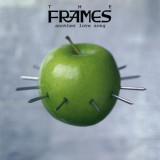
"Another Love Song - The Frames are an Irish indie rock band formed in Dublin in 1990. The band is known for their passionate and emotive sound, which blends elements of rock, folk, and traditional Irish music. Over the years, they have released several critically acclaimed albums, including ""Another Love Song,"" which is widely regarded as one of their most influential works.
""Another Love Song"" was released in 1991 and marked a turning point in the band's career. The album featured a raw, stripped-down sound that was a departure from their earlier, more polished work. The songs on the album were deeply personal and introspective, exploring themes of love, loss, and the complexities of human relationships. The album's title track, ""Another Love Song,"" became an instant classic, showcasing the band's signature sound with its driving rhythms and soaring vocals. The song's bittersweet lyrics and haunting melody struck a chord with listeners and quickly became a fan favourite.
In addition to ""Another Love Song,"" the album features several other standout tracks, including ""Say It to Me Now,"" ""The Dancer,"" and ""Downhill."" Each song on the album showcases the band's dynamic musicianship and poetic lyricism, earning the album a reputation as a seminal work in the Irish indie rock scene. Over the years, The Frames have continued to evolve and innovate, releasing several more critically acclaimed albums and earning a dedicated following of fans around the world. With their unique blend of raw emotion and musical artistry, The Frames continue to inspire and captivate audiences with their powerful, soulful music.
Fitzcarraldo - ""Fitzcarraldo"" is the sixth studio album by the Irish rock band The Frames, released in 1995. The album marked a significant departure from the band's earlier work, with a more experimental sound that blended rock, folk, and experimental elements.
The album takes its name from the Werner Herzog film of the same name, which tells the story of a man who attempts to build an opera house in the Amazon jungle. This theme of ambition and perseverance in the face of adversity runs throughout the album, as frontman Glen Hansard explores themes of love, loss, and the human experience. The album opens with the hauntingly beautiful track ""Revelate,"" which sets the tone for the rest of the album with its soaring vocals and intricate guitar work. From there, the album takes the listener on a journey through a diverse range of sounds and emotions, from the upbeat rock of ""What Happens When the Heart Just Stops"" to the melancholic balladry of ""Fitzcarraldo.""
One of the standout tracks on the album is ""Lay Me Down,"" a tender and heartfelt ballad that showcases Hansard's powerful vocals and poetic lyricism. The song has become a fan favourite and is often performed live by the band. Another highlight of the album is the epic nine-minute track ""Fitzcarraldo,"" which features lush instrumentation and intricate guitar work. The song is a tribute to the film of the same name and explores themes of ambition and determination in the face of seemingly insurmountable obstacles.
Overall, ""Fitzcarraldo"" is a powerful and deeply personal album that showcases The Frames at their most ambitious and experimental. With its diverse range of sounds and emotions, the album remains a fan favourite and a landmark in the Irish rock canon.
Dance the Devil
Dance the Devil is the fourth studio album by the Irish rock band, The Frames. Released in 1999, it marked a significant departure from the band's earlier sound and was a critical and commercial success.
The album features 10 tracks, including the hit single ""Pavement Tune,"" which received extensive radio play and helped to propel The Frames to greater prominence in the music industry. Dance the Devil showcases the band's versatility and musical prowess, blending elements of rock, folk, and pop to create a unique and compelling sound. The lyrics are introspective and poetic, exploring themes of love, loss, and self-discovery.
Produced by Steve Albini, the album was recorded in just five days, giving it a raw and unpolished feel that perfectly captures the energy and passion of The Frames' live performances.
Dance the Devil remains a beloved album among fans of Irish music and continues to inspire new generations of musicians. Its enduring popularity is a testament to the artistry and vision of The Frames and their commitment to pushing the boundaries of what is possible in rock music.
"
Cerca:strip steve
Am 9. Juni 2023 wird Capitane Records Adam Greens "Friends of Mine" anlässlich des 20-jährigen Jubiläums des Albums neu auflegen. Für Fans von Green und seiner Band The Moldy Peaches mag es schwer zu glauben sein, dass es schon zwanzig Jahre her ist, dass in den frühen 2000er Jahren eine neue Generation von Künstlern, Interpreten und Songwritern die Indie-Rock-Welt in Flammen setzte. Innerhalb von gefühlt nur wenigen Monaten versorgten Bands wie The Strokes, The White Stripes, The Libertines und The Moldy Peaches das Indie-Publikum mit neuen Versionen und Interpretationen des Rock'n'Roll-Kanons, Mit Einflüssen, die sowohl Standards wie The Velvet Underground, Television, The Stones, The Doors, The Stooges, Leonard Cohen, The Modern Lovers und Bob Dylan als auch neuere Künstler wie Beck, Daniel Johnston, Nirvana, Sonic Youth, Will Oldham, Pavement und The Silver Jews umfassten. Die Ergebnisse variierten zwischen geradlinigem Rock'n'Roll und Punk mit einem vom Folk inspirierten Songwriting-Bewusstsein. Vorbei waren die zerrissenen Jeans und Flanellhemden von einst. Enge Hosen und Lederjacken regierten den Tag...und die Nacht. Nach erstem Solo-Album und dem Erfolg seiner Band The Moldy Peaches (die 2001 zusammen mit The Strokes bei Rough Trade Records unterschrieben und anschließend mit ihnen auf Tournee gingen) schrieb und nahm Adam Green Friends of Mine auf, das bahnbrechende Album, das eine neue Richtung in seiner Karriere einschlagen sollte. In Abkehr von den selbst aufgenommenen 8-Spur-Analogaufnahmen seiner früheren Alben wandte sich Green einem Sound zu, der zu dieser Zeit eindeutig als Hi-Fidelity-Sound bezeichnet werden konnte, komplett mit Band und einer Streichergruppe (mit Arrangements von Jane Scarpantoni). Friends of Mine orientierte sich an den Werken von Serge Gainsbourg, Scott Walker und Frank Sinatra, während der lyrische Inhalt wie von der symbolistischen Poesie und dem Surrealismus von Brecht und Dylan abgeleitet schien. Das Ergebnis war etwas völlig Neues, eine Platte, die sowohl rührend traurig als auch sardonisch, satirisch, lässig und sogar laut lachend komisch sein konnte. Songs wie "Jessica" oder das Titelstück wurden zu Hymnen für eine neue Generation junger Indie-Rock-Fans in Europa, in Deutschland wurde Adam Green besonders gefeiert, von Indiekids, der Musikkritik, im Feuilleton und auch fast sogar in der Klatschpresse. Capitane ist stolz darauf, Friends of Mine nun als Doppel-LP bzw. 2CD und limitiert erstmals als farbige Einzel-LP wieder zu veröffentlichen. Die Deluxe-Edition enthält auf einer zweiten Disc Outtakes, B-Seiten und Live-Versionen und Linernotes zu den Songs von Green, die neue Einblicke in seine oft kryptische lyrische Methodik sowie Anekdoten aus der Entstehungszeit der Songs bieten. Ebenfalls gibt es Auszüge aus einem Gespräch zwischen Green und Dan Myers (Produzent), Steven Mertens (Bassist), Matt Ramono (Schlagzeuger) und Larissa Brown (Zeit). Die fünf alten Freunde tauchen tief in die Produktion von Friends of Mine ein und tauschen Geschichten über die vergangene Zeit aus. Die 2023er-Ausgabe von Friends of Mine ist ein Fenster zu einem wesentlichen Teil unserer jüngsten Vergangenheit und ein Zeugnis für einen Künstler, der den Test der Zeit bestanden hat. Adam Green ist immer noch dabei - genau so sleazy, weird & funny wie vor 20 Jahren!
Doppel-LP, zweite Platte mit B-Seiten, Demos, Outtakes und Liveversionen, klassisch schwarzes Vinyl im Klappcover, bedruckte Innenhüllen mit neuen Linernotes plus 4-seitigem Insert mit Interview! Definitiv Deluxe!
- 1: Bluebirds
- 1: 2 Hard To Be A Girl
- 1: 3 Jessica
- 1: 4 Musical Ladders
- 1: 5 The Prince's Bed
- 1: 6 Bunnyranch
- 1: 7 Friends Of Mine
- 1: 8 Frozen In Time
- 1: 9 Broken Joystick
- 1: 0 I Wanna Die
- 1: Salty Candy
- 1: 2 No Legs
- 1: 3 We're Not Supposed To Be Lovers
- 1: 4 Secret Tongues
- 1: 5 Bungee
- 2: 1 I Wanna Die (Demo)
- 2: Friends Of Mine (Fragment 1)
- 2: 3 What A Waster
- 2: 4 Hard To Be A Girl (Demo)
- 2: 5 Eating Nod Demix
- 2: 6 The Prince's Bed (Demo)
- 2: 7 Kokomo (With Ben Kweller)
- 2: 8 Born To Run
- 2: 9 No Legs (Demo)
- 2: 10 Jessica (Demo)
- 2: 11 Salty Candy (Live)
- 2: 1 Bungee (Demo)
- 2: 13 Were Not Supposed To Be Lovers (Demo)
- 2: 14 Friends Of Mine (Demo)
- 2: 15 Jessica (Live)
- 2: 16 Frozen In Time (Demo)
- 2: 17 Bluebirds (Demo)
- 2: 18 Friends Of Mine (Fragment )
Colored Vinyl[24,79 €]
Am 9. Juni 2023 wird Capitane Records Adam Greens "Friends of Mine" anlässlich des 20-jährigen Jubiläums des Albums neu auflegen. Für Fans von Green und seiner Band The Moldy Peaches mag es schwer zu glauben sein, dass es schon zwanzig Jahre her ist, dass in den frühen 2000er Jahren eine neue Generation von Künstlern, Interpreten und Songwritern die Indie-Rock-Welt in Flammen setzte. Innerhalb von gefühlt nur wenigen Monaten versorgten Bands wie The Strokes, The White Stripes, The Libertines und The Moldy Peaches das Indie-Publikum mit neuen Versionen und Interpretationen des Rock'n'Roll-Kanons, Mit Einflüssen, die sowohl Standards wie The Velvet Underground, Television, The Stones, The Doors, The Stooges, Leonard Cohen, The Modern Lovers und Bob Dylan als auch neuere Künstler wie Beck, Daniel Johnston, Nirvana, Sonic Youth, Will Oldham, Pavement und The Silver Jews umfassten. Die Ergebnisse variierten zwischen geradlinigem Rock'n'Roll und Punk mit einem vom Folk inspirierten Songwriting-Bewusstsein. Vorbei waren die zerrissenen Jeans und Flanellhemden von einst. Enge Hosen und Lederjacken regierten den Tag...und die Nacht. Nach erstem Solo-Album und dem Erfolg seiner Band The Moldy Peaches (die 2001 zusammen mit The Strokes bei Rough Trade Records unterschrieben und anschließend mit ihnen auf Tournee gingen) schrieb und nahm Adam Green Friends of Mine auf, das bahnbrechende Album, das eine neue Richtung in seiner Karriere einschlagen sollte. In Abkehr von den selbst aufgenommenen 8-Spur-Analogaufnahmen seiner früheren Alben wandte sich Green einem Sound zu, der zu dieser Zeit eindeutig als Hi-Fidelity-Sound bezeichnet werden konnte, komplett mit Band und einer Streichergruppe (mit Arrangements von Jane Scarpantoni). Friends of Mine orientierte sich an den Werken von Serge Gainsbourg, Scott Walker und Frank Sinatra, während der lyrische Inhalt wie von der symbolistischen Poesie und dem Surrealismus von Brecht und Dylan abgeleitet schien. Das Ergebnis war etwas völlig Neues, eine Platte, die sowohl rührend traurig als auch sardonisch, satirisch, lässig und sogar laut lachend komisch sein konnte. Songs wie "Jessica" oder das Titelstück wurden zu Hymnen für eine neue Generation junger Indie-Rock-Fans in Europa, in Deutschland wurde Adam Green besonders gefeiert, von Indiekids, der Musikkritik, im Feuilleton und auch fast sogar in der Klatschpresse. Capitane ist stolz darauf, Friends of Mine nun als Doppel-LP bzw. 2CD und limitiert erstmals als farbige Einzel-LP wieder zu veröffentlichen. Die Deluxe-Edition enthält auf einer zweiten Disc Outtakes, B-Seiten und Live-Versionen und Linernotes zu den Songs von Green, die neue Einblicke in seine oft kryptische lyrische Methodik sowie Anekdoten aus der Entstehungszeit der Songs bieten. Ebenfalls gibt es Auszüge aus einem Gespräch zwischen Green und Dan Myers (Produzent), Steven Mertens (Bassist), Matt Ramono (Schlagzeuger) und Larissa Brown (Zeit). Die fünf alten Freunde tauchen tief in die Produktion von Friends of Mine ein und tauschen Geschichten über die vergangene Zeit aus. Die 2023er-Ausgabe von Friends of Mine ist ein Fenster zu einem wesentlichen Teil unserer jüngsten Vergangenheit und ein Zeugnis für einen Künstler, der den Test der Zeit bestanden hat. Adam Green ist immer noch dabei - genau so sleazy, weird & funny wie vor 20 Jahren!
Doppel-LP, zweite Platte mit B-Seiten, Demos, Outtakes und Liveversionen, klassisch schwarzes Vinyl im Klappcover, bedruckte Innenhüllen mit neuen Linernotes plus 4-seitigem Insert mit Interview! Definitiv Deluxe!
Dire Straits' arresting self-titled debut arrived in the midst of punk's reign but couldn't have been further removed from the era's slash-and-burn style. Recorded in West London in February 1978, the band's tasteful, jazz-inflected set embraces folk, blues, and pub rock while also tracing a direct line back to the beat-oriented sound of early rock n' roll. Country and roots accents further distinguish the British quartet's stripped-down music from any 1970s peers, as does the transparent production, which has remained revered among audiophiles the world over – and which has never been better than on this meticulous pressing.
Mastered from the original master tapes and pressed at RTI, Mobile Fidelity's 180g 45RPM 2LP version of Dire Straits features natural tonalities, superb balances, you-are-there imaging, deep-black backgrounds, and pristine clarity. Even if you've heard this album hundreds of times before, you've never experienced it with such lifelike sonics and premium richness. This numbered-edition collector's set immerses you within the smoky, laidback atmospherics of every song. This is how all vinyl should sound.
Crucial to every arrangement, Mark Knopfler's winding guitar lines emerge with supreme transparency and multi-hued textural detail. His intricate playing comes across as if it's being transmitted via his 60s-era Fender Vibrolux amplifier placed right before you. The cleanliness, dimensions, and live feel are that good. His bandmates, too, benefit from the extra groove space afforded by this 45RPM edition. Rhythms skate and swirl; percussive effects resonate with crispness and attack; the leading edges of notes naturally decay.
Dire Straits' strong, well-edited batch of original material further enhances the overall enjoyment and makes the record one whose pleasures go far beyond the organic sonics. Just as Knopfler's narratives pour forth with poetic and surrealist texts, the musical settings – an intoxicating combination of easygoing shuffles, back-hall boogies, and pop-honed ballads – mirror the old-fashioned soulfulness inherent in the classic recordings of the late 50s and early 60s. The lyrics are equally captivating.
Drawing from his time as a youth in Newcastle, Leeds, and London, Knopfler invests tunes with an autobiographical slant and emotional connectivity that become obvious the moment he opens his mouth to sing. "Down to the Waterline," "Wild West End," and "Lions" all feature colloquial touches that add to their reach. By extension, "In the Gallery" functions as a tribute to Leeds sculptor Harry Phillips (father of future Knoplfer collaborator, Steve Phillips) while the record's breakout smash, "Sultans of Swing," pays homage to struggling bar bands.
Through it all, Dire Straits performs with a subtle cool and clever poise that no band ever matched. Just how good is the chemistry? Bob Dylan heard the quartet and invited Knopfler and drummer Pick Withers to play on Slow Train Coming. But even Dylan himself didn't hear Dire Straits sound this magnetic back in its original heyday. Now, everyone can.
Steve Gunn has always had one foot in indie rock and the other in an expansive improvisational scene. His songwriter albums alternate with freewheeling jams, most notably in his Gunn-Truscinski Duo, but are not confined to that. So when Gunn decided to revisit Other You, it made sense that he brought in some guests from the far side of the commercial/experimental spectrum to reimagine his songs. Nakama presents five tracks from that last album, reshaped by artists that Gunn admires. The process loosens the songs up considerably.
To start, he calls in Mdou Moctar’s backing band (the American bassist Mikey Coltun and the other guitarist Ahmoudou Madassane) for “Protection.” The song already had a bit of blues-y swagger to it, with sharper-edged guitar rhythms also heard on the ultra-smooth Other You, but here the heat has an otherworldly desert sheen. Its caravan-traveling rhythm sways from side to side, digging in to to the upbeats in a way that is both kinetic and also hypnotically still. There’s some crowd noise in the background, the knot of people that regularly forms when Mdou and his compatriots plug in from Agadez, and a few mournful afro-blues licks arcing off the vamp. But mostly it’s a cut that reminds you how much African guitar music Gunn has absorbed (listen to “Tommy’s Congo” from Way Out Weather for proof), and how well it fits with what he does.
Gunn also brings in Circuit Des Yeux’s Haley Fohr to reconfigure “Ever Feel That Way,” and she sets the song’s drifting melancholy amid pensive minor-key piano chords. She strips back the ambient whoosh that surrounds the original, slows down the pace and presents the song in startling, unadorned clarity. Her version removes some of the sticky, over-prettiness that I found so distracting in Other You. The melody is better, purer and more focused without the frills. There is also an electronic remake of “Reflection” from David Moore’s ambient ensemble Bing and Ruth, which traps Gunn’s fragile vocals in a shivering palace of synthetic tones. It’s enjoyable in its way, but the two sensibilities never quite meld together.
The best part comes when Gunn joins forces with Joshua Abrams’ Natural Information Society in remakes of “Good Wind” and “On the Way.” The former is a matter of subtle differences: the gentle pitch and roll under Gunn’s voice, the intermittent liquid runs of bass between widely spaced phrases. Abrams and his crew open up the jazz-leaning, reiterative possibilities under Gunn’s song, but they don’t change it fundamentally. “On the Way” is even stronger, a glowing drone and a pattern of hand drums enveloping the melody. It makes the music seem more spiritual, more resonant, more deep and full of mysteries. It was striking enough that I had to go back to Other You to hear again an album that had left me cold. This new version of “On the Way” didn’t change that chill, but it gave me an idea of how strong the songs might have sounded in another setting. (by Jennifer Kelly)
Glasgow’s Seated Records return with more archival Scottish New Wave material; this time, in the form of Pop Wallpaper’s disco-not-disco interpretation of the Shuggie Otis classic, “Strawberry Letter 23”. And interpretation is the right word, guitarist Evan Henderson confesses that the lyrics sang by Audrey Redpath on the record were, “err inaccurate due to pre-internet home recording translation”.
The Edinburgh band first released “Strawberry Letter 23” in 1986 as a double A side 12” alongside original song, “Nothing Can Call Me Back". The 1986 record’s sleeve states that the original - “Strawberry Letter 23" has been “re-modelled for special pleasures, namely on the dance floor”. Here the re-model has been re-modelled once more. The track is recontextualised for 2022 playing on a four track 12” that includes an unreleased instrumental demo version of the track, as well as mixes from label founder Pigeon Steve and close friend of the label, Useful Tom.
Wallpaper’s first EP “Over Your Shoulder” was released in 1984. The release received a considerable amount of radio support, not least from Radio 1’s John Peel and Janice Long, which culminated with a live session for Long’s show at the BBC’s studios in London. Released a couple of years later, Strawberry Letter received similar levels of radio play. Despite (much to the band’s confusion) being tracked by Motown UK at one point, Pop Wallpaper did not go on to receive commercial success and eventually went their separate ways.
“Strawberry Letter 23” sits in the singular historical, cultural context of mid-80s Britain. Following the explosion of punk at the end of the 1970s, in the 1980s many British bands began experimenting with new styles and instruments - always keeping an eye firmly on their punk roots. The loose percussion and synthesiser melodies have an almost new-age, balearic mood, while the falsetto vocals of singer Audrey Redpath are an unmistakable embodiment the Post-punk style of the time. The prominent bass-line suggests a reggae or disco inspiration, and bass player Myles Raymond admits that he obsessed over a Sly & Robbie Taxi records compilation around the time the band put the tune together.
This reissue includes an unreleased, unheard instrumental demo-version of the cover, “SL23”. The band recorded the demo during an nighter at Wilf’s Planet studios in Edinburgh, just after Wet Wet Wet had just finished up their own demo for “Wishing I Was Lucky” (Pop Wallpaper all insist they thought it would never be a hit). In this version, we hear the band messing around with drum machines and synths which, in a similar style to Kevin Low and Fiona Carlin on Seated 001, creates a stripped back dance floor work-out that bares almost no resemblance to any version of “Strawberry Letter 23”. In an attempt to emulate the Trevor Horne production style of the time, the band’s drummer Les Cook recalls pushing for more and more reverb on the drums during the session to a reluctant producer Chic Medley, who “eventually obliged, but needed a lot of persuading”. Much to Cook’s disappointment “the reverb was toned down when we got to the final release”.
On the B side, label boss Pigeon Steve delivers a dubbed-out and acid drenched, cosmic rendition of the track with “SL24”, before Useful Tom (son of Pop Wallpaper bass player Myles Raymond) brings the EP to an end with spacey de-construction of fractured vocals and gliding synths on the B2 with “SL25”.
It's coming home, it's coming home - house music is coming home! A second instalment of the Groove Access: series Chicago Is Home offers us five fresh tracks from the windy city landing in a glorious cavalcade of razor edged snares and hypnotic jack house. Ed Nine & Kid Enigma's 'Bandleaders' opens side one in spectacular fashion with spoken mantras lying deep in the mix, distinctive phasing arpeggios, poking keyboard riffs and ringing cymbals. JSquare's 'Get Wicked' kicks with even more power, tribal rhythms bouncing of bleepy melodies, before 'Move' by Geto Mark rounds off the side with the strutting, beautifully brutal 'Move', a proper 3AM peak time pleaser. Steve Noah's 'The Hater' opens side two, a wily acid line worming its way across a raw, stripped down backing before exploding into serious gnarliness when you least expect it. AFTR's 'Undercover' rounds things off with another knuckle duster of a tune, leaving no doubt that Chicago is still the place to be when it comes to house.
Since 2018, BBE Music has been leading the field in reissuing rare modern jazz from Japan’s golden period spanning the late 60s to the early 80s. The J Jazz Masterclass Series continues to present the finest in Japanese jazz with Planets by Masaru Imada Trio + 1. Originally released in 1977 as a private press album, Planets showcases the refined playing and sophisticated compositions of one of Japan’s leading pianists, Masaru Imada. In a fifty-plus year career he has released over 40 albums, including several that have won awards from some of Japan’s leading music publications and has recorded with leading US jazz artists such as David Sanborn, Brecker Brothers, Steve Gadd, and Grover Washington Jr. Imada’s Bosendorfer piano is joined by the drums of Tetsujiro Obara and the bass of Kunimitsu Inaba, augmented by Yuji Imamura on percussion. The opening title track on Planets (featured on J Jazz vol 3) is a wafer-thin modal waltz, beginning with gentle bells and shells, followed by Obara’s deft brush work and Inaba’s hypnotically pliant bass that gives a discrete yet steady support to the gossamer melody from Imada-san’s piano. The other standout track is the suite, Sea's Pasture, an epic piece that undulates and heaves, like the dark endless ocean, rich with mystery and each side of the album ends with a solo piece on the haunting Bosendorfer. Planets comes with full reproduction of the original artwork with obi strip, extra photos, a translation of the original sleeve note and a 3000 word new sleeve note by Tony Higgins including an interview with Masaru Imada himself. The J Jazz Masterclass Series is curated by Tony Higgins and Mike Peden for BBE Music.
Released on gold vinyl, ‘The Coincidentalist’ and ‘Dust Bowl’ are two discs of Howe Gelb filled with randomness and happenstance, a typical treasure trove spanning all genres from alt country to Cohen-esque grandeur. They traverse, unflinchingly, his chameleon-like repertoire. This deluxe re-issue includes ‘Dust Bowl’ on vinyl for the very first time, with the records housed in a gatefold sleeve featuring updated artwork and liner notes. ‘The Coincidentalist’, originally released in 2013, features a raft of friends and collaborators including Bonnie Prince Billy, Andrew Bird, M. Ward, Steve Shelley, and Jason Lytle of Grandaddy with John Parrish on mixing duties. Ever the focal point of Giant Sand and Gelb releases, the Arizona Desert serves as a key inspiration for the record, animating the barren landscape with stories of those that have navigated them. Praise for the release was not short, with AllMusic proclaiming that it’s “one of Gelb's most realized efforts; despite its relaxed, airy presentation, it's musically and lyrically provocative, as poetic, strange, and mysterious as the desert itself." The accompanying collection ‘Dust Bowl’ is a personal sketchbook of songs, a more stripped back set than it’s counterpart. Featuring everything from the country blues of ‘Porch Banjo’ and ‘John Deere’, to off-kilter piano ballads like ‘The Old Overrated’ and ‘Reality Or Not’ and the deconstructed desert pop on ‘Forever And A Day’ and the fragile ‘Man On A String’. ‘Dust Bowl’ is an insider’s view of Howe’s songwriting craft, a unique insight into the man himself. “‘Dust Bowl’ was primarily for fans that have followed me for a while. ‘The Coincidentalist’ is for the friends of the fans.” Howe told Under The Radar. While Nightlife magazine reported that; “Without warning, the Giant Sand frontman and polymorphous countryman dropped this compilation of house recordings via Bandcamp… At a time when so much harmless, soulless folk resonates, Howe Gelb is a mandatory point of reference for any fan of the genre.”
In 1978 five of America's finest jazz musicians, Michael Brecker, Mike Manieri, Don Grolnick, Eddie Gomez and Steve Gadd, decided
to take a break from their lucrative session careers and do the thing they loved best. The result was Steps, an acoustic jazz
supergroup in the time of fusion supergroups. Now legendary the ensemble offered melodic jazz with cutting edge solos and a
rhythm section like no other. For this performance they were joined by the astonishing Japanese guitarist Kazumi Watanabe.
Already a well-known figure at home and soon to be touring under his own name and guesting with The Brecker Brothers band and
Jaco Pastorius’ Word of Mouth ensemble.
Performed at Yubin Chokin Hall in Tokyo on December 6th 1980, broadcast by NHK-FM. Pressed on 180g Black Vinyl and presented
in a gatefold sleeve sealed with Japanese obi strip. With extensive liner notes and archival photos.
Michael Brecker - tenor sax; Don Grolnick - piano; Mike Mainieri - vibes; Eddie Gomez - bass; Steve Gadd - drums; Special guest
Kazumi Watanabe - guitar.
"The anger and depression got to me, and I couldn't hold it in anymore
So, I got into a room with my demons and we just hit record," shares indie singersongwriter Leslie Mendelson. The resulting album, playfully titled, ' If You Can't
Say Anything Nice' ,' is viscerally themed, imaginatively arranged, cinematically
dynamic and textured, oozing raw elegance. " I deal with depression and anxiety,
and I've never really sang about it before. It also felt like what was going on with
society was also affecting me, in terms of gun violence, the opioid crisis, and the
all hatred in the news and media. It felt like it was time to speak out," Leslie
explains. Leslie has released two prior albums, including her Grammy Awardnominated debut, 'Swan Feathers,' one EP, and three singles. Her first album
exhibited a production sheen she opted to strip away on her sophomore album, '
Love & Murder.' Her latest, ' If You Can't Say Anything Nice ' ,' is a gutsy album that
splits the difference between her previous albums in terms of production, but
also features some garage- rock bluster. " The best time to make a rock n' roll
record is when you're broke and pissed off, " she says, with a good-natured laugh.
For the album, Leslie worked with longtime co-writer and guitarist Steve McEwan
who co-produced the album alongside bassist and engineer Lorenzo Wolff.
incl. mp3
A deepening sense of life, love, health, loss, and luck shaped the outlines of Tuttle’s fifth, and most collaborative album to date. Following a surprising exhilaration and exhaustion from the hitherto most innocuous of moments in mid-2020 - a half-hour drive to collect an online order, the furthest distance he’d traveled in months; Tuttle commenced working on new musical ideas loosely based around navigating the aftermaths and interregnums of a restless era. “I was thinking about what’s going on in the world and how localised it has become for so many of my friends in different places,” Tuttle explains. “Not in a negative way but more so focusing on how lovely it is when things are good.”
Thinking of musician friends and peers around the world – each confined to their own immediate surroundings – Tuttle’s generative and collaborative musical practice became a silvery through-line, connecting American innovators Steve Gunn, Chuck Johnson, Luke Schneider and Michael A. Muller (Balmorhea), to French/Swedish violinist Aurelie Ferriere and Spanish guitarist Conrado Isasa, back to Australian friends such as Voltfruit (aka Flora Wong and Luke Cuerel) and Darren Cross (Gerling) – among many others – each fitting seamlessly into Tuttle’s vibrant musical world.
Whilst previously a feature of Tuttle’s music, the exploration of space and texture found within Fleeting Adventure feels particularly vast and generous. The involvement of Chuck Johnson and Lawrence English mixing and mastering the album respectively, as with their work on Tuttle’s previous and breakthrough album Alexandra (Room40, 2020), inspired Andrew to develop songs that are as serene and patient as he’s ever sounded. Stripping elements back, the idea of pulling the songs apart somewhat, was just as important as adding the work of Andrew’s collaborators. “It is spacious through intent, process and assistance,” he confirms. "I thought carefully about what instruments - both what I played and what I asked others to provide based on my unadorned banjo track - would best work with what I was wanting to create.”
The road to Fleeting Adventure has been both long and short, but it sits as a tender and perhaps even vital reflection of an era in progress, in retrospect and in anticipation. A poignant contemplation on the many bonds that make up our lives from friends and family to the myriad places we inhabit and pass through along the way. The idea that an adventure doesn’t necessarily have to be a grand statement Andrew Tuttle has gathered up a number of his contemporaries and crafted something quietly spectacular, a new beginning to familiar habits.
“Tuttle’s plaintive banjo is encircled by an array of majestic sounds: serpentine electric guitar from Steve Gunn, enveloping electronics courtesy of Balmorhea’s Michael A Muller, violin swirls from Aurelie Ferriere , and the gentle saxophone of Joe Saxby. The result is a lush and unabashedly beautiful sonic landscape.’’ 8/10 UNCUT LEAD REVIEW
Andrew Tuttle's new single New Breakfast Habit is the perfect sonic condiment for the most important meal of the day. A banjo flecked ambient/cosmic journey with a psychedelic video courtesy of Matmos
His new album 'Fleeting Adventure' is the soundtrack of the world re-emerging and getting a release on Basin Rock (Julie Byrne, Aoife Nessa Frances, Johanna Samuels) this summer.
‘Reich’s music expands from minimalist austerity to more full-bodied passages and back again. Reminiscent of his earliest work, it is very beautiful.’ – Financial Times
‘The music has tender energy, and an undercurrent of melancholy. Its droning tones sometimes seem to be pulling apart – like taffy, or like Richter’s stretching spaghetti stripes of color.’ – New York Times
Nonesuch Records releases the first recording of Steve Reich’s Reich/Richter, performed by Ensemble intercontemporain and conducted by George Jackson. The composition was originally written to be performed with German visual artist Gerhard Richter and Corinna Belz’s film Moving Picture (946-3).
Reich describes Richter’s book Patterns, which served as source material for the film: “It starts with one of his abstract paintings from the ’90s. He scanned a photo of the painting into a computer and then cut the scan in half and took each half, cut that in half and two of the four quarters he reversed into mirror images. He then repeated this process of ‘divide, mirror, repeat’ from half to quarter, eighth, sixteenth, thirty-second, all the way up to 4096th. The net effect is to go from an abstract painting to a series of gradually smaller anthropomorphic ‘creatures’ (since the mirroring produces bilateral symmetry) to still smaller very fine stripes.
“Belz described the film in terms of ‘pixels’. It begins with two-‘pixel’ stripes and the music begins with a two-sixteenth note oscillating pattern. When the film moves to four ‘pixels’, the music moves to a four-sixteenth note pattern, then to eight, and sixteen,” the composer continues. “After that, I began introducing longer note values – initially eighth notes, and later to quarter notes. By the middle of the film, when the images move from 512 to 1064 pixels, the music really slows to dotted half notes. Finally, as the ‘pixel’ count begins to diminish, the music moves back into more rapid eighths and then ending with the most intense rapid sixteenth movement.”
After more than one hundred performances of Reich/Richter at The Shed in New York in 2019, it was performed in London at the Barbican by the Britten Sinfonia conducted by Colin Currie and then in Paris at the Philharmonie, where this recording was made. The Austrian ensemble Windkraft Tirol, led by Kasper de Roo, will perform Reich/Richter on September 8 at Szentrum, Silbersaal in Schwaz, and the LA Phil New Music Group, led by Brad Lubman, performs the piece, accompanied by Richter and Belz’s film, at Walt Disney Concert Hall in Los Angeles on April 1, 2023.
Nonesuch has recorded every new piece of music by Steve Reich since 1985, beginning with The Desert Music and continuing through 2018’s Pulse/Quartet, resulting in twenty-two albums and the two box sets Phases in 2006 and Works: 1965-1995 in 1997. The label will put out a collection of his complete works in 2023.
Reich released a book last month, Conversations, that includes dialogues with past collaborators, fellow composers, musicians, and visual artists who have been influenced by his work, including: David Lang, Brian Eno, Richard Serra, Michael Gordon, Michael Tilson Thomas, Russell Hartenberger, Robert Hurwitz, Stephen Sondheim, Jonny Greenwood, David Harrington, Elizabeth Lim-Dutton, David Robertson, Micaela Haslam, Anne Teresa de Keersmaeker, Julia Wolfe, Nico Muhly, Beryl Korot, Colin Currie, and Brad Lubman. Booklist said in its review, ‘Iconoclastic American composer Steve Reich is singular in his own right, and when he is in conversation with other equally iconoclastic composers, conductors, sculptors, musicians, percussionists, and video artists, sparks not only fly, they sparkle. Reich and his colleagues conduct lovely give-and-takes during which they share stories, creative approaches, and viewpoints. Reich's Conversations is the best kind of eavesdropping.’
Steve Reich has been called ‘America’s greatest living composer’ (Village Voice), ‘the most original musical thinker of our time’ (New Yorker), and ‘among the great composers of the century’ (New York Times). His music has influenced composers and mainstream musicians all over the world. Music for 18 Musicians and Different Trains have earned him two Grammy Awards, and in 2009, his Double Sextet won the Pulitzer Prize. Reich’s documentary video opera works – The Cave and Three Tales, done in collaboration with video artist Beryl Korot – have been performed on four continents. His recent work Quartet, for percussionist Colin Currie, sold out two consecutive concerts at Queen Elizabeth Hall in London shortly after tens of thousands at the Glastonbury Festival heard Jonny Greenwood (of Radiohead) perform Electric Counterpoint followed by the London Sinfonietta performing his Music for 18 Musicians.
In 2012, Reich was awarded the Gold Medal in Music by the American Academy of Arts and Letters. He has additionally received the Praemium Imperiale in Tokyo, the Polar Music Prize in Stockholm, the BBVA Award in Madrid, and the Golden Lion at the Venice Biennale. He has been named Commandeur de l’Ordre des Arts et des Lettres and has been awarded honorary doctorates by the Royal College of Music in London, The Juilliard School, and the Liszt Academy in Budapest, among others. ‘There’s just a handful of living composers who can legitimately claim to have altered the direction of musical history and Steve Reich is one of them’, states the Guardian.
Pierre Boulez founded the Ensemble intercontemporain in 1976 with the support of Michel Guy (who was France’s Minister of Culture at the time) and the collaboration of Nicholas Snowman. The Ensemble’s thirty-one soloists share a passion for twentieth and twenty-first century music. Under the artistic direction of Matthias Pintscher, the musicians work in close collaboration with composers, exploring instrumental techniques and developing projects that interweave music, dance, theater, film, video and visual arts. In collaboration with IRCAM (Institut de Recherche et Coordination Acoustique/Musique), the Ensemble intercontemporain is also active in the field of synthetic sound generation. New pieces are commissioned and performed on a regular basis. Resident of the Cité de la musique – Philharmonie de Paris, the Ensemble performs and records in France and abroad, taking part in major festivals worldwide.
George Jackson, winner of the 2015 Aspen Conducting Prize, came to attention after stepping in at short notice with Orchestre de Paris, where he stepped in for Daniel Harding. Recent highlights include leading Ensemble intercontemporain at Festival Romaeuropa, the Rainy Days Festival in Luxembourg, and Festival D’Automne in Paris, as well as conducting the RTÉ National Symphony Orchestra, the orchestra of Opéra de Rouen and the world premiere of Tscho Theissing’s Genia with Theater an der Wien. His varied operatic experience includes performances at Opera North, Hamburg State Opera and Opera Holland Park, as well as conducting a new production of Hänsel und Gretel at Grange Park Opera.

I’m Jimmy Reed underlined the very raw nature of the recordings, yet it immediately showed
why his music was embraced so much by others as the songs offered more melody and variety
than other Blues players. Ain't That Lovin' You Baby has fine melodic hooks that could easily
be transcribed into rocking versions, while Boogie In The Dark set the template for so many
groups in the sixties. The slower tracks like You Got Me Crying and Little Rain provided useful
contrasts, while Honest I Do gives added meaning to the phrase 'stripped down'. Jimmy Reed
was easily the most commercially successful Bluesman in America during the 1950s, and as
such his material was readily available to be plundered by artists wanting to enrich their live
repertoire. This reached its height during the UK Beat boom when virtually every working group
included his songs in their sets. The Rolling Stones, The Yardbirds, Them and The Animals all
covered his songs liberally during the first half of the sixties. In his homeland, The Grateful
Dead, The Steve Miller Band, Johnny Winter, Wishbone Ash and, bizarrely, even Bill Cosby
followed suit!
Hot Creations welcome back Fabio Neural and DJ Fronter who join forces once again for their second release on the label titled Ding Dong. Following on from their success with the first release, the eagerly anticipated second drops in May.
The title track opens proceedings, plunging straight into a heavy 4x4 beat, creating a stripped back, minimalistic base, expertly layered with finely chopped vocals. Foghorn like sounds and sharp percussion bring the piece together, resulting in a raw, industrial experience. Shocked follows, encapsulating the Hot Creations sound in true style, packed full of energy. Riveting bass lines paired with fanfare-esque melodies lay at the forefront of the track, transporting the listener to a bustling, colourful dancefloor.
Fabio Neural threw himself into the music industry at an early age. His productions have seen him release on Steve Lawler's Viva Music and feature in Pete Tong’s 500th Essential Mix. His eclectic DJ sets have enabled him to share the stage with heavyweights such as Carl Cox, Richie Hawtin and Adam Beyer. Colombian native DJ Fronter has become one of the greatest promises to come out of South America with releases being supported the likes of Paco Osuna, DJ Sneak and Matthias Tanzmann.
- 1: How It Ends
- 2: Vaya
- 3: Paris Trout
- 4: Colima
- 5: There In The Loam
- 6: Polly
- 7: Emma
- 8: Cyclone Fence
- 9: No Joke
- 10: I Don't Captain
- 11: Gone Rider Spur
- 12: Polly 2 (Sparrow)
- 13: Old Unconscious
- 14: Benediction Mountain
- 15: Bond Wire Cur
- 16: Before What's Left Of Our Minds Go
- 17: Yea That I Walk
- 18: Wings Of A Dove
- 19: Lope
- 20: Next Trick
In a two-decade career, Raymond Byron Magic Raposa has recorded six albums as Castanets, another as Raymond Byron and the White Freighter, and has worked with musicians ranging from Annie Clark (St. Vincent), Matthew Houck (Phosphorescent), and Sufjan Stevens to Liz Janes, Jana Hunter, Nathan Hubbard (Trummerflora, Cosmologic), and John McCauley (Deer Tick). Over the course of that time, his music has been called part of the New Weird America movement, freak-folk, psychedelic folk, and indie folk. Bond Wire Cur is as surreal and desolate and haunting as anything he's done. Collaborators on the album are many (Cory Gray, Erik Clampitt, Pony Domer, Jason Stinson, Lauren K. Newman, Kimba Kuzas, Ron Burns, Paula Barry, Coty Dolores Miranda, Josh Cole), yet the sound of the record is stripped-down and stark. It is a crucial chapter in his career and in ESP-Disk's Drive to Revive Weird Rock.
* Over the past six years, Dimensions has become a leading name in the underground, with its festival, International Series, DJ Directory and Dimensions Soundsystem. Now, Dimensions extends its influence with the start of its label - Dimensions Recordings. The label launches with a 12-track compilation across three separate discs. 'An Introduction' makes a huge statement in setting out the label's intent and breadth. With artists established and new stepping up to present 12 exclusive tracks.
* Dimensions Recordings explores its darker side on An Introduction Part 3 with intergalactic oddities and twisted techno constructions, the release is definitely ones for the late hours. 'Crosstalk' from gear heads London Modular Alliance opens; a squelching, electro, hardware excursion demonstrating a small snippet of what's to come from the talented trio. Next, French artist, Upwellings steps up to demonstrate his purist approach as he unites elements of dub and techno to create the beautifully spacey 'Soft Shadows'. The third offering comes courtesy of Fachwerk label boss and prolific techno artist, Mike Dehnert; who presents raw but melodic track in 'Tokio,'which maintains his minimal and stripped back aesthetic beautifully. Chicago's Steven Tang in his Obsolete Music Technology rounds off the release with 'Comb Freq,' a devastatingly powerful mix of acidic, bleeping dance floor energy!
- A1: Signe" (Eric Clapton) - 3:13
- A2: Before You Accuse Me" (Ellas Mcdaniel) - 3:36
- A3: Hey Hey" (Big Bill Broonzy) - 3:24
- A4: Tears In Heaven" (Clapton, Will Jennings) - 4:34
- B1: Lonely Stranger" (Clapton) - 5:28
- B2: Nobody Knows You When You're Down And Out" (Jimmy Cox)
- B3: Layla" (Clapton, Jim Gordon) - 4:46
- B4: Running On Faith" (Jerry Lynn Williams) - 6:35
- C1: Walkin' Blues" (Robert Johnson) - 3:37
- C2: Alberta" (Traditional) - 3:42
- C3: San Francisco Bay Blues" (Jesse Fuller) - 3:23
- D1: Malted Milk" (Robert Johnson) - 3:36
- D2: Old Love" (Clapton, Robert Cray) - 7:53
- D3: Rollin' & Tumblin'" (Muddy Waters) - 4:10
Strictly limited to 10,000 numbered copies, pressed on MoFi SuperVinyl at RTI, and mastered from the original master tapes, Mobile Fidelity's ultra-hi-fi UltraDisc One-Step 180g 45RPM 2LP collector's edition enhances the blockbuster work for today – and the ages to come. Surpassing the sonics of any prior version, it peels away any remaining limitations to provide a transparent, lively, ultra-nuanced presentation of a record that won six Grammy Awards – including prizes for Album of the Year, Best Male Rock Vocal Performance, and Best Rock Song. The expanse and depth of the soundstage, fullness of tones, natural snap and extension of the guitar strings, realistic rise and decay of individual notes, and roll of Clapton's vocals all attain demonstration-grade levels.
Housed in a deluxe box, the UD1S Unplugged pressing features special foil-stamped jackets and faithful-to-the-original graphics that illuminate the splendor of the recording and the reissue's premium quality. No expense has been spared. Aurally and visually, this UD1S reissue exists as a curatorial artifact meant to be preserved, touched, and examined. It is made for discerning listeners that prize sound quality and production, and who desire to fully immerse themselves in the art – and everything involved with the album, from the images to the finishes.
Truly, everything about Unplugged matters. Having sold more than 10 million copies in the U.S. and more than 26 million copies worldwide, the 1992 work resonates with listeners of all generations and speaks a universal language. Recorded for MTV before a very small audience on January 16, 1992, the 14-track set became the signpost for future acoustic-based endeavours that witnessed artists of all stripes re-examining their catalogues and, in many instances, as Clapton does here, placing familiar originals in fresh contexts and unveiling spirited versions of cover material. Needless to say, Clapton's session turned MTV's series into can't-miss programming for which the likes of Rod Stewart, Tony Bennett, Nirvana, Pearl Jam, and more would soon participate.
Kicking off his performance with a spirited instrumental to establish the mood, Clapton immediately wades into the style that originally caught his attention as a British teenager in the early 1960s: American blues. Backed by a superb band that includes guitarist Andy Fairweather Low, pianist Chuck Leavell, bassist Nathan East, and drummer Steve Ferrone, Slowhand delivers a rhythmic, toe-tapping rendition of Bo Diddley's "Before You Accuse Me" that announces he's come to reconnect with his muse. What follows over the course of nearly the next hour stirs the heart, shakes the soul, moves the mind, and invigorates the senses.
Of course, there's no talking about Unplugged without keying in on "Tears in Heaven," the striking ballad Clapton penned about the death of his four-year-old son. More emotional, direct, spare, and healing than the studio version released a year prior, it crackles with an intimacy, maturity, poignancy, honesty, sweetness, and integrity that inform the entire concert. Indeed, how Clapton frames other favorites here – transforming "Layla" into a relaxed, comfortable stroll and ruminating on the seasoned ripples flowing throughout "Old Love," for example – indicate both a creative rebirth and gleeful acceptance of the next phase of his career.
And that very direction (two of Clapton's next three albums would be all-blues projects) is what really makes Unplugged so indispensable. Equivalent in mastery if not in volume to the output that earned him his "God" nickname, interpretations of Jesse Fuller's "San Francisco Bay Blues" (complete with kazoo!), Big Bill Broonzy's "Hey Hey," Robert Johnson's "Walkin' Blues" and "Malted Milk," and Muddy Waters' "Rollin' & Tumblin'" showcase a learned professor in his element and all the wheels turning.
In every regard, Clapton's Unplugged session was appointment listening when it came out in August 1992. With the arrival of MoFi's UD1S pressing, that sensation is more urgent than before.
More About Mobile Fidelity UltraDisc One-Step and Why It Is Superior
Instead of utilizing the industry-standard three-step lacquer process, Mobile Fidelity Sound Lab's new UltraDisc One-Step (UD1S) uses only one step, bypassing two processes of generational loss. While three-step processing is designed for optimum yield and efficiency, UD1S is created for the ultimate in sound quality. Just as Mobile Fidelity pioneered the UHQR (Ultra High-Quality Record) with JVC in the 1980s, UD1S again represents another state-of-the-art advance in the record-manufacturing process. MFSL engineers begin with the original master tapes and meticulously cut a set of lacquers. These lacquers are used to create a very fragile, pristine UD1S stamper called a "convert." Delicate "converts" are then formed into the actual record stampers, producing a final product that literally and figuratively brings you closer to the music. By skipping the additional steps of pulling another positive and an additional negative, as done in the three-step process used in standard pressings, UD1S produces a final LP with the lowest noise floor possible today. The removal of the additional two steps of generational loss in the plating process reveals tremendous amounts of extra musical detail and dynamics, which are otherwise lost due to the standard copying process. The exclusive nature of these very limited pressings guarantees that every UD1S pressing serves as an immaculate replica of the lacquer sourced directly from the original master tape. Every conceivable aspect of vinyl production is optimized to produce the most perfect record album available today.
MoFi SuperVinyl
Developed by NEOTECH and RTI, MoFi SuperVinyl is the most exacting-to-specification vinyl compound ever devised. Analog lovers have never seen (or heard) anything like it. Extraordinarily expensive and extremely painstaking to produce, the special proprietary compound addresses two specific areas of improvement: noise floor reduction and enhanced groove definition. The vinyl composition features a new carbonless dye (hold the disc up to the light and see) and produces the world's quietest surfaces. This high-definition formula also allows for the creation of cleaner grooves that are indistinguishable from the original lacquer. MoFi SuperVinyl provides the closest approximation of what the label's engineers hear in the mastering lab.
SACD
Mastered from the original master tapes, Mobile Fidelity's numbered hybrid SACD enhances the blockbuster work for today – and the ages to come. Peeling away remaining sonic limitations to provide a transparent, lively, ultra-nuanced presentation of a record that won six Grammy Awards (including prizes for Album of the Year, Best Male Rock Vocal Performance, and Best Rock Song), it places Clapton and company in your room. The expanse and depth of the soundstage, fullness of tones, natural snap and extension of the guitar strings, realistic rise and decay of individual notes, and roll of Clapton's vocals all attain demonstration-grade levels. A perennial audiophile favourite, Unplugged now tosses its hat into the ring as a demonstration disc.
Pan Daijing's exhibition-performance Tissues premiered in the Tanks at the Tate Modern in autumn 2019. A five-act immersion in performance, sound, movement, space, and most of all emotion in its most distilled and conflicted states, Tissues engaged with the conventions of opera and tragedy to present a searing representation of the embattled human psyche in space and time. While the ambitious multi-sensory artwork made use of the range of Daijing's artistic capabilities, music, particularly the voice, was at its formal and emotional core. The vinyl and digital release of Tissues on PAN serves as a record of that work, in the form of an hour-long audio excerpt: an invaluable archival document from Daijing's expansive live practice. Tissues is both a solitary work and a formal study in relation. Composed, directed, designed, written, and performed by Daijing (alongside a cast of twelve dancers and opera singers), the work_its libretto written in a mixture of old and modern Chinese_lingers inside a single human perspective. Daijing conjures states that are by turns delicate and severe, the tension between opposing modes animating the work as it unfolds. And yet, for all its interiority, Tissues foregrounds an intimate relationship with its audience through details like its engulfing visual landscape and its rattling, confrontational narrative arcs. Daijing uses the opera form as a prism through which to question the boundaries of music itself: perhaps, she proposes, music is much more than simply what is heard. It is in the relationship between voice and electronics that this limit is most clearly breached. Across the four acts gathered in this documentation, a counter-tenor, a soprano, a mezzo-soprano, and the artist herself voice a mixture of stunning laments and cries over an instrumental landscape, built out from industrial texture. Meant to be heard in a single listen, rather than track by track, the work unfolds through tender hollows and agitated peaks. At its crescendo, the operatic vocals melt away and the synthesizers themselves seem to howl with grief. Daijing uncovers an essential, sometimes painful, music in all that surrounds us, inviting something like catharsis but also a greater understanding of the thing she and her cast conjure and draw close. A tissue, after all, is both a disposable object one uses to wipe away a tear, and the building block of our fleshy human forms. Daijing reaches and excavates the roiling core of what it is to be alive and full of feeling. Music from Tissues, an opera of five acts at Tate Modern, London on Oct 2nd, 4th and 5th, 2019 Composed, written, produced and directed by Pan Daijing. Performed by Anna Davidson, soprano ; Marie Gailey, mezzo soprano, Steve Katona, countertenor and Pan Daijing, additional vocals. The recording is mixed by James Ginzburg , Jan Urbiks and Pan Daijing, mastered by Rashad Becker. *2xLP comes in a gatefold cover, and includes an obi strip and a booklet containing images from the performance & liner notes, as well as a postcard granting access to exclusive video documentation*
- A1: Blood Of The Sun (Feat Zakk Wylde)
- A2: Nantucket Sleighride (To Owen Coffin) (To Owen Coffin)
- A3: Theme For An Imaginary Western (Feat Dee Snider, Eddie Ojeda, Rudy Sarzo, Mike Portnoy)
- A4: For Yasgur's Farm (Feat Joe Lynn Turner)
- A5: Why Dontcha (Feat Steve Morse)
- A6: Sittin' On A Rainbow (Feat Elliot Easton)
- B1: Never In My Life (Feat Dee Snider)
- B2: The Doctor (Feat Robby Krieger)
- B3: Silver Page (Feat Charlie Starr)
- B4: Money (Whatcha Gonna Do)/By The River (Whatcha Gonna Do)
- B5: Long Red (Feat Yngwie Malmsteen)
- B6: Mississippi Queen (Feat Slash)
'Legacy: A Tribute to Leslie West' will be released on CD, Silver vinyl and digitally.When Leslie West passed away in December of 2020, he left behind a towering legacy of epic recordings that few rock guitarists can match
But there was more to West than great songs (although, to be sure, he created a ton of them); there was his brilliant, idiosyncratic sound, a gargantuan earthmover that razed arenas and stadiums across the globe. More than just paralyzing tone, though, he also had a touch nobody could beat. Stinging, swooning and sensual melodies leapt from his fingertips – with a deft flick of his wrist, he sounded like a Delta bluesman had picked up a violin. These elements and more helped to make West one of the most significant, influential and
irreplaceable guitarists of the rock era.Originally, the album was intended to be a retrospective celebration of West's music on which the guitarist himself would perform some of his best-loved cuts with notable guests, along with a collection of new tracks. Two weeks before recording was set to commence, however, the guitarist passed away. While grieving the loss of her husband, Jenni was comforted by the constant stream of phone calls from famous musicians who
expressed their condolences, and without fail, each one said the same thing: "If you do any kind of tribute to Leslie, please let me know."An astonishing array of West's admirers – who also happened to be friends and peers – came together to celebrate the trailblazing musician on the aptly titled 'Legacy: A Tribute to Leslie
West'. Executive produced by Jenni West, Bob Ringe and John Lappen, the album features dizzying, heartfelt performances by Slash, Zakk Wylde, Dee Snider, Bachman & Bachman, Martin Barre, Joe Lynn Turner, Charlie Starr, Elliot Easton, Robbie Krieger, Mike Portnoy, Eddie Ojeda, George Lynch, Marty Friedman, Steve Morse and Yngwie Malmsteen, among others. Each track on its own is a corker,
but taken together the 12 cuts on 'Legacy: A Tribute to Leslie West' are a stunning and heartfelt testament to the true impact the guitarist had on musicians of all stripes, and as such, it's essential listening for both longtime fans and newbies.
Print coverage in Guitar Techniques, Rock Candy, Record Collector
Since its inception in 2007, Minimood has continued to explore the deeper, dubbier realms of techno, house and minimal, playing host to the likes of CV313, David Hausdorf, Steve O’Sullivan, Luke Hess, Sascha Dive, Delano Smith and many more. Now, label head Voltmar returns to the subseries Minimood Extra together with his good friend Polish DJ/producer Blazej Malinowski to serve up two individual atmospheric, dub-techno reworks of Russian underground duo Advanced Dreams’ ‘Blurred Trip’ pressed on transparent wax.
Inner Tension chief Blazej Malinowski’s interpretation of the aptly titled ‘Blurred Trip’ creates a complex sonic soundscape as evocative keys, subtle percussion, reverberating basslines and ethereal samples work in harmony. On the flip, Voltmar offers up a chuggy, stripped back reshape as ghostly echoes, tight snares, and a punchy bassline carry this profoundly emotive cut.
Tripe. It’s what graces the cover of Cassels’ third album, A Gut Feeling. It looks gross. And Cassels are a rock band who’ve often sounded gross. You know the adjectives. ‘Discordant’. ‘Angular’. ‘Cynical’. Shellac quickly mentioned. I’ve done it already, see?Listening to A Gut Feeling, though, Cassels sound different. Not too different – the molten riff of advance single ‘Mr Henderson Coughs’ puts paid to the idea that the London-based duo have taken a hard 180. But instead of writing as quickly as possible, riding the churn forced on DIY bands by an indifferent ecosystem, the Covid-19 pandemic gave the brothers Beck (Jim, guitar/vocals, and Loz, drums/BVs) some time to mull things over. Instead of sticking with the stripped-back recording approach of previous LPs, Jim and Loz spent time at Tom Hill’s Bookhouse Studios in South London, considering tone, layering tracks, and bringing new instruments into the fold. Lyrically, the approach has changed too. Rather than presented as personal experience, Jim notes that his words this time around “are an intentionally muddy mix of experience, opinion, red herrings and fiction,” adding, “I found that setting myself the brief of writing character pieces offered a nice way of sneaking quite personal things into the songs without being explicitly autobiographical.” The result is the most satisfying and unexpected collection of songs in the Cassels catalogue. Instruments at turns razor-sharp and bludgeon-blunt provide the backing track to a savage, hilarious, and tender collection of short stories. Jim notes that “writing can be a great way of unearthing hang-ups and becoming acquainted with your own anxieties”. Hardly new ground for a rock band, but presented in this third person format – unbiased and filled to the brim with human warmth – these songs are more empathetic than anything the band have written before. You might have been Michael on his daily commute. Perhaps you’re Sarah, or have a mum like her. And many of us will recognise ourselves in the heart-breaking ‘Family Visits Relative’. It’s clear that the band still aren’t afraid to tackle weighty subjects too, with A Gut Feeling picking up where their previous album, The Perfect Ending, left off. ‘Charlie Goes Skiing’ pulls a similar trick to Future of the Left’s ‘Goals in Slow Motion’ – setting a screed against consumerism to one of the most propulsive, catchy tracks on the record. It’s followed by ‘Dog Drops Bone’, a rustling loop overlaid with sad, simple chords reminiscent of a Sparklehorse tune, which uses the internal monologue of a beloved canine companion to question the true depth and sincerity of human relationships. This kicks into the breakneck ‘Beth’s Recurring Dream’ – a track exploring a sexual identity crisis which owes as much to early Los Campesinos! as it does Steve Albini. Of ‘Your Humble Narrator’, the album’s punishing, pulsing opener and A Gut Feeling’s thematic frame, Jim explains: “I liked the idea of introducing an unreliable narrator who frames the album as an exercise in manipulation for personal gain. When a person engages with a piece of art they are invariably being manipulated by the artist to some degree – that’s part of the fun. The artist aims to elicit some sort of emotional response, the audience buys into the conceit at the promise of experiencing some form of escape.” as listeners, we experience that manipulation first-hand on A Gut Feeling. But the fact Cassels have packaged it up as offal feels like another bleak wink. This is far from a stinking by-product, salvaged and sold to maximise profit. It’s nothing less than the most complete, relatable, and fully realised piece of art the duo has produced to date. Emotional response elicited. Conceit embraced.
Richard Ashcroft is set to release the new album ‘Acoustic Hymns Vol. 1’ on October 29th via RPA / BMG. The album features twelve newly recorded acoustic versions of classic songs from his back catalogue spanning both his solo career and his time with The Verve.
ABOUT
After lockdown was lifted, Richard decided to start the project as a way to reunite the community around him, bringing a selection of great musicians and old friends back together again. As the project took shape, they discovered just how varied their new approaches could be. Some of the arrangements proved to be timeless and remained similar to the originals, with years of experience and a new found passion that saw Richard’s vocals express a fresh empathy within their lyrics. Meanwhile, other songs took on a new shape in this stripped-back set-up.
The rebirth of the iconic ‘Bittersweet Symphony’ was an emotional moment for Richard. It felt particularly poignant re-recording a song that he had written almost twenty-five years ago, especially as it's now officially his composition after Mick Jagger and Keith Richards relinquished their writing credits to him.
Another big moment comes with the new version of ‘C’Mon People (We’re Making It Now)’, a duet with Richard’s old friend Liam Gallagher. The pair have often talked about recording or performing the song together since it was first released in 2000, and now it’s finally happened - the sheer energy and delight that they shared during the session is palpable as the new recording beams with a joyous feeling of optimism.
‘Velvet Morning’ is another track that has been transformed. The vocals on the original version, as featured on The Verve’s classic ‘Urban Hymns’, were sung via a megaphone that Richard had purchased from a car boot sale the day before the recording session. Now Richard’s vocal really shines as it unleashes the song’s full magnitude.
The biggest surprise on ‘Acoustic Hymns Vol. 1’ is the inclusion of ‘This Thing Called Life’, a song which Ashcroft has rarely played live. It was originally recorded with No I.D. in the USA as a highlight of his soul-tinged RPA & The United Nations Of Sound project. Now taken back to basics, the new arrangement reveals a song that feels perfectly at home alongside Richard’s most highly regarded work.
Produced by Richard with regular collaborator Chris Potter, the album features his regular live band boosted by some special collaborators. Wil Malone provides the string arrangements, which were recorded at Abbey Road Studios. In addition, Chuck Leavell (The Rolling Stones, The Allman Brothers) performs piano, Roddy Bloomfield leads the brass section, and Steve Wyreman (Leon Bridges, Vic Mensa) contributes acoustic guitar and backing vocals.
Richard Ashcroft recently announced details of four special shows, each billed as “An acoustic evening of his classic songs.” After quickly selling out two nights at London’s Palladium, he subsequently added two bigger shows at the Royal Albert Hall and the M&S Bank Arena in Liverpool to fulfill huge public demand for tickets. He will play:
- A1: Visitors From The Galaxy (Timothy Fife Redux)
- A2: Welcome To The Planet Earth (Credit 00 Remix)
- A3: Subhuman Species (Alen Nenad Sinkauz Remix)
- A4: Visitors From The Galaxy (Tapan Ma Ni Govora Remix)
- B1: A Ritual (Goran Vejvoda Remix)
- B2: To Turn Back Time (Anatolian Weapons Club Mix)
- B3: Main Theme (Drvg Cvltvre Dark Hole Remix)
- C1: Waste Of Emotional Energy (Repeated Viewing Remix)
- C2: To Turn Back Time (Anatolian Weapons Love Mix)
- C3: Human Species (Heinrich Dressel Remix)
- D1: Earths Gravity Wears You Out (Security Dj Remix)
- D2: Main Theme (Drvg Cvltvre Cold Space Mix)
- D3: Main Theme (Ali Renault The End Remix)
Limited Edition 2 x LP vinyl with 13 remixes and more than 78 minutes of music, comes in gatefold double colour sleeve with exclusive photographs from the film, extensive liner notes and japanese style OBI strip. The score for a film by Oscar winning director Dusan Vukotic 'Visitors From The Galaxy' from 1981 (FOX001LP) was remixed by 11 artists from 9 countries. All original tracks from Visitors From The Galaxy (alternative titles: Gosti Iz Galaksije; Monstrum Z Galaxie Arkana; Gaeste Aus Der Galaxis; I Visitatori Della Galassia Arcana; Goscie Z Galaktyki Arkana; Los Visitantes De La Galaxia) are arranged, composed, conducted and produced by Tomislav Simovic. This compilation includes additional screen sounds from the unpublished tapes of composer Tomislav Simovic also featured in Dusan Vukotic film. With courtesy of Tomislav Simovic estate artists were given complete creative freedom to remix, reinvent and re-imagine the futuristic soundscape of first science-fiction film in Yugoslavia that was scored in analog, abstract, electronic and synthesised music. Alen & Nenad Sinkauz, Ali Renault, Anatolian Weapons, Credit 00, Drvg Cvltvre, Goran Vejvoda, Heinrich Dressel, Repeated Viewing, Security DJ, Tapan and Timothy Fife got the sounds from Tomislav Simovic score and embarked on a musical journey that had no rule or predetermined direction or genre; it was only their creativity inspired by Visitors From The Galaxy sound that led them to a new pieces, more or less experimental, abstract or dance floor friendly. The diversity of music goes wide and deep, it is modern and made by the stars of today paying homage to a composer who always retreated in being a star. As the remix projects of this kind are still very rare and include famous names like Ennio Morricone, Steve Reich or Peter Thomas Orchestra, Tomislav Simovic is now finally, one might say, at home.
- North American version on CLEAR vinyl (2XLP) - Limited DOUBLE 180g Vinyl Edition (500 copies) with obi strip - Rare Dutch studio recordings, one of Art's last sessions before he passed away - Comes with insert/liner notes // Art Blakey (1919-1990) actually needs little introduction, the American Jazz drummer and bandleader made a name for himself in the 1940s & 1950s playing with contemporaries such as Miles Davis, Dizzy Gillespie and Charlie Parker. He is often considered to have been Thelonious Monk's most empathetic drummer (he played on both Monk's first recording session in 1947 and his final one in 1971). In the decades that followed Blakey recorded for all THE labels that mattered in the field of jazz (Columbia, Blue Note, Atlantic, RCA, Impulse!, Riverside, Prestige, Verve, etc.). His collaborations were numerous and include working with equally legendary artists such as Sonny Rollins, Max Roach, Chet Baker, John Coltrane_.and countless others.Art Blakey was a major figure and a pioneer for modern jazz, he assumed an aggressive swing drumming style early on in his career and is known as one of the inventors of the modern bebop style of drumming. His signature polyrhythmic style was amazing, exuding power and originality, creating a dark cymbal sound punctuated by frequent loud snare and bass drum accents in triplets or cross-rhythms. A loud and domineering drummer_but Blakey also listened and responded to the others in the band. He was an original, an important drummer you'd hear_and would recognize immediately.Art Blakey was inducted into the Downbeat Jazz Hall of Fame (1981), the Modern Drummer Hall of Fame (1991), the Grammy Hall of Fame (1998 and 2001) and was awarded the Grammy Lifetime Achievement Award posthumously in 2005. He was sampled and remixed by renowned acts such as Raekwon, Black Eyed Peas, A Tribe Called Quest, Digable Planets, Buscemi, KRS-One and Madlib.In the mid-1950s he and Horace Silver formed `The Jazz Messengers': a group that Blakey would perform and record with for the next 35 years. Originally formed as a collective of contemporaries_but over the years the band became known as an incubator for young talent that included artists such as Freddie Hubbard, Wayne Shorter, Cedar Walton, Chuck Mangione, John Hicks_and MANY others. Art Blakey went on to record dozens of albums with a constantly changing group of Jazz Messengers. Blakey's final performances were in July 1990. He died on October 16 of lung cancer. The legacy of Art Blakey and his band is not only the music they produced, but also the opportunities they provided for several generations of jazz musicians.Released on the legendary Dutch jazz label Timeless Records and one of his final recordings_on the album we are presenting you today (Chippin' In) you'll find ten sublime tracks recorded at Rudy van Gelder's Recording Studio in February 1990. Art Blakey passed away just 8 months after these tracks were cut and you can't hear any signs of him slowing down at all. For these specific recordings, The Jazz Messengers were expanded from its usual quintet or sextet into a septet and they showcase their energetic signature sound with remarkable style, musical knowledge, a dash of good humor and camaraderie you'd expect from a world class band who have entertained, thrilled and amazed for almost five decades. The line-up on these fantastic sessions includes non-other than Essiet Okon, Geoff Keezer, Dale Barlow, Javon Jackson, Frank Lacy, Steve Davis and Brian Lynch_impressive to say the least!Chippin' In sounds as successful, young and vibrant as ever! Expect supercharged hard bop with striking notes, no-holds-barred musicianship, high swinging solos, screaming choruses and plenty of solid virtuosity to spare. This electrifying set of tracks contains both originals and several eclectic versions of standards_making this release a bonafide hit and a must have for any self-respecting jazz fan or collector.
Ambient instrumental version of Steve Von Till’s previous release No Wilderness Deep Enough.
Limited Violet Colour Vinyl.
For fans of Neurosis, Jóhann Jóhannsson, Ólafur Arnalds, Nick Cave & Warren Ellis, Brian Eno.
“Von Till has delved into prolonged and hypnotic expressions of darkness and decay...achingly slow post-classical hues (glissandro strings, mournful horns, reverb piano) fusing intimacy to grandeur. But the most stentorian, weariest voice imaginable - graver even than Mark Lanegan - and the existential dread of his words equally chills to the bones.” 4/5 MOJO (No Wilderness Deep Enough)
Steve Von Till has made a life’s work out of seeking the elemental. With a solo discography that stretches back more than two decades, he has toiled in a shadow realm, peeling back layers of reality in a never-ending search for true meaning and raw emotion. A Deep Voiceless Wilderness strips back the veil even further. An achingly beautiful ambient work with neo-classical leanings, the album is a hallucinatory and elegant rumination on our disconnect from the natural world, each other, and ultimately ourselves.
For some listeners, the album may recall the work of modern composers like Jóhann Jóhannsson, Brian Eno or Gavin Bryars. For Von Till, it’s about surrendering to the spirit of place—and to the original intent behind his 2020 solo album, No Wilderness Deep Enough. That album marked a significant first for Von Till: It was his first solo record without a guitar in hand. Instead, Von Till intoned powerful and thought-provoking lyrics over piano, cello, mellotron and analog synthesizers. A Deep Voiceless Wilderness is that same album without Von Till’s words.
“This is how I originally heard this piece of music,” he says. “Without the voice as an anchor or earthbound narrative, these pieces have a broader wingspan. They become something else entirely and unfold in a more expansive way. The depth of the synths, juxtaposed with the strings and French horn, have space to develop and allow the listener to imagine their own story.”
The electronic musician and Poker Flat founder's contemplative new studio album takes in minimal house music, moody techno and effervescent breaks across 11 unique tracks. His previous LP Paradise Sold alongside Langenberg was released in 2018 to critical acclaim, and described as "elegantly euphoric" by Mixmag. Never Ending Winding Roads is an entirely solo release however, with much of it produced during the months of enforced isolation due to the coronavirus pandemic. Many of the track titles reflect Steve's headspace during this time, with themes of solitude, contemplation and reflection brought to the fore perhaps more than with any of his previous work. Steve's formative musical years were spent during Germany's techno and acid-house heyday, with his love for a perfect groove as apparent now as it was back then. His DJ skills and a keen, innovative ear led him not down the typical path of the early nineties trance and harder dance scene, but instead towards a fresher, hybrid sound-merging stripped deep house, tweaked out acid and more minimal forms of techno and electronic music: a strand of music he fiercely champions to this day.
"My mindset when making Never Ending Winding Roads was completely different to any other project I have embarked on. I didn't have to tour, and instead could focus 100% on writing music without having the dancefloor as a constant influence. This allowed me creative freedom to explore a range of styles and emotions, and as a result, it is the album I feel most satisfied with to date." says Steve Bug.
With 11 brand new tracks, Never Ending Winding Roads is a meticulously produced and deeply engaging electronic album; one that explores various shades of house, techno and broken beat with Steve's celebrated attention to detail and consummate originality. Album opener Lucid Loops perfectly sets the tone, immediately ensnaring you with a hypnotic, undulating synth line and a faintly menacing undertone thanks to hushed, discordant strings and unnerving vocal stabs. This atmosphere of quiet paranoia permeates many of the tracks on Never Ending Winding Roads, most explicitly in the sinewy groove and sketchy, panic-inducing synth line of Locked Away In My Head.
This album more than perhaps any other in his career sees Steve experimenting with broken-beats, to incredible effect. Tracks like A Conscious Machine and Electro Harmonix are melodic, emotionally-rich cuts: burst of radiant optimism that juxtapose beautifully with the album's darker moments. Elsewhere tracks like Yellow Snake find Steve exploring deep, dubby territory, while album closer Upon Mountains is a cosmic, arpeggiated masterpiece: an 8bit computer game soundtrack reimagined as a poignant electro ballad.
Sublime, unique, sexy and peculiar unreleased scores by electronic and jazz pioneer Ron Geesin, made for the sublime, unique, sexy and peculiar films by maverick director Stephen Dwoskin. There. we’ve said it. And if you have not heard of one or either of these two dudes it doesn’t really matter. Geesin made great music and worked with Pink Floyd. Dwoskin made odd films, most of them are in the BFI permanent collection. They are great and a bit strange.
These superb unreleased soundtracks come from a fascinating, progressive and important period in British film history. They represent an intriguing collaboration between the lively Ron Geesin from Scotland and the American Stephen Dwoskin, who both met in London.
Musically they are minimal, charismatic and quite groundbreaking. Here is the story…
HISTORY:
Steve Dwoskin arrived in London in 1964, aged 25, with several 16mm films in his trunk, shot in the cold-water flats of Greenwich Village. He had been on the fringe of the Factory scene, and some of his films starred Beverly Grant, ‘the queen of the underground’. But they had scarcely been seen, and they didn’t have soundtracks. For almost a year they stayed in the trunk, and stayed silent. Then he met Ron Geesin, somewhere around Portobello Road.
‘Slept last night, completely dressed after working over 12 hours on sound tracks at Ron’s,’ wrote Dwoskin in his diary for 29 July 1965. ‘My films are not anywhere near being anything. I need more energy, more concise and positive ideas and less inhibition. And of course space, money and people.’ Dwoskin, who taught and practised graphic design by day, had recently decided to stay in London beyond the term of the Fulbright scholarship that had brought him there.
Ron, living with Frankie in a basement flat in Elgin Crescent – they would marry the next year, with Dwoskin as best man – was about to leave the Original Downtown Syncopators, the trad jazz band he had joined aged seventeen-and-a-half, and was trying to go solo. On stage he would make vigorous use of piano and banjo; at home Frankie had bought him a new kind of instrument – a tape recorder. ‘Soon I had one tape recorder, two tape recorders, three tape recorders.’
Ron, wrote Dwoskin in his unpublished autobiography, ‘loved to record, and to cut and splice the quarter-inch recording tape to make new sounds. This triggered in me the idea of getting back to my films and finishing them’. Soon he was living in a dank basement in Denbigh Road, a few minutes’ walk from Elgin Crescent. Ron’s soundtracks for Dwoskin’ films, recorded in the Geesins’ flat, encompassed Ron’s very eclectic range of styles – madcap piano and fretted banjo as well as tape manipulation.
Aside from Ron’s soundtracks, some of which belong to films that no longer exist (including Pot Boiler), Frankie would act in one of the films that Dwoskin either lost or never finished during these years. He was disabled, having contracted polio as a child, and Ron and Frankie were both carers and collaborators; Ron had met him when he was struggling into his car.
There was no London equivalent to the underground film scene that Dwoskin had known in New York, and his films remained unseen until such a scene began to come into being, in the autumn of 1966. Some of them made their debut at the Mercury Theatre, near Notting Hill Gate, that September. Dwoskin wrote that Alone, starring Zelda Nelson (from Ron Rice’s Chumlum), and Chinese Checkers, with Beverly Grant and Dwoskin’s friend Joan Adler, went over best.
Soon both Dwoskin and Geesin became involved in the nascent London Film-Makers’ Co-op, which put on screenings in Better Books on Charing Cross Road – ‘if you can call them screenings,’ Ron recalls; ‘I’d call it fifteen blokes in various stages of disarray, peering through the smoke’. One or more of the films had been ‘striped’ with magnetic audiotape; with others ‘we had no means of direct syncing to the picture, so he started the film and I started the tape recorder’.
In the same autumn, Dwoskin moved into a flat almost opposite the Geesins on Elgin Crescent. More collaborations followed, including Naissant, on which Gavin Bryars, whom Geesin had met during a stint on the northern club circuit with novelty act Dr Crock and His Crackpots, played double bass.
Around the end of 1967 Geesin released his first solo LP, A Raise of Eyebrows, and Dwoskin won recognition the Fourth Experimental Film Competition, aka EXPRMNTL 4, an occasional film festival staged at Knokke-le-Zoute in Belgium. By now the films had optical soundtracks.
It was only after this that Dwoskin completed his first ‘British’ films, including Me Myself and I, with Barbara Gladstone, an American dancer who had appeared in Barbara Rubin’s Christmas on Earth, and with whom Dwoskin and Geesin had at one point devised a stage show, never produced. For Moment, a single-shot film, Geesin provided his most experimental score yet. At the time of its debut in 1970, Dwoskin and the Geesins were sharing a house in Ladbroke Grove.
By then, Ron was working with Pink Floyd, and soon afterwards he and Frankie moved out to the country, to be replaced by Bryars both in the house and as Dwoskin’s principal collaborator.
Until now these scores have remained part of the Geesin Archive and have never been issued.
In terms of "legendary" House records, it doesn't get any better than LNR's "Can't stop the house".
Originally released in the golden year of 1987 the Chicago duo of Larry Thompson and Rick Lenoir (with a helpful production assist from the mighty Adonis and a dope remix from Steve "Silk" Hurley) crafted this anthemic slab of chunky, funked out jacking House. "Can't stop the house" is a straightforward, stripped back club track, no special FX - just straight up party music for sweaty dancefloors. This official 2016 reissue contains 4 mixes of this stone cold classic - The vocal mix, basement mix, house of trix mix and the rapid edit, all culled from the numerous pressings that came out in 1987 - 1989. In a sense, this is "the complete" collection of this cornerstone of Chicago House. The full set. All audio has been lifted from Rick Lenoir's private collection of reel to reel tapes from his basement and remastered accordingly. This reissue has been realised with the full involvement of Thompson & Lenoir and is 100% legit! Don't snooze, this one deserves a spot in any self respecting House heads record bag or DJ set, classic material made available again for 2016 - You can't stop it!
- A1: Lost In Space / Greatscott / 22-26
- A2: Innerstellar Love
- A3: I Love Louis Cole (Feat Louis Cole)
- A4: Black Qualls (Feat Steve Lacy, Steve Arrington, & Childish Gambino)
- A5: Miguel's Happy Dance
- A6: How Sway
- A7: Funny Thing
- A8: Overseas (Feat Zack Fox)
- B1: Dragonball Durag
- B2: How I Feel
- B3: King Of The Hill
- B4: Unrequited Love
- B5: Fair Chance (Feat Ty Dolla $Ign & Lil B)
- B6: Existential Dread
- B7: It Is What It Is (Feat Pedro Martins)
Thundercat drops his new album ‘It Is What It Is’ on Brainfeeder
Records. The record, produced by Flying Lotus and Thundercat, features musical contributions from Ty Dolla $ign, Childish Gambino, Lil B, Kamasi Washington, Steve Lacy, Steve Arrington,
BADBADNOTGOOD, Louis Cole and Zack Fox.
A unique voice transcending style and genre: “This album is about
love, loss, life and the ups and downs that come with that,” says
Thundercat. Thundercat has previously worked with the likes of Kendrick Lamar, Pharrell, N.E.R.D., Erykah Badu, Childish Gambino, Mac Miller, Anderson .Paak, Little Simz, BADBADNOTGOOD, Moses Sumney, Kamasi Washington and many more.
For fans of Kendrick Lamar, Childish Gambino, Flying Lotus, Kamasi Washington, BADBADNOTGOOD. Album photography by Eddie Alcazar. CD in softpack. Deluxe 140g picture disc LP housed in a 6mm spined gatefold sleeve with gold foil detail and OBI strip. Includes digital download code.
Deluxe 140g pink clear vinyl LP housed in a 6mm spined gatefold
sleeve with gold foil detail and OBI strip. Includes digital download
code. Red 140g vinyl LP housed in a 3mm spined sleeve with OBI strip. Includes digital download code. Thundercat will play his biggest UK shows to date in April.
“I Do It,” the A1, is a 90s R&B jam—imagine Aaliyah—recontextualized into an acid-flecked big-room chugger. “Do It,” which follows, starts on the same foot, but strips the vox and charges straight into business, upping the BPM a smidge
along the way.
Then, “B3,” a nimble, electric ditty that fits its percussion squarely at the front and center of the mix, making it into a subversively deadly drum track. Rounding out the record is Baltra's version of “B3,” which takes the essence of the original and wraps it tight in atmospheric wigginess. It's a head-spinner and gives the EP a slightly psychedelic conclusion.
Melodies International are glad to step forward with their latest reissue and 19th release, exploring the sounds of London locals Synchrojack: Daylight and 900th Lifetime, two slabs of mid 90s UK house at its best. MEL019 will be available in January in vinyl 12-inch format.
Melodies International is a reissues record label based in London founded by Floating Points in 2015, dedicated to unearthing, restoring, contextualizing and offering new leases of life to the best of scarcer and lesser known soul, disco, jazz, house and beyond.
Originally from Portsmouth in the UK, Synchrojack is a London based production duo formed by Dean Slydell and Greg Wheeler in the mid 90s. Both deeply into records and production gear, they connected through figuring out how to set up a shared studio in Dean's parents' home and starting to produce electronic music in their late teens.
They were completely taken over by the sounds of Detroit and Chicago that were getting imported at the time. Starting out trying to emulate those sounds they loved, tracks by Model 500, Glenn Underground, Lil Louis, Steve Poindexter and Mike Dunn among many others, what came of Dean and Greg's sessions wasn't a carbon copy but their own distinctive sound.
They began releasing on Russ Gabriel's mythical UK label Ferox records in 1995 and would go on to release a string of releases throughout the 90s, using the moniker Downlink as well. MEL019 presents two tracks by Synchrojack, one from each of their two first EPs released on Ferox, both in 1995.
Above anything, what's clear listening to Synchrojack is their deep love, knowledge and appreciation for music and their talent as producers, channeling their many influences into their own sound. Daylight is a bouncy, stripped back drum heavy banger that just steams ahead with percussive synth patterns and a hypnotic deep bassline whilst 900th Lifetime brings a dramatic sci-fi vibe reminisent of some of the best out of Detroit.
LP IN STOUGHTON JACKET, PRINTED INNERS, OBI STRIP WITH FOUR OF SAMANTHA KEELY SMITH'S INCREDIBLE CONSCIOUSNESS MEMORY LANDSCAPES GRACING THE ALBUM SLEEVE.
The Pyroclasts album is the result of a daily practice which was regularly performed each morning, or evening during the two week Life Metal sessions at Electrical Audio during July 2018, when all of the days musical participants would gather and work through a 12 minute improvised modal drone at the start and or end of the day’s work. The piece performed was timed with a stopwatch and tracked to two inch tape, it was an exercise and a chance to dig into a deep opening or closing of the days session in a deep musical way with all of the participants. To connect/reconnect, liberate the creative mind a bit and greet each other and the space through the practice of sound immersion. The players across the four pieces of Pyroclasts are Tim Midyett, T.O.S., Hildur Guðnadóttir, and as always Stephen O’Malley & Greg Anderson.
The music on Pyroclasts is inextricably woven to Life Metal. It exists on the very same tape reels, was explicitly recorded by Steve Albini. The brightness and vividity of that glorious session glares through these four tracks, the precision and radiance, prismatic lustrousness of the saturation, the elemental sculptural shapes, the abstract renderings. It is a sister, or perhaps a shadow album. Or perhaps the now apparent miasma or aether. But it also exists in a form of a pause, a time space which exist in between and around the compositional structures of Sunn O)))’s titanic works.
For the listener or recipient/participant there are deep rewards within the patience of pulling down the walls and letting the music feel, and feel the music. To be immersed will reveal great detail and colour, clarify image, encourage a depth of focus and stillness which may lead to a quite profound experience. Sitting inside the space of time. A deep form of elementalism, even atomism, and connection with presence moment, time and reality.
Sunn O))) would invite their audience to consider these points of perception when experiencing and listening to Pyroclasts. Sunn O))) would also invite and encourage the audience to use Pyroclasts as a lens to review and reexperience the complexity of the Life Metal album, and even to interrupt its sequence with Pyroclasts. This elaboration can bring the astute listener both abyssal, hallowed rewards.
Pyroclasts was recorded and mixed by Steve Albini at Electrical Audio on two inch tape July 2018, and mastered by Matt Colton through all analogue AAA process at Metropolis July 2019.
Stephen & Greg would like to dedicate this album to the memories of Ron Guardipee, Kerstin Daley & Scott Walker.
The first artist other than label head Patrick Topping to release on TRICK , his Geordie compatriot Adamson delivers an eclectic mix of tracks. The EP opener and title track, ‘Electric Acid Tater Tots’ is an acid-soaked techno slammer, strung together by Elliots own robotic vocals. Skream then steps up to deliver the labels first ever remix, a trippy, high-energy workout, before the Electric Acid Tater Vox offers a stripped-back vocal version which is available exclusively on the vinyl. Over on the B-side, ‘NYC Dada’ is an infectious disco-house edit destined to fill countless dancefloors, then ‘11am in Brisbane’ delves into melodic techno waters.
“I don't recall writing the lyrics, but I like to believe they appeared in the notes in my phone delivered by some divine spirit via the medium of an Apple iPhone XR - cheers Steve,” Adamson jokes. “About four instrumentals existed for about four weeks and I would often find myself standing on the table at parties singing out the lyrics excitedly trying to explain that 'this is my song.’” - Elliot Adamson The record is also accompanied by two exclusive bonus tracks. Lesgo Lesgo Lesgo is a true techno odyssey and bonus purely for digital copies of the EP. Then, there is the Electric Acid Tater Tots (Acid Mix) , a secret dubplate that has only been sent out to a select number of DJs. A true weapon for the warehouses.
“Elliot had to be the first artist, other than myself, to release on TRICK!” Topping enthuses. “ I’ve been championing his music for years and this release has been a long time coming. He’s now helping me A&R and is a resident at the label parties. His EP genre-hops and this is what TRICK is all about.” - Patrick Topping
NYC Synth master Steve Moore makes a welcome return to L.I.E.S. with his first ep on the label since 2012. Through these four tracks Moore creates a world with simplistic stripped down beauty, often using one synth and a drum machine to effectively construct alternate realities, as heard on the opener Broken Kills. This continues on the b-side opener Eigengrau, while Future 86 and Future 99 take a more dramatic komische influenced soaring arpeggiated approach. Unmissable.
Tekvision Volume 1 was a stone cold classic, with Rolling Stone charting it at #3 in their top 20 EDM records of 2017. Two years on, Cornelius ‘Traxman’ Ferguson returns with the second instalment, featuring 7 exceptional new Footwork productions. Traxman is a bonafide OG, with a discography dating back to the halcyon era of Ghetto House in the late 80’s and early 90’s. 30 years on, Traxman is a revered figure in Chicago’s urban music scene, having presided over the evolution from Ghetto House to Juke and from Juke to Footwork culture. Originally released in 1989, Work Dat Mutha Fucker by Steven Poindexter is considered to be one of the most influential tracks from the early days of Ghetto House. Traxman remixes it brilliantly on this release, reworking the stripped back, minimalist drum beat of the original into an upfront Footwork pattern. This sense of continuity is equally evident on Let Me See You Naked feat. DJ Juicy, and Traxman’s remix of To Da Hoooz by DJ Deeon. These productions successfully capture the sexual energy and exuberance of Ghetto House, turbo charged at 160 BPM. Elsewhere on the record, Traxman explores different moods whilst always keeping the dance floor firmly in mind. The opening track It’s Lasting Bass lays an infectious vocal harmony over complex drum patterns and a fearsome bassline. Osaka opens with mellow, sultry keys before introducing a wobbling synth and diced up Orchestal samples. 4 Da Lyfe is a soulful and slightly more meditative track, with a vocal loop expressing solidarity and self-affirmation. Wildcard feat. Jana Rush, stands alone as the only track without a vocal element, instead utilising a piercing and insistent synth to create a powerful sonic intensity. Overall this is triumphant record, and a worthy successor to the original Tekvision release, proving once again that Traxman is an unrivalled exponent of MPC-driven footwork energy.
Instrument Of Change, the brand new label by Rotterdam's underground veteran Steven Pieters, brings together four producers who are operating on the fringes of house music. Mattiik (London) draws you into the depths of his inner realm with the infectious "Shadow Of A Former Reality". Nikolajev (Tallinn) showcases his unique lo-fi aesthetic on "Speks" where he skillfully drowns the listener in vintage synth heavy emotions. Labelboss Steven Pieters turns it up a notch with "Gamayun", accompanying a driving beat with shards of acid and uplifting strings. Chicago native Radius strips it down to the bare essence on the spaced out "Places Spaces (Solstice Dream Redux)". Solid deepness for the true heads!
New Aussie label, Corella Records, run by producer/DJ Blind Tiger (formerly Captn K) is broadening the repertoire with a second release, a new indie disco
12" single, Forbidden Fruit.
Forbidden Fruit - Field of Fruit Mix, is the one to check out. It's an indie dance/nu-disco excursion with driving bass and piano. Reverb slathered vocals from Steve Hensby
and dreamy strings make this track an uplifting 8 minute journey.
With a touch of early Chicago House in the piano stabs, Georgio Moroder in the rhythm, the drive of Underworld and repetitive elements reminiscent of Field.
Forbidden Fruit - Original Mix, is serving up some classic disco with funky synth bass, driving drums and percussion and the full range of vocalist Steve Hensby makes this a great dance floor mover.
Forbidden Fruit - Fruit Jam Mix, Blind Tiger delivers party jam vibes. Complete with electro drum machine, party goers and warped electric guitar from Luke
Dux. It's a fun, stripped-back remix, that feels like the guys have stumbled on a vintage drum machine and a bunch of instruments at a house party and start cooking up a fruity jam.
A little of something for everyone on this one, check it out.
In C is a musical piece by the composer and performing musician Terry Riley. As one of the first minimalist compositions and a masterpiece of this genre it's a response to the modern music that dominated the scene in 1968. The piece inspired a lot of famous composers, like Philip Glass and Steve Reich. In C consists of repeating cells and different rhythms, loosely based on the musical structures he had heard and loved in north African music. 53 short musical phrases is where the compositions is made of. The thing that makes In C so enduring is that, once all concept is stripped away, it's a seriously hypnotic piece of music. For listeners with a sympathy for minimalism it's a wild and impressive work, full of energy.
Nirosta Steel is a sometime alias of Steven Hall. Musician and survivor of the `80s NYC`s art melting pot. Everybody Sing dances like Steven`s long-term collaborator and lost-way-too-early friend, Arthur Russell. As he forced irresistible, idiosyncratic, Disco-Not-Disco, out of the Ingram Brothers. Riding low rumbling bass. Phased guitar, country picking, flickering in and out of the mix. Strings, choir boy falsetto, and blue yodel, cutting through its delay-drenched, dance floor delirium.
L.A.`s Cole Medina delivers two reworks. His Heavy Disco take is intro`d by cowbell and synth swirls. Cymbals crashing like sampled surf. With Stratocaster microtones, and echoes of the original, washing over an electronically, re-imagined B-line and trip-py sequences.
Cole`s Knuckles Tribute sets poignant piano and gated orchestral euphoria against a classic Def Mix groove. Revealing the song in epiphany. Clarifying the lyric`s call for unity. Where singing your troubles away is a analogy for strength in adversity. Everybody hurts sometimes. In that, we are united. Eventually heading towards its own disorientating climax. Comin` at ya from all sides.
Mind Fair`s version goes in for some tribal thumping. Stripping the track down, before building it back up. Its big kick blowing bins like a hyped heart pumping within a giant's chest. Chicken scratches dropping in between its colossal 'lub dub', and Coati Mundi-meets-Jah Wobble-like Punk Funk..