Special Remarks: 1 colored pink LP in single sleeve with 3mm spine. Printed inner-sleeve. Collectors edition CD album included.
Vinyl (Limited Colored Edition)
Bananarama"s fifth album "Pop Life" was released in 1991. It is the only album released which features Jacquie O"Sullivan who replaced Siobhan Faley in Bananarama upon her departure in 1988
The album includes the singles: "Preacher Man", "Long Train Running", "Only Your Love", "Tripping On Your Love".
Bananarama are often cited as the UK"s most successful ever girl group with 5 UK singles and 10 top 10's.
They were the girl group that defined the eighties with their run of pop hits which sound tracked the lives of fans around the world. The news of Bananarama"s reunion, after nearly 30 years, was met with universal approval and saw the band celebrated all over again. In 2017 the trio reassembled for a UK Tour in a pop reunion only dreamt of in the wildest imaginations by many quarters. The band reunited in their original line up for the first time in years. For many Siobhan stepping back into her natural habitat once again is pop"s very own version of Morrissey and Marr re-uniting. The band play their final dates as a trio this summer in a run of gigs including Edinburgh Castle, British Summer Time and Smukfest.
After being absent for a while, Glance is returning with a uncompromising authentic record on Footjob. It recently has become quieter around the man who used to be a founding member of Running Back, but for this occasion he went and dug in his archives and came back with some beautiful old tracks, just to compile them in a classic, full of groove second Footjob EP. As a bonus he finishes and ends the record with two Downbeat sounding songs in reminiscence of his former genre crossing alter ego Siro. So this goes out to all the realkeeper, oldschooler und newcats. Glance is back on the map.
Amazing house anthems! The debut release, FD001 quickly gained international attention for its lowslung, dirty house groove, catching the attention of Claude VonStroke and the Dirtybird camp, with the track selected for Claude’s Live @ Movement mix. Since launching the label, Freak Division has continued to build momentum with a growing catalogue of original releases while also maintaining a strong presence on respected house labels worldwide. Drawing inspiration from their US house influencers, the duo’s recent productions have evolved to incorporate the warmth, swing and character of classic 90s house. The new direction has also seen the emergence of their latest moniker, House Monsters, showcasing a deeper connection to timeless house music while pushing their sound into new territory.
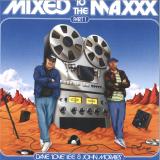
Two of the most prolific remixers in the world of Disco,Dave 'Love' Lee and John Moraleshave teamed up for one of their biggest projects to date - 'Mixed To The Maxxx'. After gaining access from the legendary original artists, the pair take the multi-track tapes of many classic Disco, Funk & Soul tracks and re-work them...to the Maxxx!
Where Remixed With Love stands as Dave Lee's own gold-standard body of work, Mixed To The Maxxx sets that legacy alongside Morales' own decades-deep M+M body of work: Lee brings his musically dense, groove-first touch to the likes of Harold Melvin, Syreeta, Lenny Williams and The Brand New Heavies, while Morales applies his extended, dancefloor-built M+M treatment and crushes the likes of Barry White, The Temptations and Loleatta Holloway, plus Dennis Coffey's breakbeat classic "Scorpio" for the DJs and collectors alike. Both work from original tapes, surfacing parts barely audible or entirely unheard in the source mixes, and both know when to let a classic breathe rather than bury it under modern production. It's a pairing a long time in the making. Lee and Morales first talked about working together around a decade ago, and getting Mixed To The Maxxx off the ground took five years of patient work: tracking down usable stems, securing approvals, and navigating a licensing landscape where much of the best material is now tied up with major labels increasingly cautious about clearing remixes. What's landed here is the product of that graft as much as the pair's shared ear for a great record, the sound of two people who know exactly what they're looking for and are willing to put in the time to find it.
A double 12" sampler in summer 2025 previewed the record's range. A bass-driven overhaul ofThe Brothers Johnson's "The Real Thing" and an extended mix of Philly legends Bell & James' "Livin' It Up (Friday Night)" showcased Lee's side, while an anthemic take on Inner Life's "Ain't No Mountain High Enough" and a tempo-lifted Light Of The World"London Town" flew the flag for Morales. Both drew strong early support ahead of the full LP.
Rapidly gaining momentum, Drumcode’s new DC4 series returns to serve up a collaborative feast for its fourth edition.
Since debuting in summer 2025, DC4 has done exactly what it says on the tin: serving up four elite tracks that deserve the spot to shine.
You know you’re going to get A+ quality when you cue up a Victor Ruiz & Alex Stein collaboration. The Brazilians have a long history of studio jaunts and they deliver the goods via ‘Core’, a brilliant brain-scrambling outing with a strong dramatic arc.
Charles D & Weska follow up last year’s ‘The Answer’ on 1001 Recordings with ‘Can’t Get Enough’ feat. Bexxie. With a foot in prog and techno alike, this is driven by low-slung grooves and Bexxie’s sexy vox, packing an exhilarating energy throughout.
Enter two Drumcode debutants – SCRIPT & OKAYVAL. The former is a fast-rising American artist who is coming off collaborating with Brazilian superstar ALOK, while the latter is a Colombian born, US-based artist whose earned gigs at EDC Vegas and Tomorrowland this year. ‘LIKE THAT’ is a high-energy jam marked by tight rolling percussion and a sharp vocal loop designed for peak-time impact.
Another pair of fresh faces land on the comp as Martin Costas & Gabriel Gil drop ‘It’s All Around’. Lock in for a pulsating slice of prog driven by hypnotic rhythms and lush melodic textures. A versatile cut fit for a variety of party situations.
Two of the most prolific remixers in the world of Disco,Dave 'Love' Lee and John Moraleshave teamed up for one of their biggest projects to date - 'Mixed To The Maxxx'. After gaining access from the legendary original artists, the pair take the multi-track tapes of many classic Disco, Funk & Soul tracks and re-work them...to the Maxxx!
Where Remixed With Love stands as Dave Lee's own gold-standard body of work, Mixed To The Maxxx sets that legacy alongside Morales' own decades-deep M+M body of work: Lee brings his musically dense, groove-first touch to the likes of Harold Melvin, Syreeta, Lenny Williams and The Brand New Heavies, while Morales applies his extended, dancefloor-built M+M treatment and crushes the likes of Barry White, The Temptations and Loleatta Holloway, plus Dennis Coffey's breakbeat classic "Scorpio" for the DJs and collectors alike. Both work from original tapes, surfacing parts barely audible or entirely unheard in the source mixes, and both know when to let a classic breathe rather than bury it under modern production. It's a pairing a long time in the making. Lee and Morales first talked about working together around a decade ago, and getting Mixed To The Maxxx off the ground took five years of patient work: tracking down usable stems, securing approvals, and navigating a licensing landscape where much of the best material is now tied up with major labels increasingly cautious about clearing remixes. What's landed here is the product of that graft as much as the pair's shared ear for a great record, the sound of two people who know exactly what they're looking for and are willing to put in the time to find it.
A double 12" sampler in summer 2025 previewed the record's range. A bass-driven overhaul ofThe Brothers Johnson's "The Real Thing" and an extended mix of Philly legends Bell & James' "Livin' It Up (Friday Night)" showcased Lee's side, while an anthemic take on Inner Life's "Ain't No Mountain High Enough" and a tempo-lifted Light Of The World"London Town" flew the flag for Morales. Both drew strong early support ahead of the full LP.
"Lost Weekend" ist das erste Album von Phoebe Bridgers seit dem mehrfach für den GRAMMY nominierten Vorgänger "Punisher" aus dem Jahr 2020. Bereits ihr gefeiertes Debüt "Stranger in the Alps", veröffentlicht kurz nach ihrem 23. Geburtstag, machte deutlich, welch außergewöhnliches Songwriting-Talent in Bridgers steckt. Mit "Punisher" löste sie dieses Versprechen eindrucksvoll ein: Das Album wurde für seine kluge, eindringliche und zugleich fesselnde Komposition weithin gefeiert und etablierte sie endgültig als eine der prägendsten Stimmen ihrer Generation. Wer nun "Lost Weekend" hört, wird jedoch feststellen, dass Bridgers noch einen Schritt weitergeht. Auf dem neuen Album präsentiert sie sich auf dem bisherigen Höhepunkt ihres künstlerischen Schaffens. Mit bemerkenswerter Präzision verfeinert sie die Motive, die ihre bisherigen Werke ausgezeichnet haben, und erweitert ihren Sound gleichzeitig um zahlreiche überraschende Facetten. Das Ergebnis ist ein Album, das vertraut wirkt und dennoch immer wieder neue Wege einschlägt. Vor ihren jüngsten Pop-up-Shows stand Bridgers zuletzt mit ihrer Supergroup boygenius auf der Bühne, die sie gemeinsam mit ihren engen Freundinnen Lucy Dacus und Julien Baker gegründet hat. Für das 2023 erschienene Album "the record" erhielt die Band mehrere GRAMMY Awards, darunter "Best Alternative Music Album" sowie "Best Rock Song" und "Best Rock Performance" für die Single "Not Strong Enough". Phoebe Bridgers verließ die Preisverleihung zudem als meistprämierte Künstlerin des Abends. Ihren vierten GRAMMY gewann sie in der Kategorie "Best Pop Duo/Group Performance" für "Ghost in the Machine", ihre Zusammenarbeit mit SZA auf deren Erfolgsalbum "SOS". Zuvor war Bridgers als Support-Act auf ausgewählten Terminen von Taylor Swifts "The Eras Tour" zu sehen. Davor absolvierte sie fast zwei Jahre lang ihre eigene "Reunion Tour" mit mehreren ausverkauften Nordamerika-Etappen, rund dreißig Konzerten in Europa sowie abschließenden Shows in Südamerika, Asien und Australien. Auch abseits der Bühne prägte Bridgers die vergangenen Jahre mit einigen der eindrucksvollsten Live-Performances im Netz und Fernsehen, darunter ihr viel beachtetes NPR Tiny Desk Concert sowie ihr Auftritt bei Saturday Night Live. Seit ihrem letzten Soloalbum veröffentlichte sie zudem zahlreiche Singles, Coverversionen und Kollaborationen mit Künstler wie Paul McCartney, MUNA, Bright Eyes, The 1975, Lorde, Taylor Swift und The National.
The long-awaited new vinyl release from Daniel Broesecke features three original tracks and one remix by Ki.Mi., delivering a technically precise and energetic deep-tech statement. Built for the club yet flexible enough for any moment in a set, the record balances drive, groove, and atmosphere with confidence. Side A focuses on modern, immersive deep-tech — forward-moving, hypnotic, and immediately engaging. Side B explores broken rhythms, controlled tension, and deeper movement, closing with a distinctive reinterpretation by Ki.Mi. that adds a new perspective while preserving the core energy of the release. VAM13 isn’t just another vinyl — it’s a focused, cohesive label gem with a strong signature sound. A reliable companion for DJs and a powerful addition to the Afterme catalogue.
Kashatskikh Studio Mastering
Design & Illustration by Kirill Kashatskikh
Straddling an intriguing intersection of Drum & Bass, Jazz, Fusion and unidentifiable electronica, ‘You Won't Find Your Way From Here’ is the debut album from Jhauk.
An extremely talented multi-instrumentalist from Sheffield, UK, Jhauk came to Blu Mar Ten’s attention when, in 2017, he created a wild prog-rock inflected remix of BMT’s track ‘Titans’
Further conversations with Jhauk revealed the depth of his unorthodox approach to electronic music and unearthed a treasure trove of production skills, culminating in the album before you.
Oscillating between the late-night, moody calm of late 50s Miles Davis, John Coltrane & Bill Evans, the riotous 70s instrumentation of Weather Report, the modern cool stylings of Matthew Halsall and the gritty edges of modern D&B production, it’s scarcely believable that this collection of tracks came from one person working alone in their studio. With tempos and time signatures skittering all over the place, Jhauk uses genres as catalysts rather than containers, he finds the interesting stuff in the hinterlands of their structural relationships and tensions.
Talking about the album, Jhauk has strong opinions:
“Drum & Bass emerged as club music, and club music comes with its own logic. Specific structures, specific build-ups, a formula that supports that context.
That's fair enough, but almost 40 years later, why is 99% of D&B still made the exact same way when 99% of the time it's never heard in a club? The same structure, the same formula, barely any development beyond the core idea. Tracks where you can hear 10 seconds of the drop and know almost beat-for-beat how the next 5 minutes sound. No real musical depth or exploration. People regurgitating the same material ad-nauseum but never actually saying anything for themselves.
This period of composition for me was about taking what I love about D&B, the rhythmic energy and potential for creative freedom it presents and really stretching it to its limits. Of taking drum & bass as a starting point and seeing where it ends up without an idea of what that destination might be. Most people would probably never call a lot of the results D&B, but that's okay because it was never the point.”
Dripping with melancholy, euphoria, longing and pure urgency ‘You Won't Find Your Way From Here’ is unlike anything else you’ll hear this year. The sound of an artist entirely unconcerned with impressing peers or performing on ‘socials’; you're hearing a true musician at work, expressing ideas through the skill of his hands, mind and ears. The album’s secrets aren’t revealed with a single play-through, but bears (or even requires) multiple listens to expose its layers.
In previous times, they called this ‘art'.
Straddling an intriguing intersection of Drum & Bass, Jazz, Fusion and unidentifiable electronica, ‘You Won't Find Your Way From Here’ is the debut album from Jhauk.
An extremely talented multi-instrumentalist from Sheffield, UK, Jhauk came to Blu Mar Ten’s attention when, in 2017, he created a wild prog-rock inflected remix of BMT’s track ‘Titans’
Further conversations with Jhauk revealed the depth of his unorthodox approach to electronic music and unearthed a treasure trove of production skills, culminating in the album before you.
Oscillating between the late-night, moody calm of late 50s Miles Davis, John Coltrane & Bill Evans, the riotous 70s instrumentation of Weather Report, the modern cool stylings of Matthew Halsall and the gritty edges of modern D&B production, it’s scarcely believable that this collection of tracks came from one person working alone in their studio. With tempos and time signatures skittering all over the place, Jhauk uses genres as catalysts rather than containers, he finds the interesting stuff in the hinterlands of their structural relationships and tensions.
Talking about the album, Jhauk has strong opinions:
“Drum & Bass emerged as club music, and club music comes with its own logic. Specific structures, specific build-ups, a formula that supports that context.
That's fair enough, but almost 40 years later, why is 99% of D&B still made the exact same way when 99% of the time it's never heard in a club? The same structure, the same formula, barely any development beyond the core idea. Tracks where you can hear 10 seconds of the drop and know almost beat-for-beat how the next 5 minutes sound. No real musical depth or exploration. People regurgitating the same material ad-nauseum but never actually saying anything for themselves.
This period of composition for me was about taking what I love about D&B, the rhythmic energy and potential for creative freedom it presents and really stretching it to its limits. Of taking drum & bass as a starting point and seeing where it ends up without an idea of what that destination might be. Most people would probably never call a lot of the results D&B, but that's okay because it was never the point.”
Dripping with melancholy, euphoria, longing and pure urgency ‘You Won't Find Your Way From Here’ is unlike anything else you’ll hear this year. The sound of an artist entirely unconcerned with impressing peers or performing on ‘socials’; you're hearing a true musician at work, expressing ideas through the skill of his hands, mind and ears. The album’s secrets aren’t revealed with a single play-through, but bears (or even requires) multiple listens to expose its layers.
In previous times, they called this ‘art'.
Trinidad-born, Bristol-based vocalist and multi-instrumentalist Corysan releases his first new single in five years on the newly launched Nine Channel Records.
He met producer and label boss Grant Dell in 2016, the pair hitting it off and collaborating on 2018’s Hijacked single for the latter’s Legsman reggae imprint. Described as “proper righteous business” by Andrew Weatherall before spinning the single on his Music’s Not For Everyone NTS radio show, Corysan deeply intones his lyrics over Dell’s supremely deep, heavyweight roots manoeuvres.
When Dell asked Weatherall’s long-time studio partner Nina Walsh to pick one of the three artists on his planned new label to remix shortly after his untimely passing in 2020, she selected Corysan’s “Heavy Load”, not knowing Andrew had been such a major fan but, at that difficult time, relating to the song’s positive punchline: “The burden that I carry here, can only make me stronger now.”
Nina’s modern dub masterpiece graces the flip of Dell’s two mixes, her seismic bassline and other-worldly music perfectly complimenting Corysan’s message, represented in spatially planted extracts along with a new spirit-flying midsection.
Now it’s time to let “Heavy Load” into the world as a roots milestone from this unique artist, with enough extra weight to anchor it anywhere from sound systems and clubs to front-room dancehalls. Those few years since its creation have given its timeless message of hope and defiance a deeper relevance in turbulent modern times.
MASK Records founder ZentaSkai joins forces with Berlin-based creative Laura Merino Allue under the name Cuddling Monsters, a project centered on analog processes and tactile sound design. Debuting in March 2024, the project explores Detroit-infused House, dub Techno, and minimal soundscapes shaped by raw texture and spatial depth. Working exclusively with analogue instruments, the duo prioritise warmth, imperfection, and presence over polish. Alongside her music work, Laura Merino Allue is also a graphic designer, bringing a strong visual identity to the project’s wider aesthetic.
‘Cuddling Monsters' is inspired by real-life experiences — the raw, imperfect, beautiful moments we move through. We believe in staying present, feeling everything deeply, and embracing the analog flow of the now. It’s about living the moment fully — and like a cuddle on the dancefloor, creating a space where sound holds you, warmth surrounds you, and even the wildest monsters feel safe enough to soften.’ -
Cuddling Monsters
The Cuddling Monsters ‘Vol. 3’ EP opens with ‘Bubble Bloom’, a melodic house track featuring warped, filtered synth tones that set a hazy foundation before a dub-leaning beat settles in. It’s layered with aquatic, bubbly textures and fragmented samples, adding warmth and movement. ‘Warm Waves’ shifts into a lighter, more atmospheric space, increasing the tempo slightly while maintaining a restrained, ethereal character. The B-side closes with ‘Secret Signal’, a long-form techno piece stretching over ten minutes, where evolving synth lines gradually merge with soft, dubby drums and analogue percussion, building steadily without excess before easing out.
From Wisdom Teeth’s recent compilation nagoyaka na kaze / 和やかな風 (quiet wind)—which cast a spotlight on the Japanese city of Nagoya—emerges “2++”, a new label launched by abentis, who curated the compilation alongside Facta and K-LONE as a central figure in the scene. Conceived as a series introducing facets of Nagoya’s underground electronic music to the world on vinyl, its inaugural release is abentis’ debut album, Dim Grow.
Across the album, intricately designed electronic mallet sounds—created using Ableton Live’s physical-modeling synthesizer—take center stage. Fresh and percussive like marimba or kalimba, yet simultaneously carrying an otherworldly, unreal quality, these tones form the core of the record’s sonic identity. In moments of near-silence, a crystalline resonance poised between glass and metal shimmers with subtle shifts in temperature, giving the album its distinctive texture.
While resonating with the sonic sensibilities of fellow Wisdom Teeth affiliates such as K-LONE, Tristan Arp, and Salamanda, abentis’ uniquely strange palette can be traced back to one of his strongest influences: Haruomi Hosono. In particular, Hosono’s mid-’70s tropical-infused solo albums — Tropical Dandy (1975), Bon Voyage Co. (1976), and Paraiso (1978) — serve as a key reference point. Symbolically reflected in Hosono’s marimba and vocal performance at a 1976 live show in Yokohama Chinatown, the marimba functioned as a central instrument for constructing imagined exotic landscapes inspired by Martin Denny and Hawaiian music.
For abentis—who worked at a local jazz bar before becoming active as a hip-hop beatmaker—the language of “tension chords,” a harmonic vocabulary rooted in jazz and R&B that hovers ambiguously between brightness and darkness, forms a consistent grammar throughout Dim Grow.
Behind the album’s core theme of “mallets + tension chords” lies a broad musical lineage: the harmonic sensibility of Claude Debussy, who anticipated the tensions of jazz; the proto-minimalist spirit of Erik Satie; the marimba-centered structures of Steve Reich; their continuation in Japan through Mkwaju Ensemble (with Midori Takada and production by Joe Hisaishi); and the subsequent branches into post-rock, electronica, and ambient music.
Growing up in Nagoya—an industrial city where creative independence is deeply valued—and being rooted in punk and hip-hop counterculture scenes naturally fostered abentis’ affinity with these predecessors. His practice between genres, combined with an encounter with the highly cross-pollinated musical perspective cultivated around Wisdom Teeth, provided the framework through which his own musical language crystallized. Dim Grow stands as the natural culmination of that journey.
Blending elements of Disco and House, deep and funky the EP delivers a rich and highly effective sound palette built on infectious basslines, crisp drums, and a strong feel for arrangement. There is a playful elegance running through the whole release, balancing feel-good vibes with enough depth and musicality to keep things sophisticated. It is a record made for crowded floors, open smiles, and long nights.
10 years ago in 2015, The Golden Lion in Todmorden opened its doors under the guidance of Gig & Waka, Cloudwater brewed their first ever beers, the dance floors of Manchester got introduced to the world of Supernature Disco and from his spare room at home in Bolton Chris Massey started Sprechen.
What followed over the next decade has been a wild ride of amazing people, memorable (though fuzzy!) parties, creativity, art, expression, performance and at the centre of it all of course, the music.
Sprechen has never been one style or sound. A reflection of varied musical tastes without any limitations of style or genres, just a passion to share good music.
Over the last decade, Sprechen has been lucky enough to both work with and meet many like-minded cosmic creatives that share this mindset and that have all played a major role in the story.
Ein Null is a collection of original tracks from some of Sprechen's nearest & dearest who, for the last 10 years, have helped shaped the label via releases, remixes or performing at events.
It's wonky & weird, banging & beautiful, cosmic & consciousness-expanding and it continues to connect the invisible dots of club music and more abstract listening experiences.
From basements & beyond to sunsets & psychedelic socials...we are pleased to present this electronically charged selection of soundscapes courtesy of like-minded musical humans including; The Utopia Strong, A Certain Ratio, Lena C., Gina Breeze, Low Pulse, Psychederek, Lindstrøm, Supernature Disco, PBR Streetgang and of course Chris Massey.
Limited to a run of 300 vinyl with double-sided screen-printed sleeve.
The third release on the B.I.T. Productions ALTERNATIVE label features another 4 Track E.P. with 4 different artists, K69 Dream Frequency, Stu Chapman, Matty D & Avit & A.PLUS.
The K69 Dream Frequency track is a new 2024 version of the K69 release from 2021, itself a cover of the Elevation track from1992, and it's much more energetic but still keeps the catchy vocals and the hands in the air pianos.
Matty D & Avit "Africa" is the Stu Chapman Remix with plenty of pianos, throbbing bass, strong breakbeat and catchy vocals.
Stu Chapman "Just Can't Get Enough" is a banging breakbeat track with a big piano riff, dirty synths and catchy vocal.
A.PLUS is a piano driven breakbeat track with catchy vocals &nice synth melodies that is even better than the A.PLUS track from COLLECTIVE E.P.1.
A great 4 track E.P.
The landscapes of Orlan 19 resembled the dream of a mad cartographer: cliffs were floating above the surface, horizons were bending and vanishing into infinity, and energy vortices were flaring up beneath their feet in psychedelic patterns. The familiar laws of physics didn’t apply here — gravity shifted chaotically, and time flew with unpredictable intensity. As Spacelunch, absorbed in thought, stroked the ground which distorted like a mirage under his touch, Cat’s grumbling echoed simultaneously from the past and future:
— Doc, don’t you think we’re just walking in circles?
— No wonder. That’s how inverse modelling works. Every action we take reshapes the surrounding space.
— Can you explain it in simpler terms? There’s only one genius here.
— Ever heard of the Philadelphia Experiment?
— Of course! You know how much I love sushi rolls!
— Well, I set myself up for this predicament… Back in my university days, we experimented with magnetic fields trying to program them by thought. You get where I’m going, don’t you? The planet is reacting to our intentions. So, focus on visualizing the portal.
The confusion on Cat’s face gave way to a mask of detachment. Clusters of matter began to tremble pulling the threads of reality to their breaking point before finally forming a vortex. Having devoured as much as it could, the vortex snapped shut with a loud pop and dissolved in a blinding flash.
As the scene began to take shape, silhouettes emerged under the soft glow of a desk lamp, evoking an overwhelming sense of nostalgia. A worn desk and a small bed stood by the wall adorned with faded photographs, while the floor let out a gentle creak underfoot. The clearer the interior came to be, the more paralyzing the realization, and the more elusive the explanation for what had happened became.
— Holy…! Cat, are we looking at the same thing?
— Yeah, but… This can’t be real.
Spacelunch slowly approached the window and froze still. A single thought raced through his mind: “The only force strong enough to pull me this far… was love.”
50th ANNIVERSARY EDITION
Heavyweight Vinyl 45 RPM Cut / Original glued prints on Thick Cardboard 700 gram / 2 Separated parts hand-glued / Glossy lamination / PVC outer / 30x30 cm insert with interview to Steve Kuhn by Tony Higgins printed on 250 gram Favini Lanilla Yellow / 20 Pages 21 x 30 cm "Real Book" with transcripts of the songs in the "Real Book" style, handwritten by The Maestro Carlo Spanò with main theme, chords and lyrics printed on 120 gram Shiro Eco paper, 100 gram Favini Crush Alghe. Carlo also edited an introduction with technical analysis of the session, which solves some of the little mysteries around this music gem.
Personnel:
Steve Kuhn - Vocals, Piano
Airto Moreira - Percussions
Billy Cobham - Drums
Ron Carter - Bass
Gary McFarland - Arranged by
Notes:
The album features the group playing Gary McFarland arrangements of Kuhn's compositions, accompanied by a string section on several tracks, with Kuhn delivering stream of consciousness lyrics in an unplanned and largely improvised fashion in the studio. However, that wasn't the only surprising aspect to the session. Airto Moreira's appearance was more by chance than design, he having just popped by the studio, again, unplanned. The 'Steve Kuhn' album is all the stronger for these extemporaneous and serendipitous elements and showcases a band at the top of their game; tight and funky yet relaxed and flowing like molten gold, with stabs and washes of keyboard from Kuhn. Splashes of free playing enter the session, but the band never stray too far from a melodic and harmonious centre of gravity. Kuhn's deft keyboard skills provide melodic embroidery to the impressive rhythmic textures and tonal colours of Carter, Cobham and Moreira. As if the music wasn't enough, the album is given extra significance by the fact that, within a few months of the recording, McFarland would die after being mysteriously poisoned by methadone in a New York bar. In a sense, it is a valedictory album from McFarland, channeled by Kuhn and the band.
It's among the hardest of Kuhn's albums to find so this reissue is most welcome. Luxuriate in the glow of Kuhn's Fender Rhodes and the pliant funky bass of Ron Carter; immerse yourself in the percussive interplay of Moreira and Cobham, a pairing that has rarely sounded so good. This is such an exquisite album; you will lose yourself in its delicate power and find yourself coming back to it again and again.
ReKaB drops another strong four-track EP, rooted firmly in the Detroit sound with a nod to the soulful techno styles that shaped the UK underground in the 90s. His second EP for Cologne's YORE Records. The production, as always, is spot on—sharp, detailed, and endlessly listenable. While the tracks carry the weight of tradition, they’re not stuck in it. There’s a fresh, forward-facing energy here that keeps things exciting.
My Inspiration opens with classic metallic strings and a tight, robotic square bass that locks you in straight away. Just when you think you know where it’s going, the vocal drops—a bold touch that shifts the track into more human territory, giving it an emotional pull without losing its edge.
Soul Brother is a late-night cruiser. Rhodes chords, rolling bass, and lush strings set the scene for a proper cityscape vibe. It’s smooth, it’s warm, and it glides effortlessly, all while keeping enough groove to move.
Future Times kicks things up a gear with more tempo and bite. Acidic basslines and a writhing lead sit alongside deep chords, making it equal parts hypnotic and urgent. It’s the kind of track that turns heads in the club—direct and effective without being predictable.
Wrapping it up, Random Fragments pulls things back into a more reflective, dubby space. The layers are rich but restrained, with chirps and analogue echoes drifting through a hazy atmosphere. It’s introspective but not sleepy, the perfect comedown to round off the EP.
ReKaB’s consistency is something else—each release feels like it’s levelling up, pushing his sound forward without losing its roots. This EP is no different. It’s a tight package of ideas, all executed with precision and style. One for the heads, no question.
Glenn Astro leans into the twilight months of 2024 with a new album from his Delta Rain Dance project. Divining fourth world sensibilities from his restlessly curious studio workflow, Astro weaves a mesmerising tapestry of sound on Music For Autumn which treads the line between horizontal meditation and head- nodding, backroom-ready groove.
Amongst his constellation of myriad aliases, Delta Rain Dance spells out the inspiration Astro takes from fourth world pioneer Jon Hassell. The project first surfaced with a string of tapes, LPs and digital releases around 2018, all carried on a label of the same name to keep Delta Rain Dance enclosed in its own space
independent of Astro's many other musical endeavours.
"I’m really into the world building aspect in science fiction and fantasy," says Astro. "This is my way of creating worlds and spaces that co-exist next to each other. Sometimes they collide but mostly they exist peacefully next to each other or pursue some form of cultural exchange by collaborating with each other."
There's a strong sense of balance and cohesion throughout Music For Autumn, as organic percussion and instrumentation wraps around delicate synthesis and patient drum machine pulses so naturally it's hard to spot the joins. The sound has plenty of room to stretch out, from the mantra-like chimes and rattles of the album opener 'Green Light Fade' to the luxury funk of 'Mmmh, Nice' (featuring fellow Tartelet alumni Nelson of the East). At times the electronic elements seem to entirely dissolve, not least behind the loping strings and tumbledown percussion of 'Second Sleep', while achingly beautiful closer 'Plucked' centres on the fluttering movement and expression Astro elicits from his modular setup.
True to the project's influences, a consistent ambiguous mood lingers in the air over Music For Autumn somewhere between far- flung mystery and comforting familiarity, reliably calm but equally contemplative. It's an odyssey of serenity with enough nuance to make you really think, perfect for the days getting shorter, leaves crunching underfoot and the last fading rays of warmth from the sun.
We’re teaming up with ELUCID and Fat Possum for a limited edition of 300 copies of a Rush Hour black ice coloured edition.
E L U C I D, one half of the illustrious duo Armand Hammer, is here with the full-length follow-up to 'I Told Bessie'. Further experiments in the sonic, expanding on the 'live' side of music paired with the embracing of chaos. Something you haven't heard, or not so for a very long time. E L U C I D is here to reveal the bleakness of reality.
''There is never time in the future in which we will work out our salvation. The challenge is in the moment; the time is always now.''
James Baldwin
A raw, crackling urgency runs through rapper-producer ELUCID’s new album REVELATOR like an underground power line. There is no space here for sepia-toned reminiscences or indulgent self-mythologizing. Intellectual rabbit holes have been filled in with concrete and rebar ; there is nowhere to hide and no off ramp from the audio Autobahn that ELUCID has fashioned—a renegade Robert Moses with gold fronts, bulldozing the homes of the powerful and the complicit. REVELATOR brims with the energy of now, with a refusal to look away. Carpe diem in a murder one mask.
Born in Jamaica, Queens, ELUCID has been on the cutting edge of New York’s underground scene since the mid-2000s. From the beginning, he has defied both convention and expectation. He ran with Okayplayer darlings Tanya Morgan, but his own music eschewed their throwback charm for glitchy noise experiments and bass-swamped culture jamming. His 2016 debut studio project Save Yourself (re-released in a deluxe edition last year) announced him in earnest. But in recent years, his Armand Hammer releases with partner-in-crime billy woods have received significant attention and acclaim. Serving as a followup to his last solo album—2022’s comparatively balmy I Told Bessie—ELUCID hoped to “re-distinguish” himself with REVELATOR, setting himself apart amidst the increasing attention around the music he and his friends are making together.
For ELUCID, this meant setting bold new challenges for himself. One of these was diving further into live instrumentation than ever before—”getting my Quincy Jones on,” as he puts it. The testing ground for this approach was Armand Hammer’s most recent project, 2023’s We Buy Diabetic Test Strips’ Möbius strip soundscapes, warmed with instrumental flourishes and skin-shedding beat progressions. With REVELATOR, though, ELUCID strove to create an atmosphere of chaos, embracing experimental electronics and atonal sample bursts. He worked on much of the album with co-producer Jon Nellen, who comes from a background in avant-garde and Indian classical music. “I wanted to get as freaky as I could at this moment. I wanted people to hear things, maybe for the first time, or in a way they haven’t for a long while,” the rapper explains.
ELUCID arrived at the studio with a collection of noise sources: non-referential samples, glitches and noises. Together he, Nellen, and others created forms out of them and, as ELUCID recalls, “just started playing drums with it.” Their fried, distorted sound was directly inspired by Miles Davis at his most uncompromising—specifically, the tone-clustering funk track “Rated X” from his 1974 double LP Get Up With It. At times, the pairing of rap with avant-fusion sounds also brings Emergency! from The Tony Williams Lifetime to mind, perhaps in an alternate timeline where the late drummer was listening to Ice Cube’s AmeriKKKa’s Most Wanted.
“The World is Dog,” REVELATOR’s lead single, functions as the album’s aesthetic thesis statement. Like the Davis track, the textures are punishing, the tonality is in free-fall, and the driving breakbeat of a groove cuts in and out unceremoniously. Avant-jazz bassist Luke Stewart, who appears throughout the record, holds the whole thing together just long enough for ELUCID to tightwalk over the beat. This tension is exactly where REVELATOR sets itself apart; in a time of drumless loops, and safe soul samples, this is a high-wire act with no safety net. Similarly, the song announces the themes of the album within just a few phrases, evoking the way societies accept and adjust to new levels of debasement and brutality while suffocating under the weight of history: “Can’t clock the kill, all a mystery/Forced past will eating everyone eventually/The world is dog.”
Many of the songs on REVELATOR grapple obliquely with dissolution and disenfranchisement in America and across the world—the grim realities of our domestic sociopolitical climate and our involvement in foreign conflicts. “Much of my artistic and political sensibility comes from the Black arts movement here in New York,” ELUCID explains. “Recognizing the interconnected global struggles against oppression, artists and thinkers created works and actions in solidarity with freedom movements in South Africa and Palestine.” ELUCID cites intellectuals like Amiri Baraka, Kwame Nkrumah, Audre Lorde, Sonia Sanchez, and Nikki Giovanni among his heroes. (One track on the album is specifically inspired by Lorde’s work, “SKP,” citing the scholar’s paper “Uses of the Erotic: The Erotic As Power.”) Songs like REVELATOR’s insistent closer “ZIGZAGZIG,” find ELUCID applying up-to-the-minute messaging, making explicit reference to the conflict in Gaza: “Feed a war machine…from river to sea, in lieu of peace.”
Despite ELUCID’s preference for cacophonous system overload here, the rapper also provides moments of respite. Recorded at The Alchemist’s Los Angeles studio, the laid-back, wheezing “INSTANT TRANSFER” is a collaboration with billy woods, which crystallizes their shared sense of creative determination. “With much momentum behind us and even more on the horizon, I knew a purpose, and that every step was ordered to that purpose,” ELUCID said of the experience. Meanwhile, the jittery “HUSHPUPPIES” is a playful anomaly on the track list, providing a snapshot of ELUCID watching his grandparents in the kitchen while preparing for Friday night fish fry dinners.
“Love still rules over on this side,” ELUCID says. ”I’m raising a family. We are making meaning and finding joy in the midst of all the fucked up-ness of everything around us because the alternative is cowardice and slow death. We remain rooted. We celebrate our people and our wins. Struggle is necessary.”
“IKEBANA” is one of ELUCID’s strongest statements of purpose on the record, blending the record’s heaviest themes with its most hopeful sentiments. supported by a shoutalong refrain and an urgent prog-funk groove. Breaking away from images of dissolution and crumbling societal systems that populate REVELATOR, ELUCID notes that the only way to navigate life’s bleakest landscapes is to cling to love and believe in those around you—to look forward toward something better that may or may not be possible. For the rapper, one of the album’s most trenchant lines comes during a centerpiece of a beat drop: “Being alive/I must look up.”
“The lyric ‘being alive I must look up’ is important especially in the context of this album. Much of the album imagery is harsh and reflects the actual doom some of us experience. But still I/we exist,” ELUCID explains.
Every artist is, in one way or another, the product of their time, bound by life’s leaden gravity to operate within the space of that which is already known. But there are some who are able to shake free of these ties, to shape the culture as it unfolds, to make the present their own.
Revelation, as a concept, points to the scales falling from people’s eyes—something that has been hiding in plain sight becoming clear. “The revelator relates to things that have been talked about, things that have been forecasted,” ELUCID adds. “And now they’re really here, and everyone sees it. And there’s no escaping.” REVELATOR plays out with the unmitigated power of those storms, laying waste to any genre conventions in pursuit of a certain physicality. Here, ELUCID develops a wholly distinctive musical language to explore our fractured modernity.
REVELATOR's packaging was designed by longtime Armand Hammer / Backwoodz art director, Alexander Richter.
There is propably no single event that has as potent of an
effect on the german Techno- scene as the fall of the Berlin
Wall. A city divided suddenly, in one single night, became
uni¦ed, opening up both sides for the new experiences and
ways to view life the other might have. Berlin’s eastside with
it’s empty, unused warehouses proved to be a fertile breeding
ground for free spirits and those carrying a newfound ¦re in
their eyes. This was the zero hour. The Consolidation. And it
is this mindset, spirit and ¦re of Consolidation that Shaleen
conjures on her debut EP of the same name. The title track
opens up by sampling John F. Kennedy’s legendary “Berlin”
speech from 1964, before absolutely caving in the concrete
with a beyond-heavy kickdrum and a very stripped down but
effective 909-percussion section. Spursed in along the track’s
runtime are droning sirens and JFK continuing to beckon you
to lose yourself in the metropolitan bowels. This is the
anthem of a past revolution. On Deconstruction, Shaleen
goes down a slightly more basement oriented route. The
Percussion shares the title track’s stripped down
effectiveness, but the Groove is more rolling, the Vocal
samples are more distorted and there are sharp synths
cutting through the beats like shards of broken glass. Of
course, a revolution wouldn’t be complete without a mob so
both Cadency aka Hector Oaks and New Frames have put
their spin on the EP’s title track. Mr. Cadeny is up ¦rst and,
being no stranger to revolutionary anthems, has given
Consolidation an almost contemplative mood in his Remix,by adding a very subtle melody. This doesn’t mean it hits any
less hard, mind you, there is an incredibly strong drive to the
track, paired with an almost constantly looping vocal and the
sirens going into overdrive, this would be the track to drive
crowds into a frenzy. Meanwhile New Frames’ track is the
kind of thing you wouldn’t want to encounter alone in a dark
alleyway. The sub-basses are heavy enough to terraform
Mars, the Jungle-esque Synthlines roar and snarl at the
listener and every drop feels like a right hook to the chin. The
original’s vocal is cut in a way that it only adds to the
stomping rhythm, putting you in a mood to throw bricks. So
while this record showcases an aggressive sound and a
mood for revolution, it is important to remember it’s title.
Consolidation. It echoes a message of uni¦cation. Of
standing together. Because together we are, have been and
will always be stronger than by ourselves.
Five trombonists and a three-member rhythm section: that sort of unique musical synergy is what Nabou Claerhout brings to life with her own Trombone Ensemble. For years, such a project had been one of the dream projects on her bucket list, and thanks to Antwerp based cultural actor Rataplan, she already saw the creation become a reality in spring 2022. In the summer of that year, the eight-piece ensemble opened both Gent Jazz and Jazz Middelheim.
In January 2023, Nabou was artist in residence at the Brussels Jazz Festival in Flagey, where she presented the Trombone Ensemble as one of three carte blanche projects. In a sold-out Studio 4, American trombone legend Robin Eubanks joined the line-up as a special guest, having previously also contributed during the studio recordings of the young collective during. The band's self-titled debut album will be released on November 3rd 2023 via W.E.R.F. Records.
Nabou composed the entire repertoire for this Ensemble herself, and did so with a fully open vision. While writing the music, she explored the trombone's wide possibilities: "The aim is to both indulge you with warm, soft, carrying parts and then afterwards discover the trombone's spicy and cordial character." That rhythmic playfulness, which we hear more often in Nabou's compositions with her acclaimed quartet N?BOU, also seeps subtly into this band's sound.
Despite the 'unusual' line-up of five diverse jazz trombonists, each with a different background, you still get to hear a very homogeneous sound, which is full of playfulness and small details. "I tried to make room and focus for each individual. And of course there is also a starring role for the rhythm section with guitar, double bass and drums."
When Nabou started looking for the dream fellow jazz musicians for this project, she ended up with artists from her own country, Belgium, but also from far beyond the country's borders: The Netherlands, the UK and Germany. "In selecting the trombonists, I looked for specific timbres, but also for personality. It is important that there is a good balance in playing together, but also that each musician is strong enough on his or her own for the solo parts."
Wanting to push boundaries in her approach to both compositions and the trombone as an instrument, the real crème de la crème of the newest generation proved indispensable. "I selected a handful of European trombonists with whom I may or may not have already played, but who, above all, inspire me very deeply. They are all young people who have a lot to offer and already have significant projects to their name in their own region or country."
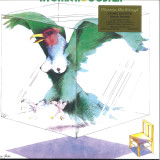
The incipient incarnation of Atomic Rooster with Vincent Crane (organ/vocals), Nick Graham (vocals/bass), and Carl Palmer (drums) was together just long enough to document its 1970 debut. Prior to the last-minute addition of Graham-- the only bassist Atomic Rooster ever had -- the band emerged from the remnants of the then recently defunct Crazy World of Arthur Brown.
The material was primarily courtesy of Crane and consisted of heavy and versatile sides. The versatility is evident throughout the impressive array of styles ranging from the folk-inspired pastoral songs via bluesy horn arrangement and contrasting driving rockers and jazzy spells. Lyrically, Crane reveals his penchant for dark imagery. Support at the time was bolstered by strong live appearances, positive word-of-mouth, and significant BBC Radio sessions.
This is the second time out for the Wormholes on AllChival following on from their You Never See the Stars When it Rains anthology release. This one is a previously unreleased album recorded in a concise burst of seven nights in Dublin’s Sun Studios in the spring of 1996. It was originally envisaged as being The Wormholes’ second album, the follow up to their 1994 debut Chicks Dig Scars. Unfortunately the end result of the sessions - Parijuana - would not only be ignored by their label of the time (Roadrunner Records) - but would also just as quickly be dismissed by the band themselves.
Eamonn Crudden, the manager of the band, had manged to extract some money from Roadrunner to record demos of new tracks as soon as the release cycle for their debut was over. The budget was so tight that it covered studio time but was not even enough to buy the master tapes. With things going south with the label – a classic 90’s tale of the A&R man who championed their cause heading off elsewhere the minute they signed - the intention was to go in and aim to record an album rather than demos - with the intention of releasing it on another independent label to keep the momentum around the band going.
However by this stage the Wormholes were totally wrapped up in listening to Can, Faust and generally exploring music based on casual recording, improvisations and extemporization. For them the album was too ‘rock’ and – having been dropped by Roadrunner - they no longer felt under any obligation to release it. To them it was time for a fresh start. Their next recordings would not be ‘for’ anyone but themselves. Today bassist Anto Carroll admits that “at times we were our own worst enemies” and with the benefit of hindsight both he and guitarist Graham Blackmore wish they had gone ahead and released this album at the time. However, back then, they thought they could do better and they did go on to make inventive and unique sounding versions of some of these songs with Stan Erraught producing just a short time later. These recordings were eventually released by Dead Elvis in 1999 - along with a couple of ‘adjusted’ tracks from the Sun Studios sessions - on Parijuana: 4 Years in Captivity.
It’s highly unlikely that listeners today will share the band’s view that the abum was too ‘clean’. This version of Parijuana is dirty, raw, messy with plenty of experimentation and extemporisation. The songwriting is as strong as that on their Chicks Dig Scars debut. The music is played with a new confidence and swagger, very much the sound of a band rooted in a wave of US ‘lo-fi’ finding their own sound. It’s the missing link between their conventional Pavement/Sebadoh influenced debut to the more drawn out, free roaming and extemporised second album proper Scorpio The Album.
Long Beach legend Scotty Coats links the West Coast eclecticism of Stones Throw to the NYC cool of DFA and Rong to the Balearic gods of DJ Harvey et al. He personally introduced Be With to Ned Doheny 10 years ago and he was immortalised on Smith & Mudd's last LP. And he's the main man behind the mysteriously titled duo Todd Russell & The Dangerous Coats, alongside Erick "Todd" Coomes (Lettuce founder/bassist).
In very real danger of being lost forever, we unearthed two of their private recordings and present them as a double A-Side 12", adorned with S-T-U-N-N-I-N-G artwork, courtesy of Arizona artist Frank Gonzales.
"Playa Larga" is a melodic, mellow masterpiece and is quintessentially Balearic. It's stretched out, low slung, guitar-soaked drum-machine soul music. It's multi-layered and contains multitudes: it builds and builds and builds and mesmerises as it does so. On the flip, "1900 Ocean Avenue" is a super slo-mo, sunbaked drug-chug which is already blowing minds thanks to early leaks of this cosmic, psychedelic detonation.
On first listen back, Erick said to Scotty: “So wait, nothing really happens, I mean nothing bad happens but nothing really happens”. Apparently these tracks were a bit foreign for Erick, musically, because of the lack of structure in the songs.
One morning, years later, Erick called Scotty and excitedly declared: “dude, I get it now!”. He was listening to random music with a lady friend while watching the sunrise in his 1900 Ocean Ave apartment and "Playa Larga" came on randomly. He'd forgotten all about it and said he had to get up and see what song it was because "it was the perfect soundtrack for a psychedelic sunrise over the ocean."
And that's exactly how we came across it, circa 2018, randomly popping up on a playlist while we were busy doing other things. It stopped us in our tracks but, when trying to find any info on iTunes, we were out of luck. It was only years later that we worked out Scotty had sent it to us. Ever since, we've been working on getting this out to you all. It's finally time.
We've only 500 pressed for the world, with many of them spoken for by those lucky enough to be already ITK, so these are gonna fly: be warned!
Scotty is a world class raconteur so we'll hand over to him to explain how these songs came about and why they mean so much to him in the context of his wider raison d'être:
"These were made 13 years ago when I was a new dad and left my job at Ubiquity Records to provide security for my newborn son, Nolan Liam Chai Coats. I became miserable working a job outside of music for the first time in my life and I was laid off 4 months into it. I was left wondering how the fuck am I going to provide for my family?
I lived in Long Beach and Erick lived a few blocks away. I would walk to his house when Jen finally got Nolan to sleep so I could escape my panic, drink some beers (is it beerlearic?) and make some music. He lived overlooking the ocean with the Queen Mary on the horizon, so I guess mellow Long Beach nights unintentionally inspired the music. These songs were the first two songs we ever made and they embody the desperation and hope I really needed at that time. 12 years later, when Rob at Be With expressed an interest in releasing it, we had Erick's brother Tyler Tycoon Coomes play drums on it at Jazzcats Studio in LBC, with Jonny Bell.
Shortly after I was laid off, I discovered The Stepkids. I was blown away by "Shadows On Behalf" and sent it on to Gilles Peterson. He played it on Worldwide the next day. The Stepkids pulled me back into music and made me realize I wasn't prepared to do anything but be involved with music. After I heard their unreleased album, I knew there was something there so I sent it to my good friend Jamie Strong who was at Stones Throw at the time. Jamie passed it along to Peanut Butter Wolf and the band asked me to be their manager. I didn't think I was the right guy for the job but wanted to see them do well so I told them I would help shop their album. Jamie suggested I take his place at Stones Throw, just as he did when he left Ubiquity Records. I always joke that Jamie can call me Scotty Coat Tails because I had been riding his for years.
Wolf told him that "Scotty is a nice guy but has horrible taste in music", which was ironic because he was literally trying to sign the band that I brought him. The Stepkids signed with Stones Throw and found a real manager. 6 or so months later Jamie sent me a note saying "Stones Throw is hiring and you should apply lol". I told him I was going to send my resume and the subject of the email was to read I HAVE GREAT FUCKING TASTE IN MUSIC. I did just that and got a call the next day from their new GM asking me to come in for an interview. When I walked in I was in Wolf's office where I had been 6 months before, signing The Stepkids
deal. Wolf and Jason McGuire were asking me some questions and wanted to introduce me to Jeff Jank. Jank walked in and said "Isn't this the guy that Jamie wanted to bring on 6 months ago?" They confirmed and he threw his hands up and walked out saying "I've seen enough". I got the job. I worked there for 2 or 3 years until I left to join forces with Jamie Strong at his label and stayed there for almost 7 years."
Scotty wanted to use a painting by his good friend, Frank Gonzales, for the front cover image. Frank was incredibly generous in letting us use this one, and Scotty was completely honoured. We think you'll agree, it's pretty striking. Simon Francis carefully mastered the original audio for both tracks and Cicely Balston's precise cut for Alchemy at AIR Studios ensures this double A-side 12" sounds appropriately outstanding. The immaculate Record Industry pressing will ensure these previously unheard, recently discovered recordings finally get a chance to shine.
Recently created Guatemalan label Identidata is extremely proud to present Sacratávica, the very first collected survey of Joaquín Orellana’s compositions. With a career spanning over 50 years of activity across contemporary art, performance, theater and sound art, Orellana is a highly singular figure in Guatamalan culture. Often considered to be the sole avant-garde composer in the country, his work has a deeply interdisciplinary quality. Most of his music was created using an orchestra of his self-built instruments, also known as Útiles Sonoros. Sitting at the border of sculpture, sound installation and musical instrument, these Útiles Sonoros, which he’s been building and developing since the late ‘60s, are at the center of his artistic activity.
Aside the obvious formal aspect, his compositions also have a strong political message, while being deeply rooted in Guatemalan history, folklore and various identities, both indigenous and modern. Playful opener “Híbrido a presión” was one of the first of his compositions to be performed entirely using the Útiles Sonoros. However, due to its technical complexity the piece was seldom reproduced, except for a later staging that Orellana directed in Louisville, Kentucky. “Ramajes”(1984), initially titled “Evocación profunda y ramajes de una marimba” , tracks the many incarnations of the marimba across history, before reaching its final form as one of Orellana’s instruments by combining vibrational percussion with melody and poetry fragments.
The title track, ‘’Sacratávica’’, represents one of the most ambitious and emotionally charged pieces from the album. An expansive 22 minute composition mixing textures that mimick field recordings and multi-layered vocal melodies culminating in choral catharsis, ‘’Sacratávica’’ deals in baroque maximalism without ever feeling cluttered. For the casual listener, the track immediately stands out, not only because of the moving vocal layered harmonies, but also through its epic scale and strong sonic narrative. Dubbed “Las voces del Rio Negro”, the piece references the massacres that took place in Coban during a period where the army massacred numerous towns, throwing the bodies in the nearby Rio Negro (the Black River).
Final track, “Fantoidea”, a glistening, metallic ambient improvisation, was a reimagining of Disney’s Fantasia using Paul Dukas’s “The Sorcerer's Apprentice” as inspiration.
Despite his work being presented in numerous exhibitions and concerts in various prestigious museums and theaters across the world, very few quality recordings exist to date. The only previously available recordings so far or either of very poor quality or did not receive enough attention. This is why, although The compositions presented not being previously unheard, having them all together in a high quality audio object represents a key moment In Guatemalan and Latin American culture.
Recorded on August 31st 2016 during a historical concert attended by over 1000 people at the Centro Cultural Miguel Angel Asturias, designed by Efrain Recinos, one of Guatemala’s leading contemporary artist from the last century, the four pieces were performed by a selection of over 90 musicians (including 60 vocalists) who were already familiar with Orellana’s instruments, cherry-picked from the Guatemalan Conservatory.
For the people behind Identidata, it has been a long and arduous process to put together these pieces. Trying to offer a panoramic view of Orellana’s work, the curators have selected pieces ranging from different decades and artistic periods. Sacratávica is a portrait of a singular artist whose work speaks not only to his culture, but carries strong aesthetic sensibilities that resonate universally.
ENARCHY is the debut album by Leipzig-based producer and singer Maria die Ruhe. It is the result of a deep and thorough look the
artist took into both her own inner workings and the world around her. In 14 tracks, she explores different types of energy,
oscillating between head and heart. Final destination of this sometimes painful process of self- exploration is the embodiment of
her own power and creativity; the realization, that she manifests her role as catalyst, healer, and fighter for freedom and equality
by reporting on her experiences. These songs are about nothing less than that. And you can also dance to them.
In a musical sense, Maria surpasses herself compared to previous releases. She is bolder, more explorative and dissolves genre
boundaries. Acoustic instruments like the cello and the piano unite playfully with electronic beats. Her expressive voice speaks and
sings from the lowest lows to the loftiest heights. Her self-disclosing lyrics communicate the deepest messages of the soul. One can
tell right away: something is at stake here, this is about a real human living through something real, and now reporting from the
front lines of the human experience.
With lines like „Things are changing all the fucking time“ (ENARCHY) she posts a reminder for the current zeitgeist and the resulting
global uncertainty. „Some things need to be destroyed before they can heal“ is a demand for openness towards change, even if it is
challenging, requires energy, and leaves behind some scars.
In ART IS THE ONLY REAL TRANSLATION OF LIVING FOR ME, Maria uses sentences like „I’ve been trying to please you, I got headaches
and I still don’t fit“ to express her desperation with existing structures of injustice and the lack of livability of the artist lifestyle.
„Ah, you’re an artist - and what do you do professionally?“ Everyone loves music and art! When, o when, will the understanding
follow that there need to be people who make this art as a central part of their lives?
Frustration takes turns with hope and a growing acceptance of the self. In EQUALISTA, Maria discusses antiquated conditions like the
inequality between the sexes in a kind of manifesto, with a simple proposal for solution: „Let’s both be selfish and raise our
energies, to create a whole world with all the things we need.“
In WE BELONG TO NEVER, Maria sings about the everyday horror of toxic relationships. Lines like „Disengagement and rage, I’ve become such a slave.“ express the despair of the emptiness that results from a lack of affection. She also describes treacherous
narcissistic manipulation: „You cut me small just to feel tall.“
In SKIN, she confesses: „I’m not as enough as everyone else.“ and describes the long and painful way from rejecting her own body
to loving herself unconditionally. „I hate what I feel, while I pretend to be free“ means she doesn’t want to be reduced down to
her body, doesn’t want to be seen as an instagrammable, thoroughly designed product; she wants to be acknowledged as an
individual.
In LOST, she poses a question that many are currently forced to ask themselves: „What do we do with all this solitude?“ Maybe
making use of the reclusion by exploring the shadow self. „Can you cope with the truth?“
The conclusion: energy is being freed up through the means of self-experience and living through the personal darkness -
ENARCHY. The realization: every human being is self-determined and should simply do what they feel. It is everyone’s right to
choose their own life’s path. Here, intuition serves as a signpost. This is both feminine and strong.
ENARCHY celebrates an embodied anarchy by working through the personal shadow and the genuine, healthy integration of the
struggle survived - not as a destructive rebellion, but as a testament of shameless, joyful self-empowerment.
„In the end, I want to be alive, because in reality, I’m free.“
Biosphere is the main recording name of Geir Jenssen (born 30 May 1962),(1) a Norwegian musician who has released a notable catalogue of ambient electronic music. He is well known for his works on ambient techno and arctic themed pieces, his use of music loops, and peculiar samples from sci-fi sources. His 1997 album Substrata was voted by the users of the Hyperreal website in 2001 as the best all-time classic ambient album.
Patashnik was originally released by R&S Records/Apollo in 1994. It was number 1 in NME´s Independent Chart in March 1994 and reached number 50 in the UK official album chart.
The track Novelty Waves was used in Michel Gondry's Levi's 501 Jeans "Drugstore" spot, and holds - according to the Guinness World Records 2004, the record for "Most awards won by a TV commercial".
One reason why Jenssen's work stands out from the flood of early '90s ambient/techno releases is his strong sense of the quirkily creepy -- not in an Aphex Twin mode, but in his own particular way. The contrasting samples of a child quaveringly saying, "We had a dream last night," followed by a rougher sample saying, "We had the same dream," gives opening number "Phantasm" an unsettling feeling. Intensified by the, on the one hand, pretty, on the other, disturbing music, buried synth strings and a soft pulse accentuated by clattering noises deep in the mix, it kicks off the striking Patashnik very well. Though not as openly dark as acts like Lull, for instance, Biosphere still has an edge which isn't just melancholic, it's downright ominous at point. There's the slow crawl of "Startoucher," for instance, with its buried vocal snippets and deep bass drone, or the blend of the space signal atmospheres of "Mir" into the low, brooding intro to "The Shield." Not everything is so shadowy, though, Patashnik is primarily a relax and chill listening experience, but not without its gentle high points. "Novelty Waves," which became a crossover single in some quarters, has a good dancefloor sharpness to it even as Jenssen slyly sneaks in odd drones and samples through the mix. The opening snippet talking about an extraterrestrial disc jockey on "SETI Project" is good for a smile, as well as acting as a sharp lead-in to a fast rhythm track. Mostly, though, things continue on a deliciously unnerving pace throughout, gentle enough to go down easy but still just off enough to ensure you can't call this new age folderol for the rave generation.
RFBCOLOURS 002 bring L'Atelier on board. This pair from Amsterdam bring you a 4 track EP with a digi only bonus. It starts off with Again, which hits that great sample hard and gets the party started on a disco vibe with a house twist. Then theres XTC which carries on where the A1 left off. On the flip we see a serious piano workout on top of a a grooving drum arragement. To finish off the vinyl package we see Times Are Ruff take the remix on a deeper tip with some seriously crunchy basslines and rolling groove. Then if that wasnt enough theres a digital bonus that will warm up any willing club room.
Feedback:
Telonius (Gomma)
'thanks nice one'
Laurin Fedora (Sleazy McQueen (Morris Audio / Paper Recordings))
'I'm looking forward to this vinyl. Nice return to late 90s filter disco!'
Two of the most prolific remixers in the world of Disco,Dave 'Love' Lee and John Moraleshave teamed up for one of their biggest projects to date - 'Mixed To The Maxxx'. After gaining access from the legendary original artists, the pair take the multi-track tapes of many classic Disco, Funk & Soul tracks and re-work them...to the Maxxx!
Where Remixed With Love stands as Dave Lee's own gold-standard body of work, Mixed To The Maxxx sets that legacy alongside Morales' own decades-deep M+M body of work: Lee brings his musically dense, groove-first touch to the likes of Harold Melvin, Syreeta, Lenny Williams and The Brand New Heavies, while Morales applies his extended, dancefloor-built M+M treatment and crushes the likes of Barry White, The Temptations and Loleatta Holloway, plus Dennis Coffey's breakbeat classic "Scorpio" for the DJs and collectors alike. Both work from original tapes, surfacing parts barely audible or entirely unheard in the source mixes, and both know when to let a classic breathe rather than bury it under modern production. It's a pairing a long time in the making. Lee and Morales first talked about working together around a decade ago, and getting Mixed To The Maxxx off the ground took five years of patient work: tracking down usable stems, securing approvals, and navigating a licensing landscape where much of the best material is now tied up with major labels increasingly cautious about clearing remixes. What's landed here is the product of that graft as much as the pair's shared ear for a great record, the sound of two people who know exactly what they're looking for and are willing to put in the time to find it.
A double 12" sampler in summer 2025 previewed the record's range. A bass-driven overhaul ofThe Brothers Johnson's "The Real Thing" and an extended mix of Philly legends Bell & James' "Livin' It Up (Friday Night)" showcased Lee's side, while an anthemic take on Inner Life's "Ain't No Mountain High Enough" and a tempo-lifted Light Of The World"London Town" flew the flag for Morales. Both drew strong early support ahead of the full LP.
нет на складе
Последняя поставка 5 дней назад доступно для дозаказа без гарантии
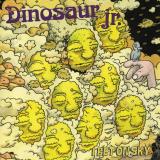
I Bet on Sky is the third Dinosaur Jr. album since the original trio – J Mascis, Lou Barlow and Murph – reformed in 2005. And, crazily, it marks the band’s 10th studio album since their debut on Homestead Records in 1985. Back in the ‘80s, if anyone has suggested that these guys would be performing and recording at such a high level 27 years later, they would have been laughed out of the tree fort.
The trio has taken everything they’ve learned from the various projects they tackled over the years, and poured it directly into their current mix. J’s guitar approaches some of its most unhinged playing here, but there’s a sense of instrumental control that matches the sweet murk of his vocals (not that he always remembers to exercise control on stage, but that’s another milieu). This is head-bobbing riff-romance at the apex. Lou’s basswork shows a lot more melodicism now as well, although his two songs on I Bet on Sky retain the jagged rhythmic edge that has so often marked his work. And Murph…well, he still pounds the drums as hard and as strong as a pro wrestler, with deceptively simple structures that manage to interweave themselves perfectly with his bandmates’ melodic explosions.
After submerging myself in I Bet on Sky, it’s clear that the album is a true and worthy addition to the Dinosaur Jr. discography. It hews close enough to rock formalism to please the squares. Yet it is brilliantly imprinted with the trio’s magical equation, which is a gift to the rest of us. For a combo that began as anomalous fusion of hardcore punk and pop influences, Dinosaur Jr. have proven themselves to be unlikely masters of the long game.
Great Television unfolds as a loose, emotionally driven narrative about navigating love, identity, and self-destruction against a backdrop of memory, movement, and Southern imagery. It begins with “Sunset Promenade,” where a deep, possibly lifelong bond offers comfort amid internal turmoil, establishing a desire for connection strong enough to withstand a restless mind. This sense of identity expands in “Girls of Atomic City,” where independence and womanhood are celebrated, though tinged with performance and uncertainty.
As the story progresses, songs like “Okeechobee Mud” introduce instability and intensity, portraying relationships that are passionate but corrosive, where love becomes inseparable from pain. “Thiokol Tripwire” honors the lives lost in the 1971 Thiokol Chemical Explosion and those affected in the south Georgia community of Woodbine. “Razorwire Wall” reinforces this devotion to chaotic love, suggesting loyalty even in destructive circumstances. A turning point arrives with “The Easy Kind,” where Cook reflects on attempts at self-repair, acknowledging her contradictions and rejecting simplicity in favor of a more fractured self-understanding. This awareness deepens in “Caldonia and The Love Convoy” and “In Your Veins,” where freedom blurs into recklessness and love takes on addictive qualities, revealing her complicity in cycles of harm. “19th Nervous Breakdown” provides crucial context, tracing her instability back to a turbulent upbringing marked by neglect and emotional disorder. “Feverfew,” leaves the narrative unresolved, as she recognizes her repeated attraction to destructive paths yet continues to follow them. In contrast, the closing track “Lightly” offers a rare glimpse of pure, protective sisterly love. Altogether, the album portrays a cyclical journey of longing, damage, and partial self-awareness, where clarity emerges but transformation remains uncertain.
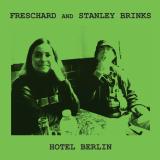
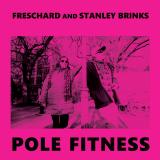
Stanley Brinks is renowned for his unique anti-folk style: both playful and suggestive, insightful and entertaining. Brinks was born in Paris, France, in 1973. He studied a bit of biology and worked as a nurse for a while. Half Swedish, half Moroccan, strongly inclined to travel the world, he soon began spending most of his life on the road and developed a strong relationship with New York.
By the late 90s he’d become a full time singer-songwriter – André Herman Düne – as part of three piece indie-rock band, Herman Düne alongside his brother, David-Ivar. Several albums and Peel sessions later and after a decade of touring Europe, mostly with American songwriters such as Jeffrey Lewis, Calvin Johnson and early Arcade Fire he settled in Berlin. The early carnival music of Trinidad became a passion, and in the early 21st century he became the unquestioned master of European calypso, changing his name to Stanley Brinks.
Under this moniker he has recorded well in excess of 100 albums, collaborated with the New York Antifolk scene on numerous occasions, recorded and toured with traditional Norwegian musicians, and played a lot with The Wave Pictures.
Freschard grew up in a farm in French Burgundy. Aged 18 she moved to Paris, where she baked pies and cakes in a cafe. There, a local musician and regular customer called Stanley Brinks wrote a few songs for her to sing. Homeless in Paris, she saved up just enough money to get herself a ticket to New York. There she found an old electric guitar and started writing her own songs. In 2004 she moved to Berlin, where she recorded her first LP, "Alien Duck". Her second album, "Click Click", recorded in 2006, features electric guitar by Stanley Brinks. On her third album, she plays the drums herself. On her fourth “Shh...” she also plays the flute, and she breaks out the washboard on her fifth “Boom Biddy Boom”. Press for Stanley Brinks and Freschard.
“an absolute joy.” Q.
“...a set that’s as wistful and charming as it is playful and self-concious.” Uncut.
“quietly charming” Pitchfork.
Stanley Brinks is renowned for his unique anti-folk style: both playful and suggestive, insightful and entertaining. Brinks was born in Paris, France, in 1973. He studied a bit of biology and worked as a nurse for a while. Half Swedish, half Moroccan, strongly inclined to travel the world, he soon began spending most of his life on the road and developed a strong relationship with New York.
By the late 90s he’d become a full time singer-songwriter – André Herman Düne – as part of three piece indie-rock band, Herman Düne alongside his brother, David-Ivar. Several albums and Peel sessions later and after a decade of touring Europe, mostly with American songwriters such as Jeffrey Lewis, Calvin Johnson and early Arcade Fire he settled in Berlin. The early carnival music of Trinidad became a passion, and in the early 21st century he became the unquestioned master of European calypso, changing his name to Stanley Brinks.
Under this moniker he has recorded well in excess of 100 albums, collaborated with the New York Antifolk scene on numerous occasions, recorded and toured with traditional Norwegian musicians, and played a lot with The Wave Pictures.
Freschard grew up in a farm in French Burgundy. Aged 18 she moved to Paris, where she baked pies and cakes in a cafe. There, a local musician and regular customer called Stanley Brinks wrote a few songs for her to sing. Homeless in Paris, she saved up just enough money to get herself a ticket to New York. There she found an old electric guitar and started writing her own songs. In 2004 she moved to Berlin, where she recorded her first LP, "Alien Duck". Her second album, "Click Click", recorded in 2006, features electric guitar by Stanley Brinks. On her third album, she plays the drums herself. On her fourth “Shh...” she also plays the flute, and she breaks out the washboard on her fifth “Boom Biddy Boom”. Press for Stanley Brinks and Freschard.
“an absolute joy.” Q.
“...a set that’s as wistful and charming as it is playful and self-concious.” Uncut.
“quietly charming” Pitchfork.
John Edwards’ early releases, mainly at Aware Records under the tutelage of Floyd Smith, thrilled soul lovers with his consummate vocals and impressed the multi-million selling Spinners enough to hire him to replace their revered vocalist Philippe Wynne.
Edwards’ first Aware hits, such as ‘Stop This Merry-Go-Round’ and ‘Careful Man’, led to his eponymous debut LP. As the label’s major male artist, the company followed up by recording a second album and were probably anticipating a further hit. But Aware collapsed thanks to the label owner’s criminal activities, putting paid to that proposed disc.
When the master tapes were uncovered in the ’90s, the tracks were issued on the 1996 Kent CD ‘Careful Man’ and handful of singles were issued to great acclaim.
At last, we have collected the tracks on vinyl and the beauty of ‘Tin Man’, ‘How Can I Go On Without You’ and ‘Cold Hearted Woman’ can be enjoyed as they were originally intended. Modern soul fans will be able to sleep easily again.
CROWD welcomes Gina Demarchi with 'Other Side', a driving 4-track EP that adds a new voice to the label's growing roster. Born and raised in Buenos Aires, Gina Demarchi has spent the last nine years refining her signature hypnotic blend of tribal-infused grooves, rolling percussion and emotionally charged energy, showcasing a sound rooted in 2000s techno and dubbed chords. As a resident at the event series Fungi and founder of her own label Seduction, she has built a strong reputation through performances all across South America, Europe, Australia, Asia and beyond. Opening track 'Never Enough' immediately sets the tone. Powered by a tom-driven bassline, huge open hats and uplifting chord melodies, it moves with a propulsive forward energy that plants the listener firmly on the dancefloor from the first bar. Next up on the A-side is 'I'm In Love', where endlessly echoing warm chords churn above a pulsing low end while marching claps and driving percussion lock the track into pure peak-time territory, serving as a reliable anchor for any uncompromising techno set. The title track 'Other Side' leans deeper and groovier, combining a gliding bassline with swinging chord stabs and crisp percussion that give full focus to the track's powerful low-end movement. Sitting somewhere between hypnotic and relentless, it is perhaps the clearest expression of what makes Gina Demarchi's sound so compelling. Closing cut 'Lonely' strips things back but lands with maximum impact: fast-paced chord repetitions, tight closed hats and sub-heavy drums generate a sense of momentum, creating a track that feels explosive and intense without relying on excessive speed. With 'Other Side', Gina Demarchi delivers a high-impact debut that reflects both the raw spirit of her unmistakable sound and the identity of the CROWD universe. The 11th release of the label is another statement from a label that has consistently refused to follow trends, instead carving out a singular identity rooted in raw energy. Join us for a high energy release party on July 5th 2026 al Le Sucre in Lyon!
нет на складе
Последняя поставка 83 дня назад доступно для дозаказа без гарантии
The second Jai Alai album takes its name from a track on Winners (1979) by New York band Kleeer, who evolved from Pipeline via The Universal Robot Band before becoming a major force on the soul and boogie scene; their full-length “Open Your Mind” is simply sublime.
Two originally unreleased tracks will delight completists of Aretha Franklin and Dionne Warwick. Aretha co-produced “The Boy From Bombay” with Quincy Jones — perhaps a little too quirky at the time — while Warwick’s Ashford & Simpson-produced “Someone Else Gets The Price” has all the hallmarks of a missed hit.
Philadelphia’s Pieces Of A Dream, discovered by Grover Washington Jr., were fêted across Europe throughout the 80s. Their Elektra album Imagine This (1983) yielded the wonderfully moody “It’s Time For Love”. Further mining of the Elektra vaults yields a highly collectable Phat Phili Mix of Teddy’s “Believe In Love”, alongside a jewel from Leon Ware’s Rockin’ You Eternally (1981). I was lucky to know this genius, still underappreciated as a master of sensuous soul; “Got To Be Loved” ranks among his finest.
There’s not enough space here to fully cover Gerald Levert’s “What About Me”, but my liner notes to the Jai Alai release JAR14 “Top Of My Head” detail just how talented he was — and this is further proof.
The two least-known artists make a strong impression. Andy Bey’s “I Know This Love Can’t Be Wrong” recalls Jon Lucien at his best, while Phajja — a promising Warner Bros. signing in 1997 — disappeared after just two albums; their Cutfather & Joe production here is as polished as The Emotions.
By the time Etta James recorded “Evening Of Love”, she was four decades into her career, delivering this beautiful ballad with total assurance. Truly epic Southern soul.
The 2015 debut album from female punk super-group back in print on new burgundy colour vinyl! NOT SORRY is the first full-length album from all female super-group BAD COP BAD COP. Aptly titled, NOT SORRY brazenly blasts out some of the most vibrant pop-punk around today. Laden with catchy hooks, three-part harmonies that'd make The Beach Boys jealous, and tons of attitude, all 13 tracks showcase BAD COP BAD COP's uncanny ability to blend aggressive instrumentation with polished vocals. A quick glance at the band's collective resume (Compton SF, The Radio Sweetheart, The D'Maggs, The City, Angry Amputees, and Cunt Sparrer) will disabuse any doubters of the notion that BCBC can't hand with the boys. From front to back, NOT SORRY brings the rock. Tracks like "Old Dogs", "Nightmare", & "Support", display the bands' hard playing style and strong sense of melody. One listen to NOT SORRY and you'll know why BAD COP BAD COP have generated so much buzz! "This badass bunch of melodic punk rock ladies have been releasing infectious 7" records for a couple years that just play too damn quickly... The album dashes by like a vacation_over sooner than you'd like." _New Noise Magazine "California's Bad Cop Bad Cop lay down the law with an incredible authority: the tunes are concise and compact melodic punk blazers, filled with equal amounts of bite and sugar-sweet harmony." _Alternative Press "These songs are full of three-part harmonies that can make Bad Religion's Greg Graffin and Brett Gurewitz retroactively jealous, and they're catchy enough that they could easily fit onto any of the early Fat Music comps." _Dying Scene Produced by Fat Mike (NOFX) & Davey Warsop (Suedehead) For Fans of: NOFX, Dance Hall Crashers, Masked Intruder Ongoing social media push via artist and label channels Social Media and Digital marketing campaign See Bad Cop Bad Cop on tour in Europe