● 180g heavy vinyl pressing, comes with a 4p insert including an interview with Leonardo Marques, artists biographies and exclusive pics.
● Multi-talented musician, singer songwriter, music producer, and sound engineer Leonardo Marques selects ten musical gems recorded at his Ilha Do Corvo studio in Belo Horizonte, Brazil. The studio is equipped with vintage instruments and gear from various decades which creates a unique sonic landscape and sound signature in each record it produces. Ilha do Corvo is also an indispensable creative hub for the inimitable Belo Horizonte and Minas Gerais musical scene. This compilation highlights some of the best works recorded at Ilha Do Corvo over the past few years and features some of the brightest talent to record in the studio, with music by Bernardo Bauer, Moons, Giovanni Leão, Douglas Scalioni Domingues, Gui Hargreaves, Arthur Melo, Rodrigo Damati, Invisível and Leonardo Marques himself. This is essential Brazilian music at its best!
out of Stock
Last delivered 4 years ago available to reorder, subject to availability
For a year, in 2015, Matthew Sage (aka M. Sage) cataloged near-daily recordings made with a very narrow creative constraint; electric guitar and a few pedals, all recorded and mixed directly to cassette 4-track. Eschewing the often complex studio gadgetry and computer editing that he relies on for his primary project, Free Dust became a respite that offered room for technique to fall away and for pure expression to surface. He collected and released more than two-and-a-half hours of this material throughout the year as quarterly digital downloads; this body of work was then re-released as a double-CD in 2019 on his now-defunct label Patient Sounds. Now, Past Inside the Present presents a new collection of Free Dust material, the first proper LP for this project.
out of Stock
Last delivered 4 years ago available to reorder, subject to availability
Léonie Pernet's second album Le Cirque de Consolation, to be released November 19th on InFiné & CryBaby, inhabits a world where borders dissolve and everyone makes their own unique and singular utopia. Hereby, the record questions the links between pop music, African cultures and electronic music, neo-classical music or the role of voice, whether human or synthetic. Sophomore albums can be a painful process for an artist - how refreshing it is to hear one so decidedly optimistic.
Textextext - (add your write up)
The sought after whirlwind of French Pop that exploded onto the scene with her debut "Crave", Leonie Pernet, returns with her second album, "Le Circque de Consolation", a sort of double negative of her first. While the yearning that sat at the center of "Crave"might not have been resolved, the young multi-instrumentalist and singer has found a new perspective - a more open and positive outlook on her own life and work. Perhaps telling, then, that the title was the first element of the album to exist: as it is and has always been a journey of personal (and collective) consolation first, a musical confrontation with the self.
"This record parallels my life's journey," confirms Léonie, "it reflects what has happened in my life since 'Crave' came out and how I feel today. There's still a lot of melancholy, but a lot more sunshine and light. In four years, I've become sober, which has saved me; I've worked a lot on my voice, which is a part of a desire to speak, to address my audience more directly, and also a more pronounced pop desire." In line with her new-found "openness", Leonie invites another musician into her creative process for the first time on "Le Cirque de Consolation": Jean Sylvain le Gouic, who lended his coproduction and perspective to her, while Leonie still plays almost all instruments herself with an astounding prowess.
Leonie's voice oozes with a new-found self-confidence and takes center stage amidst eclectic, distinctively fun and open-minded production. Sometimes she sings in English, mostly in French: "I worked a lot on my voice," confirms Léonie, "I didn't dare to sing before, neither live, nor on record, nor in the studio." Surrounding her astounding, intoxicating voice are forays into any direction imaginable: from harsh, experimental electronics to the more sombre, organic and quiet moments - and everywhere, there is the vision of Africa, (also Middle East) it's many sonic gifts and cultures.
Leonie has found a universal utopia that she craves for - a musical, cultural amalgamation that is decidedly non-western, political and poetic, rooted in self-discovery and the connection with other humans: African and oriental percussion, synthesizers, drum-machines; Léonie mixes genres and instruments with ease and precision. The French novelist and philosopher Édouard Glissant - whose work and writing had a big influence on Pernet - coined the term "Creolization ", the "bringing together of several cultures or at least several elements of distinct cultures, in one part of the world, resulting in new data, totally unpredictable in relation to the sum or the simple synthesis of these elements."
From "Hard Billy ", a techno-influenced rebellious anthem, to "Les Chants de Maldoror," a club and dance song propelled forward by feverish derboukas, to the deeply moving "A rebours" and its Afro-electronic rock. Léonie Pernet inhabits a world where borders dissolve and everyone makes their own unique and singular utopia. Hereby, the record questions the links between pop music, African cultures and electronic music (Intérieur Négro), neo-classical music (Le Cirque de consolation, Dandelion), or the place of the voice, whether human or synthetic as in the atmospheric "Vowel". Sophomore albums can be a painful process for an artist - how refreshing it is to hear one so decidedly optimistic.
out of Stock
Last delivered 4 years ago available to reorder, subject to availability
A limited-edition, hand-numbered L.P. dedicated to the previuosly unreleased 1990 project by Manrico & Nicola - featuring two special new Balearic versions by Ed Longo. Manrico & Nicola are comprised of Italian artist, singer, composer and author Manrico Mologni, together with saxophonist, composer and sound engineer Nicola Calgari. Manrico and Nicola were collaborating for some time in artistic harmony, and decided to form a duo to undertake their own album. Nine songs identified, arranged and recorded on a wave of enthusiasm - their "alchemy" gave excellent results. At the last stage of the work unfortunately, misfortune struck - Manrico fell very ill. For the respect of a unique creative moment, and for a sort of psychological "removal" all of this was forgotten until recently. By chance, Manrico had an old cassette with a couple of those songs - the memories resurfaced and it was immediately a race to meet again. Going though many recording studios, Nicola found the DAT with the temporary mixes which had been waiting for years with their emotional content.
But finding a way to transfer the songs was not easy. Quite by chance, a miracle took place. Their friend Massimo Parretti, in his post-production studio, was still equipped to transfer from DAT, and everything worked - with the sound intact as 30 years before!
The rest is news, and now a 1990 album - and piece of history - resurfaces.
Archeo Recordings is a re-issue record label that regenerates old, lost, or forgotten rare gems, of mostly Italian music, but also 70's, 80's and 90's music from across the world.
All releases are licensed audio tracks, re-mastered in their original form. The sleeves are re-created for today, but all based on the original images.
Archeo would like to make the music available to a wider audience of collectors, DJs, music lovers of a forgotten time.
Artwork by Filippo Sala, Milan, 1990.
out of Stock
Last delivered 4 years ago available to reorder, subject to availability
During Blitzzega’s live concerts there is always that one guy, a big fan, jumping and dancing to the music while shouting and cursing: “Play fucking DISCO fuckers!!!”. So this was the main inspiration for Blitzzega’s next album ‘DISCO-5H-DMT’. It’s more light, accessible and more danceable than its predecessor ‘Highlight Reel’, more focus on the disco backbeat, but the slow kind, the Belgian kind. 5-HO-DMT is Bufotenine, it’s that stuff Blitzzega wants you to lick off a psychoactive toad before you enter that disco-moshpit.
1. Some records hit you with an instant impression of timeless brilliance, and Low Life’s Dogging is one of those records, what the wise call “an instant classic”. 2. From Squats to Lots: The Agony and the XTC of Low Life is more like their second album Downer Edn (read Edition), a little more withdrawn, a little more textured. Complex. Rich. Which is to say: you’re going to need some time with it. 3. Some show, some grow. Low Life have done both. This one is a grower. Spend some time with this one. It’s got that nuanced flavour. Don’t guzzle. Sip. Savour. 4. Sip it, and sense the recurring brilliance of Mitch Tolman’s lyrics, exploring the usual territory of gutter life, lad life, punk life, low life. The dirge. Disgust and shame in white Australia. Council housing, bills piled to the neck, substance abuse and rehabilitation, the fallen lads and lasses who stood too close to the flame, loss and loneliness, from squats to lots. Un-Australian gutter symphony. 5. There is a celebration of resilience and that’s a central theme of this record and a time like ours needs a record like Agony & XTC. Low times are coming through, but if you’re low they won’t get to you. 6. Iggy Pop’s Bowie produced studio rock masterpieces ‘The Idiot’ and ‘Lust For Life’ are important reference points to the 3rd album sounds of Low Life. Here comes success! 7. ‘The Agony and Ecstasy’ is a 1985 novel by Irving Stone about the life of Italian Renaissance painter Michelangelo. Stone wrote another novel about the single eared painter Vincent Van Gogh called ‘Lust For Life’. This synchronicity hit me. 8. Iggy and the Stooges are a pretty safe reference for Low Life (and all good rock music). Iggy and the Stooges are a low life’s Michelangelo, but solo Iggy like Lust for Life is a better reference for this particular incarnation of Low Life, which is to say they are studio rock albums. 9. Bowie later referred to this period of his life as profoundly nihilistic. But Iggy looked at it as the period of his life that saved him from an early grave. This confrontation is Low life lore. 10. Let’s stick to this, because there’s something about this era of Bowie that makes sense with Low Life’s new album, particularly Low. One should never miss the Low in our new album from Low Life. Producer and studio boss Mickey Grossman has the ear for the Low, and he has carved out a little statue of David right here. 11. Mickey’s ears are recording, mixing and producing the best of Sydney, most notably the Oily Boys Cro Memory Grin. A great companion record to this one. Use Agony & XTC AFTER Oily Boys. Not on an empty stomach, and don’t try to operate heavy machinery (bobcat, bulldozer etc). 12. The relationship between Low Life and Sydney hardcore should not be understated, but it also shouldn’t guide how to listen to Agony & XTC. This is not austere, disciplined music. 13. Think, like, if Poison Idea were given the kind of studio time and budget as Happy Mondays. You wouldn’t play it to a teenager. It’s not for children. This is a mature flavour, one for the adults who have had to contend with failure and hardship, medical bills and disappointed family members, betrayed lovers and worrisome growths, police brutality and tooth decay, humiliating bowels and collapsed septums, detoxing and drying out, for those who have seen themselves as corrupted and putrid and unloveable, for those who endure all of this and aren’t willing to lie down and cop it sweet: Low Life are still here and they ain’t going nowhere. NOTES ON HOW NOT TO LISTEN TO AGONY AND XTC OF LOW LIFE: 1. Don’t think of shoe-gaze. It suggests a safe passage to 90’s reminiscences, a vogue style of our time, but nothing to do with Low Life style. Low Life style is always of its time. The content changes. Agony & XTC shares weight of records like My Bloody Valentine’s Loveless and Slowdive’s Kebab, records that were laboured on after the songs were recorded, songs that were written as they were recorded. 2. We can call these “studio albums” as opposed to albums built in the heat of live performance. Studio albums from the 90’s are called shoe-gaze by some journalist nerds, but we know better than to use words like this. 3. Studio albums are excessive and, at the same time, so empty. Agony & XTC, Loveless, Kebab, Rumours: excessive! And empty. This is not to suggest this is Low Lite, some throwback, soft. A band like Low Life can make an overproduced studio rock album without having to use the word shoe-gaze. So, don’t think studio albums mean anything especially 90’s. Don’t look back. 4. Let’s lose these distasteful labels, like “shoe-gaze”, “rehab rock”, “stab”, “guitar OD overdrive”, “western Sydney wonder”. They can fade out. A low life was once referred to as a vagabond. Who uses this term today? Nobody. Language can murder. Words can die. Kill ‘em all! - Daniel 'DX' Stewart, Melbourne, 2021.
French electronic producer Chloé teams up with Bulgarian percussionist Vassilena Serafimova for their debut collaborative album "Sequenza". The duo first met in 2017 and then started working together at Xavier Veilhan's Studio Venezia. The result is his dreamlike & harmonious collision between Chloé's electronics & Vassilena's marimba.
For the first time a Black vinyl pressing of the sold out LP of the latest Chills album. Latest studio album from the Dunedin (NZ) songsmiths helmed by the enigmatic Martin Phillipps with artwork by Trees’ David Costa. Dunedin’s finest, The Chills release their seventh studio album ‘Scatterbrain’, a glorious self-examination of Martin Phillipps’ songwriting hot (ish) on the heels of the hugely successful ‘Snowbound’ (2018) and the critically-acclaimed movie ‘The Chills: The Triumph And Tragedy Of Martin Phillipps’ a year later. “It’s about artistic integrity, self-realisation, self-acceptance and a reflection on mortality.” The Guardian…. Now in 2021, Phillipps is now taking stock of things – everything. Yes, everything. The result is this triumphant new Chills’ album ‘Scatterbrain’, a thought-provoking and evocative take from a man who has lived through good times and bad. A mature and honest reflection on life, destiny and the fate of our times delivered in beautiful melodies with Phillipps’ trademarked incisive turn of phrase. Viewed from the perspective of a man understanding his age and indeed his own mortality, the new album takes a mature look at matters arising with a side order of perspective. ‘Scatterbrain’ is a life passing before your ears as uncertainty increases and fake news rumbles on; during which aliens invade, Phillipps scales the walls beyond abandon as he probes the minutiae of worlds within worlds and the hourglass fills. A landmark album from one of the great modern song writers, it’s pure pop music for the new normal and we can’t wait to see how it ends…“This is what a living legend looks and sounds like” Rolling Stone // “An architect of New Zealand’s fabled Dunedin sound” Pitchfork
Digging deep into the catalog of Cramps records, Dialogo returns with another stunning entry in their reissue series dedicated to the seminal imprint, the Croatian composer Martin Davorin Jagodić's 1975 masterstroke, "Tempo Furioso (Tolles Wetter)". A bristling work of monumental scale at the vanguard of electroacoustic composition and musique concrète, its stunning two sides, created by his sinfully under-recognized associate of Groupe de Recherches Musicales, reshapes history at every turn. Issued by Dialogo in a limited edition of 300 copies on black vinyl, with fully remastered audio, housed in a gatefold sleeve that beautifully reproduces the original design, and complete with brand new English translations of the original liner notes.
ALTER- : A REACTION TO THE ALTERMODERNISM IN SOUND ART
For the Automatisme - Alter- album. I am inspired by how the art historian Nicolas Bourriaud defines the Altermodernism. Bourriaud understands the term "Alter" as a way to mean "other". The altermodernism would be another modernity that is different from the avant-garde modernism and post-modernism. More precisely, this is a new paradigm from the XXIe century with alternative ways to motivate artists to be more radical in art by traveling in the physical and digital world, by cutting the frontiers and by creating other time lines. I apply the "alter" subject to time and to landscape and those, to the rhythmic and the ambient glitch music.
1- THE ALBUM HAS A RHYTHMIC SIDE AND A LANDSCAPE SIDE.
1- a : The rhythmic tracks are named Alter-Rate. That means that I offer other types of rhythms by calculating beats with time rate experimentations. The form of the rhytmic tracks, expresses a course, a wandering, which, in the altermodern life, is not just in a standard 4/4 , or just grid based or non-grid based, but it's in a complex hybrid of all of those.
1- b : The ambient tracks are named Alter-Scape. That means that I offer another type of landScapes by a paused temporality and not by a random time or by the time of the nature. Alter-Scape tracks mimic the saturated globalized soundscapes of the XXIe century.
2- THE GLOBALISED AND SATURATED TIME
For Bourriaud, the artists respond to a new globalised perception. They traverse a cultural landscape saturated with signs and create new pathways between multiple formats of expressions and communications1. The Alter- album tracks have saturated rhythms Rates and static ambient soundScapes. The specific context within which we live is the age of globalisation2. In this album, it means that globalised or always evolving rhythm Rates are in constant movements and are also different every time an Alter-Rate track is exported or performed. On the other hand, a globalised landScape is an ambient track with a motionless temporality. In the era of the altermodern, displacement has become a method of depiction3. The movement of the sound in the Alter- album is two sound spaces. The first is the rhythms that make time movement become apparent and the second is an ambient paused or static time that makes possible to feel and to analyze the movement effect of our surroundings.
3- THE CONSTANT TENSION STATE OF ART
For Gilles Deleuze, art is in a constant state of tension, in as much as it oscillates between the poles of chaos and order4. The Alter- album is a tension between chaos and order in rhythmic beat tracks and ambient soundscapes tracks. It is a deterritorialization of the rhythms and the ambiences of today's natural and digital landscapes and it brings them into the computer glitch music format.
By pushing new softwares to their limits, I push at the extreme the software capacity to calculate and to generate sounds. The Alter-Rate tracks are experimentations with time rates and rhythms with the use of probability and artificial intelligence based sequencers. The partition signal starts from a master sequencer that gets into all instruments on a track. Each instrument receives this signal and modulates it with other sequencers that are each programmed differently for every instrument. Finally, all the instruments signals return to a master output that contains a stutter effect. This master channel is sequencing all other channels into one single rhythm. In short, a single rate merges and expands into a vast archipelago of rates and the transformed signal becomes a new single rate. The Alter-Scape tracks are experimentations with midi triggers that give the sensation of a timelessness. Multiple reverb effects are also routed into each other to create soundscapes of continuity. About the type of sounds created in this album, I do experimentations with deep frequency modulation synthesises (FM) on all Alter-Rate and Alter-Scape tracks.
I put a few layers in the tracks to be able to focus on the time space and perception. The tracks are generative and every parameter uses probabilities to be programmed. This is something that was not possible some years ago. The computers are enough powerful to generate that now. I export many times the tracks and i push the computers to their limits by making hard for them to calculate and to generate the tracks with a deep, a pointillist and an extreme software programming. These techniques do different versions every time that I export or perform a track and in my opinion, that opens a fresh and innovative way to do new experimental club music and ambient music. The computer has its own limits too.
Reviews in The Wire, Gonzo, A Closer Listen, Datacide, African Paper, Silent and Sound, and more
out of Stock
Last delivered 6 years ago available to reorder, subject to availability
James Blunt’s greatest hits album, 'The Stars Beneath My Feet (2004-2021)’ is out November 19th and celebrates songs spanning a stellar 17-year career that has spawned over 23 million album sales, a global smash hit with ‘You’re Beautiful’, two Brit Awards and two Ivor Novello Awards, as well as receiving five Grammy Award nominations.
Amongst the string of hit singles, 'The Stars Beneath My Feet (2004-2021)’ will also include four new songs (‘Love Under Pressure’, ‘Unstoppable’, ‘Adrenaline’ & ‘I Came For Love’), as well as four exclusive live performances from around the world, including the Glastonbury Festival. It also features stunning tracks from his latest Gold-selling album ‘Once Upon A Mind’, including ‘Cold’, and the heartbreaking ballad for his father, ‘Monster’.
James’ classic 2004 debut album ‘Back To Bedlam’, was recently named as one of the top ten best-selling albums of that decade, and with ‘Once Upon A Mind’, James Blunt reinforced his reputation for writing honest, emotional songs that people can easily relate to. The album marked a return to what James Blunt does best – writing classic songs that touch both the heart and the head. Another side of James - his wit and charm - have in recent times been showcased via his always engaging Twitter account. James has also announced a huge UK arena tour for 2022.
In 1976, KISS dropped the bombshell on the world being DESTROYER, an album that originally received resistancefrom fans due to the band exploring a new sound and has long become the quintessential and all-time best selling KISS studio album. Exploding with concert staples and KISS Army favorites like “Detroit Rock City,” “Shout It OutLoud,” and “God Of Thunder” – the album’s new sounds came from the softer side of songs like “Do You Love Me?,”and songs heavy with orchestral arrangements including “Great Expectations” and their surprise hit single “Beth.”
This is a special one. Very much indeed. I was on a train on my way to Galicia earlier this year when my phone started off. It was Mike. Me and him exchange a call every now and then, so I thought it was the classic how-you-doing thing, which of course was. Only that this time the call ended with him saying “I’ve emailed you something, a couple of vocal takes plus the only music line that survived that session which is some great drumming by Gad”. Nothing more. Gad (scratches head)? Who the hell is Gad? When I arrived at destination and found some steady wifi connection I downloaded the stuff and found out “who the hell” Gad was. Nothing less than the “most recorded drummer in the history of soul music” aka James “Big Foot” Gadson who, beside the Kirklands, in his career has been drumming for the likes of Marvin Gaye, Charles Wright, Bill Withers, The Temptations, Martha Reeves, Quincy Jones, you name a Soul Star or a famous album, or a legendary recording session, he was there beating snares and kicks. Having been much satisfied by our work on the “Love Scenario” release Mike wanted us, and I quote him literally, “to do our magic”. We did our best of course, but you just can imagine the pressure. This time we went the extra mile though because at some point, listening again and again to the verses and choruses I figured out it would have been a great experiment to give an ultra retro feel to an original recording of 1980. So, while we were doing our thing I’ve asked my mate Paul from Blue Lotus Recordings in Saint Louis, if they could “do their magic” themselves. They gladly accepted the challenge, I handed them over the vocal takes and Gad’s drumming and the result is this 4 tracks 7”/33 rpm biscuit which we hope you will enjoy as much as we all have enjoyed producing it.
Line-up
Chra / Christina Nemec: electronics, field recordings, effects
Christian Schachinger: guitar, effects
Editions Mego recording artist Chra/Christina Nemec and Christian Schachinger spark off abstract electronic/guitar noise-layers in reminiscence of Italian avantgarde composer Giacinto Scelsi.
As a trio together with Peter Rehberg - SHAMPOO BOY - they have previously released two albums on Blackest Ever Black.
Paradiso Infernal was recorded and processed by Christina Nemec and Christian Schachinger at TROST Waldviertel Studios 2020–2021. Mastering by Martin Siewert. Artwork by Susi Klocker.
The first vinyl LP release from Fluxus pioneer Alison Knowles (b. 1933). Sounds from the Book of Bean is an assemblage of noises and texts related to The Book of Bean (1982), Knowles’ 8-foot tall walk-in book constructed at Franklin Furnace in New York. This recording, the sounds of making the big book, was continually played back inside of the installation. Echoes of Yoshi Wada hammering together the circular spine of the book, other collaborators mixing ink, feeding a horse, the flowing waters of the Hudson Valley... all superimposed with texts and poems read by Knowles and her daughter Jessica Higgins.
On the second side of the album, the piece Essential Divisions features Knowles performing with red, black, and white beans. Recorded in Annea Lockwood’s underground studio, Knowles sounds the beans in glass, ceramics, wood, as well as in her mouth. Further bean histories and sound poems are recited, concluding with “Popular Bean Soup” – an ancient recipe translated by George Brecht.
Knowles’ big books are, as she describes them, transvironments: a transformationally experienced environment. The phenomenological nature of her book is distilled aurally in the case of this record. As Knowles describes the end of her book, “the reader leaves via a ladder or out the window and through a muslin panel printed with contradictory wisdom concerning beans and dreaming… one can begin again either by going on or turning back.”
Originally published as a cassette in 1982 on the New Wilderness Audiographics label, this remastered edition has been transferred from original tapes. An expansive 20-page booklet is included, holding graphics and writings from Alison Knowles, George Quasha, and Charlie Morrow.
Recorded by Alison Knowles, 1980
Produced by Alison Knowles, Sean McCann, & Charlie Morrow
Design by Alison Knowles, cover image courtesy George Quasha
Jessica Higgins adds voice to tracks 1, 3, 4, 5
When we think of the phrase Bonded By Blood, we think of two things: a brotherhood that is meant to outlast the trials of war, pain, and time... and the almighty EXODUS. With a bond forged in youth and decades-old friendship, the undisputed masters of thrash metal return with their eleventh studio album: PERSONA NON GRATA. Literally translating to “an unwelcome” or “unacceptable” person, PERSONA NON GRATA touches on themes of modern societal disgust and degradation. “The people that disgust you - cut ‘em out like cancer,” explains guitarist Gary Holt. “Who is that person? It could be anybody. That’s up to the listener. Who is ‘Persona Non Grata’ to them?”
For decades, EXODUS has impressed us with the ability to attract opposing factions to their music because of its intensity and versatility. A track like “The Beatings Will Continue Until Morale Improves” was inspired by the riots both in theme, and sound. “Without seeming insensitive to the riots, the song is tongue in cheek about what the people beating on the rioters were expecting to happen. Did you think you would beat a smile onto their face? At 3 minutes in length, it’s probably the shortest EXODUS song we’ve ever done. It gets in, gets out, and is just crushing,” describes Holt. While most of the songs do run on the shorter side, this album also comes equipped with crushing, epic tracks.
Whether it’s the music industry gossip sites, or the big players like CNN and FOX, we’re all aware of how news outlets love to set little rat traps; “Clickbait” discusses their methods of picking things out of context to grab your attention, add to their page views, and increase their revenue all while riling up your emotions. “It’s all journalistic dishonesty,” explains Holt, “it’s a modern-day version of Al Capone’s vault, everyone tunes in, and then there’s NOTHING.“ Evenly balanced with extraordinary speed and tremendous, catchy choruses, “Clickbait” is a song that explodes with vigorous energy. “As heavy as this album is, and it’s heavy as fuck, if times were different and there was still metal radio, this song, and probably over half the album, has single capabilities.”
Sitting as the second to last song on the album, “The Fires of Division” keeps PERSONA NON GRATA strong all the way through. “This album doesn’t operate on the normal parameters,” describes Holt, “we didn’t frontload this one, it’s strong right through to the end. It’s supposed to be a musical journey as the songs segway together.”
For the third time in the band’s history, EXODUS returned to Swedish artist Par Olofsson to create the album artwork PERSONA NON GRATA. “After this album, I feel like we probably won’t work with anyone else again, Par just gets it,” states Holt. A three-faced, winged creature sits atop a bloody pile of diseased and rotting humans as they scream in pain and reach their hands up desperately towards the beast. Undead riot cops beat mercilessly, and senselessly upon this pile of the dying and the world is red with fresh, sopping blood. “Is it an angel, a demon? Is the world being created or destroyed,” asks Holt, “you don’t really know.”
EXODUS don’t fall into the usual recording slump that most bands get stuck in. Gathering at Tom Hunting’s house up in the mountains, they avoided the need to book studio time or adhere to a certain schedule. “At first it was just Tom, myself, a half stack, and a drum kit; we call it jam camp. We lived there. We built the studio, we immersed ourselves in it. Number one, because we still enjoy each other’s company enough to do it. When we’re not actively rehearsing or recording, we’re still sitting there talking about the songs, working on them, plucking on acoustics until things really work,” explains Holt, “we’re not settling.” Working from three home-built studios, the band recorded PERSONA NON GRATA themselves with the help of Andy Sneap on mixing and mastering and with Steve Lagudi at the helm of engineering.
“As a band, I’m super grateful. I’ve seen a lot of things around the world and we’re still a band that loves each other, have each other’s back, and we genuinely like to hang out with each other,” explains Holt. “Take it how you will, but I’m this band’s biggest fan. We write songs that are designed to make us feel fired up - that’s why it’s still heavy.”
Restlessly awakening from the depths of a feverish slumber, doomed heavy metal masters KHEMMIS return to reveal their fourth full length studio album, DECEIVER, arriving via Nuclear Blast Records in November 2021. Six tracks of desolate, soul-awakening heaviness encapsulate a project that has been nearly three years in the making. With a title that reflects the internal struggles that many of us battle in our daily lives, DECEIVER is a ferociously honest and appetizingly raw piece of musical artistry.
The first single LIVING PYRE signifies far more than just the beginning of another musical endeavour for the band; it is a substantial benchmark for emotional struggle and growth. “When it comes to my own mental health, when I’m in a bad place, I can’t access the part of me that creates art. After reaching that understanding of myself, the bulk of this song came out in one sitting. I was feeling stable. I was feeling hopeful–even though so much outside in the world was not exactly inspiring. All of us needed a reason to feel a glimmer of hope,” recounts Hutcherson. With a big, quintessentially KHEMMIS chorus embellished by a swampy sorrow, this song incorporates familiar elements of the band’s sound with a touch of Swedish death metal in its latter half. “The reason that this was the song that came first lyrically was because I was juggling all the things that were happening with the inside and outside world intersecting. All the lyrics for me feel very ‘of the time.’ So much was happening in this world, and they were just my efforts to contend with it,” explains Pendergast. “Like Ben, this was a breakthrough moment for me. Once I got the song out, it allowed me to write other songs for the album. It’s less about the fire metaphor implied by the title than about the fact that in order to escape fire you have to find water. You find the deepest, darkest cavern…you just want to stay there forever. It slowly fills up and you eventually drown.”
HOUSE OF CADMUS was another deeply collaborative writing effort between all three members of KHEMMIS. “I thought the opening riff had this cool almost-swing to it...but evil,” recalls drummer Zach Coleman. “I was drawn to the atmosphere of that first riff, and it felt like it needed to be a song that was dark the whole way through. Ben and I discussed getting some New Orleans-style sounds somewhere on the album, and I think this is where we were able to sneak some in to tie together other aspects of the song.”
“I knew that I wanted the lead guitar line in the second half of the song to tie two very different parts together,” explains Hutcherson, “but the idea was all really abstract until we were in a room together. It wasn't until we jammed out that big funeral/death doom bridge and the slow, sad coda that we found out what we wanted that lead line to be: memorable and emotive. It was a very honest musical moment together.” The writing and recording processes of HOUSE OF CADMUS were so emotionally driven that even producer Dave Otero of Flatline Audio (Cephalic Carnage, Cattle Decapitation, Act Of Defiance) encountered his own deeply personal and intense connection with the song. “With the lyric turn at the end, I was inspired by Dave’s imagery,” says Pendergast. “This idea of a person leaving some important part of themselves behind as they float away and leave the thing they love on the shore. The sound of this song is like a lighthouse beam cutting through the fog in a dark night on the ocean.”
While the lyrical themes of DECEIVER;sorrow, pain, longing for hope, will no doubt be familiar to longtime fans, these six songs display a broader collection of musical influences than on any other KHEMMIS record to date. “It being our 4th album, especially after the transition between the last two albums, it felt really freeing. We felt that we could really do anything on this record,” explains Coleman. “There’s a lot here that we’ve never done before,” adds Pendergast. “In some areas it gets darkly psychedelic. I think we found a cool way to mutate things using transitions that feel really natural. There is a subtle symmetry between the first and last songs which is one of the things that makes listening to the full album a satisfying holistic experience. It builds from almost nothing, becomes very dark, and then you slowly crawl out of that lowest circle of hell.” KHEMMIS’s DECEIVER is a beautiful, musically ambitious journey from beginning to end drenched in impassioned melody and complex, unrestrained variations of sonic savagery adorned with chilling, intensely tragic cover art by frequent collaborator Sam Turner.
Germany-based metal band OBSCURA launch trilogy concept on stunning new album “A Valediction”. The group’s first (sixth overall) album for Nuclear Blast pivots on many fronts. Advanced, elegant, and yet refreshing, “A Valediction” sums up past endeavors effortlessly as it gazes with purpose and conviction into the future. OBSCURA are fan-renowned and critically acclaimed for challenging and then expanding upon norms. From “Cosmogenesis” (2009) through “Diluvium” (2018), the band flourished and made significant progress in a musical genre unprepared for a creative shot of German invention. “A Valediction” spearheads OBSCURA into a new era of extreme metal.
Guitarist/vocalist Steffen Kummerer founded OBSCURA in 2002. Early on, he set out to improve, redefine, and push forward. Under his self-label creation, the Bavarian released debut album “Retribution” (2006), followed by heavy touring throughout Europe. Word quickly spread that a brand-new band from the south of Germany was on the rise. Buzz lead to a deal with U.S.-based Relapse Records. The first record out was “Cosmogenesis”. In Europe, Metal Hammer Germany awarded the album 6/7 while in the U.S., “Cosmogenesis” hit the Billboard charts at #71. The cross-continental praise and fevered momentum landed OBSCURA on high-profile tours in Europe, North America, and Japan.
When follow-up “Omnivium” arrived in 2011, they upped their chart success (Billboard #11; Media Control #14), received more accolades from publications like Terrorizer, Rock Hard, and Decibel, had another massive round-world tour cycle, while enhancing and making progress on their clever brutality. OBSCURA further developed their sound on “Akróasis” (2016). Moored by jaw-dropping tracks like ‘Sermon of the Seven Suns,’ ‘Ode to the Sun,’ and the title track, “Akróasis” elevated OBSCURA to the highest levels of international renown, having climbed up the Billboard charts (#5) as well as earning top marks in Rock Hard (8.5/10), Metal Hammer Germany (6/7), and Revolver (4/5). The Germans toured the world yet again, playing over 100 shows in support of “Akróasis”.
OBSCURA’s most significant accomplishment was, however, just around the corner. The final part of a tetralogy, “Diluvium” (2018), fiercely pursued OBSCURA’s multi-album transformation into musical innovators and metal powerhouses. Music videos for the title track, ‘Emergent Evolution’ and ‘Mortification of the Vulgar Sun,’ in concert with a substantial interest in virtuosic, forward-thinking metal, posited OBSCURA in the good graces (yet again) of the worldwide press in addition to rocketing up, for the very first time, the official album charts in Germany (#58) and Switzerland (#93). The Germans also topped out at #3 on the Billboard Heatseekers chart with “Diluvium”.
OBSCURA‘s stats have been impressive: Twenty years active; six highly prized albums; over 600 shows on four continents. Worldwide fan and press engagement—the videos for ‘The Anticosmic Overload,’ ‘Akróasis,’ and ‘Diluvium’ have over 4.5 million views—is only getting stronger the longer OBSCURA continue to offer up and interact with (via play-throughs and member/gear spotlights) their very captive audience. This is only the tip of Kummerer’s custom ESP guitar, however. A Valediction finds OBSCURA turning the page to a new chapter in the band’s evolution. A year in the works, the songwriting sessions followed a new approach, where the framework was relaxed, allowing new inspirations, imagining, and opportunities to arise. Songs like the opening epic ‘Forsaken,’ the '80s-tinted ‘When Stars Collide’ (featuring Soilwork/The Night Flight Orchestra frontman Björn Strid), the brutal groove of ‘Devoured Usurper,’ the ethereal artistry of ‘Heritage,’ and the fleet-fingered title track benefitted compositionally (refined structures) and aesthetically (more dynamism) from OBSCURA’s restyled songwriting stratagem.
OBSCURA wrote, recorded, and finalized “A Valediction” during the pandemic. The stipulations of working during this time allowed OBSCURA to work cross-country, tracking each respective part—drums, guitar, and bass—in national studios across The Netherlands, Austria, and Germany. Once the pieces were completed, the recordings were shipped off to award-winning producer Fredrik Nordström and Studio Fredman (In Flames, Architects) in Gothenburg, Sweden, where Kummerer and Münzner completed vocals and acoustic guitars using custom-built ENGL amps. Nordström was also tapped to mix and master. The final result is a deeper, heavier, yet more rounded production.
Lyrically, “A Valediction” is layered in structure and meaning. The word ‘valediction,’ by definition, deals with goodbyes and farewells. In a way, this is auf wiedersehen to the four-part album series while also addressing complex topics of Kummerer’s personal life. Instead of obscuring issues of loss, death, and abandonment in metaphor and allusion, the German laid bare his torment across songs like ‘Forsaken,’ ‘Solaris,’ ‘In Unity,’ ‘The Neuromancer,’ and ‘In Adversity.’ But for every line of desperation, he also offers positivity. Indeed, new beginnings—physical, emotional, or environmental—can provide light in the darkness. Lauded artist Eliran Kantor (Testament, Helloween) was brought on board to visualize the leitmotif. The bronze-themed colourway Kantor used exemplifies OBSCURA’s resistance to individual and sonic corrosion.
In 2021, OBSCURA will lighthouse their musical prowess, thematic complexity, and lyrical ambition on “A Valediction”. The group continue to be a beacon for change. No doubt OBSCURA’s new stats will amaze, but what they’re focused on is the release of “A Valediction” and then taking it on the road. Several high-caliber tours of Europe, North America, and Asia are planned through to 2023, with routes are in the works for the band to visit Australia, South America, and beyond. Truly, there is no band quite like OBSCURA. “A Valediction” proves that persistence, perseverance, and enterprising minds can achieve anything. Welcome to the next level!
THERION have always been a band that have challenged themselves to explore new paths, while remaining true to their musical core values. For their 17th studio album, mastermind Christofer Johnsson and his collaborator Thomas Vikström have created something that has been previously unthinkable to the guitarist and the singer. "We have done the only thing that was left of all the different angles to explore", explains Christofer. "We have decided to give the people what they kept asking for. 'Leviathan' is the first album that we have deliberately packed with THERION hit songs."
True to the Swede's words, the album opens with the catchy and swift tune 'The Leaf Of The Oak Of Far' featuring female and male antiphonal singing as well as a choir that seems to have evolved straight out of THERION's breakthrough full-length "Theli" (1996). This is immediately followed by the obvious highlight 'Tuonela', in which Christofer cleverly underscores this hit-track's Finnish vibe by employing NIGHTWISH’s "metal voice" Marko Hietala. Next up in this parade of future fan-favourites is the title track 'Leviathan' that offers classic THERION material with operatic female vocals and a massive choir.
Christofer Johnsson's passion for classic voices, choirs, and orchestral elements as well as his penchant for epic melodies in combination with rock and metal shines clearly through the following sing-along ballad 'Die Wellen Der Zeit', which indicates another nod to German romantic composer Richard Wagner. "Ever since 'Theli', Wagner has been and will always be at the core of THERION", emphasises Christofer. "When we started to combine metal and opera, it was something new and original. Today, symphonic metal has long been a firmly established genre." When THERION came into being in 1988 by changing name from the already existing band BLITZKRIEG, which was founded a year earlier, Christofer had rather taken inspiration from SLAYER's "Reign In Blood" among other classic metal albums.
At the beginning, the Swedes were firmly rooted in death metal, a genre which they helped to define, as witnessed by their debut album "Of Darkness...." (1991). Yet even back then, there were hints of "something else" lurking beneath the rough surface. The use of female vocals is another core ingredient of THERION today, which developed gradually. CELTIC FROST had basically introduced the female element to extreme metal on "To Mega Therion" in 1985. THERION began with both a female and male vocalist emulating a church like choir already in their sophomore full-length 'Beyond Sanctorum' (1992). With Symphony "Masses: Ho Drakon Ho Megas" (1993) and "Lepaca Kliffoth" (1995), Christofer continued to developed his trademark sound by gradually drifting towards cleaner vocals and more keyboards.
With "Theli", the Swedes had firmly established a reputation of pushing the boundaries of metal in the 90s –among such acts as their compatriots TIAMAT, THE GATHERING, and MOONSPELL that were often referred to as "gothic metal" at the time. THERION continued to break new ground leaving inspiration for others to follow in their wake: On "A'arab Zaraq -Lucid Dreaming" (1997), Christofer further explored the use of Near Eastern music in metal which he had already begun in 1992, while "Secret Of The Runes" (2001) dared to have Swedish lyrics in some songs.
While critics were left confused and fans challenged, THERION were often ahead of their times and vindicated in hindsight. Even the band's 25th anniversary excursion "Les Fleurs Du Mal" has by now overcome the initial shock the album caused and is only beaten in terms of streaming by the classic "Vovin" (1998). When Christofer faced the question of where to go next after the dramatic "Beloved Antichrist" (2018) had finally fulfilled his musical mission, his answer is "Leviathan" named after a giant sea monster from Judeo-Christian myth that has roots in Babylonic lore: THERION have created a giant hit album –and for the first time in the history of the Swedes, their fans are not asked to explore something new, but simply to lean back and enjoy the best from their band!
Ferocious Dog have been putting lockdown to good use by writing and recording their fifth studio album 'The Hope'. Instantly recognisable as a fusion of folk, punk and ska - but with newer members Ryan and Johnny really putting their stamp on evolving their sound further - the former adding much more bite to the electric guitar, with the latter juxtaposing this aggression with softer folky sounds.
The ever-present traditional cover is here, right on-trend with a sea shanty vibe, the rest of the album flows irresistibly through tales of historical observations to biting commentary on the plights facing the world today. The songs follow a rollercoaster of pace and sentiment which will have you wanting to mosh one moment before having a moment to contemplate, coupled with a surprise collaboration and an overdue catch-up with how Mairi is getting on.
A great follow-up to Fake News and Propaganda - Ferocious Dog seem to have the knack of evolving their sound enough to pique your interest, without losing any of the sound or attitude that made you fall in love with them in the first place. Once they’re allowed out to play again they’ve given themselves a real headache in trying to pick a set list from their now burgeoning back catalogue.
Operating on a plane between avant-garde indie, bubbling electronica and cosmic psychedelia, London group Voka Gentle have an addictive, amorphous sound. A three limbed beast made up of twins Ellie and Imogen Mason, and William J. Stokes, each is a multi-instrumentalist, songwriter and producer with an imperious understanding of three dimensional sound.
The newest single ‘Necrofauna / The Garden of Eden’ - features Wayne Coyne from The Flaming Lips.
The hallucinatory mix of squelching synth bass and rhythmic samples, three-tiered harmonies playing off against William’s sprechgesang, and a cutting, full-bodied drum beat is reflected in the oneiric themes.
“This song is a dream sequence about the narrator entering the Garden of Eden, the emblem of an idealised pastoral relationship with the natural world, and realising they can’t stand it and want t o consume and bring destruction to it (I see a deer pass me by and I break its neck / Rip off its hind leg and take a bite through fur, sinew and bone).”
‘Necrofauna / The Garden of Eden’ - recorded with neo - metal battalion Pigsx7 guitarist and producer Sam Grant - is the first release in earnest since 2019’s acclaimed debut album ‘Start Clanging Cymbals’, released via Nude Records. Having come through the dues - paying gestation period that leads up to a debut record, there’s a sense of liberation around this new phase for Voka Gentle - a subtle confidence in their craft. It’s well earned too - with high praise from the likes of UNCUT, MOJO and The Line of Best Fit at press. Support comes too from BBC 6 Music - including presenting an edition of Stuart Maconie’s Freak Zone - and Radio 1. Tracks from that album also featured on FIFA 19 and The Sims 2020, aiding in recognition.
A live set at the prestigious Pitchfork Avant Garde festival, as well as a clutch of tastemaker festivals in the UK (Dot to Dot , Live At Leeds, The Great Escape, Kendall Calling, Bluedot, Neighbourhood), alongside the serendipit ous shows with The Flaming Lips and
[l] d2 [When We Go, We’re Taking You All With Us!]
‘The Nearer The Fountain, More Pure The Stream Flows’, the new studio
album from Damon Albarn, is released by new label home Transgressive
Records.
‘The Nearer The Fountain, More Pure The Stream Flows’ was originally
intended as an orchestral piece inspired by the landscapes of Iceland.
This last year has seen Albarn return to the music in lockdown and
develop the work to 11 tracks which further explore themes of fragility,
loss, emergence and rebirth. The result is a panoramic collection of
songs with Albarn as storyteller. The album title is taken from a John
Clare poem Love and Memory.
The CD edition includes a 20-minute ‘hidden’ track of a new and original
recording that inspired some of the record’s themes.
The deluxe version of the album takes the form of a casebound book
with additional photography, original scanned lyrics and artwork from
Damon, alongside a clear vinyl version of the album and a bonus 7”
featuring an exclusive song from the recording sessions, plus a high
quality digital download. Also available on black vinyl and cassette.
A recent special Globe Theatre performance in London sold out
immediately and was streamed globally to 72 countries around the world
and received rave reviews across the board.
Muscle Shoals singer-songwriter Dylan LeBlanc releases his new EP,
‘Pastimes’, a self-produced collection of covers of songs from Glen
Campbell, Bob Dylan, the Rolling Stones, Led Zeppelin, Buffalo
Springfield and JJ Cale that inspired him to create his own acclaimed altcountry sound.
‘Pastimes’ is released on orange coloured vinyl.
LeBlanc shared his thoughts about his cover of Led Zeppelin’s ‘Going to
California’: “When I was 15 years old I got my first paying gig at a local
coffee shop called Juri’s,” says LeBlanc. “I remembered this girl that sat
behind me in class and I bonded over Led Zeppelin ‘IV’. I remember I
had gotten a Led Zeppelin box set that year for Christmas, and her
favorite song was ‘Going to California’. I rushed home to learn that song
for her and spent hours in my room at my grandmother’s house where I
lived at the time so I could play it for her and impress her. This song will
always hold a special place in my heart. I love this record and this era of
music that I think will always remain untouchable forever and always.”
Each song was chosen for its deeply personal impact: JJ Cale’s
‘Sensitive Kind’ takes LeBlanc back to the smoky dive bars his father
would bring him along to as a child. Buffalo Springfield’s ‘Expecting to
Fly’ reminds him of teenage joyrides, speeding through the country and
listening to music to escape life’s harsh realities. He learned the art of
storytelling through songs with the Rolling Stones’ haunting ‘Play With
Fire’ and Bob Dylan’s ‘Blind Willie McTell’ - a track that he compares to
reading a Southern Gothic Faulkner novel. And Glen Campbell’s ‘Gentle
on My Mind’ is a song he remembers from his early childhood, when his
grandfather, also a guitarist, would throw parties where friends would
gather to drink and sing and forget their troubles.
‘Pastimes’ was recorded at Fame Recording Studios in Muscle Shoals,
live and with as few takes as possible in order to capture a sense of
authenticity. Says LeBlanc, “I feel like music is nothing more than a
spiritual endeavour to widen the horizons and heighten the senses of the
things inside of everyone that sometimes feel unreachable.”
Dylan LeBlanc has spent the last decade releasing four acclaimed
albums, winning praise for his arresting alt-country style, collaborating
with the likes of Emmylou Harris and Brittany Howard, and sharing
stages with heavyweights like Bruce Springsteen and Lucinda Williams.
“One of modern country’s most interesting voices, in both senses of the
term.” - Uncut
“Sublime voice and evocative songwriting.” - Nashville Scene
The Berlin-based duo hackedepicciotto have
returned with ‘The Silver Threshold’, their fourth full
length album. This cinematic and hypnotic release
combines swirling electronics, shimmering
autoharp and the beautiful vocal harmonies of
Danielle de Picciotto (co-founder of Berlin’s
legendary Love Parade, prolific solo artist and
illustrator) and Alexander Hacke (Einstürzende
Neubauten), blended with a plethora of
instruments from around the world.
Danielle and Alex have contributed to a vast and
varied legacy of electronic music. Although ‘The
Silver Threshold’ is their first album in partnership
with Mute, they are not new to the label, with both
Danielle and Alex members of the last incarnation
of Crime and the City Solution and Alex a member
of Einstürzende Neubauten whilst also contributing
to releases by Phew and Miranda Sex Garden.
CD in gatefold card pack with silver finish and
artwork by Danielle de Picciotto and photo by Sven
Marquardt. Includes booklet.
LP in gatefold sleeve with silver finish and artwork
by Danielle de Picciotto and photo by Sven
Marquardt. Includes digital download code
Far View’ is a compilation of tracks from Joel Vandroogenbroeck’s series of library
music releases for the Coloursound label, a uniquely trippy catalogue of music
vignettes long overdue for their day in the library music sun, remastered from the
original analogue reels.
The late Joel Vandroogenbroeck was among the rare breed of musicians who defy
all categorization, using music conventions to explore the far reaches of human and
cosmic consciousness. After passing through the jazz and rock worlds from the
1950s through the ‘70s, Joel found new outlets for his expansive vision in the ‘80s
with the Swiss library music label Coloursound. ‘Far View’ draws tracks from these
releases, which form a unique entry in the genre of library music. For the uninitiated,
this is just one way to begin a brilliant musical trip through Vandroogenbroeck’s
undersung career.
A musical prodigy from youth, Joel arrived at Brussels’ classical Music Conservatory
in the early ‘50s, but his studies were curtailed by the revelation of jazz. Soon, Joel
was touring in groups around Europe and beyond with luminaries like Eje Thelin,
Stan Getz, Bob Brookmeyer and Zoot Sims. As time passed, his musical
consciousness continued to expand: time spent in Africa sparked a deep exploration
of the music of the Middle East. The new rock sounds from England, like The Beatles
and Jimi Hendrix, were mind-blowing. And from Germany came the krautrockers,
with something completely else again.
Vibing on the eclectic energies of the day, Vandroogenbroeck formed Brainticket,
whose approach to composition fused jazz, rock and a mélange of global musical
traditions, combining a Western rhythm section and analogue synthesizers with an
astonishing array of acoustic instruments; ethnic flutes, sitar, harp, kalimba and all
manner of percussion. Steeped in diverse approaches of playing and listening,
Brainticket drew from prog rock and psych, traditional sounds and minimalist music,
all of which passed through their hands like the tributaries that formed the basis of
what would soon be known as New Age music.
In the late 1970s, Vandroogenbroeck began composing for sound libraries, with
recordings to be used as underlay music in films, radio and television. Gunter
Greffenius’ Coloursound Library was formed in 1979 with an inclusive vision of
music, including experimental, progressive rock, and some of the earliest examples
of ambient music - styles not well represented in other libraries. Coloursound gave
Joel the freedom to create music in any style or genre, and over the next decadeplus, he embarked on a musical journey that is unmatched anywhere in the world of
library music. Working under the pseudonyms VDB, his output on Coloursound is
some of his most sublime and otherworldly - ranging from dark electronics to
imagined music of the ancient past to ethereal ambient sounds of the future, which
makes sense, as Joel’s records were always ahead and in and out of their time.
Joel VandroogenbroeckJ passed away in in December 2019, while work was being
done assembling this collection. Curated by David Hollander, whose ‘Unusual
Sounds’ album and book of the same name delightfully explore the library music
world, ‘Far View’ draws from ten of Joel’s Coloursound albums with lovely cohesion.
Featuring brilliantly remastered sound, liner notes from David Hollander, album art
designed by Robert Beatty and reproductions of the Coloursound album jackets, ‘Far
View’ is an entry point to Joel Vandroogenbroek’s mind-bending body of work - sonic
soma to expand your consciousness and vibrate with the cosmos.
Mega rare 1974 jazz funk rock album recorded by Argentina's top jazzmen Pocho Lapouble, Ricardo Lew and Adalberto Cevasco (also members of Quinteplus, Jorge Lopez Ruiz's band and Gato Barbieri's group among many others). Includes the irresistible fast-paced funk rock track 'Se Acabó el Recreo' and the ethereal 'Todo en Su Medida y Armoniosamente' and 'Haceme Shaft', featuring Patricia Clark on vocals and unexpected moog arrangements. First time reissue, with remastered sound and original artwork.
Those into world jazz will be aware of the amazing modal, big band and post-bop jazz recordings released in Argentina in the '60s. The body of work produced by the likes of Chivo Borraro, Jorge López Ruiz or Enrique Villegas would be able to rival the recordings of their American counterparts.
The following decade would see a great openness to the exploration, with a jazz language, of other musical genres, with a certain preponderance of rhythm. The members of El Trio are part of a jazz generation with a greater propensity to experiment with electricity and with what could be considered an avant la page exercise of what soon afterwards would be called jazz rock -it is music composed and played, in the faraway Buenos Aires, at the same time Miles Davis adventured into new fields, with such records as "In a Silent Way" or "Bitches´ Brew".
"Todo en su medida y armoniosamente" reflects that same spirit of experimentation and fusion of diverse influences with an eye on both rock and local folklore. It's not surprising that the protagonists of this recording -Pocho Lapouble (drums), Ricardo Lew (guitar) and Adalberto Cevasco (bass) - had accompanied Gato Barbieri himself in his project "Latinoamérica" shortly before the release of this album where the presence of rhythms from the southern hemisphere infused the avant-garde jazz of the Argentine saxophonist. Drummer Pocho Lapouble had also created Quinteplus, which in 1972 released a single studio LP inspired by those same premises of fusion jazz.
This album was originally released on the eclectic local label Music Hall in 1974 and probably distributed in tiny quantities, hence the rarity of this record and the current crazy prices in the collectors' market.
Electronic musician Xopher Davidson will release ‘Lux Perpetua’ this year via Daydream Library Series. A noted protége of Maryanne Amacher, Xopher recorded these two tracks in 2020 utilizing vintage synths within the beloved music studios of Mills College in Oakland, California. Xopher builds his experiments in electronic sound from a basis in painting, photography, and film, and through an interest in electronic circuits going back to building radios and homemade circuits as a kid. He has built and explored the sound world of a homebrew modular synthesizer comprised of surplus laboratory equipment: various oscillators, pulse generators, filters and an 'analog computer. He has released 4 albums as ANTIMATTER : ‘Transfixion’, ‘Antimatter Vs. Antimatter’, ‘Our Lady of the Skies’, and ‘Reset’. As an audio engineer, Davidson has worked on projects composed / performed by: the League of Automatic Composers, John Cage, Marcel Duchamp, Subtropic, Diamanda Galas, Kid 606, DJ Rupture, Darwin's Bitch, Once 11, Mix MasterMike, Hans Grusel, Phoenecia, Jonah Sharp, We, Zbigniew Karkowski, and Iannis Xenakis
Infamous Southern wrecking crew return with an all country & western album, marking their 25th anniversary. Features numerous guest legends from the Grand Ole Opry along with Jello Biafra. Join those Legendary Shack Shakers as they mark their 25th anniversary as a band on Planet Earth to celebrate the occasion, they’ve invited former members to help them record an all country & western album! From spaghetti western to bluegrass, western swing to rockabilly, Tex-Mex to country folk, the variety of the genre is on full display. Always ones to respect their history, the Shack Shakers have also included some Kentucky local legends to “pick and grin”. Hotshots such as Stanley Walker (Grand Ole Opry band leader for Jean Shepard and guitarist for Sun Studio’s “Rockin’ ” Ray Smith) and Jack Martin (dobro-player for Lester Flatt) really give those “young ‘uns” a run for their money. And the always-ornery “Hillbilly” Bob Prather (Louisiana Hayride fiddler and running buddy of Opry star Onie Wheeler) pitches in too. Just add The Dead Kennedys’ Jello Biafra, hillbilly royalty Chris Scruggs and an Old Crow Medicine Showman and you’ve got a recipe for what could only be a Legendary Shack Shakers masterpiece. Titling it Cockadoodledeux was done, admittedly, to bookend 2002’s Cockadoodle-Don’t, an album by which many fans were first made aware of the group. However, it also serves to signal the start of another twenty-five years! Just as the plucky, two-headed chick emerges from the egg on the cover, so too begins a fresh start for the band’s creative energies. Once again, generations of fans both young and old get to lean in, listen and expect the un-expected.
After delaying the inevitable for over half a decade, the west coast's most versatile indie rock everyman (Rob Crow, co-creator of Touch and Go sentimental pop superstars Pinback) and the world's most left-of-everything drummer (Zach Hill, one-half of the outlandish noise duo Hella and drummer for Deftones side-project Team Sleep) have joined forces to unite the disparate worlds of noise and pop as The Ladies on the stunningly addictive and efficient They Mean Us. More adventurous than Pinback, and more accessible than Hella, The Ladies prove to be the best of both worlds. It's even better than the ideal album you've been making up in your head for the last half decade or so.
Time and life has happened and memories fade. These recordings were made in 1991 and 1992 when we were proudly surfing our mid teens and spending enormous amounts of time in the studio. Every weekend was spent upstairs at Zwarre’s house with analogue synths, VHS sessions watching splatter movies and Psychic TV’s ”8Transmissions8”, going through the Paul Kelday and Sound of Pig cassettes, reading zines to find out more about bands and labels operating the experimental music world, and dreaming about a life away.
Alvars Orkester had been going since ’87 and we had lost a few members so we were down to a duo. We had gone from being kind of all over the place, to investigating how sound affect your mind, and narrow it down. Recording together were magic moments, and it did change me to whoever I am today. These vague memories are dear to me.
When we think of the phrase Bonded By Blood, we think of two things: a brotherhood that is meant to outlast the trials of war, pain, and time... and the almighty EXODUS. With a bond forged in youth and decades-old friendship, the undisputed masters of thrash metal return with their eleventh studio album: PERSONA NON GRATA. Literally translating to “an unwelcome” or “unacceptable” person, PERSONA NON GRATA touches on themes of modern societal disgust and degradation. “The people that disgust you - cut ‘em out like cancer,” explains guitarist Gary Holt. “Who is that person? It could be anybody. That’s up to the listener. Who is ‘Persona Non Grata’ to them?”
For decades, EXODUS has impressed us with the ability to attract opposing factions to their music because of its intensity and versatility. A track like “The Beatings Will Continue Until Morale Improves” was inspired by the riots both in theme, and sound. “Without seeming insensitive to the riots, the song is tongue in cheek about what the people beating on the rioters were expecting to happen. Did you think you would beat a smile onto their face? At 3 minutes in length, it’s probably the shortest EXODUS song we’ve ever done. It gets in, gets out, and is just crushing,” describes Holt. While most of the songs do run on the shorter side, this album also comes equipped with crushing, epic tracks.
Whether it’s the music industry gossip sites, or the big players like CNN and FOX, we’re all aware of how news outlets love to set little rat traps; “Clickbait” discusses their methods of picking things out of context to grab your attention, add to their page views, and increase their revenue all while riling up your emotions. “It’s all journalistic dishonesty,” explains Holt, “it’s a modern-day version of Al Capone’s vault, everyone tunes in, and then there’s NOTHING.“ Evenly balanced with extraordinary speed and tremendous, catchy choruses, “Clickbait” is a song that explodes with vigorous energy. “As heavy as this album is, and it’s heavy as fuck, if times were different and there was still metal radio, this song, and probably over half the album, has single capabilities.”
Sitting as the second to last song on the album, “The Fires of Division” keeps PERSONA NON GRATA strong all the way through. “This album doesn’t operate on the normal parameters,” describes Holt, “we didn’t frontload this one, it’s strong right through to the end. It’s supposed to be a musical journey as the songs segway together.”
For the third time in the band’s history, EXODUS returned to Swedish artist Par Olofsson to create the album artwork PERSONA NON GRATA. “After this album, I feel like we probably won’t work with anyone else again, Par just gets it,” states Holt. A three-faced, winged creature sits atop a bloody pile of diseased and rotting humans as they scream in pain and reach their hands up desperately towards the beast. Undead riot cops beat mercilessly, and senselessly upon this pile of the dying and the world is red with fresh, sopping blood. “Is it an angel, a demon? Is the world being created or destroyed,” asks Holt, “you don’t really know.”
EXODUS don’t fall into the usual recording slump that most bands get stuck in. Gathering at Tom Hunting’s house up in the mountains, they avoided the need to book studio time or adhere to a certain schedule. “At first it was just Tom, myself, a half stack, and a drum kit; we call it jam camp. We lived there. We built the studio, we immersed ourselves in it. Number one, because we still enjoy each other’s company enough to do it. When we’re not actively rehearsing or recording, we’re still sitting there talking about the songs, working on them, plucking on acoustics until things really work,” explains Holt, “we’re not settling.” Working from three home-built studios, the band recorded PERSONA NON GRATA themselves with the help of Andy Sneap on mixing and mastering and with Steve Lagudi at the helm of engineering.
“As a band, I’m super grateful. I’ve seen a lot of things around the world and we’re still a band that loves each other, have each other’s back, and we genuinely like to hang out with each other,” explains Holt. “Take it how you will, but I’m this band’s biggest fan. We write songs that are designed to make us feel fired up - that’s why it’s still heavy.”
Zwei Monate nach der Veröffentlichung von NEWMEN's drittem Album "Futur II" gibt es nun eine Night-Edition mit vier Remixen von Freunden und Weggefährten der "Krautpop"- Gang aus Frankfurt.
Die ursprüngliche Kollaboration "Futur I" mit Kraftwerks Ex-Roboter Wolfgang Flür wurde dabei von Italohouse-Ragazzo Fabrizio Mammarella gelasert. Cool? Always!
Running Back-Boss Gerd Janson hat "Cell" eine Frischzellenkur verpasst. Mit Synthspuren von International Feel’s Mark Barrott. Peak-Time-Nahrung für die Ausgehungerten!
Salon des Amateurs Bohème Detlef "Tolouse Low Trax" Weinrich hat eine Botschaft aus Paris geschickt und das gemacht, was er am besten kann: Genreverbiegender Postmodernismus, destilliert in einem einzigartigen Stück Musik, bei dem man sich fragt, wie lange es her ist, dass man derlei Neues gehört hat.
Und wer sich schon immer gefragt hat, wie der Prozess des Songwritings von "Futur II" funktionieren kann, findet in Martin Heimanns originaler Skizze von “Rational Landscapes” ein hervorragendes Beispiel. Jetzt mit poliertem Mix, denn die Urversion war für die Floors gemacht.
out of Stock
Last delivered 3 years ago available to reorder, subject to availability
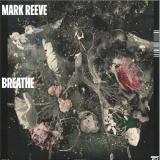
Breathe – the stunning eight-track mini album from long-standing British techno artist Mark Reeve out via Adam Beyer's iconic Drumcode Records.
Following a slew of critically acclaimed single and EP releases on Drumcode over the course of his esteemed decade-long career – the last of which came in the form of his mammoth Distance EP back in February 2020 – Breathe marks Mark Reeve's most extensive musical opus on the legendary imprint, and goes a long way in showcasing the inexhaustible creativity of one of the most prolific and original artists in techno today.
A career-defining moment for Reeve, Breathe has extraordinary allure and maintains the impressive quality of engaging the listener from the very start. A rich and complex body of work, the stunning eight-tracker goes far beyond Mark's trademark transcendental crowd pleasers, encompassing lilting moments of euphoric ambience alongside a sundry offering of full-throttle warehouse juggernauts and ravey breakbeat cuts.
out of Stock
Last delivered 8 months ago available to reorder, subject to availability
Ben LaMar Gay's critically-lauded 2018 break out Downtown Castles Can Never Block The Sun was more like a greatest hits than a debut album, as it compiled the best of the prolific but obscurity-prone Chicago native artist’s previously unreleased music. Open Arms to Open Us will be our first release of brand new, freshly baked tunes by Gay, a collection recorded entirely at International Anthem studios in Chicago between March-June 2021.
out of Stock
Last delivered 4 years ago available to reorder, subject to availability
New York United is an experimental group at the musical intersection of a classic New York avant-garde scene and forward-looking electronic production. Comprised of multi-instrumentalist and 577-cofounder Daniel Carter (Saxophone, Flute,Trumpet, Clarinet), electronic producer Tobias Wilner from Blue Foundation (Synthesizers, Percussion, Vocals, Piano, Guitar), Wu-Tang Clan bass playerDjibrilToure and 577’s Federico Ughi (Drums), their sound reflects their decades of collaboration. This second volume follows their celebrated debut, the eponymous New York United (2019), and matches its characteristically dreamlike effect, while maintaining a steady, rhythmic momentum. Like the first volume, this album was initially recorded in an improvised studio performance, and manipulated by Wilner in post-recording production, lending a uniquely ambient, electronic effect to otherwise spontaneous composition between musicians. Inescapably connected to its namesake city, the project is a testament to the transformative energy that sustains New York, dissolving individual boundaries into a collective sense of itself
out of Stock
Last delivered 4 years ago available to reorder, subject to availability