pre-ordina ora09.10.2026
dovrebbe essere pubblicato su 09.10.2026
13,03 €
dovrebbe essere pubblicato su 09.10.2026

Black Vinyl[13,03 €]
dovrebbe essere pubblicato su 09.10.2026

Disponibile in Stock e pronto per la spedizione

We have made Enormous Mouse 005 available once again as the original 2006 release is currently for sale at £35 a copy of Discogs. But for this release we have taken it from a two tracker to a four tracker by adding the two recent remixes by the guys that we gave away as WAVs with the previous bundles.
Ordina ora e ordineremo l'articolo per te presso il nostro fornitore.

The Meece are back! On this EP we have head honchos Stu & Nee on production alongside the Finnish duo Nervous & Anxious and also Darkus.
Ordina ora e ordineremo l'articolo per te presso il nostro fornitore.

You now have the opportunity to purchase the third ever Enormous Mouse EP - Stu & Nee + Nervous & Anxious - Pen On Label EP - that came out originally in 2006. The record comes in an awesome Enormous Mouse housebag with white inner sleeve.
Ordina ora e ordineremo l'articolo per te presso il nostro fornitore.

The first release on B.I.T. Productions new ALTERNATIVE label features UK DJ & Producer, Stu Chapman's first Rave House track that then has had a Vinyl release.
The original mix is a Banging rave synth driven track with a hands in the air piano break, wailing vocal and the catchy chorus.
The Retropolis Remix is a breakbeat monster with dirty synth lines and piano melodies.
The Crowdpleasers Remix is an uplifting house stomper with organ melodies with a massive piano break in the middle.
The M-ULATE Remix is a full on piano driven breakbeat rave banger with a 1992 feel.
Ordina ora e ordineremo l'articolo per te presso il nostro fornitore.

Questo articolo non è stato ancora rilasciato. È possibile pre-ordinare il prodotto ora.

Stu Chapman one of the hardest working producers in the breakbeat rave revival scene has had recent releases on Remix Records, Amen Brother, Monky Records & Ars Musica Imprendere Vitah out of Spain to name a few and has a repress series on his noughties label Enormous Mouse planned for 2024. Stu makes his debut on the Hardcore Vinylists label with 3 tracks of rave breakbeat proving what you can do when 90s rave meets modern samples we didn't ask for a free ride, we only asked Stu to show me a real good time...
Ordina ora e ordineremo l'articolo per te presso il nostro fornitore.

Prolific producer Stu Bangas is back with a new collection of hard-hitting collaborations on Death Wish (Part II), the much anticipated sequel to the 2021 original. The project finds the Boston beatsmith rocking with some of his favorite emcees of all time as well as familiar names who always seem to bring their best work to his instrumentals.
For Stu, it’s an honor to work with the likes of Ras Kass and Psycho Les (of the Beatnuts). He made the connections while creating the phenomenal Empires LP with Eric Bobo (of Cypress Hill), and it led to the bangers you hear on Death Wish (Part II). The track with Ras, “Sus,” is an equally hilarious and hardcore takedown of weak-willed phonies, while Psycho Les teams with Celph Titled for the gangster-but-lighthearted “Y’all Clowns.”
“I grew up on all the Beatnuts albums, my whole group of friends loved them,” Stu says. “And Soul on Ice by Ras Kass? That’s a certified classic for any hip-hop head.”
dovrebbe essere pubblicato su 20.10.2023

Ordina ora e ordineremo l'articolo per te presso il nostro fornitore.

Wu-Tang Clan’s own Cappadonna connects with acclaimed producer Stu Bangas for a lyrically potent, sonically raw new album, 3rd Chamber Grail Bars. The album follows strong 2021 releases from both artists, Donna’s Black Tarrzann and Stu’s Deathwish, and it represents the emcee’s first full-length collaboration with a single producer. The result is a tight, cohesive listen full of sharp verses, neck-snapping instrumentals, and some stellar guest features.
The two first worked together on the Wu rapper’s 2013 album, Eyrth, Wynd & Fyre, when Stu produced a pair of notable cuts (“We Hood Rich Now” and “Chains”). “I knew that he was feeling the beats,” Stu said. “And I saw an opportunity to reach out to him and took it.” They reconnected via industry A&R, M-Eighty, who provided Donna with a folder of instrumentals from the producer. And for the emcee, the timing was perfect because of how the beats “fit my mood and energy in the moment.”
The energy is one of a time-tested lyricist with a lot on his mind—and plenty of clever ways to get his point across. You can hear that on the piano-laced, eerie “Continuous Threat” with Planet Asia, as well as the straight-up dope “Tryna Survive” featuring ILL BILL. Both tracks showcase Donna’s gifts with the pen as well as his talents as a collaborator. Other standouts include the raucous “Bring It Out,” which also happens to be Stu’s favorite cut on the LP. “I love everything about it—the beat, the intro, the subject matter of the verses, the raw hook, all of it,” he explained.
As you’ll hear on the album, it’s clear that it was created not only for the love of the culture, but also out of mutual respect for the other artist. Stu referred to 3rd Chamber Grail Bars as “a life goal of mine that I have checked off,” while Donna had glowing praise for his collaborator. “Stu’s catalog may be as great, iIf not greater, than any producer I can name,” he said.
dovrebbe essere pubblicato su 09.09.2022

Ordina ora e ordineremo l'articolo per te presso il nostro fornitore.

Heavenly Recordings announce the debut solo album from
acclaimed Bay Area multi-instrumentalist, producer and
composer Dougie Stu.
Dougie grew up outside of Chicago and his early education
began in jazz clubs and festivals as a teenager - frequenting
sessions with Jeff Parker, Fred Anderson, Nicole Mitchell and
other members of the AACM. Left exceedingly inspired, he
continued on to the University of Michigan, studying bass
under Detroit jazz royalty Robert Hurst and Geri Allen, where
he deepened his practice in Jazz and Contemplative
Studies.
Now, based out of Oakland and Los Angeles, Stuart
collaborates within many Jazz, Hip-Hop, and Experimental
music scenes. His works include compositions for the NPR
podcast Snap Judgement, along with co-writes and
production with various groups including: Brijean, Bells Atlas,
Meernaa, Luke Temple and Jay Stone.
Dougie Stu’s ‘Familiar Future’ is a uniquely jazz-attuned
album that is soulful and ethereal. It draws inspiration from
artists and producers like Lonnie Liston Smith, Charles
Stepney, David Axelrod and Alice Coltrane. Stuart has
arrived at a sound that harkens back to the golden era of
soul jazz and R&B, while still sounding contemporary.
The band feature the immediately recognizable guitar
stylings of Jeff Parker (Tortoise), who was one of Stuart’s
biggest influences growing up in Chicago, Maya Kronfeld
(Georgia Anne Muldrow, NYEUSI) on Fender Rhodes, Steve
Blum (Bells Atlas) on synthesizer, percussionists Brijean
Murphy (Toro Y Moi, Poolside), John Santos (Tito Puente,
Dizzy Gillespie) and drummer Hamir Atwal (tune-yards).
Special guests include Marcus Stephans on flute, Shaina
Evoniuk on violin and Crystal Pascucci on cello. The album
was engineered and mixed by Rob Shelton at Tiny
Telephone and he also appears on synthesizer on one song.
dovrebbe essere pubblicato su 22.06.2021

Originally released in 1980, ‘Amanita’ is an early approach of Canadian artist Sherine Cisco, formerly known as Stu Cisco, to the limitless world of synthesizers in music, through ambient, progressive rock and drone noise.
A unique combination of ambient, progressive rock and even drone noises and space-age that converged in ‘Amanita’, her first full album and a piece of music history. This LP marks a milestone in the investigation, experimentation and evolution of musical instruments, where the Mini Moog demonstrated its versatility and creative potential, opening Sherine a path of limitless possibilities.
By the time ‘Amanita’ was first released in 1980 (only 300 copies were pressed at the time), Sherine had been playing synths for seven years. But far from acknowledging how traditional instruments were played, she tried to do things her own way, creating moving landscapes and a unique language of sound. This DIY approach to music was, as well how the album was made, in her own studio, with synthesizers that were originally meant for live performances such as the Elka Rhapsody or the Elektro Harmonix, channeled through a Dokorder 4 Tape Recorder.
However, what Sherine Cisco was living in her personal life, a gender transition, was as important to the record as the instruments she used to create it. “Beginning in the early 1980's, I began experimenting with taking the female hormone, estrogen. I felt like I was gradually being re-born. It affected my music, the mood of the music, and me, physically and mentally”.
A spacey vibe surrounds each of the 12 cuts that compose ‘Amanita’, waving from ambient to experimental music, introducing drone noises that add mystery to the whole piece and creating epic moments, with the Mini Moog accompanied by Randy Gray’s drums. To close things off, a synth pop infused track works as a masterpiece ending to this story.
Ordina ora e ordineremo l'articolo per te presso il nostro fornitore.

Vangarde's 11 songs represent the culmination of not only what this year has wrought, but also the talents of Lif and Bangas, an emcee-producer duo built for this. And you can hear that for yourself as soon as the second track, "Shelter in Place," blasts its way into your speakers. From the driving production to Lif and Blacastan's bars, the single embodies the raw, visceral feel of the entire LP. It carries through to the previously leaked "Basquiat," the stirring and gripping posse cut "8 Minutes 46 Seconds," and the highly personal "Now is Only Now," in which Lif explains how he wrote most of his lyrics secluded from his wife and young son due to the pandemic.
What makes Vangarde so impactful, however, is that it doesn't beat you over the head with the same sound or approach. Lif and his guests may tackle subjects related to oppression and corruption throughout the record, but it's done through nuance. The same goes for Bangas' stellar production, which maintains the momentum of his vocal counterparts. It's no surprise then that the two speak so highly of each other, with Bangas referring to Lif as a "storyteller and a reporter," and Lif noting that he was saving the name "Vangarde" for a project with an "elite producer."
dovrebbe essere pubblicato su 12.02.2021

Stu Chapman has been one of the most well regarded producers in the old skool and hardcore breaks scene for many years, and teaming up with legendary Perth Dj Rob Fender, he drops this awesome debut EP. Three tracks loaded with a deep underground sound for the proper raves from back in the day.
Ordina ora e ordineremo l'articolo per te presso il nostro fornitore.

Pressed On Coke Bottle Clear Vinyl! Ridin' Dirty is the third studio album by dirty south legends Bun B and Pimp C - together known as UGK. It is easily considered one of the greatest southern hip hop albums ever made, but let's drop all the labels this is just pure good rap music, for any region. It's all right there, everything that people have come to expect from Houston rap: candy-painted cars, wood-grained steering wheels, flashy jewelry, late-night odes to lean and weed, passing references to DJ Screw tapes, those warm funk synthesizers that sound like radio oldies. All of Ridin' Dirty feels iconic now— among other reasons, because so many of its lyrics have since been cribbed by everyone from Slim Thug to Jay Z. There's the laid-back badassery of "Diamonds and Wood," the zoned-out celebration of "3 in the Morning," the ridiculous boasting of "Fuck My Car." Everything here is essential. Ridin' Dirty was produced entirely by Pimp C and features start to finish bangers such as One Day', Murder', Hi Lif' and of course the title track Ridin' Dirty.' Pimp C's makes use of perfectly chosen Soul, Funk and Gospel samples to create a perfect soundscape for he and Bun B to trade verse over. Despite there being no singles or videos released from the album, the set went on to be a pivotal moment in southern hip hop as well as UGK's best-selling and most critically acclaimed release.
dovrebbe essere pubblicato su 05.04.2024

Double LP - Remastered album on 180-gram vinyl, packaged in a sleeve that replicates the LP's first pressing in exacting detail.
The Led Zeppelin reissue campaign continues in 2015, turning the spotlight on the double album Physical Graffiti. The deluxe edition of the group's sixth studio album will arrive 40 years to the day after the original debuted in February, 1975. The reissues of the first five Led Zeppelin albums in 2014 found both commercial successes, with multiple titles reaching Top 10 chart status in countries around the world, as well as widespread critical acclaim, including the recent Classic Rock 'Reissue Of The Year' Award. As with the previous deluxe editions, Physical Graffiti has been newly remastered by guitarist and producer Jimmy Page and is accompanied by a disc of companion audio comprising previously unreleased music related to the original release.
The companion audio disc that accompanies the deluxe edition of Physical Graffiti has seven unreleased tracks, including rough mixes of 'In My Time Of Dying' and 'Houses Of The Holy,' as well as an early mix of 'Trampled Under Foot' called 'Brandy & Coke.' All the unreleased companion tracks offer fans a chance to hear well-known songs from a different perspective, including the Sunset Sound mix of 'Boogie With Stu' and 'Driving Through Kashmir,' a rough orchestra mix of the band's eight minute opus 'Kashmir.' Also featured is 'Everybody Makes It Through,' a strikingly different early version of 'In The Light' with alternate lyrics.
Ordina ora e ordineremo l'articolo per te presso il nostro fornitore.

After a liittle hiatus of 2 years the label which was formed back in 2013 by the founder of the ground breaking hedonistic undergound parties Bohemian Grove of the industrial city of Manchester is back. The label will be bringing all kinds of electronic sounds mainly from the reaches of the cities industrial smog but some reaching further around the cosmos. This time we have debuting artist DANE WEAVER with his first release on the label.
Ordina ora e ordineremo l'articolo per te presso il nostro fornitore.

Frenchman Franck Roger seems to be in something of a purple patch right now, with a steady stream of succulent deep house vibes flowing from his studio, most often on Seasons Limited. 'In Motion' is a perfect set builder with its traditional deep house groove infused with whimsical melodies and a sprinkling of percussion that gets you ready for more. 'SH Time' is named after a choice piece of Roger's studio gear and swirls with lovely smeared pads, and '6th Track' closes with some persuasive swing and just the right amount of vocal heat. Early doors, late at night, outdoors in the sun, this is a useful EP for real house heads.
L'articolo è già in viaggio verso di noi e dovrebbe essere spedito da 30.09.2026.

Leroy "Heptone" Sibbles
Garden Of Life (Horns cut)
This raw, deep roots grail by Heptones and Studio One legend Leroy Sibbles has been near impossible to find, until now.
Most reggae fans will be familiar with the Heptones’ Lee Perry sessions including their outstanding “Garden Of Life” from 1979.
Few but the most grizzled collector knew that Sibbles had recorded a deep roots cut in Toronto several years earlier in 1975 while living in Canada.
Urgent, soulful and raucous with its killer horns section and bubbling organ, this version of Garden Of Life is actually Leroy’s favourite.
The dub version transports us right into the converted garage/studio in 1975 as snatches of conversation between musicians are immortalized on wax.
One of 3 official releases showcasing Sid Lovejoy's Toronto productions including the long out of print “Rebel” by Rothadam and the roots missile “King Kong Man” by Sid Lovejoy.
dovrebbe essere pubblicato su 30.09.2026

Raw deep house pressure from Sascha Dive, four cuts blending soul, groove, and late-night mood, with Roland Clark blessing the mic. Limited green vinyl for those who still move to the real sound.
DJ Feedbacks :
Laurent Garnier : Cool tracks
Josh Wink (Ovum) : Liking 'Im Inspired' the best here.
C-Rock : Those Nights for me, nice NYC dub House touch!
Radio Slave (Rekids) : I've always been such a big fan of Sasha's productions and "There Is No Tomorrow" hits the spot.
Fleur Shore (Undergrowth / Cuttin' Headz) : im inspired, beautiful track
Reboot (Cecille / Cadenza) : schöne tracks ️
Satoshi Tomiie (Abstract Architecture) : Solid release!
Alinka (Twirl, Classic, Crosstown Rebels, Batty Bass) : Nice one
PBR Streetgang : Invocation and Im Inspired are great
D'Julz (Bass Culture) : those night is the one for me here
Damian Lazarus (Crosstown Rebels) : Thanks for sending. Xx
Ben Sims : Now downloading... will check asap!
Archie Hamilton (Microhertz / FUSE) : Nice thanks
Eddie Fowlkes (Detroit Wax, Rekids, Classic Music Company) : thanks
Tim Sweeney (Beats In Space) : Lovely
Doc Martin (Sublevel) : Sascha on a good one,with the voice of house music Roland Clark no less!!!
Terry Farley : THOSE NIGHTS WORKS FOR ME
Chloe Caillet (Smile Records) : love this!
Oliver $ (Classic Music Company / Play It Down) : Sooo gooood!
Ame (Innervisions) : thanks
Danny Tenaglia : Downloading for Danny Tenaglia, thanks!
Robert Owens (Trax / Musical Directions) : Cool tracks
Kai Alce (Real Soon) : Nice deep tracks from Sascha
Mark Farina : dig them.
Lea Lisa (Phonica Records / Folklor Club) : Really good definition of House
Alexkid (Rawax / FUSE / NG Trax) : Phonogramme (and Sascha Dive) on fire at the moment...
Harri (Sub Club) : lovely stuff, will play and support
dovrebbe essere pubblicato su 30.09.2026

Nacho Marco drops Colors in Dub Vol.1—deep house soaked in warm analog dub. From the hypnotic “Midnight Blue” and its Satoshi Tomiie remix to the raw pulse of “Bumblebee Yellow” and “Electric Green,” this wax rides late-night frequencies straight from Valencia to Paris.
DJ Feedbacks :
Francois Kevorkian (Wave) : Love the Satoshi mix
Eddie Fowlkes (Detroit Wax, Rekids, Classic Music Company) : thanks
Travis Kirschbaum (Warehouse Preservation Society) : Loving this. Especially Midnight Blue!
Sascha Dive : Midnight Blue for me!!
Brothers' Vibe (Luv4Wax) : Super ep, great works!!
Radio Slave (Rekids) : Another superb ep from Phonogramme and Satoshi's mix is great.
Giles Smith : "midnight blue" is nice
Alexkid (Rawax / FUSE / NG Trax) : Totally my vibe. <3
Aleqs Notal : Yes !!
Italojohnson (Italojohnson) : Track 1 for me!
Ben Sims : Now downloading... will check asap!
Okain (Talman / Infuse / Pleasure Zone) : Electric Green is dope!
Satoshi Tomiie (Abstract Architecture) : Receiving great feedback from the dance floor!
Steffi (Dolly) : lovely release!!
Laurent Garnier : Cool tracks
DJ Bone (FURTHER) : Electric Green and Satoshi Tomiie remix work for me.
Harri (Sub Club) : lovely stuff, will play and support
Rob Pearson (Evasive Records / Sine 102.6fm) : lovely - right up my street, cheers ;-)
Felix Dickinson (Futureboogie, Rush Hour, Cynic) : Solid E.P. current fave Electric Green
Jorkes (Freeride Millenium) : lovely, thanks so much. xo
Kassian (Phonica White / Heist Recordings) : wicked
Jaye Ward (Dalston Super Store / Netil Radio) : massive quality as ever!! super deep and pulsing gear, electric green is ace! thx
Tim Sweeney (Beats In Space) : Sounds great
Chloe Caillet (Smile Records) : love this!
Stevie Cox (Sub Club) : really lush, thank you !
Raresh (ar:pi:ar) : thanks
Ame (Innervisions) : thanks
Geir Aspenes (G-Ha (Sunkissed)) : Thank u
Saoirse (Body Movements) : Super nice dubby vibes
Amotik : Very nice :)
Kai Alce (Real Soon) : Satoshi remix is hot!
Domenic Cappello (Subclub) : nice dubby house
Cee ElAssaad (ENSOULED) : Just the way I like it! dubby and groovy.
Mike Shannon (Cynosure) : Excellent work here from Valencia's finest!
dovrebbe essere pubblicato su 30.09.2026

Vol. 1[9,20 €]
Polarity Records returns with its eighth release. After years of experimentation with live performance, new technologies and evolving setups, Luca Piermattei returns his focus to studio production.
Natural Recording Vol.2 marks a new phase in his artistic trajectory: a more essential and distinctive sonic language, balancing emotional depth, harmonic sensitivity and a stronger focus on musicality, dynamics and performance-inspired arrangements. A refined approach where every element finds its place with intention.
dovrebbe essere pubblicato su 30.09.2026

Call of the Wild and Void is the sixth studio album by Hunter Complex and arrives on the Seattle-based label SFI Recordings. It features contributions from Aquiles Navarro (trumpet), new age legend Kat Epple (flute) and many more. Call of the Wild and Void is the follow-up to the critically acclaimed albums Airports and Ports (Burning Witches, 2022), Dead Calm and Zero Degrees (Burning Witches, 2020) and Open Sea (Death Waltz, 2019). The artwork was created by Andrew Crawshaw for Broken Press.
dovrebbe essere pubblicato su 30.09.2026
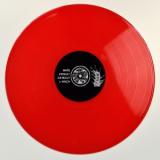
The re-launch of mars assault records last year brings the possibility to re-issue its back-catalog: the tunes that were released during the first run of the label (1998-2003).
here we have 4 tracks from "Arach", from the studio concept "centiped sound system", ( a duo of composers, also including Peter Pan), which were originally released on two records ( mars assault 3.65b, mars assault 3.7r1) in the years 2000/2001: very sharply produced hard-tekno, very original also (the "sound of centiped" is like no other hardtechno), and yet 100% as relevant on the dancefloor nowadays as it was at the time.
Another mars assault record equality good to play in a party as to listen to at home.
2025 cut with Hervé at dK Mastering /Paris (cut in 33/45rpm for optimum sound quality); 300 copies limited re-press, 180g pressing; a very sober object on the outside, but translucide red within.
dovrebbe essere pubblicato su 30.09.2026
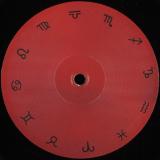
A time in passing, a time of note. A release created in a moment of profound fondness, within a studio front of memory. A detour delivered to and released on Entered Records via the Zodiacs way of life. Jesse You is here to create the doorway of sound via his 4 tracks of driving psycho players.
Opening the release with Violet Expander a track driven with keys of suspense and basslines for the feet. Rudolf C’s V.E mechanical overhaul remix then hits with the peak funk head melt.
On the Bs a deeper journey tact is delivered through Sorti. A similar drive and suspense yet with a delicate melodic role. Final track Planet Malfunction is exactly that, a wobbly circular loop double backing on itself for the collision of sound, ultimately that malfunction.
A release that takes you on the detour you didn’t know was coming.
dovrebbe essere pubblicato su 30.09.2026
Healing Patterns is the debut full-length release on Appendix.files from Clima, following 2025's Transient State EP. Written between 2025 and 2026 during a period of chronic illness, the seven-track LP translates physical restriction into deep, spacious electronic compositions. Using palatial pads, slow-decaying echoes, and bodily low-end, Clima reminisces over residual club ambience and shared listening experiences with friends.
The record moves from the gradual, dub-heavy pressure of "Weight" through ASMR-like vocal glitter and tight rhythmic clusters, before dissolving into the quiet introspection of the title track's theme. Healing Patterns is a patient study in focus, repetition, and the spaces left behind.
Artist Info: Clima is an experimental electronic music project exploring spatial sound, texture, rhythm and the emotional residue of club culture. Their work moves between ambient environments, dub-weighted rhythm and abstract electronic composition, with a focus on deep listening and subtle shifts in perception.
dovrebbe essere pubblicato su 30.09.2026

20 Years into the future, we return to you with the world’s illest hard drum n bass beats. In 2006, we released Counterstrike, Identity (BTK Spleen), Corrupt Souls, and Lethal & Khanage, making a 4 continent super weapon of drum n bass.
We arrive in 2026 with the hottest new talent - Rawbreaker, Anika D, paired with legends such as Jaise, Submerged, and inimitable voice of Flowdan. Disciples of the Unreal II is our return to wax also, with a 2x12" mastered hot for the DJs and distributed worldwide.
Each artist contributes a piece of the hard sound in their own fashion - from the roughneck beats of Medium, Rawbreaker, Submerged, and Scartat, to the Sinthetix-fueled neurofunk of Code2 and Anika D, and a foray into industrial techno from Slave to Society’s rework, and landing in the world of original Jungle sound with Jaise. From every corner - we come correct with the drum n bass intellect.
dovrebbe essere pubblicato su 30.09.2026
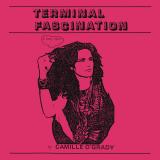
Dark Entries is ecstatic to announce Terminal Fascination, a retrospective release of the music of Camille O’Grady, subversive artist, leather witch, punk poet, and gender saboteur. O’Grady cut her teeth in New York’s burgeoning punk scene at clubs like CBGB’s, where her band Leather Secrets would share the stage with acts like Television. She became one of the few women to be welcomed into the Mineshaft, Wally Wallace’s legendary Manhattan gay BDSM club. Towards the end of the 70s, she would trek west to San Francisco to be with her partner, performance artist and gallerist Robert Opel, who was tragically killed in 1979. O’Grady would pass away from COVID in 2020, with her voluminous works across various media - text, image, and sound - having been unpublished during her lifetime.
Working with O’Grady’s estate, Dark Entries has assembled thirteen of her finest recordings, including instant classics like “James Dean to the Rescue,” “Tourniquet,” and, of course, “Toilet Kiss.” Two songs, “Angel with a Key” and “Love Comes Like a Cutthroat,” were recorded at a studio in Los Angeles for a 7” release that never materialized, while the rest of the material was recorded live in 1979 at The Ambush, a San Francisco leather club. O’Grady’s songs, often written from the perspective of a gay man, explode like a genderfuck version of Patti Smith, like Buffy St. Marie in leather, like the hedonic utopianism of the 1960s dragged (blissfully) through the broken glass of the 1970s. The release of Terminal Fascination coincides with the publication of ‘A Cross-Worlds Angel,’ a 300-page book of O’Grady’s work by Phillip Zimmerman. The record includes an insert featuring liner notes, lyrics, and photographs. Celebrate Camille O’Grady, the artist Jack Fritscher described as an “earth mother, a leather lioness of the arts.”
dovrebbe essere pubblicato su 30.09.2026

Record live at La Chunky Studio in Glasgow on 20th April 2024
Engineered and recorded by Murray Collier
Mastered by Miles Whittaker
Big thanks to Chris and Calum at GPI, Lagomorph and Murray
dovrebbe essere pubblicato su 30.09.2026

Every coastline develops its own rhythm. The Adriatic is no exception.
For decades, Italy’s eastern coast has been shaped by funk, Cosmic Disco, Balearic sounds, Italo Disco, House, Latin rhythms, Brazilian music and countless other influences. Rather than blending into a single style, these musical worlds have lived side by side, constantly inspiring new generations of DJs, musicians and dancers. For more than fifteen years, Soul Fingers and Funk Rimini have explored that landscape from different perspectives. Founded by Claudio Cavallaro in 2013, Soul Fingers grew into a vinyl-driven community where groove matters more than genre. Its philosophy has always been simple: if the groove is right, genres stop mattering. Brothers Ricky and Francesco Cardelli developed Funk Rimini into a project rooted in funk, disco, live performance and electronic production. Anima Adriatica is where these two journeys meet.
The project didn’t begin with the ambition of making an album. It began behind the turntables. As DJs, Claudio Cavallaro and Ricky Cardelli found themselves constantly searching for records capable of connecting distant musical worlds inside their sets; from Afrobeat into disco, from hip hop into Latin, from Brazilian grooves into boogie, from cosmic electronics into deep funk. Sometimes those records existed. More often, they didn’t. So they stopped searching and started writing them. Not records designed to belong to one genre, but records designed to travel between genres. That space between musical worlds became Anima Adriatica.
The music grew through spontaneous jam sessions with Ricky and Francesco Cardelli, drummer Enrico Mao Bocchini and, gradually, a wider circle of musicians, singers and longtime friends, making Anima Adriatica less a traditional band than the beginning of an open collective. Recorded at SynthPosio Studio, founded by Ricky and Francesco Cardelli inside Rimini’s iconic skyscraper, the project also carries a symbolic connection to the building itself, where many Italo Disco classics (including records by Betty Miranda, The Creatures and many others) were recorded decades earlier.
Betty Miranda returns not as a nostalgic guest, but as a bridge between generations. On the title track she performs a spoken-word text written by Claudio Cavallaro, reflecting on the invisible thread connecting the Adriatic dancefloor across time. From Baia degli Angeli to Cocoricò, from the legendary clubs of Riccione to today’s independent communities gathered around projects such as Soul Fingers and Funk Rimini, the places have changed, but the dancefloor continues to tell the same story. Much like Pier Vittorio Tondelli’s Rimini captured the Adriatic through literature, Anima Adriatica imagines its soundtrack.
Brazilian musician Daniel Plentz (Selton) expands that vision on Açúcar and Alegria, bringing another coastline into the story. Across its four tracks, the EP moves naturally between analogue funk, boogie, Brazilian music, underground disco, cosmic textures and the wider Black musical tradition, with All Down The Line paying tribute to the Paradise Garage era.
Released by Bordello A Parigi, the project found its natural home through a shared love of adventurous dance music, records and club culture. More than the title of an EP, Anima Adriatica marks the beginning of an open collective; a meeting point where musicians, DJs, producers and friends continue building bridges between genres, generations and communities.
Because Anima Adriatica doesn’t live inside a genre. It lives between genres. If soul music has always reflected the places where it was born, Anima Adriatica is simply our own Adriatic Soul.
dovrebbe essere pubblicato su 30.09.2026

'Bim Sherman’s seminal second album from 1978 returns in true showcase style, complete with both vocal and dub versions.
'Recorded at Randy's and Channel One, the record features the legendary mixing touch of King Tubby's Studio, with Jammy at the controls. Rhythms are delivered by top-tier musicians from the Roots Radics and Soul Syndicate.
'Back in print with its original Jamaican album artwork!'
dovrebbe essere pubblicato su 30.09.2026
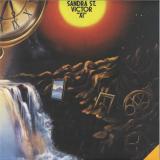
Powerhouse vocalist Sandra St. Victor returns with Eleven, her eleventh studio
album and first solo release in over a decade. From her years with The Family
Stand to collaborations with Roy Ayers, Curtis Mayfield, Chaka Khan, Prince and
Lalah Hathaway, Sandra has built a remarkable career that has consistently
blurred the lines between soul, funk, jazz and gospel.
Executive produced by Sandra St. Victor and Patrick Gibin for Mother Tongue,
Eleven brings together Sandra's longtime collaborators alongside the Mother
Tongue family, bridging her rich musical legacy with a fresh, forward-looking
sound rooted in soul, jazz, boogie and soulful dance music.
The album combines brand new compositions with inspired reinterpretations,
from Kaidi Tatham's stunning reimagining of Captain Sky's Moonchild and his
masterful reinvention of the Leon Ware/Syreeta underground gem Tiki Tiki
Donga, to a beautifully understated new version of Sandra's own Dizzy,
originally released on Gemini: Both Sides in 2001 featuring Questlove, Roy
Ayers and Donald Byrd, here reimagined by Mark de Clive-Lowe. Along the way,
the lo-fi soul of Black Ice, the timeless duet No More Water featuring Lalah
Hathaway, and the straight-up funk of Makes Me Wanna Fall In Love Again and
What Would Miles Do showcase an artist continuing to evolve while remaining
true to her artistic voice.
Rooted in experience yet driven by curiosity, Eleven bridges Sandra's
remarkable musical legacy with the creative vision of Mother Tongue, resulting
in an album that feels both timeless and unmistakably
L'articolo è già in viaggio verso di noi e dovrebbe essere spedito da 30.09.2026.
We are in-between again: FELT founder Fergus Jones surfaces on his own label for the first time with this dreamy, dubby pair of introspective tracks featuring the hazy, elegiac vocals of Thomas Bush, back on FELT after 2023's split cassette with Princess Diana of Wales. The results of a three-day studio bender in Copenhagen, Bush's entrancing vocals gesture towards the unchangeable past and unknowable future, creating a vital, pumping circulatory system of sound, further supported by the saxophone of Italian-Danish artist Francesca Buratelli and the (vinyl debut) of New York's Yumi with a notable interjection on "Untitled (Mix 1)”.
Written, produced and mixed by Fergus Jones & Thomas Bush
Saxophone on Untitled (Mix 1) by Francesca Burattelli
Additional vocals on Untitled (Mix 1) by Yumiko Mannarelli
Mastered by Amir Shoat
L'articolo è già in viaggio verso di noi e dovrebbe essere spedito da 30.09.2026.

With Where We’re At, Tonique & Man deliver a warm and vibrant second album blending indie pop, soul and soft disco. Staying true to the groove that has become the duo’s signature, the record reveals a more mature and personal side of Jean Tonique and Mi Man.
Both recently becoming fathers, the two musicians are entering a new chapter in their lives, one that naturally shapes the album’s songwriting: a more intimate reflection on how far they’ve come, what they’ve built, and what continues to drive them to create.
Recorded at the legendary Studio Ferber in Paris, Where We’re At also features collaborations with Girl Ultra and Rejjie Snow, bringing new textures to the duo’s sound. An elegant and generous album where pop immediacy meets more intimate songwriting, opening a new chapter for Tonique & Man.
dovrebbe essere pubblicato su 30.09.2026

First released in a long-out-of-print limited-edition 7" box set, this album, now released on LP and CD, brings together 10 amazing, unreleased Studio One tracks, only ever released as extremely limited-edition hand-etched one-sided dubplates (most of these sold out in less than 2 hours!). Studio One Dub Plate Special brings together all 8 of these exclusive dubplate unreleased cuts, plus two more also never before released alternate cuts. Featuring Alton Ellis, Cedric Brooks, Brentford Road All Stars, Jacob Miller and more! From Alton Ellis' righteous uplifting 'Black People' to Brentford All Stars’ hypnotic cover of War's classic 'The World Is A Ghetto', groovy instrumental cuts from Cedric Brooks and The Soul Brothers, deep cuts from Alton & Zoot, George Phillip and Jacob Miller's wicked alternate cut of Dennis Brown's classic 'Westbound Train', all make Studio One Dub Plate Special a truly unique Studio One release
dovrebbe essere pubblicato su 01.10.2026

Vol 2[23,95 €]
Gnod's now twenty year journey through spiritual and audial exploration has been driven by relentless curiosity, magpie irreverence and a fierce countercultural imperative, their project has always refused to acknowledge all or any rules and boundaries, internal or external. The latest adventure of this band may never have been intended to celebrate their two-decade anniversary, but in true Gnod fashion by, what began as a trip into a residential studio setup in Hellfire Studios with producer John `Spud' Murphy (Lankum, Black MIDI, Caroline) for six days, resulted in more potent material than anyone bargained for. The end result has been three studio albums to be released over the next year. "This trilogy revealed itself to us in the studio" says Paddy. "We were hoping to get a good album out of the session and lo and behold we got three of the fuckers. It's interesting that we did pretty much capture the full spectrum of the Gnod sound across all three". In fact, this intrepid first instalment of the `Chronicles Of Gnowt' trilogy covers an alarming amount of sonic territory all on its own. Driven as always by the power of repetition as well as Gnod's alchemical marriage of the maximal and the minimal, this album is imbued with a vivid focus that's testimony to the chemistry of the sessions, coupled with a detailed and spacious production from Murphy that brings out the psychedelic sound worlds of the band in vivid colour. This is a travelogue which delves into pastoral tranquillity (as on `Three Trees Parts 1&2') just as adeptly as expansive Earth-tinged riff monoliths (`All Tunnel No Light') and just as formidably as the closing epic `Ekstasis' - a hallucinatory vista where kraut-tinged experimentalism meets Swans-style intensity. Yet all the while, truly sounding like no one but Gnod.
dovrebbe essere pubblicato su 01.10.2026
Ossios makes his Yay Recordings debut with two deep cuts that capture the magic of his creative process - summer house excursions shaped by back-and-forth flights and fleeting moments of inspiration.
On one side, Deadbeat opens up his studio a fires up the studio stove with "One Night at the Ranch (Betting the Farm)," featuring vocals from his love soul Elle. Tumbling drums, understated grooves, and subtle house hypnosis unfold with effortless ease.
On the flip, "Drama Is a Game" channels a hazy afternoon in Mexico City, exploring memory and duality through shape-shifting synths and warm, drifting vocals. The result is a deeper, darker journey where emotion and atmosphere remain in constant motion.
L'articolo è già in viaggio verso di noi e dovrebbe essere spedito da 01.10.2026.
