The real Holy Grail here is Lovebyte (Original Mix). Have a read of the Discogs thread that inspired this project below, the Artist had to remake the track as the Original Mix was long since lost. The result sounds authentic to the original that was only ever broadcast on Kiss FM by Colin Favor.
Born out of a chance encounter in 2012 that led to a lasting friendship, Rhythm Section Int'l & producer, DJ, label boss, radio host, and record store owner Ruf Dug join forces to present 'The Committee'. Sitting somewhere between fictional band and studio collaboration, the record is the first fully in-house production for Rhythm Section, recorded start to finish at their own South East London studio and featuring vocals from label founder Bradley Zero and label mate FYI Chris's Chris Watson.
Right from the studio's initial creation, Ruf Dug felt inspired by the space's unique musical identity, jumping at the opportunity to create a collaborative record there over a two week studio residency. And between his DJ residencies at Pikes, Gottwood and NTS radio the Manchester-via-Ibiza computer game freak and renowned vinyl digger found the time to meld his wide range of influences. Having been a key driving force behind Be With's Holy Grail reissue of Bô'vel's - Check 4 U , Ruffy has more than earned his stripes as a boss level Street Soul collector, pre-empting the resurgent interest in the genre, which began in the mid 80s and is still a popular sound in Manchester today. This new release draws parallels between the DIY attitude of Street Soul labels like TSR, Intrigue, Jam Today & Elite and the modus operandi of the RS studio.
A wholly synergetic work, the project's title 'The Committee' reflects the collaborative nature of this release, as Ruf Dug states: 'Authorship is a strange concept at the best of times but this genuinely is a group effort and I very much enjoyed feeling like just one piece of a larger entity - the complete opposite to my usual production experience of being all alone in my room for days at a time.' The EP also features additional production from Rhythm Section's own Mali Baden-Powell, who DJ's and produces as Z Lovecraft and comes from a background in Street Soul music, his father was also in legendary UK acid jazz collective D'Influence. In addition, the record features a dynamic range of vocalists: sultry deliveries from Natalie Wildgoose and Sienna Mustafa, a rap from her sister Nadina, and the vocal debuts of FYI Chris's Chris Watson and Bradley Zero. 'I had been joking with Bradley that he needed to be on the record somehow and he did appear, playing an egg shaker at one point, but his singing wasn't in the least bit planned... I got back from lunch, and the next thing you know he just starts singing...So I dragged him reluctantly down the corridor to the studio and that's it- now he's a pop star!'
Also playfully melding digidub, soul, chicago house and acid jazz, the release not only marks a new chapter in the development of the Rhythm Section sound, but also catalogues a crucial turning Point in Ruf Dug's musical development. Still oozing with the cheeky DIY approach that won his own label, RUF KUTZ an army of fans, this latest Collab steps things up and opens a whole new realm of possibilities for one of Manchester's favourite sons.
Bordello A Parigi presents a compilation of demo tracks from the legendary Italo Disco icon: Federico di Bonaventura, better known as Fred Ventura. These demo tracks were supposed to remain secret until Fred started to digitalize them from tape a few years ago. Most of these tracks were part of the transitional period between the exit from his early 80's band State Of Art and start of his first solo project Actor's Studio and career as Fred Ventura. A versatile treasure of lost music recorded from 1982 until 1984 in Milan, Italy.
Comes with double front sleeve and printed inner sleeve.
A double pack with one track per side, playing 45 RPM. 4 tunes from 4 different musicians, a new generation of mental and acid crazyness.. Offering a pure pleasure for listeners and Deejays... the last tune, from DJI shall surprise some. But yeah. Life-chance deserve some (good) urprises.
Musikalisch Besonderer Fund Mit Feinstem Sinfonischem Jazz Aus Dem Berlin Der Nachkriegszeit. Unbekannte Aufnahmen Des Orchesters Unter Der Leitung Von Werner Müller, Produziert April 1960 Und September 1961. Exzellenter Crossover Von Westcoast, Hard Bop, Moderner Klassik Und Blues, Mit Exklusiven Auftragswerken: blues In Studio 7' (helmut Brandt), ouverture In Jazz' (klaus Wüsthoff) Und feuilleton In Jazz' (peter Sandloff), Dazu Jazz Versionen Von pavane' Und sakura, Sakura', Gesungen Von Caterina Valente. Neues Aufregendes Kapitel Des Progressiven Jazz In Deutschland. Exklusive 10inch Vinyl-lp & Digital Mit Müllers Avanciertesten Produktionen.
out of Stock
Last delivered 7 years ago available to reorder, subject to availability
One afternoon in 1975, friend and fellow music traveler, Harold Schroeder, showed up at Poo-Bah Record Shop where Tom Recchion worked selling records and experimental music to people, forcing them to buy albums that he swore would change their lives. Harold asked if Tom wanted to share in a studio space close to the shop. After seeing it Tom immediately said "YES!". They moved in and divided the space in half. On Tom's half he made drawings, paintings, performances, video, sculptures, installations, and music. Harold had his all set up for music with his newly acquired Steiner-Parker synth and guitars and things. At the beginning they played under the name The Two Who Do Duets. Soon the late-night jam sessions that took place in the back of Poo-Bah moved over to the fourth floor of 35 South Raymond. It was pretty beat up and derelict, the way one imagines an artist's studio to look. They could make all the noise they wanted. No one else was on their floor. The music heard on this LP has remained unheard since it was recorded and was created just before and right after the inaugural concert by the Los Angeles Free Music Society (LAFMS) groups Le Forte Four, Doo-Doettes, and Ace & Duce. That concert took place in late January 1976. The sessions on this release feature members of the newly formed and expanded Doo-Doettes, which now included Dennis Duck, Juan Gomez, Harold Schroeder, and Tom Recchion, as well as Ju Suk Reet Meate from Smegma and Ace, of Ace & Duce. 35 S. Raymond eventually became a sort of LAFMS headquarters, with Chip Chapman of Le Forte Four, artist and future Extended Organ vocalist/guitarist Paul McCarthy, and soon to become singer for Nervous Gender, punk/folk artist Phranc, who along with many other artists and musicians, moved into the building. 35 S. Raymond allowed for free expression and explorations of all sorts. Some wild parties ensued, not to mention the luxury of endless hours of experimentation. Parking was free and so was the art and music. Ace found the tapes for side one ("Tom's Studio") in his archive and Ju Suk Reet Meate found the tapes for side two ("50 Of Every American Are Machines") and edited them both for this release. No overdubs or remixing was emplo
"it Sounded All Right Through Two Walls, So What's The Problem" The Final Words Of 'two Walls', The Fast And Very Catchy Leading Track Of Dj Marcelle's New Record, Sum Up An Aesthetic Almost Lost In Today's Musical Climate, Where Often A Pleasing Attitude And Overproduced Music Sadly Rule, Even In So-called 'alternative' Circles.The Quote Comes From The Late Mark E. Smith (1957 - 2018), Legendary Frontman Of The Fall, And Is Taken From Some Of The Conversations Marcelle Had With Smith Over The Years. Smith Is Referring To A Recording Process But For Marcelle His Words Stand For Something Bigger.Although The Fall Have Been With Marcelle During Her Whole Musical Life (which More Or Less Started In 1977 During The Punk Wars) And She Has A Deep Love For Their Music, It Was Especially Smith's Attitude That Inspired Marcelle.Smith Was An Iconoclast, A Surrealist Dadaist Breaker Of Conventions In Music And Art More Generally. A Magically Creative Individual, A Brain-twisting Wordsmith. An Attacker Of The Pretentious And Dishonest Elements In Society And Music Scenes. An Autodidact Whose Singular Vision, Fired By Both Humour And Sharp Observation, Found A Voice In A Body Of Work Unlike Anything Else.The Day After Marcelle Heard Of Smith's Passing She Created A New Track, Lauding Smith, Whose Name Was An Institution In Itself: Mark E. Smith! Therefore, The Repetitious Use Of A John Peel Sample Pronouncing Smith's Name Celebrates The Life Of This Totally Unique Artist.This Track Opens With Another Smith Quote: "you're Probably Right, Marcelle". And Indeed, The Dutch Producer / Dj Shares Many Of Smith's Attitudes In That She Tries To Stay True To Herself, Doesn't Think Too Much About Audience Expectations And Always Tries To Stay Ahead Of The Public. 'punky' Energy Combined With The Avant-garde And Always Going Forward With Fresh Productions And Dj Sets. To Make And Play Music Which Reflects The Present And Doesn't Rest In The Comfort Zone Of One Dimensional Party Music.There Are Five More Versions Of 'two Walls' On This Ep, But They Differ So Much From The Original That You Can Count Them As Different Tracks. 'dubai Muezzin Dub' Was Partly Recorded In The United Emirates When Marcelle Played There Earlier In 2018. 'problematic Dub' Is Pure Industrial Techno Torn Apart By The Wildest Dub Effects, Its Coming And Going Of Sounds Equals A Ride In A Calypso. 'studio Door Dub' Celebrates The Repetition Of The Fall And The 'emerson, Lake & Palmer Symphony Dub' Is Both Pure Avant-garde And Hilarious Fun. And Belp, Who Owns The Jahmoni Label, Comes With A Wicked Abstract Noise Remix. The 'for' Ep Is The Fourth (get It) Vinyl Release Of Marcelle On The Munich Label Jahmoni Since 2016. As Always, Sleeve And Label Are Very Colourful. Both Labels Show Special Photos: On One Side We See An Old Picture Of Smith Embracing Marcelle, The Other Side Depicts The Label Of A 1985 The Fall Test Pressing That Once Belonged To John Peel But Which Was Stolen Out Of His Car In Amsterdam. Later Marcelle Found The Record On A Flea Market, Recognising Peel's Handwriting. "when I'm Dead And Gone" Smith Sang In The 1979 Song 'psychik Dancehall', "my Vibrations Will Live On, In Vibes On Vinyl Through The Years. People Will Dance To My Waves."Now We Can Listen And Dance To A Vinyl 'for' The Incomparable Mes, Made With Total Commitment And Which - Like The Fall - Defies Comparison.
COMPILED BY PETE PASQUAL, ERICA OLSON & DJ KINETIC
Following on from acclaimed compilations like 'Down Under Nuggets' and 'Heavy Soul' (and two other new titles 'Running The Voodoo Down' and 'Dodgy Bossa (& Silly Sambas)' - details below), Festival Records presents another deep dig into the archives, this time shining a light on rare Australian soul-jazz, jazz-funk, and freaked-out groove rock from the late '60s and '70s.
BACK ON THE STREET AGAIN - AUSTRALIAN FUNK, SOUL & PSYCH (MOSTLY) FROM THE FESTIVAL VAULTS is a stunning 20 track CD and 2LP release that highlights a point when the previously disparate styles of rock, jazz and soul all started influencing each other, and exciting new genres were created. To quote the liner notes (by DJ Kinetic):
Australia produced some amazing music during the 60s and 70s that sat outside of the normal rock mould. Avant guard artists like John Sangster pushed boundaries and experimented with the fusion of local and overseas influences, artists like Dalvanius recorded soaring disco music that was lost amongst the popular music of the time, only to be rediscovered by DJs overseas who were searching for unknown sounds, composers like Brute Force and His Drum took risks and recorded left-field funky sounds hidden within their more mainstream compositions, and popular artists like Billy Thorpe occasionally strayed from their A&R directions and took leaves from the books of American artists who were largely unknown in Australia at the time. Beneath the veneer of bland rock and roll lay an unknown multitude of funky sounds hidden from mainstream view.
In addition to the artists that Kinetic mentions (and the compilation features two John Sangster tracks - stunning versions of 'Hair' and the Beatles' 'A Day In The Life'), the collection includes iconic names of the era like the Daly-Wilson Big Band (featuring Kerrie Biddell), Renee Geyer and the Johnny Rocco Band. '60s sides from Ross D Wyllie and The ID (featuring Jeff St John) reveal the various styles' roots in American rhythm & blues, and the unexpected inclusion of some legendary Australian rock outfits like Tamam Shud and Blackfeather reveals the psychedelic and progressive rock influences at play. The full range of the music is highlighted by the inclusion of both cabaret/daytime TV performer Al Styne and outrageous Kings Cross club act Count Copernicus & The Cosmic Fire as well as the in-house studio 'pops' orchestra, Festival Studio 24 Orchestra.
Co-compilers Pete Pasqual, Erica Olson and DJ Kentic to undertake interviews with specialist media around release. Facebook ad's around release.
Never before released studio and live recordings by Harmonia from 1975! Four fantastic tracks. Two from the Harmonia studio in Forst and two from live shows in Hamburg. These pieces express a very exploratory side of Harmonia, a rare peek into what they were capable of live.
Bell Gardens combines the musical visions of Kenneth James Gibson (formerly of Furry Things, now recording as
*Bell Gardens' origins began arguably as more of an experiment than the duo's current 'experimental' projects - McBride's drone- and string-laden ambient symphonies, and Gibson's ventures in dub and minimalist techno - as they sought to manifest their mutual reverence for folk, psychedelia and chamber pop in a traditional band structure without cannibalising any particular past genre. Bell Gardens' sound is less reliant on effects and studio trickery than the pairs' independent guises, laying bare as it does vocals and live instruments with emotional sincerity, and presenting songs imbued with an almost pastoral or gospel simplicity and timelessness.
Slow Dawns for Lost Conclusions was again recorded mostly at home studios, but additionally the band made use of a friend's desert cabin in Wonder Valley, California, and it seems this willingness to retreat from the city has lent an expansiveness to the tracks, in particular the spacious, ceremonial 'Silent Prayer' (written in a snowbound mountain cabin in Idyllwild, C.A.) and the crepuscular 'She's Stuck in an Endless Loop of Her Decline' (mapped out under the stars in the desert).
While the addition of strings (contributed by Lauren Chipman of The Rentals and The Section Quartet) and trumpet (Stewart Cole of Edward Sharpe and The Magnetic Zeros) provides a double rainbow of tonal textures throughout, the nine tracks of Slow Dawns for Lost Conclusions are united by an understated elegance belying the newly expanded, communal effort in the studio: each instrument earns its place, nothing is overwrought or conspicuous. Moreover, it is McBride and Gibson's artistry in building stirring soundscapes from the barest of materials in their other guises that lends such assurance and sophistication to these arrangements.
The band is a result of the complimentary cross-pollination of Gibson and McBride's musical tastes - borne from a late-night conversation between the two that grew wings - and it is the universality of the sentiments and their restrained, reflective approach to writing and recording that allows the music to simultaneously straddle the past and the present. The music avoids pastiche, its pedal steel, sleigh bells and harmonies giving a nod to the ghosts of musical genres past, but never overriding or distracting from the emotional content of the sum of its parts.
The album ends with the glorious 'Take Us Away' - one of the first demos Gibson gave McBride when he was on tour with Stars of the Lid - neatly bringing their work to date full circle and exemplifying the band's mindfulness of their own serendipitous beginnings: the dawning of an auspicious, unique musical force.
Bell Gardens - Take Us Away -
Harmonies alert!! Actually, this is rather lovely. Slow-tempo, just the right side of 'twee' and packed full of strings, as if Air and Midlake had been taking balloon trips over the mid-West and sprinkling good-vibes dust across the land. From L.A. and subconsciously plugged into the '60s dream-pop scene, taking in a little bit of Mercury Rev and Brendan Perry en route, stopping off at Pearls Before Swine and Big Star's house for inspiration, before getting stoned with '70s era Brian Eno and Harold Budd.
Welcome Tori Kudo back to A Colourful Storm with a new edition of Maher Shalal Hash Baz's Faux Départ, a document of a stateside tour that culminated in a recording session at the legendary Dub Narcotic Studio with a one-time ensemble of Greg Saunier and Chris Cohen (Deerhoof), Andrew Maxwell, McCloud Zicmuse, Arrington de Dionyso, Takashi Ueno, Saya Ueno, Naoki Otani, Akiko Hotaka, Masaaki Endo and Naoki Otani. Always spontaneous, never rehearsed. Music in and of this world, seemingly teetering on the verge of collapse.
"We flew to the US for a show with Red Crayola in Los Angeles and initially stayed at Rick Potts' house. There, I met up with The Curtains and hit the road in their car. We headed north, writing down every melody that came to mind. I slept in the gap between the wall and the sofa and got interrupted by a herd of cows along the way, but I finally arrived in Olympia and recorded all the melodies I'd written down, which became Faux Depart. There, I found McCloud, a noble beggar who was sleeping in the studio and playing the bassoon on the street." - Tori Kudo, 2026
"Chris Cohen, who played in Deerhoof from 2001-2006 or so, was an obsessive Maher fan. When our other band, The Curtains, was given a chance to support Maher on a West Coast tour, we got to see up close how Tori leads - often by not leading. He is an unpredictable, wild musical genius and card-carrying eccentric." - Greg Saunier, 2026
Reissued Rise Against: Revolutions Per Minute (2026) anlässlich der aktuellen Feierlichkeiten zum 35-jährigen Jubiläum von Fat Wreck auf violettem Vinyl gepresst! Ursprünglich 2003 über Fat Wreck Chords veröffentlicht, entstand das zweite Album von Rise Against "RPM" inmitten von Tourneen durch die USA, Kanada und Europa. Nach einigen Wochen im Studio Blasting Room Studio, wo sie gemeinsam mit Bill Stevenson (Descendents) und Jason Livermore die Aufnahmen einspielten, präsentierte sich das Quartett mit diesem von der Kritik gefeierten zweiten Studioalbum. Revolutions Per Minute verbindet auf meisterhafte Weise die rasante Energie des Punk mit scharfen, eingängigen Melodien. Tim McIlraths leidenschaftlicher Gesang transportiert gesellschaftskritische Texte in herausragenden Songs wie "Like the Angel" und "Black Masks & Gasoline". Das Album prägte den Punk der 2000er Jahre maßgeblich, schlug die Brücke zwischen rohem Underground-Hardcore und Mainstream-Rock und gilt heute als Meisterwerk des Genres sowie als das definitive Underground-Werk der Band. Band credited with creating a new sound - branch of melodic hardcore and political punk Rise Against's sophomore breakout album, produced by Bill Stevenson and Jason Livermore at Blasting Room Band has amassed 2 platinum records and 5+ gold records in multiple countries and 5+ Top-Charting Alternative Rock Radio hits Features hit singles "Heaven Knows", "Black Masks & Gasoline" and "Leaving Jesusland" Known for their progressive politics, veganism, and outspoken views
Manfredi and Marijn met for a studio retreat in Paris and quickly found common ground in their love for synthesizers, strange vocals, punk, leftfield electronics and music that doesn't necessarily fit into one box.
In the early '90s, Manfredi joined Wide Records in Pisa, becoming part of a post-punk and DIY network that stretched from Fugazi and The Make-Up to Coil, Clock DVA and early Nine Inch Nails, while spending time on the road tour managing bands across Europe.
Marijn grew up in a completely different generation, but has always had an old soul when it comes to making music. He's drawn to old machines, unconventional sounds and records made long before he ever entered a studio himself. The weirder the vocal or synthesizer, the better. credits
There’s this feeling that House Music is sometimes diluted into a pleasant, non-offensive and conformist formula. Well, Jackie Gritness - you may have heard of her big bro Gary - is bringin’ all the sweat, the attitude and the filth down - take it or leave it.
Jackie introduces herself from both sides on this well-strapped debut 12” - the slick swingin’ & sangin’
on the bass-heavy A side, and the raw clave trax and cunty snarls of the acid-laced B side.
No trace of over-production or tired sampling here: this is just Jackie, her mic and her lil’ groovebox -
gettin’ raw in the studio just like she does onstage. Only thing added is some wall-shaking mastering by New York OG Dietrich Schoenemann.
This is the kinda House that’s supposed to make regular folks wanna turn it off. This ain’t rated E for Everyone, it’s rated F for Freaks.
It’s music from the underground, for the underground - as it was first revealed on the runway of Glastonbury’s infamous NYC Downlow last summer.
And if that’s more than you can take - it’s alright. It’s not like Jackie will hold it against you.
Jackie Gritness
“Gary’s little sister.” His studio session resume reads like a House music who’s who - from David Morales to Fred P. He’s also been rockin’ clubs with the Playin’ 4 The City and MLIU crews - but she’s also been seen on Gideon’s fierce Homo-Centric Records. See, this bitch’s true feelings about House are stripped-down, bare-bones, and unapologetically sexual. With a radical ‘live’ attitude, she’s serving the realness with an irresistibly acidic zing.
After decades contributing to records where a single riff could transform a dancefloor, Charlie May turns that instinct inward on Trusted Farms.
For over thirty years, Charlie has occupied a position that seems increasingly rare in electronic music: the musician’s musician, the person behind the machines, the extra pair of hands in the studio, and quite often, the person responsible for the melody you end up carrying around in your head for weeks on end.
Alongside Duncan Forbes as Spooky, Charlie helped shape some of the most important electronic music to emerge from the UK in the early ’90s. That partnership would also sow the seeds for one of Sasha’s defining records: the central riff behind Xpander began life in Spooky’s live material, before Charlie brought the idea into the studio with Sasha and helped transform it into one of electronic music’s most enduring anthems.
Listen closely to Charlie’s work and there’s a particular instinct that keeps returning: knowing when a simple synth line is enough. Knowing which note needs to change. Knowing when repetition stops being repetition and starts becoming the entire reason a track works. More recently, as one-third of Quiet Places on ASIP, he’s taken those same instincts somewhere looser — beatless, gridless and led by improvisation.
Trusted Farms puts those instincts front and centre.
Tiny melodic phrases appear and refuse to leave. Synth lines repeat just long enough to become lodged in your head. Parts rub against each other without being tidied into submission. There’s a sharpness and directness to it all amongst the purposeful analogue warmth.
Some of these tracks feel almost ridiculously simple at first. But simplicity is difficult when you’ve spent decades learning every possible way to complicate something. Many of the parts on Trusted Farms were performed live with minimal editing. A synth line might be doubled, distorted, re-recorded and pushed back through another piece of equipment, but it remains the same idea. Instead of filling the gaps, Charlie works on the weight and character of what is already there. The melodies become physical; slightly worn around the edges.
For someone whose fingerprints can be found across some genuinely monumental moments in electronic music, Charlie has spent decades knowing what to add.
Trusted Farms is about knowing exactly what to leave alone.
Available on black 12”, mastered by Andreas Lupo LOOP-O Lubich and featuring artwork by Peter Skwiot Smith,
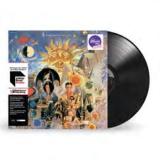
Das klassische Album aus dem Jahr 1989 wurde von Jon Astley remastert und von Miles Showell in den
Abbey Road Studios bei halber Geschwindigkeit geschnitten, um eine verbesserte Klangqualität und eine
außergewöhnliche Wiedergabe auf Vinyl zu gewährleisten.
A new producer-led project from musician and composer Nitzan Dana, Islands on Tape arrives with Dust Conspiracy, a cinematic and deeply textured three-track EP balancing vintage exotica, library music, psychedelic groove and modern beat culture.
Previously known for his work with psychedelic post-rock outfit Meuban, Dana created Islands on Tape as a separate artistic identity, a space to explore instrumental composition and studio experimentation through a more personal lens. Across the EP, he draws on a wide palette of influences, from Sven Wunder and Maston to exotica pioneer Les Baxter, alongside the sample-driven worlds of Madlib and MF DOOM. The result is a record that feels loose and organic in spirit while remaining intricately arranged and carefully constructed throughout.
Recorded across just three sessions with a close circle of collaborators, Dust Conspiracy draws together live drums, flute, percussion, surf guitars, Farfisa organs and atmospheric textures into a sound equally indebted to 1960s soundtrack music, dusty hip-hop production and classic exotica records.
Opening track “Dust Conspiracy” began with a bassline inspired by late-night listening sessions and crate-dug hip-hop production. Initially built around sampled drums, the piece evolved into a fully live recording featuring drummer Lotan Yaish (El Khat, Şatellites) and percussionist Ron Avidan. Swirling organs, creeping rhythms and heavy cymbal work give the track the feel of a lost 1970s espionage soundtrack, smoky, hypnotic and cinematic.
Blending cinematic soul, psychedelic groove, exotica and rhythm-heavy instrumental production, Dust Conspiracy introduces Islands on Tape as a richly detailed new studio project, equally suited to late-night headphone listening, imagined film sequences and dusty, atmospheric dancefloors.
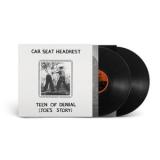
Teen of Denial: Joe’s Story is a freshly reimagined take on Car Seat Headrest’s beloved breakout, Teens of Denial, now celebrating its 10th anniversary.
On the original album, Toledo often used the name “Joe” as a pseudonym – a sly homage to Daniel Johnston. Revisiting Teens in the run-up to its 10th birthday, he felt called to give Joe a unique backstory and began tweaking the album to tell that tale. The group returned to the studio with Teens producer Steve Fisk to update accordingly – tweaking lyrics, revising arrangements, and recording new songs in the “Denial-style,” including ‘Optimistic Son” and the anthemic ‘Joe Drives Again’. The result retains Teens’ dark edge and youthful cynicism, but allows a bit of hard-won compassion into the mix.
From Will Toledo:
Sometime last year, it was suggested to me that we do something for the ten-year anniversary of ‘Teens of Denial,’ so I started looking back on the album to see what we might do. In spite of some of its songs being a regular part of my life for the past decade, it wasn’t a record I’d thought much about as a whole since it came out. Most of the songs I’d come up with over a two-year period at the end of my college days, when I was struggling a lot with cynicism and misplaced aggression. But by the time the songs were done, I was living in Washington, Car Seat Headrest was a full band with a record label, and in spite of the turmoil of the writing process, the final album was pretty enjoyable for everyone to work on.
This time, looking back at the songs, I started to feel like there was a story being told through the album, though I’d never imagined it as being a narrative work. On ‘Hi, How Are You?’ Daniel Johnston had used the name “Joe” in the titles of a few tracks –“No More Pushing Joe Around,” “Keep Punching Joe” – as a sort of joke, a stand-in for himself. I borrowed the idea, and the name, for titling songs on ‘Denial.’ This time, I started thinking - who is Joe? And how do the songs, in the way they’re sequenced on the album, reflect what he’s going through? As I started asking this question, a story emerged with startling wholeness and clarity, like finding the foundations of an ancient city while digging in my backyard. As I kept digging, certain songs from the original album fell by the wayside, as they seemed misplaced in this new context; others asked for new lyrics, to fully give birth to the story contained in the music.
The resulting work feels more like the album ‘Teens of Denial’ was meant to be. When you’re writing from a dark space, it’s hard to have perspective on where you’re at. This time, I could pull from memories of that darkness, and use the distance and additional perspective of ten years of life to shed a fuller light on the experience. Joe is a character going through some of what I experienced, and some of his own problems. Telling his story, and not just my own impressions of life at the end of the teen years, brought a new level of compassion and wholeness to the album. It gave us the opportunity to write new material in “Denial style”, embracing a snappy and simple(ish) rock aesthetic, and in an additional blessing, we were able to team up once with Steve Fisk, a joy and inspiration to get back into the studio with after ten years. We mixed the material at his house in Tacoma, and were constantly amazed at the lack of divide between past and present, as we’d punch in vocal overdubs ten years later into the same gear, hearing my voice now running alongside a 2015 Will. For someone coming across this album or this band for the first time, this is how they’d hear the record, not as a relic of the past but as a new piece. It was immensely rewarding to experience that on our side.
For anyone familiar with ‘Teens,’ comparisons with the original will be inevitable, but I do hope that as much as possible, people can come to this album on its own terms, approaching it as a teen, hearing the music and story for the first time. I believe music is an ongoing story, and albums don’t always do justice to its dynamic, ongoing nature. What gives it life is the new ears that hear it, and the new hearts that engage with it. I’m so grateful that this is a work that people have kept coming to, and I hope that this presentation does them honor with a fresh offering to the conversation. We’ve known that “it doesn’t have to be like this”; now we can wonder - “what it if were like this?”
On Dummy’s new album, do you love the color of the sky?, the Los Angeles-based 5-piece deliver a breathtaking piece of work that introduces new textures and rhythms to their already varied and refined catalog. For the band’s third album, and first for new label home Polyvinyl, the group split time between self-recording at their home studio as well as Studio 22, linking up with frequent collaborator and engineer Joo-Joo Ashworth (Corridor, Automatic, Spiral XP). The band focused on intentionality and experimentation, exploring downtempo dance beats and electronic music while pushing the guitar as far as they could, using new self-sampling and processing techniques. Percussionist Alex Ewell’s overall sound design and production skills can be heard across the album, with layered drum sounds and rhythmic tremolo techniques shining throughout. Tracks like “Full Spectrum Dominance” and “Alluvial Fan” showcase the band’s tasteful pop sensibilities, while closing track “Heaven’s What You Make Of
It” features perhaps the strongest vocal delivery yet from vocalist/keyboardist
Emma Maatman. Additionally, the dynamic exchange between guitarists Joe Trainor and Nathan O’Dell is absolutely gorgeous, adding a new layer of immersion and directness that is unlike anything the band has done before. The result is Dummy’s most ethereal and sincere record to date, with more feminine and delicate undertones that sit beautifully alongside the gritty and noisy textures the band has become known for. Dummy has been praised in numerous outlets such as Paste, Stereogum, Aquarium Drunkard and Pitchfork, who described their second album, Free Energy, as “the
sound of a band turning all its potential energy into music that’s dazzlingly kinetic and powerful." The band has toured the US, UK, and EU extensively, with festival appearances at Austin Psych Fest, Treefort Music Festival, and others. In addition to larger outlets and festivals, the band’s strong ties to community and DIY ethos are ever-present, oftentimes preferring to play and connect with different local artists on tour, uplifting those around them while shining a light on the history of independent music.
On Dummy’s new album, do you love the color of the sky?, the Los Angeles-based 5-piece deliver a breathtaking piece of work that introduces new textures and rhythms to their already varied and refined catalog. For the band’s third album, and first for new label home Polyvinyl, the group split time between self-recording at their home studio as well as Studio 22, linking up with frequent collaborator and engineer Joo-Joo Ashworth (Corridor, Automatic, Spiral XP). The band focused on intentionality and experimentation, exploring downtempo dance beats and electronic music while pushing the guitar as far as they could, using new self-sampling and processing techniques. Percussionist Alex Ewell’s overall sound design and production skills can be heard across the album, with layered drum sounds and rhythmic tremolo techniques shining throughout. Tracks like “Full Spectrum Dominance” and “Alluvial Fan” showcase the band’s tasteful pop sensibilities, while closing track “Heaven’s What You Make Of
It” features perhaps the strongest vocal delivery yet from vocalist/keyboardist
Emma Maatman. Additionally, the dynamic exchange between guitarists Joe Trainor and Nathan O’Dell is absolutely gorgeous, adding a new layer of immersion and directness that is unlike anything the band has done before. The result is Dummy’s most ethereal and sincere record to date, with more feminine and delicate undertones that sit beautifully alongside the gritty and noisy textures the band has become known for. Dummy has been praised in numerous outlets such as Paste, Stereogum, Aquarium Drunkard and Pitchfork, who described their second album, Free Energy, as “the
sound of a band turning all its potential energy into music that’s dazzlingly kinetic and powerful." The band has toured the US, UK, and EU extensively, with festival appearances at Austin Psych Fest, Treefort Music Festival, and others. In addition to larger outlets and festivals, the band’s strong ties to community and DIY ethos are ever-present, oftentimes preferring to play and connect with different local artists on tour, uplifting those around them while shining a light on the history of independent music.
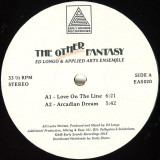
We Welcome Ed Longo And His Studio Project The Applied Arts Ensemble Debut On Early Sounds With the Other Fantasy', The Result Of Many Recording Sessions That Took Place In Different Places Around Europe.
Conceived With A Strong Jazz-funk, Fusion And Boogie Sound It Has Been Conceptualized Around The Idea That The Schizophrenia Of The Internet-age, The Visions Of Otherness (the Undiscovered Lands, The Primitive Happiness, The Impossible Love) Permeate The Collective Consciousness And The Idealized "other" Loses Any Correspondence With The Physical World.
Reissue of Rudimentary Peni’s stunning debut 12-song 7”. Recorded in 1981 at Street Level Studios and originally released on their own Outer Himalayan label. From the first track Rudimentary Peni pull you in and aurally assault your ears. It’s abrasive, sharp with supreme musicianship. They created a perfect, demented universe of twisted, poetic and needle in the red punk that has never been bettered. This reissue comes with a fold out replica sleeve with the iconic Blinko foetus artwork and booklet.
Karen Morrison - stage name Bryck Rose formerly known as K Vibes on the Reggae Dancehall scene. Currently a gospel singer, songwriter, poet, and aspiring playwright and one of the younger members from Studio One of Jamaica.
After a savage summer of performing over 35 festival shows, COLLIGNON continue their journey with the release of Bicicleta.
Bicicleta was written and recorded right in the midst of the band's summer tour. Gino, Yves and Jori seized the moment, the album captures exactly where they currently stand as a band: thriving on the energy of their live performances, with the desire to dive deeper into their music.
The result is Bicicleta—a diverse and authentic album that stays true to COLLIGNON’s distinctive blend of wildly grooving beats, psychedelic guitars, and sharp keyboard riffs. The music transports listeners across many borders, all while maintaining their signature COLLIGNON sound.
This album was made with vinyl in mind, designed to be experienced as a complete journey. From the first Maloya rhythms of "Fonkér la Mér" (Kreol for 'fond du cœur de la mer', meaning ‘from the bottom of the heart of the sea’) to the Brazilian groove and cosmic crescendo of "Vai Vai Vai (Into the Stars)", Bicicleta is a trip that flows from track to track.
The album, recorded while Jori left his Portuguese studio for a year-long stay in the Netherlands, pays homage to what -without engine, exhaust or pollution- might be considered the finest emblem of Dutch culture: the bicycle.
The words of adventurer Nellie Bly, written in 1896, still ring true today: ‘In a frenetic era of expanding possibilities, cycling offers a journey into a landscape of dreams. The bicycle has always signified independence and freedom in steering one’s daily course and the byways of its occasional adventures.’
To truly experience this album, nothing compares to holding the vinyl sleeve in your hands and spinning the record on your turntable.
Yuvi Havkin aka Rejoicer returns with an exceptional collaborative album, California Space Craft. On this aptly titled record, he joins forces with seasoned LA bass polymath Sam Wilkes — known for his inspired studio work with Sam Gendel and his dynamic live performances alongside Louis Cole and KNOWER — and drummer Tamir Barzilay, completing the LA-connected trifecta alongside a select handful of key featured guests. The idea for California Space Craft was born out of a series of inspired live sessions in Los Angeles between 2019 and 2022, notably at Listen to Music Outside in the Daylight Under a Tree, where the trio’s natural chemistry first began to bloom. The resulting recordings encompass a wide variety of inspired sound stylings, as one would expect from any of these accomplished artists on their own; however, the sum is truly greater than the parts here, with the fluidity of their freeform improvisations over a dedicated three-day recording session feeling remarkably focused as a cohesive whole. Opening track “Traveling Light” sets the LP’s tone with equal parts Sly & Robbie-style, space echo– drenched rhythms and the cozy kosmische, guitar-led feel of early-2000s genre-fluid explorers like Tortoise. As we continue on to “Ritual in G#,” we are reminded that this is indeed a unique and timeless sonic space the trio has created, as Havkin’s crisp Rhodes chords anchor an ever-evolving psychedelic sound bed. The soaring trumpet of Avishai Cohen adorns the Afrobeat-indebted “Lion Water,” with Barzilay laying down a proper Allen-esque groove, while “Further (with you),” featuring Nitai Hershkovits on keys, offers a defining look at the titular concept of the album — with pure Cali feels coalescing effortlessly into sciNew Release Information fi narrative modes and a proper dose of Rejoicer futurism. Elsewhere, “Her Hair in the Air” shines with fresh polyrhythmic intention, illustrating the balanced bond between the three collaborators at their conversational peak, and the brisk synth strokes of “Early Porpoises,” alongside LP closer “Oceanic Friends” — again ideally named — double as a grand, in-stereo ride into the blissful Pacific sunset horizon. California Space Craft embodies the power of open, collective intention and musical kinship, offering memorable, uplifting moments and an aural glimpse of hope, warmth, and loving melodious calm in an otherwise quite chaotic time for humanity.
In the spring of 1971, somewhere between Brussels, Paris and a collective pop fever dream, Le Monde Fabuleux Des Yamasuki landed on vinyl. It sounded like nothing else then and it still does not today. More than half a century later, Sdban Records proudly presents a reissue of this singular cult album, available from April 3, 2026 on vinyl.
The album was produced by Jean Kluger and written both by Jean and Daniel Vangarde (aka Bangalter, later the father of Thomas Bangalter of Daft Punk), who were alreadywell ahead of their time, long before electronic music rewrote the rules of pop culture.
Released under the name Yamasuki, also referred to as The Yamasuki Singers, or The Yamasuki's, the project was never intended as a conventional band. It was a studio-born fantasy, a concept album disguised as a pop record. What began as a standalone single quickly expanded into a full-blown pan-cultural pop opera that ignored genres and common sense with joyful abandon.
Musically, the album sits at a delirious crossroads. Psychedelic pop collides with funk rhythms, samba and bubblegum melodies, full of chants and choruses in a phonetic pseudo-Japanese, written with the help of a dictionary. Kluger and Vangarde famously recruited a children's choir to perform the vocals, and for added spectacle, they brought in a Japanese judo grandmaster, whose ritualistic shouts and battle cries erupt throughout the record.
Several singles were released. One of them, Yamasuki, with accompanying dance move, appeared in the United Kingdom and France on John Peel's Dandelion label, a fitting home for a record that thrived on the margins of pop culture. Its B-side, Aieaoa, proved even more potent. In 1975, the song was reborn as A.I.E. (A Mwana) by Black Blood, an African group recording in Belgium, this time sung in Swahili. That melody would travel even further. Aie a Mwana became the debut single of English pop group Bananarama, and in 2010 it resurfaced once more as Helele, an official song of the FIFA World Cup, recorded by South African singer Velile Mchunu with Danish percussion duo Safri Duo. That version became the most widely known incarnation of the song. With Jean Kluger directly involved, it was less a cover than a continuation of the original idea.
The album's afterlife did not stop there. Over the years, Yamasuki has been quietly sampled, covered, and featured across media far beyond the realm of novelty pop. Kono Samourai was sampled in The Healer by Erykah Badu (2007), produced by Madlib, while Yama Yama has found its way into recent pop culture as well: appearing in the television series Fargo, on Angus Stone's project Dope Lemon, and on the 2008 Late Night Tales compilation curated by Arctic Monkeys drummer Matt Helders. Proof, if any were needed, that this strange little record carries a deeper musical DNA than its playful exterior might suggest.
This new reissue of Le Monde Fabuleux Des Yamasuki proves the renewed interest and respect for this cult album, faithful to the original spirit while finally giving it back the physical presence it deserves. In an era obsessed with genres and algorithmic neatness, Yamasuki still laughs, dances and karate-kicks its way past definitions. It reminds us that pop music can be playful without being disposable, strange without being cynical and joyfulwithout explanation. The world of Yamasuki was always fabulous, we are just lucky it found its way back to us!
The Soft Chaos captures the essence of music “in the moment “ - the interaction of three musicians within the improvisation. It embodies the true spirit and essence of “jazz” - music created spontaneously, yet within the boundaries of an art form that has influenced the sound of modern music and many genres for nearly a century.
A collaborative, improvisational, and free-form trio project led, produced, and mixed by Nathan Haines with Joe Kaptein (keyboards) and Elijah Whyte (drums), recorded in just one day at Auckland Lab Studios.
The Soft Chaos showcases live, in-the-moment, top-quality musicianship with a vintage vibe reminiscent of classic 1970s experimental jazz rock, but with a modern jazz-house aesthetic, featuring live human lead drums and synthesisers rather than programmed beats.
Sublime frequencies from the golden era of ambient electronica.
Plumbing hidden depths beneath a deceptively tranquil surface, MLO's mid-90s masterpiece Io is an overlooked gem from a golden era for ambient electronic music. Originally released in 1994, Jon Tye and Pete Smith's collaborative album responded to the growing chill-out movement by leaning into classical and avant-garde influences from Satie, Debussy and Cage through to Soft Machine, Incredible String Band and Eno. Recorded across various studios stacked with classic and rare synths, Io was patiently composed into slowly unfolding suites punctuated with ripples of arrhythmic interference to arrive at a purist vision of true ambient.
The next instalment in Forever Records' ongoing reissue series shines a light back on this landmark piece of UK electronica with the first official reissue since its original edition on Rising High. As well as the original double LP pressing and a new CD digipak version, there will also be a uniquely numbered, limited edition housed in a gatefold sleeve that comes with a bonus 10" featuring two previously unreleased versions of the album's opening cut, 'Wimborne'.
Press response to Io:
"Not so much ambient, more environmental music, Io lets you bring as much (or as little) of your surroundings in as suits your mood. Every listen can be different. Interactive ambient at last.”
IO is pure ambience. Relying on motif as opposed to melody, MLO have produced a truly evocative album.
Peter McIntyre, Mixmag, UK 1994.
"MLO's influences range from the likes of Eric Satie and the intellectual salon music of his era to the more predictable reference point of dubby, modern techno, though they feel, perhaps rather contentiously, that "ambient music can exist in isolation from the rest of the dance music arena". Can it? Take a trip to Io, and find out."
Generator Magazine, UK 1994.
"If you like your ambient deep and moody with long chords that creep along at approximately the speed of drying paint then check out MLO’s Io."
Mixology, UK 1994.
"MLO set the controls for the heart of headspace for their first full album release. Io is top grade ambient brain… Ace album…"
Select, UK 1994.
Sublime frequencies from the golden era of ambient electronica.
Plumbing hidden depths beneath a deceptively tranquil surface, MLO's mid-90s masterpiece Io is an overlooked gem from a golden era for ambient electronic music. Originally released in 1994, Jon Tye and Pete Smith's collaborative album responded to the growing chill-out movement by leaning into classical and avant-garde influences from Satie, Debussy and Cage through to Soft Machine, Incredible String Band and Eno. Recorded across various studios stacked with classic and rare synths, Io was patiently composed into slowly unfolding suites punctuated with ripples of arrhythmic interference to arrive at a purist vision of true ambient.
The next instalment in Forever Records' ongoing reissue series shines a light back on this landmark piece of UK electronica with the first official reissue since its original edition on Rising High. As well as the original double LP pressing and a new CD digipak version, there will also be a uniquely numbered, limited edition housed in a gatefold sleeve that comes with a bonus 10" featuring two previously unreleased versions of the album's opening cut, 'Wimborne'.
Press response to Io:
"Not so much ambient, more environmental music, Io lets you bring as much (or as little) of your surroundings in as suits your mood. Every listen can be different. Interactive ambient at last.”
IO is pure ambience. Relying on motif as opposed to melody, MLO have produced a truly evocative album.
Peter McIntyre, Mixmag, UK 1994.
"MLO's influences range from the likes of Eric Satie and the intellectual salon music of his era to the more predictable reference point of dubby, modern techno, though they feel, perhaps rather contentiously, that "ambient music can exist in isolation from the rest of the dance music arena". Can it? Take a trip to Io, and find out."
Generator Magazine, UK 1994.
"If you like your ambient deep and moody with long chords that creep along at approximately the speed of drying paint then check out MLO’s Io."
Mixology, UK 1994.
"MLO set the controls for the heart of headspace for their first full album release. Io is top grade ambient brain… Ace album…"
Select, UK 1994.
Les Disques du Crepuscule presents a new 180 gm vinyl edition of Fidelity, the 1996 studio album by cult Manchester ensemble The Durutti Column.
Limited to just 500 copies, this special double disc edition is pressed on heavyweight 180 gm vinyl and features cover artwork by Crepuscule design director Benoit Hennebert, based on a portrait by Vini Reilly of filmmaker Carol Morley.
Originally released by Crepuscule on CD only in April 1996, Fidelity featured 10 tracks written and performed by Vini Reilly, with occasional guest vocals by Eley Rudge. In addition to Vini’s trademark guitar stylings, the album showcased sleek electronic textures and programmed beats.
This 2019 vinyl re-master features two bonus tracks: My Only Love was originally released in 1995 on a covermount CD with a specialist guitar magazine, while experimental piece The New Fidelity was issued on a Portuguese compilation album from 1992 called Hare, Hunter, Field.
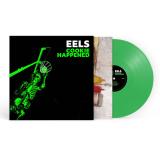
EELS, eine der eigenwilligsten und beständig gefeierten Bands der Rockgeschichte, melden sich mit ihrem 16. Studioalbum zurück. COOKIE HAPPENED findet E (Mark Oliver Everett) dort, wo er am stärksten ist: in den kleinen Siegen des Lebens, den unvermeidlichen Enttäuschungen – und dem stillen Wunder, überhaupt hier gewesen zu sein.
Den Albumtitel erklärt E mit einem Zitat des großen Philosophen unserer Zeit, dem Cookie Monster: „Me no cry because cookie is finished. Me smile because cookie happened." Alles wird vergessen werden – aber war es nicht trotzdem etwas Schönes, dass es geschah?
Die erste Single 'Cap In Hand' gibt einen bittersüßen Vorgeschmack: ein abgeklärt-bewegender Song aus der Perspektive von jemandem, der seine Fehler endlich eingesteht und versucht, die Dinge wieder geradzubiegen.
COOKIE HAPPENED folgt auf das 2024 erschienene und vielgelobte EELS TIME! und beweist einmal mehr, dass kaum ein anderer Künstler so gut darin ist, im Chaos des Lebens Bedeutung zu finden.
EELS, eine der eigenwilligsten und beständig gefeierten Bands der Rockgeschichte, melden sich mit ihrem 16. Studioalbum zurück. COOKIE HAPPENED findet E (Mark Oliver Everett) dort, wo er am stärksten ist: in den kleinen Siegen des Lebens, den unvermeidlichen Enttäuschungen – und dem stillen Wunder, überhaupt hier gewesen zu sein.
Den Albumtitel erklärt E mit einem Zitat des großen Philosophen unserer Zeit, dem Cookie Monster: „Me no cry because cookie is finished. Me smile because cookie happened." Alles wird vergessen werden – aber war es nicht trotzdem etwas Schönes, dass es geschah?
Die erste Single 'Cap In Hand' gibt einen bittersüßen Vorgeschmack: ein abgeklärt-bewegender Song aus der Perspektive von jemandem, der seine Fehler endlich eingesteht und versucht, die Dinge wieder geradzubiegen.
COOKIE HAPPENED folgt auf das 2024 erschienene und vielgelobte EELS TIME! und beweist einmal mehr, dass kaum ein anderer Künstler so gut darin ist, im Chaos des Lebens Bedeutung zu finden.
Das 2016 erschienene "Teens of Denial" markiert einen entscheidenden Wendepunkt in der Karriere von Car Seat Headrest und insbesondere von Frontmann Will Toledo. Nach einer Reihe von lo-fi Bedroom-Produktionen, die Toledo größtenteils allein aufgenommen hatte, war es das erste Album, das mit voller Bandbesetzung und größerem Studioaufwand entstand. Veröffentlicht wurde es über das renommierte Indie-Label Matador Records, bei dem Toledo kurz zuvor unter Vertrag genommen wurde. Das Album verbindet introspektive Texte mit energiegeladenem Indie-Rock und greift Themen wie Selbstfindung, Angst, Isolation und Jugendkultur auf. Songs wie "Fill in the Blank", "Drunk Drivers/Killer Whales" und "Destroyed by Hippie Powers" wurden schnell zu Publikumslieblingen und halfen der Band, ein deutlich größeres Publikum zu erreichen. "Teen Of Denial: (Joe"s Story)" ist nun ein komplettes Remake dieses 10 Jahre alten Klassiker. Toledo, der seinen Songbook gerne neuinterpretiert, wechselt hier die Perspektive und erzählt die Geschichte aus der Sicht von Joe. Auf dem Originalalbum verwendete Toledo häufig den Namen "Joe" als Pseudonym - eine subtile Hommage an Daniel Johnston. Als er Teens im Vorfeld seines 10-jährigen Jubiläums erneut aufgriff, verspürte er den Drang, Joe eine eigene Hintergrundgeschichte zu geben, und begann, das Album entsprechend anzupassen, um diese Geschichte zu erzählen. Die Band kehrte gemeinsam mit dem Teens-Produzenten Steve Fisk ins Studio zurück, um das Werk zu überarbeiten - mit angepassten Texten, überarbeiteten Arrangements und neuen Aufnahmen im "Denial-Stil", darunter "Optimistic Son" und die hymnische Single "Joe Drives Again". Das Ergebnis bewahrt die düstere Note und den jugendlichen Zynismus von Teens, lässt aber zugleich eine Spur mühsam errungener Mitmenschlichkeit in den Gesamtklang einfließen.
Das dritte Studioalbum von Holy Motors, ,Heaven's Night", verbindet die für die Band typischen westlichen Traumlandschaften mit eingängigen Pop-Melodien und New-Wave-Klängen, die für die estnische Band Neuland darstellen. Bemerkenswert ist vor allem eine neue Sanftheit in den Songs auf ,Heaven's Night", in denen Figuren vorkommen, die sich von den düsteren Sonnenuntergängen und der Outback-Melancholie des 2020 erschienenen Albums ,Horse" lösen. Wie die Band selbst sagt, ist ihr neuer Sound ,süß wie tropfender Honig, traurig wie Sommerregen". Zweifellos ist ,Heaven's Night" das bisher abwechslungsreichste Album von Holy Motors. Vom rasanten Galopp von ,The Last Ones" bis zum poppigen Herzstück ,Hellishly Hot" verleiht ,Heaven's Night" der Welt der Band eine neue Wendung - eine, die etwas weniger gespenstisch und dafür etwas gefährlicher ist.
Das dritte Studioalbum von Holy Motors, ,Heaven's Night", verbindet die für die Band typischen westlichen Traumlandschaften mit eingängigen Pop-Melodien und New-Wave-Klängen, die für die estnische Band Neuland darstellen. Bemerkenswert ist vor allem eine neue Sanftheit in den Songs auf ,Heaven's Night", in denen Figuren vorkommen, die sich von den düsteren Sonnenuntergängen und der Outback-Melancholie des 2020 erschienenen Albums ,Horse" lösen. Wie die Band selbst sagt, ist ihr neuer Sound ,süß wie tropfender Honig, traurig wie Sommerregen". Zweifellos ist ,Heaven's Night" das bisher abwechslungsreichste Album von Holy Motors. Vom rasanten Galopp von ,The Last Ones" bis zum poppigen Herzstück ,Hellishly Hot" verleiht ,Heaven's Night" der Welt der Band eine neue Wendung - eine, die etwas weniger gespenstisch und dafür etwas gefährlicher ist.
"Steve Watson's roots lie in Paramaribo, at that time the capital of the Dutch colony, where he won the 1975 Suriname Song Festival. This artist had a very strong connection with the music of his country, although unlike other artists - such as Max Nikman, for whom he acted as vocalist too - he performed his songs in English. Siegfried Boerleider, his real name, moved shortly thereafter to the Netherlands, where he also played in the groups The Backlot (with Laura Fygi and Rowan Moore) and Soul Conference. He released several singles on various labels, shaking off the "kaseko" music genre, which fused many different styles from Africa, Europe and the Americas, but considered rhythmically complex. He took time to move toward a simpler, yet well-structured, melodic genre in the recording studio, producing songs that were enjoyable to listen to on the radio and sensually danced to in the disco. With 1981's "Born To Boogie," we risk a seductive journey into the soul music of Suriname, which also possesses the fragrance of Dutch tulips. Then thanks to its charm, exploded in the Netherlands and subsequently in the world. Steve Watson - in addition to his personal style, rich in that simple and genuine expressiveness - also deserves recognition for his excellent songwriting, which led him to write for other Dutch artists, even though his two best songs are on this vinyl: "May Little One" and "Born to Boogie", ....the latter title has never been more fitting !!! Listen to it and go crazy !!!"
Die Welt war nie bereit für The Monsters, und The Monsters waren nie bereit für diese Welt. Nach vierzig Jahren, in denen sie zu einem echten Monster aus Fleisch und Blut herangereift sind, präsentieren sie ihr neuntes Album: gut ein Dutzend kompromissloser, wilder, lärmiger und fuzz-geladener Tracks. Ein Mix aus Ein-Riff-Beat, Trash, Garage, "Bern Metal", Boogie, Punk und Grunge - Songs, die einen von innen nach außen stülpen, aufgenommen mit "Miracle" Robert "Worker" Butler und abgemischt von Jim "Dirtbomb" Diamond - ein echtes Garage-Punk-Dreamteam. Vor vierzig Jahren, 1986, war die Jugendkultur-Revolution in Bern (Schweiz) in vollem Gange, Jugendliche und junge Erwachsene wollten sich aus den konservativen Fesseln befreien. Die Straßen brannten, Clubs entstanden und eine neue Schweizer Musikkultur wurde geboren. Dies markierte auch den Beginn von The Monsters. Vierzig Jahre später hat sich der Zustand der Musikkultur - oder vielmehr der Welt im Allgemeinen - wohl eher verschlechtert. Individuelles Denken und Schaffen sind nach wie vor nicht sonderlich anerkannt oder gar erwünscht (Hey KI!). Im März 2026 blieb der Band also nichts anderes übrig, als ihre Instrumente, das Aufnahme-Equipment und ihre Ideen in den Proberaum zu verfrachten. Sie verbrachten einen Monat mit Robert Butler (u. a. The Miracle Workers) und seinem mobilen "Two Cent Recording Studio". Sie schrieben Texte (insgesamt etwa 100 Wörter - mal sinnvoll, mal unsinnig, über das ganze Album verstreut), tüftelten am Sound und nahmen Gitarren in allen erdenklichen Variationen auf. Das Ganze wurde gewürzt mit Percussion, Schlagzeug, Bass sowie obskuren Orgeln und Synthesizern, die sie auf Flohmärkten oder in den Kellern von Freunden aufgetrieben hatten. Nach diesem vierwöchigen Trip schickten sie das gesamte Chaos an Jim Diamond (Ghetto Recorders Studios in Detroit, Dirtbombs, White Stripes, Gories, André Williams... klar, worum es geht, ne?!), um es einem umwerfenden Mix-Abenteuer zu unterziehen. Das Ergebnis ist ein Dutzend Songs ohne Kompromisse, Schwächen oder Stärken. Einfach nur roher, ungeschliffener Lo-Fi-Garage-Punk'n'Roll voller Energie - und das mit vierzig Jahren "Nicht-Erfahrung". Erhältlich sind schwarzes Vinyl und eine pinke Picture-Disc (beide mit Insert & DLC), eine höchst audiophile CD sowie Kassette, die bei doppelter Geschwindigkeit leiert! Für Fans von Reverend Beat-Man, VRR, The Mummies, Oblivians, Billy Childish, Damaged Goods, Monks, very early Hives, Garagepunk, Lo-Fi-Roll, Alternative Beat
Die Welt war nie bereit für The Monsters, und The Monsters waren nie bereit für diese Welt. Nach vierzig Jahren, in denen sie zu einem echten Monster aus Fleisch und Blut herangereift sind, präsentieren sie ihr neuntes Album: gut ein Dutzend kompromissloser, wilder, lärmiger und fuzz-geladener Tracks. Ein Mix aus Ein-Riff-Beat, Trash, Garage, "Bern Metal", Boogie, Punk und Grunge - Songs, die einen von innen nach außen stülpen, aufgenommen mit "Miracle" Robert "Worker" Butler und abgemischt von Jim "Dirtbomb" Diamond - ein echtes Garage-Punk-Dreamteam. Vor vierzig Jahren, 1986, war die Jugendkultur-Revolution in Bern (Schweiz) in vollem Gange, Jugendliche und junge Erwachsene wollten sich aus den konservativen Fesseln befreien. Die Straßen brannten, Clubs entstanden und eine neue Schweizer Musikkultur wurde geboren. Dies markierte auch den Beginn von The Monsters. Vierzig Jahre später hat sich der Zustand der Musikkultur - oder vielmehr der Welt im Allgemeinen - wohl eher verschlechtert. Individuelles Denken und Schaffen sind nach wie vor nicht sonderlich anerkannt oder gar erwünscht (Hey KI!). Im März 2026 blieb der Band also nichts anderes übrig, als ihre Instrumente, das Aufnahme-Equipment und ihre Ideen in den Proberaum zu verfrachten. Sie verbrachten einen Monat mit Robert Butler (u. a. The Miracle Workers) und seinem mobilen "Two Cent Recording Studio". Sie schrieben Texte (insgesamt etwa 100 Wörter - mal sinnvoll, mal unsinnig, über das ganze Album verstreut), tüftelten am Sound und nahmen Gitarren in allen erdenklichen Variationen auf. Das Ganze wurde gewürzt mit Percussion, Schlagzeug, Bass sowie obskuren Orgeln und Synthesizern, die sie auf Flohmärkten oder in den Kellern von Freunden aufgetrieben hatten. Nach diesem vierwöchigen Trip schickten sie das gesamte Chaos an Jim Diamond (Ghetto Recorders Studios in Detroit, Dirtbombs, White Stripes, Gories, André Williams... klar, worum es geht, ne?!), um es einem umwerfenden Mix-Abenteuer zu unterziehen. Das Ergebnis ist ein Dutzend Songs ohne Kompromisse, Schwächen oder Stärken. Einfach nur roher, ungeschliffener Lo-Fi-Garage-Punk'n'Roll voller Energie - und das mit vierzig Jahren "Nicht-Erfahrung". Erhältlich sind schwarzes Vinyl und eine pinke Picture-Disc (beide mit Insert & DLC), eine höchst audiophile CD sowie Kassette, die bei doppelter Geschwindigkeit leiert! Für Fans von Reverend Beat-Man, VRR, The Mummies, Oblivians, Billy Childish, Damaged Goods, Monks, very early Hives, Garagepunk, Lo-Fi-Roll, Alternative Beat
Die Welt war nie bereit für The Monsters, und The Monsters waren nie bereit für diese Welt. Nach vierzig Jahren, in denen sie zu einem echten Monster aus Fleisch und Blut herangereift sind, präsentieren sie ihr neuntes Album: gut ein Dutzend kompromissloser, wilder, lärmiger und fuzz-geladener Tracks. Ein Mix aus Ein-Riff-Beat, Trash, Garage, "Bern Metal", Boogie, Punk und Grunge - Songs, die einen von innen nach außen stülpen, aufgenommen mit "Miracle" Robert "Worker" Butler und abgemischt von Jim "Dirtbomb" Diamond - ein echtes Garage-Punk-Dreamteam. Vor vierzig Jahren, 1986, war die Jugendkultur-Revolution in Bern (Schweiz) in vollem Gange, Jugendliche und junge Erwachsene wollten sich aus den konservativen Fesseln befreien. Die Straßen brannten, Clubs entstanden und eine neue Schweizer Musikkultur wurde geboren. Dies markierte auch den Beginn von The Monsters. Vierzig Jahre später hat sich der Zustand der Musikkultur - oder vielmehr der Welt im Allgemeinen - wohl eher verschlechtert. Individuelles Denken und Schaffen sind nach wie vor nicht sonderlich anerkannt oder gar erwünscht (Hey KI!). Im März 2026 blieb der Band also nichts anderes übrig, als ihre Instrumente, das Aufnahme-Equipment und ihre Ideen in den Proberaum zu verfrachten. Sie verbrachten einen Monat mit Robert Butler (u. a. The Miracle Workers) und seinem mobilen "Two Cent Recording Studio". Sie schrieben Texte (insgesamt etwa 100 Wörter - mal sinnvoll, mal unsinnig, über das ganze Album verstreut), tüftelten am Sound und nahmen Gitarren in allen erdenklichen Variationen auf. Das Ganze wurde gewürzt mit Percussion, Schlagzeug, Bass sowie obskuren Orgeln und Synthesizern, die sie auf Flohmärkten oder in den Kellern von Freunden aufgetrieben hatten. Nach diesem vierwöchigen Trip schickten sie das gesamte Chaos an Jim Diamond (Ghetto Recorders Studios in Detroit, Dirtbombs, White Stripes, Gories, André Williams... klar, worum es geht, ne?!), um es einem umwerfenden Mix-Abenteuer zu unterziehen. Das Ergebnis ist ein Dutzend Songs ohne Kompromisse, Schwächen oder Stärken. Einfach nur roher, ungeschliffener Lo-Fi-Garage-Punk'n'Roll voller Energie - und das mit vierzig Jahren "Nicht-Erfahrung". Erhältlich sind schwarzes Vinyl und eine pinke Picture-Disc (beide mit Insert & DLC), eine höchst audiophile CD sowie Kassette, die bei doppelter Geschwindigkeit leiert! Für Fans von Reverend Beat-Man, VRR, The Mummies, Oblivians, Billy Childish, Damaged Goods, Monks, very early Hives, Garagepunk, Lo-Fi-Roll, Alternative Beat




![Maher Shalal Hash Baz - Faux Départ [LP]](https://www.deejay.de/images/l/6/9/1252969.jpg)