
- A1: Froggy Day
- A2: These Things
- A3: Hi Beck
- A4: Palo Alto
- B1: Higashi 32-Chome 317-Ban-Chi
- B2: Subconsciously
- B3: My New Frame
- B4: Lennie's Pennies
5

Recorded about a year after Scenery, his second album retains the delicacy and emotional depth of his playing, but adds a new strength that gives the world Fukui paints a clearer contour and striking dimensionality. From the bittersweet, heart-stirring melody of “Mellow Dream” to the vibrant, exhilarating drive of “Horizon”, the album is filled with performances that shine brilliantly. It is also notable that the number of original compositions only one on the debut—has increased to three here, allowing listeners to appreciate Fukui’s musicality even more fully. Considering its maturity and the richness of its content, it may even be fair to say that this work surpasses his first album. Ryo Fukui, who sadly passed away...

This is joy beyond expectation the arrival of a new Ryo Fukui recording. Captured on June 26, 2004, this live session documents the ninth anniversary concert of Slowboat, the jazz club Fukui founded and considered his musical home. The trio features Ryo Fukui on piano, Benisuke Sakai on bass, and Yoshihito Eto on drums. Fukui was 56 years old at the time, and his playing is powerful and expansive, yet still marked by delicacy and razor sharp precision. In terms of energy, stamina, and technique, he was entering a true period of artistic maturity. He delivers the music of his beloved Phineas Newborn Jr. and Tommy Flanagan with depth and elegance, and approaches the works of Wayne Shorter—an early-life influence—with thrilling intensity. The performance captures Fukui at a moment of profound fulfillment, offering a truly compelling glimpse into his late career brilliance.
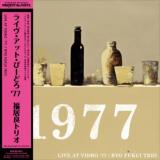
Who could have imagined that Ryo Fukui had left behind a recording like this? Captured on June 8, 1977, this previously unreleased live session was recorded at the Sapporo jazz club Vidro by Masataka Ito, the producer behind Fukui’s albums Scenery and Mellow Dream. It is unmistakably the Ryo Fukui Trio of that era, yet the performance possesses an overwhelming intensity and freshness that far surpass any studio recording—excitement in its purest form.
The 16-minute, searing performance of “Mellow Dream” is just the beginning. The propulsive energy of “Speak Low”, the beautifully woven lyricism of “Body & Soul,” the blistering drive of “Love For Sale”, the weighty depth of “Mr. P.C.”, and the crystalline fragility of “My Foolish Heart”—each track is delivered with feverish brilliance. It was this very live recording, excerpts of which were evaluated at the Trio Records headquarters at the time, that ultimately led to the production of Fukui’s second album Mellow Dream. In every sense, this is an extraordinarily precious document.
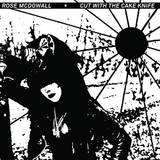
Cut The With The Cake Knife was recorded by Rose McDowall in 1988/89 following the break up of her group Strawberry Switchblade. Produced with the aid of several musicians in several studios, the album features songs written for the fabled second Strawberry Switchblade album. More importantly perhaps it showcases the honest, direct and life-affirming songs of one of the greatest unsung songwriters of the modern pop era at a tumultuous time in her career.
Tibet opens the set and could be one of the best pop songs you've never heard. The innate sadness of the songs' content - the loss of a friendship, impending sorrow - is heightened to heart-melting level by McDowall's pop nous and melodic sensibility. Choruses and hooks are everywhere on Cake Knife, from the outsider take on stadium 80s pop in Wings Of Heaven to the spiraling, ecstatic So Vicious, a glorious anthem that highlights the human fragility in McDowall's vocal performance, an instrument that has never lost the naïve purity it first exemplified in Strawberry Switchblade's early 80s recordings. The centerpiece of the album, the title-track, is the greatest Switchblade pop chart hit that never was. Like the veiled melancholy of her former group's hits, Cut With The Cake Knife hints at a darkness beneath the gloss, a darkness that saw McDowall delve into more esoteric territory with her subsequent recordings and collaborations. Cut With The Cake Knife serves as the bridge between the pop music McDowall had been making with her friends Jill Bryson, Lawrence from Felt and Primal Scream to what became a more extreme, deep sound informed by neo-folk and post industrial music.
Rose McDowall's role in the canon has always been one of an outsider. Beginning in Glasgow's East End in the avant proto-noise group The Poems, achieving fame briefly in the 80s and then disappearing into counter-cultural folklore, the emphasis in the internet-age has been skewed towards her image and cultural significance. Unseen to many, her solo work, her groups Sorrow and Spell and her collaborations with a whole host of underground luminaries have still touched lives. As McDowall elucidates: 'They're real sad songs, about real life. I've had people come up to me to say I'd connected with them and helped them. I remember a gig in America when we made a whole room cry. It was bizarre. A couple at the front of the stage started crying and then these two boys beside and suddenly everyone was crying. And I thought, "that's power."
Night School's issue of Cut With The Cake Knife includes unpublished photographs, extensive sleeve notes from Rose McDowall and 2 bonus tracks culled from the bootleg 7' 'Don't Fear The Reaper.' First vinyl pressing is Clear w/ Black swirl; 500 only / has DL card and booklet, with a poster
CD has extensive booklet and is packaged in anO-Card.

Muse are a culturally-attuned, genre-defying band who channel the anxieties of each era—technology, power, rebellion, and identity—into maximalist, stadium-ready rock that evolves with the times while staying unmistakably Muse.
Kicking off with new single “Be With You,” this next era of Muse is rooted in electronic experimentation and an insatiable curiosity. ‘The WOW! Signal’ represents a world of cosmic mystery, existential hope, and the exhilarating possibility of contact with something far greater than ourselves.

Downtown Boys have pushed relentlessly forward as an artistic and political project since their founding. Singer Victoria Marie and guitarist/singer Joey La Neve DeFrancesco first met at union meetings while working together at a hotel in Providence, RI, writing many of the band's early songs about labor organizing and exploitative workplaces. The quintet is completed by Joe DeGeorge (sax/synth), Mary Jane Regalado (bass), and Joey Doubek (drums). Over years of touring, and three acclaimed albums, Downtown Boys have continued to grow as artists, musicians, and organizers. Now, the band has arrived with Public Luxury, an enthralling album that keeps politics front and center while summoning the band's most urgent and powerful sound to date. The definition of Public Luxury falls very much in line with that of the title of the second Downtown Boys LP, Full Communism. Straight up, Public Luxury means, "everything for everyone." It's the stubborn insistence that a better world is possible, while fully recognizing the horrors we witness daily, and the individual and collective responsibility to resist the nihilism and hopelessness we all feel. Sentiments like "everything for everyone," and "we will have it all" perfectly represent the cathartic, communal live experience this cadre of multi-instrumentalists create. These sentiments also encapsulate the inclusive, joyful sonic fusion that defines the album: anthemic punk and indie rock mix with Latin traditions, drum machines blend with acoustic drums, saxophones punctuate riffs, and layers of synths add flourishes from new-wave to industrial. The amount of ground covered on Public Luxury can't be overstated, and yet the album feels totally vital and cohesive. Public Luxury is a revisitation of the band's past for the sake of their future. It was co-produced by DeFrancesco with recording engineer and longtime Downtown Boys supporter Seth Manchester (Lambrini Girls, Lightning Bolt, Model/Actriz) at the Pawtucket, RI studio and arts space Machines With Magnets, not far from the band's first home of Providence, RI. Victoria Marie's grandmother-a monumental figure for the band throughout their existence-passed away in May of 2025, and her influence looms large over the album; the songs "No Me Jodas" and "Sirena" are crystallized representations of the love between a woman and her ancestor. Beyond the loss, rage and frustration of the present, Public Luxury points boldly towards a vibrant, open-hearted vision of both music and the world: "Our music is simply for anyone and everyone who believes in the new future we can make together," Victoria Marie declares. "A world that will be awkward, inconsistent, yet truly free when it comes to all that matters."
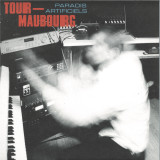
2026 Repress.
There is with Tour-Maubourg an eternal desire to translate the feeling of love into music. Sometimes cheerful, sometimes melancholy, always exhilarating, the producer, native of Brussels and expatriate in Paris, has continued for 3 years to attract the praise of his peers and the support of a growing audience. The man who was described by Trax Magazine upon the release of his 1st EP as ‘‘one of the most promising producers of the French house scene’’ has revealed himself in this hyperactive new scene to become one of its best standards.
After several EPs released in France on Pont Neuf, FHUO (ie. Folamour’s label), as well as Happiness Therapy or in England and Germany on FINA and Salin, Tour-Maubourg unveils his first album, Paradis Artificiels. The Parisian producer refers to Charles Baudelaire’s poem, to which he links his melancholy music, who wrote:
‘‘common sense tells us that the things of the earth exist very little, and that the true reality is only in the dreams’’.
If the producer’s first EPs were mainly focused on club music, Paradis Artificiels oscillates between the atmospheres that made the success of these previous releases and those of a studio album. Composed of both house songs and downtempo sound researches, always flirting with the jazz sounds that have made the fame of the producer, this first album invites us on a journey in the lineage of St Germain, Massive Attack or Nicolas Jaar.
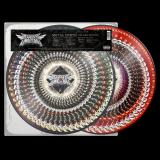
"Beyond HEAVY METAL": the deluxe edition is a special 2LP zoetrope vinyl featuring live recordings from arena shows in the UK, US, and Japan, along with “from me to u (feat. Poppy)” Major Lazer Remix and “from me to u (feat. Poppy)” Jordan Fish Remix
Having celebrated its 15th anniversary last year, BABYMETAL presents a new style of heavy metal album created in collaboration with a new generation of friends encountered across the globe. A powerful statement of who the band is today, this album pushes toward what lies "beyond HEAVY METAL" and aims to change the course of history.
Available to own on special edition zoetrope vinyl. Limited quantities, available while stocks last!
In spring 2025, Abul Mogard and Rafael Anton Irisarri created the source material for their second album, Where Light Pauses in the Silence of the Sun, during a three-day residency at Morphine Raum in Berlin. Functioning as both recording studio and performance venue, the space has no stage, with the audience gathered around the performers. Working within an open framework, the duo reshaped the music each evening while recording the performances live to multitrack. Rotary speakers, modular synthesizers and bowed guitar formed the core of their sonic language, captured through a 1970s mixing console and microphones placed around the room.
Back in Mogard’s studio in Rome, the material was further crafted as motifs were stretched, fragments isolated, and tempos dissolved. Irisarri recorded additional guitar textures and treatments in New York, while passages recorded by Martina Bertoni and Andrea Burelli in Berlin reinforced the harmonic centres and brought breath, refinement and a new sensibility to their compositions. The process continued as Mogard’s layering and subtraction reassembled everyone’s parts into the final arrangement.
The album opens with “In the Eastern Wild,” building from a sparse outline into a monumental formation of low-frequency weight, its internal motion shaped by the rotating Leslie speaker. “Over the Domes” widens into a broader acoustic field, where sustained modular tones meet waves of softly plucked guitar. The music then turns inward with “A Blue Descent,” centred on Bertoni’s cello, whose growling timbre introduces a melancholic depth.
At the album’s centre, “In a Quiet Radiance” unfolds around a slow guitar ostinato, its luminous stillness opening into a more expansive and reflective state. Across its ten-minute span, Burelli’s violin lines and Bertoni’s lower cello phrases gradually surface, weaving through the harmonic field. Mogard brings Burelli’s processed voice to the fore, its emotive, operatic presence becoming one of the record’s pivotal moments. “Of Blessed Ages” suspends the sonic flow, shifting between parallel major and minor chords as lingering, slowly decaying melodies shape the music’s internal drift. The closing “Among Shadows” settles into a darker resonance as layered textures recede.
Mogard and Irisarri’s shared language balances restraint and maximalism. UK magazine Crack describes the music as “a tidal wave held in suspension,” while Dutch newspaper de Volkskrant writes, “What a colossal sound, and how this music strikes at the emotions.” Reflecting on the residency sessions, Irisarri recalls: “At moments I genuinely couldn’t tell if a sound was coming from me or from Abul. It stopped feeling like two people making decisions and began to feel like we were inside a system moving on its own."
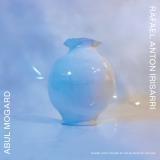
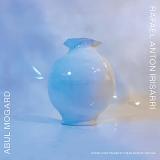
Marja de Sanctis’ cover artwork revisits the vessel sculpture from the duo’s first album, Impossibly Distant, Impossibly Close. There it appeared as raw, unfired clay. Here it has been fired in the kiln and finished with a glaze. Light gathers on its polished surface and spills into the surrounding space. As she explains, “I wanted to convey the idea of continuity within the duo, and the vessel became a kind of container for that idea. However, their music felt different this time, and with the collaboration of Martina and Andrea, I felt it should have a sleeker, softer, more glamorous look, very distant from the first raw appearance.” The transformation of the vessel from raw clay to fired form suggests a passage from immediacy toward permanence, mirroring the music’s gradual expansion.
In spring 2025, Abul Mogard and Rafael Anton Irisarri created the source material for their second album, Where Light Pauses in the Silence of the Sun, during a three-day residency at Morphine Raum in Berlin. Functioning as both recording studio and performance venue, the space has no stage, with the audience gathered around the performers. Working within an open framework, the duo reshaped the music each evening while recording the performances live to multitrack. Rotary speakers, modular synthesizers and bowed guitar formed the core of their sonic language, captured through a 1970s mixing console and microphones placed around the room.
Back in Mogard’s studio in Rome, the material was further crafted as motifs were stretched, fragments isolated, and tempos dissolved. Irisarri recorded additional guitar textures and treatments in New York, while passages recorded by Martina Bertoni and Andrea Burelli in Berlin reinforced the harmonic centres and brought breath, refinement and a new sensibility to their compositions. The process continued as Mogard’s layering and subtraction reassembled everyone’s parts into the final arrangement.
The album opens with “In the Eastern Wild,” building from a sparse outline into a monumental formation of low-frequency weight, its internal motion shaped by the rotating Leslie speaker. “Over the Domes” widens into a broader acoustic field, where sustained modular tones meet waves of softly plucked guitar. The music then turns inward with “A Blue Descent,” centred on Bertoni’s cello, whose growling timbre introduces a melancholic depth.
At the album’s centre, “In a Quiet Radiance” unfolds around a slow guitar ostinato, its luminous stillness opening into a more expansive and reflective state. Across its ten-minute span, Burelli’s violin lines and Bertoni’s lower cello phrases gradually surface, weaving through the harmonic field. Mogard brings Burelli’s processed voice to the fore, its emotive, operatic presence becoming one of the record’s pivotal moments. “Of Blessed Ages” suspends the sonic flow, shifting between parallel major and minor chords as lingering, slowly decaying melodies shape the music’s internal drift. The closing “Among Shadows” settles into a darker resonance as layered textures recede.
Mogard and Irisarri’s shared language balances restraint and maximalism. UK magazine Crack describes the music as “a tidal wave held in suspension,” while Dutch newspaper de Volkskrant writes, “What a colossal sound, and how this music strikes at the emotions.” Reflecting on the residency sessions, Irisarri recalls: “At moments I genuinely couldn’t tell if a sound was coming from me or from Abul. It stopped feeling like two people making decisions and began to feel like we were inside a system moving on its own."
Marja de Sanctis’ cover artwork revisits the vessel sculpture from the duo’s first album, Impossibly Distant, Impossibly Close. There it appeared as raw, unfired clay. Here it has been fired in the kiln and finished with a glaze. Light gathers on its polished surface and spills into the surrounding space. As she explains, “I wanted to convey the idea of continuity within the duo, and the vessel became a kind of container for that idea. However, their music felt different this time, and with the collaboration of Martina and Andrea, I felt it should have a sleeker, softer, more glamorous look, very distant from the first raw appearance.” The transformation of the vessel from raw clay to fired form suggests a passage from immediacy toward permanence, mirroring the music’s gradual expansion.
In spring 2025, Abul Mogard and Rafael Anton Irisarri created the source material for their second album, Where Light Pauses in the Silence of the Sun, during a three-day residency at Morphine Raum in Berlin. Functioning as both recording studio and performance venue, the space has no stage, with the audience gathered around the performers. Working within an open framework, the duo reshaped the music each evening while recording the performances live to multitrack. Rotary speakers, modular synthesizers and bowed guitar formed the core of their sonic language, captured through a 1970s mixing console and microphones placed around the room.
Back in Mogard’s studio in Rome, the material was further crafted as motifs were stretched, fragments isolated, and tempos dissolved. Irisarri recorded additional guitar textures and treatments in New York, while passages recorded by Martina Bertoni and Andrea Burelli in Berlin reinforced the harmonic centres and brought breath, refinement and a new sensibility to their compositions. The process continued as Mogard’s layering and subtraction reassembled everyone’s parts into the final arrangement.
The album opens with “In the Eastern Wild,” building from a sparse outline into a monumental formation of low-frequency weight, its internal motion shaped by the rotating Leslie speaker. “Over the Domes” widens into a broader acoustic field, where sustained modular tones meet waves of softly plucked guitar. The music then turns inward with “A Blue Descent,” centred on Bertoni’s cello, whose growling timbre introduces a melancholic depth.
At the album’s centre, “In a Quiet Radiance” unfolds around a slow guitar ostinato, its luminous stillness opening into a more expansive and reflective state. Across its ten-minute span, Burelli’s violin lines and Bertoni’s lower cello phrases gradually surface, weaving through the harmonic field. Mogard brings Burelli’s processed voice to the fore, its emotive, operatic presence becoming one of the record’s pivotal moments. “Of Blessed Ages” suspends the sonic flow, shifting between parallel major and minor chords as lingering, slowly decaying melodies shape the music’s internal drift. The closing “Among Shadows” settles into a darker resonance as layered textures recede.
Mogard and Irisarri’s shared language balances restraint and maximalism. UK magazine Crack describes the music as “a tidal wave held in suspension,” while Dutch newspaper de Volkskrant writes, “What a colossal sound, and how this music strikes at the emotions.” Reflecting on the residency sessions, Irisarri recalls: “At moments I genuinely couldn’t tell if a sound was coming from me or from Abul. It stopped feeling like two people making decisions and began to feel like we were inside a system moving on its own."
Marja de Sanctis’ cover artwork revisits the vessel sculpture from the duo’s first album, Impossibly Distant, Impossibly Close. There it appeared as raw, unfired clay. Here it has been fired in the kiln and finished with a glaze. Light gathers on its polished surface and spills into the surrounding space. As she explains, “I wanted to convey the idea of continuity within the duo, and the vessel became a kind of container for that idea. However, their music felt different this time, and with the collaboration of Martina and Andrea, I felt it should have a sleeker, softer, more glamorous look, very distant from the first raw appearance.” The transformation of the vessel from raw clay to fired form suggests a passage from immediacy toward permanence, mirroring the music’s gradual expansion.

Black Vinyl[26,47 €]

Opaque White Vinyl[28,78 €]

Talk-Mo-Band mit Frontfrau aus der verfluchten Szene von Elgin, Illinois. ,Something Good Has Got To Come From All These Goodbyes" versammelt die gesamten Aufnahmen von The Lazarus Plot - ihr Debüt-Doppel-7"-Single von 1998, die EP ,The End", eine Split-Veröffentlichung mit Long Live Nothing, eine vereinzelte Compilation sowie zwei bisher unveröffentlichte Songs - zusammen mit einem 24-seitigen Booklet mit Texten und Fotos, gestaltet von Laura Laurent. Ein geheimes Teenager-Tagebuch voller Trauer und Sehnsucht, vertont mit Musik, die vom Louisville und Chicago der Vor-Internet-Zeit inspiriert ist. Keine Reue.
“The Long Transition From Death To Wisdom” marks a new chapter in Dmitry’s evolving sonic world – a contemplative, slow‑burning journey through grief, memory, and the quiet emergence of clarity. Rooted in a brooding fusion of shoegaze, goth, and darkwave, the album drifts through washed out guitars, spectral synths, and poignant vocals – its emotional landscape suspended between sadness and awakening. On vocal duties is Dmitry’s longtime collaborator Valeria Simonova, whose presence deepens the album’s atmosphere. Each track feels like a step forward in the ritual of becoming aware of one’s own existence, moving through silence and ancient memories toward a sense of spiritual renewal.
The album opens with the mysticism and layered metaphors of “Liar,” before descending into the ancient, biblical presence of “Serpent Queen.” Midway, “Zenith” rises with shimmering synths and steady, triumphant percussion, while “Echoes of Yesterday” lingers in celestial melancholy, dissolving the boundary between remembrance and insight. The Bside begins with “The Other Side of Life,” a threshold into a quieter, more reflective space, followed by the meditative, ritual like ambience of “Shrine of Ruins.” Closing track “Cold” offers a final exhale from the fading realm of the past – an acceptance shaped by distance, time, and the erosion of old wounds.
An array of musicians contributed to the recoding of the album: Mathys Dubois (No One Is Innocent, exBlack Strobe), Loïc Maurin (M83), Victor Sologub (Deadушки, Странные Игры), Alexander Titov (Кино, Аквариум), Ben Easton (Deary), and others. The album was mastered at Abbey Road Studios by Miles Showell.
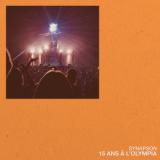
On October 16, 2025, Synapson took over the Olympia for a sold-out anniversary concert, celebrating 15 years of their career. A symbolic night in an iconic venue, in front of a crowd that came to relive the tracks that shaped their journey.
Today, the duo unveils “15 ans à l’Olympia”, a live album recorded during this unique show, a vibrant testament to their stage energy and the evolution of their project.
