Als Blackwater Holylight vor drei Jahren ihre Heimatstadt Portland, Oregon, verließen, war es ihr Ziel, der Tristesse des pazifischen Nordwestens und dem beruhigenden Komfort des Vertrauten zu entfliehen. Mit dem Ziel, das sonnigere Klima von Los Angeles zu genießen, fand sich die Band nicht nur in einer wärmeren Umgebung wieder, sondern auch in einer völlig neuen Landschaft - einer ohne Arbeitsplätze, langjährige Freundeskreise und die bequeme Zuflucht alter Gewohnheiten. Und genau hier, unbelastet von der Zufriedenheit der Sicherheit, begann Blackwater Holylight fleißig an ihrem vierten Album ,Not Here Not Gone" zu arbeiten. Wie schon ihre früheren Werke beschäftigt sich ,Not Here Not Gone" mit der Dualität von Licht und Dunkelheit - bedrohliche Riffs bilden das Fundament für betörende Melodien, dichte Wände aus Shoegaze-Gitarren paaren sich mit luftig-leichten Synthesizern, und schwere Themen werden durch sirenenhafte Gesänge vermittelt. Im Laufe des Albums verspürt der Zuhörer mal ein Gefühl der Stärke, mal ein Gefühl der Verletzlichkeit. Wie Schlagzeugerin Eliese Dorsay es beschreibt: ,In einigen Songs sind wir die Raubtiere, in anderen die Beute." Die Gegenüberstellung von Selbstvertrauen und Unsicherheit ist nirgendwo so deutlich zu spüren wie bei einer lebensverändernden Entscheidung, was vielleicht erklärt, warum der Umzug der Band ihr Studium der Kontraste auf ,Not Here Not Gone" zu neuen Höhenflügen intensiviert hat . ,Not Here Not Gone" wurde im Sonic Ranch außerhalb von El Paso, Texas, von Sonny Diperri (Narrow Head, DIIV, Emma Ruth Rundle) aufgenommen, wodurch die Band erneut ihre Komfortzone verlassen und sich an einem Ort isolieren konnte, an dem sie sich ausschließlich auf ihre Kunst konzentrieren konnte. Das Ergebnis ist das Kronjuwel von Blackwater Holylights Diskografie - eine reichhaltige und eindringliche Studie in tonalen Hell-Dunkel-Kontrasten, in der das Licht seinen Weg aus den Schatten findet.
Joe Claussell reimagines 3 tracks from Patrick Gibin's 2024 successful debut album 'Strength In Numbers' for Mother Tongue. These are not simple remixes but complete translations into the NYC legend's own language where the words Cosmic and Spiritual go hand by hand. The depth of these new versions is another testament of Joe's ability to always push the Sound to new heights!
'Let It Go' is manipulated into a dancefloor opus rich of sonic surprises and magnificent synth workouts.
'Joint Purpose' is present here in two versions, the deep and complex 'Teenage Music' mix and the thunderous 'Dub Dub' take which is exactly how it's called: an epic out of body bass experience.
'In This Together' comes in a full 15 minutes suite with tempo and mood changes which echoes the best 70's fusion and finally in a more ethereal form ('Voice Of Innocence Version') to close the double pack.
A breathtaking travel into Claussell's endless creative imagination where boundaries are won and Music is all that matters!
out of Stock
Last delivered 3 months ago available to reorder, subject to availability
Lofi-surf producer Shimon Hoshino presents the pre-release single "Nagisa" as a 7-inch vinyl, featuring one of South London’s most promising artists, edbl.
The track combines Shimon Hoshino’s beautiful piano melodies and slow-tempo lofi beats with edbl’s soulful, mellow guitar, creating a gentle wave-like groove that rises
and falls like the shore. The laid-back sound feels comforting, wrapping the listener in a musical embrace that stretches endlessly like the sea.
Another track, "Pages in the Breeze" was inspired by Shimon Hoshino’s home base in the Shonan area, particularly the multi-use commercial complex Shonan T-SITE,
which supports local life while proposing new lifestyles. The track captures the warmth of turning book pages and the gentle flow of everyday moments, resulting in a
soothing sonic experience.
The artwork and design are by UNCUTS, a graffiti artist active on the Chilly Source label.
A miraculous collaboration comes to life! DJ Mitsu the Beats, a globally active member of the Sendai-based hip-hop crew GAGLE, joins forces with beatmaker and
producer STUTS for the new track "Stack Wave" now released as a 7-inch single.
The track features DJ Mitsu the Beats’ gently swaying, looped beats and layered choruses, combined with STUTS’ sophisticated multi-layered instrumentation.
The result is a delicate, immersive sound that evokes the quiet stillness of a seaside setting while capturing the beautiful yet fleeting reverberation of the vast ocean.
Included is the instrumental track "On the edge of the water" from the original album "New Horizon" scheduled for release in November 2025. With jazz-infused beats
and electric piano, the track reflects the theme of sea and chill, creating a relaxed, timeless atmosphere.
The jacket artwork is a collaborative design featuring ocean photography by Yasuma Miura, a photographer based in Shonan and Kamakura who travels the world while
surfing, and design by So Iguchi (soiguchi design), known for his work on outdoor brand catalogs and lookbooks.
DJ and sound producer Sam is Ohm’s new track "STARLIGHT" featuring Rachel from chelmico and singer-songwriter YonYon, is now available as a 7-inch single!
This urban dance track portrays the struggle to live in the moment—embracing both the ever-changing city and the uncertainty that surrounds us—while surrendering to
music and light. With a sparkling, fast-paced groove reminiscent of UK garage and 2-step, Rachel’s lively rap and YonYon’s soothing, crystal-clear vocals blend seamlessly
to create a positive anthem that frees the heart from the chaos of the city nightscape.
Known for their warm harmonies, live energy, and poetic lyrics, Boy & Bear explore on Tripping Over Time themes such as embracing life's journey and its contradictions: "It's about the subtle lessons of life. Often you don't realise you've gone through something until you've truly experienced it. You keep learning, stumbling forward, and embracing the chaos with a smile. It's optimistic, nostalgic and playful, just like life itself," says frontman Dave Hosking. The record feels like one big celebration of joy, laced with a bittersweet, happy-sad energy. Since their breakthrough with the double-platinum debut Moonfire, Boy & Bear have released multiple #1 albums and earned a reputation as one of Australia's most compelling live acts.
The Ruins Of Beverast narrate fables of the darkest secrets in human history and present. ‘Tempelschlaf’ is The Ruins Of Beverast’s seventh full-length output and sees the band continue with their sonic morbidity, noises and melodies of a human habitat in its sunset era, while maintaining and refining the widescreen low end that has been sustaining their sound from the beginning. On the instrumental side, ‘Tempelschlaf’ is stripped of some fat, forging the songs with a reduction in length and layers, cautiously leaning towards the stage part of things. While synths and samples have always played an adamant role in The Ruins Of Beverast’s sound, they reach yet another level of psychedelia and insanity on ‘Tempelschlaf’. The Ruins Of Beverast were formed in early 2003 and named after the most bloodcurdling occasion of the collapse of the giant bridge Bifröst. This incident bears analogy to the musical aura of The Ruins Of Beverast, which builds a sonic landscape of massive, surreal, barren mountain formations. Seven full-length albums and several EPs, splits and compilation releases have been published through Ván Records so far. As a live act, The Ruins Of Beverast became a strong force after Roadburn 2013, a festival the band have played again since with exclusive shows. The Ruins Of Beverast have embarked on several European tours with acts like 1349, Grave Miasma and King Dude, as well as a highly acclaimed US tour that eventually concluded with an iconic show at Fire In The Mountains festival. The band have played such well-established club shows and festivals as Hellfest, Inferno, Incubate, Party.San Open Air and Beyond The Gates, to name just a few.
Audio taken from a live performance by Anar Band (Jorge Lima Barreto and Rui Reininho) with E.M. de Melo e Castro in November of 1978 at Cooperativa Árvore, Porto. The performance was filmed. A segment was included in »Obrigatório Não Ver«, a weekly programme presented by Ana Hatherly on Public Television’s Second Channel. It was not possible to determine the exact date of the event, and no documentation seems to be available in the relevant archives.
»Encontro que Tenho« and »Profissões«: these titles are specific to this release. Having failed to locate the respective poems after a thorough search in E.M. de Melo e Castro’s body of work, it was deduced both texts were created for the occasion.
Even without a full contextualisation, the sound transmits the spirit of cultural agitation proper to these sessions. When this show happened, Anar Band were Jorge Lima Barreto (ARP Odyssey synthesizer) and Rui Reininho (Ibanez double-neck guitar), with the addition of E.M. de Melo e Castro, whom we shall call a poet but whose creative intervention was far reaching. Besides poetry, also continued his efforts in linking up diverse artistic areas (painting, drawing, collage, performance, video) and his official training in textile engineering. He was one of the artists featured in Henri Chopin's »OU Revue« in 1966, establishing his natural connection to the European concrete/visual/sound-poetry avant-garde. Melo e Castro was also proficient in the agitation of minds and political awareness. A good example in »Profissões«, where initially separate professionals (an intellectual, a fisherman, a soldier, a factory worker) are gradually mixed in a show of interdependency. Symbolically, through his words one listens to a transformation of society, although the same conclusion arises twice: surplus always finds its way to the hands of the capitalists.
That was the state of affairs many were looking to change, an economic and social malaise that the 1974 Revolution in Portugal fully uncovered, when dissident voices could finally be heard in public. Each in his own way, all three participants in this recording were non-believers in the structure of society such as it was presented. Through his books and press writings, mainly concerned with Jazz, Jorge Lima Barreto pushed his way into Portuguese artistic and critical circles since the late 1960s. Consciously and unwittingly, he collected enemies and pointed them by name, people he labelled as reactionary, people who delayed progress, social and cultural mixes, the avant-garde; they even delayed the chaos from which new forms and attitudes arise.
Rui Reininho, a non-conformist by heart, experienced incomprehension from an early age. His anarchic ways, a tendency to baffle others, were revealed through the choice of clothes and accessories, public behaviour, and »real life« performances. Just as Lima Barreto, and even together with him, he enjoyed provoking the extremes: Maoists on one side, right-wing conservatives on the other. He translated leftist books and joined Anar Band precisely on the day a duck or swan or goose (one of them) was thrown on stage in Porto, 1976.
This record documents a concrete action, a snapshot of the agitation, something we have no problem calling punk activism, something which allowed two people with little to no musical training to play and record music. By then, Anar Band had managed to release their only LP in 1977. It’s this performance, however, that reveals the naked rawness of the music: improvisation, mutual listening, and choice of intervention between both musicians and Melo e Castro, clearly sensing when the synth has to change tone, the voice has to make pauses, the guitar punctuates both and finds the space to… scream. The sound was captured by the film crew, adding to the rawness: the instruments are palpable, the voice often too close to the mic. Everything was preserved. First time on disc.
Ace’s small but ever-evolving “Black America Sings…” series has been quiet of late, but it springs back into action this month with the 2-LP and CD releases of “Highway Of Diamonds” – a second dip onto the catalogue of Bob Dylan, as reimagined by some of the foremost African-American artists of the 20th century.
From almost the start of his songwriting career, Dylan’s words and music have impacted on black American music, with ‘Blowin’ In The Wind’, speaking to an America that was still mostly segregated and becoming an anthem for all colours and creeds. As Dylan’s own career progressed, so did the number of covers he received, with a significant amount coming from what might be termed ‘non-traditional’ sources such as those heard here.
The 20 songs on “Highway Of Diamonds” continue the story that was told in part on the earlier “How Many Roads” compilation, with an almost entirely different selection of artists lending their voices to some of the best songwriting of the 20th century, and an almost entirely different selection of songs (with the exception of ‘Blowin’ In The Wind’ itself, which provides a common thread linking the story told across the two sets).
Big names from the worlds of soul, gospel and jazz, timeless songs and, for many, new ways of appreciating ever-durable material make “Highway Of Diamonds” as essential a purchase as its predecessor.
As ever, the great audio is complemented by a handsomely illustrated package on both CD and double vinyl, with a plethora of illustrations and in depth song-by-song-and-track-by-track annotation by Ace legend Tony Rounce.
From Ace Records’ early days, there’s always been a place in our hearts for music’s feminine side. A year having flown by since the release of our last compilation spotlighting the US girl group sound of the 60s – think castanets, anguished teen sirens, Svengali-esque producers and mini-sonatas about dreaming, dancing and moody boyfriends (sometimes deceased) – means the time has come for a new vinyl-only volume.
As 1968 drew to a close, the golden age of girl groups had seemingly been and gone: the Shangri-Las, Ronettes and Chiffons, for example, hadn’t had a hit record of note since 1966. Then along came ‘Condition Red’, a cleverly produced psychodrama performed by the Goodees, who grace the front cover and open the top side of this new comp in dramatic style. Over on the generally more soulful second side, Les Chansonettes are first up with ‘Don’t Let Him Hurt You’, a big production stomper written with Martha & the Vandellas in mind.
Elsewhere, Beverly Williams performs the very Lesley Gore-like ‘One Way Street’; ‘Go Away’ by the Murmaids (of ’66) is a lavishly produced number with a chamber pop vibe; ‘What Did You Do Last Night’ by the Drake Sisters was recorded in Phase-O-Phonic Sound; the lyrics of Denita James’ ‘Wild Side’ call to mind genre classics such as ‘He’s A Rebel’, ‘Out In The Streets’ and ‘Chico’s Girl’; and the Sweathearts close the show with a gorgeous harmony-filled update of the mid-50s oldie ‘Eddie My Love’. As usual in this series, the inner sleeve features a picture-packed 4,000-word track commentary by long-serving compiler Mick Patrick.
King Gizzard & The Lizard Wizard’s 2023 thrash metal epic ‘PetroDragonic Apocalypse’–their 24th studio album at the time–gets the Fuzz Club Bootleg treatment with this new live version pieced together out of recordings from their 2024 North American tour. Pulling from shows in/at The Gorge, Oregon, New York City, Las Vegas, Red Rocks and St Augustine, these live versions of the album tracks were recorded from the soundboard by the band’s crew and are exclusively mixed and mastered for this release by James Plotkin using the stems provided by the band. This is a double LP release on buzz-saw shaped vinyl, housed in a gatefold jacket with artwork by Elzo Durt.
Erstmals steht Yannick Nézet-Séguin beim Neujahrskonzert am Pult der Wiener Philharmoniker. Der Kanadier, schon seit Langem dem Orchester verbunden, ist Chef der Metropolitan Opera in New York und des Philadelphia Orchestra. Er bringt im Goldenen Saal des Wiener Musikvereins neben populären Titeln wie "Rosen aus dem Süden" oder der "Fledermaus-Quadrille" fünf Novitäten, die dort erstmals erklingen - darunter auch Kompositionen der US-Amerikanerin Florence Price (1887-1953) und von Josephine Weinlich (1848-1887), die das erste europäische Damenorchester gegründet hatte. Das Neujahrskonzert ist eines der größten Events der klassischen Musik; es wird in über 150 Länder übertragen und hat über 150 Millionen Zuschauerinnen und Zuschauer.
Das jährliche Neujahrskonzert in Wien ist seit mehr als acht Jahrzehnten, seit 1939, ein großes Ereignis, das im Fernsehen und im Radio übertragen wird und Millionen von Zuschauern in über 90 Ländern der Welt erreicht. Das Konzert wurde bisher von weltberühmten Dirigenten wie Herbert von Karajan, Lorin Maazel, Claudio Abbado, Carlos Kleiber, Zubin Mehta, Riccardo Muti, Nikolaus Harnoncourt, Seiji Ozawa, Mariss Jansons, Franz Welser-Möst, Gustavo Dudamel und anderen geleitet. Als musikalische Botschafter Österreichs senden die Wiener Philharmoniker den Menschen in aller Welt einen Neujahrsgruß im Geiste der Hoffnung, der Freundschaft und des Friedens mit beschwingter und unbeschwerter und zugleich nostalgischer und tiefgründiger Musik aus dem großen Repertoire der Familie von Johann Strauß und seiner Zeitgenossen.
Grupo um celebrate 50 years with release of lost dictatorship-era album nineteen seventy seven!
First time release - vinyl comes with printed innersleeves
Brazilian avant-jazz vanguardists Grupo Um celebrate their 50th anniversary, sharing a second previously lost 1970s album from the vaults. Nineteen Seventy Seven (titled after the year it was recorded) is another rip-roaring instrumental fusion treasure from the band which spawned from within Hermeto Pascoal’s famed mid-1970s São Paulo collective.
Like their debut album Starting Point, Grupo Um’s Nineteen Seventy Seven was recorded when Brazil's military dictatorship was at its most repressive. “There were no open doors to those who dreamt to be protagonists in creative instrumental music”, remembers drummer Zé Eduardo Nazario, “even popular composers and singers had to submit their songs to censors and many records were banned and confiscated from the stores.”
Just like Hermeto Pascoal's Viajando Com O Som (1977) and Grupo Um's previous album Starting Point (1975), both of which remained unreleased until the 21st century, Zé Eduardo asserts that the 1977 album was flatly 'without any chance to be released at that time."
Recorded at Rogério Duprat’s Vice-Versa Studios in São Paulo, the group were under both time and space restraints, “we chose the small Studio B,” Lelo Nazario recalls, “which had a Tascam (TE AC) 12x8 console and a 4-channel AMPEX AG 440 machine. Therefore, we had to record without overdubs, everything straight to tape.”
Expanding from a trio to a quintet, original Grupo Um members Lelo Nazario (keys), Zé Eduardo Nazario (drums), and Zeca Assumpção (bass) were joined by saxophonist Roberto Sion and percussionist Carlinhos Gonçalves. Carlinhos, Zé and Zeca had already played together in the group Mandala, while brothers Lelo and Zé had just finished a stint backing Hermeto Pascoal during his years in São Paulo.
Lelo was deeply immersed in modular synthesizer experimentation during this period, working extensively with the ARP2600 and EMS Synthi AKS. These electroacoustic explorations formed the sonic foundation for "Mobile/Stabile," one of his first compositions to merge modular synthesis with Brazilian music, a fusion that would ripple throughout the Brazilian jazz scene. The piece premiered at the first São Paulo International Jazz Festival in 1978, performed by Grupo Um with guest trumpeter Márcio Montarroyos. In a shocking moment, festival organizers interrupted the show mid-performance, sparking fierce backlash from both audience members and journalists who denounced the incident as artistic censorship during Brazil's era of political and cultural repression. The version on Nineteen Seventy Seven is the first recording of the composition.
Nineteen Seventy Seven combines Afro-Brazilian rhythm, modular synthesis and a plethora of whistles, percussion and effects pedals. Album opener “Absurdo Mudo” - so titled for the absurd difficulty it poses to the musicians performing it - starts out in a cloud of mysterious dissonance, before the haze breaks for a glorious keyboard and saxophone interplay atop an uptempo samba groove. “Cortejo dos Reis Negros (Version 2)” (Procession of the Black Kings), based on the maracatu rhythm, inverts the traditional jazz song structure by beginning with improvisations, which are followed by the theme and a final coda. “The studio also had two Parasound electronic reverb units,” Lelo notes, “and the timbre is very audible on the soprano sax and percussion.”
Grupo Um’s daring music represents a manifesto of resistance during the dictatorship years, but it’s one which remains just as relevant today. As Lelo puts it: “For me, the aesthetic issue has always been about combining contemporary avant-garde languages with Brazilian music, independent of categories and commercial interests. The result of this fusion takes music to a new level.”
Recording credits (1977)
Recorded at Vice-Versa B Studio, São Paulo, November 9, 1977
Produced by Lelo Nazario and Zé Eduardo Nazario
Engineered by Ricardo “Franja” Carvalheira
Lelo Nazario – Wurlitzer electric piano, acoustic piano, signal generator, percussion
Zé Eduardo Nazario – drums, percussion
Zeca Assumpção – electric bass
Carlinhos Gonçalves – percussion
Roberto Sion – soprano sax, clarinet
Release credits (2025)
Produced by UTOPIA Studio, São Paulo
Project Coordination in Brazil by Irati Antonio (Utopia Studio)
Tape Restoration and Digital Mastering by Lelo Nazario at Utopia Studio, July 2025
Liner Notes by Lelo Nazario and Zé Eduardo Nazario
Photography by Jorge Las Heras, Lelo Nazario, and artists' personal archives
Photo Restoration by Lelo Nazario
Artwork and Design by Alessandro Renaldin
On her debut LP 'Memoria', songwriter/producer Lilian Mikorey aka PILLBERT contemplates themes of identity and belonging, hardships and heartbreak in her signature blend of bendy folk guitars, field recordings and intimate vocals.
Moving to London from Munich, not yet 20 years old, Mikorey realized she was leaving her home behind for good. The subsequent state of being lost and alone in a place too temporary to start building the foundation for a new one led her to question the concept of home itself.
Is it friends? Family? A house?
"I started collecting objects, bones, sticks, stones and kept them close", she says, as to create a cosmos traveling with her.
"I was tracing the actual feeling of being home to the point where I built a dreamhouse in my head, as an idea, just to evoke that feeling." Soon enough she would learn that yielding to the yearning of actually going to that house, must be an inevitably sad experience.
A photo she took on a family visit to East-Munich became a reference and starting point for Memoria. It was a small house in her neighbourhood, the windows lit as dusk sets in. To Mikorey, it looked haunting, radiating warmth but somehow looking abandoned at the some time.
"I wanted to make music that sounds like this photo"
She started recording the sounds of the objects she had gathered and of her surroundings, building an archive and sonic material to work with.
From her mid-teens she had learned to produce with Ableton and now she picked up the guitar, too, learning it autodidactically by playing around, creating sounds.
At some point in the process, she realized it's okay to be lost for a while and by enduring the feeling, there's room for something new to grow, far off from any general idea of what home should mean.
The album, over the course of 10 tracks, traces these three phases of building a home in your head, realizing it's not a remedy, nor forever and coming to terms with it. You've grown in the process and the album is a guiding light for everyone who strives to do so, too.
This is more than just a book, it’s a hugely evocative celebration of indie, house, acid and remix culture. Across more than 300 pages photos, flyers and stories take us on a rave through every scene that Norm’s been a big part of since he was fifteen.
Boasting more than 800 images, this is a truly dazzling, almost intoxicating visual party of a book. Inside are original art works, flyers and posters which Norm has saved since his first band (formed when he was 15 years old). There are scores of photos tracing his passage from boyhood to pop star with The Housemartins, through clubland infamy to world superstar DJ status, many of them previously unseen.
Having taken their name from a line in Hooray For Hollywood – inspired by the song’s jarring use in Robert Altman’s Philip Marlowe detective movie The Long Goodbye – there is an aptly cinematic quality to Any Young Mechanic’s music.
With intricate scenes, enthralling narratives and unique characters cropping up across the lyrics, and a kaleidoscopic yet coherently interwoven spectrum of moods and emotions stretching through the music, the Adelaide five-piece bring a fresh language to folk music’s natural propensity to spin a good yarn.
So rather than offering borrowed references illuminated by the cosy flickers of campfire flames, on their debut album The Modern Shoe Is Ruining The Foot, the Australian band’s urgent songs conjure up vivid, widescreen vistas that blend the genre’s enduring charms with a musical dexterity and sharp vision reaching beyond folk’s usual corners.
“We are trying to make folk music for now,” suggests frontman Sam Wilson. “Turning it on its head in a new, sometimes uncanny way, because we don't want to just do the old thing again. I don't think it’s interesting to make things again, so we’re searching for a contemporary edge.”
The roots of this original yet inclusive approach, in part, go back to the Adelaide music scene that helped to forge Any Young Mechanic.
Since 2018, BBE Music’s J Jazz Series of compilations and album reissues has been at the forefront in focussing attention on the hitherto cloistered and rarified world of Japanese jazz. True to the ethos of the series, curators Tony Higgins and Mike Peden have once again dug up a truly rare gem in the form of a 45 from the mysterious Christal Zone, originally released in 1971 only as a promo and reissued here for the very first time. Several years before pianist Tohru Aizawa and brothers Tetsuya and Kyoichiro Morimura formed the now-celebrated Tohru Aizawa Quartet — whose 1975 private- press spiritual jazz LP Tachibana Vol 1 has become a cornerstone of the J Jazz canon and previously reissued by BBE — they were already venturing into bold, experimental territory. Their 1971 single Rai Rai, released as a promotional 7-inch on Liberty Records under the short-lived moniker Christal Zone was written and arranged by koto player and composer Hideakira Sakurai. An almost unclassifiable hybrid of jazz, Japanese folk, Algerian raï, and free improvisation. Sakurai’s visionary approach dominates the track, blending traditional Japanese instrumentation with a dense polyrhythmic groove that evokes not only avant-garde jazz but also the raw street energy of Algerian raï — celebratory, unfiltered, and joyfully unrestrained. The story behind the recording of Rai Rai is as spontaneous as the music itself. While casually rehearsing at Sakurai’s villa, the group was overheard by producer Kunihiko Murai, who was so stunned by what he heard that he arranged a studio session for them the very next day. The resulting 7-inch — Rai Rai / Kanashiyana, released under the one-off Christal Zone name — is now one of the rarest artefacts in Japanese jazz, with original copies fetching astronomical prices among collectors. BBE Music has faithfully reproduced the original artwork and packaging to celebrate this extraordinary and super rare piece of J Jazz history. A piece that bridges the ancient and the future, Japan and North Africa, in under four minutes of controlled chaos. A truly one-of-a-kind artefact, Rai Rai is a manifesto from a generation unafraid to rip up the rulebook and follow their own path.
Detroit producer-MC Black Milk’s breakthrough album Popular Demand makes its long-awaited return to vinyl. Originally released in 2007, this project introduced Black Milk’s signature balance of warm soul chops, crisp drum programming, and sharp lyricism — earning praise from XXL, Pitchfork, and Okayplayer as one of the defining independent hip-hop releases of its era.
Unavailable on wax for several years and long sought after by collectors, Popular Demand now returns fully remastered for vinyl with updated packaging, making it available to new audiences and longtime fans alike.
Mit "Eon of Obscenity" erreicht die texanische Brutal-Death-Metal-Band STABBING neue Höhen der klanglichen Vulgarität. Das Album ist gespickt mit unerwarteten Momenten verdrehter Technizität und sinneszerstörender Kraft. Das Debüt des Quartetts beim Label Century Media übertrifft, überrollt und vernichtet die Konkurrenz gänzlich. Mit Tracks wie "Inhuman Torture Chamber" nimmt Sängerin Bridget Lynch ihren Platz als eine der kraftvollsten und markantesten Stimmen des Genres ein und macht ihrem ehemaligen Tourkollegen Ricky Meyer von Suffocation mit dem Track "Nauseating Composition" ordentlich Konkurrenz. Nachdem sie sich in der Underground-Szene einen Namen gemacht haben, mit Sanguisugabogg und 200 Stab Wounds (u. a.) auf Tournee waren und beim Maryland Deathfest und Milwaukee Metalfest bahnbrechende Auftritte geliefert haben, setzen STABBING neue Maßstäbe in Sachen Brutalität - und legen ohne Kompromisse noch eine Schippe drauf.
"Key To The Kuffs has aged into excellence in the nearly five years since it first came out" Pitchfork
"On paper, a full collaborative album from NYC's notorious rap villain DOOM and space-age production from Jneiro Jarel can't fail. In practice, it's even better. DOOM is in the form of his life here." Mojo
"Here be GMOs and dead Indians and food and water as a 'secure investment' and an earthquake in Iceland and a discourse on melanin. Here also be the priceless couplet: 'Not to interrupt / But anybody else notice time speeding up?'" 9/10 Robert Cristgau, VICE
"Key To The Kuffs has aged into excellence in the nearly five years since it first came out" Pitchfork
"On paper, a full collaborative album from NYC's notorious rap villain DOOM and space-age production from Jneiro Jarel can't fail. In practice, it's even better. DOOM is in the form of his life here." Mojo
"Here be GMOs and dead Indians and food and water as a 'secure investment' and an earthquake in Iceland and a discourse on melanin. Here also be the priceless couplet: 'Not to interrupt / But anybody else notice time speeding up?'" 9/10 Robert Cristgau, VICE
This release resurrects a long-lost cornerstone of Seattle's early grunge history, showcasing Bundle of Hiss, featuring future Mudhoney and TAD guys and singer Jamie lane, one of the genre's missing links. Between 1986 and 1988, when Seattle was still a circuit of small clubs, four-track tapes and bands sharing drummers and singers, Jack Endino went in to record one of the most solid - and most unfairly invisible - outfits of that scene: BUNDLE OF HISS. Two sessions (1986 at Reciprocal and 1987/88 at Audio Design) fell into limbo, stored in the basement of Mudhoney-Drummer Dan Peters and for years they were a kind of pre-grunge legend, everyone knew they existed, but there was no record, until Loveless Records from NYC released both on CD. The second one, Audio Design Sessions, now sees the light of vinyl for the first time, just as it should have come out in the late '80s: a basement document turned into a collectible artifact. For those who want real grunge, not the domesticated version. It gathers the core of those 1987-1988 recordings done by Endino: the moment when the band is tighter, darker and closer to what the press would later call the "Seattle sound": minor-key melodies, thick fuzz, vocals on the edge, and that mix of hard rock, punk and Sabbath-like heaviness we'd later hear in Mudhoney, TAD or early Soundgarden. And Jack Endino himself summed up these sessions: "Vintage Seattle grunge from one of the original practitioners_ I always felt sad that this hard-working band never managed to get a record out and was almost lost to history. It was a pleasure -and a technical pain!- to resurrect all this." Kinda key release of the early grunge days, first-generation material, recorded by the scene's producer, at the exact moment Seattle was shifting from noisy punk to that heavy, shadowy rock that later blew up. It sounds raw, young and dangerous: this is not a polished compilation, it's a snapshot of the scene.
This remastered vinyl reissue of Blind Ear reintroduces The Celibate Rifles' urgent, socially aware punk-rock energy, cementing its place as a cornerstone of Australian alternative rock. 1989 is where The Celibate Rifles take their punk instincts to the next level-garage muscle, surgical precision, and a rock'n'roll pulse that sounds more urgent than ever today. Formed in Sydney ten years ago, the band appears here in full flight: two guitars in constant dialogue, a rhythm section with newfound dynamic range, and a razor-edged vocal that bites without losing melody. The remaster opens up the stereo image, sharpens the six-string detail, and restores to the turntable the physical punch this record demanded from day one; it's the definitive way to (re)discover a key title from the Australian school. The tracklist is pure traction: "Some Kind of Feeling" hits the ground running with speed and focus; "Wonderful Life '88" nails an instant hook and a clear-eyed critique of yuppie culture; and the closer, "O Salvation," lands as an expansive, cathartic statement of intent. Two tracks unusual in Australian rock for their subject matter-"Sean O'Farrell" and "Belfast"-tackle the Northern Ireland conflict head-on and underscore the band's social gaze, while the rest of the album maintains a no-filler intensity. This edition preserves the original LP sequence (the two bonus tracks existed only on the period CD) and stands as an essential piece for collectors and front racks alike: ideal for in-stores, listening bars, and classic alternative rock playlists. If your audience connects with BORED!, Radio Birdman, The New Christs, or The Saints, Blind Ear is an unequivocal yes.
Forked tongue stuffed deep in their cheek and rubber baby masks stretched over their heads, Ty & the Muggers bottle the free spirits of the Emotional Mugger tour, then heave them into the audience on this stomping BBC performance from 2016. Gloriously guttural and blown-out sonics support Ty"s all-to-the-wall vocal performances on every song. "LIVE" "AT" "THE" "BBC" puts the "sick" back into "satiric" and the "the fuh!?!" back into "FUN!". One side has all the music, the other side"s got a rendering of the babyman mask that"s haunted so many punters over long nights of the soul since then.
Earl Morgan and Barry Llewellyn joined by Naggo Morris in 1978, with the genius engineer Sylvan Morris and the mighty Niney the Observer at the controls, and a crack band featuring Sly Dunbar. Every Day Life and Mr. Do Over Man Song are crucial, tip-top Heptones.
The rubber of ER Jurken"s pure pop fantasias meets the road on his second album, aided and inspired by a power trio of players from Chicago"s Junegrass to crank it up and out of the park. Paul Von Mertens" string and horn arrangements highlight the gritted teeth and dripping sweat that belie Ed & Co"s easy riding rock, while Jurken"s heavenly vocal choir provides balm to transcend and defy the stings of everyday misfortune.
Originally released in 1999, Everything Is Green is the debut album from Brooklyn based The Essex Green, a seminal band within the Elephant 6 collective. Combining chiming guitars, warm harmonies, and subtle psych-pop textures, the album stands as a timeless document of late-90s indie pop creativity. This official vinyl reissue brings back the band's beloved debut in a beautiful transparent lime pressing, giving fans and collectors a chance to experience its delicate, sun-drenched melodies on wax for the first time since their original release in 1999. A must-have for those discovering the Elephant 6 universe or revisiting a modern classic of indie pop. For fans of: The Apples in Stereo, The Olivia Tremor Control, Camera Obscura.
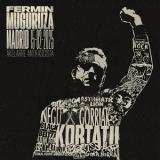
The musical legacy of a night that will live on for years - Fermin Muguruza's 40th anniversary roar! Under the title "Akelarre Antifascista" (which literal translation would be "Anti-Fascist Witches' Coven", but loosely translated as Anti-Fascist Celebration), in a reference to the legendary Akelarre, a wild gathering of Basque witches, this album distils all the intensity, sweat and collective excitement of a night when thousands of voices joined together to celebrate not just a career, but a way of seeing art as resistance. On 15th February 2025, Madrid saw more than just a concert: it was a collective ritual, an anti-fascist demonstration in which thousands of voices came together as one to emphasize the tenacity of a voice that never surrendered. Four decades after lighting the fuse of combative rock in Euskal Herria, the Basque Country, Fermin Muguruza chose the capital of Spain, a city that closed its doors to him so many times and that he has described as "the heart of the beast", to make the definitive record of his 40th anniversary tour. The result is "Akelarre Antifascista", a live album that distils the history of a musical and political resistance that has spanned generations, languages and frontiers. The concert, sold out with 15,000 people, was an explosion of energy, memory and future. Right from the first chord, the Sports Palace of Madrid became an open setting, a free territory where bodies, rhythms, languages and flags mixed freely. Triple 180gr vinyl LP in trifold sleeve.
Released in partnership with our friends at Neon and Filmtrax to release Edo Van Breemen’s score to Osgood Perkin’s latest horror hit The Monkey. Based on the Stephen King short story produced by James Wan (The Conjuring, Saw), The Monkey is a new trip by Longlegs writer/director Osgood Perkins. When twin brothers find a mysterious wind-up monkey, a series of outrageous deaths tear their family apart.
Twenty-five years later, the monkey begins a new killing spree, forcing the estranged brothers to confront the cursed toy. The score is as playful as the movie itself, whimsical when it needs to be, but also managing to be terrifying and tense.
Lenticular edition strictly limited to 1000 copies pressed on brown & green split vinyl, housed in a printed outer O-Card. Composer Edo Van Breeman told us that when they were recording the score, "Mr. King’s Monkey haunted our process for the entire duration of post-production on this film while Mr. Perkins possessed us to mutilate sounds and arrangements in a manner beyond our control. We hope you enjoy this record, and if not... shit, man, that sucks.”
Super positive state of mind style, not too happy through but really sunny and full of energy, with a repetitive serial music acid melody on the Cosmicology A side 45 RPM killer 180BPM hardfloor track.
The flip open on a regular 160 BPM heavy kicker, trippy mental acid-pikes-of-ice more classic but bloody efficient...
Last track (same speed as A1) is a serious hard-kicker too... at the hardcore frontier with a crazy melody coming in, reminding the old school 90's transecore best-of...
This record was produced both by Brain Bending and Acid Night.
Hello Spiral returns to the same North London block, the same triangulated geometry of balconies and courtyard, but with a shift of orientation. His previous record looked outward from the eighth floor, these four new recordings move inside, into the building’s arteries. Joe explores the hallways of the complex where he has lived and listened for years, using the same tool as before, an iPhone and its voice memo app. The recordings were made in situ, each exactly eleven minutes, captured without ceremony.
The hallways feel different. Less private, less scenic, more neutral. They are the connective tissue between hundreds of domestic units, a space of transit rather than rest. The carpet absorbs certain frequencies. The fire doors catch and release pockets of air. The lights hum. Elevators drone in soft cycles of arrival and departure. These are the institutional sounds of shared living, yet once recorded they begin to behave strangely. A kind of internal weather appears.
As with the previous album, Joe remains attentive to what is often overlooked, irrelevant or discarded. The hallways, with their scuffs and signage, their coded access and polite functionalism, provide an unexpectedly rich field. The ambience is not shaped by storms or scaffolding, not by birds or street spill. Instead the material is the building’s own breath, its mechanical rhythms, the low frequency traces of neighbours, the occasional shuffle of footsteps that pass but do not return.
Joe talks about this record as a possible middle chapter in a trilogy. If so, it sits between the exposed openness of the balcony and whatever comes next. A hinge point. These recordings continue Joe’s long practice of defamiliarization, sharpening attention to the unnoticed while withholding narrative. They invite repeated listening, not for revelation, but for the subtle shifts that occur when a familiar space is treated as an instrument.
Digital Dub from East France, very Jahtari influenced, with a Low-Fi texture and some bloody good featurings with Brother Culture and Charlie P ! Indie Prod ! Support !
Following their successful comeback, they dropped another album featuring a variety of country and pop songs, as well as covers of artists such as Jimmy Cliff and Randy Newman. The album is a stylistic follow- up to No Regrets , where the group blends their pop songs with romantic orchestral arrangements. The singles "Lines" and "We're All Alone" became firm favourites with fans, and the album is widely regarded as a hidden gem among fans of country pop and yacht rock
Gelbes Vinyl, limitiert auf 200 Exemplare. Exklusiv für den Indie-Handel. Kommt mit Texblatt und Downloadcode. Great Resignation! So wird das massenhafte Kündigen von Bullshitjobs während der Corona-Pandemie bezeichnet. Die Verweigerung die eigene Arbeitskraft zu den widrigsten Bedingungen zu verkaufen, wenn es nicht mal zum Leben reicht. Auch wenn man sowieso bald wieder ran muss - nur für einen Moment spüren, die Macht zu haben alles lahm zu legen, hörten einfach alle auf: Wertschöpfung, Broligarchie, Kaufland, Deutschland. pogendroblem haben sich also nochmal zusammengerauft und ein neues Album gemacht. Drei Jahre für ein neues Album? In der Tat: Great Resignation. Oder zu wenig die Brotjobs gekündigt? Und wenn sie die Arbeit so hassen, warum haben sich pogendroblem dann noch weiter in die Musikindustrie reinbegeben? Widersprüche schärfen und aushalten. Ambiguitätstoleranz. Nachdem AWINHSMK Ende 2022 bei Audiolith erschien, ging es für die Band wild hin- und her zwischen Pop-Festivals, Punkbühnen, Preisverleihungen und Solishows für selbstverwaltete Kulturzentren oder gegen die extreme Rechte. Nun der Nachfolger Great Resignation bei Kidnap. Das Schulterklopfen der Kulturförderung darf natürlich auch nicht fehlen. Zwölf Tracks auf 1:22 bis 2:30. Ästhetisch nochmal diversifiziert und dennoch aus einem Guss, entstanden unter Regie von Gregor Hennig im Studio Nord Bremen, gemischt von Daniel Roesberg und gemastert von Christian Bethge. Musikalisch klarer und pointierter als zuvor. Obviously (Post-)Punk, poppige Niedlichkeit, Garage Vibes, bisschen Hamburger Schule, bisschen Kraut, etwas düsterere Gitarren und natürlich Brotschneidemaschine durch FX geballert. Große Resignation! Die große Traurigkeit zieht sich durch die Platte hindurch, auch in den auf den ersten Blick lustigen Liedern. Denn hier sind sich pogendroblem treu geblieben, es geht um absurde Alltagsgeschichten, um Subjektivierung, die nicht mehr zu funktionieren scheint. Um Fragmentierung von Gesellschaft, Arbeitsbeziehungen, der Linken. Wie durch die Zeit der Monster (Antonio Gramsci) navigieren, fragen pogendroblem. Wie weiter machen gegen Faschisierung und Klimakrise? Klar ist: Es kann nicht immer so weitergehen.
Continued Sound is proud to present The Shadow by Ojiji.
In 1979, Rupert “Ojiji” Harvey put out one of the most distinctly original albums of a generation. Combining progressive jazz-fusion arrangements with soul, funk, and reggae from his native Jamaica, Ojiji’s The Shadow is an album only he could create.
Ojiji, along with his brother Carl, were performing in nightclubs before they were old enough to legally enter. At just 15, Ojiji was tapped by reggae keyboard legend Jackie Mittoo to join his band The Cougars. Not long after, the Harvey brothers teamed up with other Cougars members to form the funk band Crack of Dawn. This union proved to be groundbreaking, not just in the soul/funk genre, but for Canadian music as a whole. In 1975, they were signed to a major label, Columbia Records, the first Black Canadian band in history to do so. Tracks like “It’s Alright” and “Keep the Faith” still echo in the halls of Canadian funk history.
Personal and industry differences caused Crack of Dawn to break up in 1977, and a young Rupert Harvey was without a band for the first time. However, the creative mind never rests. Outside of the band, Ojiji had been writing and composing his own personal songs since age 17. These songs were a fusion of the sounds and styles he’d soaked up during his time with his musical mentors mixed with new emerging musical influences he was hearing every day.
With the help of his brother Carl and some Crack of Dawn bandmates, he began recording his debut solo album The Shadow. The band's tightness heard in the intricate arrangements are a testament to their interwoven musicianship at the time. Many tracks were recorded in only one-take. Each song in The Shadow’s eclectic glory paints a picture of a young man's singular lived experience through music. Regaling us with where he’s been. Inviting us to where he’s going.
36 Jahre nach dem Fall der Mauer, präsentieren Dirk Zöllner (Die Zöllner) und Manuel Schmid (Stern-Combo Meißen) die schönsten Balladen aus dem
Land vor unserer Zeit. Keine Nostalgie Show, sondern Pflege eines hochwertigen Kulturerbes. Ein opulentes klangliches Erlebnis mit zwei Sängern,
zwei Klavieren, Saxophon, Gitarre. Lieder von Lift, Karat, Biege, Bartzsch, Bicking und Lakomy. Sänger und Pianist Manuel Schmid sorgt auch mit
eigenen Alben in der deutschsprachigen Musikszene für Aufsehen und hat 2024 mit der EP „Die Himmelsscheibe von Nebra“ die Stern-Combo Meißen
wieder in aller Munde gebracht. Saxophonist Marek Arnold ist in der internationalen Progressive-Rock Szene längst eine feste Größe und hat
gemeinsame Alben mit Steve Hackett (GENESIS), Jon Anderson (YES) oder Derek Sherinian (DREAM THEATER) veröffentlicht. Das vorliegende
Konzertmitschnitt wurde von ihm bearbeitet und gemixt. Sänger Dirk Zöllner und der Pianist André Gensicke arbeiten seit November 1987 zusammen
und gründeten im Juni 1988 ihre Bigband „Die Zöllner“. Sechzehn Alben erschienen in den vergangenen 35 Jahren. Zöllner veröffentlichte außerdem
vier Bücher und engagiert sich als Kolumnist der „Freien Presse“ für einen friedvollen gesellschaftlichen Zusammenhalt. Das Raue und das Weiche,
das Improvisierte und das Klare – schon mehrfach kam es zur Symbiose der sehr unterschiedlichen Stimmen von Dirk Zöllner und Manuel Schmid. In
Zeiten von Corona veröffentlichten die beiden ein Wohnzimmerkonzert mit besagtem Liedgut. 2024 wurde die Symbiose nun live erlebbar und als
Mitschnittfestgehalten.
Robin Pecknold brings light to the bleakest of winters with Fleet Foxes' 'A Very Lonely Solstice,' a 13-track career spanning collection recorded in December 2020, at Brooklyn, NY's St. Ann & the Holy Trinity Church. Now being released for the first time on vinyl, CD and digital formats, 'A Very Lonely Solstice' captures a poignant moment in time. The recording was originally broadcasted as a live-stream event on the winter solstice of 2020, just days after New York declared a state of emergency tightening restrictions again in response to increasing COVID-19 cases. Pecknold describes the set as "me by myself on the longest night of the year... honoring the loneliness of 2020 with a nylon string and some songs new and old." Fans worldwide tuned in while quarantined at home, finding solace and a sense of community in a period of extreme isolation. Much of 'A Very Lonely Solstice' showcases a solo focus on Pecknold who offers up acoustic arrangements of fan-favorite songs spanning Fleet Foxes' catalog. Selections cover all four of the band's studio albums, including their 2008 self-titled debut album ("Tiger Mountain Peasant Song") to 2011's Helplessness Blues ("Blue Spotted Tail") and 2017's Crack-Up ("If You Need To, Keep Time On Me"), all the way to their latest release, Shore. Resistance Revival Chorus joins Pecknold on Shore tracks "Wading In Waist-High Water" and "Can I Believe You." Also featured: a cover of Nina Simone's "In The Morning" and a rearrangement of the traditional "Silver Dagger."