Italian producer Nicodemo returns to Alzaya Records with You Are Sleeping, a five-track EP structured around subtle shifts in perception rather than narrative progression or peak-driven club dynamics.
Across three original tracks and two reinterpretations by Domenico Rosa and Aldonna, the record explores slowed temporal perception, delayed spatial response and the blurred threshold between attention and immersion, using restrained rhythmic pressure and diffused harmonic material.
Cerca:sub rosa
- 1: No Me Jodas
- 2: The City Begins
- 3: Sirena
- 4: Yellow Sun
- 5: Viva La Rosa
- 6: Enemy Without
- 7: You're A Ghost
- 8: Albuterol
- 9: Mi Concha
- 10: Public Works
- 11: Public Luxury
Downtown Boys have pushed relentlessly forward as an artistic and political project since their founding. Singer Victoria Marie and guitarist/singer Joey La Neve DeFrancesco first met at union meetings while working together at a hotel in Providence, RI, writing many of the band's early songs about labor organizing and exploitative workplaces. The quintet is completed by Joe DeGeorge (sax/synth), Mary Jane Regalado (bass), and Joey Doubek (drums). Over years of touring, and three acclaimed albums, Downtown Boys have continued to grow as artists, musicians, and organizers. Now, the band has arrived with Public Luxury, an enthralling album that keeps politics front and center while summoning the band's most urgent and powerful sound to date. The definition of Public Luxury falls very much in line with that of the title of the second Downtown Boys LP, Full Communism. Straight up, Public Luxury means, "everything for everyone." It's the stubborn insistence that a better world is possible, while fully recognizing the horrors we witness daily, and the individual and collective responsibility to resist the nihilism and hopelessness we all feel. Sentiments like "everything for everyone," and "we will have it all" perfectly represent the cathartic, communal live experience this cadre of multi-instrumentalists create. These sentiments also encapsulate the inclusive, joyful sonic fusion that defines the album: anthemic punk and indie rock mix with Latin traditions, drum machines blend with acoustic drums, saxophones punctuate riffs, and layers of synths add flourishes from new-wave to industrial. The amount of ground covered on Public Luxury can't be overstated, and yet the album feels totally vital and cohesive. Public Luxury is a revisitation of the band's past for the sake of their future. It was co-produced by DeFrancesco with recording engineer and longtime Downtown Boys supporter Seth Manchester (Lambrini Girls, Lightning Bolt, Model/Actriz) at the Pawtucket, RI studio and arts space Machines With Magnets, not far from the band's first home of Providence, RI. Victoria Marie's grandmother-a monumental figure for the band throughout their existence-passed away in May of 2025, and her influence looms large over the album; the songs "No Me Jodas" and "Sirena" are crystallized representations of the love between a woman and her ancestor. Beyond the loss, rage and frustration of the present, Public Luxury points boldly towards a vibrant, open-hearted vision of both music and the world: "Our music is simply for anyone and everyone who believes in the new future we can make together," Victoria Marie declares. "A world that will be awkward, inconsistent, yet truly free when it comes to all that matters."
- 01: Maria Do Carmo - Beijos São Como As Rosas
- 02: Jose Paradela D&Apos;Oliveira - Fado De Se Velha
- 03: Edmundo De Bettencourt - Crucificado
- 04: Madalena De Melo - Cantares
- 05: Luiza Baharem - Fado Mondego
- 06: Alberto Xavier Pinto - Fado Do Paraizo
- 07: Maria Victória - Fado Maria Victória Nº 1
- 08: Maria Silva - Fado Alice
- 09: Adelina Fernandes - Misérias
- 10: Estêvão Amarante - Fado Do Cauteleiro
- 11: Alfredo Marceneiro - Olhos Fatais
- 12: Ermelinda Vitória - Fado Da Minha Aldeia
- 13: Dr Lucas Junot - Triste (Fado)
- 14: Maria Alice - Quando O Meu Filho Adormece
- 15: Laura Santos - A Magia Do Fado
- 16: Joao Rocha Jor - Fado Rocha
Vinyl[21,64 €]
The definition of the word 'fado' is technically 'fate', though the Portuguese meaning bound up with this term is more complex. The music itself can be fairly closely compared with that of Greek rebetika - also the American blues or the original working-class tango music of Argentina and Uruguay - and similarly takes it's common subject matter from the various cruel realities of the world. Though perhaps what distinguishes fado in character is it's often poised acceptance of the pains of life rather than protestation or resistance - as writer Paul Vernon says "It speaks with a quiet dignity born of the realisation that any mortal desire or plan is at risk of destruction by powers beyond individual control"
Death Is Not The End compile here a spine-tingling collection of fado recordings, taken from records issued in the mid 1910s through to the 1930s. The fado's Lisbon and Coimbra variants are presented here by some of the music's earliest recorded stars - spanning a time period leading up to the emergence of the fado's all-conquering star, Amália Rodrigues.
With the title "Treatise On A Narcissist" hinting at the EP's thematic exploration, the four originals by Shaleen are a masterclass in atmospheric, driving techno-built on powerful basslines, intricate percussion and an unnerving emotional intensity. This formidable body of work is then subjected to four distinct and high-calibre reinterpretations, each pushing the originals into new sonic territories.
Fiedel delivers a masterclass in raw, functional Berlin Techno. His "Treatise on a Narcissist" Remix builds on a foundation of caustic percussion and echoing metallic textures to create a journey into the machine's heart, powered by monolithic kick drums and pulsating, hypnotic sequences. This is peak-time, strobelit intensity-a dark, unforgiving lesson in rhythm and propulsion.
Mareena's sophisticated version of Shaleen's "Treatise On A Narcissist" strips the original back to its essential hypnotic core. It locks into a precise, relentless rhythm with characterizing sharp hi-hats, a focused, pulsating kick drum and creates a sense of deep,
foreboding atmosphere by utilizing subtle, filtered synth drones and echo effects.
Rosati's Remix of Shaleen's "Nymphomaniac" layers hypnotic elements, leading to a massive, euphoric breakdown and creates a captivating, almost obsessive mood. This track demands movement. It's an unrelenting sonic journey characterized by a hard-thumping rhythm section that maintains relentless forward momentum.
JakoJako steps up to deliver a nuanced and immersive re-imagining of Shaleen's "Fused in Desire". Moving away from high-impact euphoria, this remix focuses on dark, driving Techno.
The textural soundscape features a powerful low-end as well as lush, evolving pads and shimmering, modulated synth textures that create a vast, emotional space to establish a profound, steady pulse. Designed for total immersion, this track serves as both a
high-energy peak-time weapon and a hypnotic journey for early-morning dancefloors.
When you’re running a label, a demo occasionally comes across your desk that makes you reconsider everything you thought your label was all about. For Balmat, such was the case with this stunning album from Stephen Vitiello, Brendan Canty, and Hahn Rowe. It sounds like nothing we’ve released so far—and that very otherness opened up a whole new world of possibilities for us.
Fans of ambient, experimental electronic music, and sound art will be familiar with Vitiello, a New York native, long based in Virginia, who has collaborated with a cross-generational list of greats: Taylor Deupree, Steve Roden, Lawrence English, Tetsu Inoue, Nam June Paik, Ryuichi Sakamoto, Pauline Oliveros, and many more. On labels like 12k, Room40, and Sub Rosa, he has explored a wide range of minimalism, microsound, lowercase, ambient, improv, and other styles. But this album is something different. It may begin in ambient-adjacent territory, but it quickly veers off, and it just keeps zigzagging, taking on elements of krautrock, post-punk, dub, and the groove-heavy interplay of groups like Natural Information Society and 75 Dollar Bill.
This stylistic turn is thanks in large part to Vitiello’s choice of collaborators. “We’re coming from three different schools,” Vitiello says: “sound art, art rock, and punk rock.”
Active since the early 1980s, Rowe—a violinist, guitarist, and producer/engineer—has played with, or manned the boards for, a frankly jaw-dropping list of musicians: Herbie Hancock, Gil Scott-Heron, the Last Poets, Roy Ayers, John Zorn, Glenn Branca, Swans, Live Skull, Brian Eno, David Byrne, Anohni, R.E.M., Yoko Ono, and many more. But he might be most closely associated with Hugo Largo, a one-of-a-kind New York quartet—two basses, vocals, and Rowe’s violin—that in the late 1980s helped lay the groundwork for what would eventually become known as post-rock.
Canty, of course, is the legendary drummer of Fugazi, the visionary DC post-hardcore group, as well as Rites of Spring before them, and, currently, the Messthetics, a Dischord-signed instrumental trio with guitarist Anthony Pirog and Fugazi bassist Joe Lally.
Vitiello’s trio first collaborated on First, a 17-minute piece released on the Longform Editions label in 2023. Second picks up where the freeform drift of First left off, channeling the trio’s exploratory energies into more intentionally structured tracks and—in a real first for Balmat—some almost shockingly muscular grooves. “Sometimes my projects are more conceptually driven,” Vitiello says, “but I think this was more musically geared. I just wanted to open up the references and bring in an incredible drummer, bring in some melodies, and I’m sort of the center.” But his collaborators, he stresses, are “vastly creative in making anything I might suggest better.”
Like its predecessor, Second took shape in phases, shifting between improvisation and collage. Vitiello laid down the skeleton of the music at home, sketching out initial ideas on Rhodes keyboard and acoustic and electric guitar; he then fed the parts through samplers and his modular system, recording 10- or 20-minute jams. Once he had edited them into more structured forms, he hit the studio with Canty, who added not just drums but also bass and piano; finally, Vitiello took the results of those sessions to Rowe, who played violin, viola, electric bass, and 12-string acoustic and bowed electric guitar, and assisted in some of the final structuring and mixdown.
A few more surprises along the way: Reanimator’s Don Godwin, the studio engineer where Vitiello recorded with Canty, contributed what he calls “resonant dustpan”; and none other than Animal Collective’s Geologist, who just happened to be in the studio that day, sits in on hurdy gurdy on “Mrphgtrs1,” the album’s gorgeous, stunningly atmospheric drone closer. “I love these chance encounters,” Vitiello says. “Somebody I admire, a group I admire—that was an unexpected gift.”
An unexpected gift is a great way of describing Second as a whole: three veteran musicians venturing outside their usual zones and finding a new collaborative language together. The results can’t be neatly slotted into any given genre; they belong not to any given category, but to the spirit of conversation itself.

Moodena’s London-based imprint Tropical Disco’s latest offering is a shimmering journey into the heart of the underground, blending nu-disco, classic house, and contemporary electronic funk in a way that feels both nostalgic and totally fresh. Featuring four standout tracks from Vagabundo Club Social, Scruscru, Da Lukas, and Fun Kool feat. vocals from Bcleo and Anna Dee Tee, — the EP is a testament to the evolving sound of the dancefloor, where groove meets grit, and melody flirts with sultry rhythm. This release channels the spirit of sweaty basement parties, neon-soaked nights, and a collective desire to get lost in the music.
Opening the record is Colombian duo Vagabundo Club Social, presenting Latin-soaked funk colliding with shimmering brass instrumentation, creating a deep, rolling pulse that invites movement from the first beat. 'Zumba Z' is a track that feels right at home in a DJ’s warm-up set or closing down an all-nighter, with a hypnotic flow and vocals that seep into your bones.
Scruscru’s story pushes things deeper into late-night, cosmic territory. 'Konyaalti' is a lush, sun-drenched production, utilising sublime sax, Scruscru delivers a cut that's both playful and distinctly driving.
Da Lukas adds a sophisticated touch, remixing Rosario Cristofaro, and taking you on a slick ride that leans into Italo-disco influences. Swooning synths and crisp percussion form the backbone while gliding melodies create a sense of elevation. It’s elegant yet laced with energy, ideal for a peak-time set where the vibe is euphoric but refined.
Rounding off the release is veteran DJ and producer Gerardo Cinquegrana, whose playful Fun Kool moniker belies the serious funk he delivers in his production. German-born, and now Italy-based, Fun Kool’s sharp, syncopated rhythms and sexy vocal lines from Anna Dee Tee bring an irresistible groove to the forefront, with the kind of bassline that takes over your entire body and mind.
Altogether, 'Tropical Disco Volume 28' encompasses a record that’s both familiar and exploratory—rooted in the timeless grooves of disco and house but pushing forward into new musical territory and picking up sonics from different continents along the way. Whether you’re looking for late-night celestial cosmosis, sophisticated Italo-inspired dubs, or straight-up, no-nonsense funk, this release has something for every dance floor.
- Dreamt Person V3
- Everything About You Is Special
- Slightly Bent Fork Tong V2
- Magnificent Stumble V2
- Decembers
- Can't Vote For Yourself V1
- You And Shayna V1
- Goose And Gary V2
- Anxattack Boss Level19 V3
- She Married A Chess Computer In The End
- Health Card10
- Paganism Ratchets
- Everything About You Is Ambient
- You And Shayna Slow Funk V2
- Your Bounce V1
- Magnificent Stumble V1
- Can't Vote For Yourself Video Version
- Goose And Gary V1
- Slightly Bent Fork Tong V1
- You And Shayna Video Version
- Terrazen 1012Nc
- Resting Tongue
The tenth anniversary edition of Venetian Snares' Traditional Synthesizer Music adds ten more tracks and alternative versions previously available only on a limited edition compact disc from the artist's Bandcamp.Traditional Synthesizer Music is a collection of songs created and performed live exclusively on the modular synthesizer by Aaron Funk. Each sound contained within was created purely with the modular synthesizer. No overdubbing or editing techniques were utilized in the recordings on Traditional Synthesizer Music. Each song was approached from the ground up and dismantled upon the completion of its recording. The goal was to develop songs with interchangeable structures and substructures, yet musically pleasing motifs.
Many techniques were incorporated to "humanize" or vary the rhythmic results within these sub structures. An exercise in constructing surprises, patches interrupting each other to create unforeseen progressions. Multiple takes were recorded for each song resulting in vastly different versions of each piece, a number of which are released for the first time on vinyl and digital for this updated version of the album. BIO Aaron Funk, mainly known artistically as Venetian Snares, is a Canadian electronic musician based in Winnipeg, Manitoba who’s been working since the mid nineties. He is widely known for innovating and popularising the breakcore genre being something of its breakout star. His signature style features complex drums and unusual time signatures and a knack for making ultra-vivid music that takes listeners into unusual places, from the aggressive and extreme, to the surreal, comic and sometimes plain beautiful. His musical explorations extend out in many different ways, from the complex Hungarian, classical-inspired Rossz Csillag Alatt Született, to acid explorations as Last Step, to innovations with modular synths on Traditional Synthesiser Music.
As a collaborator, he’s made music using intimate recordings as musical elements with the artist Hecate as Nymphomatriarch, as Poemss with Joanne Pollock, where they both sing over strange delicate pop. He’s recorded an album of rich, edited improvisations with producer and guitarist Daniel Lanois and he’s also part of the sometime duo Speed Dealer Moms with John Frusciante. Most recently he features on Rosalia’s album Lux on the song Reliquia, providing drum programming and production input.
- Sub Rosa
- Swirling Pain
- Being Dead
- I Become Heavy
- Hera's Theme I
- Eyes
- Water Drops
- Hera's Theme Ii
- My Mistake
- All That Heaven Allows
- Pain Will Polish Me
- Perfect Secret
,Stürmische und kathartische Dark-Pop-Perlen", schrieb Gorilla vs Bear über Jessica Weiss' frühe Soloarbeiten. Die Sängerin und Songwriterin von Fear of Men bringt dieselbe lyrische Präzision und emotionale Intensität in ihr Soloprojekt New German Cinema ein. Es hat fünf Jahre gedauert, zwischen London und LA, aufgebaut aus nächtlichen Dateien, langen Stillephasen und der stillen Beharrlichkeit zweier Menschen, die versuchen, etwas Schönes von entgegengesetzten Enden der Welt aus zu vollenden. Produziert mit Alex DeGroot (Zola Jesus, Cate Le Bon), wirkt es sowohl forensisch als auch hingebungsvoll, das Produkt von jemandem, der die Katharsis nicht überstürzt. Pain Will Polish Me präsentiert sich sowohl einsam als auch verbindend, als wäre es aus Fernübertragungen zwischen zwei Traumzuständen entstanden. Weiss nennt es eine Meditation über Pop und den europäischen Arthouse-Autoren Rainer Werner Fassbinder. Es verfolgt, wie Intimität und Kontrolle ineinander übergehen, bis es unmöglich ist zu sagen, wo das eine endet. Die Songs handeln von den Teilen von dir selbst, die sich in der Liebe auflösen, und von den kleinen Gewalttaten, die damit einhergehen, wenn man bekannt ist. Sie bewegen sich durch klaustrophobische Beziehungen, Obsession, Hingabe, Zyklen des Leidens, die sich allmählich wie Hingabe anfühlen. Die Sprache ist Pop, aber das Gefühl ist etwas Fremderes, Kälteres, Innerlicheres. Die Songs bewegen sich im Schatten. Es ist ein Album darüber, sich selbst zu verlieren, um zu sehen, was übrig bleibt. Ein Dokument der Liebe als Besessenheit, Wiederholung, Überleben. Eine Meditation über die Liebe als Spiegel und Untergang, in Fragmenten gestaltet und dann zu einem Ganzen zusammengefügt.
- 01: Maria Do Carmo - Beijos São Como As Rosas
- 02: Jose Paradela D&Apos;Oliveira - Fado De Se Velha
- 03: Edmundo De Bettencourt - Crucificado
- 04: Madalena De Melo - Cantares
- 05: Luiza Baharem - Fado Mondego
- 06: Alberto Xavier Pinto - Fado Do Paraizo
- 07: Maria Victória - Fado Maria Victória Nº 1
- 08: Maria Silva - Fado Alice
- 09: Adelina Fernandes - Misérias
- 10: Estêvão Amarante - Fado Do Cauteleiro
- 11: Alfredo Marceneiro - Olhos Fatais
- 12: Ermelinda Vitória - Fado Da Minha Aldeia
- 13: Dr. Lucas Junot - Triste (Fado)
- 14: Maria Alice - Quando O Meu Filho Adormece
- 15: Laura Santos - A Magia Do Fado
- 16: Joao Rocha Jor - Fado Rocha
Tape[16,39 €]
The definition of the word 'fado' is technically 'fate', though the Portuguese meaning bound up with this term is more complex. The music itself can be fairly closely compared with that of Greek rebetika - also the American blues or the original working-class tango music of Argentina and Uruguay - and similarly takes it's common subject matter from the various cruel realities of the world. Though perhaps what distinguishes fado in character is it's often poised acceptance of the pains of life rather than protestation or resistance - as writer Paul Vernon says "It speaks with a quiet dignity born of the realisation that any mortal desire or plan is at risk of destruction by powers beyond individual control"
Death Is Not The End compile here a spine-tingling collection of fado recordings, taken from records issued in the mid 1910s through to the 1930s. The fado's Lisbon and Coimbra variants are presented here by some of the music's earliest recorded stars - spanning a time period leading up to the emergence of the fado's all-conquering star, Amália Rodrigues.
Delphine Dora, the prolific French composer and multi-instrumentalist, graces Marionette with a suite of keyboard instrumentals that evoke futurism and the transcendental. Based in France and actively releasing music since the 00’s, Delphine’s remarkable solo and collaborative projects loosely connect the dots scattered across modern classical, folk, ambient, and poetic writing - always seeking new ambitions in terms of her sound.
Leaving behind the chaos of city life for the quiet solitude of a small village in the French countryside, Delphine finds herself fully immersed in the present moment and committed to her multi-disciplinary creative practices, savoring the experiences of deep listening in nature and her environment. Drawing from an academic background in Outsider Art and Art Brut, Dora yearns to express intimate inner dialogues, revealing the beauty of vulnerability through transportive musical passages to the mystical and sublime.
L’inéluctable pulsation du temps was composed in 2018, at a time when Delphine’s life was becoming increasingly busy, marked by relentless touring and concerts unfolding in rapid succession across different places. Written in parallel with L’Inattingible, her most ambitious album, it stands as its instrumental counterpart. The recordings reflect a period of exploration and assimilation of the Nord Electro, an instrument that opened up vast sonic possibilities, particularly for the development of rich polyphonies inspired by repetitive music. The track titles draw inspiration from an essay by Hartmut Rosa on the notions of acceleration and alienation - a reflection that resonates strongly with the pre-covid era right before the quarantine. The album reveals Delphine’s most colorful and rhythmic side, an aural mille-feuille, in total contrast with her previous melancholic vocal works.
On L’inéluctable pulsation du temps, Dora sustains atmospheric drone miniatures that form the foundation for flowing, cyclical arpeggios, spiraling into a liminal dream space where the repetitive phrasing of melodies rewards introspective listening. The compositions move through (dis)enchanted landscapes, taking unexpected turns into more haunted terrain, their contours further blurred by Dora’s intuitive articulation and sense of refinement. By mirroring both the acceleration of time and the experience of alienation, Delphine conjures up timeless sonic meditations, rendering the inevitable pulsation of time as something at once mesmerizing and unsettling.
- Corcovado
- Chega De Saudade
- Samba De Uma Nota So
- Saudade Da Bahia
- Insensatez
- Meditacao
- Brigas, Nunca Mais
- Se E Tarde Me Perdoa
- Trevo De Quatro Folhas
- O Pato
- Desafinado
- Outra Vez
- Coisa Mais Linda
- Voce E Eu
- Rosa Morena
- Samba Da Minha Terra
- O Nosso Amor
- A Felicidade
- Bim Bom
- Morena Boca De Ouro
- Discussao
Gathering his most iconic early recordings, this collection captures the pure essence of the man who laid the foundations of Bossa Nova. From the tender intimacy of "Corcovado" and "Chega de Saudade" to the gentle swing of "Desafinado" and "Bim Bom", widely considered the very first Bossa Nova song, every track radiates Gilberto's unmatched grace and rhythmic subtlety. Pressed on high- quality vinyl, Luz de Corcovado invites you to rediscover the soft pulse and poetic warmth that changed Brazilian music forever.
2026 Repress
Ob Krypto-Mensch oder Krypto-Substanz, es wird auf jeden Fall eine verhängnisvolle Affäre. Molas Musik ist die ungeschönte Antithese zu einer rosaroten Welt.
Sie feiert sich kaputt, zieht dich mit in ihr inneres Chaos und verzichtet auf übliche romantisierende Verklärungen der unbarmherzigen Orientierungslosigkeit, die einen nach der letzten Kippe auf dem Nachhauseweg einholt.?Das Album erzählt düster und doch fragil von kompromisslosen Autopilot Nächten die uns vereinen und trennen. Temporär reduziert intim, um dann in ikonischem 80er "Purpel Rain" Pathos zu eskalieren, illustriert MOLA das Gefühlschaos, das der innere Dialog von linker und rechter Gehirnhälfte in ihr auslöst.
Bei MOLA werden alle Erfahrungen misstrauisch auf links gedreht, um zu sehen was sich hinter der alltagstauglichen Fassade verbirgt. Sie kehrt ihr Inneres nach außen und spricht an was sie verletzt - unverzerrt, nicht übertrieben, nahbar.?MOLA beschreibt die eigenen Tiefschläge mit trotzigem Selbstbewusstsein, ohne sentimentaler Glasur.
"Schnee im Sommer" könnte ein Album einer 80er Jahre Punkrockband mit Liebeskummer sein, aber auch einer Alternative Band aus den 90ern kurz vor ihrem Urlaub in einer Betty Ford Klinik.
- A1: Des Plumes Dans La Tête (Variation 1) 1:15
- A2: Situation Initiale 1:20
- A3: Pour Les Oiseaux 1:16
- A4: Feu 0:24
- A5: Le Brasier De Tristesse 3:36
- A6: Ferme Les Yeux 1:08
- A7: Des Plumes Dans La Tête (Variation 2) 1:15
- A8: Les Débutants 1 1:50
- A9: Pour Les Oiseaux (Variation 1) 1:17
- B1: Anthracite 1:28
- B2: Nocturne Urbain 2 0:59
- B3: Pour Les Oiseaux (Variation 2) 0:39
- B4: Sinon Le Vent Qui Passe 0:41
- B5: Noir 1:19
- B6: Ferme Les Yeux (Variation) 0:42
- B7: Les Débutants 2 1:16
- B8: Pour Les Oiseaux (Variation 3) 0:36
- B9: Blanche Comme L'infini 1:58
- B10: Situation Finale 2:02
- B11: Des Plumes Dans La Tête 1:20
- Un Autre Décembre Lp
- C1: Minéral 3:28
- C2: Sous Tes Yeux Probablement 1:16
- C3: Granulation 1 1:38
- C4: Neuf Cents Lunes 3:56
- C5: Alors La Lumière Vacille 1:07
- C6: Granulation 2 0:56
- D1: Il Fait Nuit Noire À Berlin 2:12
- D2: La Lettre Qu'il N'envoya Jamais 2:00
- D3: Granulation 3 1:35
- D4: Un Autre Décembre 2:24
- D5: Granulation 4 1:26
- D6: Du Rève Dans Les Yeux 1:30
- Nocturne Impalpable Lp
- E1: Blanc 2:23
- E2: Cet Enfer Miraculeux 2:59
- E3: Radiophonie N°1 2:54
- E4: Doucement, Le Grain De Sa Peau 3:41
- E5: 0:36
- E6: Ocre 2:47
- E7: 0:35
- E8: Radiophonie N°2 3:15
- E9: Adieu Miséricorde 1:14
- E10: 0:31
- E11: Léger 2:25
- E12: 0:40
- F1: Le Monde Intérieur 4:01
- F2: Arachnéenne Encore 1:29
- F3: 0:27
- F4: Je Me Suis Bâti Sur Une Colonne Absente 4:04
- F5: 0:33
- F6: Radiophonie N°3 2:07
- F7: Nocturne Urbain 4:56
Minority Records is releasing a unique boxset Politique du silence with three early albums from Sylvain Chauveau, French composer of minimalist neoclassical music.
“When I made my first albums as a composer, I was obsessed with minimalism, and this quote from the film director Robert Bresson summed up my state of mind. I set myself three principles: 1) Use silence as a starting point, 2) Only add sound when it's absolutely essential, 3) Don't imitate the Anglo-Saxon musicians I admired, but draw on the musical culture of my country, France which lead me to listen intensively to Satie, Debussy and Ravel.” Chauveau explains the background to his work.
The collection Politique du silence contains the recordings of Des plumes dans la tête (2004), Un autre Décembre (2003) and Nocturne impalpable (2001) on coloured 180 gram vinyls. The cover features artwork by French photographer Valéry Lorenzo.
“When I discovered the simple and powerful black and white pictures by Valéry Lorenzo, in the 90s, I immediately fell in love with them. We became good friends and since then I ask him to let me use one of his photos for most of my album covers, or to make my portrait for press shots. It has become a real collaboration, music and images, for more than 25 years. It was then logical to ask him again for the cover of this boxset, like a gentle reflection on my piano and strings era. It's a true honour for me to see my early music recollected, repackaged, remastered after all this time. Which gives me hope that this music, in which I've put all my soul and heart during the years 2001 to 2003, is maybe not forgotten yet.” Chauveau himself adds of his collaboration with Valéry Lorenzo.
Nocturne impalpable and Un autre Décembre were re-issued by Minority Records in 2014 and 2015 and both titles completely sold out. This year’s release also includes the album Des plumes dans la tête in its world premiere on vinyl.
Nocturne Impalpable is a world of minimalism, abstraction, and contemporary rendition of classical music with variations for the piano, clarinet, strings, and accordion which are often compared to the compositions of composers Harold Budd and Claude Debussy. Here, Chauveau partially reveals his versatility as a composer by connecting electronic elements, noises, and ambient planes with monumental strings and piano preludes. The
album of piano variations Un autre Décembre is interspersed with field recordings and electronic noises. The inspiration for the recording of the album and for its name was the song Jaurès by the Belgian singer and composer Jacques Brel. This song tells the story of the grandparents’ generation who toiled in the mines. “Comfort and health won’t protect our generation from sadness and discontent. We also live through winter times, even if these are slightly warmer due to the current climate.” An album of 20 short instrumental sketches with several delicate intermezzos for the piano, string quartet, and the clarinet, Des plumes dans la tête, was composed for the eponymous film by director Thomas de Thier.
Sylvain Chauveau was born in 1971 in the French town of Bayonne and currently lives in Barcelona. His extensive discography of mainly meditative neo-classical recordings for the music labels FatCat, Sub Rosa, Sonic Pieces, and Flau is enriched by several collaborations and his participation in the Ensemble 0, Arca, and On projects. Chauveau has also composed many film soundtracks as well as music for the theatre. He has presented his works in Prague several times, most recently in the spring of 2024 at the Spectaculare festival. His compositions get tens of millions of streams on streaming services, and he’s been called the French king of minimalism.
- 1: Puritatem Tuam Interiorem Serva
- 2: Todeslied
- 3: The Road
- 4: Hero And Leander
- 5: Mariner's Song
- 6: Shores In Flames
- 7: White Dress
Blue, Grey & Black Marble vinyl[23,49 €]
Through crushing riffs and haunting vocals, it reflects on loss, the forces of nature, and existential struggle. The production balances raw intensity with a deep, immersive atmosphere, enhancing the album's emotional depth. The album opens with a song in Latin, setting the tone with a ritualistic invocation. As its title suggests, it serves as a reminder to preserve one's inner purity in a decaying world, weaving ancient echoes into the album's foundation.
Todeslied follows as a hymn to death, carrying a solemn mood. The record also draws upon literary inspirations: one track is based on The Road by Cormac McCarthy, evoking apocalyptic desolation and the desperate fight for survival, while Dress in flames gives voice to the fury and imprisonment of Bertha Mason, the tormented character in Charlotte Bronte's victorian novel Jane Eyre. Compared to her previous release, which was more personal, Moonstone marks a shift towards greater collaboration within the band, with a more unified approach to songwriting and arrangements. The album, featuring two tracks by bassist Francesca Papi, has been arranged and refined together with Davide Rosa (guitar) and Fabio Orticoni (drums). The release also includes a powerful tribute to Bathory with a reinterpretation of Shores in Flames.
Recorded at Produzione Rumorose, mixed by Maurizio Baggio, and mastered by Giovanni Versari, this record represents a powerful evolution in the band's sound, sharpening their identity and pushing the boundaries of their musical expression.
Through crushing riffs and haunting vocals, it reflects on loss, the forces of nature, and existential struggle. The production balances raw intensity with a deep, immersive atmosphere, enhancing the album's emotional depth. The album opens with a song in Latin, setting the tone with a ritualistic invocation. As its title suggests, it serves as a reminder to preserve one's inner purity in a decaying world, weaving ancient echoes into the album's foundation.
Todeslied follows as a hymn to death, carrying a solemn mood. The record also draws upon literary inspirations: one track is based on The Road by Cormac McCarthy, evoking apocalyptic desolation and the desperate fight for survival, while Dress in flames gives voice to the fury and imprisonment of Bertha Mason, the tormented character in Charlotte Bronte's victorian novel Jane Eyre. Compared to her previous release, which was more personal, Moonstone marks a shift towards greater collaboration within the band, with a more unified approach to songwriting and arrangements. The album, featuring two tracks by bassist Francesca Papi, has been arranged and refined together with Davide Rosa (guitar) and Fabio Orticoni (drums). The release also includes a powerful tribute to Bathory with a reinterpretation of Shores in Flames.
Recorded at Produzione Rumorose, mixed by Maurizio Baggio, and mastered by Giovanni Versari, this record represents a powerful evolution in the band's sound, sharpening their identity and pushing the boundaries of their musical expression.
- A1: Arsen Dedić - Onaj Dan
- A2: Zdenka Vučković - Bosonoga
- A3: Bogdan Dimitrijević - O Barquinho
- A4: Nino Robić - Jedna Nota (Samba De Uma Nota Só)
- A5: Milan Bačić - Hō-Bá-Lá-Lá
- B1: Beti Jurković - Ljuljačka
- B2: Elda Viler - Senca Tvojega Nasmeha (The Shadow Of Your Smile)
- B3: Arsen Dedić - Često Te Sretnem
- B4: Bogdan Dimitrijević - Hershey Bar
- B5: Zdenka Vučković - Izgubljeno (Desafinado)
- C1: Drago Diklić - Moja Draga
- C2: Krunoslav Kićo Slabinac - Tko Si Ti
- C3: Plesni Orkestar Rtz - Plava Krizantema
- C4: Gabi Novak I Radojka Šverko - Za Mene Je Sreća (Samba Da Rosa)
- C5: Dubrovački Trubaduri - Ljuven Zov
- D1: Vikica Brešer - Sunčano Ljeto
- D2: Drago Diklić - Nitko Na Svijetu
- D3: Višnja Korbar - Subotnje Veče
- D4: Arsen Dedić - Večeras
- D5: Jimmy Stanić & Glenn Rich Orchestra - The Girl From Ipanema
Rich musical history of Yugoslavia reveals a long-lasting love for the music of Latin America.
Entwined in Afro-Cuban rhythms, ballrooms were shakin', swayin' and swingin', gathering musicians who were heavily into jazz bands and orchestras, most notably in Ljubljana, Zagreb, and Belgrade. Jazz could be heard on the streets of Split way back in 1919 when dancing became a symbol of freedom. Radio was the most loved household item, newest sheet music was in demand and collecting records was hip like today. In the aftermath of Second World War, jazz went underground but little by little, things changed and Ella, Satchmo, Dizzy and Miles came to visit, among others. Music festivals shaped the music for entertainment and variety of popular styles showed influences from all over the world. In the early sixties, one particular rhythm crashed on the coast of the Adriatic Sea: the rhythm of bossa nova!
In the whirlwind of various musical styles, Latin American music still played important part of the scene in the early sixties Yugoslavia. Beguine, tango, rhumba, samba, calypso, mambo and cha-cha-cha all found their place on the festivals inspired by famous Sanremo, festival of Italian popular song that largely shaped the musical taste of Europe. It was the era of instrumental rock, R & B and rock'n'roll - sounds of "imperialist America" now played freely on imported and hand-made electric guitars. While dancing halls had been turning into concert venues, bossa nova has come! Eydie Gorme with Blame It on the Bossa Nova and Paul Anka with Eso Besso (That Kiss!) tried to make us learn some new dance moves but it was Joao Gilberto's gentle singing and his new way of playing samba songs, along with Tom Jobim's modern dissonant harmonies and poetry of Vinicius de Moraes that created the magic. When American alto saxophonist and flautist Bud Shank visited Zagreb and Ljubljana in 1963 (with Boško Petrović in his quintet) "it was the first time we heard bossa nova!" remembers Stjepan Braco Fučkar. Jugoton, the biggest record company in Yugoslavia, released 4-track EP Bossa Nova by Bogdan Dimitrijević and his ensemble that same year! While not being fully accepted or understood completely, the archives of Jugoton reveal to us various interpretations of this new trend from their vast catalogue.
- 1: Vigolais
- 2: Il Volo Del Colibri
- 3: Fra I Petali Del Girasole
- 4: La Notte Dei Cristalli
- 5: Il Fiume
- 6: Free Palestina
- 7: Lava La Pioggia
- 8: Questo Tempo Insieme
- 9: Hasta Siempre
- 10: Rosabianca
- 11: Piccola Canzone Per Noi
The former conscientious objector has long used his music to denounce the abuse of power and advocate for humanity and peace. Now, at a time when war has once again become part of our daily lives - at least in the news - the successful singer-songwriter dedicates an entire album to the subject: Fra guerra e pace (Between War And Peace). " War is a dimension from which humanity has never truly freed itself. A place where destruction and annihilation intersect with other aspects of life - love, birth, hunger, or thirst," writes the artist in the foreword to the album booklet. With this musically and thematically rich album, Pippo Pollina brings us closer to the people behind the headlines, giving life to what we only hear in the news. We are confronted with fear, pain, and grief - but also with hope, love, and poetry
Gong's Gang , a one-off project for the unique family of true musicians: Giuseppe, Lino, and Rossana Nicolosi; brothers and sisters who knew ''something'' about the Italo-boogie-funk of the early '80s, uncontaminated by the increasingly invasive electronic sound of a yet unappreciated Italo-Disco. Gimme Your Love is a gem, with Rosanna Nicolosi leading the way on vocals and cascading synths and bass blending into an intoxicating mix that should make any funk detective froth with approval. And investigating how it sounds, one discovers a certain similarity to a Charades track; strings sound a bit like Gimme The Funk (written and produced by poet Lotti Golden and Richard Sher both with Chuck Wansley and Kathrine Joyce on Warp 9), mixed in 1982 by John "Jellybean" Benitez, a very close friend of Tony Carrasco, who in 1983 produced, arranged, and mixed 'Gimme Your Love'. The two always kept an eye on each other, even from a distance, staying in touch. However, these assumptions do not detract from this stellar song: whether you prefer the vocal hit or the subtly voiced instrumental, that you can dance at any nighttime party and that absolutely deserves a second chance in the spotlight.
Quiet Village collaborate with Vanessa Daou on 'Naked Hunger’ Legendary New York artist and The Daou front-woman Vanessa Daou lends vocals to Matt 'Radio Slave' Edwards and Joel Martin's second release on the ‘The Quiet Village’ imprint.
Matt ‘Radio Slave' Edwards and Joel Martin's critically acclaimed Quiet Village project follow-up, 2024's 'Reunion' with the Vanessa Daou collaboration, 'Naked Hunger' on September 5th, '25. 'Naked Hunger', which comes in 'Vocal Mix' and 'Spoken Word Mix' versions, sees Quiet Village employ their hypnotic sensibilities to one of house music's most tantalising vocal talents in Daou, resulting in a mid-tempo house cut that completely envelops.
While the vocal mix of 'Naked Hunger' leans into the interplay between Vanessa Daou's cosseting song voice and spoken vocals, with the rest of the track embracing a subtly dubby ethereal musicality, Quiet Village ramp up the instrumentation on the' Spoken Vocal' version with bass guitar and piano flourishes accompanying her sultry poetic delivery.
'Naked Hunger', Daou's first collaboration with Quiet Village, marks her first release since 2019's 'Little Black Dress'. Throughout her illustrious career, the acclaimed three-time #1 Billboard Dance Chart topper has collaborated with Danny Tenaglia, David Morales, Mood II Swing, Ralphi Rosario, Terry Farley (Farley & Heller), Charles Webster, Horse Meat Disco's Severino Panzetta, Hifi Sean, and Eli Escobar.
Friends since meeting at Goldie's legendary MetalHeadz sessions at London's Blue Note in the '90s, Quiet Village, aka Matt Edwards and Joel Martin, began releasing their brand of dubbed-out, balearic-and-beyond tracks in 2005 via NYC's Whatever We Want Records. The duo's 2008 'Silent Movie' LP was a critical smash hit that resulted in remix commissions for the likes of Bryan Ferry, The Gorillas, Leftfi eld, Francois K, Massive Attack and many more. After a few years in the wilderness, unable to use their nom de plume due to contractual restrictions, the pair launched The Quiet Village label in 2024 with 'Reunion', a stunning 6/8-time urban jazz odyssey, a favourite of the likes of Luke Una, Gilles Peterson and Ryan Elliott.
For their much anticipated second release 'Music From Memory' take you into the world of Italian musician Gigi Masin....TIP!
Part of only a small and very much underground music
scene in his hometown of Venice, Gigi Masin self released two modestly pressed LP's 'Wind' (1986) and 'Wind Collector' (1991) and appeared along side Charles Hayward for the Sub Rosa compilation LP "Les Nouvelles Musiques De Chambre Volume 2" (1988).
Having met with little commercial success in Italy at the time, Gigi Masin's solo albums remained for the most part totally unknown. His music has though in recent
years, and seemingly by pure word of mouth, developed almost something of a cult following.
Gigi Masin's uniquely intricate and at times deeply emotive compositions take the listener into a realm of contemplation, a spellbound mind state where time and space appear to dissolve. His sparse and hypnotic often loop-based compositions seem to draw parallels with Detroit Techno's earliest beginnings, all at once conjuring those same feelings of both melancholic longing and ecstatic joy.
Tornamented Walls is the first result of a collaboration that began in 2022. The album is a freeze-frame of emergence: personal preparations prior and minor aside, the album was live and improvised. Rosa Anschütz sings, speaks, plays harmonium, and utilizes a looper as an instrument in itself. Her symbolic prose is at the heart of the music, emotionally direct yet haunted by a translucent potential of meaning. In lockstep with the voice, Tennota dissolve the dense rhythmic complexity of their recent work into a creeping mantra, the material interrogated until the patina of the sound is the music itself.
Tornamented Walls floats on top of a wave of slow-motion techno influences, a deepened ambient and experimental perspective, and a feel of subtle and subdued lyricism not strictly limited to its vocal parts. It is a record of darkly ambient and abstracted techno pop, listening music to be played loud. More disenchanted than dark, it is confrontational through its fearless incorporation of a widely varying set of different states of mind.
Tennota are Tom Wheatley & Grundik Kasyansky. Since 2019, they have been reimagining the relationship between physical and digital worlds through music, using gut strings, sine waves, tree sap, and feedback, and flexing them over contemporary technologies into an elemental suspension. Not futuristic, but rather an alternative present.
Rosa Anschütz is an artist and musician whose sound-based practice is framed by sculpture, installation, and scenography. Her meditative and sometimes haunting compositions combine the dark ambiance of post-punk and cold wave with ethereal polyphony, synth-driven melodies, and spoken word.
Теnnota & Rosa Anschütz will be touring in April, stopping over in Eupen on April 18th for a concert night at the Galerie vorn und oben. Further on the bill that night will be Tristwch Y Fenywod.
"‘One of the most exciting composers alive.’ – Daily Telegraph
Nonesuch will release the original score for Ken Burns’s new two-part documentary, LEONARDO da VINCI, with new compositions by Caroline Shaw; the documentary airs on November 18 and 19 on PBS. The album features performances by the composer’s longtime collaborators Attacca Quartet, Sō Percussion, and Roomful of Teeth as well as John Patitucci. Shaw wrote and recorded new music for LEONARDO da VINCI, marking the first time a Ken Burns film has featured an entirely original score.
In celebration of LEONARDO da VINCI, New York City’s historic venue The Town Hall presents an evening of performances from Shaw’s score by Attacca Quartet, Sō Percussion, and Roomful of Teeth on October 29. The filmmakers will also preview excerpts from the four-hour film..
LEONARDO da VINCI is directed by Ken Burns, Sarah Burns, and David McMahon. The film, which explores the life and work of the fifteenth century polymath Leonardo da Vinci, is Burns’s first non-American subject. It also marks a significant change in the team’s filmmaking style, which includes using split screens with images, video, and sound from different periods to further contextualize Leonardo’s art and scientific explorations. LEONARDO da VINCI looks at how the artist influenced and inspired future generations, and it finds in his soaring imagination and profound intellect the foundation for a conversation we are still having today: what is our relationship with nature and what does it mean to be human?
“No single person can speak to our collective effort to understand the world and ourselves,” said Ken Burns. “But Leonardo had a unique genius for inquiry, aided by his extraordinary skills as an artist and scientist, that helps us better understand the natural world that we are part of and to appreciate more fully what it means to be alive and human.”
“To help give depth and dimension to Leonardo’s inner life, and to carry our viewers on his personal journey, we enlisted the composer Caroline Shaw,” McMahon says in the album’s liner note. “Caroline’s existing body of music—joyful, daring, at times transcendent, and wholly unique—seemed to speak directly to Leonardo, a seeking soul who, 500 years after his death, can come across as strikingly modern. A fully original score, we believed, would add crucial connective tissue to areas where the record of Leonardo’s life is thin and it’s possible to briefly lose his trail. The music Caroline created is dynamic, enthralling and filled with wonder.
“This soundtrack is a testament to the inspired efforts of Jennifer Dunnington, who marshaled it into being, the brilliant musicians and vocalists who, with the help of Alex Venguer, Neal Shaw, Colton Dodd and Tim Marchiafava, made it soar, and most of all Caroline Shaw, who might be Leonardo’s soulmate from across time,” he continues. “With her help, the Leonardo who emerges is no wizard shrouded in mystery, but a prideful, obsessive, at times lonely or flustered, occasionally ecstatic, and, in the end, content man who is in ways both modern and thoroughly of his time.”
“As we set out to explore Leonardo’s life, we realized that while he was very much a man of his time, he was also interested in something more universal,” said Sarah Burns. “Leonardo was uniquely focused on finding connections throughout nature, something that strikes us as very modern today, but which of course has a long history.”
Caroline Shaw is a musician who moves among roles, genres, and mediums, trying to imagine a world of sound that has never been heard before but has always existed. She is the recipient of the 2013 Pulitzer Prize in Music, several Grammy awards, an honorary doctorate from Yale, and a Thomas J. Watson Fellowship. She has worked with a range of artists including Rosalía, Renée Fleming, and Yo-Yo Ma, and she has contributed music to films and TV series including Fleishman Is in Trouble, Bombshell, Yellowjackets, Maid, Dark, and Beyoncé’s Homecoming. In addition to three albums with Sō Percussion, Narrow Sea, Let the Soil Play Its Simple Part, and Rectangles and Circumstance, Nonesuch has released her two Grammy-winning albums Orange and Evergreen, both of which feature Attacca Quartet. “Two-Step” and “Ghost,” Shaw’s songs with Ringdown, her duo with Danni Lee Parpan, are available now on Nonesuch. Caroline Shaw is Wigmore Hall’s 2024-25 Composer in Residence."
Nach ihrem Karrierehighlight "Long Gradus" 2023, der aus der seltenen Gelegenheit entstand, monatelang mit einem Streichquartett zusammenzuarbeiten, bringt Sarah Davachi auf ihrer zehnten Late Music-LP ihre elektroakustischen Studio- und Live-Kammerpraktiken zu einer atemberaubenden Verbindung zusammen: "The Head As Form’d In The Crier’s Choir" basiert auf zwei Werken des altgriechischen Orpheus-Mythos - Rilkes Gedichtsammlung "Sonette An Orpheus" (1922) und Monteverdis frühe Barockoper "l'Orfeo" (1607), bildet mit den Vorgängern "Two Sisters" (2022) und "Antiphonals" (2021) eine 'lose Trilogie' und stellt Davachis bisher ganzheitlichsten Ansatz an Komposition und Aufführung dar. Mit einer reichen Textur, die sich in jedem Stück wellt, es durchdringt und emotionale Höhepunkte erreicht, präsentiert Sarah Davachi auf "The Head As Form’d In The Crier’s Choir" einige ihrer bisher zartesten und ausdrucksstärksten Werke.
Acid jazz pioneer Chris Bangs returns with a brand
new album for 2024, following his early-2023
release ‘Firebird’, and 2022’s collaboration with
Mick Talbot ‘Back To Business’. His latest longplayer ‘Dream World’ is set for release on the Acid
Jazz label on 20 September – a characteristic font
of latin jazz from the maestro producer.
Bangs is known for originally coining the term
‘acid jazz’ – a movement which subsequently
morphed into the label – as he and likeminded DJs
(including Gilles Peterson and Eddie Piller) began
to combine jazz, soul and rock-fusion with the
prominent sounds of acid house in the late ‘80s.
He has since worked extensively as a producer
and DJ – including credits with his own The Quiet
Boys and Yada Yada, along with Paul Weller,
Galliano and of course most recently Mick Talbot.
The new album see some new collaborators in the
Bangs ranks – including Argentine keyboardist
Luciano De La Rosa, Italian Massimo Morganti on
trombone, Chile’s Juan Pi Salvo on trumpet, and
Fabio Tiralongo on sax – making it a truly global
production. Described as ‘pure labour of love’ by
Bangs himself, the album is a further expansion of
his remarkable sound and vision, and his own
ever-expanding dream world of (acid) jazz that
moves far beyond genre-casting
- A1: Moon's Milk Or Under An Unquiet Skull (Part One)
- A2: Moon's Milk Or Under An Unquiet Skull (Part Two)
- B1: Bee Stings
- B2: Glowworms/Waveforms
- B3: Summer Substructures
- B4: A Warning From The Sun (For Fritz)
- C1: Regel
- C2: Rosa Decidua
- C3: Switches
- C4: The Auto-Asphyxiating Hierophant
- C5: Amethyst Deceivers
- D1: A White Rainbow
- D2: North
- D3: Magnetic North
- D4: Christmas Is Now Drawing Near * Featuring – Robert Lee, Rose Mcdowall
- E1: Copal
- E2: Bankside
- F1: The Coppice Meat
- F2: Ü Pel (Insense Offering)
Black Vinyl[54,58 €]
Red in Clear Vinyl. First compiled as a double CD in 2002, Moon's Milk (in Four Phases) is a suite of four EPs that Coil released seasonally via their in-house Eskaton imprint across 1998. The line-up for these sessions were John Balance, Peter "Sleazy" Christopherson, Drew McDowall, and William Breeze. Recorded primarily at their home studio in Chiswick, London on the eve of a permanent relocation to the small seaside town of Weston-super-Mare, the collection has long loomed as a pivotal and pinnacle work in the group's discography, but has never been officially reissued, or repressed on vinyl. Time has only ripened its tapestry of regal strangeness.Arranged sequentially in tribute to the equinoxes and solstices, Moon's Milk captures Coil at a revelatory crossroads, leaning deeper into improvisation, spontaneity, and sound design. "Moon's Milk or Under an Unquiet Skull" initiates the proceedings on Spring Equinox, a two-part netherworld organ séance woven from vocal drones, cathedral keys, seasick strings, and opiated undertow. From there, Summer Solstice skews lighter but no less incantational, with Balance embracing his voice-as-instrument across lucid dream torch songs ("Bee Stings"), purgatorial spoken word ("Glowworms/Waveforms"), sultry chamber pieces ("Summer Substructures"), and falsetto ravings ("A Warning From The Sun (For Fritz)").Autumn Equinox exudes more of a pensive and twilit mood, from the Rose McDowall-sung folk ballad "Rosa Decidua" ("I hear your voice sing near to me / I've put away the poisoned chalice (for now) / And lie down amongst the flowerbeds") to hall-of-lords hallucination "The Auto-Asphyxiating Hierophant" to the liminal string-plucked classic "Amethyst Deceivers," featuring excellent alien guitar by Breeze layered with Balance's oft-quoted couplet: "Pay your respects to the vultures / For they are your future."The album's final chapter, Winter Solstice, is its most swooning, remote, and ceremonial. Opener "A White Rainbow" stirs strings, layered choral vocals, and shivering rhythm into an imploding burial hymn. "North" oscillates bleakly, a ghost in the machine murmuring opaque prophecy ("This black dog has no owner / This black dog has no odour"), while "Magnetic North" is its inverse, a guided meditation of gently flickering software and surreal chakra poetics ("Red rose filling the skull / Yellow cube in the lower pelvis / Silver moon crescent below the navel"). The suite fades to grey with a traditional English carol ("Christmas Is Now Drawing Near"), rendered like an executioner's song by Rose McDowall's doomed, beautiful voice.The Dais box set includes the entirety of the rare Moon's Milk Bonus Disc CD-R / 2019 Threshold Archives CD, which includes three collaborations with Thighpaulsandra. This material is as rich and intoxicating as the previous four phases, ranging from electro-acoustic singing bowl rituals ("Copal") to dissonant electronic recitations of visionary Angus MacLise poetry ("The Coppice Meat") to ominous classical melancholia ("Bankside"). Once again, Coil confirm the vastness of their confounding, infinite alchemy, explored and refined across decades of experimentation - both sonic and bodily. From post-industrial to post-everything, theirs is an art untethered, in the wilds of its own design.
- A1: Thats How It All Is (Feat Kevin Mark Trail)
- A2: Dumplings For Dinner (Feat Omar)
- A3: Long Road
- B1: No Crime To Try
- B2: Work It Out (Feat Ange Williams)
- C1: Clearer Skies (Feat Kevin Mark Trail)
- C2: Sherwood Ave (Kitchen Party)
- C3: Everything I Have To Give
- D1: That Love (Feat Louis Baker)
- D2: Some Kind Of Blockage
Black Vinyl[30,88 €]
The records is released in two options. Both hvae 180g vinyl records. The first version has two black vinyls and the second limited edition (numbered 100 pieces) has one turquoise vinyl and the other red.
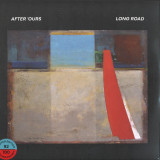
Over the last three decades, Auckland, New Zealand, has given birth to several generations of musicians, DJs, and producers who operated within the interzone between jazz, blues, soul, funk, Latin music, hip-hop, house, boogie, and broken beat. Across two slow-cooked albums that sit at the intersection of machine funk and vivid live instrumentation, Odyssey (2016) and their forthcoming sophomore release Long Road (2024), After 'Ours - the group project of pianist and composer Michal Martyniuk and drummer, guitarist and producer Nick Williams - have comfortably located themselves within this antipodean tradition.
Born and raised in Auckland, Nick Williams grew up surrounded by music from a young age. At home, his mother, Mary Anne, a record collector and DJ with deep, diverse vinyl crates, kept his ear sharp. By the time he was eight years old, he was regularly joining his musician father on stages across Australia in his blues rock band Slippery Sam. In his early twenties, Nick began leading the eleven-piece Auckland Latin-dub-funk fusion big band Tangent, who performed regularly until the late 2000s.
Michal Martyniuk, on the other hand, grew up on the opposite side of the world in Szczecin, Poland. After playing classical music for twelve years and attending jazz school, he relocated to New Zealand with his family in his teens. While studying at Auckland University Jazz school, Michal came into the orbit of the legendary New Zealand saxophonist, composer, producer, and band leader Nathan Haines, who brought him into the same world as future collaborators like Tama Waipara, Batacada Sound Machine, Sola Rosa and Nick.
Inspired by the rich stories of jazz, neo-soul, electronica, and dance music from both sides of the Atlantic Ocean and the open-eared Auckland scene they emerged from, After 'Ours formed in 2011. Born out of a friendship cultivated through playing together at bars and nightclubs around town and home studio sessions. "Nick had family and work, so I had to wait all day," Michal says. "We'd come to the studio at 10 PM and go till 3 AM. That's how we came up with the name.
Session by session, After 'Ours revealed itself to be a creatively fertile meeting of minds. "We both have our angles, but it works well in the end," Nick reflects. "It takes the music to a place we can't get to by ourselves."
Between 2011 and 2016, they wrote and recorded Odyssey with a cast of musical collaborators that included KP, Sharlene Hector & Kevin Mark Trail (UK), Matt Nanai, Nathan Haines, Jakub Skowronski, Nick's partner Ange Williams (nee Saunders) and British producer Mike Patto from the lauded UK future jazz group Reel People. Influenced by the smooth yacht rock of Steely Dan and Donald Fagan, the warm midtempo bounce of A Tribe Called Quest and J Dilla, and the complex jazz/RnB bop of Robert Glasper, Odyssey was a labour of love that emphasised community, warm-hearted hospitality, and care.
Seven years on, they're finally ready to return with Long Road, an album that contains some of their best work yet. As well as reconnecting with past collaborators Kevin Mark Trail and Ange Williams, Long Road sees After 'Ours calling on assistance from Louis Baker, Jakarta-based saxophone player Kuba Skowroński, bassist Dan Antunovich, Los Angeles-based drummer Chris Bailey and the journeyman British soul artist Omar Lyefook.
Across ten songs that plot a stargazed course through their antipodean spin on UK broken beat, jazz, modern soul, and blues rock, Nick and Michal build on everything they learned while writing and recording Odyssey. In the process, they take their joyful musical visions to sublime new heights.
A founding member and keyboardist of acclaimed jazz
groupBADBADNOTGOOD,Tavares has gone from being an in-demand
producer with some of the biggest names in music to a songwriter and
artist in his own right, having touched corners of the globe and cemented
twoGRAMMY Awardsand five nominations
Between collaborations with Kendrick Lamar , Ghostface Killah , MF DOOM , Tyler
the Creator , Kali Uchis , Tavares has also played with Frank Ocean ,
soundtracked Virgil Alboh 's landmark S/ S 2019 runway show for Louis Vuitton,
and penned songs for Post Malone , Rosalia , Travis Scott , Kodak Black , Justin
Beiber,Camilla Cabello,Jack Harlow amongst others.
With a sound that fuses his nostalgia for the golden era of blogs with the
eclecticism of the late 2000s, the combination of the internet crossed with an
isolated suburban upbringing has laid the groundwork for Matty's genre-bending
artistry. Embracing a raw creative output with an aversion to following the norms
of the industry reverberates across his discography,Matty has found success in
previous releases including 'Clear' and 'I'll Gladly Place Myself Below', which push
the boundaries of sonic creativity and knowledge.
Now with his upcoming album POPS , Matty relinquishes his lowkey and
understated style for something larger than life, while maintaining a level of
honesty and openness that has defined his past work to make for a dynamic
release that constellates around music's greatest subject - love.
- A1: Thats How It All Is (Feat Kevin Mark Trail)
- A2: Dumplings For Dinner (Feat Omar)
- A3: Long Road
- B1: No Crime To Try
- B2: Work It Out (Feat Ange Williams)
- C1: Clearer Skies (Feat Kevin Mark Trail)
- C2: Sherwood Ave (Kitchen Party)
- C3: Everything I Have To Give
- D1: That Love (Feat Louis Baker)
- D2: Some Kind Of Blockage
Color Vinyl[35,71 €]
The records is released in two options. Both hvae 180g vinyl records. The first version has two black vinyls and the second limited edition (numbered 100 pieces) has one turquoise vinyl and the other red.
Over the last three decades, Auckland, New Zealand, has given birth to several generations of musicians, DJs, and producers who operated within the interzone between jazz, blues, soul, funk, Latin music, hip-hop, house, boogie, and broken beat. Across two slow-cooked albums that sit at the intersection of machine funk and vivid live instrumentation, Odyssey (2016) and their forthcoming sophomore release Long Road (2024), After 'Ours - the group project of pianist and composer Michal Martyniuk and drummer, guitarist and producer Nick Williams - have comfortably located themselves within this antipodean tradition.
Born and raised in Auckland, Nick Williams grew up surrounded by music from a young age. At home, his mother, Mary Anne, a record collector and DJ with deep, diverse vinyl crates, kept his ear sharp. By the time he was eight years old, he was regularly joining his musician father on stages across Australia in his blues rock band Slippery Sam. In his early twenties, Nick began leading the eleven-piece Auckland Latin-dub-funk fusion big band Tangent, who performed regularly until the late 2000s.
Michal Martyniuk, on the other hand, grew up on the opposite side of the world in Szczecin, Poland. After playing classical music for twelve years and attending jazz school, he relocated to New Zealand with his family in his teens. While studying at Auckland University Jazz school, Michal came into the orbit of the legendary New Zealand saxophonist, composer, producer, and band leader Nathan Haines, who brought him into the same world as future collaborators like Tama Waipara, Batacada Sound Machine, Sola Rosa and Nick.
Inspired by the rich stories of jazz, neo-soul, electronica, and dance music from both sides of the Atlantic Ocean and the open-eared Auckland scene they emerged from, After 'Ours formed in 2011. Born out of a friendship cultivated through playing together at bars and nightclubs around town and home studio sessions. "Nick had family and work, so I had to wait all day," Michal says. "We'd come to the studio at 10 PM and go till 3 AM. That's how we came up with the name.
Session by session, After 'Ours revealed itself to be a creatively fertile meeting of minds. "We both have our angles, but it works well in the end," Nick reflects. "It takes the music to a place we can't get to by ourselves."
Between 2011 and 2016, they wrote and recorded Odyssey with a cast of musical collaborators that included KP, Sharlene Hector & Kevin Mark Trail (UK), Matt Nanai, Nathan Haines, Jakub Skowronski, Nick's partner Ange Williams (nee Saunders) and British producer Mike Patto from the lauded UK future jazz group Reel People. Influenced by the smooth yacht rock of Steely Dan and Donald Fagan, the warm midtempo bounce of A Tribe Called Quest and J Dilla, and the complex jazz/RnB bop of Robert Glasper, Odyssey was a labour of love that emphasised community, warm-hearted hospitality, and care.
Seven years on, they're finally ready to return with Long Road, an album that contains some of their best work yet. As well as reconnecting with past collaborators Kevin Mark Trail and Ange Williams, Long Road sees After 'Ours calling on assistance from Louis Baker, Jakarta-based saxophone player Kuba Skowroński, bassist Dan Antunovich, Los Angeles-based drummer Chris Bailey and the journeyman British soul artist Omar Lyefook.
Across ten songs that plot a stargazed course through their antipodean spin on UK broken beat, jazz, modern soul, and blues rock, Nick and Michal build on everything they learned while writing and recording Odyssey. In the process, they take their joyful musical visions to sublime new heights.
Comes with insert and download coupon.
Imagine a Latin remake of Back to the Future. The mad scientist is Arsenio Rodriguez (the godfather of salsa) and the young student who travels through time with him is Eblis Alvarez (Meridian Brothers). This album can only be described as the perfect soundtrack for that movie that never was.
After the massive buzz generated by his first solo album, Mentallogenic, Alex Figueira got back in the studio to work in a more collective fashion this time, carefully assembling the second album of his largest project to date, Conjunto Papa Upa; a team of 6 musicians, spanning 3 generations of some of the best talent in the Latin and avant-garde scenes.
In an era where tropical music is dominated by purely electronic and rhythmically uniform sounds, the ten songs encompassed in “Fruta Madura” (“Ripe Fruit”) wander through the most diverse tempos, rhythms, and motifs effortlessly. A real breath of fresh air that gracefully incorporates soul, funk, jazz, psychedelia, and electronics into a solid tropical, irresistibly polyrhythmic foundation, without ever succumbing to the many genre clichés.
The distinctive production and catchy songwriting of Figueira shine in a very distinctive light on this second full-length. Living up to his reputation (Miles Cleret, founder of Soundway Records, called him “one of the scene's truly authentic and eccentric producers”), he takes the opportunity to show he’s not afraid to keep walking his own path.
Taking the band for a wild ride through the traditions of Africa, America, and the Caribbean; contrasting them with a ridiculously wide plethora of vintage, contemporary, and futuristic sounds, and pivoting on the exuberant musicality displayed by his musicians; the result leaves no doubt: this album is destined to be considered a future classic of the exciting tropical psychedelic music of the 21st century.
Addressing the most diverse themes in this new collection of songs, things take on a much more mature tone, as the title clearly suggests.
The opening track “El segundo es más sabroso” (“The second one is tastier”) sets the tone in the most assertive way imaginable, with the band boldly declaring, through multiple metaphorical references (laid upon a crazy mix of Dominican merengue, Detroit techno, classic and free jazz, dub, and electro), that the bar will be set higher with this second album.
The remaining compositions touch upon the most diverse subjects, with a fair dose of humor, sarcasm, and postmodern “magic realism”. “El Algoritmo” (The Algorithm) is a parranda-cumbia hybrid (for lack of a specific term) about the omnipresence of technology in our lives. The sophisticated Latin soul of the titling track “Fruta Madura” makes a case for the beauty of the maturity process. Some key philosophical teachings of Marcus Aurelius (the role of causality, the impositions of “the logos” and the importance of self-control) get a twisted cumbia treatment on “Reos del Deseo” (Prisoners of Desire). “No le pongas Coca-Cola” (“Don’t put Coca Cola in it”) shows us the most satirical side of the band, accusing those who mix Coca Cola with Rum of committing "sacrilege", on a powerful base of Dem Bow (the grandfather of Reggaeton), intertwined with touches of soul, salsa, and Cuban comparsa.
"Háblame Claro" (“Talk to me clearly”) is a story of heartbreak that evokes in its first part the spirit of the erotic salsa of the 80s (a subgenre deeply despised by purists), and after an unexpected samba interlude, leads to the hardest salsa of the 70s (a subgenre adored by purists), to end up in the surprising form of pure Afro-Cuban ceremonial music.
“Tu mamá tenía razón” ("Your Mom Was Right") is an attempt to exalt the spirit of the Latin American soap opera in the key of “acid bachata”, to recount a real-life case, witnessed by the band on countless occasions: the partying woman who arrives at the show accompanied by her bitter husband, who obviously does not like to dance. A very cheeky song to talk about the very serious and pertinent topic of female empowerment.
“La misma vaina” (“The same thing”) with its indescribable blend of bantú, candomblé, and Mozambique rhythms with abstract synthesizers, is an ode to adventure in favor of the aversion to taking risks and seeking predictability.
“Amigas picadas” (“Salty friends”) is another humorous song recounting another real-life case witnessed by the band on countless occasions: a love encounter sabotaged by the girlfriend's friends, who all happen to fancy the same guy. A jazzy take on the ancient Dominican rhythm of pambiche (grandfather of merengue), with generous psychedelic touches, resembling the classy late 60s releases of Guadeloupe's legendary producer / label owner Henri Debs.
“Vinimos a hablar” (“We came to talk”) takes sarcasm to the highest level, to ridicule the absurdity (also experienced by the band firsthand) seen in live music venues where people pay a ticket to go and have conversations that could be carried out much better on any bar, where no band is playing. The music alternates between a delicate melody with loose, sparse percussion and a full-on, pumping Angolan semba, with a techno kick drum included; bringing things to an apotheotic grooving finale, where the peculiar swing of Venezuelan calypso from the Callao region is thrown on top of all the precedent elements; closing the album in the most uplifting, “end of the carnival parade” feel.
The artwork is a delicate and impactful oil painting by Colombian artist Kevin Simón Mancera, who has collaborated many times with the label before (“Maracas, tambourines and other hellish things” tape and the Lola’s Dice LP).
What the experts are saying:
“Alex (Figueira) dove into this work with a brutal cohesion between lyrics and synths. Timbre poetry, sound poetry (you name it). And that, superimposed on his always impeccable percussive base, confirms the title of “avant-garde visionary of our beautiful Latin music”".
EBLIS ALVAREZ (MERIDIAN BROTHERS)
“Papa Upa's infectious quirkiness is a balm against boredom. A mature album, but without an expiration date”.
GLADYS PALMERA
“Here there is a lot of strength, drum, cadence and psychedelia, lost dance rhythms, united in an intercontinental Latin/African/and Caribbean journey, a unique winning combination that we could consider the new “Ritmo Figueira”.
DISCODELIC
Conjunto Papa Upa are:
Alex Figueira - Timbales, percussion, vocals.
Gerardo Rosales - Congas, percussion, vocals.
Ramón Mendeville - Bongos, percussion, vocals.
Randy Winterdal - Bass.
Andrew Moreno - Guitar.
Nico Chientarolli - Organ, piano, synths.
All songs written by Alex Figueira.
Arranged and performed by Conjunto Papa Upa.
Recorded, produced, mixed and mastered by Alex Figueira at Heat Too Hot, Amsterdam.
Boxed set of five 7-inch vinyl records, 300 copies limited edition. Artwork poster included.
All tracks remastered from the original master tapes.
Alessandro Alessandroni is no longer remembered simply as 'the whistler' in Morricone's spaghetti western soundtracks – and rightly so, since he was the key figure behind much of Italian 'secret music' from the 60s and 70s, always there in the studio during recording sessions, whether as a multi-instrumentalist or as the leader of session vocal group I Cantori Moderni di Alessandroni. Today his pervasive presence and important role has been finally recognized by music professionals and enthusiasts alike, so much so that he is now considered the true father of Italian library music – a genre whose sound he shaped since 1968.
As a film composer, Alessandroni often worked for small productions that had very limited (and often regional-only) distribution, and whose budgets were worlds apart from those in the 'top league' where friends and colleagues like Morricone, Bacalov, Trovajoli or Piccioni thrived. Rarely released as a soundtrack, this music ended up, at best, forgotten inside dusty ¼-inch reels or, at worst, disappearing into thin air.
After a string of releases that have brought back to life forgotten or lost works by Alessandroni (Sangue di Sbirro, Afro Discoteca, Lost and Found, etc.), it was pretty natural for us at Four Flies to start delving into a little investigated area of his filmography: his scores for erotic films, the last genre to gain popularity in the flourishing Italian film industry of the 60s and 70s, and perhaps the most extreme too, the one that, by pushing things too far, eventually put an end to that industry and its genres.
So, we're now very proud to present Alessandroni Proibito, an exclusive boxed set of five 7-inch records. It contains a total of 14 previously unreleased tracks from the soundtracks of 4 soft-core erotic films that included hard-core sequences and, therefore, fell somewhere in-between normal commercial distribution and the underground scene of adult movie theatres.
Taking an artisanal approach to his musical craft, Alessandroni was not afraid of having to deal with spicy subject matter, wobbly productions, implausible plots, improvised actors, or cinematographers who were clearly no disciples of Storaro. And he was so good at making a virtue out of necessity, at turning budget constraints into creative advantages, that he created soundtracks that far surpass the films' quality, with music that at once captures and elevates the spirit of the erotic genre as if into a condensed symbol.
More specifically, the maestro recorded many of the pieces in a DIY fashion at home, using a 4-track Teac tape machine to arrange his compositions. The Teac allowed him to play different instruments on each track, which meant he could basically put an entire soundtrack together all by himself, or almost all by himself.
These recordings often feature drum machines – which provide that retro, early electronic music vibe – as well as funk guitars and exotic-sounding percussion in the rhythm tracks. In addition, there is an extensive, almost bewildering use of synthesizers to replace solo instruments that would have required a paid session player. On top this minimalist arrangement, Alessandroni layered what he could: some piano chords, a little flute and, most importantly, his signature 12-string guitar phrasing.
The result is just stunning: a unique mixture of electronic music and acoustic instruments, in a style that stops short of kitsch and ranges from cinematic ambient pieces like "Tensione erotica" to disco-funk tracks like "Snake Disco" and "One Sunday Morning", both of which feature vocals by Alessandroni himself.
Alessandroni Proibito comes with artwork by Eric Adrien Lee and a matching 30x70cm folded poster inspired to the insert-size posters which used to be hung outside movie theatres to attract cinema-goers.
The boxed set is being released in a limited edition of just 300 copies and will never be reissued. First come, first served.
limited pink LP[21,64 €]
Imagine Crowbar on a diet singing the Ramones refrains at an AC/DC show with Metallica as an opening act. "Rosa" is Italian for "pink" but it also refers to the flower itself. "Rosa" sounds incisive and unconventional, its nine tracks brimming with a buzzing energy and featuring playful vocals and melodies, muscular riffs and highly propulsive drums.
black LP[18,07 €]
Imagine Crowbar on a diet singing the Ramones refrains at an AC/DC show with Metallica as an opening act. "Rosa" is Italian for "pink" but it also refers to the flower itself. "Rosa" sounds incisive and unconventional, its nine tracks brimming with a buzzing energy and featuring playful vocals and melodies, muscular riffs and highly propulsive drums.
- 1: Forró Violento (Instrumental)
- 2: Grão De Areia
- 3: Não Vou Reclamar De Deus
- 4: Toda Beleza
- 5: Put@Ria!
- 6: Rubelía
- 7: Posso Dizer
- 8: Vinheta As Palavras I
- 9: As Palavras
- 10: Forró Violento
- 11: Torto Arado
- 12: Lua De Garrafa
- 13: Na Mão Do Palhaço
- 14: Doutor Albieri
- 15: Samba De Amanda E Té
- 16: Amor De Mãe
- 17: Vinheta As Palavras Ii
- 18: Assum Preto
- 19: Forró No Escuro
- 20: Toda Beleza (Pelos Loirinhos)
Black Vinyl[26,68 €]
Some albums are game-changers in a genre. Take OutKast's Speakerboxxx / The Love Below or Primal Scream's Screamadelica, they observe, study, and then flip what an album can mean to a genre or moment in time.
From the very first listen of Rubel’s Latin Grammy-nominated third album As Palavras, Vol. 1 & 2, you can feel its transformative force for the MPB genre. Here we see one of Rio’s brightest stars, fusing the contemporary with the classic, soaking up the richness of Brazil’s musical heritage. The result is a marauding 20-track epic, incorporating traditional styles such as forró, MPB, pagode and samba with modern baile funk, rasteirinha and hip-hop.
The album exudes a sense of freedom and creativity, playfully and provocatively juggling the familiar with the forward-thinking. The tracks are divided across two records, navigating feelings of love, heartbreak and discovery, whilst balancing themes of violence, passion, irony and affection. Collaborating with some of the country’s most esteemed artists such as Gabriel do Borel, Liniker, Luedji Luna, Tim Bernardes and Ana Caetano, Rubel takes this fusion of styles, subjects and flavours to the global stage.
The grand, forró-blending, choral opener, ‘Forró Violento (Instrumental)’ sets the tone for the album, with references and links between tradition and modernity everywhere to be seen. From the Ana Frango Elétrico produced, funk flexing, samba-soul brilliance of ‘Não Vou Reclamar de Deus’, to the album’s title cut ‘As Palavras’, in collaboration with Tim Bernardes, that melds MPB influences with electronic elements and hip-hop touches.
Across both sides of the album, Rubel’s story-telling gift is given space to shine. ‘Torto Arado’ featuring Liniker and Luedji Luna, beautifully references the racial injustice, tragedy, hope and ambition found in one the most celebrated Brazilian novels of recent times by Itamar Vieira Júnior. Elsewhere, ‘Na Mão do Palhaço’ manifests a satirical march about a suicidal conservative middle-aged man, who is rescued by the miracle of the carnival.
At times the album is gentle and intimate with tracks like ‘Toda Beleza’ featuring Bala Desejo, or the ode to friendship ‘Lua de Garrafa’, composed with the legendary Milton Nascimento. At others, the grooves hit harder, with sounds from the favelas laced within. ‘Put@ria!’, explores the universe of baile funk, with BK’ and MC Carol trading off on the mic, as ‘Rubelía’ moves between reggaeton, funk, and hip hop. The latter is a tribute to a key influence of the album, Spanish star Rosalía and her parallel mix of current with classic.
Ultimately though the beauty of this album lies in its concept. In the midst of a country divided, ‘As Palavras Vol. 1 & 2’ sets out to bring together genres and generations, grounded in rhythms and words that have helped define Brazil through the ages.
- A1: Forro Violento (Instrumental)
- A2: Grao De Areia
- A3: Nao Vou Reclamar De Deus
- A4: Toda Beleza
- A5: Put@Ria!
- B1: Rubelia
- B2: Posso Dizer
- B3: Vinheta As Palavras
- B4: As Palavras
- B5: Forro Violento
- C1: Torto Arado
- C2: Lua De Garrafa
- C3: Na Mao Do Palhaco
- C4: Doutor Albieri
- C5: Samba De Amanda E Te
- D1: Amor De Mae
- D2: Vinheta As Palavras Ii
- D3: Assum Preto
- D4: Forro No Escuro
- D5: Toda Beleza (Pelos Loirinhos)
Pink Vinyl[29,96 €]
Some albums are game-changers in a genre. Take OutKast's Speakerboxxx / The Love Below or Primal Scream's Screamadelica, they observe, study, and then flip what an album can mean to a genre or moment in time.
From the very first listen of Rubel’s Latin Grammy-nominated third album As Palavras, Vol. 1 & 2, you can feel its transformative force for the MPB genre. Here we see one of Rio’s brightest stars, fusing the contemporary with the classic, soaking up the richness of Brazil’s musical heritage. The result is a marauding 20-track epic, incorporating traditional styles such as forró, MPB, pagode and samba with modern baile funk, rasteirinha and hip-hop.
The album exudes a sense of freedom and creativity, playfully and provocatively juggling the familiar with the forward-thinking. The tracks are divided across two records, navigating feelings of love, heartbreak and discovery, whilst balancing themes of violence, passion, irony and affection. Collaborating with some of the country’s most esteemed artists such as Gabriel do Borel, Liniker, Luedji Luna, Tim Bernardes and Ana Caetano, Rubel takes this fusion of styles, subjects and flavours to the global stage.
The grand, forró-blending, choral opener, ‘Forró Violento (Instrumental)’ sets the tone for the album, with references and links between tradition and modernity everywhere to be seen. From the Ana Frango Elétrico produced, funk flexing, samba-soul brilliance of ‘Não Vou Reclamar de Deus’, to the album’s title cut ‘As Palavras’, in collaboration with Tim Bernardes, that melds MPB influences with electronic elements and hip-hop touches.
Across both sides of the album, Rubel’s story-telling gift is given space to shine. ‘Torto Arado’ featuring Liniker and Luedji Luna, beautifully references the racial injustice, tragedy, hope and ambition found in one the most celebrated Brazilian novels of recent times by Itamar Vieira Júnior. Elsewhere, ‘Na Mão do Palhaço’ manifests a satirical march about a suicidal conservative middle-aged man, who is rescued by the miracle of the carnival.
At times the album is gentle and intimate with tracks like ‘Toda Beleza’ featuring Bala Desejo, or the ode to friendship ‘Lua de Garrafa’, composed with the legendary Milton Nascimento. At others, the grooves hit harder, with sounds from the favelas laced within. ‘Put@ria!’, explores the universe of baile funk, with BK’ and MC Carol trading off on the mic, as ‘Rubelía’ moves between reggaeton, funk, and hip hop. The latter is a tribute to a key influence of the album, Spanish star Rosalía and her parallel mix of current with classic.
Ultimately though the beauty of this album lies in its concept. In the midst of a country divided, ‘As Palavras Vol. 1 & 2’ sets out to bring together genres and generations, grounded in rhythms and words that have helped define Brazil through the ages.
Turbo Recordings is proud to present the label debut of Anastasia Kristenen, with her Moments of Inertia EP. As we enter our 26th year of existence, Turbo is constantly and violently shocked that exciting techno music is still being made. After a certain point, you expect yourself to look a genre square in the face and say “Enough!” But we consider ourselves the luckiest vanity imprint on the planet to be able to harness the talent of artists like Copenhagen-based DJ-producer Anastasia Kristensen and serve it up to you in this - your darkest hour.
Escaping the massive shadow of Norway’s hip-hop scene, ‘Moments of Inertia’ captures a sound that evokes nothing but itself, as though Kristenen were recording sub-rosa dimensional machinery at oblique angles and arranging the best parts with the kind of narrative grandeur most techno artists would never dare interrogate. It should also be noted that the track “Paradox & Puzzle" shares a name with Tiga’s moderately successful escape room gastropub.
The A1 ‘I’d Love To Do It’ leads with vivacious drum programming and Kristensen’s enigmatic vocals setting the stage for 'Paradox & Puzzle’ which shares a name with Tiga’s moderately successful escape room gastropub. The title track closes the show with slamming industrial tones, summarizing Anastasia’s bespoke futuristic flow.
If you think Turbo might start slowing down in its mid-20s, we respectfully ask you to get real. And while you’re at it, get a clue. ‘Cause we know in our heart of hearts that music can and will save the day, even if it’s just for just one day.
- A1: Moon's Milk Or Under An Unquiet Skull (Part One)
- A2: Moon's Milk Or Under An Unquiet Skull (Part Two)
- B1: Bee Stings
- B2: Glowworms/Waveforms
- B3: Summer Substructures
- B4: A Warning From The Sun (For Fritz)
- C1: Regel
- C2: Rosa Decidua
- C3: Switches
- C4: The Auto-Asphyxiating Hierophant
- C5: Amethyst Deceivers
- D1: A White Rainbow
- D2: North
- D3: Magnetic North
- D4: Christmas Is Now Drawing Near * Featuring – Robert Lee, Rose Mcdowall
- E1: Copal
- E2: Bankside
- F1: The Coppice Meat
- F2: Ü Pel (Insense Offering)
Red in Clear Vinyl[57,35 €]
First compiled as a double CD in 2002, Moon's Milk (in Four Phases) is a suite of four EPs that Coil released seasonally via their in-house Eskaton imprint across 1998. The line-up for these sessions were John Balance, Peter "Sleazy" Christopherson, Drew McDowall, and William Breeze. Recorded primarily at their home studio in Chiswick, London on the eve of a permanent relocation to the small seaside town of Weston-Super-Mare, the collection has long loomed as a pivotal and pinnacle work in the group's discography, but has never been officially reissued, or repressed on vinyl. Time has only ripened its tapestry of regal strangeness. Arranged sequentially in tribute to the equinoxes and solstices, Moon's Milk captures Coil at a revelatory crossroads, leaning deeper into improvisation, spontaneity, and sound design. "Moon's Milk or Under an Unquiet Skull" initiates the proceedings on Spring Equinox, a two-part netherworld organ séance woven from vocal drones, cathedral keys, seasick strings, and opiated undertow. From there, Summer Solstice skews lighter but no less incantational, with Balance embracing his voice-as-instrument across lucid dream torch songs ("Bee Stings"), purgatorial spoken word ("Glowworms/Waveforms"), sultry chamber pieces ("Summer Substructures"), and falsetto ravings ("A Warning From The Sun (For Fritz)"). Autumn Equinox exudes more of a pensive and twilit mood, from the Rose McDowall-sung folk ballad "Rosa Decidua" ("I hear your voice sing near to me / I've put away the poisoned chalice (for now) / And lie down amongst the flowerbeds") to hall-of-lords hallucination "The Auto-Asphyxiating Hierophant" to the liminal string-plucked classic "Amethyst Deceivers," featuring excellent alien guitar by Breeze layered with Balance's oft-quoted couplet: "Pay your respects to the vultures / For they are your future." The album's final chapter, Winter Solstice, is its most swooning, remote, and ceremonial. Opener "A White Rainbow" stirs strings, layered choral vocals, and shivering rhythm into an imploding burial hymn. "North" oscillates bleakly, a ghost in the machine murmuring opaque prophecy ("This black dog has no owner / This black dog has no odour"), while "Magnetic North" is its inverse, a guided meditation of gently flickering software and surreal chakra poetics ("Red rose filling the skull / Yellow cube in the lower pelvis / Silver moon crescent below the navel"). The suite fades to grey with a traditional English carol ("Christmas Is Now Drawing Near"), rendered like an executioner's song by Rose McDowall's doomed, beautiful voice. The Dais box set includes the entirety of the rare Moon's Milk Bonus Disc CD-R / 2019 Threshold Archives Copal CD, which includes three collaborations with Thighpaulsandra. This material is as rich and intoxicating as the previous four phases, ranging from electro-acoustic singing bowl rituals ("Copal") to dissonant electronic recitations of visionary Angus MacLise poetry ("The Coppice Meat") to ominous classical melancholia ("Bankside"). Once again, Coil confirm the vastness of their confounding, infinite alchemy, explored and refined across decades of experimentation - both sonic and bodily. From postindustrial to post-everything, theirs is an art untethered, in the wilds of its own design.
For the 15th anniversary of this timeless classic, !K7 Records are re-issuing Tosca’s seminal album ‘No Hassle’ in an audiophile 3LP format.
Multi-instrumentalists Richard Dorfmeister and Rupert Huber have been friends since their Vienna schooldays. Richard later became half of the globally acclaimed DJ-producer duo Kruder and Dorfmeister, while Rupert worked in piano composition and sound-art installation. ‘No Hassle’ is Tosca’s fifth studio album.
A luxurious tapestry of analogue and digital sounds, submerged samples and live instruments, it evolves and expands into an hour-long ambient symphony. The title reflects not only the duo’s laidback approach to making music but their whole philosophy of life.
‘No Hassle’ is all about contemplation and concentration. While recent Tosca releases like J.A.C. (2005) and the remix collection Souvenirs (2006) were a move towards classic song structures and club-friendly grooves, their latest is a much more introspective journey into inner space.
Brixton-based David Agrella returns after the success of his Baby Ford-remixed 'Modulo 02', with two tracks and a nifty remix of each to boot. 'I Felt It Coming' is a heady peak time track, with Underground Resistance-style drum machine handclaps and an addictive synth hook and all the suspense and drama of a Stephen King horror tale. Domenico Rosa's remix turns that frown upside down, converting it into a perky, cheeky and altogether lighter workout that nevertheless will keep feet on the dancefloor. 'Reflexion Nocturna' (Priori remix) kicks off the B-side with fizzling dub techno stealth, subtly embellished with a smidgeon of 'Funky Drummer' breakbeat, while Agrella's original closes proceedings with head down, echo-set Leftfield-style prog house skank. Not for nothing is this chap known as one of the techno scene's fastest rising new names.
1000 miles away from the beating musical hearts of Rio and São Paulo in the late ‘70s, the Brazilian city of Belém gave rise to a little-known record label called Erla - Estudio Rauland. Though not prolific in its output, the label made up for it in quality and experimental offerings, with several records on the label now becoming sought-after pieces among collectors. One such release is the sublime four-track psych, MPB, rock EP by singer-songwriter Jarbas Mariz.
They say never judge a book by its cover, though on this occasion you pretty much can. The wonderful tripped-out ‘70s artwork by Baby is a sure-fire indication of the music lying within. Though the EP was recorded in ‘77, it clearly gained inspiration from the psychedelic hippy idols of the previous decade and could easily have been a soundtrack to an acid trip scene in an obscure Brazilian movie.
Low-fi and quirky, there are moments of beauty and splendour but also hints of darkness; with a sublime balance of music and styles throughout. At points Jarbas will have you drifting through a folk flute daydream, the next moment a growling, psych-distorted guitar breaks and parts the calm. An ability to make those elements blend cohesively is where Jarbas’ true brilliance shines through.
Jarbas played, and still plays, with some of the key figures in Brazil's musical underground. Guilherme Coutinho (whose Guilherme Coutinho - E O Grupo Stalo album from ‘78 was also re-issued on Mr Bongo) features on electric piano for this release, with fans of his work being able to pick out his tones and playing style. Elsewhere, Jarbas also collaborated with the late great Lula Côrtes on the 'Bom Shankar Bolenath' album from 1988 and 'Rosa De Sange' from 1980. He was a member of the wonderful Cátia de França band and is a regular in the legendary Tom Zé group.
'Transas Do Futuro' is a special record and one we are honoured to be reissuing.
- A1: The Look Of Destiny - Crêpesuzette (1982)
- A2: The Speechless Man - Physique Du Rôle (1983)
- A3: The Doll - Polarphoto (1982)
- A4: Make Up - Démodé (1980)
- A5: All The Fancies - Weltanschauung (1984)
- A6: My Only Fight - Ici On Va Faire (1985)
- B1: La Porta - Rosadelleceneri (1985)
- B2: Darkest Before Dawn - Vapore 36 (1987)
- B3: Domani - Anonimia (1989)
- B4: Io Trasformo - Agorà (1989)
- B5: Raving Mad - Autosuggestion (1988)
- B6: Sogni - Quartz (1987)
- B7: Attonito - Maniumane (1989)
“The Missing Boys” is a film born from the need to tell the story of the emergence and affirmation of a forgotten music scene, like much of the youth movement that spread in metropolitan areas as well as in the provinces more than forty years ago, dealing with the same critical issues of everywhere. It’s a story of mostly unknown bands, who from Sardinia, especially from Cagliari and Sassari, interrupt the blissful isolation of an island, only apparently distant from that revolution that ignited wherever there was a stage and a power socket. The birth of a path that began with punk and quickly transformed into a magmatic picture where research, experimentation, sound subversions and slivers of darkness, shape a multifaceted and unique scene in balance between affinities and divergences with its whole surroundings. The examined period between 1979 and 1989 marks a seminal decade, a ten years time-frame linked to an indelible generational transition, like an imaginary journey “from the ants to the clouds”, an invisible thread suspended between those kids and their great dream. This album contains music from a vibrant and uncompromising season, just like all that cannot be recognized as industrial product and maintains an independent spirit. (Davide Catinari)