12" Vinyl with Download Code. Expanding their rich sound palette Forbidden Dance moves on to the next plateau with their third release. After releasing two legends Alton Miller and Vick Lavender, new EP is signed by a young and sound broad producer from Naples - The Mechanical Man. Drawing influences from the sound of Chicago, Philadelphia and Motor City he achieved to catch the multi essence of the house sound into a four-track journey marked with slow and fast-paced soulful corners dominated by toned vocals and stripped-down beats all the way to the underexposed lounge sections and playful intermissions.
Drum programming is a strong point for The Mechanical Man and it can be clearly heard in "A1 - The Streets Of Revelation". Infused with most probably vintage Linn Drum hits, the track intertwines numerous elements in a hoppy and gentle swirl riding on double vocals. Everything takes a full sonic conclusion in the third quarter when the main synth starts to breathe fully.
Residing on almost the same rhythm hits, "A2 - I Keep Thinking" is more of a deep dive into love dreams. Emotional and subtle pads and chords progression are really felt here as the track rubs under soft vocals in need of a response.
The light essence is captured on "B1 - What Your Eyes Don't See". While the delayed vocals are cutting the motion and the rhythm is rougher, it still manages to keep the terrace vibe movement. Rhode-like section carries the track all the way with occasionally reduced percussion hits spicing up the background.
On the other note, "B2 - Take Her In Your Arms" is a gentle dance of maracas and rhodes. The acoustic bass is quite seductive and inviting whilst flutes and other elements riddle the track with a toned-down lounge feel and sway into hypnotic slow-motion.
Diverse, rich and enchanting tunes by The Mechanical Man!
Поиск:sub terra
Все
British artist Robin Rimbaud (Scanner) traverses the experimental terrain between sound and space connecting a bewilderingly diverse array of genres. Since 1991 he has been intensely active in sonic art, producing concerts, installations and recordings, the albums Mass Observation (1994), Delivery (1997), and The Garden is Full of Metal (1998) hailed by critics innovative and inspirational works of contemporary electronic music. Committed to working with cutting edge practitioners he has collaborated with Bryan Ferry, Wayne McGregor, Mike Kelley, Carsten Nicolai, Michael Nyman, Steve McQueen, Laurie Anderson and Hussein Chalayan, amongst many others.
Rimbaud first met Belgian artist Hans Op de Beeck at Le Fresnoy Studio national des Arts Contemporains when they were both Visiting Professors in 2012. Op de Beeck lives and works in Brussels, Belgium and creates sculpture, installations, video, photography, animated films, drawing, painting, and writing. His various works show the viewer non-existent, but identifiable places, moments and characters that appear to have been taken from everyday life.
The artists found an immediate creative connection, and a year after meeting Staging Silence (2) was completed. In 2019, they returned to the theme and created Staging Silence (3).
Each of the films is realised through the same principles, as two pairs of anonymous hands construct and deconstruct fictional interiors and landscapes on a mini film set of just three-square metres in size. The films take the viewer on a visual journey through depopulated, enigmatic and often melancholic, but nonetheless playful, small-scaled places, which are built up and taken down before the eye of the camera.
Ranging from hyper-realistic fictional land and cityscapes to absurd, almost surreal, dreamscapes, the various locations are connected by the sense of mystery and melancholy that pervades them. And at every moment Rimbaud's score is amplifying and illustrating these moments, from tragedy to nostalgia, witty to optimistic.
Introspective and lyrical, Staging Silence offers us a world of mystery and intrigue, held together by nature and time. This is a very humane works experienced at a time when many of us feel disconnected from the world around us. The peculiar silence that permeates this hauntingly beautiful work is very much an illustration of our times, anticipating a future in the past. Staging Silence is an exquisite study in dreamlike abstract ambience, a kaleidoscope of sounds and tones that engage the head and the heart.
Dies Occidendum is a mythical voyage across fog-laden, scorched earth terrain from the original friar of dark hip hop, Dj Muggs the Black Goat. Known and revered as the sonic mastermind behind both Cypress Hill and his own Soul Assassins imprint, here Muggs sheds the MCs and presents his latest dark-soaked productions as an illuminated manuscript of sorts; a fully immersive, instrumental soundtrack to the mysterious Dies Occidendum. No one wields the Excalibur of sonic darkness quite like Muggs. Combining ingredients of psych rock, gypsy folk with modern elements of trap, forged together under layers of his signature sonic grime, Muggs has created yet another blueprint for the utmost sonic menace and macabre. The Renaissance is upon us. Long live King Muggs. ABOUT DJ MUGGS: One of the original architects of dark hip hop in the early '90s, DJ Muggs helped craft a singular sound that blended darker sensibilities of psychedelic rock and hip hop in a unique way that influenced many in its wake. As the primary producer of legendary rap group Cypress Hill, Muggs' productions and sonic sensibilities are unmistakable and deeply revered by the truest of hejkvgads. Muggs' own MC round-robin imprint, Soul Assassins has been home to countless productions, laying sonic drop cloths for everyone from Dr. Dre, Ice Cube, Chuck D, GZA, Mobb Deep to MF Doom, Freddie Gibbs, Roc Marciano and Mach-Hommy.
LTD. RED VINYL
Dies Occidendum is a mythical voyage across fog-laden, scorched earth terrain from the original friar of dark hip hop, Dj Muggs the Black Goat. Known and revered as the sonic mastermind behind both Cypress Hill and his own Soul Assassins imprint, here Muggs sheds the MCs and presents his latest dark-soaked productions as an illuminated manuscript of sorts; a fully immersive, instrumental soundtrack to the mysterious Dies Occidendum. No one wields the Excalibur of sonic darkness quite like Muggs. Combining ingredients of psych rock, gypsy folk with modern elements of trap, forged together under layers of his signature sonic grime, Muggs has created yet another blueprint for the utmost sonic menace and macabre. The Renaissance is upon us. Long live King Muggs. ABOUT DJ MUGGS: One of the original architects of dark hip hop in the early '90s, DJ Muggs helped craft a singular sound that blended darker sensibilities of psychedelic rock and hip hop in a unique way that influenced many in its wake. As the primary producer of legendary rap group Cypress Hill, Muggs' productions and sonic sensibilities are unmistakable and deeply revered by the truest of hejkvgads. Muggs' own MC round-robin imprint, Soul Assassins has been home to countless productions, laying sonic drop cloths for everyone from Dr. Dre, Ice Cube, Chuck D, GZA, Mobb Deep to MF Doom, Freddie Gibbs, Roc Marciano and Mach-Hommy.
Justin Thurgur has been at the heart of the UK's World Music scene for over twenty years, primarily through his collaborations with the Afrobeat maestro Dele Sosimi (former keyboardist for both Fela and Femi Kuti) and with the pianist Kishon Khan. Most recently in Khan's projects Lokkhi Terra and the Afrobeat/Cuban crossover, Cubafrobeat.
Thurgur has worked with Cuban giants Giraldo Piloto, Changuito and Julito Padron, with the Nigerian drum legend Tony Allen and with Damon Albarn's Africa Express project; which included Cheick Tidiane-Seck and Fatoumata Diawara. He's also worked with the likes of Bukky Leo, Francis Fuster, Pandit Dinesh, Baby Akhtar, Inemo, Tony Kofi, Kodjovi Kush, The Soothsayers, The Levellers and The Selecter.
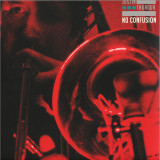
He is perhaps most known as the trombonist from the multi-award winning 'folk' group Bellowhead. Their split in 2016 led to him forming his own band and releasing his debut album as a bandleader, 'No Confusion'.
The album features original compositions written by Thurgur in collaboration with double bassist Max De Wardener, piano/rhodes/Hammond organ player Kishon Khan and guitarist Phil Dawson, with band members including the likes of Graeme Flowers on trumpet, James Allsopp on bass clarinet and Oreste Noda on congas.
Thurgur promoted 'No Confusion' throughout 2016 and 2017, culminating in an enthusiastically received performance at Love Supreme Jazz Festival in 2017. Jazz FM, in particular Chris Philips, gave extensive airplay to the album as well as streaming a live performance from the Jazz FM studios and doing an interview. They subsequently playlisted two of Thurgur's single releases. Lopa Kothari played a track on BBC Radio 3's show 'The World On 3'. The band did a live interview and performance on DJ Ritu's 'A World In London' show on Resonance FM. Beyond this Thurgur has been developing relationships with various other digital radio stations, including Gordon Wedderburn, John Waugh and a number of Global music stations based in Europe.
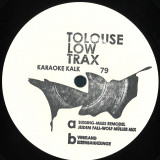
„Well recommended for the freaks“ the Manchester based independent music specialist Boomkat once finished a review about a release of Düsseldorf based DJ and producer Tolouse Low Trax aka Detlef Weinrich (also known as one fourth of the German avant-band Kreidler). What a freak distinguished we do not really know - we just assume he walks this world on a different path. Tolouse Low Trax surely does!
The latest evidence of this fact are four tracks of whom two are remixes by befriended artists, and two are coming right out of the middle of Tolouse Low Trax’s very own sense for odd and catchy grooves. His friend Miles, also known as one-half of the experimental industrial techno and dark ambient duo Demdike Stare, puts hand on the track “Sussing”, originally released on Tolouse Low Trax’s latest album “Jeidem Fall” in 2012. He covers it with an enigmatic, shadowy veil in terms of sounds, space, and obscure driving arpeggios in order to give the track a “brighter haze” feeling. A subliminal hypnotic transformation that swings with a unique dark and demanding drive. The second remix was done by Wolf Müller, a Düsseldorf based musician that released two highly acclaimed EPs on the German DIY label Themes for Great Cities. His profession as a percussionist calls the tune as he mutates the original track “Jeidem Fall” into a tribal celestial dance tune that jacks with an Afro-Baroque elegance.
Also the two EP contributions of Tolouse Low Trax himself move on very different terrains but seem to come out of the same experimental laboratory. With “Vindeland” he delivers a track full of dark synthlines and drunken shuffled patterns that morphs into a nervous soigné sensation. In contrast his arrangement “Eisenbahnzunge” starts with a celestial arpeggio until a strange alienated voice appears and everything melts layer by layer into an elliptical ambient experiment beyond the usual definition. Both tracks are deeply rooted in Tolouse Low Trax’s very own spontaneous minimal hardware approach of producing bold, hypnotic dance-not-dance music that shall not only illuminate the so called freaks!
Videosphere, the debut album by Kompakt’s latest signing, the London-based artist Lake Turner (aka Andrew Halford), swoons into focus with “The Sunbird”, a teasing drift of lilting, ambient tones, riding out a submerged piston-pulse rhythm. Across its brief 109 seconds, it manages to traverse evocative terrain – something mythopoetic, something both humble and grandiose, a glimpse of the other behind the sky’s curtain. “I wanted to conjure up something resembling an ancient ceremony or death procession,” Turner nods. “Like a hymn to the surroundings of a faraway hill.” It’s both sky-bound and earthen, a ritual incantation to call in the music of the spheres.
Turner was introduced to the Kompakt family by his sometime collaborator Yannis Philippakis of Foals. He’d previously made music in post-punk and indie groups Great Eskimo Hoax and Trophy Wife, but Videosphere is the first time he’s fully articulated his own vision of electronic music, aside from one limited lathe-cut 12”, 2018’s Prime Mover EP, on Algebra. The lush ambient-disco-techno dreams of Videosphere were constructed and completed in his London studio and at his parents’ arable and sheep farm in Worcestershire, which might help explain the hazy, unhurried pastoralism of the album.
“There was a slight bittersweetness in finishing the record (in Worcestershire) as my parents were in the middle of selling my childhood home,” he sighs, before quipping, “on the plus, I ended up shearing a lot of sheep over the summer.” A student of archaeology and ancient history, Turner is no doubt carefully attuned to the twisting cogs of history and memory, and it’s no surprise that Videosphere has a nostalgic, melancholic cast; much of its beauty rests in the way it tugs, gently, at the heart strings – see the tear-stained cheeks of the lush, dappled “Honeycomb”, or the sweetly sad electro-roundelay of “No Way Back Forever.”
It’s not all drift-dream hypnosis, though – Videosphere is very much grounded in the now. ““No Way Back Forever” is a nod to the linear nature of time,” Turner explains by way of example, “and the tipping point of the world climate crisis that scientists have now declared.” Jayne Powell’s vocals are sent spinning through the song, wound like candyfloss; she takes centre stage on the techno hymnal title track, too. Throughout, there’s a sense of forward movement, despite the life stasis we find ourselves collectively bound by in mid-2020; there’s also a yearning for the communal, for community, that’s captured in the album title, a nod to an object Turner encountered at London’s Geoffrey Museum, “a television set in the shape of a spaceman’s helmet from the 1970s.”
“The vision I loosely had was to make an electronic record that had a communal warmth and almost ceremonial or ritual feel. I wanted to examine the relationship of our archaic minds in the trappings of the modern world,” Turner concludes. “What the Videosphere also symbolizes for me is the oneness of humanity and community, prevailing.”
Eröffnet wird "Videosphere", das Debütalbum von Kompakts jüngstem Signing, dem in London ansässigen Künstler Lake Turner (alias Andrew Halford), mit "The Sunbird" - einem herausfordernden Strom aus Ambient Sounds, die zu schweben scheinen, um sich dann in einen subtilen, maschinellen Rhythmus zu verwandeln. In gerade mal 109 Sekunden gelingt es dem Stück, ein gewaltiges Terrain abzuschreiten - etwas Mythopoetisches, bescheiden und grandios zugleich, gibt uns eine Ahnung davon, was sich hinter dem Himmel verbirgt. "Ich wollte etwas heraufbeschwören, das einer alten Zeremonie oder Totenprozession ähnelt", sagt Turner, "wie eine Hymne an die Umgebung eines weit entfernten Hügels." Himmlisch und irdisch zugleich, eine rituelle Beschwörung von Sphärenmusik.
Der Kompakt Label-Familie wurde Turner von dessen zeitweiligen Mitarbeiter Yannis Philippakis (Foals) vorgestellt. Zuvor hatte er in den Post Punk- und Indie-Bands Great Eskimo Hoax und Trophy Wife gespielt. Bis auf eine limitierte lathe-cut 12", der "Prime Mover EP" auf Algebra von 2018, artikuliert Turner mit "Videosphere" zum ersten Mal seine eigene Vision von elektronischer Musik.
Die üppigen Ambient-Disco-Techno-Träume von "Videosphere" hat Turner in seinem Londoner Studio und auf der Schaffarm seiner Eltern in Worcestershire produziert, was den nebulösen, gemächlichen und beinahe pastoralen Charakter des Albums erklären könnte.
"Es gab einen bittersüßen Moment als ich mit der Platte (in Worcestershire) fertig geworden war, da meine Eltern gerade dabei waren, das Haus meiner Kindheit zu verkaufen", seufzt er, bevor er witzelt, "das Positive war, dass ich im Laufe des Sommers eine Menge Schafe geschoren habe". Als Student der Archäologie und der Geschichte des Altertums ist Turner zweifellos mit den sich unaufhörlich drehenden Rädern der Geschichte und der daran geknüpften Erinnerungen vertraut, und es ist keine Überraschung, dass "Videosphere" einen nostalgischen, melancholischen Einschlag hat; viel von seiner Schönheit liegt in der Art und Weise, wie es einem sanft ans Herz geht - die Tränen benetzten Wangen von "Honeycomb" oder der ambivalente Elektro-Reigen von "No Way Back Forever".
Trotz allem hypnotischen Driften und Träumen - Videosphere ist sehr stark im Jetzt verankert. "`No Way Back Forever`ist eine Anspielung auf die lineare Natur der Zeit", erklärt Turner beispielhaft, "und auf den Wendepunkt der globalen Klimakrise, den Wissenschaftler gerade ausgerufen haben". Jayne Powells Gesang wirbelt dabei wie Zuckerwatte durch den Song und steht auch im Mittelpunkt des technoid hymnischen Titelstücks. Überall ist ein Gefühl der Vorwärtsbewegung zu spüren, trotz der Stagnation, in der wir uns Mitte 2020 kollektiv befinden; trotzdem existiert eine Sehnsucht nach dem Gemeinsamen, nach Gemeinschaft, die im Albumtitel eingefangen ist - eine Referenz an ein Objekt, dem Turner im Londoner Geoffrey-Museum begegnete, "ein Fernsehgerät in Form eines Raumfahrerhelms aus den 1970er Jahren".
„Die lose Vision, die ich hatte, bestand darin, eine elektronische Platte zu machen, die eine soziale Wärme und eine fast zeremonielle oder rituelle Atmosphäre ausstrahlt. Ich wollte die Beziehung unseres archaischen Geistes in den Fallstricken der modernen Welt untersuchen", so Turner abschließend. "Was `Videosphere` für mich auch symbolisiert, ist die Einheit von Menschlichkeit und Gemeinschaft, die am Ende obsiegt".
B•O•M is the fifth album by freak electronic producer NCHX (NOCHEXXX). A percussive planet of acid-techno, UK bass, house and electro-phonk, hosed down with a chemical wash of post-dubstep and UK bleep contaminants.
Departing with a tube station screech, HUNTING HIDES signals a lone defender’s ride through the underground - trace amounts of musique concrete dart around the tunnel walls, while sub-low cushions the rumble. ENTERCOL is perfect 3am mix fodder; saturation hot-points push beneath a middle eastern theme, whilst SEVENTH GUN TERRITORY is pure rapid-fire bongo bizness - a concrete terrain punctuated with corrugated metal grids and moving shadows: distorted poly-metered brutalism! CYBERTUSH is the perfect OST to a club littered with vape pens, while B-Boi bots flirt with promiscuous A.I.
Arguably the most fierce cut is TEFLONTUAN - an ode to NCHX’s favourite pro Antuan Dixon - the Deathwish skater lands bolts with the illest of steeze. Side-chained 303 squelch rattles alongside x0x sequenced drums as wavetable pads float above kinked rails. A nights gallop over city curbs. The LP signs off with LOCATION SCOUT, a SpaceX sample-return mission heading back to earth with a fistful of deep house red planet crumble.
“A dance floor’s dream and a mixing engineer’s nightmare” - Resident Advisor
Triangulating a slinky signal to a square mile off the Swan River, Glowing Pin bring us ‘Pentagon Palette’, a master blast of frequency adjusted house, swamp stomp and chakra charmers from Australian newcomer Jonus Eric.
Though opening brace ‘The Cult’ and ‘Collect’ made first contact back in 2014, a loose connection between Perth and Hamburg hindered progress before ‘Mirrors’, ‘Emulator’ and ‘Waterfall’ walked across the web in 2019 to round out a dope debut release from this house auteur. Specialising in mind altering sound design and melodic flair, Jonus generates a neon swamp on ‘The Cult’, serving up a psychoactive roller caked in radioactive fuzz and insectile fizz. Thick bass swells and circular marimba make for a hypnotic rhythm, while a shapeshifting vocal and moody keyboard riff drag us back towards terra firma. The paradisiac refrain of ‘Collect’ soon sounds out through the jungle with a euphoric haze,
its sub-tickling bass and acid gurgle riding hyperactive drum programming as the track warps in the humidity. Soaked in serotonin and brisk at 137 BPM, ‘Mirrors’ burns off the mist to offer an airy update on the French Touch template. Though frazzled circuitry and dislocated vox serve this one with a twist, the chiming pianos and bouncy beat are still best enjoyed in a Golf GTI in the summertime. Jonus reaches for the lasers via the restless rhythm and rave sirens of ‘Emulator’, a fresh take on the funky house of the late nineties updated with unexpected breaks, squealing feedback and treated vocals usually found on a Four Set banger.
Next it’s off to the chillout room for ‘Waterfalls’, a fourth-world tone poem describing crystal caves, undiscovered wildlife and a holographic waterfall. Ditching the doof, and letting those colours tesselate, Jonus offers a +2 bump to your mana, before the post punk bassline, growling EBM vocal and off key organs of ‘YR Mind’ combine for a confrontational bonus track, only available in digital format.
The different seeds that have been planted throughout the life of Croatian Amor come to bloom on 'All In The Same Breath,' affirming an equilibrium that's all its own. Spiralling through the half-light electronics are gentle bumps and breaks that are layered into moments of elevation. A coarse edge remains just an arm's length away, but there is an unmistakable element of celebration throughout the album's 10 tracks. As the syncopated terrains ring out, their perpetual rhythmic motions call a medley of human voices that speak in security. They sing to everyone just as they sing to themselves. In the years since the seminal Croatian Amor album 'Love Means Taking Action' Loke Rahbek has strode a twofold path. There are the delicate, meditative compositions that he has made with Frederik Valentin; setting acoustic instrumentation against affecting digital treatments, each of their collaborative albums are an exercise in the magnificence of subtle restraint. And with the sharpest of turns you'll find Rahbek's parallel universe of rave-shocked rhythms and kinetic helixes that eddy through genre and tempo with few constraints. Collaborations with Varg²™ have yielded the wildest of this, and remain ongoing, yet the traces were already apparent across much of the previous Croatian Amor album 'Isa' with its treated vocalizations and cascading rhythmic mechanics. 'All In The Same Breath,' arrives as a steady handed synthesis of these divergent instincts. Elaborating the distinct techniques and themes that form the wistful essence of the project, the album's quiet composure is a sign that these familiarities have been set adrift to settle into their own private ecosystem.Small vessels travel in a perfect array. Light following shadows, following light. Every movement a signal, every second is camouflage. 'All In The Same Breath' is perhaps more than anything an invitation to be open to wonder.
Seven years after its inception, Eaux is proud to announce the first solo release by an artist other than Rrose. As a member of the Sandwell District collective, David Sumner aka Function was instrumental incultivating the Rrose project. After releasing the first three EPs and album by Rrose between 2012 and 2013, Sandwell District terminated their mission abruptly, prompting Rrose to start a new label (Eaux) for solo projects andcollaborations. This EP brings history full circle.
Following closely on the heels of Function's mammoth 3LP/17 track album "Existenz" for Tresor Records, this EP takes similar themes as a departure point, but moves into more mysterious, yet also heavily dancefloor-focused terrain. "Binaural" encapsulates the timeless essence of the Function sound with menacing bleeps, cavernous stabs, and a sense that it could go on forever without losing its grip on the listener. "Desire and Memory" is a broken beat track drenched in modulated drones that feels like an infinite spiral, moving simultaneously forward and backward in time. Function's early Sandwell District records defined the "hypnotic" techno sound that has influenced countless artists (including Rrose), and this release plants those roots in new, fertile ground.
Recorded at Inanimate Objects, Berlin
Mixed by Tobias Freund at Non-Standard Studios
Mastered by Beau at Ten Eight Seven
2x12"
It’s taken Yotam Avni a little while to get to his debut album; almost a decade, really, since his debut 12”, “That’s What The World Needs”, on California’s Seasons Limited imprint. During that time, the Tel-Aviv based producer has refined his productions, tightening the groove and paring everything back to bare essentials; the power in an Avni cut is its combination of piston-pulse propulsion and a deep, but gently applied, musicality. This combination gives his techno productions added heft on the dance floor, but also a lyrical sensibility that places him squarely in a tradition of techno legends who somehow manage to make the four-to-the-floor a space of poetic intensity, of rigorous joy.
Avni’s been on Kompakt’s radar for a while, first appearing on the label last year, with his Speicher contribution, “Mañana Mañana”. (“Track For Agoria”, from that EP, also appeared on Total 19.) The connection immediately made sense – dance music that managed to feel both lush and streamlined across the same great gasp of late-night energy. But with Yotam Avni Was Here, he’s taken a huge leap. After a brief intro, Avni sets his stall with “Beyond The Dance”, which features slow-moving vocal melisma over sculptural, melting tonalities, a tintinnabulating, harpsichord-like two-note phrase pacing out the track. Then “It Was What It Was” comes into view, its strip-light textures suddenly placed into sharp relief by a muted trumpet figure that hangs in the air, melancholy and pensive.
It’s no surprise, at this point, to discover that Avni’s inspirations for Was Here took in the histories of both techno and jazz. “I wanted to try something more around Detroit Techno meets ECM,” he reflects, when explaining the motivating forces behind the album. “Carl Craig’s Just Another Day EP and Kenny Larkin’s Keys, Strings, Tambourines came out during my high school years and had huge impact on me.” Avni’s also appeared on Transmat compilations, and remixed artists like the Midwest’s Titonton Duvanté, and Orlando Voorn – the latter particularly important for the way he connected the Detroit and Amsterdam techno scenes – his career path is marked by ongoing connections, direct and indirect, to Detroit’s storied history.
“I always wanted to go back to those hi-tek soul roots on a full album,” he continues, and he’s definitely exploring that terrain here, with the sky-strafing brass on “Free Darius Now”, morse-code keys on “Vortex” and glitchy, microhouse tickles of “Know Hope” all contributing to an oblique narrative that seems to arc across Was Here – one fleshed out by guest musicians, who include dop and Gerog Levin on vocals, and trumpets by Greg Paulus (of Beirut and No Regular Play). The cover art makes the jazz connection explicit, riffing on the text-based, minimal design of The Modern Jazz Quartet’s 1955 album for Prestige, Concorde. But the way Avni has gathered around him both inspiring musicians and intriguing reference points makes me think of his broader career as well, the collectivism behind his AVADON nights in Tel-Aviv, his many and wide-ranging releases on labels like Innervisions, Hotflush and Stroboscopic Artefacts, and the openness of his productions, which seem to be all about the multiple, the possibilities of cross-pollination, of fusing this with that, of adding and subtracting, all under the pulsating thumbprint of techno.
Good things, after all, are worth waiting for.
In the late 90’s, east-side LA was in the throws of a post-indie explosion; a network of stoned bands ranging from neo-psychedelia to pseudo-country overran Spaceland (our generation’s Troubadour) and the local Silverlake Lounge. I was playing freakbeat records twice a week in dive bars, half of Spacemen 3 was crashing at my house (my drop-out roomate was Sonic Boom’s tour drummer) and it was during this blur that I met Raymond Richards, a clean-cut all-American pedal steel guitarist playing in Mojave 3 (the country-tinged side project of 4AD shoegaze royalty, Slowdive). I was instantly swept off my feet, head over heals in love with Raymond's weeping tone—the most chill-inducing, emotionally responsive dialog I’d had with music since discovering Satie as a child—it was then and it is now, truly haunting. After a year of personnel trials, my roomate and I stole Raymond for our own band, and not only did he smother our songs with his enchanting steel, he was virtuosic with a variety of atypical instruments such as baritone guitar and theremin, he utilized them all. The band was short-lived—I joined Ariel Pink, Raymond fled to Portland and me subsequently to New York City—but in founding the ESP Institute years later, there was always a recurring mental note; we must make Raymond’s pedal steel album. I had managed to wrangle his blessed performance on a remix for Project Club’s El Mar Y La Luna, but it took almost a decade until I once again wore the producer hat and we began working on The Lost Art Of Wandering, a title borrowed from Sam Shepard’s Stories. Spiritually candid, expansive yet enveloping, this is the strung-out, visceral country music that simply radiates from Raymond. Each song is his set of coordinates in a vast open terrain, holding a sentimental familiarity, a truthful longing for the simple comforts that diffuse life’s complications, a place to get lost. –Lovefingers
Fast-rising Lisbon-based DJ/producer PEDRO has shared details of his long-awaited debut album, ‘Da Linha’, which releases on March 20 via Enchufada. First teased with the release of bubbling lead single ‘Calores’ in January, ‘Da Linha’ crowns a defining breakthrough three years for PEDRO that has seen him establish himself as one of Portugal’s most vibrant and exciting new-school producers. His debut EP, ‘EP ‘Damaia’ (2017) – named after the suburb of Lisbon he was born in – immediately signposted a bright, borderless club sound rooted in experimentation, which has since been best emphasised by 2019 releases including the Buraka Som Sistema-sampling ‘Rapazes’ and a breathless collaboration with Nigerian MC, Magugu (‘Too Much’), both of which feature on the LP tracklist.
First inspired by his older brother, who would introduce PEDRO to the latest electronic music coming out of Portugal, he still references DJ Rolando’s ‘Knights Of Jaguar’ as a memorable early touch point – a record he still credits with influencing the melodies he writes to this day. Living and growing up in Damaia, PEDRO also went to school with friends of Angolan, Cape Verdean, Brazilian and Mozambican descent, exposing him to a whole patchwork of new sounds and genres like kuduro and kizomba from a very young age. With such a rich and diverse musical upbringing, it is perhaps no wonder that ‘Da Linha’ is bursting with energy and colour across all 10 tracks, melding together the hyper-specific sounds, instruments and voices that have sound-tracked PEDRO’s life so far. From the marching, militant rhythm of ‘Stuck On You’ ft. standout Ghanaian MC, Bryte, to the silky, bubblegum vocals and gloopy, earworm melodies of closing track ‘Para Ti’ featuring Xcelencia, you’d be hard pushed to find a debut record that captures a city so viscerally.
isolée returns to Maeve with his second solo release following the success of 2017's "Mangroove EP". Spanning four tracks, "Candy Apple Red EP", shows different sides to the German artists signature micro sound. The A1, "mad marauder" leans on a big room feel while still possessing all the intricacies of production isolée has become known for over his distinguished career. The title track comes on the A2, "candy apple red", a jovial trot through a languid land of disco-house. The flip side starts with, "you are", a sub terrain deep house number with all the feels of an isolée cut. Rounding things off on the B2 is "Jordi", a darker trip into the dancefloor, perfect for the small hours.
Indigenous:
music; homegrown, unadulterated, absolute
Drivetrain (Detroit, USA) – Alice
Derrick Thompson delivers a dark and moody banger of minimal groundwork and amplified momentum, culminating in acidic intensity.
Detune (Ghent, BELGIUM) – Maple Fever
Autographed by an unshakably solid bass line, with an ornamented shower of sumptuous pads raining down over a panoramic 4/4 beat terrain.
G-Prod (Bordeaux, FRANCE) – Motif
The toxic rhythm is indisputable and the alluring chord progression is seductive in this energized elastic groove.
Jace Syntax (Glasgow, SCOTLAND) – Hologram World
Submersed in a sea of luxurious strings, a tribal explosion regulates a merciless bass riff, peppered with sweet melodic inflection.
360 degrees of freedom is overwhelming in music, and you need not truly begin to find freedom until you put yourself under extremely narrow constraints.” It was with this quote that Don Slepian laid the groundwork for over 40 years of musical output. Slepian’s work draws equally from the harmonic terrain he explored while performing with a Javanese gamelan ensemble, as well as his time spent building and modifying electronic audio equipment for studios and fellow musicians. Gravitating towards improvisation and experimentation, Slepian built a breathtaking sound-world that stretched the briefest of moments into an eternity of detail and depth. In 1980, Slepian self-released a series of cassette albums that built upon and perfected this practice, offering “New Music for Digital Orchestra”.
New Dawn is one of those albums - an enthralling example of New Age euphoria, and early-electronic
experimentation.
New Music For Digital Orchestra? An ironic subtitle for an album without any traces of digital technology found within. The instruments, tools, and recording techniques are entirely analog. A Korg PS3100, Mellotron voices, Mellotron flutes, analog tape echo and analog recorder were used to create both of the pieces found on New Dawn with both tracks being recorded live with no overdubs
- Nothing Is Safe
- He Dead (Feat. Ed Balloon)
- La Mala Ordina (With The Rita) (Feat. Elcamino & Benny The Butcher)
- Club Down (With Sarah Bernat)
- Run For Your Life (Feat. La Chat)
- The Show
- All In Your Head (Feat. Counterfeit Madison & Robyn Hood)
- Blood Of The Fang
- Story 7
- Attunement (With Pedestrian Deposit)
- Piano Burning
There Existed An Addiction To Blood" ist das insgesamt vierte Album von Clipping und ihr drittes für Sub Pop. Es ist der Nachfolger des von Kritikern und Publikum gleichermaßen gefeiertes Album ,Splendor And Misery" aus dem Jahr 2016. ,There Existed An Addiction To Blood" enthält die Singles ,Nothing Is Safe", ,Blood Of The Fang" und ,La Mala Ordina" (Feat. Benny The Butcher, Elcamino, The Rita), die von Clipping produziert, von Steve Kaplan gemischt und von Dave Cooley bei Elysium Masters in Los Angeles gemastert wurden. Das Album enthält auch Gastbeiträge von Ed Balloon, La Chat, Counterfeit Madison und Pedestrian Deposit. ,There Existed An Addiction To Blood" ist Clippings Interpretation eines neuen Rap-Splitter-Genres unter Zuhilfenahme ihrer einzigartigen Lupe. Clipping wenden sich auf dem neuen Werk intensiv dem Horrorcore zu, eines bewusst absurden und kreativ bedeutsamen Subgenres, das Mitte der 90er Jahre blühte. Einige der bemerkenswertesten Pioniere hießen Brotha Lynch Hung und Gravediggaz, aber es umfasst auch bahnbrechende Werke der Geto Boys, Bone Thugs-N-Harmony und die nahezu vollständigen Veröffentlichungen des klassischen ,Memphis cassette tape rap". Der wahrscheinlich subversivste und experimentellste Rap hat sich oft als ,Alternative" zu konventionellen Sounds präsentiert, aber Clipping verzerren das Ganze respektvoll in neue Konstellationen. ,There Existed An Addiction To Blood" absorbiert die hyper-gewaltigen Horror-Symboliken der Murder Dog-Ära, stellt sie aber in einem neuen Licht dar: immer noch dunkel getönt und düster, aber in einem seltsameren und lebendigeren Farbton. Wenn der traditionelle Horrorcore mit ,Blacula", dem populären Blaxploitationsfilm-Klassiker aus den frühen 70er Jahren, verwandt war, so ist das neue Output von Clipping analog zu ,Ganja & Hess", dem blutrünstigen Kultklassiker von 1973, der als unbesungenes Wahrzeichen des schwarzen Independent-Kinos gilt, dessen Score von Sam Waymon, Clipping als Inspiration zum Titel des Albums diente und auch Samples auf dem Track ,Blood Of The Fang" lieferte.ENG The science-fiction visionary Octavia Butler once declared that "there is nothing new under the sun, but there are new suns." The aphorism could apply to any art form where the basic contours are fixed, but the appetite for innovation remains infinite. Enter Clipping, flash fiction genre masters in a hip-hop world firmly rooted in memoir. If first person confessionals historically reign, the mid-city Los Angeles trio of rapper Daveed Diggs and producers William Hutson and Jonathan Snipes have spent the last half-decade terraforming their own patch of soil, replete with conceptual labyrinths and industrial chaos. They have conjured a mutant emanation of the future, built at odd angles atop the hallowed foundation of the past. Their third album for Sub Pop, There Existed an Addiction to Blood, finds them interpreting another rap splinter sect through their singular lens. This is Clipping's transmutation of horrorcore, a purposefully absurdist sub-genre that flourished in the mid-90s. If some of its most notable pioneers included Brotha Lynch Hung and Gravediggaz, it also encompasses seminal works from the Geto Boys, Bone Thugs-N-Harmony, and the near-entirety of classic Memphis cassette tape rap. The most subversive and experimental rap has often presented itself as an "alternative" to conventional sounds, but Clipping respectfully warp them into new constellations. There Existed an Addiction to Blood absorbs the hyper-violent horror tropes of the Murder Dog era, but re-imagines them in a new light: still darkly-tinted and somber, but in a weirder and more vivid hue. The album contains interludes with hissing recordings of demonic invasions, and guest appearances from Griselda Gang's Benny the Butcher and Hypnotize Minds horror queen La Chat. Other tracks feature contributions from noise music legends The Rita and Pedestrian Deposit. It all ends with "Piano Burning," a performance of a piece written by the avant-garde composer Annea Lockwood. Yes, it is the sound of a piano burning. There Existed an Addiction to Blood fits neatly into the broader scope of the band's career, which has seen them expand from insular experimentalists into globally recognized artists. Since the release of their first album in 2013, Diggs has won a Tony and a Grammy (both for his acting/rapping work as Thomas Jefferson and Marquis de Lafayette in Hamilton), as well as co-written and starred in 2018's critically hailed Blindspotting, while Snipes and Hutson have scored numerous films and television shows. Clipping's last album, the 2016 afro-futurist dystopian space opus Splendor & Misery was recently named one of Pitchfork's Best Industrial Albums of All-Time. Commissioned for an episode of This American Life, their 2017 single "The Deep" became the inspiration for a novel of the same name, written by Rivers Solomon and published by Saga Press. But their latest masterwork embodies what the band had been building towards - a work that finds them without peer. This is experimental hip-hop built to bang in a post-apocalyptic club bursting with radiation. It's horrorcore that soaks up past blood and replants it into a different organism, undead but dangerously alive. It is a new sun, blindingly bright and built to burn your retinas.
With its fourth catalogue number, Steinlach returns to the vinyl format with a remix EP. On board are international friends of the label, who layed hands on Wice's originals with outstanding re- interpretations. While the A-side contains two groovy and club-oriented remixes of "Just kiddin", the trippy flipside focuses on the second outcome of the label and refers to the two pieces "Absent" and "Hertz".
The record opens with a fast-paced and jacking "Just Kiddin" version by Deep'a and Biri. The two guys from Tel Aviv re-interprate the clubby aspect of the piece, furnish it with a portion of percussions and accompany it with a volatile beat. Discharging the track with a big bang, they're leaving the listener with no chance but to move energetically to the groove patterns while cherishing the original lead melody.
Just like Deep'a and Biri, Jon Hester bets on the energy and the recognition value of the original synth line. As typical for Jon, he gives a more Chicago-style housey and bouncy touch to the composition. The lead is getting chopped, re-interpreted and re-arranged into a new groove and melody pattern, sure to inspire the floor to shake and to catapult everyone around into a frisky dancing mood. Suddenly, the well-known arpeggio of the original comes in and makes for the climax of this brilliant remix.
With side B, the club aspect of the record might not be left behind, but moved into more stripped and trippy terrains. The B1 track is fashioned as a ruthless "Absent" version, unmistakably having Refracted's writing all over it. The smallest variations of the synth line, drones, and pads, without resorting to typical drum rack aspects, find their way deep inside the listener's head, and draw them into their subtle rhythm. The unapologetic roughness of the interpretation is striking and makes it a brilliant peaktime weapon.
Rounding up the whole EP, the last remix of the record is a wonderful re-interpretation by the talented Australian that is Mosam Howieson. He ministered to Wice's personal favourite piece and crafted a loving and deep version of "Hertz", which translates the magic of the original into own words and emotions, adds a subtle groove to it, then invites to listen more carefully. One quickly dives into a hopeful world in which a certain magic seems to be present, and where everything seems to be alright. Be it as a perfect last piece after a long fulfilling evening, or as the outstanding means to make the sun rise in the morning-Mosam's interpretation sure hits the spot.
Special thanks go out to our close friends Simon Sandleitner who is always in charge of the great artworks and Roger Reuter (Roger23) for having always an open ear, his helpful advises and his thought-out criticism.
Hyperdub launch new sub-label Flatlines for the release of ‘On Vanishing Land’, an audio-essay by Justin Barton and the late Mark Fisher. ‘On Vanishing Land’ evokes a walk along the Suffolk coastline in 2006, from Felixstowe container port ("a nerve ganglion of capitalism") to the Anglo-Saxon burial ground at Sutton Hoo. A walk under immense skies, through zones of deep time, and within sunlit, liminal terrains, into the eerie. Everywhere there are charged atmospheres, shadowy incursions, enigmatic departures. A derelict radar base, coastal heathland, drifting thistledown, towers of overgrown shipping containers - music haunted by wider levels of reality, narrations about rarely visited zones and potentials, voices of dreams and stories. This music includes newly-composed tracks by John Foxx, Gazelle Twin, Baron Mordant, Raime, Pete Wiseman, Farmers of Vega, Skjolbrot, Eerie Anglia, Ekoplekz and Dolly Dolly. Alongside these are glimpsed views toward M.R.James’s ‘Oh Whistle and I’ll Come to You My Lad’ (1904), Joan Lindsay’s ‘Picnic at Hanging Rock’ (1967), and Brian Eno’s ‘On Land’ (1982). Beyond the surface of the day something becomes visible, a way forward, an escape-path from capitalist reality. ‘On Vanishing Land’ is about following the lines of terrains and dreams. It is about a micropolitics of escape, of disappearance. A micropolitics of waking the faculties. ‘On Vanishing Land’ was initially part of an exhibition commissioned by The Otolith Collective and The Showroom in London, and after ‘londonunderlondon’ (2005) it was the second audio-work collaboration by Justin Barton and Mark Fisher.
The LP cover features photos taken by Mark Fisher, and a short essay by Justin Barton. Pressed on 180g vinyl, in deluxe rigid board sleeve, with free mp3 download code.
Regis is the founder of one of techno’s most influential and
uncompromising labels, Downwards Records. His inimitable hard
techno sound, and collaborations with Surgeon as British Murder Boys,
have cemented his legacy as the definition of the Birmingham techno.
Luke Lund is one of the Finland’s fastest rising young composers, with
the ability to move seamlessly between the marshes of dark hop to the
silkiness of deep techno. His own Terranean Recordings label has
been fearlessly documenting the Finnish underground and beyond
since 2010. King Pin Frankie is treasure untold – a live Regis recording
from New Year’s Eve 1997 in Chicago. Pounding classic minimal TR
909 with an accelerating/decelerating arppegiator make this A side a
serious find, with distorted synth moving platforms occurring as the
track winds out. TIP! Luke’s Scourge is an electronic composition
masterpiece – pinning a straight kick underneath a shifting snare,
leaving the question open – is it techno? Is it dark hop? Whatever it
may be, the bass underneath tells it big and fills up a subwoofer.
Limited Edition Print by nem0
Always one to explore, Shipwrec have set sail and discovered a new isle of musical experimentation. Phainomena is a terrain for ambient introspection, dream-filled drone and stunning soundscapes. An old friend returns to the fold to inaugurate this venture, Julian Edwardes. Seven works of abstract immersion coalesce to create "Consonance." The Dutch artist journeys into far-flung realms and worlds, sweet silken synthlines and juddering noise being his transportation tools of choice. Off-centre echo and muted delay swirl in these audio planets. Mountains, oceans, unending skies are conjured as notes bulge, expand and disperse. Wildlife buzzes, chirps and trills in this land of sonic undulations, plants are given musical form with modulated ruffles as bleeps of cloud scud across an expanse of frequencies. An album of brilliant brightness, shifting shapes and unearthed undercurrents where expression is as ephemeral as it is eternal, a sentiment captured in Rob van Hoesel's sublime cover work.
Melody (vocals, synth), Casey (vocals, synth), Bill (bass), Scott (guitar) and Marcus (drums) united through a shared post-punk sensibility and began experimenting with some angular drum and guitar give-and-take, layered with duelling synth refrains.
Over this Melody and Casey worked-up their vocal harmonies through impulse, developing an interplay reminiscent of The Go Go's at both their most serene and severe. The pairs vocals drift through each track, punctuating the profound and guiding us through each song's uncanny terrain.After a busy year of local shows and bouts of instinct-first songwriting, Red Channel chose a number of their most resonant songs to record with Andrew Schubert at Golden Beat. These were subsequently mixed by Eric Carlson and then mastered by John Hannon for this debut 7' EP on Upset The Rhythm entitled 'Crazy Diamonds'.
The title track launches the listener through a stratosphere of cascading notes, swoonsome lyrical turns and tack-sharp pivots in rhythmic practice. 'Crazy Diamonds' is an exhilarating rush of a song, both wistful and defiant. Melody explains that it is 'about the forever fluctuating reality that weaves in and out of ecstasy, loneliness, yearning and destruction. It's about women being free from a superficial beauty, it's about the cessation of ideals and power worship.' 'Giver' is a similarly sprightly yet pointedly questioning track, 'alone in your room, alone with your thoughts, of sleepless shadows, but what do I get' sing Casey and Melody in spooked unison.
'Demons' swirls with minimalist pop moves, a trailing backing vocal and a tumbling bass motif, whilst a dream-like quality pervades the guitar and keyboard lines. Melody then peppers the song with references to extinguished lights, evil forces, bags of sugar, floods and heaven on earth, drawing us so close that we enter the vision too. 'Slowness', which brings this debut EP is a close, is another triumph of illusory lyrical association and punchy gesture. In fact the band sound 'caught in a fragment, non-corporeal' throughout all the four tracks. Opalescent passages freewheel into splintered eruptions, there's a duality constantly in play, 'somebody dies, somebody's born'.
The songs collected here are manifestly catchy, conjured in cyclical patterns that are distorted by a desire that tends towards stream of consciousness. It's this willingness to wake-up in the unreal and see each moment reflected in the mirror which really sets apart Red Channel's first record.
A journey that has flourished from Florence, Italy to the UK capital of London via Ibiza, Italian duo Neverdogs’ ascent and journey into the global spotlight is one deeply rooted in talent and passion. As a duo, Tommy Paone and Marco De Gregorio have gone on to release material on the likes of Roush and Deeperfect, played at renowned festivals such as The BPM Festival, and made regular appearances at Marco Carola’s highly-coveted Music On where they have been core residents since 2013. Having founded Bamboleo Records earlier this year, the label’s third release will see the arrival of the duo’s most diverse work to date as they reveal their debut album: ‘Details’.
“We always wanted to prepare an album that would represent us. Besides having twenty years of experience, musical and artistic backgrounds we have been studying for months, listening to old vinyl records from our collection, paying attention to the work of other artists from the industry whilst taking inspiration from 80's bands such as Yazoo and Depeche Mode, and from the contemporary underground and pop worlds. This allowed us to understand what direction to take when creating our own sound. All the sounds of our tracks are made with analogue instrumentation.
We decided to call our first album ‘Details’ as it encapsulates what this series is all about. We were paying particular attention to the details whilst creating all the tracks. We collaborated with the musician Davide Ruberto aka Fortyseven and the singer Spencer Kennedy, son of the former drummer of Imagination (English band from the 80's). We are also working on an Album Tour which will be released following this one.” - Neverdogs
First up on this limited album sampler, ‘Details’, drives right into the trademark Neverdogs sound as the duo weave together precise drum patterns effortlessly with rumbling sub bass. Next, the stripped back ‘Dance Moves’ couples elastic synthlines and galactic glitches with panning sweeps and crisp hats.
The flip side delves deeper, as ‘Duck From Mars’ reveals slick organic percussion arrangements and bubbling lead lines, whilst ‘Volca’ ups the tempo and edges towards the peak time, a flow fans of the pairing will be familiar with, as perfectly demonstrated year in year out when playing on Amnesia’s iconic terrace.
Terence Fixmer's path through the changing techno landscape of the past 20 years has been anything but direct. Indeed, the French born producer, musician and Planete Rouge label founder has long been influenced by the periphery of continental European dance music subgenres from electronic body music, new beat and acid, before combining them into his own pioneering hybrid of futuristic, EBM-inflected techno with classic releases such as 2001's Muscle Machine or the collaborative Between The Devil LP with Nitzer Ebb's Douglas McCarthy as Fixmer/McCarthy. While the sound in recent years has been rediscovered and recast in diverse contexts by a new generation of producers, Through The Cortex sees Fixmer gravitating toward a different kind of industrial-tinged electronics, led as much (or more) by analogue sequencers, melodies and ultra-saturated sounds of synthesizers than drums and percussion. Across eight tracks at a compact but varied 40 minutes, the LP touches on an aesthetic hinted at in recent Ostgut Ton releases (2016's Beneath The Skin EP and 2017's Force EP), revealing a sonic narrative through noisy, screaming synth/vocal riffs with a jagged, guitar- like post-punk sensibility. Through The Cortex is techno with a voice - or rather multiple voices - guiding listeners through hypnotic, space- and social-themed terrain as a kind of dark soundtrack to darker days. The result ranges from the slow John Carpenter-inspired Escape From Precinct 13 funk of 'Expedition' and the patient yet muscular stomp of 'Fury' to the mesmerizing Suicide-like pop of single 'Accelerate', where Fixmer, using his voice as an instrument, chants the track's ambiguous title in an invocation of systemic change/collapse. Elsewhere, the story is told with more abstract and wailing vocals like on 'Shout in A Black Hole', or in the warm, entrancing chords floating across the stereo image in ostensibly changing time-signatures on 'A Halo Somewhere' - the LP's uncharacteristically kosmische musik come-down. The track, and Through The Cortex as a whole, reflect what can be described as Fixmer's idiosyncratic take on both techno subgenres as well as the larger pool of electronic music in general. This broad approach translates into a sound that is not only difficult to pin down, but also one that lends itself to multiple listens.
An Invitation To Disappear is the debut LP by British electronic musician Inland aka Ed Davenport - and his first release for A-TON. Based on his soundtrack for a video installation by conceptual artist Julian Charrière, Davenport has recast the material and field recordings into eight tracks of rhythmically intricate electronics and spectral, ambient techno, inspired by Charrière's visually striking, 76-minute tracking shot through a palm plantation toward a totemic soundsystem on full blast.
Both the album and original soundtrack were created in response to the 200th anniversary of the eruption of Indonesia's Tambora volcano in 1815, which plunged the world into darkness and caused a series of extreme weather conditions. At the time, the natural climate change crisis resulted in numerous global famines and is known throughout the northern hemisphere as 'The Year Without Summer', with global communities forced to adapt to sudden radical changes in temperature and weather.
An Invitation To Disappear offers a contemporary parallel, leading viewers - and listeners - down a seemingly endless direct path of gridded palms from dawn to dusk; a bio-commercial monoculture where ancient jungle once flourished. Light flickers between rows of fruit-laden trees and a distant fire burns in the undergrowth where the border between natural image and computer simulation breaks down. At the same time, formerly incoherent rumblings of sub-frequencies begin to transform into the contours of rhythm. This is reflected sonically in eight perspectives on the lush, synthetic jungle, made of myriad buzzing fauna, morphing melody and colossal bassweight. All paths lead toward an apocalyptic dancefloor, though speeds vary widely; rhythms dissolve from straight to broken, synth tempos operate by their own internal clocks (and logic). Juxtaposing industrial agriculture with rave culture, the album explores the industrialization and refinement of nature, and the new strange forms emerging from the synthetic grids of both.
As Inland, Davenport has previously contributed soundtracks to other installations by the Swiss-born Charrière, whose artistic practice focuses on bridging environmental science and cultural history, often taking place in remote geophysical locations, including ice fields, volcanos and radioactive sites.
Julian Charrière is a French-Swiss artist based in Berlin. A former student of Olafur Eliasson at the Institut für Raumexperimente, Charrière's art explores post-romantic constructions of nature, staging tensions between deep or geological timescales and those relating to mankind. His work has previously been shown across the globe, including at the main exhibition of the Venice Biennale in 2017, a solo show at Kunsthalle Mainz this past Spring and an upcoming solo show at the Berlinische Galerie opening September 26.
Inland (real name Ed Davenport) is a British producer, DJ and founder of Counterchange Records based in Berlin. Known for his detailed and explorative house and techno releases on his own label, Infrastructure, Naïf and more, Davenport has recently gravitated toward the contemporary art world, finding inspiration in the cross-pollination between Berlin's art and music scenes. Previous sound design collaborations with Charrière have been exhibited in institutions such as the Musée des Beaux-Arts de Lausanne in 2014 and Thyssen- Bornemisza Contemporary in Vienna in 2017.
The gallery version of An Invitation To Disappear premiered this past April at the Kunsthalle Mainz and will be on display at the Berlinische Galerie as part of Charrière's solo exhibition As We Used to Float, opening September 26, 2018. The LP will premier live together with the video installation during a special presentation in Berghain the same day for Berlin Art Week.
'Garage bands suddenly obtain cult status and become the antithesis of their initial appeal'
Garage Class were a group of reluctant outliers who produced one of the finest contributions to the wave of UK DIY music that emerged during the late 70s and early to mid-80s.
Hailing from Alsager in North West England and comprised of Tim Shutt (vocals) Phil Murphy (lead guitar) Clive Williams (guitar) Lynne Sanders (bass) and Phil Bourne (drums / bass on studio recordings) Garage Class originally went by the name of The Pits before their then manager Steve Hurt imposed an alias which, though unpopular within their ranks, would nevertheless reflect the shambolic art they would eventually capture on their first and only single.
As The Pits the group offered a loutish inflection on glam-punk flamboyance, evoking Johnny Thunder hitting the north and remaining disowned yet undeterred in a dreary old boozer. But as Garage Class the group distilled a roughcast and homespun primitivism that felt quintessentially their own. In this they proved too unruly to be assimilated into any wider scene. Early gigs descended into acrimony and recognition proved elusive. Yet what they managed to make back then now sounds like an extraordinary article of underdog ambition.
Released in 1984, four years after it was originally recorded, the Terminal Tokyo single is an unlikely triumph of exceptional messthetic punk. Though raw and unpolished the songs here are precariously pop-minded and indisputably anthemic. The titular A-side reveals the dry and detached drawl of Shutt aka The Subliminal Kid, a sharp, jaded and poetic voice that has some of the most iconic lines never heard in punk. Accompanied by second-hand guitars, on-the-fly handclaps and a chorus like a terrace chant this is the cult hit that never was, a heroically artless masterpiece that has all the ragged character and misfit euphoria of Swell Maps and The Buzzcocks if they were more impulsive and boisterous, and left to their own devices in the remote margins of a Cheshire town. The original B-side is here substituted for I Got Standards, a track that, until now, has somehow remained unreleased. An ideal twin to Terminal Tokyo there's the same brusque and dog-eared quality to the band's delivery, as well as the same upfront emphasis on strong hooks and insistent momentum. Yet again, Shutt is on impeccable form, perfecting an inflated, adolescent antagonism that has all the sardonic, malcontented charm of similarly 'shirty' buggers like Dan Treacy (Television Personalities), Patrik Fitzgerald and Mark Perry (Alternative TV).
Although never accepted in their own time both tracks represent a brief but inspired moment of fervent imperfection, one that epitomized the best of a diffuse and autonomous underground movement spearheaded by The Desperate Bicycles and built upon by the likes of Amos & Sara, The Homosexuals, The Cleaners From Venus and Family Fodder. Like them Garage Class were situated at a point where punk, art, humour and a sense of stubborn independence all intersected.
In the years since Terminal Tokyo has accumulated a retrospective appeal among certain trusted circles, with Jon Dale celebrating the single in his exhaustive and essential Story of UK DIY for Fact Magazine, and original copies regularly changing hands for a foolish forty quid or so. With this inaugural release on the Outer Reaches label Terminal Tokyo is not only restored for the very first time but given a worthy expansion courtesy of JD Twitch (Optimo).
Continuing his own fascination with the fringe history of UK DIY - documented on his own outstanding compilation Cease & Desist: DIY! (Cult Classics From The Post Punk Era 1978-1982) and in his re-edits of Crass Records classics for an early release on RVNG INTL - Twitch reinterprets I Got Standards as an incisive, dubwise outing that pictures Jaki Liebezeit and Muslimgauze on a bender in England's provinces, tasked with remixing the raw product of local punks. A new slant on Garage Class' crude magnificence, built to play loud on contemporary soundsystems.
Although the latter part of 1980 spelled the end for Garage Class with members moving on to other projects (Bourne fell in with The Colours Out of Time, Murphy went on to front The Regular Guys and Shutt eventually left to form Happy Refugees) this reissue attempts to give their fleeting time together and the unique single statement they made the treatment it deserves. If this means Garage Class have obtained cult status, their initial appeal remains. Just listen for yourself.
"With a subject matter of an unsettled consciousness and the schizophrenic tendencies of the Artificial-Intelligence-Era, 'Chris Weeks', aka Kingbastard, has crafted a unique terrain for himself on his new EP, 'Standalone'; a beguiling workout of mind-bending, hardware-based electronic sounds. Weeks fuses Techno sensibilities with an array of Experimental-Electronic techniques, producing an EP which echoes the genius of Aphex Twin & Autechre; making the UK-based Producer one of the most adventurous heirs of the Warp label. The tracks found on 'Standalone' perfectly embody their titles, with glitch infused Techno, IDM innervation and fidgeting-synth flourishes, evoking the electronic-claustrophobia felt from living in our all-encompassing post-Snowden surveillance dystopia.
Championed by the likes of Bleep, Tom Ravenscroft (BBC 6 Music), Rob da Bank (BBC Radio1 & 6Music), CLASH Magazine, Igloo Magazine, IRM (Indie Rock Mag), Future Music Magazine."
Mouse on Mars is recognised as one of Germany's most defning and versatile electronic music projects. With their
anarchic mixture of sound that oscillates between uncontrollable chaos and meticulously arranged structures,
Jan St. Werner and Andi Toma have forged a unique musical language, which is readily decomposed by the
unpredictability of its myriad mutations. Free from schools of thought, genre conventions, and from the constraints
of the music establishment, they have worked under the Mouse on Mars alias for 24 years, mapping their own
idiosyncratic trajectory through a no man's land between pop, art, club music, and the avant-garde. - Jan Rohlf
Idiology takes the acoustic experiments of Niun Niggung even further, and it's this combination of electronic
and 'traditional' music -- melding keyboards and synthesizers with french horns and guitars and trumpets into a
seamless whole -- that points the way through the dead-ends of most electronica.'
- PopMatters
Andi Toma and Jan St. Werner continue to create soundscapes that blur the line between programming and live
musicianship, and sometimes between Earth and outer space.' - The A.V. Club
On April 13th Mouse on Mars will release Dimensional People,
their brand new studio album on Thrill Jockey.
The album features Werner and Toma joined by a number of
prolifc guests: Justin Vernon (Bon Iver), Zach Condon (Beirut),
Spank Rock, Aaron and Bryce Dessner (The National), Swamp
Dogg, Eric D. Clarke, Lisa Hannigan, Amanda Blank, Sam
Amidon, Ensemble Musikfabrik, and about 20 more musical
collaborators.
After a series of notorious dance oor releases, Dimensional
People reveals them working deep within their own vernacular,
digging into fertile terrain of their inexhaustible vault of digital
and acoustic experimentation, and charismatically making
elemental components new again. This album makes clear how
their craft is of discovery, of fnding new contexts for places,
sounds, memories, sensations, ambiences, technologies,
relationships, and of course, people.
The return of Timothy J Fairplay sees tracks from his 2 EPs on Emotional Response remixed on one special release. Four favourite producers chosen to bring new dimensions to his brooding, shuffling electronics, featuring Scientific Dreamz Of U, Alessandro Parisi, Perseus Trax and Antenna.Part of the label since inception, the last five years have seen TJF's career explode with releases on Bird Scarer, Charlois and Hoga Nord, setting up the Crimes Of The Future label with Scott Fraser and releasing an album alongside Andrew Weatherall as The Asphodells. His EPs for Emotional Response saw some of his strongest, deep and dubbed out productions that marked their own terrain and these reworks have been a long term project. Starting with a trance inducing breaks-dub of Stories of Prison from Scientic Dreamz Of U and you understand why this mysterious producer has become a cult in his own dreamtime, as subs bump this vortexed revision to its own portal.
Next Alessandro Parisi implants his cyber-electro-harmonies to Aim For The Yellow Sector. Fairplay's late night drive-by is respectfully given a future-retro mix, gliding away from East London's dank streets to mysterious plains and beyond. Things take an analogue twist for the flip with Perseus Traxx showing his love for Chi town on his remix of Saco Bay. A bumpin' bass sets the motion, mixing the swirling original to basement vibes x 10. Win win win.
Kindred spirit and fellow Pinkman/Charlois member Antenna closes the EP with a deep retake of Night Ferry. After causing a stir with the killer Odessa EP and subsequent releases on Royal Oak and Beats In Space, a remix was a given. A mellow groove and optimistic keys is the perfect way to end this chapter of Timothy's music and await for new adventures.
Mnestic Pressure' is Lee Gamble's first album since 2014 and his first with Hyperdub, a reset that sees a noticeable change in his sound and the concepts that feed into his music. Lee says 'From Diversions 1994-1996' (2012) through to Koch' (2014) - my music felt like I was dealing with signals from elsewhere - signals from the unconscious, sub-aqua, hallucinated, dreamt. Mnestic Pressure' feels like their decoded offspring, a terra interpretation.' The title Mnestic Pressure' comes from Lee's thinking about how our contemporary memory is pressured, individually, but also collectively. 'We live in these strobing, visual times, like a constant subliminal advertisement but, also over the last few years the world seems to have become more and more dreamlike, alien, and parodic itself and there was this part of me that wanted to drag my music back from this Shangri-La, but fully drenched and infected by its ghosts.' Mnestic Pressure' as a whole is a simulation of this experience, a flow of targeted information, through contrasting and quickly changing terrain, from one track to another you're dragged into a new space. The pressure to move is intrinsic to the flow of the album, one thing morphologically transforms into another, zooming in and out from wide angle to detail, reshaping into new forms at a speed Lee's music hasn't before. The music on Mnestic Pressure' has a hardness, with a structure and melody that was sublimated in Lee's previous LPs. It builds on his more recent experiments with more functional dancefloor forms. Here his hypermodern production and crunchy, dissembled beats feel like they could be malfunctioning holograms projected onto the hallucinated memories of his early work.
No-one else makes music like this: devilishly complex but warm and intuitive, stirring together a dizzying assembly of outernational and outerspace influences, whilst retaining the subby funk-and-hot-breath pressure of Shackleton's soundboy, club roots.The result is an evolutionary, truly alchemical music — great shifting tides of dub, minimalist composition and choral song (Five Demiurgic Options), ritual spells to ward off the darkness (Before The Dam Broke, The Prophet Sequence), radiophonia and zoned-out guitar improv (Seven Virgins), even the febrile, freeform psychedelia of eighties noise rock (Sferic Ghost Transmits / Fear The Crown). Over the five years since Music For The Quiet Hour, Vengeance's vocal and lyrical range has rolled out across this new terrain. Throughout these six transmissions he's hoarse preacher, sage scholar and ravaged bluesman, blind man marching off to war, and exhausted time-traveller warning of impending socio-ecological catastrophe. Six dialogic accounts of our conflicted times, then, expanding beyond the treacly unease of the duo's early collaborative work into something subtler and more emotionally shattering — its shades of brightness more dazzling, and its darkness even murkier. "We almost didn't hear it when the foundations went."
Echoe returns for its first outing of 2017 and fifth release since starting in earnest last year. ECHOE005 marks the first remix package in the label's discography, offering up four stellar remixes of Francesca Lombardo's "Remembrance" song. A clear stand-out in the label boss's inimitable repertoire, "Remembrance" has been given the rework treatment by house and techno stalwarts: Cassy, Laura Jones, Jade and La Fleur.
Cassy offers up the first remix, focussing her reinterpretation around an enormous and insistent bassline, murky and dense in equal measure, that rolls from start to finish. Undulating hats inject further energy, doubling in pace strategically whilst complimenting the 4/4 groove. Utilising the originals' emotional resonance, Cassy creates soft textures and refined arpeggiated patterns, adding a further dimension to the track's impassioned narrative.
Laura Jones's remix comes in the form of a low-slung, jazzy drum work-out, adorned with sub-heavy kicks and a snarling low-end that offers much of the track's sonic weight. Gentle bell-like keys float alongside modulated synth stabs that filter in and out of focus, whilst Jones's drum programming becomes progressively more and more frenetic.
Jade's reimagining sees a broken beat take the reigns, leaving space for soft percussive rhythms and an earth shaking low-end that pushes the song into ghetto house territory. Hi-hat pick-ups and jittery vocal cuts provide further momentum before the groove lands on sturdy 4/4 terrain. Jade's deftly arranged breakdowns, punctuated by panned drum fills and granular FX, adds welcome tension to the track, making a return to rolling drum-patterns and buzzing bass-sequences all the more rewarding as they come back in.
The final remix comes courtesy of La Fleur who delivers the most peak-time, club focussed material on the package. Staying true to the original's hook, La Fleur brings melody to the fore, whilst deploying snappy drums alongside chilling atmospherics and tech heavy stabs, set to keep dancers moving into early hours and beyond.
- A1: Our Understanding
- A2: Ngc1277
- A3: Captured Rotation
- B1: Approaching Lights
- B2: Gravity Zone
- B3: Goldene Spirale
- C1: Beyond Language
- C2: Standard Model
- C3: Future Teller
- D1: Superstring Theory
- D2: Stadt Des Orion
- D3: The Mirror
- E1: Goldene Spirale (Substance Remix)
- E2: Ngc1277 (Architectural Remix)
- F1: Stadt Des Orion (Rivet Remix)
- F2: Superstring Theory (Zero Mass Remix) S
3x12"
I did not know what achievements, what mockery, even what tortures awaited me. I knew nothing, and I persisted in the faith that the time of cruel miracles was not past .
Stanislaw Lem (Solaris, 1961).
This paragraph from Solaris, the novel written in 1961 by Stanislav Lem, is the starting point for the concept this 30drop album has been built upon. Science fiction masters like Lem are one of the greatest influences for the artist, who devised this album after the mental challenges that humans should overcome in a future: encounter with beings from other civilizations: capable of interacting with us in a totally unthinkable way so far.
Away from what many a sci-fi blockbuster depicts, this work revolves around the idea that such meeting with alien species will be eminently a mental experience that will shock not only our cultural values but also our very own perceptions about what space/time/reality is a mindbending experience where everything we knew before dissolves around us and propels us to uncharted grounds. Terra incognita so far.
Bypassing the random track collection syndrome that plagues many of today s so-called techno albums this LP was conceived and devised from it s very beginning as a full, complete work in itself, best enjoyed in it s totality. A story-telling journey (very much in the tradition of seminal / genre-defining albums as UR s X-102) were tracks lead you to one another. Tracks can be enjoyed on their own, being all suited for dancefloor and dj-sets alike, but take a complete different meaning when put in the right context within the album.
Musically this long-player combines stripped-down rhythms, sweeping pads and hypnotical bleeping sequences woven together in an intrincate but subtle way, a fashion that harks back to the classic minimalist yet complex mid-90 s sound of Hood, Mills and T.Dixon sounds appealing both the mind and the feet.
Classic and futuristic at the same time, this is a compelling journey that opens with the eerie atmospheres of Our Understanding before really taking off with the cadential NGC1277. The hypnotic Captured Rotation sets the pace for the rest of album which oscillates between the exhilarating cosmic groove of Beyond Language and the contemplative stasis of The Mirror. Other highlights include the entrancing Goldene Spirale or the furiously busy Approaching Light.
The whole package is further rounded up by a set of remixes which showcase the different directions taken by techno producers this days: from Substance s solid Berlin-style to Architectural s spaced-out visions via Rivet s hard-hitting club bangers and Zero Mass abrassive experiments.
Text by: Dj Zero.
Our sixth release marks the closing of a circle: Lucky Charmz—the man of our first release, Follow Me To Flottbeck Falls'-EP—returns to deliver his second full length effort. LHLT006 is the U Still Coming Over'-EP, a long overdue follow up to his first EP: More than anything else, it's a fresh slice of summer groovers. Opener Faceless Goat' instantly delights with it's majestic opening chords, only to unleash a smashing grandeur of sample fun and lustful grooves. It's a no-vocals-required anthem, rich in texture and yet subtly enchanting. While Faceless Goat is probably best enjoyed blasted out to vast, scenic landscapes on mediterranean costs from the terrace of a ancient estate, it is also tried and tested for Vorzech', houseparties and—of course—any club scenario (it won't fail you). We cannot help but to notice that Latency Jam''s stoic groove recalls the jungle books's march of the elephants, it's spacey synth madness points to outer space and, well, did we mention that It's super funky Yes, it's a funky spacewalk towards jupiter with your awesome, intergalactic elephant friends. Sonically charming with it's rapid fire hi-hat's, bubblegumspongecake melodies and zapping space laser's, that've all trickled out of a Nord Lead Young Lucky once laid hands on, Latency Jam' will also never let you down. On the flip we find Waffle Cut', yet another sun-oozing Lucky Charmz tune. Captivating trickle-down arpeggios radiate warmth, while soft pads sooth you into hypnosis. It's a bit like staring at the big yellow in the sky for too long—you get all frizzy, drizzy and a little silly.
It's been just over a year since Cale Sexton emerged out of Melbourne's suburban sprawl into the centre of its thriving club scene, in which time the sets he's delivered from behind a nest of wires and hardware have gained recognition as some of Melbourne's most compelling and sought after. Moving across a vast terrain of reference points, Sexton constructs dense soundscapes held together by tight programming, all of this culminating in the powerful live delivery he's become known for. These four songs mark an impressive debut EP, and the second release on Melbourne imprint Temporal Cast.
TERRANOVA returns to the fore with the HEADACHE EP, another impressive assortment of floor-ready house weaponry - after the sublime sophistication of the PAINKILLER EP (KOMPAKT 262) and its accompanying remixes (FM X/PAIN 001), the new material shoves the pendulum back into more rugged club territory, showcasing the sort of sonic urgency and rawness the legendary project has become known for in the first place.
As missing links between the dystopian pop of TERRANOVA's turn-of-the-century work and the slick kinetic drama of their current incarnation on Kompakt, the three cuts of the HEADACHE EP congenially continue the multi-layered, nifty thrust of 2012's house nouveau epic HOTEL AMOUR (KOMPAKT 248 CD 95), but also manage to evoke the wonderstruck immediacy of an act burning through its first speakers. This becomes particularly manifest with the deployment of CATH COFFEY as vocalist for title track HEADACHE (also a primer for TERRANOVA's upcoming full-length). A member of iconic British rap outfit Stereo MCs in the early 90s and collaborator of Tricky, the singer was featured on TERRANOVA's initial outings and is a well-established presence in their early work. On the new 12", she reintroduces her unique brand of battle-hardened, deadpan soulfulness to the searing funk of the reinvigorated project.
HEADACHE, a cover of a song from Birmingham's iconic and controversial postpunk outfit The Au Pairs, as well as its instrumental sequel HEADLOCK are both fuelled by the propulsive beats and upscale hooks we've grown to expect from TERRANOVA, but there seems to be something else at work, too - a somewhat darker undercurrent that may or may not be part of the actual arrangement. In any case, this adds much-needed depth to today's dance floors, providing them with a riveting soundtrack for the most intense of prime times. There's no need for EP closer TOURETTE to hide behind its compatriots, either: it's a full-blown thrill ride in its own right, brimming with jittery sampling, arresting percussion and some pretty rad bassline abrasiveness thrown in for good measure. A well-placed shot at the dancer's solar plexus, this wraps up the HEADACHE EP nicely, giving players and punters another perfectly valid reason for post-apocalyptic celebration.
Six years have passed since the last album by Andi Otto alias Springintgut, ("Park and Ride", City Centre Offices, 2007). In this period, Otto has done nothing less than inventing a new instru- ment: His "Fello" is a cello with movement sensors attached to the bow and a corresponding software. The development has been kicked off at STEIM in Amsterdam already in 2007. Since then, Otto has achieved vital refinements of the system, cooperated with artists of various fields as diverse as choreographers in Macedonia, theatre in Nigeria and Techno DJs in the Berghain Kantine in Berlin or the Fusion Festival. He even played solo with his instrument on different continents. For this third album, "Where We Need No Map" Otto takes the "Fello" to his studio in Hamburg for the first time. He records his instrument which has until today only been presented live on stage. In these Fello Sessions, the bow gestures immediate- ly modulate and process the amplified cello sound. In the subsequent editings he selects and cuts these sessions and merges them with other styles, such as Skweee, House and Jazz. Springintgut's trademark sound, this unique playfulness, is pre- sent throughout, while the live-processed cello adds an unrivaled deepness. The artist's expeditions even add more colour. Two tracks have been recorded in India. The lead voi- ce in "Bangalore Kids" is a field recording of a schoolboy in Cubbon Park, Bangalore. Andi Otto spends three months in Japan as artist- in-residence in the Villa Kamogawa in Kyoto. Du- ring this concentrated period he produces the more contemplative tracks of the album, like "Ka- mogawa Cycling" and "Western Kyoto". In Sri Lan- ka, finally, he meets Sasha Perera, the voice of Berlin's Dub Techno band Jahcoozi. They record two songs together. Especially in "Bullet" one can sense the lazy, muggy, peaceful heat of the after- noons in which this beautiful track has been com- posed. These stories may help to locate the music's orig- ins but still the sound of "Where We Need No Map" points us to unknown territories. The journey itself is the reward, let's listen!
Sechs Jahre sind seit dem letzten Album "Park and Ride" (City Centre Offices, 2007) von Andi Otto alias Springintgut bereits vergangen. Diese Zeit hat der Pingipung-Mitinhaber genutzt, nicht weni- ger als ein eigenes Instrument zu erfinden: das "Fello", ein Cello mit Bewegungssensoren auf dem Bogen und einer dazu gehörigen Soft- ware. Die Grundlagen dafür entstehen bereits 2007 am STEIM in Amsterdam. In der Folgezeit gelingt es Otto, das Instrument immer weiter zu verfeinern, mit unterschiedlichen Künstlern zu kooperieren und international aufzutreten. Für "Where We Need No Map" trägt Otto das Fello erstmals ins Hamburger Studio und nimmt unzählige Sessions auf, in denen die Gesten des Bogens direkt den verstärkten Sound des Cellos verändern und neu formen. Diese Fello-Sitzungen werden anschließend editiert und mit anderen Ein- flüssen vermengt, die von Skweee über House bis hin zum Jazz reichen. Der Markenzeichen-Sound von Springintgut, diese ureigene Verspieltheit, ist weiterhin vorhanden, gewinnt durch das live-pro- zessierte Cello aber eine bisher unerreichte Tiefe. Weitere Farbe erhält das Album durch Ottos zahl- reiche Tourneen in ferne Länder. Zwei Stücke ent- stehen in Indien. Die Stimme von "Bangalore Kids" ist eine Feldaufnahme eines Schuljungen im Cubbon Park in Bangalore. In Japan verbringt Andi Otto drei Monate als "Artist in Residence" in der Villa Kamogawa in Kyoto. Während dieser kon- zentrierten Zeit entstehen die ruhigeren Tracks des Albums wie "Kamogawa Cycling" und "Western Kyoto". In Sri Lanka lernt er dann Sasha Perera kennen, die Stimme von Jahcoozi. Sie nehmen zwei Songs zusammen auf. Vor allem in "Bullet" kann man der faulen Nachmittagshitze nachspü- ren, in der die Stücke entstanden sind. So lassen sich die vielfältigen Entstehungspunk- te von "Where We Need No Map" zwar karto- graphieren, aber der Sound des Albums schickt einen trotzdem in unbekanntes Terrain. "Der Weg ist das Ziel, frag nicht viel, hör mal..."