The funky, atmospheric, evocative and sometimes downright weird output of companies such as DeWolfe, Cavendish, Burton and the ubiquitous KPM have always been a guiding inspiration for ATA Records, as evidenced in the spooky soundtrack works of The Sorcerers, the big band brass of The Yorkshire Film & Television Orchestra and even in the soul-jazz of The Lewis Express ('Theme From The Watcher).
Everything released on ATA is written and guided by the label heads Neil Innes and Pete Williams, who frequently dip their toes in the Library pond while working on other projects. These occasional one-off tracks have accumulated over the past few years and have now found a home on the first volume of an ongoing series : The Library Archive
Recorded using the same techniques and equipment used to create the now legendary catalogues of music sold to the film and television industry of the 60's & 70's, The Library Archive could easily sit alongside the plain minimalist covers of KPM or Telesound.
The fierce Brass of 'Whack, Slap & Blow' and 'Kaye Okay' could both be a Keith Mansfield cut, acting as a theme tune to a glamorous saturday night tv show circa 1972. 'Duck Strut' is a cheeky slice of Bass driven Brit-funk, Muted horns and flute adding an element of Quincy Jones amongst the grooving drums and percussion. 'The Needle Nose', 'Midnight Heist' and 'Wiretap' are amongst the more cinematic tracks on the album. Moody and atmospheric, they conjure up images of dark alleys, shadowy figures and dead letter drops. 'Wigged out' channels the wonky organ weirdness of Italian library legends I Marc 4 while 'Nuclear Wind I & II' use Moog and Mellotron as electronic counterpoint to ethereal voices. 'Siren's sea's' acoustic interlude conjures up images of distant clifftops, gossamer vocals enticing you onto the rocks before album closer 'Planet Nine' traverses the cosmos.
out of Stock
Last delivered 6 months ago available to reorder, subject to availability
A milestone in electronic music, is finally receiving its well-deserved re-release: Liaisons Dangereuses' legendary self-titled debut album still fascinates today, through its innovative sound and the mystery encompassing it. Since its release in 1981, it has become a classic in electronic music. The 10 electrifying songs produced by Chrislo Haas (DAF) and Beate Bartel (Mania D. / Matador) - reinforced by Krishna Goineau's French and Spanish Speech-Attack-Lyrics - created a unique style. The album - anything other than a Berlin or Düsseldorf 'thing' - was propelled to an international favourite. Songs such as 'Peut Être... Pas' and 'Los Niños Del Parque' played a decisive role in the development of Detroit and Chicago's house sound, as well as various forms of European techno
out of Stock
Last delivered 12 days ago available to reorder, subject to availability
Editions Mego welcomes KMRU back to the fold. Kin is Kenyan born, Berlin based, sonic wizard Joseph Kamaru’s second release on Editions Mego, following on from the classic 2020 release Peel. Since the release and subsequent praise for Peel, the artist has been a staple on the electronic scene performing on numerous stages and festivals worldwide in tandem with a flood of media recognition. Kin could be construed as the second child following Peel. The project came out of initial discussions with Peter Rehberg about what a Peel sequel would sound like. Kamaru is quick to clarify that Kin is not that record; “I'll know when that record will come and when I'll make it. It's already happening... or maybe it lives within both of these Mego records”.
It is this deft ambiguity and vague tiptoeing around the concrete that encapsulates the ambiguous sound world of Kamaru’s vision.
Kin was started early 2021 in Nairobi with Kamaru exploring his noisier palette of sounds encompassing distortions reminiscent of the sounds he would muster from in his youth when playing guitar. He paused making this record for a year as soon as Peter died, then slowly returned to it through 2022 resulting in the immense new work we have here.
The charms within Kin lay as Easter eggs revealing the true identity behind the colourful sonics only after multiple deep listens. With Trees Where We Can See sets the tone by way of a warm swaying melody inviting the listener in for further investigation. In 2022 KMRU and Mego stalwart Fennesz toured the USA together resulting in a strong friendship and also, the second track here, Blurred. A neat Mego/Editions Mego loop as such. Blurred arranges twangy guitar strums alongside glistening glaciers of shimmering drones. They Are Here represents a darker hue as melancholic clouds of shadowy noir tap directly into the listener's nerve stream. Maybe takes a detour into a bristling euphoric electronic storm whilst We Are screeches in a pattern formation not unlike a highly abstracted Aphex Twin forcing its way out of a hard drive. By Absence concludes proceedings, operating as both exit music and a portal to further sonic investigation with acoustic bellowing residing amongst a kaleidoscopic backdrop.
Kin is a trip that rewards close repeated listens as all the colours and textures, nuance and narratives unveil themselves. This isn’t a record to be glossed over, magic rewards concentration.
Kin is a record to be Played slow and LOUD.
For Pita.
All tracks written, produced, mixed by Joseph Kamaru
Blurred co-written & produced with Christian Fennesz
Mastered by Stephan Mathieu at Schwebung Mastering
Photography: Joseph Kamaru
Layout & Design: Nik Void
Cut by Andreas Kauffelt at Schnittstelle, Berlin
out of Stock
Last delivered 7 months ago available to reorder, subject to availability
At 19, Helviofox adds his signature to the batida template that by now seems to have been in existence since forever. Such is the strength of this primordial fountain, a source of rejuvenation. Also within the literal family: Helvio cites brothers Dadifox and Erycox as main influences.
Curiosity for the sound made him go into production by the time he was 13. A couple of years later (2020) he became co-founder of TLS with E8Prod, Alberfox, DiionyG and other mates. His talent fully developed since then, opening a slight detour that became a new path parallel to the main road.
Lively basslines anchor the beat directly lifted from tradition and clearly channeled to the dancefloor. Strong, well rounded grooves, a spot-on sense of timing and tempo, elegant atmospheres, all part of Helvio's notion of arrangement and his perception of dance music boundaries, stretching them just enough to present a challenge but not as far as to disconnect head and feet and risk losing the floor.
This liminal space between experimentation and popularity is both dangerous and attractive. There is no one formula. Precisely why it still retains plenty of fuel for current and future generations to contribute personal visions.
Lisboa, 2025
out of Stock
Last delivered 7 months ago available to reorder, subject to availability
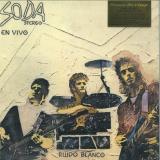
After the success of Soda Stereo’s three albums and their impressive Signos tour, the band released their first live album,
Ruido Blanco - En Vivo. This live album was recorded in Argentina, Chile, Peru, Venezuela and Mexico.
This shows how the band's already has a substantial fanbase across Latin America after just three studio albums.
The album features some of their biggest early hits, such as "Prófugos", "Persiana Americana", and "Signos",
and these live recordings give the songs really an extra kick.
Ruido Blanco - En Vivo is one of the most iconic live albums in Latin rock history, celebrating Soda Stereo’s status as pioneers of the Rock en Español movement and their enduring legacy.
out of Stock
Last delivered 7 months ago available to reorder, subject to availability
Jackie Mittoo, organ and piano maestro, was also one of the founding members of Jamaica's top session band The Skatalites. Musical arranger for Studio One he provided the backbone to so many of Jamaica's finest tunes. The invention of Ska music and the sounds that rode through the Rocksteady and Reggae period all carry his stamp. Whether it be in his various incarnations, the aforementioned Skatalites, The Soul Brothers, Soul Vendors and the Sound Dimension or under his own name, his distinctive organ and piano sound and musical arrangements have all played a major part in Jamaica's musical history.
Jackie Mittoo (born 1948, Kingston, Jamaica) began playing musical instruments at a very early age. Taught piano by his grandmother he was performing live by the age of 10 and recording by the age of 15. Two Kingston bands that he played with the Rivals and the Sheiks brought him to the attention of Studio One's founder Coxsone Dodd. Who at the time was putting a group of musicians together to be his studio band. Impressed by his skills on both the organ and the piano, Jackie was asked to join in what would become Jamaica's foremost band The Skatalites. The fellow band members were Lloyd Brevett (bass), Lloyd Knibbs (drums), Don Drummond (trombone), Tommy McCook, Roland Alphonso and Lester Sterling (Sax), Johnny Moore (trumpet), Jah Jerry (guitar) and Mr Mittoo (piano). This line up ruled the Jamaican scene between 1964 - 1965 as well as inventing the Ska sound, they also performed the backing duties for the other top labels of the time including Duke Reid's Treasure Isle and Justin Yap's Top Deck label.
1965 saw The Skatalites disband and Jackie Mittoo move on to his next musical project The Soul Brothers. Formed with fellow Skatalite Roland Alphonso, this band would back all the hits coming out of Studio One for the next three years with Jackie Mittoo working as band leader and musical arranger. Around this time Jackie also had his own single released, a Ska underground classic called 'Got My Bugaloo'. Rare, as it also features Jackie in the unusual role for him, as lead singer!!!!.
1966 saw the Ska sound evolve into Rocksteady, again with Jackie's band at the helm, and his first hit single the Rocksteady cut 'Ram Jam'. The success of which would lead to a solo career and album releases under his own name such as 'Now', 'Macka Fat', 'Evening Time', 'In London' and 'Keep on Dancing', to name but a few. In1967 the hits at Studio One were still flowing when The Soul Brothers morphed into The Soul Venders and began backing such luminaries as Ken Boothe, Alton Ellis, Delroy Wilson, The Heptones, The Cables, The Wailers and many other of the labels solo artists.
By 1968 Jamaican music was ready for another change and Rocksteady rolled into a slower groove soon to be called Reggae. Jackie Mittoo would be at the forefront with his latest band The Sound Dimension. A line up that included Leroy Sibbles (bass), Roland Alphonso and Cedric Brooks (saxophone), Eric Frater and Ernest Ranglin (guitar) and Bunny Williams (drums). Being the house band at Studio One they backed all the leading names of the time, John Holt, Horace Andy and Alton Ellis, all of Studio One's output carried his sound.
Jackie Mittoo emigrated in the late 60's to Canada, but travelled to Jamaica and London to record with many of the big new names, who were trying to redress Studio One's supremacy and needed his magic touch. Such Producers as Bunny Lee used Jackie Mittoo on many of his sessions, Sugar Minott among others were always glad of his services.
We have captured some fine 1970's cuts that feature Jackies numerous talents, showing his ability to embellish tracks with a feel that few could better, Musical arranger, band leader all round studio ace. We hope you enjoy the set and I'm sure you'll agree with us Jackie Mittoo does indeed Ride On.........
BBE Music’s acclaimed J Jazz Masterclass returns with its 20th release, a super rare private press from one of the more laudable female jazz figures of Japan, saxophonist and composer Sachi Hayasaka, together with her band, Stir Up! Released in 1988 on the private label Mobys, Free Fight was Hayasaka’s debut album and announced the arrival of an essential and primal force onto the Japanese jazz scene. Part free jazz, part post-bop, and part heavy groove, Free Fight is one of the most varied yet engaging albums BBE Music has reissued in the J Jazz Masterclass Series, showcasing Hayasaka’s inventive and muscular playing as well as her highly original and surprising compositional powers. Given the album’s eclectic yet cohesive sound, it’s no surprise that it originally found a home at Mobys, the label established by esteemed jazz critic and promoter Teruto Soejima. Mobys only issued a handful of albums from some of the leading free and open players including J Jazz Masterclass alumnus, pianist Aki Takase, as well as free jazz guitar icon Masayuki Takayanagi, and free jazz figureheads Itaru Oki and the great Masahiko Satoh. Born in Tokyo in 1960, Hayasaka took lessons from saxophonist and recording artist Toki Hidefumi and fully immersed herself in the jazz life, working part-time at various jazz kissas including Peter-Cat, a kissa managed by novelist Haruki Murakami. She has performed regularly across Japan at venues like the famous Pit Inn and formed a strong alliance with the classic Tokyo jazz kissa Paper Moon, which continues to this day. Heavily influenced by players such as Roland Kirk, David Murray and Ornette Coleman, Hayasaka has played with free jazz legend Yosuke Yamashita and performed around the world (as well as up Mount Fuji!). In the late 1980s she moved to New York for several years and worked with notable musicians including drummer Pheeroan akLaff and pianist Cliff Korman. She has recorded a number of albums to her name for Japanese jazz labels such as Three Blind Mice and Kitty as well as leading European imprints such as Enja.
'Flowers', the new EP from Elizabeth Davis, finds itself at the cross-section of many factors. In part, it’s the result of Davis’ obsession with a seminal folk song. But it also coincides with her rediscovery of the voice and language as an instrument. It was recorded during an autumn residency at Sternhagen Gut, the cultural refuge run by Gudrun Gut and Thomas Fehlmann, located deep in the Uckermark countryside halfway between Berlin and the Baltic coast.
The six tracks on 'Flowers' all take Pete Seeger’s ‘60s protest-folk song 'Where Have All The Flowers Gone' as their starting point. However, they veer off in different directions, from vocal loops and deconstructed lyrics, to instrumental drones and glitchy, manipulated rhythm tracks. Like many musicians, Davis has learnt composition by a process of disassembly, analyzing musical works piece by piece, and 'Flowers' began as one such forensic exercise. “But sometimes,” says Davis, “a source is so loaded up on meaning that the studies and experiments can become worthwhile and meaningful works in their own right.” 'Flowers' began to take on a life of its own, raising renewed questions about age-old themes such as war, authorship, translation and historical structures.
Davis is no stranger to cover versions. From studying violin to playing in free jazz and punk bands, interpreting other artists’ works has long been a key part of her musical approach. And since her radio show 'Deep Puddle' recently drew to a close after seven years, her experiments with narration and sound collage have found their way into her musical work once again. For 'Flowers', she cut up the source material (with a nod to Gysin and Burroughs), and reassembled the lyrics, the musical notes, and recordings by different performers, to create uncanny new forms.
But perhaps the biggest influence on 'Flowers' was conversations about music, art and pop subcultures with Gut. These dialogues helped Davis find a balance between far-out sound design experiments and catchy melodies, combining a certain avant-garde element and modern day songcraft. And it’s this sense of conversation, this revisiting of topics and renewal of ideas, that will keep us coming back to 'Flowers' long into the future.
KIK is the new project of two core strategists of sonic enigma HHY & The Macumbas: Jonathan Uliel Saldanha & João Pais Filipe. Ditching acoustic instruments in favour of drum synthetics & tightly controlled sound design, the duo's debut album NIGHTSHIFT focuses on off-kilter club tracks that thwart 4-on-the-floor flavours whilst maintaining trance-inducing extended cycles. If the devil is in the details, this is all about the spectromophology of the details.
Beginning with moving morse code blips in an odd time signature We Can't Dance announces the characteristic unlife of the album's pulse. Once the kick enters, syncopations progressively accumulate into a weave of interacting rhythmic lines. Smoke Machine's groove is reminiscent of the riddims Saldanha explores in his HHY & The Kampala Unit, adding scintillating pads and snippets of blitzed out laughter.
The album's third track, Proff, hearkens back to the initial pulse, displaced and pitched down in register. Here's a more meditative temperament on display, where the regular geometries of the club have been moved into higher-order structures. Segments rise & fall into earshot. Deepening the meditative mood, Back Room explores a short melodic leitmotif anchoring the track's wander- lust.
The rhythmic assault continues in Tactical Gear, bringing further experiments into polyrhythmic contours exacerbated by preci- sion movements of echo & delay. Limping can be heard as a what-if sonic fiction taking Autechre-inspired abstractions through Durbanoid Gqom terrains. The album closes with its longest track, Night Shift, that segments into shifting sound worlds.
Drawing from industrial grit, cybernetic percussion and the eerie fluorescence of after-hours energy, NIGHTSHIFT exists in the liminal space between body music and abstraction——a soundtrack for phantom warehouses and malfunctioning machines. This isn’t just music; it’s an immersive sonic environment, a journey into the heart of deconstructed dancefloors.
For fans of Rian Treanor, Proc Fiskal, Jlin and Lorenzo Senni.
Most recently, HHY has been collaborating with Nyege Nyege through projects such as Kampala Unit and Arsenal Mikebe, performing live with the ensemble alongside Valentina Magaletti, and producing records for artists like Fulu Miziki, as well as collaborations with Phelimucasi, Rey Sapiens, Kingdom Choir and others. He also released Camouflage Vector: Edits From Live Actions 2017–2019 on the label, a live album featuring two tracks with Adrian Sherwood.
Previous collaborations include Tunnel Vision with Badawi (released on Tzadik), the HHY & The Macumbas album Beheaded Totem on House of Mythology, and Fujako (Wordsound, with MC Sensational), along with double-bill shows with acts such as Clipping and Death Grips.
Tilaye Gebre is one of Ethiopia’s most soulful saxophone giants, with a musical legacy that’s hard to surpass. A founding member of the Equators, later renamed the Dahlak Band, he was a key figure in Ethiopia’s vibrant hotel music scene and a sought-after musician and arranger for artists like Aster Aweke, Mahmoud Ahmed, Tilahun Gessesse, and Muluken Melesse.
Tilaye — still going strong — was at the epicenter of the Ethiopian music scene during one of the most turbulent periods in the country’s history. Tilaye’s musical trajectory, regardless of the forms it has taken over the decades, is simply ceaseless. The road to a musical career spanning six decades started out winding, and the first steps came almost as a fluke.
With the Dahlak Band, Tilaye had managed to secure a musical residency at the legendary Ghion Hotel, where they honed their skills and developed their musical expression to unparalleled levels. From the late sixties onwards, Dahlak Band lit up Addis Ababa with a mixture of James Brown and Wilson Pickett tunes, rhythm and blues, soul, funk, and the sound of the disco era — mixed with modern Ethiopian styles — serving up majestic concoctions with full-range instrumentation, featuring trumpet, keyboard, saxophone, bass, drums, and guitar. Through their hotel sessions, Tilaye developed further as an arranger, arranging fellow band member Muluken Melesse’s first solo album, Muluken Melesse with the Dahlak Band (Kaifa Records – LPKF 39), recorded during the turbulent years of 1975–1976, following the fall of Haile Selassie. Everything was in flux in this transitional period, but a constant was how Tilaye stood in the spotlight. On that record, there’s a loose vibe to the soundscape that lets Tilaye’s skills shine, while all the other musical contributions coalesce into a slowly cooking atmosphere where the groove at times fluctuates into psychedelic territory, making the music stand out from most contemporaries.
Most of their recorded output came from one-take live cassette recordings at the Ghion, or from music shops at that time — one microphone at the front, hit record: no EQ, no reverb, just some delay. Some of the Dahlak Band’s releases featured Tilaye as frontman, such as Tilaye’s Saxophone with the Dahlak Band from the late 1970s — typical of a rare groove on the Ethiopian scene — with excursions into reggae territory, including the band’s characteristic sound featuring Tilaye Gebre (tenor and alto saxophone), Dawit Yifru (organ), David Kassa (electric guitar), Shimelis Beyene (trumpet), Moges Habte (tenor saxophone), Abera Feyissa (bass guitar), Tesfaye Tessema (drums), and Muluken Melesse (cowbell). The Dahlak Band’s output was so prodigious that they simply couldn’t be pigeonholed.
No saxophonist in Ethiopia influenced the sound of popular music more than Tilaye in the 1970s, yet his recordings have been hard to come by for ages, which has meant that newcomers to the scene have gems to uncover in retrospect. Arguably, Tilaye shifted gears when he relocated to the U.S. to such an extent that his musicianship became even more renowned, accompanying the greatest of his contemporaries internationally. Tilaye is one of Ethiopia’s all-time greats, with a musical legacy — both as musician and arranger — that’s hard to surpass. It’s a wonder to be able to enjoy a recording like this half a century later.
Banda Black Rio is a Brazilian musical group from Rio de Janeiro that was formed in 1976. They were one of the first to undertake the fusion of Essential Brazilian Music with International Black Music. The songs are based on funk but also including samba, jazz and Brazilian rhythms. Compared to other soul-funk groups, such as Kool & the Gang and Earth, Wind and Fire, Banda Black Rio developed a particular style of instrumental soul music fusing together elements from a number of genres. With saxophonist Oberdan Magalhães, trumpet player Barrosinho, Cristovão Bastos on keyboards, Claudio Stevenson on guitars, Jamil Joanes on bass and Lucio Silva on trombone. Arrangements are from Cristovão Bastos and Claudio Stevenson. The album “Saci Pererê” was originally released in 1980.
Das zweite wunderschöne Album vom Duo Jessika Kenney - einer Sängerin, die für ihren eindringlichen Klang und ihre tiefgründige Interpretation persischer Gesangstraditionen bekannt ist - und Eyvind Kang - einem Bratschisten, für den Musik und Lernen eine spirituelle Disziplin sind. ,Ein Werk von zarter Schönheit, so makellos wie die Oberfläche eines Sees im Morgengrauen eines Sommertages." - The Quietus Die Kompositionen auf diesem Album handeln davon, aus dem Einfachen das Doppelte zu ziehen, wie Reflexionen aus einem Spiegel, und dessen Umkehrung, die verborgene Einheit. Zuhörer/Leser, Übersetzung/Komposition, Erinnerung/Vorstellungskraft - sie spiegeln sich gegenseitig wider und eröffnen einen Strom, der in einer plötzlichen Schwingung fließt. Hier sind wir einem geologischen Bild gefolgt; im Ausdruck des Antlitzes der Erde (aus dem Persischen ,rokh-e khåk") offenbart sich ein neues Spektrum von Dualitäten. In den klassischen persischen Traditionen findet sich dies in der dynamischen Vielfalt wieder, die durch den Begriff ,radif" veranschaulicht wird, der sowohl in der Poesie als auch in der Musik verwendet wird, sowohl als Poeme als auch als Matheme. Wir laden den Zuhörer als Leser ein, durch die Erstellung unserer ,Lesekarten" im Einleger an der Schaffung von Bedeutung teilzunehmen, einschließlich Übersetzungsprozessen, die nach entsprechenden musikalischen Atmosphären suchen, zum Beispiel: Das zentraljavanische Wangsalan ist eine Art Rätsel (zwei Zeilen mit jeweils 12 Silben, unterteilt in 4 und 8), das von der Sängerin im Gamelan gesungen wird und oft Bilder von Naturphänomenen neben Beschreibungen menschlicher Eigenschaften verwendet, um Atmosphären von uraltem Wissen, Humor, gesteigerten Empfindungen und Philosophie mit vielen versteckten Wortspielen und Anspielungen heraufzubeschwören.
“The blueprint was simple: Hot Chocolate rhythms, George Murray bass lines, classical music instruments with pop sensibilities. We, the architects, however, were complicated.” Paul Simpson, 2025 Needle Mythology, the label founded by music writer, author and broadcaster Pete Paphides, is thrilled to announce the release of the much-mythologised ‘lost’ album by CARE – the group made up of IAN BROUDIE and PAUL SIMPSON Prior to forming Care, Ian and Paul had been very active in the Liverpool post-punk scene. Ian played alongside Holly Johnson, Jayne Casey, Budgie and Bill Drummond in Big In Japan, before joining the Original Mirrors. He also produced several early records by Echo and the Bunnymen, most notably the albums Crocodiles and Porcupine. Paul had played with school friend and future Bunnyman Will Sergeant in Industrial Domestic and the founding line-up of The Teardrop Explodes, before going on to form The Wild Swans. CARE were brought together late in 1982 by mutual friend Will Sergeant, when Paul was looking for someone to play a guitar part for a new song he had written. Ian obliged and asked him to return the favour by singing on one of his songs Tall Ships. When Bunnymen manager Bill Drummond heard the result, now retitled My Boyish Days (Drink To Me), he secured the pair a deal with Arista on the back of it. Care would go on to release three acclaimed singles over the course of a twelve-month period between 1983 and 1984 – My Boyish Days (Drink To Me), Flaming Sword and Whatever Possessed You – before Simpson, still struggling to come to terms with the break-up of his previous band decided not to continue. Although top 40 success eluded Care in the UK, the group quickly found an adoring fanbase in the Philippines, where all three singles became huge hits. Love Crowns and Crucifies marks the first vinyl release of the previously unheard songs gathered together on 1997’s Diamonds and Emeralds CD. Working closely with Paul Simpson and with the approval of Ian Broudie, Needle Mythology has been given access to the original quarter-inch tapes which housed everything that Broudie and Simpson recorded together.
“The blueprint was simple: Hot Chocolate rhythms, George Murray bass lines, classical music instruments with pop sensibilities. We, the architects, however, were complicated.” Paul Simpson, 2025 Needle Mythology, the label founded by music writer, author and broadcaster Pete Paphides, is thrilled to announce the release of the much-mythologised ‘lost’ album by CARE – the group made up of IAN BROUDIE and PAUL SIMPSON Prior to forming Care, Ian and Paul had been very active in the Liverpool post-punk scene. Ian played alongside Holly Johnson, Jayne Casey, Budgie and Bill Drummond in Big In Japan, before joining the Original Mirrors. He also produced several early records by Echo and the Bunnymen, most notably the albums Crocodiles and Porcupine. Paul had played with school friend and future Bunnyman Will Sergeant in Industrial Domestic and the founding line-up of The Teardrop Explodes, before going on to form The Wild Swans. CARE were brought together late in 1982 by mutual friend Will Sergeant, when Paul was looking for someone to play a guitar part for a new song he had written. Ian obliged and asked him to return the favour by singing on one of his songs Tall Ships. When Bunnymen manager Bill Drummond heard the result, now retitled My Boyish Days (Drink To Me), he secured the pair a deal with Arista on the back of it. Care would go on to release three acclaimed singles over the course of a twelve-month period between 1983 and 1984 – My Boyish Days (Drink To Me), Flaming Sword and Whatever Possessed You – before Simpson, still struggling to come to terms with the break-up of his previous band decided not to continue. Although top 40 success eluded Care in the UK, the group quickly found an adoring fanbase in the Philippines, where all three singles became huge hits. Love Crowns and Crucifies marks the first vinyl release of the previously unheard songs gathered together on 1997’s Diamonds and Emeralds CD. Working closely with Paul Simpson and with the approval of Ian Broudie, Needle Mythology has been given access to the original quarter-inch tapes which housed everything that Broudie and Simpson recorded together.
Temple Balls, the high-octane hard rock band from Finland, is back with a brand-new self-titled album. Over the past few years, the band has kept busy both in the studio and on the road, solidifying their reputation as one of the most exciting live acts in the genre. Having opened for legendary acts such as Sonata Arctica, Queen, Deep Purple, and Uriah Heep, Temple Balls have proven they can command any stage—whether it’s a massive festival or an intimate club. Their live shows are explosive, turning skeptics into die-hard fans with their raw energy and undeniable charisma. The journey began with their official debut single, “Hell and Feelin’ Fine,” released in September 2016, which gained heavy rotation on Finnish Radio Rock. Their debut album, recorded in May 2016 at Karma Sound Studios in Thailand, was released on February 24, 2017. Produced by Tobias Lindell (Europe, Mustasch, H.E.A.T.), the album marked the band’s bold entrance into the international rock scene. In the fall of 2017, Temple Balls embarked on a sold-out Finnish tour with Battle Beast, made their live debut in Japan, and completed a five-day tour across Ukraine. Their popularity soared in Japan, where readers of the country’s biggest rock magazine Burrn! voted them the “Second Brightest Hope,” and they were named “Newcomer of the Year” on Masa Ito’s Rock TV. Their sophomore effort, Untamed, released on March 8, 2019, received rave reviews from major music outlets including Soundi and Burrn!. A European tour alongside Sonata Arctica further cemented their reputation as a world-class live band. Their third album, Pyromide, marked their debut with Frontiers Records and was a melodic hard rock tour de force produced by Jona Tee (H.E.A.T.), packed with powerful riffs, massive hooks, and arena-sized choruses. In May 2022, Temple Balls toured Europe with Swedish melodic metal giants H.E.A.T., followed by a busy summer festival season across Finland. The lead single from their fourth album, Strike Like a Cobra, was released in March 2022 to widespread acclaim. That same year, they completed work on their next full-length, Avalanche, released in fall 2023, featuring the single “No Reason,” which dropped globally on June 22. Now, with their new self-titled album, Temple Balls continue the sonic evolution started with Avalanche, delivering an even more personal and refined sound.
Originally released in 1985, the debut EP by The Mice still stands as one of the finer song-oriented rock records of that era. Drawing inspiration from both mid 1960s British Invasion groups and the energy of punk, For Almost Ever is about as scorching as an essentially pop record can be. Although vocalist / guitarist Bill Fox would go on to release several much-loved mostly acoustic solo records, here he is joined by his younger brother Tommy, a veritable monster on the drum kit, bashing away with both finesse and the manic energy of a high school kid. And let’s talk about the song “Not Proud of the USA.” Conceived as an answer to The Clash’s “I’m So Bored with the USA,” this track is packed with such overwhelming hooks, righteousness, and adrenaline that it’s irresistible. During the war in Iraq, it took on a new life on college radio and online when it was reissued on CD. And with this vinyl reissue, it would seem the timing is sadly spot-on once again. Mastered by John Golden, this new pressing crackles with The Mice’s spirit, reproduced in big 45 rpm sound for deeper low end and greater definition than the original, which has been commanding a steep price for quite a while now. We’ve also been able to restore the colors of the handcolored cover photograph to their original vibrancy.
Turner Cody first collaborated with Nicolas Michaux and the Soldiers of Love (Clément Nourry, Ted Clark, and Morgan Vigilante) on his album Friends in High Places (2021). This album marked a turning point for Turner Cody, in which he started to incorporate country influences to his songwriting. But that was only the beginning, and Out For Blood is without question a country album. This new album offers the perfect canvas for him to express his poetic lyricism, and to paint portraits inspired by American mythologies. The songs explore such themes as freedom, individualism, destiny, sin and redemption. Rooted in traditional narratives yet resonating with our times, these songs are to be seen as parables: imaginary characters faced with the dichotomy of good and evil. In the vein of Kris Kristofferson, Townes Van Zandt, or John Prine, Out For Blood stands as a major contribution to the great repertoire of American song. ut For Blood bears witness to a transformation in Turner Cody"s life. While his songwriting already hinted at a certain Americana, it primarily reflected his twenty years spent in New York and the legacy of the anti-folk scene-closer to the Velvet Underground than to Hank Williams. Then came the move: Cody and his family left New York to settle in St. Louis, on the banks of the Mississippi. This change of scenery and perspective fueleda new way of writing. The challenge was clear: maintaining the subtlety and textural work characteristic of his previous works while integrating the country heritage of the new songs. The collaboration between Turner Cody and Nicolas Michaux signs the perfect communion between an artist who writes in the language of poetry and another who crafts sound and textures. The Soldiers of Love, far more than a backing band, have influences ranging from jazz to fusion, from pop to Congolese rhythms. Their subtle, atmospheric sound merges with Turner Cody"s "three chords and the truth" to create this unique magic!
The Byrds' Greatest Hits is the first greatest hits album by American rock band The Byrds and was released in August 1967. It is the top-selling album in The Byrds' catalogue as it provides a summary of The Byrds' history during Gene Clark and David Crosby's tenure with the band and also functions as a survey of the group's hit singles from 1965 to 1967, a period when the band had its greatest amount of success on the singles chart. From classics such as “Mr. Tambourine Man”, “Turn! Turn! Turn! (To Everything There Is A Season)” and “Eight Miles High” these are chiming timeless songs that will fill your heart with warmth.
The Byrd's Greatest Hits is part of the Groove Classics collection and now available against a fair, budget-friendly price.
Notti Senza Fine is the second album by the post-avant-garde theater company Magazzini Criminali, released in 1983 on the independent label Riviera Records and now reissued for the first time by Soave Records in a very limited edition of 200 copies. This work breaks away from linearity and meaning, creating a dizzying collision of voices and sounds that blend theater, punk, and experimental elements. Through montage and collage techniques inspired by the visual arts and poets such as Antonin Artaud, the album explores a dense and layered soundscape.
Composed by Federico Tiezzi, Sandro Lombardi, and Marion d'Amburgo, “Notti Senza Fine” uses sounds and fragments to create an experience that transcends conventional music. The song titles evoke geographical spaces without clear definition, while the sound textures, which include tribal percussion and synthesizers, intertwine without resolution. The album is a “meaningful object,” a musical vehicle that challenges conventions and rejects institutional distribution channels, remaining a rarity appreciated by collectors for over forty years.
The cover, designed by Mario Schifano, adds another layer of meaning to the work, making it a timeless sonic and visual experience.
Seventeen years after its original CD release, the ART BOULEVARD collection returns on vinyl. This edition brings together all the demos and the tracks from their EP, recorded between 1985 and 1987. Creators of a distinctly New-Wave sound with a soft, graceful touch of Psychedelic Pop, they delivered a dark, hypnotic atmosphere shaped by influences such as The Sound and The Teardrop Explodes. Compiled by Fred Ventura for REtroACTive.
For over a decade, Hyunhye Seo a core member of Xiu Xiu, in her solo work navigates the precarious edges where composition dissolves into pure gesture. Through ecstatic piano improvisations, restless percussive attacks and an expansive use of acoustic space, she constructs layered sonic environments that move across the boundaries of noise, avant-garde jazz, ambient and contemporary classical music. Her performances reveal an unfiltered process of listening and creation - a practice in which thinking becomes the enemy, and surrender the only viable strategy.
Continuation captures one such surrender. Recorded live at MAO - Museo d'Arte Orientale in Turin during the exhibition Rabbit Inhabits the Moon – The Art of Nam June Paik in the Mirror of Time, this cascading piano improvisation unfolds as a dialogue between performer, space and the particular acoustics of a museum built to house contemplative objects. Jamie Stewart processes the sound in real time; Giuseppe Ielasi shapes the final mix. What emerges is a work of charged immediacy - restless gestures giving way to passages of unexpected tenderness, noise and silence trading places in continuous exchange. The title is precise: this is music that refuses conclusion, that exists in a state of perpetual becoming. On Side B, Continuous Extension offers an unprecedented response. Phew - the pioneering figure of Japanese avant-garde music since the late 1970s - was invited by curators Chiara Lee and Freddie Murphy to reinterpret Seo's performance. Working with synthesizer and subtle processing, Phew distills the resonances of Continuation into a new electronic landscape - waves of abstraction that echo like reflections in sound, tracing the harmonic tensions of Seo's playing into territories she herself did not visit.
The accompanying booklet includes an essay by Bruno Lo Turco exploring the deep connections between improvisation and Buddhist thought, and a written reflection by Seo on her own practice of surrender and listening.
Continuation is released on Ubi Kū, the record label of the Unione Buddhista Italiana. The cover reproduces Avalokitesvara "Water and Moon" from the Museo d'Arte Orientale "E. Chiossone" in Genoa - the bodhisattva of compassion gazing at the reflection of the moon in water. Like that reflection, this music exists fully in the present, complete and unrepeatable.
For the first time, all the 1978 recording sessions of Lino Capra Vaccina's legendary Antico Adagio - including Frammenti da Antico Adagio and Echi Armonici da Antico Adagio - collected in one definitive deluxe edition. Minimalism, and so much more. Sheets of resonance, stunning harmonic interplay, intricate rhythms rising as one. Sidelong works of pulsing, hypnotic, ritualistic drone built from vibraphones, marimbas, gongs, bells, and cymbals, threaded by the sustained vocal tones of Juri Camisasca and Dana Matus. A trance-inducing, meditative, cosmic world of sonic interplay - the world beyond, joined with that which lays within.
Before an aberrant idea of progress ludicrously sped up our daily lives, even in hectic Milan it was possible to "play slowly" - with no pressure, simply following the path your art was showing you. This music moves between modal fascinations, ritual evocations, and states of hypnotic trance, evoking the acoustic environment of Tibetan and Zen Buddhist ceremonies and the temporal structures of Noh theatre, from which Vaccina took the name of his original label, Nō. Now, fittingly, this complete collection appears on Ubi Kū, the label of the Italian Buddhist Union.
Lino Vaccina (1953) first gained note as a member of Aktuala, creating a hybrid of rock, avant-garde, and ancient musics while incorporating sonic traditions from across the globe. After leaving in 1974, he studied at Milano's Civica Scuola di Musica, collaborating with Franco Battiato and Juri Camisasca, and forming Telaio Magnetico in 1975. In 1978 he self-released Antico Adagio in a tiny edition and wouldn't be heard from again until 1992. From 1979 to 1985 he was percussionist with the Orchestra of Teatro alla Scala under maestros such as Abbado and Ozawa. His career has been marked by an incredibly high bar of quality and a tragically slim recorded output - a rigorous and sensual language fusing Oriental, Mediterranean, and African influences with ritual elements and a cosmic sense of time.
As Massimo Torrigiani writes: "Lino Vaccina's music captivates through its internal coherence and its ability to generate states of suspension and deep listening - through undulations, small melodic fragments, dialogues between acoustic instruments and resonances that seem to evoke a phantom orchestra. An example of personal exploration, discipline and openness that speaks across time to anyone willing to be drawn into its sound."
Frammenti da Antico Adagio and Echi Armonici da Antico Adagio contain material from the original sessions, restored and issued by Die Schachtel in 2014 and 2017. The new masters, prepared by Giuseppe Ielasi, are based on those restorations and the original material. The package includes previously unpublished photographs from the May 1978 sessions and liner notes by Mauro Radice in Italian, English, and French. Cover art by Dana Matus. Printed by Legno, Milano & Mother Tongue, Verona.
Personnel: Lino Capra Vaccina (vibraphone, marimba, tablas, wooden drums, darbuka, cymbals, gong, metal sheets, bells, bass drum, tom, snare drum, piano, voice), Dana Matus (voice, percussion, cetra), Juri Camisasca (voice), Mario Garuti (violin), Roberto Mazza (oboe). Original production by Massimo Villa & Lino Vaccina with Piero Cannizzaro. Recorded May 1978 at Circle Studios, Milano.
The heights of the Italian avant-garde, at their very best.
NA ZAROT opens a portal into a universe of darkness, chaos and spiritual upheaval. The sound is raw, jagged like cold iron and radically unpolished-an antithesis to any romanticized or völkisch fantasy, firmly rooted in an anti-fascist stance. NA ZAROT shapes lo-fi black metal infused with traces of punk as a counter-space: a place where archaic directness meets a dense, spiritually charged atmosphere that unfolds a hypnotic pull even within the noise. The production remains deliberately fragmented and unrefined-a kind of emotional excavation protocol that exposes the core of the genre without glorifying it. Lyrically, the tracks revolve around death, decay, isolation, spiritual disintegration and those threshold moments in which the abyss releases a strangely unsettling calm. Musically, sawing guitars, brutal screams, driving drums, sickly strings, ghostly voices and a distorted piano collide. Above it all lies a weight of leaden sorrow, until sudden ruptures drag the pieces without warning into even deeper darkness. Side A presents the tracks from the On Death and Dying tape, where literary spaces intersect with personal experiences. The lyrics brush against literary references such as Mallarmé's death poems, the legend of La Llorona or motifs from Romain Gary's The Dance of Genghis Cohn.Side B offers new, previously unreleased material titled "Alpensterben." The four songs preserve those unheard screams that would otherwise vanish into nothingness. Alpensterben becomes a blood-marked journey through the final hours of an existence scraping against its own ending-an intense, haunting echo of lived despair. Comes with printed 28page 10" magazine!
NA ZAROT opens a portal into a universe of darkness, chaos and spiritual upheaval. The sound is raw, jagged like cold iron and radically unpolished-an antithesis to any romanticized or völkisch fantasy, firmly rooted in an anti-fascist stance. NA ZAROT shapes lo-fi black metal infused with traces of punk as a counter-space: a place where archaic directness meets a dense, spiritually charged atmosphere that unfolds a hypnotic pull even within the noise. The production remains deliberately fragmented and unrefined-a kind of emotional excavation protocol that exposes the core of the genre without glorifying it. Lyrically, the tracks revolve around death, decay, isolation, spiritual disintegration and those threshold moments in which the abyss releases a strangely unsettling calm. Musically, sawing guitars, brutal screams, driving drums, sickly strings, ghostly voices and a distorted piano collide. Above it all lies a weight of leaden sorrow, until sudden ruptures drag the pieces without warning into even deeper darkness. Side A presents the tracks from the On Death and Dying tape, where literary spaces intersect with personal experiences. The lyrics brush against literary references such as Mallarmé's death poems, the legend of La Llorona or motifs from Romain Gary's The Dance of Genghis Cohn.Side B offers new, previously unreleased material titled "Alpensterben." The four songs preserve those unheard screams that would otherwise vanish into nothingness. Alpensterben becomes a blood-marked journey through the final hours of an existence scraping against its own ending-an intense, haunting echo of lived despair. Comes with printed 28page 10" magazine!
Joe Allotta's solo project (drummer, composer, and singer) was born from his need for freedom of expression after numerous experiences
as a session musician for artists such as Davide Shorty, Johnny Marsiglia, Funk Shui Project, Mario Biondi, Leburn Maddox, Giles Robson,
Amy True, and Imaani (Incognito).
His compositions embody the desire to make jazz, in its various forms and influences, accessible to the widest possible audience without sacrificing the impact of an engaging and captivating live performance.
Joe Allotta blends hip hop, funk, and drum 'n' bass with contemporary jazz, perfectly blending vocals with his performances. He combines
his rhythmic exploration with a sweet and surprising voice, capable of lending further emotional depth to his music.
"Transition" is a musical journey that reflects a life in constant motion, where everything seems fleeting, fast, and fleeting, immersed in the
frenetic rhythms that surround us every day. The title also encompasses a more intimate dimension: the growth of his artistic identity. Joe is
no longer just a drummer and composer, but also a singer. His intense and surprising voice intertwines with his drumming in a continuous
dialogue, opening up new expressive possibilities and adding further depth to his musical language.
The album was produced in the studios of the Sghetto Club in Bologna, where Joe, together with his producer Jacopo Trapani, spent weeks
researching and experimenting: rehearsing, playing, processing and synthesizing sounds, developing and arranging ideas, thanks also to
the collaboration of extraordinary musicians. The result is a work that blends instinct and research, intimacy and openness, movement and
transformation: exactly what Transition aims to convey.
CREDITS
Giuseppe "Joe" Allotta: Compositions, Vocals, Drums, Bass, Keyboards
Jacopo Trapani: Compositions, Recording, Mixing
Chicco Allotta: Piano (Track 1)
Giovanni Galdo: Bass (Track 1)
Riccardo Dalle Vedove: Trombone (Track 1)
Piergiorgio Perrella: Guitar (Tracks 2, 5, 8, 9)
Elijah Lee Last Jacinto: Piano (Track 6)
Matteo Diego Scarcella: Sax (Track 6) Francesco Brini: Master
Which musical artists influenced David Bowie? Which records did he listen to over and over again during his youth and beyond? Who were his favorite songwriters and composers? What were his favorites? And in the case of such an artist, unique in his genre from the beginning to the end of his career, is the term “influences” the right one? As we delved into Bowie’s work, we learned that, even if he was the type to pick and choose from all over the place, he drew most of his inspiration from himself
In celebration of Arrow Films' new 4K restoration of the seminal hip hop film Wild Style, Azorean-Canadian producer and DJ Jorun Bombay steps up with a specially commissioned megamix cut across two sides of a 7”. Featuring recently discovered unreleased material, cut up with sections of the remastered soundtrack, expert turntablism, and added live instrumentation, Jorun shines a new light on this pioneering piece of hip hop history.
Having released music since the mid-‘80s on labels such as Soundweight, Diggers With Gratitude, and JBOR Records, Jorun also produces and scores music for film and television in the USA. He’s been hosting his influential DJ podcast ‘Funkbox Reload’ for over a decade, regularly showcasing his DJ and remixing skills, which have landed him several key production jobs, including for the documentary ‘Mixtape’ directed by Omar Acosta on Paramount Plus.
On one hand, it could be bumming out the people who enjoyed hearing what the band evolved into. On the other hand, nostalgia sells...and daddy needs to eat! So...Nevermind 2! Broken Bones and Bloody Kisses has seen a few vinyl pressings in the past, but landing a physical copy of You Are My Canvas (which was only released on burned CDs, crafted in the Lovat- Frasers' basement) is almost impossible. And ooooooh boy...the pre- demo demo (or PDD) versions of "Sketch Artist Composite" and "The Anatomy of the Journey"? Those puppies - with me (Connor...hi!) on vocals/drums and Jeff playing everything else - were only available on the Y2K version and basically only used to recruit other band members. Smash all these old chestnuts together in one release and see what happens! Why not? It perfectly captures the whole spirit of early BOYS NIGHT OUT. But what title does one bestow upon such a sonic siphonophore? There are 3 versions of "Sketch Artist Composite".
Do you call it Sketch Artist Composite Plus Other Songs? Do you go all in on a lyric- based title like Fuck Us Where We Breathe? Decisions, decisions! Probably best to follow Costa's sage advice and go with Nevermind 2. So, almost exactly two decades after our first show - July 19, 2001 @ The Oakville Pine Room with Sky Came Falling, Unearth, and Rise Over Run - may we present unto you, Nevermind 2! What's old is new again, probably?
ince its opening in spring 2021, JUBG, a still young Cologne gallery for contemporary art, has specialized in the broad field of artists and collaborations working along artistic interfaces, especially those between visual art and experimental and/or electronic music. For example, JUBG has already hosted exhibitions by Markus Oehlen, Kim Gordon, Wolfgang Voigt, Matthias and Aksel "Superpitcher" Schaufler, Sven-Åke Johansson, and Emil Schult. Albert Oehlen, who is a kind of mentor and supporter of the gallery, was also a guest at Albertusstraße this summer, where he presented the exhibition D-I-E ORPHEUSMASCHINE together with Michael Wertmüller, Thomas Stammer and the poet Rainald Goetz.
It is only logical that the gallery now expands its sphere of activity to include its own label, on which music appears that comes from similar contexts as the artists listed above already suggest.
As catalog number 1, JUBG is now releasing the official soundtrack to "The Painter" from 2021. The film, German title "Der Maler", is a mixture of feature film and documentary and a collaboration between German director Oliver Hirschbiegel, best known for his Oscar-nominated film "Downfall", and Albert Oehlen, with whom Hirschbiegel has a long friendship, as they both once studied together at the Hochschule der Bildenden Künste in Hamburg.
The docu-fiction shows Oehlen struggling with a painting and pondering the meaning of his work. Oehlen is played by German actor and musician Ben Becker, accompanied by the off-screen voice of Charlotte Rampling. In the film, Becker makes a painting that Oehlen himself creates step by step behind the camera, while the actor improvises the process in front of the camera.
The wonderful music for this film comes from no less than two outstanding personalities whose individual biographies and musical signatures could hardly be better suited to this project. On the A-side it is Gudrun Gut, icon not only of the German electronic music scene since at least the 90's, singer, composer, DJ, label owner (Monika Enterprise) and of course founding member of the legendary 80's New Wave band Malaria. On the B-side it’s the world famous and award winning US avant-garde trumpeter and improvisational musician Nathan "Nate" Wooley, who has played with Fred Frith and John Zorn among others.
Gudrun Gut's tracks bear such beautiful titles as "Bewegung", "Küste" or "Weinen" and she once again pulls out all the stops of her great skills and decades of experience as a producer of the most diverse electronic music genres. These are unusual and much more experimental musical paintings that she creates here than on her recent solo works. Edgy, angular, raw and unpolished, yet always elegant and clever, she subverts the male artist madness depicted extensively in the film in her own unique way.
Nathan Wooley answers with the instrument he has been familiar with since childhood, the trumpet, with which he is able to create a ravishingly virtuosic noise. His pieces are more like sketches, often only 90 seconds or a few minutes long, but in all their abstractness underpin the narrative of the film almost perfectly.
A limited edition of 20 copies in total, painted and signed by Ben Becker, can be purchased directly through JUBG.
JUBG, eine noch junge Kölner Galerie für zeitgenössische Kunst, hat sich seit ihrer Eröffnung im Frühjahr 2021 auf das weite Feld von Künstler:innen und Kollaborationen spezialisiert, die entlang künstlerischer Schnittstellen tätig sind, insbesondere an denen zwischen bildender Kunst und experimenteller und/oder elektronischer Musik. So hat JUBG bereits Ausstellungen von Markus Oehlen, Kim Gordon, Wolfgang Voigt, Matthias und Aksel "Superpitcher" Schaufler, Sven-Åke Johansson und Emil Schult gezeigt. Auch Albert Oehlen, der eine Art Mentor und stiller Unterstützer der Galerie ist, war im Sommer dieses Jahres zu Gast in der Albertusstraße, wo er zusammen mit Michael Wertmüller, Thomas Stammer und dem Dichter Rainald Goetz die Ausstellung D•I•E ORPHEUSMASCHINE präsentierte.
Es ist nur logisch und folgerichtig, dass die Galerie ihren Wirkungskreis nun um ein eigenes Label erweitert, auf dem Musik erscheint, die aus ähnlichen Zusammenhängen und Sphären stammt, wie es die oben aufgezählten Künstler:innen bereits vermuten lassen.
Als Katalog-Nummer 1 veröffentlicht JUBG nun den offiziellen Soundtrack zu "The Painter" aus dem Jahr 2021. Der Film, deutscher Titel “Der Maler”, ist eine Mischung aus Spiel- und Dokumentarfilm und eine Zusammenarbeit zwischen dem deutschen Regisseur Oliver Hirschbiegel, vor allem bekannt für seinen Oscar-nominierten Film "Der Untergang", und Albert Oehlen, mit dem Hirschbiegel eine lange Freundschaft verbindet, studierten sie doch beide zusammen einst an der Hochschule der Bildenden Künste in Hamburg.
Die Doku-Fiktion zeigt Oehlen, wie er mit einem Gemälde kämpft und über die Bedeutung seines Werks nachdenkt. Oehlen wird vom deutschen Schauspieler und Musiker Ben Becker gespielt und von der Stimme von Charlotte Rampling aus dem Off begleitet. Im Film erstellt Becker ein Gemälde, das Oehlen selbst hinter der Kamera Schritt für Schritt anfertigt, während der Schauspieler den Prozess wiederum vor der Kamera improvisiert.
Die wunderbare Musik zu diesem Film kommt von gleich zwei herausragenden Persönlichkeiten, die mit ihren individuellen Biographien und musikalischen Handschriften kaum besser zu diesem Projekt passen könnten. Auf der A-Seite ist dies Gudrun Gut, Ikone nicht nur der deutschen elektronischen Musikszene seit mindestens den 90er Jahren, Sängerin, Komponistin, DJ, Label-Betreiberin (Monika Enterprise) und natürlich Gründungsmitglied der legendären 80er Jahre New Wave-Band Malaria, auf der B-Seite der weltberühmte und Preisgekrönte US-amerikanische Avantgarde-Trompeter und Improvisationsmusiker Nathan “Nate” Wooley, der u.a. mit Fred Frith und John Zorn zusammengespielt hat.
Gudrun Gut’s Tracks tragen so schöne Titeln wie “Bewegung”, “Küste” oder “Weinen” und sie zieht hier einmal alle Register ihres großen Könnens und ihrer jahrzehntelangen Erfahrung als Produzentin der verschiedensten elektronischen Musikspielarten. Es sind ungewöhnliche und sehr viel experimentellere musikalische Gemälde, die sie hier entwirft als auf ihren jüngsten Solo-Werken. Kantig, eckig, roh und ungeschliffen und dabei immer elegant und schlau, unterläuft sie den im Film ausgiebig dargestellten männlichen Künstlerwahnsinn auf ihre ganz eigene Art und Weise.
Nathan Wooley antwortet mit dem ihm seit Kindesbeinen vertrauten Instrument, der Trompete, mit der er in der Lage ist, einen hinreißend virtuosen Lärm zu erzeugen. Seine Stücke sind eher Skizzen, oft nur 90 Sekunden oder ein paar wenige Minuten lang, die in all ihrer Abstraktheit das Narrativ des Films nahezu perfekt untermalen.
Eine auf insgesamt 20 Exemplare limitierte Edition, bemalt und signiert von Ben Becker, ist direkt über die JUBG zu erwerben.
out of Stock
Last delivered 7 months ago available to reorder, subject to availability
A rising and genre-defying figure in the French electronic scene, Goldie B continues her ascent with Who Says Night’s For Sleeping?, a five-track EP that asserts her distinctive signature: an instinctive blend of club energy, cinematic storytelling and UK rave influences. Conceived as the soundtrack to a night lived in full intensity, the record moves through the fire of the dancefloor, the collective trance, and those suspended moments where one floats between dream and wakefulness.
“I imagined this EP as the soundtrack to a night experienced in its entirety. From the first rush of adrenaline on the dancefloor to that floating walk home, still carried by the music. My influences range from Moby and Air to Floating Points and Joy Orbison, artists who know how to combine power and emotion. I love connecting the raw energy of the club with more dreamlike textures, because you can absolutely dream while dancing. Each track is an instinctive snapshot of my inner world.” Goldie B The EP’s opening act, “The Space Between” blends ethereal pads, organic strings and a steady crescendo, recalling the elegance of Air or Moby. It opens a suspended space, equally suited to inner drift or physical release. “I wanted it to feel like a threshold, a gentle hand pulling you into a trance state.”
On “U Make Me Feel So Good”, a sensual and narrative breakbeat track, a flowing bassline gradually tightens into trancier energy. Seductive female vocals weave through broken rhythms, creating a piece that is as tactile as it is hypnotic. “It’s about contrast, the softness and caress at the start, then a tension that rises and electrifies.”
Instagram | Youtube | TikTok | SoundCloudAt the heart of the project, “Rêve de Rave” channels 90’s breakbeat spirit with old-school samples, an euphoric central break and voices urging to move your feet. Urgent and liberating, it embodies the dreamlike essence of the rave. “It’s how I imagine the rave: a lucid dream where joy and collective energy feel almost unreal.”
Next comes the most incisive cut of the EP, “Purple FX”, driven by a grating central bassline that evolves relentlessly until its explosive drop. Minimalist yet implacable, it captures the sheer force of a peak-time track. “I wanted a track purely designed for the club, where the tension just keeps rising until it explodes.”
Closing in chiaroscuro, “Snake Waves” shifts from breakbeat into a half-house, half-techno 4/4 groove, carried by a sinuous, hypnotic bassline. The track plays on tension and release, with a rich harmonic break before fading like a suspended farewell, where the party recedes but the energy lingers. “It’s a farewell piece that keeps the intoxication alive, like a final vertigo before slipping back into the night.”
Goldie B is a multifaceted force on the French electronic scene. A producer, multi-instrumentalist, singer, MC, DJ, and co-founder of the label Omakase Recordings, her sets blend bass, jungle, UKG, and breakbeat, captivating audiences with their contagious energy. Based in Marseille, she has released music on renowned labels such as D.KO, Banoffee Pies, and YUKU, and has performed on some of the biggest French stages and festivals: Peacock Society, Astropolis, NDK, Marsatac, Delta, Le Bon Air, and even the Festival d’Avignon. In 2024, she was selected by Apple Music for its Women In Electronic series. Her new Who Says Night’s For Sleeping? EP confirms her status as an instinctive and distinctive artist to watch on the French electronic scene.
out of Stock
Last delivered 8 months ago available to reorder, subject to availability
Hania Rani is a pianist, composer and musician who splits her life between Warsaw, where she makes her home, and Berlin where she studied and often works. She has written for strings, piano, voice and electronics and has collaborated with the likes of Christian Löffler, Dobrawa Czocher and Hior Chronik, and released an album with her Polish group teskno last year. She has performed at some of the most prestigious venues in Europe - from the National Philharmony in Warsaw, to Funkhaus in Berlin, to The Roundhouse in London (where she made her debut at the Gondwana 10thanniversary festival last October) and at festivals such as Open'er, Scope Festival and Eurosonic. Her compositions for solo piano were born out of a fascination with the piano as an instrument, and her desire to interpret its sound and harmonic possibilities in their entirety and in her own way.
LP comes with heavy weight reverse board sleeve including a double sided printed insert plus digital download code.
Esja is her debut solo album and for Rani it is her first, real, personal statement as an artist. "No hiding behind the "collaborations" or "projects" anymore. For the very first time, finally - just me, as I am".
Recorded at Rani's apartment in Warsaw (the piano room has a beautiful reverb and the space has become part art studio and part sound laboratory for Rani) and at her friend Bergur Þórisson'sstudio in Reykjavik, Esja is a series of beautiful melodic vignettes. Sensual, sensitive, rhythmic, atmospheric, free but harmonious, beguiling and hypnotic, collectively they project a sense of unlimited space and time.
Expect support from accross the media spectrum from Mojo to Uncut and Gilles Peterson and Mary Ann Hobbs on 6 Music to Radio 3 and beyond. Full servicing to the Gondwana Records datebase.
James Ruskin's Blueprint Records celebrates its 30th anniversary in 2026. Kicking off the festivities Vinicius Honorio returns to the label but this time it's alongside R.M.K who makes his Blueprint debut.
Vinicius Honorio is a Brazilian-born, London-based DJ and producer whose vision of techno is built on hypnotic repetition, gritty textures and emotional weight. With a career spanning over 2 decades, Vinicius has emerged as a powerful voice in contemporary techno - raw, focused and unflinchingly honest. His productions blend relentless drive with intricate groove, often laced with haunting melodic undertones and has released music on the likes of Figure, Token, Mord andSK_eleven, as well as Blueprint.
Hailing from London, R.M.K is the alias of Fossil Archive label head Roberto, representing a faster and more intense take on his unique brand of Techno. During his 20+ year career in music, he has formed friendships and worked in partnership with other respected artists such as Trevino (Marcus Intalex), Jamie Anderson, Robert Owens, Goldie and Nastia. Although the focus is always on the very heart of the most raucous of raves, R.M.K never shies away from groove and funk
out of Stock
Last delivered 3 months ago available to reorder, subject to availability
Drummer/producer Teppo Mäkynen's 3TM returns with a new album, "Lake", on 29 November on Helsinki's We Jazz Records. The album is the much awaited follow up to 2017's successful 3TM debut "Form", which was awarded as the "Jazz Album of the Year" in Mäkynen's native Finland. "Lake" was preceded by the ambient electronic album "Abyss" in August, which set the mood for what's to come next: A compact yet far-reaching body of work bringing together the trio's acoustic jazz sound and ideas rooted in abstract electronic music in a remarkably boundless way.
"Lake" is a collection of 9 Mäkynen-penned originals ranging from the looping, hypnotic compositions such as first single "Laws Of Life" to the delicacy of tracks such as "Woods". There is a sense of long form narrative here, evident in glorious, slowly evolving tracks such as "Lake" and "A Pile Of Broken Dreams". The overall sound is swinging, melodic, deep and futuristic. It's acoustic jazz and abstract electronic music understood deeply and used as the base of a new sound, which goes beyond the usual distinctions of "acoustic jazz" or "electronic music". This is music for the present day, moving forward.
3TM's "Lake" will be available as white and black vinyl versions, complete with printed inner sleeve featuring Mäkynen's essay about the theme of the album. On vinyl, "Lake" will also be available as a 2LP bundle with "Abyss", and the CD version includes both discs, "Lake" and "Abyss".
In the 3TM trio formation Mäkynen is joined by sax man Jussi Kannaste and bassist Antti Lötjönen, both Finnish scene mainstays. The band will celebrate their new release at Helsinki's We Jazz Festival on 7 December.
Wayne Snow verbindet auf seinem neuen Album experimentellen Soul, Pop und elektronische Klänge, um Verletzlichkeit, Identität und die Suche nach persönlicher Wahrheit zu erforschen. Seine Musik spiegelt einen Mix verschiedener Kulturen wider, der aus seinen nigerianischen Wurzeln, seiner Zeit in Paris, der Berliner Elektroszene und seinem Leben in Frankreich gespeist wird. Mit Snowdome bietet er eine introspektive und gewagte Klangreise, die den Zuhörer einlädt, sich mit persönlichen und universellen Themen auseinanderzusetzen.
Cutting by Tohru Kotetsu — one of Japan’s leading mastering and cutting engineers!
To commemorate the 35th anniversary of ZARD’s debut, the best album Golden Best ~15th Anniversary~ is being released on analog vinyl!
The release is set for February 4, just before the 35th anniversary of their debut (February 10, 2026).
Originally released in 2006, Golden Best ~15th Anniversary~ is the ultimate ZARD best album, achieving million sales. It is also the final work
Izumi Sakai released during her lifetime before her passing in 2007.
For the vinyl release of such an important work, the cutting was entrusted to Tohru Kotetsu, one of Japan’s top mastering and cutting engineers and
a devoted fan of ZARD. The timeless ZARD classics engraved by Kotetsu have resulted in a truly exquisite finish. Please enjoy the warmth and depth
of sound that only analog vinyl can deliver.
Blues, country and folk or funk, rock and soul – Broussard always gives his songs a very special touch; here he reaches his peak performance!
Acclaimed soul singer and songwriter Marc Broussard returns with his new studio album, "S.O.S. V: Songs Of The 50's," paying homage to the timeless classics of the 1950s. With his unmistakable, warm soul voice, Broussard interprets timeless songs by legends such as Ray Charles, Sam Cooke, Nat King Cole, and Fats Domino—complemented by his own original composition that fits seamlessly into the era. The album is the fifth installment in his successful S.O.S. (Save Our Soul) benefit series, with proceeds once again benefiting the non-profit organization Love Of People in his hometown of Lafayette, Louisiana. His latest charity album, "S.O.S. 4: Blues For Your Soul" (2023), a collaboration with blues icon Joe Bonamassa, benefited the Keeping The Blues Alive Foundation and the organization Guitars Over Guns – and debuted at number 1 on the Billboard Blues Albums chart.
Here’s an expanded edition of one of Nurse With Wound’s most intense, unique opuses, so unique that for long-time fans it was a strange, chaotic loundge bizzarie when it first came out. For the first time, all four audio sides are complete (originally, there were only three sides). And to crown it all, a magnificent new cover by the great and talented Babs Santini, who is none other than Steven Stapleton behind his pseudonym of plastic artist, still in the luxurious tradition of the “silver collection” at Rotorelief Records.
Nurse with Wound’s album Huffin’ Rag Blues is unique in NWW’s discography. Stapleton teams up with composer, producer and multi-instrumentalist Andrew Liles, his co-creator of musical terrorism, to tackle the exotica and lounge genres, crushed into a cacophonous mess. Long-time NWW friends Colin Potter and Matt Waldron are also on board. Blues, jazz, crime films, bachelor pads and soap opera music are processed and discarded, then chopped up and recycled in a mix that contains a ton of space, but also overflows with dynamic tension, hilarious asides, sexually suggestive poetry and a certain rock & roll abandon.
This is a very surprising opus for long-time fans, is like a soundtrack that could illustrate a David Lynch film It’s brilliant, maddening, hilarious and sinister enough to earn a place in any collection with a little quirkiness and eccentricity. Huffin’ Rag Blues incorporates more familiar musical elements – including instruments (played live, even), rhythm and vocals – than almost any other Nurse With Wound album to date. The album’s main concern is, as always, to create environments for lucid dreaming rather than to create music as such.
Logical Absurd is very proud to present the 20th Anniversary of the album "She And Me Fall Together In Free Death" by Nurse With Wound. "She and Me Fall Together in Free Death" is probably the most approachable, largely "musical" album that NWW has released since Rock N' Roll Station. It's also one of his strangest concepts, a marriage of trance inducing Krautrock grooves with a traditional jazz standard and some jarringly atonal musique concrete. Side A is the 20- minute title track: a slow-motion jam reminiscent of of one of Can's sidelong tracks on Tago Mago or the more avant-garde grooves of Tony Conrad and Faust's Outside the Dream Syndicate.
The propulsive Jaki Liebezeit drumbeat is the foundation for a long jam session with what sounds like a dijderidoo and layers of guitar feedback. It's a massive, heavy sound, the kind that Julian Cope would devote a whole chapter to in his "Kratrocksampler". Side B is one long piece with three distinct movements. Beginning with those familiar, World Serpent-trademark windchimes, the listener is quickly ushered into Staple- ton's singing debut (!) in a rendition of the oft-covered traditional jazz ballad "Black is the Color of My True Love's Hair" This was a favorite of the recently deceased Nina Simone, and also of the avant-jazz screamer Patty Waters. Nurse With Wound's version is backed by cello drones, repetitive guitar strums and tambourine, sounding very much like The Velvet Un- derground's "Venus in Furs".
It's such a treat to hear Steven Stapleton's multitracked vocals cover this classic song, and this eerie version rates as one of my favorites. This song and the title track prove to the naysayers that Nurse With Wound is equally adept at rock n' roll songcraft as he is at demented sound collages. The creepy jazz cover seques into "Chicken Con- cret (For Missy E)", a truly warped tape-edit job that juxtaposes chicken squawks and sythesized birdcalls with random bleeps, speaker hiccups and gongs.
Islaja presents her new album ”Angel Tape”, her debut release on the new Helsinki-based label Other Power. Drawing inspiration from childhood epiphanies while listening to an alleged recording of angels singing, Islaja has crafted an album that stands out as a major work in her expansive and celebrated catalogue, which includes previous releases on labels such as Ecstatic Peace!, Fonal and Svart.
Islaja, aka Finnish artist Merja Kokkonen, describes her new album as a “counterwork” to her most recent albums, where the mode of composing was more song-based. This time around, she goes more in the direction of vast fields of sound where the human voice is a key ingredient of music that breaks free of strict stylistic guidelines and traditional song forms. Rough around the edges, atonal and otherworldly, "Angel Tape” is the result of a lifetime of inspiration from something beyond the immediate realm of our experience, an attempt to catch the elusive essence of musical otherness.
”As a child, I listened to the ’angel tape’ my mother played, and I never thought that the human voices I heard on it were angels singing. Instead, all the aural debris lying just beneath the surface caught my attention as I thought it was mysterious and something from a different world than ours, and so that was probably what was referred to as the ’angels’ so miraculously caught on tape”, Kokkonen explains. ”I think this was one thing that led me on this lifelong quest to find new sounds and forms in music.”
The tape she is referring to, a mid-80s church recording, was passed around in religious circles. Each time the tape was copied, it became slightly more distorted. It was believed that this recording of religious music had accidentally captured for the first time the voices of actual angels singing. The tape was rumoured to have originated in Kansas City and to have made its way to Finland.
Whereas Islaja has often thought of albums as being collections of recent songs presented together, ”Angel Tape” has a strong sense of conceptual coherence. The music comes from a place. That doesn’t mean that one must take a single path from one place to the next, as close listenings of the album reveal layers upon layers of not only sound but also of mood and meaning. From the human voice in its barest form, to the rising dense walls of sound moving and reshaping, ”Angel Tape” is a captivating album that unveils new contours with each repeated listening.
We Jazz Records kicks off their new series of archival 7" releases with Esa Pethman "In Belgium 1967" released 23 September 2022. The two-tracker is licensed from the Belgian VRT radio archives and both of the pieces are previously unreleased. Finnish jazz legend Pethman, heard here on alto flute and tenor sax, joins forces with European jazz greats such as Heinz Bigler, Uffe Karskov and Jean Fanis. This is a small but valuable piece of unheard European jazz history from the early heyday of modern jazz. The physical release is a quality "inside-out"-styled EP with 3mm spine and small center hole on the 45rpm vinyl.
An excerpt from the liner notes by Mikko Mattlar:
"Esa Pethman (b. 1938) was one of the key figures of modern Finnish jazz in the 1960s. His album The Modern Sound Of Finland was the first Finnish modern jazz album and his composition "The Flame" a true modern Fenno-jazz evergreen.
Pethman was born in Kuusankoski, 135 kilometres from Helsinki in the Kymenlaakso area. The jazz scene was active even though it was an area of rural landscapes and paper mills. Pethman discovered jazz when he heard a Charlie Parker record being played at a local music shop in the late 1940s. Following Parker, bebop became his favourite style of jazz.
Young Pethman played flute and saxophone in local bands who accompanied schlager singers. They played tangos and waltzes for dancers, but usually started a typical dance event with an hour of jazz. In 1959 Pethman moved to Helsinki to study music at the Sibelius Academy. Back then it was a strictly classical music academy, but Pethman later described the studies as crucial for his development and career. He quickly made his way to studio sessions and into the best orchestras in Helsinki.
As a student of composition, Pethman also began writing his own music. "The Flame" was a melody he just got on his mind one night, and he decided to write it down. The catchy composition was released as a 7" single in 1964, a year before Pethman's debut album. Both records stand as benchmarks for modern Finnish jazz. The album consisted entirely of Pethman's compositions, not versions of jazz standards like a lot of the Finnish jazz released until then.
In the mid 1960s, Finnish jazz was also taking its first international steps. Pethman's quintet took part in the first Montreux Jazz Festival in Switzerland in June 1967. At the Montreux jazz band competition, the quintet came in fourth of the twelve contestants. Despite not winning the competition, the band got an honourable mention, and Pethman was now recognized outside Finland.
In December 1967 Pethman travelled to Brussels. His visit was organised by the national Finnish broadcasting company Yleisradio and their jazz program producer Matti Konttinen. Konttinen was supposed to go to Brussels with Pethman, but the musician ended up traveling alone.
In the Decca recording studios Pethman played two songs. He recorded a version of his most famous composition "The Flame", where he played the alto flute and was accompanied by Belgian musicians. On Swiss saxophonist Heinz Bigler's composition "Like Steel", Pethman played the tenor saxophone. The band was now more international, consisting of Bigler, the Italian Francesco Santucci, the Dane Uffe Karskov, a Belgian rhythm section and Pethman. After 55 years, Pethman still remembers Bigler's remarkable skills as a saxophonist.
The two-day visit included the recording session, a dinner and a concert. Pethman and the other non-Belgian musicians came to Brussels mainly to play at a jazz concert organised by the European Broadcasting Union EBU. They played at the studio first, and the concert was held the following day. Pethman and all the other soloists played as members of an international big band. The studio and live session were produced by the Belgian Radio and Television jazz section leader Elias Gistelinck."
out of Stock
Last delivered 4 years ago available to reorder, subject to availability