"Flowers Bloom, Butterflies Come" is the result of a dialog between the stunning Japanese photographer and artist Miho Kajioka and the wonderful UK musicians and composers Ian Hawgood and Craig Tattersall (The Humble Bee), initiated by IIKKI, between August 2019 and January 2021.
Born in the United Kingdom, Ian Hawgood spent most of his adult life living in Japan, Italy and Poland. Currently he calls Peacehaven (on the south coast, near Brighton) his home. Since 2009, he’s well-known with his work as the curator of the Home Normal label. He makes music using an array of reel-to-reel and tape machines in his studio by the sea, where he also master works for many labels and artists alike. You could often catch him on the coast with his faithful Nagra recorder, hydrophone and field microphones. These days his focus of music is on decayed ambient works using old synths and reels mostly, alongside his childhood piano. (site)
Craig Tattersall is a former member of The Remote Viewer and Famous Boyfriend bandmate Andrew Johnson. Tattersall's music can be found these days more often under his alias The Humble Bee; as a founder member of The Boats; and in his collaborative works with the likes of Bill Seaman in The Seaman And The Tattered Sail. He has run the wonderful label Cotton Goods from 2008 to 2015 and since 2009 he has recorded 12 albums on his moniker The Humble Bee.
Miho Kajioka (b. 1973, Japan, lives in Kyoto) is an artist and a photographer since 2011. Kajioka’s work has been exhibited in Spain, Italy, France, the Netherlands, the USA, Germany, Belgium, Portugal and the United Kingdom. Kajioka’s latest book ‘so it goes’ won Prix Nadar in October 2019. "Kajioka's artistic practice is in principal snapshot based; she carries her camera everywhere and intuitively takes photos of whatever she finds interesting. These collected images serve as the basic material for her work in the darkroom where she creates her poetic and suggestive image-objects through elaborate, alternative printing methods. Kajioka regards herself more as a painter/drawer than as a photographer. She feels that photographic techniques help her to create works that fully express her artistic vision. Her images evoke a sense of mystery in her constant search for beauty. The focused, creative and respectful way in which she uses the medium of photography to creating her works seems to fit in the tradition of Japanese art that is characterized by the specifically Japanese sense of beauty, wabi sabi. (…) According to her, photography captures moments and freezes them; printing impressions is like playing with the sense of time and getting lost in its timeline." (Ibasho Gallery)
Cerca:suggestive
Dark Entries is pleased to announce a deluxe reissue of Sexual Harrassment’s 1983 opus I Need A Freak. Lynn Tolliver, DJ/Program Director at Cleveland’s WZAK, adopted the pseudonym David Payton in order to keep his musical endeavors separate from his public persona. Sexual Harrassment (misspelled deliberately) was formed as a concept band, with members selected based on appearance and choreographic skill rather than musical ability. Tolliver’s explicit lyrics focused on the central themes of desire and sexual relations. Working at a studio in Akron, he recorded an album of quirky-yet-lurid electro funk, which was released on Heat Records. Tolliver remarks, “I learned as a youngster, sex sells! The things that are rated the worst – violence, horror and sex – are the things people want to see or hear about.” I Need a Freak was a surprise hit, selling over 100,000 copies.
I Need A Freak is presented here for the first time on double LP, pressed at 45 rpm for maximum DJ-friendliness. While the album’s naughtier moments seem quaint by contemporary standards, the fusion of lo-fi funk and disaffected vocals still stuns today. On the eternal electro-raunch anthem “I Need a Freak”, minimalism serves to highlight the lasciviousness of the deadpan lyrics, which were inspired by Lourdes Figueroa, Tolliver’s girlfriend at the time. Tolliver’s whimsy shines on tracks like “If I Gave You a Party” and “K.I.S.S.I.N.G.”, which contrast nursery rhyme structures with decidedly R-rated lyrics. “Exercise Your Ass Off” lampoons the home exercise craze, but with a more-than-suggestive sexual bent. Also included are two bonus cuts, “We Want Prince” and “These Are The Things That I Like”, previously released as singles in 1984 and 1986, respectively. “We Want Prince” is both a homage to the Purple one and a gentle satire of obsessive fandom.
I Need A Freak has been remastered by George Horn at Fantasy Studios. The album comes in a gatefold sleeve featuring the original artwork. Included are lyrics, photos, and liner notes by Lynn Tolliver and drummer Dale Jackson. Tolliver’s sly provacateurship is best captured by the quote: “It’s funny – without sex, mankind is dead, yet we hide the very thing we need.”
Utter presents the debut album ‘Taiyō’ by Vādin, a new collaborative project from Lucie Štěpánková (Avsluta) and Christian Duka.
They describe the record:
“Vādin is a shapeshifter formed through sound, a seismic energy. ‘Taiyō’ is Vādin’s first word. It was improvised and recorded in the Welsh wilderness over three days within a makeshift yurt studio using analogue and digital synthesizers, voice, location field recordings and amplified objects. ‘Taiyō’ is an entity emerging from the process of opening up, inviting, curiously exploring and being vulnerable; it is inspired by the flow of life in all its finite magic, intangibility and imperfection.
The album opens with the drizzling drone scenery interweaved with shivering whispers of ‘The Seven Laws’ followed by the disintegrated rhythms and warm ripples of ‘First Contact’. ‘Merging’ is a multi-layered organism of spiralling undulations, astral droplets and hypnotic pulsations while ‘The Forest’ narrates a sensuous connection with the world where the suggestive monologue and extra-terrestrial pearls float atop galloping liquid rhythms. ‘Sufi Trance’ is a slow-burning cyclone, an ecstatic rite, a hypnotic pilgrimage into the centre of the Sun - ‘Taiyō’ - which brings the journey to a stirring climax with its morphing drops and electrifying trills.”
Chra is the artist moniker for Austrian Christina Nemec (Bray, Shampoo Boy). SEAMONS is the latest missive in her ongoing exploration of suffocating abstract audio. At once designed and falling apart SEAMONS is rough and crude, a stumbling and staggering electronic expedition where nothing presents itself explicit in intent. It’s a tense obscure record that teases you into it’s peculiar vortex from it’s suggestive nature of exploring the enigma beyond it’s haunted facade.
VICIOUS WATER REGIMES stutters along as an ‘ugly’ mass of grey electronica. CAST(O)RO shines from light from the depths with it’s occasional foray into glistening tones. COLONIA MARINA SERENELLA is a dank squelching backdrop for a dark age. CAST twists tension with flickering electronics chaotic in their perpetual design of order confronting inevitable collapse. LET SHARKS SLEEP is not only a great title but a mind tickling adventure of descending/rising digital dance that builds in intensity with it's relentless repetition. WIDOW WALKS gallops and creaks along a path veiled in whispers. ENGE lunges through time with an air of deep uncertainty. SEAMONS hovers on the outskirts, crawling out of the speakers with endless surprising turns, few of them comfortable.
SEAMONS is progressive ambient, not the kind that makes you escape, but rather one you can't escape from. SEAMONS crawls into the very guts of sound to uncover and unravel the uneasy and unsettling underbelly within.
Borneo Records welcomes Swedish made, Berlin based DJ City to the family!
As a fairly fresh face to the European dance music scene, involved with renowned musical outlets like Cocktail d’Amore and Born Free, DJ City has been turning heads with his playful and energetic style.
For Borneo’s ninth release DJ City delivers two deep dance floor cuts, referencing and paying hommage to his childhood idols, craftily combining well known building blocks into future classics.
”Sierra Madre” is a warm and deep dive into the aesthetics of the late 90s electronic music scene, balancing between lush pads and low bit rates. Steadily it progresses as the loops unfold and evolve into an ambient landscape of clear peaks and valleys. Dreamy and suggestive without becoming too literal or camp, it invites its listener to let the mind wander during the course of the dance.
On the flip side, “5426261” is a more playful feature as its percussion and somewhat off tune melodies roll out. The texture is light and invites its listener to venture in thought to an imaginary Mediterranean location right before dawn. The enigmatic title is repeated in a sample towards the end, implicating it is a phone number. Who are you trying to reach?
Written & produced by J. Norling, 2016-2018, Örebro/Berlin. Artwork by Nicole Martens. Borneo Records Rotterdam 2020.
For VENT’s 19th release, Tolga Baklacioglu has collaborated with Ezgi Irem Mutlu and received remix support from both Julia Govor and Anastasia Kristensen, which has resulted in a rich and diverse EP that is full of currents and counter currents - drawing on each contributor’s vision and interpretation of the themes created by Tolga and Ezgi. The two have previously collaborated, and it is perhaps this that has allowed both artists to stretch the limits of their own personal expressions whilst remaining in touch and correspondence with the other. Tolga’s vortexes and knots of rhythms and textures are as disorienting and entrancing, as Ezgi’s diverse and intuitive range of vocalistic expression is mysterious yet straightforward. Julia Govor’s remix masterfully opens up the original mix of “Repentless” into a dramatic vista propelled forward by pulses of momentum coming from the bassline, while Anastasia Kristensen’s “Bir Vars” remix focuses on the suggestive elements of Ezgi’s vocals and reconfigures the dreamy and paradoxical original track into a dark and intense new experience. As a digital bonus track, Tolga and Ezgi offer a third collaboration, “A Very Slow Goodbye”, which together with “Repentless” and “Bir Vars” forms a triad of quizzical and dreamy tracks. It sits nicely between the two tracks and functions as a key to understanding the other two as the respective explorations of the outermost ends of the creators’ joint spectrum of collaboration.
- A1: Jacques Thollot - Cécile
- A2: Philippe Besombes - La Plage
- A3: Igor Wakhévitch - Materia-Prima
- A4: Mahjun - Les Enfants Sauvages
- B1: Lard Free - Warinobaril
- B2: Etron Fou Leloublan - Le Désastreux Voyage Du Piteux Python
- B3: Jean Cohen-Solal - Captain Tarthopom
- C1: Z. N. R. - Solo Un Dia
- C2: Red Noise - Sarcelles C’est L’avenir
- D1: Pierre Henry - Générique (Thème De Myriam)
- D2: Horrific Child - Freyeur
- D3: Dashiell Hedayat - Fille De L’ombre
- D4: Jean Guérin - Triptik 2
After years of mythology, misinterpretation and procrastination Nurse With Wound’s Steven Stapleton finally chooses Finders Keepers Records as the ideal collaborators to release “the right tracks” from his uber-legendary psych/prog/punk peculiarity shopping list known as The Nurse With Wound List, commencing with a French specific Volume One of this authentically titled Strain Crack Break series. Featuring some Finders Keepers’ regulars amongst galactic Gallic rarities (previously presumed to be imaginary red herrings) this deluxe double vinyl dossier demystifies some of the essential French feee jazz and Parisian prog inclusions from the alphabetical “dedication” inventory as printed the anti-bands 1979 industrial milestone debut.
When Steven Stapleton, Heman Pathak and John Fothergill’s anti-band Nurse With Wound decided to include an alphabetical dedication to all their favourite bands on the back of their inaugural LP the notion of creating a future record dealers’ trophy list couldn’t have been further from their minds. By adding a list of untravelled European mythical musicians and noise makers to their own debut release of unchartered industrial art rock they were merely providing a suggestive support system of existing potential likeminded bands, establishing safety in numbers should anyone require sonic subtitles for Nurse With Wound’s own mutant musical language. Luckily for them, the record landed in record shops in the midst of 1979’s memorable summer of abject apathy and its sound became a hit amongst disillusioned agit-pop pickers and artsy post-punks, thus playing a key role in the bourgeoning “Industrial” genre that ensued. On the most part, however, the list , like most instruction manuals, remained unreadable, syntactic and suspiciously sarcastic... As potential “real musicians” Nurse WIth Wound became an Industrial music fan’s household name, but in contrast many of the names on The Nurse With Wound List were considered to be imaginary musicians, made-up bands or booby traps for hacks and smart-arses. It took a while for the rest of the record collecting community to catch on or finally catch u
Since then, many of the rare, obscure and unpronounceable genre-free records on The Nurse With Wound List have slowly found their own feet and stumbled in to the homes of open-minded outernational vinyl junkies, D’s and sample hungry producers, self-propelled and judged on their own merit, mostly without consultation of the enigmatic NWW map. But, to the inspective competitive collector’s chagrin, one resounding fact recurs, NWW got there first! Via vinyl vacations, on cheap flights and Interrail tickets, buying bargain bin LPs on a shoestring while oblivious to the pending pension worthy price tags after their 40 year vintage, Stapleton and Fothergill, even if you’ve never heard of them, were at the bottom of the pit before “digging” became paydirt. And NOW at huge international record fairs that occur in massive exhibition halls (or within the confines of your one-touch palm pilot) amongst jive talk acronyms such as SS, PP, BIN, DNAP and BCWHES the coded letters NWW have begun to appear on stickers in the corner of original copies of the same premium progressive records accompanied by a customary 50% price hike to titillate/coerce the initiated as dealers extort the taught. Like “psych” “PINA” or “Krautrock” did before, “NWW” has become a buzzword and in the passed decades since its first publication The List has been mythologised, misunderstood and misconstrued. It’s also been overlooked, overestimated and under-appreciated in equal measures, but with a growing interest it has also come to represent a maligned genre in itself, something that all members of the original line-up would have deemed sacrilegious. Bolstered by the subtitle “Categories strain, crack and sometimes break, under their burden,” all bands on the inventory (many chosen on the strength of just one track alone) were chosen for their genre-defying qualities... A check-list for the unchart
Forty years after Nurse With Wound’s first record, Finders Keepers Records, in close collaboration with Steve Stapleton remind fans of THIS kind of “lost” music, that there once existed a feint path which was worn away decades before major label pop property developers built over this psychedelic underground. As long-running fans and liberators of some of the same records, arriving at the same axis from different-but-the-same planets, Finders Keepers and Nurse WIth Wound finally sing from the same hymn sheet resulting in a collaborative attempt to officially, authentically and legally compile the best tracks from the list, succeeding where many overzealous nerds have deferred (or simply, got the wrong end of the stick). Naturally our lavish metallic gatefold double vinyl compendium would only scratch the surface of this DIY dossier of elongated punk-prog peculiarities hence out decision to release volume one in a series which, in accordance with Steve’s wishes, focusses exclusively on individual tracks of French origin, the country that unsurprisingly hosted the highest content of bands on the list. Comprising of musique concrète, free jazz, Rock In Opposition, Zeuhl School space rock, macabre ballet music, lo-fi sci-fi, and classic horror literature inspired prog, this first volume of the series entitled Strain Crack And Break throws us in at the deep end, where the Seine meets the in-sane, introducing the space cadets that found Mars in Marseilles.
Like the Swedish flat-pack record shelves that attempt to house the vast amounts of vintage vinyl that goes into a multi-volume compilation like this, its time to prepare your own musical penchants and preconceived ideas about DIY music and hear them slowly strain, crack and b
- A1: True Lies One
- A2: Sidewalk Sinner
- A3: Breathing
- A4: Give It To Me
- A5: Two Faced Man
- B1: Be Yourself
- B2: Dreamhunter
- B3: Voodoo Child
- B4: Are You Awake
- B5: True Lies Two
- C1: Waiting And Burning
- C2: Blindness
- C3: In The Glasshouse
- C4: The Human Race
- C5: Skullscraper
- D1: Obsession
- D2: Cheree
- D3: Warm Leatherette
- D4: Moving Hands
- D5: Ghostrider
“True Lies” was originally released in 1999 on Daft Records and showed Dirk Ivens (The Klinik, Absolute Body Control) once again changing the game to create another refreshing and groundbreaking album. Suggestive industrial with distorted vocals, metallic rhythms and noises perfectly balanced with up tempo dance beats and technoid rhythms.
Production on this work is shared with the talent of Ivan Iusco (Minus Habens Records, Nightmare Lodge) and Eric Van Wonterghem (Insekt, Monolith).
"True Lies" is available for the first time on vinyl record with all original songs plus extra tracks from the singles "Two Faced Man" and "Broken Meat", some old compilations and a bunch of cover versions to classics by Suicide, The Normal and The Klinik. Limited edition of 550 copies on double blue colour vinyl with gatefold sleeve, printed inner sleeves and numbered card.
Alt-rock icon Josephine Wiggs is best known as bassist in The Breeders, rising to superstardom in the '90s and continuing to draw crowds and critical acclaim in the wake of their 2018 album All Nerve.
But over the years, Wiggs has released several of her own albums, all of which delightfully defy genre. Her new solo record, We Fall, is both a departure and a distillation of an enduring personal aesthetic: moody and spare but also melodic, at once contemporary and nostalgic.
Some influences are clear: We Fall is reminiscent of the experimentalism of Brian Eno's Another Green World and recalls the delicate, languid minimalism of Harold Budd. The album's classical inflections, sharpened by a dialog with electronic elements, evoke Alva Noto and Ryuichi Sakamoto. This is an album of juxtapositions: minimalist at moments, richly layered in others; ambient while also sharply focused; melancholy yet resolute.
There's something both dreamy and scientific about We Fall. Wiggs, an enthusiastic amateur mycologist, has an impressive collection of mushrooms she's photographed in her travels. We Fall could be the soundtrack to what can't be captured in a single photo—the growth and decay of miraculous creatures that a less astute and sensitive eye might overlook entirely.
Composed, performed and recorded by Wiggs, with drums and electronics by her longtime friend and collaborator Jon Mattock (Spacemen 3, Spirit , We Fall is a lyrical, bucolic album with an undercurrent of disquiet. Think of a wintertime walk in the woods as dusk falls too soon. True to the classic album form, the 10 almost entirely instrumental tracks on We Fall form a compelling whole: a crystalline meditation on paths not taken and words unspoken, an elegy for moments lost and last embraces.
JOSEPHINE WIGGS BIO
Josephine Wiggs grew up in an unconventional family north of London. Returning home from a summer holiday with a donkey riding in the back of the family's 1927 Rolls Royce was not considered at all bizarre. Wiggs studied cello as a child, segued from college in London to undertake a master's degree in Philosophy, and then, in a move few would have predicted, joined a rock band.
After making three albums with The Perfect Disaster (1987-1990), Wiggs left to join Kim Deal (Pixies), Tanya Donelly (Throwing Muses), and Britt Walford (Slint) in forming indie supergroup The Breeders, whose debut album Pod came out in 1990. Following a shift in line-up—with Kelley Deal on guitar and new drummer Jim Macpherson—The Breeders released Last Splash in 1993; with its hit single 'Cannonball' and 'Divine Hammer,' they became alternative rock superstars.
During the same period, Wiggs released two lower-key albums with Jon Mattock (Spacemen 3, Spiritualized): Nude Nudes (1992) under the name Honey Tongue, and Bon Bon Lifestyle (1996) using the moniker The Josephine Wiggs Experience. She also recorded and produced Klassics with a K (1996), the beloved and only album by the Kostars (Luscious Jackson's Jill Cunniff and Vivian Trimble). During a brief run of shows, Wiggs joined the band on drums, showing her range of musical ability.
In the late '90s Wiggs collaborated with Vivian Trimble as Dusty Trails, whose eponymous 2000 album is an homage to neo-noir soundtracks, spaghetti westerns, and Gallic pop. Time Out described it as 'one of the most subtly suggestive, understatedly elegant...things likely to have caressed your cochlea in years.'
Allusions in Dusty Trails to film music foreshadowed the next stage of Wiggs's career, writing scores for feature and documentary films—from Happy Accidents by Brad Anderson in 1999 to Appropriate Behaviour by Desiree Akhavan in 2014. Her new album We Fall began as a suite of short pieces for the documentary film Built on Narrow Land. Wiggs has also composed and recorded music to accompany live performance and short films by the acclaimed Brazilian choreographers chameckilerner.
In 2013, following the 20th anniversary of Last Splash, the classic lineup of The Breeders reunited for a world tour. Five years later in 2018 they released All Nerve, with Wiggs co-writing two songs and singing lead on the standout track 'Metagoth.' We Fall, Josephine Wiggs' third album of her own design and ninth album in a career spanning three decades, will be released on vinyl and available for download and streaming on April 12, 2019 by Sound of Sinners.
SDH (Semiotics Department of Heteronyms) is the new project of two key figures of the synth-wave/industrial scene of Barcelona. Andrea P. Latorre and Sergi Algiz, founders of the Cønjuntø Vacíø label and also in the post-punk band Wind Atlas, unveil a new act more oriented towards pop music. SDH is change, alteration, distortion, metamorphosis. Their synth-pop songs, sprinkled with EBM and techno, are mysterious, obtuse and suggestive. The project seems to revolve around the idea of fiction. What is the language of feigned personalities What is fiction An individual is one and another, is liquid. It is physical. Incarnating someone is doing it in a corporeal way: making it flesh. Conceive: everything is real: reality does not exist. How is a fiction embodied They have already supported artists such as Marie Davidson and Merchandise and performed at the Swedish festival Kalabalik På Tyrolen, one of the reference festivals of the darkwave scene.
We Are Mattimatti. Two Mattis Living In Different Countries - Sweden (malmö) And Germany (berlin). We Travel Around The World Playing Music While Asking Ourselves, 'who Are We'. The Answer Seems To Change Just As Our Surroundings Do. But The Music Stays With Us And So Does The Friendship. It Is Cliché That It's Hard To Put A Label On Music. And To Say It Has Almost Become A Cliche Itself. But Whole Meaning Of Music Is To Listen To It And Create Your Own World By It. To Create One's Own World One Needs Space. Space That Is Not Interrupted By Either Style Or Defining Categories. Mattimatti Is An Attempt To Step Into That Space Creating Music That Is Solely Built On Improvisation. Our Music Is An Invitation To Places Not Yet Known, Where Rhythmic, Suggestive And Meditative Soundscapes Meet The Present Moment. Music Represents Many Things For Us. First Of All, It Is In-sync With Our Friendship, When The Relationship Is Stuck So Is Our Music. Our Music Is Therapy. We Need To Be Authentic With The Music In Order To Have A Real Friendship And The Other Way Around. As Friends And Musicians We Welcome The Unexpected. This Has Lead Us To Places Where We Never Would Have Ended Up In If It Weren't For The Music. In That Way, Music And Life Walk Hand In Hand. If We Dare To Be Real About It. We Are Living In A World Full Of Confusion When It Comes To Identity. It's Easy To Loose Yourself. All Of A Sudden You Are Standing There Playing Music But Missing The Music At The Same Time, Or Hanging Out With Your Best Friend While Missing The Friendship. We Are Trying To Stay Connected. It Is A Constant Task. We Lose It But Then We Find It Again, Just Like Everybody Else. Sometimes It Ends Up In Music For The Moment. Sometimes It Ends Up In The Shape Of A Record. We Met On The Streets Of Berlin In Spring 2013 While One Of Us Was Playing On The Streets. After We Played The First Time Together, There Was No Question That We Would Travel A Musical Journey Together From That Day. Mattimatti Was Initiated. On Our Quest We Began Playing Improvised Tunes On Sitar And Hang On The Street While Travelling Through Sweden And Germany. This Lead Us To Be Invited To Numerous Festivals All Over Europe While Constantly Developing Our Music And Sound. Since Then Our Set Has Added New Instruments Such As A Drum Kit With Hang, African Harps, Sitar, Guitar, Harmonica, Clarinet, Hank Drum And Vocals On Top Of It Extending The Sound With A Space Echo. The Long, Intimate Tunes That We Are Creating Have An Original Structure And Sound. There Is A Certain Present Resting In The Music Which Is Hard To Describe But Easy To Experience If You Listen To It. Our Live Concerts Have Been Dubbed Mythical, Hypnotic, Magic And Epic. Traveling Is Our Biggest Influence On Music. Mattimatti Are Now Both Based In Berlin & Malmoe And Work Together With The Contemporary Circus, Dance And Music Group - kollektiv Knaster .
The B-52's The B-52's on Numbered Limited Edition LP from Mobile Fidelity Silver Label
Ranked at #152 on Rolling Stone's List of the 500 Greatest Albums of All Time Delightfully Campy, Intentionally Goofy, Lyrically Kitschy: 1979 Set Is Nothing But a Good Time
Mastered on Mobile Fidelity's World-Renowned Mastering System and Pressed at RTI (America's Best Record Plant): LP Bursts Forth With the Color and Vibrancy of the Brilliant Pop Within
The B-52's' Wild Planet and Cosmic Thing Also Available on Silver Label LP Boffo! Beehive hairdos, goofy sci-fi humor, lava-lamp kitsch, thrift-store fashions, party-starting tunes, unconventional perspectives, and the unique blending of the underground aesthetic with mainstream accessibility: The B-52's mix all this and more into a dizzying cocktail on their self-titled debut, which remains one of the most ahead-of-its-time, endlessly enjoyable, and vividly colorful albums ever released.
Ranked at #152 on Rolling Stone's list of the 500 Greatest Albums of All Time, The B-52's has its roots in the band's improbable genesis, itself reflective of the record's gleeful moods and quirky charms. The five members first played after sharing a tropical alcoholic beverage at a Chinese restaurant, the ironic silliness and spontaneous irreverence indicative of the music on its breakthrough record. Not to mention how it mirrors the unusual hodgepodge of instrumentation: organs, walkie talkies, bongos, glockenspiels, tambourines, toy pianos, smoke alarms, and more!
Musically, the band proves just as adventurous and whimsical. Using pleasant harmonies as a backdrop and Kate Pierson's squealing organ as a starting point, the B-52's draw upon surf-rock grooves, beach-bound soul-pop, herky-jerky funk riffs, minimalist rhythms, and Ricky Wilson's unusual guitar lines to craft songs that tower above the sarcastic suggestiveness and campy declarations. Of course, the latter are plenty entertaining on their own, but there's no denying the dance-bound persuasiveness and melodic shimmy associated with the classic cult single 'Rock Lobster' and splendid cover of the ubiquitous Petula Clark standard 'Downtown.' You've never heard anything like this.
Indeed, the B-52s were about a decade ahead of the alt-rock revolution when they recorded this delightfully campy, intentionally goofy, lyrically tawdry, and undeniably harmonic 1979 new-wave set that comes off as the best dance party you might ever hear. This is 40 minutes of nothing but a good time.
Mastered on Mobile Fidelity's world-renowned mastering system and pressed at RTI (America's best record plant), Silver Label numbered limited edition LP presents the B-52's brilliant debut in a fidelity it's never previously enjoyed. So detailed and realistic are the timbres, accents, and harmonies, you'll think the band's bright outfits are appearing right in front of you. Plus, the LP is worth the cost alone for the iconic album cover, which spotlights those bouffant 'dos.
Easily one of the greatest roots reggae albums of all time, Soul Rebels resulted from the intensive partnership brokered by the group and maverick producer, Lee 'Scratch' Perry. It was the first Wailers 'concept' album, conceived as a long-player based on a rebellious theme, rather than a collection of isolated singles, and the presence of the Barrett Brothers in the rhythm section pointed the way for greater glories to come. The Wailers first formed as an unruly 5-piece in 1963, with Junior Braithwaite as lead singer and Beverley Kelso an early member, sometimes replaced by Cherry Green. During their long tenure at Studio One, Bob Marley gradually shifted to the lead vocal role and the robust core of Marley, Peter Tosh and Neville Livingston, aka Bunny Wailer, soon emerged as the mainstays of the group. Perry was involved with the Wailers at Studio One, using their talents for backing vocals on some of his solo work, but the partnership that yielded Soul Rebels was in an entirely different league. The title track, Tosh's anguished '400 Years and 'Corner Stone' are legendary for their intense power; 'It's Alright' set the template for the later 'Night Shift,' 'My Cup' was an individual barebones reading of James Brown's 'I Guess I'll Have To Cry Cry Cry,' while the playful 'Try Me' and 'No Water' are suggestive odes. Tosh's dejected 'No Sympathy' and the spirited 'Soul Almighty' are other winners and the 'Cloud 9' revamp 'Rebel's Hop' is another joy. All killer, no filler!
Les Disques du Crepuscule presents Signals Into Space, a brand new studio album by acclaimed electronic duo Ultramarine. SIS is their seventh album, having debuted on Crepuscule back in 1990.
The new long player was conceived by Ian Cooper and Paul Hammond over a three year period and features four songs co-written with North American musician Anna Domino, a firm favourite of the group since her leftfield pop releases on Crepuscule and Factory in the 1980s. 'For this project we wanted to do something more ambitious and perhaps more accessible than our last album in 2013,' explains Paul. 'We were keen to start collaborating with other musicians again, as well as develop our method of performance-based writing and recording, which is partly improvised.'
Signals Into Space also features contributions from saxophonist Iain Ballamy (ECM, Food, Loose Tubes) and percussionist & vibraphone player Ric Elsworth. It was recorded and mixed in London with Andy Ramsay (Stereolab) and mastered by Noel Summerville.
'To some extent Signals Into Space is an escapist record,' reveals Ian. 'Our rehearsal space is a small windowless room on an industrial estate in Essex. Possibly as a result we ended up with a collection of visually suggestive tracks, conjuring mental images of cities, deserts and tropical islands, which gradually came into focus as Anna's lyrical ideas developed. So while the music might have been conceived in a closed space it's imbued with a positive spirit - looking outwards, seeking contact.'
Cover art by Studio Heretic. Available on CD, digital and vinyl LP (vinyl format includes a free digital copy on MP3).
New one on Antinote.. Broken glass, dogs barking & cats roaring: Succhiamo is back and gives us news from the scrapyarh with punkish synthpop traxx
Some words from the label:
Remember that straightforward mix of EBM and synth-punk that came out on Antinote last year, wrapped in a suggestive black and gold sleeve The lyrics were strictly not ambiguous and the music produced by Panoptique and Paula was joyfully aggressive.
Broken glass, dogs barking & cats roaring: Succhiamo is back and gives us news from the scrapyard.
The thing is, it seems that Succhiamo's scrapyard has been animated by Bill Plympton : in place of dogs and cats, it's a lew Pink Panther chasing a spaced-out Scooby-Doo on Dolore Dentro or Stai Male. Happily championing bad taste, the two musicians even venture into the illegitimate territories of italo-pop missed hits, shaped for lipsync performances on Rai Uno with the nagging Que Pena.
As we're getting close to the middle of the record, the music gets openly punkier, climaxing with the explicitly
named Desiderio Di Violenza, brushing past 200 BPM. While the inevitable silence following the last notes of Que
Pena temporarily puts an end to the pleasant nightmare that is Mani In Fuoco, the figures - somehow similar to
those inhabiting the world of Fritz the Cat - that Succhiamo insidiously inserts into the listener's head don't fade
away: they patiently wait for the duo's pulsing drum machines and the saturated synths to wake up again and set
them in motion for another ride.
German electronic originator Gudrun Gut's latest solo collection distills a lifetime of persuasions and obsessions into a compelling 14-track statement: "Moment." Stark, somber, sultry, and clever, the sides slide between ballad and lament, synth-pop and spoken word, anthemic and abstract.
Gut's background as a key figure in Berlin's first-wave industrial uprising still casts an aura in the music's mechanized rhythms and frozen emotional palette but decades of improvisation and collaboration have deepened her sense of composition and melody beyond any easy genre categorization.
If anything "Moment" finds Gut's muse at its most enigmatic, threading shades of motorik hypnosis, technoid laboratory, coldwave pop, glitchy gauze, and even a gender-bent Bowie cover ('Boys Keep Swinging') into its eclectic web. It also showcases the depth and detail of her voice, reserved but suggestive, intoning blunt truths and opaque poetry in both German and English.
This is music of history and heartache, modernity and desire, alienation and expression, by a singular creative committed to the complexities of sound. - Britt Brown
Gudrun Gut's story spans many years, scenes, and sounds, from the 'ingenious dilettantes' subculture of early 1980's Berlin as part of Mania D, Einstürzende Neubauten, and Malaria! to her twilit industrial pop trio Matador into an expansive solo catalog of later work scoring films, videos, and radio plays. Her talents extend beyond musician, however, to include founding record labels (the influential imprints Moabit Musik and Monika Enterprise), club nights (progressive electronic pop collective Oceanclub), and experimental feminist collaborations (Monika Werkstatt).
Gut also works extensively in the technical sector of the recording industry, as a producer. Recent projects have included collaborations with Antye Greie (AGF) and Hans-Joachim Irmler of Faust, participating on the advisory committee for Musicboard Berlin, and performing at The Royal Albert Hall with Âme as part of an Innervisions label night.
Portland, Oregon resident Mary Sutton's solo debut materialized in the wake of a performance she gave at a clothing-optional soaking-pool sauna: 'I had never composed for synth before but wanted to make something people sitting motionless and naked in hot bubbly water would want to hear.'
It was while in this headspace that she reconnected with Satie's entrancing cyclical motifs, particularly the way 'he subtly spins melodic fragments, and pivots harmonies and phrases so the repetitions feel new and surprising yet soothingly familiar, as if casting a spell.'
The nine intuitive instrumentals comprising The Deep End accomplish exactly that, threading complementary shades of soft-hued hypnosis, dazed modal introspection, icy amusement park reverie, and lunar lullaby into a prismatic suite of contemplative melody and synthetic communion.
Sutton's songs are active rather than ambient yet their structure is more suggestive than scripted, full of lulls, asymmetries, and daydreams. Each track was written specifically to be played live on an analog synthesizer, with no overdubs or post-production wizardry. The sound of Saloli is one of warm-blooded wiring, turned on and tapped into, emotive and electric, storied machines speaking through all too human hands.
Hot on the heels of Rapid Eye Movement's journey of discovery and growth comes the EP 'Split: Remixes' featuring reworks of the quartet of cuts originally signed by label founders Memorial Home and VII Circle.
Invited to apply their own reflections onto the material are rising producers Nur Jaber and Wrong Assessment as well as renowned artists on the underground experimental scene Edit Select and Reggy Van Oers.
First up is Nur Jaber's take on VII Circle's 'Metaphysical Functions' showing how the young Berlin-based Lebanese artist is as much inspired on remix duties than in crafting her already much acclaimed productions. The perfect mixture of dark and intense driving techno beat with haunting ambient-driven melodic motifs and dramatic breakdowns encompasses much of what her sophisticated sense of sonic exploration is about.
Up next on a heavier kicking note is 'Dogma' refashioned by Milanese fellow Wrong Assessment who transmits his vision of both minimal and hard pounding techno by merging a strait rugged beat with undulating synth lines and bouncy cymbals that will drive the audience to an insane rave-spirited dance floor venture.
Following the path, Tony Scott a.k.a Edit Select's interpretation of Memorial Home's 'Second Floor' is a clear example of the unique and forward-thinking sound that the Scottish techno scene 'veteran' has developed throughout the years. Deftly combining a tension-building drum and bassline work with layers of hypnotic synth textures that makes the track both suggestive and trippy-hitting in equal measure.
Concluding the journey is Reggy Van Oers (RVO)'s rework of Memorial Home's 'Ampere' which evinces this quest for organic and mental techno soundscapes inspired by classical and cinematic music, characterising the both complex and powerful crafting signature of Dutch Telemorph label's owner.
Between dark shadows and brightness, REM confirms with this new release that quality and free-minded artistry are the key pillars of the platform's curation philosophy.
A new aDepth audio record featuring Canadian Rennie Foster, including a remix of Nomadico (DJ Dex/Underground Resistance).The title track Witch Hazel is a 9 minute long track with no breakdown and a minimal approach to arrangement, with organic elements cycling in and out subtly rather than obviously beginning and ending. A rolling half time, tribal groove drives the power of the track with a haunting vocal sample and layers of percussion creating a heady, polyrhythmic hypnosis on the dance floor. Not since Rennie's well known Devil's Water has he presented such an overtly occult offering as this extremely finely crafted EP, and this song represents the initial seduction of the record to the listener very effectively.
The second track, Navigator, is a drum machine driven workout, again with a polyrhythmic and tribal vibe, this time drenched in a rich, holographic pad that morphs and moves in unexpected ways. Minimalistic in presentation, this track is bass heavy and functional for the DJ, yet artistic and emotional.
The Nomadico remix by DJ Dex of Underground Resistance takes the elements of Witch Hazel and re-constructs them in a futuristic style with a more driving kick and molten Detroit attitude. A heavier techno approach to the piece, but still intact is the melancholic atmosphere of the original and siren song of the vocal sample. This mix includes a dramatic breakdown and unique arrangement familiar to fans of Nomadico's awesome Yaxteq label. The last track on the EP is called Crossing The Boundary is possibly the only track in this style to sample distorted vocals usually associated with black metal, making this a very unique, perhaps polarizing, experiment in sound. Evocative of the desolation of deep space and suggestive of sonic dark matter. This track combines Rennie's singular approach to dub techno with ambient and drone music and the result is like nothing else currently in existence.
With the Split EP, the fourth release of their own label Rapid Eye Movement, Memorial Home and VII Circle head the way with two original cuts both and sign another stunning dark and hypnotic techno odyssey with a strong emotional pattern.
The opening track 'Metaphysical Functions', starting with a slow building atmospheric overture, encompasses much of what the VII Circle's sophisticated sound is about. A combination of compelling and dark pulsing kick drums with deep and melodic synth lines and dramatic ethereal breakdowns.
'Dogma' is stamped by a strait cavernous and rugged beat, powerful and catchy basses as well as propelled by uplifting and immersive melodic motifs that have a fierce cosmic appeal.
Following the path, Memorial Home delivers with 'Second Floor' an intense ambient-driven piece, harnessing haunting and misty cinematic textures with a tension-building repetitive bassline which provides a rising magnetic and powerful effect.
Closing the journey or rather keeping the flame high and firm till the deep end, 'Ampere' evinces a more pin-sharp and frantic percussive techno approach overlaid with highly suggestive atmospheric swirling synth effects.
Four captivating weapons which display an aesthetic quest focused and driven both by dancefloor-orientated climax and underground-rooted emotive escapism.
The Solar Phenomena label welcomes Achim Maerz for its fifth EP. The Hamburg producer is an associate of labels like Don't Be Afraid, where last year he released his mini-album of rough and ready house tracks that are improvised and innovative. The four cuts he serves up here are just as special and have an ethereal air to them.
In My House opens things up with serene synth work and lush Detroit stylings. It's a deep and widescreen track that encourages you to dream. Fresh Air is a little more upright, with rattling hits and pixelated, long tailed synths lingering above the rooted drums. As the title suggests, Leaving This Planet is a cosmic exploration, with ambient keys and meditative atmospheres joined by only the most subtle and suggestive sense of rhythm way down below. Last of all is Two Times, a beautiful deep house track with deft synths drifting, bleeding and wandering off into a starry night sky. All in all, then, these are truly thoughtful house tracks.
Cute Heels is the project of Victor Lenis, a contemporary electronic artist living in Berlin, Germany. He grew up in Bogotá, Columbia during the 1990s, surrounded by the radial punk scene. Over the years, Victor's passion and fascination for synthesizers and drum machines to produce and compose resulted in his debut album 'Spiritual" for Dark Entries in 2014 as well as the Third Skin' EP in 2016. Inspired by equal parts Liaisons Dangereuses, Drexciya and Black Devil Disco Club, Cute Heels connects the dots between Detroit techno, early Chicago house and Belgium electronic body music.State of Mind' is a 4-track EP featuring the vocal talents of Berlin artist Aga Wilk, of electro-punk projects Walkman Music and 77TM, on the the title track. On the A-side are two fresh compositions recorded in New York and Bogota between 2016 and 2017. Victor says, 'State of Mind refers to the subconscious as dominated by real facts, natural, unnatural ,metaphysical or virtual and dynamism of the body as physical shield.' The track is a slow building foray into techno, elegantly suited for intangible moments. 'Golden Tears' kicks off with Cute Heels' signature metallic EBM funk played with punchy, percussive analog synths. On the flip we present two banging club remixes. The first is from LA-4A, techno DJ and producer Kevin McHugh aka Ambivalent, who adds a strong kick drum and lacerating hi-hats that build up to a mind melting breakdown with a full on acid squelch attack. The second remix comes from Noncompliant, Midwest US-based producer Lisa Smith aka DJ Shiva, who creates a raw, thumping exercise though off-kilter mechanics and punishing percussion. All songs have been mastered for vinyl by George Horn at Fantasy Studios in Berkeley. The record comes in a custom-made die-cut jacket designed by Eloise Leigh featuring suggestive rope bondage graphic printed spot black matte on black hi-gloss finish. Each copy includes a postcard.
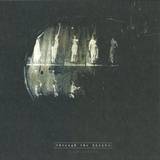
Michigan's ambient and soundtrack specialist John Beltran introduces a new LP that will be co-released by Delsin and his digital only label Dado Records. Entitled Through the Blinds, it features ten tracks by Blair French (who also appeared on his Music For Machine compilation on Delsin last year) and will be released on January 18th 2016. Blair French aka Dial.81 is an experimental producer and visual artist who won an award for his score of Detropia--a documentary about his home city of Detroit--and now makes his ambient debut. As you would expect of such a project, it boasts suspensory and near spiritual pieces of ambient music with angelic chords and glassy textures. There are also more frosty cuts that sound like a chilly Autumn walk, tracks that feature emotive neo-classical piano pieces and suggestively rhythmic compositions that sooth your mind. The second half of the record touches on church like passages of synth heavy sounds, strikingly sad violins and lo-fi arrangements that sound, one hopes, a little like what you might hear as you pass from this life to the next.
Hook swords
The mighty Sunchase smacks it out of the park with another legendary release. The track initially builds up with low, suggestive bass-line and textures from another world. However, the quiet is destroyed with sickening bass and an addictive drum pattern. This is a tune designed to get under your skin.
Identify
The AA side is a dark, unstoppable piece of drum 'n bass made for the hardcore faithful. High-pitched textures quickly give way to a grinding bass-line and Shuffling drums, while stabs and echoes punctuate the track until its high-octane conclusion. Not for the faint hearted!
Newly established music connection House is OK from Frankfurt and Zagreb is raising the roof with the upcoming We Make Music Vol. 1 release. Get into the party mode with Janis, Oliver Achatz, Homeboy and The Citizen's Band this December. We Make Music opens with JANIS 'Mind Made Up'; a reminder of the early Frankfurt House sound with a scent of the Soylent Green Remixes from the late 90ties. A distorted Techno siren that evolves over a tough and jacking 909 groove and finally leads into blissful deepness. Homeboy, who got some attention with his playful Hypercolour release, brings out the edgier and deeper sound in 'Sedam'; a track based on the elements of classic House, whilst breaking the borders through its arrangement and musical form. The jazzy synth riff that locks to a hypnotic 7/4 groove is what makes this track a quality gem. Previous support on Jimpsters Freerange podcast shall suffice as evidence. The flip-side starts with Oliver Achatz' track: 'It Won't Last'. Oli, being the sentimental one in this joint, proves that House music can work with a very sensual touch. The smooth and warm use of analogue synth lines combined with suggestive vocal samples, are played over a steadily drifting rhythm. This compound, of an almost meditative nature, will provide the perfect atmosphere for early morning club hours. The Citizen's Band, one half of Arto Mwambe, closes the compilation with a remix of Janis' 'Mind Made Up". TCB shows that a track doesn't need much to get the crowd jumping and the party working, by returning the tune to its basic elements and making it a club banger for the 'heads". We Make Music Vol. 1 is only the first out of the three upcoming releases set to shake your solid house ground.
The new album will be released across a series of 4 limited edition 12" vinyls. This is the 2nd 12 inch From Tronic Jazz The Berlin Sessions. A Guy Called Gerald has spent the last couple of years flitting through shadows, turning up on labels like Perlon, Beatstreet and Sender like a peripatetic prophet of the Berlin underground, seeding the scene with cryptic singles that return to the past to suggest alternate futures. Now he returns to Berlin's Laboratory Instinct label with the follow-up to 2006's Proto Acid: The Berlin Sessions, the album that re-established Gerald as an acid hero and techno auteur. Tronic Jazz: The Berlin Sessions builds upon the foundation established by its predecessor to create an even more powerful statement of intent, one that communicates more persuasively than ever Gerald's vision for techno in its third decade of existence. One immediate difference stands out, this time around. Where Proto Acid offered a seamless mix of 24 cuts, recorded in one epic session, Tronic Jazz collects 13 standalone tracks. That's welcome news to DJs. After so many years of digital anything-goes, you might have forgotten the kind of sounds that are possible with "old" machines: the way a lead stacked against tuned percussion and shrouded in pads can evoke still other sounds, hidden in the mix, or maybe not really there at all. It's a ghostly, suggestive presence, a kind of evocation of infinite possibility within the context of a limited set of inputs. In that sense, Tronic Jazz follows a certain minimalist impulse, but it's far too lush ever to be mistaken for the dread "mnml" of recent years. This stuff is wide-eyed and full of life. When it funks, it funks hard, and when it smoothes out, it can be as intimate as a hand-written note left on a lover's pillow. As "class ic" as Tronic Jazz may be, the album refutes any notion that "class ic" equals "retro," that the ideas have all been expressed before. Tronic Jazz takes the foundations of house and techno as though they were a kind of language, and speaks volumes with them.