“Bandiera Di Carta” represents the ongoing collaboration between instrument builder and composer Pierre Bastien and the
London based experimental duo Tomaga (Valentina Magaletti and Tom Relleen).
Bastien has been called a “mad musical scientist with a celebrity following” by The Guardian (UK) having collaborated with the
likes of filmmaker Pierrick Sorin, fashion designer Issey Miyake, singer and composer Robert Wyatt as well as Aphex Twin,
who released three of his albums on his label Rephlex.
Tomaga have made more than a dozen records since forming in 2014, pursuing a path of fearless experimentation and sonic
brinksmanship that has won them fans and plaudits from far and wide, including Thurston Moore, with whom they collaborated
on the CAN Project with Malcolm Mooney, Deb Goodge and others in 2017, as well as Wire, Silver Apples and Stereolab, with
whom they toured extensively in summer 2019.
The artistic collaboration between Pierre and Tomaga began with two commissions: from Fructose Festival in Dunkirk and the
revered underground festival Supersonic in Birmingham UK. Recording initially at a studio in the industrial port of Dunkirk, the
uneasy bond between borders and states seems to have been a theoretical motor to the collaborative sessions, as well as the
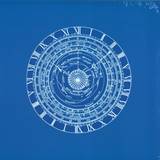
bleak landscape of the seaport frontier. This inspiration found further manifestation in the cover image for ‘Bandiera Di Carta’.
Resembling a white paper flag, it is, in fact, a photograph of Bastien’s paper and air sound machine installed on stage at
Teatro Carignano in Turin as part of the trio’s performance there. This charged, ambivalent image of a blank flag evokes the
transcendence of the national, a prescient visual motif that meditates on the contemporary uncertainty around notions of
national identity and borders but perhaps also a ‘carte blanche’ for the artists involved, in which they can deviate from the
confines of their usual practice into new and strange territories.
For each piece, Bastien’s unique sonic style: by turns his kinetic mechanoid motors, capriciously arrhythmic pipes, or the
peculiar susurrus of paper, creates a world in which Tomaga introduce their musical palette. Magaletti’s percussion anchors
these sometimes chaotic forces into beguiling syncopations, with Relleen’s synthesizer and organ work creating harmonic
counterpoints and interruptive provocations, to which Bastien responds with lyrical turns on prepared trumpet, rubber band, tin
foil and bass ocarina.
The results are curiously evocative of free jazz by the likes of Sun Ra or Art Ensemble of Chicago paired with the percussive
sound worlds of artists like Francis Bebey or Muslimgauze along with unique and sometimes bizarrely exotic tonal landscapes
of composers like Catherine Christer Hennix, Carl Stone, or Egisto Macchi. All three musicians seem to find space to bloom in
ways that are markedly different from their individual work and the resulting album is a strikingly original and powerfully bold
affirmation of what can happen when venturing beyond the normal in pursuit of the other.All tracks written & produced by Tomaga (Tom Relleen & Valentina Magaletti) & Pierre Bastien.
Mixed and mastered by Rashad Becker.
Search:sun ensemble
Singer, lyricist and composer Nirox Romão aka Diron Animal was born and raised in Cazenga, Angola. Diron Animal's involvement in the music world began early: he was part of a traditional Angolan music band and capoeira group, followed by a hip hop project. 12 years ago he moved to Portugal to study, but music became more than just a passion when he landed in kuduro.
For over 6 years, he sang, danced and traveled the world with Afro Portuguese act Thoes + The Shine, mixing rock and kuduro, becoming an explosive ensemble. At one moment, Diron wanted to record a solo album to show a bit more of his own personality and in late 2017 his debut album ‘Alone’ appeared on Soundway Records, where he himself worked out the melodies, rhythm, vocals and even the guitar parts between classic funk to afrohouse and kuduro bass. Through that album he explored major festivals in Europe during 2018, such as at Paléo Festival Nyon, Trans Musicales Festival, Amsterdam Dance Event and others.
On ‘Pair’, his 2nd album and released on Brussels outernational label Rebel Up Records, he has worked hard to enhance his special formula. Inspired by the cruel death his nephew, it became a testament against oppression via the mixed sounds of afro boogie, disco, funk, afrohouse, coupé décalé and kuduro, with English and Portuguese lyrics.
The first single of the album, ‘You and Me’, is an English sung afro boogie disco song and produced by Diron with the support of musician and producer Moullinex, actor André Cabral and video made by director Vasco Mendes. In the video, featuring dancer and actor André Cabral, Diron Animal takes on the role of a gay man to express that a homosexual is a normal person who loves, feels desire, dreams, conquers, wants to be loved and desired, wants to live next to a being that completes him. With “You and Me”, Diron Animal above all wants to appeal to society, respect for the choice of people and non-discrimination of sexual choices. For in life we all deserve to be happy regardless of our sexual choice.
Little is known about the ensemble that is Sun Atlas. It's not certain whether you'd find them in Los Angeles, New York, Addis Ababa, Marrakesh or northern Germany. Maybe non, maybe all of the above. Their only proof of existance is banned on this 45. Their razor-sharp mixture of afrobeat, ethiojazz, surf, cinematic soul, crime jazz & funk/hiphop breaks speaks for itself. Only on vinyl.
This is the companion to Disco 3000, made on the same classic Italian quartet tour with John Gilmore, Michael Ray (trumpet) and the minimal but perfect Luqman Ali (drums). Ra himself plays piano and electronic keyboards, including the mysterious Crumar Mainman, which Ra describes as 'like a piano, organ, clavichord, cello, violin and brass instruments' and which also, importantly, has a facility for pre-programmed bass-lines and electronic percussion, which Ra uses constantly and to great effect in this small ensemble setting and seldom, if ever, elsewhere. The best of this collection (most of CD1) is luminous: very electronic, often rhythmical and melodic, always economical and making every sound count. These tracks are like no other jazz ensemble and, although recognisable as Ra - who else could think of, and then get away with, this - unlike any other Ra ensemble either. Ra makes the machines do amazing, visionary things while the band exercises restraint, remaining always in focus. In between, there are piano, saxophone, trumpet and drum vignettes, fresh and perfectly judged; this real was a fine band. This places the original vinyl release (and related releases, Sound Mirror and Disco 300) back into the context of the concerts, from which they were drawn. An important addition to the Sun Ra canon, since it is a rare document of an unusual Ra project that produced three classic late '70s LPs. Beautifully packaged and well annotated.
Groove Line Records series of officially licensed disco / funk 12' reissues continues in 2019 with two fabulous cuts of gospel disco from The New York Community Choir (NYCC), 'I'll Keep My Light In My Window' & 'Express Yourself'.
The New York Community Choir (NYCC) began in the early 1970s, a gospel ensemble which developed a style that also gave secular R&B, soul, and pop songs a spiritual dimension; bridging Saturday night and Sunday morning, as it were.
'I'll Keep My Light In My Window' is a slice of joyful uplifting gospel disco, which is as needed in these times as it was when it was released in 1978. This was a great favourite of David Mancuso and Larry Levan at the time, and has remained a much loved dancefloor track for the disco cognoscenti ever since.
This came from NYCC's second LP for RCA, Make Every Day Count, produced by Warren Schatz (who also produced The Brothers, which was Groove Line's first reissue 12' in 2014).
NYCC released a self-titled debut album, also produced by Schatz in 1977 included the dance hit "Express Yourself," the B-side of this release in its 11m45s David Todd & Warren Schatz Disco Mix version.
All Groove Line Records releases are fully licensed and taken from the original master tapes, this 12' has been remastered and cut at half-speed by Matt Colton at Alchemy Mastering (Mastering Engineer of the Year 2013 & 2018). All vinyl is heavy weight 180g manufactured Optimal Media in Germany, one of the world's finest pressing plants.
Groove Line Records cut no corners when making sure that each and every one of our releases has the highest quality performance possible.
Groove Line Records' deluxe reissue of 'I'll Keep My Light In My Window' & 'Express Yourself' is an essential purchase for any serious Disco, Gospel, Funk, or Soul vinyl collector who demands the very best in quality vinyl pressings. Find out more at
- A1: Monday Monday
- A2: Strangers In The Night
- A3: Song For My Father
- A4: Girl Talk
- A5: Wack Wack
- B1: Sunny
- B2: Red Sails In The Sunset
- B3: You Know That I Love You
- B4: Yesterday
- B5: This Little Light Of Mine
- The Young Holt Trio are a Soul and Jazz instrumental
musical ensemble from the former Ramsey Lewis rhythm
section
- Originally released on the iconic Brunswick label in 1966,
Wack Wack charted at number 40 on the Billboard Hot
100
- Features the irresistible title track 'Wack Wack' and
'Songs for my Father', this release is a Mod Jazz Classic
- Reissued on 180g classic black vinyl with printed inner
sleeve
Galvanised by a passion for soul, jazz, funk, folk, and Brazilian samba, Judith Ravitz's Bolerio (in Hebrew, Yehudit Ravitz - ) brilliantly reimagines the music of the Brazilian legend Jorge Ben. Increasingly sought-after, housing as it does her seminal take on 'Dia De Indio' - often re-edited and sampled, bootlegged but never bettered - it's a uniquely thrilling LP in its own right. The year is 1983, and Ravitz discovered that Jorge Ben was touring Israel with his crack backing band A Banda Do Zé Pretinho. After joining her in the studio, the ensemble reinvented a selection of Ben's killer tracks that the band regularly performed. On Bolerio - 'come to Rio' - Ravitz handed them equal billing as they aided a recontextualization of Ben's music for an audience that was barely aware of him. These versions are by no means straight re-treads. Far from it. The highlights are many and memorable. The aforementioned 'Dia De Indio', a strutting, electronic samba-funk with stabbing bass and fluid arrangements, sounds so current and fresh that it's hard to believe it's now 35 years old. Its vibrant ambience has been likened to the wiry dubbiness of King Sunny Ade's Synchro System and it's easy to see why. Indeed, the electro elements add a futuristic feel that the original could never comfortably possess. Undeniably rocking more furiously than Ben's versions, the album begins with a throbbing take on 'Boiadeiro', the opener from Ben's Salve Simpatia.
Beware of the blazing sun when she's orange and transparent.
Overwhelmed with the ecstacy of flight, Icarus soared into the sky like a bird, or rather a god. Drawn by desire for the heavens, he ascended higher and higher towards the sun. When the heat melted the wax on his wings, he fell from the sky and vanished into the dark blue ocean, where feathers, still today, ride the waves of the Icarian Sea. Aimed at dancefloors in sleazy bathhouses, seedy basements and soiled warehouses, Icarus Traxx' first offering takes us back to the mythical days of anonymous, muscular power house. Delivering no less than three takes of 'Commandment' (plus two acapellas), the 12 inch, starring the enigmatic voices of Jesse B. Simple and Charlotte B. Good, supplies a choice cut for every disc jockey.
'Jack 88 Tape Mix' starts things off with a vigorous kick, prosperous strings and the spirited voice of Jesse B. Simple. The oracle proclaims celebration times. Addicted to Jesse's vocal delivery The acapella will guide you through your most ecstatic moments.
The lights go out on 'Get Your Life' just before it wakes you up with a slap to the face. Again, it's Jesse in the vocal booth, groaning his mantra to 'dance, jack and get your life to this' on a bed of erratic kicks, jittery acid and vexed rave stabs.
On the flipside, the celestial Charlotte B. Good glides into the room. Her sensual Spanish stanza gracefully inhabits 'Spanish Fly Reprise', made for horny, high as a kite early mornings. Charlotte alerts you that your time to snatch up your one true love on the dancefloor has nearly expired.. Like a siren, she lures you into her universe with sweet lamenting whispers. Better think twice before you follow.
Max Loderbauer, who has so far made consistently engaging contributions to the Arjunamusic family, is back to lend his unique interpretive skills to the master recordings for the Brightbird album by João Paulo Esteves da Silva, Mário Franco and Samuel Rohrer. Loderbauer has set himself up for a chal- lenge, since the original album's completely improvised flow of small-ensemble, conversational jazz feels complete enough without outside intervention. However, Loderbauer's role as electronics operator in the similarly attuned Ambiq trio has already shown that, through his mastery of tone color, he has a talent for teasing out the additional hidden details within an apparently 'complete' sonic environment. It's a task he mana- ges to accomplish without ever overriding or contradicting the cohesive message provided by his collaborators.
Adding to the challenge here, Loderbauer chooses to re- mix using only sounds from the original recordings. By doing so, it might seem he is willfully denying himself the chance to use his own signature tools and turn Brightbird's source materi- al into stunningly new electro-acoustic hybrid blooms. Yet Loderbauer succeeds here by becoming something more like a translator than an augmenter - he finds a way to make mea- ningful syntactical changes to the trio's rich and versatile vo- cabulary, and once again unveils a verdant world of hidden details in the process.
The A-side 'Trusting Heart/Cosmos' has an anxious tone introduced by a set of Doppler-effected piano notes that seem to melt in the sun, and is soon complemented by a va- riegated, chattering rhythm line. Here Loderbauer builds up a tactile tension between rhythmic certainty and sharp-angled, de-tuned, and occasionally scrambled instrumentation, framing a disorienting (yet engaging) virtual space where ob- jects' bright hues rapidly change as they contract and expand along multiple dimensions. For the b-side 'Noontide', Lo- derbauer switches to a more focused and streamlined idiom with an uncanny ease, riding along steady waves of sequencer patterning and silvery, resonant shiverings. Reverberating, ho- lographic piano again provides the tonal center here, and the notes ring with a forward-thinking optimism not far removed from classics of the 'Krautrock' era.
Current supporters of all the artists involved will find this to be an invigorating synopsis of their work to date, while newcomers will be treated to a soundworld where skillful fu- sion (the act itself, rather than the music genre with the same name) is constantly on display.
Alien Ensemble's trombone man Mathias Goetz caused quite a splash when he released his eponymous debut LP under his Le Millipede moniker back in 2015: The multi-instrumentalist's initial offering was clearly something else, impossible to grasp, a musical vessel beyond genre, beyond style or era, seemingly beyond space and time even, a vessel that carried an almost cosmic kind of song-craft - music with no fixed stamp of origin, though it did somehow feel like an Alien Transistor release. Followed by remix album Mirror Mirror, which comprised reworks by 1115, Protein, LeRoy, Olaf Opal, and Saroos, to name a few, it's now time for album #2: The Sun Has No Money.Let's face it: There's nothing as majestic as the sun. At least not in our world. If it runs out of juice one day, it's game over: The End. Light's out. For everyone. At that point, it wouldn't even matter if you're rich or poor. We're all equal under the sun. Same level. And yeah, this might not be major news, but then again... we're talking about the sun. The sun! Guess it's about time to acknowledge its power and superiority, right In fact, you can feel it on your bicycle: pedaling at night, when it's on duty in other hemispheres, and you're working hard at the dynamo, sweating, you can actually feel how powerful it is. In the end you get off the bike all recharged, a tune on your lips - and somehow feeling like a miniature version of the sun yourself. And whenever you feel like that, that's exactly the right moment to grab a melodica and get to work.Following an initial warm-up round sans electricity, this new album soon begins to glow: Mathias Goetz aka Le Millipede doesn't need pedals, he boosts circulation by single-handedly* playing tons and tons of different instruments - it actually feels like thousands, easily. And thus begins a show that has countless levels to it: There are various sonic illusions... and yet Le Millipede doesn't hide anything: He's also willing to show the inner workings, the actual recording process and everything else. In short: he goes meta. Makes songs about making songs. That's right: why not use all these beautiful means to address the issue of money It's not the sun that casts shadows, all it does is recharge, fuel: growth & thriving, that's the sun's area of responsibility. And yet there came a man whose plan was simple: steal the fruit from your garden, only to sell it right back to you, for money. We can hear the sea gulls crying in the distance, as somebody is throwing breadcrumbs up into the wind that carries their voices...It's not the sun that casts shadows - all it does is radiate light. And yet there came a time when someone blocked those rays of light. Now if you're some kind of Diogenes, you'll simply say, Move at least a little out of the sun.' But if you're a teacher, you'll maybe light up your pipe and use that to lighten up. What matters is that the percussion parts, in this case, resemble some serious musique concréte. The sun doesn't know shadows - all it knows, is itself. And yet somebody entered the picture and built an entire city. A city full of streets, so that houses can cast shadows into these avenues. Plus, there's music in the streets, music originally written inside the walls of said houses.One of those streets is known as the Tin Pan Alley: a place that got its name from a music writer who compared the sound of so many pianos to the banging of tin pans. That sound: that's one side of the road that is this album. Some of these melodies appear to be shadows of earlier tunes, dating back to, say, 1898 or even before that, melodies that were first registered in the Tin Pan Alley publishers' offices back in 1912 or 1917. We actually get to see this Alley at that point in time. We see the ropes, the workings. How things come together, the actual act of creation. Suddenly, we can hear the shadows!
Okay, so one side of this street is America. The US of A. The opposite side: Russia. And smack dab in the middle: Europe. A pothole in the center. All the back-and-forth that occurs between these two poles ultimately depends on the movement of the sun. Night and day, taking turns, commuting in and out of sight. We get to meet Prokofiew's and Scriabin's ghost, among other spirits, reframed and published by Le Millipede's own imaginary label imprint on the historic Tin Pan Alley. Indeed there are moments on this album when Le Millipede seems to be playing Scriabin's clavier a` lumie`res (tastiera per luce), when his performance seems to be based on synesthesia, a wild cross-pollination of colors and sounds. In case you didn't know this: In the States, Prokofiew goes by the name Brian Wilson, and Scriabin's also known as Sun Ra - yet another guy who's usually broke, but gets to spend a lot of time out in the sun. Together, these assorted protagonists ask the people of the Antilles for Mutabor dance-tokens and send postcards to Moondog in Germany, right back into the darkness. On the postcards you can see people dancing the Biguine...Firing foreign fossil fuels from all pipes (Brennelementsteuer!), Le Millipede controls the very center of this hustle and bustle: going as far as to employ some southern Chopped & Screwed styles, he's 100% current and zeitgeisty! Houston, we've got a problem: there's some kind of myriapod, centi- or millipede on the loose! Well, give me another sip of lean, sizzurp, dirty Sprite, and on goes the journey in the Pullman coach. Let's follow the sun! Keep on moving, keep things motorik! Here comes the Trans-Eureka-Express. Cherish the backpacking days! A piercing rhapsody of sound (bohrende Rhapsodie), we'll remember them fondly! And thus things move on, the sun, the days, the earth: rise, set, action, round and round... onwards eternally. The sun: the biggest loop known to mankind. As if it was some kind of sonic Rube Goldberg contraption, time seems to be stretching out while listening to that hmmm. After all: time is a lot (a lot!) more than just money. And yeah, the sun is the real big shot on (or rather: above) Planet Earth. Le Millipede's live line-up also includes Markus & Micha Acher (The Notwist etc.), Nico Sierig (Joasihno), and Manuela Rzytki (G. Rag & die Landlergschwister, Kamerakino etc.).
*sole exception: Evi Keglmaier (Zwirbeldirn, Hochzeitskapelle) plays the viola. Words/sun worship: Pico Be
Mr Bongo brings another Brazilian rarity to the masses with this sublime reissue of Tim Maia's Disco Club. Recorded in 1978, it's a latter-period gem from the larger than life legend, combining the glitz and glamour of disco's heyday with Maia's raw funk and soul roots.
When Maia first heard Little Richard as a teenager, he knew what kind of singer and artist he wanted to be. Five formative years spent in the US, where he ran wild in NYC and joined a
doo-wop group called the Ideals, did little to dampen his enthusiasm for black music.
Stirred by the civil rights movement in the US and driven by a punk spirit, Maia went on to blaze his own trail through the early 70s over the course of four successful albums for Polydor. Moving away from the straight MPB, Tropicalia and international rock dominating the airwaves, his sound represented a new black Brazilian consciousness. When he sang, he could be raspy and defiant one moment ... and then romantic and reflective the next. But always on a groove and with a hook. It was an irresistible combination.
Yet by 1977 he was bankrupt and in limbo having first joined a religious cult called Superior National and then alienated listeners with his first album sung entirely in English. To complicate matters further, Brazil was feeling the Saturday Night Fever. Gloria Gaynor, Chic and Kool & the Gang were dominating the charts and filling hotspots such as New York City Discotheque in Ipanema and Frenetic Dancing Days in the Gávea Mall.
Maia left his usual band and went into the legendary Estudios Level with a mighty ensemble of Rio's finest including Paulinha Braga on drums, Jamil Joanes on bass, Robson Jorge on clarinet, Hyldon De Souza on guitar, Sidinho on percussion, trombonists Edmundo Maciel and Darcy Seixas, and Juarez Assis on tenor sax.
Arranger and keyboardist Lincoln Olivetti was a crucial presence during these sessions. He added that all-important string flourish and brassy joy to the uptempo tracks while giving the
star enough room to express himself. The album kicks off with a trio of floor fillers: the exuberant party starter 'A Fim De Voltar', a sing-a-long anthem in 'Acenda O Farol' and the undeniably funky hit 'Sossego' (file that one next to Fatback).
But then Maia drops it down and gets existential on 'All I Want', questioning the meaning of happiness. He also shows his tender side on slow burners such as 'Murmúrio' (written by the great Cassiano) and 'Pais E Filhos', the latter featuring a supersoft bed of harmonies you can't help but lay down on. But the party ain't over and mid-tempo groover 'Juras' gets the feet moving again before 'Jhony' sends us swaying off into the night.
Maia's appetite for excess would eventually get the better of him. But Disco Club is the sound of an unpredictable genius on top form. Get ready for the time of your life.
Celebrating the immortal legacy of the late director Finders Keepers Records compile a detailed and comprehensive music cabinet of some of the finest musical moments from his initial directorial decade between 1968-1979, which provided a m much needed platform for the freak rock and free jazz that mirrored the distorted erotic visions in his own mind's eye. Imagine Gong-gone-wrong meeting the Art Ensembles Of Châteauroux...
.Rising out of the smokey Parisian Mai 68 shrapnel and claiming his stake as the first French vampire movie director, the inimitable father of European Horrortica, Jean Rollin (1938-2010) has smudged the painted face of surrealist cinema for over five decades. Dragging his roots from beneath the Letterist/Situationist movements, avant-garde theatre and Belgian fine art groups and entwining them around the minds of sexual revolutionaries, the European comic book cognoscenti and the Parisian free jazz and rock scenes, Rollin stopped at nothing to bring his macabre phantasies of zygotic vampyrism and backwoods blood cults to Gallic cinematheques and beyond.
[A] A1 | Blind Songbird - Sung by Nicole Romain (Viol Du Vampire)
"Invisible Cities", the first collaboration between AIDAN BAKER (NADJA, B/B/S) and bass clarinetist GARETH DAVIS (OISEAUX-TEMPÊTE), offers finest ambient / chamber jazz / subtle drones of a highly meditative quality. Available as 180gr LP and download.
Be it solo, as member of the drone duo NADJA or B/B/S (his trio with ANDREA BELFI and ERIK SKODVIN / SVARTE GREINER) or in various collaborations with artists like TIM HECKER or THISQUIETARMY: the Berlin-based Canadian is one of the most productive and versatile artists when it's about postrock, drone or ambient and without doubt a true master on his instrument, the guitar. In recent years BAKER also starting exploring new grounds as a composer of contemporary / ensemble music - e.g. his composition "An Instance Of Rising" was commissioned by SPÓLDZIELNIA MUZYCZNA CONTEMPORARY ENSEMBLE and SACRUM PROFANUM FESTIVAL for their 2017 edition. "Invisible Cities" marks BAKER's first collaboration with GARETH DAVIS whose eclectic oeuvrespans contemporary classical, free improvisation and orchestral music through to rock, noise and electronica. The bass clarinetist is a steady member of the critically acclaimed post-rock formationOISEAUX-TEMPÊTE and A-SUN AMISSA, interpreted compositions by ALVIN LUCIER with MACHINEFABRIEK, worked with BERNHARD LANG and PETER ABLINGER, performed with musicians likeNY Downtown veteran Elliott Sharp, MERZBOW or ROBIN RIMBAUD (aka SCANNER) and realized multimedia work with artists including CHRISTIAN MARCLAY and PETER GREENAWAY.
Recorded in November 2016 at MUZIEKHUIS, Utrecht, the four tracks create a calm, even meditative atmosphere in their reduced manner that gives much room to the individual instruments / sounds, occasionally spiced up by field recordings that intensify the overall chamber jazz / ambient moods.
We started with the principle - the cosmic idea that we were taught by our father from a very young age - that the stars and planets make a sound, that deep in outer space there is audible harmony.'With its cathedral-like, richly resonant acoustics, the new HBE album is a brilliant expression of this interplanetary principle. The album is by turns urgent and contemplative, funky and reflective, varied in its textures, but entirely of one piece. Underpinned by concepts of our earth's place in the cosmos, held in place by meditation, swirling with notions of history, science, theology, ancestry, there is a rich conceptual brew here. But always, what talks loudest is the music. The album rings with what back in the 1950s the jazz critic Whitney Balliet called the sound of surprise'. At a time when the phrase Spiritual Jazz threatens in some quarters to become a tired cliche, this is a record that makes you believe again in the genre's validity.
Talking to Cid, one of the Ensemble's two trombonists, one phrase recurs: back to the beginning'. We wanted to go back to the beginning, when we were kids, real young, and our father would wake us up at 5 AM to practice for two hours before breakfast.' One outcome - initially unplanned but subsequently embraced - is that unlike their two previous albums on Honest Jon's, this is an album without a drummer. When we started, as Wolf Pack, just brothers on the street with our horns, there wasn't a kit in sight.' Book Of Sound retains plenty of rhythmic heft, but the absence of a drummer opens up space for a notably varied instrumental palette. Acoustic guitar, piccolo, synthesiser, alto sax - none of them typical HBE Instruments - all have their place on the album. Most striking perhaps are the vocal lines that thread through the album and give it a palpable warmth. In Wolf Pack, we rapped and played, this time we took it a step further.'
Sessions were recorded in Brooklyn and Chicago, and brilliantly mixed at Abel Garibaldi's studio in the Loop ( Abel was like a musician on this record'), and it's the Hypnotic's hometown that permeates. For Cid this is a deeply Chicago record: it's got the vibe of the lake, the vibe of the prairies opening up to the west'. It also has the vibe of those Sun Ra Arkestra albums recorded in Chicago in the 1950s, and - of course - the Phil Cohran albums from the 1960s.
It's Phil Cohran (the father of all seven members of the Ensemble and their first teacher, and not just in music) who is the album's guiding spirit. For Cid it's a major regret that, in the months before their father's death early in 2017, Phil was not well enough to play on the album. He loved the whole idea, and we had the perfect place for his zither'. But Book Of Sound is a magnificent testament to their Cohran legacy. You know, it's tough trying to satisfy everybody with our music. It's hard enough satisfying ourselves, let alone the jazz scene, the hip hop guys, what have you. With this album we just dropped all that as a consideration, and tuned into deeper principles.'
Banoffee Pies Records step into the realms of Contemporary Music with Ishmael Ensemble opening their release schedule for 2017 as the label drops their second LP and continues to investigate more musical landscapes. This time saxophonist and producer Ishmael leads the six piece electronic jazz ensemble on their debut release and thought provoking journey. A tribute piece - with love from Banoffee Pies x
Artwork and Text compiled by Ellen Pearson Watercolours by Chris Cunningham
Artist: Ishmael Ensemble
Written & Produced by Pete Cunningham Additional writing on Bembe by Holly Wellington Additional writing on Solace by Chris Hillier Engineered by Jake Spurgeon
Mixed by Caradog Jones & Pete Cunningham @ Secret Sundaze Studios Mastered @ Alchemy
Copyright Control 2017
In loving memory of Josh Edward Pearce x
Black Truffle is thrilled to announce Reverse Tree, the new LP from the acclaimed duo of Eyvind Kang and Jessika Kenney, two musicians who have established themselves as powerful voices working at a unique intersection of contemporary composition, improvisation, and Asian traditional music forms. Either individually or as a pair, they have worked in contexts ranging from performances of traditional Persian and Javanese music to collaborations with Sunn O))), but their work together as a duo (documented on The face of the earth and Aestuarium, both released on Ideological Organ/Editions Mego) most clearly represents the central concerns of their diverse practices: a music of the inner life of sound, demanding ritualistic focus and promising heightened sensations.
On Reverse Tree, the duo expand their work together into the realm of the chamber ensemble, presenting two side-long works that feature Kenney's voice and Kang's viola alongside a multitude of other instrumentalists. Kang's Thoughts on Being Exiled to the Frontier, for Lord Wei, inspired by a text by the Tang dynasty poet Hsueh T'ao, features an all-star international ensemble: Kang, Kenney, maverick Israeli conductor Ilan Volkov on violin, Icelandic cellist Hildur Guðnadóttir, and guitarists Oren Ambarchi and Stephen O'Malley. The piece is primarily composed of irregular patterns of pizzicato notes and guitar harmonics, gently falling in and out of sync and providing a subtly unstable support for Kenney's voice, which sings long, wavering tones, at times reminiscent of Michiko Hirayama's classic performances of Scelsi. Drawing on 20th century instrumental techniques, alternate tuning systems, non-western music and the experience of nature (the irregular rhythms of the piece calling to mind nothing so much as drops of rain), the piece opens a space both serene and subtly uneasy.
Kenney's 'Elm features Kenney and vocalist Nova Ruth (of Filastine & Twin Sista) alongside an ensemble of strings and Seattle's Gamelan Pacifica, performing on Javanese instruments tuned to the slendro scale. An uncanny timbre created by bowing the keys of the Gamelan's instruments, supported by bowed harmonics from the strings, is heard consistently throughout the piece. After a long introductory section in which this harmonic cloud slowly descends from shimmering high notes to rumbling bass, the vocalists enter, singing a slow and stately setting of a 19th century Surakarta poem (attributed to Mangkunegara the IV). The melody is sung as a rich and wavering heterophony, with the ensemble sometimes rising up to support individual notes. The poem deals with the idea of a form of knowledge achieved through deeds, as a practice and state of the heart. This is music in slow motion, in which, in Kenney's words,
- A1: Strawberry Fields (Sampology's In The Sunshine Remix)
- A2: Shake 'N' Bake (Vinnie Laduce Baking Biscuits Rework) (Vinnie Laduce Baking Biscuits Rework)
- A3: Rabbit Hole (Two Dee Remix) (Two Dee Remix)
- B1: Trash Or Treasure (Jnbo Remix) (Jnbo Remix)
- B2: Kojak The Frog (Paprika Re-Rub) (Paprika Re-Rub)
- B3: Bogangar (Paprika's Mountain Air Afro Dub)
Aussie rare groove ensemble Kerbside Collection's second album of instrumental funk and jazz grooves "Trash Or Treasure" (released May 2015) gets the remix, rework and re-use treatment with a variety of re-interpretations with everything from downtempo hip- hop/neo-soul and dusty analogue lounge beats, to fuzzy, Balearic electronic club workouts and even some broken beat flavours.Kicking off this limited edition 12" vinyl, AV artist/DJ/Producer Sampology lights up the sitar disco vibes of "Strawberry Fields" taking the track into sizzling Balearic, club work-out territory with added afro percussion, squelchy wobbles and effects, perfect for summer festivals and hazy end-of-night vibes. Vinnie Laduce's follows with his cruisy vocoder and lo-fi indie beats reconstruction of "Shake 'n' Bake", while another local Brisbane producer TwoDee (who also appears on "Mind the Curb" remixed) delivers an eighties, electro break flavoured re-work of 'Rabbit Hole'.Side B starts JNBO (The Cactus Channel bass player) and his unique wonky, analogue and quirky touch to the title track for a fuzzed out, analogue electronics burner for fans of Floating Points, Cro Magnon, Dabrye and Dimlite (bounced to tape no-less for added bump!). Closing in on this special vinyl is Kerbside's drummer Paprika who takes the coastal groove of 'Bogangar' to the afro side with his 'Mountain Air Afro- dub', recreating a low slung, Tony Allen styled afrobeat groove with added melodic movements and dubby effects, while he adds another remix taking "Trash Or Treasure" into future jazz/broken beat territory with added percussion, moog bass and a surprise heavy change up at the end, almost reflective of some classic Fat Freddy's Drop!
Manchester producer Hidden Spheres blends the interesting elements he finds within recordings into soulful dance music suited for clubs and the living room. Those influences combine Jazz artists like Sun Ra, John Coltrane, The Art Ensemble of Chicago, and Miles Davis along with the modern sounds of Detroit and German producers.
Having released individual tracks on Dirt Crew his first solo EP appropriately finds its way to Moods & Grooves, a label known its eclectic output. The Bloos connects the musical dots of his influences while expressing a love for house music. We believe you will enjoy it as much as we do.
Deep and organic analog tracks. Features interpretations by Sisterhood & Ben Sun. 300 copies pressed. Tip!!
The second instalment from the ensemble imprint offers four tracks courtesy of Belgian house ambassadors, Gratts and Xan Xoda, under their cheeky 'De Ambassade' guise.
On A1, Belgian ambassadors in Berlin Xan Xoda and Gratts treat us to some delicious 'Gebakken Lucht', a Belgian expression that you'd have to look up yourself.
Next up is Raw Sketches aka. Eklektiker, one of Belgium's finest DJs and a resident of the ensemble nights. His analogue workout 'Intiem' pushes all the right buttons and charmed us straight away when we first heard it.
Our favourite Australian poster boy of house music Ben Sun then gives a fresh perspective on 'Gebakken Lucht'.
And finally the great Sisterhood lads from London round off the EP with their rework of 'Intiem', turning it into a trip into space, where bass is the place!
Back in stock!
Some friends think that Shihab the man owes the balance of his soul to his beautiful Danish wife. They may be right; for Eros is the very essence of what Shihab plays.Yet Eros is a god with many a face. A tale of tender mournings Shihab's flute is telling in MAUVE - a piece that translates its title into delicately changing colors of sound. In UMA FITA DE TRES CORES he has his instrument wooing with the proud self-reliance of Latin grandezza. Calmly, softly, almost blandishly Shihab blows the solo flute in the Jimmy Woode composition MY KINDA WORLD. Serene and somewhat playful his own title ANOTHER SAMBA comes along - a most uncommon composition by the way: lasting for sixty bars as if growing independent out of itself, with solos that appear to be additional spinnings rather than improvised choruses; and yet; a perfect, self sustaining melody no element of which is superfluous. In the last of the pieces for flute, in Klook Clarke's THE WILD MAN, which is based on a flourish of trumpets, Shihab for the first time reminds of the sombre, the demon-like face of God Eros. He contrasts flawlessly intoned passages with challenging phrases, phrases raucously sung into the flute - really, he is a 'wild man' who is playing like that. This raucous challenging sound prevails throughout the four baritone-titles ('Shihab never withholds long to caress', Campi says). Shihab blows the instrument the same way he speaks: without any delay, directly coming to the point. And he treats it like a voice, not aiming at an artificially homogeneous sound in all the registers, but at their different modes of expression. In the high pitches the horn gains a brilliant tenor-like quality - for instance in PETER'S WALTZ, dedicated to Shihab's son Peter, and in Kenny Clarke's simple drum fills comprising theme JAY-JAY. In the deep register Shihab produces snotty sounds filling lady's ears with horrors like Pan - thus in JAY-JAY and in the boppy blues SET UP . Shihab's sense of a scurrilous humor breaks through in SEEDS (which reminds of the West-African heritage of jazz with its multiple rhythms and its renunciation of harmonious development - only the eight bars of the bridge base on a progression of chords): not only does he omit the notorious bombastic chord by the ensemble after his own final cadenza, he even ends with a minor second above the keynote. Seems as if Shihab now unrestrictedly conveys to his music all the experiences and emotions he formerly did not deal with in a musical way. Shihab the man need not be disturbed so that Shihab the musician may improvise passionate choruses. It would be unjust, however, to forget the choruses of the four other musicians for those by the 'born leader'. Francy Boland, taciturn and always introverted: he plays an extrovert, a masculine piano. Even with spare single note lines he produces a piercing and ringing sound that hitherto nobody except him has discovered, a bluesy sound bespeaking the very element of frustration that lies within the title of the trio number WHO'LL BUY MY DREAM. The unfailing feeling for rhythm the musicians of the CBBB praise with the arranger Boland, becomes manifest in the piano solo on SET UP. Francy's improvisation is rhythmically styled in a Monk-like manner, and yet no accent could be set differently. Maybe this is the secret of the Shihab-Combo. 'Rhythm is our business', this credo of Jimmy Lunceford could be the one of the five musicians as well. Sadi hits his vibes as dryly as if wanting to bring its ancestors to memory, the wooden chimes of West Africa's coastal tribes. To reach the fullest poignancy possible, he intentionally calms down even the resonance in MY KINDA WORLD. In UMA FITA DE TRES CORES Jimmy Woode bears out the crispy jazz beat against Sadi's Bongos and Klook's Latin-American percussion all by himself. Moreover - and that, too, is connected with the school of the Duke who was the first in the history of jazz to discover the instrument's potential as a melody instrument - Woode rips a marvelous counterpoint to the inventions of the other melody instruments, take for example PETER'S WALTZ. And then there is Kenny Clarke. Klook. On the entire record he only uses his brushes. Means by which different drummers only know to bring forward impressionistically blending noises: He drums a vigorous beat with them, fanciful fills, a solo, melodious and at once skillfully playing with cross rhythms in JAY-JAY. The 'born leader', the 'outstanding baritone saxophonist of modern jazz' (Joachim-Ernst Berendt), he could not wish himself different sidemen for this record overdue since some years.
Up and away / To your journey to the sun / Drink your rocket juice / Fly away (Hey, Shooter).
High up in the skies, amongst the clouds, Rocket Juice & The Moon was born. Literally. It happened back in 2008, when Damon Albarn, Flea and Tony Allen convened on the same Lagos flight, to play and exchange musical ideas in that city as part of the Africa Express collective. Relishing a shared enthusiasm for one another's work, and bonding immediately, there and then the triumvirate laid down the blueprint for Rocket Juice.
Still, more than a year passed before conditions were set for three weeks together at Albarn's West London studio, recording and refining two-dozen startlingly out and deeply funky instrumental grooves. The next stage was to invite onboard some extremely talented friends, with further sessions in Dallas, New York, Chicago and Paris... Erykah Badu, no less, queen of contemporary soul. Three companions from Africa Express: Malian singer Fatoumata Diawara, whose debut album has topped World Music charts since its release last Autumn; her multi-talented compatriot Cheick Tidiane Seck, whose prodigious keyboardism has lit up releases by artists ranging from Youssou N'Dour to Hank Jones; the young, Ghanaian rapper M.anifest, quizzically existential, switching seamlessly between Twi and English. And the Hypnotic Brass Ensemble, long-time stalwarts in the Honest Jon's set-up — since one of the team discovered them busking near the shop in Portobello Road, on his lunchbreak — with a second album for the label due in May... Finally, the tracks were dispatched for mixing to Berlin, to be meticulously honed, polished and envenomed by Mark Ernestus, one half of the legendary Basic Channel and Rhythm & Sound partnerships.
The result is Rocket Juice & The Moon — out March 26, 2012, on Honest Jon's Records — a triumphant exploration and proliferation of kinetic Afro-funk rhythms: organic, exuberant, communal music-making, evidenced by the project's live debut on stage as part of the Honest Jon's Chop Up in late 2011, which hit London, Marseille, Dublin, and Cork to such great acclaim (witness the flurry of smart-phone film-clips uploaded in the days thereafter).
From the inaugural bars — that absurdly funky slice of instructional timekeeping, 1-2-3-4-5-6 — the liquid pulse of Fela Kuti's classic recordings drives the action through a suite of 18 shape-shifting compositions. The greatest drummer in the world has never sounded so good as he does here. His intricate cross-patterns jostle and lock with Flea's nimble, rumbling bass riffs. Joined by Seck on There and Extinguished — 'when you dispose of something burning, be sure it's out' — Albarn's keyboards spray synth fusillades up top, over, and under... splicing into the mess of wires running between the freaked Afro-disco of William Onyeabor and the space-jazz-moog of Sun Ra. The HBE brings extra intensity and drama to Leave-Taking — likewise Flea's trumpet to Rotary Connection — teasing out the haunting melody coiled in the mix.
Where the best of vintage Afrobeat sides sustained their concentrated energies over the course of sprawling, marathon jams, RJ & TM manages something altogether different: the group bottles the idiom into capsules of funk... and real songs. Beautifully buoyed by Erykah Badu's unmistakable vocals, Hey, Shooter brilliantly traverses metaphysical spaceways sans any semblance of noodling. Lolo and Follow-Fashion — featuring the open-hearted sensuality of Diawara's singing, M.anifest's quick, brawny science, and more brass blasts — play like its musical cousins or codas. Indeed, the album's shrewd sequencing creates the composite effect of tracks working both individually or within the context of an extended song-cycle.
The lovely ballad, Poison, is bittersweet and ruminative: 'If you're looking for love, beware the signs / They will paralyze you one by one / Poison, it will only break your heart.' Down-tempo and dubby, Check Out and Worries amplify the range of styles and moods. And by the time of Fatherless — a chugging Afro blues that evokes John Lee Hooker lost in Lagos, one gets the sneaking suspicion there's very little outside the reach of this collective's inventive musical grasp.
There is, in fact, a palpable openness pervading Rocket Juice & The Moon — the sense of a limber willingness to follow creative impulse — right down to how the group acquired its name. When Ogunajo Ademola — the Lagotian commissioned to do the album's cover artwork — dubbed his submission 'Rocket Juice & The Moon', it quickly morphed into the formal name of the project, like trying to hold onto mercury.
Surely, the stars above also approved.