Das Audio von „Breakfast In America“ wurde in den Abbey Road Studios von Miles Showell übertragen und
vom Co-Produzenten des Albums, Peter Henderson, überwacht, wo sie das 1/2-Speed-Master schnitten,
das für die Pressung des Vinyls verwendet wurde. Die LP ist auf 180 g schwerem schwarzem Vinyl gepresst.
Es handelt sich um das sechste Studioalbum der Gruppe, das 1979 veröffentlicht wurde.
quête:supertramp
- 1
Das Audio von „Even In The Quietest Moments…“ wurde in den Abbey Road Studios von Miles Showell übertragen und vom Album-Toningenieur Peter Henderson überwacht, wo sie den 1/2-Speed-Master
schnitten, der für die Pressung der Vinylplatte verwendet wurde. Die LP ist auf 180 g schwerem schwarzem
Vinyl gepresst. Es ist das fünfte Studioalbum der Gruppe.
Der Ton von ...Famous Last Words wurde in den Abbey Road Studios von Miles Showell übertragen und
von Co-Produzent Peter Henderson überwacht, wo sie das 1/2-Speed-Master schnitten, das zum Pressen
des Vinyls verwendet wurde. Die LP wurde auf 180 g schwerem schwarzem Vinyl gepresst. Das 1982
veröffentlichte Album ist das siebte und letzte Studioalbum der Gruppe mit Roger Hodgson.
- A1: Gone Hollywood
- A2: The Logical Song
- A3: Goodbye Stranger
- A4: Breakfast In America
- A5: Oh Darling
- B1: Take The Long Way Home
- B2: Lord Is It Mine
- B3: Just Another Nervous Wreck
- B4: Casual Conversations
- B5: Child Of Vision
Supertramp are releasing the definitive vinyl pressings of their studio albums. Breakfast In America audio was transferred at Abbey Road Studios by Miles Showell and overseen by album co-producer Peter Henderson, where they cut the 1/2 speed master used to press the vinyl. The LP is pressed on 180g black vinyl. This is the group’s sixth studio album released in 1979.
- A1: Give A Little Bit
- A2: Lover Boy
- A3: Even In The Quietest Moments
- A4: Downstream
- B1: Babaji
- B2: From Now On
- B3: Fool's Overture
Supertramp are releasing the definitive vinyl pressings of their studio albums. Even In The Quietest Moments audio was transferred at Abbey Road Studios by Miles Showell and overseen by album engineer Peter Henderson, where they cut the 1/2 speed master used to press the vinyl. The LP is pressed on 180g black vinyl. This is the group’s fifth studio album.
- A1: Crazy
- A2: Put On Your Old Brown Shoes
- A3: It's Raining Again
- A4: Bonnie
- A5: Know Who You Are
- B1: My Kind Of Lady
- B2: C'est Le Bon
- B3: Waiting So Long
- B4: Don't Leave Me Now
Supertramp are releasing the definitive vinyl pressings of their studio albums. Famous Last Words audio was transferred at Abbey Road Studios by Miles Showell and overseen by co-producer Peter Henderson, where they cut the 1/2 speed master used to press the vinyl. The LP is pressed on 180g black vinyl. Released in 1982, this is the group’s seventh studio album and final release with Roger Hodgson.
Anfang 2025 werden die Mercury Studios Supertramps „Live In Paris ’79“ auf 3LP veröffentlichen. Diese
Show wurde aufgezeichnet, als die Band auf Tournee war, um ihr Album Breakfast In America zu unterstützen, das in 9 Ländern auf Platz 1 landete, für 4 Grammy Awards nominiert wurde (und 2 gewann)
und sich weltweit über 20 Millionen Mal verkauft hat. Das Album enthält die Hit-Singles „Logical Song“,
„Goodbye Stranger“, „Take The Long Way Home“ und „Breakfast In America“, die alle auf dieser Veröffentlichung zu hören sind, zusammen mit einer Vielzahl anderer kultiger Supertramp-Songs.
A disco-funk venture laced with balearic pop as nostalgic as it is buoyant, Dijon-based outfit FLAUR land their inaugural EP on Cosmocities Records. Comprised of three original songs shifting gears between electrifying grooves and washed-out downtempo, plus three remixes courtesy of Art of Tones, Gaettson and Faze Action, ‘Hold On’ speaks the language of lively waves and sun-streaked coasts. By turns explosive and contemplative, the duo’s vision covers a wide span of influences and styles, fusing Californian P-funk with a touch of Supertramp-esque disco and nuances of alternative pop lined with silky funk in the style of acclaimed Versailles band, Phoenix.
Full with suave Wurlitzer piano chords and ultra-syncopated slap bass, the lead-track ‘Hold On’ is an ode to 70s disco pop with its satiny textures, solar-powered melody and a swing bound to cause ravage on the dance floor. The perfect mix of luxuriant disco, vibrant boogie house and supra-sensual cosmic escapology. Even more elating, the layered funk of ’Now’ takes us into a choppy swirl of unshackled pizzicatos, iridescent envelopes and epic vocal flights. Recorded live at Mastoid Studio in Paris, ‘On My Mind’ trades the hi-velocity disco of the first two cuts for a poignant, introspective movement, revolving around the bewitching voice of Florian, a piano and riffs draped in melancholic reverbs. A sonic journey round the confines of soulful dream pop and further intimate songwriting.
In the hands of another rising Dijon-based artist, Gaettson, ‘On My Mind’ morphs into a dance floor-oriented missile, mixing a highly volatile strain of corrosive IDM, sharp breaks and nervy vocal samples. Remixing ‘Hold On’, South of France producer Art of Tones takes us on a proper cosmic trip, laying further emphasis on the original's funky impact through sun-drenched loops a la Alan Braxe and Fred Falke, and a buildup tailored for extended seaside afters; feet buried deep in the sand, head up in the clouds. UK groove legends Simon and Robin Lee, alias Faze Action, round off the package with a chiselled revamp of ’Now’. Slightly accelerated and built for the club, this remix treats us to a pure moment of dance-ready bliss, packed with sinuous rhythms, dynamic bass and fevered percussions.
- A1: Blood In The Water 6 54
- A2: Enigma Of Reason 10 06
- A3: The Wanderer 5 03
- B1: The Big Quit 8 35
- B2: Devil's Encyclopedia 5 47
- B3: A Memory Of My Future 6 26
- C1: I Am Because You Are 4 32
- C2: My Share Of Your Life 7 48
- C3: Age Of Thought 4 38
- D1: Matchbox Racing 6 56
- D2: We Stay Loud 5 25
- D3: Melting Pot 5 51
Über drei Jahrzehnte nach ihrer Gründung durch Leslie Mandoki, setzen Mandoki Soulmates mit ihrem Album "A Memory Of Our Future" nicht nur musikalisch neue Maßstäbe, sondern präsentieren ein produktionstechnisches Meisterwerk: Das gesamte Album wurde analog aufgenommen und produziert - vom ersten Ton bis zum fertigen Vinyl. Die Produktion des rund 80-minütigen Konzeptalbums ist ein seltenes Unterfangen in der heutigen Musiklandschaft. Mit durchgehend analoger Signalverarbeitung vom Mikrofon bis zur Vinylpressung ist die Produktion von "A Memory Of Our Future" ein Manifest von Präzision und Leidenschaft, die in jedem Ton des Albums zu spüren ist. Das Mastering des analogen Magnetbandes durch Greg Calbi im renommierten Sterling Sound Studio in New York und der Vinylschnitt in den Emil Berliner Studios sind ein Symbol für die audiophile Exzellenz des Albums. Mit einem Setup, das in der gegenwärtigen Musikproduktion kaum noch zu finden ist, und mit der die Band eine Wärme und Lebendigkeit in ihrer Musik eingefangen hat, die in digitalen Aufnahmen oft verloren geht, haben die Soulmates ein Werk musikalischer Vielfalt geschaffen, das von Prog bis Jazz Rock reicht, und kompositorische Reife, spielerische Leichtigkeit und kunstvolle Solos mit großen Spannungsbögen und tiefgründigen Texten zu gesellschaftspolitischen Themen verbindet. Die generationsübergreifende Supergroup von Rock- und Fusion-Großmeistern mit Ian Anderson (Jethro Tull), Mike Stern, Al di Meola, Randy Brecker, Till Brönner, Bill Evans, John Helliwell (Supertramp), Cory Henry, Richard Bona, Steve Bailey, Simon Phillips (Toto), Leslie Mandoki, Tony Carey (Rainbow), Nick van Eede (Cutting Crew), Jesse Siebenberg und Mark Hart (beide Supertramp) ruft mit dem Album zum Handeln gegen Spaltung und für Menschlichkeit auf. Mit "A Memory Of Our Future" gelingt den Soulmates eine einzigartige Verschmelzung audiophiler Exzellenz und gesellschaftspolitisch relevanter Musik. Dieses Album ist nicht nur für Fans von Prog und Jazz Rock, sondern für alle, die echte Musik zu schätzen wissen.
Rich Aucoin is announcing his next album entitled Synthetic - The record is a rare Quadruple Album with its 4 seasons/LPs being staggered in 6 month intervals over the next 2 years
The album, which began at The National Music Centre in Calgary, Alberta in March 2020, houses one of the world's most extensive collections of rare and historic synthesizers. There, Aucoin was doing the Artist In Residence program and recorded 51 synthesizers to begin the project. The project was paused with the start of the pandemic and Aucoin shifted back into film scoring and worked
on the critically- acclaimed and short- listed New Yorker - Films of the Year documentary, No Ordinary Man, about the trans- masculine jazz musician Billy Tipton.This record is a good demonstration of Aucoin's scoring potential as well as it's a quadruple instrumental album; a huge contrast to United States, Aucoin's previous, and most vocal heavy album to date. Lyrics just take me so long to write that I just want to take a couple years to make other kinds of albums before going back to lyrical music as I can write instrumental music much faster. This first fulllength features Aucoin as the solo musician playing some 37 synthesizers including: Arp 2600s, the Supertramp owned Elka Rhapsody 610 String Machine, Formanta Polivoks, Novatron T550, Oxford Synthesizer Company Oscar, Selmer Clavioline CM 8 and the legendary TONTO which the first release off the record
was made on.
Tracks: Tonto / Hypernormalization / Algorithm / Future / Buchla / Esc / 456 /
Space Western / Return
Edita's fourth vinyl release contains three tracks already released digitally, Stereocalypse's engaging version of Prince's The Future, Freshim's 90s rave reinterpretation of Supertramp's "Goodbye Stranger," and the elegant vision of Kajagoogoo's "Oh to Be Ahh" by maestro Roman Flugel, plus, as a bonus vinyl only, a brilliant Red Axes version of "Locomia," the band of the same name that hit Spain in the 80s.
- 1: Good People Do Bad Things
- 2: Dreaming
- 3: Home
- 4: Goodbye Song
- 5: Winning
- 6: In My Hand
- 7: Danced On The Wire
- 8: Song For Meadow
- 9: Mind Thunder
- 10: Down
UK Salford band The Ting Tings released their first catalogue of hits in 2008, with global success taking them on an immediate 6-year world tour. That’s Not My Name, Shut Up & Let Me Go, Great Dj & Hands, still regular fixtures on playlists and syncs worldwide.
They vowed never to make the same record twice, 5 albums in, they are sticking to their word.
Their new album ‘Home’ was recorded in a wooden decked analogue studio is an easy breezy yacht rock album committed to traditional songwriting inspired by their all-time favourites, Fleetwood Mac, Dire Straits, The Eagles, The Carpenters, Cosby Stills & Nash, Supertramp, Christopher Cross, best heard in a car, preferably with the sea in view and the windows down.
- When It Started To Begin
- Blue Hat For A Blue Day
- Two Make It True
- On A Sunday
- Club Boy At Sea
- Whistle Down The Wind
- Take That Situation
- The Kick Of Love
- The Day It Rained Forever
- Atlantic Monday
Released in October 1983, “North Of A Miracle” was Nick Heyward’s first solo album after leaving Haircut 100. Produced by Geoff Emerick (The Beatles, Elvis Costello, Badfinger, America, Supertramp and many more), the album features the hit singles “Take That Situation”, “Whistle Down The Wind”, “Blue Hat For A Blue Day” and “On A Sunday”. The album went on to sell over 100,000 copies in the UK, earning a Gold Disc Award.
Deluxe 3CD Edition:
Expanded to a Deluxe 3CD Edition, Disc One features the original album mastered from the original stereo tapes, Disc Two features the various 12” mixes, instrumental versions and non-album B-sides, while Disc Three, entitled “Recordings 1984”, features Nick’s 1984 single releases “Love All Day” and “Warning Sign”, along with the tracks from their accompanying 12” singles. Also featured are three previously unreleased tracks: “Teach Till You Reach” (an unreleased single), “Give Love More Time” (an alternate instrumental version of “Love All Day”), and “Kiss Those Tears Goodbye” (an unfinished recording featuring the backing vocals only). Annotated by author and journalist Daryl Easlea, based on a brand-new interview with Nick Heyward, this 3CD set is presented in Deluxe 7” Packaging, with a 20-page booklet.
180g Vinyl Edition:
This new edition has been expertly mastered by Barry Grint at AIR Mastering from the original stereo tapes using precision half-speed mastering. Half-speed mastering is a vinyl cutting technique that improves groove accuracy and transient information creating an incredibly detailed stereo image with a natural high frequency response.
Presented in its original gatefold sleeve, pressed on 180-gram heavyweight black vinyl, featuring an obi strip and housed in a poly-lined inner sleeve, with a 2-page insert.
- A1: Blood In The Water 6:54
- A2: Enigma Of Reason 10:06
- A3: The Wanderer 5:03
- B1: The Big Quit 8:35
- B2: Devil's Encyclopedia 5:47
- B3: A Memory Of My Future 6:26
- C1: I Am Because You Are 4:32
- C2: My Share Of Your Life 7:48
- C3: Age Of Thought 4:38
- D1: Matchbox Racing 6:56
- D2: We Stay Loud 5:25
- D3: Melting Pot 5:51
Über drei Jahrzehnte nach ihrer Gründung durch Leslie Mandoki, setzen Mandoki Soulmates mit ihrem Album "A Memory Of Our Future" nicht nur musikalisch neue Maßstäbe, sondern präsentieren ein produktionstechnisches Meisterwerk: Das gesamte Album wurde analog aufgenommen und produziert - vom ersten Ton bis zum fertigen Vinyl. Die Produktion des rund 80-minütigen Konzeptalbums ist ein seltenes Unterfangen in der heutigen Musiklandschaft. Mit durchgehend analoger Signalverarbeitung vom Mikrofon bis zur Vinylpressung ist die Produktion von "A Memory Of Our Future" ein Manifest von Präzision und Leidenschaft, die in jedem Ton des Albums zu spüren ist. Das Mastering des analogen Magnetbandes durch Greg Calbi im renommierten Sterling Sound Studio in New York und der Vinylschnitt in den Emil Berliner Studios sind ein Symbol für die audiophile Exzellenz des Albums. Mit einem Setup, das in der gegenwärtigen Musikproduktion kaum noch zu finden ist, und mit der die Band eine Wärme und Lebendigkeit in ihrer Musik eingefangen hat, die in digitalen Aufnahmen oft verloren geht, haben die Soulmates ein Werk musikalischer Vielfalt geschaffen, das von Prog bis Jazz Rock reicht, und kompositorische Reife, spielerische Leichtigkeit und kunstvolle Solos mit großen Spannungsbögen und tiefgründigen Texten zu gesellschaftspolitischen Themen verbindet. Die generationsübergreifende Supergroup von Rock- und Fusion-Großmeistern mit Ian Anderson (Jethro Tull), Mike Stern, Al di Meola, Randy Brecker, Till Brönner, Bill Evans, John Helliwell (Supertramp), Cory Henry, Richard Bona, Steve Bailey, Simon Phillips (Toto), Leslie Mandoki, Tony Carey (Rainbow), Nick van Eede (Cutting Crew), Jesse Siebenberg und Mark Hart (beide Supertramp) ruft mit dem Album zum Handeln gegen Spaltung und für Menschlichkeit auf. Mit "A Memory Of Our Future" gelingt den Soulmates eine einzigartige Verschmelzung audiophiler Exzellenz und gesellschaftspolitisch relevanter Musik. Dieses Album ist nicht nur für Fans von Prog und Jazz Rock, sondern für alle, die echte Musik zu schätzen wissen.
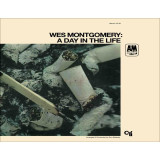
- A1: A Day In The Life (Lennon-Mccartney) 5:49
- A2: Watch What Happens (M. Legrand-N. Gimbel) 2:44
- A3: When A Man Loves A Woman (Lewis-Wright) 2:54
- A4: California Nights (Hamlisch-Liebling) 2:32
- A5: Angel (Wes Montgomery) 2:49
- B1: Eleanor Rigby (Lennon-Mccartney) 3:08
- B2: Willow Weep For Me (Ann Ronnell) 4:34
- B3: Windy (Ruthann Friedman) 2:22
- B4: Trust In Me (Weber-Schwartz-Ager) 4:28
- B5: The Joker (Newley-Bricusse) 3:25
A Day in the Life' was released in 1967 and reached #1 on the Billboard Jazz Albums chart.
From the early 1960s to the late '80s, A&M was one of the most eclectic and powerful independent record labels in the world. The roster of artists who recorded there includes The Carpenters, Captain Beefheart, The Police, Joe Cocker, Suzanne Vega, Procol Harum and Janet Jackson, among others. Founded as an independent company by Herb Alpert and Jerry Moss in 1962, soon the label garnered interest and success, and was acquired by PolyGram in 1989. Throughout its operations, A&M housed well-known acts such as Sting, Sergio Mendes, Supertramp, Bryan Adams, Burt Bacharach, Liza Minnelli, Paul Williams, Quincy Jones, Cat Stevens, Peter Frampton, Carole King, Extreme, Joan Baez, the Human League, Soundgarden, Duffy, and Sheryl Crow, among others. Reissue of the debut album on A&M Records by jazz guitarist Wes Montgomery, released in 1967. It reached #1 on the Billboard Jazz album chart and #2 on the R&B chart. Considered by far the best of his three albums on A&M (in partnership with Creed Taylor’s CTI Records), A Day in the Life features a plethora of star sidemen, such as Herbie Hancock, Ron Carter, Ray Barretto and Grady Tate, among others, as well as superb arrangements by Don Sebesky.
Formed in 1971 by guitarist John Evan-Jones and his bassist brother Trevor, obscure British prog-rock act Jonesy had a shifting line-up and unusual elements, Chicago-born Jimmy Kaleth’s battery of keyboards including a Mellotron. Sophomore set Keeping Up saw Trevor return to the fold, along with drummer Plug Thomas, fresh from sessions with Supertramp; guitarist Ray Russell’s lush string arrangements and Alan Bown’s plaintive trumpet and flugelhorn add extra musical dimensions. Capturing the group at their most eclectic, Keeping Up is a must for Mellotron fans and all lovers of pop, jazz, and blues-tinged prog.
Popol Ace is a progressive rock band from Norway which had its heyday in the 1970s. The band formed in 1972 as Popol Vuh, but changed their name in 1975 to avoid the confusion with the German group of the same name, which practiced more experimental and cosmic music. Stolen From Time is an ambitious and varied album, which testifies to the richness of progressive rock of the time. The group mixes various influences, such as Pink Floyd, Genesis, Yes, or Supertramp. The nine tracks on the album are all musical nuggets, ranging from symphonic rock to folk via jazz- rock or hard- rock. The group demonstrates great instrumental and vocal mastery, with neat arrangements and catchy melodies. Singer Jahn Teigen stands out for his powerful and expressive voice, able to move from low register to high register with ease
The story of Astral Bakers is an obvious one. Four experienced musicians get together in the same room, and make music as if it were the first time. Some say acoustic rock, others say soft grunge. Songs in English, halfway between Big Thief, Supertramp and an unplugged Nirvana concert. Initially, Sage (formerly of Revolver), Theodora, Nico Lockhart and Zoé Hochberg know each other from having collaborated together on other tours and records. All have worked with artists as varied as Clara Luciani, November Ultra, Woodkid, Pomme and Revolver. Together, they crave something different: epiphanies and presence, friendship and purity. No demos, no re-recording: just circular listening, between two guitars (Sage and Nicolas) that converse with each other, a bass (Theodora) that holds time, and soft drums (Zoé)thatenfoldthewhole.Selected by Spotify for their RADAR program, and already acclaimed by critics,this10-trackdebutalbum,writteninalivesetting,isalreadymakingitsmarkonthe 2024 indie landscape.
The Miserable Rich aus Brighton veröffentlichen mit OVERCOME ihr erstes neues Album seit 2011 auf dem eigenen Label Rags To Ruin. Geboren als Beweis tiefer Freundschaft und Liebe, entstand das Werk mit Produzent/Engineer Wolfgang Gottlieb (Lotte Lindenberg Studio) und Gastmusikern wie Alabaster de Plume, Jack Kendon (Love Supreme Jazz Festival) und Mike Siddell (The Leisure Society, Hope Of The States, Mumford & Sons). Die 12 Songs versprühen den Charme der mit Streichern versehenen, handwerklichen Musik der Band, ergänzt mit Klavier, Elektronik und Blechbläser. Ihren eleganten Sound zwischen Indie-Folk, Kammerpop und New Orleans-Soul beschreibt Sänger James de Malplaquet - vielleicht etwas flapig - als 'irgendwo zwischen Kruder & Dorfmeister und Supertramp, wo wir schon immer hingehören'.
A white convertible drives off into the sunset to the sound of Save you ft. Surahn and its funky, dance-inducing mantra, the first single to herald this road trip to the edge of space. Whether on cathartic beaches (Breath) or a desolate landscape: First Wave, Shades of Black, Who am I, Stars or Ghosts and its conquering lasers, Peter's music transports us into a cinematic world
(Night Road), where the synth-pop of M83 would have fused with the pop-rock of Supertramp and Fleetwood Mac (Burning House ft. Goldilox). A radiant production, wrapped in folk strumming, orchestrated by strings and keyboards with multicoloured diodes. A record that draws on the roots of timeless songwriting, enhanced by a modern, demanding electronic sound. The voice of Surahn (Empire of the Sun) returns to close the album with Open Your Mind and its flower power adlib: the closing credits of this first opus.
To celebrate the album"s 25-year anniversary, The Jesus And Mary Chain are reissuing their long-sold-out sixth studio album "Munki". Out on Fuzz Club, the reissue arrives on CD and gatefold double LP. The vinyl has been remastered by Pete Maher (The Rolling Stones, Jack White, Liam Gallagher). Originally released June 2nd 1998 on Sub Pop / Creation Records, "Munki" was - up until the Mary Chain"s reformation in 2007 - an experimental rock"n"roll masterclass turned swan song for the Reid brothers, whose fractious in-fighting culminated in the band"s break-up less than a year after its release. It was perhaps fitting, then, that "Munki" is argued by some as the definitive Mary Chain record in the way it seemed to chart the full array of musical directions the band had ploughed over the five records that came before.
Raised in L.A., Gold was formally trained in classical and jazz piano, and the wonders and possibilities of music seeped into him. He continued pursuing music in college, studying jazz piano at nearby CalArts, where he lived in a barn in the remote town of Val Verde, which was at one point known as the "Black Palm Springs." Around this time, he joined the indie- disco band Poolside as a keyboardist/ vocalist, bouncing around the world on tour with them, as well cowriting songs like the disco-rock-fusion epic "Feel Alright." (18 million streams on Spotify and counting.)
Gold teamed up with former Poolside bandmate Filip Nikolic to develop his sound--something like a mishmash of Supertramp and King Gizzard & the Lizard Wizard. With Gold serving as the main writing and performing force of Mirror Tree, and Nikolic producing the set, while co- writing and performing on some tracks as well, Mirror Tree took flight. Gold would demo out songs and at his home studio, and then bring them to Nikolic's studio, where they would work
together to create grooves worthy of ELO for the chillwave generation.
Verheyen reflects on how he "learned a valuable lesson, from all those years making records and touring with Supertramp. We always lamented that the record was a demo for the tour, because the songs developed so much more on the road. This time I was fortunate to play the music for a year and a half before committing it to CD and vinyl, so the songs feel much more fully realized. It was a luxury recording music we all knew so well."
This is reflected in the musicianship heard on the album, which includes a masterful duet between Carl and Sophia James – of American Idol fame – on Riverboat Sky’s title track. The supporting musicians consist of Verheyen’s regular touring band – Dave Marotta (bass), John Mader (drums) and Troy Dexter (keyboards); who are supplemented by Jim Cox, Alex Acuna and Chad Wackerman.
Alex Van Pelt writes songs for ghosts and broken hearts.
French multi-instrumentalist Alex started making music fifteen years ago when he was still a teenager, in bands such as Coming Soon, Mont Analogue, or as a guitarist for Sierra Manhattan, Norma, François Virot and Adam Green. But today he grows up and shows what he’s made of as a solo artist.
After his debut album Tum Tum (2019), in which he stated the basis of a rich and sensitive musical vocabulary made of DIY synth and post-romantic songs, he cultivates and confirms his originality with his new opus, Global Crush (out in November 2021). Words reverberates with sounds, and structures assumes ever shifting shapes : passed Global Crush’s melodic immediacy, one soon perceives a will to disrupt the conventional ground rules of pop music.
Like in a Kitano or Wong Kar Wai movie scene, Alex’s songs mix melancholy and humor. He has put together the intimate patchwork of Global Crush in a landscape painter fashion, and the result somehow works as a map to the artist's interests and influences (to name a few : the Everly Brothers’ breakup songs, Supertramp’s melodies, Daniel Clowes comics and video games ost such as Final Fantasy and the Sims).
- 1: All I Need
- 2: Kiss Like The Sun
- 3: About Last Night
- 4: Downtown
- 5: Rabbit Hole
- 6: Lost
- 7: Scene
- 8: Lonely Hours
- 9: Maybe It’s Today
- 10: Screaming
- 11: Hold Tight
It may be his fifth album, but Saturday Night, Sunday Morning marks the start of chapter two for Jake Bugg. Arguably his most complete and coherent record to date, Saturday Night, Sunday Morning manages to combine a love of ABBA, the Beach Boys, Supertramp and the Bee Gees, with a contemporary pop sound: one that’s already spawned his most ubiquitous song in years via euphoric lead single, All I Need. “I knew what I was looking for this time around,” the 27-year-old says, firmly. “And I feel like I accomplished it.” It’s almost 10 years since a two-fingered Bugg burst onto the scene with his eponymous debut, one that topped the UK album charts and saw the then 18-year-old from Nottingham fêted as the next Bob Dylan. A Rick Rubin-produced follow up, Shangri La, quickly followed. But progress stalled with Bugg’s third, largely self-produced, record, On My One, in 2016. “I was having a hard time on that third record,” Bugg admits, five years removed. “The support from the industry wasn’t what it was. All those people telling you how great you are weren’t there anymore. It does feel like the rug’s been swept from under your feet.” What that record provided, however – along with its comparatively stripped-back follow up, Hearts That Strain (2017) – was a much-needed course corrector: one that set Bugg on the upward trajectory he finds himself on today. “When I came to terms with that was when I left the ego at the door,” he says. “It didn’t work out. But it led here. And this is probably my strongest record." It’s testament to Bugg’s rediscovered confidence that Saturday Night, Sunday Morning – a nod to the debut novel by Nottingham author Alan Sillitoe – sees him working with some of his highest profile collaborators to date, most notably American songwriters Andrew Watt and Ali Tamposi, best known for their work with pop heavyweights Post Malone, Dua Lipa, Miley Cyrus, Camila Cabello. “I was looking for how I can incorporate my sound for a more modern era. And I kind of struck gold working with Andrew Watt and Ali Tamposi,” Bugg says. Convening in LA, the first track the trio wrote together is the jealousy-inflected About Last Night, a song about the “insecurities you go through as a young person in a relationship with someone.” “It’s got such dark undertones, which I love,” Bugg says, of a song that showcases a newly discovered, Beach Boys-esque falsetto. “But it’s also very, very pop. That’s what I’ve always loved. With ABBA, with Supertramp. I love pop music. But when you can get it to be dark, I love it even more.” It’s a trick the trio repeated again on Scene, Bugg’s personal favourite from the album and a song that best encapsulates the combination of old and new: Watt’s George Harrison-esquire guitar brushing up against contemporary melodic choices by Tamposi. “I love writing with her,” Bugg says of the Havana hitmaker. “She brought that women’s perspective. And I knew that I’d got that balance of what I wanted. That old school chorus with contemporary verses. That to me was my favourite song when I wrote it, and it still is.” Perhaps the biggest example of Bugg’s newfound ego-less approach to writing, however, came in the shape of Downtown, a song that grew from an idea by Jamie Hartman (Celeste, Lewis Capaldi, Rag'n'Bone Man), and sees Bugg deploy the higher range of his voice to ethereal, ’60s Bee Gees effect. “Usually, the initial spark of an idea comes from me. And when it doesn't, it sometimes loses my attention,” Bugg admits. On Downtown, however, he relished his role as arranger: “Because there were a lot of moving parts and chords, it was almost like a puzzle,” he says. “I’d never approached a song like that before. “What I’ve been enjoying on this record is the collaborative process,” he continues. Working with people, writing with people. Because I’ve realised all I really want to achieve is to be the best writer I can possibly be. And I think by working with other people, it allows you to learn a lot as well.” It’s a theory Bugg has put to the test during lockdown, when he was approached by his manager about writing the soundtrack to an upcoming documentary, The Happiest Man In The World, about Brazilian footballer Ronaldinho. “It’s kind of a completely different experimental outlet,” Bugg explains of his first ever score. “I approach my own work quite professionally. But with this I can just switch off and go into a different world. And it’s been brilliant – I’ve had to learn different styles of guitar: bossa nova, samba. It’s a bit Vangelis, who’s probably my favourite artist – which may surprise people.” Possibly. But you get the impression that surprising is what Bugg likes to do. “I don’t like to be stuck doing the same thing,” he admits. “And that’s what this record Saturday Night, Sunday Morning was. I wanted to push myself. I’m always learning new influences. I’m careful not to get stuck on the same thing. “It’s not going to be right every time. It’s not going to be good every time,” he continues. “But if that’s the process it takes to get to this record, where people are loving the songs again, then that’s the journey we have to take.” For Jake Bugg, chapter two starts now. New album ‘Saturday Night, Sunday Morning’ is out August 20th on RCA Records
Between Christmas 2000 and New Year 2001 producers Ekkehard Ehlers and Stephan Mathieu recorded an album of warm, soft, delicately crackling electronic music in the space of that week. It was christened with the ambivalent title "Heroin" and was released on CD via the label Brombron in 2001 and later in 2003 re-issued on Kit Clayton's Orthlorng Musork on double-LP with remixes the pair had commissioned as expansions.
17 years later Heroin sees its first vinyl release to include all 13 tracks from the original CD track-list on this LP + 12“ set. The centerpiece "Herz" finally receives its long deserved vinyl treatment (side C, at 45rpm) and on the flip side Thomas Brinkmann contributes a mirror in a magnificent remix of that very piece on side D.
Ehlers and Mathieu were both highly prolific solo artists during the period 2000-2004, and in just two years after the initial release of "Heroin" each had produced over half a dozen new solo recordings: among them the serial masterpiece Ehlers' "Plays" (Cornelius Cardew, Hurbert Fichte, John Cassavetes, Albert Ayler, Robert Johnson) released as 5 stunning LPs in a series on Staubgold, while Mathieu's 'Full Swing Edits' spread over five 10" records plus his album 'FrequencyLib' on Mille Plateaux, 'Die Entdeckung des Wetters' on Lucky Kitchen and ‘The Sad Mac’ on Atsushi Sasaki’s Headz label were greeted to critical acclaim.
Both artists were expanding their conceptual sonic approaches in the glow of developing laptop technologies which would to these times in 2020 seem quite primitive, but these two in that period used the state-of-the-art to aid and abet their conceptual visions, while at times the duo used unorthodox experimentation - yet always had a distinctively melodic and musical form at its heart and soul.
Ehlers can be seen as a conceptualist, as a meta-musician who interrogates the mediums and methods of sound production - reflecting on the conditions and possibilities of improvisation (e.g. "Plays Albert Ayler") and exploits ideas of mutation and distortion of popular aesthetics played out within a ghostly form of divine pop beauty in his project März.
Mathieu, originally a drummer and co-founder of what has come to be known as the Berlin 'Echtzeitmusik' scene. His approach could be similarly described as working a critical analyst and researcher: Subtly and precisely working in the realm of processing as a method of intervening in melodious/harmonic analog sound sources.
Ehlers and Mathieu may not think too much about their singular productions and publications outcomes, but instead concentrate on the process and musical personality that characterizes their gesture- style itself stays in the background - and they usher a music from small minimal sound sources coaching a patient music of slow intervention - much like a refraction of light than a concrete painting or a blurred photograph - beatus accident.
And indeed, "Heroin" is an album that embraces the happy accident being made up of reduced, often very catchy and very direct micro hooks which seem laser-guided into a space accepting obvious melodic beauty in what feels like an observation of musics unfolding and revealing it's DNA, embed with for a kind of yearning for innocence and naiveté - as if Satie were on the jukebox in "The Crying of Lot 49". Not to say the music is "reduced", but rather: 'restricted' and born from acceptance of limitations, and the artists allowing the sounds to just "be.." with some incremental degrees of coercion.
The album not only sounds like that of 2 producers who are both dreamers and scientists, but that Ehlers and Mathieu chose to work with these means in a dialogue together to reduce pop music to its musical/tonal core, it is not Pop music anymore, rather a ghostly pointilistic itteration of song. "Heroin" is located at this transition, around that point at which tracks, that were or could have become pop compositions, irrevocably slip into a static harmonic nirvana. We are invited to follow the arch of Heroin in a slow-motion morphine musical haze.
Heroin sounded timeless when originally released and proof is that it remains so, one wishes that Ehlers and Mathieu would convene again for a week, a month or an entire year to continue this process of slow rumination, picking affectionately over the sounds they both love - and then maybe when everything is condensed, evaporated they would write more songs with those sonic refractive elements that remain.
There are some records that manage to sound both of a time and utterly timeless and Bon Voyage Organisation's Jungle Quelle Jungle (a nod to Supertramp's Crisis What Crisis) is one of those albums. Its silken-smooth production, irresistible grooves, funk-tinged guitars, lush soundscapes and general glowing presence could easily lead one to believe that have dug up a lost disco gem from the 1970s. However, behind the disco-pop gleam lies eerie dystopian sci-fi ruminations of a futuristic bent and tones that can often feel as French as they do Asian or African.

This sort of cross-continental exploration is an expansion on BVO's previous two EPs, the man behind the Organisation, Adrien Durand, says. 'I tried to continue the musical expedition between dystopian Science-Fiction Haunted Africa - plus Haitian Vaudou on 'Soleil Dieu' - and futuristic Asia. Addressing, in a double entendre manner, some of the political issues that I am sensitive to.' In fact the jungle in question in the album's title is a metaphorical one and one that creates a vast series of environments for Durand to explore such subjects as world trade, utopian ideals and themes of idols, as well as of time and communication. However, one will need to speak French to decipher such explorations, as well as shake off the natural impulse to move with every glorious beat on its 13 tracks, of which are moved along by Maud Nadal and Agathe Bonitzer's golden vocals.
Durand is a full-time producer based in Paris, working with the likes of Amadou & Mariam, so it makes sense that this record would absolutely sparkle in this department. Durand feeds off the variety of musicians coming and going during recording sessions as well as the rotating members and numbers of people involved with the band but fundamentally he writes all songs on piano first before bringing them to record live. 'We recorded a rhythm section of five - drums, percussion, guitar and myself on bass/synth bass and keyboards - at La Frette which is a studio located in a mansion outside of Paris and fitted with a beautiful 1973 NEVE desk. We only used analogue gear, by taste really, and found it a pretty reliable way of doing things. This simply consists of putting good players together in a room and waiting for the right take to happen.' Two four-day sessions and a 'cooling off' period (to let the recordings settle) soon followed before Durand picked the material back up to give it a final polish.
The resulting album is one loaded with intricacies and idiosyncrasies, something that Durand puts down to his own unique approach. 'I don't consider myself much of a songwriter but I love arranging rhythm sections and I'm pretty proud of the ones on this record.' This applies when it comes to working with such musicians as Inor Sotolongo Zapata, who with Durand used traditional Cuban percussive instruments and explored Haitian rhythms. When Durand expands on some of the ideas and influences that were funnelled into the record, you begin to get a sense of the vastness of the sounds that fill his world, from Trevor Horn's production work on ABC's Lexicon of Love, to the literary work of JG Ballard to the visual flair of the original Blade Runner and even the Tuareg sounds of Tinariwen, due to the fact that his studio neighbours their manager's and he would hear their rhythms bleeding through the walls. You therefore end up with an album that offers tracks such as 'GOMA' that fuses Chinese and African rhythms as well as 'SI D'Adventure' a piece of pop music that is dazzlingly hook-laden.
As a result of this cooking pot of sounds, influences, thoughts and creations, Durand has more of a gumbo approach to making this music than a set-out scientific formula. 'There is no definite recipe for me to like the production of a record,' he says. 'Of course it really sticks out that my work is really influenced by the 1978-1983 period, the golden age and last stand of analogue studios and session musicians.' Whilst Durand adores the traditional and conventional music, he really views this as something bigger and wider. 'I have a taste for the otherworldly vibe from records coming from less sought-after musical scenes, particularly Poland, Haiti, Ethiopia, Somalia, Congo and early Cantonese pop. Languages and the rapport of the people involved in the making of those records really inspires me. I particularly hate the use of the word 'World Music' as a potpourri for everything that doesn't sound quite western enough.'
- 1