
nicht am Lager
Bestelle jetzt und wir bestellen den Artikel für dich beim Lieferanten.
13,82 €
Bestelle jetzt und wir bestellen den Artikel für dich beim Lieferanten.

Intimate November tour also announced After their 2012 Mercury Prize nominated debut and 2015's Top 20 follow-up 'Born Under Saturn', musical adventurers Django Django are back for 2017, exploring new sounds with their brand new album 'Marble Skies' which will be released on January 26th on Because Music. Today the album launches with first single 'Tic Tac Toe', a rousing, trippy upbeat rock track with an enormous echoing hookline which will excite fans of the band's rockabilly-influenced elements. The accompanying video for 'Tic Tac Toe' was directed by John Maclean, brother of Django Django drummer/producer David Maclean and director of the critically acclaimed modernist western 'Slow West'. It depicts vocalist/guitarist Vincent Neff enjoying a rapid-fire day-trip to Hastings which takes a turn into the surreal and sinister when a ghost train puts him on a collision course with a grim reaper inspired by Ingmar Bergman's The Seventh Seal. As John Maclean explains: The film could be about the fading era of the beach arcades, time moving too fast, love and games, horror and happiness but it is actually about a man who needs to go buy a pint of milk to make a cup of tea.' After the brilliant, rave-shaped grooves and expansive arrangements of its predecessor, 'Marble Skies' is a more concise and focused offering which recalls the dynamic, genre-blurring music of their debut. It's a return to form, an album which finds them returning to the handmade, cut-and-paste approach of the past. Upon finishing the 'Born To Saturn' tour, Dave ventured to LA to work on a production project, whilst the other band members went to India with the British Council. When they returned, the new album process began with a back-to-basics approach which recalled the DIY ethos of the band's early days, Django Django - minus an absent Maclean - assembled at Urchin Studios in Tottenham, London with Metronomy drummer Anna Prior to experiment with the idea of coming up with new tracks through loose jamming sessions. After ten days of recording, there was plenty of raw material to send up to Dave (then back in his hometown of Dundee) for him to edit, refine and evolve. As ever, all four band members (completed by Tommy Grace on synths and bassist Jimmy Dixon) contributed to the band's music, melodies and lyrics as the final album took shape. Parts of 'Marble Skies' find Django Django sailing into uncharted territories, not least the driving title track (propelled by Prior's drumming), with its echoes of Krautrock and Suicide. Meanwhile, the hazy Zombies-like summer pop of 'Champagne', which explores the joys and ills of alcohol, was inspired by the band's over-indulgence during a boat trip on the Seine that was hosted by their label. Those drawn to the more dance-orientated side of Django Django will find much to love in the twisted '80s electro pop of 'In Your Beat' and the dancehall-influenced 'Surface To Air', a dreamy-headed pop song fronted by Rebecca Taylor of Slow Club. The collaboration came as a result of the two bands meeting up at SXSW some years ago, where Rebecca and Dave in particular bonded over shared interests in R&B, hip-hop and dancehall. Another more surprising collaborator is Jan Hammer, the Czech-born, American-based jazz-fusion and electronic artist who shares writing credits with the band on the gorgeously floaty 'Sundials'. If there's a mood running through 'Marble Skies', it's one of reflection on things past and present, and finding some kind of peace with your place in the grand scheme of things.
Bestelle jetzt und wir bestellen den Artikel für dich beim Lieferanten.

Music for post-apocalyptic deserts. Experimental synth-sounds with hypnotic percussions - imagine Moondog performing with John Carpenter and Cabaret Voltaire.
Relating to their live appearances, Phantom Horse might be named a lazy combo since they are not to be found on stage all too often. Yet their withdrawn approach fits this album very well - Als Ob' is once more a journey through inwardness, a contemplative excursion to the electronic outback, still friendly asking for your attention. There's plenty of things to discover if you listen mindfully, the Phantom Horse rides out where you as a listener like to be lonely. Those ancient synths are still around, playing their melodies as if* there were no time thieves waiting around the corner (*That is what Als ob' means).
Altogether, the sound has become more electric yet not eclectic, the duo has dekrauted, describing their sound as more ritual but of course avoiding any kind of mysticism and fairy-tale dullness.
Since 2015's Different Forces' (also on Umor Rex), Phantom Horse have fleshed out their friendly stoicism that hauls their experimental synth sounds into the area of songs - maybe even pop songs that aren't tangible at least. Welcome to the insular state of Phantom Horse.
Bestelle jetzt und wir bestellen den Artikel für dich beim Lieferanten.

Bestelle jetzt und wir bestellen den Artikel für dich beim Lieferanten.

Bonobo veröffentlicht den lang erwarteten Longplayer-Nachfolger auf seine Erfolgalben Black Sands & The North Borders inklusive Vocal-Features von Chet Faker, Rhye & Hundred Waters!
Simon Green, alias Bonobo, kehrt mit seinem sechsten Album zurück, dem meisterlichen, gebieterischen "Migration" - ein Werk mit dem er sich ein für alle Mal an der Spitze der elektronischen Musik verortet. In abwechselnden Zügen opulent, manisch, wunderschön, melancholisch, freudig, voller Emotion und technischer Fertigkeit, ist dies womöglich sein bislang ehrgeizigster Versuch, die grundlegende Beschaffenheit menschlicher Existenz und deren ausgedehnte Dynamik zu erfassen. Neben Zeitgenossen wie Four Tet, Jon Hopkins oder Caribou, zählen Wiz Khalifa, Skrillex, Disclosure oder Warpaint zu Bonobos prominentesten Fans. Sein 2013er Album "The North Borders" erreichte im UK die Top 30 und katapultierte sich auf Platz #1 der elektronischen Charts, sowohl in den USA als auch im UK. Im Zuge dessen spielte sein 12-köpfiges Kollektiv weltweit über 175 Konzerte, darunter zwei ausverkaufte Shows im Sydney Opera House, ein ganztägiges Festival im Londoner Roundhouse, eine ausverkaufte Show im Londoner Alexandra Palace sowie einige renommierte Festival-Slots. Inzwischen verfügt Bonobo rund um den Globus über eine umfangreiche, loyale und engagierte Fanbase. Mehr als eine halbe Million verkaufte Alben und über 150 Millionen Spotify-Streams gehen auf sein Konto und verdeutlichen den Erfolg, den sich dieser ruhige, bescheidene Mann erarbeitet hat. Dank "Migration" wird seine wunderschön raffinierte und gefühlsgeladene Musik in Kürze ein noch größeres Publikum erreichen. Das zutiefst Persönliche kann schließlich ebenso gut allgemein gültig sein.
Bestelle jetzt und wir bestellen den Artikel für dich beim Lieferanten.

It's been five years since his acclaimed debut 'Severant' and time has proved it prescient, its futuristic trap influence is now ubiquitous. 'Slow Knife' seems to return to where 'Severant' left off, but with the intricate sound design of last year's haunting EP 'Assertion Of A Surrounding Presence' subsumed into the compositions, making them more exacting and beautifully crafted. Between albums Kuedo has been working as a sound designer and composer for hire and the application of intent and widescreen rigour that commercial work requires has definitely found its way into the new album. 'Slow Knife' has the subtlety, ambition and pacing of a brilliant soundtrack - a sense of an album of scenes, that easily lends itself to an impressionistic narrative. But, as with 'Severant', the title suggests relationship unease, with the slow knife being a metaphor for the building resentment in any close relationship. 'Slow Knife' is almost two albums, the first half, according to Kuedo, invokes the seduction of the city, taking the music of Michael Mann's 'Manhunter' as a cue, with the latter half being inspired by the bloody starscapes and voodoo wilderness of films such as 'Angel Heart', 'Night Of The Hunter' and more recently the 'True Detective' series. Both halves of the album are also in thrall to Mica Levi's inspiring 'Under The Skin' soundtrack, especially in the turbulence of the mid-section. The songs of the albums first half are synthetic and seductive, a gelatinous veil with shades of the pseudo-sophisticated trance of Enigma, of all things, underpinned with dusky unsettling shadows and atmosphere. 'In Your Sleep', perhaps surprisingly, features the vocals of Hayden Thorpe from Wild Beasts, who settles his dark, whispered vocals into the moonlit shadowy atmosphere. 'Floating Forest' is the first track to allow back some of Kuedo's experimentation with the Southern rap template, which he explored before it became commonplace, with echoed drum splashes and a sinister repetitive motif, ending with a haunting growl. The second half of the album enters wilderness territory with 'Approaching's slow descending notes, before 'Broken Fox - Black Hole' throws the record into the cathartic darkness, as undulating chords play hide and seek with riotous reeds and scratchy strings grown from challenging collaborations with cello player Koenraad Ecker (from Lumisokea). 'Breaking The Surface' shivers and coils, before metal and strings dominate while 'In Your Skin' feels like being lost in a vast hinterland before 'Warmer Light' introduces some memories of sunshine, with its plucked bassline and spiralling dub. 'Halogen Light' opens with the sound of crickets and a clear piano, cleansing the soul before 'Lathe' brings things down to earth with a short, yet powerful coda.
Bestelle jetzt und wir bestellen den Artikel für dich beim Lieferanten.

Collapsing Horizons is the third full length album from Netherlands based deep ambient duo Tangent.
Limited clear with white splatter and blue with white vinyl. NON-RETURNABLE
This album much like the two preceding it—2013s "1mk2" (Mindtrick) and 2014s "Transience" (Tympanik)— is a sonic journey with arching atmospheres and themes. An aural representation of the formation of matter and it's disintegration in unison. The music, much as the album's namesake, could very well be the soundtrack to new universes being created on the ashes of collapsing ones.
Ralph van Reijendam and Robbert Kok who are the two behind Tangent moonlight in a long list of paradoxical musical projects. Fire Walk with Us, Rob Klerkx and the Secret, Disavowed, and Synesis Absorption are all quite different from Tangent's sprawling yet steady ambience.
This such daily musical juxtaposition allows Tangent the immersive focus on the ideas that make Tangent what it is. It would be a misnomer to think that with all the extra curricular time spent in more extreme forms of music that Tangent is a frenetic force. They are exactly the opposite. Dense pads, rolling beats and brilliant shimmers of resonance punctuate their electronic based instrumentals in just the correct manner to stargaze, day-dream, bliss-out, or even brood about starting over...
Bestelle jetzt und wir bestellen den Artikel für dich beim Lieferanten.

A-TON ist eine neue Edition und Plattform des Berghain-Inhouse-Labels Ostgut Ton und konzentriert sich auf Ambient-, Archiv- und andere Musiken, abweichend von den
clubfokussierten Veröffentlichungen des Hauptlabels. Darüber hinaus markiert das erste Release auf A-TON - Chronicles I - den Beginn einer Serie von Veröffentlichungen Luke Slaters unter dessen Alias The 7th Plain und präsentiert geremastertes, zuvor veröffentlichtes als auch bislang ungehörtes Archivmaterial.
Zuerst erschienen auf General Production Recordings zwischen 1993 und 1996, lotete Slaters The 7th Plain die sich stärker ausbreitenden Facetten von Ambientmusik aus und trieb sie gleichzeitig an die Genregrenzen, indem sich The 7th Plain nicht auf beatbefreite Synthflächen beschränkte, sondern treibende Progressionen, nuancierte Rhythmen und raffinierte Melodien mit einbezog. The 7th Plains außerweltliche Musik entzog sich somit der genauen musikalischen Einordnung, nachzuhören auf den beiden Alben The 4 Cornered Room und My Yellow Wise Rug (beide GPR, 1994) - emotionale, gespenstische und eskapistische Musik, bei Erstveröffentlichung vorwärtsdenkende Alben, die in Rückbetrachtung die Zeit besiegt haben.
Ursprünglich aufgenommen in Slaters Spacestation Ø, nun für A-TON komplett geremastert, zeigt Chronicles I die futuristische Ästhetik und musikalische Agenda der Neunziger in einem zeitgenössischen Kontext, ohne Nostalgie aber mit dem Wissen um die Zeitlosigkeit dieser Musik. Mit sieben originären Stücken und einem unveröffentlichten Ken Ishii-Remix klingt The 7th Plain so beseelt und relevant wie eh und je.
Während "Boundaries" (von My Yellow Wise Rug), "Grace" und "Surface Bound" (beide von The 4 Cornered Room) Slater-Aficionados bekannt sein dürften, sind "The Super 8", "T Funk States", "Slip 7 Sideways" und "Chords Are Dirty" bislang ebenso unveröffentlicht wie der zuvor erwähnte Remix von Ken Ishiis "Extra".
Mit Chronicles I erweitert The 7th Plain die Wärme und Kälte analoger Synthesizermusik auf das digitale Zeitalter: Während A-TON Chronicles I als Doppel-LP und CD
veröffentlicht, wird die Musik selbst in verschiedenen Digitalformaten zum ersten Mal überhaupt erhältlich sein - wodurch The 7th Plain einer neuen Generation von Hörern zugänglich wird, die die Vielfalt elektronischer Musikgeschichte erst für sich entdecken.
Bestelle jetzt und wir bestellen den Artikel für dich beim Lieferanten.

Drew McDowall's back story reads like a primer of psychedelic fiction woven into statements of the unbelievable, superhuman and outright insane. Somewhere in the chaotic madness, comes an artist such as McDowall with total control and absolute calm within his songs and artistic method.
Growing up in the gangs of 1970's Scotland, Drew McDowall started to shy away from the daily violence once punk took hold of the counterculture youth. Drew McDowall quickly scrambled to form his own punk band in 1978 with his then wife, Rose McDowall, called The Poems. Shortly lived, the Poems released a single and various tracks but more importantly, the band allowed McDowall to network with other local musicians in Glasgow, such as Orange Juice, and allowed him to travel down to London thus forming friendships with Genesis P-Orridge, David Tibet and countless others, bringing Drew into the fold of the experimental revolution happening in the UK brought upon by Throbbing Gristle and executed by bands such as Psychic TV and Current 93.
During the 1980's, McDowall found himself in the ranks of P-Orridge's Psychic TV and collaborating with the mysterious duo comprised of former Throbbing Gristle creator Peter 'Sleazy' Christopherson and the enigmatic John Balance who had been creating esoteric and progressive electronic music under the title of Coil. It was during his formative collaborations with Coil that McDowall saw himself shift from occasional contributor to austere full-time member of the arcane outfit. McDowall's impact on the band's sound was apparent as the releases transformed from their previous avant pop signature to a more complex and methodic electronic imprint accompanied by even more abstruse subject matter than previous years. McDowall would continue honing his compositional skills with Coil until the release of the band's two most broad-minded albums, Astral Disaster and Musick to Play in the Dark.
The past decade, Drew McDowall found himself living in New York City and re-appropriating himself within the local music scenes he found himself contributing to. In 2011, alongside his friend and collaborator, Tres Warren (Psychic Ills), McDowall found himself exploring his passion of meditative drone and abstract sound patterns in their project Compound Eye. In recent times, McDowall's production work has provided the music world with some of the most outstanding remixes for bands such as Nine Inch Nails, Azar Swan and Long Distance Poison as well as his well-received scores he composed alongside artist Tamaryn for the works of Bret Easton Ellis. Outside of his collaborative duties, McDowall formed an audience as a solo artist, playing countless performances and showcases around New York's electronic music haunts.
Dais Records approached Drew to solidify his standing as a leading electronic musician with the recording of new material neatly wrapped up in his debut album entitled 'Collapse'. Recorded in 2015 in Brooklyn, NY, McDowall's synonymous modular synthesizer compositions are augmented by obtuse sampling cut-ups and contributions from Nicky Mao (Hiro Kone / Effi Briest) rounding out the lumbering sequential knot work that has become synonymous with McDowall and craft.
Bestelle jetzt und wir bestellen den Artikel für dich beim Lieferanten.

Droid Behavior's Luis Flores comes through with a 2-track ace for the label's 20th vinyl release, Static Forces. Negative Pressure (A1) starts off with a brewing undercurrent of bass and hypnotically builds into a dizzied cavern of competing sonic forces and reverberant whispered utterances. Surface Tension (B1) takes an alluring shaken groove and reveals its drive as its elements make their way to the front, slowly pushing the track's rhythmic intensity. Two tracks for long play and lost minds.
Bestelle jetzt und wir bestellen den Artikel für dich beim Lieferanten.

Bestelle jetzt und wir bestellen den Artikel für dich beim Lieferanten.

Paris player Le Loup and Pura launch their new label Shadow Play with a four-track collection of avant-garde house music delivered boxfresh from the studio. As a solo artist, and one half of Hold Youth, Le Loup has cultivated a nuanced sound that is steeped in soulful jazzy influences, with a nod to the future and plenty of soul. On this first EP we're presented with a showcase of this sound, and a hint at what's to come on the brand new label... To get things rolling we have the very first track 'The Ancient Ways', which is quite laid back and minimal in its composition. There's breathing space for the beats and bass, with an eerie atmosphere pervading throughout. 'Ygam' is next up with a wobbly bassline, cosmic death rays and sinister effects lurking in the background - it feels like the soundtrack to a deep space thriller.
On the B-side things get ravey with 'Acid Surface'. Retro breakbeats and stuttered toms support a dangerously alluring symphony of effects and pads. At the heart of the track is a deep subby bassline, transmitting an ancient, yet cosmic vibe.
Bestelle jetzt und wir bestellen den Artikel für dich beim Lieferanten.
We are in-between again: FELT founder Fergus Jones surfaces on his own label for the first time with this dreamy, dubby pair of introspective tracks featuring the hazy, elegiac vocals of Thomas Bush, back on FELT after 2023's split cassette with Princess Diana of Wales. The results of a three-day studio bender in Copenhagen, Bush's entrancing vocals gesture towards the unchangeable past and unknowable future, creating a vital, pumping circulatory system of sound, further supported by the saxophone of Italian-Danish artist Francesca Buratelli and the (vinyl debut) of New York's Yumi with a notable interjection on "Untitled (Mix 1)”.
Written, produced and mixed by Fergus Jones & Thomas Bush
Saxophone on Untitled (Mix 1) by Francesca Burattelli
Additional vocals on Untitled (Mix 1) by Yumiko Mannarelli
Mastered by Amir Shoat
Der Artikel ist bereits auf dem Weg zu uns und voraussichtlich versandbereit ab 30.09.2026

'Music aged in time, resonating from the surface to the core through layers and sediments of stones - the strata. Four morning recording sessions with a separation between them of between three and ten months - a chronozone that will rest for a time and on which the next one will be added, thus forming the total of the six pieces of the album - becoming six strata.
'A slow-moving album that develops landscapes of subtle but continuous evolution, where we find layers of diverse nature created from different procedures, bathed in the calm waters of wabisabi, where melancholy, immensity, insignificance, the potential of the unemerged, coexistence and simplicity converge at the same time.'
erscheint voraussichtlich am 30.09.2026

Sublime frequencies from the golden era of ambient electronica.
Plumbing hidden depths beneath a deceptively tranquil surface, MLO's mid-90s masterpiece Io is an overlooked gem from a golden era for ambient electronic music. Originally released in 1994, Jon Tye and Pete Smith's collaborative album responded to the growing chill-out movement by leaning into classical and avant-garde influences from Satie, Debussy and Cage through to Soft Machine, Incredible String Band and Eno. Recorded across various studios stacked with classic and rare synths, Io was patiently composed into slowly unfolding suites punctuated with ripples of arrhythmic interference to arrive at a purist vision of true ambient.
The next instalment in Forever Records' ongoing reissue series shines a light back on this landmark piece of UK electronica with the first official reissue since its original edition on Rising High. As well as the original double LP pressing and a new CD digipak version, there will also be a uniquely numbered, limited edition housed in a gatefold sleeve that comes with a bonus 10" featuring two previously unreleased versions of the album's opening cut, 'Wimborne'.
Press response to Io:
"Not so much ambient, more environmental music, Io lets you bring as much (or as little) of your surroundings in as suits your mood. Every listen can be different. Interactive ambient at last.”
IO is pure ambience. Relying on motif as opposed to melody, MLO have produced a truly evocative album.
Peter McIntyre, Mixmag, UK 1994.
"MLO's influences range from the likes of Eric Satie and the intellectual salon music of his era to the more predictable reference point of dubby, modern techno, though they feel, perhaps rather contentiously, that "ambient music can exist in isolation from the rest of the dance music arena". Can it? Take a trip to Io, and find out."
Generator Magazine, UK 1994.
"If you like your ambient deep and moody with long chords that creep along at approximately the speed of drying paint then check out MLO’s Io."
Mixology, UK 1994.
"MLO set the controls for the heart of headspace for their first full album release. Io is top grade ambient brain… Ace album…"
Select, UK 1994.
erscheint voraussichtlich am 02.10.2026

Sublime frequencies from the golden era of ambient electronica.
Plumbing hidden depths beneath a deceptively tranquil surface, MLO's mid-90s masterpiece Io is an overlooked gem from a golden era for ambient electronic music. Originally released in 1994, Jon Tye and Pete Smith's collaborative album responded to the growing chill-out movement by leaning into classical and avant-garde influences from Satie, Debussy and Cage through to Soft Machine, Incredible String Band and Eno. Recorded across various studios stacked with classic and rare synths, Io was patiently composed into slowly unfolding suites punctuated with ripples of arrhythmic interference to arrive at a purist vision of true ambient.
The next instalment in Forever Records' ongoing reissue series shines a light back on this landmark piece of UK electronica with the first official reissue since its original edition on Rising High. As well as the original double LP pressing and a new CD digipak version, there will also be a uniquely numbered, limited edition housed in a gatefold sleeve that comes with a bonus 10" featuring two previously unreleased versions of the album's opening cut, 'Wimborne'.
Press response to Io:
"Not so much ambient, more environmental music, Io lets you bring as much (or as little) of your surroundings in as suits your mood. Every listen can be different. Interactive ambient at last.”
IO is pure ambience. Relying on motif as opposed to melody, MLO have produced a truly evocative album.
Peter McIntyre, Mixmag, UK 1994.
"MLO's influences range from the likes of Eric Satie and the intellectual salon music of his era to the more predictable reference point of dubby, modern techno, though they feel, perhaps rather contentiously, that "ambient music can exist in isolation from the rest of the dance music arena". Can it? Take a trip to Io, and find out."
Generator Magazine, UK 1994.
"If you like your ambient deep and moody with long chords that creep along at approximately the speed of drying paint then check out MLO’s Io."
Mixology, UK 1994.
"MLO set the controls for the heart of headspace for their first full album release. Io is top grade ambient brain… Ace album…"
Select, UK 1994.
erscheint voraussichtlich am 02.10.2026
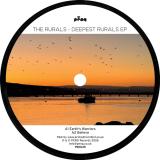
The Rurals first love is DEEP HOUSE!
Deepest Rurals E.P dives beneath the surface to explore the essence of The Rurals' unmistakable sound. Rich in soul, jazz-infused textures, and deep house sensibilities, this release delivers a collection of warm, organic grooves crafted with depth, elegance, and musical integrity.
Flowing effortlessly between atmospheric keys, fluid basslines, live instrumentation, and intricate rhythms, each track captures the timeless spirit of underground house music. The Rurals blend soulful expression with dancefloor functionality, creating moments that are equally suited to intimate listening sessions and late-night club journeys.
Here’s the first instalment of some fine examples, previously only available digitally!
erscheint voraussichtlich am 02.10.2026
This VA release brings together four producers who share a common language: hypnosis, movement, and an obsessive attention to sound design. Across two sides of vinyl, the record moves through different shades of deep and mental techno, held together by a sense of restraint and clarity rather than force.
Na Nich opens the A-side with a mental yet groove-driven piece, where impeccable sound quality meets a clean, deliberate design. LFO-driven elements float underneath the surface, almost speaking, giving the track a voice of its own without ever breaking its hypnotic hold.
Forest On Stasys follows with a tribal and deep approach that still hits with weight. Shakers and layered percussion drive the movement forward, building a rhythmic body that feels both organic and controlled.
On the B-side, Translate stays true to a purely mental identity: repeating LFOs and speaking tones that fold in on themselves, always kept clean and precise, letting the repetition do the work.
Save Your Atoll & Gabriele Santucci close the record with a deep, tribal-leaning cut full of groove and motion. Bongos, shakers, and background percussion build a danceable hypnosis, where every element serves the movement.
Four tracks, four voices, one shared sense of direction — a record built for the floor, but never at the expense of detail.
erscheint voraussichtlich am 02.10.2026
Mining the rich seam between transcendental escapism and crushing physical pressure, Sciama delivers his first album for Samurai Music. Exploring an energetic pitch between half-time and full-tilt 170, the London-based producer sculpts brooding soundscapes of sheer peaks and deep pits, driven by unrelenting but light-footed forward motion and an imposing strain of sound design. As Sciama, Michael Watters has been marking out his exacting sound since 2019 with an assured run of albums on ASC's Auxiliary label. His second EP for Samurai — the Wave Interaction 12" released earlier this year — pointed to his current area of focus inspired by the teachings of electronic music pioneer Daphne Oram. Contemplating the relationship between precise electronic frequencies and human perception, Celetal Form now delivers the full findings of his exploration. Oram coined the term 'celetal' in her 1972 book An Individual Note of Music, Sound and Electronics, trying to sum up a connection between the celestial and electrical. It's this spiritual dimension contained within sound waves Watters is concerned with, and the shape of the music on Celetal Form follows suit. In an opening statement of abyssal ambience, 'Overload Into Silence' establishes an atmosphere that endures throughout the album. Caught between steely textures, vaporous reverb tails and subtle harmonic interactions, the glacial shift of the many layers under Watters' control reveals an intense amount of detail at play even before drums and bass come into play. From there on in, the intensity ramps up from one heavyweight stepper to the next. There is agile, brittle top-end percussion at work on the likes of 'Induced Resonance' and 'Consuming Pulse', perhaps the most closely connected to D&B, while 'Rational Echoes' and 'Scanning Waveband' deal in urgency and techno-coded tension. A half-time roll guides the huge kick drum undulations of 'No Panacea', and 'Celetal Emergence' opens up into more spacious surroundings to let the subtle microtonal inflections of the synth tones set a curious mood. The two 'Intermodulation' tracks bring Watters' exacting approach into sharp focus, pushing the drums back and foregrounding alien frequencies that coalesce into unfamiliar yet strangely uplifting forms. Throughout Celetal Form this uncanny sensation charges the music with a power that reaches beyond its immediate, surface level impact. This intentional reflection on Oram's visionary thinking charges the current sound of Sciama with energetic intrigue that stands apart and invites a mindful, maybe even spiritual, engagement.
erscheint voraussichtlich am 02.10.2026
Juxtaposing acid-tipped breakbeats with influences of acoustic behaviour in nature, Sully unveils a debut release for Critical Music with two-track 12” ‘Flux’ b/w ‘Chatter’. Sully says: "‘Flux’ and ‘Chatter’ were another attempt to take the groove and feel of the breakbeats I've been previously working with and build them from the ground up. The aim was to find space for the tonal elements to breathe and end up in a place I'd not been to before." Birdsong became an unexpected reference point during the writing process, with Sully using synthesis to analyse and recreate natural calls as compositional material. The resulting dialogue between acoustic behaviour and digital sound generation forms part of the release's underlying methodology rather than a surface aesthetic. "The contrast and contradiction of the organic world captured by digital processes is always a pull for me," Sully explains. "It never fails to inspire." Jack Stevens aka Sully has spent much of the last two decades developing a body of work that sits slightly outside the obvious cycles of revival that have shaped UK bass music. While his records draw from established rhythmic forms, they rarely settle within a single tradition, instead examining the shared characteristics between them. His releases have consistently explored the points where 2-step swing, breakbeat construction, and jungle's rhythmic vocabulary begin to overlap. Sully’s records retain a relevance that extends beyond the moment of their release, continuing to circulate through DJ sets and specialist record collections. This 12” adds another chapter to a catalogue defined by sustained investigation into rhythm, texture and soundsystem music.
erscheint voraussichtlich am 02.10.2026
Entre Nous is the debut album from Eden Aurelius. A beautifully poised collection for Short Span. A gorgeous showcase of her singular talent within a sparkling scene. Recorded in Brooklyn, NY, this is an innovative, and graceful body of music that feels truly contemporary.
This album felt important for us to have out in time for summer. Emerging out of the heat, a feeling brought alive with the sun. Music that evolves throughout seasons and carries a spectrum of emotional range.
Entre Nous is tight, but expansive. Its depth and complexity is languid but has gravitational pull. Like much of her work, this record feels so refreshing because its tracks are both sensory and illusory tones built in gossamer and transitory layers of satin. They have a remarkable sense of presence and pressure - floating rhythmically without sharp edges. There is guidance and gentle control that lead throughout the record.
The B side opens with “Ion” featuring Pontiac Streator. The song is formed out of a textural haze. A glistening, iridescent light appears, broken through fabric, projecting a blurred image onto the surface nearby. A hypnotic and evocative collaboration. The shared connection between the two artists’ command of rhythm and ambient language.
Mastered and cut by Mike Grinser at Manmade.
Art by Lucas Dupuy.
Bei uns am Lager und sofort versandfertig

Berlin-based trio Roomer weave noise, melody, and memory into expansive guitar-driven songs. Formed by long-time friends and collaborators Ronja Schößler, Ludwig Wandinger, and Luka Aron, the band brings together distinct voices from across Europe's avant-garde, folk, and electronic scenes, folding these lineages into a sound that moves between shoegaze density, diaristic songwriting, and sonic exploration. Their music often holds opposites in suspension: clarity and blur, structure and drift, intimacy and collapse.
Their debut album Leaving It All to Chance (2025,) introduced this language in full, pairing emotionally direct songs with shifting textures and dense layers of distortion. With Staircase Made of Rope, their second album on Squama, Roomer widen the frame further. Built largely from improvisations and first takes, the record embraces instability as method, moving between density and silence while allowing melodies to surface and dissolve in unexpected ways.
Bei uns am Lager und sofort versandfertig
Bei uns am Lager und sofort versandfertig
Marcal has emerged as one of the most distinctive voices of a new generation of techno producers, combining rhythmic precision with an instinct for detail, tension and movement. On Four Small Escapes, he delivers four tracks built around subtle shifts and carefully placed moments of surprise, where intricate sound design and groove remain in constant dialogue. Opening with Smoke from Respawn, Marcal immediately establishes the record's character. Syncopated rhythms, intricate percussion work and subtle sound design details unfold within a streamlined framework, creating a groove that feels both spacious and forward-moving. Wooden rimshots and glassy textures interact across an open arrangement, giving the track a fluid and trippy quality. Arapuca shifts into darker territory while maintaining the same sense of control. Organic percussion, rolling low-end momentum and sharply placed accents continuously reshape the groove, creating a track that feels alive through movement rather than dramatic intervention. On Ultimamente, Marcal introduces one of the record's most immersive moments. Fleeting sonic details appear and disappear throughout the arrangement, while a carefully integrated vocal element adds depth and emotional weight without disrupting the flow. The result is a track that invites complete immersion while remaining firmly focused on the dancefloor. Closing the EP, The Surprise Test delivers its most direct statement. Rough and driving without leaning into industrial aesthetics, the track is powered by rolling energy, syncopated claps and a series of subtle electronic details that continuously animate its surface. The contrast between rawness and precision gives the record a powerful closing moment. Across all four tracks, Four Small Escapes highlights Marcal's ability to create tension through detail rather than excess. Reduced yet expressive, the EP balances functionality with a strong sense of character, allowing small gestures and unexpected shifts to leave a lasting impact.
Bei uns am Lager und sofort versandfertig

Pax Nicholas is one of the last living veterans of Fela Kuti’s Africa 70. Born in Accra, Ghana, he joined Africa 70 as conga player and backing vocalist in 1971, appearing on landmark recordings including Lady Shakara.
In 1978, he left Africa 70 at the Berlin Jazz Festival alongside drummer Tony Allen, and settled in Germany, where he built a remarkable second chapter — leading the twelve-piece Afrobeat ensemble Ridimtaksi, collaborating with Finnish jazz maverick Jimi Tenor, and reuniting with the African diaspora in Berlin for Ebo Taylor’s celebrated 2012 album Appia Kwa Bridge released on Strut Records.
In 2009, Daptone Records reissued his 1973 cult classic Na Teef Know De Road of Teef, earning him long-overdue global recognition.
Now signed to Paris-based Afrobeat imprint Comet Records, Pax Nicholas returns with his new single “Mind Your Business” — a heavyweight dancefloor Afrobeat cut built on thundering brass, interlocking percussion and a razor-sharp guitar riff. The release features an exclusive remix by Gabriel Belabbas, producer, DJ and co-founder of Parisian label Positive Future, who recasts Mind Your Business in deep, minimal territory — a sparse, tension-laced groove that channels the hypnotic darkness of Moodyman and Ricardo Villalobos. Stripping the arrangement back to its percussive skeleton, he lets the Afrobeat elements — brass, rhythm, heat — surface and recede like smoke, leaving just enough space for the tension to build and the dancefloor to fall. Slow-burning and devastating on a proper soundsystem.
Bei uns am Lager und sofort versandfertig

The latest release from the Gladio Operations label showcases a new collaboration between two heavyweights of the European electro scene. This seventeenth release brings us a collaboration between Jauzas The Shining, a regular on the label, and the eagerly awaited debut of Swedish producer Obergman.
This EP, entitled “Continuum Analysis”, opens with “Analysis Of My Ego” and “Untitled”, two powerful tracks by Jauzas The Shining, featuring the classic, forceful and dark basslines, beautifully accompanied by deep vocals, very much to the French producer’s taste. The final track is by the Swedish artist, who treats us to “Kap Flora”, a journey to be savoured amidst consistent basslines and arpeggios, which draws us into a soundscape that flirts with trance sounds.
Side B opens with two tracks by Obergman: the first, “Continuum Bender”, with its intriguing and mysterious passages, gives way to “Closed Surface”, a track that slows the tempo down compared to the previous ones, and in which we hear a gentle line of more synthetic and relaxed sounds. The EP closes with the track “Con Gusto” by the French artist, a rhythmic journey with a fast-paced development, enhanced by cinematic vocals.
erscheint voraussichtlich am 05.10.2026
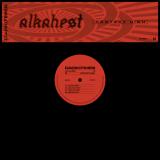
Hidden Sounds Record store – with the help of Emotional Recordings – launches the Dark Times label with the first of two club orientated EPs from Canadian brother-production duo Lex and Rew MacCrimmon and their project Alkahest.
Released on their own Post Contemporary label between 1994 – 1996, Alkahest contrasted with the spacious electronica of their influential and still on-going project, Legion Of Green Men.
Growing up in suburban city life in Burlington, Ontario, the MacCrimmon brothers’ interest in music and collecting records started early, always looking for interesting sounds in new places. With a limited local music scene or record stores, the alternative and college radio stations were the only way to discover new music or the type of music they sought.
The German electronic sounds of Kraftwerk, Klaus Schulze and Tangerine Dream were early obsessions, alongside Neu, Cluster (& Eno) and the post punk and synth pop emanating from Britain. The Flying Lizards, John Foxx / Ultravox, Gary Numan and The Normal were favourites, before diving into the 80s industrial experiments of Cabaret Voltaire, Severed Heads, Nurse With Wound and Throbbing Gristle.
Making their own music soon followed, first experimenting with 4 track cassette and digital delay, drum machines and synths soon followed, steadily building their own studio. All these influences merged in the early 90s with the dawn of house and techno and the progression to start the Post Contemporary label launched in 1992.
With the project Legion Of Green Men achieving early success, their diversion with Alkahest explored a post-industrial techno hybrid. Unsubtle, night music, the rhythm and sonic textures are more prominent over melody.
Contact High covers this Alkahest sound, from the 133 bpm trippy, psychedelics of opener Black Tabs, the acid breaks of Ground Zero or the charging nature of closing Séance 333, where all bets are off – together this 4 track EP perfectly captures the early spirit of Canada’s electronic music scene finding its place in dance culture, from the raves of the Toronto’s outer rim to the beaches of Anjuna.
However, in the title cut Contact High, there is something else happening, as electronic dub is explored, where the space in the music, between the beats, is as important at what happens on the surface. A love of this ethereal feeling would lead the brothers to head further in this direction and here is a perfect example of that early journey.
erscheint voraussichtlich am 05.10.2026

This is the 12" already immortalized by Gilles Peterson! Dub Souljah, with its classic Roots Reggae/Dub-styled horns and brilliant lead and backing vocals, comes in two versions when Ekowmania meets DJ Sotofett. The first version, in 1970s tradition, is a rocking dancefloor Disco Dub with extended and highlighted percussion parts. Then there's the Ultra Dub – a severely deep and reduced dub where horns and vocals surface only intermittently through constant echoed kicks, minimal hi-hats, and a two-tone bassline. The title track is from Ekowmania's Dr. Afrodub album, produced by Jimi Tenor, but this 12" also includes two non-album cuts: the psychedelic Afro twist of Afrolistic Rock & Roll, and the cosmic Latin-styled Kuusikasi Funk, featuring beautiful saxophone and flute by Jimi Tenor. THIS 12" IS CUT WITH LOUD VOLUME FOR EXCELLENT CLUB USE!
Bei uns am Lager und sofort versandfertig

South, Black Vinyl[27,69 €]
“Simply put, it’s unlikely we’ll encounter a mix that leaves a cultural footprint and defines the sound of a generation quite like Northern Exposure again. Both mixes are absolutely 100% astoundingly brilliant”
DJ Mag
“Their best-loved mix CD is a trippy traipse through the verdant world of progressive house, a genre with one foot in the rave and the other somewhere in the great beyond” Rolling Stone - The 30 Greatest EDM
Albums Of All Time
Originally released on 27th September 1996, ‘Northern Exposure’ is widely regarded as one of the greatest mix compilations ever made. Thirty years on, it sounds as vital as ever - a testament to the fearless vision that went into its creation.
At a time when DJ culture was still writing its own rules, Sasha and John Digweed pushed against the grain. Drawing on sounds discovered during early trips to America - from Rabbit in the Moon to Future Sound of London - they built something that prioritised atmosphere over dancefloor convention. DJ Mag panned it on release. History changed their tune.
Northern Exposure Redux marks the 30th anniversary with a definitive reissue of both original mixes. The CD version also includes a newly created ambient mix. Shaped by the spirit of Bill Laswell and Mad Professor, it explores the deeper, more hypnotic DNA that always ran beneath the surface. Northern Exposure Redux North includes classic tracks by Keiichi Suzuki, The Future Sound Of London, and Banco de Gaia. Northern Exposure Redux South includes classic tracks by Dope On Plastic, Pete Lazonby, and a newly recreated version of ‘Dark And Long (Dark Train)’ by none other than Darren Emerson himself. Both vinyl versions also include a download code for both the North And South mixes, as well as the individual tracks.
Canonical then. Essential now.
erscheint voraussichtlich am 09.10.2026
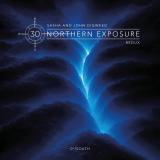
North, Black Vinyl[27,69 €]
“Simply put, it’s unlikely we’ll encounter a mix that leaves a cultural footprint and defines the sound of a generation quite like Northern Exposure again. Both mixes are absolutely 100% astoundingly brilliant”
DJ Mag
“Their best-loved mix CD is a trippy traipse through the verdant world of progressive house, a genre with one foot in the rave and the other somewhere in the great beyond” Rolling Stone - The 30 Greatest EDM
Albums Of All Time
Originally released on 27th September 1996, ‘Northern Exposure’ is widely regarded as one of the greatest mix compilations ever made. Thirty years on, it sounds as vital as ever - a testament to the fearless vision that went into its creation.
At a time when DJ culture was still writing its own rules, Sasha and John Digweed pushed against the grain. Drawing on sounds discovered during early trips to America - from Rabbit in the Moon to Future Sound of London - they built something that prioritised atmosphere over dancefloor convention. DJ Mag panned it on release. History changed their tune.
Northern Exposure Redux marks the 30th anniversary with a definitive reissue of both original mixes. The CD version also includes a newly created ambient mix. Shaped by the spirit of Bill Laswell and Mad Professor, it explores the deeper, more hypnotic DNA that always ran beneath the surface. Northern Exposure Redux North includes classic tracks by Keiichi Suzuki, The Future Sound Of London, and Banco de Gaia. Northern Exposure Redux South includes classic tracks by Dope On Plastic, Pete Lazonby, and a newly recreated version of ‘Dark And Long (Dark Train)’ by none other than Darren Emerson himself. Both vinyl versions also include a download code for both the North And South mixes, as well as the individual tracks.
Canonical then. Essential now.
erscheint voraussichtlich am 09.10.2026
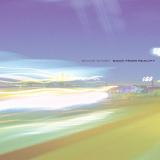
Space Ghost returns with Back From Reality, his first solo album since 2022. Blending ambient, downtempo and house, the LP explores themes of escapism, introspection and the search for moments of calm in an increasingly overwhelming world. Out October 9th, 2026 via Space Ghost’s own Peace World Records.
Drawing influence from late '90s and early 2000s ambient and electronic music, the record channels the nostalgic atmosphere of PS2-era video game soundtracks, console startup screens, and save menus. “I used to play games like Spyro, Crash, Ape Escape, Gran Turismo. It's fun for me to reimagine songs that could have lived in games from that era. ” The project reveals Space Ghost's interest in writing music for video games, with tracks such as "System Reset" reimagining an alternate PS2 startup screen or “VGM” visualizing a stage selection screen for an imaginary game.
Visually, the project emulates the minimalist design trends of album artwork from the same era: sparse industrial landscapes paired with minimal type. Space Ghost took the cover photo himself while driving around the quiet, empty Oakland ports at night. Tracks like “Sugar Cube” and “Back From Reality” mimic these late night environments and create a downtempo zone for listeners to get lost in. “One of my favorite things to do after writing songs, is to drive around Oakland listening to them. It's almost like the final test for the songs, to see if their emotion holds up.
”
Written over the course of five years, Back From Reality reflects Space Ghost’s experience of balancing everyday life with the desire to be creative. “This album is me coming home from my day job and returning back to the place where I feel the joy and freedom in making my music. If I could, I would work on my music full time, but for now it's part time and often a form of escapism. ” Beneath its calming surface, the LP quietly wrestles with larger questions. Against the backdrop of global conflict, environmental decline, and economic uncertainty, the album searches for small moments of optimism through creativity and introspection. Back From Reality holds a moment of space away from these overwhelming times, allowing listeners to pause and recharge.
Back From Reality releases on Peace World Records October 9th, 2026
erscheint voraussichtlich am 09.10.2026

„Öd“ marks the long-awaited return of Institut für Feinmotorik - the Black Forest collective known for using eight prepared turntables to investigate acoustic micro-phenomena generated by everyday objects - with a new album and their first full-length release on Faitiche. It is also the return of their almost comical understatement as personal artistic principle: „making almost nothing out of almost nothing,“ compressed into the dots on an umlaut.
The Öd-nis, the wasteland, is a field that the collective has been ploughing in sound since their first release in 1997. Eight prepared turntables, four mixers, no records, six hands (give or take) merge into what they call the „Octogrammoticum“. A rotating organism of surfaces in friction, fed with the clutter from a drawer: rubber bands or tin foil, CDs, a discarded socket board. Under IFF's scrutinizing stylus, mundane almost-nothings get scratched open to reveal the acoustic density of negative space itself.
Last year’s „Adhesive Tape“ drew IFF closer together after an almost ten-year hiatus. An eponymous event series at Berlin's silent green set in motion what would become their most twistedly funky release since „Penetrans“ on Staubgold in 2002.
The only thing öd about „Öd" (meaning „barren" or „boring“ in German) may well be its title: layers of improvised play and randomized loops convolve around porous, dubby groove locks, tugging at each other in a call-and-response with howling static that cuts through bulbous ambient techno into a scrap-metal Dixieland phantasm. Stratified yet spacious, these sonic double exposures always hover on the verge of collapsing. What you think you hear might not be what you actually hear.
The album’s track titles resemble Conceptual Poetry, extending this psycho-phenomenological gesture into the realm of spoken language. Conceived by renowned poet Dagmara Kraus, they become word molecules - „stern,” „dies,” „lose“ - tilting delicately between German and English, constantly changing depending on the ear’s perspective and pointing back to the deeply unstable fabric connecting meaning and sound. Which also makes „Öd“ an unusual cross-disciplinary collaboration - at least in the field of electronic music.
PS: Since its beginnings in Bad Säckingen, IFF has always been more than the sum of its rotating parts, moving tirelessly between multimedia art, theory, solo projects and collaborations. With IFF Expanded, the collective now opens its eight-doored apparatus, inviting artists working with CDJs or samplers to join - an ambitious live format that loosens its former purity law while carrying forward a long-standing curatorial practice. The same thread also runs into the related event series Acephalic Headspace.
Institut für Feinmotorik (*1997), artist-group originating from Black Forest working in various fields. In musical context known for transforming turntables into instruments by removing the records and instead applying rubber bands, paper scraps, household materials – resulting in a vivid laboratory for the productive misuse of everyday objects. This approach is documented in record releases and performed live.
erscheint voraussichtlich am 09.10.2026

Originally released in 2003, Gravel Muncha became one of the biggest and most recognisable records of the Bassline Breaks era and remains one of DJ Quest’s defining productions.
More than two decades later, this breakbeat classic returns on Cyberfunk as CFUNK 040, pairing a brand-new remix from Datafunk with a fully remastered 2026 version of the original.
Built around everything that made the early Quest sound so distinctive - huge rolling basslines, tough breakbeats, twisted synth work and relentless dancefloor pressure - Gravel Muncha is a record that has never really disappeared. The original continued to surface in DJ sets, mixes and collections around the world, earning genuine classic status within the breakbeat scene.
For 2026, Datafunk takes the track into new territory while respecting the character and attitude of the original, giving one of breaks’ most enduring records a fresh weapon for modern dancefloors.
A piece of breakbeat history, rebuilt and reloaded for a new generation.
erscheint voraussichtlich am 09.10.2026

Lost Soul Super Rarity “Here I Am Baby” by Lady Jane reissued by Athens of the North
Rare 1980 Detroit funk-soul LP finally surfaces after 45 years, revealing a powerful story of survival and artistic resilience
Edinburgh based label Athens of the North is pleased to announce the reissue of Here I Am Baby, the only studio album by soul and funk vocalist Lady Jane (Jane Brice), originally recorded at Studio A, in Dearborn Heights and privately released in 1980.
Lady Jane recorded these sessions during a turbulent period in Detroit in the late 1970s, working with respected engineer Eric Morgeson and a studio band on material largely written by her then-husband. The album remained virtually unknown for decades, with copies destroyed in a flood and masters held by her ex-husband. A chance discovery by Friends of Sound Records founder David Haffner in 2022 set the reissue in motion. Remarkably, before his death, Jane’s ex-husband returned the original master tapes to her—yielding not only the complete multitracks for Here I Am Baby, but an entire album’s worth of unreleased material, also coming soon on AOTN.
Here I Am Baby showcases Jane’s extraordinary voice across a compelling blend of soul, funk, and disco, from the opening ballad through heavy funk excursions like “Never Lived In The Ghetto” and “Space Flight.” The album’s final track, “She’s A Star” - the only song Janewrote herself - carries profound personal significance. Recorded without her husband’s knowledge, the song directly addresses her survival of childhood sexual abuse and stands as a moving testament to resilience and self-belief.
Now an ordained minister, Jane Brice has spent decades away from the spotlight. But her voice—at once forceful, delicate, and vulnerable—deserves to be heard. Newly mastered from the recovered tapes, Here I Am Baby and the forthcoming Miss Disco present not merely a rare funk-soul artifact, but a powerful document of a woman’s courage in reclaiming her own story.
erscheint voraussichtlich am 09.10.2026

Meet Matas Petrikas, a music producer, DJ, and book author with a passion for electronic music. Born in Lithuania during the time when it was still a part of the Soviet Union, Matas began experimenting with electronic sounds during his teenage years using self-built instruments and recording equipment. In 1991, Matas took a trip to Berlin that would change his life forever. There, he encountered the early years of techno culture, which led him to co-found EXEM, one of the first house and techno bands in the former Soviet space. With EXEM, Matas was one of the pioneers of electronic dance music in Lithuania, and by the end of the decade, they had charted numerous hits. They performed live shows ranging from intimate clubs to massive arenas, sewing the seeds of the local electronic music scene. Since then he relocated to Berlin and has forged a musical solo career focused on live-sets, experimentation, and authoring the book 'The Joy of Electronic Music'. The Unknown is Matas’ first release on his newly formed imprint Dangė Records, focused on supporting electronic music from Lithuania and the Baltics. The 6 track EP forges his love for texture heavy hypnotic techno with industrial and warehouse leaning low end and percussion. Although mainly an EP rooted in driving a groove, the use of earworm worthy basslines, rave breaky drums, and squelchy lead synths is where Matas’ long career foray into many genres of electronic music shines through. Dangė Records releases electronic music from Lithuania and the Baltics—sounds that emerge from underwater, carried by artists who inherited the weight of transformation.
erscheint voraussichtlich am 09.10.2026

Sea Glass Vinyl[32,35 €]
A quick scan of the world’s favourite crowdsourced discography reveals that Sonic Youth co-founder Lee Ranaldo was not a total stranger to crackling electric experimentation in the years following his songwriting turns of the 20-teens. Yet »The System«, ingeniously culled and sequenced from Ranaldo’s soundtrack work for Dutch filmmaker Joris Postema’s ›eco-doc‹ of the same name, nonetheless feels like a reawakening. Quietly released in a vastly different (and much more ›filmic‹) form by Doxy Music/Riva Media Records in 2025, this LP reimagines and reconfigures the initial release, including unreleased material written and recorded for the film, to lend it new stature as both a return to drone-improv form and a reunion with introspective Downtown angst.
Given the state of the world, it’s not surprising that the film Ranaldo scores – a documentary on three climate activists bruising their fists on the black iron prison of techno-fascist deathkultur – is a study in despair and futility. But rather than wallowing in navel-gazing doom and gloom, the film documents the unstoppable spirit that has animated human resistance since the time of the Pharaohs.
As it turns out, the gorgeous scope of Lee Ranaldo’s guitar palette is a perfect manifestation of the hope and despair that animates the film. But like other high-water marks in the guitar-centric soundtrack canon – the high plains raga of Bruce Langhorne’s »Hired Hand«, Neil Young’s sparse and ghostly solo transmissions on »Dead Man«, or the monolithic mantras of Popol Vuh’s »Nosferatu« – its devotion to spectral gestures and meditative song forms launches it firmly outside of the OST orbit into a universe fully its own.
It might seem like a long journey from the Lower Manhattan rhythmic grime of the album’s opener »Tajikistan (Nice to Meet You)« (reminiscent of guitar opuses like Robert Quine and Jody Harris’s »Escape«) to the ringing cowboy chords of the final track, but the narrative logic of the LP pulls the listener along as solidly as a pack horse. As the LP unwinds, and collaborators like Jim Jarmusch, cellist Leila Boudreil, Yeah Yeah Yeahs snare shaman Brian Chase, and guitarist Yonatan Gat take their places, new vistas unfurl: the ritualistic thrum of »Berlin Blockade«, the haunted overtone palaces of »Bergelmir«, and the cavernous acoustic strumming of »Instruments of Violence«. It all winds up with the high lonesome standard »Cool Water«, each unhurried note trailing off into long-tail reverb, layers of shifting vocal harmonies pulling everything skyward – a hopeful note in an album where existential dread never lurks too deeply below the surface.
In the end, »The System« functions both as a film score and a hallucinatory (mostly) instrumental guitar record, revealing a sensibility not too often spotted in the 21st century – a liminal space where the song, the jam, and the meditation merge into a blurred whole. »The System«’s expansive fabric, emerging from a collective sound circling around Ranaldo’s signature tones, envelops and ampl amplifies the contributions of its community of creators – the perfect antidote to narcissistic despair. Much like the subjects of the film light the way towards intra-generational resistance, the music of »The System« reveals a path through gathering darkness. The world could be yours if you follow.
– Tom Carter
erscheint voraussichtlich am 09.10.2026

A quick scan of the world’s favourite crowdsourced discography reveals that Sonic Youth co-founder Lee Ranaldo was not a total stranger to crackling electric experimentation in the years following his songwriting turns of the 20-teens. Yet »The System«, ingeniously culled and sequenced from Ranaldo’s soundtrack work for Dutch filmmaker Joris Postema’s ›eco-doc‹ of the same name, nonetheless feels like a reawakening. Quietly released in a vastly different (and much more ›filmic‹) form by Doxy Music/Riva Media Records in 2025, this LP reimagines and reconfigures the initial release, including unreleased material written and recorded for the film, to lend it new stature as both a return to drone-improv form and a reunion with introspective Downtown angst.
Given the state of the world, it’s not surprising that the film Ranaldo scores – a documentary on three climate activists bruising their fists on the black iron prison of techno-fascist deathkultur – is a study in despair and futility. But rather than wallowing in navel-gazing doom and gloom, the film documents the unstoppable spirit that has animated human resistance since the time of the Pharaohs.
As it turns out, the gorgeous scope of Lee Ranaldo’s guitar palette is a perfect manifestation of the hope and despair that animates the film. But like other high-water marks in the guitar-centric soundtrack canon – the high plains raga of Bruce Langhorne’s »Hired Hand«, Neil Young’s sparse and ghostly solo transmissions on »Dead Man«, or the monolithic mantras of Popol Vuh’s »Nosferatu« – its devotion to spectral gestures and meditative song forms launches it firmly outside of the OST orbit into a universe fully its own.
It might seem like a long journey from the Lower Manhattan rhythmic grime of the album’s opener »Tajikistan (Nice to Meet You)« (reminiscent of guitar opuses like Robert Quine and Jody Harris’s »Escape«) to the ringing cowboy chords of the final track, but the narrative logic of the LP pulls the listener along as solidly as a pack horse. As the LP unwinds, and collaborators like Jim Jarmusch, cellist Leila Boudreil, Yeah Yeah Yeahs snare shaman Brian Chase, and guitarist Yonatan Gat take their places, new vistas unfurl: the ritualistic thrum of »Berlin Blockade«, the haunted overtone palaces of »Bergelmir«, and the cavernous acoustic strumming of »Instruments of Violence«. It all winds up with the high lonesome standard »Cool Water«, each unhurried note trailing off into long-tail reverb, layers of shifting vocal harmonies pulling everything skyward – a hopeful note in an album where existential dread never lurks too deeply below the surface.
In the end, »The System« functions both as a film score and a hallucinatory (mostly) instrumental guitar record, revealing a sensibility not too often spotted in the 21st century – a liminal space where the song, the jam, and the meditation merge into a blurred whole. »The System«’s expansive fabric, emerging from a collective sound circling around Ranaldo’s signature tones, envelops and ampl amplifies the contributions of its community of creators – the perfect antidote to narcissistic despair. Much like the subjects of the film light the way towards intra-generational resistance, the music of »The System« reveals a path through gathering darkness. The world could be yours if you follow.
– Tom Carter
erscheint voraussichtlich am 09.10.2026

New full-length from MINIATURa, following Geometria Prohibida (Keroxen, 2020). Espectral was recorded inside the iconic Keroxen oil tank in Tenerife — a brutalist chamber whose metallic resonance seeps into every track.
Motorik tension, post-punk restraint, shoegaze and darkwave undertow surface and dissolve throughout, but this is no genre exercise. The album feels lived-in and physical: drums hanging in open air, guitars stretching into steel-lined decay, moments of synthetic clarity torn open by abrasion. Propulsion and erosion move side by side.
There’s a rawness here that isn’t aesthetic — it’s architectural. The tank becomes a silent collaborator, shaping space as much as sound.
Lyrically, Espectral unfolds through elliptical micro-poetry, tracing life, love, death and social fracture in fragments rather than declarations. Nothing is fixed; everything hovers.
One of the strongest independent statements to emerge from the Canary Islands in recent years, Espectral finds MINIATURa operating on its own frequency — austere, immersive, and built to linger.
erscheint voraussichtlich am 09.10.2026
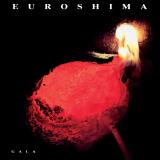
Cult Argentinian darkwave act Euroshima’s Gala sees a vinyl reissue courtesy of Dark Entries. Euroshima was formed in 1986 by Fabián Iribarne, José Wyszogrod, Ricardo Parrabere, and vocalist Wanda. Originally released in 1987 on Polygram, Gala was a success throughout South America. But to the band’s dismay, they received minimal support from the record label, which meant the album would linger in obscurity outside of the region. A CD issue via Twilight Records surfaced in 2020, but this is the album’s first reissue on vinyl.
Gala’s legendary status among cognoscenti is warranted. The album’s nine tracks display all the hallmarks of the best darkwave: spiky guitars, analog synth basslines, and wailing vocals. But Euroshima make their mark on the genre with impeccable songcraft and a honed sense of the uncanny. While the band themselves rejected the label of “gothic”, it’s hard to resist busting out the black eyeliner when listening to gems like the uptempo “Como Los Otro” or the churning album-closer “Mejor Callarlo”. Highly recommended for fans of Xmal Deutschland, Lebanon Hanover, pummeling TR-707’s, and doom-laden synths.
This reissue is co-presented with Twilight Records, responsible for the 2020 CD reissue of Gala. It has been remastered by George Horn at Fantasy Studios. Also included is a double sided insert with lyrics and photos, as well as a postcard featuring a photo of the band.
Bei uns am Lager und sofort versandfertig
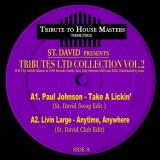
St David's ongoing remix project - Tributes To House Masters - takes a second swipe at the reworks form, probing deep below the surface layer of house music history for another worthy four-track V/A. Paul Johnson's production style is unmistakable before we've even read the name, and shines through even after a remix from St David Swag; 'Take A Lickin'' features several of his sonic blazons, from sticky MIDI brass to ticklish vocal chops. Johnson also famously remixed a Bohannon record, so the latter's inclusion here on the B2 makes this one feel just that bit more knowledgeable. DJ Pierre's MLK-sampling hooter 'Meet Hate With Love' is the favourite big, flabby soulful house chooer in between.
erscheint voraussichtlich am 12.10.2026
