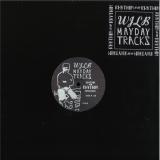
A must have double sider from Harvey Scales & The Seven Seas, containing two of the rarest tracks from their much sought after back catalogue. Originals have sold for eye watering sums of over £1700 in the past, attaining to its rarity but also the sheer quality of the music pressed into its grooves. ‘Trying To Survive’ is one of the great social-consciousness anthems and a slice of pure lyrical genius, whilst ‘Bump Your Thang’ hits with a heavy funk workout, channelling James Brown-esque energy in Chicago shoes. Red label version original black sleeve.
Buscar:survive
Der Disco-Klassiker I Will Survive erstrahlt in neuem Glanz! Diese exklusive 12“ Maxi Single auf farbigem Vinyl bringt frischen Schwung auf den Plattenteller — mit brandneuen, clubtauglichen elektronischen Remixen.
Renommierte Produzenten wie Block & Crown, Robbie Rivera, Makin Bakin und Bekim! verpassen dem legendären Song ein modernes Sound-Upgrade, perfekt für den Dancefloor. Die Remixe verbinden den ikonischen Spirit des Originals mit zeitgemäßem House- und Clubsound — ein Must-have für DJs, Vinyl-Liebhaber und alle, die den Klassiker neu erleben wollen.
Vier Tracks aus dem erfolgreichen Album "RR7349" (2016) der experimentellen Synthie-Band S U R V I V E aus Austin, Texas, die für den Soundtrack der Netflix-Erfolgsserie "Stranger Things" verantwortlich ist. Abgemischt und neu interpretiert von Künstlern wie Lena Willikens, Not Waving, Sam Haar (Blondes) und Justin K Broadrick aka JK Flesh (Godflesh, Jesu). Diese vier Remixe zeigen gekonnt die kompositorischen Fähigkeiten und die musikalische Vielfalt, die in jedem Track zu finden ist, und fassen die große Klangpalette von S U R V I V E zusammen. Für alle Fans von Stranger Things, John Carpenter, Trent Reznor, Tangerine Dream, Boards Of Canada, The Haxan Cloak, Zombi, Visible Cloaks, Floating Points!
Nach einer zwei-jährigen Auszeit, in der er sich bewusst seiner mentalen Gesundheit widmete, und einem
monumentalen Comeback, mit dem er sich seinen Platz als einer der weltweit beliebtesten Künstler eindrucksvoll zurückerobert hat, vollendet Lewis Capaldi seine außergewöhnliche Rückkehr mit der Veröffentlichung seiner neuen vier Songs umfassenden EP Survive. Nach den chartstürmenden Singles „Survive“
und „Something In The Heavens“ – beides kraftvolle Meilensteine seines erneuten Durchbruchs – präsentiert
die EP außerdem das eindringliche „Almost“ und den sehr persönlichen, zutiefst berührenden Abschluss
„The Day That I Die“. Gemeinsam bilden diese Songs eine intime, emotional mitreißende Sammlung, die
die schonungslose Ehrlichkeit, Verletzlichkeit und das große Herz einfängt, die Lewis Capaldi zu einer der
eindrucksvollsten Stimmen seiner Generation gemacht haben.
Vite Fait is back with their second vinyl release!
Since 2019, Vite Fait has been a well known name in Belgium’s party scene.
Initially starting as a small project among three childhood friends, Vite Fait quickly evolved into what they’ve became today.
This release has the energetic & mental sound Vite Fait is known for.

Danny Krivit’s landmark rework of Marvin Gaye's “I Want You" is amazingly celebrating its twentieth anniversary, and Most Excellent Unlimited have answered the pleas of the faithful by reissuing it for the first time on 7-inch. For the uninitiated, Mr. K’s much-loved edit peels back the instrumental layers of the original to focus on the lushly soulful vocal, leaving the track nearly drumless with just a touch of conga providing the only percussion. A magical listen. Elevating the tempo on the flip side is Billy Paul's "Only The Strong Survive", a stone-cold classic in the pantheon of Philly disco and the inspiration for countless house bangers that have drawn from its relentless drive and soaring vocals. Mr. K’s edit naturally focuses on the epic ride out of the original, a blissful 5+ minutes that will lift dancefloors to the heavens.
- Glamour Girl
- On The Street Of) New York City
- Independency
- I Want To Apologize
- Ten Thousand Years
- The Clock
- Every Step Of The Way
- Can’t Have Me
- Love That One
- Canadian Sunset
- Midnight Til We Meet
- Forever Crying
- Outcast (Gypsy Girl)
- Yesterday
- Broadway Freeze
- (It’s Too Good) Too Good To Be True
- Trackdown
- Get Down
- Love-Itis
- Don’t You Ever Let It End
- Trying To Survive
- Bump Your Thang
- Rock The World
- Groove On Sexy Lady
- Welcome Home
- Love Thief
- Follow The Disco Crowd
Broadway Freeze Vinyl[42,23 €]
From his early-’60s days as hip shaker Twistin’ Harvey to his late-’70s nights on the light up dance floor in search of a “Disco Lady,” Harvey Scales survived scrapes with the pop charts, bankrupt record companies, walk outs, sit ins, strikes, price hikes, lay offs, and under table payoffs over a 40 year career. Compiled here for the first time are Scales’ Cuca and Magic Touch recordings, 27 slabs of cracker jack R&B, stomping northern soul, divorce-ridden deep soul, feverish funk, and hustling disco spread across 2 LPs and housed in a deluxe gatefold jacket.. Bill Dahl’s in depth notes document the entire sordid affair, with dozens of period photos and ephemeral bits illustrating the accompanying 20 page book. So necessary.
- Glamour Girl
- On The Street Of) New York City
- Independency
- I Want To Apologize
- Ten Thousand Years
- The Clock
- Every Step Of The Way
- Can’t Have Me
- Love That One
- Canadian Sunset
- Midnight Til We Meet
- Forever Crying
- Outcast (Gypsy Girl)
- Yesterday
- Broadway Freeze
- (It’s Too Good) Too Good To Be True
- Trackdown
- Get Down
- Love-Itis
- Don’t You Ever Let It End
- Trying To Survive
- Bump Your Thang
- Rock The World
- Groove On Sexy Lady
- Welcome Home
- Love Thief
- Follow The Disco Crowd
Black Vinyl[39,71 €]
From his early-’60s days as hip shaker Twistin’ Harvey to his late-’70s nights on the light up dance floor in search of a “Disco Lady,” Harvey Scales survived scrapes with the pop charts, bankrupt record companies, walk outs, sit ins, strikes, price hikes, lay offs, and under table payoffs over a 40 year career. Compiled here for the first time are Scales’ Cuca and Magic Touch recordings, 27 slabs of cracker jack R&B, stomping northern soul, divorce-ridden deep soul, feverish funk, and hustling disco spread across 2 LPs and housed in a deluxe gatefold jacket.. Bill Dahl’s in depth notes document the entire sordid affair, with dozens of period photos and ephemeral bits illustrating the accompanying 20 page book. So necessary.
Whether intentional or not, Philadelphia’s Circa Survive have become experts on that critical second word of their band name. With six full-length records and three EPs behind them, the beloved alt-prog/post-hardcore giants are entering their 17th year together amid global upheaval and personal renaissance, creating together while navigating through one of the most unstable chapters in American history. It’s a necessarily existential period, where that one imperative rises to the top: survive.
In early 2020, the band was forced to reschedule the tenth anniversary tour for their ground-breaking 2010 LP Blue Sky Noise. Pushing off the tour—now slated for 2022—and delaying plans for a new record has ushered in a new chapter for Circa Survive.
Two Dreams, the forthcoming seventh full-length record from Philadelphia’s Circa Survive, is a project of dual realities in both theory and practice. The 12-track record comprises two individual six-song EPs, titled A Dream About Love and A Dream About Death. The dreams in question aren’t the idyllic material of sleep, but a much more tangible, dark surrealism. They’re the twin experiences of vocalist Anthony Green after relapsing and overdosing on heroin during the writing of the album.
With Two Dreams, Circa Survive aims higher in both collective spirit and individual practice. After nearly two decades of international tours and festival mainstages, the band has regrouped to protect one another and their work. They’re playing the long-game. “I want to make 100 more records,” laughs Green. But now, the goal isn't to simply survive. It’s to thrive.
- A1: Only The Strong Survive
- A2: Soul Days Feat. Sam Moore
- A3: Nightshift
- A4: Do I Love You (Indeed I Do)
- A5: The Sun Ain’t Gonna Shine Anymore
- B1: Turn Back The Hands Of Time
- B2: When She Was My Girl
- B3: Hey, Western Union Man
- B4: I Wish It Would Rain
- B5: Don’t Play That Song
- C1: Any Other Way
- C2: I Forgot To Be Your Lover Feat. Sam Moore
- C3: C7 Rooms Of Gloom
- C4: What Becomes Of The Brokenhearted
- C5: Someday We’ll Be Together
Orange Vinyl[31,89 €]
- A1: Only The Strong Survive
- A2: Soul Days Feat. Sam Moore
- A3: Nightshift
- A4: Do I Love You (Indeed I Do)
- A5: The Sun Ain’t Gonna Shine Anymore
- B1: Turn Back The Hands Of Time
- B2: When She Was My Girl
- B3: Hey, Western Union Man
- B4: I Wish It Would Rain
- B5: Don’t Play That Song
- C1: Any Other Way
- C2: I Forgot To Be Your Lover Feat. Sam Moore
- C3: C7 Rooms Of Gloom
- C4: What Becomes Of The Brokenhearted
- C5: Someday We’ll Be Together
Black Vinyl[30,21 €]
Rance Allen, from Monroe Michigan, with older brother Tom on drums and younger brother Steve on bass recorded their first record and won a talent contest in Detroit and were subsequently signed to Stax's Gospel Truth label in 1971. After four albums Rance signed to Capitol and made his most highly acclaimed album 'Say My Friend'. It was produced by the Mizell Brothers (responsible for iconic albums on Donald Byrd, Bobbi Humphrey, Gary Bartz and Johnny Hammond). 'Reason To Survive' and 'Peace Of Mind' were the two singles, and both these 7' versions have been impossible to find. Original copies are expensive and extremely sought after. Expansion can now deliver both A sides back to back remastered from the original tapes in all their glory. The full album is available on CD from Soul Brother Records.
"Seven years after the release of their last album “Eternal”, Stratovarius once more prove their status as symphonic metal flagship and come back with a big bang.
Not only musically the band is once more at the pulse of time. The environment and humanity’s future has always been an important and reoccurring theme in Stratovarius’ music and so the title of the new album “Survive” as well as the accompanying artwork doesn’t surprise - especially in the view of the current global situation.
The new album brings a total number of 11 brand new tracks"
"Seven years after the release of their last album “Eternal”, Stratovarius once more prove their status as symphonic metal flagship and come back with a big bang.
Not only musically the band is once more at the pulse of time. The environment and humanity’s future has always been an important and reoccurring theme in Stratovarius’ music and so the title of the new album “Survive” as well as the accompanying artwork doesn’t surprise - especially in the view of the current global situation.
The new album brings a total number of 11 brand new tracks"
"Seven years after the release of their last album “Eternal”, Stratovarius once more prove their status as symphonic metal flagship and come back with a big bang.
Not only musically the band is once more at the pulse of time. The environment and humanity’s future has always been an important and reoccurring theme in Stratovarius’ music and so the title of the new album “Survive” as well as the accompanying artwork doesn’t surprise - especially in the view of the current global situation.
The new album brings a total number of 11 brand new tracks"
Recycled Vinyl[39,03 €]
Blue Curacao Vinyl[39,03 €]
Violet Transparent Vinyl[39,03 €]
"Seven years after the release of their last album “Eternal”, Stratovarius once more prove their status as symphonic metal flagship and come back with a big bang.
Not only musically the band is once more at the pulse of time. The environment and humanity’s future has always been an important and reoccurring theme in Stratovarius’ music and so the title of the new album “Survive” as well as the accompanying artwork doesn’t surprise - especially in the view of the current global situation.
The new album brings a total number of 11 brand new tracks"
- A1: Forced Values
- A2: Sick Pleasure
- A3: Destroy Capitalism
- A4: Who´ll Survive
- A5: You Cant Deny It
- A6: Respect The Earth
- A7: Bullying A Nation
- A8: Fried
- A9: Nazi Go Home
- A10: What You Say, What You Do
- B1: No School
- B2: Blow All Town Halls
- B3: Create Your Own Life
- B4: Svensson, Svensson
- B5: Leonid Was Red
- B6: Pray The Lord My Soul To Take
- B7: Blue Eyed Devils
- B8: Chaos
- B9: Hundred Dead Cops
- B10: Forced Value (Live)
Anohni has shared an emotive cover of Gloria Gaynor's 1978 classic 'I WIll Survive'. The track was a staple of her early live shows and opens with a graceful string arrangement by Maxim Moston, paired with piano performed by Anohni. Prior to the track being widely available on streaming platforms, Anohni shared a video incorporating live footage alongside messages dedicated to groups and causes that Anohni has long been an activist and advocate for. During the clip, Anohni dedicates the song to "the sacred gay people"; "all endangered Black trans lives"; "those in the US who die from medical neglect"; "the coral reefs of the world, now rotting"; "all those awaiting execution in US death chambers"; "Black lives tortured and stolen by American cops" and more. The messages reflect Anohni's longer values and work as an artist, trans activist, environmentalist and advocate for social justice. Alongside the release is a statement from Anohni, on the track being the subject of a licensing offer she turned down due to the platform in question hosting misleading pro-Trump ads. Further on the track, Anohni explains: "It was the first song I ever sang in nightclubs in NYC when I was 20 years old. I sang it hundreds of times. In those days I sang it thinking of Marsha P. Johnson and the underground queer community struggling to survive in the face of AIDS. Now it seems to me like an anthem for the future of life on earth." 'I Will Survive' follows a brace of releases from Anohni this year: most recently 'R.N.C 2020', a track inspired by the Republican National Convention which took place in August and the dread Anohni felt while watching it. Prior to that, Anohni released a 7" consisting of two covers, one of Bob Dylan's 'It's All Over Now, Baby Blue' with a b-side of Nina Simone's 'Be My Husband'.
Two of Harvey Scales' finest recordings back to back on one 45rpm single re-issue. Trying to Survive is probably his most sought after release in the world of soul 45rpm single collectors. It is not only the rarity but quality though which makes this re-issue a must-have for all soul lovers who do not want to spend $1000+ for an original copy.
From director George Miller, originator of the post-apocalyptic genre and mastermind behind the legendary Mad Max franchise, comes Mad Max: Fury Road, a return to the world of the Road Warrior, Max Rockatansky. An apocalyptic story set in the furthest reaches of our planet, in a stark desert landscape where humanity is broken and almost everyone is crazed fighting for the necessities of life.
The film’s epic score is written by Tom Holkenborg, aka Junkie XL, a Grammy nominated and multi-Platinum producer, musician and composer. Junkie XL’s versatility puts him on the cutting edge of contemporary music, as well as in the vanguard of exciting film composers. He is able to draw on his extensive knowledge of classical forms and structures while keeping one finger planted firmly on the pulse of popular music. When this eclectic background is paired with his skill as a multi-instrumentalist (he plays keyboards, guitar, drums, violin, and bass) and mastery of studio technology, a portrait emerges of an artist for whom anything is possible.
- A1: Journeyman - Something Dies In The Soul (Day Mix)
- A2: Iamnotarobot Feat. Karl P. - Survive (Club Edit)
- A3: Iamnotarobot - Star Planet (Instrumental)
- A4: Rum & Honey - Flow (Kosmoramadisco Mix)
- B1: Poison Rouge - Veneno (Slow Mo)
- B2: Capitan Feat. Mortinger - Frenetico (Kosmoramadisco Mix)
- B3: Hen Darrow - Angel Eyes (Iamnotarobot Edit)
- B4: Gazzapo - Rainy Day
KosmoramaDisco Vol. 2 is the second of a series of compilations that KosmoramaDisco label begun to release in 2018. This is a follow up of what the label it's been trying to show in the last 2 years. For this we have a new bunch of artists which music styles fit again with the philosophy and taste of the label: from Italo to Dark Disco and Slow Mo all wrapped, as usual, in club dancing format.
- A1: My Happiness
- A2: I Don't Know
- A3: Bodies In The Rubbish
- A4: Lullaby For The Lovers
- A5: New Record
- A6: Last Night Dj Killed My Wife
- A7: I Love You
- A8: 20 Seconds Over Venice (And 6 Over Mestre)
- A9: Bob The Gentleman
- B1: Tricks To Survive
- B2: The Try
- B3: Chic One
- B4: Love We've Shared
- B5: Freak Song
- B6: Tomorrow
After a long time in the works, Mothball Record is proud to present a lost album from legendary Italian wave band: Ruins.
Hailing from Venice, Ruins are one of the pioneering artists of the Italian new wave scene beginning in the late seventies: an explosion of new and exciting art, music and film.
The tracks on 'New Record' were taken from the self-distributed, tape only release from 1983 'Side Roads'.
This album was timed directly before their most well-known releases in contemporary times, the 'Fire / Crime' 12' and the eponymous 4 track EP on Black Square.
Taken from the original master tapes and selected by Ruins themselves, the album should be listened as a whole to gain the full experience, but immediate 'must-hear' tracks are 'I Don't Know', 'I Love You' and 'Last Night DJ Killed My Wife' featuring early use of Roland TB303.
At times unsettling, beautiful, violent, harmonious, these songs will finally get the audience and exposure they deserve 35 years later.
Haiku's Raw Waxes label is delighted to welcome the famously unconventional Stanislav Tolkachev with a new track EP of experimental techno and IDM sounds. Entitled Champions' Breakfast and with brilliant artwork from German Benedikt Rugar, the releases features six cuts, one of which is a previously digital-only track landing here on vinyl for the very first time.
Haiku has long been a fan of Ukrainian Tolkachev having previously collaborated on a remix for the label, while Tolkachev has also released on Haiku's other label Inkblots. This new EP is one that not only shows off the label's willingness to take risks and put out diverse and interesting electronic music, but also one that proves Tolkachev is a truly unique artist with his own musical voice. He has been that way for more than a decade now, and has put out three long players as well as countless EPs that get heavy support from the tastemakers of the day. This latest offering contains his take on the essentialness of groove, enriched by his use of atonality, dissonance and acid-not-acid textures, all in a minimal style.
The deep 'Shady' kicks things off with spangled synth lines and eerie pads off in the distance. It's a lonely and insular piece with kinked rhythms that keep you locked. The excellent 'The Main Thing Is To Survive' is then less constrained, with kicks that rock back and forth as off kilter synth lines warp and wrap around each other in mind melting and tripped out fashion. Switching up the mood with ease, 'Fuck This Guy' is a dark and musty passage of humid ambient techno with static electricity buzzing about over smeared pads that are filled with menace, then the curious 'Hair In My Mouth' is about blurting, busted frequencies, loose and scattered drums and glassy melodies. It's a mangled and mashed up track that sounds like little else. 'Negative Space' is horror soundtrack techno with urgent, driving drums and nervy sound design that keeps you on edge, and closer 'Self Destruction' is built on broken, bristling beats. A rhythm slowly emerges from the haze and it is one that is physical and restless and sure to make a big impact in the club.
This is a varied and vital EP that oozes essential electronic invention.
- A1: N.y. State Of Mind, Pt. Ll
- A2: Hate Me Now
- A3: Small World
- A4: Favor For A Favor (Feat. Scarface)
- B1: We Will Survive
- B2: Ghetto Prisoners
- B3: You Won't See Me Tonight (Feat. Aaliyah)
- B4: I Want To Talk To You
- C1: Natures Shine
- C2: Dr. Knockboot
- C3: Life Is What You Make It (Feat. Dmx)
- C4: Big Things
- D1: Nas Is Like
- D2: K-I-Ss-I-N-G
- D3: Money Is My Bitch
- D4: Undying Love
Nas' I AM was his third studio album release and proved his reputation of one hip-hop's leading rappers. His strong lyrics are heard on tracks like "Small World" and "Favor for a Favor" featuring Scarface of the Ghetto Boys. The original material of the album was leaked onto the internet and this forced him to record completely new material.
The album debuted at #1 on the Billboard 200 and on the US Top R&B/Hip-Hop Albums, and was certified Double Platinum in the USA. In the US Nas had chart success with tracks "Nas Is Like", "Hate Me Now" and "You Won't See Me Tonight" featuring Aaliyah. The production on this album is solid and stands up, even to this day.
FINAL PROGRAM was a pioneering Scottish minimal synth band, formed in Sterling in 1978. The first version of the band consisted of Richie Program and Anne Droid who went fully electronic when EDP launched their first affordable synth, the Wasp, and guitars were ditched. This LP entitled "Robots, Rockets, Radiation" is comprised of all 12 demo tracks and the original 7"EP tracks, making this a rather comprehensive work. Pure and raw, yet playful analogue synth bliss including the hits "Phase One", "Automaton", "Mechanic Dancing", finally a vocal version of "Protect and survive", as well as a cover version of The Stranglers' "Hanging Around" and an interpretation of Burt Bacharach's "Raindrops (keep falling on my head)".
The second of the Decadub vinyl-only releases dedicates three of its four sides to a volley of woozy and twisted footwork from most of the key members of Chicago's Teklife crew. Side One starts with DJ Rashad and Gant Man's squiggly 303 banger 'Acid Life' and moves onto Taso & Djunya's Darwinian banger 'Only The Strong Will Survive'. Side Two descends into DJ Spinn's bombastic 'All My Teklife' and then Earl, Rashad & Taye's 'Bombaklot' which takes Hyperdub full circle with a yardcore bomb like a 2014 upgrade of the label's early days. Side Three leads with DJ Earl's immaculate diva vocal cut-up of 'I'm Gonna Get You', then moves on into DJ Taye's fizzling R&B jam 'Get Em Up' and the stone cold, warped humour of 'Icemaster' by Heavee. On the fourth and final side, Tokyo-based ally Quarta330 returns to craft 'Hanabi', an epic, uptempo synthesiser jam. Young gun Champion follows with 'Power Cut', its minimal, energetic and militant kicks and bass molded with cowbell and lots of tight edits, before dropping some neat keys and a warping bassline two thirds in. Ikonika finishes things off with the solemn march of 'Tug Zone', opening slow but building in flickering high hats and gaseous cymbals into a track which could have emanated from Battlestar Galactica.
Avrocar hatten bisher eine PEEL-SESSION und kurz vor John Peels Tod wurden sie gebeten, eine 2. zu machen, welche fertig ist und tatsaechlich am 11.01.2005 bei Radio 1 uebertragen wird....rest in peace
neuer act auf kanzleramt !!! groovige technotracks !!!
DJ Slip's amazing Discography counts more than 30 releases on well-known lables like Missile, Music Man, Kanzleramt and his own Creation Rebel imprint. His productions are always this little bit different and sets them apart from the rest. Again DJ Slip surprises even those who know. Born and raised in Midwest America he started his music productions with Woody Mc Bride and DBN from Milwaukee. Slip's Homebase is nowadays Brooklyn NY where his Creation Rebel label and the studio are placed too. His brand new album "The Machines Will Know Who You Are" is his first real album and another groundbreaking step that shows his dissimilar sound creations based on electro, techno and instrumental hip hop tunes. The LP contains 12 stories told by the tracks and the guide Slip leads us through the world of strange percussion grooves, post-acid-times, electro bass soundsystems, bangin' techno club memories, chillin' nightflights, Brooklyn and the rough street-life sounds from New York.
Memory Remains unveils a deeply emotional and intimate Unknown Artist release, a record driven by feeling rather than form.
Shaped and refined through careful dancefloor testing across 2025, these tracks revealed a rare sensitivity: minimalist structures wrapped in warm grooves, gentle tension, and soulful, intimate vocals that connect on a subconscious level.
This is music that doesn’t demand attention. It breathes, resonates, and stays.
Free from names and narratives, the release invites the listener into a private emotional space, where sound speaks louder than identity.
The journey is visually completed by an original artwork from Alisa Kirik, capturing the same fragile beauty and timeless mood that defines this release on Memory Remains.
When a Russian missile struck the ground not far from my studio in Kyiv, I vividly remember how my body reacted to the explosion, milliseconds before my mind did. That traumatic explosion reduced my essence to a primal state. There existed nothing but dread—the kind that, in scripture, accompanies the appearance of angels announcing, ’Be not afraid’.
The visions of Abbess, composer and mystic Hildegard von Bingen were preceded by bright, excruciating flashes of light. Modern medicine reduces them to cluster migraines, one symptom of which is the retinal aura, often accompanied by blurred vision and blind spots. Hildegard’s music can place great demands on the bodies of its performers, emphasizing uncomfortable intervals and the wide distance between the lowest and highest pitch. In comparison, Gregorian chant, the liturgical standard of the time, represents a tempered attempt to grasp God intellectually; indeed, Hildegard’s music was once described as a stick of dynamite thrown into a Gregorian chant.
This album is not a historically informed performance. Hildegard’s persona and music are a starting point—a distant mirror, akin to the shield of Perseus, used to reflect Medusa. It allows us to reflect, comprehend, externalise, and transcend traumatic wartime experience, reinstating the embodied origins of Christianity, which contained suffering but also offered the promise of transcendence. Andriana-Yaroslava Saienko emphasises this physical aspect of Hildegard’s music by drawing on authentic Ukrainian folk singing, a form that survived despite efforts by the Soviet occupation to replace it with a simulacrum that is naive, harmless, and devoid of contradictions—an attempt to ‘civilise’ the body by disembodying it.
The musical approach is also informed by my ongoing practice of reimagining early music in modular synthesis. I accompany Andriana-Yaroslava’s fiery singing with drones—extended sounds that also occurred in medieval music. The drones alternate with improvisations, one taking its starting point in medieval polyphony, the other working with the concept of the interchangeability of sound and light, referring both to Hildegard’s visions and the space in which we recorded the album: the Cistercian abbey of Sylvanès in Occitania, known for contemporary stained glass windows whose patterns reference the dispersion of acoustic waves inside the church.
The album features two compositions by Hildegard von Bingen: O Ignis Spiritus Paracliti (O Fire of the Spirit and Defender), dedicated to the Holy Spirit, and O Tu Suavissima Virga (O Sweetest Branch), in honour of the Virgin Mary. Both pieces are performed radically slower than usual, expanding in time and space. On vinyl, the compositions are designed to reflect one another and can be listened to in either order. In the digital edition, there is a bonus track titled Zelenaia Dubrovonka (The Green Oak Grove). Based on a Ukrainian folk song from the Polissia region, Andriana Yaroslava adapted the lyrics to reflect our contemporary reality. The green oak grove does not rustle with the wind; instead, it resonates with a different sound—perhaps the missile that struck near my Kyiv studio.
- 01: Maanitus &Amp; Tšiižik
- 02: Markka
- 03: Melkutus
- 04: Letška
- 05: Kuuen Parin Hoirola
- 06: Brišatka
- 07: Tšiižik
- 08: Kirkonkellot
- 09: Kirkonkellot Korkea
- 10: Hoirola, 3 Parin
- 11: Lippa
- 12: Kyngäkiža
- 13: Ristakondra
- 14: Vanha Polkka
- 15: Viistoista
- 16: Vanha Valssi
- 17: Kiberä
- 18: Maanitus Kuokan Kanteleella
- 19: Tuuti Lasta Nukkumahe
Vinyl[22,65 €]
Death Is Not The End present a further volume of Arja Kastinen's eerie amalgamations of 110 year old wax cylinders with her own meticulously transcribed takes, this time focussing in on Armas Otto Väisänen's field recordings of kantele player Iivana Mišukka (b. 1861 d.1919).
"Ivana Mišukka (1861–1919) was one of the Karelian kantele players recorded by the folk music researcher Armas Otto Väisänen on wax cylinders in 1916 and 1917. In the early 20th century, the remote areas of Border Karelia were undergoing the final phase of a transformation in musical culture, with the ancient runo song tradition giving way to newer forms of music. This transition is reflected in Mišukka's repertoire and choice of instrument. The ancient small kantele, hollowed out of a single piece of wood, was already rare at the turn of the century. Mišukka's kantele was a new type of instrument with 26 strings, constructed of several parts, but he played it using the traditional plucking technique. Like other Border Karelian kantele players, his repertoire consisted of music rooted in runosong culture, as well as newer dances and songs from the east and west. Most of the recorded material falls into the latter category.
Ivan Bogdanov Mišukka was born out of wedlock in Suursara village, Suistamo, on 1 May 1861. He began playing the kantele at the age of five or six, quickly mastering the instrument. In adulthood, he was considered one of the area's best master players. Mišukka was landless for most of his life and lived in different parts of the Suistamo parish. His first wife, Tekla Markintytär, died in 1897 at the age of 40, and his second wife, Jevdokia Filipintytär Jeminen, died in 1907 at the age of 50. Seven children were born from the first marriage, two of whom died young. The third wife, Maria Ignatintytär Gurnan (Kuurnanen), was a well-known master of lamentations. Together with Maria, Iivana Mišukka worked as a tenant farmer in the village of Suursara. Mišukka suffered from rheumatism, which prevented him from participating in physical work like Maria. This was apparently partly the reason why Iivana Mišukka went to earn extra money by playing the kantele on gig trips. He often had other traditional artists from Suistamo as his travelling companions, such as the runosingers Konstantin Kuokka and Iivana Onoila. Iivana Mišukka died in Leppäsyrjä village, Suistamo, on 18 May 1919 at the age of 58, and his kantele was donated to Teppana Jänis.
Mišukka only used 14 of the 26 strings on his kantele, playing the same tunes either a fourth higher or lower. He tuned his kantele to the major scale using fifths, except for a low seventh scale degree on the upper strings, but not below the fundamental. Since he did not use the seventh note of the scale on the upper strings at all, he could use the major scale both lower and a fourth higher with this tuning. According to Mišukka, the sound of higher, or 'finer', strings is 'more beautiful', while that of lower ones is 'greater'. Among runosingers, the size of the thirds varied, ranging from major to minor to neutral. A similar phenomenon can be observed in kantele tunings, where the third, sixth and seventh scale degrees vary in a comparable way.
During a meeting, Väisänen suggested that Mišukka play the smaller kantele belonging to Konstantin Kuokka. The idea was to bring it closer to the horn to improve the recording quality. However, the kantele was completely out of tune, and now Mišukka tuned it to the Lydian scale (track 18).
Using the old plucking technique, Mišukka placed his right middle finger on the fundamental tone, his right index finger on the second scale degree, his left middle finger on the third scale degree and his left index finger on the fourth scale degree, and his right thumb on the fifth. The thumb also played the notes above the fifth note of the scale. As Mišukka remarked to Väisänen: 'Peigaloll' tuloo enemb ruadoa' (the thumb has to do more work). However, he did not use the seventh note of the scale on the upper strings at all. Below the fundamental note, he played the seventh and sixth notes of the scale with his right middle finger of and the fifth note of the scale with his right ring finger. This fifth scale degree below the fundamental is almost always used as a drone. Sometimes, when the melody required it, Mišukka, like other players, also varied the fingering. He would also occasionally strike the same string with the side of his fingernail after plucking it.
The wax cylinder recordings of Karelian kantele players are kept in the archives of the Finnish Literature Society in Helsinki, Finland. Copies were made of them onto reel-to-reel tapes in both the 1960s and 1980s. The 1960s copies are mono and the 1980s copies are stereo. However, not all kantele recordings from these decades have survived.
The sound of the kantele is difficult to hear in wax cylinder recordings due to its low volume, and it occasionally becomes completely obscured by noise. During the copying process, the cylinder sometimes rotates unevenly, resulting in breaks or jumps in the music. Additionally, the rotation speed of the cylinder in the copies does not correspond to the performance speed of the original music, which alters the pitch. However, since Väisänen's precise notes are available in the archive, it is possible to deduce the melodies, their speed, and the tuning level of the kantele in the recordings. Of the copies of the original recordings from the 1960s and 1980s, I have selected the one that best met the requirements of this publication and adjusted the speed of the recording to align with Väisänen's notes. To enhance the listening experience, I have replayed the songs, which now partly overlap the old recordings on this release."
— Arja Kastinen
- 01: Maanitus &Amp; Tšiižik
- 02: Markka
- 03: Melkutus
- 04: Letška
- 05: Kuuen Parin Hoirola
- 06: Brišatka
- 07: Tšiižik
- 08: Kirkonkellot
- 09: Kirkonkellot Korkea
- 10: Hoirola, 3 Parin
- 11: Lippa
- 12: Kyngäkiža
- 13: Ristakondra
- 14: Vanha Polkka
- 15: Viistoista
- 16: Vanha Valssi
- 17: Kiberä
- 18: Maanitus Kuokan Kanteleella
- 19: Tuuti Lasta Nukkumahe
Tape[16,39 €]
Death Is Not The End present a further volume of Arja Kastinen's eerie amalgamations of 110 year old wax cylinders with her own meticulously transcribed takes, this time focussing in on Armas Otto Väisänen's field recordings of kantele player Iivana Mišukka (b. 1861 d.1919).
"Ivana Mišukka (1861–1919) was one of the Karelian kantele players recorded by the folk music researcher Armas Otto Väisänen on wax cylinders in 1916 and 1917. In the early 20th century, the remote areas of Border Karelia were undergoing the final phase of a transformation in musical culture, with the ancient runo song tradition giving way to newer forms of music. This transition is reflected in Mišukka's repertoire and choice of instrument. The ancient small kantele, hollowed out of a single piece of wood, was already rare at the turn of the century. Mišukka's kantele was a new type of instrument with 26 strings, constructed of several parts, but he played it using the traditional plucking technique. Like other Border Karelian kantele players, his repertoire consisted of music rooted in runosong culture, as well as newer dances and songs from the east and west. Most of the recorded material falls into the latter category.
Ivan Bogdanov Mišukka was born out of wedlock in Suursara village, Suistamo, on 1 May 1861. He began playing the kantele at the age of five or six, quickly mastering the instrument. In adulthood, he was considered one of the area's best master players. Mišukka was landless for most of his life and lived in different parts of the Suistamo parish. His first wife, Tekla Markintytär, died in 1897 at the age of 40, and his second wife, Jevdokia Filipintytär Jeminen, died in 1907 at the age of 50. Seven children were born from the first marriage, two of whom died young. The third wife, Maria Ignatintytär Gurnan (Kuurnanen), was a well-known master of lamentations. Together with Maria, Iivana Mišukka worked as a tenant farmer in the village of Suursara. Mišukka suffered from rheumatism, which prevented him from participating in physical work like Maria. This was apparently partly the reason why Iivana Mišukka went to earn extra money by playing the kantele on gig trips. He often had other traditional artists from Suistamo as his travelling companions, such as the runosingers Konstantin Kuokka and Iivana Onoila. Iivana Mišukka died in Leppäsyrjä village, Suistamo, on 18 May 1919 at the age of 58, and his kantele was donated to Teppana Jänis.
Mišukka only used 14 of the 26 strings on his kantele, playing the same tunes either a fourth higher or lower. He tuned his kantele to the major scale using fifths, except for a low seventh scale degree on the upper strings, but not below the fundamental. Since he did not use the seventh note of the scale on the upper strings at all, he could use the major scale both lower and a fourth higher with this tuning. According to Mišukka, the sound of higher, or 'finer', strings is 'more beautiful', while that of lower ones is 'greater'. Among runosingers, the size of the thirds varied, ranging from major to minor to neutral. A similar phenomenon can be observed in kantele tunings, where the third, sixth and seventh scale degrees vary in a comparable way.
During a meeting, Väisänen suggested that Mišukka play the smaller kantele belonging to Konstantin Kuokka. The idea was to bring it closer to the horn to improve the recording quality. However, the kantele was completely out of tune, and now Mišukka tuned it to the Lydian scale (track 18).
Using the old plucking technique, Mišukka placed his right middle finger on the fundamental tone, his right index finger on the second scale degree, his left middle finger on the third scale degree and his left index finger on the fourth scale degree, and his right thumb on the fifth. The thumb also played the notes above the fifth note of the scale. As Mišukka remarked to Väisänen: 'Peigaloll' tuloo enemb ruadoa' (the thumb has to do more work). However, he did not use the seventh note of the scale on the upper strings at all. Below the fundamental note, he played the seventh and sixth notes of the scale with his right middle finger of and the fifth note of the scale with his right ring finger. This fifth scale degree below the fundamental is almost always used as a drone. Sometimes, when the melody required it, Mišukka, like other players, also varied the fingering. He would also occasionally strike the same string with the side of his fingernail after plucking it.
The wax cylinder recordings of Karelian kantele players are kept in the archives of the Finnish Literature Society in Helsinki, Finland. Copies were made of them onto reel-to-reel tapes in both the 1960s and 1980s. The 1960s copies are mono and the 1980s copies are stereo. However, not all kantele recordings from these decades have survived.
The sound of the kantele is difficult to hear in wax cylinder recordings due to its low volume, and it occasionally becomes completely obscured by noise. During the copying process, the cylinder sometimes rotates unevenly, resulting in breaks or jumps in the music. Additionally, the rotation speed of the cylinder in the copies does not correspond to the performance speed of the original music, which alters the pitch. However, since Väisänen's precise notes are available in the archive, it is possible to deduce the melodies, their speed, and the tuning level of the kantele in the recordings. Of the copies of the original recordings from the 1960s and 1980s, I have selected the one that best met the requirements of this publication and adjusted the speed of the recording to align with Väisänen's notes. To enhance the listening experience, I have replayed the songs, which now partly overlap the old recordings on this release."
— Arja Kastinen
pdqb is an entity without a fixed form, moving through multiple timelines at once, performing in all of them simultaneously.
Every tone on this record was sampled somewhere else: in collapsed futures, unfinished pasts, and inside stress loops that never resolved. The tracks are not composed - they are retrieved, stitched together from moments that already happened and moments that haven't happened yet.
The music is unstable, dependent on who listens, and in which dimension, the tracks re-arrange themselves, revealing different harmonics, different fears, different exits. No two listeners hear the same, even if they play it at the same time.
The überskilled Detroit remixers provide a solution for Earthbound listeners - those unable to time-travel or shapeshift: By filtering pdqb's multidimensional signal through machine discipline, they force a temporary alignment - a version of a track that sounds the same to most listeners. Only then does collective rhythm become possible, a shared timeline where bodies on a dancefloor move to the same future at once.
---
Dr. Paul Dominic Quentin Bernard defines Future Traumatic Stress Disorder as a cognitive condition marked by a reversal of mnemonic orientation. Memory, in this model, no longer operates retrospectively but functions prospectively, encoding anticipated survival outcomes rather than past experience. Affected subjects do not recall what has been lived through; instead, they retain anticipatory memory structures of what will be survived. Bernard notes that this temporal inversion produces sustained psychological stress and warrants further empirical investigation.
Continuum - Vol. 16.219, Peer-Reviewed Scientific Journal
- A1: Adventure / Unlimited - Rainy Day Blues
- A2: Jeanette Baker - Vacation From My Mind
- A3: Naz Jazz - Each Moment We Survive
- A4: David Buckland - Celia
- A5: Mary Haynes - We Can Love
- A6: Manzanno - Why Must It End This Way
- B1: The Care Package - The Storm
- B2: Sunshine Earth Band - If I Had Loved You
- B3: Roger Allan Hughes - The Cosmic Fool
- B4: Utopia - Lejos De Mi
- B5: Aoh - The Answer Lies In Love
- B6: Kerry - Not So Long Ago
2026 Repress
A gift to the overthinkers and overworked. Those who are over-concerned and always preoccupied. This is an invitation to hang up the bootstraps, take a load off, and visit a place in the mind where the sun is shining, the breeze is soft and the waves lap softly at your feet. Vacation From My Mind is a sonic realignment of melancholic soul, breezy soft rock, & mellow jazz-funk.
This album is a thoughtfully curated collection of 12 rare and obscure tracks from 1973 to 1981. From Jeanette Baker’s hypnotic 70’s soul title track “Vacation From My Mind” to the Latin rhythms of David Buckland’s jazz-funk “Celia”, this compilation was lovingly crafted to ease the stresses and worries of modern life. The Care Package’s song “The Storm” is a larger-than-life production of dreamy harmonies not often found on privately released 45s. Utopia’s “Lejos De Mi” is a slow-burning slice of Bolivian psych that will have you searching for similar sounds. Whatever your preference, we hope that this album will give you a vacation from your mind.
- A1: Sheeple
- A2: Self-Righteousness
- A3: Sweet Cassandra
- A4: The Betrayal Of Blue
- A5: Sweet Cassandra (Reprise)
- A6: The Limits Of Freedom
- A7: Love Or Survive
- A8: Sweet Cassandra (2019)
- A9: Do What You're Told