repressed !
The multi-media project Kraftwerk was started in Düsseldorf, Germany 1970 by Ralf Hütter and Florian Schneider. They set up their electronic Kling Klang Studio where they conceived and produced all Kraftwerk albums.
Kraftwerk created the soundtrack for the digital age of the 21st century. AUTOBAHN 1974, RADIO-ACTIVITY 1975, TRANS EUROPE EXPRESS 1977, THE MAN-MACHINE 1978, COMPUTER WORLD 1981, TECHNO POP 1986, THE MIX 1991, TOUR DE FRANCE 2003. Their compositions, using innovative techniques, electronic sounds and synthetic voices combined with computerised rhythms, had a major musical influence on Electro, Hip Hop, Techno and Synth-Pop.
Suche:sy us
We interrupt our regular Drum Chums programming to bring you a little V/A tackle via the 'Percussion Pals' project.
These razor sharp cuts come from friends near and far, old and new, each one primed to upgrade your record collection.
Debuts abound on the A-side, first via international man of mystery DJ Poufsouffle and his Balea-rock disco stomper "Totally Manic". Brimming with Flash & The Pan style pub-rock wonk this one boasts a growling vocal, sparkling keys and an uplifting chorus which doesn't quite break the spell of extreme silliness.
On the A2, Bristol's Spice Route rescue a nebulous reggae gem from Library obscurity, swinging the scalpel and working the desk to turn out an unstoppable groover.
Built around an irresistible rhythm section, "Gruler Dub" keeps on getting higher as the space-based vocals and trilling synths turn your brain inside out.
The B1 brings the return of Drum Chum extraordinaire Neil Diablo, who follows the Balearic brilliance of his last label outing with a cosmic caper into pure oddball pop. "Starry Night" slinks along in a chromed out catsuit, purring weirdo vocals over robo-chug and mechanical drums before indulging in a catchy chorus packed with addled innuendo. Not only is this as arch as Gina X doing a forward fold, but it also boasts some serious bass weight in the later stages - you have been warned.
We're delighted to finally feature a little magic from Australian Italo wizard Hysteric, who brings the curtain down in utterly emotional fashion via AOR disco dream "Pinball". A steady beat, infectious bassline and glistening chords play host to a swooning vocal, which reminds us to go with the flow and follow fun at all times.
100% Drum Fun Guaranteed.
Much time has passed since the Queer Australian/Italian-Armenian, multifaceted artist, Kristian Bahoudian aka Kris Baha, swapped the parched red earth and searing midday sun of the Australian landscape for the brutalist communist-era apartment blocks and slate-grey skies of former East Berlin. Kris is now a fixture in Berlin’s club scene and has toured most of the world as a DJ & live artist with his own unique production style of cyber industrial, EBM, wave, post punk, and early ‘90s IDM mutations. Remixing some of the scene’s most notable artists such as Boy Harsher and techno pop lord Boys Noize, Kris has garnered respect and trust in the electronic music scene for the last 13 years. To respond to the current AI revolution, Kris uploads himself to the cyber ether through his latest project: GHOSTS IN THE MACHIИE.
Across Dual Timelines —
” GHOSTS IN THE MACHIИE ” unfolds as a sci-fi cyberpunk concept project inhabiting dual timelines. In one, we glimpse a trans-humanist future where human consciousness exists as intricate sequences of binary code, entwined and controlled by omnipresent AI systems. In this coded future, a profound awakening stirs among a select few who manage to mutate the code they were governed by, unlocking memories of their history that was erased by the AI. Through this discovery they realize they can traverse temporal boundaries and utilize this power to send warning messages back in time to their former fully human selves. These eerie missives carry a dire warning for humanity, urging them to rectify the course of society before the relentless march of artificial intelligence deprives humanity of its essence. In this terrifying future, humans are rendered mere specters within the digital expanse, stripped of their souls, to become Ghosts In The Machine.
Collaboration with the future self —
The cyber odyssey unfolds from a unique perspective— Kris’s very own future self (his future ghost): a spectral entity endeavoring to caution its present incarnation against the ominous path it treads, attempting to avert a dystopian future.Sonic Alchemy —
A fuse of cybernetic synth waves, hyper-punk, and pulsating drum and bass laid out against the dystopian, industrial sonic landscape of this grim future “civilization”. Each track recounts a new chapter in the gripping narrative, drawing listeners deeper into their own story and the role we all play as a collective society with the future possibilities of unregulated AI.Recorded in Berlin with software and hardware synthesisers. AI was used to assist me with lyric themes, concepts and ideas. I also used a trained AI model of my own voice as backing vocals in ‘Haunting Me’.ll music, words & concepts by Kristian Bahoudian aka Kris Baha and his future ghost,
GHOSTS IN THE MACHIИE
4-channel rotary mixer with 3-band frequency isolator and filter section for DJs
OMNITRONIC TRM-422: THE ROTARY MIXER ON A NEW LEVEL
The desired child
Omnitronic's popular TRM series has been expanded: the TRM-422 combines all the proven features of the previous models, but additionally offers functions that numerous fans had wished for. During the development of the mixer, the focus was on the demands and suggestions of the community.
FULL CONTROL
Each of the 4 input channels has 2 line inputs, one of which can become a phono input at the touch of a button. The channels are each equipped with a volume as well as a gain control. In addition to the master isolator (bass, mid & high), the DJ has the option to activate a filter with HPF, BPF, LPF, resonance and sweep controls in each of the 4 input channels.
The master output is available to the DJ in both XLR and RCA versions.
EFFECT WAYS
The use of external effect devices is possible through an FX-In and FX-Out via 6.3 mm jack. The mixer's master insert is also equipped with a send & return (unbalanced) path. This allows additional external effects to be looped into the mixer.
DVS INTEGRATION
The mixer's timecode outputs allow easy integration of a DVS system (Digital Vinyl System) such as Traktor or Serato.
MONITOR SECTION
The booth output of the TRM-422 is provided with one XLR and one RCA connector. The signal of the booth output can be easily adjusted to the conditions in the DJ booth with the help of an EQ (High & Low).
MICROPHONE INPUTS
The TRM-422 offers 2 microphone inputs. The first mic input gives the DJ the ability to modify the mic signal with EQ (high & low).
BACKUP SOURCE
With the help of the AUX input on the front panel, players such as smartphones, tablets or MP3 players can easily be connected via mini-jack (3.5 mm) and thus serve as a backup solution.
ACTIVATABLE CROSSFADER
If you don't want to do without a crossfader during your DJ set, you have the option to assign each of the 4 channels to the integrated crossfader. If the crossfader is not used, it can easily be switched off.
SET RECORDING
The RCA record-out makes it easy to record your own DJ set.
FEATURES
4-channel rotary mixer with 3-band frequency isolator and filter section for DJs
3-band master frequency isolator with vintage ALPS potentiometers (Blue Velvet RK27)
Kill cut feature allows DJs to completely remove low, mid and high frequencies for amazing mixing
Filter section with HPF, BPF, LPF, resonance and sweep control for creative sound shaping
4 stereo input channels with gain control, clip LED, 3-way equalizer and phono/line switching
2 microphone input channels with gain control, 2-way equalizer on air switch
High-grade components ensure long life and excellent sound quality
16-digit stereo LED level meter, switchable between master and booth outputs
Booth output with separate 2-way equalizer and level control
PFL section with 16-digit stereo LED level meter, level control, PFL/master mix control and cue mix/split option
Fully assignable VCA crossfader with adjustable curve
2 effects send/return paths
4 direct outputs for Timecode applications
Inputs: 8 x line and 4 x phono (RCA L/R), 1 x front aux (mini jack)
Outputs: master and booth (XLR/RCA L/R), record (RCA L/R), master insert send/return (RCA L/R), FX in/out (stereo jack)
483 mm rack installation possible with supplied mounting brackets
Desktop console housing
TECHNICAL SPECIFICATIONS
Power supply: 100-240 V AC, 50/60 Hz
Power consumption: 24 W
Protection class: Class I
Power connection: Mains input IEC connector (M) mounting version Power supply cord with safety plug (provided)
Frequency range: Microphone 20 - 20000 Hz
Line 20 - 20000 Hz
Phono 40 - 18000 Hz
S/N ratio: >97,2 dB line
>91,7 dB Microphone
THD: Line -68 dB
Control elements: Power switch, source selector, Crossfader, Crossfader selector switch, Crossfade curve switch; Cue mix split function, EQ controls
Status LED: Power, master level meter, clip, CUE
Connections: Input: 4 x line via stereo RCA
Input: 4 x line/phono via stereo RCA
Input: 2 x Microphone via 3-pin XLR
Output: 1 x headphones via 6.3 mm jack socket (stereo) mounting version
Output: 1 x headphones via 3.5 mm jack (stereo) mounting version
Output: 1 x rec. via stereo RCA
Output: 2 x booth via 3-pin XLR
Output: 1 x booth via stereo RCA
Output: 2 x master via 3-pin XLR
Output: 1 x master via stereo RCA
Output: 1 x AUX sends via 6.3 mm jack socket (stereo) mounting version
Output: 1 x AUX returns via 6.3 mm jack socket (stereo) mounting version
Chanals: Input chanel: 4 x stereo with Line-Line/Phono switch via RCA, channel control via Rotary, 3-band tone control EQ, source selector, gain control, CUE switch, FX routing switch, Crossfader selector switch,
Microphon chanal: 2 x mono via XLR, channel control via Rotary dial, ON AIR switch,
Master output: 2 x stereo via XLR, channel control via Rotary
Booth output: 2 x stereo via XLR, channel control via Rotary
Rec. output: 1 x stereo via RCA
Headphones output: 1 x stereo via Plug 6,3mm/3,5mm (Jack), channel control via Rotary dial, Cue mix split function,
Max. level: Output: +18 dBu
Material: Metal
Housing design: Desktop console housing
Dimensions: Width: 41 cm
Depth: 28,5 cm
Height: 10,5 cm
Weight: 5,74 kg
Get a taste of everybody's favourite terrestrial with something extra, Jimi Tenor and his fresh brand of galactic balladry with two single versions from his upcoming album on Timmion Records, "Is There Love In Outer Space?". On the A-side, the title track effortlessly merges cosmic synth flourishes with a soulful backbeat, Jimi's smooth vocal and flute stylings, delivering a splendid questioning continuum to Sun Ra's similarly named statement. Flipping to the B-side, the mostly instrumental "Orbiting Telesto" launches us to the outer rings of Saturn with a healthy helping of vintage sci-fi movie soundtrack and library music themes. Accompanied by the down and dirty energy of Cold Diamond & Mink, Jimi's seasoned artistry shines through, showcasing his ability to blend celestial sounds with gritty moondust funk. With these two tracks, Tenor teases our appetite for the two cosmically themed albums in the pipeline for 2024. These songs crafted together with the Timmion crew serve as a testament to Jimi's unique ability to create captivating moods that transcend the usual.
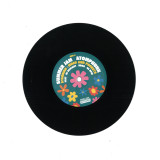
The weather might never be hot in the UK but the 7th release from Regulate Recordings is an absolute scorcher! Coming hot on the heels of the “The Rhythm / Make Em Bounce” going to the top of the Juno charts and doing serious dance floor damage the North West imprint have gone even bigger for the next release with a daisy age inspired transatlantic cross over.
Manchester producer Atomphunk has teamed up with Seattle Duo Mugs and Pockets with turntablist extraordinaire DJ Deviant on the cuts. The results are without doubt the jams of the summer, which is handy because the A side is called “Summer Jam”. With a popping funk bass line and rhymes dancing over the top that immediately evoke the spirit of the Native Tongues, but added into the mix is that Grand Central / Fat City groove and the West Coast USA bounce of Jurassic 5 and their collaborators, (Chali2Na is a big supporter of Mugs & Pockets). In a packed field “Summer Jam” might just be Regulate’s biggest release yet.
Things don’t let up on the flip “Back For More” sees Atomphunk go for the hotter stickier side of the season, with a more laid back synth driven groove evoking Roy Ayers and Quincy Jones, but with crisp beats and Mugs and Pockets bringing it once more. Don’t sleep on this one.
"Symphony for the Lost" is a live album by British gothic metal band Paradise Lost, released in 2015. It was recorded at the Plovdiv Theater in Bulgaria, accompanied by the Plovdiv Philharmonic Orchestra. This album features an epic performance of the band's hits, fusing dark metal with the majesty of a symphony orchestra. The unique atmosphere and powerful performance make "Symphony for the Lost" a memorable listening experience for fans of metal and classical music. It's a fantastic LP Gatefold Picture Disc edition limited to 475 copies!!
Previously Unreleased Recording. Limited to 1200 copies on transparent cherry vinyl. Tip-on jacket, Download code. Insert featuring LP sized original art by Grungie O'Muck. Includes the original recording of Richard Tucker's "Are You Leaving For The Country", later covered by Karen Dalton, and the only song co-written by Karen & Richard, "Sleeping In The Garden". "Richard, Cam & Bert seem to have grasped The Great Harmony. That is, ensemble singing that is at once sweet, precise, funky and a bit sardonic..." -Mike Jahn / New York Times (1970) "For a few years in the late sixties and early seventies Richard Cam & Bert ruled MacDougal St. walking a fine line between the increasingly commercialized demands created by groups like Crosby Stills and Nash and the fierce integrity of earlier folk performers, the generation to which Richard belonged. They managed this with great aplomb, producing original tunes of great integrity and obvious folkloric origins, as well as those which expressed the anarchic omnipresent psychedelia of the moment. They also never abandoned the idea of including some traditional material in their performances. But for the usual random application of luck they could have been very big." - Grungie O'Muck / Artist, Bluesman, Cover artist for their first album and contributor to this one. Richard Tucker, Campbell Bruce, and Bert Lee coalesced as a trio in the spring of 1968, and by the end of that year had become regular performers at fabled Greenwich Village nightspots - The Gaslight, The Bag I'm In, Cafe Feenjon, among others. But mostly they were street singers, busking regularly in Central Park. Their only LP, Limited Edition, was released in 1970, and sold mainly at gigs and on the street. Somewhere in The Stars compiles earlier, previously unreleased recordings, when all three members were signed with Peer-Southern Music publishers as writers and began using their studio to make demos and experiment musically. Beautifully recorded by house engineer Charlie Mack (supervised by Jimmy Ienner), the demos capture a back room casualness and rustic, homespun quality. For me, listening to their songs and harmonies is like entering a world you always hoped existed but had never experienced. Some of the songs were re-recorded the following year for Limited Edition, but many are heard here for the first time. Among them is the original demo for Richard Tucker's song, "Are You Leaving For The Country", which Karen Dalton covered on her seminal 1971 release, In My Own Time. Richard and Karen were husband and wife for much of the 1960s, performing as a duo (initially as a trio with Tim Hardin), and navigating their time on the Village scene while alternating living in a small mining town outside Boulder, Co. before splitting up in 1967. Also making its debut, is the only song Richard and Karen ever wrote together, the haunting "Sleeping In The Garden". Also contains two epic songs by Cam "One Of These First Nights", and "Stockholm") not on their LP, but staples of their live performances, and noted in a gig review by The New York Times, and in a column by future A&R hero, Karin Berg, who was an early champion. Another rarity is the only cover of "Sweet Mama" by Fred Neil we've ever heard. Campell Bruce came to New York in 1967 as lead singer with a band from Washington, DC, The Natty Bumpo. They'd recently signed a record deal with Phillips, but were falling apart. Cam landed in the Village with an acoustic guitar and first started playing and singing in the basket houses, and shortly thereafter at The Gaslight, as the "Cam Bruce Trio" (which included Collin Walcott). After opening for Mose Allison, Cam's hero, the trio went their separate ways, and Cam returned to regular solo gigs at The Flamenco, and the basket houses on Bleecker. Richard and Cam met up on that scene and quickly found a musical kinship as well as becoming best pals. Bert Lee arrived in New York as a runaway the following winter, and began playing and sleeping wherever he could. His sometime accompanist, Ron Price, introduced Bert to Richard and Cam just as Bert's own songs were garnering attention from publishers. According to Bert, "I arrived on the New York scene during a time of great change, and it was the notion of change that influenced me. All around me I saw there were two sorts of songwriters, on the one hand dedicated to the traditions that had inspired them, folk, jazz, the American songbook. On the other hand were songwriters influenced by the wave of experimentation that The Beatles were the perfect example of. Mixing genres, writing lyrics that weren't just about ordinary love and loss. Richard Tucker was a country blues player, with a relaxed and melodic approach to the craft. Cam wrote something more akin to soul songs, with a hint of jazz in the changes. I was writing tunes that sometimes drew on classical structures with a tendency toward what I suppose would be known as prog-rock. But I was rather adamant about not being pinned down stylistically, and so I would write, for example, a song based on some complex classical chord structure, and then go right ahead and write a simple folk song, like Evelyn. Our band was popular locally, and it was this variety that made it distinct." Delmore is excited to present this unearthed treasure, fifteen years in the making. In the words of Richard Tucker, "Tap on your knee, roll on the floor; if you aint free, what's it all for?" "The trio's singing, playing, and writing have all withstood the test of time. Believe me, because I was there. In 1969 R,C&B, myself, Charles John Quarto, David Bromberg, Ron Price, and Keith Sykes were just a few of that year's crop of song-slingers. We were young turks back then, out on the prowl in New York's Greenwich Village for record deals, gigs, and beautiful young women to sleep with and maybe even write a song about. I've lost the names and numbers of those lovelies and I'm not sure what happened to Ron Price, but Richard, Cam, and Bert are back! - Loudon Wainwright lll
The latest full-length from Kishi Bashi, Kantos is a work of exquisite duality: a party album about the possible end of humanity as we know it, at turns deeply unsettling and sublimely joyful. In a sonic departure from the symphonic folk of his critically lauded 2019 LP Omoiyari - a career-defining body of work born from his intensive meditation on the mass incarceration of Japanese-Americans during World War II - the Seattle-born singer/songwriter/producer's fifth studio album encompasses everything from Brazilian jazz and '70s funk to orchestral rock and city pop (a Japanese genre that peaked in the mid-'80s). Informed by an equally kaleidoscopic mix of inspirations - the cult-classic sci-fi novel series Hyperion Cantos, the writings of 18th century enlightenment philosopher Immanuel Kant, a revelatory trip to ancient ruins on the island of Crete - Kantos ultimately serves as an unbridled exaltation of the human spirit and all its wild complexities. During the earliest stages of creating songs for the album, Ishibashi's main intent was to return to his highly eclectic musical roots, in part by tapping into his jazz background and by delving into the dance-rock-leaning sensibilities he previously embraced as co-founder of Brooklyn-bred indie band Jupiter One. But not too long into the songwriting process, he stumbled upon an AI-equipped website capable of composing catchy song hooks based on a prompt - a turn of events that quickly catalyzed the existential inquiry at the heart of Kantos. Although his ruminations on AI, transhumanism, and humanity's troubled fate indelibly guided the making of Kantos, Ishibashi nonetheless views the album as "less of a warning about this kind of hubris but more a celebration of the very characteristics that make us human: desire, passion, empathy, and love." "If there's anything I want people to come away with when they hear this record, it's a feeling of excitement about the possibilities of human-created art," he says. "Even as we're learning more about all the amazing things AI can do, I think humans will always be one step ahead in terms of our creativity and innovation. There's still no limit to what we have to offer."
The Circus is a place of lights and colors, but also of shadows, even darkness. Admittedly, it delights children and makes adults laugh. But you only need one rainy autumn evening near a circus tent and the smell of fodder to think of the sadness of the clowns, the endless training of the animals and the freaks who are hidden in some caravan... cinema, the essence of the circus – movement, light, danger and burlesque – will have been admirably rendered in Notes on the circus by Jonas Mekas (1966), one of the inventors of the filmed diary. With Cirque, Michèle Bokanowski does similar work, entirely dedicated to spinning, in the musical field.
She distinguished herself in particular in the composition of musique concrète, among others Tabou and Trois chambres d'inquiétudes, after having studied with Pierre Schaeffer and Éliane Radigue. The latter, great lady of drone and minimalism, fell under the spell of Cirque and wrote the booklet for the piece as a poem.
The piece, divided into five movements, is based on the handling and editing of recordings captured within one or more circuses (this is not specified and is of no importance) between 1988 and 1993. The initial allegro reveals the gallop of a horse joined gradually by other images. The idea of the circular space of the circus tent is immediatly and magnificently rendered and will be constantly recalled by an insistent use of the loop technique. Children's laughter, applause and drum rolls are thus sheared, repeated before being brutally interrupted. Accordion interludes and the distortion of sounds create a dreamlike atmosphere. This beautiful nightmare reminds us, to quote Éliane Radigue, the "Magic of childhood still living in the heart of man even beyond its abrupt end."
Words by Alexandre Galand, from the book “Field Recording – L’usage sonore du monde en 100 albums” (ed. Le mot et le reste, 2012)
Major member of the french musique concrète scene, Michèle Bokanowski was born on August 9, 1943 in Cannes, FR, to a musician mother and a writer father. She now lives and works in Paris.
Music lover since adolescence, it was relatively late, at the age of 22, that Michèle Bokanowski decided to study composition. Reading In Search of a Concrete Music by Pierre Schaeffer was decisive. After classical training on harmony, she met Michel Puig, a student of René Leibowitz, who taught her writing and analysis based on the Treatise of Schönberg. In September 1970 she began a two-year internship in the ORTF Research Department under the direction of Pierre Schaeffer. She takes part in the same time in a research group on sound synthesis, studies musical computing at the Faculty of Vincennes and electronic music with Éliane Radigue.
Her main works are intended for concert: Pour un pianiste, Trois chambres d’inquiétude, Tabou, Phone Variations, Cirque, L’étoile Absinthe, Chant d’Ombre, Enfance, Rhapsodia, Cadence, Elsewhere. She has also composed for theater (with Catherine Dasté), dance (with choreographers Hideyuki Yano, Marceline Lartigue, Bernardo Montet) and cinema: music for the short films of Patrick Bokanowski and his two feature films L'Ange ( 1982) and A Solar Dream (2016).
"Vanatühi" by Kiwanoid is a technopagan concept album. Track titles refer to the word "nothing" in various languages.
The sonic landscape is crafted using deprecated tools: a first-generation 4-bit laptop, the DOS operating system, and a tracker program. Inspired by glitch aesthetics, the sound palette includes clicks, error noises, and low-bitrate techno sounds. Initially, the structures of the pieces may appear complex and chaotic. This electronic thicket might seem abstract, cold, and inaccessible, yet upon closer examination, it reveals a plethora of diverse species, coming across as somewhat nostalgic and warm, evoking surreal associations. From beneath towering sequoias peek pixelated ferns, LED eyes are blinking from below the undergrowth, and against the backdrop of a crackling campfire and cave paintings, a lively stomping of microchips unfolds.
Sudden contrasts, sharp cutting edges, a tachycardic bass drum engine, and irregular polyrhythms make themselves physically felt. Elsewhere, haunting lo-fi textures, hidden ambient drones, mysterious hums, and obscurely garbled samples offer introspective breathers. The dynamic range of the music is favourably extensive, and the raw imperfections of the sound are unmasked by reverb effects or other generic tools. Interwoven throughout are outsider rhythm loops, which could find a home at an alien rave party or a hobgoblin honky-tonk. Various human voice samples build a bridge to the listener, allowing them to embody a cyborg-like experience.
While each twist and turn remains unpredictable, these diverse approaches align in complementary patterns and stochastic regularities, making the whole surprisingly coherent, despite its chaos. The album doesn't bore the audience with intentionally irritating compositions or pseudocomplexity - it demands attention, but doesn't try to outrun its listeners.
Kompakt is proud to announce, finally, a reissue of the first, self-titled GAS album. Originally released on electronica imprint Mille Plateaux back in 1996, it’s been unavailable in its original form ever since – the version of GAS included in 2008’s Nah Und Fern box featured several different tracks. Here, however, GAS is restored in all its glory, the debut full-length from Wolfgang Voigt’s most enigmatic, quixotic project.
There had, of course, been signs of what was to come. Back in 1995, Voigt essayed the first GAS release, a slender, yet remarkable four-track EP, Modern. Its centre label featured a reduced symbol – an overhead or lamp light, switched on, its glow radiating outwards in four bold black lines – a perfect representation of the tight, stylised ambient electronic pop contained on that 12”. A few curious compilation tracks were floating around, too, for Mille Plateaux’s Modulation & Transformation and Electric Ladyland series. If you were attentive enough, you could tell something was up.
But nothing quite prepared us for the languorous, effervescing loops and regular-like-clockwork beats that Voigt folded together on GAS. Its six long tracks, all untitled, neither begin nor end but hazily fade into earshot, vibrate majestically in your cochlea for fifteen-or-so minutes – some a bit shorter, some longer – and then meander away, reading the mise-en-scène for the next example of Voigt’s drift and dream logic to unfold. The material is referential in the most distant way, and you can sense only the most evanescent of ghostly presences, haunting these six compositions.
GAS feels, also, like a more pliable hint at what’s to come, as the GAS concept really solidified on its successor, 1997’s Zauberberg, and reach its apotheosis on Königsforst and Pop. Those three albums share a very similar palette – blurred, hazy samples, often of classical music, stacked and cross-thatched across a muted 4/4 thud. GAS, then, is an outlier of sorts: it’s more expansive in its remit, lighter in its mood, perhaps more fleet of foot. This, of course, is part of its charm.
In clearing space for Voigt, by preparing the terrain, GAS sits both at the edge of the forest, and at the verge of an expansive, wide-eyed future; one where GAS would become truly eternal.
Text by Jonathan Dale
Kompakt ist stolz, endlich eine Neuauflage des ersten, selbstbetitelten GAS-Albums ankündigen zu können. Ursprünglich im Jahr 1996 auf dem Electronica-Label Mille Plateaux veröffentlicht, ist es seitdem nicht mehr in seiner ursprünglichen Form erhältlich – die gleichnamige Version von GAS, die 2008 in der Nah Und Fern Box enthalten war, enthielt verschiedene andere Titel. Nun liegt das 3er Album in seinem naturbelassenen Originalzustand wieder vor.
Bereits 1995 zeichnete sich mit der Maxi GAS - Modern auf Profan, sowie einigen Kompilation-Beiträgen auf Modulation & Transformation und Electric Ladyland auf Mille Plateaux dieser frühe, weltentrückte, rätselhafte GAS Sound ab, der sich erst in den sechs scheinbar endlosen, majestätisch-sprudelnden Tracks des Albums voll entfaltete. Die Musik ist von ätherischer Leichtigkeit, in der wie aus einer anderen Sphäre abstrakte Referenzen aus weiter Ferne nur andeutungsweise herüberzuwehen scheinen.
Dieser frühe, eher sphärisch-leichte, gleich einer sonnendurchfluteten (Wald-)Lichtung anmutende GAS Sound, stellt gewissermaßen den Ausgangspunkt der audiovisuellen „Welt“-Reise in den düster-romantischen Acid-Wald dar, in den sich GAS ab 1997 mit den Alben Zauberberg, Königsforst, Oktember und ab 2000 mit Pop an anderer Stelle wieder hinaus und in seine ganz eigene Ewigkeit begeben hat.
Dark Entries again shines a spotlight on bathhouse disco don Patrick Cowley with a newly remastered release of Kickin’ In. Although Cowley tragically passed from AIDS-related illness in 1982, he left an extensive archive of unreleased tapes, many of which Dark Entries has had the honor of releasing. While working as a lighting technician at The City, SF’s disco cabaret, Cowley saw rising star Frank Loverde perform. Cowley asked Loverde to contribute vocals to some material in progress, and Frank, Linda Imperial, and Peggy Gibbons joined Cowley in the studio. The resulting songs included “Kickin’ In,” a 9-minute cybernetic disco stormer that taps into the essence of Cowley’s hi-NRG sound: equal parts spaced out and zoned in on the dancefloor. In May 1978 Cowley joined Loverde on stage at The City to perform “Kickin’ In” as they opened for disco diva Sylvester.
“Kickin’ In” was initially released in 2015 via Honey Soundsystem who found the tapes in the basement of Megatone Records owner John Hedges. This newly remastered version was made possible due to the discovery of the original multi-track recordings of "Kickin’ In," allowing for a fresh mixdown by Jim Hopkins as well as the creation of a new instrumental version. Also included are two impeccably sleazy Cowley jams recorded in 1980, “Thief of Love” and “Make It Come Loose.” Cowley narrates excerpts from his erotic journals on these raunchy slow-burners, capturing the vibe of SF’s leather bars and backrooms. “Thief of Love” features frequent Cowley collaborator Paul Parker on background vocals. This reissue of Kickin’ In includes features an illustration by Gwenaël Rattke that originally appeared Cowley’s erotic journal, Mechanical Fantasy Box, as well as a postcard with lyrics. “Patrick parted the veil and entered a dark world of forbidden vices, wondrous musical panoramas and bold, strident, hopeful possibilities. Patrick brought the future to us and laid it at our feet.” – David Diebold, Tribal Rites
Repress!
Today – Friday 9th July – artist, producer, DJ and club culture icon Peggy Gou releases the second of a pair of summer singles. Released via Gou’s own Gudu Records, “I Go” is an incredible piece of club-focused electronic music and showcases a very different sound to previous single “Nabi”.
Described by The FADER as “the kind of dazzlement you get from light dancing off of ocean water on a hot day: pure dopamine activating bliss” and Resident Advisor as “a refreshingly low-key jam”, “Nabi” was an evocative piece of slow-burning, 98bpm electronic pop, inspired by 80s synth classics, the piano pieces of renowned composer Erik Satie and the 80s and 90s Korean songs Gou's mother used to play at home during her childhood.
“I Go” takes inspiration from a similar era but this time the energy comes from Gou’s love of 90’s dance anthems, many of which she revisited during lockdown and an enforced break from touring. Both retain the hallmarks of Peggy Gou’s unique take on electronic music; at once both nostalgic and totally modern. But on “I Go”, the tempo, 808s and 909s are dialled right up for a self-motivating anthem that is set to soundtrack a summer when we can all hopefully dance together in our thousands again.
Talking about “I Go”, Peggy says:
“When I was a teenager in Korea, we didn’t have rave culture like there was in the UK. “I Go” is a tribute to that era, my own reimagination of the sounds I grew up loving. The lyrics are inspired by a note I wrote on my phone in 2019, staring at myself in the mirror of an airport toilet – I looked so exhausted but there was no way I wasn’t going to keep going! “I Go” is basically me motivating myself, finding courage and returning to a feeling of innocence. I hope people feel the same sense of positivity when they hear it”
Meanwhile, Peggy Gou is set to make a handful of DJ appearances in Europe over the summer. These include a huge sold out London event in August in the form of The Pleasure Gardens; an outdoor party in Finsbury Park created and curated by Gou herself and featuring a stellar supporting line up including DJ Harvey, Anz and Spencer.
Track List:
From the furnaces of Stoke-On-Trent comes the super-limited debut EP from Formal Sppeedwear, a wonky new wave teacup ready to be sipped.
Taking creative cues from Brian Eno’s Oblique Strategies and Conny Plank’s experimental recording techniques to flesh out synthpop-oriented melodies, the EP stomps along with Scary Monsters-era Bowie guitar lines, early 80s Numan basslines and surreal lyrics - “Ready, set on my mark: Tesco Extra, Marks and Sparks” cries Clewlow on 6 Lofty Ash. There’s a versatility to the tracks; with the jolting staccato of The Line counter punched by EP closer and highlight Dismount’s soaring synth slow burn.
Defying the seas of young musicians moving to London and Manchester to find their path, Beck Clewlow (Bass, Vocals, Synthesisers) Charlie Ball (Guitar, synthesisers), and Connor Wells (Drums, Guitar, Synthesisers) stuck it out in Stoke, using the city as a blank canvas - devoting their spare time to writing and experimenting, building their own studio out of charity shop finds and cash-converter synths and recording equipment.
Out in the creative wilderness of Staffordshire there’s a healthy DIY scene brewing with bands waiting to make their mark; fly posting their own shows, making one-off merch for each gig, sharing lineups with one another. “There is no sense of geographical confinement here, there’s a wealth of talent who act indifferently to their surroundings. It’s particularly nice that some of our friends from here are starting to receive attention from elsewhere” say the band. As fellow locals University and Christian Music start to garner attention from the rest of the UK, it’s time for Formal Sppeedwear to follow suit.
Stoke-on-Trent might not be the first place you’d look to find your favourite new band - The Bootleg Beatles are one of its finest exports if you ask Google - but Formal Sppeedwear are here to show you the kilns are alright.
Electronic titan Sasha combines with Sentre for the latest in a series of collaborative releases. The release of 'Glastacy' coincides with this year’s Glastonbury festival and comes with something special for fans.
Even by his own high standards, electronic luminary Sasha is in a superb run of form that has already yielded some stellar singles in the last year, both solo and in collaboration with like-minded talents. TheGRAMMY Award-nominated artist is renowned for pushing musical and technological boundaries, as well as for platforming exciting sounds on his Last Night On Earth label. The next release finds him working with Sentre, aka Dave Gardner & Dennis White, who have been electronic mainstays for many years. They have plenty of major credits under their belts, including working with Sasha on his seminal ‘Involver’ album and also 'Track 10' which they made with Sasha many years ago. It was Pete Tong’s Essential New Tune at the time and is one of many gems from these self-confessed studio nerds.
The release of ‘Glastacy’ also marks a new approach for Sasha and LNOE as they extend their relationship with fans beyond just the music. For the first time, along with the single release, fans will be able to collect and own the single artwork for free. The label has always sought to marry together music and art across its releases and now fans get the chance to own a piece for themselves. Using pioneering technology, those who claim the art will also be able to convert it to a smartphone wallet pass which will bring with it future benefits and surprises from Sasha and LNOE.
'Glastacy' is their latest collaboration, and it works angelic, wordless vocal sounds into heavenly loops that shimmer in and out of focus. Deft hi-hits and a supple bassline bring movement as a lead synth motif rises up out of the mix to bring dramatic tension and take dancers to the stars. It's emotive, hypnotic techno of the highest order, with a spine-tingling breakdown leading towards more trance-inducing musical pleasures. The Intro:Outro Mix is an ambient tool stripped of beats.
- A1: Dreaming Of Mars
- A2: Deep Star Deception
- A3: Cryogenic Dream
- A4: Super Ultra Spaceman Theme
- A5: The Future 1995
- A6: Portal To A World Of Sand
- A7: Mysterious Forces From Beyond
- A8: Charting A Course To Elsewhere
- B1: My Zero G Love
- B2: Message From Planet Xs
- B3: Planet Of The Pterodactyls
- B4: Downtown Lost In The City Of Lizards
- B5: Electric Sheep
- B6: Theme From Constellation 7
- B7: Beyond The Known Universe
- B8: Secrets Of The Cosmos
The follow up album to 2019's Dusted Jazz Volume 3. Pressed on 180 gram, White & Orange Marbled Vinyl. Jenova 7 emerges once again as a beacon of auditory innovation with his latest opus, Lost Sci-Fi Movie Themes. Released under the banner of Cold Busted, this collection of 16 tracks serves as a time machine, whisking listeners away on a journey through dimensions both familiar and uncharted since his last foray with 2019's Dusted Jazz Vol. 3. Jenova 7 has meticulously crafted an album that resonates with the essence of ‘90s trip hop nostalgia while propelling us into the cosmos of futuristic soundscapes. The album's standout tracks—“The Future 1995,” “My Zero G Love,” and “Downtown Lost In The City Of Lizards”—are masterclasses in genre-blending and atmospheric storytelling. "The Future 1995" envelops one in a nebula of boom-bap beats, cosmic sound effects, and b-movie vibes, creating a sonic experience that feels like intercepting radio signals from a distant, funk-infused galaxy. Meanwhile, “My Zero G Love” floats the listener through the velvety darkness of space with its sexy lounge feel, portamento synth lines, and the undeniable funk that glimmers under starlight—evoking the sensation of grooving in weightlessness. Then, there's “Downtown Lost In The City Of Lizards,” a track that saunters through the urban jungle with sparkling keys, evocative guitar spurts, and strutting jazz bass, painting a picture as vivid and surreal as its title suggests. Jenova 7's skill lies in his ability to fuse moody, jazz-inflected samples with grooves that draw one into a distinctly atmospheric sound—a cinematic journey through time, space, and emotion. His tracks are experiences, wrapping the listener in a cocoon of vibrant soundscapes that are both introspective and expansive. Lost Sci-Fi Movie Themes is an invitation to explore the unknown, to lose oneself in the depths of imagination and emerge on the other side transformed. For DJs looking to transport their audience to another dimension and for music fans yearning for a taste of nostalgia wrapped in the allure of the future, Jenova 7's latest release is a must-discover treasure. Dive in and let the odyssey begin
- A1: Overture 1 26
- A2: Oscar Winning Tears 3 34
- A3: Hard Out Here 3 36
- A4: The Thrill Is Gone (Requiem) 1 54
- A5: The Thrill Is Gone 4 34
- B1: Five Star Hotels 4 40
- B2: Mary Jane Vs Graeme Blevins 3 24
- B3: Mary Jane 2 51
- B4: Environmental Anxiety 3 57
- B5: Body Dysmorphia 3 47
- C1: Ice Cream Man 3 29
- C2: Dani's Interlude 2 36
- C3: Flip A Switch 4 57
- C4: Worth It (Prelude) 2 00
- C5: Worth It 4 04
- D1: Black Mascara 4 17
- D2: Buss It Down 5 31
- D3: Escapism
RAYE has been on a real journey prior to her stratospheric rise to the top and notching the first #1 UK hit of 2023. Nominated for 7 x Brit Awards (the most by any artist in one year) her long-awaited independent debut album, My 21st Century Blues, made an immediate impact hitting the #2 spot on the UK albums chart. As a welcome result of her self-fulfilling new work, RAYE unknowingly created the song that has become synonymous with 2023 – the chart topping, viral global smash “Escapism” featuring 070 Shake – that earned her first Top 10 slots at US Pop and Rhythm radio and and is the biggest selling single by a Female British artist in the UK in 2023. From the radio to the club, it put RAYE on the map in a whole new way earning the Best Contemporary Song Award at the 2023 Ivors, AIM Best Independent Track and Best Social Trending Song at the Global Awards, as well as contributing to her winning a BRIT Billions Award in recognition of 1 Billion career UK streams (globally, 4.5 Billion cumulative). RAYE also received the Live Nation Best Female Award at the O2 Silver Clefs and was nominated for the Best International Act at the BET Awards. Fresh off sold-out tours with Lewis Capaldi, Kali Uchis, and SZA, she embarked on a mammoth journey of her own. Two headline tours spanning the UK, Europe, and North America saw her energy ignite sold-out crowds every night. Glastonbury's Pyramid Stage felt her command, and the Royal Albert Hall, draped in the magic of her orchestra and choir, witnessed a BBC special for the ages. This year, My 21st Century Symphony arrives at the o2 Arena, then it's on to Coachella. After playing and owning the pop game, RAYE bet on herself and won.
Tracklisting
1. Overture. - RAYE, The Heritage Orchestra 2. Oscar Winning Tears. - RAYE, The Heritage Orchestra 3. Hard Out Here. - RAYE, The Heritage Orchestra 4. The Thrill Is Gone Requiem. - RAYE, The Heritage Orchestra 5. The Thrill Is Gone. - RAYE, The Heritage Orchestra 6. Five Star Hotels. - RAYE, Heritage Orchestra 7. Mary Jane vs Graeme Blevins. - RAYE, The Heritage Orchestra 8. Mary Jane - RAYE, The Heritage Orchestra 9. Environmental Anxiety. - RAYE, The Heritage Orchestra 10. Body Dysmorphia - RAYE, The Heritage Orchestra 11. Ice Cream Man. - RAYE, The Heritage Orchestra 12. Dani's Interlude. - RAYE, The Heritage Orchestra 13. Flip A Switch. - RAYE, The Heritage Orchestra 14. Worth It Prelude. - RAYE, The Heritage Orchestra 15. Worth It. - RAYE, The Heritage Orchestra 16. Black Mascara. - RAYE, The Heritage Orchestra 17. Buss It Down. - RAYE, The Heritage Orchestra 18. Escapism. - RAYE, The Heritage Orchestra
Congratulations to RAYE on her phenomenal night at the Brit Awards.. with a record breaking six wins in one night, including ..
Best British Album
Best Artist
Best Breakthrough Artist
Best Songwriter
Best R&B Act
Dark Entries Collected Music Graphics Compiled by Josh Cheon and Eloise Shir-Juen Leigh To celebrate 15 years of Dark Entries, this zine showcases the label’s visual aesthetic, bringing together some of the most iconic designs that we’ve released. While Dark Entries’ sonic mission has included sounds as diverse as synth-pop, Italo disco, darkwave, house, and techno, it is equally staggering to see the breadth of visuals the label has encountered and collected over the years. Included here are selected typography, logos, and illustrations from the label’s extensive catalog — well over 300 releases to date. Designs have been created using DIY analogue techniques as well as more contemporary digital approaches. A full discography is included at the end for reference and an essay by Shawn O’Sullivan (Led Er Est, Further Reductions). This zine serves as a source of inspiration for artists as well as a means of preserving and documenting these distinct graphics. DARK ENTRIES RECORDS is a San Francisco-based record label that was born in July 2009. Helmed by Josh Cheon, a vinyl-focused DJ and collector, the label has focused largely on excavating the 1980s underground era – but releases have spanned from sultry vintage disco to bleeding-edge contemporary techno. Graphic designer Eloise Shir-Juen Leigh has been responsible for most of the label’s artwork, whether reproducing original designs accurately for reissues or creating exciting new ones. Much care and attention is given to each release to represent the music in a memorable way as well as tell the stories behind these projects. Hand-stamped and limited to 200 numbered copies. 64 pages with neon cardstock covers. Measures 5×7 inches.
"It’s hard to believe it’s been 15 years, give or take a few, since we tried our hand out at writing, recording, and playing our songs. We had a wild ride and feel privileged, but mostly grateful, to pursue music in the way that we did. A lot of life happened during our tenure as a band and that didn’t stop since our last show or record.
The people and places the band introduced us to continue to serve as the most incredible memories and to add to that, Kingfisher is turning 10 years old. The nostalgia is real. We had been toying around with the idea of reuniting for quite some time, so there seemed no better time to do it than now.
Having Topshelf in our corner as we began preparing to do this was a no brainer. After talking to Kev and the TSR crew of our plans, it was like no time had passed as they’ve always been great friends and a support system to us. Topshelf repressing Kingfisher in its original intended format, as a double LP, feels like a very monumental way to commemorate a record that means so much to us.
We can’t wait to get back out there to commemorate 15 years of Prawn and Kingfisher’s 10th Birthday. We will be having original members (welcome back Vilchez) to help celebrate with a run of shows that we feel very fortunate to do. Cheers to the last 15 years and all of you reading this for being part of our journey. Let’s see what the next 15 hold in store!
All our love,
Prawn"