Legendary New Zealand-born experimental composer and sound art pioneer Annea Lockwood returns to Black Truffle with On Fractured Ground / Skin Resonance, her third release for the label. Having recently celebrated her 85th birthday, Lockwood shows no sign of slowing down in her exploration of new sound sources and collaborations with an ever-growing intergenerational pool of performers – here with Vanessa Tomlinson. Her creative vibrancy is alive as ever on the two recent works presented here, which demonstrate both her engagement with the social dimensions of sound and the deeply reflective, meditative aspect of her art.
On Fractured Ground derives from material recorded with Pedro Rebelo and Georgios Varoutsos for the soundtrack of Maria Fusco and Margaret Salmon’s opera-film, History of the Present (2023). Working together in Belfast, Lockwood, Rebelo and Varoutsos made extensive recordings of the city’s ‘peace lines’, the dozens of walls erected since the beginning of the Troubles in the late 1960s to separate Catholic and Protestant areas of the city. Struck by the immensity of these barriers, ‘the brutal way they sever neighbourhoods’, Lockwood and her collaborators focused not on the sound environment of the city, but on the walls themselves, playing them as gigantic resonant instruments, using their hands and objects such as stones and leaves. Continuing to work in her studio with the material collected for the soundtrack after its completion, Lockwood composed the work presented here, occupying a space somewhere between her own extended-technique percussion music and the Cagean tradition of hyper-amplified small sounds. From deep, gong-like metallic tolling to dry scrapes and uneasy groans, the piece’s sustained attention to single sounds derived from unorthodox sources draws a line all the way back to Lockwood’s classic Glass World (1967-1970). Its spaciousness and delicacy are at odds with the dark historical background of the Troubles, creating a moving listening experience somehow haunted by the shadow of violence and conflict.
Skin Resonance is a collaboration with Australian composer and percussionist Vanessa Tomlinson. Developed through conversations in which the two discussed the idea of ‘sonic attraction’, the piece focuses on Tomlinson’s relationship to the bass drum, reflecting on the complex web of connections embodied in this seemingly simply instrument, which is at once ‘animal, wood, and metal’. Approaching the instrument in a suitably elemental fashion, Tomlinson’s performance strips away conventional technique to explore the resonance and timbral properties of skin, drum, and metal hardware, producing overlapping waves of texture that at times seem closer to wind swishing through leaves or the ocean than anything usually associated with a drum. Emphasising the symbiotic relationship between performer and instrument, Tomlinson’s voice is heard at times, exploring the field of associations and connections the bass drum suggests to her: ‘Maybe the bass drum skin is an ear as well?’
Accompanied by insightful liner notes on both pieces and photographs documenting the recording of On Fractured Ground and a performance of Skin Resonance, this LP is a moving testament to the engagement, generosity, and openness that sustain Annea Lockwood’s work, still finding new directions after more than fifty years of activity.
Buscar:sy us
Deerhoof haben sich schon vor langer Zeit als eine der großartigsten Rockgruppen des Planeten etabliert - wer das für übertrieben hält, hat noch nicht genug Zeit damit verbracht, Deerhoof zu hören - das wahnsinnig erfinderische Quartett behandelt jedes seiner neuen Alben als eine Gelegenheit zur kreativen Wiedergeburt. Und doch sind sie irgendwie auch zutiefst zuverlässig, eine seltsame, aber wahre Beschreibung für eine Band, die so kreativ rastlos ist. Man weiß nie, wie ein neues Deerhoof-Album klingen wird, außer dass es immer nach Deerhoof klingen wird. Die Band wird durch solche Paradoxien definiert, wie "Noble and Godlike in Ruin" erneut bestätigt. Ihr neuestes Album ist entweder ein Porträt einer Welt, die in monströsen Hass, Entmenschlichung und Dollarzeichen abgleitet, oder ein eindringliches Selbstporträt der Band als Monster: ein intelligentes, sensibles, hybrides Wesen, das unermüdlich von Liebe singt, sich aber zunehmend von dieser Welt entfremdet. Die Musik ist fröhlich und ahnungsvoll, kybernetisch und zutiefst menschlich, alles zugleich. Streicher, die an avantgardistische Kammermusik und klassische Horrorfilm-Soundtracks erinnern, prallen auf Gitarren- und Basslinien. Das Schlagzeug ist manchmal gefiltert und klingt fast elektronisch, aber kein Computer könnte einen so funkigen und dynamischen Rhythmus erzeugen, bei dem jede winzige Variation von einem Snare-Schlag zum nächsten Welten der Möglichkeiten vermittelt. An der Spitze steht die unnachahmliche Altstimme von Satomi Matsuzaki. Eine Stimme der Einsamkeit, deren schlichte Ruhe seltsam außerhalb des Mahlstroms der Band zu stehen scheint, zu dem sie mit ihren zackig-präzisen Bassläufen selbst beiträgt. Als Einwanderin der ersten Generation in den USA hat sie nie versucht, ihren japanischen Akzent oder ihre Karaoke-esken Vortrag zu verbergen. Auf "Noble und Godlike in Ruin" wirkt dies abwechselnd als Ausdruck von Einsamkeit und als kühle Provokation gegenüber Systemen der Unterdrückung und Kontrolle. ,Kindness is all I needed from you", singt sie auf dem epischen Albumabschluss ,Immigrant Songs`. ,But you think we're in your house." Nicht lange danach explodiert der Song, sein eng gewickelter Art-Pop macht Platz für mehrere Minuten heulenden Lärm. Auch wenn das Thema düster sein mag - wie könnte es anders sein - tragen die Songs trotzigen Optimismus in ihrer Weigerung, sich den Konventionen oder überlieferten Weisheiten zu beugen. Da ist diese berühmte Zeile von Dylan Thomas über das Wüten gegen das Sterben des Lichts: "Noble and Godlike in Ruin" fühlt sich ein wenig so an. Die Welt mag untergehen, aber Deerhoof gehen schwungvoll unter.
Emerging from the suburbs of North London in the early 1990s, Hulusi was an experimental electronic music collective formed by four friends of multi-ethnic origin: Cypriot, Caribbean, Indian and English heritage. Cultivating their musical practice within very specific parameters of time and space, Hulusi instills the essence and spirit of the acid house movement (and its aftermath) that had taken much of England by storm from 1988 onwards. The ‘Dream’ EP was the collective's first release of their self-funded and limited output, offering up a categorically elusive record that could soundtrack the most esoteric and life affirming club moments, whilst simultaneously satisfying the ears and obscure desires of those found dwelling in the heavily occupied ‘chill out’ rooms and nocturnal after parties. As the emerging UK rave scene aligned with newfound accessibility of music production, the late 80s and early 90s became a fertile ground for experimental electronic music, spawning a generation of bedroom and basement producers interacting with and creating music for often the very first time. Like many, Hulusi was a musical project that connected the dots between DIY spirit, technological advancements and the burgeoning cultural phenomenon of acid house. The project operated outside of the then perceived, traditional band conventions, instead developing their sound and exchanging ideas through the format of demo tapes and floppy disks, nurturing their work through individual bedroom studios and feedback sessions. Considered a crucial and possibly defining element of the record, is Hulusi’s unconscious exploration of the groups hybrid cultural identity. Rooted in a shared desire for self-invention, the Dream EPreflects Hulusi's response to a world of rapid musical and technological change. Each track on the record draws inspiration from both Western and Eastern musical frameworks, symbolized through the record’s structure. The ‘Western Side’, featuring "Dream," echoes the ambient techno and acid house influences of early rave culture and bands like 808 State and Orbital. In contrast, the ‘Eastern Side’ of the record is highly decorated with samples, yet stripped back, through its purposeful use of organic sounds, reflecting the group's fascination with blending Western modernism with imagined Eastern themes. Despite operating in near obscurity, Hulusi - The Dream EP acts as an audible catalyst to transport the listener to a different time and place, offering a lucid snapshot into the musical and cultural explorations of the past whilst simultaneously remaining a timeless piece of music.
A1 - Planet Genesis
Chronicle makes his Spatial debut in style with Planet Genesis, opening with a beautifully crisp 2-step break over light atmospheric padwork, quickly accompanied by Hot Pants snares and dancing strings. Graceful hi-hats and insanely subtle vocal usage ebb and flow in the mix while soothing melodies enter and depart at will. The breakdown offers an intense change of tone before the breaks resume and continue the journey to a destination unknown.
A2 - Crystal Clear
Very much living up to its title, Crystal Clear sees Chronicle deliver a finely tuned assortment of beats with a remarkable clarity that truly shines in the "old school brand new" sensibilities of throwback atmospheric drum & bass. Snippets of various classic breaks can be heard in the mix with a superb attention to detail, taking you back with a style quite reminiscent of the golden era of late 90's Logical Progression.
B1 - Libra
Airy pads and a rousing yet subtle melody delicately introduce Libra, as Chronicle gradually builds towards a thrilling yet thoughtful amen workout set to blissful atmospherics. With a plethora of exquisite production techniques on show, the track showcases the versatility of Chronicle, offering something new to enjoy on each listen - the layers of detail are truly impressive.
B2 - Higher Limits
Echoing whirs and clicks dance playfully around light pads in the unique DJ-friendly intro to Higher Limits, a detailed, joyful track which celebrates a bygone era with sharp, expertly edited breaks and a smooth 808 bassline to die for. Micro melodies and long waves of delicious synths add texture and depth to the mix, resulting in the perfect closing track to a superbly varied and elegantly produced debut EP.
Words by Chris Hayes (Spatial / Red Mist)
- La Chamade
- Roma Amor Feat Alessio Peck
- Chéris Ton Futur !
- Parle Feat Philippe Katerine
- L'inconnu
- Fantome Atomique
- A La Foule
- Desert Devorant
- Cinema Feat David Numwami
- Le B.a-Ba Feat Philippe Katerine
- En Convalescence
- Le Syndrome De Stendhal
- La Chamade
- Roma Amor
Co-directed with Maxime Daoud (Ojard), this 7th opus was written and composed with passion and recorded with an outstanding team of musicians. The message of Barbara Carlotti's new album is direct and essential: "Cherish your future!" It is an invitation to welcome the unknown, to view our destinies with tenderness, to strive toward the future while taking care of our style, to counter life's setbacks, to chase the green ray, and to reinvent love. The goal is to liberate expression, heal the wounds of the past, articulate desire with elegance and humor, and let ourselves be moved by fleeting yet eternal joys, the sight of the ocean, or the infinite beauty of a singing voice that fills us with hope and strength in an outpouring of freedom.
- H3: @Rt$ W3Re M3@Nt T0 F7¥
- Lithonia
- Survive Feat. Chlöe
- Steps Beach
- Talk My Shit Feat. Amaarae & Flo Milli
- Got To Be
- Real Love
- In The Night Feat. Jorja Smith & Amaarae
- Yoshinoya
- Can You Feel Me Feat. Legend
- No Excuses
- Cruisin' Feat. Yeat
- We Are God
- Running Around Feat. Fousheé
- Dadvocate
- Happy Survival Feat. Khruangbin
- A Place Where Love Goes
It is with a certain sadness for his fans across mediums that Donald Glover has declared Bando Stone and the New World the last Childish Gambino album. The ostensible soundtrack to a feature-length movie of the same name, the hour-long project includes snippets of dialogue that hint at the film’s apocalyptic subject matter. The fact that the soundtrack is preceding the actual film is part of Glover’s strategy: He wants listeners to work to figure out what they’re listening to. “The soundtrack forces the audience to participate in a way that I don't feel like most things force you to participate,” he says. “It forces you to have an imagination. I already see people being like, 'This is very cinematic, this must be the part that... This feels like a credit sequence.' A lot of stuff feels flat because it's not asking you to participate. Art used to be you had to participate on some level and have some sort of thought process on it. You can't just be like, 'Oh, this is mid.'” Even without the benefit of the full visuals, these 17 tracks make for a satisfying swan song that synthesizes what came before with fresher ideas gleaned from the threshold of finality.
Samurai Music returns to the evocative sound world of Ancestral Voices for an album that splits the difference between cinematic sound design and deadly restraint at 170 BPM. Nemeton continues Liam Blackburn's exploration of ancient Celtic mysticism through snaking rhythms and snarling sound design, conjuring a high-definition sonic image of sacred groves and the druids practicing amongst them.
Blackburn's Ancestral Voices project tracks back to 2015, when he debuted on Samurai Horo with the Night Of Visions album. In stark contrast to his celebrated 140 work as Indigo, this project leaned on the inspiration of pagan spirituality to charge his vivid, advanced production style with a rich and mysterious atmosphere. While he's channelled this approach into a variety of tempos and styles, on his 2016 EP Old Earth Voodoo on Samurai Music he applied the concept to a drum & bass framework, which he returns to on Nemeton with rigorous focus.
Far from a straightforward collection of breakbeat tracks, Blackburn uses negative space and pointillist production to carve out an immersive, tense sound world around the 170 grid. He takes a widescreen approach to percussion, running from pin-prick synthesised one-shots to tumbling, organic drums you'd more readily associate with a Hans Zimmer score. Scene-building is the foremost mission across Nemeton, casting otherworldly forces in sweeps of low-end friction and dramatic melodic blooms amidst tangible real-world field recordings of flora and fauna.
Casting the mind back some 2000 years is an exercise in imagination as much as research, and Blackburn ably summons dark fantasy as he delves ever deeper into Welsh mythology with a studious zeal and avid fascination. It's that drive that makes Nemeton burst forth and take shape so powerfully, bristling with kinetic energy and a barely-concealed, strangely seductive menace that leaves a lasting impression long after the last snatch of bass has bared its teeth.
- A1: Arnold Layne Pink Floyd
- A2: See Emily Play Pink Floyd
- A3: Apples And Oranges (Stereo Version) Pink Floyd
- A4: Matilda Mother (2010 Mix) Pink Floyd
- B1: Chapter 24 Pink Floyd
- B2: Bike Pink Floyd
- B3: Terrapin Syd Barrett
- B4: Love You Syd Barrett
- B5: Dark Globe Syd Barrett
- C1: Here I Go Syd Barrett (2010 Remix)
- C2: Octopus Syd Barrett (2010 Mix)
- C3: She Took A Long Cool Look Syd Barrett (2010 Mix)
- C4: If It's In You Syd Barrett
- C5: Baby Lemonade Syd Barrett
- D1: Dominoes Syd Barrett (2010 Mix)
- D2: Gigolo Aunt Syd Barrett
- D3: Effervescing Elephant Syd Barrett
- D4: Bob Dylan Blues Syd Barrett
An Introduction To Syd Barrett, is a reissue of the 2010 collection that brought together for the first time the tracks of Pink Floyd and Syd Barrett on one compilation.
David Gilmour, who originally worked on Syd Barrett's two solo albums, as co-producer of The Madcap Laughs and as producer of Barrett, was the executive producer for the album. Damon Iddins and Andy Jackson at Astoria Studios remixed five tracks including ‘Octopus’, ‘She Took A Long Cool Look’, ‘Dominoes’ and ‘Here I Go’, with David Gilmour adding bass guitar to the last track. Pink Floyd's ‘Matilda Mother’ also received a fresh 2010 Mix.
The album features the original 24-page booklet and graphics plus all lyrics, and was designed including the cover art by long time Pink Floyd associate the late Storm Thorgerson and his estimable studio.
Born in Cambridge in 1946, Roger Keith 'Syd' Barrett was the primary songwriter, guitarist and original lead vocalist in the first incarnation of Pink Floyd. He formed the band in the mid-1960s with drummer Nick Mason, bassist Roger Waters and keyboard-player Richard Wright. With their groundbreaking, semi-improvised sets at the legendary UFO Club in London's Tottenham Court Road, they became the prime movers of British psychedelia.
Barrett wrote the warped pop vignettes ‘Arnold Layne’ and ‘See Emily Play’, the group's two hit singles from 1967, as well as 'Apples And Oranges', and the lion's share of the material – the dreamy ‘Matilda Mother’, ‘Chapter 24’ and the whimsical ‘Bike’ – on their debut album The Piper At The Gates Of Dawn. Recorded at EMI's famed Abbey Road Studios while the Beatles were making Sgt Pepper's Lonely Hearts Club Band, Pink Floyd's first album has proved an enduring classic, referenced by everyone from David Bowie to Spiritualized via The Damned.
Barrett contributed ‘Jugband Blues’ to A Saucerful Of Secrets, the band's follow-up, but his behaviour became increasingly erratic and he left in April 1968, a few months after the addition to the group of his Cambridge friend David Gilmour on guitar and vocals.
Syd Barrett's first solo album, The Madcap Laughs, was a long time coming but made the Top 40 on its release in January 1970. Barrett followed in November that year, and contains tracks such as ‘Baby Lemonade’ and ‘Gigolo Aunt’ that provided the names for two cult US groups in the 80s and 90s.
Over the last four decades, Syd Barrett has become the ultimate rock enigma. In 1975, he paid an eerie visit to his former band mates at Abbey Road while they were recording ‘Shine On You Crazy Diamond’, the centrepiece of the Wish You Were Here album he had inspired. He never entered a studio again. In 2001, he was the subject of a BBC Omnibus documentary.
He died in July 2006 but his legacy lives on in the music of R.E.M., Robyn Hitchcock, Julian Cope, Spiritualized, Blur and countless other groups. Earlier this year, Faber and Faber published Syd Barrett: A Very Irregular Head, an exhaustive biography by long-time fan Rob Chapman.
An Introduction To Syd Barrett provides a handy overview of this visionary talent, this madcap genius whose star shone brightly yet burnt out all too quickly.
Rickets EP is the second 12” and tenth release from the label signed by the Valladolid artist Alf.
“The theme of this EP revolves around the hyperactivity that both the capitalist system and ourselves demand of us, thinking that this ultra-productivity will make us feel happy and fulfilled at some point, how we isolate ourselves in our small fortresses and see foreigners as viruses that must be eliminated or expelled.”
The 5 original tracks on this EP have been designed with few tracks but processed thoroughly to create a powerful atmosphere ready for the dance floor.
The technical side of this work is once again the work of Dan Böhler, who has mixed and mastered this album and has also given us a “house brand” remix of the title track of the EP. The visual work is by Marcos Abella.
- A1: Shit On Me
- A2: Fucking Rotten
- A3: You, Me, Carpark, Now
- A4: Burn Your Home
- A5: Terror Australis
- B1: The Shaftmen - Shaftman - Toecutter Remix
- B2: Kill Intelligent Jocks (They Are The Master Race)
- B3: Scooter - Ramp ! The Logical Song (Progressive Mix) - Toecutter Remix
- B4: Nu-Lo
- C1: Donna Summer - Striving For Peace Between Mac And P C. Users - Toecutter Remix
- C2: Dave Dobbin & The Herbs - Beauty And The Beats - Toecutter Remix
- C3: Sokuseki Men - Big Toe Blues - Toecutter Remix
- C4: Kid606 - Lap Top. Hot. Shot. - Toecutter Remix
- C5: Dnil8R - Ft Mc Slurry
- D1: Baby, Don't Call Me - Xian Remix
- D2: Sodomecstacy - Shitmat Remix
- D3: Cum On Barbie - Sickboy Remix
- D4: Graveyard Haters - Maladroit Remix
- D5: Cut Up Cops
- E1: Ode To Brendan Phelan
- F1: I Milk Myself - Smoo Operator
- A1: Opening (3 11)
- A2: Crabby Beach (3 03)
- A3: Dark Ruins (3 02)
- A4: Cryptic Relics (3 08)
- A5: Stadium Attack (3 07)
- B1: Crumbling Castle (3 10)
- B2: Frosty Retreat (Inside) (3 09)
- B3: Frosty Retreat (Outside) (3 05)
- B4: Snowy Mammoth (3 24)
- B5: Specter's Factory (Outside) (2 05)
- C1: Thick Jungle (Woods) (2 55)
- C2: Thick Jungle (River) (3 04)
- C3: Molten Lava (2 52)
- C4: Results (1 03)
- C5: Molten Lava (T-Rex) (3 04)
- C6: Coral Cave (3 35)
- D1: Specter Circus (2 49)
- D2: Hot Springs (3 07)
- D3: Hot Springs (Maze) (3 08)
- D4: Laboratory (0 58)
- D5: Monkey Madness (2 58)
- D6: Wabi Sabi Wall (3 09)
- E1: Staff Roll (Normal) (2 59)
- E2: Opening (3 11)
- E5: Tv Tower (3 11)
- F1: City Park (3 04)
- F2: Stage Select (0 49)
- F3: Specter Boxing (2 54)
- F4: Primordial Ooze (3 22)
- F5: Western Land (3 12)
- F6: Fossil Field (3 10)
- G1: Staff Roll (2 59)
- G2: Dexter's Island (3 05)
- G3: Specter's Theme (2 57)
- G4: Ski Kidz Racing (Type A) (2 52)
- G5: Ski Kidz Racing (Type B) (3 04)
- G6: Ski Kidz Racing (Type C) (2 53)
- H1: Movie From Opening (1 05)
- H2: Movie From Shifting Time (1 34)
- H3: Crumbling Castle (Alternative Version) (3 11)
- H4: Hot Springs (Alternative Version) (2 59)
- H5: Specter Boxing (Training Version) (2 21)
- E3: Sushi Temple (3 17)
- E4: Peak Point Matrix (3 09)
4XLP. Hardcover slipcase box. Liner notes from Soichi Terada, Colour: translucent red, clear, blue, and yellow vinyl
It has been 25 years since the release of Saru Get You (サルゲッチュ), known stateside and in the UK as Ape Escape. Ape Escape marked a significant milestone for the PlayStation, as it was the first game to require use of the PlayStation's DualShock (analog) controller. In Ape Escape, the use of the analogue sticks goes beyond camera rotation and acts as an extension of Kakeru's (Spike's) own character, controlling his many gadgets like the stun club, time net, and sky flyer. It's a unique form of control that, really, didn't become popularized until the release of the Nintendo Wii. It feels like a distinctly Japanese design, the sort of off-the-wall design that is either embraced or rejected on a global scale. In Ape Escape's case, the mechanic caught on.
Ape Escape is fast, frantic, and—at times—downright frustrating. Pipo monkeys dash, taunt, and swim away from your advances. They ride water monsters, fly UFOs, and even shoot uzis! Whether it's Kakeru, his friends, or the monkeys themselves, the characters are always running across the levels. This mad dash is enhanced by the game's soundtrack, composed by legendary composer Soichi Terada. As he recalls, the director of the production said, "Spike and his friends always have the image of running." In response, Terada happily produced fast songs with an average speed of over 170bpm. The resulting gameplay and audio is a match made in heaven.
Ape Escape is the first game soundtrack Mr. Terada ever created. The producers of the game heard one of his singles, "Sumo Jungle," and thought his frenetic drum-and-bass (Jungle) would be perfect for the game. The marriage of Ape Escape's charming overworld and Soichi's upbeat compositions is nothing short
of sublime. Especially now, it is difficult to separate the mischievous Pipos and fast-paced action from Soichi Terada's silky smooth synthesizer and heart-pounding bass. Earlier this year (2024), Soichi Terada's Ape Escape work was celebrated by the six-track EP Apes in the Net, which includes music from Ape Escape 1 and 3 (Terada did not compose the series' second installment). The label, Rush Hour Music, has prestigiously championed almost all of Soichi Terada's music, especially his (specifically non-VGM) house, jungle, and drum and bass releases (Sounds from the Far East, Asakusa Light, and more).
Before Apes in the Net, Terada's Ape Escape music was only available on CD, released in Japan around 2010. This release featured reconstructed tracks created by Mr. Terada himself, identical to the music arrangements featured in the game. The biggest difference, of course, was that they were of higher fidelity than was originally available on the PS1 disk format. Completing all of the aforementioned releases is this box set, released by Far East Recording in partnership with Cartridge Thunder and officially licensed by Sony Computer Entertainment. This box set release includes four LPs, housed individually by a hardcover slipcase. This box set includes every song from Ape Escape 1, except those available on Apes in the Net. This box set release also includes one bonus song, previously unreleased anywhere else (including the game itself!).
The music on this box set was meticulously mastered by Justin Perkins of Mystery Room Mastering. Using Mr. Terada's premastered source files, the music was completely and specifically mastered for vinyl. Rounding out the audio is absolutely stunning artwork created by Gobo3D. CT worked with Gobo to recreate some of Ape Escape's most iconic characters, referencing the original Japanese guidebook and other promotional materials. The result is visually delicious 300dpi artwork that takes you straight back to 1999. As uber-fans of the original PlayStation game, Cartridge Thunder and Far East Recording are proud to celebrate Soichi Terada's music and pay our respects to such a legendary PlayStation franchise—on the original hardware's 30th anniversary no less! It's with a happy heart, then, that Far East Recording and CT present to you Soichi Terada's Ape Escape Originape Soundtracks in a Box.
Please note: due to licensing exclusivity, this release does not include tracks previously released on Apes in the Net
Four Seasons in Kyoto’ marks the final chapter of The Kyoto Connection’s Ambient Japanese trilogy, following Postcards (2018) and The Flower, The Bird and The Mountain(2022). Like its predecessors, this album pays homage to the pioneering ambient and environmental music movements of 1980s and 1990s Japan.
The album unfolds as the imagined soundtrack to life in a quiet rural village, where nature and tradition shape the rhythm of everyday existence. Across 14 evocative compositions, The Kyoto Connection captures the essence of Japan’s ever-changing seasons, weaving together delicate melodies and immersive soundscapes. With contributions from friends and fans in Japan, Four Seasons in Kyoto is both a tribute and a transportive listening experience from producer Facundo Arena, the composer and producer behind The Kyoto Connection.
With Four Seasons in Kyoto, Facundo Arena continues his deep exploration of Japanese ambient and environmental music, blending his long-standing admiration for Kyoto’s cultural heritage with a sound that feels both nostalgic and timeless. While Postcards was an instinctive homage and The Flower, The Bird and The Mountain drew from real Kyoto field recordings, this final chapter in the trilogy leans further into the imagined, an intimate portrait of an unseen yet deeply felt Japan.
Recorded using a mix of vintage synths, delicate acoustic instrumentation, and subtle electronic textures, Four Seasons in Kyoto refines The Kyoto Connection’s signature approach. Organic soundscapes and drifting melodies mirror the slow change of seasons, evoking the impermanence central to Japanese aesthetics. The result is a record that seamlessly bridges the natural and the synthetic, memory and imagination, a fitting conclusion to a journey that began with an algorithmic discovery and blossomed into a rich sonic world of its own.
“Trustworthy”. is the meaning of “danama”, this Bambara word from Mali. Believing in oneself, in others, in the word given, in desirable futures. Advocating optimism, momentum towards the future, collective strength and the wise magic of cultural blending… especially during these troubled times of endless wars, of nationalist withdrawals or the abundance of naturals disasters, all encouraged by a carnivorous capitalism?
So confidence, we need tons of it. Maintained by the flame, the phlegm and the stratagem of these afro-groove scientists, without ignoring their sorrows nor the scandals of History. This is the athletic art of Arat Kilo, who remain without question the best ethio-jazz orchestra in France, on the trail of this fifth album recorded in the Spring of 2024. Confidence was also needed to change the way things worked. For all the previous albums, the band came together in the studio to play each track together, all in the same room, in the romantic idea of a warm, lively, organic gesture, in the manner of the great Ethiopian masters of the 60s and 70s.
For Danama, the music was initially collected in tandem: guitar/bass, drums/percussion, saxophone/trumpet, and the two voices. A few new instruments were added along the way : dark synthesizers, a bass clarinet, a tiny guitalélé (similar to the ukulele) and a Malian n'goni (sometimes described as ‘the griot's lute’). Then, and above all, there was the question of experimenting with real sound production, using sound design, multi-track exploration and effects applied to the textures collected over eight days at the Gong studios in Montreuil and OneTwoPassIt in Bagnolet just outside Paris.
In this way the band, all growing up influenced by the hip French Radio Nova's ‘Grand Mix’, were completely free to express their natural taste for fusion between genres. Borrowing from the frantic rhythms of Newark's jersey club, English 2-step or New Orleans brass bands, grafted onto Arat Kilo's musical base: tezeta, the famous minor pentatonic scale typical of Ethiopian jazz, melancholic to perfection. The result is layers of sound, collages of emotions, like the album cover, created by artist Clément Laurentin from multicoloured fragments of posters torn up in the street.
So Arat Kilo are back: The same band, the same collective strength, the same fight for values, their new album “Danama” carries the demand for a better world even further, with words of hope from singer Mamani Keita and the social critique of American MC and poet Mike Ladd ! The result is this luminous voyage down the Danama canal. In all, eleven songs and an instrumental, mixed by Mathieu ‘Gib’ Gibert - one of French band La Fine Équipe's beatmakers - set to drive the crowds wild and remind us how to stick together again.
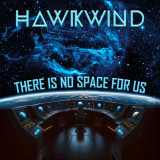
There Is No Space For Us takes listeners on a cosmic odyssey, from the thunderous synth-laden opener ‘There Is Still Danger There’ to the eerie, expansive ‘Space Continues (Lifeform)’. Highlights include the shape-shifting, acoustic-driven ‘Co-Pilot’, the cinematic title track ‘There Is No Space For Us’, and the theremin-fuelled freak-out of ‘Neutron Stars’. The album culminates in the melancholic yet powerful ‘A Long Long Way From Home’, reflecting on the fragile nature of existence.Featuring Dave Brock, Richard Chadwick, Magnus Martin, Doug MacKinnon and Tim "Thighpaulsandra" Lewis, this release cements Hawkwind’s status as one of the most influential and enduring bands in rock. Side 1:1. There Is Still Danger There2. Space Continues (Lifeform)3. The Co-PilotSide 2:1. Changes (Burning Suns and Frozen Waste)2. There is No Space For Us3. The Outer Region Of The UniverseSide 3:1. Neutron Stars (Pulsating Light)2. A Long Long Way From HomeSide 4:1. Practical Ability2. Second Chance
"Chicago-based composer, improviser, multi-media artist and underground legend, Rob Mazurek, joins forces with modular-synth maestro and light magician, Alberto Novello for a blacklight invocation that hurls us out into new and uncharted sound-dimensions.
Born of a chance encounter, Alberto Novello and Rob Mazurek's improvised collaboration, Sun Eaters, was recorded in a single afternoon at Dobialab, an experimental artist run space in Northern Italy. Alberto provided a loose rythmic and timbral bedrock over which Rob Mazurek sketched and weaved delicate harmonies with trumpets, adding atmosphere with bells and sampler.
Sun Eaters is a dizzying and disorientating space ritual, a totally out excercise in telepathic collaboration and psychedelic sound."
Modular Synth by Alberto Novello.
Trumpets, sampler, bells by Rob Mazurek.
Produced by Alberto Novello.
Recorded at Dobialab, Italy on 6th February 2024 by Michele Pegan.
Mixed by Alberto Novello at Ni Dieu Ni Maitre Studios Italy & Air Residency Austria.
Mastered by Hrvoje Nikšić, Croatia.
Artwork by Giulia Spanghero.
Dedicated to the memory of Filippo Novello.
Newly mastered from restored audio fidelity tapes. Comes in digi sleeve with alternate sleeve artwork and includes a rare 8-page booklet. Includes the original version of 'Pop Corn', later a worldwide hit in 1972 . Adds rare single B-side as bonus track. This CD edition also adds exclusive mono mixes to the expanded tracklist.
One of the earliest & most influential Electronic albums OF ALL TIME "Audio Fidelity Records... believes Gershon Kingsley is a true genius and a worthy creative compliment to the electronic wizardry of Robert A. Moog, the creator of the Moog Synthesizer." 1969 The Beatles were influenced by him (and sampled his music on their 1968 Beatles Christmas EP). Since 1972, his music accompanies each day's Main Street Electrical Parade in Disney theme parks. Yet Gershom Kingsley (born: Götz Gustav Ksinski) remains a mystery to many, despite being one of electronic music's finest pioneers and earliest exponents of Robert Moog's synthesizer and the possibilities its use bought to music. Newly mastered from restored Audio Fidelity tapes - this reissue sounds incredible! The rare non-album B-side The First Step (The Sea Of Tranquility) has been added to the LP while the CD adds additional mono mixes and comes in the album's alternate cover. Both LP and CD include the rare 8-page booklet that came with initial copies of the Audio Fidelity LP. To repay The Beatles compliment of including one of his songs, Gershom Kingsley covered two Fab Four classics in his own unique electronic style and included them on Music To Moog By: 'Nowhere Man' and 'Paperback Writer'. "First-wave Moog enthusiast and electronic music pioneer...." Electronic Sound - The Electronic Music Magazine, January 2020.
- 1: No God Unconquered
- 2: Drear Prophecies
- 3: Nothing Above
- 4: Man Is A Failed Creature
As they celebrate the 10 year anniversary of debut album 'MISERY', DISENTOMB have smashed through Australian tours with Sanguissugabog in March, Europe in August with STILLBIRTH as well as annihilating the European Festival circuit, before finally unleashing new EP 'NOTHING ABOVE', in OCTOBER 2024 with a run of headline shows across Australia, as well as a headlining appearance at Souther Death Festival. The release of NOTHING ABOVE coincides with Disentomb marking 10 years since the release of their 2014 sophomore album Misery which has become a classic in the genre of Brutal Death Metal. Fresh from laying waste to some of the biggest summer festivals in Europe, Disentomb will be bringing out slam pioneers Internal Bleeding for three exclusive shows in October in Melbourne, Sydney and Brisbane, which will see the band performing Misery in full for the first time. Grab tickets to DISENTOMB, INTERNAL BLEEDING (US), HONEST CROOKS and DELIQUESCE The NOTHING ABOVE EP marks the first Disentomb release following their third album The Decaying Light and delving further into the sound of dissonant and bleakened Brutal Death with the writing from the band's bassist Adrian Cappelletti. NOTHING ABOVE is four tracks of the band experimenting with their sound while maintaining the guttural brutality that originally made Disentomb's mark when they exploded onto the worldwide scene in 2008. Vocalist Jord said the EP was an opportunity for fans to hear a more experimental side of Disentomb. "While we're hard at work writing Album IV, we wanted to put out some songs in between albums that show a more evolved sound that we have developed over the years. With the writing done by our bassist Adrian, you can hear the mix of brutality while also some more experimental elements."
Low Fuzz is proudly debuting with Avoiding Traps LOWFUZZ001, an album by Georgian musical auteur Rezo Glonti. Created using only Max/MSP and the Soviet-era LOMO MKE-100 microphone, this work marks a departure from Glonti’s traditional approach to sound. Filled with subtle yet unconventional ambient shifts , each track weaves tranquil textures, flavored with vocoder and vocal-driven sounds.
LOW FUZZ is an independent record label, musical platform and event series est. 2022 in Georgia, Tbilisi curated by ESI (Irakli Shonia).
LOW FUZZ is closely affiliated with Mutant Radio and Left Bank in Tbilisi.
The concept started as a collaborative show with Mutant Radio, and it's grown with Left Bank to host regular event series in the club setting. With the proper sound system to showdown and the ability to extend the playtime, LOW FUZZ lines up all sorts of genres and styles to host locals and artists around the globe from time to time
- A1: The Piano And The Violin
- A2: Paréidolies
- A3: Disco Nap (Feat. Metronomy)
- B1: Nénuphar
- B2: Petite Etoile (Feat. Beth Ditto)
- B3: The Mirror
- C1: A Different Side Of Us (Feat. Pawpaw Rod)
- C2: 22 23 (Feat. Antonin & Vico)
- C3: Summer Is Almost Over
- D1: Bluetopia (Feat. Kids Return)
- D2: Laszlo
- D3: La Nuit (Feat. Arthur Teboul)
Macht euch bereit für eine unvergessliche musikalische Reise, denn Polo & Pan melden sich 2025 mit der Veröffentlichung ihres mit Spannung erwarteten Albums '22:22' am 28. März zurück. '22:22', die magische Spiegelstunde, ist ein Symbol für Träume und erfüllte Wünsche und spiegelt das Universum des Duos wider, in dem alles möglich zu sein scheint.
- A1: Hanadi 02 18
- A2: Dreams Of An Insomniac
- A3: Al Dollarji
- A4: Les Vents Dominants
- A5: Al Bahriye
- A6: Miramar
- A7: The Invisible Cut
- A8: Helia Featuring Sven Wunder
- B1: East Of What
- B2: La Calypso 02 41
- B3: Hawalat
- B4: Sfiha
- B5: La Virgule Suspendue
- B6: Preamble To The Conclusion
- B7: Chou Ostak
- B8: What Happened Next
- B9: Jana
If Hawalat sounds like a world tour that’s because it essentially is. “As much as Marzipan is a picture of Lebanon from the inside, Hawalat kind of picks up from where Marzipan finished but more looking to the outside, the diaspora, to the notion of exile.” Megarbane says he is interested in the connections between the global and the domestic, the mundane and the cosmic, and wanted to create space for non-linear progression.
Hawalat is based on the idea of hawala, informal money transfers that you can make to certain countries impacted by a lack of currency or unstable political and economic contexts. His use of the term on this album is not a financial one, Megarbane explains, but a nod to notions of creative exchange between “places, persons, generations.” It is the first time Megarbane called on other musicians in this way to inform his sound, including a collaboration with Sven Wunder on the song Helia featuring strings by the Stockholm Studio Orchestra.
The album opens with first single Hanadi, a punchy Somali-inspired track with warm non-lexical vocals and saxophone. It immediately pivots to the Dreams of an Insomniac, which balances soft, effortless vocals and keys with urgent violin intrusions. Al Dollarji feels like Megarbane’s bread and butter, that is Mediterranean sounds with intricate strings, while Al Bahriye takes this staple and introduces hip hop inflections. The result is a rich 17 track album that effortlessly blends genres and styles.
Including 8 page, 12" sized booklet with unseen photos and liner notes by Armani Syed.