Chaos Emeralds started out as a breezy collection of experimental beats made mainly from natural sounds, synths and vocals. There are sparsely arranged drums, with subtle percussive layers enmeshing
with canopies of found sounds that bounce around excitedly, weaving around pools of melodic poetry that speak deeply in metaphor and sensory images
quête:synths
This release brings you moods influenced by the rich cultures of the Eastern World. The A1 by Paul Tellimerg is a special piece where deepness meets energy. For the A2 Locky’s track makes you groove with his signature percussion and unique basslines. Marco Donato, another legend of the game and part of the Italoboyz, presents you the B1! He provided us with a big driving tune surrounded by a mystic atmosphere. Concluding the VA as the B2, Shaque was inspired by his Bangladeshi roots when he hit the notes on the synths alongside Tjizza.
Law follows up his 2022 debut solo EP on Repertoire with a continuation of the Holographic Principle series.
Volume 2 expands on the ideas of the original, with an overriding theme of emotive, cosmic synths and keys, conjuring up visions of retrofuturist ideals of the mid 20th century.
Whilst Dead Man’s Chest makes his third outing for Repertoire with a stripped-back, junglistic re-working of Holographic, in his own imitable style.
Yuval Havkin, also known as Rejoicer, is one of the foremost exponents of downtempo music, inspired by the fusion of jazz and hip-hop. His new album thus draws on his early influences while exploring the world of calm, melodic electronic music that borders on ambient.
This Is Reasonable has a chill-out feel to it, a record filled with melodies and atmospheres that, throughout its eleven tracks, conveys a sense of calm and floating, akin to ambient music. Stripped of the clichés of the genre, the album is built around subtle melodies and rich harmonies from keyboards and synths, which borrow as much from the spirit of jazz as from the inventions of electronica, whilst being supported by a gentle groove. This equilibrium is perfectly captured by Rejoicer's moniker, a term that evokes both the idleness of artificial paradises and a soft, caring form of spirituality.
Musical path
Yuval Havkin was born in Israel in 1985, and grew up in England before returning to his homeland. He began studying classical piano as a child, but was put off by such conservative teaching and turned to hip-hop and beatmaking in his teens. Throughout the 2000s, he learned his skills "on the job", working with musicians he met in Tel Aviv, a local scene that nurtured a sense of community and emulation. Back then, he was particularly impressed by the grooves and electronic inventions of Detroit producer Dabrye, who had a revelatory effect on him, before he discovered legendary musicians Madlib and Jay Dee aka J Dilla, who led him down the path of beatmaking.
Yuval Havkin's music career got off to a more serious start in the late 2000s with the creation of his own label, Raw Tapes, both based in Tel Aviv. Blending jazz, funk and hip hop, whilst still embracing pop influences, the label's productions showcased the richness of the new Israeli scene combining cool, elegance, playfulness, and a degree of research and inventiveness, thanks to the talent of artists and bands such as Duo Brothers, Maya Dunietz, iogi, Nitai Hershkovits, the Buttering Trio and Rejoicer, the artist's most personal project.
In 2018, Rejoicer's warm and engaging sounds caught the attention of the prestigious Los Angeles label Stones Throw, renowned for having signed his idols Madlib and J Dilla, not to mention Aloe Blacc and Peanut Butter Wolf (its founder). Two albums followed, Energy Dreams (2018) and Spiritual Sleaze (2020), both of which demonstrate his instrumental mastery, jazz culture and lush orchestrations. Both albums are on a par with more renown sampling prodigies of the beat scene, and gave him his first international recognition.
Now based between Los Angeles and Savyon, near Tel Aviv, this hyperactive and instinctive artist simultaneously pursues a career as a composer, musician and label owner, member of numerous bands and collective projects (Apifera, PlayDead, collaborations with Jimi Prasad and Avishai Cohen) while also offering his studios and production skills to other artists.
“Fela Kuti meets Aphex Twin”
This new Rejoicer album, which follows three earlier jazz-tinged records, marks a new and more personal musical direction for an artist who previously favored group work and collaborations. Following his meeting with Mathias Duchemin, founder of the Circus Company record label and a keen enthusiast of the new Israeli jazz scene, Yuval chose to delve into a more electronic and sequenced style of music, playing Prophet 6 and 8 synths, a Juno 60, a Minimoog and his Fender Rhodes keyboard, in contrast with the more organic sounds of his previous albums.
While a few tracks on this new album may sound like a laid-back version of some of the Warp label's early electronic classics by Aphex Twin or Boards of Canada, Yuval Havkin claims to have also been inspired by the great Fela Kuti, particularly in his search for harmonies between bass, keyboards and percussion, and by his elder trumpet-playing friend Avishai Cohen, a musician he particularly admires.
Beyond these various influences, This Is Reasonable is an album of compelling and bewitching melodies. The moods, peacefulness and sheer beauty of This Is Reasonable are, indeed, quite paradoxical, in stark contrast to the country's tragedies (the title explicitly refers to recent political disputes in Israel) and the war currently raging less than a hundred miles from his studio. A paradox fully embraced by the artist, who views his music as a response to the violence of our times.

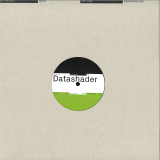
Datashader emerges from the shadows with a striking breaks- and bass-heavy debut release that challenges the fabric of our digital existence. Replete with a Dopplereffekt remix, it nods to the legacy of revered anonymous acts such as Scopex, Drexciya and Underground Resistance, pushing the boundaries of both electronic music exploration and its conceptual underpinnings. As a critique of the erosion of genuine human connection in the digital age, Datashader delivers a barrage of billowing subs, infectious electro, recontextualized jungle, and techno, serving as a poignant counterbalance to current dance floor-centric norms. It’s a contemporary anti-soundtrack that offers a haunting mirror to the societal costs of technological convenience.
In a world engulfed by the digital realm, where social media platforms thrive and dominate every aspect of our lives, the enigmatic project known as Datashader was founded to reflect on the pervasive erosion of authentic human connection through various virtual realities. Artistically, Datashader seeks to critique the impact of technology on human identity and relationships, breaking with an archetype of digital conformity and expressing a profound disillusionment with the superficiality of online interactions through music. Genuine human connection and art cannot be quantified by likes, comments, or followers but rather thrives in the visceral realm of shared sonic experience and human emotion. This idea is at the core idea of Datashader, whose artistic expression ranges from avant-garde composition and electronic experimentations to art, installation, film and more.
Expressed within the varied contexts of diverse artistic mediums, Datashader explores the concept of “technological gentrification”, which describes the gradual displacement of human interaction by technology. Just as gentrification alters the urban landscape, driving out communities and cultures, digital gentrification transforms the social landscape, replacing genuine connection with curated online personas.
Musically, Datashader’s practice confronts this dystopian reality, highlighting the alarming consequence of people becoming mere nodes in a network, reduced to a collection of data points. This is manifested sonically by a blistering assault of breaks, recontextualized IDM, abstract electronics and otherworldly synthscapes, conceived as the aesthetic counterbalance to much of contemporary electronic music’s dancefloor focus.
Datashader dives deep into genres and influences which stand for a form of sonic resistance: A contemporary anti- soundtrack – a sonic mirror of the price we pay for convenience and instant gratification. A self-image in constant flux. No false technological idols.
Empires rise and fall every day in the human heart, and riding these cycles--stories with no beginning or end, only transformation--churns us through the reckless, ridiculous, rueful, redemptive. A founding member of Lake Street Dive and writer of some of their most enduring songs, Iowa-born and Brooklyn-based Bridget Kearney is known for writing smart, unexpected lyrics and melodies built for a heart-baring dance or an introspective drive. Kearney writes music as if filtered through a camera lens. Her stories, steeped in nostalgia and joy, construct a bittersweet framework around the memories that make us human, and shape who we are. As the absurdity of life abounds, Kearney can hold these fragile snapshots and rolling reruns with evident notes of levity, and compassion for a past self. On her new album Comeback Kid, produced by Dan Molad (Lucius, Buck Meek), there are reminders to cherish the moments that make up the collage of what we see in the mirror, but to also plant our feet firmly in the present, for those are the times that will come to form the future. The tracks hop through time, from the relentless, obsessive romanticization of the past, to unrestrained lust for a different future, all inherit the spirit of resilience needed for any move forward, whether it's to dive back in, walk away, or wrestle with the memory itself. In moments, our Comeback Kid wishes to encase a night in amber to revive it at will, like the old man in Jurassic Park, but ultimately is hip to the bittersweet truth that it will never be the same when you return. Kearney began making Comeback Kid back in 2021, in between her work with Lake Street Dive, and a new position as a songwriting teacher at Princeton University. During the process of Comeback Kid, Kearney took inspiration from her Princeton students, as well as her peers when she embarked on a song-a-day workshop. As she found herself surrounded by the thoughts and processes of others, she was able to pinpoint what it is about songwriting that she truly cherishes: namely, the textures and flourishes that come to form the mood of each creation. Comeback Kid is soaked in vintage synths, Kearney's soughing vocals and delicate-yet-driving percussion that ushers in a bright and serene tenor. "If you're driving, baby I wanna go," she soothes on opener "If You're Driving," welcoming us to the LP with windows down, eyes closed, air rushing through our fingers. It's a celebration of staying in the moment, of saying "yes," even though you know it won't last forever. With references to real psychological games, like Rorschach tests and the phenomenon of Ironic Process Theory, they help build the theme of the mind bending nature of obsession, memory, and perspective. Just like the acrobatic brain games we play in relationships, Kearney plays with language and references, with multiple meanings of "comebacks and coming back," and nods that run the gamut from Samuel Barber's mid-20th century masterpiece Adagio for Strings to Jerry Seinfeld's late-20th century masterpiece Seinfeld. The single "Security Camera" captures the carefree liminal space of reminiscence, as Kearney collects those significant, special moments of a past love. There is no animosity or even sorrow here but rather a warm, propulsive rush of gratitude and awe. "You have these really wonderful, blissful times in your life that are fleeting," she explains. "It's an attempt to keep loving the moments in your past, to carry them with you." These moments are carried with care throughout Comeback Kid, but with an eye on the farcicality of simply existing. Kearney is both sincere and silly, somber yet spirited, expertly gathering the iridescent spectrum of what it means to be alive.
I love these musicians Sam Amidon, Karl Blau, Charlotte Greve, Shahzad Ismaily. I’ve played with some of them for two years and some for over twenty. We met up last spring at Figure 8 Studios in Brooklyn and rehearsed for one day before recording this album at the nearby Owl Parlor on March 29 and 30, 2023. It fills me with joy to hear my songs reinterpreted through the spirits of these masterful musicians (who are also my dear friends). I hope you enjoy this document, too. Thank you to Oren Bloedow at The Owl Parlor for creating a beautiful space for us to perform and record this music.” Sam Amidon – fiddle, electric guitar and vocals Karl Blau – bass and vocals Charlotte Greve – sax, synths and vocals Shahzad Ismaily – drums, piano and vocals Laura Veirs – nylon guitar, electric guitar, piano and vocals Recorded and mixed by Lily Wen Mastered by Josh Bonati at Bonati Mastering NYC Produced by Laura Veirs
.
After a year-long hiatus, 7CIRCLE reemerges on his label, Destroy To Rebuild, delivering two compelling originals, alongside groundbreaking remixes from none other than Perc (Perc Trax) and In Verruf (R Label Group). Through this release, 7CIRCLE solidifies his stance and dedication, forging new paths in the techno music realm.
The first track, "Twist Blade", wastes no time immersing listeners in a relentless barrage of drums and sharp percussion, creating a moment that ignites dancefloors. "Oblivion" takes on a darker and more hypnotic mood, setting the vibe for the deepest sets. Perc puts his spin on "Twist Blades", focusing on hard-hitting drums and distorted synths while maintaining the extended breakdown structure for maximum impact. Drawing on his expertise in emotive production, In Verruf transports "Oblivion" to otherworldly realms, infusing it with arpeggios, synth lines, and an emotional atmosphere to craft a remix that captivates audiences.
This release is sure to satisfy even the most discerning listeners.
US progressive metal band EXIST make their return this Spring with their fourth album, Hijacking the Zeitgeist, set for release via Prosthetic Records on April 12. EXIST’s latest full-length sees the group expand upon their established dichotomy of extreme metal technicality and sanguine atmospherics with an intentionally more concise approach to songwriting, resulting in the most direct and emphatic album of their 14 year career. Similarly to 2020’s Egoiista, EXIST took on a keen co-production role as recording sessions commenced in early 2022, with the band emphasising a collaborative approach to the songs arrangements. Drum co-production was handled by John Douglass (Mr. Bungle, Entheos and The Contortionist) before vocals were handled by Mike Semesky in the winter. Hijacking the Zeitgeist’s sonic heft isn’t without its diaphanous counterpoints too, as Phelps and new addition Charles Eron (guitar and synths) craft deceptively complex interplay on album high points in Thief of Joy (featuring Sanjay Kumar of Inferi and Wormhole), Blue Light Infinite and soaring closer Window to the All. EXIST’s sonorous sonic landscape is bolstered by immersive rhythmic lock-ins between Alex Weber (bass and vocals) and Brody Smith (drums), that shine in Anup Sastry’s mix and Kris Crummett’s mastering work. At the core of Hijacking the Zeitgeist lies a multifaceted exploration of algorithmic rabbit holes, conspiratorial paranoia, and the universal traits that lie within humanity - these cautionary tales are tied together in striking detail with album art by Sebastian Jerke. EXIST treats both the allure and perils of both digital mazes and the real world, with equal parts wide eyed awe and horror.
RFXN kicks off life with a new single from David Agrella that comes with a bunch of great remixes. First off he offers up his own Acid Mix of 'Perro Balearico' and it's a supple, deep and dubby track with liquid synths and prog chords that sound both retro and future all at once. The orange is a more dreamy and spaced-out sound for 5 am sessions. On the flip is a more punch but still silky and warmly melodic remix from Mario Liberti before last of all, Gabriel Rai gets darker. His drums hit harder and the synths are moodier as he takes dancers down a late-night path of mystery and intrigue.
London-born-and-raised DJ and producer Parris has announced his new EP Passionfruit, which is to be released on 22nd March 2024 via his own co-founded label can you feel the sun. Following his stand-out 2021 album Soaked In Indigo Moonlight, described as a “masterful” take on the pop genre (Crack Magazine), Passionfruit continues Parris’ affinity for polyrhythms and bouncing synths, but diving deeper into his love for clubbing and UK soundsystems, the result is a heady house compilation.
Each track on the EP is in contention with the one before it, a counterpoint to a sonic argument; melodic bubbly pop against heavy drum and bass, morning rays of sunlight against dark and swampy rhythms. Where the title track “Passionfruit” was described by Parris as imagining the “early morning of a set with the sunrise coming through the shutters”, the very next track “Slipping, Falling, Crawling” is much like the title suggests: a sludgy, percussion-heavy track which has fun with creating melody from the beat itself, stripped back and raw intent.
“Why Can’t Rabbits Wear Cowboy Boots” and “Underwater Fantasy” are almost alternate universe club classics. “WCRWCB” takes a club-formed structure, and uses it to explore the limits polyrhythms, layering chaotically over eachother, and building through the first half of the track, until it peaks with the introduction of an explosive bassline. “Underwater Fantasy” on the surface is the straightest-sounding track to come from Parris, but the disco-style vocals fight with the beat, pushing and pulling at eachother.
Parris (aka Dwayne Parris-Robinson) has dedicated himself to club culture from an early age, never missing a week at FWD>> (the club night where a generation of bass and techno DJs made their names), and was constantly tuning into Rinse FM. Immersing himself into the distinct sound of London built the foundations of the productions we hear today, with grime and drum & bass bubbling alongside slick pop references.
Octave One stride into 2024 with a fresh four-track EP that once again showcases their unique take on techno with three new versions of classic tracks alongside an all-new cut.
Detroit's legendary Burden Brothers had a big 2023 that saw them release their superb Never On Sunday album, which was a nod to their 90s downtempo project of the same name. The bumper collection traversed deep techno, house, and tech in their usual inimitable style while the pair themselves continued to push techno forward with their incomparable live show at the world's most notable clubs and festivals. They now show that their creative reserves continue to run deep with four more essential tracks.
The first one is a new Mothership Remix of 'Price We Pay' with long-time vocal collaborator Karina Mia. The original appeared on Never on Sunday and this version comes on strong with vast rubbery kicks powering a deep and seductive groove. Muted synths roam down low while twinkling melodies fall from above next to the controlled, soulful vocal. The superb 'Mirror Image' is a new track that rides a heavy broken beat. Downtempo chords are melancholic but stirring and have a dramatic sense of finality to them.
'A Better Tomorrow' also gets a new Mothership Mix following its original release on the Burn It Down album back in 2015. Here it is a surging cut with funky guitar riffs and bleeping synth sequences that bring to life the thundering low end. It's a hi-tech and soulful fusion of the organic and the synthetic that will blow the roof off.
Last of all is a Mothership Instruments version of 'Price We Pay' that powers along on thudding drums with edgy synth stabs riding up and down the scales. Deft keys shine and twinkle and signature Octave One arps break out at the midpoint to take things to a higher level.
These are four more classic techno sounds steeped in great synth craft from The Burden Brothers.
Revision of new beats on the horizon
Every 20 years or so, certain musical movements come full circle. Young musicians are inspired by genres dating back two decades, channelling them through their modern sensibility. The legendary J Dilla’s Donuts album was released in 2006 and instantly marked a starting point for the work of musicians worldwide, laying the foundations especially for the beat scene in Los Angeles. A whole young generation of musicians brought up on the new, instrumental and abstract hip-hop has carried jazz into a new era. The four London-based musicians who make up Uniri have gone one step further by abandoning the idea of a jazz band and "bedroom production" in favour of collective composing, creating a new look at the new-beat aesthetics, framing it as a road novel set in an unspecified time and space.
Uniri translates as ‘one unified dream’ and is the key driving motto of the project conceived by Chiminyo (Cykada, Maisha), the band's founder and head honcho. The project materialised in his private studio, where he invited fellow jazz musicians Amane Tsuganami (Jorja Smith, Maisha), Al Macsween (Nubya Garcia, Gary Bartz, Kefaya) and Luke Wynter (Nubyan Twist, Golden Mean) to spontaneously compose together. Hence, despite this being the band's first album, it wouldn't be right to call them rookies. The result of Uniri's collaborative work is the psychedelic, rhythmic album Infinite Reflections, packed with cosmic and warm synths, which neatly balances hip-hop beat and jazz composition. It's safe to say this music is even more appealing when played live, although it's equally suited to the club dancefloor.
UK Jazz has become a permanent fixture in the London landscape, but also across Europe and the US. Today, the musicians who shape the new wave of jazz are drawing on more and more genres, reducing solo improvisation for the benefit of composition and increasingly drawing on influences from the beat scene. Among such formations are the British NOK Cultural Ensemble, the Polish Błoto, the Belgian ECHT!, and the Dutch Comité Hypnotisé. Uniri is part of this emerging yet already international trend, creating an entirely fresh aesthetic that echoes artists such as Flying Lotus, Samiyam, Dorian Concept, Ras G and Nosaj Things oriented around the Californian 'new beats generation' scene.
The title Infinite Reflections alludes to a phenomenon observable on the open sea or during intercontinental flights. Gazing at the horizon blurs the boundary between the ocean and the sky, forming an infinite palette of blue shades. This inspiration sparked an elusive musical narrative, navigating between a sea voyage and an astral journey, destination unknown.
Neither Timothy J. Fairplay, nor Norwell are strangers to the Dalmata Daniel family: both of them are trustworthy contributors to DD compilation albums of earlier years, plus Norwell has released his 'ODD' EP and 'Joint Spaceflights' EP back in 2017 and 2019 on the label. So this time, it's a return for Norwell, and a debut for Mr. Fairplay: their DDS09 split EP is here to present 4 tracks full of outer space lights, eerie vibes, mesmerizing beats and cosmic energies.
Timothy J. Fairplay's side A starts with the explicit kicks and ominous basslines of 'Caliber 9'. Slowly and steadily, the laser blasts and relentless drums all add up to define a world of space cadets on the run, where any odd-looking figure can turn out to be a malignant, speedy alien. 'TV Tower' takes us to another planet with an even higher rotation velocity. Fast percussion elements and squished lower frequencies take center stage in this intergalactic episode, but the whistle-like melodies and descending, bubbling robot signals make the journey complete.
Flip to side B, and enter the contemplating, otherworldly atmospheres of Norwell. 'Midnight Rituals' gives you the chills with its breath-like swooshes, grievous sirens and deadly asteroid belts. Yet, there is no need to worry: after an intense ride with your spaceship, eventually you end up in the same spot, where you started: in the stable and steady mid-tempo beats of an expertly-programmed drummachine. The orbital mission comes to an end with 'Natives', a dense and heroic hymn with emotive structures and well-crafted harmonics. The track starts with the bittersweet, lamenting synths of a solo voice, pouring their heart out in the spotlight, all alone on the stage. All of a sudden, a hard-hitting, rhythmic groove commences its last rush of dedicated cadences. It is full of breaks, it is full of 303s, completed with airy echoes and dreamy, light gestures. 'Natives' keeps on building its structure with elegant paces, providing a massive, yet delicate experience of Norwell's defined aesthetics. The track lets the last strokes of its gloomy synths roll out, along with the final round of looping drums, thus putting an end to DDS09.
Having built a loyal local Antwerp following off of the success of their 2019 debut self released album, ‘Forgotten Kingdom’, and growing reputation for electrifying stage performances, Kolonel Djafaar achieved worldwide recognition in 2021 for the ‘Cold Heat’ EP on Batov Records, attracting praise from Music Is My Sanctuary (“triumphant), and support from Gideon Coe on BBC 6 Radio Music, and DJs across Worldwide FM, Soho Radio, Le Mellotron, and KEXP.
The group overcame busy schedules and frequent quarantine periods to hit the studio in February 2022 to lay down four tracks. However, the creative itch persisted, leading to an intense writing session in August, deep in the heart of a tranquil forest. From noon until midnight, the band immersed themselves in the creative process, embracing the freedom to make noise without restraint.
Fueled by hearty breakfasts, unwavering focus, and the ambient clucking of chickens roaming the studio, Kolonel Djafaar crafted the majority of ‘Getaway’. This period marked a pivotal shift as a number of new band members joined just in time for the August sessions.
Membership changes, including Emiel Lauryssen joining on trumpet, alongside guitarist Philip Matthhijnssens, the band's palette has broadened and new sounds are able to break through. From psychedelic rock and soul influence of the Daptone Records’ affiliated Budos Band, surf rock (“Urban Dweller”), Morricone Spaghetti Western guitar, and Afro Cuban (“Kelmendi”), alongside the brassy Afrobeat and Ethio jazz vibes the group have been known for.
The broader dynamics of ‘Getaway’, and the band’s more cinematic and experimental approach, is particularly apparent on "Siren’s Glitch" and "Phil’s First Tear". The latter, first conceived by drummer Anton Van Hove, features the lead guitar doubling up with the bass guitar for added impact. Whilst the origins of "Convoi Exceptionnel", a brass & synths stomper of a march, trace back to a jam session during the band's Hungarian tour, another vital period of prolonged time together, capturing the organic essence of their experiences on the road.
Each track on ‘Getaway’ holds a unique connection to at least one band member, and all benefit from a collaborative approach to songwriting. "Sparking Clover'', an Ethio-inspired psych & soul groover penned by tenor saxophonist Doyin Smith, carries a poignant undertone inspired by personal loss, while psych rock leaning tracks like "Apologies in Advance" showcase the band's evolution and increasing professionalism in crafting a distinct sonic experience.
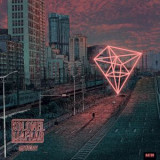
The curious cover art depicts a lone individual heading down an empty city street towards a large mysterious glowing object, evoking the common emptiness and struggle of urban life, and the search for meaning or just something better. The band envision the object to represent this album, offering a beacon to like-minded listeners. Kolonel Djafaar invite music enthusiasts on an immersive journey, to ‘Getaway’ from the daily grind of life, on an album reflecting diverse influences and marking a new chapter in their musical exploration.
After the highly acclaimed first release Serenity Now is back presenting the debut EP by OP Boombox @op-boombox. An electronic duo formed by brothers Orion and Phoenix Jarvis out of Dharawal Country on the East Coast of Australia.
The new EP Initial Artifacts is an honest and unique collection of raw, yet grounded, dancefloor tracks performed and recorded live through their vast collection of hardware synths, drum machines and FX pedals. Expect a deep journey through breezy coastal house landscapes with slight nods towards dub and trance where bass is absolute key.
A versatile EP for every mood of the night, taking it all the way from downtempo chuggers to peak time hard hitters making this a longtime “stay in the bag” sure shot.
Outsider rock is no longer an invite-only endeavor with DIY touring art pop band Summer Like The Season. Their sophomore record “Aggregator" is a DM to come hang out on discord servers and twitch streams. Opening with the track “Meet Me On The Internet” this anthem is a welcoming call to summon a court of weirdos and misfits. Genre bending across the spectrum of indie rock to hyper pop, the musical musings of Summer Krinsky are an exploration of this cyborg era. As a LGBTQIA female producer, percussionist and singer, Summer fronts the band from a unique perspective in more ways than just physically behind the drum kit. Summer is an audio engineer and co-owns Atonuv, a recording studio in Detroit with bandmate Scott Murphy. She composes all of the music, playing piano, bass, guitar, drums, erhu, synths, found sounds, singing bowl, banjo, auxiliary percussion, melodica, kazoo and more on this album. Locking themselves in the studio for many months in a marathon of micro-details, Summer and Scott mixed the record to their exacting standards. The presentation of the band’s first album “Hum” was a polished product from out of thin air, finding fans in person as they toured from town to town. For this new record Summer’s goal was to allow audiences to witness, engage, and participate in a far more intimate manner. Summer live-streamed slices of the composition process, refining tracks such as “Android Hymn” and “Crosstalk” realtime on twitch. “Aggregator” is an album about nowness, living in the time of technological revolution, at the intersection of optimism and anxiety. These songs are a balance, a flip of a coin, the outcome of which is yet to be determined.
MASK’s ZentaSkai & Laura Merino Allue announce vinyl-only underground house and techno series as Cuddling Monsters.
Cuddling Monsters serve up the first vinyl-only volume of a new self titled series on Berlin-based Mask Records. All four cuts explore deep and classy techno, dub and house soundscapes with the aim of rediscovering the soul of electronic music and forming new bonds between human creativity and technological innovations.
Cuddling Monsters is the coming together of creative partners ZentaSkai and Laura Merino Allue. ZentaSkai is the MASK founder recognised for his immersive, hypnotic groove, and Allue is a fashion and graphic designer. They are newly assembled under this alias but have a long-time love of vinyl and analogue machines, which shows in their sounds.
"Crafting music with analogue instruments holds profound importance in the contemporary musical landscape. Despite the omnipresence of digital technology, analogue instruments maintain a pivotal role, offering distinctive sonic qualities, creative constraints, and genuine sound reproduction. The tactile, hands-on connection." - Cuddling Monsters The superbly deep and atmospheric 'Lucky Star' is a dubby minimal cut with a deft rhythm and warm pads that are perfect for cosy back rooms. The absorbing 'Crystal Growing' is another stripped-back techno roller with rubbery drums and pensive chords that lock you into a state of meditation. Up next is the powerful 'Floating Tank' which pairs gorgeous ambient synths with driving drums. It's a great coming together of the physical and the emotional that will take dance floors to the next level. 'Analog Dreams' shuts down with more perfectly smoky pads and grainy lo-fi atmospheres as slick but driving drums power onwards.
Two talents with careers spanning varying eras, yet artists positioned at the heart of Italy’s current house landscape, Alex Neri and Mennie are adding to their rich solo discographies with a series of selected works in partnership with one another. Tuscany’s Neri, co-owner of the iconic nightlife institution Tenax and label boss at Wildflower Records, stands as one of the legendary Italian names from the past 30 years, holding residencies at the likes of Pikes in Ibiza while releasing a long list of classic records since the early 90s under numerous aliases, including Kamasutra alongside Marco Baroni. A familiar name to FUSE fans, having released material via sister imprints LOCUS and INFUSE, Mennie has seen his career flourish of late, regularly touring Europe’s key venues while also holding a residency at the legendary Tenax. Here, the two build on their recent joint studio projects with a debut on FUSE for the third edition of the label’s collaborative X Series, unveiling a quartet of impactful house cuts in heavy rotation for label head honcho Siragusa.
Taking a deep dive amongst swirling synths and cosmic interludes, ‘Reality’ opens proceedings with a trippy and punchy lead cut as the duo introduce slick groove-laden drum arrangements to get things moving, while ‘Find Me’ keeps the pressure on with bumping low-ends, shuffling hats and a menacing yet captivating bass groove sure to keep dancers moving in lockstep. On the b-side, ‘Rockets’ brings luminous melodies amongst breaks-influenced percussion for a playful and dynamic production, before ‘Watch Me’ rounds things out with another all-action affair as acid-dipped and kinetically charged closer made for big moments.
LEGENDO is a work of sonic weird fiction. A pulp fantasy. A descent through the cracks in reality, punctuated by bizarre encounters and freaky transformations. It oozes an odd mixture of wonder and fear, a fascination with whatever might be lurking around the next unlit corner, met with relentless excitement and leading towards ghastly discoveries. Like a vision of a new mythological age, one that aims more at subverting and making fun of itself than educating towards any kind of morality. Or a self-conscious fantasy RPG turning into a full-on immersive experience. The author, Lubomir Grzelak AKA Lutto Lento, arranged this eccentric narrative as a follow up to his previous LP, the ominous Dark Secret world, while also settling out to subvert the atmosphere of that record. In his Haunter debut he embraces his own quirkier side, delving further into eerie derision and surreal trickery. He achieves that by remodeling his penchant for heavy bass and gloomy dub into a kind of otherworldly folk music, drawing in deterritorialized string instruments, cheeky digital sound design, Coil-ian horror synths, and drums that remind as much of heavy metal as of Hollywood neo-classicism. It is by pushing the envelope on the most contradictory elements that LEGENDO ascends to a form of mocking poetry. Many weird characters are encountered through the narrative: from the various musicians that contributed to the music (such as vocalist John Glacier, guitarist Adam Repucha and koto player Katarzyna Karpińska), but also many fringe fascinations that hail from Grzelak’s native Poland: from the 1897 painting ‘Skarby Sezamu' by Stanislaw Wyspiański that inspired the track of the same name, to the delirious paganism of outsider artist Stanislaw Skukalski, to the lullaby referenced in ‘Iskiereczka’. These entities all dwell inside LEGENDO and conduct its chapters, rendering the liminal dimension of its sound as real as it is in its creator’s mind.