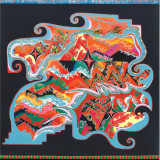
Soul II Soul revitalises the iconic “Nothing Compares to You,” now featuring the mesmerising vocals of Nadine Ceaser. Initially penned by Prince and famously interpreted by Sinead O’Connor, this rendition is infused with a reggae twist, expertly mixed by long-time collaborators Mafia and Fluxy, who have deep roots in London’s music scene alongside Jazzie B.
Continuing to build on a remarkable legacy, this release pays homage to Soul II Soul’s sound system origins and is a powerful testament to music’s ability to unite.
quête:system roots
This Sly And Robbie New Roots Riddim has been mashing up dances all over the UK and Europe for the last 4 months by two of the UK Champion Roots Sound Systems: Channel One And Iration Steppas.
Weighing in with more of the deadly payloads that make systems weep, Alan Johnson return to Sneaker Social Club to finish what they started on 2022’s The Stillness EP.
Gareth and Tom’s sharp instinct for the fundamentals of crushing half-step pressure remain undiminished on this latest EP. Their sound palette reaches across contrasting strands of music culture, and every bar is teeming with micro details of sound design which give the tracks a living, breathing quality.
Ten Year Tonnage splits the EP open in whipcrack snares, DMZ flutes and a thick bed of sub, constantly shifting and teasing roots drops before opening up the mids and letting the low end snarl.
The chord hook on ‘Shapeshifter’ nudges towards some bold rave shapes, but there’s restraint and poise in the way the sounds get deployed. The Johnson way is one of suffocating space and uneasy tension, which obviously creates the best kind of dancefloor drama. As ‘Muay Size’ ably demonstrates, the likely lads are happy to pare a tune back to a skeletal framework and keep dancers waiting. When the pay-off comes, it’s not what you might expect, and that’s precisely why their sound is fresher than yours.
‘People Of The World’ goes even further out as it staggers and stumbles through skewed jazz samples and snatches of drums being thrown across the room. For all the splaying angles, there’s still a rock solid weight to the tune which proves Alan Johnson are more than comfortable taking things out to a weird fringe without losing their swagger.
Aho Ssan debuts on Other People with second solo album and book 'Rhizomes' featuring Nicolás Jaar, Moor Mother, Angel Bat Dawid, clipping., Blackhaine and more
Paris based composer Aho Ssan, the artist moniker of Niamké Désiré, presents his new full-length 'Rhizomes' on the Other People label following his debut LP 'Simulacrum' (2020) and collaborative record 'Limen' (2022) with fellow musician KMRU.
'Rhizomes' draws inspiration from a concept coined and developed between Gilles Deleuze and Felix Guatarri. The idea of an ever evolving structural model, constantly in motion and spreading out in all directions at once. It has no beginning and no end, but always remains in a middle, through which it grows and overflows.
"The root thought is the one that kills everything around itself while the rhizome is the root that stretches out to meet other roots," Désiré explains considering the works of French writer Édouard Glissant who addresses questions of identity, crossbreeding of cultures and its evolution.
Much like the name it borrows, Aho Ssan's 'Rhizomes' is a multimedia project that embarks on a myriad of disparate, unique musical and artistic partnerships. This piece adapts this concept to explore the influence of sound materials on creation, the appropriation of a sound object, and the collaborative nature of a composition that responds to modernity.
"Rhizome represents an underground stem system that fosters connections between various organisms and allows them to flourish collectively. It's an album that celebrates collaboration and brings together a diverse group of talented artists," Désiré continues.
Aho Ssan collaborated with a comprehensive cast of artists to create a musical rhizome including Nyokabi Kariuki, Josefa Ntjam, Blackhaine, Nicolás Jaar, Resina, R?n C?p ?uôi, Richie Culver, clipping., Lafawndah, 9T Antiope, James Ginzburg, Exzald S, Valentina Magaletti, Moor Mother, Angel Bat Dawid and Mondkopf. Cooperation and community are at the root of this project and the lens through which all the compositions can be understood through.
Aho Ssan will present 'Rhizomes' AV show together with visual artist Sevi Iko Dømochevsky at Berlin Atonal 2023. 'Rhizomes' received a Honorary Mention at Prix Ars Electronica 2023 Digital Music
Ouverture feat Nyokabi Kariuki
- A1: Here I Come
- A2: Revolution
- A3: Street Dance (Feat. L'entourloop)
- A4: Roots Rock Reggae (Feat. Yaniss Odua)
- A5: Rappa Pam Pam
- A6: Who Fool Dem
- B1: Free Your Sould Interlude
- B2: Mister Babylon
- B3: No Matta
- B4: Expensive Love
- B5: What A La La (Feat. Johnny Osbourne & Manudigital)
- B6: Dancehall
- B7: Perfect Timing
Skarra Mucci is a Jamaican Reggae and Dancehall artist born in Kingston. Known as the "Dancehall President", his career counts 7 solo albums, including the essential "Return of the Raggamuffin" (2012) and countless classics and cult collaborations, such as the hit "My Sound" from the album "Greater Than Great" (2014) which exceeds 15 million cumulative Spotify and YouTube streams and the critically acclaimed album "Dancehall President" (2016) with its tour of more than 100 dates around the world, from Mexico to China.
5 years after the release of "Skarra Mucci & The One Love Family" (2018), this essential figure of Jamaican music, with his versatile flow and recognizable voice, announces a new studio album with multiple influences "Perfect Timing", which is scheduled for release on September 29, 2023.
The album opens with a hybrid roots-tinged hip hop riddim. Brass and percussion resonate throughout the track as Skarra Mucci gives way to a mesmerizing voice sample that gives the track “Here I Come” all its depth.
An introduction that sets the tone for an album tinged with a mix of genres by Skarra Mucci and his team of top producers brought together by Undisputed Records. "Perfect Timing" is indeed an ode to Reggae of all eras, full of nods to the Sound System culture, from its beginnings to the present day. From the choice of the featurings to that of the producers, nothing is left to chance to offer us a journey through the highlights of this rich culture which has never ceased to evolve, without any period being left behind.
For his 1st single, it is with a major player in the current Reggae scene that Skarra Mucci has chosen to announce the release of his 8th solo album by inviting the Martiniquais Yaniss Odua on the title "Roots Rock Reggae".
Accustomed to albums teeming with successful collaborations, "Perfect Timing" is obviously no exception to the rule. We find in particular on the title "Street Dance" the essential French producers of L'Entourloop, with whom he released the very successful EP "Golden Nuggets" (2019, 6 titles, 17M cumulative streams Spotify and YouTube) to drop once again a banger between Hip-Hop and Dancehall in line with their huge 2013 hit “Dreader Than Dread” (38M combined Spotify and YouTube streams).
Jamaican legend Johnny Osbourne also takes part in the celebration for a version of his classic of the digital era "What A La La", with Skarra Mucci on the Stalag riddim replayed for the occasion by the beatmaker specialist in the matter: Manudigital.
Skarra Mucci continues his exploration of various styles and influences with the very groovy "Dancehall", produced by the musicians of Dub Akom, in which he lets us perceive all his class and his swing. We also find the massive “Who Fool Them”, a UK stepper track produced by Evidence Music, but also the future Dancehall classic “Rappa Pam Pam”, or the huge “Misty Babylon” in a much more Roots register.
The album "Perfect Timing" ends with the eponymous title, on a riddim and Lovers Rock melodies carried by a joyful piano and a groovy bass. A finale in the form of a declaration of love for Reggae, this music which gave him so much and to which he gave everything.
See you on September 29, 2023 to discover "Perfect Timing", Skarra Mucci's new album.
Recorded in 1995 and 1996, mostly in John Fahey"s room at a Salem, Oregon boardinghouse, the performances on Proofs and Refutations prefigure the ornery turn of the page that marked Fahey"s final years, drawing another enigmatic rabbit from his seemingly bottomless musical hat. Cloaked in the language of dogma - what is he proving? refuting? - this is Fahey dancing a jig in the Duchampian gap, jester cap bells a-jingling. True believers? He"s got something for you: an uncompromising vision that you can sneer at ("guy can"t play anymore and refuses to concede!") or embrace as evidence of his genius ("the reinventor does it again!"). Skeptics? He"s there with you, too: sending up the fallacy of certitudes altogether. Institutions, systems, accepted wisdoms. Heroes. Alternative facts, indeed. Right out of the gate, Fahey re-materializes before us, somewhere between Oracle of Delphi and Clown Prince at Olympus. Mounting a thundering dialectic from on high, "All the Rains" resembles nothing else in his extensive discography - betraying roots in everything from Dada to Episcopal liturgical chant - and contains nary a plucked guitar note. You can"t fool him! When the lap steel of yore appears on "F for Fake," it serves more as soundbed for an extended sequence of vocal improvisations, running the gamut from wordless Bashoian caterwauling to free-form (but decidedly fake) Tuvan, even revealing a burnished falsetto in the process. Fahey takes on a different kind of provocation in the two acoustic guitar-based tracks closing Side 1 - "Morning" parts 1 and 2 - the first of 4 recordings in this session that have him wrestling with the ghost of Skip James, perhaps Fahey"s effort to wrench the "bitter, hateful old creep" (his words) back into the grave. Anchoring Side 2 is the two-part "Evening, Not Night," the second half of his extended cathexis on James (and the latter"s avowed castration complex - another story for another day, perhaps). Bit of a chill in the air - where"s the impish Fahey from earlier? Unmistakably working through some psychic wounds here, we might think: the unheimlich rendered in glistening viscera. Or is he playing with our notions of authenticity, of his reputation as troubadour of raw emotional states, a pilgrim of the ominous, the simmering unconscious? These cards are kept decidedly close to the vest. The opening and closing pieces again feature Fahey"s guitar as drone soundbed - employing distortion, oscillation, and an altogether absurd quotient of reverb to create texture and harmonics that are - if we wanna go there - not dissimilar to the sustained tonic clusters of Tibetan singing bowls, the hurdy gurdy, Hindustani classical music, or La Monte freaking Young. Portions of this material appeared on obscure late "90s vinyl in the 7" or double-78 rpm format, but as a "session" it has lain dormant more than a quarter century now. Taken together, we can now see these tracks as secret blueprints to latter-day Fahey provocations, several years prior to records like 1997"s City of Refuge and Womblife.
Founded in 1971, Matumbi was among the earliest and best British reggae bands. They did, however, also record under different guises, including The 4th Street Orchestra. In their acclaimed Rough Guide to Reggae, Steve Barrow and Peter Dalton rate this album (and its counterpart Leggo! Ah-Fi-We-Dis) as "the best showcase for Matumbi's talents". This release marks the first LP reissue of this genuine UK roots-monument since 1976.
Original member Dennis 'Blackbeard' Bovell (of LKJ and Dub Band fame) knew the local sound system-scene like the back of his hand and most tracks on Ah Who Seh? Go Deh! were initially cut as exclusive 'specials' for his own Jah Sufferer sound system and for fellow soundmen. Hardly anyone hearing these tunes at reggae parties or would have guessed they didn't originate in Kingston but were recorded in London. And neither did many who bought the records when they were released a few years later. That's hardly surprising, as the material Bovell & Co churned out could easily compete with the toughest output of their Jamaican counterparts. A splendid version of the 1970 Kingstonians smash "Singer Man" is the most familiar tune here. But it's the band's own outstanding, heavyweight roots tunes like "Jah Chase Dem" or "Za-Ion", their versions popping up later in true sound system style for maximum impact, that will have reggae fans prick up their ears.
Ah Who Seh? Go-Deh! is available as a limited edition of 750 individually numbered copies on orange coloured vinyl.
In 2018, New York based composer and improviser Lucie Vítková made recordings in caves in the Czech Republic and an abandoned Gothic church in Slovakia. Their album Cave Acoustics combines a beguiling exploration of the physicality and acoustics of these unique locations with profoundly personal themes of family legacy and roots.
Lucie performed with their sisters in Výpustek Cave – an underground system of tunnels and former Soviet-era bunker. The choreography-based piece creates crescendos of metallic noise as the trio moves around the spaces. It begins with echoing clanks of tins and coins and accelerates towards a rattling cacophony with distant singing floating up from deep in the shadows. Bearing in mind the siblings had never performed together before, their frenzied kinetic outpourings seem even more special, a wordless cohesion forming between them. Lucie clearly doesn’t shy away from a physically full on experience; they embarked on a Fitzcarraldo-style journey to carry heavy props up a steep hill and across a river to reach the less accessible Jáchymyka Cave.
‘Hair Score’ is an attempt to process the death of the siblings’ mother through a serene then slightly unsettling swaying ritual, with rising and falling waves of wailing and emergency siren sounds growing in intensity as they emerge from their mourning mouths.
After the cavernous acoustics, ‘Stones’ by American experimental classical composer Christian Wolff feels more immediate with its textural sounds and fast, insistent rhythms, as we hear different sized stones knocked together rapidly, following the composer’s instructions not to break anything.
‘Inside the Ritual’ was a “transformative” experience for Lucie, where they felt their body merge with the forest and hills in Slovakia. The 23-minute long track is hypnotic, listening to cowbells and chirping insects at the end of a hot summer’s evening. Things get stranger as metallic clatter is punctuated with Lucie’s voice and reedy tones from their Japanese hichiriki flute.
The album is a calm, contemplative but also energetic and moving reflection of these rare and unheard environments and Lucie’s reunion with the people and places that have shaped them.
- A1: Maroon Commandos - Bi Sophia N°1 (El Sofia)
- A2: Issa Juma & Waanyka - Ateka (El Corín Tellado)
- B1: Orchestre Shika-Shika - Diabanza (La Gallina Java)
- B2: Viva Makale - Safari (La Mecedora)
- B3: Les Mangelepa - El Trouble Pt 1 (El Trouble)
- C1: Nairobi Matata Jazz - Dada Mwajuma (La Pistola)
- C2: Les Volcano - Hakuna Dawa Ya Mapenzi (La Guitarra Sónica)
- D1: Lawi Somona - Safi (El Mapache)
- D2: Les Kilimambogo - Wakumbuke Wazazi (El Coyote)
- D3: Les Mangelepa - El Trouble Pt 2
This compilation takes us on a journey to the Colombian coast where the passion for African music burns bright.It's impossible to understand this love affair without first looking to San Basilio de Palenque - the first free town in colonial Latin America, established in 1691 as a place of refuge and autonomy for black slaves. It's a place where pride in African heritage and culture could be kept alive, just 50 km away from Cartagena de Indias.
The Afro Caribbeans' connection to their roots gave rise to the "picós" - artisanal, high-powered sound systems akin to those found in Jamaica. These music aficionados have a keen ear for African melodies, leading to a vibrant collector's scene that brought Afro sounds to the streets of Barranquilla, Cartagena, and Santa Marta. This compilation showcases the best of Kenyan Benga music - a unique style with a distinct guitar-picking method that draws from traditional instruments like the nyatiti and orutu. Learn everything about the history and stories behind these African tracks, from the carefully guarded "exclusives" to the piconema - the practice of renaming songs in Spanish based on their lyrics or the reaction of the dancefloor.
The project has been led by Spanish vinyl collector Joan Pujol aka Golfo De Guinea surrounded by a team of passionate music lovers including Don Alirio, a musicologist from Barranquilla who offered a coastal perspective, and George Ouma, a Kenyan DJ, collector, and Benga advocate who helped with track selection and securing rights. The result is a compilation that captures the joy and energy of sub-Saharan polyrhythm, bringing together a vibrant mix of genres that are sure to move your feet. So sit back, turn up the volume, and let yourself be transported to the vibrant streets of the Colombian coast and the shores of Lake Victoria.
Founded in 1971, Matumbi was among the earliest and best British reggae bands. They did, however, also record under different guises, including 4th Street Orchestra. In their acclaimed Rough Guide to Reggae, Steve Barrow and Peter Dalton rate this album (and its counterpart Ah Who She? Go Deh!) as 'the best showcases for Matumbi's talents'. This release marks the first LP reissue of this genuine UK roots monument since 1976.
Original member Dennis “Blackbeard” Bovell (of LKJ and Dub Band fame) knew the local sound system scene like the back of his hand, and most tracks on Leggo! Ah-Fi-We-Dis were initially cut as exclusive 'specials' for his own Jah Sufferer sound system and for fellow soundmen. Hardly anyone hearing these tunes at reggae parties would have guessed they didn't originate in Kingston but were recorded in London. And neither did many who bought the records when they were released a few years later. That's hardly surprising, as the material Bovell & Co churned out could easily compete with the toughest output of their Jamaican counterparts. The solid interpretation of Junior Delgado's "Tichion" and a scorching, melodica-led version of Ras Michael's "None-Ah-Jah-Children" are the most familiar tunes here. And a militant update of Max Steiner's "Theme From A Summer Place" displays good fun as well as guts. But the band's outstanding originals will give many '70s Jamaican classics a good run for their money.
S Transporter is Izaak S and Ryan Spencer, a pan-American duo of exact origins unknown. With roots spanning from Detroit to San Francisco, the project is somewhere around four years old, though no one remembers exactly when it started. The songs were initially demoed in Ryan's bedroom and promptly forgotten about in the chaotic whirl of both members’ efforts in other music projects, DJing, and party-throwing ventures until Ryan played them at his weekly, Monday Is The New Monday (co-founded with PGS' Ben & Zach). Immediately, the songs burst with new life into our ears, and we excitedly requested to hear more. In a tale every creative can relate to, Ryan simply didn't know if they were any good. We found them extraordinary.
What followed were several months of additional recording sessions in a collective effort to finalize the tracks, done at Ryan's apartment in Southwest Detroit, Izaak's in SF, and the Portage Garage in Hamtramck. Bay area DIY underground luminary Anya Ghiorzi joined the group and contributed her vocal talents to the songs, which began to exhibit a sound representative of the genre-collisions featured at MITNM– from krautrock and boogie to trance, acid, and house– in a way other PGS releases have hinted at, but have not fully expressed until now.
S Transporter is the name of the EP, the project, and all four songs. A maximalist sound with a minimalist presentation, naming the songs - so many years after their inception - would, perhaps, take away from the feeling that struck all three of us the first time we heard them on a club-grade sound system.
Izaak S and Anya Ghiorzi are San Francisco residents, musicians, and DJs in the Loveshadow dance collective.
Ryan Spencer is a Detroit resident, DJ, co-founder of Monday Is The New Monday, and is a member of Freakish Pleasures.
"S Transporter 1"
Uptempo, backspin-laden electro/acid with a winding 303 bassline that reveals itself slowly over the pulsing breakbeat backbone. Immersive, haunting and enchanting.
"S Transporter 2"
Downtempo electro. Slap bass. Heavy boogie. Sensual vocals reminiscent of early Chris N Cosey carry you through this industrial funk heater. Heavy synth lines and rhythmic grooving guitar that is club-ready for dance floors of all kinds.
"S Transporter 3"
A fast paced, percussion forward adventure with balaphone melodies and bending synth pads. Spoken words guide the journey, arriving at a movement inducing Juno ascension that dances into a calm end.
"S Transporter 4"
Encompassing the seemingly disjointed, individualistic styles of S Transporter 1-3, ‘4’ combines elements of the entire release into one final gesture. ‘4’ could be Byrne/Eno ("Regiment"), but it's something else - the product of decades of dance music history, distilled by two musicians & DJs into one song.
credits
releases July 19, 2019
PGS 010
S Transporter
"S Transporter"
EP
2015-2019
Written, Mixed and Produced by Izaak S & Ryan Spencer
Vocals by Anya
Bass on “2” by Lucas De Leon Turner
Percussion & additional production on "3" by Shigeto
Percussion on “3” by Julian Spradlin
Mastered by Josh Bonati at Bonati Mastering
Recorded at Izaak's apartment in San Francisco, Ryan's apartment in Southwest Detroit and the Portage Garage
Records Pressed at Archer Record Pressing, Detroit, MI
Design by Will
MMXVIX
* Classic roots reggae vocal track from the late Devon Russell.
* The original version was recorded by Coxsone Dodd for his Studio One label.
* This updated digital version was produced by Zion Train and released in 1992.
* A long-time sound system favourite with a dub version from Zion Train on the flipside.
The next chapter of the Natural Information Society is here. Since Time Is Gravity, credited to Natural Information Society Community Ensemble with Ari Brown, presents a newly expanded manifestation of acclaimed composer & multi-instrumentalist Joshua Abrams nearly 15 year, 7 albums &-counting flagship ensemble. Joining the core NIS of Abrams (guimbri & bass), Lisa Alvarado (harmonium) Mikel Patrick Avery (drums) & Jason Stein (bass clarinet) are Hamid Drake (percussion), Josh Berman & Ben Lamar Gay (cornets), Nick Mazzarella & Mai Sugimoto (alto saxophones & flute), Kara Bershad (harp) & Chicago living legend of the tenor saxophone Ari Brown. Recorded live to tape at Electrical Audio & The Graham Foundation, cover painting Vibratory Cartography: Nepantla, by Lisa Alvarado. 2xLP on Eremite USA, 2xLP & CD on Aguirre/Eremite Europe. Out 14-04.
Since first developing Natural Information Society in 2010, Joshua Abrams has been gradually expanding the group’s conceptual underpinnings, its musical references & the sheer number of the group’s members. Its music is, in a sense, an expansive form of minimalism, based in repeated & overlaid rhythmic patterns, ostinatos & modality. Its roots, its scale & its meaning become clearer in time. If time is gravity, it also allows us to carry more. Having begun as fundamentally a rhythm section with Abrams’ guimbri at its core, the version here can stretch to a tentet, including six horns.
Abrams has been expanding his minimalism gradually, but he has long understood a key to minimalism’s potential: the breadth of its roots in the late 1950s & early 1960s, ranging from the dissatisfaction of young European-stream composers with the limitations of serialism to the simultaneous dissatisfaction of jazz musicians with the dense harmonic vocabulary of bop & hard bop. The former began exploring rhythmic complexity & narrow tonal palates in place of harmonic abstraction (Steve Reich’s Drumming, Philip Glass’ Music with Changing Parts; perhaps above all Terry Riley’s In C & his late ‘60s all-night organ & loop concerts); the later reduced dense chord changes to scales (signally with Miles Davis' Kind of Blue, but rapidly expanding with John Coltrane’s vast project). In the 1950s the LP record opened the world with documentation of Asian & African musics, key influences on both minimalists & jazz musicians. If John Coltrane’s soprano saxophone suggested the keening shehnai of Bismillah Khan, the instrument was rapidly taken up by two key minimalists, LaMonte Young & Riley, similarly appreciative of its flexible intonation, the same thing that kept it out of big bands.
If the guimbri, the North African hide-covered lute that Abrams plays with NIS, involves a rich tradition of hypnotic healing music associated with the Gnawa people, Abrams’ music also touches on other musics as well — other depths, memories & healings, different drones, rhythms & modes. As the group expands on Since Time Is Gravity, he has made certain jazz traditions in the same stream more explicit as well. If there is a mystical & elastic quality involved in the experience of time, both in direction & duration, you will catch it here. The parts for the choir of winds expand on the roles of Abrams’ guimbri, Mikel Patrick Avery & Hamid Drake’s percussion & Lisa Alvarado’s harmonium: at times, the winds are almost looping in the tentet version, each hitting a repeating note in turn, at once drone & distinct inflection on temporal sequence. The brilliance of the work resides in Abrams’ compositions, the NIS’ intuitive execution & in Ari Brown’s singular embodiment of the great tenor saxophone tradition, including the oracular genius of Eddie “Lockjaw” Davis, & Yusef Lateef. The three pieces by the expanded NIS featuring Brown —the opening “Moontide Chorus” & “Is” & the ultimate “Gravity”— have an immediate impact, & togther might be considered a kind of concerto for tenor saxophone. Here Brown presses almost indistinguishably from composed melody to improvised speech, getting so close to language that he might have a text. Everything here is a sign. Note the tap of the Rhythm Ace that links “Moontide Chorus” to “Is”, the attentive heart always present, even when signed by a machine. There’s a link here to the methodologies & meanings of dub music & the linear & vertical collage of beats, textures & tongues: treated with reverence, a sample of a beat-box can be as soulful, as hypnotic, as a mbira or a tamboura. If those pieces with Brown are heard as a suspended concerto, the three embrace & enfold the other works, like the sepals of a flower. That placement will also touch on the mysteries of our perception of time.
Particularly in “Is”, but elsewhere as well, a phenomenon of transcendence arises in which time appears to be tripartite, at once moving backwards & forwards & standing still. This is an act of technical brilliance certainly, but also an illumination of music’s ability to represent temporal consciousness through polymetrics. This particular listener has only heard it before in a few places, including the horn shouts & bowed basses of Coltrane’s Africa, in moments of Charles Mingus’ The Black Saint & the Sinner Lady, in certain pieces where tapes were literally running backwards, & earlier still in Dizzy Gillespie’s Cubana Be, Cubana Bop, in which the composer George Russell & conguero Chano Pozo found a music that spoke at once in the voices of Stravinsky’s Rite of Spring & the vestigial rites, rhythms & songs of the Yoruba language & Santeria religion of inland Cuba.
In Joshua Abrams’ compositions & the realization of them by the NIS, in the time of one’s close listening & memory thereof, distinctions between the “natural” & the “social”, the “quotidian” & the “transcendent” are erased, suspended or perhaps irrelevant. Consider two of the ensemble pieces, one named for nature, the other social science. In “Murmuration” the repeated wind figures of flute & alto saxophone combine with the interlocking patterns of harp, guimbri & frame drum (tar) to create a perfect moving stillness, not an imitation but a witness to the miracle of the starlings’ astonishing collective art, a surfeit of beauty that might be the ultimate defense tactic.
“Stigmergy” takes its name & concept from the Occupy movement’s Heather Marsh, who proposes a social system based on a cooperative rather than competitive models, one in which ideas are freely contributed & developed as ideas rather than an individual’s property. In its form, Abrams’ “Stigmergy” is the closes thing to traditional jazz, a series of accompanied solos by each of the wind players. However, the composed accompaniment is a radically collectivist notion: a repeated rhythmic figure, call it ostinato or riff, in which the different winds each play only a note or two of the figure, a concept both more collectivist & individualistic in its conception than any typical unison figure. It suggests another of the underlying recognitions that propel the Natural Information Society, the group as social organism, the teleology of hypnotic anarchy, all parts in place, functioning systematically, evolving & expressing itself, its nature & society, as a transformative organism.
George Lewis has described music as “a space for reflection on the human condition”. This suggests that, rather than a “distraction”, at least some music might serve as a distraction from distraction. It’s a focus, a clarity, a awareness, an external invitation to interiority, as if music itself is a model for form & contemplation, an organism contemplating for us or as us. If that is a possibility, & I am sure I have heard such musics, than this music is among them. How many of our rhythms, melodies & harmonies (cultural, historical, biological, psychic) might such music carry, translate & transform in the particulate ecstasy of our own murmuration? (Stuart Broomer, April 2022)
Death Is Not The End's 333 sub-label drops a much needed reissue of Rupie Dan's My Black Race 12" from 1982. A huge Shaka selection featuring one of the heaviest dubs available from this era of UK roots production. Originally written and produced by Rupie for his Flag Records label, with engineering from Tony Addis (later of Addis Posse and the Warriors Dance label).
"The lyrical idea for My Black Race came about during the 1980/81 social/racial revolution that took place in several cities all over England, including London, Liverpool, Birmingham, Leeds etc. I was living in Bradford, West Yorkshire at the time and was a DJ/Sound System operator on Jah Scorcher International Sound. I also co-hosted a Reggae show on an independent radio station Called Pennine Radio 235. In my regular job I was a youth and community leader with the Bradford education council. I was fully connected and in touch the community.
Seeing how the media used the events of the social uprising as a weapon to further discriminate against the African & Caribbean community committed me to say and do something to elevate the minds of especially young people who were already demoralised by the rhetoric that brought about the so called "riots" of the time. It was during this time that the lyrical foundation of "My Black Race" was laid. The rhythm came later after hearing Barry Brown's "No Wicked Shall Enter the Kingdom of Zion". In the summer of 1982 I entered into the Addis Ababa recording studio on Harrow Road, Paddington and recorded the song having moved to London the previous year. Musicians featured included Victor Cross on bass and Mark Wright on drums (both from the Ariwa band), Rizzo on guitar, Tan Tan and Bami on Horns (all 3 from Aswad band), Bubblers on Piano/Organ (Undivided Roots/Ruff Cutt Band). Lead vocals were provided by myself, with backing vocals Jenifah Gad and Niomi who was working with David Bowie at the time. The engineers were Bubblers and Tony Addis (later of Addis Posse & the Warriors Dance label).
Jah Shaka was in the studio during the entire recording session. I was aquatinted with him as I was previously involved in a 3 way soundclash with Shaka, Quaker City and my sound at the time Jah Scorcher. Some years later I was in Terry's Dub studio in North Acton cutting some dubs when King Jammys and Bunny Lee walked in and heard the song. Bunny was responsible for the production of Barry Brown's "No Wicked Shall Enter the Kingdom of Zion". Thankfully they were both impressed by the track which delighted me as a young up-and-coming artist/producer. The rest is history as we know it. Jah Shaka was mystically constant hence his attachment and love for the song. Jah bless and guide him."
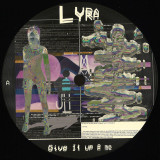
Young South Coast UK producer Lyra’s ‘Give It Up 2 Me’ has been a very 2023 entity so far, racking up 170k + streams as an unofficial Soundcloud upload, starting to make an impact on Tik Tok (especially via the L Major remix) whilst being, in 4/4 terms, on the nippier side of things.
Rocking along at an unapologetic 160bpm, ‘Give It…’ goes big on energy, and low on musical frills, as the song (a faithful cover of Ojerime’s original) and driving bass/drums combo do all the work for what is a minimal, avant - donk workout.
On the remix front, Limoux slows things down with a 135bpm 4/4 mix that feels like it has roots in LDN 2015 style foot shuffling, but with added sense of contemporary punch and reach.
Stepping up on an old school / new school junglist front, L Major’s mix takes no prisoners, with his rolling, cut up breaks and big Reese b-line set to cause damage to unsuspecting systems everywhere.
Closing proceedings, the Jag Limbo mix doesn’t seem to know if it wants to be Overmono or Giorgio Moroder, is in reality neither, and arguably none the worse for it.
- A1: Roots Radics' World Dub
- A2: Scientist's Earth Dub
- A3: King Tubby's Moon Dub
- A4: Roots Radics' Star Dub
- A5: Scientist's Rain Dub
- A6: King Tubby's Snow Dub
- A7: Roots Radics' Summer Dub
- B1: Scientist's Winter Dub
- B2: King Tubby's Cloud Dub
- B3: Root Radics' Storm Dub
- B4: Scientist's Hurricane Dub
- B5: King Tubby's Earthquake Dub
- B6: Scientist's Thunder Dub
Deejay Jah Thomas was one of the creative figures making a dramatic impact on the Kingston sound system scene of the late 1970s and early 80s, the rhythms he laid at Channel One studio with the Roots Radics helping to steer reggae towards the emerging dancehall style. Voicing and mixing his work at King Tubby’s studio, typically with the young upstart engineer known as Scientist, Thomas was another champion in the realm of dub, his re-makes of vintage Studio One and Treasure Isle rhythms part of the process. In A Dub Explosion is a thrilling comp of tough dubs, mixed by Scientist & the King. A great listening experience!
* Classic roots / dub from 1992 produced by Nick `Manasseh’ and Jeremy `The Equalizer’ Armstrong, with vocals from reggae legend Earl Sixteen known for his work with the likes of Lee Perry, Augustus Pablo, Mikey Dread and Leftfield.
* Originally released on the Riz label, `Natural Roots’ gained popularity in sound system circles, with play from the likes of Jah Shaka. The original 12” cause distress on the collectors market
* Features one previously unreleased mix: `Natural Dub’.
Fresh vinyl slice of UK Dub Roots Reggae sees veteran producer Vibronics hook up once again with rising star Ashanti Selah for a 4 track outing featuring 3 vocals and one deep dub mix.
Vocals are provided by Nia Songbird, Echo Ranks & Ashanti Selah. Nia is the the young singer from Leicester creating waves right now in the sound system scene, Echo provides the listener with a rare opportunity to hear his legendary tones after a long break from releases and finally Ashanti Selah shows his versatility by dropping a vibrant 70’s style DJ cut - crucial combinations on this 10” vinyl that signed of with a furious Vibronics all-analogue dub mix from the Dub Cupboard Studio.
This release is beautifully presented in a specially printed SCOOPS Records purple label sleeve
Vibronics is one of the most established names in UK Dub/Reggae music. From their base, in the Dub Cupboard Studio in Leicester, their music has achieved millions of views on YouTube, millions of Spotify streams and many tens of thousands of vinyl record sales. Vibronics have collaborated with reggae legends Michael prophet, Macka B, Iration Steppas, Soom T, Aba-Shanti and so many more.
Ashanti Selah is a musician / Dub Producer hailing from the UK, is the eldest son of the world-renowned soundman, Aba Shanti-I. As well as working on his own productions Ashanti makes use of his musical abilities as a performer in various bands as keyboardist and has had the pleasure of working and collaborating with a number of great singers, musicians & producers in the scene- such as; Vivian Jones, Mad Professor & Alpha Steppa, to name but a few.