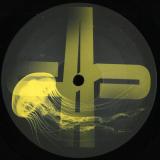
detectionaudio presents its first excursion as a label entity to ignite a new direction for the imprint. DET001 is produced by UK artist 'Hardacre', and the London man delivers a twisted four-tracker that promises peak-time potency and maximum mind expansion. The 'Destination EP' is a dark and system-crushing statement of intent. Hardacre draws upon heavy influences from halcyon UK underground past eras, whilst firmly exerting a forward-thinking and authoritative sound that pushes all the boundaries of Acid, Breaks and Electro. Expect robust drum-play, warped synth-lines and interplanetary soundscapes.
Поиск:system syn
Все
A1 - Course Of Action
Opening the EP with a thoroughly entertaining, unique breakbeat workout of the ilk we've come to appreciate from Eusebeia, we are treated to sharp snares ripping into the mix backed by a lethal apache break dripping with old school appeal. An ever-evolving atmosphere is guided by intense vocal samples and shimmering synth backdrops, interspersed with intense melodies and darkly effects to complete a mesmerising collage of sound.
A2 - Embracing Imperfection
Next up we see Embracing Imperfection, a sci-fi inspired track littered with a detailed myriad of synthwave-esque melodies, transporting you to an ethereal episode of the X Files as Eusebeia flexes atmosphere and breaks intertwined with synths and whooshing FX. The breaks are superbly effective as ever with distinctive cymbal hits and echoed samples adding flecks of detail to an impressive composition.
AA1 - Point Of Isolation
A tense introduction punctuated by a reverberating melody evoking enigmatic mystery slowly unfolds, as Point of Isolation displays Eusebeia's diverse repertoire of breakbeat editing techniques. Darting metallic snares and deep kicks & basslines ebb and flow, a tangled maze of rippling energy lifted straight from the soul. This track is equally suited to the headphones and the dancefloor, causing ructions to both.
AA2 - Soul Searching
Closing the EP, Soul Searching sees Eusebeia release a gradually enveloping system of seductive breakbeats, twisting and intertwining with a whole host of vivid soundscapes delivered through pulsing synthwork and jostling micro-melodies. Throughout the track, the distinctively thick breaks are the true star of the show, encompassing the sensibilities of Spatial perfectly. Until the next time.
Words by Chris Hayes (Spatial / Red Mist)
From Turin to the World: Neon Reflections Marks 5 Years of Early Reflex with a Genre-Defiant Club Compilation Featuring Pépe, Emily Jeanne, Sonia Calico, Sobolik, & More.
As Early Reflex turns five, the label marks this milestone with a landmark 30th release: a global-minded, rhythm-forward compilation that captures the spirit and evolution of the imprint since its inception. This 12-track release features a cross-section of cutting-edge producers shaping the contours of contemporary club music.
From Seoul to Valencia, New York to Milan, Taipei to London—this collection brings together a constellation of artists whose sonic identities reflect the genre-defying ethos of Early Reflex. Propulsive yet detailed, physical yet intricate, the compilation traverses bass-heavy terrains, syncopated percussive structures, and otherworldly textures, acting as both a retrospective and a projection of what’s next.
Whether you're locked into headphones or immersed in a full club system, these tracks carry the uncompromising, future-facing energy that defines Early Reflex.
Alec Pace said about Neon Reflections:
“It’s incredible to think that six years have passed since our very first Early Reflex event here in Turin—featuring Sonia Calico and Hence Therefore alongside myself—and now we’re celebrating five years of the label with our 30th release. Watching the project evolve from local nights into a platform connecting artists across the globe has been nothing short of surreal. This compilation brings together an outstanding lineup—featuring established names like Pépe, Emily Jeanne, Sonia Calico and Arecibo, longtime collaborators such as Sobolik, Capiuz, Martini, and Ikävä Pii, as well as exciting up-and-coming and new-born talents from across the club spectrum such as Aeery, Biased and Natsumi Hirota. It feels like the perfect way to mark this journey: a milestone release that reflects our identity and community, pressed into a special limited-edition vinyl piece. I couldn’t be more proud.”
2025 Repress
After a short hiatus Deep In Dis intl. is back in the game. This time bringing you a split EP by two young prolific producers who have been in our radar for quite sometime now, Eric OS and Lewis. With both artists being based in Sweden and each one of them with a characteristic sound, we thought it would be a good idea to split our next release between these two cutting edge talents and that's how the Timebomb EP came to life.
We first discovered Eric tunes through a Binh set last year at the Nostromo Festival and we instantly knew we had to get Eric on board for a future project with us and here we are. With releases on System Error, Eya Records and his own imprint Space Trace, Eric brings to the table all those elements that made us get up off the back stage sofa and lose it on the floor. Flipping the record we have the Data Flow head label Lewis bringing us another two special club cuts. Having released a digital EP with us before, we couldn't wait to press some of Lewis analog soundscapes.
A1. 'Eden' is a true dance floor filler , endless groove and quirky sounds penetrating your brain while taking you in a break with some dreamy pads and even stranger synth lines. A2. 'Timebomb' keeps the vibe going, even higher this time. The formula seems to be timeless. Progry melodies, wonky bassline, and solid drum patterns.B1. 'Project Mayhem' invites us to close our eyes and travel without moving with its hypnotic groove, the feeling of pleasure, energy and empathy increases and floats the dancefloor in a never ending way. Closing the EP 'Acid44' spills a lysergic groove on the floor with no possibility of escape or return. Infected synth lines, snappy snares and some serious bassline are the powerful potion of the track.
The formative years of Hunter Thompson’s music as Akasha System were seeded and shaped by the shrouded meadows and wet woodlands of the Pacific Northwest: Sea Glass, Shadow Self, Echo Earth, Geomind. But pandemic flux flipped the script, prompting a migration to the monsoon tropics of Tampa. Heliocene ushers in a fresh chapter in the Akashic record, recasting the project’s precision synergy of cellular melody, holographic pads, spiral tribalism, and eco-futurist swing for a new solar age.
The album’s eight songs were recorded across 2023 and 2024, inspired by explorations of the many sanctuaries hidden in Florida’s ragged paradise: singing towers, ancient grottoes, emerald lagoons. From vortex house (“Purity Vector,” “Sun Particle”) to mirage electronica (“Haunted Planet,” “Soma Totem”) to hand drum divination (“Terraform Dream”), the sides flow, glow, and gleam, dialed in but dreaming out, tracing radiant waves of the eternal now.
“This album is a meditation to experience where and when you are, fully and wholly, regardless of where the path leads.”
Bristol-based producer Zobol lands on Brooklyn imprint Melodize with Killing Culture – a bold, four-track statement that fuses electro, breaks, and electronica into something raw, physical, and emotionally charged. Known as one half of the label Distorted Sensory Perception – a platform showcasing honest, forward-thinking electronic music – and as curator of the UK underground event series d3pth_p3rc3pti0n, Zobol brings a fiercely independent, hands-on ethos to his productions.
Built entirely on hardware – including the Korg MS20, Roland JX-3P, Prophet Rev2, Acidlab Drumatix, Behringer TD-3, Elektron Octatrack, Soundcraft Signature MTK12 console, and finished in Ableton Live – the EP captures a live-wire energy that feels both urgent and immersive.
The EP opens with “Uprising”, a track that sets a hopeful tone with flickers of brightness woven through its punchy rhythms – like the first sparks of something much bigger. Extrawelt reshapes the track with warm bass and swirling atmospheres, lending a more introspective, drifting character. Known for their decade-spanning contribution to electronic music – from their iconic debut on Border Community to defining live performances worldwide – the German duo once again deliver with a remix steeped in depth and analog soul.
The B-side turns heavier. “Weapon of Mass Distraction” unfolds from a looping synth fragment, slowly ramping into a tense, bass-driven groove that hits like controlled bursts of energy – Relentless, exacting & distractingly armoured with acidity. Closing track “Oppression” dives deeper into emotional terrain: the weight of distorted low-end channels the presence of authoritarian force, while fragile melodic elements flicker like voices struggling to be heard – eventually weakening, fading, and falling into silence.
“As shattered cultures bleed beneath a technocratic sky, the silenced cries of Palestine, Sudan, Yemen and other forgotten lands echo a world where humanity’s dawn is cruelly denied; a stark testament to faltering global systems, demanding urgent change before the irreversible erosion of our shared future.”
Berlin techno talent Regent channels his signature depth and drive into a new outing for MALoR Records. With each release since his inception in 2020, he demonstrates the versatility of his sound and his ability to convey profound narratives across a spectrum of techno sub styles.
After contributing a standout track to the label's Purveyors Of The Groove Vol. 3 compilation in 2023, he now returns with a highly cerebral yet anthemic and dance floor-destined 5-tracker EP: Cratea.
The A-side kicks off with the EP's standout cut, 'Refiction', a sinister, forward-marching piece laced with spooky, psychedelic vocals and dripping in LFOs and mind-boggling soundscapes.
It's followed by the title track 'Cratea', shaped by steady bleeps and an evolving, echo-drenched synth that bounces erratically from start to finish, driven forward by thick claps and floaty rides.
On the flip, 'Origins' delivers a steady, hypnotic tool built on organic bass sounds, gnarly percussion, and wet vocal chops, peaking with four-to-the-floor claps that are sure to lock in a busy dance floor.
'Null Model' follows with a signature Regent groove, fusing driving 909 drums with a clever interplay of short synth stabs and warped-out voices, resulting in a deeply trippy, almost paranoid atmosphere.
Closing the record is 'Stealthless', a stripped-back yet uplifting techno tool, offering moments of synth euphoria and harmony while remaining deliberately restrained and minimal by design.
A versatile release made for different moments in the night, designed to guide dance floors through profound, body-moving journeys.
Best served on powerful sound-systems.
Lucy Duncombe and Feronia Wennborg compose a modern symphony for virtual choir on 'Joy, Oh I Missed You', muddling sound poetry with Nuno Canavarro and ‘Systemische'-style machine-damaged surrealism. Like a mashup of Lee Gamble's 'Models', Akira Rabelais' 'Spellewauerynsherde' and Robert Ashley's timeless 'Automatic Writing’ screwed to perfection.
Duncombe and Wennborg have been chewing over ‘Joy, Oh I Missed You’ for four long years, working their process until they were "queasily intimate" with their arsenal of artificial voice tools. Tracing the history of the technology, from voice synthesisers and chatbots to AI voice analysis tools, the duo experiment relentlessly to develop a digital-age response to IRL extended vocal technique - think François Dufrêne, Yoko Ono or Phew. Less interested in replicating human sounds exactly, they instead test how various tools might cough up their own idiosyncratic tics as they stretch and stutter through attempts to mimic their "fleshware" counterparts.
Duncombe's got prior form here, most recently re-synthesising her voice on the brilliantly oily 'Sunset, She Exclaims' 45 for Modern Love, following a stunner for 12th Isle in 2021. Wennborg brings along experience from her tenure as one half of microsound duo soft tissue, whose 2022 LP 'hi leaves' (Students of Decay) was a haptic treasure. These approaches mesh remarkably well on their first collaborative full-length, with Duncombe's eerie bio-electronic incantations providing the ideal foil for Wennborg's carbonated hardware processes. It's not completely clear where the human voice ends and the zeroes and ones begin on 'Your Lips, Covering Your Teeth', as rolling cyborg syllables tumble over OS-startup womps and surprisingly svelte outcroppings of glassy, synthetic glitches. The music is surprisingly mannered, a sonic reflection of the cover, where a mouth is pixellated until only colour swatches remain. Duncombe and Wennborg trace the gradual erosion of their voices, leaning into the chaos as their various tools veer off into unique patterns of failure.
What sounds like a far-off, ghosted folk rendition (we're reminded of the Icelandic laments that Rabelais chewed up on 'Spellewauerynsherde') is offset by gnarled, bitcrushed machine faults and pneumatic lip smacks on the brilliant 'Residue', and on 'Brushed My Hair', the duo massage the voice until it sounds like a flute. Assembling stutters and barks and sighs into a celestial chorus alongside time-stretched moans, they create a levitational atmosphere on 'Smell It', freezing the energy from bizarre pitch steps to configure a zonked vocal ensemble.
'Joy, Oh I Missed You’ is an album that, like its source material, constantly morphs, testing the boundaries of its concept repeatedly without bubbling over into conceptual goo. In fact, it's remarkably euphonious, even at its most theoretically abrasive; Duncombe and Wennborg wring out uniquely angelic formations through a process of trial and error that packs a surprising, hefty emotional punch.
- A1: Reise Der Schatten (Titles)
- A2: Sans Visages #1
- A3: The Wind Comes From The East #1
- A4: U?Berwacht #1
- A5: Pyrapulse
- A6: The Silver Tree #1
- A7: Tod Und Der Affe #1
- A8: The Wind Comes From The East #2
- A9: U?Berwacht #2
- A10: Candle With Wings #1
- A11: Tage Ohne Stunden #1
- A12: City Symphony
- B1: Candle With Wings #2
- B2: A Friend From The Deep #1
- B3: The Silver Tree #2
- B4: Paper Moon
- B5: Mechanocrab #1
- B6: Tage Ohne Stunden #2
- B7: Mechanocrab #2
- B8: Island Interlude
- B9: Mechanocrab #3
- B10: U?Berwacht #3
- B11: A Friend From The Deep #2
- B12: Mechanocrab #4
- B17: Tod Und Der Affe #2
- B13: Sans Visages #2
- B14: U?Berwacht #4
- B15: Assimilation
- B16: Sans Visages #3 (Credits)
»Reise der Schatten« (»Journey of Shadows«) is the soundtrack to the eponymous debut feature-length animation film by Swiss artist Yves Netzhammer. Composed by Anthony Pateras and released as a stand- alone album through Hallow Ground, the 29 pieces are based on »weird folk melodies ornamented with electro-acoustics to give the film a more fantastical, fairy-tale feeling,« as the composer puts it. His extensive international recording sessions with a slew of guest musicians results in a record imbued with a sense of mystical surrealism, otherworldly and haunting.
»Reise der Schatten« tells the abstracted story of a genderless being coming to terms with its identity and place in a world full of conflicts and systems of control. »The film was made with old animation software that only works on Mac OS 9. So already, we are in a very hermetic, unique space,« says Pateras. Having tried (and failed) to compose something »typically experimental,« he went for long walks in the Australian bushlands and came home with something else: the idea to create a soundtrack that would create »a kind of distance, or perceptual shift, but also a narrative drive and emotional context which is not always clear.«
While recording the album, the tētēma co-founder did not use digitally generated sound, instead workingwith live instrumentation whose sound palette was enriched by the use of feedback, tape delay, analogue synthesizers, and samples from vinyl records. Wanting to work primarily with acoustic instruments suchas the clarinet made Pateras embark on a complicated journey of his own. The initial recording sessions took place in Basel on metallophones that were designed by Domenico Melchiorre’s Lunason company and laid the foundation for everything that came after.
Pateras recorded with musicians such as guitarist Alexander Garsden, viola player Erkki Veltheim, clarinetist Aviva Endean, multi-instrumentalist Justin Marshall and Lizzy Welsh on the viola d’amore among other instruments. He recorded percussion and recorders with Rohan Rebeiro and Natasha Anderson in his hometown of Castlemaine, double bass with Benjamin Ward in Sydney, bass and flutes with Jon Heilbron and Rebecca Lane in Berlin, and electronics in Zürich with Netzhammer. »Reise der Schatten« was thus a literal journey, made with a »big, international electro-acoustic ensemble.«
As a stand-alone album, »Reise der Schatten« opens up a space of its own. Its stylistic diversity makes it atmospherically and emotionally multi-faceted. As its composer notes, »music for screen can be very virtuosic, sophisticated, and variegated!« His own work is a testament to that claim.
ele
French talent Framboisier lands on the eighth Duality Trax release this August with his debut EP Planetary Vision, backed by a remix from breakbeat queen Angel D’lite.
Landing just in time for the height of summer, the release has already garnered support from scene heavyweights Spray, Job Jobse and James Zabiela. The Grenoble-based artist known as Framboisier has seen his prole steadily rise in the last two years, with his 90s-inspired house sound
lighting up labels like Shue Valley, Backspin and Gestalt. It was through the latter and a back-to-back set at Edinburgh’s legendary Sneaky Pete’s with Gestalt founder Steffan Todorović that label boss Holly Lester rst encountered Framboisier’s music - instantly recognising its place on Duality Trax.
The title track Planetary Vision kicks off the EP with a rush of prog-house nostalgia. Contemplative pads and shimmering synths verge with driving percussion and a bouncing Juno bassline, creating brief moments of euphoria before slamming back in for a powerful peak-time reprise.
Memory Access follows with sun-drenched textures and a rolling groove - locking into a deep, introspective danceoor moment led by an infectious bassline. The B-side shifts gears with Neuro System, a deep house excursion driven by sweeping pads, subtle melodies and a hypnotic low-end.
Rounding off the EP, Angel D’lite brings her signature rave energy to a remix of Memory Access, ipping it into a breakbeat-heavy workout packed with amen breaks, playful spinbacks, and cheeky vocal chops
Occibel and GRiNCH join forces for a split EP navigating the space between electro and house. Drawing inspiration from the early 2000s, the two artists deliver a complete journey where colourful synth riffs interact with heavy basslines and crunchy drums. Late Nights, Early Mornings explores a wide emotional palette, ranging from club-oriented grooves to nostalgic moods.
The A side focuses on Occibel’s work. Devil May Care (A1) opens the EP with a powerful statement, where a driving bassline and shimmering synths evoke the spirit of the 80s. Doors of Perception (A2) takes a darker turn, blending distorted textures with spooky synth lines for an explosive result.
GRiNCH takes over the B side with two solo tracks and a final collaboration. Precision Deluxe (B1) is a techy cut merging funky elements with a bouncy bassline and haunting vocal touches. Failure System (B2) builds around a hypnotic groove and sexy futuristic vocals, delivering an effective peak-time weapon for the dancefloor. Closing the EP, Nosta Roller (B3) sees both artists teaming up to craft a melancholic electro banger the perfect finale to a late-night journey.
This 2 x 12-inch vinyl release is a reissue of the original soundtrack to the animated feature Ambient Trip Commander. With a running time of 70 minutes, the soundtrack was first performed as a live synthesizer improvisation by Danny Wolfers (Legowelt) at the film's premiere on May 28, 2022, at EYE Filmmuseum. Wolfers continued to perform the soundtrack live at numerous subsequent screenings before releasing it on cassette on August 4, 2023. The 2026 vinyl reissue presents the compositions in four parts, aiming to put weight on the listening experience as a cohesive album.
Ambient Trip Commander is a hand-drawn and painted feature-length animated film by Danny Wolfers (Legowelt), marking his first feature in the medium. The animation brings Wolfers' paintings to life through frame-by-frame watercolor techniques. The production process spanned eighteen months.
The film follows Samantha Tapferstern, a geeky young woman who works a mundane job at a synthesizer store in a medium-sized European city. She spends her nights playing RPGs and browsing dating apps. One day, she receives a train ticket and a cryptic message from a hacker group inviting her to Lonetal, a secluded village deep in the European Alps. As she boards the night train, a sinister adventure begins to unfold.
"After being praised as one of the best releases of 2025 by multiple platforms, the highly praised debut album from Obeka lands on vinyl via YUKU.
The rhythmic dynamics and emotive attitudes of A World No More captures the density of soundsystem culture in Obeka's ancestral roots. YUKU presents the Bermudians debut album capturing a Neo-Colonial dystopia, protest and Afro-Futurism hyperextended through decaying sonic structures of a dark past and its grievances which very much exist today.
Growing into adulthood within the walls of British and European Colonial systems meant the disconnection and lostness in a new country hid me from the world at a young age. Unlike London's vast and culturally engaging migrant communities, the industrial milling town of Stockport introduced a coldness towards people from other countries I experienced in my first year after relocating from Bermuda. I couldn't understand why. Whether cold words thrown towards me or actions upon other people who look like me, it has shown to be a dooming societal virus with no cure. The most comfort was found through what was familiar - drums and rhythmic spirituality of my homeland. It was a safe-haven, a place to empty the anger and confusion. It's been 15 years since relocating and as my sound evolved, it seems classism, racism, oppression and civil control of ethnic peoples has become worse - even now more legalised and normalised. Ogun (a powerful Yoruba deity associated with anger, justice and war) acts as the opening sequence of the record and its symbolism. Using distorted bass frequencies and dissected Regga-Dub immersed in live-sampled ghostly voices of the lost ones. This sonic exercising is also applied in Drillaman - a stampede of industrial framework and metallic instruments wielded over moody Dancehall MC'ing, magnifying two parallel worlds in cocooned evolution. The resurrection of Transatlantic African cultures and identity have never been silenced, rather carried elsewhere through trade routes of enslavement, which was pivotal when composing and completing the album upon returning home to the Caribbean for the first time ever. After reconnecting with my heritage my blurred vision of what's wrong in the world became so clear. Guidance in empty plains seek truth throughout the pain - A statement of finding oneself expressed on the poetic closing track A World No More.
On Fawohodie (A West African Adinkra symbol that represents independence, freedom, and emancipation stamped on the album cover) the motive and atmosphere begins to change. Afro-Caribbean idealism which refers to the philosophical concept that emphasizes the interconnectedness of individuals and the importance of community, often contrasting with Western individualism, begins to take shape in a new universe. We can co-exist. The track framework uses machine-led software forming frequencies we have no control over, then manipulated through decomposing soundscapes, scattered hand-drums and human-made weapons of control - exposing the hidden disparity that's been carried over generations whilst balancing hopeful and musical foundations towards equality and peace. On Pressure and Kuduro! the writing direction attempts to wake people up. Not settling for a composed approach like in past projects, quite the opposite. A call for native sonic awareness, dismantled vocals of protests, eroded percussion using chains, gears and motorised harmonies sculpted in challenging abstract behaviors far outside my comfort zone. A direct abrasiveness and weight I want people to feel, whilst finding hope and solace through enchanting choirs and hypnotic basslines in complete synchrony.
"Purity in sound manifests when you least expect it. The smallest memory or feeling grows from a seed into a sonic language that you, and only you can interpret and release back into the world." "
The experiment aboard orbital station Sequoia-4 began as a routine test of the acoustic array. The team attempted to synchronize an analogue resonator with a quantum audio synthesizer. The two incompatible frequencies were expected to cancel each other out. Instead, the instruments registered a stable wave. It didn’t fade, on the contrary, it did respond to every sound, every movement around it.
At first, they assumed a coding error, but the wave began adapting to the researchers’ voices, shifting its amplitude and rhythm. Within hours, its spectrum started to resemble a heartbeat. The recording was forwarded to the Analysis Division, where it was named Hybrid Dub — a hybrid resonance formed between the machine and the human senses. The phenomenon proved unpredictable: each listener described different effects, from gentle euphoria to vivid recollections of memories that had never occurred.
Even after the system was powered down, a faint signal persisted in the ether — as if the mechanism had learned to breathe on its own. Some claimed that, when replayed, traces of the ocean, rustling leaves, and distant voices could be heard — as though the signal had passed through layers of living matter and remembered them.
The project was shut down, and the archive sealed. Only one line remained in the final report: “The signal wasn’t created — it discovered us.”
London-based producer, vocalist, and DJ System Olympia is set to unveil her latest project, M3 Opera,
a five-track EP that fuses her signature sensual synth soundscapes with a bold conceptual twist.
Dropping on April 25th 2025 via her own Okay Nature Records, the EP features a unique collaboration with five distinct female vocalists, each lending their voice to a standalone "act" in this sonic drama.
Inspired by the sleek power of the BMW M3 and the theatrical grandeur of opera, M3 Opera reimagines the EP format as a multi-act narrative.
Each song accelerates through a different emotional gear—romance, tension, liberation—while the lush pads, gritty drums, and dreamy melodies System Olympia is known for provide the horsepower. "This is about motion and drama," System Olympia explains. "The M3 is that late-night drive, the pulse of the road. The opera is the story unfolding with every voice, every act."
The EP showcases an all-female lineup of vocalists, each bringing their own flavour to the journey. From sultry confessions to soaring crescendos, the tracks weave together a tapestry of feminine energy that’s both intimate and expansive—think *Delta of Venus* meets horsepower under green neon lights.
Following the success of 2024’s *Sanctified* EP with Working Men’s Club and her acclaimed NTS Radio residency, M3 Opera solidifies System Olympia’s reputation as a visionary who blends retro-futuristic
sounds with raw emotion. The EP promises to be a ride worth taking, whether cruising the streets or losing yourself on the dance floor.
Plying refracted rhythms with an exacting poise, Aerae arrives on Samurai Music with a fully formed sound that plumbs the depths between techno immersion and D&B beat science.
An accomplished, palpable tension runs throughout Nefanda, Aerae's second solo release. Following up on the meditative pulse of her debut album on Annulled Music last year, the Paris-based artist digs deeper into ominous atmospheres filled with evocative reverb decays and taut, dynamic drum work - tools she wields to Redner tracks with specific meaning, coded by the Latin framing that runs through all aspects of her musical output. Contemplating the ancient language as an inescapable part of her European roots, on Nefanda Aerae ruminates on external trials and inner impulses, and conjures a jaw-clenching soundtrack to match.
'Mons' (translation: 'Mountain') speaks to challenges, strength and spiritual ascent, marked out by an urgent thrum of conga slaps and a 4/4 kick around the 170 BPM mark that finds power in minimalism even at the relatively high tempo.
The title track opts for a more broken framework, pivoting pointed percussion around a deft sub pulse while turning up the intensity with an exacting poise.
'Nefanda' translates as 'unspeakable,' or 'too horrific to name,' and the fraught, synthetic wraiths contorting through the track convey the dread the title implies.
'Fovea' (translation: 'pit') burrows deeper into spatial design with a looming low end rumble and subliminal sound sculpture, shaping out a dark, introspective chasm tipped towards disassociation. It's a powerful statement in any setting, but the all-consuming bass feels especially crafted for full, physical sound system immersion.
'Phrenesis' (translation: 'frenzy') rounds the EP out in fierce form, building up a high-pressure arrangement from ambient beginnings with ruthless control. There's a sense of duality in motion between half-time and double-time rhythmic elements, every incremental shift adding to the intensity of the track with the elegant, impactful touch that has fast become Aerae's calling card.
Finding her own language within the dialogue between techno, D&B and dark ambient, Aerae's music makes a vivid impression thanks to the ideas and intention that drive her in the studio. Nefanda confirms her status as a leading light in deep, psychedelic dance music, making something extremely personal that also reaches out beyond notions of the self like all the best transcendental music.
2025 Repress
Conundrum Records delves into the depths of techno with a riveting release from Hitam, the Dutch producer who's renowned for his immersive soundscapes, stimulating textures and dynamic low-end. The "Subterranean EP" is a compelling journey through shadowy, bass-driven terrain, meticulously designed for powerful club systems. Despite the variety in tempo, the EP's relentless energy and thunderous low-end form a cohesive thread throughout.
The EP kicks off with "Nagini", where minimalist, driving drum patterns intertwine with glitchy synths and eerie atmospheres, setting the stage for what's to come.
"Hoia Baciu" intensifies the experience, maintaining a dark, brooding energy that envelops the listener in its foreboding vibe. "Kaelago" shifts gears slightly, slowing the tempo but upping the complexity with intricate sound design and broken beat transitions that showcase Hitam's deft production skills.
Adding to the EP's allure, renowned techno artist Rene Wise contributes a hypnotic, tribal-infused remix of "Kaelago," layering new depths onto the original and enhancing its already potent impact. For those seeking an even more intense experience, Hitam's alternative version of "Kaelago" serves as a digital bonus, pushing the boundaries of auditory immersion.
"Subterranean" is a masterclass in crafting dark, cerebral techno, with Hitam firmly establishing himself as a force to be reckoned with in the genre. This EP is not just a collection of tracks but an exploration of mood and atmosphere, making it an essential listen for those who appreciate techno's deeper, more introspective side.
For the seventh installment of his Hardspace series, Len Faki selects three standout tracks from his personal vault - polishing them up with signature flair for maximum impact.
The A-side features a powerhouse mix of Jimmy Edgar´s Strike. Len Faki brings extra drive and spatial depth to the mix: sizzling hi-hats pan sharply across a tight stereo field, vocal chops flicker in and out, and the groove is stripped, slick, and forceful. A subtle reverb treatment adds atmosphere without compromising punch.
On the B-side, Faki dives into Robert Armani's 1994 album Right to Silence, revisiting two Chicago-style jacking tracks that are nodding to the Dance Mania era.
Up rides on a fierce hi-hat shuffle and a pounding stomp, centered around a bold vocal loop that captures the rough, battle-cry attitude of classic Chicago jack tracks. Faki's edit sharpens the angles and tightens the structure, giving the track even more bite.
Road Tour originally leaned on a harsh, detuned lead synth. Len´s Hardspace version removes the abrasive top line and lets the looping arp take center stage, which subtly shifts in tone and pans across the stereo field. The groove doesn't push forward so much as it sways side to side, creating a warped sense of motion. A pitched-up vocal sample-half command, half tease-injects just the right dose of jack attitude.
HS007 channels the raw, functional energy of vintage Chicago trax through Faki's modern lens - respectful to its roots, but fully tuned for today's sound systems.
In a flurry of angular beats and space age synth licks, Livity Sound welcomes Willis Anne to the fold under the guise of a new alias, FOREIGNER. Operating within the thriving scene around his current base Naarm, Anne brings a live, jammed-out focus to machine-rooted electronic performance that translates into his productions. All four tracks on this new EP crackle with improvised energy, whether it manifests in the dramatic synth shapes on 'Last Peoples' or tangled up in the beat exploration on 'Visible'. At its core, the EP makes its mark thanks to the clarity of Anne's ideas as he swerves the temptation to over-work the sound, ringing true with the immediate, spacious approach of Livity Sound's many-sided catalogue.
Livity Sound is a label set up by Peverelist in 2011 as a vehicle for a raw and exploratory strain of UK techno, rooted in the heritage of UK dance music and sound system culture. It has since become one of the UK's foremost protagonists for cutting edge underground electronic music.
7 track LP made with a eurorack modular system, This work is characterized by intricate compositions that transport listeners to otherworldly realms. Halfgeleider’s First LP combines modular synthesis with a touch of nostalgia, creating a captivating sonic experience.
Jon Murphy marks the 4th release on the Barcelona-based label Adepta Editions with ''Modular Overture'', a 12" vinyl EP that explores the depths and textures of modular sound. Modular Overture is a meticulously crafted work built with a Eurorack system, where Murphy creates immersive atmospheres, delving into the experimental realm of raw, analogue synthesis, unafraid to explore abrasive sonic territories. In addition, the EP features three remixes by prominent artists in the electronic scene: Serge Geyzel, Cignol, and PERA STA ORI, who bring their own perspectives and styles to Murphy's work, further enriching the sonic experience. Comes with printed sleeve and is a strictly limited pressing of 200 copies!
SOULMEEX record label returns this summer with a heatwave of nostalgia-infused grooves, welcoming French producer Harrington for his debut release on the label. Known for his raw, emotive take on electronica, Harrington blends italo, dream house, and vintage synth textures with a distinct nod to the golden era of Chicago and New York club culture. The result: two original cuts that pulse with timeless energy.
On the A side, Dancin’ Better channels a bittersweet euphoria, driven by retro drum machines, silky basslines, and melancholic melodies that feel both familiar and fresh. The remix comes courtesy of Prom Night, one of Copenhagen’s most vital dancefloor architects. His version reimagines the track turning it into a peak-time heater for dreamy dancefloors.
Flip to the B side for System Nation, a darker, more propulsive journey through late-night zones, with Harrington crafting a groove that’s both hypnotic and emotionally charged. Stepping up on remix duty is Berlin’s own Maltitz. His italo remix injects System Nation with shimmering synths nodding to the genre’s roots while pushing the vibe forward.
XTRICTLY ELEKTRO returns with Volume 2, further establishing its vision of innovative and forward-thinking Electro. Featuring six producers with razor-sharp sound design and solid trajectories across the international circuit, this collective work reinforces Cosmic Tribe’s commitment to rhythmic synthesis, harmonic tension, and the structural discipline of the genre — unafraid to step outside orthodoxy.
EC13 opens the release with another chapter of his retro-futurist signature, marked by strong conceptual intent and cinematic pulse.
Spectrums Data Forces, a side project of C-System, brings the most technical edge from southern Spain, blending depth, precision, and modular design.
Atix, hailing from Lyon, contributes decades of refined energy and craftsmanship, always with a club-oriented focus.
On the B-side, Calagad 13 returns with a deep, introspective electro bass cut, reaffirming his role as a central sonic pillar of the series.
Final Dream, one of Phil Klein’s aliases, delivers a powerful piece built on heavy low-end and epic atmospheres, in line with his legacy as a key figure in UK Electro.
Elektrotechnik, a German producer, closes the release with an industrial-leaning, bold, and uncompromising statement.
Six exclusive tracks showcasing the genre’s vitality and the diversity of creative visions driving its continuous evolution.
Limited to 150 copies.
There’s a particular magic that happens when seasoned producers with global roots come together under a shared ethos - not for hype, but for connection. That’s precisely what MISINGO represents. A cross-continental studio experiment born out of Covid-era isolation, the group spans hemispheres and histories: Yorkshire's Doorly, L.A. legend Gary Richards (aka Destructo), and Australian duo Colour Castle. Their debut offering, Give You Love, lands via UK House Music institution Hard Times Records, and it’s as emotionally resonant as it is built for the floor.
Anchored by a slow-burning acid line and moody, immersive synthwork, 'Give You Love' carries the DNA of classic house without feeling like pastiche. DJ Rae’s smokey vocal, recorded in Doorly’s Ibiza studio, sets the tone - raw, intimate, immediate. Gene Farris enters with a gravelly, magnetic counterpoint, flipping the call-and-response into something spiritual. It’s a record that feels both new and deeply lived-in, a jam session from afar that somehow lands with unity and purpose.
For the remix suite, Hard Times dig into family ties and deliver a heavyweight lineup that spans generations of dance music lineage.
First up, DJ Pierre, the Phuture pioneer himself, brings a Wild Pitch revision that is pure summer sleaze and shimmer. Glistening keys, kinetic snares, and a syrup-thick bassline collide in a mix that’s tailor-made for golden-hour sets and open-air systems.
DJ Romain brings that New York swing. All velvet chords, stabbing pianos, and organ swells that spiral skyward. It’s gospel-house energy that doesn’t need to shout to be heard, a reminder that soul still moves the dancefloor.
Closing out the package is Charles Lavine of Soul Clap fame, whose Boston-bred funk sensibility steers things into new territory. He strips back the mix, lets Rae’s vocal ride the groove, and injects a subtle bounce that turns heads and hips in equal measure.
With 'Give You Love', MISINGO and Hard Times haven’t just released a single, they’ve bottled a moment: one born of distance, stitched together with soul, and destined for collective release on dancefloors worldwide.
The year is 2025, 30 years on from the release of the original “We Are Borg”, Bass Junkie’s first vinyl release under his Cybernet Systems alias. This seminal Electro Bass track, originally featuring additional production from the legendary Dynamix II out of Florida, was the first release on the short lived Panic Trax label. Using the same sounds salvaged from the original SP1200 disc, Bass Junkie has remixed this classic for the next generation…
Next up is “Bass Force”, delivering a heavy assault on the senses with its soaring synths and deadly Bass, pushing the envelope and bringing forth a new take on the Electro Bass sound.
Flip to side 2 for “Electron Spin Resonance”, a DMX driven track of relentless pounding rhythms, tape style edits and a ferocious marching bassline.
Finally Bass Junkie takes us back to the old school with “Proceed”, a homage to the 80s sound and the early trax that broke boundaries and made Electro a force to be reckoned with.
End transmission
The highly prolific and stylish Konerytmi returns to Analog Concept Records in high funk resolution with the Megapikseli Ep.
Experience tricky video game vibes from both analogue and digital synths inside this pack of slick electro tracks; beginning with Kirsikka, highlighted by rubbery bassline funk, laser zaps, sharp 808 rhythms and awakening pads complimenting the attack.
Then there is the moody and groovy title piece, Megapikseli, heavy on the bass, with intricate clever electro percussion, and fog light chords, formulated to leave your mind stimulated and pixelated; reinforced by an abstract remix in its own cinematic world from the vision of Fleck ESC.
Flip to side B for the twin, Mikropikseli, bringing more of sunlit aura, cosmic atmospheres, emerald textured leads, and playful, vivid effects to the set.
Lastly, is the late night electrosoul aura and rhythm resonating from Puro; confident with rolling acid basslines, starry fx, to pure dark and lovely melody, guaranteed to emit grooves of energy easily.
For the lovers of immersive electro, marinated in the classy flavor of cartridge era platform games, Megapikseli Ep by Konerytmi is the real deal system to entertain.
This 4 track EP from Ibiza Records in collaboration with our new artist/producer NASTYRCK brings you this NewGen of the orginal sound of Jungle musik with this long awaited Jungle album that's been 5yrs in the making... These trackz are strictly instrumental showcasing that authentic sound system kulture vibez n pulsating synthz n wicked b lines n amen breaks galore..
180 G. BLACK VINYL WITH LINER NOTES IN CREOLE, FRENCH, ENGLISH
Originally released in 1979, "Spiritual Sound" lives up to its name, a soaring, triumphant album, six tracks of spirit magic from Guadeloupe.
Telluric, intense, terribly alive, the gwoka drums of Guadeloupe carry the identity of a painful and fervent island. Marked forever by the crime of slavery, Guadeloupe's créolité cherishes the ka drums and their natural environment: the low-pitched boula drum with male goatskin, the high-pitched soloist makè drum with female goatskin, the chacha, ti bwa, triangle, calabash and other percussion instruments that surround them, and the voices - the fiery, proud, timbred, urgent voices of the gwoka.
This album is also a legend for its voices: in his then dazzling youth, singer Lukuber Séjor was one of the first gwoka artists to largely feminize the chorus of répondè, who converse with his text delivered in a straight and powerful voice.
And everything here sets new standards. In 1979, Mizik Filamonik - Spiritual Sound proclaimed a spiritual patriotism of ferocious intensity. The album by Lukuber Séjor - whose spelling alone is a battle - sets out to give Guadeloupe the intangible weapons of self-respect and self-knowledge, through a singular practice of traditional music.
The genesis of gwoka music is less straightforward than one might imagine... The drums performed the servile task of accompanying the work of slaves in the fields and during the “corvées” imposed by the administration, before being freely practiced by the common people after the abolition of 1848. At the heart of the conviviality of the Guadeloupeans furthest from the cities - geographically and socially - the gwoka drums come out for carnival, funeral wakes and neighborhood celebrations, but also during strikes, fits of anger and armed vigils of the riots and revolts that have punctuated the island's history. For generations, governors of the colony and then the prefects of the overseas department of Guadeloupe have been viewing the gwoka as a potential for turbulence and a threat to public order.
But as the Beatlesmania, “chanson engagée” and rock revolutions unfolded in Europe, young people turned to the drums of mizik a vié nèg (“bad negro music”, in Creole), which Guadeloupeans had learned to despise by following the “assimilation” process advocated by the school system and most of the political class. At the end of the sixties, in a Guadeloupe mourning the deadly repression of the May 1967 social movement, they played traditional music, refusing to wrap it up in tourist prettiness and madras folk costumes. Instinctively, they played a rough and contemporary gwoka, led by the incendiary Guy Konkèt. This was the era of decisive 45 rpm records such as Robert Loyson's Kann a la richès, which brought to light the fieriest words of union rallies.
At his home in Sainte-Anne, Lukuber Séjor played with flautist Olivier Vamur and his brother Claude Vamur, who cobbled together a drum kit from tin crockery and became, a few years later, the most influential drummer in Kassav'.
These were the years of the Bumidom program, when young Guadeloupeans were encouraged to emigrate to mainland France. At the age of twenty, Lukuber Séjor embarked on the liner Irpinia, disembarking at Le Havre and taking the train to the Gare Saint-Lazare - the route taken by thousands of young West Indians who went on to study or looked for work, all the while trying to maintain a link with their homeland. In this case, it's at the Antony university residence, where Lukuber played the drum and participated in a thousand gwoka updates and aggiornamentos, while exile reinforced the need for a spiritual link with the native land.
In 1978, Guy Konkèt played at the Salle Wagram, a historic event for West Indian music. After serving as répondè - i.e. backing vocalist - on one of his home-recorded albums, Lukuber joined his live band. Little by little, he became one of the key artists on a circuit parallel to French show business. At a student party in Caen, he met a young woman from Martinique who, at the time, was more motivated by her ambitions as a visual artist than by her vocation as a musician. Her name was Jocelyne Béroard and, a few years before she plunged into the Kassav' adventure and became the greatest West Indian singer of her generation, she designed the cover of Lukuber Séjor's LP.
This ambition was obvious and imposed its will. A more or less regular band was formed, with Roger Raspail, Rudy Mompière and Éric Danquin on ka drums, Claude Vamur on ti bwa, Olivier Vamur and Françoise Lancréot on flutes and Annick Noël on keyboards. Lukuber Séjor is set on wanting to extend the gwoka palette to other instruments, as the jazz-rock revolution opens a thousand new doors. Annick Noël will play a wide range of timbres and textures on electric piano and synthesizer. Another novelty: the répondè are two men and two women, Roger Raspail, Olivier Vamur, Françoise Lancréot and Maryann Mathéus ...
Mizik Filamonik - Spiritual Sound is a self-production in which the singer and leader sank all his savings, allowing him no more than a single day in the studio. The first side is more of a musical manifesto, with the first two tracks, Éritage and Penn é plézi, being instrumentals. The third, Son, forcefully celebrates the need for Guadeloupeans to connect with the gwoka. In fact, Jocelyne Béroard's cover shows a tambouyé in the shadow of a cloudy sky, against which a radiant sun is rising and whose light will soon flood the entire landscape. The silhouette and face of this man strongly evoke the immense Vélo, master of the ka, rejected at the time on the fringes of society.
The second side of the LP is surprising. Formally, three tracks are explicitly linked like the three parts of a triptych. Primyé voyaj evokes the appalling tribulation of Africans deported as slaves to Guadeloupe; dézyèm voyaj speaks of the Bumidom program and the economic, political and social forces driving young Guadeloupeans towards the mirage of prosperity in France; twazyèm voyaj closes the cycle with the emigrants' return from Europe after years away from their island...
This gwoka, obsessed with the need to save Guadeloupe spiritually, appeals far beyond the politicized audience. Mizik Filamonik - Spiritual Sound instantly became a classic, although Lukuber Séjor never really made a career for himself as a musician.
After all, the album was released in 1980, with no promotional resources in France or Guadeloupe - and therefore no concerts. The thirty-two-year-old author, composer and performer made his own third trip back to Guadeloupe. He set up a small woodworking business, which he lost in Hurricane Hugo in 1989. His other activity, teaching in a medical-educational institute, became the core of his professional life. He continued to be an active campaigner - a campaigner for the Creole language, a campaigner for the reawakening of identity, a campaigner for special education, a campaigner for a thousand causes that he ignited with his generous and perceptive enthusiasm, such as the defense of breadfruit fries...
The echoes of his 1979 album have not died down. Of course, the use of Penn é plézi as the theme tune for Radio Guadeloupe's funeral notices from 1980 to 1992 kept him in the collective memory, but he continues to sing and compose sporadically, as with his all-female
vocal group Vwapoulouéka... Still convinced that music is a means of liberating the spirit, he continues the journey of a young man eager to deploy the power of Creole music and language.
Bertrand Dicale
To speak to Luca Daniel Schwarz aka LDS about his music is to be enthusiastically guided into a complex world of his own creation: clean and powerful techno which pulses with life from the textured patterns and drum sequences that have fills and accents that would make anyone who’s picked up a set of drumsticks envious. Yet this ecosystem of noise is deceptive; Schwarz’s process for making music is very different to how a live drummer would create the same subtlety of performance. Forever researching new technology, Luca got deeply interested in different programming languages, and created a series of probability-based music tools for manoeuvring sounds and sequencing.
Manipulating those probabilities takes a skilful alchemy, needing understanding of both musical structure and how the tools he devised work. To return to the drummer analogy, if the drummer is focussed and intentional in the moment of playing, then the method used in LDS tracks is almost diametrically opposed, with all of the intention coming in the assembly of the instruments, potential paths, and gateways; once play is pressed the music flows, following all the rules that were set in advance, not unlike a domino run or Rube Goldberg machine. And like a domino run, the results are fascinating and, ultimately, fun: staccato vocals pop in and out in ‘zipp prompt’; laser-like synths pulse; background noises sweep across the aural plane of the dub techno of ‘diff, blockmix’ and ‘pow’ adding texture that brings vitality all-too-easily missed out when complex mathematical
processes become entwined with music creation. The high sensitivity to texture and rhythmic detail in Stadion Progg is multiplied further on Jean Redondo's remix - whose track, Hypersonic, was the backbone of 2023’s ‘yet’ compilation on Tresor.
The balance between technology and a sense of fun might also come from the maker; it’s not easy to overstate Schwarz’s passion for what is now his favourite way to make music, “it never gets boring. There’s always a moment of anticipation to see what actually emerges.” And the true “power of 2” comes into play when the resulting music can be fed back through the system again and again, potentiating the music in exponential ways.
New sounds from the gaullic underground on Violent Cases’ latest release, the first one since many moons. Two long tracks born out of myths and mist to take you on a mental journey.
Side A’s „Chaos Theory“ sets off at 145 bpm. Synth layers and strings over deep bass create the atmosphere. Drama. Then a brilliant incorporation of a classic guitar solo in mid track. Unique.
Side B „Pagan Blade“ is a joint venture with Ciklo and ups the tempo to 160 bpm. Rolling and riding it’s pushing the dance floor while the pagan assassin whispers the rhythm.
You can tell the artists have honed their skills playing live, these tracks will unfold their full potential and deepness on a proper system.
Stunning full sleeve artwork by Darkam. Graphically edited and arranged by TDSIGNZ. Mastered by Stefan ZMK in the low countries.
Each copy includes an artwork poster, artwork sticker and digital download link.
- A1: The Smoke Orchestra - Moonjumpin
- A2: Fusion Funk Foundation - Music Painter
- A3: Lainz - P-Lainz
- A4: Super Bad - Holy Shit Party
- B1: Vito Lalinga & Pomante - Out Of Here
- B2: The Grooved - Cyber Groove
- B3: Yuts And Culture - Come Over
- B4: Erin Collective - Microcosmo
- B5: C’ammafunk - Funkshovit
- C1: Venus Ship Feat Avex - Underground Foxes
- C2: David Florio - Sunrise In The Savannah
- C3: Les Jeux Sont Funk - Take Me To The Top
- C4: The Funk Soul Brothers - Uncle T Boogie
- C5: Tony Finch Marino - I Need You
- D1: Ltj Xperience & Pomante - Don’t Let The System Get You Down (Regrooved Mix)
- D2: Alixia Mistral - Run Away Or Face The Day
- D3: The Soultrend Orchestra Feat Frankie Lovecchio - It’s Gonna Be Alright
- D4: Synthear - Jazzoo
Black Music has always been the main source of inspiration for contemporary music and for the IRMA records label, which turns 37
this year, it is a fundamental part of its musical vision.
In the 80s with the birth of the term Acid Jazz this international scene began to emerge that fished out the Soul Jazz Funk sounds of the
70s and which to this day is a scene alive and well that continuously generates new artists. IRMA records is recognized as one of the
labels that has published several of these artists since the 90s starting with Jestofunk, Bossa Nostra, Gazzara, Man Sueto and many
others.
With this compilation entitled ‘Mondo Groove’ it wanted to highlight the very varied Italian scene today that inevitably undergoes the influences of Dancefloor but also those of Afrobeat, Fusion and World Music.
On the cover one of the artists included in the selection: Alixia Mistral.
Good friends and Record Mission co-captains, Dan Tyler (one half of the Idjut Boys) and Nick The Record, take the reins for the third volume of the Mr Bongo Edits 12" series. With previous editions coming courtesy of Danny Krivit and Luke Una, Dan and Nick set their sights on a hand-picked selection of iconic ‘70s Cuban recordings for this three-track cosmic whirlwind. Across the A side, Dan picks out two Juan Pablo Torres tracks, with Nick taking on Grupo Los Yoyi on the B. Tweaking, extending and reworking the recordings with a dose of extra magic they remould the tracks to fit the sounds and structure of today’s dancefloors.
Having formed the Idjut Boys in the early ‘90s, Dan and Conrad McDonnell have crafted a dubbed-out, disco-tinged style that permeates their countless productions, remixes and DJ sets. Speaking of the two tracks Dan has chosen to rework for this EP he mentions, “Having been caught under an avalanche of good music from Mr Bongo, I took it upon myself to extend and add effects to a couple of the fantastic tracks from the Juan Pablo Torres LPs they recently re-issued. Just for disco jockey and barn dance use.”
First, Dan looks to Cuban maestro Juan Pablo Torres’ 1978 album 'Algo Nuevo', taking one of the standout tracks ‘Cacao’ and giving it more space to breathe. Teasing out the scatting vocal line and percussive climax that nods to George Kranz's ’83 electronic disco anthem 'Din Daa Daa', whilst adding more cosmic tripped-out synths and space echoed dubs, Dan builds the tension to fine effect. This track sounds immense on a big club system and the swirling synths felt like they were lifting the ceiling off when we played it at the amazing La Paloma ballroom in Barcelona.
Dan then turns his attention to Torres’ 1977 'Super Son' album, giving the psych-Latin-funk track 'Pastel En Descarga' a dub makeover. Rich in delay and drama, whilst maintaining and extending the breakers funk intro, he juices it up into a punchy, no-nonsense, cosmic-funk delight.
On the B side, Tangent co-founder, long-standing Life Force resident and seasoned rework master, Nick The Record, revisits an edit that he originally constructed in 2009. Clocking in at over double the length of the original cut, Nick’s edit of Grupo Los Yoyi’s 1977 cut 'Paco La Calle', is made with dancers firmly in mind. This secret weapon builds and simmers, with the drums and percussion pushing and pulling before the psychedelic synth lines return in a sweltering fashion. In this new 2025 version, Dan is drafted in to work some brilliant new synth lines into the mix.
There's iconic. Then there's *iconic*.
A MASSIVE speaker-smashing release, decades overdue. It's been bootlegged - shamefully so, many times over the years - but finally we present the first ever officially licensed reissue of this truly special Afro-disco-not-disco LP from 1979. A favourite of Harvey, Antal, Young Marco and, er, every great DJ to ever play deep records ever, basically. It's not hard to see - or, indeed, *feel* why.
Gem after gem of relentless, irresistibly funky gold, it's an incredibly revelatory album with endlessly complex drum patterns and basslines to dive into, throughout. Truly, this is uniquely FIRE music, unlike anything else you've ever heard, based on Gwo ka music from the gorgeous islands of Guadeloupe and Martinique. A thrilling synthesis of primal, hypnotic drums - the most tribal of percussive elements high in the mix throughout - with the loping synth pyrotechnics of, amongst a whole host of other greats, Wally Badarou and bass power of disco funk don Sauveur Mallia (Arpadys, Spatial & Co.)
Originally released on the seminal French label Barclay, you'd be hard pressed to even find an original copy in nice condition anywhere, let alone for a reasonable price, so it's high time an officially licensed, remastered reissue came around. It's just the latest in a long line of Be With reissues where the music sounds like the - drop-dead dazzling - cover. This here is a true drum attack. BUY ON SIGHT!
Tumblack was a short-lived project, produced and arranged by electronic wizard Yves Hayat and it can certainly be regarded as one of the first examples of Zouk, mixing powerful disco-funk arrangements with Gwo ka, traditional music from Guadeloupe. Gwo ka is an Antillean Creole term for "big drum". You can say that again! It refers to both a family of hand drums and the music played with them, which is a major part of Guadeloupean folk music.Whilst the first side is credited to the exceptional Tumblack band, the flip is given over to "Tumblack & Friends". These weren't just any old friends. Oh no, they were the absolute cream of the French scene (think Arpadys, Voyage, Le Club, Giant, CCPP, Synthesis, Swing Family) such as Sauveur Mallia, Wally Badarou, Marc Chantereau on percussion, Slim Pezin on guitar and Jean-Paul Batailley and Pierre Alain-Dahan handling drum duties.
The urgent, frantic "Fracas" gets things moving straight away with a cavalcade of drums and percussive funk before giving way to the stratospheric "Invocation", one of the album's many, many highlights. It's effectively one long heavenly drum break, a really hard, raw, tribal drum workout without a whole lot else going on - and all the better for it! One to make you sweat, no question. Up next, "Jubilé" is announced with a bellowing accapella voice, chanting the titular name before the heaviest of kicks smashes out your system and lulls you into an absolute state of bliss for nearly 6 minutes. Whoooooosh! Rounding out the sensational A-Side, "Vaudou" is a scratchy, funky patterned drum workout which - yep, yet again - absolutely slays your neck muscles, making them snap and contract in extraordinary fashion. TURN IT UP!
Ushering in the B-Side, the brief, fidgety, African chant-funk of "Parlement" segues seamlessly, beautifully into "Waka", an overwhelmingly rich gem of percussive funk. You do not want this to end, once it hits its stride. For maximum heavenly drum pleasure, you'd need to go a long way than the moment "Waka" feels like it's fading out before it kick-drum-blend into the mighty "Caraïba (Intro)". It's just staggeringly good. It's a minute-long layered drum prelude to the gigantic track which follows. Indeed, "Caraïba" is arguably the best loved and most well-known cut off the LP. And with good reason...featuring that Mallia bass, warm Rhodes and clavs, synth magic, memorably alto sax lines and, of course, tribal chanting.
Another mighty super-ahead-of-its-time classic, the bouncing bass heavy synth funk of "Chunga Funk" deploys Mallia and Wally Badarou (on Mini Moog) exceptionally well. I mean, come on, that bassline is just ridiculous. Try not to move to this one. This extraordinary record closes out with the more traditional Gwo ka sounds of "Bateau La Passé", the tribal chorus making the hairs on the back of your neck stand up.
Tumblack really is a gorgeous late-70s disco-not-disco essential. It's an absolute MONSTER that will completely blow you away; and, yes, it's as compelling and trance-inducing as the cover. The audio for Tumblack has been carefully remastered by Be With regular Simon Francis, ensuring it sounds better than ever. Cicely Balston's expert skills have made sure nothing is lost in the cut whilst the records have been pressed to the highest possible standard at Record Industry in Holland. The cover of Tumblack is so iconic and we sought special permission from original artist Hélène Majera to recreate this at Be With HQ. It absolutely zings off the print and serves as the perfect finishing touch to this long overdue re-issue.
GREY MARBLED VINYL[17,02 €]
2025 marks the triumphant return of Sitaro, the iconic track that once lit up dancefloors worldwide. Originally released in 2007 and championed by the likes of Carl Cox—earning its place on Carl Cox Ultimate (Universal Music)—Sitaro is back with a fresh 2K25 Edition on Move Recordings, the newly minted sublabel of Diki Records.
The Belgian techno duo End-Jy & Dimitri Andreas, known for their heavyweight releases on Lupp, Intec, Terminal M, Music Man, and Systematic, deliver an updated version of this melodic anthem. The remastered original brims with Sitaro's signature sound: hypnotic sitar riffs, emotive atmospheres, and a groove that’s as irresistible as ever—a true dancefloor odyssey packed with intensity and raw emotion.
And for the remix? Who better than Dimitri Andreas himself. With an illustrious career spanning decades and releases on Systematic, Music Man, Kling Klong, and Token, Andreas takes Sitaro to new heights. His remix is a masterclass in contemporary melodic techno, drawing comparisons to the work of Guy J, Sébastien Léger, and Roy Rosenfeld. Expect driving Latin-inspired percussion, lush synths, and dreamy soundscapes that seamlessly blend piano-laden breakdowns with deep, pulsating grooves.
The result is a stunning reinterpretation—eclectic yet cohesive, powerful yet delicate. Dimitri Andreas once again proves why he remains a pivotal figure in the global techno landscape.
Press play, and let the journey begin.
Early support from Adriatique (Afterlife), Nick Varon (Sudbeat), Raw Main (Lost Miracle), Dclviii Ofc (Cod3qr), Alex Neri (Wildflower)…
Français
End-Jy - Sitaro (2K25 Edition) featuring Dimitri Andreas Remix
2025 marque le retour triomphal de Sitaro, le morceau emblématique qui a illuminé les pistes de danse du monde entier. Initialement sorti en 2007 et soutenu par des DJ comme Carl Cox—qui l’a même inclus dans Carl Cox Ultimate (Universal Music)—Sitaro fait son grand retour avec une toute nouvelle édition 2K25 sur Move Recordings, la nouvelle subdivision de Diki Records.
Le duo techno belge End-Jy & Dimitri Andreas, connu pour leurs sorties majeures sur Lupp, Intec, Terminal M, Music Man et Systematic, propose une version actualisée de cet hymne mélodique. L’original remasterisé regorge de la sonorité signature de Sitaro : des riffs hypnotiques de sitar, des atmosphères émotionnelles, et un groove aussi irrésistible que jamais—une véritable odyssée sur la piste de danse, remplie d’intensité et d’émotion brute.
Et pour le remix ? Qui de mieux que Dimitri Andreas lui-même ? Avec une carrière illustre qui s’étend sur plusieurs décennies et des productions sur Systematic, Music Man, Kling Klong et Token, Andreas emmène Sitaro vers de nouveaux sommets. Son remix est une véritable masterclass de techno mélodique contemporaine, qui rappelle le travail de Guy J, Sébastien Léger et Roy Rosenfeld. Attendez-vous à des percussions latines entraînantes, des synthés luxuriants et des paysages sonores oniriques qui fusionnent parfaitement des breakdowns pianistiques avec des grooves profonds et pulsants.
Le résultat est une réinterprétation impressionnante—éclectique mais cohérente, puissante mais délicate. Dimitri Andreas prouve une fois de plus pourquoi il reste une figure incontournable du paysage techno mondial.
Appuyez sur play et laissez le voyage commencer.
Support de Adriatique (Afterlife), Nick Varon (Sudbeat), Raw Main (Lost Miracle), Dclviii Ofc (Cod3qr), Alex Neri (Wildflower)…
The album’s title deftly gestures to the sheer vastness of astronomical dimensions, while simultaneously capturing the musical breadth within, where the eight planets are imagined as the eight notes of an octave. The work draws inspiration not only from earlier compositions —most notably Gustav Holst’s The Planets—but also from the rich astronomical and cultural contexts surrounding these celestial bodies. Here, the focus transcends direct citation of melodic motifs, instead embracing an intriguing conceptual approach on a meta level, unfolding in a series of vividly contrasting soundscapes. These contrasts shape a sweeping sonic journey, one that fully embraces the album format with both arms, inviting the listener to venture into realms both strange and wondrous, feeling the immensity of the interstellar space that lies between them. Contrast, after all, is the brushstroke that enriches our world.
Embarking on an auditory voyage, "Astral Guide" establishes the sonic framework that propels us into the boundless expanses of the cosmos. Its ethereal tones evoke the vastness of space, crafting a mood ripe for exploration within the realms of sci-fi. The subsequent tracks unfold like constellations, weaving a rich tapestry of sound that seamlessly marries cinematic soundscapes with pulsating, club-oriented rhythms. This album invites listeners to traverse its immersive landscapes, whether nestled in the comfort of home or dancing under the starlit sky, each note a guide through the transcendent experience of a nocturnal journey.
"Solar Flares" draws its inspiration from the awe-inspiring expanse of solar phenomena, capturing the majestic power of the sun as it reaches into the cosmos. This track resonates with the idea that energy, while vital, can also be a force of destruction when unleashed with overwhelming intensity. The composition beautifully mirrors the sun’s duality, where brilliance and devastation coexist, inviting listeners to reflect on the delicate balance between creation and annihilation. Through its rich textures and dynamic shifts, "Solar Flares" serves as both a homage to the celestial and a poignant reminder of nature's formidable power.
"Mercury – The Winged Messenger" embodies a meticulously crafted soundscape where artistry meets astronomy. The tempo of 173.6 BPM, derived from precise astronomical data, propels the composition into a vibrant realm that resonates with cosmic energy. Synthwave sound design intertwines seamlessly with the fluid rhythms of Drum’n’Bass, imbuing the piece with an uplifting dynamism that evokes the ethereal grace of Mercury itself. In this sonic exploration, listeners are invited to ascend on wings of sound, navigating the celestial tapestry of the universe with each invigorating beat.
"Venus, The Bringer of Peace" strikes a decidedly cozy note, presenting a poignant contrast to the more tempestuous themes often found in cosmic narratives. This composition evokes a nostalgic vision of an optimistic era, one in which humanity transcended borders and embraced the infinite possibilities of space exploration, where no destination felt too distant. The dense, languid atmosphere envelops the listener, creating a tangible sense of serenity that unfolds gradually, allowing for a meditative journey through sound. Each note serves as an invitation to linger in this tranquil embrace, reflecting on the harmonious potential of our collective aspirations and the beauty of connection in a vast universe.
The central theme of „Gaia, The Bringer of Life“ —originally not part of the planetary cycle— is the profound enabler of life on Earth. The arrangement delicately mirrors the slow, tentative unfolding of this potential, marked by an initially sparse orchestration that gradually builds in momentum. This progression crescendos, embodying the explosive dynamism of the Cambrian burst of life, ultimately culminating in a euphoric fanfare—a triumphant, celebratory flourish echoing life’s victorious emergence.
"Blue Moon" unfolds as a contemplative reverie on the tranquil clarity of a night sky, now seldom glimpsed in its natural purity, unclouded by the relentless haze of urban light. The listener is drawn into the vast embrace of the star-strewn firmament, a journey that sways between euphoric awe at nature’s sublime beauty and a profound melancholy for its fragile and imperiled state. Musically, this duality finds expression in the delicate interplay of modal mixtures, while an ever-shifting triplet groove, poised at the intersection of Outrun and melodic house, lends a pulse that is both nostalgic and forward-looking—echoing the beauty and transience of a world on the brink.
Rather than replicating the original composition of „Mars, The Bringer of War“, this interpretation seeks to evoke its profound, foreboding atmosphere. Cyberpunk emerges here as an ideal genre, channeling the dark, relentless march synonymous with Mars, the ancient god of war. The piece reverberates with intensity, as distorted vocalizations rise, embodying the anguish and visceral torment that shadow war’s violent crescendo. This auditory descent into conflict captures the relentless pulse of warfare, where sound itself becomes an embodiment of suffering and fury.
Majestically, "Jupiter, the Bringer of Jollity" emerges on the celestial stage, sweeping away the somber tones with its radiant vigor. Drawing inspiration from the triumphant strains of the original, and borrowing a melodic motif in the refrain, the piece expresses joy and buoyancy through a shift to a major key and the lilting sway of a danceable 12/8 meter. Spirited and exuberant, it leaps boldly from major to minor and back again, playfully shifting time signatures to capture a mood of unbridled festivity and jollity.
Here, a more conciliatory concept is chosen than in the original inspiration. „Saturn“ aligns with the number six, being the sixth planet from the Sun and bearing the iconic hexagonal pattern at its northern pole. What, then, could be more fitting than to render this piece in a 6/8 time signature? The arrangement unfolds with a multifaceted richness, mirroring the countless stones and ice fragments that form the foundations of Saturn’s majestic rings.
„Uranus“ adopts the theme of a light-footed, dancing instrumentation, giving the impression of perpetual motion, never quite settling. This musical choice harmonizes with the planet’s own orbit, as it spins with breathtaking velocity, teetering and swaying, seemingly unable to attain rest or stability.
The chill and vastness of the cosmos find expression in „Neptune, The Mystic“. At its core, an electronic soundscape envelops a classical arrangement, its unreachability intensified by an ethereal, otherworldly choir. Hovering at the outermost boundaries of the solar system, where warmth is but a distant memory, the composition lingers in a slow, contemplative tempo, evoking a realm where space for speculation stretches wide and silence reigns supreme.
Though Pluto may have lost its planetary status, and its companion Charon never achieved one, this shift in classification subtly aligns with the cosmic scale invoked here—one that mirrors the musical tradition of an eight-note sequence. Fittingly, the album closes with „Kuiper Belt“, a composition emblematic of the turbulence and vitality of countless smaller
celestial bodies that, though diminutive, find their rightful place within the vast architecture of the solar system.
They say nature is the greatest composer, shaping the universe with a symphony of chaos and order, beauty and danger. It is this duality that fuels the artistic vision of Edictum—a producer who, armed with a doctorate in chemistry, delves as deeply into the mysteries of molecules as he does into the depths of sound. In the tension between the vastness of the cosmos and the microscopic processes that dictate life’s rhythm, Edictum creates sonic landscapes that dissolve the boundaries between science and art.
His music is a story of contrasts—a sonic tale where the raw forces of nature clash with the intricate structures of human culture. Opposites intertwine to form a harmonious whole: the primal rhythms of the earth meet the celestial melodies of the cosmos, the rigid laws of physics blend with the boundless freedom of art. Edictum explores these polarities with meticulous devotion, each composition an expedition into uncharted soundscapes—a quest to give voice to the unfathomable.
With over 20 years immersed in the realms of electronic music, Edictum has honed a keen sense for rhythm and movement. His driving beats compel both body and mind into a hypnotic flow. Yet beyond the pulse of dance lies a complex framework of conceptual thought. Today, his creative focus revolves around holistic album projects—self-contained worlds with overarching narratives that embrace contrast and complexity. Each track stands alone as a fragment of the whole, but together, they weave a cohesive tapestry, much like the chapters of a novel that guide the listener on an emotional and sonic journey.
Edictum’s distinctive musical signature has earned him international recognition. With over 150 releases, many on prestigious platforms like the iconic *NewRetroWave* label, and collaborations with artists such as Jan Johnston, Azumi Inoue, Powernerd, and Turbo Knight, he has solidified his place in the global electronic music scene. His latest work, *A Cosmic Scale*, marks his seventh vinyl album and is released under his own label, *Echoes of Expanse*. The label’s name is no coincidence—it captures the essence of his art: echoes of infinity, the vibrations of the universe distilled into a singular sonic experience that carries the listener ever further into the boundless expanse of sound and space.
The sixth release on Fear No System: our first vinyl release by New Zealand-based musician, synth warper, and drum creator Go Nuclear, delivering an EP filled with nasty booty beats, featuring renowned producer and beat creator Detroit's Filthiest (AKA DJ Nasty).
The four-track EP includes remixes from Raw Takes, the creator of the NO SERVICE label, straight from LA; acid master Wheez-ie; and DJ/Producer Aura T-09, co-owner of Evar Records.
Artwork: Bazukka & Mariam Kantaria
Mastering: Incision Mastering
Scanning Backwards, Phase Fatale’s second full-length album originally released on Berghain’s in-house label Ostgut Ton in 2020 is now reissued via his label BITE on limited edition pink marble vinyl after being long sold out and sought after. Using the connection between weaponized sound and psychological manipulation as a conceptual foundation, Hayden Payne explores the ways in which music – and sub frequencies in particular – are used to influence thinking and to synchronize emotions and behavior: from military technology to sound systems and the physicality and sexuality of queer techno culture.
Known for his innovative post-punk takes of dance music as featured on EPs for unterton and Ostgut Ton, the Berghain resident draws on his background as both a guitarist and sound engineer to create a heady mix of broken rhythms, noise-, and shoegaze-inflected techno, often at slower tempos. The result is music with space and pace to expand, highlighting the intense rushes of frequencies found in both sonic warfare and functional dance music. Over eight tracks named after a combination of historical and fictional narratives from literature and science fiction, Payne’s rhythmic excursions explore different manifestations of sound as power – specifically within the context of seeing Berghain as an instrument itself. This is also reflected in the album artwork, taken from an early flyer for the SNAX party series and an obvious ode to the fetishization of power dynamics.
In his own words: “All tracks on the album, no matter the style, were tailored to sound a certain way in Berghain – something I figured out through years of dancing in the middle of the floor, DJing as a resident and investigating what frequencies really penetrate the body. This includes speech and high-frequency, brain-penetrating instrumentation and drilling textures that I had not utilized so often before, but which I think also have an effect on thought and memory. It’s especially true in a space where gay and fetish roots combine with music in unexpected ways, almost in a cultish manner. A musical and physical deprogramming and reprogramming, psychic driving and de-patterning, the erasing and replacing of memories.”
Ultimately, Scanning Backwards surveys not only the manipulative properties of electronic music (mantras, loops, subliminal messages) but also how rhythm facilitates both moving and thinking in synchrony; a pulse of coordinated sound- and brainwaves.
The Dancefloor Records reissues on Emotional Rescue comes in the form a true House classic. Produced and released by the Chicago legend Andrew Komis, It’s You is an original Deep House bomb and an education to those increasingly misusing the term today.
Essentially a cover / updated version of the all-time early House classic in ESP’s Its You, this 1989 update shows how much the scene was progressing in just 3 years with a tougher, heavier and deeper 12” that was all about rocking club sound systems.
Coming out on Komis’ own (Dancefloor subsidiary) Big Shot Records, this might not of been as big as Dionne’s Come Get My Lovin’, but has long been an ‘in the bag’ record for the likes of Derrick Carter and Solar. Just one listen spread across the time-defining “Mixes” and it’s clear why.
The stepping bass of the New York – London Mix was so indicative of the time. As the latter’s ascent as a clubbing capital took hold, ears were pinned to what was emanating from across the seas, especially the clubs of NYC and ‘Windy City’. Trademark Komis bass and hats ride are all here to allow the breathy vocals space to do their magic.
However it is the Free House Mix that really shows where things were at. Skipping hats, electro-meets-Belgian bass and a dark synth line pull the track down before acid touches take the song to a much deeper place and has long been the favourite version for the discerning DJ.
Ending with what was indicative of the time, the title says it all with the NU Style Mix. A drum heavy work out, taking in elements of successful records of the time, we get Break 4 Love percussion arranged around a NYC influenced Konder’s style quick cut-up editing for a more 'freestyle' mix to round out what is simply, an underground bomb and therefore, worthy of what this label has always been about, bringing great records to new ears.
- A1: Vajolet (Feat Lukas Lauermann, Wolfgang Pfistermüller & Flip Philipp)
- A2: Autostrada Del Brennero (Feat Diggory Kenrick)
- A3: Latzfonser Kreuz (Feat Mamadou Diabate & Hamidou Koita)
- A4: Lago Di Garda (Feat Roger Robinson)
- A5: Alfa Romeo 145 (Feat Kwame Yeboah)
- A6: Feltuner Hütte (Feat Osman Murat Ertel)
- A7: Avrupa Köprüsü (Feat Osman Murat Ertel)
- A8: Europabrücke (Feat Susanna Gartmayer)
- B1: Ancient Atoll (Feat Reinhilde Gamper, Martin Mallaun & Flip Philipp)
- B2: Latemar (Feat Reinhilde Gamper & Martin Mallaun)
- B3: Brennerautobahn (Feat Taka Noda)
- B4: Echoes Part I (Feat Flip Philipp)
- B5: Echoes Part Ii (Feat Flip Philipp)
- B6: Transit Tribe (Feat Didi Kern)
- B7: Latemar (Reprise)
12"[23,49 €]
Ulrich Troyer has been producing music now solidly for over twenty years within a largely genre free framework, but whilst navigating forms such as avant-garde, techno, leftfield, field recording, electronica, glitch and ambient it is the aesthetics of dub that guide his creative direction. Not really recognisable in an orthodox form as remixed versions of roots reggae songs but in the way sonics are manipulated with space, the application and layering of delay, reverb and echo that fixes his output well within the scope of what might be called futurist dub.
The nearest comparisons to his new album TRANSIT TRIBE can only be established by a synthesis of some of the more adventurous explorations in modern music such as African Head Charge, Jon Hassell, Pole (Stefan Betke), Bill Laswell or even Miles Davis; featuring a diverse selection of artists and friends not only from Vienna and environs but also from around the world, sounds are not so much fused but allowed to float along the continuous flowing tide of warm waves of bass.
Rather than to allow the names of Ulrich Troyer's collaborators be merely listed in the album credits, what they bring to this joyful affair needs to be outlined, albeit briefly: Co-producer credits go to Osman Murat Ertel from Istanbul, who employed a variation on the old foolproof Nick Lowe method for checking out the impact quality of his own sound productions by playing tracks through his car sound system speakers!
Murat is a member of the electro-psych-folk group Baba Zula where he plays electric saz, oscillators and theremin and played a key part in the creative development of the album. Mamadou Diabate, the balafon master originally from Burkina Faso and now resident in Vienna, has developed his own unique technique of playing solos that replicate the sound of three instruments playing in unison; however the multi-talented Mamadou is engaged here on singing and playing the talking drum. From South Tyrol Reinhilde Gamper is a member of the experimental trio Greifer who are bringing the sound of the zither into the twenty-first century using new playing techniques and electronic gadgets. Susanna Gartmayer is an Austrian composer and bass clarinetist specialising in improv and multimedia sound research. Diggory Kenrick has been engaged with creating new dub fusions and also re-energising classic rocksteady and roots reggae classics, renowned for his interventions on flute. Didi Kern is an electronic dance musician and drummer from Vienna with a focus on free improvised music. Hamidou Koita, a singer and multi-instrumentalist, is from a traditional Griot family in Burkina Faso but now resident in Vienna and a regular musical partner of Mamadou Diabate playing drums and calabash. Austrian Lukas Lauermann is both a studio and live musician playing cello, also working on electronic sound design and writing string arrangements. He has recorded extensively and appeared on stage with both Mark Lanegan and Hans-Joachim Roedelius. Martin Mallaun is a Tyrol-born specialist in both the development of the zither in modern music and also as a researcher in the effects of climate change on the vegetation of Alpine ecosystems. Mystica Tribe is the musical alias of Tokyo-based dub/techno producer Taka (Takafumi) Noda. He collaborated with Vienna's own Vegetable Orchestra on 2020's "Transplants (Mystica Tribe Version)". After studying classical percussion Flip Philipp is now a jazz vibraphone player and member of the Vienna Symphony Orchestra. Wolfgang Pfistermüller is a member of the Vienna Trombone Quartet and the developer of the incredible bass-trombone Aurora with its uniquely warm and resonant sound. Roger Robinson is a renowned British poet, winner of many contemporary poetry prizes and member of the experimental music group King Midas Sound. Kwame Yeboah is a Ghanaian born UK based keyboard wizard who tours regularly with Yusuf / Cat Stevens, Ms. Dynamite and Pat Thomas.
So contained on the album is an astonishing mix of musicians and instruments: sounds of cowbells recorded in the South Tyrolean alps processed by modular synthesizers and heavy analogue bass synths combined with instruments such as zither, bass-zither, electro saz, flute, talking drum, trombone, cello, vibraphone, marimba, djembe, contra-alto clarinet, melodica, Farfisa - all bound together by organic live-drums and dub effects.
Liner notes by Steve Barker
System Error’s ERROR300 Series welcomes Amalgama, a musician from Quito, Ecuador, who delivers for us something deep and special for the dancefloor.
No Pretensions is an EP crafted with the intent of creating something different for the dancefloor. Deep basslines and chords are decorated with lush synths and touching arpeggios for a soulful journey. A record full of feeling…