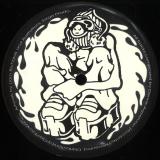
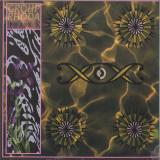
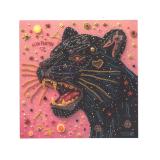
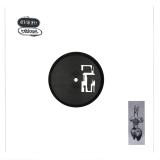
Brainwave Music No. III was initially recorded live on October 30th 2021 as part of 10 Brain Wave - sound installation - performances by Ilpo Väisänen and Dirk Dresselhaus (die ANGEL) in the Life on a Leaf house, Turku, Finland.
The concept was based on an interactive system including brainwave interfaces that allowed the two performers to process the sounds of several semi-modular synthesizers via CV with their brain activities.
Cerca:system syn
Ilpo Väisänen & Dirk Dresselhaus (feat. Ulrich Krieger)
Brainwave Music No. III
Brainwave Music No. III was initially recorded live on October 30th 2021 as part of 10 Brain Wave - sound installation - performances by Ilpo Väisänen and Dirk Dresselhaus (die ANGEL) in the Life on a Leaf house, Turku, Finland.
The concept was based on an interactive system including brainwave interfaces that allowed the two performers to process the sounds of several semi-modular synthesizers via CV with their brain activities.
Ilpo Väisänen & Dirk Dresselhaus (feat. Ulrich Krieger)
Brainwave Music No. III
Brainwave Music No. III was initially recorded live on October 30th 2021 as part of 10 Brain Wave - sound installation - performances by Ilpo Väisänen and Dirk Dresselhaus (die ANGEL) in the Life on a Leaf house, Turku, Finland.
The concept was based on an interactive system including brainwave interfaces that allowed the two performers to process the sounds of several semi-modular synthesizers via CV with their brain activities.
With the Scratch EP, Scottish techno powerhouse Gary Beck delivers four razor-sharp cuts that bring raw energy and dancefloor pressure to FJAAK's label CROWD. Known for his unmistakable grooves and stripped-down power, Beck presents a no-frills EP that bridges classic techno aesthetics with forward momentum. Opening with the single 'French System', the EP kicks off in full throttle. It's a propulsive roller built around tough drums, catchy synths, a female vocal leading the way and Beck's signature percussive tension. Title track 'Scratch' follows with a twitchy, angular rhythm that spirals around a fragmented vocal motif and bold machine-funk energy with tense breaks leading to ecstatic drops. On the record's flip side, 'How Do You Feel' keeps the level high, fusing jacking rhythms with a funky vocal and a Beck's heavy signature kicks. Finally, 'Eclipse' closes the EP pushing the energy into darker territories with relentless drive, its distorted pulse and industrial edge. This release marks a fierce debut on CROWD for Gary Beck - four no-nonsense weapons crafted for peak-time moments and the rawer corners of the club. A heavy-hitting addition to the label's catalog and a must-have for techno selectors with a taste for precision and punch.
- A1: Echoes Of Disintegration
- A2: Language Of Beings
- A3: Static Meditation
- A4: Irreversible Flow
- A5: Scattered Information
- A6: Crystalline Dissolution
- A7: Closed System
- B1: The Observer’s Dance
- B2: Animistic Resonance
- B3: The Assemblage
- B4: Living Systems
- B5: Sentient Horizons
- B6: Patterns Of Reciprocity
- B7: Stillness Beneath
Animistic Resonance marks a new stage for artist and electronic musician Leslie García, as it is her first album under her own name, following several releases as Microhm and her parallel work as founder of the contemporary art studio Interspecifics, where she has developed an extensive body of sonic projects presented in major museums and programs around the world. The album is the culmination of a profound and extended exploration of sound as language. It is also a statement against the classicism of long-form ambient pieces. Narratively, each track is conceived as a finely detailed work that functions as a condensed temporal fragment, each with its own individuality while simultaneously forming part of a broader universe.
The compositional language of the album draws on minimalist structures, deep listening strategies, and experimental approaches to electronic sound. Each track offers a meditation on repetition, density, and micro-variation, unfolding like a sonic landscape shaped by temporal tension and perceptual ambiguity. Animistic Resonance resists categorization, situating itself between ambient, noise, and abstract rhythm, while grounding its aesthetic in a Latin American sensibility that embraces technological poetics, affective depth, and critical imagination.
The album invites listeners to move beyond the surface and inhabit a world of vibrational and animistic temporalities. It offers a refuge in sound, a suspended space where calm can emerge. In the midst of contemporary turbulence, Animistic Resonance opens the door to imagining new ways of listening and feeling, demanding an embodied and visceral form of engagement.
Composition sound synthesis and programming by Leslie García. Composed between 2022—2024 in Mexico City.
Mastered by Rafael Anton Irisarri at Black Knoll Studio, NY. Artwork by Daniel Castrejón.
Livity Sound welcomes Joe Milli to the fold with an assured EP of crisp club workouts that land between techno's evocative depth and UK funky's offbeat, drum-focused functionality.
Over the past few years Milli has been establishing his sound across a swathe of radio shows, guest mixes and releases, and he lands on Livity with a timeless take on the label's commitment to stripped back, atmospheric soundsystem music.
There's variety across the Deep Forest EP, ranging from the balmy bassweight house of the title track to the deep-diving dub pulses and bruk drum science of 'Look Again'. 'Keep That Wire' draws nervous energy from its synth hooks and the taut, angular beat before the rolling Detroit techno pulse of 'Expressions' brings the EP home in punchy, percussion-loaded style.
In line with past releases from the likes of Bakongo, DJ Polo and Tribal Brothers, Milli's strength lies in his ability to bend the UK funky formula to different styles, all precision-tooled for the club.
Livity Sound is a label set up by Peverelist in 2011 as a vehicle for a raw and exploratory strain of UK techno, rooted in the heritage of UK dance music and sound system culture. It has since become one of the UK's foremost protagonists for cutting edge underground electronic music.
- In The Rural Pattern
- What To Look For Outside
- Birds In General: And The Rook
- Outline Of Nature
- Moths That Rally To A Soundless Call
- Rotating Seasons
- All The Animals Under A Fractal Sky
First released on August 18, 2023, "Outline of Nature" started as an experiment in building a modular synthesizer system and ended up as a voltage controlled outpouring of love for the natural world. Sylvan-born and pastoral-powered, sap-blooded and lightning-charged, this album grew out of the damp florescent corners of the woods, each note and sound, a fractal extension of their seedling sounds. It was nurtured into being at The Twilight Research Centre, a studio facility situated on the border of Somerset and Dorset. During Covid lockdown 1.0, I spent the outdoor hours we were permitted, wandering through the centre's surroundings, in the green lanes, woodlands and corridors of the wilds with their wary and flickering inhabitants, beneath the distant eyes of the soaring buzzards and the hulking red kites. I didn't expect it, but it was in the quiet, ferociously vibrant dens of nature, that I found a deeply profound connection with the natural world. It once again made sense to feel as much a part of the woods as the trees were; I felt like a natural entity in its habitat again, not something I'd properly felt since running wild through the gullies, dells and fells of the Midlands as a child. And I became afflicted with a powerful urge to build strange electronic sound systems that were organic, chaotic, fractal and in some way reflective of the awesome natural systems that surround us and surround the centre. I plugged in the modular, and went searching for signs of life. Adding to this, just before the lockdowns, I stumbled across a three volume nature encyclopedia in a local charity shop, called "Outline of Nature in the British Isles" by Sir John Hammerton. The sub-heading reads "A Comprehensive Photo-Survey of the Varied Life of Field and Hedgerow, Moor and Mountain, River, Pond and Sea", and it's a stunning collection of grainy photographs, beautiful illustrations and wondrously poetic writing, some of which inspired track titles and of course, the album title. I also rekindled my love of Ladybird nature books such as the "What to Look for in Spring/Summer/Autumn/Winter" series, "Birds and How They Live" and "Butterflies, Moths and Other Insects", rebuilding a small collection I had as a child and discovering numerous volumes new to me. Between the two literary sources, I had a rich well of imagery, writing and pastoral nostalgia to draw from; and coupled with the extended sessions of blissing out in my own heavily ecstatic awe descended on me in the sheer grandness of the wilderness, I set about enticing out of the woods an album of phosphorescent electrical music, abundant with comparatively microscopic, but persistent and wild life-forces.
- 1: No Faith
- 2: Shadow Boxing
- 3: Sugarcoated
- 4: Deadwire
Nu-hardcore quintet, Bodyweb, are the sound of someone’s nervous system on the verge of breakdown—hyperactive, tormented and unflinchingly vulnerable. Born out of the Leeds hardcore scene, they’re a shape-shifting alloy of jagged emotion and precision chaos. What began as late-night jams between Louis Hardy (Higher Power, Big Cheese, Fate) and Ben Jones (Pest Control) eventually mutated into train_wreck_simulation, a debut EP filled with frantic breakdowns and nu-metal swag that felt like the soundtrack to a digital exorcism. The final piece of the puzzle came from Hardy’s estranged childhood friend, pq. His twisted samples and synthetic textures are haunted and disturbed, injecting cyberpunk soul into hardcore flesh. Contorting through several iterations in the following years, the band absorbed Luke Thompson (Stiff Meds) on drums, filmmaker Tom Hobson on guitar and Naomi Macleod (Empire State Bastard) on bass, and laid down their first collective offering. deadwired is due out on Flatspot Records later this year. Bodyweb's second EP is a violent thesis on connection and pain that sends Hardy’s unfiltered vocals through heaven and hell. Four overstimulating tracks run a gamut of styles and influences from Slipknot to Björk, constantly lane-switching between dizzying heaviness, ambient soundscapes and brain-burrowing hooks. Entirely self-produced, deadwired upgrades the sonic formula laid down on the last record and raises the question: what else could exist in Bodyweb’s twisted roadmap? Nothing seems impossible. What seems important, however, is retaining the rawness in a style that can often turn sterile. “We still wanted it to sound very human. It had to be well produced but not cold and lifeless.” shares Hardy. “We didn’t use a click track. All guitars were real amps with microphones. We tried to make everything as real and raw as possible, we recorded using all the same gear we use when playing live too to really capture the energy of how it feels when we jam together." ‘Deadwired’ is a snapshot of violent implosion. Four ADHD-fuelled transmissions from the edge of spiritual collapse. It drags metallic hardcore through glitched-out ambience to confront ego death, generational trauma, and the violence of being alive. On stage, Bodyweb don’t just perform, they purge. Raucous live electronics meld with digitally contorted guitars. Breakbeats meet breakdowns—no backing track in sight. Bodyweb enable a collective catharsis. Mosh, dance, dive, scream, heal. A physical therapy session screamed into the void.
Russell Haswell and Florian Hecker have both a long history with Mego/Editions Mego. Individual releases have peppered the Mego catalogue since Haswell’s Live Salvage 1997->2000 cd release (MEGO 012) in 2001 and the debut Hecker release IT ISO161975 (MEGO 014) in 1998.
The individual exploration of sonic phenomena by these two practitioners has resulted in both being highly regarded for their uncompromising approach to sound as matter. Russell Haswell and Florian Hecker came together as a collaborative duo with the now-legendary record Blackest Ever Black, somewhat inexplicably, on the classical imprint of Warner Brothers.
In 2025, Hecker and Haswell return with a new album featuring the two-channel edit produced initially for their UPIC DIFFUSION SESSION #23, performed as a live diffusion across 8-channels at the X100 Festival, Berlin, 2023, celebrating the 100th anniversary of Xenakis' birth.
This record furthers the duo's exploration of Xenakis's UPIC system as the sole instrument. The UPIC is a computer music system that generates sound from visual input. The original intention of the system developed by Xenakis was to make a utopian tool for producing new sounds accessible to all, independent of formal training. One can locate footage of Xenakis and a group of children making drawings for the system in the 70's.
The duo set off experimenting with a diverse array of hand-drawn images to feed the UPIC system including news photographs of disasters and atrocities, "food porn" through to depictions of the natural world and microscopic images of molecular structures (including 'the blackest ever black'). The resulting eccentric audio from these images is claimed by the artists to heighten synaesthesia and is as mysterious as it is baffling.
Throughout UPIC DIFFUSION SESSION #23 frequency clusters move and morph in the most unusual manner, shifting and stretching into shapes that hint at some kind of magical process. What starts out deceptively simple soon unravels into a large array of sonic mayhem. Symbolic jet planes are shredded by a swarm of insects, a metal bowl howls into the void, a tiny tin toy crawls into a thicket with the resolute aura of a black hole. A burning geyser of laser forms liquid shrapnel. This is sound as an alchemical process, a constant chimerical flow into the netherworld and is the net result of the decades long radical investigations by the two artists involved. UPIC DIFFUSION SESSION #23 is a direct, rich and rewarding listen for those willing to invest time into the outer limits.
System is a retro futuristic album that is inspired by that iconic sound of the 80s. It seamlessly merges deep machine-like tracks alternated with surprisingly humanised pop songs.
With an extended palette of pianos and synthesizers Shook’s work will take you along those vintage funk and synth-pop sounds, while keeping you connected with touchy vocals from both Jasper and his partner Juliet.
- A1: Corinne Tell -Histoire De Coeur 3:24
- A2: Fanny Forest - Les Lolitas Des Magazines 4:01
- A3: Fabienne Stoko – Poupee 2:56
- A4: Valene - Sauve-Moi 3:12
- A5: Kelly Way-Illusion 3:37
- A6: Sonia - Sur Ma Musique 3:59
- B1: Tangui-Amour Combat 3:56
- B2: Praline Et Toni -Meteo 3:57
- B3: Generation Egoiste (Tout Tout D'suite) 3:03
- B4: Kira – Vacances A Deux 2:47
- B5: Geraldine Danon – Electric Eyes -3:05
- B6: Nani Antoni - Faites Vos Jeux 3:45
Limited Edition ( 300 )
Heavy 180g Vinyl & Download Token Inside & Hype Sticker.
Full Colour Inners & Contextual Images
Curated & Sleevenotes By John Kertland Of CTR (English & French)
France-the 1980s. A local radio and studio system almost unsurpassed in Europe - add brilliantly inventive labels and producers with a sense of fun & adventure & the result ?
A golden age of Synth-Pop – Post-Disco..inventing the future ..celebrating the chanson of the past. Updating that for a new generation & a new dancefloor.
Virtually neglected until now - only the heads knowing...
Presented in the classic 45 (Quarante Cinq) 7" format - the way that these great records were produced for the radio and were meant to be heard at that moment..
Now, the "savoir" is yours also.
Hard to find 7"s by elusive artistes...
Glorious vocals ,soaring synths and irresistible basslines it’s all here ..
Bon écoute !
- A1: Creation Of Tron ( 46)
- A2: Only Solutions (Journey) (3 15)
- A3: We’ve Got Company (2 16)
- A4: Wormhole (2 27)
- A5: Ring Game And Escape (2 55)
- A6: Water Music And Tronaction (2 22)
- A7: Tron Scherzo (1 44)
- A8: Miracle And Magician (2 38)
- A9: Magic Landings (3 41)
- A10: Theme From Tron (1 32)
- A11: 1990’S Theme (Journey) (2 25)
- B1: Love Theme (2 05)
- B2: Tower Music - Let Us Pray (3 45)
- B3: Light Sailer (2 34)
- B4: Sea Of Simulation (3 21)
- B5: A New Tron And The Mcp (5 08)
- B6: Anthem (1 37)
- B7: Ending Titles (5 11)
A reissue on black vinyl of the cult 1982 soundtrack to Tron by legendary electronic pioneer and composer Wendy Carlos (The Shining, Clockwork Orange). The music, which was the first collaboration between Carlos and her partner Annemarie Franklin, featured a mix of an analogue Moog synthesizer and GDS digital synthesizer, along with non-electronic pieces performed by the London Philharmonic Orchestra. Two additional musical tracks (“1990’s Theme” and “Only Solutions“) were provided by the American band Journey. This is the first reissue of the black 18 track 1 LP vinyl. 2022 will mark the 40th anniversary of the Tron Franchise. The original film tells the story of computer engineer Kevin Flynn who finds out that an executive at his company, has been stealing his work. Flynn tries to hack into the system but instead is transported into the digital world of The Grid , where he has to battle Sark, and the imposing Master Control Program. Helped by Tron (a security program) and Yori , Flynn becomes a freedom fighter for the oppressed programs of the grid. The soundtrack perfectly captures the geometrically intense landscapes of cyberspace and the virtual gladiatorial computer game.
- A1: Hong Kong
- A2: London
- A3: Zurich
- B1: Field Recordings (Cassette Only)
Massi NPL’s EP debut on House on the Strand’s label 'Herah' is a wonderful cluster of ambient club adjacent works
Producer and sound artist Massi NPL has spent close to a decade honing his craft as a producer with an impressive growing list of accolades that have seen him try his hand at everything from scoring award winning video games and theatre productions at the Zurich theater to DJ at events and radio stations around the globe.
While the producer’s output may be slim it is considered and precise. His new Fragments EP is a deeply personal project that is the product of years of work.
These select 3 pieces are crafted from a series of field recordings spanning 3 cities that have shaped much of the producers life. These ambient club adjacent works are equally promising at decibel sound system shaking volumes as they are within tucked away headphone and home listening environments. They exude expansive soundscapes, featuring a rich array of washed out synth backdrops and percussions.
As featured on Alex Ruder’s Pacific Notions on KEXP
Mastered by artist engineer Adam Badí Donova (ulla, mu-tate, dj lostboi, Torus)
Token presents the 6th chapter of the Fuga series. Challenging new faces to complete the label's sound, Fuga VI is another focused compilation that balances spatial detail and rhythmic bite.
Skipping any introduction to dive straight into the essence of the compilation, Skjöld portrays 'Forbidden City' as a tense aquatic exploration. With pressure in the low end, he keeps the record alive by conjuring obscure pads to give dimension and intrigue to an already nervous track. This persistence is quickly met with weight; Tapefeed's 'Residual Memory' follows up to tap into the label's more aggressive side. Riddled with mechanical sound design bordering on the industrial, the Tapefeed duo creates dancefloor dominating energy that sets them apart with an all-out approach. The density of this second track feeds smoothly into Stephen Disario's 'Out Of Tune' - a drum-forward record with dispersed texture. The LA based producer puts his hi hats brutally forward to cut through the space, finding a remarkable balance between its two sides and exploiting its confrontation. Returning to the label's recognizable resonance, Merino steps in with 'Memoria' - a manic 5 minute synth loop with minimal percussion. Dealing in restraint and dissonance, Merino naturally finds a home in Fuga VI with this track before heading back into the peak time paranoia of JSPRV35 in 'Question'. Pushing up the intensity and flicking through vintage percussion lines, 'Question' is an extraverted homage to the origins of techno that embodies flair. The track drives through the middle of Fuga with ease, bouncing rhythm off a sharp bassline with thundering claps and snares. 'Catch 22' by Terminus restores balance with minimalism but pace. A hypnotic break in the second half is sure to mesmerize dancers and home listeners alike. Stuttering hats shake throughout 'Catch 22' to push the track along, keeping the harmony low and maintaining focus on the movement. With a similar tempo, Sanna Mun follows up with 'Binary Systems'. A speedrun through an acid-like bassline, the track's rhythm is obsessive and persistent as we reach the conclusion of the compilation. Fuga VI comes full circle with a ghostly track by Mode_1 called 'Lifespan', stretching time and tunneling through with booming toms and shuffled hats. Keeping the pressure high and maintaining that never ending energy is the only way to wrap up such a high energy release and Mode_1 does just that.
One of Romania’s most important composers in the last half-century, Octavian Nemescu (1940-2020) is among the few that were not “part of the system”, managing to survive and compose in a world that felt more and more “empty”, fragile, confused and scarce in prophecies. The mystical approach to his art defines Octavian Nemescu as an essentialist who believed in the power of archetypes in which he found inspiration. His pieces always start from an idea that has spiritual, cosmogonic implications and often involves synthesizers, sounds from nature (buzz of bees) and the “ison” (drone). When defining “meta music” or “imaginary music”, Nemescu was an advocate of looking from above, from the top of the mountain. Silence is very important in his work in order to keep the sound flowing and to reflect on the sound from before, as a space, as a pause for thinking. Nemescu put forward another kind of music: a song that has not yet surfaced through human voice, any musical instrument, orchestra or other electro-acoustic means: an intimate, interior, introverted inner sound that focuses on the individual and the imagination. Imaginary music is a reaction, it comes in contrast to the spectacular, it is anti-show. For him, music had a ritualistic function, it served no cultural purpose.
This 3LP set collects eight pieces for variable ensemble, tape and electronics, composed between 1968 and 2015, selected together with Erica Nemescu, who also mastered the tracks. Most tracks have been previously released on different CD’s but never before on vinyl.
Pioneering British electronic musician Mark Van Hoen is set to release his latest solo album, The Eternal Present, on 23 May 2025 via Dell'Orso, a remarkable collection of tracks spanning nearly three decades of recordings from 1998 to 2024.
The Eternal Present embodies its philosophical title, inspired by Joseph Campbell's concept that "Eternity isn't some later time... Eternity is that dimension of here and now that all thinking in temporal terms cuts off." The album explores music as the ultimate expression of existing in the present moment, transcending time and creating a sonic experience that is simultaneously "spectral, ghostly, melodic, harmonic, and decayed."
An influential contemporary of Aphex Twin, Autechre, LFO and Boards of Canada, Van Hoen is best known for his solo work as Locust in the mid-'90s, which helped push post-rave electronic music into newly challenging realms. His extensive discography spans releases on influential labels including R&S, Touch, and Editions Mego. Van Hoen has worked on numerous collaborations throughout his career, including with Nick Holton and Neil Halstead of Slowdive under the moniker Black Hearted Brother—their album Stars Are Our Home was released in 2013.
The Eternal Present continues the lineage of Van Hoen's most significant works, with artwork by Ian Anderson (Designers Republic) reflecting the album's "eternal present" concept with a mysterious visual approach, allowing listeners to form their own imaginary landscapes. The mastering by Stefan Betke (Pole) enhances this document of the evolution of the artist over the years as he continues to hone his signature sound. Using a host of instruments including analogue synthesisers and employing various recording approaches, Van Hoen's equipment changed dramatically over the years—from early DSP processing used on his first solo record on Apollo ‘Playing With Time’ to various synthesisers, modular systems, tape machines, and digital workstations—contributing to the album's rich sonic diversity.
Throughout The Eternal Present, ideas are woven together through spoken word quotations and abstract vocals featuring notable collaborations from Rachel Goswell on the Slowdive cover "Shine" (from 1998), Megan Mitchell (Cruel Diagonals) on "Somewhere", and session vocalists Clare Dove and Dorothy Takev on "No-One Leave" and "It's Not You (In A Way)" respectively. The use of cleverly assembled vocal samples from an "undisclosed but very famous female vocalist" on "Multiplex" (2016) and the indistinct vocalisations on the Cabaret Voltaire-influenced "Only Me" (2017), constantly challenges and disorientates the listener through fluctuating, ever-changing musical elements.
The album was recorded across multiple locations including Somerset, London, Los Angeles, and New York—even beginning compositions during flights and in airport lounges—reflecting Van Hoen's changing personal circumstances, environments, and situations throughout the years.
Of Indian-Jamaican descent, Van Hoen was born and raised in England, absorbing diverse musical influences from his neighbors—African-Jamaican on one side and Punjabi Indian on the other. "Each family played their own music frequently, and I absorbed it." His musical foundations include Brian Eno, Kraftwerk, OMD, Tangerine Dream, Japan, Cabaret Voltaire, and Cocteau Twins, later finding inspiration in My Bloody Valentine, LFO, and '90s producers Robert Leiner and CJ Bolland.
These eclectic influences are evident on The Eternal Present, which contains snapshots of different periods in his life, with changing circumstances across decades creating a variety of textures and sounds. As Mark explains: "It holds the same sonic signature as many of my solo releases and early Locust albums. It's a natural development that has taken place in the last few decades. It's even related to the earliest music I made as a teenager, although perhaps more sophisticated."
“What a remarkably affecting, majestically broad and captivating work it is..what strikes you most is the album’s myriad diversity. Outstanding” (Electronic Sound)
“Whether channelling mid- 70’s Eno, early Aphex Twin or Neu! his vivid sounds shimmer with emotional weight” (Mojo 4*)
"Musically, Van Hoen belongs to a distinguished family tree. Originally influenced by the likes of Brian Eno and Tangerine Dream, and later presaging both Autechre's glitch and Boards of Canada's pastoral IDM." (Pitchfork)
Emerging from the Kansai underground with a sense of ritual and restraint, G Version III returns with a slab of meditative pressure, carved for sound systems. Following last year’s cassette release on Digital Sting, the Kyoto-based producer deepens his exploration of experimental steppers and sacred low-end science.
TRK 1 treads heavy—medium-tempo four-to-the-floor steppers, soaked in 80s/90s UK dub DNA and wired with flickers of celestial synth energy, edged with something unknown.
TRK 2 drifts off-grid—a 100bpm oddity conjuring sacred synth rituals and off-beat spatial tension. Droning and eerily weightless, it hangs like a vapor of frozen scent in an echo chamber.
Flip the plate and TRK 3 and 4 ignite—raw, unrelenting steppers built to test the physical limits of the rig. No compromise, no decoration—just ritual voltage for the floor.
Riddim Chango’s 16th release channels something ancient through circuitry, born for the weight.
Berlin techno talent Regent returns to Mutual Rytm with second 12" release, 'Delta Hyve' - a five-track package lined with peak-time heat.
Regent is an ever-growing voice in the global techno conversation. His tracks have found their way into high-profile sets worldwide and are renowned for their impressive blend of the past and the present. Versatile but always designed for maximum impact, delivering an impressively crafted sound made for powerful systems, this new outing offers a wealth of different moods and grooves for various parts of the night. Returning to SHDW's Mutual Rytm imprint following 2023's successful 'Coral Knife' EP, he unveils a fresh selection of cuts that emphasise his emergence with 'Delta Hyve'.
The title cut 'Delta Hyve' opens up with devastating low ends and busy synths that scurry about the mix to bring dynamism to the rooted drums, while 'Ophaal' delivers thumping kicks and coarse, textured hits scrape and scratch, while supersized hi-hats bring the intensity to all new levels. 'Hygea Core' brings the pressure with hunched-over drum patterns and a sense of urgency in the bass, while creepy pads create an unsettling atmosphere. 'New Narrative' powers on like a train with high-speed rhythms and metallic percussive surfaces, all sweeping you off your feet, before 'Ree 54' switches things up with bright synth flashes and more extraverted grooves that hark back to the machine soul of early Detroit techno.
The first digital bonus, 'Presence', is intense and tinged with the grit of a warehouse and menacing vocals, while 'Rheplica' delivers unrelenting loopy drum funk with shattered glass melodies to close the show.
Electrodynamique is back with five tracks that fuse past and future into a single, electric pulse. Born in his early years and rediscovered with care, these songs are raw, vivid time machines — bursting with wonder, heart, and unrelenting rhythm.
Rooted in the sounds of early 2000s electro, synth-pop, and breakbeats, this release is a sonic flood of glistening synths, aching melodies, and driving drums. Each track carries its own weight — a story, a feeling, a frame of life caught in sound.
Air Texture proudly announces its latest artist-curated compilation, “Hardwired,” assembled by Berlin-based musician JakoJako. This expansive collection celebrates the implicit connection between hardware-focused electronic producers, featuring contributions from Rødhåd, Acid Pauli, The Field, Neon Chambers, and many more.
“Hardwired” draws its conceptual foundation from synthesizer terminology. As JakoJako explains: “A hardwired synth has connections already soldered into the machine—it comes with certain functions without needing to patch cables externally. As a hardware producer, I feel whenever I meet someone who creates music as I do, we have this immediate connection, like a hardwired synthesizer. There’s no need for small talk—we can speak about gear.”
This metaphor of pre-established connections forms the emotional core of the compilation, celebrating the community of hardware enthusiasts who share an intuitive understanding and appreciation for machine-based music creation.
JakoJako has established herself as one of electronic music’s most intriguing voices, exploring the territory between technical precision and emotional expression. Her artistic approach balances rigorous knowledge with unrestrained intuition, creating works that reach beyond genre boundaries.
A Berghain resident with performances at Dekmantel and Fusion, to the Royal Albert Hall and the Barbican, JakoJako has released music on prestigious labels including Tresor, Mute, and Leisure System, and crafted remixes for artists like New Order and Martin Gore. Her deep relationship with analog and modular synthesis, including her ongoing connection to Berlin’s SchneidersLaden, informs her distinctive sound.
Following her recent Mute album “Têt 41,” this curation for Air Texture provides further insight into the musical universe that has shaped JakoJako’s artistic vision.
“Hardwired” showcases 23 tracks for its digital release, with a select 9 tracks pressed to vinyl. The collection spans the spectrum of contemporary electronic music while maintaining cohesive focus on hardware-driven production approaches.
Highlights include collaborative works between JakoJako and fellow producers Mareena and Frank Wiedemann, alongside contributions from established artists like Rødhåd, Acid Pauli, and The Field, plus emerging talents representing the hardware renaissance in electronic music.
Founded by James Parker Healy, Air Texture emerged from New York City’s late ’90s rave scene, carrying forward the fundamental PLUR (Peace, Love, Unity, Respect) ethos with a collaborative and curatorial focus. Air Texture has evolved from its roots in Manhattan’s club era and Brooklyn’s warehouse scene to embrace a global perspective, working with producers across diverse styles and regions worldwide through the label and its PLace: nonprofit series.
Repress!
In the mid-1970s, a force of nature swept across the continental United States, cutting across all strata of race and class, rooting in our minds, our homes, our culture. It wasn’t The Exorcist, Goodbye Yellow Brick Road, or even bell-bottoms, but instead a book called The Secret Life of Plants. The work of occultist/former OSS agent Peter Tompkins and former CIA agent/dowsing enthusiast Christopher Bird, the books shot up the bestseller charts and spread like kudzu across the landscape, becoming a phenomenon. Seemingly overnight, the indoor plant business was in full bloom and photosynthetic eukaryotes of every genus were hanging off walls, lording over bookshelves, and basking on sunny window ledges. The science behind Secret Life was specious: plants can hear our prayers, they’re lie detectors, they’re telepathic, able to predict natural disasters and receive signals from distant galaxies. But that didn’t stop millions from buying and nurturing their new plants.
Perhaps the craziest claim of the book was that plants also dug music. And whether you purchased a snake plant, asparagus fern, peace lily, or what have you from Mother Earth on Melrose Avenue in Los Angeles (or bought a Simmons mattress from Sears), you also took home Plantasia, an album recorded especially for them. Subtitled “warm earth music for plants…and the people that love them,” it was full of bucolic, charming, stoner-friendly, decidedly unscientific tunes enacted on the new-fangled device called the Moog. Plants date back from the dawn of time, but apparently they loved the Moog, never mind that the synthesizer had been on the market for just a few years. Most of all, the plants loved the ditties made by composer Mort Garson.
Few characters in early electronic music can be both fearless pioneers and cheesy trend-chasers, but Garson embraced both extremes, and has been unheralded as a result. When one writer rhetorically asked: “How was Garson’s music so ubiquitous while the man remained so under the radar?” the answer was simple. Well before Brian Eno did it, Garson was making discreet music, both the man and his music as inconspicuous as a Chlorophytumcomosum. Julliard-educated and active as a session player in the post-war era, Garson wrote lounge hits, scored plush arrangements for Doris Day, and garlanded weeping countrypolitan strings around Glen Campbell’s “By the Time I Get to Phoenix.” He could render the Beatles and Simon & Garfunkel alike into easy listening and also dreamed up his own ditties. “An idear” as Garson himself would drawl it out. “I live with it, I walk it, I sing it.”
But as his daughter Day Darmet recalls: “When my dad found the synthesizer, he realized he didn’t want to do pop music anymore.” Garson encountered Robert Moog and his new device at the Audio Engineering Society’s West Coast convention in 1967 and immediately began tinkering with the device. With the Moog, those idears could be transformed. “He constantly had a song he was humming,” Darmet says. “At the table he was constantly tapping.” Which is to say that Mort pulled his melodies out of thin air, just like any household plant would.
The Plantae kingdom grew to its height by 1976, from DC Comics’ mossy superhero Swamp Thing to Stevie Wonder’s own herbal meditation, Journey Through the Secret Life of Plants. Nefarious manifestations of human-plant interaction also abounded, be it the grotesque pods in Invasion of the Body Snatchers or the pothead paranoia of the US Government spraying Mexican marijuana fields with the herbicide paraquat (which led to the rise in homegrown pot by the 1980s). And then there’s the warm, leafy embrace of Plantasia itself.
“My mom had a lot of plants,” Darmet says. “She didn’t believe in organized religion, she believed the earth was the best thing in the whole world. Whatever created us was incredible.” And she also knew when her husband had a good song, shouting from another room when she heard him humming a good idear. Novel as it might seem, Plantasia is simply full of good tunes.
Garson may have given the album away to new plant and bed owners, but a decade later a new generation could hear his music in another surreptitious way. Millions of kids bought The Legend of Zelda for their Nintendo Entertainment System back in 1986 and one distinct 8-bit tune bears more than a passing resemblance to album highlight “Concerto for Philodendron and Pothos.” Garson was never properly credited for it, but he nevertheless subliminally slipped into a new generations’ head, helping kids and plants alike grow.
Hearing Plantasia in the 21st century, it seems less an ode to our photosynthesizing friends by Garson and more an homage to his wife, the one with the green thumb that made everything flower around him. “My dad would be totally pleased to know that people are really interested in this music that had no popularity at the time,” Darmet says of Plantasia’snew renaissance. “He would be fascinated by the fact that people are finally understanding and appreciating this part of his musical career that he got no admiration for back then.” Garson seems to be everywhere again, even if he’s not really noticed, just like a houseplant.
Having crested the west coast modular-ambient wave in just a few releases - including 2018's Sharing Waves on the influential LA experimental imprint Leaving Records - Sean Hellfritsch has swapped the mossy analog synth improvisations of his prior output for refined melodic arrangements dressed in sprightly dawn-of-digital textures. Big Earth Energy plumbs the depths of Hellfritsch's multimedia mind and naturalist heart, spinning an impressionistic narrative world off of cultural touchstones like the PC game MYST, and the work of Studio Ghibli composer Joe Hisaishi. Inspired by the aforementioned, and guided by Hellfritsch's experience as an animator and filmmaker, Big Earth Energy is the soundtrack to a hypothetical video game with a pointedly ecological premise, and a twist of psychedelic charm. In Hellfritsch's imagined virtual journey, the player assumes the perspective of a treefrog sixty-five-million years ago, hopping epochs with each new level, forming a comprehensive picture of the massive changes the planet has gone through over the eons. The ultimate goal of the game is not to amass resources, defeat enemies, or gain power, but to fully witness the unfolding of one of the biggest systems of energy imaginable - or as the album's creator puts it - "to explore the incomprehensibly vast energetic expression and mystery that is Earth." Big Earth Energy is steeped in exploratory RPG intrigue, possibility, and contemplation, lovingly overlaid with Miyazaki-an sentiments and aesthetics. The through-composed, organic, meandering synthesis heard on previous Cool Maritime albums has been fully replaced by meticulous polygonal arrangements that recall the computerized sheen of late 80s work by composers like Hiroshi Yoshimura, and Yoichiro Yoshikawa - using true-to-period gear no less. Even given its referentiality, Big Earth Energy comes off as forward-facing where so much reminiscent music remains fixed to a bygone moment in pop culture. Hellfritsch has created a musical world where the endless verdancy of the biosphere finds its parallel in the golden age of early 1990s video games, and late 80s Japanese environmental music, all while pointing to a hopeful planetary and artistic future that vindicates the motives of all of these muses.
Mannequin Records reissues "My Government Is My Soul", a searing 1989 statement from Bourbonese Qualk, one of the UK’s most defiant and politically engaged experimental acts. Originally released on the group’s own label, this LP captures the uncompromising spirit of a band deeply embedded in the resistance movements of 1980s Britain.
Recorded during a turbulent period of social unrest, "My Government Is My Soul" stands as a fierce response to authoritarianism, surveillance, and the neoliberal decay that defined the Thatcher era. Bourbonese Qualk fused industrial rhythms, minimal synth, distorted tape loops, and spoken-word polemics into a sound that was both confrontational and deeply physical—a weaponized form of music rooted in activism and direct action.
Widely regarded by fans as one of the band’s strongest works, "My Government Is My Soul" has earned a near-mythic status in underground circles. Fans have praised the album’s stylistic breadth—“sometimes it kisses the hem of rock, at others it bows towards the likes of Steve Reich & Philip Glass".
This reissue, fully remastered by Rude 66, reintroduces a critical work of post-industrial dissent to a new generation. Still as urgent and unflinching as ever, the album resonates with today’s climate of mass disinformation and systemic control. It is a timely reminder that sound can still be a form of resistance.
“Recorded at BBC Broadcasting House and partially aired on BBC Radio 3’s Late Junction, the first studio encounter between London-based duo Exotic Sin and Swiss percussionist Julian Sartorius is now published in full on this album from Sagome.
Winding through six distinct and interconnected paths, the trio effortlessly create a shared language in this expansive improvised session.
Listening back two years later — the session was recorded on March 24, 2023 — it’s evident how they build at a relaxed pace, offering space for the listener to enter into their evolving sound. Anchored by piano, delicate wood, metal, and air instruments, a fluid system of interactions develops: repeating, deepening, but not fixating. The direction of travel is not cyclical or linear and the pace insists on forward confidently, avoiding the trap or comfort of recurring motifs.
Percussion is not a timekeeper, but a key element, introducing new textures that even on the final track Path 6, trace out a horizon that feels more like a blurred beginning than a definitive end.
In Session, Exotic Sin moves into a lighter, perhaps more playful language for improvisation than on their debut album Customer’s Copy. This could be influenced by Sartorius’ tactile approach to sonic materials or the more stripped-back nature of the improvised session, with less emphasis on synthesised and electric sounds. While the emotional imprint from their debut album—murkier and insistent—remains, it has been aired out to dry. In Session, their sound-world is broad and moves with levity.”
Andrea Zarza Canova – April 2025
Music by
Kenichi Iwasa (electric and acoustic percussion, trumpet, horns, thumb piano, effects).
Naima Nefertari (piano, Yamaha keyboard, flute, bells, percussion).
Julian Sartorius (drums, percussion).
Recorded and mixed live for Late Junction at BBC Broadcasting House, London, on the 24th of March 2023 by Joe Yon and John Boland.
Mastered by Giuseppe Ielasi.
Produced by Silvia Malnati at Reduced Listening for BBC Radio 3.
Extracts from the session were played on Late Junction on the 14th of April 2023.
Artwork by Josef William Back.
Graphic design by Nicola Tirabasso.
- A1: So Far So Good;Electric Cello, Cello – Michael Peter Olsen*
- A2: Biorhythms; Electric Cello – Michael Peter Olsen*; Electric Guitar, Frame Drum – Zoon*
- A3: Terms Of Desertion; Electric Cello – Michael Peter Olsen*
- A4: Murmers; Electric Cello, Cello – Michael Peter Olsen*; Harp – Mairi Chaimbeul
- A5: Muscle Milk; Electric Cello – Michael Peter Olsen*
- B1: Sweet Meet; Electric Cello, Electronic Drums – Michael Peter Olsen*; Violin, Viola – Owen Pallett
- B2: Feel To Heal; Electric Cello – Michael Peter Olsen*
- B3: Sweat Equity; Drums, Percussion, Synth – Alaska B; Electric Cello – Michael Peter Olsen*
- B4: It's Complicated; Electric Cello – Michael Peter Olsen*
- Osmium 0
- Osmium 1
- Osmium 2
- Osmium 3
- Osmium 4
- Osmium 5
- Osmium 6
- Osmium 7
Limited edition white vinyl (800 copies) The self-styled ritualistic electro-mechanical ensemble OSMIUM is a veritable supergroup. Made up of Oscar-winning composer and instrumentalist Hildur Gudnadóttir, veteran engineer and producer James Ginzburg, Senyawa's idiosyncratic vocalist Rully Shabara and Grammy-winning sound designer / producer Sam Slater, while each member brings along a laundry list of accolades, the project is far greater than the sum of its parts. Alloying burnished electroacoustic soundscapes with dense, metallic drones, barbed rhythms and buckled, bio-mechanical vocalizations, OSMIUM's eagerly awaited debut album doesn't try to cast a rigid future. Rather, it tempers a viscous flow of unorthodox speculations that smolders through the distant past, blazing a trail all the way to the frontier of fate. Absorbed by questions about the relationship between humans and technology, tradition and progression, the individual and the group, OSMIUM channel their experience and expertise into a set of forward-thinking sonic interrogations that skewer established cultural preconceptions. And although genre is acknowledged - the album draws from folk, doom metal, 20th century minimalism, industrial music and extreme noise - there's never a sense that it's riveted firmly in place. Widely known for her soundtrack work (including `Joker' and `Chernobyl') Gudnadóttir plays the halldorophone, a unique cello-like electroacoustic instrument designed by Halldór Ulfarsson that allows the performer to harness unstable feedback loops. Taking his cues from this process, Slater (who has worked alongside Jóhann Jóhannsson, Ben Frost and others) generates rhythms using a self-oscillating drum he designed with KOMA Elektronik and Subtext boss and Emptyset member Ginzburg responds in kind, producing booming tambura-like sonorities from a device he developed himself based on the monocord, an ancient single- stringed resonator. OSMIUM synchronize the three unique instruments using a custom system of robotics to generate basic rhythms that underpin their improvisations and experiments, and Shabara's alien tones supply the band with their conceptual fulcrum. The vocalist is one of South Asia's most recognizable underground artists, and the sounds he's able to create using exhaustively rehearsed extended techniques are so distinctive that he's been studied by scientists back home in Indonesia. Never weighed down by needless sound design or modish ornamentation, it's music that feels authentically experimental; OSMIUM have figured out an awkward symmetry between their discrete approaches, concentrating their gaze on the outcome rather than the process. The result is a work of science fiction that's driven by interaction, conversation and sensation.
Depth.Request proudly announces the debut full-length album from French electronic artist Pierre Berge-Cia - a culmination of two years of dedicated experimentation and creative exploration. This inaugural LP represents a significant milestone in Pierre Berge-Cia's musical journey, showcasing his innovative approach to electronic music.
Crafted through experimental processes and delving into themes of tension, control, and movement, "If You Do, Then When?" unfolds as a visceral journey through the complexities of bodily and sensory experience. Each track is designed to reflect the human body in all its shapes and forms, using innovative sounds and structures to evoke physicality and movement, and aiming to resonate with listeners on a deeply corporeal level.
The album was produced using a combination of the Elektron Digitone synth, a Mackie CR1604 mixer, a Shure SM57 microphone, and a limited selection of digital plugins to maintain sonic consistency. Mastering was handled by Pierre's close friend, Stefan Brown - also known as "Lesser Of". His expertise as a top-tier sound engineer at Abbey Road Studios helped shape the LP's pristine and powerful sound identity. Additionally, the tracks were tested and refined using some of the electronic scene's most beloved sound systems, ensuring an impactful club experience.
The album's artwork, created by Pierre Berge-Cia himself, is a reinterpretation of one of his favorite art performances: "Rest Energy" by Marina Abramovic and Ulay. The tension of the drawn bow and the close-up framing of the subject evoke a palpable sense of danger and emotional intensity, mirroring the physical and psychological strains within human connection. Pierre used his own hands as the model, infusing the artwork with a deeply personal and intimate touch that amplifies the psychic gravity and thematic cohesion of the album.
Pierre Berge-Cia's debut LP is a multi-sensory experience that challenges listeners to feel sound in its most physical and affective form.
Cyphon is excited to announce the release of an amazing new EP from Domenic Cappello. Titled Galactic Praise, this four-track masterpiece pays homage to the rich heritage of Detroit Techno while seamlessly incorporating Cappello's innovative sound design, displaying his golden ear for what makes a discerning dance floor tick.
A key figure in the electronic music scene through his long-standing residency at Glasgow's legendary Sub Club, Domenic captivates audiences globally with his unique blend of tough, pulsating beats, heartfelt melodies, and deeply immersive soundscapes. His position as booker and resident (alongside Harri) at Sub Club has allowed him to hone his craft and connect with some of the finest talents in House and Techno, influencing his distinctive style. With Galactic Praise, he takes listeners on an exhilarating journey through the heart of techno, inspired by the pioneering music that emerged from the golden era of Motor City sounds.
Dat Thing sets the tone. A driving house track that encapsulates the raw energy and spirit of Detroit, featuring hypnotic synth lines and robust bassline that give a hint of melancholy whilst maintaining a stripped back groove for maximum club impact.
Niamh’s Song is a deeper exploration of melody and rhythm, showcasing Cappello's masterful ability to weave complex harmonies into an intoxicating, otherworldly groove.
Flip over for Galactic Praise, a tribute to the roots of Techno, this track combines classic 909 and 303 elements with ethereal pads creating a heavier, timeless sound that will resonate with both longtime fans of the genre and newcomers alike.
Closing out this special EP we have Neon Skyline, a pumping yet reflective piece that captures the essence of late-night drives through urban landscapes blending chiming arpeggios, a driving synth bassline and tough beats making for an immersive experience.
As Domenic puts it: 'This EP is a tribute to the roots of techno that have inspired me since my formative years. My experiences at the Sub Club have been crucial in shaping my sound and approach to my own productions, inspiring me to create something that captures the energy and emotion of that packed dance floor and incredible sound system. I can’t wait to share it with everyone!'
- Ramping
- Cross-Temporal Sync
- Mosh
- Particles
- The Cyclical Culture
- The Violet Lux
- The Alignment Movement
- Zero-Ones
- Countdown
- Reclaimers
- Quantum Modern
PHASE SHIFTING INDEX is a time capsule record of Jeremy Shaw's vast original artwork that includes audio excerpts, voiceover passages and music composed by There in Spirit and Konrad Black. Shaw's seven-channel video, sound and light installation-that premiered at Centre Pompidou in 2020-uses science fiction, documentary, visual effects and synchronisation to induce an ecstatic experience in narrative temporality. Each video details the belief systems of one of seven fictional subcultural groups spread across time that aspire to induce parallel realities that could redirect the evolution of the human species through embodied forms of ritual, ideology and movement. The vinyl release serves as a gathering of the piece's key audio elements, focussing on their importance to the engineering of the artwork and their stand-alone listening qualities. Side A of the record follows the dramaturgy of the artwork in full-swing, including audio segments from four of its five distinct chapters. Written by long time collaborators Konrad Black and Jeremy Shaw together as There in Spirit, "Cross- Temporal Sync" soundtracks the strobing peak of the installation at the moment when all seven disparate videos fall into a unified choreography in which every person on every screen performs the same ecstatic series of slow-motion movements. The pulsing, hypnotic dirge aligns with the locked choreography in mood and action, caught somewhere between ecstatic trance and somatic takeover. A steady sub line, clipped stabs and a swooping choral gasp harmonise with the dancers movements onscreen while restrained filters open slowly to reveal a submerged melody that builds in intensity towards the chaotic rupture of Black's "Mosh". Here the score breaks into digital shards as heard through analog bodies colliding and pixelating into each other. The dancers eventual dissolution into "Particles" sounds like the field recording of a disembodied neural cosmos. The B-side of the record contains a narrative outline edit of the artwork comprised of music, excerpts and pieces of narration from each video. Listeners can follow along in an accompanying thirty-six page booklet of full-bleed film stills documenting each of the seven groups as they move through the five chapter dramaturgy. Composer Konrad Black's authentically backwards-glancing production and sound design is as disparate as the groups represented on screen. From the bespoke-16mm-tribal-techno of "The Cyclical Culture" and retro-cyber-funk of the "Zero-Ones," to the VHSdark- wave of "The Violet Lux" and skewed vocal/piano minimalism of the "Quantum Modern," each group exists in its own custom-made world out-of-time. The record ends where it began, with the full sequence of "Ramping" playing out as each subcultural world begins to lose control, galvanise, sync, rupture, atomise and scatter throughout the universe, only to loop back into another inevitable beginning. Phase Shifting Index premiered at Centre Pompidou, Paris, in 2020 and has since been exhibited in nine international venues including ARoS, Denmark, MONA, Tasmania, MAC, Montreal and Hamburger Bahnhof, Berlin
STAR CREATURE's Global Caress series started this year off with a bang with newcomer ARSENE's "JACK SHIT" 7" selling out almost immediately. The followup here might just do the same… Another gruesome twosome of hard hitting, left field, electro acid. The half-Finnish, half-Estonian duo LLL add a distinctly Baltic outsider edge to the classic combo of Chicago jackin' house meets UK sound system culture. The fellahs tap an arsenal of original gear rescued and revived over the years to create hyper-saturated textures, thuggish rhythmic beats, squelchy acidic synths and mischievous microphone miscellany
Voidless Records debuts with Tectonics, a four-track EP by Barcelona-based producer Cyberdom, where Electro collides with a narrative of collapse and transformation.
What if collapse isn’t the end, but the beginning?
The main theme of the release draws inspiration from the natural forces that shape our planet. Plate tectonics. This cycle of breakdown and reformation becomes a metaphor for social crises, collective uprisings, and personal processes of transformation.
The journey begins with ‘Mariana Trench’, a dense ambient piece evoking a descent into the deepest ocean trench. ‘Collapse’ follows with tight beats and simmering synths building slow-burning tension. The title track ‘Tectonics’ delivers syncopated basslines, robotic patterns, and vocoders that encapsulates the concept of the release. The EP is brought to a close with ‘System Strikers’ a four-on-the-floor weapon driven by heavy kicks, vocoders, and sharp arpeggiated basslines.
This first release lays the foundation for Voidless Records — a forward-thinking imprint rooted in concept, where each work carves its own path, unbound by genre and driven by deeper artistic intent.
- A1: Patina Shift
- A2: Blistex
- A3: Rust Halo
- A4-: Lesio
- B1: Sightjacker Ft. Visio
- B2: Here Used To Be A Star
- B3: Spume (Formerly An Icefield)
- B4: Hypnoxia
- C1: Astral Trepidation Ft Jiyoung Wi
- C2: Spotshadowsphere
- C3: Cable Eater
- C4: Velvet Myst Ft. Heith

- D1: Nerveghost
- D2: Relaxus
- D3: L’ Inaperçu Nous Traverse Ft. Bernardino Femminielli And Habib Bardi
Corrosiv, the sophomore album from Orchestroll, reveals the duo at their most mature and vulnerable. Originally conceived as a reflection on hybridity and bastardization, the album deploys New Age and ambient compositional tropes as a launchpad, exposing their trite sanctity to the realities of corrosion. Having come of age in the 1970s and 1980s, the New Age movement perdures today as a domain of contradictions; its promise of transcendence riddled with the very commercialized dogma from which its adherents claim to flee. Healing modalities such as reiki, crystal therapy, and sound baths are simultaneously pathways to solace and sites of exploitation; their sonic counterparts—ethereal synth pads, shimmering textures, celestial drones—claim to facilitate meditation and enlightenment while devolving into empty signifiers of vitality. With Corrosiv, Orchestroll displays neither reverence nor disdain toward New Age: they exhume it instead, revealing the saccharine effervescence and commodified murk undergirding its aesthetics. The result is intoxicating—disquieting.
Born from a two-week residency at EMS Studios and expanded through a performance at MUTEK Montreal’s 25th anniversary, Corrosiv has since outgrown its original conceptual nucleus, taking on a broader scope. Its inquiry into New Age ideology’s voided rhetoric and aesthetic mysticism now informs a broader interrogation of cultural mediocrity, anti-authoritarianism, gatekeeping, music industry toxicity, and the crumbling edifice of late capitalism and techno-feudalism—all the mechanisms by which meaning is stripped from ceremony, and once-potent forms of knowledge are subsumed into the machinery of economic extraction, severed from their original essence, and transformed into hollow simulacra. Corrosiv distills these themes through a loose narrative: a soul, fixated on wellness as dictated by cosmetic economism, becomes ensnared in an endless afterlife, unable to transcend and shed its dilapidated consciousness.
Framed as an act of audio dissolution, the album thus engages in an alchemical process, whereby complex waveshaping, morphing synthesis, and distortion enact a ritual of fragmentation. There is also friction: between the rigid, mechanical imposition of systematized order and the untamed, chaotic force of organic metamorphosis. Here corrosion and confinement are not solely conceptual motifs; they are enacted in real time, sculpting the album’s terrain. Scraping, tarnishing, degradation—the languid wear of form and substance—become instruments in their own right: buffing as abrasion, entrapment as transformation, corrosion as a means of reconfiguration. The ‘protagonist,’ if there must be one, is the listener, caught within the throes of structural determinism and the potential for emancipation, unable to pass into something greater as the specters of collapsed futures accumulate in the margins.
Corrosiv extends its reach through collaborations with familiar voices: Heith (PAN), VISIO (Haunter), Femminielli (Drowned by Locals), Habib Bardi (Interzone), and Jiyoung Wi (Enmossed, Psychic Liberation, Doyenne) each leave their imprint on its sprawling landscape. At 1h16m, it is a procession, dense with earworms that burrow into the listener’s unconscious.
Misshapen, broken-down metals leach copper into blood, acid reflux burning through the core. Psyche disaggregates into cosmic turmoil, drifting between planes—tongue on rustline, gullet laced with solvent hymns, molars unlatching, bitcrushed to marrowspill. A spasm of brine, ferrous scripture, venomtext blooming in leaden rivulets, cartilage smoldering in phosphor decomposition, synapses drowning in a quicksilver choir. Crest of bile, churning ore, breath clotting into arsenic mist, vein-thread cinched, a corrosive gospel, limb by limb, oxidized to silence.
Ultimately, as the music exhales its final breath, its residue refuses to dissipate—and stillness alone remains. There are no conclusions here—no resolution, no collapse—only the slow drift outward of a vessel unmoored, lost in the sea of symbolic souring. Corrosiv sings the song of a world barren of prophecy, littered with aesthetic detritus. Whether this magic has been transfigured or simply worn away is unclear: the last breath dissipates, but the oxidation does not stop. The silence, too, will decay.
Conceptualized, composed, performed, recorded, mixed, engineered and produced by Jesse Osborne-Lanthier, and Asaël Richard-Robitaille in 2023 and 2024 at Elektron Musik Studion (EMS) - Stockholm, Sweden and Landsc8pe Studio - Montréal, QC, Canada.
Artwork by Jesse Osborne-Lanthier.
Mastered by Stephan Mathieu @ Schwebung Mastering.
- A1: July Blue Skies
- A2: Sky Train Baby
- A3: Venus Of Barsoon
- B1: Ikuchi
- B2: Summer Of Synesthesia
- B3: Tsicroxe
Embark on a funky synth-drenched journey as the cosmic count Jimi Tenor reunites with Timmion Records’ soul architects Cold Diamond & Mink for yet another album. When placed side by side with the fellows’ recent effort “Is There Love In Outer Space? “July Blue Skies” glides on a slightly more raw and mystical plane.
Crafted over fiery sessions between Tenor and Cold Diamond & Mink, this vinyl release offers six soul-grasping tracks ranging from mellow groove to soundtrack funk. The album’s opening title song kicks off with an extended analog synth intro which eventually develops into a sweet romantic invocation, painting a sonic canvas reminiscent of a boundless summer sky. The most vocal tune of this quite instrumental set of songs “Sky Train Baby” propels the listener on a locomotive ride through the star systems while “Venus of Barsoon” with its drum breaks and fuzz sounds blast you straight into sci fi movie funk territory.
The album’s B-side opens with “Ikuchi,” where Tenor’s always trusted flute and tenor sax take the spotlight over the slinky library beats. Closing the album we discover two single releases, the sublime “Summer Of Synesthesia” and the demonic “Tsicroxe” both completely worthy to hear sequenced inside this album as well. This album might be just the Spring jam that you needed in your life.
- Disease
- Another Dick In The System
- Pulling My Heart Out From Under Me
- When God Can't Wait
- Shut Up Baby, I Love You
- Strength
- White Trash
- You Lie
- Nothing
- Love Is Dead
- Let It Ride
- You Lie (Corn Fed Mix)
Die amerikanische Rockband Skid Row eroberte in den späten 80er Jahren die Musikszene und wurde zu einer führenden Kraft im Hard Rock- und Heavy Metal-Genre. Bekannt für ihre unbändige Energie, ihre melodischen Hooks und ihre unerbittliche Härte, feierten Skid Row mit Hits wie "18 and Life", "Youth Gone Wild" oder "I Remember You" weltweite Erfolge. Die Band wurde zum Synonym für den rebellischen Geist der späten 80er und frühen 90er Jahre, verkaufte weltweit Millionen von Alben und festigte ihren Platz in der Rockgeschichte. Im Jahr 2022 meldeten sich Skid Row mit ihrem mit Spannung erwarteten neuen Studioalbum "The Gang's All Here" zurück, das von Kritikern und Fans gleichermaßen als kraftvolles Revival ihres klassischen Sounds gefeiert wurde.
"Revolutions Per Minute", erstmals erschienen im Jahr 2006, stellt einen entscheidenden Moment in der Karriere der Band dar, da Skid Row aus ihrer Komfortzone heraustraten und neue Ideen und Einfl üsse in die Band einbrachten. Das Album präsentiert den sich weiterentwickelnden Stil der Band, der ihre charakteristische Härte mit einem moderneren, aƽressiveren Sound kombiniert. Die komplett remasterte Neuaufl age bietet den Fans die Möglichkeit, dieses klassische Album neu zu entdecken und seine nachhaltige Wirkung zu schätzen.
If this LP exists it is thanks to the vision, energies, work and perseverance of Thomas M. Lopez, aka Meatball Fulton. He is the president and one of the founding members of the ZBS Foundation (ZBS stands for Zero Bullshit), where the audio dramas written by Lopez himself were born. Dramatic programs with stories that blended noir, comedy and science-fiction genres such as Ruby The Galactic Gumshoe or Jack Flanders were produced to critic and public acclaim. It was in Ruby The Galactic Gumshoe that the Android Sisters, who would later have their own spin-off series, first appeared. The characters represent two robotic siblings that Tom Lopez created under big influence from Do Androids Dream of Electric Sheep?, the Philip K. Dick novel that was taken to cinema by Ridley Scott in Blade Runner. The Androids were performed by actresses Ruth Maleczech and Valeria Wasilewski.
The big success of these “cosmic and comic” sci-fi series, as they are described in the ZBS Foundations website, led to the releasing of cassette tapes, CDs, USBs and podcasting of the stories. Along with these, several music albums were also released in different formats. One of them is Songs Of Electric Despair, the first of two released by the Android Sisters. The songs contained are written by Tom Lopez and his long time collaborator experimental musician Tim Clark.
The Android Sisters Songs Of Electronic Despair LP was originally released as a ZBS Foundation cassette and also as a vinyl LP on Vanguard in 1984. It featured 11 compositions (two bonus tracks not on the original LP have been added to the Wah Wah reissue) on which the experimental synthesizer music of Tim Clark finds a perfect counterpoint in the deliciously surrealistic, cosmic social satire of Tom Lopez’s texts, magically performed by the robotic, yet sensual voices of the Android Sisters as performed by Maleczech and Wasilewski. Clark composed and performed the backing tracks on the Synclavier II synthesizer.
The Wah Wah reissue comes with two bonus tracks not on the original 1984 LP, respects the beautiful original album artwork and enhances it with a 4 pages full colour insert with notes and lyrics of the songs.
BARBARELLA MEETS PHILLIP K. DICK!
RIYL : SYNTH POP CYBERPUNK with DEVO’s sense of humor, LOGIC SYSTEM, FRANK CHICKENS or even some 1990s things to come such as LIKE A TIM or ARPANET.
If this LP exists it is thanks to the vision, energies, work and perseverance of Thomas M. Lopez, aka Meatball Fulton. He is the president and one of the founding members of the ZBS Foundation (ZBS stands for Zero Bullshit), where the audio dramas written by Lopez himself were born. Dramatic programs with stories that blended noir, comedy and science-fiction genres such as Ruby The Galactic Gumshoe or Jack Flanders were produced to critic and public acclaim. It was in Ruby The Galactic Gumshoe that the Android Sisters, who would later have their own spin-off series, first appeared. The characters represent two robotic siblings that Tom Lopez created under big influence from Do Androids Dream of Electric Sheep?, the Philip K. Dick novel that was taken to cinema by Ridley Scott in Blade Runner. The Androids were performed by actresses Ruth Maleczech and Valeria Wasilewski.
The big success of these “cosmic and comic” sci-fi series, as they are described in the ZBS Foundations website, led to the releasing of cassette tapes, CDs, USBs and podcasting of the stories. Along with these, several music albums were also released in different formats. One of them is Songs Of Electric Despair, the first of two released by the Android Sisters. The songs contained are written by Tom Lopez and his long time collaborator experimental musician Tim Clark.
The Android Sisters Songs Of Electronic Despair LP was originally released as a ZBS Foundation cassette and also as a vinyl LP on Vanguard in 1984. It featured 11 compositions (two bonus tracks not on the original LP have been added to the Wah Wah reissue) on which the experimental synthesizer music of Tim Clark finds a perfect counterpoint in the deliciously surrealistic, cosmic social satire of Tom Lopez’s texts, magically performed by the robotic, yet sensual voices of the Android Sisters as performed by Maleczech and Wasilewski. Clark composed and performed the backing tracks on the Synclavier II synthesizer.
The Wah Wah reissue comes with two bonus tracks not on the original 1984 LP, respects the beautiful original album artwork and enhances it with a 4 pages full colour insert with notes and lyrics of the songs.
BARBARELLA MEETS PHILLIP K. DICK!
RIYL : SYNTH POP CYBERPUNK with DEVO’s sense of humor, LOGIC SYSTEM, FRANK CHICKENS or even some 1990s things to come such as LIKE A TIM or ARPANET.
2025 marks the triumphant return of Sitaro, the iconic track that once lit up dancefloors worldwide. Originally released in 2007 and championed by the likes of Carl Cox—earning its place on Carl Cox Ultimate (Universal Music)—Sitaro is back with a fresh 2K25 Edition on Move Recordings.
The Belgian techno duo End-Jy & Dimitri Andreas, known for their heavyweight releases on Lupp, Intec, Terminal M, Music Man, and Systematic, deliver an updated version of this melodic anthem. The remastered original brims with Sitaro's signature sound: hypnotic sitar riffs, emotive atmospheres, and a groove that’s as irresistible as ever—a true dancefloor odyssey packed with intensity and raw emotion.
And for the remix? Who better than Dimitri Andreas himself. With an illustrious career spanning decades and releases on Systematic, Music Man, Kling Klong, and Token, Andreas takes Sitaro to new heights. His remix is a masterclass in contemporary melodic techno, drawing comparisons to the work of Guy J, Sébastien Léger, and Roy Rosenfeld. Expect driving Latin-inspired percussion, lush synths, and dreamy soundscapes that seamlessly blend piano-laden breakdowns with deep, pulsating grooves.
The result is a stunning reinterpretation—eclectic yet cohesive, powerful yet delicate. Dimitri Andreas once again proves why he remains a pivotal figure in the global techno landscape.
Press play, and let the journey begin.
Early support from Lost Desert (All Day I Dream), Timo Maas (Systematic), Adriatique (Afterlife), Nick Varon (Sudbeat), Raw Main (Lost Miracle), Dclviii Ofc (Cod3qr), Alex Neri (Wildflower)…
Français
End-Jy - Sitaro (2K25 Edition) featuring Dimitri Andreas Remix
2025 marque le retour triomphal de Sitaro, le morceau emblématique qui a illuminé les pistes de danse du monde entier. Initialement sorti en 2007 et soutenu par des DJ comme Carl Cox—qui l’a même inclus dans Carl Cox Ultimate (Universal Music)—Sitaro fait son grand retour avec une toute nouvelle édition 2K25 sur Move Recordings.
Le duo techno belge End-Jy & Dimitri Andreas, connu pour leurs sorties majeures sur Lupp, Intec, Terminal M, Music Man et Systematic, propose une version actualisée de cet hymne mélodique. L’original remasterisé regorge de la sonorité signature de Sitaro : des riffs hypnotiques de sitar, des atmosphères émotionnelles, et un groove aussi irrésistible que jamais—une véritable odyssée sur la piste de danse, remplie d’intensité et d’émotion brute.
Et pour le remix ? Qui de mieux que Dimitri Andreas lui-même ? Avec une carrière illustre qui s’étend sur plusieurs décennies et des productions sur Systematic, Music Man, Kling Klong et Token, Andreas emmène Sitaro vers de nouveaux sommets. Son remix est une véritable masterclass de techno mélodique contemporaine, qui rappelle le travail de Guy J, Sébastien Léger et Roy Rosenfeld. Attendez-vous à des percussions latines entraînantes, des synthés luxuriants et des paysages sonores oniriques qui fusionnent parfaitement des breakdowns pianistiques avec des grooves profonds et pulsants.
Le résultat est une réinterprétation impressionnante—éclectique mais cohérente, puissante mais délicate. Dimitri Andreas prouve une fois de plus pourquoi il reste une figure incontournable du paysage techno mondial.
Appuyez sur play et laissez le voyage commencer.
Support de Lost Desert (All Day I Dream), Timo Maas (Systematic), Adriatique (Afterlife), Nick Varon (Sudbeat), Raw Main (Lost Miracle), Dclviii Ofc (Cod3qr), Alex Neri (Wildflower)…
Pawel Pruski is an electronic music producer and composer, known for blending organic elements, subtle synthetic layers, and field recordings to create immersive ambient and experimental soundscapes. In his sound creation process, he experiments with various modular systems and logical-mathematical concepts, such as the implementation of probability theory. His work spans concerts, gallery exhibitions, film soundtracks, and producer albums. He has presented his music in various parts of the world, including China, Germany, Italy, Luxembourg, and more. Additionally, Pruski creates unique sound installations based on the creative processing of various stimuli using sensors and detectors, forming interactive installations where the audience often becomes an integral part of the experience.
Drawing a line under his Pulse series, Pev brings a fifth and final dose of positivity to the dance with a distinctly techno-oriented focus and space for the odd curveball.
Strident opener 'Pulse XVII" bookends a lean, subtly stepped mid-section workout with pearlescent synth strings and chord stabs patched in for maximum Motor City uplift. 'Pulse XVIII' operates within a taut house framework, stirring up a forthright jack track with the sparsest of ingredients drawn from the palette of bassweight 4/4 that has run throughout the Pulse series. The tempo noticeably nudges up on 'Pulse XIX' — a nagging dub techno variation where the genre's usual blown-out dreaminess is replaced with snappy urgency. That leaves it to 'Pulse XX' to close the series out with a sharp left turn towards light-footed leftfield steppers gear with alien hooks — an approach that harks back to earlier Pev output, but given a fresh lick with the bright-eyed production that has informed his latest phase of studio exploration.
Livity Sound is a label set up by Peverelist in 2011 as a vehicle for a raw and exploratory strain of UK techno, rooted in the heritage of UK dance music and sound system culture. It has since become one of the UK's foremost protagonists for cutting edge underground electronic music.